

Submitted:
12 August 2026
Posted:
13 August 2026
You are already at the latest version
Abstract
Аrterial hypertension (HTN) remains the leading modifiable cardiovascular risk factor worldwide, yet blood pressure (BP) control remains suboptimal in a substantial proportion of treated patients, including those with resistant HTN. This narrative literature review summarizes emerging pharmacological and device-based strategies that extend beyond conventional combination therapy. We critically review the current evidence regarding the clinical benefits of endothelin-receptor antagonists, selective aldosterone-synthase inhibitors, RNA interference targeting hepatic angiotensinogen, and the complementary BP-lowering effects of sacubitril/valsartan, sodium–glucose cotransporter 2 inhibitors, and non-steroidal mineralocorticoid receptor antagonists. We also discuss novel non-pharmacological approaches to the treatment of difficult-to-control HTN, including baroreflex activation therapy, endovascular baroreflex amplification, and other investigational neuromodulatory strategies. Several of these approaches achieve clinically meaningful BP reductions and may target distinct pathophysiological mechanisms or help overcome adherence-related barriers. However, the available evidence remains heterogeneous, and for most emerging antihypertensive therapies, adequately powered trials demonstrating reductions in major cardiovascular events and long-term comparative effectiveness are still lacking. Future management of HTN will likely combine guideline-directed single-pill regimens with phenotype-guided pharmacotherapy and carefully selected device-based interventions.
Keywords:
resistant hypertension
; endothelin-1 antagonists
; aldosterone synthase inhibitors
; RNA interference
; baroreflex activation therapy
1. Introduction
Arterial hypertension (HTN) is the most prevalent cardiovascular disorder and remains the leading modifiable contributor to cardiovascular morbidity and premature mortality worldwide [1,2,3,4]. An estimated 1.4 billion adults aged 30–79 years worldwide had hypertension in 2024, corresponding to approximately one-third of the global population in this age group [3,4]. The absolute burden of HTN continues to rise because of population growth, ageing, obesity, diabetes, chronic kidney disease (CKD), and adverse lifestyle patterns [1,2,3,4].
Despite its often asymptomatic course, sustained blood-pressure (BP) elevation promotes endothelial dysfunction, arterial remodelling, accelerated atherosclerosis, left ventricular hypertrophy, and progressive microvascular damage in multiple organs [1,2]. Consequently, HTN is a major determinant of ischaemic and haemorrhagic stroke, myocardial infarction, chronic coronary syndromes, heart failure (HF), atrial fibrillation, aortic disease, CKD, retinopathy, cognitive decline, and vascular dementia [1,2,3,4,5,6].
The relationship between BP and cardiovascular risk is continuous, and large-scale meta-analyses indicate that each clinically meaningful reduction in systolic BP translates into lower rates of major cardiovascular events, stroke, HF, and cardiovascular death [5,6].
Current guidelines on HTN therefore emphasise early diagnosis, accurate out-of-office confirmation when appropriate, global cardiovascular-risk assessment, lifestyle modification, and timely pharmacological treatment [1,2].
The five principal antihypertensive drug classes used in contemporary European practice are angiotensin-converting enzyme inhibitors (ACEIs), angiotensin II receptor blockers (ARBs), calcium-channel blockers (CCBs), thiazide/thiazide-like diuretics, and beta-blockers, with the latter particularly useful when specific indications or pathophysiological phenotypes are present [1,2].
For most patients, treatment should start with a two-drug combination, preferably as a single-pill combination (SPC), most commonly an ACEI or ARB plus a CCB or a thiazide/thiazide-like diuretic [1,2].
If BP remains above target, treatment is intensified to a three-drug SPC containing a renin–angiotensin-aldosterone system (RAAS) blocker, a CCB, and a thiazide/thiazide-like diuretic, while beta-blockers can be introduced at different stages when clinically indicated [1,2].
This structured approach is theoretically capable of controlling approximately 60% of patients with initial dual therapy and close to 90% after optimal triple therapy, as illustrated in the 2023 European Society of Hypertension (ESH) treatment algorithm [2].
In routine practice, however, the gap is striking: despite the availability of effective pharmacological therapy, only approximately 23% of adults with HTN worldwide have their BP adequately controlled, whether because of non-diagnosis, therapeutic inertia, inadequate treatment intensity, poor adherence, secondary causes, or true treatment resistance [1,2,3,4].
This persistent implementation and efficacy gap creates a compelling need for therapies that act on mechanisms insufficiently addressed by conventional combinations, including endothelin signalling, aldosterone synthesis, hepatic angiotensinogen production, natriuretic-peptide pathways, and cardiorenal metabolic mechanisms.
It also explains the renewed interest in device-based and neuromodulatory strategies for carefully selected patients with uncontrolled or resistant HTN in whom optimised pharmacotherapy and correction of reversible causes are insufficient [1,2].
2. Materials and Methods
2.1. Literature Search
Тhis narrative literature review was based on a targeted search of the contemporary literature on emerging pharmacological and device-based therapies for uncontrolled and resistant HTN. The initial framework was derived from the 2023 ESH Guidelines and the 2024 ESC Guidelines, followed by targeted searches of PubMed-indexed literature, primary journal websites, ClinicalTrials.gov, and relevant regulatory sources, including the U.S. Food and Drug Administration and the European Medicines Agency.
Searches were performed and updated till 31 July 2026 using combinations of the terms “uncontrolled hypertension”, “resistant hypertension”, “aprocitentan”, “endothelin receptor antagonist”, “baxdrostat”, “lorundrostat”, “aldosterone synthase inhibitor”, “zilebesiran”, “RNA interference”, “sacubitril/valsartan”, “SGLT2 inhibitor”, “finerenone”, “non-steroidal mineralocorticoid receptor antagonist”, “renal denervation”, “baroreflex activation therapy”, “endovascular baroreflex amplification”, and “neuromodulation”.
Priority was given to current European guidelines, randomized controlled trials (RCT), phase 2 and phase 3 clinical trials, cardiovascular and renal outcome trials, meta-analyses, and recent peer-reviewed reviews relevant to the therapeutic approaches discussed.
Primary publications were preferentially used to describe study design, treatment effects, safety findings, and trial endpoints, whereas regulatory and trial-registry sources were consulted to verify approval status and ongoing clinical-development programs. Because the objective was to provide a clinically oriented narrative synthesis of emerging therapies rather than a systematic review or meta-analysis, no formal PRISMA-based study-selection process or quantitative evidence synthesis was undertaken.
2.5. Ethical Considerations
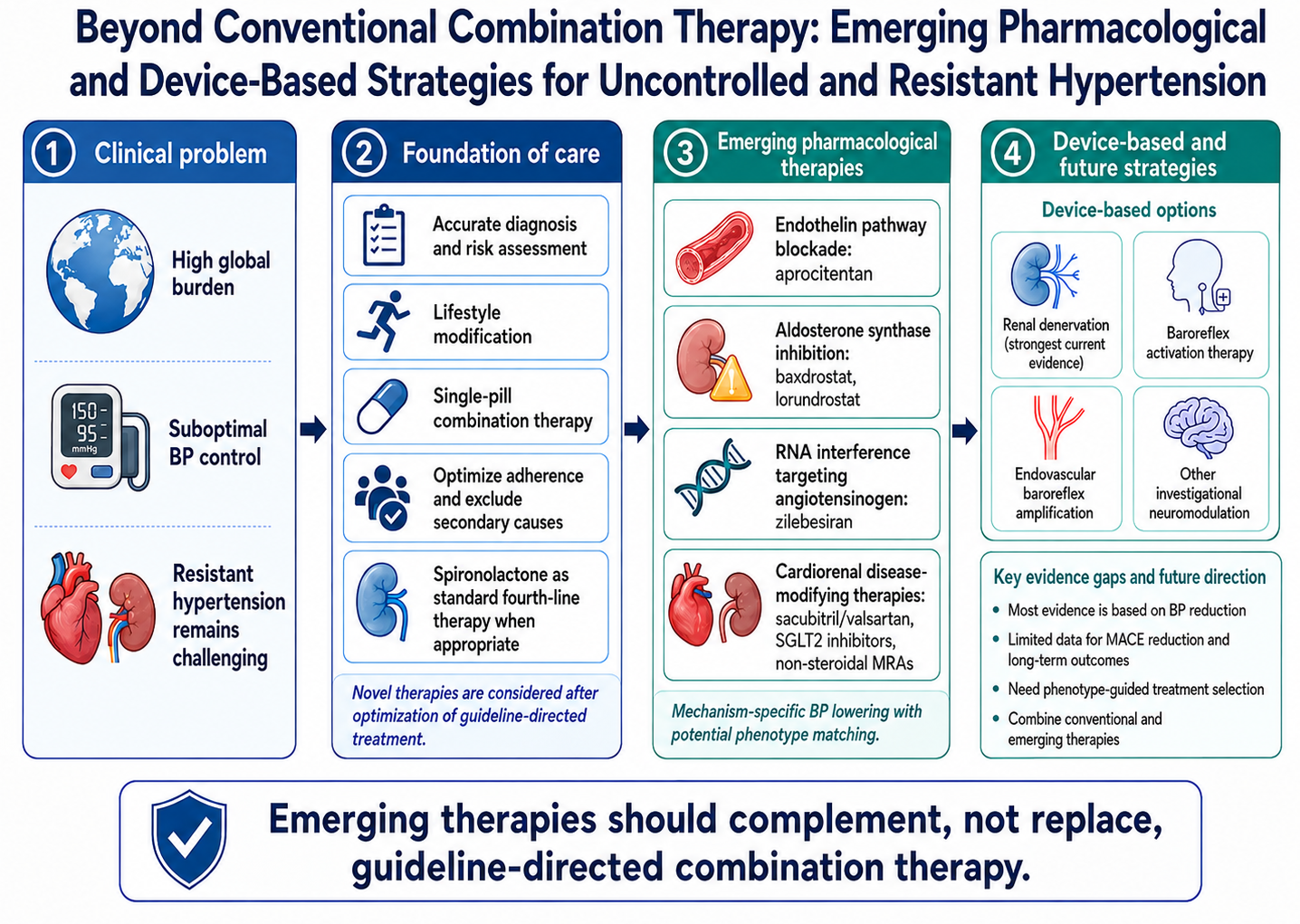
Artificial Intelligence Use: Artificial intelligence (ChatGPT, OpenAI, GPT-5.6, 2026) was used solely to assist in the creation of the graphical abstract and Figure 1 included in this article.
3. From Resistant HTN to New Therapeutic Strategies
Before considering novel therapies, apparent treatment-resistant HTN must be distinguished from true resistance. European guidance requires confirmation that office BP remains uncontrolled despite an appropriate multidrug regimen at maximally tolerated doses, including a diuretic, and recommends exclusion of inaccurate BP measurement, white-coat effect, suboptimal adherence, interfering substances, and secondary HTN [1,2,8]. In patients with preserved kidney function, the conventional backbone remains an ACEI or ARB plus a CCB and a thiazide/thiazide-like diuretic; when estimated glomerular filtration rate (eGFR) is markedly reduced, loop diuretics may be needed.
Spironolactone remains the best-established fourth-line drug on the basis of Prevention And Treatment of Hypertension With Algorithm Where Available Y-2 (PATHWAY-2) trial and subsequent evidence, with eplerenone or other agents used when spironolactone is contraindicated or poorly tolerated [1,2,9]. Nevertheless, antiandrogenic adverse effects, hyperkalemia, worsening kidney function, and differences in regulatory indications limit mineralocorticoid receptor antagonist (MRA) use in a substantial proportion of patients. These limitations have stimulated development of treatments aimed at previously underused biological pathways.
The 2024 European Society of Cardiology (ESC) guideline specifically identifies several therapies with BP-lowering effects that require or have recently acquired additional evidence, including aprocitentan, aldosterone synthase inhibitors, ribonucleic acid (RNA)-interference strategies, sodium–glucose cotransporter 2 (SGLT2) inhibitors, angiotensin receptor–neprilysin (ARNI) inhibition, and non-steroidal MRAs [1].
3.1. Aprocitentan: Targeting the Endothelin Pathway
Endothelin-1 (ET) is one of the most potent endogenous vasoconstrictors and contributes to endothelial dysfunction, vascular hypertrophy and remodelling, sympathetic activation, sodium retention, and aldosterone synthesis. These effects are particularly relevant in resistant HTN, in which persistent vasoconstrictor and volume-dependent mechanisms may remain active despite blockade of the RAAS, calcium channels, and sodium reabsorption [10,11].
Aprocitentan is an orally active dual endothelin receptor antagonist that blocks both ETA and ETB receptors and is administered once daily. Its relatively long terminal half-life of approximately 41–44 hours supports sustained 24-hour activity and may partly attenuate the hemodynamic consequence of an isolated missed dose [10].
The phase 3 PaRallEl-group, Phase 3 study with aproCItentan in Subjects with ResIstant HypertensiON (PRECISION) trial enrolled 730 patients with resistant HTN despite a standardized background regimen that included an ARB, a CCB, and a diuretic [10,11]. During the initial 4-week double-blind phase, placebo-corrected reductions in office systolic BP were approximately 3.8 mmHg with aprocitentan 12.5 mg and 3.7 mmHg with 25 mg; reductions in 24-hour ambulatory systolic BP were approximately 4.2 and 5.9 mmHg, respectively. The effect persisted during longer-term treatment, and withdrawal to placebo was followed by a rise in office systolic BP of approximately 5.8 mmHg, supporting a durable pharmacological effect. Aprocitentan has subsequently become the first endothelin-pathway drug approved specifically as add-on therapy for inadequately controlled systemic HTN in the United States, and it has also received European regulatory authorization for resistant HTN, making it the most clinically advanced novel agent discussed in this review [10,11,12].
Fluid retention is the main adverse effect that may limit practical usage of this drug. In PRECISION, oedema occurred in approximately 9% of patients receiving 12.5 mg, 18% receiving 25 mg, and 2% receiving placebo, with greater concern in advanced CKD. Anemia related to hemodilution may also occur, and hemoglobin, fluid status, and liver biochemistry should be monitored.
Because endothelin receptor antagonism is associated with embryo-fetal toxicity, aprocitentan is contraindicated during pregnancy.
Importantly, although BP lowering is established, direct evidence that aprocitentan reduces major cardiovascular events is not yet available; its current value is therefore best considered in terms of BP control in carefully selected resistant-hypertension phenotypes [1,10,11,12].
3.2. Baxdrostat: Selective Inhibition of Aldosterone Synthesis
Aldosterone excess is increasingly recognized as a continuum rather than a binary disorder confined to classical primary aldosteronism. In obesity, CKD, sleep apnea, and resistant HTN, inappropriate aldosterone production can contribute to sodium retention, plasma-volume expansion, vascular inflammation, fibrosis, and treatment resistance. Baxdrostat selectively inhibits aldosterone synthase (CYP11B2) in the adrenal cortex, reducing aldosterone production rather than blocking the mineralocorticoid receptor. This mechanism is attractive because older aldosterone-synthase inhibitors also inhibited the closely related CYP11B1 enzyme and therefore risked interfering with cortisol synthesis.
In the phase 2 Study of CIN-107 in Adults With Treatment-Resistant Hypertension (BrigHTN), patients with treatment-resistant HTN receiving at least three antihypertensive drugs were randomized to baxdrostat 0.5, 1, or 2 mg once daily or placebo for 12 weeks [13]. Office systolic BP fell by 20.3 mmHg with 2 mg, 17.5 mmHg with 1 mg, 12.1 mmHg with 0.5 mg, and 9.4 mmHg with placebo, giving placebo-corrected reductions of 11.0 mmHg for 2 mg and 8.1 mmHg for 1 mg. Cortisol suppression was not observed, supporting functional selectivity for CYP11B2, although potassium elevation remained a mechanism-based safety issue.
More recently, the phase 3 Baxdrostat in HyperTensioN (BaxHTN) program confirmed clinically significant BP lowering in a much larger population with uncontrolled or resistant HTN, strengthening the evidence that selective aldosterone-synthase inhibition may become a major new therapeutic class [14]. From a clinical perspective, baxdrostat may be particularly relevant when aldosterone-driven volume expansion is suspected but conventional steroidal MRA therapy is ineffective, poorly tolerated, or limited by adverse endocrine effects; nonetheless, hyperkalemia and changes in kidney function require appropriate surveillance [13,14].
3.3. Lorundrostat: Another Late-Stage Aldosterone Synthase Inhibitor
Lorundrostat is a second selective CYP11B2 inhibitor that has progressed rapidly from mechanistic proof-of-concept studies to phase 3 evaluation. The phase 2 Trial on the Safety and Efficacy of MLS-101 in Patients With Uncontrolled Hypertension (TARGET-HTN) enrolled 200 patients with uncontrolled HTN receiving at least two antihypertensive drugs. It demonstrated dose-dependent reductions in automated office systolic BP, with the most consistent placebo-corrected effect of lorundrostat 50 mg once daily [15]. The initial biological hypothesis focused on patients with suppressed renin and relatively increased aldosterone, but meaningful BP lowering was also observed in participants without suppressed renin, suggesting a potentially broader treatment population.
The subsequent Advance-HTN (NCT05769608) trial used ambulatory BP monitoring and a standardized background regimen, thereby providing particularly rigorous evidence that lorundrostat lowers 24-hour BP in uncontrolled and resistant HTN [16].
In the phase 3 Launch-HTN (NCT06153693) trial, 1,083 adults receiving two to five antihypertensive medications were randomized to lorundrostat or placebo [17]. At week 6, automated office systolic BP decreased by 16.9 mmHg with lorundrostat 50 mg compared with 7.9 mmHg with placebo, corresponding to a placebo-adjusted difference of about 9.1 mmHg. The BP-lowering effect remained evident through week 12. Hyperkalemia, hyponatraemia, and reversible reductions in eGFR occurred more frequently than with placebo but led to treatment discontinuation in only a small minority.
Collectively, TARGET-HTN, AdvanceE-HTN, and Launch-HTN support selective aldosterone-synthase inhibition as one of the most convincing emerging pharmacological strategies for difficult-to-control HTN [15,16,17].
3.4. Zilebesiran: Long-Acting RNA Interference Against Hepatic Angiotensinogen
Zilebesiran represents a conceptually different approach: instead of blocking a circulating enzyme or receptor, it reduces hepatic synthesis of angiotensinogen, the precursor of RAAS. The molecule is a small interfering RNA (siRNA) conjugated with N-acetylgalactosamine (GalNAc), which facilitates selective uptake by hepatocytes. Once intracellular, it is incorporated into the RNA-induced silencing complex, where it promotes degradation of angiotensinogen messenger RNA. The resulting suppression of angiotensinogen reduces downstream angiotensin I and II formation and produces prolonged RAAS attenuation after a single subcutaneous dose [18,19].
Early clinical studies showed dose-dependent reductions in circulating angiotensinogen exceeding 80–90% at effective doses and sustained reductions in systolic BP for several months [18]. This prolonged pharmacodynamic profile creates the possibility of dosing only once every three to six months, a feature with obvious implications for adherence. In the initial phase 1/2 study, single doses of at least 200 mg produced reductions in systolic BP exceeding 10 mmHg and diastolic BP exceeding 5 mmHg, with an effect sustained to 24 weeks in higher-dose groups [18]. Injection-site reactions were the most common adverse events, while serious adverse events were uncommon.
The KARDIA-2 randomized clinical trial extended the concept to add-on treatment in patients whose BP remained inadequately controlled after standardization to a background antihypertensive agent [19]. A single zilebesiran injection produced clinically meaningful additional reductions in ambulatory and office BP at three months, although the magnitude varied according to background therapy. The ongoing KARDIA-3 program is extending the evaluation of zilebesiran to patients with higher cardiovascular risk receiving multidrug antihypertensive therapy. To-date this drug remains an investigational therapy without routine regulatory approval as of 2026. The most important unresolved questions concern long-term safety, management during acute illness or volume depletion, interaction with conventional RAAS blockers, reversibility of prolonged pharmacodynamic effects, and whether infrequent administration will translate into superior real-world persistence and cardiovascular outcomes. If these questions are answered favorably, RNA interference may shift HTN therapy from daily adherence-dependent dosing toward long-acting biological control of a central hormonal pathway [18,19].
3.5. Sacubitril/Valsartan: Extending Neprilysin Inhibition Beyond HF
Sacubitril/valsartan combines angiotensin II receptor blockade with neprilysin inhibition, thereby simultaneously suppressing the RAAS and enhancing endogenous natriuretic-peptide signalling. Although established indications are centered on HF rather than uncomplicated HTN, several studies demonstrate clinically relevant antihypertensive effects. In the Prospective Comparison of ARNI With ARB on Management Of Heart Failure With Preserved Ejection Fraction (PARAMOUNT) trial, conducted in HFpEF, sacubitril/valsartan lowered systolic BP by approximately 5–6 mmHg more than valsartan, and the difference appeared early and persisted during follow-up [20]. Trials in essential and systolic HTN subsequently showed greater reductions in brachial, central aortic, ambulatory, and particularly nocturnal BP compared with ARB monotherapy [21,22].
The Prospective Comparison of Angiotensin Receptor Neprilysin Inhibitor With Angiotensin Receptor Blocker Measuring Arterial Stiffness in the Elderly (PARAMETER) study in older patients with systolic HTN found greater early reductions in central aortic and brachial pressures with sacubitril/valsartan than with olmesartan; differences in BP narrowed during longer follow-up, in part because more add-on therapy was required in the olmesartan group [21]. A 52-week trial also reported a greater reduction in left ventricular mass index with sacubitril/valsartan than with olmesartan, suggesting potential cardiac remodelling effects beyond simple office BP lowering [22]. In a post hoc analysis of the Prospective Comparison of ARNI with ARB Global Outcomes in Heart Failure with Preserved Ejection Fraction (PARAGON-HF) trial, sacubitril/valsartan improved BP control more often than valsartan in patients with HFpEF and apparent resistant HTN [23]. These findings make ARNI therapy mechanistically appealing in patients who have both HTN and HF, but they do not currently justify replacing standard first-line antihypertensive combinations in otherwise uncomplicated HTN (Table 1) [1,20,21,22,23,24].
3.6. SGLT2 Inhibitors: Modest BP Reduction with Major Cardiorenal Benefit
SGLT2 inhibitors lower BP through several complementary mechanisms, including osmotic diuresis, natriuresis, reduction in plasma and interstitial volume, improved vascular function, reduced arterial stiffness, weight loss, and potentially favorable modulation of sympathetic activity. Their direct antihypertensive effect is modest compared with dedicated BP-lowering drugs, but it is consistent across diabetes, CKD, and HF populations. Ambulatory studies with empagliflozin have generally shown reductions in 24-hour systolic BP of approximately 3–4 mmHg and diastolic BP of 1–2 mmHg [25]. Large cardiovascular and HF outcome trials with empagliflozin, dapagliflozin, and canagliflozin have shown small reductions in office BP, usually in the 1–5 mmHg range, depending on the population and baseline BP [26,27,28,29,30,31,32].
The importance of SGLT2 inhibitors in a HTN review therefore lies less in their potency as antihypertensive drugs and more in their ability to improve the cardiorenal prognosis of hypertensive patients with type 2 diabetes (T2DM), CKD, or HF. In such phenotypes, a modest BP effect accompanies substantial reductions in HF events and slowing of kidney-disease progression. Thus, SGLT2 inhibitors should be viewed as disease-modifying cardiorenal agents with a useful complementary BP-lowering effect rather than as substitutes for the guideline-recommended core antihypertensive classes (Table 2) [1,2,26,27,28,29,30,31,32].
3.7. Non-Steroidal Mineralocorticoid Receptor Antagonists
Non-steroidal MRAs were developed to provide more selective mineralocorticoid-receptor blockade with fewer sex-hormone-related adverse effects than spironolactone. Finerenone is established for cardiorenal risk reduction in patients with T2DM and CKD on the basis of FInerenone in reducing kiDnEy faiLure and dIsease prOgression in Diabetic Kidney Disease (FIDELIO-DKD), FInerenone in reducinG cArdiovascular moRtality and mOrbidity in Diabetic Kidney Disease (FIGARO-DKD), and pooled FIDELITY analyses [33,34,35]. Its BP-lowering effect is generally modest in the large outcome trials, where office systolic BP fell by only a few mmHg relative to placebo, but dedicated studies and ambulatory analyses have sometimes shown larger reductions, particularly in patients with higher baseline BP [36]. The practical value of finerenone is therefore predominantly cardiorenal protection rather than treatment of resistant HTN per se.
Comparative analyses suggest that spironolactone remains more potent for BP lowering in resistant HTN, whereas finerenone may produce less hyperkalaemia-related treatment discontinuation in some CKD settings [37]. Other non-steroidal MRAs, including esaxerenone, have demonstrated substantial antihypertensive efficacy in phase 3 studies in Japan, with office systolic BP reductions in the range of approximately 12–18 mmHg in essential HTN [38]. As a class, these agents broaden the spectrum of aldosterone-pathway modulation; however, indication, availability, outcome evidence, and expected BP effect differ considerably between individual compounds, and they should not be considered interchangeable (Table 3) [33,34,35,36,37,38].
4. Device-Based Strategies: From Renal Denervation (RDN) to Baroreflex Modulation
Device-based therapy should only be considered after confirmation of true uncontrolled or resistant HTN and optimization of pharmacological treatment, adherence, lifestyle measures, and secondary-cause evaluation [1,2]. Renal denervation currently has the strongest evidence among interventional approaches: multiple sham-controlled trials using radiofrequency or ultrasound systems have demonstrated reproducible, treatment-independent reductions in ambulatory and office BP, and the 2024 ESC guideline allows consideration of RDN in selected patients after shared decision-making in experienced centers [1,39,40,41,42,43].
4.1. Baroreflex Activation Therapy
Baroreflex activation therapy (BAT) is based on chronic electrical stimulation of carotid baroreceptors. Increased afferent baroreceptor signalling is interpreted centrally as excessively increased BP, leading to suppression of sympathetic outflow and relative enhancement of parasympathetic activity.
The first-generation Rheos system (CVRx, Inc., Minneapolis, MN, USA) used bilateral carotid stimulation, whereas the newer Barostim Neo system (CVRx, Inc., Minneapolis, MN, USA) was designed for unilateral implantation with a smaller pulse generator and less extensive surgery [44,45,46,47].
Early Rheos feasibility studies reported substantial office BP reductions in patients with severe resistant HTN. In the Rheos Pivotal Trial, 265 patients underwent implantation and were assessed in a randomized, double-blind, sham-controlled framework; long-term follow-up demonstrated sustained reductions in BP in many treated patients, although procedural safety and trial-design limitations prevented BAT from becoming a routine antihypertensive intervention [45,46].
With the second-generation Barostim Neo system, a prospective multicenter study in 30 patients reported an office BP reduction of approximately 26/12 mmHg at six months [47]. These reductions are clinically impressive, but the evidence base is much smaller than that for pharmacotherapy or contemporary RDN, and much of the literature is non-randomized.
BAT therefore remains a specialized or investigational strategy for HTN, even though baroreflex activation has gained a separate therapeutic role in selected HF populations [44,45,46,47,48].

Table 4.
Main clinical studies of baroreflex activation therapy in resistant HTN.
| Study/device | Design and follow-up | Population | BP effect |
|---|---|---|---|
| Rheos Feasibility Trial | Prospective, non-randomized; 3–12 months | 45 patients with resistant HTN | Office SBP ↓ 21–30 mmHg; DBP ↓ 16–20 mmHg |
| Rheos Pivotal Trial | Multicenter, randomized, double-blind, sham-controlled; primary analysis at 6 months | 265 patients with resistant HTN on multidrug therapy | Long-term BP reduction approximately 26/12 mmHg in treated cohorts |
| Rheos long-term follow-up | Open-label extension; up to 5 years | Patients from Rheos studies | Sustained BP reduction; office SBP decreases >30 mmHg reported in long-term responders |
| Barostim Neo Trial | Prospective multicenter study; 6 months | 30 patients with resistant HTN despite intensified pharmacotherapy | Office BP ↓ approximately 26/12 mmHg |
| Modern sham-controlled pilot BAT studies | Small randomized pilot studies | Patients with resistant HTN | Clinically relevant BP lowering reported, but evidence remains limited |
BP – blood pressure; HTN – hypertension; SBP – systolic blood pressure;.
4.2. Endovascular Baroreflex Amplification
Endovascular baroreflex amplification (EVBA) aims to increase carotid baroreceptor signalling without active electrical stimulation.
The MobiusHD implant (Vascular Dynamics, Inc., California, USA) is placed within the internal carotid sinus and modifies local vessel geometry, theoretically increasing arterial-wall strain and baroreceptor activation with each pulse.
In Controlling and Lowering Blood Pressure with the MobiusHD – First in Man (CALM-FIM) studies, patients with resistant HTN experienced office BP reductions of approximately 24/12 mmHg at three months and 24/11 mmHg at six months, with persistent reductions reported during longer follow-up [49,50]. The concept is appealing because it is less surgically invasive than traditional BAT and does not require a pulse generator or battery. Nevertheless, implantation carries vascular and neurological risks, the treated populations have been small, and adequately powered sham-controlled outcome data remain insufficient; EVBA should therefore be considered investigational rather than an established alternative to RDN [49,50].
4.3. Other Investigational Neuromodulatory Approaches
Several additional approaches are being explored on the premise that difficult-to-control HTN is partly a disorder of autonomic regulation.
Carotid-body activity is increased in some patients with resistant HTN, obstructive sleep apnea, and HF, creating interest in carotid-body ablation, denervation, or modulation. Early human studies have provided biological proof of concept but not enough efficacy or safety evidence for routine use.
Vagus-nerve stimulation has also been investigated, but BP responses have been inconsistent and the balance between autonomic benefit and adverse chronotropic or neuro-stimulatory effects remains uncertain.
A broader field of “bioelectronic medicine” includes spinal-cord stimulation, implantable electroceutical devices, and focused ultrasound neuromodulation. These technologies aim to modulate sympathetic or parasympathetic circuits with greater anatomical precision than systemic drugs. At present, however, they remain preclinical or early clinical strategies, and standardized patient selection, procedural endpoints, durability, and comparative effectiveness are unresolved. Their main relevance is conceptual: they reinforce the view that HTN is not solely a vascular or renal disorder but also a disorder of integrated neurohumoral control [51,52].
5. Discussion
The therapeutic landscape of HTN is undergoing an important transition from the progressive addition of conventional antihypertensive agents toward treatment strategies directed at specific pathophysiological mechanisms. The therapies reviewed here illustrate several complementary approaches: blockade of the ET pathway with aprocitentan, suppression of aldosterone synthesis with baxdrostat and lorundrostat, prolonged inhibition of hepatic angiotensinogen synthesis with zilebesiran, and exploitation of natriuretic, metabolic, and cardiorenal pathways through ARNI, SGLT2 inhibitors, and non-steroidal MRAs. In parallel, device-based therapies—most prominently RDN—have re-emerged as potential options for carefully selected patients with persistently uncontrolled BP despite optimized pharmacological treatment. These developments are clinically relevant because uncontrolled and resistant HTN are heterogeneous conditions in which volume expansion, neurohumoral activation, excessive aldosterone activity, sympathetic overactivity, impaired adherence, and comorbid cardiorenal disease may contribute to different degrees in individual patients [1,2].
Among the novel pharmacological approaches, targeting aldosterone biology appears particularly promising. Both baxdrostat and lorundrostat have produced placebo-adjusted systolic BP reductions approaching 9–10 mmHg in contemporary phase 3 trials, an effect of a magnitude that may be clinically meaningful if sustained over the long term [14,17].
Selective CYP11B2 inhibition is conceptually attractive because it reduces aldosterone production upstream of the mineralocorticoid receptor while avoiding the antiandrogenic effects associated with spironolactone. Nevertheless, hyperkalemia, hyponatremia, and reversible changes in kidney function remain mechanism-related concerns, indicating that aldosterone-synthase inhibitors will not eliminate the need for biochemical monitoring. In addition, the available trials do not yet establish whether biochemical phenotyping based on renin and aldosterone will meaningfully identify patients with a greater treatment response.
Aprocitentan represents a different strategy by targeting a vasoconstrictor pathway not addressed by conventional first-line combinations. The PRECISION trial established sustained BP lowering in resistant HTN, but the relatively modest placebo-corrected office BP effect must be balanced against fluid retention and anemia, particularly in patients with CKD [10,11]. Zilebesiran offers perhaps the most disruptive pharmacological concept because a single injection can provide prolonged suppression of angiotensinogen and sustained BP lowering for several months. KARDIA-2 demonstrated significant additional reductions in 24-hour ambulatory SBP when zilebesiran was combined with conventional antihypertensive drugs, although the magnitude of the effect differed according to background therapy.
The potential advantage of infrequent administration is obvious in a disease in which non-adherence to daily therapy remains a major determinant of inadequate control. Conversely, the prolonged duration of action may become a disadvantage when rapid reversal of RAAS inhibition is desirable because of acute kidney injury, hypotension, dehydration, or other intercurrent illness.
The role of ARNI, SGLT2 inhibitors, and non-steroidal MRAs requires a different interpretation. These drugs should not primarily be regarded as new antihypertensive classes competing with established first-line combinations. Rather, they illustrate the convergence of BP lowering with disease-modifying cardiovascular and renal therapy. SGLT2 inhibitors and finerenone have robust cardiovascular and renal outcome evidence in appropriate patients with T2DM, CKD, or HF, while sacubitril/valsartan has a well-established role in HF. Their additional BP-lowering effects may therefore be especially valuable when the hypertensive phenotype coexists with the cardiorenal condition for which the drug already has an outcome-based indication. This distinction is important because evidence of cardiovascular benefit derived from HF, T2DM, or CKD trials cannot automatically be interpreted as evidence that these agents improve outcomes specifically by treating resistant HTN.
Device-based treatment demonstrates a similar tension between physiological plausibility and outcome evidence. RDN currently has the strongest evidence among interventional strategies, with multiple sham-controlled trials documenting reproducible reductions in both office and ambulatory BP [39,40,41,42,43]. The 2024 ESC Guidelines therefore permit its consideration in selected patients with true resistant HTN following shared decision-making. However, the average placebo-corrected effect is broadly comparable to that of a single antihypertensive drug, many patients continue to require pharmacotherapy after the intervention, and optimal predictors of response remain uncertain. Most importantly, adequately powered randomized trials demonstrating a reduction in cardiovascular events have not yet been completed.
BAT, EVBA, carotid-body interventions, and other neuromodulatory strategies remain substantially earlier in development, with encouraging BP reductions reported mainly in small or non-randomized cohorts.
5.1. Gaps in Evidence
The most important limitation across much of the emerging HTN field is the predominance of BP reduction as a surrogate endpoint. For aprocitentan, baxdrostat, lorundrostat, zilebesiran, BAT, and EVBA, current evidence establishes or suggests antihypertensive efficacy, but it does not yet demonstrate that these interventions reduce myocardial infarction, stroke, cardiovascular death, HF hospitalization, or composite major adverse cardiovascular events (MACE). The major phase 3 baxdrostat and lorundrostat trials were relatively short and were designed primarily around change in systolic BP rather than clinical cardiovascular outcomes. Similarly, the current ESC guideline explicitly emphasizes that no adequately powered cardiovascular outcome trial has demonstrated that renal denervation reduces cardiovascular events, despite its reproducible BP-lowering efficacy.
A second limitation is the restricted generalizability of many pivotal studies. Patients with advanced CKD, marked electrolyte abnormalities, frailty, complex multimorbidity, or very high cardiovascular risk are frequently under-represented or excluded, although these are precisely the patients in whom resistant HTN is common. Additional uncertainty concerns long-term safety, durability of response, comparative effectiveness against optimized multidrug therapy, cost-effectiveness, and the consequences of combining several emerging mechanisms. For long-acting approaches such as zilebesiran or irreversible procedures such as RDN, long-term surveillance is particularly important because treatment cannot be rapidly withdrawn in the same way as an oral medication. Finally, validated biomarkers capable of matching an individual patient to endothelin blockade, aldosterone-synthase inhibition, RNA interference, or autonomic modulation remain insufficiently developed.
5.2. Future Perspectives
Future HTN management is therefore likely to evolve from a predominantly stepwise drug-addition model toward a phenotype- and mechanism-guided strategy, without abandoning guideline-directed combination therapy. Conventional SPCs should remain the therapeutic foundation because they are effective, inexpensive, widely available, and supported by extensive cardiovascular outcome evidence. Emerging therapies should initially complement rather than replace this framework.
Aldosterone-related phenotyping may help identify patients most likely to benefit from selective aldosterone-synthase inhibition, while cardiorenal phenotyping will increasingly guide the use of SGLT2 inhibitors, finerenone, and sacubitril/valsartan. Long-acting RNA-based therapy could potentially address adherence-related treatment failure, whereas RDN may provide an “always-on” BP-lowering effect for selected patients who remain uncontrolled despite appropriate pharmacotherapy or who have major difficulties with long-term medication adherence. Future trials should incorporate standardized ambulatory BP monitoring, objective adherence assessment, patient-reported outcomes, kidney and cardiovascular endpoints, and sufficiently long follow-up to establish durability and safety.
Digital phenotyping and integration of biochemical, imaging, hemodynamic, and autonomic markers may ultimately enable more precise selection of therapy. Artificial-intelligence-supported models could potentially combine these multidimensional data to distinguish predominantly volume-dependent, aldosterone-mediated, sympathetic, vascular, or adherence-related hypertension phenotypes. The most plausible future paradigm is therefore not “drug versus device”, but individualized combinations of lifestyle intervention, SPC-based pharmacotherapy, mechanism-specific drugs, and device-based treatment according to the dominant biological and behavioral drivers of persistent BP elevation.
Figure 1 summarizes a phenotype-guided approach to the use of emerging pharmacological and device-based therapies in patients with uncontrolled and resistant HTN aiming to integrate the main findings of this review into a clinically applicable framework.
6. Conclusions
Emerging pharmacological and device-based therapies are substantially expanding the therapeutic options for patients with uncontrolled and resistant HTN. ET-receptor antagonism, selective aldosterone-synthase inhibition, RNA interference targeting angiotensinogen, and renal sympathetic modulation provide clinically meaningful BP reduction through mechanisms that complement conventional antihypertensive therapy. However, for most of these novel strategies, evidence remains primarily based on BP lowering, while definitive effects on MACE, cardiovascular mortality, and other major clinical outcomes remain to be established. Guideline-directed SPC therapy should therefore remain the foundation of treatment, with emerging drugs and device-based interventions reserved for appropriately selected patients according to clinical phenotype, comorbidities, tolerability, and treatment adherence. Future adequately powered outcome trials will determine whether these innovative approaches can translate their antihypertensive efficacy into sustained reductions in cardiovascular and renal risk.
Author Contributions
Conceptualization, S.N.; methodology, S.N.; investigation, S.N.; resources, S.N.; writing—original draft preparation, S.N.; writing—review and editing, S.N. The author has read and agreed to the published version of the manuscript. The author has read and agreed to the published version of the manuscript.
Funding
This research received no external funding.
Institutional Review Board Statement
Not applicable.
Informed Consent Statement
Not applicable.
Data Availability Statement
No new data were created or analyzed in this study. Data sharing is not applicable to this article.
Conflicts of Interest
The author declares no conflicts of interest.
Abbreviations
The following abbreviations are used in this manuscript:
| ACEI | Angiotensin-converting enzyme inhibitor |
| ARB | Angiotensin II receptor blocker |
| ARNI | Angiotensin receptor-neprilysin inhibitor |
| ARTS-DN | Mineralocorticoid Receptor Antagonist Tolerability Study–Diabetic Nephropathy; |
| ASCVD | Atherosclerotic cardiovascular disease |
| BAT | Baroreflex activation therapy |
| BP | Blood pressure |
| CANVAS | CANagliflozin cardioVascular Assessment Study; DAPA-HF - Dapagliflozin and Prevention of Adverse Outcomes in Heart Failure |
| CCB | Calcium-channel blocker |
| CKD | Chronic kidney disease |
| DBP | Diastolic blood pressure |
| DECLARE–TIMI 58 | Dapagliflozin Effect on Cardiovascular Events–Thrombolysis in Myocardial Infarction 58 |
| DELIVER | Dapagliflozin Evaluation to Improve the LIVEs of Patients With PReserved Ejection Fraction Heart Failure |
| EMPA-REG OUTCOME | BI 10773 (Empagliflozin) Cardiovascular Outcome Event Trial in Type 2 Diabetes Mellitus Patients |
| EMPEROR-Preserved | Empagliflozin Outcome Trial in Patients with Chronic Heart Failure with Preserved Ejection Fraction |
| EMPEROR-Reduced | Empagliflozin Outcome Trial in Patients with Chronic Heart Failure and a Reduced Ejection Fraction |
| ET | Endothelin-1 |
| ESC | European Society of Cardiology |
| ESH | European Society of Hypertension |
| EVBA | Endovascular baroreflex amplification |
| FIDELIO-DKD | FInerenone in reducing kiDnEy faiLure and dIsease prOgression in Diabetic Kidney Disease |
| FIGARO-DKD | FInerenone in reducinG cArdiovascular moRtality and mOrbidity in Diabetic Kidney Disease |
| MACE | Major adverse cardiovascular events |
| HF | Heart failure |
| HFmrEF | Heart failure with mildly reduced ejection fraction |
| HFpEF | Heart failure with preserved ejection fraction |
| HFrEF | heart failure with reduced ejection fraction |
| HTN | Hypertension |
| MRA | Mineralocorticoid receptor antagonist |
| PARAGON-HF | Prospective Comparison of ARNI with ARB Global Outcomes in Heart Failure with Preserved Ejection Fraction |
| PARAMETER | Prospective Comparison of Angiotensin Receptor Neprilysin Inhibitor With Angiotensin Receptor Blocker Measuring Arterial Stiffness in the Elderly |
| RAAS | Renin-angiotensin-aldosterone system |
| RCT | randomized clinical trial |
| RNA | Ribonucleic acid |
| RDN | Renal denervation |
| SBP | Systolic blood pressure |
| SGLT2 | Sodium–glucose cotransporter 2 |
| siRNA | Small interfering ribonucleic acid |
| SPC | Single-pill combination |
| T2DM | type 2 diabetes |
References
- McEvoy, J.W.; McCarthy, C.P.; Bruno, R.M.; Brouwers, S.; Canavan, M.D.; Ceconi, C.; Christodorescu, R.M.; Daskalopoulou, S.S.; Ferro, C.J.; Gerdts, E.; et al. 2024 ESC Guidelines for the management of elevated blood pressure and hypertension. Eur. Heart J. 2024, 45, 3912–4018. [CrossRef]
- Mancia, G.; Kreutz, R.; Brunström, M.; Burnier, M.; Grassi, G.; Januszewicz, A.; Muiesan, M.L.; Tsioufis, K.; Agabiti-Rosei, E.; Algharably, E.A.E.; et al. 2023 ESH Guidelines for the management of arterial hypertension. J. Hypertens. 2023, 41, 1874–2071. [CrossRef]
- World Health Organization. Global Report on Hypertension: The Race against a Silent Killer; World Health Organization: Geneva, Switzerland, 2023.
- NCD Risk Factor Collaboration (NCD-RisC). Worldwide trends in hypertension prevalence and progress in treatment and control from 1990 to 2019: A pooled analysis of 1201 population-representative studies with 104 million participants. Lancet 2021, 398, 957–980. [CrossRef]
- Ettehad, D.; Emdin, C.A.; Kiran, A.; Anderson, S.G.; Callender, T.; Emberson, J.; Chalmers, J.; Rodgers, A.; Rahimi, K. Blood pressure lowering for prevention of cardiovascular disease and death: A systematic review and meta-analysis. Lancet 2016, 387, 957–967. [CrossRef]
- Blood Pressure Lowering Treatment Trialists’ Collaboration. Pharmacological blood pressure lowering for primary and secondary prevention of cardiovascular disease across different levels of blood pressure: An individual participant-level data meta-analysis. Lancet 2021, 397, 1625–1636. [CrossRef]
- Mills, K.T.; Stefanescu, A.; He, J. The global epidemiology of hypertension. Nat. Rev. Nephrol. 2020, 16, 223–237. [CrossRef]
- Carey, R.M.; Calhoun, D.A.; Bakris, G.L.; Brook, R.D.; Daugherty, S.L.; Dennison-Himmelfarb, C.R.; Egan, B.M.; Flack, J.M.; Gidding, S.S.; Judd, E.; et al. Resistant hypertension: Detection, evaluation, and management: A scientific statement from the American Heart Association. Hypertension 2018, 72, e53–e90. [CrossRef]
- Williams, B.; MacDonald, T.M.; Morant, S.; Webb, D.J.; Sever, P.; McInnes, G.; Ford, I.; Cruickshank, J.K.; Caulfield, M.J.; Salsbury, J.; et al. Spironolactone versus placebo, bisoprolol, and doxazosin to determine the optimal treatment for drug-resistant hypertension (PATHWAY-2): A randomised, double-blind, crossover trial. Lancet 2015, 386, 2059–2068. [CrossRef]
- Schlaich, M.P.; Bellet, M.; Weber, M.A.; Danaietash, P.; Bakris, G.L.; Flack, J.M.; Dreier, R.F.; Sassi-Sayadi, M.; Haskell, L.P.; Narkiewicz, K.; et al. Dual endothelin antagonist aprocitentan for resistant hypertension (PRECISION): A multicentre, blinded, randomised, parallel-group, phase 3 trial. Lancet 2022, 400, 1927–1937. [CrossRef]
- Danaietash, P.; Verweij, P.; Wang, J.G.; Dresser, G.K.; Kantola, I.M.; Lawrence, M.K. Identifying and treating resistant hypertension in PRECISION: A randomized long-term clinical trial with aprocitentan. J. Clin. Hypertens. 2022, 24, 804–813. [CrossRef]
- U.S. Food and Drug Administration. TRYVIO (Aprocitentan) Tablets: Prescribing Information; FDA: Silver Spring, MD, USA, 2024; updated 2025.
- Freeman, M.W.; Halvorsen, Y.D.; Marshall, W.; Pater, M.; Isaacsohn, J.; Pearce, C.; Murphy, B.; Alp, N.; Srivastava, A.; Bhatt, D.L.; et al. Phase 2 trial of baxdrostat for treatment-resistant hypertension. N. Engl. J. Med. 2023, 388, 395–405. [CrossRef]
- Flack, J.M.; Azizi, M.; Brown, J.M.; Dwyer, J.P.; Fronczek, J.; Jones, E.S.W.; Olsson, D.S.; Perl, S.; Shibata, H.; Wang, J.G.; et al. Efficacy and safety of baxdrostat in uncontrolled and resistant hypertension. N. Engl. J. Med. 2025, 393, 1363–1374. [CrossRef]
- Laffin, L.J.; Rodman, D.; Luther, J.M.; Vaidya, A.; Weir, M.R.; Rajicic, N.; Slingsby, B.T.; Nissen, S.E. Aldosterone synthase inhibition with lorundrostat for uncontrolled hypertension: The Target-HTN randomized clinical trial. JAMA 2023, 330, 1140–1150. [CrossRef]
- Laffin, L.J.; Kopjar, B.; Melgaard, C.; Wolski, K.; Ibbitson, J.; Bhikam, S.; Weir, M.R.; Ofili, E.O.; Mehra, R.; Luther, J.M.; et al. Lorundrostat efficacy and safety in patients with uncontrolled hypertension. N. Engl. J. Med. 2025, 392, 1813–1823. [CrossRef]
- Saxena, M.; Laffin, L.; Borghi, C.; Fernandez Fernandez, B.; Ghali, J.K.; Kopjar, B.; Polu, K.R.; Roger, S.D.; Slingsby, B.T.; Strutz, F.; et al. Lorundrostat in participants with uncontrolled hypertension and treatment-resistant hypertension: The LAUNCH-HTN randomized clinical trial. JAMA 2025, 334, 409–418. [CrossRef]
- Desai, A.S.; Webb, D.J.; Taubel, J.; Casey, S.; Cheng, Y.; Robbie, G.J.; Foster, D.; Huang, S.A.; Rhyee, S.; Sweetser, M.T.; et al. Zilebesiran, an RNA interference therapeutic agent for hypertension. N. Engl. J. Med. 2023, 389, 228–238. [CrossRef]
- Desai, A.S.; Karns, A.D.; Badariene, J.; Aswad, A.; Neutel, J.M.; Kazi, F.; Park, W.; Stiglitz, D.; Makarova, N.; Havasi, A.; et al. Add-on treatment with zilebesiran for inadequately controlled hypertension: The KARDIA-2 randomized clinical trial. JAMA 2025, 334, 46–55. [CrossRef]
- Solomon, S.D.; Zile, M.; Pieske, B.; Voors, A.; Shah, A.; Kraigher-Krainer, E.; Shi, V.; Bransford, T.; Takeuchi, M.; Gong, J.; et al. The angiotensin receptor neprilysin inhibitor LCZ696 in heart failure with preserved ejection fraction: A phase 2 double-blind randomised controlled trial. Lancet 2012, 380, 1387–1395. [CrossRef]
- Williams, B.; Cockcroft, J.R.; Kario, K.; Zappe, D.H.; Brunel, P.C.; Wang, Q.; Guo, W. Effects of sacubitril/valsartan versus olmesartan on central hemodynamics in the elderly with systolic hypertension: The PARAMETER study. Hypertension 2017, 69, 411–420. [CrossRef]
- Schmieder, R.E.; Wagner, F.; Mayr, M.; Delles, C.; Ott, C.; Keicher, C.; Hrabak-Paar, M.; Heye, T.; Aichner, S.; Khder, Y.; et al. The effect of sacubitril/valsartan compared to olmesartan on cardiovascular remodelling in subjects with essential hypertension: The results of a randomized, double-blind, active-controlled study. Eur. Heart J. 2017, 38, 3308–3317. [CrossRef]
- Jackson, A.M.; Jhund, P.S.; Anand, I.S.; Düngen, H.D.; Lam, C.S.P.; Lefkowitz, M.P.; Linssen, G.C.M.; Lund, L.H.; Maggioni, A.P.; Pfeffer, M.A.; et al. Sacubitril–valsartan as a treatment for apparent resistant hypertension in patients with heart failure and preserved ejection fraction. Eur. Heart J. 2021, 42, 3741–3752. [CrossRef]
- Yamamoto, K.; Yarimizu, D.; Shimanishi, A.; Eguchi, S.; Iekushi, K.; Takami, Y.; et al. Efficacy and safety of sacubitril/valsartan versus amlodipine in Japanese patients with essential hypertension: A randomized, multicenter, open-label, noninferiority study (PARASOL Study). J. Clin. Hypertens. 2025, 27, e14938. [CrossRef]
- Tikkanen, I.; Narko, K.; Zeller, C.; Green, A.; Salsali, A.; Broedl, U.C.; Woerle, H.J. Empagliflozin reduces blood pressure in patients with type 2 diabetes and hypertension. Diabetes Care 2015, 38, 420–428. [CrossRef]
- inman, B.; Wanner, C.; Lachin, J.M.; Fitchett, D.; Bluhmki, E.; Hantel, S.; Mattheus, M.; Devins, T.; Johansen, O.E.; Woerle, H.J.; et al. Empagliflozin, cardiovascular outcomes, and mortality in type 2 diabetes. N. Engl. J. Med. 2015, 373, 2117–2128. [CrossRef]
- Neal, B.; Perkovic, V.; Mahaffey, K.W.; de Zeeuw, D.; Fulcher, G.; Erondu, N.; Shaw, W.; Law, G.; Desai, M.; Matthews, D.R. Canagliflozin and cardiovascular and renal events in type 2 diabetes. N. Engl. J. Med. 2017, 377, 644–657. [CrossRef]
- Wiviott, S.D.; Raz, I.; Bonaca, M.P.; Mosenzon, O.; Kato, E.T.; Cahn, A.; Silverman, M.G.; Zelniker, T.A.; Kuder, J.F.; Murphy, S.A.; et al. Dapagliflozin and cardiovascular outcomes in type 2 diabetes. N. Engl. J. Med. 2019, 380, 347–357. [CrossRef]
- McMurray, J.J.V.; Solomon, S.D.; Inzucchi, S.E.; Køber, L.; Kosiborod, M.N.; Martinez, F.A.; Ponikowski, P.; Sabatine, M.S.; Anand, I.S.; Bělohlávek, J.; et al. Dapagliflozin in patients with heart failure and reduced ejection fraction. N. Engl. J. Med. 2019, 381, 1995–2008. [CrossRef]
- Packer, M.; Anker, S.D.; Butler, J.; Filippatos, G.; Pocock, S.J.; Carson, P.; Januzzi, J.L.; Verma, S.; Tsutsui, H.; Brueckmann, M.; et al. Cardiovascular and renal outcomes with empagliflozin in heart failure. N. Engl. J. Med. 2020, 383, 1413–1424. [CrossRef]
- Anker, S.D.; Butler, J.; Filippatos, G.; Ferreira, J.P.; Bocchi, E.; Böhm, M.; Brunner-La Rocca, H.P.; Choi, D.J.; Chopra, V.; Chuquiure-Valenzuela, E.; et al. Empagliflozin in heart failure with a preserved ejection fraction. N. Engl. J. Med. 2021, 385, 1451–1461. [CrossRef]
- Solomon, S.D.; McMurray, J.J.V.; Claggett, B.; de Boer, R.A.; DeMets, D.; Hernandez, A.F.; Inzucchi, S.E.; Kosiborod, M.N.; Lam, C.S.P.; Martinez, F.; et al. Dapagliflozin in heart failure with mildly reduced or preserved ejection fraction. N. Engl. J. Med. 2022, 387, 1089–1098. [CrossRef]
- Bakris, G.L.; Agarwal, R.; Anker, S.D.; Pitt, B.; Ruilope, L.M.; Rossing, P.; Kolkhof, P.; Nowack, C.; Schloemer, P.; Joseph, A.; et al. Effect of finerenone on chronic kidney disease outcomes in type 2 diabetes. N. Engl. J. Med. 2020, 383, 2219–2229. [CrossRef]
- Pitt, B.; Filippatos, G.; Agarwal, R.; Anker, S.D.; Bakris, G.L.; Rossing, P.; Joseph, A.; Kolkhof, P.; Nowack, C.; Schloemer, P.; et al. Cardiovascular events with finerenone in kidney disease and type 2 diabetes. N. Engl. J. Med. 2021, 385, 2252–2263. [CrossRef]
- Agarwal, R.; Filippatos, G.; Pitt, B.; Anker, S.D.; Rossing, P.; Joseph, A.; Kolkhof, P.; Nowack, C.; Gebel, M.; Ruilope, L.M.; et al. Cardiovascular and kidney outcomes with finerenone in patients with type 2 diabetes and chronic kidney disease: The FIDELITY pooled analysis. Eur. Heart J. 2022, 43, 474–484. [CrossRef]
- Bakris, G.L.; Agarwal, R.; Chan, J.C.; Cooper, M.E.; Gansevoort, R.T.; Haller, H.; Remuzzi, G.; Rossing, P.; Schmieder, R.E.; Nowack, C.; et al. Effect of finerenone on albuminuria in patients with diabetic nephropathy: A randomized clinical trial. JAMA 2015, 314, 884–894. [CrossRef]
- Agarwal, R.; Pitt, B.; Palmer, B.F.; Kovesdy, C.P.; Burgess, E.; Filippatos, G.; Małyszko, J.; Ruilope, L.M.; Rossignol, P.; Rossing, P.; et al. A comparative post hoc analysis of finerenone and spironolactone in resistant hypertension in moderate-to-advanced chronic kidney disease. Clin. Kidney J. 2023, 16, 293–302. [CrossRef]
- Ito, S.; Itoh, H.; Rakugi, H.; Okuda, Y.; Yoshimura, M.; Yamakawa, S. Double-blind randomized phase 3 study comparing esaxerenone with eplerenone in patients with essential hypertension. Hypertension 2020, 75, 51–58. [CrossRef]
- Kandzari, D.E.; Böhm, M.; Mahfoud, F.; Townsend, R.R.; Weber, M.A.; Pocock, S.; Tsioufis, K.; Tousoulis, D.; Choi, J.W.; East, C.; et al. Effect of renal denervation on blood pressure in the presence of antihypertensive drugs: 6-month efficacy and safety results from the SPYRAL HTN-ON MED proof-of-concept randomised trial. Lancet 2018, 391, 2346–2355. [CrossRef]
- Böhm, M.; Kario, K.; Kandzari, D.E.; Mahfoud, F.; Weber, M.A.; Schmieder, R.E.; Tsioufis, K.; Pocock, S.; Konstantinidis, D.; Choi, J.W.; et al. Efficacy of catheter-based renal denervation in the absence of antihypertensive medications (SPYRAL HTN-OFF MED Pivotal): A multicentre, randomised, sham-controlled trial. Lancet 2020, 395, 1444–1451. [CrossRef]
- Azizi, M.; Schmieder, R.E.; Mahfoud, F.; Weber, M.A.; Daemen, J.; Davies, J.; Basile, J.; Kirtane, A.J.; Wang, Y.; Lobo, M.D.; et al. Endovascular ultrasound renal denervation to treat hypertension (RADIANCE-HTN SOLO): A multicentre, international, single-blind, randomised, sham-controlled trial. Lancet 2018, 391, 2335–2345. [CrossRef]
- Azizi, M.; Sanghvi, K.; Saxena, M.; Gosse, P.; Reilly, J.P.; Levy, T.; Rump, L.C.; Persu, A.; Basile, J.; Bloch, M.J.; et al. Ultrasound renal denervation for hypertension resistant to a triple medication pill (RADIANCE-HTN TRIO): A randomised, multicentre, single-blind, sham-controlled trial. Lancet 2021, 397, 2476–2486. [CrossRef]
- Mahfoud, F.; Kandzari, D.E.; Kario, K.; Townsend, R.R.; Weber, M.A.; Schmieder, R.E.; Tsioufis, K.; Pocock, S.; Dimitriadis, K.; Choi, J.W.; et al. Long-term efficacy and safety of renal denervation in the presence of antihypertensive drugs: 36-month results from the SPYRAL HTN-ON MED randomized trial. Lancet 2022, 399, 1401–1410. [CrossRef]
- Scheffers, I.J.M.; Kroon, A.A.; Schmidli, J.; Jordan, J.; Tordoir, J.H.M.; Mohaupt, M.G.; Luft, F.C.; Haller, H.; Menne, J.; Engeli, S.; et al. Novel baroreflex activation therapy in resistant hypertension: Results of a European and United States trial. J. Am. Coll. Cardiol. 2010, 56, 1254–1258. [CrossRef]
- Bisognano, J.D.; Bakris, G.; Nadim, M.K.; Sanchez, L.; Kroon, A.A.; Schafer, J.; de Leeuw, P.W.; Sica, D.A. Baroreflex activation therapy lowers blood pressure in patients with resistant hypertension: Results from the double-blind, randomized, placebo-controlled Rheos Pivotal Trial. J. Am. Coll. Cardiol. 2011, 58, 765–773. [CrossRef]
- Bakris, G.L.; Nadim, M.K.; Haller, H.; Lovett, E.G.; Schafer, J.E.; Bisognano, J.D. Baroreflex activation therapy provides durable benefit in patients with resistant hypertension: Results of long-term follow-up in the Rheos Pivotal Trial. J. Am. Soc. Hypertens. 2012, 6, 152–158. [CrossRef]
- Hoppe, U.C.; Brandt, M.C.; Wachter, R.; Beige, J.; Rump, L.C.; Kroon, A.A.; Cates, A.W.; Lovett, E.G.; Haller, H. Minimally invasive system for baroreflex activation therapy chronically lowers blood pressure with pacemaker-like safety profile: Results from the Barostim Neo trial. J. Am. Soc. Hypertens. 2012, 6, 270–276. [CrossRef]
- Victor, R.G. Carotid baroreflex activation therapy for resistant hypertension. Nat. Rev. Cardiol. 2015, 12, 451–463. [CrossRef]
- Spiering, W.; Williams, B.; Van der Heyden, J.; van Kleef, M.; Lo, R.; Versmissen, J.; Moelker, A.; Kroon, A.; Reuter, H.; Ansel, G.; et al. Endovascular baroreflex amplification for resistant hypertension: A safety and proof-of-principle clinical study. Lancet 2017, 390, 2655–2661. [CrossRef]
- van Kleef, M.E.A.M.; Bates, M.C.; Spiering, W.; et al. Treatment of resistant hypertension with endovascular baroreflex amplification: 3-year results from the CALM-FIM study. JACC Cardiovasc. Interv. 2022. [CrossRef]
- Paton, J.F.R.; Sobotka, P.A.; Fudim, M.; Engelman, Z.J.; Hart, E.C.J.; McBryde, F.D.; Abdala, A.P.; Marina, N.; Gourine, A.V.; Lobo, M.; et al. The carotid body as a therapeutic target for the treatment of sympathetically mediated diseases. Hypertension 2013, 61, 5–13. [CrossRef]
- Grassi, G.; Seravalle, G.; Mancia, G. Sympathetic activation in cardiovascular disease: Evidence, clinical impact and therapeutic implications. Eur. J. Clin. Investig. 2015, 45, 1367–1375. [CrossRef]
Figure 1.
Phenotype-guided integration of emerging therapies for uncontrolled and resistant hypertension. BP – blood pressure; MACE - major adverse cardiovascular events; MRA - мineralocorticoid receptor antagonist; RNA – ribonucleic acid; SGLT2 - sodium–glucose cotransporter 2.
Figure 1.
Phenotype-guided integration of emerging therapies for uncontrolled and resistant hypertension. BP – blood pressure; MACE - major adverse cardiovascular events; MRA - мineralocorticoid receptor antagonist; RNA – ribonucleic acid; SGLT2 - sodium–glucose cotransporter 2.
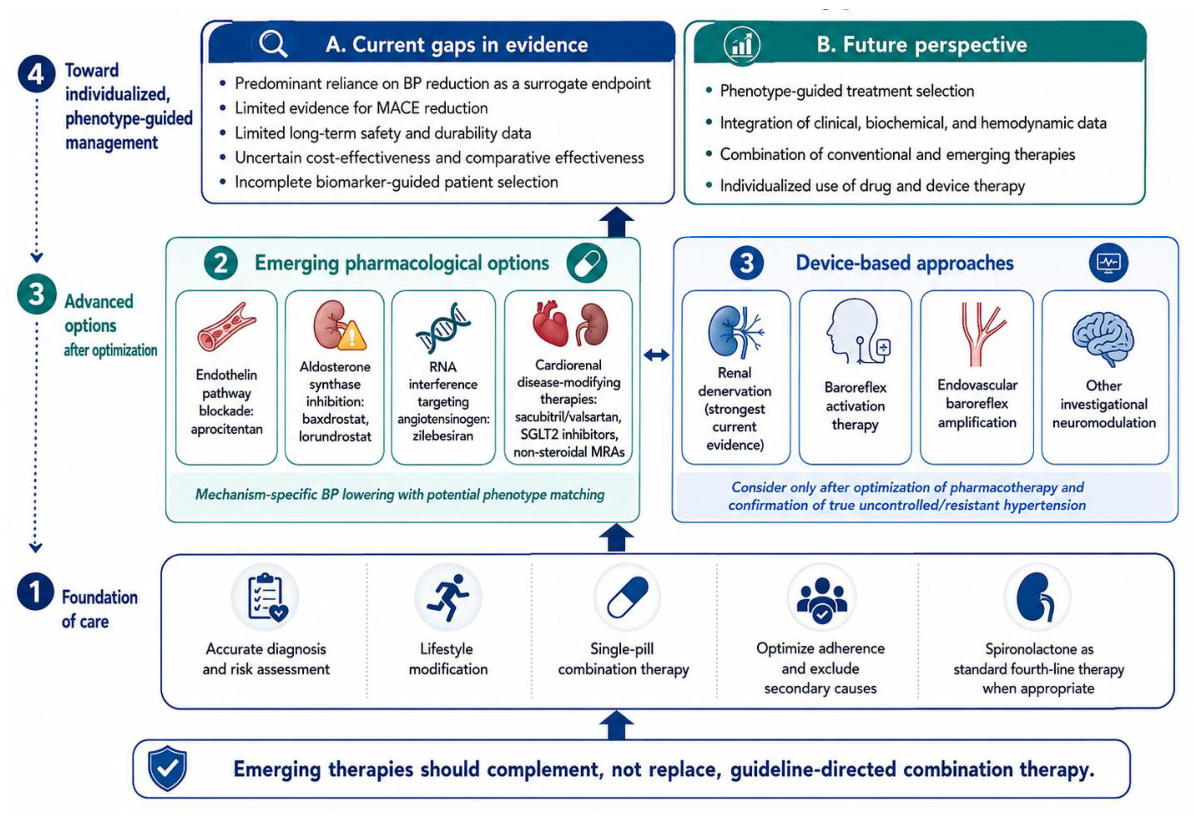
Table 1.
Selected clinical evidence for sacubitril/valsartan and BP lowering.
| Study / population | Design | Main BP-related finding |
|---|---|---|
| Sacubitril/Valsartan studies in essential HTN | Randomized studies, ~8 weeks; sacubitril/valsartan vs valsartan or other ARBs | Greater reduction in office and mean 24-h BP, with a particularly favorable nocturnal BP effect. |
| PARAMETER; age ≥60 years with systolic HTN | Randomized comparison with olmesartan | Greater early reduction in central aortic and brachial BP; differences attenuated by 52 weeks, with more add-on therapy required with olmesartan. |
| Schmieder et al.; essential HTN | 52-week randomized comparison with olmesartan | Greater reduction in left ventricular mass index, partly beyond the difference in BP lowering. |
| PARASOL*; Japanese patients with essential HTN | Open-label RCT; sacubitril/valsartan 200 mg daily vs amlodipine 5 mg daily; 8 weeks; n=359 | Non-inferior for 24-h systolic BP; between-group difference approximately −0.62 mmHg; similar adverse-event frequency. |
| PARAGON-HF post hoc; HFpEF with apparent resistant HTN | Post hoc analysis of RCT | Systolic BP control more frequent with sacubitril/valsartan than valsartan (47.9% vs 34.3%); additional mean reduction ~4 mmHg. |
| Resistant HTN evidence base | Small RCTs and real-world cohorts; systematic review | Promising but limited evidence; substantial 24-h BP reductions reported in selected studies, requiring confirmation. |
ARB - angiotensin II receptor blocker; BP – blood pressure; HTN – hypertension; PARAGON-HF - Prospective Comparison of ARNI with ARB Global Outcomes in Heart Failure with Preserved Ejection Fraction; PARAMETER - Prospective Comparison of Angiotensin Receptor Neprilysin Inhibitor With Angiotensin Receptor Blocker Measuring Arterial Stiffness in the Elderly; RCT – randomized clinical trial; * - study designation used by the investigators; no expanded trial name was provided in the primary publication.
Table 2.
BP effects of SGLT2 inhibitors in selected major studies.
| Study | Population | Agent | Approximate BP effect |
|---|---|---|---|
| EMPA-REG BP * | T2DM + HTN | Empagliflozin | 24-h SBP ↓ ~3–4 mmHg; 24-h DBP ↓ ~1–2 mmHg |
| DECLARE–TIMI 58 | T2DM with or without ASCVD | Dapagliflozin | Office SBP ↓ ~2–3 mmHg |
| CANVAS Program | T2DM + high cardiovascular risk | Canagliflozin | Office SBP ↓ ~3–4 mmHg |
| EMPA-REG OUTCOME | T2DM + established cardiovascular diseases | Empagliflozin | Office SBP ↓ ~3–5 mmHg |
| DAPA-HF | HFrEF with or without T2DM | Dapagliflozin | Small but statistically significant SBP reduction |
| EMPEROR-Reduced | HFrEF | Empagliflozin | Office SBP ↓ ~1–2 mmHg |
| EMPEROR-Preserved | HFpEF/HFmrEF | Empagliflozin | Office SBP ↓ ~1–2 mmHg |
| DELIVER | HFpEF/HFmrEF | Dapagliflozin | Office SBP ↓ ~1–2 mmHg |
| Meta-analyses | HF or T2DM + HTN | Class effect | Office SBP ↓ ~1.7 mmHg in HF; 24-h SBP ↓ ~3.6 mmHg in T2DM + HTN |
ASCVD – atherosclerotic cardiovascular disease; BP – blood pressure; CANVAS - CANagliflozin cardioVascular Assessment Study; DAPA-HF - Dapagliflozin and Prevention of Adverse Outcomes in Heart Failure; DBP – diastolic blood pressure; DECLARE–TIMI 58 - Dapagliflozin Effect on Cardiovascular Events–Thrombolysis in Myocardial Infarction 58; DELIVER - Dapagliflozin Evaluation to Improve the LIVEs of Patients With PReserved Ejection Fraction Heart Failure; EMPA-REG BP - Empagliflozin–Regulation of Blood Pressure; EMPA-REG OUTCOME - BI 10773 (Empagliflozin) Cardiovascular Outcome Event Trial in Type 2 Diabetes Mellitus Patients; EMPEROR-Preserved - Empagliflozin Outcome Trial in Patients with Chronic Heart Failure with Preserved Ejection Fraction; EMPEROR-Reduced - Empagliflozin Outcome Trial in Patients with Chronic Heart Failure and a Reduced Ejection Fraction; HF – heart failure; HFmrEF – heart failure with mildly reduced ejection fraction; HFpEF – heart failure with preserved ejection fraction; HFrEF – heart failure with reduced ejection fraction HTN – hypertension; SBP – systolic blood pressure; T2DM – type 2 diabetes; * - study designation used by the investigators; no expanded trial name was provided in the primary publication.
Table 3.
Selected evidence for the effect of non-steroidal MRA on BP.
| Study/population | Agent | Main BP-related finding |
|---|---|---|
| ARTS-DN; T2DM + CKD | Finerenone | Office SBP reduction approximately 8–11 mmHg in dose-ranging analyses |
| ARTS-DN ambulatory substudy | Finerenone | 24-h SBP reduction up to approximately 11 mmHg in selected dose groups |
| FIDELIO-DKD; T2DM + CKD | Finerenone | Modest average office SBP reduction, approximately 2–3 mmHg vs baseline/placebo context |
| Comparative analysis in CKD with resistant HTN | Finerenone vs spironolactone | Approximate SBP reduction ~7 mmHg with finerenone vs ~11 mmHg with spironolactone; differing hyperkalemia/tolerability profiles |
| Phase 3 studies in Japan; essential HTN | Esaxerenone | Office SBP reduction approximately 12–18 mmHg, dose and population dependent |
ARTS-DN - Mineralocorticoid Receptor Antagonist Tolerability Study–Diabetic Nephropathy; BP – blood pressure; CKD – chronic kidney disease; FIDELIO-DKD - Finerenone in Reducing Kidney Failure and Disease Progression in Diabetic Kidney Disease; HTN - hypertension; SBP – systolic blood pressure; T2DM – type 2 diabetes;.
Disclaimer/Publisher’s Note: The statements, opinions and data contained in all publications are solely those of the individual author(s) and contributor(s) and not of MDPI and/or the editor(s). MDPI and/or the editor(s) disclaim responsibility for any injury to people or property resulting from any ideas, methods, instructions or products referred to in the content. |
© 2026 by the authors. Licensee MDPI, Basel, Switzerland. This article is an open access article distributed under the terms and conditions of the Creative Commons Attribution (CC BY) license (http://creativecommons.org/licenses/by/4.0/).
Copyright: This open access article is published under a Creative Commons CC BY 4.0 license, which permit the free download, distribution, and reuse, provided that the author and preprint are cited in any reuse.