

Submitted:
11 August 2026
Posted:
12 August 2026
You are already at the latest version
Abstract
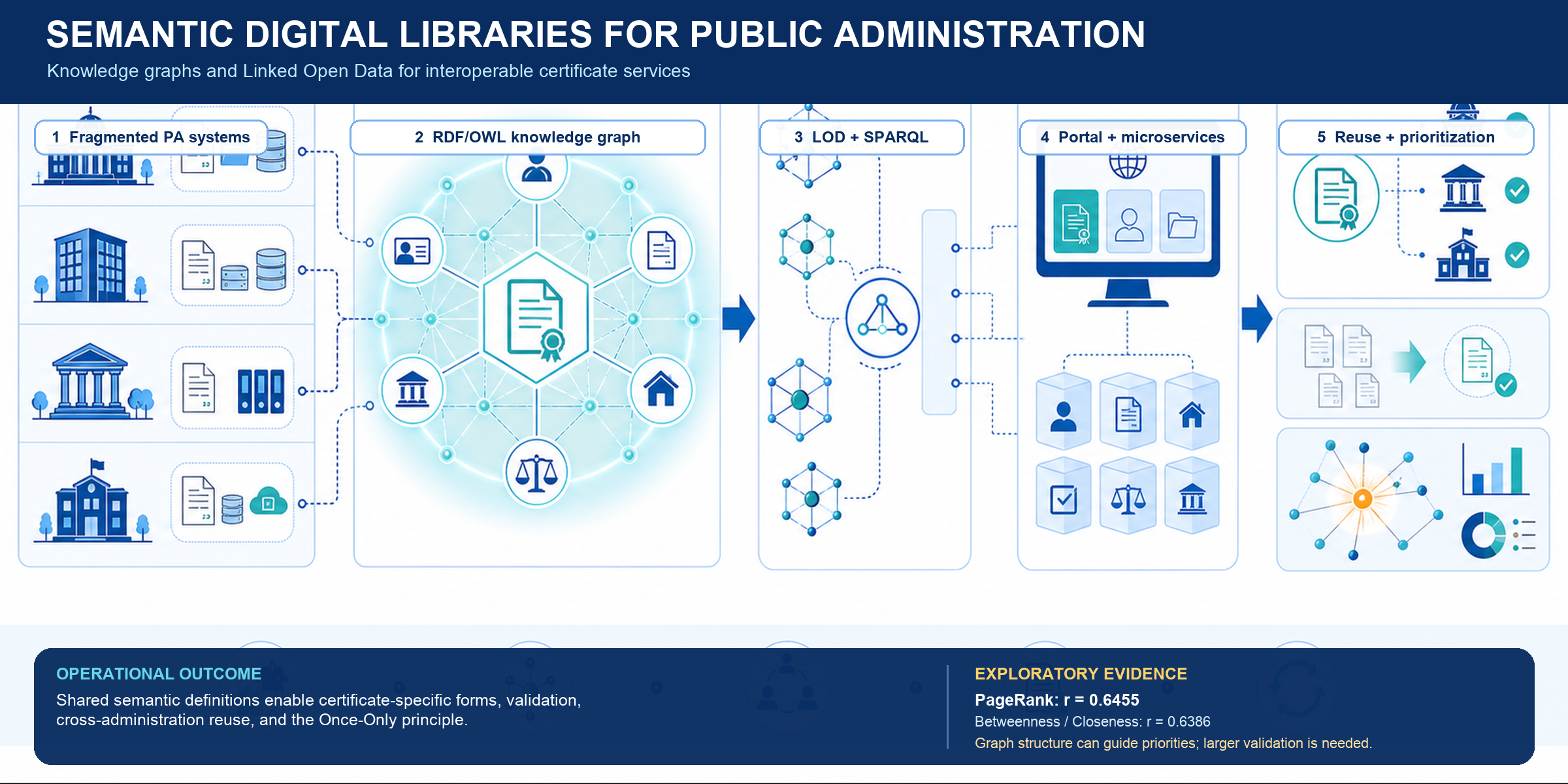
Certificate request procedures across public administrations (PAs) often depend on heterogeneous repositories, data models, and validation rules, thereby limiting interoperability and automation. This study presents a semantic digital library built on an RDF/OWL ontology and a knowledge graph representing certificates, administrative entities, required documents, attributes, dependencies, and processing rules. Linked Open Data and SPARQL interfaces extend the initially centralized model and connect it to certificate-management microservices. The resulting architecture enables distributed access to shared semantic definitions and supports the Once-Only principle. To inform implementation priorities, we compare five graph measures with certificate request volumes from the Italian National Resident Population Registry (ANPR). PageRank yields the highest observed correlation (r = 0.6455), narrowly exceeding Betweenness and Closeness Centrality (r = 0.6386). This result suggests that indirect structural dependencies may help identify high-priority services; however, the limited matched dataset makes the analysis exploratory. The framework provides a foundation for interoperable certificate services and future integration with national semantic infrastructures such as SCHEMA.gov.it.
Keywords:
semantic digital libraries
; knowledge graphs
; public administration services
; certificate management systems
1. Introduction
Public administrations (PAs) manage certificates and administrative records through systems that often use heterogeneous data models and procedures. In Italy, this fragmentation extends across national, regional, and municipal authorities, complicating service delivery and compliance with the Digital Administration Code [1,2]. Consequently, citizens may be asked to resubmit information already held by another administration, while administrative staff must reconcile inconsistent requirements and document formats.
To address these limitations, we propose a semantic digital library for certificate management. A domain ontology and knowledge graph represent certificates, applicants, issuing authorities, required documents, attributes, dependencies, and validation rules. Linked Open Data (LOD) and SPARQL interfaces extend this model, enabling cooperating administrations and dedicated microservices to share and reuse semantic definitions [3,4]. The approach supports the Once-Only principle by enabling administrative information to be discovered and reused instead of repeatedly collected from citizens.
The framework involves three principal actors: citizens who submit requests, issuing PAs responsible for producing the requested certificates, and cooperating PAs that hold information or documents required by the issuing authority. A citizen-facing portal queries the semantic model to determine the fields and supporting documents required for a selected certificate and then creates a structured request for validation and processing by dedicated microservices. The ontology thus serves as a shared contract among portals, administrations, and services, rather than as a repository of operational citizen data. The framework is also designed to align with national semantic initiatives such as SCHEMA.gov.it.
The paper makes three contributions:
- 1.
- a domain ontology and knowledge graph that provide a unified representation of certificate-management entities, relationships, dependencies, and administrative responsibilities;
- 2.
- a distributed LOD and microservice architecture that operationalizes the semantic model across organizational boundaries; and
- 3.
- an empirical method that compares graph-centrality measures with ANPR certificate-request volumes to inform microservice implementation priorities [5].
1.1. Related Work
Knowledge graphs have been applied in digital libraries to integrate heterogeneous resources, improve retrieval, and connect scholarly artifacts [6,7,8,9]. Ontology-based infrastructures likewise support metadata interoperability and structured knowledge organization [10,11,12,13]. Although this literature demonstrates the value of semantic representation, it does not jointly address certificate dependencies, cross-administration service orchestration, and implementation priorities derived from observed demand. Our approach connects these concerns by combining a certificate ontology, a distributed LOD architecture, and an empirical graph analysis.
2. Semantic Model and Ontology
The semantic model captures administrative entities, relationships, attributes, and procedural dependencies in a shared, machine-readable form.
2.1. Implementation Framework
The implementation follows RDF and OWL standards [14,15]. WebVOWL supports ontology design, OnToology supports publication, RDFLib loads and serializes the graph, NetworkX provides traversal and centrality analysis, and Pyvis enables interactive inspection [16,17,18,19,20]. Together, these tools form a processing pipeline: the ontology defines the domain vocabulary; configuration data associate certificate types with relevant concepts; RDFLib creates the graph representation; NetworkX analyzes its structure; and Pyvis exposes the resulting paths for inspection. The tools were selected for their standards compliance, maintainability, and compatibility with a Python-based implementation. Configuration tables allow PA staff to update certificate requirements without changing the application code.
2.2. Building the Knowledge Graph
The construction pipeline assigns ontology publication, RDF loading, graph analysis, and visualization to specialized components rather than relying on a single framework such as Apache Jena [21]. Ontology design begins with the identification of the relevant resources, relationships, and attributes. The principal OWL classes are as follows:
- Entity (entity name = "Ente"): represents an organization involved in a certificate procedure and can be specialized as a Public Administration or Private Entity (entity name = "Ente Privato").
- Certificate Request (entity name = "Richiesta di Certificato"): the administrative procedure initiated by an applicant and managed by a specific PA. It contains request-specific information such as the request date, purpose, and responsible administration.
- Certificate (entity name = "Certificato"): the document issued as the outcome of a request or required as supporting evidence. Specialized certificate classes, such as certificates for non-EU citizens or minors, introduce attributes and rules that apply only to those cases.
- Requesting Group (entity name = "Gruppo Richiedenti"): represents multiple individuals associated with the same certificate request.
- Requester (entity name = "Richiedente"): represents the individual to whom a certificate request relates.
- Company (entity name = "Azienda"): represents a company associated with a requester or with a company-related certificate procedure.
- Property (entity name = "Immobile"): represents a property associated with a requester or a property-related certificate procedure.
- Address (entity name = "Indirizzo"): specialized as domicile, residence, company, entity, or property address.
Figure 1.
Core classes and relationships in the certificate-management ontology.
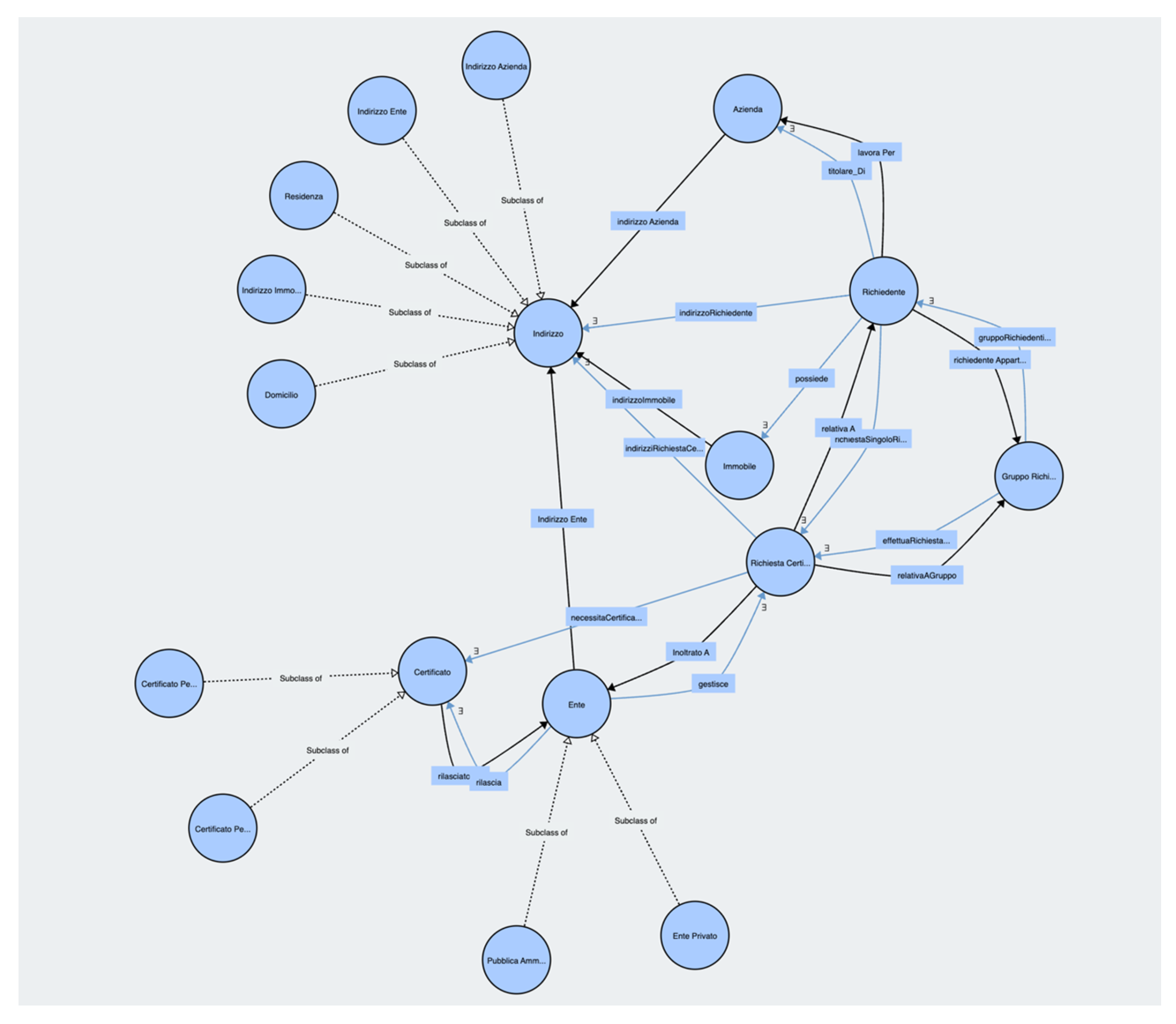
The graph follows the RDF subject–predicate–object model. For example, a PA manages one or more certificate requests, while each request is linked to its requester, relevant attributes, required documents, and issuing organizations. Requests involving several individuals are represented through an intermediate requesting-group entity. A navigation path therefore specifies both the related concepts and the sequence in which the system must inspect them. When a certificate type is selected, the rule engine follows the corresponding path and extracts only the entities and attributes required for that procedure. The portal can consequently generate a certificate-specific form without exposing the entire domain model to the user.
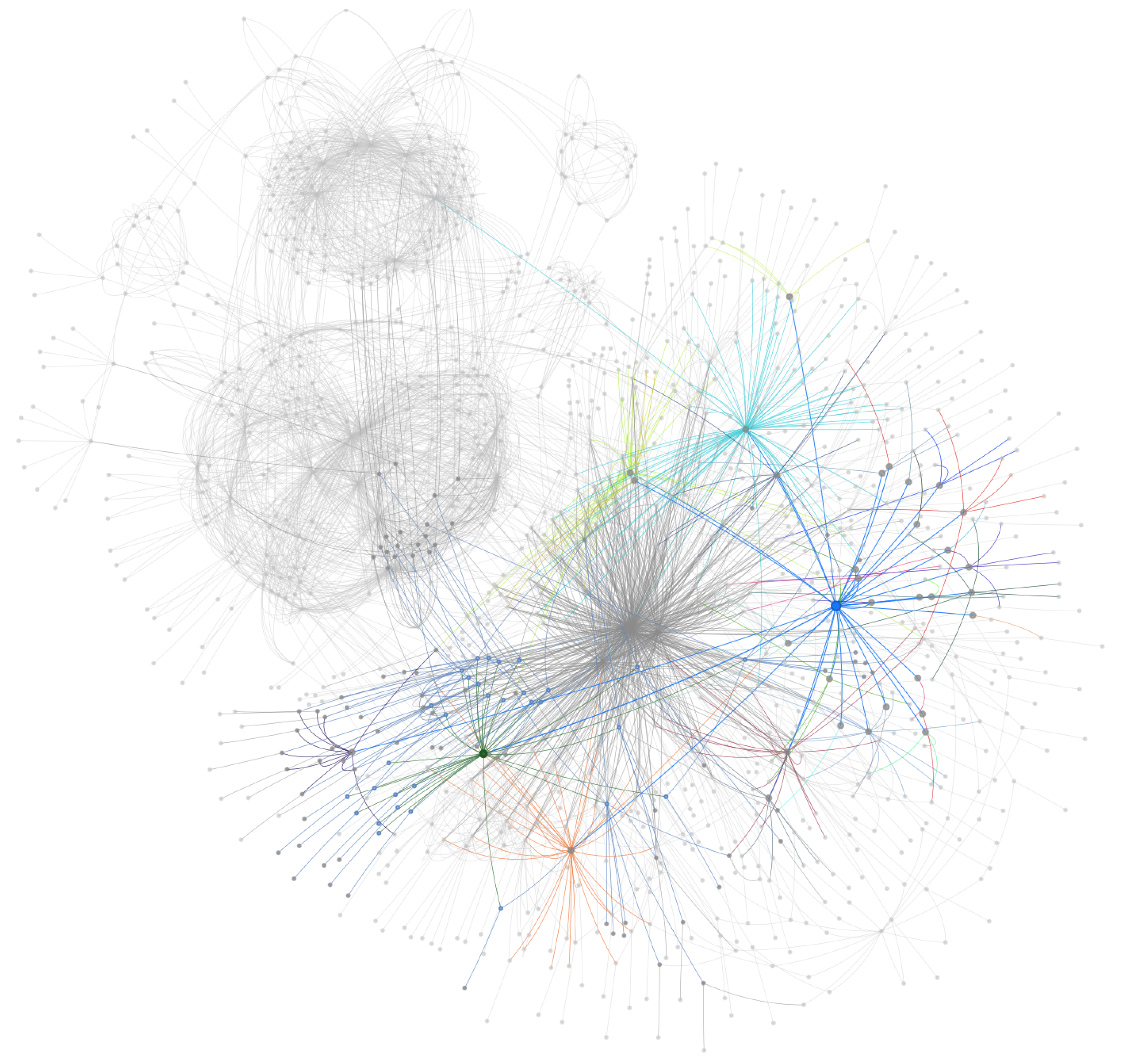
The ontology is serialized in Turtle and published through a persistent URI [22,23]. Two configuration tables complement the ontology. The first associates certificate types with the PAs that manage them; the second specifies the entities, attributes, supporting documents, and navigation rules for each certificate type. The evaluated dataset contains 106 certificate types and 2,560 entity–attribute associations. During ingestion, these records are converted into RDF statements and linked to the appropriate ontology classes. RDFLib constructs the graph, NetworkX supports traversal and structural analysis, and Pyvis generates the interactive representation.
Figure 2.
Interactive knowledge graph showing public administrations and their certificate catalogs.
Figure 2.
Interactive knowledge graph showing public administrations and their certificate catalogs.
2.3. Use Case: Residence Certificate
A municipal residence-certificate request illustrates the navigation process. The portal first selects a municipality and retrieves the certificate types managed by that administration. Once the residence certificate is selected, the graph identifies the relevant CertificateRequest, MandatoryCertificate, Requester, and Residence entities. The associated path determines which request metadata, applicant details, address fields, and supporting documents must be collected or retrieved. The resulting subgraph supports both form generation and completeness validation. The same procedure applies to more complex cases, such as an INPS income-support registration certificate, for which the graph also connects company and employment-contract information [24].
Figure 3.
Selection of a residence-certificate request and its semantically related entities.
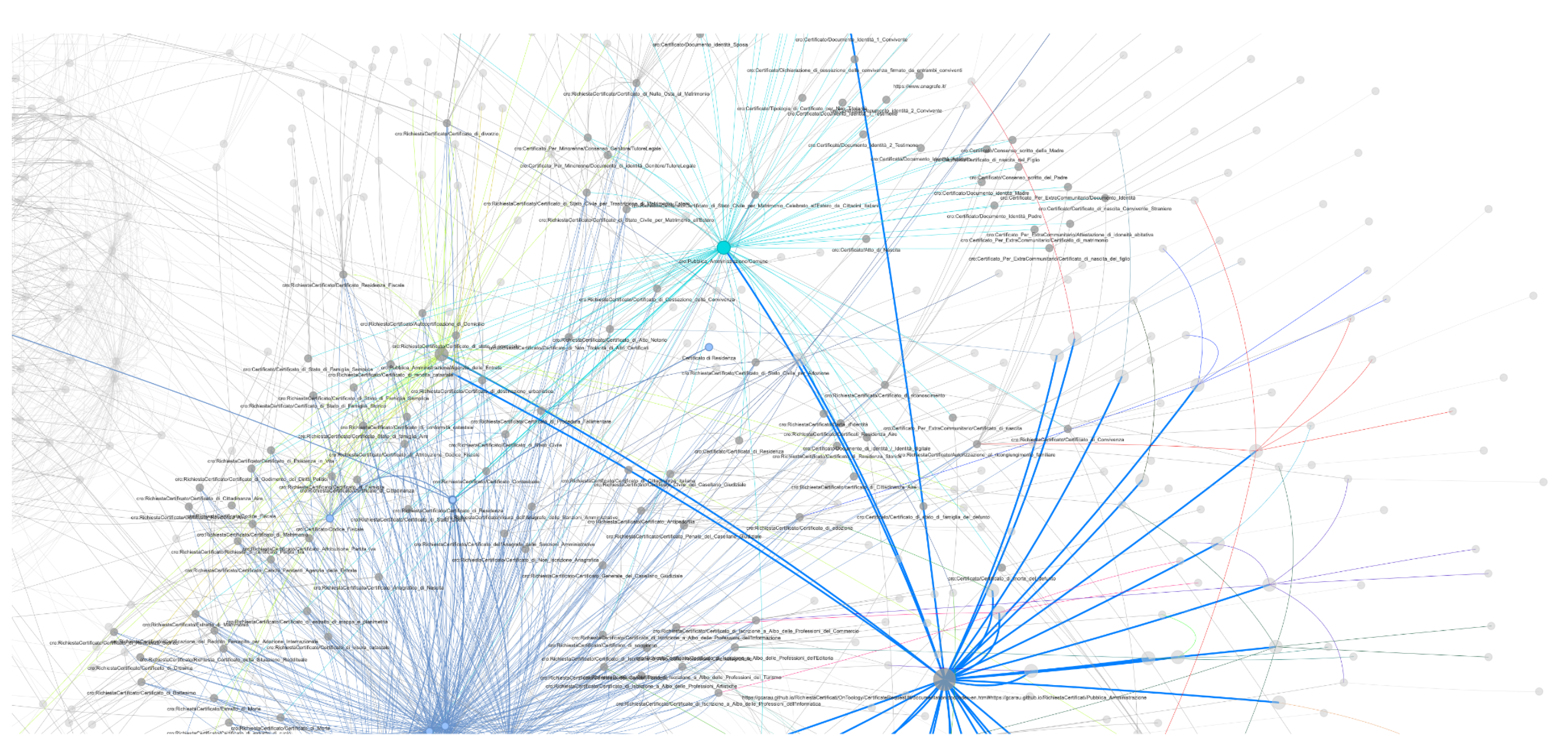
This example shows how a certificate-specific subgraph can replace multiple manual lookups with a consistent, ontology-driven traversal.
3. LOD Architecture and Microservices
3.1. LOD Architecture
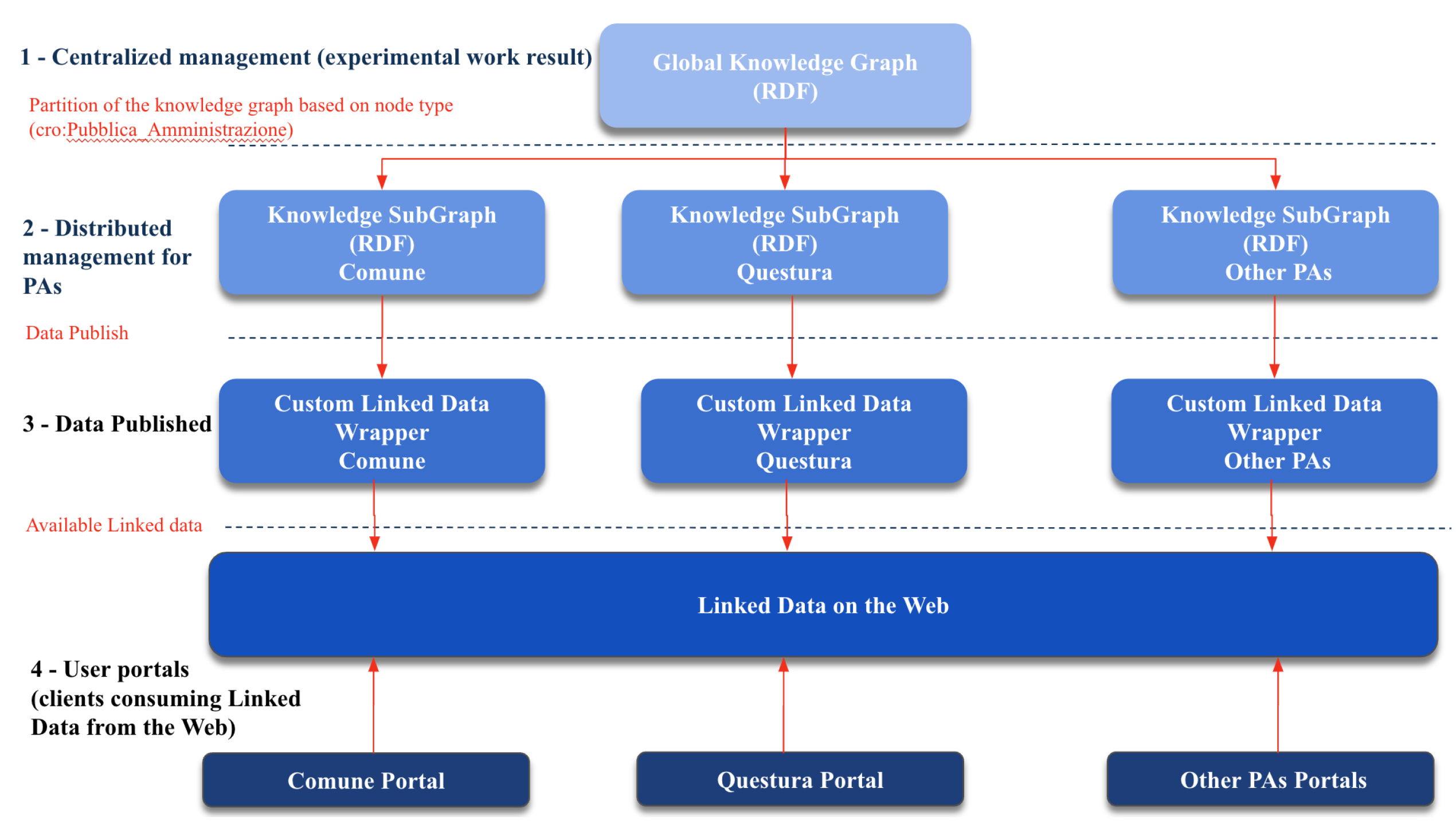
The centralized graph is partitioned into domain-specific subgraphs governed by individual PAs while retaining shared ontologies and globally identifiable resources. Each administration can therefore maintain the portion for which it is responsible, while common classes and properties preserve consistent interpretations across organizational boundaries. The subgraphs are published through LOD interfaces and queried through SPARQL endpoints [25]. Because shared URIs identify the resources, queries can traverse links between administrative domains without requiring all datasets to be copied into a single repository. This arrangement supports distributed governance while maintaining semantic consistency and provides a path toward integration with SCHEMA.gov.it [26].
Custom Linked Data wrappers provide controlled interfaces between PA subgraphs and their consumers. Rather than exposing an entire internal graph, each wrapper returns only the semantic metadata required by a requesting portal or service, including certificate definitions, dependencies, and validation constraints. In the proposed deployment, OpenID Connect and OAuth 2.0 protect these interfaces, while TLS secures data in transit. Authentication establishes the identity of the requesting application, whereas authorization determines which graph resources and operations it may access. These mechanisms complement the access-control and data-protection policies of each participating administration.
Figure 4.
Transformation of the centralized knowledge graph into distributed Linked Data resources.
3.2. Microservices Architecture
As shown in Figure 5, processing comprises two stages. First, a portal queries the semantic library to retrieve the structure, dependencies, and validation rules of a certificate request. This stage produces a request whose fields and supporting documents conform to the shared ontology. Second, the portal forwards the structured request to a dedicated microservice, which checks it against the semantic constraints and, upon successful validation, interacts with the operational data sources of the relevant administration. This separation keeps domain definitions in the shared semantic layer while allowing execution services and operational systems to evolve independently [27].
The architecture facilitates the reuse of verified administrative information and thereby supports the Once-Only principle. When an authorized administration already holds a required item, the semantic model can identify its source and specify how the requesting service should obtain it, avoiding a further submission by the citizen. Graph-derived priorities can also guide the implementation order of certificate microservices and shared attributes [28].
4. Empirical Validation
4.1. Method
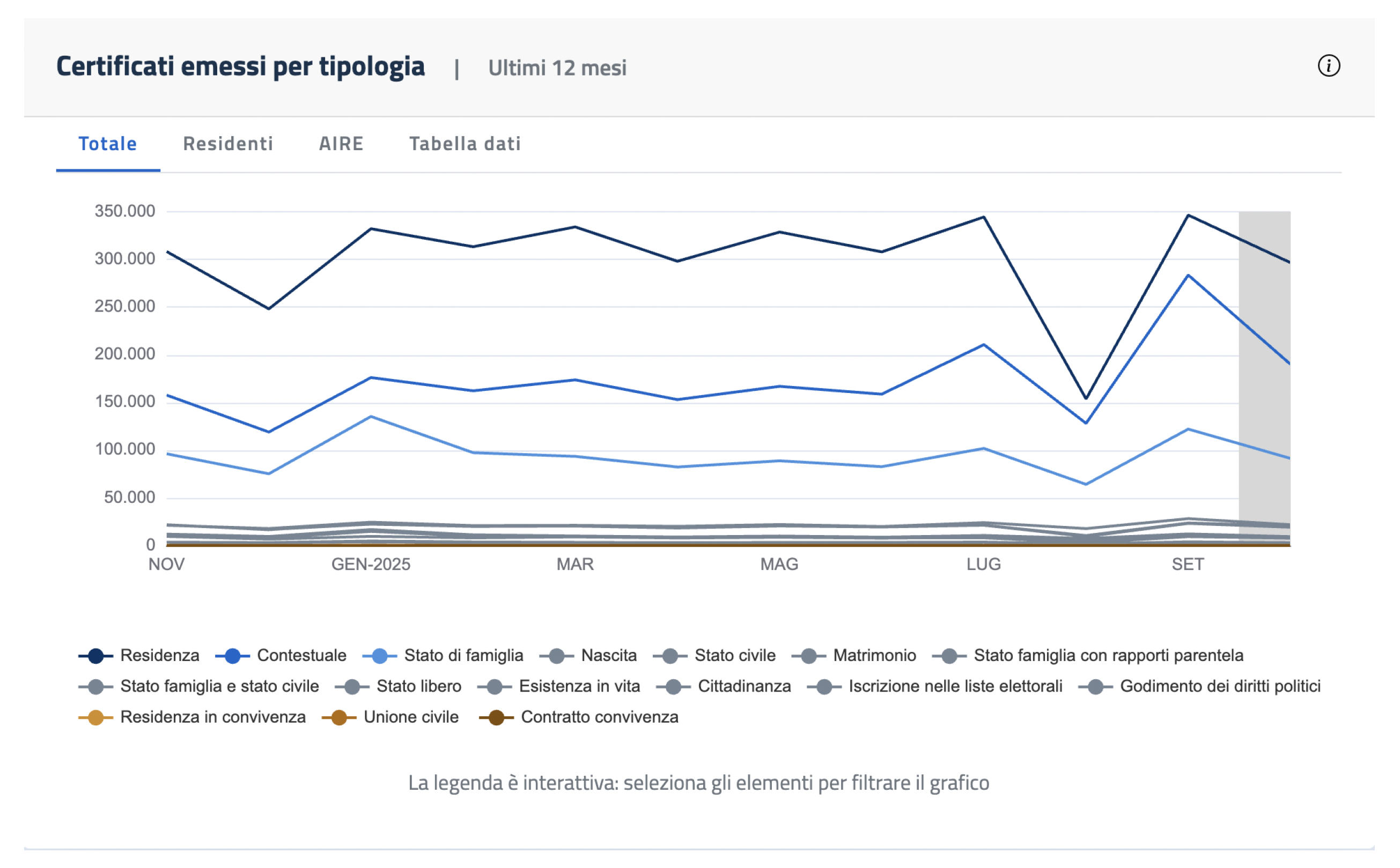
The analysis examines whether structural importance in the certificate knowledge graph is associated with observed certificate demand. Request volumes from the Italian National Resident Population Registry (ANPR) provide the empirical benchmark [5]. Certificate types represented in both the knowledge graph and the ANPR data are matched to form paired observations, each consisting of a graph score and the corresponding request volume. Because the available ANPR certificate types cover only a subset of the ontology, the analysis is exploratory rather than a comprehensive validation of the domain.
Figure 6.
ANPR certificate volumes used as the empirical benchmark.
Degree, Betweenness, Closeness, Eigenvector Centrality, and PageRank were computed for the corresponding certificate nodes. Degree measures direct connectivity; Betweenness identifies nodes that frequently lie on paths between other nodes; Closeness measures a node’s proximity to the rest of the graph; Eigenvector Centrality gives greater weight to connections with influential nodes; and PageRank estimates the probability of reaching a node through repeated navigation [29,30,31]. Pearson’s correlation coefficient was then calculated between each centrality score and the observed request volume. A positive coefficient indicates that higher structural scores tend to be associated with higher request volumes, whereas a coefficient near zero indicates little linear association.
4.2. Results and Interpretation
Table 1 summarizes the results. All five coefficients are positive, indicating a general association between structural prominence and observed demand in the matched data. PageRank has the highest coefficient (), although its advantage over Betweenness and Closeness ( for both) is small. PageRank is therefore the leading candidate for this dataset, but the results do not establish its conclusive superiority over the alternatives.
Figure 7.
Relationship between PageRank scores and ANPR certificate volumes.
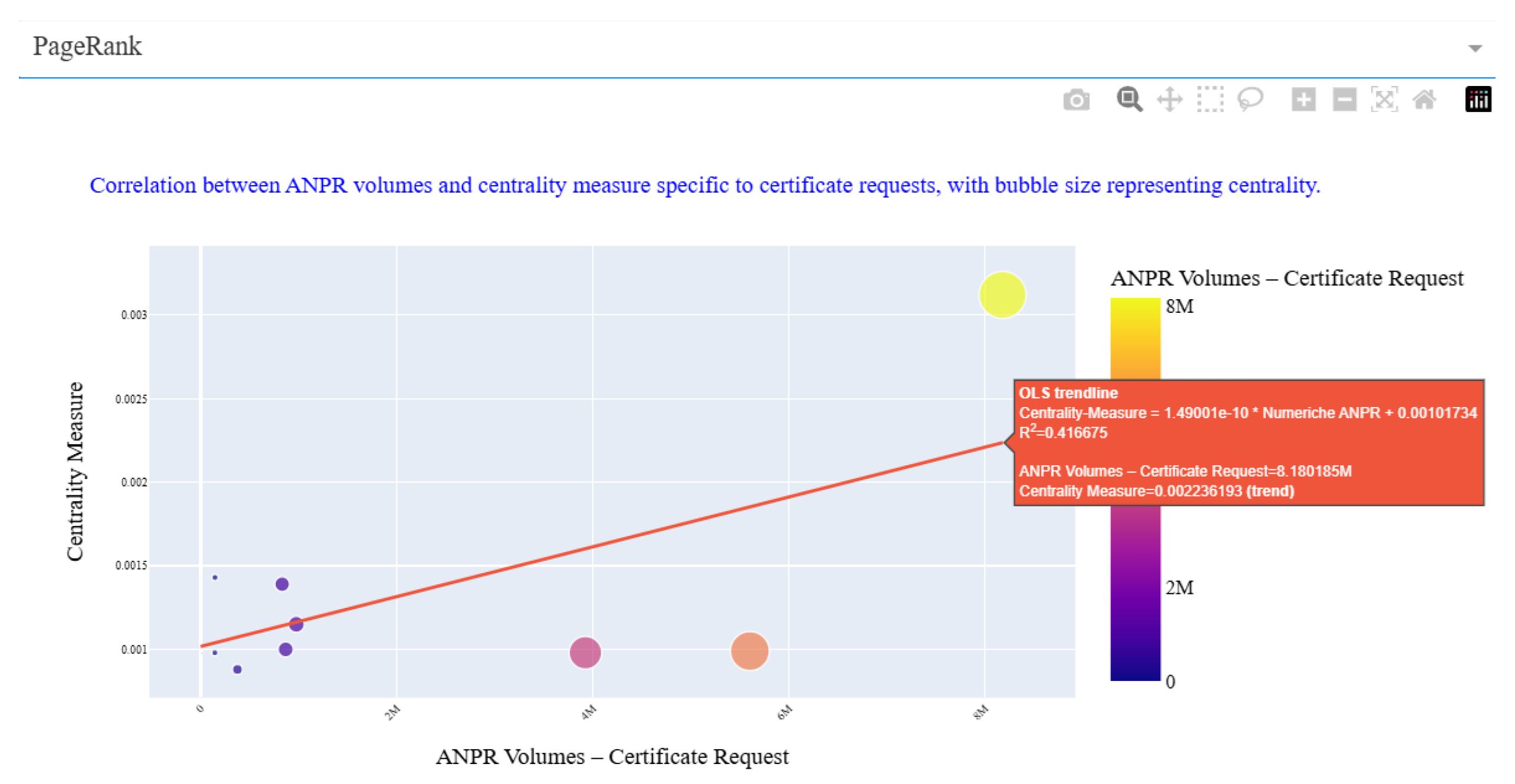
The observed pattern suggests that demand may reflect both direct and indirect dependencies in administrative workflows. A certificate can receive a high PageRank score not only through numerous direct links, but also through connections to other structurally important elements. PageRank can therefore contribute to implementation planning: highly ranked certificates and their shared attributes are candidates for early automation because they may support several related workflows. Nevertheless, prioritization should also account for implementation costs, legal constraints, service criticality, and uncertainty in the empirical estimates.
The analysis has three important limitations. First, the ANPR sample covers fewer certificate types than the complete knowledge graph. Second, correlation does not establish that graph position causes demand. Third, the analysis does not include confidence intervals or hypothesis tests; consequently, small differences between measures should not be overinterpreted. Future evaluations should use a larger matched sample, quantify statistical uncertainty, test sensitivity to graph direction and edge weighting, and validate the ranking through pilot deployments.
4.3. Expected Operational Benefits
The framework is intended to reduce repeated data submission, manual verification, and inconsistent interpretations of certificate requirements. The shared semantic model makes requirements explicit, while graph navigation identifies information that may already be available from cooperating administrations. These benefits remain prospective because the framework has not yet been evaluated at scale. Pilot deployments should therefore compare the semantic workflow with existing procedures using indicators such as request-processing time, repeated document submissions, operator workload, completion and error rates, implementation costs, and citizen satisfaction.
5. Conclusion
This study presents a semantic digital library for certificate management across public administrations. Its ontology and knowledge graph provide a shared representation of certificates, dependencies, administrative responsibilities, and validation rules, while LOD interfaces and microservices separate semantic knowledge from service execution.
The exploratory comparison with ANPR request volumes identifies PageRank as the graph measure with the highest correlation in the available sample, although its margin over Betweenness and Closeness Centrality is small. Graph position can therefore inform service prioritization, but it should be considered alongside cost, legal, operational, and service-criticality criteria.
The principal limitation is the restricted overlap between the ANPR observations and the complete certificate ontology. Future work will evaluate the framework through pilot deployments, quantify its operational benefits, test the stability of the centrality rankings, and examine its integration with SCHEMA.gov.it and other public-service domains.
References
- (n.d.). Codice Amministrazione Digitale., 2023.
- (n.d.). Decreto Legislativo 7 marzo 2005, n. 82., 2023.
- (n.d.). Linked Open Data., 2023.
- Lee, T.B. The Semantic Web. w3C., 2023. [CrossRef]
- (n.d.). ANPR – Anagrafe Nazionale della Popolazione Residente, Statistiche sui certificati digitali, Ministero dell’Interno, Roma, 2024.
- Haslhofer, B.; Isaac, A.; Simon, R. Knowledge Graphs in the Libraries and Digital Humanities Domain. Encycl. Big Data Technol. 2018, 1–8. [Google Scholar] [CrossRef]
- Ebeid, I.A.; Pierce, E. MedGraph: An experimental semantic information retrieval method using knowledge graph embedding for the biomedical citations indexed in PubMed. arXiv 2021, arXiv:2112.06348. [Google Scholar] [CrossRef]
- Xu, J.; Yu, C.; Xu, J.; Ding, Y.; Torvik, V.I.; Kang, J.; Sung, M.; Song, M. PubMed knowledge graph 2.0: Connecting papers, patents, and clinical trials in biomedical science. arXiv 2024, arXiv:2410.07969. [Google Scholar] [CrossRef]
- Limani, I.; Lahti, L.; Toivonen, H. Scholarly Artifacts Knowledge Graph: Use Cases for Digital Libraries. In Proceedings of the Metadata and Semantic Research: 15th International Conference, MTSR 2021, Virtual Event, November 29–December 3, 2021, Revised Selected Papers; Springer, 2021; pp. 3–14. [Google Scholar] [CrossRef]
- Ferilli, S.; Redavid, D. An Ontology and Knowledge Graph Infrastructure for Digital Library Knowledge Representation. Proceedings of the Proceedings of the 1st International Workshop on Open Data and Ontologies for Cultural Heritage (ODOCH-2019) 2020, Vol. 2375, 49–60. [Google Scholar]
- Kruk, S.R.; Synak, M.; Zimmermann, K. MarcOnt–Integration Ontology for Bibliographic Description Formats. In Proceedings of the Proceedings of the International Conference on Dublin Core and Metadata Applications, 2005; pp. 231–234. [Google Scholar]
- Soergel, D. Digital Libraries and Knowledge Organization. In Semantic Digital Libraries; Springer, 2009; pp. 9–39. [Google Scholar] [CrossRef]
- Ferro, N.; Crestani, F. Digital Libraries: Providing Quality Information; Vol. 9469, Lecture Notes in Computer Science; Springer, 2015. [Google Scholar] [CrossRef]
- (n.d.). Web Ontology Language (OWL)., 2023. n.d.
- (n.d.). Resource Description Framework (RDF)., 2023.
- (n.d.). WebVOWL (Web-based Visualization of Ontologies)., 2023.
- (n.d.). Using OnToology: Tutorial., 2023.
- (n.d.). Getting started with RDFLib., 2023.
- (n.d.). Tutorial — NetworkX 3.2 documentation., 2023.
- (n.d.). Documentation — pyvis 0.1.3.1 documentation., 2023.
- (n.d.). Apache Jena - Home., 2023.
- (n.d.). RDF 1.2 Turtle., 2023. n.d.
- (n.d.). Universal Resource identifiers in WWW., 2023.
- (n.d.). Portale Inps - Home., 2023.
- (n.d.). SPARQL Query Language for RDF - Formal Definitions., 2023.
- Italian National Catalogue for Data and Information Exchange among Public Administrations. Italian National Catalogue for Data and Information Exchange among Public Administrations. https://schema.gov.it/, n.d. Accessed: 2025-10-26.
- (n.d.). Microservices, 2023.
- (n.d.). Elenco delle Amministrazioni - SIOPE, 2023.
- Bonacich, P. Power and centrality: A family of measures. Am. J. Sociol. 1987, 92, 1170–1182. [Google Scholar] [CrossRef] [PubMed]
- Newman, M.E.J. A measure of betweenness centrality based on random walks. Soc. Netw. 2005, 27, 39–54. [Google Scholar] [CrossRef]
- Page, L.; Brin, S.; Motwani, R.; Winograd, T. The PageRank citation ranking: Bringing order to the web. Technical report, Stanford InfoLab, 1999.
Figure 5.
Portal interaction with the semantic library (1) and certificate-management microservices (2).
Figure 5.
Portal interaction with the semantic library (1) and certificate-management microservices (2).
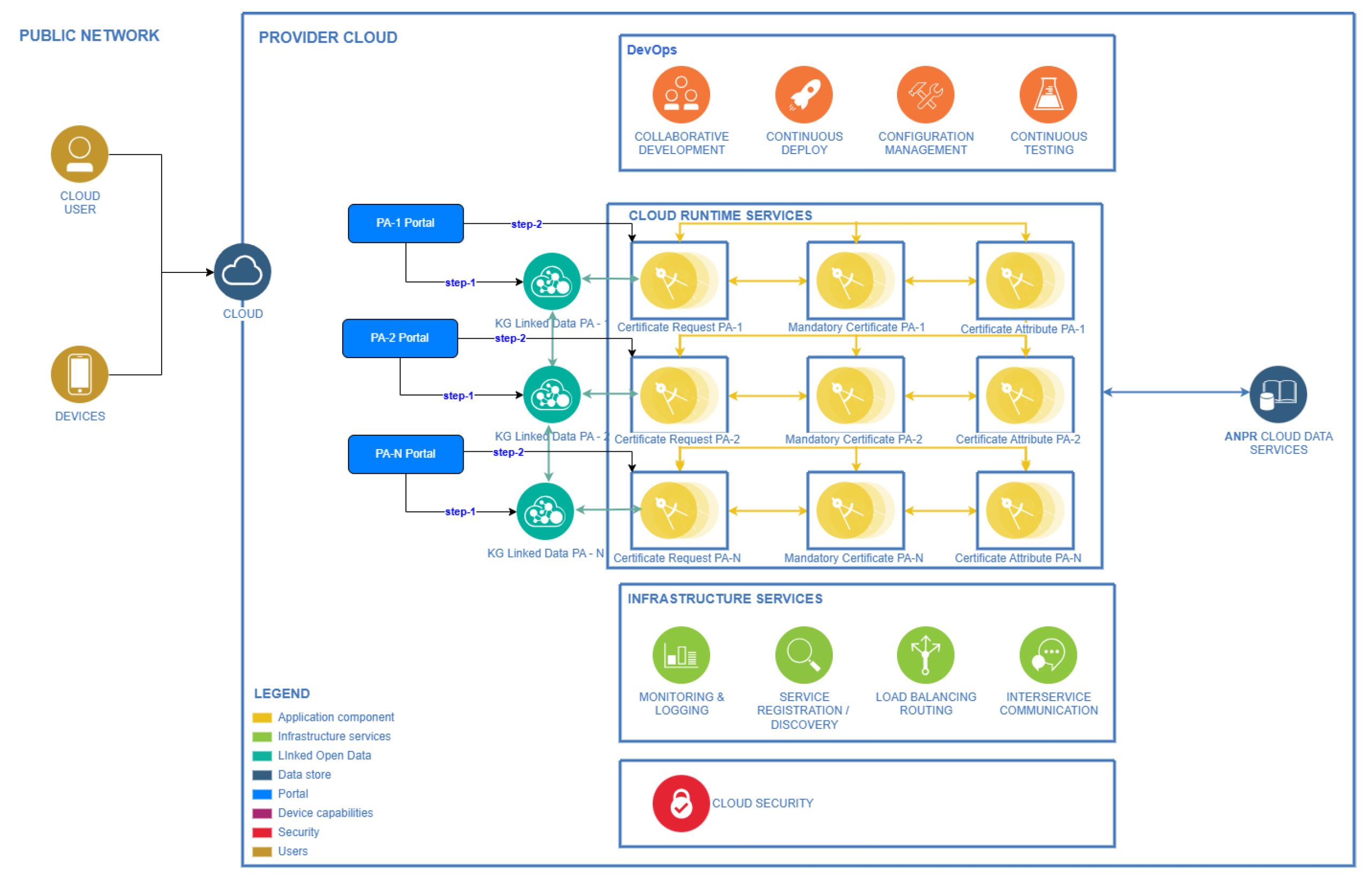

Table 1.
Pearson correlations between graph measures and ANPR request volumes.
| Measure | Correlation with ANPR volumes |
|---|---|
| PageRank | 0.6455 |
| Betweenness Centrality | 0.6386 |
| Closeness Centrality | 0.6386 |
| Degree Centrality | 0.5948 |
| Eigenvector Centrality | 0.2933 |
Disclaimer/Publisher’s Note: The statements, opinions and data contained in all publications are solely those of the individual author(s) and contributor(s) and not of MDPI and/or the editor(s). MDPI and/or the editor(s) disclaim responsibility for any injury to people or property resulting from any ideas, methods, instructions or products referred to in the content. |
© 2026 by the authors. Licensee MDPI, Basel, Switzerland. This article is an open access article distributed under the terms and conditions of the Creative Commons Attribution (CC BY) license (http://creativecommons.org/licenses/by/4.0/).
Copyright: This open access article is published under a Creative Commons CC BY 4.0 license, which permit the free download, distribution, and reuse, provided that the author and preprint are cited in any reuse.