

Submitted:
04 August 2026
Posted:
12 August 2026
You are already at the latest version
Abstract
Introduction: Clinical Associates were introduced into South Africa's district health system to strengthen healthcare delivery through task sharing, particularly in underserved rural settings. Their effectiveness depends on appropriate supervision by medical practitioners. However, the workforce shortages that necessitate task sharing may simultaneously constrain clinicians' capacity to provide effective supervision. This study explored how pressures within rural health systems shape the supervision of Clinical Associates in district hospitals. Methods: A qualitative descriptive study was conducted among eight medical practitioners supervising Clinical Associates in rural district hospitals in the O.R Tambo District, Eastern Cape, South Africa. Participants were recruited through hospital management and professional networks. Semi-structured interviews were conducted online in English, audio-recorded with informed consent, transcribed verbatim, and thematically analysed using Braun and Clarke's six-phase approach. The Contextual, Operational, Analytical, Transformational, and Synthesis (COATS) framework informed data collection and provided a deductive analytical lens, complemented by inductive coding to identify emerging themes. Results: Clinical Associate supervision occurred within resource-constrained facilities characterized by workforce shortages, high patient volumes, broad service demands, and limited supervisory capacity. Supervising clinicians described balancing supervisory responsibilities alongside demanding clinical, administrative, and governance roles. Consequently, supervision was predominantly informal, reactive, and accessibility-based rather than continuously direct or structured. Experienced Clinical Associates frequently managed routine clinical care independently and sought medical support when faced with diagnostic uncertainty or cases requiring escalation. This pragmatic supervision model enhanced service delivery but relied heavily on trust, professional judgment, supervisor accessibility, and Clinical Associates' ability to recognize their own limitations. Conclusion: The realities of rural health systems intrinsically shape Clinical Associate supervision. Supervision models based on assumptions of adequate staffing and continuous medical oversight are unlikely to be sustainable in resource-constrained district hospitals. Policies should support context-responsive supervision by combining accessible clinical support with structured escalation pathways, periodic case review, developmental feedback, and clinical governance mechanisms to strengthen patient safety, workforce sustainability, and quality of care.
Keywords:
clinical associates
; clinical supervision
; task sharing
; rural health systems
; district hospitals
; qualitative research
; clinical governance
; South Africa
1. Introduction
South Africa has experienced persistent health workforce shortages, particularly in rural and underserved areas, where inequitable distribution of healthcare professionals continues to constrain access to quality healthcare. During the mid-2000s, these workforce challenges coincided with increasing demands on the public health system arising from the dual burden of communicable diseases, including HIV and tuberculosis, and the growing prevalence of non-communicable diseases [1,2]. Together, these pressures contributed to overcrowded health facilities, prolonged waiting times, excessive clinician workloads, and compromised quality of care. Rural district hospitals were particularly affected because of chronic shortages of medical practitioners and other skilled healthcare professionals [3]. Recognizing that health workforce shortages represented a global challenge, the World Health Organization (WHO) recommended task shifting as an evidence-informed strategy to improve access to healthcare in resource-constrained settings [4]. Task shifting involves the rational redistribution of selected clinical responsibilities from highly qualified healthcare professionals to appropriately trained mid-level healthcare workers, enabling health systems to optimize available human resources while maintaining quality and continuity of care. In response, the South African National Department of Health introduced the Clinical Associate (Clinical associate) profession in 2008 as a key component of its national task-sharing strategy to strengthen service delivery, particularly within district hospitals and underserved communities [3]. The profession was established through collaboration between the National Department of Health, universities, professional councils, and other stakeholders. Walter Sisulu University, the University of Pretoria, and the University of the Witwatersrand jointly developed a standardised three-year Bachelor of Clinical Medical Practice (BCMP) programme to prepare Clinical Associates for practice in district hospitals, primary healthcare facilities, and emergency care settings [5]. As the profession evolved, a clearly defined regulatory framework became necessary to ensure consistency, professional accountability, and legal clarity. Consequently, the National Department of Health formally approved the Regulations Defining the Scope of Practice of Clinical Associates in 2016, establishing the professional responsibilities, clinical boundaries, and governance arrangements for Clinical Associates within the South African health system [6]. A central component of these regulations is the requirement that Clinical Associates practice under the supervision of a registered medical practitioner, who retains overall clinical responsibility for delegated care.
Figure 1.
Illustrates the regulatory supervision pathway for Clinical Associates as outlined in the 2016 Scope of Practice Regulations.
Figure 1.
Illustrates the regulatory supervision pathway for Clinical Associates as outlined in the 2016 Scope of Practice Regulations.
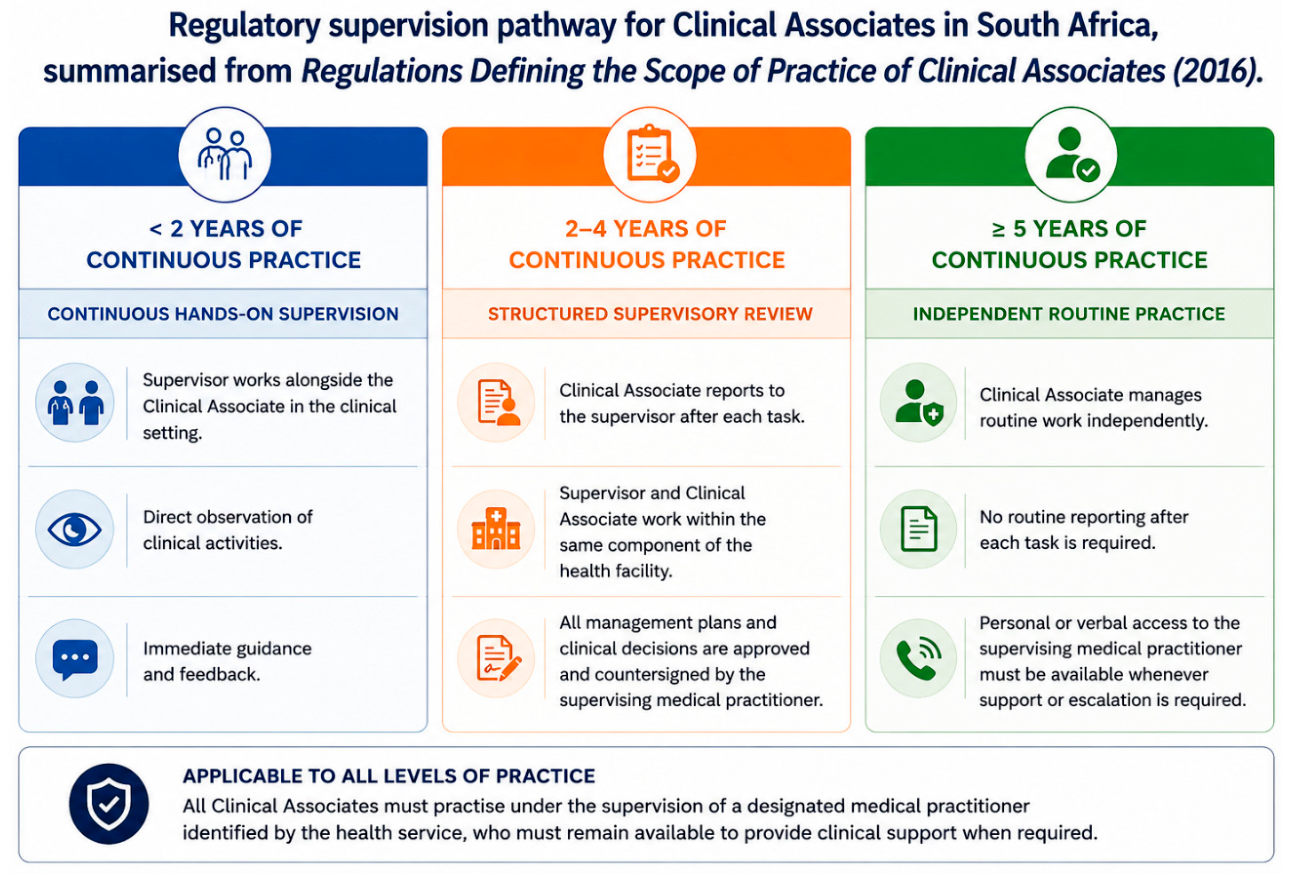
Although supervision is clearly defined within the regulatory framework, its implementation is strongly influenced by the realities of the health system in which it occurs. Staffing shortages, high patient volumes, competing clinical priorities, organizational capacity, and the availability of supervising clinicians all influence the feasibility, intensity, and quality of supervision. These challenges are particularly evident in rural district hospitals, where medical practitioners frequently balance emergency care, inpatient management, outpatient services, procedural work, administrative responsibilities, and clinical governance activities. Under such conditions, providing continuous supervision may be difficult despite regulatory expectations.
Previous South African studies have shown that Clinical Associate supervision varies considerably across healthcare settings and is shaped by workforce shortages, service demands, and organizational factors [7,8]. However, existing research has focused primarily on the experiences, roles, and competencies of Clinical Associates themselves, with relatively little attention given to the perspectives of supervising clinicians. Consequently, limited evidence exists on how rural health system pressures influence the day-to-day implementation of supervision and how supervising clinicians negotiate the competing demands of service delivery, clinical governance, and workforce development. To examine these issues, this study was informed by the Concepts and Opportunities to Advance Task Shifting and Task Sharing (COATS) framework, a systems-based framework for evaluating task-sharing interventions within complex health systems [9]. The COATS framework recognizes that successful task sharing depends not only on workforce competencies but also on the broader contextual, organizational, and health system environments in which implementation occurs. This study focuses on the Contextual and Operational domains of the framework to explore how pressures within rural health systems shape the supervision of Clinical Associates in South African district hospitals.
To examine how these contextual pressures influence the implementation of Clinical Associate supervision, this study was informed by the Concepts and Opportunities to Advance Task Shifting and Task Sharing (COATS) framework (Figure 2), a systems-based framework for evaluating task-shifting initiatives. [9]. This paper focuses on the Contextual and Operational domains of the framework.
2. Methods and Materials
2.1. Study Design
A qualitative descriptive study design was employed to explore supervising clinicians’ experiences of Clinical Associate supervision in rural district hospitals in South Africa. This design was appropriate because it enabled an in-depth exploration of participants’ perspectives and experiences while remaining closely grounded in the realities of clinical practice. It was particularly suited to examining how supervision is implemented within the complex operational environment of rural district hospitals, where workforce shortages, high patient volumes, and competing service demands shape everyday practice. The study was underpinned by an interpretivist paradigm, which assumes that individuals construct meaning through their experiences and interactions within specific social and organizational contexts. This approach enabled exploration of how supervising clinicians understood, negotiated, and enacted their supervisory responsibilities within resource-constrained health systems. Semi-structured interviews provided rich accounts of how formal supervision requirements intersected with staffing constraints, organizational processes, patient care demands, and the evolving role of Clinical associate’s in service delivery. The study was conceptually informed by the Concepts and Opportunities to Advance Task Shifting and Task Sharing (COATS) framework [9], which provided a systems-based lens for understanding supervision within the broader context of task sharing. The framework informed the development of the interview guide. It supported the interpretation of findings, particularly in relation to the Contextual and Operational domains, while allowing themes to emerge inductively from participants’ narratives.
2.2. Study Setting
The study was conducted in five rural district hospitals within the OR Tambo District, Eastern Cape Province, South Africa: Holy Cross Hospital (Flagstaff), Bambisana Hospital (Lusikisiki), Isilimela Hospital (Port St Johns), Nessie Knight Hospital (Qumbu), and St Lucy’s Hospital (Tsolo). These public sector hospitals serve predominantly rural and socioeconomically disadvantaged populations and provide comprehensive district-level healthcare services, including outpatient consultations, emergency and casualty care, inpatient services, maternity and neonatal care, paediatric services, theatre and surgical procedures, and referral-based healthcare.
Although the participating hospitals differed in size, staffing levels, patient volumes, and organizational structures, they operated within a common rural health system characterized by persistent workforce shortages, high disease burden, resource constraints, and broad service delivery responsibilities. Medical practitioners were required to balance direct clinical care with emergency services, inpatient management, clinical governance, administrative duties, and the supervision of junior healthcare professionals and Clinical Associates. Clinical Associates were integrated into multidisciplinary clinical teams across the participating hospitals and contributed to patient assessment, diagnosis, treatment, emergency care, and procedural services within their legislated scope of practice. In accordance with the Regulations Defining the Scope of Practice of Clinical Associates, they practiced under the supervision of registered medical practitioners, who retained overall clinical responsibility for delegated patient care. This rural health system context provided an appropriate setting for exploring how organizational pressures and workforce constraints influence the implementation of Clinical Associate supervision in routine clinical practice.
2.3. Participants and Recruitment
Participants were medical practitioners with direct experience supervising Clinical Associates in rural district hospitals within the OR Tambo District of the Eastern Cape Province, South Africa. Eligibility was restricted to clinicians who had actively supervised Clinical Associates as part of their routine clinical responsibilities. Medical practitioners without supervisory experience and other healthcare professionals were excluded from the study. Potential participants were identified through hospital management, clinical managers, and established professional networks. Eligible clinicians received an information sheet outlining the study objectives, procedures, voluntary nature of participation, and measures to ensure confidentiality. Those willing to participate provided written informed consent before data collection commenced.
A convenience sampling strategy was used to recruit information-rich participants with relevant supervisory experience across the participating district hospitals. Eight supervising clinicians participated in the study, including medical officers, senior medical officers, clinicians with delegated supervisory responsibilities, and clinicians occupying clinical management positions. Participants had diverse supervisory experience, ranging from several months to more than ten years, providing perspectives from both relatively new and highly experienced supervisors. Participant recruitment continued until sufficient information power was achieved, with interviews yielding recurring patterns and adequate depth to address the study objectives. The diversity of participants’ professional roles and supervisory experience enabled exploration of Clinical Associate supervision across different organizational and clinical contexts within rural district hospitals.
2.3.1. Inclusion Criteria
Participants were eligible for inclusion if they:
- Were registered medical practitioners employed at one of the selected rural district hospitals in the OR Tambo District, Eastern Cape Province.
- Had direct experience supervising Clinical Associates as part of their routine clinical responsibilities.
- Were willing and available to participate in a semi-structured interview.
- Provided written informed consent before participation.
2.3.2. Exclusion Criteria
Participants were excluded if they:
- Had no direct supervisory responsibilities involving Clinical Associates.
- Declined or were unable to provide written informed consent.
- Withdrew from the study before or during the interview process.
- Were unavailable to participate in or complete the interview during the study period.
2.4. Data Collection
Data were collected through semi-structured, in-depth interviews guided by the Concepts and Opportunities to Advance Task Shifting and Task Sharing (COATS) framework. [9]. The interview guide was developed to explore the contextual and operational domains of the framework, focusing on participants’ professional roles, characteristics of their clinical settings, experiences of supervising Clinical Associates, supervision practices, available supervisory resources, the feasibility of implementing formal supervision requirements, and the strategies adopted to manage supervision within resource-constrained rural health systems.
Before commencing the main study, the interview guide was pilot tested with two medical practitioners who met the study inclusion criteria but were not included in the final analysis. The pilot confirmed the overall relevance and clarity of the interview guide, identified the need to simplify one interview question to improve comprehension, and demonstrated that interviews of approximately 30–45 minutes were sufficient to address the study objectives. The pilot also highlighted the practical challenges of arranging face-to-face interviews within busy rural clinical settings, leading to the adoption of flexible scheduling and online interviews for the main study. Data generated during the pilot phase were excluded from the final analysis. All interviews were conducted in English by the principal researcher using Microsoft Teams at mutually convenient times between the researcher and participants. Interviews lasted approximately 30–45 minutes and were audio-recorded using the Microsoft Teams recording function after participants had provided written informed consent. The same semi-structured interview guide was used throughout the study to ensure consistency across interviews, while allowing sufficient flexibility for participants to elaborate on their experiences. Probing and follow-up questions were used where appropriate to clarify responses and explore emerging issues in greater depth. Audio recordings were transcribed verbatim, anonymized by removing identifying information, and checked against the original recordings to ensure transcription accuracy before analysis.
2.5. Data Analysis
Interview transcripts were analyzed using reflexive thematic analysis following the six-phase approach described by Braun and Clarke. This iterative process comprised: (1) familiarisation with the data through repeated reading of the transcripts; (2) generation of initial codes; (3) development of candidate themes; (4) review and refinement of themes; (5) definition and naming of themes; and (6) production of the final analytical narrative. The analysis combined inductive and deductive approaches. Inductive coding enabled themes to emerge directly from participants’ accounts without imposing predetermined categories, while the Concepts and Opportunities to Advance Task Shifting and Task Sharing (COATS) framework. [9] provided a deductive analytical lens for organizing and interpreting the findings within a health systems perspective.
Consistent with the study objectives, the analysis focused on the Contextual and Operational domains of the COATS framework. Contextual analysis explored how organizational and health system factors, including workforce shortages, patient volumes, service demands, and supervisory capacity, shaped the supervision of Clinical Associates. Operational analysis examined how supervision was implemented during routine clinical practice, including supervisory approaches, decision-making processes, communication, accessibility, and adaptations to resource-constrained environments.
Coding was undertaken manually by the principal researcher through repeated comparison of transcripts to identify recurring patterns, similarities, differences, and relationships across participants. Themes were developed iteratively through continuous movement between individual codes, emerging themes, and the complete dataset to ensure that interpretations accurately reflected participants’ experiences. To enhance analytical rigor and credibility, emerging codes and themes were discussed in peer debriefings with the research supervisor and co-supervisor, who critically reviewed the developing interpretations and challenged underlying assumptions. Final theme generation and interpretation remained the responsibility of the principal researcher, ensuring coherence among the data, the analytical process, and the study objectives.
2.6. Reflexivity
Reflexivity was maintained throughout all stages of the study to acknowledge how the researcher’s professional background and assumptions could influence data collection, analysis, and interpretation. The principal researcher is a Clinical Associate and lecturer in the Bachelor of Clinical Medical Practice (BCMP) programme at Walter Sisulu University. This position provided a comprehensive understanding of the Clinical Associate profession, the regulatory framework governing supervision, and the operational realities of rural district hospitals. At the same time, it required ongoing critical reflection to minimize the potential influence of prior knowledge and professional perspectives on the research process.
The researcher had no prior personal or supervisory relationship with any of the participants, reducing the likelihood that existing relationships would influence participants’ responses. Before commencing data collection, the researcher acknowledged an initial assumption that implementing formal Clinical Associate supervision in rural district hospitals might be constrained by workforce shortages, competing service demands, and limited supervisory capacity. Rather than treating this assumption as an analytical framework, it was recognized as a potential source of bias requiring continuous reflection throughout the study.
To enhance trustworthiness, interviews were conducted using open-ended, non-leading questions that encouraged participants to describe their experiences in their own words. A reflexive journal was maintained throughout data collection and analysis to document methodological decisions, emerging interpretations, and reflections on the researcher’s influence on the analytical process. Emerging codes, themes, and interpretations were regularly discussed with the research supervisor and co-supervisor through peer debriefing, thereby allowing assumptions to be challenged, alternative interpretations to be considered, and analytical credibility to be strengthened. Final interpretations remained grounded in participants’ accounts while acknowledging the researcher’s interpretive role.
2.7. Trustworthiness
The trustworthiness of the study was established using the criteria of credibility, dependability, confirmability, and transferability, as described by Lincoln and Guba.
Credibility was enhanced through a consistent semi-structured interview guide, prolonged engagement with the data, and the inclusion of verbatim quotations to illustrate participants’ perspectives. Credibility was further strengthened through peer debriefing with the research supervisor and co-supervisor, who critically reviewed emerging codes, themes, and interpretations throughout the analytical process.
Dependability was supported by maintaining a transparent and systematic account of the research process, including participant recruitment, data collection, transcription, coding, and theme development. The same core interview guide was used across all interviews to ensure consistency, while allowing sufficient flexibility to probe participants’ responses and explore emerging issues in greater depth.
Confirmability was promoted through reflexive practice, including maintaining a reflexive journal to document methodological decisions, analytical reflections, and potential researcher influences throughout the study. Emerging interpretations were discussed regularly with the research supervisor and co-supervisor to challenge assumptions and consider alternative explanations. Final themes and conclusions were grounded in participants’ accounts and supported by representative verbatim quotations.
Transferability was enhanced by providing a rich description of the study setting, participant characteristics, supervisory roles, and the organizational context of rural district hospitals. This detailed contextual information enables readers to assess the potential applicability of the findings to other resource-constrained healthcare settings where Clinical Associates or similar mid-level healthcare workers are supervised.
2.8. Institutional Review Board Statement
This study was conducted in accordance with the ethical principles of the Declaration of Helsinki. Ethical approval was obtained from the Walter Sisulu University Faculty of Medicine and Health Sciences Human Research Ethics Committee (Reference No. WSU HREC 052/2026; approved 23 April 2026). Administrative approval to conduct the study was granted by the Eastern Cape Department of Health (Reference No. EC_202604_030; approved 4 May 2026) prior to participant recruitment.
2.9. Patient and Public Involvement
Patients and members of the public were not involved in the design, conduct, analysis, reporting, or dissemination of this study because the research focused specifically on the experiences of medical practitioners supervising Clinical Associates within rural district hospitals. Nevertheless, the findings have direct relevance for healthcare delivery and workforce development in rural health systems. Future research should incorporate the perspectives of Clinical Associates, patients, hospital managers, supervising clinicians, and health policymakers to develop a more comprehensive understanding of supervision and inform contextually appropriate supervision policies and clinical governance strategies.
2.10. Sex and Gender Considerations
Participant sex and gender were not collected or analyzed because the study focused on clinicians’ professional experiences of supervising Clinical Associates rather than on demographic differences in supervisory practice. Consequently, sex and gender were not included as sampling variables or analytical categories. As a result, the study was unable to explore whether supervisory experiences, professional interactions, or perceptions differed according to participants’ sex or gender. This represents a limitation and should be considered in future qualitative studies examining supervision within multidisciplinary healthcare teams.
3. Results
3.1. Participant Overview
Eight medical practitioners with experience supervising Clinical Associates participated in the study. Participants were employed in rural district hospitals and had supervisory experience ranging from several months to more than 10 years. They represented different levels of professional seniority, including medical officers, senior medical officers, and clinicians with delegated supervisory and management responsibilities. Despite differences in experience and organizational context, participants consistently described supervision as being shaped by the realities of rural health service delivery. Two overarching findings emerged: first, workforce and service pressures constrained clinicians’ capacity to provide structured supervision; and second, supervision consequently evolved into an informal, accessibility-based model that relied on the increasing clinical independence of experienced Clinical Associates.
Four interrelated themes were identified:
- Rural health system pressures constrained supervisory capacity.
- Supervision became informal and reactive.
- Practical independence enabled Clinical Associates to sustain service delivery.
- Workforce shortages created a circular relationship between task sharing and supervisory capacity.
3.2. Theme 1. Rural Health System Pressures Constrained Supervisory Capacity
Participants consistently described supervision as taking place within resource-constrained clinical environments characterized by workforce shortages, high patient volumes, and extensive service responsibilities. Supervising clinicians explained that they were required to integrate supervisory activities into routine clinical work rather than undertake supervision within protected teaching or educational time. Alongside direct patient care, they were simultaneously responsible for emergency services, inpatient management, administrative duties, and clinical governance activities.
One participant directly linked workload to the capacity for supervision:
"The greater the workload, the less energy you can have for supervision."(P1)
Staff shortages were described as a persistent feature of rural district hospitals. Although the severity varied across facilities and over time, participants consistently reported that limited numbers of medical practitioners reduced opportunities for direct supervision, observation, and teaching.
"We are running critically low on the staff side."(P2)
Outpatient departments and casualty units were identified as particularly demanding clinical environments, where pressure to manage long patient queues limited opportunities for case discussion, structured observation, and developmental feedback.
As one participant explained:
"Everything is rush, rush, quick, quick, move on, move on to the next patient."(P3)
For several participants, these demands extended beyond workload and contributed to fatigue and professional burnout.
"We are drowning, and we are burnt out because of the patient load."(P4)
Collectively, these accounts illustrate that the availability and quality of supervision were shaped not simply by individual supervisors’ commitment, but by the operational capacity of the wider rural health system. Participants consistently valued supervision but described an environment in which immediate service delivery demands inevitably took priority over structured educational activities.
3.3. Theme 2. Supervision Became Informal and Reactive
Within this context, supervision rarely occurred as a scheduled or continuously observed process. Instead, Clinical Associates typically managed patient consultations independently and sought assistance when they encountered diagnostic uncertainty, complex cases, or situations requiring escalation.
One participant described this approach:
"There was never any formal kind of supervision structure. It was more than ad hoc advice as we go."(P1)
Similarly, another explained:
"They will see a patient in OPD, and then if it is something that they are not sure of, they will call you."(P2)
These descriptions suggest an accessibility-based model of supervision, in which supervising medical practitioners remained available for consultation without directly observing every patient encounter. This approach differed from continuous direct supervision because supervisors were not routinely present during consultations. However, it also differed from independent practice in that Clinical Associates were expected to seek guidance when necessary. Participants emphasized that the effectiveness of this supervisory approach depended on open communication, timely access to supervising clinicians, and the Clinical Associate’s ability to recognize the limits of their competence and appropriately escalate clinical concerns.
3.4. Theme 3. Practical Independence Enabled Clinical Associates to Sustain Rural Service Delivery
Participants reported that experienced clinical associates frequently managed routine clinical care independently, allowing supervising clinicians to focus on more complex patients and competing service responsibilities. This operational independence was widely regarded as essential to maintaining healthcare delivery within resource-constrained district hospitals.
As one participant observed:
"Realistically, they are working a lot of the time independently until they ask for help."(P1)
Another described an even greater degree of operational autonomy:
"There is no direct supervision… everything actually is run by them."(P8)
Participants consistently recognized the substantial contribution that Clinical Associates made to reducing clinical workload and expanding service capacity.
"Having them on site makes life very easy, very, very simple, because it reduces the workload."(P8)
However, this independence was not viewed as unrestricted practice. Rather, participants explained that it depended on established trust, demonstrated competence, effective communication, and the Clinical Associate’s willingness to seek assistance when appropriate. Practical independence, therefore, evolved through experience and working relationships rather than through formal organizational planning, operating alongside accessible medical support rather than continuous oversight.
3.5. Theme 4. Workforce Shortages Created a Circular Relationship Between Task Sharing and Supervisory Capacity
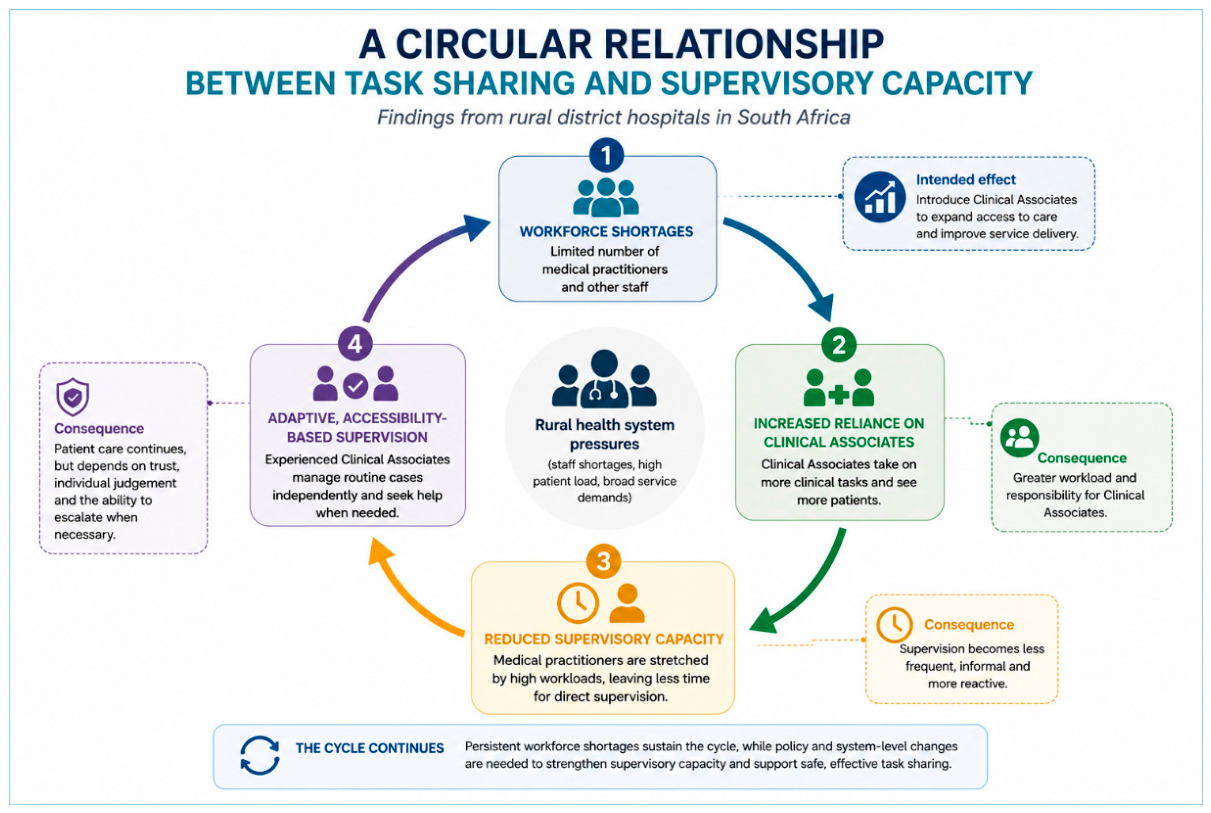
Participants described a circular relationship between workforce shortages, task sharing, and supervision (Figure 3). Persistent staffing shortages and rising patient demand required Clinical Associates to assume greater responsibility for routine clinical care, thereby reducing the number of patients requiring direct management by medical practitioners and helping sustain service delivery within overstretched district hospitals. Paradoxically, these same workforce pressures simultaneously reduced medical practitioners’ capacity to provide structured supervision. Limited staffing and competing clinical responsibilities left little opportunity for scheduled observation, routine case review, mentorship, or developmental feedback. Consequently, practical independence became both the product of workforce shortages and the mechanism through which those shortages were managed. While this accessibility-based supervision model enabled continuity of care, participants acknowledged that it relied heavily on local working relationships, professional trust, clinical judgement, and timely escalation of complex cases.
The findings suggest that supervision within rural district hospitals functions as a dynamic health systems process shaped by the interaction between workforce availability, service demand, and organizational capacity, rather than by regulatory requirements alone.
4. Discussion
4.1. Principal Findings
This study demonstrates that Clinical Associate supervision in rural South African district hospitals is fundamentally shaped by the health system context in which it is implemented. Rather than occurring as a discrete educational or regulatory activity, supervision was embedded within the realities of rural service delivery, where persistent workforce shortages, high patient volumes, competing clinical priorities, and limited protected supervisory time constrained opportunities for structured oversight. Under these conditions, supervising clinicians adapted by adopting an informal, accessibility-based supervision model, in which experienced Clinical Associates managed routine clinical care independently while seeking medical support when faced with diagnostic uncertainty, complex cases, or the need for escalation. A key finding of this study is that the formal presence of a supervising medical practitioner should not be equated with the provision of structured supervision. Although regulatory frameworks assume that supervision occurs through ongoing medical oversight, participants described supervision as a dynamic, context-dependent process integrated into routine clinical practice rather than as continuous direct observation. Supervision, therefore, functioned primarily through accessibility, professional trust, and timely consultation, allowing Clinical Associates to contribute effectively to service delivery while maintaining access to medical support when required.
These findings have important implications for health workforce policy and clinical governance. They suggest that supervision should be understood not simply as compliance with professional regulations, but as a health systems process whose implementation depends on workforce capacity, organizational support, and service demands. Consequently, supervision models that assume adequate staffing, protected supervisory time, and continuous medical oversight may be less feasible in resource-constrained rural district hospitals. Instead, policies should recognize the operational realities of rural healthcare and support context-responsive models that combine accessible clinical support with structured mechanisms for escalation, periodic case review, developmental feedback, and ongoing professional accountability. Such an approach may better balance patient safety, workforce sustainability, and the effective implementation of task sharing within rural health systems.
4.2. Task Sharing Produces a Supervisory Paradox
Clinical Associates were introduced in South Africa to address persistent shortages of healthcare professionals and strengthen service delivery within district health services, particularly in underserved rural settings. [3,5,9]. The present study extends this understanding by identifying what may be described as a supervisory paradox: the same workforce shortages that make task sharing essential simultaneously reduce the health system’s capacity to provide the structured supervision that supports it. Rather than representing a failure of implementation, this paradox reflects the competing demands placed on supervising clinicians within resource-constrained health systems.
Participants consistently described balancing heavy clinical workloads, emergency care, administrative responsibilities, and clinical governance alongside supervisory duties. Consequently, opportunities for direct observation, routine case review, and developmental feedback were frequently displaced by immediate service delivery priorities. Instead of abandoning supervision altogether, supervising clinicians adapted their practices to be responsive to operational realities. As illustrated in Figure 3, these adaptations created a reinforcing cycle in which workforce shortages increased reliance on Clinical Associates while simultaneously reducing medical practitioners’ capacity to provide structured supervision. The findings, therefore, suggest that supervision should be understood as a dynamic health systems process that evolves in response to organizational capacity rather than as a fixed regulatory requirement.
These findings are consistent with the World Health Organization’s recommendations that task shifting should be supported by broader health system investments, including effective supervision, governance, referral systems, and organizational support, rather than relying solely on workforce redistribution. [4]. Similarly, previous South African studies have shown that Clinical Associate supervision varies considerably across healthcare settings and is influenced by workforce availability, workload, organizational context, and local professional relationships. [7,8]. While these studies have identified variability in supervisory practice, they have provided limited insight into the underlying mechanisms driving these differences.
The principal contribution of the present study is to explain how pressures within rural health systems shape supervision from the perspective of supervising clinicians. Rather than viewing supervision as either present or absent, participants described a pragmatic, accessibility-based model that emerged as an adaptive response to workforce constraints and competing service demands. This conceptualization advances current understanding of Clinical Associate supervision by demonstrating that supervisory practices are not determined solely by professional regulations but are continually negotiated within the operational realities of rural health systems. These findings therefore reinforce the importance of designing supervision policies that are responsive to local organizational capacity and sufficiently flexible to support safe, sustainable task sharing in resource-constrained healthcare settings.
4.3. Accessibility-Based Supervision as a Pragmatic Health Systems Adaptation
The findings indicate that accessibility-based supervision emerged as a pragmatic adaptation to the realities of rural district hospitals rather than as a deliberate departure from regulatory expectations. Within resource-constrained settings characterized by workforce shortages, high patient volumes, and competing clinical demands, supervising medical practitioners could not feasibly observe every patient encounter. Instead, supervision was operationalized by ensuring the availability of a supervising clinician who could provide timely consultation, clinical guidance, and decision support as needed. This approach enabled experienced Clinical Associates to contribute effectively to service delivery while ensuring that medical expertise remained accessible for complex or high-risk cases.
From a health systems perspective, accessibility-based supervision represents an adaptive implementation strategy that balances patient care demands with limited supervisory capacity. By allowing Clinical Associates to manage routine clinical work independently while maintaining access to supervisory support, this model strengthened service continuity and expanded workforce capacity without completely relinquishing medical oversight. Participants therefore viewed accessibility-based supervision not as reduced supervision, but as a contextually appropriate response to the operational realities of rural healthcare delivery. Nevertheless, this flexibility also introduced important vulnerabilities. Because supervision was largely request-based, its effectiveness depended on Clinical Associates accurately recognizing clinical uncertainty, understanding the limits of their competence, and seeking assistance at the appropriate time. Consequently, supervising clinicians had fewer opportunities to identify unrecognized knowledge gaps, observe clinical reasoning, assess procedural competence, or provide routine developmental feedback. [10,11]. As Kennedy, et al. [12] and ten Cate [13] have argued, healthcare professionals cannot seek assistance for limitations they do not recognize, suggesting that exclusive reliance on self-initiated escalation may fail to detect latent risks before they affect patient care.
Participants also described considerable variation in how accessibility-based supervision was implemented across hospitals and supervising clinicians. Differences in supervisor availability, communication styles, professional expectations, and local organizational practices meant that the quality, consistency, and intensity of supervision differed between settings. These findings are consistent with previous South African research demonstrating that Clinical Associate supervision is influenced by organizational context, workforce availability, and local professional relationships rather than by regulatory requirements alone [7,8]. Importantly, the findings suggest that flexibility should not be conflated with the absence of structure. Accessibility-based supervision should be viewed as a context-responsive model that requires formal organizational support to ensure safe and effective practice. Rather than relying solely on ad hoc consultation, this model should incorporate clearly defined escalation pathways, periodic observation of clinical practice, structured case review, regular developmental feedback, and ongoing competency assessment. Integrating these mechanisms within routine clinical governance processes would preserve the operational flexibility required in resource-constrained rural hospitals while strengthening patient safety, professional accountability, and continuous workforce development [4,10,11]. This interpretation extends the existing literature by demonstrating that supervision is not simply present or absent, nor exclusively direct or indirect. Instead, it exists along a continuum of accessibility, responsiveness, and organizational support, continually shaped by workforce capacity and the operational realities of rural health systems. Recognizing accessibility-based supervision as a legitimate health systems adaptation provides a more realistic foundation for developing supervision policies that are both implementable and sustainable in resource-constrained settings.
4.4. Supervision Is Not Synonymous with Continuous Observation
The findings highlight an important distinction between clinical supervision and continuous direct observation. Although regulatory frameworks often imply that supervision requires the physical presence of a supervising medical practitioner, participants described a model in which supervision remained active even without continuous observation. This suggests that effective supervision should be conceptualized not as constant physical oversight, but as an ongoing process of clinical support, accountability, and professional development that is responsive to both patient needs and health system realities.
Within the rural district hospitals included in this study, continuous direct observation of every patient encounter was neither feasible nor necessary, particularly for experienced Clinical Associates. Instead, supervision was sustained through the availability of supervising clinicians to provide timely advice, review complex or high-risk cases, and support clinical decision-making when required. These findings indicate that the effectiveness of supervision depends less on constant observation than on ensuring that appropriate mechanisms are in place to maintain patient safety, facilitate clinical learning, and support professional accountability. For experienced Clinical Associates, supervision may therefore be more appropriately conceptualized as a graduated model of oversight that combines accessible clinical support with structured governance processes. Such a model should include clearly defined criteria for escalating complex or high-risk cases, timely access to supervising medical practitioners, periodic review of selected patient consultations, scheduled observation of clinical practice, discussion of adverse events and challenging cases, regular developmental feedback, and ongoing documentation of clinical competence and learning needs. These complementary mechanisms allow supervision to remain responsive to changing levels of practitioner experience while promoting continuous professional development and safe clinical practice.
Importantly, distinguishing supervision from continuous observation does not diminish the responsibility of supervising clinicians. Rather, it recognizes that supervision can be exercised through multiple complementary approaches that balance educational, clinical, and governance functions. In resource-constrained rural hospitals, a flexible supervision model that integrates accessibility, structured review, and clinical governance may be considerably more feasible than continuous direct observation, while maintaining high standards of patient safety, professional accountability, and quality of care. [4,10,11]. These findings suggest that future supervision policies should move beyond prescribing supervisors’ physical presence and instead define the essential components of effective supervision. Such an approach would better align regulatory expectations with the operational realities of rural health systems and strengthen the sustainability of task-sharing programs by recognizing supervision as a dynamic health systems process rather than a fixed observational activity.
4.5. Implications for Policy and Practice
The findings suggest that Clinical Associate supervision policies should be aligned with the operational realities of rural health systems rather than assumptions of ideal staffing and continuous medical oversight. In many rural district hospitals, supervising clinicians balance extensive clinical, administrative, and governance responsibilities, making continuous direct observation of every patient consultation impractical. Policies that rely exclusively on such models may therefore be difficult to implement consistently in resource-constrained settings.
Instead, supervision frameworks should support context-responsive, risk-based approaches that combine accessible medical support with structured governance mechanisms. These should include clearly defined escalation pathways for complex or high-risk cases, scheduled case reviews, periodic direct observation of clinical practice, regular developmental feedback, competency assessment, and documentation of supervisory activities. Such approaches would strengthen patient safety and professional accountability while allowing supervisory effort to be directed towards newly qualified Clinical Associates, clinicians requiring additional support, and patients with greater clinical complexity.
The findings further demonstrate that effective supervision is not solely an individual professional responsibility but also an organizational and health systems function. Sustainable supervision requires adequate workforce capacity, protected time for supervision and feedback, supportive organizational leadership, and governance systems that recognize supervision as an integral component of quality improvement and workforce development. Consequently, changes to professional regulations alone are unlikely to improve supervision without broader investments in human resources, organizational support, and service planning. From a clinical governance perspective, supervision should be embedded within routine governance processes through regular case discussions, clinical audit, morbidity and mortality meetings, competency reviews, continuing professional development, and performance monitoring. Integrating supervision into existing governance structures would strengthen accountability, promote continuous learning, and support the delivery of safe, high-quality care while maintaining the flexibility required for effective task sharing in rural district hospitals.
Finally, these findings have implications beyond the Clinical Associate profession. Many low- and middle-income countries are expanding the roles of mid-level healthcare workers to address workforce shortages. The supervisory paradox identified in this study suggests that successful task-sharing programmes require supervision models that are responsive to health system capacity rather than based solely on regulatory expectations. Designing supervision as a flexible, context-sensitive health systems intervention may improve the sustainability, quality, and effectiveness of task-sharing initiatives across resource-constrained settings.
4.6. Implications for Research
This study identifies several priorities for future research on the supervision of Clinical Associates and other mid-level healthcare professionals within resource-constrained health systems. First, the findings should be explored across different provinces, health districts, and levels of healthcare to determine whether the supervisory paradox and accessibility-based supervision identified in this study are transferable to other organizational and health system contexts. Second, future research should incorporate the perspectives of multiple stakeholders, including Clinical Associates, supervising clinicians, hospital managers, patients, policymakers, professional regulatory bodies, and health service planners. Examining supervision from these diverse perspectives would provide a more comprehensive understanding of how supervisory relationships are experienced, implemented, and supported across the health system. Third, qualitative findings should be complemented by observational and mixed-methods research that examines supervision in routine clinical practice. Direct observation of supervisory interactions, case reviews, and clinical decision-making would provide valuable insight into how supervision is enacted in practice and how it differs from participants’ reported experiences. Finally, further research is needed to evaluate the effectiveness of accessibility-based supervision as a model of clinical oversight. Future studies should examine its impact on patient safety, quality of care, clinical decision-making, professional competence, workforce retention, job satisfaction, and health system performance. Comparative implementation research evaluating different supervision models would also help identify approaches that are both feasible and effective within resource-constrained rural health systems. Such evidence would support the development of context-responsive supervision policies that strengthen task sharing while maintaining clinical governance, professional accountability, and high-quality patient care.
4.7. Strengths and Limitations
A key strength of this study is that it provides one of the first in-depth qualitative accounts of Clinical Associate supervision from the perspective of supervising medical practitioners working in rural South African district hospitals. By focusing on clinicians directly responsible for supervision, the study offers novel insights into how supervision is negotiated within the operational realities of resource-constrained health systems. The use of a qualitative descriptive design, guided by the Concepts and Opportunities to Advance Task Shifting and Task Sharing (COATS) framework, enabled a contextually grounded exploration of supervision while allowing participants’ experiences to shape the findings. Including participants with diverse levels of professional seniority, supervisory experience, and clinical management responsibilities further strengthened the breadth and credibility of the data.
Several limitations should be considered when interpreting the findings. First, the study included eight participants from a single rural health district in the Eastern Cape Province, which may limit the transferability of the findings to other provinces, urban settings, or different levels of healthcare. However, the detailed description of the study context enables readers to assess the applicability of the findings to similar resource-constrained settings. Second, the findings were based on participants’ self-reported experiences and perceptions rather than direct observation of supervisory practice. Observational studies may provide additional insight into how supervision is enacted during routine clinical care. Third, the study focused exclusively on supervising clinicians and did not include the perspectives of Clinical Associates, hospital managers, patients, policymakers, or professional regulatory bodies. Incorporating these perspectives would provide a more comprehensive understanding of supervision within multidisciplinary health systems. Fourth, the study did not assess Clinical Associate competence, quality of care, or patient outcomes, and therefore cannot determine the effectiveness, safety, or clinical impact of the identified accessibility-based supervision model. Finally, participant sex and gender were not collected as part of the study, precluding exploration of whether supervisory experiences, professional interactions, or leadership dynamics differed according to sex or gender.
Despite these limitations, the study makes an important contribution by identifying the supervisory paradox and describing accessibility-based supervision as a context-responsive model of supervision that emerges within resource-constrained rural health systems. These findings provide a foundation for future implementation research to strengthen Clinical Associate supervision while supporting safe, sustainable task sharing in low-resource healthcare settings.
5. Conclusions
This study demonstrates that the supervision of Clinical Associates in rural South African district hospitals is fundamentally shaped by the health system context in which it is implemented. The same workforce shortages, high patient volumes, and competing service demands that make task sharing essential also constrain medical practitioners’ capacity to provide structured supervision. Rather than relying on continuous direct oversight, supervising clinicians described an accessibility-based supervision model, in which experienced Clinical Associates managed routine clinical care independently while seeking timely medical support for diagnostic uncertainty, complex cases, or situations requiring escalation. This pragmatic approach enabled continuity of service delivery but depended on professional trust, effective communication, appropriate escalation, and the availability of supervising clinicians.
By identifying the supervisory paradox and conceptualizing accessibility-based supervision as a context-responsive model of clinical oversight, this study extends current understanding of how supervision is enacted within resource-constrained rural health systems. The findings demonstrate that supervision should be viewed not simply as a regulatory requirement but as a dynamic health systems process continually shaped by workforce capacity, organizational support, and local service demands.
These findings have important implications for health workforce policy and clinical governance. Supervision policies should move beyond assumptions of ideal staffing and continuous direct observation, and instead support flexible, context-responsive models that combine accessible clinical support with structured escalation pathways, periodic case reviews, developmental feedback, competency assessments, and routine clinical governance processes. Such an approach is more likely to be feasible within rural district hospitals while maintaining patient safety, professional accountability, and high-quality care. Future implementation research should evaluate the effectiveness of accessibility-based supervision across different healthcare settings to inform sustainable supervision policies for Clinical Associates and other mid-level healthcare professionals in resource-constrained health systems.
Author Contributions
Tesha Pillay: Conceptualization, Investigation, Data Curation, Formal Analysis, Writing – Original Draft. Ntandazo Dlatu: Methodology, Writing – Review & Editing. Mirabel Nanjoh: Methodology, Writing – Review & Editing, Co-supervision. Siyonela Mlonyeni: Writing – Review & Editing & supervision. All authors contributed substantially to the conception and design of the study, critically revised the manuscript for important intellectual content, approved the final version for publication, and agree to be accountable for all aspects of the work.
Funding
The SAMRC grant supported this study. The funding supported costs associated with data collection, including internet access for virtual interviews, as well as professional editing and formatting. The funder had no role in the study design, data collection, data analysis, interpretation of the findings, or preparation of the manuscript.
Institutional Review Board Statement
Written informed consent was obtained from all participants before data collection. Participants received a participant information sheet explaining the purpose of the study, what participation involved, the voluntary nature of participation, and their right to withdraw from the study at any time without penalty. The participant information sheet and informed consent form were made available in both English and isiXhosa to ensure that participants could access the study information in their preferred language. Participants also provided consent for audio recording of the interviews. All identifying information was removed from the interview transcripts, and confidentiality was maintained throughout the study in accordance with the Protection of Personal Information Act (POPIA).
Data Availability Statement
The qualitative data generated during this study are not publicly available because they contain information that could compromise participant or facility confidentiality. De-identified data may be made available by the corresponding author upon reasonable request, subject to ethical and institutional approval.
Acknowledgments
The work reported herein was made possible through funding by the South African Medical Research Council via its Division of Research Capacity Development under the Mid-Career Scientist Program. The content hereof is the sole responsibility of the authors and does not necessarily represent the official views of the SAMRC. The authors thank the supervising clinicians who generously shared their time and experiences by participating in this study. We also acknowledge the Eastern Cape Department of Health and the management of the participating district hospitals for granting permission and facilitating data collection.
Conflicts of Interest
The authors declare that they have no competing interests.
References
- Coovadia, H.; Jewkes, R.; Barron, P.; Sanders, D.; McIntyre, D. The health and health system of South Africa: historical roots of current public health challenges. Lancet 2009, 374, 817–834. [Google Scholar] [CrossRef]
- Ngcobo, S.; Bust, L.; Couper, I.; Chu, K. The role of clinical associates in South Africa as a health workforce: A scoping review. Afr. J. Prim. Health Care Fam. Med. 2024, 16, e1–e11. [Google Scholar] [CrossRef] [PubMed]
- Couper, I.D.; Hugo, J.F.M. Addressing the shortage of health professionals in South Africa through the development of a new cadre of health workers: the creation of Clinical Associates. Rural Remote Health 2014, 14, 2872. [Google Scholar] [CrossRef]
- World Health Organization. Task Shifting: Rational Redistribution of Tasks Among Health Workforce Teams: Global Recommendations and Guidelines; World Health Organization: Geneva, Switzerland, 2008. [Google Scholar]
- Doherty, J.; Conco, D.; Couper, I.; Fonn, S. Developing a new mid-level health worker: lessons from South Africa’s experience with clinical associates. Glob. Health Action 2013, 6, 19282. [Google Scholar] [CrossRef] [PubMed]
- Department of Health, South Africa. Regulations Defining the Scope of Practice of Clinical Associates, 2016. Gov. Gaz. 2016, 40414, 63–70. [Google Scholar]
- Bac, M.; Hamm, J.M.A.; van Bodegraven, P.C.; Pater, B.; Louw, J.M. A new health care profession in rural district hospitals: a case study of the introduction of Clinical Associates in Shongwe hospital. S. Afr. Fam. Pract. 2017, 59, 14–17. [Google Scholar] [CrossRef]
- Isembatya, G.; Kakia, A.; Iputo, J.E. Clinical associates and access to healthcare in the Eastern Cape province of South Africa. Afr. J. Prim. Health Care Fam. Med. 2022, 14, e1–e8. [Google Scholar] [CrossRef] [PubMed]
- Orkin, A.M.; Rao, S.; Venugopal, J.; Kithulegoda, N.; Wegier, P.; Ritchie, S.D.; VanderBurgh, D.; Martiniuk, A.; Salamanca-Buentello, F.; Upshur, R. Conceptual framework for task shifting and task sharing: an international Delphi study. Hum. Resour. Health 2021, 19, 61. [Google Scholar] [CrossRef] [PubMed]
- Farnan, J.M.; Petty, L.A.; Georgitis, E.; Martin, S.; Chiu, E.; Prochaska, M.; Arora, V.M. A systematic review: The effect of clinical supervision on patient and residency education outcomes. Acad. Med. 2012, 87, 428–442. [Google Scholar] [CrossRef] [PubMed]
- Kilminster, S.M.; Jolly, B.C. Effective supervision in clinical practice settings: a literature review. Med. Educ. 2000, 34, 827–840. [Google Scholar] [CrossRef] [PubMed]
- Kennedy, T.J.; Regehr, G.; Baker, G.R.; Lingard, L. Preserving professional credibility: grounded theory study of medical trainees’ requests for clinical support. BMJ 2009, 338, b128. [Google Scholar] [CrossRef] [PubMed]
- Ten Cate, O. Entrustability of professional activities and competency-based training. Med. Educ. 2005, 39, 1176–1177. [Google Scholar] [CrossRef] [PubMed]
Figure 2.
Presents the adapted COATS framework used to guide the study and illustrates the domains examined in the analysis.
Figure 2.
Presents the adapted COATS framework used to guide the study and illustrates the domains examined in the analysis.
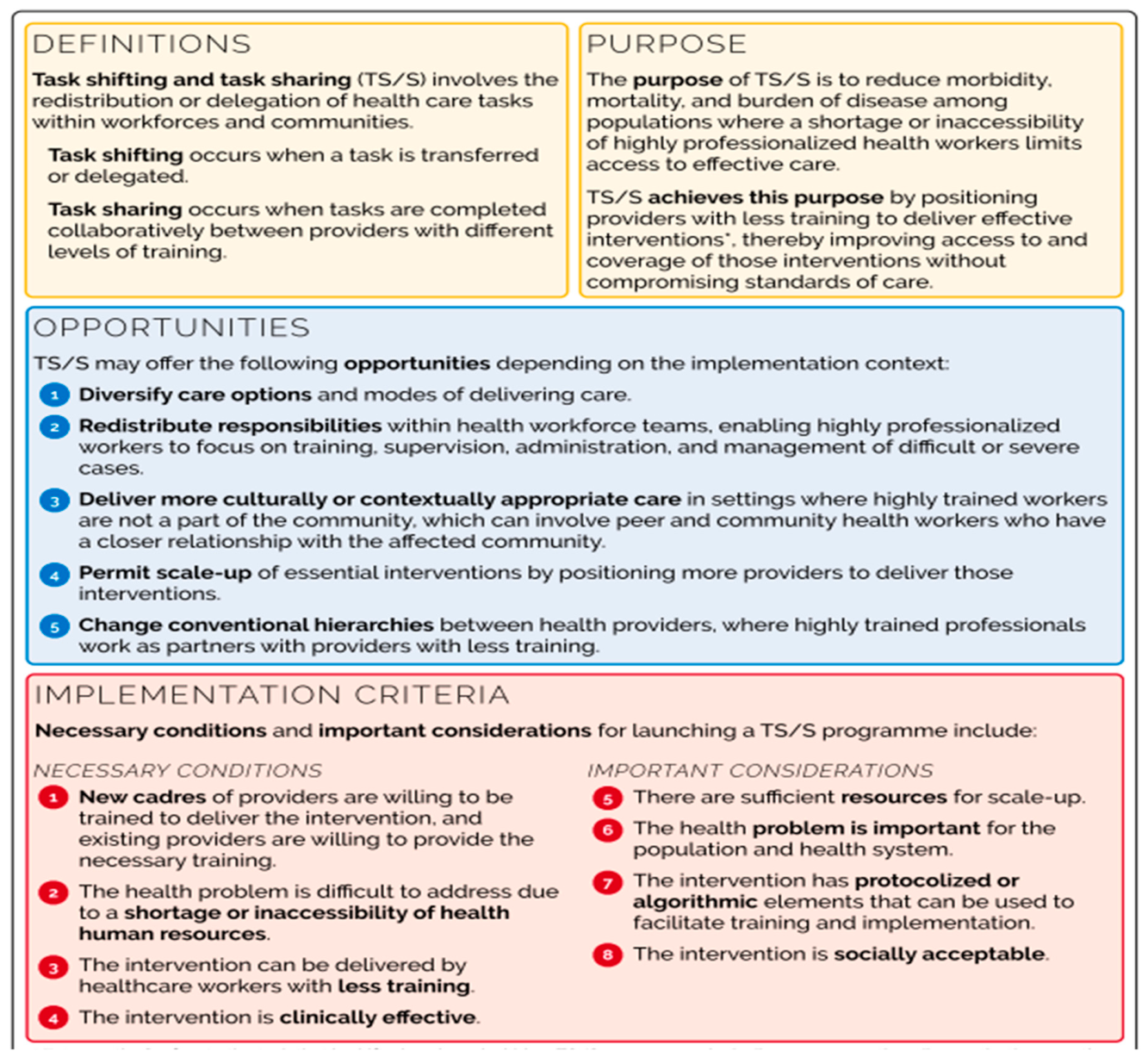
Figure 3.
Illustrates this circular relationship, demonstrating how workforce shortages increased reliance on Clinical Associates while simultaneously constraining the supervisory capacity required to support them.
Figure 3.
Illustrates this circular relationship, demonstrating how workforce shortages increased reliance on Clinical Associates while simultaneously constraining the supervisory capacity required to support them.
Disclaimer/Publisher’s Note: The statements, opinions and data contained in all publications are solely those of the individual author(s) and contributor(s) and not of MDPI and/or the editor(s). MDPI and/or the editor(s) disclaim responsibility for any injury to people or property resulting from any ideas, methods, instructions or products referred to in the content. |
© 2026 by the authors. Licensee MDPI, Basel, Switzerland. This article is an open access article distributed under the terms and conditions of the Creative Commons Attribution (CC BY) license (http://creativecommons.org/licenses/by/4.0/).
Copyright: This open access article is published under a Creative Commons CC BY 4.0 license, which permit the free download, distribution, and reuse, provided that the author and preprint are cited in any reuse.