

Submitted:
07 August 2026
Posted:
11 August 2026
You are already at the latest version
Abstract
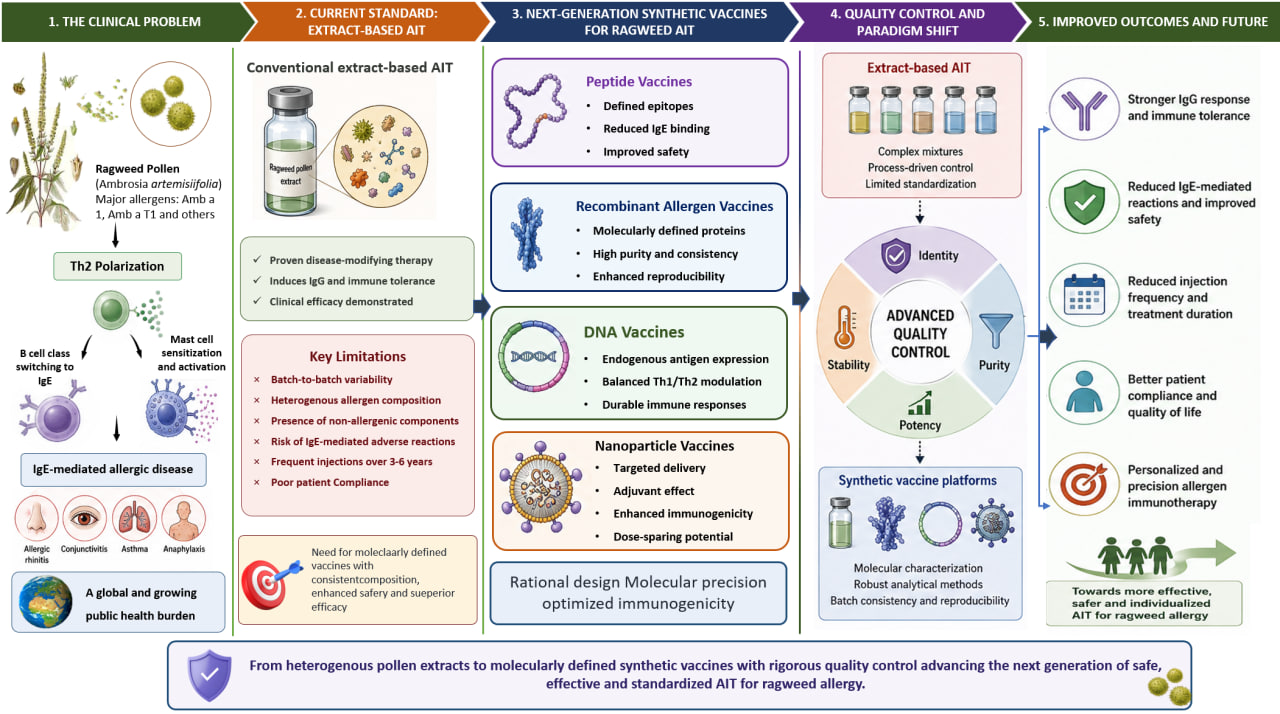
Ragweed (Ambrosia artemisiifolia) pollen allergy is a major and growing public health problem worldwide, with clinical manifestations ranging from rhinitis and conjunctivitis to asthmatic episodes and anaphylaxis. The major ragweed allergen, Amb a 1, exhibits high IgE-binding potential and triggers type 1 hypersensitivity reactions. Although allergen-specific immunotherapy (AIT) effectively induces long-term immune tolerance, conventional extract-based formulations face critical limitations including batch-to-batch variability, heterogeneous allergen composition, IgE-mediated adverse reactions, inconsistent immunogenicity, and poor patient compliance. This critical re-view synthesizes and evaluates published evidence on current synthetic vaccine strategies for ragweed AIT, with emphasis on their design, immunological performance, and quality control considerations. This review critically evaluates current approaches to synthetic vaccine development for ragweed AIT, with particular focus on pep-tide-based constructs, recombinant proteins, DNA vaccines, and adjuvant-enhanced formulations, alongside corresponding quality control strategies. The available evidence indicates that synthetic vaccines provide a more rational, molecularly characterized trajectory for producing optimized AIT products with improved safety profiles, enhanced clinical efficacy, reduced injection frequency, and improved batch standardization relative to extract-based immunotherapy. These advances highlight the potential of synthetic vaccine platforms to support personalized immunotherapy and more effective disease-modifying treatment of allergic disorders.
Keywords:
Ambrosia artemisiifolia
; allergen-specific immunotherapy (AIT)
; synthetic vaccine
; IgE-mediated hypersensitivity
; IgG-mediated immune tolerance
; personalized immunotherapy
; quality control
1. Introduction
Ragweed (Ambrosia artemisiifolia, family Asteraceae) is distributed across multiple continents and produces pollen capable of triggering IgE-mediated allergic reactions ranging from allergic rhinitis and conjunctivitis to severe asthmatic episodes, bronchospasm, and anaphylaxis, with serious consequences for human health [1]. Cross-reactive sensitization further complicates clinical management. Globally, approximately 30% of the population suffers from allergic conditions [2], and allergy incidence in Russia is estimated at up to 21% [3]. Despite decades of pharmacological research, existing symptomatic therapies do not modify the underlying immunological course.
Allergen-specific immunotherapy (AIT) is the only disease-modifying treatment for allergic disorders, including ragweed pollen allergy. AIT promotes multiple immunomodulatory effects: it stimulates allergen-specific IgG antibodies, represses Th2 cells, activates regulatory T (Treg) cells, and blocks IgE-mediated mast cell activation. Collectively, these mechanisms induce long-term immune tolerance [4,5]. Passive immunization with recombinant monoclonal allergen-specific IgG antibodies significantly reduces allergic reactions in sensitized patients during allergen exposure, confirming the central role of IgG in AIT success [6].
Nonetheless, conventional extract-based AIT faces persistent limitations. Heterogeneity in allergen content between batches, variability in allergen composition, and the presence of non-allergenic components contribute to inconsistent immunogenicity and safety concerns [7,8]. Standard subcutaneous immunotherapy (SCIT) requires an initial build-up phase consisting of weekly injections for 3–6 months, followed by maintenance dosing at 3–6-week intervals for a minimum of three years, with therapeutic effects persisting for approximately 2–3 years after treatment discontinuation [9,10]. These treatment demands impose substantial compliance burdens on patients. Consequently, the development of novel vaccine approaches with consistent composition, enhanced IgG induction, reduced injection frequency, and improved IgE-blocking efficacy is therefore a clinical priority.
In spite of these challenges, existing evidence indicates that the establishment and standardization of molecularly defined and synthetic vaccine systems may lead to more predictable and controlled enhancement in the safety, efficacy, and reproducibility of AIT for ragweed-associated allergic disease. Therefore, this critical review explores current approaches to the development and quality control of vaccines for AIT of ragweed pollen allergy, with particular emphasis on rational vaccine design, standardization, and translational considerations aimed at improving immunogenicity, reducing allergenicity, and ensuring consistent quality control. The review integrates existing knowledge about novel synthetic vaccine platforms and production techniques to pinpoint design features and quality control elements that are essential to address the challenges encountered with conventional extract-based immunotherapies.
As displayed in Figure 1, the left side illustrates the immune reaction that occur upon exposure to ragweed pollen allergen (Amb a1) in the absence of AIT. Initial contact with the respiratory mucosal epithelium triggers cytokines release, which activates dendritic cells and induce Th2 cell differentiation. This response triggers B cells to mediate an allergic response by producing allergen-specific IgE antibodies that bind to FcεRI receptors on mast cells. Upon repeated exposure to the allergen, cross-linking of IgE on mast cells results in degranulation and the release of inflammatory mediators, including histamine, prostaglandin D2 (PGD2), and leukotrienes (LTs). As a result, symptoms like sneezing, itching, rhinorrhoea, oedema, bronchospasm, and mucous inflammation develop.
The immunological changes involved in AIT are shown on the right side of the figure. Multiple allergen exposures at controlled microdoses induce immune tolerance and the recruitment of Treg and T-helper 1 (Th1) cells. These responses inhibit the Th2-mediated activity, promote the generation of allergen-specific IgG4 and IgG1 antibody levels, and decrease the levels of allergen-specific IgE. There is an increase in blocking antibodies, which prevent mast cell and basophil degranulation by blocking the interaction of allergen with IgE. Consequently, allergic inflammation is decreased and clinical symptoms are progressively alleviated.
2. Methodology
2.1. Review Design
This study adopted a critical narrative review methodology to evaluate current approaches to the development and quality control of vaccines for AIT of ragweed pollen allergy. While systematic reviews aim to synthesize predefined evidence quantitatively, critical narrative reviews aim to synthesize and criticize heterogenous evidence in order to offer conceptually oriented understanding, to evaluate methodological advances, identify current gaps, and suggest future research directions. This review, therefore, integrate evidence from the fields of immunology, molecular vaccine technology, pharmaceutical quality control, pharmacokinetics, regulatory science and pharmacoeconomics to deliver a comprehensive overview of how to rationally develop next generation AIT vaccines.
2.2. Literature Search Strategy
Given the multitude of new research around molecular allergen vaccines and the diversity of newly emerging synthetic vaccine platforms, a structured literature search was conducted to identify existing evidence relevant to the development and quality control of molecular allergen vaccines for ragweed pollen allergy. The aim of the review was to critically assess the published literature on vaccine design strategies, immunologic mechanisms, manufacturing methods and approaches to analytical characterization, quality control, pharmacokinetic (PK) properties, regulatory and pharmaco-economic implications of emerging synthetic AIT platforms.
Peer-reviewed articles from the PubMed, Scopus, Web of Science, and Google Scholar electronic databases were searched up to June 2026. Where appropriate, relevant regulatory guidance documents and technical reports published by the European Medicines Agency (EMA), the United States Food and Drug Administration (FDA), the World Health Organization (WHO) and other regulatory authorities were also consulted in support of the scientific literature. Selected publications were included in reference lists and manually screened for further relevance to the initial database search.
The search strategy incorporated combinations of Medical Subject Headings (MeSH) and free-text keywords, including ragweed allergy, Ambrosia artemisiifolia, allergen-specific immunotherapy, AIT, subcutaneous immunotherapy, SCIT, sublingual immunotherapy, SLIT, synthetic allergen vaccine, recombinant allergen, peptide vaccine, DNA vaccine, nanoparticle vaccine, virus-like particle, quality control, quality assurance, standardization, analytical characterization, pharmacokinetics, and pharmacoeconomics. The search strategy was developed to capture both established and emerging approaches to the rational design, development, and quality assessment of synthetic allergen vaccines.
2.3. Eligibility Criteria
Scientific relevance to allergen-specific immunotherapy and contribution to understanding of development, characterization, quality control, and clinical translation of synthetic allergen vaccines guided the selection of studies. Eligible publications were those that discussed the development of recombinant allergens, peptide-based vaccines, DNA vaccines, nanoparticle and virus-like particle delivery systems, molecular allergen engineering, and analytical characterization, pharmacokinetics, quality control, regulatory evaluation, and pharmacoeconomics of recombinant and peptide vaccines. Studies that were not related to allergen-specific immunotherapy and vaccine development, editorials, duplicate publications, and conference abstracts with insufficient methodological detail were excluded.
Due to the relative scarcity of studies specifically investigating synthetic vaccines against ragweed pollen allergy, the review also included well-established studies involving other clinically relevant pollen allergens like birch (Bet v 1) and grass pollen allergens, which provided transferable mechanistic, immunological, manufacturing, or analytical insights relevant to the development of ragweed vaccines. This strategy allowed for more comprehensive analysis of modern vaccine design concepts while maintaining the primary focus on ragweed allergen immunotherapy.
2.4. Evidence Extraction and Synthesis
Information regarding vaccine platform, allergen composition, molecular design strategy, manufacturing/purification process, adjuvants, immune mechanisms, efficacy outcome, safety, analytical characterization techniques, quality control parameters, pharmacokinetic parameters, regulatory requirements, and pharmacoeconomic considerations were extracted from selected literature. Focus was dedicated to molecularly defined vaccine constructs to optimize allergenicity, immunogenicity, manufacturing consistency and clinical translation.
Available evidence was critically synthesized using a thematic narrative approach, given the considerable heterogeneity across vaccine platforms, experimental models, analytical methods and reported outcome measures, quantitative synthesis. Findings were comparatively analyzed with respect to key themes of vaccine development strategies, molecular design principles, analytical characterization, quality control methodologies, pharmacokinetics behaviour, regulatory expectations and pharmacoeconomic considerations. This methodological approach enabled the identification of current advances, existing limitations and the future directions of research, while ensuring that the available evidence was assessed based on its scientific value and relevance for the next generation of safe, highly standardized, and clinically effective allergen-specific immunotherapy vaccines for ragweed pollen allergy.
3. General Approaches to AIT Vaccine Development
Advances in allergen vaccine development have been driven by efforts to reduce IgE-mediated adverse effects while enhancing immunogenic responses [11]. Notable strategies include peptide-based vaccines, recombinant allergen vaccines, DNA vaccines, and virus-like particle (VLP) or nanoparticle delivery systems. These approaches collectively represent a paradigm shift from crude extract preparations towards rationally designed, molecularly characterized vaccine compositions [12].
3.1. Recombinant Allergen-Based Vaccines
Recombinant vaccines are generated through laboratory-based engineering using defined allergen molecules, offering consistent standardization and high purity in contrast to natural allergen extracts subject to inter-batch variation. Following identification of Amb a 1, polyA+ mRNA is isolated and used as a template for cDNA synthesis, which is cloned into an expression vector and introduced into a host organism (e.g., Escherichia coli), where recombinant allergens are produced with IgE-binding capacity comparable to the native allergen [13,14]. Using this approach, Khaitov et al. (2024) demonstrated that a recombinant vaccine based on short peptides from IgE-binding regions of Bet v 1 fused to the PreS domain of hepatitis B surface protein, triggered protective IgG and IgA antibodies against birch pollen and cross-reactive food allergens [15]. Hofer et al. (2017) further showed that a hybrid protein combining epitopes from Bet v 1 and related food allergens eliminated IgE-mediated reactivity while maintaining T-cell activation and inducing protective cross-reactive IgG antibodies [16]. However, single recombinant allergens may not adequately capture all IgE responses in polysensitized patients [17], necessitating exploration of complementary strategies.
3.2. Peptide-Based Vaccines
Peptide-based vaccines employ defined amino acid sequences derived from major allergens to stimulate desired immune responses while minimizing adverse reactions. Rational design involves epitope mapping through immunoinformatics and experimental validation, with T-cell epitopes computationally predicted using MHC binding affinity, antigenicity, and population coverage algorithms [18,19]. Peptide chains are assembled stepwise by Fmoc-mediated solid-phase synthesis, followed by reverse-phase HPLC purification to pharmaceutical-grade purity exceeding 95% [20,21]. Zahirovic et al. (2018) showed that peptide vaccines deliver precise immunogenic sequences that stimulate selective T-cell activation, unlike crude extracts containing multiple proteins and contaminants [22]. Wraith et al. (2021) highlighted the dual role of short synthetic peptides in producing IgG4 blocking antibodies with minimal IgE cross-linking and inducing T-cell changes associated with long-term remission in allergic airway disease [23]. However, the low intrinsic immunogenicity of isolated peptides consistently necessitates adjuvants or advanced delivery modalities to optimize therapeutic outcomes [24].
3.3. DNA Vaccines
DNA vaccines administer sequences encoding an antigen of interest, typically a hypoallergen, to promote cell-mediated immunity that counterbalances Th2 dominance, reducing the risk of anaphylactic shock with fewer doses than traditional immunotherapy. Plasmid DNA constructs employ strong mammalian promoters such as the cytomegalovirus (CMV) immediate-early promoter for high-level transcription [25]. Tools such as NeuralCodOpt automate codon optimization, significantly increasing translational efficiency [26]. Tulic et al. (2009) demonstrated that a DNA vaccine combined with purified Amb a 1 amplified protective Th1 immune responses in nasal tissue while inhibiting allergic Th2 responses, with the antigen eliciting IFN-γ-skewed antibody class switching toward IgG and downregulation of Th2-mediated IgE [27]. Despite potent efficacy in preclinical animal models, DNA vaccines face limitations in human applications due to suboptimal immunogenicity and transfection efficiency [28], requiring further development to overcome delivery barriers.
3.4. Virus-Like Particles (VLP) and Nanoparticle Delivery Systems
Nanoparticles serve as carriers and adjuvants in allergen immunotherapy, offering antigen stability, targeted delivery, and co-delivery capabilities, resulting in improved therapeutic activity and tolerability [29,30]. The rise of nanoparticle-based allergen delivery has catalyzed heightened interest in molecularly characterized allergen vaccines [31]. CpG-adjuvanted PLGA nanoparticles have been shown to induce IgG2a antibody synthesis and suppress allergenic airway inflammation in murine models [32]. However, concerns remain regarding the toxicological profiles and biodistribution of nanoparticles, and their safety must be thoroughly assessed prior to clinical translation [33]. Together, these novel approaches support recombinant allergen vaccines as prominent candidates capable of superseding crude extracts with controllable antigenic composition and regulated immune responses [34].
Figure 2 shows the workflow for the development of an Amb a 1/Amb a 11 ragweed main allergen recombinant vaccine. The development process begins with the identification and characterization of the major ragweed pollen allergens, Amb a 1 and Amb a 11. Following allergens identification, B cell IgE epitopes are screened and identified for their immunological relevance and inducing allergic responses. The selected epitopes are subsequently utilized for the generation of candidate peptides, which include peptide design, synthesis, purification and preliminary testing. The peptides generated are then added to recombinant based constructs to form the vaccine candidate. Vaccine formulation is followed by quality control to ensure purity, stability, and consistency of the recombinant constructs. Finally, the vaccine candidate undergoes pre-clinical trials to evaluate its potential efficacy, immunogenicity and safety before further clinical development.
4. Detailed Approaches in Ragweed Pollen Allergy Vaccine Development
Genetically engineered ragweed allergens selectively incorporate major allergens such as Amb a 1 and Amb a 11, minimizing co-purified non-relevant constituents associated with inconsistent potency and unwanted immune responses [35]. Various recombinant vaccine strategies have been developed to maximize safety and efficacy, including recombinant wild-type allergens, hypoallergenic derivatives, allergen-derived fusion proteins, and adjuvanted formulations.
4.1. Recombinant Wild-Type Allergens
Recombinant wild-type allergens provide regulated and repeatable antigen generation, avoiding the heterogeneity of natural pollen extracts, and ensuring batch-to-batch consistency crucial for diagnostics and immunotherapy [36]. Buzan et al. (2024) demonstrated that insect cell-expressed Amb a 1.01 exhibits allergenic properties similar to its natural counterpart, supporting its application in molecular allergy diagnostics and immunotherapy [37]. Cheng et al. (2025) further confirmed that sensitization to Amb a 11 is linked with respiratory symptoms and asthma pathology, supporting its clinical significance [1]. However, the persistent expression of IgE epitopes limits the biomedical safety of wild-type recombinant allergens, necessitating refinement into safer hypoallergenic derivatives.
4.2. Hypoallergenic Ragweed Derivatives
Hypoallergenic derivatives minimize allergic sequelae while maintaining immune recognition by modifying IgE-binding domains through site-directed mutagenesis, peptide cleavage, or chemical derivatization, reducing systemic reactions while retaining T-cell immunogenicity [37]. Modified Amb a 1 construct have shown improved results, though maintaining adequate immune activation while lowering IgE-mediated allergenicity remains a challenge [38]. Huber et al. (2021) demonstrated that chemically modified ragweed proteins effectively reduce IgE recognition but create a risk of reduced immunogenicity, illustrating the inherent challenge of balancing the safety-efficacy ratio in vaccine design [39].
An alternative strategy involves systematic in silico screening of B-cell IgE epitopes. Pasikhov et al. (2026) applied integrated computational analysis including three-dimensional protein modeling and multiple epitope prediction algorithms to identify nine B-cell IgE epitopes in Amb a 1 and seven in Amb a 11, establishing candidate molecular targets for selective inclusion in recombinant vaccine constructs [40]. By targeting validated epitope sequences rather than whole allergen proteins, this strategy enables rational design of hypoallergenic derivatives that retain T-cell recognition while attenuating IgE-binding activity, thereby mitigating the safety-efficacy trade-off associated with large-scale protein modifications.
4.3. Fusion Proteins and Carrier-Bound Ragweed Constructs
Fusion of ragweed allergens to carriers such as VLPs or bacterial proteins enhances immunogenicity, improves immunostimulation, and reduces IgE-mediated hypersensitivity risks [41]. Niederberger et al. (2018) conducted a multicenter, double-blind, placebo-controlled trial testing BM32, a recombinant grass pollen vaccine comprising non-allergenic peptides from four major grass pollen allergens fused to the hepatitis B virus preS carrier protein. Among 181 participants, BM32 was well tolerated and produced substantial clinical improvement with allergen-specific IgG blocking antibodies and modulation of allergic inflammation, validating the safety and immunogenic potential of recombinant B-cell epitope-based vaccines [42]. Creticos and Schroeder (2006) further demonstrated that Amb a 1 recombinant fusion molecule reduced IgE allergenicity while increasing IgG responses [43]. Despite these advances, clinical applications are hindered by the complexity of protein design, safety considerations, and regulatory barriers [44].
4.4. Adjuvant-Enhanced Ragweed Vacciine Formulations
Adjuvanted recombinant vaccines employ immunomodulators such as CpG oligodeoxynucleotides (ODNs) or monophosphoryl lipid A (MPLA) to shift immune responses toward Th1 or Treg pathways, overcoming allergic inflammation. CpG-adjuvanted PLGA nanoparticles induced IgG2a antibody synthesis and suppressed allergenic airway responses in murine models [32]. Lin and Schulke (2024) confirmed that adjuvanted peptide vaccines provide substantial clinical efficacy without decreasing tolerability [45]. Variability in patient responses and ongoing safety concerns related to adjuvant constituents remain limitations requiring further study for widespread clinical application.
5. Pharmacokinetics of AIT Vaccines
5.1. General Considerations
Pharmacokinetics (PK) describes how administered substances are processed over time [46]. Unlike conventional pharmacological agents where PK centers on plasma drug concentration, allergen vaccine pharmacokinetics must consider both the allergen molecule and the immunological persistence it induces [47]. The ultimate aim is to maximize dosing schedules to sustain immune responses rather than merely maintaining therapeutic serum concentrations. Therapeutic effects of allergen vaccines arise from progressive immune system restructuring, including induction of allergen-specific IgG antibodies (especially IgG4), regulatory T cells (Tregs), and suppression of type 2 immune responses [48]. PK assessment for AIT must therefore incorporate conventional absorption, distribution, metabolism, and elimination (ADME) parameters alongside immunopharmacodynamic measures such as allergen-specific IgG production, antigen presentation dynamics, T-cell priming in draining lymph nodes, and T-cell blockade duration.
5.2. Routes of Administration and Absorption
Route of administration largely dictates absorption and the scale of immune responses. In SCIT, allergen is deposited in subcutaneous tissue where it interacts with immune cells and the extracellular scaffold [49]. Aluminium-based adjuvants (alum) bind allergen to their surface, though recent findings indicate that most allergen does not remain bound to alum after a few hours [50]. Depot effect activity is significantly mediated by improved allergen localization and enhanced uptake by antigen-presenting cells (APCs), rather than by sustained slow allergen dissolution [51]. In SLIT, allergens are absorbed across the highly vascularized oral epithelium, primarily through mucosal dendritic cells including Langerhans cells, which can capture antigen within minutes [52]. SLIT requires substantially greater doses than SCIT due to reduced bioavailability from salivary proteolytic degradation [53]. For synthetic ragweed peptides, smaller peptides diffuse and absorb more rapidly than full-length Amb a 1 protein, and molecular alterations reducing IgE-reactivity can modify absorption kinetics.
5.3. Distribution and Elimination
Following administration, allergens reach draining lymph nodes via passive diffusion through lymphatic capillaries or via active transport by dendritic cells, which migrate from the injection site to T-cell zones where naive T cells detect antigen-loaded APCs and trigger adaptive immune responses [54]. Allergen-adjuvant complexes are avidly ingested by tissue-resident macrophages and inflammatory monocytes, which migrate to draining lymph nodes via CCR7/CCL21 chemotactic cues to initiate T-cell responses [55]. Molecular weight and structural configuration of synthetic and natural allergen formulations significantly affect distribution patterns. Natural Amb a 1 (approximately 38 kDa) is transported to lymph nodes through lymphatics, whereas shorter synthetic peptides (2–10 kDa) diffuse more rapidly [56].
Clearance of allergenic proteins is governed by proteolytic degradation, renal ultrafiltration of proteins below approximately 70 kDa, and mucociliary clearance [57,58,59]. Native allergen extracts are cleared within hours to days, whereas depot formulations may persist for weeks [60]. Biopersistence of aluminium adjuvant particles, which are carried by immune cells over time with small amounts accumulating in organs, raises long-term safety considerations [61]. Modifications such as D-amino acid substitution reduce protease recognition and enhance breakdown resistance. PEGylation sterically prevents protease access and raises hydrodynamic radius to reduce renal clearance rates [60].
5.4. Regulatory Aspects
The European Medicines Agency (EMA) 2008 Guideline on Allergen Products emphasizes that conventional ADME-based pharmacokinetic studies are not suitable for allergen preparations due to their complex protein mixtures and predominantly local immunological mechanisms of action. For synthetic peptide-based ragweed vaccines, characterization relies on rigorous quality control measures including sequence identity, carrier conjugation efficiency, aggregate and particle size distributions, and physicochemical stability [62,63]. The EMA 2006 Guideline on Clinical Development of Products for Specific Immunotherapy further recommends that clinical studies focus on dose-finding, biodistribution, and immune response kinetics rather than traditional PK modelling. Recent EMA publications affirm these core principles and highlight the importance of rigorous dose-finding studies in novel product development [64,65].
6. Approaches to Quality Control of Allergen Vaccines
6.1. General Principles
Quality control in allergen vaccines encompasses standard processes to verify identity, quantity, and impurity profiles, thereby ensuring safety, efficacy, and batch-to-batch consistency throughout production and clinical use. Allergen extracts from unmodified pollen require strict quality control due to biological variability across seasons, geographic regions, and collection processes, which substantially impacts the concentration and potency of principal allergenic proteins [66]. Regulatory authorities including the FDA and EMA have established detailed specifications and guidelines for physico-chemical evaluation of allergens, requiring compliance with approved analytical procedures to validate identity, purity, safety, and potency [67]. The presence of multiple protein isoforms in natural allergen extracts significantly complicates the quality control process, requiring high-resolution analytical techniques for precise identification and quantification [68]. Conversely, synthetic allergen vaccines provide pure, reproducible, and predictable composition, offering improved standardization and elimination of batch variability [69].
6.2. Molecular Identity Characterization
For synthetic ragweed vaccines, trypsinolysis of the protein followed by liquid chromatography-tandem mass spectrometry (LC-MS/MS) analysis establishes amino acid sequences, post-translational modifications, and sequence variations [70]. Nuclear magnetic resonance (NMR) spectroscopy verifies three-dimensional structure and dynamics of synthetic allergen constructs, though its application is constrained by instrument complexity and experiment duration [71]. Sodium dodecyl sulphate polyacrylamide gel electrophoresis (SDS-PAGE) determines molecular weight, purity, and disulphide bond patterns, while HPLC or UPLC with appropriate detection provides high confidence in target allergen content. Wopfner et al. (2009) demonstrated that recombinant Amb a 1 alpha exhibit more than 100-fold reduction in IgE-mediated mediator-release activity while maintaining T-cell integrity, confirming that physicochemical and immunological properties remain within acceptable limits [72].
6.3. Modern Quality Control Strategies
Beyond molecular identity, contemporary quality control of synthetic allergen vaccines adopts a holistic, multi-attribute approach integrating physicochemical methods with functional immunological assays [73]. Regulatory agencies (FDA, EMA) increasingly require monitoring of product-specific critical quality attributes (CQAs), including purity, folding stability, aggregation, and IgE-binding consistency [74]. Advanced platforms such as multi-attribute monitoring (MAM) mass spectrometry are now replacing traditional batch-release tests, ensuring rigorous safety, potency, and batch-to-batch consistency for clinical translation [75,76].
7. Comparative Overview of Quality Control Paradigms
The transition from natural crude extracts to molecularly defined vaccine formulations has introduced new quality control demands. For ragweed pollen allergy, the substantial seasonal and geographic variability of crude extracts and the presence of multiple clinically relevant allergens (Amb a 1, Amb a 11, and related components) complicate classical standardization. Table 5 presents a comparative overview of quality control paradigms for classic versus next-generation ragweed allergen immunotherapy vaccines.

Table 1.
Comparative overview of quality control paradigms: classic vs. Next-generation ragweed allergen immunotherapy vaccines.
Table 1.
Comparative overview of quality control paradigms: classic vs. Next-generation ragweed allergen immunotherapy vaccines.
| Quality Control Attribute | Classic AIT (Natural Allergen Extracts) | Improved AIT (Synthetic, Recombinant, Nanoparticle) |
|---|---|---|
| Source Material & Starting Material | High variability; dependent on biological source (pollen), season, geographical region, and extraction processes. Raw materials undergo stringent production control such as pollen purity, but variability between batches remains a significant challenge [66,68]. | Defined and consistent; designed based on chemically synthesized peptides, recombinantly expressed proteins, or formulated nanoparticles. Starting materials such as; synthetic reagents, allergen-encoding nucleic acids, are well-characterized, ensuring batch-to-batch consistency [69] |
| Composition & Identity | Complex, heterogeneous mixtures containing multiple allergenic and non-allergenic proteins, isoforms, and other biological molecules. Identity is typically confirmed using qualitative protein profiling techniques such as SDS-PAGE and immunoblotting, alongside IgE-binding assays; however, the complexity of allergen extracts and cross-reactivity frequently limit precise molecular identification [77] | Simple, well-defined, and homogeneous composition. Identity is confirmed using advanced analytical techniques such as liquid chromatography-tandem mass spectrometry (LC-MS/MS) for peptide sequence and post-translational modifications [70,78]. |
| Potency | Traditionally based on biological potency of allergen extracts, including its reliance on functional assays (IgE binding, mediator release, and limitations such as variability, and presence of non-allergenic components | Based on defined physico-chemical composition such as, protein concentration, immunological assays. Potency is linked to specific functional attributes, such as reduced IgE binding (hypoallergenicity) and preserved T-cell reactivity measured using targeted assays like ELISA inhibition or basophil activation tests [72]. |
| Purity & Impurity control | Natural extracts include both allergenic and non-allergenic components, contributing to variability and complexity. There is absence of defined “target molecule” for purity; instead consistency of the complex mixture is assessed [68]. | Purity criteria for the active pharmaceutical ingredient is strictly defined. Example; For recombinant proteins, stringent detection and limits on host cell proteins (HCPs), residual DNA, and endotoxins [79,80]. For synthetic peptides, purity defined by HPLC and confirmed by mass spectrometry [81]. For nanoparticles, additional physicochemical characterization includes particle size, polydisperity, and particle concentration. |
| Stability Monitoring | Monitoring changes in complex protein profile and biological potency over time helps to predict stability. Complexity of mixtures further complicates tracking degradation pathways [82,83]. | High-resolution, analyte-specific methods are employed to monitor stability. In synthetic vaccines, this involves tracking the structural integrity of the intended molecular entity, such as by RP-HPLC and MS, and its associated functional properties, and its associated functional properties, which allows precise detection of degradation processes and supports ambient storage with suitable formulation [70]. |
| Regulatory Framework & Standardization | Regulatory frameworks issued by agencies such as the FDA and EMA highlight the need for consistency in the manufacturing processes and a stable final product profile [84] | Critical quality attributes (CQAs) such as identity, purity, and potency are established and monitored through validated analytical methods, which confer regulatory flexibility alongside enhanced predictability of the final product [85] |
1 Comparative overview of quality control paradigms in classical and next-generation ragweed allergen immunotherapy (AIT) vaccines. A comparison of the important quality control characteristics of traditional allergen-based natural ragweed extract products to new vaccine formulations of synthetic peptides, recombinant proteins and nanoparticle-based products. The source materials for the classical AIT products are of biological origin with complex allergen composition, leading to natural variability in identity, potency, purity and stability evaluations. Consequently, quality control measures are mainly concerned with batch uniformity and biological activity of the batches despite the variations in raw materials and extract composition.
In contrast, next-generation ragweed AIT vaccines are developed from well-defined and highly characterized starting materials, allowing greater control over product composition and manufacturing processes. The use of advanced analytical technologies allows to assess identity, potency, purity and stability with great precision and to set clearly defined quality attributes. Collectively, recombinant, synthetic, and nanoparticle-based system support increased batch uniformity, minimizes impurity variability, and more robust stability profiling relative to conventional extracts. The progression to molecularly defined vaccine constructs illustrates a shift from process-dependent quality assurance to product-driven quality control, thereby enhancing reproducibility, regulatory compliance, and predictability in clinical efficacy.
8. Vaccine Structure Classes and Corresponding Quality Control Strategies
Analytical methods are chosen to measure identity, potency, purity, quantity, and stability, and to control process-related impurities. The molecular structure and production process of each vaccine class determine applicable quality control approaches. Table 1 – 5 summarize analytical methods for the principal synthetic vaccine structure classes, with emphasis on their application to synthetic allergen vaccines.
Table 2.
Analytical methods for peptide-based allergen vaccines (quality, quantity, impurities).
| Aspect | What is assessed | Main/Typical methods | Description/ Specifications for quality control parameters |
|---|---|---|---|
| Identity & sequence | Correct amino-acid sequence and composition | LC–MS/MS, amino-acid analysis, MALDI-TOF MS [86] | Establishes that the synthetic peptides are consistent with the designed sequence and expected molecular weight. |
| Purity and the presence of impurities | Truncated peptides, deletion sequence, aggregation | RP-HPLC or UPLC, SEC-HPLC, analytical TLC (early stage)[86] | ≥95% regulatory limits quantify purity for clinical application |
| Quantity (peptide content) | Peptide concentration per vial | Amino-acid analysis, UV/Vis- spectrophotometry [86], Reversed phase HPLC | Determines Peptide quantity in the final formulation to eliminate batch variation and maintain dose accuracy. |
| Stability | Degradation, Oxidation | Stability studies monitored by RP-HPLC/UPLC, LC–MS [86] | Purity and integrity of vaccines are monitored during shelf life and storage conditions |
2 highlights the principal analytical techniques used in the quality control of peptide-based allergen vaccines, addressing identity, purity, potency (content), and stability. Quality control begins with confirmation of peptide identity and amino acid sequence using advanced analytical techniques such as liquid chromatography-tandem mass spectrometry (LC-MS/MS), amino acid analysis, and matrix-assisted laser desorption/ionization time-of-flight mass spectrometry (MALDI-TOF MS). The methods ensure the synthesized peptides have the intended structure and properties.
Purity assessment focuses on identifying peptide-related impurities like truncations, deletion variants and aggregates. Several chromatographic methods are widely used to assess purity, including reversed-phase high-performance liquid chromatography (RP-HPLC), ultra-performance liquid chromatography (UPLC) and size-exclusion chromatography (SEC-HPLC), with all of these used to determine conformance to regulatory requirements. Furthermore, amino acid analysis, UV-visible spectrophotometry and chromatographic methods are used to quantify peptides, thereby reducing batch-to-batch variation and assuring correct dosage.
Stability evaluation includes the evaluation of potential pathways of degradation such as oxidation and structural changes during storage and shelf-life studies. RP-HPLC, UPLC and LC-MS are high resolution analytical techniques that enable identification of changes in peptide integrity and help ensure product quality over time. Overall, these analytical tools offer a comprehensive solution for ensuring identity, purity, consistency in potency and long-term stability of the allergen vaccines based on peptides.
Table 3.
Analytical methods for DNA allergen vaccines.
| Aspect | What is assessed | Main/Typical methods | Description/ Specifications for quality control parameters |
|---|---|---|---|
| Plasmid identity & structure | topology (supercoiled) | agarose gel electrophoresis, restriction digestion patterns and capillary gel electrophoresis [87] | Confirms that the intended allergen gene is transfected into the plasmid to, and then plasmid remains in supercoiled form |
| Purity & impurities | Host-cell DNA/RNA, proteins, endotoxin, residual antibiotics | Anion-exchange HPLC for plasmid vs genomic DNA, residual DNA, endotoxin test, residual antibiotic assays [88] | Discarding contaminants from host cells to preserve safety range |
| Quantity (DNA content) | Plasmid DNA concentration and dose | UV spectrophotometry (A260), qPCR [88] | Determines DNA content and supports accurate dosing per shot |
| Stability | Plasmid integrity during storage | Stability over long duration monitored by HPLC [88] | DNA integrity preserved under favorable storage condition such as standard temperature, defined formulations etc. |
3 explains the analytical methods used for the quality control of DNA-based allergen vaccines. The following table lists the main analytical techniques used to assess identity, purity, amount, and stability of DNA-based allergen vaccines. The first step in quality control is to verify plasmid identity and structural integrity through agarose gel electrophoresis, restriction digestion analysis and capillary gel electrophoresis. The methods demonstrate successful incorporation of the desired gene encoding the allergen of interest and confirm that the plasmid is in an active supercoiled form that is essential for biological activity.
Assessment of purity focuses on the detection and quantification of the host cell DNA, RNA, protein content, endotoxins and residual antibiotics. The techniques used for analysis include anion-exchange high performance liquid chromatography (HPLC), endotoxin testing and residual contaminant assays to ensure levels of impurities are within safe limits. Plasmid DNA concentration is also measured using UV spectrophotometry and quantitative PCR (qPCR) to ensure accurate dose determination and reduce batch-to-batch variability.
Stability studies are conducted to test for plasmid integrity and stability during storage and handling procedures. Monitoring is typically done by chromatographic and molecular analytical techniques to identify structural degradation or conformational modifications which could influence vaccine performance. Overall, these analytical approaches represent a powerful tool to assure quality, safety, uniformity and long-term stability of DNA-based allergen vaccines prior to clinical application.
Table 4.
Analytical methods for recombinant allergen-based vaccines.
| Aspect | What is assessed | Main/Typical methods | Description/ Specifications for quality control parameters |
|---|---|---|---|
| Identity & structure | Correct amino acid, molecular mass, folding | 1H-nuclear magnetic resonance (1H-NMR), circular dichroism (CD) spectroscopy, dynamic light scattering (DLS), SDS-PAGE, immunoblotting (IB), enzyme-linked immunosorbent assay (ELISA), and MR-assay (mediator release assay) of RBL (humanized rat basophil leukemia cells) [89] | Confirms correct molecular weight and antigen specificity |
| Purity & process-related impurities | Host-cell protein (HCP) assays |
affinity chromatography [90], ELISA [90,91], Size-exclusion chromatography (SEC-HPLC) Reversed-phase and ion-exchange HPLC [92], Residual DNA assays, endotoxin test |
Purity profiling of main allergen following separation from aggregates. |
| Quantity (antigen content). | Active pharmaceutical ingredient concentration per dose | antigen-specific ELISA [90], Reversed-phase HPLC [92], | Measures and control the dose of active pharmaceutical ingredient in final products |
| Stability | Structural and functional changes in storage process | Stability studies monitored by HPLC, MS, ELISA and immunoassays [92,93] | Structural integrity and potency are strongly linked to longer shelf life and storage |
4 summarizes the analytical methods employed for the quality control of recombinant allergen-based vaccines. The main analytical methods used for evaluating identity, purity, quantity and stability of recombinant allergen-containing vaccines are summarized. Protein identity and integrity are verified by a range of physicochemical, immunological, and functional assays as part of the quality control program. The correct amino acid sequence, molecular weight, conformational structure and antigenic properties of the recombinant allergen are confirmed by techniques including proton nuclear magnetic resonance (^1H-NMR), circular dichroism (CD) spectroscopy, dynamic light scattering (DLS), sodium dodecyl sulfate-polyacrylamide gel electrophoresis (SDS-PAGE), immunoblotting, enzyme-linked immunosorbent assay (ELISA) and mediator release assays.
Impurities that can be present during the manufacture of recombinant proteins are detected and quantified in the process of purity assessment. These include, for example, the host cell proteins, residual DNA, endotoxins, protein aggregates, and contaminants associated with the manufacturing process. Purity profiles are assessed using a number of analytical methods including, affinity chromatography, ELISA, size-exclusion high performance liquid chromatography (SEC-HPLC), reversed phase HPLC and ion-exchange HPLC to ensure the target allergen is effectively separated from impurities and degradation products. These enable production of highly purified and consistent vaccine preparations.
The concentration of the active pharmaceutical ingredient flowing in the final process formulation is determined by quantitative analysis. Allergen content and dosage can be measured using antigen-specific ELISA and chromatographic methods. Structural and functional changes that could happen during storage and handling are further evaluated in stability studies. Monitoring is typically carried out by HPLC, mass spectrometry, ELISA and other immunologic assays to monitor the integrity and biological activity of the protein over time. Conclusively, these analytical methods offer a comprehensive quality control system to guarantee identity, purity, efficacy, and stability of recombinant allergen-based vaccines for clinical use.
Table 5.
Analytical methods for nanoparticle-mediated allergen vaccines.
| Aspect | What is assessed | Main methods commonly used | Description/ Specifications for quality control parameters |
|---|---|---|---|
| Identity & higher-order structure | Structural integrity of allergen which follows nanoparticle association, size of nanoparticles | SDS-PAGE, LC–MS, circular dichroism spectroscopy, Western blot [94,95], dynamic light scattering (DLS) | The nanoparticle remains neutral with no interactions with the allergen that could cause degradation |
| Purity & process-related impurities | Allergen purity, aggregates, host-cell proteins/DNA, plus nanoparticle impurities (free NPs, unreacted linker, degradation products). | Chromatographic methods (SEC-HPLC, RP-HPLC) [94], Inductively coupled plasma mass spectrometry (ICP=MS) for free NPs/metal impurities [96] |
Removal of potential impurities to ensure safety |
| Quantity (antigen content) | Total protein and specific allergen loading on nanoparticles per dose. | RP-HPLC – bound allergen vs free allergen after NP dissociation, ELISA, [76,94] | Allergen and NP dose in rational quantity for optimal reproducible immune response |
| Stability | Nanoparticle size, antigen release, structural integrity during storage. | SEC-HPLC/RP-HPLC for aggregates/release; MS/CD for PTMs/folding, DLS/NTA for particle size, ELISA/BAT for IgE binding, basophil activation retention. [76,94,95] |
5 shows the analytical methods used for quality control of nanoparticle mediated allergen vaccines. The table above summarizes the principal analytical methods employed for the assessment of identity, purity, quantity, and stability of nanoparticle-mediated allergen vaccines. Quality control begins with the evaluation of allergen identity and higher-order structure following nanoparticle association. Structural integrity, molecular characteristics, nanoparticle size distribution are confirmed by analytical techniques including sodium dodecyl sulfate-polyacrylamide gel electrophoresis (SDS-PAGE), liquid chromatography-mass spectrometry (LC-MS), circular dichroism (CD) spectroscopy, Western blotting and dynamic light scattering (DLS). These techniques prevent any alteration or degradation of the allergen structure that might change its immunological properties when incorporated into nanoparticles.
The assessment of purity is based on the identification and exclusion of product- and process-related impurities such as protein aggregates, host cell proteins, remaining DNA, free nanoparticles, unreacted linkers or degradation products. Chromatographic methods like size-exclusion high-performance liquid chromatography (SEC-HPLC) and reversed-phase high-performance liquid chromatography (RP-HPLC), and elemental analysis techniques like inductively coupled plasma mass-spectrometry (ICP-MS) are used to determine purity profiles and to verify effective contaminant removal. As a result, the analyses are helpful to ensuring product safety and consistency in manufacture.
Allergen loading and nanoparticle concentration in the final formulation is performed through quantitative analysis. To separate bound and unbound allergen fractions, and to assure correct dosage, methods such as RP-HPLC and allergen-specific enzyme-linked immunosorbent assays (ELISA) are used. Stability studies assess size changes, antigen release and structural changes of the nanoparticles during storage. Generally, the monitoring is done by chromatographic, spectroscopic, immunological and particle-sizing methods to evaluate the aggregation, conformational stability, allergenicity and biological activity of the product over time. In summary, these analytical strategies offer a comprehensive quality control system for the identity, purity, consistency and long-term stability of nanoparticle allergen vaccines intended for clinical use.
9. Pharmacoeconomics of AIT
According to the World Health Organization, allergic diseases rank fourth among leading chronic diseases worldwide. More than 300 million people suffer from asthma and approximately 500 million from allergic rhinitis, with 15–20% of atopic patients experiencing severe clinical manifestations [97]. In the United States, 27.2% of children aged 0–17 years suffer from one or more allergy types, while the figure stands at 31.8% among adults [98,99].
The traditional method of AIT delivery is subcutaneous injection (SCIT) under physician supervision. Since the 1990s, sublingual administration in the form of drops and tablets (SLIT) has provided a patient-administered alternative, with the first sublingual allergen product (Staloral, Stallergenes) appearing on the global pharmaceutical market. Introduction of rapidly dissolving sublingual tablets from ALK-Abello A/S in early 2020 gave new impetus to widespread AIT use, including a sublingual ragweed pollen therapeutic allergen relevant for southern European and Russian regions [100,101].
According to the Russian analytical company RNC Pharma, the retail market for AIT medications totaled 35.9 million dollars in 2025, with 257,300 packages sold representing a 6.5% decrease compared to 2024. Demand increases during winter months due to pre-seasonal initiation requirements, with average retail prices ranging from 103 to 154 dollars per standard package [102].
In the Russian Federation, 65 trade names of allergen extract-based preparations are officially registered, of which 34 are used therapeutically in AIT (Table 1 of the original registration data). Only 6 (9.2%) are imported products, with all others produced domestically by NPO Mikrogen. The standard regimen for the registered ragweed pollen allergen product requires 32 injections administered over more than 30 days, illustrating the considerable compliance burden of conventional AIT [103].
A recombinant vaccine, Allergard, for birch pollen allergy has been developed by the Institute of Immunology, Federal Medical and Biological Agency of Russia. Unlike conventional AIT, Allergard contains hypoallergenic fragments rather than whole allergen, stimulating protective IgG antibodies while blocking IgE production. Clinical trials initiated in October 2024 entered Phase III in February 2026, with initial results showing significantly reduced symptoms in most patients and complete symptom absence in 25%, with a favorable safety profile following five subcutaneous administrations [104].
Analysis of the consumption changes and average retail prices of AIT medications on the Russian pharmaceutical market from 2024 to 2025 shows that sales of AIT medications were highest in the winter months, with 39.5 thousand packages sold in January 2024 and a peak of 41.8 thousand in January 2025. Thereafter, the consumption trend waned slightly, reaching its lowest in June 2025 (8.0 thousand packages) and September 2025 (10.0 thousand packages). Towards the end of 2025, there was a rebound in demand, which reached 37.9 thousand packages in December.
In contrast, average retail prices, however, had smaller fluctuations during the same time interval. As of September 2025, the prices of constellations were ranging from 112 to 154 dollars per package, and the highest price was recorded in January 2024 (122 dollars). Despite the reduction in consumption observed during several periods of the study, retail prices remained relatively stable. In general, the seasonal pattern reflects the pre-seasonal initiation requirements of AIT, with demand increasing during winter months when patients seek treatment for the upcoming allergy season.
Table 6.
Quantitative characteristics of preparations based on allergen extracts registered in the Russian Federation.
Table 6.
Quantitative characteristics of preparations based on allergen extracts registered in the Russian Federation.
| ATC code | Therapeutic chemical group of preparations based on allergen extracts | Number of trade names, units | |
|---|---|---|---|
| Diagnostic | Therapeutic (AIT) | ||
| V01AA01 | Bird feather allergens | - | - |
| V01AA02 | Grass pollen allergens | 22 | 22 |
| V01AA03 | Household allergens (house dust mite) | 6 | 4 |
| V01AA04 | Fungal and yeast allergens | - | - |
| V01AA05 | Tree pollen allergens | 8 | 8 |
| V01AA07 | Insect allergens | - | - |
| V01AA08 | Food allergens | 19 | - |
| V01AA09 | Fabric allergens | - | - |
| V01AA10 | Flower allergens | - | - |
| V01AA11 | Animal allergens | 7 | - |
| V01AA20 | Other allergens (bacterial) | 3 | - |
| TOTAL | 65 | 34 | |
6 Quantitative characteristics of preparations based on allergen extracts registered in the Russian Federation. The table shows the distribution of allergen extract-based preparations registered in the Russian Federation according to the Anatomical Therapeutic Chemical (ATC) classification system. The registered products are categorized based on the allergen source and intended application such as diagnostic preparations and therapeutic formulations for allergen immunotherapy (AIT). Grass pollen allergens make up the largest category with 22 registered diagnostic and 22 therapeutic preparations, followed by food allergens, tree pollen allergens, animal allergens, and household allergens, which are mainly house dust mites.
The allergen extracts and pollen predominate among the therapeutic preparations being proposed for use in AIT, which corresponds with their confirmed use in the management of respiratory allergic diseases. Several allergen groups such as food, animal, bacterial, and other environmental allergens are mainly or exclusively represented by diagnostic products. Furthermore, certain allergen groups, such as those of birds’ feathers, fungal and yeast, insects, fabric and flowers, had no registered diagnostic or therapeutic preparations.
Overall, the registration profile demonstrates a greater emphasis on allergen extracts typically associated with allergic rhinitis and respiratory hypersensitivity, specifically grass pollen, tree pollen, house dust mite and others, representing the majority of the therapeutic products approved for allergen immunotherapy in the Russian Federation.
10. Conclusions
The development of synthetic AIT for ragweed pollen represents an innovative approach to combat the global burden of allergic dis ease. This strategy directly addresses the key limitations of traditional extract-based AIT, including batch variability, inconsistent potency, and safety concerns. Natural allergen extracts suffer from inherent heterogeneity, uneven allergen content, variable immunogenicity, and dosage inconsistencies, rendering uncertain clinical efficacy and raising the risk of IgE-mediated adverse events. In contrast, molecularly defined vaccine platforms, such as recombinant allergens, synthetic peptides, DNA vaccines, and nanoparticle-based delivery systems, offer a potential for antigen engineering, better immunologic targeting, safety, and manufacturing consistency.
Beyond advances in vaccine design, this review identifies the need to thoroughly characterize and control these next generation allergen vaccines, as well as provide careful and standardized regulatory review during their development. New analytical methods provide detailed information on molecular identity, purity, potency, stability and impurities from the manufacturing process, which will facilitate reproducible manufacturing and enhanced batch-to-batch consistency. Similarly, exploring the pharmacokinetic profile, regulatory considerations, and pharmacoeconomic factors helps to frame the clinical potential and future implementation of new allergen-based platforms.
Altogether, the available evidence points to a paradigm change from biologically derived allergen extracts to molecularly characterized vaccine systems. Preserving rational antigen design, further advances in analytical technologies, standardized manufacturing processes, and evidence-based regulatory pathways will be key to the design of vaccines that are safe, effective, and clinically reproducible for long-term disease treatment and better outcomes for patients with ragweed pollen allergy.
Authors’ Contributions
Bello Taye: conceptualization, literature review, and drafting of manuscript. Turenko Vladislav, Goryachev Andrey, Irina Remezova: conceptual input and critical revision. Dolgov Daniil: visualization. Sergey Dementev, Pasikhov George, Petukhova Olga, Smirnov Timofey: investigation. Vladimir Gegechkori, Yana Poskedova: formal analysis. Khaitov Musa, Smirnov Valery: supervision, critical revision, and final approval. All authors read and approved the final manuscript.
Funding
This work received no specific funding from any public, commercial, or not-for-profit funding agencies.
Acknowledgments
The authors thank all laboratory and clinical collaborators who contributed to the original research and data referenced herein.
AI Use Statement
Generative AI tools were used exclusively for language polishing, grammar correction and editing during the preparation of this manuscript. The conceptualization, analysis and scientific writing were performed by the authors. No AI tools were used for the generation of content, data analysis 0r bibliography. The authors take full accountability for the originality, integrity and accuracy of all contents, including references.
Conflicts of Interest
The authors declare no conflicts of interest associated with this publication.
Abbreviations
The following abbreviations were used in this manuscript:
| AIT | Allergen-specific immunotherapy |
| SCIT | Subcutaneous immunotherapy |
| SLIT | Sublingual immunotherapy |
| VLP | Virus-like particle |
| PLGA | Poly (lactic-co-glycolic acid) |
| SDS-PAGE | Sodium dodecyl sulphate polyacrylamide gel electrophoresis |
| LC-MS/MS | Liquid chromatography-tandem mass spectrometry |
| HPLC | High-performance liquid chromatography |
| UPLC | Ultra-performance liquid chromatography |
| RP-HPLC | Reverse-phase HPLC |
| SEC-HPLC | Size exclusion chromatography HPLC |
| ELISA | Enzyme-linked immunosorbent assay |
| BAT | Basophil activation test |
| NMR | Nuclear magnetic resonance |
| DLS | Dynamic light scattering |
| CD | Circular dichroism spectroscopy |
| HCP | Host cell proteins |
| NP | Nanoparticle |
| ICP-MS | Inductively coupled plasma mass spectrometry |
| MALDI-TOF MS | Matrix-assisted laser desorption/ionization time-of-flight mass spectrometry |
| PK | Pharmacokinetics |
| ADME | Absorption, distribution, metabolism, elimination |
| CMV | Cytomegalovirus |
| MPLA | Monophosphoryl lipid A |
| ODN | Oligodeoxynucleotide |
| PBMC | Peripheral blood mononuclear cell |
| EMA | European Medicines Agency |
| FDA | Food and Drug Administration |
| PNU | Protein nitrogen unit |
References
- Cheng, Z.-L.; Ma, T.; Gao, Z.; Ming, W.; Yang, M.; Wang, X. Global Ragweed Allergy: Molecular Allergens and Integrated Control Strategies. J. Asthma Allergy 2025, 18, 403–416. [Google Scholar] [CrossRef] [PubMed]
- Alska, E.; Doligalska, A.; Napiórkowska-Baran, K.; Dolina, M.; Osińska, K.; Pilichowicz, A.; Wojtkiewicz, A.; Kaczor, J.J.; Szymczak, B.; Bartuzi, Z. Global Burden of Allergies: Mechanisms of Development, Challenges in Diagnosis, and Treatment. Life 2025, 15, 878. [Google Scholar] [CrossRef] [PubMed]
- Seité, S.; Taieb, C.; Lazic Strugar, T.; Lio, P.; Bobrova, E.E. Self-reported allergies in Russia and impact on skin. SAGE Open Med. 2020, 8, 2050312120957916. [Google Scholar] [CrossRef] [PubMed]
- Akdis, C.A.; Akdis, M. Mechanisms of allergen-specific immunotherapy and immune tolerance to allergens. World Allergy Organ. J. 2015, 8, 17. [Google Scholar] [CrossRef] [PubMed]
- Durham, S.R.; Shamji, M.H. Allergen immunotherapy: past, present and future. Nat. Rev. Immunol. 2023, 23, 317–328. [Google Scholar] [CrossRef] [PubMed]
- Pengo, N.; Wuillemin, N.; Bieli, D.; Gasser, P. Anti-allergen monoclonal antibodies for the treatment of allergies. Allergo J. Int. 2023, 32, 289–295. [Google Scholar] [CrossRef]
- Zbîrcea, L.-E.; Buzan, M.-R.; Grijincu, M.; Cotarcă, M.-D.; Tamaș, T.-P.; Haidar, L.; Tănasie, G.; Huțu, I.; Babaev, E.; Stolz, F.; et al. Heterogenous Induction of Blocking Antibodies against Ragweed Allergen Molecules by Allergen Extract-Based Immunotherapy Vaccines. Vaccines 2024, 12, 635. [Google Scholar] [CrossRef] [PubMed]
- Welters, M.; Mas-Fontao, A.; Auxilia, S.T.; Olivry, T. Composition Heterogeneity and Low-Molecular-Weight Allergen Content of Dermatophagoides farinae House Dust Mite Allergen Extracts Used in Veterinary Medicine. Vet. Sci. 2025, 12, 824. [Google Scholar] [CrossRef] [PubMed]
- Moote, W.; Kim, H.; Ellis, A.K. Allergen-specific immunotherapy. Allergy Asthma Clin. Immunol. 2018, 14, 53. [Google Scholar] [CrossRef] [PubMed]
- Penagos, M.; Durham, S.R. Duration of allergen immunotherapy for inhalant allergy. Curr. Opin. Allergy Clin. Immunol. 2019, 19, 594–605. [Google Scholar] [CrossRef] [PubMed]
- Zheng, Y.; Subiza, J.L. Vaccines and adjuvants in allergen specific immunotherapy: current status and future directions. Allergy Med. 2025, 6, 100065. [Google Scholar] [CrossRef]
- Lao-Araya, M. Novel Approaches to Allergen Immunotherapy for Respiratory Allergies. Pharmaceuticals 2024, 17, 1510. [Google Scholar] [CrossRef] [PubMed]
- Cromwell, O.; Fiebig, H.; Suck, R.; Kahlert, H.; Nandy, A.; Kettner, J.; Narkus, A. Strategies for recombinant allergen vaccines and fruitful results from first clinical studies. Immunol. Allergy Clin. North Am. 2006, 26, 261–281, vii. [Google Scholar] [CrossRef] [PubMed]
- Dhanapala, P.; Doran, T.; Tang, M.L.K.; Suphioglu, C. Production and immunological analysis of IgE reactive recombinant egg white allergens expressed in Escherichia coli. Mol. Immunol. 2015, 65, 104–112. [Google Scholar] [CrossRef] [PubMed]
- Khaitov, M.; Shilovskiy, I.; Valenta, R.; Weber, M.; Korneev, A.; Tulaeva, I.; Gattinger, P.; Van Hage, M.; Hofer, G.; Konradsen, J.R.; et al. Recombinant PreS-fusion protein vaccine for birch pollen and apple allergy. Allergy 2024, 79, 1001–1017. [Google Scholar] [CrossRef] [PubMed]
- Hofer, H.; Asam, C.; Hauser, M.; Nagl, B.; Laimer, J.; Himly, M.; Briza, P.; Ebner, C.; Lang, R.; Hawranek, T.; et al. Tackling Bet v 1 and associated food allergies with a single hybrid protein. J. Allergy Clin. Immunol. 2017, 140, 525–533.e10. [Google Scholar] [CrossRef] [PubMed]
- Bousquet, J.; Anto, J.M.; Wickman, M.; Keil, T.; Valenta, R.; Haahtela, T.; Lodrup Carlsen, K.; Van Hage, M.; Akdis, C.; Bachert, C.; et al. Are allergic multimorbidities and IgE polysensitization associated with the persistence or re-occurrence of foetal type 2 signalling? The M e DALL hypothesis. Allergy 2015, 70, 1062–1078. [Google Scholar] [CrossRef] [PubMed]
- Molero-Abraham, M.; Lafuente, E.M.; Reche, P. Customized Predictions of Peptide–MHC Binding and T-Cell Epitopes Using EPIMHC. In Immunoinformatics; De, R.K., Tomar, N., Eds.; Methods in Molecular Biology; Springer New York: New York, NY, 2014; Vol. 1184, pp. 319–332. [Google Scholar] [CrossRef] [PubMed]
- Bui, H.-H.; Sidney, J.; Dinh, K.; Southwood, S.; Newman, M.J.; Sette, A. Predicting population coverage of T-cell epitope-based diagnostics and vaccines. BMC Bioinform. 2006, 7, 153. [Google Scholar] [CrossRef] [PubMed]
- Mäde, V.; Els-Heindl, S.; Beck-Sickinger, A.G. Automated solid-phase peptide synthesis to obtain therapeutic peptides. Beilstein J. Org. Chem. 2014, 10, 1197–1212. [Google Scholar] [CrossRef] [PubMed]
- Yang, C.; Brown, Z.Z.; Meng, T.; Frost, J.R.; Rao, A.; Zhu, X.; Pissarnitski, N.; Jian, T.; Pan, J.; Liu, M. Enabling faster and greener peptide purification in discovery chemistry. J. Chromatogr. B Anal. Technol. Biomed. Life. Sci. 2025, 1267, 124795. [Google Scholar] [CrossRef] [PubMed]
- Zahirović, A.; Lunder, M. Microbial Delivery Vehicles for Allergens and Allergen-Derived Peptides in Immunotherapy of Allergic Diseases. Front. Microbiol. 2018, 9, 1449. [Google Scholar] [CrossRef] [PubMed]
- Wraith, D.C.; Krishna, M.T. Peptide allergen-specific immunotherapy for allergic airway diseases— State of the art. Clin. Exp. Allergy 2021, 51, 751–769. [Google Scholar] [CrossRef] [PubMed]
- Wang, Y.; Sun, D.; Laney, V.; Wang, H.; Wang, L.L.; Lu, Z.-R. Challenges and opportunities on achieving an adequate delivery efficiency and immunogenicity with peptide-based anticancer vaccines. Adv. Drug Deliv. Rev. 2025, 225, 115675. [Google Scholar] [CrossRef] [PubMed]
- Scheiblhofer, S.; Thalhamer, J.; Weiss, R. DNA and mRNA vaccination against allergies. Pediatr. Allergy Immunol. Off. Publ. Eur. Soc. Pediatr. Allergy Immunol. 2018, 29, 679–688. [Google Scholar] [CrossRef] [PubMed]
- Chowdhury, T.; Saha, A.; Saha, A.; Chakraborty, A.; Das, N. NeuralCodOpt: Codon optimization for the development of DNA vaccines. Comput. Biol. Chem. 2025, 116, 108377. [Google Scholar] [CrossRef] [PubMed]
- Tulic, M.K.; Christodoulopoulos, P.; Fiset, P.O.; Vaillancourt, P.; Lavigne, F.; Marshall, J.D.; Van Nest, G.; Eiden, J.J.; Hamid, Q. Local Induction of a Specific Th1 Immune Response by Allergen Linked Immunostimulatory DNA in the Nasal Explants of Ragweed- Allergic Subjects. Allergol. Int. 2009, 58, 565–572. [Google Scholar] [CrossRef] [PubMed]
- Pagliari, S.; Dema, B.; Sanchez-Martinez, A.; Montalvo Zurbia-Flores, G.; Rollier, C.S. DNA Vaccines: History, Molecular Mechanisms and Future Perspectives. J. Mol. Biol. 2023, 435, 168297. [Google Scholar] [CrossRef] [PubMed]
- Di Felice, G.; Colombo, P. Nanoparticle-allergen complexes for allergen immunotherapy. Int. J. Nanomed. 2017, 12, 4493–4504. [Google Scholar] [CrossRef] [PubMed]
- Krishna, S.S.; Farhana, S.A.; T.P., A.; Hussain, S.M.; Viswanad, V.; Nasr, M.H.; Sahu, R.K.; Khan, J. Modulation of immune response by nanoparticle-based immunotherapy against food allergens. Front. Immunol. 2023, 14, 1229667. [Google Scholar] [CrossRef] [PubMed]
- Gamazo, C.; Gastaminza, G.; Ferrer, M.; Sanz, M.L.; Irache, J.M. Nanoparticle Based-immunotherapy Against Allergy. Immunotherapy 2014, 6, 885–897. [Google Scholar] [CrossRef] [PubMed]
- Mei, L.; Zeng, X.; Liu, Z.; Zhang, X.; Ma, L.; Xiao, X.; Liu, X.; Yu, H. Effects of Caryota mitis profilin-loaded PLGA nanoparticles in a murine model of allergic asthma. Int. J. Nanomed. 2013, 4553. [Google Scholar] [CrossRef] [PubMed]
- Qamar, W.; Gulia, S.; Athar, M.; Ahmad, R.; Imam, M.T.; Chandra, P.; Singh, B.P.; Haque, R.; Hassan, Md.I.; Rahman, S. An insight into impact of nanomaterials toxicity on human health. PeerJ 2024, 12, e17807. [Google Scholar] [CrossRef] [PubMed]
- Valenta, R.; Campana, R.; Focke-Tejkl, M.; Niederberger, V. Vaccine development for allergen-specific immunotherapy based on recombinant allergens and synthetic allergen peptides: Lessons from the past and novel mechanisms of action for the future. J. Allergy Clin. Immunol. 2016, 137, 351–357. [Google Scholar] [CrossRef] [PubMed]
- Buzan, M.-R.; Grijincu, M.; Zbîrcea, L.-E.; Haidar, L.; Tamaș, T.-P.; Cotarcă, M.-D.; Tănasie, G.; Weber, M.; Babaev, E.; Stolz, F.; et al. Insect Cell-Expressed Major Ragweed Allergen Amb a 1.01 Exhibits Similar Allergenic Properties to Its Natural Counterpart from Common Ragweed Pollen. Int. J. Mol. Sci. 2024, 25, 5175. [Google Scholar] [CrossRef] [PubMed]
- Tamaș, T.-P.; Buzan, M.-R.; Zbîrcea, L.-E.; Cotarcă, M.-D.; Grijincu, M.; Păunescu, V.; Panaitescu, C.; Chen, K.-W. Ragweed Major Allergen Amb a 11 Recombinant Production and Clinical Implications. Biomolecules 2023, 13, 182. [Google Scholar] [CrossRef] [PubMed]
- Casale, T.B.; Stokes, J.R. Immunotherapy: What lies beyond. J. Allergy Clin. Immunol. 2014, 133, 612–619. [Google Scholar] [CrossRef] [PubMed]
- Sancho, A.I.; Wallner, M.; Hauser, M.; Nagl, B.; Himly, M.; Asam, C.; Ebner, C.; Jahn-Schmid, B.; Bohle, B.; Ferreira, F. T Cell Epitope-Containing Domains of Ragweed Amb a 1 and Mugwort Art v 6 Modulate Immunologic Responses in Humans and Mice. PLoS ONE 2017, 12, e0169784. [Google Scholar] [CrossRef] [PubMed]
- Huber, S.; Van Der Kleij, H.; Wildner, S.; Wolf, M.; Wallner, M.; Hofer, H.; Asam, C.; Briza, P.; Ferreira, F.; Hauser, M. Chemical modification of ragweed extract results in an increased safety profile while maintaining immunogenicity. Allergy 2021, 76, 2226–2229. [Google Scholar] [CrossRef] [PubMed]
- Pasikhov, G.B.; Shilovskiy, I.P.; Popova, M.V.; Strueva, P.A.; Esipov, R.S.; Kostromina, M.A.; Abramchik, Yu.A.; Gudima, G.O.; Ishchanka, A.V.; Shchurok, I.N.; et al. Comprehensive in silico analysis of potential B-cell IgE epitopes of major ragweed pollen allergens Amb a 1 and Amb a 11. Immunologiya 2026, 47, 6–21. [Google Scholar] [CrossRef]
- Bohle, B.; Breitwieser, A.; Zwölfer, B.; Jahn-Schmid, B.; Sára, M.; Sleytr, U.B.; Ebner, C. A Novel Approach to Specific Allergy Treatment: The Recombinant Fusion Protein of a Bacterial Cell Surface (S-Layer) Protein and the Major Birch Pollen Allergen Bet v 1 (rSbsC-Bet v 1) Combines Reduced Allergenicity with Immunomodulating Capacity. J. Immunol. 2004, 172, 6642–6648. [Google Scholar] [CrossRef] [PubMed]
- Niederberger, V.; Neubauer, A.; Gevaert, P.; Zidarn, M.; Worm, M.; Aberer, W.; Malling, H.J.; Pfaar, O.; Klimek, L.; Pfützner, W.; et al. Safety and efficacy of immunotherapy with the recombinant B-cell epitope–based grass pollen vaccine BM32. J. Allergy Clin. Immunol. 2018, 142, 497–509.e9. [Google Scholar] [CrossRef] [PubMed]
- Creticos, P.S.; Schroeder, J.T.; Hamilton, R.G.; Balcer-Whaley, S.L.; Khattignavong, A.P.; Lindblad, R.; Li, H.; Coffman, R.; Seyfert, V.; Eiden, J.J.; et al. Immunotherapy with a Ragweed–Toll-Like Receptor 9 Agonist Vaccine for Allergic Rhinitis. N. Engl. J. Med. 2006, 355, 1445–1455. [Google Scholar] [CrossRef] [PubMed]
- Linhart, B.; Narayanan, M.; Focke-Tejkl, M.; Wrba, F.; Vrtala, S.; Valenta, R. Prophylactic and therapeutic vaccination with carrier-bound Bet v 1 peptides lacking allergen-specific T cell epitopes reduces Bet v 1-specific T cell responses via blocking antibodies in a murine model for birch pollen allergy. Clin. Exp. Allergy 2014, 44, 278–287. [Google Scholar] [CrossRef] [PubMed]
- Lin, Y.-J.; Zimmermann, J.; Schülke, S. Novel adjuvants in allergen-specific immunotherapy: where do we stand? Front. Immunol. 2024, 15, 1348305. [Google Scholar] [CrossRef] [PubMed]
- Grogan, S.; Preuss, C.V. Pharmacokinetics. In StatPearls; StatPearls Publishing: Treasure Island (FL), 2026. [Google Scholar]
- Eckl-Dorna, J.; Villazala-Merino, S.; Linhart, B.; Karaulov, A.V.; Zhernov, Y.; Khaitov, M.; Niederberger-Leppin, V.; Valenta, R. Allergen-Specific Antibodies Regulate Secondary Allergen-Specific Immune Responses. Front. Immunol. 2019, 9, 3131. [Google Scholar] [CrossRef] [PubMed]
- Shamji, M.H.; Valenta, R.; Jardetzky, T.; Verhasselt, V.; Durham, S.R.; Würtzen, P.A.; Van Neerven, R.J.J. The role of allergen-specific IgE, IgG and IgA in allergic disease. Allergy 2021, 76, 3627–3641. [Google Scholar] [CrossRef] [PubMed]
- Nesovic, L.D.; Shakya, A.K.; Gill, H.S. Treating allergies via skin – Recent advances in cutaneous allergen immunotherapy. Adv. Drug Deliv. Rev. 2022, 190, 114458. [Google Scholar] [CrossRef] [PubMed]
- Pulendran, B.; S. Arunachalam, P.; O’Hagan, D.T. Emerging concepts in the science of vaccine adjuvants. Nat. Rev. Drug Discov. 2021, 20, 454–475. [Google Scholar] [CrossRef] [PubMed]
- HogenEsch, H. Mechanism of Immunopotentiation and Safety of Aluminum Adjuvants. Front. Immunol. 2013, 3. [Google Scholar] [CrossRef] [PubMed]
- Pelaez-Prestel, H.F.; Sanchez-Trincado, J.L.; Lafuente, E.M.; Reche, P.A. Immune Tolerance in the Oral Mucosa. Int. J. Mol. Sci. 2021, 22, 12149. [Google Scholar] [CrossRef] [PubMed]
- Canonica, G.W.; Cox, L.; Pawankar, R.; Baena-Cagnani, C.E.; Blaiss, M.; Bonini, S.; Bousquet, J.; Calderón, M.; Compalati, E.; Durham, S.R.; et al. Sublingual immunotherapy: World Allergy Organization position paper 2013 update. World Allergy Organ. J. 2014, 7, 6. [Google Scholar] [CrossRef] [PubMed]
- Arasa, J.; Collado-Diaz, V.; Halin, C. Structure and Immune Function of Afferent Lymphatics and Their Mechanistic Contribution to Dendritic Cell and T Cell Trafficking. Cells 2021, 10, 1269. [Google Scholar] [CrossRef] [PubMed]
- Engelke, L.; Winter, G.; Hook, S.; Engert, J. Recent insights into cutaneous immunization: How to vaccinate via the skin. Vaccine 2015, 33, 4663–4674. [Google Scholar] [CrossRef] [PubMed]
- Fifis, T.; Gamvrellis, A.; Crimeen-Irwin, B.; Pietersz, G.A.; Li, J.; Mottram, P.L.; McKenzie, I.F.C.; Plebanski, M. Size-Dependent Immunogenicity: Therapeutic and Protective Properties of Nano-Vaccines against Tumors. J. Immunol. 2004, 173, 3148–3154. [Google Scholar] [CrossRef] [PubMed]
- Vegt, E.; De Jong, M.; Wetzels, J.F.M.; Masereeuw, R.; Melis, M.; Oyen, W.J.G.; Gotthardt, M.; Boerman, O.C. Renal Toxicity of Radiolabeled Peptides and Antibody Fragments: Mechanisms, Impact on Radionuclide Therapy, and Strategies for Prevention. J. Nucl. Med. 2010, 51, 1049–1058. [Google Scholar] [CrossRef] [PubMed]
- Wills-Karp, M.; Nathan, A.; Page, K.; Karp, C.L. New insights into innate immune mechanisms underlying allergenicity. Mucosal Immunol. 2010, 3, 104–110. [Google Scholar] [CrossRef] [PubMed]
- Fritzsching, B.; Hagner, M.; Dai, L.; Christochowitz, S.; Agrawal, R.; van Bodegom, C.; Schmidt, S.; Schatterny, J.; Hirtz, S.; Brown, R.; et al. Impaired mucus clearance exacerbates allergen-induced type 2 airway inflammation in juvenile mice. J. Allergy Clin. Immunol. 2017, 140, 190–203.e5. [Google Scholar] [CrossRef] [PubMed]
- Kontermann, R.E. Strategies for extended serum half-life of protein therapeutics. Curr. Opin. Biotechnol. 2011, 22, 868–876. [Google Scholar] [CrossRef] [PubMed]
- Gherardi, R.K.; Eidi, H.; Crépeaux, G.; Authier, F.J.; Cadusseau, J. Biopersistence and Brain Translocation of Aluminum Adjuvants of Vaccines. Front. Neurol. 2015, 6. [Google Scholar] [CrossRef] [PubMed]
- Chianese-Bullock, K.A.; Lewis, S.T.; Sherman, N.E.; Shannon, J.D.; Slingluff, C.L. Multi-peptide vaccines vialed as peptide mixtures can be stable reagents for use in peptide-based immune therapies. Vaccine 2009, 27, 1764–1770. [Google Scholar] [CrossRef] [PubMed]
- Giri, T.; Sakharwade, S.; Subbappa, P.; Chinnakadoori, S.R.; Sharma, N. Regulatory Considerations in Synthetic Peptide Characterization: Techniques and Compliance. Sep. Sci. PLUS 2025, 8, e70057. [Google Scholar] [CrossRef]
- European Medicines Agency (EMA) Guideline on Allergen Products: Production and Quality Issues; EMA: London, UK, 2008.
- Bonertz, A.; Drai, C.; Castelnovo, T.; Hartenstein, D.; Kaul, S.; Mitrevski, M.; Zubeldia, J.M. European Medicines Agency (EMA) commentary on EMA/CHMP Guideline on allergen products development for immunotherapy and allergy diagnosis in moderate to low-sized study populations. Br. J. Clin. Pharmacol. 2025, 91, 1293–1296. [Google Scholar] [CrossRef] [PubMed]
- Buters, J.; Prank, M.; Sofiev, M.; Pusch, G.; Albertini, R.; Annesi-Maesano, I.; Antunes, C.; Behrendt, H.; Berger, U.; Brandao, R.; et al. Variation of the group 5 grass pollen allergen content of airborne pollen in relation to geographic location and time in season. J. Allergy Clin. Immunol. 2015, 136, 87–95.e6. [Google Scholar] [CrossRef] [PubMed]
- Gendel, S.M.; Zhu, J. Analysis of U.S. Food and Drug Administration Food Allergen Recalls after Implementation of the Food Allergen Labeling and Consumer Protection Act. J. Food Prot. 2013, 76, 1933–1938. [Google Scholar] [CrossRef] [PubMed]
- Zimmer, J.; Bonertz, A.; Vieths, S. Quality requirements for allergen extracts and allergoids for allergen immunotherapy. Allergol. Immunopathol. (Madr.) 2017, 45, 4–11. [Google Scholar] [CrossRef] [PubMed]
- Zhernov, Y.; Curin, M.; Khaitov, M.; Karaulov, A.; Valenta, R. Recombinant allergens for immunotherapy: state of the art. Curr. Opin. Allergy Clin. Immunol. 2019, 19, 402–414. [Google Scholar] [CrossRef] [PubMed]
- Dobrowolski, M.; Urbaniak, M.; Pietrucha, T. Peptide Mapping for Sequence Confirmation of Therapeutic Proteins and Recombinant Vaccine Antigens by High-Resolution Mass Spectrometry: Software Limitations, Pitfalls, and Lessons Learned. Int. J. Mol. Sci. 2025, 26, 9962. [Google Scholar] [CrossRef] [PubMed]
- Ma, J.; Pathirana, C.; Liu, D.Q.; Miller, S.A. NMR spectroscopy as a characterization tool enabling biologics formulation development. J. Pharm. Biomed. Anal. 2023, 223, 115110. [Google Scholar] [CrossRef] [PubMed]
- Wopfner, N.; Jahn-Schmid, B.; Schmidt, G.; Christ, T.; Hubinger, G.; Briza, P.; Radauer, C.; Bohle, B.; Vogel, L.; Ebner, C.; et al. The alpha and beta subchain of Amb a 1, the major ragweed-pollen allergen show divergent reactivity at the IgE and T-cell level. Mol. Immunol. 2009, 46, 2090–2097. [Google Scholar] [CrossRef] [PubMed]
- Spiric, J.; Schulenborg, T.; Holzhauser, T.; Schuler, F.; Bonertz, A.; Lauer, I.; Bartel, D.; Vieths, S.; Mahler, V.; Reuter, A. Quality control of allergen products with mass spectrometry part I: Positioning within the EU regulatory framework. Allergy 2024, 79, 2088–2096. [Google Scholar] [CrossRef] [PubMed]
- Bonertz, A.; Roberts, G.; Slater, J.E.; Bridgewater, J.; Rabin, R.L.; Hoefnagel, M.; Timon, M.; Pini, C.; Pfaar, O.; Sheikh, A.; et al. Allergen manufacturing and quality aspects for allergen immunotherapy in Europe and the United States: An analysis from the EAACI AIT Guidelines Project. Allergy 2018, 73, 816–826. [Google Scholar] [CrossRef] [PubMed]
- Millán-Martín, S.; Jakes, C.; Carillo, S.; Gallagher, L.; Scheffler, K.; Broster, K.; Bones, J. Multi-Attribute Method (MAM): An Emerging Analytical Workflow for Biopharmaceutical Characterization, Batch Release and cGMP Purity Testing at the Peptide and Intact Protein Level. Crit. Rev. Anal. Chem. 2024, 54, 3234–3251. [Google Scholar] [CrossRef] [PubMed]
- Shajahan, A.; Jenkins, L.M.; Barefoot, N.; Maldonado, D.; Wolff, J.J.; Yang, Y.; Kueltzo, L.A.; Ficca, V.; Scheideman, E.; Loukinov, I.; et al. Multi-attribute monitoring (MAM) methodology for glycosylated subunit vaccines. Sci. Rep. 2025, 15, 41198. [Google Scholar] [CrossRef] [PubMed]
- Tudela, J.I.; Soria, I.; Abel-Fernández, E.; Cantillo, J.F.; Fernández-Caldas, E.; Subiza, J.L.; Iborra, S. Polymerised mite allergoids with glutaraldehyde reduce proteolytic activity and enhance the stability of allergen mixtures: a proof of concept with grass mixtures. Front. Allergy 2025, 6, 1557650. [Google Scholar] [CrossRef] [PubMed]
- Long, Z.; Wei, C.; Zhu, X.; Luo, X.; Li, X.; Zhao, S. A combination of multiple LC-MS approaches for the comprehensive characterization of recombinant herpes zoster vaccine. J. Chromatogr. B 2025, 1263, 124712. [Google Scholar] [CrossRef] [PubMed]
- Schwarz, H.; Schmittner, M.; Duschl, A.; Horejs-Hoeck, J. Residual Endotoxin Contaminations in Recombinant Proteins Are Sufficient to Activate Human CD1c+ Dendritic Cells. PLoS ONE 2014, 9, e113840. [Google Scholar] [CrossRef] [PubMed]
- Yao, Y.; Wen, X.; Pan, H.; Chen, Z. Residual host cell proteins: sources, properties, detection methods and data acquisition modes. Front. Microbiol. 2025, 16, 1658366. [Google Scholar] [CrossRef] [PubMed]
- Lian, Z.; Wang, N.; Tian, Y.; Huang, L. Characterization of Synthetic Peptide Therapeutics Using Liquid Chromatography–Mass Spectrometry: Challenges, Solutions, Pitfalls, and Future Perspectives. J. Am. Soc. Mass Spectrom. 2021, 32, 1852–1860. [Google Scholar] [CrossRef] [PubMed]
- Rabin, R.L. The Potential of Human Monoclonal IgE Antibodies to Establish Biological Potency and Stability of Allergen Extracts. Curr. Allergy Asthma Rep. 2024, 24, 471–475. [Google Scholar] [CrossRef] [PubMed]
- Koidl, L.; Gentile, S.A.; Untersmayr, E. Allergen Stability in Food Allergy: A Clinician’s Perspective. Curr. Allergy Asthma Rep. 2023, 23, 601–612. [Google Scholar] [CrossRef] [PubMed]
- Englert, L.; Mahler, V.; Bonertz, A. Regulatory Requirements for the Quality of Allergen Products for Allergen Immunotherapy of Food Allergy. Curr. Allergy Asthma Rep. 2021, 21, 32. [Google Scholar] [CrossRef] [PubMed]
- International Council for Harmonisation of Technical Requirements for Pharmaceuticals for Human Use (ICH). Analytical Procedure Development Q14; ICH: Geneva, Switzerland, 2023. [Google Scholar]
- Patel, A.; Patel, R. Analytical techniques for peptide-based drug development: Characterization, stability and quality control. Int. J. Sci. Res. Arch. 2024, 12, 3140–3159. [Google Scholar] [CrossRef]
- Cook, K.S.; Luo, J.; Guttman, A.; Thompson, L. Vaccine Plasmid Topology Monitoring by Capillary Gel Electrophoresis. Curr. Mol. Med. 2021, 20, 798–805. [Google Scholar] [CrossRef] [PubMed]
- Long, J.; Zhao, X.; Liang, F.; Zeng, Y.; Liu, N.; Sun, Y.; Xi, Y. An innovative lab-scale production for a novel therapeutic DNA vaccine candidate against rheumatoid arthritis. J. Biol. Eng. 2024, 18, 19. [Google Scholar] [CrossRef] [PubMed]
- Husslik, F.; Hanschmann, K.-M.; Krämer, A.; Seutter Von Loetzen, C.; Schweimer, K.; Bellinghausen, I.; Treudler, R.; Simon, J.C.; Vogel, L.; Völker, E.; et al. Folded or Not? Tracking Bet v 1 Conformation in Recombinant Allergen Preparations. PLoS ONE 2015, 10, e0132956. [Google Scholar] [CrossRef] [PubMed]
- Jin, J.; Hjerrild, K.A.; Silk, S.E.; Brown, R.E.; Labbé, G.M.; Marshall, J.M.; Wright, K.E.; Bezemer, S.; Clemmensen, S.B.; Biswas, S.; et al. Accelerating the clinical development of protein-based vaccines for malaria by efficient purification using a four amino acid C-terminal ‘C-tag. Int. J. Parasitol. 2017, 47, 435–446. [Google Scholar] [CrossRef] [PubMed]
- Bracewell, D.G.; Francis, R.; Smales, C.M. The future of host cell protein (HCP) identification during process development and manufacturing linked to a risk-based management for their control. Biotechnol. Bioeng. 2015, 112, 1727–1737. [Google Scholar] [CrossRef] [PubMed]
- Weber, B.; Slamal, H.; Suck, R. Size exclusion chromatography as a tool for quality control of recombinant allergens and hypoallergenic variants. J. Biochem. Biophys. Methods 2003, 56, 219–232. [Google Scholar] [CrossRef] [PubMed]
- Valenta, R.; Campana, R.; Niederberger, V. Recombinant allergy vaccines based on allergen-derived B cell epitopes. Immunol. Lett. 2017, 189, 19–26. [Google Scholar] [CrossRef] [PubMed]
- Johnson, L.; Aglas, L.; Soh, W.T.; Geppert, M.; Hofer, S.; Hofstätter, N.; Briza, P.; Ferreira, F.; Weiss, R.; Brandstetter, H.; et al. Structural Alterations of Antigens at the Material Interface: An Early Decision Toolbox Facilitating Safe-by-Design Nanovaccine Development. Int. J. Mol. Sci. 2021, 22, 10895. [Google Scholar] [CrossRef] [PubMed]
- Mills-Goodlet, R.; Johnson, L.; Hoppe, I.J.; Regl, C.; Geppert, M.; Schenck, M.; Huber, S.; Hauser, M.; Ferreira, F.; Hüsing, N.; et al. The nanotopography of SiO2 particles impacts the selectivity and 3D fold of bound allergens. Nanoscale 2021, 13, 20508–20520. [Google Scholar] [CrossRef] [PubMed]
- Fabricius, A.-L.; Duester, L.; Meermann, B.; Ternes, T.A. ICP-MS-based characterization of inorganic nanoparticles—sample preparation and off-line fractionation strategies. Anal. Bioanal. Chem. 2014, 406, 467–479. [Google Scholar] [CrossRef] [PubMed]
- Akdis, C.A.; Agache, I. Global Atlas of Allergy; European Academy of Allergy and Clinical Immunology: Zurich, Switzerland, 2014. [Google Scholar]
- Zablotsky, B.; Black, L.; Akinbami, L. Diagnosed Allergic Conditions in Children Aged 0–17 Years: United States, 2021; National Center for Health Statistics: Hyattsville, MD, USA, 2023. [Google Scholar] [CrossRef]
- Ng, A.; Boersma, P. Diagnosed Allergic Conditions in Adults: United States, 2021; National Center for Health Statistics: Hyattsville, MD, USA, 2023. [Google Scholar] [CrossRef]
- Smolkin, Yu.S. The state of allergen-specific immunotherapy in Russia. Allergol. Immunol. Paediatr. 2024, 5–8. [Google Scholar] [CrossRef]
- Barycheva, L.Y.; Dushina, L.V.; Masalskiy, S.S. Evaluation of the effectiveness of subcutaneous pollen weed polen allergens. Allergol. Immunol. Pediatr. 2022, 16–26. [Google Scholar] [CrossRef]
- Pharma, R.N.C. 2025, Demand for Allergy Medications Using the ASIT Method Fell for the First Time in Several Years. Available online: https://rncph.ru/blog/020226/ (accessed on 15 June 2026).
- State Register of Medicines. Available online: https://grls.minzdrav.gov.ru/Default.aspx (accessed on 15 June 2026).
- «Кoмсoмoльскoй правды» Без красных глаз и чихания: вакцина oт аллергии на пыльцу березы станет дoступна рoссиянам oсенью 2026 гoда. Available online: https://www.kp.ru/daily/27760/5215249/ (accessed on 16 June 2026).
Figure 1.
Comparative scheme of the immune response to ragweed pollen: without AIT and with AIT.
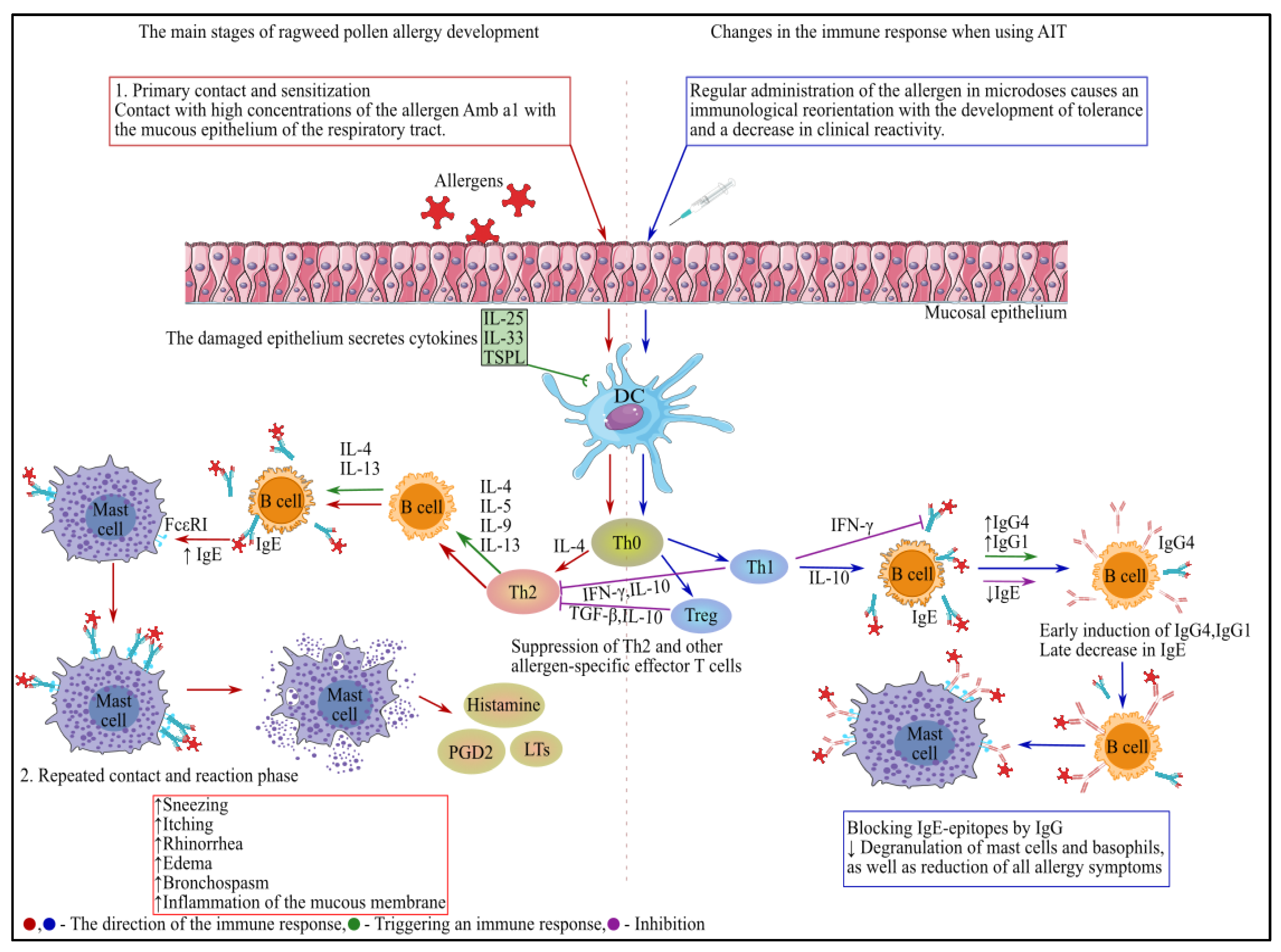
Figure 2.
Workflow for the development of a recombinant vaccine targeting the major ragweed pollen allergens Amb a 1 and Amb a 11.
Figure 2.
Workflow for the development of a recombinant vaccine targeting the major ragweed pollen allergens Amb a 1 and Amb a 11.
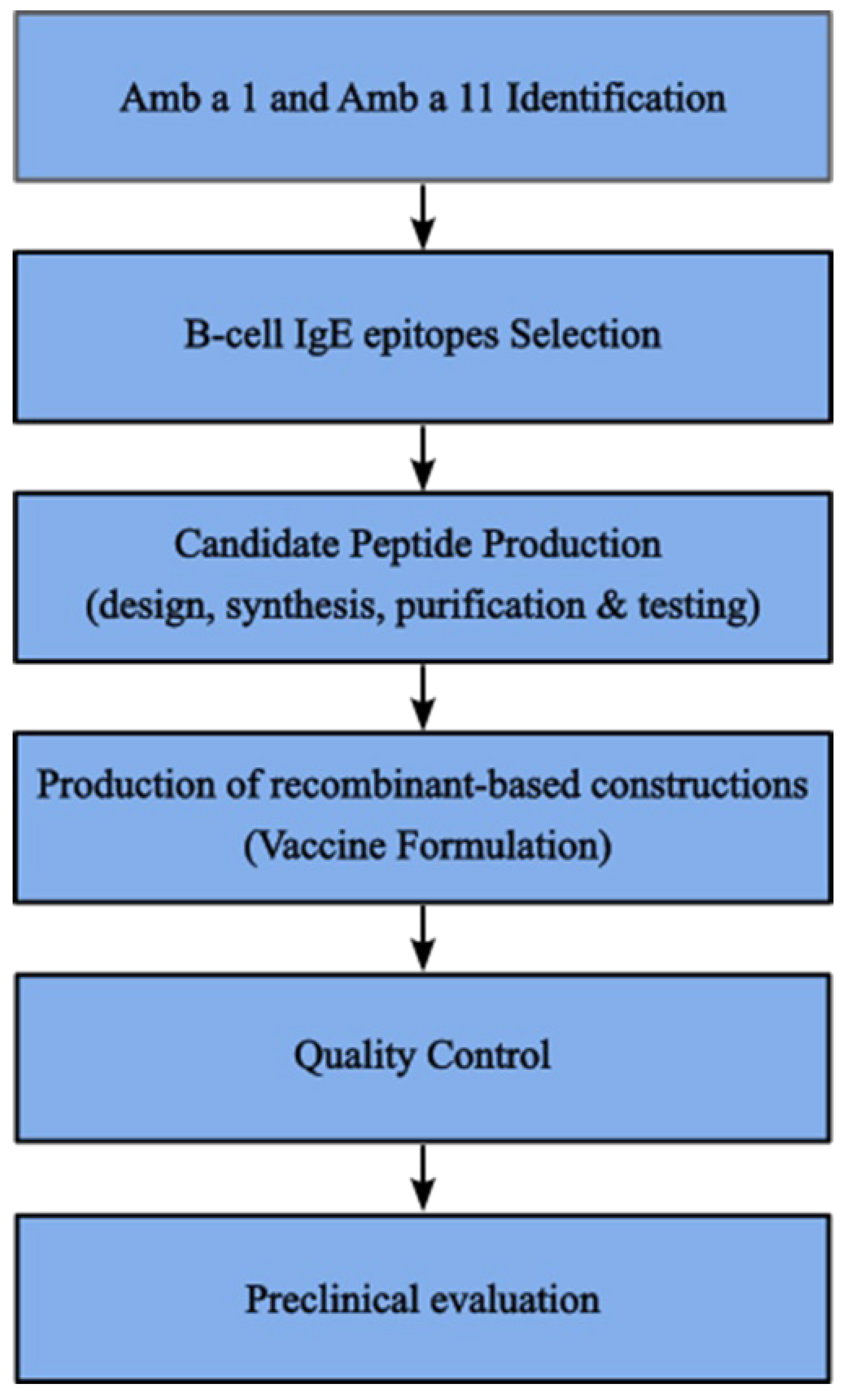
Disclaimer/Publisher’s Note: The statements, opinions and data contained in all publications are solely those of the individual author(s) and contributor(s) and not of MDPI and/or the editor(s). MDPI and/or the editor(s) disclaim responsibility for any injury to people or property resulting from any ideas, methods, instructions or products referred to in the content. |
© 2026 by the authors. Licensee MDPI, Basel, Switzerland. This article is an open access article distributed under the terms and conditions of the Creative Commons Attribution (CC BY) license (http://creativecommons.org/licenses/by/4.0/).
Copyright: This open access article is published under a Creative Commons CC BY 4.0 license, which permit the free download, distribution, and reuse, provided that the author and preprint are cited in any reuse.