

Submitted:
09 August 2026
Posted:
11 August 2026
You are already at the latest version
Abstract
Tourists visiting tsunami‑prone destinations often have limited familiarity with local hazards, making their preparedness a critical component of disaster risk reduction. This study examines the determinants of tourist preparedness in Pangandaran, Indonesia, using the Protection Motivation Theory (PMT) framework. Data were collected through an online survey of domestic tourists and analyzed using structural equation modeling. The results show that both threat appraisal and coping appraisal significantly shape preparedness outcomes. Risk perception increases self‑efficacy and behavioral intention, while coping appraisal, particularly self‑efficacy, emerges as the strongest predictor of both intention and actual preparedness behavior. Response efficacy also contributes positively to intention, whereas perceived obstacles reduce preparedness motivation. Behavioral intention significantly predicts actual behavior, although the moderate behavioral scores indicate an intention–behavior gap. Socio‑demographic characteristics exert limited influence, with only age, education, and income showing modest associations with selected PMT constructs. These findings highlight the central role of cognitive mechanisms in shaping tourist preparedness and underscore the need for targeted communication, capability‑building interventions, and coordinated institutional support to enhance safety in tsunami‑prone destinations.
Keywords:
tourist preparedness
; protection motivation theory
; tsunami risk
; coping appraisal
; behavioral intention
; indonesia coastal tourism
; pangandaran
1. Introduction
Indonesia sits at the convergence of the Indo-Australian and Eurasian plates along the Sunda Megathrust, one of the most seismically active subduction zones on Earth [1,2,3]. Probabilistic hazard analyses confirm that persistent tectonic coupling along this boundary places the southern coast of Java under continuous threat from megathrust earthquakes capable of generating major tsunamis [1,2]. Approximately 57% of Indonesia’s coastline is classified as tsunami-prone, exposing a substantial share of the nation’s coastal tourism infrastructure to direct risk [2]. Pangandaran, a coastal regency on the southern shore of West Java, exemplifies this critical vulnerability [1,4]. Following a devastating tsunami in 2006 that killed over 400 people, Pangandaran was rapidly redeveloped as a designated national strategic tourism area [1,2,5]. Annual visitor numbers surged from a post-disaster low of 250,000 to nearly 4 million by 2019, accompanied by significant multi-story hotel construction directly along the waterfront [1].
However, this rapid spatial redevelopment has introduced severe structural and operational safety risks [1,3]. Modern densification has concentrated infrastructure within the known tsunami inundation zone, relying on planning models based solely on the 2006 event without accounting for larger potential megathrust scenarios [1,3,6]. During peak holiday periods, daily visitor influxes reach up to 59,000 people—the vast majority being domestic tourists originating from non-tsunami-prone regions who lack familiarity with local geography, natural warning indicators, or evacuation routes [1,7,8]. Existing official shelter capacity covers only a fraction of this combined population [1,7]. Furthermore, tourism industry stakeholders frequently resist visible mitigation measures due to commercial fears of deterring visitors, while local evacuation signage remains damaged, degraded, or misleading [5,7].
Despite high physical exposure, disaster management in Indonesia has historically prioritized structural measures and top-down governance over individual behavioral readiness [9,10]. Rapid-onset hazards like tsunamis require immediate self-evacuation, yet a substantial gap exists between risk awareness and actual protective action [11,12]. Protection Motivation Theory (PMT) offers a robust framework to evaluate these cognitive dynamics through threat appraisal (perceived severity and vulnerability) and coping appraisal (self-efficacy, response efficacy, and response costs) [13,14].
Nevertheless, existing applications of PMT in natural hazard contexts predominantly focus on long-term residents who possess established environmental cues and local knowledge [15,16,17]. Applying PMT to transient tourist populations remains sparse, leaving significant ambiguity regarding how non-residents evaluate threat and coping mechanisms in unfamiliar destinations [18,19,20]. Moreover, disaster studies rarely measure behavioral intention and actual preparedness behavior simultaneously [18], leaving the empirical drivers of the intention–behavior gap poorly understood in high-risk tourism settings [11,12].
To address these limitations, this study is guided by the following central academic research question: How do threat appraisal, coping appraisal, and demographic characteristics shape tourists’ preparedness intentions and their actual preparedness behavior in a high-risk, transient destination?
To answer this question, this study applies a PMT-based structural framework to empirical survey data collected from domestic tourists in Pangandaran. Using structural equation modeling (SEM), the research evaluates the direct and indirect relationships between cognitive appraisals, demographic factors, preparedness intention, and actual protective behavior. By examining these human-centered mechanisms within a single quantitative framework, this study clarifies the behavioral drivers of tourist readiness and provides evidence-based insights for coastal disaster risk management.
2. Literature Review
2.1. Disaster Preparedness and Individual Protective Behavior
Disaster preparedness is conceptualized as a dynamic behavioral process where individuals anticipate and respond to hazards through a series of cognitive appraisals. Recent research emphasizes that this process involves acquiring hazard knowledge and adopting protective measures, which are heavily influenced by beliefs regarding hazard severity and personal capability [21,22]. In rapid-onset hazards such as tsunamis, these behaviors are critical as they dictate survival during the narrow window of opportunity for evacuation [23].
Tourists remain a highly vulnerable population due to their transient nature and limited “situational awareness” of local environments. Studies from 2023-2024 indicate that leisure motivations often lead tourists to deprioritize risk signals, exacerbating the exposure in high-density destinations like Pangandaran [24,25]. Furthermore, a significant “intention–behavior gap” persists; even when tourists recognize a threat, they often fail to implement concrete evacuation plans or identify safe zones [8,26]. This gap underscores the need to apply frameworks like Protection Motivation Theory (PMT) to understand the cognitive drivers behind tourist preparedness decisions.
2.2. Protection Motivation Theory: Threat and Coping Appraisal
Protection Motivation Theory (PMT) provides a structured lens to analyze how individuals evaluate risks and decide on protective actions. The framework is divided into threat appraisal (perceived severity and vulnerability) and coping appraisal (self-efficacy, response efficacy, and perceived obstacles) [15,27]. These appraisals determine whether an individual adopts adaptive behaviors or resorts to maladaptive responses, such as denial or fatalism.
Recent literature highlights that coping appraisal is the most decisive factor in motivating actual preparedness. Chakraborty and Chaudhuri (2025) demonstrate that risk communication is only effective when it concurrently boosts efficacy beliefs [28]. Similarly, Miao and Zhang (2023) show that self-efficacy acts as a critical mediator, amplifying the influence of risk information on behavior [29]. Without a strong belief in one’s capability to act (self-efficacy) and the effectiveness of the action (response efficacy), high perceived risk alone rarely leads to preparedness [30]. For tourists, unfamiliarity with local infrastructure often weakens these efficacy beliefs, making PMT essential for tailoring effective risk communication.
2.3. PMT Applications in Natural Hazard and Disaster Contexts
PMT has been extensively applied to various natural hazards globally, with recent studies confirming that socio-cognitive factors are superior to socioeconomic variables in predicting adaptive behavior [31]. For example, Faruk and Maharjan (2022) identified self-efficacy as the strongest predictor of flood adaptation [32], while research on earthquake preparedness continues to show that efficacy mediates the relationship between experience and action [29].
These studies consistently reveal the “risk perception paradox,” where high awareness of hazard severity does not translate into protective action due to low efficacy or perceived barriers. While earlier research in Indonesia primarily focused on structural governance and early warning systems, recent work (2021–2025) has begun exploring individual behavior. However, studies specifically targeting tourists in coastal destinations like Pangandaran remain sparse, highlighting a critical need to explore how cognitive constraints operate among transient populations in high-risk zones [21,33].
2.4. Tourists’ Risk Perception and Preparedness in Coastal Destinations
Tourists constitute a distinct population in disaster-prone coastal regions due to their temporary presence, limited local knowledge, and leisure-oriented motivations [1,25]. These characteristics reduce attention to hazard information and weaken situational awareness, which can hinder timely evacuation during emergencies. Visitors often lack familiarity with evacuation routes [34,35], underestimate local hazard severity, or assume that formal disaster management systems will compensate for their inexperience [25,36]. Such assumptions may delay protective action and increase exposure to rapid-onset hazards like tsunamis [37,38].
In destinations where physical vulnerability is high and visitor numbers fluctuate seasonally, as in Pangandaran, tourist preparedness becomes a critical component of disaster risk reduction [1,2,5,7]. Prior studies highlight that tourists’ risk perception is shaped not only by hazard characteristics but also by travel motivations, perceived responsibility, and confidence in local authorities [19,39,40]. These factors interact with cognitive appraisals, such as self-efficacy and response efficacy, that determine whether individuals intend to engage in protective behavior [20,41,42].
2.5. Conceptual Framework and Hypotheses Development
This study applies Protection Motivation Theory (PMT) to examine the cognitive and demographic factors that shape tourists’ disaster preparedness in Pangandaran. Preparedness is conceptualized through two distinct behavioral dimensions: behavioral intention, reflecting the cognitive commitment to act, and actual behavior, representing the tangible implementation of protective measures. This dual conceptualization aligns with recent studies by Yamada and Tamura (2026), who highlight a persistent disconnect between travelers’ general awareness and their actual implementation of preparedness measures during domestic travel [26]. Similarly, Amri et al. (2024) demonstrate that high tsunami awareness among beach users does not inherently translate into effective evacuation knowledge or behavior, reinforcing the critical nature of the intention–behavior gap in coastal destinations [8].
2.5.1. Rationale and Theoretical Significance
The rationale for adopting PMT in this study lies in its distinct capacity to model human-centered, cognitive decision-making under hazard conditions. Traditional disaster management approaches in Indonesia have historically focused on top-down governance and physical infrastructure. However, in rapid-onset disasters like tsunamis—where warning times are minimal and institutional support may be delayed—survival hinges on individual cognitive processing and rapid self-evacuation decisions. While traditional models assume individuals act rationally based on physical risk exposure alone, PMT accounts for the complex psychological trade-offs between perceived threat and perceived coping capacity.
Applying PMT is particularly significant for fulfilling the research objectives outlined in Chapter 1 regarding transient populations. Unlike local residents who benefit from established environmental cues, spatial familiarity, and local social networks, tourists are transient, non-resident actors operating in unfamiliar environments. PMT provides the necessary theoretical depth to examine how non-residents process threat appraisal (evaluating vulnerability and severity) and coping appraisal (evaluating efficacy and costs) without prior localized hazard knowledge.
2.5.2. Relationship to the Academic Research Question
This conceptual framework directly addresses the primary academic research question established in Chapter 1: How do threat appraisal, coping appraisal, and demographic characteristics shape tourists’ preparedness intentions and their actual preparedness behavior in a high-risk, transient destination?
To answer this question systematically, the operationalization adapted from Tang and Feng (2018) [43] identifies four core PMT cognitive determinants: risk perception, self-efficacy, response efficacy, and perceived obstacles. These variables function as cognitive antecedents driving protection motivation (behavior intention), which subsequently dictates actual preparedness behavior. Furthermore, demographic attributes (gender and age) are integrated as antecedent predictors across all model constructs to account for individual profile variations.
Based on this integrated framework, the hypotheses evaluated in this study are formulated as follows:
- H1: PMT cognitive constructs (risk perception, self-efficacy, response efficacy, and perceived obstacles) significantly influence tourists’ behavior intention to prepare for disasters.
- H2: Behavior intention positively predicts actual preparedness behavior.
- H3: Tourist demographic characteristics (gender and age) are significantly associated with PMT determinants (risk perception, self-efficacy, response efficacy, and obstacles), behavior intention, and actual preparedness behavior.
The conceptual model developed for this study is presented in Figure 1, forming the basis for the empirical analysis described in the next chapter. As illustrated in the framework, the primary cognitive structural pathways ( and ) are evaluated using Structural Equation Modeling (SEM). Concurrently, multiple linear regression analyses are conducted to test , examining the specific predictive effects of demographic characteristics across each cognitive determinant and behavioral outcome. By pairing SEM path modeling with linear regression, this dual-analytical framework clarifies both the universal cognitive mechanisms and profile-specific drivers of tourist disaster readiness.
3. Materials and Methods
3.1. Study Area
The study was conducted in the Pangandaran tourism area, a narrow coastal peninsula located in Pangandaran District, West Java. The area comprises three administrative villages, Pangandaran, Pananjung, and Babakan, each characterized by low elevation and flat coastal terrain. Elevation ranges from 8 to 13 meters above mean sea level, placing the region within a low-lying zone highly susceptible to tsunami inundation, as illustrated in Figure 2.
Geographical conditions for each village, based on data from the Statistical Center Agency (BPS) of Ciamis Regency (2022), are summarized in Table 1. All three villages fall within coastal zones with minimal elevation variation, reinforcing the area’s physical exposure to tsunami hazards.
3.2. Research Design and Participants
This study employed a quantitative research design using a structured questionnaire to examine the cognitive and demographic factors influencing tourist preparedness in Pangandaran. The target population consisted of domestic tourists, reflecting the dominant visitor profile reported in official tourism statistics.
Participants were recruited through online distribution channels, primarily WhatsApp groups, over a seven-week period from August to September 2022. Eligibility criteria ensured that respondents were active tourists with relevant exposure to the study context. To participate, individuals were required to:
- be aged 15–65 years,
- reside outside Pangandaran and Ciamis Regencies,
- have visited Pangandaran for more than 24 hours after the 2006 tsunami, and
- possess knowledge of the event.
The questionnaire consisted of two sections. The first section captured demographic and travel characteristics, including age, gender, education, income, origin, disaster experience, trip purpose, and travel frequency. These items provided contextual information for interpreting behavioral patterns and are summarized in Table 3 (see Appendix A for actual questions).
The second section measured the six constructs of Protection Motivation Theory (PMT): risk perception, self-efficacy, response efficacy, obstacles, behavioral intention, and actual behavior. All items were rated on a five-point Likert scale ranging from 1 (strongly disagree) to 5 (strongly agree). The instrument was adapted from validated PMT studies to ensure conceptual consistency and measurement reliability.
3.3. Data Collection Procedure
Data were collected through an online survey administered over a seven-week period from August to September 2022. The questionnaire was distributed via WhatsApp groups and community networks commonly used by domestic travelers, enabling broad access to individuals who had recently visited Pangandaran. Participation was voluntary, and no incentives were provided to minimize self-selection bias. Screening questions were embedded at the beginning of the survey to ensure that only eligible respondents proceeded. These questions verified age, place of residence, prior visits to Pangandaran, and awareness of the 2006 tsunami event. Responses that did not meet the eligibility criteria were automatically excluded. All responses were collected anonymously, and no personally identifiable information was stored, ensuring compliance with ethical standards for online data collection.
3.4. Data Analysis and Modeling Approach
Data analysis was conducted using a dual-analytical strategy to systematically evaluate both structural socio-cognitive pathways and demographic influences. To begin, Structural Equation Modeling (SEM) was employed using IBM SPSS AMOS to examine the relationships among the Protection Motivation Theory (PMT) constructs and their influence on tourists’ preparedness. SEM was selected because it enables simultaneous estimation of multiple latent variables and their structural pathways, providing a comprehensive assessment of both the measurement properties and the theoretical model.
The SEM procedure followed a standard two-phase protocol. Phase one evaluated the measurement model using Confirmatory Factor Analysis (CFA) to assess construct reliability, convergent validity, and discriminant validity. This ensured that the observed indicators adequately represented the six latent PMT constructs: risk perception (), self-efficacy (), response efficacy (), perceived obstacles (), behavioral intention (), and actual behavior (). Phase two estimated the structural model to test the primary hypothesized pathways ( and ) at a significance level of . Given the presence of multivariate non-normality identified during preliminary screening, model evaluation relied on fit indices robust to distributional violations, including the Standardized Root Mean Square Residual (SRMR), Root Mean Square Error of Approximation (RMSEA), Comparative Fit Index (CFI), Tucker–Lewis Index (TLI), and the chi-square to degrees-of-freedom ratio (CMIN/DF), following established SEM guidelines.
In addition, to complement the SEM framework and evaluate , a series of multiple linear regression analyses was executed separately using Microsoft Excel. Linear regression was specified to assess the direct predictive effects of demographic attributes (gender and age) across each individual latent variable. Separate regression models were run for each dependent criterion (, , , , , and ), with demographic attributes entered as independent predictors. Combining SEM path modeling in AMOS with linear regression in Excel ensured a rigorous, comprehensive evaluation of both universal cognitive mechanisms and profile-specific background variations.
4. Results
4.1. Sample Characteristics
A total of 205 individuals initiated the survey. After applying the eligibility criteria and removing incomplete responses, 198 valid cases were retained for analysis. This sample size meets established methodological recommendations for Structural Equation Modeling, which suggest a minimum of 100 observations and approximately 200 for stable parameter estimation. Sampling procedures and inclusion criteria are summarized in Table 4.
Demographic characteristics of the respondents are presented in Table 5. Most participants were aged 21–50 years (75.3%), representing the dominant age group among domestic tourists visiting Pangandaran. Gender distribution was balanced, with 49.5% male and 50.5% female respondents. More than half of the participants held a bachelor’s degree (54.0%), reflecting the educational profile of typical visitors, particularly those traveling for institutional or organizational outings.
Monthly income levels varied, with 36.9% earning more than IDR 7,000,000 and 26.8% earning between IDR 4,000,001 and 7,000,000. The majority of respondents originated from West Java (86.4%) and Greater Jakarta (10.6%), regions that are not typically exposed to tsunami hazards. Consistent with this pattern, 76.3% reported no prior experience with natural disasters.
Travel-related characteristics are summarized in Table 6. Nearly half of the respondents (49.5%) had visited Pangandaran one to two times after the 2006 tsunami. Reflecting the multiple-response nature of the travel profiles, a vast majority of respondents (88.4%) indicated that holiday or leisure was a primary purpose of their trip, while 36.9% traveled for business-related purposes.
In terms of social group dynamics, which play a critical role in shaping collective disaster preparedness, most participants traveled with family (67.2%) or colleagues (44.9%). These highly collaborative travel structures align with the typical visitor composition of Pangandaran and provide a relevant, real-world basis for analyzing tourist preparedness in a high-risk, tsunami-prone setting.
4.2. Measurement Model: Reliability and Validity
The PMT items were adapted from validated instruments used in previous studies, particularly Tang and Feng (2018), to ensure conceptual consistency and measurement reliability. Confirmatory Factor Analysis (CFA) was conducted to evaluate the measurement properties of the six constructs: risk perception, self-efficacy, response efficacy, obstacles, behavioral intention, and actual behavior.
The CFA results are presented in Table 7. Standardized factor loadings for the majority of items exceeded the recommended threshold of 0.60, indicating robust indicator representation. While item rp1 displayed a lower loading (0.214), it was retained to maintain content validity across the structural spectrum. Composite reliability (CR) and Cronbach’s alpha values ranged from 0.833 to 0.976 and 0.761 to 0.959, respectively, well above the acceptable 0.70 threshold for internal consistency. Convergent validity was established as all Average Variance Extracted (AVE) values exceeded the 0.50 benchmark.
Discriminant validity was verified using the Fornell–Larcker criterion. As illustrated in Table 8, the square root of the AVE for each latent variable (displayed along the diagonal) was consistently greater than the off-diagonal correlation coefficients between that variable and any other construct, confirming distinct dimensionality.
4.3. Structural Model Fit
The structural model was evaluated using multiple goodness-of-fit indices to assess how well the hypothesized relationships among the PMT constructs aligned with the empirical data (Table 9).
Overall, the structural model demonstrated an acceptable fit to the observed data. The chi-square to degrees-of-freedom ratio (CMIN/DF = 1.922$) fell well below the conservative threshold of 3.00, indicating an appropriate balance between model complexity and explanatory power.
The Root Mean Square Error of Approximation (RMSEA = 0.070) and Standardized Root Mean Residual (SRMR = 0.065) both met their respective criteria, indicating acceptable residual levels and minor approximation error.
Furthermore, the incremental fit indexes exceeded the standard baseline of 0.90, with the Comparative Fit Index (CFI = 0.913) and the Tucker–Lewis Index (TLI = 0.901) confirming that the structural model provides a robust representation of the data, rendering it fully suitable for path coefficient interpretation.
4.4. Structural Path Results
The structural model revealed several significant relationships among the Protection Motivation Theory (PMT) constructs. Table 10 summarizes the standardized path coefficients (β) and critical ratios (t-values) obtained from the SEM analysis.
Risk perception (RP) exerted a strong, positive, and significant direct effect on response efficacy (β = 0.463, t = 2.615, p < 0.01). While Risk Perception did not display a direct path to behavioral intention (BI), it maintained a significant indirect effect on behavioral intention fully mediated through response efficacy. This structural pathway indicates that tourists who perceive higher tsunami risks do not automatically form intentions to prepare; rather, heightened risk perception elevates their belief in the effectiveness of countermeasures (RE), which subsequently drives their intention to act.
Self-efficacy emerged as the dominant structural drivers within the model. Self-efficacy displayed a profound direct impact on behavioral intention (β = 0.407, t = 4.128, p < 0.001), which subsequently served as a powerful direct driver of actual behavior (β = 0.918, t = 14.721, p < 0.001). Conversely, perceived obstacles acted as a significant negative antecedent to self-efficacy (β = -0.246, t = -2.496, p < 0.05), confirming that daily structural barriers directly suppress a tourist’s perceived capacity to act.
Response efficacy also exhibited a positive, marginally significant influence on behavioral intention (β = 0.137, t = 1.753, p < 0.10), although the effect was weaker compared to self-efficacy. In contrast, obstacles had a significant negative effect on self-efficacy (β = –0.246, t = –2.496, p < 0.05), indicating that perceived barriers, such as limited knowledge, financial constraints, or physical limitations, reduce tourists’ confidence in their ability to prepare.
Behavioral intention strongly predicted actual behavior (β = 0.918, t = 14.721, p < 0.001), confirming its mediating role in translating cognitive appraisals into concrete preparedness actions. Overall, the structural results support the theoretical assumptions of PMT, demonstrating that both threat appraisal (risk perception) and coping appraisal (self-efficacy, response efficacy, obstacles) jointly shape tourists’ preparedness behavior in a tsunami-prone destination.
The final structural model after SEM iteration is presented in Figure 3, illustrating the significant pathways and the relative strength of relationships among the PMT constructs.
4.5. Analysis of Socio-Demographic Influences
To evaluate , a series of multiple linear regression analyses was performed to examine the predictive influence of socio-demographic characteristics (gender and age) on the primary Protection Motivation Theory (PMT) constructs and behavioral outcomes.
Gender and age were entered as independent predictors across separate regression models for each latent variable: risk perception (), self-efficacy (), response efficacy (), perceived obstacles (), behavioral intention (), and actual behavior ().
The empirical results reveal that while cognitive appraisals remain the primary drivers of preparedness, specific socio-demographic traits introduce significant structural variances into the framework.
- Gender Disparities: The regression diagnostics indicate that gender is a highly significant predictor across multiple preparedness dimensions. Specifically, male respondents exhibited significantly higher baseline levels than female respondents in actual behavior (t = 2.935, p = 0.004), behavioral intention (t = 2.481, p = 0.014), and self-efficacy (t = 4.126, p < 0.001). Conversely, men perceived significantly fewer situational barriers, reporting lower scores for perceived obstacles (t = -3.318, p = 0.001) than their female counterparts.
- Age-Differentiated Effects: Age cohort emerged as another critical structural predictor of tsunami preparedness. Younger tourists (ages 15–30) demonstrated significantly lower scores in both actual behavior (t = -2.447, p = 0.015) and behavioral intention (t = -2.999, p = 0.003) relative to the older demographic (ages 31–65). Furthermore, this younger cohort reported encountering a significantly higher volume of structural and life-stability barriers, as evidenced by elevated scores in perceived obstacles (t = 2.310, p = 0.022).
5. Discussion
5.1. Socio-Demographic Determinants of Preparedness
5.1.1. Gender Dynamics and Structural Vulnerabilities
The significant demographic variations found in the regression analysis challenge the assumption that tourist risk perceptions and capacities are uniform. The lower self-efficacy, lower behavioral intentions, and higher perceived obstacles reported by female tourists suggest that age and gender may condition how PMT appraisals are formed and translated into preparedness behavior. These patterns may reflect differences in caregiving responsibility, access to information, mobility, social support, prior hazard experience, and perceived control.
In disaster contexts, women frequently face gender-based resource disparities, such as unequal access to financial assets, localized emergency information, and humanitarian initiatives [45,46]. Furthermore, caregiving responsibilities often shape a woman’s immediate mobility during crises, as women are frequently tasked with leading household evacuation while caring for dependents [47,48]. These factors may introduce additional burdens during emergencies, manifesting psychologically as lower self-efficacy and a higher perception of vulnerability [46,49].
However, counter-evidence suggests that women often excel at household-level planning and family safety protocols. Durmus et al. (2026) found that women play a pivotal role in disseminating disaster knowledge within households [48]. Therefore, these findings should not be interpreted as evidence of an inherent lack of capacity, but rather suggest that demographic differences may reflect unequal access to information, social support, and practical resources [50].
5.1.2. Age Dynamics and the Paradox of Youth Instability
The lower preparedness levels observed among younger populations (ages 15–30) suggest that socio-economic factors may condition cognitive preparedness. While younger populations often possess high digital literacy and a strong baseline understanding of hazard risks [51], they frequently face lower baseline stability regarding financial resources, housing, or employment.
Han et al. (2026) demonstrated that while youth can initiate preparedness awareness, translating this knowledge into actual action requires specific pathways through self-efficacy and response efficacy [51]. This suggests that awareness alone does not automatically translate to preparedness behavior when socioeconomic barriers exist. Facing daily livelihood instabilities, younger individuals may perceive higher baseline obstacles, which dampens their cognitive transition from hazard awareness to concrete protective intentions [52,53].
Conversely, older adults are more likely to translate stability into proactive behaviors. Song et al. (2025) found that older adults demonstrated strong social support networks that contributed to community resilience [54]. Accumulated resources and established community networks may provide the stability necessary for translating risk awareness into concrete protective actions [54].
5.2. Structural Pathways of the Protection Motivation Model
5.2.1. The Risk Perception Paradox
Beyond demographic traits (), the core structural pathways of the Protection Motivation Theory (PMT) model ( and ) yield vital insights into tourist psychology. Notably, within the primary structural model (), risk perception (threat appraisal) did not exert a parallel or direct effect on actual disaster preparedness behavior (). This empirical disconnect validates the “Risk Perception Paradox,” where high hazard awareness fails to translate directly into protective action [8,21]. Recent findings in coastal tourism suggest that destination attributes—such as high-quality infrastructure and accessible amenities—can paradoxically suppress risk perception by creating a false sense of security, thereby diminishing the urgency for preparedness [21].
In Pangandaran, most tourists are well aware of regional tsunami risks, yet this sole awareness fails to improve their active preparedness. Instead, within our estimated structural model (), risk perception operates indirectly by positively influencing response efficacy [28]. This structural mechanism indicates that a tourist’s recognition of a threat does not immediately spark a personal motivation to act; rather, it prompts them to evaluate the effectiveness of available protective measures before forming a behavioral intention.
Our empirical findings reveal that this indirect pathway linking risk perception to behavior intention () is strongly tied to institutional trust. Specifically, the data indicate that a tourist’s confidence in local early warning systems and government-led mitigation dictates the strength of their response efficacy, a result that strongly reinforces prior studies on transient population behavior [21,25]. Consequently, response efficacy acts as a critical mediator in the path toward behavior intention (). When tourists perceive that local mitigation frameworks—such as evacuation routes and vertical shelters—are reliable, their intention to protect themselves increases significantly [28]. This finding leads to a critical policy implication: governments in Pangandaran must look beyond generic awareness campaigns and actively publicize the reliability, mechanics, and operational readiness of physical countermeasures.
5.2.2. Self-Efficacy as the Primary Behavioral Driver
In contrast to the indirect path of risk perception, self-efficacy emerged as the most powerful and dominant direct predictor of protection motivation ( under ) and subsequent actual behavioral deployment ( under ). This supports a wide body of PMT literature establishing that individual self-confidence in executing a protective action is the strongest driver of actual precautionary behavior [15,28,29]. In earthquake and tsunami contexts, perceived efficacy has been shown to yield the highest behavioral coefficients, reinforcing that “knowing what to do” is more influential than “knowing the risk” [15].
However, our structural model reveals that self-efficacy is consistently eroded by “response costs” or perceived obstacles (). Structural barriers—including financial constraints, limited time during travel, and a lack of localized knowledge—act as significant deterrents to preparedness [55]. This indicates that even highly motivated tourists may remain inactive if the perceived “cost” of preparedness (e.g., time, effort, or complexity) is too high. For tourists, the lack of familiarity with Pangandaran’s specific geography represents a major cognitive barrier that reduces their self-protection capacity [21]. Therefore, enhancing tourist preparedness requires targeted interventions that simplify protective actions and reduce the perceived effort or “cost” of staying safe while traveling.
This finding presents a nuanced departure from prior foundational research. While Tang and Feng [43] observed that obstacles in Taiwan acted as a direct, parallel impediment alongside self-efficacy to interrupt behavioral intentions for earthquakes, our model demonstrates that obstacles in Pangandaran primarily act as an antecedent that dampens self-efficacy itself. Tourists who evaluate themselves as lacking immediate resources or capabilities to cope are inhibited from forming protective intentions () and translating them into actual behavior () in the first place.
6. Conclusions
Disaster preparedness serves as a critical mechanism for safeguarding individual well-being and life safety within volatile hazard environments. For disaster management authorities, tourism operators, and destination planners, possessing a granular, empirically validated understanding of the cognitive and socio-demographic factors driving protection motivation is foundational to designing high-impact mitigation policies.
6.1. Theoretical Implications
This research contributes to the disaster risk reduction literature by extending the application of Protection Motivation Theory (PMT) to transient, short-term populations within high-risk coastal tourism destinations.
First, the findings highlight the dominant role of coping appraisal—specifically self-efficacy—in predicting both behavioral intentions and actual preparedness actions. This strongly supports the theoretical argument that an individual’s perceived capability is the central psychological lever in protective decision-making, carrying far greater predictive weight than mere hazard awareness or threat appraisal.
Second, this study clarifies a critical structural pathway by demonstrating that perceived daily obstacles function as a powerful antecedent that suppresses self-efficacy. While traditional PMT models often treat obstacles as a direct, parallel barrier to intention, our findings offer empirical evidence of an indirect pathway: systemic daily hardships (e.g., resource, time, or financial constraints) actively erode an individual’s self-confidence in their capacity to act, thereby inhibiting protection motivation at its systemic root.
Finally, the most important theoretical implication of this study is that Protection Motivation Theory operates through socially differentiated rather than homogeneous cognitive appraisals. In this study, female tourists reported lower self-efficacy and behavioral intentions, together with higher perceived obstacles, while younger tourists demonstrated lower levels of preparedness. These findings indicate that the same tsunami threat may not generate the same protective response across demographic groups. Differences in perceived control, hazard knowledge, previous experience, access to information, mobility, social support, and perceived response costs may influence how tourists evaluate their vulnerability and their capacity to evacuate. Age and gender should therefore be treated not merely as descriptive variables or statistical controls, but as characteristics that may condition the formation and translation of PMT appraisals into preparedness behavior.
This finding extends standard applications of PMT in two ways. First, it shifts the focus from average relationships between threat appraisal, coping appraisal, and preparedness to the possibility of heterogeneous relationships across population groups. Recent tsunami research involving local residents, non-local workers, and travelers found that threat and coping appraisals predicted evacuation intentions, while gender influenced threat perception, supporting the importance of demographic variation in tsunami-related decision-making [22]. Second, the findings connect PMT with the social vulnerability perspective. Research on disaster perception shows that gender differences may interact with age and education, rather than operate as isolated demographic effects [56]. Similarly, intersectional disaster research argues that vulnerability is shaped by the interaction of identity, social position, resources, place, and power relations, rather than being an inherent characteristic of a predefined group [57].
Accordingly, the lower preparedness observed among female and younger tourists should not be interpreted as evidence of an inherent lack of capacity. Instead, the findings suggest that demographic differences may reflect unequal access to information, prior disaster experience, social support, perceived mobility, confidence in evacuation procedures, and practical resources. This interpretation is consistent with research showing that personal characteristics, social norms, and locus of control can add explanatory value to standard PMT constructs when predicting disaster preparedness actions [58]. The theoretical contribution of this study is therefore the proposition that PMT should be applied as a context-sensitive framework in tourism disaster research, one that recognizes that protection motivation is formed within unequal social and situational conditions.
However, the present findings should be interpreted as evidence of demographic differentiation rather than definitive proof of intersectional causation. The study did not directly test whether caregiving responsibilities, patriarchal exclusion, economic instability, or access to resources produced the observed differences. Future research should examine these mechanisms using interaction effects, multi-group structural equation modelling, longitudinal designs, and measures of socioeconomic status, travel experience, social support, caregiving responsibility, and access to evacuation information. This would allow future PMT research to determine not only whether demographic groups differ in preparedness, but also why the relationships between threat appraisal, coping appraisal, intention, and actual preparedness behavior differ across groups.
6.2. Practical and Policy Implications
Targeting the correct behavioral drivers is essential for maximizing the efficiency of disaster management investments. The empirical outcomes of this study indicate that interventions targeting coping capacity (self-efficacy) yield significantly better outcomes than policies that solely focus on inflating risk perception.
6.2.1. Enhancing Self-Efficacy and Response Efficacy
To build tourist self-efficacy, destination managers and local authorities in Pangandaran must provide highly visible, actionable, and localized safety information. Interventions should prioritize the distribution of simple, visually accessible materials—such as multi-lingual evacuation maps, physical route signage at key tourist touchpoints, and automated mobile-based alerts. By detailing the exact steps, a tourist must execute upon arriving in Pangandaran, authorities can systematically reduce situational uncertainty and enhance visitors’ confidence to protect themselves and their families.
Simultaneously, public campaigns must reinforce response efficacy by transparently demonstrating the reliability and mechanics of the local government’s tsunami countermeasures, early warning infrastructures, and physical safe zones. When tourists are fully informed of the technical reliability of these systems, their cognitive trust translates into higher protection motivation.
6.2.2. Targeted Demographic Interventions
Because preparedness indicators are significantly conditioned by demographic traits, authorities must move away from generic communication strategies toward identity-conscious, targeted policies:
- Gender-Responsive Strategies: Recognizing that female tourists report lower baseline self-efficacy and face higher perceived obstacles, disaster management plans should prioritize gender-inclusive safety measures. Interventions should feature clear, family-oriented evacuation protocols, accessible assistance points for visitors traveling with dependents, and safety messaging integrated into primary tourist accommodation and service hubs.
- Youth-Focused Capacity Building: Addressing the lower preparedness observed among younger demographics (ages 15–30), interventions should capitalize on this group’s high digital literacy and baseline risk awareness. Destination managers should deploy gamified mobile applications, interactive social media safety guides, and digital location-based alerts to convert latent hazard knowledge into practical protective actions.
6.3. Limitations and Directions for Future Research
While this study establishes a novel socio-cognitive framework for transient populations, several operational limitations point toward avenues for future research:
- Methodological Boundaries: The reliance on cross-sectional, self-reported survey data may introduce social desirability bias and limits the ability to observe real-time behavioral execution during an active emergency. Future studies could supplement survey methodologies with observational simulations, field experiments, or virtual reality evacuation exercises.
- Geographical and Contextual Generalizability: This research focused exclusively on the unique spatial, institutional, and tourism landscape of Pangandaran. To establish broader external validity, future studies should evaluate this PMT framework across diverse coastal destinations across the archipelago facing varying levels of exposure and infrastructure readiness.
- Sample Scope: This dataset captures the responses of temporary domestic tourists exclusively. Because permanent local residents and business operators possess different localized knowledge, spatial memory, and institutional trust, conducting comparative multi-group analyses between tourists and local residents represents an important step toward comprehensive destination resilience.
Institutional Review Board Statement
Ethical review and approval were waived for this study in accordance with the Research Ethics Guidelines of Institut Teknologi Bandung (KEP ITB / CIOMS 2016 Guidelines, Guideline 23), as the research involved solely voluntary, non-invasive, anonymous survey questionnaires administered to adult respondents with no collection of personally identifiable information.
Informed Consent Statement
Informed consent was obtained from all subjects involved in the study.
Acknowledgments
This work was supported by JST SPRING, Grant Number JPMJSP2127.
Appendix A. PANGANDARAN TOURIST QUESTIONNAIRE
Instructions:
Answer all of the following questions according to your condition.
| GA1 | Name/Initials | ||||
| GA2 | Age | ||||
| GA3 | Gender | Male | Female | ||
| GA4 | Domicile (City/Regency) | ||||
| GA5 | Education | Not finished elementary school |
Elementary school/ equivalent |
Middle school /equivalent |
|
| Highschool /equivalent |
Bachelor’s/Diploma | Postgraduate | |||
| GA6 | Work | Civil Servant Private Employees Self-employed Police/Army Student |
|||
| GA7 | Income | ||||
| GA10 | Have you ever faced a natural disaster before (e.g. floods, earthquakes, etc.)? | □ Yes | □ No | ||
| GA8 | How many times (on average) do you travel (in a year)? | 0-2 times | 3-5 times | > 5 times | |
| GA 11 |
What would be your reason to stay at Pangandaran? | Holidays Official trips Other ......... |
|||
| GA 12 |
With whom are you staying/visiting Pangandaran? | Alone Family Friends Colleagues Tour group |
|||
| GA9 | How many times have you visited Pangandaran? | ||||
Instructions:
Choose the response that best suits you based on the following statements.
| No | Statements |
(1) Strongly Disagree |
(2) Disagree |
(3) Neutral |
(4) Agree |
(5) Strongly Agree |
| Risk Perception | ||||||
| RP1 | I know that the Pangandaran tourist area is prone to tsunami. | |||||
| RP2 | I realized that a tsunami could threaten the safety of lives. | |||||
| RP3 | I realized that a tsunami can cause severe damage. | |||||
| RP4 | I realized that a tsunami could cause financial losses. | |||||
| RP5 | I realized that a tsunami can cause a psychological impact. | |||||
| Self-Efficacy | ||||||
| SE1 | I am confident that I will be able to evacuate myself when tsunami occurs. | |||||
| SE2 | I am confident that I can recognize and follow the tsunami evacuation instructions in Pangandaran. | |||||
| SE3 | I am sure I can understand the meaning of the sound of the tsunami early warning system in Pangandaran. | |||||
| SE4 | I believe I am able to think quickly when disaster occurs. | |||||
| SE5 | I am confident that I can run/walk fast when disaster occurs. | |||||
| Response-Efficacy | ||||||
| RE1 | I think that self-evacuation can save lives when tsunami occurs. | |||||
| RE2 | I consider that by following the evacuation instructions in Pangandaran, it can save lives when tsunami occurs. | |||||
| RE3 | I believe that understanding and listening to the tsunami early warning system can save lives when tsunami occurs. | |||||
| Obstacles | ||||||
| O1 | I like to look for information/read the news. | |||||
| O2 | I exercise routinely. | |||||
| O3 | I have a good nutritional intake. | |||||
| O4 | I’ll set aside time to do the important things. | |||||
| O5 | I have good day-to-day financial support. | |||||
| Behavior Intention | ||||||
| BI1 | At the time before staying in Pangandaran, I had the intention to evacuate myself as soon as possible in case of a tsunami. | |||||
| BI2 | Before staying in Pangandaran, I had the intention to find out the location/location of the evacuation gathering point and/or tsunami shelter. | |||||
| BI3 | Before staying in Pangandaran, I had the intention to find out the tsunami evacuation route. | |||||
| BI4 | At the time before staying in Pangandaran, I had the intention to have an evacuation plan in case of a tsunami. | |||||
| BI5 | Before staying in Pangandaran, I had the intention to choose a place to stay that was considered safe from the tsunami. | |||||
| BI6 | Before staying in Pangandaran, I had the intention to find information about the latest weather conditions in Pangandaran. | |||||
| BI7 | Before staying in Pangandaran, I had the intention to understand the meaning of the tsunami early warning sound. | |||||
| Actual Behavior | ||||||
| AB1 | Before staying in Pangandaran, I prepared myself to evacuate in the event of a tsunami. | |||||
| AB2 | Before staying in Pangandaran, I was looking for information about the meaning of the tsunami early warning sound. | |||||
| AB3 | Before staying in Pangandaran, I found out the location of the evacuation gathering point and/or tsunami shelter. | |||||
| AB4 | Before staying in Pangandaran, I found out the tsunami evacuation route. | |||||
| AB5 | Before staying in Pangandaran, I chose a place to stay that was considered safe from the tsunami. | |||||
| AB6 | Before staying in Pangandaran, I made an evacuation/anticipation plan in case of a tsunami. | |||||
| AB7 | Before staying in Pangandaran, I sought information about the danger of tsunami from a reliable source of information. | |||||
References
- Nijman, V. Tourism Developments Increase Tsunami Disaster Risk in Pangandaran, West Java, Indonesia. Int. J. Disaster Risk Sci. 2021, 12, 764–769. [Google Scholar] [CrossRef]
- Rahayu, H. P.; Comfort, L. K.; Khoirunnisa, D.; Nurhasanah, D. Need Assessment for Coastal Tourism Area in the Face of Tsunami Risk: The Case of Pangandaran. Int. J. Adv. Sci. Eng. Inf. Technol. 2024, 14, 563–574. [Google Scholar] [CrossRef]
- Riyanto, A. M.; Muslim, D.; Yulianto, E.; Krisnabudhi, A.; Firmansyah, F. Discerning geomorphological aspects of tsunami risk in Pangandaran, West Java, Indonesia. Ris. Geol. Dan Pertamb. 2023, 33. [Google Scholar] [CrossRef]
- Nusantara, C. A. D. S.; Windupranata, W.; Hayatiningsih, I.; Hanifa, N. R. Mapping of IOC-UNESCO Tsunami Ready Indicators in the Pangandaran Village, Indonesia. IOP Conf. Ser. Earth Environ. Sci. 2021, 925, 012041. [Google Scholar] [CrossRef]
- Marpaung, G.; Rahayu, H. P. The Resilience of a Coastal Tourist Destination: An Analysis of Pangandaran’s Tsunami Risk. J. Tour. Sustain. 2025, 5, 166–178. [Google Scholar] [CrossRef]
- Nisaa, R. M.; Nurmaya, A. Management and vulnerability analysis of the existing built-up area in the Pangandaran coastal area to the tsunami disaster. IOP Conf. Ser. Earth Environ. Sci. 2022, 1109, 012026. [Google Scholar] [CrossRef]
- Koswara, D. V.; Windupranata, W.; Meilano, I.; Hayatiningsih, I.; Hanifa, N. R. Characteristics of Potential Tsunami Evacuee and Evacuation Infrastucture in Pangandaran Beach, Indonesia. IOP Conf. Ser. Earth Environ. Sci. 2021, 925, 012036. [Google Scholar] [CrossRef]
- Amri, I.; Giyarsih, S. R.; Ruslanjari, D. Tsunami risk awareness, hazard warning knowledge, and intended evacuation behavior among beach users in Bantul, Indonesia. Int. J. Disaster Risk Reduct. 2024, 109, 104594. [Google Scholar] [CrossRef]
- Erokhin, D.; Komendantova, N. Understanding Human Behavior Response to Disasters; Oxford University Press: New York, NY, 2024. [Google Scholar] [CrossRef]
- Davarani, E. R.; Nekoei-Moghadam, M.; Khanjani, N.; Iranpour, A.; Chashmyazdan, M.; Farahmandnia, H. Factors related to earthquake preparedness of households based on social-cognitive theory constructs: A systematic review. Front. Public Health 2023, 11. [Google Scholar] [CrossRef] [PubMed]
- Conner, M.; Norman, P. Understanding the intention-behavior gap: The role of intention strength. Front. Psychol. 2022, 13. [Google Scholar] [CrossRef] [PubMed]
- Osberghaus, D.; Botzen, W. J. W.; Kesternich, M. The intention-behavior gap in climate change adaptation: Evidence from longitudinal survey data. Ecol. Econ. 2025, 231, 108543. [Google Scholar] [CrossRef]
- Ong, A. K. S.; et al. Factors affecting the intention to prepare for tsunami in Thailand. Ocean Amp Coast. Manag. 2023, 233, 106464. [Google Scholar] [CrossRef]
- Fischer-Preßler, D.; Bonaretti, D.; Fischbach, K. A Protection-Motivation Perspective to Explain Intention to Use and Continue to Use Mobile Warning Systems. Bus. Amp Inf. Syst. Eng. 2021, 64, 167–182. [Google Scholar] [CrossRef]
- Yücel, H.; Cengiz, S. Development and Validation of a Scale Based on Protection Motivation Theory to Investigate Factors Affecting Earthquake Preparedness Behaviors. Int. J. Disaster Risk Sci. 2025, 16, 742–755. [Google Scholar] [CrossRef]
- Kurata, Y. B.; Ong, A. K. S.; Ang, R. Y. B.; Angeles, J. K. F.; Bornilla, B. D. C.; Fabia, J. L. P. Factors Affecting Flood Disaster Preparedness and Mitigation in Flood-Prone Areas in the Philippines: An Integration of Protection Motivation Theory and Theory of Planned Behavior. Sustainability 2023, 15, 6657. [Google Scholar] [CrossRef]
- Toyosawa, J.; Takehashi, H.; Shimai, S. Structure of Disaster Preparedness Motivation and Its Relationship with Disaster Preparedness Behaviors. Jpn. Psychol. Res. 2024, 66, 225–238. [Google Scholar] [CrossRef]
- Wut, T. M.; Lee, D.; Lee, S. W. Does Attitude or Intention Affect Behavior in Sustainable Tourism? A Review and Research Agenda. Sustainability 2023, 15, 14076. [Google Scholar] [CrossRef]
- Subedi, Swechchha; Kubickova, Marketa. Tourists’ Compliance With Public Policy and Government Trust: An Application of Protection Motivation Theory. Cornell Hosp. Q. 2024, 65, 44–58. [Google Scholar] [CrossRef]
- Zhang, F.; Cheng, Q.; Lv, Y.; Li, N. Risk perception, travel intentions and self-protective behavior of chronically ill tourists under the protection motivation perspective. Sci. Rep. 2025, 15. [Google Scholar] [CrossRef] [PubMed]
- Rahmafitria, F.; Setiyorini, H. P. D.; Hindayani, P.; Oktadiana, H.; Ramadhan, A. How do tourists perceive risk and develop travel preparedness? Influence of destination attributes and knowledge. J. Manaj. Hutan Trop. 2025. [Google Scholar] [CrossRef]
- Mahittikul, N.; et al. Examining the Factors Influencing Tsunami Evacuation Action Selection in Thailand: A Comprehensive Study Involving Local Residents, Non-Local Workers, and Travelers. Sustainability 2024, 16, 2024. [Google Scholar] [CrossRef]
- Sasaki, K.; Nakamura, R.; Kanemura, T. TSUNAMI EVACUATION SIMULATON OF TOURISTS AND LOCAL RESIDENTS BY USING EXPECTED TSUNAMI OF NANKAI TROUGH EARTHQUAKE. Coast. Eng. Proc. 2025, 38. Available online: https://www.pref.wakayama.lg.jp/prefg/062400/doutai2_d/f.
- Khaerani, R.; Hartadji, D. Khansa; Dwi Winarsih, G.; Jayati, J. Einsteinovi Dianada; Krista, S. Alifia; Khosihan, A. Manajemen dan Pariwisata MEDIA REPRESENTASI TENTANG KESIAPSIAGAAN BENCANA DI KAWASAN WISATA PANTAI PANGANDARAN (MEDIA REPRESENTATION OF DISASTER PREPAREDNESS IN PANGANDARAN BEACH TOURISM AREA). Manaj. Dan Pariwisata 2024, 3. [Google Scholar] [CrossRef]
- Moreschini, I.; Cugliari, L.; Cerbara, L.; La Longa, F.; Crescimbene, M.; Amato, A. Tsunami risk perception of the touristic population of Stromboli Island: towards effective risk communication strategies. Nat. Hazards 2024, 121, 519–542. [Google Scholar] [CrossRef]
- Yamada, T.; Tamura, Y. Disaster risk reduction for travelers: Linking everyday preparedness to preparedness during domestic travel. Prog. Disaster Sci. 2026, 31. [Google Scholar] [CrossRef]
- Yueqi, G. Alex; Hao-Che, W. Modeling Household Earthquake Hazard Adjustment Intentions: An Extension of the Protection Motivation Theory. Nat. Hazards Rev. 2023, 24, 04022051. [Google Scholar] [CrossRef]
- Chakraborty, S.; Chaudhuri, S. K. Information to action: Decoding disaster preparedness against cyclones through Protection Motivation Theory and Mastery of Life in Indian Sundarbans. Inf. Dev. 2025, 02666669251384644. [Google Scholar]
- Qing, M.; Fengxiu, Z. Drivers of Household Preparedness for Natural Hazards: The Mediating Role of Perceived Coping Efficacy. Nat. Hazards Rev. 2023, 24, 04023010. [Google Scholar] [CrossRef]
- Brown, G. D.; Largey, A.; McMullan, C.; Daffy, P. Fire safety protection motivation and preparedness in Irish apartments: A Post-Grenfell analysis. Saf. Sci. 2022, 148. [Google Scholar] [CrossRef]
- Loza-Hernandez, L.; Arroyo, P. Explaining preparedness towards hydrometeorological hazards. An exploratory study in Mexico. Espirales Rev. Multidiscip. De Investig. 2023, 7. [Google Scholar] [CrossRef]
- Faruk, O.; Maharjan, K. L. Factors Affecting Farmers’ Adoption of Flood Adaptation Strategies Using Structural Equation Modeling. Water (Basel) 2022. [Google Scholar] [CrossRef]
- Wisaksono, Anindito Trah; Putri, Fahira Ardini; Gunawan, Rimbo. Kesadaran Mitigasi Bencana Tsunami bagi Wisatawan dan Warga Lokal di Kabupaten Pangandaran. SOSMANIORA J. Ilmu Sosial. Dan Hum. 2024, 3, 270–277. [Google Scholar] [CrossRef]
- Choi, S.; Maharjan, R.; Hong, T. T. N.; Hanaoka, S. Impact of information provision on tsunami evacuation behavior of residents and international tourists in Japan. Transp. Policy (Oxf) . 2024, 155, 264–273. [Google Scholar] [CrossRef]
- Wachtel, G.; Schmöcker, J. D.; Hadas, Y.; Gao, Y.; Nahum, O. E.; Ben-Moshe, B. Planning for tourist urban evacuation routes: A framework for improving the data collection and evacuation processes. Environ. Plan. B Urban Anal. City Sci. 2021, 48, 1108–1125. [Google Scholar] [CrossRef]
- Fathianpour, A.; Wilkinson, S.; Babaeian Jelodar, M.; Evans, B. Reducing the vulnerability of tourists to tsunami: challenges for decision-makers. Nat. Hazards 2023, 118, 1315–1339. [Google Scholar] [CrossRef]
- Choi, S.; Yoshida, K.; Yamaji, H.; Shindo, H.; Maharjan, R. Factors influencing disaster response behavior of international tourists under the Tokyo Metropolitan Earthquake scenario. Front. Sustain. Tour. 2023, 2. [Google Scholar] [CrossRef]
- Kannangara, C.; Kuligowski, E.; Siriwardana, C.; Zhang, G.; Adikariwattage, V.; Jayawardane, P. “Exploring the science of evacuation behavior and decision-making during large scale community evacuations: A scientometrics analysis and scoping review,” Mar. 01, 2026, Elsevier B.V. [CrossRef]
- Meng, Y.; Khan, A.; Bibi, S.; Wu, H.; Lee, Y.; Chen, W. The Effects of COVID-19 Risk Perception on Travel Intention: Evidence From Chinese Travelers. Front. Psychol. 2021, 12. [Google Scholar] [CrossRef] [PubMed]
- Cisternas, C.; Cifuentes, L. A.; Bronfman, N. C.; Repetto, P. B.; Castañeda, J. V. Earthquake and tsunami preparedness between residents and tourists in coastal communities. Prog. Disaster Sci. 2024, 23, 100343. [Google Scholar] [CrossRef]
- Truong, T. T. H.; Van Nguyen, T. T.; Nguyen, T. H. H.; Tran, H. T.; Hoang, H.; Nguyen, T. M. N. The Role of Resilience, Risk Perception, Efficacy Belief on Protective Behaviours and Travel Intention During a Crisis. Sage Open 2025, 15. [Google Scholar] [CrossRef]
- Jieyao, Z.; Kumar, J.; Sthapit, E.; Garrod, B. Overcrowding, Risk Perception, and Protective Behaviors: A Study on Tourist Decision-Making. Int. J. Tour. Res. 2025, 27. [Google Scholar] [CrossRef]
- Tang, S.; Feng, J. Y. Residents’ disaster preparedness after the meinong taiwan earthquake: A test of protection motivation theory. Int. J. Environ. Res. Public Health 2018, 15. [Google Scholar] [CrossRef] [PubMed]
- Faiqoh, I.; Gaol, J. L.; Ling, M. M. VULNERABILITY LEVEL MAP OF TSUNAMI DISASTER IN PANGANDARAN BEACH, WEST JAVA. Int. J. Remote Sens. Earth Sci. (IJReSES) 2014, 10. [Google Scholar] [CrossRef]
- Thurston, A. M.; Stöckl, H.; Ranganathan, M. Natural hazards, disasters and violence against women and girls: A global mixed-methods systematic review. BMJ Glob. Health 2021, 6. [Google Scholar] [CrossRef] [PubMed]
- Khan, N. A.; Chowdhury, A.; Shah, A. A. Exclusion and Exposure: How Social Inequality and Marginalization Shape Climate Vulnerability and Adaptation in Rural Communities. Sustainable Development 2026. [Google Scholar] [CrossRef]
- Bartel, B. A.; Naismith, A. K. Children first: women’s perspectives on evacuation at Fuego volcano and implications for disaster risk reduction. Front. Earth Sci. 2023, 11. [Google Scholar] [CrossRef]
- Durmus, C.; Gokmenoglu, T.; Yavuz, I. Factors Shaping Disaster Preparedness of Immigrant Women: Revisiting the Community Engagement Theory. J. Integr. Disaster Risk Manag. 2026, 16, 1–29. [Google Scholar] [CrossRef]
- Gales, M.; et al. Beyond COVID-19, the case for collecting, analysing and using sex-disaggregated data and gendered data to inform outbreak response: a scoping review. BMJ Glob. Health 2025, 10. [Google Scholar] [CrossRef] [PubMed]
- Subroto, S.; Datta, R. Perspectives of racialized immigrant communities on adaptability to climate disasters following the UN Roadmap for Sustainable Development Goals (SDGs) 2030. Sustain. Dev. 2024, 32, 1386–1400. [Google Scholar] [CrossRef]
- Han, Z.; Zhou, Y.; Schlegelmilch, J.; Wang, Z. An evaluation of disaster preparedness policy: linking youth preparedness to household preparedness through the paths of efficacy. Humanit. Soc. Sci. Commun. 2026, 13. [Google Scholar] [CrossRef]
- Cvetković, V. M.; Milenković, D.; Bašić, J.; Lukić, T.; Renner, R. Predictive model of community disaster resilience across Serbia: A BRIC–DROP composite index and spatial patterns. Safety 2026, 12, 59. [Google Scholar] [CrossRef]
- Palazzoli, I.; Puglisi, C.; Binelli, C.; Muttarak, R.; Ceola, S. Public perceptions and responses to flood risk: Evidence from the 2023 flood events in Italy. Int. J. Disaster Risk Reduct. 2026, 132. [Google Scholar] [CrossRef]
- Song, C.; Atun, F.; Blanford, J. I.; Anthonj, C. Germany Ahr Valley flood 2021: a social and mental health perspective of older adults (65+) experiences. Wellbeing Space Soc. 2026, 10. [Google Scholar] [CrossRef]
- Duan, R.; Bombara, C. Protective behaviors against wildfire smoke in the western United States: An extended protection motivation theory perspective. Int. J. Disaster Risk Reduct. 2023, 96. [Google Scholar] [CrossRef]
- Cuesta, A.; Alvear, D.; Carnevale, A.; Amon, F. Gender and Public Perception of Disasters: A Multiple Hazards Explorat ory Study of EU Citizens. Safety 2022, 8, 59. [Google Scholar] [CrossRef]
- Hill, S.; Armitage, D.; Collins, A. M.; Pittman, J. Principles for the consideration of intersectionality in place-based disaster risk governance in islands. Sustain. Dev. 2024, 32, 1496–1507. [Google Scholar] [CrossRef]
- Botzen, W. J. W.; Mol, J. M.; Robinson, P. J.; Czajkowski, J. Drivers of natural disaster risk-reduction actions and their temporal dynamics: Insights from surveys during an imminent hurricane threat an d its aftermath. Risk Anal. 2024, 44, 2448–2462. [Google Scholar] [CrossRef] [PubMed]
Figure 1.
Conceptual model of factors affecting preparedness behavior.
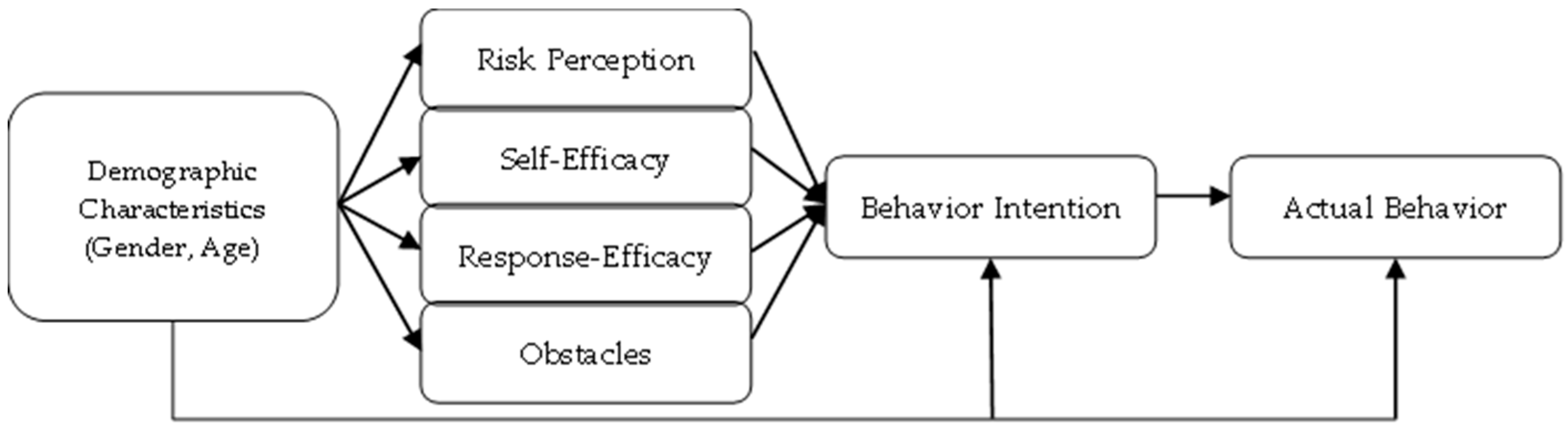
Figure 2.
Study area map of the Pangandaran tourism region, West Java, Indonesia. Top panels show location context generated using ArcGIS (basemap credits: Esri, HERE, Garmin, METI/NASA, USGS); bottom panel displays high-resolution satellite imagery (imagery © 2023 Google Earth).
Figure 2.
Study area map of the Pangandaran tourism region, West Java, Indonesia. Top panels show location context generated using ArcGIS (basemap credits: Esri, HERE, Garmin, METI/NASA, USGS); bottom panel displays high-resolution satellite imagery (imagery © 2023 Google Earth).
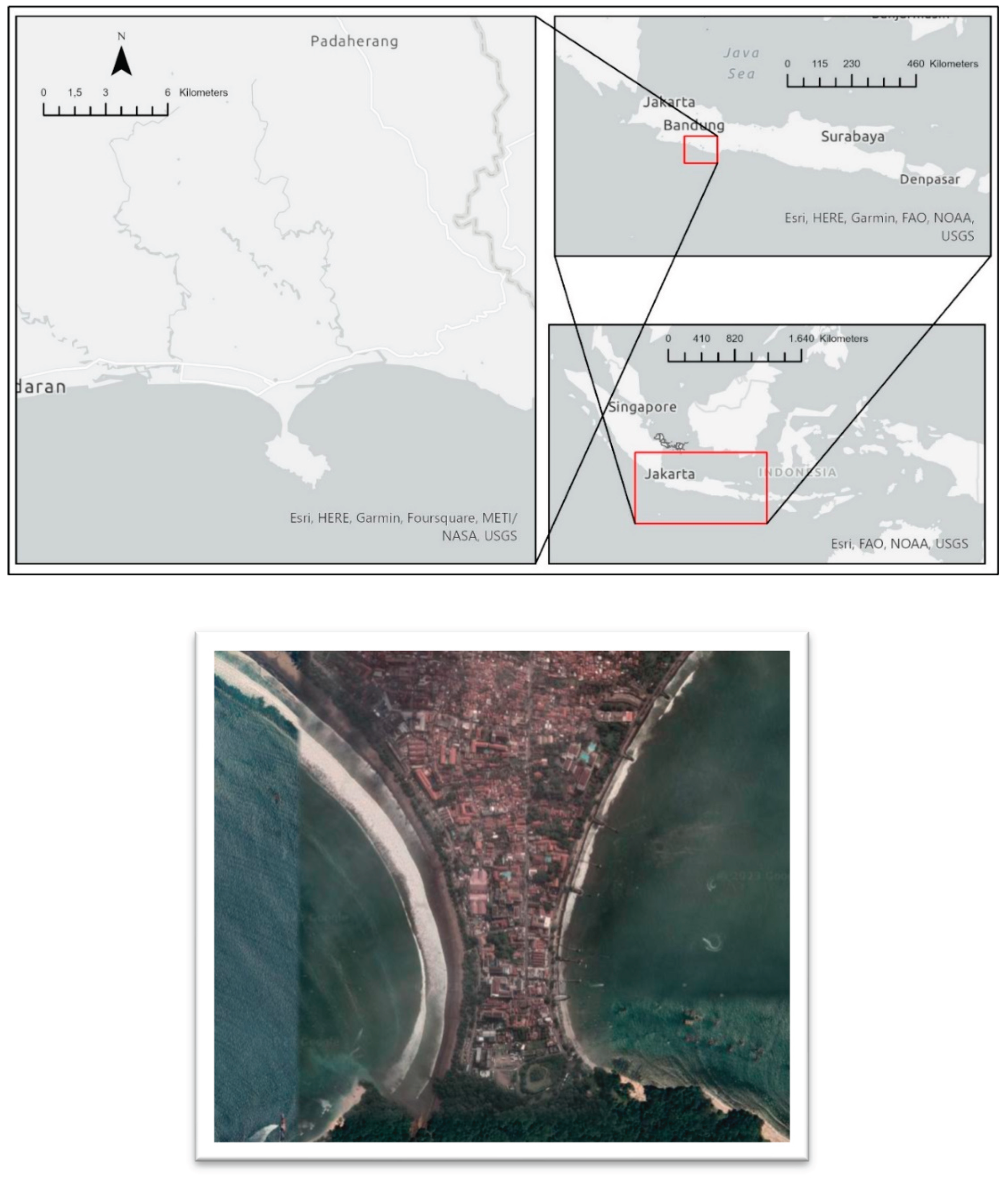
Figure 3.
SEM structural model after iterations.
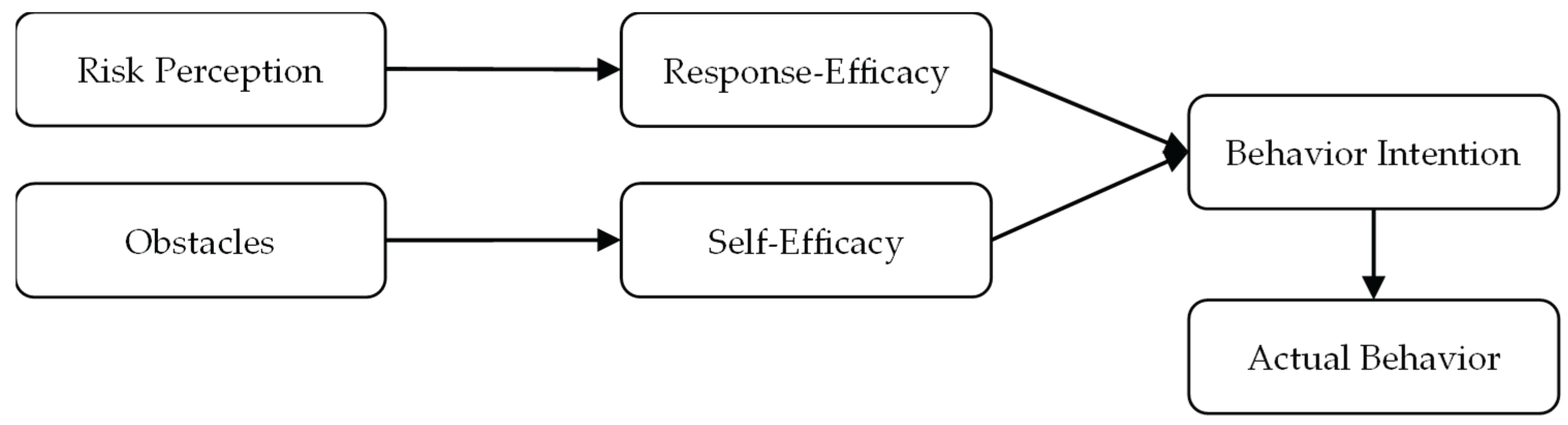

Table 1.
Geographical conditions of the Pangandaran Beach tourism area by villages.
| Villages | Area (km2) | Geographical area | Height above mean sea level (meters) |
|---|---|---|---|
| Pananjung | 4.71 | Coastal area | 8 |
| Pangandaran | 6.68 | Coastal area | 10 |
| Babakan | 6.21 | Coastal area | 13 |
Table 2.
Vulnerability level of the Pangandaran tourism area.
| Parameters | Vulnerability category | |
|---|---|---|
| Elevation (meters) | 1-25 | High – very high |
| Slope (%) | 0-2 | Very high |
| Land use | Residential | Very high |
| Distance from the coastline (meters) | 500 | Very high |
| Distance from the riverbank (meters) | >500 | Very low |
Table 3.
Contents of the questionnaire.
| Items | Questions |
|---|---|
| General Attributes | Name, age, gender, domicile, education, occupation, income, experience with natural disaster, travel frequency, motivation of visiting Pangandaran, etc. |
| Risk Perception | Perception about the vulnerability of Pangandaran towards tsunami, the severity of the disaster, etc. |
| Self-Efficacy | Confidence about self-capability to cope with the threat. |
| Response-Efficacy | Perception about the efficacy of the response towards threat (did you think that evacuation could saves lives when there’s tsunami, etc). |
| Obstacles | People’s condition that can hinder them to do actual preparedness behavior (health, financial condition, etc). |
| Behavior Intention | People’s intention to protect themselves and reduce threat. |
| Actual Behavior | The actual action people take as preventive measure (seeking information about tsunami risk, choosing tsunami-safe lodgings, etc). |
Table 4.
Survey Screening and Sampling Thresholds.
| Dimension | Criteria / Outcome |
|---|---|
| Distribution Method | Purposive Online Sampling |
| Target Age Bracket | 15–65 years old |
| Geographical Constraint | Non-residents (Domiciled outside Pangandaran and Ciamis Regencies) |
| Temporal Constraint | Minimum 24-hour stay in Pangandaran post-July 2006 tsunami |
| Baseline Awareness | Explicit knowledge of the July 2006 tsunami event |
| Initial Responses (N) | 205 |
| Final Valid Sample (n) | 198 |
Table 5.
Participants’ Demographics and Background.
| Variables | Category | Number of response(s) | % |
|---|---|---|---|
| Age | 15-20 | 3 | 1.5 |
| 21-50 | 149 | 75.3 | |
| 51-65 | 46 | 23.2 | |
| Gender | Male | 98 | 49.5 |
| Female | 100 | 50.5 | |
| Education | Middle School | 1 | 0.5 |
| High School | 34 | 17.2 | |
| Diploma | 13 | 6.6 | |
| Graduate | 107 | 54.0 | |
| Postgraduate | 43 | 21.7 | |
| Monthly income | < IDR 1,500,000 | 22 | 11.1 |
| IDR 1,500,000 – 4,000,000 | 50 | 25.3 | |
| IDR 4,000,001 – 7,000,000 | 53 | 26.8 | |
| > IDR 7,000,000 | 73 | 36.9 | |
| Origin area | West Java | 171 | 86.4 |
| Greater Jakarta | 21 | 10.6 | |
| Central Java | 1 | 0.5 | |
| Lampung | 2 | 1.0 | |
| West Sumatra | 3 | 1.5 | |
|
Experience with natural disaster |
Yes | 47 | 23.7 |
| No | 151 | 76.3 |
Table 6.
Participants’ Travel Preferences.
| Variables | Category | Number of response(s) | % of Respondents (N = 198)a |
|---|---|---|---|
|
Frequency of traveling to Pangandaran after tsunami |
1-2 times | 98 | 49.5 |
| 3-4 times | 52 | 26.3 | |
| 5-6 times | 10 | 5.1 | |
| > 6 times | 38 | 19.2 | |
| Total | 198 | 100.0 | |
| Trip’s purpose* | Holiday Trip | 175 | 88.4 |
| Business Trip | 73 | 36.9 | |
| Educational Purpose | 14 | 7.1 | |
| Volunteering | 6 | 3.0 | |
| Trip’s companion* | Alone | 14 | 7.1 |
| Family | 133 | 67.2 | |
| Friends | 64 | 32.3 | |
| Colleague | 89 | 44.9 | |
| Tour Group | 39 | 19.7 |
* Multiple answers allowed a Percentages for multiple-response variables are calculated based on the total number of valid individual respondents (N = 198) and will sum to > 100%.
Table 7.
Confirmatory Factor Analysis Result.
| Variable | Construct | Factor loading | CR | AVE | Cronbach’s α |
|---|---|---|---|---|---|
| Risk perception | rp1 | 0.214 | 0.874 | 0.673 | 0.904 |
| rp2 | 0.622 | ||||
| rp3 | 0.889 | ||||
| rp4 | 0.879 | ||||
| rp5 | 0.761 | ||||
| Self-efficacy | se1 | 0.65 | 0.874 | 0.673 | 0.847 |
| se2 | 0.702 | ||||
| se3 | 0.718 | ||||
| se4 | 0.719 | ||||
| se5 | 0.577 | ||||
| Response-efficacy | re1 | 0.753 | 0.936 | 0.851 | 0.902 |
| re2 | 0.888 | ||||
| re3 | 0.913 | ||||
| Obstacles | o1 | 0.583 | 0.833 | 0.617 | 0.761 |
| o2 | 0.617 | ||||
| o3 | 0.571 | ||||
| o4 | 0.688 | ||||
| o5 | 0.628 | ||||
| Behavior intention | bi2 | 0.887 | 0.966 | 0.866 | 0.938 |
| bi3 | 0.937 | ||||
| bi4 | 0.876 | ||||
| bi5 | 0.773 | ||||
| bi7 | 0.859 | ||||
| Actual behavior | ab1 | 0.86 | 0.976 | 0.869 | 0.959 |
| ab2 | 0.911 | ||||
| ab3 | 0.928 | ||||
| ab4 | 0.945 | ||||
| ab5 | 0.742 | ||||
| ab6 | 0.884 | ||||
| ab7 | 0.81 |
Table 8.
Discriminant Validity.
| Correlation | RP | SE | RE | Ob | BI | AB |
|---|---|---|---|---|---|---|
| RP | 0.820 | |||||
| SE | 0.029 | 0.820 | ||||
| RE | 0.238 | 0.141 | 0.922 | |||
| O | 0.015 | 0.067 | 0.026 | 0.785 | ||
| BI | 0.010 | 0.199 | 0.078 | 0.058 | 0.930 | |
| AB | 0.010 | 0.195 | 0.089 | 0.048 | 0.828 | 0.932 |
Table 9.
Structural Model Goodness-of-Fit Indexes.
| Index | Empirical Result | Recommended Threshold | Model Status |
|---|---|---|---|
| CMIN/DF | 1.922 | < 3.00 | Good Fit |
| SRMR | 0.065 | < 0.08 | Good Fit |
| RMSEA | 0.070 | < 0.08 | Acceptable Fit |
| CFI | 0.913 | > 0.90 | Acceptable Fit |
| TLI | 0.901 | > 0.90 | Acceptable Fit |
Table 10.
Structural Path Coefficients.
| Path | Standardized β | C.R. (t-value) |
|---|---|---|
| RP→RE | 0.463 | 2.615 |
| RE→BI | 0.137 | 1.753 |
| O→SE | -0.246 | -2.496 |
| SE→BI | 0.407 | 4.128 |
| BI→AB | 0.918 | 14.721 |
Disclaimer/Publisher’s Note: The statements, opinions and data contained in all publications are solely those of the individual author(s) and contributor(s) and not of MDPI and/or the editor(s). MDPI and/or the editor(s) disclaim responsibility for any injury to people or property resulting from any ideas, methods, instructions or products referred to in the content. |
© 2026 by the authors. Licensee MDPI, Basel, Switzerland. This article is an open access article distributed under the terms and conditions of the Creative Commons Attribution (CC BY) license (http://creativecommons.org/licenses/by/4.0/).
Copyright: This open access article is published under a Creative Commons CC BY 4.0 license, which permit the free download, distribution, and reuse, provided that the author and preprint are cited in any reuse.


