

Submitted:
05 August 2026
Posted:
11 August 2026
You are already at the latest version
Abstract
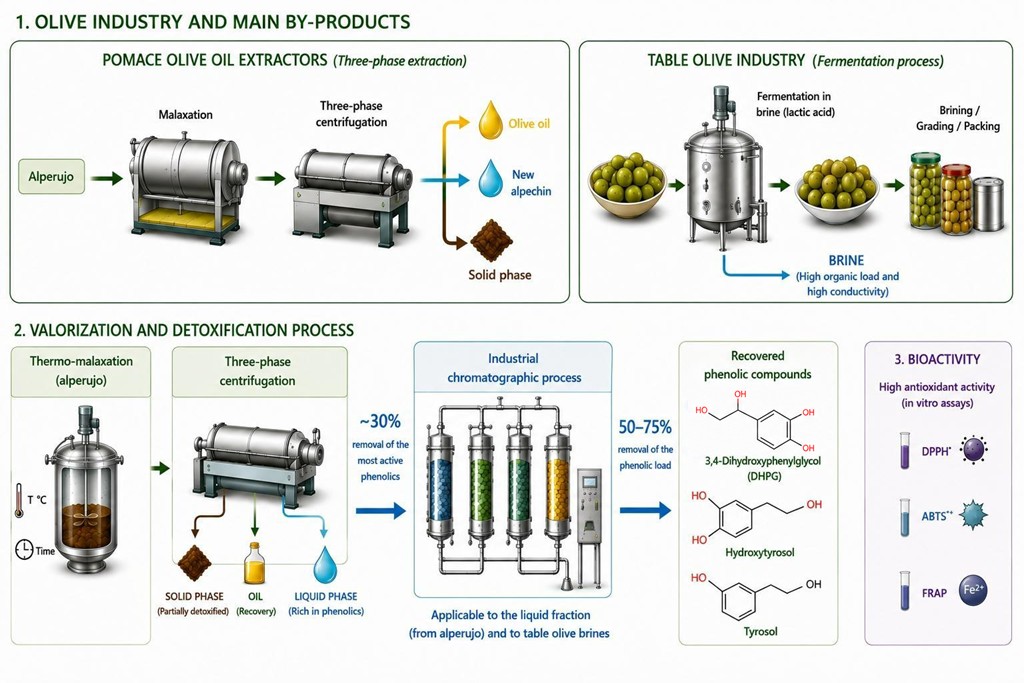
The olive industry is experiencing significant growth, held back only by the environmental and management issues that its by-products can cause. The two most polluting effluents produced are a new aqueous phase or ‘alpechín’ in the olive oil industry, and brine in the table olive ones. The high organic and phytotoxic load of both, together with the conductivity of the brines, makes their reuse difficult and poses a real technological challenge due to the environmental problems they are causing. This study demonstrates that the application of thermo-malaxation followed by three-phase centrifugation allows the removal of most of the most active phenolics, including hydroxytyrosol, 3,4-dihydroxyphenylglycol and tyrosol—from the alperujo in a 30%, yielding a partially detoxified solid phase and a liquid phase rich in the most active phenolics. Furthermore, the application of an industrial chromatographic process enables the removal of between 50% and 75% of the phenolic load from the liquid fraction of the aforementioned system, as well as from the brines of the table olive industry. The high antioxidant activity of the extracted phenolics has also been verified through in vitro assays.
Keywords:
antioxidants
; hydroxytyrosol
; phenolics
; biorefinery
; bioprocess
; antioxidant
1. Introduction
Spain is the leading producer of olive oil, accounting for 45% of global production, and the second largest producer of table olives, accounting for almost 19% of global production. At European level, Spain produces 70% of olive oil and 64% of table olives. According to Ministry of Agriculture, Fisheries and Food of Spain (2025) [1]. The main by-products of the olive oil and table olive industries are pruning waste from olive trees, leaves, and effluents. In Spain, the two-phase extraction system produces alperujo, while the table olive industry produces brine and cooking water. The olive oil industry also generates effluents, primarily in liquid form, such as washing water, water from the vertical centrifuge or oil decanting water. However, the majority of these are incorporated into the alperujo itself, thereby increasing its moisture content during the production process. Alperujo is the semi-solid by-product that consists of approximately 15% pit, 20% pulp and 65% vegetation water [2], with an acidic pH, high salinity, high electrical conductivity [3], a high content of organic substances such as fats, proteins, sugar, organic acids, cellulose, hemicellulose, pectin, gums, tannings, phenolics [4] and metals such as calcium, potassium, aluminum, iron, magnesium, sodium and strontium [5].
The alperujo goes directly to the pomace olive oil extractor industry, in Spain, which extract the remaining oil. The dry solid residue obtained is used as biomass for thermal energy production in the company itself or for electricity generation in cogeneration plants that have been incentivized and subsidized by the government [6]. Currently, these subsidies are decreasing, thereby turning the dry residues into a latent problem. The industrial sector is implementing new changes aimed at establishing biorefineries to utilise these by-products. It is the case of the implementation of a novel thermo-malaxation system followed by three-phase centrifugation that is being introduced in olive pomace extractors, with the aim of extracting the remaining oil and separating a liquid fraction in order to obtain pomace with less moisture and thus reduce energy consumption [7]. This trend is leading to the emergence of a new liquid effluent, the liquid phase enriched in bioactive compounds and sugars, which is set to pose the main challenge for the olive oil industry due to the complexity of managing it.
In the case of the table olive industry, the brine is produced in greater quantities and presents greater management problems. Brine is the liquid in which table olives are placed for fermentation, and it is composed of sodium chloride in varying amounts depending on the type of preparation. Spent brines, on the other hand, contain a high organic load, including high concentrations of phenolic compounds between 700-1500 mg/L, as well as an acidic pH, a conductivity from 70 to 90 mS/cm, and a chemical oxygen demand of 6-21 g O2/L [8].
Fermentation brines are responsible for 80-85% of the contamination in liquid effluents from the table olive industry, despite representing only 20% of the total volume of waste water mainly due to their high salinity. The rest of the wastewater volume comes mainly from the alkali washing process, generating 6L/kg for Californian types, 3.9 L/kg for Spanish types, and 0.9 L/kg for green types [9].
In Mediterranean countries, the simplest and cheapest way to dispose of brine is through evaporation pounds [10]. Even though brine vapors are highly corrosive, some improvements have been made to this system, such as adding turbulence to the water surface, spraying the brine, directing water flows towards the prevailing air as ways of forcing aeration. Although some companies that handle large volumes are resorting to costly systems such as vacuum evaporation, there is currently no widely accepted method for treating effluent water other than ponds [11].
The main problem with olive by-products is basically the same: management of high volumes of both brine and alperujo in open-air storage ponds. The core difficulties caused by these evaporation ponds are the need for large areas, the generation of unpleasant odors, the filtration of compounds into groundwater the impact on surrounding wildlife as they are mistaken for water ponds [5,12], and the filtration of nitrogen, ammonium ions, phosphorus, chlorine ions, phosphate ions, sulphate ions, potassium and various metals, coupled with the fact that clay soils, very common in the Mediterranean basin, retain most of the organic load and nutrients, making it a source of contamination for groundwater in surrounding areas [13].
Despite all these drawbacks, the evaporation system in ponds continues to be used for brines and storage ponds for olive pomace, which is subsequently dried for the extraction of pomace oil. On the other hand, the presence of compounds of high nutritional interest that would improve the formulation of healthier foods is being overlook.
Bioactive compounds are natural components that have biological activity and, in some cases, can have high nutritional value [14]. The main bioactive compounds present in olives and their by-products are phenolics, sugar, and triterpene acids. These types of compounds can have various applications, mainly in the area of food as preservation methods, functional foods and animal feed, as well as in nutraceutical industry in the form of supplements. This is mainly due to the high activity of phenolics and triterpenes, which are anti-inflammatory, immunomodulatory, anti-carcinogenic, antiproliferative, anti-aging, antioxidant, growth stimulants, antiviral, antimicrobial, antibacterial and antiplatelet agents [15]. Given all this, it is clear why these compounds are of interest to the pharmaceutical and food industries. However, this same antioxidant activity could be an issue in cases where biological treatment is sought, because these compounds can be toxic to microorganisms and must be eliminated before fermentation or other bioprocesses are carried out [16]. Bioprocess are essential for achieving comprehensive utilisation and maximising the value of these effluents, while ensuring a sustainable, waste-free process.
At the present time, the most studied compounds are those derived from oleuropein and ligustroside, such as hydroxytyrosol (HT), tyrosol (Ty), and 3,4-dihydroxyphenylglycol (DHPG) whose main characteristic is their hydrophilic nature, which means they are found in greater quantities in olive industry wastewater or in liquid fractions of olive by-products [15]. HT is a compound that has been shown to be a natural antioxidant that can be easily extracted from olive by-products and has numerous benefits, such as chemo preventive cancer treatments, anti-atherogenic activities, skin photoprotection, and significant anti-inflammatory activity [17]. DHPG is a simple phenolic with high antioxidant capacity, in some cases even greater than hydroxytyrosol, and which can be unstable in basic media, with higher antioxidant capacity than ascorbic acid and hydroxytyrosol in aqueous media [18]. Finally, tyrosol is a compound found in smaller quantities in fresh olive pomace, but in similar quantities to DHPG in olive pomace accumulated in ponds [19].
It can therefore be concluded that two types of effluent are the most polluting and difficult to manage in the olive-growing industry, the brine in the table olive industry, and the new liquid fraction from the alperujo in the olive oil industry. The solution is based on the design of a biorefinery, for which is necessary to apply a bioprocess and undertake a preliminary extraction step to isolate the phytotoxic components, precisely the compounds with high added value [20].
For all these reasons, it is believed that the evolution that is beginning in the sector is moving towards the initial extraction of high added-value components, such as bioactive compounds, followed by the application of bioprocesses or direct use in animal feed. Among the bioprocesses that allow the use of all the resulting material are anaerobic digestion, the formation of biochar or other energy sources, and the composting of by-products. In the case of brines, application to biological processes is complicated by salinity, which causes physical and biochemical changes, as well as inhibition generated by phenolics due to their bactericidal effect [8], causing irrigation with water from brines to reduce the yield of trees and crops [11].
The aim of this study is to improve the management of the two main liquid by-products of the olive industry, brine and the new liquid phase generated from the alperujo which pose a major environmental challenge due to their volume and organic content. To this end, the extraction of phenolics has been studied, which are the components that, on the one hand, hinder the application of bioprocesses for their complete utilization and, on the other hand, add extra value to the sector.
2. Materials and Methods
2.1. Raw Material: By-Products
The study utilized two by-products from the olive industry: brine, alperujo and the new alpechín (liquid phase) generated according to Figure 1. The olive pomace was processed on a pilot-plant scale using thermo-malaxation at 60 °C for 45 minutes, followed by three-phase centrifugation to obtain crude pomace oil, an aqueous fraction (or ‘new alpechin’) and a solid fraction. Furthermore, the new alpechin sourced directly from the industry, and the brine also sourced from the industry, have been studied as raw materials representing the two most polluting liquid effluents from the olive industry.
2.1.1. Brine
Single-use Manzanilla brine (1,200 L) was obtained from the pilot plant of the Instituto de la Grasa, Seville. The brine was stored at 4–6 °C and processed one week after collection. Phenolic compounds were extracted from all samples and subsequently characterized.
2.1.2. New Alpechin
A total of 300 L of industrial alpechin, derived from Picual olives, was obtained in June 2024 in the experimental olive mill of Instituto de la Grasa (CSIC, Sevilla, Spain). A Pieralisi SPI-7 continuous system was used. The mill made a three-phase extraction system using a previous thermo-malaxation at 60 ºC for 45 minutes. The samples were stored at 4–6 °C until October 2024, when they were processed. Phenolic compounds were extracted from all samples and subsequently analyzed.
2.2. Chemicals
3,4-dihydroxyphenylglycol and 4-β-D-glucoside were purposed from Sigma-Aldrich (Deisenhofer, Germany), tyrosol from Fluka (Buchs, Switzerland) and hydroxytyrosol from Extrasynthese (Lyon Nord, Geney, France). The chemicals for colorimetric determination such trifluoroacetic acid (TFA), anthrone or Folin-Ciocalteu’s phenol reagent, and other compounds like hydroxymethylfurfural and 2,2-diphenyl-1-picrylhydrazyl were obtained from Sigma-Aldrich (Madrid, Spain). Sodium bicarbonate (Na2CO3) and methanol were from Panreac Quimica S.A. (Barcelona, Spain). Acetonitrile was of HPLC-grade purity (Romyl, Teknokroma, Barcelona, Spain).
2.3. Phenolic Extraction
2.3.1. Phenolic Extraction of Table Olive Brine
A representative sample of table olive brine was retained, while the remaining volume was processed through chromatographic columns according to patent as it has been described in others works [18]. The process was conducted until hydroxytyrosol content was reduced by 50% relative to the initial concentration, at which point a sample was collected. Half of the brine was then passed through the column a second time. Phenolic compounds recovered from the columns were concentrated to obtain a phenolic-rich extract, which was subsequently analyzed for comparison with the extract obtained from alpechín. After column processing, the brine exhibited an 88% reduction in hydroxytyrosol relative to the initial concentration.
2.3.2. Phenolic Extraction of the New Alpechin
A representative sample of alpechin was retained, while the remaining volume was subjected to the extraction process [18]. This procedure employs ion-exchange resin chromatographic columns to adsorb and subsequently desorb the phenolic fraction, obtaining defenolized alpechin. Phenolic compounds recovered from the columns were concentrated to yield a phenol-rich extract, which was analyzed for composition and antioxidant properties.
2.4. Analytical Extractions
Sample preparation for phenolic and sugar determinations. The two liquid effluents were centrifuged at 5400 g in an Eppendorf™ Minispin™ centrifuge (Germany) at 13,000 × g for 15 minutes and subsequently filtered through a 0.45-micron nylon filter. This yielded the sample required for the determination of total and individual phenols and total sugars. The extraction of monosaccharide-rich or simple sugars was performed by precipitating the sugars insoluble in the hydroalcoholic mixture, representing the oligosaccharide fraction, as methanol reduces the solubility of polymerized sugars, forming oligo- and polysaccharides. In a microtube, 300 µL of the supernatant obtained from the total sugars was combined with 1,200 µL of pure methanol to get the relation of methanol:water of 80:20 v/v. The mixture was vortexed and subsequently centrifuged using the above-mentioned centrifuge for 5 minutes. The supernatant containing the simple sugars was collected for further analysis.
2.5. Analytical determinations of individual phenolics by HPLC-UV/DAD
The determination of the main phenolic compounds in the samples was carried out using high-performance liquid chromatography, HPLC-UV/DAD (ultraviolet detector and diode array) equipment and Rheodyne injection valves. An aliquot of 20 μL of extract samples were injected into the HPLC equipment, using a Teknokroma Mediterranea SEA18 column with an internal diameter of 250x4.6 and a particle size of 5µm, at room temperature and a flow rate of 1mL/minute. Elution is performed with milli-Q water (A) with 0.01% trichloroacetic and HPLC-grade acetonitrile (B) in the proportions shown in Table 1 and measured at 280 nm. Once the measurement is complete, it is quantified by integrating the peaks obtained in the chromatogram.
2.6. Determination of Total Phenolic Content (TPC)
The total phenolic content was quantified using the Folin–Ciocalteu colorimetric method, following the procedure with minor modifications [21]. The Folin–Ciocalteu reagent reacts with phenolic compounds in an alkaline environment to form a blue complex whose intensity is proportional to the concentration of total phenolics. A stock solution of gallic acid (25 mg/100 mL) in methanol and water (1:1, v/v) was prepared and used to generate a calibration curve. For sample analysis, 20 µL of each extract were added in quadruplicate to microplate wells, followed by 80 µL of 0.7 M Na₂CO₃ and 100 µL of 0.2 M Folin–Ciocalteu reagent. The mixtures were incubated for 15 minutes at room temperature and the absorbance was measured at 655 nm using a Bio-Rad iMark microplate reader (Hercules, CA, USA). The results were expressed as gallic acid equivalents (GAE).
2.7. Determination of Sugars
The content of total sugars (TS), monosaccharides (MS) and total oligosaccharides (OS) was quantified using the Anthrone method with some modification [22]. A glucose standard curve (20 mg glucose/100 mL distilled water) was prepared to obtain concentrations ranging from 0.02 to 0.2 mg/mL. Aliquots of 100 µL of each sample and their respective dilutions were placed in test tubes in triplicate, along with the glucose standards. To one tube of each set, 200 µL of sulfuric acid was added as a blank, while 200 µL of 0.2% Anthrone reagent in sulfuric acid was added to the remaining tubes. Samples were mixed, covered, and incubated in a water bath at 95 °C for 5 min. After cooling, the reaction mixtures were transferred to a microplate, and absorbance was measured at 630 nm using a Bio-Rad iMark microplate reader (Hercules, CA, USA).
Total sugars are measured directly in aqueous samples, whilst the monosaccharide content is determined by direct measurement in the methanol-water extract (8:2 v/v). And the soluble oligosaccharide content is determined by the difference between total sugars and monosaccharides, as oligosaccharides are not soluble in the hydroalcoholic mixture used but are soluble in water.
2.8. Determination of pH and Electrical Conductivity
The pH and electrical conductivity of the liquid samples were determined using a pH meter (Inolab, Munich, Germany) equipped with an integrated conductivity sensor. Electrical conductivity was expressed in millisiemens per centimeter (mS/cm).
2.9. In vitro antioxidant activity assays
2.9.1. Antiradical activity
2,2-diphenyl-1-picrylhydrazyl (DPPH). The free radical scavenging capacity is one measure of the antioxidant activity. For each phenolic extract the DPPH method was used [22]. Results were expressed as EC50 (effective concentration, mg/mL), as calculated for each antioxidant from a calibration curve using linear regression.
2.9.2. Reducing power
Reducing power was measured for each phenolic extract [23] treated the samples by L−1 FeCl3 in citric acid. The mix was measured in a microplate reader in quadruplicate, including a blank without FeCl3. The microplate was incubated during 20 min at 50º C, and after a prewarmed dipyridyl solution in trichloroacetic acid was added, read at 490 nm. Values were expressed as quercetin equivalents (g/L QE) from the equation as determined from linear regression: RP = 0.2172 × A490 − 0.018.
2.9.3. Antirradical activity
2,2'-azino-bis(3-ethylbenzothiazoline-6-sulphonic acid) (ABTS). The ABTS assay is based on the scavenging of ABTS radical (ABTS·+) by antioxidants compared to the antioxidant potency of Trolox [23]. Results were expressed as the average of the ratios of the slopes of the lines obtained for each sample with Trolox and expressed in terms of Trolox equivalent antioxidant capacity (TEAC) in mg/mL.
2.9.4. Oxygen radical absorbance capacity (ORAC) assay
Determination was carried out using the modified ORAC method [24]. Fluorescence was measured using excitation and emission wavelengths of 485 nm and 538 nm, respectively, using 5 minutes of intervals and total time of 90 minutes, using a fluorescent plate reader Fluoroskan Ascent™ FL (Thermo Scientific™, USA).
2.10. Statistical analysis.
Statgraphics Plus Version 2.1 was used for multivariate comparison to establish statistical differences between all parameters analysed. A multivariate analysis of variance (ANOVA) was performed on the data from the different samples, followed by a Duncan's multiple comparison test, using as significance level at P < 0.05.
3. Results and Discussion
3.1. Phenolic Extraction of the New Alpechin
Based on the data presented in Figure 2 it can be observed that, after the alpechin or the liquid fraction passed through the columns, the pH decreased slightly, likely due to the mildly acidic nature of the column material. There is a significant reduction in soluble solids of 37.2%, and also in total phenolic content of 64.3%, which is the aim of the system. At an industrial level, a second and even a third pass through the chromatographic column can be carried out, and in each pass at least half of the phenolics present are removed, meaning that in two passes the content can be reduced by up to 75%. In the case of HT, the reduction is 81.7%; for DHPG, it is 63.4%; and for Ty, it is 70%. On the other hand, sugar levels remain unchanged, which is an advantage, as was already the case with alperujo when applying the thermo-malaxation treatment plus the three-phase process, since sugars promote and enhance the application of a bioprocess, which is one of the objectives of defenolization.
Table 2 shows the moisture content of each sample and the concentrations of the main phenolic compounds present, as well as the concentration of both soluble monosaccharides and oligosaccharides. The significant reduction in moisture content is due to the selective retention of phenolics in the column. A drastic decrease in the concentrations of total and individual phenolics is also observed; this concentration could be further reduced if a second pass through the chromatographic system were carried out. At an industrial level, only a single pass is currently carried out, as this is the method that extracts the greatest quantity of phenolics, allowing extracts to be obtained at a low production cost. With regard to sugars, although their total content does not vary, there is a significant increase in monosaccharides, which may be caused by the acidic nature of the resin used, which favours the hydrolysis of soluble oligosaccharides.
The total phenolics were lower compared to 40 g/L reported by other authors in which the storage time was higher [25]. However, the concentration of DHPG was higher than that reported by the authors themselves, five times higher. In the case of HT and Ty, the concentration in this study was two to three times lower than that found in a sample that had been stored for two months longer. A similar result was observed for the concentration of total sugars, with values six times lower than those reported in the study cited above. Thus, most parameters yielded lower values except for DHPG.
3.4. Phenolic extract from brine
The extraction process of brines obtained in the table olive industry after the fermentation process shows (Figure 3) how the use of chromatographic columns reduced the conductivity of the effluent by up to 16%, while maintaining a nearly constant and slightly the acidic pH. But the more important thing is the total phenolics decreased by 38% when passing through the first column and then by an additional 35% after the second, corresponding to an overall removal of 60% of the initial phenolic content.
All individual phenolic compounds were reduced after the chromatographic extraction, such as DHPG which 23% was removed in the first column and 15% of the remaining fraction in the second, resulting in a total reduction of 35%. Regarding hydroxytyrosol, 50% was eliminated in the first column and 75% of the remainder in the second, leading to a final reduction of 88%. Tyrosol decreased by 54% after the first column and by 65% after the second, corresponding to an overall 84% removal relative to the initial concentration.
As for total soluble sugars, a 10% decrease was observed after the first column and a further 22% after the second, representing a cumulative 30% reduction. monosaccharides were only slightly affected, whereas the oligosaccharides decreased by 11% initially and by 27% thereafter, resulting in an overall 35% loss. This effect may be attributed to sugar retention in the column matrix. Thus, the column system proved effective for phenolic concentration, particularly for tyrosol and hydroxytyrosol.
Table 3 shows the concentrations of phenolics and sugars. It can also be seen that the moisture content increases as dissolved components are removed. With regard to total and individual phenolics, what has already been stated is clearly evident, a significant decrease in all of them. The difference between total phenolics and the main individual phenolics indicates the presence of phenolic polymers and bonds between phenolics and other components, primarily sugars and proteins. In the case of sugars, a small decrease is also observed, not as drastic as for phenolics, but still significant, with oligosaccharides undergoing hydrolysis, whilst the balance between release and degradation remains stable in the case of monosaccharides.
Although the conductivity of the brine reported by Ferrer-Polonio et al. [8] and Mohamadi et al. [28] was 88 mS/cm and 91-102 mS/cm, respectively, the value obtained in this study (157.14 mS/cm) may differ due to the intrinsic composition of the fermentation brine. Total phenolics were similar than the reported range of 5.2-15.7 mg/L [28]. Hydroxytyrosol concentration was in the range reported by other authors of 0.3-3.9 mg/L [8,26]. Tyrosol concentration was lower than the 0.89-1.54 mg/L [8] or 1.37-1.52 mg/L [26] reported by the same authors. Regarding the total sugar content the determined concentration slightly exceeded the values of 9.28-9.86 g/L reported by Mohamadi et al.[26].
3.5. Antioxidant activity of phenolic extracts
The antioxidant activity of the phenolic extracts obtained from both liquid by-products, the liquid fraction of processed alperujo and the brine, was analyzed. It is important to mention that no sugars were detected by the colorimetric methods employed in neither of the two extracts. The two extracts were obtained using a patented chromatographic method that is in industrial use. The analysis showed in Table 4 indicated that the total phenolic compound concentration in the brine was approximately twice that of the olive mill wastewater, although hydroxytyrosol levels were nearly identical.
Figure 4 displays the antioxidant activity results obtained using four different methods. In all four of them, the antioxidant activity of the liquid fraction extract was higher than that of the brine. At first glance, one might expect the brine extract, with its higher total phenolic compound content, to show greater antioxidant activity; however, this was not observed. This finding suggests that antioxidant activity may correlate more closely with hydroxytyrosol concentration, which was slightly higher in the liquid fraction extract. It should be noted that studies, such as that by Fernández-Prior et al. [18] have reported that although hydroxytyrosol exhibits strong antioxidant potential. DHPG possesses even greater antioxidant capacity and may act synergistically with hydroxytyrosol to enhance overall antioxidant performance.
The antioxidant activity data indicate that the extracts obtained have high potential, with HT being the main component. When compared with other extracts of the same nature, including both olive oil by-products and table olives, twice the scavenging activity is observed for the three free radicals studied, as well as twice the reducing power of these extracts [18,27]. This demonstrates that the use of industrial technologies enables the production of extracts with high antioxidant activity for use in the food, cosmetics and nutraceutical industries, amongst others, which will add value to the system by not only allowing for the detoxification of by-products but also providing an additional benefit to the value chain.
4. Conclusions
The clear trend in the olive oil industry is leading to the production of a worrying liquid effluent, the new alpechin, which, together with brine in the table olive industry, poses a real challenge to improving sustainability in the olive sector. In this regard, the extraction of phenolics represents a first step in the biorefining of these effluents, adding value whilst reducing their toxicity for subsequent application in a bioprocess.
The use of an extraction industrial system based on a physical chromatographic process is be able to extract the 50% of the phenolics, or even 75% if used twice. This system can also be applied to brine water, removing the same quantity of phenolics. It has also been demonstrated that these effluents are ideal sources for obtaining antioxidant phenolic extracts for use in the food, cosmetics and nutraceutical industries, thereby improving the formulation of new functional foods and enabling the replacement of synthetic antioxidants. In addition, the phenolic content is reduced sufficiently to allow biological processes such as aerobic or anaerobic fermentation for energy production, or composting for the production of agricultural substrates, to be applied with greater confidence.
Author Contributions
Writing – original draft – review & editing, Methodology, Investigation, Formal analysis (AFP). Methodology, Formal analysis (BMR). Methodology, Formal analysis (FRS). Methodology and Formal analysis (ABO). Supervision, Investigation, Formal analysis (JFBG). Writing – original draft – review & editing, Validation, Supervision, Conceptualization, Investigation, Formal analysis (GRG).
Funding
This research was funded by the Ministerio de Ciencia, Innovación y Universidades of Spain for grants PID2022-142731OB-C21.
Institutional Review Board Statement
Not applicable
Informed Consent Statement
Not applicable
Data Availability Statement
Most of the data presented in this paper are included in the main paper and additional data are available from the corresponding author upon reasonable request.
Conflicts of Interest
All authors of the article have no conflict of interest.
Abbreviations
The following abbreviations are used in this manuscript:
| TP | Total phenolics |
| DHPG | 3,4-dihydroxyphenylglycol |
| HT | Hydroxytyrosol |
| LD | Tyrosol |
| TS | Total sugar |
| MS | Monosaccharides |
| OS | Oligossacharides |
| DPPH | 2,2-diphenyl-1-picrylhydrazyl |
| ABTS | 2,2'-azino-bis(3-ethylbenzothiazoline-6-sulphonic acid) |
| FRAP | Reducing power |
| ORAC | Oxygen radical absorbance capacity |
References
- International Olive Oil Council. Estadísticas y balances de producción mundial de aceite de oliva y aceituna de mesa. 20 November 2024. Available online: https://www.internationaloliveoil.org/wp-content/uploads/2023/12/IOC-Table-Olive-Dashboard.html.
- De La Casa, J. A.; Romero, I.; Jiménez, J.; Castro, E. Fired clay masonry units production incorporating two-phase olive mill waste (alperujo). Ceram. Int. 2012, 38(6), 5027–5037. [Google Scholar] [CrossRef]
- Ochando-Pulido, J. M.; Hodaifa, G.; Victor-Ortega, M. D.; Rodriguez-Vives, S.; Martinez-Ferez, A. Effective treatment of olive mill effluents from two-phase and three-phase extraction processes by batch membranes in series operation upon threshold conditions. J. Hazard. Mater. 2013, 263, 168–176. [Google Scholar] [CrossRef] [PubMed]
- Alvarez, C.; Bedoya, M.; Gutiérrez, M. Valorization of Olive Oil Residues: Phytochemical Analysis and Potential Bioactivity. Chem. Proc. 2025, 18, 122. [Google Scholar] [CrossRef]
- Slama, H. B.; Chenari Bouket, A.; Alenezi, F. N.; Khardani, A.; Luptakova, L.; Vallat, A.; Oszako, T.; Rateb, M. E.; Belbahri, L. Olive Mill and Olive Pomace Evaporation Pond’s By-Products: Toxic Level Determination and Role of Indigenous Microbiota in Toxicity Alleviation. Appl. Sci. 2021, 11(11), 5131. [Google Scholar] [CrossRef]
- Lama-Muñoz, A.; Contreras, M.M.; Espínola, F.; Moya, M.; Romero, I.; Castro, E. Characterization of the lignocellulosic and sugar composition of different olive leaves cultivars. Food Chem. 2020, 329. 127153. [Google Scholar] [CrossRef] [PubMed]
- Fernández-Prior, A.; Bermúdez-Oria, A.; Rubio-Senent, F.; Villanueva-Lazo, A.; Fernández-Bolaños, J.; Rodríguez-Gutiérrez, G. Application of thermo-malaxation followed by three-phase centrifugation to enable the biorefinery of alperujo. the main by-product of olive oil. Foods 2023, 12(21), 4023. [Google Scholar] [CrossRef] [PubMed]
- Ferrer-Polonio, E.; Iborra-Clar, A.; Mendoza-Roca, J. A.; Pastor-Alcañiz, L. Fermentation brines from Spanish style green table olives processing: Treatment alternatives before recycling or recovery operations. J. Chem. Technol. Biotechnol. 2016, 91(1), 131–137. [Google Scholar] [CrossRef]
- Huertas-Alonso, A. J.; Gonzalez-Serrano, D. J.; Hadidi, M.; Salgado-Ramos, M.; Orellana-Palacios, J. C.; Sánchez-Verdú, M. P.; Xia, Q.; Simirgiotis, M. J.; Barba, F. J.; Dar, B. N.; Moreno, A. Table Olive Wastewater as a Potential Source of Biophenols for Valorization: A Mini Review. Fermentation 2022, 8(5), 215. [Google Scholar] [CrossRef]
- Kavvadias, V.; Elaiopoulos, K.; Theocharopoulos, Sid.; Soupios, P. Fate of Potential Contaminants Due to Disposal of Olive Mill Wastewaters in Unprotected Evaporation Ponds. Bull. Environ. Contam. Toxicol. 2017, 98(3), 323–330. [Google Scholar] [CrossRef] [PubMed]
- Vanderlinden, K.; Martínez, G.; Ramos, M.; Laguna, A.; Vanwalleghem, T.; Peña, A.; Carbonell, R.; Ordóñez, R.; Giráldez, J. V. Soil Salinity Patterns in an Olive Grove Irrigated with Reclaimed Table Olive Processing Wastewater. Water 2022, 14(19), 3049. [Google Scholar] [CrossRef]
- Roig, A.; Cayuela, M. L.; Sánchez-Monedero, M. A. An overview on olive mill wastes and their valorisation methods. Waste Manag. 2006, 26(9), 960–969. [Google Scholar] [CrossRef] [PubMed]
- Kavvadias, V.; Doula, M. K.; Komnitsas, K.; Liakopoulou, N. Disposal of olive oil mill wastes in evaporation ponds: Effects on soil properties. J. Hazard. Mater. 2010, 182(1-3), 144–155. [Google Scholar] [CrossRef] [PubMed]
- Lagos, J. B.; Vargas, F. C.; De Oliveira, T. G.; Da Aparecida Makishi, G. L.; Do Amaral Sobral, P. J. Recent patents on the application of bioactive compounds in food: A short review. Curr. Opin. Food Sci. 2015, 5, 1–7. [Google Scholar] [CrossRef]
- Rufino-Palomares, E. E.; Pérez-Jiménez, A.; García-Salguero, L.; Mokhtari, K.; Reyes-Zurita, F. J.; Peragón-Sánchez, J.; Lupiáñez, J. A. Nutraceutical Role of Polyphenols and Triterpenes Present in the Extracts of Fruits and Leaves of Olea europaea as Antioxidants. Anti-Infectives and Anticancer Agents on Healthy Growth. Molecules 2022, 27(7), 2341. [Google Scholar] [CrossRef] [PubMed]
- López-Linares, J. C.; Ruiz, E.; Romero, I.; Castro, E.; Manzanares, P. Xylitol Production from Exhausted Olive Pomace by Candida boidinii. Appl. Sci. 2020, 10(19), 6966. [Google Scholar] [CrossRef]
- Fernandez-Bolanos, J. G.; Lopez, O.; Fernandez-Bolanos, J.; Rodriguez-Gutierrez, G. ChemInform Abstract: Hydroxytyrosol and Derivatives: Isolation. Synthesis. and Biological Properties. ChemInform 2008, 39(42), chin.200842245. [Google Scholar] [CrossRef]
- Fernández-Prior, A.; Bermúdez-Oria, A.; Millán-Linares, M. D. C.; Fernández-Bolaños, J.; Espejo-Calvo, J. A.; Rodríguez-Gutiérrez, G. Anti-Inflammatory and Antioxidant Activity of Hydroxytyrosol and 3.4-Dihydroxyphenyglycol Purified from Table Olive Effluents. Foods 2021, 10(2), 227. [Google Scholar] [CrossRef] [PubMed]
- Fernández-Prior, A.; Bermúdez-Oria, A.; Fernández-Bolaños, J.; Espejo-Calvo, J. A.; López-Maestro, F.; Rodríguez-Gutiérrez, G. Evolution of Hydroxytyrosol. Hydroxytyrosol 4-β-d-Glucoside. 3.4-Dihydroxyphenylglycol and Tyrosol in Olive Oil Solid Waste or “Alperujo”. Molecules 2022, 27(23), 8380. [Google Scholar] [CrossRef] [PubMed]
- Cubero-Cardoso, J.; Llamas, M.; Trujillo-Reyes, A.; Fernández-Prior, A.; Rodríguez-Gutiérrez, G. Assessing the potential of olive mill solid waste as feedstock for methane and volatile fatty acids production via anaerobic bioprocesses. New Biotechnol. 2024, 84, 77–84. [Google Scholar] [CrossRef] [PubMed]
- Lawag, I.L.; Nolden, E.S.; Schaper, A.A.M.; Lim, L.Y.; Locher, C. A Modified Folin-Ciocalteu Assay for the Determination of Total Phenolics Content in Honey. Appl. Sci. 2023, 13, 2135. [Google Scholar] [CrossRef]
- Rodríguez, G.; Fernández-Bolaños, J.; Rodríguez, R.; Guillén, R.; A. Jiménez, A. Antioxidant activity of effluents during the purification of hydroxytyrosol and 3,4-dihydroxyphenylglycol from olive oil waste. Euro Food Res. Technol. 2007, 224, 733–741. [Google Scholar] [CrossRef]
- Cano, A.; Maestre, A.B.; Hernández-Ruiz, J.; Arnao, M.B. ABTS/TAC Methodology: Main Milestones and Recent Applications. Processes 2023, 11, 185. [Google Scholar] [CrossRef]
- Ou, B.; Hampsch-Woodill, M.; Prior, R. L. Development and Validation of an Improved Oxygen Radical Absorbance Capacity Assay Using Fluorescein as the Fluorescent Probe. J. Agric. Food Chem. 2001, 49(10), 4619–4626. [Google Scholar] [CrossRef] [PubMed]
- Fernández-Prior, M. Á.; Fatuarte, J. C. P.; Oria, A.; Viera-Alcaide, I.; Fernández-Bolaños, J.; Rodríguez-Gutiérrez, G. New Liquid Source of Antioxidant Phenolic Compounds in the Olive Oil Industry: Alperujo Water. Foods 2020, 9(7), 962. [Google Scholar] [CrossRef] [PubMed]
- Mohamadi, N.; Meraghni, M.; Necib, A.; Jelaiel, L.; El Arbi, M.; Bouaziz, M. Comparative Study on Chemical Composition of Green and Black Table Olives Brines of the Endemic ′′Sigoise′′ Cultivar: Recovery of high-Added Values Compounds. Chem. Biodivers. 2023, 20(3), e202200596. [Google Scholar] [CrossRef] [PubMed]
- Lama-Muñoz, A.; Bermúdez Oria, A.; Rubio-Senent, F.; Rodríguez-Gutiérrez, G.; Fernández-Prior, M.A.; Fernández-Bolaños, J. Isolation, Preliminary Structural Insights, Characterization, and Antioxidant Potential of a New High-Molecular Weight Complex Phenolic Polymer Developed from Olive Mill Wastewater. Antioxidants 2025, 14, 7. [Google Scholar] [CrossRef] [PubMed]
Figure 1.
Diagram of the products and processes used in the study.
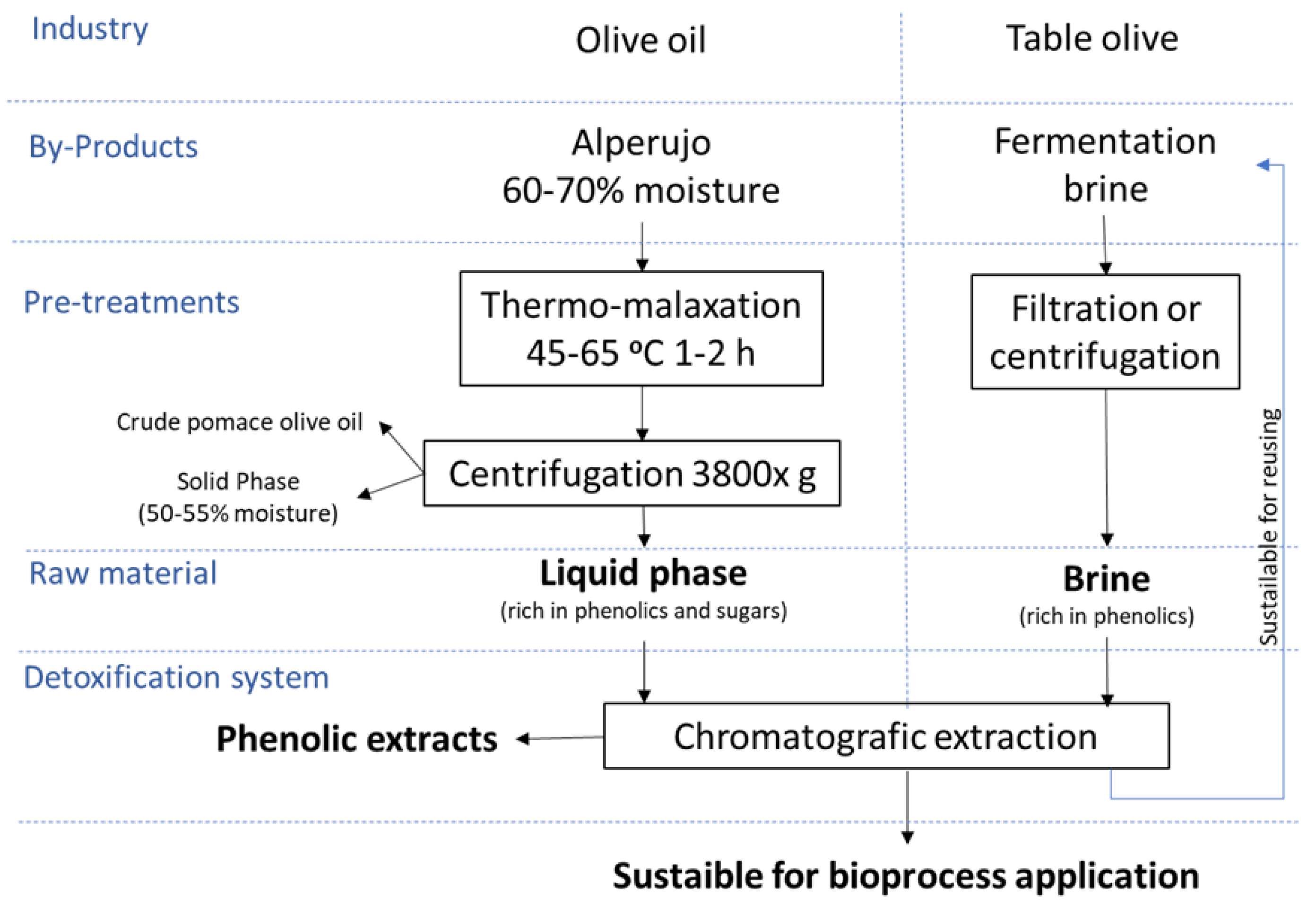
Figure 2.
Mass balance, phenolic and sugar composition of the phenolic extraction by chromatographic system of the liquid phase or new alpechin.
Figure 2.
Mass balance, phenolic and sugar composition of the phenolic extraction by chromatographic system of the liquid phase or new alpechin.
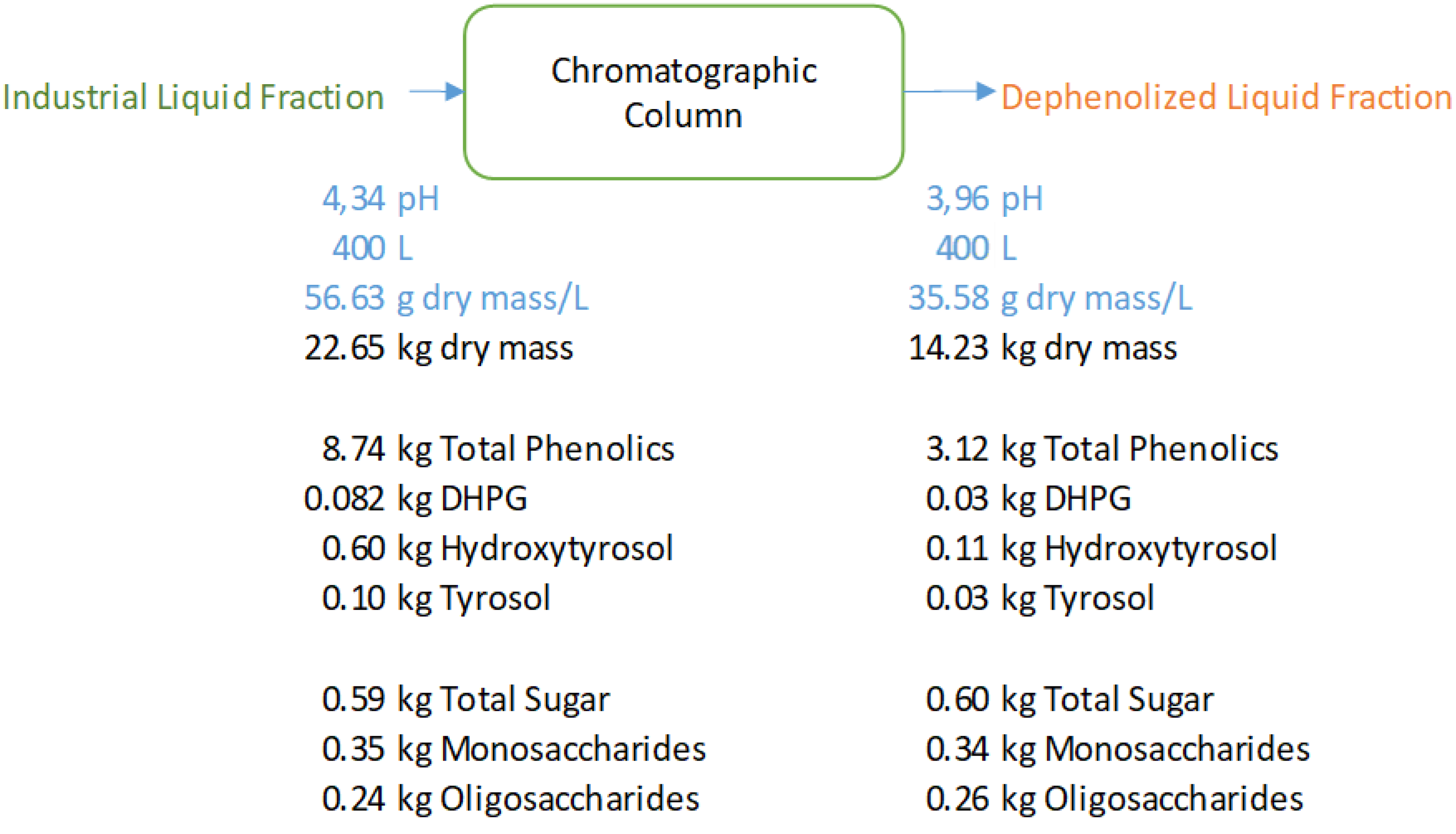
Figure 3.
Mass balance, phenolic and sugar composition of the phenolic extraction by chromatographic system of the of brine of olive table industry.
Figure 3.
Mass balance, phenolic and sugar composition of the phenolic extraction by chromatographic system of the of brine of olive table industry.
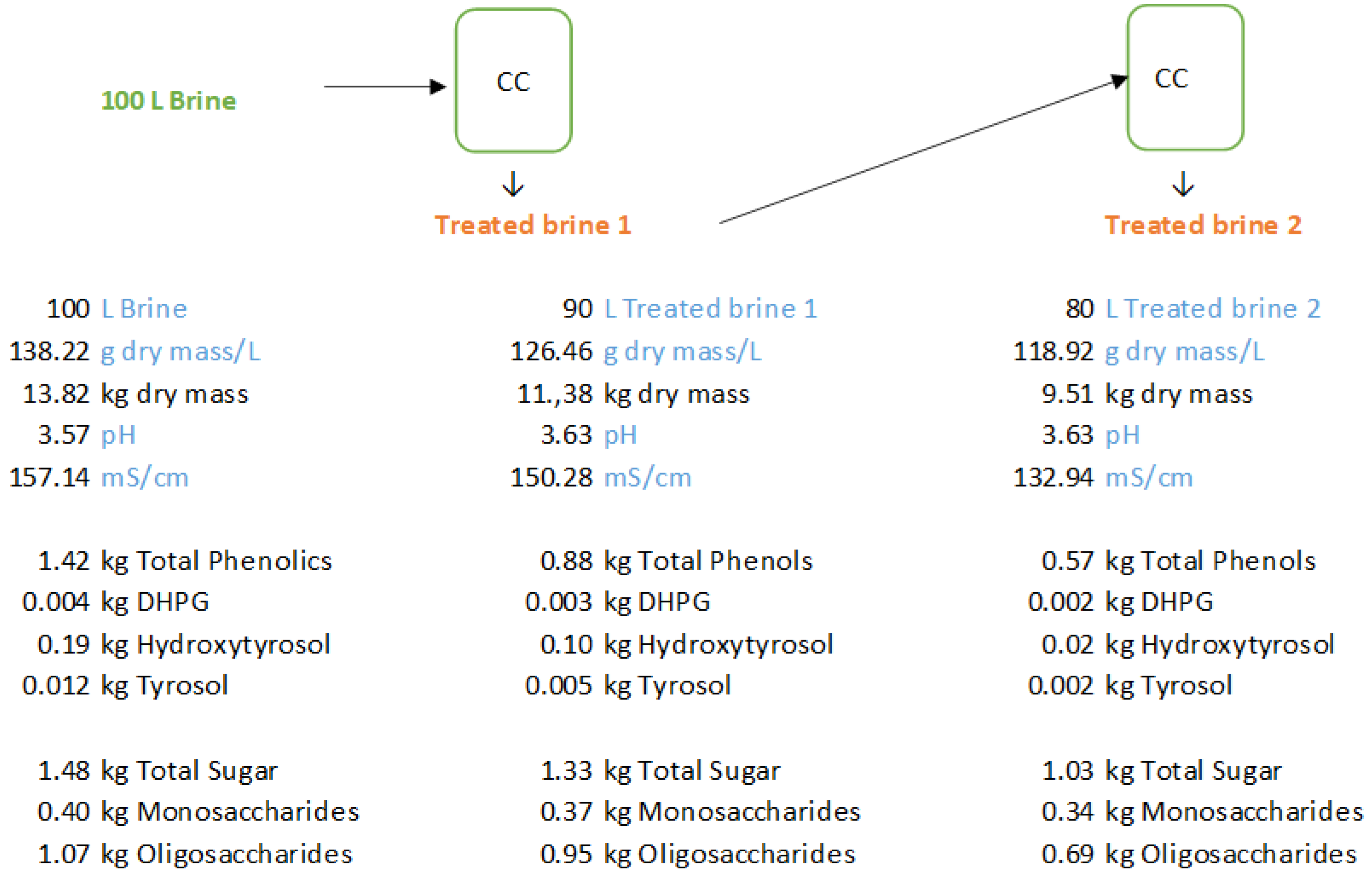
Figure 4.
Antioxidant activity of the two phenolic extracts obtained chromatographically from table olive brine and from the liquid fraction obtained from olive pomace via thermo-malaxation and three-stage centrifugation. Three free radical scavenging activities (DPPH, ABTS and ORAC) and reducing power as measured by FRAP are presented. Means with the same letter in the same row are not significantly different, p < 0.05.
Figure 4.
Antioxidant activity of the two phenolic extracts obtained chromatographically from table olive brine and from the liquid fraction obtained from olive pomace via thermo-malaxation and three-stage centrifugation. Three free radical scavenging activities (DPPH, ABTS and ORAC) and reducing power as measured by FRAP are presented. Means with the same letter in the same row are not significantly different, p < 0.05.
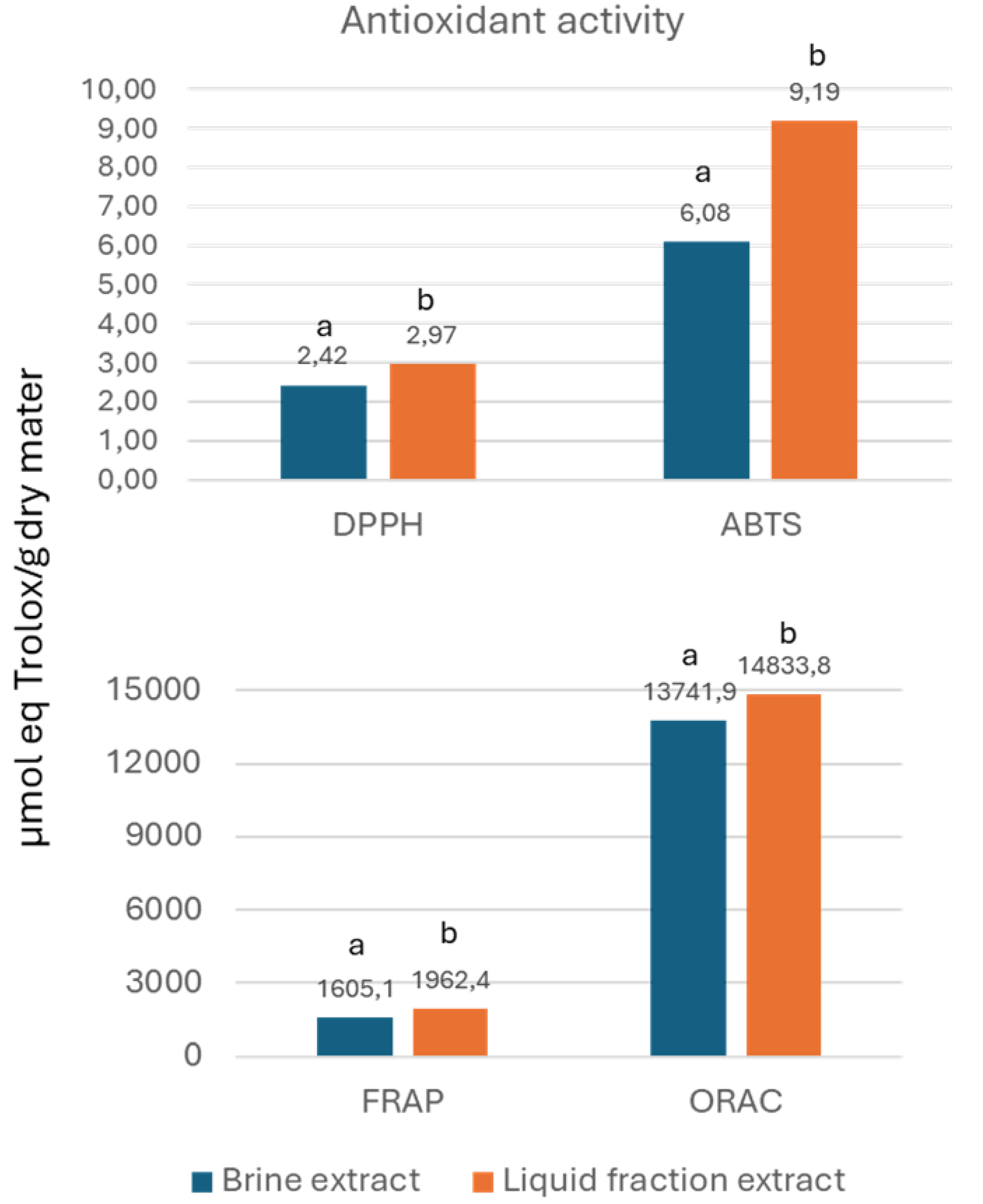

Table 1.
Gradient used to measure phenolics compounds by HPLC.
| Time (min) | 0 | 30 | 45 | 47 | 50 | 55 |
| %A | 95 | 75 | 50 | 0 | 75 | 95 |
| %B | 5 | 25 | 50 | 100 | 25 | 5 |
Table 2.
Percentage of moisture, concentration of total phenolics (TP), 3,4-dihydroxyphenylglycol (DHPG), hydroxytyrosol (HT), tyrosol (Ty), total sugar (TS), monosaccharides (MS) in liquid fraction or alpechin obtained by termomalaxation and tree-phase centrifugation system.
Table 2.
Percentage of moisture, concentration of total phenolics (TP), 3,4-dihydroxyphenylglycol (DHPG), hydroxytyrosol (HT), tyrosol (Ty), total sugar (TS), monosaccharides (MS) in liquid fraction or alpechin obtained by termomalaxation and tree-phase centrifugation system.
| Alpechin (g/L) | Dephenolized alpechin (g/L) | |
| % Moisture | 94.34 ± 1.02a* | 96.44 ± 0.83b |
| TP | 21.90 ± 1.64b | 7.79 ± 0.60a |
| DHPG | 0.21 ± 0.01b | 0.08 ± 0.01a |
| HT | 1.51 ± 0.08b | 0.28 ± 0.01a |
| Ty | 0.25 ± 0.03b | 0.08 ± 0.01a |
| TS | 1.48 ±0.07a | 1.52 ± 0.05a |
| MS | 0.87 ± 0.05a | 1.21 ± 0.07b |
| OS | 0.60 ± 0.01a | 0.65 ± 0.02a |
*Means with the same letter in the same row are not significantly different, p < 0.05.
Table 3.
Percentage of moisture, concentration of total phenolics (TP), 3,4-dihydroxyphenylglycol (DHPG), hydroxytyrosol (HT), tyrosol (Ty), total sugar (TS), monosaccharides (MS) in the brine treated in the Chromatographic Column.
Table 3.
Percentage of moisture, concentration of total phenolics (TP), 3,4-dihydroxyphenylglycol (DHPG), hydroxytyrosol (HT), tyrosol (Ty), total sugar (TS), monosaccharides (MS) in the brine treated in the Chromatographic Column.
| Brine | Treated brine 1 | Treated brine 2 | |
| % Moisture | 86.20 ± 0.32a* | 87.35 ± 0.72ab | 88.11 ± 0.14b |
| TP | 14.21 ±1.08c | 8.80 ± 0.48b | 5.72 ± 0.92a |
| DHPG | 0.04 ± 0.00b | 0.03 ± 0.00ab | 0.02 ± 0.00a |
| HT | 1.90 ± 0.02c | 0.96 ± 0.00b | 0.23 ± 0.01a |
| TY | 0.12 ± 0.00c | 0.05 ± 0.00b | 0.02 ± 0.00a |
| TS | 14.75 ± 0.55c | 13.27 ± 1.09b | 10.34 ± 0.89a |
| MS | 4.04 ± 0.97a | 3.74 ± 0.58a | 3.42 ± 0.70a |
| OO | 10.71 ± 1.52b | 9.53 ± 1.67b | 6.92 ± 1.59a |
*Means with the same letter in the same row are not significantly different, p < 0.05.
Table 4.
Total phenolic content and hydroxytyrosol (HT) content of the two phenolic extracts obtained from the two liquid effluents studied: the brine from the table olive industry and the liquid fraction obtained from olive pomace treated in the olive oil industry.
Table 4.
Total phenolic content and hydroxytyrosol (HT) content of the two phenolic extracts obtained from the two liquid effluents studied: the brine from the table olive industry and the liquid fraction obtained from olive pomace treated in the olive oil industry.
| Brine extract | Alpechin extract | |
| Total phenolics (g equivalent Gallic acid/L) | 40.46 ± 6.07b* | 20.09 ± 1.21a |
| Hydroxytyrosol (g/L) | 16.01 ± 0.54a | 16.3 ± 0.61a |
*Means with the same letter in the same row are not significantly different, p < 0.05.
Disclaimer/Publisher’s Note: The statements, opinions and data contained in all publications are solely those of the individual author(s) and contributor(s) and not of MDPI and/or the editor(s). MDPI and/or the editor(s) disclaim responsibility for any injury to people or property resulting from any ideas, methods, instructions or products referred to in the content. |
© 2026 by the authors. Licensee MDPI, Basel, Switzerland. This article is an open access article distributed under the terms and conditions of the Creative Commons Attribution (CC BY) license (http://creativecommons.org/licenses/by/4.0/).
Copyright: This open access article is published under a Creative Commons CC BY 4.0 license, which permit the free download, distribution, and reuse, provided that the author and preprint are cited in any reuse.