

Submitted:
07 August 2026
Posted:
11 August 2026
You are already at the latest version
Abstract
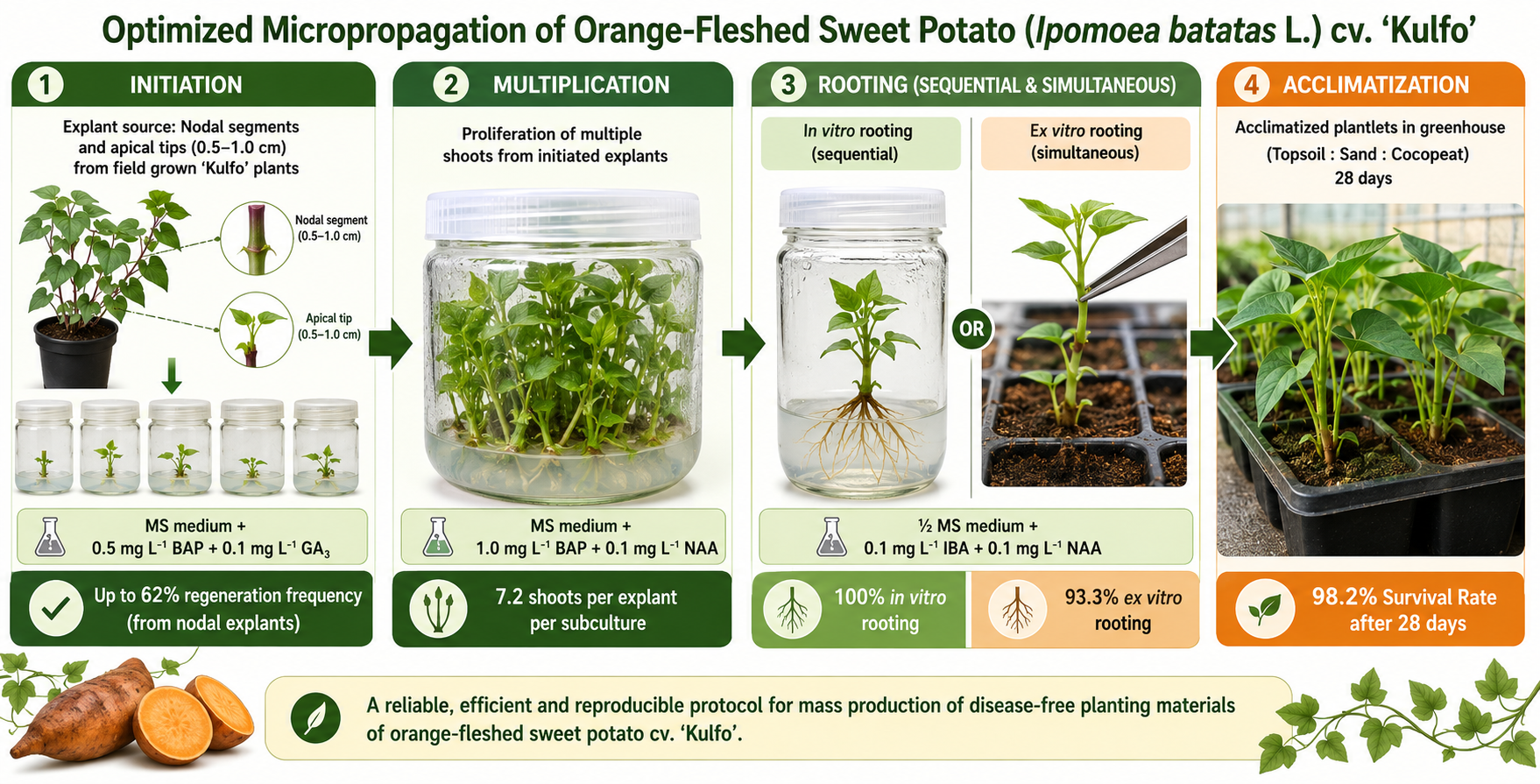
Sweet potato (Ipomoea batatas L.) is an important food security crop in developing countries, but production is constrained by virus-infected planting material from vegetative propagation. This study evaluated selected combinations of plant growth regulators (PGRs) for in vitro propagation of orange-fleshed sweet potato cv. 'Kulfo'. Nodal and apical shoot explants were cultured on Murashige and Skoog (MS) medium with different combinations of 6-benzylaminopurine (BAP) and gibberellic acid (GA₃) for shoot initiation, BAP and naphthalene acetic acid (NAA) for multiplication, and indole-3-butyric acid (IBA) and NAA for rooting. Among the treatments tested, MS medium with 0.5 mg L⁻¹ BAP and 0.1 mg L⁻¹ GA₃ gave the highest shoot regeneration (62% from nodal and 59% from apical explants). For multiplication, 1.0 mg L⁻¹ BAP with 0.1 mg L⁻¹ NAA produced the highest shoot number (7.2 shoots per explant). Half-strength MS medium with 0.1 mg L⁻¹ IBA and 0.1 mg L⁻¹ NAA resulted in the best rooting response (13.3 roots per shoot). Plantlets from the best-performing treatment achieved 98.0% survival during acclimatization. However, the limited PGR concentrations tested mean that these results should be considered preliminary. Further optimization using broader concentration gradients is needed to establish a truly optimized protocol. This study provides a foundation for developing cultivar-specific micropropagation protocols for sweet potato in Ethiopia.
Keywords:
Ipomoea batatas
; acclimatization
; micropropagation
; plant growth regulators
; rooting
; shoot multiplication
1. Introduction
Sweet potato (Ipomoea batatas L. Lam) is an essential staple food crop in tropical, subtropical, and temperate regions worldwide, where it contributes substantially to dietary energy and micronutrient intake [1,2]. Widely acknowledged as one of the major food crops after wheat, rice, maize, potato, barley, and cassava, sweet potato is considered a vital component of food security and income generation in many developing regions [3]. The orange-fleshed sweet potato (OFSP) is particularly important in combating vitamin A deficiency due to its high β-carotene content, which benefits vulnerable populations in sub-Saharan Africa [4,5]. In addition, its tuberous roots are used for the industrial production of starch, alcohol, acetic acid, and yeast [6]. Because of its wide use and nutritional value, sweet potato is among the most widely grown staple crops and sources of nutritional security crops in many parts of the developing world [7].
Currently, sweet potatoes are grown in more than 100 countries with tropical, subtropical, and temperate climates [1,8]. It is a staple food for many people in China, Southeast Asia, Africa, and Latin America, with an average global yield of approximately 14.8 t ha-1 [1]. This contrasts with the situation prevailing in Ethiopia. In Ethiopia, sweet potato is widely grown in the eastern, southern, and southwestern parts of the country. It is cultivated on approximately 90,000 hectares by smallholder farmers and directly contributes to household food and nutritional security [1,2], with an average yield of about 8 t ha-1 [9,10]. However, this national yield is very low, with losses of 50 to 70% due to viral degeneration in planting materials [9,10].
This viral degeneration is inherently linked to the crop's main propagation system. Sweet potato is typically propagated vegetatively through vine cuttings, shoot tips, and rooted shoots. However, the efficiency of this method has been a major challenge in sweet potato improvement. Vegetative propagation leads to low multiplication rates, increased virus accumulation, and rapid plant decline, which ultimately results in reduced yields and limited access to quality planting materials [11,12]. The lack of quality planting materials from these sources is a major constraint for sweet potato farmers throughout Africa [3].
To overcome this inherent limitation of the system, in vitro propagation emerges as an alternative approach for mass propagation of disease-free and genetically uniform mass-propagated planting materials. Successful micropropagation protocols have been developed for several sweet potato genotypes [6,9,10,13,14,15]. Sweet potato plants can be micropropagated in vitro through the induction of apical bud growth, axillary bud growth, adventitious bud induction, and somatic embryogenesis [6,16]. Methods involving explants that already possess meristematic buds are particularly appropriate for commercial plant propagation because the shoots arise from meristems, and somaclonal variation is small [17].
However, micropropagation of sweet potato is highly dependent on the genotype [6,9,10,13,14,15]. Different genotypes respond differently to auxins and cytokinins, meaning that PGR protocols effective for one variety may not work for another [16]. Therefore, it is essential to optimize all in vitro conditions, including PGR combinations, sucrose concentration, gelling agent, and disinfection procedures, for each genotype [6,18].
The orange-fleshed sweet potato cultivar 'Kulfo' is widely grown in Ethiopia because of its high nutritional value, especially its high content of provitamin A carotenoids and favorable agronomic traits. However, its large-scale dissemination is highly restricted by a pronounced cultivar-dependent in vitro response to PGRs, high viral disease pressure, and the absence of an optimized regeneration protocol.
While we did not investigate molecular mechanisms, this study represents the first multi-stage evaluation of PGR effects on in vitro propagation of 'Kulfo', encompassing shoot initiation, multiplication, rooting, and acclimatization. Unlike Beyene et al. [10], who focused solely on shoot tip culture initiation, our study provides preliminary data on all stages of micropropagation for this cultivar. Additionally, we report a preliminary assessment of ex vitro rooting (93.3% success) as a potential cost-saving alternative, which has not been previously documented for this cultivar. However, the limited PGR concentrations tested mean that these results should be considered preliminary and warrant further validation.
While Beyene et al. [10] previously reported shoot tip culture initiation for 'Kulfo', their study did not address shoot multiplication, rooting optimization, or acclimatization, all of which are essential for commercial-scale propagation. Our study extends this work by evaluating PGR effects across all stages of the micropropagation pipeline and by assessing ex vitro rooting as a potential cost-saving alternative. This integrated approach is necessary for developing a practical protocol for large-scale production of quality planting material.
This study is an applied protocol optimization study, not a mechanistic investigation. Hence, the purpose of the present study was to evaluate the effects of selected PGR combinations on shoot initiation, multiplication, and rooting of cv. 'Kulfo', and to identify promising treatments for further optimization. The specific objectives were to (i) assess the response of nodal and apical explants to different BAP and GA₃ combinations for shoot initiation; (ii) evaluate shoot multiplication on media containing BAP and NAA; (iii) determine rooting responses to IBA and NAA; and (iv) assess acclimatization survival of regenerated plantlets.
2. Materials and Methods
2.1. Description of the Experimental Site
The experiment was conducted at the Holeta Plant Tissue Culture Laboratory in Ethiopia from January to June 2023. The laboratory was equipped with standard plant tissue culture infrastructure and aseptic conditions throughout the experimental period.
2.2. Plant Material Preparation and Surface Sterilization
Orange-fleshed sweet potato cultivar ‘Kulfo’ plant materials were obtained from Narus Biotechnology and Agro-Processing PLC in Ethiopia. Healthy and vigorous apical tips, measuring between 0.5 and 1 cm, including the apical meristem and surrounding leaf primordia, as well as nodal segments of similar length with a single axillary bud, were selected as explants for in vitro culture. These explants were taken from greenhouse-grown stock plants. The explants were first washed in a mild liquid detergent solution (2–3 drops per 100 mL distilled water) for 5 minutes, followed by two rinses with distilled water and three subsequent rinses with sterile distilled water. Further surface sterilization was performed by soaking in 70% ethanol for 1 minute, followed by disinfection in a 1.05% NaOCl solution (prepared by 1:4 dilution of commercial 5.25% bleach) containing 1–2 drops of Tween-20 per 100 mL for 10 minutes with constant agitation. The explants were rinsed three times with sterilized distilled water for 5, 3, and 2 minutes, respectively. Sterilized explants were cultured in MS basal medium with different concentrations of growth regulators, as outlined below.
Contamination rates were monitored throughout. Explants showing fungal or bacterial contamination within the first 7 days (<3% of total) were discarded and not included in data analysis. No antibiotics or biocides (e.g., PPM) were used in the culture media. Contaminated cultures were immediately autoclaved before disposal.
2.3. Culture Media Preparation and General Culture Conditions
Murashige and Skoog (MS) medium was prepared by dissolving the appropriate amounts of macronutrients, micronutrients, and organic supplements according to the original formulation [19]. Sucrose (30 g L⁻¹) was used as the carbon source, and standard MS vitamins and myo-inositol were added. Stock solutions of BAP, NAA, GA₃, and IBA were prepared at 1 mg mL⁻¹ and stored at 4°C. The pH of all media was adjusted to 5.8 using 1 M potassium hydroxide (KOH) or hydrochloric acid (HCl), and a calibrated pH meter was used before adding 0.8% (w/v) agar as a gelling agent. Growth regulators were added to the media at the concentrations indicated in Table 1, Table 2 and Table 3. The concentrations of plant growth regulators (PGRs) were chosen based on preliminary screening and ranges reported to be effective in other sweet potato genotypes [9,13]. Media were dispensed at 20–25 mL and autoclaved at 121°C for 20 minutes. Standard 250 mL glass culture jars (height 95 mm, diameter 65 mm) with polypropylene screw caps were used for all stages. Each jar received 25 mL of medium. The jars were sealed with vented caps that included a 0.22 μm membrane filter disc (20 mm in diameter) to enable gas exchange while preserving sterility. Each jar contained 5 explants, providing adequate spacing (approximately 2-3 cm between explants) to prevent overcrowding and allow for vigorous growth without hyperhydricity. GA₃, being heat-labile, was added to autoclaved and cooled media (approximately 45–50°C) through a 0.22 µm sterile filter (Millipore Millex-GP, catalog #SLGP033RS). The entire experiment for each stage (initiation, multiplication, and rooting) was conducted twice in independent temporal replicates to ensure reproducibility. Data from two independent trials were combined for statistical analysis after confirming the homogeneity of variances. All cultures were maintained in a growth room at 25 ± 2°C with a 16 h photoperiod under a light intensity of 35–50 µmol m⁻² s⁻¹ provided by cool white fluorescent lamps. The treatment combinations for shoot initiation, multiplication, and rooting are summarized in Table 1, Table 2 and Table 3. In all experiments, T1 represented hormone-free (only MS) control medium.
2.4. Shoot Initiation Experiment
Apical tips and nodal segments were cultured on MS medium supplemented with BAP and GA₃ at concentrations shown in Table 1.
2.5 Shoot Multiplication Experiment
Initiated shoots were sub-cultured on MS medium supplemented with BAP and NAA as shown in Table 2. Initial subculturing was performed when explants produced visible shoots (≥ 1 cm length with at least two expanded leaves), following protocols previously used in other sweet potato micropropagation research [9,13]. During subculturing, each in vitro shoot containing one shoot was cut into individual units, and necrotic tissue was removed. Each shoot was then placed on a fresh medium. Shoots were subcultured every four weeks once they reached 3–5 cm in length, whichever occurred first. When shoots grew to 3–5 cm in length with 3–6 well-developed leaves, they were cut, separated, and placed on fresh media with the appropriate PGR combinations for shoot multiplication or rooting.
2.6. Rooting Experiment
Each shoot was transferred to half-strength MS medium supplemented with the auxins IBA and NAA at different concentrations (mg L⁻¹) as shown in Table 3 below. The medium has no cytokinin to stimulate root formation without further shoot proliferation.
To evaluate a potential cost-saving alternative, 30 shoots from the best-performing multiplication treatment (T2) were rooted ex vitro by direct transfer to the sterilized soil mixture (described in the acclimatization section), bypassing the in vitro rooting stage. Survival and rooting were assessed after 14 days.
2.7. Acclimatization
Only plantlets derived from the best-performing treatment (T2 at all stages: 0.5 mg L⁻¹ BAP + 0.1 mg L⁻¹ GA₃ for initiation, 1.0 mg L⁻¹ BAP + 0.1 mg L⁻¹ NAA for multiplication, and 0.1 mg L⁻¹ IBA + 0.1 mg L⁻¹ NAA for rooting) were used for acclimatization, as recommended for sweet potato acclimatization [7,15]. Survival rates of plantlets from other treatments will be assessed in future studies. Plantlets that were about 7–8 cm tall with well-developed roots measuring 4–5 cm were carefully removed from culture jars and transferred to small acclimatization cell trays (each cell approximately 7 cm by 4 cm) containing a sterilized soil mixture of topsoil: washed river sand locally sourced from the Holeta river basin, and washed and sieved cocopeat (particle size 0.5-2.0 mm, pH 6.8, EC 0.3 dS m⁻¹) in a 1:2:1 ratio (Supplementary Figure S3). The soil used was steam-sterilized before planting to reduce microbial contamination. The steam-sterilized soil mixture had a pH of 6.5 and an EC of 1.2 dS m⁻¹.
Each cell was covered with a transparent plastic bag to maintain high humidity and kept in a growth room at 28 ± 2°C under a 16 h photoperiod (approximately 2500 lux). Plantlets were maintained under cool white fluorescent lamps (Philips TL-D 36W/33), providing a photosynthetic photon flux density (PPFD) of 45 ± 5 μmol m⁻² s⁻¹ during the in vitro stages. For acclimatization, light was provided by the same lamp type at approximately 2500 lux (equivalent to 35-40 μmol m⁻² s⁻¹ PPFD, as measured by the LI-COR LI-250A light meter). After a week in the growth room, the plantlets were transferred to a greenhouse with approximately 80% relative humidity, 25°C temperature, a 16 h photoperiod (approximately 3000 lux), and 8 h of darkness; the plastic covers were gradually removed over several days. The entire acclimatization process, from transferring the plantlets to soil to establishing them in the greenhouse, lasted four weeks. The plantlets were grown until full maturity under controlled greenhouse conditions.
2.8. Experimental Design and Data Analysis
Two independent experiments were conducted in a time sequence (January 2023 and March 2023). A completely randomized design (CRD) with three treatments (T1-T3) per stage was used for each experiment. For each treatment, three replicate culture jars were used, with each jar containing five explants. The jar was considered the experimental unit, and the mean value from the five explants in each jar was used as a single replicate value for statistical analysis. This approach prevents pseudoreplication by treating individual explants within the same jar as subsamples.
Data from the two experiments were combined after confirming homogeneity of variances using Levene's test. A two-way ANOVA was performed with 'Experiment' as a blocking factor and 'Treatment' as the main factor. The full model was: Y = μ + Experiment + Treatment + (Experiment × Treatment) + Error. The significance of treatment effects was tested using the treatment mean square divided by the pooled error mean square (Error DF = 12). Where significant differences were detected, means were separated using Fisher's LSD test at P < 0.05.
All quantitative data were collected at 20 and 30 days after inoculation (DAI) for the same culture vessels. A separate set of in vitro-multiplied shoots of uniform size was used for in vitro rooting cultured in the media described in Table 3.
Homogeneity of variances between the two independent trials was confirmed using Levene's test (shoot number: F = 1.24, P = 0.31; shoot length: F = 0.89, P = 0.42; leaf number: F = 1.56, P = 0.24; root number: F = 1.18, P = 0.33). The Shapiro-Wilk test (W > 0.95, P > 0.05) was performed for all variables to confirm the normality of residuals.
The data were analyzed using ANOVA in SAS version 9.4 (PROC GLM). Microsoft Excel (version 2019) was used for data organization, preliminary calculations (means, standard errors), and final table preparation. Means were separated using Fisher's least significant difference (LSD) test at P < 0.05.
3. Results
3.1. Shoot Initiation Response to PGR Treatments
Both apical and nodal explants of sweet potato cv. 'Kulfo' positively responded to supplemented plant growth regulators (PGRs). The highest regeneration among the tested treatments was achieved on MS medium containing 0.5 mg L⁻¹ BAP and 0.1 mg L⁻¹ GA₃. The regeneration percentage of both apical and nodal explants was 59% and 62%, respectively (Supplementary Table S1). No significant interaction was detected between explant type and PGR treatment for any response variable (P > 0.05); data from both explant types were pooled for analysis (Table 7). This combination of PGRs induced the highest shoot numbers, shoot lengths, leaf numbers, and leaf lengths at 30 DAI (Table 7).
3.2. Analysis of Variance (ANOVA)
The analysis of variance at 20 and 30 DAI showed highly significant (P < 0.01) effects of PGR treatments on all in vitro growth parameters measured at the shoot initiation, multiplication, and rooting stages (Table 4, Table 5 and Table 6), which was consistent with the strong influence of PGR regimes reported in other sweet potato micropropagation research [6,9,10,13,14,15,18,20].
3.3. Effects of BAP and GA₃ on Shoot Initiation of ‘Kulfo’
PGR application significantly affected (P < 0.01) shoot initiation from both nodal and apical explants (Table 7; Figure 1). The highest shoot regeneration among the treatments tested was obtained on MS medium supplemented with 0.5 mg L⁻¹ BAP and 0.1 mg L⁻¹ GA₃, exhibiting mean rates of 62% for nodal segments and 59% for apical shoots.

Table 7.
Mean effects of BAP and GA₃ combinations on shoot number, shoot length, leaf number, and leaf length at 20 and 30 days after inoculation (DAI).
Table 7.
Mean effects of BAP and GA₃ combinations on shoot number, shoot length, leaf number, and leaf length at 20 and 30 days after inoculation (DAI).
| Treatments | SN1 | SL1 (cm) | LN1 | LL1 (cm) | SN2 | SL2 (cm) | LN2 | LL2 (cm) |
|---|---|---|---|---|---|---|---|---|
| T1 | 1.67 ± 0.2c | 2.58 ± 0.3c | 4.14 ± 0.3c | 3.16 ± 0.3c | 3.14 ± 0.3c | 5.27 ± 0.3c | 4.52 ± 0.3c | 5.04 ± 0.3c |
| T2 | 4.69 ± 0.3a | 6.03 ± 0.4a | 7.03 ± 0.4a | 5.25 ± 0.3a | 6.08 ± 0.4a | 7.06 ± 0.4a | 7.54 ± 0.4a | 7.16 ± 0.4a |
| T3 | 1.73 ± 0.2c | 3.11 ± 0.3b | 2.91 ± 0.3d | 3.06 ± 0.3c | 4.11 ± 0.3b | 5.11 ± 0.3c | 4.07 ± 0.3c | 4.22 ± 0.3b |
| LSD (P < 0.05) | 0.35 | 0.41 | 0.38 | 0.36 | 0.39 | 0.44 | 0.42 | 0.40 |
SN: shoot number; SL: shoot length; LN: leaf number; LL: leaf length. 1 = 20 DAI and 2 = 30 DAI. Values are mean ± standard error. Each mean represents three independent replicate culture jars (n=3), with each jar containing five explants. The mean value from the five explants in each jar was used as a single replicate value for statistical analysis. Means within a column followed by the same letter are not significantly different according to the LSD test at P < 0.05.
3.4. Effects of BAP and NAA on Shoot Multiplication of 'Kulfo'
During the multiplication stage, BAP and NAA had highly significant (P < 0.01) effects on all measured parameters (Table 8; Figure 2). The medium supplemented with 1.0 mg L⁻¹ BAP and 0.1 mg L⁻¹ NAA produced the highest mean shoot number (7.2), longest shoots (7.5 cm), greatest leaf number (8.1), and longest leaves (8 cm) at 30 DAI. This combination clearly outperformed the hormone-free controls and higher NAA concentrations.
No hyperhydricity was observed in any treatment. Minimal browning occurred at cut surfaces during the first week of initiation (< 5% of explants) but did not affect subsequent growth. In higher NAA treatments, slight callusing at the base was observed but did not interfere with shoot proliferation.
3.5. Effects of IBA and NAA on the Rooting of 'Kulfo'
Root induction was most effective in media devoid of cytokinins and supplemented with low concentrations of auxin. The ANOVA showed highly significant treatment effects (P < 0.01) on root number and root length at 20 and 30 DAI (Table 6; Figure 3). The highest rooting level among the treatments tested was achieved in 0.1 mg L⁻¹ IBA- and 0.1 mg L⁻¹ NAA-supplemented half-strength MS medium. This treatment (T2) resulted in the highest mean root numbers (8.9 and 13.3 at 20 and 30 DAI, respectively) and root lengths (7.1 cm and 11.1 cm at 20 and 30 DAI, respectively) among the tested treatments (Table 9).
Shoots from the optimal multiplication treatment (T2) were also rooted ex vitro by direct transfer to a sterilized soil mixture. Of 30 shoots transferred, 28 (93.3%) rooted successfully within 14 days and survived acclimatization, compared to 100% rooting for in vitro-rooted plantlets. Although in vitro rooting was superior, ex vitro rooting was timesaving by eradicating the separate rooting stage.
3.6. Acclimatization and Survival Rate
Acclimatization is the final critical step, involving the transfer of plantlets to ex vitro conditions. A total of 200 plantlets (100 derived from apical tips and 100 from nodal cuttings) with 4–5 cm-long, well-developed roots and 7–8 cm-long shoots were acclimatized in the sterilized soil mixture. The acclimatization protocol achieved a 98% survival rate (Table 10). This high survival rate is indicative of the physiological robustness of the regenerated plantlets and the overall efficiency of the tailored protocol from initiation to acclimatization, as well-rooted systems with well-hardened shoots were obtained.
The acclimatization data presented here are from plantlets produced via the best-performing culture route among those tested (T2 at all stages), confirming it is the best among the treatments tested. The survival rates of sub-optimal treatments are to be assessed in future experiments. Well-optimized sweet potato micropropagation protocols yield high survival rates [15,21].
4. Discussion
These results demonstrate a close collaborative relationship between cytokinins and gibberellins, as BAP + GA₃ resulted in higher values than lower levels of cytokinin or the control. The growth regulators used included BAP, which is known to help break apical dominance and promote the growth of axillary buds in sweet potato [6,7,15], and GA₃, which promotes cell division and cellular elongation that increase shoot growth [18,22]. The better performance of BAP at low GA₃ concentrations could be attributed to GA₃’s ability to overcome the cytokinin-mediated dwarfing effect by promoting internode elongation. The same combined effects of low GA₃ levels in BAP-containing medium have also been obtained with sweet potato, where the application of GA₃ alleviates stunted growth responses induced by high cytokinin levels [15,23]. The poor growth observed in hormone-free medium again shows that external PGRs are essential for the successful initiation of in vitro culture in this cultivar [10,13].
The effectiveness of this treatment (1.0 mg L⁻¹ BAP and 0.1 mg L⁻¹ NAA) may result from the combined effects of BAP and NAA on the explants. However, without single-PGR controls, we cannot determine whether this combination is superior to individual PGR treatments. The highest multiplication rate was achieved with BAP and low NAA treatment, which aligns with the known role of cytokinins in stimulating axillary bud growth [14,24].
In our study, this combination produced 7.2 shoots per explant with no callus, as observed in higher NAA concentrations, similar to the fact that high auxin concentrations can negatively influence direct organogenesis [16]. In comparison with previously reported concentrations for other OFSP cultivars, such as 'Beauregard' [15,23], which performed best at 1.0 mg L⁻¹ BAP, our best multiplication treatment for 'Kulfo' also used 1.0 mg L⁻¹ BAP. However, since we did not test other cultivars under identical conditions, we cannot conclude that 'Kulfo' is more recalcitrant. The current results do suggest that cv. 'Kulfo' may respond differently to PGR treatments than some other cultivars, highlighting the need for cultivar-specific protocol development. There has also been emphasis on the need for an optimal balance between auxins and cytokinins to achieve high multiplication rates [25], maintain genetic consistency, and explore alternative cytokinins like meta-topolin [18,25]. Our results are consistent with these findings and confirm that a low NAA level combined with a moderate BAP concentration is suitable for effective multiplication of cv. Kulfo’.
The relatively low exogenous auxin requirement observed may reflect the high endogenous auxin content previously reported in sweet potato shoot tissues [26]. Better rooting performance at lower levels of IBA and NAA was also reported by Beyene et al. [10]. NAA offers a stable and sustained auxin effect, while IBA is particularly effective in initiating root formation. Rooting was enhanced on half-strength MS medium, likely as a result of reduced osmotic stress and altered balance in metabolic dynamics, favoring root primordia development over shoot growth, as reported previously [9,10]. Poor rooting in the hormone-free control group further confirmed that external auxins are necessary for efficient root development in sweet potato [9,10,13].
Although the rooting percentage was 100% in all treatments, root number and length were significantly lower in the hormone-free control (T1, P < 0.01), indicating that auxin supplementation is necessary for optimal root system development.
4.1. Comparison with Existing Protocols and Novelty of This Work
The effects of BAP on axillary buds, GA₃ on shoot elongation, and auxins on root formation are consistent with the conventional understanding of plant tissue culture techniques. This study reports the first multi-stage evaluation of PGR effects on in vitro propagation of 'Kulfo', encompassing shoot initiation, multiplication, rooting, and acclimatization. In contrast to Beyene et al. [10], who focused solely on shoot tip culture, our integrated approach yields 7.2 shoots per explant and 98% survival. The results suggest that cv. 'Kulfo' may require higher cytokinin concentrations for optimal multiplication compared to some other cultivars. However, confirmation of this 'recalcitrant status' requires comparative experiments with additional cultivars under identical conditions and a broader range of PGR concentrations. While this study provides preliminary data that may inform future protocol development for 'Kulfo', it is important to acknowledge that our findings largely confirm previously reported PGR effects in sweet potato micropropagation [6,9,10,13,14,15,18,20]. The limited experimental design with only two non-zero PGR concentrations tested and the absence of single-PGR controls means that these results should be considered provisional. Further studies with more PGR concentrations, single-PGR controls, and multiple cultivars are needed to establish robust protocols and to determine whether 'Kulfo' exhibits true recalcitrance. Nevertheless, the identification of promising PGR treatments provides a foundation for future work, and the integrated multi-stage approach builds on previous work on this cultivar [10].
4.2. Practical Applications and Future Perspectives
Though the initial setup cost for in vitro micropropagation is high, the high multiplication rate (7.2 shoots/explant) and survival rate (98%) may ultimately reduce the cost of producing each quality plantlet compared to conventional vine cuttings. This study offers an opportunity to produce high-quality 'Kulfo' planting material to enhance productivity and food security in Ethiopia. The promising results of this study, however, have certain limitations, as discussed below.
4.3. Limitations of the Study
Several limitations of this study must be acknowledged. First, the experimental design tested only two non-zero concentrations for each PGR combination, which is insufficient for true optimization. Second, the concurrent variation of two PGRs in the initiation and rooting experiments means that individual PGR effects cannot be separated. Third, single-PGR controls were not included, preventing assessment of whether combined treatments were superior to individual PGRs. Fourth, the reported 'best' treatments should be considered provisional until confirmed with broader concentration gradients. Fifth, without molecular markers (e.g., SSR, ISSR) or virus indexing (ELISA, RT-qPCR), the genetic fidelity and phytosanitary quality of the regenerants cannot be guaranteed. Finally, the protocol was developed for a single cultivar and may not apply to other genotypes. Future studies should address these limitations by using full factorial experimental designs, including single-PGR controls, testing wider ranges of cuttings, and conducting molecular and phytosanitary assessments.
5. Conclusions
This study identified promising PGR combinations for in vitro propagation of orange-fleshed sweet potato cv. 'Kulfo'. However, the limited concentration ranges tested mean that the reported best treatments should be considered provisional. Further optimization using broader concentration gradients and additional PGR combinations is needed to establish a truly optimized protocol. This protocol has produced a 98% acclimation success rate, making it a valuable technique for large-scale propagation. This study also provides useful information for multiplying high-quality ‘Kulfo’ planting material. In addition, the developed regeneration protocols may serve as guidelines for future applications of biotechnology. Further work should involve testing and adapting this protocol for use with other economically important sweet potato cultivars, conducting multi-location field trials to determine their genetic and phytosanitary status, and implementing large-scale applications, including economic analysis.
Supplementary Materials
The following supporting information can be downloaded at: https://www.mdpi.com/article/doi/s1. The following supplementary materials are available online: Supplementary Figure S1. Effects of BAP and GA₃ on shoot initiation of 'Kulfo' at 20 (A) and 30 (B) DAI. Scale bars = 1 cm. Treatments: T1 (control, no PGR), T2 (0.5 mg L⁻¹ BAP + 0.1 mg L⁻¹ GA₃), T3 (1.0 mg L⁻¹ BAP + 1.0 mg L⁻¹ GA₃). Images are representative examples from three independent replicates. Supplementary Figure S2. Effects of BAP and NAA on shoot multiplication of 'Kulfo' at 20 (A) and 30 (B) DAI. Scale bars = 1 cm. Treatments: T1 (control, no PGR), T2 (1.0 mg L⁻¹ BAP + 0.1 mg L⁻¹ NAA), T3 (2.0 mg L⁻¹ BAP + 0.1 mg L⁻¹ NAA). Images are representative examples from three independent replicates. Supplementary Figure S3. Effects of IBA and NAA on the rooting of 'Kulfo' at 20 (A) and 30 (B) DAI. Scale bars = 1 cm. Treatments: T1 (control, no PGR), T2 (0.1 mg L⁻¹ IBA + 0.1 mg L⁻¹ NAA), T3 (0.5 mg L⁻¹ IBA + 0.5 mg L⁻¹ NAA). Images are representative examples from three independent replicates. Supplementary Figure S4. Acclimatization of 'Kulfo' at 7 (A) and 28 (B) days after transfer to soil. Images show plantlets from the best-performing treatment (T2 at all stages). Scale bars = 5 cm. Supplementary Table S1. Shoot regeneration frequency from nodal and apical explants of 'Kulfo' cultured on MS medium with different BAP and GA₃ combinations at 30 DAI. Values represent mean ± standard error from two independent experiments (n=6 replicates per treatment, 30 explants per treatment per experiment). Different letters within columns indicate significant differences according to the LSD test at P < 0.05.
Author Contributions
AG: Conceptualization, Methodology, Investigation, Data Curation, Writing – Original Draft. RO: Supervision, Validation, Writing – Review and Editing. ST: Methodology, Investigation, Data Curation, Writing – Review and Editing. All authors have read and approved the published version of the manuscript.
Funding
No funding was received for conducting this study.
Data Availability Statement
All data supporting the findings of this study are available within the manuscript and its supplementary materials. Raw datasets are available from the corresponding author upon reasonable request.
Conflicts of Interest
The authors declare that they have no conflicts of interest.
Acknowledgments
The authors thank the National Agricultural Biotechnology Research Center (NABRC) for providing laboratory facilities. We also acknowledge the technical support of the Plant Tissue Culture Laboratory staff. We thank Narus Biotechnology and Agro-Processing PLC for providing plant materials.
Abbreviations
The following abbreviations are used in this manuscript:
| BAP | 6-benzylaminopurine |
| DAI | Days after inoculation |
| GA₃ | Gibberellic acid |
| MS | Murashige and Skoog |
| NAA | Naphthalene acetic acid |
| OFSP | Orange-fleshed sweet potato |
| PGR | Plant growth regulator |
References
- FAOSTAT, United Nations Statistical databases; Food and Agriculture Organization of the United Nations: Rome, 2021.
- Unicef, The state of food security and nutrition in the world 2024. 2024. [CrossRef]
- Onyiba, P.; et al. Suitability assessment of orange-fleshed sweet potato for sustainable nutrition security; Centennial, 2023; p. 568. [Google Scholar]
- Mounika, V.; et al. Sweet potato (Ipomoea batatas (L.) Lam): a comprehensive review of its botany, nutritional composition, phytochemical profile, health benefits, and future prospects. Eur. Food Res. Technol. 2025, 251(10), 3225–3239. [Google Scholar] [CrossRef]
- Nguyen, H.C.; et al. Bioactive compounds, antioxidants, and health benefits of sweet potato leaves. Molecules 2021, 26(7), 1820. [Google Scholar] [CrossRef] [PubMed]
- Gonzalez, R.G.; et al. Plant regeneration from leaf and stem explants from two sweet potato(Ipomoea batatas L. Lam.) cultivars. Biotecnol. Apl. 1999, 16(1), 11–14. [Google Scholar]
- Mwanga, R.O.; et al. Sweetpotato (Ipomoea batatas l.), in Genetic improvement of tropical crops; Springer, 2017; pp. 181–218. [Google Scholar]
- FAOSTAT, United Nations Statistical databases; Food and Agriculture Organization of the United Nations: Rome, 2010.
- Getu, T.; Feyissa, T. In vitro regeneration of sweet potato (Ipomoea batatas (L.) Lam.) Convolvulaceae, from leaf and petiole explants. Ethiop. J. Biol. Sci. 2012, 11(2), 147–162. [Google Scholar]
- Beyene, B.; Menamo, T.; Haile, G. Protocol optimization for in vitro propagation of Kulfo, orange flesh sweet potato (Ipomoea batatas) variety using shoot tip culture. Afr. J. Plant Sci. 2020, 14(10), 395–401. [Google Scholar] [CrossRef]
- Alicai, et al. Occurrence of two serotypes of sweet potato chlorotic stunt virus in East Africa and their associated differences in coat protein and HSP70 homologue gene sequences. Plant Pathol. 1999, 48(6), 718–726. [Google Scholar] [CrossRef]
- McEwan, M.A.; et al. Securing Sweetpotato planting material for farmers in dryland Africa: gender-responsive communication approaches to scale triple S, in Root, tuber and Banana food system innovations: Value creation for inclusive outcomes; Springer International Publishing Cham, 2022; pp. 353–388. [Google Scholar]
- Alam, I.; et al. Effect of Growth Regulators on Meristem Culture and Plantlet Establishment in Sweet Potato ['Ipomoea Batatas'(L.) Lam.]. Plant Omics 2010, 3(2), 35–39. [Google Scholar]
- Doliński, R.; Olek, A. Micropropagation of sweet potato (Ipomoea batatas (L.) Lam.) from node explants. Acta Sci. Pol. Hortorum Cultus 2013, 12(4), 117–127. [Google Scholar]
- Masekesa, R.T.; et al. Effect of BAP, NAA and GA3, either alone or in combination, on meristem culture and plantlet establishment in sweet potato (cv Brondal). Afr. J. Food Agric. Nutr. Dev. 2016, 16(1), 10649–10665. [Google Scholar] [CrossRef]
- Triqui, Z.E.A.; et al. Effect of genotype, gelling agent, and auxin on the induction of somatic embryogenesis in sweet potato (Ipomoea batatas Lam.). Comptes Rendus Biol. 2008, 331(3), 198–205. [Google Scholar] [CrossRef] [PubMed]
- Otani, M.; Wakita, Y.; Shimada, T. Production of herbicide-resistant sweetpotato (Ipomoea batatas (L.) Lam.) plants by Agrobacterium tumefaciens-mediated transformation. Breed. Sci. 2003, 53(2), 145–148. [Google Scholar] [CrossRef]
- Adu Donyina, G.; et al. Enhancing sweet potato production: a comprehensive analysis of the role of auxins and cytokinins in micropropagation. Planta 2025, 261(4), 1–14. [Google Scholar] [CrossRef] [PubMed]
- Murashige, T.; Skoog, F. A revised medium for rapid growth and bioassays with tobacco tissue cultures. Physiol. Plant. 1962, 15(3). [Google Scholar] [CrossRef]
- Tapily, E.H.H.; et al. Enhancing In Vitro Regeneration in Three Sweet Potato Genotypes: Interplay Between Disinfectant, Explant Age, and Genotype. BioTech 2025, 14(3), 63. [Google Scholar] [CrossRef] [PubMed]
- Perez-Pazos, J.; et al. Development of control strategies for bacteria and fungi associated with a micropropagated new cultivar of orange-fleshed sweet potato (Ipomoea batatas cv. Agrosavia–Aurora). Hortic. Environ. Biotechnol. 2023, 64(5), 859–875. [Google Scholar] [CrossRef]
- Gupta, S.; et al. Synergistic effect of cytokinins and auxins enables mass clonal multiplication of drumstick tree (Moringa oleifera Lam.): a wonder. Vitr. Cell. Dev. Biol.-Plant 2020, 56(4), 458–469. [Google Scholar] [CrossRef]
- Onwubiko, N.; Ihezie, C.I.; Mozie, M. In vitro regeneration of sweet potato (Ipomea batatas (L.) Lam.) from node explants. 2015. [Google Scholar] [CrossRef]
- Kirakosyan, R.N.; et al. Influence of mineral treatment, plant growth regulators and artificial light on the growth of Jewel sweet potato (Ipomoea batatas Lam. cv. Jewel) in vitro. Life 2022, 13(1), 52. [Google Scholar] [CrossRef] [PubMed]
- Bansal, S.; et al. Meta-topolin enhanced in vitro propagation and genetic integrity assessment in sweet potato (Ipomoea batatas (L.) Lam.). South Afr. J. Bot. 2023, 157, 27–36. [Google Scholar] [CrossRef]
- Wamalwa, L.N.; et al. Exogenous and endogenous plant growth regulators’ effect on regeneration of selected African sweetpotato (Ipomoea batatas L. Lam) cultivars. Eur. J. Hortic. Sci. 2022, 87(2). [Google Scholar] [CrossRef] [PubMed]
Figure 1.
Effects of BAP and GA₃ on shoot initiation of 'Kulfo' at 30 DAI. Scale bars = 1 cm. Treatments: T1 (control, no PGR), T2 (0.5 mg L⁻¹ BAP + 0.1 mg L⁻¹ GA₃), T3 (1.0 mg L⁻¹ BAP + 1.0 mg L⁻¹ GA₃). Images are representative examples from three independent replicate culture jars (n=3 per treatment). Scale bars = 1 cm.
Figure 1.
Effects of BAP and GA₃ on shoot initiation of 'Kulfo' at 30 DAI. Scale bars = 1 cm. Treatments: T1 (control, no PGR), T2 (0.5 mg L⁻¹ BAP + 0.1 mg L⁻¹ GA₃), T3 (1.0 mg L⁻¹ BAP + 1.0 mg L⁻¹ GA₃). Images are representative examples from three independent replicate culture jars (n=3 per treatment). Scale bars = 1 cm.
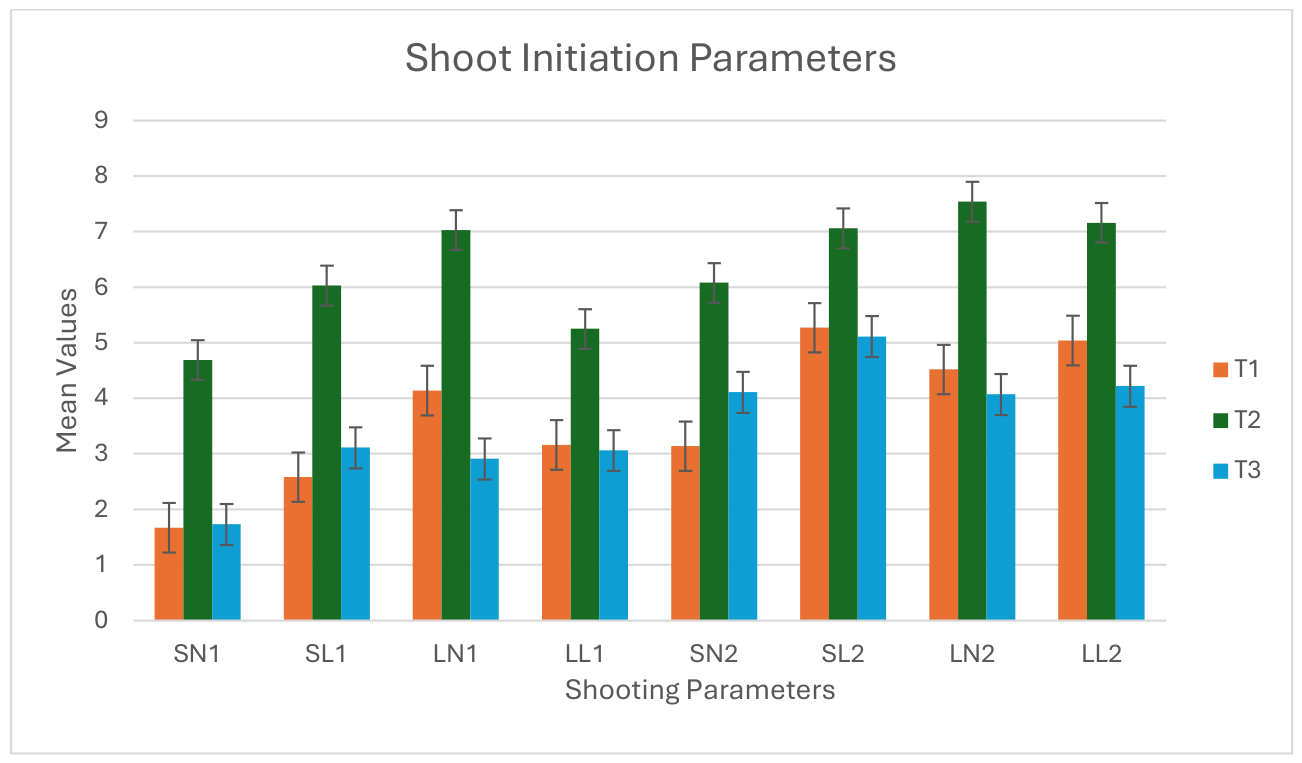
Figure 2.
Effects of BAP and NAA on shoot multiplication of 'Kulfo' at 30 DAI. Scale bars = 1 cm. Treatments: T1 (control, no PGR), T2 (1.0 mg L⁻¹ BAP + 0.1 mg L⁻¹ NAA), T3 (2.0 mg L⁻¹ BAP + 0.1 mg L⁻¹ NAA). Images are representative examples from three independent replicate culture jars (n=3 per treatment). Scale bars = 1 cm.
Figure 2.
Effects of BAP and NAA on shoot multiplication of 'Kulfo' at 30 DAI. Scale bars = 1 cm. Treatments: T1 (control, no PGR), T2 (1.0 mg L⁻¹ BAP + 0.1 mg L⁻¹ NAA), T3 (2.0 mg L⁻¹ BAP + 0.1 mg L⁻¹ NAA). Images are representative examples from three independent replicate culture jars (n=3 per treatment). Scale bars = 1 cm.
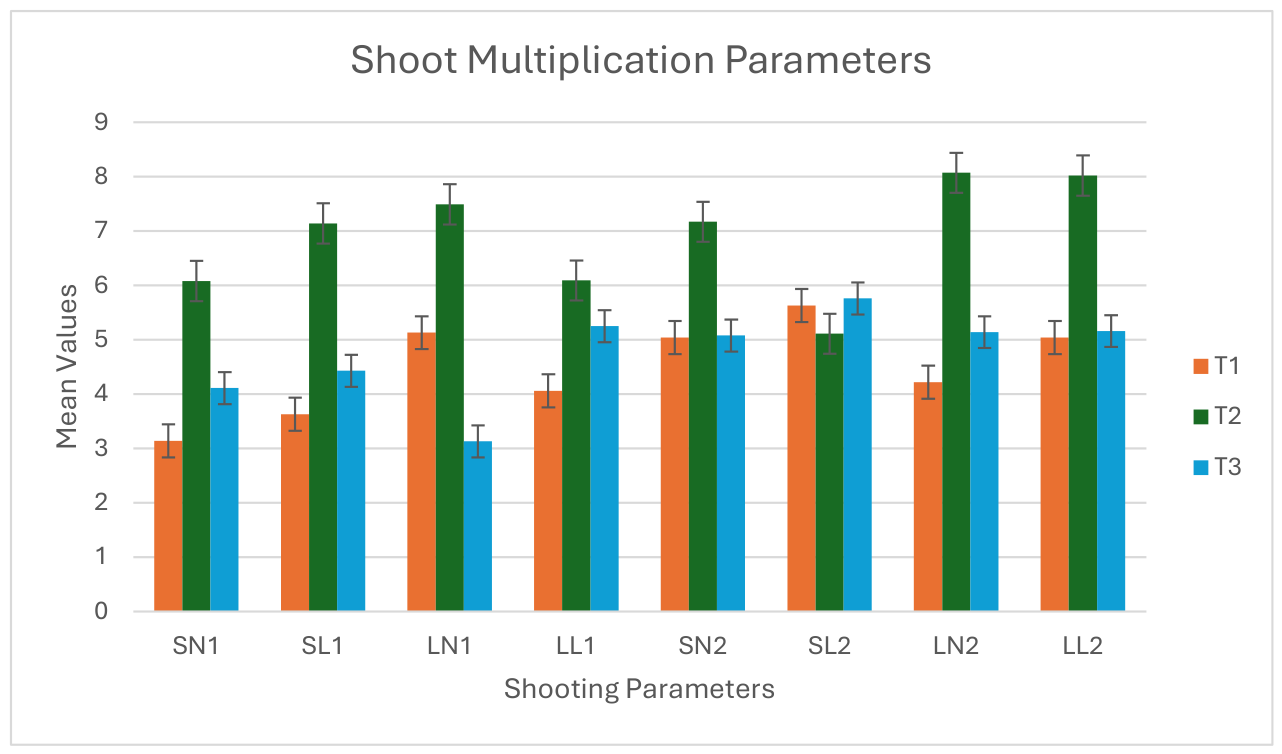
Figure 3.
Effects of IBA and NAA on the rooting of 'Kulfo' at 30 DAI. Scale bars = 1 cm. Treatments: T1 (control, no PGR), T2 (0.1 mg L⁻¹ IBA + 0.1 mg L⁻¹ NAA), T3 (0.5 mg L⁻¹ IBA + 0.5 mg L⁻¹ NAA). Images are representative examples from three independent replicate culture jars (n=3 per treatment). Scale bars = 1 cm.
Figure 3.
Effects of IBA and NAA on the rooting of 'Kulfo' at 30 DAI. Scale bars = 1 cm. Treatments: T1 (control, no PGR), T2 (0.1 mg L⁻¹ IBA + 0.1 mg L⁻¹ NAA), T3 (0.5 mg L⁻¹ IBA + 0.5 mg L⁻¹ NAA). Images are representative examples from three independent replicate culture jars (n=3 per treatment). Scale bars = 1 cm.
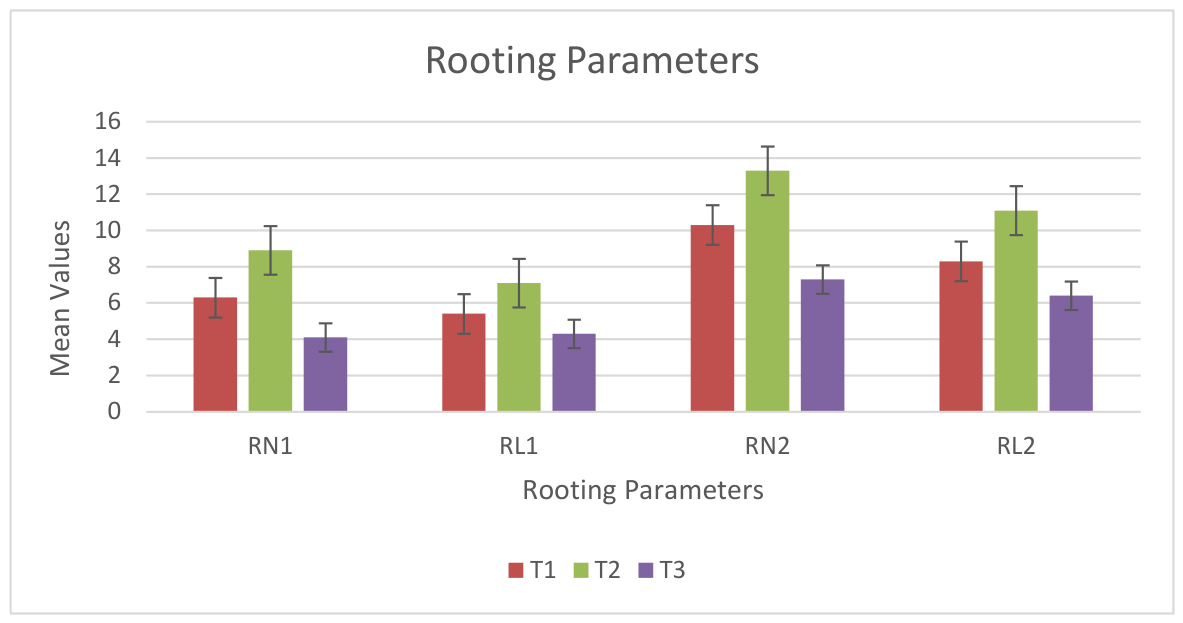
Table 1.
Treatment combinations of BAP and GA₃ for shoot initiation of ‘Kulfo’.
| Treatment code | BAP (mg L⁻¹) | GA₃ (mg L⁻¹) |
|---|---|---|
| T1 | 0.0 | 0.0 |
| T2 | 0.5 | 0.1 |
| T3 | 1.0 | 1.0 |
Table 2.
Treatment combinations of BAP and NAA for shoot multiplication of ‘Kulfo’.
| Treatment code | BAP (mg L⁻¹) | NAA (mg L⁻¹) |
|---|---|---|
| T1 | 0.0 | 0.0 |
| T2 | 1.0 | 0.1 |
| T3 | 2.0 | 0.1 |
Table 3.
Treatment combinations of IBA and NAA for rooting of ‘Kulfo’.
| Treatment code | IBA (mg L⁻¹) | NAA (mg L⁻¹) |
|---|---|---|
| T1 | 0.0 | 0.0 |
| T2 | 0.1 | 0.1 |
| T3 | 0.5 | 0.5 |
Table 4.
Analysis of variance for the effect of BAP and GA₃ on shoot initiation of ‘Kulfo’.
| Source of Variation | DF | Shoot number | Shoot length (cm) | Leaf number | Leaf length (cm) |
|---|---|---|---|---|---|
| 20 DAI | |||||
| Treatment | 2 | 19.45** | 17.92** | 22.15** | 9.87** |
| Error | 12 | 0.18 | 0.23 | 0.20 | 0.18 |
| 30 DAI | |||||
| Treatment | 2 | 18.95** | 7.12** | 22.45** | 9.45** |
| Error | 12 | 0.21 | 0.26 | 0.24 | 0.22 |
* and ** indicate significant at P < 0.05 and P < 0.01 probability levels, respectively. DF: degrees of freedom Footnote: Two independent experiments were conducted, each with three replicates per treatment (a total of 6 experimental units per treatment). Analysis of variance was performed on the combined dataset, where 'Experiment' was included as a blocking factor. The Error DF = 12 represents the residual degrees of freedom after accounting for Treatment (2 DF), Experiment (1 DF), and the Treatment × Experiment interaction (2 DF) from the total of 17 DF (18 observations total). However, the treatment × experiment interaction was not significant (P > 0.05) for any variable, indicating consistency across experiments.
Table 5.
Analysis of variance for the effect of BAP and NAA combinations on shoot multiplication of ‘Kulfo’.
Table 5.
Analysis of variance for the effect of BAP and NAA combinations on shoot multiplication of ‘Kulfo’.
| Source of Variation | DF | Shoot number | Shoot length (cm) | Leaf number | Leaf length (cm) |
|---|---|---|---|---|---|
| 20 DAI | |||||
| Treatment | 2 | 11.52** | 3.45** | 28.14** | 5.61** |
| Error | 12 | 0.14 | 0.19 | 0.23 | 0.17 |
| 30 DAI | |||||
| Treatment | 2 | 9.87** | 6.88** | 31.87** | 19.45** |
| Error | 12 | 0.18 | 0.21 | 0.25 | 0.20 |
* and ** indicate significant at P < 0.05 and P < 0.01 probability levels, respectively. DF: degrees of freedom Footnote: Two independent experiments were conducted, each with three replicates per treatment (a total of 6 experimental units per treatment). Analysis of variance was performed on the combined dataset, where 'Experiment' was included as a blocking factor. The Error DF = 12 represents the residual degrees of freedom after accounting for Treatment (2 DF), Experiment (1 DF), and the Treatment × Experiment interaction (2 DF) from the total of 17 DF (18 observations total). However, the treatment × experiment interaction was not significant (P > 0.05) for any variable, indicating consistency across experiments.
Table 6.
Analysis of variance for the effect of IBA and NAA combinations on the rooting of ‘Kulfo’.
| Source of Variation | DF | Root number | Root length (cm) |
|---|---|---|---|
| 20 DAI | |||
| Treatment | 2 | 40.11** | 10.85** |
| Error | 12 | 0.36 | 0.31 |
| 30 DAI | |||
| Treatment | 2 | 68.89** | 39.20** |
| Error | 12 | 0.52 | 0.47 |
* and ** indicate significant at P < 0.05 and P < 0.01 probability levels, respectively. DF: degrees of freedom Footnote: Two independent experiments were conducted, each with three replicates per treatment (a total of 6 experimental units per treatment). Analysis of variance was performed on the combined dataset, where 'Experiment' was included as a blocking factor. The Error DF = 12 represents the residual degrees of freedom after accounting for Treatment (2 DF), Experiment (1 DF), and the Treatment × Experiment interaction (2 DF) from the total of 17 DF (18 observations total). However, the treatment × experiment interaction was not significant (P > 0.05) for any variable, indicating consistency across experiments.
Table 8.
Mean effects of BAP and NAA combinations on shoot number, shoot length, leaf number, and leaf length at 20 and 30 DAI.
Table 8.
Mean effects of BAP and NAA combinations on shoot number, shoot length, leaf number, and leaf length at 20 and 30 DAI.
| Treatments | SN1 | SL1 (cm) | LN1 | LL1 (cm) | SN2 | SL2 (cm) | LN2 | LL2 (cm) |
|---|---|---|---|---|---|---|---|---|
| T1 | 3.14 ± 0.3c | 3.63 ± 0.3c | 5.13 ± 0.4c | 4.06 ± 0.3c | 5.04 ± 0.3c | 5.63 ± 0.4c | 4.22 ± 0.4c | 5.04 ± 0.4c |
| T2 | 6.08 ± 0.4a | 5.11 ± 0.4b | 7.49 ± 0.5a | 6.09 ± 0.4a | 7.17 ± 0.4a | 7.54 ± 0.5a | 8.07 ± 0.5a | 8.02 ± 0.5a |
| T3 | 4.11 ± 0.3b | 4.43 ± 0.4b | 3.13 ± 0.3d | 5.25 ± 0.4b | 5.08 ± 0.4b | 5.76 ± 0.4b | 5.14 ± 0.4b | 5.16 ± 0.4b |
| LSD (P < 0.05) | 0.32 | 0.37 | 0.41 | 0.35 | 0.36 | 0.39 | 0.43 | 0.38 |
SN: shoot number; SL: shoot length; LN: leaf number; LL: leaf length. 1 = 20 DAI, 2 = 30 DAI. Values are mean ± standard error. Each mean represents three independent replicate culture jars (n=3), with each jar containing five explants. The mean value from the five explants in each jar was used as a single replicate value for statistical analysis. Means within a column followed by the same letter are not significantly different according to the LSD test at P < 0.05.
Table 9.
Mean effects of IBA and NAA combinations on root number and root length of 'Kulfo' at 20 and 30 DAI.
Table 9.
Mean effects of IBA and NAA combinations on root number and root length of 'Kulfo' at 20 and 30 DAI.
| Treatments | RN1 | RL1 (cm) | RN2 | RL2 (cm) |
|---|---|---|---|---|
| T1 | 6.3 ± 0.5b | 5.4 ± 0.4b | 10.3 ± 0.6b | 8.3 ± 0.5b |
| T2 | 8.9 ± 0.6a | 7.1 ± 0.5a | 13.3 ± 0.7a | 11.1 ± 0.6a |
| T3 | 4.1 ± 0.4c | 4.3 ± 0.4c | 7.3 ± 0.5c | 6.4 ± 0.5c |
| LSD (P < 0.05) | 0.51 | 0.48 | 0.62 | 0.59 |
RN: root number, RL: root length. 1 = 20 DAI and 2 = 30 DAI. Values are mean ± standard error. Each mean represents three independent replicate culture jars (n=3), with each jar containing five explants. The mean value from the five explants in each jar was used as a single replicate value for statistical analysis. Means within a column followed by the same letter are not significantly different according to the LSD test at P < 0.05. Rooting percentage at 30 DAI was 100% for all in vitro treatments (30/30 explants rooted per treatment across both experiments).
Table 10.
Survival rate of 'Kulfo' plantlets during acclimatization.
| Plantlet source | Number of plantlets acclimatized | Survival at 7 days (%) | Survival at 28 days (%) | Number of plants surviving at 28 days |
|---|---|---|---|---|
| Apical explants | 100 | 100 | 99.0 | 99 |
| Nodal explants | 100 | 99.0 | 97.0 | 97 |
| Total | 200 | 99.5 | 98.0 | 196 |
Values are based on pooled data from two independent acclimatization trials.
Disclaimer/Publisher’s Note: The statements, opinions and data contained in all publications are solely those of the individual author(s) and contributor(s) and not of MDPI and/or the editor(s). MDPI and/or the editor(s) disclaim responsibility for any injury to people or property resulting from any ideas, methods, instructions or products referred to in the content. |
© 2026 by the authors. Licensee MDPI, Basel, Switzerland. This article is an open access article distributed under the terms and conditions of the Creative Commons Attribution (CC BY) license (http://creativecommons.org/licenses/by/4.0/).
Copyright: This open access article is published under a Creative Commons CC BY 4.0 license, which permit the free download, distribution, and reuse, provided that the author and preprint are cited in any reuse.