
Submitted:
07 August 2026
Posted:
10 August 2026
You are already at the latest version
Abstract
Nutrition during early life is a critical determinant of long-term health. Preterm birth, affecting approximately 10% of deliveries worldwide, and intrauterine growth re-striction (IUGR) are major perinatal conditions associated with disrupted develop-mental programming. The Developmental Origins of Health and Disease (DOHaD) framework explains how early nutritional and environmental exposures permanently shape adult disease risk. This narrative review synthesizes epidemiological, cohort, animal, and interventional evidence on early nutrition and long-term outcomes in preterm and IUGR infants. Accelerated early growth, particularly after growth re-striction, increases the risk of metabolic syndrome components, including glucose in-tolerance, obesity, hypertension, and dyslipidemia. Preterm birth is independently as-sociated with a 53% higher risk of ischemic heart disease and with increased hyperten-sion, insulin resistance, and hyperlipidemia, whereas IUGR confers overlapping but distinct risks. Underlying mechanisms include epigenetic modification, structural or-gan deficits, hormonal reprogramming, gut-microbiome dysbiosis, and oxidative stress. Preterm infants pose a particular challenge, requiring nutrition that supports survival and neurodevelopment without amplifying later cardio-metabolic risk. The preconception and early postnatal periods, during which human milk, optimal pro-tein-energy balance, long-chain polyunsaturated fatty acids, and human-milk oligo-saccharides act, are pivotal. Individualized, evidence-based feeding strategies are needed to optimize immediate outcomes while limiting lifelong disease susceptibility.
Keywords:
developmental programming
; developmental origins of health and disease (DOHaD)
; prematurity
; intrauterine growth restriction (IUGR)
; infant nutrition
; metabolic syndrome
1. Introduction
The relationship between early nutrition and long-term health has emerged as one of the most significant paradigms in modern medicine [1]. The focus of nutritional research has shifted fundamentally from simply meeting basic nutritional requirements to understanding how early nutritional experiences can permanently alter physiological function and disease susceptibility throughout life, a concept referred to as nutritional programming [2,3]. This concept falls within developmental programming, also known as the Developmental Origins of Health and Disease (DOHaD), which provides the theoretical framework for understanding why events in fetal and early postnatal life have consequences that extend across the entire lifespan [4,5,6].
Preterm birth, defined as delivery before 37 completed weeks of gestation, affects approximately 10.6% of all live births globally, representing over 15 million infants annually, and is the leading cause of neonatal mortality and morbidity worldwide [7]. Intrauterine growth restriction (IUGR) is defined as a fetal growth rate below the expected growth potential, whereas small for gestational age (SGA) is defined as birth weight below the 10th percentile for gestational age, regardless of growth trajectory during pregnancy. Infants born preterm, and those with IUGR, face not only the immediate challenges of prematurity but also a lifelong legacy of increased vulnerability to chronic non-communicable diseases [8,9,10].
Growing evidence from epidemiological studies, animal models, and experimental interventions strongly suggests that in utero exposures, prematurity, and postnatal experiences have long term health implications. Studies on nutrition and growth show that inadequate growth and nutrition during critical developmental periods can have lasting adverse consequences. Conversely, accumulating evidence supports the hypothesis that 'accelerated' or excessively rapid infant growth increases the propensity to components of the metabolic syndrome, including glucose intolerance, obesity, elevated blood pressure, and dyslipidemia, which collectively predispose to cardiovascular morbidity and mortality in adulthood [11,12]. For preterm infants, this creates a unique and complex clinical challenge [8]. Adequate nutrition is essential for immediate survival, growth, and neurodevelopmental outcomes in the postnatal period [8,13,14,15]; yet the long-term metabolic consequences of nutritional strategies must also be carefully considered [16,17]. Similarly, infants with IUGR face a complex interplay between the potential benefits of postnatal catch-up growth and the programming risks associated with accelerated weight gain [18,19].
This review examines the current understanding of how early nutrition influences long-term health outcomes. It explores the mechanisms underlying developmental programming, including the increasingly recognized roles of epigenetics, the gut microbiome, and oxidative stress; reviews the clinical evidence for long-term cardiovascular and metabolic consequences in preterm and IUGR populations; and discusses clinical implications for the nutritional management of these vulnerable infants, from the preconception period through early childhood.
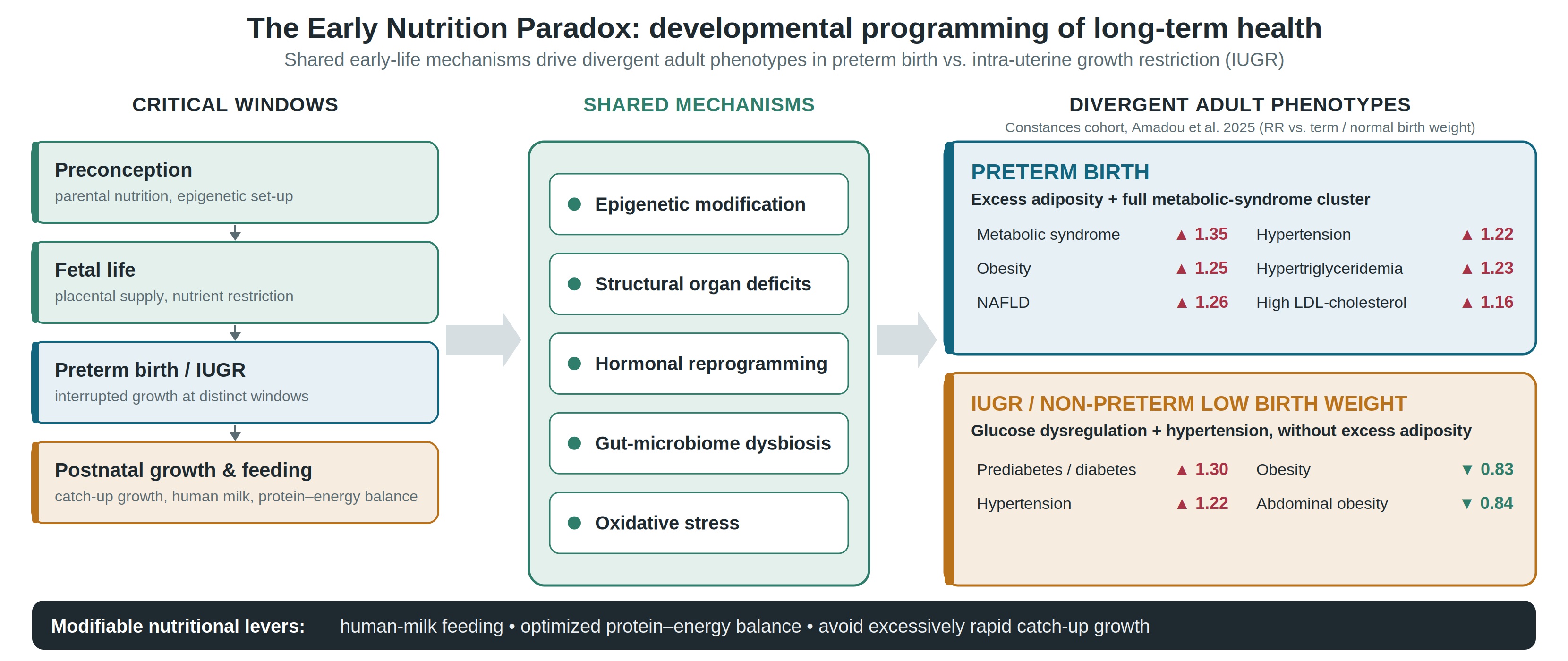
Figure 1 presents developmental programming of long-term health across the life course. It summarizes the whole DOHaD framework depicting critical windows for exposures and the shared mechanisms leading to the divergent preterm vs. IUGR adult phenotypes.
2. Historical Perspective and Theoretical Framework
2.1. Barker's Hypothesis and Fetal Programming
The foundation of our current understanding of developmental programming can be traced to the pioneering work of David Barker in the late 1980s. Barker's seminal observations demonstrated a strong geographical correlation between areas of high infant mortality (a marker of poverty) in early 20th-century England and subsequent high rates of coronary artery disease mortality 50-70 years later [20]. This striking finding challenged the prevailing assumption that coronary disease was a disease of affluence caused by a high-fat diet and a sedentary lifestyle, and led to the formulation of "Barker's hypothesis" or the "fetal origins of adult disease" concept, which proposed that conditions in utero during embryonic and fetal life could influence the development of tissues and organs in ways that alter lifelong disease risk [6,21].
Barker hypothesized that small size at birth, reflecting poor fetal nutrition, has a causal relationship with the development of hypertension, coronary heart disease, and non-insulin-dependent diabetes in middle age [22]. Importantly, the low birth weight (LBW) infants in his early studies were predominantly small for gestational age (SGA) and IUGR cases, as the survival rate of appropriate for gestational age extreme premature infants was very low during the time periods examined [23].
"Programming" is defined as the effect of an endogenous or environmental stimulus or insult that acts at a critical time during development and results in a change of structure or function of an organism or system [1,21,24]. The concept of "fetal programming" proposes that although these physiological adaptations occur in response to transient phenomena such as fetal undernutrition, the changes become permanent because they occur during critical periods of development when organ systems are particularly plastic and susceptible to environmental influences [24,25]. Over the subsequent decades, the field evolved from the narrow "fetal origins" concept to the broader DOHaD framework, encompassing prenatal and early postnatal life, overnutrition as well as undernutrition, and a wide spectrum of adult chronic diseases [21].
2.2. The Thrifty Phenotype Hypothesis
Complementing Barker's earlier observations, Hales and Barker proposed the "thrifty phenotype" hypothesis, which suggests that the fetus responds to nutritional deprivation by developing a metabolic profile that maximizes survival under conditions of limited nutrient availability [26]. This adaptive response involves preferential allocation of limited nutrients to essential organs such as the brain and heart, while reducing the development of other organs including the liver, kidneys, and pancreas.
While this adaptation may improve immediate survival prospects, it creates a "mismatch" when the individual subsequently encounters an environment of nutritional abundance. The thrifty phenotype, optimized for nutrient scarcity, becomes maladaptive in modern environments characterized by caloric excess, leading to increased susceptibility to metabolic disorders [6,27,28]. This concept of "developmental mismatch" has been expanded by Gluckman and Hanson, who proposed that the developing organism uses signals from the environment to construct a phenotype that best matches the predicted postnatal environment; when the actual environment differs from the predicted one, disease risk increases [4].
2.3. The Concept of Nutritional Programming
Nutritional programming is a subset of developmental programming, defined as the effect of a nutritional stimulus or insult, which acts at a critical time during development to permanently change the structure and function of an organism or system [29,30]. This concept encompasses several key principles: (1) critical developmental windows when organisms are particularly susceptible to environmental influences; (2) permanent effects that persist throughout the lifespan; (3) dose-response relationships representing graded responses to varying degrees of nutritional stress; and (4) transgenerational effects where programming consequences can be transmitted to subsequent generations.
Animal models have provided compelling evidence for nutritional programming. In a mouse model of LBW-associated diabetes, studies demonstrated that energy restriction during early life, with prevention of early catch-up growth, reversed the development of glucose intolerance and obesity and resulted in increased lifespan, while overfeeding led to larger body size throughout life and greater internal fat deposition leading to considerably shortened lifespan [31,32]. In humans, epidemiological studies have established links between low birth weight and adverse long-term health effects, with rapid postnatal growth (upward centile crossing) appearing to partly account for these outcomes [33,34]. Lucas coined the term "programming" in the context of early infant nutrition and demonstrated in randomized controlled trials that diet in early postnatal life influences long-term development in preterm infants [24,30].
2.3.1. Transgenerational Programming
One of the most striking aspects of developmental programming is its potential to be transmitted across generations. Evidence from animal models shows that nutritional perturbations in pregnancy can affect not only the offspring (F1 generation) but also grandchildren (F2) and potentially great-grandchildren (F3) through both maternal and paternal lineages [35,36,37,38,39,40]. In sheep models, overfeeding during pregnancy results in offspring and grand-offspring who are heavier and show insulin resistance and disrupted leptin signaling, even when the intermediate generation is fed normally. Similarly, fathers fed a high-fat diet in rodent models have daughters (F2) that are larger than controls. In humans, paternal pre-pubertal smoking before age 11 is associated with greater BMI in sons, suggesting epigenetic transmission through the germline [41]. These transgenerational effects highlight the public health implications of suboptimal early nutrition that extend well beyond the individual.
3. Mechanisms of Developmental Programming
3.1. Structural and Functional Organ Development
One of the primary mechanisms through which early experiences and exposures influence long-term health is its effect on organ development during critical periods. The concept of "structural deficits" proposes that inadequate nutrition during organ development leads to reduced numbers of functional units within organs, with lasting consequences for physiological function [42,43,44].
3.1.1. Kidney Development and Hypertension Risk
The relationship between prematurity, kidney development, and long-term hypertension risk provides a compelling example of developmental programming. In humans, nephrogenesis reaches completion at 34-36 weeks of gestation, with more than 60% of nephrons formed during the third trimester [45]. Consequently, nephron endowment is significantly reduced in infants born preterm — potentially by as much as one-quarter to one-third compared to term-born infants.
The hyperfiltration theory hypothesizes that early loss of nephron mass results in compensatory hyperfiltration of remaining nephrons, leading to proteinuria, progressive kidney injury, and increased risk of hypertension in later life [46,47]. This mechanism provides a direct biological link between preterm birth, reduced nephron number, and cardiovascular disease risk in adulthood. Epidemiological data confirm that preterm adults have significantly higher systolic and diastolic blood pressures than term-born controls [48].
3.1.2. Pancreatic Development and Diabetes Risk
Pancreatic development during fetal life is crucial for long-term glucose homeostasis. Reduced pancreatic islet cell number and insulin secretory capacity resulting from early malnutrition as well as from preterm birth can lead to glucose intolerance and increased diabetes risk in adulthood [49,50]. The timing of nutritional stress is critical, as pancreatic beta-cell development occurs primarily during the third trimester of pregnancy and early postnatal period. Preterm infants who require parenteral nutrition in early life face periods of relative hyperglycemia and hyperinsulinism that may further affect beta-cell programming.
3.1.3. Other Organ Systems
The programming effects extend to multiple organ systems. Reduced muscle mass results in decreased basal metabolic rate and exercise capacity, predisposing to obesity and metabolic syndrome. Cardiac development in preterm infants involves fewer myocyte numbers and altered cardiac geometry that may increase risk of heart failure and arrhythmias in later life. Hepatic development determines lipid metabolism capacity, with alterations linked to non-alcoholic fatty liver disease in adulthood — a finding supported by recent cohort data showing that preterm birth increases the risk of non-alcoholic fatty liver disease by 26% (RR 1.26) [51]. Reduced fat cell progenitor pools, specified during late fetal life, may alter the trajectory of adipose expansion in early postnatal life [52].
3.2. Epigenetic Mechanisms
Recent advances in epigenetics have provided crucial insights into the molecular mechanisms underlying developmental programming. Epigenetic modifications, including DNA methylation, histone modifications, and non-coding RNA regulation, can permanently alter gene expression without changing the underlying DNA sequence [38,40,53,54]. These epigenetic changes are established during early development and, once set, are mitotically heritable — providing a molecular mechanism for the persistence of programming effects throughout life [8,55].
3.2.1. DNA Methylation
DNA methylation — the addition of a methyl group to cytosine residues at CpG dinucleotides — is the most extensively studied epigenetic modification in developmental programming. Methylation of CpG islands in gene promoter regions generally suppresses transcription, while demethylation permits gene expression. Several studies have demonstrated that diet can significantly impact DNA methylation patterns. Maternal protein-deficient diets cause global DNA hypomethylation affecting multiple metabolic genes [56,57]. The classic agouti mouse model elegantly demonstrates how epigenetic modifications influence both phenotype and disease susceptibility: hypermethylation of the agouti gene promoter, promoted by dietary methyl donors including folate, vitamin B12, and choline, protects offspring from obesity and its metabolic consequences [58].
The Dutch Hunger Winter cohort provided landmark human evidence for persistent epigenetic changes resulting from early nutritional deprivation. Individuals prenatally exposed to famine during the earliest stages of gestation show approximately 5% less DNA methylation at the IGF-2 gene — measurable 60 years later compared to unexposed same-sex siblings [59,60,61,62]. This differential methylation was specific to early-gestation exposure and not seen in those exposed only in late gestation, confirming the existence of critical epigenetic windows.
3.2.2. Histone Modifications and Chromatin Remodeling
Beyond DNA methylation, histone modifications constitute a second major layer of epigenetic regulation. Post-translational modifications to histone tails — including acetylation, methylation, phosphorylation, and ubiquitination — alter chromatin accessibility and gene transcription. Early nutritional experiences can alter histone modification patterns in a gene-specific manner. For example, undernutrition during critical periods alters H3K4me3 (active) and H3K27me3 (repressive) marks at promoters of genes controlling glucose metabolism, adipogenesis, and inflammatory pathways. [63]. These histone marks are influenced by the availability of nutrition-derived metabolic cofactors, including acetyl-CoA and S-adenosylmethionine (SAMe). For example, SAMe acts as the primary methyl donor required for enzymes to deposit these tags. Consequently, fluctuations in these nutrient-dependent cofactors directly alter the epigenetic programming of key rate-limiting enzymes and transcription factors that drive glucose metabolism, adipogenesis, and inflammation [64].
3.2.3. Non-Coding RNAs
Non-coding RNAs — including microRNAs (miRNAs) and long non-coding RNAs (lncRNAs) — constitute an additional regulatory layer linking early nutrition to developmental programming. MicroRNAs post-transcriptionally regulate gene expression by binding to target mRNAs and promoting their degradation or translational repression. Maternal nutritional status influences miRNA expression in the placenta and fetal tissues, with consequences for signaling pathways regulating growth, metabolism, and organ development. Specific miRNAs targeting insulin signaling, adipogenesis, and inflammatory pathways are differentially expressed in growth-restricted fetuses [65].
3.2.4. Epigenetic Clocks and Biological Aging in Preterm Infants
A significant advance in epigenetic research has been the development of "epigenetic clocks" — algorithms that estimate biological age based on patterns of DNA methylation at specific CpG sites. These clocks reveal that biological aging can be accelerated or decelerated relative to chronological age, with potential consequences for long-term health. In the context of preterm birth, the pediatric buccal epigenetic (PedBE) clock has been applied to characterize biological aging in very preterm neonates.
In a prospective cohort study by Gomaa et al. [66], 35 very preterm neonates (24-32 weeks gestation) underwent repeated PedBE clock assessments and brain MRI. Extremely preterm neonates (<28 weeks) showed significantly accelerated epigenetic aging compared to less premature peers. Critically, this accelerated PedBE age at term-equivalent age was independently associated with smaller total cerebral volumes, slower brain growth during the NICU period, and worse cognitive and language scores at 18 months. These findings suggest that epigenetic aging provides a biomarker of neurodevelopmental risk that captures information beyond gestational age alone.
Similarly, pregnancy complications including preeclampsia and gestational diabetes are associated with altered epigenetic gestational age in newborns, potentially mediating their known adverse effects on offspring health [67]. Preeclampsia specifically has been linked to epigenetic modifications in placental trophoblast function, with downstream effects on fetal growth and offspring cardiovascular risk in adulthood [68]. These findings highlight how the epigenetic impact of adverse perinatal conditions begins before birth and can be detected in the newborn period.
3.3. Hormonal Programming
Early nutrition can permanently affect hormonal axes that regulate body weight, food intake, and metabolism [69,70]. Two main mechanisms have been proposed. First, satiety signaling alterations: early nutritional experiences may establish higher thresholds for satiety signals, leading to increased food intake throughout life. Second, metabolic set-point changes: permanent alterations in systems controlling energy expenditure and storage. Specifically, early overnutrition programs hypothalamic circuits involving leptin, insulin, glucagon-like peptide-1 (GLP-1) and neuropeptide Y/AGRP neurons in the arcuate nucleus, leading to increased appetite and reduced energy expenditure [71]. Evidence from individuals exposed to famine prenatally shows persistent epigenetic changes decades later, including altered DNA methylation of the IGF-2 gene [59,60], and altered levels of circulating hormones including leptin and adiponectin that regulate body weight and insulin sensitivity.
3.4. The Gut Microbiome in Developmental Programming
The gut microbiome has emerged as a novel and increasingly recognized mediator of developmental programming. The neonatal period represents a critical window for microbiome establishment, with colonization patterns having long-term implications for metabolic health, immune development, and brain function. The "gut-brain axis" and "gut-liver axis" provide direct pathways through which microbiome composition influences systemic metabolic programming [72,73].
Preterm infants are particularly vulnerable to microbiome dysbiosis, due to a number of factors, including delivery by Caesarean section (in many cases), exposure to broad-spectrum antibiotics, prolonged parenteral nutrition, and delayed enteral feeding [8]. The preterm gut microbiome is characterized by reduced diversity, dominance of Enterobacteriaceae, and underrepresentation of beneficial Bifidobacterium and Lactobacillus species. This dysbiosis is associated with increased intestinal permeability ("leaky gut"), systemic inflammation, and altered short-chain fatty acid (SCFA) production.
SCFAs — particularly butyrate, propionate, and acetate — produced by microbial fermentation of dietary fiber play critical roles in intestinal epithelial integrity, immune modulation, and metabolic regulation through activation of G-protein coupled receptors (GPR41, GPR43) on adipose, gut, and immune cells. Altered SCFA production in preterm infants may contribute to adipose tissue programming and insulin resistance in later life [74]. Animal models demonstrate that gut-microbiota-targeted interventions including probiotics, prebiotics, and postbiotics can mitigate developmental programming of metabolic syndrome [75]. Human milk, with its rich content of human milk oligosaccharides (HMOs), plays a key role in shaping a healthy microbiome, promoting Bifidobacterium colonization and SCFA production, providing a mechanism for some of the long-term health benefits of breastfeeding.
3.5. Oxidative Stress
Oxidative stress — an imbalance between reactive oxygen species (ROS) production and antioxidant defenses — represents an additional mechanism linking prematurity, early nutrition and programming with long-term cardio-metabolic risk [76,77]. Because oxidative stress can break down vital molecules and alter enzyme functions, it serves as a direct bridge that disrupts the body's natural chemical signals. Consequently, the nitric oxide (NO) signaling system — a master regulator of cardiovascular-kidney-metabolic homeostasis — is impaired. Perturbations in the fetal NO-asymmetric dimethyl-arginine (ADMA) axis can imprint maladaptive trajectories toward adult hypertension and chronic kidney disease [78,79]. In preterm infants, oxidative stress is amplified by antioxidant immaturity, supplemental oxygen exposure, infection, and ischemia-reperfusion injury [80]. Maternal obesity and preeclampsia further increase fetal oxidative stress, contributing to programming of the offspring's cardiovascular system [77]. Antioxidant supplementation — including vitamin E, vitamin C, and N-acetylcysteine — has shown promise in animal models for reprogramming oxidative-stress-mediated metabolic disease, though human evidence remains limited [81].
Table 1 summarizes the main mechanisms of developmental programming associating trigger to molecular or structural change that lead to long-term consequence. These include structural, epigenetic, hormonal, microbiome and oxidative-stress mechanisms.
4. Clinical Evidence and Epidemiological Studies by Developmental Programming Windows
Table 2 summarizes the landmark human studies linking early-life exposures to long-term cardio-metabolic outcomes which are discussed in the following sub-sections.
4.1. Preconception Health: The Critical Period Before Conception
The traditional DOHaD framework has focused primarily on fetal and early postnatal periods. However, accumulating evidence demonstrates that the health and nutritional status of both parents before conception — the "preconception period" — exerts a profound independent influence on offspring health [82]. The Lancet Preconception Health Series (2018) highlighted that a woman who is healthy at the time of conception is more likely to have a successful pregnancy and a healthy child, with consequences that can extend across generations.
Poor maternal nutrition and obesity before pregnancy are highly prevalent among women of reproductive age globally, and typical diets fall far short of nutritional recommendations in both developed and developing countries [82]. Key preconception nutritional determinants of offspring health include:
Maternal BMI: Both low BMI (predisposing to IUGR) and obesity (associated with gestational diabetes, macrosomia, and offspring metabolic programming) should be optimized before conception. Maternal obesity programs adipocyte progenitor pools in the fetus, accelerating adipose expansion in early postnatal life and predisposing to childhood and adult obesity [52].
Micronutrient status: Periconceptional folic acid supplementation is well established for neural tube defect prevention. However, its role extends to epigenetic programming — folate is a methyl donor that influences global DNA methylation patterns in the developing embryo. Similarly, vitamin B12, choline, zinc, iron, and iodine status at conception influence fetal brain development and programming [82].
Glycemic control: Women with pre-existing diabetes or insulin resistance should achieve optimal glycemic control before conception. Maternal hyperglycemia programs fetal beta-cell function and adiposity through mechanisms including fetal hyperinsulinism, oxidative stress, secondary hypoxic stress, and epigenetic modification [83].
Ultra-processed food consumption: Recent evidence from a large prospective study (Wang et al. BMJ 2022) [84] found that higher maternal consumption of ultra-processed foods during pregnancy was associated with an excess risk of pediatric obesity in offspring. While the preconception evidence is still emerging, current dietary patterns characterized by high ultra-processed food intake are associated with micronutrient deficiencies, excess calorie intake, and altered gut microbiome — all of which may adversely affect epigenetic programming at or near conception.
Paternal health: The emerging field of "paternal programming" recognizes that paternal diet, BMI, and lifestyle before conception influence offspring health through epigenetic modifications in sperm, including DNA methylation, histone modifications, and small non-coding RNAs [85]. Paternal obesity has been associated with altered metabolic outcomes in offspring in both animal models and human studies.
The preconception period thus represents a critical and largely underutilized opportunity for intervention to optimize developmental programming outcomes. Healthcare professionals caring for women and men of reproductive age should incorporate preconception nutritional assessment and counseling as a standard component of preventive care.
4.2. In Utero Growth and Nutrition
4.2.1. Undernutrition During Pregnancy: Historical Famines and Natural Experiments
The Dutch Hunger Winter of 1944-1945 provided a landmark natural experiment in human nutritional programming. During this period, food supplies were severely restricted in western Holland, with daily rations falling to 400-800 kcal/person — less than a quarter of recommended adult intake. Pregnant women and their offspring provided epidemiologists with a unique opportunity to study the effects of precisely timed malnutrition [61,62].
Studies of individuals exposed to famine in utero revealed time-dependent programming effects: early-gestation exposure led to higher adult BMI, elevated cholesterol, and increased coronary heart disease risk — a phenotype consistent with the thrifty phenotype hypothesis. Individuals exposed to famine in late gestation had a different phenotype, characterized primarily by impaired glucose tolerance. These time-dependent effects were among the first demonstrations in humans of critical developmental windows for metabolic programming [61,62]. Long-term epigenetic consequences — measurable reduced IGF-2 gene methylation six decades later — confirmed the biological durability of these programming effects [59,60].
Similar natural experiments have been studied in other populations. The Chinese famine of 1959-1961, the Siege of Leningrad (1941-1944), and seasonal famines in The Gambia have all yielded consistent findings: prenatal undernutrition, particularly in early-to-mid gestation, programs increased adult cardio-metabolic risk. The Gambian studies additionally demonstrate that maternal micronutrient status at the time of conception — influenced by season — alters DNA methylation patterns in offspring, connecting preconception nutrition directly to epigenetic programming [82,86,87].
4.2.2. Asymmetric IUGR: A Particularly High-Risk Phenotype
Asymmetric IUGR, characterized by disproportionate reduction in abdominal circumference while relatively sparing head circumference, represents a particularly high-risk programming phenotype [88,89]. This pattern reflects the fetal response to placental insufficiency, with preferential blood flow to the brain and heart at the expense of abdominal organs. Asymmetric IUGR is primarily a protective fetal adaptation to placental insufficiency. By redistributing blood flow to prioritize the brain and heart, the fetus compromises abdominal organ development. This structural "programming" significantly elevates the risk for lifelong metabolic and cardiovascular diseases [90]. In response to chronic hypoxia and nutrient deprivation, the fetus undergoes hemodynamic redistribution with peripheral vasoconstriction, prioritizing the cerebrovascular and coronary circulations while restricting blood supply to the viscera. Preferential shunting preserves bi-parietal diameter and head circumference - the head-sparing phenomenon. Conversely, abdominal circumference shows a disproportionate reduction, largely driven by depleted glycogen and decreased cell size in the liver, kidneys, and skeletal muscle. The resulting infant has a low weight-to-height ratio, relatively spared cardiac, cerebral, and adrenal development, but disproportionate reduction in kidney, liver, pancreas, and skeletal muscle mass [88,90]. This pattern of organ-specific growth restriction is a powerful predictor for later cardiovascular disease [91]. This is mediated via two main mechanisms - vascular remodeling and metabolic "programming". Prolonged fetal vasoconstriction and altered hemodynamics lead to permanent structural changes in the large arteries, including increased wall stiffness and greater aortic intima thickness. Reduced mass in key metabolic organs (e.g., pancreas, liver, skeletal muscle) alters fetal endocrine development, predisposing the individual to adult-onset insulin resistance, dyslipidemia, hypertension, and coronary heart disease [90]. Crucially, this vascular remodeling extends to the central nervous system; while the 'brain-sparing' phenomenon prioritizes cerebral perfusion, the chronic hemodynamic stress alters cerebrovascular development and impairs autoregulation [92]. This permanent alteration in brain vessel structure, coupled with sustained neuroinflammation and tissue hypoxia, significantly elevates the risk for perinatal brain injury and long-term neurodevelopmental deficits, including cerebral palsy [92,93]. Consequently, what initiates as an adaptive fetal response ultimately functions as a form of adverse neurological programming with lifelong consequences [93].
Preeclampsia is the most common cause of asymmetric IUGR, and the epigenetic mechanisms underlying preeclampsia-related fetal programming are increasingly understood. Ashraf et al. [68] reviewed how epigenetic processes — including aberrant DNA methylation of trophoblast invasion genes, altered histone modifications affecting spiral artery remodeling, and dysregulated miRNA expression — contribute to both the pathogenesis of preeclampsia and the long-term cardiovascular risk imprinted in offspring. This connection between maternal hypertensive disease, placental epigenetic dysfunction, and offspring programming represents an important, underappreciated pathway in the DOHaD framework.
4.2.3. In Utero Overnutrition
In contrast to the extensive epidemiological literature on undernutrition, direct clinical outcome data specifically addressing in utero overnutrition remain comparatively limited within the neonatal and preterm literature. Available evidence is largely mechanistic: maternal obesity and gestational diabetes are associated with programming of hypothalamic appetite-regulating circuits (Section 3.3) and with increased fetal oxidative stress (Section 3.5), both plausible pathways to later obesity and cardio-metabolic disease in offspring. Dedicated cohort studies quantifying long-term outcomes in the offspring of obese mothers, analogous to those available for famine-exposed and preterm-born populations, represent an important gap for future research.
4.3. Preterm Birth - Prematurity-Related Long-Term Cardiovascular and Metabolic Outcomes
Preterm birth represents a distinct and increasingly recognized risk factor for adult cardio-metabolic disease, separate from the traditional Barker hypothesis which was primarily based on term-born SGA infants. In contrast to the primarily nutritional programming seen in IUGR, preterm birth is characterized by the arrested or abnormal development of structural organ systems, leading to permanent functional deficits in tissues such as the kidneys and lungs. The growing cohort of preterm survivors — now reaching middle age — has enabled large-scale longitudinal studies of long-term outcomes [30,94].
4.3.1. Ischemic Heart Disease
A large Swedish national cohort study by Crump et al. [9], encompassing 2,141,709 singletons born between 1973 and 1994, demonstrated that gestational age at birth was inversely associated with risk of ischemic heart disease (IHD) in adulthood. At ages 30-43 years, preterm birth (<37 weeks) was associated with a 53% increased risk of IHD (adjusted hazard ratio (HR) 1.53; 95% CI, 1.20-1.94), while early-term birth (37-38 weeks) carried a 19% increased risk (HR 1.19; 95% CI, 1.01-1.40), compared to full-term birth. Importantly, preterm-born women, despite having lower absolute IHD incidence than men, had a proportionally higher relative risk (HR 1.93 vs. 1.37 for men). These associations were not explained by shared familial (genetic or environmental) factors in co-sibling analyses, supporting a causal role for preterm birth itself [9].
4.3.2. Metabolic Syndrome Components
A systematic review and meta-analysis by Markopoulou et al. [48], encompassing 43 studies with 18,295 preterm and 294,063 term-born adults, demonstrated that prematurity is significantly associated with multiple components of the metabolic syndrome. Preterm-born adults had significantly higher fat mass (P=0.03), systolic blood pressure (P<0.0001), diastolic blood pressure (P<0.0001), 24-hour SBP (P<0.001), and 24-hour DBP (P<0.001). Furthermore, preterm-born adults showed higher fasting glucose (P=0.01), fasting insulin (P=0.002), Homeostasis Model Assessment-Estimated Insulin Resistance (HOMA-IR) index (P=0.05), and total cholesterol levels (P=0.05) compared to adults born at term. This meta-analysis established preterm birth as a significant, independent risk factor for metabolic syndrome and cardiovascular disease in adulthood [48,94,95].
4.3.3. Very Low Birth Weight Adults
The New Zealand 1986 VLBW Study by Darlow et al. [96] assessed 229 VLBW survivors (birth weight <1500g) and 100 controls at ages 27-29 years. VLBW adults were significantly shorter than controls, with males showing significantly higher systolic blood pressure (P=0.028). While the overall prevalence of metabolic syndrome did not differ significantly (22.2% vs. 11.1% for males; 12.8% vs. 13.1% for females), logistic regression identified male sex, gestational age <28 weeks, and BMI >90th percentile at age 7-8 years as significant predictors of metabolic syndrome at ages 27-29. Importantly, the youngest and most premature survivors (gestational age <28 weeks) were at particularly high risk, with odds ratios of 2-4 for metabolic syndrome, highlighting the dose-response relationship between degree of prematurity and long-term metabolic risk.
4.3.4. Distinguishing Preterm Birth from IUGR Effects
A recent large cohort study from France (Amadou et al. 2025) [51], examining 30,295 adults from the Constances cohort, provided important insights into the distinct long-term profiles of preterm birth versus non-preterm low birth weight (LBW). Preterm birth was associated with obesity (RR 1.25; 95% CI 1.08-1.46), hypertriglyceridemia (RR 1.23), high LDL-cholesterol (RR 1.16), high blood pressure (RR 1.22), metabolic syndrome (RR 1.35; 95% CI 1.06-1.71), and non-alcoholic fatty liver disease (RR 1.26). By contrast, non-preterm LBW (i.e., IUGR) was associated with prediabetes/diabetes (RR 1.30) and hypertension (RR 1.22) but — strikingly — with reduced risk of obesity (RR 0.83) and abdominal obesity (RR 0.84). This suggests that preterm birth and IUGR, while both conferring cardio-metabolic risk, have distinct long-term phenotypes: preterm birth predisposes to excess fat storage and the full metabolic syndrome cluster, while IUGR predisposes particularly to glucose dysregulation and hypertension without the same degree of excess adiposity. These differences have important implications for tailored surveillance and intervention strategies in adulthood.
4.4. Postnatal Growth and Nutrition
4.4.1. Excessive Early Growth and Cardio-Metabolic Risk: Contemporary Epidemiological Evidence
The effect of faster weight gain throughout childhood has been reported in at least 21 studies across different populations and age groups [97,98]. These effects are observed for both linear growth and weight gain from as early as the first month of life, in both high-income and low-income countries, and even in predominantly breastfed populations.
Key observations include dose-response relationships between growth velocity and later disease risk; effects present across different ethnic and socioeconomic groups; and an asymmetric risk pattern where the combination of low birth weight followed by rapid postnatal growth confers the greatest cardio-metabolic risk — a pattern classically described in the Helsinki Birth Cohort, where the thinnest infants at birth who gained the most in BMI by age 11 had a fivefold elevated risk of coronary heart disease as adults [99].
Experimental studies suggest that the effect of early growth on later cardiovascular health is likely causal. Infants randomized to higher-protein diets show greater blood pressure and BMI in later measurements, and those randomized to nutrient-enriched formulas demonstrate potentially long-term metabolic effects that require careful monitoring despite short-term growth advantages [30]. These findings reflect another major concept in pediatric nutrition known as the "Early Protein Hypothesis". Research shows that high protein intake in infancy accelerates weight gain [100,101] and alters metabolic programming, which increases the risk of obesity and cardiovascular issues later in life. Excess protein stimulates insulin and insulin-like growth factor 1 (IGF-1) secretion. This hormonal surge triggers early fat cell production and faster weight gain. The risk of later obesity and higher BMI remains elevated even after switching to a normal diet. Clinical trials also associate higher infant protein intake with elevated blood pressure in childhood. Nutrient-enriched formulas successfully assist preterm or small-for-gestational-age (SGA) infants in reaching normal growth milestones. However, this rapid catch-up growth can program the body to store excess visceral fat. Accelerated early growth is also linked to a higher risk of developing type 2 diabetes later in life [102,103]. Therefore, healthcare providers must balance immediate growth needs against future metabolic risks in these populations. Breastmilk naturally contains lower protein concentrations that perfectly match an infant's developmental pace. Thus, breastfed infants typically exhibit slower, steadier growth and lower long-term BMI [104]. In recent years, full-term infants' formula manufacturers have tended to move towards reducing protein content closer to breastmilk levels to mitigate these risks [105].
4.4.2. Postnatal Nutrition and Cardio-Metabolic Risk in VLBW Adults
A Finnish cohort study (Suikkanen et al. 2019) [106], following 166 VLBW adults (born 1978-1985) from the Helsinki Study of VLBW Adults, examined the relationship between early postnatal nutrition and cardio-metabolic risk factors in young adulthood. According to the "early protein hypothesis", while high early protein intake is critical for preterm infants to optimize lean body composition, it must be carefully balanced to avoid metabolic overload. High protein and energy intake during the first weeks of life in very low birth weight infants predicts higher insulin resistance in young adulthood, rather than improving overall cardio-metabolic profiles [106]. Conversely, for full-term infants, lower protein exposure—such as that found naturally in breastmilk—is protective against accelerated weight gain and long-term obesity risk [107]. Furthermore, poor-quality diets later in childhood exacerbate these risks by worsening blood pressure, triglycerides, and insulin resistance in young adults [101]. Although higher protein intake during the first weeks of life predicted a healthier body composition in adulthood, the findings of Suikkanen et al [106] reinforces the concept that the quality of early nutritional support — particularly protein intake — shapes long-term cardio-metabolic outcomes, providing one of the rare direct links between documented neonatal nutrition and adult cardio-metabolic phenotype in humans.
4.4.3. Catch-Up Growth: Benefits and Risks
4.4.3.1. The Catch-Up Growth Paradox
Catch-up growth, the accelerated growth following a period of restricted growth, represents one of the most complex and clinically challenging aspects of developmental programming. While rapid postnatal growth is essential for survival and neurodevelopment in growth-restricted infants, mounting evidence suggests that this same rapid growth may increase long-term metabolic disease risk [34,108]. The challenge lies in understanding the optimal balance between promoting adequate growth for immediate health and neurodevelopmental benefits while minimizing long-term metabolic consequences [30,109,110,111].
4.4.3.2. Timing of Catch-Up Growth
The timing of catch-up growth appears to be critical in determining long-term health consequences. The "postnatal growth acceleration hypothesis" suggests that preterm infants and especially IUGR infants who demonstrate accelerated growth within the first two weeks of life have the greatest risk for endothelial dysfunction in adolescence and insulin resistance, compared to infants growing at a slower rate [12,30]. However, early catch-up growth that takes place within the first few months of life appears to be more beneficial than later catch-up growth, which may be more harmful [8,11,112,113]. This observation has important implications for nutritional management strategies in preterm infants and those with IUGR.
4.4.3.3. Pattern of Catch-Up Growth
The pattern of catch-up growth also influences long-term outcomes. Catch-up growth occurring predominantly in height (linear growth) appears more beneficial than catch-up growth occurring primarily in weight [114,115]. This distinction emphasizes the importance of monitoring body composition rather than simply focusing on overall weight gain [8]. In preterm infants, achieving length gain that tracks with established growth references may be more metabolically favorable than excessive weight gain driven by fat accumulation.
4.4.3.4. Quality of Growth and Body Composition
Recent research has emphasized the importance of body composition in assessing the quality of growth [8]. The distinction between lean tissue gain and adipose tissue accumulation is crucial for understanding the long-term health implications of different growth patterns [116,117]. Preterm infants characteristically accumulate adipose tissue preferentially compared to lean mass during NICU hospitalization, resulting in a body composition profile at term-equivalent age that differs markedly from that of a term-born infant of the same gestational age — with higher fat mass percentage and lower lean mass [118].
Rapid and marked fat accumulation during catch-up growth may improve thermoregulation and increase energy stores, facilitating better adaptation to extrauterine life. However, this same fat accumulation, particularly central adiposity, may contribute to insulin resistance and cardiovascular disease risk in later life [8,11,113,119]. Modern assessments including air displacement plethysmography, dual-energy X-ray absorptiometry, and fat mass estimation from skinfold measurements can quantify body composition in preterm infants, enabling more nuanced monitoring of growth quality [8].
4.4.3.5. Differences Between Preterm and IUGR Catch-Up Growth
While both preterm and IUGR infants commonly exhibit catch-up growth, the mechanisms and programming implications differ. IUGR infants have experienced chronic intrauterine nutrient restriction, with the resulting organ-sparing response creating a metabolic phenotype optimally calibrated for a nutrient-poor environment. When these infants encounter normal postnatal nutrition, the mismatch between their programmed physiology and the actual environment drives adipose tissue accumulation and metabolic dysregulation. In contrast, appropriate for gestational age preterm infants have typically not experienced intrauterine nutritional restriction per se, but rather an abrupt disruption of the normal developmental sequence — losing the benefits of third-trimester placental nutrient delivery and facing new metabolic demands for which they are physiologically unprepared. As demonstrated by Amadou et al. [51], these distinct pathways result in different long-term phenotypes, with preterm-born individuals more prone to obesity while IUGR individuals are more prone to glucose dysregulation.
5. Special Nutritional Considerations for Preterm Infants
5.1. Unique Nutritional Challenges
Preterm infants face distinctive nutritional challenges that distinguish them from term infants, even those with IUGR [7,8]. These include: disruption of normal organ developmental processes at a critical time; immature metabolic pathways with limited capacity to process and utilize certain nutrients; substantially increased requirements for energy, protein, and micronutrients to support both catch-up growth and ongoing development; feeding difficulties related to oro-motor immaturity and gastro esophageal reflux; and gastrointestinal immaturity including impaired motility, increased intestinal permeability, and heightened risk for necrotizing enterocolitis (NEC).
Extrauterine growth restriction (EUGR) — defined as growth below the 10th percentile at 36 weeks post-conceptional age in an infant born at 23-29 weeks — occurs in up to 90% of extremely premature infants [120]. EUGR is associated with adverse neurodevelopmental outcomes and may compound the metabolic programming effects of prematurity itself [121,122].
Figure 2 demonstrates the challenges of balancing early nutrition in the preterm infants. The figure presents the practical feeding strategy trying to balance short-term support vs. long-term risk, the protein/energy trajectory with the 32–34-week transition, the four-step timeline, and safety caps (see also sub-section 7.3).
5.2. Parenteral Nutrition: Early Provision and Composition
Adequate nutrient supplies shortly after preterm birth are essential for reducing the risk of suboptimal postnatal growth and adverse neurodevelopmental outcomes [122]. In the preterm infant, the brain is metabolically the most demanding organ for its function and programmed growth and maturation. Head circumference, linear growth, and weight gain are independently associated with neurodevelopmental outcome [123]. This implies early administration of protein — the primary driver of anabolic growth [13,14,15,121,124] — through parenteral nutrition until adequate enteral nutrition can be established [125,126,127,128,129].
Current evidence from ESPGHAN and ESPEN guidelines [130] recommends starting parenteral amino acid provision from birth, targeting intakes of 3.5 g/kg/day with energy provision of 90-120 kcal/kg/day. Early provision of amino acids, at doses of 1.5 g/kg/day from day 1 of life, has been shown to be safe and significantly improves nitrogen balance compared to dextrose-only solutions [14,15]. Higher amino acid intakes (>3 g/kg/day) in the first week of life are associated with improved early growth and neurodevelopmental outcomes [14,15].
A recent study by Lygerou et al. [131] examining 174 neonates in two NICUs demonstrated that early achievement of a positive energy and protein balance, based on ESPGHAN guidelines, is crucial to ensure optimal postnatal growth and prevent EUGR. In extremely preterm infants (<28 weeks), achieving a positive protein balance by day 14 was an independent predictor of improved weight z-scores at discharge.
A critical nutritional transition should be considered during hospital admission from 32-34 weeks post-conceptional age onwards: a switch from a high-energy and high-protein diet to a high-protein-only diet, provided that growth is age-appropriate (weight gain of 10-15 g/kg/day) [121,132]. This strategy aims to sustain lean tissue accretion while limiting excess fat deposition, thereby balancing short-term growth benefits against long-term cardio-metabolic risk.
5.3. Enteral Nutrition: Human Milk as First Choice
Human milk remains the feeding of choice for preterm infants [122,133,134]. Its benefits extend beyond macronutrient delivery to encompass a complex bioactive milieu that modulates gut microbiome colonization, immune programming, and neurodevelopment. Specific benefits documented in preterm infants include significantly reduced risk of necrotizing enterocolitis [13,133], reduced rates of late-onset sepsis, improved retinal vascularization, and better long-term neurodevelopmental outcomes [135].
However, unfortified human milk does not meet the elevated nutritional requirements of very preterm infants. Human milk fortification with multi-component fortifiers — providing additional protein, energy, calcium, phosphorus, and micronutrients — is standard care for preterm infants below 32-34 weeks. Despite the widespread use of standard fortification, significant variability exists in the macronutrient content of both maternal and donor human milk, contributing to nutritional uncertainty. Individualized (targeted or adjustable) vs. standard fortification — where milk analysis guides individualized fortification — is under investigation and shows promise for improving growth outcomes [136].
In the absence of maternal milk, pasteurized donor human milk is preferred over preterm formula as it retains many bioactive components of fresh milk while substantially reducing NEC risk. After discharge, the continuation of protein-enriched formula should be re-evaluated at 3 months corrected age based on the infant's growth pattern [133,137].
5.4. Key Micronutrients and Bioactive Components
Beyond macronutrients, several specific dietary components are of particular importance for preterm infant programming.
Long-chain polyunsaturated fatty acids (LC-PUFAs): DHA (docosahexaenoic acid) and ARA (arachidonic acid) are critical for brain development, retinal function, and immune modulation. Human milk is the principal source of these fatty acids for preterm infants. DHA levels in human milk decline rapidly postpartum, and maternal DHA supplementation can maintain higher milk DHA concentrations. In preterm infants, higher DHA intake is associated with improved visual acuity, white matter microstructure on MRI, and neurodevelopmental scores. Nava et al. [135] reviewed evidence that adequate DHA provision during NICU hospitalization is associated with better grey and white matter development and improved neurological outcomes in childhood (higher IQ and academic scores).
Human milk oligosaccharides (HMOs): HMOs are the third most abundant component of human milk and serve as prebiotics promoting Bifidobacterium colonization, providing immunomodulatory effects, serving as direct anti adhesive antimicrobials, and potentially acting as signaling molecules for intestinal development. The HMO 2'FL (2'-fucosyllactose) and other specific HMO structures have been associated with lower odds of NEC [135]. Formulas supplemented with HMOs show promise in approximating the microbiome-shaping benefits of human milk.
Vitamin D: Preterm infants are at high risk for vitamin D deficiency owing to immature stores, limited exposure to sunlight, and impaired 25-hydroxylation. Adequate vitamin D status is important not only for bone mineralization but also for immune programming, respiratory function, and possibly long-term cardio-metabolic programming [138].
Iron: Iron is critical for brain development, myelination, and energy metabolism [135]. Preterm infants have reduced iron stores and are at risk for iron deficiency anemia; however, excessive iron supplementation in the presence of infection can worsen oxidative stress. Current guidelines recommend supplemental iron starting at 2 weeks of age for enterally fed preterm infants.
5.5. Neurodevelopmental Outcomes and Nutritional Support
Neurodevelopmental impairment, including cognitive delay, motor abnormalities, behavioral problems, and increased rates of autism spectrum disorder and attention deficit hyperactivity disorder, is one of the most significant long-term burdens of prematurity. Nutrition plays a central role in supporting the vulnerable preterm brain during a period of extraordinary developmental activity [135].
In the preterm brain, white matter injury (periventricular leukomalacia) and dysmaturation are major concerns, reflecting both direct injury and altered qualitative development of white and grey matter. Nava et al. [135] summarized evidence that human milk, through its LCPUFA and HMO content, is associated with better grey and white matter development at brain MRI, which corresponds to better neurological outcomes in childhood. Higher nutritional intakes of calories and lipids during the NICU period appear associated with fewer severe brain lesions and better white and grey matter maturation.
The epigenetic clock findings of Gomaa et al. [66] — linking accelerated biological aging in preterm neonates to smaller brain volumes and worse neurodevelopmental outcomes at 18 months — suggest that epigenetic biomarkers may eventually guide individualized nutritional and neuroprotective interventions in the NICU. Nutritional strategies that attenuate epigenetic aging acceleration in preterm infants represent a promising but as yet unexplored therapeutic frontier.
Hortensius et al. [139] conducted a systematic review from bench to bedside of postnatal nutrition and brain development in preterm infants, confirming that higher protein and energy provision in the first weeks of life is associated with improved brain growth measures and neurodevelopmental outcomes, while emphasizing the importance of avoiding excessive weight gain that could counteract these benefits.
5.6. Long-Term Monitoring of Preterm Infants
Given the strong evidence linking preterm birth to lifelong cardio-metabolic risk, Morniroli et al. [7] advocate that prematurity should be considered a chronic disorder, with gestational age and birth history included in all medical records for patients of all ages when assessing chronic disease risk. This perspective calls for systematic long-term follow-up programs for preterm survivors, encompassing cardiovascular risk assessment, metabolic screening, and blood pressure monitoring well into adulthood.
Ruys et al. [121] emphasized the need to translate findings from nutritional intervention studies into daily clinical practice. They advocate for: (1) high protein-energy nutrition starting shortly after birth (energy >100 kcal/kg/day, protein: energy ratio >3 g/100 kcal); (2) discontinuation of the high-energy diet from 32-34 weeks post-conceptional age to prevent excess fat mass; and (3) individualized nutritional management guided by growth monitoring and body composition assessment. Gounaris and Sokou [140] highlighted that changes in feeding protocols since 2000, especially for very premature neonates, have contributed significantly to improvements in survival and long-term morbidity.
6. Benefits of Breastfeeding for Long-Term Health
6.1. Cardiovascular Benefits
Systematic reviews of studies have consistently demonstrated that breastfeeding is associated with lower blood pressure in later life. Both systolic and diastolic blood pressure are reduced by 0.5-1.5 mmHg in breastfed compared to formula-fed infants [1,141,142]. While this effect size may appear modest at the individual level, it represents a significant population-level benefit for cardiovascular disease prevention.
6.2. Metabolic Benefits
Breastfeeding provides substantial protection against metabolic disorders [1]: a mean 3% reduction in insulin resistance; a mean improvement of 0.17 mmol/L (3.06 mg/dL) in glucose tolerance; and a 39% reduction in diabetes risk (OR 0.61) according to meta-analyses of seven studies [143]. These metabolic benefits likely derive from multiple mechanisms, including reduced growth velocity (compared to formula feeding), different hormonal responses to human milk feeding, the presence of bioactive components (including adipokines, hormones, and growth factors) in human milk, and favorable gut microbiome programming by HMOs.
6.3. Obesity Prevention
Systematic reviews have shown that breastfeeding is associated with a 20% or greater reduction in obesity risk, with longer duration of breastfeeding associated with progressively lower risk [1,144,145]. This protective effect appears to persist throughout childhood and into adulthood. In part, this reflects the lower growth velocity of breastfed infants (who self-regulate intake) compared to formula-fed infants, and in part reflects the bioactive programming effects of human milk components on satiety, adipogenesis, and microbiome composition.
6.4. Cholesterol and Lipid Profiles
Cholesterol concentrations are consistently lower in exclusively breastfed infants compared to formula-fed infants (mean difference -0.15 mmol/L [-5.80 mg/dL]) [1,146]. Paradoxically, breastfed infants have higher cholesterol levels during infancy itself, which appears to "train" cholesterol metabolism — a finding consistent with the hypothesis that early high cholesterol exposure programs more efficient regulation in adult life. This difference may contribute to long-term cardiovascular health benefits, though the mechanisms require further clarification.
6.5. Neurodevelopmental Benefits
Human milk feeding is associated with a 3-7 point IQ advantage in term infants and even greater benefits in preterm infants [147]. These neurodevelopmental benefits are mediated by several key bioactive components, including: long-chain polyunsaturated fatty acids (LCPUFA), particularly DHA; human milk oligosaccharides (HMOs); growth factors, including IGF-1 and EGF; and the influence of human milk on gut-brain axis signaling. Research shows that even a brief period of dietary intervention after preterm birth (26-34 weeks of gestation) permanently affects brain development and intelligence. For example, Alan Lucas's randomized controlled trial demonstrated that preterm infants fed nutrient-enriched milk achieved a six-point IQ advantage at age 16 [29,30,148]. Neuroimaging studies reveal that these dietary benefits translate directly to brain structural growth. According to Nava et al. [135], human milk feeding in preterm infants is associated with better grey and white matter development on MRI scans, which translates into higher IQ and academic scores in childhood. Isaacs et al. [147] found that the percentage of expressed maternal breast milk (EBM) in an infant's diet correlates significantly with verbal intelligence (VIQ) and white matter volume (WMV) in adolescence. In adolescent boys, this correlation also extended to total brain volume (TBV) and overall IQ scores.
7. Practical Clinical Implications
7.1. Preconception and Prenatal Care
Optimal nutritional programming begins before conception and continues throughout pregnancy. Key evidence-based recommendations for preconception and prenatal care include [1,82]:
Maternal nutritional optimization before pregnancy: Achieving healthy BMI (18.5-24.9 kg/m²) before conception reduces risks of both IUGR (underweight) and gestational diabetes, preeclampsia, and offspring metabolic programming (overweight/obesity). Periconceptional supplementation with folic acid (400-800 mcg/day) reduces neural tube defects and may have broader epigenetic benefits. Iron, vitamin D, iodine, and omega-3 fatty acid status should also be assessed and optimized preconceptionally.
Pregnancy nutrition: A balanced and varied diet providing adequate micronutrients is the foundation of pregnancy nutrition. Only a modest increase in energy intake (approximately 0.8 MJ/d or 191 kcal/day) is needed in the third trimester [1]. Excessive caloric intake — particularly from ultra-processed foods — increases risks of gestational weight gain above recommended levels and programs offspring adiposity [84]. Minimizing ultra-processed food consumption before and during pregnancy, in favor of whole foods rich in dietary fiber, micronutrients, and healthy fats, is recommended.
Weight management during pregnancy: Appropriate gestational weight gain based on pre-pregnancy BMI is recommended (11.3–15.9 kg for normal BMI, 6.8-11.3 kg for overweight, 5.0–9.1 kg for obese women) [149,150]. Overweight and obese women should be encouraged to minimize weight gain rather than attempt weight loss during pregnancy, as energy restriction may harm fetal development [151,152,153].
7.2. Postnatal Feeding Strategies for Term Infants
7.2.1. Exclusive Breastfeeding
Exclusive breastfeeding is recommended for the first 6 months of life, with continued breastfeeding alongside complementary foods thereafter [154,155,156]. On-demand feeding should be encouraged, and unnecessary formula supplementation avoided. Healthcare professionals play a crucial role in successful breastfeeding initiation through education, support, and early lactation consultation [1].
7.2.2. Complementary Feeding
Introduction of complementary foods after 6 months should be guided by developmental readiness rather than arbitrary age cutoffs. Early introduction of solid food before 15 weeks is associated with higher weight and greater body fat percentage at 7 years [157], likely reflecting the establishment of excessive appetite and growth patterns during a critical developmental window. Complementary foods should be nutritionally dense, low in added sugar and salt, and gradually diverse.
7.2.3. Preschool Nutrition
The preschool period (1-5 years) is a critical window during which long-term dietary habits and adiposity trajectories are established [1,158,159,160]. High protein intake in the preschool years — a common feature of modern Western diets — is associated with a more than doubled risk of later obesity (the "early protein hypothesis") [160], likely mediated through increased IGF-1 stimulation, mTORC1 activation, and accelerated adipogenic differentiation [107]. A balanced, diversified diet emphasizing fruits, vegetables, whole grains, and moderate protein from varied sources is recommended during the preschool period.
7.3. Nutritional Management of Preterm Infants
The nutritional management of preterm infants should be guided by the dual imperative of supporting immediate survival, growth, and neurodevelopment while minimizing long-term metabolic programming risks. Evidence-based recommendations include [106,121,122]:
Early parenteral nutrition: Initiate parenteral amino acids (1.5-2.0 g/kg/day) from the first day of life, increasing to 3.5(-4.0) g/kg/day within 48-72 hours. Provide intravenous lipid emulsions (including mixed oils preferred over pure soy oil) at 2-4 g/kg/day. Target energy provision of 90-100 kcal/kg/day parenterally initially, increasing to 110-120 kcal/kg/day as enteral nutrition is established. Total protein intake from combined parenteral and enteral nutrition should not exceed 4.5 g/kg/day for preterm infants with a birth weight below 1000 g and a protein intake of 3.5–4.0 g/kg/day for preterm infants with a birth weight of 1000–1800 g. total energy intake from combined parenteral and enteral nutrition should not exceed 110-135 kcal/kg/day [121].
Enteral feeding: Initiate minimal enteral feeding (10-20 mL/kg/day) as early as day 1-2 of life with maternal colostrum. Advance enteral feeds as tolerated, typically at 15-30 mL/kg/day per day for very preterm infants. Target full enteral nutrition by 2-3 weeks of age for most preterm infants.
Human milk feeding: Use maternal milk exclusively when available. When maternal milk is insufficient, supplement with pasteurized donor human milk rather than preterm formula, to preserve the microbiome-programming and NEC-protective benefits of human milk. Fortify human milk with multi-component fortifiers once tolerating full enteral feeds.
Nutritional transition at 32-34 weeks post-conceptional age: Reduce energy density while maintaining high protein content (≥3 g/kg/day), provided growth is appropriate. This transition aims to shift body composition toward lean mass accretion and away from adipose accumulation [121,132] (Figure 2).
Post-discharge nutrition: Continue protein-enriched formula if formula feeding, until 3 months corrected age [137]. Re-evaluate growth pattern and nutritional needs at each follow-up visit, targeting length and head circumference gains consistent with reference standards.
7.4. Growth Monitoring and Assessment
Growth monitoring is an essential component of nutritional management for both term and preterm infants. The pattern of growth is not only a marker of immediate well-being but has long-term implications for health risk [161]. WHO growth charts, based on slower-growing breastfed infants, are now the standard reference and help identify excessive growth velocity as well as growth faltering [7].
For preterm infants, Fenton [162] or INTERGROWTH-21st [163] charts should be used during NICU hospitalization to assess growth in the context of appropriate fetal growth references. Body composition assessment — using air displacement plethysmography (ADP), skinfold measurements, or dual-energy X-ray absorptiometry (DEXA) — provides more nuanced information than weight gain alone and should be incorporated into clinical care when feasible [8].
Individualized growth assessment should consider gestational age at birth, birth weight percentile, feeding method (breast vs. formula), family history, and environmental factors [7]. Upward centile crossing in weight, particularly when not accompanied by proportionate gains in length and head circumference, should prompt evaluation of overfeeding and the quality of growth.
7.5. Long-Term Cardio-Metabolic Follow-Up
Given the evidence for elevated cardio-metabolic risk in individuals born preterm or with IUGR, long-term follow-up programs are essential and currently underutilized. Such programs should incorporate regular blood pressure monitoring from early childhood; periodic assessment of fasting glucose, insulin, and lipid profile from adolescence; BMI and waist circumference tracking; and echocardiography for assessment of cardiac structure in those born at the earliest gestational ages.
Healthcare providers in adult medicine should be aware that patients born preterm or with low birth weight represent a population at elevated baseline cardiovascular risk, even in the absence of traditional adult risk factors. Gestational age at birth should be routinely recorded in adult medical histories, as it constitutes clinically relevant risk information analogous to family history of coronary heart disease [7].
8. Future Directions and Research Needs
8.1. Mechanistic Understanding
Key areas requiring further mechanistic investigation include: the reversibility of epigenetic modifications established in early life and the potential for nutritional or pharmacological interventions to correct adverse epigenetic programming; the specific critical windows of vulnerability for different organ systems; organ-specific programming effects and their relative contributions to overall cardio-metabolic risk; and the mechanisms of transgenerational transmission of programming effects, including germline epigenetic inheritance.
8.2. Epigenetic Biomarkers and Precision Nutrition
Epigenetic clocks and other DNA methylation-based biomarkers hold promise as tools for identifying infants at elevated risk for adverse long-term outcomes and for monitoring the impact of nutritional interventions on biological aging and development [66]. Future research should establish reference values for epigenetic age in preterm and IUGR infants; test whether specific nutritional interventions (e.g., higher LCPUFA provision, probiotic supplementation, targeted human milk fortification) attenuate epigenetic age acceleration; and validate epigenetic biomarkers as surrogate endpoints for long-term outcome studies. More broadly, these biomarkers place early nutrition within the emerging agenda of life-course longevity medicine, which seeks to extend gerodiagnostic and geroprotective strategies into the perinatal period (see Section 8.7) [164].
8.3. Gut Microbiome Interventions
The gut microbiome represents a modifiable mediator of developmental programming with significant therapeutic potential. Future research priorities include: optimization of prebiotic (HMO) supplementation to promote beneficial microbiome colonization in preterm infants; evaluation of specific probiotic strains (particularly Bifidobacterium species) for their ability to modulate metabolic programming; understanding the long-term microbiome and metabolic consequences of antibiotic exposure in early life; and elucidating the mechanisms linking specific microbial metabolites (e.g., short-chain fatty acids, secondary bile acids) to long-term cardio-metabolic programming.
8.4. Intervention Strategies and Clinical Trials
Development of evidence-based interventions to optimize early nutrition while minimizing long-term risks is a critical research priority. Needed are randomized controlled trials with long-term follow-up examining the metabolic consequences of different protein: energy ratios in preterm infants; evaluation of optimal timing and duration of high-energy versus high-protein nutritional strategies; testing of targeted human milk fortification versus standard fortification on body composition and long-term cardio-metabolic outcomes; and trials of preconception nutritional interventions in high-risk populations.
8.5. Long-Term Outcome Studies and Registry-Based Research
Longitudinal studies with extended follow-up periods into adulthood are essential for documenting cardio-metabolic outcomes in preterm and IUGR survivors; identifying critical periods for intervention; developing predictive models incorporating gestational age, growth patterns, and nutritional history; and evaluating the effectiveness of NICU nutritional interventions on adult health. Registry-based studies — exemplified by the Swedish, Finnish, and New Zealand cohorts — have proven invaluable and should be expanded to include detailed nutritional data from the perinatal period linked to long-term health outcomes.
8.6. Personalized and Sex-Specific Approaches
Emerging evidence suggests important sex differences in the long-term programming effects of preterm birth and early nutrition. Amadou et al. [51] found that preterm-born women have higher relative risks of hypertriglyceridemia and metabolic syndrome than preterm-born men. Darlow et al. [96] found sex differences in body composition and blood pressure outcomes in VLBW adults. Future research should explicitly account for sex as a biological variable in programming studies, and clinical guidelines should consider sex-stratified recommendations where evidence supports differential effects. Additionally, genetic background, including polymorphisms in key metabolic pathways, may modulate programming susceptibility and response to nutritional interventions, pointing toward the future of personalized early-life nutrition.
8.7. From Developmental Programming to Longevity Medicine: A Life-Course Convergence
The evidence synthesized in this review — that early nutrition and growth durably shape cardio-metabolic risk through epigenetic and structural programming — intersects directly with the rapidly expanding field of healthy-longevity, or geroscience, medicine [165,166]. Geroscience holds that the biological processes of ageing are modifiable and constitute a shared upstream driver of the chronic non-communicable diseases to which preterm and IUGR survivors are predisposed [165]. Although longevity medicine has traditionally intervened only in mid- to late-adulthood, after decades of accumulated molecular damage, developmental programming implies that the trajectory of biological ageing is set far earlier — at or before birth. The maturation of epigenetic-clock technology has made this convergence measurable: DNA-methylation–based estimators now quantify biological and gestational age from the neonatal period [167,168], and, as discussed above (Section 3.2.4), extremely preterm infants already display accelerated epigenetic ageing that predicts adverse neurodevelopmental outcomes [66]. Building on this premise, an international consortium (PROSPER) has recently proposed relocating the starting point of longevity medicine to the preconception, intrauterine, and early-postnatal windows — precisely the periods addressed in this review — and embedding gerodiagnostic and geroprotective strategies within routine obstetric and pediatric care [164]. Within this framework, the nutritional principles advocated in this review — human-milk feeding, optimized protein–energy balance, and avoidance of excessively rapid catch-up growth — may be reconceived as among the earliest feasible interventions to preserve health span and functional "peak span." Important caveats remain: normative age-metric reference curves and biomarkers validated specifically for the developing child are still lacking, current tools more convincingly extend health span than lifespan, and the use of early-life biological-age data raises ethical questions of privacy, labelling, and equitable attribution of responsibility. Nevertheless, positioning preterm and IUGR infants at the intersection of developmental programming and longevity science reframes neonatal nutrition not merely as short-term support but as a foundational determinant of lifelong biological ageing.
9. Conclusions
The relationship between early nutrition and long-term health represents one of the most important and clinically relevant paradigms in modern medicine. The evidence strongly supports the concept that nutrition during critical periods of development — from preconception through the first years of life — can permanently alter physiological function and disease susceptibility throughout the lifespan.
For preterm infants and those with IUGR, this presents both challenges and opportunities. Adequate nutrition is essential for immediate survival and neurodevelopment, yet the long-term metabolic consequences of nutritional strategies must be carefully balanced. Preterm birth itself is now established as an independent risk factor for ischemic heart disease, metabolic syndrome, hypertension, and dyslipidemia in adulthood, conferring cardio-metabolic risks that are distinct from those associated with IUGR.
The mechanisms underlying developmental programming are multiple and interacting, encompassing epigenetic modifications (particularly DNA methylation and histone remodeling), structural organ deficits resulting from interrupted development, hormonal axis reprogramming, gut microbiome dysbiosis, and oxidative stress. The emergence of epigenetic clock technology provides new tools for quantifying biological programming in preterm infants and may eventually guide individualized interventions. These advances increasingly align developmental programming with the nascent field of longevity medicine, reframing neonatal nutrition as a determinant not only of childhood outcomes but of lifelong biological ageing (Section 8.7).
Key evidence-based principles for clinical practice include: (1) attention to the preconception period as the earliest opportunity for nutritional programming intervention; (2) optimization of maternal nutrition and BMI before and during pregnancy; (3) aggressive early nutritional support for preterm infants with high protein provision from birth, transitioning to a high-protein/lower-energy strategy at 32-34 weeks post-conceptional age; (4) promotion of human milk feeding as the cornerstone of preterm infant nutrition; (5) quality-focused growth monitoring incorporating body composition assessment; (6) awareness that preterm birth confers lifelong cardio-metabolic risk requiring long-term surveillance; and (7) a multidisciplinary approach involving neonatologists, dietitians, pediatricians, and adult care providers to ensure continuity of nutritionally informed care.
The field of developmental and nutritional programming continues to evolve rapidly, with new insights emerging from advances in epigenomics, microbiome science, systems biology, and long-term outcome studies. As our understanding deepens, we will be better positioned to develop evidence-based strategies that optimize both immediate and long-term health outcomes for these vulnerable populations — and potentially to break the transgenerational cycles of disease that early nutritional adversity can set in motion.
Author Contributions
Conceptualization, A.R. and A.G.; methodology, A.R.; investigation, A.R., A.I., R.Z.S. and N.T.; writingג€”original draft preparation, A.R.; writingג€”review and editing, A.R., A.I., R.Z.S., N.T. and A.G.; visualization, A.R.; supervision, A.R. and A.G. All authors have read and agreed to the published version of the manuscript.
Funding
This research received no external funding.
Institutional Review Board Statement
Not applicable.
Informed Consent Statement
Not applicable.
Data Availability Statement
No new data were created or analyzed in this study. Data sharing is not applicable to this article.
Conflicts of Interest
The authors declare no conflicts of interest.
Acknowledgments
During the preparation of this manuscript, the authors used Claude (Anthropic) and Google NotebookLM for language editing and readability, for assistance with drafting and organizing the text to meet formatting requirements, and for the technical preparation and layout of the tables and schematic figures. All figures are original schematic illustrations conceived, designed, and verified by the authors; no image data were generated by artificial intelligence. The authors reviewed and edited the content as needed and take full responsibility for the content of the publication.
Abbreviations
The following abbreviations are used in this manuscript:
| ADMA | asymmetric dimethyl-arginine |
| ADP | air displacement plethysmography |
| ARA | arachidonic acid |
| BMI | body mass index |
| CI | confidence interval |
| CA | corrected age |
| DBP | diastolic blood pressure |
| DEXA | dual-energy X-ray absorptiometry |
| DHA | docosahexaenoic acid |
| DNA | deoxyribonucleic acid |
| DOHaD | developmental origins of health and disease |
| EBM | expressed breast milk |
| EN | enteral nutrition |
| ESPEN | the European society for clinical nutrition and metabolism |
| ESPGHAN | European society for pediatric gastroenterology, hepatology and nutrition |
| EUGR | extra-uterine growth restriction |
| GLP-1 | glucagon-like peptide-1 |
| GPCR | G-protein coupled receptor |
| HOMA-IR | homeostasis-model-assessment insulin resistance |
| HMOs | human milk oligosaccharides |
| HR | hazard ratio |
| HTN | hypertension |
| IGF-2 | insulin-like growth factor 2 |
| IQ | intelligence quotient |
| IUGR | intrauterine growth restriction |
| LBW | low birth weight |
| LC-PUFA | Long-chain polyunsaturated fatty acid |
| LDL | low-density lipoprotein |
| lncRNA | long non-coding RNA |
| MetS | metabolic syndrome |
| miRNA | microRNA |
| MRI | magnetic resonance imaging |
| NAFLD | non-alcoholic fatty liver disease |
| NEC | necrotizing enterocolitis |
| NICU | neonatal intensive care unit |
| NO | nitric oxide |
| NPY–AgRP | neuropeptide-Y / agouti-related peptide |
| OR | odds ratio |
| PedBE | pediatric buccal epigenetic |
| PMA | post-menstrual age |
| PN | parenteral nutrition |
| RNA | ribonucleic acid |
| ROS | reactive oxygen species |
| RR | relative risk |
| SAMe | S-adenosylmethionine |
| SBP | systolic blood pressure |
| SCFA | short-chain fatty acids |
| SGA | small for gestational age |
| TBV | total brain volume |
| VIQ | verbal intelligence quotient |
| VLBW | very low birth weight |
| WMV | white matter volume |
| wk | weeks |
References
- Lanigan, J.; Singhal, A. Early nutrition and long-term health: a practical approach. Proc. Nutr. Soc. 2009, 68, 422–429. [Google Scholar] [CrossRef]
- Barker, D.J.; Thornburg, K.L. The obstetric origins of health for a lifetime. Clin. Obstet. Gynecol. 2013, 56, 511–519. [Google Scholar] [CrossRef] [PubMed]
- Godfrey, K.M.; Barker, D.J. Fetal nutrition and adult disease. Am. J. Clin. Nutr. 2000, 71, 1344S–1352S. [Google Scholar] [CrossRef] [PubMed]
- Gluckman, P.D.; Hanson, M.A.; Cooper, C.; Thornburg, K.L. Effect of in utero and early-life conditions on adult health and disease. N. Engl. J. Med. 2008, 359, 61–73. [Google Scholar] [CrossRef] [PubMed]
- Hanson, M.A.; Gluckman, P.D. Early developmental conditioning of later health and disease: physiology or pathophysiology? Physiol. Rev. 2014, 94, 1027–1076. [Google Scholar] [CrossRef] [PubMed]
- Calkins, K.; Devaskar, S.U. Fetal origins of adult disease. Curr. Probl. Pediatr. Adolesc. Health Care 2011, 41, 158–176. [Google Scholar] [CrossRef] [PubMed]
- Morniroli, D.; Tiraferri, V.; Maiocco, G.; De Rose, D.U.; Cresi, F.; Coscia, A.; Mosca, F.; Gianni, M.L. Beyond survival: the lasting effects of premature birth. Front. Pediatr. 2023, 11, 1213243. [Google Scholar] [CrossRef] [PubMed]
- Casirati, A.; Somaschini, A.; Perrone, M.; Vandoni, G.; Sebastiani, F.; Montagna, E.; Somaschini, M.; Caccialanza, R. Preterm birth and metabolic implications on later life: A narrative review focused on body composition. Front. Nutr. 2022, 9, 978271. [Google Scholar] [CrossRef] [PubMed]
- Crump, C.; Howell, E.A.; Stroustrup, A.; McLaughlin, M.A.; Sundquist, J.; Sundquist, K. Association of Preterm Birth With Risk of Ischemic Heart Disease in Adulthood. JAMA Pediatr. 2019, 173, 736–743. [Google Scholar] [CrossRef] [PubMed]
- Nobile, S.; Di Sipio Morgia, C.; Vento, G. Perinatal Origins of Adult Disease and Opportunities for Health Promotion: A Narrative Review. J. Pers. Med. 2022, 12. [Google Scholar] [CrossRef] [PubMed]
- Ong, K.K.; Loos, R.J. Rapid infancy weight gain and subsequent obesity: systematic reviews and hopeful suggestions. Acta Paediatr. 2006, 95, 904–908. [Google Scholar] [CrossRef] [PubMed]
- Singhal, A.; Lucas, A. Early origins of cardiovascular disease: is there a unifying hypothesis? Lancet 2004, 363, 1642–1645. [Google Scholar] [CrossRef] [PubMed]
- Hay, W.W., Jr. Strategies for feeding the preterm infant. Neonatology 2008, 94, 245–254. [Google Scholar] [CrossRef] [PubMed]
- Poindexter, B.B.; Langer, J.C.; Dusick, A.M.; Ehrenkranz, R.A.; National Institute of Child; H.; Human Development Neonatal Research, N. Early provision of parenteral amino acids in extremely low birth weight infants: relation to growth and neurodevelopmental outcome. J. Pediatr. 2006, 148, 300–305. [Google Scholar] [CrossRef] [PubMed]
- van den Akker, C.H.; te Braake, F.W.; Weisglas-Kuperus, N.; van Goudoever, J.B. Observational outcome results following a randomized controlled trial of early amino acid administration in preterm infants. J. Pediatr. Gastroenterol. Nutr. 2014, 59, 714–719. [Google Scholar] [CrossRef] [PubMed]
- Cooke, R.J.; Ainsworth, S.B.; Fenton, A.C. Postnatal growth retardation: a universal problem in preterm infants. Arch. Dis. Childhood. Fetal Neonatal Ed. 2004, 89, F428–430. [Google Scholar] [CrossRef] [PubMed]
- Embleton, N.E.; Pang, N.; Cooke, R.J. Postnatal malnutrition and growth retardation: an inevitable consequence of current recommendations in preterm infants? Pediatrics 2001, 107, 270–273. [Google Scholar] [CrossRef] [PubMed]
- Cianfarani, S.; Germani, D.; Branca, F. Low birthweight and adult insulin resistance: the "catch-up growth" hypothesis. Arch. Dis. Childhood. Fetal Neonatal Ed. 1999, 81, F71–73. [Google Scholar] [CrossRef] [PubMed]
- Eriksson, J.G.; Forsen, T.; Tuomilehto, J.; Winter, P.D.; Osmond, C.; Barker, D.J. Catch-up growth in childhood and death from coronary heart disease: longitudinal study. BMJ 1999, 318, 427–431. [Google Scholar] [CrossRef] [PubMed]
- Barker, D.J.; Osmond, C. Infant mortality, childhood nutrition, and ischaemic heart disease in England and Wales. Lancet 1986, 1, 1077–1081. [Google Scholar] [CrossRef] [PubMed]
- Faa, G.; Fanos, V.; Manchia, M.; Van Eyken, P.; Suri, J.S.; Saba, L. The fascinating theory of fetal programming of adult diseases: A review of the fundamentals of the Barker hypothesis. J. Public Health Res. 2024, 13, 22799036241226817. [Google Scholar] [CrossRef] [PubMed]
- Barker, D.J.; Hales, C.N.; Fall, C.H.; Osmond, C.; Phipps, K.; Clark, P.M. Type 2 (non-insulin-dependent) diabetes mellitus, hypertension and hyperlipidaemia (syndrome X): relation to reduced fetal growth. Diabetologia 1993, 36, 62–67. [Google Scholar] [CrossRef] [PubMed]
- Barker, D.J. The origins of the developmental origins theory. J. Intern. Med. 2007, 261, 412–417. [Google Scholar] [CrossRef] [PubMed]
- Lucas, A. Programming by early nutrition in man. Ciba Found. Symp. 1991, 156, 38-50; discussion 50-35. [Google Scholar]
- Waterland, R.A.; Garza, C. Potential mechanisms of metabolic imprinting that lead to chronic disease. Am. J. Clin. Nutr. 1999, 69, 179–197. [Google Scholar] [CrossRef] [PubMed]
- Hales, C.N.; Barker, D.J. Type 2 (non-insulin-dependent) diabetes mellitus: the thrifty phenotype hypothesis. Diabetologia 1992, 35, 595–601. [Google Scholar] [CrossRef] [PubMed]
- Gluckman, P.D.; Hanson, M.A. Living with the past: evolution, development, and patterns of disease. Science 2004, 305, 1733–1736. [Google Scholar] [CrossRef] [PubMed]
- Wells, J.C. The thrifty phenotype as an adaptive maternal effect. Biol. Rev. Camb. Philos. Soc. 2007, 82, 143–172. [Google Scholar] [CrossRef] [PubMed]
- Lucas, A. Programming by early nutrition: an experimental approach. J. Nutr. 1998, 128, 401S–406S. [Google Scholar] [CrossRef] [PubMed]
- Lucas, A. Long-term programming effects of early nutrition -- implications for the preterm infant. J. Perinatol. Off. J. Calif. Perinat. Assoc. 2005, 25 Suppl 2, S2–6. [Google Scholar] [CrossRef] [PubMed]
- Jimenez-Chillaron, J.C.; Hernandez-Valencia, M.; Lightner, A.; Faucette, R.R.; Reamer, C.; Przybyla, R.; Ruest, S.; Barry, K.; Otis, J.P.; Patti, M.E. Reductions in caloric intake and early postnatal growth prevent glucose intolerance and obesity associated with low birthweight. Diabetologia 2006, 49, 1974–1984. [Google Scholar] [CrossRef] [PubMed]
- Ozanne, S.E.; Hales, C.N. Lifespan: catch-up growth and obesity in male mice. Nature 2004, 427, 411–412. [Google Scholar] [CrossRef] [PubMed]
- Belfort, M.B.; Rifas-Shiman, S.L.; Rich-Edwards, J.; Kleinman, K.P.; Gillman, M.W. Size at birth, infant growth, and blood pressure at three years of age. J. Pediatr. 2007, 151, 670–674. [Google Scholar] [CrossRef] [PubMed]
- Singhal, A.; Cole, T.J.; Fewtrell, M.; Kennedy, K.; Stephenson, T.; Elias-Jones, A.; Lucas, A. Promotion of faster weight gain in infants born small for gestational age: is there an adverse effect on later blood pressure? Circulation 2007, 115, 213–220. [Google Scholar] [CrossRef] [PubMed]
- Dunn, G.A.; Bale, T.L. Maternal high-fat diet effects on third-generation female body size via the paternal lineage. Endocrinology 2011, 152, 2228–2236. [Google Scholar] [CrossRef] [PubMed]
- Skinner, M.K. What is an epigenetic transgenerational phenotype? F3 or F2. Reprod. Toxicol. 2008, 25, 2–6. [Google Scholar] [CrossRef] [PubMed]
- Stegemann, R.; Buchner, D.A. Transgenerational inheritance of metabolic disease. Semin. Cell Dev. Biol. 2015, 43, 131–140. [Google Scholar] [CrossRef] [PubMed]
- Alum, E.U.; Aloh, H.E.; Obasi, D.C.; Okoroh, P.N.; Aniokete, U.C.; Emeruwa, A.P. Maternal Nutrition, Toxicants, and Epigenetic Programming of Obesity Across Generations. Diabetes Metab. Syndr. Obes. Targets Ther. 2025, 18, 4873–4911. [Google Scholar] [CrossRef] [PubMed]
- Rando, O.J.; Simmons, R.A. I'm eating for two: parental dietary effects on offspring metabolism. Cell 2015, 161, 93–105. [Google Scholar] [CrossRef] [PubMed]
- Kaspar, D.; Hastreiter, S.; Irmler, M.; Hrabe de Angelis, M.; Beckers, J. Nutrition and its role in epigenetic inheritance of obesity and diabetes across generations. Mamm. Genome Off. J. Int. Mamm. Genome Soc. 2020, 31, 119–133. [Google Scholar] [CrossRef] [PubMed]
- Northstone, K.; Golding, J.; Davey Smith, G.; Miller, L.L.; Pembrey, M. Prepubertal start of father's smoking and increased body fat in his sons: further characterisation of paternal transgenerational responses. Eur. J. Hum. Genet. EJHG 2014, 22, 1382–1386. [Google Scholar] [CrossRef] [PubMed]
- Brennan, K.A.; Gopalakrishnan, G.S.; Kurlak, L.; Rhind, S.M.; Kyle, C.E.; Brooks, A.N.; Rae, M.T.; Olson, D.M.; Stephenson, T.; Symonds, M.E. Impact of maternal undernutrition and fetal number on glucocorticoid, growth hormone and insulin-like growth factor receptor mRNA abundance in the ovine fetal kidney. Reproduction 2005, 129, 151–159. [Google Scholar] [CrossRef] [PubMed]
- Luyckx, V.A.; Brenner, B.M. The clinical importance of nephron mass. J. Am. Soc. Nephrol. JASN 2010, 21, 898–910. [Google Scholar] [CrossRef] [PubMed]
- Wood-Bradley, R.J.; Barrand, S.; Giot, A.; Armitage, J.A. Understanding the role of maternal diet on kidney development; an opportunity to improve cardiovascular and renal health for future generations. Nutrients 2015, 7, 1881–1905. [Google Scholar] [CrossRef] [PubMed]
- Bertram, J.F.; Douglas-Denton, R.N.; Diouf, B.; Hughson, M.D.; Hoy, W.E. Human nephron number: implications for health and disease. Pediatr. Nephrol. 2011, 26, 1529–1533. [Google Scholar] [CrossRef] [PubMed]
- Brenner, B.M.; Chertow, G.M. Congenital oligonephropathy and the etiology of adult hypertension and progressive renal injury. Am. J. Kidney Dis. Off. J. Natl. Kidney Found. 1994, 23, 171–175. [Google Scholar] [CrossRef]
- Luyckx, V.A.; Brenner, B.M. Birth weight, malnutrition and kidney-associated outcomes--a global concern. Nat. Rev. Nephrol. 2015, 11, 135–149. [Google Scholar] [CrossRef] [PubMed]
- Markopoulou, P.; Papanikolaou, E.; Analytis, A.; Zoumakis, E.; Siahanidou, T. Preterm Birth as a Risk Factor for Metabolic Syndrome and Cardiovascular Disease in Adult Life: A Systematic Review and Meta-Analysis. J. Pediatr. 2019, 210, 69–80 e65. [Google Scholar] [CrossRef] [PubMed]
- Dahri, S.; Snoeck, A.; Reusens-Billen, B.; Remacle, C.; Hoet, J.J. Islet function in offspring of mothers on low-protein diet during gestation. Diabetes 1991, 40 Suppl 2, 115–120. [Google Scholar] [CrossRef] [PubMed]
- Snoeck, A.; Remacle, C.; Reusens, B.; Hoet, J.J. Effect of a low protein diet during pregnancy on the fetal rat endocrine pancreas. Biol. Neonate 1990, 57, 107–118. [Google Scholar] [CrossRef] [PubMed]
- Amadou, C.; Ancel, P.Y.; Zeitlin, J.; Ribet, C.; Zins, M.; Charles, M.A. Long-term health in individuals born preterm or with low birth weight: A cohort study. Pediatr. Res. 2025, 97, 577–585. [Google Scholar] [CrossRef] [PubMed]
- Scheidl, T.B.; Brightwell, A.L.; Easson, S.H.; Thompson, J.A. Maternal obesity and programming of metabolic syndrome in the offspring: searching for mechanisms in the adipocyte progenitor pool. BMC Med. 2023, 21, 50. [Google Scholar] [CrossRef] [PubMed]
- Gluckman, P.D.; Hanson, M.A.; Buklijas, T.; Low, F.M.; Beedle, A.S. Epigenetic mechanisms that underpin metabolic and cardiovascular diseases. Nat. Rev. Endocrinol. 2009, 5, 401–408. [Google Scholar] [CrossRef] [PubMed]
- Waterland, R.A.; Jirtle, R.L. Transposable elements: targets for early nutritional effects on epigenetic gene regulation. Mol. Cell. Biol. 2003, 23, 5293–5300. [Google Scholar] [CrossRef] [PubMed]
- Jirtle, R.L.; Skinner, M.K. Environmental epigenomics and disease susceptibility. Nat. Rev. Genet. 2007, 8, 253–262. [Google Scholar] [CrossRef] [PubMed]
- Burdge, G.C.; Slater-Jefferies, J.; Torrens, C.; Phillips, E.S.; Hanson, M.A.; Lillycrop, K.A. Dietary protein restriction of pregnant rats in the F0 generation induces altered methylation of hepatic gene promoters in the adult male offspring in the F1 and F2 generations. Br. J. Nutr. 2007, 97, 435–439. [Google Scholar] [CrossRef] [PubMed]
- Lillycrop, K.A.; Phillips, E.S.; Jackson, A.A.; Hanson, M.A.; Burdge, G.C. Dietary protein restriction of pregnant rats induces and folic acid supplementation prevents epigenetic modification of hepatic gene expression in the offspring. J. Nutr. 2005, 135, 1382–1386. [Google Scholar] [CrossRef] [PubMed]
- Dolinoy, D.C.; Weidman, J.R.; Waterland, R.A.; Jirtle, R.L. Maternal genistein alters coat color and protects Avy mouse offspring from obesity by modifying the fetal epigenome. Environ. Health Perspect. 2006, 114, 567–572. [Google Scholar] [CrossRef] [PubMed]
- Heijmans, B.T.; Tobi, E.W.; Stein, A.D.; Putter, H.; Blauw, G.J.; Susser, E.S.; Slagboom, P.E.; Lumey, L.H. Persistent epigenetic differences associated with prenatal exposure to famine in humans. Proc. Natl. Acad. Sci. USA 2008, 105, 17046–17049. [Google Scholar] [CrossRef] [PubMed]
- Tobi, E.W.; Lumey, L.H.; Talens, R.P.; Kremer, D.; Putter, H.; Stein, A.D.; Slagboom, P.E.; Heijmans, B.T. DNA methylation differences after exposure to prenatal famine are common and timing- and sex-specific. Hum. Mol. Genet. 2009, 18, 4046–4053. [Google Scholar] [CrossRef] [PubMed]
- Painter, R.C.; Roseboom, T.J.; Bleker, O.P. Prenatal exposure to the Dutch famine and disease in later life: an overview. Reprod. Toxicol. 2005, 20, 345–352. [Google Scholar] [CrossRef] [PubMed]
- Roseboom, T.J.; van der Meulen, J.H.; Ravelli, A.C.; Osmond, C.; Barker, D.J.; Bleker, O.P. Effects of prenatal exposure to the Dutch famine on adult disease in later life: an overview. Mol. Cell. Endocrinol. 2001, 185, 93–98. [Google Scholar] [CrossRef] [PubMed]
- Muroya, S.; Ojima, K.; Shimamoto, S.; Sugasawa, T.; Gotoh, T. Promoter H3K4me3 and Gene Expression Involved in Systemic Metabolism Are Altered in Fetal Calf Liver of Nutrient-Restricted Dams. Int. J. Mol. Sci. 2025, 26. [Google Scholar] [CrossRef] [PubMed]
- Kato, S.; Waki, H. Decoding the Adipocyte Epigenome: Differentiation, Metabolic Memory, and Obesity. J. Obes. Metab. Syndr. 2025, 34, 378–393. [Google Scholar] [CrossRef] [PubMed]
- Agagunduz, D.; Celik, M.N.; Deniz Gunes, B.; Atabilen, B.; Sarikaya, B.; Icer, M.A.; Budan, F. Involvement of miRNAs in the Cluster of Metabolic Factors of MetS: Nutrition-Genome-MetS Axis. J. Clin. Med. 2025, 14. [Google Scholar] [CrossRef] [PubMed]
- Gomaa, N.; Konwar, C.; Gladish, N.; Au-Young, S.H.; Guo, T.; Sheng, M.; Merrill, S.M.; Kelly, E.; Chau, V.; Branson, H.M.; et al. Association of Pediatric Buccal Epigenetic Age Acceleration With Adverse Neonatal Brain Growth and Neurodevelopmental Outcomes Among Children Born Very Preterm With a Neonatal Infection. JAMA Netw. Open 2022, 5, e2239796. [Google Scholar] [CrossRef] [PubMed]
- Ladd-Acosta, C.; Vang, E.; Barrett, E.S.; Bulka, C.M.; Bush, N.R.; Cardenas, A.; Dabelea, D.; Dunlop, A.L.; Fry, R.C.; Gao, X.; et al. Analysis of Pregnancy Complications and Epigenetic Gestational Age of Newborns. JAMA Netw. Open 2023, 6, e230672. [Google Scholar] [CrossRef] [PubMed]
- Ashraf, U.M.; Hall, D.L.; Rawls, A.Z.; Alexander, B.T. Epigenetic processes during preeclampsia and effects on fetal development and chronic health. Clin. Sci. 2021, 135, 2307–2327. [Google Scholar] [CrossRef] [PubMed]
- Plagemann, A.; Harder, T.; Brunn, M.; Harder, A.; Roepke, K.; Wittrock-Staar, M.; Ziska, T.; Schellong, K.; Rodekamp, E.; Melchior, K.; et al. Hypothalamic proopiomelanocortin promoter methylation becomes altered by early overfeeding: an epigenetic model of obesity and the metabolic syndrome. J. Physiol. 2009, 587, 4963–4976. [Google Scholar] [CrossRef] [PubMed]
- Vickers, M.H.; Breier, B.H.; Cutfield, W.S.; Hofman, P.L.; Gluckman, P.D. Fetal origins of hyperphagia, obesity, and hypertension and postnatal amplification by hypercaloric nutrition. Am. J. Physiol. Endocrinol. Metab. 2000, 279, E83-87. [Google Scholar] [CrossRef] [PubMed]
- Mall, S.; Oladun, B.; Kim, M.H. Maternal Nutrition and Hypothalamic Programming of Offspring Metabolic Health. J. Nutr. 2026, 156, 101515. [Google Scholar] [CrossRef] [PubMed]
- Aghara, H.; Patel, M.; Chadha, P.; Parwani, K.; Chaturvedi, R.; Mandal, P. Unraveling the Gut-Liver-Brain Axis: Microbiome, Inflammation, and Emerging Therapeutic Approaches. Mediat. Inflamm. 2025, 2025, 6733477. [Google Scholar] [CrossRef] [PubMed]
- Zhou, J.; Zhu, B.; Bing, Z.; Wang, T.; Zhao, Y. The Gut-Liver Axis in MASLD: From Host-Microbiome Crosstalk to Precision Therapeutics. Microorganisms 2026, 14. [Google Scholar] [CrossRef] [PubMed]
- Du, Y.; He, C.; An, Y.; Huang, Y.; Zhang, H.; Fu, W.; Wang, M.; Shan, Z.; Xie, J.; Yang, Y.; et al. The Role of Short Chain Fatty Acids in Inflammation and Body Health. Int. J. Mol. Sci. 2024, 25. [Google Scholar] [CrossRef] [PubMed]
- Tain, Y.L.; Hsu, C.N. Nutritional Approaches Targeting Gut Microbiota in Oxidative-Stress-Associated Metabolic Syndrome: Focus on Early Life Programming. Nutrients 2024, 16. [Google Scholar] [CrossRef] [PubMed]
- Tain, Y.L.; Hsu, C.N. Metabolic Syndrome Programming and Reprogramming: Mechanistic Aspects of Oxidative Stress. Antioxidants 2022, 11. [Google Scholar] [CrossRef] [PubMed]
- Thompson, L.P.; Al-Hasan, Y. Impact of oxidative stress in fetal programming. J. Pregnancy 2012, 2012, 582748. [Google Scholar] [CrossRef] [PubMed]
- Tain, Y.L.; Lee, W.C.; Hsu, C.N.; Lee, W.C.; Huang, L.T.; Lee, C.T.; Lin, C.Y. Asymmetric dimethylarginine is associated with developmental programming of adult kidney disease and hypertension in offspring of streptozotocin-treated mothers. PLoS ONE 2013, 8, e55420. [Google Scholar] [CrossRef] [PubMed]
- Altanam, S.Y.; Darwish, N.; Bakillah, A. Exploring the Interplay of Antioxidants, Inflammation, and Oxidative Stress: Mechanisms, Therapeutic Potential, and Clinical Implications. Diseases 2025, 13. [Google Scholar] [CrossRef] [PubMed]
- Ozsurekci, Y.; Aykac, K. Oxidative Stress Related Diseases in Newborns. Oxidative Med. Cell. Longev. 2016, 2016, 2768365. [Google Scholar] [CrossRef] [PubMed]
- Manful, C.F.; Fordjour, E.; Ikumoinein, E.; Abbey, L.; Thomas, R. Therapeutic Strategies Targeting Oxidative Stress and Inflammation: A Narrative Review. BioChem 2025, 5, 35. [Google Scholar] [CrossRef]
- Stephenson, J.; Heslehurst, N.; Hall, J.; Schoenaker, D.; Hutchinson, J.; Cade, J.E.; Poston, L.; Barrett, G.; Crozier, S.R.; Barker, M.; et al. Before the beginning: nutrition and lifestyle in the preconception period and its importance for future health. Lancet 2018, 391, 1830–1841. [Google Scholar] [CrossRef] [PubMed]
- Hill, D.J.; Hill, T.G. Maternal diet during pregnancy and adaptive changes in the maternal and fetal pancreas have implications for future metabolic health. Front. Endocrinol. 2024, 15, 1456629. [Google Scholar] [CrossRef] [PubMed]
- Wang, Y.; Wang, K.; Du, M.; Khandpur, N.; Rossato, S.L.; Lo, C.H.; VanEvery, H.; Kim, D.Y.; Zhang, F.F.; Chavarro, J.E.; et al. Maternal consumption of ultra-processed foods and subsequent risk of offspring overweight or obesity: results from three prospective cohort studies. BMJ 2022, 379, e071767. [Google Scholar] [CrossRef] [PubMed]
- Akhatova, A.; Jones, C.; Coward, K.; Yeste, M. How do lifestyle and environmental factors influence the sperm epigenome? Effects on sperm fertilising ability, embryo development, and offspring health. Clin. Epigenet. 2025, 17, 7. [Google Scholar] [CrossRef] [PubMed]
- Lecorguille, M.; Teo, S.; Phillips, C.M. Maternal Dietary Quality and Dietary Inflammation Associations with Offspring Growth, Placental Development, and DNA Methylation. Nutrients 2021, 13. [Google Scholar] [CrossRef] [PubMed]
- Waterland, R.A.; Kellermayer, R.; Laritsky, E.; Rayco-Solon, P.; Harris, R.A.; Travisano, M.; Zhang, W.; Torskaya, M.S.; Zhang, J.; Shen, L.; et al. Season of conception in rural gambia affects DNA methylation at putative human metastable epialleles. PLoS Genet. 2010, 6, e1001252. [Google Scholar] [CrossRef] [PubMed]
- Barker, D.J.; Bull, A.R.; Osmond, C.; Simmonds, S.J. Fetal and placental size and risk of hypertension in adult life. BMJ 1990, 301, 259–262. [Google Scholar] [CrossRef] [PubMed]
- Rosenberg, A. The IUGR newborn. Semin. Perinatol. 2008, 32, 219–224. [Google Scholar] [CrossRef] [PubMed]
- Wu, T.; Zhang, W.; Wang, Y.; Luo, H.; Li, Y. The molecular mechanisms of IUGR programmed adulthood cardiovascular disease. Front. Cell Dev. Biol. 2025, 13, 1589038. [Google Scholar] [CrossRef] [PubMed]
- Law, C.M.; Shiell, A.W.; Newsome, C.A.; Syddall, H.E.; Shinebourne, E.A.; Fayers, P.M.; Martyn, C.N.; de Swiet, M. Fetal, infant, and childhood growth and adult blood pressure: a longitudinal study from birth to 22 years of age. Circulation 2002, 105, 1088–1092. [Google Scholar] [CrossRef] [PubMed]
- Rock, C.R.; White, T.A.; Piscopo, B.R.; Sutherland, A.E.; Miller, S.L.; Camm, E.J.; Allison, B.J. Cardiovascular and Cerebrovascular Implications of Growth Restriction: Mechanisms and Potential Treatments. Int. J. Mol. Sci. 2021, 22. [Google Scholar] [CrossRef] [PubMed]
- Wixey, J.A.; Chand, K.K.; Colditz, P.B.; Bjorkman, S.T. Review: Neuroinflammation in intrauterine growth restriction. Placenta 2017, 54, 117–124. [Google Scholar] [CrossRef] [PubMed]
- Cauzzo, C.; Chiavaroli, V.; Di Valerio, S.; Chiarelli, F. Birth size, growth trajectory and later cardio-metabolic risk. Front. Endocrinol. 2023, 14, 1187261. [Google Scholar] [CrossRef] [PubMed]
- Crump, C.; Sundquist, J.; Sundquist, K. Association of preterm birth with lipid disorders in early adulthood: A Swedish cohort study. PLoS Med. 2019, 16, e1002947. [Google Scholar] [CrossRef] [PubMed]
- Darlow, B.A.; Martin, J.; Horwood, L.J. Metabolic Syndrome in Very Low Birth Weight Young Adults and Controls: The New Zealand 1986 VLBW Study. J. Pediatr. 2019, 206, 128–133 e125. [Google Scholar] [CrossRef] [PubMed]
- Druet, C.; Stettler, N.; Sharp, S.; Simmons, R.K.; Cooper, C.; Smith, G.D.; Ekelund, U.; Levy-Marchal, C.; Jarvelin, M.R.; Kuh, D.; et al. Prediction of childhood obesity by infancy weight gain: an individual-level meta-analysis. Paediatr. Perinat. Epidemiol. 2012, 26, 19–26. [Google Scholar] [CrossRef] [PubMed]
- Monteiro, P.O.; Victora, C.G. Rapid growth in infancy and childhood and obesity in later life--a systematic review. Obesity reviews: an official journal of the International Association for the Study of Obesity 2005, 6, 143–154. [Google Scholar] [CrossRef] [PubMed]
- Andersen, L.G.; Angquist, L.; Eriksson, J.G.; Forsen, T.; Gamborg, M.; Osmond, C.; Baker, J.L.; Sorensen, T.I. Birth weight, childhood body mass index and risk of coronary heart disease in adults: combined historical cohort studies. PLoS ONE 2010, 5, e14126. [Google Scholar] [CrossRef] [PubMed]
- Koletzko, B.; Broekaert, I.; Demmelmair, H.; Franke, J.; Hannibal, I.; Oberle, D.; Schiess, S.; Baumann, B.T.; Verwied-Jorky, S.; Project, E.U.C.O. Protein intake in the first year of life: a risk factor for later obesity? The E.U. childhood obesity project. Adv. Exp. Med. Biol. 2005, 569, 69–79. [Google Scholar] [CrossRef] [PubMed]
- Stokes, A.; Campbell, K.J.; Yu, H.J.; Szymlek-Gay, E.A.; Abbott, G.; He, Q.Q.; Zheng, M. Protein Intake from Birth to 2 Years and Obesity Outcomes in Later Childhood and Adolescence: A Systematic Review of Prospective Cohort Studies. Adv. Nutr. 2021, 12, 1863–1876. [Google Scholar] [CrossRef] [PubMed]
- Stevani, H.; Habibie, H.; Asbah, A.; Nainu, F. Reorienting catch-up growth research toward early-life prevention of metabolic disorders using natural products. Front. Endocrinol. 2026, 17, 1800979. [Google Scholar] [CrossRef] [PubMed]
- Hales, C.N.; Ozanne, S.E. The dangerous road of catch-up growth. J. Physiol. 2003, 547, 5–10. [Google Scholar] [CrossRef] [PubMed]
- Martin, F.P.; Moco, S.; Montoliu, I.; Collino, S.; Da Silva, L.; Rezzi, S.; Prieto, R.; Kussmann, M.; Inostroza, J.; Steenhout, P. Impact of breast-feeding and high- and low-protein formula on the metabolism and growth of infants from overweight and obese mothers. Pediatr. Res. 2014, 75, 535–543. [Google Scholar] [CrossRef] [PubMed]
- Oropeza-Ceja, L.G.; Rosado, J.L.; Ronquillo, D.; Garcia, O.P.; Caamano, M.D.C.; Garcia-Ugalde, C.; Viveros-Contreras, R.; Duarte-Vazquez, M.A. Lower Protein Intake Supports Normal Growth of Full-Term Infants Fed Formula: A Randomized Controlled Trial. Nutrients 2018, 10. [Google Scholar] [CrossRef] [PubMed]
- Suikkanen, J.; Matinolli, H.M.; Eriksson, J.G.; Jarvenpaa, A.L.; Andersson, S.; Kajantie, E.; Hovi, P. Early postnatal nutrition after preterm birth and cardiometabolic risk factors in young adulthood. PLoS ONE 2018, 13, e0209404. [Google Scholar] [CrossRef] [PubMed]
- Luque, V.; Closa-Monasterolo, R.; Escribano, J.; Ferre, N. Early Programming by Protein Intake: The Effect of Protein on Adiposity Development and the Growth and Functionality of Vital Organs. Nutr. Metab. Insights 2015, 8, 49–56. [Google Scholar] [CrossRef] [PubMed]
- Adair, L.S.; Fall, C.H.; Osmond, C.; Stein, A.D.; Martorell, R.; Ramirez-Zea, M.; Sachdev, H.S.; Dahly, D.L.; Bas, I.; Norris, S.A.; et al. Associations of linear growth and relative weight gain during early life with adult health and human capital in countries of low and middle income: findings from five birth cohort studies. Lancet 2013, 382, 525–534. [Google Scholar] [CrossRef] [PubMed]
- Belfort, M.B.; Rifas-Shiman, S.L.; Sullivan, T.; Collins, C.T.; McPhee, A.J.; Ryan, P.; Kleinman, K.P.; Gillman, M.W.; Gibson, R.A.; Makrides, M. Infant growth before and after term: effects on neurodevelopment in preterm infants. Pediatrics 2011, 128, e899-906. [Google Scholar] [CrossRef] [PubMed]
- Ong, K.K.; Kennedy, K.; Castaneda-Gutierrez, E.; Forsyth, S.; Godfrey, K.M.; Koletzko, B.; Latulippe, M.E.; Ozanne, S.E.; Rueda, R.; Schoemaker, M.H.; et al. Postnatal growth in preterm infants and later health outcomes: a systematic review. Acta Paediatr. 2015, 104, 974–986. [Google Scholar] [CrossRef] [PubMed]
- Ramel, S.E.; Demerath, E.W.; Gray, H.L.; Younge, N.; Boys, C.; Georgieff, M.K. The relationship of poor linear growth velocity with neonatal illness and two-year neurodevelopment in preterm infants. Neonatology 2012, 102, 19–24. [Google Scholar] [CrossRef] [PubMed]
- Cameron, N.; Preece, M.A.; Cole, T.J. Catch-up growth or regression to the mean? Recovery from stunting revisited. Am. J. Hum. Biol. Off. J. Hum. Biol. Counc. 2005, 17, 412–417. [Google Scholar] [CrossRef] [PubMed]
- Ong, K.K.; Ahmed, M.L.; Emmett, P.M.; Preece, M.A.; Dunger, D.B. Association between postnatal catch-up growth and obesity in childhood: prospective cohort study. BMJ 2000, 320, 967–971. [Google Scholar] [CrossRef] [PubMed]
- Dulloo, A.G.; Jacquet, J.; Seydoux, J.; Montani, J.P. The thrifty 'catch-up fat' phenotype: its impact on insulin sensitivity during growth trajectories to obesity and metabolic syndrome. Int. J. Obes. 2006, 30 Suppl 4, S23–35. [Google Scholar] [CrossRef] [PubMed]
- Kelishadi, R.; Haghdoost, A.A.; Jamshidi, F.; Aliramezany, M.; Moosazadeh, M. Low birthweight or rapid catch-up growth: which is more associated with cardiovascular disease and its risk factors in later life? A systematic review and cryptanalysis. Paediatr. Int. Child Health 2015, 35, 110–123. [Google Scholar] [CrossRef] [PubMed]
- Chomtho, S.; Wells, J.C.; Williams, J.E.; Davies, P.S.; Lucas, A.; Fewtrell, M.S. Infant growth and later body composition: evidence from the 4-component model. Am. J. Clin. Nutr. 2008, 87, 1776–1784. [Google Scholar] [CrossRef] [PubMed]
- Wells, J.C.; Chomtho, S.; Fewtrell, M.S. Programming of body composition by early growth and nutrition. Proc. Nutr. Soc. 2007, 66, 423–434. [Google Scholar] [CrossRef] [PubMed]
- Ramel, S.E.; Gray, H.L.; Ode, K.L.; Younge, N.; Georgieff, M.K.; Demerath, E.W. Body composition changes in preterm infants following hospital discharge: comparison with term infants. J. Pediatr. Gastroenterol. Nutr. 2011, 53, 333–338. [Google Scholar] [CrossRef] [PubMed]
- Fabricius-Bjerre, S.; Jensen, R.B.; Faerch, K.; Larsen, T.; Molgaard, C.; Michaelsen, K.F.; Vaag, A.; Greisen, G. Impact of birth weight and early infant weight gain on insulin resistance and associated cardiovascular risk factors in adolescence. PLoS ONE 2011, 6, e20595. [Google Scholar] [CrossRef] [PubMed]
- Clark, R.H.; Thomas, P.; Peabody, J. Extrauterine growth restriction remains a serious problem in prematurely born neonates. Pediatrics 2003, 111, 986–990. [Google Scholar] [CrossRef] [PubMed]
- Ruys, C.A.; van de Lagemaat, M.; Rotteveel, J.; Finken, M.J.J.; Lafeber, H.N. Improving long-term health outcomes of preterm infants: how to implement the findings of nutritional intervention studies into daily clinical practice. Eur. J. Pediatr. 2021, 180, 1665–1673. [Google Scholar] [CrossRef] [PubMed]
- Alanazi, M.; Altawili, M.A.; Khayyal, A.I.; Alahmari, A.S.; Alhakami, A.A.; Alshehri, A.M.A. Impact of Early Nutrition Interventions on the Growth and Development of Preterm Infants: A Narrative Review. Cureus 2024, 16, e54888. [Google Scholar] [CrossRef] [PubMed]
- Skinner, A.M.; Narchi, H. Preterm nutrition and neurodevelopmental outcomes. World J. Methodol. 2021, 11, 278–293. [Google Scholar] [CrossRef] [PubMed]
- Thureen, P.J.; Melara, D.; Fennessey, P.V.; Hay, W.W., Jr. Effect of low versus high intravenous amino acid intake on very low birth weight infants in the early neonatal period. Pediatr. Res. 2003, 53, 24–32. [Google Scholar] [CrossRef] [PubMed]
- De Curtis, M.; Rigo, J. The nutrition of preterm infants. Early Hum. Dev. 2012, 88 Suppl 1, S5–7. [Google Scholar] [CrossRef] [PubMed]
- Ehrenkranz, R.A.; Dusick, A.M.; Vohr, B.R.; Wright, L.L.; Wrage, L.A.; Poole, W.K. Growth in the neonatal intensive care unit influences neurodevelopmental and growth outcomes of extremely low birth weight infants. Pediatrics 2006, 117, 1253–1261. [Google Scholar] [CrossRef] [PubMed]
- Franz, A.R.; Pohlandt, F.; Bode, H.; Mihatsch, W.A.; Sander, S.; Kron, M.; Steinmacher, J. Intrauterine, early neonatal, and postdischarge growth and neurodevelopmental outcome at 5.4 years in extremely preterm infants after intensive neonatal nutritional support. Pediatrics 2009, 123, e101-109. [Google Scholar] [CrossRef] [PubMed]
- Morris, M.; Bennett, S.; Drake, L.; Hetherton, M.C.; Clifton-Koeppel, R.; Schroeder, H.; Breault, C.; Larson, K. Multidisciplinary evidence-based tools for improving consistency of care and neonatal nutrition. J. Perinatol. Off. J. Calif. Perinat. Assoc. 2024, 44, 751–759. [Google Scholar] [CrossRef] [PubMed]
- Ziegler, E.E. Meeting the nutritional needs of the low-birth-weight infant. Ann. Nutr. Metab. 2011, 58 Suppl 1, 8–18. [Google Scholar] [CrossRef] [PubMed]
- van Goudoever, J.B.; Carnielli, V.; Darmaun, D.; Sainz de Pipaon, M.; nutrition, E.E.E.C. w.g.o.p.p. ESPGHAN/ESPEN/ESPR/CSPEN guidelines on pediatric parenteral nutrition: Amino acids. Clin. Nutr. 2018, 37, 2315–2323. [Google Scholar] [CrossRef] [PubMed]
- Lygerou, I.; Ilia, S.; Briassoulis, P.; Manousaki, A.; Koropouli, M.; Hatzidaki, E.; Briassoulis, G. The Impact of Estimated Energy and Protein Balances on Extrauterine Growth in Preterm Infants. Nutrients 2023, 15. [Google Scholar] [CrossRef] [PubMed]
- Poindexter, B.; Koletzko, B.; Uauy, R. Nutritional care of preterm infants: Scientific basis and practical guidelines; S. Karger AG: Basel (Switzerland), 2014; Volume 110, p. 314. [Google Scholar]
- Eidelman, A.I.; Schanler, R.J.; Johnston, M.; Landers, S.; Noble, L.; Szucs, K.; Viehmann, L.; Section on, B. Breastfeeding and the use of human milk. Pediatrics 2012, 129, e827-841. [Google Scholar] [CrossRef] [PubMed]
- Meek, J.Y.; Noble, L.; Section on, B. Policy Statement: Breastfeeding and the Use of Human Milk. Pediatrics 2022, 150. [Google Scholar] [CrossRef] [PubMed]
- Nava, C.; Lupo, E.; Lista, G. Preterm nutrition and brain development. BMJ Nutr. Prev. Health 2024, 0, e000749. [Google Scholar] [CrossRef]
- Fabrizio, V.; Trzaski, J.M.; Brownell, E.A.; Esposito, P.; Lainwala, S.; Lussier, M.M.; Hagadorn, J.I. Individualized versus standard diet fortification for growth and development in preterm infants receiving human milk. Cochrane Database Syst. Rev. 2020, 11, CD013465. [Google Scholar] [CrossRef] [PubMed]
- Agostoni, C.; Buonocore, G.; Carnielli, V.P.; De Curtis, M.; Darmaun, D.; Decsi, T.; Domellof, M.; Embleton, N.D.; Fusch, C.; Genzel-Boroviczeny, O.; et al. Enteral nutrient supply for preterm infants: commentary from the European Society of Paediatric Gastroenterology, Hepatology and Nutrition Committee on Nutrition. J. Pediatr. Gastroenterol. Nutr. 2010, 50, 85–91. [Google Scholar] [CrossRef] [PubMed]
- Cho, H.; Lee, Y.; Oh, S.; Heo, J.S. Risk factors and outcomes of vitamin D deficiency in very preterm infants. Pediatr. Neonatol. 2025, 66, 31–36. [Google Scholar] [CrossRef] [PubMed]
- Hortensius, L.M.; van Elburg, R.M.; Nijboer, C.H.; Benders, M.; de Theije, C.G.M. Postnatal Nutrition to Improve Brain Development in the Preterm Infant: A Systematic Review From Bench to Bedside. Front. Physiol. 2019, 10, 961. [Google Scholar] [CrossRef] [PubMed]
- Gounaris, A.K.; Sokou, R. Nutrition and Growth of Preterm Neonates during Hospitalization: Impact on Childhood Outcomes. Nutrients 2024, 16. [Google Scholar] [CrossRef] [PubMed]
- Martin, R.M.; Gunnell, D.; Smith, G.D. Breastfeeding in infancy and blood pressure in later life: systematic review and meta-analysis. Am. J. Epidemiol. 2005, 161, 15–26. [Google Scholar] [CrossRef] [PubMed]
- Owen, C.G.; Whincup, P.H.; Gilg, J.A.; Cook, D.G. Effect of breast feeding in infancy on blood pressure in later life: systematic review and meta-analysis. BMJ 2003, 327, 1189–1195. [Google Scholar] [CrossRef] [PubMed]
- Owen, C.G.; Martin, R.M.; Whincup, P.H.; Smith, G.D.; Cook, D.G. Does breastfeeding influence risk of type 2 diabetes in later life? A quantitative analysis of published evidence. Am. J. Clin. Nutr. 2006, 84, 1043–1054. [Google Scholar] [CrossRef] [PubMed]
- Arenz, S.; Ruckerl, R.; Koletzko, B.; von Kries, R. Breast-feeding and childhood obesity--a systematic review. International journal of obesity and related metabolic disorders: journal of the International Association for the Study of Obesity 2004, 28, 1247–1256. [Google Scholar] [CrossRef] [PubMed]
- Harder, T.; Bergmann, R.; Kallischnigg, G.; Plagemann, A. Duration of breastfeeding and risk of overweight: a meta-analysis. Am. J. Epidemiol. 2005, 162, 397–403. [Google Scholar] [CrossRef] [PubMed]
- Owen, C.G.; Whincup, P.H.; Kaye, S.J.; Martin, R.M.; Davey Smith, G.; Cook, D.G.; Bergstrom, E.; Black, S.; Wadsworth, M.E.; Fall, C.H.; et al. Does initial breastfeeding lead to lower blood cholesterol in adult life? A quantitative review of the evidence. Am. J. Clin. Nutr. 2008, 88, 305–314. [Google Scholar] [CrossRef] [PubMed]
- Isaacs, E.B.; Fischl, B.R.; Quinn, B.T.; Chong, W.K.; Gadian, D.G.; Lucas, A. Impact of breast milk on intelligence quotient, brain size, and white matter development. Pediatr. Res. 2010, 67, 357–362. [Google Scholar] [CrossRef] [PubMed]
- Isaacs, E.B.; Morley, R.; Lucas, A. Early diet and general cognitive outcome at adolescence in children born at or below 30 weeks gestation. J. Pediatr. 2009, 155, 229–234. [Google Scholar] [CrossRef] [PubMed]
- Medicine, I.o. Weight Gain During Pregnancy: Reexamining the Guidelines; Rasmussen, K.M., Yaktine, A.L., Eds.; The National Academies Collection: Reports funded by National Institutes of Health: Washington (DC), 2009. [Google Scholar]
- Hart, K.H.; Hill, A.J.; Gonzalez, J.T.; de la Hunty, A.; Gallagher, A.M.; Stanner, S.A. Diet in Pregnancy: A Review of Current Challenges and Recommendations. A British Nutrition Foundation Briefing Paper. Nutr. Bull. 2025, 50, 365–410. [Google Scholar] [CrossRef] [PubMed]
- Anderson, A.S. Symposium on 'nutritional adaptation to pregnancy and lactation'. Pregnancy as a time for dietary change? Proc. Nutr. Soc. 2001, 60, 497–504. [Google Scholar] [CrossRef] [PubMed]
- Mehta, S.H. Nutrition and pregnancy. Clin. Obstet. Gynecol. 2008, 51, 409–418. [Google Scholar] [CrossRef] [PubMed]
- Stotland, N.E.; Cheng, Y.W.; Hopkins, L.M.; Caughey, A.B. Gestational weight gain and adverse neonatal outcome among term infants. Obstet. Gynecol. 2006, 108, 635–643. [Google Scholar] [CrossRef] [PubMed]
- Victora, C.G.; Bahl, R.; Barros, A.J.; Franca, G.V.; Horton, S.; Krasevec, J.; Murch, S.; Sankar, M.J.; Walker, N.; Rollins, N.C.; et al. Breastfeeding in the 21st century: epidemiology, mechanisms, and lifelong effect. Lancet 2016, 387, 475–490. [Google Scholar] [CrossRef] [PubMed]
- Lanigan, J.A.; Bishop, J.; Kimber, A.C.; Morgan, J. Systematic review concerning the age of introduction of complementary foods to the healthy full-term infant. Eur. J. Clin. Nutr. 2001, 55, 309–320. [Google Scholar] [CrossRef] [PubMed]
- Kramer, M.S.; Kakuma, R. The optimal duration of exclusive breastfeeding: a systematic review. Adv. Exp. Med. Biol. 2004, 554, 63–77. [Google Scholar] [CrossRef] [PubMed]
- Wilson, A.C.; Forsyth, J.S.; Greene, S.A.; Irvine, L.; Hau, C.; Howie, P.W. Relation of infant diet to childhood health: seven year follow up of cohort of children in Dundee infant feeding study. BMJ 1998, 316, 21–25. [Google Scholar] [CrossRef] [PubMed]
- Nicklas, T.A.; Farris, R.P.; Smoak, C.G.; Frank, G.C.; Srinivasan, S.R.; Webber, L.S.; Berenson, G.S. Dietary factors relate to cardiovascular risk factors in early life. Bogalusa Heart Study. Arteriosclerosis 1988, 8, 193–199. [Google Scholar] [CrossRef] [PubMed]
- Carnell, S.; Wardle, J. Appetite and adiposity in children: evidence for a behavioral susceptibility theory of obesity. Am. J. Clin. Nutr. 2008, 88, 22–29. [Google Scholar] [CrossRef] [PubMed]
- Gunther, A.L.; Buyken, A.E.; Kroke, A. Protein intake during the period of complementary feeding and early childhood and the association with body mass index and percentage body fat at 7 y of age. Am. J. Clin. Nutr. 2007, 85, 1626–1633. [Google Scholar] [CrossRef] [PubMed]
- de Onis, M.; Garza, C.; Onyango, A.W.; Rolland-Cachera, M.F. le Comite de nutrition de la Societe francaise de, p. [WHO growth standards for infants and young children]. Archives de pediatrie: organe officiel de la Societe francaise de pediatrie 2009, 16, 47–53. [Google Scholar] [CrossRef] [PubMed]
- Fenton, T.R.; Elmrayed, S.; Alshaikh, B.N. Fenton Third-Generation Growth Charts of Preterm Infants Without Abnormal Fetal Growth: A Systematic Review and Meta-Analysis. Paediatr. Perinat. Epidemiol. 2025, 39, 543–555. [Google Scholar] [CrossRef] [PubMed]
- Papageorghiou, A.T.; Kennedy, S.H.; Salomon, L.J.; Altman, D.G.; Ohuma, E.O.; Stones, W.; Gravett, M.G.; Barros, F.C.; Victora, C.; Purwar, M.; et al. The INTERGROWTH-21(st) fetal growth standards: toward the global integration of pregnancy and pediatric care. Am. J. Obstet. Gynecol. 2018, 218, S630–S640. [Google Scholar] [CrossRef] [PubMed]
- Strauss, T.; Horvath, S.; Kennedy, B.K.; Walker, M.; Shah, P.S.; Zhavoronkov, A.; Rando, T.A.; Bischof, E. PROSPER — a life-course consortium for biological ageing from preconception to adulthood. Nat. Health 2026. [Google Scholar] [CrossRef]
- Kennedy, B.K.; Berger, S.L.; Brunet, A.; Campisi, J.; Cuervo, A.M.; Epel, E.S.; Franceschi, C.; Lithgow, G.J.; Morimoto, R.I.; Pessin, J.E.; et al. Geroscience: linking aging to chronic disease. Cell 2014, 159, 709–713. [Google Scholar] [CrossRef] [PubMed]
- Lopez-Otin, C.; Blasco, M.A.; Partridge, L.; Serrano, M.; Kroemer, G. Hallmarks of aging: An expanding universe. Cell 2023, 186, 243–278. [Google Scholar] [CrossRef] [PubMed]
- Horvath, S.; Raj, K. DNA methylation-based biomarkers and the epigenetic clock theory of ageing. Nat. Rev. Genet. 2018, 19, 371–384. [Google Scholar] [CrossRef] [PubMed]
- Knight, A.K.; Craig, J.M.; Theda, C.; Baekvad-Hansen, M.; Bybjerg-Grauholm, J.; Hansen, C.S.; Hollegaard, M.V.; Hougaard, D.M.; Mortensen, P.B.; Weinsheimer, S.M.; et al. An epigenetic clock for gestational age at birth based on blood methylation data. Genome Biol. 2016, 17, 206. [Google Scholar] [CrossRef] [PubMed]
Figure 1.
Developmental programming of long-term health across the life course (the DOHaD framework). Early-life exposures at successive critical windows — from the pre-conception period, through fetal life, preterm birth or intra-uterine growth restriction (IUGR), to post-natal growth and feeding — act through a shared set of programming mechanisms (epigenetic modification, structural organ deficits, hormonal reprogramming, gut-microbiome dysbiosis and oxidative stress) to shape adult cardio-metabolic risk. A developmental mismatch between a phenotype programmed for scarcity and a nutrient-abundant post-natal environment amplifies this risk. The right panel highlights the two divergent adult phenotypes described by Amadou et al. (2025): preterm birth predisposes to excess adiposity and the full metabolic-syndrome cluster, whereas IUGR / non-preterm low birth weight predisposes chiefly to glucose dysregulation and hypertension without excess adiposity. RR, relative risk; HR, hazard ratio; HTN, hypertension; NAFLD, non-alcoholic fatty liver disease; SCFA, short-chain fatty acids; ADMA, asymmetric dimethyl-arginine.
Figure 1.
Developmental programming of long-term health across the life course (the DOHaD framework). Early-life exposures at successive critical windows — from the pre-conception period, through fetal life, preterm birth or intra-uterine growth restriction (IUGR), to post-natal growth and feeding — act through a shared set of programming mechanisms (epigenetic modification, structural organ deficits, hormonal reprogramming, gut-microbiome dysbiosis and oxidative stress) to shape adult cardio-metabolic risk. A developmental mismatch between a phenotype programmed for scarcity and a nutrient-abundant post-natal environment amplifies this risk. The right panel highlights the two divergent adult phenotypes described by Amadou et al. (2025): preterm birth predisposes to excess adiposity and the full metabolic-syndrome cluster, whereas IUGR / non-preterm low birth weight predisposes chiefly to glucose dysregulation and hypertension without excess adiposity. RR, relative risk; HR, hazard ratio; HTN, hypertension; NAFLD, non-alcoholic fatty liver disease; SCFA, short-chain fatty acids; ADMA, asymmetric dimethyl-arginine.
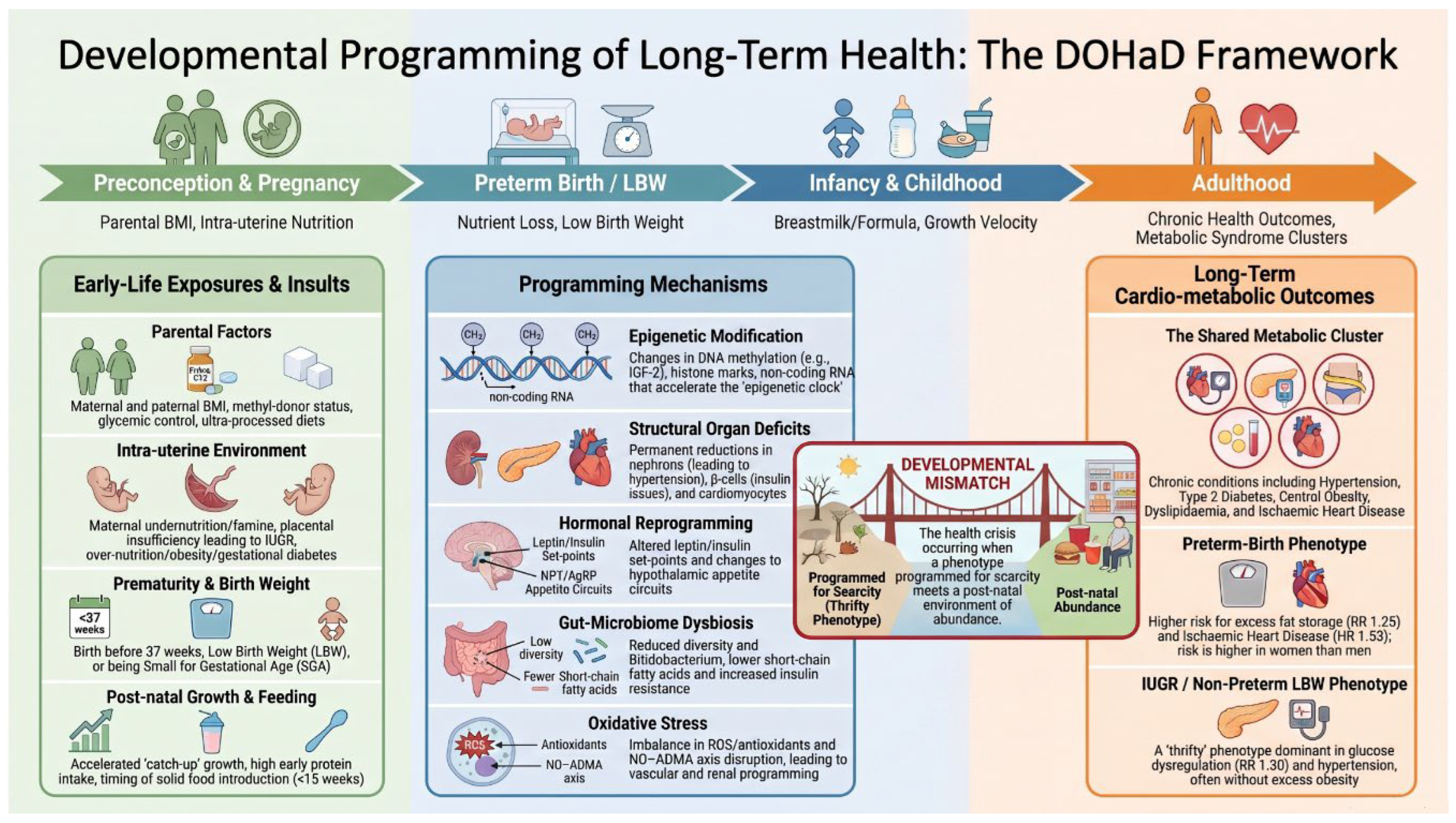
Figure 2.
Balancing early nutrition in the preterm infant — an evidence-based feeding strategy. Nutritional management must simultaneously support short-term imperatives (survival, linear and brain growth, neurodevelopment) and avoid amplifying long-term cardio-metabolic risk (excess fat mass, insulin resistance, and cardiovascular disease). The schematic trajectory shows sustained high protein provision (≥3 g/kg/day) alongside energy intake that is high early and then reduced at the 32–34-week post-menstrual-age transition, when a high-energy-and-protein regimen is switched to a high-protein / lower-energy regimen provided growth is appropriate (10–15 g/kg/day). The four-step timeline summarizes parenteral provision from day 1, human-milk-first enteral feeding with fortification, the 32–34-week transition, and post-discharge re-evaluation at 3 months corrected age. Safety caps, the programming benefits of human milk, and growth-quality monitoring are summarized below. PN, parenteral nutrition; EN, enteral nutrition; PMA, post-menstrual age; CA, corrected age; EUGR, extra-uterine growth restriction; HMO, human-milk oligosaccharide; LC-PUFA, long-chain polyunsaturated fatty acid; DHA, docosahexaenoic acid; ARA, arachidonic acid; NEC, necrotizing enterocolitis; HOMA-IR, homeostasis-model-assessment insulin resistance.
Figure 2.
Balancing early nutrition in the preterm infant — an evidence-based feeding strategy. Nutritional management must simultaneously support short-term imperatives (survival, linear and brain growth, neurodevelopment) and avoid amplifying long-term cardio-metabolic risk (excess fat mass, insulin resistance, and cardiovascular disease). The schematic trajectory shows sustained high protein provision (≥3 g/kg/day) alongside energy intake that is high early and then reduced at the 32–34-week post-menstrual-age transition, when a high-energy-and-protein regimen is switched to a high-protein / lower-energy regimen provided growth is appropriate (10–15 g/kg/day). The four-step timeline summarizes parenteral provision from day 1, human-milk-first enteral feeding with fortification, the 32–34-week transition, and post-discharge re-evaluation at 3 months corrected age. Safety caps, the programming benefits of human milk, and growth-quality monitoring are summarized below. PN, parenteral nutrition; EN, enteral nutrition; PMA, post-menstrual age; CA, corrected age; EUGR, extra-uterine growth restriction; HMO, human-milk oligosaccharide; LC-PUFA, long-chain polyunsaturated fatty acid; DHA, docosahexaenoic acid; ARA, arachidonic acid; NEC, necrotizing enterocolitis; HOMA-IR, homeostasis-model-assessment insulin resistance.
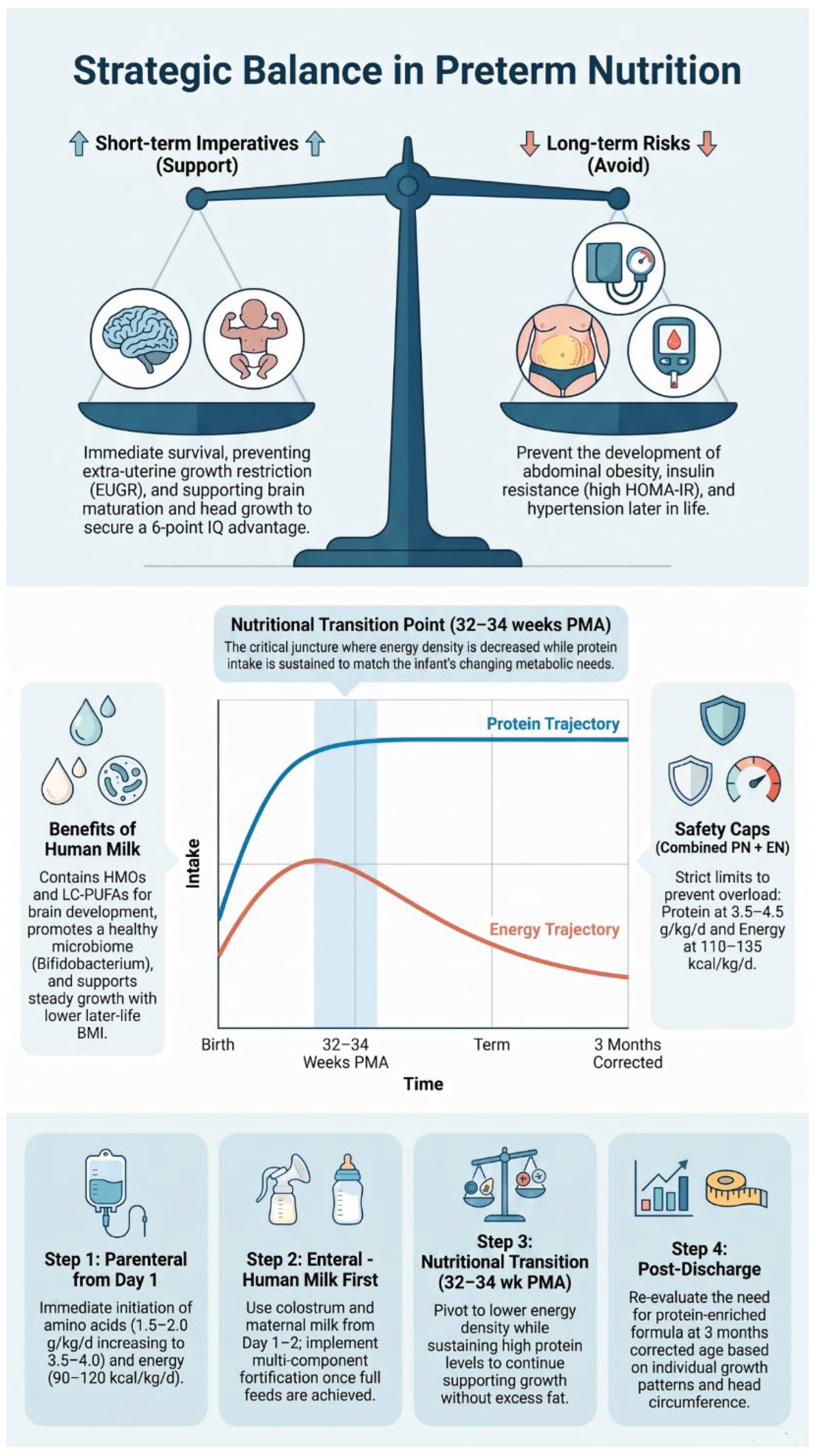

Table 1.
Mechanisms of developmental programming: from early-life trigger to long-term consequence.
|
Key process / Target |
Early-life trigger | Molecular or structural change |
Long-term consequence (representative evidence) |
| Structural & functional organ deficits (“reduced functional units”) | |||
| Kidney — nephrogenesis | Preterm birth (nephrogenesis completes 34–36 wk; >60% of nephrons form in the 3rd trimester) | ↓ nephron endowment (up to one-quarter to one-third fewer) → compensatory hyperfiltration | Hypertension and chronic kidney disease; higher systolic/diastolic blood pressure in preterm adults |
| Pancreas — β-cell development | Under-nutrition / preterm birth during 3rd-trimester–early-postnatal window | ↓ islet / β-cell number and insulin secretory capacity | Glucose intolerance and type 2 diabetes |
| Heart — cardiomyogenesis | Preterm birth; altered loading | ↓ cardiomyocyte number; altered cardiac geometry | ↑ risk of heart failure and arrhythmia in later life |
| Skeletal muscle — myogenesis | Fetal nutrient restriction | ↓ muscle mass → ↓ basal metabolic rate & exercise capacity | Predisposition to obesity and insulin resistance |
| Liver — hepatic development | Fetal programming | Altered lipid-metabolism capacity | Non-alcoholic fatty liver disease (preterm RR 1.26) |
| Adipose tissue | Maternal obesity; late-fetal specification of adipocyte progenitors | Altered adipocyte progenitor pool and adipose-expansion trajectory | Accelerated early adiposity → childhood and adult obesity |
| Epigenetic mechanisms (mitotically heritable; no change in DNA sequence) | |||
| DNA methylation | Maternal diet / methyl-donor supply; famine | Altered CpG methylation of metabolic-gene promoters (e.g. IGF-2; agouti model) | Persistent altered gene expression and metabolic-disease susceptibility (Dutch famine: change measurable ~60 y later) |
| Histone modification | Under-nutrition; cofactor (acetyl-CoA, S-adenosyl-methionine) availability | Shifted H3K4me3 (active) / H3K27me3 (repressive) marks at metabolic promoters | Altered glucose-metabolism, adipogenic and inflammatory gene programs |
| Non-coding RNA | Maternal nutritional status; growth restriction | Differential miRNA / lncRNA expression in placenta and fetal tissues | Dysregulated insulin signalling, adipogenesis and inflammation |
| Epigenetic clocks | Extreme prematurity | Accelerated biological (PedBE) age at term-equivalent age | Smaller brain volumes and worse neurodevelopment — a risk biomarker |
| Hormonal, microbiome & oxidative mechanisms | |||
| Hormonal reprogramming | Early over- or under-nutrition; high early protein | Altered leptin / insulin set-points; programming of hypothalamic NPY–AgRP appetite circuits; ↑ IGF-1 | ↑ appetite and ↓ energy expenditure → obesity; the “early-protein” effect on weight gain and blood pressure |
| Gut-microbiome dysbiosis | Caesarean delivery, broad-spectrum antibiotics, delayed enteral feeds, prolonged parenteral nutrition | ↓ diversity and Bifidobacterium; Enterobacteriaceae dominance; ↓ short-chain fatty acids | Intestinal barrier failure, systemic inflammation, adipose programming and insulin resistance; human-milk oligosaccharides are protective |
| Oxidative stress | Antioxidant immaturity, supplemental O₂, infection, ischemia–reperfusion; maternal obesity/pre-eclampsia | ROS–antioxidant imbalance; perturbed nitric-oxide–ADMA axis | Maladaptive cardiovascular–kidney–metabolic programming → hypertension and chronic kidney disease |
ADMA, asymmetric dimethyl-arginine; IGF-2, insulin-like growth factor 2; lncRNA, long non-coding RNA; miRNA, microRNA; NAFLD, non-alcoholic fatty liver disease; NPY–AgRP, neuropeptide-Y / agouti-related peptide; PedBE, pediatric buccal epigenetic clock; ROS, reactive oxygen species; SCFA, short-chain fatty acids.
Table 2.
Mechanisms of developmental programming: from early-life trigger to long-term consequence.
| Study (first author, year) | Population / cohort (n) | Design & exposure | Principal long-term findings |
| Barker, 1989–90 [20,22] | England & Wales districts (ecological) | Geographical correlation study; infant mortality as marker of early-life deprivation | High infant-mortality districts (poverty, low birth weight) showed high coronary heart disease mortality 50–70 y later. Small size at birth linked to later hypertension, coronary heart disease and non-insulin-dependent diabetes — the foundation of the fetal-origins hypothesis. |
| Dutch Hunger Winter cohort [59,60,61,62] | Adults exposed in utero to the 1944–45 famine (rations 400–800 kcal/day) | Natural experiment; precisely timed prenatal undernutrition | Early-gestation exposure → higher adult BMI, cholesterol and coronary heart disease risk; late-gestation exposure → impaired glucose tolerance. ≈5% lower IGF-2 methylation was still measurable ~60 y later, specific to early-gestation exposure — evidence of durable epigenetic programming and critical windows. |
| Helsinki Birth Cohort [99] | Finnish men and women followed from birth | Longitudinal birth-cohort | The thinnest infants at birth who gained the most BMI by age 11 had a ~5-fold elevated risk of coronary heart disease as adults — low birth size plus rapid childhood weight gain confers the greatest risk. |
| Crump et al., 2019 [9] | Sweden — 2,141,709 singletons born 1973–1994 | National cohort; gestational age at birth; co-sibling analysis | At ages 30–43 y, preterm birth (<37 wk) was associated with a 53% higher risk of ischemic heart disease (adjusted HR 1.53; 95% CI 1.20–1.94); early-term (37–38 wk) HR 1.19. Relative risk higher in women (1.93) than men (1.37). Not explained by shared familial factors — supporting a causal role for preterm birth. |
| Markopoulou et al., 2019 [48] | Meta-analysis — 43 studies; 18,295 preterm vs 294,063 term-born adults | Systematic review & meta-analysis | Preterm-born adults had significantly higher fat mass, systolic and diastolic (incl. 24-h) blood pressure, fasting glucose and insulin, HOMA-IR and total cholesterol than term-born adults — establishing preterm birth as an independent risk factor for the metabolic syndrome. |
| Darlow et al. (New Zealand 1986 VLBW study) [96] | 229 VLBW survivors (<1500 g) + 100 controls, assessed at 27–29 y | Prospective cohort | VLBW adults were shorter; males had higher systolic blood pressure. Independent predictors of metabolic syndrome were male sex, gestational age <28 wk and BMI >90th centile at 7–8 y. The most premature (<28 wk) had OR 2–4 for metabolic syndrome — a dose–response with degree of prematurity. |
| Amadou et al., 2025 (Constances) [51] | France — 30,295 adults | Cohort; preterm birth vs non-preterm low birth weight (IUGR) | Preterm birth: obesity RR 1.25, hypertriglyceridemia 1.23, high LDL 1.16, high blood pressure 1.22, metabolic syndrome 1.35, NAFLD 1.26. Non-preterm LBW / IUGR: prediabetes-diabetes RR 1.30 and hypertension 1.22, but reduced obesity (0.83) and abdominal obesity (0.84) — distinct long-term phenotypes. |
| Suikkanen et al., 2018 (Helsinki VLBW) [106] | 166 VLBW adults born 1978–1985, with documented neonatal nutrition | Cohort linking recorded neonatal intake to adult outcomes | High protein and energy intake in the first weeks of life predicted higher insulin resistance in young adulthood — one of the rare direct links between documented neonatal nutrition and adult cardio-metabolic phenotype, supporting the “early-protein” hypothesis. |
| Gomaa et al. [66] | 35 very preterm neonates (24–32 wk) | Prospective; pediatric buccal epigenetic (PedBE) clock + brain MRI | Extremely preterm neonates (<28 wk) showed accelerated epigenetic ageing. Accelerated PedBE age at term-equivalent age independently predicted smaller cerebral volumes, slower brain growth and worse cognitive/language scores at 18 months — a candidate biomarker of neurodevelopmental risk. |
| Lucas — enriched vs standard preterm formula [30,147,148] | Preterm infants (26–34 wk) | Randomised controlled trial with long-term follow-up | A brief early dietary intervention affected brain development and IQ, with a ~6-point IQ advantage at age 16 in the enriched-diet group — the experimental basis of nutritional “programming” in preterm infants. |
Values are as reported in the cited studies. Bracketed numbers correspond to the reference list of the main manuscript. BMI, body mass index; CI, confidence interval; HR, hazard ratio; HOMA-IR, homeostasis-model-assessment insulin resistance; IUGR, intra-uterine growth restriction; LBW, low birth weight; LDL, low-density lipoprotein; MetS, metabolic syndrome; NAFLD, non-alcoholic fatty liver disease; OR, odds ratio; RR, relative risk; VLBW, very low birth weight.
Disclaimer/Publisher’s Note: The statements, opinions and data contained in all publications are solely those of the individual author(s) and contributor(s) and not of MDPI and/or the editor(s). MDPI and/or the editor(s) disclaim responsibility for any injury to people or property resulting from any ideas, methods, instructions or products referred to in the content. |
© 2026 by the authors. Licensee MDPI, Basel, Switzerland. This article is an open access article distributed under the terms and conditions of the Creative Commons Attribution (CC BY) license (http://creativecommons.org/licenses/by/4.0/).
Copyright: This open access article is published under a Creative Commons CC BY 4.0 license, which permit the free download, distribution, and reuse, provided that the author and preprint are cited in any reuse.


