

Submitted:
09 August 2026
Posted:
10 August 2026
You are already at the latest version
Abstract
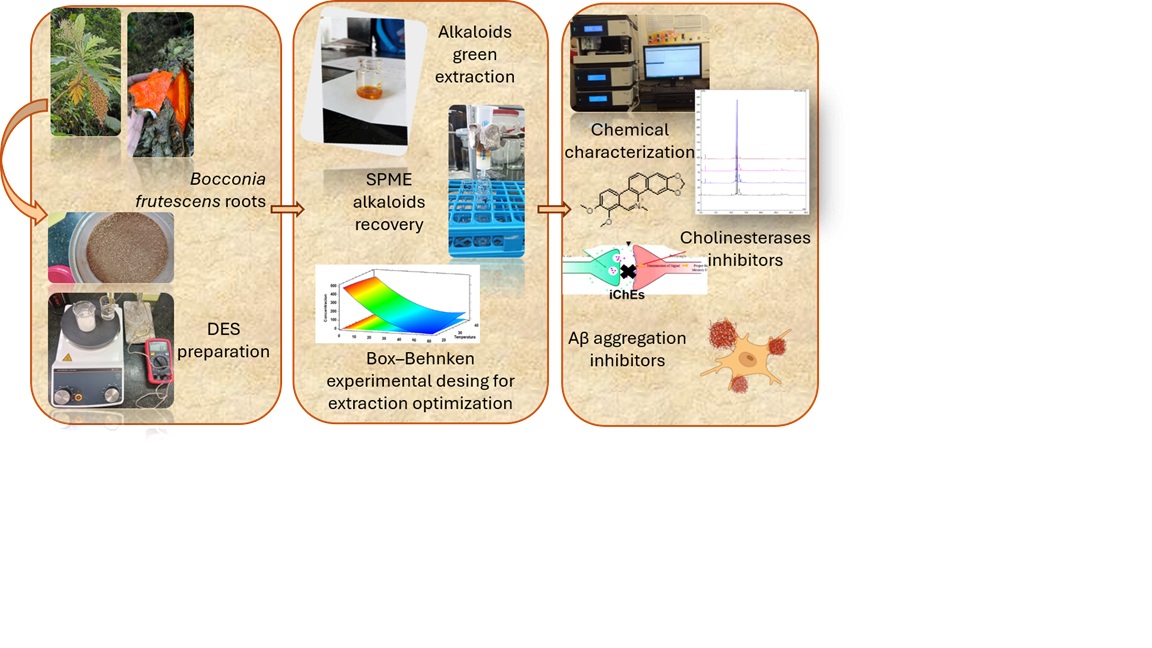
Deep eutectic solvents (DESs) have emerged as sustainable alternatives to conventional or-ganic solvents for the extraction of bioactive natural products. This study developed a green extraction strategy for recovering neuroactive alkaloids from Bocconia frutescens roots using DES-based systems. Thirteen DES formulations were evaluated and compared with conven-tional aqueous and ethanolic extraction. UHPLC-DAD and UHPLC-ESI-HRMS analyses iden-tified sanguinarine and chelerythrine as the major benzophenanthridine alkaloids present in the extracts. Among the solvents tested, a citric acid–glucose (1:1) DES exhibited the highest extraction efficiency. Extraction parameters were optimized using a Box–Behnken response surface design, evaluating the effects of plant material-to-solvent ratio, temperature, and effect of water addition. Under optimized conditions, alkaloid recovery increased four-fold com-pared with the central experimental point, reaching a maximum alkaloids concentration of 400.1 ppm. The optimized alkaloid-rich extract displayed potent neuroprotective activity, in-hibiting acetylcholinesterase and butyrylcholinesterase with IC₅₀ values of 2.96 and 46.79 μg/mL, respectively. Additionally, the extract strongly inhibited Aβ₁₋₄₂ aggregation, exhibiting an IC₅₀ value of 0.70 μg/mL. These results demonstrate that DES-assisted extraction is an effi-cient and environmentally sustainable approach for obtaining alkaloid-enriched extracts from B. frutescens and highlight their potential as multitarget neuroprotective agents for Alzheimer's disease management.
Keywords:
plants alkaloids
; Bocconia frutescens
; cholinesterase inhibition
; amyloid-β aggregation inhibitor
; alternative extraction
; deep eutectic solvents (DES)
1. Introduction
The multitarget approach in the search for neuroprotective drugs represents one of the most active fields in neuropharmacology. Given the multifactorial nature of neurodegenerative diseases, such as Alzheimer’s disease (AD), bioactive molecules isolated from plants capable of simultaneously modulating multiple pathological mechanisms, including oxidative stress, protein aggregation, cholinesterase inhibition, and neuroinflammatory processes, represent promising therapeutic alternatives to conventional single-target approaches [1,2]. This strategy offers significant advantages by comprehensively addressing the complex underlying pathophysiology of these disorders [3].
Within the extensive chemical diversity of natural products, plant-derived alkaloids represent one of the most valuable classes of chemical scaffolds with significant polypharmacological potential [4]. Due to the structural diversity of their nitrogen-containing frameworks, these secondary metabolites display notable affinity for multiple neural receptors and enzymatic targets, a property further enhanced by their evolutionary capacity to permeate biological barriers, including the blood brain barrier (BBB). Prototype alkaloids such as galantamine and huperzine A, have historically demonstrated the therapeutic relevance of these compounds in the treatment of central nervous system disorders [5]. More recently, accumulating evidence has indicated that alkaloids belonging to isoquinolines, and β-carbolines families may exert multitarget neuroprotective effects through the dual inhibition of key enzymes, including acetylcholinesterase (AChE) and monoamine oxidases (MAO-A/B) [6]. Concurrently, these compounds exhibit potent reactive oxygen species (ROS) scavenging activity and regulate neuroinflammatory signaling pathways, thereby highlighting their potential as multifunctional therapeutics against neurodegenerative disorders [7].
In the diverse botanical landscape, the Papaveraceae family represents one of the most chemically prolific and extensively studied chemotaxonomic sources of biologically active alkaloids. Characterized by a predominantly cosmopolitan distribution concentrated across the temperate and subtropical zones of the northern hemisphere, this family encompasses approximately 44 genera and nearly 825 accepted species [8]. Amidst this botanical diversity, the genus Bocconia stands out within the neotropical regions of Central and South America, with Bocconia frutescens L. emerging as a species of special phytochemical interest. Quantitative profiling of extracts derived from this plant has revealed a high concentration of benzylisoquinoline alkaloids, most notably those belonging to the benzo[c]phenanthridine subclass [9].
Although plant-derived alkaloids hold immense therapeutic promise, their recovery through conventional extraction techniques such as exhaustive maceration, acid-base extraction, and soxhlet extractions are severely limited by a heavy reliance on volatile organic and chlorinated solvents like chloroform, dichloromethane, and methanol [10]. Beyond the substantial environmental footprint and acute occupational hazards associated with these volatile, carcinogenic, and neurotoxic vehicles, prolonged thermal exposure frequently triggers the degradation of bioactive scaffolds or the generation of structural artifacts [11]. Crucially, the persistence of trace residual solvents within the final matrix introduces a major confounding variable, as intrinsic in vitro cytotoxicity can obscure the genuine neuroprotective efficacy of the isolated metabolites [12]. Accelerating the transition toward green chemistry leveraging ecofriendly solvent systems and high efficiency assisted extraction technologies is therefore imperative to ensure process sustainability while safeguarding the chemical purity and diagnostic validity of subsequent biological assays.
Deep eutectic solvents (DES) have emerged as one of the most promising alternatives within green chemistry. These systems, formed by combining a hydrogen bond acceptor and a hydrogen bond donor in specific molar ratios, stand out for their low volatility, high thermal stability, biodegradability, and low toxicity [13]. Beyond their environmental advantages, DES offer exceptional physicochemical versatility, allowing their properties adapted to the nature of the target metabolite. This not only optimizes yield and selectivity in the extraction of complex compounds like alkaloids [14], but is also key to preserving, and even enhancing, the stability and biological effect of the resulting extracts, positioning them as revolutionary tools in natural products research. The aim of this study was to implement an extraction method for active alkaloids from Bocconia frutescens compounds with recognized multitarget activity using deep eutectic solvents in order to maintain or enhance their biological activity
2. Results and Discussion
2.1. Analysis of Bocconia frutescens Extracts and Characterization of Major Metabolites
The family Papaveraceae constitutes a major reservoir of biologically active alkaloids, with its alkaloidal profile driving the primary medicinal properties attributed to these species [15]. Extracts derived from Bocconia frutescens (Papaveraceae) have historically demonstrated insecticide, antitussive, anti-inflammatory, antitumor, and antibacterial activities [16]. Given that the secondary metabolites isolated from the Bocconia genus belong to the benzophenanthridine, protoberberine, and protopine structural classes, the chemical exploration of this species holds critical relevance for neurodegenerative disease research [17].
Based on these considerations, thirteen deep eutectic solvents (DESs) were evaluated in this study to develop a selective method for alkaloid extraction, alongside conventional extraction procedures employing ethanol and water. The compositions and molar ratios of the evaluated DESs are listed in Table 1.
A total of 100 mg of plant material was suspended in 5 g de DES at room temperature. After extraction, the eutectic solvents were recovered by solid-phase microextraction (SPME), and the resulting extracts were analyzed by HPLC-DAD, with chromatograms monitored at 330 nm, a wavelength commonly used for alkaloid detection [18,19]. Chromatographic analysis revealed the presence of four detectable compounds. The chromatographic profiles were dominated by two major constituents, which were subsequently characterized by UHPLC-ESI-HRMS. Accurate mass measurements, and MS/MS fragmentation analyses enabled their tentative identification as the benzophenanthridine alkaloids sanguinarine and chelerythrine. The observed fragment ions at m/z 332, 317, 304, 274, 246, 218, and at m/z 333, 304, 290, 274, respectively, were consistent with fragmentation patterns previously reported for these compounds isolated from the roots of species belonging to the genus Bocconia [20,21,22]
Both compounds have previously been reported in Bocconia frutescens, supporting the reliability of the analytical approach and confirming the selectivity of the extraction solvents toward the major bioactive alkaloids of the species. Figure 1 shows a representative chromatographic profile together with the mass spectra of the two major compounds extracted using the different solvents.
Deep eutectic solvents (DESs) previously reported in the literature for the extraction of alkaloidal metabolites [23,24], together with additional DESs exhibiting acidic properties, were evaluated in this study. Following the assessment of their selectivity toward alkaloids associated with potential neuroprotective activity, the extraction performance of each DES was determined by quantifying the recovery of sanguinarine and chelerythrine. This screening aimed to identify the most effective solvent system for the extraction of bioactive alkaloids from the roots of Bocconia frutescens.
Among the first group of choline chloride-based DESs (DES 1–5), a comparatively low extraction efficiency was observed. However, within this group, DES 4, which incorporated an acidic component, exhibited the highest recovery of both alkaloids. This observation suggested that solvent acidity could play a key role in the extraction process, potentially by enhancing alkaloid solubilization and promoting favorable intermolecular interactions between the solvent and the target compounds. Based on this premise, a second group of citric acid-based DESs (DES 6–12) was subsequently evaluated.
A substantial improvement in alkaloid recovery was observed for the citric acid-based DESs, as evidenced by the increased chromatographic peak areas of sanguinarine and chelerythrine. Among the evaluated systems, DES 7 (citric acid–glucose, 1:1 molar ratio) displayed the highest extraction efficiency, indicating a particularly favorable solvent environment for alkaloid solubilization. In contrast, the oxalic acid-based DES exhibited the lowest extraction capacity. These results highlight the importance of DES composition in determining extraction performance and suggest that the extraction efficiency is strongly influenced by the nature of the intermolecular interactions established between the solvent components and the alkaloid molecules.
The superior performance of the citric acid-based systems may be attributed to their enhanced ability to establish extensive hydrogen-bonding networks, which can facilitate interactions with the nitrogen-containing functional groups present in benzophenanthridine alkaloids. In addition, the acidic character of these DESs may contribute to improved solvation of the target compounds, thereby increasing their extraction efficiency. Conversely, the lower performance observed for the oxalic acid-based DES suggests that solvent acidity alone is insufficient to guarantee efficient extraction, and that the balance between acidity, hydrogen-bond donor/acceptor capacity, and the overall physicochemical properties of the eutectic system plays a decisive role. Based on these findings, the most promising DES systems were selected for further evaluation of the effect of extraction temperature on alkaloid recovery.
To investigate the influence of temperature on extraction efficiency, all DESs (DES 1-13) were evaluated at 40 °C. These conditions were selected to ensure the physicochemical stability of the eutectic systems while allowing the assessment of temperature-dependent extraction performance. The maximum temperature was limited to 40 °C to minimize the risk of disrupting the eutectic structure and to avoid potential thermal degradation of both the solvent components and the target alkaloids. The extraction efficiencies of the evaluated solvent systems are presented in Figure 2 and are expressed as the chromatographic peak areas (mUA) of the major alkaloids, sanguinarine and chelerythrine, determined by UHPLC-DAD.
The superior extraction performance observed for the citric acid-based deep eutectic solvents (DESs) can be attributed to their physicochemical characteristics and favorable interactions with alkaloidal compounds. Benzophenanthridine alkaloids, such as sanguinarine and chelerythrine, contain basic nitrogen atoms that are readily protonated under acidic conditions, thereby enhancing their solubility in the extraction medium. Moreover, the results underscore the critical influence of DES composition on extraction efficiency, as the molar ratio of the constituent components directly determines key solvent properties. Variations in the relative proportions of hydrogen-bond donors and acceptors can significantly affect viscosity, polarity, acidity, and hydrogen-bonding capacity, which in turn influence mass-transfer processes and solvent–solute interactions during extraction. Therefore, the differences observed in alkaloid recovery among the evaluated DESs are likely associated with changes in these physicochemical parameters arising from variations in solvent composition [25,26,27].
2.2. Effect of Extraction Parameter Modifications on the Sanguinarine and Chelerythrine Recovery
Given that the citric acid–glucose (1:1) DES exhibited the highest extraction efficiency in terms of sanguinarine and chelerythrine recovery, its performance was further investigated by evaluating the effect of modifying key extraction parameters on the profile of these major metabolites. The parameters assessed included water content in the eutectic solvent, extraction time, plant material-to-solvent ratio, and extraction temperature. This study aimed to identify the appropriate experimental ranges and the most influential variables for subsequent optimization of the extraction method. As established in Section 2.1, increasing the extraction temperature enhances alkaloid recovery, therefore, it is essential to include this parameter as an experimental variable in order to determine the optimal extraction conditions through the experimental design approach described in the following sections.
2.2.1. Influence of Water Addition to the DES on the Sanguinarine and Chelerythrine Recovery
The extraction efficiency of the DES 7 was evaluated for the recovery of sanguinarine and chelerythrine after the addition of 25% and 50% (w/w) water to the solvent system. Extractions were performed in triplicate for each solvent under investigation at two temperatures, room temperature (20 °C) and 40 °C. The performance of the DES formulations was compared with that of conventional ethanol–water mixtures containing equivalent proportions of water, as well as with water used as the sole extraction solvent. Figure 3 summarizes the chromatographic peak areas of the two major alkaloids obtained in extraction system at both temperatures.
The incorporation of water into deep eutectic solvents (DESs) is a widely employed strategy to enhance extraction efficiency by reducing solvent viscosity and improving mass transfer within the plant matrix. Dai et al. demonstrated that moderate water addition significantly decreases the viscosity of DESs while preserving their supramolecular structure [28], thereby facilitating solute diffusion and enhancing extraction performance. However, excessive water content progressively weakens the hydrogen-bonding network responsible for maintaining the eutectic structure.
Statistical analysis by ANOVA demonstrated that both the extraction solvent and temperature significantly influenced the recovery of sanguinarine and chelerythrine. The extraction solvent was the most influential factor, exerting a highly significant effect on sanguinarine (F = 212.64, p < 0.0001) and chelerythrine (F = 161.36, p < 0.0001) extraction. Temperature also significantly affected the recovery of sanguinarine (F = 25.88, p < 0.0001) and chelerythrine (F = 16.69, p = 0.0003). A significant solvent × temperature interaction was observed for sanguinarine (F = 3.97, p = 0.0053), indicating that the effect of temperature depended on the extraction medium employed. In contrast, no significant interaction was detected for chelerythrine (F = 1.66, p = 0.167), suggesting a more consistent response of this alkaloid to temperature across the evaluated solvents.
These results allowed us to conclude that the formulation containing DES-water 75:25 provided the greatest recovery of sanguinarine, while both the neat DES and the DES-water 75:25 yielded the highest concentrations of chelerythrine. These findings were further supported by Tukey’s post hoc analysis, which confirmed that DES 7 systems formed the highest statistical groups for alkaloid recovery. For sanguinarine, the DES 7-water 75:25 at 40 °C produced the highest extraction yield and was statistically comparable to the neat DES 7 at the same temperature, with both treatments significantly outperforming the hydroalcoholic mixtures and water. Similarly, for chelerythrine, the DES 7-water 75:25 and neat DES 7 at 40 °C constituted the highest statistical group, whereas aqueous extracts resulted in significantly lower recoveries. In all cases, water was the least effective extraction medium, consistently yielding the lowest concentrations of both alkaloids.
Based on the findings obtained in this study and the experimental procedure employed, the DES 7–water ratio was selected within the range of 50:50 to 80:20 for further optimization using a Box–Behnken experimental design. This interval was chosen because it provided distinct extraction yields, allowing a comprehensive evaluation of the effect of water addition on alkaloid recovery. Furthermore, assessing this factor in combination with the other experimental variables enabled the identification of the optimal extraction conditions and a better understanding of the interactions governing the extraction process.
2.2.2. Effect of Extraction Time on Sanguinarine and Chelerythrine Recovery
The influence of extraction time on the performance of the selected deep eutectic solvent (DES) was investigated by evaluating the recovery of the major alkaloids. Extractions were performed in triplicate at five extraction times ranging from 30 to 150 min. Conventional solvents were not considered at this stage, as DES 7 had previously exhibited the highest extraction efficiency, surpassing both water and ethanol. Consequently, the effect of extraction time was assessed exclusively using this solvent system to identify the conditions that maximize alkaloid recovery.
The experiments were conducted at room temperature using a DES 7–water ratio of 75:25. This composition was selected because the addition of water reduces the viscosity of the DES, thereby improving mass transfer and facilitating solvent penetration into the plant matrix while maintaining the intermolecular interactions responsible for alkaloid solubilization. Figure 4 shows the mean chromatographic peak areas of sanguinarine and chelerythrine obtained at the extraction times evaluated. These results provide insight the time required to achieve maximum recovery under the selected conditions.
The influence of extraction time on the recovery of sanguinarine and chelerythrine was evaluated over the range of 30–150 min. As shown in Figure 4, the average peak area of both alkaloids decreased progressively with increasing extraction time. Sanguinarine peak area decreased from 26.75 ± 0.90 mUA at 30 min to 24.62 ± 0.92 mUA at 150 min, whereas chelerythrine decreased from 16.50 ± 0.90 mUA to 14.15 ± 0.92 mUA over the same period. One-way ANOVA indicated that extraction time did not significantly affect the recovery of sanguinarine (F = 2.69, p = 0.093) or chelerythrine (F = 2.93, p = 0.077).
These results suggest that extraction equilibrium was reached within the first 30 minutes and that extending the extraction period does not improve alkaloid recovery. Similar behavior has been reported for the extraction of benzophenanthridine alkaloids from Macleaya cordata, where maximum extraction yields were achieved at relatively short extraction times and no significant improvements were observed thereafter [29]. The authors reported that microwave-assisted extraction enabled efficient recovery of sanguinarine and chelerythrine within only a few minutes, demonstrating the rapid mass-transfer kinetics of these compounds. Likewise, studies focused on the separation and purification of M. cordata alkaloids have shown that once solvent–matrix equilibrium is achieved, prolonged processing times do not enhance recovery and may even promote degradation or loss of target compounds [30]. Therefore, the present results indicate that an extraction time of 30 min is sufficient to maximize the recovery of sanguinarine and chelerythrine using selected DES, while longer extraction times offer no analytical advantage.
2.2.3. Effect of Vegetal Material—Solvent Ratio on Chelerythrine Recovery
The effect of the plant material-to-solvent ratio on extraction efficiency was evaluated using chelerythrine recovery as a marker compound. Quantification of the alkaloid was performed using an analytical standard of chelerythrine chloride (PhytoLab®). Seven different plant material: DES (DES7-water 75:25) ratios were assayed, while the extraction temperature was maintained at 40 °C. This temperature was selected based on previous experiments, in which the highest recovery levels of the major alkaloids identified in Bocconia frutescens root were obtained. Figure 5 presents the amount of chelerythrine extracted under each solid-to-liquid ratio evaluated, expressed as concentration (ppm).
The plant material-to-DES ratio significantly influenced the concentration of chelerythrine recovered from Bocconia frutescens roots using DES 7-water 75:25 at 40 °C (Figure 5). A progressive decrease in alkaloid concentration was observed as the solvent proportion increased relative to the amount of plant material. The highest chelerythrine concentration was obtained at a solid-to-liquid ratio of 1:10 (554.49 ± 4.31 ppm), followed by the 1:20 (314.65 ± 0.50 ppm) and 1:30 (210.09 ± 0.47 ppm) ratios. In contrast, the lowest concentrations were recorded at the 1:200 (77.30 ± 0.50 ppm) and 1:250 (73.00 ± 2.30 ppm) ratios.
One-way analysis of variance revealed a highly significant effect of the solid-to-liquid ratio on chelerythrine recovery (p < 0.0001). Post hoc comparisons indicated significant differences among most of the extraction conditions evaluated, whereas no significant differences were observed between the 1:200 and 1:250 ratios (p > 0.05), suggesting that extraction efficiency reached a plateau under these highly diluted conditions.
The observed reduction in chelerythrine concentration may be partially attributed to a dilution effect resulting from the increased solvent volume. Since the results are expressed as extract concentration (ppm), increasing the amount of DES can reduce the final analyte concentration even if the total quantity extracted remains unchanged. Furthermore, variations in the solid-to-liquid ratio alter the partition equilibrium between the plant matrix and the extraction medium, thereby affecting the driving force governing mass transfer during the extraction process.
Previous studies have identified the solid-to-liquid ratio as one of the most influential parameters in DES-based extraction systems [31], demonstrated that changes in solvent loading significantly affected the alkaloid recovery from lotus leaves, highlighting the importance of optimizing this parameter to maximize extraction performance. Likewise Dai et al. reported that the physicochemical properties of DES [28], particularly viscosity and hydrogen-bonding interactions, strongly influence solute diffusion and extraction efficiency. Therefore, optimization of the plant material-to-solvent ratio is essential to achieve efficient mass transfer while minimizing solvent consumption. The results obtained in the present study indicate that a 1:10 ratio provides the most favorable conditions for obtaining chelerythrine-enriched extracts from Bocconia frutescens under the experimental conditions evaluated.
2.3. Optimization of Deep Eutectic Solvent-Based Extraction Conditions for Alkaloid Recovery from Bocconia frutescens
The optimization of extraction conditions is a critical step for maximizing the recovery of sanguinarine and chelerythrine from Bocconia frutescens, as these benzophenanthridine alkaloids exhibit a broad spectrum of biological activities that support their potential application as neuroprotective agents. Recent evidence indicates that sanguinarine possesses neuroprotective, anti-inflammatory, and antioxidant properties through the modulation of multiple cellular signaling pathways involved in the pathogenesis of neurodegenerative disorders [32]. In particular, the regulation of oxidative stress and neuroinflammatory processes has attracted considerable attention due to their central role in the progression of diseases such as Alzheimer’s and Parkinson’s disease. Consequently, the development of efficient extraction strategies is essential to obtain extracts enriched in these bioactive compounds and to ensure their future pharmacological exploitation. In this context, Response Surface Methodology (RSM) has become one of the most widely employed approaches for the optimization of extraction processes involving natural products [33]. Among the available RSM designs, the Box–Behnken design (BBD) offers several advantages, including the evaluation of linear, quadratic, and interaction effects among variables while requiring a reduced number of experimental runs compared with conventional factorial designs [34,35]. Furthermore, BBD enables the generation of predictive mathematical models and response surface plots that facilitate the identification of optimal extraction conditions, allowing the simultaneous optimization of critical parameters such as extraction temperature, extraction time, water content in the deep eutectic solvent, and solid-to-liquid ratio. As a result, this methodology contributes to improving extraction efficiency while reducing experimental effort, solvent consumption, and operational costs [33,37].
To optimize extraction of this study, a Box–Behnken experimental design (BBD) was implemented using Statgraphics software. The independent variables evaluated were the plant material-to-solvent ratio (A), extraction temperature (B), and water content added to the deep eutectic solvent (DES) (C), whose experimental ranges were previously established in Section 2.2. alkaloids concentration was selected as the response variable (D). The BBD matrix comprised 15 experimental runs, and the corresponding results are presented in Table 2. These data were used to establish the optimal extraction conditions and to develop a predictive quadratic model describing the relationship between the response and the experimental factors. The resulting polynomial equation was:
D = 979.576 − 20.4764A + 10.3727B − 17.0468C + 0.146737A² + 0.103094AB + 0.0251558AC − 0.0916767B² − 0.105763BC + 0.134935C²
where the variables are expressed in their original units, as indicated in Table 2. The quadratic model exhibited excellent predictive performance, with a coefficient of determination (R²) of 95.1%, indicating that the model adequately explained the variability of chelerythrine extraction and was suitable for identifying the optimal extraction conditions.
The experimental results obtained from the Box–Behnken design demonstrated that the extraction variables exerted a pronounced influence on chelerythrine recovery (Table 2). Alkaloid concentrations ranged from 43.5 to 400.1 ppm, indicating that the selected factors significantly affected the extraction efficiency of the citric acid–glucose DES system. The highest chelerythrine concentration (400.1 ppm) was obtained at a plant material-to-solvent ratio of 10 mg/mL, an extraction temperature of 30 °C, and a DES–water ratio of 50:50, whereas the lowest recovery (43.5 ppm) was observed at 60 mg/mL, 20 °C, and 65:35 DES–water ratio.
Among the evaluated variables, the plant material-to-solvent ratio exhibited the strongest effect on alkaloid recovery. A clear inverse relationship was observed between this factor and the extraction yield, with lower solid-to-liquid ratios consistently producing higher alkaloid concentrations. This behavior can be attributed to the greater solvent availability under dilute conditions, which increases the concentration gradient between the plant matrix and the extraction medium, thereby facilitating mass transfer and enhancing alkaloid solubilization. Conversely, increasing the ratio to 60 mg/mL resulted in a marked decrease in extraction performance, likely due to solvent saturation and limitations in the diffusion of target compounds from the plant matrix.
Temperature also contributed positively to the extraction process, although its influence was less pronounced than that of the solid-to-liquid ratio. In general, higher recoveries were obtained at 30–40 °C compared with 20 °C. The beneficial effect of temperature is consistent with the known behavior of DES’s, whose viscosity decreases as temperature increases, improving solvent penetration into the plant matrix and promoting the diffusion of solutes into the extraction medium. However, the magnitude of this effect varied according to the levels of the other variables, suggesting the presence of significant interaction effects within the experimental domain.
The DES–water composition was another critical factor affecting extraction efficiency. Intermediate DES–water ratios produced the highest alkaloid recoveries, whereas excessive dilution of the solvent system resulted in a decrease in extraction performance. Water plays a dual role in DES-based extraction systems. Moderate water addition reduces viscosity and enhances mass-transfer processes, thereby improving extraction kinetics. Nevertheless, excessive dilution can disrupt the hydrogen-bonding network responsible for the unique physicochemical properties of deep eutectic solvents, reducing their ability to solubilize alkaloids efficiently. The superior performance observed at a 50:50 DES–water ratio suggests that this composition provides an optimal balance between viscosity reduction and preservation of the solvent structure.
The excellent reproducibility of the experimental system was confirmed by the replicated center points (35 mg/mL, 30 °C, and 65% DES), which yielded a mean alkaloid concentration of 92.63 ppm with a coefficient of variation of only 1.79%. This low variability demonstrates the robustness of both the extraction procedure and the analytical methodology employed for alkaloid quantification, providing a reliable basis for response surface modeling.
The relationship between the extraction variables and chelerythrine recovery was adequately described by a second-order polynomial model with a coefficient of determination (R²) of 95.1%, indicating that the model explained most of the observed variability. Response surface optimization predicted a maximum chelerythrine recovery at approximately 10 mg/mL, 33 °C, and 50% DES, corresponding to a predicted concentration of 389.0 ppm. These conditions were in excellent agreement with the highest experimental response obtained during the Box–Behnken design (400.1 ppm at 10 mg/mL, 30 °C, and 50% DES), confirming the predictive capability and adequacy of the model.
Notably, the maximum alkaloid concentration obtained under optimal conditions was approximately four times higher than that observed at the center point of the design. This substantial increase highlights the strong influence of the extraction variables and confirms the nonlinear behavior of the system. The pronounced difference between the center point and the optimum conditions further indicates significant curvature in the response surface, supporting the suitability of response surface methodology for process optimization.
From a mechanistic perspective, the optimal region was characterized by high solvent availability, moderate thermal conditions, and a DES composition that maximized mass-transfer efficiency while maintaining favorable intermolecular interactions between the solvent and alkaloids. The enhanced extraction performance under these conditions likely results from the combined effects of reduced viscosity, improved solvent penetration into the plant matrix, and efficient stabilization of alkaloids through hydrogen-bonding interactions. These findings demonstrate the effectiveness of the citric acid–glucose deep eutectic solvent as a green extraction medium and highlight its potential for the sustainable recovery of bioactive alkaloids from Bocconia frutescens
2.4. Neuroprotective Activity of the Bocconia frutescens Alkaloid Extract
The alkaloid-rich extract obtained under the optimal extraction conditions established through the Box–Behnken experimental design described in section 2.3 (10 mg/mL, 33 °C, and DES–water ratio of 50:50), was evaluated against biological targets associated with Alzheimer’s disease, including cholinesterase activity and amyloid-β peptide aggregation. These assays were conducted to assess the neuroprotective potential of the extract recovered using the selected deep eutectic solvent (DES) and to determine its potential as a source of multitarget bioactive compounds relevant to the prevention and management of neurodegenerative disorders.
Direct bioautography assays against both cholinesterases revealed inhibitory activity for the Bocconia frutescens root extracts. Enzyme inhibition was evidenced by the presence of clear zones on the TLC plates, as shown in Figure 6. Notably, the extract obtained with the DES produced more intense inhibition zones than the ethanolic extract, indicating a higher concentration of cholinesterase-inhibitory constituents recovered under the optimized DES extraction conditions.
Considering the promising results obtained in the bioautography assays, the cholinesterase inhibitory activity of the DES extract was further evaluated at 1000 ppm. The extract demonstrated potent inhibitory effects against both acetylcholinesterase and butyrylcholinesterase, with inhibition percentages greater than 98% in both cases. Notably, these values exceeded those observed for physostigmine, which was used as the positive control in the assay. The corresponding IC₅₀ values were 2.96 μg/mL for AChE and 46.79 μg/mL for BChE, indicating a markedly higher inhibitory potency toward acetylcholinesterase. The dose–response curves of the ethanolic extract and DES extract are shown in Figure 7. The results clearly indicate that the DES extract produced a greater inhibitory effect than the ethanolic extract at the tested concentrations, confirming the enhanced recovery of bioactive cholinesterase-inhibitory constituents achieved through the optimized DES extraction process.
Given its pronounced anticholinesterase activity, the alkaloid-rich extract was further evaluated for its ability to inhibit amyloid-β (Aβ₁₋₄₂) peptide aggregation. Complete inhibition (100%) was observed over a broad concentration range, from 500 to approximately 30 μg/mL. Figure 8 shows the fluorescence kinetics of Aβ₁₋₄₂ aggregation in the presence of the Bocconia frutescens root extract. Compared with the control, a marked reduction in fluorescence intensity was observed throughout the incubation period, indicating a strong inhibitory effect on amyloid fibril formation.
Figure 8 illustrates the time-dependent evolution of Thioflavin T fluorescence during Aβ1–42 peptide aggregation in the presence of different concentrations of the alkaloid-rich extract obtained from Bocconia frutescens. The negative control (methanol, A08) exhibited the highest fluorescence increase throughout the assay, reaching approximately 35 RFU after 4 h of incubation. This profile is indicative of the progressive aggregation of the peptide and the continuous formation of β-sheet-rich structures characteristic of amyloid fibrils.
In contrast, the positive control (tannic acid, B02) produced a marked reduction in fluorescence relative to the negative control, reaching values close to 20 RFU at the end of the experiment. This result confirms the ability of tannic acid to interfere with Aβ1–42 fibrillization and validates the sensitivity of the assay for detecting aggregation inhibitors.
The B. frutescens extract displayed concentration-dependent effects on Aβ1–42 aggregation. Several concentrations yielded fluorescence profiles substantially lower than those observed for tannic acid, remaining nearly constant throughout the 4 h incubation period and maintaining fluorescence values close to the baseline (<5 RFU). Such behavior suggests an almost complete suppression of amyloid aggregate formation, indicating a strong ability of the extract to interfere with both the nucleation and elongation stages of fibril assembly.
Other concentrations produced intermediate fluorescence levels, characterized by gradual increases over time that nevertheless remained significantly lower than those of the negative control. These findings indicate partial inhibition of the aggregation process, which may be associated with a lower abundance of active constituents or a diminished contribution of synergistic interactions occurring at higher extract concentrations.
Notably, several extract concentrations exhibited inhibitory activity superior to that of tannic acid, as evidenced by considerably lower fluorescence signals throughout the assay. This observation suggests that the alkaloids present in B. frutescens, particularly sanguinarine and chelerythrine, may act as effective modulators of amyloid aggregation. Their activity may involve interactions with early oligomeric species and/or hydrophobic regions that play a critical role in fibril nucleation and growth.
Overall, these results demonstrate that the alkaloid-rich extract obtained under the optimized extraction conditions possesses a remarkable ability to inhibit Aβ1–42 aggregation, surpassing the activity of tannic acid at several concentrations. These findings further support the multitarget neuroprotective potential of B. frutescens and complement the observed acetylcholinesterase and butyrylcholinesterase inhibitory activities, suggesting that the extract constituents may simultaneously modulate multiple pathological pathways associated with Alzheimer’s disease
The present study highlights the significant neuroprotective potential of an alkaloid-enriched extract obtained from Bocconia frutescens through an optimized deep eutectic solvent (DES)-based extraction process. The extract exhibited pronounced inhibitory activity against acetylcholinesterase (AChE) and butyrylcholinesterase (BChE), as well as a remarkable capacity to prevent amyloid-β (Aβ₁₋₄₂) aggregation, two key pathological events implicated in the onset and progression of Alzheimer’s disease (AD). Collectively, these findings support the initial hypothesis that alkaloid-rich extracts from B. frutescens represent a promising source of multitarget neuroprotective agents. Furthermore, the results underscore the critical role of extraction methodology in maximizing the recovery of bioactive metabolites and enhancing their biological performance.
Among the most noteworthy findings was the potent anticholinesterase activity displayed by the extract, particularly against AChE, for which an IC₅₀ value of 2.96 μg/mL was determined. Cholinesterase inhibition remains one of the most widely employed therapeutic strategies for the symptomatic management of AD, as it increases synaptic acetylcholine levels and partially compensates for the progressive cholinergic dysfunction associated with disease progression [37]. Although both AChE and BChE contribute to acetylcholine hydrolysis, AChE constitutes the primary therapeutic target during the early stages of AD, whereas the contribution of BChE becomes increasingly relevant in advanced stages of the disease [38] Therefore, the ability of the extract to inhibit both enzymes suggests a broad spectrum neuroprotective effect with potential relevance throughout different stages of neurodegeneration.
The observed anticholinesterase activity may be attributed, at least in part, to the high abundance of the benzophenanthridine alkaloids sanguinarine and chelerythrine, identified as the major constituents of the extract. These compounds have attracted considerable attention owing to their diverse biological properties, including antioxidant, anti-inflammatory, and neuroprotective activities. Previous studies have demonstrated that sanguinarine modulates signaling pathways involved in oxidative stress, apoptosis, and neuroinflammation, all of which are closely associated with the pathogenesis of neurodegenerative disorders [39]. In addition, computational and biochemical studies have suggested that benzophenanthridine alkaloids can interact with the catalytic sites of cholinesterases, thereby contributing to their inhibitory activity [40].
An even more remarkable finding was the potent inhibition of Aβ₁₋₄₂ aggregation, reflected by an IC₅₀ value of 0.70 μg/mL. Considering that this activity was achieved using a crude extract rather than isolated compounds, the observed potency is particularly noteworthy. Amyloid-β aggregation is widely recognized as a central event in AD pathogenesis, triggering a cascade of neurotoxic processes that include oxidative stress, chronic inflammation, synaptic dysfunction, and neuronal loss [41]. Consequently, compounds capable of interfering with amyloid fibril formation are regarded as promising candidates for disease-modifying therapies.
The complete inhibition observed across a broad concentration range further suggests the existence of synergistic interactions among multiple constituents present in the extract. Such synergistic effects have been extensively documented in complex phytochemical matrices, where interactions among metabolites often result in enhanced biological activities compared with those of individual compounds [42]. Similar anti-amyloidogenic properties have been reported for other isoquinoline alkaloids, including berberine, which has demonstrated the ability to inhibit amyloid fibril formation and attenuate Aβ-induced neurotoxicity [43].
The relevance of these findings lies in the ability of the extract to simultaneously target multiple pathological mechanisms associated with AD. Increasing evidence suggests that single-target therapeutic approaches have limited efficacy against multifactorial disorders such as Alzheimer’s disease. Consequently, the development of multitarget agents capable of modulating cholinergic dysfunction, oxidative stress, neuroinflammation, and protein aggregation has emerged as a major strategy in neuroprotective drug discovery [44]. Within this context, alkaloid-rich extracts from B. frutescens represent a promising source of naturally occurring multitarget compounds.
Beyond the intrinsic bioactivity of the extracted alkaloids, the extraction methodology itself appears to have played a crucial role in determining the biological performance of the final extract. The citric acid–glucose DES optimized through response surface methodology yielded substantially higher recoveries of sanguinarine and chelerythrine than conventional aqueous and alcoholic extraction systems. These findings are consistent with previous reports highlighting the superior extraction performance of DESs, which arises from their tunable physicochemical properties, including polarity, viscosity, acidity, and hydrogen-bonding capacity [44,45].
In particular, the acidic nature of the DES likely promoted the protonation of nitrogen-containing alkaloids, thereby increasing their solubility and facilitating their transfer from the plant matrix into the extraction medium. Furthermore, the extensive hydrogen-bonding network characteristic of DESs may enhance solute–solvent interactions and mass transfer processes, ultimately improving extraction efficiency. Similar observations have been reported for the extraction of alkaloids and other nitrogenous secondary metabolites, where DES-based systems not only improved extraction yields but also produced extracts enriched in biologically active constituents [46].
The optimization results further support this interpretation. The Box–Behnken experimental design demonstrated that the plant material-to-solvent ratio, extraction temperature, and water content significantly influenced alkaloid recovery. Under the optimized conditions, alkaloid concentrations were approximately four-fold higher than those obtained at the central point of the experimental design. This substantial improvement highlights the importance of systematically optimizing extraction parameters when the objective is to maximize the recovery of pharmacologically relevant metabolites. Moreover, it suggests that the pronounced neuroprotective activity observed in this study is not solely dependent on the intrinsic phytochemical composition of B. frutescens, but also on the ability of the extraction process to selectively concentrate the bioactive constituents responsible for such activity.
From a technological, pharmaceutical, and environmental perspective, the extraction strategy developed in this work is fully aligned with the principles of green chemistry and sustainable natural product processing. Conventional alkaloid extraction methods often require large volumes of volatile organic solvents, prolonged extraction times, and substantial energy inputs. In contrast, DESs offer several advantages, including low toxicity, biodegradability, negligible vapor pressure, and the possibility of tailoring their physicochemical properties to specific target compounds [47]. Consequently, the proposed methodology not only enhances extraction efficiency and phytochemical quality but also contributes to the development of more sustainable processes for obtaining bioactive ingredients of pharmaceutical interest.
The promising biological activities observed in the present study open new avenues for future research aimed at further exploring the neuroprotective potential of B. frutescens. Future investigations should focus on the isolation and characterization of the compounds responsible for the observed effects, as well as the evaluation of potential synergistic interactions among the alkaloids present in the extract. In addition, molecular docking studies, enzyme kinetic analyses, and cell-based models could provide deeper insights into the mechanisms underlying the observed bioactivities. Validation in animal models will also be essential to assess bioavailability, blood–brain barrier permeability, safety, and therapeutic efficacy. Such studies will contribute to establishing the scientific basis for the development of phytopharmaceuticals or bioactive ingredients derived from B. frutescens for the prevention and management of neurodegenerative disorders, particularly Alzheimer’s disease.
Overall, the results demonstrate that DES-assisted extraction constitutes a highly effective strategy for recovering neuroactive benzophenanthridine alkaloids from Bocconia frutescens. The pronounced anticholinesterase and anti-amyloidogenic activities observed, together with the advantages associated with deep eutectic solvent technology, position this species as a promising source of bioactive compounds for the development of innovative therapeutic approaches targeting Alzheimer’s disease.
3. Materials and Methods
3.1. Preparation of Bocconia frutescens Extracts
3.1.1. Ethanolic Extraction
Ground root (500 mg) was placed in an Erlenmeyer flask, and 10 mL of 96% w/v ethanol was added. The mixture was subjected to ultrasound-assisted maceration for 15 minutes. This procedure was repeated for 11 cycles to ensure exhaustive extraction, maintaining the temperature at 25 °C. The efficiency of each extraction cycle was monitored by thin-layer chromatography (TLC). Finally, the solvent was removed under reduced pressure.
3.1.2. Aqueous Extraction
Ground root (500 mg) was placed in an Erlenmeyer flask, and 10 mL of Milli-Q water was added. The mixture was subjected to ultrasound-assisted maceration for 15 minutes. This procedure was repeated for 19 consecutive cycles to ensure exhaustive extraction. The efficiency of each cycle was evaluated by TLC. Finally, the resulting solution was lyophilized to obtain the dry aqueous extract and determine the extraction yield.
3.1.3. Deep Eutectic Solvent Extraction.
- DESs preparation
Each DES component was accurately weighed and quantitatively transferred into the same beaker. The mixture was heated under constant stirring until a homogeneous, viscous, and translucent liquid was formed. The preparation system was insulated from air currents and thermoregulated using a heating plate coupled to a thermosensor immersed in the DES mixture. All DES preparations were carried out at either 40 °C and room temperature (20 °C).
- Extraction procedure
A total of 100 mg of plant material was extracted using different volumes of the selected DES. The extraction conditions were modified according to the objectives of each experiment and are described in detail in section 2. The resulting mixtures were filtered and subjected to solid-phase microextraction (SPME) using Strata SDB-L (styrene-divinylbenzene) cartridges. Sequential elution was performed using water, a 5% methanol–water solution (v/v), and pure methanol to maximize analyte recovery. Elution efficiency was monitored by TLC.
3.2. Alkaloids Content Quantification by HPLC-DAD
The analysis of DES extracts was performed using a Thermos Scientific Dionex Ultimate 3000 chromatographic system equipped with a Dionex Ultimate 3000 diode array detector (DAD), Dionex Ultimate 3000 RS quaternary pump, in-line degasser, and automatic injector. Data acquisition and processing were carried out using Chromeleon Client software (version 6.80 SR15).
Alkaloids were identified through the combined analysis of their UV–Vis absorption spectra, retention behavior, MS/MS fragmentation profiles, and literature data. Among the identified compounds, sanguinarine and chelerythrine were selected as analytical marker compounds due to the selectivity exhibited by the extraction procedure toward these alkaloids, although additional compounds were also identified.
Sample preparation consisted of diluting 100 μL of DES extract to a final volume of 1.0 mL with 1% formic acid in water. The solutions were filtered through a 0.22 μm membrane and refrigerated until batch analysis.
Chromatographic separation was performed using a Poroshell 120 EC-C18 column (2.7 μm, 150 mm × 4.6 mm i.d.) previously conditioned with 95% mobile phase A and 5% mobile phase B. The mobile phases consisted of (A) 1.0% formic acid in water and (B) methanol. The flow rate was set at 0.8 mL/min. The gradient elution program was as follows: 5% B at 0 min, increasing to 15% B at 5 min, 30% B at 8 min, and 50% B at 15 min; subsequently, the proportion of B increased to 95% at 20 min, decreased to 5% at 21 min, and was maintained for 4 min to allow column reconditioning before the next run.
3.3. Experimental Box-Behnken Design
The Box–Behnken experimental design was performed using Statgraphics. The independent variables included the plant material to solvent ratio, extraction temperature, and the percentage of DES in water used during extraction. These variables were selected based on the preliminary experiments described above. The response variable was defined as the combined concentration of the analytical marker compounds.
3.4. Acetyl and Butyryl Cholinesterase Inhibition
The inhibitory activity of the alkaloidal extracts against EeAChE and HsBuChE was evaluated using a modified version of Ellman’s colorimetric assay. A stock solution of each extract (10,000 ppm in DMSO) was prepared and serially diluted to obtain at least eleven concentrations ranging from 0.001 to 1000 ppm.
Enzymatic assays were conducted using a final enzyme concentration of 0.002 U/mL in 0.1 M phosphate buffered saline (PBS, pH 8.0) supplemented with 0.1% bovine serum albumin (BSA). In 96 well microplates, 50 μL of extract solution at varying concentrations was mixed with 50 μL of enzyme solution and incubated at 37 °C for 30 min. The reaction was initiated by the addition of 50 μL of substrate acetylthiocholine iodide (ATCI) or butyrylthiocholine iodide (BTCI) to achieve a final concentration of 1 mM, followed by 50 μL of 5,5′-dithiobis-(2-nitrobenzoic acid) (DTNB) to a final concentration of 0.5 mM. Absorbance was monitored at 412 nm for 30 min.
A solution of 0.2% DMSO in PBS served as the negative control, whereas berberine and physostigmine were used as positive controls. Enzymatic activity was expressed as the percentage of enzyme activity in the presence of the inhibitor relative to the negative control. Half-maximal inhibitory concentration (IC₅₀) values were determined by nonlinear regression analysis of dose–response curves (log [I] vs. response) using GraphPad Prism 8 software. Data were obtained from three independent experiments, each performed in at least triplicate.
3.5. Aβ₁₋₄₂ Peptide Aggregation Inhibition Assay
The peptide was dissolved in 10 mM PBS buffer at pH 9 and subsequently incubated at 37 °C for 24–48 h to prevent the onset of peptide oligomerization prior to its use in the assay.
The inhibition of Aβ1–42 peptide aggregation was evaluated using the fluorescent dye thioflavin T (Th-T), which selectively binds to amyloid fibrils. Fluorescence measurements were performed using a Varioskan Lux Thermo Scientific microplate reader at excitation/emission wavelengths of 440/484 nm. Assays were conducted in black 96-well plates to minimize light interference and protect photosensitive compounds.
A stock solution of Bocconia frutescens root extract, obtained using the DES with the best extraction performance, was prepared at a concentration of 500 μg/mL in methanol. From this stock, 12 serial dilutions were prepared. Each well contained 25 μL of sample, 25 μL of Th-T solution, and 50 μL of peptide solution. Tannic acid was used as a positive control under the same experimental conditions. Negative controls included methanol and PBS (10 mM phosphate buffer, pH 8). For blank samples, the peptide volume was replaced with PBS to maintain consistency in the total assay volume. The concentration of Th-T remained constant across all experimental conditions.
Fluorescence intensity data were recorded every 4 min over a period of 2–4 h. Each concentration was evaluated in triplicate. The resulting data were used to calculate the percentage of aggregation inhibition and the half-maximal inhibitory concentration (IC₅₀).
4. Conclusions
This study demonstrates that deep eutectic solvents constitute an efficient and sustainable alternative to conventional extraction methods for the recovery of neuroactive alkaloids from Bocconia frutescens. Among the solvent systems evaluated, the citric acid–glucose (1:1) DES showed superior extraction performance, enabling the selective recovery of the benzophenanthridine alkaloids sanguinarine and chelerythrine. The optimization of extraction conditions through a Box–Behnken experimental design revealed that the plant material-to-solvent ratio, extraction temperature, and DES concentration significantly influenced alkaloid recovery, leading to a four-fold increase in extraction yield under optimized conditions.
The alkaloid-rich extract obtained using the optimized DES-based extraction methodology established through the Box–Behnken design exhibited remarkable multitarget neuroprotective activity., including potent inhibition of acetylcholinesterase and butyrylcholinesterase, as well as strong anti-amyloidogenic activity against Aβ₁₋₄₂ peptide aggregation. These biological effects are particularly relevant in the context of Alzheimer’s disease, where the simultaneous modulation of multiple pathological pathways is increasingly recognized as a promising therapeutic strategy.
Beyond its biological relevance, the extraction approach developed herein aligns with the principles of green chemistry by reducing the reliance on volatile organic solvents while improving extraction efficiency and selectivity. Overall, the results position B. frutescens as a valuable source of multifunctional neuroprotective alkaloids and highlight DES-assisted extraction as a promising platform for the sustainable production of phytopharmaceutical ingredients with potential applications in neurodegenerative disease management. Future studies should focus on the isolation of the active constituents, characterization of synergistic interactions, and validation of the observed neuroprotective effects in cellular and in vivo models.
Author Contributions
V.N: Investigation, data curation. J.J: Investigation, data curation. C.O.P. Investigation, conceptualization, methodology, review and editing, funding acquisition, project administration M.A.M: Investigation, conceptualization, methodology, formal analysis, funding acquisition, writing—original draft preparation, review and editing, project administration.
Funding
We gratefully acknowledge the financial support from the Ministerio de Ciencia, Tecnología e innovación-MINCIENCIAS, Instituto Colombiano de Crédito Educativo y Estudios Técnicos en el Exterior-ICETEX and Universidad Nacional de Colombia (grant number RC-745-2022).
Institutional Review Board Statement
Ministerio de Ambiente y Desarrollo Sostenible by Permission No. 121 of January 22, 2016 (modification Otrosí No. 21) and permission request to access genetic resources and their derivative products No. RGE 46 (Article 6, Law 1955 2019).
Informed Consent Statement
Not applicable. This study did not involve human participants.
Data Availability Statement
The data presented in this study are available within the article. Additional data supporting the findings of this study are available from the corresponding author upon reasonable request.
Conflicts of Interest
Declare conflicts of interest or state “The authors declare no conflicts of interest.”
Abbreviations
| Aβ1–42 | Amyloid beta 1–42 |
| AChE | Acetyl Cholinesterase |
| AD | Alzheimer disease |
| ANOVA | Analysis of variance |
| ATCI | Acetylthiocholine iodide |
| B. frutescens | Bocconia frutescens |
| BBB | Blood brain barrier |
| BBD | Box–Behnken Design |
| BChE | Butyryl Cholinesterase |
| BSA | Bovine Serum Albumin |
| BTCI | Butyrylthiocholine iodide |
| ChCl | Choline chloride |
| DESs | Deep eutectic solvents |
| DMSO | Dimethyl sulfoxide |
| DTNB | 5,5-Dithiobis-(2-nitrobenzoic acid) |
| EeAChE | Electric eel acetylcholinesterase |
| ESI | Electrospray ionization |
| EtOH | Ethanol |
| HSBuChE | Horse serum butyrylcholinesterase |
| IC₅₀ | 50% inhibitory concentration |
| MAO-A/B | Monoamine oxidase A/B |
| min | Minutes |
| mAU | Milli absorbance unit |
| m/z | Mass-to-charge ratio |
| nm | Nanometers |
| PBS | Phosphate-buffered saline |
| Ppm | Parts per million |
| ROS | Reactive oxygen species |
| RSM | Response Surface Methodology |
| SPME | Solid-phase microextraction |
| Th-T | Thioflavin T |
| TLC | Thin-layer chromatography |
| UHPLC-DAD | Ultra-high-performance liquid chromatography–diode array detector |
| UHPLC-ESI-HRMS | Ultra-high-performance liquid chromatography–electrospray ionization–high-resolution mass spectrometry |
| UV–Vis | Ultraviolet–visible spectroscopy |
References
- Pavlov, S.; Prajapati, S.K.; Yadav, D.; Marcano-Rodriguez, A.; Yadav, H.; Jain, S. Advances in Bioactive Compounds from Plants and Their Applications in Alzheimer’s Disease. Biomolecules 2025, 16(1), 7. [Google Scholar] [CrossRef] [PubMed]
- Suswidiantoro, V.; Tang, K.S.; Rahman, K.; Ariestanti, D.M.; James, R.J.; Yan, C.C.; Kato, M.; Saputri, F.C. Natural Compounds as Multitarget Agents in Alzheimer’s Diseases: Evidence from In Vivo and In Vitro Models. Front. Pharmacol. 2026, 17, 1766470. [Google Scholar] [CrossRef] [PubMed]
- Almaghrabi, M. Multitarget-Directed Ligands for Alzheimer’s Disease: Recent Novel MTDLs and Mechanistic Insights. Pharmaceuticals 2025, 18(11), 1685. [Google Scholar] [CrossRef] [PubMed]
- Hussain, G.; et al. Alkaloids as privileged scaffolds in central nervous system drug discovery: Structural diversity, blood–brain barrier permeability, and polypharmacological profiles. Phytomedicine 2025, 138, 156201. [Google Scholar] [CrossRef] [PubMed]
- Echeverria, V.; Mravec, B. From Galantamine to Huperzine A: Decades of clinical success and modern structural evolution of plant alkaloids in neurodegeneration. Neuropharmacology 2024, 243, 109782. [Google Scholar] [CrossRef]
- Sun, X.; Wang, L. Isoquinoline and β-carboline alkaloids as dual-action inhibitors of acetylcholinesterase and monoamine oxidases: A review of 2024–2025 structural designs. Bioorg. Med. Chem. 2025, 92, 117415. [Google Scholar] [CrossRef]
- Al-Kuraishy, H.M.; et al. Indole-indoline and related plant alkaloids attenuate neuroinflammation and oxidative stress via the Nrf2/HO-1 and NF-κB axis in neurodegenerative models. J. Neuroinflammation 2026, 23, 114–129. [Google Scholar] [CrossRef]
- Zhang, M.; Yang, J.; Sun, Y.; Kuang, H. Recent Advances in Alkaloids from Papaveraceae in China: Structural Characteristics and Pharmacological Effects. Molecules 2024, 29(16), 3778. [Google Scholar] [CrossRef] [PubMed]
- Chaves, S.; Kingston, D.G.I. Isoquinoline and benzylisoquinoline alkaloids from Neotropical Papaveraceae: A comprehensive phytochemical review. J. Nat. Prod. 2023, 86, 912–925. [Google Scholar] [CrossRef]
- Alara, O.R.; et al. Toxicological and environmental footprints of chlorinated and volatile organic solvents in natural product isolation: A critical review. Ecotoxicol. Environ. Saf. 2025, 289, 116420. [Google Scholar] [CrossRef] [PubMed]
- Sun, Y.; Zhang, L. Thermal stress and structural rearrangement of sensitive alkaloid scaffolds during conventional reflux and Soxhlet extractions. Phytochem. Anal. 2024, 35, 412–423. [Google Scholar] [CrossRef] [PubMed]
- Chemat, F.; Vian, M.A.; Cravotto, G. Green Extraction of Natural Products: Concept and Principles. Int. J. Mol. Sci. 2012, 13(7), 8615–8627. [Google Scholar] [CrossRef] [PubMed]
- Ribeiro, B.D.; Marrucho, I.M. Deep Eutectic Solvents for Sustainable Extraction of Bioactive Compounds from Biomass: Mechanistic Insights and Scale-Up Challenges. Sep. Purif. Technol. 2026, 362, 129859. [Google Scholar]
- Wang, Y.; Li, X.; Liu, T. Effective extraction of bioactive alkaloids from the roots of Stephania tetrandra by deep eutectic solvents-based ultrasound-assisted extraction. J. Pharm. Biomed. Anal. 2023, 224, 115184. [Google Scholar]
- Yu, X.; Gao, X.; Zhu, Z.; Cao, Y.; Zhang, Q.; Tu, P.; Chai, X. Alkaloids from the Tribe Bocconieae (Papaveraceae): A Chemical and Biological Review. Molecules 2014, 19, 13042–13060. [Google Scholar] [CrossRef] [PubMed]
- Zhang, M.; Yang, J.; Sun, Y.; Kuang, H. Recent Advances in Alkaloids from Papaveraceae in China: Structural Characteristics and Pharmacological Effects. Molecules 2024, 29(16), 3778. [Google Scholar] [CrossRef] [PubMed]
- Thangeswaran, Danesh; Shamsuddin, S.; Balakrishnan, V. A Comprehensive Review on the Progress and Challenges of Tetrahydroisoquinoline Derivatives as a Promising Therapeutic Agent to Treat Alzheimer’s Disease. Heliyon 2024, 10, e30788. [Google Scholar] [CrossRef] [PubMed]
- Janovská, M.; Kubala, M.; Šimánek, V.; Ulrichová, J. Fluorescence of sanguinarine: Fundamental characteristics and analysis of interconversion between various forms. Anal. Bioanal. Chem. 2009, 395, 235–240. [Google Scholar] [CrossRef] [PubMed]
- Urbanová, J.; Lubal, P.; Slaninová, I.; Táborská, E.; Táborský, P. Fluorescence properties of selected benzo[c]phenanthridine alkaloids and studies of their interaction with CT DNA. Anal. Bioanal. Chem. 2009, 394, 997–1002. [Google Scholar] [CrossRef] [PubMed]
- Klejdus, B.; Lojková, L.; Kosina, P.; Ulrichová, J.; Šimánek, V.; Kubáň, V. Liquid chromatographic/electrospray mass spectrometric determination (LC/ESI-MS) of chelerythrine and dihydrochelerythrine in near-critical CO₂ extracts from real and spiked plasma samples. Talanta 2007, 72, 1348–1356. [Google Scholar] [CrossRef] [PubMed]
- Liu, M.; Liu, Z.; Dong, Z.; Zou, X.; Zeng, J.; Yang, Z. Identification of sanguinarine metabolites in rats using UPLC-Q-TOF-MS/MS. Molecules 2023, 28, 7641. [Google Scholar] [CrossRef] [PubMed]
- Caballero-George, C.; Vanderheyden, P.M.L.; Apers, S.; Van den Heuvel, H.; Solis, P.N.; Gupta, M.P.; Claeys, M.; Pieters, L.; Vauquelin, G.; Vlietinck, A.J. Inhibitory Activity on Binding of Specific Ligands to the Human Angiotensin II AT₁ and Endothelin 1 ETₐ Receptors: Bioactive Benzo[c]phenanthridine Alkaloids from the Root of Bocconia frutescens. Planta Medica 2002, 68(9), 770–775. [Google Scholar] [CrossRef] [PubMed]
- Takla, S.S.; Shawky, E.; Hammoda, H.M.; Darwish, F.A. Green techniques in comparison to conventional ones in the extraction of Amaryllidaceae alkaloids: Best solvents selection and parameters optimization. J. Chromatogr. A 2018, 1567, 99–110. [Google Scholar] [CrossRef] [PubMed]
- Torres-Vega, J.; Gómez-Alonso, S.; Pérez-Navarro, J.; Pastene-Navarrete, E. Green Extraction of Alkaloids and Polyphenols from Peumus boldus Leaves with Natural Deep Eutectic Solvents and Profiling by HPLC-PDA-IT-MS/MS and HPLC-QTOF-MS/MS. Plants 2020, 9, 242. [Google Scholar] [CrossRef] [PubMed]
- Dai, Y.; van Spronsen, J.; Witkamp, G.J.; Verpoorte, R.; Choi, Y.H. Natural deep eutectic solvents as new potential media for green technology. Anal. Chim. Acta 2013, 766, 61–68. [Google Scholar] [CrossRef] [PubMed]
- Dai, Y.; van Spronsen, J.; Witkamp, G.J.; Verpoorte, R.; Choi, Y.H. Ionic liquids and deep eutectic solvents in natural products research: Mixtures of solids as extraction solvents. J. Nat. Prod. 2013, 76, 2162–2173. [Google Scholar] [CrossRef] [PubMed]
- Hikmawanti, N.P.E.; Ramadon, D.; Jantan, I.; Mun’im, A. Natural deep eutectic solvents (NADES): Phytochemical extraction performance enhancer for pharmaceutical and nutraceutical product development. Plants 2021, 10, 2091. [Google Scholar] [CrossRef] [PubMed]
- Dai, Y.; Witkamp, G.J.; Verpoorte, R.; Choi, Y.H. Tailoring properties of natural deep eutectic solvents with water to facilitate their applications. Food Chem. 2015, 187, 14–19. [Google Scholar] [CrossRef] [PubMed]
- Zhang, F.; Chen, B.; Xiao, S.; Yao, S. Optimization and comparison of different extraction techniques for sanguinarine and chelerythrine in fruits of Macleaya cordata (Willd.) R. Br. Sep. Purif. Technol. 2005, 42, 283–290. [Google Scholar] [CrossRef]
- Ouyang, L.; Su, X.; He, D.; Chen, Y.; Ma, M.; Xie, Q.; Yao, S. A study on separation and extraction of four main alkaloids in Macleaya cordata (Willd.) R. Br. with strip dispersion hybrid liquid membrane. J. Sep. Sci. 2010, 33, 2026–2034. [Google Scholar] [CrossRef] [PubMed]
- Liu, Y.; Zhang, X.; Chen, H.; Zhang, Q.; Xu, W. Evaluation of green and efficient deep eutectic solvents as media for extracting alkaloids from lotus leaf. Biomed. Chromatogr. 2022, 36, e5293. [Google Scholar] [CrossRef] [PubMed]
- Huang, L.-J.; Lan, J.-X.; Wang, J.-H.; Huang, H.; Lu, K.; Zhou, Z.-N.; Xin, S.-Y.; Zhang, Z.-Y.; Wang, J.-Y.; Dai, P.; et al. Bioactivity and mechanism of action of sanguinarine and its derivatives in the past 10 years. Biomed. Pharmacother. 2024, 173, 116406. [Google Scholar] [CrossRef] [PubMed]
- Weremfo, A.; Abassah-Oppong, S.; Adulley, F.; Dabie, K.; Seidu-Larry, S. Response surface methodology as a tool to optimize the extraction of bioactive compounds from plant sources. J. Sci. Food Agric. 2023, 103(1), 26–36. [Google Scholar] [CrossRef] [PubMed]
- Mohamad Said, K.A.; Mohamed Amin, M.A. Overview on the Response Surface Methodology (RSM) in Extraction Processes. J. Appl. Sci. Process Eng. 2015, 2, 8–17. [Google Scholar] [CrossRef]
- Ferreira, S.L.C.; Bruns, R.E.; Ferreira, H.S.; Matos, G.D.; David, J.M.; Brandão, G.C.; da Silva, E.G.P.; Portugal, L.A.; dos Reis, P.S.; Souza, A.S.; dos Santos, W.N.L. Box–Behnken design: An alternative for the optimization of analytical methods. Anal. Chim. Acta 2007, 597, 179–186. [Google Scholar] [CrossRef] [PubMed]
- Cano-Lamadrid, M.; Martínez-Zamora, L.; Mozafari, L.; Bueso, M.C.; Kessler, M.; Artés-Hernández, F. Response Surface Methodology to Optimize the Extraction of Carotenoids from Horticultural By-Products—A Systematic Review. Foods 2023, 12, 4456. [Google Scholar] [CrossRef] [PubMed]
- Lane, C.A.; Hardy, J.; Schott, J.M. Alzheimer’s disease. Eur. J. Neurol. 2018, 25, 59–70. [Google Scholar] [CrossRef] [PubMed]
- Giacobini, E. Cholinesterase inhibitors: New roles and therapeutic alternatives. Pharmacol. Res. 2004, 50, 433–440. [Google Scholar] [CrossRef] [PubMed]
- Zhang, Y.; Huang, W.R. Sanguinarine induces apoptosis of human lens epithelial cells by increasing reactive oxygen species via the MAPK signaling pathway. Mol. Med. Rep. 2019, 19, 4449–4456. [Google Scholar] [CrossRef] [PubMed]
- Khan, U.; Ahmad, M.; Tuba, M.; Naaz, R.; Qayum, F.; Khatoon, S.; Sanobar; Ahamad, S.; Saquib, M.; Hussain, M.K. Natural alkaloids with therapeutic potential against Alzheimer’s disease through cholinesterase inhibition. Eur. J. Med. Chem. 2026, 302, 118371. [Google Scholar] [CrossRef] [PubMed]
- Selkoe, D.J.; Hardy, J. The amyloid hypothesis of Alzheimer’s disease at 25 years. EMBO Mol. Med. 2016, 8, 595–608. [Google Scholar] [CrossRef] [PubMed]
- Wagner, H.; Ulrich-Merzenich, G. Synergy research: Approaching a new generation of phytopharmaceuticals. Phytomedicine 2009, 16, 97–110. [Google Scholar] [CrossRef] [PubMed]
- Habtemariam, S. The anti-Alzheimer activity of berberine: A review. Phytother. Res. 2012, 26, 461–472. [Google Scholar] [CrossRef] [PubMed]
- Sun, Y.; Pang, X.; Huang, X.; Liu, D.; Huang, J.; Zheng, P.; Wei, Y.; Pang, C. Potential mechanisms of non-coding RNA regulation in Alzheimer’s disease. Neural Regen. Res. 2026, 21, 265–280. [Google Scholar] [CrossRef] [PubMed]
- Ferreira, C.; Sarraguça, M. A Comprehensive Review on Deep Eutectic Solvents and Its Use to Extract Bioactive Compounds of Pharmaceutical Interest. Pharmaceuticals 2024, 17, 124. [Google Scholar] [CrossRef] [PubMed]
- Stanisz, M.; Stanisz, B.J.; Cielecka-Piontek, J. A Comprehensive Review on Deep Eutectic Solvents: Their Current Status and Potential for Extracting Active Compounds from Adaptogenic Plants. Molecules 2024, 29, 4767. [Google Scholar] [CrossRef] [PubMed]
- Paiva, A.; Craveiro, R.; Aroso, I.; Martins, M.; Reis, R.L.; Duarte, A.R.C. Natural deep eutectic solvents—solvents for the 21st century. ACS Sustain. Chem. Eng. 2014, 2, 1063–1071. [Google Scholar] [CrossRef]
Figure 1.
(a) UHPLC-DAD chromatographic profile recorded at 330 nm of the extract obtained using the Citric acid-Glu (1:1) DES; (b) positive-ion ESI mass spectrum corresponding to the compound eluting at 4.9 min; (c) MS/MS fragmentation pattern of the ion at m/z 332; (d) positive-ion ESI mass spectrum corresponding to the compound eluting at 5.28 min; and (e) MS/MS fragmentation pattern of the ion at m/z 348.
Figure 1.
(a) UHPLC-DAD chromatographic profile recorded at 330 nm of the extract obtained using the Citric acid-Glu (1:1) DES; (b) positive-ion ESI mass spectrum corresponding to the compound eluting at 4.9 min; (c) MS/MS fragmentation pattern of the ion at m/z 332; (d) positive-ion ESI mass spectrum corresponding to the compound eluting at 5.28 min; and (e) MS/MS fragmentation pattern of the ion at m/z 348.
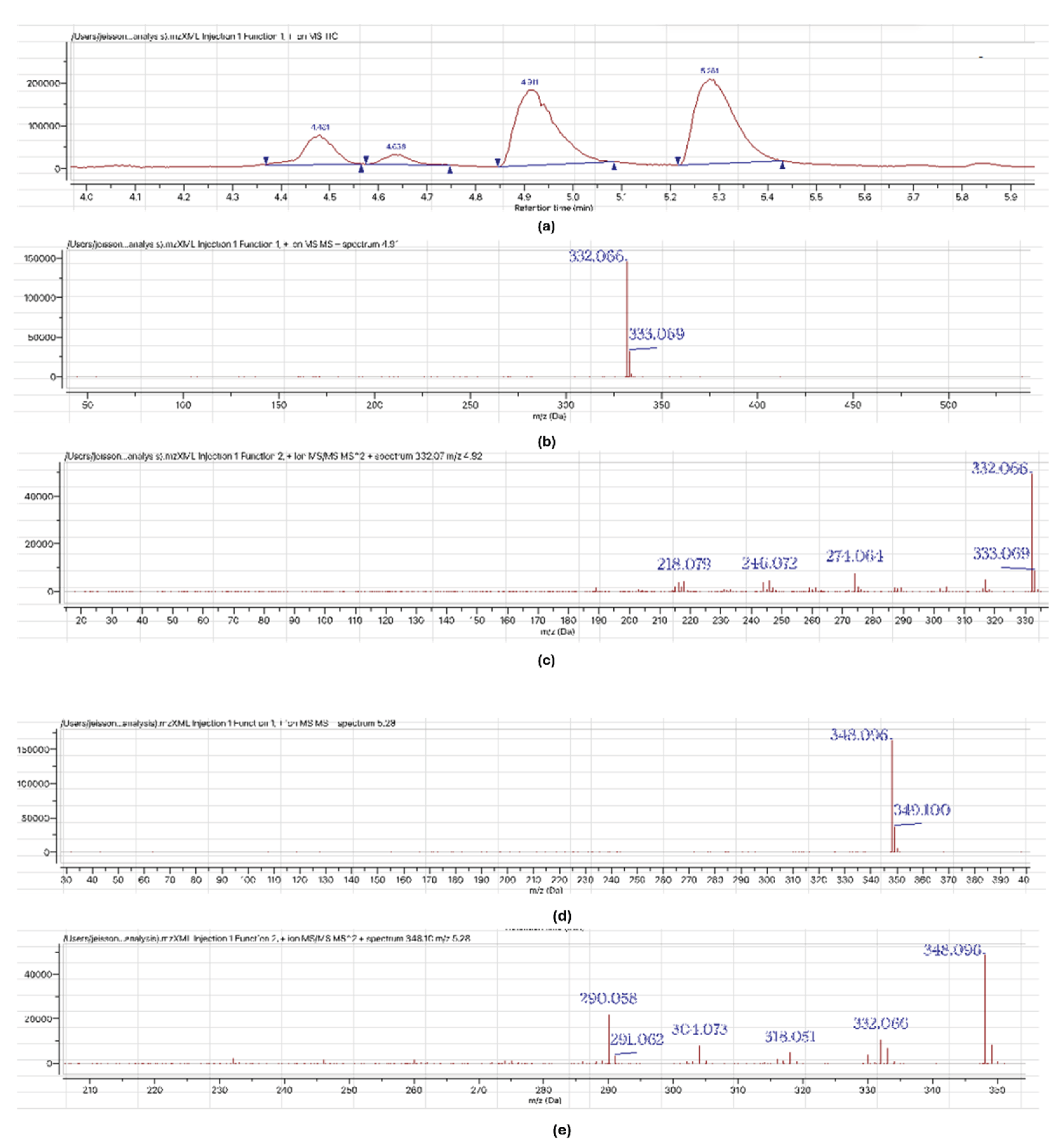
Figure 2.
Average relative area of identified compounds in DESs extracts, ethanolic extract, and water extract.
Figure 2.
Average relative area of identified compounds in DESs extracts, ethanolic extract, and water extract.
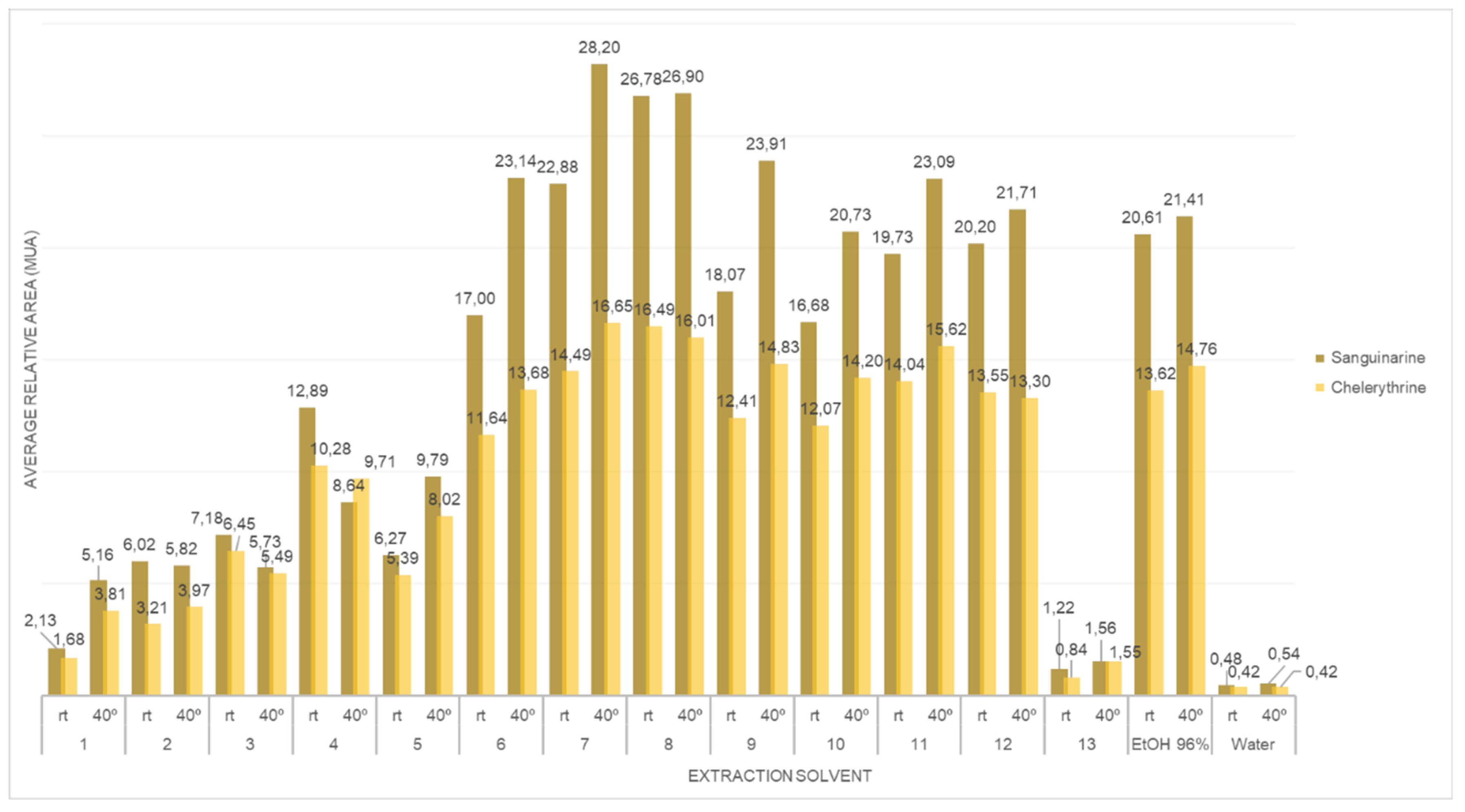
Figure 3.
Average Peak areas of the major alkaloids (mUA) (A) Sanguinarine, (B) Chelerythrine, obtained using citric acid–glucose (1:1) deep eutectic solvents containing different water contents, compared with conventional extraction solvents.
Figure 3.
Average Peak areas of the major alkaloids (mUA) (A) Sanguinarine, (B) Chelerythrine, obtained using citric acid–glucose (1:1) deep eutectic solvents containing different water contents, compared with conventional extraction solvents.
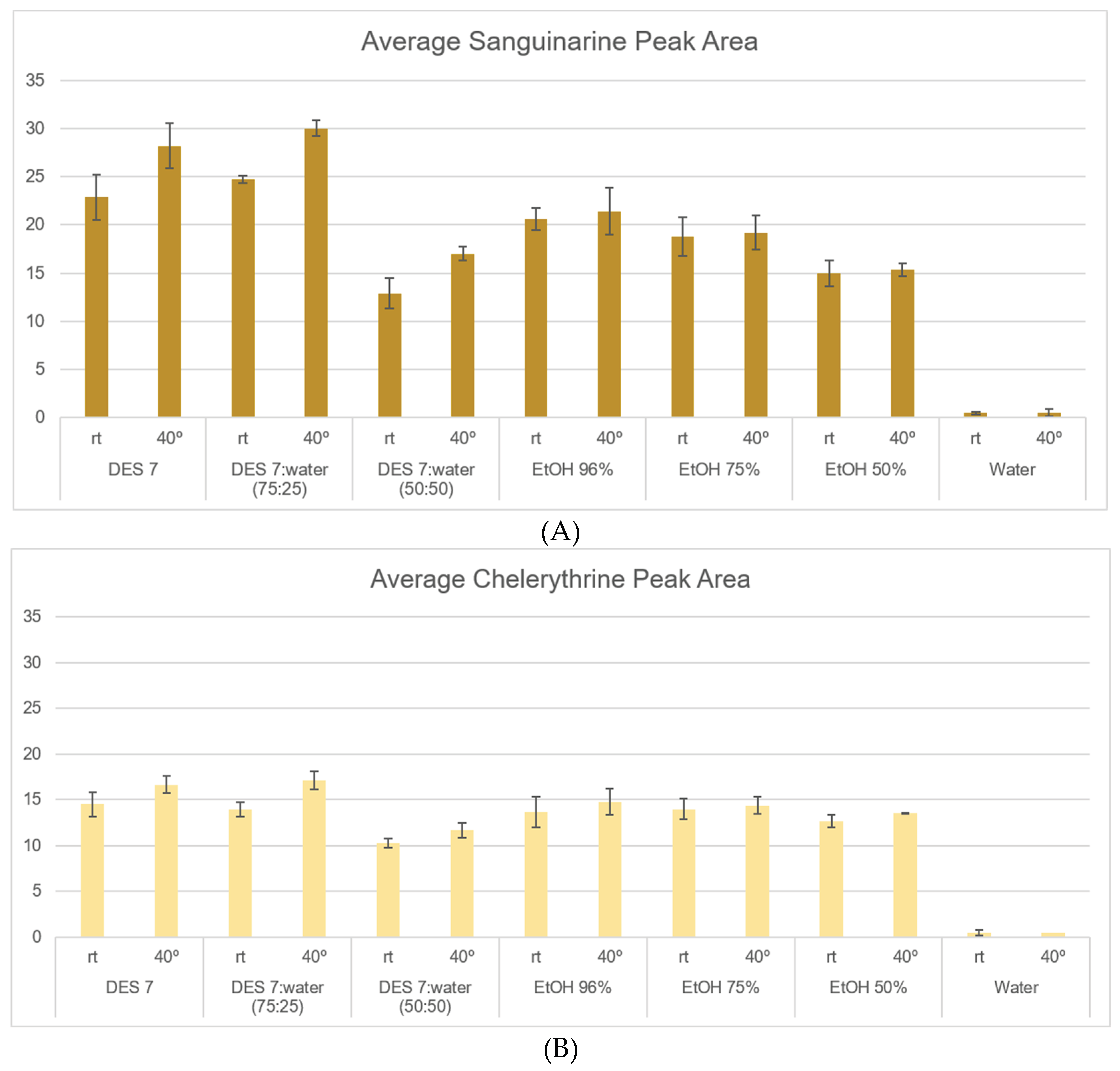
Figure 4.
Effect of time extraction on amount of major Bocconia frutescens alkaloids recovery.
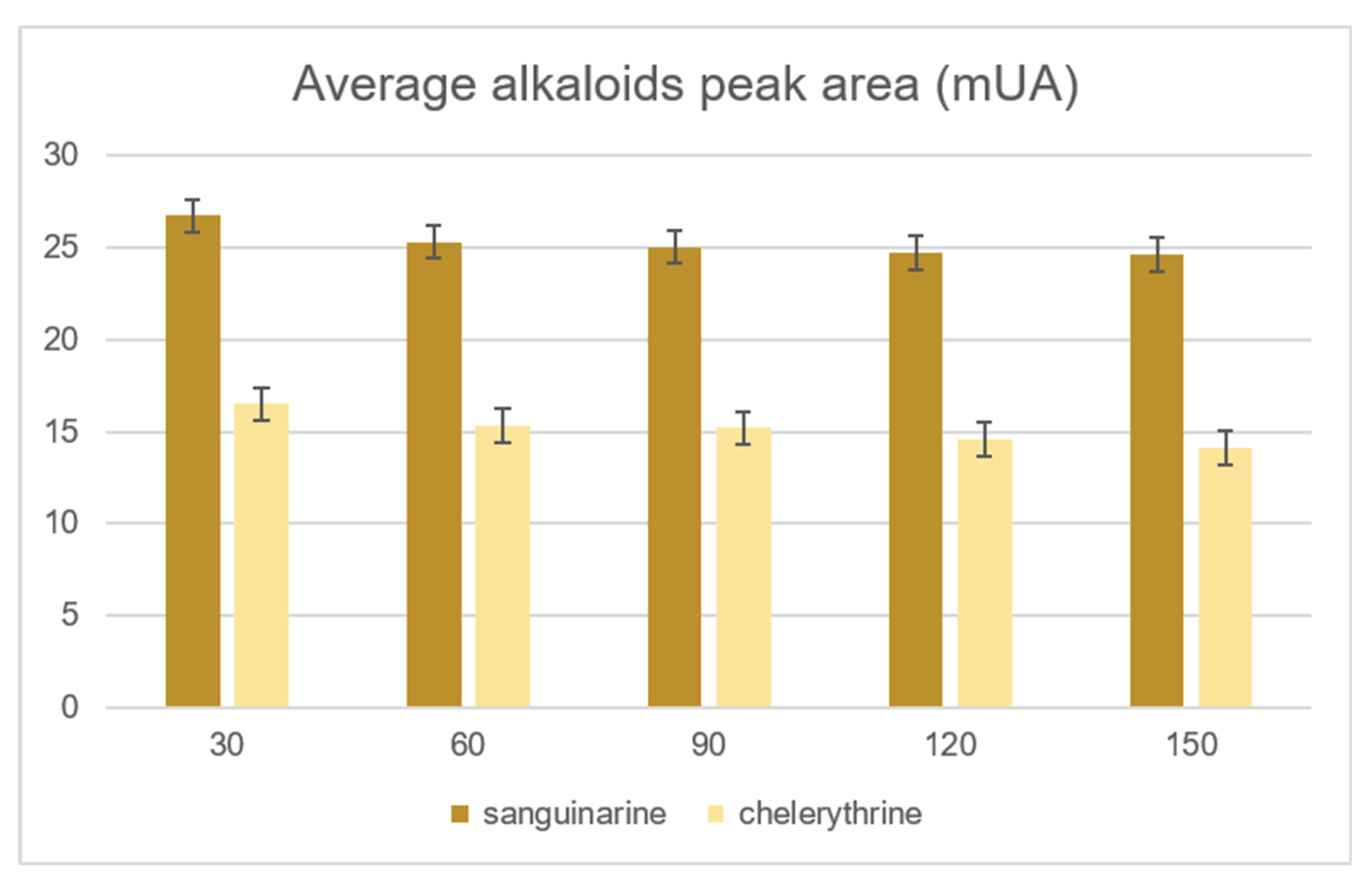
Figure 5.
Effect of vegetal material-solvent ratio on Chelerythrine recovery.
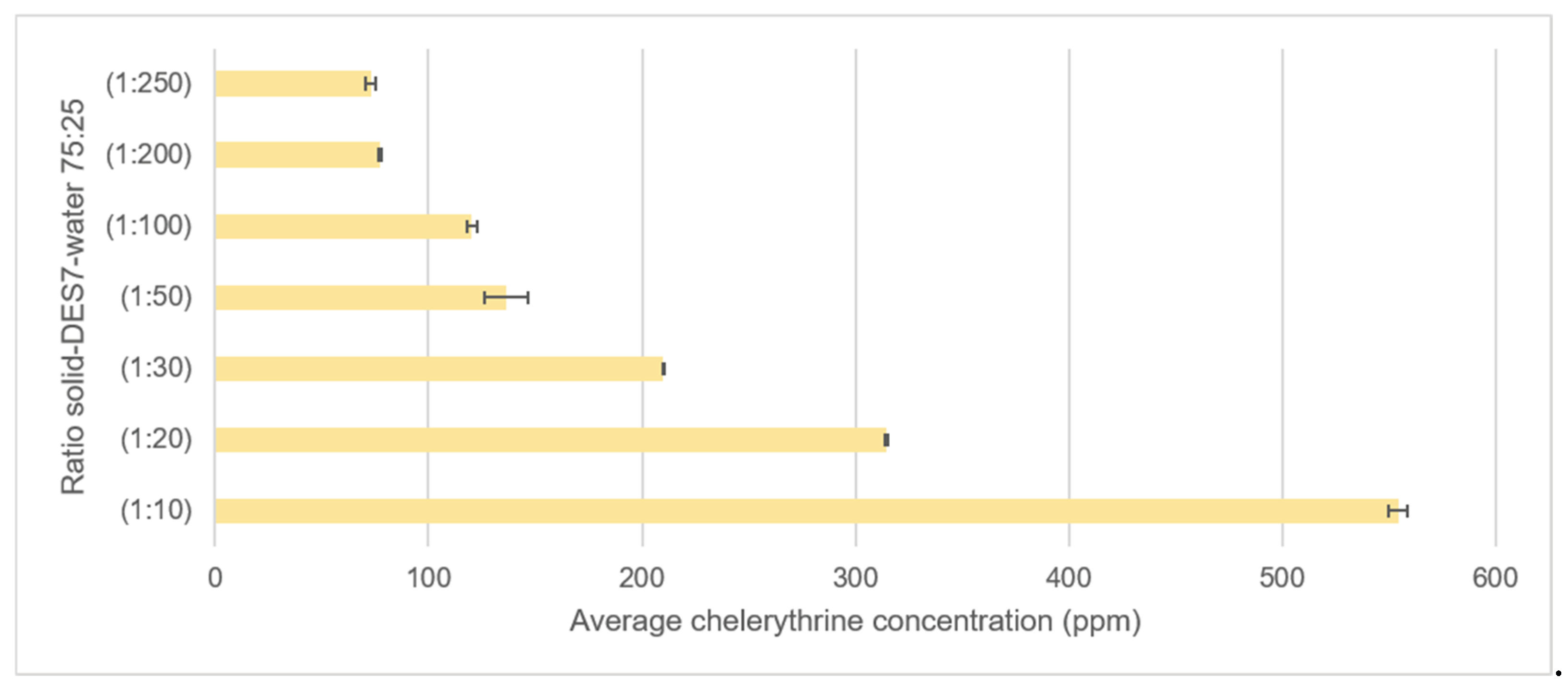
Figure 6.
Direct bioautography TLC plates of Bocconia frutescens root extracts evaluated for cholinesterase inhibitory activity. R: ethanolic root extract; D-R: root extract obtained using the citric acid–glucose (1:1) deep eutectic solvent (DES). (A) Acetylcholinesterase (AChE) inhibition assay; (B) Butyrylcholinesterase (BChE) inhibition assay.
Figure 6.
Direct bioautography TLC plates of Bocconia frutescens root extracts evaluated for cholinesterase inhibitory activity. R: ethanolic root extract; D-R: root extract obtained using the citric acid–glucose (1:1) deep eutectic solvent (DES). (A) Acetylcholinesterase (AChE) inhibition assay; (B) Butyrylcholinesterase (BChE) inhibition assay.
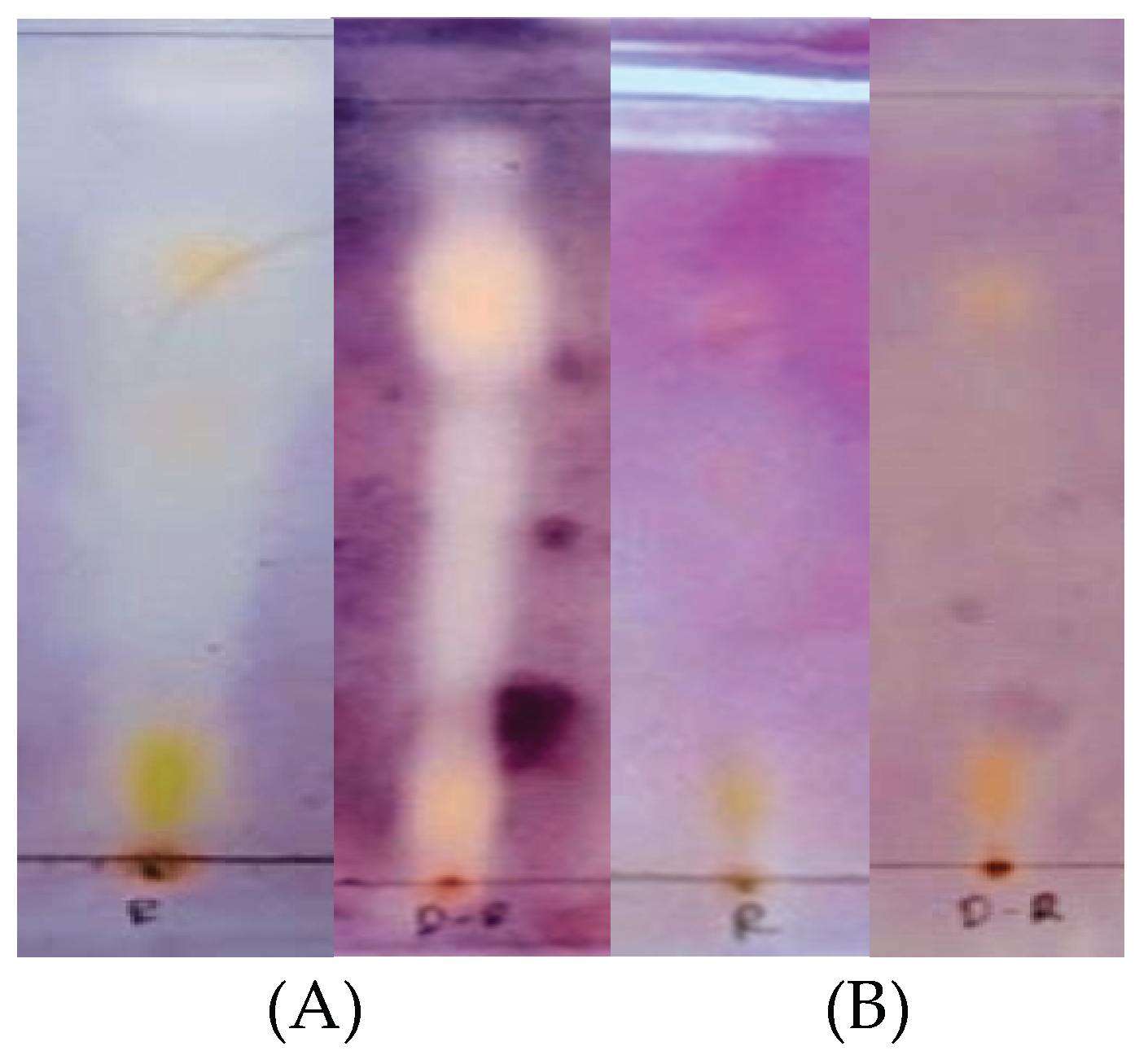
Figure 7.
The dose–response curves of the ethanolic extract and the citric acid–glucose (1:1) DES extract.
Figure 7.
The dose–response curves of the ethanolic extract and the citric acid–glucose (1:1) DES extract.
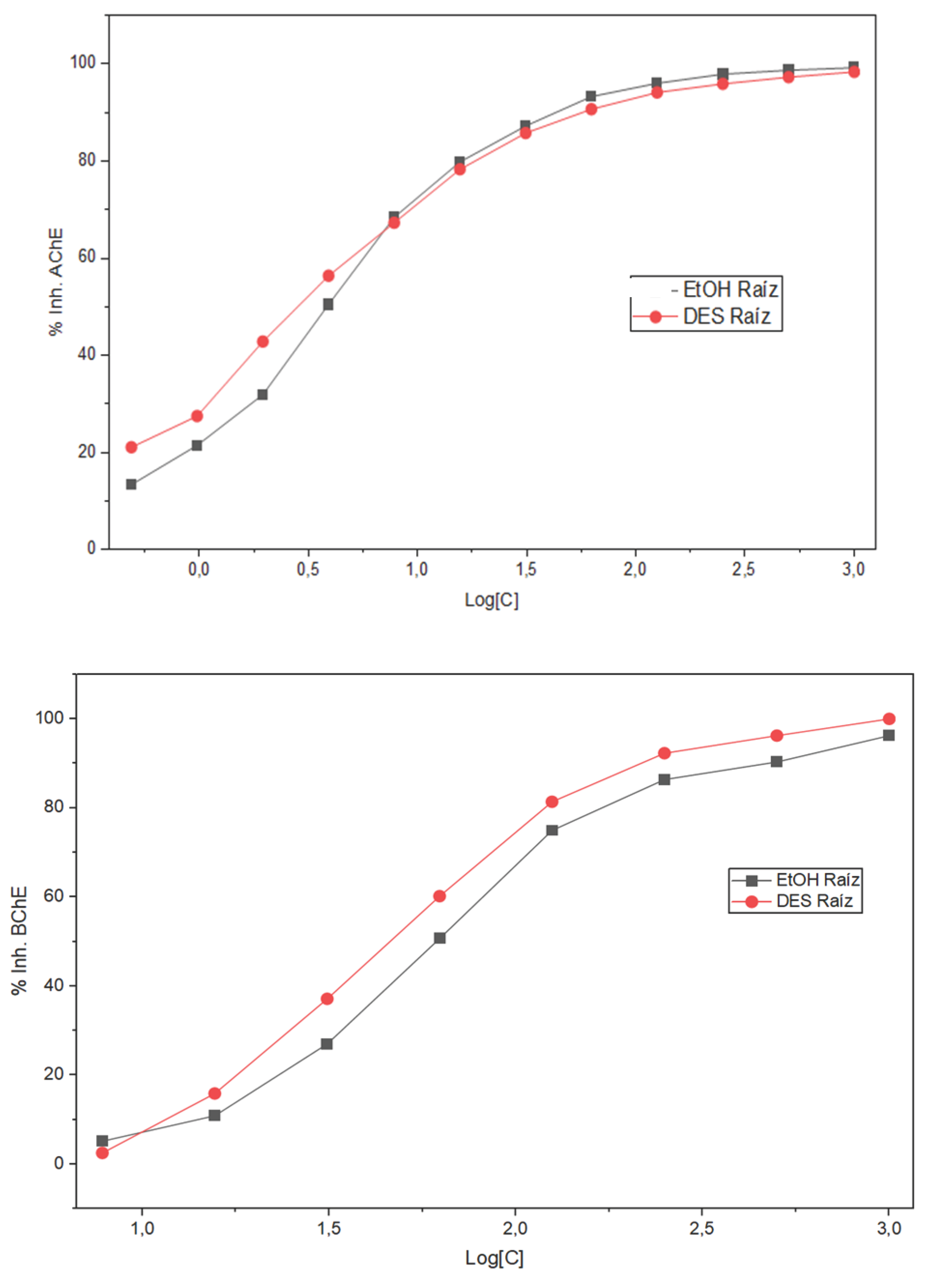
Figure 8.
the fluorescence kinetics of Aβ₁₋₄₂ aggregation in the presence of the Bocconia frutescens root DES extract. A08 sample: methanol control, B02 sample: tannic acid, F01 sample: 500ug/mL, F02 sample: 250 ug/mL, F03 sample:125 ug/mL, F04 sample: 62.5 ug/mL, F05 sample: 32 ug/mL, F06 sample: 16 ug/mL, F07 sample: 8 ug/mL, F08 sample: 4 ug/mL, F09 sample: 2 ug/mL, F10 sample: 1 ug/mL, F11sample: 0.5 ug/mL, F12 sample: 0.25 ug/mL.
Figure 8.
the fluorescence kinetics of Aβ₁₋₄₂ aggregation in the presence of the Bocconia frutescens root DES extract. A08 sample: methanol control, B02 sample: tannic acid, F01 sample: 500ug/mL, F02 sample: 250 ug/mL, F03 sample:125 ug/mL, F04 sample: 62.5 ug/mL, F05 sample: 32 ug/mL, F06 sample: 16 ug/mL, F07 sample: 8 ug/mL, F08 sample: 4 ug/mL, F09 sample: 2 ug/mL, F10 sample: 1 ug/mL, F11sample: 0.5 ug/mL, F12 sample: 0.25 ug/mL.
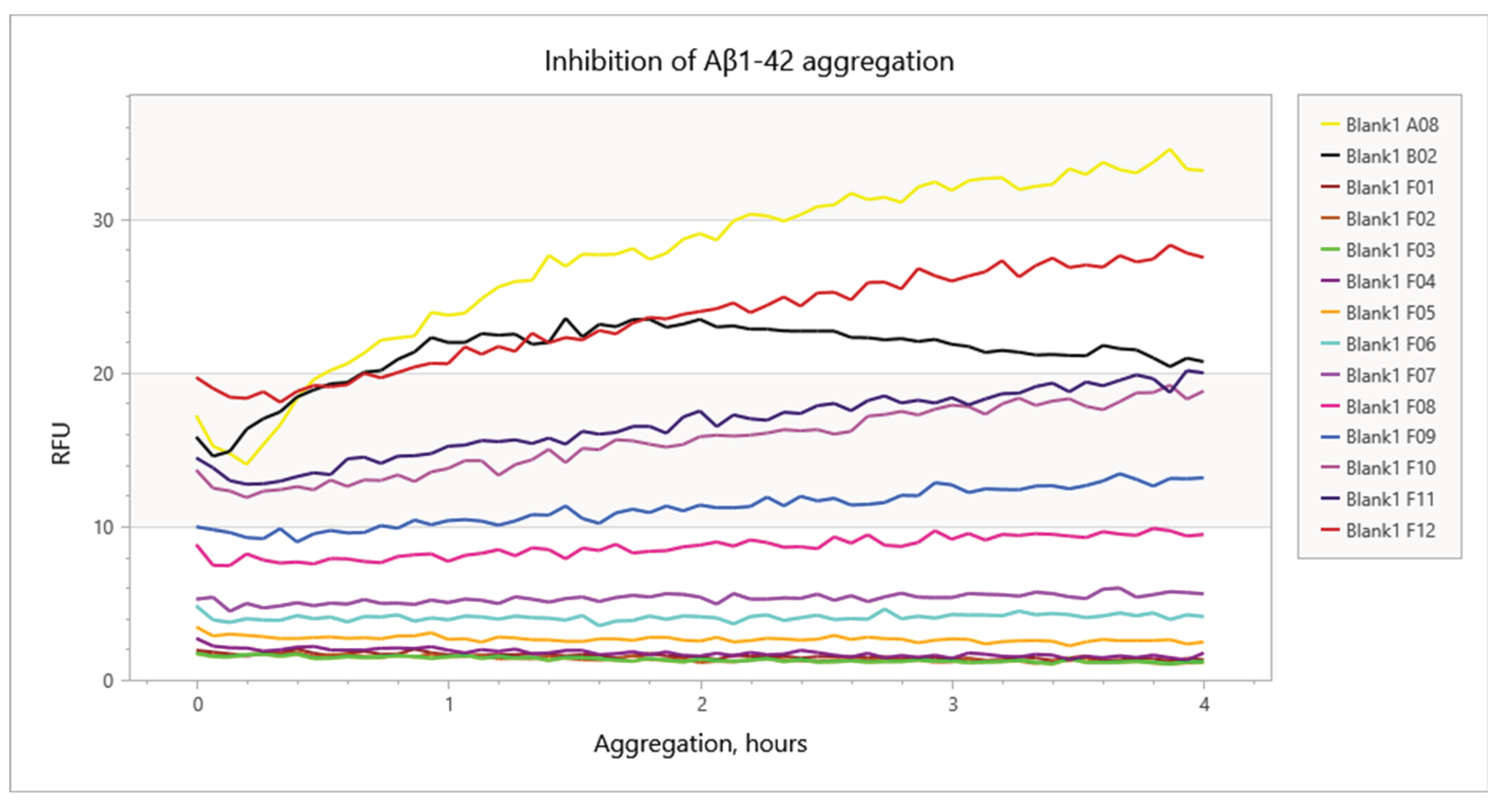

Table 1.
DES constituents used for extraction of Bocconia frutescens roots.
| DES | DES Constituents | Molar ratio | |
|---|---|---|---|
| 1 | ChCl | Sorbitol | (4:1) |
| 2 | Fructose | (5:2) | |
| 3 | Urea | (1:2) | |
| 4 | Oxalic acid | (1:1) | |
| 5 | 1,2-propanediol | (1:2) | |
| 6 | Citric Acid | Glucose | (1:5) |
| 7 | Glucose | (1:1) | |
| 8 | Malic Acid | (1:1) | |
| 9 | L-Proline | (1:1) | |
| 10 | Saccharose | (1:1) | |
| 11 | Fructose | (1:1) | |
| 12 | Sorbitol | (1:1) | |
| 13 | Oxalic acid | L-Proline | (1.1) |
Table 2.
Parameters and response variable by each execution.
| Nº | A (mg/mL) | B (ºC) | C (DES: water) ratio | D (ppm) |
|---|---|---|---|---|
| 1 | 35 | 20 | 80:20 | 51.6 |
| 2 | 10 | 40 | 60:40 | 255.2 |
| 3 | 35 | 30 | 65:35 | 94.3 |
| 4 | 10 | 30 | 50:50 | 400.1 |
| 5 | 35 | 20 | 50:50 | 98.4 |
| 6 | 35 | 30 | 65:35 | 92.6 |
| 7 | 10 | 20 | 65:35 | 320.2 |
| 8 | 60 | 40 | 65:35 | 81.7 |
| 9 | 35 | 40 | 50:50 | 207.8 |
| 10 | 10 | 30 | 80:20 | 351.9 |
| 11 | 35 | 40 | 80:20 | 97.5 |
| 12 | 35 | 30 | 65:35 | 91.0 |
| 13 | 60 | 20 | 65:35 | 43.5 |
| 14 | 60 | 30 | 50:50 | 58.6 |
| 15 | 60 | 30 | 80:20 | 48.2 |
Disclaimer/Publisher’s Note: The statements, opinions and data contained in all publications are solely those of the individual author(s) and contributor(s) and not of MDPI and/or the editor(s). MDPI and/or the editor(s) disclaim responsibility for any injury to people or property resulting from any ideas, methods, instructions or products referred to in the content. |
© 2026 by the authors. Licensee MDPI, Basel, Switzerland. This article is an open access article distributed under the terms and conditions of the Creative Commons Attribution (CC BY) license (http://creativecommons.org/licenses/by/4.0/).
Copyright: This open access article is published under a Creative Commons CC BY 4.0 license, which permit the free download, distribution, and reuse, provided that the author and preprint are cited in any reuse.