

Submitted:
07 August 2026
Posted:
10 August 2026
You are already at the latest version
Abstract
Background/Objectives: Obstetric spinal anaesthesia practice changes with evidence, drug availability, and quality-improvement priorities, but longitudinal African data remain limited. This study described temporal changes in spinal anaesthesia practice for caesarean delivery in Windhoek, Namibia, and examined associated postoperative re-covery outcomes.
Methods: We conducted a retrospective time-trend analysis of 400 routinely collected anaesthesia records for caesarean deliveries from 2017 to 2025. Calendar time was grouped as 2017-2019, 2020, 2021, and 2022-2025. Practice variables included intrathecal regimen, vasopressor type, spinal needle gauge, documented spinal level, infusion time, and spinal attempts. Outcomes included pain, headache, nausea, shortness of breath, blood pressure drop, backache, symptom count, and motor recovery grade.
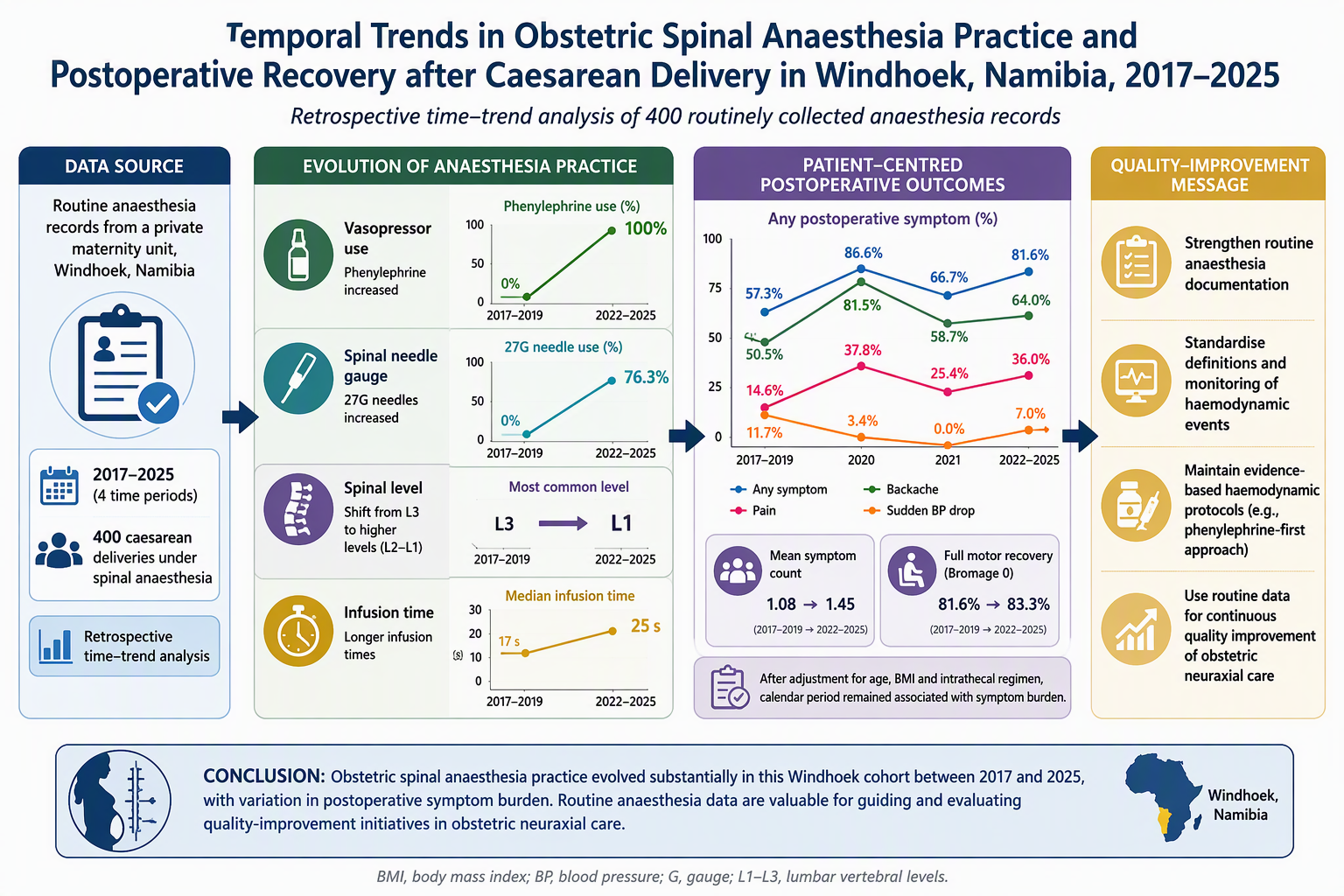
Results: Anaesthesia practice changed substantially. Phenylephrine use increased from 0.0% in 2017-2019 to 70.6% in 2020, 96.8% in 2021, and 100.0% in 2022-2025. Use of 27G spinal needles increased from 0.0% in 2017-2020 to 95.2% in 2021 and 76.3% in 2022-2025. Any postoperative symptom was documented in 74.5% of records, predominantly backache. After adjustment for age, body mass index, and intrathecal regimen, calendar period remained associated with postoperative symptom burden.
Conclusions: Obstetric spinal anaesthesia practice evolved in this Windhoek cohort, with substantial changes in vasopressor selection, spinal needle gauge, spinal level, and in-fusion time. Routine anaesthesia data can support local quality-improvement protocols for haemodynamic management and patient-centred recovery after caesarean spinal an-aesthesia.
Keywords:
spinal anaesthesia
; caesarean delivery
; obstetric anaesthesia
; phenylephrine
; vasopressors
; postoperative outcomes
; quality improvement
; Namibia
1. Introduction
Spinal anaesthesia is the preferred technique for most caesarean deliveries because it provides rapid, dense and reliable surgical anaesthesia while avoiding airway manipulation, aspiration risk and foetal exposure to systemic anaesthetic agents. It also allows the mother to remain awake during birth and facilitates early maternal–neonatal interaction [1,2]. Despite these advantages, spinal anaesthesia is frequently complicated by maternal hypotension due to sympathetic blockade, arterial and venous vasodilation, reduced venous return and aortocaval compression in the supine parturient [2,3]. If not anticipated and managed promptly, hypotension may cause nausea, vomiting, dizziness, reduced maternal comfort and, in severe or prolonged cases, impaired uteroplacental perfusion and foetal acid–base disturbance [2,3,4,5].
Global obstetric anaesthesia practice has therefore shifted from reactive treatment of hypotension towards prevention, early detection and protocolised haemodynamic management. Contemporary guidance recommends maintaining maternal systolic blood pressure close to baseline, using left uterine displacement where appropriate, administering fluids as co-loading or preload according to institutional practice, and using vasopressors early [1,3]. Phenylephrine is widely recommended as a first-line vasopressor because it effectively restores systemic vascular resistance and is associated with favourable fetal acid–base outcomes compared with ephedrine, although careful monitoring for reflex bradycardia remains necessary [1,3,6]. Norepinephrine has emerged as a promising alternative because it may better preserve heart rate and cardiac output, but its safe use depends on appropriate dilution, infusion systems and provider familiarity [3,7]. Thus, while the evidence base has matured, implementation remains shaped by local resources, medicine availability, monitoring capacity and provider experience.
Anaesthetic technique also influences maternal recovery. Intrathecal bupivacaine dose, baricity, opioid adjuncts, spinal level, rate of injection, needle gauge and number of puncture attempts may affect block spread, haemodynamic stability, analgesia and postoperative symptoms [8,9]. Intrathecal opioids such as fentanyl and morphine improve intraoperative and postoperative analgesia after caesarean delivery, but they may also contribute to side effects including pruritus, nausea, respiratory symptoms and delayed recovery in some settings [9,10]. Similarly, postoperative headache, backache and motor recovery are clinically relevant patient-centred outcomes after neuraxial anaesthesia. International guidance on post-dural puncture headache emphasises that postpartum neuraxial symptoms require structured assessment, timely follow-up and clear documentation, particularly because symptoms may affect maternal wellbeing, breastfeeding, bonding and hospital readmission [11,12].
In African settings, the evidence base for obstetric spinal anaesthesia is growing but remains uneven. Studies from resource-limited settings show that reported hypotension rates vary widely, partly because definitions differ across studies and clinical documentation systems [13,14]. A South African consensus-oriented analysis highlighted that variation in hypotension definitions can produce markedly different incidence estimates and recommended pragmatic blood pressure thresholds to support benchmarking and clinical audit [13]. Recent African data also continue to show a high burden of spinal anaesthesia-induced hypotension during caesarean delivery, reinforcing the need for locally relevant prevention and monitoring strategies [14]. However, much of the available African literature focuses on the incidence or predictors of hypotension at a single time point. Less attention has been given to how anaesthesia practice changes over several years and whether these transitions correspond with changes in postoperative symptom burden and recovery indicators.
This gap is important because routine practice rarely changes all at once. In real-world settings, adoption of evidence-based obstetric anaesthesia may occur gradually through shifts in vasopressor choice, spinal needle selection, intrathecal regimen, injection technique, documentation practices and provider behaviour. Time-trend analyses can therefore provide useful quality-improvement evidence by identifying when practice changed, which components changed together, and whether patient-centred outcomes improved, worsened or simply became better documented. Such analyses are especially valuable where prospective trial infrastructure is limited but routine clinical records are available.
In Namibia, published obstetric anaesthesia evidence remains limited, although previous work from Windhoek referral hospitals has shown that post-spinal hypotension during caesarean delivery is clinically relevant in this setting [15]. Local evidence comparing phenylephrine approaches has also suggested ongoing interest in protocolising haemodynamic prevention during caesarean spinal anaesthesia [16]. However, no published study has described the longitudinal evolution of obstetric spinal anaesthesia practice in Windhoek across multiple years while also examining patient-centred postoperative outcomes. Using routinely collected anaesthesia records from 2017 to 2025, this study therefore aimed to describe temporal changes in spinal anaesthesia practice for caesarean delivery in Windhoek, Namibia, and to assess associated changes in postoperative symptom burden and motor recovery.
2. Materials and Methods
2.1. Study Design and Setting
We conducted a retrospective time-trend analysis of routinely collected anaesthesia records for obstetric patients who underwent caesarean delivery under spinal anaesthesia in Windhoek, Namibia, between 2017 and 2025.
The study was designed as a secondary analysis of existing clinical records and reported in accordance with the Strengthening the Reporting of Observational Studies in Epidemiology (STROBE) guidance for observational studies [17].
2.2. Study Population
The source population comprised obstetric patients with available perioperative anaesthesia records documenting caesarean delivery under spinal anaesthesia during the study period. Records were eligible if they included documentation of the procedure date, spinal anaesthetic technique, vasopressor use and at least one postoperative outcome field. The analytic dataset consisted of 400 records. One record had an unparseable procedure date and was retained for overall descriptive analyses but excluded from period-specific analyses.
2.3. Practice Periods and Explanatory Variables
Calendar time was categorised into four practice periods: 2017–2019, 2020, 2021 and 2022–2025. These periods were selected to capture visible transitions in routine practice, particularly changes in vasopressor selection, spinal needle gauge, spinal level and infusion time. The main explanatory variable was calendar period.
Practice variables included intrathecal bupivacaine–opioid regimen, vasopressor type, spinal needle gauge, spinal puncture or block level, infusion time group and number of spinal attempts. Vasopressor type was classified as phenylephrine, etilefrine/Effortil, adrenaline or none. Spinal level was standardised as L1, L2 or L3. Infusion time was grouped as 1–2 minutes, 2–3 minutes or 3–5 minutes. Intrathecal regimens were harmonised according to bupivacaine formulation, bupivacaine dose and opioid adjuncts.
2.4. Outcomes
The primary outcome was any documented postoperative symptom, defined as the presence of at least one of the following recorded outcomes: pain, headache, nausea, shortness of breath, sudden drop in blood pressure or backache.
Secondary outcomes were individual postoperative symptoms, symptom count and motor recovery grade. Symptom count was calculated as the total number of documented symptoms across the six postoperative symptom fields and ranged from 0 to 6. Motor recovery grade was analysed as an ordinal outcome using the grade recorded in the anaesthesia record.
2.5. Data Management and Variable Cleaning
The source data were abstracted from routinely collected anaesthesia records and entered into Microsoft Excel. Data cleaning was performed in Microsoft Excel before statistical analysis. Patient names and contact numbers were removed from the analytic dataset to preserve confidentiality. Binary symptom variables were standardised to 0/1 values. Non-standard or typographical entries in vasopressor type, spinal level, infusion time, needle gauge and motor recovery fields were harmonised using predefined cleaning rules. Needle gauge and motor recovery grade were extracted as numeric variables. Records with missing values for a specific variable were excluded only from analyses requiring that variable; no statistical imputation was performed.
2.6. Statistical Analysis
Statistical analyses were conducted using Microsoft Excel and Stata version 12 (StataCorp LLC, College Station, TX, USA). Microsoft Excel was used for data cleaning, descriptive tabulations and preliminary data checks. Stata version 12 was used for inferential analyses, including chi-square or Fisher exact tests, trend tests and multivariable regression models. Continuous variables were summarised using means and standard deviations, while categorical variables were summarised using frequencies and percentages. Overall outcome burden was first described in the full analytic dataset. Period-specific analyses were restricted to records with parseable dates.
Practice variables and postoperative outcomes were compared across calendar periods using chi-square or Fisher exact tests for categorical variables, depending on cell counts. For continuous or ordinal variables, non-parametric tests were used where distributional assumptions were not met. Linear trend tests were performed across ordered calendar periods to assess whether outcomes changed monotonically over time.
Multivariable analyses assessed whether postoperative outcomes varied by calendar period after adjustment for patient and anaesthetic factors. Modified Poisson regression with robust standard errors was used for common binary outcomes to estimate adjusted prevalence ratios. Poisson regression with robust standard errors was used for symptom count. Ordinal logistic regression was used for motor recovery grade. Core adjusted models included calendar period, age, body mass index and intrathecal regimen.
Exploratory procedural models additionally included number of spinal attempts, spinal needle gauge, spinal level and infusion time. These models were interpreted cautiously because several procedural variables changed strongly over time and may represent components of practice evolution rather than independent causal exposures. All statistical tests were two-sided, and statistical significance was assessed at p<0.05. The analytic workflow was documented to support reproducibility of data cleaning, recoding and statistical modelling decisions.
2.7. Ethics Statement
This study used routinely collected clinical anaesthesia records generated during standard care for caesarean delivery under spinal anaesthesia. There was no patient recruitment, direct patient contact, interview, follow-up or additional clinical procedure. Eastgate Clinic, as data custodian, granted permission for access, analysis and publication of de-identified routine records. Findings are reported only in aggregate form. The work was considered minimal risk because it involved retrospective secondary analysis of existing de-identified records, and waiver of individual informed consent was supported by data custodian documentation and institutional governance procedures. The study was conducted in accordance with the Declaration of Helsinki [18].
3. Results
3.1. Study Sample and Overall Postoperative Outcome Burden
A total of 400 caesarean spinal anaesthesia records were included. Period-specific analyses included 399 records with parseable procedure dates: 103 in 2017–2019, 119 in 2020, 63 in 2021 and 114 in 2022–2025. One record had an unparseable date and was retained for overall descriptive analyses but excluded from analyses requiring calendar period.
Overall, documented postoperative symptoms were common. Pain was recorded in 117/400 patients (29.2%), headache in 79/400 (19.8%), nausea in 54/400 (13.5%), shortness of breath in 9/400 (2.3%), sudden blood pressure drop in 24/400 (6.0%) and backache in 260/400 (65.0%). Any postoperative symptom was documented in 298/400 records (74.5%), and the mean symptom count was 1.36 symptoms per patient.
3.2. Temporal Changes in Spinal Anaesthesia Practice
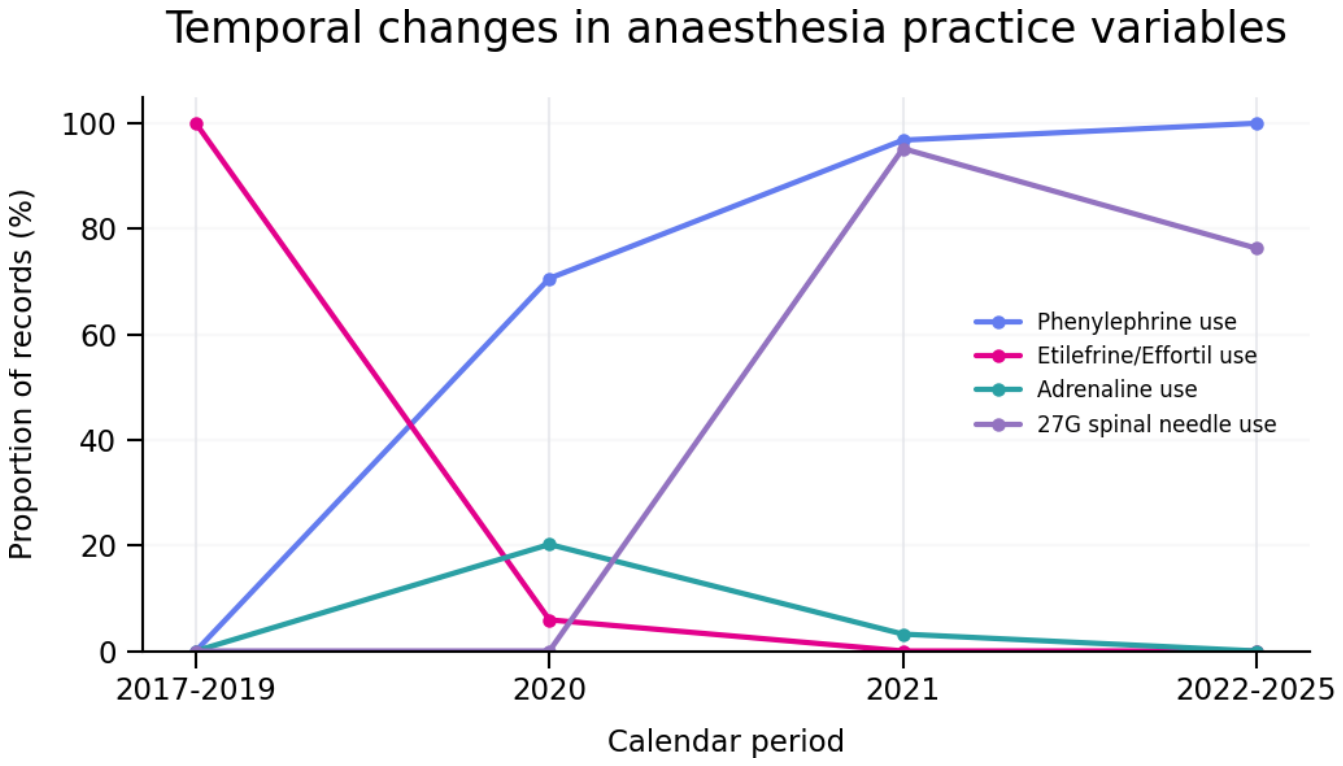
Anaesthesia practice changed substantially across the study period (Table 1). The clearest shift was in vasopressor selection. Etilefrine/Effortil was used in all records during 2017–2019, whereas phenylephrine increased from 0.0% in 2017–2019 to 70.6% in 2020, 96.8% in 2021 and 100.0% in 2022–2025. Adrenaline was documented mainly in 2020, when it was used in 24/119 cases (20.2%), and less frequently in 2021.
Needle gauge, spinal level and infusion time also showed clear temporal shifts. No 27G spinal needles were documented in 2017–2019 or 2020; however, 27G needles were used in 60/63 cases (95.2%) in 2021 and 87/114 cases (76.3%) in 2022–2025. The most commonly documented spinal level shifted from L3 in 2017–2019 to L2 in 2020 and 2021, and then to L1 in 2022–2025. Infusion time was predominantly 2–3 minutes before 2022, whereas 3–5 minutes was recorded for all cases in 2022–2025.

Table 1.
Evolution of anaesthesia practice variables by calendar period.
| Variable | 2017–2019 (n=103) | 2020 (n=119) | 2021 (n=63) | 2022–2025 (n=114) |
|---|---|---|---|---|
| Phenylephrine use | 0 (0.0%) | 84 (70.6%) | 61 (96.8%) | 114 (100.0%) |
| Etilefrine/Effortil use | 103 (100.0%) | 7 (5.9%) | 0 (0.0%) | 0 (0.0%) |
| Adrenaline use | 0 (0.0%) | 24 (20.2%) | 2 (3.2%) | 0 (0.0%) |
| 27G spinal needle | 0 (0.0%) | 0 (0.0%) | 60 (95.2%) | 87 (76.3%) |
| Most common spinal level | L3 | L2 | L2 | L1 |
| Most common infusion time | 2–3 min | 2–3 min | 2–3 min | 3–5 min |
| Mean age, years (SD) | 32.8 (5.4) | 32.1 (4.6) | 33.4 (6.9) | 35.0 (6.0) |
| Mean BMI, kg/m[2] (SD) | 30.4 (3.8) | 30.9 (5.9) | 29.9 (4.0) | 29.9 (3.8) |
BMI, body mass index; SD, standard deviation. Percentages are calculated using the number of records in each calendar period as the denominator.
Figure 1.
Temporal changes in anaesthesia practice variables by calendar period.
3.3. Temporal Changes in Postoperative Outcomes
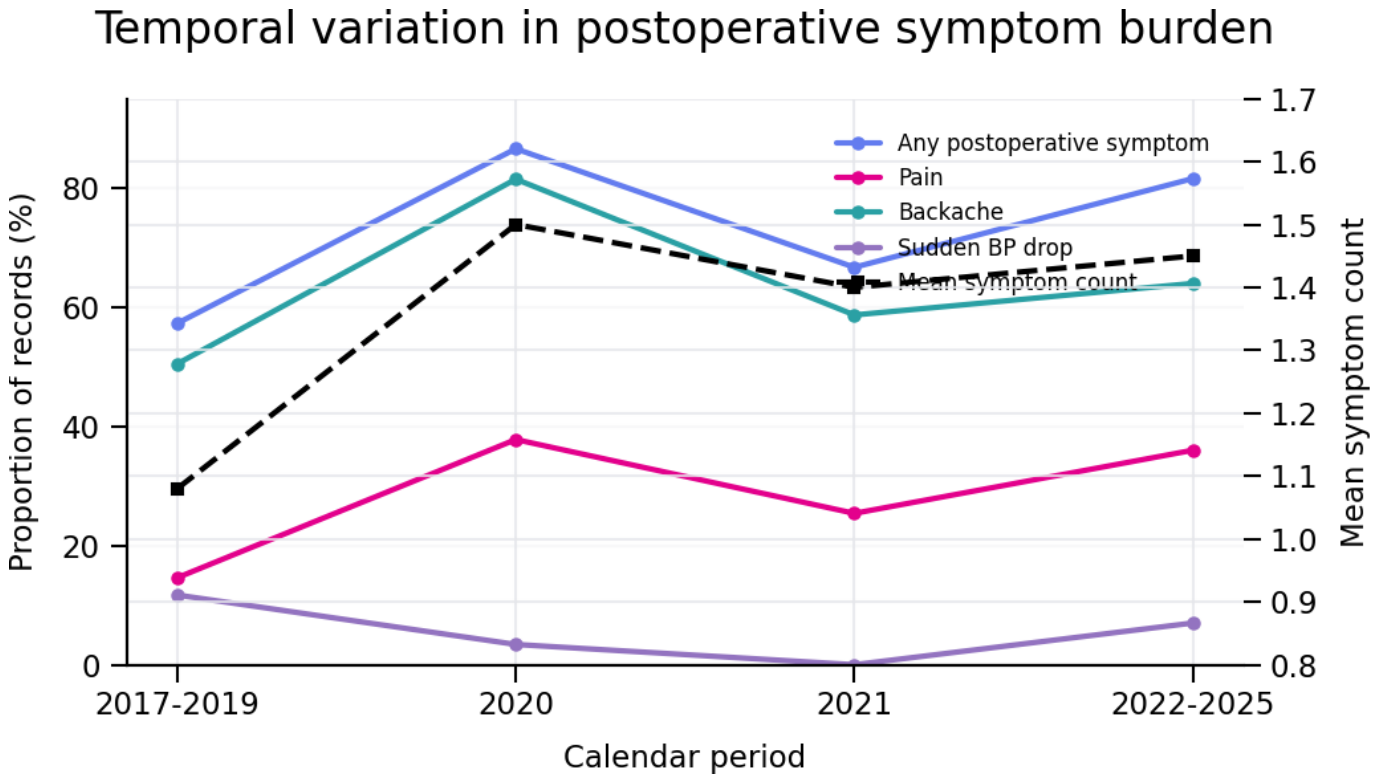
Postoperative symptom burden varied across calendar periods (Table 2). Any documented postoperative symptom was recorded in 59/103 patients (57.3%) in 2017–2019, 103/119 (86.6%) in 2020, 42/63 (66.7%) in 2021 and 93/114 (81.6%) in 2022–2025. The overall period comparison for the composite symptom outcome was statistically significant (p<0.001), with evidence of a positive linear trend across ordered periods (p=0.004).
Pain increased from 14.6% in 2017–2019 to 37.8% in 2020, declined to 25.4% in 2021 and rose again to 36.0% in 2022–2025. Period differences were statistically significant (p<0.001), with a significant linear trend (p=0.008). Backache was the most frequently documented symptom in all periods, increasing from 50.5% in 2017–2019 to 81.5% in 2020, then decreasing to 58.7% in 2021 and 64.0% in 2022–2025. Period differences for backache were statistically significant (p<0.001), although there was no consistent linear trend (p=0.416).
Documented sudden blood pressure drop was relatively uncommon but varied significantly by period, occurring in 11.7% of records in 2017–2019, 3.4% in 2020, 0.0% in 2021 and 7.0% in 2022–2025 (overall p=0.009; trend p=0.187). Mean symptom count increased from 1.08 in 2017–2019 to 1.50 in 2020, 1.40 in 2021 and 1.45 in 2022–2025 (overall p=0.003; trend p=0.051). Motor recovery grade differed across periods in the overall comparison (p=0.028), but without evidence of a linear trend (p=0.883).
Table 2.
Postoperative outcomes by calendar period, with period comparison and trend tests.
| Outcome | 2017–2019 (n=103) | 2020 (n=119) | 2021 (n=63) | 2022–2025 (n=114) | Overall p-value | Linear trend p-value |
|---|---|---|---|---|---|---|
| Pain | 15 (14.6%) | 45 (37.8%) | 16 (25.4%) | 41 (36.0%) | <0.001 | 0.008 |
| Headache | 20 (19.4%) | 14 (11.8%) | 23 (36.5%) | 22 (19.3%) | 0.001 | 0.289 |
| Nausea | 12 (11.7%) | 14 (11.8%) | 12 (19.0%) | 16 (14.0%) | 0.514 | 0.407 |
| Shortness of breath | 0 (0.0%) | 4 (3.4%) | 0 (0.0%) | 5 (4.4%) | 0.079 | 0.108 |
| Sudden BP drop | 12 (11.7%) | 4 (3.4%) | 0 (0.0%) | 8 (7.0%) | 0.009 | 0.187 |
| Backache | 52 (50.5%) | 97 (81.5%) | 37 (58.7%) | 73 (64.0%) | <0.001 | 0.416 |
| Any postoperative symptom | 59 (57.3%) | 103 (86.6%) | 42 (66.7%) | 93 (81.6%) | <0.001 | 0.004 |
| Mean symptom count (SD) | 1.08 (1.26) | 1.50 (1.07) | 1.40 (1.17) | 1.45 (1.07) | 0.003 | 0.051 |
| Mean motor recovery grade (SD) | 3.64 (0.62) | 3.44 (0.74) | 3.68 (0.74) | 3.55 (0.84) | 0.028 | 0.883 |
BP, blood pressure; SD, standard deviation. Overall p-values compare outcomes across the four calendar periods. Linear trend p-values evaluate ordered period trends.
Figure 2.
Temporal variation in postoperative symptom burden by calendar period.
3.4. Multivariable Analyses
In multivariable models adjusted for age, BMI and intrathecal regimen, calendar period remained associated with the primary composite outcome (Table 3). Compared with 2017–2019, the adjusted prevalence of any documented postoperative symptom was higher in 2020 (adjusted prevalence ratio [aPR] 1.51, 95% CI 1.26–1.82; p<0.001) and 2022–2025 (aPR 1.39, 95% CI 1.15–1.68; p<0.001), but not significantly different in 2021 (aPR 1.15, 95% CI 0.90–1.46; p=0.262).
For symptom count, 2020 was associated with a higher adjusted symptom rate compared with 2017–2019 (adjusted incidence rate ratio [aIRR] 1.34, 95% CI 1.03–1.74; p=0.027). The adjusted associations for 2021 (aIRR 1.26, 95% CI 0.93–1.71; p=0.137) and 2022–2025 (aIRR 1.29, 95% CI 0.99–1.68; p=0.058) were not statistically significant at the conventional 0.05 threshold.
Pain showed strong period-related differences after adjustment. Compared with 2017–2019, adjusted pain prevalence was higher in 2020 (aPR 2.45, 95% CI 1.45–4.17; p<0.001) and 2022–2025 (aPR 2.37, 95% CI 1.39–4.03; p=0.001), while the 2021 estimate did not reach statistical significance (aPR 1.70, 95% CI 0.90–3.21; p=0.102). Backache was significantly more common in 2020 than in 2017–2019 after adjustment (aPR 1.61, 95% CI 1.30–1.99; p<0.001), but adjusted estimates for 2021 and 2022–2025 were not statistically significant.
Motor recovery grade was analysed using ordinal logistic regression, where an odds ratio above 1 indicates higher odds of a higher recorded motor recovery grade. Compared with 2017–2019, the adjusted odds of a higher motor recovery grade were lower in 2020 (adjusted common OR 0.53, 95% CI 0.32–0.88; p=0.015), but not significantly different in 2021 or 2022–2025. Age and BMI were not independently associated with motor recovery grade in the adjusted ordinal model.
Exploratory procedural modelling additionally included spinal attempts, needle gauge, spinal level and infusion time. In this model, the period effect was attenuated, and the association for 2020 was borderline (aPR 1.34, 95% CI 1.00–1.80; p=0.050). Compared with 22G needles, 25G and 27G needles were associated with lower adjusted prevalence of any postoperative symptom (25G: aPR 0.63, 95% CI 0.44–0.90; p=0.010; 27G: aPR 0.54, 95% CI 0.37–0.79; p=0.002). These exploratory estimates should be interpreted cautiously because needle gauge, spinal level and infusion time changed strongly over calendar time and may represent components of practice evolution rather than independent causal effects.
4. Discussion
This retrospective time-trend analysis showed marked evolution in obstetric spinal anaesthesia practice in Windhoek between 2017 and 2025. The most prominent changes were the transition from etilefrine/Effortil to phenylephrine, increased use of finer spinal needles, changes in documented spinal level, and longer recorded infusion times in later years. These practice changes were accompanied by temporal variation in patient-centred postoperative outcomes, particularly composite symptom burden, pain and backache. In adjusted analyses, the prevalence of any documented postoperative symptom remained higher in 2020 and 2022–2025 compared with 2017–2019, while pain was also more frequent in these periods after adjustment for age, body mass index and intrathecal regimen.
The shift toward phenylephrine is consistent with the broader evolution of obstetric spinal anaesthesia practice. Contemporary guidance recommends proactive prevention and treatment of spinal anaesthesia-induced hypotension during caesarean delivery, including early vasopressor use and maintenance of maternal blood pressure close to baseline [1,3]. Phenylephrine is widely recommended as a first-line agent because it restores systemic vascular resistance and is associated with favourable fetal acid–base outcomes compared with ephedrine [1,3,6]. Additional trial and review evidence has shown that phenylephrine provides effective blood pressure control during caesarean spinal anaesthesia, although reflex bradycardia remains an important consideration [19,20,21,22]. Norepinephrine has emerged as a potential alternative because it may better preserve maternal heart rate and cardiac output, but its safe implementation requires appropriate dilution, infusion systems, monitoring and provider familiarity [7,23,24].
The near-complete uptake of phenylephrine in later years in this cohort may therefore reflect local translation of contemporary haemodynamic management principles into routine care. However, because the dataset did not capture vasopressor dose, timing, infusion rate or trigger thresholds, the analysis cannot distinguish prophylactic infusion, prophylactic bolus, rescue therapy or provider-specific practice.
The low frequency of documented sudden blood pressure drop should be interpreted cautiously. In this cohort, sudden blood pressure drop was recorded in 6.0% overall, which is lower than many reports using active blood pressure monitoring and predefined numerical thresholds. This difference is likely explained by measurement and is consistent with broader concerns that spinal anaesthesia-induced hypotension requires explicit definitions, standardized monitoring and prediction-oriented documentation [29,30].
The present study used a routine binary documentation field, whereas many prospective studies define hypotension using systolic blood pressure, mean arterial pressure, percentage decline from baseline or vasopressor requirement. Studies from resource-limited settings show that reported hypotension rates vary widely because definitions differ across studies and clinical documentation systems [13,14]. A South African consensus-oriented analysis demonstrated that applying different hypotension definitions can produce markedly different incidence estimates in the same population, underscoring the importance of standardised thresholds for audit and benchmarking [13]. Recent African data also continue to show a high burden of spinal anaesthesia-induced hypotension during caesarean delivery when blood pressure is actively measured using standardised criteria [14]. The comparatively low frequency in the present dataset should therefore be interpreted as the frequency of a documented clinical event, not the true incidence of haemodynamic instability.
This study also reinforces the importance of patient-centred postoperative outcomes in obstetric neuraxial audit. Backache and pain were the most prominent contributors to the composite symptom burden. These findings are clinically relevant because recovery after caesarean delivery is not determined only by haemodynamic stability; postoperative comfort, mobility, ability to care for the newborn, breastfeeding and maternal satisfaction are also important. Anaesthetic technique, including intrathecal bupivacaine dose, baricity, opioid adjuncts, spinal level, injection rate, needle gauge and number of attempts, may influence block spread, analgesia and postoperative symptoms [8,9]. Evidence on intrathecal opioids supports their role in improving intraoperative and postoperative analgesia after caesarean delivery, particularly when fentanyl or morphine is used as part of a multimodal approach, although benefits must be balanced against side effects and monitoring requirements [9,10,25,26,27].
The high prevalence of backache in this cohort should not be attributed to a single drug regimen. Postpartum backache is multifactorial and may reflect pregnancy-related musculoskeletal strain, operative positioning, neuraxial puncture factors, number of attempts, needle characteristics, postoperative mobility or differences in how symptoms were elicited and documented.
The temporal pattern of symptoms was not linear for all outcomes. Composite symptom burden was highest in 2020, lower in 2021 and again higher in 2022–2025. Backache showed a similar non-linear pattern, whereas pain remained higher after the baseline period. This pattern suggests that recorded outcomes may have been influenced by multiple overlapping factors, including changes in clinical workflow, case mix, provider vigilance, postoperative review practices, documentation behaviour and anaesthetic technique. Calendar period was therefore a marker of practice evolution rather than a simple exposure. The adjusted models support temporal variation in composite symptom burden and pain, but they do not establish causality. In particular, procedural variables such as needle gauge, spinal level and infusion time changed strongly with calendar time, making it difficult to separate the independent effects of specific technical changes from broader practice evolution.
The exploratory procedural findings regarding needle gauge are plausible but should be treated as hypothesis-generating. Smaller-gauge spinal needles are generally associated with reduced risk of post-dural puncture headache, and international guidance recognises needle characteristics, number of puncture attempts and provider factors as relevant to postpartum neuraxial symptoms [11,12,28]. In the exploratory procedural model, 25G and 27G needles were associated with lower adjusted prevalence of any documented postoperative symptom compared with 22G needles. However, because needle gauge changed strongly over calendar time, this association may reflect broader changes in anaesthesia practice, provider documentation or patient management rather than an isolated needle-gauge effect. The finding is therefore useful for audit planning but should not be interpreted as causal without prospective confirmation.
The local relevance of this analysis is considerable. Previous work from Windhoek referral hospitals has shown that post-spinal hypotension during caesarean delivery is clinically relevant in this setting [15]. Local evidence comparing phenylephrine approaches has also suggested ongoing interest in protocolising haemodynamic prevention during caesarean spinal anaesthesia [16]. The present study extends that evidence by examining practice evolution across several years and by linking changes in anaesthetic practice to patient-centred postoperative outcomes. This broader view is useful for quality improvement because it identifies how routine practice changed, which outcomes shifted over time and where documentation should be strengthened.
Strengths and Limitations
This study has several strengths. It used a real-world dataset spanning 2017–2025 and captured multiple domains of obstetric spinal anaesthesia practice, including vasopressor use, spinal level, needle gauge, infusion time, intrathecal regimen and postoperative recovery indicators. The use of a composite symptom outcome allowed the analysis to capture maternal recovery burden more broadly than a single haemodynamic endpoint. The analysis also used modified Poisson regression for common binary outcomes, providing adjusted prevalence ratios that are easier to interpret than odds ratios when outcomes are frequent.
The limitations should be acknowledged. First, the retrospective design limits causal inference and depends on the quality of routine documentation. Second, postoperative symptoms were recorded as binary fields without severity, timing, duration or validated symptom scales. Third, sudden blood pressure drop was not based on standardised numeric thresholds, limiting comparability with studies using systolic blood pressure, mean arterial pressure or percentage decline from baseline. Fourth, important perioperative variables such as baseline blood pressure, serial haemodynamic values, vasopressor dose and timing, fluid strategy, urgency of caesarean delivery, block height and neonatal outcomes were unavailable or insufficiently detailed. Fifth, several practice variables were strongly correlated with calendar period, which limited the ability to isolate independent procedural effects. Finally, some subgroup analyses were affected by sparse events and should be interpreted cautiously.
Despite these limitations, the findings provide practical direction for quality improvement. Routine anaesthesia records can generate useful local evidence if variables are standardised, consistently captured and periodically analysed. Future prospective audits in this setting should document baseline and serial blood pressure values, explicit hypotension thresholds, vasopressor dose and timing, fluid strategy, block height, validated pain scores, analgesic consumption, maternal satisfaction and neonatal outcomes. Standardised maternal and perioperative outcome frameworks can improve benchmarking, support comparison across facilities and strengthen the use of routine data for quality improvement [31,32]. These improvements would strengthen locally adapted, safe and patient-centred obstetric neuraxial care.
5. Conclusions
Obstetric spinal anaesthesia practice in this Windhoek cohort changed substantially between 2017 and 2025, particularly in vasopressor selection, spinal needle gauge, spinal level and infusion time. These changes were accompanied by temporal variation in documented postoperative symptom burden, with pain and backache contributing most to the patient-centred recovery profile. The transition toward phenylephrine is consistent with contemporary haemodynamic management principles, but the findings also show the need for more standardised documentation of blood pressure trends, vasopressor dosing and postoperative symptoms. Routine anaesthesia data, when carefully cleaned and analysed, can support locally adapted quality-improvement protocols for obstetric neuraxial care.
Supplementary Materials
No supplementary materials are submitted with this manuscript. De-identified analytic materials may be made available from the corresponding author upon reasonable request and subject to data custodian approval.
Author Contributions
Conceptualization, T.F.M., O.O.A. and H.D.M.; methodology, H.D.M.; formal analysis, H.D.M.; investigation, T.F.M.; resources, T.F.M.; data curation, T.F.M. and H.D.M.; writing - original draft preparation, H.D.M.; writing - review and editing, T.F.M., O.O.A. and H.D.M.; supervision, O.O.A.; project administration, T.F.M. and H.D.M. All authors have read and agreed to the submitted version of the manuscript.
Funding
This research received no external funding.
Institutional Review Board Statement
The study was conducted in accordance with the Declaration of Helsinki. Eastgate Clinic, as data custodian, granted permission for access, analysis, and publication of de-identified routine records. The study was considered minimal risk because it involved retrospective secondary analysis of existing de-identified clinical records.
Informed Consent Statement
Patient consent was waived because the study used existing de-identified routine clinical records, involved no patient recruitment or direct contact, and reported aggregate findings only.
Data Availability Statement
The de-identified dataset supporting this study is available from the corresponding author upon reasonable request, subject to approval from Eastgate Clinic as data custodian and applicable institutional requirements.
Acknowledgments
The authors thank Eastgate Clinic and the anaesthesia and obstetric theatre teams involved in routine clinical documentation and data stewardship. During the preparation of this manuscript, the authors used artificial intelligence-assisted language support to improve clarity, structure and formatting. The authors reviewed and edited the output and take full responsibility for the content of this publication.
Conflicts of Interest
The authors declare no conflicts of interest.
Abbreviations
The following abbreviations are used in this manuscript:
| Abbreviation | Full term |
| aIRR | Adjusted incidence rate ratio |
| aPR | Adjusted prevalence ratio |
| BMI | Body mass index |
| BP | Blood pressure |
| CI | Confidence interval |
| G | Gauge |
| IRB | Institutional Review Board |
| L1 | First lumbar vertebral level |
| L2 | Second lumbar vertebral level |
| L3 | Third lumbar vertebral level |
| OR | Odds ratio |
| SD | Standard deviation |
| SE | Standard error |
| STROBE | Strengthening the Reporting of Observational Studies in Epidemiology |
| WHO | World Health Organization |
References
- American Society of Anesthesiologists Task Force on Obstetric Anesthesia; Society for Obstetric Anesthesia and Perinatology. Practice guidelines for obstetric anesthesia: an updated report by the American Society of Anesthesiologists Task Force on Obstetric Anesthesia and the Society for Obstetric Anesthesia and Perinatology. Anesthesiology 2016, 124, 270–300. [Google Scholar] [PubMed]
- Bhat, A.D.; Singh, P.M.; Palanisamy, A. Neuraxial anaesthesia-induced hypotension during Caesarean section. BJA Educ. 2024, 24, 113–120. [Google Scholar] [CrossRef] [PubMed]
- Kinsella, S.M.; Carvalho, B.; Dyer, R.A.; Fernando, R.; McDonnell, N.; Mercier, F.J.; et al. International consensus statement on the management of hypotension with vasopressors during caesarean section under spinal anaesthesia. Anaesthesia 2018, 73, 71–92. [Google Scholar] [CrossRef] [PubMed]
- Campbell, D.C.; Stocks, G.M. Management of hypotension with vasopressors at caesarean section under spinal anaesthesia — have we found the Holy Grail of obstetric anaesthesia? Anaesthesia 2018, 73, 3–14. [Google Scholar] [CrossRef] [PubMed]
- Fitzgerald, J.P.; Fedoruk, K.A.; Jadin, S.M.; Carvalho, B.; Halpern, S.H. Prevention of hypotension after spinal anaesthesia for caesarean section: a systematic review and network meta-analysis of randomised controlled trials. Anaesthesia 2020, 75, 109–121. [Google Scholar] [CrossRef] [PubMed]
- Ngan Kee, W.D.; Khaw, K.S.; Tan, P.E.; Ng, F.F.; Karmakar, M.K. Placental transfer and fetal metabolic effects of phenylephrine and ephedrine during spinal anesthesia for cesarean delivery. Anesthesiology 2009, 111, 506–512. [Google Scholar] [CrossRef] [PubMed]
- Imai, E.; Kataoka, Y.; Watanabe, J.; Okano, H.; Kamimura, Y.; Tsuji, T.; et al. Norepinephrine versus phenylephrine for spinal hypotension in cesarean section: a network meta-analysis. J. Anesth. 2025, 39, 849–868. [Google Scholar] [CrossRef] [PubMed]
- Sun, L.H.; Jiao, C.C.; Wu, H.; Dai, A.G.; Chen, Q.; Jin, L.; et al. Intrathecal bupivacaine versus bupivacaine plus fentanyl for anaesthesia for Caesarean delivery: a randomised double-blind noninferiority trial. Br. J. Anaesth. 2026, 136, 584–590. [Google Scholar] [CrossRef] [PubMed]
- Seki, H.; Shiga, T.; Mihara, T.; Hoshijima, H.; Hosokawa, Y.; Hyuga, S.; et al. Effects of intrathecal opioids on cesarean section: a systematic review and Bayesian network meta-analysis of randomized controlled trials. J. Anesth. 2021, 35, 911–927. [Google Scholar] [CrossRef] [PubMed]
- Sultan, P.; Carvalho, B. Evidence-based guidance for use of intrathecal morphine as an alternative to diamorphine for Caesarean delivery analgesia. Br. J. Anaesth. 2021, 127, 501–505. [Google Scholar] [CrossRef] [PubMed]
- American Society of Anesthesiologists. Statement on post-dural puncture headache management. 13 October 2021. Available online: https://www.asahq.org/standards-and-practice-parameters/statement-on-post-dural-puncture-headache-management (accessed on 2026 Jun 29).
- Uppal, V.; Russell, R.; Sondekoppam, R.V.; Ansari, J.; Baber, Z.; Chen, Y.; et al. Consensus practice guidelines on postdural puncture headache from a multisociety, international working group: a summary report. JAMA Netw. Open 2023, 6, e2325387. [Google Scholar] [CrossRef] [PubMed]
- Zwane, S.F.; Bishop, D.G.; Rodseth, R.N. Hypotension during spinal anaesthesia for Caesarean section in a resource-limited setting: towards a consensus definition. South Afr. J. Anaesth. Analg. 2019, 25, 1–5. [Google Scholar] [CrossRef]
- Barud, A.A.; Ali, I.A.; Hilowle, N.M.; Hassan, H.B.; Osman, I.M. Incidence and risk factors of hypotension in cesarean section patients under spinal anesthesia at a referral hospital in Mogadishu, Somalia. BMC Pregnancy Childbirth 2025, 25, 883. [Google Scholar] [CrossRef] [PubMed]
- Rukewe, A.; Orlam, I.; Akande, A.; Fatiregun, A.A. Distribution of cesarean delivery by Robson classification and predictors of postspinal anesthesia hypotension in Windhoek referral hospitals: a cross-sectional study. Niger. J. Clin. Pract. 2022, 25, 178–184. [Google Scholar] [CrossRef] [PubMed]
- Shaanika, E.P. Prophylactic phenylephrine bolus versus infusion for prevention of maternal hypotension during spinal anaesthesia for caesarean section at Windhoek-based teaching hospitals, Namibia. Thesis;MMed Anaesthesiology, Critical Care and Pain Management, University of Namibia, Windhoek, 2022. Available online: https://repository.unam.edu.na/bitstreams/90ea7ffc-6636-4d0d-85f2-c5af8aedb482/download (accessed on 2026 Jun 29).
- von Elm, E.; Altman, D.G.; Egger, M.; Pocock, S.J.; Gotzsche, P.C.; Vandenbroucke, J.P.; STROBE Initiative. The Strengthening the Reporting of Observational Studies in Epidemiology statement: guidelines for reporting observational studies. Lancet 2007, 370, 1453–1457. [Google Scholar] [CrossRef] [PubMed]
- World Medical Association. Declaration of Helsinki: ethical principles for medical research involving human participants. Available online: https://www.wma.net/policies-post/wma-declaration-of-helsinki/ (accessed on 2026 Jun 29).
- Ngan Kee, W.D.; Khaw, K.S.; Ng, F.F.; Lee, B.B. Prophylactic phenylephrine infusion for preventing hypotension during spinal anesthesia for cesarean delivery. Anesth. Analg. 2004, 98, 815–821. [Google Scholar] [CrossRef] [PubMed]
- Ngan Kee, W.D.; Khaw, K.S.; Ng, F.F. Comparison of phenylephrine infusion regimens for maintaining maternal blood pressure during spinal anaesthesia for caesarean section. Br. J. Anaesth. 2004, 92, 469–474. [Google Scholar] [CrossRef] [PubMed]
- Ngan Kee, W.D.; Khaw, K.S.; Ng, F.F. Prevention of hypotension during spinal anesthesia for cesarean delivery: an effective technique using combination phenylephrine infusion and crystalloid cohydration. Anesthesiology 2005, 103, 744–750. [Google Scholar] [CrossRef]
- Lee, A.; Ngan Kee, W.D.; Gin, T. A quantitative systematic review of randomised controlled trials of ephedrine versus phenylephrine for the management of hypotension during spinal anesthesia for cesarean delivery. Anesth. Analg. 2002, 94, 920–926. [Google Scholar] [CrossRef] [PubMed]
- Park, H.S.; Choi, W.J. Use of vasopressors to manage spinal anesthesia-induced hypotension during cesarean delivery. Anesth. Pain Med. 2024, 19, 85–93. [Google Scholar] [CrossRef] [PubMed]
- Song, J.; Xu, X.; Li, Q.; Lu, B.; Yu, X.; Guo, M. Norepinephrine versus phenylephrine for managing maternal hypotension during cesarean delivery under spinal anesthesia: a meta-analysis of maternal and neonatal outcomes. Signa Vitae 2024, 20, 1–14. [Google Scholar] [CrossRef]
- Weigl, W.; Bieryło, A.; Wielgus, M.; Krzemień-Wiczyńska, Ś.; Kołacz, M.; Dąbrowski, M.J. Perioperative analgesia after intrathecal fentanyl and morphine or morphine alone for cesarean section: a randomized controlled study. Medicine 2017, 96, e8892. [Google Scholar] [PubMed]
- Yang, T.R.; He, X.M.; Li, X.H.; Wang, R.R. Intrathecal morphine versus transversus abdominis plane block for caesarean delivery: a systematic review and meta-analysis. BMC Anesthesiol. 2021, 21, 174. [Google Scholar] [CrossRef] [PubMed]
- Neall, G.; Bampoe, S.; Sultan, P. Analgesia for Caesarean section. BJA Educ. 2022, 22, 197–203. [Google Scholar] [CrossRef] [PubMed]
- Chekol, B.; Yetneberk, T.; Teshome, D. Prevalence and associated factors of post-dural puncture headache among parturients who underwent cesarean section with spinal anesthesia: a systematic review and meta-analysis. Ann. Med. Surg. (Lond) 2021, 66, 102456. [Google Scholar] [CrossRef] [PubMed]
- Wong, C.A. Spinal anesthesia-induced hypotension: is it more than just a pesky nuisance? Am. J. Obstet. Gynecol. 2020, 223, 621–623. [Google Scholar] [CrossRef] [PubMed]
- Yu, C.; Gu, J.; Liao, Z.; Feng, S. Prediction of spinal anesthesia-induced hypotension during elective cesarean section: a systematic review of prospective observational studies. Int. J. Obstet. Anesth. 2021, 47, 103175. [Google Scholar] [CrossRef] [PubMed]
- World Health Organization. Standards for improving quality of maternal and newborn care in health facilities; World Health Organization: Geneva, 2016; Available online: https://www.who.int/publications/i/item/9789241511216 (accessed on 2026 Jun 29).
- Myles, P.S.; Grocott, M.P.W.; Boney, O.; Moonesinghe, S.R.; COMPAC-StEP Group. Standardizing end points in perioperative trials: towards a core and extended outcome set. Br. J. Anaesth. 2016, 116, 586–589. [Google Scholar] [CrossRef] [PubMed]
Table 3.
Adjusted associations between calendar period and postoperative outcomes.
| Outcome/model | Comparison | Adjusted effect estimate | 95% CI | p-value | Model |
|---|---|---|---|---|---|
| Any postoperative symptom | 2020 vs 2017–2019 | aPR 1.51 | 1.26–1.82 | <0.001 | Modified Poisson, robust SE |
| Any postoperative symptom | 2021 vs 2017–2019 | aPR 1.15 | 0.90–1.46 | 0.262 | Modified Poisson, robust SE |
| Any postoperative symptom | 2022–2025 vs 2017–2019 | aPR 1.39 | 1.15–1.68 | <0.001 | Modified Poisson, robust SE |
| Symptom count | 2020 vs 2017–2019 | aIRR 1.34 | 1.03–1.74 | 0.027 | Poisson, robust SE |
| Symptom count | 2021 vs 2017–2019 | aIRR 1.26 | 0.93–1.71 | 0.137 | Poisson, robust SE |
| Symptom count | 2022–2025 vs 2017–2019 | aIRR 1.29 | 0.99–1.68 | 0.058 | Poisson, robust SE |
| Pain | 2020 vs 2017–2019 | aPR 2.45 | 1.45–4.17 | <0.001 | Modified Poisson, robust SE |
| Pain | 2021 vs 2017–2019 | aPR 1.70 | 0.90–3.21 | 0.102 | Modified Poisson, robust SE |
| Pain | 2022–2025 vs 2017–2019 | aPR 2.37 | 1.39–4.03 | 0.001 | Modified Poisson, robust SE |
| Backache | 2020 vs 2017–2019 | aPR 1.61 | 1.30–1.99 | <0.001 | Modified Poisson, robust SE |
| Backache | 2021 vs 2017–2019 | aPR 1.15 | 0.86–1.52 | 0.345 | Modified Poisson, robust SE |
| Backache | 2022–2025 vs 2017–2019 | aPR 1.24 | 0.97–1.57 | 0.080 | Modified Poisson, robust SE |
| Motor recovery grade | 2020 vs 2017–2019 | adjusted common OR 0.53 | 0.32–0.88 | 0.015 | Ordinal logistic regression |
| Motor recovery grade | 2021 vs 2017–2019 | adjusted common OR 1.00 | 0.55–1.81 | 0.987 | Ordinal logistic regression |
| Motor recovery grade | 2022–2025 vs 2017–2019 | adjusted common OR 0.72 | 0.43–1.20 | 0.207 | Ordinal logistic regression |
aPR, adjusted prevalence ratio; aIRR, adjusted incidence rate ratio; CI, confidence interval; OR, odds ratio; SE, standard error. The reference period is 2017–2019. Modified Poisson and Poisson models were adjusted for age, BMI and intrathecal regimen. The ordinal logistic model was adjusted for age, BMI, period and intrathecal regimen; OR>1 indicates higher odds of a higher recorded motor recovery grade.
Disclaimer/Publisher’s Note: The statements, opinions and data contained in all publications are solely those of the individual author(s) and contributor(s) and not of MDPI and/or the editor(s). MDPI and/or the editor(s) disclaim responsibility for any injury to people or property resulting from any ideas, methods, instructions or products referred to in the content. |
© 2026 by the authors. Licensee MDPI, Basel, Switzerland. This article is an open access article distributed under the terms and conditions of the Creative Commons Attribution (CC BY) license (http://creativecommons.org/licenses/by/4.0/).
Copyright: This open access article is published under a Creative Commons CC BY 4.0 license, which permit the free download, distribution, and reuse, provided that the author and preprint are cited in any reuse.