
Submitted:
07 August 2026
Posted:
10 August 2026
You are already at the latest version
Abstract
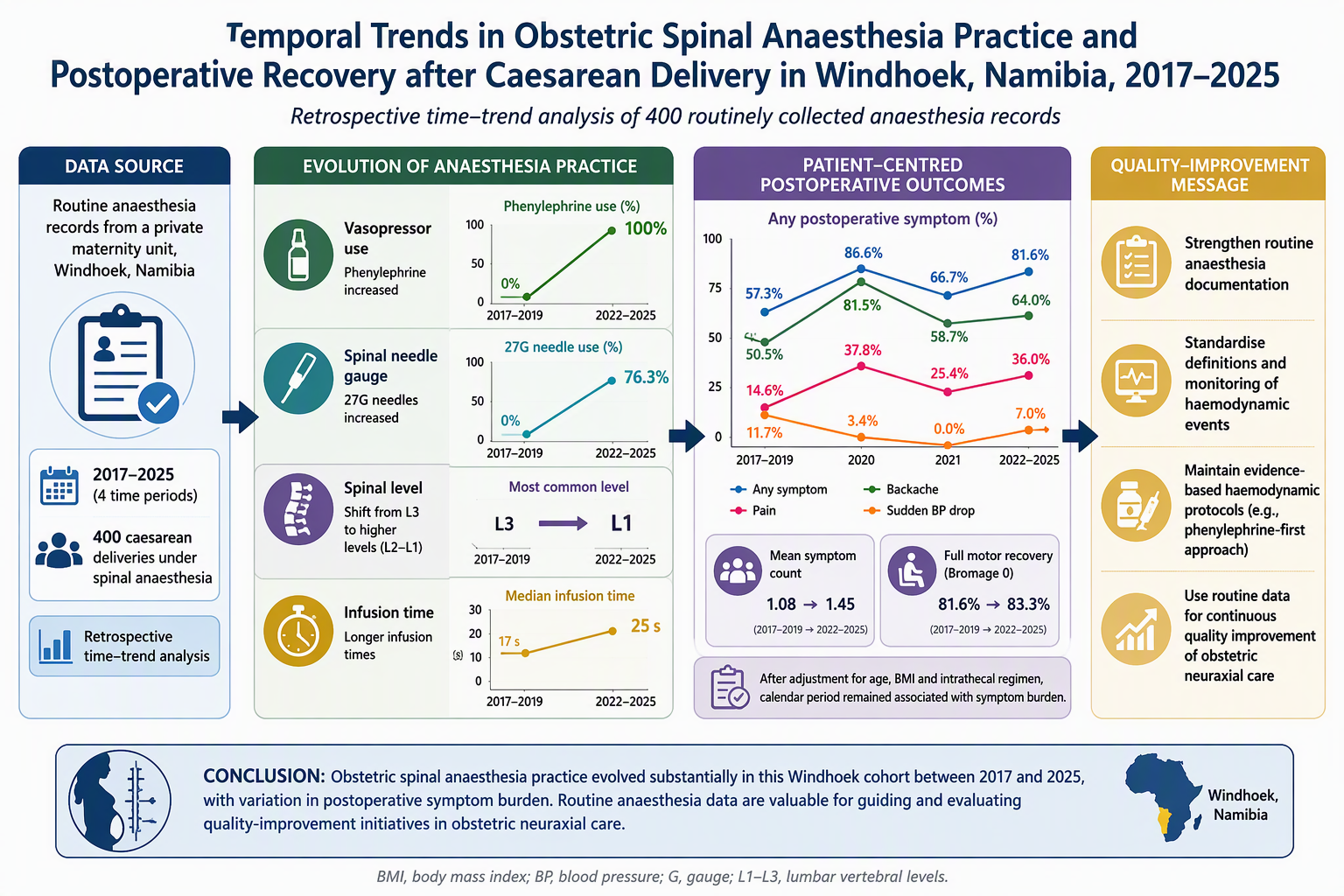
Background/Objectives: Obstetric spinal anaesthesia practice changes with evidence, drug availability, and quality-improvement priorities, but longitudinal African data remain limited. This study described temporal changes in spinal anaesthesia practice for caesarean delivery in Windhoek, Namibia, and examined associated postoperative re-covery outcomes.
Methods: We conducted a retrospective time-trend analysis of 400 routinely collected anaesthesia records for caesarean deliveries from 2017 to 2025. Calendar time was grouped as 2017-2019, 2020, 2021, and 2022-2025. Practice variables included intrathecal regimen, vasopressor type, spinal needle gauge, documented spinal level, infusion time, and spinal attempts. Outcomes included pain, headache, nausea, shortness of breath, blood pressure drop, backache, symptom count, and motor recovery grade.
Results: Anaesthesia practice changed substantially. Phenylephrine use increased from 0.0% in 2017-2019 to 70.6% in 2020, 96.8% in 2021, and 100.0% in 2022-2025. Use of 27G spinal needles increased from 0.0% in 2017-2020 to 95.2% in 2021 and 76.3% in 2022-2025. Any postoperative symptom was documented in 74.5% of records, predominantly backache. After adjustment for age, body mass index, and intrathecal regimen, calendar period remained associated with postoperative symptom burden.
Conclusions: Obstetric spinal anaesthesia practice evolved in this Windhoek cohort, with substantial changes in vasopressor selection, spinal needle gauge, spinal level, and in-fusion time. Routine anaesthesia data can support local quality-improvement protocols for haemodynamic management and patient-centred recovery after caesarean spinal an-aesthesia.
Keywords:
spinal anaesthesia
; caesarean delivery
; obstetric anaesthesia
; phenylephrine
; vasopressors
; postoperative outcomes
; quality improvement
; Namibia
Copyright: This open access article is published under a Creative Commons CC BY 4.0 license, which permit the free download, distribution, and reuse, provided that the author and preprint are cited in any reuse.


