

Submitted:
06 August 2026
Posted:
10 August 2026
You are already at the latest version
Abstract
A single paragraph of about 200 words maximum. Ecotourism has the potential to support biodiversity conservation and community development, particularly in biologically rich regions such as the Amazon. The Área de Conservación Regional Comunal Tamshiyacu Tahuayo (ACRCTT), located in the Loreto region of Peru, provides a case study in which local communities collaborate with ecotourism initiatives and researchers to protect biodiversity. This study examined whether varying levels of community involvement in ecotourism were associated with differences in conservation attitudes, knowledge, and self-reported conservation behavior. Semi-structured interviews were conducted with one adult from nearly every household in three adjacent villages within the ACRCTT between November and December 2019. The villages differed in ecotourism participation, allowing comparative analysis within a shared environmental and governance context. Findings indicated that villages with greater ecotourism involvement demonstrated significantly higher levels of self-reported conservation-oriented behavior. Employment in ecotourism was also positively associated with greater conservation awareness and knowledge, although conservation knowledge was more strongly associated with formal education. Qualitative responses suggested that residents perceived ecotourism as an alternative to hunting, logging, and other extractive activities. While the study design does not allow causal inference, the findings suggest that community-based ecotourism may contribute to conservation-oriented attitudes and behaviors by increasing environmental awareness and diversifying local livelihoods.
Keywords:
community-based conservation
; conservation behavior
; environmental awareness
; ecotourism
; sustainable livelihoods
1. Introduction
Community-based conservation has become an increasingly important approach to protecting biodiversity while supporting the livelihoods of local communities that depend on natural resources [1,2]. Rather than excluding local populations from protected areas, community-based conservation emphasizes shared governance, local participation, and sustainable resource management. Recent scholarship has increasingly characterized community-managed protected areas as complex social-ecological systems in which environmental outcomes, governance institutions, tourism economies, and local livelihoods interact dynamically over time [3,4]. Within these systems, conservation outcomes are shaped not only by ecological protection measures but also by social trust, local participation, economic incentives, and institutional legitimacy. Community-based conservation initiatives throughout Amazonia have demonstrated that conservation effectiveness may improve when local communities retain meaningful governance authority and receive direct economic benefits from environmental stewardship [5,6]. These systems also align with broader theories of common-pool resource management and sustainable livelihoods, which suggest that conservation outcomes improve when communities possess secure resource rights, effective local institutions, and incentives to sustainably manage shared resources [4,7].
Within this context, ecotourism has emerged as a complementary economic activity that may strengthen conservation by providing alternative livelihood opportunities while increasing the value of intact ecosystems [8,9]. Community-based ecotourism initiatives frequently employ local residents as guides, cooks, transportation providers, and lodge staff while encouraging the protection of wildlife and forest habitats valued by visitors [10,11]. However, the conservation impacts of ecotourism remain debated. Although ecotourism has frequently been promoted as a mechanism for simultaneously achieving conservation and rural development [8,9], empirical studies have reported both positive and negative ecological and socioeconomic outcomes. Some studies suggest that ecotourism can support biodiversity protection and provide sustainable economic alternatives to extractive activities, whereas others have found that poorly managed ecotourism may contribute to environmental degradation, unequal distribution of economic benefits, dependence on unstable tourism markets, or cultural commodification.
The community-based ecotourism literature has increasingly focused on understanding how ecotourism influences conservation outcomes, local governance, community participation, and livelihood diversification in rural communities [12,13]. Although many studies report positive associations between ecotourism and biodiversity protection or household income, others have documented inconsistent conservation outcomes and uneven distribution of benefits among community members [14,15,16]. These mixed findings suggest that ecotourism outcomes depend heavily on local governance structures, community participation, and how tourism revenues are distributed within communities.
The community-based ecotourism literature has emphasized that ecotourism influences not only biodiversity conservation but also local governance, community participation, and livelihood diversification in rural communities [12,13,14]. Although many studies have reported positive associations between ecotourism and conservation outcomes or household livelihoods, others have documented environmental impacts, unequal distribution of economic benefits, and variable conservation success across communities [14,15,17]. These contrasting findings suggest that conservation outcomes depend not only on the presence of ecotourism itself, but also on the institutional and social contexts in which it operates, including local governance, meaningful community participation, and equitable distribution of tourism benefits [13,18].
The Tamshiyacu Tahuayo Communal Reserve, or Área de Conservación Regional Comunal Tamshiyacu Tahuayo (ACRCTT), provides an appropriate setting for examining these relationships. The reserve consists of approximately 20 communities working collectively to protect land and natural resources in the Loreto region of the Peruvian Amazon [19,20]. Located in northeastern Peru, the reserve lies within one of the most biologically diverse regions of the Amazon basin and is accessible primarily by river from the city of Iquitos. Local communities continue to depend on fishing, hunting, small-scale agriculture, and forest resources while participating directly in environmental governance through community-based management of wildlife and natural resources.
The development of the reserve reflects broader historical changes within the Peruvian Amazon. During the late nineteenth and early twentieth centuries, rubber (Hevea brasiliensis) became a globally important commodity, contributing to rapid population growth and economic expansion in Iquitos and the surrounding region [21]. At the height of the rubber boom, Iquitos generated more than 80% of the export value of the Peruvian Amazon [21]. Following the collapse of the rubber economy between the 1940s and 1970s, many families established small riverine communities throughout the region, relying on fishing, hunting, small-scale agriculture, and forest extraction for subsistence and income [22,23]. These riverine residents, commonly known as Ribereños, adapted their livelihoods to changing economic conditions while maintaining extensive ecological knowledge of the surrounding environment [24,25].
By the late 1980s, increasing commercial logging, fishing, and wildlife harvesting had raised concerns regarding declining populations of several wildlife species, fish stocks, and commercially valuable hardwoods [19,26]. In response, researchers and local residents collaborated during the 1990s to establish the ACRCTT as a communal reserve that recognized local resource rights while restricting external commercial exploitation [11]. The resulting management system incorporated community-based wildlife management through hunting quotas, fishing regulations, timber harvest limits, and protected management zones that included hunting areas, buffer regions, and no-take zones [21,27,28]. Today, the reserve represents one of the longest-standing examples of community-based conservation in the Peruvian Amazon.
In recent decades, ecotourism has developed unevenly among villages surrounding the reserve. While some communities have become closely involved in ecotourism enterprises, others continue to rely primarily on traditional extractive livelihoods. This variation provides a valuable opportunity to examine whether differing levels of ecotourism participation are associated with conservation-related outcomes while holding broader ecological and governance contexts relatively constant.
Although numerous studies have examined the economic, social, and ecological outcomes of community-based ecotourism, comparatively few have compared conservation knowledge and self-reported conservation behavior across communities with differing levels of ecotourism participation within the same protected area. Comparing communities within the same protected area that share similar ecological conditions and governance frameworks but differ in their level of ecotourism involvement provides an opportunity to examine how ecotourism participation is associated with conservation knowledge and self-reported conservation behavior while minimizing broader contextual differences.
This study examined whether varying levels of ecotourism participation were associated with differences in conservation knowledge and self-reported conservation behavior among communities within the ACRCTT. The three villages included in this study differed substantially in their degree of ecotourism involvement while sharing similar environmental conditions and regional governance structures. Based on previous research, we hypothesized that greater community involvement in ecotourism would be associated with higher levels of self-reported conservation behavior (H1) and greater conservation knowledge (H2). We also hypothesized that, independent of ecotourism involvement, higher levels of formal education would be associated with greater conservation knowledge (H3).
This study contributes to the growing literature on community-based conservation by examining how variation in ecotourism participation relates to environmental knowledge and conservation behavior within a protected area in the Peruvian Amazon. Because the study is correlational and exploratory in design, the findings should be interpreted as associations rather than evidence of causal relationships.
2. Materials and Methods
2.1. Study Area
The study was conducted within the Tamshiyacu Tahuayo Communal Reserve (Área de Conservación Regional Comunal Tamshiyacu Tahuayo; ACRCTT), located in the Loreto region of northeastern Peru. The ACRCTT is a community-managed protected area in which local communities participate directly in the governance and sustainable management of natural resources. Ecologically, the reserve encompasses several habitat types, the majority of which consist of várzea, or seasonally flooded forests [20,22]. Additional habitats include restinga forests and terra firme rainforest, creating a mosaic of ecosystems that supports exceptionally high biodiversity [21]. The reserve contains at least 14 sympatric primate species, representing one of the highest concentrations of primate diversity documented within a single geographic region [23].
This study focused on three neighboring communities within the reserve: Nuevo Junín (hereafter Junín, NJ), San Juan de Yanayacu (San Juan, SJ), and Ayacucho Tipishca (Ayacucho, A) (Figure 1).
These communities were selected because they share similar ecological conditions, natural resource availability, and regional governance structures while differing substantially in their level of ecotourism participation. This variation provided a natural comparison for examining associations between ecotourism involvement, conservation knowledge, and self-reported conservation behavior. At the time of data collection, Junín had approximately 90 residents and no direct ecotourism activity. San Juan, with an estimated population of approximately 130 residents, exhibited the highest level of ecotourism participation, supporting three year-round ecolodges that employed local residents (Figure A1 and Figure A2). Ayacucho had approximately 180 residents and demonstrated an intermediate level of ecotourism involvement through two lodges operating seasonally or partially within the community. Despite these differences in tourism activity, all three communities relied on similar subsistence activities, including fishing, hunting, small-scale agriculture, and forest resource use, while operating under the same protected-area governance framework.
2.2. Data Collection
Data were collected between November and December 2019 through semi-structured interviews conducted in the three study communities. The questionnaire was designed to collect information on participants’ demographic characteristics, involvement in ecotourism, conservation knowledge, and perceptions of community conservation practices. It included a combination of Likert-type scale items and open-ended questions. The latter were primarily used to code conservation knowledge scores for quantitative analysis. Selected responses are presented in the Discussion solely as illustrative examples to provide context for the quantitative findings and were not subjected to formal qualitative analysis.
One adult respondent was interviewed from nearly every available household in each community. Only two households were not included because residents were absent during the data collection period. Interviews were conducted by the lead author with the assistance of a trusted local interpreter who was familiar with the communities and fluent in the local language. This approach facilitated communication while helping establish rapport with participants. Prior to data collection, permission to conduct the study was obtained from village leadership. All participants were informed of the purpose of the research, that participation was voluntary, and that their responses would remain anonymous. Informed consent was obtained before each interview. Ethical approval for the study was granted by the Miami University Institutional Review Board for Human Subjects Research (Protocol ID 03386e).
2.3. Variables and Measures
Three primary variables were examined in this study: conservation-oriented behavior, conservation knowledge, and ecotourism involvement. Responses were coded quantitatively according to the number of correctly identified locally relevant environmental threats. Representative quotations were retained to illustrate participants’ perspectives but were not analyzed using qualitative coding procedures. Conservation-oriented behavior was assessed using two five-point Likert-scale questions that asked respondents to evaluate the extent to which their community protected (1) animals and (2) plants, forests, and waterways. Responses to the two items were summed to create a cumulative conservation-oriented behavior score ranging from 2 to 10, with higher scores indicating stronger perceived community conservation efforts. Because these measures were based on respondents’ perceptions rather than direct observations, they are interpreted as indicators of perceived conservation-oriented behavior. Conservation knowledge was assessed using open-ended questions that asked participants to identify environmental threats affecting local wildlife, forests, waterways, or ecosystems. Responses were coded according to whether respondents correctly identified locally relevant environmental threats, including overhunting, logging, overfishing, and improper waste disposal. The total number of correctly identified threats served as each participant’s conservation knowledge score. Community-level ecotourism involvement was quantified using an Ecotourism Involvement Ratio (ETR), calculated as the proportion of surveyed individuals within each village who reported employment in ecotourism-related activities. Because the ETR was calculated at the community level whereas conservation knowledge and conservation-oriented behavior were measured at the individual level, relationships involving ecotourism participation should be interpreted as exploratory associations rather than evidence of causal effects.
2.4. Statistical Analysis
Quantitative analyses were conducted using IBM SPSS Statistics version 26 (IBM Corp., Armonk, NY, USA). Given the relatively small sample size and the non-normal distribution of several variables, nonparametric statistical methods were used throughout the analyses. Differences in conservation-oriented behavior and conservation knowledge among the three study communities were evaluated using Kruskal–Wallis tests. Spearman’s rank-order correlation coefficients were calculated to examine associations among ecotourism involvement, conservation knowledge, education level, and conservation-oriented behavior. Because of the exploratory nature of the study, the unequal sample sizes among communities, and the use of self-reported measures, statistical results should be interpreted as evidence of associations rather than causal relationships.
3. Results
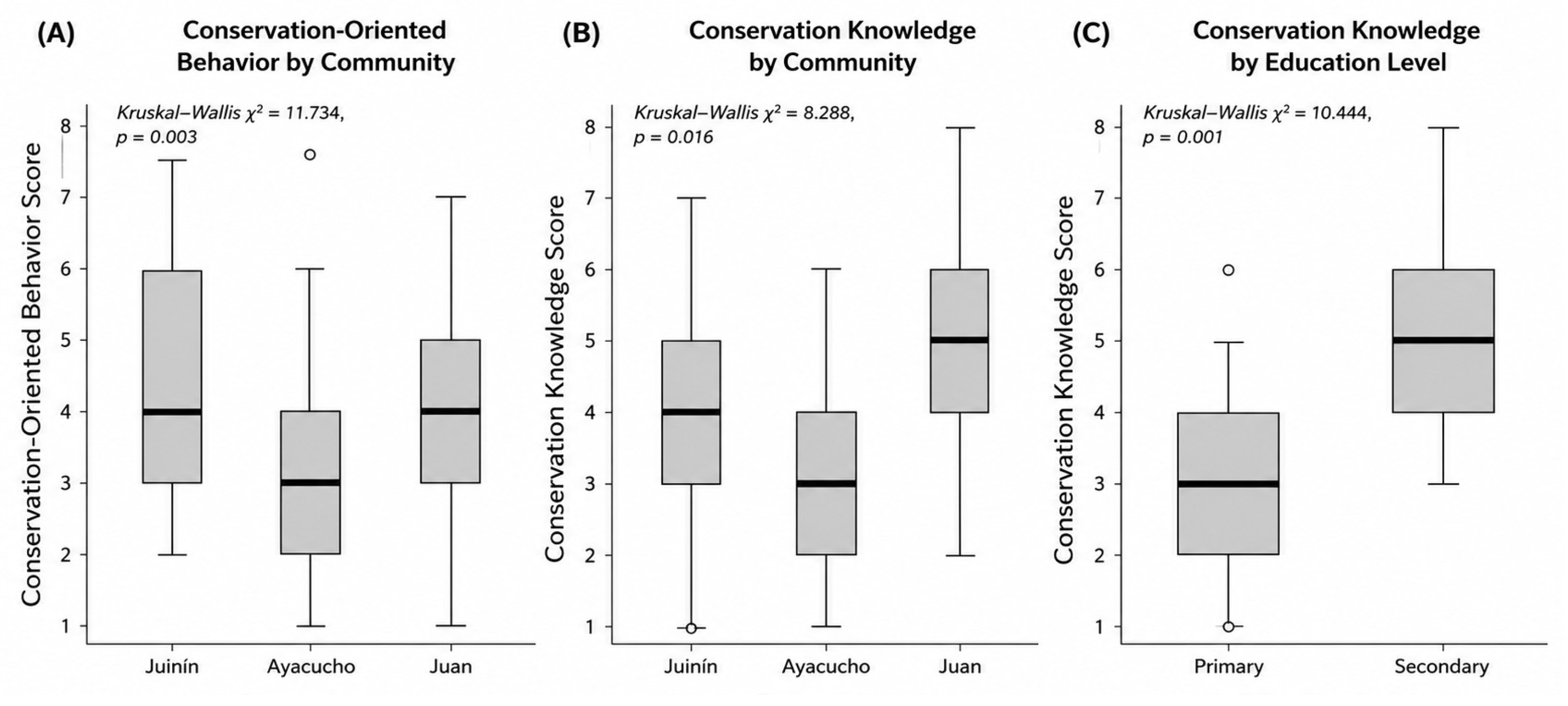
A total of 66 household interviews were completed across the three study communities, including 10 respondents from Junín, 24 from San Juan, and 32 from Ayacucho. Self-reported conservation-oriented behavior differed significantly among the three communities (Figure 2a; Kruskal–Wallis: median = 9.5, χ²(2) = 6.961, p < 0.05). San Juan exhibited the highest level of ecotourism involvement (ETR = 0.50), followed by Ayacucho (ETR = 0.22), whereas no respondents in Junín reported employment in ecotourism (ETR = 0.00). Spearman’s rank-order correlation indicated a modest but statistically significant positive association between ecotourism involvement and self-reported conservation-oriented behavior (rs(64) = 0.324, p < 0.01).
Conservation knowledge also differed significantly among communities (Figure 2b; Kruskal–Wallis: median = 4, χ²(2) = 8.288, p < 0.05). A significant positive association was observed between ecotourism involvement and conservation knowledge (rs(64) = 0.275, p < 0.05). Education level demonstrated the strongest association with conservation knowledge. Participants who had completed or partially completed secondary education achieved significantly higher conservation knowledge scores than participants with only primary education (Figure 2c; Kruskal–Wallis: χ² = 10.444, p < 0.01). Spearman’s rank-order correlation also revealed a moderate positive relationship between education level and conservation knowledge (rs (64) = 0.401, p < 0.01).
No statistically significant associations were detected between conservation knowledge or self-reported conservation-oriented behavior and participant age, gender, years of residence in the community, or livestock ownership (Table A1).
4. Discussion
This study examined associations between ecotourism participation, conservation knowledge, and self-reported conservation-oriented behavior across three communities within the Tamshiyacu Tahuayo Communal Reserve (ACRCTT) in the Peruvian Amazon. Overall, the findings were broadly consistent with the proposed hypotheses. Greater community involvement in ecotourism was associated with higher levels of self-reported conservation-oriented behavior (H1) and conservation knowledge (H2), while formal education was independently associated with greater conservation knowledge (H3). Although the cross-sectional design precludes causal inference, these findings suggest that ecotourism may be associated with conservation-oriented behavior and environmental knowledge within a community-based conservation system.
The positive association between ecotourism involvement and conservation-oriented behavior is consistent with previous research suggesting that ecotourism can create economic incentives aligned with environmental protection [9,14,15]. In communities where residents derive income from tourism, wildlife and intact forest ecosystems acquire value not only for their ecological importance, but also for the livelihood opportunities they provide. Rather than relying on activities such as hunting or logging, residents employed in ecotourism may recognize greater long-term benefits in maintaining healthy ecosystems that attract visitors. This realignment of livelihood incentives may encourage conservation-oriented practices while reinforcing biodiversity as a shared community resource. However, because the analyses are correlational, alternative explanations remain possible. Communities with stronger pre-existing conservation values may be more likely to attract or support ecotourism initiatives, while ecotourism development itself may reflect historical partnerships with conservation organizations, better infrastructure, or external investment.
Ecotourism participation was also positively associated with conservation knowledge, suggesting that tourism-engaged communities may have greater awareness of local environmental issues. This association may partly reflect increased opportunities for environmental learning through interactions associated with ecotourism [29], although the cross-sectional design does not allow the direction of this relationship to be determined. Education level, however, showed the strongest association with conservation knowledge. Participants with partial or completed secondary education identified significantly more locally relevant environmental threats than those with only primary education, indicating that formal education was associated with greater environmental understanding independently of ecotourism involvement. Together, these findings suggest that both ecotourism participation and formal education are associated with higher levels of conservation knowledge within the study communities.
The broader ecotourism literature presents mixed evidence regarding conservation outcomes. Although ecotourism has frequently been promoted as a mechanism for simultaneously supporting biodiversity conservation and rural development, empirical studies have reported both positive and negative ecological and socioeconomic outcomes. Positive outcomes include increased conservation awareness, diversification of household income, and improved protection of threatened species [9,14,15]. However, other studies have documented environmental disturbance, unequal distribution of economic benefits, tourism dependency, and limited effects on actual conservation behavior [30,31,32,33,34]. Consequently, ecotourism should not automatically be assumed to produce sustainable conservation outcomes.
Research on community-based ecotourism suggests that the effects of tourism on conservation are strongly influenced by the institutional and social contexts in which it operates. Meaningful community participation, effective local governance, and equitable distribution of tourism benefits have consistently been identified as important factors shaping both conservation and livelihood outcomes [13,18]. Within the ACRCTT, ecotourism appears to function as one component of a broader community-based conservation system in which local communities participate directly in wildlife management and conservation decision-making while continuing to depend on natural resources for their livelihoods. From a social-ecological systems perspective, this arrangement reflects a coupled system in which biodiversity conservation, local livelihoods, tourism, and governance interact through continuous feedback processes [3,4]. This institutional setting may help explain why communities with greater ecotourism involvement also reported higher levels of conservation-oriented behavior and conservation knowledge in the study communities.
Qualitative responses from participants provide additional context for these quantitative findings. Several respondents described ecotourism as providing an alternative livelihood that reduced dependence on extractive activities while increasing the value of conserving wildlife and forest ecosystems. As one participant explained, “Before, I hunted animals. Now I identify animals for tourists.” Although presented only as an illustrative example rather than a formal qualitative analysis, this response reflects a broader pattern in which participants viewed ecotourism as providing supplementary household income while reducing reliance on hunting or forest extraction. This interpretation is consistent with sustainable livelihood research suggesting that diversification of household income may reduce dependence on environmentally extractive activities while increasing economic resilience in rural communities [35]. In remote Amazonian regions where formal employment opportunities remain limited, ecotourism may therefore provide supplementary income that enables households to reduce reliance on hunting, logging, or overfishing while maintaining economic security. Nevertheless, ecotourism may also create new vulnerabilities. Tourism-dependent economies are often sensitive to fluctuations in global markets, political instability, and disruptions such as the COVID-19 pandemic. Unequal access to tourism employment may also contribute to social inequality and uneven distribution of economic benefits. Recent governance research similarly demonstrates that ecotourism benefits are not always distributed equally among community members and may reinforce existing social and economic inequalities if governance institutions are weak [16]. Although this study did not examine the distribution of tourism income among households, understanding issues of equity and benefit sharing represents an important direction for future research.
A major strength of this study is its comparative design. By examining adjacent communities located within the same communal reserve, the study compared villages that shared similar ecological conditions, regional history, and governance structures while differing primarily in their level of ecotourism involvement. This design reduced some of the contextual variation that often complicates comparisons among protected areas. Nevertheless, several limitations should be acknowledged. The relatively small sample size, particularly in Junín, reduced statistical power. Measures of conservation behavior relied on self-reported perceptions and may therefore be influenced by recall or social desirability bias. In addition, ecotourism involvement was measured at the community level whereas behavioral responses were measured at the individual level. Despite these limitations, the present study contributes to the growing body of evidence examining the relationships among ecotourism, conservation, and community participation in Amazonian protected areas [6]. By comparing adjacent communities within the same communal reserve, the study reduces much of the ecological and institutional variation that often complicates comparisons among protected areas and highlights the importance of local context when evaluating ecotourism as a conservation strategy. Overall, the findings suggest that ecotourism may contribute to conservation-oriented behavior and environmental knowledge when embedded within well-functioning systems of community-based conservation. In regions where local livelihoods depend heavily on natural resources, carefully managed ecotourism may provide one mechanism for simultaneously supporting biodiversity conservation and livelihood diversification. However, achieving these outcomes is likely to depend on effective governance, equitable distribution of tourism benefits, continued investment in education, and meaningful participation of local communities in conservation decision-making.
5. Conclusions
The Tamshiyacu Tahuayo Communal Reserve provides a valuable setting for examining relationships among ecotourism, community participation, and conservation within the Peruvian Amazon. This study identified positive associations between ecotourism involvement and both conservation knowledge and self-reported conservation-oriented behavior across three communities within the reserve. In addition, higher levels of formal education were independently associated with greater conservation knowledge, highlighting that both ecotourism involvement and higher levels of formal education were associated with greater environmental knowledge.
Because the study was exploratory and cross-sectional, the findings should be interpreted as associations rather than evidence of causality. Nevertheless, they suggest that community-based ecotourism may contribute to conservation-oriented attitudes and practices when embedded within effective local governance, equitable distribution of tourism benefits, meaningful community participation, and higher levels of formal education.
In regions where communities depend heavily on natural resources, carefully managed ecotourism may represent one strategy for supporting both biodiversity conservation and livelihood diversification. Future research should employ longitudinal and mixed-methods approaches to better understand how ecotourism, education, and community governance interact over time to influence conservation outcomes in community-managed protected areas.
AI use disclosure
During the preparation of this manuscript, the corresponding author used ChatGPT (OpenAI, GPT-5.5) to assist with improving the figures included in the manuscript. All outputs were reviewed and verified by the authors, who take full responsibility for the content of this publication.
Supplementary Materials
The following supporting information can be downloaded at the website of this paper posted on Preprints.org, Appendix A- Figure A1: View of the village of San Juan de Yanayacu (SJ), as seen from the Yanayacu tributary; Figure A2: Aerial view showing (1) the village of San Juan de Yanayacu (SJ) and (2) an ecotourism lodge situated within the community’s territory. The image illustrates the close spatial relationship between the village, the lodge, and the surrounding Amazon rainforest; Table A1: Results of Kruskal–Wallis tests examining associations between conservation behavior and conservation knowledge and six explanatory variables: community (ecotourism involvement), education level, age, gender, years of residence in the village, and ownership of pets or livestock; Appendix B- Semi-Structured Questionnaire in Spanish and English Translation.
Author Contributions
Conceptualization, D.A. and J.A.G.; methodology, D.A. and J.A.G.; formal analysis, D.A.; investigation, D.A.; data curation, D.A.; writing—original draft preparation, D.A.; writing—review and editing, J.A.G. and D.A.; visualization, D.A. and J.A.G.; supervision, J.A.G.; project administration, J.A.G. Daniel Aizenman conducted the analyses and prepared the initial manuscript as part of the requirements for the Advanced Inquiry Program at Miami University. Jenny Anne Glikman supervised the scientific aspects of the study, redesigned the figures, and substantially revised and edited the manuscript. All authors have read and agreed to the published version of the manuscript.
Funding
This research received no external funding.
Institutional Review Board Statement
The study was conducted in accordance with the Declaration of Helsinki and approved by the Institutional Review Board of Miami University (Protocol ID: 03386e). Prior permission to conduct the research was also obtained from the community leaders (teniente gobernadores) of the participating communities.
Informed Consent Statement
Verbal informed consent was obtained from all participants prior to data collection. The use of verbal rather than written consent was approved by the Miami University Institutional Review Board (Protocol ID: 03386e).
Data Availability Statement
The data presented in this study are not publicly available because they contain information that could compromise the privacy and confidentiality of the participants and the communities involved. Data are available from the corresponding author upon reasonable request, subject to ethical approval, participant confidentiality, and applicable institutional requirements.
Conflicts of Interest
The authors declare no conflicts of interest.
Acknowledgments
The authors sincerely thank the residents of San Juan de Yanayacu, Ayacucho Tipishca, and Nuevo Junín for their participation in this study and for generously sharing their time and knowledge. We are especially grateful to Barbara Land for providing census data, cultural insights, and assistance in identifying a trusted local survey administrator, which greatly facilitated data collection. We thank Alfredo Dosantos for coordinating field logistics and assisting with translation of the survey instrument, Dustin Pinedo for serving as a trusted interpreter during fieldwork, and Mackenzie Borau for reviewing an early draft of the manuscript. We also thank Grand Amazon Lodge and Tours for providing logistical support, including transportation, accommodation, and research facilities, and Project Dragonfly for supporting the development of this study. Daniel Aizenman is a graduate student in the Advanced Inquiry Program at Miami University (Oxford, OH, USA), offered in partnership with the San Diego Zoo Wildlife Alliance (SDZWA). The views expressed in this article are those of the authors and do not necessarily reflect the views of the SDZWA.
Abbreviations
The following abbreviations are used in this manuscript:
| ACRCTT | Área de Conservación Regional Comunal Tamshiyacu Tahuayo |
| A | Ayacucho Tipishca community (also as Ayacucho) |
| NJ | Nuevo Junín (also as Junín) |
| SJ | San Juan de Yanayacu community (also as Juan) |
Appendix A
Figure A1.
View of the village of San Juan de Yanayacu (SJ), as seen from the Yanayacu tributary. Photograph by Daniel Aizenman.
Figure A1.
View of the village of San Juan de Yanayacu (SJ), as seen from the Yanayacu tributary. Photograph by Daniel Aizenman.
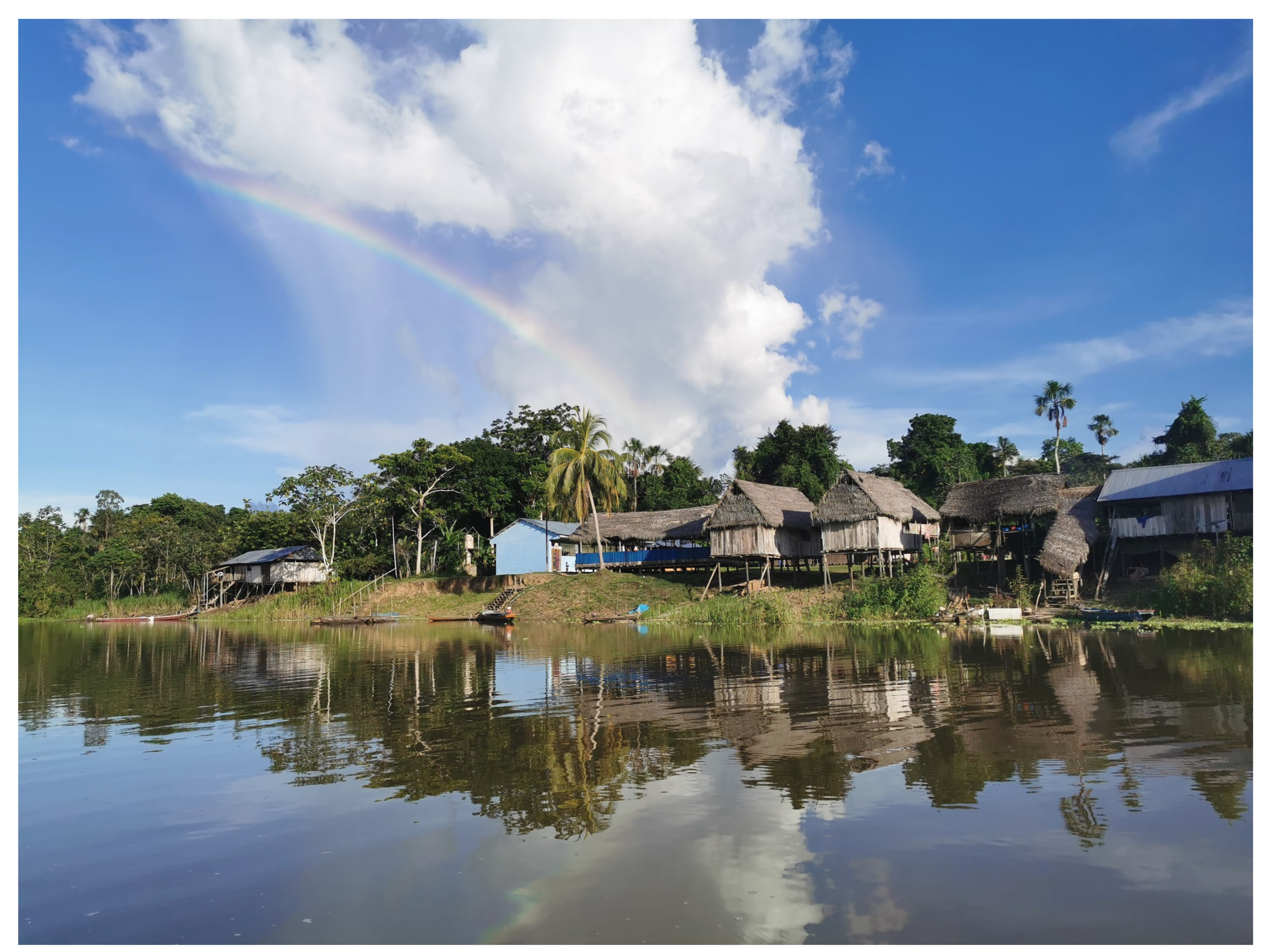
Figure A2.
Aerial view showing (1) the village of San Juan de Yanayacu (SJ) and (2) an ecotourism lodge situated within the community’s territory. The image illustrates the close spatial relationship between the village, the lodge, and the surrounding Amazon rainforest. Photograph by Daniel Aizenman.
Figure A2.
Aerial view showing (1) the village of San Juan de Yanayacu (SJ) and (2) an ecotourism lodge situated within the community’s territory. The image illustrates the close spatial relationship between the village, the lodge, and the surrounding Amazon rainforest. Photograph by Daniel Aizenman.
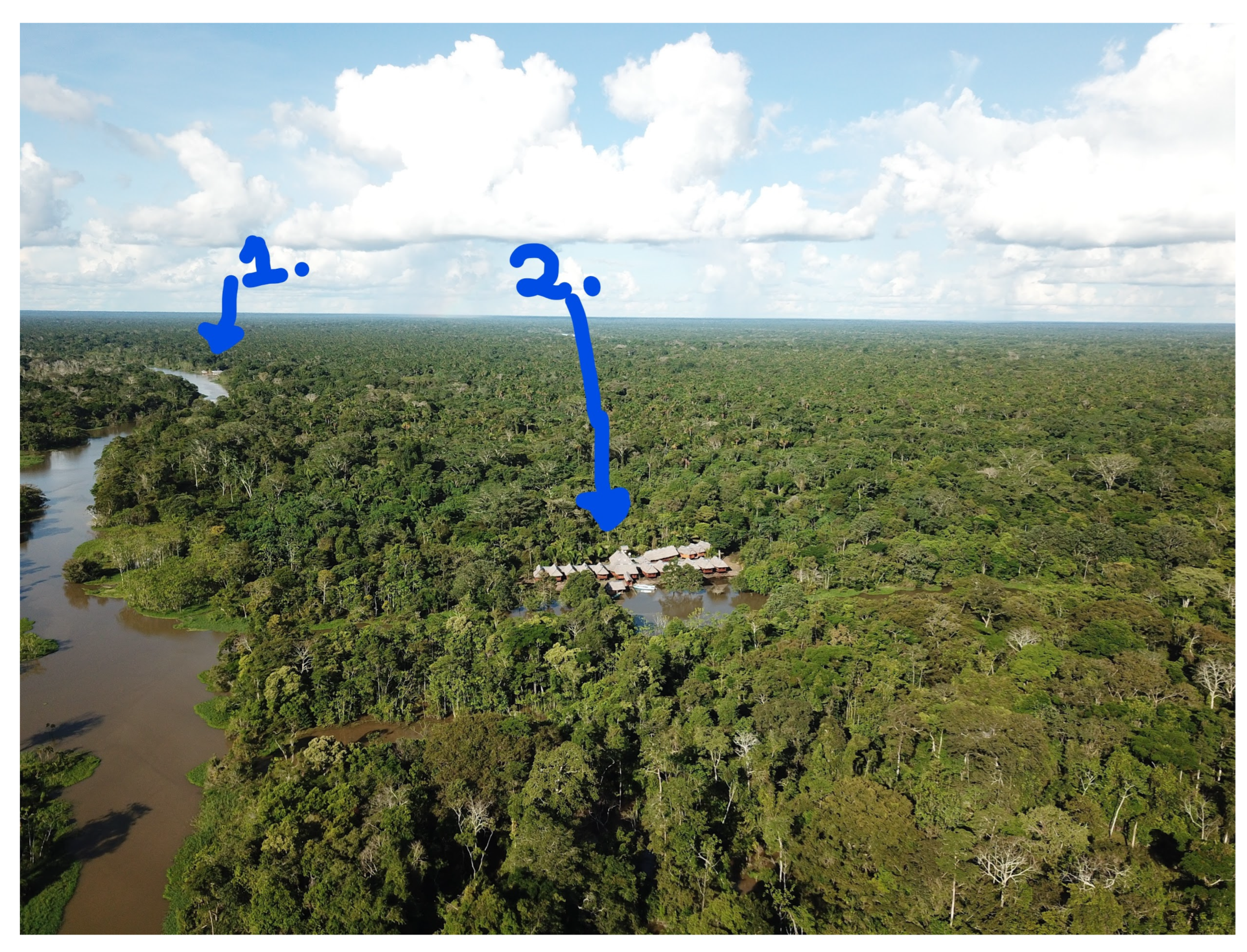

Table A1.
Results of Kruskal–Wallis tests examining associations between conservation behavior and conservation knowledge and six explanatory variables: community (ecotourism involvement), education level, age, gender, years of residence in the village, and ownership of pets or livestock.
Table A1.
Results of Kruskal–Wallis tests examining associations between conservation behavior and conservation knowledge and six explanatory variables: community (ecotourism involvement), education level, age, gender, years of residence in the village, and ownership of pets or livestock.
| Response Variable | Statistic | Community | Education | Age | Gender | Years in Village | Pets/Livestock |
|---|---|---|---|---|---|---|---|
| Conservation behavior | H | 6.961 | 0.892 | 37.793 | 0.790 | 29.287 | 0.054 |
| p | 0.031 | 0.345 | 0.387 | 0.374 | 0.778 | 0.817 | |
| Conservation knowledge | H | 8.288 | 10.444 | 35.297 | 0.115 | 41.543 | 2.123 |
| p | 0.016 | 0.001 | 0.502 | 0.734 | 0.242 | 0.145 |
Footer. H = Kruskal–Wallis test statistic. Values with p < 0.05 (Community for both outcomes and Education for conservation knowledge) are statistically significant.
Appendix B
Semi-Structured Interview Questionnaire
The following questionnaire was used during the semi-structured interviews. Verbal informed consent was obtained before each interview. The wording of the questionnaire was refined following pilot interviews conducted in the local river Spanish dialect.
Original Questionnaire (Spanish)
Sección A. Ecoturismo
A1. ¿Qué piensas del ecoturismo en tu comunidad? (Circule una respuesta.)
- Bueno
- Más o menos
- Malo
Si Bueno:
- Muy bueno
- Bueno
Si Malo:
- Muy malo
- Malo
¿Por qué? _______________________
A2. ¿Apruebas la venida de turistas a la zona? (Circule una respuesta.)
- Sí
- No
Si Sí:
- Poco
- Mucho
Si No:
- No tanto
- Nada
¿Por qué? _______________________
A4. ¿Trabajas en turismo?
- Sí
- No
A5. Si trabajas en turismo, ¿qué trabajo realizas?
A6. ¿Alguien en tu casa trabaja en turismo?
- Sí
- No
Sección B. Conservación
B1. ¿Piensas que tu pueblo está haciendo suficiente para proteger a los animales?
- Sí
- No
si Sí:
- Poco
- Mucho
si No:
- No tanto
- Nada
¿Por qué? _______________________
B2. ¿Piensas que tu pueblo está haciendo suficiente para proteger las plantas y los árboles?
- Sí
- No
Si Sí:
- Poco
- Mucho
Si No:
- No tanto
- Nada
¿Por qué? _______________________
B3. ¿Cuáles piensas que son las mayores amenazas para los animales silvestres de la zona?
B4. ¿Cuáles piensas que son las mayores amenazas para el medio ambiente y los árboles?
B5. Menciona hasta tres animales que estén en peligro en la zona.
Sección C. Acciones de Conservación
C1. ¿Qué acciones o leyes toma tu comunidad para la conservación de la flora y fauna?
C2. ¿Qué acciones o leyes toma tu comunidad que son perjudiciales para la conservación de la flora y fauna?
C3a. ¿Realizas acciones personales que ayuden al medio ambiente? ¿Cuáles?
C3b. ¿Con qué frecuencia pescas?
Sección D. Información demográfica
D1. ¿Qué grado de instrucción tienes?
D2. ¿Cuántos años tienes?
D3. Sexo:
- Hombre
- Mujer
D4. ¿Naciste en esta comunidad?
- Sí
- No
D5. Si respondió “No”, ¿cuántos años ha vivido en esta comunidad?
D6. ¿Cuántos adultos viven en su hogar?
D7. ¿Cuántos hijos viven en su hogar?
D8. ¿Tiene animales domésticos? ¿Cuáles?
D9. ¿Forma parte del grupo de artesanas?
English Translation
Section A. Ecotourism
A1. What do you think about ecotourism in your community? (Circle one response.)
- Good
- Neutral
- Bad
If Good:
- Very good
- Good
If Bad:
- Very bad
- Bad
Why? _______________________
A2. Do you approve of tourists visiting your community?
- Yes
- No
If Yes:
- A little
- A lot
If No:
- Not much
- Not at all
Why? _______________________
A4. Do you work in tourism?
- Yes
- No
A5. If yes, what is your job?
A6. Does anyone in your household work in tourism?
- Yes
- No
Section B. Conservation
B1. Do you think your community is doing enough to protect wildlife?
- Yes
- No
If Yes:
- A little
- A lot
If No:
- Not much
- Not at all
Why? _______________________
B2. Do you think your community is doing enough to protect plants and trees?
- Yes
- No
If Yes:
- A little
- A lot
If No:
- Not much
- Not at all
Why? _______________________
B3. What do you think are the greatest threats to wildlife in this area?
B4. What do you think are the greatest threats to the environment and forests?
B5. Please name up to three threatened animal species found in this area.
Section C. Conservation Actions
C1. What actions or regulations does your community take to conserve plants and animals?
C2. What actions or regulations taken by your community are harmful to the conservation of plants and animals?
C3a. Do you personally take actions that help protect the environment? If yes, what actions?
C3b. How often do you fish?
Section D. Demographic Information
D1. What is your highest level of education?
D2. How old are you?
D3. Sex:
- Male
- Female
D4. Were you born in this community?
- Yes
- No
D5. If no, how many years have you lived in this community?
D6. How many adults live in your household?
D7. How many children live in your household?
D8. Do you own any animals? If yes, what animals?
D9. Are you a member of the local artisans’ group?
References
- Berkes, F. Rethinking community-based conservation. Conserv. Biol. 2004, 18(3), 621–630. [Google Scholar] [CrossRef]
- Brosius, P. J.; Lowenhaupt Tsing, A.; Zerner, C. Communities and conservation: Histories and politics of community-based natural resource management; Bloomsbury Publishing, 2005. [Google Scholar]
- Morse, W. C. Protected area tourism and management as a social-ecological complex adaptive system. Front. Sustain. Tour. 2 2023, 1187402. [Google Scholar] [CrossRef]
- Ostrom, E. A general framework for analyzing sustainability of social-ecological systems. Science 2009, 325(5939), 419–422. [Google Scholar] [CrossRef] [PubMed]
- Franco, C. L.; El Bizri, H. R.; Souza, P. R.; Fa, J. E.; Valsecchi, J.; de Sousa, I. S.; de Queiroz, H. L. Community-based environmental protection in the Brazilian Amazon: Recent history, legal landmarks and expansion across protected areas. J. Environ. Manag. 287 2021, 112314. [Google Scholar] [CrossRef] [PubMed]
- Rodrigues, A. C.; Costa, H. C. M.; Peres, C. A.; Brondizio, E. S.; Dias, A.; de Moraes, J. A.; Constantino, P. A. L.; Ladle, R. J.; Malhado, A. C. M.; Campos-Silva, J. V. Community-based management expands ecosystem protection footprint in Amazonian forests . Nat. Sustain. 2025, 1304–1313. [Google Scholar] [CrossRef]
- Ostrom, E. Governing the commons: The evolution of institutions for collective action; Cambridge University Press, 1990. [Google Scholar]
- Honey, M. Ecotourism and sustainable development: Who owns paradise? Princeton University Press, 2008. [Google Scholar]
- Buckley, R. Ecotourism: Principles and practices; CABI, 2009. [Google Scholar]
- Recharte, M.; Bride, I. G.; Bowler, M. A recovering flagship: Giant otters, communities and tourism in northern Peru. Wildl. Res. 2015, 41(6), 490–498. [Google Scholar] [CrossRef]
- Shoobridge, D.; de Lara, C. M.; Morán, M.; Carreón, G.; Macahuachi, R.; Gómez, F. Socio-environmental evaluation of the Yavarí–Yavarí-Mirín and Tamshiyacu–Tahuayo zones . ParksWatch. 2004. Available online: http://t.parkswatch.org/spec_reports/yavari_eng.pdf.
- Das, M.; Chatterjee, B. Ecotourism: A panacea or a predicament? Tour. Manag. Perspect. 2015, 14, 3–16. [Google Scholar] [CrossRef]
- Stronza, A.; Gordillo, J. Community views of ecotourism. Ann. Tour. Res. 2008, 35(2), 448–468. [Google Scholar] [CrossRef]
- Ross, S.; Wall, G. Ecotourism: Towards congruence between theory and practice. Tour. Manag. 1999, 20(1), 123–132. [Google Scholar] [CrossRef]
- Hunt, C. A.; Durham, W. H.; Driscoll, L.; Honey, M. Can ecotourism deliver real economic, social, and environmental benefits? A study of the Osa Peninsula, Costa Rica. J. Sustain. Tour. 2015, 23(3), 339–357. [Google Scholar] [CrossRef]
- Carrión-Gualán, P. C.; Rodriguez Ojeda, L. E. Community-based ecotourism in Yasuní National Park. J. Posthumanism 2025. [Google Scholar] [CrossRef]
- Kiss, A. Is community-based ecotourism a good use of biodiversity conservation funds? Trends Ecol. Evol. 2004, 19(5), 232–237. [Google Scholar] [CrossRef] [PubMed]
- Stem, C. J.; Lassoie, J. P.; Lee, D. R.; Deshler, D. D.; Schelhas, J. W. Community participation in ecotourism benefits: The link to conservation practices and perspectives. Soc. Nat. Resour. 2003, 16(5), 387–413. [Google Scholar] [CrossRef]
- Pinedo, D.; Summers, P. M.; Smith, R. C.; Saavedra, J.; Zumaeta, R.; Almeyda, A. M. Community-based natural resource management as a non-linear process: A case in the Peruvian Amazon Varzea. Paper presented at the Eighth Conference of the International Association for the Study of Common Property, Bloomington, IN, 2000; Available online: http://dlc.dlib.indiana.edu/dlc/handle/10535/2076.
- Puertas, P. E. Hunting effort analysis in northeastern Peru: The case of the Reserva Comunal Tamshiyacu-Tahuayo . Master’s thesis, University of Florida, 1999. Available online: http://purl.fcla.edu/fcla/etd/amj9743.
- Coomes, O. T. A century of rain forest use in western Amazonia: Lessons for extraction-based conservation of tropical forest resources. For. Conserv. Hist. 1995, 39(3), 108–120. [Google Scholar] [CrossRef]
- Bodmer, R. E.; Eisenberg, J. F.; Redford, K. H. Hunting and the likelihood of extinction of Amazonian mammals: Caza y probabilidad de extinción de mamíferos amazónicos. Conserv. Biol. 1997, 11(2), 460–466. [Google Scholar] [CrossRef]
- Puertas, P. E.; Bodmer, R. E. Conservation of a high diversity primate assemblage. Biodivers. Conserv. 1993, 2(6), 586–593. [Google Scholar] [CrossRef]
- Campos-Silva, J. V.; Peres, C. A.; Antunes, A. P.; Valsecchi, J.; Pezzuti, J. Community-based population recovery of overexploited Amazonian wildlife. Perspect. Ecol. Conserv. 2017, 15(4), 266–270. [Google Scholar] [CrossRef]
- Coomes, O. T. Income formation among Amazonian peasant households in northeastern Peru: Empirical observations and implications for market-oriented conservation. Yearbook, Conference of Latin Americanists, 1996; Available online: http://geog.mcgill.ca/faculty/coomes/Coomes%20Article%2045%20income%20formation.pdf.
- Smith, R. C.; Pinedo, D.; Summers, P. M.; Almeyda, A. Tropical rhythms and collective action: Community-based fisheries management in the face of Amazonian unpredictability. IDS Bull. 2001, 32(4), 36–46. [Google Scholar] [CrossRef]
- Moya, L.; Fang, T. G. Linking conservation and local people through sustainable use of natural resources: Community-based management in the Peruvian Amazon. In Harvesting wild species: Implications for biodiversity conservation; Bodmer, R. E., Penn, J. W., Puertas, P., Eds.; 1997; p. 315. [Google Scholar]
- Newing, H.; Bodmer, R. E. Collaborative wildlife management and adaptation to change: The Tamshiyacu Tahuayo Communal Reserve, Peru. Nomadic Peoples 2003, 7(1), 110–122. Available online: https://www.jstor.org/stable/43124122. [CrossRef]
- Powell, R. B.; Ham, S. H. Can ecotourism interpretation really lead to pro-conservation knowledge, attitudes and behaviour? Evidence from the Galapagos Islands. J. Sustain. Tour. 2008, 16(4), 467–489. [Google Scholar] [CrossRef]
- Wall, G. Is ecotourism sustainable? Environ. Manag. 1997, 21(4), 483–491. [Google Scholar] [CrossRef] [PubMed]
- Lindberg, K.; Enriquez, J.; Sproule, K. Ecotourism questioned: Case studies from Belize. Ann. Tour. Res. 1996, 23(3), 543–562. [Google Scholar] [CrossRef]
- Isaacs, J. C. The limited potential of ecotourism to contribute to wildlife conservation. Wildl. Soc. Bull. 2000, 28(1), 61–69. Available online: http://globalforestcoalition.org/wp-content/uploads/2010/12/Ecotourism-Isaacs1.pdf.
- Müllner, A.; Linsenmair, K. E.; Wikelski, M. Exposure to ecotourism reduces survival and affects stress response in hoatzin chicks (Opisthocomus hoazin). Biol. Conserv. 2004, 118(4), 549–558. [Google Scholar] [CrossRef]
- Waylen, K. A.; McGowan, P. J. K.; Pawi Study Group; Milner-Gulland, E. J. Ecotourism positively affects awareness and attitudes but not conservation behaviours: A case study at Grande Riviere, Trinidad. Oryx 2009, 43(3), 343–351. [Google Scholar] [CrossRef]
- Vizuete Montero, M. O.; Chaglla-Cango, M.; Lara-Vásconez, R.; Figueroa Saavedra, H. Community-based tourism and agroecological agriculture in the Ecuadorian Amazon: A cointegration analysis. 2026. [Google Scholar]
Figure 1.
Location of the study area and communities surveyed within the Área de Conservación Regional Comunal Tamshiyacu Tahuayo (ACRCTT), Loreto Region, Peru. The left panel shows the location of Peru within South America. The upper-right panel identifies the ACRCTT, and the blue square and arrow indicate the area enlarged in the lower-right panel. The lower-right panel shows the locations of the three study communities included in this study: Ayacucho Tipishca (A), Nuevo Junín (NJ), and San Juan de Yanayacu (SJ).
Figure 1.
Location of the study area and communities surveyed within the Área de Conservación Regional Comunal Tamshiyacu Tahuayo (ACRCTT), Loreto Region, Peru. The left panel shows the location of Peru within South America. The upper-right panel identifies the ACRCTT, and the blue square and arrow indicate the area enlarged in the lower-right panel. The lower-right panel shows the locations of the three study communities included in this study: Ayacucho Tipishca (A), Nuevo Junín (NJ), and San Juan de Yanayacu (SJ).
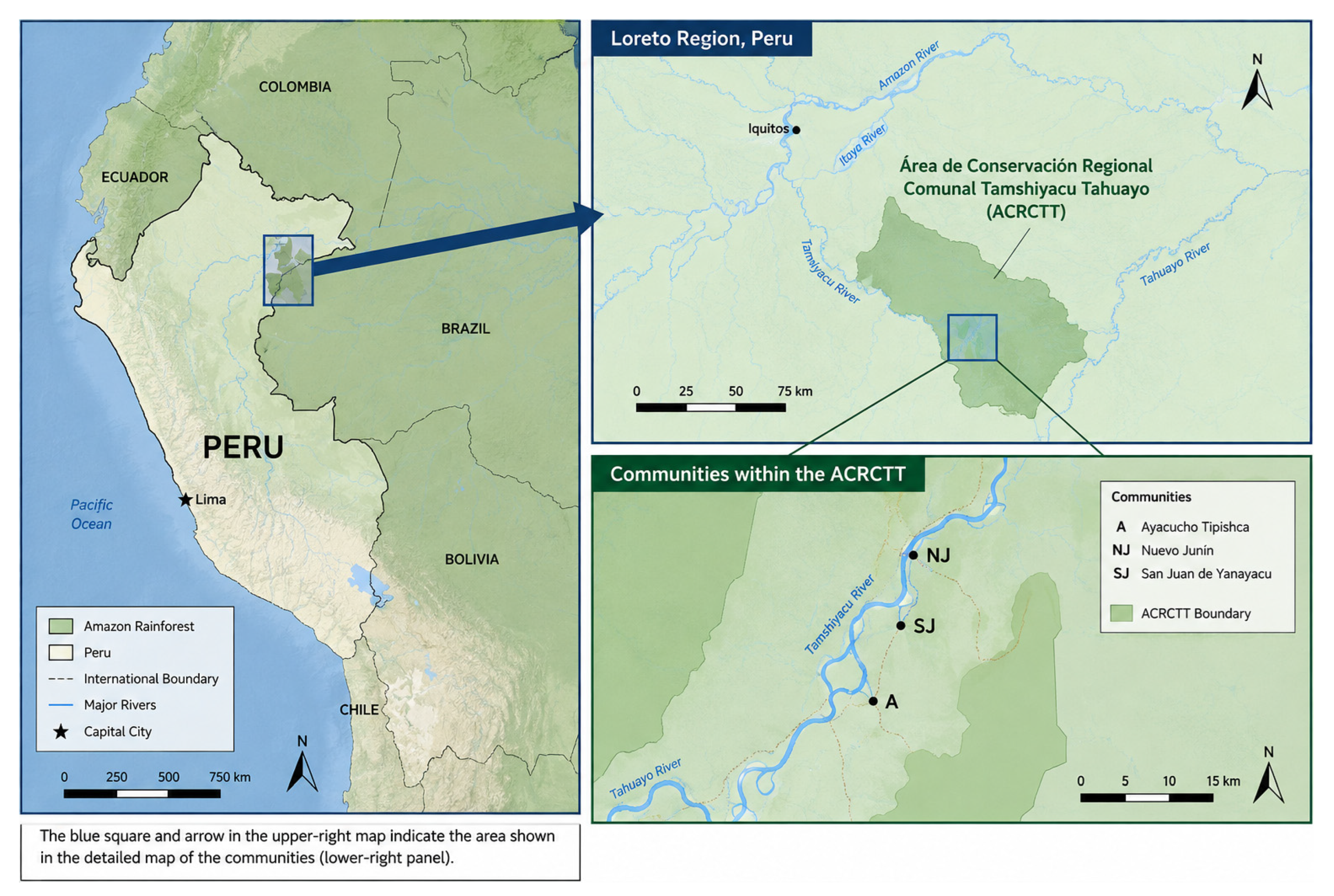
Figure 2.
Box plots of (a) conservation-oriented behavior score by community. The extent of conservation behavior is scored by summing up Likert-type scale; (b) conservation knowledge score by community. Conservation Knowledge related to issues was calculated by the number of correctly mentioned environmental threats or challenges faced by the environment, such as logging, hunting, and waste disposal; and (c) conservation knowledge score by education level. ‘Primary’ represents partial or completed primary school education (n=49), while ‘Secondary’ represents partial or completed secondary school education (n=17). For (a) and (b) Villages are ordered from left to right according to increasing ecotourism involvement: Junín (n=10); Ayacucho (n=32), Juan (=24). Boxes represent the interquartile range (IQR; 25th–75th percentiles), bold lines indicate medians, whiskers show values within 1.5 × IQR, and circles denote outliers.
Figure 2.
Box plots of (a) conservation-oriented behavior score by community. The extent of conservation behavior is scored by summing up Likert-type scale; (b) conservation knowledge score by community. Conservation Knowledge related to issues was calculated by the number of correctly mentioned environmental threats or challenges faced by the environment, such as logging, hunting, and waste disposal; and (c) conservation knowledge score by education level. ‘Primary’ represents partial or completed primary school education (n=49), while ‘Secondary’ represents partial or completed secondary school education (n=17). For (a) and (b) Villages are ordered from left to right according to increasing ecotourism involvement: Junín (n=10); Ayacucho (n=32), Juan (=24). Boxes represent the interquartile range (IQR; 25th–75th percentiles), bold lines indicate medians, whiskers show values within 1.5 × IQR, and circles denote outliers.
Disclaimer/Publisher’s Note: The statements, opinions and data contained in all publications are solely those of the individual author(s) and contributor(s) and not of MDPI and/or the editor(s). MDPI and/or the editor(s) disclaim responsibility for any injury to people or property resulting from any ideas, methods, instructions or products referred to in the content. |
© 2026 by the authors. Licensee MDPI, Basel, Switzerland. This article is an open access article distributed under the terms and conditions of the Creative Commons Attribution (CC BY) license (http://creativecommons.org/licenses/by/4.0/).
Copyright: This open access article is published under a Creative Commons CC BY 4.0 license, which permit the free download, distribution, and reuse, provided that the author and preprint are cited in any reuse.