

Submitted:
06 August 2026
Posted:
10 August 2026
You are already at the latest version
Abstract
Background and Clinical Significance: Cholangiocarcinoma (CCA) is molecularly heterogeneous, and the expanding number of actionable alterations has made comprehensive molecular profiling central to the management of advanced disease. This report presents two rare fusion-positive cases and reviews the molecular landscape, biomarker-directed therapies, resistance mechanisms, and clinically applicable sequencing strategies in CCA. Case Presentation: The first patient was a 63-year-old woman with metastatic biliary tract adenocarcinoma who experienced progression after multiple systemic therapies. Next-generation sequencing identified an NTRK1 fusion, and larotrectinib produced rapid metabolic regression, improvement in Eastern Cooperative Oncology Group performance status from 2 to 0, and durable disease control through June 2025. The second patient was a 29-year-old man with intrahepatic cholangiocarcinoma and primary resistance to gemcitabine–cisplatin. Detection of a RET fusion enabled treatment with selpercatinib, resulting in complete metabolic response and 19 months of disease control. At hepatic oligoprogression, thermal ablation permitted continuation of selpercatinib before subsequent progression. Conclusions: These cases demonstrate that rare NTRK1 and RET fusions can be clinically decisive in CCA. Routine DNA- and RNA-based molecular profiling, longitudinal reassessment, and multidisciplinary management may expand therapeutic opportunities and support individualized treatment beyond conventional histology-based pathways.
Keywords:
cholangiocarcinoma
; precision oncology
; molecular profiling
; targeted therapy
; FGFR2
; IDH1
; HER2
; NTRK
; RET
; Liquid biopsy
1. Introduction
Cholangiocarcinoma (CCA) is an aggressive malignancy arising from the biliary epithelium and remains one of the most challenging gastrointestinal cancers to treat. Although relatively uncommon, its incidence has increased worldwide over the past two decades, particularly for intrahepatic cholangiocarcinoma (iCCA). The epidemiology of CCA varies geographically and reflects distinct etiological factors. Liver fluke infection remains the predominant risk factor in Southeast Asia, whereas metabolic dysfunction-associated steatotic liver disease, chronic viral hepatitis, primary sclerosing cholangitis, obesity, and diabetes are more frequently associated with CCA in Western countries. Because most patients are diagnosed with unresectable or metastatic disease, systemic therapy continues to represent the primary treatment option [1,2,3,4,5].
For many years, therapeutic options for advanced cholangiocarcinoma were largely confined to platinum-based chemotherapy. Although the addition of immune checkpoint inhibitors has modestly improved first-line outcomes, durable disease control remains uncommon, and overall survival is still limited. These challenges have accelerated the transition toward biomarker-driven treatment strategies aimed at improving patient outcomes [6,7,8,9].
The increasing implementation of comprehensive genomic profiling has revealed that cholangiocarcinoma comprises several molecularly distinct subtypes with different biological characteristics and therapeutic vulnerabilities. Approximately 40–50% of patients harbor at least one clinically actionable genomic alteration, creating opportunities for targeted therapies beyond conventional cytotoxic chemotherapy [10,11,12,13,14].
Current ESMO and NCCN guidelines recommend comprehensive molecular profiling, including both DNA- and RNA-based next-generation sequencing whenever feasible, for patients with unresectable or metastatic cholangiocarcinoma. The integration of RNA sequencing is particularly important for detecting clinically actionable gene fusions that may not be identified by DNA-based assays alone [12,15,16,17].
While most clinical evidence has focused on common alterations such as FGFR2 rearrangements and IDH1 mutations, increasing attention has been directed toward rare but highly actionable genomic events, including NTRK and RET fusions. Although these alterations are uncommon, they can produce remarkable and durable responses to highly selective targeted therapies. Their recognition further highlights the importance of routine comprehensive molecular profiling and emphasizes the growing contribution of real-world clinical experience to precision oncology [14,17,18,19].
In this case report and literature review, we discuss the evolving molecular landscape of cholangiocarcinoma, summarize current evidence supporting biomarker-directed therapies, and examine emerging strategies to overcome therapeutic resistance. We also present two real-world cases of NTRK1- and RET fusion-positive cholangiocarcinoma that demonstrate the clinical value of comprehensive molecular profiling in guiding individualized treatment and achieving durable disease control.
2. Case Presentations
2.1. NTRK1 Fusion-Positive Metastatic CCA Treated with Larotrectinib
A 63-year-old woman was referred to our institution in February 2019 after undergoing right nephrectomy at another center for a renal mass initially diagnosed as a stromal tumor. During postoperative evaluation, multiple liver lesions were detected. Histopathological review of both the nephrectomy specimen and liver biopsy demonstrated metastatic adenocarcinoma consistent with a biliary tract primary.
Because the primary tumor remained uncertain and comprehensive molecular profiling was not routinely available at that time, the patient received paclitaxel plus carboplatin for carcinoma of unknown primary beginning in April 2019. Disease progression was documented in October 2020. Molecular testing subsequently suggested FGFR pathway activation, and sorafenib was initiated; however, further progression occurred in August 2021, leading to treatment with gemcitabine plus oxaliplatin (GEMOX). During chemotherapy, the patient developed chronic kidney disease, considerably limiting subsequent treatment options.
Following additional radiological progression, comprehensive next-generation sequencing (NGS) was performed in October 2023 and identified an NTRK1 fusion, establishing eligibility for targeted therapy. Larotrectinib was initiated through an early-access program.
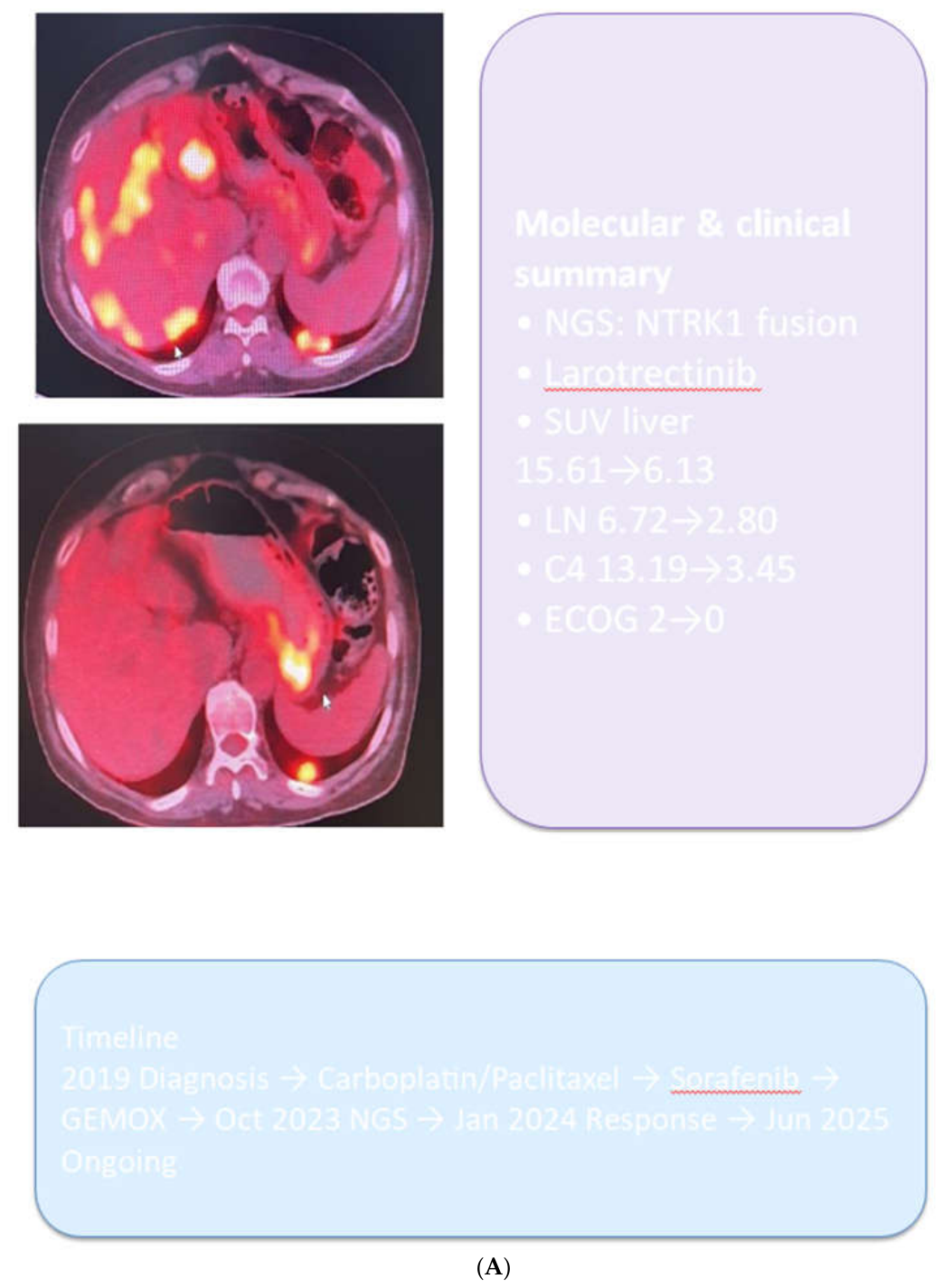
The first 18F-FDG PET/CT evaluation performed in January 2024 demonstrated a marked metabolic response. Bilobar liver metastases showed a substantial reduction in metabolic activity (SUVmax 15.61 to 6.13), while previously hypermetabolic para-aortic, peri-celiac, peri-pancreatic, and para-caval lymph nodes exhibited both metabolic and morphological regression (SUVmax 6.72 to 2.80). Complete metabolic resolution of pancreatic uptake was observed, and the metastatic lesion involving the C4 vertebral body demonstrated a marked decrease in metabolic activity (SUVmax 13.19 to 3.45) (Figure 2A).
Radiological improvement was accompanied by a remarkable clinical response. The patient’s performance status improved from ECOG 2 to ECOG 0, with substantial recovery of functional capacity and resolution of cancer-related symptoms. Larotrectinib was well tolerated and maintained durable clinical and radiological benefit through the last follow-up in June 2025.
This case highlights the clinical value of comprehensive molecular profiling in advanced cholangiocarcinoma. After progression on multiple lines of systemic therapy, identification of an actionable NTRK1 fusion enabled treatment with a highly selective TRK inhibitor, resulting in rapid and durable disease control. This experience illustrates how routine molecular testing can directly influence therapeutic decision-making and substantially improve patient outcomes.
2.2. RET Fusion-Positive Metastatic iCCA Treated with Selpercatinib
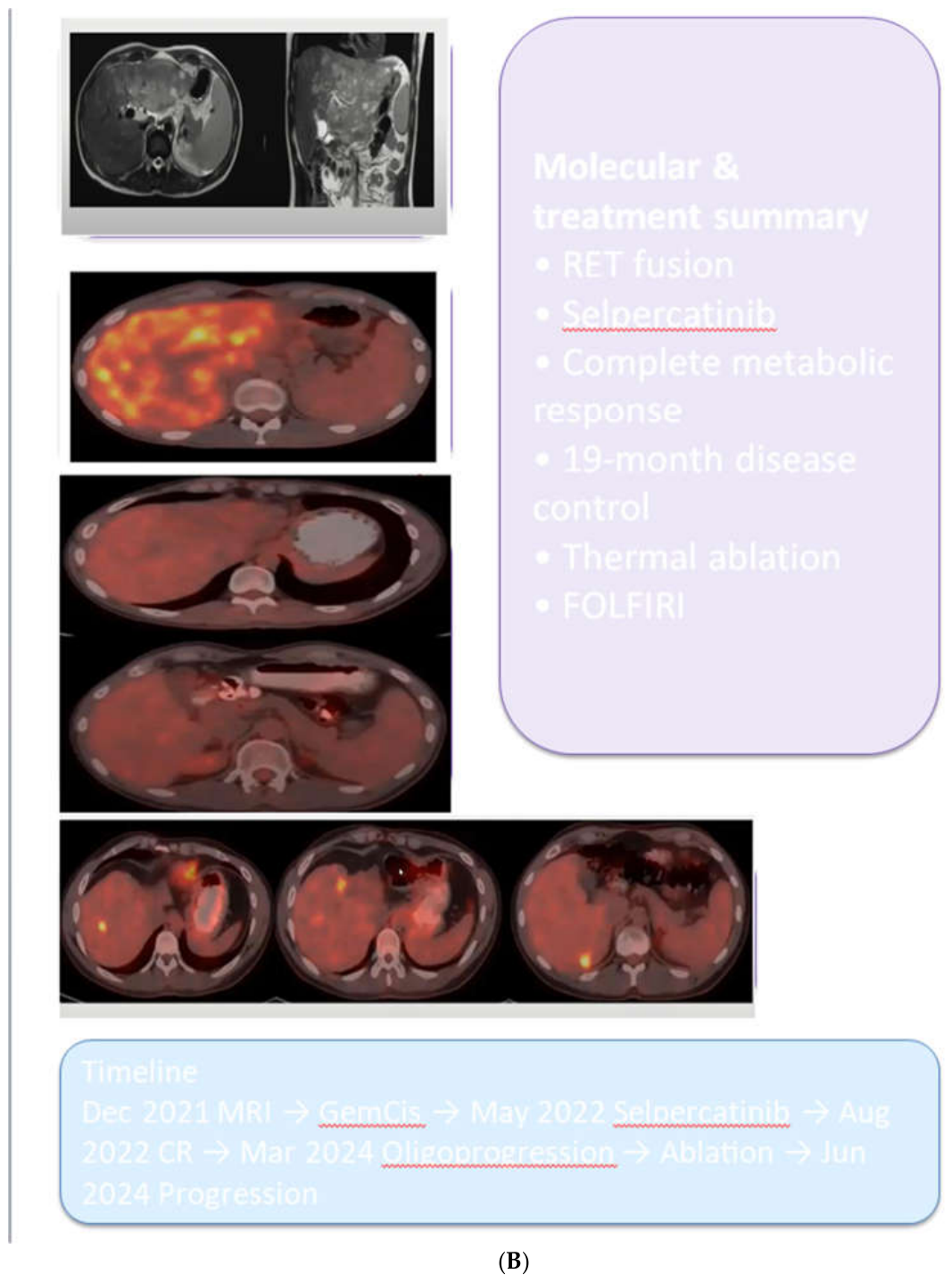
A 29-year-old man presented with progressive abdominal pain, weight loss, and declining performance status. Contrast-enhanced abdominal magnetic resonance imaging revealed multiple infiltrative liver masses predominantly involving segments II and III, accompanied by numerous satellite lesions replacing the left hepatic lobe. Metastatic lymphadenopathy was identified in the hepatic hilum, periportal, and peripancreatic regions (Figure 2B).
Ultrasound-guided liver biopsy confirmed adenocarcinoma consistent with intrahepatic cholangiocarcinoma. Immunohistochemistry demonstrated diffuse CK7 and CK19 expression, whereas hepatocellular markers (HepPar-1 and Arginase-1) were negative.
Because of symptomatic, rapidly progressive disease, first-line gemcitabine plus cisplatin was initiated between February and April 2022. Following three treatment cycles, 18F-FDG PET/CT demonstrated unequivocal disease progression, indicating primary resistance to platinum-based chemotherapy (Figure 2B).
Comprehensive next-generation sequencing subsequently identified a pathogenic RET fusion, establishing eligibility for targeted therapy. Selpercatinib was initiated in May 2022.
Clinical improvement was evident within the first month of treatment. Constitutional symptoms resolved, and performance status improved from ECOG 2 to ECOG 0. Follow-up 18F-FDG PET/CT performed in August 2022 demonstrated a complete metabolic response, with complete resolution of previously hypermetabolic hepatic and nodal lesions (Figure 2B).
Complete metabolic remission was maintained for 19 months, an outcome rarely observed with conventional systemic therapy in advanced cholangiocarcinoma. During routine follow-up in March 2024, 18F-FDG PET/CT demonstrated limited hepatic oligoprogression without evidence of extrahepatic disease. Given the sustained systemic disease control, preserved liver function, and excellent performance status, the multidisciplinary tumor board recommended local ablative treatment. Four hepatic lesions were successfully treated with thermal ablation while selpercatinib was continued without interruption.
Follow-up imaging performed in June 2024 demonstrated new hepatic lesions, suggesting acquired resistance. Image-guided biopsy confirmed recurrent adenocarcinoma, and repeat comprehensive molecular profiling was requested to investigate secondary resistance mechanisms. However, because of rapidly progressive liver dysfunction before molecular results became available, treatment was changed to FOLFIRI.
This case highlights the clinical value of comprehensive molecular profiling in advanced cholangiocarcinoma. Despite primary resistance to platinum-based chemotherapy, identification of a RET fusion enabled highly effective targeted therapy, resulting in rapid symptom improvement, complete metabolic remission, and durable disease control. Furthermore, continuation of selpercatinib beyond oligoprogression combined with local ablative therapy illustrates the potential role of multidisciplinary management in prolonging the benefit of oncogene-directed treatment.
3. Literature Review
3.1. Molecular Landscape and Oncogenic Drivers of Cholangiocarcinoma
Molecular heterogeneity is a defining feature of cholangiocarcinoma and largely explains the marked differences in tumor biology, clinical behavior, and response to systemic therapy. Although cholangiocarcinoma has traditionally been classified according to its anatomical location as intrahepatic (iCCA), perihilar (pCCA), and distal cholangiocarcinoma (dCCA), increasing molecular evidence has shown that anatomical classification alone does not adequately capture the biological diversity of this disease. Instead, comprehensive molecular characterization has become essential for understanding disease pathogenesis and identifying therapeutic opportunities [20,21,22,23,24].
According to the current WHO classification, intrahepatic cholangiocarcinoma is further divided into small-duct and large-duct subtypes. These entities differ not only in their presumed cell of origin but also in their genomic landscape and clinical behavior. Small-duct iCCA is enriched for clinically actionable alterations, particularly FGFR2 rearrangements and IDH1/2 mutations, together with recurrent BAP1 and PBRM1 alterations. In contrast, large-duct tumors more commonly harbor KRAS, TP53, SMAD4, ARID1A, and ERBB2 alterations and share many molecular characteristics with extrahepatic cholangiocarcinoma. These differences have direct therapeutic implications because the likelihood of identifying targetable genomic alterations varies considerably among anatomical and molecular subtypes [21,22,23,24].
Beyond anatomical classification, geographical and etiological factors also contribute to the molecular diversity of cholangiocarcinoma. Liver fluke-associated tumors display a mutational profile distinct from non-fluke-associated disease, whereas regional sequencing studies have identified substantial differences in the frequency of several driver alterations across patient populations. These findings suggest that environmental exposures influence not only tumor development but also genomic evolution and, potentially, therapeutic responsiveness [20,21,22,23].
The widespread implementation of next-generation sequencing has significantly expanded the understanding of cholangiocarcinoma biology. Approximately 40–50% of patients with advanced disease harbor at least one clinically actionable genomic alteration. In addition to FGFR2 and IDH1, therapeutically relevant alterations include HER2 amplification, BRAF V600E mutation, NTRK and RET fusions, ALK, ROS1, MET amplification, BRCA1/2, PALB2, KRAS G12C, and MSI-H/dMMR [23,24,25,26,27,28,29].
These discoveries have established comprehensive molecular profiling as a key component of routine clinical practice. Current ESMO and NCCN guidelines recommend integrated DNA- and RNA-based next-generation sequencing whenever feasible for patients with unresectable or metastatic cholangiocarcinoma. The combined use of DNA and RNA sequencing increases the detection of clinically actionable alterations, particularly gene fusions that may be missed by DNA-based assays alone, and supports a more precise, biomarker-driven approach to treatment selection [2,15,16,21,23].
The molecular classification and therapeutic implications of the major genomic alterations in cholangiocarcinoma are summarized in Figure 1.
3.1.1. Driver Genomic Alterations in Cholangiocarcinoma
The molecular landscape of cholangiocarcinoma is characterized by considerable genomic diversity, with approximately 40–50% of patients harboring at least one clinically actionable alteration. The distribution of these alterations varies according to anatomical subtype, underlying etiology, and cell of origin, providing the biological basis for biomarker-driven treatment strategies [20,21,22,23,24].
Several recurrent genomic alterations have important biological and therapeutic implications. TP53 is the most frequently altered tumor suppressor gene, particularly in large-duct intrahepatic and extrahepatic cholangiocarcinoma, and is associated with genomic instability, aggressive tumor biology, and poor clinical outcomes [30,31,32,33]. Likewise, KRAS mutations are enriched in large-duct tumors and promote constitutive activation of the MAPK signaling pathway, contributing to tumor progression and resistance to systemic therapy [30,31,32,33,34,35].
By contrast, IDH1/2 mutations and FGFR2 rearrangements represent the molecular hallmarks of small-duct intrahepatic cholangiocarcinoma. These alterations occur predominantly in biologically distinct tumors with a higher prevalence of actionable targets and have led to the successful development of selective targeted therapies, fundamentally changing the therapeutic landscape of advanced cholangiocarcinoma [25,31,32,33,34,35,36,37].
Additional alterations involving BAP1, PBRM1, ARID1A, and SMAD4 contribute to tumor development through disruption of chromatin remodeling, epigenetic regulation, and TGF-β signaling. Although these genes are not currently associated with approved targeted therapies, they influence tumor biology and may represent future therapeutic targets [31,32,33,34,35,36,37,38].
Comprehensive genomic profiling has also identified a growing number of less common but clinically relevant alterations, including HER2 amplification, BRAF V600E mutation, NTRK and RET fusions, ALK, ROS1, MET amplification, BRCA1/2, PALB2, KRAS G12C, and MSI-H/dMMR. Individually uncommon, these alterations collectively account for a substantial proportion of patients eligible for precision oncology approaches and increasingly support the routine implementation of comprehensive molecular testing in advanced cholangiocarcinoma [30,31,32,33,34,35,36,37,38,39].
3.1.2. Oncogenic Signaling Pathways in Cholangiocarcinoma
Despite their molecular diversity, most actionable genomic alterations in cholangiocarcinoma converge on a limited number of oncogenic signaling pathways. Receptor tyrosine kinase activation, together with alterations affecting intracellular signaling molecules, ultimately drives tumor proliferation, survival, metabolic adaptation, invasion, immune evasion, and therapeutic resistance. These shared signaling networks provide the biological rationale for both targeted therapies and combination treatment strategies [10,11,20,23].
Among these pathways, RAS–RAF–MEK–ERK (MAPK) and PI3K–AKT–mTOR represent the principal downstream signaling cascades activated by therapeutically relevant alterations, including FGFR2, HER2, MET, RET, NTRK, and ROS1. Persistent activation of these pathways promotes uncontrolled proliferation, resistance to apoptosis, epithelial–mesenchymal transition, and metastatic progression, making them central therapeutic targets in cholangiocarcinoma [40,41,42,43,44,45,46,47].
Additional signaling pathways, including TGF-β, WNT/β-catenin, Notch, Hedgehog, and Hippo/YAP, contribute to tumor progression through their effects on cellular plasticity, stromal remodeling, invasion, and immune escape. Likewise, alterations affecting the DNA damage response (DDR) pathway create opportunities for synthetic lethal strategies using platinum compounds or PARP inhibitors in selected molecular subgroups [40,41,42,43,44,45,46,47,48].
Rather than functioning independently, these pathways form an interconnected signaling network that enables tumor adaptation and promotes therapeutic resistance. This biological complexity provides the rationale for the development of combination strategies targeting multiple signaling pathways and supports ongoing efforts to refine biomarker-driven treatment approaches in cholangiocarcinoma [40,41,42,43,44,45,46,47,48,49].
3.2. Actionable Molecular Alterations and Precision Targeted Therapy
3.2.1. FGFR2 Alterations
Fibroblast growth factor receptor 2 (FGFR2) rearrangements represent the most clinically relevant actionable genomic alteration in intrahepatic cholangiocarcinoma (iCCA) and remain the prototype of successful precision oncology in biliary tract cancer. Identified in approximately 10–15% of patients with small-duct iCCA, these alterations define a biologically distinct subgroup characterized by increased sensitivity to selective FGFR inhibition and more favorable clinical outcomes than unselected advanced cholangiocarcinoma [20,23,30,34].
Most FGFR2 alterations occur as chromosomal rearrangements that generate constitutively active fusion proteins. More than 150 fusion partners have been identified, with BICC1 being the most frequently reported. These rearrangements lead to persistent activation of the MAPK and PI3K–AKT signaling pathways, promoting tumor proliferation, survival, angiogenesis, and metastatic progression [20,23,31,32,33,34,50].
The clinical relevance of FGFR2 rearrangements was first established by the phase II FIGHT-202 trial, in which pemigatinib demonstrated clinically meaningful activity in previously treated FGFR2 fusion-positive cholangiocarcinoma. Objective responses were observed in approximately one-third of patients, with a median progression-free survival of 6.9 months and a median overall survival exceeding 21 months, leading to regulatory approval by both the FDA and EMA [31].
Subsequently, the FOENIX-CCA2 study confirmed the efficacy of futibatinib, an irreversible FGFR inhibitor capable of overcoming several secondary resistance mutations. Futibatinib achieved an objective response rate of 42% and a median progression-free survival approaching 9 months, providing an additional treatment option for patients with previously treated FGFR2-rearranged disease [26].
More recently, the phase III FIGHT-302 trial evaluated pemigatinib as first-line therapy compared with gemcitabine plus cisplatin. This study represents an important step toward moving FGFR-directed therapy into earlier lines of treatment and reflects the ongoing shift from empiric chemotherapy toward biomarker-guided therapeutic strategies [32,33,34,50].
Despite these advances, acquired resistance remains the principal challenge of FGFR-targeted therapy. The most common mechanisms involve secondary mutations within the FGFR2 kinase domain, particularly gatekeeper and molecular brake mutations, together with activation of bypass signaling pathways involving MET, EGFR, or PI3K. In addition, intratumoral heterogeneity and clonal evolution contribute to therapeutic escape. Serial circulating tumor DNA (ctDNA) analysis has emerged as a promising approach for identifying resistance mutations before radiological progression and may facilitate earlier treatment adaptation [32,33,34,50].
Accurate detection of FGFR2 alterations is essential for patient selection. Current international guidelines recommend integrated DNA- and RNA-based next-generation sequencing, as RNA sequencing substantially improves the detection of fusion transcripts that may be missed by DNA-only approaches [20,24,29].
Future research is focused on overcoming acquired resistance through next-generation FGFR inhibitors, rational combination strategies, and molecular monitoring with liquid biopsy. Highly selective agents such as RLY-4008 and tinengotinib have demonstrated encouraging activity in early-phase studies and may further expand treatment options for patients with FGFR2-driven cholangiocarcinoma [32,33,34,50,51,52].
3.2.2. IDH1 Mutations
Isocitrate dehydrogenase 1 (IDH1) mutations represent one of the defining molecular hallmarks of small-duct intrahepatic cholangiocarcinoma (iCCA) and, together with FGFR2 rearrangements, illustrate the successful integration of precision oncology into biliary tract cancer. Unlike KRAS and TP53 alterations, which are more frequently observed in large-duct and extrahepatic cholangiocarcinoma, IDH1 mutations identify a biologically distinct subgroup characterized by altered cellular metabolism and increased sensitivity to targeted inhibition [10,11,20,23,35].
Most IDH1 alterations involve hotspot mutations at codon R132, resulting in production of the oncometabolite D-2-hydroxyglutarate (2-HG). Accumulation of 2-HG promotes widespread epigenetic remodeling, impaired cellular differentiation, and metabolic reprogramming, creating a therapeutically exploitable vulnerability that distinguishes IDH1-mutant tumors from other cholangiocarcinoma subtypes [10,35,36,37].
Clinically, IDH1 mutations occur almost exclusively in small-duct iCCA, with reported frequencies ranging from 10% to 20%, whereas IDH2 mutations are considerably less common. Compared with KRAS-driven tumors, IDH1-mutant cholangiocarcinomas generally exhibit fewer co-occurring genomic alterations and a distinct molecular profile, although their prognostic significance remains inconsistent across clinical studies [11,20,23,25,35].
The clinical relevance of IDH1 mutations was established by the phase III ClarIDHy trial, which evaluated ivosidenib in previously treated patients with advanced IDH1-mutant cholangiocarcinoma. Ivosidenib significantly prolonged progression-free survival and demonstrated a clinically meaningful overall survival benefit after adjustment for crossover. Although objective response rates were modest, prolonged disease stabilization translated into meaningful clinical benefit and led to regulatory approval of ivosidenib for previously treated IDH1-mutant cholangiocarcinoma [25,36,37].
Unlike FGFR inhibitors, which frequently induce measurable tumor shrinkage, the benefit of IDH1 inhibition is primarily reflected by prolonged disease stabilization. This observation is consistent with the biological mechanism of IDH inhibition, which partially restores cellular differentiation rather than producing direct cytotoxic effects. Consequently, progression-free survival and duration of disease control may better capture the therapeutic impact of IDH1 inhibition than conventional response rates [25,36].
Accurate identification of IDH1 mutations is therefore essential for treatment selection. Because these alterations consist predominantly of hotspot missense mutations, they are readily detected by DNA-based next-generation sequencing and are routinely included in comprehensive molecular profiling panels recommended by both ESMO and NCCN guidelines [15,16,20,24].
Despite the success of ivosidenib, acquired resistance remains an important clinical challenge. Proposed mechanisms include secondary IDH1 mutations, activation of bypass signaling pathways, epigenetic adaptation, and clonal evolution. Ongoing studies are evaluating combination strategies with immune checkpoint inhibitors, PARP inhibitors, ATR inhibitors, and next-generation IDH inhibitors to improve the durability of response and delay therapeutic resistance [25,32,33,34,35,36,37].
3.2.3. HER2 Alterations
Human epidermal growth factor receptor 2 (HER2/ERBB2) has emerged as an important therapeutic target in biliary tract cancer, particularly following the success of HER2-directed therapies in other solid tumors. Unlike FGFR2 rearrangements and IDH1 mutations, which are largely confined to small-duct intrahepatic cholangiocarcinoma, HER2 alterations occur predominantly in large-duct intrahepatic, perihilar, distal cholangiocarcinoma, and gallbladder carcinoma, defining a distinct molecular subgroup that is increasingly amenable to precision oncology [10,20,23,40].
HER2 alterations include gene amplification, protein overexpression, and less frequently activating mutations. HER2 amplification is the predominant mechanism of oncogenic activation and results in persistent stimulation of the MAPK and PI3K–AKT–mTOR signaling pathways, promoting tumor proliferation, survival, invasion, and metastatic progression. Because HER2 overexpression does not always correlate with gene amplification, accurate molecular characterization requires integration of immunohistochemistry, in situ hybridization, and comprehensive genomic profiling [20,23,40].
The prevalence of HER2 alterations varies according to anatomical subtype. HER2 amplification is reported in approximately 10–20% of gallbladder carcinoma, 5–15% of extrahepatic cholangiocarcinoma, and less than 5% of intrahepatic cholangiocarcinoma, whereas activating HER2 mutations occur in approximately 2–5% of biliary tract cancers [20,23,40].
Clinical evidence supporting HER2-directed therapy has expanded rapidly over the past few years. Initial proof-of-concept was provided by the phase II MyPathway basket trial, in which dual HER2 blockade with trastuzumab plus pertuzumab demonstrated durable responses in patients with previously treated HER2-positive biliary tract cancers, establishing HER2 as a clinically actionable therapeutic target [39].
Subsequently, the bispecific antibody zanidatamab further improved clinical outcomes. In the pivotal HERIZON-BTC-01 study, zanidatamab achieved objective response rates exceeding 40% with durable responses and an acceptable safety profile, ultimately establishing a new treatment standard for HER2-amplified biliary tract cancer [53].
The development of antibody-drug conjugates has further expanded therapeutic options. In the DESTINY-PanTumor02 trial, trastuzumab deruxtecan (T-DXd) demonstrated meaningful antitumor activity in HER2-positive biliary tract cancers, including patients previously exposed to HER2-directed therapies. The bystander effect of its cytotoxic payload may partially overcome intratumoral HER2 heterogeneity, providing an important advantage in tumors with variable HER2 expression [54].
Despite these advances, both primary and acquired resistance remain important challenges. Proposed mechanisms include loss of HER2 amplification, activation of alternative signaling pathways involving MET, EGFR, HER3, or PI3K–AKT, together with intratumoral heterogeneity and clonal evolution. Current research therefore focuses on combination strategies integrating HER2-targeted agents with immune checkpoint inhibitors, PI3K inhibitors, and next-generation antibody-drug conjugates to improve the durability of clinical benefit [20,23,40].
3.2.4. BRAF V600E Mutations
BRAF V600E mutations represent an uncommon but clinically important actionable alteration in cholangiocarcinoma. Although detected in only a small proportion of patients, the development of combined BRAF and MEK inhibition has established this molecular subgroup as another successful example of precision oncology in biliary tract cancer [10,20,23,41].
The BRAF V600E substitution results in constitutive activation of the MAPK signaling pathway, leading to uncontrolled cell proliferation, survival, epithelial–mesenchymal transition, and metastatic progression. Unlike receptor tyrosine kinase alterations, BRAF V600E functions as a downstream oncogenic driver, providing the biological rationale for dual inhibition of both BRAF and MEK [10,41,43].
Clinically, BRAF mutations occur in approximately 3–5% of intrahepatic cholangiocarcinomas, with the V600E variant accounting for nearly half of all BRAF alterations. These tumors are observed predominantly in small-duct iCCA, rarely coexist with FGFR2 rearrangements or IDH1 mutations, and are generally associated with more aggressive disease and poorer clinical outcomes [20,23,41].
Because BRAF V600E is a hotspot point mutation, it is readily detected by DNA-based next-generation sequencing and is routinely included in comprehensive molecular profiling panels recommended by current ESMO and NCCN guidelines for advanced cholangiocarcinoma [15,16,20,24].
The clinical benefit of targeting BRAF V600E was established by the phase II ROAR basket trial evaluating combined dabrafenib and trametinib in patients with BRAF V600E-mutant biliary tract cancer. Dual inhibition achieved an objective response rate of approximately 50%, with a median progression-free survival approaching 9 months and median overall survival exceeding 14 months, substantially improving outcomes compared with historical chemotherapy data. These findings established combined BRAF–MEK inhibition as the preferred treatment strategy for this molecular subgroup [42].
Despite encouraging efficacy, acquired resistance remains inevitable in most patients. Proposed mechanisms include secondary alterations affecting MEK, amplification of mutant BRAF, activation of upstream RAS, stimulation of the PI3K–AKT–mTOR pathway, and clonal evolution during treatment. Ongoing clinical studies are evaluating next-generation RAF inhibitors together with combination strategies incorporating immunotherapy or additional targeted agents to delay resistance and improve long-term disease control [41,42,43,44,45].
Although relatively uncommon, BRAF V600E mutations have become an established therapeutic target in cholangiocarcinoma. Their successful clinical translation further supports routine comprehensive molecular profiling and illustrates how identification of rare genomic alterations can substantially influence treatment selection and patient outcomes.
3.2.5. NTRK Fusions
NTRK gene fusions represent one of the most compelling examples of tissue-agnostic precision oncology. Although detected in less than 1% of biliary tract cancers, their identification has major therapeutic implications because selective TRK inhibitors produce rapid, durable, and often dramatic responses regardless of tumor histology. Consequently, NTRK fusion-positive cholangiocarcinoma has become an important example of biomarker-driven treatment, in which molecular alterations rather than anatomical origin determine therapeutic strategy [19,20,23,48].
Most clinically relevant NTRK alterations occur as chromosomal rearrangements that generate constitutively active fusion proteins. More than 100 fusion partners have been described across solid tumors, with ETV6, LMNA, TPM3, TPR, and SQSTM1 among those reported in cholangiocarcinoma. These rearrangements lead to persistent activation of the MAPK and PI3K–AKT signaling pathways, promoting tumor proliferation, survival, invasion, and metastatic progression [19,48].
Although rare, NTRK fusions are among the most clinically actionable alterations identified in cholangiocarcinoma. Their low prevalence should not discourage routine molecular testing because identification of a single fusion can dramatically alter treatment selection and patient outcomes. Detection is best achieved using integrated DNA- and RNA-based next-generation sequencing, with RNA sequencing providing superior sensitivity for identifying fusion transcripts. Immunohistochemistry may be used as an initial screening tool in selected settings but has limited diagnostic accuracy in biliary tract cancer [15,16,24,48].
The introduction of selective TRK inhibitors has transformed the treatment of NTRK fusion-positive malignancies. Larotrectinib demonstrated objective response rates approaching 75–80% across multiple tumor types in pooled analyses of phase I, II, and pediatric basket trials, resulting in one of the first tissue-agnostic approvals by both the FDA and EMA [19,45].
Entrectinib subsequently expanded therapeutic options by combining potent TRK inhibition with clinically relevant central nervous system activity. Its ability to achieve durable intracranial responses represents an important advantage for patients with brain metastases and further established TRK inhibition as the standard treatment for NTRK fusion-positive tumors [44,45].
Despite remarkable clinical efficacy, acquired resistance eventually develops in a proportion of patients. Resistance mechanisms include both on-target kinase-domain mutations and off-target activation of alternative signaling pathways involving MET, EGFR, KRAS, or BRAF. These findings have driven the development of second-generation TRK inhibitors, including selitrectinib and repotrectinib, which are designed to overcome resistance emerging during first-generation therapy [46,47,48].
Although uncommon, NTRK fusions clearly illustrate the clinical value of comprehensive molecular profiling in cholangiocarcinoma. Our patient harboring an NTRK1 fusion achieved a rapid and durable response to larotrectinib, supporting the growing body of real-world evidence that identification of rare genomic alterations can substantially improve patient outcomes. This case reinforces the importance of routine DNA/RNA-based molecular testing and highlights how precision oncology can directly influence therapeutic decision-making in daily clinical practice [19,45,46].
Our case demonstrates that comprehensive genomic profiling is not merely a diagnostic tool but a critical determinant of treatment selection in cholangiocarcinoma. Even rare genomic alterations such as NTRK fusions may produce exceptional and durable clinical benefit when matched with appropriate targeted therapy.
3.2.6. RET Rearrangements
RET gene fusions represent one of the rarest but most clinically actionable genomic alterations in cholangiocarcinoma. Although detected in less than 1% of biliary tract cancers, their identification has become increasingly important following the development of highly selective RET inhibitors capable of producing rapid and durable clinical responses. Similar to NTRK fusions, RET rearrangements illustrate the concept of tissue-agnostic precision oncology, in which treatment selection is determined by molecular alterations rather than tumor origin [18,20,23,55].
Most RET alterations occur as chromosomal rearrangements that generate constitutively active fusion proteins. More than 40 fusion partners have been identified, with KIF5B, CCDC6, NCOA4, TRIM33, and ERC1 among the best characterized. Constitutive RET activation promotes persistent signaling through the MAPK and PI3K–AKT pathways, driving tumor proliferation, survival, invasion, and metastatic progression [18,55].
Although RET fusions are exceptionally uncommon in cholangiocarcinoma, they have substantial therapeutic relevance because of their remarkable sensitivity to selective RET inhibition. Consequently, comprehensive molecular profiling using integrated DNA- and RNA-based next-generation sequencing has become essential for identifying this rare but highly actionable subgroup. RNA sequencing is particularly valuable for confirming RET fusion transcripts that may not be reliably detected by DNA-based approaches alone [15,16,20,23,55].
The development of highly selective RET inhibitors has transformed the management of RET fusion-positive malignancies. In the phase I/II LIBRETTO-001 basket trial, selpercatinib demonstrated durable clinical activity across multiple RET fusion-positive solid tumors, resulting in tumor-agnostic regulatory approval. In addition to its favorable safety profile, selpercatinib provides sustained inhibition of RET signaling and clinically relevant central nervous system activity, making it an effective treatment option for patients with advanced disease [18,55,56].
Despite encouraging clinical outcomes, acquired resistance eventually develops in a proportion of patients. Resistance mechanisms include both on-target kinase-domain mutations and off-target activation of bypass signaling pathways involving MET, KRAS, EGFR, and BRAF. These findings have stimulated the development of next-generation RET inhibitors together with combination strategies designed to overcome adaptive resistance [55,57,58].
Although rare, RET fusions highlight the clinical importance of comprehensive molecular profiling in cholangiocarcinoma. Our patient with RET fusion-positive intrahepatic cholangiocarcinoma achieved a durable complete metabolic response following selpercatinib, providing additional real-world evidence that identification of uncommon genomic alterations can substantially alter treatment selection and improve long-term outcomes. This experience further supports routine comprehensive molecular testing as an essential component of precision oncology in advanced cholangiocarcinoma [18,55,56].
Together with the NTRK case presented in this review, this experience illustrates that comprehensive molecular profiling should not be reserved for selected patients but considered routine practice in advanced cholangiocarcinoma, where identification of rare genomic alterations may fundamentally change therapeutic decision-making.

3.3. Mechanisms of Resistance to Targeted Therapy
The introduction of molecularly targeted therapies has substantially improved outcomes for selected patients with advanced cholangiocarcinoma. However, durable responses remain uncommon because most tumors eventually acquire resistance under therapeutic pressure. Rather than representing isolated molecular events, resistance mechanisms reflect continuous tumor evolution driven by genomic instability, clonal selection, and adaptive remodeling of intracellular signaling networks. Understanding these processes has become central to the development of next-generation targeted therapies and rational combination strategies [32,33,34,50,51,52].
Resistance is generally classified as primary (intrinsic) or acquired (secondary). Primary resistance refers to the absence of meaningful clinical benefit despite the presence of an actionable alteration, whereas acquired resistance develops after an initial response or disease stabilization. Although the underlying mechanisms differ among molecular subtypes, several recurring patterns have emerged across cholangiocarcinoma, including secondary kinase-domain mutations, activation of bypass signaling pathways, intratumoral heterogeneity, epigenetic adaptation, and clonal evolution [32,33,34,50].
Among currently available targeted therapies, FGFR2 inhibition provides one of the best-characterized models of acquired resistance. Secondary kinase-domain mutations, particularly involving the N550 molecular brake and V565 gatekeeper residues, frequently emerge during treatment and often coexist as multiple resistant subclones within the same patient. This remarkable molecular heterogeneity has driven the development of irreversible and next-generation FGFR inhibitors designed to overcome polyclonal resistance [32,33,34,50].
Resistance mechanisms associated with IDH1 inhibition appear to be more heterogeneous and remain less well understood. Proposed mechanisms include secondary IDH1 mutations, metabolic adaptation, epigenetic reprogramming, activation of compensatory signaling pathways, and clonal evolution. Similarly, resistance to HER2-directed therapy may result from loss of HER2 amplification, activation of alternative receptor tyrosine kinases such as MET, EGFR, or HER3, downstream activation of the PI3K–AKT pathway, and intratumoral HER2 heterogeneity. These observations have provided the rationale for combination strategies incorporating antibody-drug conjugates, immune checkpoint inhibitors, and additional targeted agents [25,32,33,34,35,36,37,38,39,40].
Comparable resistance patterns have also been described for BRAF, NTRK, and RET inhibitors. Secondary kinase-domain mutations frequently impair drug binding, whereas activation of bypass pathways involving KRAS, NRAS, MET, EGFR, or PI3K restores downstream signaling despite continued inhibition of the primary oncogenic driver. These adaptive mechanisms have stimulated the development of next-generation inhibitors capable of overcoming acquired resistance [41,42,43,44,45,46,47,48,49,55,56,57,58].
Beyond individual molecular alterations, increasing evidence suggests that intratumoral heterogeneity represents a fundamental driver of therapeutic failure. Under treatment pressure, resistant subclones undergo selective expansion, resulting in dynamic molecular evolution throughout the course of disease. This process highlights the limitations of relying on a single baseline biopsy to guide long-term treatment decisions and underscores the need for continuous molecular monitoring [20,23,51,52].
Circulating tumor DNA (ctDNA) has emerged as a promising tool for monitoring resistance evolution in real time. Serial liquid biopsy enables early detection of resistance-associated mutations, often before radiological progression becomes evident, and may facilitate timely adaptation of targeted therapies. Integration of ctDNA analysis into clinical practice is therefore expected to play an increasingly important role in precision oncology [34,51,52].
Collectively, therapeutic resistance in cholangiocarcinoma should be viewed as a dynamic evolutionary process rather than a single molecular event. Continued advances in molecular profiling, liquid biopsy, and next-generation targeted therapies are expected to support more personalized treatment strategies and improve the long-term durability of precision oncology.
3.4. Emerging Therapeutic Targets and Future Perspectives
The therapeutic landscape of cholangiocarcinoma continues to evolve beyond currently approved molecular targets. Although FGFR2, IDH1, HER2, BRAF, NTRK, and RET have established precision oncology as a standard approach for selected patients, these alterations account for only a proportion of advanced cholangiocarcinoma. Expanding the spectrum of actionable biomarkers and overcoming acquired resistance therefore remain major priorities for future research [17,20,30,40].
Among emerging targets, KRAS G12C has attracted considerable attention following the successful development of selective KRAS inhibitors. Although relatively uncommon in cholangiocarcinoma, early clinical studies with sotorasib and adagrasib, together with combination strategies targeting EGFR, SHP2, or MEK, suggest that KRAS-directed therapy may become an additional option for molecularly selected patients [30,41,43].
Advances in DNA damage response (DDR) targeting also offer new therapeutic opportunities. Alterations involving BRCA1, BRCA2, PALB2, and related homologous recombination repair genes provide the rationale for platinum-based chemotherapy and PARP inhibition, while ongoing studies are evaluating combinations with ATR, WEE1, and CHK1 inhibitors to enhance synthetic lethality and delay resistance [28,29].
The rapid development of antibody–drug conjugates (ADCs) and bispecific antibodies is further expanding the therapeutic landscape. Encouraging clinical activity has already been demonstrated with trastuzumab deruxtecan and zanidatamab, while additional agents targeting TROP2, B7-H3, Claudin 18.2, c-MET, and HER3 are under active clinical investigation. These approaches may improve drug delivery, overcome intratumoral heterogeneity, and enhance antitumor efficacy [40,53,54].
Beyond novel therapeutics, future precision oncology will increasingly rely on dynamic molecular monitoring rather than static baseline profiling. Serial circulating tumor DNA (ctDNA) analysis enables early detection of resistance mutations and supports adaptive treatment strategies throughout the disease course. Integration of ctDNA with artificial intelligence, multi-omic profiling, single-cell sequencing, spatial transcriptomics, and patient-derived organoid models is expected to improve biomarker discovery, optimize treatment selection, and accelerate individualized therapeutic decision-making [24,34,51,52,59].
Ultimately, the future of cholangiocarcinoma management will depend on combining comprehensive molecular characterization with adaptive therapeutic strategies capable of anticipating tumor evolution. As precision oncology continues to mature, treatment decisions are expected to become increasingly biology-driven, moving beyond single genomic alterations toward integrated, real-time molecular guidance throughout the course of disease.
3.5. Emerging Antibody–Drug Conjugates and Novel Surface Targets
Beyond HER2-directed therapies, several additional cell-surface targets are emerging as potential therapeutic opportunities in cholangiocarcinoma. Among these, TROP2, Claudin 18.2 (CLDN18.2), B7-H3 (CD276), c-MET, and DLL3 have attracted increasing interest because of their expression in selected biliary tract cancers and their suitability for antibody-drug conjugates (ADCs), bispecific antibodies, and other targeted immunotherapies. Early-phase clinical studies evaluating TROP2- and CLDN18.2-targeted ADCs have demonstrated encouraging antitumor activity across gastrointestinal malignancies, supporting further investigation in molecularly selected patients with cholangiocarcinoma. As ADC technology continues to evolve, these emerging targets may further expand the spectrum of biomarker-driven therapies beyond currently established molecular alterations [60,61,62].
3.6. Artificial Intelligence and Multi-Omic Precision Oncology
Artificial intelligence (AI) is increasingly being integrated into precision oncology, particularly through the analysis of complex multi-omic datasets. Combining radiomics, digital pathology, genomics, transcriptomics, proteomics, and clinical information has the potential to improve biomarker discovery, predict therapeutic response, and support individualized treatment selection. AI-assisted interpretation of next-generation sequencing data may also facilitate identification of rare actionable alterations and improve patient allocation to biomarker-driven clinical trials. As these technologies continue to mature, AI is expected to become an important component of molecular decision-making rather than replacing conventional genomic testing [24,51,52,59].
3.7. Patient-Derived Organoids and Functional Precision Medicine
Patient-derived organoids (PDOs) represent an emerging platform for functional precision oncology by enabling ex vivo assessment of drug sensitivity using patient-specific tumor tissue. Compared with conventional cancer cell lines, PDOs more accurately preserve tumor architecture, genomic characteristics, and intratumoral heterogeneity. Early studies in cholangiocarcinoma have demonstrated encouraging concordance between organoid-based drug screening and clinical treatment response, suggesting a potential role for individualized therapeutic selection. Future integration of PDOs with genomic profiling and circulating tumor DNA analysis may further refine personalized treatment strategies [24,51,52,63].
3.8. Toward Adaptive Precision Oncology
Future management of cholangiocarcinoma will likely extend beyond the identification of individual genomic alterations. Instead, precision oncology is gradually evolving toward an adaptive strategy that integrates comprehensive DNA- and RNA-based molecular profiling, longitudinal circulating tumor DNA (ctDNA) monitoring, functional tumor models, and multi-omic data analysis. Such an approach has the potential to support dynamic treatment adaptation, improve detection of acquired resistance, optimize therapeutic sequencing, and facilitate enrollment into biomarker-driven clinical trials. Continued collaboration between molecular pathology, translational research, bioinformatics, and multidisciplinary clinical teams will be essential for translating these advances into routine clinical practice and maximizing long-term patient benefit [15,16,24,51,52,59,63].
4. Discussion
The management of advanced cholangiocarcinoma has changed considerably over the past decade following the introduction of molecularly targeted therapies. Comprehensive genomic profiling has identified several actionable alterations, allowing treatment to be tailored according to tumor biology rather than anatomical classification alone. Although this approach has substantially expanded therapeutic options, only a proportion of patients currently benefit from approved targeted therapies, and durable disease control remains limited by the development of acquired resistance [17,20,30,40].
Among currently actionable alterations, NTRK and RET fusions present a particular clinical challenge because of their extremely low prevalence. As a result, most available evidence originates from tumour-agnostic basket trials that include only a small number of patients with biliary tract cancer. Consequently, disease-specific information regarding long-term efficacy, resistance mechanisms, and optimal treatment sequencing remains limited. In this context, carefully documented real-world experience provides important complementary evidence that may help guide clinical practice [18,19,44,45,46,47,48,49,55,56].
One of the principal observations emerging from our report is the clinical value of comprehensive molecular profiling. In both patients, actionable genomic alterations were identified only after progression following conventional systemic therapy. Earlier implementation of comprehensive DNA- and RNA-based next-generation sequencing might have enabled earlier initiation of biomarker-directed treatment, potentially reducing unnecessary chemotherapy exposure while improving quality of life and long-term disease control. These observations further support current ESMO and NCCN recommendations advocating comprehensive molecular profiling for all patients with unresectable or metastatic cholangiocarcinoma whenever feasible [15,16,20,24,51,52].
Our cases also illustrate that precision oncology extends beyond selection of targeted therapy alone. Both patients were managed using an integrated multidisciplinary approach combining molecular diagnostics, targeted treatment, serial imaging, and, in the RET-positive case, local ablative therapy during oligoprogression. Such strategies increasingly reflect the contemporary management of oncogene-driven malignancies and may become an important component of future cholangiocarcinoma care [17,24,51,52,59,63].
The remarkable response observed in our patient with NTRK1 fusion-positive cholangiocarcinoma further supports the exceptional efficacy of selective TRK inhibition. Although NTRK rearrangements occur in fewer than 1% of biliary tract cancers, pooled analyses of larotrectinib have consistently demonstrated objective response rates approaching 75–80% across multiple tumour types, leading to the first tissue-agnostic approval of a selective tyrosine kinase inhibitor. However, only a very limited number of patients with cholangiocarcinoma were included in these studies, highlighting the importance of disease-specific real-world evidence such as the present case [19,44,45,46,47,48].
Our first case provides additional real-world evidence supporting the remarkable efficacy of larotrectinib in advanced NTRK1 fusion-positive cholangiocarcinoma. After progression on multiple lines of systemic therapy, comprehensive molecular profiling identified an actionable NTRK1 fusion, enabling treatment with a highly selective TRK inhibitor. The patient achieved rapid metabolic regression across hepatic, nodal, pancreatic, and osseous metastatic sites, accompanied by complete clinical recovery and improvement in performance status from ECOG 2 to ECOG 0. These findings closely mirror the efficacy reported in pooled larotrectinib analyses while providing disease-specific evidence in cholangiocarcinoma, a population that remains markedly underrepresented in basket trials [19,44,45].
Beyond radiological response, our experience highlights the importance of functional recovery as a clinically meaningful treatment outcome. Although objective response rate and progression-free survival remain the principal efficacy endpoints reported in clinical trials, restoration of performance status and quality of life often represent equally important therapeutic goals in routine practice. In our patient, the rapid improvement in functional capacity paralleled metabolic response, emphasizing the broader clinical benefit achievable through precision oncology.
An additional observation concerns the timing of molecular testing. Comprehensive genomic profiling was performed only after failure of several systemic therapies because broad next-generation sequencing was not routinely available at initial diagnosis. Earlier identification of the NTRK1 fusion might have enabled earlier implementation of targeted therapy, potentially avoiding unnecessary chemotherapy exposure and improving quality of life. This experience further supports current ESMO and NCCN recommendations advocating comprehensive DNA- and RNA-based molecular profiling at the time of diagnosis for patients with unresectable or metastatic cholangiocarcinoma [15,16,20,24,51,52].
Although RET rearrangements are even less frequent than NTRK fusions, they represent another highly actionable molecular subset. Current evidence remains largely limited to tumour-agnostic basket trials and isolated case reports because of the rarity of RET-positive cholangiocarcinoma [18,55,56,57,58]. Nevertheless, the development of highly selective RET inhibitors has substantially changed the treatment of RET-driven malignancies. In the LIBRETTO-001 study, selpercatinib produced durable responses across multiple tumour types and established RET inhibition as an effective tissue-agnostic therapeutic strategy. However, only a limited number of patients with biliary tract cancer were included, highlighting the need for additional disease-specific clinical evidence [18,55,56].
Taken together, these two cases reinforce a common message: the clinical value of actionable genomic alterations should not be judged according to their prevalence alone. Although NTRK and RET fusions occur in fewer than 1% of patients with cholangiocarcinoma, their identification may fundamentally alter treatment selection and achieve durable clinical benefit. Our experience therefore provides additional real-world evidence supporting routine comprehensive molecular profiling as an essential component of modern cholangiocarcinoma management.
Our second patient further illustrates the clinical impact of comprehensive molecular profiling in advanced cholangiocarcinoma. Despite primary resistance to platinum-based chemotherapy, identification of a RET fusion enabled treatment with selpercatinib, resulting in rapid symptom resolution, complete metabolic remission, and durable disease control lasting 19 months. These findings provide additional real-world evidence supporting the remarkable activity of selective RET inhibition in a molecular subgroup that remains substantially underrepresented in prospective clinical trials [18,55,56].
Another important aspect of this case was the management of oligoprogressive disease. Rather than discontinuing an otherwise effective targeted therapy, thermal ablation of four hepatic lesions allowed continuation of selpercatinib, preserving systemic disease control. Although this strategy has become well established in other oncogene-driven malignancies, such as EGFR-mutant and ALK-rearranged non-small cell lung cancer, published experience in cholangiocarcinoma remains limited. Our experience suggests that similar multidisciplinary approaches may also benefit selected patients with RET-driven biliary tract cancer [51,57,58].
The subsequent development of acquired resistance further emphasizes another important principle of precision oncology. Repeat tissue biopsy and serial circulating tumour DNA (ctDNA) analysis should increasingly be considered at disease progression to identify emerging resistance mechanisms and guide subsequent treatment selection. As targeted therapies move into earlier treatment lines, longitudinal molecular monitoring is expected to become an integral component of routine clinical practice [32,33,34,50,51,52,57,58].
Taken together, our two cases demonstrate that the clinical relevance of genomic alterations should not be judged by their prevalence alone. Although NTRK and RET fusions occur in fewer than 1% of patients with cholangiocarcinoma, their identification may fundamentally alter therapeutic decision-making and produce durable clinical benefit. These observations provide disease-specific real-world evidence supporting routine implementation of comprehensive DNA- and RNA-based molecular profiling for all patients with advanced cholangiocarcinoma [15,16,20,24,51,52].
Our experience also highlights the evolving nature of precision oncology. Molecular profiling should not be regarded as a single diagnostic test performed at the time of diagnosis but rather as a dynamic process integrated throughout the course of disease. Repeat molecular assessment, liquid biopsy, multidisciplinary management, and adaptive treatment strategies will likely play an increasingly important role as resistance mechanisms emerge and therapeutic options continue to expand [24,32,33,34,51,52].
Although limited by the retrospective description of two individual patients, these cases contribute valuable disease-specific evidence to a field in which prospective clinical data remain scarce because of the rarity of these molecular alterations. Real-world observations therefore remain essential for refining treatment strategies and improving the clinical management of patients with rare genomic subtypes of cholangiocarcinoma [18,19,44,45,46,47,48,49,55,56].
5. Conclusions
Ultimately, these case reports and the accompanying literature review support a central principle of contemporary cholangiocarcinoma management: comprehensive molecular profiling should be considered routine rather than optional. As the spectrum of actionable genomic alterations continues to expand, integrating comprehensive molecular diagnostics with targeted therapies, longitudinal molecular monitoring, and multidisciplinary care will be essential for delivering truly individualized treatment and maximizing long-term clinical benefit.
Author Contributions
Conceptualization, Ş.A.İ. and E.B.; methodology, Ş.A.İ., Ş.Y. and E.B.; investigation and clinical data curation, Ş.A.İ., Ş.Y. and E.B.; writing—original draft preparation, Ş.A.İ.; writing—review and editing, Ş.Y. and E.B.; supervision, E.B. All authors have read and agreed to the published version of the manuscript.
Funding
This research received no external funding.
Institutional Review Board Statement
This manuscript retrospectively describes two deceased patients using clinical information without direct personal identifiers. Formal ethical review was not obtained for this report.
Informed Consent Statement
Written informed consent for publication could not be obtained because both patients were deceased at the time of manuscript preparation. The report contains no directly identifying or personal information that could reasonably cause distress to the patients’ relatives.
Data Availability Statement
The data supporting the clinical cases are available from the corresponding author upon reasonable request, subject to institutional and patient-privacy restrictions.
Conflicts of Interest
The authors declare no conflicts of interest.
Abbreviations
ADC, antibody-drug conjugate; AI, artificial intelligence; CCA, cholangiocarcinoma; ctDNA, circulating tumor DNA; dCCA, distal cholangiocarcinoma; DDR, DNA damage response; ECOG, Eastern Cooperative Oncology Group; iCCA, intrahepatic cholangiocarcinoma; NGS, next-generation sequencing; pCCA, perihilar cholangiocarcinoma; PDO, patient-derived organoid.
References
- Brindley PJ, Bachini M, Ilyas SI, Khan SA, Loukas A, Sirica AE, et al. Cholangiocarcinoma. Nat Rev Dis Primers. 2021;7:65.
- Vogel A, Bridgewater J, Edeline J, Kelley RK, Klümpen HJ, Malka D, et al. Biliary tract cancer: ESMO Clinical Practice Guideline for diagnosis, treatment and follow-up. Ann Oncol. 2023;34:127-140.
- Skok K, Stift J, Schirmacher P, Kashofer K, Stauber R, Ranković B, et al. Molecular Landscape and Treatment Paradigms of Hepatocellular and Cholangiocarcinoma: A Multinational Review. Z Gastroenterol. 2025;63:948-959.
- Orzan RI, Seicean A. Oncogenesis in Cholangiocarcinoma. Adv Clin Chem. 2025. [CrossRef]
- Chmiel P, Siwek M, Grabowska H, Grąt M, Kraj L. Second-Line Treatment in Cholangiocarcinoma: Current State of the Art and Future Perspectives. Curr Treat Options Oncol. 2025;26:1061-1077.
- Valle J, Wasan H, Palmer DH, Cunningham D, Anthoney A, Maraveyas A, et al. Cisplatin plus gemcitabine versus gemcitabine for biliary tract cancer (ABC-02). N Engl J Med. 2010;362:1273-1281.
- Lamarca A, Palmer DH, Wasan HS, Ross PJ, Ma YT, Arora A, et al. ABC-06: Second-line FOLFOX chemotherapy versus active symptom control. Lancet Oncol. 2021;22:690-701.
- Oh DY, He AR, Qin S, Chen LT, Okusaka T, Vogel A, et al. Durvalumab plus gemcitabine and cisplatin in advanced biliary tract cancer (TOPAZ-1). Lancet. 2022;399:1110-1117.
- Kelley RK, Ueno M, Yoo C, Finn RS, Furuse J, Ren Z, et al. Pembrolizumab plus gemcitabine-cisplatin in advanced biliary tract cancer (KEYNOTE-966). Lancet. 2023;401:1853-1865.
- Banales JM, Marin JJG, Lamarca A, Rodrigues PM, Khan SA, Roberts LR, et al. Cholangiocarcinoma 2020: the next horizon in mechanisms and management. Nat Rev Gastroenterol Hepatol. 2020;17:557-588.
- Nakamura H, Arai Y, Totoki Y, Shirota T, Elzawahry A, Kato M, et al. Genomic spectra of biliary tract cancer. Nat Genet. 2015;47:1003-1010.
- Normanno N, Martinelli E, Melisi D, et al. Role of molecular genetics in the clinical management of cholangiocarcinoma. ESMO Open. 2022;7:100505.
- Tomczak A, Springfeld C, Dill MT, et al. Precision oncology for intrahepatic cholangiocarcinoma in clinical practice. Br J Cancer. 2022;127:1701-1708.
- Li Y, Yu J, Zhang Y, Peng C, Song Y, Liu S. Advances in targeted therapy of cholangiocarcinoma. Ann Med. 2024;56:2310196.
- Vogel A, et al. ESMO Clinical Practice Guideline Interim Update on the Management of Biliary Tract Cancer. Version. 2025.
- NCCN Clinical Practice Guidelines in Oncology. Biliary Tract Cancers. Version 2025. National Comprehensive Cancer Network.
- Heumann P, Albert A, Gülow K, Müller M, Kandulski A. Current and Future Therapeutic Targets for Directed Molecular Therapies in Cholangiocarcinoma. Cancers (Basel). 2024;16:1690.
- Subbiah V, Wolf J, Konda B, et al. Tumour-agnostic efficacy and safety of selpercatinib in RET fusion-positive solid tumours (LIBRETTO-001). Lancet Oncol. 2022;23:1261-1273.
- Drilon A, Laetsch TW, Kummar S, et al. Efficacy of Larotrectinib in TRK Fusion-Positive Cancers. N Engl J Med. 2018;378:731-739.
- Castet F, Salcedo MT, Nuciforo P, Aguilar S, Vivancos A. Best practices in sample management and molecular profiling of cholangiocarcinoma: a practical guide. Expert Rev Mol Diagn. 2025;25:479-494.
- Suryavanshi M, Ostwal V, Javle M, Kumar M, Shetty O, Patil D, et al. Genomic landscape of cholangiocarcinoma in India: ethnic variants and implications for targeted therapy. BMC Cancer. 2026;26:518.
- Jusakul A, Cutcutache I, Yong CH, Lim JQ, Huang MN, Padmanabhan N, et al. Whole-Genome and Epigenomic Landscapes of Etiologically Distinct Subtypes of Cholangiocarcinoma. Cancer Discov. 2017;7:1116-1135.
- Lowery MA, Ptashkin R, Jordan E, Berger MF, Zehir A, Capanu M, et al. Comprehensive Molecular Profiling of Intrahepatic and Extrahepatic Cholangiocarcinomas: Potential Targets for Intervention. Clin Cancer Res. 2018;24:4154-4161.
- Mosele MF, Westphalen CB, Stenzinger A, et al. Recommendations for the use of next-generation sequencing for patients with advanced cancer in 2024. Ann Oncol. 2024;35:588-606.
- Abou-Alfa GK, Macarulla T, Javle MM, et al. Ivosidenib in IDH1-mutant cholangiocarcinoma (ClarIDHy). Lancet Oncol. 2020;21:796–807.
- Goyal L, Meric-Bernstam F, Hollebecque A, et al. Futibatinib for FGFR2-rearranged intrahepatic cholangiocarcinoma. N Engl J Med. 2023;388:228–239.
- Fabris L, Sato K, Alpini G, et al. The tumor microenvironment in cholangiocarcinoma progression. Hepatology. 2021;73(Suppl 1):75–85.
- Corti F, Nichetti F, Raimondi A, et al. Targeting the PI3K/AKT/mTOR pathway in biliary tract cancers. Cancer Treat Rev. 2019;72:45–55.
- Bekaii-Saab TS, Bridgewater J, Normanno N. Practical considerations in screening for genetic alterations in cholangiocarcinoma. Ann Oncol. 2021;32(9):1111–1126. [CrossRef]
- Gupta A, Kurzrock R, Adashek JJ. Evolution of the targeted therapy landscape for cholangiocarcinoma: is cholangiocarcinoma the NSCLC of GI oncology? Cancers (Basel). 2023.
- Abou-Alfa GK, Sahai V, Hollebecque A, et al. Pemigatinib for previously treated, locally advanced or metastatic cholangiocarcinoma (FIGHT-202). Lancet Oncol. 2020.
- Wu Q, Ellis H, Siravegna G, et al. Landscape of clinical resistance mechanisms to FGFR inhibitors in FGFR2-altered cholangiocarcinoma. Clin Cancer Res. 2024.
- Facchinetti F, Loriot Y, Braye F, et al. Understanding and overcoming resistance to selective FGFR inhibitors across FGFR2-driven malignancies. Clin Cancer Res. 2024.
- Goyal L, DiToro D, Hollebecque A, et al. Genomic correlates of response and resistance to futibatinib based on biopsy and circulating tumor DNA profiling. Ann Oncol. 2024.
- Borger DR, Tanabe KK, Fan KC, et al. Frequent Mutation of Isocitrate Dehydrogenase (IDH)1 and IDH2 in Cholangiocarcinoma. Oncologist. 2012.
- Zhu AX, Macarulla T, Javle MM, et al. Final overall survival efficacy results of ClarIDHy. JAMA Oncol. 2021.
- Casak SJ, Pradhan S, Fashoyin-Aje LA, et al. FDA approval summary: Ivosidenib for advanced cholangiocarcinoma with IDH1 mutation. Clin Cancer Res. 2022.
- Kim H, Kim R, Kim HR, et al. HER2 Aberrations as a Novel Marker in Advanced Biliary Tract Cancer. Front Oncol. 2022;12:834104. [CrossRef]
- Javle M, et al. MyPathway Trial. Lancet Oncol. 2021.
- Cheng X. A Comprehensive Review of HER2 in Cancer Biology and Therapeutics. Genes. 2024.
- Rizzo A, Di Federico A, Ricci AD, et al. Targeting BRAF-mutant biliary tract cancer: recent advances and future challenges. Cancer Control. 2020.
- Subbiah V, Lassen U, Élez E, et al. Dabrafenib plus trametinib in patients with BRAF V600E-mutated biliary tract cancer (ROAR). Lancet Oncol. 2020.
- Wen PY, Stein A, van den Bent M, et al. BRAF inhibition in solid tumors: current perspectives and future directions. Nat Rev Clin Oncol. 2023.
- Doebele RC, Drilon A, Paz-Ares L, et al. Entrectinib in patients with NTRK fusion-positive solid tumours. Lancet Oncol. 2020.
- Hong DS, DuBois SG, Kummar S, et al. Larotrectinib in patients with TRK fusion-positive solid tumours. Lancet Oncol. 2020.
- Cocco E, Scaltriti M, Drilon A. NTRK fusion-positive cancers and TRK inhibitor resistance. Nat Rev Clin Oncol. 2021.
- Drilon A, et al. Repotrectinib in ROS1- and NTRK-driven cancers. N Engl J Med. 2024.
- Solomon JP, Benayed R, Hechtman JF, Ladanyi M. Identifying patients with NTRK fusion cancer. Nat Rev Clin Oncol. 2019.
- Subbiah V, Wolf J, Konda B, et al. Tumour-agnostic efficacy and safety of selpercatinib in RET fusion-positive solid tumours (LIBRETTO-001). Lancet Oncol. 2022.
- Goyal L, Saha SK, Liu LY, et al. Polyclonal secondary FGFR2 mutations drive acquired resistance to FGFR inhibition in cholangiocarcinoma. Cancer Discov. 2017.
- Siravegna G, Marsoni S, Siena S, Bardelli A. Integrating liquid biopsies into the management of cancer. Nat Rev Clin Oncol. 2017.
- Siravegna G, Marsoni S, Siena S, Bardelli A. Integrating liquid biopsies into the management of cancer. Nat Rev Clin Oncol. 2017;14(9):531–548. [CrossRef]
- Meric-Bernstam F, Hanna DL, El-Khoueiry AB, et al. Zanidatamab in previously treated HER2-amplified biliary tract cancer (HERIZON-BTC-01): a multicentre, single-arm, phase 2b study. Lancet Oncol. 2023;24(7):772–782.
- Meric-Bernstam F, et al. Journal of Clinical Oncology. 2024;42(1):47–58.
- Drilon A, et al. Selective RET kinase inhibition for RET-altered cancers. Nat Rev Clin Oncol. 2023.
- Subbiah V, Lassen U, Élez E, et al. Tumour-agnostic efficacy and safety of selpercatinib in RET fusion-positive solid tumours. Nat Med. 2024.
- Gainor JF, et al. Mechanisms of resistance to selective RET inhibitors. Cancer Discovery. 2021.
- RET Solvent Front Mutations Mediate Acquired Resistance to Selective RET Inhibition in RET-Driven Malignancies. /Journal of Thoracic Oncology ,April 2020/. [CrossRef]
- Kather JN, Calderaro J. Artificial intelligence for precision oncology. Nat Rev Clin Oncol. 2024.
- Goldenberg DM, Stein R. TROP-2 as a therapeutic target in solid tumors: biology, antibody–drug conjugates, and future perspectives. Nature Reviews Clinical Oncology. 2024.
- Sahin U, Türeci Ö, Lordick F. Claudin 18.2 as a therapeutic target in gastrointestinal cancers. Nature Reviews Gastroenterology & Hepatology. 2024.
- Picarda E, Ohaegbulam KC, Zang X. B7-H3 (CD276): biology, immune regulation, and therapeutic opportunities in solid tumors. Nature Reviews Clinical Oncology. 2024.
- Patient-derived organoids in gastrointestinal cancers: applications for precision oncology. Nature Reviews Gastroenterology & Hepatology. 2024.
- Wu GW, Chien YC, Bai LY, Yu YL. Aberrant ALPP Expression Serves as a Prognostic Biomarker and Facilitates Cholangiocarcinoma Progression through Immune Evasion and PI3K-Akt Signaling Activation. Int J Med Sci. 2025;22:4214-4226.
Figure 2.
(A). NTRK1 fusion-positive metastatic cholangiocarcinoma. (B). RET fusion-positive intrahepatic cholangiocarcinoma.
Figure 2.
(A). NTRK1 fusion-positive metastatic cholangiocarcinoma. (B). RET fusion-positive intrahepatic cholangiocarcinoma.
Disclaimer/Publisher’s Note: The statements, opinions and data contained in all publications are solely those of the individual author(s) and contributor(s) and not of MDPI and/or the editor(s). MDPI and/or the editor(s) disclaim responsibility for any injury to people or property resulting from any ideas, methods, instructions or products referred to in the content. |
© 2026 by the authors. Licensee MDPI, Basel, Switzerland. This article is an open access article distributed under the terms and conditions of the Creative Commons Attribution (CC BY) license (http://creativecommons.org/licenses/by/4.0/).
Copyright: This open access article is published under a Creative Commons CC BY 4.0 license, which permit the free download, distribution, and reuse, provided that the author and preprint are cited in any reuse.