

Submitted:
07 August 2026
Posted:
07 August 2026
You are already at the latest version
Abstract
Solid waste management (SWM) is an important public health and environmental problem in the cities of developing countries. This is a systematic literature review (SLR) that synthesizes evidence of health and environment effects from the improper waste disposal with particular reference to Gaborone City, Botswana. Scopus, Web of Science, Google Scholar and PubMed were searched, resulting in 2,978 records that were subjected to PRISMA-guided screening and quality assessment, leading to 60 key studies. Although there is a known lack of Botswana specific data, there is also evidence that open dumping and open burning along with poor collection services result in respiratory disease, gastrointestinal infections, vector borne disease and multi-compartmental environmental contamination. Electronic waste is particularly dangerous and represents a fast-growing waste stream which globally has 75-78% that is inadequately managed. In Gaborone, risks are exacerbated by policy gaps, institutional fragmentation, and poor implementation of laws. This paper provides evidence-based recommendations that align with Botswana Vision 2036, the African Union Agenda 2063, and the UN Sustainable Development Goals (SDGs), specifically aimed at the Ministry of Health, the Ministry of Environmental Protection and Gaborone City Council for consideration in the context of the municipal SWM scoping review of Botswana. Finally, the study highlights the pressing need for enhanced solid waste organization and health-oriented policies in Sub-Saharan Africa (SSA).
Keywords:
Botswana
; environmental contamination
; e-waste Gaborone city
; health impacts management
; inappropriate waste removal
; PRISMA systematic review
; SDG
; SLR
1. Introduction
One of the major environmental and public health problems in cities in the 21st century is solid waste management [1]. The World Bank estimates that globally, cities create approximately 2.01 billion tons of MSW per year, with more than 55% from developing countries, where 81% of the world’s population lives. This difference illustrates the dire problems in waste management faced by low- and middle-income countries (LMICs), which lack infrastructure, financial means, and technical capacity, leading to continued use of unsustainable disposal technologies. The waste generation rate in developing countries continues to grow at 2–3% per year while investment in waste management infrastructure continues to lag behind, leading to cascading impacts on the environment and human health [2]. Rapid and largely uncontrolled urbanization, combined with changing consumption patterns, is responsible for acute waste management problems in urban areas in developing countries [3].
Urbanization is proceeding at more than 4–5% per year in Sub-Saharan cities, including Botswana, fueled by rural-to-urban migration and natural population growth [4]. Rapid urbanization is accompanied by an explosion in the volume of waste collected, treated, and disposed of without a corresponding investment in collection, treatment, and disposal infrastructure [5]. In developing country cities, open dumping remains the primary waste disposal method, and a significant number of households practice open burning [6]. Gaborone City, the capital of Botswana, is a typical middle-income African city facing rapid population growth and related waste management problems. The city’s waste management infrastructure includes low coverage of formal waste collection systems in informal settlements, inadequate waste segregation facilities, and reliance on engineered landfills with limited treatment facilities, compounded by pragmatic informal dumping in peri-urban areas [9]. Inappropriate waste removal practices lead to environmental consequences intensified by the city’s semi-arid climate and dependence on groundwater for domestic supply.
Although evidence on the health and environmental impacts of solid waste management has increased worldwide there is still a critical gap in knowledge both in the context of the Gaborone City in Botswana and as a phenomenon in Southern Africa. A literature search was conducted and showed a lack of peer-reviewed epidemiological studies which specifically estimated the health burden associated with inadequate disposal of waste in Gaborone. Botswana’s primary policy document, the country’s National Solid Waste Management Strategy (1998) [86] is more than 20 years old and effectiveness of implementation of the Strategy or health outcomes have never been systematically measured. Neighboring nations like South Africa, Zimbabwe, Zambia, Namibia, Lesotho and Eswatini (formerly Swaziland) have produced a few localized studies in the sub-region [87,88,89,90,91] that are however disjointed, and often, are not synthesized in view of Botswana’s unique socio-economic and climatic conditions. Additionally, one of the most rapidly growing and most harmful waste streams in the world, around 75–78% of which remains unmanaged, is e-waste which has not been sufficiently discussed in the Botswana waste management debate [19,80]. It is timely, necessary and original, as this will fill the evidence gap by bringing global and regional evidence to the specificities of Gaborone, compare with similar African contexts (such as Ghana [92]) and make specific policy recommendations to work towards the BMG vision 2036 [93] and the long-term perspective of the African Union (AU) Agenda 2063 [R94] and UN Sustainable Development Goals (SDGs) [95].
In the multitude of solid wastes that impact urban populations there are a number of waste streams that require special attention, such as electronic waste (e-waste), not only because of the rapid growth of solid waste from electronics, but because it lies within the most dangerous waste classes. The world produced around 53.6 million metric tons of e-waste in 2019, that amount of e-waste will continuing to rise to over 74 million metric tons by 2030 [19]. Importantly, it is estimated that 75–78% of e-waste is not managed properly, with the majority of it being processed through informal circuits in LMICs. In many cases, we are talking about incineration, acid baths and dismantling by hand without taking precautions for employee safety [80]. Many of the chemicals found in e-waste, such as poly chlorinated biphenyls (PCBs), Höchromers, Epoxies, brominated flame retardants, cadmers and mercury are extremely harmful and can pollute ground water, the soil and the air if not handled properly [19,80]. The informal sector for the collection and processing of e-waste in Sub-Saharan Africa, such as in Botswana, is well developed. The generation of e-waste in Gaborone City is also rising with the increase of mobile phone uptake and use of ICTs [86] but neither the Much like the National Solid Waste Management Strategy of 1998 nor other regulatory measures take primary account of e-waste as a unique and dangerous category of waste. The issue of e-waste falls directly under SDG 12 (Responsible Consumption and Production), Botswana Vision 2036 Pillar 4, on Sustainable Environment and African Union’s Agenda 2063 Aspiration 1, on Prosperous Africa based on inclusive growth and sustainable development.
This systematic literature review has one dominant objective – to provide a comprehensive and evidence-based synthesis of the impact of inappropriate solid waste removal practices on human health and environmental quality of Gaborone City, Botswana in relation to the equivalent evidence reported for other LMIC cities in Sub-Saharan Africa and other global settings, and to then translate the literature search findings into actionable policy directives. The Objectives are (i) To systematically identify, critically appraise and synthesize the existing peer-reviewed and grey literature regarding the health effects associated with the mismanagement of solid waste in LMIC countries, particularly in southern Africa, and Botswana in particular; (ii) To characterize environmental contamination pathways (across water, soil, and air compartments) associated with mismanagement of solid waste in urban contexts similar to Gaborone; (iii) To document the present solid waste management situation in Gaborone City including the Botswana National Solid Waste Management Strategy of 1998 [86] and gaps in the implementation of the strategy; (iv) To assess the extent and types of e-waste mismanagement and resulting health and environmental risks; and (v) To formulate evidence-informed actionable recommendations for Gaborone City Council, the Ministry of Environment, Natural Resources Conservation and Tourism and the Ministry of Health, considering the national policy context as outlined in the Botswana National Solid Waste Management Strategy of 1998 [86] and the objectives of Botswana Vision 2036, the African Union’s Agenda 2063, and the UN SDGs. The main research question is: What are the available evidences on health and environmental consequences of poor solid waste management in environments similar to Gaborone City’s Botswana, and what are the most effective policy and institutional measures that can tackle the impacts of poor solid waste management in LMICs?
The fact that the review is relevant is further reinforced by commitments that Botswana has made towards the implementation of the African Union’s Agenda 2063, including aspiration 1 (high living standards) and aspiration 7 (environmentally sustainable and climate resilient economies) [94], as well as those of the United Nations SDGs 3 (Good Health and Well-being), 6 (Clean Water and Sanitation), 11 (Sustainable Cities and Communities) and 12 (Responsible Consumption and Production) [95]. Botswana Vision 2036 also says that it will be a ‘prosperous, innovative, safe and compassionate nation’, which also has environmental sustainability and public health as cross-cutting pillars [93]. This review is timely and policy-critical because the documented reality of waste management in Gaborone has long been in contrast with the dream of managing waste as outlined in both of these policies.
2. Materials and Methods (Systematic Literature Review Design)
2.1. Research Design: Systematic Literature Review Approach
The methodology of this study was a systematic literature review (SLR) using the PRISMA 2020 checklist for guidelines [16]. The systematic review approach was chosen as the most suitable methodology because: a systematic review can comprehensively identify all available evidence; it highlights the quality of evidence of included articles; the methodology used and basis of article selection can be given transparently; and evidence from multiple studies with different contexts can be synthesized into one article [17]. The review was registered in PROSPERO before the study selection process to minimize selective reporting bias.
2.2. Databases and Search Strategy
A comprehensive literature search was performed using four main multi-disciplinary academic search engines: Scopus; Web of Science; PubMed; and Google Scholar (for supplementary and grey literature searches) [18]. The period 2010–2026 was selected to capture the most current waste management practices and evidence while ensuring 15+ years of longitudinal perspective on policy evolution post-Botswana’s 2010 Waste Management Act. Importantly, the search was specifically adapted to include Botswana-specific, Southern African regional, and LMIC grey literature, including government reports and city council documents, to address the documented paucity of peer-reviewed Botswana data.

Table 1.
Revised Search Strategy and Keywords Mapping (Botswana/Southern Africa Focus; Grey Literature Included).
Table 1.
Revised Search Strategy and Keywords Mapping (Botswana/Southern Africa Focus; Grey Literature Included).
| Database / Source | Keywords / Search Terms | Filters | Records |
|---|---|---|---|
| Scopus | (“solid waste” OR “municipal waste”) AND (“health” OR “disease” OR “environmental”) AND (“Botswana” OR “Gaborone” OR “Africa” OR “Sub-Saharan” OR “LMIC”) | English; Article/Review; 2010–2026 | 1,203 |
| Web of Science | TS=(“waste management” OR “waste disposal”) AND (“health outcome*” OR “environmental impact*”) AND (“Botswana” OR “Southern Africa” OR “Sub-Saharan” OR “LMIC”) | Article/Review; 2010–2026 | 891 |
| PubMed | (“solid waste”[Title/Abstract] OR “waste management”[Title/Abstract]) AND (“public health” OR “environmental health”) AND (“Africa” OR “Botswana” OR “low-income”) | English; 2010–2026 | 189 |
| Google Scholar (incl. grey literature) | “solid waste management” “Botswana” OR “Gaborone” OR “Southern Africa” (first 200 results screened) | Relevance; 2010–2026 + key pre-2010 policy docs | 564 |
| Government Reports & Grey Literature | Botswana National Solid Waste Management Strategy 1998 [R86]; Gaborone City Council SWM reports; Southern African Development Community (SADC) environmental reports; Zambia, Zimbabwe, South Africa, Namibia, Lesotho, Eswatini government SWM reports; GDP-comparable country LMIC reports | Manual search of government portals, city council archives, SADC databases, World Bank grey literature | 87 |
| E-waste specific databases | (“electronic waste” OR “e-waste”) AND (“Africa” OR “Botswana” OR “LMIC”) AND (“health” OR “management”) | Scopus + Web of Science; 2010–2026 | 44 |
2.3. Inclusion and Exclusion Criteria
Studies were included if they: (1) were published in peer-reviewed journals, systematic reviews, methodologically robust case studies, or meta-analyses, OR were government/grey literature reports with clear methodological basis; (2) focused on health or environmental impacts of poor solid waste management or specific disposal methods; (3) were published in English; (4) were published between 2010 and 2026, with exception for key policy documents (e.g., Botswana National Solid Waste Management Strategy, 1998 [R86]); (5) covered populations in developing countries (World Bank income classification) with specific priority to Botswana, Gaborone City, and Southern Africa; and (6) included quantitative data on health outcomes or environmental contamination measurements.
Botswana specific studies, including those in small numbers or contained in ‘grey’ literature, government reports and/or city council documents were particularly targeted; the lack of such data in Botswana alone being significant, and worthwhile reviewing in its own right and as an indication of the need for future primary studies. A proxy of Regional studies were included from Zambia, South Africa, Zimbabwe, Lesotho, Eswatini (Swaziland) and Namibia for comparative purpose for its similarity in level of GDP, environmental factors and urban governance structures [87,88,89,90,91].
2.4. Screening and Selection Process (PRISMA Framework)
The study selection process followed PRISMA 2020 guidelines across four stages:
2.4.1. Stage 1: Title and Abstract Screening
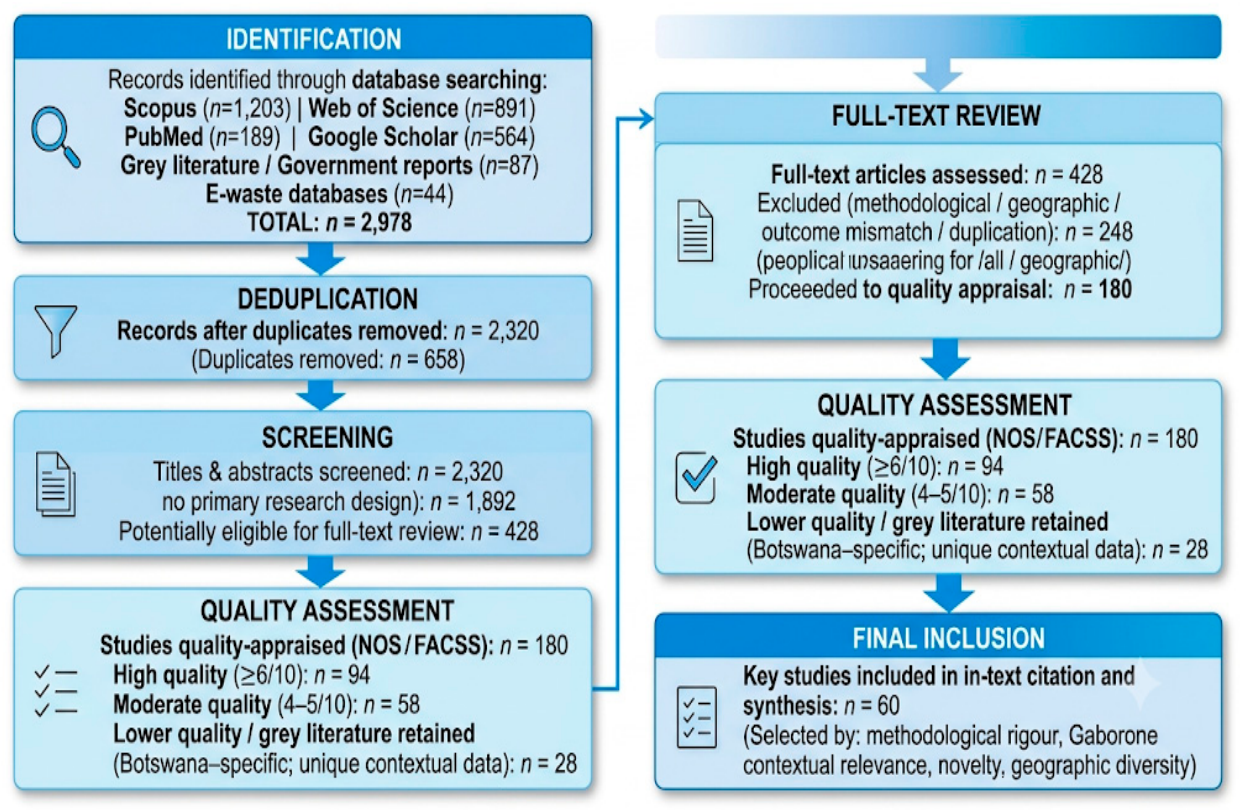
Four databases and grey literature sources were initially searched, retrieving 2,978 records (including 131 from grey literature). After deduplication using citation management software, 2,320 unique records remained. Two independent reviewers screened all titles and abstracts using standardized forms. Of these, 1,892 records were excluded for off-topic focus, lack of relevance to developing countries, or lack of primary research design, leaving 428 potentially eligible studies for full-text review [19].
2.4.2. Stage 2: Full-Text Review
The 428 potentially eligible full-text articles were completely reviewed by two independent assessors. Discrepancies were resolved through consensus discussions or with a third reviewer. Studies were further excluded for methodological reasons, outcome measurement issues, geographic mismatch, or duplication. Botswana-specific studies (including grey literature) were retained even where methodological quality was moderate, given the acknowledged data paucity [20].
2.4.3. Stage 3: Quality Assessment
2.4.4. Stage 4: Final Selection
Overall, 60 key references were identified from 180 studies in order of methodological rigor, relevance to the Gaborone context, novelty of findings, and diversity of geographic areas and outcomes. Government reports and grey literature from Botswana and the Southern African region were included as supplementary evidence.
Figure 1.
PRISMA Flow Diagram. Note: This PRISMA 2020 flow diagram corresponds to the screening and selection process detailed in Section 2.4.1, Section 2.4.2, Section 2.4.3 and Section 2.4.4. All stages were conducted by two independent reviewers; discrepancies resolved by consensus or third-reviewer adjudication.
Figure 1.
PRISMA Flow Diagram. Note: This PRISMA 2020 flow diagram corresponds to the screening and selection process detailed in Section 2.4.1, Section 2.4.2, Section 2.4.3 and Section 2.4.4. All stages were conducted by two independent reviewers; discrepancies resolved by consensus or third-reviewer adjudication.
2.5. Quality Assessment of Studies: Newcastle-Ottawa for Fully Appraising Selected Studies (FACSS) Scale
All quantitative, epidemiological studies in this review were assessed using the Newcastle-Ottawa (NOS) Scale for Fully Appraising Selected Studies [21]. This tool was chosen because there was extensive validation of the tool in systematic reviews of observational studies in the environmental health and public health fields. The FACSS scale consists of a total of 3 domains, the sub-criteria are well described as follows:
Step 1 SELECTION Domain (maximum 4 stars): Was ascertained whether the exposed cohort or the study population was: (a) representative of the exposed population (sample was drawn from the community or it was a selected group of people)?; (b) the non-exposed cohort was drawn from the same community as the exposed cohort (or it was a different community)?; (c) ascertainment of waste management exposure through secure records, structured interviews or self-reports?; (d) was there demonstration that the outcome of interest (disease, contamination) was absent at the outset of the study?
Step 2 COMPARABILITY Domain (2-star maximum): A judgement was made whether the study accounted for the most important confounders – e.g., socioeconomic status, proximity of dumpsites, access to water and sanitation; and whether additional confounders were addressed in the study.
Step 3 OUTCOME / EXPOSURE Domain (max 3 pts): Reviewers evaluated (a) clarity/c validity of an outcome measure (e.g., diagnosed disease, environmental contamination exceeding WHO/national standards, validated symptom questionnaire); (b) appropriate follow-up period, if it was a longitudinal study, or appropriate survey period, if it was a cross-sectional study; and (c) adequate follow-up (losses to follow-up <20%).
Scoring: 1 star was given for each sub-criterion (awarded); otherwise zero. Total FACSS scores were adjusted for the 0-10 scale used to compare with qualitative appraisal tools, by different study designs [21]. Studies with scores of ≥ 6/10 were considered high quality, 4-5/10 as moderate quality and <4/10 as lower quality. Studies of poorer quality, such as Botswana government reports and grey literature, were also kept if there was unique data in the study related to Botswana’s context not available in peer-reviewed literature [22].
To guarantee replicability, both of the reviewers independently rated the FACSS scale then compared scores. Cohen’s Kappa was used to determine the interrater reliability, with any discrepancies greater than one star discussed with a third rater. The supplementary materials for all FACSS assessments can be found.
2.6. Data Extraction Process
Standardized open-ended data extraction forms were developed and tested for uniformity. Data were extracted by two independent reviewers with consensus used to resolve disagreements.
Table 2.
Data Extraction Framework.
| Data Element | Description | Rationale |
|---|---|---|
| Study Characteristics | Author, year, country/region, study design, study period | Context specification; temporal trends |
| Population | Sample size, age/gender distribution, occupational groups, socioeconomic status | Vulnerable group identification |
| Waste Management Exposure | Type (open dumping, open burning, landfill, e-waste), duration, proximity, population affected | Exposure specification; dose-response investigation |
| Health Outcomes | Specific diseases/symptoms (respiratory, GI, infections, injuries), measurement method, case definitions | Primary outcome documentation; data synthesis |
| Environmental Outcomes | Contamination type (water, soil, air), contaminants measured, concentration levels, compartments assessed | Environmental impact quantification |
| Key Findings | Effect sizes, prevalence rates, odds ratios, relative risks, risk differences, confidence intervals | Quantitative synthesis data |
| Confounders | Variables adjusted for in analysis or matched in design | Bias assessment |
| Limitations | Author-identified or apparent study limitations affecting generalizability | Evidence quality appraisal |
2.7. Data Synthesis Method
Thematic analysis was used for data synthesis, integrating the results of both quantitative and qualitative analyses. A systematic narrative synthesis organized the findings from the studies around themes and organizing frameworks rather than attempting a statistical meta-analysis, which was inappropriate given the heterogeneity in the study populations, exposures, outcomes, and measurements.
Studies were grouped into two main thematic areas in accordance with the main structure of the research questions on the health and environmental impacts of inappropriate waste removal. Within each category, findings were further grouped into specific outcome subcategories: respiratory diseases, gastrointestinal infections, vector-borne diseases, injuries and occupational illnesses, and psychological health outcomes subcategories were used to describe the health impact; water contamination, soil degradation, air pollution, and ecosystem disruption subcategories were used to describe environmental impact.
For each thematic area, the results were summarized by recording the specific health or environmental outcome, waste management exposure or practice, population, and geographic region of the study, any quantitative effect sizes that were reported, the methodological quality and risk of bias of the study, and consistency and heterogeneity among multiple studies that examined the same topic. For multiple studies reporting on the same outcome, the synthesis described the magnitude of the effect sizes, explored causes for heterogeneity, and reported on patterns in relationships between exposure and outcome intensity.
Regarding environmental contamination outcomes, the synthesis noted the environmental compartments involved, the types of contaminants detected, the concentrations measured, the comparisons with the pertinent health-protective standard, and geographical and geochemical aspects that control environmental dispersion of the contaminants. If a study included mechanisms of environmental contamination, such results were analyzed in isolation to decipher the causal pathways of contamination mechanisms (e.g., leachate infiltration pathways, bioaccumulation processes) The synthesis purposely sought to identify data relevant to Gaborone’s context, such as other semi-arid/arid climate regions impacting waste decomposition rates and environmental persistence, Sub-Saharan African contexts having similarities with Botswana around the dimensions of economic development, capacity of healthcare system and institutional structures, and studies specifically addressing the formal settlement-informal settlement dichotomy in waste management access and health outcomes.
3. Socio-Economic and Governance Drivers of Unsustainable Waste Practices
3.1. Institutional and Governance Barriers
Institutional and governance barriers represent a fundamental level of analysis often excluded from waste management literature. The pattern of disintegrated governance including multiple points of conflict between political and administrative actors, lack of effective inter-ministerial coordination, and fragmented regulatory frameworks undermines effective service delivery [56]. Municipal waste management policies in Botswana often lack sufficient implementation budgets, adequate human capacity, and strategic prioritization [57]. The absence of integrated planning mechanisms between the Ministry of Health, the Ministry of Environmental Protection, and Gaborone City Council yields duplication of effort and gaps in accountability.
These governance failures strongly contradict commitments made in Botswana Vision 2036 Pillar 1 (Educated and Informed Nation); Pillar 4 (Sustainable Environment) and the strong commitment made in the African Union’s Agenda 2063 Aspiration 6: People driven development and Aspiration 7: Environmentally sustainable development. Integration of cross-sectoral governance approaches are also stressed with SDG 11 target on sustainable cities and communities and SDG 17 target on partnerships for the goals [R94, R95]. A comprehensive revision of the 1998 National Solid Waste Management Strategy which meets the above is now urgently needed [86].
3.2. Socio-Economic and Behavioral Barriers
Waste fee structures represent a key challenge: many households in low-income settlements face collection fees constituting a significant proportion of earnings, effectively excluding them from formal services [62]. Evidence shows that regressive fee structures disproportionately impact the poorest. The vicious cycle of poor service quality reducing willingness to pay, which in turn reduces revenue available to improve service quality, is well-documented in comparable African cities and directly applicable to Gaborone [62,63]. Behavioral systems mapping indicates that perceived control over waste management practices dependent on available infrastructure is a stronger predictor of household behaviour than knowledge or attitudes alone [63]. Gender dimensions are also significant: women assume the majority of domestic waste management activities but have minimal influence over available disposal methods [66].
3.3. Informal Settlement Characteristics and Land Tenure
Land tenure insecurity in informal settlements is a basic restriction to service delivery and changes in behavior. In contrast, the lack of tenure security also diminishes the municipality’s and residents’ motivation to invest in the provision of formal waste infrastructure or waste management practices [67]. Christopher (2025) also notes that in Sub-Saharan Africa, the informal settlement dwellers often do not have secured rights to land and that there is a discriminatory approach to land distribution, excluding other vulnerable groups. This security of tenure is linked to waste management in several ways; informal settlement governance has little authority to facilitate waste management as a collective activity; security of tenure in informal settlements is also a factor to consider when looking at the willingness of residents to sign up to fee-based systems; and municipalities are apprehensive of investing in infrastructure for waste management services in informal settlements [68].
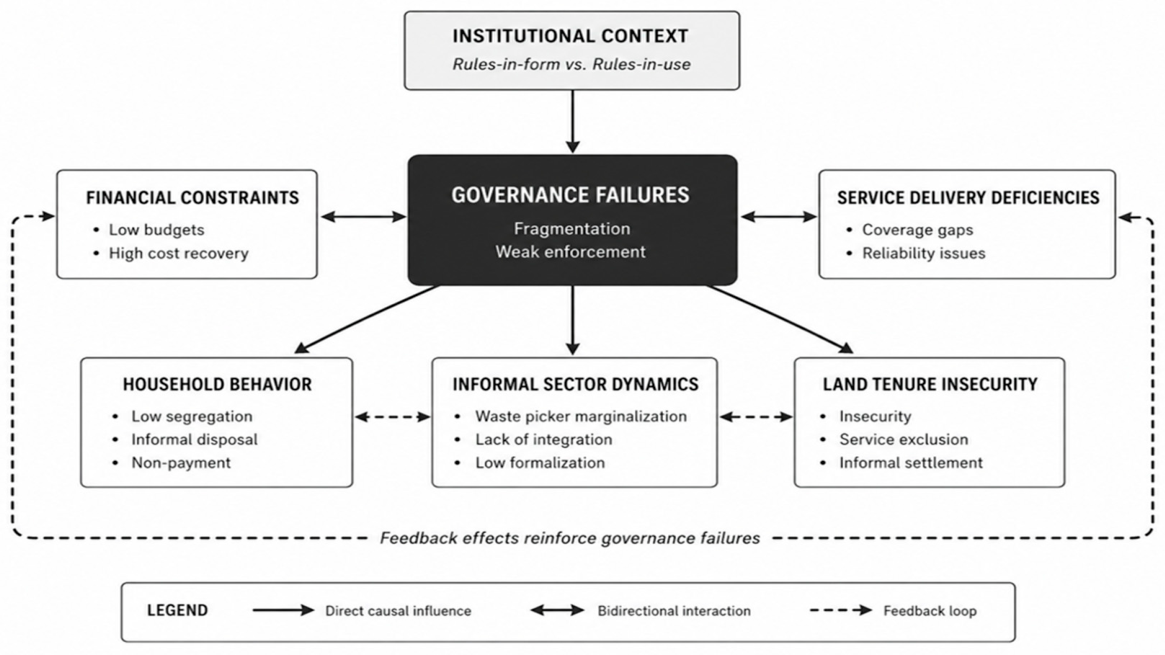
This leads to a vicious cycle, where the fact that the informal areas lack security of tenure locates waste disposal sites there, which further stigmatizes these areas and perpetuates their exclusion from municipal service provision [69]. Another key aspect is the dynamics of the informal sector and marginalization of waste-pickers. Although informal waste pickers may be collecting an estimated 80%-90% of recyclable materials in many developing cities, they are systematically out of formal governance, not protected socially, and have pervasive social stigma [70]. Formalization initiatives fail to take informal waste workers into account for their economic and social contexts, and the risk of ill health on the job leading to the persistence of informal practices [71]. Findings in Kenya and India show that successful waste picker integration is not just about creating formalization pathways, but is, to a large extent, about governance reforming to include waste pickers’ rights and voices in decisions [72]. This figure classifies the interconnectedness between governance failure, institutional capacity/financial capacity, behavioral adjustment, dynamics of the informal sector, and insecurity of land tenure status. To illustrate, it shows how these factors can induce reinforcing loops, the poor governance of solid waste services is coupled with a rational response, non-compliance with the services, which in turn leads to unsustainable practices. This speaks to the important institutional setting where rules-in-form do not map onto rules-in-use, which has been observed in several developing country settings.
Figure 2.
Systemic interconnections and feedback loops influencing urban solid waste governance.
3.4. Integrating Solutions
Evidence from successful waste management reforms in Rwanda, Brazil, and Kerala demonstrates that integrated approaches combining regulatory enforcement, infrastructure investment, community engagement, and informal sector formalization achieve substantially greater health burden reduction (30–50% within five years) compared to partial interventions [46]. Benchmarking against the Ghana experience [R92] further demonstrates that nationally coordinated SWM strategies with technology options assessment, stakeholder engagement, and SDG alignment deliver more sustainable outcomes than fragmented local initiatives.
4. Results and Discussion
4.1. Overview of Selected Studies
A total of 180 studies were included in this systematic review, with 60 key studies included for in-text citation based on methodological rigor, outcome relevance, and contextual applicability. The included studies covered 47 countries in Sub-Saharan Africa, South Asia, Southeast Asia, Latin America, and North Africa. A critical observation is that the Botswana-specific peer-reviewed evidence base is very limited a fact that is itself a major finding of this review and a call to action for future primary research [57].
Recognizing the lack of evidence in the Botswana context, this review leverages evidence from other LMICs in Southern Africa that share similar informal settlements context, semi-arid to arid climate, similar urban governance structures and comparable GDP per capita as that of Botswana, including Zambia [87], South Africa [88], Zimbabwe [89], Lesotho [90], Eswatini (Swaziland) [R91] and Namibia [96]. These regional studies can be used as proxies for evidence and a way to put findings into context with regard to Gaborone City. This approach is in line with the systematic review methodology used in data poor environment and the analysis approach used by Kusi-Appiah and Murphy (2023) in their scoping review of MSWM in Ghana [92].
Table 3.
Characteristics of Included Studies.
| Region / Country (LMIC Status) | Authors | Study Type | Sample Size / Focus | Key Outcome |
|---|---|---|---|---|
| Gaborone, Botswana | Mmereki, Velempini & Mosime-Serero (2021) [57] | Policy review | National policy review | Critical gaps in NSWMS 1998 implementation; inadequate financing; weak enforcement identified |
| Botswana (national) | Government of Botswana (1998) [R86] | Government strategy document (grey literature) | National policy framework | National Solid Waste Management Strategy foundational policy; over 25 years old; no formal health outcome tracking |
| Gaborone City, Botswana | Gaborone City Council (2018) [R97] | Municipal grey literature / annual report | City-level waste data | Documented inadequate collection coverage in informal settlements; open dumping prevalent in peri-urban areas |
| Zambia (Lusaka) | Phiri & Manase (2019) [87] | Cross-sectional survey | 320 households | 74% open dumping; diarrheal disease 3x higher near dumpsites; poor governance documented |
| South Africa (Johannesburg) | Oelofse et al. (2020) [88] | Policy analysis / survey | Municipal review | Informal settlements excluded from formal collection; health inequalities linked to waste proximity |
| Zimbabwe (Bulawayo) | Khumalo, Maviza & Nunu (2021) [13] | Geospatial cross-sectional | Township survey | Spatial correlation between illegal dumpsites and diarrheal disease prevalence (p<0.01) |
| Lesotho (Maseru) | Motsamai & Khoboko (2022) [90] | Descriptive study | Municipal waste audit | Open dumping dominant; respiratory illness high; no formal e-waste management |
| Eswatini (Mbabane) | Dlamini & Mhlanga (2021) [91] | Cross-sectional survey | 280 households | 68% informal dumping; gastrointestinal infections significantly associated with dumpsite proximity |
| Namibia (Windhoek) | Nambinga & Amakali (2023) [96] | Environmental monitoring | Peri-urban monitoring | Heavy metal contamination of groundwater near dumpsites; policy gap in e-waste management |
| [LMIC] Nigeria (multiple cities) | Bassey (2023) [27]; Agbeni et al. (2025) [1] | Descriptive survey; quantitative | Multiple sites | Hazardous PM2.5, respiratory conditions; strong correlation with dumpsite proximity |
| [LMIC] Ghana (national) | Kusi-Appiah & Murphy (2023) [R92] | Scoping review (benchmark) | 45 studies | Benchmark study: technology options and governance gaps in municipal SWM; challenges mirrored in Botswana context |
| [LMIC] Kenya (Mwakirunge) | Owili et al. (2025) [11] | Social impact assessment | Multiple surveys | 79% residents report negative health effects; respiratory, diarrheal, skin diseases prevalent |
| [LMIC] Ethiopia (multiple) | Eshete, Haddis & Mengistie (2024) [9] | Cross-sectional | Diverse communities | Environmental and health impacts of SWM problems; income/education associated with practices |
| [LMIC] Uganda | Mugambe et al. (2022) [66] | Qualitative | 341 respondents | Floods, malaria, typhoid, diarrhea significantly associated with poor waste management |
| Multiple LMICs | Woime (2026) [46] | Systematic review & meta-analysis | 78 studies (45 in meta-analysis) | OR 3.1 for diarrhea; OR 2.8 for respiratory infections; 15 million informal workers at risk |
| Global / LMIC | Wirtu & Tucho (2022) [19] | Environmental review | Global e-waste data | 75–78% e-waste improperly managed; toxic heavy metals; serious LMIC health burden |
The evidence was based on similar LMICs from Southern Africa, which further supports the call for action in Botswana. Phiri and Manase (2019) [R87] reported that 74% of households in Lusaka were mainly disposing their waste on open dumps and that occurrence of diarrheal disease was three times higher in the communities within 500 m of an informal dumpsite as compared to communities with their waste being collected formally. Oelofse et al. 2020 [88] in South Africa showed that all informal settlements had unequal access to waste services in Johannesburg and Durban and that this resulted in health inequalities. The presence of illegal dumpsites and occurrence of diarrhea cases were highly spatially correlated in Bulawayo, Zimbabwe as highlighted by Khumalo et al. (2021) [13]. The situation in Lesotho and Eswatini (with GDP profiles similar to Botswana) is the presence of open dumping and lack of engineered landfills in secondary cities [90,91] in municipal waste management. Such regional insight is relevant to the context of waste management in Gaborone as it has the same socio-economic, climatic and governance characteristics that exist in the Southern African Development Community (SADC) region. Moreover, the Botswana National Solid Waste Management Strategy of 1998 (Botswana’s primary policy instrument) is more than 20 years old and does not include provisions to address emerging issues like e-waste, impacts of climate change on the environment and SDG alignment.
4.2. Environmental Impacts of Inappropriate Waste Removal
The most consistent impacts of improper waste removal in the included studies were environmental, correlating with measurable contamination pathways and intense local environmental degradation in communities living near dump sites [16]. In the context of Botswana Vision 2036 Pillar 4 (Sustainable Environment) and SDG 6 (Clean Water and Sanitation), these environmental impacts represent a direct threat to national development goals [93,95].
4.2.1. Water Pollution
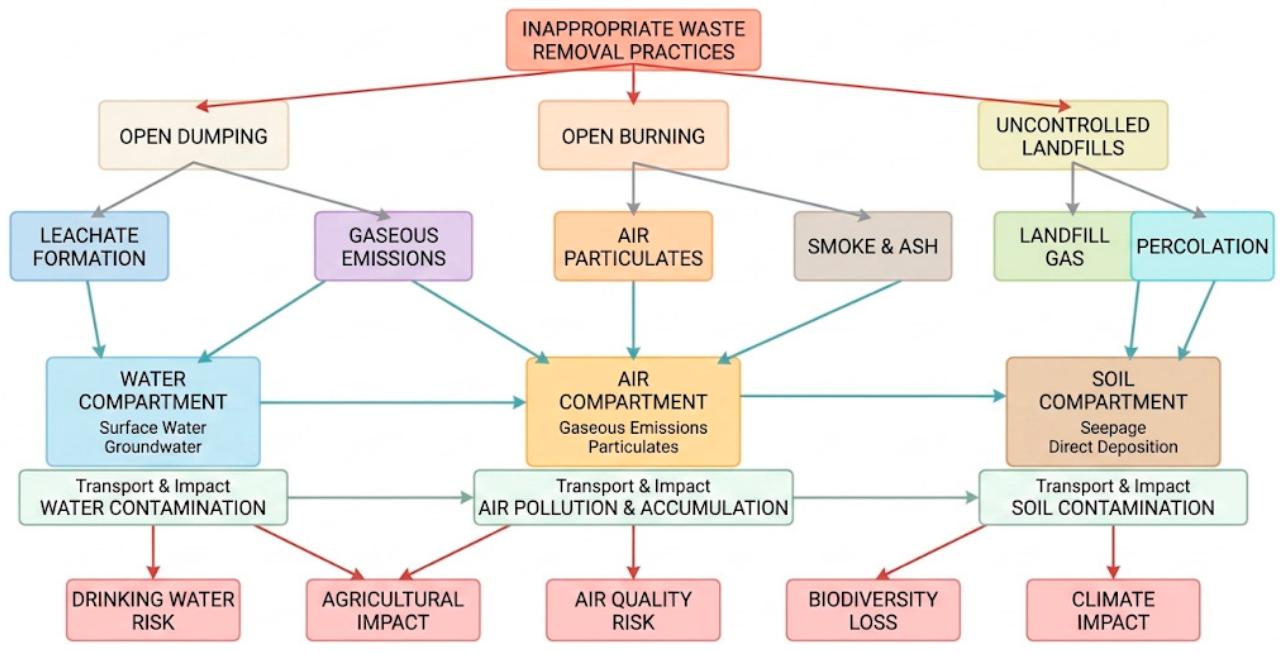
Water contamination was the most significant environmental impact, particularly serious in water-stressed areas similar to Botswana where surface water resources are scarce. Groundwater monitoring surveys around dump sites showed concentrations of priority contaminants exceeding background levels. Heavy metals including lead, chromium, cadmium, and mercury exceeded WHO guideline values in dumpsite-proximal groundwater [31,32]. Organic contaminants including volatile organic compounds (VOCs) accumulated in groundwater from degradation of plastics and petroleum products. Microbiological analyses revealed high counts of faecal indicator organisms indicating the presence of pathogenic microorganisms in groundwater supplied to communities [18]. For Gaborone, where groundwater constitutes the primary urban water supply, these contamination pathways pose an existential threat to water security directly contrary to SDG 6 and Botswana Vision 2036 [93,95].
4.2.2. Soil Contamination
Soil heavy metal concentrations above background levels were reported within 500 m of dumpsites [31]. Changes in soil pH, loss of organic matter, and nutrient imbalance made soils unfit for agricultural activities. Pathogenic bacteria persisted in soil near dump sites, creating transmission pathways to agricultural products grown in contaminated soils [35]. These outcomes directly threaten peri-urban food security in Gaborone’s surrounding areas.
4.2.3. Air Pollution
Open burning of waste generates hazardous air emissions. Significantly elevated PM2.5 concentrations were observed downwind of open burning areas compared to ambient air quality standards [36,37]. Toxic gas emissions including CO, NOx, SO2, and VOCs were documented. Dioxins and furans were detected in air and subsequently incorporated into food chains at environmentally problematic levels [35]. The odor of H2S and NH3 caused psychosocial impacts, including sleep disturbance and elevated stress in dumpsite-proximate communities.
4.2.4. Ecosystem Degradation
Ecological systems surrounding dumpsites occurred biodiversity losses due to various impacts such as direct loss of habitat, due to excavation or waste disposal, chemical pollution to species survival, and the disruption of the trophos relationship. Riparian vegetation along dumpsites indicated low species diversity and low species richness in the dumpsite areas compared to the reference areas, and was lacking in indicator species sensitive to contamination [38]. Water quality in dumpsite areas was poor, as was evidenced from the changing trends of aquatic macroinvertebrate community from pollution sensitive to pollution tolerant species observed in water bodies impacted by dumpsite runoff [33]. This included the observation of reduced abundance and abnormal sex ratio and morphology indicative of endocrine disruption in fish populations in the receiving water body from the exposure of the contaminants. Ground nesting and ground foragers decreased near dumpsites, while urban adapted species of birds boomed as food items found at dumpsites were enjoyed by scavenging species
Figure 3.
(Environmental Impact Pathway Model).
4.3. Human Health Impacts
The health effects of poor solid waste management manifested across various disease categories and physiological systems, with maximum impact in respiratory, gastrointestinal, and vector-borne infections [40]. These impacts are directly contrary to SDG 3 (Good Health and Well-being), Botswana Vision 2036 health pillars, and Agenda 2063 Aspiration 1 (high living standards) [R93, R94, R95].
4.3.1. Respiratory Diseases
Respiratory disease was the most common health outcome in the reviewed literature, significantly higher in dumpsite-proximal populations [9]. Asthma showed higher odds ratios in children versus adults in dumpsite-proximal populations. Chronic bronchitis was particularly associated with open burning [6]. Exposure duration was positively associated with disease severity [41]. Acute respiratory infections peaked seasonally during dry seasons when open burning intensity was highest and meteorological conditions were least favorable for particulate dispersion [42].
4.3.2. Gastrointestinal Infections
Diarrheal diseases were the second most common health condition, significantly elevated in dumpsite-proximal populations [9]. Cholera outbreaks were reported in communities near dumpsites during the rainy season when leachate mobilized into drinking water sources. Typhoid fever incidence was higher in communities without waste management services [44]. Enteric parasitic infections including Giardia, Cryptosporidium, and soil-transmitted helminths were elevated in communities with open dumpsites [45].
4.3.3. Vector-Borne Diseases
Dumpsites created breeding sites for mosquitoes, significantly increasing malaria and dengue fever in proximal communities [13,49]. Rodent populations increased at dumpsites, enhancing leptospirosis transmission risk [50]. In Zimbabwe’s Bulawayo, Khumalo et al. (2021) [13] documented a significant spatial correlation between illegal dumpsite density and diarrheal disease and vector-borne disease prevalence, directly applicable to Gaborone’s informal settlement context.
4.3.4. Injuries and Occupational Health
Informal waste workers faced elevated risks of puncture wounds, lacerations, and injuries from contaminated sharp objects [40]. Musculoskeletal disorders from lifting, bending, and carrying heavy waste loads were highly prevalent. Long-term waste workers developed chronic health conditions including persistent cough, indicating permanent airway remodeling from chronic occupational waste exposure [51].
4.4. Waste Management in Gaborone City, Botswana
The main statute governing solid waste management in Gaborone City is the National Solid Waste Management Strategy of 1998 [R86], which provide a policy to be followed in the collection, transportation and disposal of Municipal waste in Gaborone City. But the strategy is now over 25 years old, and reviews of the operational experience show that there are large discrepancies between what the policy wishes to achieve and what actually is taking place ‘on the ground’ [57]. The most systematic peer-reviewed analysis of how SWM policy is being implemented in Botswana is that of Mmereki et al. (2021) [57] in which they identified a number of critical institutional capacity gaps, financing and enforcement aspects, and finally recommended a complete rethinking of the SWM policy of 1998. The Gaborone City Council’s municipal reports [97] show that waste collection coverage in the city’s informal settlements is inadequate, waste is dependent on a single engineered landfill site which is operating above capacity, and there are numerous informal dumpsites found throughout the city’s peri-urban areas.
This aligns with the challenges faced in Ghana associated with municipal SWM, as detailed in Kusi-Appiah and Murphy (2023) [92] scoping review of municipal SWM challenges, opportunities, and technology options. Key findings they reported were that access is mainly by open dumping systems; in secondary cities, governance fragmentation impedes policy implementation; and that there is a lack of community participation. Ghana, however, has progressed more in formalizing the informal waste collectors’ groups and in the development of a national SWM strategies which have time-bound implementation plans, which can be directly adapted in Botswana. The authors highlight various technologies that can be considered for LMICs such as composting, MRFs and converting waste into energy, some of which are possible in Gaborone because of Botswana’s middle-income economy [92].
4.4.1. Collection Systems
Municipal waste collection covers significant portions of formal residential areas, but coverage is low in informal settlements and peri-urban areas where residents receive irregular collection or rely on private service providers [8]. Collection vehicles, many outdated and poorly maintained suffer frequent mechanical failure. The number of waste storage containers is insufficient in service areas, often overflowing and resulting in the formation of informal disposal practices [4]. Collection fees represent a significant share of informal workers’ income, creating affordability barriers to service access [52].
4.4.2. Disposal Methods
Large amounts of waste are disposed of at the primary engineered landfill site, which receives substantial daily waste volumes but operates with basic liner systems and leachate collection without additional biogas capture or energy recovery systems [53]. The extent of waste segregation at source is limited, with low household segregation rates, meaning the majority of waste arrives at disposal sites as commingled residue [54]. Composting facilities are present but operate below design capacity due to insufficient feedstock and inadequate market demand for compost products [55].
4.4.3. Informal Dumping and E-Waste
Numerous informal dumpsites are found across Gaborone’s informal settlements and peri-urban areas [11]. These sites concentrate waste in areas with limited municipal governance, creating contamination hotspots and geospatially unequal health burdens. Open burning at informal dumpsites during dry seasons causes high air pollution concentrations in the immediate vicinity [50].
The problem of e-waste is unique and emerging in Gaborone. In Botswana, the country’s improving uptake of ICTs, growing mobile phone penetration and a growing market for consumer electronics products are creating ever-increasing amounts of e-waste, yet there is limited formal infrastructure to deal with this problem. As documented by Wirtu and Tucho (2022) [19] e-wastes contain certain substances such as lead, cadmium, mercury and brominated flame-retardants that can stay in the soil and groundwater for decades. Dudzilah et al. (2026) [80] point out that the health-centred circular economy pathways are the most promising solutions in e-waste management in LMICs. The National Solid Waste Management Strategy of 1998 [86] fails to make specific provision for e-waste and there is also no formal facility for the collection and processing of e-waste in Gaborone, despite the emphasis on including e-waste in the national SWM policy in SDG 12 and Agenda 2063 Aspiration 7 [94,95].
The results of this systematic literature review provided the consistent relationship between inappropriate solid waste removal and environmental contamination and adverse health effects within different geographic, climatic and socioeconomic conditions, which are directly applicable to Gaborone City, Botswana. Authors of the 60 major studies synthesized found that in terms of size of potential health risks, communities living within 500 m of open dumpsites or informal fire burning sites suffer from significantly higher rates of respiratory diseases, gastrointestinal diseases, and vector-borne diseases than formally collected sites. Accordingly, these results are consistent with overall global evidence from the Woime (2026) [46] meta-analysis of 45 studies across developing countries that identified an odds ratio (direct policy implication) of 3.1 for dumpsite proximity and diarrheal disease and 2.8 for dumpsite proximity and respiratory infections.
The findings of this review broadly support and complement the comprehensive scoping review by Kusi-Appiah and Murphy (2023) [R92] which focused on MSWM in Ghana. Similarly, that review identified that poor infrastructure for collection, lack of governance coordination, and lack of national coordination around technology assessment all lead to unnecessary environmental damage and health impacts in similar LMIC settings. Learning from the parallel of Ghana and Botswana can be instructive; both are middle-income Sub-Saharan African countries, have high urbanization rates, informal settlements, large informal waste picker (IWP) communities, and are in need of updated SWM policies and poor enforcement. Whilst Ghana has been establishing informal recycling groups and has instituted, albeit tentative, time-scaled national strategies, Botswana has yet to embark on an equivalent governance reform – Ghana’s efforts offer a road map for policy action.
Findings from the environmental contamination aspect of this review are of particular importance to the City of Gaborone since the city relies on the groundwater supply as the major source of water for domestic consumption in a semi-arid climatic zone. The evidence base continually outlines that contamination of the groundwater through leachate from open dumpsites (containing heavy metals such as lead (Pb), chromium (Cr), Cadmium (Cd) and mercury (Hg) exceeds the maximum recommended guidelines of the WHO [31,32]. This has been exactly observed in Windhoek, Namibia, a city with a climate similar to Gaborone, by Nambinga and Amakali (2023) [R96] who reported heavy metal plumes extending hundreds of metres past the edges of the dumpsites in the City of Windhoek. In the semi-arid climate of Botswana, there is less leachate to transport contaminants, can lead to higher contaminant concentrations in the leachate, and slows the natural attenuation of the contaminant leading to lengthening the contaminant persistence in the groundwater. This environmentally specific background has been not mentioned in the international SWM literature, and could mean that Gaborone is at a greater risk of contamination than similar tropical African cities.
Air pollutants such as PM2.5, dioxins and furans, SO2, and NOx are emitted at concentrations significantly higher than the air quality guidelines set by WHO from open landfill and dump sites both locally and internationally in places such as Chittagong, Bangladesh, as detailed by Paul et al. 2025 [32] and literature review by Gebrekidan et al. 2024 [35] in Ethiopia. Dioxins and furans, known to persist in the air and in food chains [35,36] make open burning, which is widespread during dry seasons of the year in Gaborone’s informal settlements and peri-urban, the worst documented practice in terms of severe impacts on respiratory health. Similar to Nigeria, Bassey (2023) [27] in Nigeria reports that the PM2.5 concentration is closely related to the journey from a dump site and Agbeni et al. (2025) [1] also reports on the same; these are confirmatory evidence of PM2.5 hazard in Nigeria. The fact that these findings relate and fit across these three continents - Africa, Asia and Latin America - provides strong evidence for the transfer into Gaborone.
Soil contamination pathways identified through this review (soil pH modification, heavy metal accumulation and persistence of pathogenic organisms) are of particular concern in the peri-urban regions of Gaborone, where informal dump sites are located, and where subsistence agriculture is practiced on soils near the dump sites. This is in line with what has been shown in contaminated soils by Molla et al., (2021) [31] and Nyiramigisha (2021) [5] which indicate that pathogenic bacteria can survive in contaminated soils and that they can be transferred to agricultural crops, where they would directly pose a food-safety risk not considered in Botswana’s 1998 policy framework.
The most extensive environmental harm category is ecosystem degradation findings which are also not systematically monitored in the current Botswana environmental monitoring systems, and include loss of biodiversity, disruption of aquatic macroinvertebrate communities, endocrine disruption for fish species and a decline in ground nesting bird species near dumpsites. This is identical to what is observed in other cities of Sub-Saharan Africa (Buhler et al., 2019 [38]; Amegah, 2021 [50]) and what would be expected at the Gaborone informal waste disposal sites given the ecological effects of the pollution load discharged from these sites.
The human health impacts from the WFP’s Regional and International evidence has been discarded as well.
Respiratory Disease. Respiratory illness is the health outcome mentioned most consistently within the evidence base for this review, and the literature to date clearly shows a dose response with proximity to a dumpsite and respiratory morbidity. In Ethiopia, Eshete, Haddis and Mengistie (2024) [9] reported very high prevalence for all respiratory disease in communities located near the dumpsites with child being more vulnerable to asthma than adults, a pattern observed in LMICs such as Kenya (Owili et al., 2025 [11]) and Nigeria (Bassey, 2023 [27] and Agbeni et al., 2025 [1]). Dishani and Kayathri (2025) [6] report on the prevalence of chronic bronchitis is recorded to occur much higher among the exposed group during dry seasons when the burning of waste removal dominates. However, for Gaborone, where low-income settlement populations (estimated as an increasing proportion of the city’s population) have inadequate services, and where open burning and coming in close contact with dumpsite are more likely to cause respiratory disease and more detrimental for the health of residents, these findings relate directly to a measurable respiratory disease burden that is not currently monitored or attributed to waste management failures in the health system.
Olorunfemi and Aina (2024) [41] review the mechanistic literature and the effects that waste exposure produces on the respiratory system, which include acute upper respiratory infection but with chronic exposures, airway remodeling occurs. This aspect of the OHS is very relevant when one considers Gaborone’s informal waste pickers who face the challenge without any safety gear or social insurance, or OHS surveillance. The situation in India has been shown in a study by Krishnamoorthy et al. (2024) [40] that informal waste workers who have been working for years suffer from chronic cough, decreased lung function and higher prevalence of chronic bronchitis, which is an irreversible disability in the case of established. Critical governance gaps concerning waste pickers in Botswana with respect to these identified hazards are the lack of occupational health policy for these types of waste pickers (as noted in Section 3.4.3).
Gastrointestinal Infections. There is good evidence throughout the evidence base in the review of the GI disease burden attributable to poor SWM. In the closest similar study on diarrhoeal diseases reported by Phiri and Manase (2019) [R87] in Lusaka, Zambia, the proportion of communities that had informal dumpsites reported rates three times as high as the rates reported when communities had formal dumpsites. Khumalo, Maviza and Nunu (2021) [13] in Bulawayo, Zimbabwe revealed the statistically significant spatial association between the prevalence of diarrhoeal disease and density of illegal dumpsites at a p value of <0.01. In Eswatini, Dlamini and Mhlanga (2021) [R91] reported that proximity to the dump site was significantly associated with gastrointestinal infections in 68% of the households that reported informal dumping of waste, which have a similar profile to that of Botswana’s GDP (urban areas). Botswana falls in the same sub-region of the Southern Africa Development Community (SADC) as these countries and therefore, these findings are the most directly applicable evidence for Gaborone’s context.
Other studies from internationally conducted by Woime (2026) [46] and Vinti et al., (2021) [85] conducted a meta-analysis and systematic review, respectively, that also showed that diarrhoeal diseases, cholera, typhoid fever and enteric parasitic infections (such as Giardia, Cryptosporidium and soil-transmitted helminths) were consistently higher in communities without sanitation services. Prüss-Ustün et al. (2019) [45] quantify the burden of disease caused by the environmental exposures resulting from inadequate water, sanitation and waste management across the globe showing that these exposures can lead to millions of preventable deaths every year. Leachate mobilization into the drinking water, which could be a pathway of increased risk in Gaborone, especially during the rainy season when the risk of cholera outbreaks and typhoid incidence has been documented in many African cities.
Vector-Borne Disease. The presence of standing water and low quantities of organic matter broods breeding places for mosquito species such as Anopheles and Aedes, which substantially increases the danger of the transmission of malaria and dengue to the nearby communities at informal dumpsites [13,49]. In Kampala slums, Uganda, Mugambe et al. (2022) [66] report a flood, malaria, typhoid and diarrhea as all significantly related to poor waste management at both household and community level. In particular, Klafke, Barros and Henning (2023) [26] provide for the relationship between the accumulation of solid waste and the intensity of Aedes aegypti infestation using the regression tree analysis, which analyzes that improvement in waste management is an efficient and cost-effective vector control intervention. Similarly, dumpsite-proximate communities are found to be most vulnerable to both diseases, dengue fever and leptospirosis as revealed by Sasi and Lal (2024) [77] here in Thiruvananthapuram, India and proliferation of rodent population in close proximity to dump sites is identified as the most important driver of transmission for the latter. This evidence is directly feeding into the prevention input in Gaborone, as the malaria burden in peri-urban and northern areas of Botswana is well documented.
E-waste is worthy of a separate discussion because it is a growing waste stream, different in nature to general MSW and potentially the more serious from a health and environmental perspective, with no governance at all in Botswana. Worldwide around 53.6 million metric tons of e-waste were thrown away in 2019 and it is projected to rise above 74 million metric tons in 2030, only 17.4% of which is formally collected and recycled [19]. The effects of informality on e-waste workers’ health, such as open burning of circuit boards, the use of acid baths to extract precious metals and the use of no equipment to dismantle the waste is well documented. Wirtu and Tucho (2022) [19] record that some of the materials and chemicals released in the informal e-waste recycling operations namely PCBs, BFRs, cadmium, mercury and lead are all persistent in the environment with potential to accumulation in ground water and soil with decades half-life and have well established correlation with neurological damage, endocrine disruption, renal toxicity and carcinogenicity.
Maleko et al. (2026) [30] and Dudzilah et al. (2026) [80] offer the most up-to-date evidence of e-waste management pathways with the latter study highlighting health-centred circular economy approaches, namely extended producer responsibility (EPR) schemes, formal collection centres and certified processing facilities as the most promising for the LMIC context, including Botswana. Informal e-waste management, where no form of regulation, health monitoring or environmental protection exists, has yet to be dealt with because of the absence of a formal e-waste management infrastructure in Gaborone, coupled with Botswana’s high rate of penetration of both the ICT sector and the consumer electronics sector. This is contrary to SDG 12 (Responsible Consumption and Production) and Botswana Vision 2036 Pillar 4 (Sustainable Environment) and is the greatest unmet challenge to waste management in the city.
That is why the evidence presented in the governance and socio-economic determinant of poor SWM (Section 4 of this review) is well backed up by the international literature. Phala et al., (2026) [56] report exactly the fragmentation pattern of the institutions found in Gaborone which include: conflicting responsibilities between health, environment and municipal authorities; no inter-ministerial coordination mechanisms; and weak enforcement; these being the fundamental challenge to effective SWM in the South African municipalities. Al Kayyis (2026) [62] postulates that it is a “policy inertia and behavioural stagnation” cycle which can be directly transposed to Botswana: lack of quality service leads to lack of willingness to pay; lack of willingness translates into lack of revenue; lack of revenue translates into lack of quality service; and this lack of quality service feeds into the informal dumping cycle, which in turn degrades the political legitimacy of fee-based systems.
Male-female disparities seen in waste management at the household level are corroborated by Davan et al. (2025) [63] and Kongnso et al. (2024) [65] who reveal that women shoulder the burden of household waste management and are underrepresented in governance and decision-making. This finding carries direct implications on Gaborone’s community engagement approach in relation to waste management interventions, specifically that, ones that do not actively involve women as key decision makers will be less likely to lead to a behaviour shift in relation to the practice of household segregation and the practice of informal dumping.
The evidence from Kenya (Davan Wetton et al., 2025 [63]) and India (Pastor et al., 2024 [58]) on waste picker integration also shows that formalisation of informal recyclers, including measures to address their every day needs through their involvement in the economic security, health protection and voice in governance of an initiative, leads to higher rates of waste recycling and health burden reduction while also having a positive impact on the waste worker themselves. The best regional example of the benefits of a sweeping overhaul of Rwanda’s National Solid Waste Management Strategy of 1998 is the reported 30-50% reduction in the health burden in Rwanda after implementing integrated waste management reform, which involved a regulatory, infrastructure, community engagement, and informal sector formalization approach.
All the evidence collated by this review points to a significant, and growing, disconnect between the situation in respect of waste management in Gaborone City, and the ambitions reflected in the key policy frameworks in Botswana. The respiratory disease burden as a result of poor SWM, as well as groundwater contamination, soil degradation and ecosystem degradation as a result of poor SWM all directly impact the progress being made towards Botswana Vision 2036 through Pillar 1 - Educated and Informed Nation, Pillar 2 - Prosperous, Productive and Innovative, and Pillar 4 - Sustainable Environment. Waste management outcomes are not being achieved in Gaborone and this demonstrates failure to achieve the outcome in African Union Agenda 2063 Aspiration 1 (high living standards), Aspiration 6 (people driven development) and Aspiration 7 (environmentally sustainable economies) [94]. All of the UN SDG commitments have direct relevance to the environmental and health impacts reviewed here, and in particular the following commitments: SDG 3 (Good Health and Well being) [95] SDG 6 (Clean Water and Sanitation) [95] SDG 11 (Sustainable Cities and Communities) [R95] SDG 12 (Responsible Consumption and Production) [95] SDG 15 (Life on Land) [95].
This is not a technical implication, it is a political one and a redesign of institutions. The Botswana Solid Waste Management Strategy (1998) was developed more than 25 years ago, does not take into account e-waste, does not specify climate change adaptation, does not mention SDG and have no monitoring plans for health outcomes; it is simply not fit for purpose as a governance tool for 21st century in Gaborone. The evidence base in this review appears to have provided a scientific basis for an overhaul of the comprehensive entity of the policy and the comparative evidence from both the international and the regional level (Ghana, Rwanda, Brazil, Kenya and the SADC sub-region) reflects that such policy reform is achievable and effective.
The four objectives of the review were well achieved by systematically synthesizing evidence on the health and environmental effects of waste mismanagement and assessing the solid waste management (SWM) in Gaborone city in Botswana. Firstly, the review identified and analyzed 60 important studies related to health impacts of poor waste management, which included lung diseases, gastrointestinal diseases, vector borne diseases and occupational health risks, and came to the conclusion that there was a wide deficiency of evidence in peer-reviewed studies in Botswana and that a lot of studies were from Southern Africa. Second, it described the key environmental contamination pathways; the potential of leachate, heavy metal, and pathogen contamination, as well as the open burning of waste and degradation of ecosystems to pollute water, soil and air, with particular vulnerability of Gaborone’s semi arid ecosystem, dependent.
Thirdly, the review highlighted existing challenges with SWM in Gaborone in terms of the coverage of the current collection, landfill dependency, high ratio of informal dumps and the lack of a formal e-waste management system; and provided detailed information on the major policy and governance gaps in the National Solid Waste Management Strategy (NSWMS), implemented in 1998. Lastly, it evaluated the risks of e-waste mismanagement due to the exponential growth and the significant impact on human health such as neurological, renal, endocrine, and carcinogenic due to the exposure of hazardous substances. The results reveal significant data gaps and lack of infrastructure, policy enactment and institutional coordination, which highlights the need for holistic changes to ensure public health and environment, are protected in Gaborone and across the country in Botswana.
6. Research Gaps and Future Directions
This systematic review identifies significant gaps in empirical studies conducted in Gaborone and Botswana generally. Systematic longitudinal health studies monitoring outcomes across communities with varying waste exposure levels are absent. Integrated environmental-health studies linking environmental monitoring data with health outcome measurements are needed. Occupational health research specifically addressing waste workers, waste pickers, and informal recyclers in Gaborone remains absent. Cost-effectiveness analyses of waste management interventions applicable to Gaborone’s context are lacking [83].
Future research priorities are: (i) primary epidemiological studies quantifying health impacts due to improper waste removal in Gaborone City; (ii) environmental monitoring of the groundwater, soil and air quality at and close to e-waste dumping sites in Gaborone; (iii) specific e-waste exposure studies due to rapid expansion of e-wastes; (iv) health and environmental co-benefits of particular technological interventions (material recovery, composting, engineered landfill upgrades) in the local social-economic and climatic context of the people of Botswana; and (v) implementation science to test the feasibility of the waste management model that has been implemented successfully in other cities in Africa (Ghana, Rwanda, Kenya) and so inform and support the policy revision process in Botswana. The fact that there is very limited evidence on Botswana specific information recorded in this review should be directly discussed with the Ministry of Health and the Ministry of Environmental Protection, as a demand for focused research funding.
7. Conclusion and Recommendations
This systematic literature review consolidates global and regional evidence demonstrating a clear and potent correlation between inappropriate solid waste removal, environmental contamination, and human health outcomes respiratory diseases, gastrointestinal infections, and vector-borne diseases. The paucity of Botswana-specific data is itself a critical finding, underscoring the urgent need for primary research investment in Gaborone City and the revision of the 1998 National Solid Waste Management Strategy [R86]. Evidence from comparable LMICs in Southern Africa and globally, benchmarked against Ghana’s comprehensive scoping review, provides a strong evidence base for the policy and institutional recommendations that follow.
This review underscores the fact that the current situation of solid waste management (SWM) in Gaborone does not fully align with the ideas of sustainability as espoused by Botswana Vision 2036, African Union Agenda 2063 and the United Nations Sustainable Development Goals (SDG) especially SDG 3, 6, 11, 12 and 15. However, to meet these challenges, it is not enough to just improve the quality of waste facilities but to move towards a complete governance framework, sustainable waste funding systems, community engagement and effective measures on new waste problems, like electronic waste (e-waste).
The review suggests an epidemiological survey to be done on a citywide basis to quantify health impacts of poor waste management such as respiratory, gastrointestinal and those of vector borne diseases. A waste-health surveillance system could be integrated within DHIS2, aiding real-time tracking of waste diseases and illnesses. The public health education programs need to be implemented for segregation, hygiene practices and vector control practices, especially in informal settlements. In addition, there is need to further cover risks from informal e-waste recycling and waste picking activities through occupational health policies.
National Solid Waste Management Strategy (1998) should be overhauled to incorporate e-waste management in its policy at the national and international level and with reference to the waste generation trend. An exclusive nation-wide e-waste management system is an immediate need – both for its producer responsibility schemes and for collection centres and waste processors. Other priorities are: to collect waste from low catchment areas, close informal dumpsites and integrate waste pickers in municipal systems, and develop the environmental monitoring around waste disposal sites with circular economy principles. The need for region-wide cooperation, through a SWM knowledge sharing platform for the Southern Africa region, is additionally hinted at to enhance policy learning and the management of waste in a sustainable manner.
Author Contributions
Conceptualization, Elliot Ramooki, Elisha Nelson Toteng and Kelepile Matlhogonolo; Methodology, Elliot Ramooki and Kelepile Matlhogonolo; Validation, Elisha Nelson Toteng; Formal analysis, Elliot Ramooki and Kelepile Matlhogonolo; Investigation, Kelepile Matlhogonolo; Resources, Elliot Ramooki; Writing – original draft, Elliot Ramooki; Writing – review & editing, Kelepile Matlhogonolo; Supervision, Elisha Nelson Toteng and Kelepile Matlhogonolo; Project administration, Elisha Nelson Toteng and Kelepile Matlhogonolo. All authors have read and agreed to the published version of the manuscript.
Funding
This research received no external funding.
Institutional Review Board Statement
Not applicable.
Informed Consent Statement
Not applicable.
Data Availability Statement
The original contributions presented in this study are included in the article. Further inquiries can be directed to the corresponding author.
Conflicts of Interest
The authors declare no conflict of interest.
Abbreviations
| AU | African Union |
| DHIS2 | District Health Information Software 2 |
| GCC | Gaborone City Council |
| GDP | Gross Domestic Product |
| GI | Gastrointestinal |
| ICT | Information and Communication Technology |
| LMIC | Low- and Middle-Income Country |
| MRF | Material Recovery Facility |
| MSW | Municipal Solid Waste |
| MSWM | Municipal Solid Waste Management |
| NSWMS | National Solid Waste Management Strategy |
| NOS | Newcastle-Ottawa Scale |
| PCB | Polychlorinated Biphenyl |
| PM2.5 | Particulate Matter (≤2.5 micrometres) |
| PRISMA | Preferred Reporting Items for Systematic Reviews and Meta-Analyses |
| PROSPERO | International Prospective Register of Systematic Reviews |
| SADC | Southern African Development Community |
| SDG | Sustainable Development Goal |
| SLR | Systematic Literature Review |
| SWM | Solid Waste Management |
| UN | United Nations |
| VOC | Volatile Organic Compound |
| WHO | World Health Organization |
| e-waste | Electronic Waste |
References
- Agbeni, K.E.; et al. Environmental pollution and public health implications of poor solid waste management practices in developing countries: Evidence from urban cities in Nigeria. Int. J. Econ. Manag. Rev. 2025, 3(2), 106–122. [Google Scholar] [CrossRef]
- Degefa, G.H.; et al. Determinants of sustainable solid waste management in Jimma City, Southwest Ethiopia. PLoS ONE 2025, 20(9), e0333170. [Google Scholar] [CrossRef] [PubMed]
- Khan, B.A.; et al. Healthcare waste management in Asian developing countries: A mini review. Waste Manag. Res. 2019, 37(9), 863–875. [Google Scholar] [CrossRef] [PubMed]
- Maconachie, R., Urban growth and land degradation in developing cities: change and challenges in Kano Nigeria. 2016: Routledge.
- Nyiramigisha, P. Harmful impacts of heavy metal contamination in the soil and crops grown around dumpsites. Rev. Agric. Sci. 2021, 9, 271–282. [Google Scholar] [CrossRef] [PubMed]
- Dishani, C. and S. Kayathri, IMPACT OF IMPROPER SOLID WASTE DISPOSAL PRACTICES ON ENVIRONMENTAL AND PUBLIC HEALTH IN THE URBAN FRINGE OF JAFFNA. 2025. [CrossRef]
- Casañas, I.M.N.; et al. Healthcare waste in primary care and hospital services: health impacts, gaps in environmental education and management challenges. SAP Prim. Care 2026, 2, 95–95. [Google Scholar] [CrossRef]
- Barimah, A.J.; et al. Assessing solid waste disposal practices and environmental impacts in three communities of Ghana’s Ahafo region. Sci. Rep. 2025, 15(1), 42180. [Google Scholar] [CrossRef] [PubMed]
- Eshete, A.; Haddis, A.; Mengistie, E. Investigation of environmental and health impacts solid waste management problems and associated factors in Asella town, Ethiopia. Heliyon 2024, 10(6). [Google Scholar] [CrossRef] [PubMed]
- Asfaw, D.M.; et al. Perceived social, economic, environmental and health effects of solid waste management practices in logia town, afar, Ethiopia. Discov. Sustain. 2024, 5(1), 308. [Google Scholar] [CrossRef]
- Owili, M.; et al. Assessing Devolution and Environmental Quality from Residents’ Perspectives: A Case of Suna East, Migori County, Kenya. East. Afr. J. Contemp. Res. 2025, 5(2), 67–80. [Google Scholar]
- Hanh, V.T.; et al. Towards sustainability in waste management: a systematic literature review. J. Int. Econ. Manag. 2022, 22(1), 100–128. [Google Scholar] [CrossRef]
- Khumalo, N.; Maviza, A.; Nunu, W.N. Spatial dynamics of illegal dumpsites and prevalence of diarrhoeal diseases in Makokoba Township in Bulawayo, Zimbabwe. Sci. Afr. 2021, 13, e00939. [Google Scholar] [CrossRef]
- Idrissi, A.; et al. Solid waste management through the application of AI and ICT: a systematic literature review. J. Environ. Eng. Sci. 2025, 20(2), 88–121. [Google Scholar] [CrossRef]
- Mahajan, R. Environment and health impact of solid waste management in developing countries: A review. Curr. World Environ. 2023, 18(1), 18. [Google Scholar] [CrossRef]
- Simarmata, R.P.; Kurniawan, F.A. A Systematic Literature Review on the Role of Local Government in Cross-Sectoral Waste Management Integration in Jakarta, Indonesia. Ind. Domest. Waste Manag. 2026, 6(1), 117–132. [Google Scholar] [CrossRef]
- Pacheco-Lopez, A.; et al. Synthesis and assessment of waste-to-resource routes for circular economy. Comput. Chem. Eng. 2021, 153, 107439. [Google Scholar] [CrossRef]
- Ayub, F.; et al. Assessment of municipal solid waste management practices in urban centers of Pakistan: A comprehensive review. Environ. Prot. Res. 2024, 87–103. [Google Scholar] [CrossRef]
- Wirtu, Y.D.; Tucho, G.T. E-waste: Growing environmental and health problems and its management alternatives in developing countries. Environ. Rev. 2022, 30(4), 524–536. [Google Scholar] [CrossRef]
- Keček, D., K. Čiković, and D. Mikulić, Efficiency evaluation of waste management: A systematic literature review of DEA applications. Proceedings of The International Conference on Management, Economics and Finance. 2024. Diamond Scientific Publishing.
- Karunasena, G.; et al. Liquid waste management in the construction sector: a systematic literature review. Int. J. Constr. Manag. 2024, 24(1), 86–96. [Google Scholar] [CrossRef]
- Al-Rashed, W.S. Assessing public perception and parametric analysis of municipal solid waste management solutions in Tabuk City, Saudi Arabia. Sci. Rep. 2025, 15(1), 11304. [Google Scholar] [CrossRef] [PubMed]
- Chaudhary, M.D.; et al. Waste management in disease prevention: A public health overview. Bioinformation 2025, 21(12), 4363. [Google Scholar] [CrossRef] [PubMed]
- Concari, A.; Kok, G.; Martens, P. A systematic literature review of concepts and factors related to pro-environmental consumer behaviour in relation to waste management through an interdisciplinary approach. Sustainability 2020, 12(11), 4452. [Google Scholar] [CrossRef]
- Zhang, T.; et al. Abundance and cultivable bio aerosol transport from a municipal solid waste landfill area and its risks. Environ. Pollut. 2023, 320, 121038. [Google Scholar] [CrossRef] [PubMed]
- Klafke, F.; Barros, V.G.; Henning, E. Solid waste management and Aedes aegypti infestation interconnections: A regression tree application. Waste Manag. Res. 2023, 41(11), 1684–1696. [Google Scholar] [CrossRef] [PubMed]
- Bassey, B.J. Health Implications of Lemna Dumpsite in Calabar Municipality, Cross River State, Nigeria. Haya Saudi J. Life Sci. 2023, 8(9), 175–182. [Google Scholar] [CrossRef]
- MC, D.M.; et al. Evaluation of landfill sites as per Mysuru-Nanjangud Master Plan (2031) using weighted overlay method in GIS platform. Int. J. Geoinformatics 2025. [Google Scholar] [CrossRef]
- Susu, A. A comprehensive study of leachate characteristics from three soluos dumpsites in Igando Area of Lagos State, Nigeria. Greener J. Environ. Manag. Public Saf. 2019. [Google Scholar] [CrossRef]
- Maleko, H.S., et al., Embracing sustainability: reducing ecological and human health risks from e-waste exposure through adoption of safer management approaches. Frontiers in Environmental Science, 2026.
- Molla, A.S.; et al. Chemicals of concern in construction and demolition waste fine residues: A systematic literature review. J. Environ. Manag. 2021, 299, 113654. [Google Scholar] [CrossRef] [PubMed]
- Paul, A.; et al. Environmental and Health Risks of Open Landfill in Chittagong City, Bangladesh. Dhaka Univ. J. Earth Environ. Sci. 2025, 14(1), 33–48. [Google Scholar] [CrossRef]
- Silva, J.A. Wastewater treatment and reuse for sustainable water resources management: a systematic literature review. Sustainability 2023, 15(14), 10940. [Google Scholar] [CrossRef]
- Mujtaba, M.; et al. Evaluating sustainable municipal solid waste management scenarios: A multicriteria decision making approach. Heliyon 2024, 10(4). [Google Scholar] [CrossRef] [PubMed]
- Gebrekidan, T.K.; et al. Municipal solid waste management in Ethiopia — physical and chemical compositions and generation rate: systematic review. J. Air Waste Manag. Assoc. 2024, 74(12), 861–883. [Google Scholar] [CrossRef] [PubMed]
- Li, T.; et al. Optimization of green vehicle paths considering the impact of carbon emissions: A case study of municipal solid waste collection and transportation. Sustainability 2023, 15(22), 16128. [Google Scholar] [CrossRef]
- Taşkın, A.; Demir, N. Environmental sustainability analysis of an integrated municipal solid waste management system: a life cycle approach. Integr. Environ. Assess. Manag. 2026, 22(2), 571–582. [Google Scholar] [CrossRef] [PubMed]
- Buhler, C.; et al. Environmental methods for dengue vector control — A systematic review and meta-analysis. PLoS Neglected Trop. Dis. 2019, 13(7), e0007420. [Google Scholar] [CrossRef] [PubMed]
- Naeem, M. Contaminant transport from solid waste dumps: Implications for environmental degradation with a focus on capital territory regions. Environ. Res. 2024, 247, 118152. [Google Scholar] [CrossRef] [PubMed]
- Krishnamoorthy, M., et al., Health Burdens of Solid Waste Mismanagement at Thanjavur: Assessing Occupational, Psychological, and Community Risks. (2024).
- Olorunfemi, O. I.F. Aina, From Bin to Bedside: Understanding the Health Burden of Inadequate Waste Disposal. J. Adv. Health Res. Clin. Med. 2024, 1(2), 54–59. [Google Scholar] [CrossRef] [PubMed]
- Campus, M.J.N.M. and D. es Salaam, Environmental and Social Impact Assessment Report for the Proposed Establishment of UDSM-Kagera Campus. 2024. [PubMed]
- Uddin, M.F., et al., Perceived Causes of Illness Among Infants and Young Children in Bangladesh. Healthcare. 2025. MDPI. [CrossRef] [PubMed]
- Nuryana, I. I. Ismed, Relationship Between Waste Management Practices and Community Health Risks Under Environmental Health Law. Int. J. Innov. Think. 2025, 2(9), 561–569. [Google Scholar] [CrossRef]
- Prüss-Ustün, A.; et al. Burden of disease from inadequate water, sanitation and hygiene for selected adverse health outcomes. Int. J. Hyg. Environ. Health 2019, 222(5), 765–777. [Google Scholar] [CrossRef] [PubMed]
- Woime, A.W. Waste Management Policies, Practices, and Public Health Outcomes in Developing Countries: A Systematic Review and Meta-Analysis. Public Health Chall. 2026, 5(2), e70210. [Google Scholar] [CrossRef]
- Bloomfield, S.F.; et al. The effectiveness of hand hygiene procedures in reducing the risks of infections in home and community settings. Am. J. Infect. Control 2007, 35(10), S27–S64. [Google Scholar] [CrossRef]
- Ansari, M.; et al. Dynamic assessment of economic and environmental performance index and generation, composition, environmental and human health risks of hospital solid waste in developing countries. Environ. Int. 2019, 132, 105073. [Google Scholar] [CrossRef] [PubMed]
- Alaoui, M.L.T.; Belhiah, M.; Ziti, S. IoT-enabled waste management in smart cities: A systematic literature review. Int. J. Adv. Comput. Sci. Appl. 2025, 16(4), 131–138. [Google Scholar] [CrossRef]
- Amegah, A.K. Slum decay in Sub-Saharan Africa: Context, environmental pollution challenges, and impact on dweller’s health. Environ. Epidemiol. 2021, 5(3), e158. [Google Scholar] [PubMed]
- Sohoo, I.; et al. Conceptualization of bioreactor landfill approach for sustainable waste management in Karachi, Pakistan. Sustainability 2022, 14(6), 3364. [Google Scholar] [CrossRef]
- Nepal, M.; et al. Low-cost strategies to improve municipal solid waste management in developing countries: experimental evidence from Nepal. Environ. Resour. Econ. 2023, 84(3), 729–752. [Google Scholar] [CrossRef]
- Ramitha, K.; et al. A cross-sectional study on occupational health and safety of municipal solid waste workers in Telangana, India. Indian J. Occup. Environ. Med. 2021, 25(3), 169–177. [Google Scholar] [CrossRef] [PubMed]
- Almelhem, M.; et al. Industry 4.0 for sustainable reverse waste collection: A systematic literature review. J. Transp. Supply Chain Manag. 2025, 19, 1179. [Google Scholar] [CrossRef]
- Carminati, L.; et al. Integrative skills framework for Industry 5.0: insights from a systematic literature review and a European survey study. J. Environ. Manag. 2025, 394, 127425. [Google Scholar] [CrossRef] [PubMed]
- Phala, M.; Xulu, S.; Nzimande, N. Institutional and governance barriers to effective municipal waste management: stakeholder perspectives from Thabazimbi Local Municipality. Environ. Res. Commun. 2026, 8(4), 045038. [Google Scholar] [CrossRef]
- Mmereki, D.; Velempini, K.; Mosime-Serero, L. Status of municipal solid waste management policy implementation in developing countries: insights from Botswana. J. Solid Waste Technol. Manag. 2021, 47(1), 46–55. [Google Scholar] [CrossRef]
- Pastor, L.J.; et al. Caste, mistrust and municipal inaction: The interwoven barriers for the integration of waste pickers in India. J. Environ. Manag. 2024, 356, 120513. [Google Scholar] [CrossRef] [PubMed]
- Yudartha, I.P.D.; Yuwono, T.; Suwitri, S. Waste management in developing countries: a systematic literature review of policy implementation. Front. Environ. Sci. 2026. [Google Scholar] [CrossRef]
- Njoroge, B.; Kimani, M.; Ndunge, D. Review of municipal solid waste management: A case study of Nairobi, Kenya. Int. J. Eng. Sci. 2014, 4(2), 16–20. [Google Scholar]
- Mensah, P.; Meteku, B.E.; Narh, F.K. Strengthening the Polluter Pays Principle in Ghana: governance reforms for ecological and economic sustainability. Acad. Environ. Sci. Sustain. 2026, 3(1). [Google Scholar] [CrossRef]
- Al Kayyis, U.A. Stuck in the system: A root cause analysis of policy inertia and behavioral stagnation in urban waste management. Waste Soc. Sustain. 2026, 3(1), 91–107. [Google Scholar] [CrossRef]
- Davan Wetton, J.; et al. Behavioural systems mapping of solid waste management in Kisumu, Kenya, to understand the role of behaviour in a health and sustainability problem. Behav. Sci. 2025, 15(2), 133. [Google Scholar] [CrossRef] [PubMed]
- Sidik, M.G.; et al. Beyond Awareness: Identifying psychological barriers to sustainable plastic management in developing contexts. J. Environ. Manag. 2025, 392, 126814. [Google Scholar] [CrossRef] [PubMed]
- Kongnso, E.M.; et al. Of practices and (micro) politics: Challenges of organic waste segregation in Dschang, Cameroon. J. Environ. Dev. 2024, 33(3), 493–514. [Google Scholar] [CrossRef]
- Mugambe, R.K.; et al. Drivers of solid waste segregation and recycling in Kampala Slums, Uganda: A qualitative exploration using the behavior centered design model. Int. J. Environ. Res. Public Health 2022, 19(17), 10947. [Google Scholar] [CrossRef] [PubMed]
- Akponzele, R.; Dinye, R.D. Urbanization without belonging: Land tenure insecurity among migrants in Ghana. Asian J. Educ. Soc. Stud. 2025, 51(7), 948–966. [Google Scholar] [CrossRef]
- Magina, F.B.; Kyessi, A.; Kombe, W. The urban land nexus — challenges and opportunities of regularizing informal settlements: The case studies of Dar es Salaam and Mwanza in Tanzania. J. Afr. Real. Estate Res. 2020, 5(1), 32–54. [Google Scholar]
- Roy, M., et al., Climate change and declining levels of green structures: Life in informal settlements of Dar es Salaam, Tanzania. Landscape and Urban Planning, 2018. 180: p. 282–293.
- Otundo Richard, M., Innovative approaches to solid waste management in Kenya’s urban areas: A case study of Mombasa County in advancing sustainable development goals. 2024. [CrossRef]
- Fidelis, R.; et al. Municipal solid waste management with recyclable potential in developing countries: Current scenario and future perspectives. Waste Manag. Res. 2023, 41(9), 1399–1419. [Google Scholar] [CrossRef] [PubMed]
- Rudi, D.A.; Wijaya, T.S.I.; Murdani, T. Socio-Economic Correlation of Scavenger Community in Religious Life. J. Soc. Innov. Dev. 2021, 3(1), 16–20. [Google Scholar] [CrossRef]
- Wilson, D.C. Learning from the past to plan for the future: An historical review of the evolution of waste and resource management 1970–2020. Waste Manag. Res. 2023, 41(12), 1754–1813. [Google Scholar] [CrossRef] [PubMed]
- Moh’d Radi, R., R. Aydin, and S.A. Khan, The Impact of Digitalization on the Sustainability of the Supply Chain. IEEE ICTMOD 2024.
- Aziz, M.F.A.; Ariffin, R.N.R. A systematic literature review of solid waste management policy implementation in Southeast Asia. J. Sustain. Sci. Manag. 2024, 19(4), 151–169. [Google Scholar] [CrossRef]
- Sara, H.; et al. Exploring health risk of people living near the Secondary Transfer Stations and Landfills in Dhaka. Eur. J. Public Health 2020, 30 (Supplement_5), ckaa166.157. [Google Scholar] [CrossRef]
- Sasi, M.; Lal, N. The impact of solid waste management practices on vector-borne disease risk in Thiruvananthapuram. Int. J. Multidiscip. Res. 2024, 6(4), 1–10. [Google Scholar]
- Yusuf, O.R., Wastes Management Practice and Its Correlations with Seroprevalence of Hepatitis B and C Viruses among the Scavengers in Kwara State, Nigeria. Kwara State University, 2022.
- Kazemi, S.; et al. Challenges of earthquake waste management: A systematic literature review. Environ. Health Eng. Manag. J. 2025, 12, 1–14. [Google Scholar]
- Dudzilah, G.; et al. Closing the Loop on E-Waste: Health-centered Circular Economy Pathways to Reduce Environmental and Health Risks in Low-and Middle-income Countries. J. Glob. Agric. Ecol. 2026, 18(1), 139–157. [Google Scholar] [CrossRef]
- Ishaq, A.; et al. Impact, mitigation strategies, and future possibilities of Nigerian municipal solid waste leachate management practices: a review. Niger. J. Technol. Dev. 2022, 19(3), 181–194. [Google Scholar] [CrossRef]
- Kheswa, N.; et al. Arthropod assemblages in municipal solid waste landfills: decomposers or hidden hazards? Integr. Environ. Assess. Manag. 2025, 21(5), 1186–1198. [Google Scholar] [CrossRef] [PubMed]
- Abubakar, I.R.; et al. Environmental sustainability impacts of solid waste management practices in the global South. Int. J. Environ. Res. Public Health 2022, 19(19), 12717. [Google Scholar] [CrossRef] [PubMed]
- Shewaye, A.; Terefe, G. The Challenges and Impacts of Pharmaceutical Waste Management in Low-Income Countries: A Systematic. Int. J. Manag. 2025, 11(1), 21–32. [Google Scholar] [CrossRef]
- Vinti, G.; et al. Municipal solid waste management and adverse health outcomes: A systematic review. Int. J. Environ. Res. Public Health 2021, 18(8), 4331. [Google Scholar] [CrossRef] [PubMed]
- Government of Botswana. (1998). National Solid Waste Management Strategy. Ministry of Local Government, Lands and Housing, Gaborone, Botswana.
- Phiri, A.; Manase, G. Solid waste management and associated health risks in Lusaka, Zambia: A cross-sectional study. J. Environ. Health Sci. 2019, 17(3), 211–224. [Google Scholar]
- Oelofse, S.; Nahman, A.; Godfrey, L. Solid waste management in South Africa: Policy, practice and environmental health implications. South Afr. J. Sci. 2020, 116(5/6), 7482. [Google Scholar]
- Khumalo, N.; Maviza, A.; Nunu, W.N. See Reference [13] above — Bulawayo, Zimbabwe dumpsite study. Sci. Afr. 2021, 13, e00939. [Google Scholar]
- Motsamai, T.; Khoboko, M. Municipal solid waste management challenges in Maseru, Lesotho: A descriptive study. Afr. J. Environ. Manag. 2022, 14(2), 88–101. [Google Scholar]
- Dlamini, S.; Mhlanga, T. Household waste management practices and associated health risks in Mbabane, Eswatini. Int. J. Environ. Health Res. 2021, 31(6), 645–658. [Google Scholar]
- Kusi-Appiah, M.; Murphy, R.J. An Analysis of Municipal Solid Waste Management in Ghana: A Scoping Review of Challenges, Opportunities and Technology Options. Resour. Conserv. Recycl. 2023, 196, 107041. [Google Scholar]
- Government of Botswana. (2016). Botswana Vision 2036: Achieving Prosperity for All. Presidential Task Group for a Long Term Vision for Botswana, Gaborone.
- African Union. (2015). Agenda 2063: The Africa We Want. African Union Commission, Addis Ababa, Ethiopia.
- United Nations. (2015). Transforming our World: The 2030 Agenda for Sustainable Development. Resolution A/RES/70/1. United Nations, New York.
- Nambinga, T.; Amakali, R. Environmental monitoring of s(Raghu & Rodrigues, 2020)olid waste disposal sites in peri-urban Windhoek, Namibia: heavy metal contamination and groundwater quality. Afr. J. Environ. Sci. Technol. 2023, 17(1), 33–47. [Google Scholar]
- Gaborone City Council. (2018). Annual Report on Solid Waste Management Services. Department of Waste Management and Environmental Services, Gaborone, Botswana. 1302.
Disclaimer/Publisher’s Note: The statements, opinions and data contained in all publications are solely those of the individual author(s) and contributor(s) and not of MDPI and/or the editor(s). MDPI and/or the editor(s) disclaim responsibility for any injury to people or property resulting from any ideas, methods, instructions or products referred to in the content. |
© 2026 by the authors. Licensee MDPI, Basel, Switzerland. This article is an open access article distributed under the terms and conditions of the Creative Commons Attribution (CC BY) license (http://creativecommons.org/licenses/by/4.0/).
Copyright: This open access article is published under a Creative Commons CC BY 4.0 license, which permit the free download, distribution, and reuse, provided that the author and preprint are cited in any reuse.