
Submitted:
05 August 2026
Posted:
07 August 2026
You are already at the latest version
Abstract
Background: Human papillomavirus (HPV) persistence drives malignant transformation, yet the systemic role of gut microbiota in HPV clearance remains elusive. Methods: 16S rRNA gene sequencing was performed on fecal samples from condyloma acuminatum (CA) patients and healthy controls. A two-year follow-up stratified patients into HPV turn-negative (HPV_TN) and persistent-positive (HPV_PP) groups. Alpha/beta diversity, LDA Effect Size (LEfSe), PICRUSt2, and Receiver operating characteristic (ROC) analyses were employed. Results: CA patients showed increased alpha diversity and distinct beta diversity versus controls. HPV_PP was characterized by elevated Bacteroides vulgatus and Bacteroides stercoris, while Lactobacillus gasseri was enriched in HPV_TN (p < 0.05). B. vulgatus and B. stercoris formed a co-occurring consortium with other Bacteroides species (r > 0.50, p < 0.05), yielding a combined predictive AUC of 0.756. Functional profiling revealed enrichment in folate one-carbon pool and cobalamin transport pathways in HPV_PP, with reduced ABC transporter activity. Conclusions: This study identifies gut dysbiosis and metabolic alterations associated with HPV persistence in CA, suggesting the gut-reproductive axis modulates viral clearance. These findings highlight non-invasive microbial biomarkers and propose microbiota modulation as a therapeutic strategy, warranting validation in larger cohorts.
Keywords:
condyloma acuminatum
; gut microbiota
; HPV persistence
; 16S rRNA sequencing
; Bacteroides vulgatus
; Bacteroides stercoris
; microbial biomarkers
1. Introduction
Condyloma acuminatum (CA), caused by human papillomavirus (HPV), represents one of the most common sexually transmitted conditions worldwide, posing considerable clinical challenges owing to its tendency for recurrence and the risk of prolonged viral carriage [1]. Although current therapeutic strategies predominantly target lesion ablation, achieving HPV elimination remains the cornerstone for preventing relapse and malignant progression. The transition from acute infection to viral persistence is governed by complex host-microbe interactions, yet the precise determinants of this process remain poorly defined [2]. Mounting evidence indicates that mucosal and systemic microbial communities play pivotal roles in shaping antiviral immune defenses [3,4].
The intestinal microbiome has emerged as a central orchestrator of host immunity, capable of modulating systemic inflammatory cascades and antiviral defense programs via the gut-mucosal axis [5,6,7]. In particular, microbial-derived short-chain fatty acids (SCFAs) have been shown to calibrate both innate and adaptive antiviral responses [7,8]. In the context of HPV-associated diseases, dysbiosis within the vaginal microbiome—marked by depletion of protective Lactobacillus and expansion of anaerobic organisms—has been linked to viral persistence and neoplastic progression [9,10]. Specifically, studies have shown that a dysbiotic state characterized by loss of protective Lactobacillus species and overgrowth of anaerobic bacteria is associated with HPV persistence [11]. Additionally, animal models have revealed that gut microbial composition can influence the efficacy of HPV therapeutic vaccines through modulation of CD8+ T cell activity and immunosuppressive cell populations [12]. The recently characterized gut-vaginal axis further underscores how intestinal microbes may remotely influence HPV-related outcomes [13], and intestinal dysbiosis has been implicated in a spectrum of gynecological conditions [14,15]. Collectively, these observations position the gut microbiome as a potentially modifiable determinant of HPV pathogenesis.
Despite these advances, a significant knowledge gap persists. Prior investigations have predominantly examined the vaginal or cervical microbiome, leaving the contribution of intestinal microbiota to CA pathogenesis—and specifically its relationship with post-treatment HPV persistence—largely uncharted. While studies in men who have sex with men have identified gut microbial signatures linked to persistent anal HPV infection [16], and recent work has begun to characterize microbiota disturbances in CA patients [17], no study has systematically profiled the gut microbiota in a general female CA cohort and correlated these profiles with clinical endpoints such as viral clearance or persistence. Addressing this gap could unveil novel, non-invasive biomarkers for predicting therapeutic failure and reveal new intervention targets.
The specific aim of this study was to characterize the gut microbiota of patients with CA in comparison to healthy controls and to identify specific microbial taxa and functional pathways associated with persistent HPV infection versus viral clearance following treatment. By delineating these microbial signatures, we sought to establish a foundational understanding of the gut-vagina axis in CA and to explore the potential of gut microbiota-based biomarkers for personalized risk stratification and therapeutic intervention.
2. Materials and Methods
2.1. Study Design, Participants, and Sample Collection
The experimental design, participant selection criteria, clinical evaluations, HPV typing procedures, therapeutic interventions, and follow-up protocols were conducted as described comprehensively in our earlier publication [9]. Ethical approval was obtained from the ethics committee of the First Affiliated Hospital, Zhejiang University School of Medicine (approval no. 2020-057), with written informed consent provided by every participant prior to enrollment. For the current analysis, fecal specimens were procured from 44 of the 63 originally enrolled CA patients and 20 age-, BMI-, and marital status-matched healthy individuals. Samples were immediately placed in DNA stabilization reagent (TinyGene Bio-Tech Co., Ltd., Shanghai, China) and transferred to -80 °C storage within 15 minutes. Following the 2-year observation period, participants were categorized into the HPV_TN or HPV_PP group based on cervical HPV genotyping results (HPV GenoArray Test Kit, Hybribio, China), applying the same stratification framework as in our previous report [9].
2.2. 16S rRNA Sequencing and Bioinformatic Analysis
Genomic DNA isolation, amplification of the V3-V4 hypervariable segment using primer pair 341F/806R, sequencing library construction, and paired-end sequencing on the Illumina NovaSeq 6000 PE250 platform were all performed by TinyGene Bio-Tech Co., following the identical laboratory protocols established in our preceding study [9]. All raw sequencing reads have been deposited in the EMBL Sequence Read Archive under accession number PRJNA1033799.
The complete downstream analytical pipeline replicated that employed in our prior investigation [9]. In brief, high-quality reads were assigned to operational taxonomic units (OTUs) at 97% identity threshold through the UPARSE algorithm (v8.1.1756) [18], with taxonomic classification performed using the SILVA 138.1 database [19] implemented in mothur (v1.39.5) [20]. Community richness and structure were evaluated via Shannon, Chao1, ACE, Simpson, and PD-whole tree indices for alpha diversity, and via principal coordinate analysis (PCoA) based on Bray-Curtis and weighted UniFrac metrics for beta diversity, with group separations tested by ANOSIM. Differentially represented taxa were pinpointed using LEfSe [21] (|LDA score| > 2, p < 0.05), and functional metagenomic content was predicted with PICRUSt2 [22]. Associations between microbial profiles and clinical variables were assessed through Mantel's test and Spearman's rank correlation. Receiver operating characteristic (ROC) curve analysis [23] was conducted at https://www.omicstudio.cn/tool21 to appraise the diagnostic utility of candidate microbial indicators. For multi-species predictive modeling, logistic regression was applied using relative abundances of key species as input variables, with the area under the ROC curve (AUC) and 95% confidence intervals (CI) determined via 1,000 bootstrap iterations. Spearman rank correlation matrices among the top 20 species were calculated to capture co-occurrence networks. All statistical analyses were executed in R (v3.6.3), with p < 0.05 as the significance cutoff.
3. Results
3.1. Changes in Gut Microbial Diversity in CA Patients Compared with Those of the CON Group
Detailed demographic and clinical characteristics of the 44 recruited CA patients were shown in supplementary Table S1. No significant differences were found in age, BMI or marital status between the CA and CON groups.
To assess overall microbial community differences, principal component analysis (PCA) was applied to operational taxonomic units (OTU)-level relative abundance data from the CON and CA groups (Figure 1a, R = 0.134, p = 0.009), revealing discernible separation between the two populations. Analysis of alpha diversity indices demonstrated that the CA group possessed significantly higher community richness than the CON group, as reflected by elevated Chao1 and ACE values (Figure 1b; Chao1: p = 0.040; ACE: p = 0.035), suggesting that CA patients harbor a more diverse intestinal microbial ecosystem compared with healthy individuals.
Additionally, principal coordinate analysis (PCoA) utilizing weighted UniFrac distances disclosed a statistically significant segregation of microbial community structures between the CA and CON groups (Figure 1c, R = 0.151, p = 0.004). Non-metric multidimensional scaling (NMDS) based on Bray-Curtis dissimilarities corroborated this structural divergence (Figure 1d, stress = 0.182, p = 0.002), and analysis of similarities (ANOSIM) testing further substantiated the inter-group difference (Figure 1e, R = 0.134, p = 0.01). These results collectively demonstrate that the intestinal microbial composition of CA patients is distinctly altered relative to that of healthy controls.
3.2. Comparison of Gut Microbiota Taxonomic Composition Between the CON and CA Groups
At the genus level, notable compositional differences were observed between the CON and CA groups. The CON group was dominated by Bacteroides, Parabacteroides, Faecalibacterium, Streptococcus, and Subdoligranulum, whereas the CA group displayed a reshaped profile with Bacteroides, Bifidobacterium, Streptococcus, Subdoligranulum and Faecalibacterium as the leading genera (Figure 2a). At the species level, several Bacteroides members—including B. vulgatus, B. uniformis, P. distasonis, B. stercoris and B. ovatus—were reduced in the CA group relative to the CON group. In contrast, S. salivarius, B. pseudocatenulatum, B. longum, C. aerofaciens and R. ilealis showed elevated abundance in CA patients (Figure 2b). Boxplot visualization of the top 30 species confirmed these distributional shifts. Statistical evaluation via the Wilcoxon rank-sum test verified significant abundance differences for multiple species between the CON and CA groups, reinforcing the genus- and species-level compositional alterations (Figure 2c).
3.3. Comparison of Gut Microbiota Taxonomic Composition Between the HPV_TN and HPV_PP Groups
When comparing the HPV_TN and HPV_PP subgroups, both groups shared the same top five genera—Bacteroides, Bifidobacterium, Streptococcus, Subdoligranulum and Faecalibacterium (Figure 3a)—but diverged notably at the species level. Specifically, B. vulgatus, B. stercoris and P. distasonis displayed higher relative abundances in the HPV_PP group (Figure 3b). Boxplot comparisons across the top 30 species validated these observations. Wilcoxon rank-sum testing confirmed that the increases in B. vulgatus (p = 0.013), B. stercoris (p = 0.011) and P. distasonis (p = 0.047) in the HPV_PP group were statistically significant (Figure 3c).
Subsequently, LDA Effect Size (LEfSe) analysis was employed to uncover taxonomic biomarkers discriminating the HPV_TN and HPV_PP groups. The HPV_TN group displayed enrichment of L. gasseri, TM7 phylum sp., oral clone FR058 and uncultured Ruminococcus sp. The HPV_PP group, on the other hand, was characterized by higher levels of B. stercoris, Parabacteroides merdae, O. splanchnicus, O. scatoligenes, A.obesi and additional taxa (Figure 4a, |LDA score| > 2 and p < 0.05). The cladogram provides a phylogenetic overview of the most discriminating taxa, delineating the lineages significantly associated with each group, blue for HPV_PP-associated taxa and red for HPV_TN-associated taxa, spanning from phylum to species level (Figure 4b).
To further assess whether specific species could serve as predictors of persistent HPV infection, receiver operating characteristic (ROC) curve analysis was undertaken. Individual Area under the curve (AUC) values were 0.729 for B. vulgatus, 0.733 for B. stercoris and 0.685 for P. distasonis (Figure 4c). To determine whether a multi-species model might enhance discrimination, a combined logistic regression model integrating B. vulgatus, B. stercoris and P. distasonis was constructed, yielding an AUC of 0.756 (95% CI: 0.542–0.885). These findings suggest that elevated gut abundances of B. vulgatus and B. stercoris may function as candidate biomarkers for forecasting persistent HPV infection.
3.4. Correlation Between Gut Microbiota and Clinical Parameters
Mantel's test incorporating Pearson rank correlation coefficients was utilized to evaluate associations between the relative abundance of the top 20 species and clinical parameters. As depicted in Figure 5a, F. prausnitzii showed a positive association with BMI (p < 0.05), while C. aerofaciens and E. faecalis exhibited positive correlations with disease duration (p < 0.05). Among categorical variables, B. vulgatus, B. stercoris and E. rectale were positively linked to HPV_PP status (persistent infection) (p < 0.05). The heatmap representation of Spearman's rank correlation coefficients between the top 20 species and clinical features confirmed that B. vulgatus and B. stercoris maintained positive associations with HPV_PP status (Figure 5b, p < 0.05).
Inter-species Spearman correlation analysis among the top 20 species revealed that B. vulgatus, B. stercoris, P. distasonis, B. ovatus and B. uniformis constituted a densely interconnected co-occurrence module, with pairwise correlation coefficients spanning 0.50 to 0.81 (Figure 5c, p < 0.05), implying that these Bacteroides members operate synergistically rather than independently within the gut ecosystem associated with HPV persistence. In contrast, S.salivarius displayed significant inverse correlations with this Bacteroides cluster (r = -0.35 to -0.63, p < 0.05), and B. longum was negatively associated with E. rectale (r = -0.37, p < 0.05).
3.5. Functional Changes Between the HPV_PP and HPV_TN Groups
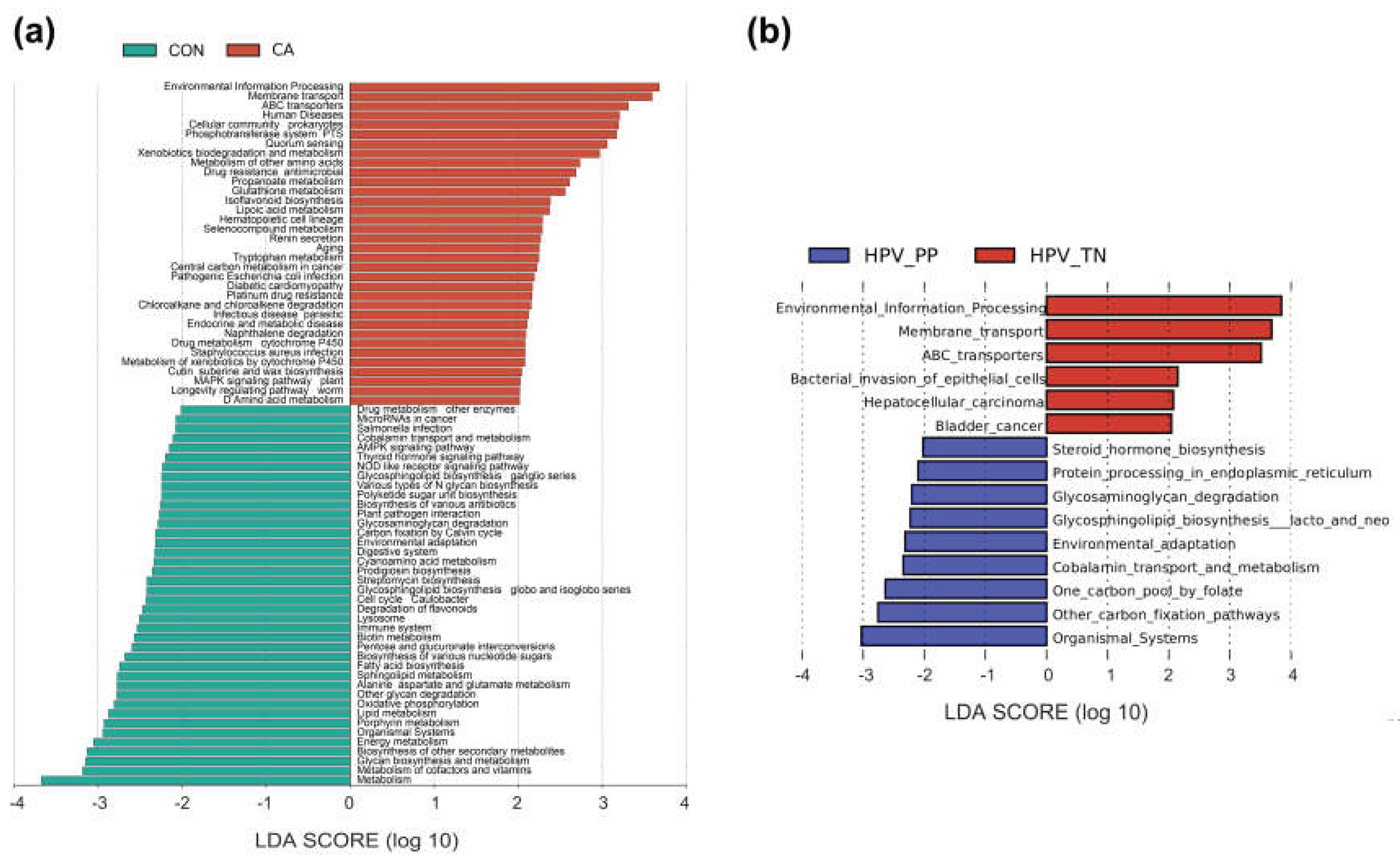
PICRUSt2-based functional prediction uncovered notable Kyoto Encyclopedia of Genes and Genomes (KEGG) module differences between the CA and CON groups, with several pathways differentially enriched, indicating that gut microbial functional remodeling accompanies CA (Figure 6a). When comparing the HPV_TN and HPV_PP groups, 16 KEGG categories exhibited significant differences (p < 0.05, LDA score > 2; Figure 6b). The HPV_PP group demonstrated significant enrichment in pathways including one-carbon pool by folate, cobalamin transport and metabolism, environmental adaptation, glycosphingolipid biosynthesis, and glycosaminoglycan degradation. Conversely, pathways such as ABC transporters, membrane transport, and environmental information processing were diminished in the HPV_PP group relative to the HPV_TN group. These observations imply that persistent HPV infection is accompanied by distinct gut microbial metabolic reprogramming, particularly involving folate and cobalamin metabolism.
4. Discussion
Although CA itself is generally benign, sustained HPV infection, especially with high-risk genotypes, constitutes a well-documented risk factor for anogenital cancer development [1,24]. The clinical management of CA continues to be hampered by frequent recurrence and an absence of dependable biomarkers for predicting whether patients will achieve viral clearance or develop persistence [2,3]. A growing body of evidence emphasizes the central role of host immunity in governing HPV outcomes, and the intestinal microbiome has attracted increasing attention as a crucial regulator of systemic immune competence [4,5,7].
In the current investigation, we conducted a comprehensive characterization of the gut microbiota in 44 female CA patients and 20 healthy controls through 16S rRNA gene sequencing, incorporating a 2-year follow-up to classify patients into HPV persistence (HPV_PP) and clearance (HPV_TN) subgroups. Our analyses uncovered significant shifts in microbial diversity and composition between CA patients and controls, and pinpointed specific taxa, most notably B. vulgatus and B. stercoris, that were enriched in the HPV_PP group and demonstrated predictive value for persistent infection. Spearman correlation analysis further demonstrated that these Bacteroides species form a co-occurring consortium (r > 0.50), and their combined model yielded an AUC of 0.756. These findings suggest that intestinal microbial dysbiosis may contribute to HPV persistence and offer candidate biomarkers for stratifying recurrence risk.
The marked enrichment of B. stercoris and B. vulgatus in CA patients with persistent HPV infection carries important molecular and signaling implications. B. stercoris showed the most pronounced elevation in the HPV_PP group, raising questions about its mechanistic contribution to viral persistence. As a major propionate producer via the succinate pathway [25], B. stercoris-derived propionate has been shown to dampen Th1 polarization and IFN-γ secretion through HDAC inhibition and GPR43-mediated Treg expansion [8,26,27]—both of which are critical effectors for HPV clearance. Recent investigations have demonstrated that Bacteroides methylmalonyl-CoA mutase serves as a key enzyme in propionate generation, promoting intestinal goblet cell differentiation and mucosal barrier integrity [28], potentially connecting B. stercoris enrichment to perturbed gut barrier function. Moreover, Bacteroides-derived outer membrane vesicles have been shown to modulate innate immune signaling cascades, including the cGAS-STING-type I interferon axis that governs antiviral defense [29,30]. The influence of gut microbiota on host antiviral immunity has been increasingly recognized as a critical determinant of viral infection outcomes [7].
B. vulgatus, the other significantly elevated species, modulates host immunity through distinct yet complementary pathways. It produces butyric acid, which acts on the TGF-β1/MAPK signaling cascade implicated in immune suppression and tissue fibrosis [31]. Its lipopolysaccharide is recognized by the dendritic cell-specific intercellular adhesion molecule-3-grabbing non-integrin (DC-SIGN) receptor, a key lectin involved in immune homeostasis, suggesting a direct impact on antigen-presenting cell function and T-cell polarization [32]. Additionally, B. vulgatus influences SCFA and bile acid metabolism, thereby affecting epithelial barrier integrity [33]. Compromise of the gut barrier enhances intestinal permeability, enabling microbial products such as LPS to translocate into systemic circulation and drive low-grade inflammation [24], which may promote a shift from a Th1-dominant (antiviral) to a Th2-dominant (anti-inflammatory) response that is less effective at eliminating intracellular pathogens like HPV. The robust co-occurrence of B. vulgatus with B. stercoris, P. distasonis and other Bacteroides species observed in our Spearman analysis suggests these taxa function as a synergistic consortium, consistent with the combined ROC model (AUC = 0.756) outperforming individual species alone.
From a functional standpoint, PICRUSt2 analysis revealed significant enrichment of folate biosynthesis and cobalamin transport pathways in the HPV_PP group. Folate and vitamin B12 act as essential cofactors for DNA methylation and nucleotide synthesis—processes exploited by HPV to sustain viral DNA replication and epigenetic reprogramming of infected keratinocytes [34,35]. One-carbon metabolism pathways are increasingly recognized as critical for microbial pathogenicity [36], and Bacteroides species, including B. stercoris, have been implicated in folate and B12 metabolism [37]. In the context of HPV, the epigenetic landscape of HPV-associated cancers involves extensive DNA methylation and histone modifications driven by viral oncoproteins [38], and persistent infection is associated with PD-L1 upregulation in keratinocytes, facilitating immune evasion by suppressing T-cell function [39]. The enrichment of Bacteroides species may synergistically reinforce this immune suppression by promoting Treg induction and inhibiting cytotoxic T-cell responses [40]. Through the gut-vaginal axis, these microbial metabolites and outer membrane vesicles can enter systemic circulation and shape cervical mucosal immunity [13,15]. While these mechanisms remain hypothetical, they provide a conceptual framework for future metabolomic and germ-free animal studies linking gut dysbiosis to the failure of HPV clearance.
In summary, our findings highlight B. stercoris and B. vulgatus as pivotal gut microbial markers distinguishing HPV clearance from persistent infection. Both species were significantly enriched in the HPV_PP group, indicating that their overrepresentation may be closely associated with HPV persistence. The diagnostic potential of these two species was further validated by ROC analysis, where their combined model achieved an AUC of 0.756, underscoring their clinical utility as non-invasive biomarkers for predicting HPV clearance outcomes. Complementing these taxonomic findings, PICRUSt2 functional prediction revealed 15 KEGG pathways significantly altered between the two groups, suggesting that gut microbial dysbiosis in persistent HPV infection may contribute to an immunosuppressive microenvironment through altered hormone metabolism and programmed cell death pathways. Together, the differential abundance of B. stercoris and B. vulgatus, their robust diagnostic performance, and the associated functional pathway alterations provide compelling evidence that specific gut microbial signatures and their metabolic functions are intimately linked to HPV persistence, offering promising targets for probiotic or dietary interventions aimed at modulating the gut microbiota to facilitate viral clearance.
Several limitations should be noted. First, the modest sample size and single-center setting may restrict statistical power and broader applicability of the results. Second, although a 2-year longitudinal follow-up was implemented, the baseline cross-sectional sampling design precludes definitive causal inferences regarding the temporal relationship between gut dysbiosis and HPV persistence; prospective longitudinal sampling would be needed to determine whether microbial changes precede or result from chronic infection. Third, while PICRUSt2 provided valuable functional predictions, these inferences are based on 16S rRNA data rather than direct metagenomic or metabolomic profiling, which may introduce bias. Finally, despite matching for key demographic variables, unmeasured confounders including dietary patterns, antibiotic usage, and specific sexual behaviors could influence microbiota composition. Future multi-center investigations integrating shotgun metagenomics and mechanistic experiments are warranted to validate these findings and establish causal relationships.
5. Conclusions
In conclusion, this study provides novel evidence linking gut microbiota composition and functional potential to HPV persistence in patients with condyloma acuminatum. We identified distinct microbial signatures, specifically the enrichment of B. vulgatus and B. stercoris as a co-occurring consortium, alongside altered folate and cobalamin metabolic pathways, as robust indicators of treatment failure. These findings suggest that gut dysbiosis is not merely a bystander but may actively modulate host immune responses critical for viral clearance. By bridging microbial ecology with clinical outcomes, our work highlights the potential of fecal biomarkers for risk stratification and proposes the gut microbiome as a viable therapeutic target. Ultimately, integrating microbiome profiling into clinical practice could pave the way for personalized interventions, such as probiotics or dietary modulation, to enhance HPV clearance rates and reduce disease recurrence.
Supplementary Materials
The following supporting information can be downloaded at https://www.mdpi.com/article/doi/s1, Table S1: Clinical characterisitics of each patients.
Author Contributions
Conceptualization, X.L. and Y.W.; Methodology, Y.W. and Q.Z.; Validation, Y.W., Q.Z. and C.W.; Formal Analysis, Y.W.; Investigation, Y.W. and Q.Z.; Resources, X.L.; Data Curation, Y.W.; Writing – Original Draft Preparation, Y.W.; Writing – Review & Editing, X.L.; Visualization, C.W.; Supervision, X.L.; Project Administration, X.L.
Funding
This research received no external funding.
Institutional Review Board Statement
The study was conducted in accordance with the Declaration of Helsinki, and approved by the Institutional Review Board (Ethics Committee) of the First Affiliated Hospital, Zhejiang University School of Medicine (approval no. 2020-057).
Informed Consent Statement
Informed consent was obtained from all subjects involved in the study.
Data Availability Statement
All raw sequencing reads have been deposited in the EMBL Sequence Read Archive under accession number PRJNA1033799.
Conflicts of Interest
The authors declare no conflicts of interest.
Acknowledgments
None.
Abbreviations
The following abbreviations are used in this manuscript:
| HPV | Human papillomavirus |
| CA | Condyloma acuminatum |
| CON | Control |
| HPV_TN | HPV turn-negative |
| HPV_PP | HPV persistent-positive |
| SCFAs | Short-chain fatty acids |
| CI | Confidence intervals |
| PCA | Principal component analysis |
| PCoA | Principal coordinate analysis |
| OTU | Operational taxonomic units |
| LEfSe | LDA Effect Size |
| ROC | Receiver operating characteristic |
| AUC | Area under the curve |
| KEGG | Kyoto Encyclopedia of Genes and Genomes |
| PICRUSt2 | Phylogenetic Investigation of Communities by Reconstruction of Unobserved States |
References
- Zhu, P.; Qi, R.Q.; Yang, Y.; et al. Clinical guideline for the diagnosis and treatment of cutaneous warts (2022). J. Evid. -Based Med. 2022, 15, 284–301. [Google Scholar] [CrossRef] [PubMed]
- Jain, M.; Yadav, D.; Jarouliya, U.; et al. Epidemiology, Molecular Pathogenesis, Immuno-Pathogenesis, Immune Escape Mechanisms and Vaccine Evaluation for HPV-Associated Carcinogenesis. Pathogens 2023, 12, 1380. [Google Scholar] [CrossRef] [PubMed]
- Ntuli, L.; Mtshali, A.; Mzobe, G.; et al. Role of Immunity and Vaginal Microbiome in Clearance and Persistence of Human Papillomavirus Infection. Front Cell Infect. Microbiol. 2022, 12, 927131. [Google Scholar] [CrossRef] [PubMed]
- Norenhag, J.; Du, J.; Olovsson, M.; et al. The vaginal microbiota, human papillomavirus and cervical dysplasia: a systematic review and network meta-analysis. BJOG 2020, 127, 171–180. [Google Scholar] [PubMed]
- Xie, Y.; Lv, G.; Su, D.; et al. Lactobacillus plantarum-derived cytoplasmic membrane vesicles as novel anti-inflammatory nanotherapeutics for psoriasis management. Front Immunol. 2025, 16, 1647466. [Google Scholar] [CrossRef] [PubMed]
- Vijayakumar, V.; Rathinam, T.; Deenadhayalan, S.S.; Edwin, E.R. Human microbiome influence on head and neck cancer. Cancer Treat. Res. Commun. 2026, 47, 101218. [Google Scholar] [CrossRef] [PubMed]
- Liu, Y.; Yan, D.; Chen, R.; et al. Recent insights and advances in gut microbiota's influence on host antiviral immunity. Front Microbiol. 2025, 16, 1536778. [Google Scholar] [CrossRef] [PubMed]
- Liu, X.F.; Shao, J.H.; Liao, Y.T.; et al. Regulation of short-chain fatty acids in the immune system. Front Immunol. 2023, 14, 1186892. [Google Scholar] [CrossRef] [PubMed]
- Liu, Z.; Wu, Y.; Wang, C.; Hou, N.; Liu, X. Changes in the vaginal microbiome in female patients with condyloma acuminatum and its impact on persistent HPV infection. Sci. Rep. 2025, 15, 34996. [Google Scholar] [CrossRef] [PubMed]
- Huang, R.; Liu, Z.; Sun, T.; et al. Cervicovaginal microbiome, high-risk HPV infection and cervical cancer: Mechanisms and therapeutic potential. Microbiol. Res. 2024, 287, 127857. [Google Scholar] [CrossRef] [PubMed]
- Oyedokun, P.A.; Oyeleke, B.T.; Akanji, O.O.; et al. The role of the microbiome in gynecological cancers: implications for diagnosis and treatment. Front Immunol. 2026, 17, 1718883. [Google Scholar] [CrossRef] [PubMed]
- Che, Y.; Fu, S.; Wang, H.; et al. Correlation of the Gut Microbiota and Antitumor Immune Responses Induced by a Human Papillomavirus Therapeutic Vaccine. ACS Infect. Dis. 2022, 8, 2494–2504. [Google Scholar] [CrossRef] [PubMed]
- Xu, P.; Mageswaran, U.M.; Nisaa, A.A.; et al. Roles of probiotics against HPV through the gut-vaginal axis. Int. J. Gynaecol. Obstet. 2025, 169, 1–8. [Google Scholar] [PubMed]
- Wang, M.Y.; Sang, L.X.; Sun, S.Y. Gut microbiota and female health. World J. Gastroenterol 2024, 30, 1655–1662. [Google Scholar] [CrossRef] [PubMed]
- Elkafas, H.; Walls, M.; Al-Hendy, A.; et al. Gut and genital tract microbiomes: Dysbiosis and link to gynecological disorders. Front Cell Infect. Microbiol. 2022, 12, 1059825. [Google Scholar] [CrossRef] [PubMed]
- Yang, H.; Bian, J.; Yu, W.; et al. Gut microbiota profiles associated with persistent anal HPV infection in men who have sex with men. BMC Infect. Dis. 2025, 25, 1247. [Google Scholar] [CrossRef] [PubMed]
- Chen, K.; Li, M.; Fu, T.Q.; et al. Partial normalization of microbiota dysbiosis in condyloma acuminatum patients following treatment. Front Cell Infect. Microbiol. 2025, 15, 1558469. [Google Scholar] [CrossRef] [PubMed]
- Edgar, R.C. Search and clustering orders of magnitude faster than BLAST. Bioinformatics 2010, 26, 2460–2461. [Google Scholar] [CrossRef] [PubMed]
- Quast, C.; Pruesse, E.; Yilmaz, P.; et al. The SILVA ribosomal RNA gene database project: improved data processing and web-based tools. Nucleic Acids Res. 2013, 41, D590–D596. [Google Scholar] [PubMed]
- Schloss, P.D.; Westcott, S.L.; Ryabin, T.; et al. Introducing mothur: open-source, platform-independent, community-supported software for describing and comparing microbial communities. Appl. Env. Microbiol. 2009, 75, 7537–7541. [Google Scholar] [CrossRef] [PubMed]
- Segata, N.; Izard, J.; Waldron, L.; et al. Metagenomic biomarker discovery and explanation. Genome Biol. 2011, 12, R60. [Google Scholar] [CrossRef] [PubMed]
- Douglas, G.M.; Maffei, V.J.; Zaneveld, J.; et al. PICRUSt2 for prediction of metagenome functions. Nat. Biotechnol. 2020, 38, 685–688. [Google Scholar] [CrossRef] [PubMed]
- Robin, X.; Turck, N.; Hainard, A.; et al. pROC: an open-source package for R and S+ to analyze and compare ROC curves. BMC Bioinform. 2011, 12, 77. [Google Scholar] [CrossRef] [PubMed]
- Di Vincenzo, F.; Del Gaudio, A.; Petito, V.; et al. Gut microbiota, intestinal permeability, and systemic inflammation: a narrative review. Intern Emerg. Med. 2024, 19, 275–293. [Google Scholar] [CrossRef] [PubMed]
- Reichardt, N.; Duncan, S.H.; Young, P.; et al. Phylogenetic distribution of three pathways for propionate production within the human gut microbiota. ISME J. 2014, 8, 1323–1335. [Google Scholar] [CrossRef] [PubMed]
- Silva, L.G.; Ferguson, B.S.; Avila, A.S.; Faciola, A.P. Sodium propionate and sodium butyrate effects on histone deacetylase (HDAC) activity, histone acetylation, and inflammatory gene expression in bovine mammary epithelial cells. J. Anim. Sci. 2018, 96, 5244–5252. [Google Scholar] [CrossRef] [PubMed]
- Arpaia, N.; Campbell, C.; Fan, X.; et al. Metabolites produced by commensal bacteria promote peripheral regulatory T-cell generation. Nature 2013, 504, 451–455. [Google Scholar] [CrossRef] [PubMed]
- Wang, X.; Cai, Z.; Wang, Q.; et al. Bacteroides methylmalonyl-CoA mutase produces propionate that promotes intestinal goblet cell differentiation and homeostasis. Cell Host Microbe 2024, 32, 63–78.e7. [Google Scholar] [CrossRef] [PubMed]
- Kaparakis-Liaskos, M.; Ferrero, R.L. Immune modulation by bacterial outer membrane vesicles. Nat. Rev. Immunol. 2015, 15, 375–387. [Google Scholar] [CrossRef] [PubMed]
- Lam, K.C.; Araya, R.E.; Huang, A.; et al. Microbiota triggers STING-type I IFN-dependent monocyte reprogramming of the tumor microenvironment. Cell 2021, 184, 5338–5356.e21. [Google Scholar] [CrossRef] [PubMed]
- Du, Z.; Zhang, W.; Wang, Y.; et al. Bacteroides vulgatus alleviates heart failure via butyric acid-TGF-β1/MAPK pathway. J. Adv. Res. 2026, 84, 991–1004. [Google Scholar] [CrossRef] [PubMed]
- Nieto-Fabregat, F.; Zhu, Q.; Vivès, C.; et al. Atomic-Level Dissection of DC-SIGN Recognition of Bacteroides vulgatus LPS Epitopes. JACS Au 2024, 4, 697–712. [Google Scholar] [CrossRef] [PubMed]
- Mills, R.H.; Dulai, P.S.; Vázquez-Baeza, Y.; et al. Multi-omics analyses of the ulcerative colitis gut microbiome link Bacteroides vulgatus proteases with disease severity. Nat. Microbiol. 2022, 7, 262–276. [Google Scholar] [CrossRef] [PubMed]
- Lyon, P.; Strippoli, V.; Fang, B.; Cimmino, L. B Vitamins and One-Carbon Metabolism: Implications in Human Health and Disease. Nutrients 2020, 12, 2867. [Google Scholar] [CrossRef] [PubMed]
- Durzynska, J.; Lesniewicz, K.; Poreba, E. Human papillomaviruses in epigenetic regulations. Mutat. Res. Rev. Mutat. Res. 2017, 772, 36–50. [Google Scholar] [CrossRef] [PubMed]
- Stocke, K.S.; Lamont, R.J. One-carbon metabolism and microbial pathogenicity. Mol. Oral Microbiol. 2024, 39, 156–164. [Google Scholar] [CrossRef] [PubMed]
- Ni, Y.; Qian, L.; Siliceo, S.L.; et al. Resistant starch decreases intrahepatic triglycerides in patients with NAFLD via gut microbiome alterations. Cell Metab. 2023, 35, 1530–1547.e8. [Google Scholar] [CrossRef] [PubMed]
- Castro-Oropeza, R.; Piña-Sánchez, P. Epigenetic and Transcriptomic Regulation Landscape in HPV+ Cancers: Biological and Clinical Implications. Front Genet 2022, 13, 886613. [Google Scholar] [CrossRef] [PubMed]
- Liu, Y.; Huang, W.; Yang, K.; et al. The expression and significance of PD-L1 in condyloma acuminatum. Skin. Res. Technol. 2024, 30, e13558. [Google Scholar] [CrossRef] [PubMed]
- Jia, D.; Wang, Q.; Qi, Y.; et al. Microbial metabolite enhances immunotherapy efficacy by modulating T cell stemness in pan-cancer. Cell 2024, 187, 1651–1665.e21. [Google Scholar] [CrossRef] [PubMed]
Figure 1.
Alpha and beta diversity of the gut microbiota between healthy control samples (CON) and the condyloma acuminatum group (CA). (a) Principal component analysis (PCA) of the gut microbiota based on bacterial operational taxonomic units (OTUs) between the CON and CA groups. (b) Chao1 and ACE diversity, representing the community richness of the gut microbiota. (c) Principal coordinate analysis (PCoA) of the gut microbiota based on weighted UniFrac distances between the CON and CA groups. (d) Beta diversity of the gut microbiota between the CON and CA groups analyzed by NMDS. (e) Beta diversity of the gut microbiota between the CON and CA groups analyzed by ANOSIM.
Figure 1.
Alpha and beta diversity of the gut microbiota between healthy control samples (CON) and the condyloma acuminatum group (CA). (a) Principal component analysis (PCA) of the gut microbiota based on bacterial operational taxonomic units (OTUs) between the CON and CA groups. (b) Chao1 and ACE diversity, representing the community richness of the gut microbiota. (c) Principal coordinate analysis (PCoA) of the gut microbiota based on weighted UniFrac distances between the CON and CA groups. (d) Beta diversity of the gut microbiota between the CON and CA groups analyzed by NMDS. (e) Beta diversity of the gut microbiota between the CON and CA groups analyzed by ANOSIM.
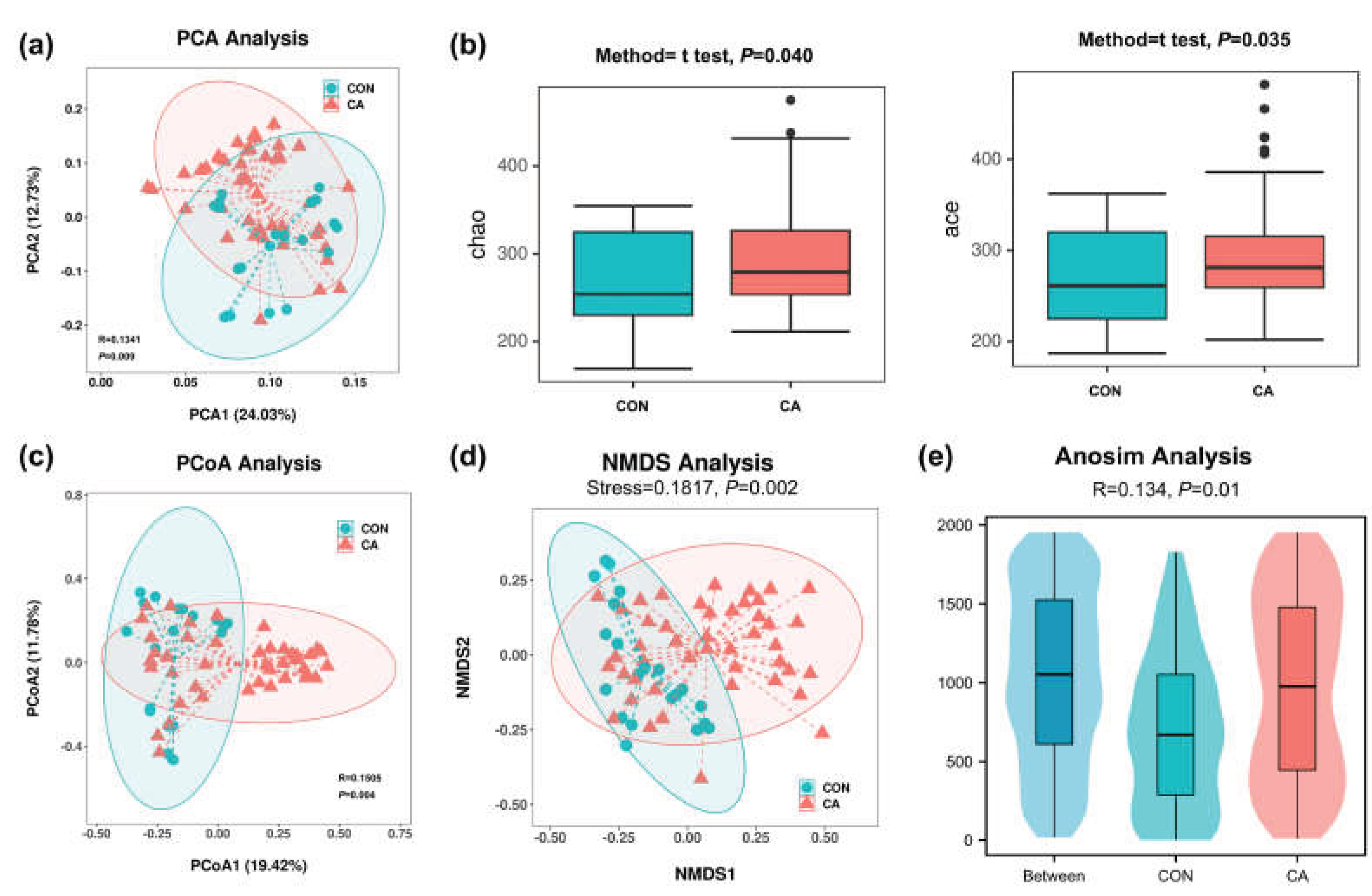
Figure 2.
Comparison of the gut microbiota taxonomic composition between healthy control samples (CON) and the condyloma acuminatum (CA) group. (a) Histogram showing the relative abundance of gut microbial communities in both the CON and CA groups at the genus level. (b) Histogram showing the relative abundance of gut microbial communities in both the CON and CA groups at the species level. (c) Boxplots showing the relative abundance of the top 30 species of the gut microbiota in the CON and CA groups.
Figure 2.
Comparison of the gut microbiota taxonomic composition between healthy control samples (CON) and the condyloma acuminatum (CA) group. (a) Histogram showing the relative abundance of gut microbial communities in both the CON and CA groups at the genus level. (b) Histogram showing the relative abundance of gut microbial communities in both the CON and CA groups at the species level. (c) Boxplots showing the relative abundance of the top 30 species of the gut microbiota in the CON and CA groups.
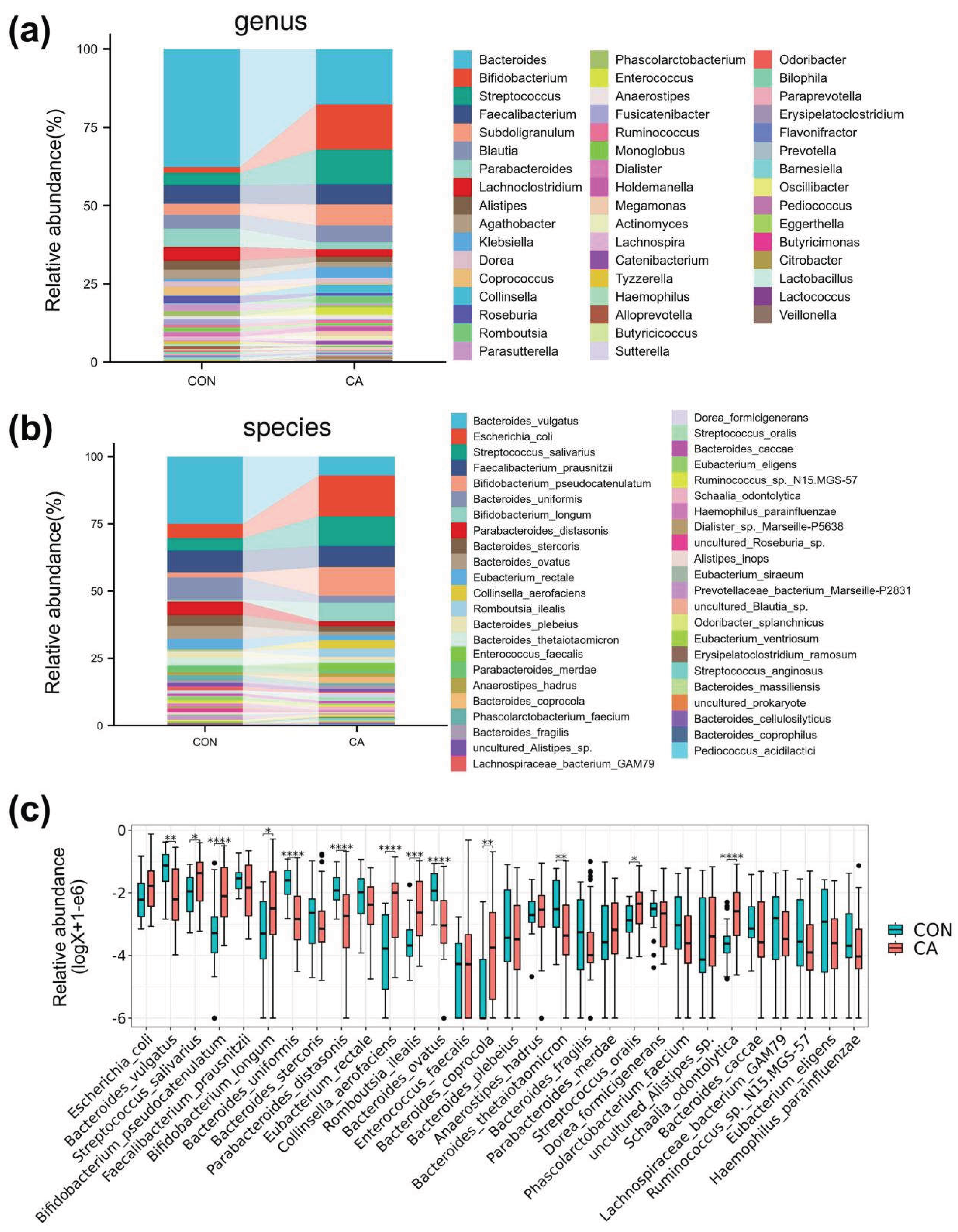
Figure 3.
Comparison of the gut microbiota taxonomic composition between the HPV persistent-positive (HPV_PP) group and HPV turn-negative (HPV_TN) group. (a) Histogram showing the relative abundance of gut microbial communities in both the HPV_PP and HPV_TN groups at the genus level. (b) Histogram showing the relative abundance of gut microbial communities in both the HPV_TN and HPV_PP groups at the species level. (c) Boxplots showing the relative abundance of the top 30 species of the gut microbiota in the HPV_TN and HPV_PP groups.
Figure 3.
Comparison of the gut microbiota taxonomic composition between the HPV persistent-positive (HPV_PP) group and HPV turn-negative (HPV_TN) group. (a) Histogram showing the relative abundance of gut microbial communities in both the HPV_PP and HPV_TN groups at the genus level. (b) Histogram showing the relative abundance of gut microbial communities in both the HPV_TN and HPV_PP groups at the species level. (c) Boxplots showing the relative abundance of the top 30 species of the gut microbiota in the HPV_TN and HPV_PP groups.
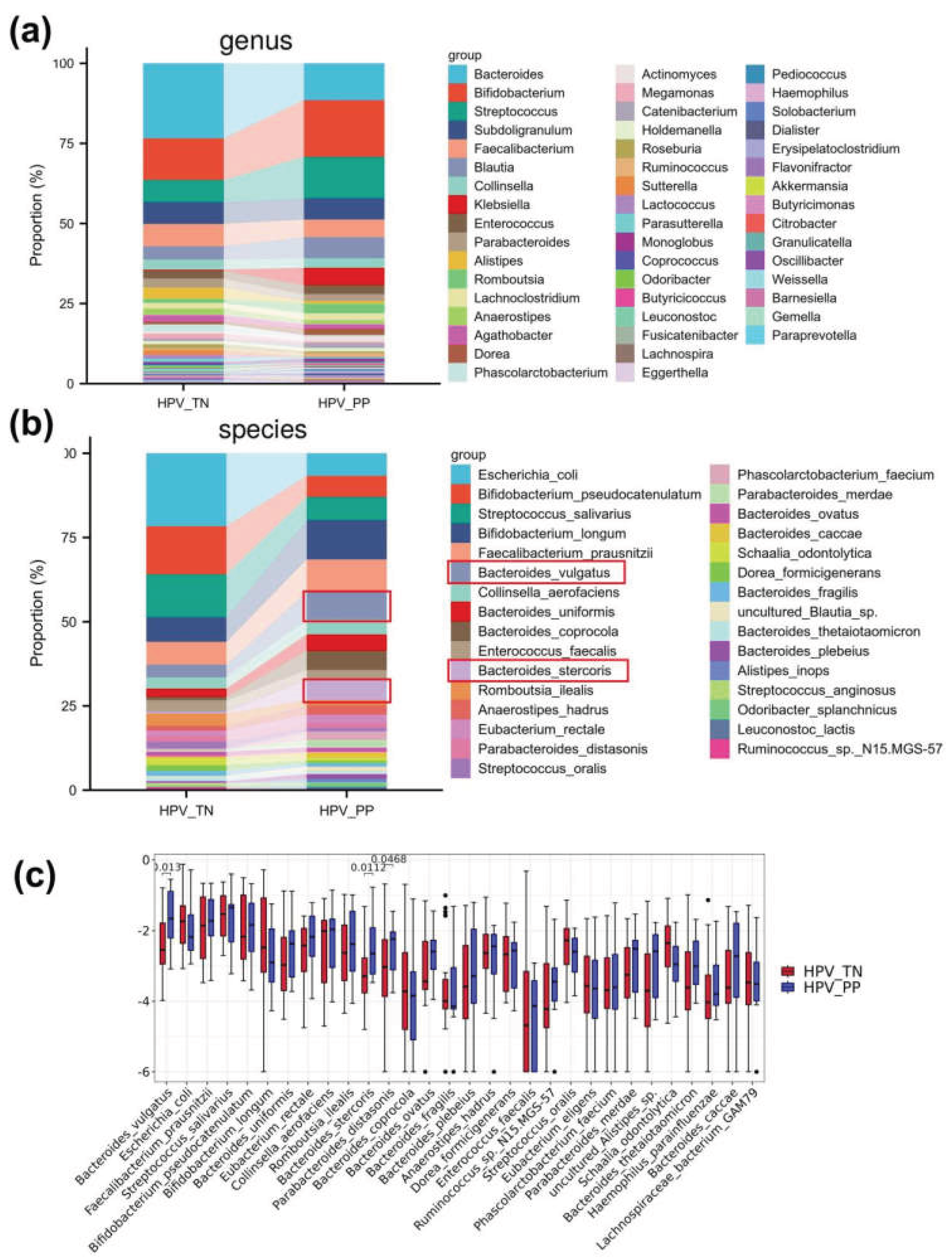
Figure 4.
Relative abundance profile of gut microbiota between the HPV turn-negative (HPV_TN) group and HPV persistent-positive (HPV_PP) group. (a) Differentially expressed gut microbiota between the HPV_TN and HPV_PP groups selected by |LDA score| > 2 and p < 0.05. (b) Cladogram showing the most differentially abundant taxa identified by LEfSe between the HPV_PP and HPV_TN groups. (c) Receiver operating characteristic (ROC) curves for the likelihood of persistent HPV infection predicted by the relative abundance of B. vulgatus, B. stercoris, P. distasonis and combination of them.
Figure 4.
Relative abundance profile of gut microbiota between the HPV turn-negative (HPV_TN) group and HPV persistent-positive (HPV_PP) group. (a) Differentially expressed gut microbiota between the HPV_TN and HPV_PP groups selected by |LDA score| > 2 and p < 0.05. (b) Cladogram showing the most differentially abundant taxa identified by LEfSe between the HPV_PP and HPV_TN groups. (c) Receiver operating characteristic (ROC) curves for the likelihood of persistent HPV infection predicted by the relative abundance of B. vulgatus, B. stercoris, P. distasonis and combination of them.
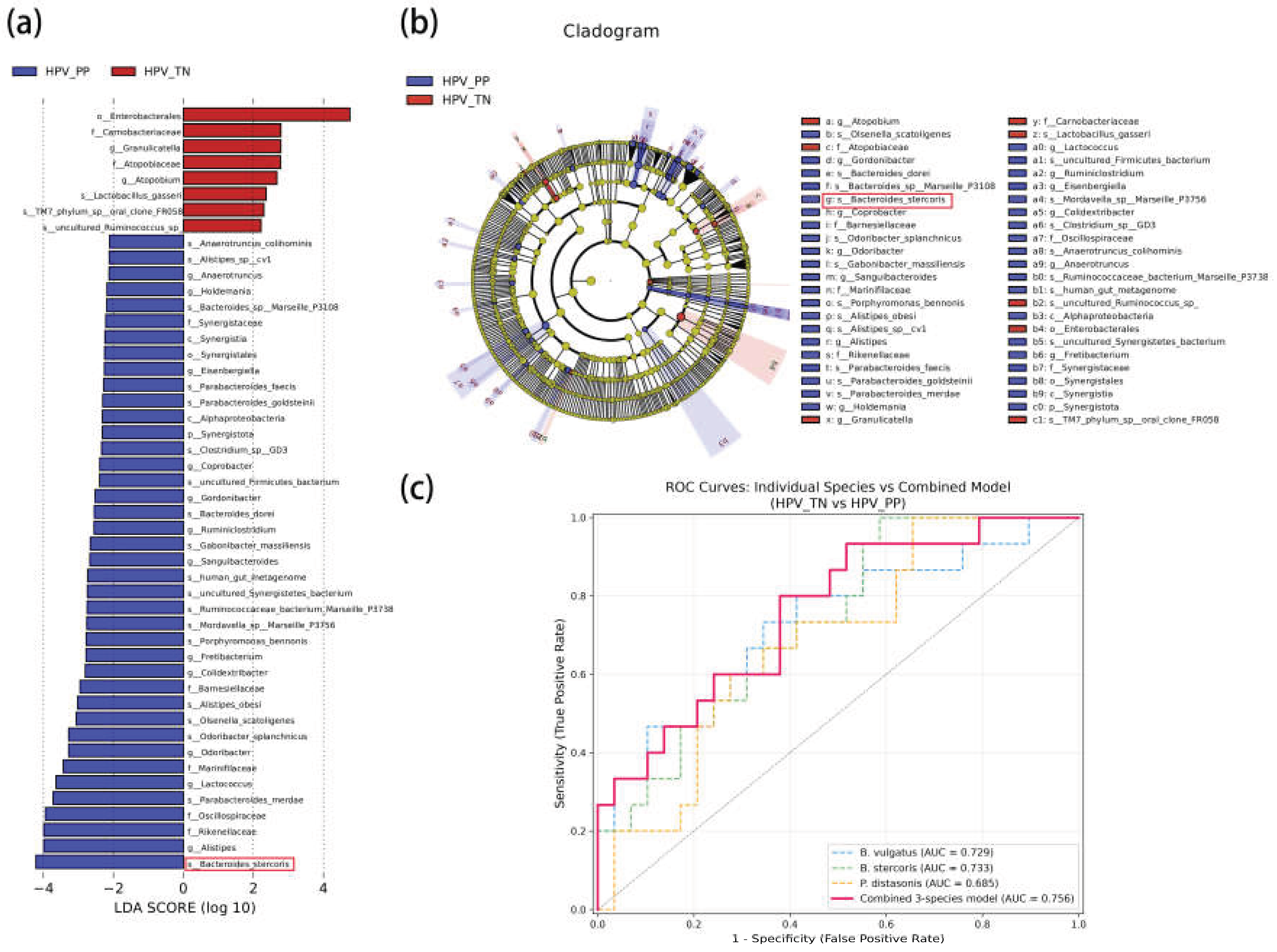
Figure 5.
Correlation between the relative abundance of the top 20 species and clinical characteristics, including age, BMI, disease course, treatment duration, HPV genotype, presence or absence of LSILs, and HPV_PP status. (a) Correlations between the relative abundances of the top 20 species and clinical characteristics analyzed using Mantel's test, showing Pearson's rank correlation coefficients. (b) Heatmap of Spearman's rank correlation coefficients between the top 20 species of the gut microbiota and clinical parameters. (c) Inter-species Spearman correlation analysis among the top 20 species. * p < 0.05; ** p < 0.01; *** p < 0.001.
Figure 5.
Correlation between the relative abundance of the top 20 species and clinical characteristics, including age, BMI, disease course, treatment duration, HPV genotype, presence or absence of LSILs, and HPV_PP status. (a) Correlations between the relative abundances of the top 20 species and clinical characteristics analyzed using Mantel's test, showing Pearson's rank correlation coefficients. (b) Heatmap of Spearman's rank correlation coefficients between the top 20 species of the gut microbiota and clinical parameters. (c) Inter-species Spearman correlation analysis among the top 20 species. * p < 0.05; ** p < 0.01; *** p < 0.001.
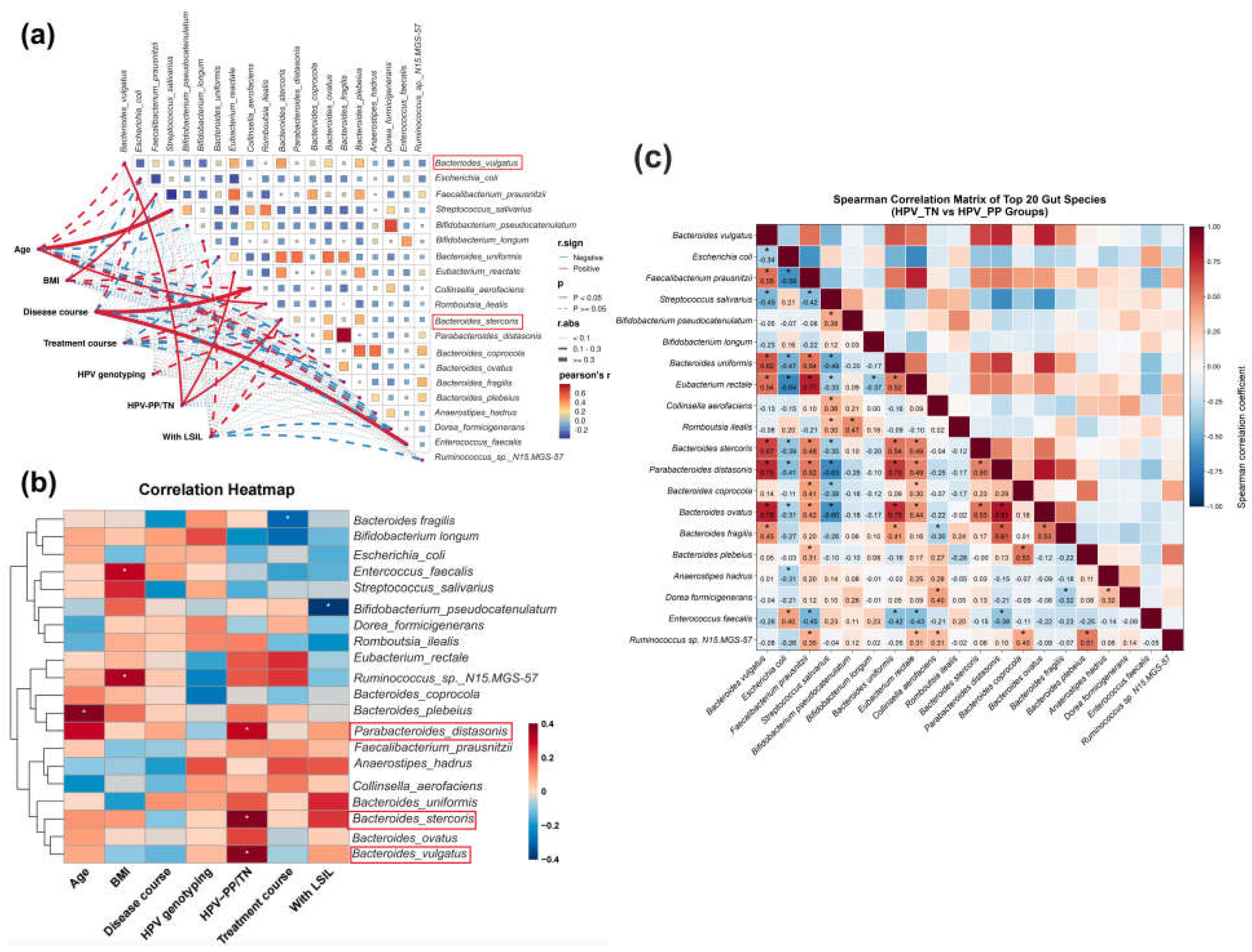
Figure 6.
Differences in predicted gene functions between the condyloma acuminatum (CA) group compared with healthy controls (CON), and between the HPV turn-negative (HPV_TN) group and HPV persistent-positive (HPV_PP) group, using PICRUSt2. (a) Bar plots of significantly different KEGG modules between the CA and healthy control groups. (b) Bar plots of significantly different KEGG modules between the HPV_TN and HPV_PP groups. PICRUSt2: Phylogenetic Investigation of Communities by Reconstruction of Unobserved States. KEGG: Kyoto Encyclopedia of Genes and Genomes.
Figure 6.
Differences in predicted gene functions between the condyloma acuminatum (CA) group compared with healthy controls (CON), and between the HPV turn-negative (HPV_TN) group and HPV persistent-positive (HPV_PP) group, using PICRUSt2. (a) Bar plots of significantly different KEGG modules between the CA and healthy control groups. (b) Bar plots of significantly different KEGG modules between the HPV_TN and HPV_PP groups. PICRUSt2: Phylogenetic Investigation of Communities by Reconstruction of Unobserved States. KEGG: Kyoto Encyclopedia of Genes and Genomes.
Disclaimer/Publisher’s Note: The statements, opinions and data contained in all publications are solely those of the individual author(s) and contributor(s) and not of MDPI and/or the editor(s). MDPI and/or the editor(s) disclaim responsibility for any injury to people or property resulting from any ideas, methods, instructions or products referred to in the content. |
© 2026 by the authors. Licensee MDPI, Basel, Switzerland. This article is an open access article distributed under the terms and conditions of the Creative Commons Attribution (CC BY) license (http://creativecommons.org/licenses/by/4.0/).
Copyright: This open access article is published under a Creative Commons CC BY 4.0 license, which permit the free download, distribution, and reuse, provided that the author and preprint are cited in any reuse.


