

Submitted:
04 August 2026
Posted:
06 August 2026
You are already at the latest version
Abstract
Software-defined networking (SDN) is an advanced network architecture to transform the conventional network to meet evolving requirements. Unlike traditional networks, SDN breaks down the control and data plane, making it efficient to monitor, configure, and optimize the network resources. However, due to its centralized nature, SDN is prone to several attack vectors. Among them, distributed denial of service (DDoS) attacks are the most potent threats to the SDN controller. This paper presents a novel approach to detect DDoS attacks on SDN controllers using a novel detection model based on a parallel one-dimensional convolutional neural network-gated recurrent unit (1D CNN-GRU) architecture equipped with a novel hybrid feature selection approach. The suggested hybrid feature selection combines the filter feature methods (mutual information, chi-squared, and ANOVA) with a self-attention mechanism to effectively detect the most vital features for DDoS attack detection in SDN environments. The proposed detection model 1D CNN-GRU leverages the strengths of both a convolutional neural network (CNN) and a gated recurrent unit (GRU). The CNN captures spatial and local patterns, while the GRU focuses on temporal dependencies within the data. The proposed approach showcased high levels of accuracy (97.882%), precision of (98.078%), and F1-measure of (97.276%). Additionally, it exhibited a low false positive rate (FPR) of 1.208% and a short detection time of 1.206 seconds.
Keywords:
convolutional neural network
; DDoS attack
; filter feature selection
; hybrid feature selection
; gated recurrent unit
; self-attention mechanism
; SDN
1. Introduction
The rise in online services and the escalating amount of data transmitted across communication networks affirm the necessity to develop traditional network structures. There is a growing need to move towards a new paradigm that matches the evolving demands of development. Software-Defined Networking (SDN) emerges as a sophisticated network technology designed to revolutionize and optimize the traditional network [1]. Unlike the traditional network, SDN allows the separation of control and data plane functions. This disconnection facilitates the efficient monitoring, configuration, and optimization of network resources [2,3]. Figure 1 shows the structure of SDN, consisting of three main planes: the application plane, the control plane (CP), and the data plane (DP). The DP devices forward traffic based on rules that are received from the controller. CP has a global view of the network and can quickly manage rules and generate configurations. The controller plane is the central decision point and mind of the network. The application plane contains many SDN applications, which communicate with the SDN controller using a northbound interface [1].
The SDN controller presents security vulnerabilities and forms a single point of failure, vulnerable to misuse by attackers trying to disrupt network functionality [4]. Consequently, attackers may initiate a large-scale traffic onslaught, commonly referred to as a Distributed Denial of Service (DDoS) attack, directed from the SDN infrastructure layer toward the controller [5,6]. The core target of DDoS attacks is to obstruct legal users from arriving at a service for a prolonged time. In this type of attack, the assailant seeks to harm numerous hosts to deliberately inundate a legitimate user with an overwhelming volume of traffic. Consequently, this results in a prolonged unavailability of the service [7].
Identifying DDoS attacks on the SDN controller as early as possible is a critical research concern. Several researchers have put forth diverse methods for identification of DDoS attacks in SDN environments utilizing machine learning (ML) and deep learning (DL) techniques [7,8,9,10,11,12,13,14,15,16]. Although these methods have demonstrated promise, several vital challenges persist. First, current methods often lack effective feature selection mechanisms, leading to suboptimal performance [8,13,17]. Second, many of these approaches suffer from low detection accuracy and prolonged detection times, making them less practical for real-time applications [6,18,19]. Third, some work uses conventional datasets that do not correctly mirror the reality of the SDN environment [8,12,19,20].
In this research, our purpose is to address these challenges and contribute to improving DDoS attack detection in SDN infrastructures by developing an advanced detection model equipped with an unorthodox hybrid feature selection where the proposed model will be developed based on a dataset that accurately reflects the reality of the SDN infrastructures. The major contributions of this research paper are listed as follows:
- Introduce a novel hybrid feature selection approach that combines traditional filter-based methods (mutual information, chi-squared, and ANOVA) with a self-attention mechanism. This approach effectively identifies the most important features for DDoS attack identification in SDN environments.
- Propose a novel detection model that relies on a parallel 1D CNN-GRU architecture for the identification of DDoS attacks on SDN controllers. The model leverages the strengths of both a CNN and GRU. The CNN captures spatial and local patterns, while the GRU focuses on temporal dependencies within the data. By combining both spatial and temporal features, this architecture ensures comprehensive feature extraction and improves detection performance.
- Conduct a comprehensive assessment of the suggested approach by comparing its outcomes with other ML and DL approaches. This comparison highlights the superiority of the hybrid 1D CNN-GRU model in terms of accuracy, precision, false positive rate, and detection efficiency.
The remainder of the research is structured as follows: Section 2 reviews the previous works. Section 3 describes the proposed method, including a hybrid feature selection mechanism, and 1D CNN-GRU DDoS attack classification models. Section 4 discusses the results. Lastly, Section 5 summarizes the main findings of this work.
2. Literature Review
The employing of machine learning (ML) and deep learning (DL) algorithms to boost the security of SDN has captured the interest of numerous researchers. These methods provide sophisticated capabilities for examining intricate network traffic patterns, which makes them useful for recognizing and alleviating DDoS attacks. This section explores diverse studies centered around DDoS security mechanisms through harnessing the capabilities of both ML and DL techniques.
2.1. Machine Learning
The studies in [8,13,17,21] introduced diverse approaches for identifying DDoS attacks. But, a significant drawback of these approaches is their dependence on conventional datasets, which don't accurately mirror the reality of the SDN infrastructure. In [8], the researchers constructed a ML model utilizing decision trees (DTs) and support vector machine (SVM) to identify DDoS attacks in SDN networks. They assessed their suggested method employing the KDD CUP dataset which doesn't mirror the reality of the SDN environment, their findings yielded subpar outcomes. Specifically, DT achieved only a 78% accuracy. In [13], the researchers presented a ML-based approach for identifying and alleviating low-rate DDoS attacks in the SDN infrastructure. They used six ML algorithms, including J48, random tree (RT), random forest (RF), multilayer perceptron (MLP), SVM, and REP Trees. The outcomes indicated that the MLP algorithm yielded the best outcomes, achieving a 95% accuracy rate. However, the method underwent testing and assessment employing the (CIC) DoS dataset, which does not represent of the real SDN environment. Authors in [21] introduced an ML model for identifying application layer DDoS Attacks. Their proposed approach involved combining a radial basis function (RBF) neural network with the cuckoo search (CS) model. To determine the optimal features for data collection, they employed a genetic algorithm (GA). In their study, they compared the efficiency of their model to that of other methods, including Bootstrap Aggregation (Bagging), k-nearest neighbor (KNN), recurrent neural network (RNN), SVM, and MLP. Experimental findings demonstrated that their approach surpassed previous approaches in the detection of DDoS traffic. But, they assessed the model using the NSL-KDD dataset which doesn't mirror the reality of the SDN infrastructure. Authors in [17] introduced an anomaly-based intrusion detection system designed for SDN, employing a range of ML models, involving extreme learning machine (ELM), linear discriminant analysis (LDA), neural networks (NN), AdaBoost (AB), RUSBoost (RB), LogitBoost (LB), BaggingTrees (BT), Naive Bayes (NB), RF, SVM, KNN, and DT. Based on their experimental findings, the DT proved higher efficiency compared to the other ML algorithms, attaining a testing accuracy of 88.74% and a training accuracy of 99.7 %. It’s worth noting that the NSL-KDD dataset was employed in their work.
The authors in [7,10,22,23] proposed a hybrid ML system for the identifying of DDoS attacks in SDN infrastructures. In [7], the hybrid system merges self-organizing map (SOM) and SVM for DDoS attack detection in SDN infrastructures. The presented hybrid system showcased a detection rate of 90.45%. Nevertheless, the authors presented insufficient details regarding the dataset employed. Authors in [10] generated an SDN dataset employing a Mininet emulator, simulating real-time scenarios and extracting 23 features. The presented hybrid system combines SVM and RF (SVM-RF), experimented with their approach, and attained a high-performance level. Authors in [22] developed a DDoS security system leveraging SDN architecture and vehicle sensors for the detection of attack flows. Their hybrid solution incorporates an integration of SOM and KNN algorithms. Authors in [23] develop a hybrid solution for detecting various sorts of DDoS attacks in vehicular ad hoc networks (VANET), the hybrid model integrates neural networks (NN) and DT algorithms, and they concluded a result that the hybrid model surpasses the individual performance of the NN and DT models.
The SVM algorithm has been employed by many authors in their approach [11,24,25]. In [24], the authors presented an evolutionary model developed for the recognition of DDoS attack traffic within an SDN infrastructure. They enhanced SVM by incorporating kernel principal component analysis (KPCA) with GA. In this SVM model, KPCA serves to lower the dimensionality of feature vectors, while GA improves various SVM parameters. In [11], the authors suggested employing an ensemble approach for identifying DDoS attacks. They applied four various ML models (KNN, NB, SVM, and SOM) to identify suspect traffic within the SDN infrastructure. Among these, the SVM-SOM displayed superior efficiency in contrast to the other ML algorithm. In [25], the researchers presented a system intended to identify DDoS attacks in SDN, they employed an Advanced SVM in their method which exhibited a prediction accuracy of 97%. Although they generated an attack dataset within the SDN environment, it is noteworthy that they did not release it to the public.
In [15], the researchers suggested a security model to recognize DDoS attacks within the SDN infrastructure. The system relies on an adaptive learning approach that utilizes previous datasets to categorize the traffic. They employed a cross-validation strategy to enhance the efficiency of categorization outcomes, while the acquired findings are promising, it is suggested that the adaptive security system undergoes testing on diverse datasets acquired from real-world environments to enhance its realism and generalizability. In [26], the authors directed their attention to web-shell intrusion in the IoT environment, employing ensemble techniques. They utilized principal component analysis (PCA) to identify optimal features, incorporating three ensemble techniques: voting, extremely randomized trees (ET), and RF. Notably, RF and ET demonstrated effectiveness in light IoT environments, while the voting method yielded superior results in heavier IoT scenarios.
2.2. Deep Learning
The studies in [18,27,28] utilized deep neural networks (DNN) in their approach. In [18], the authors built a deep learning model employing DNN and CNN to identify link flooding attacks. They experimented with their technique utilizing a created dataset and got a detection accuracy rate of only 95.03%. In [27], the authors presented a DDoS attack recognition approach for SDN, incorporating two security phases. Initially, a snort was employed for the recognition of signature-based attacks. Subsequently, the SVM model and the DNN model were utilized for attack classification. The experimental findings showed that the DNN was better than the SVM, obtaining a classification accuracy rate of 92.30%. In [28], the authors proposed a method employing DNN to safeguard DP and CP against DDoS attacks. Nevertheless, their training, testing, and evaluation were based on the UNSW-NB15 dataset, which is not particularly tailored for the SDN infrastructure. Consequently, the approach exhibited subpar efficiency in terms of computation metrics.
The authors in [19,20,29,30] used the conventional dataset which reflects the traditional networks to evaluate their proposed DL model. In [19], to prevent false data injection attacks on the communication channel, the authors introduced an anomaly-based intrusion detection framework employing a DL algorithm, and recognize any attack attempts on the SDN southbound side. While the authors asserted a detection accuracy of 99.6% for their proposed system, it's crucial to highlight that the approach underwent testing and evaluation utilizing a non-SDN dataset, which doesn't represent the dynamics of an SDN infrastructure. Moreover, the system's protective scope is restricted solely to communication channels. In [20], the researchers presented a DDoS attack recognition approach employing a two-level detection system to detect attacks using information entropy (IE) and DL. In the initial phase, entropy detection is employed to identify suspicious traffic, and in the subsequent phase, the CNN algorithm is employed for detecting attack traffic. The method underwent testing with DNN, DT, and SVM algorithms, revealing that the accuracy of the CNN algorithm was 4.25–8.20% greater than that of the other algorithms. It's essential to highlight that the approach underwent testing and evaluation using the CICIDS2017 DoS dataset which does not represent the reality of the SDN infrastructure. In [29], the authors suggested an ensemble approach that combines GRU, CNN, and LSTM. They assessed their strategy employing the CICIDS2017 dataset and obtained a high accuracy (99.77%) by focusing on just four selected features, notable that the dataset used does not represent the realistic SDN environment. In [30], the authors introduced an SSAE-BiLSTM model using DL to recognize the DDOS attack in the SDN network, they employed the bidirectional long short-term memory (BiLSTM) in their method. The suggested model achieved high accuracy and minimal FPR. Nevertheless, their method tested with a dataset that wasn't specific to SDN.
The authors in [6] introduced a DLADSC model utilizing DL to recognize DDoS attacks on SDN controllers, they employed the RNN algorithm for the detection process and Chi-square, and IGR methods for the feature selection process. They experimented with their method using a realistic dataset but showed low accuracy, achieving a detection accuracy of only 94.186%.
Table 1 illustrates a summary of the related works examined in this study, it shows the year of publication, the method utilized, the type of dataset employed, and the key findings for each work.
In general, researchers have delved into diverse DL and ML-based models to fortify DDoS attacks on SDN controllers. These efforts have improved the accuracy, diminished false alarms, and enabled more adept identification and detection of DDoS attacks. Nevertheless, the persistent challenge lies in formulating an effective feature selection mechanism and an advanced detection model. In this research, we are going to develop a hybrid DL model, augmented with a novel hybrid feature selection mechanism. Furthermore, this work uses a real dataset, which accurately reflects the reality of the SDN environment, to be tested and trained on the proposed approach.
3. Methodology
The methodology utilized in this research is depicted in Figure 2 and it includes several stages: 1) Data pre-processing: This stage is centered on preparing the data for analysis, including cleaning, handling missing values, and normalization. 2) Hybrid feature selection: It combines filter feature selection methods (mutual information, chi-squared, and ANOVA) with the self-attention mechanism, and it demonstrates the procedure of choosing the most pertinent features from the data. 3) Attack detection model: This stage employs parallel 1D CNN-GRU to identify DDoS attacks.
3.1. Dataset
In this research, we used the "DDOS attack SDN Dataset" [31] a publicly available resource developed within the SDN environment. It is openly available to researchers for application in ML and DL studies. The dataset was produced by leveraging the Mininet emulator, 10 topologies have been proposed, where the switches are linked to a singular Ryu controller. The dataset was generated using network simulations.
3.2. Data Pre-Processing
In any ML process, effective data preprocessing is a crucial step [32]. It plays a vital function in ensuring the quality and dependability of the data since low-quality data can adversely affect the learning process and model efficiency. Its primary goal is to mitigate unforeseen behaviors throughout the learning process, ultimately bolstering the efficiency of the ML algorithm [33]. The techniques that have been employed in data preprocessing are depicted below:
- Handling missing and null values: In this study, we implemented a statistical imputation approach, wherein missing values which number of 506 were filled with the mean value corresponding to the respective feature [34].
- Handling duplicated rows: In this study, 5091 duplicate entries were handled by their removal to avoid inaccurate or biased results.
- Data transformation: In this work, a one-hot encoding technique is employed to convert categorical data kinds into numerical data kinds. This method guarantees an accurate representation of categorical data, enabling the detection model to process the data without bias or errors.
- Data normalization: Machine learning standardizing numerical attributes to a uniform scale is known as data normalization [35]. This practice is crucial in the ML process to mitigate bias towards dominant features. In the conducted research, min-max normalization was utilized to transform each numerical feature value into a range between [0, 1] as illustrated in (1).
Where represents the normalized value of within the interval [min, max].
3.3. Hybrid Feature Selection
This section discusses the filter feature selection mechanism that have been employed, as well as describes the self-attention mechanism. Moreover, it presents an innovative proposed hybrid feature selection. It shows the mechanism of computing the traditional feature set utilizing the filter feature selection techniques and the mechanism of selecting the final feature set using the self-attention mechanism.
3.3.1. Filter Feature Selection
Filter feature selection utilizes statistical metrics to assess the interdependence or correlation among features, allowing for the filtration of the most informative ones. In this research, three distinct filter feature selection methods are employed, namely: 1) mutual information, 2) chi-squared, and 3) analysis of variance feature selection. It is worth mentioning that these methods have proven their efficiency within the field of intrusion detection systems in many studies [6,36,37,38].
3.3.1.1. Mutual Information
Data mutual information (MI) refers to the degree of knowledge that a random variable possesses about another random variable [39]. Mutual information operates by diminishing the uncertainty linked to determining the class attribute when the feature's value is unknown [40], and it relies on information theory principles, employed to rank and pick key features, thereby reducing the feature number prior to the commencement of the learning process. Increased mutual information between two features signifies a higher level of importance.
3.3.1.2. Chi-Squared
It is a statistical method employed for testing the independence of two variables, quantifying a score that gauges the degree of independence from one another. Within feature selection, chi-squared assesses the independence of features concerning the class. chi-square starts with the presumption that the feature and the class are independent prior to the score computation. A high-value score signifies a significant dependency relationship [37].
3.3.1.3. Analysis of Variance (ANOVA)
ANOVA stands as a renowned statistical way for comparing multiple independent means. This approach assesses features by computing the ratio of variances across and within groups [41]. In this work, ANOVA was utilized to evaluate and rank the features based on their statistical significance in detecting DDoS attacks. ANOVA helps to enhance the model's efficiency by concentrating on the most important data and decreasing the noise.
3.3.2. Self-Attention Mechanism
The attention mechanism is modeled after the way the human brain processes attention. When viewing images, people don't scrutinize every detail; rather, they concentrate on specific key areas of the image while disregarding less important parts [42]. In DL, the attention mechanism functions to quantitatively assess the level of focus across various system components. This concept was first introduced in the realm of image research during the mid-1990s. The increased emphasis on attention mechanisms is largely due to the Google DeepMind team, who integrated these mechanisms into recurrent neural networks (RNNs) for image recognition studies [43]. Bahdanau et al. [44] were the first to introduce the attention mechanism in the domain of natural language processing (NLP). Their work aimed to address the bottleneck issue that can arise from handling long sequences in automated language translation.
The notion of self-attention was first proposed by Cheng et al. in 2016 [45]. In the introduced model, a self-attention mechanism is employed to calculate attention scores, emphasizing the significance of each input feature. This mechanism derives the attention score using queries (Q), keys (K), and values (V). The computations for Q, K, and V are carried out using formula (2), formula (3), and formula (4), respectively:
Where X stands for the input, and W denotes the learning weight. The attention score (AS) is computed utilizing formula (5), where dqrepresents the length of Q. Following this, the attention value (AV) is determined using formula (6).
3.3.3. Proposed Hybrid Feature Selection
The introduced hybrid feature selection combines filter feature selection techniques with the self-attention mechanism. This approach effectively identifies the most important features for DDoS attack identification in SDN environments. Algorithm 1 presented in Figure 3 describes this approach, where the inputs are feature set, as shown in formula (7), the class, as shown in formula (8), filter method (MI, Chi-squared, and ANOVA), the output is the f_attention_features.
Where the fi represents the feature set, and Ci denotes the class (normal or attack).
The hybrid feature selection method comprises two main modules: the application of filtering techniques and the implementation of a self-attention mechanism. Three filter-based feature selection techniques (mutual information, chi-squared, and ANOVA) were employed to compute feature importance scores depending on the relationship between each attribute and the goal variable. Each filtering technique selected the top 10 features, resulting in three distinct sets: , , and . The combined feature set, denoted as f _traditional, was computed using a union of the selected features from each technique. This combined feature set was then employed as input for the subsequent attention mechanism.
A custom self-attention layer was implemented, as illustrated in Figure 4, to further refine the combined feature set by assigning attention scores to each feature based on its relevance to the target variable. The structure of the attention model, illustrated in Figure 5, contained of several dense layers with ReLU activation functions. The outcome of the attention layer was then routed via additional dense layers to generate the final feature vector.
The attention model was trained using the combined feature set (f _traditional), with the adam optimizer and the binary cross-entropy loss function. The training process ran for 100 epochs with a batch size of 128, and a validation split of 0.2 was applied to measure the model's efficiency during training. Following training, the features were ranked by the attention model according to their attention scores. The final feature set (f_attention_features) was created by choosing features with high attention scores. This condensed feature set reflects the most significant attributes for DDoS attack detection.
3.4. DDoS Attack Detection Model Based on Parallel 1D CNN-GRU
In this work, we introduce a hybrid DL technique (1D CNN-GRU) designed to identify DDoS attacks in SDN. This approach integrates the 1D CNN and GRU algorithms to leverage their complementary strengths. We employ the 1D CNN model since it is an efficient technique for identifying patterns in sequential data, such as network traffic, making it particularly suitable for capturing spatial features that may indicate abnormal behaviors associated with DDoS attacks. On the other hand, the GRU is especially efficient at modeling temporal dependencies, which is crucial for analyzing sequences of network events over time. By combining these two models, our hybrid architecture is well-equipped to identify DDoS attacks in SDN environments, providing both excellent accuracy and robustness in the classification process.
Convolutional Neural Networks (CNNs) have shown exceptional results across multiple areas, like computer vision, speech recognition, intrusion detection systems, and NLP [46,47]. In this study, we utilize the 1D CNN algorithm since it is an effective technique for identifying patterns in sequential data, such as network traffic. The CNN model typically comprises five components: the input layer, convolutional layer, pooling layer, fully connected layer, and output layer. Figure 6 illustrates the CCN model components in the schematic representation of a DDoS attack detection system.
The Gated Recurrent Unit (GRU) is a kind of recurrent neural network that is more straightforward than the LSTM structure because it lacks a memory cell [48]. GRU provides a lower computational cost while maintaining performance similar to LSTM. The GRU architecture includes two key components: the update gate and the reset gate [49]. The update gate regulates which previous data should be retained or discarded to align with the current prediction needs. Meanwhile, the reset gate determines the quantity of data that is required to be remembered. The GRU gates and activation function are defined as illustrated in (9), (10), (11), and (12).
In these formulas, represents the input vector, while and denote the output vectors of the update gate and the reset gate. The term b refers to the biases, and W represents the weights. The activation functions are defined by sigm for the sigmoid function and tanh for the tangent function. Figure 7 illustrates the structure of GRU.
Figure 8 shows the proposed architecture of the parallel 1D CNN-GRU technique, where the input layer comprises the f_attention_features subset. The model employs a parallel combination of a 1D CNN and a GRU. The 1D CNN is responsible for capturing spatial and local patterns within the data, effectively identifying intricate details, while the GRU is developed to capture temporal dependencies, thereby understanding sequential patterns over time. By operating these two components in parallel, rather than sequentially, the architecture ensures comprehensive extraction and integration of both spatial and temporal features. This parallel approach mitigates the risk of feature loss, which is a common issue when CNNs are used for feature extraction, as observed in previous studies [50]. Furthermore, this design contributes to maintaining the introduced model's high accuracy and low false alarm rate, ensuring robust performance in identifying DDoS attacks within SDN networks.
3.5. Performance Metrics
For evaluating the efficiency of our presented technique, we employed widely used evaluation criteria generally used in ML and DL model assessment [6,16,18,19], including accuracy, precision, false positive rate (FPR), and F1-measure as presented in (13), (14), (15), and (16).
Where TP is True Positive, TN for True Negative, FP for False Positive, FN for False Negative.
4. Results and Discussion
4.1. Results of the Hybrid Feature Selection Approach
This section illustrates the final feature set that was chosen by the suggested hybrid feature selection technique, determining the most crucial features for DDoS attack recognition in SDN infrastructures. The dataset contains 22 features, denoted as which are stated below:
[Dt, Switch, Src, Dst, Pktcount, Bytecount, Dur, Dur_Nsec, Tot_Dur, Flows, Packetins, Pktperflow, Byteperflow, Pktrate, Pairflow, Protocol, Port_No, Tx_Bytes, Rx_Bytes, Tx_Kbps, Rx_Kbps, Tot_Kbps]
The hybrid feature selection technique blends the filter feature selection techniques with the self-attention mechanism. Three filter-based feature selection techniques (mutual information, chi-squared, and ANOVA) were employed to compute feature importance scores depending on the relationship between each attribute and the goal variable. Each filtering technique selected the top 10 features, denoted as , , and , respectively. The combined feature set, denoted as f _traditional, was computed using a union of the selected features from each technique. This combined feature set was then employed as input for the subsequent attention mechanism.
The top 10 features chosen by mutual information are represented as , and the output is as follows:
= [Bytecount, Pairflow, Dt, Dur, Dur_Nsec, Pktcount, Pktperflow, Pktrate, Tot_Dur, Tx_Bytes]
The top 10 features chosen by chi-squared are represented as , and the output is as follows:
= [Dt, Bytecount, Dur, Flows, Pktcount, Protocol, Rx_Bytes, Src, Switch, Tot_Dur]
The top 10 features chosen by ANOVA are represented as , and the output is as follows:
= [Bytecount, Dt, Dur, Flows, Pktcount, Pktperflow, Pktrate, Protocol, Src, Tot_Dur]
The combined feature set f _traditional is computed using a union of the selected features from each technique (, , and ), and the result is as follows:
f _traditional = [Bytecount, Dt, Dur, Pktcount, Tot_Dur, Pairflow, Flows, Pktperflow, Pktrate, Protocol, Src, Rx_Bytes, Switch, Tx_Bytes, Dur_Nsec]
This combined feature set was then employed to train a self-attention-based model. The attention mechanism assigned importance scores to each feature, ranking them accordingly. Figure 9 show the features and their corresponding attention scores in descending order.
It is noted from the Figure the Bytecount feature has the highest attention score (0.884388), whereas the Dur_Nsec feature has the lowest attention score (0.0071484). In our model, we selected features with attention scores greater than 0.1. The final selected features, denoted as f_attention_features, are as follows:
f_attention_features = [Bytecount, Pktcount, Dur, Tot_Dur, Protocol]
As a result, the number of features was declined from 22 to 5. This decrease proves the efficiency of the hybrid feature selection technique in identifying the most crucial features for DDoS attack recognition.
4.2. Performance Evaluation of the Proposed Hybrid Feature Selection Method
To validate the effectiveness of the suggested hybrid feature selection method, we ran an experiment to compare its performance with individual traditional feature selection approaches: mutual information, chi-squared, and ANOVA. The results, as shown in Table 2 highlight the substantial improvements brought by the hybrid approach. The hybrid feature selection method attained an accuracy of 97.882%, notably surpassing the accuracy of mutual information (94.59%), chi-squared (94.21%), and ANOVA (93.6%). The precision metric also shows significant improvements. The hybrid method achieved a precision of 98.078%, which is notably higher than that of mutual information (89.2%), chi-squared (89.15%), and ANOVA (95.47%). The F1-Measure is also highest for the hybrid method at 97.276%. This surpasses the F1-Measure achieved by mutual information (93.4%), chi-squared (92.89%), and ANOVA (91.46%). The hybrid method achieved an FPR of 1.208%, significantly lower than the FPRs of mutual information (7.59%), chi-squared (7.49%), and ANOVA (2.66%). Overall, the proposed hybrid feature selection mechanism greatly enhances the model's efficiency across all key metrics compared to using individual feature selection techniques, demonstrates the hybrid method's ability to pick the most important features more effectively than any single method alone. Figure 10 depicts the comparison between the performance of individual traditional feature selection techniques and the proposed hybrid approach.
4.3. Performance Comparison with other ML and DL Models
Table 3 depicts the outcomes of the suggested detection technique 1D CNN-GRU on the basis of accuracy, precision, F1 measure, and FPR based on five separate runtimes. The model demonstrates stable performance across multiple runs, with an average accuracy of 97.882%, an average precision of 98.078%, an F1-measure of 97.276%, and an FPR of 1.208%. The average detection time is 1.206 seconds, indicating the efficiency of the technique in identifying DDoS attacks. Figure 11 shows the performance metric of the suggested technique.
Table 4 describes the efficiency comparison between the suggested 1D CNN-GRU technique (with hybrid feature selection) and other ML and DL algorithms, including Logistic Regression (LR), SVM, LSTM, 1D CNN, GRU, and the non-hybrid version of the 1D CNN-GRU model. The hybrid feature selection combined with the 1D CNN-GRU technique shows superior efficiency compared to the other models. LR has the lowest efficiency, with an accuracy of 70.95% and a high FPR of 35.92%. SVM achieves a better performance than LR but still falls short with a 24.48% FPR and an extremely high detection time of 174.029 seconds, making it impractical for real-time detection. The LSTM model performs well, with an accuracy of 91.43% and an F1-measure of 85.64%, but its FPR of 5.03% is still significantly higher than the proposed model. 1D CNN achieves a better balance between accuracy (93.4%) and FPR (4.66%), but the proposed model outperforms it in all metrics. The hybrid 1D CNN-GRU model significantly improves the results, reaching 97.882% accuracy, 98.078% precision, 97.276% F1-measure, and the lowest FPR of 1.208%. Additionally, the detection time of 1.206 seconds is much more efficient than many traditional models.
These results demonstrate the significant advantages of combining 1D CNN and GRU for identifying DDoS attacks. The 1D CNN technique is particularly effective at identifying patterns in sequential data, like network traffic, making it well-suited for capturing spatial features that may indicate abnormal behaviors associated with DDoS attacks. GRU, on the other hand, excels at modeling temporal dependencies, which is critical for analyzing sequences of network events over time. By merging these two models, the hybrid 1D CNN-GRU architecture is well-equipped to identify DDoS attacks in SDN networks, offering both high accuracy and robustness in classification. The proposed hybrid feature selection further boosts the model's efficiency by combining traditional feature selection mechanisms with a self-attention technique. This approach enables the model to concentrate on the most relevant features, boosting both accuracy and generalization. By picking the most significant features and integrating them with the pattern recognition powers of 1D CNN and the temporal modeling strengths of GRU, the proposed detection model delivers both superior performance and computational efficiency. These outcomes demonstrate that integrating hybrid feature selection with the 1D CNN-GRU architecture substantially improves both detection performance and efficiency compared to other ML and DL models.
This study performs a comparative analysis of the introduced method utilized herein with established cutting-edge techniques. Table 5 furnishes a thorough comparison, encompassing key metrics such as the proposed approach, the dataset type, detection accuracy, precision, FPR, F-measure, and detection time. According to the comparing presented in Table 5, our proposed approach demonstrated outstanding efficiency, achieving a detection accuracy of 97.882%, precision of 98.078%, FPR of 1.208%, F-measure of 97.276%, and a detection time of 1.206 seconds. In contrast, the strategy introduced in [6] exhibited lower outcomes, recording an accuracy of 94.186%, a precision of 92.146%, a FPR of 8.114%, an F-measure of 94.276%, and a detection time of 1.627 seconds. Furthermore, the approach in [18] obtained inferior results, featuring a detection accuracy of 91.976%, precision of 91.772%, FPR of 8.138%, F-measure of 91.932%, and a detection time of 1.618 seconds. Moreover, the suggested technique in [19] proven relatively lower efficiency, recording a detection accuracy of 93.203%, precision of 88.472%, FPR of 12.746%, F-measure of 93.546%, and a detection time of 1.681 seconds. The exceptional efficiency of our introduced methodology can be attributed to the both efficacy of the innovative hybrid feature selection mechanism and to the advanced 1D CNN-GRU detection technique. The hybrid feature selection mechanism enhances the model efficiency by picking the most vital features and integrating them with the pattern recognition powers of 1D CNN and the temporal modeling strengths of GRU. Our approach surpassed other methods detailed in the aforementioned table, excelling across various metrics like detection accuracy, precision, FPR, F-measure, and detection time. This emphasizes the efficiency and efficacy of our method in successfully identifying DDoS attacks.
5. Conclusions
This paper presents an advanced approach to identify DDoS attacks on SDN controllers employing a hybrid deep learning technique, 1D CNN-GRU, augmented with a novel hybrid feature selection approach. The hybrid feature selection approach merges three filter-based feature selection techniques (mutual information, chi-squared, and ANOVA) with a self-attention mechanism to refine the most pertinent features. By utilizing the complementary power of GRU for temporal dependency modeling and 1D CNN for spatial pattern recognition, the suggested detection model shows superior performance compared to existing methods. it showcased high levels of accuracy (97.882%), precision of (98.078%), and F1-measure of (97.276%). In addition, it registered low FPR of 1.208% and detection time of 1.206 seconds. These results indicate the efficacy of the developed methodology to detect real-time DDoS attacks in SDN networks. Beyond its technical efficacy, the findings of the work hold important implications for enhancing the security of SDN architecture. The incorporation of hybrid feature selection not only increases identification efficacy but also improves computational efficiency, thus making the technique scalable to large data sets and more sophisticated network settings.
Although the work has positive outcomes, it has some limitations. The work was carried out on a single dataset, and this might restrict the generalizability of the outcomes. In our future research studies, we shall assess the suggested method on different datasets typical of the SDN environment for model generalization purposes. Moreover, extending this approach in an attempt to identify other types of network attacks. Finally, researching the integration of ensemble models or other feature selection methods might also bring additional performance improvements. This work contributes to scientific research and practical cybersecurity solutions by offering a strong and efficient framework for DDoS attack identifying in SDN. The results open the door to further advancement of secure SDN solutions by embracing the realization of the need to integrate innovative feature selection methods with hybrid deep learning architectures.
Author Contributions
Conceptualization, A.A., A.Y.O, M.O., and A.F; methodology, A.A., A.Y.O., M.O., A.F and M.A.; software, A.A. and A.Y.O; validation, A.A., A.Y.O., M.O., A.F and M.A.; formal analysis, A.Y.O., A.A and M.O.; investigation, A.A., A.Y.O, M.O., A.F and M.A; resources, A.A and A.Y.O; data curation, A.A and A.Y.O; writing—original draft preparation, A.A. and A.Y.O.; writing—review and editing, A.A and A.Y.O.; visualization, A.Y.O., A.A., M.O., A.F. and M.A.; project administration, M.O, A.Y.O and A.A. All authors have read and agreed to the published version of the manuscript.
Funding
The author declares that there is no external funding.
Institutional Review Board Statement
Not applicable.
Informed Consent Statement
Not applicable.
Data Availability Statement
All used datasets obtained from open sources. Reader can refer to reference 31.
Conflicts of Interest
The authors declare no conflicts of interest.
Abbreviations
The following abbreviations are used in this manuscript:
| SDN | Software-Defined Networking |
| DDoS | Distributed Denial of Service |
| CNN | Convolutional Neural Network |
| GRU | Gated Recurrent Unit |
| CP | Control Plane |
| DP | Data Plane |
| ML | Machine Learning |
| DL | Deep Learning |
| DTs | Decision Trees |
| SVM | Support Vector Machine |
| RT | Random Tree |
| RF | Random Forest |
| MLP | Multilayer Perceptron |
| GA | Genetic Algorithm |
| CS | Cuckoo Search |
| KNN | K-Nearest Neighbor |
| RNN | Recurrent Neural Network |
| ELM | Extreme Learning Machine |
| LDA | Linear Discriminant Analysis |
| NN | Neural Networks |
| AB | AdaBoos |
| RB | RUSBoost |
| LB | LogitBoost |
| BT | BaggingTrees |
| NB | Naive Bayes |
| KPCA | Kernel Principal Component Analysis |
| SOM | Self-organizing Map |
| DNN | Deep Neural Networks |
| IE | Information Entropy |
| RNN | Recurrent Neural Networks |
| LSTM | Long Short-Term Memor |
| BiLSTM | Bidirectional Long Short-Term Memory |
| ANOVA | Analysis of Variance |
| NLP | Natural Language Processing |
| Queries | Q |
| Keys | K |
| Values | V |
| AS | Attention Score |
| AV | Attention Value |
References
- Kreutz, D.; Ramos, F. M. V.; Verissimo, P. E.; Rothenberg, C. E.; Azodolmolky, S.; Uhlig, S. Software-defined networking: A comprehensive survey. Proc. IEEE 2014, 103, 14–76. [Google Scholar] [CrossRef]
- Abumihsan, A.; Awad, A.; Jubran, M.; Qaroush, A.; Tumar, I.; Alshra, A. S. Multipath TCP for Short Flows Supported by SDN in Heterogeneous Networks. 2023 8th International Conference on Computer and Communication Systems (ICCCS), 2023; pp. 532–538. [Google Scholar] [CrossRef]
- Tivig, P.-T.; Brumaru, A.; Obreja, S. G. Creating scalable distributed control plane in sdn to rule out the single point of failure. 2022 14th International Conference on Communications (COMM), 2022; pp. 1–6. [Google Scholar] [CrossRef]
- Scott-Hayward, S.; O’Callaghan, G.; Sezer, S. SDN security: A survey. 2013 IEEE SDN For Future Networks and Services (SDN4FNS), 2013; pp. 1–7. [Google Scholar] [CrossRef]
- Alshra’a, S.; Farhat, A.; Seitz, J. Deep learning algorithms for detecting denial of service attacks in software-defined networks. Procedia Comput. Sci. 2021, 191, 254–263. [Google Scholar] [CrossRef]
- Mansoor, A.; Anbar, M.; Bahashwan, A. A.; Alabsi, B. A.; Rihan, S. D. A. Deep Learning-Based Approach for Detecting DDoS Attack on Software-Defined Networking Controller. Systems 2023, 11(no. 6), 296. [Google Scholar] [CrossRef]
- Deepa, V.; Sudar, K. M.; Deepalakshmi, P. Detection of DDoS attack on SDN control plane using hybrid machine learning techniques. 2018 International Conference on Smart Systems and Inventive Technology (ICSSIT), 2018; pp. 299–303. [Google Scholar] [CrossRef]
- Sudar, K. M.; Beulah, M.; Deepalakshmi, P.; Nagaraj, P.; Chinnasamy, P. Detection of Distributed Denial of Service Attacks in SDN using Machine learning techniques. 2021 international conference on Computer Communication and Informatics (ICCCI), 2021; pp. 1–5. [Google Scholar] [CrossRef]
- Santos, R.; Souza, D.; Santo, W.; Ribeiro, A.; Moreno, E. Machine learning algorithms to detect DDoS attacks in SDN. Concurr. Comput. Pract. Exp. 2020, 32(no. 16), e5402. [Google Scholar] [CrossRef]
- Ahuja, N.; Singal, G.; Mukhopadhyay, D.; Kumar, N. Automated DDOS attack detection in software defined networking. J. Netw. Comput. Appl. 2021, 187, 103108–103118. [Google Scholar] [CrossRef]
- Deepa, V.; Sudar, K. M.; Deepalakshmi, P. Design of ensemble learning methods for DDoS detection in SDN environment. 2019 International Conference on Vision Towards Emerging Trends in Communication and Networking (ViTECoN), 2019; pp. 1–6. [Google Scholar] [CrossRef]
- Tan, L.; Pan, Y.; Wu, J.; Zhou, J.; Jiang, H.; Deng, Y. A new framework for DDoS attack detection and defense in SDN environment. IEEE Access 2020, 8, 161908–161919. [Google Scholar] [CrossRef]
- Perez-Diaz, J. A.; Valdovinos, I. A.; Choo, K.-K. R.; Zhu, D. A flexible SDN-based architecture for identifying and mitigating low-rate DDoS attacks using machine learning. IEEE Access 2020, 8, 155859–155872. [Google Scholar] [CrossRef]
- Kyaw, T.; Oo, M. Z.; Khin, C. S. Machine-learning based DDOS attack classifier in software defined network. 2020 17th International Conference on Electrical Engineering/Electronics, Computer, Telecommunications and Information Technology (ECTI-CON), 2020; pp. 431–434. [Google Scholar] [CrossRef]
- Janarthanam, S.; Prakash, N.; Shanthakumar, M. Adaptive learning method for DDoS attacks on software defined network function virtualization. EAI Endorsed Trans. Cloud Syst. 2020, 6(no. 18), e6--e6. [Google Scholar] [CrossRef]
- Abumihsan, A.; Owda, M.; Owda, A. Y.; Abumohsen, M.; Stergioulas, L. Detection of DDoS Attack on Software-Defined Networking Controller Using Convolutional Neural Networks. 2024 4th International Conference of Science and Information Technology in Smart Administration (ICSINTESA); 2024; pp. 511–516. [Google Scholar] [CrossRef]
- Latah, M.; Toker, L. Towards an efficient anomaly-based intrusion detection for software-defined networks. IET Netw. 2018, 7(no. 6), 453–459. [Google Scholar] [CrossRef]
- Hsieh, C.-H.; Wang, W.-K.; Wang, C.-X.; Tsai, S.-C.; Lin, Y.-B. Efficient Detection of Link-Flooding Attacks with Deep Learning. Sustainability 2021, 13(no. 22), 12514–12524. Available online: https://. [CrossRef]
- BOUKRIA, S.; GUERROUMI, M. Intrusion detection system for SDN network using deep learning approach. 2019 International Conference on Theoretical and Applicative Aspects of Computer Science (ICTAACS), 2019; pp. 1–6. [Google Scholar] [CrossRef]
- Wang, L.; Liu, Y. A DDoS attack detection method based on information entropy and deep learning in SDN. 2020 IEEE 4th Information Technology, Networking, Electronic and Automation Control Conference (ITNEC), 2020; pp. 1084–1088. [Google Scholar] [CrossRef]
- Beitollahi, H.; Sharif, D. M.; Fazeli, M. Application layer DDoS attack detection using cuckoo search algorithm-trained radial basis function. IEEE Access 2022, 10, 63844–63854. [Google Scholar] [CrossRef]
- Nam, T. M.; et al. Self-organizing map-based approaches in DDoS flooding detection using SDN. 2018 International Conference on Information Networking (ICOIN), 2018; pp. 249–254. [Google Scholar] [CrossRef]
- Adhikary, K.; Bhushan, S.; Kumar, S.; Dutta, K. Hybrid algorithm to detect DDoS attacks in VANETs. Wirel. Pers. Commun. 2020, 114, 3613–3634. [Google Scholar] [CrossRef]
- Sahoo, K. S.; et al. An evolutionary SVM model for DDOS attack detection in software defined networks. IEEE Access 2020, 8, 132502–132513. [Google Scholar] [CrossRef]
- Myint Oo, M.; Kamolphiwong, S.; Kamolphiwong, T.; Vasupongayya, S. Advanced support vector machine-(ASVM-) based detection for distributed denial of service (DDoS) attack on software defined networking (SDN). J. Comput. Netw. Commun. 2019, 2019, 100–125. [Google Scholar] [CrossRef]
- Yong, et al. Ensemble machine learning approaches for webshell detection in Internet of things environments. Trans. Emerg. Telecommun. Technol. 2022, 33(no. 6), e4085–e4085. [Google Scholar] [CrossRef]
- Karan, V.; Narayan, D. G.; Hiremath, P. S. Detection of DDoS attacks in software defined networks. 2018 3rd International Conference on Computational Systems and Information Technology for Sustainable Solutions (CSITSS), 2018; pp. 265–270. [Google Scholar] [CrossRef]
- Celesova, B.; Val’ko, J.; Grezo, R.; Helebrandt, P. Enhancing security of SDN focusing on control plane and data plane. 2019 7th International Symposium on Digital Forensics and Security (ISDFS), 2019; pp. 1–6. [Google Scholar] [CrossRef]
- Alanazi, F.; Jambi, K.; Eassa, F.; Khemakhem, M.; Basuhail, A.; Alsubhi, K. Ensemble Deep Learning Models for Mitigating DDoS Attack in Software-Defined Network. Intell. Autom. \ Soft Comput. 2022, 33(no. 2), 10–27. [Google Scholar] [CrossRef]
- Wan, L.; Wang, Q.; Zheng, S. Deep SSAE-BiLSTM Model for DDoS Detection In SDN. 2021 2nd International Conference on Computer Communication and Network Security (CCNS), 2021; pp. 1–4. [Google Scholar] [CrossRef]
- Ahuja, N.; Singal, G.; Mukhopadhyay, D. DDOS attack SDN dataset. Mendeley Data 2020, 1, 17632. [Google Scholar]
- Garc\’\ia, S.; Luengo, J.; Herrera, F. Data preprocessing in data mining; Springer, 2015; vol. 72. [Google Scholar] [CrossRef]
- Fan, C.; Chen, M.; Wang, X.; Wang, J.; Huang, B. A review on data preprocessing techniques toward efficient and reliable knowledge discovery from building operational data. Front. Energy Res. 2021, 9, 652801–652819. [Google Scholar] [CrossRef]
- Sterne, J. A. C.; et al. Multiple imputation for missing data in epidemiological and clinical research: potential and pitfalls. BMJ 2009, 338, 11–19. [Google Scholar] [CrossRef] [PubMed]
- Sola, J.; Sevilla, J. Importance of input data normalization for the application of neural networks to complex industrial problems. IEEE Trans. Nucl. Sci. 1997, 44(no. 3), 1464–1468. [Google Scholar] [CrossRef]
- Kshirsagar, D.; Kumar, S. An ensemble feature reduction method for web-attack detection. J. Discret. Math. Sci. Cryptogr. 2020, 23(no. 1), 283–291. [Google Scholar] [CrossRef]
- Osanaiye, O.; Cai, H.; Choo, K.-K. R.; Dehghantanha, A.; Xu, Z.; Dlodlo, M. Ensemble-based multi-filter feature selection method for DDoS detection in cloud computing. EURASIP J. Wirel. Commun. Netw. 2016, 2016(no. 1), 1–10. [Google Scholar] [CrossRef]
- Jia, L. A hybrid feature selection method for software defect prediction. IOP Conf. Ser. Mater. Sci. Eng. 2018, 32035–32045. [Google Scholar] [CrossRef]
- Vergara, J. R.; Estévez, P. A. A review of feature selection methods based on mutual information. Neural Comput. Appl. 2014, 24(no. 1), 175–186. [Google Scholar] [CrossRef]
- Agarwal, B.; Mittal, N. Optimal feature selection for sentiment analysis. Computational Linguistics and Intelligent Text Processing: 14th International Conference, CICLing 2013, Samos, Greece, March 24-30, 2013; Proceedings, Part II 14. 2013; pp. 13–24. [Google Scholar] [CrossRef]
- Nasiri, H.; Alavi, S. A. A novel framework based on deep learning and ANOVA feature selection method for diagnosis of COVID-19 cases from chest X-ray images. Comput. Intell. Neurosci. 2022, 2022, 15–21. [Google Scholar] [CrossRef] [PubMed]
- Itti, L.; Koch, C.; Niebur, E. A model of saliency-based visual attention for rapid scene analysis. IEEE Trans. Pattern Anal. Mach. Intell. 1998, 20(no. 11), 1254–1259. [Google Scholar] [CrossRef]
- Mnih, V.; Heess, N.; Graves, A. Recurrent models of visual attention. Adv. Neural Inf. Process. Syst. 2014, 27, 31–39. [Google Scholar] [CrossRef]
- Luong, M.-T.; Pham, H.; Manning, C. D. Effective approaches to attention-based neural machine translation. In Proceedings of the 2015 conference on empirical methods in natural language processing, 2015; pp. 1412–1421. [Google Scholar] [CrossRef]
- Parikh; Täckström, O.; Das, D.; Uszkoreit, J. A decomposable attention model for natural language inference. In Proceedings of the 2016 conference on empirical methods in natural language processing, 2016; pp. 2249–2255. [Google Scholar] [CrossRef]
- Nandanwar, H.; Katarya, R. Deep learning enabled intrusion detection system for Industrial IOT environment. Expert Syst. Appl. 2024, 249, 123808–123818. [Google Scholar] [CrossRef]
- Gu, J.; et al. , Recent advances in convolutional neural networks. Pattern Recognit. 2018, 77, 354–377. [Google Scholar] [CrossRef]
- Cho, K.; et al. Learning phrase representations using RNN encoder--decoder for statistical machine translation. In Proceedings of the 2014 conference on empirical methods in natural language processing (EMNLP), 2014; pp. 1724–1734. [Google Scholar] [CrossRef]
- Abumohsen, M.; Owda, A. Y.; Owda, M. Electrical Load Forecasting Using LSTM, GRU, and RNN Algorithms. Energies 2023, 16(no. 5), 2283–2293. [Google Scholar] [CrossRef]
- Lent, D. M. B.; Novaes, M. P.; Carvalho, L. F.; Lloret, J.; Rodrigues, J. J. P. C.; Proença, M. L. A gated recurrent unit deep learning model to detect and mitigate distributed denial of service and portscan attacks. IEEE Access 2022, 10, 73229–73242. [Google Scholar] [CrossRef]
Figure 1.
Software-defined networking architecture.
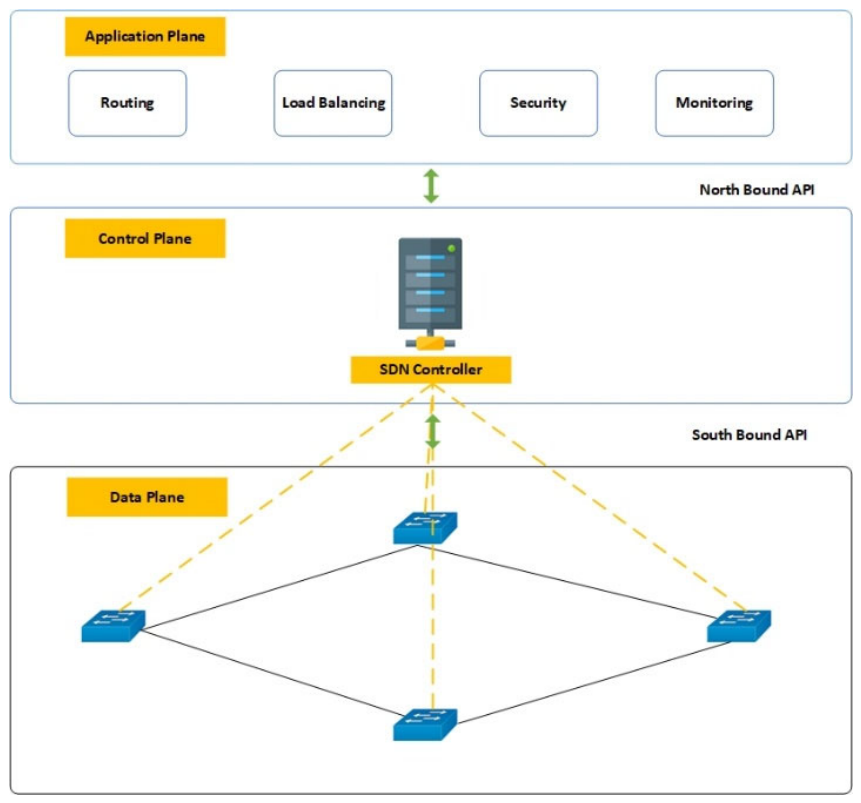
Figure 2.
The methodology used in this research.
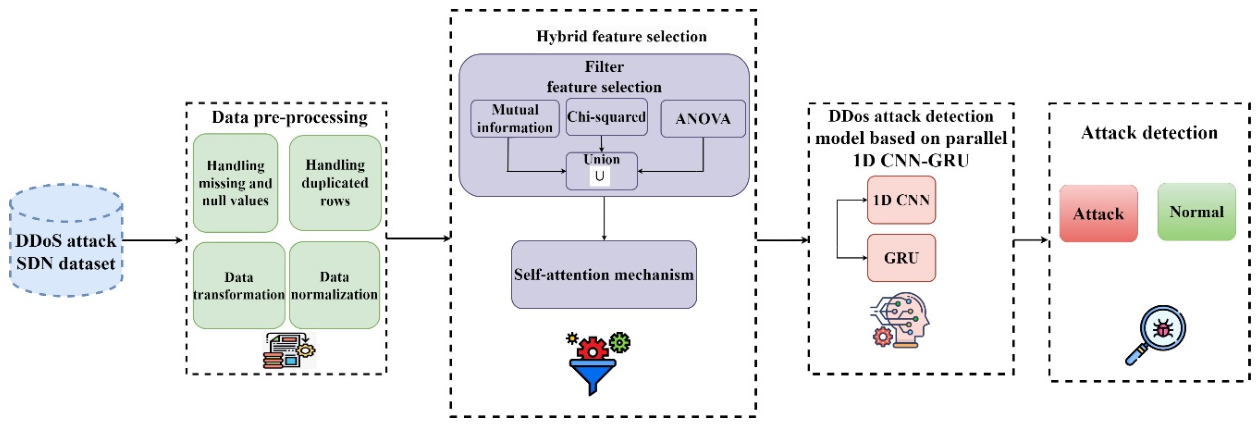
Figure 3.
Screenshot showing the structure of hybrid feature selection algorithm.
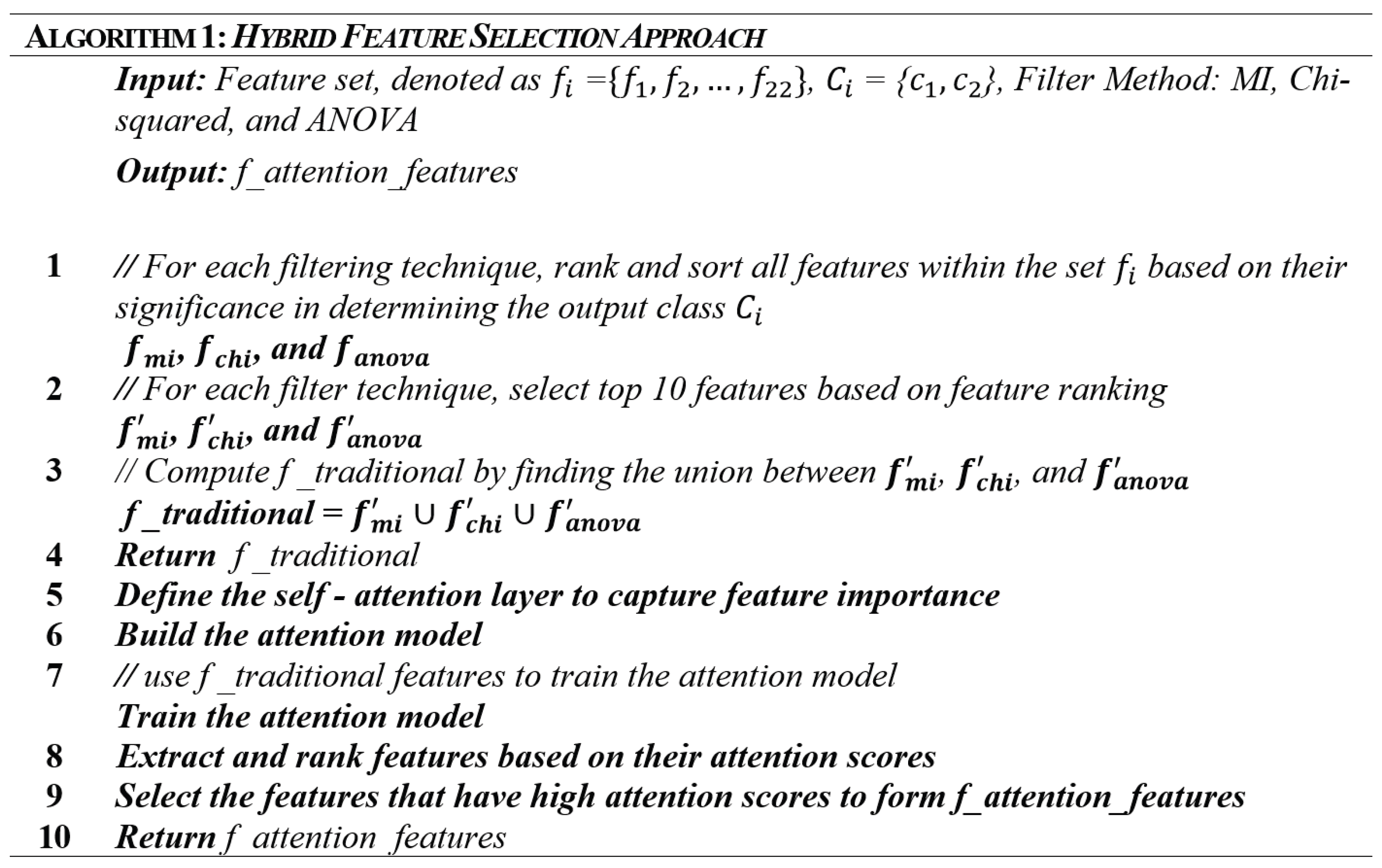
Figure 4.
Self-attention layer architecture.

Figure 5.
Attention model architecture.
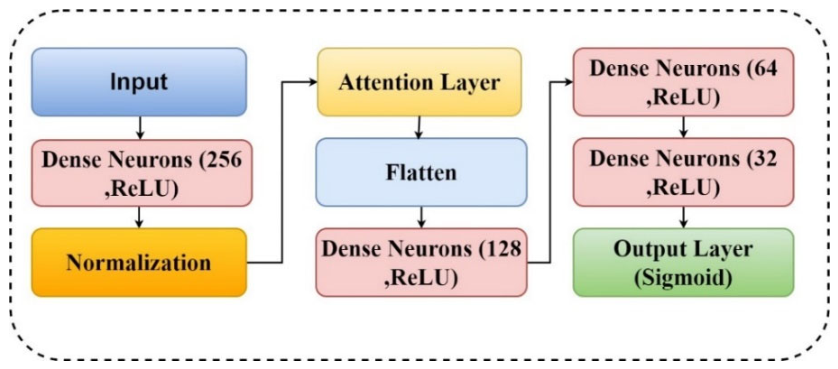
Figure 6.
CNN model components.

Figure 7.
The architecture of gated recurrent unit [49].
Figure 7.
The architecture of gated recurrent unit [49].
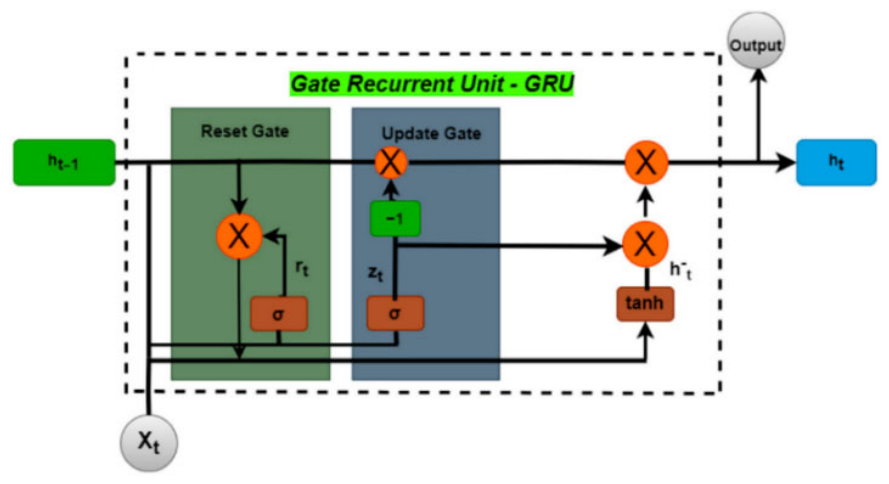
Figure 8.
Architecture of suggested parallel 1D CNN-GRU.
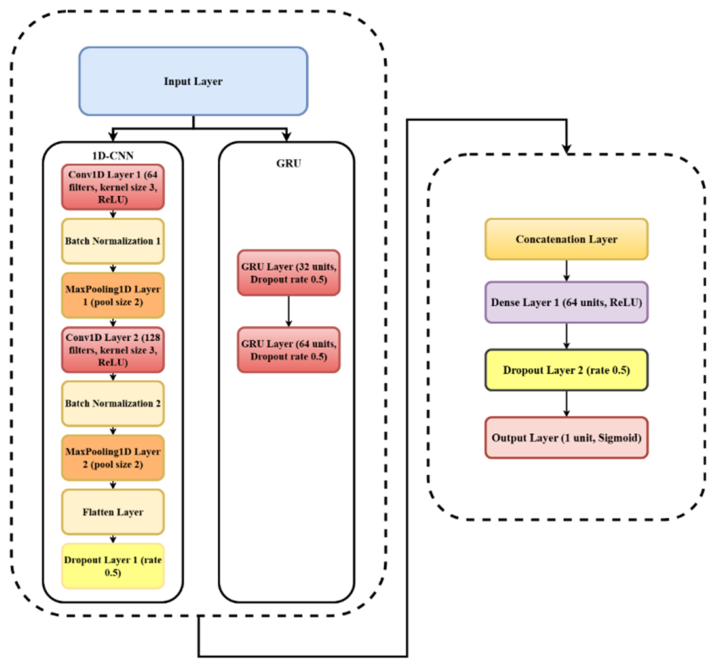
Figure 9.
Features and their attention scores.
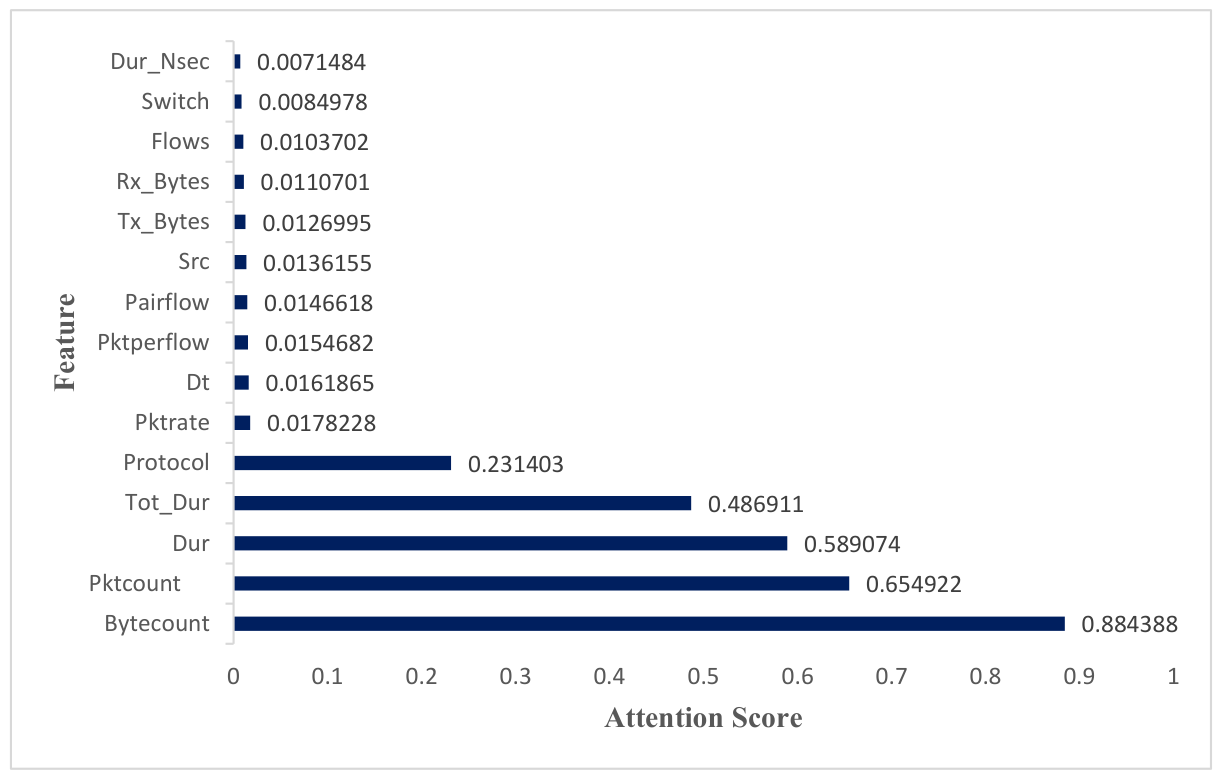
Figure 10.
Comparison between the performance of individual traditional feature selection techniques and the proposed hybrid approach.
Figure 10.
Comparison between the performance of individual traditional feature selection techniques and the proposed hybrid approach.
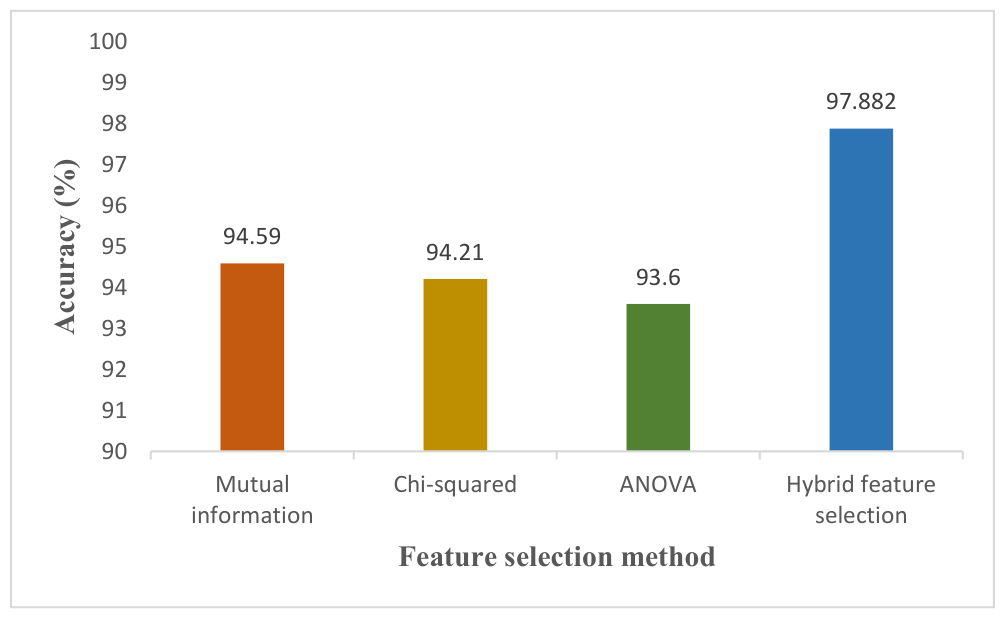
Figure 11.
Proposed model performance metrics.
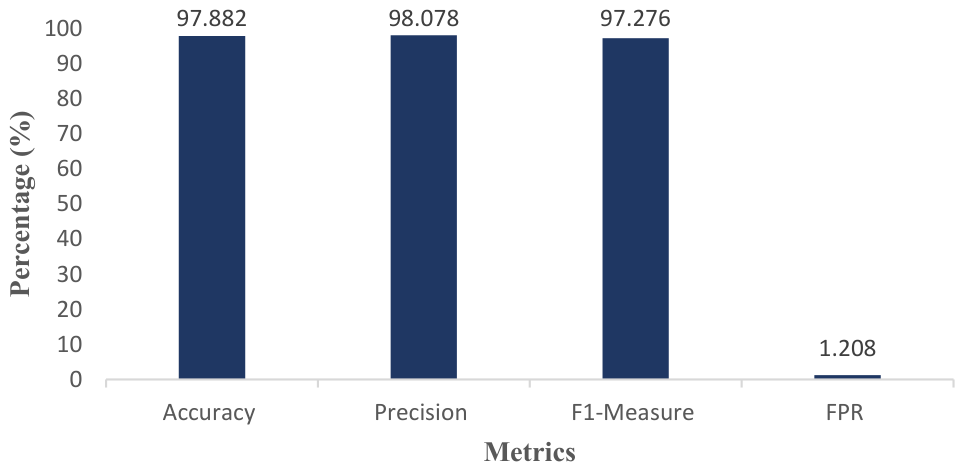

Table 1.
Summary of the related works.
| Ref. | Method | SDN Dataset | Feature Selection Methods | Key Findings |
|---|---|---|---|---|
| [8] | SVM, and DT | ✕ | - | The accuracy of SVM is 85%, while the accuracy of DT is 78%. |
| [7] | Hybrid machine learning model (SVM -SOM) | ✓ | - | The hybrid model showcased an accuracy of 96.77% and a FAR of 0.032%. |
| [15] | Adaptive learning model | ✓ | - | The suggested method demonstrated an accuracy of 97%. |
| [21] | RBF, CS, and k-NN | ✕ | GA | The introduced technique attained an accuracy of 96.9%. |
| [17] | DT, ELM, NB, LDA, NN, SVM, RF, KNN, AB, RB, LB, and BT. | ✕ | PCA | DT outperformed the other ML models, getting a testing accuracy of 88.74% and a training accuracy of 99.7 %. |
| [25] | ASVM | ✓ | Volumetric and asymmetric features are selected. | ASVM attained an accuracy of 97%. |
| [24] | SVM | ✕ | KPCA | The accuracy of the introduced method reached 98.9%. |
| [18] | CNN, and DNN | ✓ | - | The introduced approach achieved an accuracy of 95.03%. |
| [19] | DL | ✕ | - | The suggested system attained a detection accuracy rate of 99.6%. |
| [6] | RNN | ✓ | Chi-square, IGR | The proposed method accomplished an accuracy of 94.186%, a precision of 92.146%. |
| [20] | IE, and CNN | ✕ | - | The CNN algorithm exhibited an accuracy of 4.25–8.20% exceeding the other models (DT, SVM). |
| [27] | SVM, and DNN | ✕ | Correlation algorithm | The DNN outperformed SVM, achieving a classification accuracy rate of 92.30%. |
| [29] | CNN, LSTM, and GRU | ✕ | 4 features are chosen from the dataset. | The presented framework attained an elevated detection accuracy (99.77%) |
| [30] | BiLSTM | ✕ | Autoencoder | The introduced approach attained a high degree of detection accuracy. |
| [22] | KNN, and SOM | ✕ | 5 features are chosen from the dataset. | The suggested approach can decrease processing time while preserving an acceptable level of accuracy. |
Table 2.
Performance evaluation of the suggested hybrid feature selection technique.
| Method | Accuracy % | Precision % | F1-Measure % | FPR % |
|---|---|---|---|---|
| Mutual information | 94.59 | 89.2 | 93.4 | 7.59 |
| Chi-squared | 94.21 | 89.15 | 92.89 | 7.49 |
| ANOVA | 93.6 | 95.47 | 91.46 | 2.66 |
| Hybrid feature selection (Filter feature selection techniques + Self-attention mechanism) | 97.882 | 98.078 | 97.276 | 1.208 |
Table 3.
Proposed model performance metrics.
| Run No. | Accuracy % | Precision % | F1-Measure % | FPR % | Detection Time (s) |
|---|---|---|---|---|---|
| 1 | 97.86 | 98.11 | 97.3 | 1.18 | 1.25 |
| 2 | 97.9 | 98.02 | 97.29 | 1.24 | 1.18 |
| 3 | 97.88 | 98.05 | 97.26 | 1.22 | 1.15 |
| 4 | 97.9 | 98.1 | 97.29 | 1.22 | 1.21 |
| 5 | 97.87 | 98.11 | 97.24 | 1.18 | 1.24 |
| Average | 97.882 | 98.078 | 97.276 | 1.208 | 1.206 |
Table 4.
Performance comparison with other ML and DL models.
| Model | Accuracy % | Precision % | F1-Measure % | FPR % | Detection Time (s) |
| LR | 70.95 | 81.67 | 77.72 | 35.92 | 1.447 |
| SVM | 80.75 | 85.53 | 84.65 | 24.48 | 174.029 |
| LSTM | 91.43 | 87.3 | 85.64 | 5.03 | 3.14 |
| 1D CNN | 93.4 | 92.2 | 91.2 | 4.66 | 1.56 |
| GRU | 92.88 | 88.41 | 91.17 | 7.89 | 2.06 |
| 1D CNN-GRU | 95.78 | 95.3 | 96.1 | 3.54 | 1.86 |
| Hybrid feature selection + 1D CNN-GRU | 97.882 | 98.078 | 97.276 | 1.208 | 1.206 |
Table 5.
Contrast with previous research.
| Ref. | Model | Type of Dataset | Accuracy | Precision | FPR | F-Measure | Detection Time (s) |
|---|---|---|---|---|---|---|---|
| This Paper | Hybrid feature selection + 1D CNN-GRU | DDoS attack SDN Dataset | 97.882% | 98.078% | 1.208% | 97.276% | 1.206 |
| [6] | DLADSC (RNN) | DDoS attack SDN Dataset | 94.186% | 92.146% | 8.114% | 94.276% | 1.627 |
| [18] | SPIFFY (CNN) | Synthetic LFA | 91.976% | 91.772% | 8.138% | 91.932% | 1.618 |
| [19] | DL logarithm | Non-SDN Dataset | 93.203% | 88.472% | 12.74% | 93.546% | 1.681 |
Disclaimer/Publisher’s Note: The statements, opinions and data contained in all publications are solely those of the individual author(s) and contributor(s) and not of MDPI and/or the editor(s). MDPI and/or the editor(s) disclaim responsibility for any injury to people or property resulting from any ideas, methods, instructions or products referred to in the content. |
© 2026 by the authors. Licensee MDPI, Basel, Switzerland. This article is an open access article distributed under the terms and conditions of the Creative Commons Attribution (CC BY) license (http://creativecommons.org/licenses/by/4.0/).
Copyright: This open access article is published under a Creative Commons CC BY 4.0 license, which permit the free download, distribution, and reuse, provided that the author and preprint are cited in any reuse.