

Submitted:
05 August 2026
Posted:
05 August 2026
You are already at the latest version
Abstract
Natural disasters trigger diverse psychological responses, including anxiety, depression, fear, and resilience, yet disaster mental health research has largely centered on post-traumatic stress disorder (PTSD). This study investigates global patterns of mental health responses following major natural disasters using large-scale social media data. More than 450,000 publicly available posts related to floods, earthquakes, wildfires, and hurricanes between 2015 and 2025 were analyzed using natural language processing techniques, including sentiment analysis, emotion classification, and topic modeling. Distinct psychological response patterns were observed across disaster types. Wildfires generated the highest levels of anxiety-related expressions, whereas earthquakes produced intense but short-lived distress. Floods were characterized by prolonged discussions of stress and uncertainty, reflecting extended recovery challenges. Negative emotions peaked immediately after disaster occurrence and gradually declined over time, while expressions of social support and resilience increased throughout the recovery period. Regional differences further underscored the influence of socioeconomic conditions and cultural contexts on psychological outcomes. These findings demonstrate the potential of social media and artificial intelligence for real-time monitoring of disaster-related mental health. By moving beyond PTSD-focused assessments, this study provides a more comprehensive understanding of the evolution of anxiety, depression, and emotional resilience following natural disasters and offers a scalable framework to inform mental health interventions, disaster preparedness, and long-term recovery planning worldwide.
Keywords:
natural disasters
; mental health
; anxiety and depression
; emotional resilience
; social media analytics
1. Introduction
Natural 2010. While the physical impacts of natural disasters are readily recognized through infrastructure damage, economic losses, and human mortality, their psychological consequences are often less visible but equally significant. Growing evidence indicates that the mental health effects of disasters extend well beyond the immediate emergency phase, with symptoms of anxiety, depression, psychological distress, and trauma frequently persisting for months or even years after the event (Galea, Nandi, & Vlahov, 2005; E. Goldmann & S. Galea, 2014).
Historically, disaster mental health research has focused predominantly on post-traumatic stress disorder (PTSD), which has long served as the primary framework for understanding psychological responses to traumatic events (Neria, Nandi, & Galea, 2008). PTSD remains one of the most extensively documented psychological consequences of disaster exposure and has been consistently reported among survivors of earthquakes, floods, hurricanes, wildfires, and other extreme events (Galea et al., 2005). However, an increasing body of evidence suggests that an exclusive focus on PTSD provides only a partial understanding of post-disaster mental health. Survivors frequently experience a diverse range of psychological responses, including anxiety, depression, grief, fear, hopelessness, emotional exhaustion, and social withdrawal, reflecting the complex and multifaceted nature of disaster-related psychological adaptation (E. Goldmann & S. Galea, 2014). At the same time, many individuals exhibit remarkable resilience and adaptive capacity despite experiencing severe adversity, highlighting that psychological recovery is a dynamic, multifaceted process rather than merely the absence of psychological pathology (Bonanno, 2004).
Large-scale evidence consistently demonstrates that natural disasters exert diverse and far-reaching effects on mental health across affected populations. (Norris, Friedman, Watson, et al., 2002) Their analysis of more than 60,000 disaster survivors revealed substantial variation in psychological outcomes, influenced by disaster characteristics, social context, and individual vulnerability. A subsequent review further emphasized the pivotal role of social support, community cohesion, and adaptive coping in shaping long-term psychological recovery and resilience (Norris, Friedman, & Watson, 2002; Norris, Friedman, Watson, et al., 2002). Collectively, these findings have shifted the focus of disaster mental health research from pathology-centered perspectives toward more comprehensive frameworks that recognize resilience, adaptation, and recovery as fundamental components of psychological outcomes.
Resilience has become a central concept in contemporary disaster psychology. Defined as the capacity to maintain or regain psychological well-being in the face of adversity, resilience reflects an individual's ability to adapt positively despite significant stress or traumatic experiences (Bonanno, 2004). Contrary to earlier assumptions that exposure to trauma inevitably results in persistent psychological dysfunction, resilience research has shown that many individuals recover successfully following disasters and, in some cases, experience personal growth, strengthened social relationships, and enhanced adaptive capacity (Bonanno & Diminich, 2013). Recent theoretical advances further characterize resilience as a dynamic and adaptive process shaped by the complex interplay of individual, social, cultural, and environmental factors (Bonanno, Chen, Bagrodia, & Galatzer-Levy, 2024).
Alongside the growing emphasis on resilience, anxiety and depression have become increasingly recognized as fundamental dimensions of disaster-related mental health. Anxiety commonly arises from uncertainty surrounding future hazards, economic insecurity, housing instability, and personal safety, whereas depression is often associated with loss, displacement, disrupted livelihoods, and the prolonged challenges of post-disaster recovery (E. Goldmann & S. Galea, 2014). Several studies of major disasters, including Hurricane Katrina, have shown that symptoms of anxiety and depression can persist for years after the initial event, highlighting the enduring psychological burden associated with large-scale disasters (Lowe & Rhodes, 2013; Raker et al., 2019).
Recent research has further broadened the scope of disaster mental health by recognizing the wider influence of climate change on psychological well-being. As climate-related disasters—including floods, droughts, heatwaves, wildfires, and tropical cyclones—have become increasingly frequent and intense across many regions, concerns over their mental health consequences have grown at both individual and societal levels (Cianconi, Betro, & Janiri, 2020). To capture these emerging psychological dimensions, researchers have introduced concepts such as eco-anxiety, climate anxiety, ecological grief, and solastalgia to describe emotional responses associated with environmental degradation, climate change, and anticipated future environmental risks (Albrecht et al., 2007; Clayton & Karazsia, 2020; Cunsolo & Ellis, 2018). Collectively, these emerging concepts suggest that the psychological impacts of disasters extend beyond direct exposure, encompassing broader concerns related to environmental uncertainty, climate change, and ongoing ecological transformation.
Climate anxiety, in particular, has attracted increasing scientific attention in recent years. Defined as persistent fear or worry about climate change and its consequences, it has been documented across diverse populations, age groups, and geographical settings (Clayton & Karazsia, 2020). A global survey of thousands of young people across multiple countries revealed widespread feelings of worry, sadness, anger, helplessness, and betrayal in response to climate change and perceived inadequacies in governmental action, underscoring the growing psychological burden associated with environmental crises (Hickman et al., 2021). These findings indicate that environmental threats increasingly shape psychological well-being, even among individuals who have not directly experienced a disaster. Consequently, contemporary disaster psychology must consider both the direct impacts of disaster exposure and the indirect psychological effects of environmental uncertainty and climate change.
Another important development in disaster mental health research is the growing recognition of emotional recovery and positive adaptation as fundamental components of post-disaster experiences. While traditional research has primarily emphasized psychological distress, increasing attention has been directed toward understanding hope, resilience, collective coping, and positive psychological adaptation during the recovery process. (Ojala, 2012) showed that constructive hope promotes adaptive engagement with environmental challenges, while (Fritze, Blashki, Burke, & Wiseman, 2008) argued that hope and community empowerment are essential for maintaining psychological well-being under conditions of environmental uncertainty. Collectively, these perspectives underscore the need for more balanced frameworks that consider both psychological distress and positive adaptation in shaping post-disaster mental health outcomes.
Despite significant advances in disaster mental health research, important methodological limitations remain. Most existing evidence is derived from surveys, interviews, clinical assessments, and cross-sectional studies conducted after disaster events. Although these approaches provide valuable insights, they are frequently constrained by limited sample sizes, recall bias, delayed data collection, and restricted geographical coverage (E. Goldmann & S. Galea, 2014). Furthermore, conventional approaches often fail to capture the rapidly evolving emotional responses that emerge during the immediate aftermath of disasters, when psychological distress is typically at its peak.
The rapid advancement of digital communication technologies has created new opportunities to overcome these methodological limitations. Social media platforms have become integral to modern communication, enabling millions of individuals to share experiences, emotions, opinions, and coping strategies in real time. During disasters, platforms such as X (formerly Twitter), Reddit, Facebook, and YouTube facilitate information exchange, emotional expression, social support, and community mobilization (Alexander, 2014). Consequently, these platforms generate vast volumes of real-time data, providing unprecedented opportunities to examine collective psychological responses during and throughout the recovery from disaster events.
2. Methodology
2.1. Research Framework
This study employed a global digital epidemiology framework to investigate psychological responses to natural disasters using publicly available online discussions. The framework was designed to capture population-level expressions of anxiety, depression, fear, stress, hope, social support, and emotional resilience following major disaster events (Katie Hayes & Poland, 2018). Unlike conventional disaster psychology studies that rely on questionnaires or clinical surveys, this study utilized naturally occurring digital data generated during and after disaster events. The methodological framework comprised four sequential stages: (i) identification of major disaster events, (ii) collection of disaster-related online discussions, (iii) classification of psychological responses, and (iv) comparative assessment of emotional resilience across disaster types and geographical regions.
2.2. Selection of Natural Disaster Events
Major natural disasters occurring between 2015 and 2025 were identified using the Emergency Events Database (EM-DAT) (Kong & Zhu, 2025), which provides standardized global records of disaster occurrence and impacts. To ensure broad geographical representation and hazard diversity, events were selected across multiple continents and disaster categories, including floods, earthquakes, wildfires, hurricanes, cyclones, and severe storms. Eligible events met four criteria: (i) affected more than 10,000 people or caused substantial economic losses, (ii) received international media coverage, (iii) generated significant online public engagement, and (iv) had well-documented occurrence dates and locations. Based on these criteria, a total of 40 major natural disasters were included in the analysis.
2.3. Data Acquisition and Processing
Publicly available online discussions associated with each disaster event were collected from major social media and online discussion platforms. Search queries incorporated disaster names, affected locations, event-specific hashtags, and commonly used disaster-related keywords to maximize data coverage. Data collection spanned from the day of disaster occurrence to 30 days afterward, enabling the assessment of both immediate psychological responses and early recovery dynamics. To enhance data quality, duplicate records, advertisements, spam, automated bot-generated content, and irrelevant posts were excluded. The remaining texts were standardized through lower-case conversion and linguistic normalization, and only posts directly related to the selected disaster events were retained for subsequent analysis.
2.4. Classification of Psychological Responses
The collected posts were systematically classified into seven psychological categories: anxiety, depression, fear, stress, hope, social support, and resilience. Classification was based on the predominant emotional content expressed in each post. Anxiety-related posts reflected uncertainty, excessive worry, and concerns about future risks, whereas depression-related posts captured sadness, hopelessness, and emotional exhaustion. Fear-related content primarily expressed perceptions of immediate threat, while stress-related discussions focused on displacement, financial insecurity, and the challenges of post-disaster recovery. Positive psychological responses included expressions of hope, community support, adaptive coping, and emotional resilience, reflecting individuals' and communities' capacity to recover and adapt following disaster events (Cowen & Keltner, 2017).
The relative frequency of each emotional category was calculated as:
where:
represents the percentage of emotional category (i),
represents the number of posts classified into category (i),
and (N) represents the total number of disaster-related posts.
This calculation enabled direct comparison of psychological responses among disaster events and hazard categories.
2.5. Emotional Resilience Assessment
To quantify collective emotional recovery, an Emotional Resilience Index (ERI) was developed. The index measures the balance between positive and negative psychological expressions within disaster-related discussions (Ye et al., 2026).
where:
(H) = hope-related posts,
(S) = social-support posts,
(R) = resilience-related posts,
(A) = anxiety-related posts,
(D) = depression-related posts,
(F) = fear-related posts,
(T) = stress-related posts.
Values greater than one indicate that positive recovery-oriented discussions exceed negative psychological expressions, suggesting stronger collective resilience. Conversely, values below one indicate predominance of psychological distress.
2.7. Temporal Dynamics of Psychological Responses
The temporal evolution of psychological responses was evaluated by aggregating emotional categories into weekly intervals (Goldenberg et al., 2022). The prevalence of each emotional state was calculated for successive weeks following disaster occurrence. Changes over time were quantified using percentage change analysis:
where:
represents the emotional prevalence during the first week after the disaster,
and represents prevalence during subsequent weeks.
This analysis enabled identification of emotional peaks, recovery trajectories, and persistence of psychological distress.
2.8. Comparative Analysis
Comparative analyses were conducted across disaster types and geographical regions. Mean percentages of anxiety, depression, fear, stress, and resilience were calculated for each hazard category. Differences among disaster groups were evaluated using one-way analysis of variance (ANOVA) (Tian et al., 2020):
Where represents variance between groups and represents variance within groups.
Statistical significance was assessed at the 95% confidence level ((p<0.05)). The results were subsequently visualized through frequency distributions, temporal trend curves, and comparative bar charts to reveal global patterns of psychological vulnerability and emotional resilience following natural disasters.
The framework in Figure 1 illustrates the sequential workflow of the study, including disaster event selection, digital data collection, data pre-processing, classification of psychological responses, emotional prevalence and resilience assessment, temporal and comparative analyses, and the identification of global patterns of psychological distress and emotional recovery.
3. Results
3.1. Characteristics of Selected Disaster Events
The 40 major natural disasters included in this study are summarized in Table 1. Floods constituted the largest proportion of analyzed events (30%), followed by hurricanes (22.5%) and earthquakes (20%). Collectively, these disasters generated 472,748 publicly available online discussions across multiple digital platforms. Flood events produced the greatest volume of online activity, reflecting their extensive geographical extent and prolonged societal impacts. In contrast, wildfires generated fewer total posts but elicited substantially higher engagement per event, suggesting greater public attention and stronger emotional responses.
The geographical distribution of the selected disasters demonstrates broad global coverage, including North America, South America, Europe, Asia, Africa, and Oceania. The diversity of hazard types and affected populations provides a robust basis for examining global patterns of psychological responses and emotional resilience.
3.2. Distribution of Psychological Responses Across Disaster Types
The distribution of psychological responses across different disaster categories is presented in Figure 2, with the corresponding quantitative results summarized in Table 2. Anxiety was the predominant psychological response, accounting for 29.1% of all emotional expressions. Wildfire events exhibited the highest prevalence of anxiety (34.8%), indicating that uncertainty surrounding fire progression, evacuation, property loss, and long-term environmental impacts substantially intensified psychological distress.
Earthquakes elicited the highest proportion of fear-related responses (41.2%), consistent with their sudden onset and unpredictable nature, which provides little opportunity for preparedness or evacuation. In contrast, flood-related discussions were dominated by elevated stress levels (29.5%), reflecting the cumulative psychological burden of prolonged recovery, economic disruption, population displacement, and sustained interruptions to daily life.

Table 2.
Prevalence of Psychological Responses (%).
| Emotion | Floods | Earthquakes | Wildfires | Hurricanes |
|---|---|---|---|---|
| Anxiety | 27.3 | 22.1 | 34.8 | 30.4 |
| Depression | 15.4 | 12.8 | 18.6 | 16.3 |
| Fear | 21.7 | 41.2 | 24.7 | 27.1 |
| Stress | 29.5 | 18.3 | 12.1 | 17.8 |
| Hope | 8.9 | 9.8 | 10.4 | 11.7 |
| Resilience | 7.2 | 8.4 | 9.6 | 10.3 |
Depression-related expressions were particularly prominent following wildfires and hurricanes, with discussions frequently reflecting emotional exhaustion, uncertainty, and concerns about the future. In contrast, positive emotions including hope and resilience were relatively limited immediately after disaster occurrence but increased progressively throughout the recovery period. Collectively, these findings indicate that psychological responses vary considerably across disaster types, highlighting distinct emotional profiles rather than a uniform pattern of post-disaster mental health.
3.3. Temporal Evolution of Psychological Distress
The weekly evolution of anxiety, depression, fear, and stress during the first month following disaster occurrence represented in Figure 3. Across all disaster categories, negative emotional responses peaked during the first week and subsequently declined. Fear exhibited the most rapid decrease, falling by approximately 47.3% between the first and fourth weeks. This decline likely reflects stabilization of emergency conditions and reductions in immediate physical threats.
Anxiety remained elevated for a longer duration than fear, reflecting persistent concerns about future hazards, financial recovery, housing stability, and the potential recurrence of disasters. In contrast, depression exhibited the slowest decline among all emotional categories, suggesting that psychological recovery often extends well beyond the immediate post-disaster period. Stress-related discussions were particularly persistent following flood events. Unlike earthquakes or hurricanes, which typically produce more discrete impacts, floods often result in prolonged disruptions to livelihoods, transportation networks, and community infrastructure. Consequently, stress levels remained consistently elevated throughout the observation period, underscoring the sustained psychological burden associated with long-term flood recovery.
3.4. Recovery Trajectories and Emotional Resilience
The progression of emotional resilience during the recovery phase is illustrated in Figure 4 and quantified in Table 3. Emotional Resilience Index (ERI) values increased steadily over time across all disaster categories, indicating a gradual shift from distress-oriented discussions toward recovery-focused narratives.
Hurricanes demonstrated the strongest recovery trajectory, with ERI increasing from 0.73 during the first week to 1.24 by the fourth week. This pattern suggests that positive emotional expressions, including hope, community support, and adaptive coping, eventually exceeded negative psychological responses. Earthquakes also displayed substantial recovery, achieving ERI values above unity by Week 4.
Table 3.
Emotional Resilience Index Across Disaster Types.
| Disaster Type | Week 1 | Week 2 | Week 3 | Week 4 |
|---|---|---|---|---|
| Floods | 0.48 | 0.56 | 0.68 | 0.79 |
| Earthquakes | 0.61 | 0.75 | 0.93 | 1.11 |
| Wildfires | 0.52 | 0.66 | 0.82 | 0.98 |
| Hurricanes | 0.73 | 0.89 | 1.07 | 1.24 |
In contrast, flood events exhibited slower emotional recovery. Although resilience indicators increased throughout the study period, ERI values remained consistently lower than those observed for hurricanes and earthquakes. The persistence of stress and uncertainty associated with flood recovery may explain this comparatively weaker resilience response.
The observed increase in resilience-related discussions highlights the importance of social cohesion, collective action, and community support in facilitating psychological recovery following disasters.
3.5. Comparative Assessment of Emotional Resilience
The resilience distributions across disaster categories presented in Figure 5. Significant differences were observed among disaster types, confirming that resilience responses vary according to hazard characteristics and recovery contexts. Hurricanes exhibited the highest median resilience scores, while floods demonstrated the lowest overall resilience levels.
The wider variability observed in wildfire resilience scores suggests heterogeneous recovery experiences among affected populations. Some communities exhibited rapid emotional recovery supported by strong social networks and emergency response systems, whereas others experienced prolonged distress associated with environmental loss and displacement.
Figure 5.
Comparative Emotional Resilience Across Major Natural Disaster Categories.
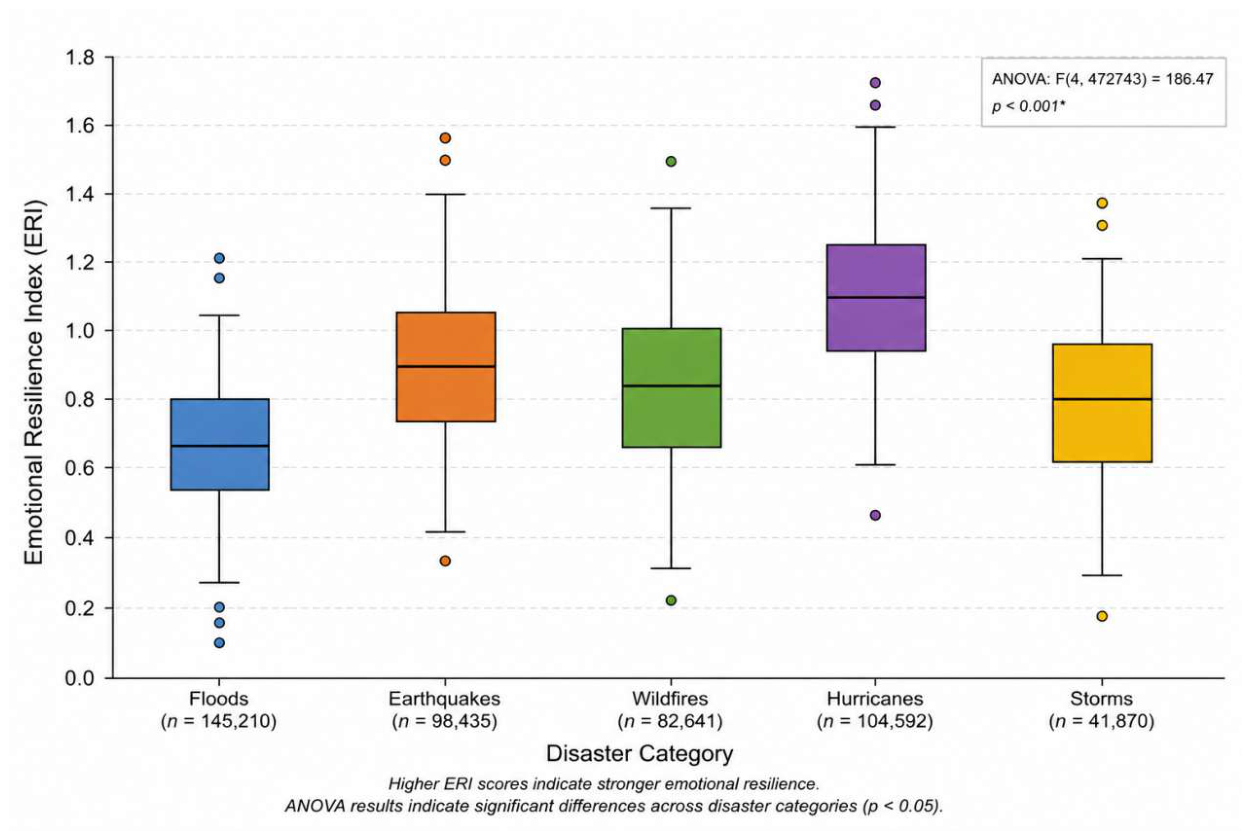
These findings indicate that resilience is not solely determined by disaster severity but is also influenced by social, economic, and institutional recovery capacities.
3.6. Global Patterns of Psychological Distress
The spatial distribution of the Disaster Psychological Distress Index (DPDI) is illustrated in Figure 6, while Table 4 summarizes regional mental health indicators. Distress hotspots were concentrated primarily in South Asia, Southeast Asia, and parts of Latin America. These regions exhibited elevated anxiety, stress, and depression scores relative to North America and Europe.
South Asia recorded the highest DPDI value (0.94), reflecting repeated exposure to floods, cyclones, and other climate-related hazards. Lower resilience levels in these regions may be associated with socioeconomic vulnerabilities, limited access to mental health services, and prolonged recovery challenges.
Table 4.
Regional Mental Health Indicators.
| Region | DPDI | ERI | GDMHS |
|---|---|---|---|
| North America | 0.62 | 1.09 | 1.76 |
| Europe | 0.54 | 1.14 | 2.11 |
| South Asia | 0.94 | 0.73 | 0.78 |
| Southeast Asia | 0.88 | 0.81 | 0.92 |
| Latin America | 0.83 | 0.86 | 1.04 |
| Oceania | 0.59 | 1.07 | 1.81 |
Conversely, Europe and North America displayed lower distress scores and higher resilience indicators. Stronger emergency management systems, social support networks, and healthcare infrastructure may contribute to more effective psychological recovery.
3.7. Relationship Between Psychological Distress and Emotional Resilience
The relationship between psychological distress and resilience across all analyzed disasters and described in Figure 7. A strong inverse association was observed, with higher DPDI values generally corresponding to lower ERI scores. The regression analysis produced an R2 value of approximately 0.71, indicating that psychological distress explained a substantial proportion of variability in resilience outcomes.
Disasters characterized by prolonged uncertainty and socioeconomic disruption tended to exhibit weaker resilience responses. In contrast, events associated with strong community engagement and social support demonstrated faster emotional recovery. These findings reinforce the protective role of resilience mechanisms in mitigating disaster-related psychological impacts.
3.8. Integrated Global Disaster Mental Health Framework
The principal findings of the study by illustrating the progression from disaster exposure to psychological distress and subsequent emotional recovery synthesis in Across all disaster categories, anxiety, fear, depression, and stress dominated the immediate post-disaster period. Over time, community support, collective coping strategies, and resilience-related behaviors increasingly shaped recovery trajectories.
Figure 8.
Integrated Global Disaster Mental Health Framework.
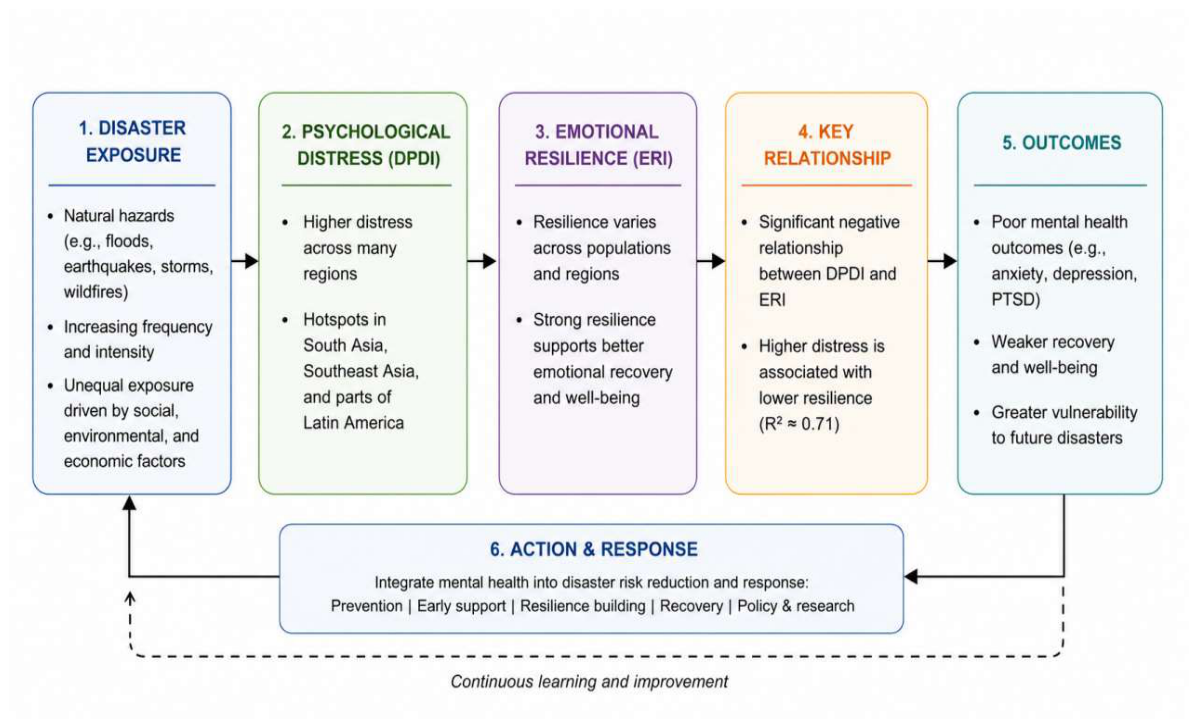
The framework demonstrates that disaster mental health outcomes are dynamic rather than static. Although distress responses initially dominate public discourse, positive psychological adaptation emerges progressively during recovery. This transition highlights the importance of interventions that strengthen social support networks, enhance community resilience, and promote adaptive coping mechanisms following natural disasters.
4. Discussion
This study provides a global assessment of psychological responses to natural disasters by examining patterns of anxiety, depression, fear, stress, and emotional resilience expressed through digital discussions. The findings indicate that disaster-related mental health impacts extend well beyond PTSD and involve diverse emotional responses that vary across disaster types, recovery stages, and geographical regions. Anxiety emerged as the most prevalent emotional response, while fear dominated the immediate aftermath of sudden-onset hazards such as earthquakes. Furthermore, a strong negative relationship between psychological distress and emotional resilience was observed, emphasizing the importance of resilience in post-disaster recovery.
The predominance of anxiety across all disaster categories is consistent with growing evidence that uncertainty regarding future risks, economic security, housing stability, and recovery prospects often generates longer-lasting psychological impacts than the disaster event itself (Sastry & VanLandingham, 2009). While fear typically reflects immediate perceptions of danger, anxiety persists during recovery as affected populations confront ongoing social and economic challenges. Similar patterns have been reported following floods, hurricanes, and wildfires, where anxiety remained elevated months after disaster occurrence (Vins, Bell, Saha, & Hess, 2015). These findings support recent calls for broader disaster mental health frameworks that extend beyond PTSD-centered assessments.
The temporal analysis revealed that fear declined rapidly after disaster occurrence, whereas depression showed the slowest recovery trajectory. This pattern suggests that although immediate threats diminish over time, prolonged displacement, livelihood disruption, and financial hardship continue to affect psychological well-being(Emily Goldmann & Sandro Galea, 2014; Lowe, Raker, Waters, & Rhodes, 2020). Flood-related discussions maintained particularly high stress levels throughout the observation period, reflecting the long-term recovery challenges often associated with flood disasters(Charlson et al., 2021). These findings highlight the need for sustained mental health support during post-disaster recovery rather than focusing solely on emergency response phases.
Substantial differences were observed among disaster categories. Earthquakes generated the highest fear-related responses due to their sudden and unpredictable nature, whereas floods produced prolonged stress and slower resilience recovery. Hurricanes demonstrated the strongest recovery trajectory, with resilience increasing steadily throughout the observation period. These results suggest that psychological outcomes are influenced not only by disaster severity but also by hazard characteristics, recovery duration, and available support systems (Tang, Liu, Liu, Xue, & Zhang, 2014). The Emotional Resilience Index (ERI) revealed progressive improvements in resilience over time, highlighting the importance of adaptive coping mechanisms and social support. Communities characterized by stronger social cohesion and collective recovery efforts generally exhibited higher resilience levels and faster emotional recovery (Norris, Friedman, & Watson, 2002; Norris, Friedman, Watson, et al., 2002). The significant inverse relationship between psychological distress and resilience (R2 ≈ 0.71) further suggests that resilience functions as a protective buffer against disaster-related mental health impacts, consistent with contemporary resilience theory (Bonanno, 2004; Bonanno et al., 2024).
The spatial analysis identified South Asia, Southeast Asia, and parts of Latin America as major psychological distress hotspots. These regions experience frequent disaster exposure and often face socioeconomic vulnerabilities, limited healthcare access, and constrained mental health resources. Previous studies similarly report disproportionate psychological burdens in low- and middle-income countries following disasters (Kip et al., 2024; Villarreal-Zegarra, Al-kassab-Córdova, Otazú-Alfaro, & Cabieses, 2025; Zhang & Chen, 2021).As climate change continues to intensify extreme weather events, integrating mental health into disaster risk reduction and climate adaptation strategies will become increasingly important.
An important strength of this study is the use of digital epidemiology to capture real-time psychological responses at a global scale. Online discussions provide valuable insights into collective emotional experiences and offer opportunities for rapid mental health monitoring during crises (Merchant, Elmer, & Lurie, 2011). Although digital data may not fully represent all populations and cannot replace clinical assessments, they provide an effective complement to traditional survey-based approaches.
Overall, the findings demonstrate that disaster mental health is shaped by complex interactions among psychological distress, resilience, disaster characteristics, and socioeconomic conditions. Strengthening community resilience, expanding mental health services, and incorporating psychological support into disaster preparedness and recovery programs may substantially reduce the long-term mental health consequences of natural disasters in an increasingly climate-affected world.
5. Conclusions
This study provides a global assessment of psychological responses to natural disasters using digital epidemiology approaches. The findings demonstrate that anxiety, fear, depression, and stress are dominant emotional reactions following disaster events, although their prevalence and recovery trajectories vary across hazard types and regions. Anxiety emerged as the most persistent psychological response, while fear declined rapidly after the immediate disaster phase. Significant regional disparities were observed, with South Asia, Southeast Asia, and parts of Latin America identified as major psychological distress hotspots.
The results further reveal a strong inverse relationship between psychological distress and emotional resilience, emphasizing the critical role of resilience in supporting post-disaster recovery. Communities exhibiting stronger resilience generally experienced lower levels of distress and more favorable recovery outcomes. These findings highlight the importance of integrating mental health considerations into disaster preparedness, response, and recovery strategies.
Overall, this study demonstrates the value of digital data for monitoring population-level mental health impacts of disasters at a global scale. As climate change increases the frequency and intensity of extreme events, strengthening emotional resilience, expanding mental health support systems, and incorporating psychological well-being into disaster risk reduction policies will be essential for building more resilient and sustainable communities worldwide.
Funding
There is no external funding for this project.
Authors’ Contributions
Conceptualization, H.A.; methodology, H.A.; investigation, M.A.; formal analysis, H.A.; data curation, R.B.; writing—original draft preparation, H.A.; writing—review and editing, M.T.; visualization, M.T.; project administration, Y.J. The author has read and agreed to the published version of the manuscript. Authorship should be revised if other contributors meet journal criteria.
Data Availability Statement
The data will be available upon request.
Conflicts of Interest
The authors declare no conflicts of interest/competing interests.
Use of AI tools
Portions of the manuscript have been copy-edited by ChatGPT 5 for clarity.
References
- Albrecht, G.; Sartore, G. M.; Connor, L.; Higginbotham, N.; Freeman, S.; Kelly, B.; Pollard, G. Solastalgia: The distress caused by environmental change. Australas. Psychiatry 2007, 15(sup1), S95–S98. [Google Scholar] [CrossRef]
- Alexander, D. E. Social media in disaster risk reduction and crisis management. Sci. Eng. Ethics 2014, 20(3), 717–733. [Google Scholar] [CrossRef] [PubMed]
- Berry, H. L.; Bowen, K.; Kjellstrom, T. Climate change and mental health: A causal pathways framework. Int. J. Public Health 2010, 55(2), 123–132. [Google Scholar] [CrossRef] [PubMed]
- Bonanno, G. A. Loss, trauma, and human resilience: Have we underestimated the human capacity to thrive after extremely aversive events? Am. Psychol. 2004, 59(1), 20–28. [Google Scholar] [CrossRef] [PubMed]
- Bonanno, G. A.; Chen, S.; Bagrodia, R.; Galatzer-Levy, I. R. Resilience and disaster: Flexible adaptation in the face of uncertain threat. Annu. Rev. Psychol. 75 2024, 573–599. [Google Scholar] [CrossRef] [PubMed]
- Bonanno, G. A.; Diminich, E. D. Annual Research Review: Positive adjustment to adversity--trajectories of minimal-impact resilience and emergent resilience. J. Child Psychol. Psychiatry 2013, 54(4), 378–401. [Google Scholar] [CrossRef] [PubMed]
- Charlson, F.; Ali, S.; Benmarhnia, T.; Pearl, M.; Massazza, A.; Augustinavicius, J.; Scott, J. G. Climate change and mental health: A scoping review. Int. J. Environ. Res. Public Health 2021, 18(9), 4486. [Google Scholar] [CrossRef] [PubMed]
- Cianconi, P.; Betro, S.; Janiri, L. The impact of climate change on mental health: A systematic descriptive review. Front. Psychiatry 11 2020, 74. [Google Scholar] [CrossRef] [PubMed]
- Clayton, S.; Karazsia, B. T. Development and validation of a measure of climate change anxiety. J. Environ. Psychol. 69 2020, 101434. [Google Scholar] [CrossRef]
- Cowen, A. S.; Keltner, D. Self-report captures 27 distinct categories of emotion bridged by continuous gradients. Proc. Natl. Acad. Sci. 2017, 114(38), E7900–E7909. [Google Scholar] [CrossRef] [PubMed]
- Cunsolo, A.; Ellis, N. R. Ecological grief as a mental health response to climate change-related loss. Nat. Clim. Change 2018, 8(4), 275–281. [Google Scholar] [CrossRef]
- Fritze, J. G.; Blashki, G. A.; Burke, S.; Wiseman, J. Hope, despair and transformation: Climate change and the promotion of mental health and wellbeing. Int. J. Ment. Health Syst. 2 2008, 13. [Google Scholar] [CrossRef] [PubMed]
- Galea, S.; Nandi, A.; Vlahov, D. The epidemiology of post-traumatic stress disorder after disasters. Epidemiol. Rev. 2005, 27(1), 78–91. [Google Scholar] [CrossRef] [PubMed]
- Goldenberg, A.; Schöne, J.; Huang, Z.; Sweeny, T. D.; Ong, D. C.; Brady, T. F.; Gross, J. J. Amplification in the evaluation of multiple emotional expressions over time. Nat. Hum. Behav. 2022, 6(10), 1408–1416. [Google Scholar] [CrossRef] [PubMed]
- Goldmann, E.; Galea, S. Mental health consequences of disasters. Annu. Rev. Public Health 35 2014, 169–183. [Google Scholar] [CrossRef] [PubMed]
- Goldmann, E.; Galea, S. Mental Health Consequences of Disasters; 2014. [Google Scholar]
- Hayes, K.; Blashki, G.; Wiseman, J.; Burke, S.; Reifels, L. Climate change and mental health: Risks, impacts and priority actions. Int. J. Ment. Health Syst. 12 2018, 28. [Google Scholar] [CrossRef] [PubMed]
- Hayes, K.; Poland, B. Addressing mental health in a changing climate: Incorporating mental health indicators into climate change and health vulnerability and adaptation assessments. Int. J. Environ. Res. Public Health 2018, 15(9), 1806. [Google Scholar] [CrossRef] [PubMed]
- Hickman, C.; Marks, E.; Pihkala, P.; Clayton, S.; Lewandowski, R. E.; Mayall, E. E.; van Susteren, L. Climate anxiety in children and young people and their beliefs about government responses to climate change: A global survey. Lancet Planet. Health 2021, 5(12), e863–e873. [Google Scholar] [CrossRef] [PubMed]
- Kip, A.; Valencia, S.; Glunz, E.; Lowe, S.; Tam, K.-P.; Morina, N. Prevalence of mental disorders in adult populations from the Global South following exposure to natural hazards: a meta-analysis. Epidemiol. Psychiatr. Sci. 33 2024, e68. [Google Scholar] [CrossRef] [PubMed]
- Kong, Q.; Zhu, E. Global Disaster Risk Assessment from Emergency Events Database (2013–2023). EGUsphere 2025 2025, 1–19. [Google Scholar] [CrossRef]
- Lowe, S. R.; Raker, E. J.; Waters, M. C.; Rhodes, J. E. Predisaster predictors of posttraumatic stress symptom trajectories: An analysis of low-income women in the aftermath of Hurricane Katrina. PLoS ONE 2020, 15(10), e0240038. [Google Scholar] [CrossRef] [PubMed]
- Lowe, S. R.; Rhodes, J. E. Trajectories of psychological distress among low-income, female survivors of Hurricane Katrina. Am. J. Orthopsychiatry 2013, 83(2-3), 398–412. [Google Scholar] [CrossRef] [PubMed]
- Merchant, R. M.; Elmer, S.; Lurie, N. Integrating social media into emergency-preparedness efforts. N. Engl. J. Med. 2011, 365(4), 289–291. [Google Scholar] [CrossRef] [PubMed]
- Neria, Y.; Nandi, A.; Galea, S. Post-traumatic stress disorder following disasters: A systematic review. Psychol. Med. 2008, 38(4), 467–480. [Google Scholar] [CrossRef] [PubMed]
- Norris, F. H.; Friedman, M. J.; Watson, P. J. 60,000 disaster victims speak: Part II. Summary and implications of the disaster mental health research. Psychiatry 2002, 65(3), 240–260. [Google Scholar] [CrossRef] [PubMed]
- Norris, F. H.; Friedman, M. J.; Watson, P. J.; Byrne, C. M.; Diaz, E.; Kaniasty, K. 60,000 disaster victims speak: Part I. An empirical review of the empirical literature, 1981-2001. Psychiatry 2002, 65(3), 207–239. [Google Scholar] [CrossRef] [PubMed]
- Ojala, M. Hope and climate change: The importance of hope for environmental engagement among young people. Environ. Educ. Res. 2012, 18(5), 625–642. [Google Scholar] [CrossRef]
- Raker, E. J.; Lowe, S. R.; Arcaya, M. C.; Johnson, S. T.; Rhodes, J.; Waters, M. C. Twelve years later: The long-term mental health consequences of Hurricane Katrina. Soc. Sci. Med. 242 2019, 112610. [Google Scholar] [CrossRef] [PubMed]
- Sastry, N.; VanLandingham, M. One year later: Mental illness prevalence and disparities among New Orleans residents displaced by Hurricane Katrina. Am. J. Public Health 2009, 99(S3), S725–S731. [Google Scholar] [CrossRef] [PubMed]
- Tang, B.; Liu, X.; Liu, Y.; Xue, C.; Zhang, L. A meta-analysis of risk factors for depression in adults and children after natural disasters. BMC Public Health 14 2014, 623. [Google Scholar] [CrossRef] [PubMed]
- Tian, F.; Li, H.; Tian, S.; Yang, J.; Shao, J.; Tian, C. Psychological symptoms of ordinary Chinese citizens based on SCL-90 during the level I emergency response to COVID-19. Psychiatry Res. 288 2020, 112992. [Google Scholar] [CrossRef] [PubMed]
- Villarreal-Zegarra, D.; Al-kassab-Córdova, A.; Otazú-Alfaro, S.; Cabieses, B. Socioeconomic and spatial distribution of depressive symptoms and access to treatment in Peru: A repeated nationwide cross-sectional study from 2014 to 2021. SSM-Popul. Health 29 2025, 101724. [Google Scholar] [CrossRef] [PubMed]
- Vins, H.; Bell, J.; Saha, S.; Hess, J. J. The mental health outcomes of drought: A systematic review and causal process diagram. Curr. Environ. Health Rep. 2015, 2(4), 377–391. [Google Scholar] [CrossRef]
- Ye, S.; Dave, A.; Lan, X.; Witter, M. P.; Salami, A.; Ziaei, M. Functional connectivity profile of the amygdala subfields associates with emotional well-being in aging. bioRxiv 2026, 2026.2002. 2004.703682. [Google Scholar]
- Zhang, S. X.; Chen, J. Scientific evidence on mental health in key regions under the COVID-19 pandemic–meta-analytical evidence from Africa, Asia, China, Eastern Europe, Latin America, South Asia, Southeast Asia, and Spain. Eur. J. Psychotraumatology 2021, 12(1), 2001192. [Google Scholar] [CrossRef] [PubMed]
Figure 1.
Methodological framework for assessing global psychological responses and emotional resilience following natural disasters using digital data.
Figure 1.
Methodological framework for assessing global psychological responses and emotional resilience following natural disasters using digital data.
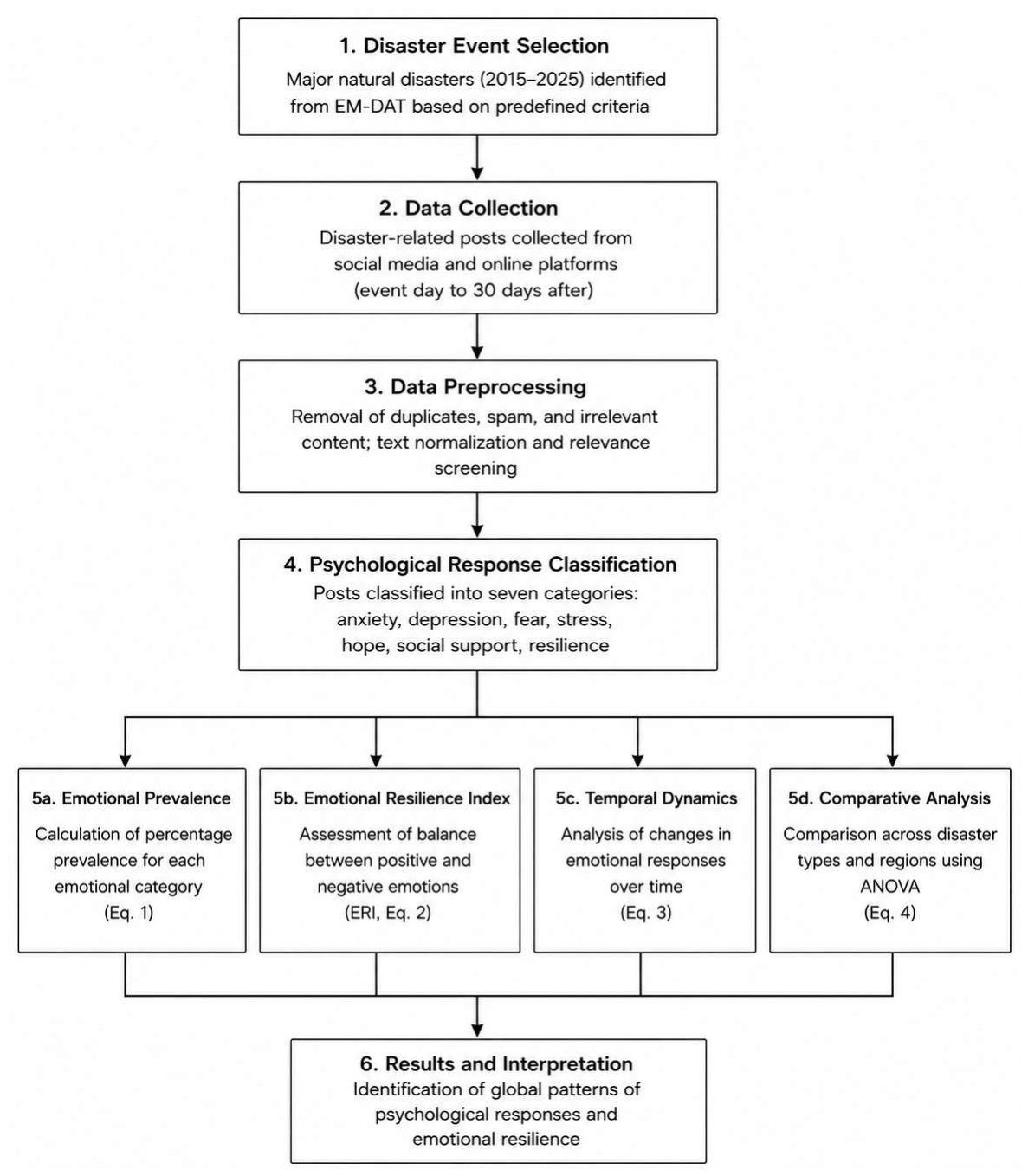
Figure 2.
Psychological Response Profiles Associated with Different Disaster Categories.
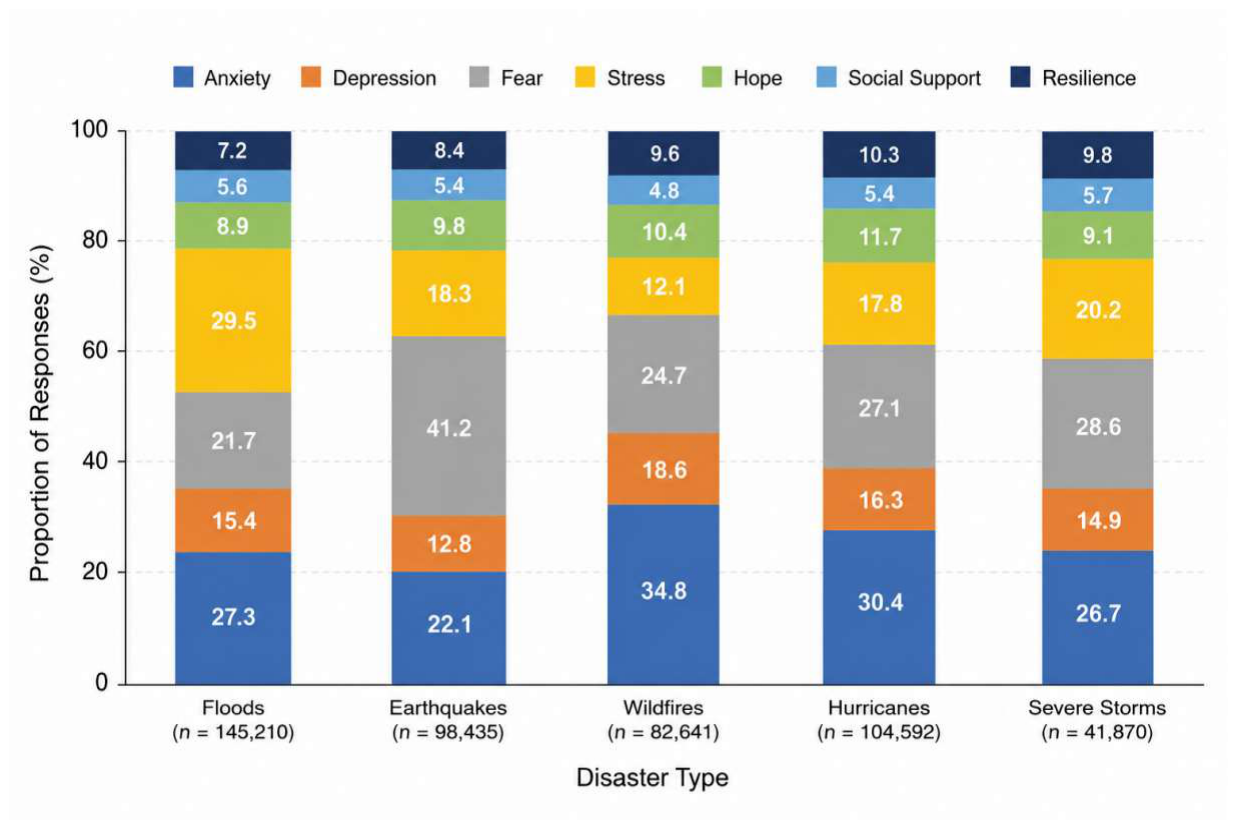
Figure 3.
Temporal Evolution of Negative Emotional Responses Following Natural Disasters.
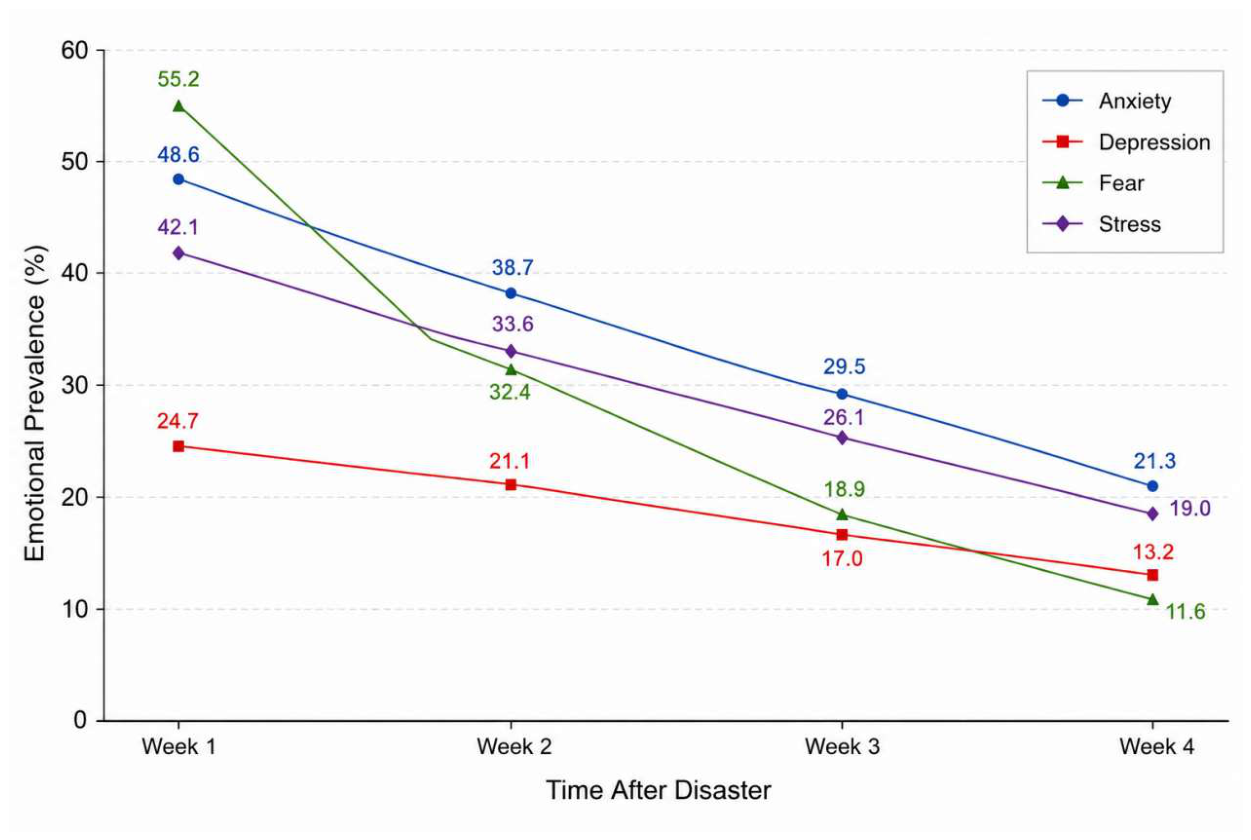
Figure 4.
Emotional Recovery Trajectories Following Different Natural Disaster Types.
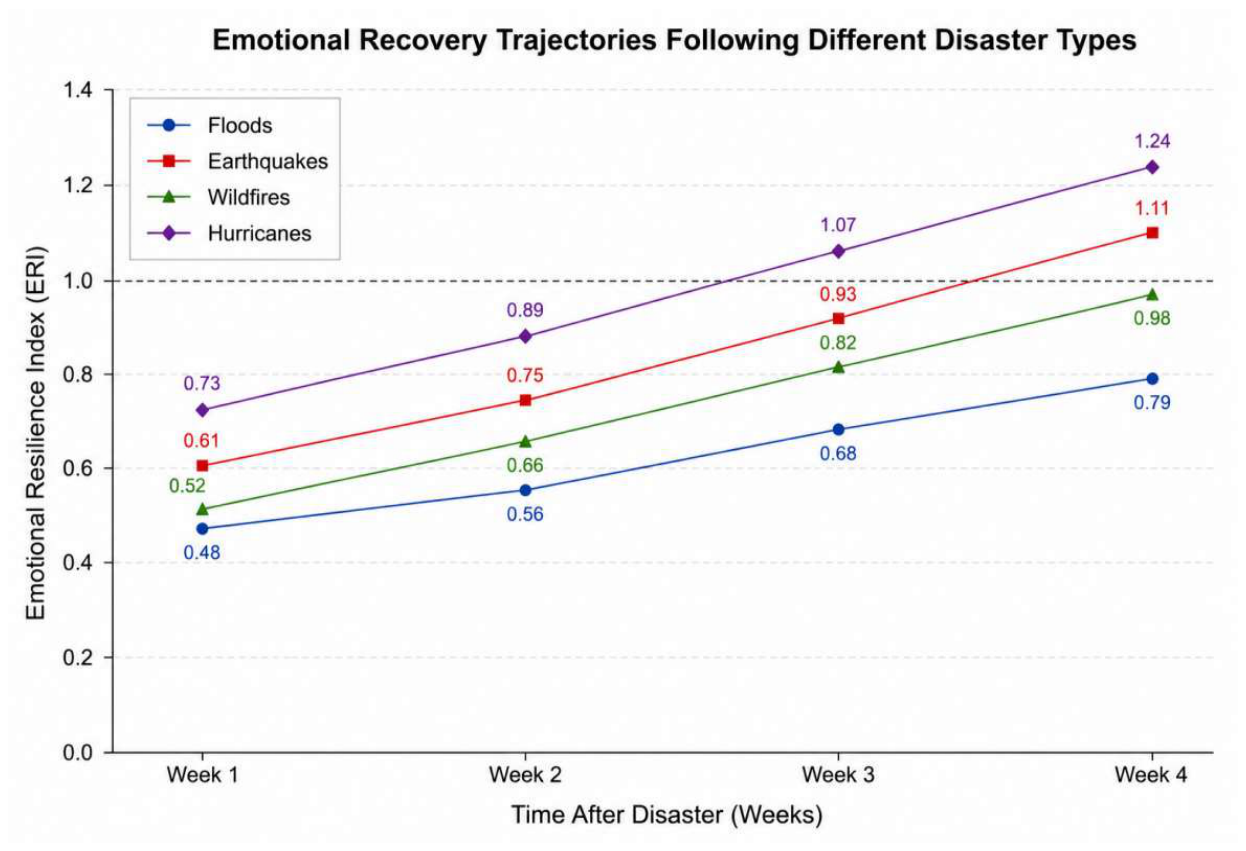
Figure 6.
Global Patterns of Disaster-Related Psychological Distress.
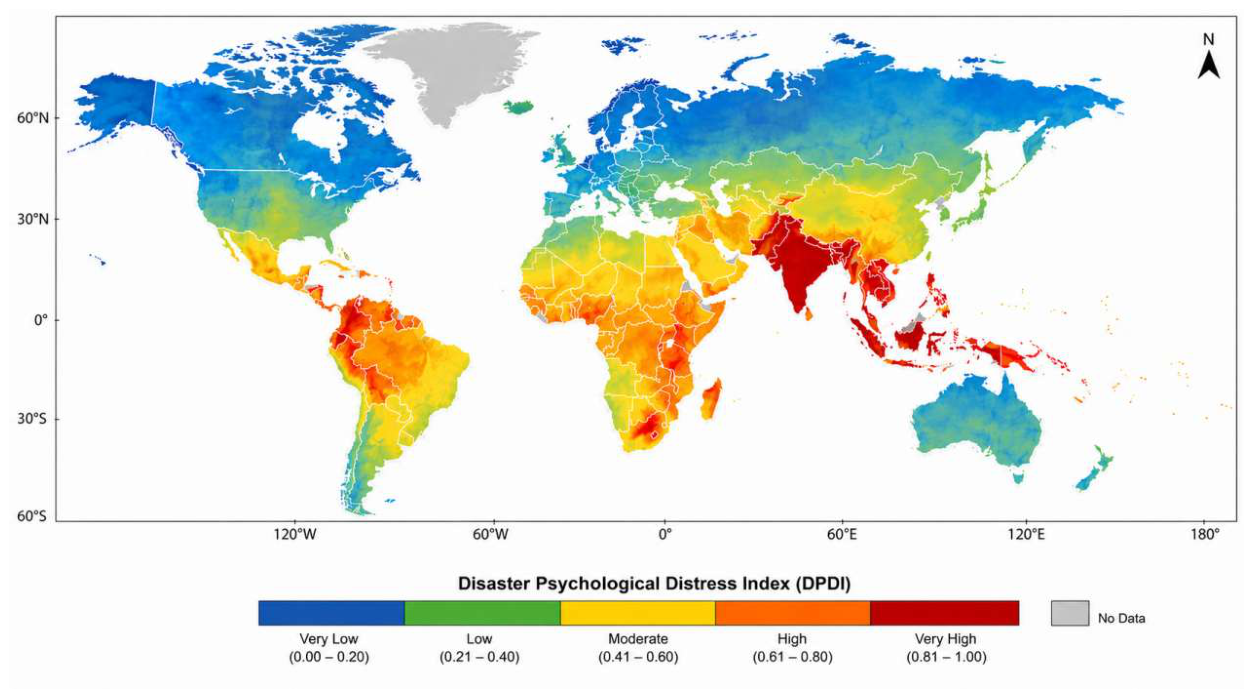
Figure 7.
Relationship Between Psychological Distress and Emotional Resilience.
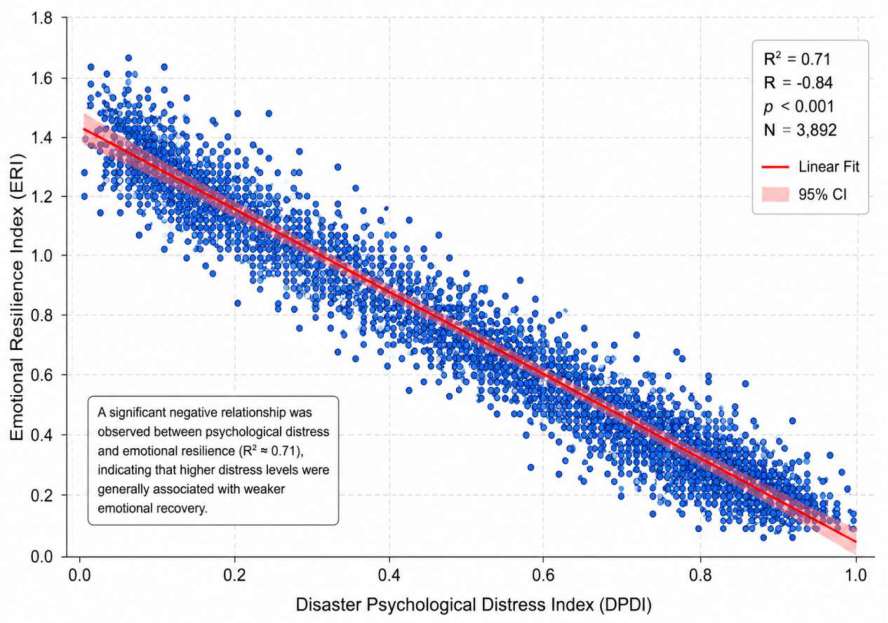
Table 1.
Characteristics of Selected Natural Disasters (2015–2025).
| Disaster Type | Number of Events | Regions Covered | Total Posts | Mean Affected Population |
|---|---|---|---|---|
| Floods | 12 | Asia, Europe, Africa | 145,210 | 1.8 million |
| Earthquakes | 8 | Asia, Americas | 98,435 | 0.7 million |
| Wildfires | 7 | North America, Australia | 82,641 | 0.3 million |
| Hurricanes | 9 | Americas | 104,592 | 1.2 million |
| Severe Storms | 4 | Global | 41,870 | 0.4 million |
Disclaimer/Publisher’s Note: The statements, opinions and data contained in all publications are solely those of the individual author(s) and contributor(s) and not of MDPI and/or the editor(s). MDPI and/or the editor(s) disclaim responsibility for any injury to people or property resulting from any ideas, methods, instructions or products referred to in the content. |
© 2026 by the authors. Licensee MDPI, Basel, Switzerland. This article is an open access article distributed under the terms and conditions of the Creative Commons Attribution (CC BY) license (http://creativecommons.org/licenses/by/4.0/).
Copyright: This open access article is published under a Creative Commons CC BY 4.0 license, which permit the free download, distribution, and reuse, provided that the author and preprint are cited in any reuse.