

Submitted:
04 August 2026
Posted:
05 August 2026
You are already at the latest version
Abstract
Background: Glucagon-like peptide-1 receptor agonists (GLP-1RAs) have transformed the management of obesity and type 2 diabetes mellitus (T2DM). Although randomized clinical trials have demonstrated substantial weight loss and metabolic benefits, real-world evidence is needed to assess their effectiveness, safety, prescribing patterns, and use in routine clinical practice. Objective: To evaluate the effectiveness and safety of GLP-1 receptor agonists in routine clinical practice and to identify factors associated with treatment outcomes in a nationwide multicenter cohort recruited through Spanish community pharmacies. Methods: A nationwide multicentre cross-sectional study with retrospective data collection was conducted between January and April 2026 across community pharmacies in Spain. Adult patients receiving GLP-1 receptor agonists or dual GIP/GLP-1 receptor agonists were consecutively enrolled and classified according to therapeutic indication (obesity or T2DM). Changes in body weight and body mass index (BMI) were assessed using paired-samples t-tests, while multivariable linear regression explored independent determinants of weight loss. Safety signals were initially evaluated using disproportionality analyses based on Odds Ratios (ORs). Subsequently, multivariable logistic regression was performed to identify independent predictors of digestive adverse drug reactions after adjustment for demographic characteristics, treatment-related variables, lifestyle factors, and concomitant glucose-lowering therapies. Results: A total of 531 patients were included (52.2% obesity; 47.8% T2DM; mean age 56.5 ± 12.5 years; 66.7% women). Patients achieved a significant mean weight loss of 12.17 ± 10.64 kg, corresponding to an 11.71% ± 9.40% reduction from baseline (p < 0.001). Overall, 73.9% and 54.1% of participants achieved ≥5% and ≥10% weight loss, respectively. Relative weight loss was comparable across incretin-based therapies. Gastrointestinal adverse drug reactions were the most frequently reported safety outcomes. Disproportionality analyses identified brand-specific safety signals, including increased reporting of nausea/vomiting with Wegovy® and constipation with Mounjaro®, whereas concomitant insulin and SGLT2 inhibitor therapy were associated with dizziness and urinary disorders, respectively. In the multivariable logistic regression model, increasing age emerged as the only independent predictor associated with a lower likelihood of digestive adverse drug reactions (adjusted OR 0.97 per year; 95% CI 0.96–0.99; p = 0.003), while no independent associations were observed for GLP-1RA agent, treatment duration, lifestyle variables, or concomitant glucose-lowering medications after adjustment. Conclusions: Incretin-based therapies were associated with clinically meaningful weight loss in routine clinical practice, supporting the generalizability of findings from randomized clinical trials. Safety profiles differed according to treatment and concomitant therapies, highlighting the importance of individualized monitoring in community pharmacy settings. These findings support the development of a standardized pharmacy-led dispensing and follow-up protocol to optimize patient safety and treatment adherence.
Keywords:
GLP-1 receptor agonists
; obesity
; type 2 diabetes mellitus
; community pharmacy
; real-world evidence
; pharmacovigilance
; semaglutide
; tirzepatide
1. Introduction
Obesity is a chronic, multifactorial, and relapsing disease associated with substantial morbidity and mortality. It is closely associated with type 2 diabetes mellitus (T2DM), cardiovascular disease, metabolic dysfunction-associated steatotic liver disease (MASLD), obstructive sleep apnea, and several types of cancer. Its increasing global prevalence has created an urgent need for effective long-term therapeutic strategies [1].
Glucagon-like peptide-1 receptor agonists (GLP-1RAs) and dual glucose-dependent insulinotropic polypeptide (GIP)/GLP-1 receptor agonists, such as tirzepatide, represent a major advance in the pharmacological management of obesity and T2DM. By mimicking endogenous incretin hormones, these agents enhance glucose-dependent insulin secretion, suppress glucagon release, delay gastric emptying, and increase satiety, leading to clinically meaningful weight loss and improved glycaemic control [2].
Large randomized clinical trials, including the STEP, SURPASS, and SURMOUNT programmes, have demonstrated the efficacy of semaglutide and tirzepatide in achieving substantial weight reduction [3,4]. However, participants in clinical trials are highly selected and managed under controlled conditions, which may limit the generalizability of these findings to routine clinical practice [5]. Consequently, real-world evidence (RWE) is needed to evaluate the effectiveness and safety of these therapies in everyday healthcare settings. In addition, limited evidence is available regarding prescribing patterns, dose-escalation practices, treatment interruptions related to drug shortages, and adherence to lifestyle recommendations in routine care [6].
Community pharmacies are well positioned to generate RWE because of their accessibility, frequent patient contact, and role in medication monitoring. In Spain, this research capacity is supported by collaborative initiatives such as the Sentinel Pharmacy Networks (Redes de Farmacias Centinela), which have contributed to pharmacovigilance and post-marketing drug safety surveillance across a range of therapeutic areas [7,8,9,10]. Building on findings from a previous pilot study conducted in Spanish community pharmacies [11], a nationwide evaluation is needed to better characterize the effectiveness, safety, and use of incretin-based therapies in routine clinical practice.
To our knowledge, nationwide real-world studies evaluating both the effectiveness and safety of incretin-based therapies through community pharmacy networks remain scarce.
The aim of this study was to evaluate the effectiveness and safety of GLP-1 receptor agonists and dual GIP/GLP-1 receptor agonists in routine clinical practice. Secondary objectives were to describe prescribing patterns, patient characteristics, and factors associated with treatment outcomes. To address these objectives, a nationwide multicentre study was conducted through a network of Spanish community pharmacies coordinated by the Pharmaceutical Care España Foundation.
2. Materials and Methods
2.1. Study Design and Setting
A nationwide multicentre cross-sectional study with retrospective data collection was conducted to evaluate the real-world use, effectiveness, and safety of GLP-1 receptor agonists and dual GIP/GLP-1 receptor agonists. The study was conducted through a collaborative network of Spanish community pharmacies coordinated by the Pharmaceutical Care España Foundation.
The study methodology and electronic data collection tools were based on those previously developed and validated in a pilot study [11]. Participating pharmacies were recruited through regional Official Colleges of Pharmacists and existing professional networks using convenience sampling. Data collection was performed during a point-in-time pharmaceutical interview conducted over a 4-month window from January 2026 to April 2026.
2.2. Study Population and Eligibility Criteria
The study population consisted of adult patients who visited any of the participating community pharmacies receiving incretin-based therapy during the study window. Patients were enrolled consecutively during routine medication dispensing and pharmaceutical care activities.
Participants were classified into two mutually exclusive cohorts according to the approved indication of the prescribed medication in Spain:
Obesity Cohort: Patients receiving therapies approved for weight management, specifically Wegovy® (semaglutide) or Mounjaro® (tirzepatide).
T2DM Cohort: Patients receiving therapies approved for the treatment of T2DM or glucose metabolism disorders, including Ozempic® (semaglutide), Rybelsus® (oral semaglutide), Mounjaro® (tirzepatide), Trulicity® (dulaglutide), or Victoza® (liraglutide).
Although tirzepatide (Mounjaro®) is approved in Spain for both obesity and type 2 diabetes mellitus (T2DM), all patients receiving Mounjaro® in the present study were classified within the Obesity Cohort. This reflects routine clinical practice in Spain during the study period, where tirzepatide was prescribed almost exclusively for obesity because it was not publicly reimbursed for T2DM. In contrast, semaglutide (Ozempic®), which is reimbursed by the Spanish National Health System for eligible patients with T2DM, remained the preferred incretin-based therapy for diabetes management. Consequently, no patients receiving Mounjaro® for T2DM were identified among the participating community pharmacies during the study period.
Exclusion criteria comprised: (i) age under 18 years; (ii) current pregnancy or lactation; and (iii) refusal to participate.
2.3. Variables and Data Collection
Data were systematically recorded by trained community pharmacists during the point-of-care interview using a standardized electronic case report form (eCRF). To minimize recall bias, retrospective clinical data (e.g., baseline weight and treatment initiation date) were cross-checked whenever possible with the patient’s official medical reports, electronic health prescriptions, or pharmacy dispensing logs.
Variables were grouped into the following categories:
Sociodemographic Data: Patient age, biological sex, and geographic location (province).
Clinical and Anthropometric variables: Documented comorbidities, current body weight (kg) measured at the pharmacy using calibrated digital scales, height (m), and waist and hip circumferences (cm) obtained by trained pharmacists utilizing standardized non-stretchable anthropometric tapes. Retrospective baseline body weight (kg) prior to therapy initiation was collected and cross-checked with medical reports or electronic prescription logs. Body Mass Index (BMI, kg/m²) was calculated together with the change from baseline.
Treatment and Prescribing Patterns: Active molecule, current dose, administration frequency (weekly, daily, or others), total treatment duration, history of previous exposure to other incretins, specific dose-escalation practices, and patient-reported administration difficulties. Prescriber specialty and prescription type (public or private) were also recorded.
Concomitant Pharmacotherapy: To evaluate concomitant medications and metabolic interactions within routine clinical practice, active concomitant medications were systematically recorded. These were categorized into specific pharmacological classes, explicitly auditing the use of Metformin, sodium-glucose cotransporter-2 inhibitors (SGLT2i / gliflozins), exogenous insulin formulations, and sulfonylureas.
Lifestyle Interventions: Concomitant patient adherence to structured dietary modifications and regular physical activity patterns (categorized as sedentary, light, moderate, or intense) since treatment initiation.
Safety Outcomes: Adverse drug reactions (ADRs) experienced by the patient since the initiation of therapy were collected retrospectively during the interview. These were systematically categorized according to MedDRA system organ classes, including digestive (specifically isolating nausea/vomiting and constipation), nervous (dizziness), cardiovascular, dermatological, musculoskeletal, metabolic, and genitourinary systems, as well as general systemic disorders (asthenia).
Qualitative Observations: Free-text comments regarding treatment experience, drug shortages, or tolerability were also recorded.
2.4. Statistical Analysis
Continuous variables were expressed as mean ± standard deviation (SD) or median [interquartile range] depending on their distribution, verified using the Shapiro-Wilk normality test. Categorical variables were described using absolute frequencies and percentages with their corresponding 95% confidence intervals (95% CI).
To evaluate changes between baseline and the study visit, paired-samples t-tests were used to compare body weight (kg), percentage weight loss, and body mass index (BMI). Responsiveness to treatment was evaluated categorically by calculating the proportion of patients achieving established clinically relevant weight-loss thresholds (≥ 5% and ≥ 10% cumulative weight loss). Anthropometric effectiveness variations and categorical response rates were stratified across specific pharmacological active agents, commercial brands, and baseline therapeutic indications (Obesity versus T2DM). To test the significance of brand-specific and concomitant medication variances, a one-way analysis of variance (ANOVA) followed by the Tukey Honestly Significant Difference (HSD) post-hoc test for multiple comparisons was performed.
To isolate independent weight-loss determinants and control for unmeasured real-world confounding factors, an exploratory multivariable linear regression model was constructed using the cumulative percentage of weight loss as the primary continuous dependent variable. Independent variables included baseline sociodemographics, active brand selection, structured lifestyle compliance, longitudinal exposure chronology, and concomitant glucose-lowering drugs.
To identify independent factors associated with digestive adverse drug reactions, a multivariable logistic regression analysis was performed. Digestive adverse drug reactions (yes/no) were considered the dependent variable, while age, sex, GLP-1RA agent, treatment duration, physical activity, dietary intervention, and concomitant glucose-lowering therapies (metformin, sodium-glucose cotransporter-2 inhibitors [SGLT2i], insulin, and sulfonylureas) were included as prespecified independent variables based on their clinical relevance. Adjusted odds ratios (aORs) with corresponding 95% confidence intervals (95% CIs) were estimated. Statistical significance was defined as a two-sided p-value <0.05.
Model discrimination and calibration were assessed using the likelihood ratio test, McFadden's pseudo-R², and the Hosmer–Lemeshow goodness-of-fit test.
Data curation was performed using Microsoft Excel®, while all subsequent statistical tests and modeling were validated using Statistical analyses were performed using Stata version 19 (StataCorp, College Station, TX, USA)). All statistical tests were two-tailed.
2.5. Ethical Considerations
The study protocol was approved by the Basque Country Ethics Committee for Clinical Research (CEIm de Euskadi) under approval code EOM2025059, serving as an authorized methodological extension of the research line initiated in the pilot project (11). The research was conducted in accordance with the ethical principles of the Declaration of Helsinki and current Good Clinical Practice standards. Given the non-interventional, cross-sectional design, the exclusive use of anonymized data collected during routine clinical practice, and the absence of any modification to patient management, the requirement for written informed consent was waived by the Ethics Committee in accordance with applicable national regulations.
In accordance with Spanish and European data protection regulations (Spanish Organic Law 3/2018 on the Protection of Personal Data and Guarantee of Digital Rights [LOPDGDD] and EU Regulation 2016/679 [General Data Protection Regulation, GDPR]), all collected data were pseudonymized and managed within an automated, secure database, guaranteeing absolute patient confidentiality and anonymity.
3. Results
3.1. Baseline Demographic, Clinical, and Behavioral Characteristics
A total of 531 patients met the eligibility criteria and were included in the study. Participants were classified into two indication-based cohorts: the obesity cohort (n = 277, 52.2%; 95% CI: 47.9–56.4) and the T2DM cohort (n = 254, 47.8%; 95% CI: 43.6–52.1). Overall, 66.7% of participants were women (95% CI: 62.5–70.6), and the mean age was 56.5 ± 12.5 years. Mean height was 166.1 ± 9.0 cm, mean waist circumference was 113,21 ± 16,62 cm, and mean hip circumference was 113.7 ± 15.8 cm.
Hypertension was the most common comorbidity (45.8%; 95% CI: 41.6–50.0), followed by type 2 diabetes mellitus (37.7%) and dyslipidaemia (36.3%). Overall, 23.0% of participants reported no chronic comorbidities (95% CI: 19.6–26.7). Regarding lifestyle, 32.2% of participants reported not following a structured dietary plan, and 18.3% reported a sedentary lifestyle (Table 1).
3.2. Prescribing Patterns and Incretin Dosing Logistics
The most frequently prescribed medications were Mounjaro® (34.1%; 95% CI: 30.2–38.3) and Ozempic® (32.0%; 95% CI: 28.2–36.1), followed by Wegovy® (17.3%) and Rybelsus® (11.2%). Weekly administration was the predominant dosing schedule, reported in 86.1% of patients (95% CI: 82.9–88.8). At the time of the interview, treatment duration exceeded one year in 33.1% of patients and ranged between 6 and 12 months in 24.8%.
Overall, 72.2% of patients followed a gradual dose-escalation schedule (95% CI: 68.2–75.9), whereas 11.0% reported difficulties using the administration device. Prescriptions were issued more frequently by medical specialists (55.8%; 95% CI: 51.5–60.0), predominantly endocrinologists (80.3%; 95% CI: 74.8–84.2). Most treatments were prescribed through the public electronic health system (67.6%; 95% CI: 63.5–71.5) (Table 1).
3.3. Anthropometric Effectiveness and Clinical Responsiveness Thresholds
A paired-samples t-test was performed to compare anthropometric measures between baseline and the study visit. Mean body weight decreased by 12.17 ± 10.64 kg (95% CI: 11.25–13.09; p < 0.001), corresponding to a mean relative weight reduction of 11.71% ± 9.40% from baseline (95% CI: 10.90–12.53; p < 0.001). Mean BMI decreased from 36.13 ± 6.67 kg/m² at baseline to 31.76 ± 6.02 kg/m² at the study visit, representing a mean reduction of 4.40 ± 3.89 kg/m² (95% CI: 4.06–4.73; p < 0.001).
Overall, 73.9% of patients (n = 383; 95% CI: 70.0–77.5) achieved a weight loss of at least 5% from baseline, and 54.1% (n = 280; 95% CI: 49.7–58.3) achieved a weight loss of at least 10% (Table 2).
When stratified by treatment indication, the obesity cohort showed a mean percentage weight loss of 14,24% ± 8,61% and a mean BMI reduction of 3.98 ± 7.71 kg/m², whereas the T2DM cohort showed a mean percentage weight loss of 9.75% ± 9.91% and a mean BMI reduction of 3.69 ± 4.03 kg/m².
Among individual treatments, the greatest mean absolute weight loss was observed with Wegovy® (14.95 ± 9.52 kg), followed by Mounjaro® (14.48 ± 10.24 kg), Saxenda® (13.50 ± 16.26 kg), and Ozempic® (10.60 ± 11.23 kg). However, no statistically significant differences were observed between treatments in percentage weight loss (ANOVA, F = 0.671; p = 0.672) or BMI reduction (F = 0.467; p = 0.832).
Metformin was the most frequently used concomitant medication (25.0%), followed by SGLT2 inhibitors (11.5%) and insulin (9.6%). Patients receiving concomitant metformin or SGLT2 inhibitors had lower percentage weight loss than those not receiving these treatments (metformin: 9.84% ± 9.63% vs. 12.32% ± 9.25%, p = 0.0107; SGLT2 inhibitors: 8.75% ± 9.07% vs. 12.07% ± 9.39%, p = 0.0101). Similarly, reductions in BMI were smaller among patients receiving metformin (p = 0.0168), SGLT2 inhibitors (p = 0.0043), or insulin (p = 0.0214) (Table 2).
1.4. Pharmacovigilance and Safety Signal Disproportionality Mapping
Gastrointestinal adverse events were the most frequently reported adverse drug reactions, affecting 63.0% of the study population. Nausea and vomiting were the most common events (32.6%), followed by constipation (19.8%). Asthenia was reported by 13.0% of patients, dizziness by 9.9%, musculoskeletal symptoms by 9.9%, and urinary disorders by 8.8%.
Safety analyses using crude odds ratios (cOR) identified several significant associations (Table 3).
• Nausea and vomiting: Wegovy® (semaglutide 2.4 mg) was associated with a higher reporting of nausea and vomiting compared with the other treatments (OR = 1.55; 95% CI: 1.02–2.35). Trulicity® (dulaglutide) was also associated with increased reporting of these events (OR = 2.01; 95% CI: 1.04–3.89). Higher reporting rates were observed among patients younger than 50 years (OR = 1.55; 95% CI: 1.07–2.23), whereas patients older than 70 years showed lower reporting rates (OR = 0.45; 95% CI: 0.24–0.83).
• Constipation: Mounjaro® (tirzepatide) was associated with constipation (OR = 1.65; 95% CI: 1.08–2.53). Patients in the obesity cohort had higher reporting rates than those in the T2DM cohort (OR = 2.02; 95% CI: 1.29–3.17). Constipation was also more frequently reported between 3 and 6 months of treatment (OR = 1.60; 95% CI: 1.00–2.56).
• Dizziness: Concomitant insulin therapy was associated with increased reporting of dizziness (OR = 2.65; 95% CI: 1.34–5.23). Patients younger than 40 years also showed higher reporting rates (OR = 2.54; 95% CI: 1.23–5.26).
• Musculoskeletal symptoms: Patients in the T2DM cohort were more likely to report musculoskeletal symptoms than those in the obesity cohort (OR = 2.01; 95% CI: 1.11–3.65). Treatment duration longer than one year (OR = 2.17; 95% CI: 1.22–3.86) and age over 70 years (OR = 2.01; 95% CI: 1.04–3.89) were also associated with higher reporting rates.
• Urinary disorders: Concomitant treatment with SGLT2 inhibitors was associated with increased reporting of urinary disorders (OR = 3.19; 95% CI: 1.48–6.87).
• Asthenia: No statistically significant associations were observed for asthenia, as all corresponding 95% confidence intervals included the null value.
The main statistically significant associations identified in the disproportionality analysis are summarized graphically in Figure 1.
3.5. Independent Predictors of Digestive Adverse Drug Reactions
To further investigate factors independently associated with digestive adverse drug reactions, a multivariable logistic regression model was fitted including age, sex, GLP-1RA agent, treatment duration, physical activity, dietary intervention, and concomitant glucose-lowering therapies (metformin, SGLT2 inhibitors, insulin, and sulfonylureas) (Table 4). Increasing age emerged as the only independent predictor significantly associated with a lower likelihood of digestive adverse drug reactions, with each additional year reducing the odds by approximately 3% (adjusted OR [aOR] = 0.97; 95% CI: 0.96–0.99; p = 0.003). No statistically significant independent associations were observed for sex, GLP-1RA agent, treatment duration, physical activity, dietary intervention, or concomitant glucose-lowering therapies after multivariable adjustment. A non-significant trend towards a higher risk of digestive adverse drug reactions was observed among patients receiving treatment for 3–6 months (aOR = 2.21; 95% CI: 0.97–5.02; p = 0.059).
Reference categories: male sex, reference GLP-1RA (Ozempic®), treatment initiation, sedentary lifestyle, no dietary intervention, and absence of concomitant medication.
Model performance (replace with final values from your software output): n = 521; Likelihood ratio χ² = XX.XX (p = 0.034); McFadden pseudo-R² = 0.044.
When independent predictors were evaluated using multivariable logistic regression (Table 4), the crude association between Wegovy® and digestive adverse drug reactions was no longer statistically significant after adjustment for potential confounders (adjusted OR = 1.69, 95% CI 0.88–3.25). Increasing age remained the only independent predictor, with each additional year associated with a lower likelihood of digestive adverse drug reactions (adjusted OR = 0.97 per year, 95% CI 0.96–0.99). These findings suggest that the crude association observed in the disproportionality analysis was partially explained by differences in the demographic characteristics of the exposed population rather than by the pharmacological treatment alone.
Nevertheless, from a real-world epidemiological and clinical perspective, the crude Odds Ratios presented in Table 3 and Figure 1 retain important practical value. Unlike adjusted regression models, which estimate the independent effect of each variable after controlling for confounding, crude ORs describe the overall probability of reporting an adverse drug reaction among patients exposed to a given treatment under routine clinical practice. This information is particularly useful for community pharmacists, as it facilitates the identification of patients at greater overall risk and supports the implementation of targeted monitoring and counselling strategies within community pharmacy-led pharmacovigilance protocols.
4. Discussion
This nationwide multicentre study provides real-world evidence on the effectiveness and safety of GLP-1 receptor agonists and dual GIP/GLP-1 receptor agonists in patients treated through Spanish community pharmacies. Overall, incretin-based therapies were associated with clinically meaningful weight loss under routine clinical practice, with almost three-quarters of patients achieving a weight reduction of at least 5% and more than half achieving a reduction of at least 10%. In addition, our findings identified differences in adverse event reporting according to treatment, patient characteristics, and concomitant medications, highlighting the potential contribution of community pharmacies to the monitoring of these therapies in routine care.
4.1. Effectiveness and Weight-Loss Outcomes
Our findings are consistent with evidence from randomized clinical trials and real-world studies demonstrating the effectiveness of incretin-based therapies for weight management. In the present study, patients experienced a mean weight loss of 12.17 kg, corresponding to an average reduction of 11.71% from baseline body weight. These results are clinically relevant and broadly consistent with those reported in the STEP, SURPASS, and SURMOUNT clinical programmes, although the magnitude of weight loss observed in routine clinical practice is generally lower than that reported in randomized trials [3,4,12,13,14].
Several factors may explain this difference. Unlike participants enrolled in clinical trials, patients treated in routine practice often receive lower maintenance doses, experience treatment interruptions, discontinue therapy because of adverse events or drug shortages, and show lower adherence to both medication and lifestyle recommendations. Together, these factors are likely to attenuate treatment effectiveness under real-world conditions [18,19].
Although patients treated for obesity achieved numerically greater weight loss than those treated for T2DM, the overall effectiveness of the different GLP-1 receptor agonists did not differ significantly after statistical comparison. This finding suggests that, in routine clinical practice, differences observed between individual agents may be less pronounced than those reported in randomized trials, where treatment adherence, dose escalation, and follow-up are closely monitored. Real-world factors such as treatment persistence, dose optimization, and patient behaviour may therefore contribute substantially to overall treatment outcomes.
An important finding of the present study was the limited adherence to recommended lifestyle interventions. Approximately one-third of patients reported not following a structured dietary programme, and almost one in five reported a sedentary lifestyle. These findings reinforce current recommendations that pharmacological treatment should be accompanied by dietary modification and regular physical activity to maximise clinical benefit [20]. They also highlight the potential role of community pharmacists in reinforcing lifestyle advice, identifying barriers to adherence, and supporting patients throughout treatment.
Although no independent predictors of weight loss were identified in the multivariable analysis, this finding is consistent with previous studies suggesting that treatment response is influenced by multiple interacting clinical and behavioural factors that are difficult to capture using routinely collected baseline variables alone [21]. Rather than being determined by a single patient characteristic, weight-loss outcomes are likely to reflect the combined influence of treatment adherence, dose titration, lifestyle modification, treatment persistence, and individual biological variability.
4.2. Gastrointestinal Safety
Gastrointestinal adverse events were the most frequently reported adverse drug reactions in our study, affecting 63.0% of patients. This finding is consistent with evidence from randomized clinical trials and pharmacovigilance studies, in which gastrointestinal symptoms have consistently been identified as the most common adverse effects associated with GLP-1 receptor agonists [3,4,22]. In the STEP and SURMOUNT clinical programmes, gastrointestinal adverse events were reported in approximately 60–70% of participants, depending on the treatment regimen and dose-escalation schedule, supporting the consistency of our findings with previous evidence.
Although gastrointestinal adverse events were common across all treatments, differences in reporting patterns were observed between individual agents. Wegovy® (semaglutide 2.4 mg) was associated with increased reporting of nausea and vomiting, whereas Mounjaro® (tirzepatide) was more frequently associated with constipation. These differences may reflect pharmacodynamic differences between the two molecules, although the available evidence remains inconsistent and some systematic reviews have not identified clinically relevant differences in gastrointestinal tolerability [23].
The higher reporting of nausea and vomiting among patients receiving semaglutide may be related to the potent activation of central GLP-1 receptors involved in appetite regulation and the emetic response, particularly within the area postrema [24]. In our study, these events were reported more frequently among patients younger than 50 years, whereas lower reporting rates were observed in patients older than 70 years. Although the mechanisms underlying these age-related differences remain uncertain, previous studies have suggested that younger individuals may have greater sensitivity to GLP-1-mediated activation of central emetic pathways [25].
Conversely, constipation was more frequently reported among patients receiving tirzepatide and among those treated for obesity. Previous studies have suggested that the combined GIP/GLP-1 receptor agonist activity of tirzepatide may produce a more pronounced delay in gastrointestinal motility than selective GLP-1 receptor agonists, although evidence remains limited [26]. In addition, constipation was more frequently reported between three and six months after treatment initiation, suggesting that this period may represent an important window for monitoring gastrointestinal tolerability in routine clinical practice.
From a clinical perspective, these findings highlight the importance of proactive counselling by community pharmacists. Early identification of patients at increased risk of gastrointestinal adverse events, together with advice on hydration, dietary measures, gradual dose escalation, and symptom management, may improve treatment tolerability and support long-term treatment persistence.
To complement the disproportionality analyses, multivariable logistic regression models were developed to account for potential confounding factors. After adjustment, increasing age remained the only independent predictor associated with a lower probability of digestive adverse drug reactions, whereas the associations observed for individual GLP-1RA agents and concomitant therapies were attenuated. These findings suggest that part of the variability observed in the crude analyses may be explained by differences in patient characteristics rather than by the pharmacological agent itself. Although treatment duration of 3–6 months showed a trend towards an increased likelihood of digestive adverse events, this association did not reach statistical significance. Together, these results highlight the importance of complementing pharmacovigilance signal detection with multivariable analyses to distinguish true independent risk factors from associations potentially influenced by confounding.
Although multivariable logistic regression provides the most appropriate approach for identifying independent predictors of adverse drug reactions by controlling for potential confounding factors, crude Odds Ratios remain highly relevant from a clinical and pharmacovigilance perspective. The two approaches address different but complementary research questions. Adjusted models estimate the independent association attributable to each exposure, whereas crude ORs quantify the overall probability of observing an adverse drug reaction among patients receiving a given treatment under routine clinical practice.
This distinction is particularly relevant for community pharmacy. Pharmacists implement patient-centred monitoring protocols based on the characteristics of the individual presenting at the point of care rather than on a hypothetical patient with confounding factors removed. Consequently, the crude OR provides a pragmatic estimate of the likelihood that a patient treated with a specific medicine will experience an adverse drug reaction, supporting risk communication, patient counselling, and the prioritization of pharmacotherapeutic follow-up. In this context, the crude ORs presented in Table 3 and Figure 1 should be interpreted as clinically useful measures for real-world risk stratification, whereas the adjusted analyses presented in Table 4 provide evidence regarding the independent contribution of each predictor.
4.3. Concomitant Medications and Safety
One of the most relevant findings of this study was the association between concomitant medications and the reporting of specific adverse events. Although GLP-1 receptor agonists have well-established gastrointestinal safety profiles, less attention has been paid to the influence of background therapies on tolerability in routine clinical practice.
Patients receiving concomitant insulin therapy were more likely to report dizziness than those not receiving insulin. Although the underlying mechanism cannot be established from the present study, this association may reflect episodes of mild hypoglycaemia resulting from the combined glucose-lowering effects of insulin and incretin-based therapies. This finding highlights the importance of reviewing insulin doses and reinforcing patient education, particularly during treatment initiation and dose escalation.
Similarly, concomitant treatment with SGLT2 inhibitors was associated with a higher reporting of urinary disorders. Given the well-established osmotic diuretic effect of SGLT2 inhibitors, these findings are biologically plausible and are consistent with the known pharmacological profile of this drug class [27]. Rather than representing an adverse effect attributable to GLP-1 receptor agonists alone, these symptoms may reflect the combined effects of both therapies in patients receiving combination treatment.
Musculoskeletal symptoms were reported more frequently among patients with T2DM and among those receiving treatment for more than one year. Several mechanisms may contribute to this finding. Patients with T2DM frequently present with diabetic neuropathy, osteoarthritis, or other chronic musculoskeletal disorders that may increase symptom reporting independently of incretin therapy. In addition, rapid weight loss has been associated with reductions in lean body mass, particularly in the absence of adequate dietary protein intake and resistance exercise [28,29]. Although body composition was not assessed in the present study, this mechanism may partly explain the higher frequency of musculoskeletal symptoms observed in patients receiving long-term treatment.
Overall, these findings emphasise that the safety profile of incretin-based therapies should be interpreted within the context of the patient's overall clinical condition and concomitant treatments. Community pharmacists are well positioned to identify potential drug-related problems, review concomitant medications, and provide targeted counselling to support the safe use of these therapies in routine clinical practice.
4.4. Study Strengths and Limitations
The main strength of this study is its nationwide scope and the inclusion of a large sample of patients recruited through community pharmacies across several autonomous communities in Spain. This multicentre design enhances the external validity of the findings by reflecting routine clinical practice and providing real-world evidence on the effectiveness and safety of incretin-based therapies. In addition, the study collected detailed information on prescribing patterns, lifestyle interventions, concomitant medications, and adverse drug reactions, allowing a comprehensive evaluation of treatment use in community pharmacy settings.
Several limitations should also be considered. First, the cross-sectional design with retrospective data collection precludes causal inference and is subject to recall bias, particularly for baseline anthropometric measures and retrospectively reported adverse events. Although pharmacists verified these data against medical records, electronic prescriptions, and pharmacy dispensing records whenever possible, some degree of information bias cannot be excluded.
Second, patients were recruited through community pharmacies using convenience sampling, which may have introduced selection bias and may limit the generalizability of the findings to all patients receiving incretin-based therapies in Spain. In addition, patients who discontinued treatment because of early intolerance or lack of effectiveness may have been underrepresented.
Finally, treatment duration varied considerably between participants, and residual confounding from unmeasured variables, including dietary habits, treatment adherence, socioeconomic factors, and other lifestyle characteristics, cannot be excluded. Furthermore, the absence of prospective follow-up limits the assessment of long-term effectiveness and safety outcomes.
Despite these limitations, the study provides valuable real-world evidence on the use of incretin-based therapies in community pharmacy practice and identifies clinically relevant patterns that may help optimize patient monitoring and pharmaceutical care.
4.5. Clinical Implications and the Need for a Standardized Dispensing Protocol
The findings of this study have several implications for community pharmacy practice. In addition to confirming the effectiveness of incretin-based therapies under routine clinical conditions, our results identified differences in adverse event reporting according to treatment, patient characteristics, and concomitant medications. These findings highlight the importance of individualized pharmaceutical care throughout treatment.
Community pharmacists are in a unique position to identify patients at increased risk of adverse events, reinforce adherence to dose-escalation schedules, promote lifestyle interventions, and provide counselling on the prevention and management of common gastrointestinal adverse effects. Routine follow-up during dispensing may also facilitate the early identification of treatment-related problems and support collaboration with prescribers when treatment adjustments are required.
The associations observed between specific therapies, concomitant medications, and adverse event reporting suggest that structured pharmaceutical follow-up could contribute to improving the safe use of incretin-based therapies in routine practice. Based on these findings, the development of a standardized pharmacy-led dispensing and follow-up protocol appears justified. Such a protocol could incorporate patient education, assessment of concomitant medication, monitoring of treatment adherence and lifestyle measures, and early identification of adverse drug reactions.
Future prospective studies are needed to evaluate whether implementing a standardized pharmaceutical care protocol improves adherence, treatment persistence, adverse event management, and clinical outcomes in patients receiving incretin-based therapies.
Based on the findings of the present study, we propose a conceptual pharmacy-led dispensing and follow-up pathway for patients receiving incretin-based therapies (Figure 2). This framework integrates patient assessment, identification of potential safety risks, pharmaceutical counselling, and structured follow-up, providing a basis for future prospective evaluation.
5. Conclusions
GLP-1 receptor agonists and dual GIP/GLP-1 receptor agonists were associated with clinically meaningful weight loss in routine clinical practice, with nearly three-quarters of patients achieving at least 5% weight loss and more than half achieving at least 10%. Although tirzepatide and high-dose semaglutide (2.4 mg) showed the greatest absolute weight reductions, no significant differences in relative effectiveness were observed between treatments. Gastrointestinal adverse drug reactions were the most frequently reported adverse events, with differences in reporting patterns according to treatment and concomitant medications. These findings highlight the importance of lifestyle interventions and individualized patient monitoring alongside pharmacological therapy. They also support the role of community pharmacies in real-world evidence generation and provide a rationale for the future development and evaluation of a standardized pharmacy-led dispensing and follow-up protocol.
Author Contributions
O.V.-T. and C.T.-L. contributed equally to this work. Conceptualization, O.V.-T. and C.T.-L.; methodology, O.V.-T. and C.T.-L.; formal analysis, O.V.-T. and C.T.-L.; in-vestigation, O.V.-T. and C.T.-L.; writing—original draft preparation, O.V.-T. and C.T.-L.; writ-ing—review and editing, O.V.-T. and C.T.-L. All authors have read and agreed to the published version of the manuscript..
Funding
This research received no external funding.
Institutional Review Board Statement
The study protocol was reviewed and approved by the Basque Country Ethics Committee for Clinical Research (CEIm de Euskadi). Approval Code: EOM2025059 (CEIm). The study was conducted in accordance with the principles of the Declara-tion of Helsinki and current data protection regulations. All patients provided voluntary informed consent. Given the observational and non-interventional nature of the study, routine clinical practice remained unaltered.
Informed Consent Statement
Patient consent was waived due to the retrospective nature of the study and the use of de-identified data, which ensured that the privacy of the participants was maintained at all times, as approved by the Ethics Committee.
Data Availability Statement
The data presented in this study are available on request from the corresponding author. The data are not publicly available due to privacy and ethical restrictions, as they contain sensitive information that could compromise the anonymity of the research partici-pants.
Acknowledgments
We would like to express our sincere gratitude to the pharmacists involved in the execution of the fieldwork. Their contribution and commitment were fundamental to the de-velopment of this research.
Conflicts of Interest
O.V.-T. and C.T.-L. are members of the Board of Directors of the Pharma-ceutical Care Spain Foundation. C.T.-L. is also an employee of the Universidad Europea Miguel de Cervantes. The authors declare no other personal circumstances or interests that may be perceived as influencing the representation or interpretation of reported research results. The funders had no role in the design of the study; in the collection, analyses, or interpretation of data; in the writing of the manuscript; or in the decision to publish the results.
Abbreviations
The following abbreviations are used in this manuscript:
| GLP-1 | Glucagon-like peptide-1 |
| GLP-1RAs | Glucagon-like peptide-1 receptor agonists |
| T2DM | Type 2 diabetes mellitus |
| GIP | Glucose-dependent Insulinotropic Polypeptide |
| BMI | Body mass index |
| ORs | Odds Ratios |
| MASLD | Metabolic dysfunction-associated steatotic liver disease |
| SGLT2i | Sodium-Glucose Cotransporter-2 Inhibitors |
| RWE | Real-world evidence |
| eCRF | Electronic case report form |
| MedDRA | Medical dictionary for regulatory activities |
| ADR | Adverse drug reactions |
| SD | Standard Deviation |
| CI | Confidence Interval |
| ANOVA | Analysis of variance |
| HSD | Honestly Significant Difference |
| aORs | Adjusted Odds Ratios |
| GDPR | General Data Protection Regulation |
| EU | European Union |
| cORs | Crude Odds Ratios |
References
- Bray, G.A.; Kim, K.K.; Wilding, J.P.H.; World Obesity Federation. Obesity: A chronic relapsing progressive disease process. A position statement of the World Obesity Federation. Obes. Rev. 2017, 18(7), 715–723. [Google Scholar] [CrossRef] [PubMed]
- Rosen, C.J.; Ingelfinger, J.R. GLP-1 Receptor Agonists. N Engl. J. Med. 2026, 394(14), 1320–1330. [Google Scholar] [CrossRef] [PubMed]
- Wilding, J.P.; Batterham, R.L.; Calanna, S.; et al. Once-Weekly Semaglutide in Adults with Overweight or Obesity (STEP 1). N Engl. J. Med. 2021, 384(11), 989–1002. [Google Scholar] [CrossRef] [PubMed]
- Jastreboff, A.M.; Aronne, L.J.; Ahmad, N.N.; et al. Tirzepatide Once Weekly for the Treatment of Obesity (SURMOUNT-1). N Engl. J. Med. 2022, 387(3), 205–217. [Google Scholar] [CrossRef] [PubMed]
- Ng, C.D.; Divino, V.; Wang, J.; et al. Real-World Weight Loss Observed With Semaglutide and Tirzepatide in Patients with Overweight or Obesity and Without Type 2 Diabetes (SHAPE). Diabetes Ther. 2025, 16(11), 1845–1859. [Google Scholar] [CrossRef] [PubMed]
- Christensen, D.H.; Thomsen, R.W.; Pottegård, A. Real-world evidence on the utilization, clinical and comparative effectiveness, and adverse effects of newer GLP-1RA-based weight-loss therapies. Obes. Rev. 2025, 26(4), e13710. [Google Scholar]
- Norén, G.N.; Donegan, K.; Muñoz, M.A.; Alshammari, T.M.; Pratt, N.; Candore, G.; et al. Recommendations to enable broader use of real-world evidence to inform decision-making throughout pharmacovigilance signal management. Pharmacoepidemiol Drug Saf. 2025, 34, e70231. [Google Scholar] [CrossRef] [PubMed]
- Makady, A.; van Veelen, A.; Jonsson, P.; Moseley, O.; D’Andon, A.; de Boer, A.; et al. Using real-world data in health technology assessment (HTA) practice: A comparative study of five HTA agencies. Pharmacoeconomics 2018, 36, 359–368. [Google Scholar] [PubMed]
- Treceño-Lobato, C.; Jiménez-Serranía, M.I.; Martínez-García, R.; Corzo-Delibes, F.; Martín Arias, L.H. New anticoagulant agents: Incidence of adverse drug reactions and new signals thereof. Semin Thromb. Hemost. 2019, 45, 196–204. [Google Scholar] [PubMed]
- Jiménez-Serranía, M.I.; Treceño-Lobato, C. Influence of concomitant treatments under anticoagulants and statins in detecting signals of adverse drug reactions. Semin Thromb. Hemost. 2019, 45, 837–845. [Google Scholar] [CrossRef] [PubMed]
- Vergniory-Trueba, O.; Treceño-Lobato, C. Glucagon-like Peptide-1 Receptor Agonists in the Real World: Are Clinical Trials Reproducible? A Spanish Pilot Study. Obesities 2026, 6, 36. [Google Scholar] [CrossRef]
- Thomsen, R.W.; Mailhac, A.; Løhde, J.B.; Pottegård, A. Real-world evidence on the utilization, clinical and comparative effectiveness, and adverse effects of newer GLP-1RA-based weight-loss therapies. Diabetes Obes. Metab. 2025, 27 Suppl 2(Suppl 2), 66–88. [Google Scholar] [CrossRef] [PubMed]
- Ciudin, A.; Sapin, H.; Fan, L.; Dimitriadis, G.K.; Zimner-Rapuch, S.; Curteis, T.; Clark, L.J.; Rubinstein, M.; Johansson, E. Comparison of Clinical Efficacy and Safety of Tirzepatide, Liraglutide and Semaglutide in Patients with Obesity and Without T2D: A Bayesian Network Meta-Analysis of Randomised Controlled Trials. Adv. Ther. 2026, 43(5), 2090–2105. [Google Scholar] [CrossRef] [PubMed]
- Ciudin, A.; Johansson, E.; Zimner-Rapuch, S.; Dimitriadis, G.K.; Bertrand, M.; Curteis, T.; Clark, L.J.; Fan, L.; Sapin, H.; Bergmann, J.F. Indirect comparative efficacy and safety of tirzepatide 10 and 15 mg versus semaglutide 2.4 mg for the management of obesity and overweight in patients with type 2 diabetes. Diabetes Obes. Metab. 2025, 27(9), 4709–4719. [Google Scholar] [CrossRef] [PubMed]
- Davies, M.; Færch, L.; Jeppesen, O.K.; Pakseresht, A.; Pedersen, S.D.; Perreault, L.; Rosenstock, J.; Shimomura, I.; Viljoen, A.; Wadden, T.A.; Lingvay, I. STEP 2 Study Group. Semaglutide 2.4 mg once a week in adults with overweight or obesity, and type 2 diabetes (STEP 2): a randomised, double-blind, double-dummy, placebo-controlled, phase 3 trial. Lancet 2021, 397(10278), 971–984. [Google Scholar] [CrossRef] [PubMed]
- Rabiee, A.; Hossain, M.A.; Poojari, A. Adipose Tissue Insulin Resistance: A Key Driver of Metabolic Syndrome Pathogenesis. Biomedicines 2025, 13(10), 2376. [Google Scholar] [CrossRef] [PubMed]
- Choo, Y.N.; Ravi, R.N.; Subramaniyan, V. Insulin resistance induced by obesity: Mechanisms, metabolic implications and therapeutic approaches. Mol. Biol. Rep. 2026, 53(1), 357. [Google Scholar] [CrossRef] [PubMed]
- Dziewierz, A.; Siudak, Z. Adherence and Persistence with GLP-1-Based Therapies: International Real-World Evidence and the Role of Nutritional and Lifestyle Support—A Narrative Review. Nutrients 2026, 18(11), 1761. [Google Scholar] [CrossRef] [PubMed]
- Samuels, J.M.; Ye, F.; Irlmeier, R.; Silver, H.; Srivastava, G.; Spann, M. Real-world titration, persistence & weight loss of semaglutide and tirzepatide in an academic obesity clinic. Diabetes Obes. Metab. 2025, 27(11), 6200–6209. [Google Scholar] [CrossRef] [PubMed]
- Lingow, S.; Carris, N.; Clements, J.; et al. The Pharmacist's Role in the Use of Incretin-Based Therapies for Weight Management: An Opinion of the Endocrine and Metabolism Practice and Research Network of the American College of Clinical Pharmacy. J. Am. Coll. Clin. Pharm. 2025, 8(10), 1078–1093. [Google Scholar] [CrossRef]
- Martins, C.; Gower, B.A.; Hunter, G.R. Baseline Metabolic Variables Do Not Predict Weight Regain in Premenopausal Women. Obesity 2020, 28(5), 902–906. [Google Scholar] [CrossRef] [PubMed]
- Osei, S.P.; Akomaning, E.; Florut, T.F.; Sodhi, M.; Lacy, B.E.; Aldhaleei, W.A.; Bhagavathula, A.S. Gastrointestinal Safety Assessment of GLP-1 Receptor Agonists in the US: A Real-World Adverse Events Analysis from the FAERS Database. Diagnostics 2024, 14, 2829. [Google Scholar] [CrossRef] [PubMed]
- Xie, Z.; Liang, Z.; Xie, Y.; Zheng, G.; Cao, W. Comparative Safety of GLP-1/GIP Co-Agonists Versus GLP-1 Receptor Agonists for Weight Loss in Patients with Obesity or Overweight: A Systematic Review. Diabetes Metab. Syndr. Obes. 2025, 18, 2837–2849. [Google Scholar] [CrossRef] [PubMed]
- Borner, T.; Geisler, C.E.; Fortin, S.M.; et al. GIP Receptor Agonism Attenuates GLP-1 Receptor Agonist-Induced Nausea and Emesis in Preclinical Models. Diabetes 2021, 70(11), 2545–2553. [Google Scholar] [CrossRef] [PubMed]
- Miller, A.D.; Leslie, R.A. The area postrema and vomiting. Front Neuroendocrinol. 1994, 15(4), 301–320. [Google Scholar] [CrossRef] [PubMed]
- Ismaiel, A.; Scarlata, G.G.M.; Boitos, I.; et al. Gastrointestinal adverse events associated with GLP-1 RA in non-diabetic patients with overweight or obesity: a systematic review and network meta-analysis. Int. J. Obes. (Lond) 2025, 49(10), 1946–1957. [Google Scholar] [CrossRef] [PubMed]
- Antonellis, M.; Adler, R.; Kozlov, M.; Lazar, J.; Weiss, J.P. Nocturia and SGLT2 inhibitors: A review of pathophysiology, clinical evidence, and therapeutic implications. Continence 2025, 16, 102299. [Google Scholar] [CrossRef]
Figure 1.
Forest plot of Odds Ratios (ORs) for selected adverse drug reactions associated with incretin-based therapies and concomitant medications.
Figure 1.
Forest plot of Odds Ratios (ORs) for selected adverse drug reactions associated with incretin-based therapies and concomitant medications.
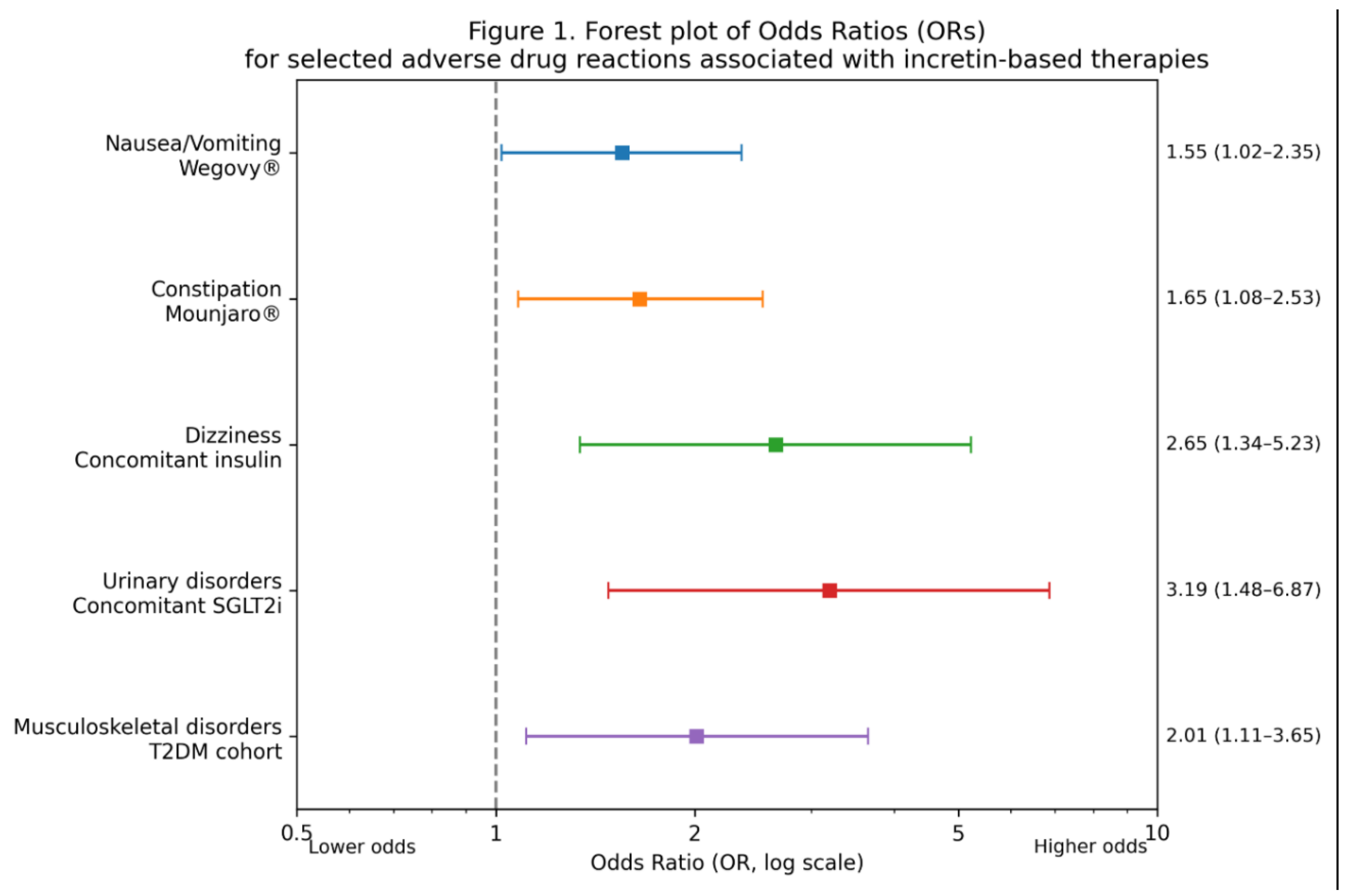
Figure 2.
Proposed pharmacy-led dispensing and follow-up pathway for patients receiving incretin-based therapies.
Figure 2.
Proposed pharmacy-led dispensing and follow-up pathway for patients receiving incretin-based therapies.
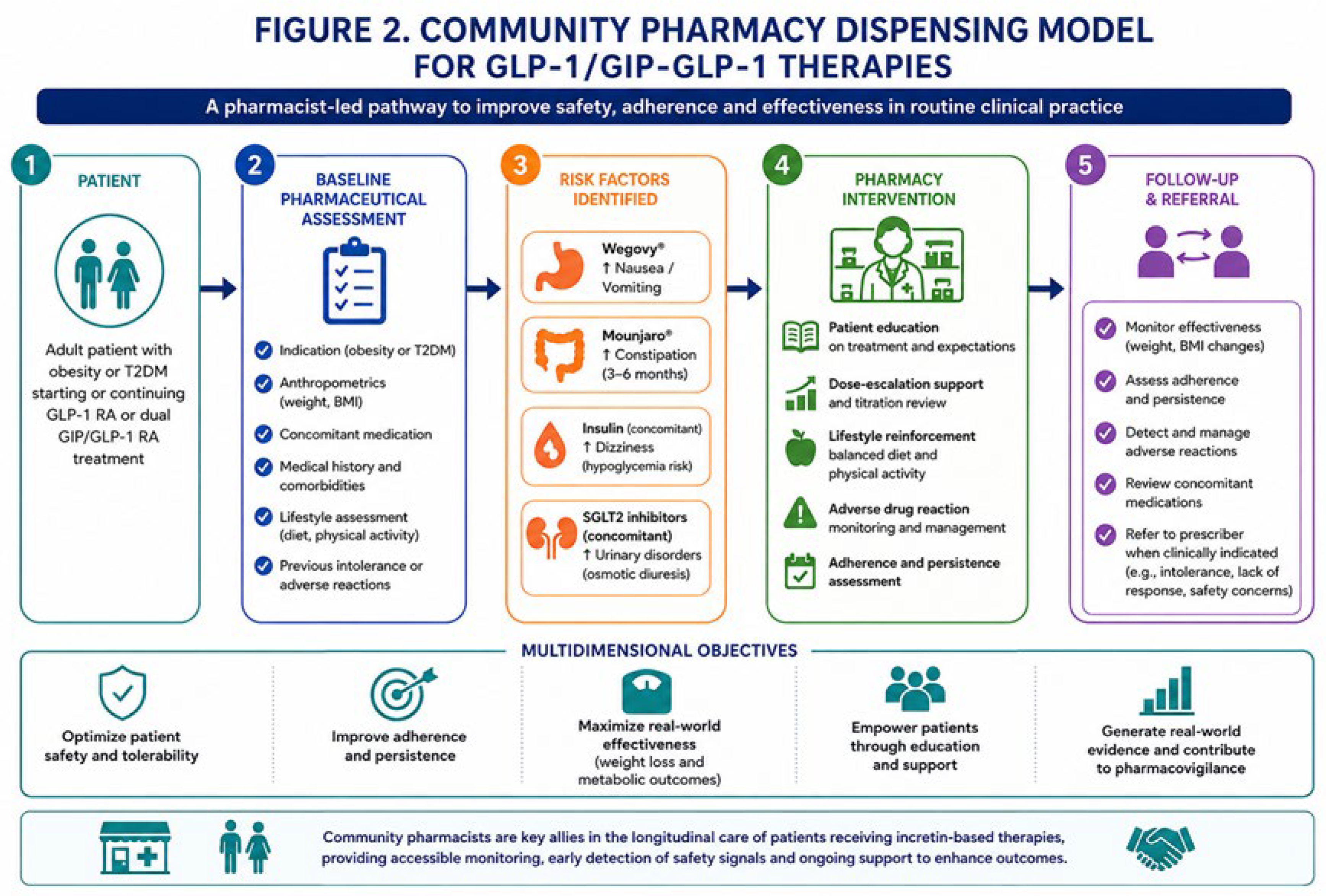

Table 1.
Baseline demographic, clinical, comorbid, and prescribing characteristics of the study sample (n = 531).
Table 1.
Baseline demographic, clinical, comorbid, and prescribing characteristics of the study sample (n = 531).
| Variable | Data Reporting Sub-Metrics & Statistical Boundaries |
| Continuous Variables (mean ± SD [Minimum–Maximum]) | |
| Age (years) (n=525) | 56.48 ± 12.50 [19.0–85.0] |
| Stature (cm) (n=524) | 165,98 ± 9,24 [140.0–200.0] |
| Waist Circumference (cm) (n=515) | 113,21 ± 16,62 [70,0–180,0] |
| Hip Circumference (cm) (n=513) | 113.70 ± 15.83 [72.0–187.5] |
| Categorical Biological and Clinical Profile (n [%] [95% CI]) | |
| Female Gender | 350 (66.7%) [62.5–70.6] |
| Male Gender | 175 (33.3%) [29.4–37.5] |
| Obesity Indication Cohort | 277 (52.2%) [47.9–56.4] |
| Diabetes / Glucose Alterations Cohort | 254 (47.8%) [43.6–52.1] |
| Comorbidities (n [%] [95% CI]) | |
| Hypertension | 243 (45.8%) [41.6–50.0] |
| Diabetes Mellitus | 200 (37.7%) [33.6–41.9] |
| Dyslipidemia | 193 (36.3%) [32.4–40.5] |
| Cardiovascular Disease | 84 (15.8%) [13.0–19.2] |
| Sleep Apnea | 70 (13.2%) [10.6–16.3] |
| Prediabetes / Fasting Glucose Disturbance | 54 (10.2%) [7.9–13.0] |
| None Reported | 122 (23.0%) [19.6–26.7] |
| Concomitant Glucose-Lowering Medications (n [%] [95% CI]) | |
| Metformin | 133 (25.0%) [21.5–28.9] |
| SGLT2 inhibitors (Gliflozins) | 61 (11.5%) [9.0–14.5] |
| Exogenous Insulin Formulations | 51 (9.6%) [7.4–12.4] |
| Sulfonylureas | 14 (2.6%) [1.6–4.4] |
| Lifestyle Interventions & Behavioral Adherence (n [%] [95% CI]) | |
| Adherence to Structured Dietary Plans (Yes) | 356 (67.8%) [63.7–71.7] |
| Non-adherence to Dietary Guidelines (No) | 169 (32.2%) [28.3–36.3] |
| Weekly Physical Activity: Light (Walking, yoga, chores) | 233 (44.4%) [40.2–48.7] |
| Weekly Physical Activity: Moderate (Brisk walking, cycling) | 161 (30.7%) [26.9–34.7] |
| Weekly Physical Activity: Sedentary Lifestyle (No exercise) | 96 (18.3%) [15.2–21.8] |
| Weekly Physical Activity: Intense (Competitive sports, aerobics) | 35 (6.7%) [4.8–9.1] |
| Primary Incretin Dispensations and Titration Schemes (n [%] [95% CI]) | |
| Mounjaro® (Tirzepatide) | 179 (34.1%) [30.2–38.3] |
| Ozempic® (Semaglutide) | 168 (32.0%) [28.2–36.1] |
| Wegovy® (Semaglutide 2.4 mg) | 91 (17.3%) [14.3–20.8] |
| Rybelsus® (Oral Semaglutide) | 59 (11.2%) [8.8–14.2] |
| Trulicity® (Dulaglutide) | 25 (4.8%) [3.2–6.9] |
| Saxenda® (Liraglutide 3.0 mg) | 2 (0.4%) [0.1–1.4] |
| Victoza® (Liraglutide) | 1 (0.2%) [0.0–1.1] |
| Adherence to Gradual Dose Escalation (Yes) | 379 (72.2%) [68.2–75.9] |
| Longitudinal Exposure Chronology & Prescribing Framework (n [%] [95% CI]) | |
| Long-term (> 1 year) | 174 (33.1%) [29.3–37.3] |
| 6 to 12 months | 130 (24.8%) [21.3–28.6] |
| 3 to 6 months | 110 (21.0%) [17.7–24.6] |
| 0 to 3 months / Initiation Phase | 111 (21.2%) [16.6–25.8] |
| Medical Specialist Prescription (Endocrinology leading) | 293 (55.8%) [51.5–60.0] |
| National Health System Electronic Prescription | 355 (67.6%) [63.5–71.5] |
* SD: Standard Deviation; CI: Confidence Interval. All qualitative stratification frequencies incorporate their corresponding data reporting denominators validated within the electronic registry logs. Note: The initial study population comprised 531 participants. Six participants did not complete all questionnaire items and were therefore excluded from analyses requiring those variables. In addition, a small number of observations were missing for individual variables, resulting in variable-specific sample sizes (e.g., N = 525 or N = 524). Percentages and statistical analyses were calculated using the number of valid observations for each variable.
Table 2.
Real-world anthropometric effectiveness outcomes, stratification by active substance, clinical responder rates, and concomitant medication variations.
Table 2.
Real-world anthropometric effectiveness outcomes, stratification by active substance, clinical responder rates, and concomitant medication variations.
| Operational Evaluated Axis / Stratum |
Mean weight loss (kg) (mean ± SD) |
Change in BMI (kg/m²) (mean ± SD) |
Patients achieving weight loss (Responders Rate % [95% CI]) |
Title 1 | Title 2 | Title 3 | |
| Global Longitudinal Changes (t-test) | entry 1 | data | data | ||||
| Overall Study Sample (N=531) | 12.17 ± 10.64 kga | -4.40 ± 3.89 kg/m²a |
≥ 5% Loss: 73.9% [70.0–77.5] ≥ 10% Loss: 54.1% [49.7–58.3] |
entry 2 | data | data 1 | |
| Pharmacological Brand Stratification (ANOVA) | (Absolute kg loss) | (Absolute BMI change) | (Relative active sample size %) | ||||
| Wegovy® (n = 91) | 14.95 ± 9.52 kg | -5.41 ± 3.52 kg/m² | — | ||||
| Mounjaro® (n = 179) | 14.48 ± 10.24 kg | -5.29 ± 3.81 kg/m² | — | ||||
| Saxenda® (n = 2) | 13.50 ± 16.26 kg | -5.85 ± 7.24 kg/m² | — | ||||
| Ozempic® (n = 168) | 10.60 ± 11.23 kg | -3.73 ± 3.99 kg/m² | — | ||||
| Trulicity® (n = 25) | 7.87 ± 9.83 kg | -2.97 ± 3.65 kg/m² | — | ||||
| Rybelsus® (n = 59) | 6.86 ± 8.86 kg | -2.46 ± 3.15 kg/m² | — | ||||
| Victoza® (n = 1) | 3.80 ± 0.00 kg | -1.54 ± 0.00 kg/m² | — | ||||
| Primary Indication Subgroups | (Percentage % loss) | (Absolute BMI change) | |||||
| Obesity Cohort (n = 277) | 14,24% ± 8,61% | -3.98 ± 7.71 kg/m² | — | ||||
| T2DM / Glucose Disturbances (n = 254) | 9.75% ± 9.91% | -3.69 ± 4.03 kg/m² | — | ||||
| Concomitant Medication Logs (Unpaired contrast) | (Percentage % loss) | (Exposed vs. Non-exposed) | (p-value change metrics) | ||||
| Metformin Exposure (n = 133) | 9.84% ± 9.63% | 12.32% ± 9.25% (Non) | p = 0.0107 (Weight) / p = 0.0168 (BMI) | ||||
| SGLT2i / Gliflozins Exposure (n = 61) | 8.75% ± 9.07% | 12.07% ± 9.39% (Non) | p = 0.0101 (Weight) / p = 0.0043 (BMI) | ||||
| Exogenous Insulin Exposure (n = 51) | 9.24% ± 10.55% | 11.95% ± 9.25% (Non) | p = 0.0863 (Weight) / p = 0.0214 (BMI) | ||||
| Sulfonylureas Exposure (n = 14) | 12.27% ± 13.43% | 11.67% ± 9.29% (Non) | p = 0.8726 (Weight) / p = 0.7883 (BMI) |
1 Mean ± SD: Mean ± Standard Deviation; CI: Confidence Interval; BMI: Body Mass Index; SGLT2i: Sodium-Glucose Cotransporter-2 Inhibitors. a Highly statistically significant longitudinal pre-post change based on paired-samples t-test algorithms (p = 0.00000). ANOVA multi-comparison model utilizing Tukey HSD post-hoc testing yielded non-significant internal variations for brand-specific percentage weight loss (F = 0.671, p = 0.672) and absolute BMI reductions (F = 0.467, p = 0.832).
Table 3.
Odds Ratios for Selected Adverse Drug Reactions.
| Risk Factor / Variable |
Nausea & Vomiting (OR [95% CI]) |
Constipation (OR [95% CI]) |
Dizziness (OR [95% CI]) |
Musculoskeletal (OR [95% CI]) |
Urinary Disorders (OR [95% CI]) |
Asthenia (OR [95% CI]) |
|
| Pharmacological Brand | |||||||
| Wegovy® | 1.55 (1.02–2.35)* | 1.35 (0.81–2.26) | 0.51 (0.20–1.31) | 0.62 (0.26–1.50) | 0.85 (0.37–1.97) | 0.92 (0.46–1.82) | |
| Mounjaro® | 0.82 (0.56–1.17) | 1.65 (1.08–2.53)* | 1.31 (0.73–2.34) | 0.58 (0.30–1.13) | 0.68 (0.34–1.35) | 1.35 (0.81–2.26) | |
| Ozempic® | 1.03 (0.71–1.49) | 0.67 (0.41–1.09) | 1.12 (0.62–2.04) | 1.44 (0.80–2.57) | 1.13 (0.60–2.13) | 0.76 (0.43–1.35) | |
| Rybelsus® | 0.81 (0.46–1.46) | 0.40 (0.16–1.02) | 0.48 (0.15–1.60) | 1.65 (0.77–3.55) | 1.42 (0.61–3.31) | 1.20 (0.57–2.55) | |
| Trulicity® | 2.01 (1.04–3.89)* | 0.59 (0.18–2.00) | 2.12 (0.78–5.81) | 2.12 (0.78–5.81) | 1.39 (0.40–4.80) | 0.61 (0.14–2.61) | |
| Therapeutic Indication | |||||||
| Obesity Cohort | 1.12 (0.79–1.59) | 2.02 (1.29–3.17)* | 0.94 (0.53–1.66) | 0.50 (0.27–0.90) | 0.66 (0.36–1.22) | 1.27 (0.76–2.11) | |
| T2DM Cohort | 0.89 (0.63–1.26) | 0.50 (0.32–0.77) | 1.06 (0.60–1.88) | 2.01 (1.11–3.65)* | 1.51 (0.82–2.78) | 0.79 (0.47–1.32) | |
| Titration Protocol | |||||||
| Gradual Escalation | 1.35 (0.90–2.03) | 1.52 (0.91–2.55) | 1.62 (0.79–3.31) | 1.84 (0.88–3.87) | 0.98 (0.50–1.91) | 2.00 (0.99–4.05) | |
| Concomitant Therapies | |||||||
| Insulin-treated | — | — | 2.65 (1.34–5.23)* | — | — | — | |
| SGLT2i (Gliflozins) | — | — | — | — | 3.19 (1.48–6.87)* | — | |
| Treatment Duration | |||||||
| 3–6 months | 0.97 (0.63–1.49) | 1.60 (1.00–2.56)* | 1.53 (0.81–2.89) | 0.68 (0.31–1.50) | 1.19 (0.58–2.41) | 1.46 (0.83–2.59) | |
| Long-term (> 1 year) | 0.79 (0.54–1.15) | 0.86 (0.54–1.35) | 1.16 (0.64–2.10) | 2.17 (1.22–3.86)* | 1.30 (0.70–2.41) | 0.78 (0.45–1.37) | |
| Demographic Factors | |||||||
| Under 40 years | 1.47 (0.87–2.50) | 1.35 (0.71–2.60) | 2.54 (1.23–5.26)* | 1.24 (0.50–3.05) | 0.43 (0.10–1.83) | 1.45 (0.68–3.09) | |
| Under 50 years | 1.55 (1.07–2.23)* | 1.26 (0.80–1.99) | — | — | — | — | |
| Over 70 years | 0.45 (0.24–0.83)* | 0.71 (0.37–1.36) | 0.71 (0.30–1.73) | 2.01 (1.04–3.89)* | 0.98 (0.42–2.27) | 0.73 (0.34–1.58) |
*
Statistically significant safety signal (p < 0.05), defined as a 95% Confidence Interval limit that excludes the null value (1.00). Data are expressed as crude Odds Ratios (OR) [95% Confidence Intervals]. En-dashes (—) indicate non-applicable matrices.
Table 4.
Multivariable logistic regression analysis of factors associated with digestive adverse drug reactions.
Table 4.
Multivariable logistic regression analysis of factors associated with digestive adverse drug reactions.
| Predictor | Adjusted OR (95% CI) | p-value |
| Age (per year increase) | 0.97 (0.96–0.99) | 0.003 |
| Female sex | 1.38 (0.93–2.05) | 0.115 |
| GLP-1RA agent | ||
| Wegovy® | 1.69 (0.88–3.25) | 0.113 |
| Mounjaro® | 0.93 (0.54–1.61) | 0.796 |
| Rybelsus® | 1.06 (0.57–1.98) | 0.855 |
| Trulicity® | 0.74 (0.31–1.78) | 0.499 |
| Treatment duration | ||
| <3 months | 1.56 (0.67–3.68) | 0.305 |
| 3–6 months | 2.21 (0.97–5.02) | 0.059 |
| 6–12 months | 1.64 (0.74–3.65) | 0.226 |
| >12 months | 1.77 (0.78–4.01) | 0.172 |
| Physical activity | ||
| Light | 0.90 (0.54–1.52) | 0.701 |
| Moderate | 0.76 (0.43–1.33) | 0.336 |
| Vigorous | 1.10 (0.44–2.76) | 0.840 |
| Dietary intervention | 1.05 (0.69–1.61) | 0.810 |
| Metformin | 0.82 (0.50–1.34) | 0.431 |
| SGLT2 inhibitor | 1.10 (0.59–2.03) | 0.769 |
| Insulin | 1.08 (0.56–2.08) | 0.808 |
| Sulfonylurea | 2.29 (0.66–7.93) | 0.189 |
* Abbreviations: OR, odds ratio; CI, confidence interval; GLP-1RA, glucagon-like peptide-1 receptor agonist; SGLT2, sodium-glucose cotransporter-2.
Disclaimer/Publisher’s Note: The statements, opinions and data contained in all publications are solely those of the individual author(s) and contributor(s) and not of MDPI and/or the editor(s). MDPI and/or the editor(s) disclaim responsibility for any injury to people or property resulting from any ideas, methods, instructions or products referred to in the content. |
© 2026 by the authors. Licensee MDPI, Basel, Switzerland. This article is an open access article distributed under the terms and conditions of the Creative Commons Attribution (CC BY) license (http://creativecommons.org/licenses/by/4.0/).
Copyright: This open access article is published under a Creative Commons CC BY 4.0 license, which permit the free download, distribution, and reuse, provided that the author and preprint are cited in any reuse.