

Submitted:
31 July 2026
Posted:
04 August 2026
You are already at the latest version
Abstract
Given the growing global concern about sustainability, green energy has emerged as a key pathway to protecting the environment and ensuring economic stability. The study examined the mediating role of green procurement policy in the relationship between green energy projects and environmental value for Independent Power Producers (IPPs) in Ghana. The study was explanatory and quantitative in nature and underpinned by Stakeholder Theory and Resource-Based View. The study included 153 respondents selected from various IPPs and data collected from them using structured questionnaires. Structural Equation Modelling (SEM) with AMOS was used to analyse data. Results showed that green finance and technology adoption have a significant impact on environmental value, while green procurement policy has a strong positive influence on it. Moreover, green procurement policy was found to partially mediate the relationship between green finance and technology adoption and green value. The study finds that implementation of green procurement systems facilitates the utilization of financial resources and technology to support environmental sustainability in the Ghanaian energy sector. It highlights the urgent need for policies and industry leaders to implement sustainable financing, technology innovation and green procurement as a way of paving the way for Ghana's green energy transition.
Keywords:
green finance
; environmental value
; green procurement policy
; technology adoption
1. Introduction
The energy sector is at a crossroads as decades of thermal generation of power and recurrent gas shortages have compelled the need to move towards generation of cleaner and more resilient energy production systems (Sefa-Nyarko, 2024). Green energy projects therefore become critical as they reduce reliance on fossil fuels, decrease greenhouse gas emissions, and achieve sustainable development. Despite insufficient funding and policy inconsistency, notably in less developed economies, the objective of emission reduction and climate goals, green energy projects such as solar, wind and small hydro installations have grown worldwide (Androniceanu & Sabie, 2022; Gan et al., 2023). Indeed, in 2024, global renewable power capacity grew significantly, witnessing a record pace of green energy investments and building of green infrastructure in most countries (Asif, 2024). Beyond electricity generation, assessment of green energy projects now takes a holistic view of additional environmental benefits, contributing health benefits to society (Akpahou et al., 2025). The study, however, conceptualized the green energy project as green finance and technology adoption.
Green finance, including the use of green bonds, blended finance models, concessional financing, and donor financing, plays a vital role in facilitating and reducing risks for investments in low-carbon infrastructure (Debrah et al., 2024). Though innovative financing models are developing, they are not uniformly spread across (Asumadu et al., 2023). Treating green finance as a separate dimension of analysis that influences capital allocation on the project design and implementation channels, and environmental outcomes (Fu Lu & Pirabi, 2023). Nevertheless, the concept of financial mobilisation alone is not sufficient, as the actualisation of the environmental value depends heavily on the adoption of proper green technologies and policies (Debrah et al., 2024). Drawing on empirical evidence from Ghana, there is a strong indication that the adoption of technology is determined by socio-economic and institutional factors such as public awareness, perceived affordability, technical capacity, and reliability of supply chains (Abubakar et al., 2025).
Moreover, whilst sustainability is an area of policy interest, there seems to be a gap between the idea and practice of green procurement in energy sector markets, especially in emerging economies (Tuffour et al., 2024). Although renewable technologies are being adopted, the adoption is not uniform and is often hampered by cost, lack of awareness and understanding of the technology, affecting the environmental value (Akpahou et al., 2025). In Ghana, for instance, more than 50% of Ghana’s electricity comes from Independent Power Producers (IPPs), but a few of these IPPs do not have formal green procurement policies, not alone strategies. The Public Procurement Authority (Ghana) has also made a beginning in raising awareness on sustainable sourcing, but this has largely been in the public sector and has omitted the private sector (Nsiah-Sarfo et al., 2023).
Crucial to the implementation of green energy projects is their environmental value or ecological benefits (decrease in greenhouse gas emissions and other ecological footprints), replacing fossil fuels with renewables (Usman et al., 2020). Interestingly, several studies suggest that the environmental impacts of renewables may be context-dependent (Shahzad et al., 2021). Green procurement policy can be a potent mediating factor bridging the project (finance and technology) and the realisation of the environmental value (Amundsen et al., 2022). Green procurement policy can internalise the costs of the environmental impacts of the entire life cycle of the green energy project. However, the seemingly lack of incorporating the environmental requirements into public and private procurement and purchasing decisions seemed to be growing concern in practice (Zhu et al., 2023; Nsiah-Sarfo et al., 2023). The policies of green procurement, if properly operationalised, can create enabling conditions to increase adoption of clean technologies and the environmental performance for green project financed.
Current literature strongly supports the relevance of green procurement for sustainable energy development (Lăzăroiu et al., 2020; Onukwulu et al., 2025). However, substantial gaps remain regarding its mediating role in generating environmental value from green energy projects. Existing studies are fragmented, geographically limited, and often lack robust mediation analysis. A study investigating this nexus can make important theoretical, empirical, policy, and practical contributions by clarifying how green procurement policies translate green energy investments into measurable environmental outcomes. Practically, existing literature tends to treat green energy implementation and procurement policy as separate issues, and it does not even attempt to test the effects of the institutional framework in enhancing project value (Gawusu et al., 2022).
The study contributes to sustainability literature by establishing green procurement as a dynamic capability that operationalises environmental objectives. Specifically, the study seeks to: (1) examine the impact of green finance on environment value (2) investigate the influencing role of technology adoption on environmental values, (3) examine the impact of green procurement policy on environment value, (4) determine the mediate impact of green procurement policy on green finance, technology adoption and environment value of Independent Power Producers (IPPs) in Ghana, and (5) aligned with the SDGs 7 (affordable and clean energy), 12 (responsible consumption and production), 13 (climate action).
2. Literature Review
2.1. Theoretical Foundation and Hypothesis Development
The study is based on Stakeholder Theory and Resource-Based View. Freeman (1984) argues that stakeholder theory suggests that organisations should take into account the interests and concerns of all their stakeholders in making decisions. The theory challenges the conventional model of the company, which suggests that the long-term success of the company is dependent on the balancing of various stakeholders’ needs, not just those of the shareholders (Freeman & Phillips, 2002). It underscores the importance of ethical responsibility, social equity, and the environment as part of sustainable business (Donaldson & Preston, 1995). The Resource-Based View (RBV) of Barney (1991) suggests that sustained competitive advantage is based on an organisation’s internal resources that are valuable, rare, inimitable and non-substitutable (VRIN criteria).
Whilst Stakeholder Theory argues how investors, consumers and regulatory environment pressures firms with respect to green finance, technology and procurement. Green energy projects are aligned with stakeholders’ needs in terms of environmental stewardship and social responsibility. Green procurement policies are a practical instrument to operationalise the interests of the stakeholders and to ensure that the organisations invest and act in line with sustainability priorities. RBV, however, suggests that green finance and technology adoption are key internal resources that can help firms to attain a better environment. These resources, combined with green procurement policies, are the source of a sustainable competitive advantage and environmental value added. In this way, the RBV can be used as a stepping stone to grasp how the strategic use of green resources translates into environmental gains for organisations.
2.1.1. Green Finance and Environmental Value
Green finance, the financing of investments that provide environmental benefits in the broader context of environmentally sustainable development (Eccles et al., 2014). Environmental value is a positive ecological, economic and social benefit generated through activities that conserve natural resources. The value reflects the extent to which an organization’s operations protect, or policies contribute to, environmental sustainability and long-term ecological well-being (Zhang et al., 2024). Businesses can allocate funds to initiatives that lower carbon footprints and boost environmental quality via instruments like green bonds and sustainability-linked loans (Wang et al., 2023). Financial institutions that adopt sustainable banking principles enhance their environmental performance by promoting energy efficiency and waste reduction (Adedoyin et al., 2023). Moreover, green finance attracts funding to environment-friendly projects, while directly contributing to the value of improving the environment through the development of low-carbon infrastructure and clean energy systems. Green bonds, climate funds and ESG-aligned investments lower the risk of renewable energy projects and make them viable, both in developed and emerging economies (Dreher et al., 2021). Whilst green finance drives market transformation by sending a message to the market about investors’ preference for sustainability, value is created when companies are motivated to adopt cleaner technologies and practices (Zhang et al., 2022). Overall, sustainable finance in Ghana has played a role in supporting the development of renewable energy infrastructure, resulting in positive ecological outcomes. Research provides evidence that certified green projects perform better in terms of their environmental dimension when compared to non-certified green projects, even if the technology and project size are controlled for (Dreher et al., 2021). Green finance, therefore, isn’t only about financing, but also a strategic support for environmental value creation.
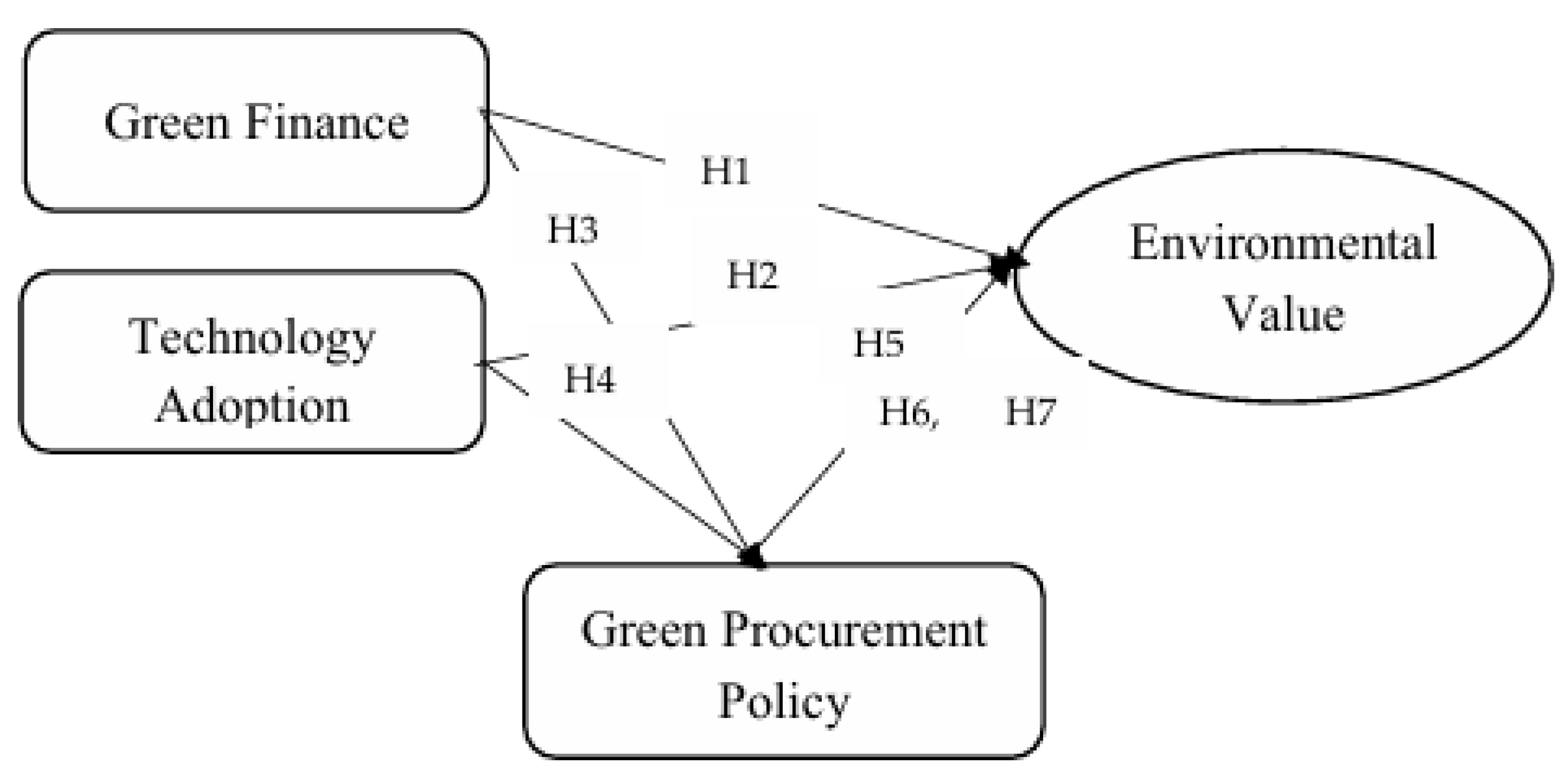
H1: Green finance has a significant positive effect on environmental value.
2.1.2. Technology Adoption and Environmental Value
Technological adoption is a key factor in minimizing environmental degradation, enhancing energy efficiency and enabling cleaner production processes. The use of renewable energy technologies leads to reduced emissions and improved operational efficiencies for companies (Hussain et al., 2024). Solar and bioenergy technologies have significantly contributed to reducing the use of fossil fuels to achieve sustainability in Ghana. Empirical evidence supports this finding, as countries with high green technology diffusion have higher carbon emission reductions per unit of energy production (Popp et al., 2020). The direct impact of technology adoption is therefore the increase in “environmental value”, which means that energy is consumed without harming the environment. Additionally, organisations can leverage the use of advanced technologies to optimise resource utilization and reduce waste, which directly contributes to environmental value (Mensah & Boakye, 2023). Modern energy technologies promote the circular economy by promoting recycling and energy recovery. Moreover, technology use can also mean systemic efficiency gains, which can be built upon to multiply environmental benefits. Empirically, it has been proven that technology-driven energy transitions can deliver quicker decarbonisation and greater energy access than finance-only approaches, as shown in the cases of China and the EU (Zhang et al., 2022). Accordingly, technology adoption is not just the handmaiden of green finance; it also constitutes a coequal factor of sustainability.
H2: Technology adoption has a significant positive effect on environmental value.
2.1.3. Green Finance and Green Procurement Policy
Green finance has a huge impact on GPP adoption and rigour by integrating sustainability criteria into conditions of financing. In many cases, projects financed by multilateral development banks include environmental procurement requirements, including energy-efficient equipment specifications (Taghizadeh-Hesary et al., 2019). These obligations under contract make it a requirement for public agencies and private companies to institutionalise GPP as a condition for access to capital. Empirical evidence reveals that organisations with green finance are more likely to have formal GPP than those with conventional finance (Dreher et al., 2021). This connection turns finance into an active governance mechanism to influence procurement. Green finance can spur the adoption of GPP in emerging economies by offering not only capital but also technical support for establishing sustainable procurement systems (Zhang et al., 2022). Furthermore, green finance promotes a culture of environmental responsibility, beyond particular projects. Repeated use of green capital by agencies leads to internal procedures being established, including supplier screening, lifecycle cost analysis, environmental scoring, etc., which are incorporated into the standard procurement process (Testa et al., 2020). Green finance is not just about financing projects; it is about changing institutional practices. Therefore, green finance can be seen as a strategic tool for introducing environmental aspects into the procurement process.
H3: Green finance positively influences green procurement policy.
2.1.4. Technology Adoption and Green Procurement Policy
Technology adoption creates the need for standardised and verifiable sustainability criteria in purchasing decisions, which in turn helps to evolve green procurement policy (GPP). Organisations adopt advanced clean technologies like smart meters, high-efficiency systems, or electric vehicle fleets that impose certain technical and environmental criteria on the suppliers (Popp et al., 2020). This compatibility and performance guarantee requirement gives rise to the formalisation of GPP, which requires certified eco-labels, energy efficiency and recyclability. Empirical findings indicate that companies that adopt green technologies are more likely to have structured GPP than those that do not adopt green technologies (Zhu et al., 2021). Technology is therefore a practical enabler to translate sustainability ambitions into tangible procurement requirements. In energy projects, implementing digital or AI-based monitoring systems also requires GPP to guarantee data interoperability and responsible use of AI. Additionally, the use of technology encourages innovation at the supplier level to support the implementation of GPP. As procurers start to demand higher environmental performance, suppliers will start to offer certified, high-performing products, making a marketplace of eco-innovation (Ghisetti & Rennings, 2019). It is this market signal that makes environmental metrics standardisable and GPP design and enforcement simpler. This is now institutionalised in the EU through the Eco-design Directive, which connects the requirements of public procurement to the technology standards (Testa et al., 2018). The empirical results for East Asian countries support the findings that countries with more detailed and stronger GPP frameworks have higher green technology diffusion rates (Zhu et al., 2021). So, the adoption of technology fosters an iterative process: procurement triggers innovation, and innovation enhances procurement.
H4: Technology adoption positively influences green procurement policy.
2.1.5. Green Procurement and Environmental Value
Green procurement policy (GPP) integrates sustainability into purchasing decisions and allows for the inclusion of environmental value in the purchase of all that enters into an energy project, while ensuring that it complies with verified ecological standards. GPP requires choosing products and services with a low life cycle carbon footprint and with high energy efficiency, recyclability and ethical sourcing, which directly translates into greater net environmental benefits (Testa et al., 2018). For example, demanding Cradle-to-Cradle certification for solar panels would guarantee that any environmental benefits are not undermined by harmful manufacturing processes or that end-of-life waste is not non-recyclable (Zhu et al., 2021). Empirical research indicates that organizations that make GPP mandatory have a higher environmental performance in energy, water, and material efficiency parameters (Testa et al., 2020). GPP can, therefore, be used as a quality control mechanism, ensuring the exclusion of unsustainable inputs, and maximising the ecological return on each procurement decision. In the absence of this policy, green projects, however well-financed, can be an environmental underachievement owing to carbon-heavy elements or due to unethical supply chains. Moreover, GPP helps to foster green innovation by providing market demand for eco-products, which stimulates suppliers to invest in cleaner production processes and sustainable supply chains (Ghisetti & Rennings, 2019). In the energy sector, this market signal can hasten the use of the next generation of technologies, like perovskite solar cells or low-carbon steel for wind turbines, that have better environmental attributes. GPP also increases transparency and traceability, which provides an auditable means of verifying environmental claims and minimizes greenwashing (Zhu et al., 2021). In lowly regulated settings, GPP is a way to internalize sustainability into organisational routines, which take the place of external enforcement. The EU and East Asian experience demonstrate that public agencies that have strong GPP attain much greater net carbon savings per unit of energy produced (Testa et al., 2018).
H5: Green procurement policy positively affects environmental value.
2.2. Mediating Role of Green Procurement Policy
Green procurement serves as a strategic link in the value chain between financial and technological measures and environmental results. Organisations, by implementing environmentally responsible procurement, can make sure that suppliers and contractors are consistent with sustainability goals (Ijeoma et al., 2022). Companies can improve the effectiveness of green investments by introducing environmental criteria into procurement processes. Furthermore, green procurement helps to strengthen institutional commitment to sustainability by ensuring the effective use of resources mobilized using green finance and technologies (Yuan & Liu, 2023). Green procurement guidelines have improved transparency and accountability of energy projects in the public sector in Ghana. Moreover, green energy projects, which are, at present, driven by a green finance policy and by the adoption of green technologies, represent the potential tools for sustainability; a green procurement policy, on the other hand, will represent the effectiveness of the tools, and consequently, the achievement of sustainability. GPP makes sure that green finance is invested in technologies and materials that provide verifiable ecological returns rather than simply marketing promise (Zhu, et. al., 2021). For instance, a wind farm green bond project could allow the use of high-carbon concrete and non-recyclable composites unless GPP requires low-emission, environmentally sustainable options. So, GPP works as a mediating filter between investment and innovation and Net Environmental Outcomes. Testa et al. (2018) empirically showed that even considering finance and technology inputs, the environmental impact of renewable projects was higher when GPP was strictly enforced.
GPP implements sustainability norms in procurement procedures, thereby guaranteeing that ‘green’ projects fulfil their ecological promises (DiMaggio & Powell, 1983). It operationalises sustainability at the point of purchase, thus connecting the dots between intention (green investment) and impact (environmental value). As a mediator, Zhang et al. (2022) showed that GPP accounted for 28% of the variance of the net carbon savings over and above the adoption of technology. When it comes to public energy projects, GPP also helps to guarantee adherence to international standards, which makes for more credible and comparable environmental results. Furthermore, synergies created between capital and procurement governance produce the greatest environmental returns when green finance is related to GPP, like in many multilateral climate finance funds (Taghizadeh-Hesary et al., 2019). GPP therefore upholds the idea of turning green energy projects from possibly symbolic initiatives to verifiable contributions to climate mitigation. This contingent relationship warrants considering GPP not only as a correlate but also as a mediator.
H6: Green procurement policy positively mediates the relationship between green finance and environmental value.
H7: Green procurement policy positively mediates the relationship between technology adoption and environmental value.
Conceptual Framework
Figure 1.
Conceptual Framework. Source: Researchers’ Construct
3. Materials and Methods
This study adopts a positivist research paradigm, which assumes the existence of an objective reality that can be measured empirically and tested using statistical techniques. Positivism is appropriate since the research aims to test hypothesised relationships between green energy projects, green procurement policy, and environmental value through quantifiable data. To establish causal relationships between the study variables, an explanatory research design was used. The research employed quantitative and deductive research methodology by using numerical data from structured questionnaires. The target population comprised employees of Independent Power Producers (IPPs) in Ghana, specifically Kpone Independent Power and Sunon Asogli Power, with a total population of 250 staff. A purposive sampling technique was used to identify the respondents who have the relevant knowledge of green energy projects and procurement practices. Using the Krejcie and Morgan (1970) sampling table, a sample size of 152 was determined, which was increased to 167 to account for a potential non-response rate.
Data were gathered through a structured questionnaire, which included demographics and key constructs, including green finance, technology adoption, green procurement policy, and environmental value, based on multi-item Likert scales that were adapted based on validated studies. This ensured content validity and consistency with prior research. To ensure reliability and validity, several statistical tests were conducted. Internal consistency was assessed using Cronbach’s alpha and Composite Reliability (CR). Convergent validity was checked using Average Variance Extracted (AVE), and discriminant validity was assessed using the Fornell-Lacker criterion and Heterotrait-Monotrait (HTMT) ratio. Additionally, the Kaiser-Meyer-Olkin (KMO) measure and Bartlett’s Test of Sphericity confirmed the suitability of the data for factor analysis. Both exploratory factor analysis (EFA) and confirmatory factor analysis (CFA) were conducted to validate the measurement model.
The data collection procedure followed ethical and systematic processes. Permission was obtained from relevant authorities before administering the questionnaires. Data were collected through both online (Google Forms) and face-to-face methods to improve response rates. Respondents were informed about the study’s purpose, assured of confidentiality, and participated voluntarily. Data analysis, both descriptive and inferential statistical techniques, was employed. The respondent characteristics were summarised using descriptive statistics, and in the inferential analysis, relationships between variables and testing of hypotheses were conducted. IBM SPSS (Version 26) and AMOS (Version 26) were used to analyse structural relationships, which allowed regression and structural equation models.
4. Results
4.1. Respondents Profile
Out of the 153 participants, 68% are males and 32% are females. The majority of the respondents were between 31 and 50 years old (68.7%), with undergraduate (44.4%) and graduate (28.8%) qualifications, respectively, indicating that most of the participants possessed the educational background to understand and apply the policies targeting sustainability. In terms of distribution, 52.9% of the respondents had their operations in the Greater Accra Region, of which 39.9% of the firms were private with foreign investment and 38.6% were fully Ghanaian-owned. As for work experience, 34% had between 6-10 years of experience and 24.2% had between 11-15 years of experience. Of note, 63.4% of the respondents said that their organisations have a written green procurement policy, while 56.2% had formal training on green or renewable energy (Table 1).
4.1.1. Measurement Model Assessment
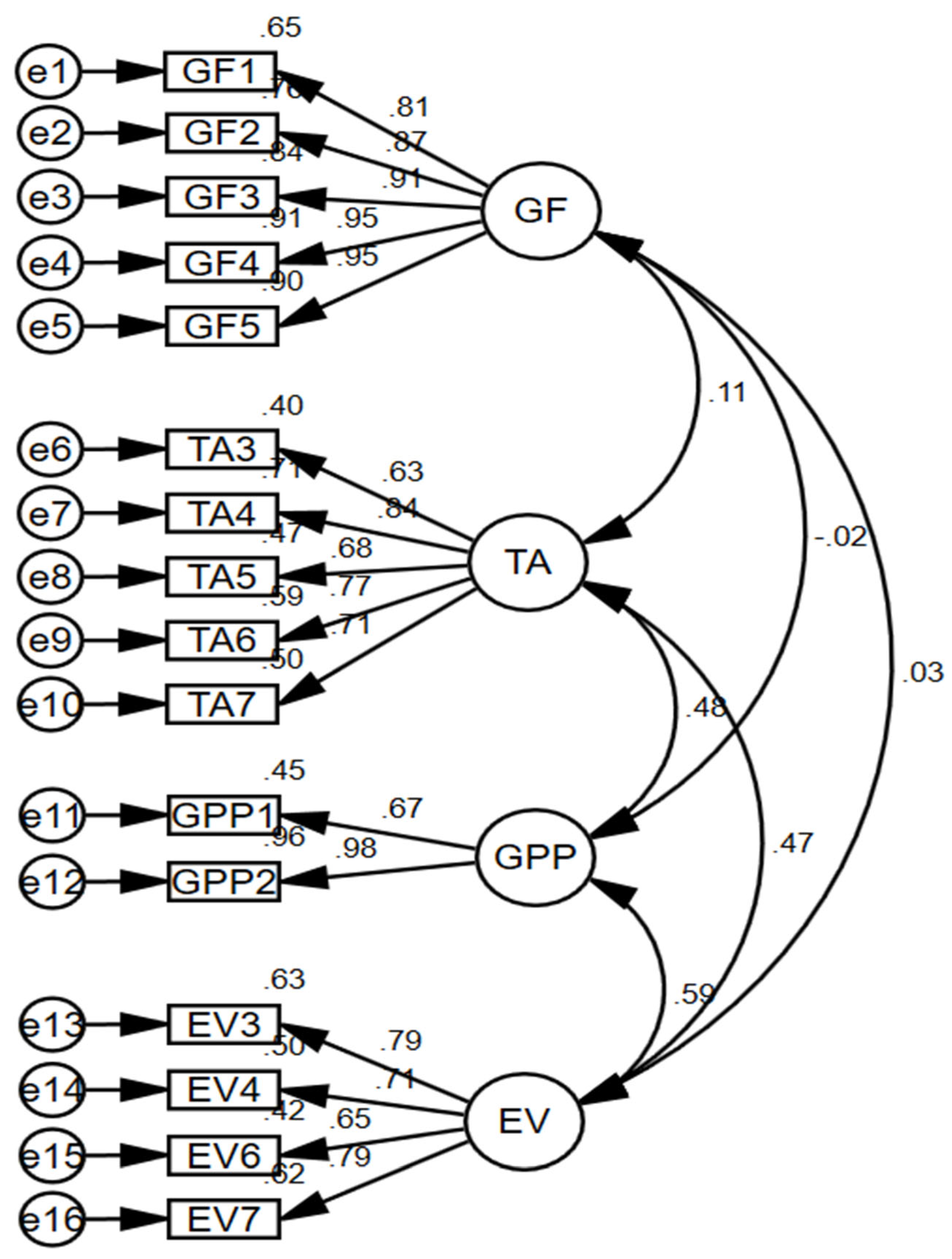
Table 2 shows the reliability and validity of the model. The measurement model evaluation is conducted on the 32-item questionnaire on Green Finance, Technology Adoption, Green Procurement Policy and Environmental Value. Confirmatory factor analysis (CFA) was used for this evaluation. According to the recommendations of Yousefi et al. (2025), 16 items with factor loadings that were lower than the minimum factor loading of 0.6 were deleted in CFA. Their removal enhanced the fit of the model as well as the construct representation. The other sixteen items had good loadings and adequate fit indices. The model fit was adequate as evidenced by the CMIN/DF ratio (χ²/df = 3.185) being less than the recommended level of 5, as well as the SRMR value of 0.094 being within the suggested value of 0.08 or less (Hu & Bentler, 1999; Schumacker & Lomax, 2016). These indicators revealed that the measurement model obtained was appropriate for the subsequent analysis and that the measurement model reflects the structure of the data well.
Composite Reliability (CR) and Maximum Reliability (MaxR(H)) were used to examine construct reliability. The CR value of all the constructs was greater than 0.70, which is the accepted value (Asiamah et al., 2018). In addition, the MaxR(H) value was greater than the respective CR value for each construct, indicating the internal consistency and stability of the measures (Hancock & Mueller, 2001). Moreover, the Average Variance Extracted (AVE) of each construct exceeded the 0.50 threshold, suggesting that constructs accounted for more than half of the variance in the observed items, which confirmed convergent validity based on Cheung et al. (2024). Maximum Shared Variance (MSV) was also calculated and was less than the Average Variance Extracted (AVE) for each construct, indicating that the constructs were distinct from each other (Schutte et al., 1998; Hurley et al., 1997; Chandel et al., 2015). Based on these results, the 16 final items remaining following CFA were considered valid and reliable and suitable for subsequent structural model testing and hypothesis evaluation.
Figure 2.
Measurement Model.
4.1.2. Structural Model
The proposed relationships were assessed for statistical significance using a bootstrapping procedure. The results of the analysis are presented in Table 3 and Figure 3, while the mediating effect among the constructs is reported in Table 4. According to Khalilzadeh and Tasci (2017), standardized path coefficients below 0.15 indicate a weak effect, coefficients between 0.15 and 0.30 indicate a moderate effect, and values above 0.30 indicate a strong effect.
4.2. Direct Effects
From the analysis, as indicated in Table 3, the results showed the direct effects of the predictor variables on the outcome variables. Thus, the R-Square (R²) value for green procurement policy (0.244) is moderate, while that for environmental value (0.389) is considered substantial, in line with Cohen’s (1988) interpretation. This means that the exogenous variables included in the model explain 24.4% of the variation in green procurement policy and 38.9% of the variation in environmental value. The remaining 75.6% and 61.1% of variations in green procurement policy and environmental value, respectively, are due to other factors not captured in this study.
Moreover, the results showed that the positive coefficient of the effect of green finance on environmental value (β = 0.019) was non-significant at 5% (β = 0.019, p > 0.05). Furthermore, the technology adoption has a positive effect on the environmental value (β = 0.300). The technology adoption (β = 0.300, p > 0.05) however is not statistically significant at the 5% level with regards to the environmental value of IPPs in Ghana. Moreover, the green procurement policy has a significant impact on environmental value at the 5% level (β = 0.478, p < 0.05). Furthermore, the coefficient that green finance has on green procurement policy is negative (β = -0.053) and the significance effect of green finance on green procurement policy at the 5% level (β = -0.053, p > 0.05) is not positive. However, the result of the coefficient of technology adoption was positive (β = 0.625), meaning a one-unit increase in technology adoption will lead to an increase in green procurement policy by 0.625. More so, the statistical analysis results show that technology adoption (β = 0.625, p < 0.05) has a statistically significant influence on green procurement policy at the 5% level. Thus, it is concluded that technology adoption has a positive and significant impact on green procurement policy of independent power producers in Ghana.
4.3. Indirect Effects
The study also assessed the mediatory role of green procurement policy between green finance and technology adoption and environmental value of independent power Producers (IPPs) in Ghana. The results showed that the indirect effect of green finance on environmental value mediated by green procurement policy (β = -0.025, p > 0.05) was not statistically significant at 5% confidence level and was negative. In addition, the significance and positive impact of technology application on environmental value through green procurement policy (β = 0.299) were also confirmed. Therefore, it can be concluded that the influence of green procurement policy is statistically significant at the 5% level on technology adoption and green value (β = 0.299, p < 0.05) (Table 4).
5. Discussion
The study sought to understand how green finance, technology adoption and green procurement policy relate to the environmental value of independent power producers (IPPs) in Ghana and the mediating role of green procurement policy in the relationship between green finance, technology adoption and the environmental value of IPPs in Ghana. Stakeholder Theory and the Resource-Based View were used to assist the review of literature while AMOS was used in validating the hypotheses.
First, results show that green finance has a positive but statistically insignificant impact on environmental value. While access to green finance tools like green bonds and sustainability-linked loans is likely to catalyze green activities, results indicate that little environmental impact in the Ghana IPP sector has been achieved through these tools. This finding goes against the results of previous studies (Dreher et al., 2021; Wang et al., 2023; Adedoyin et al., 2023) that find positive effects of green financing on environmental performance. One possible explanation is the relative lack of institutions and enforcement mechanisms and the lack of developed financial ecosystems that can make green funds more effective in deployment and monitoring. The institutional framework to turn pressures from regulators, investors, and society into tangible results is still weak and lacking.
Second, there was also a positive, though statistically insignificant, effect of technology adoption on environmental value. The results indicated that, although cleaner and more efficient technology is linked to better environmental performance, this is yet to be fully achieved for the IPPs in Ghana. This is different from previous literature (Zhang et al., 2022; Hussain et al., 2024) which points to the environmental benefits of technological innovation. The other is that a lot of companies might not have finished their transition to technologies; they are using hybrid systems that have not completely displaced carbon intensive processes yet. It suggests that, from the Stakeholder Theory perspective, external pressures to adopt green technologies are not yet institutionalized to yield the desired environmental impacts. The results from the RBV suggest that there is a capability gap with respect to technological resources, as they are not being used effectively in the organizational routines and processes that could help them create meaningful environmental value.
The study, however, reveals that green procurement policy positively and significantly influences environmental value. This indicates a strong role for environmental considerations in procurement as a means to deliver environmental impact. This result aligns with previous studies (Ijeoma et al., 2022; Zhu et al., 2021; Testa et al., 2018) that have shown that the implementation of green procurement can improve environmental performance by accounting for the sustainability aspect throughout the supply chain. This is in line with Stakeholder Theory, which argues that firms are sensitive to the expectations of institutions and society as a whole; and that procurement policies are formal ways of harmonizing the requirements of society and institutions with the operations of the companies. GPP can be considered a strategic organizational capability within the RBV framework, which supports firms to systematically transform their environmental intentions into measurable performances in a structured and inimitable procurement processes.
As for the mediation analysis, the results show that there is no mediation effect between green procurement policy and green finance and green finance and environmental value, but there is a significant mediation effect between technology adoption and environmental value. The finding implies that financial resources are not enough to bring about environmental performance, but rather their effectiveness is dependent upon how they are implemented in organizational systems. Technology adoption on the other hand supports environmental value if backed up by procurement frameworks that enable environmentally responsible sourcing and implementation. This aligns with previous research (Zhu et al., 2021; Ghisetti & Rennings, 2019) which highlights the importance of procurement governance for improving the environmental footprint of technological innovations. GPP can be seen as a medium where stakeholder expectations are translated into operational practices from a stakeholder theory perspective. From the RBV perspective, it acts as a capability that embodies and packages technological inputs into ongoing environmental performance.
5.1. Theoretical Implications
The study expands on Stakeholder Theory and Resource-Based View by providing an empirical illustration of the relationship between organizational resources and stakeholder perceptions that co-creates environmental outcomes. The results from the Stakeholder Theory perspective show that regulator, investor and community demand lead IPPs to sustainable financing and procurement. The study through the Resource-Based View (RBV) validates that green finance and the adoption of green technology are strategic resources which can lead to sustainable competitive advantages when embedded in green procurement. The mediating effect between green procurement and environmental performance provides support for the fact that green procurement is a dynamic capability that can turn financial and technological resources into better environmental performance. Together, these theoretical findings enrich the debate on sustainability by connecting institutional governance mechanisms and environmental value creation in the contexts of developing countries.
5.2. Managerial Implications
The results have a number of managerial implications for professionals in the energy sector. IPP managers should think sustainability as a strategic business function that allows them to become more efficient and legitimate rather than a compliance requirement. To guarantee that supplier selection, financing and project execution are in line with environmental goals, firms need to embed green procurement principles in their management systems. Staff training on the sustainability standards and partnership with financial institutions to access Environmental linked funding should also be encouraged. Additionally, the use of common sustainability metrics can allow for measurement of environmental performance and improve environmental accountability. Sustainability can be integrated in the processes of an organisation and help managers save costs, minimise environmental risks, build sustainable supplier relationships, optimise green energy use, boost corporate environmental profile, and help their companies take the lead in Ghana’s green energy transition.
5.3. Conclusion
The study finds that green energy projects can greatly boost environment value, as long as they have sustainable financing, have advanced technologies, and have good procurement governance. Green finance is what’s needed to raise the capital required for environmentally responsible projects, and technology adoption is the way to ensure running the business efficiently and innovating. Yet, measurable environmental outcomes from these inputs are highly reliant upon the presence of a strong green procurement policy. Accordingly, green procurement is an essential institutional mechanism that provides linkage between investment, innovation and environment. In conclusion, the research highlights the need to have an integrated strategy to provide environmental sustainability in the energy sector of Ghana, in which finance, technology, and procurement work together to create a lasting ecological value.
5.4. Limitations and Future Research
Future studies should extend the focus to include public utilities, renewable SMEs and other energy-related institutions to provide a full picture of sustainability practices in the sector, extending beyond Independent Power Producers. Longitudinal studies could evaluate the change in financing, technology and purchasing over time and how this affects environment value. Furthermore, qualitative method could help gain a better understanding of the institutional barriers and stakeholder influence that impact the implementation of green procurement policies. Comparative analyses of Ghana and other Sub-Saharan African countries can provide insights on contextual differences in sustainability frameworks implementation. In addition, future studies could include other moderated variables, including organizational culture, leadership commitment, and regulatory enforcement, to enhance the understanding of the combined effect of internal and external factors on environmental performance and the effectiveness of environmental policies in developing economies.
Funding
The authors have disclosed that it does not have any financial support for the research, authorship, or publication of this article.
Institutional Review Board Statement
The study was conducted in accordance with the Declaration of Helsinki, and approved by the Institutional Review Board (or Ethics Committee) of Ghana Communication Technology University Ethical Review Committee (protocol code GCTU/QA/ERC/09/03/2026/009 and date of approval 2026-03-09).
Informed Consent Statement
Informed consent was obtained from all subjects involved in the study.
Conflicts of Interest
The authors have no financial or commercial interests that could be considered a potential conflict of interest.
References
- Abubakari, A.; Braimah, S. M.; Twenebuah-Koduah, E. Y.; Acheampong, G. Towards large-scale solar panel adoption: understanding the role of context-specific reasons. J. Responsible Prod. Consum. 2025, 2(1), 424–448. [Google Scholar] [CrossRef]
- Adedoyin, F. F.; Bekun, F. V.; Nathaniel, S. P. Green finance and environmental performance: New insights from sub-Saharan Africa. J. Environ. Manag. 2023, 341(2), 118–129. [Google Scholar]
- Adomako, S.; Agyeman, G. Technology adoption, environmental performance, and sustainable competitiveness of manufacturing firms in Ghana. Technol. Forecast. Soc. Change 191 2023, 122484. [Google Scholar]
- Agyekum, E. B.; Amjad, F.; Asumadu-Sarkodie, S. Renewable energy transition and environmental sustainability in sub-Saharan Africa: The role of financial development. Energy Rep. 8 2022, 2941–2955. [Google Scholar]
- Agyemang, G.; Osei, K. A. Barriers to green public procurement implementation in Ghana: Evidence from public sector institutions. J. Public Procure. 2023, 23(2), 145–163. [Google Scholar]
- Akpahou, R.; Johnson, J. E.; Aboagye, E.; Plazas-Niño, F.; Howells, M.; Quirós-Tortós, J. Exploring Long-Term Clean Energy Transition Pathways in Ghana Using an Open-Source Optimization Approach. Energies 2025, 18(13), 3516. [Google Scholar] [CrossRef]
- Al-Hamdi, M.; Singh, J.; Rahman, M. Examining the determinants of green technology adoption: Evidence from emerging economies. Environ. Sci. Pollut. Res. 2022, 29(44), 66832–66847. [Google Scholar]
- Alonso, R.; García, L. Renewable energy projects and sustainable development: Drivers, challenges, and policy implications. Renew. Sustain. Energy Rev. 185 2023, 113475. [Google Scholar]
- Amundsen, H.; Sørensen, E.; Korneliussen, T. Green public procurement as a policy instrument for sustainability transitions: A systematic review. Environ. Innov. Soc. Transit. 2022, 44, 1–15. [Google Scholar]
- Andrade, C. The inconvenient truth about convenience and purposive samples. Indian J. Psychol. Med. 2021, 43(1), 86–88. [Google Scholar] [PubMed]
- Androniceanu, A.; Sabie, O. M. Overview of green energy as a real strategic option for sustainable development. Energies 2022, 15(22), 8573. [Google Scholar] [CrossRef]
- Androniceanu, A.; Sabie, O. M. Overview of green energy as a real strategic option for sustainable development. Energies 2022, 15(22), 8573. [Google Scholar] [CrossRef]
- Asif, M. Energy Transition: Dynamics and Prospects. In Transition Towards a Carbon Free Future: Selected Papers from the World Renewable Energy Congress (WREC) 2023; Springer Nature Switzerland: Cham, August 2024; pp. 327–348. [Google Scholar]
- Asumadu, G.; Quaigrain, R.; Owusu-Manu, D.; Edwards, D. J.; Oduro-Ofori, E.; Dapaah, S. M. Analysis of urban slum infrastructure projects financing in Ghana: A closer look at traditional and innovative financing mechanisms. World Dev. Perspect. 2023, 30, 100505. [Google Scholar] [CrossRef]
- Barney, J. B. Firm resources and sustained competitive advantage. J. Manag. 1991, 17(1), 99–120. [Google Scholar] [CrossRef]
- Beins, B. C. Research methods: A tool for life, 4th ed.; Cambridge University Press, 2017. [Google Scholar]
- Bell, E.; Bryman, A.; Harley, B. Business research methods, 6th ed.; Oxford University Press, 2022. [Google Scholar]
- Bloem, S.; Swilling, M.; Koranteng, K. Taking energy democracy to the streets: Socio-technical learning, institutional dynamism, and integration in South African community energy projects. Energy Res. Soc. Sci. 2021, 72, 101906. [Google Scholar] [CrossRef]
- Boateng, K.; Darko, A. Green innovation and environmental value creation in Ghana’s manufacturing firms. Sustainability 2022, 14(16), 10024. [Google Scholar]
- Bryman, A. Social research methods, 6th ed.; Oxford University Press, 2023. [Google Scholar]
- Busetto, L.; Wick, W.; Gumbinger, C. How to use and assess qualitative research methods. Neurol. Res. Pract. 2020, 2(14), 1–10. [Google Scholar] [CrossRef] [PubMed]
- Campbell, S.; Greenwood, M.; Prior, S.; Shearer, T.; Walkem, K.; Young, S. ... & Walker, K. Purposive sampling: Complex or simple? Research case examples. J. Res. Nurs. 2020, 25(8), 652–661. [Google Scholar] [CrossRef] [PubMed]
- Casula, M.; Rangarajan, N.; Shields, P. M. The potential of working hypotheses for deductive exploratory research. Qual. Quant. 2021, 55(5), 1703–1725. [Google Scholar] [PubMed]
- Chen, C.; Liu, W.; Zhang, Y. Environmental value creation through corporate green practices: Evidence from global manufacturing industries. J. Clean. Prod. 385 2023, 135657. [Google Scholar]
- Chen, Y.; Zhou, X.; Zhu, B. Green innovation and environmental performance: Evidence from China’s manufacturing sector. J. Clean. Prod. 278 2021, 123859. [Google Scholar]
- Cooper, D. R.; Schindler, P. S. Business research methods, 7th ed.; McGraw-Hill, 2001. [Google Scholar]
- Crane, A.; Matten, D. Business ethics: Managing corporate citizenship and sustainability in the age of globalization, 4th ed.; Oxford University Press, 2016. [Google Scholar]
- Creswell, J. W. Research design: Qualitative, quantitative, and mixed methods approaches, 4th ed.; SAGE Publications, 2014. [Google Scholar]
- Creswell, J. W.; Creswell, J. D. Research design: Qualitative, quantitative, and mixed methods approach, 6th ed.; SAGE Publications, 2022. [Google Scholar]
- Creswell, J. W.; Creswell, J. D. Research design: Qualitative, quantitative, and mixed methods approach, 7th ed.; SAGE Publications, 2023. [Google Scholar]
- Davies, M. B.; Fisher, P. Understanding research paradigms: A guide for novice researchers; Routledge, 2018. [Google Scholar]
- Davis, F. D. Perceived usefulness, perceived ease of use, and user acceptance of information technology. MIS Q. 1989, 13(3), 319–340. [Google Scholar] [CrossRef] [PubMed]
- Debrah, C.; Chan, A. P. C.; Darko, A.; Ries, R. J.; Ohene, E.; Tetteh, M. O. Driving factors for the adoption of green finance in green building for sustainable development in developing countries: The case of Ghana. Sustain. Dev. 2024, 32(6), 6286–6307. [Google Scholar] [CrossRef]
- DiMaggio, P. J.; Powell, W. W. The iron cage revisited: Institutional isomorphism and collective rationality in organizational fields. Am. Sociol. Rev. 1983, 48(2), 147–160. [Google Scholar] [CrossRef]
- Donaldson, T.; Preston, L. E. The stakeholder theory of the corporation: Concepts, evidence, and implications. Acad. Manag. Rev. 1995, 20(1), 65–91. [Google Scholar] [CrossRef] [PubMed]
- Dreher, A.; Fuchs, A.; Lang, V.; Wang, R. Green bonds and environmental impact. J. Environ. Econ. Manag. 109 2021, 102491. [Google Scholar]
- Eccles, R. G.; Ioannou, I.; Serafeim, G. The impact of corporate sustainability on organizational processes and performance. Manag. Sci. 2014, 60(11), 2835–2857. [Google Scholar] [CrossRef]
- Emon, M. M. H.; Khan, T.; Rahman, M. A.; Hamid, A. B. A.; Yaakub, N. I. GreenTech revolution: Navigating challenges and seizing opportunities. In AI and green technology applications in society; IGI Global Scientific Publishing, 2025; pp. 63–90. [Google Scholar]
- Fornell, C.; Larcker, D. F. Evaluating structural equation models with unobservable variables and measurement error. J. Mark. Res. 1981, 18(1), 39–50. [Google Scholar] [CrossRef]
- Freeman, R. E. Strategic management: A stakeholder approach; Pitman: Boston, MA, 1984. [Google Scholar]
- Freeman, R. E.; Phillips, R. Stakeholder theory: A libertarian defence. Bus. Ethics Q. 2002, 12(3), 331–349. [Google Scholar] [CrossRef]
- Freeman, R. E.; Harrison, J. S.; Zyglidopoulos, S. Stakeholder theory: Concepts and strategies, 2nd ed.; Cambridge University Press, 2020. [Google Scholar]
- Fu, C.; Lu, L.; Pirabi, M. Advancing green finance: a review of sustainable development. Digit. Econ. Sustain. Dev. 2023, 1(1), 20. [Google Scholar] [CrossRef]
- Gan, K. E.; Taikan, O.; Gan, T. Y.; Weis, T.; Yamazaki, D.; Schüttrumpf, H. Enhancing renewable energy systems, contributing to Sustainable Development Goals of United Nation and building resilience against climate change impacts. Energy Technol. 2023, 11(11), 2300275. [Google Scholar] [CrossRef]
- Gawusu, S.; Zhang, X.; Jamatutu, S. A.; Ahmed, A.; Amadu, A. A.; Djam Miensah, E. The dynamics of green supply chain management within the framework of renewable energy. Int. J. Energy Res. 2022, 46(2), 684–711. [Google Scholar]
- Ghisetti, C.; Rennings, K. The role of public procurement in eco-innovation. Ecol. Econ. 159 2019, 321–333. [Google Scholar]
- Goertzen, M. J. Introduction to quantitative research and data. Libr. Technol. Rep. 2017, 53(4), 12–18. [Google Scholar]
- Grove, S. K.; Burns, N.; Gray, J. The practice of nursing research: Appraisal, synthesis, and generation of evidence, 7th ed.; Elsevier Saunders, 2013. [Google Scholar]
- Hair, J. F.; Black, W. C.; Babin, B. J.; Anderson, R. E. Multivariate data analysis, 8th ed.; Cengage Learning, 2021. [Google Scholar]
- Harrison, J. S.; Bosse, D. A.; Phillips, R. A. Managing for stakeholders: Survival, reputation, and success. In Yale University Press; 2010. [Google Scholar]
- Heale, R.; Twycross, A. Validity and reliability in quantitative studies. Evid.-Based Nurs. 2015, 18(3), 66–67. [Google Scholar] [CrossRef] [PubMed]
- Hennink, M.; Hutter, I.; Bailey, A. Qualitative research methods, 2nd ed.; SAGE Publications, 2020. [Google Scholar]
- Henseler, J.; Ringle, C. M.; Sarstedt, M. A new criterion for assessing discriminant validity in variance-based structural equation modeling. J. Acad. Mark. Sci. 2015, 43(1), 115–135. [Google Scholar]
- Hussain, M.; Rahman, S.; Li, Y. Green technology adoption and carbon emission reduction: Evidence from developing economies. Energy Econ. 127 2024, 107253. [Google Scholar]
- Ijeoma, E.; Okeke, C.; Ume, S. Green procurement practices and environmental sustainability performance of manufacturing firms in Nigeria. J. Sustain. Dev. Afr. 2022, 24(4), 45–61. [Google Scholar] [CrossRef]
- Ioannou, I.; Serafeim, G. The impact of corporate sustainability on organizational processes and performance: A longitudinal analysis; Harvard Business School Accounting & Management Unit Working Paper No. 12-035; 2017. [Google Scholar]
- Javed, B.; Hassan, S.; Khan, A. Resource-based view and sustainable organizational performance: The mediating role of green innovation. Bus. Strategy Environ. 2022, 31(7), 2825–2839. [Google Scholar]
- Jemrozik, E.; Selgelid, M. J. COVID-19 human challenge studies: Ethical issues. Lancet Infect. Dis. 2020, 20(8), e198–e203. [Google Scholar] [CrossRef] [PubMed]
- Kamal, S. S. L. B. A. Research paradigm and the philosophical foundations of a qualitative study. Int. J. Adult Vocat. Educ. Technol. 2019, 10(2), 1–18. [Google Scholar]
- Kankam, P. K. The use of paradigms in information research. Libr. Inf. Sci. Res. 2019, 41(2), 85–92. [Google Scholar] [CrossRef]
- Kaushik, V.; Walsh, C. A. Pragmatism as a research paradigm and its implications for social work research. Soc. Sci. 2019, 8(9), 255. [Google Scholar] [CrossRef]
- Kekeya, J. The importance of the research paradigm when undertaking a research study in social science. Int. J. Soc. Sci. Res. 2019, 7(2), 1–10. [Google Scholar] [CrossRef]
- Khan, M. A.; Zhang, Y.; Abbas, F. Green technology adoption and environmental sustainability: Evidence from emerging economies. Sustainability 2022, 14(3), 1120. [Google Scholar] [CrossRef]
- Kim, H.; Kim, Y. Green value creation and stakeholder engagement: A pathway to corporate environmental performance. J. Clean. Prod. 448 2024, 140986. [Google Scholar]
- Kumi, E. Renewable energy policy and sustainable energy transition in Ghana: Achievements, challenges, and prospects. Energy Policy 180 2023, 113525. [Google Scholar]
- Kwakye, E.; Agyeman, G. Green procurement and environmental performance in Ghana’s public sector: The moderating role of institutional pressure. J. Public Procure. 2024, 24(2), 89–110. [Google Scholar]
- Lăzăroiu, G.; Ionescu, L.; Uță, C.; Hurloiu, I.; Andronie, M.; Dijmărescu, I. Environmentally responsible behavior and sustainability policy adoption in green public procurement. Sustainability 2020, 12(5), 2110. [Google Scholar] [CrossRef]
- Lăzăroiu, G.; Ionescu, L.; Uță, C.; Hurloiu, I.; Andronie, M.; Dijmărescu, I. Environmentally responsible behavior and sustainability policy adoption in green public procurement. Sustainability 2020, 12(5), 2110. [Google Scholar] [CrossRef]
- Li, X.; Huang, Y.; Song, L. Green finance and sustainable development: Evidence from firm-level data. Environ. Sci. Pollut. Res. 2022, 29(22), 32871–32884. [Google Scholar]
- Lin, J.; Wu, Y. Transitioning toward a green economy: The role of renewable energy projects and environmental governance. Energy Res. Soc. Sci. 91 2022, 102759. [Google Scholar]
- Liu, X.; Zhang, T.; Chen, L. Green investment and environmental value: The mediating role of eco-innovation. Sustain. Prod. Consum. 45 2024, 95–107. [Google Scholar]
- LoBiondo-Wood, G.; Haber, J. Nursing research: Methods and critical appraisal for evidence-based practice, 8th ed.; Elsevier Health Sciences, 2013. [Google Scholar]
- Mensah, E.; Boakye, R. Green technology adoption and sustainable energy transition in Ghana’s power sector. Renew. Energy Focus 46 2023, 14–23. [Google Scholar]
- Mensah, J.; Osei, R.; Frimpong, K. Green procurement and organizational environmental performance: Evidence from Ghanaian public institutions. J. Afr. Bus. 2023, 24(1), 75–94. [Google Scholar]
- Mitchell, R. K.; Agle, B. R.; Wood, D. J. Toward a theory of stakeholder identification and salience: Defining the principle of who and what really counts. Acad. Manag. Rev. 1997, 22(4), 853–886. [Google Scholar] [CrossRef]
- Mohamad, M.; Sulaiman, N.; Sern, L. C.; Salleh, K. M. Measuring the validity and reliability of research instruments. Procedia-Soc. Behav. Sci. 204 2015, 164–171. [Google Scholar] [CrossRef]
- Mudhee, K. H.; Hilal, M. M.; Alyami, M.; Rendal, E.; Algburi, S.; Sameen, A. Z. ... & Barakat, M. Assessing climate strategies of major energy corporations and examining projections in relation to Paris Agreement objectives within the framework of sustainable energy. Unconv. Resour. 2025, 5, 100127. [Google Scholar] [CrossRef]
- Nguyen, P. T.; Li, J.; Tran, V. Drivers of renewable energy technology adoption in emerging markets: Policy implications for sustainable development. Energy Policy 176 2023, 113464. [Google Scholar]
- Nguyen, T. L.; Wang, H.; Li, Z. Stakeholder engagement and corporate sustainability practices: The mediating role of environmental management systems. J. Bus. Res. 168 2024, 114222. [Google Scholar]
- Nguyen, T. N.; Lobo, A.; Greenland, S. Stakeholder theory and sustainability integration: A strategic perspective. J. Bus. Ethics 2024, 189(2), 321–337. [Google Scholar]
- Nsiah-Sarfo, D. J.; Ofori, D.; Agyapong, D. Sustainable procurement implementation among public sector organisations in Ghana: The role of institutional isomorphism and sustainable leadership. Clean. Logist. Supply Chain 2023, 8, 100118. [Google Scholar] [CrossRef]
- Nyasapoh, M. A.; Debrah, S. K.; Twerefou, D. K.; Gyamfi, S.; Kholi, F. K. An overview of energy resource and future concerns for Ghana’s electricity generation mix. J. Energy 2022, 2022(1), 1031044. [Google Scholar] [CrossRef]
- Onukwulu, E. C.; Dienagha, I. N.; Digitemie, W. N.; Egbumokei, P. I.; Oladipo, O. T. Sustainable procurement and supply chain management in geothermal energy and environmental projects. Eng. Technol. J. 2025, 10(1), 3584–3602. [Google Scholar] [CrossRef]
- Organisation for Economic Co-operation and Development (OECD). Green public procurement: Policy review and best practices; OECD Publishing: Paris, 2023. [Google Scholar] [CrossRef]
- Owusu, R.; Asare, N. Green banking and sustainable finance in Ghana: Challenges and policy recommendations. Afr. J. Econ. Sustain. Dev. 2022, 11(3), 218–232. [Google Scholar]
- Owusu, S.; Frimpong, K. Institutional pressures and renewable energy adoption in Ghana’s energy sector. Energy Strategy Rev. 46 2023, 101039. [Google Scholar]
- Pillan, M.; Costa, F.; Caiola, V. How could people and communities contribute to the energy transition? conceptual maps to inform, orient, and inspire design actions and education. Sustainability 2023, 15(19), 14600. [Google Scholar] [CrossRef]
- Popp, D.; Hascic, I.; Medhi, N. Technology and the diffusion of renewable energy. Energy Econ. 85 2020, 104534. [Google Scholar]
- Pradhan, R. K.; Jena, L. K. Employee performance at workplace: Conceptual model and empirical validation. Bus. Perspect. Res. 2017, 5(1), 69–85. [Google Scholar] [CrossRef]
- Rahi, S. Research design and methods: A systematic review of research paradigms, sampling issues, and instruments development. Int. J. Econ. Manag. Sci. 2017, 6(2), 1–5. [Google Scholar]
- Revez, A.; Kirrane, M.; Thomson, J. Green procurement and organizational environmental performance: The mediating role of environmental collaboration. J. Environ. Manag. 344 2023, 118609. [Google Scholar]
- Sarkar, S.; Rahman, A. Green technology adoption and corporate sustainability: A systematic review and research agenda. Technol. Forecast. Soc. Change 180 2022, 121707. [Google Scholar]
- Saunders, M.; Lewis, P.; Thornhill, A. Research methods for business students, 8th ed.; Pearson Education, 2019. [Google Scholar]
- Saunders, M.; Lewis, P.; Thornhill, A. Research methods for business students, 9th ed.; Pearson Education, 2023. [Google Scholar]
- Sefa-Nyarko, C. Ghana’s National Energy Transition Framework: Domestic aspirations and mistrust in international relations complicate ‘justice and equity’. Energy Res. Soc. Sci. 2024, 110, 103465. [Google Scholar] [CrossRef]
- Sekaran, U.; Bougie, R. Research methods for business: A skill-building approach, 8th ed.; Wiley, 2022. [Google Scholar]
- Shahzad, U.; Radulescu, M.; Rahim, S.; Isik, C.; Yousaf, Z.; Ionescu, S. A. Do environment-related policy instruments and technologies facilitate renewable energy generation? Exploring the contextual evidence from developed economies. Energies 2021, 14(3), 690. [Google Scholar] [CrossRef]
- Shashi; Dubey, R.; Gunasekaran, A. Green procurement management: A pathway to sustainable performance. Bus. Strategy Environ. 2022, 31(2), 837–851. [Google Scholar]
- Taghizadeh-Hesary, F.; Yoshino, N.; Mortha, A. The role of green finance in renewable energy development. Econ. Bull. 2019, 39(3), 1531–1542. [Google Scholar]
- Testa, F.; Iraldo, F.; Frey, M. Green public procurement and environmental performance. J. Clean. Prod. 172 2018, 266–275. [Google Scholar]
- Testa, F.; Iraldo, F.; Frey, M. Green procurement and firm performance. Bus. Strategy Environ. 2020, 29(1), 1–14. [Google Scholar]
- Testa, F.; Iraldo, F.; Frey, M. How green public procurement can drive the transition to sustainable production and consumption. J. Clean. Prod. 2021, 293, 126150. [Google Scholar]
- Tetteh, C. K. Innovative Climate Adaptation Financing Options for Ghana: Focus on the AFOLU Sector. Clim. Action Ghana 2025, 178. [Google Scholar]
- Tuffour, P.; Chen, G.; Opoku-Mensah, E.; Darko, P. A.; Adu Agyapong, R. Toward sustainable development: Developing a decision-making framework for cross-sectoral engagement in green procurement. Sustain. Dev. 2024, 32(3), 2233–2252. [Google Scholar] [CrossRef]
- United Nations Development Programme (UNDP). Sustainable development goals report 2023: Special edition; United Nations: New York, 2023. [Google Scholar]
- Usman, O.; Akadiri, S. S.; Adeshola, I. Role of renewable energy and globalization on ecological footprint in the USA: implications for environmental sustainability. Environ. Sci. Pollut. Res. 2020, 27(24), 30681–30693. [Google Scholar] [CrossRef] [PubMed]
- Waddock, S. A.; Graves, S. B. The corporate social performance–financial performance link. Strateg. Manag. J. 1997, 18(4), 303–319. [Google Scholar] [CrossRef]
- Walter, O.; Anderson, M. Quantitative research in practice: Methods, tools, and applications. In SAGE Publications; 2016. [Google Scholar]
- Wang, J.; Zhang, Z.; Li, X. Green finance, renewable energy investment, and environmental sustainability: Evidence from G20 economies. Renew. Energy 205 2023, 40–52. [Google Scholar]
- Xu, L. Role of belt and road initiative in the development of renewable energy: Mediating role of green public procurement. Renew. Energy 2023, 217, 118963. [Google Scholar] [CrossRef]
- Yuan, H.; Liu, Q. Green procurement practices, environmental innovation, and corporate sustainability: An integrated framework. J. Clean. Prod. 401 2023, 136761. [Google Scholar]
- Zhan, Y.; Tan, K. H.; Tse, Y. K. Green finance and sustainability performance: A systematic review. J. Environ. Manag. 329 2023, 117049. [Google Scholar]
- Zhang, D.; Wang, J.; Zhou, P. Green technology adoption and CO₂ emissions in China. Energy Policy 161 2022, 112742. [Google Scholar]
- Zhang, L.; Li, J. Financial innovation and environmental sustainability: The emerging role of green bonds. Financ. Res. Lett. 60 2024, 104278. [Google Scholar]
- Zhang, Y.; Sadiq, M.; Chien, F. Green technology innovation and sustainable energy transitions in emerging economies. Energy Econ. 121 2023, 106804. [Google Scholar]
- Zhu, Q.; Sarkis, J.; Lai, K. H. Green supply chain management and environmental performance. Int. J. Oper. Prod. Manag. 2021, 41(5), 673–695. [Google Scholar] [CrossRef]
- Zhu, Q.; Sarkis, J.; Lai, K.-H. Green supply chain management and green public procurement: Synergies for environmental performance. Int. J. Oper. Prod. Manag. 2023, 43(1), 120–142. [Google Scholar]
Figure 3.
Structural Model.
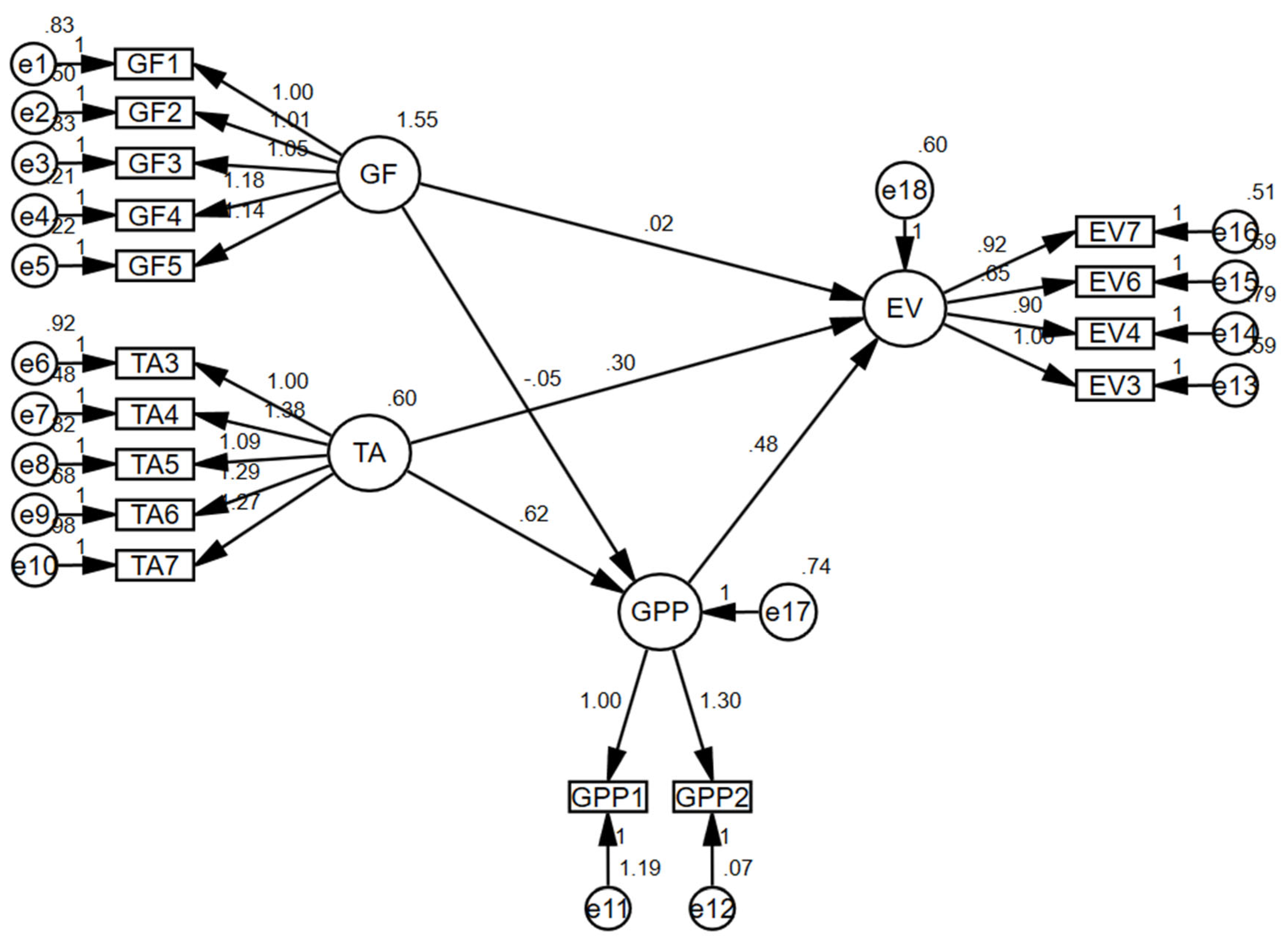

Table 1.
Demographic Profile of Respondents.
| Variable | Category | Frequency | Percent (%) |
| Gender | Male | 104 | 68.0 |
| Female | 49 | 32.0 | |
| Age (years) | 18–30 | 18 | 11.8 |
| 31–40 | 57 | 37.3 | |
| 41–50 | 48 | 31.4 | |
| 51–60 | 24 | 15.7 | |
| Above 60 | 6 | 3.9 | |
| Educational Background | SHS | 6 | 3.9 |
| Technical/Vocational | 10 | 6.5 | |
| Diploma | 18 | 11.8 | |
| Undergraduate Degree | 68 | 44.4 | |
| Graduate (Master’s/PhD) | 44 | 28.8 | |
| Others | 7 | 4.6 | |
| Region of Operation | Greater Accra | 81 | 52.9 |
| Ashanti | 22 | 14.4 | |
| Volta/Oti | 10 | 6.5 | |
| Northern/Savannah/North East | 7 | 4.6 | |
| Western/Western North | 12 | 7.8 | |
| Eastern | 8 | 5.2 | |
| Brong-Ahafo/Bono/Ahafo | 9 | 5.9 | |
| Upper East/Upper West | 4 | 2.6 | |
| Ownership Structure | Fully private Ghanaian | 59 | 38.6 |
| Private with foreign investment | 61 | 39.9 | |
| Fully foreign-owned | 22 | 14.4 | |
| Public–private partnership | 11 | 7.2 | |
| Work Experience in the Power/Energy Sector | Less than 2 years | 12 | 7.8 |
| 2–5 years | 34 | 22.2 | |
| 6–10 years | 52 | 34.0 | |
| 11–15 years | 37 | 24.2 | |
| More than 15 years | 18 | 11.8 | |
| Written Green Procurement Policy | Yes | 97 | 63.4 |
| No | 31 | 20.3 | |
| Not sure | 25 | 16.3 | |
| Formal Training in Green Energy/Procurement | Yes | 86 | 56.2 |
| No | 67 | 43.8 | |
| Total | 153 | 100.0 |
Source: Field Data, 2025.
Table 2.
Validity and Reliability Statistics.
| Construct | Items | Loading | CR | AVE | MSV | MaxR(H) |
| Green Finance (GF) | GF1 | .806 | 0.955 | 0.811 | 0.011 | 0.967 |
| GF2 | .870 | |||||
| GF3 | .915 | |||||
| GF4 | .953 | |||||
| GF5 | .949 | |||||
| Technology Adoption (TA) | TA3 | .630 | 0.849 | 0.532 | 0.235 | 0.865 |
| TA4 | .842 | |||||
| TA5 | .683 | |||||
| TA6 | .769 | |||||
| TA7 | .705 | |||||
| Green Procurement Policy (GPP) | GPP1 | .671 | 0.823 | 0.706 | 0.346 | 0.963 |
| GPP2 | .981 | |||||
| Environmental Value (EV) | EV3 | .791 | 0.825 | 0.542 | 0.346 | 0.835 |
| EV4 | .710 | |||||
| EV6 | .647 | |||||
| EV7 | .788 | |||||
| Model fit measures (χ2/df = 3.185; SRMR = 0.094) | ||||||
Source: Field Data, 2025.
Table 3.
Direct Effects.
| Path | Effect | BootSE | P value | LBCI | UBCI | Hypothesis |
| GF => EV | 0.019 | 0.080 | 0.833 | -0.136 | 0.129 | Not Supported |
| GF => GPP | -0.053 | 0.067 | 0.413 | -0.141 | 0.070 | Not Supported |
| TA => EV | 0.300 | 0.169 | 0.250 | -0.206 | 0.486 | Not Supported |
| TA => GPP | 0.625 | 0.174 | 0.011 | 0.386 | 0.940 | Supported |
| GPP => EV | 0.478 | 0.144 | 0.013 | 0.229 | 0.733 | Supported |
| GPP: R-square = 0.244 | ||||||
| EV: R-square = 0.389 | ||||||
Source: Field Data, 2025.
Table 4.
Indirect Effects.
| Path | Effect | BootSE | P value | LBCI | UBCI | Hypothesis |
| GF => GPP => EV | -0.025 | 0.035 | 0.313 | -0.088 | 0.025 | Not Supported |
| TA => GPP => EV | 0.299 | 0.143 | 0.013 | 0.129 | 0.661 | Supported |
Source: Field Data, 2025.
Disclaimer/Publisher’s Note: The statements, opinions and data contained in all publications are solely those of the individual author(s) and contributor(s) and not of MDPI and/or the editor(s). MDPI and/or the editor(s) disclaim responsibility for any injury to people or property resulting from any ideas, methods, instructions or products referred to in the content. |
© 2026 by the authors. Licensee MDPI, Basel, Switzerland. This article is an open access article distributed under the terms and conditions of the Creative Commons Attribution (CC BY) license (http://creativecommons.org/licenses/by/4.0/).
Copyright: This open access article is published under a Creative Commons CC BY 4.0 license, which permit the free download, distribution, and reuse, provided that the author and preprint are cited in any reuse.