

Submitted:
01 August 2026
Posted:
04 August 2026
You are already at the latest version
Abstract
The rapid development and implementation of artificial intelligence (AI) in scientific publishing have significantly impacted research production through enhancing the process of manuscript writing, literature review, analysis, and editing. Although AI has dramatically accelerated manuscript production, its systemic effects on research quality remain disputed. This dynamic creates a structural quantity–quality paradox, where hyper-productivity threatens to compromise scientific reliability and methodological integrity. This review provides comparative results of AI based and human assisted scientific publishing in terms of productivity, reproducibility, transparency, ethical integrity, open science, reform, and governance of scientific publishing. An analytical framework for the evaluation of these two scientific publishing systems based on the literature, policy and AI assisted evidence synthesis has been proposed. The literature reveals that AI assisted publishing substantially enhances research productivity, reproducibility, scalability and accessibility through automating literature searches, manuscript writing, statistical analysis, and peer review. However, such strengths increase risks of bias, hallucinations, fabricated references and evidence, lower transparency, ethical ambiguity and pressure on peer review. Conversely, human traditional publishing systems possess superior concepts of reasoning, methodologies, creativity, transparency, ethical accountability, and scientific judgments, although they suffer from time consuming process of reviewing, reviewer overload, publication bias, and scalability issues. Thus, the reviewed evidence suggests that computational reproducibility does not guarantee the scientific validity of results without methodological rigor, independent verification, and human oversight. Similarly, the practice of open science facilitates transparency, data sharing, and collaboration; however, it needs computational infrastructure and proper AI governance for realizing its full potential. In conclusion, artificial intelligence should serve as an augmentative architecture rather than a replacement for human epistemic judgment. Scientific publishing needs a balanced approach combining both human and AI, which will be facilitated by transparent reporting, explainable AI, reproducible research practices, open science, multi dimensional assessment of research, and international harmonization of ethical regulations. Such a combination appears to be the best option for enhancing research quality without losing scientific integrity through AI assisted publishing.
Keywords:
artificial intelligence
; quantity-quality paradox
; scientific publishing
; research integrity and ethical governance
1. Introduction
Scientific publishing forms the backbone of contemporary knowledge creation. Not only does it provide means for disseminating data but also for validation, authentication and institutional systematic. Gradually, the entire system has come to be more associated with evaluation metrics based on performance, which is best described by the principle of publish or perish. Based on that, scientific merit becomes quantitatively assessed in terms of publication productivity, citation indexes, journal impact factors, etc. Such a practice makes intellectual effort measurable (Merton, 1973; Fanelli, 2010; Hicks et al., 2015).
The quantity-quality paradox becomes structural rather than incidental. The discrepancy between the incentive mechanisms of academic production and aims of knowledge becomes visible within the framework of the paradox (Table 1 & 2, Figure 1). Under the influence of metrics, scholars tend to slice research results, use strategic citations and focus on easily fundable topics rather than on the basics of scientific basis (Edwards & Roy, 2017). This results in the increase of scientific outputs, yet posing a risk of the overload of information without the actual development of knowledge.
The artificial intelligence with its generative language models, automation via statistics, and machine learning affects knowledge production economics due to the decrease of time, efforts, and skills involved in publication of papers (Bommarito & Katz, 2022; Dwivedi et al., 2023; van Dis et al., 2023). Moreover, the utilization of AI leads to the development of the trend towards hyper-productivity because it questions traditional assumptions about authorship and intellectual pursuits (Pearl, 2019; Jumper et al., 2021; Stokel-Walker, 2023; King et al., 2024). However, the limited capacities of the peer review system that works under the pressure of increasing submission rate and relies on the volunteer work of scholars that aggravate the issue (Smith, 2006). Consequently, the mechanisms designed to ensure the quality of scholarly publications get out of touch with the pace and volume of modern scientific productions (LeCun et al., 2015; Vaswani et al., 2017).
The international community of scholars is facing currently the evaluation crisis of AI output (Höfer, 2026). Moreover, the further development of the peer review system gave researchers the opportunity for control guaranteeing scholarly quality (Amin, 2024). However, now the possibility for critical assessment in such an environment saturated with AI created content (Zhang et al., 2025; Qu, & Zhao, 2026).
What is being contended in this work is that the problem of the quantity-quality paradox becomes even more evident in the age of AI due to the systemic nature of this issue which can be traced to certain institutional incentive structures and standards of assessment. With this concern, the review aims to emphasize at attempt for addressing scientific publishing weaknesses revealed by AI.
Unlike previous reviews that primarily discuss AI writing tools or ethical challenges separately, this review proposes an integrated conceptual framework comparing AI assisted and human scientific publishing across different interrelated dimensions: productivity, reproducibility, transparency, ethical integrity, open science, academic reform, and governance. The review further synthesizes recent international policy developments and proposes a hybrid model for future scientific publishing.
2.1. The Productivity-Quantity-Quality Paradox
AI incorporation into articles influences the process of knowledge creation. AI techniques have become more efficient, large, and increase research accessibility (Figure 1); all this acts as a catalyst that stimulates not only existing trends but also creates some problems (Himeur et al., 2023; Gartenberg et al., 2026). Regarding productivity, AI is used in reducing the time spent on certain stages of research (Figure 2).
Modern automation facilitates key aspects of research process and speeds up literature review, data processing, and structuring of the manuscript. Scientific abstracts can be created by AI systems, as well as complex analytics can be carried out with their help (Bommasani et al., 2021). By 2026, there is an increase of the volume of submissions to popular preprint servers and open access journals estimated at 40-50% compared to 2023 (Figure 3), while traditional publishing proceeds linearly. Clearly there is significance even with the disciplines (Ding et al., 2025; Table 1 & Figure 3).

Table 2.
Comparison of Publishing Workflows and impact of human vs AI.
| Feature | Traditional Human Publishing |
AI-Augmented Publishing (2026 Landscape) |
||
| Research & Analysis: | Relies on human expertise and physics-based models rooted in fundamental laws. | Utilizes statistical AI models that learn patterns from large batches of historical training data. | ||
| Manuscript Writing: | A manual, time-consuming process for researchers. | Can be significantly accelerated. AI is used as structural support to organize ideas, spot logical gaps, reformat citations, and generate first-pass abstract outlines. | ||
| Submission & Screening: | Human editors perform initial screening for adherence to requirements and quality of work. | Publishers integrate AI tools into workflows for screening. Automated technology can check quality, adherence to requirements, and plagiarism. | ||
| Peer Review: | The validation cornerstone, relying on independent human experts to judge validity, significance, and originality. | A hybrid process. Overstressed reviewers use AI to help answer questions based on the paper's data. Publishers use AI for document-reviewer matching. | ||
| Production Time: | Often slow due to manual workflows and the need for rigorous human review. | Can reduce the duration of peer review by an estimated 30%. AI reduces friction in the editorial workflow. | ||
| Integrity: | Based on human accountability and manual verification. | Driven by disclosure policies that currently fail to curb misuse. | ||
| Logic & Accuracy: | Highly reliable, but prone to human fatigue and bias. | Prone to hallucinations and failures in basic reasoning tasks. | ||
| Novelty: | Focuses on Filling Gaps and invention | Focuses on recombination and incremental discovery. | ||
| Data Verification: | Manual checks of figures and raw data. | Often uses AI to check AI, creating potentially unverified data loops. | ||
| Citation Impact (Median): | ~1.0 (Baseline). | 1.9 – 2.2 (Nearly Double) (2023–2025). | ||
| Annual Growth Rate: | ~3.3% (Slowing from pandemic peaks). | ~19.7% (Broad-based explosion). | ||
| Peer Review Status: | Human-led (Slower). | Hybrid/At Risk: ~21% of reviews estimated to be AI-generated (2026). | ||
| Leading Domains: | Mixed Disciplines. | Medicine, CS, and Social Sciences. | ||
| Publication Speed: | Moderate. | Extremely High. | ||
| Creativity: | High. | Limited. | ||
| Conceptual Understanding: | Strong. | Weak. | ||
| Automation: | Limited. | Extensive. | ||
| Reproducibility: | Variable. | Computationally standardized. | ||
| Ethical Judgment: | Present. | Absent. | ||
| Hallucination Risk: | Low. | Significant. | ||
| Scalability: | Limited. | Massive. | ||
| Transparency: | Explainable. | Often black-box. | ||
| Bias: | Cognitive/social. | Data/algorithmic. | ||
[Dwivedi et al., 2023; van Dis et al., 2023; King et al., 2024; Bommasani et al., 2021; COPE, 2023; Nature Editorial, 2023].
The same features which lead to the increase of efficiency exacerbate the quality-quantity paradox (Powell, 2019; Zhang et al., 2025). Generative AI brings more than text generation, it brings a new vulnerability: the massive proliferation of superficial manuscripts that appear to be legitimate but are not methodologically valid (Martínez-Rolán et al., 2024). It was proven by experiments that the abstracts generated by AI are difficult to distinguish from genuine scientific literature. In addition, AI adds another element to the existing issues in the area of peer review risk. Due to the increase in the volume of submissions reviewers are under the pressure.
The use of AI tools become unclear to the borders of ownership and authorship and accountability in addition to raising the issue of responsibility for possible mistakes or biases produced through the help of AI systems.
At the moment AI has the potential to become a part of the solution. Tools are now emerging which can be used for quality assurance (Martínez-Rolán et al., 2024; Gartenberg et al., 2026). In light of such uses of AI, it would seem that AI plays major roles in the quantity-quality paradox; it is an element that drives the problem, as well as helps to solve it (Ko, J. H. & Yin C., 2026). At the end, AI is part of the changing publishing system. The influence of AI is shaped by the preexisting incentives and evaluation systems and structures of governance. In the absence of such changes, AI will merely increase current problems of inequality and inefficiency (Attard- Frost & Lyons, 2025). On the other way, the use of AI that corresponds with the principles of transparency and rigorousness is expected to make the process more inclusive.
2.2. Risks and Challenges
Despite all the potential benefits brought by the application of artificial intelligence to scientific publications, a variety of risks exist as well, which significantly increase the quantity-quality problems. The mentioned challenges relate both to the technical, as well as epistemological and institutional aspects (Russell & Norvig, 2021).
Large language model’s ability to generate coherent texts which may seem convincing but are devoid of any methodology or data supporting their claims raises concerns about epistemic opacity whereby superficial legitimacy disguises the fragile nature of the content generated (Maynez et al., 2020). There have been several studies proving the ability of AI generated scientific abstracts to be unnoticed by human reviewers (Branda et al., 2025).
Another risk associated with artificial intelligence is the increased level of cheating, such as AI based plagiarism and paper mills. It is known that these entities use automation techniques to replicate and manipulate research for financial gain (Razack et al., 2021; van Noorden & Perkel, 2023). This trend expand in journals with less stringent peer review processes since the ease and reduced costs in applying AI system exacerbate the prevalence of fraud, thereby complicating the identification of real from fake studies.
Moreover, there is great pressure on the peer review process. Prior to the emergence of AI, one of the inherent problems of the process was that time limitations, inconsistency in the quality of review and few incentives for reviewers were a part of it (Smith, 2006). The influx of submissions partly resulting from AI is undermining the effectiveness of manuscript evaluations even more. Consequently, an imbalance is formed where the ability to conduct research exceeds the ability to evaluate it.
One complex problem relates to the questions of authorship and intellectual accountability. Integrating AI into core research activities blurs classical boundaries of authorship, raising critical questions regarding accountability for data inaccuracies, algorithmic bias, or hallucinated findings. If any error or incorrect information is produced as a part of research work, the ambiguity regarding AI will make it difficult to assign fault and responsibility, thus complicating the classical framework of academic accountability. The rules regarding AI’s role in research have not been established by journals and vary widely (Stokel-Walker, 2023).
Another problematic area includes the issue of biases and inequities. Being fed from existing data, artificial intelligence will perpetuate the bias present in scientific datasets and will influence research question formation, analysis, and interpretation. The lack of equal access to artificial intelligence technologies could lead to greater inequity in funding between research centers, increasing gaps between underfunded and well funded research institutions (O’Neil, 2016).
Finally, excessive reliance on artificial intelligence could damage the core of critical engagement in research since when the process of writing and analyzing is largely automated; there is an increased likelihood of researchers developing automation bias and taking the generated outcomes at face value, thus failing to exercise due skepticism and methodological rigor (Goodman & Flaxman 2016). In extreme instances, the practices focused on the swift generation of results rather than their deep analysis could emerge as a prevailing trend.
One of the most troubling issues associated with the involvement of AI in scientific publishing is the problem of hallucinations when AI creates false, although plausible, data. For instance, large language models could generate fabricated references, fictitious journal articles, pseudonyms of authors, wrong statistical outcomes, fake references citation and false explanations of scientific phenomena (Bender et al., 2021).
The points discussed above suggest that AI's presence in scientific publishing will not be limited to the use of automated technology, but rather, it could dramatically change the epistemology of this sphere. Without appropriate regulatory systems, reporting standards, and evaluation methods, the risks will only exacerbate the existing challenges and reinforce the quantity-quality paradox (van Noorden, 2023).
2.3. Structural Weaknesses in Scientific Publishing
The current publishing process within scientific community, while essential for the growth and development of knowledge, has several structural deficiencies that existed long before the arrival of AI, but have now become more evident and exaggerated because of it (Edwards et al., 2017). These deficiencies are inherent to institutional motivations, evaluation processes, and governance, thereby constituting the context in which scientific knowledge is generated, validated, and disseminated. One major weakness associated with the current publishing system is the peer review process, which has traditionally been seen as the basic of academic publishing (Smith, 2006; Ware, 2008; Casadevall et al., 2014). Even though the peer review process is crucial from a theoretical perspective, it is highly inefficient and inconsistent in practice (Lee et al., 2013). The reviewers work under pressure of time limitations and do not receive any kind of recognition for their effort and might not have access to data and/or source code for a more detailed review of research. According to Richard Smith, the peer review process is a problematic one at the core of knowledge (Smith, 2006). This problem is made worse by an increase in the number of submitted papers, resulting in less rigorous review of the manuscript. Closely connected with this problem is the prevalence of a metric driven evaluation process. Metrics like journal impact factors, citation numbers, and h-index numbers are the main criteria used when making hiring, promotion, and funding decisions. While these metrics offer an easy way to make comparisons, they fail to evaluate the significance of a contribution to the research (Brembs, 2018). The Leiden Manifesto for Research Metrics demonstrates that the misappropriation of bibliometric indicators will shift research priorities and encourage behaviors that place the importance of visibility above everything else (Haustein et al., 2015; Hicks et al., 2015). As a result, researchers tend to write not their best but most easily publishable works. It is known from research that a large number of findings published in scholarly literature cannot be replicated; more precisely, this issue is prevalent among publications in disciplines such as psychology and biomedical sciences (Figure 3 & 4). In this regard, John P. A. Ioannidis' statement that most published research finding are false because of a number of factors, including small sample size, selective reporting and publication bias (Ioannidis, 2005). The tendency towards publishing novel findings and their statistical significance rather than conducting replications adds to this problem and makes scientific literature less reliable. Access and dissemination are additional aspects that add to structural inefficiencies of knowledge. The fact that there are a lot of pay walled journals limits people's access to scientific knowledge and, therefore, hinders scientific communication and transparency. Even though the open access model becomes increasingly popular, it can cause problems due to high costs for authors via article processing charges (Tennant et al., 2016).
Moreover, the publishing process is affected by hierarchies and gate keeping processes. Prestigious journals have a high level of impact on the legitimacy of knowledge because they tend to promote only dominant paradigms and institutions with good resources. This means that innovative, cross disciplinary, or negative results studies can be marginalized because of the gate keeping processes. These structural aspects maintain the current power distribution in academic circles and reduce the variety of scientific visions. It should be noted that these structural problems are related to each other. The impact of metrics affects the publication practices that, in turn, influence the workload of peer reviews and reproducibility issues. The outcome of these interconnections is an internally reinforcing system in which the need to publish undermines the reliability and integrity of scientific products. In the case of the integration of AI into research, all these problems are aggravated (Wilsdon et al., 2015). Increased opportunities to produce research content increase the burden of peer reviews, make the competition in metrics harder, and increase the risks of reproducibility problems. Therefore, solving the problem caused by AI needs not only technical but also structural solutions (Nature Editorial, 2023; UNESCO, 2023).
2.4. Reproducibility
Reproducibility is considered one of the key issues affecting modern scientific publication, which is in direct relation with the problem of the quantity-quality paradox. Reproducibility refers to the possibility for independent researchers to get similar results when using identical data, methodology and procedures and it is a fundamental element of scientific validity. At the same time, growing evidence indicates that there are a substantial number of findings, which are not replicable and which raises questions regarding their scientific value (Peng, 2011; Baker, 2016; Goodman & Flaxman, 2016).
As seen from the reproducibility crisis, which is well described in different disciplines, there are structural flaws with regard to research design, reporting and evaluation of results. According to John P. A. Ioannidis, a considerable number of findings can be considered unreliable due to methodological problems and structural factors, which favor novelty to verification (Ioannidis, 2005; Camerer et al., 2018; Figure 3).
An influential work related to this discussion is by John P. A. Ioannidis, who posited that most research findings in academic publications were false due to a combination of various statistical, methodological, and systematic aspects such as low sample size, low power of statistical analysis, publication of positive findings only, and the degrees of freedom which researchers can exercise in the process of analyzing the data (Ioannidis, 2005). All these practices make it easier to detect false positives, especially when conducting research in an environment that rewards novelty and statistically significant findings (Munafò et al., 2017). Reproducibility is additionally hampered by publication bias, whereby scientific studies that do not show significant results and fail to support their hypothesis are excluded from the scientific literature. The problem is that scientific knowledge is distorted due to the increased rate of obtaining unsatisfied empirical results (Ioannidis 2005; Dwivedi et al., 2023; Figure 4).
The Structural problems due to the publishing process also affect the research reproducibility crisis. Problem of access to raw data, poor transparency in methods, and lack of standardization in the reporting process make the replication of research results problematic. While there is a growing trend toward opening science, the most of journals do not yet require the publication of data and codes (Nosek et al., 2015; Checco et al., 2021; Dwivedi et al., 2023; Hamamra et al., 2026).
2.5. Transparency
Transparency plays the role of one of the key pillars of scientific quality as the means for verifying, reproducing, and critically assessing the research. In the times of growing amount and technologic complexity of research work, transparency is crucial for separating reliable knowledge from its less substantiated analogs (Ioannidis, 2014; Nosek et al., 2015).
Transparency implies the disclosure of all stages of research including data, methods used, analysis performed, and the limitations of the research. The efforts to improve transparency are being made through promoting such measures as data sharing, code sharing, and preregistration initiated by such organizations as the Center for Open Science (Nosek et al., 2015).
It is especially important in the sphere of AI research as many algorithms remain unknown which complicates their interpretation. Owing to that, the risk of losing the ability to be accountable and understandable increases significantly (LeCun et al., 2015; Russell & Norvig, 2021; Table 3).
2.6. Ethical Integrity
Integrity is main aspect of scientific research quality which lies at the forming of the credibility, accountability and legitimacy of the research process. In terms of the quantity-quality paradox in the case of AI supported research contexts of today; the issue of ethical considerations transcends the limits of conventional ethical misconduct (Else, 2023; Nature Editorial, 2023; UNESCO, 2023). By definition, ethical integrity refers to a set of ethical principles, such as honesty, objectivity, and accountability applied during all stages of the research process. The accurate reporting of methods and findings, the absence of fraud, data fabrication, and plagiarism, as well as proper citation of contributors is integral to scientific integrity. Nevertheless, the growing pressure on researchers to publish their results owing to the prevalence of a metric system of evaluating scientific output may promote the occurrence of behavior detrimental to ethical conduct in knowledge, such as selective reporting, manipulation of data, and omission of negative results (Fanelli, 2010).
Introduction of AI tools to scientific research forms additional ethical complexities, which call into question many established ethical roles. For example, a problem arises concerning the concept of authorship and responsibilities. The involvement of AI in performing the tasks of reviewing literature, analyzing data and writing articles poses questions about intellectual property (Stokel-Walker, 2023; Floridi et al., 2020). The determination of accountability for errors, biases or even falsification that occurs during work with AI assistance remains relevant especially in cases when there are no uniform standards for disclosure. Thus, as pointed out in current discussion on the Committee on Publication Ethics guidelines, the transparency of using AI is necessary in order to maintain ethical authorship (Dwivedi et al., 2023). Moreover, bias and unfairness pose another ethical problem. AI models are based on the existing datasets that can be prejudiced, which means that there is a risk of reproducing or even increasing inequality in the results of research. In particular, it is dangerous in the context of disciplines where such a problem leads to discrimination and the creation of new biases (Magalhães, 2024).
A further important concern relates to possible normalization of automation bias when researchers tend to believe in AI produced results without proper assessment of their quality. Such excessive reliance can decrease the level of critical thinking on the part of scientists and lead to spreading of errors throughout the scientific literature. In the age of AI, empirical results have to be properly evaluated, and rigorous human in the loop oversight is indispensable in ethical research practices (Jovchevski et al., 2026). Ethical integrity is also inherently associated with such criteria as transparency and reproducibility. Without disclosing information about methods and AI applications, it becomes impossible to say whether research has been performed ethically or not. In such a way, ethical integrity serves as an integrative concept, linking various aspects of scientific excellence (Floridi, 2020). It is also necessary to note that ethical concerns are not limited to individual scientists but can also affect journals, funding organizations, and scientific institutions. The development and implementation of ethical standards by academic institutes and relevant those organizations become main issue of scientific quality (UNESCO, 2023).
To conclude, the ethical integrity of the AI era involves transition from the compliance based to principle based approach. As follows from that, the requirement to trust scientific information is maintained through the development of culture of responsibility, transparency, and accountability (Table 4).
2.7. AI Assisted Quality Control
The implementation of artificial intelligence technology into scientific publications provides an opportunity for improving quality control mechanisms by addressing the issues generated by the quantity-quality paradox. Although AI has been very helpful in increasing research productivity in knowledge, it can also serve as an effective tool for enhancing the quality of scientific publications through regulatory regulations (LeCun et al., 2015; Vaswani et al., 2017).Among the primary applications of AI in quality control is the identification of mistakes made in the research. Machine learning allows one to identify any inaccuracies regarding statistics, methodology, and other aspects of study that may be overlooked during traditional peer reviews. For example, some tools based on AI can detect such phenomena as p-hacking, erroneous statistical methods, or mismatches between the outcomes and data (Bommasani et al., 2021).
Additionally, AI tools can possible be used to detect plagiarism and confirm text integrity. Using advanced natural language processing techniques, it will be possible not only to identify cases of simple copy pasting but also to find plagiarized texts even when authors attempt to rewrite them. This is an effective measure to avoid any academic misconduct and uphold the highest standards in scholarly publication practices. Also, using AI algorithms can help to detect cases of duplicated work, which are becoming a growing concern in high production environments (Razack et al., 2021). The use of AI technology can also contribute to the process of peer review. With its help, AI assisted tools can be used to summarize manuscripts and determine the methodological strengths and weaknesses in them. It will also facilitate the process of peer review in those disciplines that are dealing with high submission rates. Nevertheless, the use of such tools should not exclude human judgment, as the critical evaluation of papers requires domain knowledge (Checco et al., 2021).
Furthermore, AI is capable of improving the level of reproducibility and transparency because of research workflow automation. It can be achieved through the use of tracking technologies that make sure that data provenance and analytical processes as well as the reproduction of the code pipeline are recorded. The platforms that incorporate AI technology are capable of automatically checking whether the dataset and code are publicly accessible and properly formatted in order to be consistent with the findings of the researchers. This method is compatible with open science practices (de Rijcke et al., 2016). However, there are some downsides of using AI for the purposes of quality control. The first one includes possible automation bias when researchers and reviewers tend to trust AI's evaluations without making any additional analysis. Secondly, even though AI technology is reliable, there is still gap for possible mistakes because its efficiency relies on the quality of the training set and it’s built in biases. Thus, the lack of transparency in AI operation may lead to the reinforcement of those biases (Haustein et al., 2015).
Equity and access considerations are relevant as well. Cutting edge systems of quality control powered by AI can be available primarily to resourceful organizations and publishers, thus reinforcing current imbalances in scientific publications. Access to such technologies should be made equitable in order to avoid the concentration of power in the hands of those who already wield much influence in the global knowledge ecosystem (Figure 5). And the drawbacks will be compounded by the disparities in the availability of scientific resources due to institution specific factors (Figure 6).
In conclusion, the use of AI powered quality control technology should be regarded as an additional tool instead of a replacement for the human supervision. The proper implementation of such technology is contingent upon its incorporation into a larger context characterized by methodological soundness, transparency, reproducibility, and ethical integrity. If it’s controlled appropriately, AI technology has a chance to make the quality control process in scientific publishing proactive and systematic (Abdul-Jabbar et al., 2025).
2.8. Open Science Practices
Practices of open science can be considered the cornerstone remedy for addressing problems inherent in the structure of traditional scientific publishing, which offers a promising solution to improve the quality of research in terms of accessibility, reproducibility, and transparency. Open science practices provide an important opportunity to focus not on the number of research products but rather on the quality of the process involved in conducting research (Fecher et al., 2013; Vicente-Saez et al., 2018). In general, practices of open science refer to the use of specific tools to make all aspects of research accessible and transparent. This includes such practices as open data, open methods, open code, and preregistration. These practices make possible the improvement of transparency and the possibility of independently verifying results. Initiatives of organizations, such as Center for Open Science, have contributed significantly to spreading the practices of open science, specifically in terms of data sharing and preregistration (Nosek et al., 2015; Piwowar et al., 2018).
The first critical value of open science lies in its ability to deal with the reproducibility crisis. With the requirement to provide access to data and methods used in analysis, open science lowers the degree of ambiguity and allows other scientists to verify the results better. Preregistration also helps in this respect because it forces scientists to follow certain hypotheses and methods, thus preventing p-hacking and selective reporting of results (Stodden et al., 2014; Wilkinson et al., 2016).
Another crucial benefit provided by open science is linked to the issue of transparency and accountability of research. With clear documentation of the processes included in research, it is easier to reused methodological, errors, or even misleading conclusions made by researchers (Coeckelbergh, 2023; Coeckelbergh, 2026). Now, in times when AI plays an increasingly important role in research, open science gains even more relevance. Research based on AI usually includes a complicated algorithm and vast amounts of data, which makes it hard to trace how exactly the results were produced. Hence, present of the code and details of the work available is important for the interpretability and transparency of scientific research (Steinert et al., 2025).
However, it is necessary to emphasize that open science is not a single mechanism; rather, it needs to be combined with other means of reforming the publication process. In order to become effective, it should be compatible with other means of quality control, such as use of artificial intelligence in the process of evaluating articles, improvement of evaluation procedures, and ethics governance (Bender et al., 2021). Open science can become an efficient approach in creating credible, inclusive, and sustainable approaches to scientific publishing. Open science can be considered a transition from closed output oriented systems of research into open systems of production and distribution of scientific knowledge (Table 5, Figure 7). Thus, open science becomes a means to minimize risks associated with high volume AI powered research and support scientific quality principles at the same time (Piwowar et al., 2018).
2.9. Reforming Academic Incentives
The reform of the academic incentive system plays a crucial role in solving the quantity-quality problem in research. The existing incentive system was based on publications, citations, and journals' prestige, creating strong pressure to favor volume over quality. In connection with the use of artificial intelligence to increase the rate of scientific discoveries, the reform becomes not only desirable but also necessary (Edwards et al., 2017; Table 6).
Traditionally, the research evaluation systems use quantitative measures, such as the impact factor, citation rate, and the h-index. Although these indexes provide an easy way to compare researchers, they do not provide any measure of methodology used, the transparency of the research process, or its societal significance. In their paper Leiden Manifesto for Research Metrics, Hicks et al. state that such reliance on quantitative indicators may influence the priority of research, promoting practices like salami slicing and citation gaming (Hicks et al., 2015).
An essential trend in the reforms is the move from an output oriented evaluation framework to a process oriented evaluation framework. In other words, it becomes necessary to assess not just the output of the research work of the researchers but also the way they produce their research work. For example, assessment can be made on the basis of the methodological quality of the research, the openness of data and the code, the implementation of the principles of open science and the reproducibility of the research results (Cagan, 2013).
Another aspect of the reform is to recognize all research contributions. For instance, such activities as the data management, the development of the software programs, the replications and the peer review are underestimated by many traditional evaluation methods. Nevertheless, the inclusion of these activities into the list of the evaluated elements will contribute to the overall improvement of the research field (Münch, 2014; Wilsdon et al., 2015).
Institutional policies are also important in reforming the evaluation system because universities, funding organizations and journals have to introduce the quality principles in the system of the evaluation.
More importantly, any reform of incentive systems needs to be seen in light of the systemic transformation of which it is a part. Reforms in incentive systems need to go hand in hand with developments in AI based quality assurance systems and ethical governance of scientific work (Checco et al., 2021).
In conclusion, any reform in the system of academic incentives is required in order to align the aims of scientific publications with the basic characteristics of knowledge production. By putting rigor, openness, reproducibility, and ethical conduct ahead of productivity, reforms in the incentive system can help prevent any potential problems arising from the use of AI in the research process (Wilkinson et al., 2016).
2.10. Policy and Ethical Guidelines
The fast inclusion of artificial intelligence (AI) into the world of scientific publishing has surpassed the emergence of proper regulation frameworks, thus posing the need for proper policy making and ethical standards. Even though technological advancement poses great benefits to scientific publishing, the lack of standards may exacerbate the already existing challenges of scientific publications such as lack of clarity, biases, and accountability. Proper establishment of governance is thus necessary for ensuring that AI helps improve scientific quality (Ioannidis, 2014; UNESCO, 2023).
As far as making policies for AI usage is concerned, there is a need to formulate guidelines on how to use AI in research and publications. Such guidelines should clearly outline the requirement for transparency of the use of AI in the process of analyzing data and writing manuscripts as well as the reviewing process. Efforts by the Committee on Publication Ethics have been made by formulating recommendations that promote transparency in the use of AI and that responsibility of the paper still lies with the human author (Alkhawam et al., 2025).
Another important issue is that of algorithmic transparency and explains ability. Most AI systems can be classified as opaque models, which make it hard to understand the reasoning behind how decisions have been made. As such, policy frameworks will need to ensure enough documentation is provided about the architecture of models used, training sets, and procedures involved to allow for proper evaluation of the work done. Policies will have to tackle the problem of bias and unfairness. Algorithms that have been developed using inadequate and skewed data sets will reflect existing disparities in society, especially across geographies, institutions, and disciplines (Miedema et al., 2026).
Also, an important factor is the governance of the data and privacy matters. In light of using big data, which might comprise some sensitive or confidential information, questions about consent and privacy appear. The policies need to address the procedure of handling the data, for example, through anonymizing it, securing the storage and controlling access to the data, especially when dealing with human participants or sensitive data (Nature Editorial, 2023). The development of the policies must be iterative in nature. Continuous evaluation and global research community cooperation it’s an important aspects of keeping the guidelines updated and relevant.
3. Discussion
This review shows that the quantity–quality paradox in scientific publishing has become a systemic issue that is increasingly affected by artificial intelligence (AI), incentives for institutions, and the fast development of digital scientific communications. Instead of being used as a technological advance by itself, AI affects existing problems with academic publishing, reinforcing both research productivity and problems with scientific quality.Although the present review of Quantity-Quality Paradox in Scientific Publishing shows that AI has transformed the scientific publication system by increased research productivity, while new challenges of reproducibility, transparency, ethical integrity, and research governance are posed. These results come in consistent with previous records (Dwivedi et al., 2023; van Dis et al., 2023; King et al., 2024).
From the comparative approaches, it became evident that AI helped in publishing works much better than conventional human publishing from the point of view of productivity. Specifically, the usage of artificial intelligence considerably reduces time needed for the search of literature sources, language editing, data manipulation, writing of manuscripts, and journal formatting. This enables researchers to perform scientific work exceptionally quickly. These results confirm the findings of Bommasani et al. (2021), who stated that large language models allow increasing the speed of scientific writing, as well as the findings of Gartenberg et al. (2026). However, review supports findings correspond to those of Edwards and Roy (2017), who reported that the amount of publications does not prove the quality of scientific work. Instead, high productivity can result in the emergence of publish or perish attitude, because it implies the quantitative rather than qualitative evaluation of the achievements.
The main finding of this review is the difference in how AI affects the reproducibility of research. AI based publishing increases computational consistency through standardizing analytics processes, automating the documentation process of workflows, and reproducibility of coding. The same view was presented by Peng (2011), Nosek et al. (2015), and Wilkinson et al. (2016). However, according to review comparison, computational reproducibility itself does not ensure the validity of research. This point complements the concerns about reproducibility stated by Ioannidis (2005), Baker (2016), and Munafò et al. (2017) as they related the problem of irreproducibility mostly to methodological shortcomings and not computational problems.
Transparency is among the key differences between human and AI assisted scholarly work. Basically, human scholars normally have an advantage in the area of conceptual analysis because the choice of the methods used is grounded in scientific thinking and interpretations. Conversely, AI can be considered a black box tool that provides clear results without offering an explanation of the way conclusions are drawn. Similarly the claim is supported by Russell and Norvig (2021) and Floridi et al. (2020).
The ethical integrity proved to be one of the major difficulties distinguishing AI assisted writing from traditional research procedures. Traditional publishing is based on personal responsibility, scientific reasoning, academic integrity, and standard norms of authorship. At the same time, AI technologies cannot take full responsibility for the content created by them; thus, all responsibilities rest on the researchers and institutions. These ideas is also supported by UNESCO (2023), Nature Editorial (2023), and COPE since all these are agree that AI should not be regarded as an author due to its lack of legal and ethical responsibility. Moreover, according to review data, there is an increase in the number of risks of hallucinatory references, citations, biases, automated plagiarism, and misinformation. Such results coincide with the report of Bender et al. (2021), Stokel-Walker (2023), and Dwivedi et al. (2023).
The present results prove that AI has a great potential for the improvement of open science efforts. The use of automation for the generation of metadata, code, literature, and data organization would greatly enhance data sharing, reproducibility, and collaboration. This finding is consistent with previous studies conducted by (Nosek et al. 2015; Piwowar et al. 2018; Wilkinson et al. 2016), which found that open science was a powerful method for increasing the reliability of science. However, the comparative study also reveals several important limitations of AI implementation into open science. These include proprietary algorithms of AI, restrictions on access to advanced computing power, and lack of transparency of commercial language models, which makes the application of AI less open.
The present review clearly shows that even technological progress is not able to solve the quantity-quality paradox without changes in research evaluation systems. The current system of academic rewards still relies heavily on publication numbers, citation scores, impact factor, and h-index while disregarding such qualities as methodological soundness, reproducibility, and societal significance. The review results are in consistent with the suggestions by Hicks et al. (2015), the Leiden Manifesto, DORA, San Francisco Declaration on Research Assessment, and Wilsdon et al. (2015) to move away from metric based evaluations towards multi-dimensional approaches to assessment. The literature indicates that AI supported publishing as well as regular conventional publishing could greatly profit from evaluation criteria which include data sharing, software development, replication research, methodology, peer review, and interdisciplinarity in addition to publications.
It can be concluded that effective governance is the most important prerequisite for the ethical adoption of AI in scientific publications. The current policies of journals lack consistency in terms of how to deal with AI disclosure, AI attribution, editorial and reviewer activities. Similarly, the recent literature (UNESCO, 2023; COPE, 2023; Nature Editorial, 2023; Alkhawam et al., 2025) has raised the issue of harmonized governance framework needed urgently. Based on evidence of this review, the following requirements may be included in the future governance policy: mandatory disclosure of AI supported writing and data analyses, transparent disclosure of all uses of AI at each stage of research, independent validation of AI generated output, continuous human oversight of manuscript preparation and peer review process, safeguarding of research data privacy, and use of explainable AI. In this way, could optimize the benefits from the introduction of AI without posing any dangers related to AI generated bias, misinformation, fake evidence, or scientific misconduct.
In summary, the conclusions drawn from this review indicate that AI is to be seen not as a replacement of human expertise in scientific publishing, but as a supportive technology which has potential to increase scientific productivity provided that governance is in place. The roles of human scientists are indispensable when it comes to generation of hypotheses, reasoning, ethical decision making, methodology development, and scientific evidence interpretation, and the role of AI is computational effectiveness, automation, scalability, and process optimization. Future scientific publishing will dependent on effective integration of these strengths into scientific publishing systems which are ethical, transparent, reproducible, and policy driven. This hybrid system offers the most sustainable way forward.
4. Limitations
Despite the comprehensiveness of the present review of the comparison between AI assisted and human scientific publishing, there are several limitations that need to be considered. Firstly, the present work is conceptual in nature and it has been based on theoretical literature and policies rather than original empirical or bibliometric findings. Hence, some of the observations made in terms of the comparison have been based on evidence but not statistical data.
Secondly, the fast development of the technologies of generative AI means that some of the capabilities, limitations, and policies related to it will keep changing due to the appearance of new models, platforms, and regulations. This is why some of the findings may need to be updated in the future according to new developments and regulations.
Thirdly, the present review makes comparisons between AI assisted and human scientific publishing in terms of such aspects as productivity, reproducibility, transparency, ethical integrity, open science, and policy governance using the evidence gained through research in different scientific fields. The fact is that research cultures, publication practices, and editing policies in different disciplines differ significantly.
Moreover, even though this review outlines the advantages and disadvantages of AI assisted publishing, the long-term impact of AI on the quality of science, its citation impact, peer review process, innovation of research, and credibility remains unclear because longitudinal data is still insufficient. Future research should combine bibliometric analysis, publisher database analysis, citation network analysis, systematic review and machine learning approaches in order to provide quantitative and qualitative comparisons of AI assisted and human generated articles in different scientific domains.
Finally, while the review provides information about existing international ethical and policy frameworks, the governance of AI assisted publishing varies from one publisher, funder, or regulator to another. Future studies could examine the effectiveness of recently introduced international guidelines for fostering transparency, accountability, reproducibility, and responsible use of AI in scientific publishing. Because AI technologies evolve rapidly, policy recommendations presented in this review should be interpreted as adaptive rather than permanent. Future international regulations may substantially alter best practices for AI assisted publishing.
5. Conclusion
This review shows that the problem of the quantity-quality dilemma has become more complex because of the rapid progress of AI technology within the field of scientific research. Based on the comparative findings, the AI supported publication is much more efficient since it contributes to increasing efficiency of the research by making it faster. Nonetheless, there is no guarantee that this will result in better scientific quality. On the contrary, the use of AI tools brings new issues, including reproducibility, transparency, ethics, algorithmic bias, authorship, responsibility, and governance. AI assisted publishing is characterized by better computational performance and standardization of the analysis process, while humans have unique advantages in generating hypotheses and theories, reasoning, methodology, creativity, context comprehension, and ethics. Thus, it can be stated that neither AI assisted publishing nor traditional publishing is able to satisfy all criteria of scientific excellence. Both approaches have their own merits, which must be used together in a cooperative publishing environment.
The review also shows that improvements in scientific quality would involve much more than technological progress. In order to ensure sustainability, it is necessary to focus on the improvement of reproducibility, transparency, open science, assessment methods, and the development of international ethical and regulatory frameworks for responsible AI implementation. The system of evaluation should move gradually away from quantitative measures such as number of publications and citation scores towards a multidimensional approach taking into account methodological quality, data sharing, reproducibility, software development, peer review, transparency, and societal impact.
Finally, the findings imply that responsible AI implementation involves continuous supervision by humans at all stages of research process. Mandatory disclosure of AI enabled activities, explainability of the algorithm, strict validation of AI generated results, transparent reporting standards, and strong editorial control mechanisms are crucial in ensuring scientific reliability and trustworthiness. Collaboration between researchers, publishers, funding organizations, professional associations, and policy makers at the international level will be important to establish global standards which would allow benefiting the opportunities offered by AI while reducing its risks.
Generally, this review supports an integration of AI and human effort in scientific publication wherein AI contributes to efficiency, automation, and scalability and where human contribution remains at the heart of scientific reasoning, ethics, innovation, and knowledge verification. This type of integration offers the best solution to the problem of quantity-quality dilemma and the way of developing scientific publishing in the age of AI.
6. Future Research Directions
The development of AI in scholarly communication opens up many avenues for future studies that would explore how to maximize the advantages of AI while mitigating its possible risks. Despite the fact that the current state of knowledge shows that AI enabled tools can significantly increase the efficiency of research and scientific communication, many uncertainties exist about their possible long-term effects on scientific quality, research integrity, and innovation. Thus, future research should be done with an interdisciplinary perspective encompassing bibliometrics, scientometrics, computational science, ethics, and publishing policy.
Current research is mostly conducted during relatively short periods, which makes it difficult to analyze the long-term effects of AI on scientific communication. Future longitudinal research should look at whether AI assisted publications has long-term benefits in terms of citation impact, reproducibility, methodology, and scientific influence compared to traditional scientific publications.
Bibliometric analyses involving databases like Web of Science, Scopus, Dimensions, Crossref, and OpenAlex should be performed to measure the impact of AI generated contents in the publication dynamics, citation network, collaborative pattern, journal quality indices, and differences among disciplines. Comparative analysis by country and field would give much needed insights about the global adoption of the use of AI in scientific publishing.
One of the key problems noted in this review is the lack of transparency of the existing large language models. The future work should focus on developing the explainable artificial intelligence system that could record the rationale of the scientific outputs produced by AI technologies.
While the effectiveness of AI in screening manuscripts and helping reviewers has been shown to be promising, little empirical evidence is available about its reliability. Future research should test the reliability of AI assisted peer review based on some standardized performance metrics, such as review accuracy, consistency, ability to detect biases, efficiency, and concordance with human experts.
Future research could assess the extent to which AI enabled workflows promote the reproducibility of scientific studies through automated documentation, protocol generation, standardized reporting, findable, accessible, interoperable, and reusable data management. Researchers could also investigate ways in which AI can contribute to the advancement of open science without compromising transparency and accountability of science while ensuring data security.
Instead of treating AI as a substitute for scientists, future research needs to focus on developing models for effective human-AI collaboration at all stages of research work including hypothesis generation, experimentation, statistical analysis, manuscript preparation, peer reviewing and post publication assessment. Comparative assessments of collaborative workflows across various scientific fields would be useful for finding efficient ways of conducting research without compromising human creativity and ethical thinking.
Moreover, future research should look at the efficiency of AI literacy education, professional training, and institutional building programs designed for the responsible use of AI. It is particularly important to develop such measures as a means to support researchers from low and middle-income countries to decrease existing inequalities in AI technologies and scientific literature availability.
The high computational needs of AI models have raised significant questions about their sustainability. In future research, it would be crucial to quantify the environmental impact of AI supported publishing, such as computational resource requirements. Furthermore, it would be important to study the societal implications of AI supported research ecosystem.
In conclusion, towards an evidence based hybrid publishing ecosystem, future research will need to concentrate on the development of hybrid publishing approaches based on the combination of efficient use of technology in the form of artificial intelligence with creative abilities, ethical reasoning, and expertise of human scholars. This will involve implementation of transparent AI disclosure, strong editorial control, reproducible scientific practices, and international harmonization of governance mechanisms. Through this kind of combination of technological advancements and responsible scientific management, hybrid publishing could help improve the efficiency and quality of future scholarly communication.
Funding
This study did not receive funding.
Conflicts of Interest
All the authors read and declare that there are no conflicts of interest.
Acknowledgments
The first corresponding author acknowledges the International Institute for Education’s-Scholar Rescue Fund (IIE-SRF) for offering a Visiting Fellowship, and thanks for the University of Jordan for hosting and providing the research facilities.
Ethics Approval
Not required. Ethical approval was not applicable for this study, because it did not involve human participants or animal subjects.
References
- Abdul-Jabbar, W. K.; Bhatt, I. Post-authorship and AI assisted writing: Singularity, communication, and pedagogy in higher education. Postdigital Sci. Educ. 2025, 7, 1136–1149. [Google Scholar] [CrossRef]
- Alkhawam, M.; Almobayed, A.; Pandey, A.; Navin, C. N.; Ali, J. E.; Mustafa, I. A. Exploring AI use policies in manuscript writing in cardiology and vascular journals. Am. Heart J. Plus Cardiol. Res. Pract. 2025, 58. [Google Scholar] [CrossRef] [PubMed]
- Amin, A., Cardoso, S. A., Suyambu, J., Saboor, H. A., Cardoso, R. P., Husnain, A., Isaac, N. V., Backing, H., Mehmood, D., Mehmood, M., Maslamani, A. N. J. (2024). Future of Artificial Intelligence in Surgery: A Narrative Review. Cureus, 4; 16(1):e51631. doi: 0.7759/cureus.51631.
- Attard-Frost, B.; Lyons, K. AI governance systems: a multi-scale analysis framework, empirical findings, and future directions. AI Ethics 2025, 5, 2557–2604. [Google Scholar] [CrossRef]
- Baker, M. 1,500 Scientists Lift the Lid on Reproducibility. Nature 2016, 533, 452–454. [Google Scholar] [CrossRef] [PubMed]
- Bender, E. M.; Gebru, T.; McMillan-Major, A.; Shmitchell, S. On the Dangers of Stochastic Parrots: Can Language Models Be Too Big? In Proceedings of the 2021 ACM Conference on Fairness, Accountability, and Transparency, 2021; pp. 610–623. [Google Scholar]
- Bommarito, M. J.; Katz, D. M. GPT Takes the Bar Exam. 2022. Available online: https://ssrn.com/abstract=4314839. [CrossRef]
- Bommasani, R.; Hudson, D. A.; Adeli, E.; et al. On the Opportunities and Risks of Foundation Models. In Stanford Center for Research on Foundation Models; 2021. [Google Scholar]
- Branda, F.; Ciccozzi, M.; Scarpa, F. Artificial intelligence in scientific research: Challenges, opportunities and the imperative of a human-centric synergy. J. Inf. 2025, 19. [Google Scholar] [CrossRef]
- Brembs, B. Prestigious Science Journals Struggle to Reach Even Average Reliability. Front. Hum. Neurosci. 2018, 12, 37. [Google Scholar] [CrossRef] [PubMed]
- Cagan, R. The San Francisco Declaration on Research Assessment. Dis. Model. Mech. 2013, 6, 869–870. [Google Scholar] [CrossRef] [PubMed]
- Camerer, C. F.; Dreber, A.; Holzmeister, F.; Ho, T.; Huber, J.; Johannesson, M.; Kirchler, M.; Nave, G.; Nosek, B. A.; Pfeiffer, T.; Altmejd, A.; Buttrick, N.; Chan, T.; Chen, Y.; Forsell, E.; Gampa, A.; Heikensten, E.; Hummer, L.; Imai, T.; Isaksson, S.; Manfredi, D.; Rose, J.; Wagenmakers, E.; Wu, H. Evaluating the replicability of social science experiments in Nature and Science between 2010 and 2015. Nat. Hum. Behav. 2018, 2, 637–644. [Google Scholar] [CrossRef] [PubMed]
- Casadevall, A.; Grant Steen, R.; Fang, F. C. Sources of error in the retracted scientific literature. FASEB J. 2014, 28, 3848. [Google Scholar] [CrossRef] [PubMed]
- Checco, A.; Bracciale, L.; Loreti, P.; Pinfield, S.; Bianchi, G. AI assisted peer review. Humanit. Soc. Sci. Commun. 2021, 8, 25. [Google Scholar] [CrossRef]
- Coalition, S. Plan S: Making full and immediate open access a reality. 2023. Available online: https://www.coalition-s.org.
- Coeckelbergh, M. AI and Epistemic Agency: How AI Influences Belief Revision and Its Normative Implications. Soc. Epistemol. 2026, 40(1), 59–71. [Google Scholar] [CrossRef]
- Coeckelbergh, M. Democracy, epistemic agency, and AI: Political epistemology in times of artificial intelligence. AI Ethics 2023, 3, 1341–1350. [Google Scholar] [CrossRef] [PubMed]
- Committee on Publication Ethics. COPE position statement: Authorship and AI tools. 2023. Available online: https://publicationethics.org.
- Declaration on Research Assessment (DORA) San Francisco Declaration on Research Assessment. 2013. Available online: https://sfdora.org.
- de Rijcke, S.; Wouters, P. F.; Rushforth, A. D.; Franssen, T. P.; Hammarfelt, B. Evaluation practices and effects of indicator use a literature review. Res. Eval. 2016, 25(2), 161–169. [Google Scholar] [CrossRef]
- Ding, L.; Lawson, C.; Shapira, P. Rise of Generative Artificial Intelligence in Science. Scientometrics 2025, 130, 5093–5114. [Google Scholar] [CrossRef]
- Dwivedi, Y. K.; Kshetri, N.; Hughes, L.; Slade, E. L.; Jeyaraj, A.; Kar, A. K.; Baabdullah, A. M.; Koohang, A.; Raghavan, V.; Ahuja, M.; Albanna, H.; Wright, R. So what if ChatGPT wrote it? Multidisciplinary perspectives on opportunities, challenges and implications of generative conversational AI for research, practice and policy. Int. J. Inf. Manag. 2023, 71, 102642. [Google Scholar] [CrossRef]
- Edwards, M. A.; Roy, S. Academic Research in the 21st Century: Maintaining Scientific Integrity in a Climate of Perverse Incentives and Hyper competition. Environ. Eng. Sci. 2017, 34(1), 51–61. [Google Scholar] [CrossRef] [PubMed]
- Else, H. Abstracts written by ChatGPT fool scientists. In Nature; 2023. [Google Scholar] [CrossRef]
- Fanelli, D. Negative results are disappearing from most disciplines and countries. Scientometrics 2012, 90(3), 891–904. [Google Scholar] [CrossRef]
- Fanelli, D. Positive results increase down the hierarchy of the sciences. PLoS ONE 2010, 5; 4, e10068. [Google Scholar] [CrossRef] [PubMed]
- Fecher, B.; Friesike, S. Open science: One term, five schools of thought. In Opening Science; Bartling, S., Friesike, S., Eds.; Springer, 2014; pp. 17–47. [Google Scholar] [CrossRef]
- Fecher, B.; Friesik, S. Open Science: One Term, Five Schools of Thought. In S C I V E R O Press German Data Forum; (RatSWD), 2013; Volume Mohrenstr. 58, Available online: https://ssrn.com/abstract=2272036.
- Floridi, L.; Chiriatti, M. GPT-3: Its nature, scope, limits, and consequences. Minds Mach. 2020, 30; 4, 681–694. [Google Scholar] [CrossRef]
- Floridi, L.; Cowls, J. A unified framework of five principles for AI in society. Harv. Data Sci. Rev. 2019, 1(1). [Google Scholar] [CrossRef]
- Gartenberg, C.; Hasan, S.; Murray, A.; Pierce, L. More Versus Better: Artificial Intelligence, Incentives, and the Emerging Crisis in Peer Review. In Organization Science; Articles in Advance, 2026; pp. 1–18. [Google Scholar]
- Goodman, B.; Flaxman, S. EU regulations on algorithmic decision-making and a right to explanation. ICML Workshop on Human Interpretability in Machine Learning, New York, NY, USA, 2016. [Google Scholar]
- Hamamra, B.; Khlaif, Z. N.; Mahamid, N. AI literacy and mediated learner autonomy in ChatGPT-supported EFL writing: a qualitative study at a Palestinian university. Int. J. Educ. Technol. High. Educ. 2026, 23, 19. [Google Scholar] [CrossRef]
- Haustein, S., Larivière, V. (2015). The Use of Bibliometrics for Assessing Research: Possibilities, Limitations and Adverse Effects. https://unesco.ebsi.umontreal.ca.
- Hicks, D.; Wouters, P.; Waltman, L.; de Rijcke, S.; Rafols, I. Bibliometrics: The Leiden Manifesto for research metrics. Nature 2015, 520(7548), 429–431. [Google Scholar] [CrossRef] [PubMed]
- Himeur, Y.; Elnour, M.; Fadli, F.; Meskin, N.; Petri, I.; Rezgui, Y.; Bensaali, F.; Amira, A. AI-big data analytics for building automation and management systems: a survey, actual challenges and future perspectives. Artifcial Intell. Rev. 2023, 56, 4929–5021. [Google Scholar] [CrossRef] [PubMed]
- Höfer, S. Artificial Intelligence and Quality of Life. In Springer; Applied Research in Quality of Life, 2026. [Google Scholar] [CrossRef]
- Ioannidis, J. P. A. Why most published research findings are false. PLoS Med. 2005, 2(8), e124. [Google Scholar] [CrossRef] [PubMed]
- Ioannidis, J.P.A.; Greenland, S.; Hlatky, M.A.; Khoury, M.J.; Macleod, M.R.; Moher, D.; Schulz, K.F.; Tibshirani, R. Increasing value and reducing waste in research design, conduct, and analysis. Lancet 2014, 383, 166–75. [Google Scholar] [CrossRef] [PubMed]
- Joris, R. (2026). The ethical aspects of AI in scientific publishing. EJIFCC, 2; 37(1):177–180. [CrossRef]
- Jovchevski, P.; Buijsman, S.; Neerincx, M. What is Wrong With Automation Bias? Philos. Technol. 39 2026, 84. [Google Scholar] [CrossRef]
- Jumper, J.; Evans, R.; Pritzel, A.; et al. Highly Accurate Protein Structure Prediction with Alpha Fold. Nature 2021, 596, 583–589. [Google Scholar] [CrossRef] [PubMed]
- King, R. D.; Scassa, T.; Kramer, S.; Kitano, H. Stockholm declaration on AI ethics: why others should sign. Nature 2024, 626, 716. [Google Scholar] [CrossRef] [PubMed]
- Ko; J. H. Yin, C. A review of artificial intelligence application for machining surface quality prediction: from key factors to model development. J. Intell. Manuf. 2026, 37, 775–798. [Google Scholar] [CrossRef]
- LeCun, Y.; Bengio, Y.; Hinton, G. Deep Learning. Nature 2015, 521, 436–444. [Google Scholar] [CrossRef] [PubMed]
- Lee, C. J.; Sugimoto, C. R.; Zhang, G.; Cronin, B. Bias in Peer Review. J. Am. Soc. Inf. Sci. Technol. 2013, 64(1), 2–17. [Google Scholar] [CrossRef]
- Magalhães, S. Ethics and Integrity in Research: Why Bridging the Gap Between Ethics and Integrity Matters. J. Acad. Ethics 2024, 22, 137–147. [Google Scholar] [CrossRef]
- Martínez-Rolán, X.; Valencia, J. M. C.; Piñeiro-Otero, T. Use of generative AIs in the digital communication and marketing sector in Spain. In Management and industrial engineering; Springer, 2024; pp. 101–121. [Google Scholar]
- Maynez, J.; Narayan, S.; Bohnet, B.; McDonald, R. On Faithfulness and Factuality in Abstractive Summarization. arXiv 2020. [Google Scholar]
- Merton, R. K. The Sociology of Science: Theoretical and Empirical Investigations; University of Chicago Press, 1973. [Google Scholar]
- Miedema, E.; Waschull, S.; Emmanouilidis, C. Towards trustworthy artificial intelligence for decision-making: A lifecycle perspective on knowledge- and data-driven artificial intelligence systems. Comput. Ind. 2026, 174. [Google Scholar] [CrossRef]
- Munafò, M. R.; Nosek, B. A.; Bishop, D. V. M.; Button, K. S.; Chambers, C. D.; du Sert, N. P.; Simonsohn, U.; Wagenmakers, E.-J.; Ware, J. J.; Ioannidis, J. P. A. A manifesto for reproducible science. Nat. Hum. Behav. 2017, 1(1), 0021. [Google Scholar] [CrossRef] [PubMed]
- Münch, R. Academic Capitalism: Universities in the Global Struggle for Excellence; Routledge, 2014. [Google Scholar] [CrossRef]
- Nature Editorial. Tools such as ChatGPT threaten transparent science; here are our ground rules for their use. Nature 2023, 613(7945), 612. [Google Scholar] [CrossRef] [PubMed]
- Nature Index. Nature Index annual tables 2025; Springer Nature, 2025; Available online: https://www.nature.com/nature-index.
- Nosek, B. A.; Hardwicke, T. E.; Moshontz, H.; Allard, A.; Corker, K. S.; Dreber, A.; Fidler, F.; Hilgard, J.; Struhl, M. K.; Nuijten, M. B.; Rohrer, J. M.; Romero, F.; Scheel, A. M.; Scherer, L. D.; Schönbrodt, F. D.; Vazire, S. Replicability, Robustness, and Reproducibility in Psychological Science. Annu. Rev. Psychol. 2022, 73, 719–48. [Google Scholar] [CrossRef]
- Nosek, B. A.; et al. Promoting an open research culture. Science 2015, 348(6242), 1422–1425. [Google Scholar] [CrossRef] [PubMed]
- OECD. OECD AI Policy Observatory; Organisation for Economic Co-operation and Development, 2025; Available online: https://oecd.ai.
- O’Neil, C. Weapons of Math Destruction: How Big Data Increases Inequality and Threatens Democracy. In Crown Publishing; 2016. [Google Scholar]
- Open Science Collaboration. Estimating the reproducibility of psychological science. Science 2015, 349(6251), aac4716. [Google Scholar] [CrossRef] [PubMed]
- Pearl, J. The Book of Why: The New Science of Cause and Effect; Basic Books, 2019. [Google Scholar]
- Peng, R. D. Reproducible research in computational science. Science 2011, 334(6060), 1226–7. [Google Scholar] [CrossRef] [PubMed]
- Piwowar, H.; Priem, J.; Larivière, V.; Alperin, J. P.; Matthias, L.; Norlander, B.; Farley, A.; West, J.; Haustein, S. The state of OA: a large-scale analysis of the prevalence and impact of Open Access articles. PeerJ 2018, 6, e4375. [Google Scholar] [CrossRef] [PubMed]
- Powell, J. Trust Me, I’m a chatbot: how artificial intelligence in health care fails the turning test. J. Med Internet Res. 2019, 21; 10, 16222. [Google Scholar] [CrossRef] [PubMed]
- Qu, C.; Zhao, X. Policy Modeling Consistency index-based study on policy synergy for sustainable artificial intelligence in China’s digital cultural industries. PLoS ONE 2026. [Google Scholar] [CrossRef] [PubMed]
- UNESCO. (2023). Guidance for generative AI in education and research. UNESCO Publishing. https://unesdoc.unesco.org/.
- UNESCO. (2021). UNESCO Science Report: The race against time for smarter development. UNESCO Publishing.
- Razack, H. I. A.; Mathew, S. T.; Saad, F. F. A.; Alqahtani, S. A. Artificial intelligence-assisted tools for redefining the communication landscape of the scholarly world. Sci. Ed. 2021, 8(2), 134–144. [Google Scholar] [CrossRef]
- Russell, S.; Norvig, P. Artificial Intelligence: A Modern Approach, 4th ed.; Pearson, 2021. [Google Scholar]
- Smith, R. Peer Review: A Flawed Process at the Heart of Science and Journals. J. R. Soc. Med. 2006, 99; 4, 178–182. [Google Scholar] [CrossRef]
- Stanford Institute for Human-Centered Artificial Intelligence. AI Index Report 2026. Stanford University, 2026. Available online: https://hai.stanford.edu/ai-index.
- Steinert, C. V.; Kazenwadel, D. How user language affects conflict fatality estimates in ChatGPT. J. Peace Res. 2025, 62; 4, 1128–1143. [Google Scholar] [CrossRef]
- Stodden, V.; Leisch, F.; Peng, R. D. Implementing Reproducible Research. J. Stat. Softw. – Book Rev. 2014, 2, 61. [Google Scholar]
- Stokel-Walker, C. ChatGPT listed as author on research papers: Many scientists disapprove. Nature 2023, 613; 7945, 620–621. [Google Scholar] [CrossRef] [PubMed]
- Tennant, J. P.; Waldner, F.; Jacques, D. C.; Masuzzo, P.; Collister, L. B.; Hartgerink, C. H. J. The academic, economic and societal impacts of Open Access: an evidence-based review. Research 2016, 5, 632. [Google Scholar] [CrossRef] [PubMed]
- van Dis, E. A. M.; Bollen, J.; Zuidema, W.; van Rooij, R.; Bockting, C. L. ChatGPT: Five priorities for research. Nature 2023, 614, 224–226. [Google Scholar] [CrossRef] [PubMed]
- Van Noorden, R.; Perkel, J. M. AI and science: what 1,600 researchers think. Nature 2023, 621(7980), 672–675PMID: 37758894. [Google Scholar] [CrossRef] [PubMed]
- Vaswani, A.; Shazeer, N.; Parmar, N.; et al. Attention Is All You Need. Adv. Neural Inf. Process. Syst. (NeurIPS) 2017, 30. [Google Scholar]
- Vicente-Saez, R.; Martinez-Fuentes, C. Open Science now: A systematic literature review for an integrated definition. J. Bus. Res. 2018, 88, 428–436. [Google Scholar] [CrossRef]
- Ware, M. Peer review in scholarly journals: Perspective of the scholarly community –Results from an international study. Inf. Serv. Use 2008, 28, 109–112 109DOI. [Google Scholar] [CrossRef]
- Wilkinson, M. D.; Dumontier, M.; Aalbersberg, I. J.; Appleton, G.; Axton, M.; Baak, A.; Blomberg, N.; Boiten, J.-W.; da Silva Santos, L. B.; Bourne, P. E.; Bouwman, J.; Brookes, A. J.; Clark, T.; Crosas, M.; Dillo, I.; Dumon, O.; Edmunds, S.; Evelo, C. T.; Finkers, R.; Mons, B. The FAIR Guiding Principles for scientific data management and stewardship. Sci. Data 2016, 3, 160018. [Google Scholar] [CrossRef] [PubMed]
- Wilsdon, J.; Allen, L.; Belfiore, E.; Campbell, P.; Curry, S.; Hill, S.; Jones, R.; Kain, R.; Kerridge, S.; Thelwall, M.; Tinkler, J. The metric tide: Report of the independent review of the role of metrics in research assessment and management. In HEFCE; 2015. [Google Scholar]
- World Bank. (2024). World Development Indicators 2024. World Bank. https://databank.worldbank.org. Available online:. World Bank.
- Zhang, C.; Shao, Y.; Yuan, Y.; Shen, W. Artificial Intelligence Reshapes Creativity: A Multidimensional Evaluation. PsyCh. J. 2025, 14, 831–840. [Google Scholar] [CrossRef]
Figure 1.
Conceptual relationship between increasing publications quantity and declining average research quality [Ioannidis, 2005; Fanelli, 2010; Edwards & Roy, 2017; Hicks et al., 2015; UNESCO, 2023].
Figure 1.
Conceptual relationship between increasing publications quantity and declining average research quality [Ioannidis, 2005; Fanelli, 2010; Edwards & Roy, 2017; Hicks et al., 2015; UNESCO, 2023].
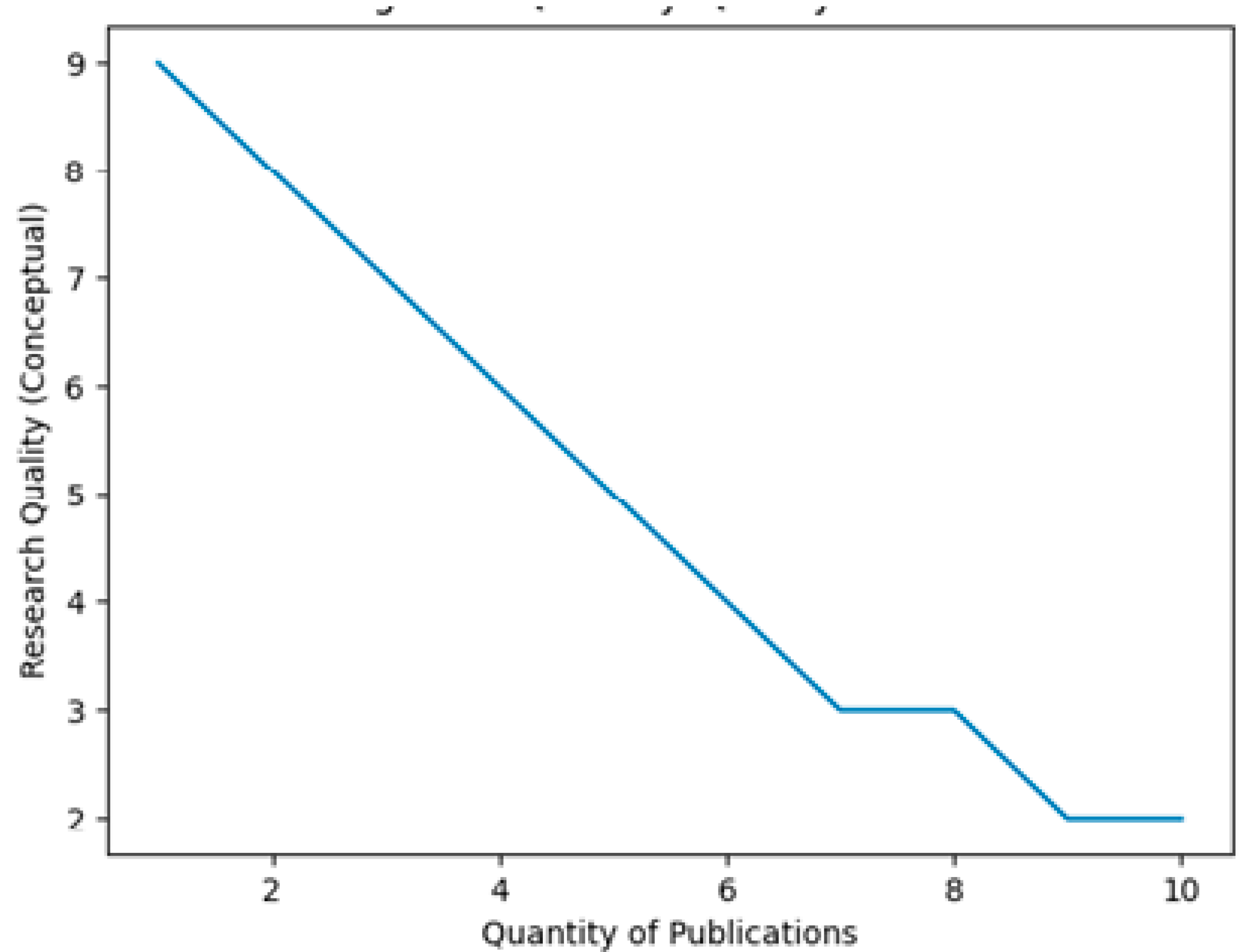
Figure 2.
Illustrative growth in publication volume associated with the rise of AI assisted research tools [King et al., 2024].
Figure 2.
Illustrative growth in publication volume associated with the rise of AI assisted research tools [King et al., 2024].
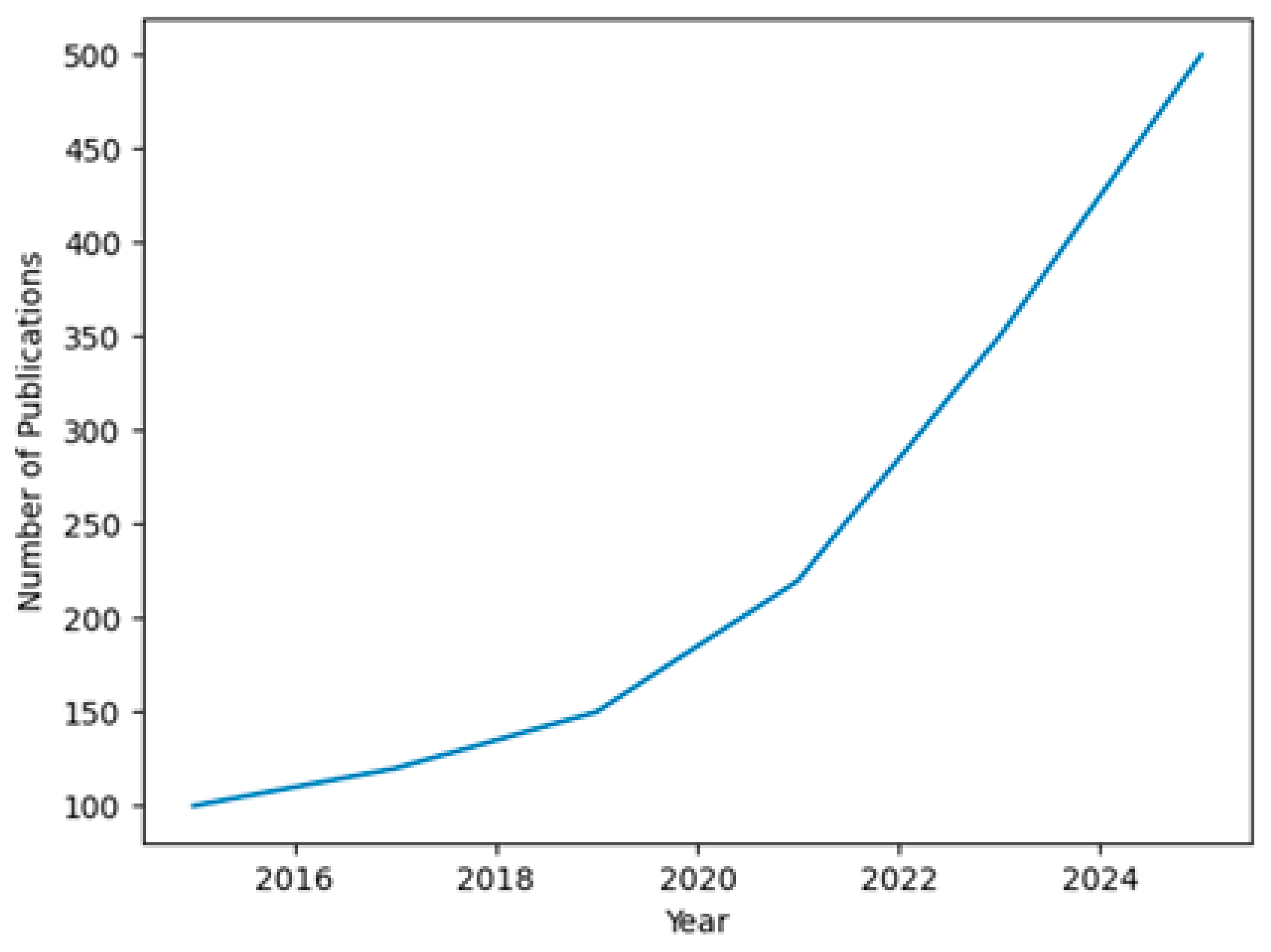
Figure 3.
illustrates approximate reproducibility rates across selected disciplines, highlighting variability and concerns about research reliability [Baker, 2016; Camerer et al., 2018; Open Science Collaboration, 2015; Munafò et al., 2017; Nosek et al., 2022].
Figure 3.
illustrates approximate reproducibility rates across selected disciplines, highlighting variability and concerns about research reliability [Baker, 2016; Camerer et al., 2018; Open Science Collaboration, 2015; Munafò et al., 2017; Nosek et al., 2022].
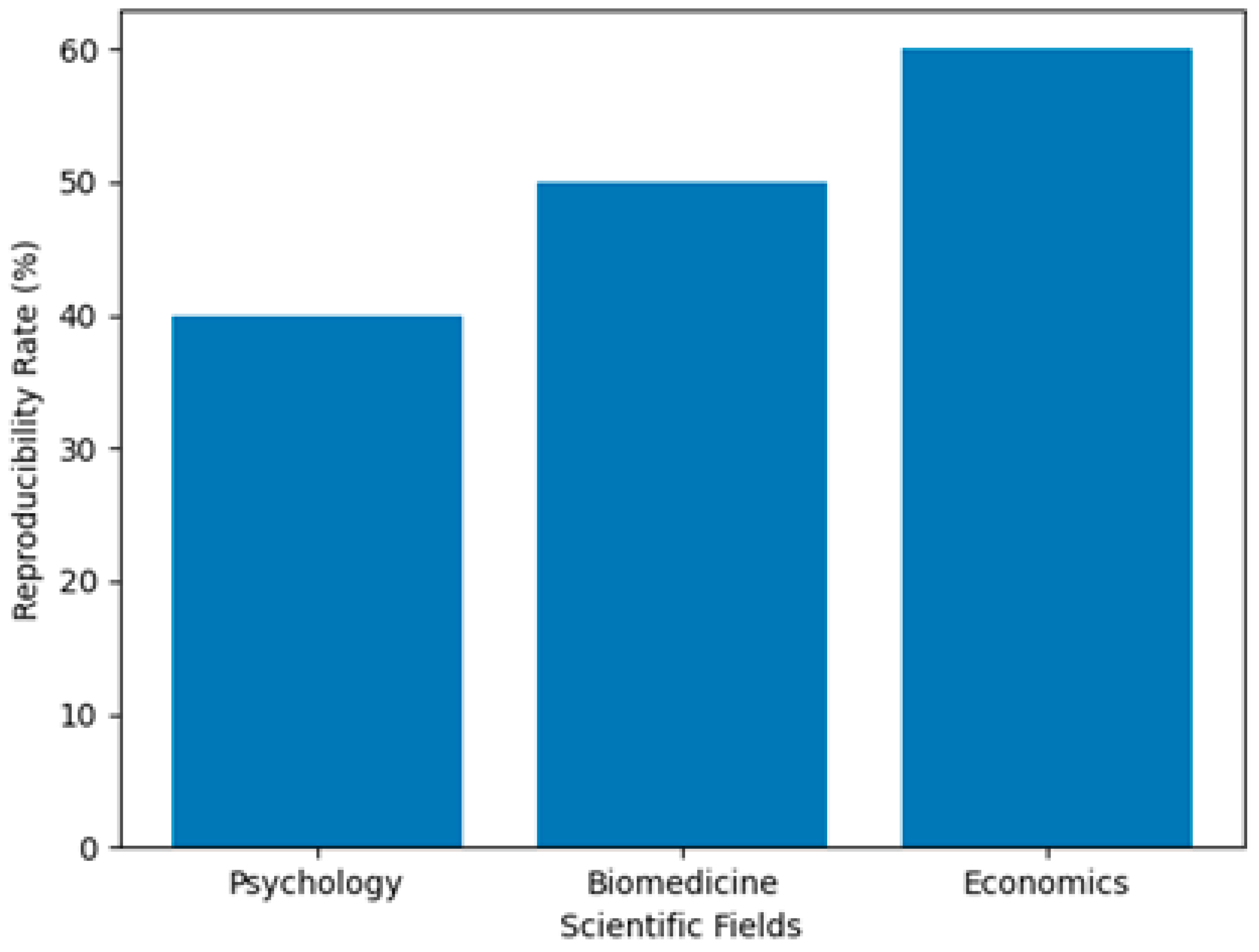
Figure 4.
Demonstrates the imbalance between positive and negative results in published research, reflecting systemic publication bias; (Note, Variation across disciplines bias toward positive findings) [Ioannidis, 2005; Fanelli, 2010; 2012; Munafò et al., 2017; Nature Editorial, 2023].
Figure 4.
Demonstrates the imbalance between positive and negative results in published research, reflecting systemic publication bias; (Note, Variation across disciplines bias toward positive findings) [Ioannidis, 2005; Fanelli, 2010; 2012; Munafò et al., 2017; Nature Editorial, 2023].
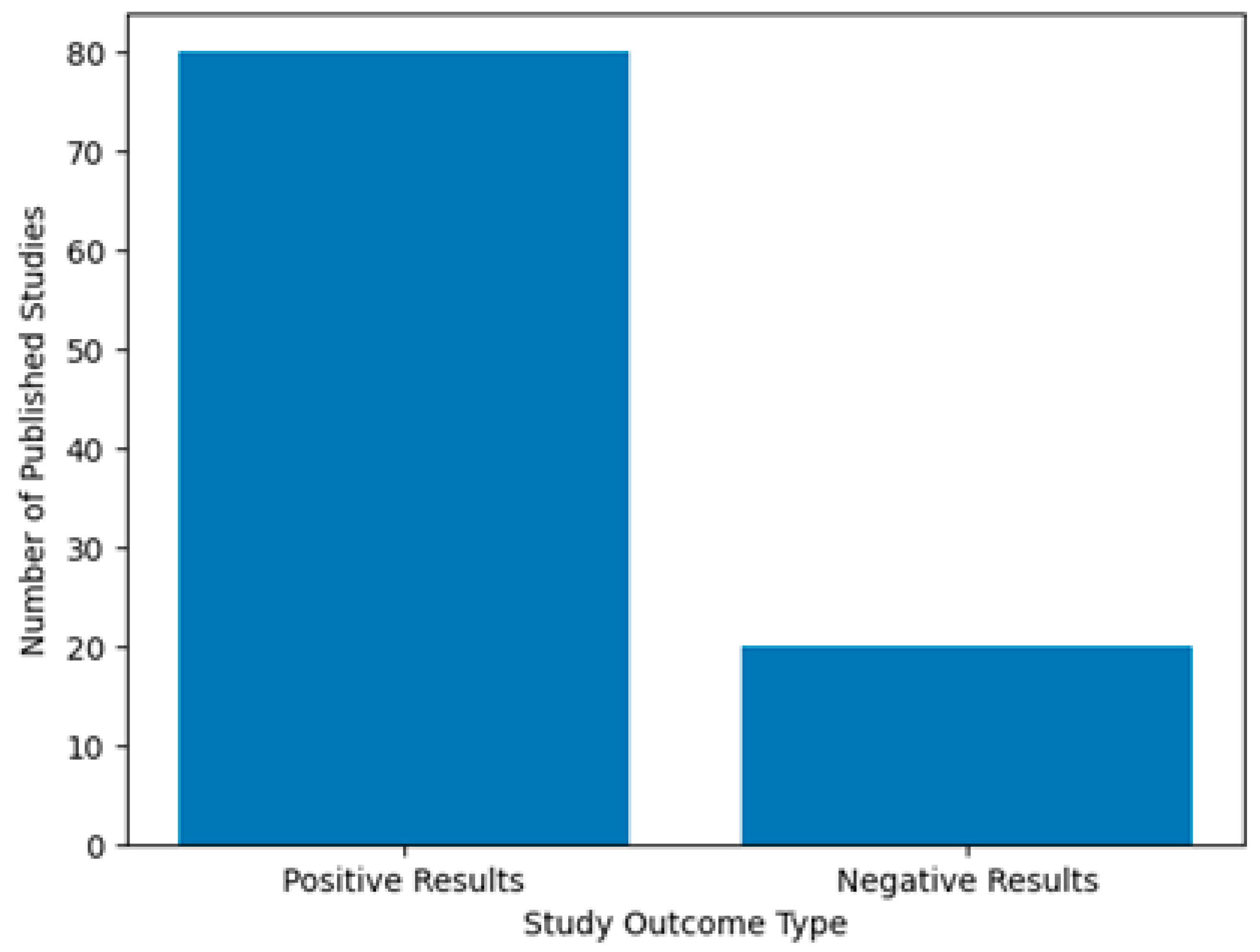
Figure 5.
Demonstrates how open access publishing increases scientific accessibility while subscription models disproportionately restrict researchers from low-resource institutions, thereby contributing to global knowledge inequality [Piwowar et al., 2018; Tennant et al., 2016; Coalition, 2023; UNESCO, 2023].
Figure 5.
Demonstrates how open access publishing increases scientific accessibility while subscription models disproportionately restrict researchers from low-resource institutions, thereby contributing to global knowledge inequality [Piwowar et al., 2018; Tennant et al., 2016; Coalition, 2023; UNESCO, 2023].
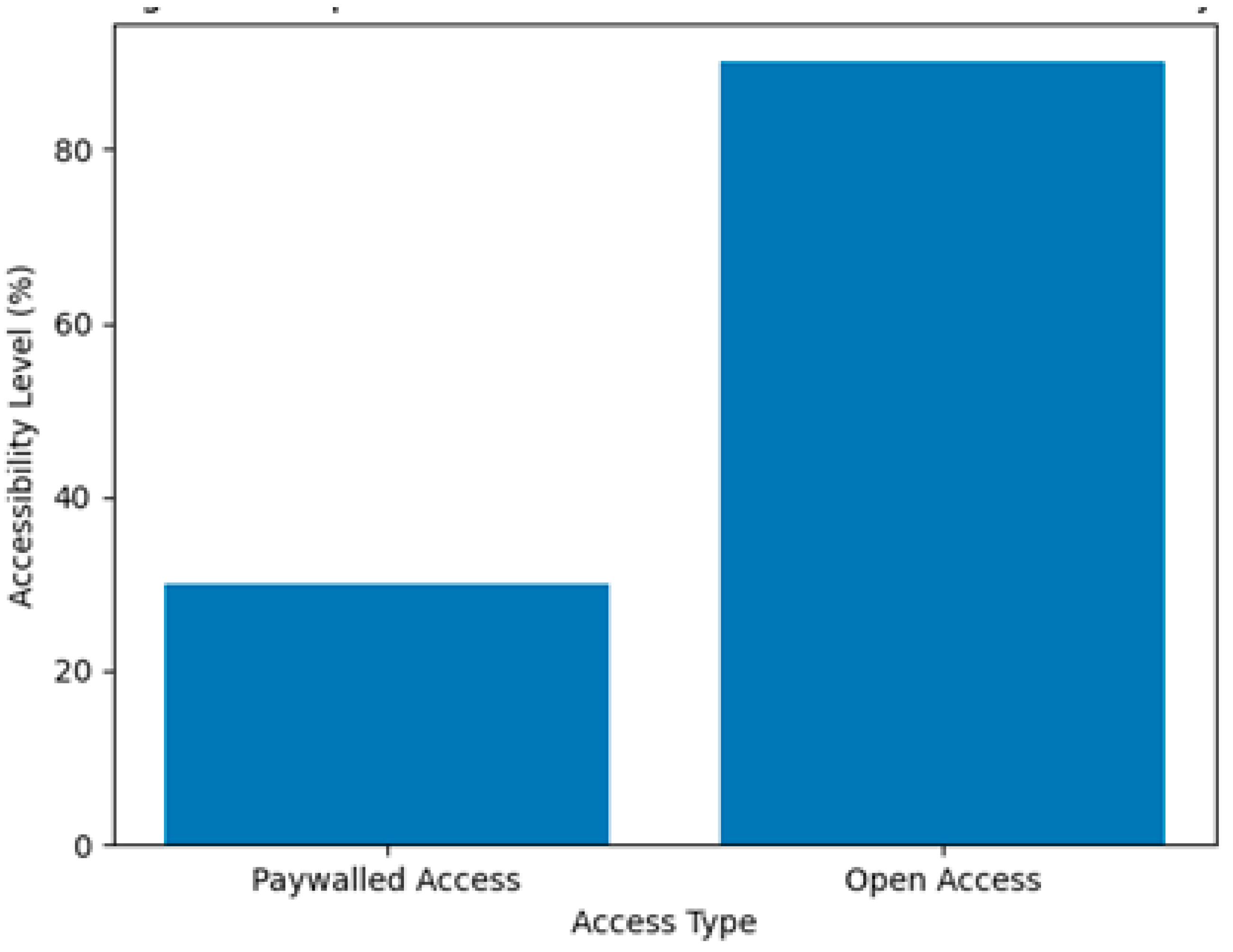
Figure 6.
Inequality in Access to Scientific Resources; The figure highlights disparities in access to scientific literature between high-income and low-income institutions [UNESCO Science Report, 2021; World Bank, 2024; OECD, 2025; Nature Editorial, 2023].
Figure 6.
Inequality in Access to Scientific Resources; The figure highlights disparities in access to scientific literature between high-income and low-income institutions [UNESCO Science Report, 2021; World Bank, 2024; OECD, 2025; Nature Editorial, 2023].
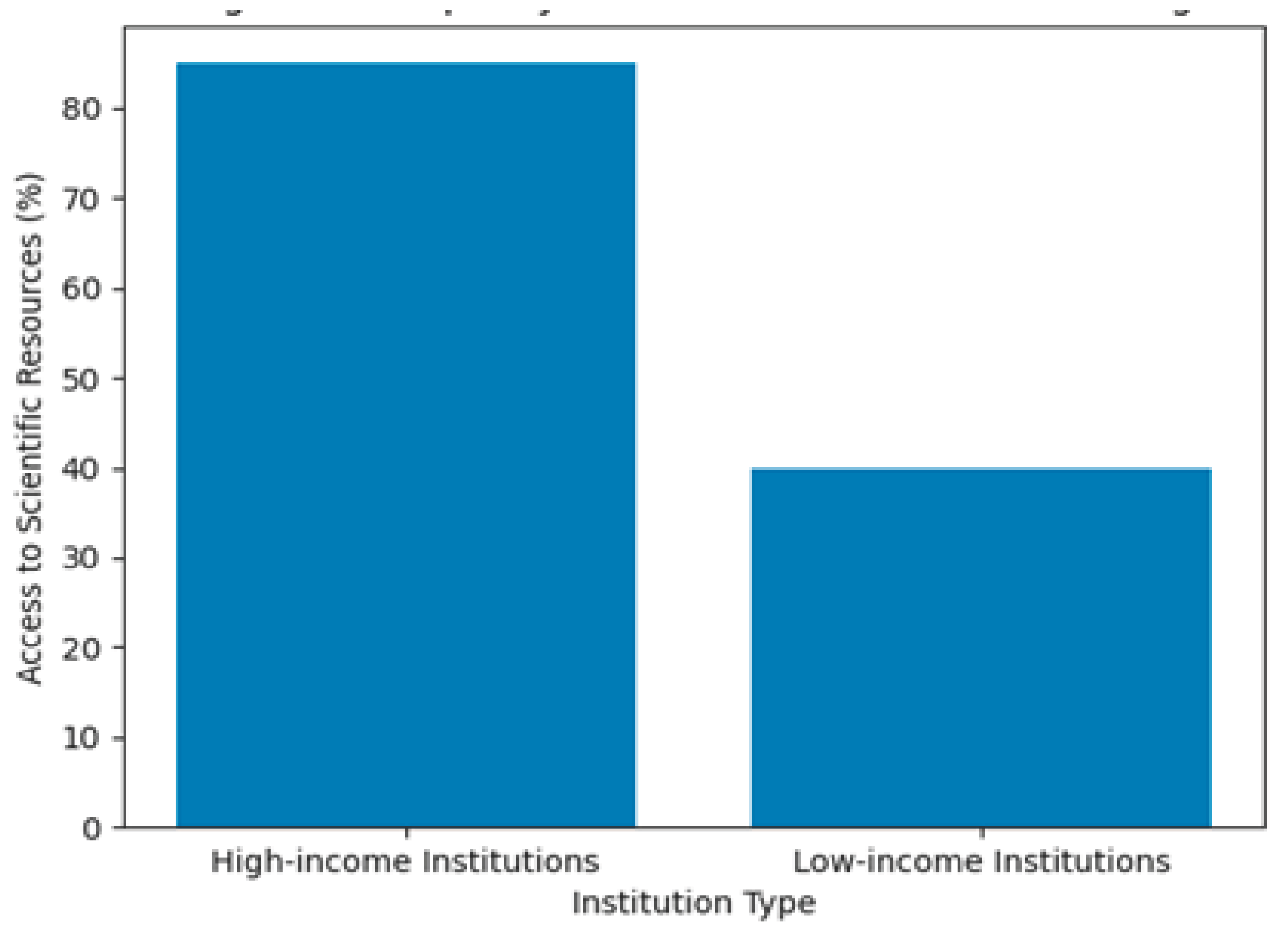
Figure 7.
Conceptual model illustrates disparities in access to scientific resources across global regions, reflecting structural inequalities in funding, infrastructure, and access to publishing systems [UNESCO, 2023; OECD, 2025; Piwowar et al., 2018; Fecher & Friesike, 2014].
Figure 7.
Conceptual model illustrates disparities in access to scientific resources across global regions, reflecting structural inequalities in funding, infrastructure, and access to publishing systems [UNESCO, 2023; OECD, 2025; Piwowar et al., 2018; Fecher & Friesike, 2014].
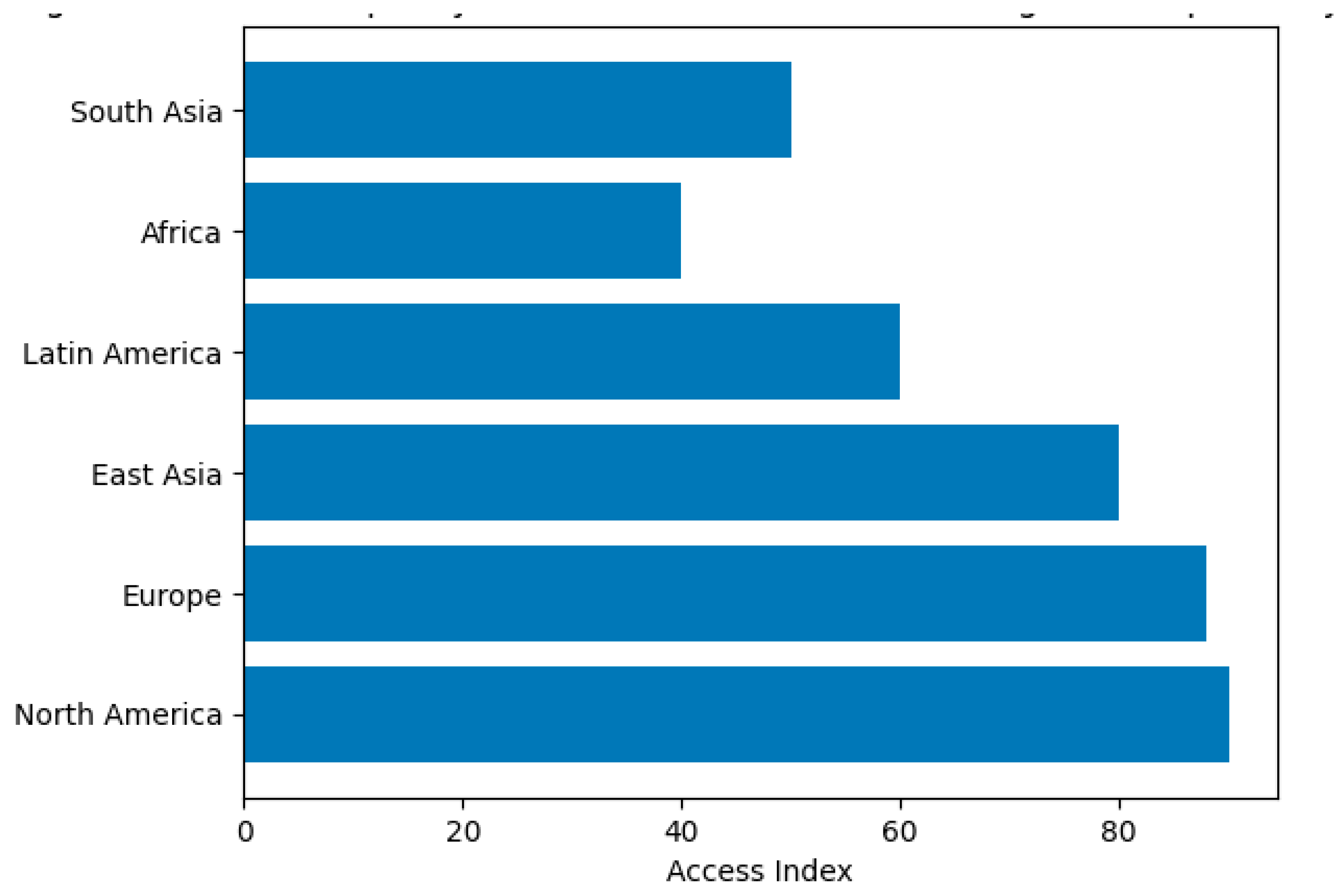
Table 1.
Shows the percentage distribution of AI Authors by region.
| Region | Share of Global AI Authors | Notable Trend in 2026 |
| China: | 36.1% | Leading in volume; authors are highly concentrated in government and academic sectors. |
| United States: | 12.0% | Leads in High-Impact authors; 90% of notable model authors are in the U.S. private sector. |
| India: | 12.1% | Fastest-growing author base, with a heavy focus on applied engineering and a genetic AI. |
| European Union: | 15.4% | Scientists are conducting groundbreaking research related to AI Safety, Ethics, and Governance. |
| South Korea: | 5.4% | Top Innovation Density, with the highest number of AI patents per capita in the world. |
[[Stanford AI Index Report, 2026; Nature Index, 2025; OECD, 2025; UNESCO, 2023].
Table 3.
Human vs AI Transparency in different research dimensions.
| Transparency Dimension | Human Publishing | AI Assisted Publishing |
| Explainability of Reasoning: | High. | Often limited. |
| Methodological Disclosure: | Variable. | Computationally traceable. |
| Decision Transparency: | Moderate. | Frequently opaque. |
| Peer-Review Transparency: | Often closed. | Emerging AI review uncertainty. |
| Bias Visibility: | Sometimes identifiable. | Often hidden in datasets. |
| Accountability: | Human responsibility. | Diffuse/unclear. |
| Interpretability: | Strong. | Frequently black-box. |
| Reproducibility& Transparency: | Variable. | Data/model dependent. |
| Verification Difficulty: | Moderate. | Potentially high. |
[Floridi et al., 2020; Russell & Norvig, 2021; UNESCO, 2023; Dwivedi et al., 2023]. *The comparison demonstrates that human publishing generally provides stronger conceptual explainability, while AI systems offer stronger computational traceability but weaker interpretability.
Table 4.
Comparative Ethical Integrity Analysis between Human and AI.
| Ethical Dimension | Human Publishing | AI Assisted Publishing |
| Moral Responsibility: | Present. | Absent. |
| Accountability: | Human authors. | Human users/institutions. |
| Creativity and Intentionality: | Strong. | Statistical generation. |
| Risk of Fabrication: | Moderate. | High hallucination risk. |
| Bias Source: | Cognitive/social bias. | Data/algorithmic bias. |
| Transparency: | Variable. | Often limited. |
| Ethical Judgment: | Present. | Absent. |
| Plagiarism Risk: | Human misconduct. | Automated generation. |
| Authorship Clarity: | Established. | Ethically disputed. |
[COPE, 2023; UNESCO, 2023; Floridi & Cowls, 2019; Bender et al., 2021; Stokel-Walker 2023].
Table 5.
Comparative Analysis of Open Science Practices; Human vs AI open science characteristics.
| Open Science Dimension | Human Publishing | AI Assisted Publishing |
| Accessibility: | Improving through open access. | Potentially global and scalable. |
| Data Sharing: | Variable willingness. | Computationally structured. |
| Reproducibility: | Often inconsistent. | Highly automatable. |
| Transparency: | Conceptually explainable. | Frequently black-box. |
| Collaboration: | Human-centered networks. | Large-scale digital collaboration. |
| Knowledge Dissemination: | Slower. | Extremely rapid. |
| Open Infrastructure: | Expanding. | Mixed open/proprietary models. |
| Ethical Oversight: | Human judgment. | Requires external governance. |
| Inclusiveness: | Institution-dependent. | Technology-dependent. |
[Nosek et al., 2015; Wilkinson et al., 2016; Piwowar et al., 2018; Vicente-Saez & Martinez-Fuentes, 2018; UNESCO, 2023] *The comparison demonstrates that AI systems can substantially accelerate open science practices while also introducing new transparency and governance challenges.
Table 6.
Comparative Reform Priorities of human vs AI.
| Reform Area: | Human Publishing | AI Assisted Publishing |
| Reduce Quantity Pressure: | Essential. | Critically important. |
| Improve Reproducibility: | High priority. | High priority. |
| Increase Transparency: | Peer-review reform. | Explainable AI. |
| Encourage Open Science: | Strong need. | Strong need. |
| Ethical Oversight: | Misconduct prevention. | AI governance. |
| Reward Collaboration: | Important. | Important. |
| Reduce Bias: | Institutional reform. | Dataset/model reform. |
| Accountability: | Human responsibility. | Human-supervised AI. |
[Hicks et al., 2015; Wilsdon et al., 2015; DORA, 2013; UNESCO. 2023] *The table demonstrates that both systems require structural reforms emphasizing quality, transparency, and ethical responsibility.
Disclaimer/Publisher’s Note: The statements, opinions and data contained in all publications are solely those of the individual author(s) and contributor(s) and not of MDPI and/or the editor(s). MDPI and/or the editor(s) disclaim responsibility for any injury to people or property resulting from any ideas, methods, instructions or products referred to in the content. |
© 2026 by the authors. Licensee MDPI, Basel, Switzerland. This article is an open access article distributed under the terms and conditions of the Creative Commons Attribution (CC BY) license (http://creativecommons.org/licenses/by/4.0/).
Copyright: This open access article is published under a Creative Commons CC BY 4.0 license, which permit the free download, distribution, and reuse, provided that the author and preprint are cited in any reuse.


