

Submitted:
03 August 2026
Posted:
04 August 2026
You are already at the latest version
Abstract
Tobacco addiction is a complex process whose main component is the brain reward system, at the center of which lies nicotine-induced dopamine release. This mechanism is combined with behavioral and environmental factors that perpetuate the habit. Another key element of this addiction is genetic predisposition, which will be the focus of this review. We will describe how genetic studies—from early research in twins and families to candidate gene association studies and genome-wide association studies—have identified key pathways mediating the mechanisms of tobacco addiction. We will review the most important findings and how certain genetic variants, either alone or in combination with others, can modify the cardiovascular risk associated with tobacco use. In addition, we will explore the opportunities these studies offer in the field of personalized medicine for pharmacological cessation therapies. In the future, it is clear that a multidisciplinary approach—combining genetics, clinical practice, and social sciences—will be necessary to transform tobacco use management into a precision-based model and reduce its impact on public health.
Keywords:
smoking
; addiction
; genetics
; cardiovascular risk
1. Introduction
Tobacco smoking remains one of the greatest public health challenges worldwide. According to the World Health Organization, approximately 1.3 billion people smoke globally, and tobacco use is responsible for an estimated 8 million deaths each year, including around 1.3 million among non-smokers exposed to second-hand smoke [1]. From a cardiovascular perspective, smoking is the single most important modifiable risk factor for coronary artery disease [2], the leading form of cardiovascular disease, whose prevalence continues to rise in developing countries [3]. Tobacco smoking promotes oxidative stress and proatherogenic processes that double the 10-year risk of fatal cardiovascular events compared with non-smokers, whereas smoking cessation at an early age can reduce the excess risk of death by up to 90% [4].
Tobacco addiction is an extremely complex behavioral disorder involving the interaction of neurobiological and socio-environmental factors. However, increasing evidence over the past two decades has highlighted the importance of individual genetic susceptibility [5]. Nicotine consumption, its central nervous system effects, and its metabolism are regulated by biological processes that can be altered by genetic variation [6]. This review focuses on the role of genetic variability in tobacco addiction, addressing its contribution to nicotine dependence, its potential application in smoking cessation therapies, and its relevance to the relationship between tobacco use and cardiovascular disease.
2. Tobacco Addiction
Tobacco addiction is characterized by dependence on nicotine, a psychoactive alkaloid that interacts with the central nervous system. At the core of this addiction lies the brain reward system, whose evolutionary function is to reinforce behaviors essential for survival. Nicotine is the principal addictive component of tobacco and increases dopaminergic activity, thereby generating rewarding sensations that become associated with specific behaviors while simultaneously alleviating stress and negative emotions [7]. Nicotinic acetylcholine receptors play a pivotal role in this process because their activation by nicotine stimulates dopamine release [8]. Repeated nicotine exposure induces neuroadaptation of these receptors, leading to the development of tolerance to many of nicotine’s effects [9]. Smoking cessation is followed by withdrawal symptoms including irritability, anxiety, increased food intake, dysphoria, and hedonic dysregulation, among others [10].
In addition to these biological mechanisms, tobacco addiction has a strong behavioral component. Consequently, current clinical practice guidelines recommend not only pharmacological treatments but also cognitive behavioral therapy, either alone or in combination with medication, to maximize smoking cessation success [11]. Continued smoking behavior is closely associated with environmental and social cues, including stress, daily routines, and peer influence, which frequently trigger tobacco use. These contextual stimuli are strongly linked to relapse episodes, even after prolonged periods of abstinence, highlighting the crucial contribution of environmental factors to the persistence of smoking behavior [12].
Thus, tobacco addiction results from the interaction of three major components: neurobiological mechanisms, behavioral factors, and genetic susceptibility. The contribution of the latter will be examined in detail in the following sections.
3. Evidence for the Influence of Genetics on Tobacco Addiction
3.1. Twin Studies
The relationship between genetics and tobacco addiction has been supported by an increasing body of evidence (Figure 1), with twin studies providing some of the earliest and most influential findings [5]. These studies compare monozygotic twins, who share virtually all of their genetic material, with dizygotic twins, who share approximately half. If a given phenotype—for example, smoking behavior—is more concordant among monozygotic than dizygotic twins, this strongly suggests the presence of a genetic contribution.
The first twin studies demonstrated that several smoking-related traits—including persistence of smoking, success in smoking cessation, age at smoking initiation, and the response to first nicotine exposure—are influenced by genetic factors [13,14,15,16]. Since these characteristics predict both vulnerability to tobacco use and patterns of nicotine dependence, they provide compelling evidence that inherited biological factors contribute substantially to tobacco addiction. A subsequent meta-analysis of twin studies confirmed that both genetic and environmental factors influence smoking initiation and persistence, demonstrating that tobacco dependence is not merely a behavioral phenomenon but is strongly shaped by biological predisposition [17].
Although twin studies, together with family and adoption studies, have provided invaluable insights into the heritability of tobacco addiction, they cannot identify the specific genetic variants responsible for these effects. This limitation has been largely overcome by genome-wide association studies (GWAS), which have identified numerous loci associated with smoking-related phenotypes.
3.2. Genome-Wide Association Studies
Genome-wide association studies compare the allele frequencies of hundreds of thousands—or even millions—of genetic variants between individuals displaying different phenotypes, such as smokers and non-smokers. These studies have become the principal approach for establishing robust associations between genetic variation and tobacco-related behaviors.
Early GWAS focused primarily on common variants, defined as those with allele frequencies greater than 5% [18,19]. Advances in genotype imputation and the increasing availability of large international cohorts have greatly improved statistical power and enabled large-scale meta-analyses, leading to the identification of numerous genomic regions associated with smoking initiation, smoking cessation, and smoking intensity. Among these, the 15q25 locus has consistently emerged as the strongest genetic determinant of tobacco addiction. Within this region, the regulatory variant rs55853698, located near the CHRNA5 gene (see subsequent sections), has shown one of the largest effects on smoking behavior [20]. The 15q25 region has likewise been identified as the most significant locus in several independent GWAS [21] and in meta-analyses including individuals of African ancestry [22]. In Asian populations, additional susceptibility regions have been identified, including 7q31.1 [23], as well as several variants associated with age at smoking initiation and cigarettes smoked per day [24]. In European populations, a GWAS conducted in Dutch siblings identified loci on chromosomes 5, 14, and 22 associated with age at first cigarette. The strongest signal was located on chromosome 5 within a region containing the dopamine D1 receptor (DRD1) gene, a key component of the endogenous reward system [25]. More recently, a meta-analysis including over 800,000 individuals identified an additional twenty loci associated with smoking-related behaviors, further expanding our understanding of the genetic architecture of tobacco addiction [26].
Despite these remarkable advances, the proportion of phenotypic variance explained by GWAS-identified variants remains substantially lower than heritability estimates derived from twin studies. One possible explanation is that rare genetic variants, which are still difficult to impute accurately, account for a considerable proportion of the so-called missing heritability [6]. Nevertheless, even the strongest genetic associations should not overshadow the importance of environmental influences. Vink and colleagues demonstrated that environmental factors exert a major influence on smoking frequency and relapse risk, reinforcing the concept that tobacco addiction is a multifactorial disorder in which genetic susceptibility interacts continuously with social and behavioral determinants to shape individual risk [27].
4. Major Genetic Pathways Involved in Tobacco Addiction
Tobacco addiction results from the interaction of multiple genetic pathways (Figure 2, Table 1), each contributing to different aspects of tobacco use, dependence, and abstinence. The accumulated evidence highlights that a thorough understanding of these pathways is not only essential for elucidating the pathophysiology of tobacco addiction, but also for designing personalized interventions that maximize treatment efficacy, as discussed in later sections
4.1. Nicotinic Acetylcholine Receptors
Among the genes identified, those encoding nicotinic acetylcholine receptors have received particular attention in recent years. The CHRNA5-CHRNA3-CHRNB4 gene cluster, located on chromosome 15, has been consistently associated with smoking susceptibility and nicotine dependence. A study by Thorgeirsson et al. [18] identified specific variants within this locus that significantly increase the risk of developing tobacco addiction. Variant rs16969968 and other variants in linkage disequilibrium produced the strongest association signal within this cluster [28]. Other variants within this cluster have also been associated with different smoking-related characteristics, including smoking initiation, smoking intensity, nicotine dependence, and persistence of tobacco use [28]. In addition, CHRNB2 has been associated with susceptibility to smoking initiation [29], and a rare variant in CHRNA4 appears to reduce receptor sensitivity and increase the risk of nicotine addiction [30].
4.2. Dopaminergic System
The dopaminergic system plays a crucial role in addiction, as it mediates the rewarding effects that reinforce nicotine consumption. Consequently, genes involved in this pathway have been the subject of numerous association studies [31]. For example, the DRD2 gene, which encodes the dopamine D2 receptor, has been associated with susceptibility to smoking. Specifically, the Taq1A variant (rs1800497) has been linked to a lower density of D2 receptors [32], which could interfere with the dopaminergic reward system. A meta-analysis including 11,000 smokers concluded that carriers of this variant were more likely to achieve successful smoking cessation during treatment [33]. Likewise, the DRD4 gene contains a variable number tandem repeat (VNTR) polymorphism that has been associated with nicotine aversion [34].
Variants in the dopamine transporter DAT1 (SLC6A3) gene, which affect dopamine reuptake and consequently dopamine levels within the synaptic cleft, have also been linked to tobacco dependence. Thus, Tiili et al. reported that a VNTR polymorphism in this gene may reduce the risk of smoking initiation as a consequence of decreased dopamine availability [35]. Regarding dopamine metabolism, McKinney et al. found that variability in the genes encoding monoamine oxidase (MAO)-A and dopamine-β-hydroxylase influences cigarette consumption [36]. Although there is strong evidence supporting the involvement of dopaminergic genetics in tobacco addiction, it should be emphasized that the results concerning these genes have not yet been consistently replicated. In most cases, this is because the genetic association studies conducted lacked sufficient sample size to detect the effects of common genetic variants on complex phenotypes such as smoking behavior, a limitation that has largely been overcome by GWAS.
4.3. Serotonergic System
The SLC6A4 gene encodes the serotonin transporter, whose functional status is important in numerous psychiatric disorders and personality traits [37]. The association between genetic variants affecting the expression of this transporter and smoking behavior has so far been controversial, although some studies support an effect on nicotine dependence [38]. Likewise, the T102C variant in the 5-HT2A serotonin receptor has been associated with maintenance of the smoking habit [39], although further studies are needed to confirm these findings.
4.4. Cytochrome P450
Within the cytochrome P450 (CYP450) enzyme system, CYP2A6 is responsible for metabolizing approximately 80% of nicotine in the liver, converting it into cotinine, and subsequently catalyzing the biotransformation of cotinine into 3-hydroxycotinine [40] (Figure 2), illustrating its importance in studies conducted to date. Variants in the CYP2A6 gene have been associated with numerous characteristics related to smoking behavior [41]. For example, slow metabolizers have a greater risk of developing nicotine dependence, but they also tend to smoke fewer cigarettes and are more likely to quit smoking spontaneously, probably because they experience less severe withdrawal symptoms [42,43]. More than 40 CYP2A6 variants affecting enzymatic activity have been described, and this locus contains many of the variants identified as significant in GWAS conducted in smokers [44].
CYP2B6 is the second most active enzyme involved in nicotine metabolism. This gene is also highly polymorphic and is expressed at significant levels in the brain, where it may play a major role in the local metabolism of nicotine [45]. However, its genetic variability appears to be clinically relevant mainly in relation to the efficacy of bupropion treatment, since this drug is metabolized by CYP2B6 (see below).
4.5. GABAergic and Glutamatergic Systems
The GABAergic system, which plays a key role in regulating neuronal excitability, also participates in tobacco addiction, probably through interactions with the dopaminergic system. Accordingly, variants in the GABRA4 and GABRA2 genes, which encode GABA receptor subunits, have been associated with scores on the Fagerström Test for Nicotine Dependence [46].
The glutamatergic system contributes through NMDA receptors, which are involved in synaptic plasticity and associative memory, processes that are essential for the consolidation of addictive behaviors [47]. Consistent with this hypothesis, the rs4354668 variant in the glutamate transporter SLC1A2 has recently been associated with an increased risk of drug use [48]. Likewise, several NMDA glutamate receptor subunits (GRIN2A/2B/K2) and SLC1A2 were identified in a GWAS investigating smoking-related behavior [49], further supporting the importance of this pathway in tobacco addiction.
4.6. Other Candidate Pathways
There is also evidence suggesting that tobacco addiction is modulated by variants in genes involved in other biological pathways, including different flavin-containing monooxygenases (FMO) [50,51] and UDP-glucuronosyltransferases (UGT2B10 and UGT2B17) [50,52], which are involved in nicotine metabolism. In addition, genes belonging to the neuregulin signaling pathway have been implicated [53], as they are important in the well-established relationship between schizophrenia and nicotine dependence. Furthermore, tobacco addiction is also influenced by epigenetic modifications. For example, tobacco smoking induces changes in DNA methylation at key genomic regions, such as AHRR and GPR15. These changes not only predispose individuals to tobacco use, but also have implications for smoking-related diseases, including lung cancer [54].

Table 1.
Summary of associations of genetic variability in the major pathways involved in tobacco addiction with smoking behavior.
Table 1.
Summary of associations of genetic variability in the major pathways involved in tobacco addiction with smoking behavior.
| Reference | Pathway | Gene(s) and variant(s) | Comment |
|---|---|---|---|
| Thorgeirsson et al., 2008 [18] | Nicotinic acetylcholine receptors | CHRNA5-CHRNA3-CHRNB4 (15q25 locus) | First GWAS to identify the 15q25 cluster as the major genetic determinant of nicotine dependence. |
| Lassi et al., 2016 [28] | Nicotinic acetylcholine receptors | CHRNA5 rs16969968 | Review identifying rs16969968 as the most relevant variant associated with smoking intensity and nicotine dependence. |
| Greenbaum et al., 2006 [29] | Nicotinic acetylcholine receptors | CHRNB2 CACTA haplotype | Associated with reduced susceptibility to smoking initiation. |
| Thorgeirsson et al., 2016 [30] | Nicotinic acetylcholine receptors | CHRNA4 rs56175056 | This variant increases the risk of nicotine addiction. |
| Munafo et al., 2004 [31] | Dopaminergic system | DRD2, DRD4, SLC6A3, MAO-A, DBH | Systematic review of the association between variability in dopaminergic genes and smoking. |
| Ma et al., 2015 [33] | Dopaminergic system | DRD2 rs1800497 (Taq1A) | Meta-analysis associating the variant with a higher likelihood of successful smoking cessation. |
| Perkins et al., 2008 [34] | Dopaminergic system | DRD4 VNTR | Associated with initial sensitivity and aversion to nicotine. |
| Tiili et al., 2020 [35] | Dopaminergic system | SLC6A3 (DAT1) VNTR | The variant reduces the risk of smoking initiation through reduced dopamine availability. |
| McKinney et al., 2000 [36] | Dopaminergic system | MAO-A rs1137070 and DBH rs1108580 | Variants associated with the number of cigarettes smoked. |
| Koks et al., 2018 [38] | Serotonergic system | SLC6A4 HTTLPR and STin2 (VNTRs) | Genetic interaction associated with nicotine dependence. |
| do Prado-Lima et al., 2004 [39] | Serotonergic system | HTR2A rs6313 | Associated with maintenance of the smoking habit. |
| Malaiyandi et al., 2006 [42] | Nicotine metabolism (CYP450) | CYP2A6 (slow-metabolizer alleles) | Slow metabolizers show lower cigarette consumption and a higher likelihood of spontaneous smoking cessation. |
| Agrawal et al., 2009 [46] | GABAergic system | 20 variants in GABRA2 and GABRA4 | Associated with Fagerström Test scores for nicotine dependence. |
| Dawidowski et al., 2024 [48] | Glutamatergic system | SLC1A2 rs4354668 | The variant increases the risk of drug use and possibly smoking. |
| Vink et al., 2009 [49] | Glutamatergic system | GRIN2A, GRIN2B, GRIK2, SLC1A2 | GWAS identifying glutamatergic genes associated with age at smoking initiation. |
| Zhang et al., 2017 [51]; Pérez-Páramo et al., 2023 [50] | Nicotine metabolism | FMO1 rs6674596 | Variant associated with nicotine dependence in European populations. |
| Ware et al., 2016 [52]; Pérez-Páramo et al., 2023 [50] | Nicotine metabolism | UGT2B10 rs835316, rs2942857; UGT2B17 deletion | Variants associated with cotinine metabolism. |
| Loukola et al., 2014 [53] | Neuregulin pathway | ERBB4 rs7562566 | Possible relationship between nicotine dependence and schizophrenia. |
| Zeilinger et al., 2013 [54] | Epigenetics | AHRR cg05575921 | Smoking induces DNA methylation changes associated with tobacco use and smoking-related diseases. |
5. Genetics and Cardiovascular Risk in Smokers
The harmful effects of tobacco on cardiovascular health are well established, with consistent associations reported with the risk of myocardial infarction, sudden cardiac death, thrombosis, and atherosclerosis. Although numerous underlying mechanisms continue to be identified, endothelial dysfunction, inflammation, and thrombosis are considered the most important [55]. Toxins generated by tobacco are detoxified through complex defense mechanisms whose genes are subject to genetic variability that may affect their efficiency. Furthermore, tobacco may also modify gene function and expression by causing DNA mutations. In other words, there is an interaction between the presence of genetic variants in relevant genes and cardiovascular disease that may be modified by tobacco smoking [56].
For example, smoking may interfere with nitric oxide (NO) synthesis, which can lead to endothelial dysfunction. The NOS3 gene, which encodes endothelial nitric oxide synthase (eNOS), a key enzyme involved in NO production, contains variants such as T786C, G894T, and a variable number of tandem repeats in intron 4, which may affect eNOS expression [57]. It has been shown that tobacco smoking affects this expression differently depending on the presence or absence of these variants [56]. Likewise, smoking may also interact with variants in detoxification enzymes, such as the MspI polymorphism in CYP1A1, thereby influencing the risk of coronary artery disease and atherosclerosis [56]. Other detoxification enzymes, such as glutathione S-transferases (GSTs), are also affected. Thus, Kim et al. found that the GSTM and GSTT null genotypes were associated with an increased risk of coronary artery disease in smokers, whereas no such association was observed in non-smokers [58], although contradictory findings have also been reported [59].
Regarding antioxidant enzymes, paraoxonase (PON1) reduces LDL accumulation and hydrolyses lipids within atherosclerotic lesions [60]. Variants in the encoding gene, either alone or in combination with variants in PON2, may determine the risk of coronary artery disease or myocardial infarction, and this risk appears to differ according to the patient’s smoking status [61,62]. Likewise, apolipoprotein E (ApoE) has a major influence on lipid levels and cardiovascular risk, an effect that is also subject to genetic variation [63]. One study showed that the cardiovascular risk of carriers of one of these variants (ApoE ε4 genotype) increased 1.6-fold if the carrier was a male smoker [64]. Similar findings have also demonstrated the modifying effect of tobacco smoking on cardiovascular risk for other genes, including lipoprotein lipase [65], interleukin-6 [65], interleukin-18 [66], TGF-β [67], and the factor II (prothrombin) G20210A mutation [68].
Finally, other approaches have also demonstrated the importance of the interaction between genetics, tobacco smoking, and cardiovascular risk. A recent Mendelian randomization study showed that genetic predisposition to smoking is associated with an increased risk of peripheral artery disease, coronary artery disease, and stroke [69]. Furthermore, two studies constructed polygenic risk scores based on established loci associated with coronary artery disease and concluded that both smoking status and smoking intensity interact with these scores to modify the effects of tobacco smoking on cardiovascular disease [70,71].
A summary of the most relevant associations described in this section is shown in Table 2.
6. Genetics in Therapeutic Strategies for Tobacco Addiction
The accumulated knowledge on the genetic basis of tobacco addiction has the potential to drive the development of personalized medicine strategies for tobacco dependence, with the aim of improving the efficacy of interventions, minimizing adverse effects, and creating opportunities for early prevention. Simply informing a smoker that their genetic profile may place them at increased risk of developing tobacco-related diseases may increase their motivation to quit smoking [72].
In recent years, the clinical implementation of polygenic risk scores, tools that assess the combined impact of multiple genetic variants by calculating the weighted sum of their effects, has become a major area of research in numerous diseases [73]. Accordingly, several of these scores have been developed in relation to tobacco addiction and may help predict the likelihood of smoking initiation and nicotine dependence [74,75,76,77]. These tools could therefore help target preventive interventions towards high-risk populations. One example is a study involving more than 300,000 participants that proposed the use of these scores to identify high-risk smokers and optimize lung cancer screening strategies [78], although there are also data questioning the cost-effectiveness of such programs [79]. The usefulness of these polygenic risk scores has also been evaluated in smoking cessation therapies, and several studies and meta-analyses suggest that they may be useful for predicting the success of treatment [80,81].
On the other hand, pharmacological treatment for tobacco addiction, including agents such as varenicline, bupropion, cytisinicline, and nicotine replacement therapies, could also benefit substantially from a pharmacogenetic approach [41,82]. Varenicline, a partial agonist of nicotinic acetylcholine receptors, has shown variability in its efficacy according to the patient’s genetic profile [83]. Genes of particular interest in this regard include the OCT2 transporter (SLC22A2), which transports both nicotine and varenicline [84]; the nicotinic acetylcholine receptor genes CHRNA4 [85] and CHRNB2 [85]; the CHRNA5-CHRNA3-CHRNB4 gene cluster [28,86]; and the CYP2A6 [87] and CYP2B6 [88] genes, which are involved in nicotine metabolism. In addition to efficacy, the safety of varenicline also appears to be influenced by genetic factors. Thus, a very recent GWAS identified several variants in the ICAM5 gene that are associated with the occurrence of adverse effects (unusual nightmares) in patients treated with this drug [83].
Similarly, the effectiveness of bupropion, which acts by modulating the dopaminergic system, is influenced by variants in genes such as CYP2B6 [85,89], which metabolically activates the drug by converting it into hydroxybupropion, CHRNB2 [90], and other genes related to dopamine neurotransmission. With regard to the latter, David et al. showed that the Taq1A variant of the dopamine D2 receptor was associated with treatment efficacy [91]. The same research group developed a score based on variants present in genes involved in dopaminergic pathways, such as COMT (dopamine metabolism), DRD4 (dopamine receptor), and SLC6A3 (dopamine reuptake transporter), which was able to predict the duration of abstinence following a smoking cessation attempt treated with bupropion [92]. Finally, an association has also been reported between abstinence during bupropion treatment and genetic variability in the serotonin transporter SLC6A4, probably owing to a possible interaction between the drug and serotonergic receptors [93].
With regard to cytisinicline, given its recent introduction into smoking cessation therapies, there are still limited data suggesting an influence of genetic factors on its efficacy or safety. However, a recent study linked some of its effects to the expression of the serotonin transporter, which in turn could influence nicotine dependence [94]. Finally, CYP2A6 variants may also influence the optimal dose of nicotine replacement therapies. Malaiyandi et al. demonstrated that the CYP2A6 genotype influences the plasma nicotine concentrations achieved during these therapies. The authors suggested that prior genetic testing could be useful for predicting these concentrations and adjusting doses accordingly [42]. Likewise, Sarginson et al. found an association between the rs680244 variant of CHRNA5 and long-term abstinence in patients receiving combined treatment with bupropion and nicotine patches [95]. In contrast, a meta-analysis of patients receiving nicotine replacement therapy found no association between treatment effectiveness and the presence of variants in the CHRNA5-CHRNA3-CHRNB4 gene cluster [96].
Genetic knowledge is also guiding the development of new therapies specifically targeting pathways involved in tobacco addiction. Zeilinger et al. reported that tobacco smoking induces profound epigenetic changes at the level of DNA methylation [54]. Based on this and other similar studies, compounds capable of reversing these alterations are currently being developed. For example, DNA methyltransferase (DNMT1) inhibitors are being investigated as potential tools for modifying epigenetic patterns associated with nicotine dependence [97]. Likewise, preclinical studies are exploring the development of molecules that selectively modulate the activity of nicotinic receptors altered by genetic variants. For example, pozanicline (ABT-089) and related compounds are partial agonists acting on these receptors, and their use in experimental animals has been shown to alleviate nicotine withdrawal symptoms [98].
However, the success of smoking cessation treatment depends not only on pharmacotherapy but also on behavioral interventions, which could likewise be personalized by considering the patient’s genetic profile. For example, based on the results of several GWAS, Sallis et al. found evidence of genetic correlations between certain personality traits and tobacco-related phenotypes, and suggested that these findings could be used to personalize future smoking cessation interventions and identify those patients who are most susceptible to relapse [99].
See Table 3 for a summary of the most relevant findings regarding the genetics of cessation therapy.
7. Perspectives and Conclusions
Research on the genetic basis of tobacco addiction has advanced considerably, opening new opportunities in both the clinical and preventive fields. Candidate gene association studies, but above all genome-wide association studies and those based on polygenic risk scores, among other approaches, have made it possible to identify critical genetic pathways involved in the effects of tobacco, including those related to nicotinic acetylcholine receptors, dopaminergic genes, and genes involved in nicotine metabolism. As discussed throughout this review, genetic variability within these pathways not only explains patterns of addiction and smoking behavior—including age at smoking initiation, response to first exposure, smoking intensity, the likelihood of successful spontaneous smoking cessation, and persistence of the smoking habit—but also modifies the cardiovascular risk associated with tobacco smoking. This risk may depend on specific genotypes carried by smokers in antioxidant and detoxification genes, as well as in genes involved in nitric oxide synthesis or lipid metabolism. Taken together, these findings clearly indicate that evaluating the interactions between genetics and lifestyle factors, including tobacco smoking, may contribute substantially to elucidating the mechanisms underlying cardiovascular risk. In this regard, the integration of artificial intelligence into genomic studies will, in the short to medium term, enable the analysis of complex interactions between genetic variants, environmental exposures, and treatments, thereby accelerating the personalization of therapies and facilitating the development of predictive algorithms [100].
One of the most promising areas for the application of these genetic findings is the development of personalized medicine strategies for smoking cessation therapies. It has been shown that the drugs currently approved for this purpose in Spain, particularly varenicline and bupropion, may exhibit reduced effectiveness owing to the presence of genetic variants. This opens the possibility of performing genetic testing before treatment in order to determine the most appropriate drug and dosage for each patient. However, smoking cessation therapies are not the only area that could benefit from precision medicine. Genetic information could also be incorporated into educational programs and public health policies to discourage smoking initiation among genetically susceptible individuals [101], or to identify populations with a greater genetic susceptibility to developing tobacco-related diseases, thereby facilitating the implementation of early prevention programs [78,102].
However, despite these promising advances, important barriers remain to the widespread implementation of personalized medicine strategies. These include unequal access to genetic testing depending on the healthcare setting, the fact that the technologies required to identify genetic profiles are not yet economically feasible for many healthcare systems, and concerns regarding privacy, since knowledge of an individual’s genetic risk could lead to stigmatization or discourage people from seeking medical assistance [103]. In the future, combining multidisciplinary approaches ranging from genetics to social sciences will be essential to overcome these barriers and transform tobacco control into a precision medicine model, ultimately improving quality of life and reducing the impact of this global epidemic on public health.
Funding
This study was partially funded by the Research Chair in Cardiovascular Risk Reduction (CIRRCE, Badajoz, Spain) at the University of Extremadura. In addition, 85% of the funding for this study was provided by the European Union, the European Regional Development Fund, and the Regional Government of Extremadura (Mérida, Spain), with the Ministry of Finance serving as the Managing Authority (Grant GR24027).
Conflicts of Interest
The author declares no conflicts of interest. The funders had no role in the design of the study; in the collection, analyses, or interpretation of data; in the writing of the manuscript; or in the decision to publish the results”.
References
- WHO. (2023). Tobacco, 2024. Available online: https://www.who.int/news-room/fact-sheets/detail/tobacco (accessed on 1 July 2026).
- Salehi, N.; Janjani, P.; Tadbiri, H.; Rozbahani, M.; Jalilian, M. Effect of cigarette smoking on coronary arteries and pattern and severity of coronary artery disease: a review. J. Int. Med. Res. 2021, 49, 3000605211059893. [Google Scholar] [CrossRef] [PubMed]
- Gaziano, T.A.; Bitton, A.; Anand, S.; Abrahams-Gessel, S.; Murphy, A. Growing epidemic of coronary heart disease in low- and middle-income countries. Curr. Probl. Cardiol. 2010, 35, 72–115. [Google Scholar] [CrossRef] [PubMed]
- Gallucci, G.; Tartarone, A.; Lerose, R.; Lalinga, A.V.; Capobianco, A.M. Cardiovascular risk of smoking and benefits of smoking cessation. J. Thorac. Dis. 2020, 12, 3866–3876. [Google Scholar] [CrossRef] [PubMed]
- Loukola, A.; Hallfors, J.; Korhonen, T.; Kaprio, J. Genetics and smoking. Curr. Addict Rep. 2014, 1, 75–82. [Google Scholar] [CrossRef] [PubMed]
- Ware, J.J.; Munafo, M.R. Genetics of smoking behaviour. Curr. Top. Behav. Neurosci. 2015, 23, 19–36. [Google Scholar] [CrossRef] [PubMed]
- Reed, B.C.; Grissom, M.O.; Carroll Turpin, M.A.; Starks, S.M. Addiction Medicine: Tobacco Use Disorder. FP Essent. 2024, 546, 23–28. [Google Scholar] [PubMed]
- Changeux, J.P. Nicotine addiction and nicotinic receptors: lessons from genetically modified mice. Nat. Rev. Neurosci. 2010, 11, 389–401. [Google Scholar] [CrossRef] [PubMed]
- Picciotto, M.R.; Caldarone, B.J.; King, S.L.; Zachariou, V. Nicotinic receptors in the brain. Links between molecular biology and behavior. Neuropsychopharmacology 2000, 22, 451–465. [Google Scholar] [CrossRef] [PubMed]
- Jiloha, R.C. Biological basis of tobacco addiction: Implications for smoking-cessation treatment. Indian J. Psychiatry 2010, 52, 301–307. [Google Scholar] [CrossRef] [PubMed]
- Clinical Practice Guideline Treating Tobacco Use and Dependence 2008 Update Panel, Liaisons, and Staff. A clinical practice guideline for treating tobacco use and dependence: 2008 update. A U.S. Public Health Service report. Am. J. Prev. Med. 2008, 35, 158–176. [Google Scholar] [CrossRef] [PubMed]
- Garcia-Pazo, P.; Fornes-Vives, J.; Sese, A.; Perez-Pareja, F.J. Apps for smoking cessation through Cognitive Behavioural Therapy. A review. Adicciones 2021, 33, 359–368. [Google Scholar] [PubMed]
- Carmelli, D.; Swan, G.E.; Robinette, D.; Fabsitz, R. Genetic influence on smoking--a study of male twins. N Engl. J. Med. 1992, 327, 829–833. [Google Scholar] [CrossRef] [PubMed]
- Heath, A.C.; Cates, R.; Martin, N.G.; Meyer, J.; Hewitt, J.K.; Neale, M.C.; Eaves, L.J. Genetic contribution to risk of smoking initiation: comparisons across birth cohorts and across cultures. J. Subst. Abus. 1993, 5, 221–246. [Google Scholar] [CrossRef] [PubMed]
- Heath, A.C.; Martin, N.G. Genetic models for the natural history of smoking: evidence for a genetic influence on smoking persistence. Addict Behav. 1993, 18, 19–34. [Google Scholar] [CrossRef] [PubMed]
- Agrawal, A.; Madden, P.A.; Bucholz, K.K.; Heath, A.C.; Lynskey, M.T. Initial reactions to tobacco and cannabis smoking: a twin study. Addiction 2014, 109, 663–671. [Google Scholar] [CrossRef] [PubMed]
- Li, M.D.; Cheng, R.; Ma, J.Z.; Swan, G.E. A meta-analysis of estimated genetic and environmental effects on smoking behavior in male and female adult twins. Addiction 2003, 98, 23–31. [Google Scholar] [PubMed]
- Thorgeirsson, T.E.; Geller, F.; Sulem, P.; Rafnar, T.; Wiste, A.; Magnusson, K.P.; Manolescu, A.; Thorleifsson, G.; Stefansson, H.; Ingason, A.; Stacey, S.N.; Bergthorsson, J.T.; Thorlacius, S.; Gudmundsson, J.; Jonsson, T.; Jakobsdottir, M.; Saemundsdottir, J.; Olafsdottir, O.; Gudmundsson, L.J.; Bjornsdottir, G.; Kristjansson, K.; Skuladottir, H.; Isaksson, H.J.; Gudbjartsson, T.; Jones, G.T.; Mueller, T.; Gottsater, A.; Flex, A.; Aben, K.K.H.; de Vegt, F.; Mulders, P.F.A.; Isla, D.; Vidal, M.J.; Asin, L.; Saez, B.; Murillo, L.; Blondal, T.; Kolbeinsson, H.; Stefansson, J.G.; Hansdottir, I.; Runarsdottir, V.; Pola, R.; Lindblad, B.; van Rij, A.M.; Dieplinger, B.; Haltmayer, M.; Mayordomo, J.I.; Kiemeney, L.A.; Matthiasson, S.E.; Oskarsson, H.; Tyrfingsson, T.; Gudbjartsson, D.F.; Gulcher, J.R.; Jonsson, S.; Thorsteinsdottir, U.; Kong, A.; Stefansson, K. A variant associated with nicotine dependence, lung cancer and peripheral arterial disease. Nature 2008, 452, 638–642. [Google Scholar] [CrossRef] [PubMed]
- Caporaso, N.; Gu, F.; Chatterjee, N.; Sheng-Chih, J.; Yu, K.; Yeager, M.; Chen, C.; Jacobs, K.; Wheeler, W.; Landi, M.T.; Ziegler, R.G.; Hunter, D.J.; Chanock, S.; Hankinson, S.; Kraft, P.; Bergen, A.W. Genome-wide and candidate gene association study of cigarette smoking behaviors. PLoS ONE 2009, 4, e4653. [Google Scholar] [CrossRef] [PubMed]
- Liu, J.Z.; Tozzi, F.; Waterworth, D.M.; Pillai, S.G.; Muglia, P.; Middleton, L.; Berrettini, W.; Knouff, C.W.; Yuan, X.; Waeber, G.; Vollenweider, P.; Preisig, M.; Wareham, N.J.; Zhao, J.H.; Loos, R.J.; Barroso, I.; Khaw, K.T.; Grundy, S.; Barter, P.; Mahley, R.; Kesaniemi, A.; McPherson, R.; Vincent, J.B.; Strauss, J.; Kennedy, J.L.; Farmer, A.; McGuffin, P.; Day, R.; Matthews, K.; Bakke, P.; Gulsvik, A.; Lucae, S.; Ising, M.; Brueckl, T.; Horstmann, S.; Wichmann, H.E.; Rawal, R.; Dahmen, N.; Lamina, C.; Polasek, O.; Zgaga, L.; Huffman, J.; Campbell, S.; Kooner, J.; Chambers, J.C.; Burnett, M.S.; Devaney, J.M.; Pichard, A.D.; Kent, K.M.; Satler, L.; Lindsay, J.M.; Waksman, R.; Epstein, S.; Wilson, J.F.; Wild, S.H.; Campbell, H.; Vitart, V.; Reilly, M.P.; Li, M.; Qu, L.; Wilensky, R.; Matthai, W.; Hakonarson, H.H.; Rader, D.J.; Franke, A.; Wittig, M.; Schafer, A.; Uda, M.; Terracciano, A.; Xiao, X.; Busonero, F.; Scheet, P.; Schlessinger, D.; St Clair, D.; Rujescu, D.; Abecasis, G.R.; Grabe, H.J.; Teumer, A.; Volzke, H.; Petersmann, A.; John, U.; Rudan, I.; Hayward, C.; Wright, A.F.; Kolcic, I.; Wright, B.J.; Thompson, J.R.; Balmforth, A.J.; Hall, A.S.; Samani, N.J.; Anderson, C.A.; Ahmad, T.; Mathew, C.G.; Parkes, M.; Satsangi, J.; Caulfield, M.; Munroe, P.B.; Farrall, M.; Dominiczak, A.; Worthington, J.; Thomson, W.; Eyre, S.; Barton, A.; Wellcome Trust Case Control, C.; Mooser, V.; Francks, C.; Marchini, J. Meta-analysis and imputation refines the association of 15q25 with smoking quantity. Nat. Genet 2010, 42, 436–440. [Google Scholar] [CrossRef] [PubMed]
- Tobacco Genetics Consortium. Genome-wide meta-analyses identify multiple loci associated with smoking behavior. Nat. Genet 2010, 42, 441–447. [Google Scholar] [CrossRef] [PubMed]
- David, S.P.; Hamidovic, A.; Chen, G.K.; Bergen, A.W.; Wessel, J.; Kasberger, J.L.; Brown, W.M.; Petruzella, S.; Thacker, E.L.; Kim, Y.; Nalls, M.A.; Tranah, G.J.; Sung, Y.J.; Ambrosone, C.B.; Arnett, D.; Bandera, E.V.; Becker, D.M.; Becker, L.; Berndt, S.I.; Bernstein, L.; Blot, W.J.; Broeckel, U.; Buxbaum, S.G.; Caporaso, N.; Casey, G.; Chanock, S.J.; Deming, S.L.; Diver, W.R.; Eaton, C.B.; Evans, D.S.; Evans, M.K.; Fornage, M.; Franceschini, N.; Harris, T.B.; Henderson, B.E.; Hernandez, D.G.; Hitsman, B.; Hu, J.J.; Hunt, S.C.; Ingles, S.A.; John, E.M.; Kittles, R.; Kolb, S.; Kolonel, L.N.; Le Marchand, L.; Liu, Y.; Lohman, K.K.; McKnight, B.; Millikan, R.C.; Murphy, A.; Neslund-Dudas, C.; Nyante, S.; Press, M.; Psaty, B.M.; Rao, D.C.; Redline, S.; Rodriguez-Gil, J.L.; Rybicki, B.A.; Signorello, L.B.; Singleton, A.B.; Smoller, J.; Snively, B.; Spring, B.; Stanford, J.L.; Strom, S.S.; Swan, G.E.; Taylor, K.D.; Thun, M.J.; Wilson, A.F.; Witte, J.S.; Yamamura, Y.; Yanek, L.R.; Yu, K.; Zheng, W.; Ziegler, R.G.; Zonderman, A.B.; Jorgenson, E.; Haiman, C.A.; Furberg, H. Genome-wide meta-analyses of smoking behaviors in African Americans. Transl. Psychiatry 2012, 2, e119. [Google Scholar] [CrossRef] [PubMed]
- Yoon, D.; Kim, Y.J.; Cui, W.Y.; Van der Vaart, A.; Cho, Y.S.; Lee, J.Y.; Ma, J.Z.; Payne, T.J.; Li, M.D.; Park, T. Large-scale genome-wide association study of Asian population reveals genetic factors in FRMD4A and other loci influencing smoking initiation and nicotine dependence. Hum. Genet 2012, 131, 1009–1021. [Google Scholar] [PubMed]
- Matoba, N.; Akiyama, M.; Ishigaki, K.; Kanai, M.; Takahashi, A.; Momozawa, Y.; Ikegawa, S.; Ikeda, M.; Iwata, N.; Hirata, M.; Matsuda, K.; Kubo, M.; Okada, Y.; Kamatani, Y. GWAS of smoking behaviour in 165,436 Japanese people reveals seven new loci and shared genetic architecture. Nat. Hum. Behav. 2019, 3, 471–477. [Google Scholar] [CrossRef] [PubMed]
- Vink, J.M.; Posthuma, D.; Neale, M.C.; Eline Slagboom, P.; Boomsma, D.I. Genome-wide linkage scan to identify Loci for age at first cigarette in Dutch sibling pairs. Behav. Genet 2006, 36, 100–111. [Google Scholar] [PubMed]
- Xu, K.; Li, B.; McGinnis, K.A.; Vickers-Smith, R.; Dao, C.; Sun, N.; Kember, R.L.; Zhou, H.; Becker, W.C.; Gelernter, J.; Kranzler, H.R.; Zhao, H.; Justice, A.C.; Program, V.A.M.V. Genome-wide association study of smoking trajectory and meta-analysis of smoking status in 842,000 individuals. Nat. Commun. 2020, 11, 5302. [Google Scholar] [CrossRef] [PubMed]
- Vink, J.M.; Willemsen, G.; Boomsma, D.I. Heritability of smoking initiation and nicotine dependence. Behav. Genet 2005, 35, 397–406. [Google Scholar] [CrossRef] [PubMed]
- Lassi, G.; Taylor, A.E.; Timpson, N.J.; Kenny, P.J.; Mather, R.J.; Eisen, T.; Munafo, M.R. The CHRNA5-A3-B4 Gene Cluster and Smoking: From Discovery to Therapeutics. Trends Neurosci. 2016, 39, 851–861. [Google Scholar] [CrossRef] [PubMed]
- Greenbaum, L.; Kanyas, K.; Karni, O.; Merbl, Y.; Olender, T.; Horowitz, A.; Yakir, A.; Lancet, D.; Ben-Asher, E.; Lerer, B. Why do young women smoke? I. Direct and interactive effects of environment, psychological characteristics and nicotinic cholinergic receptor genes. Mol. Psychiatry 2006, 11, 312–322, 223. [Google Scholar] [CrossRef] [PubMed]
- Thorgeirsson, T.E.; Steinberg, S.; Reginsson, G.W.; Bjornsdottir, G.; Rafnar, T.; Jonsdottir, I.; Helgadottir, A.; Gretarsdottir, S.; Helgadottir, H.; Jonsson, S.; Matthiasson, S.E.; Gislason, T.; Tyrfingsson, T.; Gudbjartsson, T.; Isaksson, H.J.; Hardardottir, H.; Sigvaldason, A.; Kiemeney, L.A.; Haugen, A.; Zienolddiny, S.; Wolf, H.J.; Franklin, W.A.; Panadero, A.; Mayordomo, J.I.; Hall, I.P.; Ronmark, E.; Lundback, B.; Dirksen, A.; Ashraf, H.; Pedersen, J.H.; Masson, G.; Sulem, P.; Thorsteinsdottir, U.; Gudbjartsson, D.F.; Stefansson, K. A rare missense mutation in CHRNA4 associates with smoking behavior and its consequences. Mol. Psychiatry 2016, 21, 594–600. [Google Scholar] [CrossRef] [PubMed]
- Munafo, M.; Clark, T.; Johnstone, E.; Murphy, M.; Walton, R. The genetic basis for smoking behavior: a systematic review and meta-analysis. Nicotine Tob. Res. 2004, 6, 583–597. [Google Scholar] [CrossRef] [PubMed]
- Jonsson, E.G.; Nothen, M.M.; Grunhage, F.; Farde, L.; Nakashima, Y.; Propping, P.; Sedvall, G.C. Polymorphisms in the dopamine D2 receptor gene and their relationships to striatal dopamine receptor density of healthy volunteers. Mol. Psychiatry 1999, 4, 290–296. [Google Scholar] [CrossRef] [PubMed]
- Ma, Y.; Wang, M.; Yuan, W.; Su, K.; Li, M.D. The significant association of Taq1A genotypes in DRD2/ANKK1 with smoking cessation in a large-scale meta-analysis of Caucasian populations. Transl. Psychiatry 2015, 5, e686. [Google Scholar] [CrossRef] [PubMed]
- Perkins, K.A.; Lerman, C.; Coddington, S.; Jetton, C.; Karelitz, J.L.; Wilson, A.; Jennings, J.R.; Ferrell, R.; Bergen, A.W.; Benowitz, N.L. Gene and gene by sex associations with initial sensitivity to nicotine in nonsmokers. Behav. Pharmacol. 2008, 19, 630–640. [Google Scholar] [CrossRef] [PubMed]
- Tiili, E.M.; Mitiushkina, N.V.; Sukhovskaya, O.A.; Imyanitov, E.N.; Hirvonen, A.P. The effect of SLC6A3 variable number of tandem repeats and methylation levels on individual susceptibility to start tobacco smoking and on the ability of smokers to quit smoking. Pharmacogenet Genom. 2020, 30, 117–123. [Google Scholar] [CrossRef] [PubMed]
- McKinney, E.F.; Walton, R.T.; Yudkin, P.; Fuller, A.; Haldar, N.A.; Mant, D.; Murphy, M.; Welsh, K.I.; Marshall, S.E. Association between polymorphisms in dopamine metabolic enzymes and tobacco consumption in smokers. Pharmacogenetics 2000, 10, 483–491. [Google Scholar] [CrossRef] [PubMed]
- Lesch, K.P.; Bengel, D.; Heils, A.; Sabol, S.Z.; Greenberg, B.D.; Petri, S.; Benjamin, J.; Muller, C.R.; Hamer, D.H.; Murphy, D.L. Association of anxiety-related traits with a polymorphism in the serotonin transporter gene regulatory region. Science 1996, 274, 1527–1531. [Google Scholar] [CrossRef] [PubMed]
- Koks, G.; Prans, E.; Tran, H.D.T.; Ngo, N.B.T.; Hoang, L.N.N.; Tran, H.M.T.; Cao Ngoc, T.; Doan Phuoc, T.; Ho, X.D.; Ho Duy, B.; Lattekivi, F.; Quinn, J.; Koks, S. Genetic Interaction Between Two VNTRs in the SLC6A4 Gene Regulates Nicotine Dependence in Vietnamese Men. Front Pharmacol. 2018, 9, 1398. [Google Scholar] [CrossRef] [PubMed]
- do Prado-Lima, P.A.; Chatkin, J.M.; Taufer, M.; Oliveira, G.; Silveira, E.; Neto, C.A.; Haggstram, F.; Bodanese, L.C.; da Cruz, I.B. Polymorphism of 5HT2A serotonin receptor gene is implicated in smoking addiction. Am. J. Med. Genet B Neuropsychiatr. Genet 2004, 128B, 90–93. [Google Scholar] [CrossRef] [PubMed]
- Dempsey, D.; Tutka, P.; Jacob, P., 3rd; Allen, F.; Schoedel, K.; Tyndale, R.F.; Benowitz, N.L. Nicotine metabolite ratio as an index of cytochrome P450 2A6 metabolic activity. Clin. Pharmacol. Ther. 2004, 76, 64–72. [Google Scholar] [CrossRef] [PubMed]
- El-Boraie, A.; Tyndale, R.F. The Role of Pharmacogenetics in Smoking. Clin. Pharmacol. Ther. 2021, 110, 599–606. [Google Scholar] [CrossRef] [PubMed]
- Malaiyandi, V.; Lerman, C.; Benowitz, N.L.; Jepson, C.; Patterson, F.; Tyndale, R.F. Impact of CYP2A6 genotype on pretreatment smoking behaviour and nicotine levels from and usage of nicotine replacement therapy. Mol. Psychiatry 2006, 11, 400–409. [Google Scholar] [CrossRef] [PubMed]
- Chenoweth, M.J.; Tyndale, R.F. Pharmacogenetic Optimization of Smoking Cessation Treatment. Trends Pharmacol. Sci. 2017, 38, 55–66. [Google Scholar] [CrossRef] [PubMed]
- Buchwald, J.; Chenoweth, M.J.; Palviainen, T.; Zhu, G.; Benner, C.; Gordon, S.; Korhonen, T.; Ripatti, S.; Madden, P.A.F.; Lehtimaki, T.; Raitakari, O.T.; Salomaa, V.; Rose, R.J.; George, T.P.; Lerman, C.; Pirinen, M.; Martin, N.G.; Kaprio, J.; Loukola, A.; Tyndale, R.F. Genome-wide association meta-analysis of nicotine metabolism and cigarette consumption measures in smokers of European descent. Mol. Psychiatry 2021, 26, 2212–2223. [Google Scholar] [PubMed]
- Bloom, A.J.; Baker, T.B.; Chen, L.S.; Breslau, N.; Hatsukami, D.; Bierut, L.J.; Goate, A. Variants in two adjacent genes, EGLN2 and CYP2A6, influence smoking behavior related to disease risk via different mechanisms. Hum. Mol. Genet 2014, 23, 555–561. [Google Scholar] [CrossRef] [PubMed]
- Agrawal, A.; Pergadia, M.L.; Balasubramanian, S.; Saccone, S.F.; Hinrichs, A.L.; Saccone, N.L.; Breslau, N.; Johnson, E.O.; Hatsukami, D.; Martin, N.G.; Montgomery, G.W.; Goate, A.M.; Rice, J.P.; Bierut, L.J.; Madden, P.A. Further evidence for an association between the gamma-aminobutyric acid receptor A, subunit 4 genes on chromosome 4 and Fagerstrom Test for Nicotine Dependence. Addiction 2009, 104, 471–477. [Google Scholar] [CrossRef] [PubMed]
- Scofield, M.D.; Heinsbroek, J.A.; Gipson, C.D.; Kupchik, Y.M.; Spencer, S.; Smith, A.C.; Roberts-Wolfe, D.; Kalivas, P.W. The Nucleus Accumbens: Mechanisms of Addiction across Drug Classes Reflect the Importance of Glutamate Homeostasis. Pharmacol. Rev. 2016, 68, 816–871. [Google Scholar] [CrossRef] [PubMed]
- Dawidowski, B.; Olejniczak, B.; Groblinska, K.; Knapinska, M.; Kozicka, U.; Krasinski, M.; Kulak, A.; Grelecki, G.; Czaplinska, Z.; Piotrowska, O.; Koscielecka, K.; Podwalski, P.; Michalczyk, A.; Samochowiec, J. The rs4354668 polymorphism in the SLC1A2 gene for the EAAT2 glutamate transporter is associated with an increased risk of harmful drug use—an exploratory study on a university student population. Psychiatr. Pol. 2024, 58, 467–494. [Google Scholar] [CrossRef] [PubMed]
- Vink, J.M.; Smit, A.B.; de Geus, E.J.; Sullivan, P.; Willemsen, G.; Hottenga, J.J.; Smit, J.H.; Hoogendijk, W.J.; Zitman, F.G.; Peltonen, L.; Kaprio, J.; Pedersen, N.L.; Magnusson, P.K.; Spector, T.D.; Kyvik, K.O.; Morley, K.I.; Heath, A.C.; Martin, N.G.; Westendorp, R.G.; Slagboom, P.E.; Tiemeier, H.; Hofman, A.; Uitterlinden, A.G.; Aulchenko, Y.S.; Amin, N.; van Duijn, C.; Penninx, B.W.; Boomsma, D.I. Genome-wide association study of smoking initiation and current smoking. Am. J. Hum. Genet 2009, 84, 367–379. [Google Scholar] [CrossRef] [PubMed]
- Perez-Paramo, Y.X.; Watson, C.J.W.; Chen, G.; Thomas, C.E.; Adams-Haduch, J.; Wang, R.; Khor, C.C.; Koh, W.P.; Nelson, H.H.; Yuan, J.M.; Lazarus, P. Impact of Genetic Variants in the Nicotine Metabolism Pathway on Nicotine Metabolite Levels in Smokers. Cancer Epidemiol. Biomark. Prev. 2023, 32, 54–65. [Google Scholar] [CrossRef]
- Zhang, T.X.; Saccone, N.L.; Bierut, L.J.; Rice, J.P. Targeted sequencing identifies genetic polymorphisms of flavin-containing monooxygenase genes contributing to susceptibility of nicotine dependence in European American and African American. Brain Behav. 2017, 7, e00651. [Google Scholar] [CrossRef] [PubMed]
- Ware, J.J.; Chen, X.; Vink, J.; Loukola, A.; Minica, C.; Pool, R.; Milaneschi, Y.; Mangino, M.; Menni, C.; Chen, J.; Peterson, R.E.; Auro, K.; Lyytikainen, L.P.; Wedenoja, J.; Stiby, A.I.; Hemani, G.; Willemsen, G.; Hottenga, J.J.; Korhonen, T.; Heliovaara, M.; Perola, M.; Rose, R.J.; Paternoster, L.; Timpson, N.; Wassenaar, C.A.; Zhu, A.Z.; Davey Smith, G.; Raitakari, O.T.; Lehtimaki, T.; Kahonen, M.; Koskinen, S.; Spector, T.; Penninx, B.W.; Salomaa, V.; Boomsma, D.I.; Tyndale, R.F.; Kaprio, J.; Munafo, M.R. Genome-Wide Meta-Analysis of Cotinine Levels in Cigarette Smokers Identifies Locus at 4q13.2. Sci. Rep. 2016, 6, 20092. [Google Scholar] [CrossRef] [PubMed]
- Loukola, A.; Wedenoja, J.; Keskitalo-Vuokko, K.; Broms, U.; Korhonen, T.; Ripatti, S.; Sarin, A.P.; Pitkaniemi, J.; He, L.; Happola, A.; Heikkila, K.; Chou, Y.L.; Pergadia, M.L.; Heath, A.C.; Montgomery, G.W.; Martin, N.G.; Madden, P.A.; Kaprio, J. Genome-wide association study on detailed profiles of smoking behavior and nicotine dependence in a twin sample. Mol. Psychiatry 2014, 19, 615–624. [Google Scholar] [CrossRef] [PubMed]
- Zeilinger, S.; Kuhnel, B.; Klopp, N.; Baurecht, H.; Kleinschmidt, A.; Gieger, C.; Weidinger, S.; Lattka, E.; Adamski, J.; Peters, A.; Strauch, K.; Waldenberger, M.; Illig, T. Tobacco smoking leads to extensive genome-wide changes in DNA methylation. PLoS ONE 2013, 8, e63812. [Google Scholar] [CrossRef] [PubMed]
- Ishida, M.; Sakai, C.; Kobayashi, Y.; Ishida, T. Cigarette Smoking and Atherosclerotic Cardiovascular Disease. J. Atheroscler. Thromb. 2024, 31, 189–200. [Google Scholar] [CrossRef] [PubMed]
- Armani, C.; Landini, L.; Leone, A. Interactive effect of cigarette smoking and gene variants for predisposing to cardiovascular disease. Curr. Pharm. Des. 2010, 16, 2531–2538. [Google Scholar] [CrossRef] [PubMed]
- Wang, J.; Dudley, D.; Wang, X.L. Haplotype-specific effects on endothelial NO synthase promoter efficiency: modifiable by cigarette smoking. Arterioscler. Thromb. Vasc. Biol. 2002, 22, e1-4. [Google Scholar] [PubMed]
- Kim, S.J.; Kim, M.G.; Kim, K.S.; Song, J.S.; Yim, S.V.; Chung, J.H. Impact of glutathione S-transferase M1 and T1 gene polymorphisms on the smoking-related coronary artery disease. J. Korean Med. Sci. 2008, 23, 365–372. [Google Scholar] [CrossRef] [PubMed]
- Berhane, K.; Widersten, M.; Engstrom, A.; Kozarich, J.W.; Mannervik, B. Detoxication of base propenals and other alpha, beta-unsaturated aldehyde products of radical reactions and lipid peroxidation by human glutathione transferases. Proc. Natl. Acad. Sci. U S A 1994, 91, 1480–1484. [Google Scholar] [CrossRef] [PubMed]
- Aviram, M.; Hardak, E.; Vaya, J.; Mahmood, S.; Milo, S.; Hoffman, A.; Billicke, S.; Draganov, D.; Rosenblat, M. Human serum paraoxonases (PON1) Q and R selectively decrease lipid peroxides in human coronary and carotid atherosclerotic lesions: PON1 esterase and peroxidase-like activities. Circulation 2000, 101, 2510–2517. [Google Scholar] [PubMed]
- Martinelli, N.; Girelli, D.; Olivieri, O.; Stranieri, C.; Trabetti, E.; Pizzolo, F.; Friso, S.; Tenuti, I.; Cheng, S.; Grow, M.A.; Pignatti, P.F.; Corrocher, R. Interaction between smoking and PON2 Ser311Cys polymorphism as a determinant of the risk of myocardial infarction. Eur. J. Clin. Invest 2004, 34, 14–20. [Google Scholar] [CrossRef] [PubMed]
- Sanghera, D.K.; Aston, C.E.; Saha, N.; Kamboh, M.I. DNA polymorphisms in two paraoxonase genes (PON1 and PON2) are associated with the risk of coronary heart disease. Am. J. Hum. Genet 1998, 62, 36–44. [Google Scholar] [CrossRef] [PubMed]
- Khalil, Y.A.; Rabes, J.P.; Boileau, C.; Varret, M. APOE gene variants in primary dyslipidemia. Atherosclerosis 2021, 328, 11–22. [Google Scholar] [CrossRef] [PubMed]
- Humphries, S.E.; Talmud, P.J.; Hawe, E.; Bolla, M.; Day, I.N.; Miller, G.J. Apolipoprotein E4 and coronary heart disease in middle-aged men who smoke: a prospective study. Lancet 2001, 358, 115–119. [Google Scholar] [CrossRef] [PubMed]
- Stephens, J.W.; Humphries, S.E. The molecular genetics of cardiovascular disease: clinical implications. J. Intern Med. 2003, 253, 120–127. [Google Scholar] [CrossRef] [PubMed]
- Grisoni, M.L.; Proust, C.; Alanne, M.; DeSuremain, M.; Salomaa, V.; Kuulasmaa, K.; Cambien, F.; Nicaud, V.; Stegmayr, B.; Virtamo, J.; Shields, D.; Kee, F.; Tiret, L.; Evans, A.; Tregouet, D.A.; Project, M. Haplotypic analysis of tag SNPs of the interleukin-18 gene in relation to cardiovascular disease events: the MORGAM Project. Eur. J. Hum. Genet 2008, 16, 1512–1520. [Google Scholar] [CrossRef] [PubMed]
- Chen, Y.; Dawes, P.T.; Packham, J.C.; Mattey, D.L. Interaction between smoking and functional polymorphism in the TGFB1 gene is associated with ischaemic heart disease and myocardial infarction in patients with rheumatoid arthritis: a cross-sectional study. Arthritis Res. Ther. 2012, 14, R81. [Google Scholar] [CrossRef] [PubMed]
- de Moerloose, P.; Boehlen, F. Inherited thrombophilia in arterial disease: a selective review. Semin Hematol. 2007, 44, 106–113. [Google Scholar] [CrossRef] [PubMed]
- Levin, M.G.; Klarin, D.; Assimes, T.L.; Freiberg, M.S.; Ingelsson, E.; Lynch, J.; Natarajan, P.; O’Donnell, C.; Rader, D.J.; Tsao, P.S.; Chang, K.M.; Voight, B.F.; Damrauer, S.M.; Program, V.A.M.V. Genetics of Smoking and Risk of Atherosclerotic Cardiovascular Diseases: A Mendelian Randomization Study. JAMA Netw. Open 2021, 4, e2034461. [Google Scholar] [PubMed]
- Huang, Y.; Hui, Q.; Gwinn, M.; Hu, Y.J.; Quyyumi, A.A.; Vaccarino, V.; Sun, Y.V. Interaction between genetics and smoking in determining risk of coronary artery diseases. Genet Epidemiol. 2022, 46, 199–212. [Google Scholar] [CrossRef] [PubMed]
- Hindy, G.; Wiberg, F.; Almgren, P.; Melander, O.; Orho-Melander, M. Polygenic Risk Score for Coronary Heart Disease Modifies the Elevated Risk by Cigarette Smoking for Disease Incidence. Circ. Genom. Precis Med. 2018, 11, e001856. [Google Scholar] [CrossRef] [PubMed]
- Collins, F.S. Shattuck lecture--medical and societal consequences of the Human Genome Project. N Engl. J. Med. 1999, 341, 28–37. [Google Scholar] [CrossRef] [PubMed]
- Hao, L.; Kraft, P.; Berriz, G.F.; Hynes, E.D.; Koch, C.; Korategere, V.K.P.; Parpattedar, S.S.; Steeves, M.; Yu, W.; Antwi, A.A.; Brunette, C.A.; Danowski, M.; Gala, M.K.; Green, R.C.; Jones, N.E.; Lewis, A.C.F.; Lubitz, S.A.; Natarajan, P.; Vassy, J.L.; Lebo, M.S. Development of a clinical polygenic risk score assay and reporting workflow. Nat. Med. 2022, 28, 1006–1013. [Google Scholar] [CrossRef] [PubMed]
- Foo, J.C.; Volker, M.P.; Streit, F.; Frank, J.; Zacharias, N.; Zillich, L.; Sirignano, L.; Nurnberg, P.; Wienker, T.F.; Wagner, M.; Nothen, M.M.; Nothnagel, M.; Walter, H.; Lenz, B.; Spanagel, R.; Kiefer, F.; Winterer, G.; Rietschel, M.; Witt, S.H. Polygenic risk scores for nicotine use and family history of smoking are associated with smoking behaviour. Drug Alcohol Depend. 2024, 263, 112415. [Google Scholar] [CrossRef] [PubMed]
- Bray, M.J.; Chen, L.S.; Fox, L.; Ma, Y.; Grucza, R.A.; Hartz, S.M.; Culverhouse, R.C.; Saccone, N.L.; Hancock, D.B.; Johnson, E.O.; McKay, J.D.; Baker, T.B.; Bierut, L.J. Studying the Utility of Using Genetics to Predict Smoking-Related Outcomes in a Population-Based Study and a Selected Cohort. Nicotine Tob. Res. 2021, 23, 2110–2116. [Google Scholar] [CrossRef] [PubMed]
- Acosta, J.N.; Szejko, N.; Both, C.P.; Vanent, K.; Noche, R.B.; Gill, T.M.; Matouk, C.C.; Sheth, K.N.; Gunel, M.; Falcone, G.J. Genetically Determined Smoking Behavior and Risk of Nontraumatic Subarachnoid Hemorrhage. Stroke 2021, 52, 582–587. [Google Scholar] [CrossRef] [PubMed]
- Ohi, K.; Nishizawa, D.; Muto, Y.; Sugiyama, S.; Hasegawa, J.; Soda, M.; Kitaichi, K.; Hashimoto, R.; Shioiri, T.; Ikeda, K. Polygenic risk scores for late smoking initiation associated with the risk of schizophrenia. npj Schizophr. 2020, 6, 36. [Google Scholar] [CrossRef] [PubMed]
- Jia, G.; Wen, W.; Massion, P.P.; Shu, X.O.; Zheng, W. Incorporating both genetic and tobacco smoking data to identify high-risk smokers for lung cancer screening. Carcinogenesis 2021, 42, 874–879. [Google Scholar] [CrossRef] [PubMed]
- Gordon, L.G.; Hirst, N.G.; Young, R.P.; Brown, P.M. Within a smoking-cessation program, what impact does genetic information on lung cancer need to have to demonstrate cost-effectiveness? Cost. Eff. Resour. Alloc. 2010, 8, 18. [Google Scholar] [CrossRef] [PubMed]
- Bray, M.; Chang, Y.; Baker, T.B.; Jorenby, D.; Carney, R.M.; Fox, L.; Pham, G.; Stoneking, F.; Smock, N.; Amos, C.I.; Bierut, L.; Chen, L.S. The Promise of Polygenic Risk Prediction in Smoking Cessation: Evidence From Two Treatment Trials. Nicotine Tob. Res. 2022, 24, 1573–1580. [Google Scholar] [CrossRef] [PubMed]
- Stevens, V.L.; Jacobs, E.J.; Gapstur, S.M.; Carter, B.D.; Gaudet, M.M.; Westmaas, J.L.; Patel, A.V. Evaluation of a Novel Difficulty of Smoking Cessation Phenotype Based on Number of Quit Attempts. Nicotine Tob. Res. 2017, 19, 435–441. [Google Scholar] [CrossRef] [PubMed]
- Lerman, C.E.; Schnoll, R.A.; Munafo, M.R. Genetics and smoking cessation improving outcomes in smokers at risk. Am. J. Prev. Med. 2007, 33, S398–405. [Google Scholar] [PubMed]
- Chenoweth, M.J.; Kim, Y.J.; Nollen, N.L.; Hawk, L.W., Jr.; Mahoney, M.C.; Lerman, C.; Knight, J.; Tyndale, R.F. Genetic Prediction of Smoking Cessation Medication Side Effects: A Genome-Wide Investigation of Abnormal Dreams on Varenicline. Clin. Pharmacol. Ther. 2024, 115, 1277–1281. [Google Scholar] [CrossRef] [PubMed]
- Bergen, A.W.; Javitz, H.S.; Krasnow, R.; Michel, M.; Nishita, D.; Conti, D.V.; Edlund, C.K.; Kwok, P.Y.; McClure, J.B.; Kim, R.B.; Hall, S.M.; Tyndale, R.F.; Baker, T.B.; Benowitz, N.L.; Swan, G.E. Organic cation transporter variation and response to smoking cessation therapies. Nicotine Tob. Res. 2014, 16, 1638–1646. [Google Scholar] [CrossRef] [PubMed]
- King, D.P.; Paciga, S.; Pickering, E.; Benowitz, N.L.; Bierut, L.J.; Conti, D.V.; Kaprio, J.; Lerman, C.; Park, P.W. Smoking cessation pharmacogenetics: analysis of varenicline and bupropion in placebo-controlled clinical trials. Neuropsychopharmacology 2012, 37, 641–650. [Google Scholar] [CrossRef] [PubMed]
- Chen, L.S.; Baker, T.B.; Miller, J.P.; Bray, M.; Smock, N.; Chen, J.; Stoneking, F.; Culverhouse, R.C.; Saccone, N.L.; Amos, C.I.; Carney, R.M.; Jorenby, D.E.; Bierut, L.J. Genetic Variant in CHRNA5 and Response to Varenicline and Combination Nicotine Replacement in a Randomized Placebo-Controlled Trial. Clin. Pharmacol. Ther. 2020, 108, 1315–1325. [Google Scholar] [CrossRef] [PubMed]
- Chenoweth, M.J.; Lerman, C.; Knight, J.; Tyndale, R.F. Influence of CYP2A6 Genetic Variation, Nicotine Dependence Severity, and Treatment on Smoking Cessation Success. Nicotine Tob. Res. 2023, 25, 1207–1211. [Google Scholar] [CrossRef] [PubMed]
- Tomaz, P.R.X.; Kajita, M.S.; Santos, J.R.; Scholz, J.; Abe, T.O.; Gaya, P.V.; Krieger, J.E.; Pereira, A.C.; Santos, P. Cytochrome P450 2A6 and 2B6 polymorphisms and smoking cessation success in patients treated with varenicline. Eur. J. Clin. Pharmacol. 2019, 75, 1541–1545. [Google Scholar] [CrossRef] [PubMed]
- Zhu, A.Z.; Cox, L.S.; Nollen, N.; Faseru, B.; Okuyemi, K.S.; Ahluwalia, J.S.; Benowitz, N.L.; Tyndale, R.F. CYP2B6 and bupropion’s smoking-cessation pharmacology: the role of hydroxybupropion. Clin. Pharmacol. Ther. 2012, 92, 771–777. [Google Scholar] [CrossRef] [PubMed]
- Conti, D.V.; Lee, W.; Li, D.; Liu, J.; Van Den Berg, D.; Thomas, P.D.; Bergen, A.W.; Swan, G.E.; Tyndale, R.F.; Benowitz, N.L.; Lerman, C.; Pharmacogenetics of Nicotine, A.; Treatment, C. Nicotinic acetylcholine receptor beta2 subunit gene implicated in a systems-based candidate gene study of smoking cessation. Hum. Mol. Genet 2008, 17, 2834–2848. [Google Scholar] [CrossRef] [PubMed]
- David, S.P.; Brown, R.A.; Papandonatos, G.D.; Kahler, C.W.; Lloyd-Richardson, E.E.; Munafo, M.R.; Shields, P.G.; Lerman, C.; Strong, D.; McCaffery, J.; Niaura, R. Pharmacogenetic clinical trial of sustained-release bupropion for smoking cessation. Nicotine Tob. Res. 2007, 9, 821–833. [Google Scholar] [CrossRef] [PubMed]
- David, S.P.; Strong, D.R.; Leventhal, A.M.; Lancaster, M.A.; McGeary, J.E.; Munafo, M.R.; Bergen, A.W.; Swan, G.E.; Benowitz, N.L.; Tyndale, R.F.; Conti, D.V.; Brown, R.A.; Lerman, C.; Niaura, R. Influence of a dopamine pathway additive genetic efficacy score on smoking cessation: results from two randomized clinical trials of bupropion. Addiction 2013, 108, 2202–2211. [Google Scholar] [CrossRef] [PubMed]
- Verde, Z.; Santiago, C.; Rodriguez Gonzalez-Moro, J.M.; de Lucas Ramos, P.; Lopez Martin, S.; Bandres, F.; Lucia, A.; Gomez-Gallego, F. Are serotonergic system genes associated to smoking cessation therapy success in addition to CYP2A6? Pharmacopsychiatry 2014, 47, 33–36. [Google Scholar] [CrossRef] [PubMed]
- Mineur, Y.S.; Einstein, E.B.; Bentham, M.P.; Wigestrand, M.B.; Blakeman, S.; Newbold, S.A.; Picciotto, M.R. Expression of the 5-HT1A serotonin receptor in the hippocampus is required for social stress resilience and the antidepressant-like effects induced by the nicotinic partial agonist cytisine. Neuropsychopharmacology 2015, 40, 938–946. [Google Scholar] [CrossRef] [PubMed]
- Sarginson, J.E.; Killen, J.D.; Lazzeroni, L.C.; Fortmann, S.P.; Ryan, H.S.; Schatzberg, A.F.; Murphy, G.M., Jr. Markers in the 15q24 nicotinic receptor subunit gene cluster (CHRNA5-A3-B4) predict severity of nicotine addiction and response to smoking cessation therapy. Am. J. Med. Genet B Neuropsychiatr. Genet 2011, 156B, 275–284. [Google Scholar] [CrossRef] [PubMed]
- Leung, T.; Bergen, A.; Munafo, M.R.; De Ruyck, K.; Selby, P.; De Luca, V. Effect of the rs1051730-rs16969968 variant and smoking cessation treatment: a meta-analysis. Pharmacogenomics 2015, 16, 713–720. [Google Scholar] [CrossRef] [PubMed]
- Yano, N.; Fedulov, A.V. Targeted DNA Demethylation: Vectors, Effectors and Perspectives. Biomedicines 2023, 11. [Google Scholar] [CrossRef] [PubMed]
- Rollema, H.; Hurst, R.S. The contribution of agonist and antagonist activities of alpha4beta2* nAChR ligands to smoking cessation efficacy: a quantitative analysis of literature data. Psychopharmacology (Berl) 2018, 235, 2479–2505. [Google Scholar] [CrossRef] [PubMed]
- Sallis, H.M.; Davey Smith, G.; Munafo, M.R. Cigarette smoking and personality: interrogating causality using Mendelian randomisation. Psychol. Med. 2019, 49, 2197–2205. [Google Scholar] [CrossRef] [PubMed]
- Faust, I.; Warden, M.; Camacho-Soto, A.; Racette, B.A.; Searles Nielsen, S. A predictive algorithm to identify ever smoking in medical claims-based epidemiologic studies. Ann. Epidemiol. 2023, 85, 59–67 e56. [Google Scholar] [CrossRef] [PubMed]
- Lerman, C. Helping smokers quit through pharmacogenetics. LDI Issue Brief. 2006, 11, 1–4. [Google Scholar] [CrossRef]
- Wain, L.V.; Shrine, N.; Miller, S.; Jackson, V.E.; Ntalla, I.; Soler Artigas, M.; Billington, C.K.; Kheirallah, A.K.; Allen, R.; Cook, J.P.; Probert, K.; Obeidat, M.; Bosse, Y.; Hao, K.; Postma, D.S.; Pare, P.D.; Ramasamy, A.; Consortium, U.K.B.E.; Magi, R.; Mihailov, E.; Reinmaa, E.; Melen, E.; O’Connell, J.; Frangou, E.; Delaneau, O.; Ox, G.S.K.C.; Freeman, C.; Petkova, D.; McCarthy, M.; Sayers, I.; Deloukas, P.; Hubbard, R.; Pavord, I.; Hansell, A.L.; Thomson, N.C.; Zeggini, E.; Morris, A.P.; Marchini, J.; Strachan, D.P.; Tobin, M.D.; Hall, I.P. Novel insights into the genetics of smoking behaviour, lung function, and chronic obstructive pulmonary disease (UK BiLEVE): a genetic association study in UK Biobank. Lancet Respir. Med. 2015, 3, 769–781. [Google Scholar] [CrossRef] [PubMed]
- Clayton, E.W.; Halverson, C.M.; Sathe, N.A.; Malin, B.A. A systematic literature review of individuals’ perspectives on privacy and genetic information in the United States. PLoS ONE 2018, 13, e0204417. [Google Scholar] [CrossRef] [PubMed]
Figure 1.
Evolution of the genetic research methods used in the field of tobacco addiction.
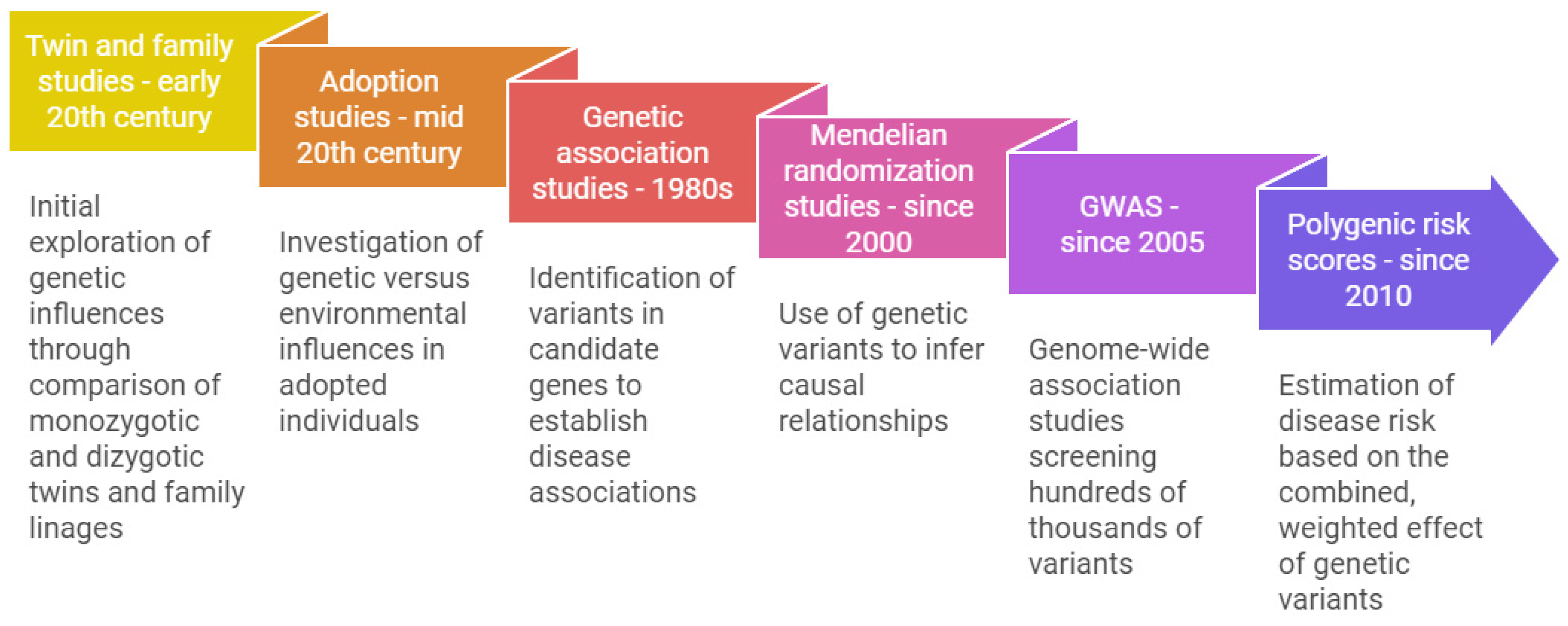
Figure 2.
Overview of the major genetic pathways involved in tobacco addiction. 5HT2A, serotonin 2A receptor; COMT, catechol-O-methyltransferase; CHRNA4/B2 and CHRNA5-A3-B4, nicotinic acetylcholine receptors; CYP2A6 and CYP2B6, cytochrome P450 2A6 and 2B6; DAT1, dopamine transporter; DRD2/3/4, dopamine receptors 2, 3, and 4; FMOs, flavin-containing monooxygenases; GRIN2A/2B/K2, NMDA glutamate receptor subunits; GABRA2/4, GABA receptor subunits; MAO-A, monoamine oxidase A; OCT2, nicotine and varenicline transporter; SLC1A2, glutamate transporter; SLC6A4, serotonin transporter; UGTs, uridine diphosphate glucuronosyltransferases.
Figure 2.
Overview of the major genetic pathways involved in tobacco addiction. 5HT2A, serotonin 2A receptor; COMT, catechol-O-methyltransferase; CHRNA4/B2 and CHRNA5-A3-B4, nicotinic acetylcholine receptors; CYP2A6 and CYP2B6, cytochrome P450 2A6 and 2B6; DAT1, dopamine transporter; DRD2/3/4, dopamine receptors 2, 3, and 4; FMOs, flavin-containing monooxygenases; GRIN2A/2B/K2, NMDA glutamate receptor subunits; GABRA2/4, GABA receptor subunits; MAO-A, monoamine oxidase A; OCT2, nicotine and varenicline transporter; SLC1A2, glutamate transporter; SLC6A4, serotonin transporter; UGTs, uridine diphosphate glucuronosyltransferases.
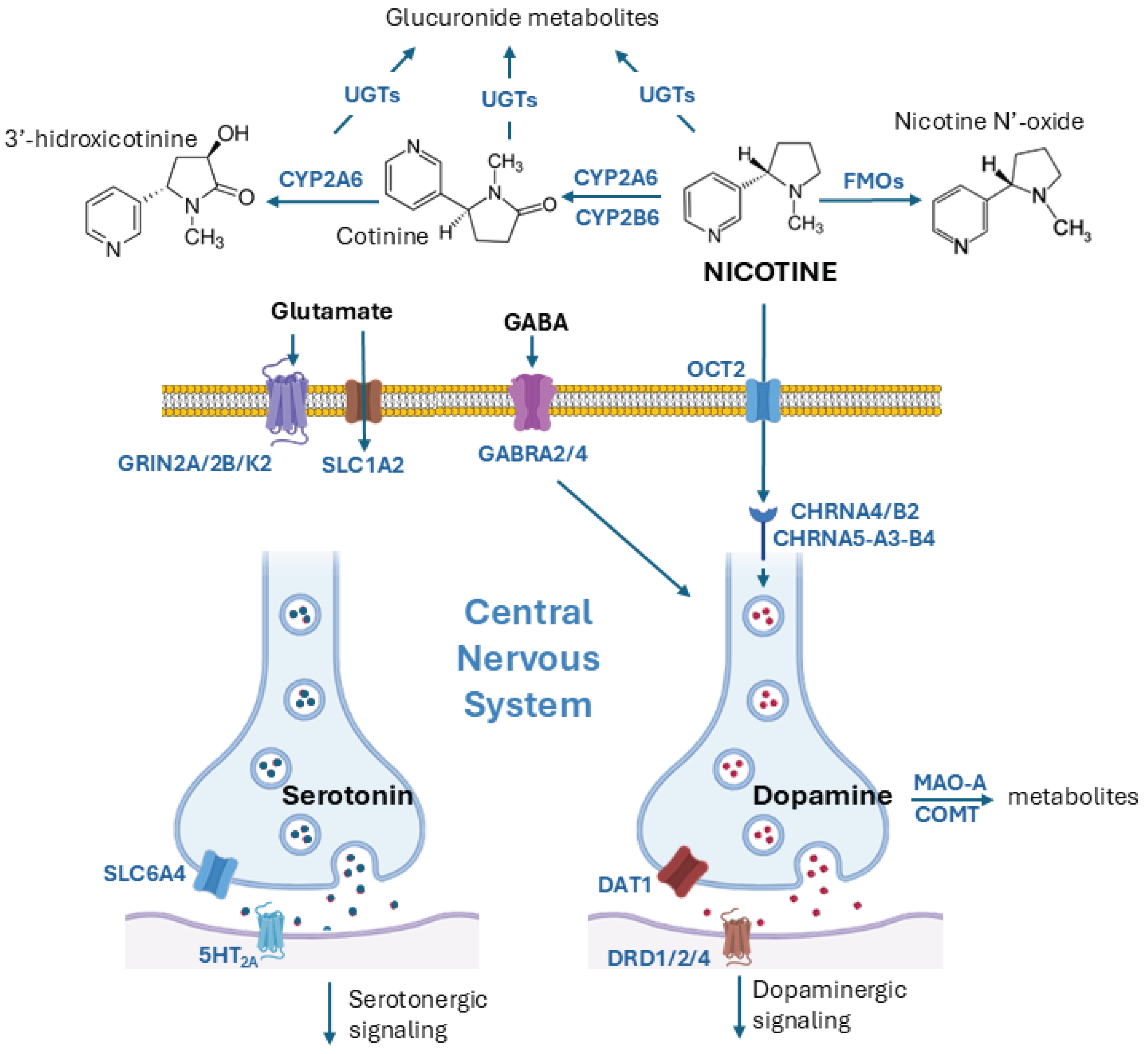
Table 2.
Summary of associations of genetic variability in the major pathways involved in tobacco addiction with smoking behavior.
Table 2.
Summary of associations of genetic variability in the major pathways involved in tobacco addiction with smoking behavior.
| Reference | Pathway | Gene(s) and variant(s) | Comment |
|---|---|---|---|
| Wang et al., 2002 [57]; Armani et al., 2010 [56] | Nitric oxide synthesis | NOS3 T786C, G894T, intron 4 VNTR | These variants modify eNOS expression and its response to tobacco smoking. |
| Armani et al., 2010 [56] | Detoxification | CYP1A1 (MspI) | Tobacco smoking interacts with variants in detoxification enzymes to modulate the risk of coronary artery disease and atherosclerosis. |
| Kim et al., 2008 [58] | Detoxification | GSTM1 null, GSTT1 null | Increased risk of coronary artery disease observed exclusively in smokers. |
| Martinelli et al., 2004 [61] | Lipid metabolism/antioxidant defence | PON2 rs121908610 | Interaction between tobacco smoking and PON2 influences the risk of myocardial infarction. |
| Sanghera et al., 1998 [62] | Lipid metabolism/antioxidant defence | PON1 rs662 and PON2 rs121908610 | Interaction between tobacco smoking and PON1/PON2 influences the risk of coronary artery disease. |
| Humphries et al., 2001 [64] | Lipid metabolism | APOE ε4 | In male smokers carrying the APOE ε4 genotype, coronary risk increases approximately 1.6-fold. |
| Stephens and Humphries, 2003 [65] | Lipid metabolism/inflammation | LPL rs1801177, IL6 rs1800795 | Tobacco smoking modifies the cardiovascular effects of variants in these genes. |
| Grisoni et al., 2008 [66] | Inflammation | IL18 rs360717 | The association between this variant and cardiovascular events is modified by tobacco smoking. |
| Chen et al., 2012 [67] | Inflammation / vascular remodelling | TGFB1 rs1800470 | Interaction between tobacco smoking and TGFB1 genetic variability influences the risk of myocardial infarction and ischaemic heart disease. |
| de Moerloose and Boehlen, 2007 [68] | Thrombosis | Factor II G20210A | Tobacco smoking enhances the thrombotic risk associated with this thrombophilic variant in arterial disease. |
| Levin et al., 2021 [69] | Global genetic predisposition | Smoking-associated variants (Mendelian randomization) | Genetic predisposition to smoking increases the risk of coronary artery disease, peripheral artery disease, and stroke. |
| Huang et al., 2022 [70]; Hindy et al., 2018 [71] | Polygenic risk | Coronary artery disease PRS | Smoking intensity modifies the effect of polygenic risk on coronary artery disease. |
Table 3.
Influence of genetics in the effectiveness and toxicity of drugs used in smoking cessation treatments.
Table 3.
Influence of genetics in the effectiveness and toxicity of drugs used in smoking cessation treatments.
| Reference | Drug | Affected pathway | Gene(s) and variant(s) | Comment |
|---|---|---|---|---|
| Bergen et al., 2014 [84] | Varenicline | Drug transport | SLC22A2 (OCT2) rs316019 | Variant associated with a higher abstinence rate in European populations. |
| King et al., 2012 [85] | Varenicline | Nicotinic acetylcholine receptors | CHRNA4 rs3787138, CHRNB2 rs3811450 | Variants associated with therapeutic response. |
| Lassi et al., 2016 [28] | Varenicline | Nicotinic acetylcholine receptors | CHRNA5-CHRNA3-CHRNB4 gene cluster | Genetic variability within the cluster influences clinical response. |
| Chen et al., 2020 [86] | Varenicline | Nicotinic acetylcholine receptors | CHRNA5 rs16969968, rs680244 | Carriers showed reduced treatment efficacy. |
| Chenoweth et al., 2023 [87] | Varenicline | Nicotine metabolism | CYP2A6 loss-of-function alleles | Slow nicotine metabolism influences treatment success. |
| Tomaz et al., 2019 [88] | Varenicline | Nicotine metabolism | CYP2B6 rs8109525 | Polymorphism associated with successful treatment. |
| Chenoweth et al., 2024 [83] | Varenicline | Hippocampal and cortical neuronal function | ICAM5 rs901886 | First GWAS identifying variants associated with varenicline-induced nightmares. |
| Zhu et al., 2012 [89] | Bupropion | Drug metabolism | CYP2B6 loss-of-function alleles | Carriers require higher drug doses to achieve adequate hydroxybupropion concentrations. |
| Conti et al., 2008 [90] | Bupropion | Nicotinic acetylcholine receptors | CHRNB2 rs2072661 | Carriers of the A allele showed lower treatment effectiveness. |
| King et al., 2012 [85] | Bupropion | Drug metabolism | CYP2B6 rs8109525, rs1808682 | Variants associated with sustained abstinence. |
| David et al., 2007 [91] | Bupropion | Dopaminergic system | DRD2 rs1800497 (Taq1A) | Variant associated with higher abstinence rates. |
| David et al., 2013 [92] | Bupropion | Dopaminergic system | COMT, DRD4, SLC6A3 (genetic score) | The dopaminergic genetic score predicts smoking abstinence. |
| Verde et al., 2014 [93] | Bupropion | Serotonergic system | SLC6A4 5-HTTLPR, HTR2A A-1438G | Association between serotonergic variants and treatment success. |
| Mineur et al., 2015 [94] | Cytisinicline | Serotonergic system | HTR1A | Receptor expression may modulate the antidepressant effects of the drug. |
| Malaiyandi et al., 2006 [42] | Nicotine patches | Nicotine metabolism | CYP2A6 loss-of-function alleles | Higher plasma nicotine concentrations with the same number of nicotine patches. |
| Sarginson et al., 2011 [95] | Nicotine patches + Bupropion | Nicotinic acetylcholine receptors | CHRNA5 rs680244 | Variant associated with long-term abstinence. |
| Leung et al., 2015 [96] | Nicotine patches | Nicotinic acetylcholine receptors | CHRNA5-CHRNA3-CHRNB4 gene cluster | No association between genetic variability within the cluster and treatment effectiveness. |
Disclaimer/Publisher’s Note: The statements, opinions and data contained in all publications are solely those of the individual author(s) and contributor(s) and not of MDPI and/or the editor(s). MDPI and/or the editor(s) disclaim responsibility for any injury to people or property resulting from any ideas, methods, instructions or products referred to in the content. |
© 2026 by the authors. Licensee MDPI, Basel, Switzerland. This article is an open access article distributed under the terms and conditions of the Creative Commons Attribution (CC BY) license (http://creativecommons.org/licenses/by/4.0/).
Copyright: This open access article is published under a Creative Commons CC BY 4.0 license, which permit the free download, distribution, and reuse, provided that the author and preprint are cited in any reuse.