

Submitted:
03 August 2026
Posted:
04 August 2026
You are already at the latest version
Abstract
Background: Nicotine exposure is increasingly occurring through non-combustible prodcuts such as electronic cigarettes and nicotine pouches. Although sport participation is often considered protective against substance use, nicotine use appears to be increasingly normalised within performance-oriented sporting environments. Methods: This scoping review synthesised evidence on non-combustible nicotine use among amateur and university athletes. Following JBI methodology and PRISMA-ScR guidelines, the searches were conducted in Web of Science, Embase, Scopus, SPORTDiscus and CINAHL for peer-reviewed studies published from 2019 onwards that examined non-combustible nicotine use in these populations. Results: Twelve studies, predominantly cross-sectional and conducted in high-income Western countries, met the inclusion criteria. Nicotine use was more common among male athletes, younger athletes, and those participating in team and contact sports, particularly for e-cigarette use. Across studies, nicotine use was frequently characterised as socially normative and compatible with sport, influenced by peer networks, social identity, perceived harm reduction, and beliefs regarding performance enhancement, coping, and recovery. The evidence base was limited by inconsistent measurement approaches and a predominance of studies examining demographic correlates rather than behavioural drivers. Conclusions: Non-combustible nicotine use appears embedded within sport-specific social norms and performance-related beliefs, highlighting the need for theoretically informed research and sport-specific prevention strategies.
Keywords:
e-cigarettes
; nicotine pouches
; smokeless tobacco
; amateur athletes
; university athletes
; social norms
; sport
1. Introduction
Extensive evidence linking combustible tobacco use to adverse health outcomes has underpinned tobacco control efforts worldwide [1]. In high-income settings, policies such as increased taxation, smoke-free environments, and restrictions on advertising have been associated with marked declines in smoking prevalence [2,3]. Globally, WHO reports a reduction in tobacco use prevalence from approximately 34% in 2000 to 20% in 2022 across 150 countries, attributed in part to the implementation of comprehensiveness measures such as the WHO Framework Convention on Tobacco Control and MPOWER [4].
Despite these successes, nicotine use is undergoing a significant transformation. The emergence of alternative nicotine delivery systems, including electronic cigarettes (e-cigarettes), smokeless tobacco products such as snuff or snus (i.e., tobacco used without combustion and consumed orally or nasally), as well as more recently, nicotine pouches (i.e., tobacco-free pouches) [5]. Use of these emerging products is disproportionately concentrated among younger populations [3,6,7,8]. Globally, an estimated 86 million adults use e-cigarettes, with prevalence tripling overall, and increasing fourfold among young adults aged 18–24 years across a range of western nations [3,6,9]. In the United States, e-cigarette use increased from 8.8% in 2020 to 10.2% in 2022 [9], while in the United Kingdom, vaping prevalence reached 10% in the general population and 15.8% among individuals aged 16–24 years in 2023 [10]. Consistent with these findings, an international systematic review estimated that 15.3% of individuals aged 9–25 years have reported lifetime e-cigarette use [11]. Emerging products such as nicotine pouches have raised further concern, as their uptake may follow patterns similar to those observed for e-cigarettes [12]. While combustible tobacco use has often been characterised as highly visible and socially stigmatised, emerging nicotine products are increasingly associated with perceptions of reduced harm, discretion, and social acceptability [13,14,15]. These perceptions may be reinforced by policy environments in some countries, such as the United Kingdom, where certain nicotine products are recommended as smoking cessation aids, which may help explain their growing uptake [16]. Collectively, these factors may increase the likelihood of nicotine product uptake among populations not traditionally associated with tobacco use, including professional and semi-professional athletes.
Emerging nicotine products are capable of delivering substantial doses of nicotine to the body exceeding those of combustible tobacco [17]. Nicotine acts on the central nervous system by stimulating nicotinic acetylcholine receptors [18], which are associated with short-term subjective effects, including increased alertness, enhanced concentration, and perceived reductions in stress or discomfort [18]. In sporting contexts, these sensations can be construed as compatible with training and competition, supporting perceptions of functional benefit despite the lack of consistent evidence that nicotine enhances physical performance [19,20,21,22].
Within elite sport, the stimulatory impacts of nicotine have attracted scientific and regulatory attention [23]. Prevalence studies suggest that a notable proportion of elite athletes use nicotine, leading to its inclusion in the World Anti-Doping Agency (WADA) Monitoring Program [23]. As a result, much of the existing evidence on nicotine use among athletes has been shaped by concerns arising within elite sport, where athletes operate in highly regulated environments. In contrast, amateur and university athletes compete in less regulated sporting contexts, suggesting that evidence and policy frameworks derived from elite sport may not be directly applicable to these populations.
Amateur and university athletes are often located within overlapping age groups and life stages, and participate in socially dense sporting environments that shape shared norms, identities and meaning around substance use [24,25]. Amateur and university athletes are also often in an age bracket (14–25 years old) that can be easily influenced by social media [26]. The promotion of emerging nicotine products through social media platforms has increased in recent years [27]. Within these sporting environments, the visibility of nicotine product use by high-profile athletes may contribute to the normalisation of these products within sporting cultures [26,28], reinforcing unsubstantiated claims of non-combustible nicotine use as compatible with athletic performance. The intersection of these social, cultural, and performance-related factors has produced a diverse but fragmented literature on nicotine use among amateur and university athletes [25,29].
Accordingly, this scoping review aims to map and synthesise peer-reviewed literature on nicotine use among amateur and university athletes, examining prevalence, patterns of use, reported reasons for use, methodological and conceptual gaps to inform future research and sport-specific prevention strategies by addresses the question: “What is known about the prevalence, patterns and reported reasons for nicotine use among amateur or university athletes in the peer-reviewed literature?”
2. Materials and Methods
2.1. Study Design
A scoping review was undertaken to map and synthesise the literature on the prevalence, patterns and reported reasons for nicotine use among amateur and university athletes. Given the fragmented and heterogeneous nature of research in this area, a scoping review is well-suited to capturing the breadth, characteristics, and conceptualisation of existing evidence [30]. This approach enables examination of how nicotine use has been studied, measured, and interpreted across diverse contexts.
2.2. Eligibility Criteria
This review included peer-reviewed primary research articles, including descriptive, experimental, qualitative, and quantitative studies. Studies published in English were eligible for inclusion.
For the purpose of this review, amateur and university athletes were defined as individuals participating in organised sport who are not engaged in professional or elite competition. Studies were excluded if they did not clearly identify the population as amateur or university athletes, did not assess nicotine use in an athletic population, or were exclusively focused on combustible tobacco products (e.g., cigarettes or waterpipe), to maintain focus on emerging non-combustible nicotine products (e.g., e-cigarettes, snus, snuff, nicotine pouches).
Literature reviews, theses, conference abstracts, non-peer-reviewed sources, and other secondary analyses were excluded. To minimise potential conflicts of interest, publications sponsored or funded by the tobacco or nicotine industry were not included in this review.
2.3. Search Strategy
A systematic search was conducted across six databases, including: Ovid MEDLINE, Embase, CINAHL, Scopus, SPORTDiscus, and Web of Science. A research librarian was consulted to refine the search strategy. The search was conducted in March 2026, and included articles published from January 2019 onwards to capture literature relating to emerging nicotine products associated with recent increases in nicotine use [33].
The search strategy was developed using the Population-Concept-Context (PCC) framework. Given that the sporting setting formed part of the definition of the population of interest, the Population and Context elements were combined into a single search domain. An initial search strategy was developed in Ovid Medline (Table 1), and adapted for use across other databases, with support from a custom-configured M365 AI Agent (Microsoft Copilot), verified by the research team and research librarian. The complete search strategies for all databases are provided in Supplementary File (Table S1).
2.4. Study Selection
All eligible studies were uploaded to Covidence, and duplicates were removed before title and abstract screening was conducted independently by two screeners (NH and CL). Full-text screening was also conducted independently by two reviewers. Discrepancies were resolved through discussion or consultation with a third reviewer (CB). The study selection process is shown in the PRISMA flow chart (Figure 1). Consistent with JBI recommendations, no formal quality appraisal was undertaken, as the aim of this scoping review was to map the available evidence rather than assess risk of bias [31].
2.5. Data Extraction, Charting, and Synthesis
Data were extracted using a customised template developed for this scoping review (Table 2). Extracted variables included study characteristics (year, country, design), participant characteristics (age group, athlete type, sporting context), nicotine products assessed, and outcomes related to prevalence, patterns, and reasons for use. Data extraction was initially undertaken manually. Extracted data were then imported into NotebookLM [34] to assist with organisation and structuring of information (e.g., grouping study characteristics and identifying consistent variable labels). All outputs were reviewed against the original source articles, and final extracted data with all extracted information were independently reviewed and verified by the primary reviewer (NH).
Data analysis involved both descriptive and qualitative approaches. Descriptive analysis was used to summarise study characteristics. A narrative synthesis was conducted to summarise and organise findings across studies, with a focus on prevalence, patterns, and reported reasons for nicotine use. Themes were developed through an inductive grouping of extracted data, using colour-coding to identify similar and contrasting ideas across study findings. These groupings were iteratively refined to ensure clarity and consistency with the original data.
3. Results
A total of 12 empirical studies met the inclusion criteria. Geographically, the studies were concentrated within high-income Western nations, predominantly the United States (US) [8,13,25,38,39], but also Canada [35,36], France [29], Switzerland [37], Czech Republic [19], Ireland [7], and Australia [26].
Methodologically, most studies were observational cross-sectional (n = 9) [7,8,25,29,35,36,37,38,39], with one longitudinal cohort [13], one experimental crossover [19], and one qualitative study [26].
Participants were predominantly adolescents and young adults, with samples including secondary school students and adolescents aged approximately 14–18 years [13,26,35,36,37,39], young adults aged 18–21 years [8,38], broader adults’ cohorts aged 18–35 years [7,19,25], and, in one study, participants aged from 18 to over 55 years [29].
The studies included a wide range of nicotine products, most commonly e-cigarettes [7,8,13,25,26,29,35,36,37,38,39], smokeless tobacco (ST), including snuff [13,25,29,37], snus [13,37], chewing tobacco [13,25], and nicotine lozenges [19].
Sporting contexts varied and included recreational [7,35,36,38], club [38], and varsity [35,36,38] participation. Use within team-based [7,8,13,25,29,35,37,39], and individual sports [8,26,37] were also described in the included studies.
3.1. Epidemiology of Nicotine Use Among Amateur Athletes
3.1.1. Demographics
E-cigarette use varied substantially across countries. The highest prevalence was reported in North American samples, including 27.3% among Canadian varsity athletes, and 18.3% among US high school sports team participants [36,39]. A prevalence of 19.5% was reported among female US collegiate athletes [8]. European studies reported lower prevalence, including 4.7% among French amateur rugby players, 4.4% among Swiss young male athletes, and 2% among Irish sports people [7,29,37].
Use of ST appeared to be specific to both cultural background and sport. Among US baseball players, ST use was common, with 26% of current players and 36% of rural high school players reporting ever use [13,25]. In Switzerland, athletes were more likely to use snus (15%) and snuff (19.5%) compared to non-athletes (10% and 18%, respectively) [37]. No snuff use was reported in the French rugby population [29].
Across studies, nicotine use was generally more prevalent among male athletes [7,26,35], although one study of French amateur rugby players reported higher e-cigarette use among female participants compared with males (7% vs. 4.4%) [29]. E-cigarette use was most commonly reported among young adult athletes aged 18-24 years [7,25,29,37,38]. In contrast, smokeless tobacco use was more prevalent among older cohorts, one study reporting higher use among older baseball athletes compared to younger athletes (34% vs. 26%) [25].
3.2. Patterns and Rationales of Nicotine Use
3.2.1. Social Identity and Sport Contexts
Several studies [7,13,26,37,39] reported differences in nicotine use according to sport type and mode of participation. Higher prevalence of nicotine use was observed among athletes involved in team and contact sports compared with those participating in individual sports [7,13,26,37,39]. Authors frequently highlighted the social nature of team sports, and the potential influence of shared environments and peer norms. Chaffee et al. [13] identified having friends who use nicotine products as a significant predictor of initiation and progression of use. Sport-specific patterns were also described. For instance, snus use was commonly reported among athletes participating in sports such as ice hockey, while snuff and chewing tobacco use was frequently observed in baseball and rugby populations [13,25,29,37].
3.2.2. Level of Amateur Competition Influences Usage
Varsity athletes reported higher e-cigarette use than recreational participants in a large Canadian survey (27.3% vs. 16.7%) [36], while a US study reported higher prevalence among recreational athletes compared with varsity athletes (6.2% vs. 4.9%) [38]. Differences were also observed between team and individual sports. Swiss data indicated higher snus use among team-sport participants (12.3%) compared with individual-sport participants (8.4%) [37], a pattern of nicotine product use consistent with findings reported in several other studies [7,26,39].
3.2.3. Health Perceptions and Risk Management
Across studies, athletes demonstrated lower prevalence of combustible cigarette smoking compared with non-athletes, while rates of e-cigarette use were similar or higher [35,36,38,39]. Several authors suggested that athletes may perceive electronic nicotine products as a lower-risk alternative to smoking [8,13,29,35,36,39]. One study reporting that e-cigarettes and ST were also viewed by athletes as having fewer immediate health consequences, and as less likely to impair athletic performance [26]. Some studies reported that e-cigarette users were more likely to meet physical guidelines compared with non-users [26,36,39]. Milicic et al. [35] described this pattern as consistent with beliefs regarding the compatibility of e-cigarette use with an active or performance-oriented lifestyle, particularly among male athletes.
3.2.4. Functional Use: Performance, Coping and Cessation
Several studies reported that athletes used nicotine for functional reasons related to performance, coping, or smoking cessation [8,29,37,38]. Bartík et al. [19] reported that nicotine administration did not significantly improve objective performance measures, although a reduction in perceived exertion and pain were observed. There are mixed beliefs from athletes regarding nicotine’s effects on performance, with some perceiving improvements in alertness or pain tolerance [37,38] while others reported no benefit or negative effects on fitness and sporting goals [19,26]. Nicotine use was also reported as a coping strategy, particularly among athletes experiencing injury, chronic pain, or psychological stress [8]. In addition, several studies reported the use of e-cigarettes as a smoking cessation aid to reduce the perceived impact of combustible tobacco on fitness [8,29,38]. Conversely, some former users reported improvements in physical capacity after discontinuing nicotine use [26].
3.2.5. Behavioural Patterns and Operational Considerations
Patterns of nicotine use were also shaped by the practical demands of sporting participation. Athletes commonly reported consuming nicotine within a short window before and after training sessions or competitions [29]. Authors noted that the convenience and discretion of e-cigarettes may facilitate use in sporting environments where smoking is impractical or socially discouraged [13,29,38]. Some athletes also described adopting “responsible” use patterns, such as limiting frequency, abstaining during intensive training periods, or avoiding device ownership [26].
4. Discussion
This scoping review systematically mapped, and then synthesised, evidence on the prevalence, patterns, and reported reasons for nicotine product use among amateur and university athletes. Collectively, the literature suggests that e-cigarette use was more prevalent among younger athletes, particularly males and those participating in team-based sports, while ST use appears more common among older athletes and within specific sporting cultures. However, prevalence and patterns of use were not uniform and varied according to product type, age group, and mode of sporting participation. Across studies, reported reasons for nicotine use were shaped by social and sporting contexts, including peer influence and team norms, as well as athletes’ perceptions of e-cigarette and ST as lower-risk alternatives to combustible cigarettes. Practical considerations related to sporting participation, such as convenience and discretion, also featured prominently in accounts of use.
A key theme emerging from this review is an apparent paradox of nicotine use within a population typically characterised by high levels of physical activity and engagement in health-promoting behaviours. Rather than reflecting disregard for health, nicotine use among amateur athletes appears shaped by how risks are interpreted and managed within performance-oriented contexts. E-cigarettes and ST were frequently framed by athletes as lower-harm nicotine alternatives that were perceived as compatible with training demands, and unlikely to compromise performance [13,29,35,36,38,39]. Rather than viewing nicotine use as contradictory to athletic identity, athletes may reinterpret non-combustible nicotine products as acceptable or neutral within a performance-focused lifestyle.
Age-related differences in nicotine use appear to reflect generational familiarity and product-specific histories within sport [25,40]. Moreover, shifts in marketing strategies towards digital platforms and social media have been suggested to increase the visibility of e-cigarette use among younger populations [8]. However, this interpretation has been contrasted with other evidence suggesting that athletes may be less exposed to vaping promotion due to the lower engagement in certain social and entertainment settings, highlighting variability in exposure and uptake across contexts [37].
Differences in nicotine use were also observed according to sport type and mode of participation. Higher prevalence of e-cigarette use among team-sport athletes was commonly interpreted in relation to social dynamics, including peer influence, group norms, and shared sporting identities [7,13,26,39]. However, findings are not entirely consistent, with some indicating that athletes in individual sports are more likely to use e-cigarettes [29,37], while team-sport participants show higher use of ST products [37]. Additionally, gender differences were similarly evident, with higher nicotine use generally reported among male athletes, particularly ST [7,26,35]. These patterns suggest that nicotine use is shaped not only by individual risk perceptions but also by the social context and traditions associated with particular sports and their surrounding sporting cultures [13,37,38]. In particular, ST use has been associated with masculine sporting identities, a perception reinforced through the marketing and cultural positioning of these products within certain sporting settings [13]. The higher prevalence of snus use reported among ice-hockey athletes in several studies may reflect the influence of sport-specific norms and values [29,37]. It is possible that characteristics commonly associated with ice hockey, including its physical and highly competitive nature, contribute to the social acceptability of ST products within that sporting context.
Several studies suggested that athletes use nicotine products for functional purposes related to performance, coping or smoking cessation. While some athletes perceived benefits such as increased alertness or pain tolerance, experimental evidence does not support meaningful improvements in objective physical performance outcomes [19,38]. This finding is notable given that nicotine remains on WADA’s Monitoring Program. Rather than reflecting definitive evidence of an ergogenic effect, its inclusion appears to reflect concerns regarding its widespread use among athletes, potential health risks, and the possibility of performance-enhancing effects that have not yet been conclusively established. Moreover, the disconnect between perceived and demonstrated performance benefits suggests that nicotine use among athletes may be driven more by beliefs and sport-specific narratives than by evidence-based performance benefits.
Nicotine use was also described as a coping strategy in the context of injury, pain, or psychological stress [19,38], as well as a self-regulatory tool among athletes seeking to reduce or cease combustible cigarette use [8,29,36,38,39]. Together, these findings suggest that nicotine products may serve multiple functions within athletic populations, extending beyond performance enhancement to include stress management, injury-related coping, and harm-reduction practices. Authors further noted that uncertainty surrounding the long-term health effects of e-cigarettes may contribute to their continued use, allowing athletes to interpret these products as acceptable or temporary solutions within a performance-oriented lifestyle [7,25,35,36]. This highlights how perceptions of reduced harm, rather than established evidence of safety, may facilitate nicotine use among athletes and potentially normalise the use of alternative nicotine products within sporting environments.
Finally, patterns of nicotine use among athletes were shaped by the practical demands of sporting environments. Several studies noted that convenience and discretion of e-cigarettes and ST facilitate use in contexts where smoking is impractical or socially discouraged [13,38]. Athletes described timing nicotine consumption around training or competition, specifically adopting self-regulated or “responsible” nicotine use [26]. These practices suggest that nicotine use is often integrated into sporting routines rather than occurring randomly [7,19,29], highlighting how athletes actively negotiate nicotine use in relation to performance goals and physical wellbeing, rather than engaging in indiscriminate risk-taking.
Strengths and Limitations
This scoping review is the first to provide a comprehensive mapping of the literature on emerging nicotine product use among amateur and university athletes. By synthesising evidence across diverse sporting contexts, nicotine product types, and study design, this review clarifies how nicotine use has been conceptualised, measured, and interpreted in populations that are underrepresented in existing sport and nicotine research.
Several limitations of the existing literature should be acknowledged. Firstly, the geographical distribution of studies is heavily concentrated in Western countries, particularly North America and Europe. This limits the generalisability of findings to non-Western contexts, where cultural norms, regulatory environments, and sport systems may shape nicotine use differently. In addition, the inclusion of English-language publications only, may have contributed to the underrepresentation of research conducted in non-English-speaking settings.
Secondly, the literature is dominated by cross-sectional study designs. While these studies are useful for describing prevalence and associated factors, they provide only a snapshot of perspectives and do not allow examination of changes in nicotine use over time or establishment of causal relationships. As a result, important questions regarding initiation, progression, and cessation of nicotine use among university athletes remain underexplored. Longitudinal research in this context would be useful to better understand nicotine use trajectories temporally, and to inform contextually relevant prevention and intervention strategies.
5. Conclusions
This scoping review mapped the existing literature on nicotine use among amateur and university athletes, highlighting how non-combustible nicotine products have become embedded within sporting contexts despite broader declines in cigarette smoking. While sport participation remains associated with lower rates of combustible tobacco use, this protective effect does not consistently extend to products such as e-cigarettes and smokeless tobacco.
Across studies, nicotine use was shaped by social, cultural, and performance-related interpretations, with athletes frequently framing these products as less harmful, functionally useful, and compatible with athletic identity. However, the predominance of cross-sectional design, reliance on self-reported data, and limited representation of female athletes and non-Western contexts constrain current understanding.
Future research employing longitudinal and mixed methods approaches is needed to clarify how nicotine use evolves over time and how athletes make sense of its role in relation to health, performance, and identity.
6. Future Directions
This scoping review suggests that non-combustible nicotine use is emerging as a relevant athlete-health issue within amateur and university sport. While sport participation has traditionally been considered protective against substance use, the findings indicate that e-cigarettes and smokeless nicotine products may be increasingly normalised through team cultures, peer influences, and beliefs regarding harm reduction and performance compatibility. These findings extend previous sports medicine research that has predominantly focused on elite athletes and potential ergogenic effects of nicotine, highlighting the importance of understanding the social and cultural contexts that shape use in athletic populations.
Health promotion initiatives within colleges, universities and sporting organisations may benefit from sport-specific education addressing perceived harm reduction, performance beliefs, and peer influences. Given the role of team culture in shaping nicotine use, interventions that engage coaches, team leaders, and broader sporting environment may be more effective than approaches focused solely on individual behaviour change [41]. Similar sport-based health promotion programs, such as Australia’s Good Sports program, have successfully addressed alcohol-related norms and behaviours by targeting organisational culture and policy [42]. This review suggests that adapting such approaches to address alternative nicotine products may represent a promising strategy for reducing use and shifting social norms within sporting contexts.
Supplementary Materials
The following supporting information can be downloaded at the website of this paper posted on Preprints.org, Table S1: Search strategy, Table S2: Preferred Reporting Items for Systematic reviews and Meta-Analyses extension for Scoping Reviews (PRISMA-ScR).
Author Contributions
Conceptualization, N.H. and C.B.; methodology, N.H., C.B, C.L.; validation, N.H.; formal analysis, N.H, C.B.; data curation, N.H.; writing—original draft preparation, N.H., C.B., M.S., I.P.; writing—review and editing, N.H., C.B., M.S., I.P., H.W., S.K., C.L., I.R., K.T., D.C.; visualization, N.H., C.B.; supervision, C.B., M.S., I.P.; project administration, I.P., C.B.; funding acquisition, C.B., I.P. All authors have read and agreed to the published version of the manuscript.
Funding
This research was funded by VicHealth as part of their Collective Impact Approach to raise awareness about the harms of vaping.
Institutional Review Board Statement
Not applicable.
Informed Consent Statement
Not applicable.
Conflicts of Interest
The authors declare no conflicts of interest. The funders had no role in the design of the study; in the collection, analyses, or interpretation of data; in the writing of the manuscript; or in the decision to publish the results.
Acknowledgments
We would like to thank Lorena Romero, Monash University Subject Librarian, for support in developing the search strategy. No AI tools were used for content generation, idea development, critical analysis, or literature synthesis. NotebookLM [34] was used to assist with data extraction from included studies. All extracted data were checked against the original sources by the research team. M365 Copilot was used to support the translation of search strategies across databases. All translated search strategies were reviewed and verified by the researchers and a research librarian. The study design, analysis, interpretation, and manuscript content reflect the original intellectual work and judgement of the authors.
Abbreviations
The following abbreviations are used in this manuscript:
| ST | Smokeless Tobacco |
| PRISMA-ScR | Preferred Reporting Items for Systematic Reviews and Meta-Analyses extension for scoping reviews |
| WHO | World Health Organization |
| JBI | Joanna Briggs Institute |
References
- World Health Organization, Tobacco. 2025.
- Jackson, S.E., et al., Use, perceptions, and effectiveness of e-cigarettes for smoking cessation among older adults in England: a population study, 2014-2024. BMC Med, 2024. 22(1): p. 500.
- World Health Organization, WHO global report on trends in prevalence of tobacco use 2000–2024 and projections 2025–2030. 2025.
- World Health Organization, Tobacco use declines despite tobacco industry efforts to jeopardize progress. 2024: Geneva.
- Hecht, S.S., Smokeless tobacco and its constituents, in Tumour Site COncordance and Mechanisms of Carcinogenesis. 2019, IARC Scientific Publications.
- Australian Institute of Health and Welfare, National Drug Strategy Household Survey 2022. 2022: Australian Insititute of Health and Welfare.
- O’Sullivan, B., et al., A study to assess smoking habits and smoking exposure in sportspeople. Qjm, 2021. 114(5): p. 306–310.
- Martin, C.L., et al., Overuse Injury, Substance Use, and Resilience in Collegiate Female Athlete. Int J Sports Phys Ther, 2021. 16(4): p. 1104–1114.
- Bandi, P., et al., Changes in E-Cigarette Use Among U.S. Adults, 2019–2021. American Journal of Preventive Medicine, 2023. 65(2): p. 322–326.
- Adebisi, Y.A., R. Polosa, and J. George, Harm Reduction Implications of Vaping Overtaking Smoking in Great Britain. International Journal of Public Health, 2026. Volume 71 - 2026.
- Kim, J., S. Lee, and J. Chun, An International Systematic Review of Prevalence, Risk, and Protective Factors Associated with Young People’s E-Cigarette Use. Int J Environ Res Public Health, 2022. 19(18).
- Watts, C., et al., ‘It’ll save your lungs’: early insights into nicotine pouch use and perceptions among young Australians. Health Promot Int, 2024. 39(6).
- Chaffee, B.W., et al., Predictors of Smokeless Tobacco Susceptibility, Initiation, and Progression Over Time Among Adolescents in a Rural Cohort. Subst Use Misuse, 2019. 54(7): p. 1154–1166.
- Yingst, J.M., et al., E-cigarette users commonly stealth vape in places where e-cigarette use is prohibited. Tob Control, 2019. 28(5): p. 493–497.
- Lozano, P., et al., E-Cigarette Social Norms and Risk Perceptions Among Susceptible Adolescents in a Country That Bans E-Cigarettes. Health Educ Behav, 2019. 46(2): p. 275–285.
- Hopkinson, N.S., E-Cigarettes as a Smoking Cessation Aid—Toward Common Ground and a Rational Approach. Am J Respir Crit Care Med, 2023. 208(10): p. 1007–1009.
- Mallock, O., et al., Small pouches, but high nicotine doses-nicotine delivery and acute effects after use of tobacco-free nicotine pouches. Front Pharmacol, 2024. 15: p. 1392027.
- Sinkevicius, L.V., et al., Nicotine from a Different Angle: Biological Effects from a Psychoneuroimmunological Perspective. Int J Mol Sci, 2025. 26(13).
- Bartík, P., et al., The Effect of High Nicotine Dose on Maximum Anaerobic Performance and Perceived Pain in Healthy Non-Smoking Athletes: Crossover Pilot Study. Int J Environ Res Public Health, 2023. 20(2).
- Exner, J., et al., Use of psychotropic substances among elite athletes—a narrative review. Swiss Med Wkly, 2021. 151: p. w20412.
- Mündel, T., Nicotine: Sporting Friend or Foe? A Review of Athlete Use, Performance Consequences and Other Considerations. Sports Med, 2017. 47(12): p. 2497–2506.
- Deck, S., et al., Tobacco use among varsity athletes—why do they do it and how do we make it stop: a brief report. J Am Coll Health, 2023. 71(2): p. 333–337.
- Mundel T., Nicotine, exercise and heat stress: Performance benefits, health risks and implications for the Prohibited List. 2024.
- Meca, A., et al., Dimensions of Athletic Identity and their Associations with Drinking Behaviors among a National Sample of University Athletes in the United States. J Youth Adolesc, 2021. 50(12): p. 2363–2373.
- Bullock, G.S., et al., Health Conditions, Substance Use, Physical Activity, and Quality of Life in Current and Former Baseball Players. Orthop J Sports Med, 2021. 9(11): p. 23259671211056645.
- Yazidjoglou, A., et al., The relationship between sports performance, physical activity and e-cigarette use among Australian adolescents: A qualitative study. Tob Induc Dis, 2025. 23.
- Mand, A., K. Fonteyne, and L. Struik, Examining How Oral Nicotine Pouches Are Trending on TikTok: A Qualitative Descriptive Study. JMIR Form Res, 2025. 9: p. e73032.
- Sun, T. and H. Tattan-Birch, Sports, Gigs, and TikToks: Multichannel Advertising of Oral Nicotine Pouches. Nicotine Tob Res, 2026. 28(2): p. 304–308.
- Chagué, F., et al., Smoking and Vaping in Amateur Rugby Players, Coaches and Referees: Findings from a Regional Survey Might Help to Define Prevention Targets. Int J Environ Res Public Health, 2021. 18(11).
- Munn, Z., et al., What are scoping reviews? Providing a formal definition of scoping reviews as a type of evidence synthesis. JBI Evid Synth, 2022. 20(4): p. 950–952.
- Peters, M.D.J., et al., Updated methodological guidance for the conduct of scoping reviews. JBI Evid Synth, 2020. 18(10): p. 2119–2126.
- Tricco, A.C., et al., PRISMA Extension for Scoping Reviews (PRISMA-ScR): Checklist and Explanation. Ann Intern Med, 2018. 169(7): p. 467–473.
- Greenhalgh, E.M., et al., 18.3 Prevalence of e-cigarette use, in Tobacco in Australia: Facts & issues, E.M. Greenhalgh, M.M. Scollo, and M.H. Winstanley, Editors. 2025, Cancer Council Victoria: Melbourne.
- Google. NotebookLM. https://notebooklm.google.com/ 2025.
- Milicic, S., et al., Examining the Association Between Physical Activity, Sedentary Behavior and Sport Participation With E-Cigarette Use and Smoking Status in a Large Sample of Canadian Youth. Nicotine Tob Res, 2019. 21(3): p. 285–292.
- Williams, G.C., et al., High school sport participation and substance use: A cross-sectional analysis of students from the COMPASS study. Addict Behav Rep, 2020. 12: p. 100298.
- Gossin, M., et al., The Association between Type and Intensity of Sport and Tobacco or Nicotine Use-A Cross-Sectional Study among Young Swiss Men. Int J Environ Res Public Health, 2020. 17(22).
- Soule, E.K., et al., Cigarette, waterpipe, and electronic cigarette use among college fraternity and sorority members and athletes in the United States. J Am Coll Health, 2021. 69(5): p. 463–469.
- Rapoport, E., et al., Sports Team Participation and Vaping Among High School Students: 2015-2019. Pediatrics, 2023. 151(1).
- McKeganey, N. and T. Dickson, Why Don’t More Smokers Switch to Using E-Cigarettes: The Views of Confirmed Smokers. Int J Environ Res Public Health, 2017. 14(6).
- Parnell, D. and M. Romeo-Velilla, Training sports coaches to tackle tobacco: formative evaluation of the SmokeFree Sports campaign. International Journal of Health Promotion and Education, 2014.
- Duff, C. and G. Munro, Preventing alcohol-related problems in community sports clubs: the good sports program. Subst Use Misuse, 2007. 42(12-13): p. 1991–2001.
Figure 1.
PRISMA flow diagram outlining the study selection process.
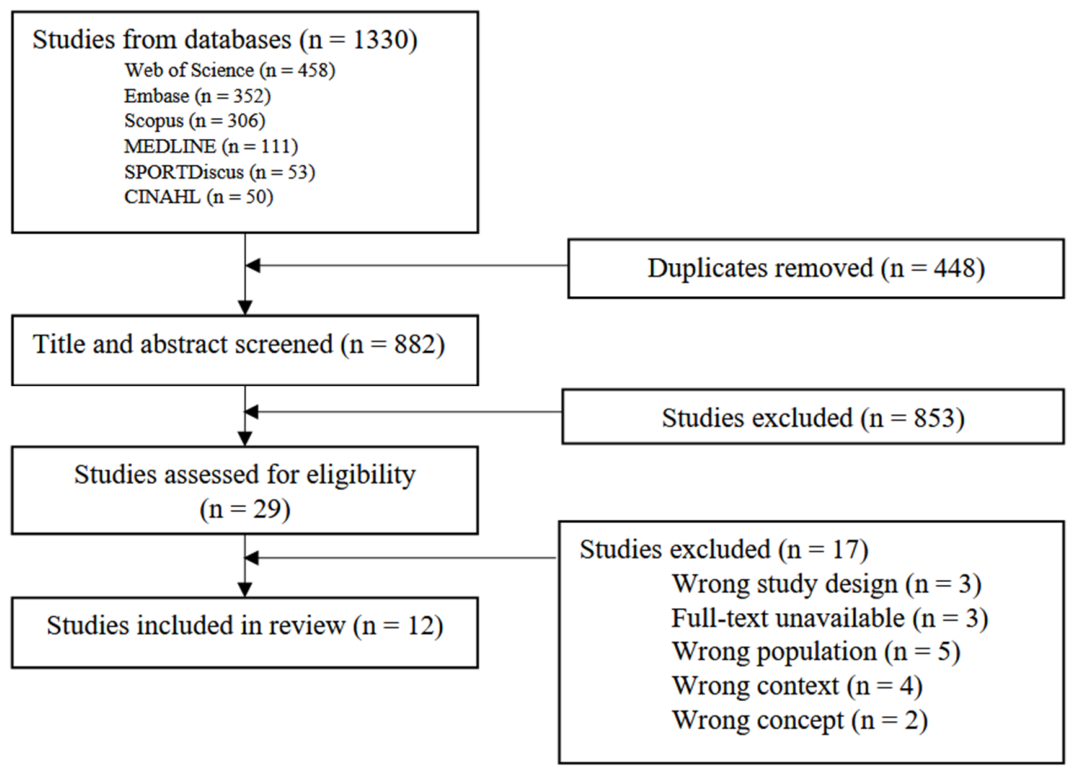

Table 1.
Search strategy developed using the Population-Concept-Context (PCC) framework.
| PCC Elements | Search Terms |
|
Population and Context: Amateur and university athletes participating in organised sporting environments |
(Universities AND (Sports OR Athletes)) OR ((amateur OR non-elite OR sub-elite OR community OR club OR recreation*) adj (sport* OR athlete*)) OR Youth Sports OR Team Sports OR football OR soccer OR rugby OR cricket OR basketball OR volleyball OR netball OR hockey OR lacrosse OR baseball OR softball OR “runner*” OR running OR “swimmer*” OR swimming OR “cyclist*” OR cycling OR “rower*” OR rowing OR “gymnast*” OR tennis OR badminton OR handball OR ((sport* adj3 (participant* OR player OR team*)) and (non-professional or amateur)) OR Athletes OR Sports AND |
|
Concept: Nicotine use and nicotine-containing products |
Nicotine OR Nicotine Chewing Gum OR Electronic Nicotine Delivery Systems OR “electronic cigar*” OR “e-cig*” OR “vape*” OR Vaping OR “nicotine use*” OR “nicotine product*” OR “nicotine pouch*” OR “snus” OR “snuff” OR “nicotine use*” OR “nicotine product*” OR “nicotine pouch*” OR “oral nicotine product*” OR “modern oral nicotine*” OR Zyn OR Velo OR “Smokeless nicotine” OR Tobacco, Smokeless |
Table 2.
Data extraction table of included studies.
|
Study (Year), Country & Design |
Population of Interest (n) | Type of Sports | Product & Prevalence | Patterns/Rationale | Discussion/ Key Findings | |||||
| 1 | Milicic et al. (2019), Canada, Cross-sectional [35] | 10,386 (Recreational) 11,629 (competitive) 13,637 (team sports) |
Recreational, competitive, team sports |
E-cigarettes Male current users: 12.3% Female current users: 7% |
E-cigarettes were perceived by users as a novel technological product with minimal perceived harm, particularly among male users. Participation in sport and physical activity declined with age, consistent with prior evidence indicating lower e-cigarette use among older adolescents. | E-cigarette users were more likely to engage in physical activity than non-users. A statistically significant association was observed between sport participation and e-cigarette use status. E-cigarette use was more prevalent than combustible cigarette smoking during the 2014–2015 school year | ||||
| 2 | Chaffee et al. (2019) USA, Prospective cohort [13] | 594 male athletes | Interscholastic baseball |
Smokeless tobacco (ST): 36% ever used 31% experienced users E-cigarettes: 36% ever used |
Initiation of ST use was associated with peer and family use, low perceived harm, masculinity-related norms, rural traditions, and exposure to professional athlete role models. High susceptibility to ST use was observed; prior e-cigarette use did not predict ST initiation. | ST use among baseball players was nearly three times higher than among non-athlete peers and approximately twice the prevalence for high-school males. Expectations regarding ST predicted progression at one-year follow-up, with 89% remaining current users. High incidence rates were observed: 13% of never-users initiated ST use, and 17% of experimenters progressed to experienced use. | ||||
| 3 | Williams et al. (2020), Canada, Cross-sectional [36] | 6430 (recreational) 6569 (varsity) 14,270 (both) |
Recreational, varsity |
E-cigarettes Recreational: 16.7% Varsity: 27.3% Both: 24.6% |
Health-conscious youth avoid combustible cigarettes but perceived e-cigarettes as a safer alternative. Sport-specific team cultures and identities influenced behaviour alignment among athletes. | Participation in varsity or multiple sport contexts was associated with increased odds of e-cigarette use (OR 1.37–1.57). Recreational sport participation appeared generally protective. | ||||
| 4 | Gossin et al. (2020), Switzerland, Cross-sectional [37] | 3,434 | Team, individual |
Snus: 15% Snuff: 19.5% E-cigarette: 4.4% |
Cultural rituals (e.g., snus use in ice hockey) and peer influence were prominent. Athletes perceived potential performance-enhancing effects of nicotine. Lower vaping prevalence may reflect reduced exposure to vaping advertising | Athletes are more likely to snus (p < 0.05) and snuff (p > 0.05), but less likely to vape compared with non-athletes. Individual-sport athletes are less likely to use snus or snuff but more likely to vape than team athletes. Athletes generally reported lifestyle lower overall nicotine consumption. | ||||
| 5 | O’Sullivan et al. (2021), Retrospective observational [7] | 546 | Rugby, soccer, Gaelic games, athletics, other sports |
E-cigarette Current users: 2% Ever used: 23% |
Use was highest among smokers, younger participants, and male; peer use was influential. Rugby players exhibited a higher prevalence compared in other sports. Amateur athletes were described as less health-conscious than elite athletes. | Prevalence of e-cigarette use was higher among amateur athletes than reported in elite athletes. Team and contact sports were associated with increased risk. Sport participation may exert a protective effect against certain unhealthy behaviours. | ||||
| 6 | Soule et al. (2021), USA, Cross-sectional [38] | 4256 (varsity) 5165 (club) 9038 (recreational) |
Varsity, Club, Recreational |
E-cigarettes Recreational: 6.2% Varsity: 4.9% Club: 5.3% |
Convenience and perception of e-cigarettes as a technological innovation that is compatible with “elite athlete lifestyle.” Performance perceptions were not linked to concerns about health risks in the same way as combustible cigarettes. High density of e-cigarette retailers in college towns. | Athletes demonstrated equal or higher prevalence of e-cigarette use compared with non-athletes. Varsity status was protective for smoking but not for e-cigarette use. | ||||
| 7 | Bullock et al. (2021) USA, Descriptive epidemiology [25] | 97 (current players) 117 (former players) |
Collegiate (81%) and Professional baseball (18%) |
E-cigarettes: Current players: 14% Former players: 3% ST (Chewing tobacco, snuff): Current players: 26% Former players: 34% |
ST use was career-associated, often initiated during active participation and continuing post-retirement. | Athletes frequently continued ST use after retirement. E-cigarette use was significantly higher among current players than former players. | ||||
| 8 | Martin et al. (2021) USA, Cross-sectional [8] | 230 collegiate female athletes | Individual, field/court, bat/ball, collision | E-cigarettes: 19.5% current users | E-cigarettes were used as a coping strategy for sport-related stress, pressure, and pain. Products were perceived as safer alternatives or smoking cessation tools due to fewer public-space restrictions and limited longitudinal evidence on performance effects. Increased marketing directed at younger consumers. | E-cigarette use was significantly more prevalent than combustible cigarette smoking among female athletes. | ||||
| 9 | Chague et al. (2021) France, Cross-sectional [29] | 559 | Rugby |
E-cigarettes: 4.7% Dual users (e-cigarettes and traditional tobacco): 3.4% Snuff: 0% |
Approximately 75% of e-cigarette users reported vaping within two hours of training or competition. E-cigarettes were used to avoid smoking and minimising perceived performance impacts. E-cigarettes were perceived as less harmful to athletes’ health. | Awareness of e-cigarette risks was lower than awareness of cigarette risks. Female players’ vaping behaviours were influenced by normative social factors. Vaping prevalence among athletes exceeded that of the general French adult or student populations. E-cigarettes may function as a gateway to combustible smoking. | ||||
| 10 | Rapoport et al. (2023) USA, Cross-sectional [39] | 16,790 | School or community sport teams | E-cigarettes: 18.3% | Peer group influence; perceptions of low harm and addictiveness. | Sport participation was associated with higher odds of EVP use, but lower odds of cigarettes smoking. Sport participation remained protective for combustible cigarette use. | ||||
| 11 | Bartik et al. (2023) Czech Republic, Randomised crossover pilot [19] | 15 non-smoker male athletes | Regular moderate/vigorous physical activity | Nicotine lozenges: Experimental (8 mg) | Analgesic effects (increased pain tolerance). Metabolic effects (increased cardiac output and muscle blood flow). Cognitive effects (attention, memory, learning). | An 8mg nicotine dose did not significantly improve physical anaerobic performance. Lower ratings of perceived exertion and pain intensity were observed following nicotine administration. Acute nicotine exposure produced cardiovascular and digestive side effects in some participants. | ||||
| 12 | Yazidjoglou et al. (2025) Australia, Qualitative [26] | 96 | Netball, basketball, footy, track, ect. |
E-cigarettes: Ever users: 60% Former users: 21% Never users: 19% |
Athletes described “responsible” vaping practices (e.g., not owning devices, situational use only). Non-users avoided initiation due to concerns about lung damage and breathlessness affecting performance. Current users often initiated cessation after perceiving declines in fitness. Some continued users believed high fitness mitigated potential harms. | Users reported shortness of breath impairing performance during activity. No participants reported using e-cigarettes for performance enhancement. Former users described noticeable improvements in fitness after cessation. | ||||
Disclaimer/Publisher’s Note: The statements, opinions and data contained in all publications are solely those of the individual author(s) and contributor(s) and not of MDPI and/or the editor(s). MDPI and/or the editor(s) disclaim responsibility for any injury to people or property resulting from any ideas, methods, instructions or products referred to in the content. |
© 2026 by the authors. Licensee MDPI, Basel, Switzerland. This article is an open access article distributed under the terms and conditions of the Creative Commons Attribution (CC BY) license (http://creativecommons.org/licenses/by/4.0/).
Copyright: This open access article is published under a Creative Commons CC BY 4.0 license, which permit the free download, distribution, and reuse, provided that the author and preprint are cited in any reuse.