

Submitted:
02 August 2026
Posted:
04 August 2026
You are already at the latest version
Abstract
Background: Hypertensive disorders of pregnancy (HDP) are a major cause of maternal morbidity and mortality and frequently require intensive care when severe. This study aimed to describe the clinical characteristics, critical care interventions, and maternal outcomes of women admitted with severe HDP and to compare women with eclampsia and postpartum eclampsia. Methods: We retrospectively analyzed 142 women admitted with severe HDP to the main intensive care unit of Komfo Anokye Teaching Hospital, Ghana. Clinical characteristics, critical care interventions, and maternal outcomes were described, and women with eclampsia (n = 112) were compared with those with postpartum eclampsia (n = 25). Results: Among the 142 women, 112 (78.9%) had eclampsia and 25 (17.6%) had postpartum eclampsia. Overall, 65 women (45.8%) died during ICU admission. Women with postpartum eclampsia had significantly higher parity (median 3 vs. 2, P = 0.047) and lower Glasgow Coma Scale scores at admission (median 8 vs. 14, P < 0.001) than women with eclampsia. No significant differences were observed between the two groups in critical care interventions, length of hospital stay, or ICU mortality. Conclusions: Women with postpartum eclampsia had distinct clinical features, including higher parity and greater neurological impairment at presentation, although maternal outcomes were similar to those of women with eclampsia. Further studies are needed to understand better severe hypertensive disorders requiring intensive care.
Keywords:
hypertensive disorders
; pregnancy
; eclampsia
; postpartum eclampsia
; obstetric critical care
; intensive care
; maternal mortality
; Ghana
1. Introduction
Hypertensive disorders of pregnancy (HDP) are among the leading causes of maternal and perinatal morbidity and mortality worldwide [1,2,3]. They include chronic hypertension, gestational hypertension, pre-eclampsia, eclampsia, and chronic hypertension with superimposed pre-eclampsia [3]. Globally, pre-eclampsia affects about 4.4% of pregnancies, while eclampsia and HELLP (haemolysis, elevated liver enzymes, and low platelet count) syndrome affect about 0.43% and 0.39% of pregnancies, respectively [2]. These conditions are more common in low-income countries [2]. According to the World Health Organization, hypertensive disorders account for about 16% of maternal deaths worldwide [1]. Although maternal care has improved over the years, HDP remains a major challenge, especially in low- and middle-income countries where delayed diagnosis, delayed referral, and limited access to specialist care are still common [1,3].
Severe hypertensive disorders of pregnancy can progress rapidly and become life-threatening. Women with severe pre-eclampsia or eclampsia are at increased risk of complications such as seizures, stroke, pulmonary oedema, acute kidney injury, HELLP syndrome, and multi-organ dysfunction [4,5,6]. Many of these women require admission to an intensive care unit (ICU) for close monitoring and advanced supportive care, including mechanical ventilation, vasopressor therapy, renal replacement therapy, and invasive haemodynamic monitoring [4,5,6]. Although advances in obstetric critical care have improved maternal survival in many high-income countries, hypertensive disorders of pregnancy remain one of the leading reasons for ICU admission worldwide, particularly in low- and middle-income countries where delays in diagnosis, referral, and treatment are still common [4,5,7].
In sub-Saharan Africa, hypertensive disorders of pregnancy remain a major cause of severe maternal illness and death. Their impact is often worsened by delayed diagnosis, delayed referral, and limited access to emergency obstetric care [8,9]. A recent systematic review reported that hypertensive disorders are common across health facilities in the region and are associated with poor maternal and perinatal outcomes [10].
In Ghana, hypertensive disorders continue to place a heavy burden on maternal health. Hospital-based studies have consistently identified them as important causes of severe maternal morbidity and mortality [11,12,13]. National data show that HDP accounts for about 18% of maternal deaths, while an audit at the country's largest referral hospital found that hypertensive disorders contributed to 40.7% of maternal deaths [12,13]. A recent systematic review also identified eclampsia as one of the leading direct causes of maternal death and highlighted delays in referral, limited emergency obstetric services, and delays in receiving appropriate care as major challenges [14]. These findings highlight the need for more locally generated evidence to improve the prevention, early recognition, referral, and management of hypertensive disorders of pregnancy in Ghana [15]
Although previous studies have described the epidemiology and outcomes of hypertensive disorders of pregnancy, less is known about women who become critically ill and require intensive care [16,17,18]. Most studies have focused on the general obstetric population or specific complications of HDP, with relatively few describing the characteristics, management, and outcomes of women admitted to dedicated obstetric intensive care units, particularly in low-resource settings [5,16]. Postpartum eclampsia, in particular, often presents unexpectedly after delivery and may be more likely to delay recognition and treatment than eclampsia occurring before or during delivery, yet evidence directly comparing the clinical presentation, management, and outcomes of these two groups remains limited [18,19]. In Ghana, existing studies have mainly examined maternal mortality, maternal near-miss, or preventive strategies, with limited information on women admitted to the ICU because of severe hypertensive disorders of pregnancy [13,14,15].
This study aimed to describe the demographic and clinical characteristics, critical care interventions, and maternal outcomes during ICU admission of women admitted with severe hypertensive disorders of pregnancy to the intensive care unit of Komfo Anokye Teaching Hospital (KATH), Kumasi, Ghana. We also compared the characteristics, management, and outcomes of women admitted with eclampsia and postpartum eclampsia. The findings provide evidence on the care of critically ill women with hypertensive disorders of pregnancy and may help improve critical care management in Ghana and other similar resource-limited settings
2. Materials and Methods
2.1. Study Design and Setting
This retrospective cohort study was conducted at the main ICU of KATH in Kumasi, Ghana. The main ICU is a general critical care unit that provides advanced monitoring and treatment for critically ill adult patients, including women with severe obstetric and gynecological conditions referred from healthcare facilities across the country. It is not a dedicated obstetric ICU.
2.2. Study Population
The study included women admitted to the KATH main ICU with severe hypertensive disorders of pregnancy during the study period and whose medical records contained complete outcome data. Women were identified from the ICU database and classified according to the documented clinical diagnosis. The hypertensive disorders included eclampsia, postpartum eclampsia, chronic hypertension with superimposed pre-eclampsia, HELLP (haemolysis, elevated liver enzymes, and low platelet count) syndrome, and other severe hypertensive disorders of pregnancy. Women were included regardless of whether other obstetric complications, such as haemorrhage or sepsis, were also present, provided a severe hypertensive disorder was documented. Applying these criteria to all obstetric ICU admissions during the study period yielded a final analytic sample of 142 women (Figure 1).
2.3. Data Collection
Clinical and demographic data were extracted from the ICU database and patients' medical records. Data collected included age, parity, referral status, primary diagnosis, Glasgow Coma Scale (GCS) score, heart rate, systolic blood pressure, diastolic blood pressure, oxygen saturation (SpO2), respiratory rate, and length of hospital stay. Critical care interventions recorded included mechanical ventilation, vasopressor support, central venous catheter insertion, continuous positive airway pressure (CPAP), haemodialysis, tracheostomy, and supplemental oxygen therapy. The primary outcome was ICU mortality, defined as death during the ICU admission. Women discharged alive from the ICU were classified as survivors.
2.4. Statistical Analysis
Statistical analyses were performed using R statistical software (version 4.4.0; R Foundation for Statistical Computing, Vienna, Austria). We compared the demographic characteristics, clinical findings, and critical care interventions between women with eclampsia and those with postpartum eclampsia. Continuous variables were compared using the Mann–Whitney U test, while categorical variables were compared using the chi-square test or Fisher's exact test, as appropriate. Statistical significance was set at p < 0.05.
2.5. Ethical Considerations
Ethical approval for this study was granted by the Komfo Anokye Teaching Hospital Institutional Review Board (KATH IRB; reference number KATH IRB/AP/108/23), under the protocol titled “Implementing Triage and Quality Improvement Interventions to Improve Outcomes for Obstetric Emergency Care.” Approval was granted on 4 July 2023 and remained valid through 16 July 2024.
3. Results
3.1. Study Population
A total of 344 obstetric patients with complete hospital outcome data were admitted to the main ICU of Komfo Anokye Teaching Hospital (KATH) during the study period. Of these, 142 women (41.3%) were admitted with severe hypertensive disorders of pregnancy and were included in this study (Figure 1). Overall, 65 women (45.8%) died during ICU admission, while 77 (54.2%) were discharged alive.
3.2. Baseline Characteristics
Table 1 summarizes the baseline characteristics of the study population. The women had a median age of 32 years (IQR, 27.2–36.0) and a median parity of 2 (IQR, 1–4). Most women (87.3%) were referred from another healthcare facility. The median GCS score at admission was 13 (IQR, 8–15), while the median oxygen saturation was 96% (IQR, 92.2–98.0). Chronic hypertension was the most common pre-existing medical condition, whereas over half of the women had no documented chronic medical condition. Eclampsia was the most common diagnosis, accounting for 112 women (78.9%), followed by postpartum eclampsia in 25 women (17.6%). Other severe hypertensive disorders were uncommon and included HELLP syndrome, chronic hypertension with superimposed pre-eclampsia, and other severe hypertensive disorders (n = 5). Because of the small number of women in these categories, subsequent comparisons were limited to women with eclampsia and postpartum eclampsia (Table 1).
3.3. Critical Care Interventions and Maternal Outcomes
Critical care interventions and maternal outcomes are summarized in Table 2. Supplemental oxygen was the most frequently used intervention, followed by mechanical ventilation. Fewer women required central venous catheterization, vasopressor support, continuous positive airway pressure, haemodialysis, or tracheostomy (Figure 2). The median hospital stay was 8 days (IQR, 4–15), and the overall ICU mortality rate was 45.8%
3.4. Comparison Between Women with Eclampsia and Postpartum Eclampsia
Table 3 compares the clinical characteristics, critical care interventions, and maternal outcomes between women with eclampsia and postpartum eclampsia. Women with postpartum eclampsia had significantly higher parity than women with eclampsia. They also had significantly lower GCS scores at admission, indicating poorer neurological status. No significant differences were observed between the two groups with respect to age, blood pressure, oxygen saturation, respiratory rate, or the use of critical care interventions, including mechanical ventilation, vasopressor support, supplemental oxygen, continuous positive airway pressure, central venous catheterization, and haemodialysis. Length of hospital stay and ICU mortality were also similar between the two groups.
4. Discussion
This study described the demographic characteristics, clinical presentation, critical care interventions, and ICU outcomes of women admitted with severe hypertensive disorders of pregnancy to the main ICU of Komfo Anokye Teaching Hospital in Ghana. Eclampsia accounted for most ICU admissions among women with severe hypertensive disorders of pregnancy. This was one of the main findings of the study. Almost half of the women died during the ICU admission, and many required advanced critical care interventions, particularly supplemental oxygen and mechanical ventilation. Women with postpartum eclampsia had higher parity and poorer neurological status at admission than women with eclampsia, although the use of critical care interventions and ICU mortality were similar between the two groups.
The predominance of eclampsia in our cohort is consistent with reports from several studies in sub-Saharan Africa and other low- and middle-income countries, where eclampsia remains one of the leading reasons for obstetric ICU admission [20,21,22]. In contrast, studies from high-income countries more commonly report severe pre-eclampsia as the main indication for critical care [5,21]. Earlier diagnosis through routine antenatal surveillance, timely treatment of severe hypertension, and prompt delivery before seizures develop probably explain these differences. Our findings suggest that many women were admitted only after progression to eclampsia, which may reflect delays in diagnosis, referral, or access to specialist obstetric care. Overall, the predominance of eclampsia in this cohort likely reflects delayed recognition of severe pre-eclampsia before seizure onset, underscoring the importance of earlier antenatal detection and blood pressure control.
Another important finding was the high use of critical care interventions. Most women required supplemental oxygen, and almost half underwent mechanical ventilation. Similar findings have been reported in previous obstetric ICU studies, where respiratory support was frequently required because of pulmonary oedema, reduced consciousness, respiratory failure, or other complications of severe hypertensive disease [21,23,24]. These findings reflect the severity of illness among women admitted to the ICU rather than the underlying diagnosis alone. Given that almost half of the women in this cohort required mechanical ventilation, maintaining adequate respiratory support capacity, monitoring facilities, and trained multidisciplinary teams should remain a priority for tertiary obstetric critical care units managing similar emergencies.
Almost half of the women admitted with severe hypertensive disorders died during the ICU admission. Maternal mortality among women requiring obstetric intensive care remains high in many low-resource settings, although reported rates vary across studies [20,21,22,23,24]. For example, a ten-year review from a tertiary hospital in Cape Coast, Ghana, reported an overall obstetric ICU mortality rate of 26%, including a case fatality rate of 17.6% among women admitted with hypertensive disorders [20]; a study from a tertiary hospital in Mogadishu, Somalia, reported that 11.1% of women admitted to the ICU with pre-eclampsia or eclampsia died during hospitalization [6]; and a Brazilian cohort of women admitted to an obstetric ICU with eclampsia reported a mortality rate of only 1.8% [21]. The considerably higher mortality observed in our cohort may reflect differences in disease severity at presentation, the proportion of women transferred from other facilities after delays in recognition or referral, and differences in case-mix and inclusion criteria across these studies. Differences in referral pathways, disease severity at presentation, availability of intensive care resources, and admission criteria probably contribute to these variations. Because our study included only critically ill women admitted to a tertiary referral ICU, the mortality observed is likely to reflect the severity of illness at presentation rather than the overall prognosis of women with hypertensive disorders of pregnancy.
Women with postpartum eclampsia had higher parity and lower GCS scores at admission than women with eclampsia. Previous studies have also shown that postpartum eclampsia often presents after delivery, sometimes in women without preceding features of severe pre-eclampsia, which may delay recognition until neurological symptoms develop [25,26]. The lower GCS scores observed in our study suggest that women with postpartum eclampsia reached the ICU with more severe neurological involvement. Despite this difference, the use of critical care interventions and the risk of ICU death were similar between the two groups. This suggests that once women receive intensive care, clinical outcomes may depend more on the severity of illness than on whether eclampsia occurs before or after delivery.
The findings of this study have implications for maternal care in Ghana and similar settings. Although hypertensive disorders of pregnancy can often be detected during antenatal care, many women in our cohort required ICU admission after developing eclampsia and other severe complications. Strengthening antenatal surveillance, improving referral systems, and ensuring timely access to specialist obstetric and critical care services may reduce progression to critical illness and improve maternal outcomes.
This study has several strengths. It describes one of the largest cohorts of critically ill women with severe hypertensive disorders of pregnancy managed in a tertiary ICU in Ghana. The study also provides detailed information on patient characteristics, critical care interventions, and hospital outcomes. In addition, comparing women with eclampsia and postpartum eclampsia provides information on two important clinical presentations that have received relatively little attention in previous studies. To our knowledge, this is among the few studies from sub-Saharan Africa to directly compare the clinical presentation, critical care needs, and outcomes of eclampsia and postpartum eclampsia within a critically ill obstetric population.
The study also has some limitations. First, its retrospective design depended on routinely collected hospital records, and some clinical variables were incompletely documented. Second, the study was conducted at a single tertiary referral centre, which may limit the generalizability of the findings to other settings. Third, the small number of women with postpartum eclampsia and other hypertensive disorders limited subgroup analyses; in particular, the small size of the postpartum eclampsia group reduced the statistical power of the comparative analysis to detect modest differences between the two groups, which likely explains why many of the variables compared did not reach statistical significance. Finally, information on referral delays, treatment before ICU admission, and long-term maternal outcomes was unavailable.
5. Conclusion
In this study, eclampsia was the most common severe hypertensive disorder among women admitted to the ICU and was associated with a high demand for critical care interventions. Women with postpartum eclampsia had poorer neurological status at admission than women with eclampsia, although ICU outcomes were similar after admission to intensive care. These findings support the importance of early recognition of severe hypertensive disorders, timely referral, and access to specialist obstetric critical care. Further multicentre prospective studies are needed to better understand the factors associated with severe maternal illness and to identify opportunities for improving maternal outcomes.
Study Limitations
This study has several limitations. First, its retrospective design relied on routinely collected medical records, making it susceptible to missing or incomplete data and limiting the availability of potentially important variables such as the timing of referral, antenatal care details, laboratory parameters, treatment received before ICU admission, and long-term maternal outcomes. Second, the study was conducted in a single tertiary referral hospital that receives the most critically ill obstetric patients from across Ghana. Consequently, the findings may not be generalisable to women with less severe hypertensive disorders managed in secondary or primary healthcare facilities.
Third, the relatively small number of women with postpartum eclampsia reduced the statistical power to detect modest differences between the comparison groups and may have increased the risk of type II error. Fourth, because only women admitted to the intensive care unit were included, the study represents the most severe spectrum of hypertensive disorders of pregnancy and does not reflect the full clinical spectrum of these conditions. Finally, the observational nature of the study precludes causal inference, and unmeasured confounding factors may have influenced the observed associations between clinical characteristics and maternal outcomes.
Despite these limitations, the study provides valuable evidence on the characteristics, management, and outcomes of women with severe hypertensive disorders requiring critical care in a resource-limited setting, where published data remain scarce.
Institutional Review Board Statement
The study was conducted in accordance with the Declaration of Helsinki and approved by the Komfo Anokye Teaching Hospital Institutional Review Board (KATH IRB; reference number KATH IRB/AP/108/23), under the protocol titled “Implementing Triage and Quality Improvement Interventions to Improve Outcomes for Obstetric Emergency Care.” Approval was granted on 4 July 2023 and remained valid through 16 July 2024.
Informed Consent Statement
Patient consent was waived due to the retrospective nature of the study.
Data Availability Statement
The data presented in this study are available on request from the corresponding author.
Conflicts of Interest
The authors declare no conflicts of interest.
Author Contributions
Conceptualization, R.M.K.D. and A.T.; Methodology, R.M.K.D. and M.S.F.; Software, R.M.K.D. and M.S.F.; Validation, R.M.K.D., E.A.A., K.A.N. and I.B.; Formal Analysis, R.M.K.D.; Investigation, J.A.K., O.A., A.P.V., A.P. and A.A.O.; Resources, A.T.; Data Curation, R.M.K.D., J.A.K., O.A., W.K.J.S. and N.A.B.; Writing – Original Draft Preparation, R.M.K.D.; WA.; Writing – Review & Editing, all authors; Visualization, R.M.K.D., W.K.J.S. and I.B.; Supervision, A.T. and N.A.B.; Project Administration, E.A.A. and K.A.N. All authors have read and agreed to the published version of the manuscript.
Funding
This research received no external funding.
References
- Cresswell, J. A., Alexander, M., Chong, M. Y. C., Link, H. M., Pejchinovska, M., Gazeley, U.,…Say, L. (2025). Global and regional causes of maternal deaths 2009-20: a WHO systematic analysis. Lancet Glob Health, 13(4), e626-e634. [CrossRef]
- Vera-Ponce, V. J., Loayza-Castro, J. A., Ballena-Caicedo, J., Valladolid-Sandoval, L. A. M., Zuzunaga-Montoya, F. E., & Gutierrez De Carrillo, C. I. (2025). Global prevalence of preeclampsia, eclampsia, and HELLP syndrome: a systematic review and meta-analysis. Front Reprod Health, 7, 1706009. [CrossRef]
- Gestational Hypertension and Preeclampsia: ACOG Practice Bulletin, Number 222. (2020). Obstet Gynecol, 135(6), e237-e260. [CrossRef]
- ACOG Practice Bulletin No. 211: Critical Care in Pregnancy. (2019). Obstet Gynecol, 133(5), e303-e319. [CrossRef]
- Tripathy, S., Singh, N., Panda, A., Nayak, S., Bodra, N. J., Ahmad, S. R.,…Sarkar, S. (2024). Critical care admissions and outcomes in pregnant and postpartum women: a systematic review. Intensive Care Med, 50(12), 1983-1993. [CrossRef]
- Hilowle, N. M., Ahmed, S. A., Yusuf Ali, K., Altinel, E., Waberi, M. M., Hassan, M. S.,…Hassan, M. O. (2023). Outcomes of Women with Preeclampsia and Eclampsia Admitted in the Intensive Care Unit at a Tertiary Care Hospital in Mogadishu, Somalia. Anesthesiol Res Pract, 2023, 6641434. [CrossRef]
- Pollock, W., Rose, L., & Dennis, C. L. (2010). Pregnant and postpartum admissions to the intensive care unit: a systematic review. Intensive Care Med, 36(9), 1465-1474. [CrossRef]
- Adu-Bonsaffoh, K., Tamma, E., Nwameme, A. U., & Browne, J. L. (2022). Health professionals' perspectives on clinical challenges in managing hypertensive disorders of pregnancy and recommendations for improving care: A multi-center qualitative study. Front Glob Womens Health, 3, 968914. [CrossRef]
- Geleto, A., Chojenta, C., Musa, A., & Loxton, D. (2018). Barriers to access and utilization of emergency obstetric care at health facilities in sub-Saharan Africa: a systematic review of literature. Syst Rev, 7(1), 183. [CrossRef]
- Gemechu, K. S., Assefa, N., & Mengistie, B. (2020). Prevalence of hypertensive disorders of pregnancy and pregnancy outcomes in Sub-Saharan Africa: A systematic review and meta-analysis. Womens Health (Lond), 16, 1745506520973105. [CrossRef]
- Adu-Bonsaffoh, K., Oppong, S. A., Binlinla, G., & Obed, S. A. (2013). Maternal deaths attributable to hypertensive disorders in a tertiary hospital in Ghana. Int J Gynaecol Obstet, 123(2), 110-113. [CrossRef]
- Drechsel, K. C. E., Adu-Bonsaffoh, K., Olde Loohuis, K. M., Srofenyoh, E. K., Boateng, D., Browne, J. L., & SPOT studies consortium. (2022). Maternal near-miss and mortality associated with hypertensive disorders of pregnancy remote from term: a multicenter observational study in Ghana. AJOG Glob Rep, 2(2), 100045. [CrossRef]
- Boafor, T. K., Sepenu, P., Tamatey, A., Sefogah, P., Swarray-Deen, A., Sepenu, N. A.,…Coleman, J. (2025). Hypertensive pregnancy deaths: a three-year review at Ghana's largest referral hospital. AJOG Glob Rep, 5(2), 100471. [CrossRef]
- Khan, Z. L., Balie, G. M., & Chauke, L. (2025). Hypertensive Disorders of Pregnancy Deaths: A Four-Year Review at a Tertiary/Quaternary Academic Hospital. Int J Environ Res Public Health, 22(7). [CrossRef]
- van Duijvendijk, D., Arhin, J. K., Koi-Larbi, K., Dodds, L. V., Obiri, D., Beyuo, T. K.,…Committee, H. P. A. (2026). A research agenda for hypertensive disorders in pregnancy in Ghana through a priority setting partnership. Commun Med (Lond). [CrossRef]
- Anto, E. O., Boadu, W. I. O., Ansah, E., Tawiah, A., Frimpong, J., Tamakloe, V. C. K. T.,…Obirikorang, C. (2023). Prevalence of preeclampsia and algorithm of adverse foeto-maternal risk factors among pregnant women in the Central Region of Ghana: A multicentre prospective cross-sectional study. PLoS One, 18(6), e0288079. [CrossRef]
- Machano, M. M., & Joho, A. A. (2020). Prevalence and risk factors associated with severe pre-eclampsia among postpartum women in Zanzibar: a cross-sectional study. BMC Public Health, 20(1), 1347. [CrossRef]
- Al-Safi, Z., Imudia, A. N., Filetti, L. C., Hobson, D. T., Bahado-Singh, R. O., & Awonuga, A. O. (2011). Delayed postpartum preeclampsia and eclampsia: demographics, clinical course, and complications. Obstet Gynecol, 118(5), 1102-1107. [CrossRef]
- Hauspurg, A., & Jeyabalan, A. (2022). Postpartum preeclampsia or eclampsia: defining its place and management among the hypertensive disorders of pregnancy. Am J Obstet Gynecol, 226(2S), S1211-S1221. [CrossRef]
- Anane-Fenin, B., Agbeno, E. K., Osarfo, J., Opoku Anning, D. A., Boateng, A. S., Ken-Amoah, S.,…Jeffery, E. (2021). A ten-year review of indications and outcomes of obstetric admissions to an intensive care unit in a low-resource country. PLoS One, 16(12), e0261974. [CrossRef]
- De Barros, J. F. S., Amorim, M. M., De Lemos Costa, D. G., & Katz, L. (2021). Factors associated with severe maternal outcomes in patients with eclampsia in an obstetric intensive care unit: A cohort study. Medicine (Baltimore), 100(38), e27313. [CrossRef]
- Fang, X., Guo, L., Li, X., Tu, Z., Tu, C., He, F.,…Chen, D. (2026). Predictors of intensive care unit admission in posterior reversible encephalopathy syndrome patients with preeclampsia or eclampsia: a 10-year retrospective study. BMC Pregnancy Childbirth, 26(1). [CrossRef]
- Imarengiaye, C. O., & Isesele, T. O. (2015). Intensive care management and outcome of women with hypertensive diseases of pregnancy. Niger Med J, 56(5), 333-337. [CrossRef]
- Braga, A., De Melo, H. K., Paiva, G., Rodrigues, G. M., Callado, G. Y., Araujo Júnior, E.,…Granese, R. (2026). Advances and Challenges in Obstetric Intensive Care Medicine. J Clin Med, 15(4). [CrossRef]
- Sato, M., Iino, K., Ozaki, T., Hashimoto, T., Osawa, Y., Hashimoto, R.,…Yokoyama, Y. (2025). Characteristics of eclampsia not preceded by hypertensive disorders of pregnancy: a case control study. BMC Pregnancy Childbirth, 25(1), 774. [CrossRef]
- Dasa, T. T., Okunlola, M. A., & Dessie, Y. (2022). Effect of grand multiparity on adverse maternal outcomes: A prospective cohort study. Front Public Health, 10, 959633. [CrossRef]
Figure 1.
Flow diagram of patient selection.
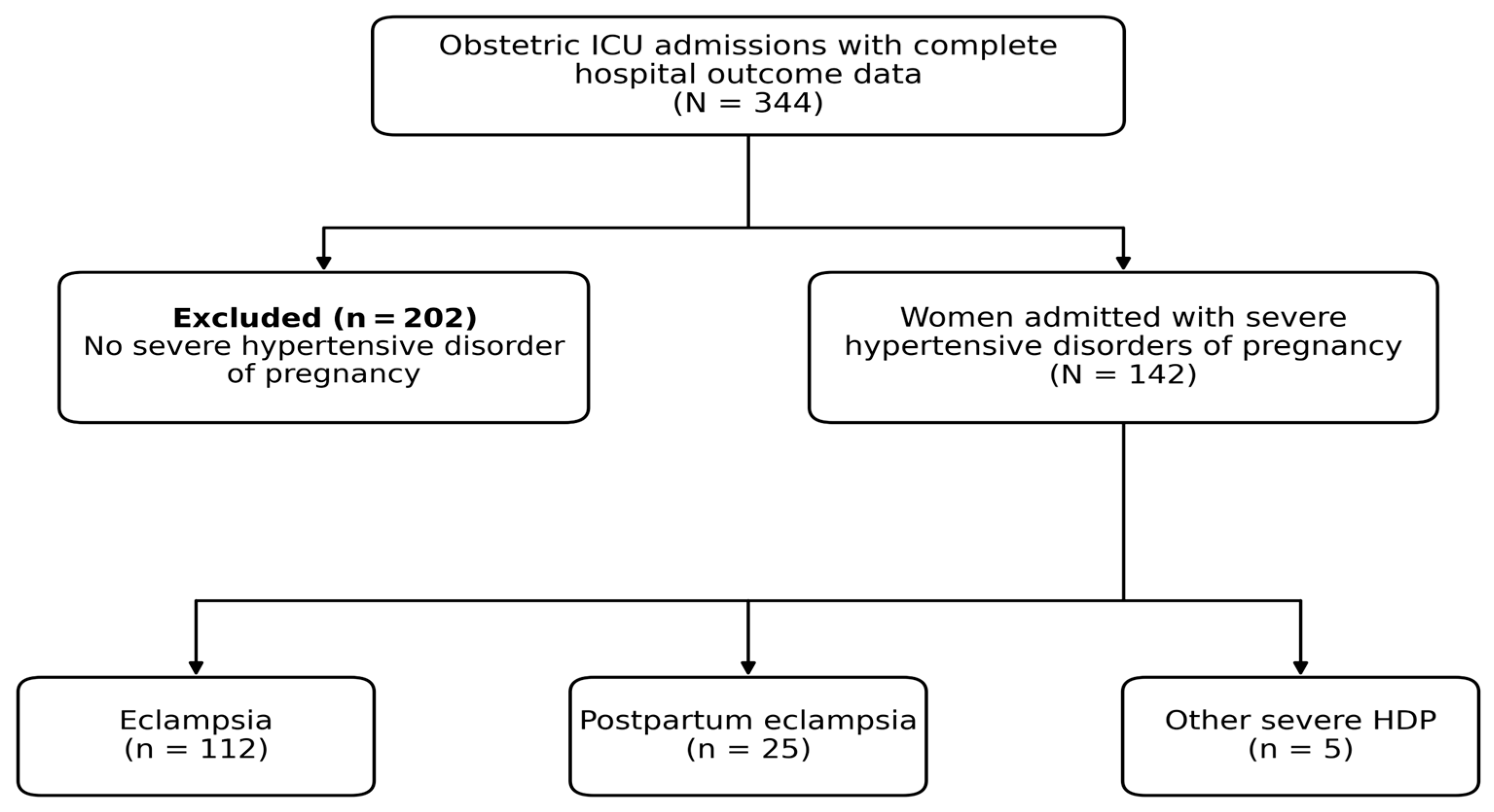
Figure 2.
Critical care interventions among women admitted with severe hypertensive disorders of pregnancy.
Figure 2.
Critical care interventions among women admitted with severe hypertensive disorders of pregnancy.
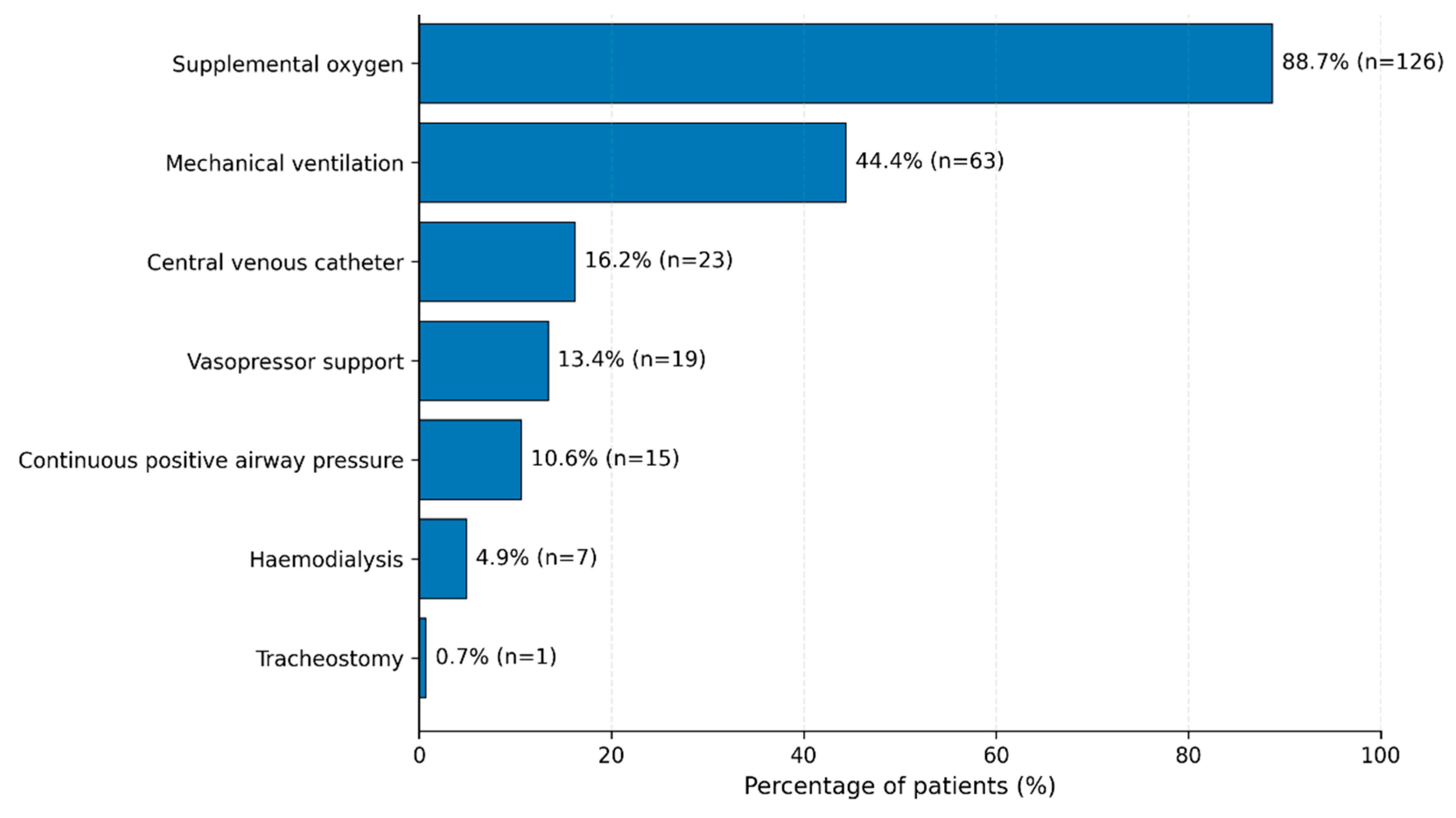

Table 1.
Baseline demographic and clinical characteristics of women admitted with severe hypertensive disorders of pregnancy.
Table 1.
Baseline demographic and clinical characteristics of women admitted with severe hypertensive disorders of pregnancy.
| Characteristic | Overall (N = 142) |
|---|---|
| Age, years, mean ± SD | 31.4 ± 6.2 |
| Age, years, median (IQR) | 32 (27.2–36.0) |
| Parity, median (IQR) | 2 (1–4) |
| Admission characteristics | |
| Referred from another facility, n (%) | 124 (87.3) |
| Antenatal admission, n (%) | 0 (0.0) |
| Postnatal admission, n (%) | 69 (48.6) |
| Admission type not documented, n (%) | 73 (51.4) |
| Clinical characteristics at admission | |
| Glasgow Coma Scale score, median (IQR) | 13 (8–15) |
| Heart rate, beats/min, median (IQR) | 102 (89–116) |
| Systolic blood pressure, mmHg, median (IQR) | 146 (127.0–165.8) |
| Diastolic blood pressure, mmHg, median (IQR) | 96.5 (79.2–110.0) |
| Oxygen saturation, %, median (IQR) | 96 (92.2–98.0) |
| Respiratory rate, breaths/min, median (IQR) | 24 (19.2–30.0) |
| Pre-existing comorbidities | |
| No chronic condition, n (%) | 77 (54.2) |
| Chronic hypertension, n (%) | 29 (20.4) |
| Other chronic condition, n (%) | 8 (5.6) |
| Sickle cell disease, n (%) | 6 (4.2) |
| Diabetes mellitus, n (%) | 3 (2.1) |
| Asthma, n (%) | 2 (1.4) |
| Heart disease, n (%) | 0 (0.0) |
| Renal disease, n (%) | 0 (0.0) |
| Cancer, n (%) | 0 (0.0) |
Table 2.
Critical care interventions and maternal outcomes among women with severe hypertensive disorders of pregnancy.
Table 2.
Critical care interventions and maternal outcomes among women with severe hypertensive disorders of pregnancy.
| Characteristic | Overall (N = 142) |
|---|---|
| Critical care interventions | |
| Supplemental oxygen | 126 (88.7) |
| Mechanical ventilation | 63 (44.4) |
| Central venous catheter | 23 (16.2) |
| Vasopressor support | 19 (13.4) |
| Continuous positive airway pressure | 15 (10.6) |
| Haemodialysis | 7 (4.9) |
| Tracheostomy | 1 (0.7) |
| Maternal outcomes | |
| Length of hospital stay, days, median (IQR) | 8.0 (4.0–15.0) |
| Died during ICU admission | 65 (45.8) |
| Discharged alive | 77 (54.2) |
Table 3.
Comparison of clinical characteristics, critical care interventions, and maternal outcomes between women with eclampsia and postpartum eclampsia.
Table 3.
Comparison of clinical characteristics, critical care interventions, and maternal outcomes between women with eclampsia and postpartum eclampsia.
| Characteristic | Eclampsia (n = 112) | Postpartum eclampsia (n = 25) | P-value |
|---|---|---|---|
| Demographic characteristics | |||
| Age, years, median (IQR) | 32 (27.0–36.0) | 32 (28.0–36.0) | 0.996 |
| Parity, median (IQR) | 2 (1.0–3.2) | 3 (2.0–5.0) | 0.047 |
| Clinical characteristics at admission | |||
| Glasgow Coma Scale score, median (IQR) | 14 (8–15) | 8 (7–13) | <0.001 |
| Systolic blood pressure, mmHg, median (IQR) | 146 (127.8–170.0) | 151 (128.0–160.0) | 0.874 |
| Diastolic blood pressure, mmHg, median (IQR) | 97 (81.0–110.2) | 96 (78.0–107.0) | 0.516 |
| Oxygen saturation, %, median (IQR) | 96 (91.0–98.0) | 97 (95.0–98.0) | 0.281 |
| Respiratory rate, breaths/min, median (IQR) | 24 (19.5–30.2) | 24 (19.0–28.0) | 0.735 |
| Critical care interventions | |||
| Supplemental oxygen, n (%) | 98 (87.5) | 23 (92.0) | 0.736 |
| Mechanical ventilation, n (%) | 53 (47.3) | 9 (36.0) | 0.420 |
| Central venous catheter, n (%) | 20 (17.9) | 2 (8.0) | 0.366 |
| Vasopressor support, n (%) | 14 (12.5) | 2 (8.0) | 0.736 |
| Continuous positive airway pressure, n (%) | 13 (11.6) | 2 (8.0) | 1.000 |
| Haemodialysis, n (%) | 7 (6.2) | 0 (0.0) | 0.349 |
| Maternal outcomes | |||
| Length of hospital stay, days, median (IQR) | 10 (5–15) | 7 (4–13) | 0.234 |
| Died during ICU admission, n (%) | 50 (44.6) | 12 (48.0) | 0.934 |
Disclaimer/Publisher’s Note: The statements, opinions and data contained in all publications are solely those of the individual author(s) and contributor(s) and not of MDPI and/or the editor(s). MDPI and/or the editor(s) disclaim responsibility for any injury to people or property resulting from any ideas, methods, instructions or products referred to in the content. |
© 2026 by the authors. Licensee MDPI, Basel, Switzerland. This article is an open access article distributed under the terms and conditions of the Creative Commons Attribution (CC BY) license (http://creativecommons.org/licenses/by/4.0/).
Copyright: This open access article is published under a Creative Commons CC BY 4.0 license, which permit the free download, distribution, and reuse, provided that the author and preprint are cited in any reuse.


