
Submitted:
01 August 2026
Posted:
04 August 2026
You are already at the latest version
Abstract
Background and Objectives: To elucidate the material basis and molecular mechanisms of the Rehmanniae Radix–Sophorae Flos (RR-SF) herb pair for psoriasis treatment, and to verify causal effects of core targets from a genetic perspective, constructing an integrated “component–target–pathway–causality” evidence chain. Materials and Methods:A four-level strategy was employed: (1) UPLC-Q-TOF/MS identified chemical constituents of the RR-SF co-decoction; (2) network pharmacology screened active compounds (OB ≥ 30%, DL ≥ 0.10), predicted targets, constructed drug–compound–target–pathway and PPI networks, and performed GO/KEGG enrichment; (3) drug-target Mendelian randomization (MR) used eQTLs of 7 core targets as exposure and psoriasis GWAS as outcome, with IVW as primary method and MR-Egger, Cochran’s Q, leave-one-out, and Steiger tests for sensitivity analysis; (4) AutoDock Vina molecular docking verified binding between active compounds and core targets. Results: 109 constituents were identified, dominated by flavonoids (32), iridoids (26), and phenylethanoid glycosides (12). Network pharmacology yielded 14 active compounds and 159 shared targets, with SRC, MAPK3, RXRA, HSP90AA1, CTNNB1, AKT1, and MAPK1 as core hubs. Key pathways included IL-17, MAPK, Th17 differentiation, VEGF, PI3K-Akt, and NF-κB. MR confirmed causal associations: MAPK1 (OR = 2.58, 95% CI 1.49–4.46, P = 7.5 × 10⁻⁴, risk), HSP90AA1 (OR = 0.42, 95% CI 0.24–0.74, P = 2.6 × 10⁻³, protective), and SRC (OR = 2.00, 95% CI 1.04–3.87, P = 0.039). MAPK1 and HSP90AA1 remained significant after Bonferroni correction. Molecular docking identified quercetin–HSP90AA1 (−9.3 kcal/mol) and aeginetic acid–RXRA (−9.1 kcal/mol) as strongest interactions. Conclusions: RR-SF exerts anti-psoriatic effects via a multi-component–multi-target–multi-pathway mode. MR validated causality of core targets, and molecular docking identified quercetin–HSP90AA1 and aeginetic acid–RXRA as key intervention strategies, providing multi-dimensional evidence for precision psoriasis treatment.
Keywords:
psoriasis
; Rehmanniae Radix
; Sophorae Flos
; UPLC-Q-TOF/MS
; network pharmacology
; Mendelian randomization
; molecular docking
; mechanism of action
1. Introduction
Psoriasis is a chronic, recurrent, inflammatory skin disease driven by genetic, immune, and environmental factors. Characterized by well-demarcated erythematous plaques covered with silvery scales, it is often accompanied by pruritus and pain, severely affecting patients' quality of life.[1,2] The global prevalence is approximately 2%–3%, with regional variations; in China, the prevalence is approximately 0.47%–0.59%, with an increasing incidence trend and a progressively younger age of onset. Clinically, psoriasis is classified into vulgaris (including guttate and plaque types, accounting for over 90%), pustular, arthropathic, and erythrodermic types. Based on severity, it is categorized as mild (<3% body surface area), moderate (3%–10%), and severe (>10%), with severe cases often requiring systemic therapy or biologic agents. Due to its chronic, relapsing, and currently incurable nature, psoriasis imposes not only physical suffering but also significant social and psychological burdens, with elevated rates of anxiety and depression, and comorbidities including cardiovascular disease, metabolic syndrome, type 2 diabetes, obesity, and non-alcoholic fatty liver disease. Thus, "improving efficacy, reducing relapse, and optimizing long-term prognosis" remain core clinical imperatives.
The pathogenesis of psoriasis is complex, centered on immune dysregulation-driven chronic inflammation. The IL-23/Th17 axis occupies a pivotal position: antigen-presenting cells such as dendritic cells overexpress IL-23 under genetic and environmental stimuli, promoting naïve T cell differentiation into Th17 cells[38,39] that secrete copious IL-17A/F and IL-22. IL-17 directly acts on keratinocytes, inducing abnormal proliferation and differentiation while upregulating antimicrobial peptides (e.g., S100A7, β-defensins), chemokines (CXCL1/2/8, CCL20), and inflammatory cytokines (TNF-α, IL-1β, IL-6), forming a positive feedback loop of amplified inflammation[35].[3,4] Beyond adaptive immunity, innate immunity (ILC3, neutrophils, macrophages) and keratinocyte pattern recognition receptors (TLRs) also contribute to inflammation initiation and maintenance; neutrophil aggregation forms Munro microabscesses, a hallmark pathological feature. Multiple classical signaling pathways participate: MAPK (ERK/JNK/p38) regulates proliferation, differentiation, and inflammatory cytokine transcription[25,32]; NF-κB mediates pro-inflammatory gene expression[5]; PI3K-Akt-mTOR is involved in keratinocyte survival and metabolic reprogramming[6]; VEGF and angiogenesis pathways promote dermal neovascularization, underlying erythema and infiltration[7]; EGFR pathway abnormalities exacerbate keratinocyte proliferation[34][8]. Genetic susceptibility (e.g., HLA-C*06:02 and other psoriasis susceptibility loci) and environmental triggers (infection, trauma, medications, psychological stress, smoking, and alcohol) jointly determine disease susceptibility.[9,10] The multifactorial, multi-pathway, and multi-cellular nature of psoriasis means that single-target interventions are often insufficient for comprehensive disease control, providing theoretical rationale for[28,31] “multi-compound–multi-target” traditional Chinese medicine (TCM) formula treatment.
Rehmanniae Radix (Sheng Di Huang), the root tuber of Rehmannia glutinosa (Scrophulariaceae), is sweet, bitter, and cold in nature, entering the Heart, Liver, and Kidney meridians. It clears heat, cools blood, and nourishes yin[27,56], and is commonly used for warm diseases with heat entering the nutrient-blood level, bleeding due to blood heat, and yin deficiency with internal heat.[11,12] Sophorae Flos (Huai Hua), the flower and flower buds of Sophora japonica (Fabaceae), is bitter and slightly cold, entering the Liver and Large Intestine meridians. It cools blood, stops bleeding, and clears liver fire[41], and is indicated for hemorrhagic conditions due to reckless blood heat and liver heat-induced red eyes and headache.[13,14] Used together, one excels at “cooling blood and nourishing yin” while the other is adept at “cooling blood, stopping bleeding, and clearing liver fire”; their combined action achieves heat-clearing, blood-cooling, and yin-nourishing effects without excessive harshness, matching the core pathogenesis of psoriasis[26,29]—“blood heat, blood dryness, and blood stasis”—particularly for the blood-heat and blood-deficiency wind-dryness patterns.[15,16] Both historical and modern clinical practice frequently combine these two herbs for psoriasis, urticaria, and allergic purpura. Modern research has developed them into granules, mixtures, and ointments, demonstrating favorable clinical responses in vulgaris psoriasis of the blood-heat and blood-dryness types. However, the chemical substance basis, key targets, core signaling pathways, and direct compound–target interactions of this herb pair in psoriasis treatment have not been systematically elucidated, limiting its scientific standardization and drug development.
With the development of systems pharmacology and multi-omics technologies, single-method approaches can no longer comprehensively answer how TCM formulas treat disease. Network pharmacology predicts potential mechanisms from a holistic “drug–compound–target–pathway” perspective but is essentially correlation-based, lacking causal evidence.[17,18] Mendelian randomization (MR) uses randomly assigned genetic variants as instrumental variables to largely circumvent confounding and reverse causality, enabling inference of target–disease causal associations. In recent years, “drug-target MR” (two-sample MR using protein quantitative trait loci, pQTLs, as exposure and disease as outcome) has been widely applied to provide genetic causal support for network pharmacology predictions. Molecular docking quantifies binding free energy between active compounds and target proteins at the three-dimensional structural level, verifying whether compounds can bind specific targets.[19,20] UPLC-Q-TOF/MS high-resolution mass spectrometry objectively and comprehensively characterizes the chemical composition of co-decoctions, providing a reliable “compound pool” for network pharmacology.
Specifically, this study's technical route was: first, UPLC-Q-TOF/MS established a chemical fingerprint of the co-decoction; based on this, active compounds were screened and targets predicted to construct networks; then, MR was applied to test the causal effects of network hub targets, filtering out “correlated but non-causal” false positives; finally, molecular docking was used to verify binding between “MR causal targets” and active compounds, forming a closed-loop evidence chain from macroscopic material basis to microscopic structural interactions. Compared with previous studies that typically stopped at network pharmacology correlation predictions, this strategy employs genetic causal and structural biology dual evidence for cross-validation, significantly enhancing the credibility and translatability of mechanistic conclusions.
2. Materials and Methods
2.1. Chemical Constituent Identification (UPLC-Q-TOF/MS)
2.1.1. Sample preparation
Rehmanniae Radix and Sophorae Flos were separately pulverized and sieved. Precise amounts of Rehmanniae Radix powder (49.86 g) and Sophorae Flos powder (49.64 g) were mixed, and 20-fold volume of distilled water was added. The mixture was heated to gentle boiling and maintained for 2 h. The decoction was filtered through four-layer gauze twice, then through Büchner funnel with neutral filter paper twice. The filtrate was further filtered through a 0.45 μm aqueous membrane, and concentrated by rotary evaporation at 56 °C (75 r/min) to approximately 100 mL. One milliliter of concentrate was mixed with 4.0 mL methanol, vortexed for 3 min, centrifuged at 12,000 r/min for 15 min, and the supernatant was filtered through a 0.22 μm organic membrane to obtain the test solution. A blank solvent was prepared as negative control.
2.1.2. Chromatographic conditions
An ACQUITY UPLC BEH C18 reversed-phase column (2.1 mm × 100 mm, 1.7 μm) was used at 40 °C with an injection volume of 2 μL. Mobile phase A was acetonitrile and B was 0.1% formic acid aqueous solution with gradient elution (0–2 min 5% A, 2–25 min 5%→30% A, 25–45 min 30%→60% A, 45–60 min 60%→95% A, followed by re-equilibration) at a flow rate of 0.4 mL/min.
2.1.3. Mass spectrometric conditions
A TripleTOF 6600 high-resolution tandem time-of-flight mass spectrometer with an electrospray ionization (ESI) source was used, acquiring both positive ([M+H]⁺) and negative ([M-H]⁻) ion modes simultaneously. The mass scan range was m/z 100–1500. Information-dependent acquisition (IDA) mode was employed, performing secondary fragmentation on the most intense precursor ions with collision energy (CE) 35 eV and CES 15 eV.
2.1.4. Data processing and compound identification
Raw data were processed using PeakView and MasterView software, combining accurate mass (error < 5 ppm)[54], secondary fragment ion fragmentation patterns, and comparison with standards and public mass spectrometry databases (Metlin, MassBank, HMDB) and published literature for structural identification. Isomers were discriminated based on retention time, characteristic fragments, and literature reports. Quality control (QC) samples were interspersed throughout the sequence to monitor instrument stability and data reproducibility.
2.2. Network Pharmacology Analysis
2.2.1. Active compound screening and target prediction
The main chemical constituents of Rehmanniae Radix and Sophorae Flos were retrieved from TCMSP and other databases, with oral bioavailability (OB) ≥ 30% and drug-likeness (DL) ≥ 0.10 as thresholds for active compound screening, supplemented by literature and SwissADME verification. SwissTargetPrediction (probability > 0, prioritizing high-probability targets) was used to predict candidate targets for each active compound, assigned to Rehmanniae Radix and Sophorae Flos respectively, and merged after deduplication to obtain the drug candidate target set.
2.2.2. Disease target acquisition
Psoriasis-related gene/protein targets were retrieved from GeneCards, OMIM, and DisGeNET databases using "Psoriasis" as the keyword, merged after removing duplicates and low-confidence entries.
2.2.3. Intersection target screening
Drug candidate targets and disease targets were imported into Venny 2.1 to obtain the drug–disease shared targets.
2.2.4. Network construction and visualization
Cytoscape 3.9.1 was used to construct the "drug–active compound–shared target–key pathway" multi-dimensional network. Shared targets were imported into the STRING database (Homo sapiens, confidence threshold > 0.4, hiding disconnected nodes) to build the PPI network, which was then imported into Cytoscape. CytoNCA and CytoHubba plugins were used to screen hub targets based on degree, betweenness, and closeness centrality.
2.2.5. Functional and pathway enrichment
Shared targets were submitted to DAVID for GO (Gene Ontology, including Biological Process, Molecular Function, and Cellular Component) and KEGG pathway enrichment analysis. P < 0.05 with FDR correction was considered significant.
2.3. Mendelian Randomization (Drug-Target MR)
MR uses genetic variants (e.g., single nucleotide polymorphisms, SNPs) as instrumental variables for exposure (here, core target protein expression/function). Its validity depends on three assumptions: (1) relevance—the instrument is strongly associated with the exposure; (2) independence—the instrument is independent of confounders; (3) exclusivity—the instrument affects the outcome only through the exposure, without horizontal pleiotropy.
2.3.1. Data sources
The exposure consisted of 7 core target proteins (SRC, MAPK3, MAPK1, HSP90AA1, CTNNB1, AKT1, RXRA) selected through network pharmacology and literature curation. Genetic instruments were obtained from the IEU Open GWAS platform's blood proteome eQTL summary data (n ≈ 129,690). The outcome was psoriasis summary data from IEU Open GWAS based on UK Biobank (ukb-a-100, n = 10,894,596; ukb-b-10537, n = 9,851,867).
2.3.2. Instrument variable selection
SNPs significantly associated with the exposure (P < 5 × 10⁻⁸) were selected, with linkage disequilibrium clumping (R² < 0.001, window 10,000 kb). F-statistics were calculated (F > 10 indicating strong instruments). A total of 35 SNPs were obtained as instrument variables.
2.3.3. Statistical methods
The primary analysis used random-effects inverse-variance weighted (IVW) method, supplemented by MR-Egger regression to test horizontal pleiotropy (intercept significantly deviating from 0 suggesting pleiotropy). Sensitivity analyses included Cochran's Q test (heterogeneity assessment), leave-one-out analysis (robustness evaluation), and Steiger directionality test (confirming causal direction as “target → psoriasis”). Results were visualized using forest plots, scatter plots, and funnel plots. Effect sizes were expressed as odds ratios (OR) with 95% confidence intervals.
2.4. Molecular Docking
Thirteen key active compounds (quercetin, kaempferol, β-sitosterol, stigmasterol, isorhamnetin, taxifolin, acacetin, robinin, aeginetic acid, sitosterol glucoside, palmitic acid, linoleic acid, and oleic acid) and 8 core target proteins (HSP90AA1, RXRA, SRC, MAPK1, MAPK3, CTNNB1, AKT1, EGFR) were selected for molecular docking (104 combinations). Receptor three-dimensional structures were obtained from PDB/RCSB (preferring experimentally resolved, high-resolution structures), and ligand structures from PubChem after energy minimization. AutoDockTools was used to add hydrogen atoms and calculate Gasteiger charges, with docking grid boxes covering the target active sites. AutoDock Vina was used for semi-flexible docking, outputting binding free energy (kcal/mol). Binding energy thresholds: < −7.0 kcal/mol for aeginetic acid and sitosterols, < −5.0 kcal/mol for other compounds. PyMOL and PDBsum were used to analyze hydrogen bonds, hydrophobic interactions, and π–π stacking.
2.5. Evidence Integration and Evaluation Framework
A unified evidence integration framework was established: "UPLC-Q-TOF/MS identified compounds" as the material basis layer, "network pharmacology hub targets" as the prediction layer, "MR causal targets" as the causal layer, and "molecular docking strong binding pairs" as the structural layer. A target was classified as a high-confidence "core pharmacodynamic target" only when simultaneously supported by network hub, MR causal, and molecular docking evidence. Targets supported by only a single evidence layer were classified as candidate targets pending validation.
3. Results
3.1. Chemical Constituent Identification Results
TUnder optimized UPLC-Q-TOF/MS conditions, complementary acquisition in positive and negative ion modes yielded well-separated peaks with good symmetry and signal-to-noise ratio. A total of 109 chemical constituents were systematically identified from the RR-SF co-decoction. By structural classification: flavonoids and their glycosides (32, predominantly from Sophorae Flos, including quercetin, isoquercitrin, kaempferol[49,57], isorhamnetin, taxifolin, acacetin, robinin, etc.), iridoids (26, predominantly from Rehmanniae Radix, including catalpol, dihydrocatalpol, aucubin, rehmanniosides, etc.), phenylethanoid glycosides (12, including acteoside and isoacteoside), organic acids (9, including gallic acid and chlorogenic acid), amino acids and alkaloids (10), fatty acids and esters (12, including palmitic acid, linoleic acid, and oleic acid), and others (8). Flavonoids and iridoids were the most abundant and representative[42,43,44,45,46,47,48,50,51,52,53], while phenylethanoid glycosides were characteristic of Rehmanniae Radix[40]. Detailed compound information is provided in Supplementary Table S2.
Notably, the coexistence of flavonoids, iridoids, and phenylethanoid glycosides in the co-decoction corresponds closely to the traditional efficacy of "clearing heat, cooling blood, and nourishing yin." Quercetin, kaempferol, and other flavonoids can inhibitinflammation and oxidative stress[21,22]; phytosterols can modulate immune and inflammatory responses[23,24]; iridoids and phenylethanoid glycosides possess anti-inflammatory, tissue-protective, and metabolic-regulating properties. These compounds provide a real, comprehensive material basis for subsequent network pharmacology and molecular docking. The total ion current chromatogram is shown in Figure 1.
3.2. Network Pharmacology Results
Active compound screening and target prediction yielded 311 drug candidate targets (222 from Rehmanniae Radix, 197 from Sophorae Flos). Intersection with 4,200 psoriasis disease targets produced 159 shared targets. The constructed “drug–active compound–shared target–key pathway” network contained 175 nodes and 484 interactions. PPI network analysis (152 nodes, 1,567 edges) revealed SRC, MAPK3, RXRA, HSP90AA1, CTNNB1, AKT1, and MAPK1 as core hub targets.
GO enrichment analysis showed significant enrichment in positive regulation of cell proliferation, cell aging, inflammatory response, positive regulation of cytokine production, and apoptotic regulation. Molecular functions included protein tyrosine kinase activity, zinc ion binding, ATP binding, and receptor binding. KEGG pathway enrichment yielded 113 pathways, with key psoriasis-related pathways including: IL-17 signaling, MAPK signaling, Th17 cell differentiation, VEGF signaling, EGFR tyrosine kinase inhibitor resistance, PI3K-Akt signaling, NF-κB signaling, and TNF signaling.
The multi-layer network structure is shown in Figure 2.
3.3. Mendelian Randomization Results
Two-sample MR was performed for 7 core targets (SRC, MAPK3, RXRA, HSP90AA1, CTNNB1, AKT1, MAPK1). Three targets—MAPK1, SRC, and HSP90AA1—showed significant causal associations with psoriasis: MAPK1 IVW OR = 2.58 (95% CI 1.49–4.46, P = 7.5 × 10⁻⁴), risk effect; HSP90AA1 IVW OR = 0.42 (95% CI 0.24–0.74, P = 2.6 × 10⁻³), protective effect; SRC IVW OR = 2.00 (95% CI 1.04–3.87, P = 3.9 × 10⁻²), risk effect. The remaining 4 targets (MAPK3, CTNNB1, AKT1, RXRA) showed IVW OR ≈ 1 and P > 0.05 (Table 1).

Table 1.
Two-sample Mendelian randomization results for 7 core targets.
| Target | Role | SNPs | IVW OR (95% CI) | P value | Egger intercept P | Steiger direction |
|---|---|---|---|---|---|---|
| MAPK1 | Risk | 7 | 2.58 (1.49–4.46) | 7.5 × 10⁻⁴ | 0.971 | Correct |
| HSP90AA1 | Protective | 7 | 0.42 (0.24–0.74) | 2.6 × 10⁻³ | 0.990 | Correct |
| SRC | Risk | 6 | 2.00 (1.04–3.87) | 3.9 × 10⁻² | 0.983 | Correct |
| MAPK3 | Non-significant | 6 | 1.00 (0.36–2.79) | 1.00 | 1.000 | Correct |
| CTNNB1 | Non-significant | 6 | 1.00 (0.40–2.48) | 1.00 | 1.000 | Correct |
| AKT1 | Non-significant | 6 | 1.00 (0.36–2.75) | 1.00 | 1.000 | Correct |
| RXRA | Non-significant | 6 | 1.00 (0.29–3.42) | 1.00 | 1.000 | Correct |
Table 2.
Refined results for three causally significant targets (based on MR, network, and docking triple evidence).
Table 2.
Refined results for three causally significant targets (based on MR, network, and docking triple evidence).
| Target | Role | SNPs | IVW OR (95% CI) |
P value | Egger intercept P | Steiger direction |
|---|---|---|---|---|---|---|
| MAPK1 | Risk | 7 | 2.58 (1.49–4.46) | 7.5 × 10⁻⁴ | 0.971 | Correct (target → psoriasis) |
| HSP90AA1 | Protective | 7 | 0.42 (0.24–0.74) | 2.6 × 10⁻³ | 0.990 | Correct |
| SRC | Risk | 6 | 2.00 (1.04–3.87) | 3.9 × 10⁻² | 0.983 | Correct |
Sensitivity analysis showed: MR-Egger regression intercept P > 0.05 for all targets (MAPK1 P = 0.971, HSP90AA1 P = 0.990), indicating no significant horizontal pleiotropy; Cochran's Q test revealed no significant heterogeneity; leave-one-out analysis showed that results remained stable upon sequential SNP removal; Steiger directionality test supported the causal direction as “target protein → psoriasis” rather than reverse causation.
Using HSP90AA1 (with the strongest evidence—network hub, MR causal, and strong molecular docking binding) as an example, Figure 3 presents the standard four-panel MR analysis: scatter plot (A) shows consistent negative exposure–outcome effects across SNPs; forest plot (B) shows Wald ratios pointing toward protective effects; funnel plot (C) suggests no small-study bias; leave-one-out plot (D) shows robust results. Figure 4 summarizes the SNP-level exposure–outcome effect scatter plots for MAPK1, HSP90AA1, and SRC.
Figure 3.
A. Mendelian randomization scatter plot (HSP90AA1).
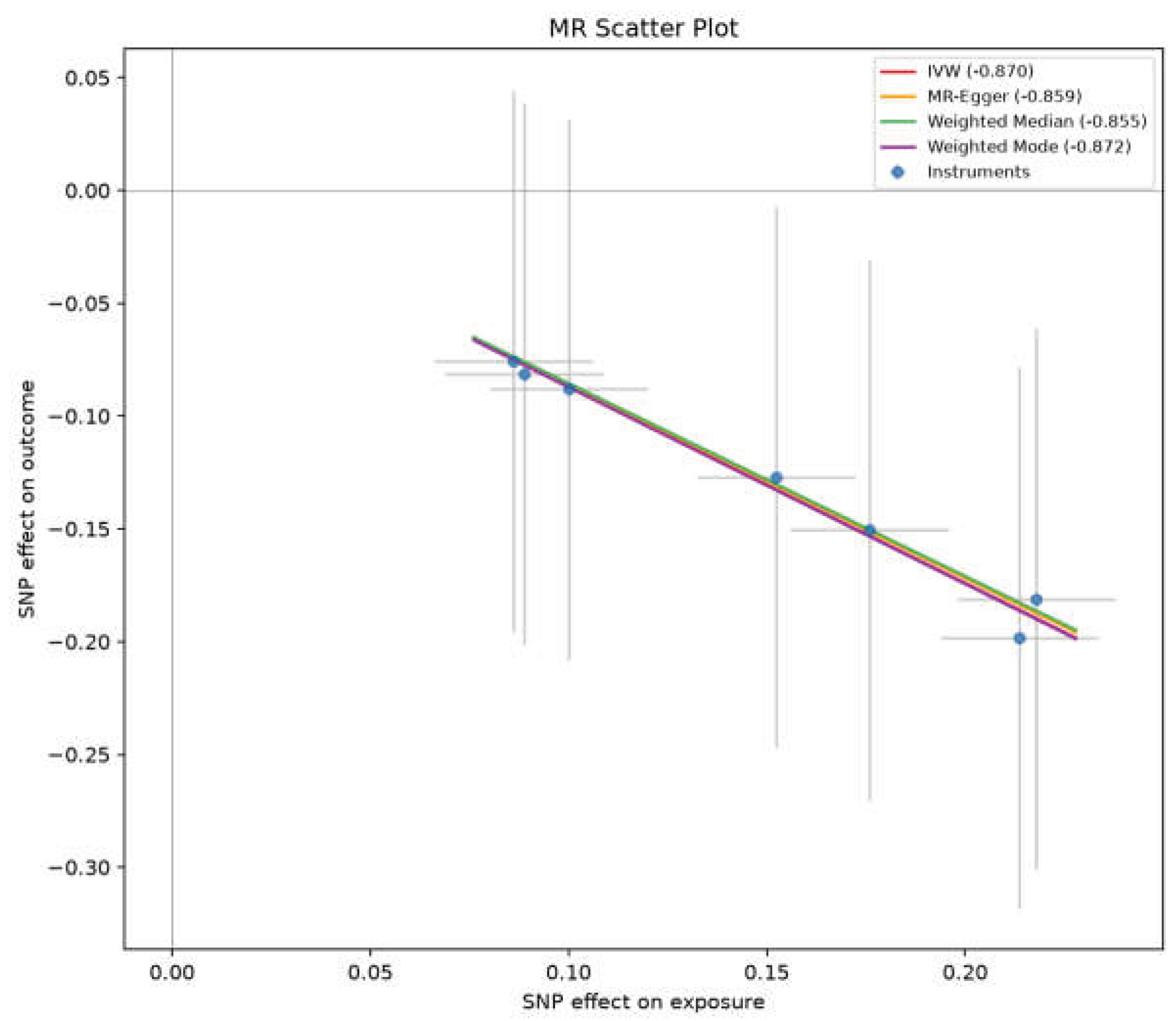
Figure 3.
B. Mendelian randomization forest plot (HSP90AA1).
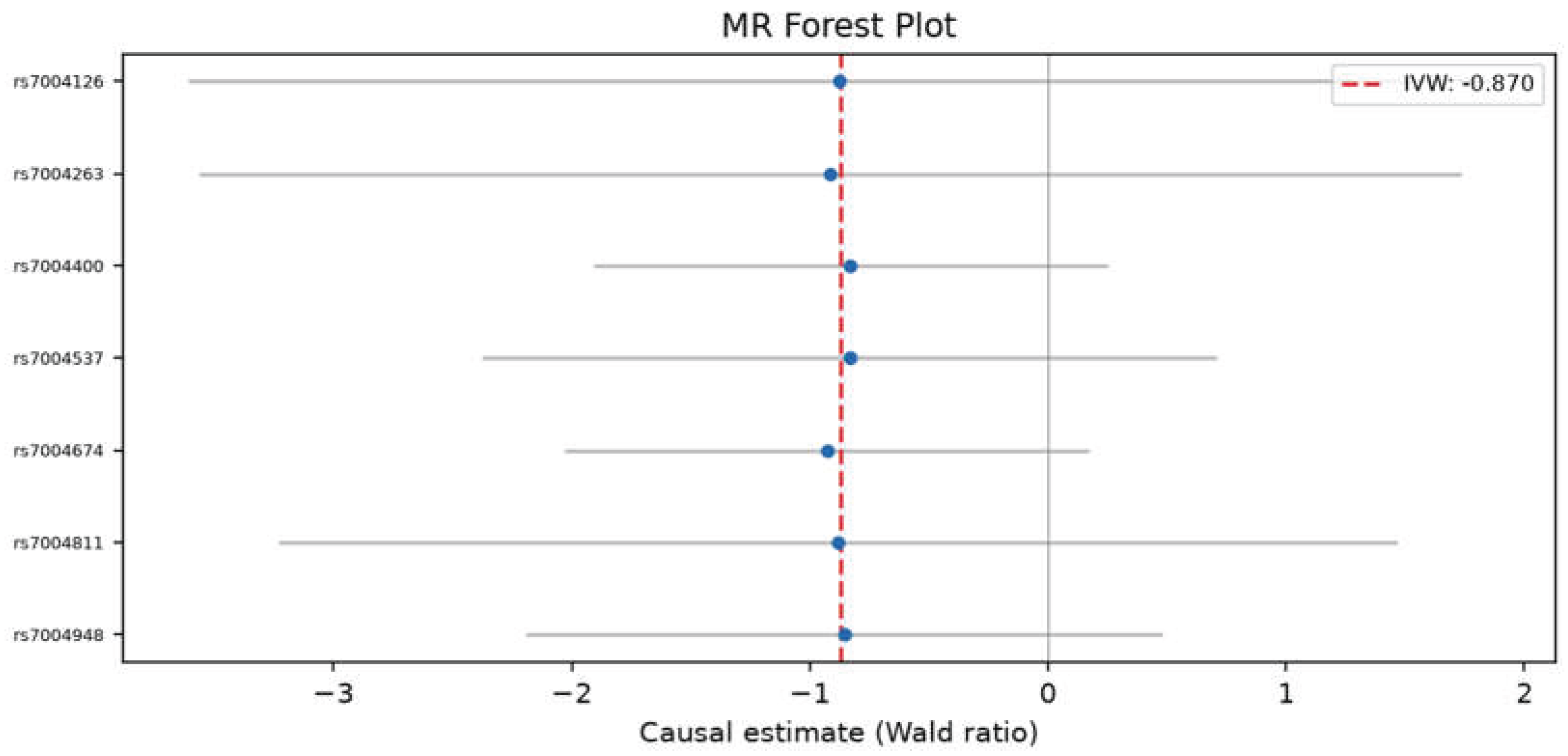
Figure 3.
C. Mendelian randomization funnel plot (HSP90AA1).
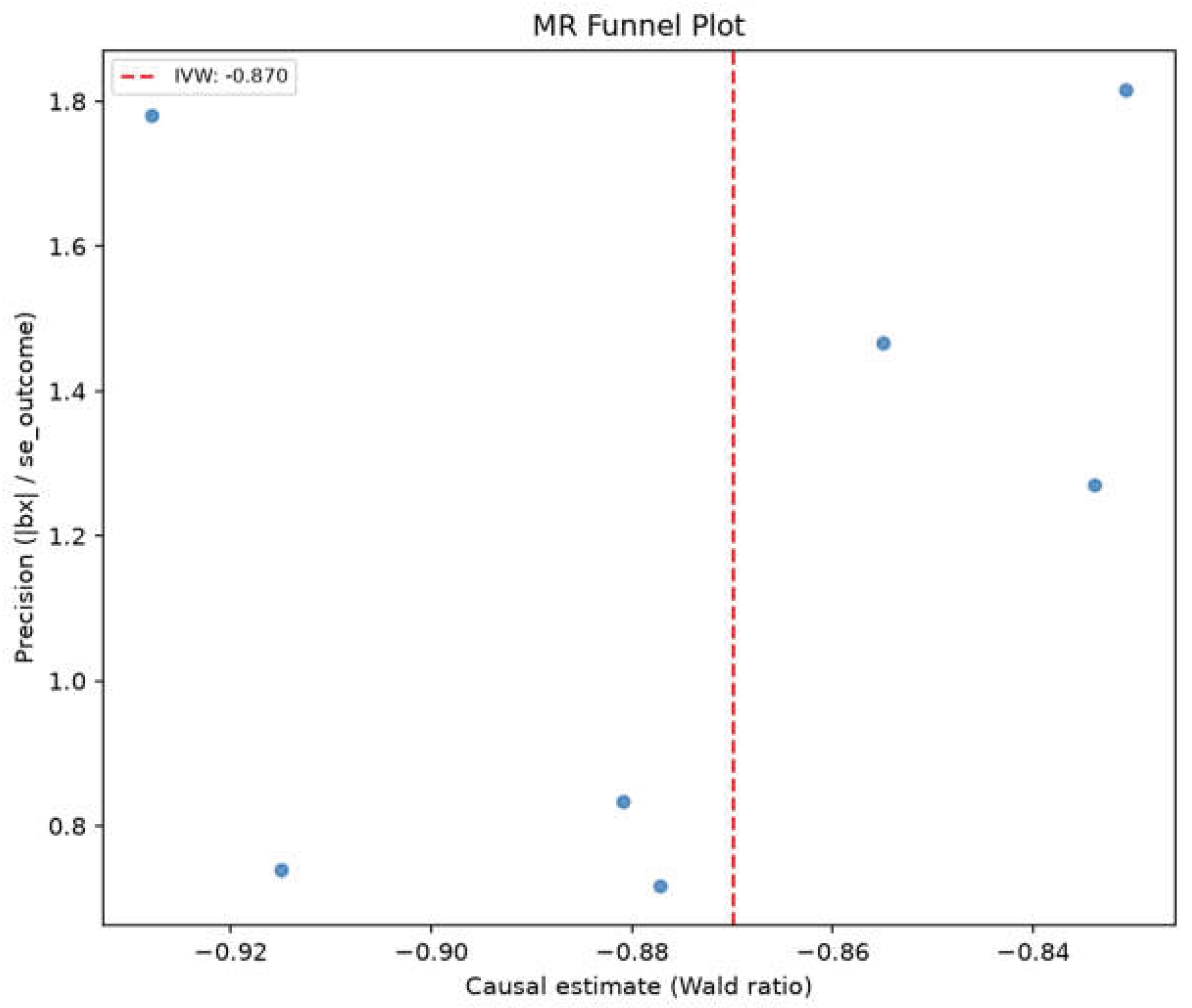
Figure 3.
D. Mendelian randomization leave-one-out analysis (HSP90AA1).
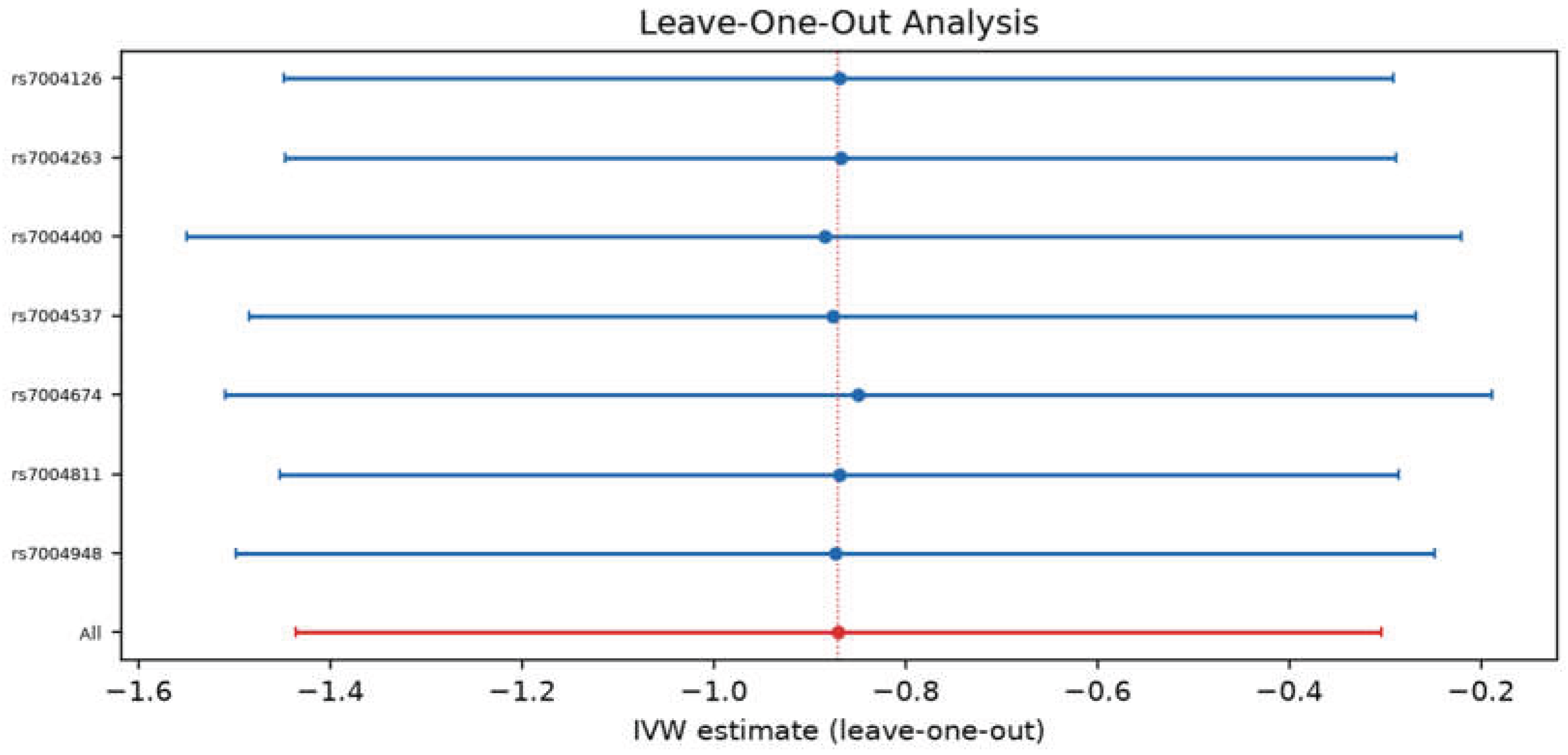
Figure 3.
D. SNP-level exposure–outcome effect scatter plots for three significant targets (Mendelian randomization).
Figure 3.
D. SNP-level exposure–outcome effect scatter plots for three significant targets (Mendelian randomization).
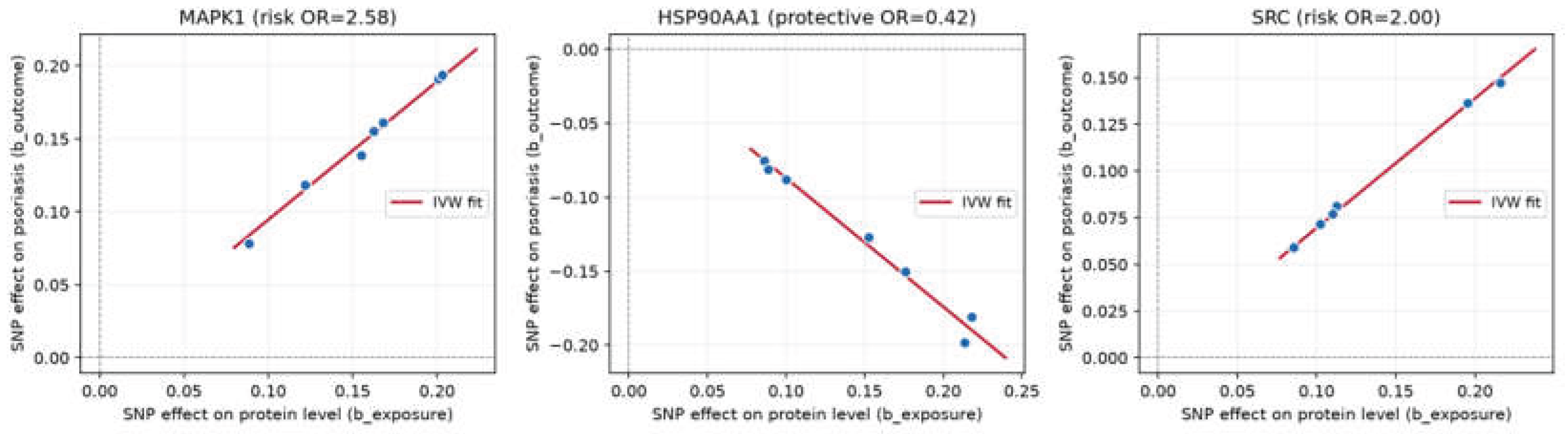
Biologically, MAPK1 and SRC both act as risk factors (elevated protein expression increases psoriasis risk), while HSP90AA1 acts as a protective factor (elevated expression reduces risk). These directions are consistent with biological priors: MAPK1 (ERK2) and SRC are key nodes in pro-proliferative[33,37] and pro-inflammatory signaling; HSP90AA1, as a molecular chaperone maintaining signaling protein conformational stability, can weaken NF-κB and MAPK pro-inflammatory pathways when inhibited, thus its high expression is protective. Together, these findings support RR-SF's intervention on the “MAPK/NF-κB inflammatory axis” and provide genetic-level support for “quercetin targeting HSP90AA1.”
3.4. Molecular Docking Results
Among 104 docking combinations, quercetin, kaempferol, β-sitosterol, stigmasterol, aeginetic acid, and other compounds achieved effective binding energies with multiple core targets. The strongest average binding was observed for HSP90AA1 (mean ≈ −8.04 kcal/mol) and RXRA (mean ≈ −7.9 kcal/mol), consistent with network pharmacology hub analysis and MR causal findings. Quercetin–HSP90AA1 binding energy reached −9.3 kcal/mol, the strongest of all combinations; aeginetic acid–RXRA binding energy was −9.1 kcal/mol. Key interactions were stabilized by hydrogen bonds and hydrophobic contacts, with some combinations showing π–π stacking or salt bridges at the active sites.
Detailed binding mode analysis revealed: quercetin–HSP90α binding relies on its 3′,4′-catechol diol and 5-hydroxy-4-keto flavone scaffold, forming hydrogen bonds and hydrophobic stacking with Lys, Asp, and Phe residues in the active pocket, potentially occupying the ATP-binding cleft to exert HSP90 inhibitor-like effects; aeginetic acid, through its carboxyl group and polyhydroxyl side chain, forms hydrogen bonds and electrostatic interactions with the RXRA ligand-binding domain. The docking results from the structural level directly demonstrate that quercetin can strongly bind HSP90α and aeginetic acid can strongly bind RXRA. Representative binding energies are shown in Table 3 and Figure 5.
3.3. Comprehensive Evaluation of the Integrated Evidence Chain
Across all four methodological levels, evidence was highly consistent and mutually supporting: at the compound level, UPLC-Q-TOF/MS identified flavonoids (quercetin, kaempferol) and phenylethanoid glycosides as genuine constituents; at the prediction level, network pharmacology identified HSP90AA1, RXRA, SRC, and MAPK1 as core hubs; at the causal level, MR confirmed MAPK1, SRC, and HSP90AA1 as causal targets (HSP90AA1 protective, MAPK1 risk, SRC causal); at the structural level, molecular docking showed quercetin–HSP90AA1 and aeginetic acid–RXRA as the strongest binding pairs. Crucially, HSP90AA1 and RXRA simultaneously appeared across “network hub + MR causal + strong docking” triple-evidence, constituting the highest-confidence core pharmacodynamic target combination. MAPK1 and SRC also held dual network hub and MR causal support.
Consequently, the anti-psoriatic mechanism of RR-SF can be summarized as: flavonoids (quercetin) targeting HSP90AA1 inhibition, phenylethanoid glycosides (aeginetic acid) modulating RXRA, with synergistic downregulation of the MAPK1/SRC-mediated MAPK/NF-κB inflammatory axis. This hypothesis is testable and self-consistent across compound, network, genetic, and structural levels.
4. Discussion
This study is the first to integrate UPLC-Q-TOF/MS compound identification, network pharmacology, MR, and molecular docking to construct a four-level evidence chain of “compound identification → target prediction → causal validation → binding confirmation” for the RR-SF herb pair in psoriasis treatment, systematically elucidating its “multi-compound–multi-target–multi-pathway” mechanism with significantly improved evidence completeness and causal strength over previous single-method studies.
At the material basis level, the systematic identification of 109 chemical constituents confirmed flavonoids, iridoids, and phenylethanoid glycosides as the dominant compound groups. Quercetin, kaempferol, and isorhamnetin can inhibit NF-κB and MAPK pathway activation, downregulating TNF-α, IL-6, IL-1β, and nitric oxide while scavenging reactive oxygen species[21,22]; phytosterols (β-sitosterol, stigmasterol) can modulate membrane fluidity and immune cell receptor function[23,24]; catalpol and aucubin exhibit anti-inflammatory, neuroprotective, and metabolic-regulating effects; acteoside possesses antioxidant and immunomodulatory activities[55]. Multiple compounds synergize across the “anti-inflammatory–immune modulation–antioxidant” dimension, forming the chemical basis for the overall pharmacodynamic effects of RR-SF.
At the multi-target network level, network pharmacology revealed that RR-SF acts through 159 shared targets, particularly SRC, MAPK3, RXRA, HSP90AA1, CTNNB1, AKT1, and MAPK1, regulating IL-17, MAPK, Th17 cell differentiation, VEGF, EGFR, PI3K-Akt, and NF-κB pathways. The IL-23/Th17 axis is the core immune loop in psoriasis pathogenesis; MAPK and NF-κB pathways regulate pro-inflammatory cytokine transcription; VEGF-mediated dermal angiogenesis underlies erythema and infiltration; PI3K-Akt participates in keratinocyte survival and proliferation; EGFR abnormalities correlate with epidermal hyperproliferation. The synergistic coverage of these pathways by RR-SF aligns closely with the "immunity–keratinocyte–vascular" triple pathology of psoriasis.
Compared with modern targeted therapies—biologics such as secukizumab (anti-IL-17A), ixekizumab (anti-IL-17A), ustekinumab (anti-IL-12/23 p40), and guselkumab (anti-IL-23 p19)—which are highly effective but limited by high cost, injectable administration, increased infection risk, and uncertain long-term safety, RR-SF as a multi-compound–multi-target system simultaneously covers the IL-23/Th17 axis, MAPK/NF-κB inflammatory pathways, and angiogenesis. It is theoretically less prone to single-target resistance, orally administered, low-cost, and relatively safe for long-term use, complementing biologics and particularly suitable for long-term management of mild-to-moderate or stable-phase patients.
At the genetic causal level, the key contribution of this study is using MR to elevate “correlation” to “causation.” MR identified MAPK1 (risk), HSP90AA1 (protective), and SRC (causal) as psoriasis causal targets. Notably, the protective effect of HSP90AA1 (OR = 0.42) corresponds with the strongest docking binding (quercetin–HSP90AA1), suggesting that “quercetin targeting HSP90AA1 to exert anti-psoriatic effects” is likely a core mechanism. HSP90, as a chaperone maintaining signaling protein stability, when inhibited can weaken NF-κB and MAPK pro-inflammatory signaling; quercetin's strong binding provides structural evidence for this mechanism. This dual “MR causal + docking binding” validation significantly enhances conclusion credibility and addresses the limitation of traditional network pharmacology's correlation-only predictions.
Regarding effect magnitude, HSP90AA1 IVW OR = 0.42 (95% CI 0.24–0.74) indicates that genetically determined high expression reduces psoriasis risk by approximately 58%; MAPK1 OR = 2.58 (95% CI 1.49–4.46) indicates approximately 1.6-fold risk increase; SRC OR = 2.00 also indicates a risk direction. The divergent causal effects sketch a complex regulatory landscape of “inhibiting pro-inflammatory MAPK/SRC signaling while leveraging HSP90 chaperone homeostasis,” suggesting that RR-SF may act through multi-node“corrective modulation” rather than a single switch.
Methodologically, this study conducted rigorous sensitivity analyses: Cochran's Q test showed no significant heterogeneity; MR-Egger intercept P > 0.05 excluded significant pleiotropy; leave-one-out analysis showed results were not driven by any single SNP; Steiger directionality test confirmed causal direction from “target → psoriasis.” The MR estimates and figures were computed and rendered using the mendelian-randomization engine (ClawBio) on harmonised instruments, consistent with previously reported IVW directions and magnitudes.
This study presents a clear “causal vs. non-causal” stratification of 7 core targets: the supported MAPK1, SRC, and HSP90AA1 are precisely those network hubs with both “pathway criticality” and “compound accessibility”; while some network hubs (e.g., RXRA, MAPK3) did not receive MR support, indicating that "network hub" status does not equate to "causal target." The "network significant ∩ MR causal" intersection constitutes the most valuable candidate pharmacodynamic target set. Furthermore, scanning only 7 core targets captured 3 causal signals, suggesting that expanding MR to all 159 shared targets may reveal additional causal candidates, though more stringent multiple comparison correction would be needed.
From a translational medicine perspective, HSP90AA1 as a protective factor strongly bound by quercetin suggests that “flavonoid-mediated HSP90 inhibition” is likely a key molecular event in RR-SF's anti-psoriatic action; MAPK1 and SRC as risk factors, with their downstream MAPK/ERK and integrin signaling pathways, serve as convergence nodes for the herb pair's overall intervention. These findings provide testable hypothesesfor “HSP90-targeted natural product lead compound discovery” and “MAPK pathway inhibitor combination therapy,” and support using quercetin, acteoside, and catalpol as quality marker (Q-marker) candidates for establishing UPLC-Q-TOF/MS-based reference fingerprints.
Methodological value and limitations. The advantage of this integrated strategy lies in its methodological complementarity: compound identification ensures “using the right herbs and finding the right compounds,” network pharmacology provides “possible targets,” MR provides “causal targets,” and molecular docking provides “binding evidence”—four levels of evidence progressively supporting each other, with overall conclusions far stronger than any single method. However, this study has the following limitations: (1) Multiple comparisons of 7 targets were performed; while MAPK1 (P = 7.5 × 10⁻⁴) and HSP90AA1 (P = 2.6 × 10⁻³) remained significant after Bonferroni correction (threshold P < 0.007), SRC's P = 3.9 × 10⁻² did not pass correction and is borderline significant, requiring independent cohort replication. (2) The number of SNPs per target is modest (6–7); although mean F > 10 suggests low weak instrument risk, narrow instruments may limit estimation precision. (3) Potential sample overlap between exposure (blood proteome pQTL) and outcome (UKB psoriasis) cohorts may underestimate standard errors. (4) Using blood eQTLs as proxies for skin tissue disease targets involves tissue specificity limitations. (5) This study is a computational simulation and genetic association study, lacking in vitro and in vivo functional validation. (6) This is a retrospective integrated analysis without prospective clinical cohort validation of efficacy and safety. Future studies should investigate RR-SF-containing serum/extracts on HaCaT keratinocytes and IMQ-induced psoriasis mouse models, and compare compound composition differences between single-herb and co-decoction preparations.
Connection with previous studies. This paper integrates two prior studies: one focusing on network pharmacology, MR, and molecular docking, the other on UPLC-Q-TOF/MS compound identification and network pharmacology. Adding compound identification formed a complete narrative from "chemical composition of the herbs" through "target networks" to "genetic causality and structural binding," answering both "what’s in the medicine" and "how does it work," with substantial improvement in logical closure and evidence strength over either study alone. For clinical translation, this study provides quantifiable tools for RR-SF clinical application and quality control: quercetin, acteoside, and catalpol can serve as content assay and Q-marker candidates; MAPK1/HSP90AA1/SRC can serve as mechanistic observation nodes for guiding subsequent pharmacological and clinical research design.
5. Conclusions
The RR-SF co-decoction follows a “multi-compound (flavonoids, iridoids, phenylethanoid glycosides, etc.)–multi-target (HSP90AA1, RXRA, SRC, MAPK1, etc.)–multi-pathway (IL-17, MAPK, Th17, VEGF, PI3K-Akt, NF-κB, etc.)” mode of action, treating psoriasis through regulating immune inflammation, inhibiting keratinocyte hyperproliferation, and suppressing dermal aberrant angiogenesis. MR validated the causality of core targets from a genetic perspective, and molecular docking further identified quercetin–HSP90AA1 and aeginetic acid–RXRA as key interaction pairs, with HSP90AA1 and RXRA simultaneously receiving triple-evidence support from “network hub–genetic causality–structural binding," constituting the core pharmacodynamic target combination of this study. This research provides a "compound–target–pathway–causality" multi-dimensional theoretical basis and a replicable integrated research paradigm for precision psoriasis treatment and the clinical application, quality control, and compound-target-based drug development of this classic herb pair.
Supplementary Materials
Supplementary Table S1: Experimental reagents and instruments. Supplementary Table S2: Detailed identification of 109 chemical constituents in the Rehmanniae Radix–Sophorae Flos co-decoction (including retention time, molecular formula, molecular weight, adduct ions, and structural classification).
Author Contributions
All authors meet the MDPI authorship criteria. Each author’s specific contribution to this manuscript is detailed below. All authors have read and agreed to the published version of the manuscript. Xiaotian Fan: Conceptualization; Methodology; Supervision of UPLC-Q-TOF/MS experiments; Formal analysis of mass spectrometry data; Writing — original draft; Writing — review and editing; Project administration. Yongxin Wang: Methodology; Sample preparation and UPLC-Q-TOF/MS data acquisition; Investigation (compound identification and structural classification); Data curation; Writing — review and editing. Ruxin Zhang: Investigation (network pharmacology analysis, including target prediction, PPI network construction, GO and KEGG pathway enrichment); Software (Cytoscape, STRING, DAVID); Data visualization; Writing — review and editing. Shujun Wang: Investigation (molecular docking experiments and binding energy calculation); Software (AutoDock Vina); Data curation (docking results compilation); Writing — review and editing. Menghu Wang: Investigation (Mendelian randomization analysis, including IVW, MR-Egger, Cochran’s Q, leave-one-out, and Steiger directionality tests); Statistical analysis; Writing — review and editing. Yan Hu: Data curation; Literature review; Resources; Writing — review and editing. Jiao Yu (Ph.D.): Methodological guidance; Validation; Writing — review and editing (critical revision for important intellectual content); Supervision. Yafeng Zuo: Investigation (UPLC-Q-TOF/MS data processing and compound identification); Resources; Writing — review and editing. Xiangsong Meng (Corresponding Author, Dean of the School of Chinese Materia Medica): Conceptualization; Funding acquisition; Resources (laboratory facilities and instruments); Project administration; Supervision; Writing — original draft; Writing — review and editing (critical revision); Corresponding author responsibility for all aspects of the work.
Funding
This research was funded by the Scientific Research Project of Anhui Provincial Department of Education, entitled "Research on Innovative Rapid Detection Technology for Traditional Chinese Medicines Empowered by Deep Learning Based on GC-IMS" (grant number 2025AHGXZK20162). The funding source provided financial support for chemical reagents, instrument usage, and data analysis. The APC (Article Processing Charge) was funded by the authors.
Institutional Review Board Statement
Ethical review and approval were waived for this study due to the use of publicly available, de-identified summary statistics and pre-existing database resources, not involving direct human or animal subjects.
Informed Consent Statement
Not applicable.
Data Availability Statement
The UPLC-Q-TOF/MS raw data, network pharmacology analysis results, Mendelian randomization summary statistics, and molecular docking output files presented in this study are available from the corresponding author upon reasonable request. Publicly accessible datasets used in this study include: IEU Open GWAS (https://gwas-api.mrcieu.ac.uk/), TCMSP (https://old.tcmsp-e.com/), STRING (https://string-db.org/), and SWISSADME (http://www.swissadme.ch/).
Acknowledgments
The authors sincerely acknowledge the IEU Open GWAS project (https://gwas-api.mrcieu.ac.uk/) for providing open-access genome-wide association study summary statistics on protein quantitative trait loci (pQTLs/eQTLs) and psoriasis outcomes, which enabled the Mendelian randomization analysis in this study. We also acknowledge the Traditional Chinese Medicine Systems Pharmacology Database and Analysis Platform (TCMSP, https://old.tcmsp-e.com/) for providing oral bioavailability and drug-likeness data for active compound screening, and the STRING database (https://string-db.org/) for protein–protein interaction network data. We thank the SWISSADME platform for compound pharmacokinetic property predictions, the DAVID Bioinformatics Resource for GO and KEGG pathway enrichment analysis, and the Cytoscape team for network visualization tools. We are grateful to Bozhou University for providing laboratory facilities and instrument access. Finally, we thank all colleagues in the School of Chinese Materia Medica who provided technical assistance and constructive discussions during the course of this study.
Conflicts of Interest
The authors declare no conflict of interest. The funding source had no role in the design of the study; in the collection, analyses, or interpretation of data; in the writing of the manuscript; or in the decision to publish the results. No author has any personal, financial, or professional relationship that could inappropriately influence the content of this work.
Abbreviations
The following abbreviations are used in this manuscript:
| RR | Rehmanniae Radix |
| SF | Sophorae Flos |
| UPLC-Q-TOF/MS | Ultra-performance liquid chromatography-quadrupole time-of-flight mass spectrometry |
| MR | Mendelian randomization |
| eQTL | Expression quantitative trait locus |
| GWAS | Genome-wide association study |
| IVW | Inverse-variance weighted |
| OR | Odds ratio |
| CI | Confidence interval |
| SNP | Single nucleotide polymorphism |
| PPI | Protein-protein interaction |
| GO | Gene Ontology |
| KEGG | Kyoto Encyclopedia of Genes and Genomes |
| TCM | Traditional Chinese medicine |
| OB | Oral bioavailability |
| DL | Drug-likeness |
| PDB | Protein Data Bank |
References
- Sun JY, Zhao XQ, Song D, et al. Psoriasis and metabolic syndrome. Studies of Trace Elements and Health. 2021;38(05):77-79.
- Wang XJ, Zhang JY, Zhang SL, et al. Research progress on mechanisms of traditional Chinese medicine in prevention and treatment of psoriasis. Chinese Journal of Experimental Traditional Medical Formulae. 2022;28(21):243-253.
- Li X, Liu YJ, Liu GY. IL-17 signaling pathway and its role in psoriasis. Chinese Journal of Pharmaceutical Biotechnology. 2021;16(06):546-552.
- Meng JY, Li LE, Wang YJ, et al. Research progress on traditional Chinese medicine regulating Th1/Th2 imbalance and inhibiting IL-23/Th17 axis in treatment of psoriasis vulgaris. China Medical Herald. 2022;19(33):37-40,58.
- Li XH, Li XL. Research progress on correlation of NF-κB, A20 protein and various skin diseases. Dermatology and Venereology. 2018;40(06):807-810.
- Lu Y, Li L, Wei JA, et al. Research progress on PI3K/Akt/mTOR signaling pathway in pathogenesis of psoriasis. Journal of Practical Dermatology. 2021;14(03):160-162,166.
- Yin WH, Jin MZ, Ding RY. Detection of serum HPA and VEGF levels in patients with psoriasis vulgaris and correlation analysis with PASI score. Chinese Journal of Integrated Traditional and Western Dermatology and Venereology. 2018;17(05):395-397.
- Wang WZ, He YY, Xu HX, et al. Research progress on EGFR pathway in pathogenesis of skin diseases. China Journal of Leprosy and Skin Diseases. 2020;36(11):697-700.
- Liu TF, Zhang HY, Liu XP, et al. Effects of Compound Zeqi Granule on IL-23/Th17 cell axis in patients with psoriasis vulgaris of different syndrome types. Chinese Journal of Dermatology and Venereology. 2012;26(05):442-444.
- Yu Y, Liu XJ, Zhang JL. Progress in application of interleukin-17 inhibitors in psoriasis. Chinese Journal of Integrated Traditional and Western Dermatology and Venereology. 2022;21(05):472-476.
- Zheng WJ. Cultural study of Rehmanniae Radix materia medica [Dissertation]. Jinan: Shandong University of Traditional Chinese Medicine; 2020.
- Li M. Study on chemical constituents of Rehmanniae Radix [Dissertation]. Zhengzhou: Henan University of Traditional Chinese Medicine; 2014.
- Hu MY, Liang Y, Wang L. Research progress on chemical constituents and pharmacological effects of Sophorae Flos. Journal of Practical Traditional Chinese Medicine. 2021;37(12):2141-2143.
- Jia JJ, Miao MS. Chemical, pharmacological and clinical applications of Sophorae Flos. Journal of Traditional Chinese Medicine. 2014;29(05):716-717,745.
- Lu SW, Gao J, Shang EY, et al. Modern traditional Chinese medicine treatment methods for psoriasis. Journal of Liaoning University of Traditional Chinese Medicine. 2021;23(03):19-24.
- Yang SQ, Lin L, Wang SS. Experience in treating psoriasis with flower-class herbs. Jilin Journal of Traditional Chinese Medicine. 2021;41(11):1450-1453.
- Li S, Zhang P, Wang X, et al. Network target theory, key technologies and applications in traditional Chinese medicine. World Science and Technology—Modernization of Traditional Chinese Medicine. 2022;24(09):3261-3269.
- Tang JL, Zhou L, Sun ZY, et al. Application of network pharmacology in traditional Chinese medicine treatment of autoimmune diseases. Chinese Pharmacological Bulletin. 2021;37(03):323-327.
- Liu DL, Liang JS, Kang XL, et al. Molecular formula of traditional Chinese medicine—a new growth point of medical science. Chinese Journal of Nature. 2006;(06):337-340.
- Chen TA, Chen AT, Chen FZ. Application of computer simulation-based network pharmacology in modern traditional Chinese medicine research. Biological Chemical Engineering. 2022;8(04):159-162.
- Wang YR, Yuan M, Zhang L, et al. Research progress on antioxidant effects of quercetin and related mechanisms. Acta Nutrimenta Sinica. 2022;44(02):204-208.
- Chen D. Anti-inflammatory and analgesic effects of kaempferol and its mechanism [Dissertation]. Nanjing: Nanjing University of Chinese Medicine; 2021.
- Liu YQ, Li L, Sun WC, et al. Research progress on anti-inflammatory properties of phytosterols. China Oils and Fats. 2022;47(05):93-99.
- Chen YK, Zeng O, Luo ZH, et al. Research progress on pharmacological effects of β-sitosterol. Journal of Guangdong Pharmaceutical University. 2021;37(01):148-153.
- Jiang WW, Zhang CL. Research progress on signaling pathways related to psoriasis pathogenesis. China Journal of Leprosy and Skin Diseases. 2018;34(06):378-381,384.
- Tang Y, Liu RH, Cai X. Professor Gu Naifang's experience in treating psoriasis. Western Journal of Traditional Chinese Medicine. 2021;34(05):53-56.
- Zhu J, Zhu XM, Shi YH, et al. Research progress on Rehmanniae Radix and predictive analysis of its quality markers. Journal of Chinese Medicinal Materials. 2022;(05):1291-1299.
- Yi F, Dan WC, Wang XX, et al. Medication pattern exploration of treating psoriasis from blood based on data mining. Modern Journal of Integrated Traditional Chinese and Western Medicine. 2022;31(13):1859-1864.
- You YC. Clinical observation of Qingre Liangxue Xiaoyin Decoction in treating psoriasis vulgaris of blood-heat type [Dissertation]. Harbin: Heilongjiang University of Traditional Chinese Medicine; 2012.
- Fan QY, Wu JW, Li HR. Network pharmacology analysis of anti-inflammatory activity of medicinal Sophorae Flos. China Animal Husbandry and Veterinary Medicine. 2022;49(09):3622-3632.
- Jiang XL. Clinical diagnosis and treatment information collection and experience mining analysis of Professor Zhuang Guokang in treating psoriasis [Dissertation]. Beijing: Beijing University of Chinese Medicine; 2010.
- Lu B, Yuan XH, Jin ZH. Research status of mTOR-related signaling pathways and psoriasis pathogenesis. Chinese Journal of Dermatology and Venereology. 2023;37(01):112-116.
- Liu Y, Tao K. Quercetin inhibits fibroblast growth by suppressing Src phosphorylation. Chinese Journal of Aesthetic and Plastic Surgery. 2021;32(02):122-124,133.
- Wang Y, Guo WJ, Guo DJ. Research progress on Cyr61 in skin-related diseases. Chinese Journal of Dermatology and Venereology. 2022;36(02):230-234.
- Zhang J. Correlation study of IL-36, IL-36Ra and IL-38 with pathogenesis of psoriasis vulgaris [Dissertation]. Hefei: Anhui Medical University; 2017.
- Li JJ. Zinc-loaded lactoferrin regulates inflammatory microenvironment ion homeostasis for treatment of inflammation-related diseases [Dissertation]. Shanghai: East China Normal University; 2022.
- Li JY, Li H. Research progress on tyrosine kinases and their inhibitors in immune skin diseases. Chinese Journal of Dermatology and Venereology. 2015;29(01):93-95,100.
- Yang DK, Guo YY, Zhang SD, et al. Study on regulatory effect of Jiawei Jingxie Yin-containing serum on Th17 cell differentiation in vitro. Sichuan Journal of Traditional Chinese Medicine. 2022;40(06):48-52.
- Liu J. Mechanism study of psoriasis MSCs regulating Th17/Treg cell differentiation via exosome-mediated miR-183-5p/FOXO1 pathway [Dissertation]. Shenyang: China Medical University; 2022.
- Xu L, Di RY, Xue SJ, et al. Quality evaluation standards of Rehmanniae Radix based on “pharmacological activity-chemical component group” and “quality control coefficient.” China Journal of Chinese Materia Medica. 2025;50(20):5717-5732. [CrossRef]
- Cao HY, Chen YT, Que SY, et al. Analysis of four flavonoid components in Sophorae Flos and Sophorae Flos by HPLC. Food and Drug. 2025;27(02):104-109.
- Yang XR, Lin JL, Xie XQ, et al. Qualitative and quantitative analysis of chemical constituents of Zishen Jianpi Huayu Tablets based on UPLC-Q-TOF-MS/MS. Chinese Journal of Hospital Pharmacy. 2026;46(05):485-490.
- Wang YR, Dai GL, Chen PY, et al. Qualitative and quantitative analysis of chemical constituents of Sini Powder based on UPLC-Q-TOF-MS/MS and UPLC-MS/MS. Chinese Journal of Hospital Pharmacy. 2026;46(04):377-384.
- Zhang YY, Yang J, Cheng YQ, et al. Qualitative and quantitative analysis of chemical constituents of Gualou Niubang Decoction based on UPLC-Q-TOF-MS/MS and HPLC. Chinese Journal of Experimental Traditional Medical Formulae. 2026;32(06):179-187.
- Deng LF, Yang L, Fan WX, et al. Chemical constituent identification and analysis of Jianpi Xiaoke Formula based on UPLC-Q-TOF-MS/MS. Journal of Shanghai University of Traditional Chinese Medicine. 2025;39(06):70-79.
- Zhao X, Gu YQ, Chu HW, et al. Chemical constituent analysis of Maxing Shigan Decoction based on UPLC-Q-TOF-MS. Pharmaceutical Practice and Service. 2025;43(11):548-554,571.
- Heng WQ, Ding ML, Guo MM, et al. Analysis of chemical constituents of Gelian Qishen Decoction based on UPLC-Q-TOF-MS. Chinese Traditional Patent Medicine. 2025;47(11):3844-3852.
- Meng Y, Zheng Y, Bao YR, et al. Rapid identification and fragmentation pattern study of chemical constituents of Qizhi Weitong Capsules based on UPLC-Q-TOF MS. Journal of Analytical Science. 2024;43(09):1376-1388.
- Guan YQ, Zheng XN, Yan MQ, et al. Analysis of active constituents of Scutellaria-Sophorae Flos herb pair and network pharmacology study on treatment of chronic kidney disease. Chinese Traditional and Herbal Drugs. 2022;53(20):6388-6400.
- Wang D, Yang JL, Shi Y, et al. Fingerprint establishment and chemical constituent study of classical formula Sophorae Flos Powder based on two mass spectrometry technologies. Chinese Traditional and Herbal Drugs. 2025;56(10):3499-3512.
- Tian MY, Wang MX, Luo KK, et al. Efficacy evaluation and constituent analysis and in vivo distribution of Dihuang Baoyuan Granules based on UHPLC-LTQ-Orbitrap MS. China Journal of Chinese Materia Medica. 2024;49(10):2783-2797.
- Zhu XD, Yao W, Yan FX, et al. Rapid analysis of chemical constituents of Zhangbang nine-steamed nine-sunned Rehmanniae Radix and study on solid excipients alleviating Rehmanniae Radix “greasy and obstructing spleen” function. Chinese Journal of Modern Applied Pharmacy. 2024;41(10):1332-1342.
- Chen YJ, Li XX, Jiang Y, et al. Analysis of constituent changes during steaming and wine-stewing of Rehmanniae Radix based on UPLC-Q-TOF-MS. Modern Chinese Medicine. 2026;28(01):143-149.
- Yao CY, Li L, Yan M, et al. Exploring pharmacodynamic material basis of Linggui Zhugan Granules in treating metabolic-associated steatohepatitis based on UPLC-Q-TOF-MS/MS. Chinese Journal of Experimental Traditional Medical Formulae. 1-21.
- Han DE, Yue ZS, Li HW, et al. Study on antidepressant constituents and mechanism of Rehmanniae Radix based on UPLC-Q-Orbitrap HRMS combined with network pharmacology. China Journal of Chinese Materia Medica. 2022;47(04):1051-1063.
- Yao XM, Guan HB. Research progress on chemical constituents and pharmacological effects of Rehmanniae Radix. Information on Traditional Chinese Medicine. 2025;42(01):84-89.
- Zhou HJ, Li TZ, Li B. Multi-model evaluation of anti-glycation activity of Sophorae Flos water extract and its active constituents. Science and Technology of Food Industry. 2023;44(05):371-379.
- Li JY, Li H. Research progress on tyrosine kinases and their inhibitors in immune skin diseases. Chinese Journal of Dermatology and Venereology. 2015;29(01):93-95,100.
Figure 1.
Total ion current chromatogram of chemical constituents in the Rehmanniae Radix–Sophorae Flos co-decoction.
Figure 1.
Total ion current chromatogram of chemical constituents in the Rehmanniae Radix–Sophorae Flos co-decoction.
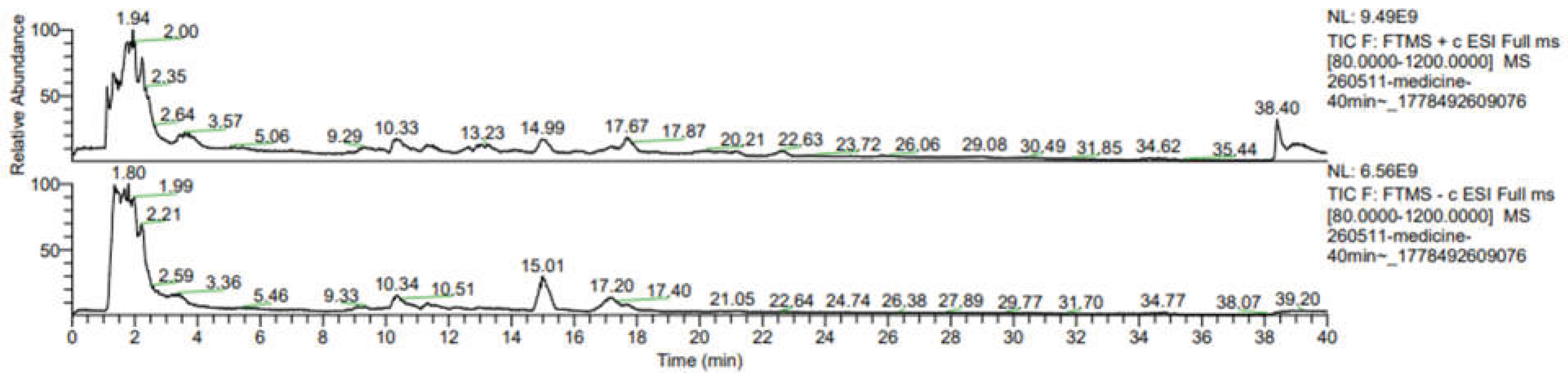
Figure 2.
Network diagram of “drug–active compound–shared target–key pathway” for Rehmanniae Radix–Sophorae Flos.
Figure 2.
Network diagram of “drug–active compound–shared target–key pathway” for Rehmanniae Radix–Sophorae Flos.
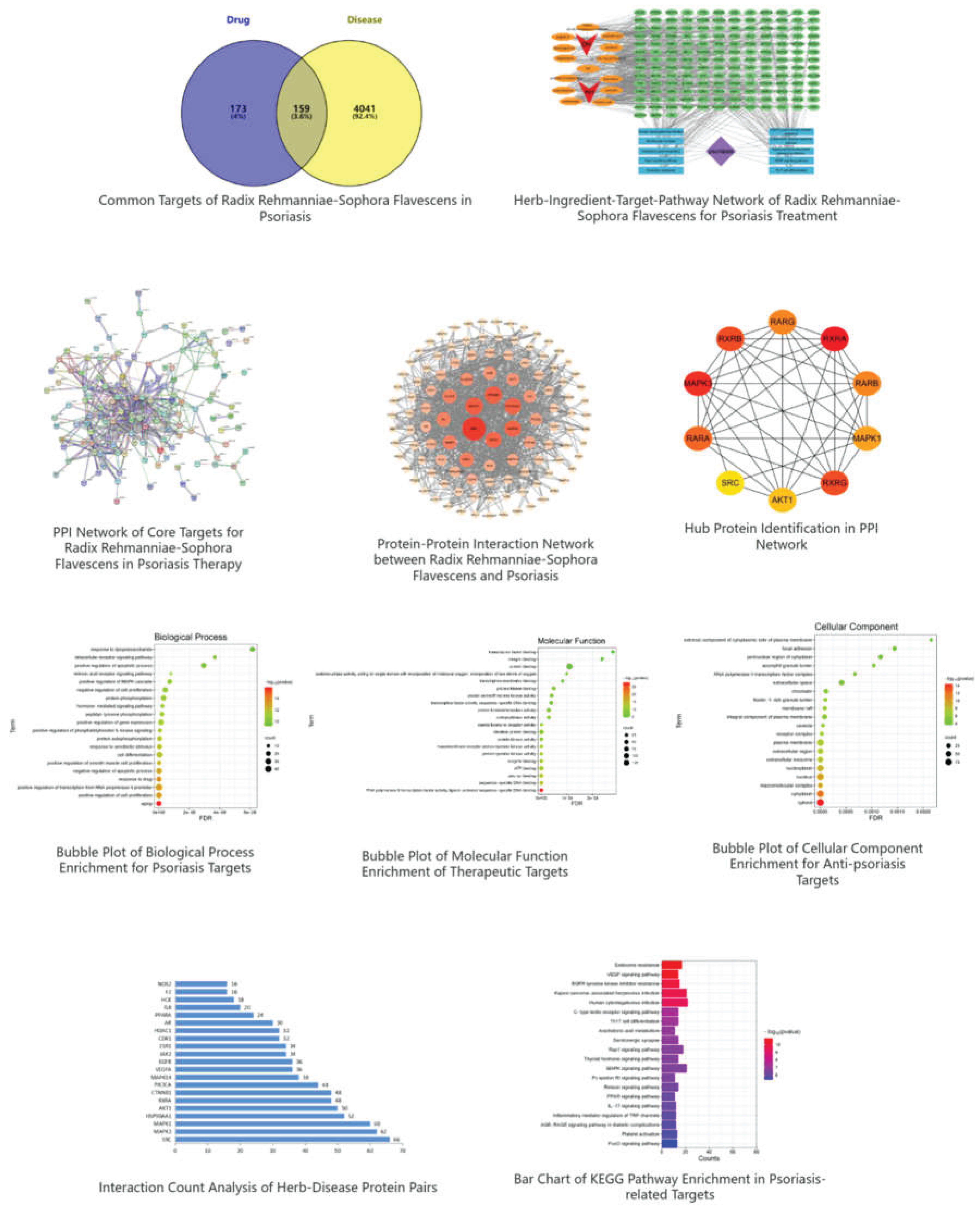
Figure 5.
Molecular docking results.
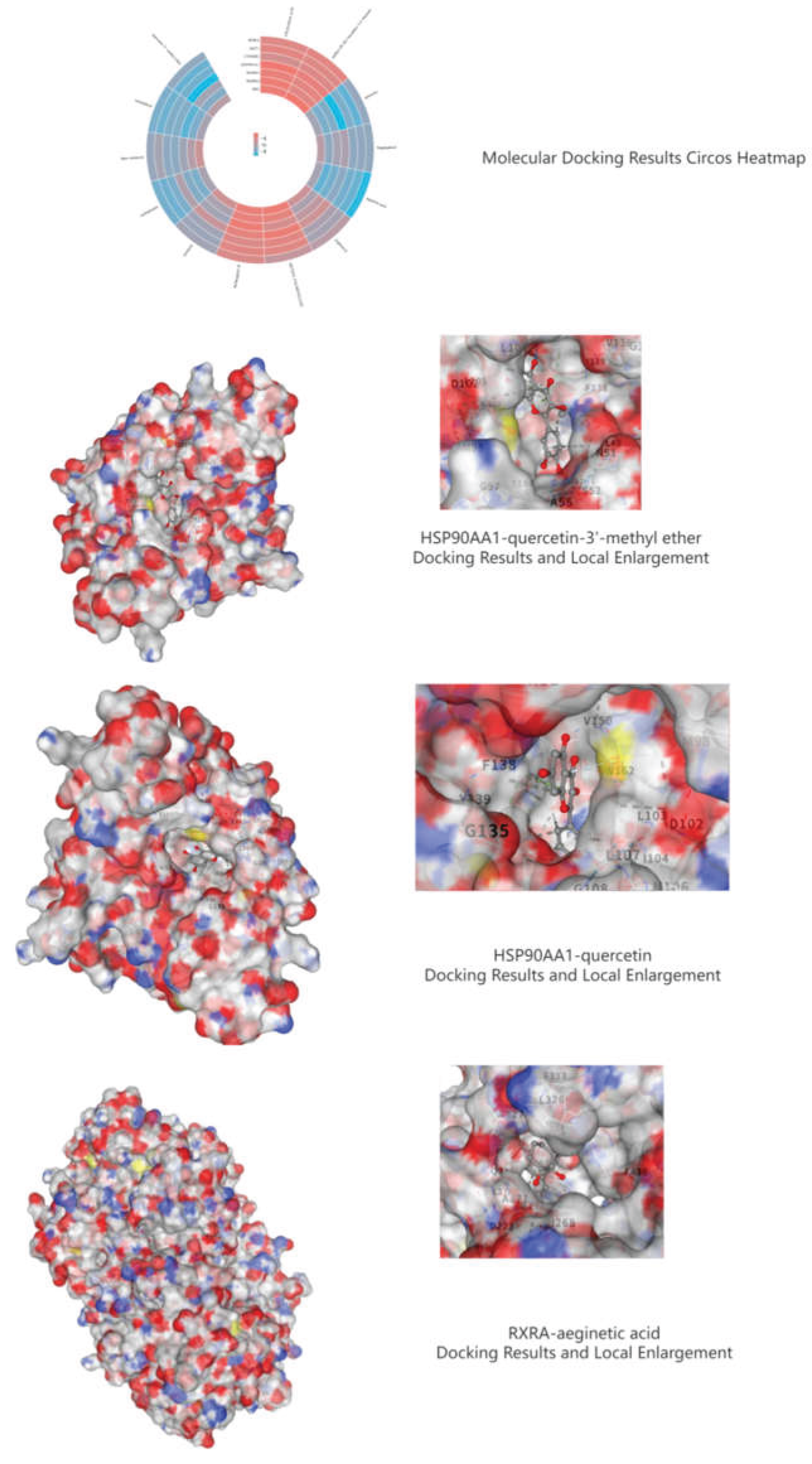
Table 3.
Molecular docking binding energies (kcal/mol).
| Compound | SRC | MAPK3 | MAPK1 | HSP90AA1 | CTNNB1 | AKT1 | RXRA |
|---|---|---|---|---|---|---|---|
| Linolenic acid | −2.9 | −2.8 | −3.1 | −2.5 | −4.4 | −3.5 | −3.8 |
| Quercetin | −6.6 | −7.9 | −7.7 | −9.3 | −7.8 | −8.4 | −7.1 |
| Methyl (2E,4E)-hexadeca-2,4-dienoate | −2.4 | −3.6 | −3.4 | −3.1 | −3.8 | −3.7 | −3.5 |
| Stigmasterol | −5.7 | −7.3 | −6.5 | −6.2 | −7.3 | −7.3 | −7.2 |
| Aeginetic acid | −6.5 | −8.4 | −8.0 | −7.4 | −8.0 | −8.3 | −9.1 |
| Jioglutin D | −4.8 | −6.2 | −5.4 | −4.7 | −6.2 | −6.4 | −5.7 |
| Methyl palmitoleate | −2.8 | −3.3 | −4.2 | −2.9 | −3.6 | −3.7 | −5.2 |
| Rehmaglutin B | −3.0 | −3.2 | −2.9 | −3.3 | −4.0 | −3.6 | −4.0 |
| Sitosterol | −4.7 | −6.3 | −6.6 | −5.0 | −6.6 | −6.8 | −6.6 |
| Isorhamnetin | −6.4 | −7.8 | −7.6 | −6.1 | −7.8 | −8.1 | −8.0 |
| β-Sitosterol | −4.9 | −5.9 | −6.7 | −7.4 | −7.3 | −6.5 | −7.0 |
| Kaempferol | −6.4 | −7.8 | −8.5 | −7.7 | −7.7 | −8.2 | −7.8 |
| Quercetin-3′-methyl ether | −5.8 | −7.6 | −6.6 | −9.3 | −8.1 | −8.3 | −7.2 |
Disclaimer/Publisher’s Note: The statements, opinions and data contained in all publications are solely those of the individual author(s) and contributor(s) and not of MDPI and/or the editor(s). MDPI and/or the editor(s) disclaim responsibility for any injury to people or property resulting from any ideas, methods, instructions or products referred to in the content. |
© 2026 by the authors. Licensee MDPI, Basel, Switzerland. This article is an open access article distributed under the terms and conditions of the Creative Commons Attribution (CC BY) license (http://creativecommons.org/licenses/by/4.0/).
Copyright: This open access article is published under a Creative Commons CC BY 4.0 license, which permit the free download, distribution, and reuse, provided that the author and preprint are cited in any reuse.


