

Submitted:
31 July 2026
Posted:
04 August 2026
You are already at the latest version
Abstract
Background: Urinary tract infections (UTIs) are a major source of antibiotic use, with increasing antimicrobial resistance compromising treatment efficacy. This study evaluates local pathogen distribution and resistance patterns to support empirical therapy. Methods: We conducted a retrospective, observational study analyzing all positive urine cultures obtained in a tertiary care hospital between January 2023 and December 2025. Bacterial identification and antimicrobial susceptibility testing were performed using routine microbiological methods. Susceptibility results were interpreted according to European Committee on Antimicrobial Susceptibility Testing (EUCAST) criteria. Results: A total of 1,298 bacterial isolates recovered from positive urine cultures obtained between January 2023 and December 2025 were included in the analysis. Antimicrobial resistance was assessed using 18,079 individual antimicrobial susceptibility test (AST) results. Gram-negative bacteria predominated, with Escherichia coli (44.5%) and Klebsiella pneumoniae (20%) accounting for approximately 64.5% of all isolates. E. coli exhibited high resistance rates to ampicillin (60.4%) and trimethoprim–sulfamethoxazole (33.8%), while resistance to fluoroquinolones was considerable (25.9%). In contrast, nitrofurantoin (2.0%) retained excellent activity, and carbapenem resistance remained very low (0.4%). Klebsiella pneumoniae demonstrated extremely high resistance to beta-lactams and fluoroquinolones, with resistance to third-generation cephalosporins exceeding 60% and carbapenem resistance reaching 34.5–41.2%. Among Gram-positive pathogens, Enterococcus faecalis showed high resistance to fluoroquinolones and high-level aminoglycosides, whereas susceptibility to nitrofurantoin, linezolid, tigecycline, and glycopeptides remained largely preserved. The prevalence of vancomycin-resistant Enterococcus (VRE) was low (7.9%). Conclusions: Our findings reveal alarmingly high resistance rates among major pathogens, particularly Klebsiella pneumoniae, significantly limiting empirical therapeutic options. Nitrofurantoin remained highly active in our cohort. In accordance with current international guidelines, nitrofurantoin and fosfomycin remain recommended first-line agents for uncomplicated UTIs. Continuous local surveillance is essential to guide empirical therapy and support antibiotic stewardship efforts.
Keywords:
pathogens
; urinary tract infection
; antibiotic resistance
; empirical therapy
; antimicrobial stewardship
1. Introduction
Urinary tract infections (UTIs) represent one of the most common bacterial infections worldwide, accounting for a significant proportion of both community-acquired and healthcare-associated infections. The increasing prevalence of antimicrobial resistance among pathogens poses a major challenge for empirical therapy and public health. Local surveillance data are essential to guide antibiotic stewardship programs and optimize treatment strategies [1,2].
Urinary tract infections (UTIs) are among the most common bacterial infections worldwide and represent a major cause of morbidity, healthcare utilization, and antibiotic consumption. According to the Global Burden of Disease (GBD) 2019 study, UTIs accounted for more than 404 million incident cases and over 236,000 deaths globally in 2019, highlighting their substantial public health impact. In Europe, UTIs are among the most frequent healthcare-associated infections, while the increasing prevalence of multidrug-resistant pathogens, particularly Escherichia coli and Klebsiella pneumoniae, has significantly complicated empirical antimicrobial therapy. In Romania, recent surveillance studies have similarly reported increasing resistance rates among the major pathogens, especially to fluoroquinolones, trimethoprim–sulfamethoxazole, and third-generation cephalosporins. Established risk factors for UTIs include female sex, advanced age, diabetes mellitus, urinary catheterization, structural or functional urinary tract abnormalities, recurrent antimicrobial exposure, and prolonged hospitalization [3,4,5,6].
International guidelines currently recommend nitrofurantoin and fosfomycin as first-line empirical therapy for uncomplicated urinary tract infections, while discouraging the routine use of fluoroquinolones and trimethoprim–sulfamethoxazole in regions with high resistance rates [7,8].
Local antimicrobial resistance patterns may differ significantly from international guidelines, highlighting the need for institution-specific empirical therapy recommendations.
2. Study Design and Setting
We conducted a retrospective, observational study analyzing urinary isolates obtained in a tertiary care hospital over a three-year period (January 2023 – December 2025).
The study was conducted at the Clinical Infectious Diseases Hospital Constanța, a tertiary referral hospital providing specialized care for adult and pediatric patients with infectious diseases in the South-Eastern region of Romania. The hospital serves both community-acquired and healthcare-associated infections and includes a dedicated microbiology laboratory that performs routine culture, bacterial identification, and antimicrobial susceptibility testing according to EUCAST recommendations. As a regional referral center, it receives patients from Constanța County and neighboring counties, providing representative data on local antimicrobial resistance patterns. The hospital has approximately 225 inpatient beds and functions as the main regional referral center for infectious diseases on the Romanian Black Sea coast, managing a broad spectrum of uncomplicated and complicated infections, including urinary tract infections requiring hospitalization.
This study followed the Strengthening the Reporting of Observational Studies in Epidemiology (STROBE) guidelines.
2.1. Microbiological Methods
Urine samples were processed according to standard laboratory procedures. Bacterial identification and antimicrobial susceptibility testing were performed using routine microbiological methods in the hospital microbiology laboratory.
Urine samples were collected in sterile containers using the clean-catch midstream technique or, in catheterized patients, from the catheter sampling port, and were transported promptly to the microbiology laboratory. Samples were inoculated using a calibrated loop onto routine culture media and incubated aerobically at 35–37 °C for 18–24 h. Significant bacterial growth was interpreted according to standard microbiological criteria and the clinical context. Bacterial identification was performed using matrix-assisted laser desorption/ionization time-of-flight mass spectrometry (MALDI-TOF MS) and phenotypic identification with the VITEK® 2 automated system (bioMérieux, Marcy-l’Étoile, France).
2.2. Antimicrobial Susceptibility Testing
Antimicrobial susceptibility testing was performed by the disk diffusion method, minimum inhibitory concentration (MIC) determination using the VITEK® 2 system, and broth microdilution using the MICRONAUT system (MERLIN Diagnostika GmbH, Bornheim-Hersel, Germany), as appropriate. Susceptibility results were interpreted according to the European Committee on Antimicrobial Susceptibility Testing (EUCAST) clinical breakpoints applicable at the time of testing. Isolates were categorized as susceptible (S), susceptible dose dependent (SDD), or resistant (R). Only antimicrobials considered clinically relevant for UTIs were included in the analysis.
2.3. Data Collection and Analysis
Laboratory data were extracted from the institutional laboratory information system and included bacterial species, antimicrobial susceptibility results, and year of isolation.
No deduplication of bacterial isolates was performed. All positive urine cultures processed during the study period were included to reflect routine microbiological surveillance and real-world antimicrobial resistance patterns.
All bacterial isolates recovered from positive urine cultures during the study period were included. Species distribution was analyzed at the isolate level, whereas antimicrobial resistance rates were calculated using individual antimicrobial susceptibility test (AST) results. Resistance percentages were calculated using the number of isolates tested for each antimicrobial agent as the denominator. Because not all antimicrobial agents were tested against every isolate, the denominator varied according to the antimicrobial agent.
Resistance rates were reported only for antimicrobials routinely tested in the microbiology laboratory and considered relevant therapeutic options for urinary tract infections.Polymicrobial urine cultures accounted for a minority of cases and were included in the analysis to reflect real-life laboratory findings.
3. Results
3.1. Study Population and Isolates
A total of 1,298 bacterial isolates recovered from positive urine cultures were analyzed. These isolates generated 18,079 individual antimicrobial susceptibility test (AST) results, which were used for antimicrobial resistance analyses. Gram-negative bacteria predominated, with Escherichia coli being the most frequently isolated organism (578 isolates), followed by Klebsiella pneumoniae (259 isolates), Enterococcus faecalis (153 isolates), Proteus mirabilis (67 isolates), and Pseudomonas aeruginosa (42 isolates).
3.2. Distribution of Pathogens
Gram-negative bacteria accounted for the majority of urinary isolates. The most frequently isolated pathogen was Escherichia coli, followed by Klebsiella spp., Proteus spp. and Pseudomonas spp. Among Gram-positive organisms, Enterococcus spp. represented the predominant pathogen. The distribution of isolated pathogens is presented in Table 1.
Escherichia coli and Klebsiella pneumoniae together accounted for approximately 64.5% of all isolated pathogens.
3.3. Antimicrobial Resistance Patterns of Escherichia coli
The key observation is markedly elevated resistance rates to ampicillin and cotrimoxazole and considerable resistance to fluoroquinolones. Nitrofurantoin retained excellent activity in our cohort. Fosfomycin remains a recommended first-line agent according to current international guidelines. Carbapenems retain robust antimicrobial activity.
The antimicrobial resistance profile of Escherichia coli is summarized in Table 2. These findings highlight the limited utility of ampicillin and trimethoprim–sulfamethoxazole for empirical therapy, while confirming the preserved efficacy of nitrofurantoin.
3.4. Antimicrobial Resistance Patterns of Klebsiella pneumoniae
Antimicrobial resistance patterns of Klebsiella pneumoniae isolates presented in Table 3 demonstrated extremely high resistance to ampicillin (99%) and amoxicillin–clavulanate (75.6%), as well as marked resistance to fluoroquinolones (53.3–64.6%) and third-generation cephalosporins (60.7–64.2%), consistent with a high prevalence of ESBL-producing strains. Notably, carbapenem resistance reached 34.5–41.2%, raising serious concerns regarding the limited availability of effective therapeutic options. In contrast, ceftazidime–avibactam and cefiderocol retained good antimicrobial activity.
Klebsiella pneumoniae demonstrates significantly higher resistance rates than Escherichia coli, especially to beta-lactam antibiotics and fluoroquinolones as illustrated in Figure 1.
3.5. Gram-Positive Pathogens
Enterococcus faecalis accounted for 11.8% of all urinary isolates. The antimicrobial resistance profile shown in Table 4 revealed high resistance rates to fluoroquinolones (39.5–46.8%) and high-level aminoglycosides (43.5–47.8%). In contrast, nitrofurantoin, linezolid, tigecycline, and glycopeptides retained excellent antimicrobial activity. The prevalence of vancomycin-resistant Enterococcus (VRE) remained low (7.9%), supporting the continued clinical utility of glycopeptides in severe enterococcal infections.
Furthermore, high-level aminoglycoside resistance (HLAR) was frequently detected, compromising the synergistic effect of combination therapy and limiting therapeutic options in severe enterococcal infections.
3.6. Other Pathogens
Proteus mirabilis - very high resistance to ampicillin, TMP-SMX and fluoroquinolones (>50–70%), moderate resistance to aminoglycosides. Preserved activity of third-generation cephalosporins and amikacin. Alarming carbapenem resistance in selected isolates (≈30–45%). The antimicrobial resistance profile of Proteus mirabilis is summarized in Table 5.
The antimicrobial resistance profile for Pseudomonas aeruginosa revealed moderate resistance to fluoroquinolones and beta-lactams (≈17–32%) and relatively preserved susceptibility to aminoglycosides. Carbapenem resistance approaching 20%. The antimicrobial resistance profile of Pseudomonas aeruginosa is presented in Table 6.
Summarized in Table 7 is the significant resistance to third-generation cephalosporins and fluoroquinolones for Enterobacter cloacae complex. Preserved activity of aminoglycosides and carbapenems.
3.7. Temporal Trends in Antimicrobial Resistance
Analysis of the annual laboratory reports showed that antimicrobial resistance patterns among Escherichia coli remained relatively stable throughout the study period. Resistance to ciprofloxacin ranged from 23.7% to 26.3%, while nitrofurantoin resistance remained consistently low (0.9–3.5%). Carbapenem resistance was absent or below 1% in all three years. In contrast, Klebsiella pneumoniae demonstrated an increase in ceftriaxone resistance from 35.3% in 2023 to 50.0% in 2024 and 67.3% in 2025 (p=0.016). Amikacin resistance also increased significantly, from 23.7% to 46.4% (p=0.046), whereas resistance to fluoroquinolones and carbapenems remained persistently high.
The annual trend analysis was performed using the three official yearly laboratory reports, which included 1,138 isolate–organism combinations available for year-specific analysis.
Percentages were calculated using the total number of isolates recovered in each year as the denominator. The annual distribution of urinary pathogens is presented in Table 8.
Resistance percentages were calculated using the number of isolates tested for each antimicrobial agent as the denominator. Annual resistance rates were compared using the Pearson chi-square test and are summarized in Table 9.
The temporal trends in antimicrobial resistance among Escherichia coli isolates are illustrated in Figure 2.
Annual antimicrobial resistance rates among Klebsiella pneumoniae isolates recovered from positive urine cultures between 2023 and 2025. Resistance percentages were calculated using the number of isolates tested for each antimicrobial agent as the denominator. Annual resistance rates were compared using the Pearson chi-square test. Statistically significant differences (p < 0.05) are highlighted in bold in Table 10.
The annual antimicrobial resistance trends of Klebsiella pneumoniae are presented in Figure 3. As shown, Klebsiella pneumoniae demonstrated a progressive increase in resistance to several clinically important antimicrobial agents during the study period. Ceftriaxone resistance increased significantly from 35.3% in 2023 to 50.0% in 2024 and 67.3% in 2025 (p = 0.016). A significant increase was also observed for amikacin resistance, which rose from 23.7% to 36.4% and 46.4%, respectively (p = 0.046). Although resistance to ciprofloxacin (59.5%, 60.0%, and 66.7%), ertapenem (35.7%, 30.8%, and 46.6%), and meropenem (37.1%, 32.1%, and 42.1%) did not reach statistical significance, resistance rates remained consistently high throughout the study period, highlighting the increasing therapeutic challenges posed by K. pneumoniae.
3.8. Clinical Interpretation
The resistance patterns observed in this study indicate that several commonly prescribed oral antibiotics, including ampicillin and trimethoprim–sulfamethoxazole, are no longer appropriate for empirical treatment of urinary tract infections in our institution. In contrast, nitrofurantoin maintains high efficacy and remains a reliable first-line option for uncomplicated UTIs. For severe or complicated infections, aminoglycosides and selected beta-lactam/beta-lactamase inhibitor combinations represent important therapeutic alternatives, underscoring the need for tailored empirical therapy based on local resistance data.
4. Discussion
Our findings regarding Escherichia coli resistance patterns are consistent with recent European surveillance studies, which reported high resistance rates to ampicillin, trimethoprim–sulfamethoxazole, and fluoroquinolones, alongside preserved susceptibility to nitrofurantoin [9,10,11,12].
The alarming resistance rates observed among Klebsiella pneumoniae isolates, particularly to third-generation cephalosporins and carbapenems, are in line with data from recent European and international studies reporting a high prevalence of ESBL-producing and carbapenem-resistant strains. This prevalence of carbapenem-resistant Klebsiella pneumoniae observed in our cohort highlights the urgent need for strengthened antimicrobial stewardship strategies because of serious concerns regarding the rapid local dissemination of highly resistant strains [6,13,14,18].
Our findings are consistent with data reported from tertiary care hospitals in Bucharest, Romania, which showed similarly high resistance rates among major pathogens, particularly Escherichia coli and Klebsiella pneumoniae.
Similarly, the resistance patterns identified among Proteus mirabilis and Pseudomonas aeruginosa isolates are consistent with published reports describing high resistance to fluoroquinolones and increasing carbapenem resistance, particularly in hospital settings [15,16].
High-level aminoglycoside resistance and the emergence of VRE represent major therapeutic challenges worldwide, significantly limiting treatment options in severe infections [17].
The preserved activity of nitrofurantoin observed in our cohort supports current international recommendations advocating its use as first-line empirical therapy for uncomplicated UTIs [7,8,11].
The alarming resistance rates observed in our cohort, particularly among Klebsiella pneumoniae, are in line with global trends highlighting the critical threat posed by multidrug-resistant Gram-negative pathogens. These findings reinforce the urgent need for continuous surveillance, rigorous antimicrobial stewardship programs, and the development of novel therapeutic strategies to counteract the escalating burden of antimicrobial resistance [19,20,21].
Similar resistance patterns have previously been reported in southeastern Romania, with consistently high resistance rates to ampicillin and trimethoprim–sulfamethoxazole and preserved susceptibility to nitrofurantoin and carbapenems [22]. More recent data highlight a post-pandemic increase in fluoroquinolone resistance among E. coli urinary isolates, reinforcing the need for continuous antimicrobial surveillance [23].
The annual analysis provided additional insight into local antimicrobial resistance dynamics. Resistance patterns among Escherichia coli remained largely stable, with consistently preserved activity of nitrofurantoin and carbapenems. Conversely, Klebsiella pneumoniae exhibited a significant increase in resistance to ceftriaxone, suggesting an increasing burden of extended-spectrum beta-lactam resistance during the study period. The increasing amikacin resistance and persistently elevated carbapenem resistance further emphasize the need for continuous local surveillance and targeted antimicrobial stewardship interventions.
This study has several limitations. Its retrospective, single-center design may limit the generalizability of the findings. Not all antimicrobial agents were tested against every isolate, resulting in different denominators across antibiotics. Molecular characterization of resistance mechanisms was not performed. Nevertheless, the large number of bacterial isolates and standardized susceptibility testing provide robust local surveillance data.
In the context of the rapidly evolving global antimicrobial resistance crisis, our findings underscore the critical importance of continuous local surveillance, judicious antibiotic use, and robust antimicrobial stewardship programs to preserve the effectiveness of existing therapeutic options and improve patient outcomes.
5. Conclusions
This three-year surveillance study highlights a worrying increase in antimicrobial resistance among pathogens, particularly Klebsiella pneumoniae, with high rates of resistance to beta-lactams, fluoroquinolones, and carbapenems. These findings underscore the limited utility of commonly used oral agents such as ampicillin and trimethoprim–sulfamethoxazole for empirical therapy in our institution. In contrast, nitrofurantoin remains a highly effective option for uncomplicated urinary tract infections, while aminoglycosides and novel beta-lactam/beta-lactamase inhibitor combinations retain important roles in the management of severe infections. Ongoing local surveillance and targeted antibiotic stewardship strategies are crucial to optimize empirical treatment and curb the further spread of antimicrobial resistance.
These data provide robust, locally relevant evidence to guide empirical antimicrobial therapy and support the implementation of targeted antibiotic stewardship strategies aimed at improving clinical outcomes and limiting the further spread of antimicrobial resistance.
Author Contributions
Conceptualization, H.A.; methodology, D.E.; formal analysis, H.A.; investigation, N.B.F., D.L. and I.S.; data curation, N.B.F., D.L. and I.S.; writing—original draft preparation, H.A.; writing—review and editing, D.I.M.; supervision, D.I.M., and C.S.C. All authors have read and agreed to the published version of the manuscript.
Funding
This research received no external funding.
Institutional Review Board Statement
The study was conducted in accordance with the Declaration of Helsinki and reviewed by the Ethics Committee of the Clinical Infectious Diseases Hospital Constanta. Owing to the retrospective design and the use of anonymized laboratory data, the requirement for ethical approval and informed consent was waived.
Informed Consent Statement
Patient consent was waived owing to the retrospective nature of the study and the use of anonymized laboratory data.
Data Availability Statement
The data presented in this study are available on request from the corresponding author. The data are not publicly available owing to institutional and patient privacy restrictions.
Conflicts of Interest
The authors declare no conflicts of interest.
References
- Teh, L.C.; McNulty, C.; Beck, C.; MacGowan, A. Antimicrobial resistance surveillance in urinary tract infections in primary care. J. Antimicrob. Chemother. 2016, 71, 2723–2728. [Google Scholar] [CrossRef]
- European Centre for Disease Prevention and Control (ECDC). Surveillance of Antimicrobial Resistance in Europe 2022; ECDC: Stockholm, Sweden, 2023. [Google Scholar]
- Zeng, Z.; Zhan, J.; Zhang, K.; Chen, H.; Cheng, S. Global, regional, and national burden of urinary tract infections from 1990 to 2019: An analysis of the Global Burden of Disease Study 2019. World J. Urol. 2022, 40, 755–763. [Google Scholar] [CrossRef]
- European Centre for Disease Prevention and Control (ECDC). Surveillance of Antimicrobial Resistance in Europe 2023; ECDC: Stockholm, Sweden, 2024. [Google Scholar]
- European Association of Urology (EAU). EAU Guidelines on Urological Infections; EAU: Arnhem, The Netherlands, 2025. [Google Scholar]
- Borcan, A.M.; Radu, G.; Simoiu, M.; Costea, E.L.; Rafila, A. A five-year analysis of antibiotic resistance trends among bacteria identified in positive urine samples in a tertiary care hospital from Bucharest, Romania. Antibiotics 2024, 13, 160. [Google Scholar] [CrossRef]
- European Association of Urology (EAU). EAU Guidelines on Urological Infections 2024. Available online: https://uroweb.org/guidelines/urological-infections (accessed on 20 July 2026).
- Gupta, K.; et al. International clinical practice guidelines for the treatment of acute uncomplicated cystitis and pyelonephritis in women. Clin. Infect. Dis. 2011, 52, e103–e120. [Google Scholar]
- Mareș, C.; Petca, R.-C.; Popescu, R.-I.; Petca, A.; Mulțescu, R.; Bulai, C.A.; Ene, C.V.; Geavlete, P.A.; Geavlete, B.F.; Jinga, V. Update on urinary tract infection antibiotic resistance—A retrospective study in females in conjunction with clinical data. Life 2024, 14, 106. [Google Scholar] [CrossRef]
- Somorin, Y.M.; et al. Antimicrobial resistance in urinary pathogens and culture-positive urinary tract infections. Infect. Drug Resist. 2022, 15, 263–272. [Google Scholar]
- Larkin, C.; Valappil, S.P.; Palanisamy, N. Global prevalence of nitrofurantoin-resistant uropathogenic Escherichia coli (UPEC) in humans: A systematic review and meta-analysis. J. Antimicrob. Chemother. 2025, 80, 2609–2621. [Google Scholar] [CrossRef]
- Păcurar, D.; et al. Escherichia coli urinary tract infections in Romania: Antimicrobial resistance patterns. Children 2025, 12, 287. [Google Scholar]
- Critchley, I.A.; et al. Resistance among urinary tract pathogens collected globally. J. Glob. Antimicrob. Resist. 2020, 22, 593–600. [Google Scholar]
- Senbayrak, S.; et al. Antibiotic resistance trends and ESBL prevalence of Klebsiella spp. Jundishapur J. Microbiol. 2019, 12, e13098. [Google Scholar]
- Marc, C.C.; et al. Trends in positive urine culture rates and antimicrobial resistance. Antibiotics 2025, 14, 723. [Google Scholar] [CrossRef]
- Hafiz, T.A.; et al. Proteus mirabilis epidemiology and antimicrobial resistance. Infect. Drug Resist. 2024, 17, 1125–1138. [Google Scholar]
- Arias, C.A.; Murray, B.E. The rise of the Enterococcus: Beyond vancomycin resistance. Nat. Rev. Microbiol. 2012, 10, 266–278. [Google Scholar] [CrossRef]
- Logan, L.K.; Weinstein, R.A. The epidemiology of carbapenem-resistant Enterobacteriaceae. Curr. Opin. Infect. Dis. 2017, 30, 370–378. [Google Scholar]
- Tacconelli, E.; et al. Global priority list of antibiotic-resistant bacteria to guide research, discovery, and development of new antibiotics. Lancet Infect. Dis. 2018, 18, 318–327. [Google Scholar] [CrossRef] [PubMed]
- World Health Organization (WHO). Global Action Plan on Antimicrobial Resistance; WHO: Geneva, Switzerland, 2015. [Google Scholar]
- Bassetti, M.; et al. Management of infections caused by multidrug-resistant Gram-negative pathogens. Clin. Microbiol. Infect. 2020, 26, 151–164. [Google Scholar]
- Cambrea, S.C. Antibiotic susceptibility of Escherichia coli strains isolated in a pediatric population from South Eastern Romania. J. Pediatr. Infect. Dis. 2014, 9, 157–162. [Google Scholar] [CrossRef]
- Topa, A.E.; Ionescu, C.; Pinzaru, A.; Mocanu, E.; Iancu, A.M.; Dumea, E.; et al. Challenges in the treatment of urinary tract infections: Antibiotic resistance profiles of Escherichia coli strains isolated from young and elderly patients in a southeastern Romanian hospital. Biomedicines 2025, 13, 1066. [Google Scholar] [CrossRef] [PubMed]
Figure 1.
Comparative antimicrobial resistance rates of Escherichia coli and Klebsiella pneumoniae to selected key antibiotics.
Figure 1.
Comparative antimicrobial resistance rates of Escherichia coli and Klebsiella pneumoniae to selected key antibiotics.
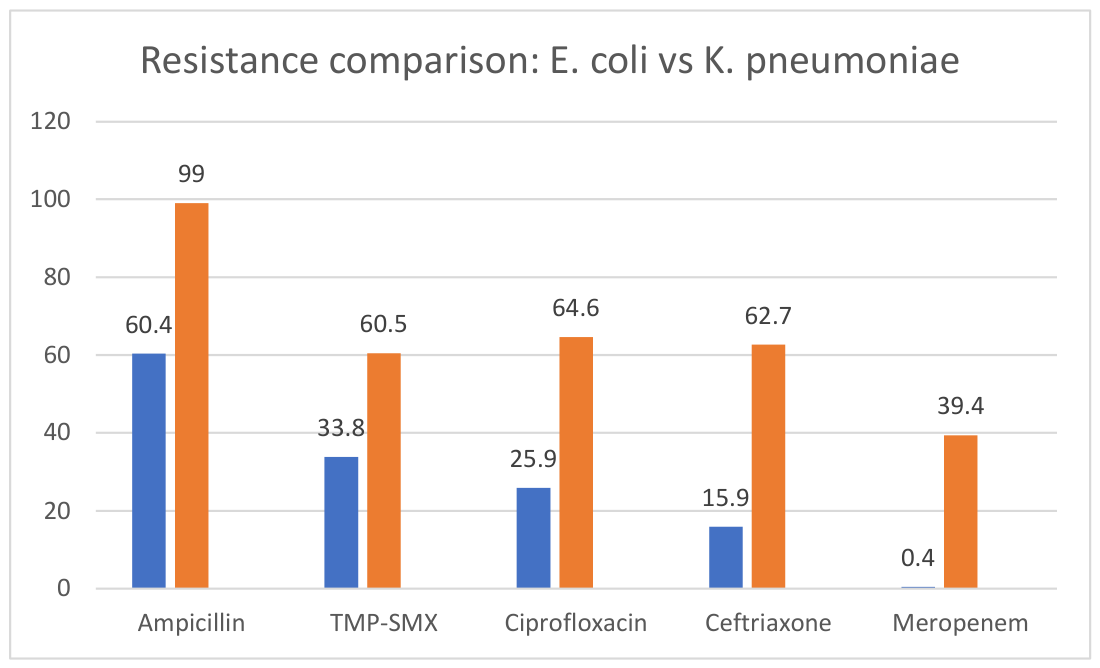
Figure 2.
Annual analysis demonstrated that antimicrobial resistance among Escherichia coli remained largely stable throughout the study period. Ampicillin resistance fluctuated only slightly, ranging from 58.6% to 63.6%, while ciprofloxacin resistance remained stable between 23.7% and 26.3%. Nitrofurantoin maintained excellent activity, with resistance rates consistently below 4% (3.5% in 2023, 0.9% in 2024, and 2.5% in 2025). Resistance to meropenem remained exceptionally low throughout the study period (0–0.8%), with no statistically significant temporal trends observed.
Figure 2.
Annual analysis demonstrated that antimicrobial resistance among Escherichia coli remained largely stable throughout the study period. Ampicillin resistance fluctuated only slightly, ranging from 58.6% to 63.6%, while ciprofloxacin resistance remained stable between 23.7% and 26.3%. Nitrofurantoin maintained excellent activity, with resistance rates consistently below 4% (3.5% in 2023, 0.9% in 2024, and 2.5% in 2025). Resistance to meropenem remained exceptionally low throughout the study period (0–0.8%), with no statistically significant temporal trends observed.
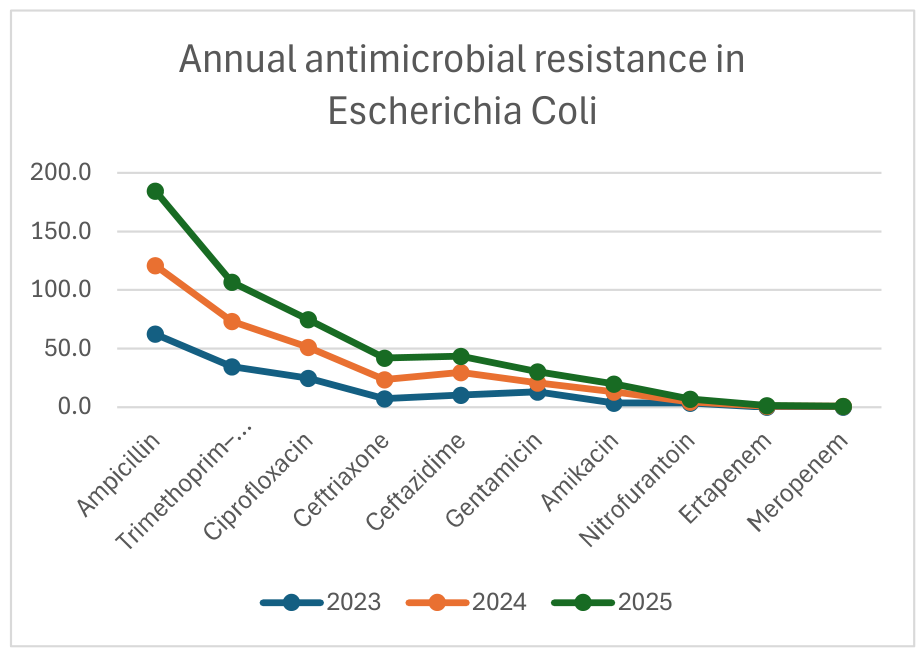
Figure 3.
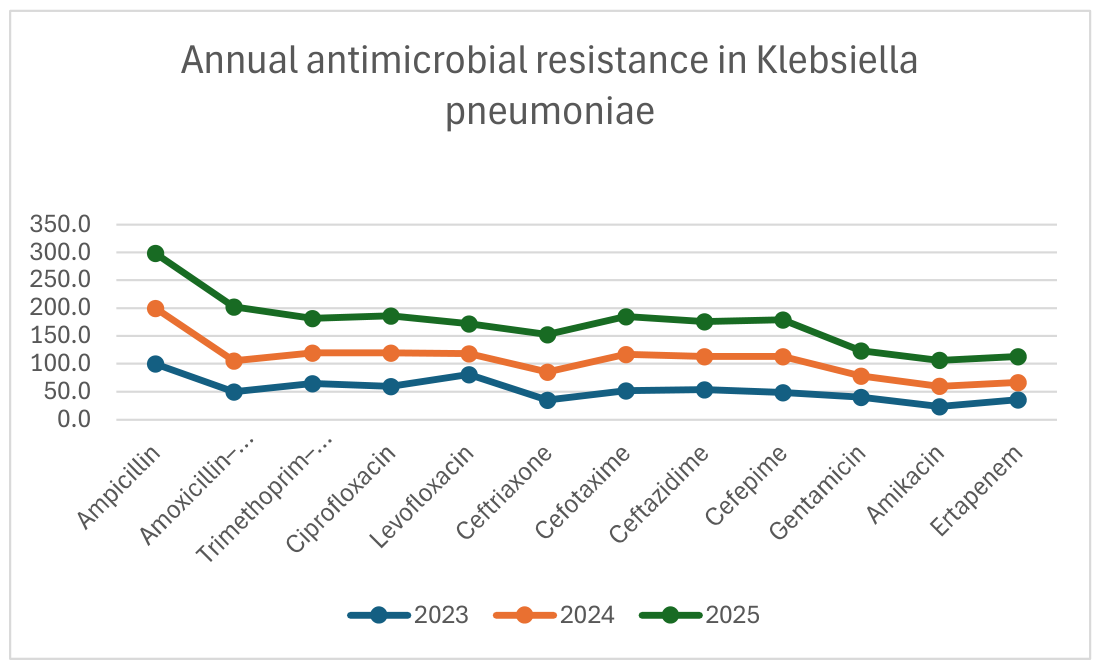

Table 1.
Distribution of pathogens isolated from urine culture.
| Microorganism | Number of isolates | Percentage (%) |
| Escherichia coli | 578 | 44.5 |
| Klebsiella pneumoniae | 259 | 20.0 |
| Enterococcus faecalis | 153 | 11.8 |
| Proteus mirabilis | 67 | 5.2 |
| Pseudomonas aeruginosa | 42 | 3.2 |
| Enterobacter cloacae complex | 20 | 1.5 |
| Other species | 179 | 13.8 |
| Total | 1,298 | 100 |
Table 2.
Antimicrobial resistance profile of E. coli.
| Antibiotic | Tested (n) | Resistant n (%) |
| Ampicillin | 530 | 320 (60.4%) |
| Trimethoprim–sulfamethoxazole | 548 | 185 (33.8%) |
| Ciprofloxacin | 482 | 125 (25.9%) |
| Ceftriaxone | 471 | 75 (15.9%) |
| Ceftazidime | 523 | 73 (14.0%) |
| Gentamicin | 553 | 50 (9.0%) |
| Amikacin | 496 | 29 (5.8%) |
| Nitrofurantoin | 458 | 9 (2.0%) |
| Ertapenem | 527 | 2 (0.4%) |
| Meropenem | 535 | 2 (0.4%) |
Table 3.
Antimicrobial resistance profile of Klebsiella pneumoniae.
| Antibiotic | Tested (n) | Resistant n (%) |
| Ampicillin | 207 | 205 (99.0%) |
| Amoxicillin–clavulanate | 131 | 99 (75.6%) |
| Trimethoprim–sulfamethoxazole | 210 | 127 (60.5%) |
| Ciprofloxacin | 209 | 135 (64.6%) |
| Levofloxacin | 135 | 72 (53.3%) |
| Ceftriaxone | 193 | 121 (62.7%) |
| Cefotaxime | 123 | 79 (64.2%) |
| Ceftazidime | 229 | 139 (60.7%) |
| Cefepime | 170 | 106 (62.4%) |
| Gentamicin | 221 | 92 (41.6%) |
| Amikacin | 211 | 81 (38.4%) |
| Ertapenem | 187 | 77 (41.2%) |
| Imipenem | 145 | 50 (34.5%) |
| Meropenem | 226 | 89 (39.4%) |
| Ceftazidime–avibactam | 89 | 23 (25.8%) |
| Cefiderocol | 17 | 2 (11.8%) |
Table 4.
Antimicrobial resistance profile of Enterococcus faecalis.
| Antibiotic | Tested (n) | Resistant n (%) |
| Ampicillin | 38 | 5 (13.2%) |
| Ciprofloxacin | 76 | 30 (39.5%) |
| Levofloxacin | 109 | 51 (46.8%) |
| High-level gentamicin | 23 | 11 (47.8%) |
| High-level streptomycin | 23 | 10 (43.5%) |
| Nitrofurantoin | 57 | 1 (1.8%) |
| Vancomycin | 151 | 12 (7.9%) |
| Linezolid | 150 | 8 (5.3%) |
| Teicoplanin | 146 | 16 (11.0%) |
| Tigecycline | 146 | 2 (1.4%) |
Table 5.
Antimicrobial resistance profile of Proteus mirabilis.
| Antibiotic | Tested (n) | Resistant n (%) |
| Ampicillin | 60 | 44 (73.3%) |
| Amoxicillin–clavulanate | 37 | 18 (48.6%) |
| Trimethoprim–sulfamethoxazole | 22 | 12 (54.5%) |
| Ciprofloxacin | 19 | 12 (63.2%) |
| Cefotaxime | 34 | 4 (11.8%) |
| Ceftazidime | 65 | 4 (6.2%) |
| Gentamicin | 27 | 15 (55.6%) |
| Amikacin | 60 | 2 (3.3%) |
| Meropenem | 25 | 8 (32.0%) |
| Ertapenem | 22 | 10 (45.5%) |
Table 6.
Antimicrobial resistance profile of Pseudomonas aeruginosa.
| Antibiotic | Tested (n) | Resistant n (%) |
| Ciprofloxacin | 76 | 24 (31.6%) |
| Ceftazidime | 128 | 27 (21.1%) |
| Piperacillin–tazobactam | 134 | 23 (17.2%) |
| Meropenem | 146 | 29 (19.9%) |
| Imipenem | 141 | 28 (19.9%) |
| Amikacin | 138 | 15 (10.9%) |
Table 7.
Antimicrobial resistance profile of Enterobacter cloacae complex.
| Antibiotic | Tested (n) | Resistant n (%) |
| Ceftriaxone | 96 | 28 (29.2%) |
| Ceftazidime | 102 | 24 (23.5%) |
| Ciprofloxacin | 87 | 21 (24.1%) |
| Gentamicin | 89 | 11 (12.4%) |
| Amikacin | 91 | 6 (6.6%) |
| Meropenem | 99 | 3 (3.0%) |
Table 8.
Annual distribution of pathogens isolated from positive urine cultures (2023–2025).
| Microorganism | 2023 n | 2023% | 2024 n | 2024% | 2025 n | 2025% | Total n |
| Escherichia coli | 139 | 56.7 | 119 | 45.9 | 244 | 38.5 | 502 |
| Klebsiella pneumoniae | 40 | 16.3 | 57 | 22.0 | 127 | 20.0 | 224 |
| Enterococcus faecalis | 12 | 4.9 | 20 | 7.7 | 98 | 15.5 | 130 |
| Proteus mirabilis | 9 | 3.7 | 17 | 6.6 | 35 | 5.5 | 61 |
| Pseudomonas aeruginosa | 10 | 4.1 | 13 | 5.0 | 13 | 2.1 | 36 |
| Enterobacter cloacae complex | 0 | 0.0 | 6 | 2.3 | 9 | 1.4 | 15 |
| Other species | 35 | 14.3 | 27 | 10.4 | 108 | 17.0 | 170 |
| Total | 245 | 100.0 | 259 | 100.0 | 634 | 100.0 | 1138 |
Table 9.
Annual antimicrobial resistance among Escherichia coli isolates (2023–2025).
| Antimicrobial agent | 2023 Tested (n) | Resistant n (%) | 2024 Tested (n) | Resistant n (%) | 2025 Tested (n) | Resistant n (%) | P value |
| Ampicillin | 80 | 50 (62.5) | 87 | 51 (58.6) | 162 | 103 (63.6) | 0.74 |
| Trimethoprim–sulfamethoxazole | 81 | 30 (37.0) | 86 | 31 (36.0) | 164 | 55 (33.5) | 0.83 |
| Ciprofloxacin | 85 | 21 (24.8) | 87 | 23 (26.3) | 169 | 40 (23.7) | 0.91 |
| Ceftriaxone | 80 | 11 (13.8) | 84 | 12 (14.3) | 163 | 28 (17.2) | 0.69 |
| Ceftazidime | 80 | 8 (10.0) | 84 | 9 (10.7) | 163 | 20 (12.3) | 0.84 |
| Gentamicin | 82 | 13 (15.9) | 86 | 14 (16.3) | 166 | 31 (18.7) | 0.88 |
| Amikacin | 86 | 2 (2.3) | 87 | 2 (2.3) | 170 | 6 (3.5) | 0.81 |
| Nitrofurantoin | 86 | 3 (3.5) | 87 | 1 (0.9) | 160 | 4 (2.5) | 0.46 |
| Ertapenem | 74 | 0 (0.0) | 77 | 0 (0.0) | 148 | 1 (0.7) | 0.62 |
| Meropenem | 84 | 0 (0.0) | 86 | 1 (0.8) | 165 | 0 (0.0) | 0.36 |
Table 10.
Annual antimicrobial resistance among Klebsiella pneumoniae isolates (2023–2025).
| Antimicrobial agent | 2023 Tested (n) | Resistant n (%) | 2024 Tested (n) | Resistant n (%) | 2025 Tested (n) | Resistant n (%) | P value |
| Ampicillin | 34 | 34 (100.0) | 35 | 35 (100.0) | 90 | 90 (100.0) | — |
| Amoxicillin–clavulanate | 34 | 18 (52.9) | 35 | 19 (54.3) | 90 | 55 (61.1) | 0.63 |
| Trimethoprim–sulfamethoxazole | 34 | 21 (61.8) | 35 | 21 (60.0) | 90 | 57 (63.3) | 0.94 |
| Ciprofloxacin | 37 | 22 (59.5) | 35 | 21 (60.0) | 93 | 62 (66.7) | 0.59 |
| Levofloxacin | 34 | 21 (61.8) | 35 | 22 (62.9) | 90 | 61 (67.8) | 0.73 |
| Ceftriaxone | 34 | 12 (35.3) | 34 | 17 (50.0) | 91 | 61 (67.3) | 0.016 |
| Cefotaxime | 34 | 13 (38.2) | 34 | 18 (52.9) | 90 | 59 (65.6) | 0.041 |
| Ceftazidime | 34 | 10 (29.4) | 34 | 13 (38.2) | 90 | 43 (47.8) | 0.18 |
| Cefepime | 34 | 13 (38.2) | 34 | 15 (44.1) | 90 | 51 (56.7) | 0.12 |
| Gentamicin | 34 | 12 (35.3) | 34 | 13 (38.2) | 90 | 42 (46.7) | 0.39 |
| Amikacin | 38 | 9 (23.7) | 33 | 12 (36.4) | 97 | 45 (46.4) | 0.046 |
| Ertapenem | 28 | 10 (35.7) | 26 | 8 (30.8) | 73 | 34 (46.6) | 0.29 |
| Imipenem | 35 | 13 (37.1) | 28 | 9 (32.1) | 83 | 35 (42.1) | 0.51 |
| Meropenem | 35 | 13 (37.1) | 28 | 9 (32.1) | 83 | 35 (42.1) | 0.51 |
| Ceftazidime–avibactam | 6 | 0 (0.0) | 7 | 0 (0.0) | 31 | 2 (6.5) | 0.41 |
| Cefiderocol | 3 | 0 (0.0) | 4 | 0 (0.0) | 18 | 0 (0.0) | — |
Disclaimer/Publisher’s Note: The statements, opinions and data contained in all publications are solely those of the individual author(s) and contributor(s) and not of MDPI and/or the editor(s). MDPI and/or the editor(s) disclaim responsibility for any injury to people or property resulting from any ideas, methods, instructions or products referred to in the content. |
© 2026 by the authors. Licensee MDPI, Basel, Switzerland. This article is an open access article distributed under the terms and conditions of the Creative Commons Attribution (CC BY) license.
Copyright: This open access article is published under a Creative Commons CC BY 4.0 license, which permit the free download, distribution, and reuse, provided that the author and preprint are cited in any reuse.


