
Submitted:
31 July 2026
Posted:
03 August 2026
You are already at the latest version
Abstract
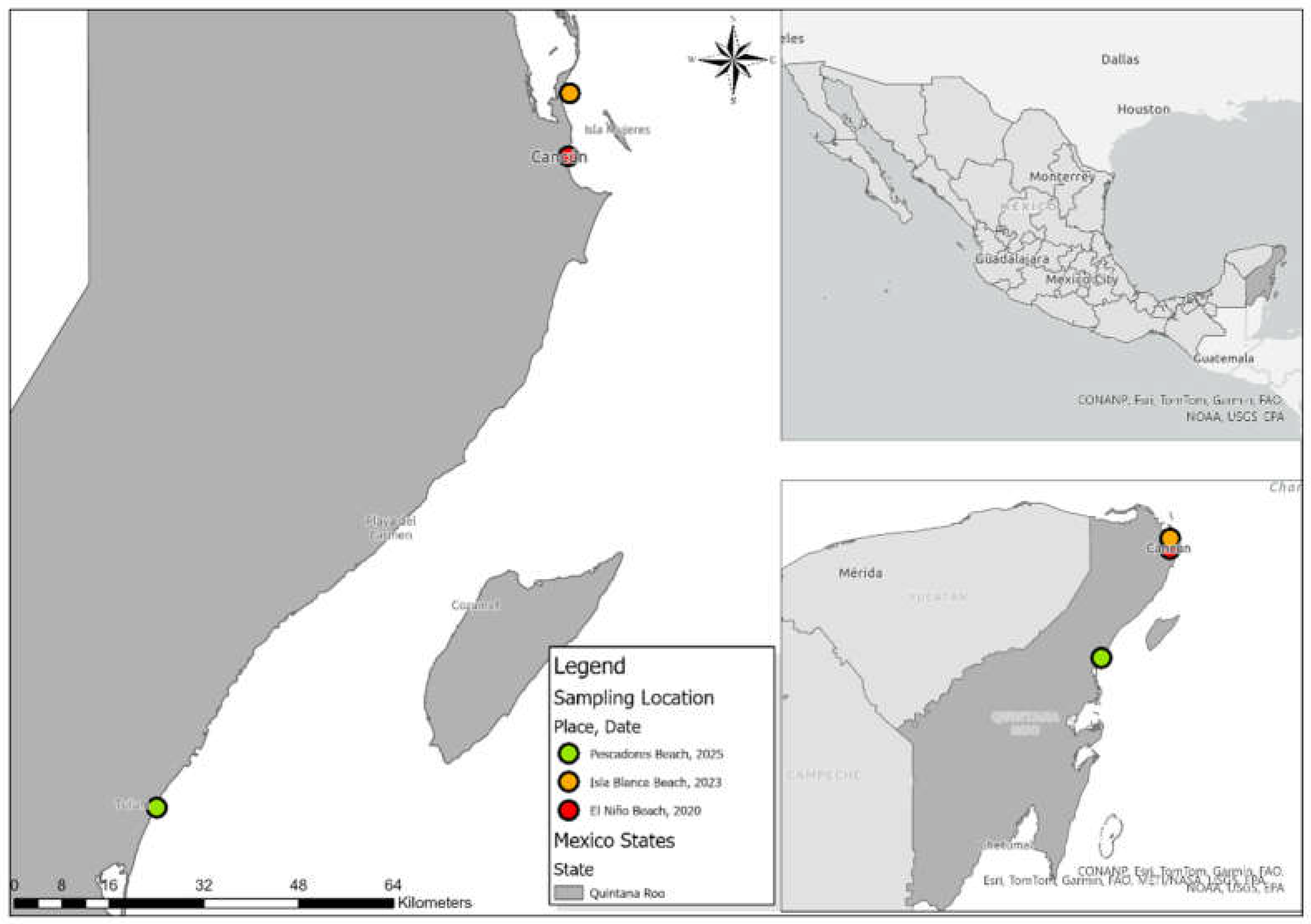
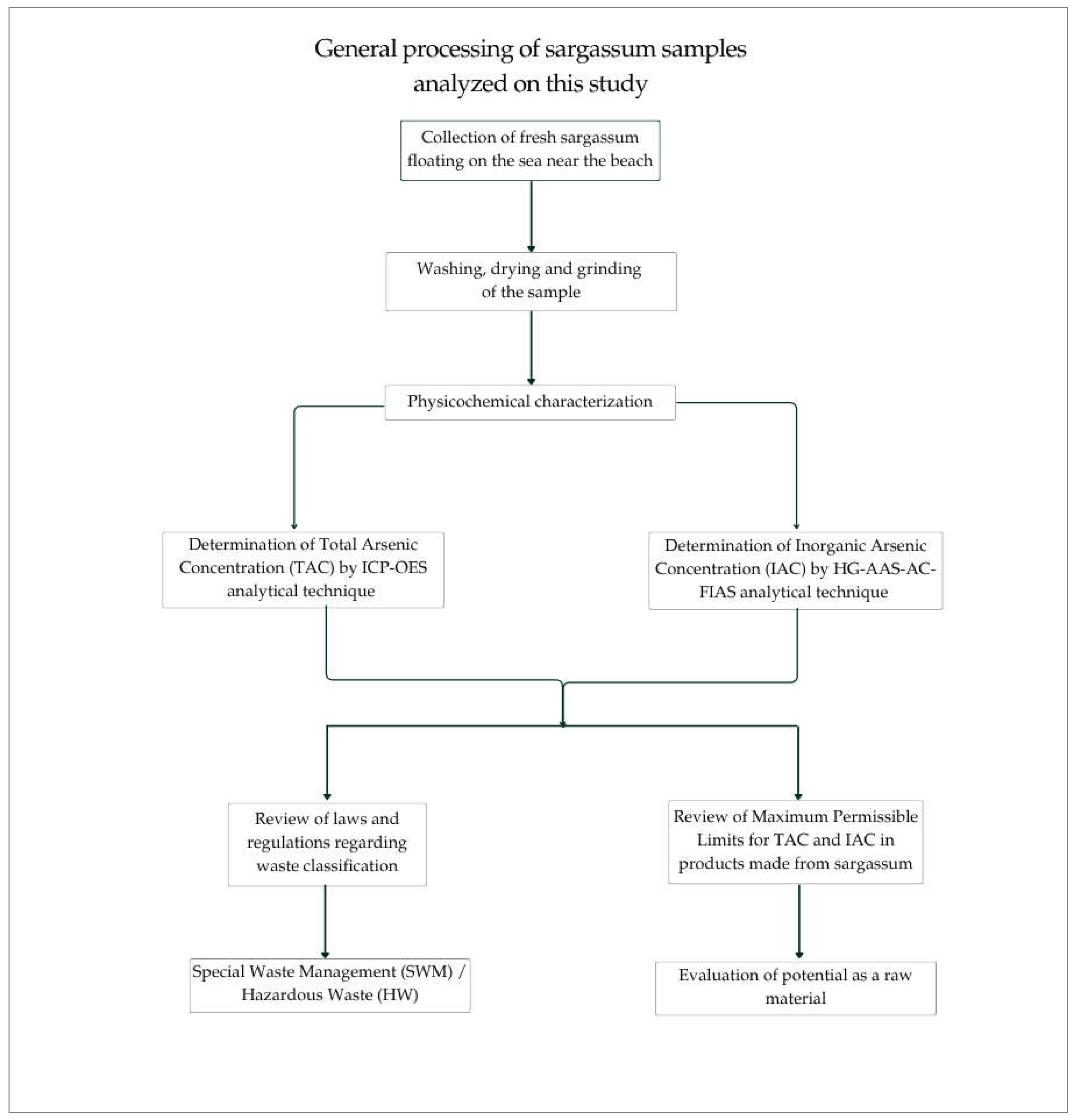
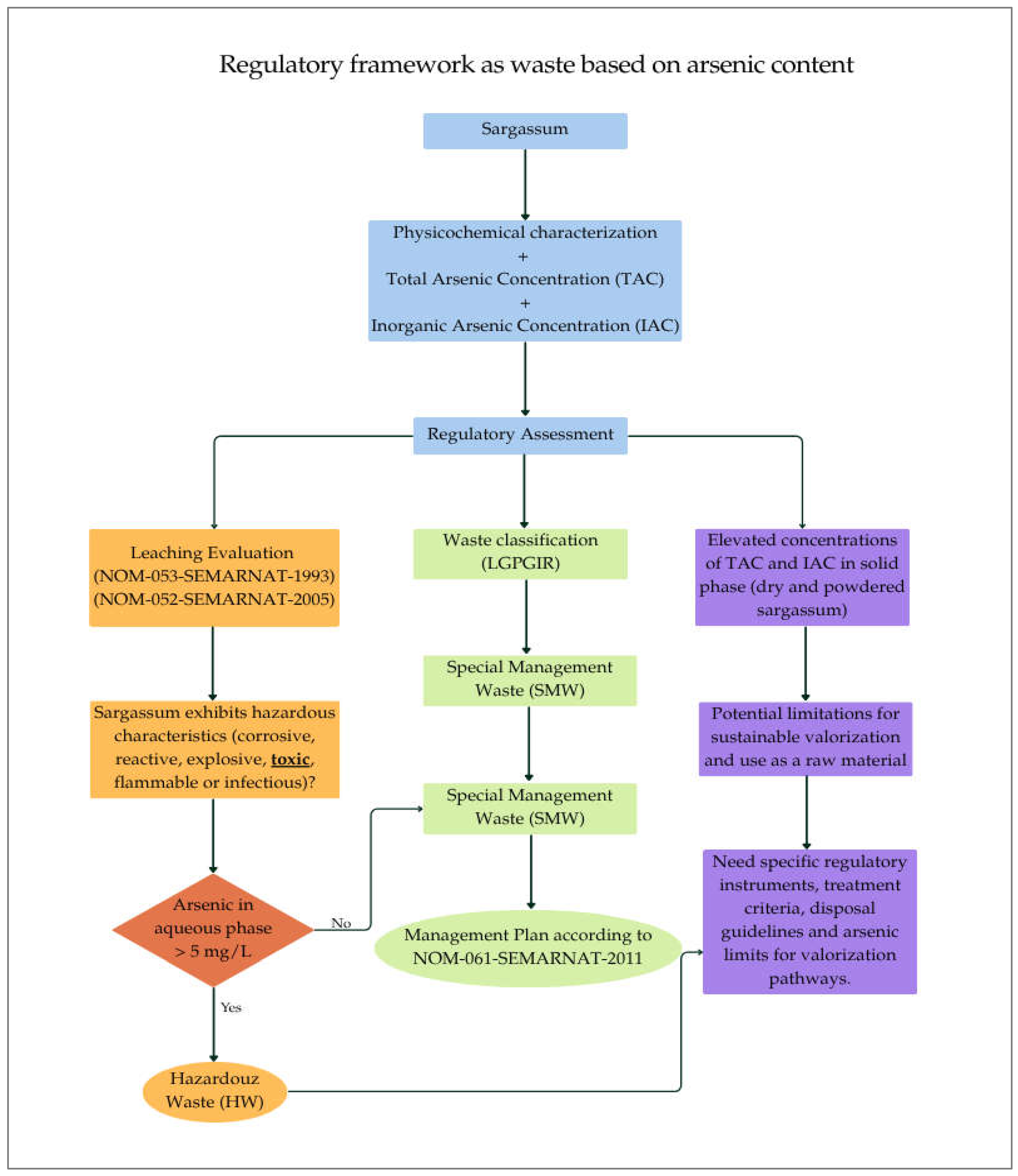
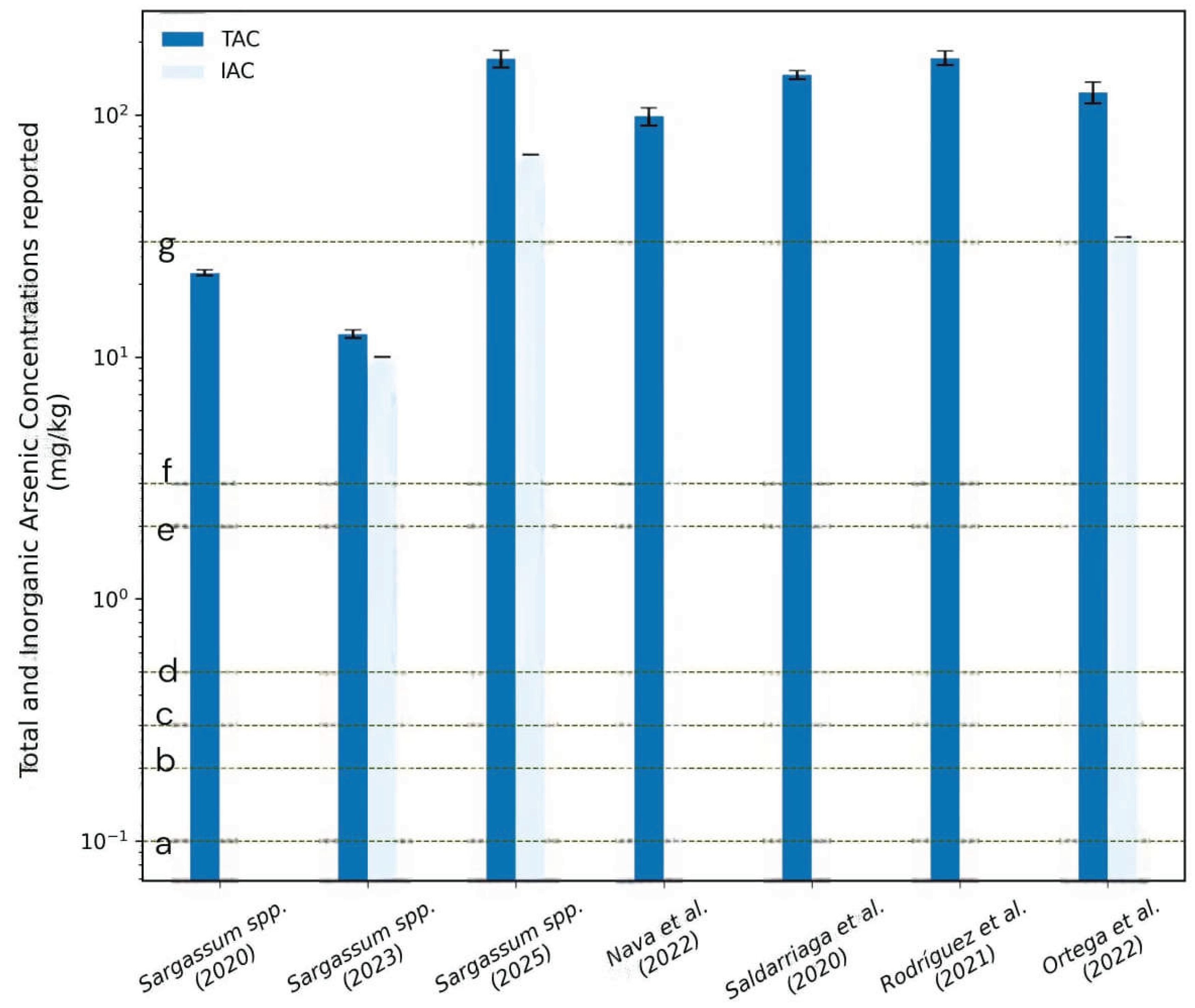
The macro algae Sargassum spp. reaching the beaches of Quintana Roo, Mexico, has represented an environmental problem since 2011 due to its massive influx and the lack of adequate instruments for its management, treatment and final disposal. Physicochemical parameters of the macroalgae were evaluated in samples collected from three beaches in Quintana Roo during 2020, 2023 and 2025. Total and inorganic arsenic concentrations were determined using an alternative method based on hydride generation atomic absorption spectrometry coupled with an automated cryotrapping system and flow injection analysis system (HG-AAS-AC-FIAS). From the perspective of Mexican waste regulations, sargassum is classified as Special Management Waste (SMW) and is considered non-hazardous waste since arsenic concentrations in aqueous phase did not exceed the maximum permitted limit of 5 mg/L established by NOM-052-SEMARNAT-2005. Therefore, its management should comply with NOM-061-SEMARNAT-2011 that deals with SMW. However, as a potential raw material, sargassum contained total arsenic concentrations of 22.272 ± 0.598 mg/kg dw (2020), 12.46 ± 0.5 mg/kg dw (2023) and 170.67 ± 13.614 mg/kg dw (2025). Inorganic arsenic was detected in 2023 and 2025 samples at 10.005 ± 0.042 mg/kg dw and 68.63 ± 0.106 mg/kg dw, respectively. These findings highlight the need for specific management, treatment, disposal and clear guidelines for its use as a raw material for sargassum valorization.
Keywords:
1. Introduction
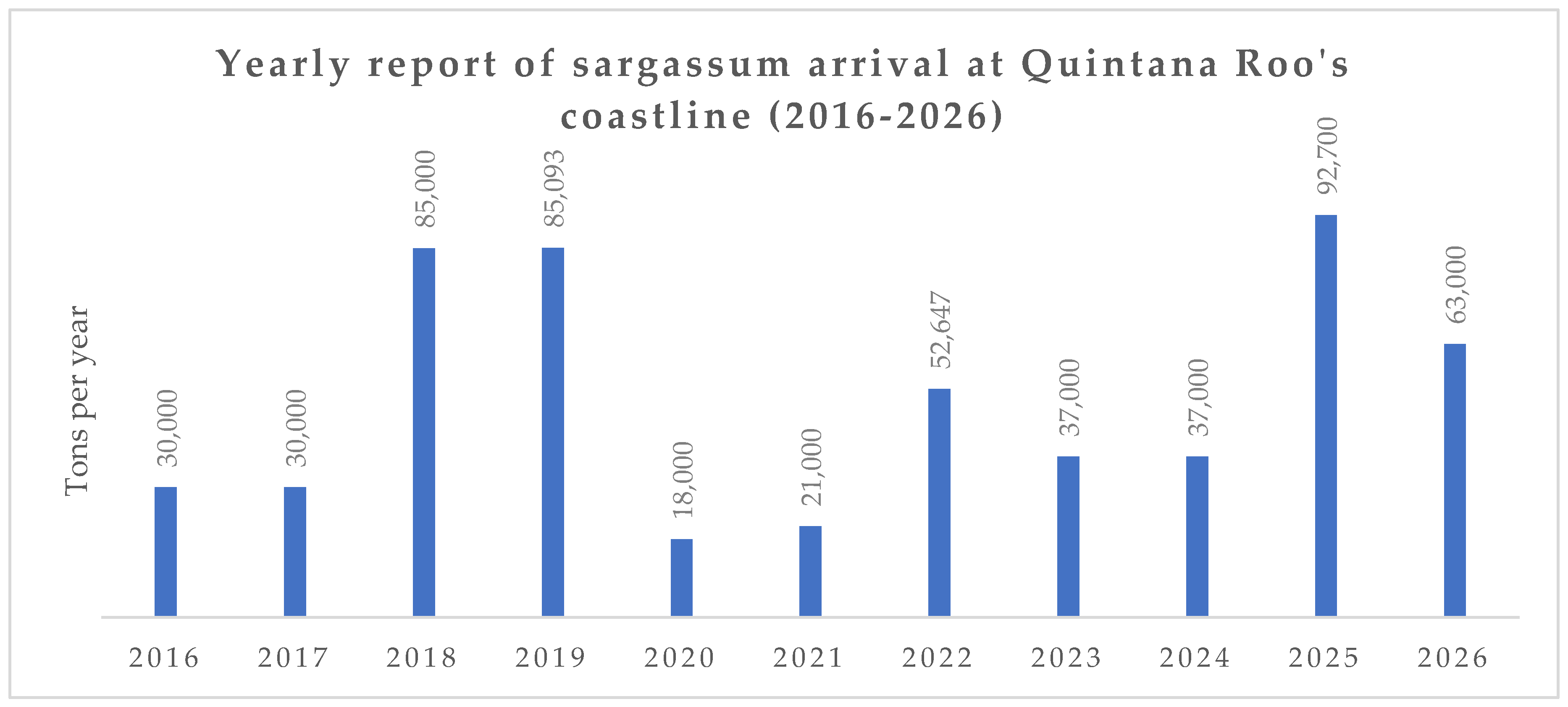
1.1. Sargassum Influxes and Environmental Problems
1.2. Transition from Biomass to Waste?,
1.3. Current and Emerging Valorization Pathways
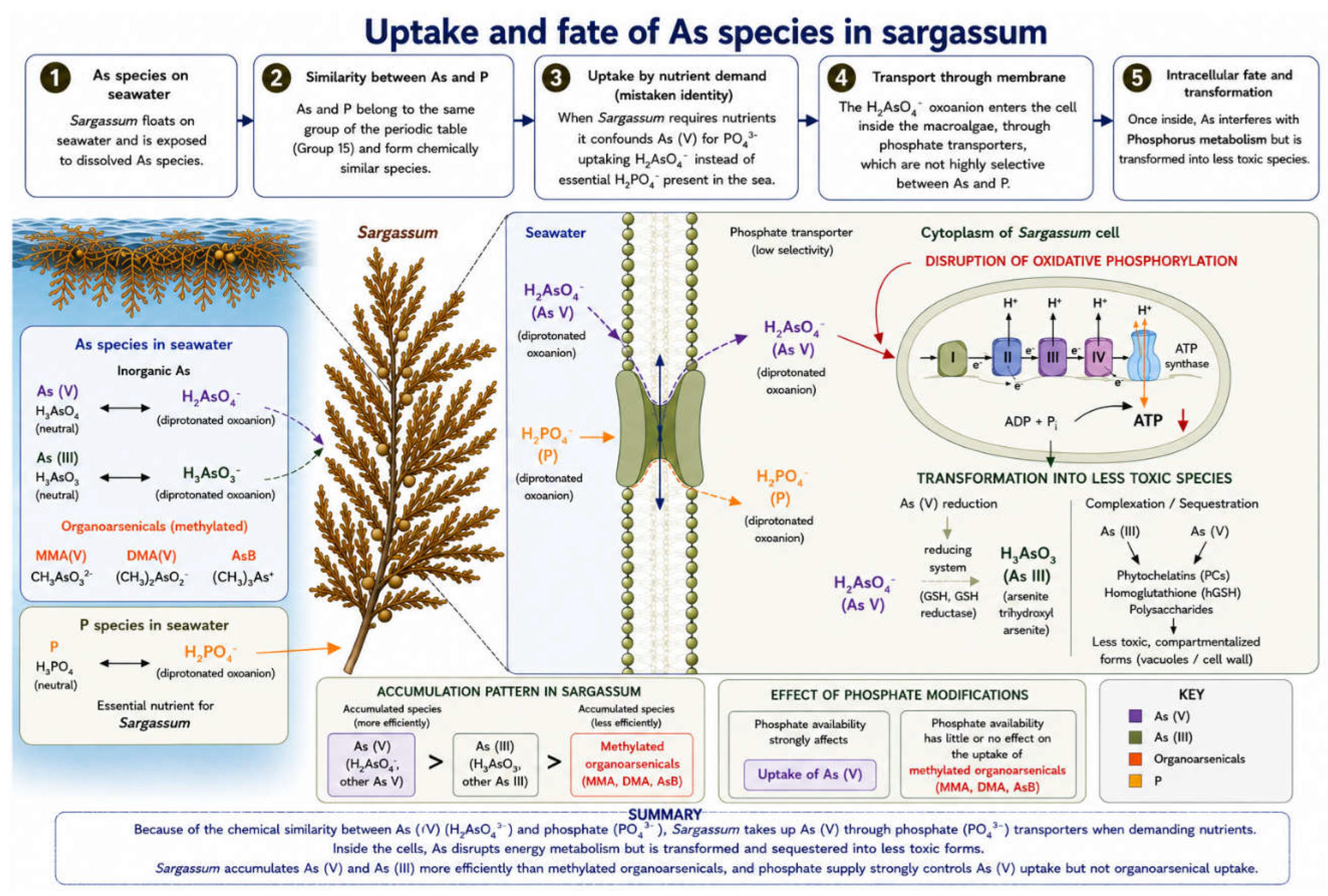
1.4. Sources, Uptake, and Speciation of Arsenic in Sargassum spp.: implications for environmental risk
2. Materials and Methods
2.1. Determination of Inorganic Arsenic Species and Methylated Derivatives
3. Results and Discussion
3.1. Review of current mechanisms implemented for the management of seaweed residues from sargassum in Quintana Roo-Mexico.
3.2. Analysis of the Mexican legislative framework, standards and regulations applicable to sargassum residues for classification and management.
3.3. Basic characterization of physicochemical parameters of sargassum
3.3.1. pH values and arsenic speciation
3.3.2. Oxidation-Reduction Potential and the arsenic redox chemistry
3.3.4. Conductivity, salinity, and arsenic uptake kinetics
3.3.5. Moisture content, decomposition state, and arsenic mobilization
3.4. Total arsenic concentrations and inorganic arsenic content in sargassum samples
3.4.1. Inorganic arsenic concentrations and speciation ratios, the toxicological significance
4. Conclusions
Author Contributions
Funding
Institutional Review Board Statement
Informed Consent Statement
Data Availability Statement
Acknowledgments
Conflicts of Interest
Abbreviations
| As | Arsenic |
| As (V) | Arsenate |
| As (III) | Arsenite |
| As (0) | Elemental arsenic |
| As (-III) | Arsenide |
| HW | Hazardous Waste |
| iAs | Inorganic Arsenic |
| IAC | Inorganic Arsenic Concentration |
| ORP | Oxidation-Reduction Potential |
| PO43- | Phosphate |
| pH | Hydrogen potential |
| SMW | Special Management Waste |
| TAs | Total Arsenic |
| TAC | Total Arsenic Concentration |
References
- Caribbean Alliance for Sustainable Tourism. Sargassum. A Resource Guide for the Caribbean [Internet]. 2015. Available from: https://repository.oceanbestpractices.org/server9/api/core/bitstreams/146c1efd-4f36-46e3-a635-3fffdce35312/content.
- Louime C, Fortune J, Gervais G. Sargassum invasion of coastal environments: A growing concern [Internet]. Vol. 13. 2017;13(1):58–64. [CrossRef]
- Castillo C. Potencial impacto del Sargazo en América Latina y el Caribe. Empírica, Centro de Aplicaciones Económicas-Economía Aplicada [Internet]. 2023 Aug 14. Available from: https://empirica.do/7866/potencial-impacto-del-sargazo-en-america-latina-y-el-caribe.
- Gower J, Young E, King S. Satellite images suggest a new Sargassum source region in 2011 [Internet]. Vol. 4. 2013 Jun 3;4(8):764–73. [CrossRef]
- Rodríguez Martínez RE, Van Tussenbroek B, Jordan-Dahlgren E. Afluecia masiva de sargazo pelagico a la costa del Caribe Mexicano. In: Florecimientos Algales Nocivos en México [Internet]. Quintana Roo, México.: CICESE; 2016. p. 352–65. Available from: images/pdf/capitulos_libros/F09ISlOVElawRogftlqbNYhQYkrPtX7VYa6FDucn.pdf.
- Franks JS, Johnson DR, Ko DS. Pelagic Sargassum in the Tropical North Atlantic. Gulf Caribb Res. 2016 Jan 1;27(1). [CrossRef]
- Paredes-Camacho RM, González-Morales S, González-Fuentes JA, Rodríguez-Jasso RM, Benavides-Mendoza A, Charles-Rodríguez AV, et al. Characterization of Sargassum spp. from the Mexican Caribbean and its Valorization through Fermentation Process. Processes. 2023 Feb 23;11(3):685. [CrossRef]
- Van Tussenbroek BI, Hernández Arana HA, Rodríguez-Martínez RE, Espinoza-Avalos J, Canizales-Flores HM, González-Godoy CE, et al. Severe impacts of brown tides caused by Sargassum spp. on near-shore Caribbean seagrass communities. Mar Pollut Bull. 2017 Sep;122(1–2):272–81. [CrossRef]
- SEMA. Gobierno de Quintana Roo intensifica acciones para contener el sargazo en los litorales [Internet]. SEMA Quintana Roo. Available from: https://qroo.gob.mx/sema/elementor-39695/.
- SEMAR. Histórico de los boletines diarios de sargazo en el Mar Caribe. [Internet]. [cited 2026 Jul 8]. SEMAR. Available from: https://diredimoat.semar.gob.mx/OpSargazo/SargazoBoletinDiario.html.
- Vázquez-Delfín E, Freile-Pelegrín Y, Salazar-Garibay A, Serviere-Zaragoza E, Méndez-Rodríguez LC, Robledo D. Species composition and chemical characterization of Sargassum influx at six different locations along the Mexican Caribbean coast. Sci Total Environ. 2021 Nov;795:148852. [CrossRef]
- Devault DA, Pierre R, Marfaing H, Dolique F, Lopez PJ. Sargassum contamination and consequences for downstream uses: a review. J Appl Phycol. 2021 Feb;33(1):567–602. [CrossRef]
- Devault DA, Modestin E, Cottereau V, Vedie F, Stiger-Pouvreau V, Pierre R, et al. The silent spring of Sargassum. Environ Sci Pollut Res. 2021 Apr;28(13):15580–3. [CrossRef]
- Gobert T, Gautier A, Connan S, Rouget ML, Thibaut T, Striger-Pouvreau V, et al. Trace metal content from holopelagic Sargassum spp. sampled in the tropical North Atlantic Ocean: Emphasis on spatial variation of arsenic and phosphorus. Chemosphere. 2022;308(136186):1–9. [CrossRef]
- Walsh KT, Waliczek TM. Examining the Quality of a Compost Product Derived from Sargassum [Internet]. Vol. 3. 2020;3:331–6. [CrossRef]
- Aguirre Muñoz A. Sargassum in the Mexican Caribbean: From Denial and Voluntarism to Reality. Gaceta Digital del Centro Interdisciplinario de Biodiversidad y Ambiente, A.C. CeIBA [Internet]. 2019 Sep 5;2. Available from: https://secihti.mx/sargazo/images/pdfs/El_Sargazo_en_el_Caribe_Mexicanopdf.pdf.
- Resiere D, Valentino R, Nevière R, Banydeen R, Gueye P, Florentin J, et al. Sargassum seaweed on Caribbean islands: an international public health concern. In: Vol. 392. Available from: https://sargcoop.org/en/sg-monitorings/dabor-resiere-2018-sargassum-seaweed-on-caribbean-islands_-an-international-public-health-concern/.
- Marin A, Casas-Valdez M, Carrillo S, Hernandez H, Monroy A, Sangines L, et al. The marine algae Sargassum Spp. (Sargassaceae) as feed for sheep in tropical and subtropical regions. Biologia Tropical [Internet]. 2009 Dec;57. Available from: https://www.scielo.sa.cr/scielo.php?script=sci_arttext&pid=S0034-77442009000400030.
- Velazco Gonzalez O, Echavarria Almeida S, Sifuentes Diaz A, Casas-Valdez M. Use of the seaweed Sargassum spp. added to wheat flour to prepare biscuits for human consumption. Bioagro 25 [Internet]. 2013;3:189–94. Available from: https://www.researchgate.net/publication/287487560_Using_seaweed_Sargassum_spp_Added_to_wheat_flour_to_make_cookies_for_human_consumption.
- Milledge J J, Nielsen BV, Bailey D. High-value products from macroalgae: the potential uses of the invasive brown seaweed, Sargassum muticum. [Internet]. Vol. 1. 2015;1:67–88. [CrossRef]
- Flores Álvarez MÁ. Evaluación de diferentes tecnologías para el aprovechamiento potencial de las macroalgas pardas Sargassum sp. [Ciudad de México]: Instituto Politécnico Nacional; 2016.
- Maneein S, Milledge JJ, Nielsen BV, Harvey PJ. A Review of Seaweed Pre-Treatment Methods for Enhanced Biofuel Production by Anaerobic Digestion or Fermentation. Fermentation. 2018 Nov 29;4(4):100. [CrossRef]
- Amador Castro F, García Cayuela T, Hal S. A, Rodríguez Martínez V, Carrillo Nieves D. Valorization of pelagic sargassum biomass into sustainable applications: Current trends and challenges. [Internet]. 2021. [CrossRef]
- Cox SA, Degia K, C. Lopez I. Sargassum white paper: Turning the crisis into an opportunity [Internet]. Available from: https://www.unep.org/cep/resources/publication/sargassum-white-paper-turning-crisis-opportunity.
- Santillan ML. New use for sargassum, from pest to contaminant remover. Ciencia UNAM. 2022 Apr 18.
- Leyva J. Mexicans use sargassum to make houses, shoes and notebooks. Editorial [Internet]. 2023 Aug 13. Available from: https://www.debate.com.mx/estiloyvida/Mexicanos-usan-el-sargazo-para-fabricar-casas-zapatos-y-libretas-20230813-0094.html.
- Environmental Protection Agency [Internet]. 2025. Planning for and Managing Sargassum Inundation Events (SIEs). Available from: https://www.epa.gov/habs/planning-and-managing-sargassum-inundation-events-sies.
- Ortega-Flores PA, Serviere-Zaragoza E, De Anda-Montañez JA, Freile-Pelegrín Y, Robledo D, Méndez-Rodríguez LC. Trace elements in pelagic Sargassum species in the Mexican Caribbean: Identification of key variables affecting arsenic accumulation in S. fluitans. Sci Total Environ. 2022 Feb;806:150657. [CrossRef]
- Rodríguez-Martínez RE, Roy PD, Torrescano-Valle N, Cabanillas-Terán N, Carrillo-Domínguez S, Collado-Vides L, et al. Element concentrations in pelagic Sargassum along the Mexican Caribbean coast in 2018-2019. PeerJ. 2020 Feb 26;8:e8667. [CrossRef]
- Tsang S, Phu F, Bahum MM, Gregory A. P. Determination of phosphate/arsenate by a modified molybdenum blue method and reduction of arsenate by S2O42− [Internet]. Vol. 71. 2016;71:1560–8. [CrossRef]
- Rangel Montoya AE, Montañez Hernandez LE, Luevanos Escareño MP, Balagurusamy N. Impacto del arsénico en el ambiente y su transformación por microorganismos. Terra Latinoam [Internet]. 33:103–18. Available from: https://www.terralatinoamericana.org.mx/index.php/terra/article/view/51.
- Rani Datta R, Islam Papry R, Asajura Y, Kagaya R, Hong Wong K, Suzuki Mashio A, et al. Arsenic biotransformation by macroalgae Srgassum thunbergii: Influence of growth stages and phosphate availability on uptake and reductive methylation. Chemosphere. 2025 Mar;377:1–7. [CrossRef]
- Whyte J, Englar J. Analysis of inorganic and organic-bound arsenic in marine brown algae. Bot Mar. 1983;26(4):159–64. [CrossRef]
- Datta RR, Islam Papry R, Asakura Y, Kagaya R, Teneda M, Hong Wong K, et al. Arsenate biotransformation in six marine macroalgae species under dual salinity regimes: Comparative insights across phyla. Sci Total Environ. 2025;1003:1–12. [CrossRef]
- Hung DQ, Nekrassova O, Compton RG. Analytical methods for inorganic arsenic in water: a review [Internet]. Vol. 64. 2004 Oct 8;64(2):269–77. [CrossRef]
- Garcia Salgado S. Arsenic speciation and metal accumulation studies in environmental samples [Internet]. Universidad Politécnica de Madrid; 2013. Available from: https://oa.upm.es/15311/1/SARA_GARCIA_SALGADO.pdf.
- Gobert T, Chatelain B, Connan S, Renoul C, Striger-Pouvreau V, Thouard E, et al. Temporal dynamics of trace metals and arsenic in holopelagic Sargassum spp. during their retention in coastal waters. [Internet]. Vol. 217. 2026;217(107944):1–10. [CrossRef]
- Marquez GPB, Santiañez WJE, Trono Jr. GC, Montaño MNE, Araki H, Takeuchi H, et al. Seaweed biomass of the Philippines: Sustainable feedstock for biogas production. Renew Sustain Energy Rev. 2014;38:1056–68. [CrossRef]
- Trivedi, Gupta V, Reddy CRK, Jha B. Marine Macroalgal Biomass as a Renewable Source of Bioethanol. In: Marine Bioenerfy, Trends and Development [Internet]. CRC Press. 2015. Available from: https://www.taylorfrancis.com/chapters/edit/10.1201/b18494-16/marine-macroalgal-biomass-renewable-source-bioethanol-nitin-trivedi-vishal-gupta-reddy-bhavanath-jha.
- T. Valencia JM, Demafelis RB, Borines MG, Gatdula KM. Bioethanol Potential of Brown Macroalgae Sargassum spp. Philippine Journal of Crop Science [Internet]. 2015;40. Available from: https://www.ukdr.uplb.edu.ph/journal-articles/4958/.
- World Health Organization-Arsenic [Internet]. 2025. World Health Organization. Available from: https://www.who.int/news-room/fact-sheets/detail/arsenic.
- MICROWAVE ASSISTED ACID DIGESTION OF SEDIMENTS, SLUDGES, SOILS, AND OILS [Organismo gubernamental] [Internet]. 2025. Environmental Protection Agency. Available from: https://www.epa.gov/sites/default/files/2015-12/documents/3051a.pdf.
- Secretaria de Salud. Norma Oficial Mexicana NOM-127-SSA1-2021, Agua para uso y consumo humano. Límites permisibles de la calidad del agua. [Internet]. 2021 [cited 2025 Nov 15]. Available from: https://www.dof.gob.mx/nota_detalle_popup.php?codigo=5650705.
- National Health Commission of the People’s Republic of China. National Food Safety Standard: Maximum Levels of Contaminants in Foods [National Food Safety Standard] [Internet]. Beijing, China: National Health Commission of the People’s Republic of China; 2022. Available from: https://www.mast.is/static/files/Serleyfismarkadir/Kina/Log_og_reglugerdir/gb-2762-2022-1-.pdf.
- Parlamento Europeo y Consejo de la Unión Europea. Reglamento (CE) n.o 1223/2009 sobre los productos cosméticos. Reglamento (CE) n.o 1223/2009 [Internet]. p. 59–092. Available from: https://www.boe.es/doue/2009/342/L00059-00209.pdf.
- Secretaría de Medio Ambiente y Recursos Naturales. Norma Oficial Mexicana NOM-052-SEMARNAT-2005, Que establece las características, el procedimiento de identificación, clasificación y los listados de los residuos peligrosos [Norma Oficial Mexicana] [Internet]. 2005. Available from: https://www.dof.gob.mx/normasOficiales/1055/SEMARNA/SEMARNA.htm.
- Bund B. Technically avoidable heavy metal contents in cosmetic products. J Consum Prot Food Saf. 2017 Mar;12(1):51–3. [CrossRef]
- Secretaria de Salud. Norma Oficial Mexicana Norma Oficial Mexicana NOM-147-SSA1-1996, Bienes y servicios. Cereales y sus productos. Harinas de cereales, alimentos a base de cereales, de semillas comestibles, harinas o sus mezclas y productos de panificación. Disposiciones y especificaciones sanitarias y nutrimentales. [Internet]. 1996 [cited 2025 Nov 17]. Available from: https://salud.gob.mx/unidades/cdi/nom/147ssa16.html.
- Bielak E, Marcinkowska E. Heavy metals in leathers, artificial leathers, and textiles in the context of quality and safety of use. Sci Rep. [CrossRef]
- CEVA. Macroalgues et microalgues alimentaires – Statut règlementaire en France et en Europe [Rapport technique] [Internet]. France; 2025 Jan [cited 2026 May 28]. p. 21. Rapport technique Synthèse CEVA 2024. Available from: https://www.ceva-algues.com/wp-content/uploads/2019/10/V14-synthese-reglementaire2024-1.pdf.
- National Research Council. Mineral Tolerance of Animals: Second Revised Edition, 2005 [Internet]. Washington, DC: The National Academies Press; 2005. Available from: . [CrossRef]
- Secretaría del Medio Ambiente del Distrito Federal. Norma Ambiental para el Distrito Federal NADF-020-AMBT-2011, que establece los requerimientos mínimos para la producción de composta a partir de la fracción orgánica de los residuos sólidos urbanos, agrícolas, pecuarios y forestales, así como las especificaciones mínimas de calidad de la composta producida y/o distribuida en el Distrito Federal. NADF-020-AMBT-2011 [Internet]. 2012 Nov 30. Available from: http://data.sedema.cdmx.gob.mx/padla/images/stories/normatividaddf/nadf_020_ambt_2011.pdf.
- Dirección General de Normas. Protección al ambiente – Contaminación del suelo – Residuos sólidos municipales – Muestreo – Método de cuarteo. NMX-AA-015-1985 [Internet]. Available from: https://biblioteca.semarnat.gob.mx/janium/Documentos/Ciga/agenda/DOFsr/NMX-AA-015-1985.pdf.
- Sadzawka R. A, Carrasco R. MA, Grez Z. R, Mora G. M de LL. Métodos de análisis de compost. Centro Regional de Investigacion La Platina Santiago; 2005. (30).
- Microwave Assisted Acid Digestion of Siliceous and Organically Based Matrices. Environmental protection Agency-Method 3052 [Internet]. 1997 Dec [cited 2021 Jul 2]. Available from: https://www.epa.gov/sites/default/files/2015-12/documents/3052.pdf.
- Hernández-Zavala A, Matoušek T, Drobná Z, Paul DS, Walton F, Adair BM, et al. Speciation analysis of arsenic in biological matrices by automated hydride generation-cryotrapping-atomic absorption spectrometry with multiple microflame quartz tube atomizer (multiatomizer). J Anal Spectrom. 2008;23(3):342–51. [CrossRef]
- Secretaría de Medio Ambiente y Recursos Naturales (SEMARNAT). Lineamientos Técnicos y de Gestión para la Atención de la Contingencia Ocasionada por Sargazo en el Caribe Mexicano y el Golfo de México [Internet]. Secretaría de Medio Ambiente y Recursos Naturales (SEMARNAT); 2021. Report Instituto Nacional de Ecología y Cambio Climático (INECC). Available from: https://www.gob.mx/semarnat.
- Rodríguez-Martínez RE, van Tussenbroek BI, Navarro-Guerrero G, Mora-Domínguez G, González-Rivera LI. Estrategia Integral para el Manejo y Aprovechamiento del Sargazo (EIMAS) en Quintana Roo [Internet]. Secretaría de Ecología y Medio Ambiente de Quintana Roo (SEMA); 2023. Available from: https://qroo.gob.mx/sema/.
- Congreso del Estado de Quintana Roo. Ley para la Prevención, Gestión Integral y Economía Circular de los Residuos del Estado de Quintana Roo. Periódico Oficial del Estado de Quintana Roo. 2023 Dec 22.
- Congreso de los Estados Unidos Mexicanos. Ley General del Equilibrio Ecológico y la Protección al Ambiente. Diario Oficial de la Federación (DOF) [Internet]. Available from: https://www.diputados.gob.mx/LeyesBiblio/pdf/LGEEPA.pdf.
- Congreso de los Estados Unidos Mexicanos. Ley General para la Prevención y Gestión Integral de los Residuos. Diario Oficial de la Federación (DOF) [Internet]. Available from: https://www.diputados.gob.mx/LeyesBiblio/ Nueva Ley publicada el 8 de octubre de 2003.
- Congreso del Estado de Quintana Roo (o Honorable XI Legislatura Constitucional del Estado Libre y Soberano de Quintana Roo). Ley para la Prevención y la Gestión Integral de Residuos del Estado de Quintana Roo. Decreto por el que se expide la Ley para la Prevención y la Gestión Integral de Residuos del Estado de Quintana Roo (si el decreto aparece en las últimas páginas puedes incluir su número; si no, este campo puede quedar vacío). 2015 Mar 30.
- Secretaría de Medio Ambiente y Recursos Naturales (SEMARNAT). Norma Oficial Mexicana NOM-161-SEMARNAT-2011, Que establece los criterios para clasificar a los residuos de manejo especial y determinar cuáles están sujetos a plan de manejo; el listado de los mismos, el procedimiento para la inclusión o exclusión a dicho listado; así como los elementos y procedimientos para la formulación de los planes de manejo. NOM-161-SEMARNAT-2011 [Internet]. 2013 Feb 1. Available from: https://www.profepa.gob.mx/innovaportal/file/6633/1/nom-161-semarnat-2011.pdf.
- Secretaría de Medio Ambiente y Recursos Naturales (SEMARNAT). Norma Oficial Mexicana NOM-053-SEMARNAT-1993 que establece el procedimiento para llevar a cabo la prueba de extracción para determinar los constituyentes que hacen a un residuo peligroso por su toxicidad al ambiente. NOM-053-SEMARNAT-1993 [Internet]. 1993 Oct 18. Available from: https://www.imss.gob.mx/sites/all/statics/profesionalesSalud/investigacionSalud/cbis/nom-053-semarnat-1993.pdf.
- Leal-Bautista RM, Rodríguez-García JC, Chablé-Villacis R, Acosta-González G, Bautista-García JE, Tapia-Tussell R, et al. Assessment of Leachate Generated by Sargassum spp. in the Mexican Caribbean: Part 2, Mobility of Metals. Water. 2024 Sep 24;16(19):2719. [CrossRef]
- Manuel OMP, Victor CM, Maribel EMA, Antonio AMA, Germán GV, Germán NMJ, et al. The chemical composition of Sargassum leachate reveals a potential threat to the aquifer of the Yucatan Peninsula, Mexico. Mar Pollut Bull. 2026 Mar;224:119143. [CrossRef]
- Thouin H, Fikrat M, Battaglia-Brunet F, Joulian C, Charron M, Mestrot A, et al. Temporal change of arsenic in leachates from Sargassum spp. biomass deposit: mass balance, speciation and microbial biotransformation pathways. Sci Total Environ. 2025 Nov;1005:180840. [CrossRef]
- Nava-Jiménez IA, Tejeda-Vega S, Cortina-Ramírez GE, Zarazúa-Ortega G, Berriozabal-Islas C, Sánchez-Hernández H. Macro and microelement analysis of Sargassum fluitans and Sargassum natans arriving in the coastal zone of Cancun, Quintana Roo, Mexico: Análisis de macro y microelementos de Sargassum fluitans y Sargassum natans que arriban a la zona costera de Cancún, Quintana Roo, México. Rev Biol Mar Oceanogr. 2022 Sep 28;57(1). [CrossRef]
- Saldarriaga-Hernandez S, Najera-Martinez EF, Martinez-Prado MA, Melchor-Martinez EM. Sargassum-based potential biosorbent to tackle pollution in aqueous ecosystems – An overview [Internet]. Vol. 2. Manager; 2020. (Case Studies in Chemical and Environmental Engineering (2020)). Available from: https://www.sciencedirect.com/science/article/pii/S266601642030030X.
- Ortega-Flores PA, Gobert T, Méndez-Rodríguez LC, Serviere-Zaragoza E, Connan S, Robledo D, et al. Inorganic arsenic in holopelagic Sargassum spp. stranded in the Mexican Caribbean: Seasonal variations and comparison with international regulations and guidelines. Aquat Bot. 2023 Sep;188:103674. [CrossRef]
- Davis D, Simister R, Campbell S, Marston M, Bose S, McQueen-Mason SJ, et al. Biomass composition of the golden tide pelagic seaweeds Sargassum fluitans and S. natans (morphotypes I and VIII) to inform valorisation pathways. Sci Total Environ. 2021 Mar;762:143134. [CrossRef]
- Davis D, Simister R, Campbell S, Marston M, Bose S, McQueen-Mason SJ, et al. Biomass composition of the golden tide pelagic seaweeds Sargassum fluitans and S. natans (morphotypes I and VIII) to inform valorisation pathways. Sci Total Environ. 2021 Mar;762:143134. [CrossRef]
- Datta RR, Papry RI, Asakura Y, Kato Y, Hong WK, Mashio AS, et al. Effect of salinity on arsenic uptake, biotransformation, and time-dependent speciation pattern by Sargassum species. Chemosphere. 2024 Aug;362:142712. [CrossRef]
- Milledge J, Harvey P. Golden Tides: Problem or Golden Opportunity? The Valorisation of Sargassum from Beach Inundations. J Mar Sci Eng. 2016 Sep 13;4(3):60. [CrossRef]
- Thouin H, Fikrat M, Battaglia-Brunet F, Joulian C, Charron M, Mestrot A, et al. Temporal change of arsenic in leachates from Sargassum spp. biomass deposit: mass balance, speciation and microbial biotransformation pathways. Sci Total Environ. 2025 Nov;1005:180840. [CrossRef]
- Olguin-Maciel E, Leal-Bautista RM, Alzate-Gaviria L, Domínguez-Maldonado J, Tapia-Tussell R. Environmental impact of Sargassum spp. landings: an evaluation of leachate released from natural decomposition at Mexican Caribbean coast. Environ Sci Pollut Res. 2022 Dec;29(60):91071–80. [CrossRef]
- Thompson TM, Young BR, Baroutian S. Pelagic Sargassum for energy and fertiliser production in the Caribbean: A case study on Barbados. Renew Sustain Energy Rev. 2020 Feb;118:109564. [CrossRef]
- Cisneros-Ramos KI, Gutiérrez-Castañeda M, Magaña-Gallegos E, Villegas-Pañeda AG, Monroy-Velázquez LV, Barba-Santos MG, et al. From Inundations to Golden Opportunity: Turning Holopelagic Sargassum spp. into a Valuable Feed Ingredient through Arsenic Removal. Phycology. 2024 Aug 7;4(3):384–93. [CrossRef]
- Mazariegos-Villarreal A, Serviere-Zaragoza E, López-Vivas JM, Freile-Pelegrín Y, Reyes-Bonilla H, León-Cisneros K, et al. Relationship between arsenic content and macroelements, microelements, and polysaccharides in Sargassum horridum (Ochrophyta, Phaeophyceae) in the Gulf of California, Mexico. Aquat Bot. 2024 Mar;191:103730. [CrossRef]
- Huang SX, Jiang Q, Ding YF, Wang FJ, Zhu C. ARSENIC CONTENTS AND SPECIATION AT DIFFERENT GROWTH STAGES OF SARGASSUM FUSIFORME [HARV.] SETCHELL (HIJIKI), AN EDIBLE SEAWEED. Appl Ecol Environ Res. 2020;18(1):1941–52. [CrossRef]
- Peng Z, He Y, Guo Z, Wu Q, Li S, Zhu Z, et al. Species-specific arsenic species and health risk assessment in seaweeds from tropic coasts of South China Sea. Ecotoxicol Environ Saf. 2023 Nov;267:115634. [CrossRef]
- Gobert T, Connan S, Salaün P, Eikelboom M, Riso RD, Stiger-Pouvreau V, et al. Simple and Rapid Voltammetric Method Using a Gold Microwire Electrode to Measure Inorganic Arsenic in Holopelagic Sargassum (Fucales, Phaeophyceae). Anal Lett. 2024 Sep;57(13):2050–66. [CrossRef]

| Application of sargassum as raw material | Type of human exposure by material | Country | Year, reference |
|---|---|---|---|
| Cattle feed | Ingestion | Mexico | 2009, (18) |
| Cookie flour | Ingestion | Mexico | 2013, (19) |
| Biofuel, pharmaceutical uses (antioxidants, anti-inflammatories, anti-tumors), cosmetics, bioadsorbents in water treatment, fertilizer and feed for aquaculture, insecticide. | Ingestion, skin contact | United Kingdom | 2015, (20) |
| Biogas generation, soil improver, papermaking | Inhalation | Mexico | 2016, (21) |
| Biogas generation, heating values, electricity and biomethane, soil improver. | Inhalation | United Kingdom | 2018, (22) |
| Processing paper, building blocks, bioplastics, fertilizers, biofuels, extraction of compounds to make beauty products, and phenolic compounds as a natural alternative to antibiotics. | Skin contact | Mexico | 2021, (23) |
|
Fertilizers and compost, biofuels, construction materials, cosmetics, animal feed, paper and cardboard products and pharmaceuticals. |
Ingestion, skin contact and inhalation | Caribbean region | 2021, (24) |
| Water filter | Ingestion, skin contact | Mexico | 2022, (25) |
| Paper production, shoe manufacturing. | Skin contact | Mexico | 2023, (26) |
| Fertilized, bioadsorbent, bioplastic, coal/ biochar briquettes, adobe bricks, cement additive (for strength and elasticity), chipboard, livestock, and fish feed, biofuels, nanostructured materials, soap, drugs and food supplements. | Ingestion | USA | 2025, (27) |
| Reference | Concentration | Arsenic location or product | |
|---|---|---|---|
| TAC | IAC | ||
| Aqueous matrices | |||
| WHO-(41) | 10 μg/liter | - | Water |
| EPA- (42) | 10 μg/liter | - | Drinking water |
| NOM-127-SSA1-1994- (43) | 25 μg/liter | - | Drinking water |
| National Food Safety Standard of the People's Republic of China (44) | 0.01 mg/liter | - | Beverages (packaged drinking water) |
| Regulation EU 1223/2009 (45) | < 3 mg/liter | - | Cosmetics |
| NOM-052-SEMARNAT-2005 (46) | 5 mg/liter | - | Industrial waste (in landfill leachate) |
| Solid matrices | |||
| The German Federal Office for Consumer Protection and Food Safety (47) | < 0.5 mg/kg | - | Cosmetics |
| < 2.5 mg/kg | - | Theatrical or carnival make-up | |
| NOM-147-SSA1-1994- (48) | 22 mg/kg | - | Agricultural use and commercial use |
| 260 mg/kg | - | Industrial land | |
| National Food Safety Standard of the People's Republic of China (44) | - | 0.5 mg/kg | Aquatic animal and its derivatives (excluding fish and fish products) |
| - | 0.1 mg/kg | Fish and fish products like condiments | |
| - | 0.5 mg/kg | Condiments derived from aquatic products (excluding fish condiments) | |
| - | 0.3 mg/ kg | Aquatic product (and animal liver) derived foods | |
| 0.5 mg / kg | - | Food supplement | |
| 0.5 mg / kg | - | Semi solid sports nutritional food | |
| 0.5 mg / kg | - | Nutrient supplementary food for pregnant and lactating women | |
| OEKO-TEX. STANDARD 100 (49) | 0.2 g/kg | - | Leather goods/footwear |
| Regulatory status in France and Europe in Food macroalgae and microalgae (50) | 3 mg/kg | - | Algae supplements |
| National Research Council EU (51) | 30 mg/kg | - | Livestock feed |
| Mexican environmental standard of quality in compost (52) | 2 mg/kg | - | Compost |
| Reference document or Mexican regulatory framework | Type of document | Mandatory and applicable jurisdiction in Mexico | Potential Classification of sargassum | Conditions for Application | Regulatory Implications |
|---|---|---|---|---|---|
| Technical and Management Guidelines for Addressing the Contingency caused by Sargassum in the Mexican Caribbean and the Gulf of Mexico (57) | Locally issued document (not mandatory) |
Applicable in the Mexican Caribbean and Gulf of Mexico. Applicable locally in the area where sargassum is found. | Fishery Resource | Fresh and floating biomass collected in the open sea or near the coast. | Resource utilization |
| Special Management Waste (SMW) | If it is collected in a state of decomposition in containment barriers, transfer sites or final disposal sites. | Final disposal | |||
| Comprehensive Strategy for the Management and Use of Sargassum in Quintana Roo (EIMAS) (58) | Applicable locally in the area where sargassum is found. | Bio-waste | Fresh, dried, semi-dried, if fresh sargassum will undergo a drying process before its disposal, if it has landed and has been collected. | Valorization, recovery and environmental management measures of sargassum | |
| Polluting Residue | Biomass undergoing decomposition | ||||
| General Law of Ecological Balance and Environmental Protection (LGEEPA) (60) | Federal law | Mandatory in the entirety of the Mexican territory. | Hazardous Waste (HW) | If it has any of these characteristics: corrosive, reactivity, explosiveness, toxicity, flammability, or contains infectious agents. In specific about toxicity-maximum permissible limit for As concentration (>5 mg/L). | Characterization under numeral 5.1.4 from NOM-053-SEMARNAT-1993 to classify it as hazardous or not under NOM-052-SEMARNAT-2005. |
| General Law for the Prevention and Comprehensive Management of Waste (LGPGIR) (61) | Federal law on waste management | Special Management Waste (SMW) | Large-volume generation and absence of hazardous characteristics. The responsibility of the management of this classification falls to the municipal government. | Applies a Special Management Plan according to NOM-161-SEMARNAT-2011 | |
| Law for the Prevention and Comprehensive Management of Waste in the State of Quintana Roo (62) | State law on waste management | Mandatory in the State of Quintana Roo (regional application). | Organic Waste | Due to its characteristic of disintegrating or degrading rapidly, transforming into another type of organic matter. | Municipal waste management |
| Law for the Prevention and Comprehensive Management and Circular Economy of Waste in the State of Quintana Roo (59) | Mandatory within the State of Quintana Roo. | Bio-waste | Biodegradable organic substrate of plant origin, susceptible to biological degradation, and is derived from the drift of ocean currents. | Circular economy and valorization strategies | |
| Environmental Standard-NADF-020-AMBT-2011 for compost quality (52) | Municipal issued standard | Mandatory in Mexico City. | Material requiring characterization | The characterization of sargassum can be compared to the physicochemical parameters mentioned in this environmental standard; sargassum needs its basic characterization. | Technical reference for characterization |
| Information and parameter determined | Physicochemical characterization carried out | |||||||||||
|---|---|---|---|---|---|---|---|---|---|---|---|---|
| This study | Nava, I. et al. (68) | Saldarriaga, S. et al. (69) | Rodríguez, R. et al. (29) | Ortega, P. et al. (28), (70) | ||||||||
| Place of collection | “El Niño” Beach-Quintana Roo-Mexico | “Isla Blanca” Beach-Quintana Roo-Mexico | “Pescadores” Beach-Quintana Roo-Mexico |
“Las Perlas” Beach-Quintana Roo- Mexico. | Puerto Morelos, Quintana Roo- Mexico. | Puerto Morelos, Quintana Roo- Mexico. | Puerto Morelos, Quintana Roo- Mexico. | |||||
| Date of collection | August 2020 | July 2023 | November 2025 | October-November 2018 | July 2020 | 2022 | August 2022 | |||||
| Genus/Species | Sargassum spp. | Sargassum spp. | Sargassum spp. | S. fluitans III, S. natans I, and S. natans VIII. | Sargassum | S. fluitans, S. natans I and S. natans VIII | S. natans VIII | |||||
| pH | 8.12 ± 0.150 | 9.35 ± 0.059 | 7.75 ± 0.208 | - | - | - | - | |||||
| Conductivity (µS/cm) | 1258.33 ± 8.852 | 58.33 ± 1.528 | 504.000 ± 28.00 | - | - | - | - | |||||
| Oxidation-Reduction Potential (ORP), (mV) | 90.57 ± 2.411 | -16.33 ± 2.050 | -33.67 ± 2.517 | - | - | - | - | |||||
| % Moisture-(%, dry base) | 24.25 ± 6.70 | 84.05 ± 0.373 | 77.71 ± 1.26 | - | 7.3±0.5 | - | - | |||||
| Total solids (g/kg)-(%, dry base) | 757.51 ± 66.96 | 15.95 ± 0.373 | 222.94 ± 12.57 | - | - | - | - | |||||
| Volatile solids (g/kg)-(%, dry base) | 596.74 ± 51.57 | 61.01 ± 0.022 | 190.38 ± 8.99 | - | - | - | - | |||||
| Volatile solids/Total solids (%)-(%,dry base) | 78.79 ± 0.16 | - | 85.42 ± 0.79 | - | - | - | - | |||||
| Ashes(%)- (%,dry base) | 75.75 ± 6.70 | 39.99 ± 2.18 | 22.294 ± 1.26 | - | 24.1±1.8/29.6±0.9 | - | - | |||||
| Lignin (%) | 26 ± 0.2 | - | - | - | - | - | - | |||||
| Higher heating value (cal/g) | 2210.1 ± 5 | - | - | - | 2900±10.9/2800±9.9 | - | ||||||
| Lower heating value (cal/g) | 2039.9 ± 4.1 | - | - | - | - | - | - | |||||
| TAC (mg/kg, dry weight) | 22.272 ± 0.598 | 12.46 ± 0.5 | 170.67 ± 13.614 | 98.7 ± 8.3 | 146.3±6.1 | 172 | 124 ±12.38 | |||||
| IAC (mg/kg) | - | 10.005 ± 0.042 | 68.63 ± 0.106 | - | - | - | 31.3 | |||||
Disclaimer/Publisher’s Note: The statements, opinions and data contained in all publications are solely those of the individual author(s) and contributor(s) and not of MDPI and/or the editor(s). MDPI and/or the editor(s) disclaim responsibility for any injury to people or property resulting from any ideas, methods, instructions or products referred to in the content. |
© 2026 by the authors. Licensee MDPI, Basel, Switzerland. This article is an open access article distributed under the terms and conditions of the Creative Commons Attribution (CC BY) license.