

Submitted:
30 July 2026
Posted:
31 July 2026
You are already at the latest version
Abstract
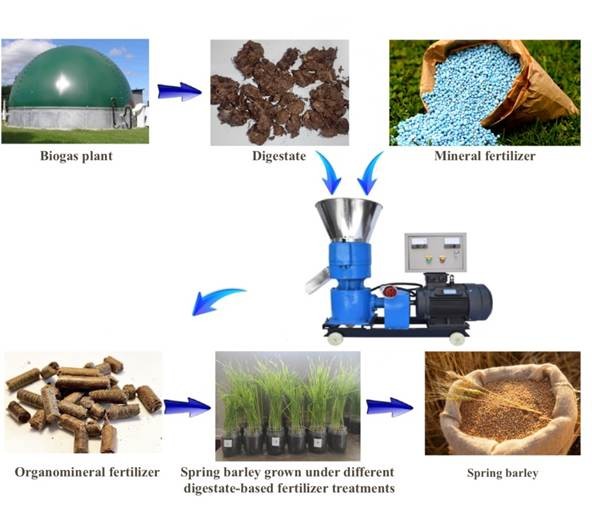
This study evaluates the potential of solid digestate as a feedstock for granulated organo-mineral fertilizers (OMF). The aim was to improve nutrient density, safety, and soil conditioning properties while supporting circular bioeconomy principles. Digestate was enriched with ammonium sulfate, monoammonium phosphate, and potassium chloride to produce OMF. The granules were analyzed for nutrient content, heavy metals, and functional group stabilization (FTIR). Soil incubation tests assessed the cation exchange capacity (CEC), while spring barley pot experiments evaluated biomass production and nutrient uptake. OMF granules achieved nutrient levels of N = 5.0%, P2O5 = 5.9%, and K2O = 4.7%, with dry matter of 95.9% and ash content of 32.4%. Heavy metals (Cd < 0.5, Pb < 5, As < 1.0 mg/kg) were well below EU safety thresholds. Compared to digestate pellets (C:N ≈20:1), OMF (C:N ≈7.8:1) showed faster mineralization. Soil incubation revealed increased CEC from 26.1 to 32.1 cmol(+)/kg. Barley biomass rose by 6.8–9.6%, with P and K accumulation strongly correlated with growth (r = 0.960 and r = 0.828). Uptake efficiencies reached 14.6% for P2O5 and 86.9% for K2O. Digestate valorization through organo-mineral granulation provides a safe and effective fertilizer pathway that enhances soil fertility, nutrient efficiency, and crop performance, while contributing to sustainable circular agriculture.
Keywords:
nutrient recovery
; soil amendment
; soil health
; crop productivity
; fertilizer
; waste valorization
; granulation
; sustainable development
1. Introduction
The growing global demand for sustainable agricultural practices and resource-efficient technologies has led to a renewed interest in the development and application of organic fertilizers. Traditionally limited to manure and poultry litter, organic fertilizers have evolved to include a broad spectrum of materials derived from both natural and processed organic sources. Among them are composts produced through controlled microbial decomposition of green waste and food residues [1,2]; sapropels – organic-mineral sediments that accumulate in slow-flowing or stagnant water bodies [3]; and peat-based products, rich in humic substances extracted using alkaline solutions [4]. Granulated fertilizers based on poultry manure [5] have also gained significant popularity due to their improved handling and application properties. Particularly noteworthy is the increasing use of organo-mineral fertilizers, which integrate the benefits of organic matter with essential mineral nutrients, thereby enhancing soil structure, nutrient retention, and crop productivity in degraded or intensively cultivated soils [6]. Such approaches align with SDG 15 (Life on Land) by supporting sustainable soil management and preventing land degradation.
The global shift toward renewable energy systems, in line with SDG 7 (Affordable and Clean Energy), has accelerated the deployment of biogas plants utilizing anaerobic digestion of organic feedstock as a sustainable energy solution [7,8,9]. A valuable by-product of this process is digestate – a stabilized organic residue containing a rich array of nutrients and organic compounds, making it highly suitable for agricultural use [10]. Digestate is increasingly recognized not as a waste product, but as a resource with significant potential for further valorization. It can be used directly as a soil amendment or processed into innovative fertilizer formulations. In particular, its transformation into granules improves storability, transportability, and application efficiency, supporting its integration into modern nutrient management systems.
Digestate is a stabilized by-product generated during the anaerobic digestion of organic feedstock. The residual digestate retains a substantial portion of the nutrients originally present in the feedstock, making it a valuable material for use as an organic fertilizer [11]. Digestate typically exhibits a complex profile of macro- and micronutrients (N, P, K, S, Co, Mo, Zn, Fe, Mn), a high proportion of nitrogen in the ammonium form (60–80%), and a balanced C/N ratio (20-30). Additional advantages include a near-neutral pH level (typically between 6.5 and 8.0) and a low content of viable weed seeds and pathogenic microorganisms, resulting from the thermophilic and anaerobic conditions of the digestion process.
The first stage of post-treatment typically involves mechanical separation into solid and liquid fractions. The solid fraction is enriched in organic carbon and phosphorus, while the liquid fraction is predominantly enriched in nitrogen and potassium [12,13]. Depending on process parameters and reactor configuration, digestate can also be recovered in a semi-liquid form, typically composed of sediment-like residues formed during anaerobic digestion [14]. High variability in nutrient composition, seasonal fluctuations, and challenges in storage limit the direct use of digestate as a standardized fertilizer, justifying the need for granulation to enhance product stability and field performance [15].
Pellets typically exhibit higher concentrations of essential nutrients (N, P, K) than either liquid or untreated solid fractions [16]. These attributes position granulated digestate as a viable substitute for synthetic NPK fertilizers, contributing to more sustainable and circular nutrient management practices. Nevertheless, pellet performance remains highly dependent on feedstock properties, binding agents, and processing conditions, which complicates the development of standardized fertilizer formulations.
Given the potential of digestate-based pellets as nutrient-rich organic fertilizers, it is essential to examine their physicochemical and mechanical properties in more detail. Numerous experimental studies have been conducted to investigate the influence of feedstock composition, binder type, and processing parameters on the properties of digestate-based granules. For example, [17] investigated the influence of the particle size distribution and the bulk density on the tensile strength of granules composed of digestate–ash mixtures. The coarser particles (>1.4 mm) contributed to a rigid skeletal structure, while the finer particles (~0.25 mm) and the components of the ash acted as fillers. The granule shell exhibited higher density than pure digestate granules, indicating improved compaction. However, tensile strength tests showed that such mixed compositions generally had lower mechanical resistance, making them more prone to degradation during handling, transport, and storage. This highlights a persistent limitation: improving compaction efficiency does not necessarily guarantee mechanical stability.
Similarly, [18] examined granules produced from digestate and limestone powder using a high-shear granulation process. The resulting granules (2–4 mm) matched the particle size range of commercial fertilizers [19,20]. However, mechanical strength, abrasion resistance, and overall yield remained below industry standards, particularly compressive strength, which was substantially lower than the 3–4.8 MPa typically required for commercial fertilizers. This indicates that binder optimization and process refinement are still essential to achieve market-ready products.
Granule strength is a critical quality attribute, as particles must withstand mechanical stress during handling, storage, and transportation. Literature suggests that compressive strength in the range of 3.0–4.8 MPa is necessary to minimize caking and ensure long-term stability [21]. However, digestate – limestone granules reported by [18] exhibited much lower values (0.4–1.0 MPa), far below the commercial standard. The authors proposed the use of polymeric binders or coatings, but these remain scarcely validated in practice. This indicates that achieving sufficient mechanical strength remains a major bottleneck for large-scale implementation.
In [22], a series of agglomeration trials using fly ash and digestate mixtures compared three granulation techniques. Pan granulation consumed little energy but yielded granules with poor durability (<35%), while rotary drum granulation showed greater promise, provided suitable binders were added. Compacting press technology produced denser granules, yet mechanical properties remained inconsistent. Similarly [23], demonstrated that moisture content critically affects digestate granule strength, with higher moisture leading to lower resistance due to reduced elastic and plastic deformation. These findings confirm that, despite technical advances, process parameters and formulation choices continue to strongly influence product quality.
Other studies suggest that the agronomic value of digestate can be significantly enhanced through acid-conditioning. Pretreatment with inorganic acids (e.g., H2SO4 and H3PO4) not only ensures sanitization by eliminating pathogens like Salmonella and E. coli but also triggers the release of bioavailable amino acids and peptides that act as plant growth stimulants [24]. Furthermore, defining the chemical and physical levels of stability is crucial for ensuring that these processed materials behave as effective slow-release fertilizers [25].
Despite the recognized potential of digestate as a nutrient source, existing literature highlights significant bottlenecks in achieving consistent mechanical stability, standardized nutrient compositions, and validated soil-plant interactions. Previous studies have often focused on the technical aspects of granulation without fully assessing the resulting fertilizer’s mineralization dynamics or its impact on the soil’s physicochemical environment. This study addresses these gaps by presenting a novel integrated framework that evaluates a new generation of organo-mineral fertilizers (OMF) derived from solid digestate. By precisely balancing mineral enrichment with an organic matrix, this research demonstrates how to optimize the carbon-to-nitrogen (C:N) ratio for rapid mineralization while simultaneously neutralizing pH to prevent ammonia volatilization. Furthermore, this work provides a comprehensive evaluation of how such granulated formulations enhance the soil’s cation exchange capacity (CEC), thereby bridging the disconnect between experimental waste processing and sustainable, high-efficiency agricultural application in line with the UN Sustainable Development Goals.
The purpose of this research is to evaluate the potential of digestate-derived organo-mineral granules as sustainable fertilizers capable of enhancing soil fertility and nutrient uptake efficiency.
The following tasks are assigned:
- Characterize the chemical and physical properties of digestate-based fertilizers.
- Investigate the granulation process and the role of mineral additives in improving product quality.
- Assess the agronomic performance of the developed formulations through soil incubation and plant growth trials.
- Analyze nutrient use efficiency and soil–fertilizer interactions in the context of circular bioeconomy and sustainability goals.
2. Materials and Methods
2.1. Digestate characteristics
Solid digestate samples were collected in 2025 from three full-scale biogas plants in Ukraine: (A) the Globyno Bioenergy Complex (Poltava region), (B) the Teofipol Energy Company (Khmelnytskyi region), and (C) the Lynovytsia Biogas Facility (Chernihiv region). Substrates for plants A and B consisted of maize silage and cattle manure, whereas plant C operated exclusively on maize silage. All samples were analyzed fresh, within 24 hours of collection.
For each site, 1–2 m3 of solid digestate was taken from different points of the storage pile to ensure representativeness. A composite laboratory sample was then prepared and subjected to physicochemical characterization. The analytical procedures used to determine the chemical composition of digestate were consistent with those applied later for organo-mineral fertilizer formulations.
The elemental composition of the solid fractions is summarized in Table 1.
The chemical profiles of samples A, B, and C were broadly similar. Therefore, sample A was selected as the representative feedstock for further processing and experimental trials. According to the biogas plant administration, the substrate used for fermentation has the following composition: 60% cattle manure and 40% corn silage.
The solid component underwent natural drying under ambient conditions, shielded from direct sunlight, by means of passive convection (Figure 1a). After drying, the material was comminuted using a CHOPPER-400 hammer mill to achieve a uniform particle size distribution (Figure 1b).
The particle size distribution of the milled digestate and mineral additives was determined according to ISO 2591-1:2004 [26] using an OCTAGON 200 sieving apparatus equipped with a standardized set of stainless steel sieves (0.05–4.0 mm). All sieves were verified and conformed to ISO 3310-1:2016 [27] and ISO 3310-2:2013 [28].
The dried digestate from Sample A was then used in subsequent granulation trials on the experimental bench, producing an organic fertilizer whose chemical composition corresponded to the values reported in Table 1. This formulation is hereafter referred to as Fertilizer Sample 1.
2.2. Fertilizer formulations
In accordance with Regulation (EU) 2019/1009 of the European Parliament and of the Council, the digestate from Sample A was supplemented with mineral components to produce an organo-mineral fertilizer (Fertilizer Sample 2). The formulation consisted of 2.0 kg of solid digestate (Sample A), 96 g of ammonium sulfate ((NH4)2SO4; Sumykhimprom, Ukraine), 164 g of monoammonium phosphate (MAP, NP 11:52; Agropolychim, Bulgaria), and 164 g of potassium chloride (KCl; ICL Group, Israel).
According to product specifications, ammonium sulfate contained 20% N and 24% S; MAP contained 11% N and 52% P2O5; and potassium chloride contained 61.8% K2O, with trace amounts of NaCl, CaCl2, and MgCl2. These additives were selected to improve the N:P:K balance of the digestate-based formulation in line with EU fertilizer requirements.
The mixture was thoroughly homogenized to ensure uniform nutrient distribution prior to granulation.
2.3. Physical and mechanical testing of raw materials and pellets
Prior to the pelletization process, the initial moisture content of the raw material was carefully evaluated following the standard protocol ISO 18134-1:2022 [29]. For this purpose, testing was performed across three distinct batches, with each batch comprising five individual samples weighing 10 g each to ensure statistical reliability. The bulk density of the investigated feedstock was subsequently measured according to the ISO 17828:2025 guidelines [30]. To assess the mechanical resistance of the produced digestate fuel pellets, their Pellet Durability Index (PDI) was quantified using a specialized Ligno Tester LT-1 (ABC Tech, Ukraine) in full compliance with ISO 17831-1:2025 [31]. Furthermore, the total ash content was determined by applying the analytical procedure described in [32]. Specifically, 1 g test portions of each sample were weighed into ceramic crucibles, subjected to thermal treatment in a muffle furnace at 250 °C for 1 h to promote initial thermal breakdown, and subsequently calcined at 550 °C for 5 h to achieve complete combustion.
2.4. Analytical methods for organo-mineral fertilizer granules
The chemical composition of fertilizer granules was analyzed using standardized methods. Total nitrogen was determined according to EN 15476:2009 [33] by the Devarda method with a VAPODEST 200 automatic distillation unit (Gerhardt, Germany) [34]. Phosphorus (as P2O5) was measured spectrophotometrically (Lasany LI-722, India) following EN 15959:2015 [35,36]. Potassium (as K2O) was determined gravimetrically according to ISO 5318:2003, based on precipitation with sodium tetraphenylborate [37].
The pH of the fertilizer was determined in a 1:5 (w/v) aqueous suspension using a SevenExcellence S400 pH meter (Mettler Toledo, Switzerland) in accordance with EN 10390:2021 [38]. Ash content was analyzed by ignition at 490°C for 5 h in a muffle furnace (SNOL 7.2/900 L, Lithuania) according to EN 13039:2011 [39]. Moisture and dry matter contents were measured by oven-drying at 103°C (UF30, Memmert, Germany) until constant weight [40].
For heavy metals (As, Cd, Cr, Pb, Hg), samples were digested in concentrated HNO₃ using a microwave digester (MDS-15, Sineo, China). Elemental concentrations were determined by ICP-OES (Agilent 5110, USA) according to ISO 17318:2017 [41].
2.5. Soil sampling and characterization
Soil samples of typical chernozem with a low humus content were collected from a depth of 0–30 cm using a composite sampling scheme. Each composite sample consisted of 10–15 subsamples. Samples were air-dried at 40°C, ground, and sieved through a 2 mm mesh prior to analysis [42].
Soil pH was measured in a 1:2.5 soil-to-water suspension (w/v) after 30 min equilibration with intermittent stirring, using a SevenExcellence S400 pH meter (Mettler Toledo, Switzerland) in accordance with ISO 10390:2021 [38]. The cation exchange capacity (CEC) was determined using hexamminecobalt (III) chloride [Co(NH3)6]Cl3 as an extractant according to ISO 23470:2018 [43], followed by ICP-OES analysis (Agilent 5110, USA).
Humus content was quantified by the Walkley-Black method through measurement of organic carbon, recalculated using the standard coefficient according to ISO [44]. Total nitrogen was determined by the Kjeldahl digestion – distillation method. Mineral nitrogen forms (N–NH4+ and N–NO3-) were extracted with 1 M KCl (soil-to-solution ratio 1:5) and determined colorimetrically with a UV – Vis spectrophotometer, following ISO 14256-2:2005 [45]. Available phosphorus (as P2O5) and potassium (as K2O) were measured by the Egner–Riehm method using flame photometry for K and colorimetry for P. Analytical balances (AS R2, Radwag, Poland) were used for weighing soil samples.
Baseline agrochemical characteristics of the chernozem soil are presented in Table 2.
Based on the agrochemical parameters presented in Table 2, the analyzed chernozem soil demonstrated a high baseline content of available nitrogen, phosphorus, and potassium. The measured pH value of 7.10 indicates a neutral soil reaction, favorable for nutrient availability, microbial activity, and overall fertility. The CEC value of 24.8 cmol(+)∙kg- 1 is consistent with the intrinsic properties of chernozems [46], reflecting their strong buffering capacity and nutrient retention potential. These favorable baseline characteristics provide an optimal reference framework for evaluating the agronomic performance of the developed organo-mineral fertilizer formulations.
2.6. Pot experiment and plant analysis
Plants were cultivated under controlled conditions with a 15 h photoperiod (natural daylight), day/night temperatures of 23.4/17.2°C, and a constant relative humidity of 65%. Each pot was irrigated daily with 15 mL of water.
To assess the agronomic value of the digestate-based fertilizer formulations, a controlled pot experiment was established using typical chernozem soil. After fertilizer application, the soil moisture was adjusted to 70% of field capacity. Spring barley seeds (30 per pot) were sown, with four replicates per treatment. After germination, seedlings were thinned to 25 plants per pot to ensure uniform competition for resources.
All pots were re-randomized three times during the experiment to minimize the influence of spatial variability in environmental conditions. After 30 days of growth, plants were harvested at soil level. Shoots were oven-dried at 70°C for 48 h to constant weight. Dry shoot biomass was used as the primary indicator of plant growth response to fertilizer treatments.
2.7. Statistical analysis
Random and systematic errors were considered in the evaluation of experimental data [47]. Random errors were quantified using standard deviation (σ), confidence intervals, and the three-sigma rule, while systematic errors were minimized through calibration of all measurement devices against certified standards. Signal processing accuracy between measurement devices and controllers was maintained within 1.5%.
The accuracy of regression equations was evaluated using the least-squares method [48]. Graphs and regression models were constructed using standard differential and integral methods of mathematical analysis. Statistical significance was assessed using Student’s t-test at the 95% confidence level [49].
The reliability of the experimental results was ensured through the application of standardized statistical procedures and time-tested analytical methods.
2.8. Experimental granulation setup
The granulation experiments were conducted using a matrix-type pellet press GKP-7.5 (Artmash, Ukraine), specifically configured for processing the solid fraction of digestate-based organo-mineral fertilizer (Sample 1), as illustrated in Figure 2.
Drive system. The granulator was powered by a 7.5 kW electric motor (1440 rpm, 380 V), coupled to a hypoid gear reducer via flexible couplings to ensure efficient torque transmission. The shaft rotation speed was controlled by a frequency inverter, enabling precise adjustment of operating conditions.
Feeding unit. Feedstock was delivered into the granulator through a hopper and transported by a belt feeder driven by a separate motor and gearbox. The feeder was equipped with its own frequency inverter, allowing modulation of the mass flow rate.
Pelletizing system. The core unit consisted of a flat die with 6 mm extrusion orifices (30 mm channel length). Two compression rollers rotated above the die at approximately 150 rpm, compacting the material and forcing it through the die to form cylindrical pellets. Pellets were discharged via an outlet chute into a collection tray.
Data acquisition and monitoring. System energy consumption was monitored using a digital power meter (METROL KWS 1083). Electrical signals were transferred to a Spider-8 data acquisition system (Hottinger Baldwin Messtechnik, Germany) connected to a PC. Data were processed using Microsoft Excel and Statistica software to evaluate specific energy consumption and operational efficiency.
Fixed parameters. To ensure comparability across experiments, the following parameters were held constant:
- -
- Die orifice diameter (d`) = 6 mm;
- -
- Mass flow rate of feedstock (Qm) = 50 kg/h;
- -
- Roller rotational speed (nr) = 150 rpm;
- -
- Roller-die gap (hr) = 0.2 mm.
These values were selected based on preliminary optimization trials to maintain a stable pelletizing regime, ensure uniform granule formation, and prevent overcompaction or die blockage.
3. Results and Discussion
3.1. Physical Characteristics and Particle Size Distribution of Raw Materials
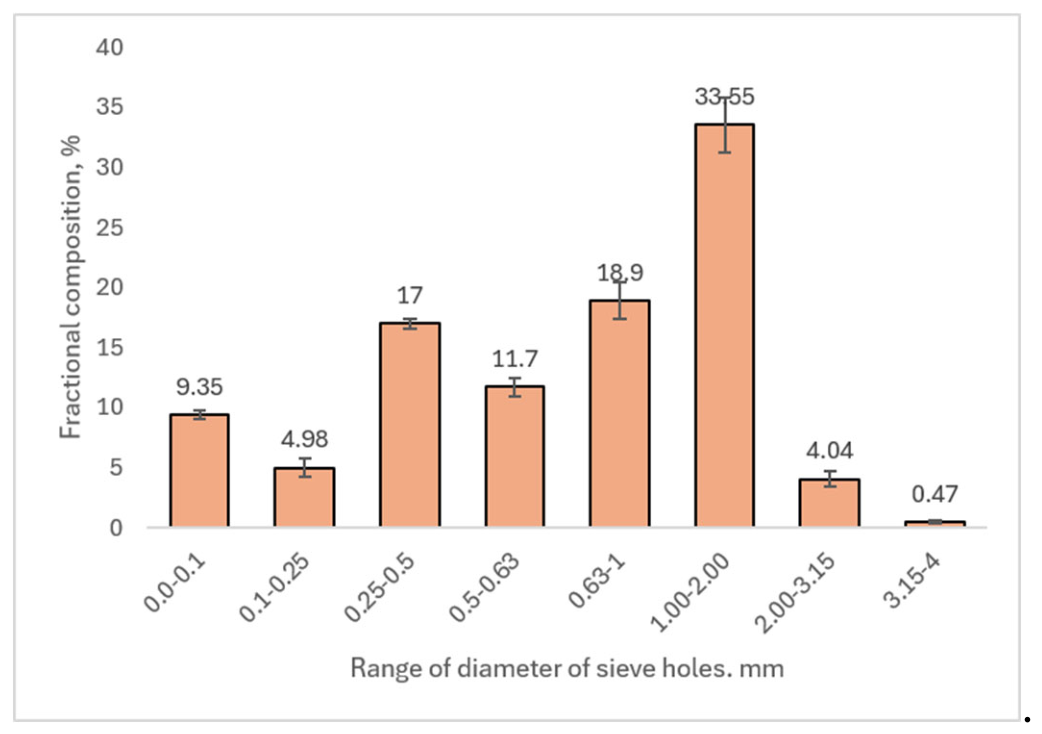
Having assessed the fractional composition of mineral additives, it can be seen that the largest proportion of mineral impurities accumulated on a sieve with a hole diameter of 0.1 mm – 26.13 ± 3.5%, which is in the smallest fraction close to dust, and the largest amount of the fraction accumulated on a sieve with a hole diameter of 0.5 mm – 21.70 ± 2.2% (Fig.3). The dependence of the digestate fraction on the size of the sieve holes is presented in Fig. 4. After assessing the fractional composition of the digestate from the diagram, we see that the largest fraction accumulated on a sieve with a hole diameter of up to 2 mm – 33.55 ± 2.9%, and in second place – on a sieve with a hole diameter of 1 mm – 18.90 ± 2.5%. On a sieve with a hole diameter of 3.15 mm in both variants, there was no significant amount of the fraction.
Notably, no particles larger than 4 mm remained after milling, confirming the suitability of the material for matrix-based pelletization. Previous studies [50] have shown that particles below 3 mm are considered optimal for processing in flat-die pelletizing systems.
Figure 3.
Fraction composition of mineral additives.
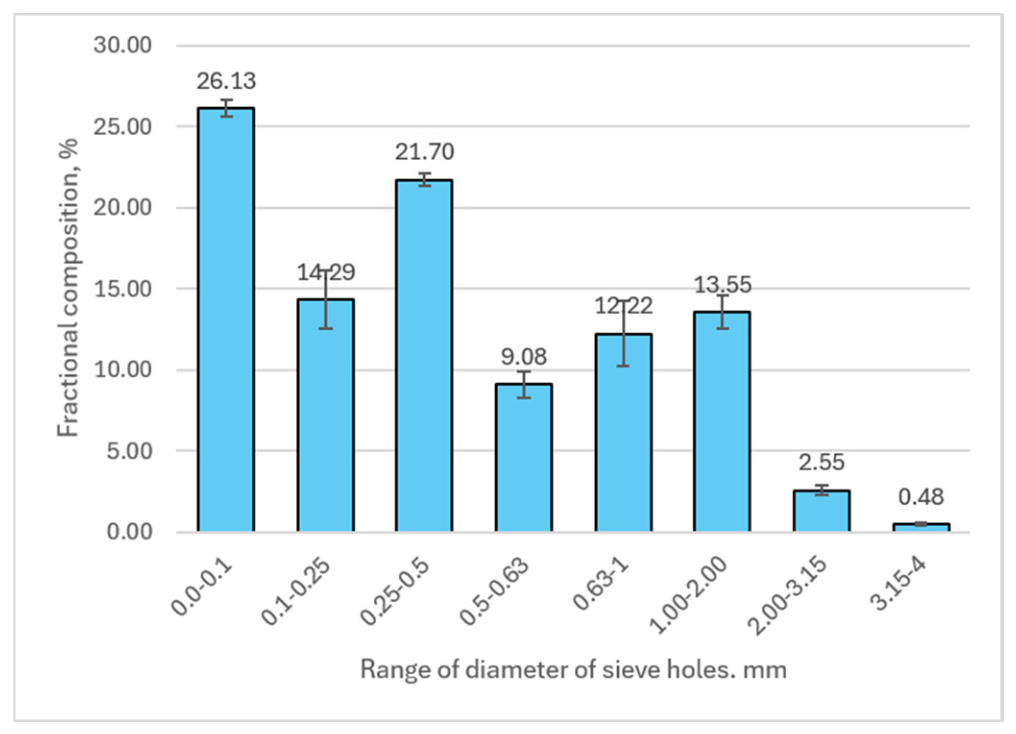
Figure 4.
Fraction composition of digestate.
All investigated mass is suitable for granulation after appropriate preparation. In order to continue using the mass for fertilizer purposes, the investigated material was pressed in granules, and the biometric parameters were determined. It has been determined that the produced granulated fertilizers were in the range of the granule diameter from 6.15 ± 0.9 mm. Average granule weight was 0,41 ± 0.6 g. Granule average length 15.2 ± 5.4 mm. Granulating raw material with such kind of traditional granulator, with a horizontal granulator matrix, we got big granule length scattering.
3.2. Influence of Molding Pressure on Pellet Properties
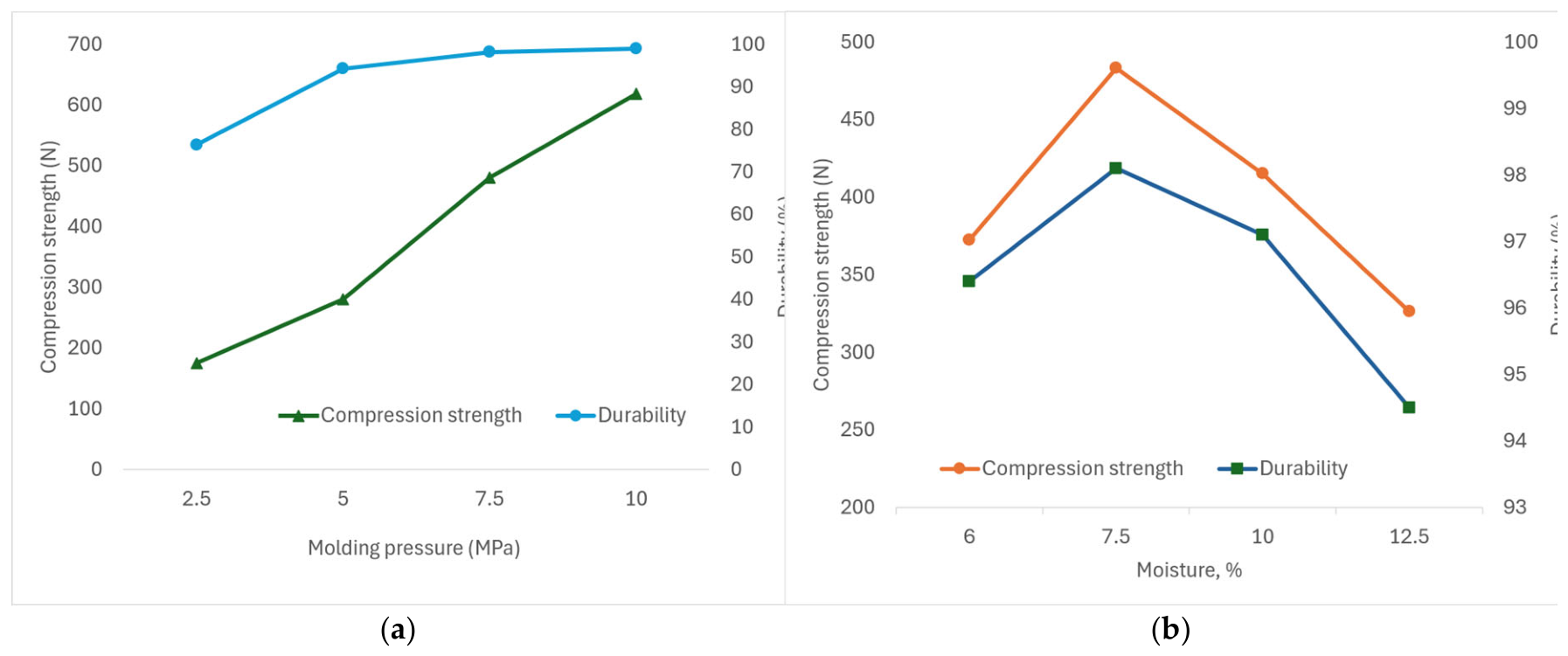
The research results demonstrate that both indicators increase with higher molding pressure from 2.5 MPa to 10 MPa. Compressive strength increases almost linearly across the entire investigated range: from approximately 175.3 N at a pressure of 2.5 MPa to 280.2 N at 5 MPa, 480.6 N at 7.5 MPa, and reaches its maximum of 618.5 N at 10 MPa.
Pellet durability also exhibits positive dynamics with increasing pressure; however, its growth shows an asymptotic trend. At the initial pressure of 2.5 MPa, the durability is around 76%, after which it rapidly increases to 94% at a pressure of 5 MPa. Further increasing the pressure to 7.5 MPa and 10 MPa leads to a slight increase, reaching values of 98% and approximately 99%, respectively Fig.5a.
According to the requirements of the EN ISO 17831-1 [31] standard, upon reaching a pressure of 7.5 MPa, pellet durability exceeds the threshold of 97.5%, allowing them to be classified as compliant with high quality standards. Considering the significant increase in energy consumption during pressing and potential difficulties with ejecting pellets from the mold under maximum loads, the optimal molding pressure value should be considered 7.5 MPa, as it ensures the required level of durability (98%) and a sufficiently high compressive strength (480 N).
Figure 5.
Effect of (a) molding pressure, (b) moisture content and durability.
3.3. The effect of raw material moisture on the mechanical properties of granules
Initial moisture content represents a critical parameter governing pellet quality. An optimal amount of water expands the contact area between particles, enabling water molecules to act as a liquid binder through hydrogen bonding, which promotes particle aggregation [51,52]. As illustrated in Fig.5b, the compressive strength followed a parabolic trend similar to durability and hydrophobicity—initially rising and subsequently declining, with optimal values observed within the 5–10% moisture range. Pellets produced within this moisture window also displayed a smooth and homogeneous surface morphology.
However, increasing moisture from 10% to 15% led to a reduction in compressive strength. Although moderate water content initially fills inter-particle pores to expand the bonding surface and enhance pellet integrity [53], an excess of water forms a thick boundary layer that prevents particle adsorption. This surplus moisture acts as a hydraulic barrier, hindering effective compaction and reducing final mechanical strength. Similarly, while initial durability gains are driven by enhanced Van der Waals forces, exceeding the optimal moisture threshold causes excess water to fill saturated voids, thereby dampening the compression force and compromising structural durability [54].
Granulation of the organo-mineral fertilizer and digestate for further research was carried out under the following parameters: raw material moisture content was 7.5%, and molding pressure was 7.5 MPa.
3.4. Characterization of organo-mineral fertilizer granules derived from digestate
The chemical composition of the obtained organo-mineral fertilizer (Sample 2) was analyzed to evaluate the nutrient content after thermal exposure during granulation. The results are presented in Table 3.
The nutrient density of the produced OMF (5.0% N, 5.9% P2O5) is consistent with medium-density fertilizers derived from food waste residues, which typically require mineral enrichment to reach commercial thresholds [24]. The high safety profile of the OMF, particularly regarding heavy metals (Cd < 0.5 mg/kg), aligns with findings from AGS-derived digestates, which have been shown to retain essential macroelements (Ca, Mg) while keeping toxic elements well below regulatory limits [55]. This confirms that solid digestate, regardless of its origin (silage or municipal waste), can serve as a safe, high-performance base for organo-mineral formulations.
The concentrations of heavy metals in the produced granules (Cd < 0.5 mg∙kg-1, P < 5 g∙kg-1, As < 1.0 mg∙kg-1) were well below the threshold values established in the EU criteria for soil improvers, ecolabel schemes, and the Fertilising Products Regulation. For example, the EU Ecolabel specifies upper limits of approximately Cd ≈ 1 mg∙kg-1 DM, Pb ≈ 100 mg∙kg-1 DM, and As ≈ 10 mg∙kg-1 DM, all expressed on a dry matter basis. Regulation (EU) 2019/1009 also sets specific limits for digestate and compost as component materials, depending on product category. Therefore, according to the Cd, Pb and As criteria, digestate can be used safely as a basis for organo-mineral fertilizer formulations targeting the European market [56].
The total nitrogen content in digestate pellets (Sample 1) was 2.57%, whereas in the organo-mineral fertilizer (Sample 2, hereafter referred to as OMF) it reached 5.00%, representing an almost 95% increase. This enrichment enhances nitrogen availability to plants, particularly during early vegetative stages. For solid digestate fractions, typical N contents are in the range of 1–4% depending on feedstock and processing, while technological concentration or the addition of N-containing compounds allows enrichment to 3–8% in commercial OMF. The obtained values therefore correspond well to expected ranges: digestate pellets as medium-N products and OMF in the category of medium nutrient density organo-mineral fertilizers [57,58,59].
Phosphorus availability also improved significantly. Digestate pellets (Sample 1) contained 1.95% total P2O5, of which 1.39% (≈72%) was water-soluble – already a relatively high fraction compared to untreated digestate solids. In OMF (Sample 2), total P2O5 increased to 5.90%, with 4.00% (≈68%) in soluble form. These results reflect the beneficial effect of mineral supplementation, consistent with modern approaches where recovered forms of phosphorus (e.g., struvite or concentrated phosphates) in combination with an organic matrix increase both total and readily available P. Compared to untreated digestate, where the soluble fraction is usually much lower, the enhanced share of soluble phosphorus in OMF indicates higher plant bioavailability. This characteristic is especially valuable under cool soil conditions, where P mobility is limited, as it supports rapid root development and early growth [59,60,61].
Potassium content rose from 1.51% K2O in digestate pellets (Sample 1) to 4.70% in OMF (Sample 2). Such an increase is expected due to supplementation and is agronomically advantageous, as potassium fertilization strengthens drought and salinity tolerance, improves water regulation in plants, and enhances crop quality through higher sugar, starch, and protein accumulation [58]. The balanced enrichment of N, P, and K in OMF formulations therefore ensures both immediate nutrient availability and broader agronomic benefits, confirming the potential of digestate valorization into competitive fertilizer products.
Digestate pellets (Sample 1) contained a high proportion of organic matter (≈89.4%) and low ash content (10.6%), which is typical for concentrated organic fractions. By contrast, the organo-mineral fertilizer (OMF, Sample 2) exhibited higher ash content (32.4%) due to the presence of mineral additives, which explains the increased overall NPK concentrations in the final product. The combination of a substantial organic fraction with mineral components makes OMF attractive because it ensures (i) an immediate supply of mineral nutrients and (ii) a longer-term effect through soil conditioning and organic matter input. Previous reviews confirm that such compromise formulations represent a typical and effective valorization pathway for digestate [62].
The pH of digestate pellets (Sample 1) was high (9.25), consistent with the alkalinity of some digestate fractions, particularly those rich in ammonia. This alkalinity poses a risk of nitrogen losses through volatilization of NH3 when applied directly to the soil. In contrast, the final OMF had a neutral pH of about 7.0, which is agronomically desirable as it reduces ammonia losses and broadens the range of soils suitable for application [62,63].
The organic matter content was recalculated to organic carbon using the Van Bemmelen conversion factor [63]. Digestate pellets (Sample 1) showed a C:N ratio of ≈20:1, which places them between “fast” and “slow” mineralization materials. This indicates moderate stability: the product contributes organic carbon for soil improvement while gradually releasing nitrogen. This profile is considered advantageous for fertilizers intended to enhance soil organic matter while ensuring partial nutrient supply [64]. Reported C:N ratios of 15–35 for digestate solids are in line with these values [64].
In contrast, OMF (Sample 2) had a much lower C:N ratio of ≈7.8:1, indicating rapid nitrogen mineralization and immediate agronomic availability. This profile is typical for OMF products where the addition of mineral N ensures fast nutrient release during early growth stages, while the organic matrix continues to contribute to soil health [65]. The C:N:P ratios further illustrate this difference: ≈20.2:1:0.33 for digestate pellets versus ≈7.84:1:0.52 for OMF. The higher relative share of phosphorus per unit of nitrogen in OMF, combined with the high proportion of water-soluble P2O5 (≈71% for digestate pellets and ≈68% for OMF), reflects targeted processing aimed at enhancing phosphorus bioavailability. At the same time, such high solubility requires careful dosing to minimize the risk of leaching and eutrophication [66].
From a sustainability perspective, these results highlight the strong agronomic potential of digestate as a raw material for fertilizer production. Integration of mineral additives not only improves the density and availability of nutrients but also mitigates potential environmental losses. Thus, the valorization of digestate in OMF aligns with the principles of circular economy by transforming organic residues into high-value agricultural inputs.
Among the most promising valorization strategies is the transformation of digestate into granulated formulations, such as cylindrical pellets [15]. This form not only enhances nutrient density but also improves shelf life, handling, and field application. In its pelletized form, digestate remains stable over extended storage periods and is less prone to caking compared to lose solid material.
Field data suggest that applying 3 tons of digestate pellets per hectare enables full nutrient uptake, reduces nitrogen losses by a factor of six, and minimizes leaching – outperforming conventional manure-based fertilizers in both efficiency and environmental impact [14].
3.5. Evaluation of plant growth response to granulated organo-mineral fertilizers
To evaluate the agronomic efficiency of the fertilizers (Sample 1 – digestate; Sample 2 – organo-mineral fertilizer derived from digestate), application rates were calculated on a phosphorus-equivalent (P2O5) basis. This standardized approach ISO 11464:2006 [67] ensures an objective comparison of the effects of different types of fertilizers on the growth of barley seedlings, as phosphorus is a key element for root development and vigorous early plant establishment. By equalizing the amount of available P2O5, the confounding influence of nitrogen and potassium differences is minimized, making the results more representative [68]. Consequently, differences in fresh seedling biomass can be directly attributed to the fertilizer form and its organic component rather than to unequal nutrient supply.
The application rates for Sample 1 and Sample 2 were calculated taking into account the soil type and crop requirements (Table 4) [56].
No significant changes in soil pH were observed during the experimental period. However, fertilizer application resulted in a predictable increase in nitrogen, phosphorus, and potassium concentrations, proportional to the applied nutrient doses. In particular, the use of digestate-based formulations led to a marked increase in soil cation exchange capacity (CEC), indicating an improved nutrient retention potential (Table 4).
The correlation analysis showed statistically significant relationships between the soil cation exchange capacity (CEC) and the nutrient input provided by fertilizer treatments. Strong positive correlations were observed for carbon (r = 0.847), phosphorus (r = 0.907), and potassium (r = 0.659), confirming that both organic and mineral components contributed to the enhancement of soil buffering and nutrient-retention capacity. Among these, the correlation with phosphorus was the strongest, underscoring its pivotal role in modulating soil exchange properties. All reported correlations were significant at the 1% probability level.
Application of digestate-based fertilizers also resulted in measurable improvements in early plant biomass relative to the unfertilized control. Seedling weights increased by 0.194–0.272 g per plant, corresponding to gains of 6.8–9.6%. These increases were statistically significant (p < 0.01), thereby validating the agronomic efficacy of digestate-derived formulations in promoting early vegetative growth.
A visual overview of plant development under the different treatments is presented in Figure 6.
To better evaluate the nutritional efficiency of the applied treatments, the elemental composition of the aboveground biomass was analyzed at the early vegetative stage. Phosphorus and potassium accumulation was quantified in 100 spring barley seedlings collected from each treatment group. Phosphorus concentrations were expressed both in elemental form (P) and as P2O5 equivalents, while potassium was reported as elemental K and as K2O equivalents, ensuring comparability with standard fertilizer formulations.
These results provide important information on the dynamics of nutrient uptake and their contribution to biomass development in spring barley seedlings (Table 5).
The data in Table 5 indicate a clear relationship between the phosphorus content of the applied fertilizers and biomass accumulation in spring barley seedlings. A correlation coefficient of r = 0.778 was established between P2O5 content in the fertilizer formulations and seedling fresh weight, suggesting a strong positive association. The determination coefficient (D = r2 = 0.605) revealed that phosphorus accounted for 60.5% of the observed variation in seedling biomass, while the remaining 39.5% was attributed to other factors, including nutrient interactions, substrate effects, and physiological responses.
Leaf tissue analysis of the harvested seedlings confirmed this trend, showing that phosphorus and potassium levels in plant biomass were key determinants of growth performance. Among all nutrients measured, P and K exerted the strongest influence on biomass accumulation. Correlation analysis supported this observation: seedling weight was strongly correlated with internal P2O5 content (r = 0.960) and K2O content (r = 0.828), both statistically significant at the highest confidence level.
These findings underline the central role of phosphorus and potassium in promoting early plant development and validate the agronomic relevance of digestate-based formulations enriched with these nutrients. All fertilizer treatments resulted in improved nutrient uptake efficiency relative to the unfertilized control. The relative phosphorus uptake efficiency increased by 0.72–1.86%, while potassium uptake improved by 7.50–17.99% depending on the treatment.
The most effective phosphorus assimilation was observed in plants treated with digestate-based organo-mineral fertilizer (Sample 2), where the phosphorus uptake efficiency was 1.86% higher compared to the unfertilized control.
To complement the results of nutrient accumulation, the efficiency of phosphorus (P2O5) and potassium (K2O) uptake by spring barley seedlings was calculated across the different fertilizer treatments. These values, expressed as the percentage of nutrient uptake in plant biomass relative to the amount applied to the soil, are summarized in Table 6.
To clarify the interrelationships among the studied variables and identify the key factors influencing plant growth and nutrient dynamics, a comprehensive correlation analysis was performed. The analysis included multiple parameters of the soil – fertilizer – plant system, such as nutrient application rates, nutrient concentrations in seedlings, uptake efficiency, and soil cation exchange capacity (CEC). The resulting correlation matrix (Table 7) highlights the central role of phosphorus availability and organic matter in determining the agrochemical response of spring barley seedlings.
The significant biomass increase (6.8–9.6%) and the strong correlation between P uptake and growth (r = 0.960) observed in this study follow results found in maize pot tests, where enriched digestate fertilizers performed similarly to traditional mineral NPK [24]. The rapid mineralization of our OMF (C:N ≈ 7.8:1) contrasts with the behavior of biochar-based pellets, which often exhibit a more pronounced slow-release effect due to the high aromaticity and porous structure of the carbon carrier [69]. Nevertheless, the increased Cation Exchange Capacity (CEC) observed here confirms that the organic matrix provides a superior soil-buffering effect compared to mineral-only treatments, a synergy also noted when digestate is used in combination with hardening agents like wood ash [25].
Correlation analysis revealed several statistically significant relationships among key parameters, highlighting the complex interplay between nutrient availability, soil physicochemical properties, and plant growth performance. The accumulation of biomass in spring barley seedlings was most strongly associated with phosphorus input (r = 0.778) and soil cation exchange capacity (CEC, r = 0.517), confirming their central role in early plant development.
CEC itself showed strong positive correlations with carbon (r = 0.847) and nitrogen (r = 0.907) supplied through fertilizer treatments, underlining the importance of organic components in enhancing soil buffering capacity and ion exchange potential. Phosphorus and potassium inputs were also correlated with CEC (r = 0.659 and r = 0.548, respectively), though to a lesser extent.
A particularly strong relationship was observed between CEC and both the concentration and uptake efficiency of phosphorus and potassium in barley biomass, confirming that these nutrients are pivotal for plant growth under the tested conditions. Among them, phosphorus availability emerged as the dominant factor, consistently correlating with both biomass accumulation and nutrient uptake efficiency. Improved phosphorus availability in digestate-based treatments can be attributed to the sorptive and stabilizing properties of the organic matrix, which enhance nutrient retention and release.
While potassium exerted a slightly weaker effect, it nevertheless contributed significantly to plant metabolic activity and osmoregulation. In general, these findings emphasize that optimizing the fertilizer composition must go hand-in-hand with improving the physicochemical properties of the soil. Enhancing cation exchange capacity (CEC) through organic amendments such as digestate represents a viable strategy to increase nutrient use efficiency and support sustainable crop productivity.
Overall, the results clearly demonstrate that digestate-based fertilizers, particularly organo-mineral formulations, provide measurable benefits for both soil quality and early plant development. By improving cation exchange capacity and enhancing the availability of key nutrients such as phosphorus and potassium, these fertilizers support stronger seedling growth and more efficient nutrient use. The findings confirm that phosphorus plays the dominant role in driving biomass accumulation, while the organic fraction contributes to improved soil buffering and nutrient retention. Together, the evidence highlights the agronomic relevance of granulated digestate-based products as a sustainable alternative to conventional fertilizers, capable of combining immediate crop nutrition with long-term improvement in soil fertility.
Several studies have focused on process design and nutrient enrichment strategies. For example, [70] outlined a technological scheme for granulated digestate fertilizers with reproducible nutrient content, while [71,72] demonstrated that incorporating urea, sulfur, phosphate rock, and even Trichoderma strains can enhance the agronomic value of digestate–ash formulations. Although promising, these approaches raise concerns regarding cost, stability of microbial inoculants, and the long-term ecological impact on soil biota, which have not yet been thoroughly investigated.
Technological innovations have also been explored to increase flexibility. A modular mobile processing unit proposed in [73] could decentralize digestate granulation, yet its economic feasibility and scalability remain uncertain. Similarly, the ORTWED method [74] allowed the production of organo-mineral granules enriched with external nutrients; however, the heavy reliance on mineral supplements questions the sustainability of this approach.
Alternative valorization strategies, such as thermochemical conversion of digestate into biochar before granulation [75], yielded granules with improved physico-mechanical properties and slow-release nutrient dynamics. While attractive from an agronomic standpoint, the high energy demand and processing costs may limit large-scale adoption. Similarly, digestate–ash mixtures tested in [76] achieved sufficient tensile strength (up to 60.5 N), but the strength varied considerably depending on the formulation, highlighting the lack of reproducibility in all studies.
Overall, existing research demonstrates the potential of digestate-based granules to enhance nutrient efficiency and replace conventional fertilizers, but unresolved challenges remain. Most notably, consistent mechanical strength, standardized nutrient composition, and validation of field-scale agronomic performance have yet to be achieved.
4. Conclusions
Considering the main goal of the study, solid digestate and organo-mineral fertilizer formulations were shown to have a balanced nutrient composition with safe levels of heavy metals (Cd, Pb, As well below EU thresholds). The C:N ratios (≈20:1 for digestate and ≈7.8:1 for organo-mineral formulations) highlighted differences in stability and dynamics of nutrient release. High organic matter content (>67%) and neutralized pH in the granules ensured agronomic suitability while mitigating risks of ammonia volatilization.
The addition of ammonium sulfate, monoammonium phosphate, and potassium chloride improved the nutrient density of digestate granules, raising total NPK levels to 5.0%, 5.9%, and 4.7%, respectively. The resulting organo-mineral granules combined rapid nutrient release with longer-term soil conditioning effects.
Soil incubation demonstrated an increase in cation exchange capacity (CEC) from 26.1 cmol(+)/kg (control) to 32.1 cmol(+)/kg with organo-mineral fertilizer. Spring barley pot experiments showed a 6.8–9.6% increase in seedling biomass compared to the control, with phosphorus and potassium accumulation strongly correlated with growth performance (r = 0.960 and r = 0.828, respectively). Uptake efficiency of P2O5 and K2O improved by up to 14.63% and 86.89%, confirming the agronomic effectiveness of digestate-based fertilizers.
The correlation analysis identified the availability of phosphorus and the capacity for soil cation exchange as key drivers of early plant development, supported by strong associations with carbon and nitrogen inputs (r = 0.847 and r = 0.907). In general, digestate-based OMF demonstrated dual functionality by improving immediate nutrient availability and uptake efficiency while simultaneously improving long-term soil fertility through organic matter enrichment. From a sustainability perspective, this valorization pathway supports SDG 2 (Zero Hunger) by improving nutrient use efficiency and crop productivity, SDG 12 (Responsible Consumption and Production) by converting biogas residues into value-added fertilizers within a circular bioeconomy framework, and SDG 13 (Climate Action) by promoting climate-smart agricultural practices that enhance soil quality and reduce dependence on conventional mineral fertilizers.
Author Contributions
Conceptualization, R.V., R.O., J.M.R.T.; Data curation, M.S., S.V., V.V., M.Y., I.V.; Formal analysis, I.V., M.S.; Funding acquisition, R.O., J.M.R.T; Investigation, R.V., S.V., V.V., M.Y.; Methodology, L.P., M.Y., J.M.R.T.; Project administration – R.V., R.O.; Resources, M.S., S.V., R.V.; Software, R.V., M.S.; Supervision, R.O., J.M.R.T.; Validation of results, M.S., L.P., Y.C., H.R.; Visualization, R.V., I.V.; Writing – original draft preparation, M.S., R.V., V.V., I.V.; Writing – review and editing, L.P., R.V., Y.C., H.R., J.M.R.T.
Funding
This research was funded by the AgriSci-UA Platform through the project Digestate-based organo-mineral fertilizers for restoring soil fertility in areas affected by hostilities (DigestOMF). Additional financial support was provided by the Grant of the President of Ukraine for Young Doctors of Sciences (under 40 years old), Project No. 2025.03/0006, Development of Detoxification Fertilizers Based on Bioash for Ecological Restoration of Degraded Soils and from the Ministry of Education and Science of Ukraine through the project “Fulfillment of tasks of the perspective plan of development of a scientific direction ‘Technical Sciences’ at Sumy State University” (State Reg. No. 0121U112684).
Data Availability Statement
The datasets generated and analyzed during the current study are available from the corresponding author on reasonable request.
Acknowledgments
The authors acknowledge support from the NADIYA Fellowship Programme, funded by the French Embassy and the French Institute in Ukraine, which provided opportunities for international collaboration and mobility. This work was also supported by FCT—Fundação para a Ciência e Tecnologia, I.P., in the framework of the UIDB/0681/2025 - Research Centre for Natural Resources, Environment and Society (CERNAS) (https://doi.org/10.54499/UIDB/0681/2025). Where GenAI has been used for purposes such as generating text, data, or graphics, or for study design, data collection, analysis, or interpretation of data, please add “During the preparation of this manuscript/study, the author(s) used [tool name, version information] for the purposes of [description of use]. The authors have reviewed and edited the output and take full responsibility for the content of this publication.”
Conflicts of Interest
The authors declare no conflicts of interest.
References
- The Types of Organic Fertilizer Produced in Ukraine and Its Market Niches. Available online: https://saf.org.ua/en/news/950/ (accessed on 22 July 2026).
- Pajura, R. Composting Municipal Solid Waste and Animal Manure in Response to the Current Fertilizer Crisis - a Recent Review. Sci. Total Environ. 2024, 912, 169221. [Google Scholar] [CrossRef] [PubMed]
- Krivonos, O.I.; Belskaya, O.B. A New Waste-Free Integrated Approach for Sapropel Processing Using Supercritical Fluid Extraction. J. Supercrit. Fluids 2020, 166, 104991. [Google Scholar] [CrossRef]
- Reis De Andrade Da Silva, M.S.; De Melo Silveira Dos Santos, B.; Hidalgo Chávez, D.W.; De Oliveira, R.; Barbosa Santos, C.H.; Oliveira, E.C.; Rigobelo, E.C. K-Humate as an Agricultural Alternative to Increase Nodulation of Soybeans Inoculated with Bradyrhizobium. Biocatal. Agric. Biotechnol. 2021, 36, 102129. [Google Scholar] [CrossRef]
- Ostroha, R.; Yukhymenko, M.; Mikhajlovskiy, Y.; Litvinenko, A. Technology of Producing Granular Fertilizers on an Organic Basis. EEJET 2016, 1, 19. [Google Scholar] [CrossRef]
- Bouhia, Y.; Hafidi, M.; Ouhdouch, Y.; Boukhari, M.E.M.E.; Mphatso, C.; Zeroual, Y.; Lyamlouli, K. Conversion of Waste into Organo-Mineral Fertilizers: Current Technological Trends and Prospects. Rev. Environ. Sci. Biotechnol. 2022, 21, 425–446. [Google Scholar] [CrossRef]
- Kupryaniuk, K.; Witaszek, K.; Vaskina, I.; Filipek-Kaźmierczak, S.; Kupryaniuk, J.; Sołowiej, P.; Dach, J. The Effect of Corn Ensiling Methods on Digestibility and Biogas Yield. Energies 2025, 18, 188. [Google Scholar] [CrossRef]
- Lisiak-Zielińska, M.; Jałoszyńska, S.; Borowiak, K.; Budka, A.; Dach, J. Perception of Biogas Plants: A Public Awareness and Preference - A Case Study for the Agricultural Landscape. Renew. Energy 2023, 217, 119212. [Google Scholar] [CrossRef]
- Ignatowicz, K.; Filipczak, G.; Dybek, B.; Wałowski, G. Biogas Production Depending on the Substrate Used: A Review and Evaluation Study—European Examples. Energies 2023, 16, 798. [Google Scholar] [CrossRef]
- Ablieieva, I.; Geletukha, G.; Kucheruk, P.; Enrich-Prast, A.; Carraro, G.; Berezhna, I.; Berezhnyi, D. Digestate Potential to Substitute Mineral Fertilizers: Engineering Approaches. JES 2022, 9, H1–H10. [Google Scholar] [CrossRef]
- What Is Digestate? Available online: https://saf.org.ua/en/news/984/ (accessed on 22 July 2026).
- Use of digestate as an organic fertilizer: content, effectiveness and benefits. Available online: https://superagronom.com/articles/714-digestat-zastosuvannya-ta-efektivnist-yak-organichnogo-dobriva (accessed on 22 July 2026).
- Drosg, B.; Fuchs, W.; Seadi, T.A.; Madsen, M.; Linke, B. Nutrient Recovery by Biogas Digestate Processing 2015. [CrossRef]
- Zakhariv, O. EFFICIENCY OF USING DIGESTATES FROM BIOGAS REACTORS FOR FARMERS. SPTSATU 2019, 40, 79–86. [Google Scholar] [CrossRef]
- Vaskina, I.; Vaskin, R.; Ostroha, R.; Yukhymenko, M.; Skydanenko, M.; Kupryaniuk, K.; Demkova, L.; Sydorenko, S. Fuel Pelletization of Digestate: A Pathway to Renewable and Sustainable Energy Sources. Fuels 2025, 6, 32. [Google Scholar] [CrossRef]
- Frost, P.; Gilkinson, S. 27 MONTHS PERFORMANCE SUMMARY FOR ANAEROBIC DIGESTION OF DAIRY COW SLURRY AT AFBI HILLSBOROUGH 2011. [CrossRef]
- Wróbel, M.; Frączek, J.; Jewiarz, M.; Mudryk, K.; Dziedzic, K. Impact of Selected Properties of Raw Material on Quality Features of Granular Fertilizers Obtained from Digestates and ASH Mixtures. Agric. Eng. 2016, 20, 207–217. [Google Scholar] [CrossRef]
- Mangwandi, C.; JiangTao, L.; Albadarin, A.B.; Allen, S.J.; Walker, G.M. Alternative Method for Producing Organic Fertiliser from Anaerobic Digestion Liquor and Limestone Powder: High Shear Wet Granulation. Powder Technol. 2013, 233, 245–254. [Google Scholar] [CrossRef]
- Fazullin, R.K.; Khalitov, R.A.; Khuziahmetov, R.K.; Matuhin, E.L.; Fazullina, A.A. Granular Nitrogen and Nitrogen-Potassium Fertilizers Containing Sulfur from the Spent Acid Mixture of Nitrocellulose Production. IOP Conf. Ser. Mater. Sci. Eng. 2020, 862, 062034. [Google Scholar] [CrossRef]
- Erro, J.; Urrutia, O.; Baigorri, R.; Fuentes, M.; Zamarreño, A.M.; Garcia-Mina, J.M. Incorporation of Humic-Derived Active Molecules into Compound NPK Granulated Fertilizers: Main Technical Difficulties and Potential Solutions. Chem. Biol. Technol. Agric. 2016, 3, 18. [Google Scholar] [CrossRef]
- Walker, G.M.; Magee, T.R.A.; Holland, C.R.; Ahmad, M.N.; Fox, N.; Moffatt, N.A. Compression Testing of Granular NPK Fertilizers. Nutr. Cycl. Agroecosystems 1997, 48, 231–234. [Google Scholar] [CrossRef]
- Mudryk, K.; Frączek, J.; Wróbel, M.; Jewiarz, M.; Dziedzic, K. Agglomeration of Ash-Based Fertilizer Mixtures from Biomass Combustion and Digestate. In Renewable Energy Sources: Engineering, Technology, Innovation; Springer Proceedings in Energy; Mudryk, K., Werle, S., Eds.; Springer International Publishing: Cham, 2018; pp. 823–834. ISBN 978-3-319-72370-9. [Google Scholar]
- Łysiak, G.; Kulig, R.; Al Aridhee, J.K. Toward New Value-Added Products Made from Anaerobic Digestate: Part 1—Study on the Effect of Moisture Content on the Densification of Solid Digestate. Sustainability 2023, 15, 4548. [Google Scholar] [CrossRef]
- Moure Abelenda, A.; Amaechi, C.V. Manufacturing of a Granular Fertilizer Based on Organic Slurry and Hardening Agent. Inventions 2022, 7, 26. [Google Scholar] [CrossRef]
- Skrzypczak, D.; Trzaska, K.; Mikula, K.; Gil, F.; Izydorczyk, G.; Mironiuk, M.; Polomska, X.; Moustakas, K.; Witek-Krowiak, A.; Chojnacka, K. Conversion of Anaerobic Digestates from Biogas Plants: Laboratory Fertilizer Formulation, Scale-up and Demonstration of Applicative Properties on Plants. Renew. Energy 2023, 203, 506–517. [Google Scholar] [CrossRef]
- International Organization for Standardization. ISO 2591-1:2004; Test Sieving – Part 1: Methods Using Test Sieves of Woven Wire Cloth and Perforated Metal Plate. 2004.
- International Organization for Standardization. ISO 3310-1:2016; Test Sieves – Technical Requirements and Testing – Part 1: Test Sieves of Metal Wire Cloth. 2016.
- International Organization for Standardization. ISO 3310-2:2013; Test Sieves – Technical Requirements and Testing – Part 2: Test Sieves of Perforated Metal Plate. 2013.
- International Organization for Standardization. ISO 18134-1:2022; Solid Biofuels — Determination of Moisture Content Part 1: Reference Method. 2022.
- International Organization for Standardization. ISO 17828:2025; Solid Biofuels — Determination of Bulk Density. 2025.
- International Organization for Standardization. ISO 17831-1:2025; Solid Biofuels — Determination of Mechanical Durability of Pellets and Briquettes Part 1: Pellets. 2025.
- International Organization for Standardization. ISO 18122:2022; Solid Biofuels — Determination of Ash Content. 2022.
- European Committee for Standardization. EN 15476:2009; Fertilizers - Determination of Nitric and Ammoniacal Nitrogen According to Devarda.
- Sîrbu, C.E.; Deșliu-Avram, M.; Cioroianu, T.M.; Constantinescu-Aruxandei, D.; Oancea, F. High-Temperature Influences Plant Bio-Stimulant-like Effects of the Combination Particle Film-Forming Materials-Foliar Fertilizers on Apple Trees. Agriculture 2023, 13, 178. [Google Scholar] [CrossRef]
- European Committee for Standardization. EN 15959:2023 Inorganic Fertilizers - Determination of Extracted Phosphorus P2O5; 2023.
- Hernandez-Mora, A.; Duboc, O.; Bünemann, E.K.; Ylivainio, K.; Lombi, E.; Symanczik, S.; Horn, D.; Delgado, A.; Abu Zahra, N.; Zuin, L.; et al. Evaluation of Six Phosphorus Extraction Methods for Compliance Testing of Recycled P Fertilizers. Environ. Technol. Innov. 2025, 37, 103913. [Google Scholar] [CrossRef]
- International Organization for Standardization. ISO 17319:2015; Fertilizers and Soil Conditioners — Determination of Water-Soluble Potassium Content — Potassium Tetraphenylborate Gravimetric Method. 2015.
- International Organization for Standardization. ISO 10390:2021; Soil, Treated Biowaste and Sludge – Determination of pH. 2021.
- European Committee for Standardization. EN 13039:2011; Soil Improvers and Growing Media - Determination of Organic Matter Content and Ash.
- European Committee for Standardization. EN 13040:2008; Soil Improvers and Growing Media - Sample Preparation for Chemical and Physical Tests, Determination of Dry Matter Content, Moisture Content and Laboratory Compacted Bulk Density. 2008.
- International Organization for Standardization. ISO 17318:2015; Fertilizers and Soil Conditioners — Determination of Arsenic, Cadmium, Chromium, Lead and Mercury Contents. 2015.
- Kuśmierz, S.; Skowrońska, M.; Tkaczyk, P.; Lipiński, W.; Mielniczuk, J. Soil Organic Carbon and Mineral Nitrogen Contents in Soils as Affected by Their pH, Texture and Fertilization. Agronomy 2023, 13, 267. [Google Scholar] [CrossRef]
- International Organization for Standardization. ISO 23470:2018; Soil Quality — Determination of Effective Cation Exchange Capacity (CEC) and Exchangeable Cations Using a Hexamminecobalt(III)Chloride Solution. 2018.
- International Organization for Standardization. ISO 10694:1995; Soil Quality — Determination of Organic and Total Carbon after Dry Combustion (Elementary Analysis). 1995.
- International Organization for Standardization. ISO 14256-2:2005; Soil Quality — Determination of Nitrate, Nitrite and Ammonium in Field-Moist Soils by Extraction with Potassium Chloride Solution Part 2: Automated Method with Segmented Flow Analysis.
- Kabala, C.; Jedrzejewski, S. Comparison of Cation Exchange Capacity Extraction Methods for Soil Data Harmonization and Soil Classification in Central and East Europe. Geoderma 2024, 450, 117044. [Google Scholar] [CrossRef]
- Sahoo, P. PROBABILITY AND MATHEMATICAL STATISTICS; University of Louisville, 2013. [Google Scholar]
- Shao, J. Mathematical Statistics; Springer Texts in Statistics; Springer New York: New York, NY, 2003; ISBN 978-0-387-95382-3. [Google Scholar]
- Rice, J.A. Mathematical Statistics and Data Analysis, 3rd ed.; Thomson Higher Education: Belmont, 2007. [Google Scholar]
- Gil, M.V.; Oulego, P.; Casal, M.D.; Pevida, C.; Pis, J.J.; Rubiera, F. Mechanical Durability and Combustion Characteristics of Pellets from Biomass Blends. Bioresour. Technol. 2010, 101, 8859–8867. [Google Scholar] [CrossRef] [PubMed]
- Huang, Y.; Finell, M.; Larsson, S.; Wang, X.; Zhang, J.; Wei, R.; Liu, L. Biofuel Pellets Made at Low Moisture Content – Influence of Water in the Binding Mechanism of Densified Biomass. Biomass Bioenergy 2017, 98, 8–14. [Google Scholar] [CrossRef]
- Ungureanu, N.; Vladut, V.; Voicu, G.; Dinca, M.-N.; Zabava, B.-S. Influence of Biomass Moisture Content on Pellet Properties - Review.; May 23 2018. [CrossRef]
- Mack, R.; Schön, C.; Kuptz, D.; Hartmann, H.; Brunner, T.; Obernberger, I.; Behr, H.M. Influence of Pellet Length, Content of Fines, and Moisture Content on Emission Behavior of Wood Pellets in a Residential Pellet Stove and Pellet Boiler. Biomass Conv. Bioref. 2024, 14, 26827–26844. [Google Scholar] [CrossRef]
- Agar, D.A.; Rudolfsson, M.; Kalén, G.; Campargue, M.; Da Silva Perez, D.; Larsson, S.H. A Systematic Study of Ring-Die Pellet Production from Forest and Agricultural Biomass. Fuel Process. Technol. 2018, 180, 47–55. [Google Scholar] [CrossRef]
- Cydzik-Kwiatkowska, A.; Bernat, K.; Zielińska, M.; Gusiatin, M.Z.; Wojnowska-Baryła, I.; Kulikowska, D. Valorization of Full-Scale Waste Aerobic Granular Sludge for Biogas Production and the Characteristics of the Digestate. Chemosphere 2022, 303, 135167. [Google Scholar] [CrossRef] [PubMed]
- Regulation (EU) 2019/1009 of the European Parliament and of the Council of 5 June 2019 Laying down Rules on the Making Available on the Market of EU Fertilising Products and Amending Regulations (EC) No 1069/2009 and (EC) No 1107/2009 and Repealing Regulation (EC) No 2003/2003 (Text with EEA Relevance). 2019.
- Czekała, W. Digestate as a Source of Nutrients: Nitrogen and Its Fractions. Water 2022, 14, 4067. [Google Scholar] [CrossRef]
- Romio, C.; Ward, A.J.; Møller, H.B. Characterization and Valorization of Biogas Digestate and Derived Organic Fertilizer Products from Separation Processes. Front. Sustain. Food Syst. 2024, 8, 1415508. [Google Scholar] [CrossRef]
- Skrzypczak, D.; Trzaska, K.; Mironiuk, M.; Mikula, K.; Izydorczyk, G.; Polomska, X.; Wiśniewski, J.; Mielko, K.; Moustakas, K.; Chojnacka, K. Recent Innovations in Fertilization with Treated Digestate from Food Waste to Recover Nutrients for Arid Agricultural Fields. Environ. Sci. Pollut. Res. 2023, 31, 41563–41585. [Google Scholar] [CrossRef] [PubMed]
- Li, B.; Dinkler, K.; Zhao, N.; Ran, X.; Sobhi, M.; Dong, R.; Müller, J.; Xiong, W.; Huang, G.; Guo, J.; et al. Response of Phosphorus Speciation to Organic Loading Rates and Temperatures during Anaerobic Co-Digestion of Animal Manures and Wheat Straw. Sci. Total Environ. 2022, 838, 155921. [Google Scholar] [CrossRef] [PubMed]
- Melito, S.; Ronga, D.; Marceddu, D.; Kallikazarou, N.I.; Antoniou, M.G.; Giannini, V. Organo-Mineral Fertilizer Containing Struvite from Liquid Digestate for Cucurbita Pepo L. Seedling Production. J. Soil Sci. Plant Nutr. 2023, 23, 6707–6720. [Google Scholar] [CrossRef]
- Tiong, Y.W.; Sharma, P.; Xu, S.; Bu, J.; An, S.; Foo, J.B.L.; Wee, B.K.; Wang, Y.; Lee, J.T.E.; Zhang, J.; et al. Enhancing Sustainable Crop Cultivation: The Impact of Renewable Soil Amendments and Digestate Fertilizer on Crop Growth and Nutrient Composition. Environ. Pollut. 2024, 342, 123132. [Google Scholar] [CrossRef] [PubMed]
- Bösch, R.M.; Laux, M.; Wenzel, W.W. Pedogenic Controls of Soil Organic Carbon Stocks and Stability beneath Montane Norway Spruce Forests along a Precipitation Gradient. Heliyon 2023, 9, e21284. [Google Scholar] [CrossRef] [PubMed]
- Martín-Sanz-Garrido, C.; Revuelta-Aramburu, M.; Santos-Montes, A.M.; Morales-Polo, C. A Review on Anaerobic Digestate as a Biofertilizer: Characteristics, Production, and Environmental Impacts from a Life Cycle Assessment Perspective. Appl. Sci. 2025, 15, 8635. [Google Scholar] [CrossRef]
- De Melo Benites, V.; Dal Molin, S.J.; Menezes, J.F.S.; Guimarães, G.S.; De Almeida Machado, P.L.O. Organomineral Fertilizer Is an Agronomic Efficient Alternative for Poultry Litter Phosphorus Recycling in an Acidic Ferralsol. Front. Agron. 2022, 4, 785753. [Google Scholar] [CrossRef]
- Sai Tejaswi Uppuluri, N.; Ran, X.; Müller, J.; Guo, J.; Oechsner, H. Effects of Additives on Shifting Phosphorus to Solid Phase during Solid-Liquid Separation of Digestate in Full-Scale Biogas Plant. Bioresour. Technol. 2025, 416, 131804. [Google Scholar] [CrossRef] [PubMed]
- International Organization for Standardization. ISO 11464:2006; Soil Quality — Pretreatment of Samples for Physico-Chemical Analysis. 2006.
- Shi, W.; Fenton, O.; Ashekuzzaman, S.M.; Daly, K.; Leahy, J.J.; Khalaf, N.; Chojnacka, K.; Numviyimana, C.; Warchoł, J.; Healy, M.G. Phosphorus Fertiliser Equivalent Value of Dairy Processing Sludge-derived STRUBIAS Products Using Ryegrass ( Lolium Perenne L.) and Spring Wheat ( Triticum Aestivum ). J. Plant Nutr. Soil Sci. 2024, 187, 215–224. [Google Scholar] [CrossRef]
- Fazzalari, A.; Briens, C.; Tribe, L. An Investigation of Drum Granulation of Post-pyrolysis Washed Biochar. Can. J. Chem. Eng. 2024, 102, 574–584. [Google Scholar] [CrossRef]
- Ablieieva, I.; Berezhna, I.; Berezhnyi, D.; Enrich Prast, A.; Geletukha, G.; Lutsenko, S.; Yanchenko, I.; Carraro, G. Technologies for Environmental Safety Application of Digestate as Biofertilizer. Ecol. Eng. Environ. Technol. 2022, 23, 106–119. [Google Scholar] [CrossRef] [PubMed]
- Wróbel, M.; Frączek, J.; Mudryk, K.; Jewiarz, M.; Dziedzic, K. Influence of the Composition and Agglomeration Pressure on the Compaction Level of the Fertilizers Based on Biomass Ash and Digestate. BIO Web Conf. 2018, 10, 02035. [Google Scholar] [CrossRef]
- Jewiarz, M.; Wróbel, M.; Frączek, J.; Mudryk, K.; Dziedzic, K. Digestate, Ash and Trichoderm Based Fertilizer – Production Line Concept Design. MATEC Web Conf. 2018, 168, 04004. [Google Scholar] [CrossRef]
- Wróbel, M.; Jewiarz, M.; Mudryk, K.; Frączek, J.; Dziedzic, K. Conceptual Design of the Mobile Granulation Line for Production Fertilizers from Digestates and Ash Mixtures. MATEC Web Conf. 2018, 168, 04003. [Google Scholar] [CrossRef]
- Prask, H.; Szlachta, J.; Fugol, M.; Kordas, L.; Lejman, A.; Tużnik, F.; Tużnik, F. Sustainability Biogas Production from Ensiled Plants Consisting of the Transformation of the Digestate into a Valuable Organic-Mineral Granular Fertilizer. Sustainability 2018, 10, 585. [Google Scholar] [CrossRef]
- Yu, Z.; Zhao, J.; Hua, Y.; Li, X.; Chen, Q.; Shen, G. Optimization of Granulation Process for Binder-Free Biochar-Based Fertilizer from Digestate and Its Slow-Release Performance. Sustainability 2021, 13, 8573. [Google Scholar] [CrossRef]
- Dubrovskis, V.; Adamovics, A.; Plume, I.; Kakitis, A. Studies of Granules of Various Digestate and Wood Ash Mixtures.; May 25 2022. [CrossRef]
Figure 1.
Solid phase of digestate: (a) following natural air-drying under ambient conditions; (b) after mechanical milling, prior to pelletization.
Figure 1.
Solid phase of digestate: (a) following natural air-drying under ambient conditions; (b) after mechanical milling, prior to pelletization.
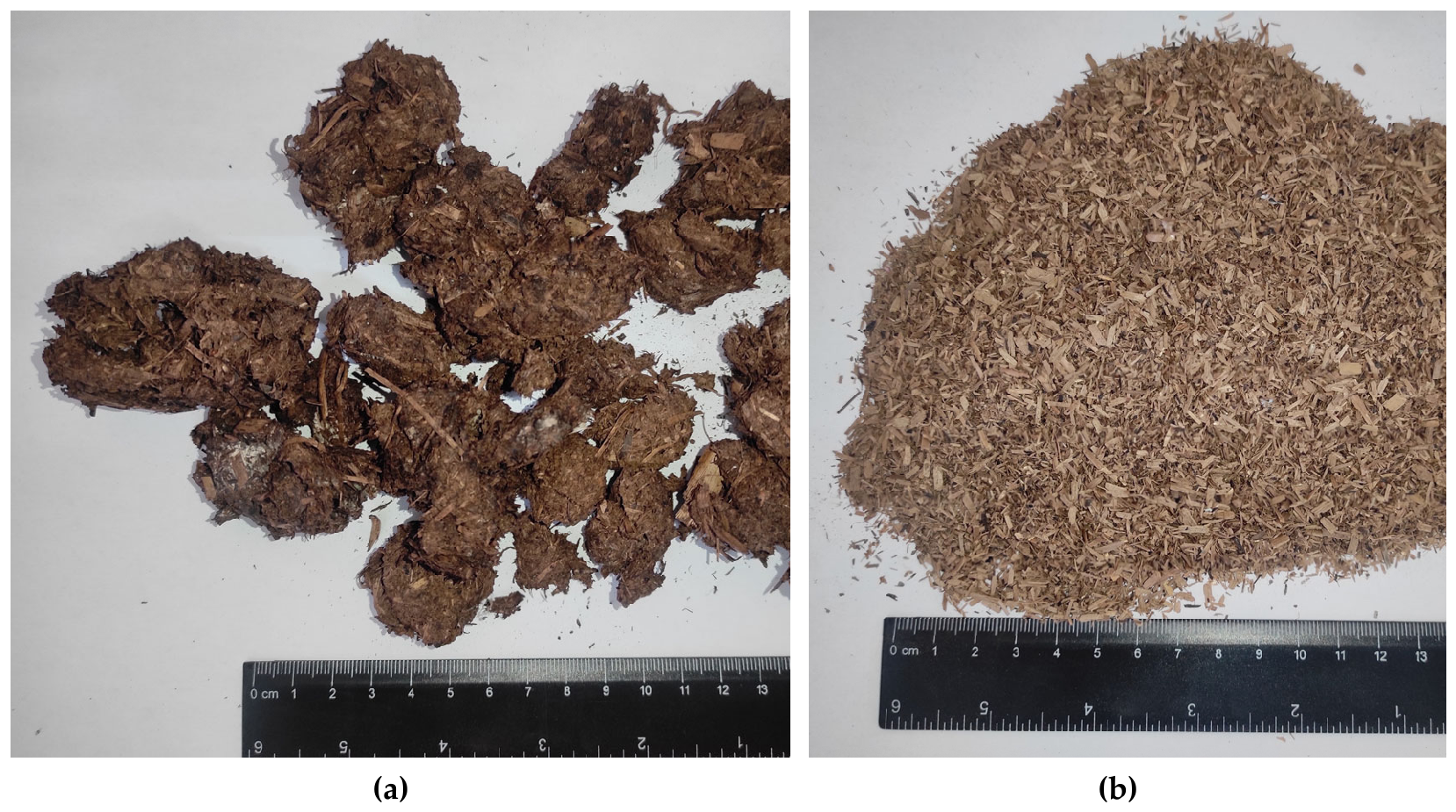
Figure 2.
Schematic diagram of the laboratory-scale granulation setup for pellet production from solid digestate: 1 – granulator; 2 – electric motor; 3 – hypoid gearbox; 4 – frequency inverter; 5 – hopper; 6 – belt feeder; 7 – discharge chute; 8 – power consumption meter; 9 – data acquisition system; 10 – computer; 11 – collection tray.
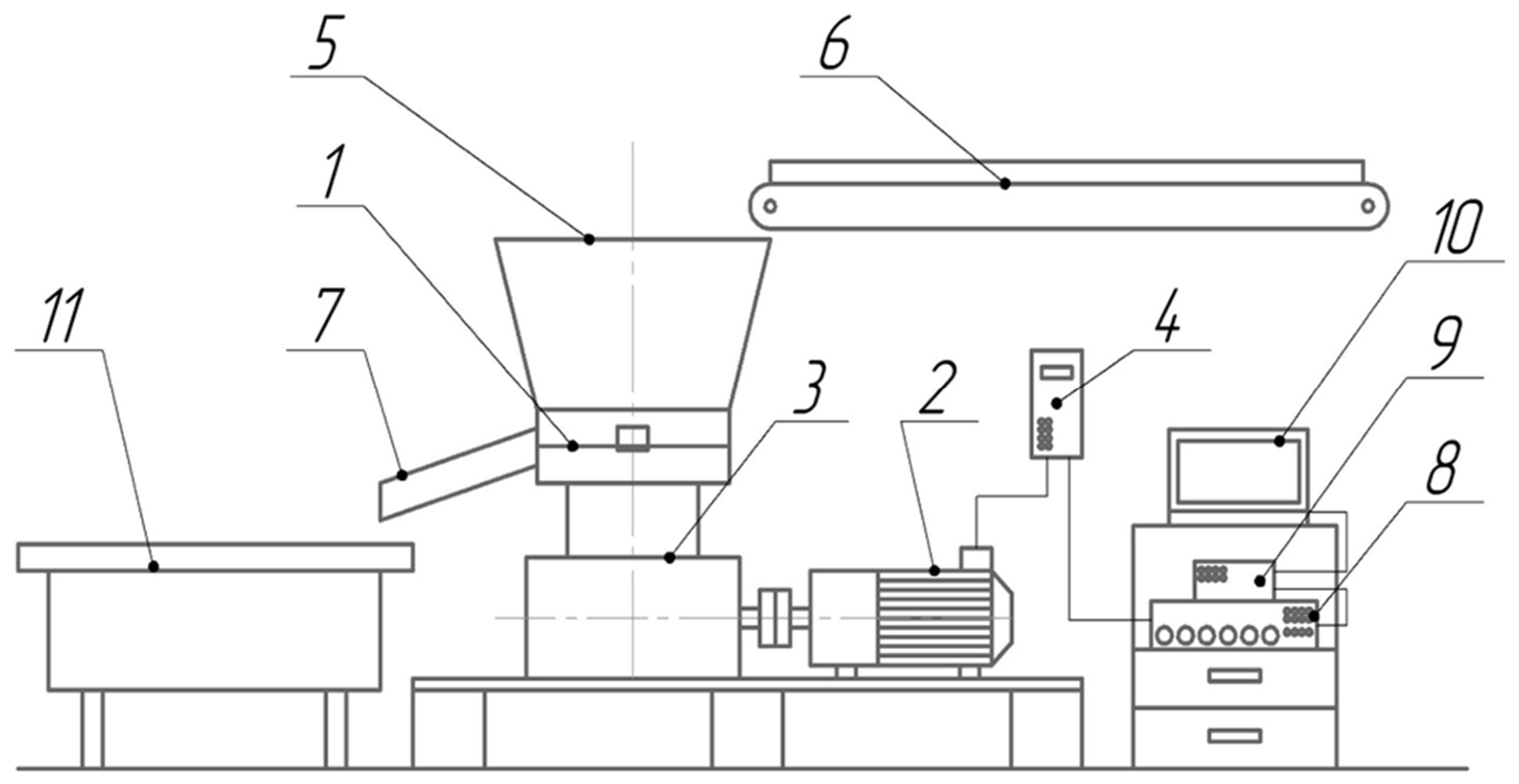
Figure 6.
Representative images of spring barley grown under different digestate-based fertilizer treatments: (0) no fertilizer (control); (1) digestate (Sample 1); (2) organo-mineral fertilizer (Sample 2).
Figure 6.
Representative images of spring barley grown under different digestate-based fertilizer treatments: (0) no fertilizer (control); (1) digestate (Sample 1); (2) organo-mineral fertilizer (Sample 2).
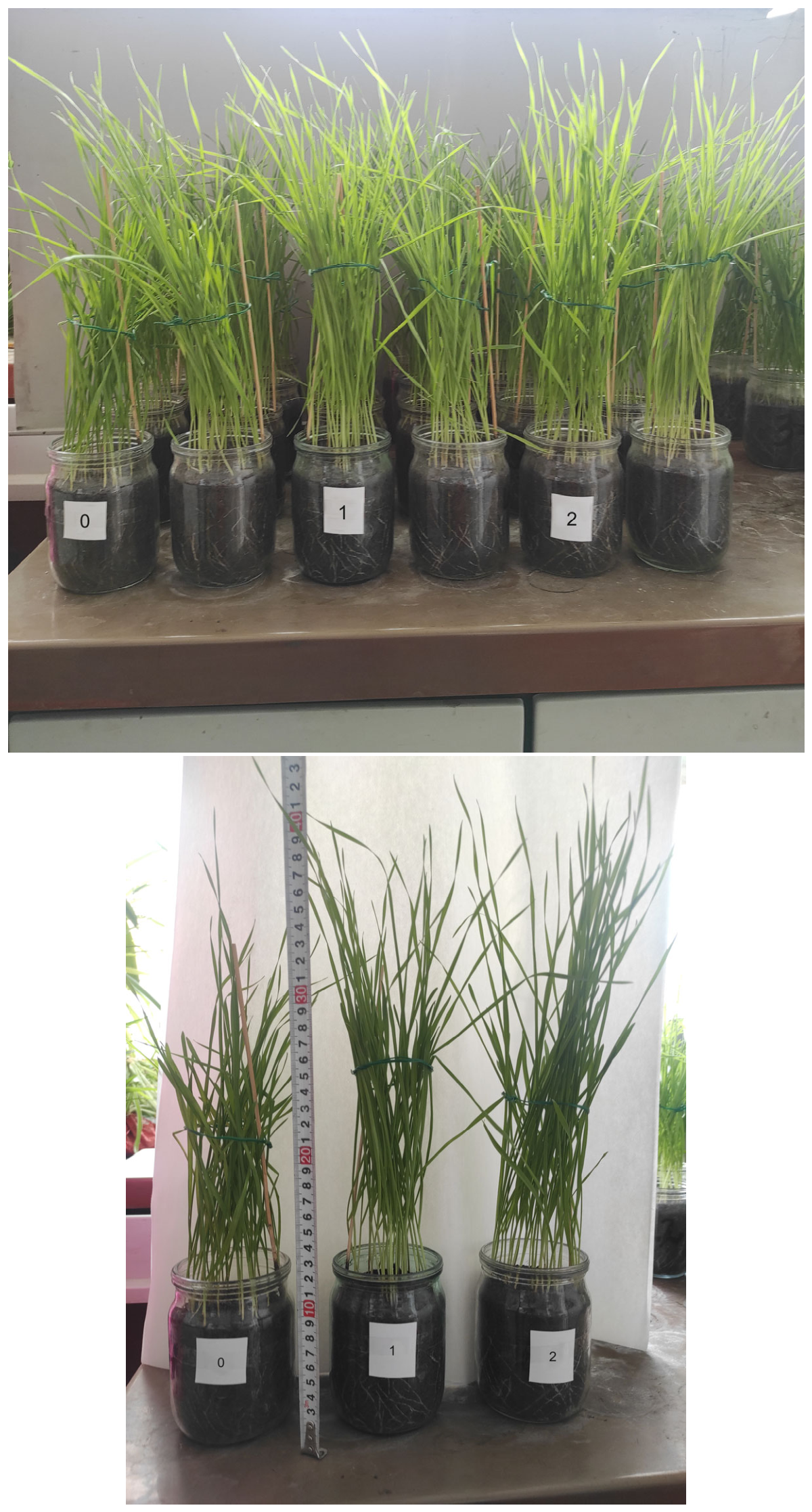

Table 1.
Physicochemical characteristics of solid digestate samples.
| Indicator | Analysis results | ||||||
|---|---|---|---|---|---|---|---|
| Sample А | Sample В | Sample С | |||||
| as received | dry basis | as received | dry basis | as received | dry basis | ||
| Total nitrogen (N), % | 0.46 | 2.57 | 0.63 | 2.21 | 0.74 | 2.48 | |
| Total phosphorus (as P2O5), % | 0.35 | 1.95 | 0.54 | 1.83 | 0.54 | 1.81 | |
| Water-soluble phosphorus (as P2O5vat), % | 0.25 | 1.39 | 0.13 | 0.46 | 0.21 | 0.71 | |
| Total potassium (as K2O), % | 0.27 | 1.51 | 0.35 | 1.23 | 0.30 | 1.01 | |
| Calcium (as CaO), % | 0.54 | 3.01 | 0.87 | 3.06 | 0.87 | 2.92 | |
| Magnesium (as MgO), % | - | - | - | - | 0.05 | 0.17 | |
| Moisture content (H2O), % | 82.08 | 71.53 | 70.20 | ||||
| Cadmium content (Cd), mg/kg | < 0.5 | ||||||
| Lead content (Pb), mg/kg | < 5.0 | ||||||
| Arsenic content (As), mg/kg | < 1.0 | ||||||
| Sulfur (as S), % | 0.03 | 0.17 | 0.07 | 0.25 | 0.07 | 0.22 | |
| Sulfur trioxide (as SO3), % | 0.08 | 0.44 | 0.17 | 0.60 | 0.17 | 0.56 | |
| Dry matter content, % | 17.92 | 28.47 | 29.80 | ||||
| Ash content, % | - | 10.60 | - | 8.98 | - | 10.31 | |
| Organic matter content, % | - | 89.40 | - | 91.02 | - | 89.69 | |
| Iron (as Fe2O3), % | 0.02 | 0.10 | 0.04 | 0.13 | 0.03 | 0.11 | |
| pH (hydrogen ion activity index) | 9.25 | 8.95 | 9.50 | ||||
| Organic carbon content, % | 14.50 | 80.92 | 26.88 | 94.43 | 28.95 | 97.16 | |
Table 2.
Baseline agrochemical properties of typical chernozem soil prior to fertilizer application.
Table 2.
Baseline agrochemical properties of typical chernozem soil prior to fertilizer application.
| Soil type | pH (H2O) | CEC, cmol(+)/kg |
Humus, % | N–NO3-, mg/kg | N–NH4+, mg/kg | Total N, mg/kg | P2O5, mg/kg | K2O, mg/kg |
|---|---|---|---|---|---|---|---|---|
| Typical chernozem | 7.10 | 24.80 | 4.65 | 1,45 | 1,73 | 3,20 | 187.32 | 188.21 |
Table 3.
Chemical composition of organo-mineral fertilizer granules (Sample 2).
| Parameter | Analysis results |
|---|---|
| Total nitrogen (N), % | 5.00 |
| Total phosphorus (as P2O5), % | 5.90 |
| Water-soluble phosphorus (as P2O5, s.r.) | 4.00 |
| Total potassium (as K2O), % | 4.70 |
| Calcium (as CaO), % | 2.90 |
| Magnesium (as MgO), % | 1.60 |
| Moisture content (H2O), % | 4.07 |
| Sulfur (as S), % | 0.80 |
| Sulfur (as SO3), % | 1.90 |
| Dry matter content, % | 95.93 |
| Ash content, % | 32.40 |
| Organic matter content, % | 67.60 |
| pH value | 7.00 |
Table 4.
Effect of digestate-based fertilizer applications on soil physicochemical properties.
| Treatment variant | Fertilizer applied, kg/ha | CEC, cmol(+)/kg | ||||
|---|---|---|---|---|---|---|
| Fresh weight | С | N | P2O5 | K2O | ||
| Sample 1 – Digestate (No. A) | 10000 | 934.5 | 46.1 | 35.0 | 27.0 | 31.8 |
| Sample 2 – Digestate + minerals | 1017 | 650.0 | 50.6 | 60.0 | 47.8 | 32.1 |
Table 5.
Phosphorus and potassium accumulation and dry biomass of spring barley seedlings under different fertilizer treatments.
Table 5.
Phosphorus and potassium accumulation and dry biomass of spring barley seedlings under different fertilizer treatments.
| Treatment variant | Nutrient content in 100 barley seedlings, mg | Dry weight of 100 seedlings, g | |||
|---|---|---|---|---|---|
| P | P2O5 | K | K2O | ||
| Control (no fertilizer) | 19.30 | 44.11 | 194.51 | 233.41 | 2.831 |
| Digestate (Sample 1) | 22.16 | 50.77 | 232.97 | 279.56 | 3.078 |
| Organo-mineral fertilizer (Sample 2) | 22.39 | 51.18 | 226.80 | 272.16 | 3.103 |
Table 6.
Efficiency of phosphorus (P2O5) and potassium (K2O) uptake by spring barley seedlings under different fertilizer treatments.
Table 6.
Efficiency of phosphorus (P2O5) and potassium (K2O) uptake by spring barley seedlings under different fertilizer treatments.
| Treatment variant | Uptake efficiency, % | |
|---|---|---|
| P2O5 | K2O | |
| Control (no fertilizer) | 12.77 | 68.90 |
| Digestate (Sample 1) | 13.68 | 76.45 |
| Organo-mineral fertilizer (Sample 2) | 14.63 | 86.89 |
Table 7.
Correlation coefficients among plant biomass, nutrient uptake, and soil CEC under digestate-based fertilizer treatments.
Table 7.
Correlation coefficients among plant biomass, nutrient uptake, and soil CEC under digestate-based fertilizer treatments.
| Indicator | Plant biomass, g | Nutrient content in plants, mg | Uptake efficiency, % | CEC, cmol(+)/kg |
||
|---|---|---|---|---|---|---|
| Р2О5 | К2О | Р2О5 | K2О | |||
| Nutrients applied to soil (with fertilizers) | ||||||
| Carbon (C) | 0.093 | 0.144 | 0.264 | 0.279 | 0.174 | 0.847** |
| Nitrogen (N) | 0.245 | 0.281 | 0.514* | 0.178 | 0.239 | 0.907** |
| Phosphorus (Р2О5) | 0.778** | 0.821** | 0.894** | 0.558* | 0.715** | 0.659** |
| Potassium (K2О) | 0.006 | 0.022 | 0.398 | 0.217 | 0.007 | 0.548* |
| Nutrient content in seedlings | ||||||
| Phosphorus (Р2О5) | 0.960** | - | 0.881** | 0.886** | 0.941** | 0.556* |
| Potassium (K2О) | 0.828** | 0.881** | - | 0.916** | 0.749** | 0.622** |
| Uptake efficiency from soil and fertilizer, % | ||||||
| Phosphorus (Р2О5) | 0.879** | 0.941** | 0.749** | - | 0.929** | 0.531* |
| Potassium (K2О) | 0.895** | 0.749** | 0.916** | 0.929** | - | 0.488* |
*Significant at the 5% level; **Significant at the 1% level.
Disclaimer/Publisher’s Note: The statements, opinions and data contained in all publications are solely those of the individual author(s) and contributor(s) and not of MDPI and/or the editor(s). MDPI and/or the editor(s) disclaim responsibility for any injury to people or property resulting from any ideas, methods, instructions or products referred to in the content. |
© 2026 by the authors. Licensee MDPI, Basel, Switzerland. This article is an open access article distributed under the terms and conditions of the Creative Commons Attribution (CC BY) license.
Copyright: This open access article is published under a Creative Commons CC BY 4.0 license, which permit the free download, distribution, and reuse, provided that the author and preprint are cited in any reuse.