
Submitted:
30 July 2026
Posted:
31 July 2026
You are already at the latest version
Preprints on COVID-19 and SARS-CoV-2
Abstract
Asthma exacerbation, frequently triggered by viral infections, is a leading cause of hospitalization, respiratory failure, and death. COVID-19 and asthma share a bidirectional relationship, with each potentially worsening the other. We compared outcomes in hospitalized asthma exacerbation patients with and without COVID-19 using the National Inpatient Sample (2020–2022), adjusting for confounders via multivariable logistic regression. Among 603,219 hospitalizations for asthma exacerbation, 69,600 (11.5%) had concomitant COVID-19. The COVID-19 group had significantly higher in-hospital mortality (6.7% vs. 1.4%; aOR 6.16; 95% CI 5.61-6.76) and greater need for invasive mechanical ventilation (10.1% vs. 4.9%; aOR 2.30; 95% CI 2.15-2.45), despite lower non-invasive ventilation use. Mean length of stay (7.7 vs. 4.6 days) and total hospital charges ($97,133 vs. $58,547) were also higher. These patients were more critically ill, with higher rates of respiratory failure, ARDS, acute kidney injury, and pulmonary embolism, and greater use of ECMO, renal replacement therapy, tracheostomy, and vasopressors. COVID-19 was independently associated with worse clinical outcomes among hospitalized asthma exacerbation patients. Early recognition of COVID-19 in asthma exacerbation is warranted to guide risk stratification and timely management.
Keywords:
COVID-19
; asthma
; mortality
; length of stay
; ventilators
; mechanical
Introduction:
Asthma is one of the most common chronic respiratory diseases worldwide, affecting approximately 300 million people and posing a significant public health burden [1]. It is characterized by chronic airway inflammation, reversible airflow obstruction, and bronchial hyperresponsiveness, leading to recurrent episodes of wheezing, dyspnea, chest tightness, and cough [2]. In the United States, nearly 28 million individuals are affected by asthma, accounting for approximately 8% of the population [3].
Asthma exacerbations are a major cause of emergency department visits, hospitalizations, and healthcare expenditures [4]. These acute episodes are frequently triggered by environmental allergens, air pollution, and respiratory tract infections. Among these factors, viral respiratory infections are well-recognized precipitants of asthma exacerbations in both pediatric and adult populations [5].
Since its emergence in 2019, severe acute respiratory syndrome coronavirus 2 (SARS-CoV-2) has resulted in a global pandemic with substantial morbidity and mortality [6,7]. Although COVID-19 primarily affects the respiratory system, its clinical manifestations range from asymptomatic infection to severe pneumonia, acute respiratory distress syndrome (ARDS), and respiratory failure requiring mechanical ventilation [7]. The interaction between COVID-19 and pre-existing respiratory diseases, particularly asthma, remains an area of considerable clinical interest.
COVID-19 may contribute to asthma exacerbations through several mechanisms, including airway epithelial injury, increased mucus production, and activation of inflammatory pathways. Viral entry through angiotensin-converting enzyme 2 (ACE-2) receptors initiates a cascade of pro-inflammatory cytokine release, potentially worsening airway inflammation and bronchospasm in susceptible individuals. A maladaptive increase in type 2 effector cells (IL-5, IgE and Eosinophils) is characteristic of severe COVID-19 infections, the same cells which play a role in severe asthma exacerbations [8,9]. Chronic eosinophilic inflammation is a hallmark of asthma and is primarily mediated by Th2 cytokines, including IL-4, IL-5, and IL-13. In severe COVID-19, a hyperinflammatory cytokine response may further intensify airway inflammation and worsen respiratory dysfunction [10].
Despite increasing recognition of COVID-19 as a trigger for asthma exacerbations, U.S based national studies evaluating the outcomes of patients hospitalized with asthma exacerbation and concurrent COVID-19 infection across the full evolution of the pandemic in an adult cohort remain limited. A better understanding of mortality, respiratory failure, mechanical ventilation requirements, and healthcare resource utilization in this population is essential to guide clinical management and healthcare planning.
Therefore, we utilized the National Inpatient Sample (NIS), the largest all-payer inpatient database in the United States, to compare clinical outcomes among adults hospitalized with asthma exacerbation with concurrent COVID-19 infection versus those hospitalized with asthma exacerbation without COVID-19 infection between 2020 and 2022.
Materials and Methods
Study Design and Data Source
A retrospective study was conducted using data obtained from the 2020–2022 National Inpatient Sample database that was developed as a part of the Healthcare Cost and Utilization Project by the Agency for Healthcare Research and Quality. The database represents approximately 20% of all hospital discharges from community hospitals nationwide. To generate national-level estimates, discharge weights were applied.
Study Population
Using International Classification of Diseases, Tenth Revision, Clinical Modification (ICD-10-CM) diagnosis codes, we identified adult hospitalizations involving patients aged 18 years or older with a primary diagnosis of asthma exacerbation between January 1, 2020, and December 31, 2022. The ICD 10 code for COVID-19 infection used was U07.1 and ICD 10 codes for asthma exacerbation used were J45.21, J45.31, J45.41, J45.51, J45.901. Two cohorts were subsequently created based on the presence or absence of concomitant COVID-19 infection during hospitalization. The study population consisted of adult hospitalizations for asthma exacerbation with and without concomitant COVID-19 infection.
Inclusion and Exclusion Criteria
The study included adult hospitalizations from 2020 to 2022 in the NIS database with ICD-10-CM codes indicating asthma exacerbation. Only inpatient hospitalizations were included in the analysis. The study excluded patients younger than 18 years of age, hospitalizations with missing demographic or outcome data, elective admissions without evidence of asthma exacerbation, and records with incomplete discharge information.
Variables and Outcomes
Baseline demographic characteristics included age, sex, race, ethnicity, median household income quartile, insurance status, hospital region, hospital division, hospital bed size, and hospital teaching status/location. Comorbidity burden was assessed using the Charlson Comorbidity Index (CCI) and was categorized as CCI = 1, CCI = 2, and CCI ≥3. The primary outcome of interest for the study was in-hospital mortality. Secondary outcomes included noninvasive ventilation use, invasive mechanical ventilation, length of hospital stay, acute kidney injury (AKI), Renal replacement therapy (RRT), Vasopressor usage, need for tracheostomy, cardiac arrest, acute respiratory failure, septic shock, pulmonary embolism (PE), Deep vein thrombosis (DVT), acute respiratory distress syndrome (ARDS) and extracorporeal membrane oxygenation (ECMO) utilisation. Temporal mortality trends among patients with asthma exacerbation and concomitant COVID-19 infection were also evaluated across 2020, 2021, and 2022.
Statistical Analysis
Analysis was performed using survey weighting methodology in concordance with HCUP recommendations using Stata/BE version 17.0 (StataCorp LLC, College Station, TX, USA). This was done to account for the complex sampling design of the NIS database and included stratification, weighting, and clustering. Both continuous and categorical variables were analyzed. Continuous variables were reported as weighted means and compared using survey-weighted linear regression with adjusted Wald tests. Categorical/Dichotomous variables were presented as weighted percentages and compared using the Rao–Scott corrected chi-square test.
To determine the independent association between COVID and clinical outcomes among patients hospitalized with asthma exacerbation, a multivariable logistic regression analysis was performed. Adjusted odds ratios and 95% confidence interval (CI) were calculated for in-hospital mortality, invasive mechanical ventilation, NIV utilization, hospital length of stay, acute kidney injury (AKI), Renal replacement therapy (RRT), Vasopressor usage, need for tracheostomy, cardiac arrest, acute respiratory failure, septic shock, pulmonary embolism (PE), Deep vein thrombosis (DVT), acute respiratory distress syndrome (ARDS) and extracorporeal membrane oxygenation (ECMO) utilisation. To determine the length of hospital stay and total charges, a multivariable linear regression analysis was performed and adjusted mean difference and 95% CI were calculated. Models were adjusted for potential confounders, including age, sex, race, median household income quartile, insurance status, Charlson Comorbidity Index, hospital region, hospital division, hospital location/teaching status, and hospital bed size. A p-value <0.05 was considered statistically significant.
Ethical Considerations
The NIS database contains publicly available, de-identified data; therefore, this study was exempt from institutional review board approval and informed consent requirements in accordance with institutional and federal guidelines.
Results
A total of 5,934,565 weighted adult COVID-19 hospitalizations and a total of 603,219 weighted adult hospitalizations with asthma exacerbation were identified from the 2020–2022 National Inpatient Sample database. The patients with diagnoses of adult hospitalisations with asthma exacerbation were stratified based on the presence of COVID-19 infection; 69,600 hospitalisations had concomitant COVID-19 infection, whereas 533,619 hospitalisations did not have concomitant COVID-19 infection (Figure 1).
Baseline demographic and hospital characteristics are summarized in Table 1. Patients with asthma and concomitant COVID-19 infections were slightly younger than those without COVID-19 infection (55.1 vs 56.3 years, p-value < 0.001), while the sex distribution was similar, with females accounting for the majority of hospitalizations in both groups (69.2% vs. 69.9%, p=0.125). Caucasians constituted the largest racial group in both cohorts (48.3% vs. 50.1%), followed by African American patients (25.6% vs. 28.2%) (p< 0.001). The largest proportion of patients belonged to the lowest household income quartile (33.6% vs. 35.2%), followed by the second income quartile (26.2% vs. 25.2%) (p=0.001). Medicare was the most common primary payer in both groups (37.4% vs. 44.1%), followed by private insurance (35.5% vs. 22.1%) (p< 0.001). Most patients had a Charlson Comorbidity Index (CCI) of 1 (48.4% vs. 43.5%), followed by a CCI of ≥3 (26.6% vs. 34.2%). Most hospitalizations occurred in the Southern region (37.7% vs. 37.2%), followed by the Northeast (21.2% vs. 22.6%) (p=0.016). Similarly, most patients were admitted to urban teaching hospitals (73.2% vs. 73.8%), followed by urban non-teaching hospitals (19.1% vs. 18.9%) (p=0.195), and to large hospitals (44.5% vs. 43.5%), followed by medium-sized hospitals (29.3% vs. 30.0%) (p=0.135). Among hospital divisions, the South Atlantic accounted for the largest proportion of admissions (23.3% vs. 22.1%), followed by the Middle Atlantic (16.5% vs. 17.2%) (p<0.001).
Clinical Outcomes:
Compared with patients with asthma, those with concomitant COVID-19 infection had significantly higher in-hospital mortality (6.7% vs 1.4%; aOR 6.16; 95% CI 5.61-6.76), invasive ventilation (10.1% vs 4.9%; aOR 2.30, 95% CI 2.15–2.45), acute kidney injury (18.2% vs 15.4%; aOR 1.50; 95% CI 1.42-1.58), renal replacement therapy( 2.2% vs 1.7%; aOR 1.78; 95% CI1.54-2.04 ), vasopressors (1.8% vs 0.7%; aOR 2.71; 95% CI 2.31-3.18), tracheostomy (1.3% vs 0.3%; aOR4.62; 95% CI 3.80-5.63) with a p-value of <0.001. In contrast, non-invasive ventilation was less frequently used among patients with COVID-19 (10.2% vs 12.7%; aOR 0.82, 95% CI 0.77-0.87) p <0.001. (Figure 2, Figure 3 and Figure 5).
All adjusted outcomes were statistically significant, with p- values <0.001. Other outcome included cardiac arrest (1.7% vs 0.9%; aOR2.17; 95% CI 1.86-2.52), acute respiratory failure (56.9% vs 38.2%; aOR2.13; 95% CI 2.04-2.21), septic shock (4.7% vs 1.5%; aOR 3.59; 95% CI 3.25-3.96), pulmonary embolism (PE) (2.5% vs 1.5%; aOR 1.73; 95% CI 1.54-1.95 (deep venous thrombosis (DVT) ( 2.5% vs 1.3%; aOR 2.03; 95% CI 1.78-2.30), acute respiratory distress syndrome (ARDS) (6.6% vs 0.3%;aOR 21.30; 95% CI 18.63-24.36), need for extra corporeal membrane oxygenation (ECMO) (0.2% vs 0.03%; aOR 6.83; 95% CI4.11-11.34) respectively with a p-value <0.001 (Figure 2, Figure 3 and Figure 5).
Compared with patients hospitalized with asthma exacerbation without COVID-19 infection, those with concomitant COVID-19 infection experienced a significantly higher length of stay (7.7 days vs 4.6 days) and incurred markedly higher total charges ($ 97,133 vs $ 58,547), respectively (Figure 4). The adjusted mean difference was 3.31 days for LOS (95% CI, 3.14–3.49) and $40,919 for total hospital charges (95% CI, $37,868–$43,970) with a p- value of <0.001 (Figure 5).
Figure 2.
Clinical Outcomes comparing Mortality, Non-invasive Ventilation (NIV), Invasive Ventilation, Acute kidney injury (AKI), Renal replacement therapy (RRT), Vasopressor usage and Need for tracheostomy in patients with Asthma Exacerbation, with and without COVID-19 Infection.
Figure 2.
Clinical Outcomes comparing Mortality, Non-invasive Ventilation (NIV), Invasive Ventilation, Acute kidney injury (AKI), Renal replacement therapy (RRT), Vasopressor usage and Need for tracheostomy in patients with Asthma Exacerbation, with and without COVID-19 Infection.
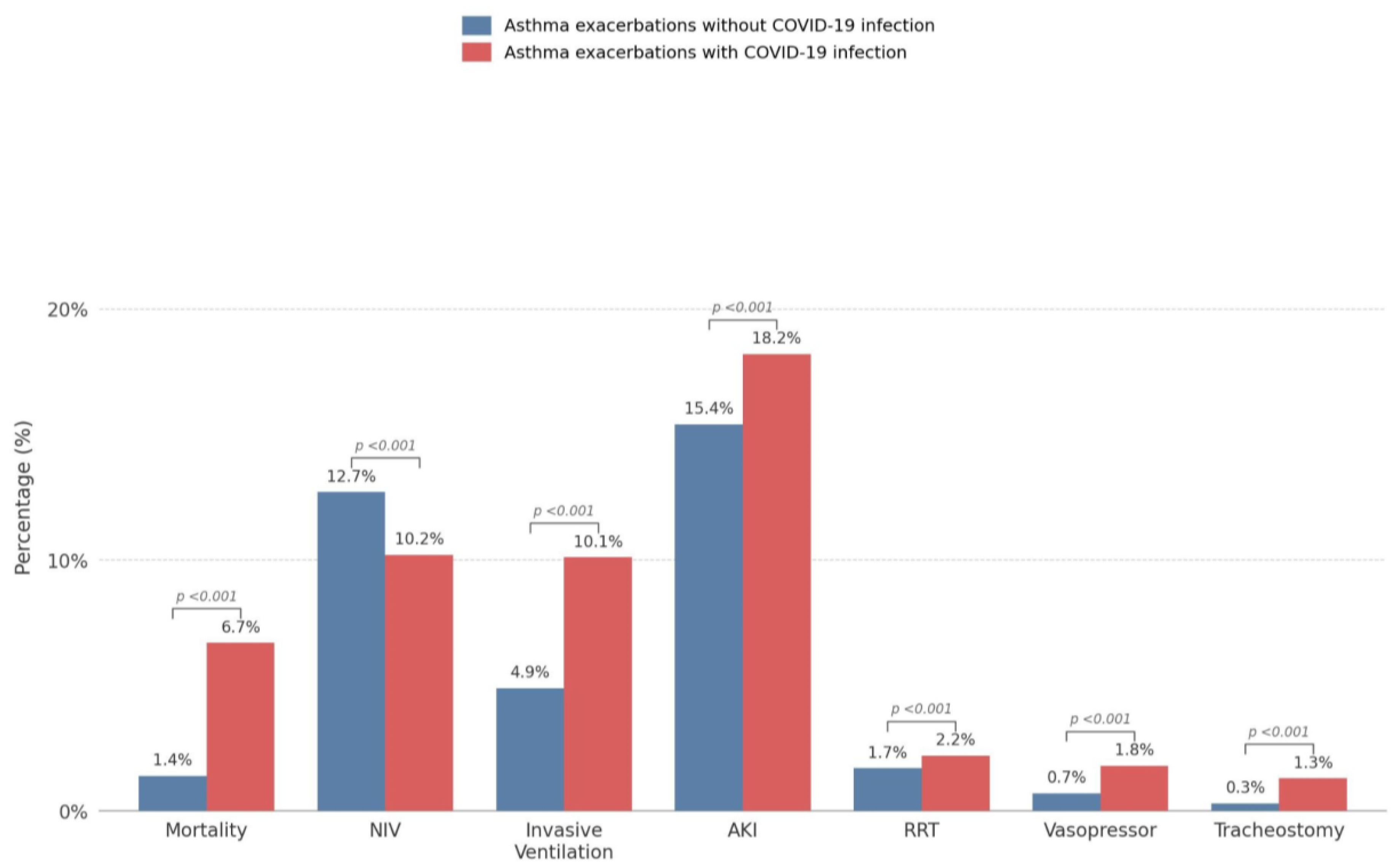
Figure 3.
Clinical Outcomes comparing Cardiac arrest, Acute respiratory failure, Septic shock, Pulmonary embolism (PE), Deep vein thrombosis (DVT), Acute respiratory distress syndrome (ARDS) and Extracorporeal membrane oxygenation (ECMO) in patients with Asthma Exacerbation, with and without COVID-19 Infection.
Figure 3.
Clinical Outcomes comparing Cardiac arrest, Acute respiratory failure, Septic shock, Pulmonary embolism (PE), Deep vein thrombosis (DVT), Acute respiratory distress syndrome (ARDS) and Extracorporeal membrane oxygenation (ECMO) in patients with Asthma Exacerbation, with and without COVID-19 Infection.
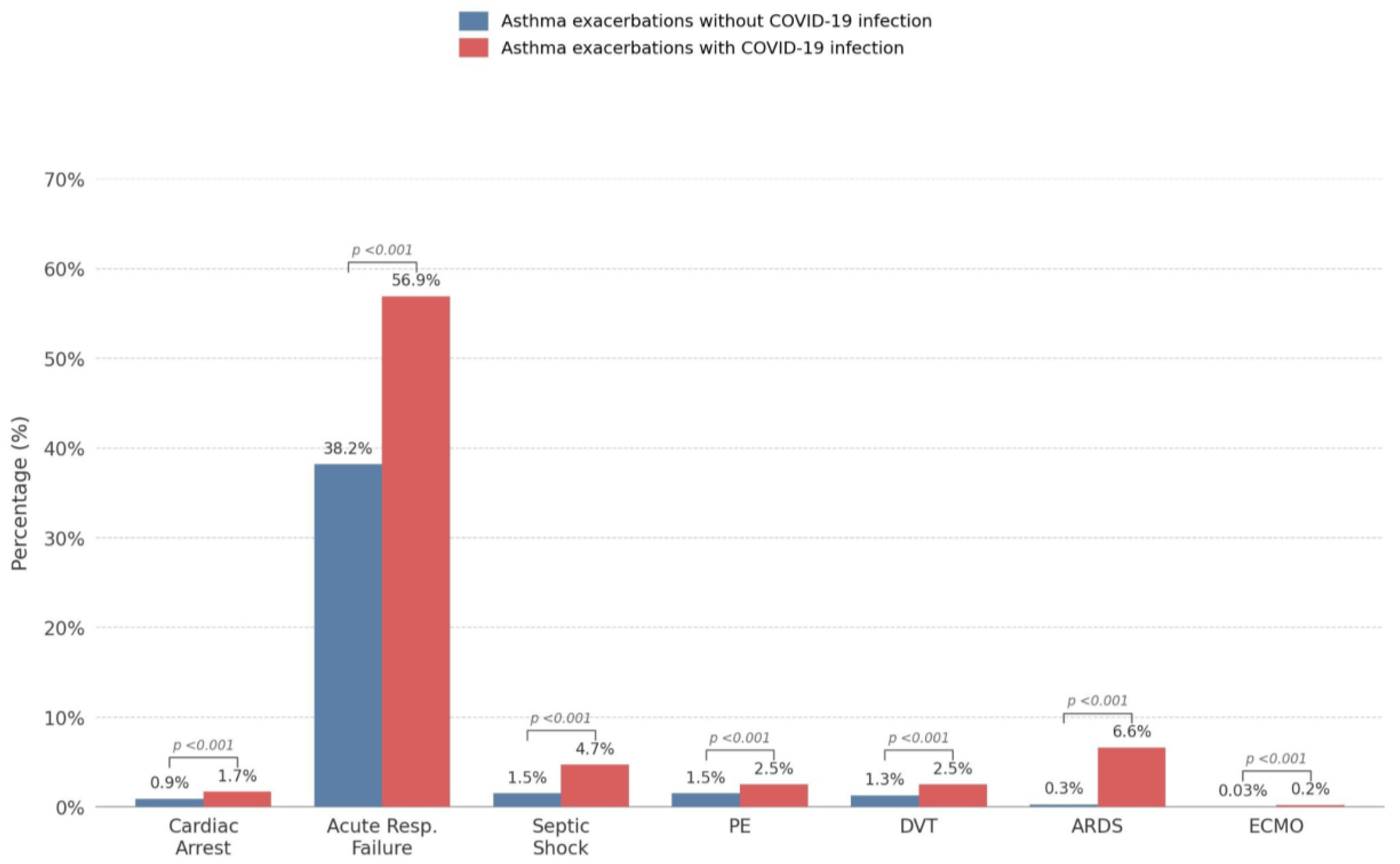
Figure 4.
Length of hospital stay and Total hospital charges for patients hospitalized with Asthma exacerbation, with and without COVID-19 infection.
Figure 4.
Length of hospital stay and Total hospital charges for patients hospitalized with Asthma exacerbation, with and without COVID-19 infection.
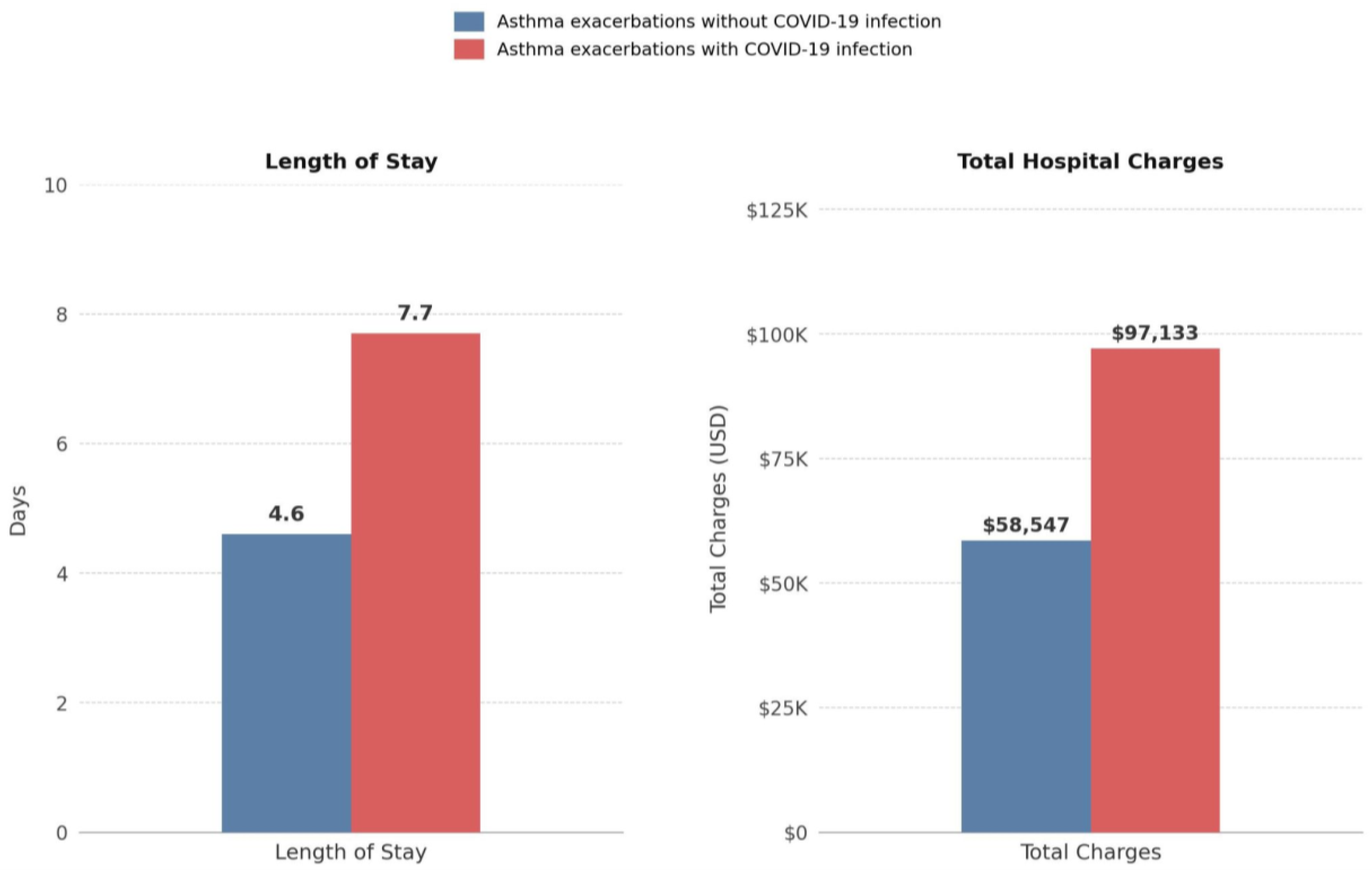
Figure 5.
Forest Plot depicting Adjusted Odds Ratios and Adjusted Mean Differences for patients with Asthma Exacerbations with concomitant COVID-19 Infection; Non-Invasive Ventilation (NIV); Acute kidney injury (AKI); Renal replacement therapy (RRT); Deep vein thrombosis (DVT); Acute respiratory distress syndrome (ARDS); Extracorporeal membrane oxygenation (ECMO).
Figure 5.
Forest Plot depicting Adjusted Odds Ratios and Adjusted Mean Differences for patients with Asthma Exacerbations with concomitant COVID-19 Infection; Non-Invasive Ventilation (NIV); Acute kidney injury (AKI); Renal replacement therapy (RRT); Deep vein thrombosis (DVT); Acute respiratory distress syndrome (ARDS); Extracorporeal membrane oxygenation (ECMO).
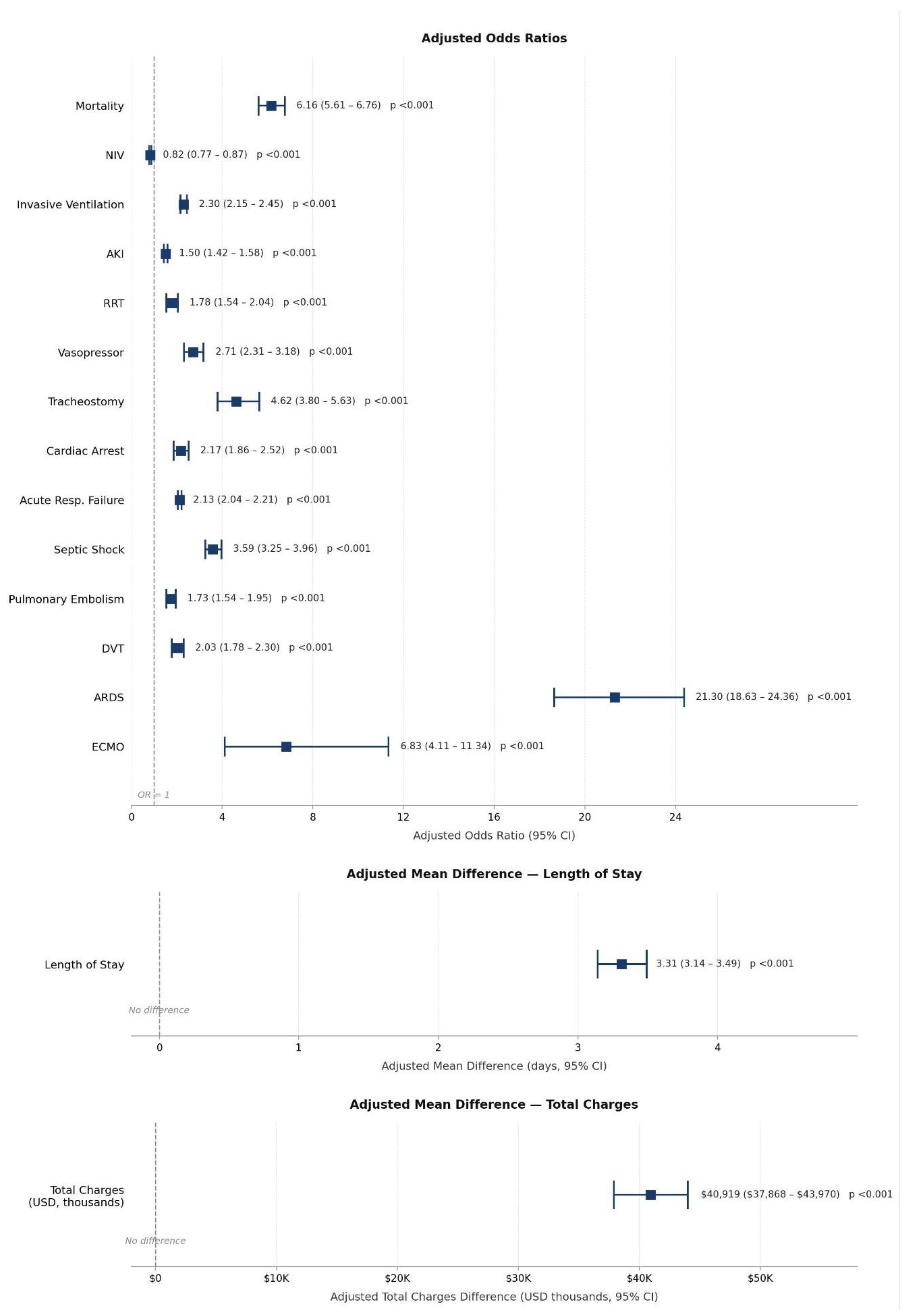
Figure 6.
Mortality trends in patients with asthma exacerbations with concomitant COVID-19 from the years 2020 to 2022.
Figure 6.
Mortality trends in patients with asthma exacerbations with concomitant COVID-19 from the years 2020 to 2022.
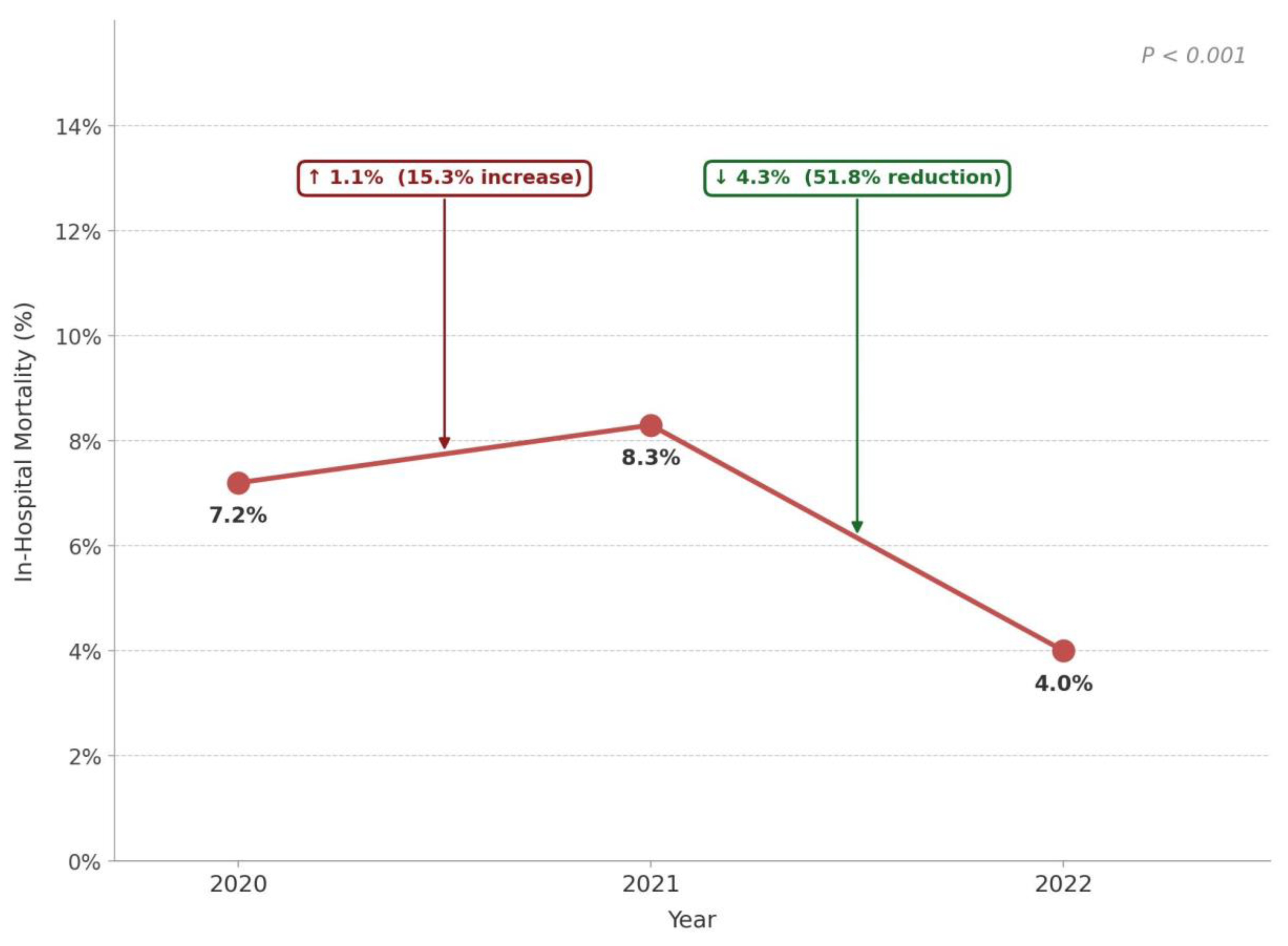
Temporal analysis demonstrated that in-hospital mortality among patients with asthma exacerbations with concomitant COVID-19 infections increased from 7.2% in 2020 to 8.3% in 2021 before declining to 4.0% in 2022 (Figure 6). Similarly, patients with asthma hospitalizations with COVID-19 were most frequent in 2021 (39.1%), whereas hospitalizations without COVID-19 infection were highest in 2022 (35.3%) (P-value < 0.001) (Figure 7).
Discussion
Asthma is one of the most common chronic respiratory diseases in the United States, affecting nearly 28 million individuals, or approximately 8% of the population [2]. COVID-19 has contributed substantially to an increase in hospitalizations and mortality in the United States [11]. Given the impact of the SARS-CoV-2 virus on the respiratory system and the inflammatory nature of asthma exacerbations, understanding the clinical impact of COVID-19 infection among patients hospitalized with asthma exacerbations is clinically important.
In this retrospective cohort study using the National Inpatient Sample database, we evaluated outcomes among adults hospitalized with asthma exacerbation with and without concomitant COVID-19 infection from 2020 to 2022. We found that patients with concomitant COVID-19 infection had significantly worse clinical outcomes, including higher in-hospital mortality, greater need for invasive mechanical ventilation, and longer length of hospital stay. These findings remained significant after adjustment for demographic characteristics, hospital characteristics, insurance status, and comorbidity burden.
In our study, the mortality rate among patients hospitalized with asthma exacerbation without COVID-19 infection was 1.4%. In contrast, mortality among patients with both asthma exacerbation and COVID-19 infection was 6.7%. This significant increase suggests that concurrent COVID-19 infection may substantially worsen the prognosis of hospitalized patients with asthma exacerbation. In our study, concomitant COVID-19 infection was associated with approximately sixfold higher adjusted odds of in-hospital mortality and 21-fold higher adjusted odds of acute respiratory distress syndrome (ARDS). It was also associated with higher adjusted odds of extracorporeal membrane oxygenation (ECMO) use, acute kidney injury (AKI), and septic shock. The pathophysiology can be explained by a cytokine storm triggered by an inflamed airway. SARS-CoV-2 infection triggers excessive release of pro-inflammatory cytokines such as IL-6, IL-1β, and TNF-α, leading to endothelial dysfunction, capillary leak, and multiorgan injury [12,13,14]. In the lungs, this hyperinflammatory response causes diffuse alveolar damage and severe hypoxemia, explaining the 21-fold higher adjusted odds of ARDS and the consequent need for ECMO in refractory respiratory failure [1,2]. Cytokine-mediated endothelial injury and microvascular thrombosis impair organ perfusion and contribute to AKI, while vasodilation and capillary leak can lead to septic shock, which may require vasopressor support [13,15]. The observed six-fold increase in mortality is likely due to severe respiratory failure and multiorgan dysfunction. These findings are consistent with prior studies demonstrating that cytokine storm and endothelial injury are the most common causes of severe COVID-19 outcomes in patients with asthma exacerbation [12,13,14,15].
Different SARS-CoV-2 variants may also have affected asthma outcomes differently across the pandemic. For example, one pediatric study reported higher odds of COVID-19-associated asthma exacerbations during the Omicron wave compared with earlier pandemic waves [16]. However, because that study focused on children, extrapolation to the adult hospitalized population should be made cautiously.
Our findings are consistent with prior studies, which have shown worse COVID-19 outcomes among patients with chronic respiratory disease and asthma. Schultze et al. also demonstrated that patients with asthma or COPD were at increased risk of adverse COVID-19 outcomes, particularly among those with more severe underlying respiratory disease requiring high-dose inhaled corticosteroids [17]. Other studies have also suggested that COVID-19 may be associated with worse long-term asthma outcomes, including increased severe exacerbations and mortality [18]. We also found that patients with concurrent COVID-19 infection required invasive mechanical ventilation more frequently than those without COVID-19 infection. The rate of invasive mechanical ventilation was 10.1% among patients with COVID-19 infection compared with 4.9% among those without COVID-19 infection. After adjustment, COVID-19 infection remained independently associated with higher odds of invasive mechanical ventilation. In our study we also found that patients hospitalized with asthma exacerbation and concomitant COVID-19 had higher rates of pulmonary embolism, acute respiratory failure, and ECMO use than those hospitalized with asthma exacerbation without COVID-19. This is consistent with prior studies describing increased respiratory support requirements among hospitalized patients with asthma and COVID-19 [19,20,21]. The observed increase in mortality among patients with asthma exacerbation and concomitant COVID-19 infection in our study is consistent with findings from the OpenSAFELY cohort reported by Williamson et al., which identified severe asthma and other chronic respiratory diseases as independent risk factors for COVID-19-related death [22]. Similarly, the need for invasive mechanical ventilation in our study exceeded that reported in the landmark ISARIC WHO Clinical Characterisation cohort of hospitalized patients with COVID-19 [23]. The elevated risk of ARDS in our study aligns with findings from Wu et al., who demonstrated a strong association between hyperinflammation and progression to ARDS in COVID-19 patients [24]. In our study, we observed an increase in AKI and septic shock, consistent with reports by Hirsch et al. and Zhou et al., who found higher rates of multiorgan dysfunction among hospitalized COVID-19 patients with asthma [25,26]. The greater need for ECMO in our study is also similar to trends seen in severe COVID-19 cases reported by Barbaro et al., where ECMO was required in patients with refractory respiratory failure [27]. This shows that our findings are consistent with prior studies, which show that hospitalized COVID-19 patients with asthma exacerbation are susceptible to severe respiratory and systemic complications.
Interestingly, the use of noninvasive ventilation was lower among patients with COVID-19 infection compared with those without COVID-19 infection. This could be because of differences in clinical severity, infection control practices, provider preference, or early pandemic concerns regarding aerosol generation with non-invasive ventilation. It may also indicate that some patients with COVID-19 had more severe respiratory failure requiring direct escalation to invasive mechanical ventilation.
The increased use of invasive mechanical ventilation in patients with asthma exacerbation and COVID-19 infection may be related to hypoxemia, pneumonia, severe bronchospasm, and acute respiratory distress syndrome. Ventilating patients with severe asthma requires attention to dynamic hyperinflation, air trapping, and auto-positive end-expiratory pressure. In such patients, high levels of positive end-expiratory pressure may worsen hyperinflation and increase the risk of barotrauma, pneumothorax, and hemodynamic compromise. Permissive hypercapnia is often used in severe asthma to reduce the risk of air trapping and ventilator-associated complications [28,29,30,31].
In addition to higher mortality and respiratory failure, patients with concomitant COVID-19 infection experienced significantly higher rates of cardiac arrest, vasopressor use, renal replacement therapy, tracheostomy, pulmonary embolism, and deep vein thrombosis. These findings likely reflect greater systemic illness severity, multiorgan dysfunction, and thrombo-inflammatory complications associated with severe COVID-19. [13,15,24,25,26]
Patients with COVID-19 infection also had a longer mean length of stay than patients without COVID-19 infection. The mean length of stay was 7.7 days among patients with COVID-19 infection compared with 4.6 days among those without COVID-19 infection. This difference is likely due to greater illness severity, increased need for respiratory support, higher complication rates, and prolonged inpatient management. Invasive mechanical ventilation itself may increase the risk of secondary infections, sepsis, and prolonged hospitalization [32]. As well as worse clinical outcomes, COVID-19 infection was associated with significantly higher rates of use of hospital resources among patients hospitalized with asthma exacerbations. Patients with COVID-19 had a longer hospital stay by approximately 3 days and incurred higher total hospital charges by around $40,919. These findings are likely due to the greater severity of illness, increased need for invasive mechanical ventilation, vasopressor support, renal replacement therapy, tracheostomy, ECMO, and management of complications such as ARDS, acute kidney injury, and septic shock. This finding was not proved in previous studies, but our study shows that COVID-19 infection significantly increases hospital resource utilization and cost incurred among patients admitted with asthma exacerbations.
During the early pandemic, several studies reported a decrease in asthma exacerbations, possibly due to lockdowns, mask use, reduced exposure to respiratory viruses, decreased air pollution, and patients avoiding healthcare settings [33]. However, among hospitalized patients who did develop asthma exacerbation with COVID-19 infection, outcomes appear to have been more severe. In our study, mortality among patients with asthma exacerbation and COVID-19 infection was highest in 2021 and declined in 2022. This trend may be due to several factors, including changes in circulating variants, improved clinical management, vaccination, prior infection, and increasing population immunity [34]. Because vaccination status and variant-level data are not available in the NIS, these explanations remain hypothesis-generating and cannot be directly confirmed by this study.
Limitations
This study has several limitations. First, the NIS is an administrative database and is subject to coding errors, misclassification, and missing data. Second, the NIS does not include detailed clinical variables such as asthma severity, pulmonary function testing, oxygen requirements, laboratory values, imaging findings, medication adherence, vaccination status, COVID-19 variant type, or outpatient treatment history. Fourth, long-term outcomes after discharge could not be assessed. Finally, because this was an observational study, residual confounding may remain despite multivariable adjustment.
Despite these limitations, the NIS provides a large, nationally representative inpatient sample, allowing evaluation of clinically important outcomes among hospitalized patients with asthma exacerbation and concomitant COVID-19 infection.
Future Research Directions
Future clinical studies should prospectively evaluate the impact of COVID-19 on asthma exacerbations by incorporating detailed clinical data including asthma severity, pulmonary function, laboratory biomarkers, vaccination status, SARS-CoV-2 variants, and treatment strategies. Future clinical studies should also examine the influence of biologic therapies, inhaled corticosteroid use, antiviral agents, and immunomodulatory therapies on clinical outcomes to determine the optimal management in this population. In addition, longitudinal studies assessing post discharge outcomes, recurrent exacerbations, healthcare utilization, and long-term pulmonary function are needed to better define the enduring impact of COVID-19 on patients hospitalized with asthma exacerbations.
Conclusions
Among adults hospitalized with asthma exacerbation, concomitant COVID-19 infection was independently associated with higher in-hospital mortality, greater need for invasive mechanical ventilation, and longer length of hospital stay. These findings suggest that COVID-19 infection may substantially worsen clinical outcomes in patients hospitalized with asthma exacerbation. The observed decline in mortality from 2021 to 2022 may reflect evolving viral variants, improved treatment strategies, vaccination, prior infection, and increasing population immunity; however, these factors could not be directly evaluated using the NIS database. Further studies incorporating clinical severity, vaccination status, medication use, and post-discharge outcomes are needed to better characterize the long-term impact of COVID-19 on patients with asthma.
Author Contributions
Conceptualization, A.A; methodology, A.A, D.D, R.V; software, A.A, D.D, P.D; validation, A.A, A.V, J.M; formal analysis, A.A, D.D; investigation, P.D, F.T, D.K; resources, C.P, A.M; data curation, A.A; writing—original draft preparation, all authors; writing—review and editing, all authors; visualization, A.A, D.K; supervision, A.A, D.K; project administration, D.K, C.P. All authors have read and agreed to the published version of the manuscript.:
Funding
This research received no external funding.
Institutional Review Board Statement
All data were obtained through a request to the Online Healthcare Cost and Utilization Project (HCUP) Central Distributor, which administers the database (certificate HCUP-28M71GVP5). We followed all AHRQ guidelines (https://hcup-us.ahrq.gov/db/publishing.jsp, accessed on 15 March 2026) and were exempt from IRB review as the National Inpatient Sample is a publicly available, deidentified dataset.
Informed Consent Statement
Patient consent was waived due to the study analyzing secondary data from the NIS database; patients and the public were not involved directly. And all data in the NIS database are de-identified.
Data Availability Statement
The datasets analyzed during the current study are available from the Healthcare Cost and Utilization Project (HCUP) National Inpatient Sample (NIS) database and can be obtained as requested.
Acknowledgments
The authors acknowledge the Healthcare Cost and Utilization Project and the Agency for Healthcare Research and Quality for providing access to the National Inpatient Sample database.:
Conflicts of Interest
The authors declare no conflicts of interest.
References
- Global Initiative for Asthma. Global strategy for asthma management and prevention. 2026 update; Global Initiative for Asthma: Fontana (WI), 2026; Available online: https://ginasthma.org/2026-gina-strategy-report/ (accessed on 1 July 2026).
- GBD 2021 Asthma Collaborators. Global, regional and national burden of asthma from 1990 to 2021: a systematic analysis for the Global Burden of Disease Study 2021. BMJ Open Respir. Res. 2025, 12(1), e003144. [Google Scholar] [CrossRef]
- Asthma and Allergy Foundation of America. Asthma Facts and Figures. 2023. Available online: https://www.aafa.org/asthma-facts/.
- Nurmagambetov, T.; Kuwahara, R.; Garbe, P. The economic burden of asthma in the United States, 2008-2013. Ann. Am. Thorac. Soc. 2018, 15(3), 348–356. [Google Scholar] [CrossRef] [PubMed]
- Busse, W.W.; Lemanske, R.F., Jr.; Gern, J.E. Role of viral respiratory infections in asthma and asthma exacerbations. Lancet 2010, 376(9743), 826–834. [Google Scholar] [CrossRef] [PubMed]
- Centers for Disease Control and Prevention. COVID-19 Data Tracker. Available online: https://www.cdc.gov/covid-data-tracker.
- Zhu, N.; Zhang, D.; Wang, W.; et al. A novel coronavirus from patients with pneumonia in China, 2019. N Engl. J. Med. 2020, 382(8), 727–733. [Google Scholar] [CrossRef] [PubMed]
- Pavel, A.B.; Glickman, J.W.; Michels, J.R.; Kim-Schulze, S.; Miller, R.L.; Guttman-Yassky, E. Th2/Th1 Cytokine Imbalance Is Associated With Higher COVID-19 Risk Mortality. Front. Genet. 2021, 12, 706902. [Google Scholar] [CrossRef] [PubMed]
- Camporota, L.; Chiumello, D.; Busana, M.; Gattinoni, L.; Marini, J.J. Pathophysiology of COVID-19-associated acute respiratory distress syndrome. Lancet Respir. Med. 2021, 9(1), e1. [Google Scholar] [CrossRef] [PubMed] [PubMed Central]
- Mehta, P.; McAuley, D.F.; Brown, M.; Sanchez, E.; Tattersall, R.S.; Manson, J.J.; et al. COVID-19: consider cytokine storm syndromes and immunosuppression. Lancet 2020, 395(10229), 1033–1034. [Google Scholar] [CrossRef] [PubMed]
- Centers for Disease Control and Prevention. COVID-19 Surveillance and Data Analytics. 19 March 2026. Available online: https://www.cdc.gov/covid/php/surveillance/ (accessed on 14 May 2026).
- Huang, C.; Wang, Y.; Li, X.; et al. Clinical features of patients infected with 2019 novel coronavirus in Wuhan, China. Lancet 2020, 395(10223), 497–506. [Google Scholar] [CrossRef] [PubMed]
- Mehta, P.; McAuley, D.F.; Brown, M.; et al. COVID-19: consider cytokine storm syndromes and immunosuppression. Lancet 2020, 395(10229), 1033–1034. [Google Scholar] [CrossRef] [PubMed]
- Del Valle, D.M.; Kim-Schulze, S.; Huang, H.H.; et al. An inflammatory cytokine signature predicts COVID-19 severity and survival. Nat. Med. 2020, 26(10), 1636–1643. [Google Scholar] [CrossRef] [PubMed]
- Varga, Z.; Flammer, A.J.; Steiger, P.; et al. Endothelial cell infection and endotheliitis in COVID-19. Lancet 2020, 395(10234), 1417–1418. [Google Scholar] [CrossRef]
- Gaietto, K.; Bergum, N.; Rosser, F.; Snyder, O.; Acevedo-Torres, N.; DiCicco, L.A.; Butler, G.; Rauenswinter, S.; Iagnemma, J.; Wolfson, D.; Han, Y.Y.; Kazmerski, T.M.; Forno, E. Odds of COVID-19-associated asthma exacerbations in children higher during Omicron wave. Pediatr. Pulmonol. 2023, 58(11), 3179–3187. [Google Scholar] [CrossRef] [PubMed]
- Schultze, A.; Walker, A.J.; MacKenna, B.; et al. Risk of COVID-19-related death among patients with chronic obstructive pulmonary disease or asthma prescribed inhaled corticosteroids: an observational cohort study using the OpenSAFELY platform. Lancet Respir. Med. 2020, 8(11), 1106–1120. [Google Scholar] [CrossRef] [PubMed]
- Lee, H.; Kim, B.G.; Jeong, C.Y.; Park, D.W.; Park, T.S.; Moon, J.Y.; Kim, T.H.; Sohn, J.W.; Yoon, H.J.; Kim, J.S.; Kim, S.H. Long-term impacts of COVID-19 on severe exacerbation and mortality in adult asthma: a nationwide population-based cohort study. J. Allergy Clin. Immunol. Pract. 2024, 12(7), 1783–1793.e4. [Google Scholar] [CrossRef] [PubMed]
- Tsukada, A.; Terada-Hirashima, J.; Takasaki, J.; Nokihara, H.; Izumi, S.; Hojo, M.; Sugiyama, H. Clinical trends among patients with asthma hospitalized for COVID-19 based on data from a nationwide database: an observational study. BMC Pulm. Med. 2024, 24(1), 105. [Google Scholar] [CrossRef] [PubMed]
- Althoff, M.D.; Holguin, F.; Yang, F.; Grunwald, G.K.; Moss, M.; Vandivier, R.W.; Ho, P.M.; Kiser, T.H.; Burnham, E.L. Noninvasive ventilation use in critically ill patients with acute asthma exacerbations. Am. J. Respir. Crit. Care Med. 2020, 202(11), 1520–1530. [Google Scholar] [CrossRef] [PubMed]
- Arumairaj, A.; Mattana, J.; Chaudhari, S.; et al. Determining the impact of COVID-19 infection on patients hospitalized with asthma exacerbations: a nationwide analysis. Chest 2024, 166((4) Suppl. [Google Scholar] [CrossRef]
- Williamson, E.J.; Walker, A.J.; Bhaskaran, K.; et al. Factors associated with COVID-19-related death using OpenSAFELY. Nature 2020, 584(7821), 430–436. [Google Scholar] [CrossRef] [PubMed]
- Docherty, A.B.; Harrison, E.M.; Green, C.A.; Hardwick, H.E.; Pius, R.; Norman, L.; et al. Features of 20 133 UK patients in hospital with COVID-19 using the ISARIC WHO Clinical Characterisation Protocol: prospective observational cohort study. BMJ 2020, 369, m1985. [Google Scholar] [CrossRef] [PubMed]
- Wu, C.; Chen, X.; Cai, Y.; et al. Risk factors associated with ARDS and death in COVID-19. JAMA Intern Med. 2020, 180(7), 934–943. [Google Scholar] [CrossRef] [PubMed]
- Hirsch, J.S.; Ng, J.H.; Ross, D.W.; et al. Acute kidney injury in hospitalized patients with COVID-19. Kidney Int. 2020, 98(1), 209–218. [Google Scholar] [CrossRef] [PubMed]
- Zhou, F.; Yu, T.; Du, R.; et al. Clinical course and risk factors for mortality of COVID-19. Lancet 2020, 395(10229), 1054–1062. [Google Scholar] [CrossRef] [PubMed]
- Barbaro, R.P.; MacLaren, G.; Boonstra, P.S.; et al. Extracorporeal membrane oxygenation support in COVID-19. Lancet 2020, 396(10257), 1071–1078. [Google Scholar] [CrossRef] [PubMed]
- Levin, M.; Ansotegui, I.J.; Bernstein, J.; Chang, Y.S.; Chikhladze, M.; Ebisawa, M.; Fiocchi, A.; Heffler, E.; Martin, B.; Morais-Almeida, M.; Papadopoulos, N.G.; Peden, D.; Wong, G.W.K. Acute asthma management during the SARS-CoV-2 pandemic. World Allergy Organ J. 2020, 13(5), 100125. [Google Scholar] [CrossRef] [PubMed]
- Demoule, A.; Brochard, L.; Dres, M.; Heunks, L.; Jubran, A.; Laghi, F.; Mekontso-Dessap, A.; Nava, S.; Ouanes-Besbes, L.; Peñuelas, O.; Piquilloud, L.; Vassilakopoulos, T.; Mancebo, J. How to ventilate obstructive and asthmatic patients. Intensive Care Med. 2020, 46(12), 2436–2439. [Google Scholar] [CrossRef] [PubMed]
- Dragoi, L.; Siuba, M.T.; Fan, E. Lessons learned in mechanical ventilation and oxygen support in coronavirus disease 2019. Clin. Chest Med. 2023, 44(2), 321–333. [Google Scholar] [CrossRef] [PubMed]
- Lougheed, D.M.; Webb, K.A.; O’Donnell, D.E. Breathlessness during induced lung hyperinflation in asthma: the role of the inspiratory threshold load. Am. J. Respir. Crit. Care Med. 1995, 152(3), 911–920. [Google Scholar] [CrossRef] [PubMed]
- Torres, A.; Niederman, M.S.; Chastre, J.; Ewig, S.; Fernandez-Vandellos, P.; Hanberger, H.; et al. International ERS/ESICM/ESCMID/ALAT guidelines for the management of hospital-acquired pneumonia and ventilator-associated pneumonia. Eur. Respir. J. 2017, 50(3), 1700582. [Google Scholar] [CrossRef] [PubMed]
- Shah, S.A.; Quint, J.K.; Sheikh, A. Impact of COVID-19 pandemic on asthma exacerbations: retrospective cohort study of over 500,000 patients in a national English primary care database. Lancet Reg. Health Eur. 2022, 19, 100428. [Google Scholar] [CrossRef] [PubMed]
- Arumairaj, A.; Dhanani, D.; Veluswamy, A.S.; Arun Kumar, A.K.M.; Perez Moscoso, J.A.; Mittal, J.; Prajapati, V.; Korpu, D.; Dhorajiya, P. Trends and Outcomes of Acute Liver Failure in Patients with COVID-19 Infection: Insights from United States National Inpatient Sample Analysis 2020–2022. Livers 2026, 6, 70. [Google Scholar] [CrossRef]
Figure 1.
Flowchart of Patient Distribution in this study.
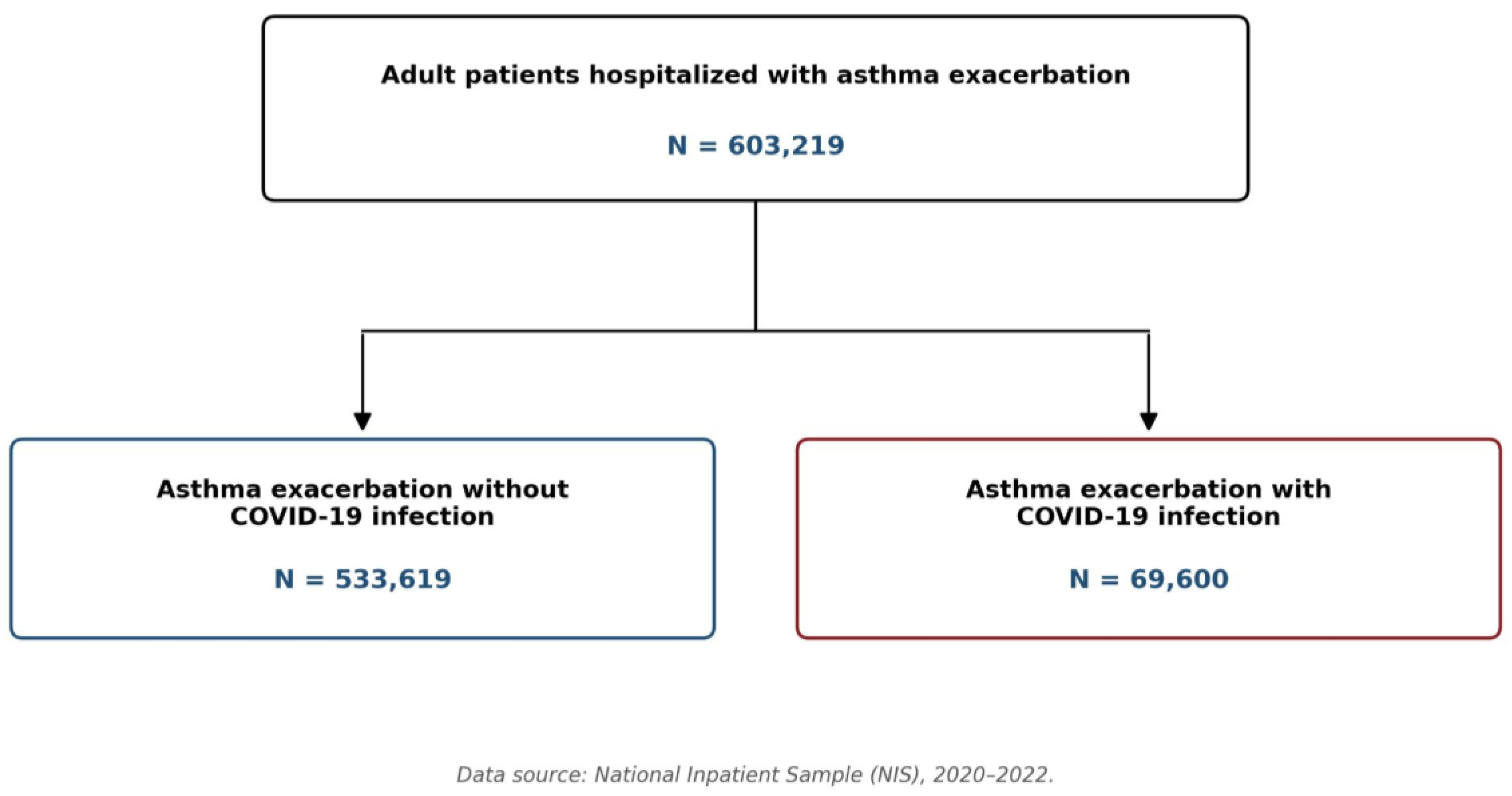
Figure 7.
Rates of Asthma Exacerbations with and without COVID-19 Infection from the years 2020-2022.
Figure 7.
Rates of Asthma Exacerbations with and without COVID-19 Infection from the years 2020-2022.
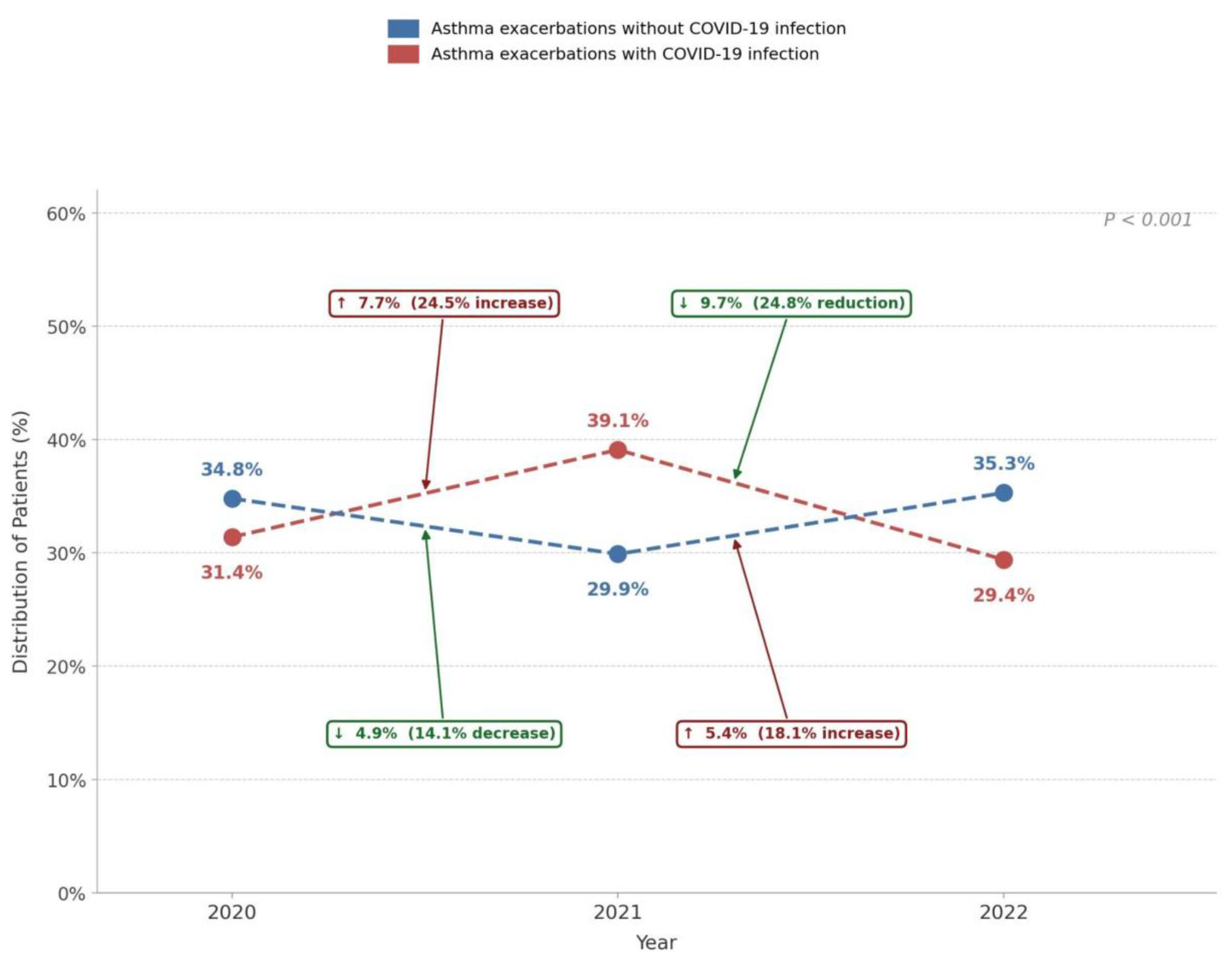

Table 1.
Demographic and Clinical Characteristics of Hospitalized Patients With Asthma Exacerbations, Stratified by COVID-19 Infection Status.
Table 1.
Demographic and Clinical Characteristics of Hospitalized Patients With Asthma Exacerbations, Stratified by COVID-19 Infection Status.
| Variable |
Asthma exacerbations without COVID-19 (n =533,619) |
Asthma exacerbations with COVID-19 (n =69,600) |
P-Value |
| Age, mean (years) | 56.3 | 55.1 | <0.001 |
| Sex | 0.125 | ||
| Male | 30.1% | 30.8% | |
| Female | 69.9% | 69.2% | |
| Race | <0.001 | ||
| Caucasian | 50.1% | 48.3% | |
| African American | 28.2% | 25.6% | |
| Hispanic | 14.7% | 18.5% | |
| Asian/Pacific Islander | 3.0% | 3.3% | |
| Native American | 0.7% | 1.0% | |
| Other | 3.2% | 3.2% | |
| National Income Quartile | 0.001 | ||
| $1–$38,999 | 35.2% | 33.6% | |
| $39,000–$47,999 | 25.2% | 26.2% | |
| $48,000–$62,999 | 22.2% | 22.9% | |
| >$63,000 | 17.3% | 17.3% | |
| Insurance | <0.001 | ||
| Medicare | 44.1% | 37.4% | |
| Medicaid | 27.5% | 23.6% | |
| Private | 22.1% | 35.5% | |
| Uninsured | 6.3% | 3.5% | |
| Charlson Comorbidity Index | — | ||
| 0 | 0% | 0% | |
| 1 | 43.5% | 48.4% | |
| 2 | 22.3% | 25.0% | |
| ≥3 | 34.2% | 26.6% | |
| Hospital Region | 0.016 | ||
| Northeast | 22.6% | 21.2% | |
| Mid-West | 20.8% | 21.4% | |
| South | 37.2% | 37.7% | |
| West | 19.4% | 19.7% | |
| Hospital Location & Teaching Status | 0.195 | ||
| Rural | 7.2% | 7.7% | |
| Urban, Non-Teaching | 18.9% | 19.1% | |
| Urban, Teaching | 73.8% | 73.2% | |
| Hospital Bed Size | 0.135 | ||
| Small | 26.5% | 26.1% | |
| Medium | 30.0% | 29.3% | |
| Large | 43.5% | 44.5% | |
| Hospital Division | <0.001 | ||
| New England | 5.4% | 4.7% | |
| Middle Atlantic | 17.2% | 16.5% | |
| East North Central | 15.4% | 15.9% | |
| West North Central | 5.4% | 5.6% | |
| South Atlantic | 22.1% | 23.3% | |
| East South Central | 5.1% | 4.7% | |
| West South Central | 10.1% | 9.7% | |
| Mountain | 6.2% | 7.9% | |
| Pacific | 13.1% | 11.8% |
NIS = National Inpatient Sample; COVID-19 = Coronavirus Disease 2019.
Disclaimer/Publisher’s Note: The statements, opinions and data contained in all publications are solely those of the individual author(s) and contributor(s) and not of MDPI and/or the editor(s). MDPI and/or the editor(s) disclaim responsibility for any injury to people or property resulting from any ideas, methods, instructions or products referred to in the content. |
© 2026 by the authors. Licensee MDPI, Basel, Switzerland. This article is an open access article distributed under the terms and conditions of the Creative Commons Attribution (CC BY) license.
Copyright: This open access article is published under a Creative Commons CC BY 4.0 license, which permit the free download, distribution, and reuse, provided that the author and preprint are cited in any reuse.


