

Submitted:
29 July 2026
Posted:
30 July 2026
You are already at the latest version
Abstract
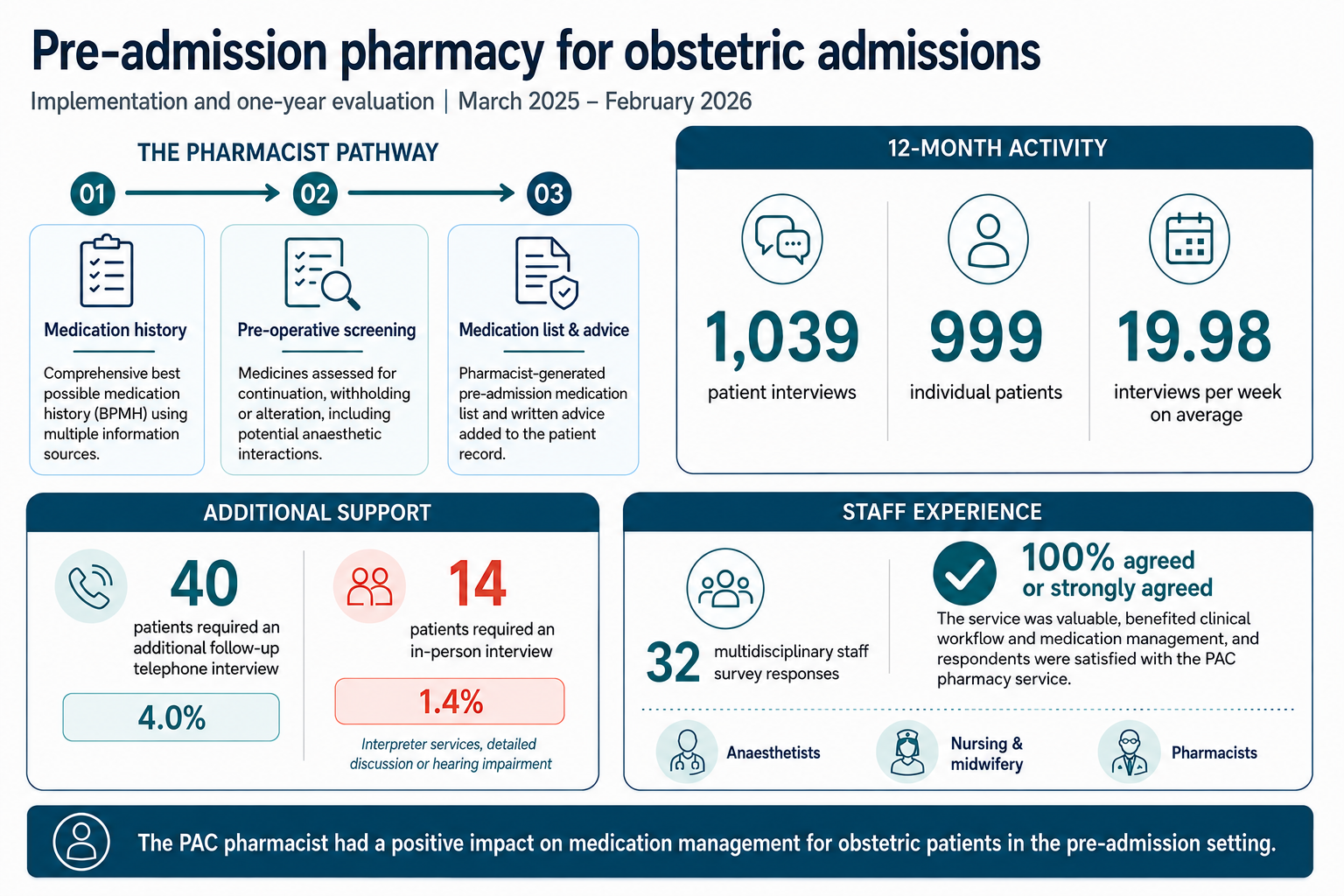
(1) Objective: This study aims to evaluate the pre-admission pharmacist for high-risk obstetric patients’ admissions on medication management processes, workflow efficiency, and staff satisfaction. (2) Methods: Data collected over a 12-month period, from March 2025 to February 2026, were analysed. Data collected included clinic type, patient attendance, mode of pharmacist review, and follow-up requirements. Multidisciplinary healthcare professionals were invited to complete a satisfaction survey to identify themes relating to service value, workflow impact, and opportunities for improvement. (3) Results: A total of 1039 interviews with obstetric patients equating to an average of 19.98 interviews per week. A total of 999 patients were involved in the 1039 interviews held, 40/999 (4%) patients required additional follow-up telephone interview and 14 patients (14/999, 1.4%) requiring in-person interview for interpreter services, detailed discussion or hearing impairment. Thirty-two staff responded to a survey and demonstrated a consistent trend across anaesthetists, nursing and midwifery staff and pharmacists. All respondents either agreed or strongly agreed that PAC pharmacist in obstetric setting was valuable and beneficial to clinical workflow and medication management processes, and that they were satisfied with the PAC pharmacy service. (4) Conclusion: The PAC pharmacist demonstrated a positive impact on medication management for obstetric patients within the pre-admission setting.
Keywords:
medication history
; preadmission clinic
; obstetric and gynaecology
; telehealth consultation
1. Introduction
Medication safety in pregnancy requires careful consideration of both maternal and fetal wellbeing. Physiological changes during pregnancy, increasing rates of multimorbidity, and the increasing prevalence of high-risk obstetric populations contribute to heightened vulnerability to medication-related harm.[1] Ensuring accurate medication histories and timely optimization of pharmacotherapy in this cohort of patients is critical. Medication discrepancies and delayed medication reconciliation remain common in both obstetric and general hospital settings, with potential consequences including adverse drug events, delayed treatment and suboptimal therapeutic outcomes. [2,3]
Pharmacist-led interventions, including medication reconciliation and clinical review, have consistently demonstrated improved medication safety and reduced errors across healthcare settings. Clinical pharmacist services are associated with improved accuracy of best possible medication histories (BPMH), enhanced identification of drug-related problems, and more timely provision of clinical recommendations.[4,5] While some studies support embedded ward-based pharmacists as sufficient, others report that dedicated pre-admission or outpatient pharmacy clinics offer improved efficiency, earlier intervention, and better continuity of care.[2,3,6,7,8,9]
Proactive medication review has been associated with optimized pharmacotherapy regimens, enhanced multidisciplinary communication, and potential reductions in medication-related problems. Within tertiary hospitals, pre-admission clinics (PACs) provide a critical opportunity to identify and address medication-related problems prior to admission. [6,7,8,9] Previous studies have demonstrated the importance of the PAC pharmacist in reducing medication-related problems through improved quality of BPMH documentation, medication reconciliation, and pharmacist intervention. [6,7,8,9]
Within obstetric care, the integration of pharmacists into pre-admission workflows remains variable with the evidence supporting dedicated pharmacist-led clinics for high-risk obstetric patients is still emerging. Recent literature highlights the value of early pharmacist involvement in antenatal and pre-admission care, particularly for patients with complex comorbidities, polypharmacy, or high-risk conditions such as diabetes, hypertension, and thromboembolic disease. [2,3,4,5] The implementation of a pharmacist-led pharmacy review clinic within this high-risk setting facilitates comprehensive medication management and medication review during a vulnerable period in a woman’s pregnancy journey.[10,11] A recent study evaluating the impact of a pharmacist-led elective caesarean section PAC demonstrated enhance workflow efficiency, BPMH completion and increased patient preparedness for post-operative analgesic supply on discharge.[11]
At the study hospital, pharmacy services have supported the assessment of high-risk patients in three of six preadmission clinics since 2007, within the gynaecology, urogynecology and gynaecological oncology surgical clinics.12 Historically, clinical pharmacist advice was provided on an ad hoc basis through pharmacy intern support when required, averaging approximately 6-7 patients per week.[12] In 2025, a dedicated PAC pharmacist role was formalized across the hospital’s pre-admission services, with the scope of the role expanded to include all 6 PACs. This expansion incorporated elective caesarean section, high-risk anesthetic, and high-risk obstetric PACs, in addition to the existing gynaecological surgical services. The establishment of this role aimed to improve consistency of medication management, enhance multidisciplinary support, and strengthen medication safety processes for high-risk surgical and obstetric patients.
This study aims to investigate the impact of a pharmacist-led pharmacy review clinic for high-risk obstetric patients on multidisciplinary workflow efficiency and medication management processes. Whether the introduction of a pharmacist-generated medication list with documented advice & recommendations improves efficiency, preparedness, and staff satisfaction. It also aims to assess if this service helps with medication charting on admission and enhances overall efficiency across the multidisciplinary team.
2. Materials and Methods
Patients identified as high-risk were contacted by the PAC pharmacist prior to their scheduled in-person PAC appointment. Six PACs were conducted weekly at the study hospital, The obstetric PAC pharmacy service consisted of 3 weekly clinics, including 2 pre-elective caesarean clinics and 1 high-risk anesthetic obstetric clinic. The main mode of communication for pharmacy PAC was through telephone interview. The patients were contacted by the PAC pharmacist by phone a week prior to their scheduled in-person PAC appointment. Six PACs were conducted weekly at the study hospital, The obstetric PAC pharmacy service consisted of 3 weekly clinics, including 2 pre-elective caesarean clinics and 1 high-risk anesthetic obstetric clinic. The main mode of communication for pharmacy PAC was through telephone interview. The patients were contacted by the PAC pharmacist by phone a week before their scheduled in-person appointment.
During the consultation, the pharmacist obtained a comprehensive BPMH using multiple information sources to maximize completeness and accuracy. Sources included patient interview, dispensing histories, Digital Medical Record (DMR) review, referral documentation, and communication with community healthcare providers where required. The pharmacist also screened medications for preoperative considerations, including the need for withholding, continuation, or alteration prior to surgery, and assessed for potential interactions with commonly used anesthetic agents. Where additional support or clarification was required, such as interpreter services, hearing impairment, or uncertainty regarding medication regimens, the consultation was conducted in person during the patient’s scheduled PAC appointment.
During the consultation, the pharmacist provided individualized medication instructions to patients and, where necessary, liaised with community Webster-packing pharmacies to facilitate pre-operative medication changes. Following review, a pharmacist-generated medication list (Medication List for Pre-Admission) and written medication advice were completed. The written advice included instructions regarding medication changes required prior to surgery, as well as reminders for patients to bring their usual medications to hospital on admission. This written advice process was implemented as a quality improvement initiative following recommendations from staff feedback obtained in a previous service evaluation.[12]
Following the PAC pharmacist consultation, both the medication list and written advice were uploaded to the patient’s DMR to ensure accessibility by the multidisciplinary team. In addition, a physical copy was included in the patient’s surgical pack for reference during the PAC appointment and admission process.
2.1. Data Collection
Data collected over a 12-month period, from March 2025 when the PAC pharmacist expanded the service to obstetric patients, to February 2026, were analyzed in this study. Key patient details, including unique medical record number, date of admission, and date of interview, clinic type, patient attendance, mode of pharmacist review (telephone or client present), follow-up requirements, were recorded in a secured Microsoft Excel® spreadsheet. This spreadsheet was used to support service activity tracking, record pharmacist review activity, and document attendance in the hospital patient administrative system.
2.2. Staff Survey
Multidisciplinary healthcare professionals including medical, nursing, midwifery, pharmacy and allied health staff, were invited to complete an online satisfaction survey via Microsoft Forms®. Non-clinical staff were excluded.
The survey included statements seeking level of agreement and an overall rating of satisfaction using the response options across a 5-point Likert scale of strongly agree to strongly disagree. Nurses, midwives and allied health staff received the same questions, while anesthetists and pharmacists received additional questions specific to their roles. Health professionals were also invited to provide free-text recommendations and comments.
Survey responses were collated and analyzed using Microsoft Excel®. Descriptive statistics were used to summarize responses, including frequences and percentages. Free-text responses were reviewed to identify recurring themes relating to service value, workflow impact, communication, and opportunities for improvement.
Human Research Ethics approval was gained from the Women and Newborn Health Service Quality Improvement Committee (Approval number: GEKO 64450) at the study hospital.
3. Results
3.1. Data Collection
Service activity data was prospectively collected over a 12-month period for patients reviewed through the obstetric pre-admission clinics (PACs). During the study period, a total of 1039 interviews with obstetric patients were held by the PAC Pharmacist, equating to an average of 19.98 interviews per week (Figure 1). A total of 999 patients were involved in the 1039 interviews held, 40/999 (4%) patients required additional follow-up telephone interview following initial review. The follow-up telephone consultation was organized to clarify medication histories, provide further medication counselling, confirm preoperative medication managements plans, or communicate medication changes. A total of 14 patients (14/999, 1.4%) requiring additional support, including those with language barriers requiring interpreter services (2/999, 0.2%), and complex medication regimens requiring detailed discussion or hearing impairment requiring further clarification (12/999, 1.2%). These patients were reviewed in person during their scheduled in-person PAC appointment.
Out of 999 patients interviewed by the PAC pharmacists, 775/999 (77.6%) had their planned admission date confirmed at the time of interview. Reasons for unknown admission date include spontaneous vertex delivery, extended time between PAC and approximate admission week and early referral to PAC pharmacist during antenatal care. Of the 775 patients with a known admission date, the average days between PAC and admission date was 12.4 days, and the median was 13 days.
3.2. Staff Survey
A total of 32 survey responses were received, incorporating 12 anesthetists, 10 nurses/midwives, nine pharmacists, and one allied health staff member. Among 11 nurses, midwives, and allied health staff respondents, 8/11 (72.7%) strongly agreed and 3/11 (27.3%) agreed that the medication list generated by the PAC pharmacist assisted in their role, was useful to have prior to patient assessment, and that access to a PAC pharmacist supported the management of medication-related queries. Additionally, 9/11 (81.8%) strongly agreed and 2/11 (18.2%) agreed that they were satisfied with the PAC pharmacy service overall (Figure 2).
Of the 12 responses received from anesthetists, 11 respondents identified as anesthetic consultants, while 1 respondent did not specify their role (Figure 2). When asked how frequently they had utilized the PAC pharmacy service including reviewing pharmacist-generated medication lists or documented advice or directly consulting with the PAC pharmacist regarding patient management one respondent did not provide a response, 3/12 (25%) reported utilizing the service between 6 and 10 times, and 8/12 (66.7%) indicated they had used the service more than 10 times.
A total of 11/12 (91.7%) strongly agreed and 1/12 (8.3%) agreed that they were satisfied with the PAC pharmacy service. Respondents also agreed that the medication list generated by the PAC pharmacist assisted in their role, was useful to have prior to patient assessment, and improved the efficiency of medication charting during the admission process. Regarding the usefulness of written pharmacist recommendations related to medication interactions with anesthetic agents, 6/12 (50%) strongly agreed, 4/12 (33.3%) agreed, and 2/12 (16.7%) were neutral.
Nine responses were received from pharmacists. All pharmacist respondents (100%) strongly agreed that having access to a medication list generated by the PAC pharmacist prior to patient assessment was useful and that they referred to the PAC medication list when completing the BPMH (Figure 2).
Additionally, 8/9 (88.9%) strongly agreed and 1/9 (11.1%) agreed that PAC medication lists assisted their role as a clinical pharmacist, that access to a PAC pharmacist supported the management of medication-related queries, and that they were satisfied with the PAC pharmacy service. Regarding medication safety outcomes, 6/9 (66.7%) strongly agreed, and 3/9 (33.3%) agreed that PAC medication lists contributed to a reduction in charting errors on admission.
When asked to leave a free-text response on areas for improvement for the PAC pharmacy service, the responses received were very positive. Some of the responses received are highlighted in Table 1.
4. Discussion
This one-year evaluation examined the introduction of the PAC pharmacy service within the obstetric directorate and its impact on pharmacist-led medication review for obstetric patients. During the study period, 959/999 (96%) of patients did not require follow-up interviews and 999/1039 (98.6%) of interviews conducted by telephone suggested that telephone consultation was effective for obtaining BPMHs and providing medication advice for most obstetric patients.
The established workflow of the PAC pharmacist, in which the pharmacist completed a telephone consultation approximately one week prior to the patient’s scheduled PAC appointment with nursing and anesthetists was well received by the multidisciplinary team. This process ensured that prior to the patient’s attendance PAC, the pharmacist generated medication list, and written medication advice were available in the patient’s medical file accessible by anesthetists, nurses, midwives and allied health staff. Prior to clinical assessment, the availability of this information supported more consistent admission planning, improved communication across the multidisciplinary team, and contributed to greater workflow efficiency within the PAC setting.
The multidisciplinary staff survey responses demonstrated a consistent trend across anesthetists, nursing and midwifery staff, and pharmacists that pharmacist involvement within the PAC setting was valuable and beneficial to clinical workflow and medication management processes. Free-text responses further supported these findings, with staff frequently describing the PAC pharmacist role as highly valued and beneficial to patient care and multidisciplinary communication. No respondents selected “disagree” or “strongly disagree” for any survey statement relating to the usefulness or satisfaction with the PAC pharmacy service. All respondents either agreed or strongly agreed that they were satisfied with the PAC pharmacy service. Compared with the staff survey conducted in 2022, these findings suggest improved staff satisfaction and perceived value following the formalization and expansion of the PAC pharmacist role.[12]
Anesthetists and pharmacists demonstrated stronger agreement with statements relating to the impact and usefulness of pharmacist-generated medication lists when compared with nursing and midwifery staff. For the statement, “I find it useful having the medication list prior to assessing the patient”, 8/11 (72.7%) nursing and midwifery staff strongly agreed, compared with 11/12 (91.7%) anesthetists strongly agreeing and all pharmacist 9/9 (100%) strongly agreed with this statement. This may reflect the more direct integration of medication lists into anesthetic assessment, perioperative medication charting, and pharmacist BPMH preparation workflows.
A small number of anesthetists selected “neutral” in response to statements relating to the usefulness of written pharmacist recommendations regarding medication interactions with anesthetic agents (2/12, 16.7%) and whether access to a PAC pharmacist supported the management of medication-related queries (1/12, 8.3%). Free-text responses suggested that anesthetists placed greater value on the PAC pharmacist role in medication reconciliation and advice regarding medications requiring withholding prior to surgery, rather than detailed written recommendations regarding anesthetic drug interactions.
Several limitations should be considered when interpreting the findings of this study. Participation in the staff survey was voluntary, introducing the potential for self-selection bias, which may limit generalizability of the results. Additionally, pharmacists were relatively new to the PAC clinic environment and the DMR system following formalization of the PAC pharmacist role. During the initial implementation phase, PAC pharmacist-completed medication lists were paper-based and scanned into the DMR, which may have reduced visibility and accessibility for other healthcare professionals, including ward pharmacists. This limitation was addressed through staff education and increased awareness regarding the location and utilisation of PAC pharmacist documentation within the DMR. Finally, this study was conducted at a single tertiary women’s hospital, and therefore findings may not be generalizable to other healthcare settings or patient populations outside specialized women’s health services.
5. Conclusions
The PAC pharmacist demonstrated a positive impact on medication management for high-risk obstetric patients through comprehensive BPMH collection, improved documentation practices, and medication reconciliation within the pre-admission setting. Early pharmacist involvement supported preoperative medication management planning and facilitated communication of medication changes and recommendations to both patients and the multidisciplinary team. The pharmacist-generated medication list and pre-operative medication advice also contributed to improved accessibility of medication information during the perioperative journey and supported continuity of care across clinical teams.
The new pharmacy-led service was recognized as valuable and beneficial by anesthetists, nursing and midwifery staff, allied health staff, and pharmacists, with high levels of agreement regarding the usefulness of pharmacist involvement. Staff feedback suggested that the role improved workflow efficiency, enhanced preparedness for patient assessment, supported medication charting processes, and assisted in the management of medication-related queries within the PAC environment. Importantly, no negative responses were received regarding satisfaction with the service, further highlighting the strong multidisciplinary acceptance of the role.
Author Contributions
Conceptualization, S.T and N.M.; methodology, B.C., S.T.,T.L., and N.M.; validation, B.C., S.T.; formal analysis, B.C., S.T.; investigation, B.C., S.T.; data curation, B.C., S.T.; writing—original draft preparation, B.C., S.T.; writing—review and editing, T.L., N,M.; visualization, S.T.; supervision, S.T, T.L; administration, S.T., N.M. All authors have read and agreed to the published version of the manuscript.
Funding
This research received no external funding.
Institutional Review Board Statement
Human Research Ethics approval was gained from the Women and Newborn Health Service Medicines and Therapeutics Committee on the 2nd of December 2025 (Approval number: GEKO 64450) at King Edward Memorial Hospital.
Informed Consent Statement
Not applicable.
Data Availability Statement
The original contributions presented in this study are included in the article. Further inquiries can be directed to the corresponding author(s).
Acknowledgments
The authors would like to thank Mr Marcus Femia for his support in the study.
Conflicts of Interest
The authors declare no conflicts of interest.
Abbreviations
The following abbreviations are used in this manuscript:
| PAC | Pre-admission clinic |
| BPMH | Best possible medication histories |
| DMR | Digital Medical Record |
References
- Pariente, G.; Leibson, T.; Carls, A.; Adams-Webber, T.; Ito, S.; Koren, G. Pregnancy-associated changes in pharmacokinetics: a systematic review. PLoS Med. 2016, 13(11), e1002160. [Google Scholar] [CrossRef] [PubMed]
- Tam, V.C.; Knowles, S.R.; Cornish, P.L.; Fine, N.; Marchesano, R.; Etchells, E.E. Frequency, type and clinical importance of medication history errors at admission to hospital: a systematic review. Cmaj 2005, 173(5), 510–5. [Google Scholar] [CrossRef] [PubMed]
- Mueller, S.K.; Sponsler, K.C.; Kripalani, S.; Schnipper, J.L. Hospital-based medication reconciliation practices: a systematic review. Arch. Intern. Med. 2012, 172(14), 1057–69. [Google Scholar] [CrossRef] [PubMed]
- Kwan, J.L.; Lo, L.; Sampson, M.; Shojania, K.G. Medication reconciliation during transitions of care as a patient safety strategy: a systematic review. Ann. Intern. Med. 2013, 158(5_Part_2), 397–403. [Google Scholar] [CrossRef] [PubMed]
- Mekonnen, A.B.; Abebe, T.B.; McLachlan, A.J.; Brien, J.A. Impact of electronic medication reconciliation interventions on medication discrepancies at hospital transitions: a systematic review and meta-analysis. BMC Med. Inform. Decis. Mak. 2016, 16(1), 112. [Google Scholar] [CrossRef] [PubMed]
- Beard, L.; Chellaram, V.; Botta, S.; Suleiman, M.; Nooney, V.; Shahin, W.; Khoshaba, J. Evaluating the impact of the pre-admission clinic pharmacist on perioperative medication management in elective surgery patients. J. Pharm. Pract. Res. 2025. [Google Scholar] [CrossRef]
- George, L.J.; Senturk-Raif, R.; Hodgkinson, M.R.; Emmerton, M.; Larmour, I. Impact of a surgical preadmission clinic pharmacist on the quality of medication management from preadmission to discharge: a randomised controlled study. J. Pharm. Pract. Res. 2011, 41(3), 212–6. [Google Scholar] [CrossRef]
- Naseralallah, L.; Koraysh, S.; Aboujabal, B.; Alasmar, M. Interventions and impact of pharmacist-delivered services in perioperative setting on clinically important outcomes: a systematic review and meta-analysis. Ther. Adv. Drug Saf. 2024, 15, 20420986241260169. [Google Scholar] [CrossRef] [PubMed]
- Bui, T.; Fitzpatrick, B.; Forrester, T.; Gu, G.; Hill, C.; Mulqueen, C.; Penno, J.; Yu, A.; Munro, C.; Mellor, Y. Standard of practice in surgery and perioperative medicine for pharmacy services. J. Pharm. Pract. Res. 2022, 52(2). [Google Scholar] [CrossRef]
- Dwyer, J.; Clark, M.; Grzeskowiak, L.; Lau, C.; Lebedevs, T.; Luttrell, K.; McGuire, T.; O'Hara, K.; Soo, J.Y.; Mellor, Y. Standard of practice in women's and newborn health for pharmacy services. J. Pharm. Pract. Res. 2024, 54(4), 333–51. [Google Scholar] [CrossRef]
- Lau, C.; Wardan, R. Impact of a pharmacist-led elective caesarean section pre-admission clinic on efficiency of pharmacist workflow and patient preparedness for post-operative discharge medication supply: a retrospective observational study. Int. J. Clin. Pharm. 2025, 47(6), 1997–2007. [Google Scholar] [CrossRef] [PubMed]
- Triscari, N.; Teoh, S.W.; Femia, M. Evaluation of the clinical pharmacist services at a gynaecological oncology preadmission clinic. Explor. Res. Clin. Soc. Pharm. 2023, 9, 100213. [Google Scholar] [CrossRef] [PubMed]
Figure 1.
Number of patients interviewed by the PAC pharmacist from March 2025 to February 2026.
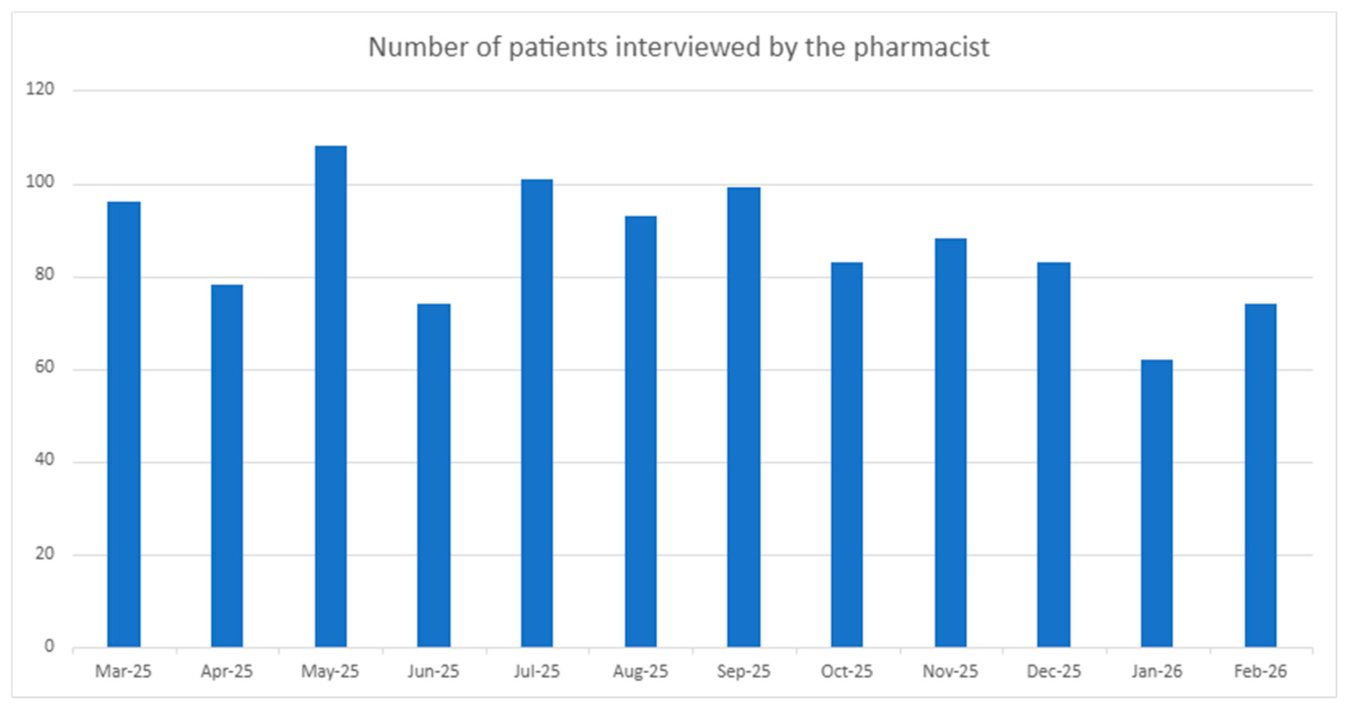
Figure 2.
Responses from staff survey.
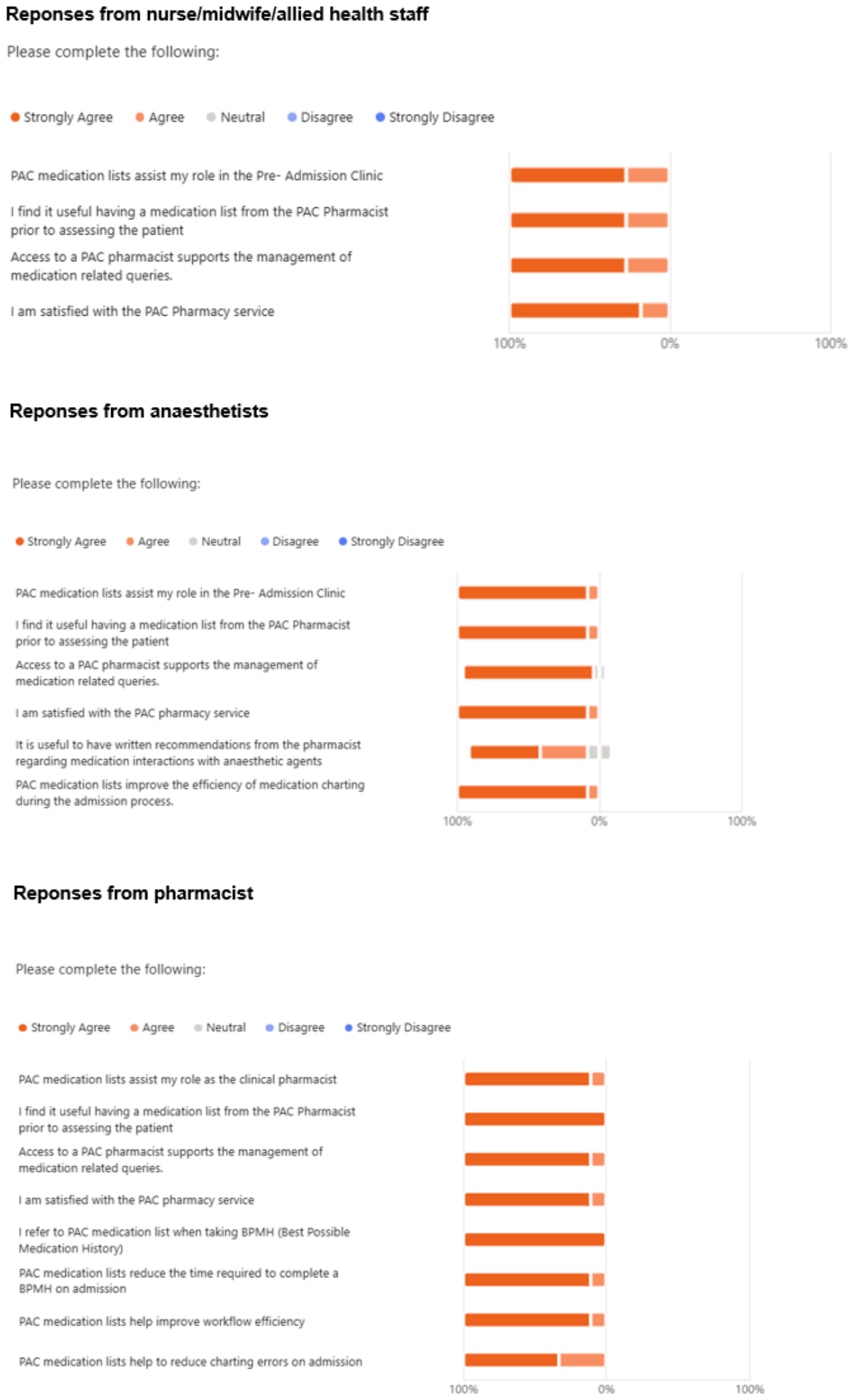

Table 1.
Some examples of responses received.
| Role | Responses |
| Nurse/midwife/allied health | Pharmacy is vital to the care of the patient prior to their procedure as well as recovery care. Their knowledge helps the anaesthetic team and nursing staff support the patient through there hospital journey. |
| Nurse/midwife/allied health | Having a consistent presence of a known pharmacist at all clinics is incredibly helpful, i.e. I really noticed it when [the regular pharmacist] was on leave and others were covering or especially when we had no cover!! It definitely helps having these assessments completed before we see the patients and the advice provided to the patients is incredibly valuable. |
| Nurse/midwife/allied health | PAC Pharmacy supports us very well in the PAC C/S clinic and it should be a permanent role. |
| Anaesthetist | It would be ideal if the medication advice could be a joint statement (i.e. discuss complex cases with anaesthetist and issue advice) currently it seems to be a 2-step process (1. See pharmacist 2. Anaesthetist gives final advice) I understand this might be logistically challenging |
| Anaesthetist | Works great very useful saves me a lot of time. |
| Anaesthetist | Rather than “interactions with anaesthetic agents” the utility of PAC pharmacist from our point of view is 1. reconciliation AND 2. consistency in messaging of medications needing to be withheld preop, and timing of that, as per the agreed PAC/anaesthetic guidelines. |
| Anaesthetist | Occasionally the medication advice (e.g. what to withhold) is overly conservative but that is subjective and I'd prefer more rather than less. |
| Anaesthetist | Having a consistent presence of a known pharmacist at all clinics is incredibly helpful, i.e. I really noticed it when our regular PAC pharmacist was on leave and others were covering or especially when we had no cover! It definitely helps having these assessments completed before we see the patients and the advice provided to the patients is incredibly valuable. |
| Pharmacist | Patients are having their regular medications charted on their arrival to the ward either pre or postop, when previously patients would get their regular medications charted only once I've seen them to do their MMP usually, the day after their surgery |
| Pharmacist | Extremely valuable service! |
| Pharmacist | Continue as is. Time saving if patient has interacted with PAC service when taking the BPMH on the wards |
| Pharmacist | Confirmation PAC pharmacy service is supported in the long term |
Disclaimer/Publisher’s Note: The statements, opinions and data contained in all publications are solely those of the individual author(s) and contributor(s) and not of MDPI and/or the editor(s). MDPI and/or the editor(s) disclaim responsibility for any injury to people or property resulting from any ideas, methods, instructions or products referred to in the content. |
© 2026 by the authors. Licensee MDPI, Basel, Switzerland. This article is an open access article distributed under the terms and conditions of the Creative Commons Attribution (CC BY) license.
Copyright: This open access article is published under a Creative Commons CC BY 4.0 license, which permit the free download, distribution, and reuse, provided that the author and preprint are cited in any reuse.