

Submitted:
29 July 2026
Posted:
30 July 2026
You are already at the latest version
Abstract
Background: Tourette syndrome (TS) is a neurodevelopmental disorder characterized by persistent motor and vocal tics. Current treatments mainly target dopamine D2 receptors but are often limited by adverse effects. Ecopipam, a selective dopamine D1 receptor antagonist, has emerged as a potential non-D2 therapeutic alternative. Methods: PubMed, Embase, Cochrane Library, Google Scholar, and ClinicalTrials.gov were systematically searched for prospective studies evaluating ecopipam in TS. Outcomes included tic severity (YGTSS-TTS), global clinical severity (CGI-S), depressive symptoms, obsessive-compulsive symptoms, and safety. This review was registered in PROSPERO (CRD420261463713). Results: Five studies involving 556 participants were included. Ecopipam significantly improved tic severity (YGTSS-TTS: MD −7.83, 95% CI −10.54 to −5.12) and global clinical severity (CGI-S: MD −0.82, 95% CI −1.04 to −0.60). No significant effects were observed on depressive symptoms (SMD −0.16, 95% CI −0.33 to 0.01) or obsessive-compulsive symptoms (SMD −0.10, 95% CI −0.29 to 0.09). Results remained consistent in randomized-trial and pediatric subgroup analyses. Ecopipam was generally well tolerated, with no significant increases in serious adverse events, overall adverse events, or treatment discontinuation. Conclusions: Ecopipam improves tic severity and global clinical status while maintaining a favorable safety profile, supporting its potential as a non-D2 treatment for TS. Further long-term studies are warranted.
Keywords:
ecopipam
; EBS-101
; Tourette syndrome
; dopamine D1 receptor antagonist
; non-D2 therapy
; tic disorders
; YGTSS-TTS
; safety
; efficacy
; meta-analysis
1. Introduction
Tourette syndrome (TS) is a neurological condition marked by tics, which are abrupt, semi-voluntary repetitive movements or sounds. It falls under the category of tic disorders, which are defined by the existence of at least one verbal tic and several motor tics [1]. The number, location, kind, and intensity of tics can all be controlled to some extent [2]. Tics typically emerge between 2 and 15 years of age [2]. Early adolescence is typically when the intensity of tic symptoms peaks, and they may persist into adulthood [3]. Additionally, TS is frequently associated with neuropsychiatric comorbidities, including attention-deficit/hyperactivity disorder (ADHD), obsessive-compulsive disorder (OCD), depression, and anxiety, which contribute substantially to disease burden and are often accompanied by significant academic, social, emotional, and functional impairments, resulting in reduced quality of life among affected children and adolescents [4].
TS has been linked to mutations in a number of genes. These include mutations in the genes NRXN1, CNTN6, and SLITRK1, which are essential for the development and transmission of neurons [5]. However, the bulk of TS cases result from a combination of polygenic mutations and environmental factors, making these mutations as the exclusive causes of TS uncommon [6]. Males are more likely than females to have TS, which appears to affect 1 to 10 in 1000 youngsters, while the precise prevalence is unknown [1].
The intricacy of the condition, the variable nature of symptoms, comorbidities, and the absence of a disease-specific pharmacological target to TS provide many difficulties in managing TS [7]. Currently, dopamine D2 receptor-blocking antipsychotics such haloperidol, pimozide, and aripiprazole are the main pharmacological therapies for TS [8]. Despite the fact that these drugs are useful in lessening the intensity of tics, their clinical application is sometimes restricted by side effects such as weight gain, metabolic problems, drowsiness, and extrapyramidal symptoms, which can lower treatment tolerance and adherence [9]. Higher potency dopamine antagonists are more successful at reducing tics [10]. Tiapride, a benzamide, reduces pediatric tics without negatively affecting cognitive performance, according to a double-blind, placebo-controlled research [11]. Research revealed that acetylcholine, GABA, and noradrenaline-modulating drugs might be useful in managing tics [12]. There is substantial evidence that tic symptoms in some TS patients are caused by abnormalities in dopamine control in subcortical areas or particular cortical neurons [13,14]. Despite the availability of behavioral and pharmacologic treatments, many patients continue to experience inadequate symptom control or treatment-limiting adverse effects, highlighting the need for novel therapeutic approaches with improved efficacy and tolerability [15]. Additionally, patients with more severe TS had higher activity in dopamine pathways at D1 receptors, according to a study based on magnetic resonance imaging. This discovery suggests that tics may be relieved by blocking or decreasing the activation of dopamine pathways controlled by D1 [16]. In this context, contemporary reviews of TS have emphasized dopaminergic dysregulation within cortico-striato-thalamo-cortical circuits and highlighted D1 receptor antagonism as a novel therapeutic strategy currently under investigation [17].
A unique pharmacological strategy for treating TS is represented by ecopipam (EBS-101), a first-in-class selective dopamine D1 receptor antagonist. Ecopipam targets the D1 receptor pathway, which is thought to be involved in the dysregulation of dopaminergic signaling linked to tic production, in contrast to conventional antipsychotics that mainly block D2 receptors. Ecopipam demonstrates approximately 1000-fold greater affinity for D1 than D2 receptors [18,19]. Ecopipam improved tics in adult and pediatric TS patients without triggering metabolic or motor problems, according to earlier phase 2 studies [20,21]. Furthermore, recent pharmacokinetic and mass-balance investigations demonstrated that ecopipam is primarily metabolized via UGT1A9-mediated glucuronidation, with only a minor contribution from CYP3A4-mediated formation of the active metabolite EBS-101-40853, supporting a predictable pharmacokinetic profile and limited accumulation of clinically relevant metabolites [22]. Additionally, patient-oriented summaries of more recent clinical trials have also highlighted sustained improvements in tic severity, quality of life, and long-term tolerability during extended ecopipam treatment, reflecting growing interest in dopamine D1 receptor antagonism as a therapeutic strategy for TS [23].
To comprehensively evaluate the therapeutic potential of ecopipam in TS, we performed a systematic review and meta-analysis of the available clinical studies. Outcomes of interest included tic severity assessed by the Yale Global Tic Severity Scale Total Tic Score (YGTSS-TTS), global clinical severity measured using the Clinical Global Impression-Severity (CGI-S) scale, depressive symptoms evaluated with the Hamilton Depression Rating Scale (HAM-D), Children's Depression Inventory (CDI), and Children's Depression Rating Scale-Revised (CDRS-R), as well as OCD symptoms assessed using the Yale-Brown Obsessive Compulsive Scale (Y-BOCS) and Children's Yale-Brown Obsessive Compulsive Scale (CY-BOCS). Safety outcomes included both serious adverse events (SAEs) and non-serious adverse events. Through this quantitative synthesis, we aimed to determine the efficacy and safety profile of ecopipam and to clarify its potential role as a novel non-D2 dopaminergic therapeutic option for TS.
2. Methods
2.1. Primary and Secondary Outcomes
The primary outcome of this study was the change in tic severity, assessed using the YGTSS-TTS. Secondary outcomes included overall clinical severity measured by the CGI-S scale, depressive symptoms evaluated using the HAM-D, CDI, and CDRS-R, and OCD symptoms assessed using the Y-BOCS and CY-BOCS. Safety outcomes included the incidence of SAEs, non-SAEs, and treatment discontinuation due to adverse events.
2.2. Literature Search Strategy
In accordance with the Preferred Reporting Items for Systematic Reviews and Meta-Analyses (PRISMA) guidelines (Table S1)[24], a systematic literature search was conducted in PubMed/Medline, Embase, the Cochrane Library, Google Scholar, and ClinicalTrials.gov from database inception to July 1st, 2026. Search terms included combinations of “Tourette syndrome,” “tic disorder,” “tics,” “ecopipam,” “EBS-101,” “dopamine D1 antagonist,” and related keywords (Table S2). No restrictions were applied regarding study design. Google Scholar screening was limited to the first 300 records sorted by relevance. Duplicate records were removed prior to screening, and titles, abstracts, and full-text articles were independently assessed for eligibility according to predefined inclusion and exclusion criteria. This systematic review and meta-analysis was registered in the International Prospective Register of Systematic Reviews (PROSPERO; CRD420261463713).
2.3. Inclusion and Exclusion Criteria
Studies were considered eligible if they evaluated ecopipam in patients with TS and reported efficacy and/or safety outcomes with sufficient data for quantitative synthesis. Both randomized controlled trials and prospective open-label studies were eligible for inclusion. Only original research articles published in peer-reviewed journals were considered. Studies were required to report at least one predefined efficacy or safety outcome, including tic severity, global clinical severity, psychiatric symptom measures, or adverse events. Studies were excluded if they were narrative reviews, systematic reviews, meta-analyses, editorials, letters, conference abstracts without sufficient extractable data, case reports, case series, animal studies, or in vitro investigations. Duplicate publications, secondary analyses of already included cohorts, and studies lacking sufficient outcome data for extraction were also excluded.
2.4. Data Extraction
Data extraction was performed independently by two reviewers using a standardized data collection form. The following information was extracted from each eligible study: first author, year of publication, study design, sample size, participant characteristics, intervention and comparator details, treatment duration, and follow-up period. The primary outcome was the change in tic severity measured by the YGTSS-TTS. Secondary efficacy outcomes included overall clinical severity assessed using the CGI-S scale, depressive symptoms measured with the HAM-D, CDI, and CDRS-R, and OCD symptoms evaluated using the Y-BOCS and CY-BOCS. Safety data extracted included SAEs, non-SAEs, discontinuations due to adverse events, and commonly reported adverse events such as headache, insomnia, fatigue, restlessness, decreased appetite, and nasopharyngitis. Data from the randomized-withdrawal phase were extracted according to the randomized comparison because this phase provided the controlled efficacy estimate. Any discrepancies in data extraction were resolved through discussion and consensus between the reviewers.
2.5. Quality Assessment
The methodological quality of the included studies was assessed according to study design. Randomized controlled trials were evaluated using the Cochrane Risk of Bias 2 (RoB 2) tool [25], whereas open-label studies were assessed using the Risk Of Bias In Non-randomized Studies of Interventions (ROBINS-I) tool [26]. The RoB 2 assessment examined bias arising from the randomization process, deviations from intended interventions, missing outcome data, outcome measurement, and selection of reported results. The ROBINS-I assessment evaluated potential bias due to confounding, participant selection, classification of interventions, deviations from intended interventions, missing data, outcome measurement, and selection of reported results. Two reviewers (N.M.V. and P.N.P.) independently performed the quality assessment, and any disagreements were resolved through discussion and consensus.
2.6. Certainty of Evidence
The certainty of evidence for each outcome was assessed using the Grading of Recommendations Assessment, Development and Evaluation (GRADE) framework [27]. The certainty of evidence was evaluated across the domains of risk of bias, inconsistency, indirectness, imprecision, and publication bias. Evidence from randomized controlled trials was initially considered high certainty, whereas evidence from non-randomized studies was initially considered low certainty. The overall certainty rating for each outcome was subsequently downgraded or upgraded according to GRADE recommendations.
2.7. Statistical Analysis
Meta-analyses were performed using random-effects models to account for potential clinical and methodological heterogeneity among the included studies. For continuous outcomes measured using the same instrument, mean differences (MDs) with 95% confidence intervals (CIs) were calculated. Standardized mean differences (SMDs) with 95% CIs were used when different scales assessed similar constructs. For dichotomous outcomes, risk ratios (RRs) with 95% CIs were calculated using the Mantel-Haenszel method. Between-study variance (τ²) was estimated using the restricted maximum likelihood (REML) approach [28]. Statistical heterogeneity was assessed using Cochran's Q test and quantified with the I² statistic and τ² values. Prediction intervals were calculated when appropriate to estimate the expected range of effects in future studies. Prespecified subgroup analyses were performed according to follow-up duration and outcome measurement scales when sufficient data were available. Publication bias was not formally assessed because fewer than 10 studies were available, which limits the reliability of funnel plot interpretation and statistical tests for asymmetry [29]. Statistical significance was defined as a two-sided p-value < 0.05. All analyses were conducted using R software (R Foundation for Statistical Computing, Vienna, Austria) [30]. Given the limited available evidence for ecopipam in TS, all eligible studies were included in the primary quantitative synthesis, including randomized controlled trials and prospective open-label studies [31]. For open-label studies, treatment effects were derived from baseline-to-endpoint outcome changes, whereas randomized trials contributed between-group comparative estimates. Sensitivity analyses restricted to randomized controlled trials were performed to evaluate the influence of study design on pooled estimates.
3. Results
3.1. Study Selection
A comprehensive literature search was conducted in PubMed/Medline, Embase, the Cochrane Library, Google Scholar, and ClinicalTrials.gov. A total of 326 records were identified (PubMed/Medline, n = 7; Embase, n = 9; Cochrane Library, n = 3; Google Scholar, n = 300; ClinicalTrials.gov, n = 7). After removal of 35 duplicate records, 291 records underwent title and abstract screening, of which 279 were excluded. Twelve reports were retrieved for full-text review, and all were successfully obtained. Following eligibility assessment, seven reports were excluded for the following reasons: ineligible study design (n = 3), review article, editorial, or commentary (n = 2), conference abstract with insufficient outcome data (n = 1), and duplicate publication or secondary analysis of an included trial (n = 1). Ultimately, five clinical studies met the eligibility criteria and were included in the qualitative and quantitative synthesis (Figure 1), comprising three randomized controlled trials and two prospective open-label studies.
3.2. Study Characteristics
The five included studies enrolled participants with TS across pediatric, adolescent, and adult populations and contributed data to efficacy analyses involving between 264 and 556 participants, depending on the outcome assessed (Table 1)(Table S3)[20,21,32,33,34]. Three studies were randomized, double-blind, placebo-controlled trials, whereas two were prospective open-label studies. Overall, the mean age of participants ranged from 11.4 to 30.5 years, and males represented 67.6% to 83% of study populations. The largest study was Gilbert et al. (2026) [34], which enrolled 216 participants, whereas Gilbert et al. (2014) enrolled 18 adults with TS [20]. Treatment duration ranged from 4 weeks to 12 months, with the phase 3 trial including a 12-week open-label period followed by a 12-week randomized-withdrawal phase. Ecopipam was administered as a fixed-dose regimen of 1.8 mg/kg/day in the three most recent studies, whereas earlier studies evaluated flexible dosing strategies. Tic severity was assessed using the YGTSS-TTS in all studies, and global clinical severity was assessed using the CGI-S scale or the Clinical Global Impression-Tourette Syndrome-Severity (CGI-TS-S) scale. Depressive symptoms were evaluated using the HAM-D, CDI, CDRS-R, or Patient Health Questionnaire-9 (PHQ-9), whereas OCD symptoms were assessed using the Y-BOCS, CY-BOCS, Y-BOCS-II, or CY-BOCS-II.
3.3. Quality Assessment
Risk-of-bias assessments are summarized in Table S4. The three randomized controlled trials were evaluated using the RoB 2 tool and were judged to have a low overall risk of bias. These studies demonstrated adequate randomization procedures, low risk of bias due to deviations from intended interventions, validated outcome assessment methods, and generally low risk of bias arising from missing outcome data. Some concerns regarding missing outcome data were identified in the phase 3 randomized-withdrawal trial because only treatment responders entered the randomized phase. In addition, some concerns regarding selection of reported results were identified in the earlier randomized trials because prespecified statistical analysis plans were not consistently available.
The two open-label studies were assessed using the ROBINS-I tool and were judged to have a moderate overall risk of bias. The principal limitations were the absence of blinding and concurrent control groups, resulting in a moderate risk of confounding and outcome measurement bias. Selection of participants, classification of interventions, deviations from intended interventions, and missing outcome data were considered to be at low risk of bias. No study was judged to have a serious or critical risk of bias.
Overall, the available evidence was considered to be of acceptable methodological quality, with low risk of bias among randomized trials and moderate risk of bias among open-label studies. The inclusion of a large multicenter phase 3 randomized clinical trial further strengthened the overall quality and certainty of the evidence base.
3.4. Meta-Analysis
3.4.1. Tic Severity and OCD Symptom Outcomes
Across five clinical studies involving 556 participants, ecopipam treatment was associated with a significant reduction in tic severity (Figure 2A). The pooled MD in YGTSS-TTS was −7.83 points (95% CI −10.54 to −5.12; Z = −5.67, P < 0.00001), indicating substantial improvement in tic severity. Substantial heterogeneity was observed (χ² = 28.9, df = 4, P < 0.0001; I² = 86.2%; τ² = 8.42). The 95% prediction interval ranged from −15.10 to −0.56, indicating that future studies would be expected to demonstrate benefit favoring ecopipam, although the magnitude of treatment effect may vary considerably across settings and follow-up durations. In contrast, ecopipam did not demonstrate a significant effect on OCD symptom severity (Figure 2B). When OCD outcomes were pooled across three studies using SMD, the overall effect estimate was small and non-significant (SMD −0.10; 95% CI −0.29 to 0.09; Z = −1.04, P = 0.30). There was no evidence of between-study heterogeneity (χ² = 0.29, df = 2, P = 0.87; I² = 0%; τ² = 0.000). The 95% prediction interval ranged from −0.42 to 0.22, supporting the absence of a clinically meaningful effect on OCD symptoms.
3.4.2. Depressive Symptoms
Four studies contributed data to the analysis of depressive symptoms (Figure 3). Ecopipam was not associated with a statistically significant improvement in depression scores compared with control treatment (SMD −0.16; 95% CI −0.33 to 0.01; Z = −1.88, P = 0.060). Heterogeneity was negligible (χ² = 1.41, df = 3, P = 0.70; I² = 0%; τ² = 0.000). The 95% prediction interval ranged from −0.43 to 0.11, suggesting that future studies may observe either small benefits or no effect.
3.4.3. Global Clinical Severity
Across five clinical studies involving 486 participants, ecopipam was associated with a significant improvement in overall clinical severity (Figure 4). The pooled MD in CGI-S scores was −0.82 (95% CI −1.04 to −0.60; Z = −7.33, P < 0.00001), reflecting a clinically meaningful reduction in global illness severity. Substantial heterogeneity was observed (χ² = 14.6, df = 4, P = 0.006; I² = 72.6%; τ² = 0.045). The 95% prediction interval ranged from −1.43 to −0.21, indicating that future studies would be expected to demonstrate benefit favoring ecopipam despite variation in effect magnitude.
3.4.4. Safety Outcomes
SAEs were uncommon across the included studies and did not significantly differ between ecopipam and control groups (RR 1.08, 95% CI 0.39–3.00; I² = 0%) (Table S5). Similarly, the overall risk of any adverse event was comparable between groups (RR 1.16, 95% CI 0.91–1.48; I² = 2.0%). Analysis of individual adverse events demonstrated no statistically significant increase in headache (RR 1.40, 95% CI 0.67–2.96; I² = 0%), insomnia (RR 2.25, 95% CI 0.51–9.87; I² = 60.7%), fatigue (RR 3.08, 95% CI 0.38–25.07; I² = 45.0%), restlessness (RR 5.49, 95% CI 0.64–46.76; I² = 0%), decreased appetite (RR 3.00, 95% CI 0.33–27.87), or nasopharyngitis (RR 0.60, 95% CI 0.16–2.22). Discontinuation due to adverse events was infrequent and was not significantly increased with ecopipam compared with control treatment (RR 2.22, 95% CI 0.55–9.00; I² = 0%). Overall, these findings suggest that ecopipam is generally well tolerated, with no clear evidence of an increased risk of serious or common adverse events, although the wide confidence intervals for several outcomes reflect the limited number of events and relatively small sample sizes.
3.5. Sensitivity Analysis
Sensitivity analyses demonstrated that the primary findings were robust across multiple analytical approaches. Leave-one-out analyses showed that sequential exclusion of individual studies did not materially alter the direction or statistical significance of the pooled estimates for tic severity (YGTSS-TTS) or global clinical severity (CGI-S) (Table S6). Similarly, the absence of a significant effect on OCD symptoms remained unchanged across all leave-one-out analyses. Although omission of individual studies influenced the magnitude of the pooled effect for depressive symptoms, no statistically significant overall effect was observed in the primary analysis.
Additional sensitivity analyses restricted to randomized controlled trials, excluding adult data, and applying fixed-effect models yielded results that were generally consistent with the primary random-effects analyses (Table S7). The beneficial effects of ecopipam on tic severity and overall clinical severity remained stable across all sensitivity analyses. Exclusion of adult participants resulted in slightly larger treatment effects, whereas fixed-effect models produced nearly identical pooled estimates. Application of the Hartung-Knapp adjustment further widened confidence intervals, particularly for depressive symptoms, reinforcing the absence of a statistically significant effect; however, the overall conclusions regarding tic severity and global clinical improvement were unchanged. These findings support the robustness and reliability of the observed efficacy of ecopipam in TS.
3.6. Certainty of Evidence
According to the GRADE framework, the certainty of evidence was judged as moderate for tic severity (YGTSS-TTS) and global clinical severity (CGI-S), reflecting consistent and clinically meaningful treatment effects despite the inclusion of open-label studies and substantial heterogeneity for YGTSS-TTS outcomes (Table 2)(Table S8). The certainty of evidence for depressive symptoms, OCD symptoms, SAEs, and overall adverse events was rated as low, primarily because of imprecision resulting from limited sample sizes, low event rates, and wide confidence intervals. Overall, the available evidence supports a beneficial effect of ecopipam on tic severity and global clinical outcomes, although additional large-scale, long-term controlled studies are needed to increase confidence in the estimated effects and to better characterize the drug's safety profile.
4. Discussion
4.1. Principal Findings
Two previous systematic reviews evaluated ecopipam for TS and synthesized evidence from three prospective studies involving 251 participants (Table 3) [31,35]. Panda et al. reported a significant reduction in YGTSS-TTS scores and improvements in CGI-S [35], whereas Darwish et al. found no significant reduction in pooled YGTSS-TTS despite observing favorable CGI outcomes [31]. In contrast, the present review incorporates five clinical studies involving 556 participants, including the 12-month open-label extension study and the first phase 3 randomized clinical trial. This substantially expanded evidence base enabled more comprehensive quantitative analyses of efficacy and safety outcomes and demonstrated significant improvements in both tic severity and global clinical severity while confirming a favorable overall safety profile. The inclusion of recent long-term and phase 3 data provides the most current assessment of ecopipam for TS and helps address important evidence gaps identified in earlier reviews.
Across five prospective clinical studies involving 556 participants, ecopipam was associated with clinically meaningful improvements in tic severity and global clinical status while maintaining a favorable tolerability profile. The pooled reduction of 7.83 points on the YGTSS-TTS and the consistent improvement observed in CGI-S scores suggest that ecopipam exerts a substantial therapeutic effect on the core manifestations of TS. These findings extend the observations of individual clinical studies, which consistently reported improvements in tic burden following ecopipam treatment [20,21]. Importantly, recently established MCID thresholds suggest that a ≥25% reduction in YGTSS-TTS corresponds to clinically meaningful improvement. Therefore, the magnitude of tic reduction observed across ecopipam clinical trials appears not only statistically significant but also clinically relevant from a treatment-response perspective [36].
Importantly, the primary efficacy findings remained stable across multiple sensitivity analyses, including restriction to randomized controlled trials, exclusion of adult data, fixed-effect modeling, and Hartung-Knapp adjustment. These findings are also consistent with recent exposure-response modeling analyses, which identified combined active ecopipam exposure as an important determinant of treatment response and predicted a high probability of demonstrating clinically meaningful efficacy in both pediatric and adult populations. Clinical trial simulations suggested a ≥90% probability of detecting a clinically relevant treatment benefit in randomized controlled trials, further supporting the reproducibility and robustness of the observed efficacy signal across age groups [37]. Notably, analyses limited to randomized controlled trials yielded effect estimates comparable to the primary analyses, supporting the robustness of the observed treatment effect and reducing concerns that the findings were driven primarily by the inclusion of open-label studies. Although substantial heterogeneity was observed for YGTSS-TTS outcomes, exploratory analyses suggested that treatment duration could have contributed to between-study variability, with longer follow-up periods generally associated with greater reductions in tic severity.
No statistically significant effects were observed for depressive or OCD symptoms. These findings suggest that the therapeutic effects of ecopipam may be more specific to tic-related neurocircuitry than to broader psychiatric comorbidities. Collectively, the available evidence indicates that ecopipam primarily improves the core motor and behavioral manifestations of TS while exerting limited effects on associated psychopathology.
Furthermore, the present analysis identified no significant increase in SAEs, overall adverse events, or commonly reported treatment-emergent adverse events. Although confidence intervals were wide for several safety outcomes because of the limited number of events, these findings are consistent with the favorable tolerability profile reported in individual studies and support the potential of ecopipam as a well-tolerated therapeutic option for TS [20,21,32]. By integrating evidence from pilot investigations, randomized controlled trials, and long-term extension data, the present meta-analysis provides a more comprehensive estimate of ecopipam efficacy and safety than any individual study alone.
4.2. Clinical Implications
The management of TS remains challenging despite the availability of several pharmacological therapies. Current evidence-based treatment strategies largely depend on dopamine D2 receptor antagonists, including haloperidol, pimozide, and aripiprazole, which remain among the most effective agents for tic suppression but are frequently limited by adverse effects such as weight gain, metabolic abnormalities, sedation, hyperprolactinemia, and extrapyramidal symptoms [7,10]. These adverse effects often compromise treatment adherence and may preclude long-term use, particularly in pediatric populations. In addition, contemporary treatment algorithms have emphasized the need for alternative therapeutic approaches with improved tolerability and have identified emerging agents such as ecopipam as promising investigational options that may avoid many of the adverse effects associated with traditional antipsychotic therapy [38,39].
Against this background, ecopipam represents a novel mechanistic approach to TS pharmacotherapy. Unlike currently approved agents, ecopipam selectively targets dopamine D1 receptors, thereby addressing dopaminergic dysfunction through a pathway that differs fundamentally from conventional antipsychotic therapies. The favorable efficacy and safety profile observed in the present study suggests that selective D1 receptor antagonism may constitute a viable therapeutic alternative for patients who do not respond adequately to, or cannot tolerate, D2 receptor-blocking medications.
From a clinical perspective, the observed reductions in YGTSS-TTS and CGI-S scores are particularly relevant because improvements in tic severity do not always translate into meaningful global clinical benefit. The concordant improvement observed across both measures suggests that ecopipam may provide benefits that are perceptible not only through standardized rating scales but also in overall clinical functioning. While direct comparative trials against currently approved therapies are lacking, the combination of clinically relevant efficacy and favorable tolerability makes ecopipam a promising candidate for future incorporation into treatment algorithms.
The importance of long-term treatment maintenance was highlighted in the phase 3 randomized-withdrawal program, in which continuation of ecopipam significantly reduced the risk of relapse compared with placebo withdrawal while remaining generally well tolerated and without evidence of weight gain, dyslipidemia, or drug-induced movement disorders [34,40]. These observations are consistent with recent contemporary reviews of tic disorders and emerging therapies, which have identified ecopipam as one of the most promising investigational treatments because of its selective dopamine D1 receptor antagonism, positive phase 2 clinical trial results, and potentially favorable tolerability profile compared with traditional dopamine D2 receptor-blocking agents [17,41,42,43]. Although early-phase studies consistently suggest therapeutic benefit, larger confirmatory trials with longer follow-up durations are required to determine whether these improvements are sustained over time, to establish comparative effectiveness relative to existing therapies, and to better characterize uncommon adverse events.
4.3. Biological Rationale and Comparison with Existing Therapies
The therapeutic effects observed in this meta-analysis are biologically plausible given current understanding of dopaminergic dysfunction in TS. Converging evidence from neuroimaging, neurochemical, and pharmacological studies supports a central role for abnormalities in dopaminergic signaling within cortico-striato-thalamo-cortical circuits [13,14]. While the effectiveness of D2 receptor antagonists has historically reinforced the importance of dopaminergic neurotransmission in TS pathophysiology, accumulating evidence suggests that D1 receptor-mediated pathways may also contribute significantly to tic generation and modulation.
Neuroimaging studies have demonstrated associations between tic severity and increased activity within brain regions enriched in D1 receptor signaling, suggesting that excessive D1-mediated neurotransmission may contribute to abnormal motor output in TS [16]. Emerging neuroimaging evidence further supports a role for D1 receptor dysfunction in TS. In a preliminary PET study using 11C-SCH23390, patients with TS demonstrated reduced D1 receptor availability in orbitofrontal, temporal, and thalamic regions compared with healthy controls, and lower receptor availability correlated with greater tic severity. Although these findings require replication in larger cohorts, they provide in vivo evidence of altered D1 receptor signaling in TS and strengthen the biological rationale for selective D1 receptor modulation as a therapeutic strategy [44,45].
Ecopipam, through highly selective antagonism of D1 receptors, provides a unique opportunity to therapeutically target this pathway. Indeed, preclinical pharmacological studies demonstrated that ecopipam exhibits approximately 1000-fold greater affinity for D1 than D2 receptors, distinguishing it mechanistically from conventional antipsychotic agents [18,19]. Additional preclinical evidence supports the functional relevance of D1 receptor signaling in complex dopamine-mediated behaviors. In a rodent model of binge-like eating, the selective D1 receptor antagonist ecopipam partially reversed the suppressive effects of lisdexamfetamine on food intake, providing further evidence that D1 receptor pathways contribute to the regulation of motivated and repetitive behavioral processes [46]. Moreover, in a lysosomal storage disease model displaying dopaminergic dysregulation, ecopipam improved behavioral phenotypes while avoiding the extrapyramidal effects observed with risperidone, providing mechanistic support for selective D1 receptor antagonism as a potentially safer strategy [47]. In another preclinical study, in effort-based choice paradigms, administration of the selective D1 receptor antagonist ecopipam shifted behavior toward lower-effort alternatives in both male and female rats, confirming that D1 receptor blockade can significantly modulate motivated and repetitive behavior through dopaminergic pathways [48].
Recent clinical pharmacology studies have further strengthened the mechanistic rationale for ecopipam development. Human mass-balance investigations demonstrated that ecopipam is extensively metabolized primarily through UGT1A9-mediated glucuronidation, with only a minor contribution from CYP3A4-mediated formation of the active metabolite EBS-101-40853 and no clinically relevant major circulating metabolites identified [49]. Complementary drug-drug interaction studies showed that inhibition of UGT-mediated metabolism significantly increases systemic exposure to ecopipam and EBS-101-40853, suggesting that dose adjustments and careful evaluation of concomitant medications affecting glucuronidation pathways may be necessary in future clinical practice [22]. An additional phase 1 drug-drug interaction study demonstrated that ecopipam is a strong inhibitor of CYP2D6 and a weak inducer of CYP3A4, CYP2C19, P-glycoprotein, and UGT1A1, while having minimal effects on several other clinically relevant metabolic pathways. These findings suggest that ecopipam has a generally predictable interaction profile, although clinicians may need to consider concomitant medications that are highly dependent on CYP2D6 metabolism or are sensitive substrates of induced pathways during long-term treatment [50]. Further supporting its mechanistic specificity, recent receptor-screening studies demonstrated that ecopipam and its active metabolites exhibit marked selectivity for D1 receptors, with minimal clinically relevant interaction across approximately 98 evaluated off-target receptors, ion channels, enzymes, and transporters. These findings support the hypothesis that the therapeutic effects of ecopipam are primarily mediated through selective D1 receptor antagonism rather than broader dopaminergic or non-dopaminergic receptor blockade [51]. Additional nonclinical safety data further support the developmental use of ecopipam. In juvenile rat studies, ecopipam produced dose-dependent reductions in body weight gain and food consumption that were largely reversible following treatment discontinuation, without evidence of adverse effects on sexual maturation, fertility, growth, or overall development [52]. Although extrapolation from animal models to clinical populations should be undertaken cautiously, these findings provide supporting evidence for the developmental safety profile of ecopipam in pediatric populations.
Evidence supporting this concept also comes from investigations of ecopipam in other dopaminergic disorders. In an open-label pilot study of adults with developmental stuttering, ecopipam was associated with improvements in speech fluency and quality-of-life measures while demonstrating good overall tolerability and no evidence of extrapyramidal or metabolic adverse effects [53]. Although stuttering and TS are distinct neurodevelopmental disorders, these findings provide additional clinical support for the hypothesis that selective D1 receptor antagonism may offer therapeutic benefits while avoiding many of the limitations traditionally associated with D2 receptor-blocking agents. In addition, theoretical electrochemical investigations have suggested that ecopipam possesses physicochemical properties amenable to electroanalytical detection using cobalt(III) oxyhydroxide-based sensors, potentially facilitating future analytical and pharmacological monitoring applications [54].
This pharmacological distinction may also explain the favorable safety profile observed across studies. D2 receptor antagonism is strongly linked to extrapyramidal symptoms, tardive syndromes, cognitive dulling, hyperprolactinemia, and metabolic complications, many of which are major causes of treatment discontinuation in clinical practice [7,10]. In contrast, ecopipam demonstrated no significant increase in SAEs and no clear signal for extrapyramidal or metabolic toxicity. Additional phase 1 cardiac safety investigations demonstrated no clinically meaningful effect of therapeutic ecopipam exposure on cardiac repolarization, with concentration-QTc analyses excluding a QTc prolongation risk of ≥10 ms at therapeutic dosing levels. Although modest QTc effects could not be completely excluded under supratherapeutic exposure conditions or in the presence of concurrent UGT inhibition, these findings further support the overall cardiovascular safety profile of ecopipam [55]. Although definitive conclusions regarding long-term safety remain premature, the currently available evidence suggests that D1 receptor antagonism may offer a more favorable balance between efficacy and tolerability than traditional dopaminergic approaches.
Interestingly, subgroup analyses suggested that longer treatment durations were associated with larger reductions in tic severity. The greatest treatment effects were observed in studies with extended follow-up, whereas shorter-duration studies demonstrated more modest benefit. Although this observation should be interpreted cautiously because of the limited number of available studies, it raises the possibility that the full therapeutic effects of D1 receptor antagonism may emerge progressively over time. Future long-term randomized trials will be necessary to determine whether this pattern reflects a true duration-dependent treatment effect or differences in study design and patient populations.
5. Strengths and Limitations
Several limitations of this study should be considered when interpreting the findings. First, the overall sample size was relatively small, and only five studies met the eligibility criteria, which may limit the generalizability of the results. Second, treatment duration varied considerably across studies, with most investigations evaluating short-term outcomes, potentially limiting the assessment of long-term efficacy and safety. Third, moderate to substantial heterogeneity was observed for certain outcomes, particularly tic severity, which may reflect differences in study design, treatment duration, dosing strategies, and participant characteristics. Fourth, the pooled analyses combined baseline-to-endpoint estimates from open-label studies with between-group estimates from randomized trials, which may have contributed to heterogeneity and potentially overestimated treatment effects. Also, these two open-label studies were judged to have a moderate risk of bias, potentially influencing pooled estimates despite consistent overall findings. Future large-scale, multicenter randomized controlled trials with longer follow-up periods are needed to better define the long-term benefits, optimal dosing strategies, and safety profile of ecopipam in patients with TS.
Despite these limitations, the present study has several important strengths. To our knowledge, this is the first systematic review and meta-analysis to incorporate long-term extension data and phase 3 randomized clinical trial data while providing a comprehensive quantitative synthesis of efficacy and safety outcomes. The review was conducted according to PRISMA guidelines and included a broad search across multiple databases, minimizing the risk of missed studies. Furthermore, a wide range of clinically relevant outcomes, including tic severity, global clinical status, psychiatric symptoms, and adverse events, were assessed. The application of standardized risk-of-bias tools and GRADE methodology further strengthened the methodological rigor of the study. Furthermore, multiple sensitivity analyses, including restriction to randomized controlled trials and Hartung-Knapp adjustment, demonstrated that the principal efficacy findings remained stable across different analytical approaches. By synthesizing the currently available evidence, this meta-analysis provides a comprehensive assessment of ecopipam and supports evidence-based decision-making regarding its potential role as a novel non-D2 therapeutic option for TS.
6. Future Directions
Future research should focus on large-scale, multicenter randomized controlled trials to further establish the efficacy and safety of ecopipam in patients with TS. Extended follow-up studies are particularly needed to determine the durability of treatment effects, long-term tolerability, and the incidence of uncommon adverse events. Comparative effectiveness studies evaluating ecopipam against established therapies, including dopamine D2 receptor antagonists and alternative pharmacological interventions, would help define its position within the current treatment landscape. Additional investigations should also explore optimal dosing strategies across different age groups, identify clinical predictors of treatment response, and assess the impact of ecopipam on quality of life, functional outcomes, and common psychiatric comorbidities such as ADHD, OCD, anxiety, and depression. Such studies will be essential for refining patient selection and maximizing the therapeutic potential of this novel dopamine D1 receptor antagonist in TS.
Beyond establishing efficacy and safety, the long-term development of ecopipam will depend on improving understanding of factors that influence treatment response and real-world implementation. Although ecopipam has been widely used as a selective dopamine D1 receptor antagonist in preclinical studies of motor and behavioral regulation, findings from a humanized CYP2C19 transgenic mouse model of ataxia suggest that not all movement-related phenotypes are mediated through excessive D1 receptor activation, highlighting the complexity of dopaminergic dysfunction and the potential importance of biological heterogeneity in therapeutic response [56]. Pharmacogenomic, neuroimaging, and biomarker-based approaches may therefore help identify patient subgroups most likely to benefit from ecopipam, facilitating more personalized treatment strategies for Tourette syndrome. In parallel, greater attention to treatment accessibility, implementation, and adherence in routine clinical practice is warranted, as substantial barriers to guideline-based care persist for patients with tic disorders across diverse healthcare settings [57].
The future development of ecopipam may extend beyond TS. Given its unique mechanism as a selective D1 receptor antagonist, the drug has attracted interest in other neurological conditions characterized by dopaminergic dysregulation. An exploratory placebo-controlled crossover study of patients with augmented restless legs syndrome demonstrated favorable tolerability and encouraging, though statistically inconclusive, efficacy outcomes. These findings suggest that further research is warranted to determine whether D1 receptor antagonism may have broader applications across movement disorders and related neuropsychiatric conditions [58]. Beyond neurologic disorders, exploratory computational drug-repurposing studies have also identified ecopipam as a potential candidate for conditions such as primary congenital glaucoma, although these observations remain hypothesis-generating and require substantial preclinical and clinical validation before any therapeutic implications can be drawn [59]. Future studies should also investigate how selective D1 receptor antagonism interacts with other neurotransmitter systems involved in basal ganglia function. Preclinical evidence suggests that the behavioral and motor effects associated with D1 receptor blockade differ from those observed with D2 receptor antagonism and may be influenced by adenosinergic signaling pathways. Improved understanding of these receptor-level interactions could facilitate the development of combination therapies and help clarify the broader therapeutic role of D1 receptor antagonism in movement and neuropsychiatric disorders [60].
7. Conclusion
In conclusion, the available evidence indicates that ecopipam produces clinically meaningful improvements in tic severity and overall clinical status in patients with TS while maintaining a favorable safety and tolerability profile. The observed benefits in YGTSS-TTS and CGI-S scores, together with the absence of significant increases in serious or common adverse events, support the therapeutic potential of selective dopamine D1 receptor antagonism as a novel treatment strategy for TS. Although the current evidence is encouraging, the limited number of available studies and inclusion of open-label data warrant cautious interpretation. Further large-scale, randomized, long-term studies are needed to confirm these findings, better define the long-term safety profile of ecopipam, and establish its role within the therapeutic management of TS.
Supplementary Materials
The following supporting information can be downloaded at Preprints.org, Table S1: PRISMA checklist; Table S2: Search strategy; Table S3: Detailed characteristics of included studies; Table S4: Risk of bias assessment of included studies; Table S5: Safety outcomes; Table S6: Leave-one-out analysis; Table S7: Sensitivity analyses; Table S8: Detailed GRADE evidence profile.
Author Contributions
Conceptualization, J.P.R.; methodology, J.P.R., N.M.V., and P.N.P.; software, J.P.R.; validation, J.P.R., N.M.V., and P.N.P.; formal analysis, J.P.R.; investigation, J.P.R., N.M.V., and P.N.P.; resources, J.P.R.; data curation, J.P.R., N.M.V., and P.N.P.; writing—original draft preparation, J.P.R.; writing—review and editing, J.P.R., N.M.V., P.N.P., and A.L.F.C.; visualization, J.P.R.; supervision, A.L.F.C.; project administration, J.P.R.; funding acquisition, not applicable. All authors have read and agreed to the published version of the manuscript.
Funding
This research received no external funding.
Institutional Review Board Statement
Not applicable.
Informed Consent Statement
Not applicable.
Data Availability Statement
The data underlying this systematic review and meta-analysis are available in the Supplementary Materials. These include the PRISMA checklist, search strategies, detailed study characteristics, risk of bias assessments, safety outcomes, leave-one-out analyses, sensitivity analyses, and GRADE evidence profiles. No additional datasets were generated beyond those included in the article and Supplementary Materials.
Acknowledgments
None.
Conflicts of Interest
The authors declare no conflicts of interest.
Abbreviations
The following abbreviations are used in this manuscript:
| ADHD | Attention-Deficit/Hyperactivity Disorder |
| AE | Adverse Event |
| CDI | Children's Depression Inventory |
| CDRS-R | Children's Depression Rating Scale-Revised |
| CGI-S | Clinical Global Impression-Severity |
| CGI-TS-S | Clinical Global Impression-Tourette Syndrome-Severity |
| CI | Confidence Interval |
| CY-BOCS | Children's Yale-Brown Obsessive Compulsive Scale |
| CY-BOCS-II | Children's Yale-Brown Obsessive Compulsive Scale, Second Edition |
| GRADE | Grading of Recommendations Assessment, Development and Evaluation |
| HAM-D | Hamilton Depression Rating Scale |
| I² | Heterogeneity |
| MD | Mean Difference |
| OCD | Obsessive-Compulsive Disorder |
| PHQ-9 | Patient Health Questionnaire-9 |
| PRISMA | Preferred Reporting Items for Systematic Reviews and Meta-Analyses |
| PROSPERO | International Prospective Register of Systematic Reviews |
| RCT | Randomized Controlled Trial |
| REML | Restricted Maximum Likelihood |
| ROBINS-I | Risk Of Bias In Non-randomized Studies of Interventions |
| RoB 2 | Risk of Bias 2 Tool |
| RR | Risk Ratio |
| SAE | Serious Adverse Event |
| SMD | Standardized Mean Difference |
| TS | Tourette Syndrome |
| Y-BOCS | Yale-Brown Obsessive Compulsive Scale |
| Y-BOCS-II | Yale-Brown Obsessive Compulsive Scale, Second Edition |
| YGTSS-TTS | Yale Global Tic Severity Scale Total Tic Score |
References
- Robertson, M.M. Gilles de La Tourette Syndrome: The Complexities of Phenotype and Treatment. Br. J. Hosp. Med. (Lond) 2011, 72, 100–107. [Google Scholar] [CrossRef]
- Jankovic, J.; Kurlan, R. Tourette Syndrome: Evolving Concepts. Mov. Disord. 2011, 26, 1149–1156. [Google Scholar] [CrossRef] [PubMed]
- Black, K.J.; Kim, S.; Yang, N.Y.; Greene, D.J. Course of Tic Disorders over the Lifespan. Curr. Dev. Disord. Rep. 2021, 8, 121–132. [Google Scholar] [CrossRef] [PubMed]
- Set, K.K.; Warner, J.N. Tourette Syndrome in Children: An Update. Curr. Probl. Pediatr. Adolesc. Health Care 2021, 51, 101032. [Google Scholar] [CrossRef] [PubMed]
- Lin, W.-D.; Tsai, F.-J.; Chou, I.-C. Current Understanding of the Genetics of Tourette Syndrome. BioMed J. 2022, 45, 271–279. [Google Scholar] [CrossRef] [PubMed]
- Huang, A.Y.; Yu, D.; Davis, L.K.; Sul, J.H.; Tsetsos, F.; Ramensky, V.; Zelaya, I.; Ramos, E.M.; Osiecki, L.; Chen, J.A.; et al. Rare Copy Number Variants in NRXN1 and CNTN6 Increase Risk for Tourette Syndrome. Neuron 2017, 94, 1101–1111.e7. [Google Scholar] [CrossRef] [PubMed]
- Seideman, M.F.; Seideman, T.A. A Review of the Current Treatment of Tourette Syndrome. J. Pediatr. Pharmacol. Ther. 2020, 25, 401–412. [Google Scholar] [CrossRef] [PubMed]
- Rizwan, M.; Shahid, N.U.A.; Naguit, N.; Jakkoju, R.; Laeeq, S.; Reghefaoui, T.; Zahoor, H.; Yook, J.H.; Mohammed, L. Efficacy of Behavioural Intervention, Antipsychotics, and Alpha Agonists in the Treatment of Tics Disorder in Tourette’s Syndrome. Cureus 2022, 14, e22449. [Google Scholar] [CrossRef] [PubMed]
- Huys, D.; Hardenacke, K.; Poppe, P.; Bartsch, C.; Baskin, B.; Kuhn, J. Update on the Role of Antipsychotics in the Treatment of Tourette Syndrome. Neuropsychiatr. Dis. Treat. 2012, 8, 95–104. [Google Scholar] [CrossRef] [PubMed]
- Scahill, L.; Erenberg, G.; Berlin, C.M.J.; Budman, C.; Coffey, B.J.; Jankovic, J.; Kiessling, L.; King, R.A.; Kurlan, R.; Lang, A.; et al. Contemporary Assessment and Pharmacotherapy of Tourette Syndrome. NeuroRx 2006, 3, 192–206. [Google Scholar] [CrossRef] [PubMed]
- Eggers, C.; Rothenberger, A.; Berghaus, U. Clinical and Neurobiological Findings in Children Suffering from Tic Disease Following Treatment with Tiapride. Eur. Arch. Psychiatry Neurol. Sci. 1988, 237, 223–229. [Google Scholar] [CrossRef] [PubMed]
- Eddy, C.M.; Rickards, H.E.; Cavanna, A.E. Treatment Strategies for Tics in Tourette Syndrome. Ther. Adv. Neurol. Disord. 2011, 4, 25–45. [Google Scholar] [CrossRef] [PubMed]
- Gilbert, D.L.; Christian, B.T.; Gelfand, M.J.; Shi, B.; Mantil, J.; Sallee, F.R. Altered Mesolimbocortical and Thalamic Dopamine in Tourette Syndrome. Neurology 2006, 67, 1695–1697. [Google Scholar] [CrossRef] [PubMed]
- Singer, H.S.; Szymanski, S.; Giuliano, J.; Yokoi, F.; Dogan, A.S.; Brasic, J.R.; Zhou, Y.; Grace, A.A.; Wong, D.F. Elevated Intrasynaptic Dopamine Release in Tourette’s Syndrome Measured by PET. Am. J. Psychiatry 2002, 159, 1329–1336. [Google Scholar] [CrossRef] [PubMed]
- Frey, J.; Malaty, I.A. Tourette Syndrome Treatment Updates: A Review and Discussion of the Current and Upcoming Literature. Curr. Neurol. Neurosci. Rep. 2022, 22, 123–142. [Google Scholar] [CrossRef] [PubMed]
- Baym, C.L.; Corbett, B.A.; Wright, S.B.; Bunge, S.A. Neural Correlates of Tic Severity and Cognitive Control in Children with Tourette Syndrome. Brain 2008, 131, 165–179. [Google Scholar] [CrossRef] [PubMed]
- Frey, J. Tourette Syndrome and Tic Disorders. Continuum (Minneap Minn) 2025, 31, 1120–1151. [Google Scholar] [CrossRef] [PubMed]
- McQuade, R.D.; Duffy, R.A.; Coffin, V.L.; Chipkin, R.E.; Barnett, A. In Vivo Binding of SCH 39166: A D-1 Selective Antagonist. J. Pharmacol. Exp. Ther. 1991, 257, 42–49. [Google Scholar] [CrossRef]
- Chipkin, R.E.; Iorio, L.C.; Coffin, V.L.; McQuade, R.D.; Berger, J.G.; Barnett, A. Pharmacological Profile of SCH39166: A Dopamine D1 Selective Benzonaphthazepine with Potential Antipsychotic Activity. J. Pharmacol. Exp. Ther. 1988, 247, 1093–1102. [Google Scholar] [CrossRef]
- Gilbert, D.L.; Budman, C.L.; Singer, H.S.; Kurlan, R.; Chipkin, R.E. A D1 Receptor Antagonist, Ecopipam, for Treatment of Tics in Tourette Syndrome. Clin. Neuropharmacol. 2014, 37, 26–30. [Google Scholar] [CrossRef] [PubMed]
- Gilbert, D.L.; Murphy, T.K.; Jankovic, J.; Budman, C.L.; Black, K.J.; Kurlan, R.M.; Coffman, K.A.; McCracken, J.T.; Juncos, J.; Grant, J.E.; et al. Ecopipam, a D1 Receptor Antagonist, for Treatment of Tourette Syndrome in Children: A Randomized, Placebo-Controlled Crossover Study. Mov. Disord. 2018, 33, 1272–1280. [Google Scholar] [CrossRef] [PubMed]
- Schmith, V.D.; Graden, D.; Schleyer, J.; Wanaski, S.P. The Effect of Uridine Diphosphate-Glucuronosyltransferase Inhibition on the Pharmacokinetics of Ecopipam and Its Metabolites. Clin. Transl. Sci. 2026, 19, e70495. [Google Scholar] [CrossRef] [PubMed]
- Gilbert, D.L.; Kim, D.J.B.; Miller, M.M.; Atkinson, S.D.; Karkanias, G.B.; Munschauer, F.E.; Wanaski, S.P.; Cunniff, T.M. Plain Language Summary of a Phase 2b Randomized Controlled Trial of Ecopipam and Its 12-Month Open-Label Extension in Children and Adolescents With Tourette Syndrome. Ther. Adv. Neurol. Disord. 2026, 19, 17562864261424987. [Google Scholar] [CrossRef] [PubMed]
- Page, M.J.; McKenzie, J.E.; Bossuyt, P.M.; Boutron, I.; Hoffmann, T.C.; Mulrow, C.D.; Shamseer, L.; Tetzlaff, J.M.; Akl, E.A.; Brennan, S.E.; et al. The PRISMA 2020 Statement: An Updated Guideline for Reporting Systematic Reviews. Int. J. Surg. 2021, 88, 105906. [Google Scholar] [CrossRef] [PubMed]
- Higgins, J.P.; Savović, J.; Page, M.J.; Elbers, R.G.; Sterne, J.A. Assessing Risk of Bias in a Randomized Trial. Cochrane Handb. Syst. Rev. Interv. 2019, 205–228. [Google Scholar] [CrossRef]
- Sterne, J.A.; Hernán, M.A.; Reeves, B.C.; Savović, J.; Berkman, N.D.; Viswanathan, M.; Henry, D.; Altman, D.G.; Ansari, M.T.; Boutron, I.; et al. ROBINS-I: A Tool for Assessing Risk of Bias in Non-Randomised Studies of Interventions. BMJ 2016, 355, i4919. [Google Scholar] [CrossRef] [PubMed]
- Zhang, Y.; Akl, E.A.; Schünemann, H.J. Using Systematic Reviews in Guideline Development: The GRADE Approach. Res. Synth. Methods 2019, 10. [Google Scholar] [CrossRef] [PubMed]
- Viechtbauer, W. Bias and Efficiency of Meta-Analytic Variance Estimators in the Random-Effects Model. J. Educ. Behav. Stat. 2005, 30, 261–293. [Google Scholar] [CrossRef]
- Ioannidis, J.P.A.; Trikalinos, T.A. The Appropriateness of Asymmetry Tests for Publication Bias in Meta-Analyses: A Large Survey. CMAJ 2007, 176, 1091–1096. [Google Scholar] [CrossRef] [PubMed]
- Viechtbauer, W. Conducting Meta-Analyses in R with the Metafor Package. J. Stat. Softw. 2010, 36, 1–48. [Google Scholar] [CrossRef]
- Darwish, M.K.; Nasser, M.; Mohammed, H.E.; Haseeb, M.E.; Abdelqader, M.S.; Abdullah, M.K.; Ahmed, M.A.E.; Meshref, M.; Bady, Z. Is Ecopipam an Effective Treatment for Tourette Syndrome? A Systematic Review and Meta-Analysis with GRADE Assessment. Egypt. J. Neurol. Psychiatry Neurosurg. 2026, 62, 2. [Google Scholar] [CrossRef]
- Gilbert, D.L.; Dubow, J.S.; Cunniff, T.M.; Wanaski, S.P.; Atkinson, S.D.; Mahableshwarkar, A.R. Ecopipam for Tourette Syndrome: A Randomized Trial. Pediatrics 2023, 151, e2022059574. [Google Scholar] [CrossRef] [PubMed]
- Gilbert, D.L.; Kim, D.J.B.; Miller, M.M.; Atkinson, S.D.; Karkanias, G.B.; Munschauer, F.E.; Wanaski, S.P.; Cunniff, T.M. Safety and Effect of 12-Month Ecopipam Treatment in Pediatric Patients with Tourette Syndrome. Mov. Disord. Clin. Pract. 2025, 12, 1157–1166. [Google Scholar] [CrossRef] [PubMed]
- Gilbert, D.L.; Atkinson, S.D.; Kim, D.J.B.; Miller, M.M.; Rice, P.M.; Flatt, J.A.; Karkanias, G.B.; Munschauer, F.E.; Bittman, R.M.; Wanaski, S.P.; et al. Efficacy and Safety of Ecopipam for Tourette Syndrome: A Phase 3 Randomized Clinical Trial. JAMA Neurol. 2026, 83, 645–653. [Google Scholar] [CrossRef] [PubMed]
- Panda, P.K.; Panda, P.; Dawman, L.; Mishra, A.S.; Kumar, V.; Sharawat, I.K. Safety and Efficacy of Ecopipam in Patients with Tourette Syndrome: A Systematic Review and Meta-Analysis. CNS Drugs 2025, 39, 127–142. [Google Scholar] [CrossRef] [PubMed]
- McGuire, J.F.; Karkanias, G.B.; Bittman, R.M.; Atkinson, S.D.; Munschauer, F.E.; Wanaski, S.P.; Cunniff, T.M.; Gilbert, D.L. Determining Clinically Meaningful Improvement in Children and Adolescents with Tourette Syndrome Receiving Pharmacotherapy. J. Child Adolesc. Psychopharmacol. 2025, 35, 447–453. [Google Scholar] [CrossRef] [PubMed]
- Wanaski, S.; Freidy, S.; Rice, P.; Cunniff, T.; Schmith, V. Exposure-Response (ER) and Clinical Trial Simulations for Efficacy of Ecopipam in Adults and Pediatrics with Tourette’s Syndrome (TS) (P2-16.001). Neurology 2026, 106, 1153. [Google Scholar] [CrossRef]
- Chipkin, R.E.; Gilbert, D.L.; Mahableshwarkar, A. Ecopipam: A D1 Receptor Antagonist for the Treatment of Tourette Syndrome. In International Review of Movement Disorders; Elsevier, 2022; Vol. 4, pp. 237–249. ISSN ISBN 2666-7878. [Google Scholar]
- de Mendonça, M.J.M.; Mendes, L.P.B. Síndrome de Tourette Na Infância: Uma Abordagem Farmacológica Na Resolução de Tiques Tourette Syndrome in Childhood: A Pharmacological Approach in the Resolution of Tics. Braz. J. Health Rev. 2022, 5, 1647–1653. [Google Scholar] [CrossRef]
- Tomczak, K.; Atkinson, S.; Kim, D.; Miller, M.; Rice, P.; Karkanias, G.; Munschauer, F.; Wanaski, S.; Cunniff, T.; Gilbert, D. Efficacy and Safety of Ecopipam for Tourette Syndrome: Results from a Phase 3, Double-Blind, Placebo-Controlled, Randomized Withdrawal Trial (PL5.004). Neurology 2026, 106, 4157. [Google Scholar] [CrossRef]
- Häge, A.; Krämer, R.; Dunlap, M.; Mechler, K.; Müller-Vahl, K.R.; Nagy, P. Emerging Therapeutic Approaches for Tourette Syndrome and Other Tic Disorders - a Systematic Review of Current Clinical Trials. Eur. Child Adolesc. Psychiatry 2025, 34, 1719–1729. [Google Scholar] [CrossRef] [PubMed]
- Lee, J. Contemporary Perspectives on Neurobiology and Treatment of Tic Disorders: A Narrative Review. J. Korean Acad. Child Adolesc. Psychiatry 2026, 37, 127–134. [Google Scholar] [CrossRef] [PubMed]
- Casaletto, E.; Morse, L.; Miller, D.; Deliz-Gonzalez, J.; Larson, D. Update on the Pathophysiology and Management of Tics. Curr. Neurol. Neurosci. Rep. 2026, 26. [Google Scholar] [CrossRef] [PubMed]
- Messerschmidt, K.; Rullmann, M.; Gkotsoulias, D.; Schmitt, S.; Fremer, C.; Klages, C.; Hartung, K.; Bujanow, A.; Zientek, F.; Patt, M.; et al. The Dopamine D1 Receptor Availability Is Reduced in Gilles de La Tourette Syndrome: A C-11-SCH23390 PET Study . J. Nucl. Med. 2023, 64, P597. [Google Scholar]
- Rullmann, M.; Gkotsoulias, D.; Schmitt, S.; Fremer, C.; Klages, C.; Hartung, K.; Bujanow, A.; Zientek, F.; Messerschmidt, K.; Patt, M. Interplay between Dopamine D1 Receptor Availability and Iron Load in Gilles de La Tourette Syndrome (GTS): A Combined PET/MRI Study. Nuklearmedizin-NuclearMedicine 2024, 63, V32. [Google Scholar]
- Presby, R.E.; Edelstein, G.A.; Ecevitoglu, A.; Rotolo, R.A.; Masthay, J.C.; Zorda, E.; Meka, N.; Srinath, S.; Carratala-Ros, C.; Arias-Sandoval, E.; et al. Pharmacological Manipulation of Binge-like Eating in Male and Female Rats. Pharmacol. Biochem Behav. 2026, 261, 174168. [Google Scholar] [CrossRef] [PubMed]
- De Risi, M.; Cusimano, L.; Bujanda Cundin, X.; Pizzo, M.; Gigante, Y.; Monaco, M.; Di Eugenio, C.; De Leonibus, E. D1 Dopamine Receptor Antagonists as a New Therapeutic Strategy to Treat Autistic-like Behaviours in Lysosomal Storage Disorders. Mol. Psychiatry 2025, 30, 2980–2993. [Google Scholar] [CrossRef] [PubMed]
- Ecevitoglu, A.; Beard, K.R.; Srynath, S.; Edelstein, G.A.; Olivares-Garcia, R.; Martinez-Verdu, A.; Meka, N.; Correa, M.; Salamone, J.D. Pharmacological Characterization of Sex Differences in the Effects of Dopaminergic Drugs on Effort-Based Decision Making in Rats. Psychopharmacology (Berl) 2024, 241, 2033–2044. [Google Scholar] [CrossRef] [PubMed]
- Schmith, V.D.; English, S.; Dymond, A.; Holdsworth, C.; Stow, R.; Holbrook, E.; Schleyer, J.; Wanaski, S.P. Ecopipam, a Dopamine D1 Receptor Antagonist: Pharmacokinetics, Mass Balance, and Metabolism in Healthy Volunteers. Clin. Transl. Sci. 2026, 19, e70587. [Google Scholar] [CrossRef] [PubMed]
- Schmith, V.D.; Graden, D.; Lohmer, L.L.R.; Schleyer, J.; Wanaski, S.P. The Effect of Ecopipam on the Pharmacokinetics of Concomitant Medications. Clin. Transl. Sci. 2026, 19, e70490. [Google Scholar] [CrossRef] [PubMed]
- Wanaski, S.; Schmith, V.; Karkanias, G.; Cunniff, T. Receptor Selectivity Profile and Clinical Significance of Ecopipam and Relevant Metabolites: A Potential New Treatment for Tourette Syndrome (TS) (P2-16.002). Neurology 2026, 106, 1026. [Google Scholar] [CrossRef]
- Wanaski, S.; Cunniff, T. Effects of Ecopipam on Growth and Development in Juvenile Rats (P10-3.010). Neurology 2024, 102, 2925. [Google Scholar] [CrossRef]
- Maguire, G.A.; LaSalle, L.; Hoffmeyer, D.; Nelson, M.; Lochhead, J.D.; Davis, K.; Burris, A.; Yaruss, J.S. Ecopipam as a Pharmacologic Treatment of Stuttering. Ann. Clin. Psychiatry 2019, 31, 164–168. [Google Scholar] [CrossRef]
- Tkach, V.V.; Kushnir, M.V.; Shevchuk, I.M.; De Oliveira, S.; Lystvan, V.V.; Luganska, A.O.V.; Yagodynets, P.I.; Kormosh, Z.O.; Ivanushko, Y.G. The Theoretical Description for Ecopipam Electrochemical Determination on a Cobalt (III) Oxyhydroxide-Based Material. Appl. J. Environ. Eng. Sci. 2022, 8, al–Appl. [Google Scholar]
- Wanaski, S.; Xue, H.; Darpo, B.; Schleyer, J.; Cunniff, T.; Munschauer, F.; Rice, P.; Schmith, V. The Effect of Ecopipam and Its Metabolites on Cardiac Repolarization, QTcF (P10-5.014). Neurology 2025, 104, 3691. [Google Scholar] [CrossRef]
- Milosavljević, F.; Brusini, I.; Atanasov, A.; Manojlović, M.; Vučić, M.; Oreščanin-Dušić, Z.; Brkljačić, J.; Miljević, Č.; Nikolić-Kokić, A.; Blagojević, D.; et al. The Humanised CYP2C19 Transgenic Mouse Exhibits Cerebellar Atrophy and Movement Impairment Reminiscent of Ataxia. Neuropathol. Appl. Neurobiol. 2023, 49, e12867. [Google Scholar] [CrossRef] [PubMed]
- Martindale, J.M.; Sarva, H.; Martino, D.; Gilbert, D.L.; Ganos, C.; Pringsheim, T.; Black, K.; Malaty, I.A. Study Protocol: A Cross-Sectional Survey of Clinicians to Identify Barriers to Clinical Practice Guideline Implementation in the Assessment and Treatment of Persistent Tic Disorders. PLoS ONE 2023, 18, e0288408. [Google Scholar] [CrossRef] [PubMed]
- Ondo, W.G.; Olubajo, T. Exploratory Cross-over, Trial of Augmented RLS with the Dopamine Receptor 1/5 Antagonist Ecopipam D1/D5 Antagonist Ecopipam for Augmented RLS. Int. J. Neurosci. 2022, 132, 778–782. [Google Scholar] [CrossRef] [PubMed]
- Yang, N.; Markho, M.; Orchard, M.; Hershey, M.; Jones, B.; Crabb, A.; Kojan, W.; Stewart, A.; Tao, S. Benperidol, Ecopipam, and Aclidinium Bromide as Potential Therapeutics of Congenital Primary Glaucoma. Investig. Ophthalmol. Vis. Sci. 2025, 66, 5144–5144. [Google Scholar]
- Pardo, M.; Paul, N.E.; Collins-Praino, L.E.; Salamone, J.D.; Correa, M. The Non-Selective Adenosine Antagonist Theophylline Reverses the Effects of Dopamine Antagonism on Tremor, Motor Activity and Effort-Based Decision-Making. Pharmacol. Biochem Behav. 2020, 198, 173035. [Google Scholar] [CrossRef] [PubMed]
Figure 1.
PRISMA flow diagram for the identification of included studies.
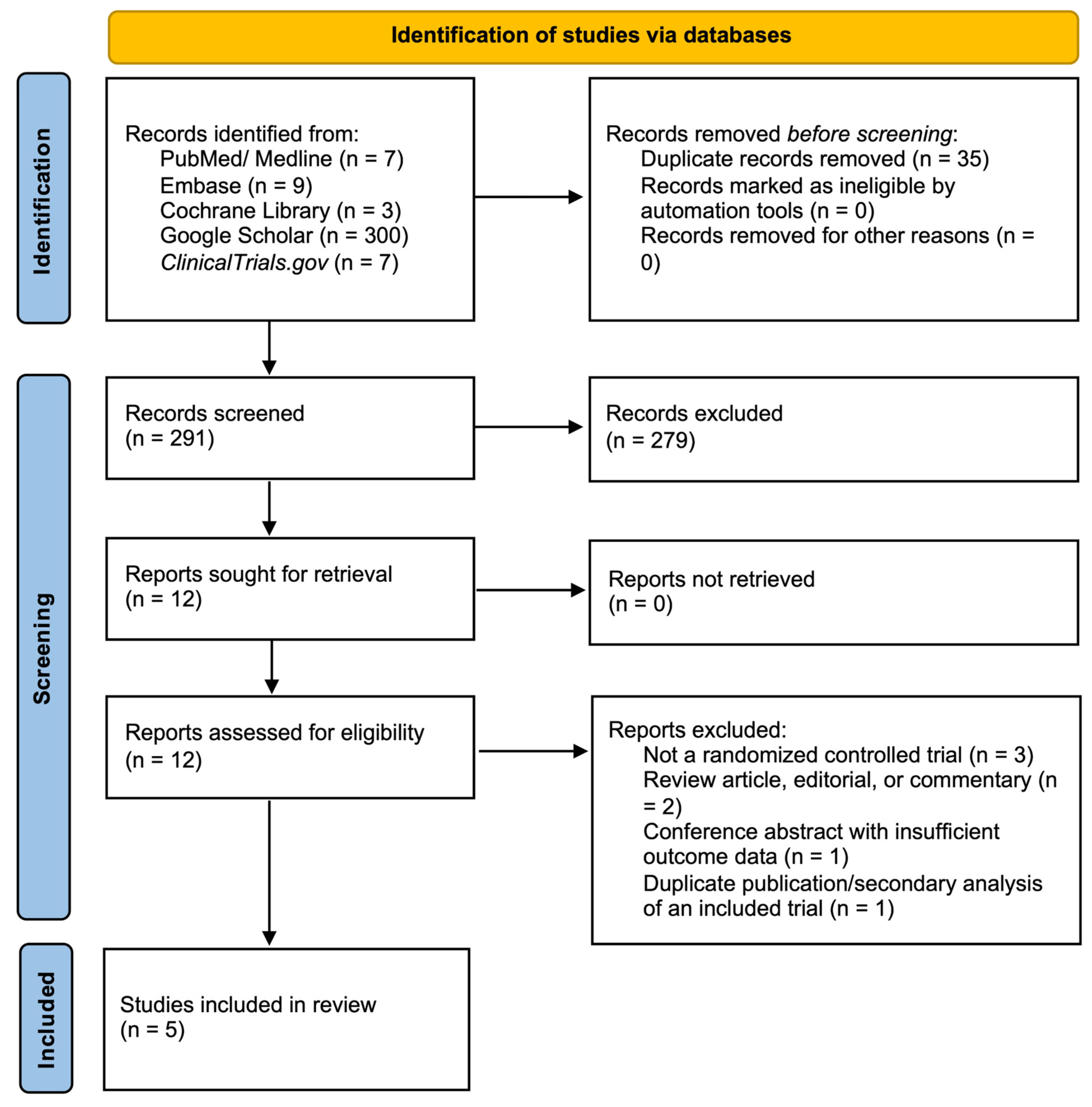
Figure 2.
Forest plots of pooled treatment effects associated with ecopipam. Panel A shows pooled MD in YGTSS total tic scores across follow-up durations. Panel B shows SMD for obsessive-compulsive symptoms. Squares represent individual studies, diamonds pooled effects, and horizontal lines 95% confidence intervals. References: [20,21,32,33,34].
Figure 2.
Forest plots of pooled treatment effects associated with ecopipam. Panel A shows pooled MD in YGTSS total tic scores across follow-up durations. Panel B shows SMD for obsessive-compulsive symptoms. Squares represent individual studies, diamonds pooled effects, and horizontal lines 95% confidence intervals. References: [20,21,32,33,34].
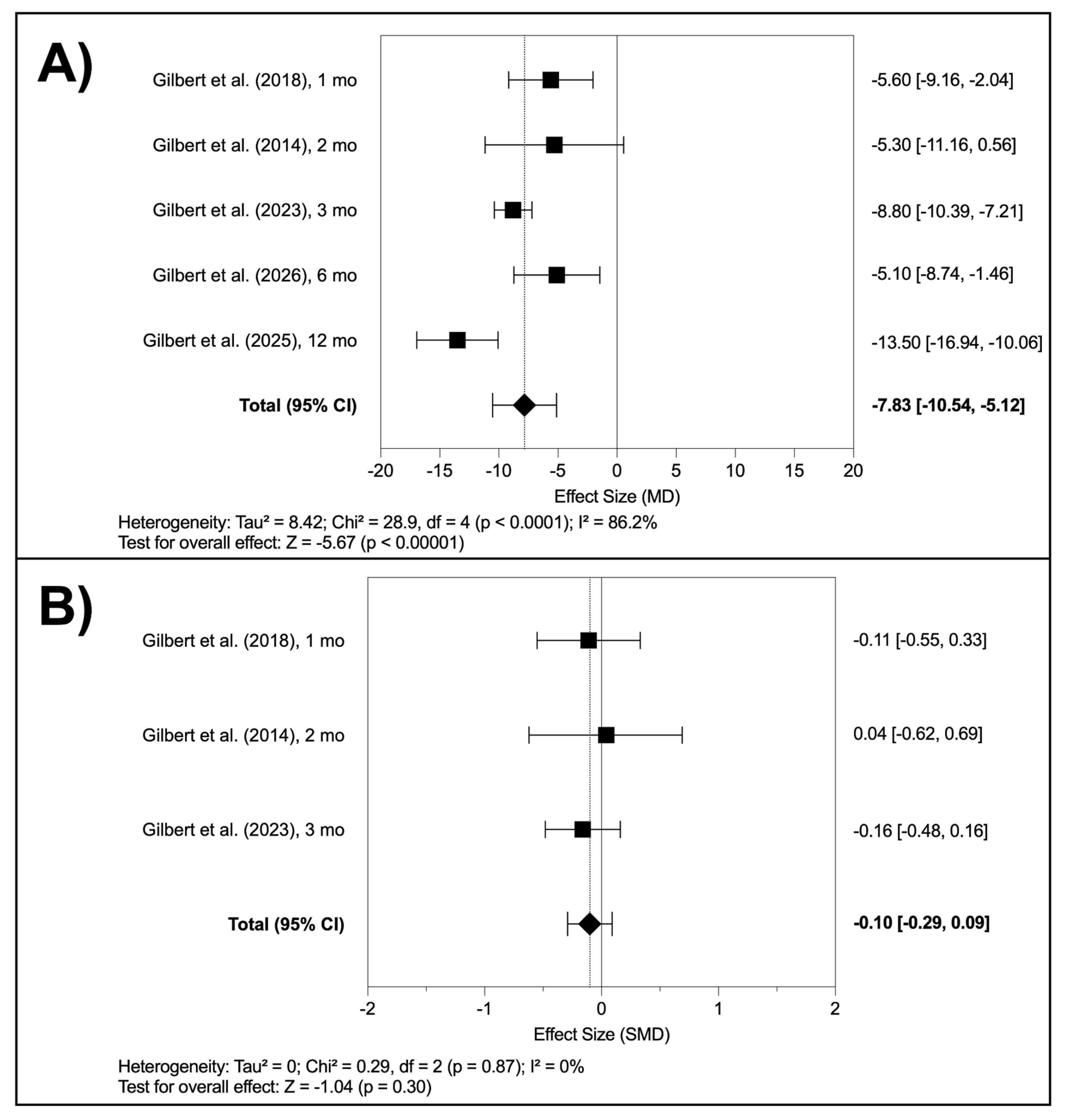
Figure 3.
Forest plot showing SMDs in depressive symptom scores associated with ecopipam across follow-up durations. Individual studies are shown with squares and 95% confidence intervals; the diamond represents the pooled effect estimate. References: [20,21,32,33].
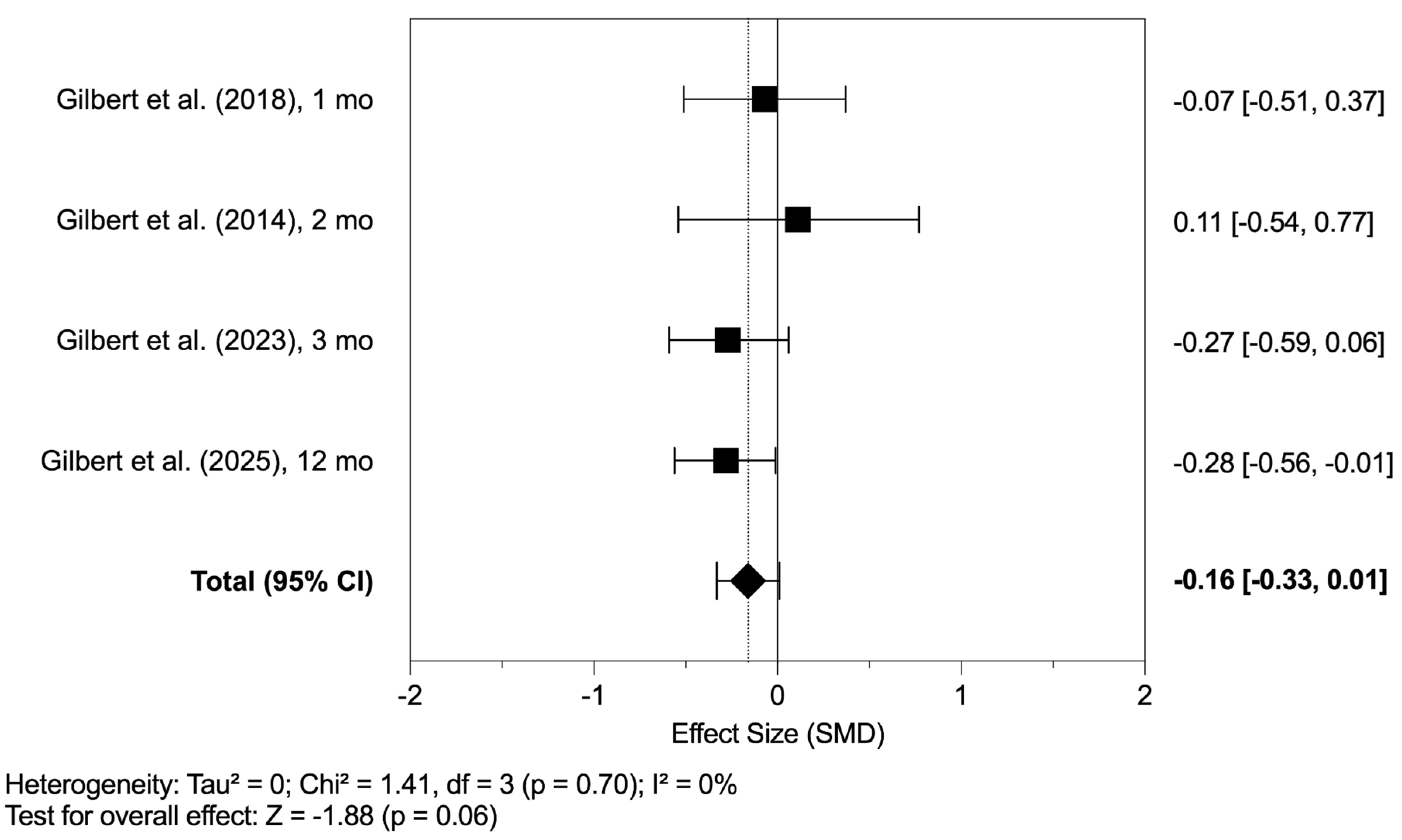
Figure 4.
Forest plot of pooled mean differences (MDs) in Clinical Global Impression-Severity (CGI-S) scores comparing ecopipam with control treatment. Squares represent individual studies and horizontal lines represent 95% confidence intervals. The diamond indicates the pooled effect estimate. Negative values favor ecopipam. References: [20,21,32,33,34].
Figure 4.
Forest plot of pooled mean differences (MDs) in Clinical Global Impression-Severity (CGI-S) scores comparing ecopipam with control treatment. Squares represent individual studies and horizontal lines represent 95% confidence intervals. The diamond indicates the pooled effect estimate. Negative values favor ecopipam. References: [20,21,32,33,34].
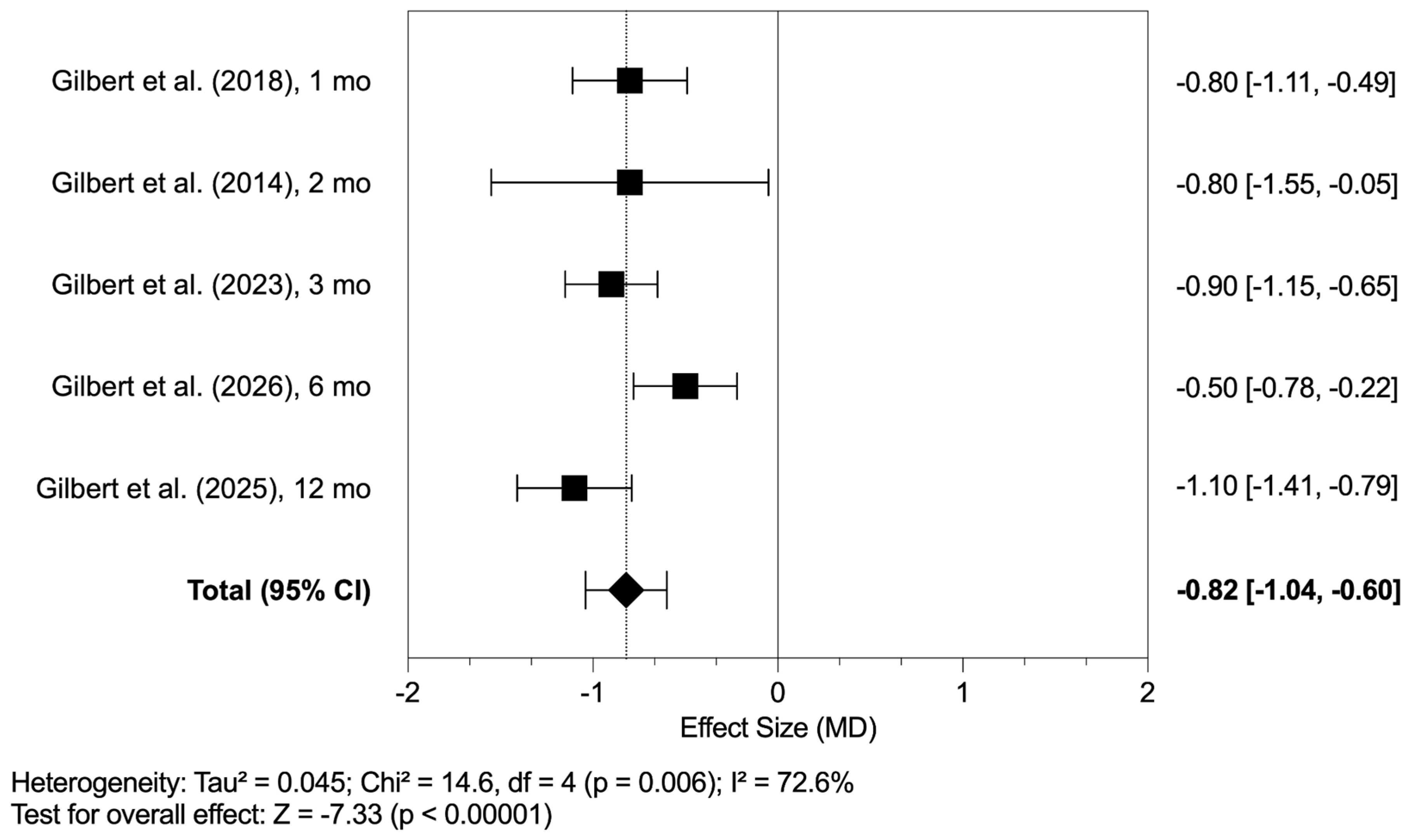

Table 1.
Characteristics of included studies.
| References | Gilbert et al. (2014) [20] | Gilbert et al. (2018) [21] | Gilbert et al. (2023) [32] | Gilbert et al. (2025) [33] | Gilbert et al. (2026) [34] |
| Design | Open-label pilot study | Randomized, double-blind, placebo-controlled crossover trial | Phase 2b randomized, double-blind, placebo-controlled trial | Open-label extension study | Phase 3 randomized, double-blind, placebo-controlled randomized-withdrawal trial |
| Population | Adults with TS | Children and adolescents with TS | Children and adolescents with TS | Children and adolescents with TS | Children, adolescents, and adults with TS |
| n (E/C) | 18 | 40/40 | 76/77 | 121 | 216 enrolled (51/53 randomized) |
| Mean Age (years) | 30.5 | 11.4 | 12.1 | 12.8 | 16.3 |
| Intervention | Ecopipam | Ecopipam | Ecopipam 1.8 mg/kg/day | Ecopipam 1.8 mg/kg/day | Ecopipam 1.8 mg/kg/day |
| Comparator | None | Placebo | Placebo | None | Placebo withdrawal |
| Duration | 8 weeks | 4 weeks | 12 weeks | 12 months | 24 weeks (12-week open-label + 12-week randomized withdrawal) |
| Primary Outcome | YGTSS-TTS | YGTSS-TTS | YGTSS-TTS | Long-term safety and efficacy | Time to relapse following randomization |
| Abbreviations: C, control; E, experimental; TS, Tourette syndrome; YGTSS-TTS, Yale Global Tic Severity Scale Total Tic Score | |||||
Table 2.
Summary of findings and GRADE certainty assessment.
| Outcome | Effect (95% CI) | Participants (Studies) | GRADE | Comments |
| Tic severity (YGTSS-TTS) | MD −7.83 (−10.54 to −5.12) | 556 (5 studies) | Moderate ⊕⊕⊕◯ | Downgraded for risk of bias due to inclusion of open-label studies. Heterogeneity was substantial (I² = 86.2%), although the direction of effect was consistent across studies. |
| Global clinical severity (CGI-S) | MD −0.82 (−1.04 to −0.60) | 486 (5 studies) | Moderate ⊕⊕⊕◯ | Downgraded for risk of bias related to inclusion of non-randomized studies. Substantial heterogeneity was observed (I² = 72.6%), although all studies favored ecopipam and sensitivity analyses yielded consistent results. |
| Depressive symptoms | SMD −0.16 (−0.33 to 0.01) | 465 (4 studies) | Low ⊕⊕◯◯ | Downgraded for risk of bias and imprecision because the effect size was small and confidence intervals approached no effect. |
| Obsessive-compulsive symptoms | SMD −0.10 (−0.29 to 0.09) | 264 (3 studies) | Low ⊕⊕◯◯ | Downgraded for risk of bias and imprecision because confidence intervals included no effect. |
| Abbreviations: CGI-S, Clinical Global Impression-Severity; CI, confidence interval; GRADE, Grading of Recommendations Assessment, Development and Evaluation; MD, mean difference; RR, risk ratio; SMD, standardized mean difference; YGTSS-TTS, Yale Global Tic Severity Scale Total Tic Score. Notes: 1) Evidence from randomized controlled trials was initially rated as high certainty, whereas evidence from open-label studies was initially rated as low certainty according to the GRADE framework. 2) Certainty was downgraded for risk of bias because two included studies employed open-label, non-randomized designs. 3) Certainty was downgraded for inconsistency when unexplained substantial heterogeneity was present. For YGTSS-TTS, inconsistency was not downgraded because all studies favored ecopipam and subgroup analyses suggested that treatment duration accounted for most between-study heterogeneity. 4) Certainty was downgraded for imprecision when confidence intervals included no effect or when event numbers were low. 5) No upgrading criteria were applied because of the limited number of studies and the potential influence of residual confounding in non-randomized studies. | ||||
Table 3.
Comparison of published reviews of ecopipam for Tourette syndrome and the present review.
| Domain | Panda et al. (2025) [35] | Darwish et al. (2026) [31] | Present Review |
| Search cutoff | June 2024 | December 2024 | July 2026 |
| Databases searched | 4 | 4 | 5 |
| Clinical studies included | 3 | 3 | 5 |
| Randomized controlled trials | 2 | 2 | 3 |
| Open-label trials | 1 | 1 | 2 |
| Phase 3 studies with efficacy data | 0 | 0 | 1 |
| Total participants included | 251 | 251 | 556 |
| Largest study included (n) | 153 | 153 | 216 |
| Outcomes quantitatively synthesized | YGTSS-TTS, CGI-S, OCD symptoms, depressive symptoms | YGTSS-TTS, CGI-S, OCD symptoms, depressive symptoms | YGTSS-TTS, CGI-S, OCD symptoms, depressive symptoms, safety outcomes |
| YGTSS-TTS | MD −3.0 (95% CI −4.2 to −1.9) | MD −1.73 (95% CI −4.0 to 0.54) | MD −7.83 (95% CI −10.54 to −5.12) |
| OCD symptoms | MD 0.04 (95% CI −2.22 to 2.30) | MD 0.04 (95% CI −2.22 to 2.30) | SMD −0.10 (95% CI −0.29 to 0.09) |
| Depressive symptoms | SMD 0.09 (95% CI −0.17 to 0.35) | SMD 0.09 (95% CI −0.17 to 0.35) | SMD −0.16 (95% CI −0.33 to 0.01) |
| CGI-S | MD −0.38 (95% CI −0.73 to −0.04) | MD −0.38 (95% CI −0.73 to −0.04) | MD −0.82 (95% CI −1.04 to −0.60) |
| Principal efficacy conclusion | Significant reduction in YGTSS-TTS | No significant reduction in pooled YGTSS-TTS | Significant improvement in tic severity and CGI-S |
| Principal safety conclusion | Favorable safety profile; insomnia increased | Favorable safety profile; insomnia increased | Favorable safety profile; no significant increase in SAEs or overall adverse events |
| Abbreviations: CGI-S, Clinical Global Impression-Severity; CI, confidence interval; MD, mean difference; OCD, obsessive-compulsive disorder; SAE, serious adverse event; SMD, standardized mean difference; YGTSS-TTS, Yale Global Tic Severity Scale Total Tic Score. Notes: The present review includes the 2025 open-label extension study and the 2026 phase 3 randomized clinical trial, which were unavailable to previous reviews [33,34]. Safety outcomes in the present review included serious adverse events, overall adverse events, treatment discontinuation due to adverse events, headache, insomnia, fatigue, restlessness, decreased appetite, and nasopharyngitis. | |||
Disclaimer/Publisher’s Note: The statements, opinions and data contained in all publications are solely those of the individual author(s) and contributor(s) and not of MDPI and/or the editor(s). MDPI and/or the editor(s) disclaim responsibility for any injury to people or property resulting from any ideas, methods, instructions or products referred to in the content. |
© 2026 by the authors. Licensee MDPI, Basel, Switzerland. This article is an open access article distributed under the terms and conditions of the Creative Commons Attribution (CC BY) license (http://creativecommons.org/licenses/by/4.0/).
Copyright: This open access article is published under a Creative Commons CC BY 4.0 license, which permit the free download, distribution, and reuse, provided that the author and preprint are cited in any reuse.