

Submitted:
28 July 2026
Posted:
29 July 2026
You are already at the latest version
Abstract
Background: Sports injuries in children and adolescents may affect physical health, emotional well-being, sleep, quality of life, confidence, participation, and readiness to return to sport. Objective: This systematic review aimed to synthesize evidence on the relationship between sports-related injuries and mental health in athletes aged 19 years or younger, considering both psychological factors associated with injury vulnerability and psychosocial outcomes following injury. Methods: The review followed PRISMA 2020 guidelines. PubMed, Web of Science, Scopus, and Google Scholar were searched from inception to July 2026. Methodological quality was assessed using Joanna Briggs Institute tools, and findings were synthesized narratively. Results: Twenty-one studies were included. Lower psychological well-being, anxiety, stress, fatigue, sleep disturbance, kinesiophobia, and reduced psychological readiness were associated with injury occurrence, symptom burden, recovery, or reinjury. Conversely, sports injuries were associated with anxiety, depressive symptoms, sleep problems, reduced health-related quality of life, lower confidence, altered participation, identity disruption, and difficulties returning to sport. Conclusions: The findings support a potentially bidirectional and biopsychosocial relationship between sports injury and mental health, although heterogeneity and predominantly observational designs limit causal inference.
Keywords:
psychological well-being
; injury vulnerability
; sleep disturbance
; fear of reinjury
; return-to-sport readiness
1. Introduction
Participation in organized sport during childhood and adolescence is widely recognized as a relevant contributor to physical, psychological, and social development. Sport provides opportunities to improve physical fitness, develop motor skills, strengthen peer relationships, promote emotional regulation, and consolidate healthy lifestyle habits. However, sports participation also exposes young athletes to acute, recurrent, and overuse injuries that may interrupt training, competition, academic routines, and social interaction [1,2,3,4]. In children and adolescents, the consequences of sport injury should not be interpreted exclusively from a physical or biomechanical perspective, as injury occurs during a sensitive developmental period in which identity, autonomy, self-esteem, emotional regulation, and coping strategies are still being shaped [1,2,5]. In this context, sports injury encompasses acute, recurrent, and overuse conditions resulting from sport participation that may restrict training, competition, or normal daily functioning [1,2,3,4].
The psychosocial impact of sports-related injuries in young athletes has increasingly been recognized in pediatric sports medicine. Injured children and adolescents may experience frustration, sadness, anger, isolation, reduced motivation, fear of reinjury, uncertainty about recovery, and loss of confidence during rehabilitation and return to sport [1,2,6,7,8]. These responses may be especially relevant during adolescence, when sport participation often becomes closely linked to daily routines, social belonging, athletic identity, and future aspirations. Consequently, injury may represent not only a temporary physical limitation but also a disruption of self-perception, peer connection, and perceived competence [5,9]. Moreover, psychological responses observed in adult athletes cannot necessarily be extrapolated to younger populations, because children and adolescents differ in emotional development, dependence on family and coaches, coping resources, and understanding of injury and recovery [1,2,5].
Recent evidence suggests that the association between mental health and sports injury in adolescents may be bidirectional. Psychological difficulties may increase injury risk through mechanisms such as impaired concentration, altered sleep, increased muscle tension, risk-taking behaviors, reduced recovery capacity, or poorer adherence to prevention strategies. Conversely, sustaining a sport-related injury may contribute to later psychological distress, including anxiety, depressive symptoms, sleep disturbances, reduced quality of life, and lower confidence in returning to sport [10]. This bidirectional relationship is particularly important in adolescent athletes, given that adolescence is a developmental stage characterized by increased vulnerability to anxiety, depression, stress-related symptoms, and sleep problems [3,10].
Several psychological factors may influence the injury process, including competitive anxiety, depressive symptoms, fear of reinjury, pain catastrophizing, coping strategies, perceived stress, resilience, athletic identity, and social support [7,9,11,12,13]. Fear of reinjury is one of the most frequently reported psychological barriers after sport injury and may negatively affect rehabilitation adherence, movement confidence, performance, and psychological readiness to return to sport [13]. Similarly, athletic identity may intensify the emotional consequences of injury, as young athletes who define themselves strongly through sport may experience greater distress when they are unable to train or compete [12]. These findings support the need to consider psychological recovery as an essential component of injury management in pediatric and adolescent sport.
The broader sport context may also shape the relationship between injury and mental health. Early sport specialization, excessive training volume, overtraining, and burnout have been associated with both physical and psychosocial risks in youth athletes [4,5]. Likewise, sport type and competitive environment may influence psychological outcomes, as team sports may provide protective social support, whereas individual sports may involve greater perceived pressure and individual responsibility for performance [6]. Therefore, injury-related mental health outcomes should be understood within a biopsychosocial framework that includes the athlete’s developmental stage, previous injury history, family support, coach communication, peer relationships, sport demands, and return-to-sport expectations [2,9,11,14].
Although previous reviews and consensus statements have addressed specific aspects of sport injury psychology, adolescent well-being after injury, fear of reinjury, athletic identity, and mental health in youth athletes, many publications are narrative reviews, clinical perspectives, qualitative syntheses, or studies including mixed-age samples, and the evidence remains dispersed across different psychological outcomes, injury types, sports, and methodological designs [7,8,9,10,12,15,16]. Consequently, there remains a need for a synthesis focused exclusively on athletes aged 18 years or younger that integrates both directions of the association between sports injury and mental health.
Accordingly, the review was guided by the following question: how are sports-related injuries and mental health associated in children and adolescent athletes throughout injury occurrence, recovery, and return to sport?
Therefore, the main objective of this systematic review was to synthesize the available evidence on the relationship between sports-related injuries and mental health in children and adolescent athletes. Specifically, this review aimed to identify the mental health outcomes associated with sports injuries, examine whether psychological factors may act as risk factors or consequences of injury, and describe the main psychosocial variables involved in injury occurrence, rehabilitation, and return to sport in youth athletes.
2. Materials and Methods
2.1. Design
This systematic review was conducted and reported in accordance with the Preferred Reporting Items for Systematic Reviews and Meta-Analyses 2020 statement (PRISMA 2020) [17]. The review was designed to identify, evaluate, and synthesize the available evidence on the relationship between sports-related injuries and mental health outcomes in child and adolescent athletes. The review process included the formulation of the research question, definition of eligibility criteria, systematic literature searching, study selection, data extraction, methodological quality assessment, and narrative synthesis of the findings. The review protocol was developed a priori but was not prospectively registered.
2.2. Eligibility Criteria
Studies were included if they: (1) involved children or adolescents aged 19 years or younger participating in organized or competitive sport; (2) examined a sports-related injury, injury history, injury risk, rehabilitation, or return to sport; (3) assessed at least one mental health or psychosocial variable in relation to injury; and (4) reported original empirical data.
Both directions of the association were considered: psychological factors associated with subsequent injury occurrence and mental health or psychosocial outcomes following sports injury.
Studies were excluded if they involved participants older than 19 years without separately extractable data for participants aged 19 years or younger, examined non-sport injuries, did not assess an injury-related psychological or psychosocial variable, or were reviews, case reports, editorials, conference abstracts, protocols, or consensus statements.
No restrictions were applied regarding sex, sport type, competitive level, country, or injury type. Only full-text articles published in English or Spanish between 2021 and 2026 were included.
2.3. Information Sources and Search Strategy
A systematic literature search was conducted in PubMed, Web of Science, Scopus, and Google Scholar. Searches covered all records available from database inception to 8 July 2026. Search terms related to sports injury, mental health, children, adolescents, and athletes were combined using the Boolean operators “AND” and “OR”. The search strategy was adapted to the syntax of each database. Reference lists of eligible studies and relevant reviews were also screened to identify additional studies. The complete search strategies are presented in Table 1.
2.4. Study Selection
All records identified through the database searches were imported into a reference management program, and duplicate records were removed. Two reviewers independently screened titles and abstracts according to the predefined eligibility criteria. Potentially relevant articles were subsequently assessed in full.
Disagreements between reviewers were resolved through discussion and, when necessary, consultation with a third reviewer. Reasons for excluding articles at the full-text stage were recorded. The study selection process is presented in the PRISMA 2020 flow diagram (Figure 1).
The database search identified 1,845 records: 420 from PubMed, 515 from Web of Science, 610 from Scopus, and 300 from Google Scholar. After removing 620 duplicate records, 1,225 records were screened by title and abstract. Of these, 1,160 were excluded. Sixty-five full-text reports were assessed for eligibility, and 44 were excluded because of an ineligible population, absence of an injury-related psychological outcome, absence of a sports-injury variable, publication type, adult samples without separate youth data, or unavailable full text. A total of 21 studies were included in the qualitative synthesis.
2.5. Data Extraction
Data were extracted independently by two reviewers using a standardized data-extraction form. The following information was collected from each study: authors and year of publication, country, study design, participant characteristics, sample size, sport and injury type, study objective, psychological or psychosocial variables, assessment instruments, and main findings.
Any discrepancies between reviewers were resolved through discussion and, when necessary, consultation with a third reviewer. When relevant information was unclear or incomplete, the full text and supplementary materials were reviewed before a final decision was made.
2.6. Methodological Quality Assessment
The methodological quality and risk of bias of the included studies were assessed independently by two reviewers using the Joanna Briggs Institute critical appraisal tools appropriate to each study design [18]. The corresponding tools were applied to cohort, analytical cross-sectional, qualitative, and other eligible study designs.
Each criterion was rated as “yes”, “no”, “unclear”, or “not applicable”. Disagreements were resolved through discussion and, when necessary, consultation with a third reviewer. No study was excluded solely on the basis of the appraisal results; these findings were considered when interpreting the evidence.
2.7. Data Synthesis
Due to the heterogeneity of study designs, injury types, psychological variables, assessment instruments, and outcome measures, a meta-analysis was not considered appropriate. Findings were therefore synthesized narratively. Studies were grouped according to the direction of the association examined: psychological factors associated with injury occurrence, symptom burden, or recovery, and mental health or psychosocial outcomes following sports injury. Results were also compared according to injury type, psychological variable, and stage of recovery.
3. Results
3.1. Characteristics of the Included Studies
A total of 21 studies were included in the qualitative synthesis. The main characteristics of the included studies are presented in Table 2, including publication year, country, study design, sample characteristics, sport or injury type, and study objective.
The studies were published between 2021 and 2026 and were conducted in the United States, Sweden, Spain, Australia, Ireland, and Cuba. The included evidence comprised prospective and retrospective cohort studies, cross-sectional studies, observational recovery studies, clinical cohorts, one case series, one secondary analysis of randomized controlled trials, and qualitative studies.
Study populations included youth athletes with sport-related concussion, anterior cruciate ligament reconstruction, ankle injury, acute and overuse musculoskeletal injuries, previous injury history, and athletes prospectively monitored for injury risk. Psychological and psychosocial variables included anxiety, depressive symptoms, subjective well-being, stress, sleep quality, fatigue, health-related quality of life, kinesiophobia, fear of reinjury, confidence, athletic identity, and psychological readiness to return to sport.
Psychological variables, assessment instruments, main findings, and methodological quality are summarized in Table 3.
3.2. Main Findings
The included studies showed substantial heterogeneity in study design, injury type, psychological variables, and timing of assessment. Overall, the evidence addressed two complementary directions of association: psychological and psychosocial factors as potential predictors of sports injury, and mental health or psychosocial outcomes following injury.
Several prospective studies examined psychological factors preceding injury. Lower subjective well-being was associated with greater subsequent injury risk and severity in adolescent elite athletes, while more severe injuries were also associated with poorer well-being [19]. In youth floorball players, higher stress, poorer sleep, and lower well-being were associated with increased injury risk during the following week [26]. Baseline mental well-being and previous mental health difficulties were also examined as predictors of later injury among elite adolescent athletes [36]. Competitive anxiety, particularly worry and concentration disruption, was associated with greater injury vulnerability in youth soccer players [31], while higher cognitive and somatic anxiety predicted injury occurrence, number, and severity in young athletes [38].
Sport-related concussion was one of the most frequently investigated injury types. Shortly after concussion, adolescent athletes reported impairments in anxiety, depression, fatigue, pain interference, physical function, and peer relationships, with most domains improving during recovery and by return to sport [21]. Health-related quality of life also improved progressively after concussion or acute ankle injury, although concussion was associated with greater impairment in school functioning and ankle injury with greater physical limitations [22]. Greater sleep-related symptom severity was associated with persistent symptoms and prolonged concussion recovery [23]. A history of concussion was additionally associated with poorer sleep quality across several domains [32]. Adolescents with a high burden of new-onset mood symptoms showed improved recovery outcomes when prescribed sub-symptom aerobic exercise [30].
Psychological recovery after musculoskeletal injury was addressed particularly in athletes undergoing anterior cruciate ligament reconstruction. Greater psychological readiness was associated with subsequent return to competitive sport [24], whereas higher kinesiophobia and fear of reinjury were associated with poorer readiness to return to sport [29]. Postoperative psychological readiness scores were also associated with later ipsilateral or contralateral reinjury risk in adolescent athletes [37].
Health-related quality of life and broader psychosocial functioning were examined across different sports injuries. Injured female youth volleyball players experienced reductions in total, physical, school, and psychosocial quality of life, particularly following more severe or season-ending injuries [20]. Injury type was associated with different health-related quality-of-life profiles, with concussion linked to greater fatigue and academic difficulties and overuse injuries to poorer mobility [28]. Longitudinal evidence indicated that most quality-of-life domains improved over time, although outcomes varied according to sex, surgical treatment, and discontinuation of sport [35]. Currently injured youth soccer players reported greater anxiety and depressive symptoms and poorer quality of life than uninjured players, with some differences persisting after return to play [39].
Qualitative evidence highlighted the emotional and social consequences of injury. Young elite athletes described frustration, fear of falling behind, and the importance of communication and support during rehabilitation [25]. Injured athletes also reported emotional distress, loss of athletic identity, social pressure to continue participating, reduced confidence, and challenges during return to sport [34].
Other studies examined contextual factors related to mental health and injury. Among youth softball players, previous arm overuse injury was associated with higher depressive symptoms, whereas sport specialization itself was not consistently associated with anxiety or depression [27]. Fatigue and mental health indicators were associated with injury patterns in young rugby players [33]. Across the included studies, the strength and direction of associations varied according to injury type, sport context, assessment method, and study design.
3.3. Methodological Quality
Methodological quality varied across the 21 included studies. Nine studies were rated as having a low risk of bias, eleven were classified as having some concerns, and one study was rated as having a high risk of bias.
The most common methodological limitations were cross-sectional or retrospective designs, reliance on self-reported injury and psychological data, limited control of potential confounding variables, small or selected samples, and incomplete information regarding follow-up or participant attrition. Several studies also assessed injury history and mental health variables at the same time, limiting conclusions about temporality and causality.
Studies rated as having a low risk of bias generally used prospective or longitudinal designs, clearly defined samples, validated assessment instruments, repeated measurements, and systematic injury surveillance. Studies classified as having some concerns typically provided relevant evidence but were limited by cross-sectional analyses, retrospective clinical data, self-reported outcomes, or insufficient adjustment for confounders. The study rated as having a high risk of bias had greater limitations related to study design, measurement, and control of alternative explanations.
4. Discussion
The aim of this systematic review was to synthesize the available evidence on the relationship between sports-related injuries and mental health in children and adolescent athletes aged 19 years or younger. Specifically, it sought to identify the principal mental health and psychosocial outcomes associated with injury, determine whether psychological factors may operate as antecedents or consequences of injury, and describe their role throughout injury occurrence, rehabilitation, and return to sport. The findings support a complex, multifactorial, and potentially bidirectional relationship. Lower well-being, competitive anxiety, stress, sleep disturbance, fatigue, kinesiophobia, and reduced psychological readiness were associated with injury occurrence, recovery, or reinjury in some studies. Conversely, injury was associated with anxiety, depressive symptoms, emotional distress, sleep problems, reduced health-related quality of life, disruption of athletic identity, lower confidence, and difficulties returning to sport.
This overall pattern is consistent with the review of reviews by Gil-Caselles et al. [40], which concluded that mental health symptoms may precede sports injury and increase vulnerability, while injury may simultaneously contribute to psychological distress and interfere with recovery. It also agrees with the systematic review and meta-analysis by Chow et al. [10], which identified evidence of associations in both directions among adolescents and young adults. However, Chow et al. observed that the prospective association between poorer mental health and subsequent injury became weaker after accounting for possible publication bias. Therefore, the available evidence more consistently supports psychological consequences following injury than the ability of psychological variables to predict injury. The findings should consequently be interpreted as evidence of reciprocal interaction rather than proof of a direct causal cycle.
The prospective studies included in this review provide the strongest evidence concerning psychological factors preceding injury. Lower subjective well-being was associated with greater subsequent injury risk and severity among elite adolescent athletes [19]. Similarly, higher stress, poorer sleep, and lower well-being were associated with increased injury risk during the following week in youth floorball players [26]. Lindman et al. also prospectively examined mental well-being and previous mental health difficulties in relation to later injury [36]. These results are compatible with the integrated biopsychosocial perspective proposed in the sport-injury literature, according to which injury risk reflects the interaction of stress exposure, coping resources, physiological responses, training demands, recovery, and the athlete’s social environment [2,9,14]. Psychological well-being should therefore not be interpreted as an isolated risk factor, but as one component of the athlete’s changing capacity to cope with sporting and non-sporting demands.
The short assessment intervals used in some prospective studies are particularly relevant. Weekly changes in well-being, stress, fatigue, and sleep may provide more clinically meaningful information than a single baseline assessment because these variables fluctuate in response to training load, competition, academic pressure, interpersonal difficulties, and insufficient recovery. This interpretation is consistent with the consensus statement by Tranaeus et al. [9], which conceptualized psychological variables as dynamic factors operating across injury risk, rehabilitation, return to sport, and reinjury. Nevertheless, screening should not be presented as a method for predicting which individual athlete will become injured. Psychological measures need to be considered alongside exposure, previous injury, maturation, physical conditioning, sleep, training load, and sport-specific demands.
Competitive anxiety was another relevant factor. Higher competitive anxiety, particularly worry and concentration disruption, was associated with greater injury vulnerability in youth soccer players [31]. Cognitive and somatic anxiety were also related to injury occurrence, number, and severity among young Cuban athletes [38]. Excessive anxiety may plausibly interfere with attentional control, anticipation, decision-making, and motor coordination, while somatic arousal may increase muscle tension and reduce movement efficiency. These mechanisms are consistent with broader psychological models of sports injury [9,16]. However, the included anxiety studies were cross-sectional or correlational, meaning that anxiety may have preceded injury, resulted from previous injury experiences, or been influenced by other factors such as competitive level and training exposure. The findings therefore support an association, but not anxiety as an independent or deterministic cause of injury.
The evidence concerning fatigue and sleep reinforces this multifactorial interpretation. Poorer sleep was associated with subsequent injury risk in youth floorball players [26], whereas greater perceived fatigue was related to injury patterns in young rugby players [33]. Sleep loss and accumulated fatigue may affect attention, reaction time, emotional regulation, neuromuscular control, pain perception, and physical recovery. These observations are consistent with pediatric sport literature emphasizing the interaction between intensive training, insufficient recovery, overuse injury, and burnout [3,4]. However, the rugby study was rated as having a high risk of bias and included a small sample, so its findings should be viewed as supportive rather than conclusive.
The results concerning sport specialization were more nuanced. Zeller et al. found that previous arm overuse injury was associated with higher depressive symptom scores in youth softball players, whereas high specialization itself was not associated with greater anxiety or depression [27]. This finding indicates that specialization should not automatically be treated as a direct psychological risk. Its effects may depend on the combination of year-round training, excessive volume, reduced autonomy, pressure from adults, limited recovery, and previous pain or injury. This interpretation is consistent with Brenner et al. [4] and Brenner et al. [5], who described the physical and psychosocial consequences of specialization as context-dependent. The present findings therefore suggest that the injury experience and the conditions under which specialization occurs may be more relevant to mental health than specialization status alone.
Regarding the consequences of injury, the included evidence showed impairments across emotional, physical, social, and academic domains. Injured female volleyball athletes experienced reductions in total, physical, school, and psychosocial quality of life [20]. Youth soccer players with a current injury reported more anxiety and depressive symptoms and poorer quality of life than uninjured athletes, with some differences persisting after return to play [39]. Verma et al. found that most health-related quality-of-life outcomes improved over time, although trajectories differed according to sex, surgical treatment, and sport discontinuation [35]. These results agree with previous pediatric literature describing sadness, frustration, social isolation, loss of confidence, and uncertainty during injury recovery [1,7,8,15].
The psychological impact of injury may be particularly pronounced during adolescence because sport often provides daily structure, peer belonging, perceived competence, identity, and future aspirations. Temporary removal from sport may therefore involve more than loss of physical activity; it can disrupt the athlete’s social role and sense of self. Park et al. [12] similarly concluded that stronger athletic identity may increase vulnerability to depressive symptoms following musculoskeletal injury in pediatric athletes. Accordingly, the emotional response to injury is unlikely to be explained solely by tissue damage or recovery duration. It also depends on what participation means to the athlete and on whether alternative sources of identity, social connection, and competence remain available.
The qualitative findings strongly supported this interpretation. Young elite athletes described frustration, fear of falling behind, and the importance of access to care and communication during rehabilitation [25]. Summersby et al. identified emotional distress, identity disruption, social pressure to continue participating despite pain, and reduced confidence during return to sport [34]. These results are consistent with the qualitative systematic review by Sheehan et al. [11], which showed that adolescent experiences of sports-related pain and injury are shaped by social relationships, expectations, validation, and sporting culture. Psychological responses should therefore not be treated exclusively as individual traits; they are also influenced by the behaviour of coaches, parents, peers, clinicians, and sporting organizations.
Sport-related concussion was the most frequently represented injury type. Shortly after concussion, athletes reported impairments in anxiety, depression, fatigue, pain interference, physical function, peer relationships, and other health domains, followed by general improvement during recovery [21]. Health-related quality of life also improved over time after concussion or ankle injury, although concussion was associated with greater disruption of school functioning and ankle injury with greater physical limitation [22]. These injury-specific patterns suggest that psychological and psychosocial effects are not identical across conditions. Concussion may particularly disrupt cognitive activity, academic participation, sleep, and symptom tolerance, whereas musculoskeletal injuries may produce more visible restrictions in mobility and physical independence.
Sleep emerged as a central component of concussion recovery. Greater sleep-related symptom severity was associated with persistent symptoms and longer recovery [23], while a history of concussion was associated with poorer sleep duration, latency, disturbance, daytime functioning, and overall sleep quality [32]. These results are corroborated by the recent systematic review and meta-analysis by Noordeen et al. [41], which concluded that concussion significantly disrupts sleep quality in adolescents, although variation across studies remains. Sleep disturbance may be both a consequence of concussion and a mechanism contributing to fatigue, irritability, anxiety, depressive symptoms, pain sensitivity, and concentration difficulties. For this reason, sleep should be assessed as a clinically relevant recovery domain rather than as a secondary symptom.
Castellana et al. [30] provide an important intervention-related perspective. Adolescents with a high burden of new-onset mood symptoms had a lower risk of persistent post-concussive symptoms when prescribed subsymptom aerobic exercise. This finding is consistent with randomized evidence showing that individualized subsymptom aerobic exercise can accelerate recovery in adolescents with sport-related concussion [44]. It also agrees with systematic-review evidence supporting early subsymptom aerobic exercise to reduce symptom burden and the risk of persistent post-concussive symptoms [45]. However, Castellana et al. extend this literature by suggesting that the benefit may be particularly relevant among adolescents with a high burden of new-onset mood symptoms. Because their study was a secondary analysis of two randomized controlled trials, this subgroup finding should be considered exploratory. Further trials specifically designed to determine whether mood-symptom burden moderates the response to aerobic exercise are required.
Psychological readiness and fear of reinjury were particularly important after anterior cruciate ligament reconstruction. Greater readiness at six months was associated with return to competitive sport at twelve months [24], whereas greater kinesiophobia was associated with poorer readiness among teenage athletes [29]. McAleese et al. further found that postoperative readiness scores were associated with subsequent ipsilateral or contralateral ACL injury, with sex-specific patterns [37]. These findings distinguish physical recovery from psychological readiness: an athlete may meet functional criteria while still experiencing fear, uncertainty, or insufficient confidence.
The present ACL findings agree with the meta-analysis by Xiao et al. [42], in which athletes who returned to sport after ACL reconstruction displayed greater psychological readiness, higher self-efficacy, and lower kinesiophobia than those who did not return, despite broadly similar clinical knee-function scores. This supports incorporating psychological assessment into return-to-sport evaluation alongside strength, functional performance, symptoms, and rehabilitation progression. Nevertheless, readiness scores should not be used as isolated clearance thresholds because they may be influenced by recovery stage, sport opportunity, physical status, motivation, and individual risk perception.
Sex may also modify psychological recovery following ACL reconstruction. The sex-specific associations observed by McAleese et al. [37] are consistent with the systematic review and meta-analysis by Obradovic et al. [43], which found slightly higher psychological readiness among males than females after ACL reconstruction, although both groups achieved mean values above the proposed return-to-sport threshold. The substantial heterogeneity reported in that meta-analysis suggests that sex alone does not explain readiness. Sport type, injury history, rehabilitation context, social expectations, competitive opportunities, and time since surgery may also contribute.
Health-related quality of life was useful for capturing consequences that extended beyond symptoms. The included studies identified changes in physical functioning, fatigue, mobility, school participation, peer relationships, emotional functioning, and perceived health [20,21,22,28,35,39]. Moreover, different injuries produced different profiles: concussion was more strongly associated with fatigue and academic difficulties, while overuse or acute musculoskeletal injuries were associated with mobility and physical-function limitations [22,28]. This supports the use of multidimensional, age-appropriate patient-reported measures because clinical symptom counts may fail to identify social, emotional, and school-related difficulties.
Although most longitudinal findings suggested improvement, group averages should not be interpreted as universal recovery. Some athletes may continue to experience anxiety, depressive symptoms, sleep problems, reduced confidence, or poorer quality of life after medical clearance [35,39]. Return to play is therefore not necessarily equivalent to complete psychological recovery. Repeated assessment is preferable to a single evaluation because the relative importance of distress, fear, confidence, social reintegration, and identity may change between the acute phase, rehabilitation, return to training, and return to competition.
The methodological quality of the evidence limits the strength of the conclusions. Nine studies were rated as having a low risk of bias, eleven had some concerns, and one had a high risk of bias. Cross-sectional and retrospective designs, self-reported injury histories, selected clinical samples, limited adjustment for confounding, and incomplete follow-up were common. These limitations are especially important when interpreting bidirectionality. Simultaneous measurement of injury history and current psychological symptoms cannot establish whether mental health difficulties preceded injury, emerged afterward, or reflected shared determinants. The strongest evidence therefore comes from prospective studies using repeated psychological assessments and systematic injury surveillance [19,26,36].
A further issue is that the evidence was concentrated on concussion and ACL reconstruction. Although these injuries are clinically important, the imbalance limits generalization to overuse conditions, recurrent injuries, minor injuries, and injuries managed outside specialist services. The studies also varied in age, sex, sport, competitive level, and measurement instruments. These differences may explain part of the inconsistency across findings and support the decision to conduct a narrative rather than quantitative synthesis.
The principal contribution of this review is its focus on athletes aged 19 years or younger and its integration of both directions of association across injury occurrence, rehabilitation, and return to sport. In contrast to approaches focused exclusively on psychiatric symptoms after injury, the present synthesis also considered sleep, fatigue, subjective well-being, quality of life, school functioning, identity, confidence, kinesiophobia, and psychological readiness. These variables may not always represent mental disorders, but they are clinically relevant components of mental health and psychosocial functioning in developing athletes.
Taken together, the findings support a developmental biopsychosocial model in which physical, psychological, social, and sporting factors interact throughout the injury process. Psychological screening may help identify athletes experiencing difficulties, but it should not be used to predict injury in isolation. Assessment should be repeated and interpreted alongside previous injury, physical function, training exposure, sleep, maturation, family and coach support, rehabilitation progress, and sport-specific demands. This integrated approach is more consistent with the complexity of the evidence than either a purely biomedical model or an explanation based on individual psychological vulnerability alone.
5. Limitations of the Study
Several limitations should be considered when interpreting the findings of this systematic review. First, the included studies showed considerable heterogeneity in research design, sport type, injury characteristics, participant age, psychological variables, assessment instruments, and timing of measurement. This variability limited direct comparisons across studies and precluded meta-analysis.
Second, many studies used observational, cross-sectional, or retrospective designs, restricting the ability to establish temporal or causal relationships. In several cases, it was not possible to determine whether psychological difficulties preceded the injury, emerged as a consequence of it, or reflected a reciprocal interaction between both processes. Some studies also relied on self-reported injury histories and psychological symptoms, which may have introduced recall and reporting bias.
Methodological quality was variable. Although nine studies were rated as having a low risk of bias, eleven presented some concerns and one was rated as having a high risk of bias. The main limitations included small or selected samples, limited control of confounding variables, incomplete follow-up, and insufficient reporting of injury exposure, severity, or recurrence.
The evidence was also unevenly distributed across injury types. Sport-related concussion and anterior cruciate ligament reconstruction were more frequently represented than overuse, recurrent, and other musculoskeletal injuries. Consequently, the findings may not be equally generalizable to all youth sports injuries.
In addition, some studies included narrow samples defined by sex, sport, competitive level, or clinical setting, which limits generalization to the broader population of child and adolescent athletes. Differences in developmental stage within the 8–19-year age range may also have influenced psychological responses but were not consistently examined.
Finally, only full-text articles published in English or Spanish were included, and the review protocol was not prospectively registered. Although the review followed PRISMA 2020 recommendations, these factors may have introduced language, selection, and reporting bias.
6. Practical Applications
The findings support the integration of psychological and psychosocial assessment into injury prevention, rehabilitation, and return-to-sport processes in children and adolescent athletes. Screening for anxiety, depressive symptoms, sleep problems, fatigue, fear of reinjury, reduced confidence, impaired quality of life, and poor psychological readiness may help identify athletes requiring additional assessment or support.
However, psychological screening should not be used as an isolated method for predicting injury. Findings should be interpreted alongside previous injury, training exposure, physical function, recovery status, sleep, maturation, and sport-specific demands.
Psychological monitoring should be repeated at different stages, because emotional and psychosocial responses may change from the acute phase to rehabilitation, return to training, and return to competition. Particular attention should be paid to athletes with persistent symptoms, prolonged absence from sport, marked identity disruption, poor sleep, high fear of reinjury, or low confidence.
Rehabilitation may benefit from developmentally appropriate psychological support, including psychoeducation, realistic goal setting, graded exposure to activity, confidence-building, emotional support, and strategies to improve communication and adherence. These approaches should be individualized and delivered within the athlete’s broader clinical and sporting context.
Return-to-sport decisions should consider not only physical recovery and functional performance but also psychological readiness, fear of reinjury, confidence, and perceived ability to resume sporting demands. Coordinated work among physicians, physiotherapists, sport psychologists, coaches, families, and athletes is recommended to promote a safer and more comprehensive recovery process.
7. Future Lines of Research
Future studies should prioritize prospective and longitudinal designs to clarify the temporal and bidirectional relationship between mental health and sports injury. Psychological variables should be assessed before injury, during rehabilitation, at return to sport, and after reintegration into training and competition.
Greater methodological standardization is also needed. Studies should use consistent definitions of injury, exposure, severity, recurrence, recovery, and return to sport, together with validated and age-appropriate measures of anxiety, depression, sleep, fatigue, well-being, fear of reinjury, athletic identity, quality of life, and psychological readiness.
More research is required on overuse, recurrent, and non-ACL musculoskeletal injuries, because current evidence is disproportionately focused on concussion and anterior cruciate ligament reconstruction. Studies should also examine whether psychological consequences differ according to injury severity, time loss, surgery, recurrence, and duration of rehabilitation.
Future research should investigate differences according to sex, developmental stage, sport type, competitive level, training load, specialization, social support, coach communication, family involvement, and access to healthcare. Adequately powered subgroup analyses are needed to determine whether these variables modify injury risk or recovery trajectories.
Intervention studies should evaluate whether psychological and multidisciplinary programmes can improve emotional well-being, sleep, rehabilitation adherence, confidence, psychological readiness, return-to-sport outcomes, and reinjury risk. Studies should also identify which athletes benefit most from specific interventions and at which stage of recovery they should be implemented.
Future studies should prioritise prospective and longitudinal designs to clarify the temporal and bidirectional relationship between mental health and sports injury. Psychological variables should be assessed before injury, during rehabilitation, at return to sport, and after reintegration into competition.
Greater methodological standardisation is also needed. Studies should use consistent definitions of injury, severity, recurrence, exposure, and recovery, together with validated and age-appropriate measures of anxiety, depression, sleep, fatigue, fear of reinjury, athletic identity, and psychological readiness.
More research is required on musculoskeletal, overuse, and recurrent injuries, as current evidence is disproportionately focused on concussion. Future studies should also examine differences according to sex, developmental stage, sport type, competitive level, social support, coaching context, and training load.
Finally, intervention studies should evaluate whether psychological programmes can reduce injury vulnerability, improve rehabilitation adherence, enhance psychological readiness, and decrease the risk of reinjury in young athletes.
8. Conclusions
The available evidence indicates that sports injuries and mental health are closely interconnected in children and adolescent athletes. Psychological factors, particularly lower well-being, competitive anxiety, stress, sleep disturbance, fatigue, kinesiophobia, and reduced psychological readiness, may be associated with injury occurrence, symptom burden, recovery, or reinjury. At the same time, sports injury may negatively affect anxiety, depressive symptoms, sleep, health-related quality of life, confidence, athletic identity, social functioning, sport participation, and readiness to return to sport.
These findings support a potentially bidirectional and biopsychosocial interpretation of sports injury in young athletes. Nevertheless, the evidence more consistently demonstrates psychological and psychosocial consequences following injury than the capacity of psychological variables to predict subsequent injury. Heterogeneity and the predominantly observational nature of the evidence limit causal conclusions.
Injury management should therefore include developmentally appropriate psychological assessment, repeated monitoring, and multidisciplinary support alongside physical treatment. Return-to-sport decisions should incorporate psychological readiness and psychosocial functioning rather than relying exclusively on physical recovery.
Greater methodological consistency, prospective research, and intervention studies are needed to clarify the mechanisms involved and determine which psychological strategies are most effective in improving recovery and reducing reinjury risk.
Author Contributions
Conceptualization, L.G.C. and A.O.Z.; methodology, L.G.C. and A.O.Z.; validation, L.G.C. and A.O.Z.; formal analysis, L.G.C. and A.O.Z.; investigation, L.G.C. and A.O.Z.; data curation, L.G.C.; writing—original draft preparation, L.G.C.; writing—review and editing, L.G.C. and A.O.Z.; visualization, L.G.C.; supervision, A.O.Z.; project administration, L.G.C. All authors have read and agreed to the published version of the manuscript.
Funding
This research received no external funding.
Institutional Review Board Statement
Not applicable. This study is a systematic review of previously published research and did not involve the recruitment of human participants or the collection of primary human data.
Informed Consent Statement
Not applicable
Data Availability Statement
The data supporting the findings of this systematic review are available within the article and its Supplementary Materials.
Acknowledgments
The authors have no acknowledgments to declare.
Conflicts of Interest
The authors declare no conflicts of interest.
Abbreviations
The following abbreviations are used in this manuscript:
| ACL | Anterior Cruciate Ligament |
| JBI | Joanna Briggs Institute |
| PRISMA | Preferred Reporting Items for Systematic Reviews and Meta-Analyses |
| PROMIS | Patient-Reported Outcomes Measurement Information System |
| PedsQL | Pediatric Quality of Life Inventory |
| PHQ-9 | Patient Health Questionnaire-9 |
| GAD-7 | Generalized Anxiety Disorder-7 |
| HRQoL | Health-Related Quality of Life |
| RTS | Return to Sport |
References
- Haraldsdottir, K.; Watson, A.M. Psychosocial Impacts of Sports-related Injuries in Adolescent Athletes. Curr. Sports Med. Rep. 2021, 20, 104–108. [Google Scholar] [CrossRef] [PubMed]
- Hoang, L.N.; Joshi, P.; Patel, D.R.; Apple, R.W. The Psychology of Sports Injuries in Children and Adolescents: Psychosocial, Developmental, and Recovery Aspects to Injury. Int. J. Environ. Res. Public Health 2025, 22, 1509. [Google Scholar] [CrossRef] [PubMed]
- Daley, M.M.; Reardon, C.L. Mental Health in the Youth Athlete. Clin. Sports Med. 2024, 43, 107–126. [Google Scholar] [CrossRef] [PubMed]
- Brenner, J.S.; Watson, A.; Council on Sports Medicine and Fitness. Overuse Injuries, Overtraining, and Burnout in Young Athletes. Pediatrics 2024, 153, e2023065129. [Google Scholar] [CrossRef] [PubMed]
- Brenner, J.S.; LaBotz, M.; Sugimoto, D.; Stracciolini, A. The Psychosocial Implications of Sport Specialization in Pediatric Athletes. J. Athl. Train. 2019, 54, 1021–1029. [Google Scholar] [CrossRef] [PubMed]
- Pluhar, E.; McCracken, C.; Griffith, K.L.; Christino, M.A.; Sugimoto, D.; Meehan, W.P., III. Team Sport Athletes May Be Less Likely to Suffer Anxiety or Depression than Individual Sport Athletes. J. Sports Sci. Med. 2019, 18, 490–496. [Google Scholar] [PubMed]
- Jeong, L.; Li, D. Psychological Well-Being From Sports Injuries in Adolescence: A Narrative Review. Cureus 2024, 16, e64018. [Google Scholar] [CrossRef] [PubMed]
- Haugen, E. Athlete Mental Health & Psychological Impact of Sport Injury. Oper. Tech. Sports Med. 2022, 30, 150898. [Google Scholar] [CrossRef]
- Tranaeus, U.; Gledhill, A.; Johnson, U.; Podlog, L.; Wadey, R.; Wiese-Bjornstal, D.M.; Ivarsson, A. 50 Years of Research on the Psychology of Sport Injury: A Consensus Statement. Sports Med. 2024, 54, 1733–1748. [Google Scholar] [CrossRef] [PubMed]
- Chow, A.R.W.; Zaneva, M.; Rashid, L.; Wheatley, C.; Coussios, C.; Hepach, R.; Bowes, L. Bidirectional Relationship Between Mental Health and Sports Injury in Adolescents: A Systematic Review and Meta-analysis. Sports Med. 2026, 56, 981–995. [Google Scholar] [CrossRef] [PubMed]
- Sheehan, N.; Summersby, R.; Bleakley, C.; Caulfield, B.; Matthews, M.; Klempel, N.; Holden, S. Adolescents’ Experience with Sports-related Pain and Injury: A Systematic Review of Qualitative Research. Phys. Ther. Sport 2024, 68, 7–21. [Google Scholar] [CrossRef] [PubMed]
- Park, A.L.; Furie, K.; Wong, S.E. Stronger Athlete Identity Is a Risk Factor for More Severe Depressive Symptoms After Musculoskeletal Injury in Pediatric Athletes: A Systematic Review. Curr. Rev. Musculoskelet. Med. 2023, 16, 220–228. [Google Scholar] [CrossRef] [PubMed]
- Hsu, C.J.; Meierbachtol, A.; George, S.Z.; Chmielewski, T.L. Fear of Reinjury in Athletes. Sports Health 2017, 9, 162–167. [Google Scholar] [CrossRef] [PubMed]
- Palisch, A.R.; Merritt, L.S. Depressive Symptoms in the Young Athlete after Injury: Recommendations for Research. J. Pediatr. Health Care 2018, 32, 245–249. [Google Scholar] [CrossRef] [PubMed]
- Xu, E.; Greif, D.N.; Castle, P.; Lander, S. Pediatric Sports: The Mental Health and Psychological Impact of Sport and Injury. J. Clin. Med. 2025, 14, 4321. [Google Scholar] [CrossRef] [PubMed]
- Zambak, Ö.; Toktas, S. Utilization Sports Psychology to Prevent Sports Injury: A Comprehensive Systematic Review. Int. J. Recreat. Sports Sci. 2025, 9, 263–272. [Google Scholar] [CrossRef]
- Page, M.J.; McKenzie, J.E.; Bossuyt, P.M.; Boutron, I.; Hoffmann, T.C.; Mulrow, C.D.; Shamseer, L.; Tetzlaff, J.M.; Akl, E.A.; Brennan, S.E.; et al. The PRISMA 2020 statement: An updated guideline for reporting systematic reviews. BMJ 2021, 372, n71. [Google Scholar] [CrossRef] [PubMed]
- Joanna Briggs Institute. JBI Critical Appraisal Tools; JBI: Adelaide, Australia, 2026. Available online: JBI Critical Appraisal Tools (accessed on [day month 2026]).
- von Rosen, P.; Heijne, A. Subjective well-being is associated with injury risk in adolescent elite athletes. Physiother. Theory Pract. 2021, 37, 748–754. [Google Scholar] [CrossRef] [PubMed]
- Watson, A.; Biese, K.; Kliethermes, S.A.; Post, E.; Brooks, M.A.; Lang, P.J.; Bell, D.R.; Haraldsdottir, K.; McGuine, T. Impact of in-season injury on quality of life and sleep duration in female youth volleyball athletes: A prospective study of 2073 players. Br. J. Sports Med. 2021, 55, 912–918. [Google Scholar] [CrossRef] [PubMed]
- Williams, R.M.; Johnson, R.S.; Snyder Valier, A.R.; Bay, R.C.; Valovich McLeod, T.C. Evaluating multiple domains of health in high school athletes with sport-related concussion. J. Sport Rehabil. 2021, 30, 545–551. [Google Scholar] [CrossRef] [PubMed]
- DiSanti, J.S.; Marshall, A.N.; Valier, A.R.S.; McLeod, T.C.V. High school athletes’ health-related quality of life across recovery after sport-related concussion or acute ankle injury: A report from the Athletic Training Practice-Based Research Network. Orthop. J. Sports Med. 2022, 10, 23259671211068034. [Google Scholar] [CrossRef] [PubMed]
- DuPrey, K.M.; Char, A.S.; Loose, S.R.; Suffredini, M.V.; Walpole, K.; Cronholm, P.F. Effect of sleep-related symptoms on recovery from a sport-related concussion. Orthop. J. Sports Med. 2022, 10, 23259671221105256. [Google Scholar] [CrossRef] [PubMed]
- Webster, K.E.; Feller, J.A. Psychological Readiness to Return to Sport After Anterior Cruciate Ligament Reconstruction in the Adolescent Athlete. J. Athl. Train. 2022, 57, 955–960. [Google Scholar] [CrossRef] [PubMed]
- Ekenros, L.; Fridén, C.; von Rosen, P. Experiences of rehabilitation in young elite athletes: An interview study. BMJ Open Sport Exerc. Med. 2023, 9, e001716. [Google Scholar] [CrossRef] [PubMed]
- Sonesson, S.; Dahlström, Ö.; Panagodage Perera, N.K.; Hägglund, M. Risk factors for injury and illness in youth floorball players—A prospective cohort study. Phys. Ther. Sport 2023, 59, 92–102. [Google Scholar] [CrossRef] [PubMed]
- Zeller, A.M.; Lear, A.; Post, E.; McNulty, S.; Bentley, B. A national survey on the relationship of youth sport specialization behaviors to self-reported anxiety and depression in youth softball players. Sports Health 2024, 16, 184–194. [Google Scholar] [CrossRef] [PubMed]
- Verma, R.; DeMaio, E.; Render, A.; Wild, J.; Hunt, D.; Cato, S.; Shenvi, N.; LaBella, C.; Stracciolini, A.; Jayanthi, N. The effects of injury type on health-related quality of life in youth athletes: A cross-sectional analysis. Clin. J. Sport Med. 2024, 34, 52–60. [Google Scholar] [CrossRef] [PubMed]
- Butler, L.; Baez, S.; Walker, C.; Roman, D.; Douthit, T.; Kuenze, C.; Ulman, S.; ARROW. The relationship between psychological readiness to return to sport and kinesiophobia in teens and young adults after anterior cruciate ligament reconstruction. Front. Psychol. 2025, 16, 1623398. [Google Scholar] [CrossRef] [PubMed]
- Castellana, M.C.; Burnett, G.J.; Gasper, A.; Nazir, M.S.Z.; Leddy, J.J.; Master, C.L.; Mannix, R.C.; Meehan, W.P., III; Willer, B.S.; Haider, M.N. Adolescents with a high burden of new-onset mood symptoms after sport-related concussion benefit from prescribed aerobic exercise: A secondary analysis of two randomized controlled trials. Clin. J. Sport Med. 2025, 35, 29–36. [Google Scholar] [CrossRef] [PubMed]
- Sánchez-Ruiz, R.; Gil-Caselles, L.; García-Naveira, A.; Arbinaga, F.; Ruiz-Barquín, R.; Olmedilla-Zafra, A. Competitive anxiety, sports injury, and playing category in youth soccer players. Children 2025, 12, 1094. [Google Scholar] [CrossRef] [PubMed]
- Sahin, S.; Erdman, A.L.; Loewen, A.; Miller, S.M.; Jones, J.C.; Chung, J.S.; Janosky, J.; Ulman, S. Concussion history is associated with poor sleep quality in adolescent athletes: A cross-sectional study. J. Clin. Sleep Med. 2025, 21, 129–135. [Google Scholar] [CrossRef] [PubMed]
- Olmedilla-Zafra, A.; Gil-Caselles, L. Fatiga, salud mental y lesiones en jugadores jóvenes de rugby. Arch. Med. Deporte 2025, 42, 80–87. [Google Scholar] [CrossRef]
- Summersby, R.; Sheehan, N.; Bleakley, C.; Caulfield, B.; Matthews, M.; Klempel, N.; Holden, S. “I was devastated… sport is like an addiction nearly”: A qualitative study examining young athletes’ experiences with injury in sport. BMJ Open Sport Exerc. Med. 2025, 11, e002776. [Google Scholar] [CrossRef] [PubMed]
- Verma, R.; Render, A.; Ramirez, M.; Shenvi, N.; Easley, K.A.; LaBella, C.; Stracciolini, A.; Jayanthi, N. Long-term health-related quality of life after sport-related injury in youth athletes: A longitudinal cohort study. Orthop. J. Sports Med. 2025, 13, 23259671251341467. [Google Scholar] [CrossRef] [PubMed]
- Lindman, I.; Mohammadzadijaran, E.; Baranto, A.; Abrahamson, J. Mental health and its association with injury risk in elite adolescent athletes—A prospective cohort study. BMC Sports Sci. Med. Rehabil. 2026, 18, 131. [Google Scholar] [CrossRef] [PubMed]
- McAleese, T.; Mactier, L.; Bryan, K.; King, E.; Moran, K.A.; Jackson, M.; Withers, D.; Moran, R.; Devitt, B.M. Postoperative anterior cruciate ligament–return to sport after injury scores predict reinjury in adolescent athletes. Orthop. J. Sports Med. 2026, 14, 23259671251410107. [Google Scholar] [CrossRef] [PubMed]
- Ríos-Garit, J.; Pérez-Surita, Y.; Gómez-Espejo, V.; Reyes-Bossio, M.; Tutte-Vallarino, V. Competitive anxiety as a predictor of the occurrence, quantity, and severity of injuries in young Cuban athletes. Int. J. Environ. Res. Public Health 2026, 23, 354. [Google Scholar] [CrossRef] [PubMed]
- Staresinic, I.; Haraldsdottir, K.; Sanfilippo-Nackers, J.; Gupta, S.; Steiner, Q.; Anderson, S.; Watson, A. Impact of injury on anxiety, depression, and quality of life in youth soccer players. Clin. J. Sport Med. 2026, 36, 500–507. [Google Scholar] [CrossRef] [PubMed]
- Gil-Caselles, L.; Ruiz-Barquín, R.; Giménez-Egido, J.M.; Olmedilla-Zafra, A. Bidirectional relationship between mental health and sport injuries: A review of reviews. Apunt. Sports Med. 2024, 59, 100452. [Google Scholar] [CrossRef]
- Noordeen, S.; Wang, P.; Strazda, A.E.; Arany, E.S.; Ergisi, M.; Yeo, L.J.; Popovic, R.; Mahendran, A.; Khawaja, M.; Grover, K.; Memon, M.; Hegde, S.; Qiu, C.S.; Oulton, C.; Yu, Y. Concussion disrupts sleep in adolescents: A systematic review and meta-analysis. Clocks Sleep 2025, 7, 46. [Google Scholar] [CrossRef] [PubMed]
- Xiao, M.; van Niekerk, M.; Trivedi, N.N.; Hwang, C.E.; Sherman, S.L.; Safran, M.R.; Abrams, G.D. Patients who return to sport after primary anterior cruciate ligament reconstruction have significantly higher psychological readiness: A systematic review and meta-analysis of 3744 patients. Am. J. Sports Med. 2023, 51, 2774–2783. [Google Scholar] [CrossRef] [PubMed]
- Obradovic, A.; Manojlovic, M.; Rajcic, A.; Jankovic, S.; Andric, N.; Ralic, V.; Zlicic, T.; Aleksic, B.; Ninkovic, S.; Veraksa, A.; Drid, P. Males have higher psychological readiness to return to sports than females after anterior cruciate ligament reconstruction: A systematic review and meta-analysis. BMJ Open Sport Exerc. Med. 2024, 10, e001996. [Google Scholar] [CrossRef] [PubMed]
- Leddy, J.J.; Haider, M.N.; Ellis, M.J.; Mannix, R.; Darling, S.R.; Freitas, M.S.; Suffoletto, H.N.; Leiter, J.; Cordingley, D.M.; Willer, B.S. Early subthreshold aerobic exercise for sport-related concussion: A randomized clinical trial. JAMA Pediatr. 2019, 173, 319–325. [Google Scholar] [CrossRef] [PubMed]
- Leddy, J.J.; Burma, J.S.; Toomey, C.M.; Hayden, A.; Davis, G.A.; Babl, F.E.; Gagnon, I.; Giza, C.C.; Kurowski, B.G.; Silverberg, N.D.; Willer, B.; Ronksley, P.E.; Schneider, K.J. Rest and exercise early after sport-related concussion: A systematic review and meta-analysis. Br. J. Sports Med. 2023, 57, 762–770. [Google Scholar] [CrossRef] [PubMed]
Figure 1.
PRISMA 2020 flow diagram of the study selection process. Note. The flow diagram was prepared in accordance with the PRISMA 2020 statement.
Figure 1.
PRISMA 2020 flow diagram of the study selection process. Note. The flow diagram was prepared in accordance with the PRISMA 2020 statement.
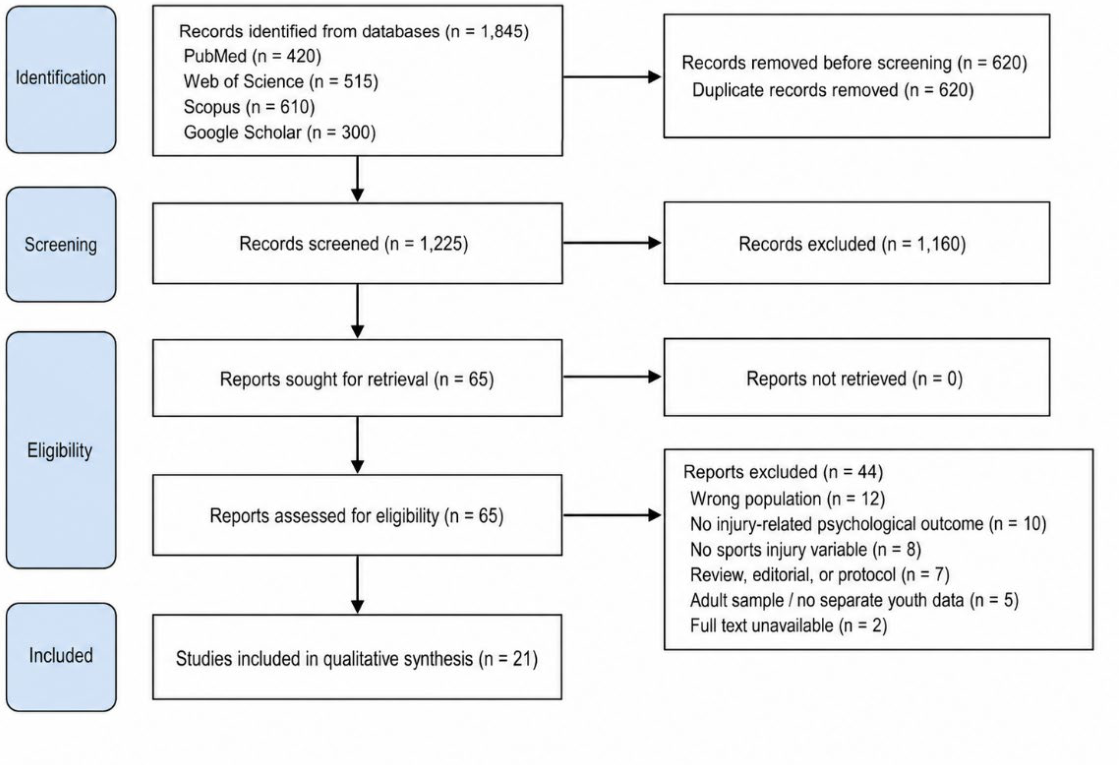

Table 1.
Search strategies used across databases.
| Database | Search strategy | Search period | Records identified |
|---|---|---|---|
| PubMed | (("sports injury"[Title/Abstract] OR "sport-related injury"[Title/Abstract] OR "athletic injury"[Title/Abstract] OR "Athletic Injuries"[MeSH Terms]) AND ("mental health"[Title/Abstract] OR anxiety[Title/Abstract] OR depression[Title/Abstract] OR "depressive symptoms"[Title/Abstract] OR "psychological distress"[Title/Abstract] OR "fear of reinjury"[Title/Abstract] OR "quality of life"[Title/Abstract]) AND (child*[Title/Abstract] OR adolescen*[Title/Abstract] OR youth[Title/Abstract] OR pediatric[Title/Abstract]) AND (athlete*[Title/Abstract] OR sport*[Title/Abstract])) | March–July 2026 | 420 |
| Web of Science | TS=(("sports injury" OR "sport-related injury" OR "athletic injury") AND ("mental health" OR anxiety OR depression OR "depressive symptoms" OR "psychological distress" OR "fear of reinjury" OR "quality of life") AND (child* OR adolescen* OR youth OR pediatric) AND (athlete* OR sport*)) | March–July 2026 | 515 |
| Scopus | TITLE-ABS-KEY(("sports injury" OR "sport-related injury" OR "athletic injury") AND ("mental health" OR anxiety OR depression OR "depressive symptoms" OR "psychological distress" OR "fear of reinjury" OR "quality of life") AND (child* OR adolescen* OR youth OR pediatric) AND (athlete* OR sport*)) | March–July 2026 | 610 |
| Google Scholar | "sports injury" OR "sport-related injury" "mental health" anxiety depression adolescents youth athletes | March–July 2026 | 300 |
Note: Searches covered all records available from database inception to 8 July 2026. Search syntax was adapted to the requirements of each database. Reference lists of eligible studies and relevant reviews were also screened manually to identify additional studies.
Table 2.
Characteristics of the included studies.
| Authors and year | Country | Study design | Sample | Sport / Injury | Objective |
|---|---|---|---|---|---|
| von Rosen and Heijne (2021) [19] | Sweden | Prospective cohort study | 386 elite adolescent athletes aged 15–19 years from seven sports | Prospectively monitored sports injuries and injury severity over 52 weeks | Explore the association between subjective well-being, sports injury occurrence, and injury severity in adolescent elite athletes. |
| Watson et al. (2021) [20] | United States | Prospective cohort study | 2073 female high school volleyball athletes; mean age 15.6 ± 1.1 years | Time-loss and season-ending sports injuries | Evaluate the impact of in-season injury on quality of life and sleep duration in female youth volleyball athletes. |
| Williams et al. (2021) [21] |
United States |
Prospective cohort study |
70 high school athletes with sport-related concussion; mean age 15.7 years | Sport-related concussion | Evaluate changes in physical, psychological, and social health domains throughout concussion recovery. |
| DiSanti et al. (2022) [22] | United States | Observational recovery study | 85 high school athletes: 46 with concussion and 39 with ankle sprain | Sport-related concussion or acute ankle injury | Compare health-related quality of life during recovery after concussion or acute ankle injury. |
| DuPrey et al. (2022) [23] | United States | Retrospective cohort study | 519 athletes aged 13–18 years with sport-related concussion | Sport-related concussion | Examine whether sleep-related symptoms are associated with persistent concussion symptoms and prolonged recovery. |
| Webster and Feller (2022) [24] | Australia | Case series | 115 adolescent athletes aged 17 years or younger after primary ACL reconstruction | Anterior cruciate ligament reconstruction | Determine whether psychological readiness at 6 months predicts return to competitive sport at 12 months |
| Ekenros et al. (2023) [25] | Sweden | Qualitative interview study | 26 elite athletes aged 15–19 years; 14 females and 12 males; participants from 11 individual and team sports | Previous sports injury requiring rehabilitation | Explore young elite athletes’ experiences of sports-injury rehabilitation, including emotional consequences, access to care, support, and communication |
| Sonesson et al. (2023) [26] | Sweden | Prospective cohort study | 471 recreational youth floorball players aged 12–17 years; 142 females | Prospectively recorded sports injuries during a 26-week season | Investigate whether perceived stress, sleep quality, well-being, sport exposure, and training load were associated with subsequent injury and illness. |
| Zeller et al. (2024) [27] | United States | Cross-sectional survey | 1283 female youth softball players aged 12–18 years; mean age 15.1 ± 1.7 years | Sport specialization behaviours and self-reported arm overuse injury in the previous year | Examine associations between sport specialization behaviours, overuse injury history, anxiety, and depressive symptoms |
| Verma et al. (2024) [28] | United States | Cross-sectional clinical cohort | 357 patients aged 8–18 years presenting with injury; mean age 14.2 years; 94% athletes | Acute injury, overuse injury, and concussion | Compare health-related quality of life according to injury type and athletic participation in injured youth. |
| Butler et al. (2025) [29] | United States | Retrospective cohort study | Participants aged 13–30 years after ACL reconstruction, with separately analysed teen participants aged <19 years | Anterior cruciate ligament reconstruction and return-to-sport rehabilitation | Assess the relationship between psychological readiness and kinesiophobia in teenage athletes after ACL reconstruction |
| Castellana et al. (2025) [30] | United States | Exploratory secondary analysis of two randomized controlled trials | 198 male and female adolescents aged 13–18 years with sport-related concussion | Sport-related concussion and new-onset mood symptoms | Examine whether early prescribed aerobic exercise reduces the risk of persistent post-concussive symptoms among adolescents with a high burden of new-onset mood symptoms |
| Sahin et al. (2025) [31] | United States | Cross-sectional study | 177 adolescent soccer players; mean age 14.61 ± 1.88 years | Previous concussion, knee injury, or sport-related injury | Examine the association between concussion history and sleep quality in adolescent soccer players, while also exploring previous knee injury and other sport-related injury. |
| Sánchez-Ruiz et al. (2025) [32] | Spain | Cross-sectional study | Young male soccer players aged 10–15 years | Sports injury history/vulnerability | Analyse the association between competitive anxiety and injury vulnerability. |
| Olmedilla-Zafra and Gil-Caselles (2025) [33] | Spain | Predictive associative study | 23 male rugby players aged 14–17 years from U-16 and U-18 regional teams | Sports injury occurrence, number, type, and severity | Analyse the relationship between mood, perceived fatigue, and sports injuries according to age category |
| Summersby et al. (2025) [34] | Ireland | Qualitative phenomenological study | 17 adolescent athletes aged 15–18 years; mean age 16.2 years; 8 females; participants from five sports | Traumatic and gradual-onset sports injuries sustained within the previous 2 years | Explore adolescent athletes’ lived experiences of sports injury, including psychological impact, social influences, playing through pain, and confidence when returning to sport |
| Verma et al. (2025) [35] | United States | Longitudinal cohort study | 357 patients aged 8–18 years presenting with injury; mean age 14.2 years; 94% athletes | Acute injuries, overuse injuries, and concussion | Compare health-related quality-of-life outcomes up to 24 months after sport-related injury according to injury type, sex, age, surgery, and sport attrition |
| Lindman et al. (2026) [36] | Sweden | Prospective cohort study | 171 elite adolescent athletes aged 16–19 years | Prospectively registered sports injuries | Evaluate mental well-being and its association with subsequent sports injury risk in elite adolescent athletes |
| McAleese et al. (2026) [37] | Ireland | Cohort study | 539 adolescent athletes aged <18 years who underwent primary ACL reconstruction | Primary ACL reconstruction and subsequent ipsilateral or contralateral ACL injury | Examine the longitudinal association between psychological readiness to return to sport and the risk of subsequent ACL injury in adolescent athletes. |
| Ríos-Garit et al. (2026) [38] | Cuba | Cross-sectional correlational study | 131 young athletes; mean age 16.49 years; predominantly male | Injury occurrence, frequency, and severity | Examine whether competitive anxiety predicts injury occurrence, number, and severity. |
| Staresinic et al. (2026) [39] | United States | Cross-sectional study | 668 elite youth soccer athletes aged 13–19 years | Current injury, recovered injury, or no recent injury | Examine the association between injury status, anxiety, depressive symptoms, and health-related quality of life in youth soccer players |
Table 3.
Psychological variables, instruments, and main findings.
| Authors and year | Psychological / psychosocial variables | Instruments | Main findings | Methodological quality |
|---|---|---|---|---|
| von Rosen and Heijne (2021) [19] | Subjective well-being; injury occurrence; injury severity | Weekly injury and well-being questionnaire | Lower well-being was associated with greater subsequent injury risk, while severe injuries were associated with poorer well-being | Low risk of bias |
| Watson et al. (2021) [20] | Quality of life; psychosocial functioning; sleep duration | PedsQL and self-reported sleep duration | Injured athletes showed greater declines in total, physical, school, and psychosocial quality of life. | Low risk of bias |
| Williams et al. (2021) [21] | Anxiety; depression; fatigue; pain interference; physical function; peer relationships | PROMIS Pediatric-25 | Multiple health domains were impaired shortly after concussion and improved progressively by return to sport. | Low risk of bias |
| DiSanti et al. (2022) [22] | Health-related quality of life; physical, emotional, social, and school functioning | Pediatric Quality of Life Inventory (PedsQL) | Quality of life improved in both groups; ankle injury affected physical functioning more, whereas concussion affected school functioning more. | Some concerns |
| DuPrey et al. (2022) [23] | Sleep difficulty; fatigue; drowsiness; persistent symptoms; recovery duration | SCAT5 symptom scale and clinical records | Greater sleep-related symptom severity was associated with persistent symptoms and longer concussion recovery. | Some concerns |
| Webster and Feller (2022) [24] | Psychological readiness; emotions; confidence; risk appraisal; return to sport | ACL-RSI scale | Greater psychological readiness at 6 months, particularly emotional readiness, predicted competitive sport participation at 12 months. | Some concerns |
| Ekenros et al. (2023) [25] | Frustration; fear of falling behind; support; communication; rehabilitation experiences | Focus-group interviews and content analysis | Injury caused frustration and fear of falling behind; access to care and communication between clinicians and coaches were important. | Low risk of bias |
| Sonesson et al. (2023) [26] | Stress; sleep quality; well-being; training load; injury risk | Weekly wellness survey and OSTRC questionnaire | Higher stress, poorer sleep, and poorer well-being increased the odds of injury during the following week. | Low risk of bias |
| Zeller et al. (2024) [27] | Anxiety; depressive symptoms; sport specialization; arm overuse injury history | 3-point specialization scale, PHQ-9, GAD-7, and self-reported injury history | Athletes with a previous arm overuse injury reported higher depressive symptoms. High specialization itself was not associated with worse anxiety or depression scores. | Some concerns |
| Verma et al. (2024) [28] | Anxiety; depression; fatigue; pain interference; peer relationships; mobility | PROMIS Pediatric-25 and CLASS | Concussion was associated with greater fatigue and poorer academic outcomes, whereas overuse injuries were associated with lower mobility. | Some concerns |
| Butler et al. (2025) [29] | Psychological readiness; kinesiophobia; fear of reinjury | ACL-RSI and Tampa Scale of Kinesiophobia-11 | Greater kinesiophobia was associated with poorer psychological readiness in both teenage and adult groups. | Some concerns |
| Castellana et al. (2025) [30] | New-onset mood symptoms; concussion symptoms; persistent symptoms; recovery | Post-Concussion Symptom Inventory and clinical recovery assessment | Adolescents with high mood-symptom burden recovered faster and had fewer persistent symptoms when prescribed aerobic exercise. | Some concerns |
| Sahin et al. (2025) [31] | Sleep duration; sleep latency; sleep disturbance; daytime dysfunction; sleep quality | Pittsburgh Sleep Quality Index and injury-history questionnaire | Concussion history was associated with poorer sleep across several domains; knee and other injury histories were not. | Some concerns |
| Sánchez-Ruiz et al. (2025) [32] | Competitive anxiety; worry; concentration disruption; injury occurrence | Sport Anxiety Scale-2 and injury record | Higher competitive anxiety, particularly worry and concentration disruption, was associated with greater injury vulnerability. | Some concerns |
| Olmedilla-Zafra and Gil-Caselles (2025) [33] | Mood; perceived fatigue; injury occurrence; injury severity | POMS, Brief Fatigue Inventory, and injury survey | Greater fatigue was associated with a higher tendency to sustain injury; U-18 players reported more fatigue and injuries than U-16 players. | High risk of bias |
| Summersby et al. (2025) [34] | Emotional distress; identity loss; social influence; confidence; resilience | Semi-structured interviews and reflexive thematic analysis | Athletes described devastation, identity loss, social pressure to play through injury, and reduced confidence during return to sport. | Low risk of bias |
| Verma et al. (2025) [35] | Anxiety; depression; fatigue; pain; peer relationships; mobility; quality of life | PROMIS Pediatric-25 | Most quality-of-life domains improved over time, although outcomes varied according to sex, surgery, and sport attrition. | Low risk of bias |
| Lindman et al. (2026) [36] | Mental well-being; previous mental health difficulties; subsequent injury | SWEMWBS and prospective injury registration | Poorer mental well-being was examined in relation to later injury; females reported more mental health difficulties and lower well-being. | Low risk of bias |
| McAleese et al. (2026) [37] | Psychological readiness; confidence; emotions; return to play; reinjury | ACL-RSI and five-year clinical follow-up | ACL-RSI scores showed sex-specific associations with ipsilateral and contralateral ACL reinjury. | Low risk of bias |
| Ríos-Garit et al. (2026) [38] | Cognitive anxiety; somatic anxiety; self-confidence; injury occurrence, number, and severity | Competitive Anxiety Inventory-2 and medical records | Greater competitive anxiety was associated with injury occurrence and predicted a greater number and severity of injuries. | Some concerns |
| Staresinic et al. (2026) [39] | Anxiety; depression; quality of life; injury and recovery status | GAD-7, PHQ-9, and PedsQL | Currently injured athletes reported greater anxiety and depression and poorer quality of life; some differences persisted after return to play. | Some concerns |
Note. Verma et al. (2024) and Verma et al. (2025) reported cross-sectional and longitudinal analyses, respectively, from the same underlying cohort.
Disclaimer/Publisher’s Note: The statements, opinions and data contained in all publications are solely those of the individual author(s) and contributor(s) and not of MDPI and/or the editor(s). MDPI and/or the editor(s) disclaim responsibility for any injury to people or property resulting from any ideas, methods, instructions or products referred to in the content. |
© 2026 by the authors. Licensee MDPI, Basel, Switzerland. This article is an open access article distributed under the terms and conditions of the Creative Commons Attribution (CC BY) license (http://creativecommons.org/licenses/by/4.0/).
Copyright: This open access article is published under a Creative Commons CC BY 4.0 license, which permit the free download, distribution, and reuse, provided that the author and preprint are cited in any reuse.