

Submitted:
29 July 2026
Posted:
29 July 2026
You are already at the latest version
Preprints on COVID-19 and SARS-CoV-2
Abstract
Background: Inhaled nitric oxide (iNO) is a selective pulmonary vasodilator used as rescue therapy in acute respiratory distress syndrome (ARDS) for transient improvement in oxygenation. Although multiple studies demonstrate improvements in oxygenation parameters, iNO has not consistently shown a mortality benefit or reduction in the duration of ventilation[1].
Methods: We conducted a retrospective cohort study of mechanically ventilated adults with COVID-19 admitted to a medical intensive care unit who received iNO. Demographic characteristics, comorbidities, illness severity scores, timing of iNO initiation, and clinical outcomes were analyzed, with comparisons made between survivors and non-survivors.
Results: A total of 94 patients were included. The mean age was 52.0 years (SD 14.1), 70.2% were male, and mean body mass index was 36.5 kg/m² (SD 10.0). Hypertension (58.5%) and diabetes (36.2%) were the most common comorbidities. Mean SOFA score was 4.22 (SD 2.79), and mean APACHE II score was 11.69 (SD 6.98). Overall, in-hospital mortality was 85.1% (80/94). The median time from intubation to iNO initiation was 7.6 days. Survivors received iNO significantly earlier than non-survivors (mean 4.14 vs 8.3 days after intubation, p = 0.024) and had a longer hospital length of stay (mean 37 vs 23 days, p < 0.01). Duration of iNO therapy did not differ between groups (p = 0.12).
Conclusion: In this cohort of critically ill patients with COVID-19 and severe respiratory failure, overall mortality was extremely high. Earlier initiation of inhaled nitric oxide was associated with improved survival, whereas duration of therapy was not. These findings suggest that the timing of iNO administration may be an important determinant of outcomes and warrant further prospective investigation.
Keywords:
COVID-19
; inhaled nitric oxide
; Acute Respiratory Distress Syndrome
; mechanical ventilation
; pulmonary vasodilators
; retrospective cohort
1. Introduction
Inhaled nitric oxide (iNO) is a selective pulmonary vasodilator used in acute respiratory distress syndrome (ARDS) to transiently improve oxygenation. Its role in ARDS, including COVID-19-associated respiratory failure, remains controversial. Multiple studies have shown that iNO improves oxygenation parameters, with 45–66% of patients considered responders, defined as a ≥20% increase in PaO2/FiO2 [2,3,4,5,6,7,8]. These effects are most pronounced in patients with severe ARDS and may delay escalation to extracorporeal membrane oxygenation (ECMO) in select cases [6,8].
Despite improvements in oxygenation, iNO has not been shown to reduce mortality, the duration of mechanical ventilation, or ICU or hospital length of stay [1,2,3,5,6,8,9]. Current Surviving Sepsis Campaign guidelines recommend against routine use of iNO in ARDS due to lack of demonstrated survival benefit. However, it may be considered as rescue therapy in refractory hypoxemia [10]. While generally well tolerated, iNO has been associated with adverse outcomes, including acute kidney injury, hospital-acquired pneumonia, and potential rebound hypoxemia with abrupt discontinuation [2,3,9,10].
The use of iNO in ARDS predates the COVID-19 pandemic. Previous randomized controlled trials have established iNO as an effective way of improving oxygenation without systemic vasodilation. However, landmark trials, including those by Lundin et al. and Taylor et al., failed to demonstrate a mortality benefit [11,12]. Additionally, a Cochrane meta-analysis similarly concluded that iNO does not reduce mortality and may increase the risk of renal dysfunction [1]. Despite this, iNO has remained in clinical use as a rescue therapy for refractory hypoxemia, particularly as a bridge to ECMO or as a temporizing measure during prone positioning. The emergence of COVID-19-associated ARDS renewed interest in iNO given the prominent role of hypoxic pulmonary vasoconstriction and ventilation-perfusion mismatch in its pathophysiology.
COVID-19-associated ARDS is characterized by diffuse alveolar damage, microvascular thrombosis, and dysregulated inflammation, resulting in severe ventilation-perfusion mismatch and refractory hypoxemia [6]. Pulmonary vascular dysfunction, including endothelial injury and in situ thrombosis, contributes to elevated pulmonary vascular resistance and right ventricular strain in a subset of patients [8]. Inhaled nitric oxide selectively vasodilates pulmonary vessels in ventilated lung units, redistributing perfusion away from non-ventilated regions and, as a result, improving the PaO2/FiO2 ratio without systemic hemodynamic effects. These physiologic properties make iNO a rational rescue therapy in COVID-19-associated ARDS, particularly in patients with evidence of pulmonary hypertension or right ventricular dysfunction.
Most available data are derived from retrospective and observational studies, with relatively few randomized trials. Additionally, significant heterogeneity in patient selection, dosing protocols, and initiation timing limits the interpretation of existing evidence [13]. However, the impact of iNO initiation timing on clinical outcomes remains poorly defined, particularly in patients with COVID-19 who require mechanical ventilation.
In this retrospective cohort study, we expand on existing work by evaluating both patient characteristics associated with mortality and the timing of iNO initiation as potential determinants of clinical outcomes. We aimed to evaluate the association between the timing of inhaled nitric oxide initiation and clinical outcomes in mechanically ventilated patients with COVID-19.
2. Materials and Methods:
2.1. Study Design and Setting
We conducted a retrospective cohort study of adult patients admitted to the medical intensive care unit (MICU) at University Medical Center in Lubbock, TX, with confirmed COVID-19 who received inhaled nitric oxide (iNO) during invasive mechanical ventilation. The study was approved by the Texas Tech University Health Sciences Center Institutional Review Board (L23-096; approval date 09/08/2023) with waiver of informed consent due to minimal risk.
2.2. Patient Selection
Patients were eligible for inclusion if they were 18 years of age or older, had a confirmed SARS-CoV-2 infection by polymerase chain reaction (PCR), required invasive mechanical ventilation, and received iNO at any time during their ICU course. Patients were excluded if outcome data were unavailable.
ARDS was defined according to the Berlin criteria, requiring an acute onset within 1 week of a known clinical insult, bilateral opacities on chest imaging not fully explained by effusions or lobar collapse, and a PaO2/FiO2 ratio less than 300 mmHg with a minimum of 5 cmH2O positive end-expiratory pressure (PEEP). Severity was classified as mild (PaO2/FiO2 200-300), moderate (PaO2/FiO2 100-200), or severe (PaO2/FiO2 less than 100) [14].
2.3. Data Collection and Variables
Clinical data were abstracted from the electronic medical record and recorded in a standardized database. Variables collected included demographic characteristics (age, sex, race, body mass index), comorbidities (including hypertension, diabetes mellitus, chronic obstructive pulmonary disease (COPD), obstructive sleep apnea (OSA), and cardiac function assessed by left ventricular ejection fraction), and severity of illness scores (Sequential Organ Failure Assessment (SOFA) and Acute Physiology and Chronic Health Evaluation II (APACHE II)).
Treatment-related variables included mechanical ventilation duration, hospital length of stay (LOS), iNO therapy duration, and timing of iNO initiation. Timing of iNO initiation was defined as the number of days from endotracheal intubation to iNO initiation.
Inhaled nitric oxide was administered via a dedicated delivery system integrated into the mechanical ventilator circuit. Per institutional protocol, iNO was initiated at a starting dose of 20 parts per million (ppm) in patients with refractory hypoxemia, defined as a persistent PaO2/FiO2 ratio below 150 mmHg despite optimization of PEEP, FiO2, and ventilator settings. Dose titration was performed at the treating intensivist's discretion based on the oxygenation response, with a maximum dose of 40 ppm. Weaning of iNO was performed gradually to avoid rebound hypoxemia with dose reductions at intervals determined by clinical response. Discontinuation was considered when the PaO2/FiO2 ratio remained above 200 mmHg on reduced iNO doses, or care was transitioned to comfort-focused. The P/F ratio threshold of 150 mmHg was applied as a general institutional guideline; individual clinicians retained discretion over the timing of iNO initiation based on the overall clinical context.
Adjunctive therapies administered during the ICU course were captured from the medical record and included prone positioning, neuromuscular blockade, systemic corticosteroids, and antiviral therapy. Lung-protective ventilation strategies were employed per institutional protocol, targeting tidal volumes of 6 mL/kg of ideal body weight and plateau pressures below 30 cmH2O in accordance with ARDS Network guidelines [15]. The use of these therapies was documented but was not used as an exclusion criterion, as the goal of this study was to evaluate outcomes in an everyday clinical population.
2.4. Outcomes
The primary outcome was in-hospital mortality. Secondary outcomes included mechanical ventilation duration, hospital length of stay, and iNO therapy duration. Additional analyses evaluated the association between the timing of iNO initiation and survival, as well as the relationship between patient characteristics and mortality.
2.5. Statistical Analysis
Continuous variables were summarized as mean and standard deviation (SD) and compared using Student’s t-test. Categorical variables were presented as counts and percentages and compared using chi-square or Fisher’s exact tests, as appropriate.
Survival analyses were performed using Kaplan-Meier curves, with comparison between groups assessed using the log-rank test. Cox proportional hazards regression models were used to evaluate associations between clinical variables and in-hospital mortality, with results reported as hazard ratios (HRs) and 95% confidence intervals (CIs). Multivariable models were adjusted for relevant demographic and clinical covariates, including age, sex, BMI, COPD, OSA, hypertension, diabetes, and ejection fraction.
A two-sided p-value < 0.05 was considered statistically significant. All statistical analyses were performed using standard statistical software (R version 4.5.0; R Core Team, Vienna, Austria).
3. Results
3.1. Patient Characteristics
A total of 94 mechanically ventilated patients with confirmed COVID-19 who received iNO were included in the analysis. The mean age was 52.0 years (SD 14.1), and the cohort was predominantly male (70.2%) and obese, with a mean body mass index (BMI) of 36.5 kg/m² (SD 10.0). The majority of patients were identified as Hispanic (51.1%), followed by White (30.9%) and Black (7.4%).
Hypertension (58.5%) and diabetes mellitus (36.2%) were the most common comorbidities, while COPD (4.3%) and OSA (6.4%) were less prevalent. Most patients had preserved left ventricular ejection fraction (> 50%) (78.7%), with reduced ejection fraction (≤ 50%) observed in 4.3% of patients. Ejection Fraction was unknown in 17% of patients. Baseline characteristics are summarized in Table 1.
Chest radiographs obtained at the time of ICU admission demonstrated bilateral infiltrates in 86 of 94 patients (91.5%), with bilateral alveolar infiltrates in 81.9% of the cohort, consistent with severe ARDS. A small number of patients had additional radiographic findings, including pneumothorax (2.1%) and pleural effusion (2.1%).
3.2. Clinical Outcomes
In-hospital mortality was 85.1% (80 of 94), with 14 patients surviving to hospital discharge.
3.3. Comparison of Survivors and Non-Survivors
Baseline demographic characteristics, including age, sex, BMI, and race, were not significantly associated with mortality. Similarly, hypertension, diabetes mellitus, and OSA were not significantly associated with survival. However, COPD was associated with a significantly increased risk of mortality (hazard ratio (HR) 4.20, 95% confidence interval (CI) 1.14-15.47; p=0.031). In contrast, preserved ejection fraction (>50%) was strongly associated with improved survival (HR 0.09, 95% CI 0.03-0.30; p<0.001). These findings are summarized in Table 2.
3.4. Survival Analysis
Kaplan-Meier survival analysis demonstrated significantly reduced survival among patients with COPD compared to those without COPD (log-rank p = 0.018). All patients with COPD died within approximately 25 days of ICU admission. Data are shown in Figure 1.
Similarly, patients with reduced ejection fraction (≤50%) had markedly worse survival compared to those with preserved ejection fraction (>50%) (log-rank p< 0.0001). Survival in the reduced ejection fraction group declined rapidly, with no patients surviving beyond approximately 20 days, whereas patients with preserved ejection fraction demonstrated improved survival over time. Data are shown in Figure 2.
3.5. Timing of iNO Initiation and Outcomes
We next evaluated the association between the timing of iNO initiation and clinical outcomes. The median time from intubation to initiation of iNO was 7.6 days (mean 7.7 days, SD 9.2). Survivors received iNO significantly earlier than non-survivors (median 0.5 vs. 7 days; mean 4.14 vs 8.3 days after intubation, p=0.024). Duration of iNO therapy did not differ significantly between survivors and non-survivors (p=0.12).
Serial arterial blood gas data were available for a subset of patients (n=52 at ICU admission, n=56 pre-iNO, n=56 post-iNO). Patients with missing ABG data were not systematically different from those with available data in age, sex, or mortality rate, though formal comparisons were limited by sample size. At the time of ICU admission, the mean PaO2/FiO2 ratio was 75.3 mmHg (SD 49.8; median 61.0), with 82.7% of patients meeting criteria for severe ARDS (PaO2/FiO2 less than 100 mmHg) and 15.4% meeting criteria for moderate ARDS (PaO2/FiO2 100-200 mmHg). Immediately prior to iNO initiation, the mean PaO2/FiO2 ratio was 64.0 mmHg (SD 26.3; median 57.5), reflecting persistent severe hypoxemia despite mechanical ventilation and other supportive measures. Among the 56 patients with paired pre- and post-iNO arterial blood gas data, 38 patients (67.9%) demonstrated an oxygenation response, defined as a >20% improvement in the PaO2/FiO2 ratio within 24-48 hours of iNO initiation. The mean PaO2/FiO2 ratio at 24-48 hours post-iNO initiation was 95.5 mmHg (SD 42.2; median 85.0), representing a mean increase of 31.5 mmHg from pre-iNO values.
3.6. Secondary Outcomes
Survivors had a significantly longer hospital length of stay compared to non-survivors (mean 37 vs 23 days, p < 0.01). Survivors required longer mechanical ventilation (median 0.5 days, IQR 0-5.25 vs. median 7 days, IQR 3-11.5; p=0.024) than non-survivors.
4. Discussion
In this retrospective cohort study of mechanically ventilated patients with COVID-19 who received iNO, we observed an extremely high in-hospital mortality rate of 85.1%. Earlier initiation of iNO after intubation was associated with improved survival, whereas the duration of therapy was not. In addition, patient-specific factors, including COPD and left ventricular ejection fraction, were strongly associated with mortality.
Our findings are consistent with prior studies demonstrating that iNO improves oxygenation without conferring a mortality benefit in patients with COVID-19 ARDS. While transient improvements in oxygenation are well described, these physiologic effects have not translated into meaningful clinical outcomes, such as reduced mortality or shorter mechanical ventilation duration. The lack of association between iNO therapy duration and survival in our cohort further supports this observation.
However, our study expands upon existing literature by examining the timing of iNO initiation as a potential determinant of clinical outcomes. We found that patients who received iNO earlier in their mechanical ventilation course had better survival than those who received it later. One possible explanation is that earlier administration of iNO may improve ventilation-perfusion matching and reduce hypoxic pulmonary vasoconstriction at a stage when lung injury is potentially more reversible. In contrast, later initiation of iNO may reflect more advanced or refractory disease, in which pulmonary vascular dysregulation and parenchymal injury are less responsive to targeted vasodilation. Alternatively, these associations are subject to important confounding, including a form of immortal time bias. Patients who died within the first few days of mechanical ventilation never had the opportunity to receive late iNO; their deaths would be categorized alongside early iNO initiation by default, potentially inflating the apparent survival benefit of early timing. A formal landmark analysis starting at a fixed timepoint post-intubation (such as day 3 or day 5) would be required to address this rigorously and was not performed in the current study. Additionally, patients receiving iNO later in their disease course may represent a population with more refractory illness and a worse underlying prognosis, independently of iNO timing. Conversely, earlier initiation may reflect differences in clinician practice patterns, institutional protocols, or earlier recognition of hypoxemia rather than a direct therapeutic effect. Therefore, the observed association between earlier iNO initiation and improved survival should be considered hypothesis-generating rather than causal.
Our timing finding has not been a primary focus of prior studies and represents a meaningful addition to the existing literature. Mekontso Dessap et al. evaluated iNO in COVID-19 ARDS across multiple centers and reported that oxygenation response did not predict survival, but did not examine the timing of initiation as an independent variable [6]. Similarly, Al Sulaiman et al. reported no mortality benefit from iNO in a multicenter cohort but noted significant heterogeneity in the timing of iNO initiation relative to intubation [2]. Di Fenza et al., in a phase II trial of high-dose iNO, demonstrated improved oxygenation in a subset of patients but did not identify a survival benefit, and timing of initiation was not systematically analyzed [1]. Taken together, these studies establish that iNO improves oxygenation but not mortality; our data suggest that the timing of initiation may be an insufficiently evaluated variable that could explain some of the heterogeneity in outcomes across studies.
We also identified COPD as a significant risk factor for mortality and preserved ejection fraction as strongly protective. These findings emphasize the importance of underlying cardiopulmonary comorbidities in determining outcomes in critically ill patients with COVID-19. Patients with COPD may have limited pulmonary reserve and impaired gas exchange, which could exacerbate the severity of hypoxemic respiratory failure. In contrast, preserved cardiac function may support better hemodynamic stability and oxygen delivery in the setting of severe illness. However, these findings should be interpreted with caution. Only 4 patients in our cohort had COPD, and none survived, resulting in a wide confidence interval for the hazard ratio (HR 4.20, 95% CI 1.14 – 15.47). The association is statistically significant, but clinically meaningful conclusions are limited by the small number of events; a single additional COPD survivor would substantially alter this estimate. Similarly, the EF analysis is constrained by the small number of patients with reduced EF (n=4) and the 17% of patients with unknown EF who were excluded from this analysis. Further studies with larger cohorts are needed to confirm whether COPD and reduced EF independently predict mortality in this population.
These findings have potential clinical implications for the use of iNO in critically ill patients with COVID-19 ARDS. If earlier initiation is associated with improved outcomes, clinicians may consider earlier deployment of iNO in selected patients rather than reserving it exclusively for refractory or late-stage hypoxemia. This would represent a shift from the current practice of using iNO solely as a rescue therapy after other interventions have failed. However, given the retrospective nature of this study and the potential for confounding, this hypothesis requires prospective validation before recommending changes to clinical practice. Identifying the optimal threshold for initiation, whether defined by P/F ratio, duration of mechanical ventilation, or failure to respond to prone positioning, will be an important focus of future research.
The mean PaO2/FiO2 ratio immediately prior to iNO initiation was 64.0 mmHg, confirming that iNO was administered in the setting of severe refractory hypoxemia consistent with our institutional threshold. The oxygenation response rate of 67.9% in our cohort modestly exceeds the 45-66% range reported in prior studies of iNO in COVID-19 ARDS [2,3,4,5,6,7,8], which may reflect differences in patient selection, ARDS severity, or the timepoint at which oxygenation response was assessed. This finding nevertheless supports the generalizability of our findings and suggests that our patient population responded to iNO in a manner broadly comparable to previously described cohorts. Notably, despite this oxygenation response, overall mortality remained extremely high, further reinforcing that improvements in the PaO2/FiO2 ratio do not reliably translate into a survival benefit, a finding consistent with the broader literature.
Prospective studies are needed to evaluate whether earlier, protocolized initiation of iNO improves survival compared to current standard practice. Future studies should incorporate standardized ARDS definitions, consistent dosing protocols, and systematic documentation of initiation timing to allow for meaningful comparisons across centers. Biomarker-guided approaches, such as identifying patients with elevated pulmonary vascular resistance or echocardiographic evidence of right ventricular dysfunction, may help define the subset of patients most likely to benefit from iNO, particularly those with early intubation and refractory hypoxemia. Additionally, the relationship between iNO and adjunctive therapies, such as prone positioning, neuromuscular blockade, and corticosteroids, warrants further investigation, as these interventions may interact with the timing and efficacy of iNO.
It is also worth noting that inhaled nitric oxide has toxic effects at high doses or in specific contexts. Nader et al. demonstrated that high-dose nitric oxide at 80 ppm increases lung injury and protein permeability in an animal model after gastric aspiration, with additional injury from concurrent hyperoxia [16]. This dose is twice the maximum used in our cohort (40 ppm), and our study involved COVID-19-associated ARDS rather than aspiration injury; therefore, direct extrapolation is limited. Nevertheless, this finding demonstrates the importance of dose optimization and careful patient selection when administering iNO, particularly in patients with concurrent hyperoxia or additional mechanisms of lung injury [16].
This study has several important limitations. First, its retrospective, single-center design limits generalizability and introduces the potential for selection bias. Second, the absence of a control group of patients who did not receive iNO precludes assessing the overall effectiveness of iNO compared with standard care. Third, the timing analysis is subject to immortal time bias: patients who died early could not have received late iNO initiation, which may have confounded the association between timing and survival. A landmark analysis was not performed and should be prioritized in future work. Fourth, unmeasured confounders, including hypoxemia severity at iNO initiation, ventilator management strategies, and adjunctive therapies, may have influenced outcomes. Fifth, serial ABG data were available for only a subset of patients, limiting the generalizability of the oxygenation response analyses. Additionally, the small sample size, particularly within subgroups such as patients with COPD (n=4) or reduced ejection fraction (n=4), limits statistical power and the reliability of subgroup-level hazard ratio estimates.
Despite these limitations, our study provides clinical information regarding the potential role of timing in iNO administration. Earlier initiation of iNO was associated with improved survival, whereas duration of therapy was not, suggesting that timing, rather than prolonged use, may be a more important determinant of response. Given that iNO is frequently used as a rescue therapy, these findings suggest that earlier use in selected patients may improve outcomes. Prospective studies are needed to evaluate the impact of timing further and to determine whether earlier initiation of iNO can lead to meaningful clinical benefit.
5. Conclusions
In this cohort of critically ill patients with COVID-19 and severe respiratory failure, overall mortality was extremely high. COPD was associated with increased mortality, and preserved ejection fraction on TTE was associated with decreased mortality. Earlier initiation of inhaled nitric oxide was associated with improved survival, whereas duration of therapy was not. These findings suggest that the timing of iNO administration may be an important determinant of outcomes and justify further prospective investigation.
Author Contributions
Conceptualization, A.E., N.V.V., K.N.; Methodology, N.V.V., K.N., S.Y.; Data Curation, A.E., N.V.V., J.R., P.Y., J.T., A.M., T.S., C.P., R.G.; Formal Analysis, S.Y.; Writing – Original Draft Preparation, A. E.; Writing – Review and Editing, A.E., K.N.
Funding
This research received no external funding.
Data Availability
Data are available upon request.
Ethical Approval and Informed Consent Statement
The study was conducted in accordance with the Declaration of Helsinki and approved by the Institutional Review Board of Texas Tech University Health Sciences Center (protocol code L23-096; date of approval 09/08/2023). Informed consent was waived due to the retrospective nature of the study and minimal risk.
Conflicts of Interest
No conflicts of interest to report.
References
- Di Fenza R, S.N., Gianni S, et al. High-Dose Inhaled Nitric Oxide in Acute Hypoxemic Respiratory Failure Due to COVID-19: A Multicenter Phase II Trial. American Journal of Respiratory and Critical Care Medicine 2023, 208, 1293-1304. [CrossRef]
- Al Sulaiman K, K.G., Altebainawi AF, et al. Evaluation of Inhaled Nitric Oxide (iNO) Treatment for Moderate-to-Severe ARDS in Critically Ill Patients With COVID-19: A Multicenter Cohort Study. Critical Care 2022, 26, 304. [CrossRef]
- Isha S, B.P., Hanson AJ, et al. Impact of Low Dose Inhaled Nitric Oxide Treatment in Spontaneously Breathing and Intubated COVID-19 Patients: A Retrospective Propensity-Matched Study. Critical Care 2024, 28, 344. [CrossRef]
- Alqahtani JS, A.A., Al Ghamdi SS, et al. Inhaled Nitric Oxide for Clinical Management of COVID-19: A Systematic Review and Meta-Analysis. International Journal of Environmental Research and Public Health 2022, 19, 12803. [CrossRef]
- Freidkin L, G.K.T., Peles I, et al. Medium-Term Effect of Inhaled Nitric Oxide in Mechanically Ventilated COVID-19 Patients. Journal of Clinical Medicine 2025, 14, 806. [CrossRef]
- Mekontso Dessap A, P.L., Schaller M, et al. Inhaled Nitric Oxide in Patients With Acute Respiratory Distress Syndrome Caused by COVID-19: Treatment Modalities, Clinical Response, and Outcomes. Annals of Intensive Care 2023, 13, 57. [CrossRef]
- Lotz C, M.R., Meybohm P, et al. Effects of Inhaled Nitric Oxide in COVID-19-induced ARDS - Is It Worthwhile? Acta Anaesthesiologica Scandinavica 2021, 65, 629-632. [CrossRef]
- Bicakcioglu M, K.S., Duzenci D, et al. Inhaled Nitric Oxide as Rescue Therapy in Severe ARDS Cases Due to COVID-19 Pneumonia: A Single Center Experience. European Review for Medical and Pharmacological Sciences 2023, 27, 6422-6428. [CrossRef]
- Poonam PBH, K.R., Nguyen T, Rikhi S, Lin HM. Nitric Oxide Versus Epoprostenol for Refractory Hypoxemia in Covid-19. PloS One 2022, 17, e0270646. [CrossRef]
- Alhazzani W, M.M., Arabi YM, et al. Surviving Sepsis Campaign: Guidelines on the Management of Critically Ill Adults With Coronavirus Disease 2019 (COVID-19). Critical Care Medicine 2020, 48, e440-e469. [CrossRef]
- Lundin, S.; Mang, H.; Smithies, M.; Stenqvist, O.; Frostell, C.; for the European Study Group of Inhaled Nitric, O. Inhalation of nitric oxide in acute lung injury: results of a European multicentre study. Intensive Care Medicine 1999, 25, 911-919. [CrossRef]
- Taylor, R.W.; Zimmerman, J.L.; Dellinger, R.P.; Straube, R.C.; Criner, G.J.; Davis, J., Kenneth; Kelly, K.M.; Smith, T.C.; Small, R.J.; Group, f.t.I.N.O.i.A.S. Low-Dose Inhaled Nitric Oxide in Patients With Acute Lung InjuryA Randomized Controlled Trial. JAMA 2004, 291, 1603-1609. [CrossRef]
- Shei RJ, B.M. More Questions Than Answers for the Use of Inhaled Nitric Oxide in COVID-19. Nitric Oxide: Biology and Chemistry 2022, 124, 39-48. [CrossRef]
- Force*, T.A.D.T. Acute Respiratory Distress Syndrome: The Berlin Definition. JAMA 2012, 307, 2526-2533. [CrossRef]
- Network, T.A.R.D.S. Ventilation with Lower Tidal Volumes as Compared with Traditional Tidal Volumes for Acute Lung Injury and the Acute Respiratory Distress Syndrome. New England Journal of Medicine 2000, 342, 1301-1308, doi:doi:10.1056/NEJM200005043421801.
- Nader, N.D.; Knight, P.R.; Bobela, I.; Davidson, B.A.; Johnson, K.J.; Morin, F. High-dose nitric oxide inhalation increases lung injury after gastric aspiration. Anesthesiology 1999, 91, 741-749. [CrossRef]
Figure 1.
Kaplan-Meier Curve by EF.
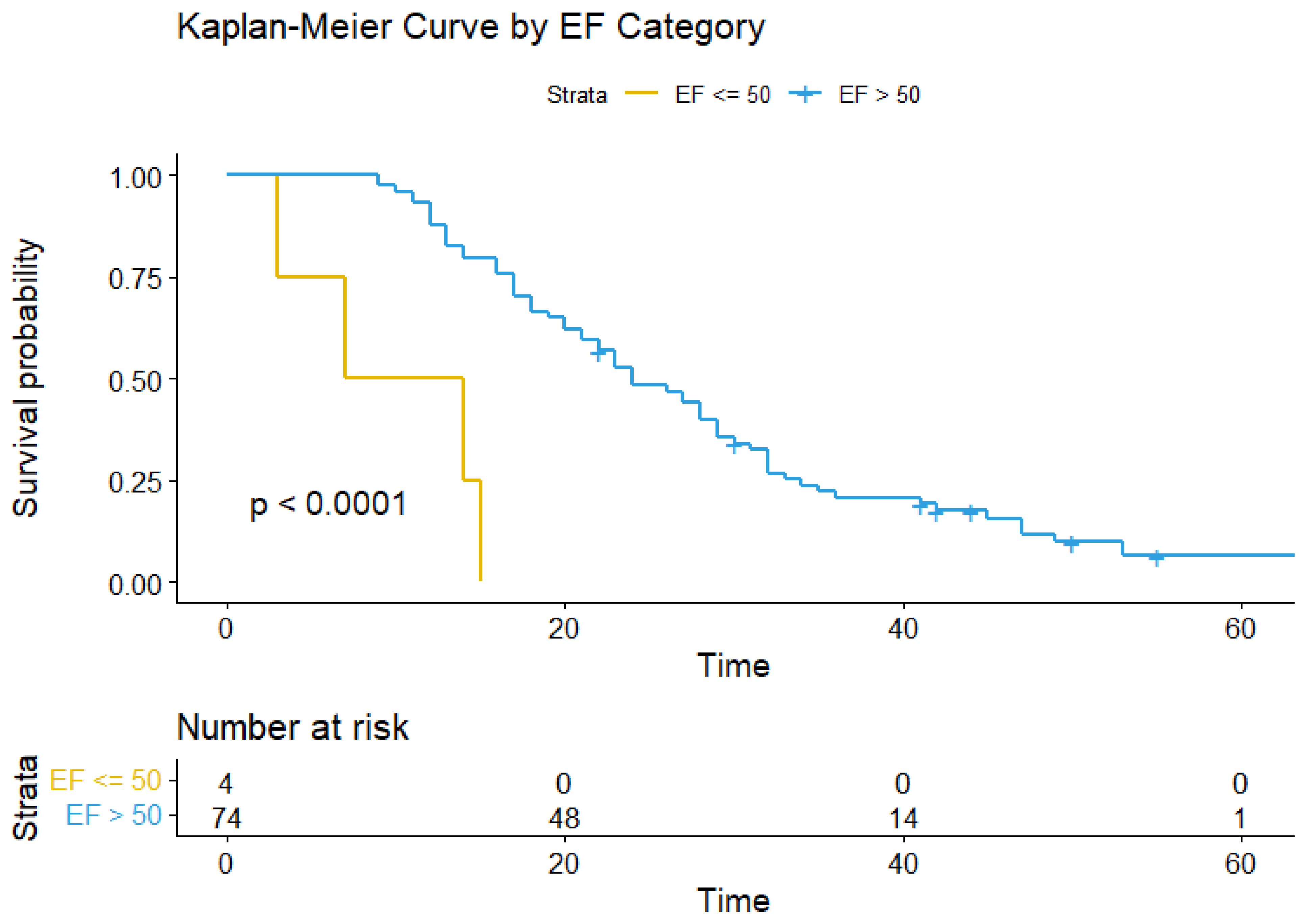
Figure 2.
Kaplan-Meier Curve by COPD status.
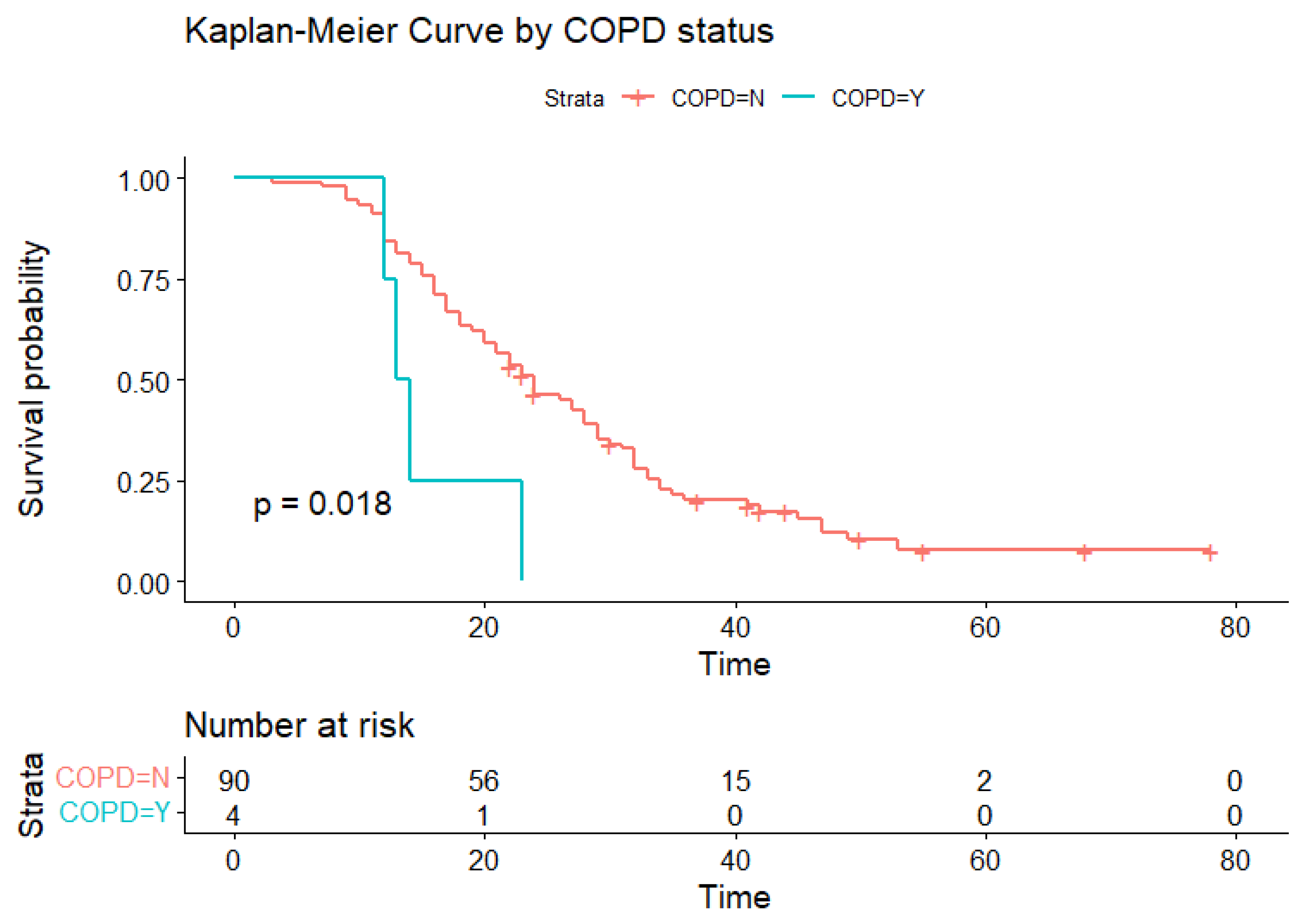

Table 1.
Patient Characteristics.
| Variable | Mean | SD |
| Age (continuous) | 52.0 | 14.1 |
| BMI (continuous) | 36.5 | 10.0 |
| Count | Percentage | |
| Age (>55) | ||
| No | 52 | 55.3% |
| Yes | 42 | 44.7% |
| BMI Category | ||
| Normal (18.5-24.9) | 8 | 8.5% |
| Overweight (25-29.9) | 21 | 22.3% |
| Obese (≥30) | 62 | 66.0% |
| Unknown | 3 | 3.2% |
| Sex | ||
| Female | 28 | 29.8% |
| Male | 66 | 70.2% |
| Race | ||
| Black | 7 | 7.4% |
| Hispanic | 48 | 51.1% |
| White | 29 | 30.9% |
| Other/unknown | 10 | 10.6% |
| COPD | ||
| No | 90 | 95.7% |
| Yes | 4 | 4.3% |
| OSA | ||
| No | 88 | 93.6% |
| Yes | 6 | 6.4% |
| Hypertension | ||
| No | 39 | 41.5% |
| Yes | 55 | 58.5% |
| DM | ||
| No | 60 | 63.8% |
| Yes | 34 | 36.2% |
| Ejection Fraction | ||
| ≤50 | 4 | 4.3% |
| >50 | 74 | 78.7% |
| Unknown | 16 | 17.0% |
Table 1 summarizes the characteristics of MICU patients. The cohort had a mean age of 52 years and was predominantly obese (66%), male (70%), and Hispanic (51%). Hypertension and diabetes were common comorbidities, whereas COPD and OSA were uncommon. Most patients had preserved ejection fraction (>50%), though EF was unknown in 17%.
Table 2.
MICU mortality risk factors.
| Alive | Expired | Adjusted* HR | P value | |
| Variable | (n=14) | (n=80) | (95%CI) | |
| Age | 50.0 (13.3) | 52.3 (14.3) | 1.00 (0.98, 1.03) | 0.810 |
| BMI category | ||||
| Normal | 1 (7.1%) | 7 (8.8%) | Reference | |
| Overweight | 3 (21.4%) | 18 (22.5%) | 1.15 (0.44, 30) | 0.771 |
| Obese | 10 (71.4%) | 52 (65.0%) | 0.83 (0.32, 2.18) | 0.708 |
| Sex | ||||
| Female | 4 (28.6%) | 24 (30.0%) | Reference | |
| Male | 10 (71.4%) | 56 (70.0%) | 1.04 (0.59, 1.83) | 0.893 |
| Race | ||||
| Black | 2 (14.3%) | 5 (6.2%) | Reference | |
| Hispanic | 9 (64.3%) | 39 (48.8%) | 1.00 (0.38, 2.63) | 0.995 |
| White | 1 (7.1%) | 28 (35.0%) | 1.63 (0.60, 4.44) | 0.340 |
| COPD | ||||
| No | 14 (100%) | 76 (95.0%) | Reference | |
| Yes | 0 (0.0%) | 4 (5.0%) | 4.20 (1.14, 15.47) | 0.031 |
| OSA | ||||
| No | 13 (92.9%) | 75 (93.8%) | Reference | |
| Yes | 1 (7.1%) | 5 (6.2%) | 1.29 (0.45, 3.71) | 0.642 |
| Hypertension | ||||
| No | 4 (28.6%) | 35 (43.8%) | Reference | |
| Yes | 10 (71.4%) | 45 (56.2%) | 0.94 (0.53, 1.7) | 0.849 |
| DM | ||||
| No | 8 (57.1%) | 52 (65.0%) | Reference | |
| Yes | 6 (42.9%) | 28 (35.0%) | 1.33 (0.77, 2.3) | 0.311 |
| Ejection Fraction | ||||
| ≤50 | 0 (0.0%) | 4 (5.0%) | Reference | |
| >50 | 10 (71.4%) | 64 (80.0%) | 0.09 (0.03, 0.3) | <0.001 |
| * Adjusted for all other risk factors. | ||||
Table 2 presents hazard ratios for MICU mortality. Age, BMI, sex, race, hypertension, OSA, and diabetes were not significantly associated with mortality. COPD was associated with a higher risk of death (HR 4.20, p = 0.031), whereas preserved ejection fraction (>50%) was strongly protective (HR 0.09, p < 0.001). These findings suggest that patient-specific comorbidities, particularly COPD and cardiac function, may be the most important predictors of MICU mortality in this cohort.
Disclaimer/Publisher’s Note: The statements, opinions and data contained in all publications are solely those of the individual author(s) and contributor(s) and not of MDPI and/or the editor(s). MDPI and/or the editor(s) disclaim responsibility for any injury to people or property resulting from any ideas, methods, instructions or products referred to in the content. |
© 2026 by the authors. Licensee MDPI, Basel, Switzerland. This article is an open access article distributed under the terms and conditions of the Creative Commons Attribution (CC BY) license (http://creativecommons.org/licenses/by/4.0/).
Copyright: This open access article is published under a Creative Commons CC BY 4.0 license, which permit the free download, distribution, and reuse, provided that the author and preprint are cited in any reuse.


