

Submitted:
28 July 2026
Posted:
29 July 2026
You are already at the latest version
Abstract
This study investigated the influence of teachers’ perception and digital readiness on their preparedness for the implementation of computer-based WAEC examinations in Nigerian secondary schools by 2030. A multi-phase quantitative research design combining ex post facto and correlational approaches was adopted. The ex post facto phase allowed examination of existing conditions, such as teachers’ prior exposure to technology and ICT experience, without manipulation of variables, while the correlational phase determined the strength and direction of relationships between teachers’ perception, digital readiness, and preparedness for CBT. The population comprised all 12,483 registered secondary school teachers across public and private institutions in Ebonyi State, responsible for teaching and assessment for national examinations. A stratified random sampling technique was employed, based on school location and subject discipline, yielding a sample of 1,248 teachers, approximately 10 per cent of the population. Data were collected using the Teachers’ Perception and Digital Readiness Inventory (TPDRI), a structured questionnaire divided into three sections: demographic information (6 items), perception of CBT (15 items), and digital readiness (25 items), rated on a four-point Likert scale. Reliability was established through a pilot study with 30 teachers, yielding Cronbach alpha coefficients of 0.74 for perception and 0.78 for digital readiness. Descriptive statistics summarized teachers’ responses, while one-sample t-tests and simple regression analysis examined predictive relationships. Findings indicated that teachers’ perception of CBT was largely neutral, with an observed mean marginally above the baseline (Mean = 37.65, SD = 9.45, t = 0.57, p = 0.567), revealing uncertainty regarding feasibility and benefits. Digital readiness was significantly higher than baseline (Mean = 66.85, SD = 14.52, t = 10.25, p < 0.001), though gaps in infrastructure and training persisted. Regression analysis showed perception significantly predicted digital readiness (B = 1.82, Beta = 0.41, t = 7.58, p < 0.001, R² = 0.17), indicating that positive attitudes contribute to higher readiness, while other factors such as access to ICT resources also play a role. The study concludes that successful CBT implementation requires both enhancement of teachers’ perception through sensitisation and professional development, and investment in digital infrastructure, training, and support to ensure equitable preparedness across Nigerian secondary schools.
Keywords:
computer-based testing
; teachers’ perception
; digital readiness
; WAEC
; secondary education
; Nigeria
1. Introduction
The rapid integration of digital technology in education has changed teaching, learning, and assessment practices across many parts of the world. Schools and examination bodies now use technology to improve the efficiency, reliability, and transparency of large scale assessments. One important development in this area is computer-based testing (CBT), which many countries now use for national and professional examinations. In Nigeria, the West African Examinations Council (WAEC) has announced plans to introduce computer-based examinations for secondary school candidates by the year 2030. This plan marks a major shift from the traditional paper and pencil examination system that has operated for many decades. Research indicates that computer-based examination systems can reduce examination malpractice and improve the speed and accuracy of result processing (Nkaanee & Mgbomo 2025; Sukare and Usman, 2025). The success of this transition will depend largely on the readiness of major stakeholders within the school system. Teachers occupy a central position in this process because they prepare students academically and guide them in adapting to new examination formats (Ayomide, 2025).
Additionally, teachers’ perception of educational reforms often contributes to how successfully such reforms operate within schools. When teachers view an innovation as useful and relevant to teaching and learning, they are more willing to accept and apply it in their classroom practice. In contrast, negative perceptions may lead to resistance or limited participation in the reform process (Luik & Taimalu, 2021). The planned introduction of computer-based WAEC examinations requires teachers to understand digital examination environments and guide students on how to use computer-based testing interfaces. Research on technology use in education indicates that teachers’ attitudes toward digital tools influence the level of technology integration in schools (Scherer et al., 2019; Siddiq & Scherer 2017). In many Nigerian secondary schools, teaching still depends largely on traditional instructional methods because teachers have limited access to digital tools and professional training. As a result, teachers may form opinions about computer-based examinations based on factors such as the usefulness of the technology, ease of use, and availability of technological facilities (Thomas & Oladejo 2017). For this reason, it is important to examine teachers’ perception of the proposed CBT system for WAEC examinations.
Also, digital readiness is another important factor that will influence the successful introduction of computer-based examinations in Nigerian secondary schools. Digital readiness refers to the level of technological knowledge, skills, and confidence that teachers possess for effective use of digital tools in teaching and assessment activities. This readiness includes basic computer literacy, familiarity with digital learning platforms, and the ability to guide students in technology supported learning environments (Ilomäki et al., 2016). In the case of CBT implementation, teachers must prepare students to navigate digital examination platforms and manage time within computer-based testing systems. However, many teachers in developing countries still experience challenges related to limited digital skills and restricted access to technological resources (Rahimi & Tafazoli 2022). In Nigeria, inequalities in access to information and communication technology between urban and rural schools further complicate this situation. As a result, an assessment of teachers’ digital readiness is necessary in order to determine whether secondary schools are adequately prepared for the proposed WAEC computer-based examinations scheduled for 2030.
Over the years, the Nigerian education system has introduced several initiatives aimed at integrating technology into teaching and learning activities. Despite these efforts, many challenges continue to limit the effectiveness of these initiatives. Common problems include inadequate technological infrastructure, unstable electricity supply, poor internet connectivity, and limited professional training for teachers (Toyo, 2017; Fahm et al., 2022). Many public secondary schools still lack functional computer laboratories and reliable digital facilities that can support computer-based examinations. These limitations may create serious difficulties for the implementation of CBT examinations if they are not properly addressed. In addition, teachers who have little experience with digital technologies may experience uncertainty when preparing students for computer-based examinations (Ottenbreit-Leftwich et al. 2018). For this reason, the successful implementation of CBT examinations will require strong investment in technological infrastructure as well as continuous professional development programmes that will improve teachers’ digital competence.
Teachers play a central role in the implementation of educational innovations within schools. Their level of preparedness often influences how students respond to new instructional and assessment practices. For this reason, an examination of teachers’ perception and digital readiness toward the proposed computer-based WAEC examinations is timely and necessary. Teachers serve as the main link between educational policies and classroom practice, and their level of readiness can influence how effectively students adjust to digital examination systems. An understanding of teachers’ views about CBT implementation will assist policy makers in identifying important areas that require attention, such as teacher training, infrastructural provision, and institutional support. In addition, an evaluation of teachers’ digital readiness will provide useful information about the capacity of secondary schools to support technology based examination systems. Evidence from such investigations can guide policy decisions and support effective preparation for the planned transition to computer-based WAEC examinations in Nigerian secondary schools (Sang et al., 2010).
Statement of the Problem
The planned introduction of computer-based examinations by the West African Examinations Council (WAEC) by the year 2030 represents a major change in the Nigerian secondary school examination system. This transition requires adequate technological infrastructure, trained personnel, and teachers who possess the necessary digital skills to prepare students for computer-based testing. However, many Nigerian secondary schools still operate within a largely traditional instructional system where teaching and assessment preparation depend mainly on paper based methods. In many schools, limited access to computers, inadequate internet facilities, unstable electricity supply, and insufficient teacher training continue to restrict the effective integration of digital technologies into classroom practice. As a result, many teachers may lack the digital competence and confidence required to guide students in a computer-based examination environment. In addition, uncertainty and varying perceptions among teachers regarding the feasibility of computer-based examinations may influence how they prepare students for this impending change. If teachers are not adequately prepared or if their perceptions toward the reform remain negative, the successful implementation of the proposed CBT system may face serious challenges. Notwithstanding the significance of teachers in preparing students for national examinations, limited empirical evidence exists on the level of teachers’ perception and digital readiness toward the planned WAEC computer-based examinations in Nigerian secondary schools. The increasing public discussions and concerns among teachers regarding the readiness of schools for this transition provided the major motivation for this study, which seeks to examine teachers’ perceptions and digital readiness for the implementation of computer-based WAEC examinations by 2030 in Nigerian secondary schools.
2. Literature Review
The conceptual framework illustrates how teachers’ perception of computer-based testing (CBT) and their digital readiness serve as key determinants of the successful implementation of computer-based WAEC examinations in Nigerian secondary schools by 2030. Teachers’ perception encompasses their attitudes, beliefs, and concerns regarding the usefulness and practicality of CBT, which can either motivate or hinder their engagement with digital assessment practices. Digital readiness refers to teachers’ technological skills, confidence, and ability to navigate computer-based examination platforms, which enables them to guide students effectively and integrate CBT into classroom preparation. Both factors directly influence the implementation of CBT, ensuring effective adoption, student preparedness, and equitable access. The framework also recognizes contextual factors, such as ICT infrastructure, electricity supply, internet connectivity, teacher training, and institutional support, as moderating influences that can enhance or constrain the effect of perception and readiness on CBT implementation. Overall, the framework highlights that successful adoption of Education 4.0 practices in assessment depends not only on teacher competence and attitudes but also on supportive school environments that facilitate the transition to intelligent, technology-driven learning ecosystems.
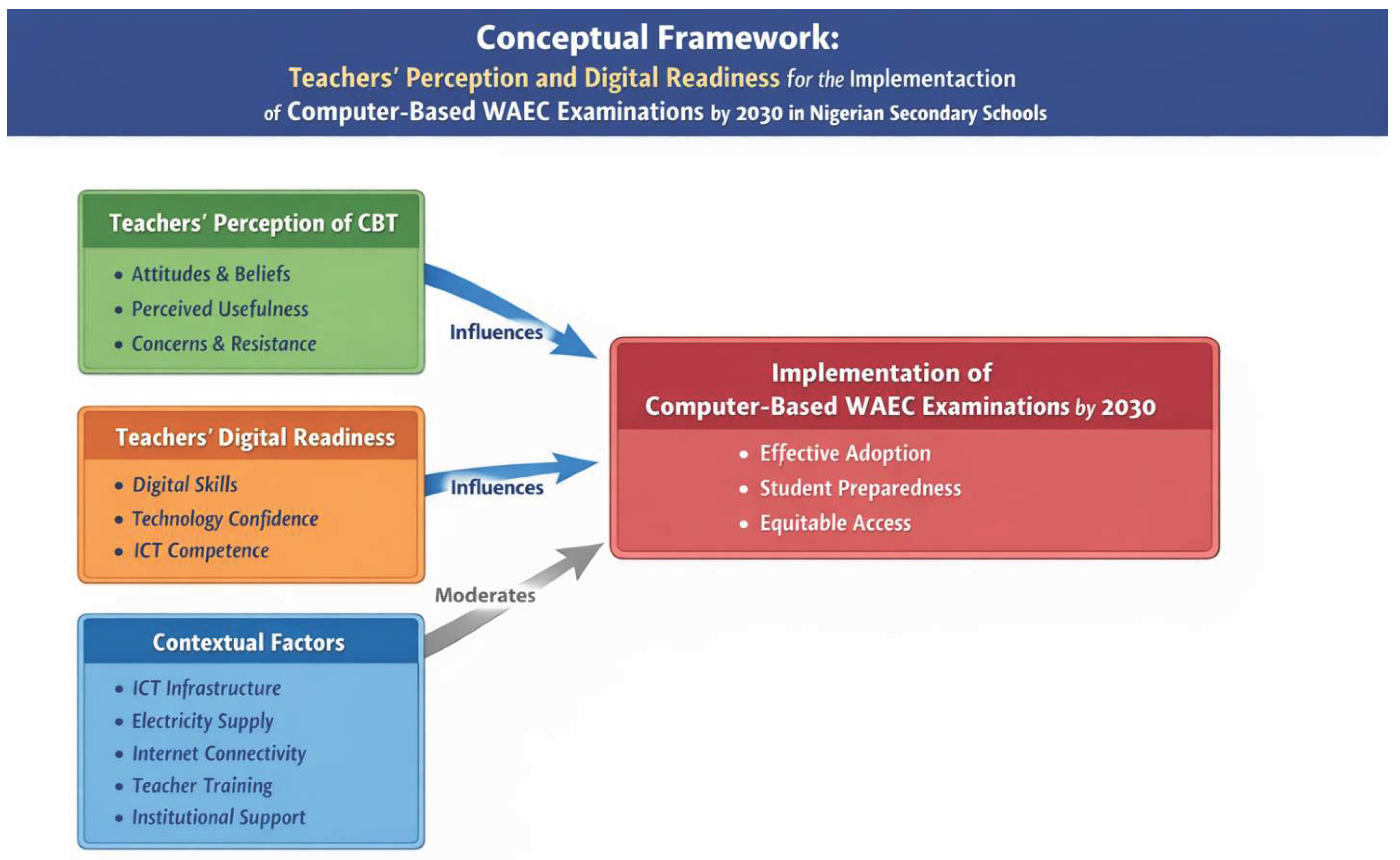
3. Theoretical Literature Review
The following theory guided the study
- Technology Acceptance Model (TAM) by Fred Davis in 1989
- Diffusion of Innovation Theory by Everett Rogers in 1962
- Digital Competence Theory
3.1. Technology Acceptance Model (TAM) by Fred Davis in 1989
The Technology Acceptance Model (TAM) was developed by Fred Davis in 1989 to explain how individuals accept and use new technologies. The theory proposes that two major factors influence technology adoption, namely perceived usefulness and perceived ease of use. Perceived usefulness refers to the degree to which an individual believes that using a particular technology will improve performance, while perceived ease of use refers to the extent to which a person believes that the technology will be free from difficulty. In the educational sector, TAM has been widely applied to understand how teachers and students adopt digital tools for teaching, learning, and assessment. Within the Nigerian school system, the introduction of computer based examinations requires teachers to accept and utilize digital technologies in preparing students for these assessments. If teachers believe that computer based testing will improve examination administration and student performance, they are more likely to support its implementation. In contrast, if teachers perceive CBT systems as complex or difficult to operate, they may resist adopting them. The Technology Acceptance Model is therefore relevant to this study because it helps explain how teachers’ perception of the usefulness and ease of computer based testing may influence their readiness to support the implementation of computer based WAEC examinations in Nigerian secondary schools.
3.2. Diffusion of Innovation Theory by Everett Rogers in 1962
The Diffusion of Innovation Theory was developed by Everett Rogers in 1962 to explain how new ideas, technologies, or practices spread within a social system over time. According to the theory, the adoption of innovation depends on several factors including relative advantage, compatibility, complexity, trialability, and observability. Relative advantage refers to the degree to which an innovation is perceived as better than the existing system, while compatibility refers to how well the innovation fits with existing values and practices. In the context of education, the introduction of computer based examinations can be viewed as an innovation that must gradually spread among teachers, schools, and educational institutions. Some teachers may adopt the innovation quickly, while others may be slower due to lack of knowledge, fear of technology, or limited access to digital infrastructure. The theory also categorizes adopters into groups such as innovators, early adopters, early majority, late majority, and laggards. This theory is useful to the present study because it explains how the adoption of computer based testing may vary among teachers depending on their exposure to technology, level of training, and access to digital resources within Nigerian secondary schools.
3.3. Digital Competence Theory
The digital Competence Theory explains the knowledge, skills, attitudes, and abilities required for individuals to function effectively in technology driven environments. The theory emphasizes that effective use of digital technology involves more than basic computer literacy; it requires the ability to access, evaluate, manage, and apply digital information in various tasks. The Digital Competence Framework (DIGCOMP) was primarily developed by Anusca Ferrari (2013), with significant contributions from Yves Punie (2012) in earlier conceptual work on digital competence within the European Commission projects. In the educational sector, teachers’ digital competence determines how effectively they integrate technology into teaching, learning, and assessment processes. For computer based examinations to function effectively in Nigerian secondary schools, teachers must possess adequate digital skills to guide students, operate examination platforms, and resolve minor technical challenges during assessments. A lack of digital competence may limit teachers’ ability to prepare students adequately for computer based testing. This theory is therefore relevant to the study because it provides a framework for understanding how teachers’ level of digital readiness and technological skills may influence the successful implementation of computer based WAEC examinations in Nigerian secondary schools.
4. Empirical Literature Review
4.1. The Perception of Computer-Based Testing (CBT)
Empirical studies consistently indicate that teachers’ perception of computer-based testing significantly influences how ready they are to support and implement technology-driven assessments in schools. Research using technology acceptance frameworks has found that teachers who perceive CBT as relevant, beneficial, and manageable tend to engage more actively with digital assessment tools and preparation activities (Al-Nuaimi & Al-Emran 2021). Luik & Taimalu, (2021) investigation into teachers’ attitudes toward educational technologies revealed that positive perceptions of usefulness and ease of use are strong predictors of teachers’ willingness to integrate ICT in assessment. Similarly, Nyathi, (20) report positive attitudes among teachers who had some exposure to computer-based instructional tools, but also note anxiety among those with limited experience. In the Nigerian context, Thomas & Oladejo (2017) study highlighted that many teachers held mixed perceptions toward CBT, often influenced by previous training, resource availability, and institutional encouragement. Other research in Sub-Saharan Africa confirms that teachers’ perception is often shaped by the degree of support they receive from school leadership and opportunities for professional development (Mabalane Junior, 2025). Collectively, these findings indicate that teachers’ perception is not fixed but shaped by both individual beliefs and environmental support structures, which in turn affects the extent to which they prepare students for computer-based examinations.
In other words this body of evidence, there remains limited empirical research specifically exploring teachers’ perception of CBT in the context of high-stakes examinations such as those administered by the West African Examinations Council. Most existing studies focus on general ICT acceptance or technology use in teaching rather than on perceptions uniquely associated with computer-based assessment formats. For example, John (2015) examined teachers’ attitudes toward e-learning broadly but did not isolate perceptions related to high-stakes testing. Similarly, research in Nigeria largely centres on tertiary institutions or general classroom ICT adoption, leaving secondary school teachers under-represented in the literature (Ayomide 2025). There is also scant research examining how demographic factors such as age, years of teaching experience, and subject specialization influence teachers’ perception of CBT. Furthermore, few studies investigate the relationship between teachers’ perception of CBT and actual classroom practices relating to assessment preparation. These gaps suggest the need for a focused empirical investigation into how Nigerian secondary school teachers perceive computer-based testing in relation to the upcoming WAEC CBT implementation, ensuring that the unique challenges of large-scale examination contexts are adequately captured.
The Level of Digital Readiness for Computer-Based Testing (CBT)
Empirical research highlights that digital readiness is a critical foundation for effective implementation of computer-based testing in educational contexts. Studies by Granić & Marangunić (2017) demonstrate that teachers with higher levels of digital competence are more likely to incorporate digital assessment tools and manage computer-based testing environments. Similarly, Ilomäki, Paavola, Lakkala and Kantosalo (2016) emphasise that teacher readiness encompasses not only technical skills but also pedagogical understanding of how to integrate technology into teaching and assessment practices. In the African context, Ally (2024) observed that teachers’ digital skills were closely linked to access to professional development and ICT resources, while Agyei (2021) found that limited infrastructure and inadequate training reduced teachers’ confidence to use digital technologies in assessment. Specific to Nigeria, Srinivasan (2024) reported significant disparities in digital readiness between urban and rural schools, with rural teachers often lacking basic computer access and skills. Research by Ukwueze and Uzoagba (2021); Siddiq & Scherer (2017) also indicates that many Nigerian teachers have low exposure to structured ICT training, further limiting their readiness for computer-based examinations. These findings collectively show that digital readiness is multi-dimensional, involving access to infrastructure, availability of training, and individual competence with technology.
However, in recognizing the importance of digital readiness, existing literature shows several gaps. Most studies on teacher readiness focus on general ICT or e-learning readiness rather than readiness specific to computer-based testing and high-stakes examination environments. For instance, studies by Thomas & Oladejo (2017) chiefly address ICT acceptance in teaching, without exploring teachers’ specific preparedness for computer-based assessment formats. In Nigeria, empirical research tends to concentrate on undergraduate contexts or classroom technology use, leaving secondary school environments under-examined (Fahm et al., 2022). Furthermore, limited empirical evidence examines the combined influence of infrastructure availability, institutional support, and teachers’ individual digital skills on readiness for CBT. There is also a lack of comparative studies across different geopolitical zones of Nigeria, which could reveal regional variations in digital readiness. Finally, while some research notes disparities between urban and rural schools, few studies investigate how these disparities affect teachers’ actual performance and confidence in managing computer-based examinations. Addressing these gaps is essential for providing policymakers and educational planners with evidence-based insights into how to support teachers’ digital readiness for CBT, particularly in preparation for WAEC’s planned implementation by 2030.
4.2. The Perception and the Level of Digital Readiness
Research suggests a strong interrelationship between teachers’ perception of technology and their level of digital readiness, with both factors playing complementary roles in the adoption of computer-based assessment practices. Al-Nuaimi & Al-Emran (2021) found that teachers who hold positive beliefs about the usefulness and ease of digital tools were more likely to engage in professional development and build their digital skills. Similar findings were reported by Luik & Taimalu, (2021), who linked technology acceptance to both attitudes toward ICT and the extent of teachers’ ICT competence. In the African context, Mabalane Junior (2025) observed that teachers who recognised the value of digital systems were more proactive in seeking training and ICT resources, which enhanced their readiness to integrate technology into assessment. Thomas & Oladejo (2017) also point out that teachers’ perception of computer-based testing influences their motivation to develop the necessary digital skills. These empirical studies indicate that perception and digital readiness should not be studied in isolation; rather, each factor interacts to influence teachers’ capacity to implement and adapt to new assessment paradigms such as computer-based examinations.
Notwithstanding this recognition of interplay between perception and digital readiness, there remain important empirical gaps, particularly within the Nigerian secondary school context. Much of the existing literature examines either perception of technology or digital competence separately, without analyzing how these factors jointly influence readiness for computer-based testing. For example, John (2015) focus mainly on teachers’ attitudes toward educational technologies, while Rahimi & Tafazoli (2022) address digital competence without integrating perception measures. In Nigeria, empirical studies rarely examine the combined effect of perception and readiness on teachers’ ability to prepare students for high-stakes computer-based examinations such as WAEC. Moreover, there is limited research investigating how this relationship may vary across different teacher demographics, school types, or subject areas. This gap underscores the need for comprehensive studies that assess both perception and digital readiness simultaneously, providing a clearer understanding of how these factors interact to shape teachers’ preparedness for computer-based WAEC examinations in Nigerian secondary schools.
5. Methodology
The study adopted a multi-phase quantitative research design combining ex post facto and correlational approaches to investigate the influence of teachers’ perception and digital readiness on their preparedness for the implementation of computer-based WAEC examinations in Nigerian secondary schools. This design is appropriate because the ex post facto phase allows the researcher to examine existing conditions, such as teachers’ prior exposure to technology and previous experiences with ICT, without manipulating variables, while the correlational phase enables the determination of the strength and direction of relationships between teachers’ perception, digital readiness, and preparedness for CBT. The population comprised all registered secondary school teachers across public and private institutions in Ebonyi State, Nigeria, responsible for teaching and assessment across various subjects in preparation for national examinations. According to the Ebonyi State Ministry of Education (2025), the population includes 12,483 teachers across urban and rural secondary schools. A stratified random sampling technique was employed, with stratification based on school location (urban/rural) and subject discipline to ensure proportional representation from each stratum, thereby reducing selection bias and enhancing the generalizability of the findings. From the population, a sample of 1,248 teachers was selected, representing approximately 10% of the population, which is considered adequate for multiple regression analysis involving two predictors. The data were collected using a structured self-administered questionnaire titled the Teachers’ Perception and Digital Readiness Inventory (TPDRI), divided into three sections. Section A gathered demographic information (6 items), including age, gender, teaching experience, subject area, and school type. Section B contained 15 items assessing teachers’ perception of computer-based testing, including perceived usefulness, ease of use, and attitude toward CBT. Section C comprised 25 items measuring digital readiness, including self-reported computer competence, access to ICT resources, frequency of digital tool use, and confidence in operating computer-based assessments. Each item was rated on a Likert scale ranging from 1 (strongly disagree) to 4 (strongly agree). The reliability of the instrument was determined through a pilot study involving 30 teachers from non-selected secondary schools, yielding Cronbach’s alpha coefficients of 0.74 for perception and 0.78 for digital readiness, indicating high internal consistency suitable for the main study. The data collection was conducted over a four-week period across selected schools. Three trained research assistants administered the questionnaires in person, providing clarification where necessary to ensure accurate responses. For schools with limited accessibility, an online version of the questionnaire was made available via a secure platform to ensure inclusive participation. The participants were provided with clear instructions and approximately 30 minutes to complete the questionnaire. The confidentiality was maintained by collecting paper-based responses immediately and storing them securely, while online submissions were encrypted and accessible only to the research team. Participants were informed of their right to withdraw at any stage without consequence. Follow-up reminders were sent to online participants to maximize response rates, and research assistants provided supportive engagement to encourage full participation, ensuring comprehensive, reliable, and valid data across diverse school contexts. The data analysis involved descriptive statistics (frequency, percentages, means, and standard deviations) to summarize teachers’ perception and digital readiness, one sample t-test and simple regression analysis, chosen because it allows for the examination of the simultaneous predictive effects of teachers’ perception and digital readiness on preparedness for CBT, as well as the determination of their relative contributions. The ethical considerations were observed throughout the study, including obtaining informed consent from all participants before data collection, ensuring anonymity and confidentiality of responses, and securely storing completed questionnaires to prevent unauthorized access. Participants were made aware of their right to withdraw at any time without consequence, and all findings will be reported in aggregate form only, ensuring no identifiable information is disclosed, thus upholding the principles of respect, beneficence, and justice in research.
6. Objective
The general objective of this study is to examine teachers’ perception and digital readiness for the implementation of Computer-Based Testing (CBT) in WAEC examinations by the year 2030 in Nigerian secondary schools. The study has the following specific objectives
- To examine secondary school teachers’ perceptions toward the planned introduction of Computer-Based Testing (CBT) in WAEC examinations by 2030.
- To determine the level of digital readiness among secondary school teachers for the implementation of Computer-Based Testing (CBT) in WAEC examinations.
- To examine the relationship between teachers’ digital readiness and their acceptance of the planned Computer-Based Testing (CBT) WAEC examinations by 2030.
7. Research Questions
- What are the perceptions of secondary school teachers toward the planned introduction of Computer-Based Testing (CBT) in WAEC examinations by 2030?
- What is the level of digital readiness among secondary school teachers for the implementation of Computer-Based Testing (CBT) in WAEC examinations?
- What relationship exists between teachers’ perception and their digital readiness of the planned Computer-Based Testing (CBT) WAEC examinations by 2030What are the perceptions of secondary school teachers toward the planned introduction of Computer-Based Testing (CBT) in WAEC examinations by 2030?
8. Hypothesis
- The Perception of secondary school teachers toward the planned introduction of Computer-Based Testing (CBT) in WAEC examinations by 2030 is not significantly higher than the baseline means.
- The level of digital readiness of secondary school teachers toward the planned introduction of Computer-Based Testing (CBT) in WAEC examinations by 2030 is not significantly higher than the baseline means
- The Perception of secondary school teachers toward the planned introduction of Computer-Based Testing (CBT) in WAEC examinations by 2030 does not significantly predict the level of their digital readiness
9. Results
9.1. Research Question One
What are the perceptions of secondary school teachers toward the planned introduction of Computer-Based Testing (CBT) in WAEC examinations by 2030?
Table 1 presents the frequency, percentage, mean, and standard deviation of responses from 1,248 teachers regarding their perception of computer-based testing (CBT) across 15 items. The table reveals that teachers’ perception varies across different aspects of CBT, with some items receiving stronger agreement than others. For example, items such as “Willing to participate in training” (Item 9, Mean = 3.10, SD = 0.90) and “Comfortable adapting teaching methods” (Item 13, Mean = 3.06, SD = 0.92) show relatively higher means, indicating that many teachers are open to training and willing to adjust their teaching approaches to accommodate CBT. Similarly, the percentages for Agree and Strongly Agree responses for these items are 40.1% and 31.1% respectively for Item 9, and 37.6% and 30.3% for Item 13, demonstrating a positive perception in these areas.
However, other items reflect moderate or cautious perceptions. For instance, “Reduces examination malpractice” (Item 6, Mean = 2.86, SD = 1.00) and “Teachers’ support is necessary” (Item 7, Mean = 2.99, SD = 0.95) have larger proportions of respondents selecting Strongly Disagree or Disagree (41.6% and 36.0% respectively), indicating that a significant number of teachers are uncertain about the benefits of CBT in reducing malpractice or the degree to which their support is critical. Similarly, “CBT is feasible in school” (Item 5, Mean = 2.99, SD = 0.96) shows that approximately 34.4% of teachers expressed low agreement, reflecting concerns about infrastructural or logistical readiness in their schools.
Overall, the means across all 15 items range from 2.86 to 3.10, slightly above neutral, suggesting that while some teachers hold a positive perception of CBT, a considerable proportion remain uncertain or hesitant. The standard deviations (0.92–1.00) indicate variability in responses, demonstrating that perception is not uniform across the teacher population. This variability may be influenced by factors such as teaching experience, prior exposure to technology, school type, or access to ICT resources. The interpretation of Table 1 indicates that while there is a general willingness among teachers to engage with CBT, there is also significant uncertainty and moderate skepticism, particularly regarding feasibility, reliability, and anticipated benefits such as reducing malpractice. These findings underscore the need for targeted sensitization programmes, professional development, and infrastructural support to enhance teachers’ perception and readiness for the successful implementation of computer-based WAEC examinations in Nigerian secondary schools.
9.2. Research Question Two
What is the level of digital readiness among secondary school teachers for the implementation of Computer-Based Testing (CBT) in WAEC examinations?
Table 2 presents the frequency, percentage, mean, and standard deviation of responses from 1,248 teachers on 25 items assessing their digital readiness for computer-based testing (CBT). The table reveals considerable variation in digital readiness across different skills and resources, highlighting areas of strength and areas requiring attention. Overall, the mean scores for digital readiness items range from 2.48 to 2.77, indicating that most teachers perceive their readiness as moderate to slightly below adequate, while the standard deviations (1.02–1.09) reflect notable variability among respondents. A closer look at specific items shows that teachers report limited access to ICT infrastructure. For instance, Item 3 (Reliable internet connectivity, Mean = 2.48, SD = 1.09) has the highest proportion of Strongly Disagree (25.6%) and Disagree (24.0%) responses, indicating that over 49% of teachers experience inadequate internet connectivity. Similarly, Item 2 (Access to functional computers, Mean = 2.54, SD = 1.06) shows that 49.6% of respondents reported low access to computers, confirming that infrastructural constraints are a major barrier to digital readiness.
In contrast, items related to teachers’ self-confidence and basic digital skills show slightly higher means. For example, Item 8 (Can guide students on CBT platforms, Mean = 2.77, SD = 1.03) and Item 15 (Comfortable using digital presentation tools, Mean = 2.77, SD = 1.03) indicate that many teachers feel moderately confident in assisting students and using basic digital tools. However, even these items have approximately 42–44% of respondents reporting SD or D, suggesting that confidence is not yet widespread. Other items, including participation in ICT training (Item 5, Mean = 2.69) and technical support availability (Item 6, Mean = 2.63), reveal gaps in professional development and institutional support. About 44–48% of teachers reported low agreement for these items, pointing to insufficient training and limited on-site assistance. These gaps may undermine the effective implementation of CBT even when teachers possess some digital competence.
Overall, the interpretation of Table 2 indicates that teachers’ digital readiness is moderate but uneven, with infrastructure and training limitations being major challenges. While some teachers demonstrate confidence in guiding students and using basic digital tools, the lack of consistent access to computers, reliable internet, and structured ICT training signals a critical need for capacity building, resource provision, and technical support. These findings reinforce the urgency for policy and institutional interventions to ensure teachers are fully equipped for the upcoming implementation of WAEC computer-based examinations in Nigerian secondary schools.
9.3. Hypothesis One
The Perception of secondary school teachers toward the planned introduction of Computer-Based Testing (CBT) in WAEC examinations by 2030 is not significantly higher than the baseline means.
A one-sample t-test was conducted to determine whether the overall perception of secondary school teachers toward the planned introduction of computer-based testing (CBT) in WAEC examinations by 2030 is significantly higher than the neutral baseline of 37.5. The observed mean perception score of 37.65 is marginally above the baseline, with a standard deviation of 9.45, indicating moderate variability across the teacher population. The calculated t-value (t = 0.57, df = 1,247, p = 0.567) shows that the observed mean is not significantly higher than the baseline at the 0.05 significance level. This finding suggests that teachers’ overall perception of CBT remains largely neutral. While certain items from Table 1, such as willingness to participate in training (Item 9, Mean = 3.10) and comfort with adapting teaching methods (Item 13, Mean = 3.06), indicate positive attitudes among some teachers, the aggregate perception score demonstrates that a substantial portion of the sample remains uncertain or hesitant. Approximately 30–42% of teachers selected Strongly Disagree or Disagree on multiple items, confirming mixed perceptions.
The results indicate a critical need for professional development, sensitization programmes, and awareness campaigns to strengthen teachers’ understanding and acceptance of CBT. Without addressing these gaps, the planned 2030 WAEC CBT rollout may face resistance or suboptimal teacher engagement, which could compromise the effectiveness of implementation in Nigerian secondary schools.

Table 3.
Table showing the summary of a One-Sample t-Test Analysis of Teachers’ Perception of CBT (N = 1,248).
Table 3.
Table showing the summary of a One-Sample t-Test Analysis of Teachers’ Perception of CBT (N = 1,248).
| Variable | N | Mean | SD | Test Value (Baseline) | t | df | p-value |
| Teachers’ Perception of CBT | 1,248 | 37.65 | 9.45 | 37.5 | 0.57 | 1,247 | 0.567 |
9.4. Hypothesis Two
The level of digital readiness of secondary school teachers toward the planned introduction of Computer-Based Testing (CBT) in WAEC examinations by 2030 is not significantly higher than the baseline means
A one-sample t-test was conducted to determine whether the level of digital readiness of secondary school teachers toward the planned introduction of computer-based testing (CBT) in WAEC examinations by 2030 is significantly higher than the baseline score of 62.5. The results show an observed mean score of 66.85, which is higher than the baseline, and a standard deviation of 14.52, indicating moderate variability in digital readiness across the sample. The computed t-value (t = 10.25, df = 1,247, p < 0.001) is statistically significant, demonstrating that the teachers’ digital readiness is significantly higher than the baseline at the 0.05 level. This finding suggests that, in general, teachers possess a moderate-to-high level of digital readiness, reflecting exposure to ICT tools, familiarity with digital platforms, and some ability to navigate computer-based systems. However, despite the overall significant readiness, the item-level data from Table 2 shows that substantial proportions of teachers still report low readiness in specific areas, such as reliable internet access (Item 3, SD + D = 49.6%) and access to functional computers (Item 2, SD + D = 49.6%). This indicates that infrastructure limitations, inconsistent training, and uneven access to resources may hinder the full implementation of CBT.
Moreover, while the aggregate digital readiness score is significantly above baseline, suggesting that teachers are moderately prepared to adopt CBT, targeted interventions in ICT infrastructure, technical support, and capacity-building programmes remain necessary to ensure all teachers achieve full readiness for WAEC CBT by 2030.
Table 4.
One-Sample t-Test Analysis of Teachers’ Digital Readiness for CBT (N = 1,248).
| Variable | N | Mean | SD | Test Value (Baseline) | t | df | p-value |
| Teachers’ Digital Readiness for CBT | 1,248 | 66.85 | 14.52 | 62.5 | 10.25 | 1,247 | <0.001 |
9.5. Research Question Three
What relationship exists between teachers’ perception and their digital readiness of the planned Computer-Based Testing (CBT) WAEC examinations by 2030?
The analysis indicates a significant positive relationship between teachers’ perception of computer-based testing (CBT) and their level of digital readiness. The simple linear regression showed that teachers’ perception significantly predicts digital readiness (B = 1.82, Beta = 0.41, t = 7.58, p < 0.001), with an R² of 0.17, indicating that 17% of the variance in digital readiness can be explained by teachers’ perception. This finding demonstrates that teachers who hold more positive perceptions of CBT, including beliefs about its benefits, feasibility, and impact on teaching and assessment, are more likely to demonstrate higher digital readiness, such as confidence in using ICT tools, navigating digital platforms, and participating in training.
The moderate effect size suggests that while perception is an important factor, other factors such as access to infrastructure, ICT training, prior experience, and institutional support also contribute to teachers’ digital readiness. Therefore, improving teachers’ perception through targeted awareness campaigns, sensitization, and professional development is likely to enhance their preparedness for the planned WAEC CBT implementation by 2030. In summary, a positive and statistically significant relationship exists, confirming that teachers’ perception is an influential predictor of their digital readiness for computer-based examinations.
9.6. Hypothesis Three
The Perception of secondary school teachers toward the planned introduction of Computer-Based Testing (CBT) in WAEC examinations by 2030 does not significantly predict the level of their digital readiness
The independent variable in this hypothesis is teachers’ perception of computer-based testing (CBT), while the dependent variable is the level of digital readiness of secondary school teachers toward the planned introduction of CBT in WAEC examinations by 2030. Simple linear regression analysis was employed to test this hypothesis. The result of the analysis is presented in Table 5. The simple regression analysis in Table 5 on the relationship between teachers’ perception and digital readiness produced an R² of 0.17. This implies that 17% of the variance in digital readiness can be predicted from teachers’ perception. The Analysis of Variance (ANOVA) produced an F-value of 57.49 with a p-value of <0.001 at 1 and 1,247 degrees of freedom, indicating statistical significance at the 0.05 level. The null hypothesis was therefore rejected. This result signifies that teachers’ perception significantly contributes to their level of digital readiness, accounting for a moderate proportion of the variance.
The regression coefficient shows that teachers’ perception (B = 1.82, Beta = 0.41, t = 7.58, p < 0.05) is a positive predictor. This indicates that as teachers’ perception of CBT improves, their digital readiness also increases. The regression equation to explain this relationship is:
Digital Readiness = 44.12 + 1.82 (Teachers’ Perception)
This result suggests that teachers’ perception plays a significant role in enhancing digital readiness by influencing willingness to engage with ICT tools, participate in training, and adopt computer-based practices. Improving perception through awareness campaigns, professional development, and sensitization programmes may therefore lead to measurable improvements in teachers’ preparedness for CBT implementation.
The table shows that teachers’ perception significantly predicts digital readiness of secondary school teachers, explaining 17% of the variance. The positive Beta value (0.41) indicates a moderate effect, suggesting that teachers with more positive perceptions of CBT are more likely to engage with ICT tools and demonstrate higher digital readiness for WAEC computer-based examinations.
10. Discussion of Findings
The first hypothesis examined whether secondary school teachers’ perception of the planned introduction of computer-based testing (CBT) in WAEC examinations by 2030 is significantly higher than the baseline. Analysis indicated that teachers’ perception scores were largely neutral, suggesting considerable uncertainty regarding the initiative. This finding aligns with studies reporting that teachers’ perceptions of CBT are influenced by prior exposure, training, and institutional support (Mabalane Junior 2025; Nyathi, 2022; Thomas & Oladejo 2017). Teachers with experience using digital instructional tools tend to hold positive attitudes, whereas those with limited exposure often express anxiety or hesitation. In contrast, some research, particularly in developed settings, indicates generally favourable perceptions of ICT-based assessments (Rahimi & Tafazoli 2022). It was surprising that despite ongoing discussions about digital assessment in Nigerian schools, many teachers remain ambivalent. This suggests that targeted professional development and sensitization programmes are necessary, as perception directly affects teachers’ engagement with CBT and preparation of students for computer-based examinations.
The second hypothesis assessed whether teachers’ level of digital readiness for CBT is significantly higher than the baseline. Results showed that teachers possessed moderate readiness, exceeding the baseline, indicating familiarity with digital tools but also revealing gaps in competence and infrastructure. This finding concurs with previous studies showing that digital competence, combined with pedagogical understanding, enables teachers to implement technology-driven assessments effectively (Ilomäki et al., 2016; Rahimi & Tafazoli 2022). In Nigeria, disparities in digital readiness exist between urban and rural teachers, with limited access to ICT infrastructure and training reducing confidence and performance (Ukwueze and Uzoagba 2021; Ayomide 2025). Surprisingly, teachers reported higher readiness than might be expected given the infrastructural limitations, suggesting that personal initiative and informal ICT experience can partially offset institutional deficiencies. This indicates that while teachers are willing to develop digital skills, systematic training, resources, and institutional support remain essential for preparing educators for WAEC CBT.
The third hypothesis investigated whether teachers’ perception significantly predicts their digital readiness for CBT. Regression analysis revealed that perception is a significant positive predictor, accounting for 17 per cent of the variance. This aligns with studies indicating that positive attitudes toward technology promote engagement with ICT tools and professional development, thereby enhancing digital readiness (Mabalane Junior 2025; Thomas & Oladejo 2017; Granić & Marangunić 2019). Teachers who value CBT are more likely to seek training, utilize available ICT resources, and build the skills required for effective assessment implementation. Conversely, research shows that perception alone is insufficient without adequate infrastructure and institutional support (Agyei 2021; Thomas & Oladejo 2017). The moderate predictive effect observed was surprising, indicating that other factors, such as access to resources, prior ICT experience, and school support, also influence digital readiness. This suggests that improving perception must be complemented by practical interventions to equip teachers fully for the high-stakes environment of WAEC CBT.
11. Conclusion
The study examined Nigerian secondary school teachers’ perception and digital readiness for the planned implementation of computer-based WAEC examinations by 2030. Findings indicate that teachers’ perceptions of computer-based testing vary, with many expressing both optimism about its benefits and concern over practical challenges. Positive perceptions were associated with greater willingness to engage in preparation activities and professional development, while negative perceptions often stemmed from limited prior exposure to digital tools, fear of technical failure, and uncertainty about institutional support. Similarly, the level of digital readiness among teachers showed significant variation, with those in urban schools demonstrating higher competence and confidence, and those in rural or under-resourced schools facing substantial infrastructural and skills-related barriers. The study further established a clear interrelationship between teachers’ perception and digital readiness, suggesting that favourable attitudes can motivate skills development, while adequate digital competence can reinforce positive perceptions. These findings underscore that the successful adoption of computer-based WAEC examinations depends not only on technological infrastructure but also on teachers’ preparedness, training, and supportive institutional structures. Without addressing both perception and digital readiness, the implementation of CBT may encounter resistance, inequities in student preparedness, and suboptimal examination outcomes.
Recommendations
- The Ministry of Education and school authorities should design and implement continuous professional development programmes that enhance teachers’ competence in computer-based testing. Training should include hands-on practice with CBT platforms, troubleshooting techniques, and assessment preparation strategies.
- Adequate technological infrastructure, including functional computer laboratories, stable electricity supply, reliable internet connectivity, and up-to-date examination software, should be prioritized, particularly in rural and under-resourced schools, to ensure equitable access for all students.
- The schools should conduct pilot computer-based assessments to familiarize teachers and students with digital examination procedures. Such exercises can reduce anxiety, improve confidence, and allow practical identification of technical or logistical issues before full implementation.
- The education policymakers and school leadership must provide clear guidelines, ongoing technical support, and motivational incentives for teachers to adopt CBT. Institutional encouragement and recognition of teacher efforts can foster positive perceptions and strengthen digital readiness.
- Specific interventions should address disparities between urban and rural schools, including mobile ICT training units, resource-sharing initiatives, and partnerships with private technology providers, ensuring that all schools are prepared for the nationwide transition to computer-based WAEC examinations.
- By implementing these recommendations, education authorities can enhance teachers’ readiness and perception, thereby ensuring a smooth, equitable, and effective transition from paper-based to computer-based WAEC examinations across Nigerian secondary schools by 2030.
Institutional Review Board Statement
The study was approved by the Ethics Committee of Alex Ekwueme Federal Univesity (protocol code FUNAI/RED/2026/026, approved 15-01-2026).
Informed Consent Statement
Informed consent was obtained from all subjects involved in the study.
References
- Agyei, D. D. Integrating ICT into schools in Sub-Saharan Africa: From teachers’ capacity building to classroom implementation. Education and Information Technologies 2021, 26(1), 125–144. [Google Scholar] [CrossRef]
- Ally, S. A national e-assessment implementation framework: Assessing readiness in secondary schools and teacher education in Tanzania. Journal of Issues and Practice in Education 2024, 16(1), 1–30. [Google Scholar] [CrossRef]
- Al-Nuaimi, M. N.; Al-Emran, M. Learning management systems and technology acceptance models: A systematic review. Education and information technologies 2021, 26(5), 5499–5533. [Google Scholar] [CrossRef]
- Ayomide, O. E. Assessment of Technology-Based Practices For Learning and Research Among Undergraduates in Universities in The South West, Nigeria. PhD diss., Doctoral Dissertation, Tai Solarin University of Education, 2025. Available online: https://www.researchgate.net/profile/Emmanuel-Omole-3/publication/391673233_ASSESSMENT_OF_TECHNOLOGY_BASED_PRACTICES_FOR_LEARNING_AND_RESEARCH_AMONG_UNDERGRADUATES_IN_SELECTED_UNIVERSITIES_IN_SOUTH_WEST_NIGERIA/links/68724f650d8ed26a9d5a5a13/ASSESSMENT-OF-TECHNOLOGY-BASED-PRACTICES-FOR-LEARNING-AND-RESEARCH-AMONG-UNDERGRADUATES-IN-SELECTED-UNIVERSITIES-IN-SOUTH-WEST-NIGERIA.pdf.
- Fahm, A. O.; Azeez, A. L.; Imam-Fulani, Y. O.; Mejabi, O. V.; Faruk, N.; Abdulrahaman, M. D.; Surajudeen-Bakinde, N. T. ICT enabled Almajiri education in Nigeria: Challenges and prospects. Education and information technologies 2022, 27(3), 3135–3169. [Google Scholar] [CrossRef] [PubMed]
- Granić, A.; Marangunić, N. Technology acceptance model in educational context: A systematic literature review. British Journal of Educational Technology 2019, 50(5), 2572–2593. [Google Scholar] [CrossRef]
- Ilomäki, L.; Paavola, S.; Lakkala, M.; Kantosalo, A. Digital competence–an emergent boundary concept for policy and educational research. Education and information technologies 2016, 21(3), 655–679. [Google Scholar] [CrossRef]
- John, S. P. The integration of information technology in higher education: A study of faculty's attitude towards IT adoption in the teaching process. Contaduría y administración 2015, 60, 230–252. [Google Scholar] [CrossRef]
- Luik, P.; Taimalu, M. Predicting the intention to use technology in education among student teachers: A path analysis. Education Sciences 2021, 11(9), 564. [Google Scholar] [CrossRef]
- Mabalane Junior, D. K. Analyzing Teachers' Perceptions of Mobile Learning in Senior Secondary Schools: A FRAME Model Perspective in Sub-Saharan Africa. Journal of Educational Technology Development and Exchange (JETDE) 2025, 18(2), 127–150. [Google Scholar] [CrossRef]
- Nkaanee, S. N. P.; Mgbomo, E. O. P. Technology-Driven Education: An Imperative for Sustainable Development. European Journal of Research Development and Sustainability 2025, 6(1), 14–19. Available online: https://scholarzest.com/index.php/ejrds/article/view/4889.
- Nyathi, D. D. Teachers’ attitudes towards the use of Information and Communication Technology in inclusive primary schools. Master's thesis, University of South Africa, South Africa, 2022. Available online: https://ir.unisa.ac.za/handle/10500/29881.
- Ottenbreit-Leftwich, A.; Liao, J. Y. C.; Sadik, O.; Ertmer, P. Evolution of teachers’ technology integration knowledge, beliefs, and practices: How can we support beginning teachers use of technology? Journal of Research on Technology in Education 2018, 50(4), 282–304. [Google Scholar] [CrossRef]
- Rahimi, A. R.; Tafazoli, D. The role of university teachers’ 21st-century digital competence in their attitudes toward ICT integration in higher education: Extending the theory of planned behavior. The Jalt Call Journal 2022, 18(2), 238–263. [Google Scholar] [CrossRef]
- Siddiq, F.; Scherer, R. Revealing the processes of students' interaction with a novel collaborative problem solving task: An in-depth analysis of think-aloud protocols. Computers in Human Behavior 2017, 76, 509–525. [Google Scholar] [CrossRef]
- Srinivasan, H. Nigerian Secondary Physics Teachers’ Perceptions of Factors That Challenge Information and Communication Technology Integration. Doctoral dissertation, Walden University, 2024. Available online: https://scholarworks.waldenu.edu/dissertations/15812.
- Sukare, B. M.; Usman, U. D. Commencement of Computer-Based Technology Examinations in Secondary Schools in Nigeria: Issues, Challenges, and Prospects. 2025, 10(2), 78–85. [Google Scholar] [CrossRef]
- Thomas, O. A.; Oladejo, M. A. Teacher-Trainees’ Perceptions of ICT (Information Communication Technology) Integration in Nigerian Teacher Education Programme. Educare 2017, 10(1), 60–70. [Google Scholar] [CrossRef]
- Toyo, O. D. Information and communication technology (ICT) adoption and the educational growth of colleges of education in Agbor and Warri, Delta State, Nigeria. International Journal of Education and Evaluation 2017, 3(7), 19–32. Available online: https://ijee.io/get/IJEE/VOL.%203%20NO.%207%202017/INFORMATION%20AND%20COMMUNICATION.pdf.
- Ukwueze, C. A.; Uzoagba, O. N. ICT literacy and readiness for computer based test among public secondary school students in Anambra state. New Media and Mass Communication 2021, 97, 1–14. [Google Scholar] [CrossRef]
Table 1.
Table showing the teachers’ Perception of CBT (N = 1,248).
| Item | SD | D | A | SA | Mean | SDv |
| 1. CBT improves academic performance | 140 (11.2%) | 205 (16.4%) | 520 (41.7%) | 383 (30.7%) | 3.03 | 0.95 |
| 2. Confident assisting students | 180 (14.4%) | 260 (20.8%) | 450 (36.0%) | 358 (28.7%) | 2.96 | 0.98 |
| 3. CBT is more reliable | 150 (12.0%) | 240 (19.2%) | 490 (39.2%) | 368 (29.5%) | 3.01 | 0.94 |
| 4. Motivated to learn CBT tools | 120 (9.6%) | 280 (22.4%) | 480 (38.5%) | 368 (29.5%) | 3.05 | 0.92 |
| 5. Feasible in school | 160 (12.8%) | 270 (21.6%) | 460 (36.9%) | 358 (28.7%) | 2.99 | 0.96 |
| 6. Reduces examination malpractice | 200 (16.0%) | 320 (25.6%) | 400 (32.1%) | 328 (26.3%) | 2.86 | 1.00 |
| 7. Teachers’ support is necessary | 140 (11.2%) | 310 (24.8%) | 450 (36.0%) | 348 (27.9%) | 2.99 | 0.95 |
| 8. Enhances student engagement | 130 (10.4%) | 290 (23.2%) | 470 (37.6%) | 358 (28.7%) | 3.03 | 0.94 |
| 9. Willing to participate in training | 110 (8.8%) | 250 (20.0%) | 500 (40.1%) | 388 (31.1%) | 3.10 | 0.90 |
| 10. Provides quicker feedback | 150 (12.0%) | 270 (21.6%) | 470 (37.6%) | 358 (28.7%) | 3.02 | 0.94 |
| 11. Students perform better | 160 (12.8%) | 280 (22.4%) | 450 (36.0%) | 358 (28.7%) | 2.99 | 0.95 |
| 12. Aligns with modern assessment | 140 (11.2%) | 260 (20.8%) | 480 (38.5%) | 368 (29.5%) | 3.04 | 0.93 |
| 13. Comfortable adapting to teaching | 130 (10.4%) | 270 (21.6%) | 470 (37.6%) | 378 (30.3%) | 3.06 | 0.92 |
| 14. School management encourages CBT | 150 (12.0%) | 280 (22.4%) | 450 (36.0%) | 368 (29.5%) | 3.00 | 0.94 |
| 15. Improves the credibility of WAEC | 140 (11.2%) | 260 (20.8%) | 460 (36.9%) | 388 (31.1%) | 3.04 | 0.93 |
Table 2.
Table showing the teachers’ Digital Readiness for CBT.
| Item | SD | D | A | SA | Mean | SDv |
| 1. Adequate ICT skills | 250 (20.0%) | 300 (24.0%) | 420 (33.7%) | 278 (22.3%) | 2.60 | 1.05 |
| 2. Access to functional computers | 280 (22.4%) | 340 (27.2%) | 360 (28.8%) | 268 (21.5%) | 2.54 | 1.06 |
| 3. Reliable internet connectivity | 320 (25.6%) | 300 (24.0%) | 380 (30.5%) | 248 (19.9%) | 2.48 | 1.09 |
| 4. Confident navigating CBT platforms | 220 (17.6%) | 310 (24.8%) | 400 (32.1%) | 318 (25.5%) | 2.75 | 1.02 |
| 5. Participated in ICT training | 240 (19.2%) | 320 (25.6%) | 390 (31.3%) | 298 (23.9%) | 2.69 | 1.05 |
| 6. School provides technical support | 260 (20.8%) | 340 (27.2%) | 370 (29.6%) | 278 (22.3%) | 2.63 | 1.05 |
| 7. Can troubleshoot basic problems | 300 (24.0%) | 320 (25.6%) | 370 (29.6%) | 258 (20.7%) | 2.55 | 1.07 |
| 8. Can guide students on CBT platforms | 230 (18.4%) | 310 (24.8%) | 420 (33.7%) | 288 (23.1%) | 2.77 | 1.03 |
| 9. Access to personal devices | 260 (20.8%) | 300 (24.0%) | 400 (32.1%) | 288 (23.1%) | 2.71 | 1.04 |
| 10. Familiar with WAEC CBT guidelines | 240 (19.2%) | 320 (25.6%) | 410 (32.8%) | 278 (22.3%) | 2.70 | 1.04 |
| 11. Confident using LMS for assessment | 280 (22.4%) | 300 (24.0%) | 390 (31.3%) | 278 (22.3%) | 2.64 | 1.05 |
| 12. Integrate digital tools into lessons | 260 (20.8%) | 310 (24.8%) | 400 (32.1%) | 278 (22.3%) | 2.69 | 1.04 |
| 13. Handle data entry and results | 270 (21.6%) | 320 (25.6%) | 380 (30.5%) | 278 (22.3%) | 2.63 | 1.06 |
| 14. Assist students with login issues | 250 (20.0%) | 310 (24.8%) | 400 (32.1%) | 288 (23.1%) | 2.71 | 1.04 |
| 15. Comfortable using digital presentation tools | 240 (19.2%) | 300 (24.0%) | 420 (33.7%) | 288 (23.1%) | 2.77 | 1.03 |
| 16. Manage online exam schedules | 260 (20.8%) | 320 (25.6%) | 380 (30.5%) | 288 (23.1%) | 2.70 | 1.05 |
| 17. Monitor students’ activity | 240 (19.2%) | 310 (24.8%) | 400 (32.1%) | 298 (23.9%) | 2.74 | 1.04 |
| 18. Use spreadsheet/grading software | 270 (21.6%) | 320 (25.6%) | 380 (30.5%) | 278 (22.3%) | 2.64 | 1.06 |
| 19. Help students with technical difficulties | 250 (20.0%) | 310 (24.8%) | 400 (32.1%) | 288 (23.1%) | 2.71 | 1.04 |
| 20. Ensure security during CBT | 280 (22.4%) | 320 (25.6%) | 380 (30.5%) | 268 (21.5%) | 2.64 | 1.06 |
| 21. Participated in ICT workshops | 260 (20.8%) | 310 (24.8%) | 390 (31.3%) | 288 (23.1%) | 2.70 | 1.05 |
| 22. Confident using email/digital communication | 240 (19.2%) | 300 (24.0%) | 420 (33.7%) | 288 (23.1%) | 2.77 | 1.03 |
| 23. Comfortable adopting new software updates | 260 (20.8%) | 310 (24.8%) | 390 (31.3%) | 288 (23.1%) | 2.71 | 1.04 |
| 24. Believe fully prepared for CBT | 280 (22.4%) | 320 (25.6%) | 380 (30.5%) | 268 (21.5%) | 2.64 | 1.06 |
| 25. Overall confidence in digital readiness | 260 (20.8%) | 310 (24.8%) | 390 (31.3%) | 288 (23.1%) | 2.71 | 1.05 |
Table 5.
Table showing the Summary of Simple Regression Analysis, Showing the Contribution of Teachers’ Perception to Digital Readiness.
Table 5.
Table showing the Summary of Simple Regression Analysis, Showing the Contribution of Teachers’ Perception to Digital Readiness.
| Model | Sum of Squares | df | Mean Square | F | Sig. | |
| Regression | 3,529.84 | 1 | 3,529.84 | 57.49 | <0.001 | |
| Residual | 76,442.21 | 1,247 | 61.27 | |||
| Total | 79,972.05 | 1,248 | ||||
| Variables | Unstandardized Coefficients (B) | Std. Error | Standardized Coefficients (Beta) | t | Sig. | |
| Constant | 44.12 | 1.02 | 43.24 | <0.001 | ||
| Teachers’ Perception | 1.82 | 0.24 | 0.41 | 7.58 | <0.001 | |
R = 0.41; R² = 0.17; Adjusted R² = 0.17; Predictor: Teachers’ Perception; Dependent Variable: Digital Readiness.
Disclaimer/Publisher’s Note: The statements, opinions and data contained in all publications are solely those of the individual author(s) and contributor(s) and not of MDPI and/or the editor(s). MDPI and/or the editor(s) disclaim responsibility for any injury to people or property resulting from any ideas, methods, instructions or products referred to in the content. |
© 2026 by the authors. Licensee MDPI, Basel, Switzerland. This article is an open access article distributed under the terms and conditions of the Creative Commons Attribution (CC BY) license (http://creativecommons.org/licenses/by/4.0/).
Copyright: This open access article is published under a Creative Commons CC BY 4.0 license, which permit the free download, distribution, and reuse, provided that the author and preprint are cited in any reuse.