

Submitted:
28 July 2026
Posted:
29 July 2026
You are already at the latest version
Preprints on COVID-19 and SARS-CoV-2
Abstract
The COVID-19 pandemic and subsequent economic crises uncovered deep vulnerabilities in social, economic, and institutional systems across the world. In this context, the corporate social responsibility (CSR) and sustainability strategies emerged as strategic tools for resilience and collaboration overcoming the crisis. This study examines the role of CSR and sustainability-oriented approaches in strengthening partnerships between for-profit and non-profit organizations in Slovenia during periods of crisis. Focusing on the various cross-sector collaborations formed or adapted during crises in the context of COVID and other events, the research explores how organizations mobilized resources, shared knowledge, and co-created social value to respond to urgent community needs. Using a qualitative method based on interviews the study identifies the various CSR and Sustainability strategies that companies and NPO/NGOs in Slovenia have adopted to combat the impact of pandemic and subsequent crises in society. Particular attention is given to how sustainability-driven innovative strategies enable longer-term, trust-based partnerships for achieving better organizational outcomes and provide recommendations for companies and NPO/NGOs moving forward. Findings indicate that organizations with embedded CSR and sustainability practices were better positioned to pivot from transactional relationships to strategic alliances with non-profits. These partnerships enhanced crisis response capacity and contributed to economic and social resilience to various crisis situations. Moreover, the crises acted as a catalyst for redefining value creation, shifting the focus from compliance management toward shared impact and collaboration.
Keywords:
crisis
; NGO/NPO
; Slovenia
; sustainability
; for-profit organizations
1. Introduction
CSR and Sustainability have become central to many companies and countries’ strategies are often key to their growth. [1] found that CSR can provide companies with a sustainable competitive advantage, not only benefiting the environment and society but enhancing the company’s brand image and corporate reputation. [2] suggests that CSR is crucial for businesses since it can improve a company’s reputation, attract investors and boost long-term performance. However, crises can negatively impact both CSR and sustainability strategies. Some companies pull back on both since they are seen as a cost and they are worried about financial stability. However, companies that stepped up their CSR activities during a crisis were less financially vulnerable than those who pulled back [2].
While often seen as less developed than western EU countries, European Union members in Central and Eastern Europe (CEE) contribute just under 13% of the total EU GDP [3]. When these countries first joined the EU, their per capita GDP was significantly lower than the EU average. Since then, the eleven CEE countries that joined the EU between 2004 and 2013 have been developing steadily, to the point that as of 2022 the GDP per capita in the region had grown from 48% of the EU average to 78% of the EU average [4]. Some of the countries have actually surpassed the EU average. Slovenia, for example, has shown significant growth, and its GDP per capita in 2024 was 107% of the EU average [5]. Central and Eastern Europe is important to not only the European economy but the world economy as well.
In theory, the more successful companies/ economies become the more able they are to engage in CSR and sustainability programs. Despite Slovenia’s remarkable growth there are still several roadblocks to the development of a national CSR strategy. One roadblock is that there is not a strong culture of CSR in Slovenia. In addition, companies still see CSR as philanthropy or compliance. In other words, it is seen as a cost and not part of strategy [6]. However, the more integrated Slovenia becomes within the EU, the easier it will be for the country and its companies to develop strong CSR strategies.
However, it has not been easy for CEE countries to make progress with regard to sustainability and CSR in the last six years. Countries in CEE have had to deal with a series of crises, starting with COVID-19, which had a significant impact on the world, its people, and the economy. Add to this, disruptions in the supply chain; and widespread inflation hit just as the world started to open again from COVID, in no small part because the world started to move back to ‘normal’. In addition, conflicts, energy shortages and natural disasters cause further hardship in countries still recovering from the impact of COVID. Central and Eastern Europe (CCE) countries were not only hit hard by COVID but also faced a significant fallout from Russia’s invasion of Ukraine and the subsequent energy crisis and several natural disasters. For example, Croatia experienced two major earthquakes in 2020, the recovery from which were made more difficult by COVID lockdowns [7] and the floods in Slovenia of August 2023 caused an estimated €9.9 billion in losses [8]. These events slowed the area’s recovery from the pandemic which has increased the fiscal deficits, making recovery even more difficult [9]. Furthermore, Russia’s invasion of Ukraine fueled some concern that it could cause destabilization in the Balkans [10]. Finally, in 2026, the impact from the war in Iran has led the IMF to downgrade Slovenia’s GDP growth from 2.2% to 2% [11]. and Slovenia was the first EU country to briefly introduce fuel rationing early in the war in Iran [12].
Attitudes toward sustainability and CSR vary in the CEE. How governments and organizations reacted to the pandemic were influenced by these attitudes. Understanding how COVID-19 and other crises impacted businesses and NPOs in such a dynamic region of the world will assist us as the world moves toward our new normal and perhaps the next world crisis. Through a series of interviews, this study will look at Slovenia and its companies and NGOs and how the multiple crises the CEE and Slovenia in particular experienced over the last five years shaped their businesses and approach to sustainability.
Literature Review
It’s been six years now since the COVID-19 pandemic started making an everlasting impact on the lives of every single individual. Adjusting to the ‘new normal’ has become a norm for every responsible citizen. The world has changed as a whole and will never be the same again. Unlike other global events, the COVID-19 pandemic has changed the perspective of every individual’s view of the world, what they think and their way of life. Notwithstanding the tragedy of lost lives, broken families, and scattered communities, the pandemic crisis left behind an everlasting scar in our memories and those of our future generations. By the time the pandemic ended it had a significant economic, social, political, and cultural impact. In the wake of this and other global crises, organizations must come together to help their communities survive and sustain through developing strategies for various corporate social responsibility (CSR) initiatives and sustainability activities.
While COVID-19 has moved into the endemic stage, other world events continue to have impact. Russia’s invasion of Ukraine, the war in Gaza, increases in hurricanes, flooding and other natural disasters caused by climate change, and more recently Israel’s attacks in other countries in the Middle East all influence organizations around the world. NGOs have been particularly stretched trying to meet the increasing need and supply chains and access to certain materials continue to be disrupted. Russia’s invasion of Ukraine in particular is concerning for the Balkan states, such as Slovenia [10].
CSR and sustainability strategies are well-known metrics of organizational relations with stakeholders and communities. Organizations are part of the larger economy and the community around where it operates. Therefore, supporting the common social good has become just an important goal as delivering shareholder value and profitability for the organizations. Besides the CSR implementation, organizations have presented great enthusiasm in achieving Sustainable Development Goals (SDG’s) and adopting a proactive approach towards them. Ensuring resource efficiency, healthy cities and nature conservation have been few of the important concerns of organizational sustainability strategies. But all these seemed to have taken a backseat in this time of crisis. The impact of the COVID-19 pandemic and other crises around the world have and will influence the development of CSR and sustainability strategies of organizations [13].
As organizations are forced to change and refocus their CSR priorities, nonprofit organizations (NPOs) have been impacted by the changes, particularly as other funding sources such as foundations and individuals find themselves unable to contribute the same as they did pre-COVID. At the same time, demand for NPOs services has increased significantly during COVID which has made the relationship with for-profit organizations and their CSR more critical [14,15,16]. Many studies have shown that addressing the so-called societal grand challenges, such as climate change, increasing social inequities and pandemics, requires partnerships, either between NPOs, for-profits or government or some combination thereof. No one organization can do it on their own [17].
In the post-COVID world, CSR goals and implementation ideas need to be recalibrated with the emerging ‘New Normal’ of businesses. The COVID-19 period could have been a good time to restart, rework the entire approach towards CSR, both in terms of its constituents and the policies that govern it to better align all CSR activities with the real needs of the people. NPOs have also reevaluated their missions and activities to ensure they can continue to meet the needs of the community in a world where businesses are rethinking their CSR strategies. In addition to COVID-19, the world has seen several other crises, while not worldwide, still impact organizations and people from around the world. These ongoing crises have really emphasized the need for organizations, NPO, for-profit and government, to work together to solve the world’s largest problems [17].
Each part of the world handled the pandemic differently and thus the impact was different. Some countries had strong governments that created nationwide policies to control the virus from the very beginning, others had no such national policies. This changed how the pandemic impacted and still impacts individuals, businesses and NPOs in different parts of the world. Different CEE countries have many different approaches to the pandemic, which influenced how businesses and NPOs reacted as well. Pre-pandemic in Slovenia, there was not a strong relationship between for-profit organizations and NPOs/NGOs [6,18]. For Slovene companies, CSR was often seen as philanthropy activities such as supporting a local sports team or firehouse [6].
The increased attention to both Corporate Social Responsibility (CSR) and Sustainability across the world reflects the need to contribute to a more sustainable environment and fairer society [19]. CSR contributes towards sustained competitive advantage by combatting all kinds of environmental and social impacts, improving ecological balance and at the same time also enhances firm reputation and builds brand image [1].
But CSR and Sustainability cannot be used synonymously and there is a difference between them. Sustainability balances resource usage and supplies over time to meet the present needs without compromising the future supply. CSR on the hand balances the needs and demands of the current stakeholders. Though conceptually CSR and Sustainability are different they are both connected as they cover the same three areas of environment, society, and economy [20]. CSR initiatives are grounded with ethics, morality and norms and enhance the competitive advantage of firms by meeting the stakeholder demands. But, at the same time CSR investments also impose sustainable implications on the firm demanding its continuity and survival overall. The EU has implemented several new laws in the last five years to monitor and potentially control companies’ impact on the environment. Laws such as the CSDDD (Corporate Sustainability Due Diligence Directive) and the CSRD (Corporate Sustainability Reporting Directive) have put additional strain by requiring companies to carefully monitor and report on the workings of not only their company, but every other company in their supply chain [21,22].
Part of this increased attention has meant that CSR and sustainability strategies have become popular metrics of organizational relations with stakeholders and communities [23]. Organizations are a part of the larger economy and the community around where it operates. Therefore, supporting the common social good, many times through relationships with Non-Profit Organizations (NPOs), has become just as important as delivering shareholder value and profitability for the organizations [24]. Besides the CSR implementation, organizations have presented great enthusiasm in achieving Sustainable Development Goals (SDG’s) and adopting a proactive approach towards them. Ensuring resource efficiency, healthy cities and nature conservation have been few of the important concerns of organizational sustainability strategies being built into business models [25]. But all these have changed and reshaped in this time of crisis. The impact of the COVID-19 pandemic and other crises around the world have influenced the development of new CSR and sustainability strategies of organizations, both for-profit and non-profit. The hope is that these new strategies will put organizations in a better position when the next crisis hits. The capability to anticipate crises has a positive effect on social and economic sustainability [14].
COVID-19 and the subsequent crises have had a significant impact on EU financial and environmental policies by shifting the focus toward public health and energy stability. Government policies shifted away from policies on sustainability and toward recovery and rescue, at times putting a pause on CSDDD. The focus was on recovering from crises and mitigating the fallout from the crises [26]. Prior to the start of COVID-19, the EU was putting in place many different policies, such as CSDDD, to put a circular economy in place, and the crises did disrupt this. Companies and NPOs/NGOs became more focused on meeting immediate needs of society and their customers, which meant that they worried less about long-term sustainability issues.
Slovenia has not had a strong culture of businesses and NGOs/NPOs collaborating. There are several reasons behind this. In post-communist states such as Slovenia, there was a lack of confidence and some distrust between the government and civil society as represented by NGOs. NGOs were at times seen as to be in opposition to the government [18]. This can be explained by [27]’s study; that found that countries with strong central governments saw less involvement from the third sector (NGOs/NPOs). Furthermore, CEE countries did not always have political support for CSR, which discouraged companies from adopting CSR strategies. In addition, in Slovenia, trust in business was not very strong, which often restricted CSR activities to supporting local sports teams or similar activities [6]. This was exacerbated during COVID, which “put us (companies and NGOs) all in our small spaces” (Interview 1) and limited interactions during that time.
The authors propose that firms (for profit or nonprofit) that have prior experience in sustainable innovations and are open to partnerships with other organizations, are better placed to respond quicker in crisis situations with simultaneous demand and supply shock. With this assumption the paper will use a multi-case study method to identify the various CSR/ Sustainability strategies that companies and NPO/NGOs in Slovenia have adopted to combat the impact of pandemic and subsequent crises in society. The authors will also examine the role of partnerships in sustainability and resilience. The CSR or sustainability strategies adopted will then be critically evaluated against the mechanisms of sustainability innovation for achieving better organizational outcomes and provide recommendations for companies and NPO/NGOs moving forward. We will be using the multiple case study method since it allows for more variability to be discovered, more relationships to be compared, and more opportunities for generalizations and a testable theory to be developed [28].
2. Materials and Methods
The authors gathered interviews from a variety of organizations both for profit and nonprofit. (Table 1) The authors also interviewed an expert on sustainability in Slovenia. In total, eleven interviews were conducted. The authors used a semi-structured interview process, there were separate sets of questions for each group of interviewees (for profit, nonprofit and expert). There were around 15 questions grouped as post crisis, during crisis and post crisis questions. These questions were developed based on an extensive literature review and discussions with a native Slovene familiar with the NGO/NPO environment in Slovenia. Each interview took between 60 and 90 minutes. Prior to the interview, the interviewees were sent a letter of consent and a sample of the questions to assist them in preparing for the interview. At the start of each interview, the authors verbally confirmed with the interviewee that they had read the letter of consent and agreed to be interviewed and recorded. The lead author led each of the interviews, which were conducted in English, but several were also attended by a second collaborator, who was a native Slovene speaker. Eight of the interviews were conducted in person, with the authors travelling to the interviewees place of business. Three were conducted on Zoom because of distance and timing issues. Each interview was recorded using either a secure recording app on the lead author’s phone or Zoom. The interviews were then transcribed using Panapto and any corrections to the transcription were made by the lead author.
The lead author read through the transcripts and developed a list of a-priori open codes in collaboration with the native of Slovenia, who assisted in the data collection. Once the list was finalized, the authors collaborated on the coding process. The interviews were read by multiple authors/research assistants who pulled quotes for the open codes. The authors then used Dovetail to support thematic analysis to analyze the data and find major themes and patterns. These were used in the final analysis. Figure 1 summarizes this research methodology process.
3. Results
The main areas of concern that came out of our study are: 1) sustainability implementation challenges and perspectives, 2) Changing workforce dynamics, 3) Organizational and community partnership, 4) innovation and digital transformation and 5) Disruptions in supply chain and its impact on market transformation. Many of these themes were tempered by the historical legacy of Yugoslavia and its influence on organizational structures and knowledge transfer [18].
Sustainability implementation challenges and perspectives
Sustainability is about much more than the environmental impact; it also involves financial stability and social responsibility. Organizations in Slovenia recognize this interconnected nature of sustainability. Many organizations in Slovenia stress that while environmental and social concerns are important, financial stability is key. However, during the last five years, the crises in Slovenia have led to tighter budget constraints and rising operational costs which has led to difficulty maintaining service standards amid rising inflation.
A few of the interview responses as recorded are below:
“One challenge was certainly the budget, as all these measures need money” (interview 6)
“First is financial sustainability, which means that we can support ourselves” (interview 10)
“That (COVID) created a lot of difficulties to maintain standards and maintain the quality of service”. (interview 7)
As part of the EU, Slovenia is bound by the EU sustainability directives, such as the CRDDD and the CSRD [21]. These directives added a significant workload to smaller companies in particular, which just became more difficult as the crises of the last five years have impacted Slovene businesses. Crisis driven priorities often led to economic pressures which made it increasingly difficult for organizations to integrate sustainability initiatives. For example, businesses that prided themselves in sustainability and waste reduction prior to COVID saw a significant increase in single use items and other non- sustainable practices because of COVID restrictions.
“we had to serve in …to go cups. And so there was so much trash. We were just, oh God, what are we doing... We said to the regulars…bring your own cup. So we had a pile of cups there … So a lot of people were reusing their own cups, but then the government said, stop. You are not supposed to do that. So we've had to stop doing that.” (interview 10)
“It's like it was a crisis. And in normal times you are dealing with the climate aspects and animal welfare. At that time we're just dealing with survival.” (interview 6)
“So basically, we ordered food constantly on Wolt. So there was this every day there (were) huge quantities of packaging. I was like, argh, everything was packed. Every lunch was packed. You never ate anything from a plate and with a fork, but you got this carton in another carton and a bag” (interview 5)
Our study suggests that while organizations in Slovenia are aware of sustainability, for many financial sustainability is their primary concern. There are some organizations that are champions of environmental sustainability or social sustainability as well; however, finance continues to be at the forefront in many organizations' point of view. In other words, companies that were trying to be environmentally and/or socially sustainable prior to the start of COVID continue to focus on sustainability and those who were not continue to be only concerned to the extent of complying with EU regulations.
“Companies view sustainability the same way they did as before the Covid. Most companies don't care about it…The companies care about the bottom-line numbers. If something costs .010 more because it's sustainable, the companies are going to forget about it.” (interview 4)
Figure 2 illustrates the conceptual framework connecting crisis events, organization type, CSR/sustainability strategy, and outcomes for Slovene organizations, and indicates that all three aspects of sustainability were important to the companies we interviewed. Although this may be because of self-selection bias. For the most part, the organizations that agreed to the interviews already had active sustainability programs or sustainability was central to their mission. Many of the negative comments related to sustainability referred to other organizations and not the one the interviewee was associated with.
It is important to note; the Slovene government is working toward improving Slovenia’s sustainable practices. Slovenia’s Ministry for Economic Development and Technology, for example, has proposed a five-year strategy to develop sustainable tourism in Slovenia [29]. Tourism was devastated by COVID-19 and is still being hurt by the war in Ukraine. (Interviews 7 & 8) Still Slovenian tourism is building back with sustainability at its core.
“(Slovenia was) Declared as a green destination of the world, a pristine, pristine green environment encourages us to act responsibly and protectively.” (interview 8)
Changing workforce dynamics
Like most places in the world, at the start of COVID, organizations in Slovenia saw major shifts in workplace dynamics. Many people that could shift to remote work did and companies implemented new technologies to enable their workforce to complete their duties. Many places continued to use these new technologies, even as the workforce returned to the office.
“we became far more digitalized than we would ever have become without the crisis…we've got Microsoft Teams, which we didn't have before, and we (are) using it extensively now.” (interview 5)
Another outcome of these crises was a definite shift in employee attitudes toward work/life balance. Workers that could work from home did so, and some were reluctant to come back to the office full-time once restrictions were lifted. Other furloughed employees had time at home to think about their career and what they really wanted. Employers have struggled for many years with labor shortages and shifting employee priorities.
“And during the COVID time, most likely for the first time in history, the hospitality people stayed at home, and they have for the first time in a history in a life, a chance to think about and reflect about their career, about their job.” (interview 7)
“Because people in this time of COVID, uh, they really have had different priorities. They're (were) more focusing on themselves.” (interview 1)
The most common words interviewees used when asked about work/life balance were home and people. These results supported the findings of the Dovetail analysis: employees were looking for more of a work/life balance while employers in some industries struggled with labor shortages and drops in productivity. (interviews 5,7 & 8)
Organizational and community partnerships
While trust issues between the NGO sector and for-profit organizations persisted 30 years after the end of communism, things were starting to change pre-COVID. The last five years have brought some changes in interactions between organizations due to not only isolation effects (from COVID lockdowns for example) but also new emerging connections across sectors. Many locally owned for-profit organizations may not have built CSR into their strategy; they still support many local organizations.
Examples of this support include:
‘we support (the) Musical School of Kranj. (interview 7) and ‘We partnered with schools to do lectures on environmental issues or dietary habits’ (interview 4).
Other companies are even more informal, they do not maintain formal relationships, instead their philanthropy is done on a case-by-case basis.
“Right now, people contact us directly and we give to people we know… I think that my personal responsibility and the responsibility of this company is to help them.” (interview 3)
Part of the reason why for-profits do not always have strong connections with NGOs in Slovenia relates back to when Slovenia was still part of Yugoslavia. Countries with strong central governments traditionally do not have many civil organizations such as NGOs [27] and Yugoslavia had a strong central government. On the other hand, NGOs in Slovenia are not always interested in partnering with for-profit organizations for fear that it will damage their image and ability to meet their mission. For-profit organizations sometimes worry that donating to a non-profit might be perceived simply as marketing. (Interviews 1, 9 &10)
“There is (a) stigma about cooperatives within the new Slovenia. So, cooperatives that remain (from Yugoslav times) are basically related to agriculture and forestry.” (interview 10)
“I think NGOs are not trusting for profit and they think they will (do) what they will do (to) dirty their hands. But on the other hand, I think the for-profit organization(s) just don't know what to do with them and they are not sure if they can benefit from (the relationship).” (interview 1)
“(The NGO) decided not to partner with them because (of) experiences, but also because we wanted to stay independent from the let's say, the commercial part of the society for, for profit part of the society.” (interview 9)
“I don't know how we will address (partnering with NGOs). We are not there, yet, so I do not have a good answer.” (interview 3)
Our study also suggests that Slovene subsidiaries of MNEs have stronger relationships with NGOs, in part because their parent company is more likely to have a CSR strategy that helps guide which NGOs they work with.
“Environmental NGOs are the core of our collaboration with NGOs, working on projects including waste reduction programs, bird strikes, and biodiversity preservation” (interview 6)
“We do of course invest, we donate some amount of food and also money to food NGOs, not huge amounts anyway, but, you know, we are responsible in these terms we just establish the contract with one of these Humanitarian organizations that we deliver (donations) for about like 15 years, we've been a partner to a number of safe houses and shelters for women and children to whom we also deliver products as a donation.” (interview 5)
Figure 3 highlights the barriers to cross-sector partnership between for-profit organizations and NGOs, though Slovene subsidiaries of multinational enterprises tend to be an exception, given their parent companies' CSR frameworks. Still, how support for the community plays out is dependent on the type of business and how they see their role in the community.
Innovation and digital transformation
COVID-19 accelerated digital adoption. Organizations implemented new technologies that they had not used prior to the start of the pandemic and developed new online solutions to assist with maintaining operations.
“we became far more digitalized than we would ever have become without the crisis.” (interview 5)
“During COVID, we shifted to digital stories and digital events.” (interview 8)
Organizations that were customer facing had to get creative in order to maintain their business. This ranged from offering online seminars and classes, life-streaming tours of shops, setting up online shops where they did not have before, to hosting online trade fairs.
“It was like online personal shopping; my colleague went through the store and then she videoed everything… as a live stream. And then she showed some combinations, and then people contacted her about what they would have from that, and then she'd give them more information.” (interview 11)
“we experimented with the radio student and videos…we did experiment with different online tools.” (interview 9)
Using digital tools was not always the right choice, depending on the business model or customer base. These organizations had to innovate in other ways to maintain their operations.
“We joined forces with the social enterprises of Slovenia…Our customers are not accustomed to buying on the internet.” (interview 10)
Shops that sold food or beverages, for example, stayed open during COVID and sometimes even thrived. They had to find ways to modify their business practices to meet government regulations.
“We were one of the few coffee shops opened during COVID because we had a window.” (interview 10)
“People are really lonely. During COVID, we were still selling food and we were allowed to be open and we were more like a therapy session than a shop.” (interview 4)
Many organizations in Slovenia both for-profit and non-profit proved to be very resilient in the face of so many different challenges. Many have continued the innovations they put in place during COVID, which has helped them through the subsequent crises Slovenia experienced.
These findings support the Dovetail analysis. Companies looked to innovations and digital tools to maintain their business operations to the best of their ability. Figure 4 summarizes the range of digital transformation pathways organizations pursued during COVID-19.
Disruptions in supply chain and its impact on market transformation
Worldwide disruptions in the supply chain started during COVID and were further exacerbated by Russia’s invasion of Ukraine. These disruptions impacted Slovene businesses to different degrees. The organizations that maintained short supply chains were impacted less than those who relied on longer channels. Supply chain disruptions impacted companies’ ability to get materials as well as their ability to deliver their products. The resulting inflation caused further difficulties for companies and changed customer behaviors.
“Our main strategy is for our business to be as local as possible…Our supply chain is with small companies.” (interview 4)
“The beauty of Fair Trade is that because the supply chains are so short (local), the Fair-Trade supply chains were not damaged.” (interview 10)
“The big issue with the supply chain when container ships were blocked. The price increased by ten or even by 15 percent.” (interview 3)
“especially the beginning with the supply chains being interrupted. We had some issues with packaging being delivered.” (interview 5)
“And from the Slovenian farmers, we take care of the logistics, and we couldn't cross the border. And there was (a) challenge or risk that this product has only a few hours of shelf life, but, and they couldn't cross the border.” (interview 5)
The results shown in Figure 5 highlight important issues in supply chain management that emerged from the discussions in the interviews.
4. Discussion
The findings from this study explain a complicated intersection of a post-communist country with a historically thin culture of cross-sector collaboration, trying to keep sustainability commitments alive through a pandemic, a war in a neighboring country, inflation, and a catastrophic flood. That is not a small list. And yet Slovene organizations did not simply collapse under the weight of it. What emerged from the interviews is a picture of reluctant adaptation, where organizations did not abandon their values, but were forced to renegotiate how those values could be expressed when survival was on the table.
This discussion examines what those findings mean in relation to the existing literature on CSR, sustainability, cross-sector partnerships, and crisis management. It draws on the five themes identified in the results, sustainability implementation challenges, workforce dynamics, organizational and community partnerships, innovation and digital transformation, and supply chain disruption, and considers their broader implications for theory and practice.
One of the clearest patterns to emerge from the interviews is that, for many Slovene organizations, sustainability is understood primarily as financial sustainability. Environmental and social concerns are real and several interviewees spoke about them with genuine conviction, but they tend to be layered on top of an underlying preoccupation with staying solvent. Three interviewees captured this directly:
"First is financial sustainability, which means that we can support ourselves." (interview 10)
"One challenge was certainly the budget, as all these measures need money." (Interview 6)
"Companies care about the bottom-line numbers. If something costs .010 more because it's sustainable, the companies are going to forget about it." (interview 4)
This is consistent with Babnik's (2018) earlier observation that CSR in Slovenia has historically been understood as philanthropy or compliance, and not a strategy. It also resonates with Karagianopoulou et al.'s (2023) finding that companies under financial pressure tend to pull back on CSR activities. The pull-back was not always a strategic choice. In several cases it was imposed by the crisis itself, COVID restrictions forced businesses that had actively reduced single-use packaging to switch back to disposable cups and containers overnight.
Interview 10 described being told by the government to stop letting customers bring reusable cups:
"We said to the regulars...bring your own cup. So, we had a pile of cups there... a lot of people were reusing their own cups, but then the government said, stop. You are not supposed to do that. So we've had to stop doing that." (interview 10)
Interview 5 captured a related frustration about the sheer volume of single-use packaging that COVID ordering practices generated:
"So basically, we ordered food constantly on Wolt. So there was this every day with huge quantities of packaging. I was like, argh, everything was packed. Every lunch was packed. You never ate anything from a plate and with a fork, but you got this carton in another carton and a bag." (interview 5)
And Interview 6 described the broader experience of crisis displacing normal sustainability thinking:
"It's like it was a crisis. And in normal times you are dealing with the climate aspects and animal welfare. At that time, we're just dealing with survival." (interview 6)
These were not decisions born of indifference. They were organizations complying with public health rules that came in direct conflict with prior sustainability commitments. This points to a tension the literature has not addressed, the difference between organizations that abandon sustainability out of cost concerns and those that suspend specific practices because the operational environment makes them temporarily impossible. For the latter, the underlying commitment appears to have remained intact. This distinction matters when assessing CSR performance during crises, a drop in environmentally sustainable behaviors is not automatically evidence of strategic retreat.
There is also the question of EU regulatory pressure. Slovenia's membership in the EU means companies are subject to the Corporate Sustainability Reporting Directive (CSRD) and the Corporate Sustainability Due Diligence Directive (CSDDD) [21]. For larger companies and MNE subsidiaries, these provide a framework. For smaller locally owned businesses, they represent a compliance burden sitting awkwardly alongside the pressures of operating through multiple overlapping crises. [26] documented similar dynamics in their work on economic crisis and circular economy transitions, but the compounding of COVID, supply disruptions, inflation, and the floods has made the gap between regulatory expectation and organizational capacity more visible.
The most interesting finding in this study is the persistent difficulty of cross-sector partnership between for-profit organizations and NGOs/NPOs in Slovenia. [18] traced the tension back to the post-communist period, when civil society organizations were sometimes viewed as oppositional forces by governments accustomed to central control. [6] similarly noted the weak culture of CSR partnership in Slovenia. The present study explains that these dynamics have not significantly shifted, even after five years of crises that should, have created strong incentives for collaboration.
The interviews reveal a specific and fairly symmetrical distrust. NGOs worry that partnering with for-profit companies will compromise their independence. For-profit organizations are uncertain what they would gain, and anxious that donations will be perceived as marketing rather than genuine social commitment. Interview 1 captured both sides at once:
"I think NGOs are not trusting for profit and they think they will [do something to] dirty their hands. But on the other hand, I think the for profit organization, just don't know what to do with them and they are not sure if they can benefit from the partnership." (interview 1)
Interview 9 described an NGO that actively chose not to engage with a for-profit company out of a commitment to staying independent:
"We The NGO decided not to partner with them because of experiences, but also because we wanted to stay independent from the for-profit part of the society." (interview 9)
And Interview 3 admitted straightforwardly that the issue had not yet been worked out at all:
"I don't know how we will address this issue of collaboration with NGOs. We are not there, yet so I do not have a good answer." (interview 3)
This is consistent with [27]’s argument that in societies with strong traditions of central government, the third sector tends to remain underdeveloped and its relationships with commercial actors remain thin. Yugoslavia had a strong central government, and the cooperative structures that survived from that era carry a stigma that continues to shape perceptions of how civil society organizations operate presently in Slovenia today. Interview 10 highlighted this directly:
"There is stigma about cooperatives within the new Slovenia. So, cooperatives remaining are basically related to agriculture and forestry." (interview 10)
COVID reinforced these barriers temporarily by creating the physical separation that Interview 1 described as, it put everyone in their own small spaces. The shift to remote work and the closure of shared public spaces reduced the informal social interactions through which cross-sector relationships often form. Several interviewees described their support for community organizations as something built on personal acquaintance rather than formal institutional frameworks. Crisis conditions that disrupt normal social contact therefore also disrupt the informal trust-building that underpins partnership formation.
There is, however, a meaningful exception, Slovene subsidiaries of MNEs show noticeably stronger and more formalized relationships with NGOs. Interview 6 described collaborations with environmental NGOs on waste reduction, bird strikes, and biodiversity preservation. Interview 5 described long-standing donation arrangements with food banks and shelters for women and children:
"We do of course invest, we donate some amount of food and also money to food NGOs... we just establish the contract with one of these Humanitarian organizations that we deliver, for about like 15 years, where we have been a partner to a number of safe houses and shelters for women and children to whom we also deliver products as a donation." (interview 5)
The findings also speak to [17]’s observation that addressing large-scale societal challenges requires cross-sector partnerships. The Slovene context demonstrates how historically embedded distrust can act as a structural barrier to exactly the kind of collaboration that crisis conditions seem to demand.
The literature on COVID-19 has documented, almost universally, a rapid acceleration of digital technology adoption. This study confirms that pattern in the Slovene context. Interview 5 noted that their organization became far more digitalized than it would ever have become without the crisis, pointing specifically to the adoption of Microsoft Teams. Interview 8 described shifting to digital stories and events. Organizations that were customer-facing found creative solutions. — Interview 11 described running live-stream product tours through the shop:
"It was like online personal shopping; my colleague went through the store and then she videoed everything... as a live stream. And then she showed some combinations, and then people contacted her about what they would have from that, and then she'd give them more information." (interview 11)
What is useful about this study's contribution is not the pattern itself, which is well-documented, but the exceptions. Not every organization found digital tools appropriate or effective. Interview 10 noted that their customers were not accustomed to buying online, making digital sales channel a poor fit. Many businesses stayed viable not through any digital pivot but through physical proximity:
"We were one of the few coffee shops opened during COVID because we had a window." (interview 10)
"People are really lonely. During COVID, we were still selling food and we were allowed to be open and we were more like a therapy session than a shop." (interview 4)
These cases are a reminder that narratives of digital transformation can obscure how much some business models depend on physical presence and human contact. The most important innovations for some organizations were relational and spatial, not technological. Organizations that understood this about their own model, and adapted accordingly, showed a form of resilience that does not always feature in the innovation literature.
[15] have explained how Industry 4.0 tools intersected with CSR priorities during COVID. The Slovene case partly confirms that argument, organizations with existing digital infrastructure were better positioned. But the study also shows the relationship runs in both directions. Several interviewees described continuing to use systems adopted under pressure and the finding that the forced change had been useful. The crises did not simply demand adaptation; they created organizational capabilities that outlasted them.
Supply chain disruption appeared consistently across the interviews, but its severity was not uniform — and the variation is instructive. Organizations with short, local supply chains were largely insulated from the worst of it. Interview 4 stated this directly:
"Our main strategy is for our business to be as local as possible... Our supply chain is with small companies." (interview 4)
Interview 10, operating under a Fair-Trade model, observed that because the supply chains were so short and local, they were simply not damaged. By contrast, organizations embedded in longer international supply chains faced serious difficulties. Interview 3 described container price increases of ten to fifteen percent:
"The big issue with the supply chain when container ships were blocked. The price increased by ten or even by 15 percent." (interview 3)
Interview 5 recalled both packaging delivery delays and a more acute situation involving fresh produce from Slovenian farmers that could not cross the border because of COVID restrictions, with only a few hours of shelf life remaining. These were not just any other hypothetical supply chain risks, they were perishable goods stranded at a checkpoint.
These findings explain the emerging aspects of the sustainability literature that argues for localized supply chains as a resilience strategy, not only an environmental one. [14] found that the capacity to anticipate crises has a positive effect on social and economic sustainability. An organization that has, for reasons of sustainability or cost or values, built its operations around local sourcing finds itself structurally better prepared for supply chain challenges. There is a convergence here between sustainability strategy and operational resilience that is worth emphasizing for practitioners. Local sourcing is not only a values statement, but also a risk management tool.
The disruptions also accelerated a rethinking of supplier relationships and customer behavior. Inflation changed what customers were willing and able to pay, affecting which product lines remained viable. For organizations positioned in premium sustainable-product markets, the cost pressures of the post-COVID period created genuine strategic strain. This is an area where literature offers limited guidance, and where future research could usefully focus.
The workforce dynamics theme in this study overlaps substantially with findings from other countries, that is, the shift to remote work, adoption of new communication technologies, and the post-pandemic reassessment of work-life priorities. Two aspects of the Slovene findings stand out, though.
The first is the particularly acute impact on the hospitality sector. COVID forced workers who never had extended time away from their jobs into an unfamiliar position of reflection. Interview 7 put it plainly:
"During the COVID time, most likely for the first time in history, the hospitality people stayed at home, and they have for the first time in a history in a life, a chance to think about and reflect about their career, about their job." (interview 7)
The result was predictable in retrospect: a significant portion did not return to the industry. Labor shortages in hospitality have been a persistent feature of the post-COVID landscape in many countries, and Slovenia was no exception. This matters because the tourism industry is central to Slovenia's economic recovery strategy, and the government has invested considerably in repositioning Slovenia as a green destination [29]. A shortage of trained hospitality workers creates a real operational constraint on that ambition.
The second is the asymmetry between sectors. Organizations that could shift to remote work managed workforce continuity reasonably well. Those that could not, such as food and beverage businesses, cooperatives, social enterprises, faced the full weight of the crisis without that cushion. A broader shift in employee priorities was also noted. Interview 1 described it this way:
"Because people in this time of COVID, they really have had different priorities. They were more focusing on themselves." (interview 1)
This maps onto the same divide that appears across the sustainability and partnership findings: larger, MNE-connected organizations had more resources, more structure, and more flexibility. Locally owned and cooperative organizations operated closer to the edge. [16]’s work on corporate responses to COVID through a nonmarket strategy lens is relevant here, the capacity to deploy nonmarket strategies is unevenly distributed, and that structural advantage pre-existed COVID and was not altered by it.
What resilience actually looked like on the ground
One of the most consistent impressions from the interviews is that Slovene organizations showed real resilience, not as an abstract organizational quality, but as a practical, ground-level capacity to keep going under difficult and rapidly changing conditions. The range of adaptations described is striking. Right from live-streaming shop tours, staying open through a window during lockdown, joining forces with social enterprise networks, building digital infrastructure in two weeks that would otherwise have taken years everything demonstrated varied resilience approaches of organizations. [30] found that nonprofit sector resilience following economic recessions depends on organizational grit, a combination of persistence and adaptability. The Slovene organizations in this study, both for-profit and nonprofit, displayed something which fits the description well. They did not thrive through the crises; most would readily say the period was extremely difficult. But they adapted, and many of those adaptations have become permanent features of how they operate now.
What the resilience literature sometimes underweights is the role of prior values and commitments in shaping the adaptations available to an organization. The organizations in this study that were most confident in their responses were those with clear sustainability commitments before the crises hit. Their values gave them a frame for decision-making under uncertainty. This is consistent with [14] argument that prior experience in sustainable innovation positions organizations responds faster when crises create simultaneous demand and supply shocks. It also supports the broader theoretical claim that embedded CSR and sustainability practices are not merely costs or signals, but they are organizational capabilities that shape what is possible when circumstances become difficult.
Limitations
Several limitations should be acknowledged. The sample of eleven interviews, while consistent with qualitative multiple case study methodology [28], limits generalizability. The organizations that agreed to participate were, almost by definition, organizations with some existing interest in sustainability, which introduces a self-selection bias. The themes that emerged may overrepresent the views of organizations already disposed toward sustainability and may not capture the perspectives of the many Slovene businesses for which sustainability remains genuinely peripheral.
The study is also bounded geographically and temporally. Slovenia's specific history, its relatively early and successful transition from Yugoslav socialism, its strong GDP performance within the CEE region, and the particular severity of the 2023 floods, means that findings may not transfer cleanly to other CEE countries with different political and economic trajectories. The interviews were conducted during and after a still-evolving period of overlapping crises, so some organizational responses described may turn out to be temporary adjustments rather than lasting changes.
Finally, the study relied on self-reported accounts, which are subject to social desirability bias particularly on sustainability and CSR topics, where respondents have an interest in presenting their organizations favorably.
Implications for practice
For Slovene companies, particularly locally owned businesses, the most useful takeaway from this study is probably not about CSR strategy in the abstract. It is about building, before a crisis, the kinds of relationships and capabilities that make it possible to do something useful during one. The organizations that managed best were those with pre-existing supplier relationships they trusted, community connections they could activate, and values frameworks that helped them make decisions quickly. A crisis is not a good time to start building any of those things.
For NGOs and NPOs, the findings suggest that the barrier to cross-sector partnership is real and not going to dissolve on its own. Organizations that have made a principled choice to avoid for-profit partnerships should be respected in that choice. But those that are open to collaboration may need to take a more active role in defining the terms, what partnership looks like, what they need from it, and what they are not willing to compromise. Clearer frameworks could lower the barrier for for-profit organizations that are genuinely interested but unsure where to start.
For policymakers, the tension between EU sustainability directives and the operational capacity of smaller Slovene companies deserves attention. Compliance obligations appropriate for large MNE subsidiaries may be genuinely difficult for a locally owned company of fifteen people recovering from a pandemic and a flood. This is not an argument against regulatory ambition, it is an argument for implementation frameworks that account for organizational capacity, and possibly for government support mechanisms that help smaller companies meet obligations that serve broader public interests.
For researchers, this study makes a case for treating CSR and sustainability as heterogeneous concepts even within a single country. The organizations studied here understood sustainability differently, practiced it differently, and experienced the crises differently. Aggregate, country-level analyses will flatten this variation. More fine-grained, organization-level work can reveal the mechanisms such as; relational, historical, structural, that explain why some organizations adapted and others did not.
This study set out to understand how CSR and sustainability strategies shaped the responses of Slovene organizations to a series of overlapping crises. What it found is that the organizations best placed to respond were those that had already made sustainability a genuine part of how they operated, not a compliance checkbox or a philanthropic gesture, but a set of commitments that structured their relationships, their supply chains, their workforce practices, and their sense of purpose. The crises did not create those capabilities. They revealed them. And they revealed their absence too, in organizations that had not made that prior investment. The implications for what organizations and policymakers should do next seem, in that light, fairly clear.
5. Conclusions
Sustainability and CSR practices are increasingly important to for-profit and not-profit organizations alike. In the EU, regulations mean that companies must adopt sustainable processes throughout their supply chain all the way to the end user [21]. For smaller EU countries such as Slovenia, some of those regulations can be difficult to fulfil, and when you add COVID and other crises this makes compliance even more difficult.
The series of crises that Slovenia has experienced over the last six years significantly impacted organizations of all kinds. Sustainability and CSR can be victims of crisis; research has shown that companies will pull back on sustainability and CSR initiatives in times of crisis. However, research has also shown that companies that do not pull back actually fare better in a crisis than companies that do [2] . There is some evidence in this study that shows that some companies in Slovenia did pull back parts of their sustainability practices, many times because of restrictions imposed because of crisis events. However, they did not abandon sustainability all together, just put it on hold. Issues with changing workforce dynamics resulted in changes in how and where employees worked and some changing career paths altogether, which did lead to some labor shortages in certain industries. Supply chain delays and cost increases meant that some organizations needed to look for different suppliers and/or customers. Despite all the challenges, Slovene companies showed remarkable resilience. Slovenian organizations used different tools to survive during these crises, including adopting new digital tools and other creative innovations. Research in the future should expand this study into other countries, in the CEE and elsewhere, so that it can compare how other countries have handled similar challenges and what processes worked best for them.
Author Contributions
Conceptualization: Dr. Pope; Methodology, Dr. Pope and Mr. Das.; Software, Drs. Pope and Acharyya and Mr. Das; Validation, Dr. Pope and Mr. Das; Formal Analysis, Drs. Pope and Acharyya and Mr. Das Investigation, Dr. Pope.; Resources, Drs. Pope and Acharyya.; Data Curation, Dr. Pope; Writing – Original Draft Preparation, Dr. Pope.; Writing – Review & Editing, Drs. Pope and Acharyya and Mr. Das.; Visualization, Dr. Pope and Mr. Das; Supervision, Drs. Pope and Acharyya.
Funding
This research received no external funding.
Institutional Review Board Statement
The study was conducted in accordance with the Declaration of Helsinki and approved by the Institutional Review Board of Grand Valley State University, Michigan USA (24-003-H on July 19, 2023) for studies involving humans.
Informed Consent Statement
Informed consent was obtained from all subjects involved in the study.
Data Availability Statement
The data presented in this study, specifically coding sheets with no identifiable information, are available on request from the corresponding author. We cannot post this publicly due to concerns about privacy for the participants in the study. The interviews or any identifying information about the participants cannot be made public by writ of the IRB Review Board (24-003-H).
Acknowledgments
The authors would like to thank Rok Ramšak for his assistance in data collection and the people who agreed to be interviewed for the study.
Conflicts of Interest
The authors declare no conflict of interest.
References
- Islam, T.; Khan, M.; Ghaffar, A.; Wang, Y.; Mubarik, S.M.; Ali, H.I.; Shahid, A.Z.; Rehmani, M.; Sharma, A. Does CSR influence sustained competitive advantage and behavioural outcomes? An empirical study in the hospitality sector. J. Glob. Sch. Mark. Sci. 2023, 33:1, 107–132. [Google Scholar] [CrossRef]
- Karagianopoulou, Soifa; Saramidis, Nikolaos; Ragayou, Konstantina; Passa, Ioannie; Garefalakis, Alexandros. Corporate social responsibility: A business strategy that promotes energy environmental transition and combats volatility in the post-pandemic world. Energies 2023, 16. [Google Scholar] [CrossRef]
- Eurostat. National accounts and GDP. European Commission. 2025. Available online: https://ec.europa.eu/eurostat/statistics-explained/index.php?title=National_accounts_and_GDP.
- Kaitila, V.; Khalatyan, A. A stronger CEE for a stronger Europe: 20 years of CEE EU membership. In Etla Economic Research; 2024; Available online: https://www.econstor.eu/bitstream/10419/299391/1/1892058006.pdf.
- László, T. Economic convergence of Central and Eastern European countries in the European Union. Political Res. Exch. 2025, 7(1). [Google Scholar] [CrossRef]
- Babnik, Maruša. Development of a national action plan for CSR in Slovenia. Soc. Responsib. Curr. Chall. 2018 2018. [Google Scholar] [CrossRef]
- BBC. Croatian earthquake: Strong aftershocks hit after quake kills seven. 2020. Available online: https://www.bbc.com/news/world-europe-55485106.
- Gunn, Neil. From Rainfall to Resilience: Slovenia's 2023 Record-Breaking Floods. In Willis Research Network Newsletter; 2024. [Google Scholar]
- Paliova, I. Economic growth and convergence in the Central and Eastern European countries: Evidence from the European Union membership. Econ. Stud. (Ikonomicheski Izsledvaniya) 2024, 33(4), 118–134. Available online: https://www.iki.bas.bg/Journals/EconomicStudies/2024/2024-4/07_Iana%20Paliova.pdf.
- SeeNews. IMF cuts Slovenia’s GDP forecast for 2026 to 2% on Iran war impact. SeeNews. 24 June 2026. Available online: https://seenews.com/news/imf-cuts-slovenias-gdp-fcast-for-2026-to-2-percent-on-iran-war-impact-1293066.
- Delauney, G. Slovenia Becomes the First EU Country to Introduce Fuel Rationing; BBC, 23 March 2026; Available online: https://www.bbc.com/news/articles/c77m4zx6zvmo.
- Jenkins, B.M. Consequences of the War in Ukraine: Two Areas of Contention—Turkey and the Balkans; Rand Corporation, 2024. [Google Scholar]
- Freze, Tatiana; Korneev, Artem; Krayneva, Raisa; Oruch, Tatiana; Kandalov, Wadim. Business leadership and corporate social responsibility in the post COVID era. Economies online. 2023, 11. [Google Scholar] [CrossRef]
- Rai, Siddharth Shankar; Shivam, Rai; Singh, Nitin Kumar. Organizational Resilience and social-economic sustainability. COVID-19 perspective. Environ. Dev. Sustain. 2021, 21, 12006–12023. [Google Scholar] [CrossRef] [PubMed]
- Cyfert, Szymon; Clabiswski, Waldeman; Zastempowski, Maciej. Impact of management tools supporting industry 4.0 on the importance of CSR during COVID-19, Generation Z. Energies 2021, 14. [Google Scholar] [CrossRef]
- Zhang, Y. Corporate Responses to COVID-19: A Nonmarket Strategy Approach. Sociol. Perspect. 2021, 64(5), 1032–1057. [Google Scholar] [CrossRef]
- Stadler, L.; Seitanidi, M.M.; Knight, H.H.; Leigh, J.; Clarke, A.; Le Ber, M.J.; Bogie, J.; Brunese, P.; Hustad, O.; Krasonikolakis, I.; Lioliou, E.; MacDonald, A.; Pinkse, J.; Sehgal, S. Cross-sector partnerships to address societal grand challenges: systematizing differences in scholarly analysis. J. Manag. Stud. 2024, 61:7, 3327–3357. [Google Scholar] [CrossRef]
- Bučar, Maja. Involving civil society in the international development cooperation of the ‘new’ EU member states: The case of Slovenia. Perspect. Eur. Politics Soc. 2012, 13(1), p83–99. [Google Scholar] [CrossRef]
- Martínez-Falcó, J.; Marco-Lajara, B.; Sánchez-García, E.; Millan-Tudela, L.A. Sustainable Development Goals in the Business Sphere: A Bibliometric Review. Sustainability 2023, 15, 5075. [Google Scholar] [CrossRef]
- Magd, H.; Karyamsetty, H. Assessing the Significance of Corporate Social Responsibility Actions to achieve sustainable business and organizational performance during the COVID-19 Pandemic in Oman. Glob. Bus. Manag. Res. An. Int. J. 2021, 13(3), 10–24. 4. [Google Scholar]
- Europe, Accountancy. CSRD & CSDDD: Key Provisions and Concepts. 2025. Available online: https://accountancyeurope.eu/publications/csrd-csddd-key-provisions-and-concepts/.
- Macková, Darina. EU as Proponent of Sustainable Development: Convergences and Divergences in Time of Crisis. Bulletin of the Transylvania University of Brasov, Series VII: Social Sciences & Law, [s. l.] 2023, v. 15(64), 25–34. [Google Scholar] [CrossRef]
- Pfajfar, Gregor; Shoham, Aviv; Małecka, Agnieszka; Zalaznik, Maja. Value of corporate social responsibility for multiple stakeholders and social impact – Relationship marketing perspective. J. Bus. Res. 2022, 143, 46–61. [Google Scholar] [CrossRef]
- Díaz-Perdomo, Y. Nonprofit organizations-business co-creation as a consequence of relational norms: Can improve it with a business-like approach? CIRIEC-Journal of Public, Social & Cooperative Economy / España, Revista de Economía Pública, Social y Cooperativa 2024, 110, 65–96. [Google Scholar] [CrossRef]
- Norris, S. A Matter of Framing: Analyzing Value Communication in Sustainable Business Models. Organ. Environ. 2023, 36(4), 503–528. [Google Scholar] [CrossRef]
- Feiferyte-Skirienė, Akvilė; Stasiškienė, Žaneta. Measuring economic impact crisis transitioning to a circular economy. Environment, Development and Sustainability. published online 23 May 2023. [CrossRef]
- Kakman, M. E.; Clark, T. N. The third sector [electronic resource]: community organizations, NGOs, and nonprofits / Meghan Elizabeth Kallman, Terry Nichols Clark; with assistance from; Wu, Cary, Lin, Jean Yen-Chun, Eds.; University of Illinois Press, 2016. [Google Scholar]
- Yin, R. K. Discovering the Future of the Case Study Method in Evaluation Research. Eval. Pract. 1994, 15(3), 283–290. [Google Scholar] [CrossRef]
- Sava. Tourism is Slovenia. 2026. Available online: https://www.sava.si/en/tourism-division/tourism-in-slovenia.
- Chen, X.; Kuenzi, K.; Evans, L.; Stewart, A. True Grit: Exploring nonprofit sector resilience following economic recessions. Nonprofit Policy Forum 2025, 16:4, 573–601. [Google Scholar] [CrossRef]
Figure 1.
Research Methodology Process.
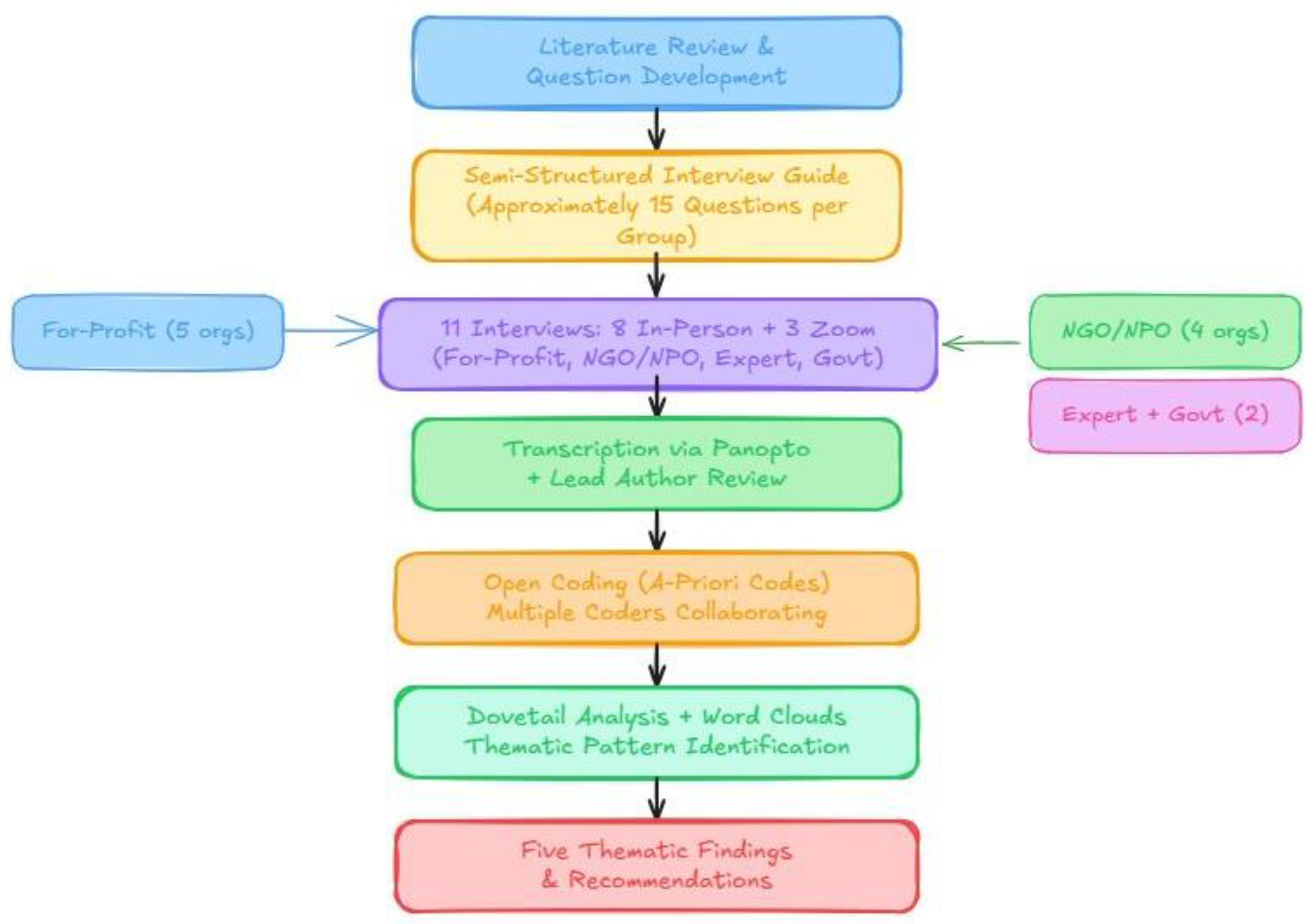
Figure 2.
Conceptual Framework – CSR, Sustainability, and Crisis Response.
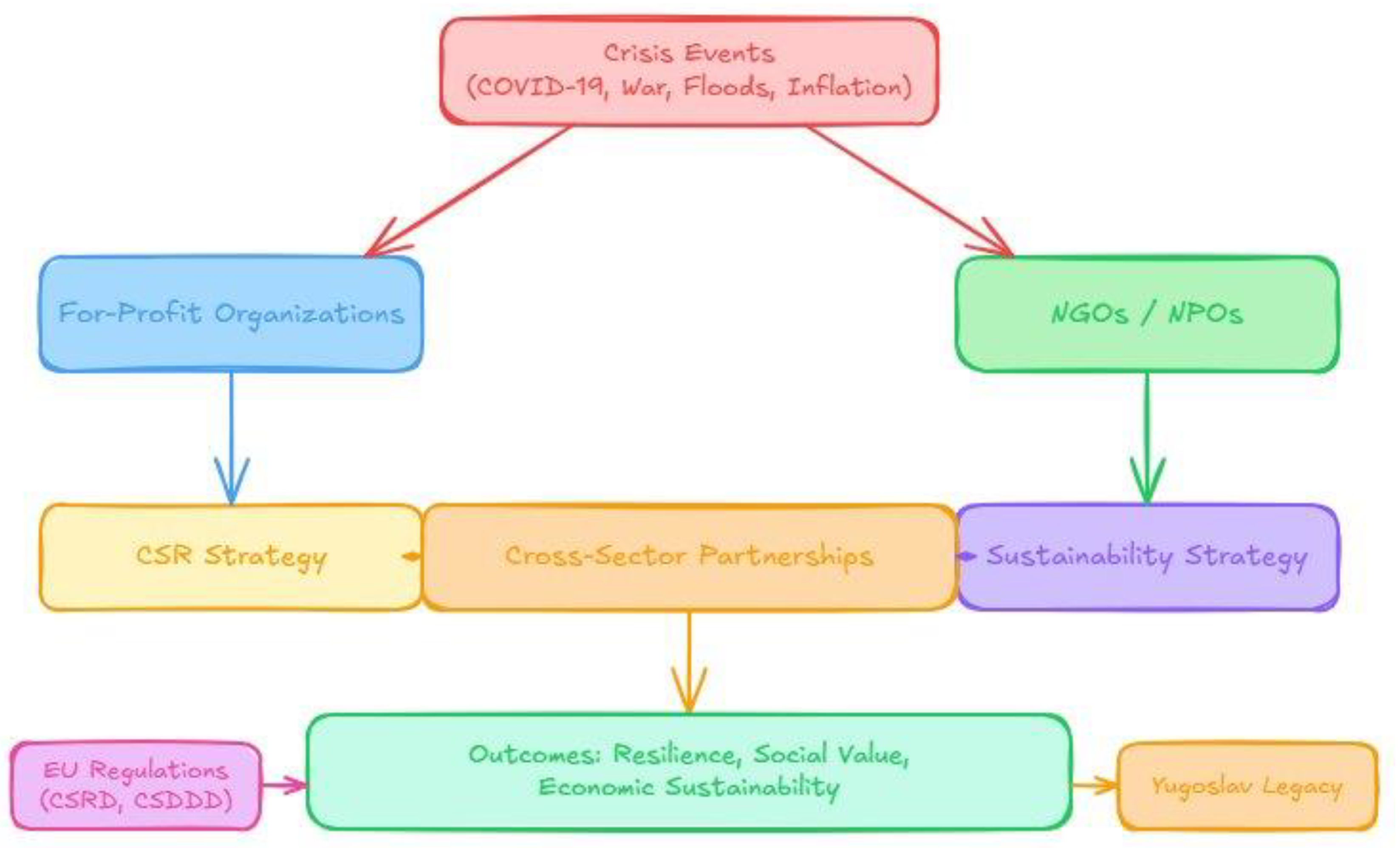
Figure 3.
Barriers to Cross-Sector Partnerships in Slovenia.
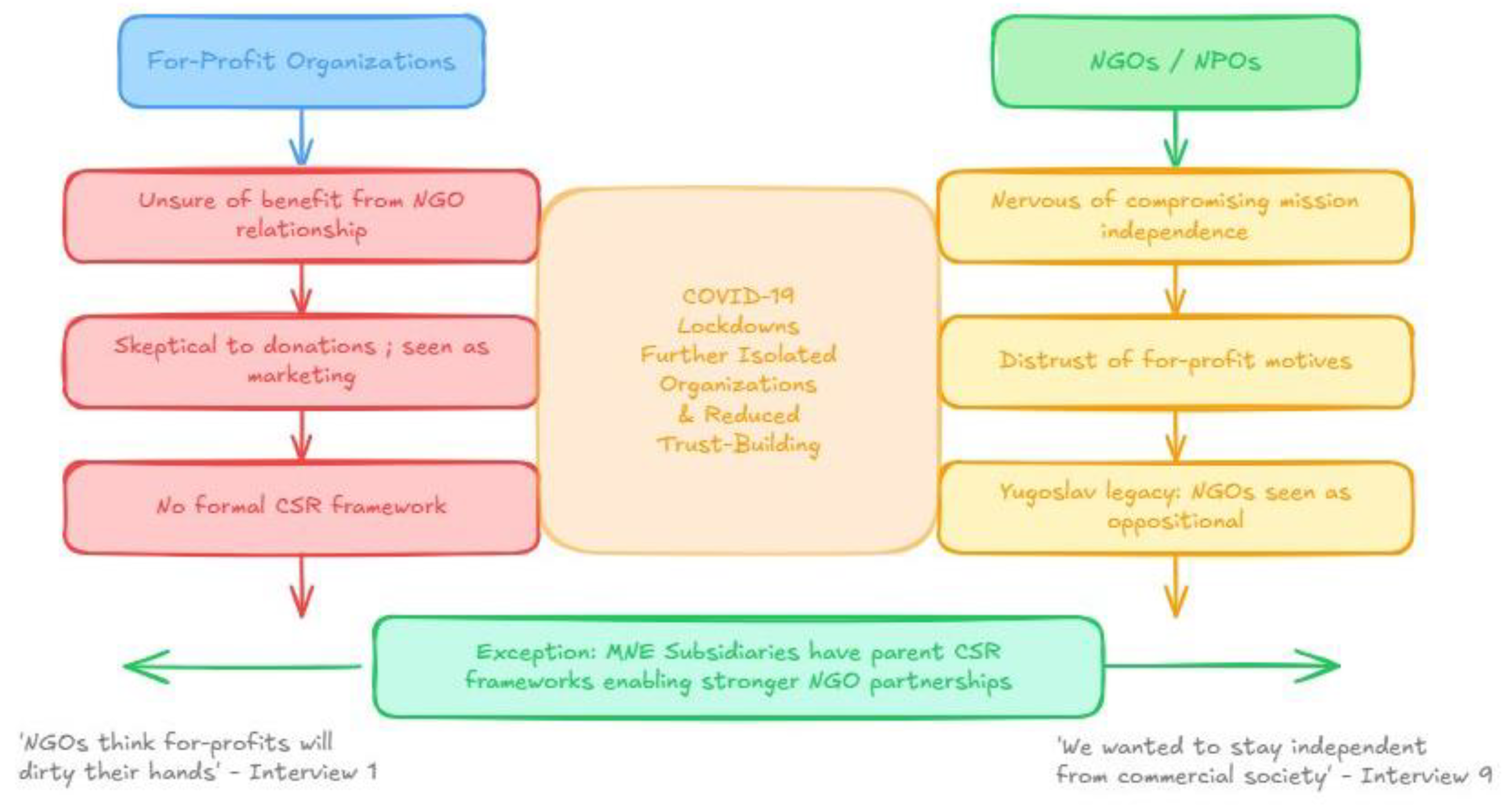
Figure 4.
Digital Transformation Pathways During COVID-19.
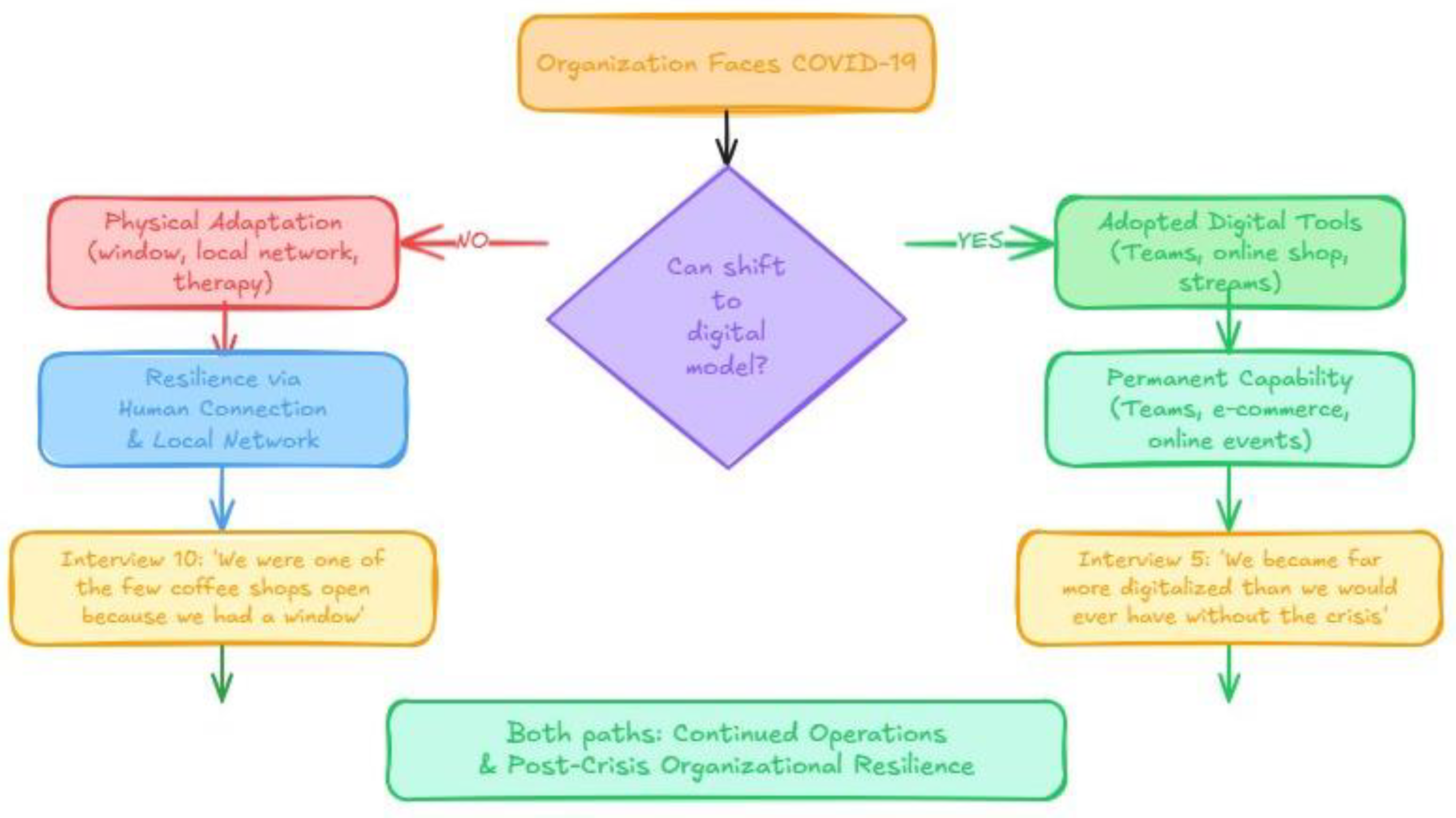
Figure 5.
Supply Chain Disruption Impact – Local vs. Global Models.
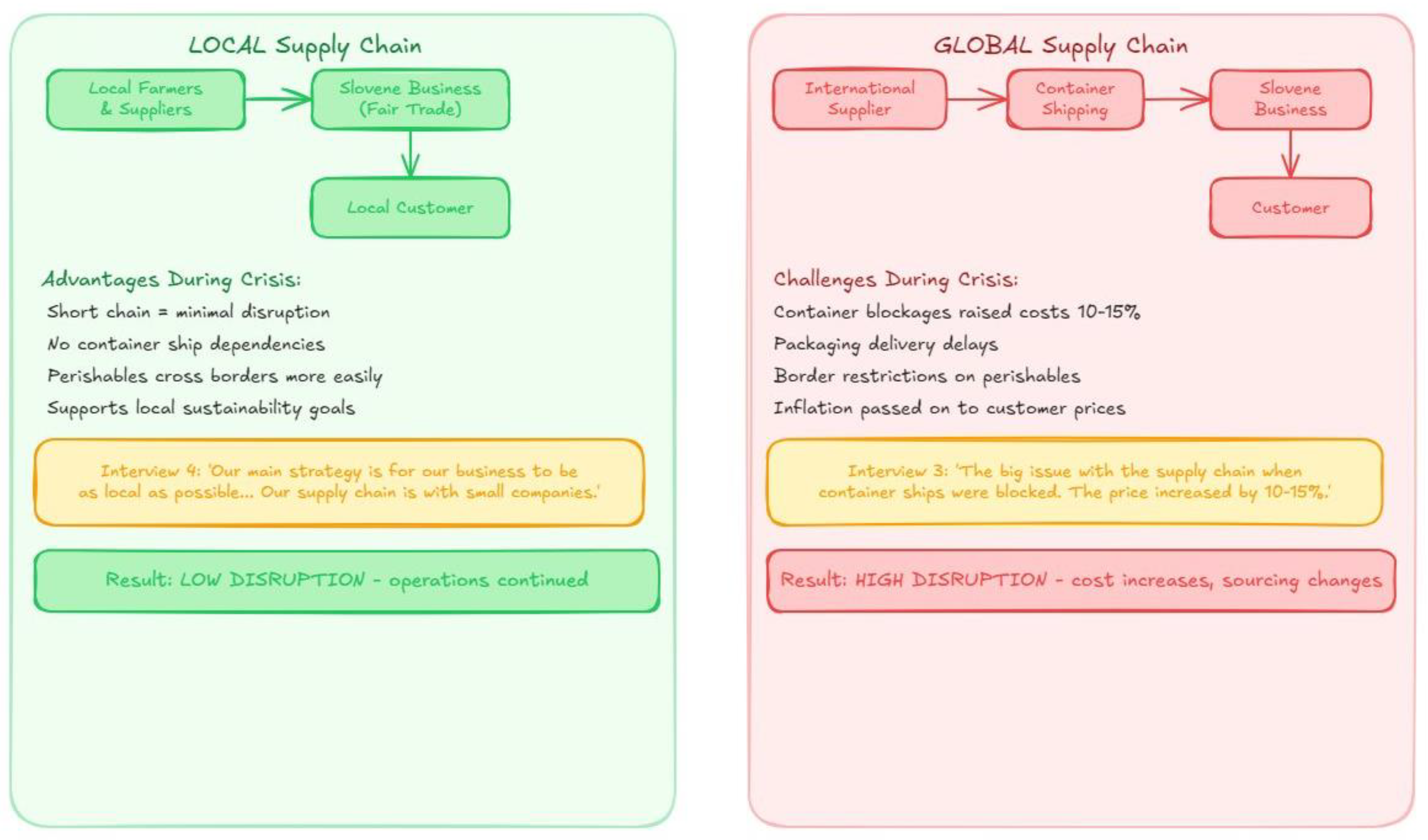

Table 1.
General Descriptors of Interviewees.
| Interview Number | Type of Organization | Position of Interviewee |
|---|---|---|
| 1 | Expert Interview/ NPO | Executive Director |
| 2 | For Profit/ Locally owned | Owner |
| 3 | For Profit/ Locally owned | Owner |
| 4 | For Profit/ Locally owned | Owner |
| 5 | For Profit/ Slovene subsidiary of MNE | Communications Director/ Sustainability Director |
| 6 | For Profit/ Slovene Subsidiary of MNE | Sustainability/ Communications Director |
| 7 | Government Owned For- Profit | Executive Director |
| 8 | Government Agency | Communicators Director |
| 9 | Non-Governmental Organization | Executive Director |
| 10 | NGO/ Cooperative | Executive Director/ Co-owner |
| 11 | Social Enterprise/ NPO | Co-Founder |
Disclaimer/Publisher’s Note: The statements, opinions and data contained in all publications are solely those of the individual author(s) and contributor(s) and not of MDPI and/or the editor(s). MDPI and/or the editor(s) disclaim responsibility for any injury to people or property resulting from any ideas, methods, instructions or products referred to in the content. |
© 2026 by the authors. Licensee MDPI, Basel, Switzerland. This article is an open access article distributed under the terms and conditions of the Creative Commons Attribution (CC BY) license (http://creativecommons.org/licenses/by/4.0/).
Copyright: This open access article is published under a Creative Commons CC BY 4.0 license, which permit the free download, distribution, and reuse, provided that the author and preprint are cited in any reuse.