
Submitted:
28 July 2026
Posted:
29 July 2026
You are already at the latest version
Abstract
The rapid global expansion of photovoltaic (PV) systems, driven by rising energy demand, is expected to generate substantial module waste at end-of-life, with global PV waste projected to exceed 4 million tonnes by 2030, 50 million by 2040, and 200 million tonnes by 2050. Based on 102 publications identified through Scopus, Web of Science, Google Scholar, and IEEE Xplore databases, this review provides a comparative, literature-based assessment of recycling, second-life applications, and disposal as end-of-life (EoL) management strategies for PV modules, examining the relationship between module structure, waste management pathways, material recovery potential, and the technical and economic limitations of current practices. Recycling offers clear environmental benefits but remains economically constrained in many scenarios by high process costs and the complexity of separating laminated module structures. Second-life application emerges as a complementary strategy, delaying the premature entry of modules retaining residual functionality into the waste stream and enhancing resource efficiency. Nevertheless, landfilling continues to account for the majority of global PV waste despite the availability of more sustainable alternatives, revealing a marked gap between technical potential and field-level practice. Overall, no single approach is sufficient; effective PV waste management requires an integrated strategy combining recycling, second-life applications, and disposal in line with circular economy principles.
Keywords:
photovoltaic module
; end-of-life management
; recycling
; second-life application
; disposal
; circular economy
1. Introduction
1.1. Background
Environmental problems such as climate change, acid rain, and stratospheric ozone depletion pose an increasingly serious threat to natural ecosystems and human life. Among these, climate change is widely regarded as the most critical environmental challenge of our time. At the root of these problems lies the continued reliance on fossil fuels, which still account for a substantial share of global energy production. Consequently, redirecting energy systems toward renewable sources has become imperative for mitigating environmental degradation and ensuring a sustainable future. To reduce greenhouse gas emissions and protect the environment, the global transition toward renewable energy has accelerated in recent years [1,2,3]. The share of renewable sources such as wind, hydropower, biomass, and solar energy in the global energy supply continues to grow. Among these sources, PV technology has emerged as a particularly prominent solution owing to its ease of installation, low operating costs, scalability, and broad range of applications [4,5].
Indeed, the rising global energy demand directly influences energy generation systems, with renewable energy sources accounting for the largest share of this growth. As shown in Figure 1, an examination of the annual growth share among energy sources as of 2025 reveals that renewable energy sources hold the largest share at 38%, followed by natural gas (28%), coal (15%), oil (11%), and nuclear energy (8%) [6]. This trend indicates that the installed capacity of renewable sources, including PV, will continue to expand, making a corresponding increase in the number of PV modules reaching the end of their service life in the coming years virtually inevitable.
1.2. PV Systems
A PV system consists of photovoltaic modules interconnected in series or parallel configurations to form an array, together with the mechanical structures supporting these modules, the electrical connection components, and the auxiliary elements that regulate and convert the generated energy. Photovoltaic modules, the fundamental functional unit of PV technology, operate on the principle of converting light into electricity through the photovoltaic effect exhibited by semiconductor materials. This effect, discovered by Alexandre Edmond Becquerel, enables solar radiation to be converted directly into electrical energy.
Photons of different wavelengths reaching the surface of a photovoltaic module may be reflected from the surface, absorbed by the module, or transmitted through it. When a photon is absorbed, electron–hole pairs are generated within the semiconductor material; the separation of these pairs at the p–n junction within the module’s internal structure creates an electrical potential difference. This process enables current flow through an external circuit connected to the module terminals, thereby generating electrical energy [7].
The PV module technologies most widely used in the current literature are presented in Table 1, based on the classification proposed by Arora et al. This classification is structured around three main categories: crystalline silicon-based technologies, thin-film technologies, and emerging/alternative technologies [8].
Silicon-based PV modules, widely employed in the photovoltaic industry, are designed as a multilayer, laminated composite structure. This structure comprises a front glass layer providing mechanical strength and light transmittance, a central layer of silicon semiconductor cells where the photovoltaic conversion takes place, and a polymer-based backsheet on the rear surface that protects against environmental exposure.
The semiconductor silicon layer is laminated to both the front glass and the backsheet using two encapsulant layers, typically composed of ethylene-vinyl acetate (EVA), forming an integrated structure. This laminated assembly is mounted within an aluminum frame, which enhances the mechanical strength of the module and facilitates installation processes; the frame also provides structural rigidity and additional protection against external factors [9].
1.3. Global Growth of Renewable Energy and Photovoltaic Systems
An examination of current energy statistics reveals a marked increase in the share of renewable energy sources, paralleling the rising global energy demand [10]. As shown in Figure 2, the total installed renewable energy capacity increased from approximately 1.85 million MW in 2015 to approximately 4.45 million MW in 2024, representing an increase of roughly 2.4-fold over this period.
This global increase in renewable energy capacity directly influences the growth of PV technology and progressively increases the share of PV within overall energy systems [10]. Indeed, as shown in Figure 3, global installed PV capacity rose from approximately 220,869 MW to 1,858,725 MW over the same period, corresponding to an approximately 8.4-fold increase, indicating that the growth rate of PV markedly exceeds that of total installed renewable energy capacity.
In light of these data, the management of modules that have reached the end of their service life is projected to become one of the most critical challenges facing PV systems in the near future. As a natural consequence of increasing installed capacity, the volume of PV waste generated globally is also expected to rise rapidly. Based on historical installed capacity data (Table 2) and assuming a nominal 25-year service life for PV modules, the minimum volume of PV waste attributable solely to natural end-of-life is presented in Figure 4 [11]. Accordingly, the effective management of end-of-life (EoL) PV modules requires the combined consideration of multiple strategies, including recycling, second-life applications, and disposal. The advantages and limitations of these approaches, from environmental, economic, and technical perspectives, are discussed comparatively in the following sections.
1.4. Methodology
This study is a literature review conducted to provide a comprehensive assessment of current approaches to the end-of-life management of PV modules. Relevant publications were identified through the Scopus, Web of Science, Google Scholar, and IEEE Xplore databases using the keywords “PV Module Waste Management,” “Photovoltaic Module Recycling,” and “Second-Life PV.” The primary search was restricted to publications from the past decade; foundational or frequently cited earlier works identified through backward citation searching of the retrieved publications were additionally included where relevant. The 102 scientific publications thus identified were evaluated according to the prominent themes emerging from the literature. This review examined the challenges associated with the end-of-life management of PV modules, recoverable materials, economic feasibility, second-life application scenarios, and sustainability dimensions; the resulting findings were synthesized to contribute to the existing body of knowledge and to inform future research directions.
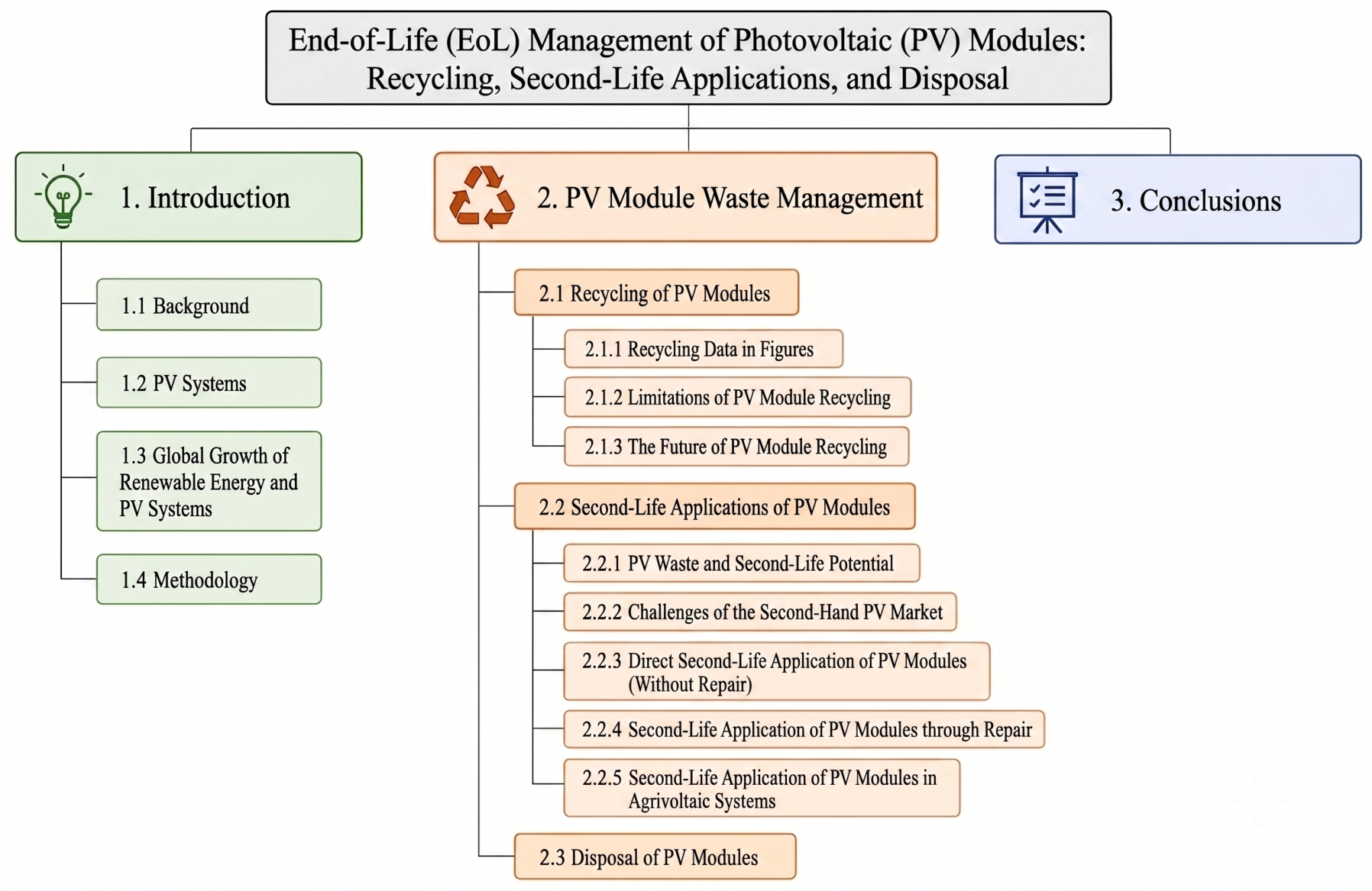
Figure 5.
Organizational chart.
2. PV Module Waste Management
This section presents a literature-based comparative discussion of the three principal approaches to the post-service-life management of photovoltaic modules—recycling, second-life applications, and disposal. The hierarchical relationship among these approaches is summarized in Figure 6.
With the widespread deployment of photovoltaic systems, environmentally sound end-of-life strategies for modules reaching the end of their service life have gained increasing importance. Although landfilling is a technically feasible option, it remains the least preferable approach owing to the loss of recoverable materials and the associated risk of pollution. Recycling, in contrast, plays a critical role in ensuring environmental sustainability; however, its economic feasibility—particularly for silicon-based modules—has not yet been clearly established in the literature. The main reasons underlying this uncertainty include the relatively low economic value of recoverable materials, the high cost of processing, and the still insufficient development of recycling infrastructure specific to PV modules.
Owing to the relatively recent emergence of PV technologies and the fact that the service life defined by manufacturers has not yet elapsed for most installed modules, the volume of PV waste currently entering recycling processes remains limited. Nevertheless, given the rapid growth of global installed PV capacity, recycling and reuse practices are expected to become considerably more critical in the future, both for securing silicon supply and for shaping waste management strategies [12].
At the national level, marked differences are observed in the maturity of EoL management practices. In Australia, the end-of-life (EoL) management of PV modules is still at an early stage, and current recycling capacity remains quite limited; consequently, only a small proportion of modules reaching the end of their service life are directed toward recycling, while the majority are sent to landfill sites. Similarly, in South Korea, recovery policies for PV waste are only recently being established; with the entry into force of regulations under the Extended Producer Responsibility (EPR) scheme in 2023, PV modules will be treated as a distinct product category under the legislation, thereby strengthening the legal framework for enhanced recycling [13].
In the United States, legislation governing the end-of-life management of PV modules varies by state. Some states have introduced specific regulations for PV modules, establishing initial requirements for module recovery and disposal processes. Nevertheless, the PV recycling infrastructure in the country has not yet fully matured. The limited technical capability of recycling facilities operating at varying capacities, the high recycling costs associated with crystalline silicon (c-Si) modules, and the inadequacy of current capacity to accommodate the rapidly growing volume of PV waste in the future are identified as the principal barriers to PV waste management in the United States [13].
In China, by contrast, policy development and technological capacity for the end-of-life management of photovoltaic modules have advanced rapidly. The “Green Design Technical Standards for PV Modules,” supported by the Ministry of Industry and Information Technology, were published in 2020, formally establishing the principles of environmentally sustainable module design. In line with this, the “Action Plan for the Innovation and Development of the Intelligent Photovoltaic Industry (2021–2025)” was enacted to promote the transformation of the photovoltaic sector toward intelligent manufacturing, recycling, and circularity. In addition, the first pilot facility dedicated to the development of panel recycling infrastructure was commissioned in 2021, paving the way for industrial-scale recycling practices [12].
With regard to market share and future projections, Peplow notes that crystalline silicon (c-Si) technology, which accounts for the vast majority of installed PV modules, holds a market share exceeding 90% and has a service life of approximately 30 years. Accordingly, the global volume of PV modules reaching the end of their service life is projected to reach 8 million tonnes by 2030 and approximately 80 million tonnes by 2050. Nevertheless, current recycling practices are reported to remain below the desired level in terms of both efficiency and prevalence, such that a substantial proportion of EoL c-Si modules continue to enter the waste stream [14].
Managing a waste volume of this magnitude necessitates the development of effective procedures. Ko et al. emphasized the need to develop effective waste management procedures to mitigate the environmental impacts of the growing volume of PV waste globally and to support the transition to a circular economy; the authors provided a detailed assessment of dismantling processes for crystalline silicon (c-Si) modules and examined design improvements that would facilitate recycling. Similarly, Sica et al. analyzed the recycling potential of PV modules and proposed the adoption of a circular economy approach aimed at enhancing resource efficiency and minimizing waste generation [15,16].
Regarding the scope of the recovery process, Tao and Yu examined three principal approaches to the recovery of photovoltaic modules: the recycling of manufacturing waste, the recovery of malfunctioning yet reusable modules, and the recycling of modules that have reached the end of their service life (EoL). For each of these approaches, the performance and feasibility of existing technologies, along with their technical and economic advantages and limitations, were comprehensively assessed; the environmental benefits of PV module recycling were discussed alongside key challenges faced by the sector, including cost, infrastructure, and process efficiency [17].
With respect to dismantling and separation techniques, Isherwood highlights that the rapidly expanding global solar energy market is making the sustainable management of end-of-life PV modules an increasingly critical issue. In this context, the recovery of cell materials from PV modules can be achieved through manual dismantling, mechanical separation, dry or wet chemical processes, or a combination of these methods. The selection of a given technique varies depending on criteria such as module structure, material composition, recovery yield, and economic feasibility [18].
Consistent with these findings, Tembo and Subramanian focused specifically on high-value recycling processes, providing a detailed examination of the processes applied during material recovery from PV panels and the resulting recovered products. The study also assessed the environmental impacts associated with recycling, compared the environmental performance of different recovery strategies, and analyzed the current state of global photovoltaic waste management policies, identifying areas for improvement and policy gaps within major markets [19].
The average service life of a PV module is generally estimated at 25–30 years. However, this period may be significantly shortened by physical damage occurring during manufacturing, transport, or installation; early-stage failures following commissioning; performance degradation resulting from prolonged environmental exposure; and unforeseeable external factors such as natural disasters [20,21].
The end of a PV module’s service life is generally defined by a performance decline of approximately 20% relative to initial output, a level typically corresponding to an average service period of 25 years as defined by manufacturers. At this stage, modules do not become entirely non-functional and continue to generate energy; however, their performance falls below a level considered economically viable. Whether such modules are then replaced with new ones depends on factors including the system owner’s financial circumstances, prevailing government incentives, unit energy prices, and the feasibility of recycling or reuse options [12].
According to projections by Bošnjaković et al., among European countries, the highest volume of PV waste by 2030 is expected to occur in Germany (26,100 tonnes). Germany is followed by the Netherlands (2760 tonnes), Italy (1560 tonnes), Austria (1380 tonnes), Spain (1320 tonnes), and Switzerland (1320 tonnes); this upward trend is expected to accelerate further after 2030, becoming particularly pronounced during the 2031–2040 and 2041–2049 periods [12].
According to the same source, among the EU-27 member states, the countries projected to generate the lowest volumes of PV waste by 2049 are Latvia (3369 tonnes), Ireland (8116 tonnes), Croatia (10,938 tonnes), Malta (13,260 tonnes), Luxembourg (19,150 tonnes), and Cyprus (25,860 tonnes). Among non-EU European countries, Iceland (420 tonnes), Montenegro (1332 tonnes), Albania (1716 tonnes), North Macedonia (5096 tonnes), Bosnia and Herzegovina (6448 tonnes), Serbia (9220 tonnes), and Norway (19,280 tonnes) are among those with the lowest projected PV waste volumes.
2.1. Recycling of PV Modules
The recycling of PV modules that have reached the end of their service life is regarded as one of the most environmentally effective waste management options (see Figure 7). Indeed, the systematic literature review conducted by Mahmoudi et al. demonstrates that PV waste management has become a rapidly growing research field in recent years, with recycling and forecasting/projection studies emerging as particularly prominent research themes. Compared with landfilling, recycling processes substantially prevent toxic elements such as lead (Pb) present in the module structure from leaching into soil and groundwater, thereby mitigating environmental contamination and associated health risks [17,22,23,24,25].
Furthermore, effective recycling practices enable the reintroduction into the economy of rare and valuable metals such as silver (Ag), gallium (Ga), indium (In), germanium (Ge), cadmium (Cd), and tellurium (Te); common industrial materials such as aluminum (Al), copper (Cu), and glass; and energy-intensive raw materials such as high-purity silicon (Si) [26,27,28].
This approach not only prevents the loss of raw materials but also substantially reduces energy consumption and carbon emissions associated with manufacturing. In this respect, the recycling of PV modules is regarded as a strategic step that alleviates resource depletion across the life cycle and strengthens the environmental sustainability of renewable energy technologies [29].
The recycling process begins with the transport of modules to a recycling facility, where they are unloaded and inspected. At this stage, modules are tested for potential defects: those retaining usable functionality are separated for second-life applications (see Section 2.2), while those no longer usable are directed toward recycling.
The recycling of solar modules is a multi-step process involving the combined or sequential application of various physical and chemical treatments. This process generally begins with the removal of the junction box and the aluminum frame from the module. The encapsulant EVA layer, which forms part of the module’s laminated structure, is then separated using chemical, thermal, or mechanical delamination methods [30]. The chemical method offers the advantage of achieving the highest purity in material recovery; however, its major drawbacks include the high cost of chemical reagents and the need for monitoring and treatment of the resulting waste liquids [1,31].
Finally, the valuable metals contained within c-Si cells are separated and purified through dedicated electrical and chemical processes. This multi-stage recycling approach enables the high-purity recovery of module components, thereby contributing to circular economy objectives [32,33].
Regarding the general framework of this process, Wang emphasizes that the volume of waste generated as a result of the rapid expansion of photovoltaic systems will reach considerable proportions, underscoring the strategic economic and environmental importance of PV module recycling. The study notes that the recycling processes for PV modules differ markedly from conventional e-waste recycling methods, indicating that module components can be separated through mechanical processes as well as recovered with high efficiency through chemical methods [34].
2.1.1. Recycling Data in Figures
Material recovery rates in recycling processes vary considerably from one material to another. According to Sica et al., recovery rates for glass and aluminum are notably high (97% and 100%, respectively); for copper and tellurium, this rate is approximately 80%, while for rare metals such as indium and gallium, it reaches 75% and 99%, respectively [15].
Crystalline silicon (c-Si) panels represent one of the most common examples in this regard. The mass composition of a typical 1000 kg c-Si PV panel consists of 70% glass, 18.5% aluminum, 5.1% EVA, 3.65% silicon, 1.5% backsheet, 0.11% copper, 0.053% silver, 0.035% lead, and 0.018% tin [35]. The recovery and recycling of these materials embedded within the panel can be achieved through alternative pathways categorized as physical, thermal, and chemical processes, or a combination thereof [33].
One of the earliest initiatives in PV panel recycling was developed by Deutsche Solar in 2003. In this process, the plastic components of panels were separated through heating, after which photovoltaic cells and metals such as glass, aluminum, copper, and steel were recovered using manual methods [15].
Another notable initiative was implemented by First Solar. The company launched a collection and recycling program for cadmium telluride (CdTe) modules in 2003, which became fully operational in 2007. The program is based on a two-stage crushing process: in the first stage, modules are superficially fragmented to facilitate transport, while in the second stage, hammer mills are used to reduce the glass plates into small fragments approximately 5 mm in diameter. The semiconductor films are then subjected to a leaching process using sulfuric acid and hydrogen peroxide, and the resulting solution is refined through precipitation into a material suitable for use in the manufacture of new CdTe modules. The glass is separated first from the semiconductor solution and subsequently from the laminate bonding the two glass layers together. This process achieves recovery rates of approximately 90% for glass and 95% for semiconductor material, thereby substantially reducing the environmental risk associated with cadmium release into the environment [15].
In addition to such pioneering initiatives, country-based waste projections at the global scale are increasingly represented in the literature. According to a study conducted in India, approximately 2.95 billion tonnes of PV waste are projected to be generated in the country by 2047 (see Figure 8). An analysis of the composition of this waste indicates that it will consist of approximately 51% glass, 31% aluminum, 6% copper, 5% EVA, and 1% silicon, among other materials. The study reports that recycling these materials could recover resources valued at approximately USD 452 trillion. However, no economic assessment of the total cost of this recovery process was provided [1,36]. It should be noted that this figure appears exceptionally high relative to global PV waste projections discussed elsewhere in this review (Section 2.2.1); this discrepancy may reflect a scale-reporting inconsistency in the original source and should be interpreted with caution.
The same study also examined the distribution of this waste by module type and system component. The findings indicate that silicon-based modules account for approximately 59% of total PV waste, reflecting their widespread use in the market. Cadmium telluride (CdTe) panels and copper-indium-gallium-selenide (CIGS) panels are projected to contribute 6% and 2% of the waste, respectively. Meanwhile, among the system’s auxiliary components, inverters account for 7% and cabling and connection equipment for 26% of total waste, representing a substantial share. These findings indicate that module recycling alone is insufficient, and that all system components must be addressed through an integrated waste management approach.
According to a study conducted in 2015, the majority of PV waste expected to be generated in Italy will originate from crystalline silicon (c-Si) panels (see Figure 9). A total of 4,843,891 tonnes of c-Si panel waste is projected, consisting predominantly of 3,592,229 tonnes of glass, 498,921 tonnes of aluminum, 317,275 tonnes of EVA, and other components. This total also includes 27,610 tonnes of copper, 242 tonnes of silver, and 162,270 tonnes of silicon. For thin-film cadmium telluride (CdTe) panels, approximately 1,252,617 tonnes of waste were calculated for the same year, with a composition of approximately 1,189,986 tonnes of glass, 877 tonnes of cadmium, 877 tonnes of tellurium, and 12,526 tonnes of copper [7].
According to studies conducted in Australia, the cumulative volume of PV waste generated by 2047 is estimated to reach approximately 1 million tonnes (see Figure 10). The majority of this waste consists of core structural materials such as glass (541,209 tonnes) and aluminum (116,483 tonnes), followed by copper (8375 tonnes) and steel (71,329 tonnes). Over the same period, PV waste is also expected to contain approximately 299 tonnes of hazardous substances (cadmium, lead, and selenium) and 38,660 tonnes of critical raw materials, together corresponding to approximately 0.5% of total waste. The remaining 10% consists of silicon and various other metals, amounting to 76,363 tonnes [37].
In addition to quantitative distribution, the economic value of PV waste components represents a decisive criterion in determining waste management and recovery strategies. Assessments conducted in this context indicate that, among the PV waste projected to be generated by 2047, the glass component holds the highest economic value. Glass is followed by other recoverable materials such as silver (18%), aluminum (18%), and steel (17%). These findings demonstrate that an approach based solely on mass quantities is insufficient for PV waste management, and that an economic value-oriented prioritization framework is also required [37].
According to Domínguez and Geyer, the estimated cumulative waste volumes originating from end-of-life PV systems in the United States (see Figure 11) encompass installations with a capacity of 1 MW or above, totaling 69.7 GW, which represented approximately 50% of nationwide PV installations as of 2016. The increase in PV capacity during this period was driven predominantly by the expansion of utility-scale systems.
The results indicate that a total of 9.8 million tonnes of PV waste is expected to be generated over the period examined, comprising 6.6 million tonnes of PV modules, 2.7 million tonnes of balance-of-system (BOS) components, 0.3 million tonnes of inverters, and 0.2 million tonnes of transformer components. Approximately 9.2 million tonnes of this waste stream is estimated to contain metals that are recoverable. Recoverable precious metals include 1816 tonnes of silver and 27 tonnes of gold, while recoverable critical metals include 4469 tonnes of cadmium, 1073 tonnes of gallium, 515 tonnes of indium, and 2010 tonnes of tellurium.
In addition to quantitative projections, the material composition and distribution of economic value were also analyzed. Steel predominates in mounting structures (46%), aluminum in module frames (30%), silicon in c-Si modules (17%), and copper in cabling (4%). In terms of economic value, the distribution among metals in PV waste is as follows: aluminum (27%), silicon (23%), gold (13%), steel (13%), copper (12%), and silver (6%). These figures indicate that base and precious metals account for the majority of the total economic value, while critical metals hold a comparatively smaller share (e.g., gallium 1.6%, magnesium 0.7%, tellurium 0.9%, and indium 1.2%) [38].
According to a study conducted by Domínguez and Geyer for Mexico, approximately 1.2 million tonnes of PV waste are projected to be generated in the country by 2045 (see Figure 12). Of this total, 691 thousand tonnes consists of module waste originating from approximately 31 million PV modules.
According to the same study, when auxiliary system components (BOS)—including inverters, transformers, cabling, mounting structures, and monitoring equipment—are taken into account, the PV waste stream is projected to contain approximately 1 million tonnes of metal, with a composition of approximately 42% iron (Fe), 26% aluminum (Al), 26% silicon (Si), and 5% copper (Cu).
If the best currently available recycling technologies are applied, approximately 920 thousand tonnes of the total PV waste is estimated to be recoverable. This process is also projected to enable the recovery of valuable and strategic metals, including 271 tonnes of silver, 10 tonnes of gold, 17 tonnes of gallium, 10 tonnes of indium, 139 tonnes of cadmium, and 100 tonnes of tellurium, for reintroduction into the economy [39].
According to a study by Liu et al., the cumulative PV waste capacity in China was approximately 5 GW in 2022 (see Figure 13), and is projected to reach 26 GW by 2030, 100 GW by 2040, and approximately 400 GW by 2050. With this growth expected to continue at an accelerating pace, the cumulative capacity is projected to reach between 1100 and 1450 GW by 2060 [40].
Various studies in the literature indicate that recycling waste generated from PV modules offers substantial economic and environmental benefits. For example, recycling one tonne of PV module waste can prevent approximately 8–12 tonnes of CO2-equivalent emissions [41]. According to assessments conducted specifically for China, the average economic gain obtainable from recyclable materials is estimated at USD 340 per tonne [42]. Findings from Liu et al. indicate that PV waste generated in China could exceed 20 million tonnes by 2060, representing a recyclable material potential valued at approximately USD 6.8 billion, with recycling estimated to prevent 160–240 million tonnes of CO2-equivalent emissions. Accordingly, the recycling or redesign for reuse of materials employed in solar panel manufacturing holds strategic importance for the PV sector, both in reducing costs and enhancing profitability [40].
It should nonetheless be noted that not all materials can be recovered at a 100% rate in recycling processes. In a study by Huang et al., the inputs and outputs associated with the recycling process of a 1 kW multicrystalline silicon (multi-Si) PV module were assessed and the resulting material losses were quantified. The analysis found recovery rates of 89% for glass, 80% for silicon, 81% for aluminum, 80% for EVA, and 89% for silver, corresponding to approximately 42.3 kg of glass, 10.3 kg of aluminum, 12.47 kg of EVA, 2 kg of silicon, and 0.024 kg of silver recoverable per kW of module [15,29].
Taken together, the country-based studies discussed above reveal substantial variation in estimated PV waste volumes, both in terms of geographic scale and reference year. To enable a comparative overview of these differences, the key findings of the relevant studies are summarized in Table 3.
When the data presented in the table are considered together, it becomes evident that the absolute waste volume depends largely on a country’s installed PV capacity and the reference year adopted; notably, the estimate for India stands out as exceptionally large relative to other countries, owing to its 27-year projection horizon and its comprehensive inclusion of BOS components. In terms of component distribution, glass and aluminum emerge as the dominant components in module-focused studies (India, Italy, Australia), whereas steel/iron gains prominence in studies that jointly consider modules and balance-of-system (BOS) components (United States, Mexico). This difference stems less from technological variation than from differences in system boundaries across studies—namely, whether only the module or the module plus BOS was considered. This finding suggests that investments in recycling infrastructure should be planned primarily around high-volume glass/aluminum or metal-dominant waste streams, while being supplemented by separate, more specialized processes dedicated to the recovery of precious and critical metals.
2.1.2. Limitations of PV Module Recycling
Photovoltaic panels contain critical raw materials, toxic components, and valuable materials such as silver, high-purity silicon, lead, and solar-grade glass. Recycling is therefore regarded as one of the most appropriate solutions for panels that have reached the end of their service life. However, one of the most significant challenges encountered to date lies in the laminated sandwich structure of panels (see Figure 14); this sealed structure hinders the separation of individual components and renders recycling processes considerably more complex [43,44].
Accordingly, the efficiency of the recycling process at the end-of-life (EoL) stage depends heavily on the effectiveness of the process selected, a task that is particularly challenging owing to the sealed, “sandwich-type” structure of c-Si PV panels [45]. Nevertheless, a pilot recycling method developed for c-Si PV panels has achieved a silicon recovery rate of approximately 95% [44].
Furthermore, the literature widely reports that recycling processes remain relatively costly in comparison with the manufacturing costs of photovoltaic panels. Research on the end-of-life (EoL) management of photovoltaic solar panels remains at an early stage in many countries, underscoring the need for comprehensive global assessments of waste panel recycling. Consequently, alongside recycling, second-life scenarios that enable the reuse of panels reaching the end of their service life are also gaining importance [46].
One example illustrating the challenges of recycling is provided by the study of Kadro and Hagfeldt on perovskite-based PV cells. The recycling process for perovskite PV technology poses substantial challenges from the standpoint of sustainable energy policy; the perovskite PV cells examined in this context represent a current example demonstrating that recycling processes can be both hazardous and technically demanding.
Perovskite panels can be manufactured from raw materials that are readily available worldwide and offer high efficiency potential. However, owing to their structural instability, they have not yet achieved widespread commercial deployment and remain largely confined to laboratory-scale research applications. Although the manufacturing process is practical and low-cost, the environmental and technical challenges encountered at the recycling stage introduce considerable uncertainty regarding the long-term sustainability of this technology. Perovskite PV cells therefore clearly illustrate how complex the recycling process can be for solar panel technologies [47].
Compared with other categories of electronic waste, the economic value per kilogram of silicon-based PV modules is considerably low, rendering their recycling economically unattractive. The high sensitivity of new PV module market prices to increases in recycling costs further undermines the financial sustainability of the process. In an analysis conducted by Cucchiella et al. for the European market, the recycling profitability of 14 products across different WEEE (Waste Electrical and Electronic Equipment) categories was assessed; PV modules were found to yield the lowest economic returns among these categories, owing to the limited quantity and low economic value of their recoverable materials [48,49].
For instance, when compared with electronic products containing high-density metals, such as smartphones, the recovery potential of PV modules per kilogram was found to be approximately half as high. This low recovery potential is regarded as a key factor diminishing the economic incentive for the proactive recycling of photovoltaic waste [50].
Several studies have examined this economic landscape in greater depth. Dias and Veit conducted a comprehensive assessment of the potential risks and value components associated particularly with first-generation photovoltaic modules. The study highlights that these modules contain both hazardous substances posing potential environmental threats and materials of substantial economic value. The authors comparatively evaluated the feasibility of mechanical, thermal, and hydrometallurgical recycling methods, analyzing the recovery rates, economic outcomes, and environmental impacts achievable through each approach, and offered important insights into different recycling scenarios [51].
Regarding economic feasibility, D’Adamo et al. analyzed the economic viability of PV module recycling processes under various market conditions and cost scenarios. Their findings indicate that recycling operations are not economically attractive when landfill disposal fees are not factored into the analysis; however, recycling can become financially profitable when sufficient market value is attributed to the recovered materials [52].
Similarly, Wang et al. conducted a comprehensive assessment of the principal barriers to PV module recycling. Their findings identify the technical difficulty of implementing recycling processes at mass-production scale, high capital requirements, insufficient government support, and the still-limited size of the recycling market as the most significant constraints. While the study anticipates that economic feasibility may improve in the coming years as investment costs decline and market volume expands, it notes that existing infrastructure deficiencies may become an increasingly pronounced challenge over the medium to long term [53].
2.1.3. The Future of PV Module Recycling
The life cycle of PV panels follows a linear trajectory, from raw material extraction (“cradle”) to the end of service life (“grave”), whereby only a limited proportion of panels currently reach the recycling stage. In contrast, the advanced recovery concept based on the Cradle-to-Cradle (C2C) approach aims to enable the circular reuse of all materials, whereby panels reaching the end of their service life become a primary resource for the manufacture of new panels [35].
In this context, Farrell et al. assessed the most appropriate recycling strategies for end-of-life PV modules and identified the most effective methods applicable in this field. Taking into account the structural limitations arising from module design, the study proposes solutions aimed at maximizing component recovery and provides a comprehensive review of current recycling technologies developed in both industry and academia. Open-loop cascaded reuse scenarios and closed-loop recycling options are examined in terms of the technical challenges they present, the opportunities they offer, and their potential contributions to the circular economy [45].
Contrary to the low economic return findings discussed in the previous section [49,50], a different picture may emerge under certain conditions. According to the economic framework compiled by Deng et al., First Solar’s recycling program provides a concrete example of this: when end-of-life PV modules can be collected at a cost below USD 150 per tonne, the recycling of glass components is likely to become profitable; this cost corresponds to approximately half the average cost observed in Europe [24,41,54].
Within the same framework, it is emphasized that in cases where disposal fees for PV waste directed to landfill sites are high (e.g., USD 100 per tonne), recycling becomes an economically more advantageous option as long as transport costs remain below USD 200 per tonne. These findings indicate that, given appropriate logistical planning and collection infrastructure, PV recycling processes can constitute a viable option not only environmentally but also economically [50].
In addition to economic feasibility, Gahlot et al. focused on technical recovery strategies, providing a detailed examination of recycling techniques for first- and second-generation PV modules and the principal challenges encountered in these processes. The study addresses the application of various pretreatment and extraction methods for the effective recovery of metals and other valuable components across different module technologies, and offers a comprehensive assessment of the economic value, environmental impacts, and global development trends associated with PV recycling processes. In addition, the study presents an integrated strategy aimed at enhancing metal recovery efficiency, along with a projection of future directions for the recycling industry [55].
Dias et al. developed an alternative method for the recycling of silicon-based photovoltaic modules. This method comprises frame removal, module fragmentation, and electrostatic separation stages, and enables the recovery of a valuable fraction in which metal and silicon are jointly recovered. Although the economic value of the remaining fraction—containing a mixture of glass, silicon, and polymer—is relatively low, the overall performance of the method demonstrates advantages over existing complete recycling processes and landfill disposal options in terms of technological feasibility, environmental benefit, and cost-effectiveness. The study’s findings indicate that, in certain scenarios, this approach may be more cost-effective than complete recycling systems and environmentally superior to landfilling [56].
Lin et al. examined development trends in the crystalline silicon (c-Si) solar cell market and provided a detailed analysis of the structural components of this module type. The study also assessed current recycling technologies for c-Si cells, comprehensively examining techniques such as manual disassembly, chemical dissolution using inorganic acids, hybrid methods combining thermal and chemical processes, and delamination using organic solvents. The technical limitations and process-efficiency drawbacks associated with each of these methods are identified, and the research needs for improving recycling practices are highlighted [57].
Another notable example in this context is provided by Teknetzi et al., who examined the effect of varying nitric acid concentrations on the recovery of valuable metals from decommissioned CIGS (copper-indium-gallium-selenide) PV modules. The study specifically assessed the leaching-based recovery efficiency of silver and indium, and analyzed the potential for removing impurities such as zinc. The results show that higher pH levels and larger surface-to-liquid ratios increase recovery efficiency but also lead to higher impurity levels. The authors noted that lower acid concentrations enable the selective removal of zinc, thereby potentially improving the purity of the recovered silver [58].
According to Protopapa et al., the detailed characterization of PV module structure enables the selection of appropriate material recycling facilities and the customization of process parameters to the identified structure. In particular, ATR and Raman analyses were applied to the layers obtained following mechanical or chemical delamination of a PV module, with results verified through cross-sectional analysis; advanced techniques such as EDS and thermal analysis were also employed to support these investigations [9].
Such characterization of multilayer PV structures is of critical importance for informing the subsequent steps of module-specific recycling processes. Optimizing incineration or pyrolysis processes from both environmental and economic perspectives would substantially contribute to maximizing the recovery of recyclable materials. Furthermore, equipping newly marketed PV modules with labels containing information on their compositional structure (e.g., RFID or QR codes), or with indicators pointing to a recycling process optimized for the given module, would considerably facilitate the future identification, sorting, and recycling of end-of-life PV panels [9].
2.2. Second-Life Applications of PV Modules
Second-life application of PV modules refers to the reuse, as second-life photovoltaic panels, of modules that have not entirely lost their functionality but have been decommissioned for various reasons [59]. The CIRCUSOL project, for instance, defines such modules as “second-life PV panels” and notes that they can be reintroduced into different use pathways through repair, refurbishment, or remanufacturing processes [43,60]. This approach holds critical potential for reducing waste and enhancing resource efficiency within the PV sector.
Repair and reuse are regarded as valid and preferred options, within the context of the circular economy, for PV panels that have not yet reached the end of their technical service life. The circular economy is founded on the principle of retaining products in their original and highest-value state for as long as possible, prioritizing the full realization of a product’s service life before recycling is considered [60]. Life Cycle Assessment (LCA) findings support this approach: allowing PV panels to complete their technical service life is environmentally more advantageous than early replacement or recycling [61,62]. In particular, early panel replacements carried out at intervals of 10–15 years have been shown to increase the environmental burden per unit of electricity generated; moreover, even the higher efficiency of new modules or improved recycling processes cannot fully offset this negative effect [63,64].
Distinguishing between PV modules that have reached the end of their service life and those that retain functionality and are suitable, based on their performance, for second-life applications is of considerable importance. Modules that remain operational and suitable for reuse can offer economic advantages—through resale in the secondary market or deployment in second-life scenarios—in the form of revenue or tax incentives. Module recycling or disposal, by contrast, often entails substantial economic costs and environmental impacts [65,66].
A comprehensive assessment of potential applications for second-hand PV modules reveals considerable variation across contexts. In high-income economies, second-hand modules are typically used to replace defective panels within systems operating under feed-in tariff schemes, thereby extending the economic service life of existing systems. In low-income countries, by contrast, second-hand PV modules are more commonly employed in the installation of new, small-scale PV systems in off-grid or remote areas. These modules are generally sourced from large-scale power plants that have either withstood demanding environmental conditions or completed their feed-in tariff incentive periods [67,68].
According to studies in the literature, PV modules exhibit performance decline after an average service life of 25–30 years. Nevertheless, it has been reported that, following approximately 27 years of operation, modules can acquire a second service life through the application of specific repair and refurbishment procedures. The annual efficiency degradation rate of crystalline silicon (c-Si) modules has been reported to range between 0.56% and 2.96%, indicating that such modules can continue to retain technical functionality. Accordingly, for applications that do not require high efficiency, the reuse of PV modules that have reached the end of their nominal service life but have not entirely lost their functionality may be feasible. The reuse process involves thorough cleaning of the modules, identification of structural and electrical defects, repair or replacement of faulty components where necessary, and, as a final stage, functionality testing. Modules that successfully pass these tests can be recertified and reintroduced into the second-life use cycle [20,60].
2.2.1. PV Waste and Second-Life Potential
According to Tsanakas et al., approximately 2.7–3.3 million PV modules are installed worldwide every day. Given an average field failure rate of 0.2%, an estimated 7–9 million installed PV modules (including those currently in operation) are projected to fail annually, corresponding to approximately 162 kt of PV waste attributable solely to failures per year. When factors such as end-of-service-life retirement, early-loss failures, and repowering are additionally taken into account, the global volume of PV waste is projected to reach 4 Mt by 2030, 50 Mt by 2040, and 200 Mt by 2050 [69,70,71].
The literature emphasizes that a substantial proportion of this waste could be recovered through second-life applications. According to Tsanakas and H2020 CIRCUSOL experts, approximately two-thirds of PV modules reaching the end of their service life are repairable, refurbishable, or reusable [60,71].
A four-stage framework has been proposed for assessing the suitability of PV modules for reuse: off-site compliance checks; on-site inspections and functionality tests; classification for collection and transport; and in-depth technical inspection. In addition, three main criteria are used to determine the suitability of modules for reuse: technical feasibility, economic feasibility, and safety. As shown in Table 4, PV modules are classified into three classes based on these criteria [60,72].
The concept of PV waste itself inherently involves a degree of definitional ambiguity. From a manufacturer’s perspective, a PV module is considered technically inadequate once its maximum power loss exceeds 20%. However, such performance decline does not necessarily indicate complete loss of function; in many cases, the module continues to generate a certain level of energy. Assessments based solely on nominal power loss therefore do not fully reflect a module’s actual functional status. Modules falling within this category may not enter the waste stream unless decommissioned by system owners for economic or operational reasons. Furthermore, even modules withdrawn from use owing to serious technical faults can be reassessed following appropriate repair or refurbishment procedures. This approach not only enhances resource efficiency but also contributes to reducing the environmental impacts of PV waste within the waste electrical and electronic equipment (WEEE) category, thereby supporting circular economy and green growth objectives [73].
Reports published in recent years indicate that the service life of many IEC 61215-certified PV panels—particularly those operating under harsh or tropical climatic conditions—is shorter than 12 years [74,75,76,77,78]. In some cases, this period falls below 4 years, while in others the annual degradation rate exceeds 2%. Although these panels are typically rated for a 25-year service life up to an 80% output-power threshold, as stated in manufacturer warranties or technical documentation, they reach the expected 80% power-degradation limit considerably earlier than anticipated. A review of the existing literature on the reliability of photovoltaic modules indicates that the actual service life of modules is often shorter than that stated in manufacturer warranties [79,80,81,82,83]. This finding underscores the importance of assessing both service life and reuse potential.
For a PV module to be reused within a second-life framework, certain technical conditions must be satisfied. The fundamental requirements include operating at an efficiency level still deemed acceptable relative to original performance, posing no safety risk, and retaining sufficient remaining technical service life to justify the investment required for reuse. In this context, the development of standardized quality control and sorting procedures is of critical importance for determining the suitability of decommissioned PV modules for reuse. From an economic standpoint, second-hand PV modules, despite offering lower efficiency and shorter remaining service life compared with new modules, are expected to provide a cost advantage in practical applications. The relatively low unit market value of PV modules (approximately $0.10/W) indicates that only limited resources, in terms of both time and cost, can be allocated to preparing these modules for reuse [67].
The manufacture of silicon (Si)- and cadmium telluride (CdTe)-based modules is a process requiring careful environmental consideration owing to high energy demand, intensive use of raw materials, and the presence of toxic elements. Silicon mining increases fossil fuel consumption due to its energy-intensive nature and poses occupational health risks associated with dust emissions. In particular, the conversion of metallurgical-grade (MG) silicon into solar-grade (SoG) silicon in crystalline silicon (c-Si) module technologies requires a substantial amount of energy. This underscores the significant advantages that second-life application methods offer in photovoltaic systems, both in reducing manufacturing-related environmental impacts and in strengthening economic sustainability [15].
Many decommissioned PV modules, despite a certain degree of performance loss, have not entirely lost their functionality and retain reuse potential. However, the circulation of these modules in the secondary market is not yet governed by a clear legal framework or standardized quality control mechanisms. This gives rise to considerable variation in the quality and price range of second-hand PV modules available in the market. The number of PV modules reaching the end of their service life is projected to increase substantially in the coming years. From the perspective of the circular economy, reuse practices contribute to extending the service life of these modules and enhancing resource efficiency by preventing their premature entry into the waste stream [84].
2.2.2. Challenges of the Second-Hand PV Market
Studies in the literature indicate that one of the greatest barriers to the adoption of second-hand PV panels lies in market uncertainties. In this market, deficiencies in supply and demand reinforce one another, and consumer trust remains low owing to the absence of a proven track record. Furthermore, the ongoing trend toward new panels becoming both more efficient and less expensive further constrains the development of the second-hand market. Safety concerns and a lack of aesthetic integrity constitute additional limiting factors [64].
Another significant barrier limiting the reuse of PV modules is the absence of clearly defined technical criteria and legal frameworks for assessing module suitability for reuse. This gap becomes even more pronounced when combined with the lack of comprehensive global policies governing PV waste management. Addressing this gap is critical for improving economic feasibility, achieving high recovery rates, and enhancing environmental performance [33]. In this context, the “IEC TR 63525 ED1: Reuse of PV modules and circular economy” working committee is developing a standardized protocol for assessing the characteristics of reusable PV modules, with the aim of supporting the emergence of a reliable and sustainable market structure for reuse [84,85].
2.2.3. Direct Second-Life Application of PV Modules (Without Repair)
Existing studies indicate that the direct reuse of modules requires considerably less processing than material extraction during recycling and therefore yields the highest economic return [86]. In most cases, reusing a panel is regarded as a more feasible and cost-effective option, since no additional processing is required [87].
Nevertheless, panels intended for direct reuse must still meet essential performance standards in terms of safety, efficiency, and durability. Indeed, the lower efficiency and shorter remaining service life of decommissioned panels compared with new-generation modules can render such modules economically less viable in certain applications [67].
According to a study conducted in Algeria in 2019, supplying energy to remote areas via diesel generators can double transportation-related costs, with unit energy costs reaching approximately $0.38/kWh. In contrast, since a second-life PV panel cannot generate the same power output as a new panel within the same surface area, a larger panel surface is required to meet a given power demand; at the three sites examined (Adrar, Annaba, and Setif), the normalized performance ratios measured after 10, 16, and 22 years of operation, respectively, were found to be 0.86, 0.808, and 0.824. Based on these findings, it was proposed that panels retired from PV plants concentrated in the Sahara region be redirected toward second-life applications in agricultural pumping systems, and this option was compared with the same pumping service provided by diesel generators [46].
As an example, panels sourced from a PV plant in Adrar were, after approximately eight years of use in electricity generation during their first life cycle, sold at one-fifth of their original purchase price and redirected to second-life use in pumping systems. This extended the panels’ total service life from 10 to 18 years and postponed panel waste processing from 2026 to 2034. In economic terms, pumping 1 kWh costs approximately $3.04 using a diesel generator, compared with only $0.96 using reused PV panels, yielding an economic benefit of approximately $2.08 per kWh. Assuming a 20% nominal power loss, the panel continues to generate energy, with only a moderate reduction in the water flow rate delivered; under these conditions, the second-life service period can be extended from 8 to 15 years, and panel waste processing can be postponed until 2041. A further advantage of this approach is that approximately 20% of the initial investment made in the PV plant’s panel procurement can be recovered [46,88].
A field study conducted on decommissioned modules from five different solar power plants in Thailand aimed to assess the reuse potential of end-of-life panels. The study examined 258 modules of multicrystalline silicon (c-Si), amorphous silicon (a-Si), and copper indium diselenide (CIS) types, with operational histories ranging from 7 to 10 years. The modules were assessed for performance, safety, and functionality through visual inspection, insulation testing, and field-based I-V measurements. The findings indicate that approximately 74% of the modules exhibited a normalized power output above 70%, rendering them technically suitable for second-life application. These results demonstrate that reuse can extend the service life of photovoltaic modules, thereby increasing their economic value and reducing the growth rate of PV waste volumes [84].
2.2.4. Second-Life Application of PV Modules Through Repair
Repairing PV panels can be a preferred option, particularly for high-value or rare modules. The efficient identification and functional restoration of faulty but repairable modules is regarded as an important approach that can contribute to the development of a more profitable and sustainable second-life sector [60].
Nevertheless, repair and refurbishment processes have not yet been established on a systematic basis within the PV industry. These tasks are largely carried out by independent private companies, without support from original manufacturers. The absence of formal testing and certification mechanisms reduces consumer confidence in the reliability of repaired panels. Furthermore, existing gaps in research and development (R&D) constitute a significant limitation, particularly with respect to the standardization of repair techniques and the assurance of long-term performance [60,87].
Although the ongoing performance of modules over time requires regular monitoring (assessments of this kind are already being conducted), findings by Dobra et al. indicate that repair processes—whether or not they involve module replacement—are nearly always environmentally beneficial and economically feasible compared with disposal [85], a conclusion corroborated by other studies. Indeed, a separate study demonstrated that PV panel refurbishment is approximately one hundred times more effective than panel replacement in terms of carbon footprint [89].
Rosillo et al. report that approximately 10% of failures observed in PV modules result from ribbon busbar interruptions. In most cases, these failures are addressed by system owners through module replacement, since purchasing a new module is often more economical than repair. In this context, the study under review developed a low-cost and practical repair method specifically targeting ribbon busbar interruptions [90].
The proposed method begins with a series of tests aimed at identifying faulty modules. These include dry and wet insulation testing, indoor I–V curve measurements, and electroluminescence (EL) imaging. These tests can be performed using simple measurement instruments such as voltmeters, enabling rapid and low-cost fault characterization. Once the fault location has been identified, a limited access area is opened on the rear surface of the module to reach the interrupted busbar, and the repair is carried out.
Following the repair procedure, the initial tests are repeated to verify the module’s functionality. The study’s findings indicate that ribbon busbar interruptions can be effectively resolved using this method, thereby contributing to the second-life application of PV modules. Although such approaches are not always more economically advantageous than procuring new modules, they offer considerable potential in terms of waste management and environmental sustainability [90].
Various methods have been developed for in-situ PV panel refurbishment, one of which employs a polydimethylsiloxane (PDMS) layer approximately 0.1 mm thick applied directly in the field. PDMS is a hydrophobic polymer known for its 150 °C Relative Thermal Index (RTI) and high thermal stability, and is also used in PV module lamination. Field tests have shown that panels treated with a PDMS layer exhibited substantially improved ground impedance values following repair, with this improvement remaining stable over a five-year monitoring period. These findings indicate that the method can extend the service life of PV modules by at least five years and, owing to its low-cost nature, offers a solution that can be repeated at intervals of five to seven years. In contrast, panels that did not undergo refurbishment exhibited pronounced performance losses and permanent failures over a comparable period. Comparative analyses show that PDMS-based refurbishment is approximately 11 times less costly and has a carbon footprint approximately 120 times lower than panel replacement. In addition, PDMS coating was found to effectively restore the electrical insulation properties of the modules [89].
According to Tsanakas et al., the repair of PV modules is currently a largely manual, labor-intensive process. This process comprises fault detection, module disassembly, replacement or repair of the faulty component, and reassembly of the multilayer module structure. However, this procedure is both time-consuming and requires skilled technicians. Given the high labor costs and lengthy repair times involved, replacing the module with a new one is, in many cases, considered a more economically viable option [71].
2.2.5. Second-Life Application of PV Modules in Agrivoltaic Systems
One of the widespread applications of PV panels is in agrivoltaic systems, which combine energy generation with agricultural activities (see Figure 15). By casting shade on the ground surface, solar panels reduce the rate of water evaporation and thereby lower irrigation requirements [91]. In addition, they provide a protective microclimate against climatic conditions that can adversely affect plant growth—such as extreme temperatures, strong winds, frost, and hail—contributing to increased crop yield and improved quality [92,93,94]. Plants growing beneath PV arrays generate a natural cooling effect through evapotranspiration, thereby lowering module temperature and potentially enhancing the efficiency of PV systems [95,96].
Agrivoltaic systems offer a dual-function structure that enables the integration of sustainable energy generation with agricultural activities, while also presenting a significant opportunity from the standpoint of circular economy principles. In this context, the second-life application of decommissioned yet still functional PV modules within agrivoltaic installations delivers both environmental and economic benefits. Deploying second-hand modules in such systems supports resource efficiency by reducing the demand for new raw materials, while also contributing to a reduction in PV waste volumes and an extension of overall system service life. Agrivoltaic applications thus represent a strategic solution not only for sustainable energy generation but also for the practical implementation of second-life scenarios for PV panels. Recent studies show that second-hand PV modules can be repaired using appropriate methods and reused, thereby enabling their integration into new installations and substantially extending overall system service life [90]. This approach is regarded as an effective strategy supporting the transition toward a circular economy within the photovoltaic industry. Research conducted by Nieto Morone et al. similarly demonstrated that partially repaired or second-hand PV modules, despite exhibiting a certain degree of electrical degradation, can still deliver adequate performance [68].
The study employed 15 new JNMM144-450L modules, each rated at 450 Wp, alongside 15 repaired TopSolar TSM 160M modules with a peak power of 170 Wp. The second-hand modules, which had approximately 12 years of operational history, underwent repair and preliminary assessment procedures to restore their functionality. Prior to reuse, the modules were subjected to a series of electrical and visual tests, conducted in accordance with characterization procedures established in previous studies [68,97].
The results obtained indicate performance differences between the new and reused modules. For instance, in the May measurements, correlation coefficients were calculated at 0.987 for new panels and 0.943 for reused panels, indicating that both panel groups exhibited a stable irradiance response under favorable climatic conditions. However, the consistently higher correlation values observed for new panels suggest that the performance gap becomes more pronounced over time [68,97].
Consistent with this finding, the monthly performance ratio data presented in Figure 16 show that both panel groups followed a similar seasonal trend, with a peak observed in July and a marked decline in August for both groups. The performance gap between new and reused panels remained generally stable within the range of 0.10–0.11, widening slightly to approximately 0.13 in August; this may indicate that high summer temperatures have a comparatively more pronounced effect on older modules [97].
Nevertheless, the overall results indicate that second-hand modules remain operationally viable. The reuse of photovoltaic modules in agrivoltaic systems or in installations with low power requirements enhances resource efficiency in line with circular economy principles and reduces carbon emissions associated with manufacturing and disposal. From an economic standpoint, reused modules lower the initial investment costs of new system installations, offering a financially sustainable alternative [84,97].
2.3. Disposal of PV Modules
Despite the technical maturity of the recycling and second-life options discussed in the preceding sections, disposal practices continue to account for the majority of the global PV waste stream—a finding that clearly illustrates the gap between technical potential and actual field-level practice. Although recycling is regarded as one of the most environmentally sustainable waste management methods, the economic feasibility of photovoltaic panel recycling processes remains limited under current conditions. Recent studies indicate that recycling, particularly for silicon-based PV modules, does not yet constitute a cost-effective solution. The principal reasons for this include the low market value of recoverable materials, the high operational costs of recycling processes, the relatively limited volume of waste generated to date, and the still-underdeveloped recycling infrastructure specific to the PV industry [22,24,98].
Under these conditions, a substantial proportion of PV panels reaching the end of their service life is directed to, or buried in, landfills—the most common disposal method worldwide; in many countries, this practice takes place alongside other household waste, within the framework of existing legal regulations [22,28,99,100]. It is difficult, however, to characterize this approach as an environmentally or economically sustainable solution: landfilling leads to the permanent loss of valuable, recoverable materials such as glass, aluminum, and silicon, while also increasing the risk of releasing potentially hazardous chemical components contained within the module structure into the environment [50,101]. It is therefore critical to develop economically viable recycling technologies for PV waste management and to increase dedicated infrastructure investment in this area.
Indeed, the deterioration of module component integrity over time can lead to the leaching of toxic elements such as cadmium (Cd), lead (Pb), and selenium (Se) into soil and groundwater [20,33,102]. Given that such leaching poses serious environmental risks to ecosystem and human health, the disposal of PV modules via landfilling is not regarded as a sustainable waste management approach.
3. Conclusions
This study addresses the end-of-life (EoL) waste problem that is expected to grow considerably alongside the increasing deployment of photovoltaic modules, driven by rising global energy demand. Within this framework, recycling, second-life applications, and disposal methods were examined on a literature-based basis. Drawing on 102 selected publications identified through a search of the Scopus, Web of Science, Google Scholar, and IEEE Xplore databases, this study provides an integrated assessment of PV module structures, waste management processes, material recovery potential, and the limitations of current practices.
The literature reviewed indicates that landfilling is not a sustainable option for PV waste management, owing to both the loss of valuable materials and the risk of toxic component leaching into the environment. Recycling is an environmentally preferable approach, as it mitigates the environmental impacts of harmful components such as lead and enables the recovery of important materials, including glass, aluminum, and silicon, as well as Ag, In, Ga, Cd, and Te. Nevertheless, the multilayer laminated structure of crystalline silicon (c-Si) modules in particular, together with delamination processes and operational costs, emerge as key factors constraining the economic feasibility of recycling. Accordingly, the broader adoption of recycling practices under current conditions depends on the establishment of efficient collection and logistics infrastructure, improvements in process efficiency, and the development of appropriate economic incentive mechanisms.
Second-life application offers an approach more closely aligned with circular economy objectives by preventing the premature entry of PV modules that have not entirely lost their functionality into the waste stream. The literature reviewed indicates that the concept of an “end-of-life PV module” is often defined by reference to the 25-year service life associated with manufacturer warranties; however, this time-based approach does not always reflect the actual technical condition of the module. Indeed, many PV modules have been shown to continue generating energy at the end of this period, retaining a substantial proportion of their nominal power output. In this context, the point at which modules enter the waste stream is not determined by service duration alone, but rather through the combined consideration of multiple factors, including technical performance, field conditions, safety status, economic expectations, and the operator’s replacement decisions. The literature further indicates that, in several field studies, a substantial proportion of modules were found suitable for reuse following specific testing and classification procedures, and that this approach is particularly applicable in contexts such as off-grid applications, low-power-demand systems, and agrivoltaic installations.
Disposal practices, despite the technical maturity of recycling and second-life applications, continue to account for the majority of the global PV waste stream, revealing a pronounced gap between technical potential and actual field-level implementation. The literature indicates that disposal via landfilling prevents the economic recovery of valuable materials such as glass, aluminum, and silicon, while increasing the risk that toxic elements such as cadmium, lead, and selenium will leach into soil and groundwater over time. For this reason, although disposal remains widely practiced under current conditions, it is not regarded as a sustainable waste management strategy.
In conclusion, the literature indicates that recycling constitutes a strong option from an environmental standpoint, although its economic feasibility remains limited in many scenarios, primarily owing to process costs. In this context, second-life application emerges as a complementary approach that enhances resource efficiency by delaying the premature entry of modules retaining residual functionality into the waste stream; disposal, by contrast, continues to dominate under current conditions but does not align with long-term sustainability objectives. The large-scale implementation of these approaches depends not only on technical suitability assessments but also on strengthened traceability and reliability mechanisms. Emerging international standards such as IEC TR 63525 represent concrete steps in this direction and may contribute to the future maturation of the second-life market in terms of reliability and transparency.
Author Contributions
Conceptualization, A.H.E. and A.D.; methodology, A.H.E.; investigation, A.H.E.; writing—original draft preparation, A.H.E.; writing—review and editing, A.D.; supervision, A.D. All authors have read and agreed to the published version of the manuscript.
Funding
This research received no external funding.
Institutional Review Board Statement
Not applicable.
Informed Consent Statement
Not applicable.
Data Availability Statement
No new data were created or analyzed in this study. Data sharing is not applicable to this article, as it is a literature review synthesizing previously published sources, all of which are cited in the References section.
Acknowledgments
During the preparation of this manuscript, the authors used Claude (Anthropic) to assist with translation, English-language editing, readability improvements, and the generation of figures. All AI-assisted outputs were critically reviewed, edited, and verified by the authors, who take full responsibility for the content, methodology, and findings of this publication.
Conflicts of Interest
The authors declare no conflicts of interest.
Abbreviations
The following abbreviations are used in this manuscript:
| PV | Photovoltaic |
| EoL | End-of-Life |
| c-Si | Crystalline Silicon |
| multi-Si | Multicrystalline Silicon |
| a-Si | Amorphous Silicon |
| CdTe | Cadmium Telluride |
| CIGS | Copper-Indium-Gallium-(Di)Selenide |
| CIS | Copper Indium Diselenide |
| EVA | Ethylene-Vinyl Acetate |
| BOS | Balance of System |
| WEEE | Waste Electrical and Electronic Equipment |
| LCA | Life Cycle Assessment |
| CPV | Concentrated Photovoltaic |
| OPV | Organic Photovoltaic |
| DSSC | Dye-Sensitized Solar Cell |
| PDMS | Polydimethylsiloxane |
| RTI | Relative Thermal Index |
| ATR | Attenuated Total Reflectance |
| EDS | Energy-Dispersive X-ray Spectroscopy |
| EL | Electroluminescence |
| IEC | International Electrotechnical Commission |
| EPR | Extended Producer Responsibility |
| C2C | Cradle-to-Cradle |
| MG | Metallurgical-Grade |
| SoG | Solar-Grade |
| R&D | Research and Development |
References
- Mao, D.; Yang, S.; Ma, L.; Ma, W.; Yu, Z.; Xi, F.; Yu, J. Overview of Life Cycle Assessment of Recycling End-of-Life Photovoltaic Panels: A Case Study of Crystalline Silicon Photovoltaic Panels. J. Clean. Prod. 2024, 434, 140320. [Google Scholar] [CrossRef]
- Müller, A.; Friedrich, L.; Reichel, C.; Herceg, S.; Mittag, M.; Neuhaus, D.H. A Comparative Life Cycle Assessment of Silicon PV Modules: Impact of Module Design, Manufacturing Location and Inventory. Sol. Energy Mater. Sol. Cells 2021, 230, 111277. [Google Scholar] [CrossRef]
- Liu, W.; McKibbin, W.J.; Morris, A.C.; Wilcoxen, P.J. Global Economic and Environmental Outcomes of the Paris Agreement. Energy Econ. 2020, 90, 104838. [Google Scholar] [CrossRef]
- Bazilian, M.; Onyeji, I.; Liebreich, M.; MacGill, I.; Chase, J.; Shah, J.; Gielen, D.; Arent, D.; Landfear, D.; Zhengrong, S. Re-Considering the Economics of Photovoltaic Power. Renew. Energy 2013, 53, 329–338. [Google Scholar] [CrossRef]
- Zou, H.; Du, H.; Brown, M.A.; Mao, G. Large-Scale PV Power Generation in China: A Grid Parity and Techno-Economic Analysis. Energy 2017, 134, 256–268. [Google Scholar] [CrossRef]
- International Energy Agency Global Energy Review 2025. Available online: www.iea.org (accessed on 10 December 2025).
- Paiano, A. Photovoltaic Waste Assessment in Italy. Renew. Sustain. Energy Rev. 2015, 41, 99–112. [Google Scholar] [CrossRef]
- Arora, N.; Bhattacharjya, S.; Bakshi, S.; Anand, M.; Dasgupta, D.; Gupta, A.; Prasad, N.S.; Nanda, N. Greening the Solar PV Value Chain. Available online: https://www.teriin.org/sites/default/files/2018-09/greening-solar-PV-value-chain.pdf (accessed on 14 July 2026).
- Protopapa, M.L.; Burresi, E.; Palmisano, M.; Pesce, E.; Schioppa, M.; Capodieci, L.; Penza, M.; Sala, D.D.; Vincenti, N.; Accili, A.; et al. Optical Methods to Identify End-of-Life PV Panel Structure. Resour. Conserv. Recycl. 2021, 171, 105634. [Google Scholar] [CrossRef]
- International Renewable Energy Agency Renewable Energy Statistics 2025. Available online: www.irena.org (accessed on 10 December 2025).
- International Renewable Energy Agency Renewable Energy Capacity Statistics 2015. Available online: www.irena.org (accessed on 24 December 2025).
- Bošnjaković, M.; Galović, M.; Kuprešak, J.; Bošnjaković, T. The End of Life of PV Systems: Is Europe Ready for It? Sustainability 2023, 15, 16466. [Google Scholar] [CrossRef]
- Komoto, K.; Held, M.; Agraffeil, C.; Alonso-Garcia, C.; Danelli, A.; Lee, J.S.; Lyu, F.; Bilbao, J.; Deng, R.; Heath, G. Status of PV Module Recycling in Selected IEA PVPS Task12 Countries. Available online: https://iea-pvps.org/wp-content/uploads/2022/09/Report-IEA-PVPS-T12-24_2022_Status-of-PV-Module-Recycling.pdf (accessed on 5 November 2025).
- Peplow, M. Solar Panels Face Recycling Challenge. ACS Cent. Sci. 2022, 8, 299–302. [Google Scholar] [CrossRef] [PubMed]
- Sica, D.; Malandrino, O.; Supino, S.; Testa, M.; Lucchetti, M.C. Management of End-of-Life Photovoltaic Panels as a Step towards a Circular Economy. Renew. Sustain. Energy Rev. 2018, 82, 2934–2945. [Google Scholar] [CrossRef]
- Ko, J.; Kim, K.; Sohn, J.W.; Jang, H.; Lee, H.-S.; Kim, D.; Kang, Y. Review on Separation Processes of End-of-Life Silicon Photovoltaic Modules. Energies 2023, 16, 4327. [Google Scholar] [CrossRef]
- Tao, J.; Yu, S. Review on Feasible Recycling Pathways and Technologies of Solar Photovoltaic Modules. Sol. Energy Mater. Sol. Cells 2015, 141, 108–124. [Google Scholar] [CrossRef]
- Isherwood, P.J.M. Reshaping the Module: The Path to Comprehensive Photovoltaic Panel Recycling. Sustainability 2022, 14, 1676. [Google Scholar] [CrossRef]
- Tembo, P.M.; Subramanian, V. Current Trends in Silicon-Based Photovoltaic Recycling: A Technology, Assessment, and Policy Review. Sol. Energy 2023, 259, 137–150. [Google Scholar] [CrossRef]
- Ziemińska-Stolarska, A.; Pietrzak, M.; Zbiciński, I. Application of LCA to Determine Environmental Impact of Concentrated Photovoltaic Solar Panels—State-of-the-Art. Energies 2021, 14, 3143. [Google Scholar] [CrossRef]
- Bošnjaković, M.; Stojkov, M.; Katinić, M.; Lacković, I. Effects of Extreme Weather Conditions on PV Systems. Sustainability 2023, 15, 16044. [Google Scholar] [CrossRef]
- Monier, V.; Hestin, M. Study on Photovoltaic Panels Supplementing the Impact Assessment for a Recast of the WEEE Directive. Available online: https://op.europa.eu/en/publication-detail/-/publication/944769fa-6545-41c1-8d1f-de5f2061c3c0 (accessed on 15 October 2025).
- Malandrino, O.; Sica, D.; Testa, M.; Supino, S. Policies and Measures for Sustainable Management of Solar Panel End-of-Life in Italy. Sustainability 2017, 9, 481. [Google Scholar] [CrossRef]
- D’Adamo, I.; Miliacca, M.; Rosa, P. Economic Feasibility for Recycling of Waste Crystalline Silicon Photovoltaic Modules. Int. J. Photoenergy 2017, 2017, 1–6. [Google Scholar] [CrossRef]
- Mahmoudi, S.; Huda, N.; Alavi, Z.; Islam, M.T.; Behnia, M. End-of-Life Photovoltaic Modules: A Systematic Quantitative Literature Review. Resour. Conserv. Recycl. 2019, 146, 1–16. [Google Scholar] [CrossRef]
- Choi, J.-K.; Fthenakis, V. Crystalline Silicon Photovoltaic Recycling Planning: Macro and Micro Perspectives. J. Clean. Prod. 2014, 66, 443–449. [Google Scholar] [CrossRef]
- Tammaro, M.; Salluzzo, A.; Rimauro, J.; Schiavo, S.; Manzo, S. Experimental Investigation to Evaluate the Potential Environmental Hazards of Photovoltaic Panels. J. Hazard. Mater. 2016, 306, 395–405. [Google Scholar] [CrossRef] [PubMed]
- Goe, M.; Gaustad, G. Strengthening the Case for Recycling Photovoltaics: An Energy Payback Analysis. Appl. Energy 2014, 120, 41–48. [Google Scholar] [CrossRef]
- Huang, B.; Zhao, J.; Chai, J.; Xue, B.; Zhao, F.; Wang, X. Environmental Influence Assessment of China’s Multi-Crystalline Silicon (Multi-Si) Photovoltaic Modules Considering Recycling Process. Sol. Energy 2017, 143, 132–141. [Google Scholar] [CrossRef]
- Wang, X.; Tian, X.; Chen, X.; Ren, L.; Geng, C. A Review of End-of-Life Crystalline Silicon Solar Photovoltaic Panel Recycling Technology. Sol. Energy Mater. Sol. Cells 2022, 248, 111976. [Google Scholar] [CrossRef]
- Blaabjerg, F.; Teodorescu, R.; Liserre, M.; Timbus, A.V. Overview of Control and Grid Synchronization for Distributed Power Generation Systems. IEEE Trans. Ind. Electron. 2006, 53, 1398–1409. [Google Scholar] [CrossRef]
- Maani, T.; Celik, I.; Heben, M.J.; Ellingson, R.J.; Apul, D. Environmental Impacts of Recycling Crystalline Silicon (c-SI) and Cadmium Telluride (CDTE) Solar Panels. Sci. Total Environ. 2020, 735, 138827. [Google Scholar] [CrossRef] [PubMed]
- Chowdhury, M.S.; Rahman, K.S.; Chowdhury, T.; Nuthammachot, N.; Techato, K.; Akhtaruzzaman, M.; Tiong, S.K.; Sopian, K.; Amin, N. An Overview of Solar Photovoltaic Panels’ End-of-Life Material Recycling. Energy Strategy Rev. 2020, 27, 100431. [Google Scholar] [CrossRef]
- Wang, T.-Y. Recycling of Solar Cell Materials at the End of Life. In Advances in Solar Photovoltaic Power Plants; Springer: Berlin/Heidelberg, Germany, 2016; pp. 287–317. [Google Scholar]
- Contreras Lisperguer, R.; Muñoz Cerón, E.; de la Casa Higueras, J.; Martín, R.D. Environmental Impact Assessment of Crystalline Solar Photovoltaic Panels’ End-of-Life Phase: Open and Closed-Loop Material Flow Scenarios. Sustain. Prod. Consum. 2020, 23, 157–173. [Google Scholar] [CrossRef]
- Gautam, A.; Shankar, R.; Vrat, P. End-of-Life Solar Photovoltaic e-Waste Assessment in India: A Step towards a Circular Economy. Sustain. Prod. Consum. 2021, 26, 65–77. [Google Scholar] [CrossRef]
- Mahmoudi, S.; Huda, N.; Behnia, M. Photovoltaic Waste Assessment: Forecasting and Screening of Emerging Waste in Australia. Resour. Conserv. Recycl. 2019, 146, 192–205. [Google Scholar] [CrossRef]
- Domínguez, A.; Geyer, R. Photovoltaic Waste Assessment of Major Photovoltaic Installations in the United States of America. Renew. Energy 2019, 133, 1188–1200. [Google Scholar] [CrossRef]
- Domínguez, A.; Geyer, R. Photovoltaic Waste Assessment in Mexico. Resour. Conserv. Recycl. 2017, 127, 29–41. [Google Scholar] [CrossRef]
- Liu, C.; Zhang, Q.; Liu, L. Estimation of Photovoltaic Waste Spatio-Temporal Distribution by 2060 in the Context of Carbon Neutrality. Environ. Sci. Pollut. Res. 2022, 30, 34840–34855. [Google Scholar] [CrossRef] [PubMed]
- Cucchiella, F.; D’Adamo, I.; Rosa, P. End-of-Life of Used Photovoltaic Modules: A Financial Analysis. Renew. Sustain. Energy Rev. 2015, 47, 552–561. [Google Scholar] [CrossRef]
- Liu, C.; Zhang, Q.; Wang, H. Cost-Benefit Analysis of Waste Photovoltaic Module Recycling in China. Waste Manag. 2020, 118, 491–500. [Google Scholar] [CrossRef] [PubMed]
- Radavičius, T.; van der Heide, A.; Palitzsch, W.; Rommens, T.; Denafas, J.; Tvaronavičienė, M. Circular Solar Industry Supply Chain through Product Technological Design Changes. Insights Into Reg. Dev. 2021, 3, 10–30. [Google Scholar] [CrossRef] [PubMed]
- Contreras-Lisperguer, R.; Muñoz-Cerón, E.; Aguilera, J.; de la Casa, J. A Set of Principles for Applying Circular Economy to the PV Industry: Modeling a Closed-Loop Material Cycle System for Crystalline Photovoltaic Panels. Sustain. Prod. Consum. 2021, 28, 164–179. [Google Scholar] [CrossRef]
- Farrell, C.C.; Osman, A.I.; Doherty, R.; Saad, M.; Zhang, X.; Murphy, A.; Harrison, J.; Vennard, A.S.M.; Kumaravel, V.; Al-Muhtaseb, A.H.; et al. Technical Challenges and Opportunities in Realising a Circular Economy for Waste Photovoltaic Modules. Renew. Sustain. Energy Rev. 2020, 128, 109911. [Google Scholar] [CrossRef]
- Hocine, L.; Mounia Samira, K. Optimal PV Panel’s End-Life Assessment Based on the Supervision of Their Own Aging Evolution and Waste Management Forecasting. Sol. Energy 2019, 191, 227–234. [Google Scholar] [CrossRef]
- Kadro, J.M.; Hagfeldt, A. The End-of-Life of Perovskite PV. Joule 2017, 1, 29–46. [Google Scholar] [CrossRef]
- Anctil, A.; Fthenakis, V. Critical Metals in Strategic Photovoltaic Technologies: Abundance versus Recyclability. Prog. Photovolt. Res. Appl. 2013, 21, 1253–1259. [Google Scholar] [CrossRef]
- Cucchiella, F.; D’Adamo, I.; Lenny Koh, S.C.; Rosa, P. Recycling of WEEEs: An Economic Assessment of Present and Future e-Waste Streams. Renew. Sustain. Energy Rev. 2015, 51, 263–272. [Google Scholar] [CrossRef]
- Deng, R.; Chang, N.L.; Ouyang, Z.; Chong, C.M. A Techno-Economic Review of Silicon Photovoltaic Module Recycling. Renew. Sustain. Energy Rev. 2019, 109, 532–550. [Google Scholar] [CrossRef]
- Dias, P.; Veit, H. Recycling Crystalline Silicon Photovoltaic Modules. In Emerging Photovoltaic Materials: Silicon & Beyond; Kurinec, S.K., Ed.; Wiley: Hoboken, NJ, USA, 2018; pp. 61–102. [Google Scholar]
- D’Adamo, I.; Ferella, F.; Gastaldi, M.; Ippolito, N.M.; Rosa, P. Circular Solar: Evaluating the Profitability of a Photovoltaic Panel Recycling Plant. Waste Manag. Res. J. A Sustain. Circ. Econ. 2023, 41, 1144–1154. [Google Scholar] [CrossRef] [PubMed]
- Wang, X.; Xue, J.; Hou, X. Barriers Analysis to Chinese Waste Photovoltaic Module Recycling under the Background of “Double Carbon.”. Renew. Energy 2023, 214, 39–54. [Google Scholar] [CrossRef]
- First Solar Sustainability Report 2017. Available online: http://www.firstsolar.com/-/media/First-Solar/Sustainability-Documents/FirstSolar_SustainabilityReport.ashx (accessed on 16 October 2025).
- Gahlot, R.; Mir, S.; Dhawan, N. Recycling of Discarded Photovoltaic Solar Modules for Metal Recovery: A Review and Outlook for the Future. Energy Fuels 2022, 36, 14554–14572. [Google Scholar] [CrossRef]
- Dias, P.R.; Schmidt, L.; Chang, N.L.; Monteiro Lunardi, M.; Deng, R.; Trigger, B.; Bonan Gomes, L.; Egan, R.; Veit, H. High Yield, Low Cost, Environmentally Friendly Process to Recycle Silicon Solar Panels: Technical, Economic and Environmental Feasibility Assessment. Renew. Sustain. Energy Rev. 2022, 169, 112900. [Google Scholar] [CrossRef]
- Lin, D.; Liu, Z.; Li, X.; Cao, Z.; Xiong, R. Development of Metal-Recycling Technology in Waste Crystalline-Silicon Solar Cells. Clean. Energy 2023, 7, 532–546. [Google Scholar] [CrossRef]
- Teknetzi, I.; Holgersson, S.; Ebin, B. Valuable Metal Recycling from Thin Film CIGS Solar Cells by Leaching under Mild Conditions. Sol. Energy Mater. Sol. Cells 2023, 252, 112178. [Google Scholar] [CrossRef]
- Rabaia, M.K.H.; Semeraro, C.; Olabi, A.G. Recent Progress towards Photovoltaics’ Circular Economy. J. Clean. Prod. 2022, 373, 133864. [Google Scholar] [CrossRef]
- Tsanakas, J.A.; van der Heide, A.; Radavičius, T.; Denafas, J.; Lemaire, E.; Wang, K.; Poortmans, J.; Voroshazi, E. Towards a Circular Supply Chain for PV Modules: Review of Today’s Challenges in PV Recycling, Refurbishment and Re-certification. Prog. Photovolt. Res. Appl. 2020, 28, 454–464. [Google Scholar] [CrossRef]
- Fu, Y.; Liu, X.; Yuan, Z. Life-Cycle Assessment of Multi-Crystalline Photovoltaic (PV) Systems in China. J. Clean. Prod. 2015, 86, 180–190. [Google Scholar] [CrossRef]
- Li, D.H.W.; Lam, T.N.T.; Chan, W.W.H.; Mak, A.H.L. Energy and Cost Analysis of Semi-Transparent Photovoltaic in Office Buildings. Appl. Energy 2009, 86, 722–729. [Google Scholar] [CrossRef]
- International Energy Agency World Energy Outlook 2021. Available online: www.iea.org (accessed on 26 December 2025).
- Van Opstal, W.; Smeets, A. Circular Economy Strategies as Enablers for Solar PV Adoption in Organizational Market Segments. Sustain. Prod. Consum. 2023, 35, 40–54. [Google Scholar] [CrossRef]
- Komoto, K.; Oyama, S.; Sato, T.; Uchida, H. Recycling of PV Modules and Its Environmental Impacts. In Proceedings of the 2018 IEEE 7th World Conference on Photovoltaic Energy Conversion (WCPEC) (A Joint Conference of 45th IEEE PVSC, 28th PVSEC & 34th EU PVSEC); IEEE: New York, NY, USA, June 2018; pp. 2590–2593. [Google Scholar]
- Libby, C.; Shaw, S. Solar PV Module End of Life: Options and Knowledge Gaps for Utility-Scale Plants. Available online: https://www.epri.com/research/products/3002014407 (accessed on 24 September 2025).
- van der Heide, A.; Tous, L.; Wambach, K.; Poortmans, J.; Clyncke, J.; Voroshazi, E. Towards a Successful Re-use of Decommissioned Photovoltaic Modules. Prog. Photovolt. Res. Appl. 2022, 30, 910–920. [Google Scholar] [CrossRef]
- Nieto-Morone, M.B.; Rosillo, F.G.; Muñoz-García, M.A.; Alonso-García, M.C. Enhancing Photovoltaic Module Sustainability: Defect Analysis on Partially Repaired Modules from Spanish PV Plants. J. Clean. Prod. 2024, 461, 142575. [Google Scholar] [CrossRef]
- International Energy Agency World Energy Outlook 2022. Available online: www.iea.org (accessed on 26 December 2025).
- International Renewable Energy Agency Renewable Energy Statistics 2022. Available online: www.irena.org (accessed on 26 December 2025).
- Tsanakas, I.A.; Oreski, G.; Eder, G.; Gassner, A.; van der Heide, A.; Ariolli, D.M.G.; Hernandez, G.O.; Moser, D.; Wambach, K. Toward Reuse-Ready PV: A Perspective on Recent Advances, Practices, and Future Challenges. Adv. Energy Sustain. Res. 2024, 6, 2400237. [Google Scholar] [CrossRef]
- van der Heide, A.S.H.; Tous, L.; Wambach, K.; Poortmans, J.; Clyncke, J.; Voroshazi, E. Re-Use of Decommissioned PV Modules: Opportunities and Technical Guidelines. In Proceedings of the 38th European Photovoltaic Solar Energy Conference (EU PVSEC), Online, 6–10 September 2021. [Google Scholar]
- Santos, J.D.; Alonso-García, M.C. Projection of the Photovoltaic Waste in Spain until 2050. J. Clean. Prod. 2018, 196, 1613–1628. [Google Scholar] [CrossRef]
- Bouraiou, A.; Hamouda, M.; Chaker, A.; Mostefaoui, M.; Lachtar, S.; Sadok, M.; Boutasseta, N.; Othmani, M.; Issam, A. Analysis and Evaluation of the Impact of Climatic Conditions on the Photovoltaic Modules Performance in the Desert Environment. Energy Convers. Manag. 2015, 106, 1345–1355. [Google Scholar] [CrossRef]
- Kahoul, N.; Cheghib, H.; Sidrach-de-Cardona, M.; Affari, B.C.; Younes, M.; Kherici, Z. Performance Degradation Analysis of Crystalline Silicon Solar Cells in Desert Climates. Energy Sustain. Dev. 2021, 65, 189–193. [Google Scholar] [CrossRef]
- Sastry, O.S.; Saurabh, S.; Shil, S.K.; Pant, P.C.; Kumar, R.; Kumar, A.; Bandopadhyay, B. Performance Analysis of Field Exposed Single Crystalline Silicon Modules. Sol. Energy Mater. Sol. Cells 2010, 94, 1463–1468. [Google Scholar] [CrossRef]
- Atsu, D.; Seres, I.; Aghaei, M.; Farkas, I. Analysis of Long-Term Performance and Reliability of PV Modules under Tropical Climatic Conditions in Sub-Saharan. Renew. Energy 2020, 162, 285–295. [Google Scholar] [CrossRef]
- Aboagye, B.; Gyamfi, S.; Ofosu, E.A.; Djordjevic, S. Degradation Analysis of Installed Solar Photovoltaic (PV) Modules under Outdoor Conditions in Ghana. Energy Rep. 2021, 7, 6921–6931. [Google Scholar] [CrossRef]
- Bouaichi, A.; Ahmed Alami, M.; Hajjaj, C.; Messaoudi, C.; Ghennioui, A.; Benlarabi, A.; Ikken, B.; El Amrani, A.; Zitouni, H. In-Situ Evaluation of the Early PV Module Degradation of Various Technologies under Harsh Climatic Conditions: The Case of Morocco. Renew. Energy 2019, 143, 1500–1518. [Google Scholar] [CrossRef]
- Sharma, V.; Chandel, S.S. A Novel Study for Determining Early Life Degradation of Multi-Crystalline-Silicon Photovoltaic Modules Observed in Western Himalayan Indian Climatic Conditions. Sol. Energy 2016, 134, 32–44. [Google Scholar] [CrossRef]
- Thien Le, N.; Asdornwised, W.; Chaitusaney, S.; Benjapolakul, W. Annual Degradation Rate Analysis of Mono-Si Photovoltaics Systems in Thailand Using the Mixed Effects Method. IEEE Access 2021, 9, 101335–101343. [Google Scholar] [CrossRef]
- Ndiaye, A.; Kébé, C.M.F.; Charki, A.; Ndiaye, P.A.; Sambou, V.; Kobi, A. Degradation Evaluation of Crystalline-Silicon Photovoltaic Modules after a Few Operation Years in a Tropical Environment. Sol. Energy 2014, 103, 70–77. [Google Scholar] [CrossRef]
- Van Dyk, E.E.; Chamel, J.B.; Gxasheka, A.R. Investigation of Delamination in an Edge-Defined Film-Fed Growth Photovoltaic Module. Sol. Energy Mater. Sol. Cells 2005, 88, 403–411. [Google Scholar] [CrossRef]
- Limmanee, A.; Sitthiphol, N.; Jaroensathainchok, S.; Pluemkamon, R.; Kotesopa, S.; Udomdachanut, N.; Krajangsang, T.; Hongsingthong, A. Preliminary Identification of Functional Decommissioned Solar Photovoltaic Modules from Solar Farms: A Case Study in Thailand. IOP Conf. Ser. Earth Environ. Sci. 2023, 1199, 012002. [Google Scholar] [CrossRef]
- Dobra, T.; Hilweg, M.; Eder, G.C.; Voronko, Y.; Oreski, G.; Feldbacher, S.; Neumaier, L.; Lenck, N.; Figl, H. Environmental and Economic Assessment of Repair Solutions for Cracked Backsheets in Photovoltaic Modules. In Proceedings of the 13th International Conference on Sustainable Energy & Environmental Protection (SEEP2021), Virtual, 13–16 September 2021. [Google Scholar]
- Tao, M.; Fthenakis, V.; Ebin, B.; Steenari, B.; Butler, E.; Sinha, P.; Corkish, R.; Wambach, K.; Simon, E.S. Major Challenges and Opportunities in Silicon Solar Module Recycling. Prog. Photovolt. Res. Appl. 2020, 28, 1077–1088. [Google Scholar] [CrossRef]
- Al Zaabi, B.; Ghosh, A. Managing Photovoltaic Waste: Sustainable Solutions and Global Challenges. Sol. Energy 2024, 283, 112985. [Google Scholar] [CrossRef]
- Koppelaar, R.H.E.M. Solar-PV Energy Payback and Net Energy: Meta-Assessment of Study Quality, Reproducibility, and Results Harmonization. Renew. Sustain. Energy Rev. 2017, 72, 1241–1255. [Google Scholar] [CrossRef]
- Poulek, V.; Tyukhov, I.; Beranek, V. On Site Renovation of Degraded PV Panels – Cost and Environmental Effective Technology. Sol. Energy 2023, 263, 111956. [Google Scholar] [CrossRef]
- Rosillo, F.G.; Nieto-Morone, M.B.; Esteva, J.B.; Soriano, F.; Temprano, S.; González, C.; del Carmen Alonso-García, M. Repairing Ribbon Bus Bar Interruptions in Photovoltaic Modules Using Non-Intrusive Interruption Location. Renew. Energy 2024, 223, 120012. [Google Scholar] [CrossRef]
- Magarelli, A.; Mazzeo, A.; Ferrara, G. Fruit Crop Species with Agrivoltaic Systems: A Critical Review. Agronomy 2024, 14, 722. [Google Scholar] [CrossRef]
- Aroca-Delgado, R.; Pérez-Alonso, J.; Callejón-Ferre, Á.-J.; Díaz-Pérez, M. Morphology, Yield and Quality of Greenhouse Tomato Cultivation with Flexible Photovoltaic Rooftop Panels (Almería-Spain). Sci. Hortic. 2019, 257, 108768. [Google Scholar] [CrossRef]
- La Notte, L.; Giordano, L.; Calabrò, E.; Bedini, R.; Colla, G.; Puglisi, G.; Reale, A. Hybrid and Organic Photovoltaics for Greenhouse Applications. Appl. Energy 2020, 278, 115582. [Google Scholar] [CrossRef]
- van de Ven, D.-J.; Capellan-Peréz, I.; Arto, I.; Cazcarro, I.; de Castro, C.; Patel, P.; Gonzalez-Eguino, M. The Potential Land Requirements and Related Land Use Change Emissions of Solar Energy. Sci. Rep. 2021, 11, 2907. [Google Scholar] [CrossRef] [PubMed]
- Magarelli, A.; Mazzeo, A.; Ferrara, G. Exploring the Grape Agrivoltaic System: Climate Modulation and Vine Benefits in the Puglia Region, Southeastern Italy. Horticulturae 2025, 11, 160. [Google Scholar] [CrossRef]
- Dupraz, C.; Marrou, H.; Talbot, G.; Dufour, L.; Nogier, A.; Ferard, Y. Combining Solar Photovoltaic Panels and Food Crops for Optimising Land Use: Towards New Agrivoltaic Schemes. Renew. Energy 2011, 36, 2725–2732. [Google Scholar] [CrossRef]
- Nieto-Morone, M.-B.; Muñoz-García, M.-Á.; Pérez López, D.; Bernal-Basurco, C.; García Rosillo, F.; del Carmen Alonso-García, M. Agrivoltaics: Integration of Reused PV Modules. Agronomy 2025, 15, 730. [Google Scholar] [CrossRef]
- McDonald, N.C.; Pearce, J.M. Producer Responsibility and Recycling Solar Photovoltaic Modules. Energy Policy 2010, 38, 7041–7047. [Google Scholar] [CrossRef]
- Fthenakis, V.M. End-of-Life Management and Recycling of PV Modules. Energy Policy 2000, 28, 1051–1058. [Google Scholar] [CrossRef]
- Kang, S.; Yoo, S.; Lee, J.; Boo, B.; Ryu, H. Experimental Investigations for Recycling of Silicon and Glass from Waste Photovoltaic Modules. Renew. Energy 2012, 47, 152–159. [Google Scholar] [CrossRef]
- Auer, A. Photovoltaic Module Decommissioning and Recycling in Europe and Japan—Current Methodologies, Norms and Future Trends. Master’s Thesis, Swedish University of Agricultural Sciences (SLU), Uppsala, Sweden, 2015. [Google Scholar]
- Kwak, J.I.; Nam, S.-H.; Kim, L.; An, Y.-J. Potential Environmental Risk of Solar Cells: Current Knowledge and Future Challenges. J. Hazard. Mater. 2020, 392, 122297. [Google Scholar] [CrossRef] [PubMed]
Figure 1.
Annual growth share by energy source.
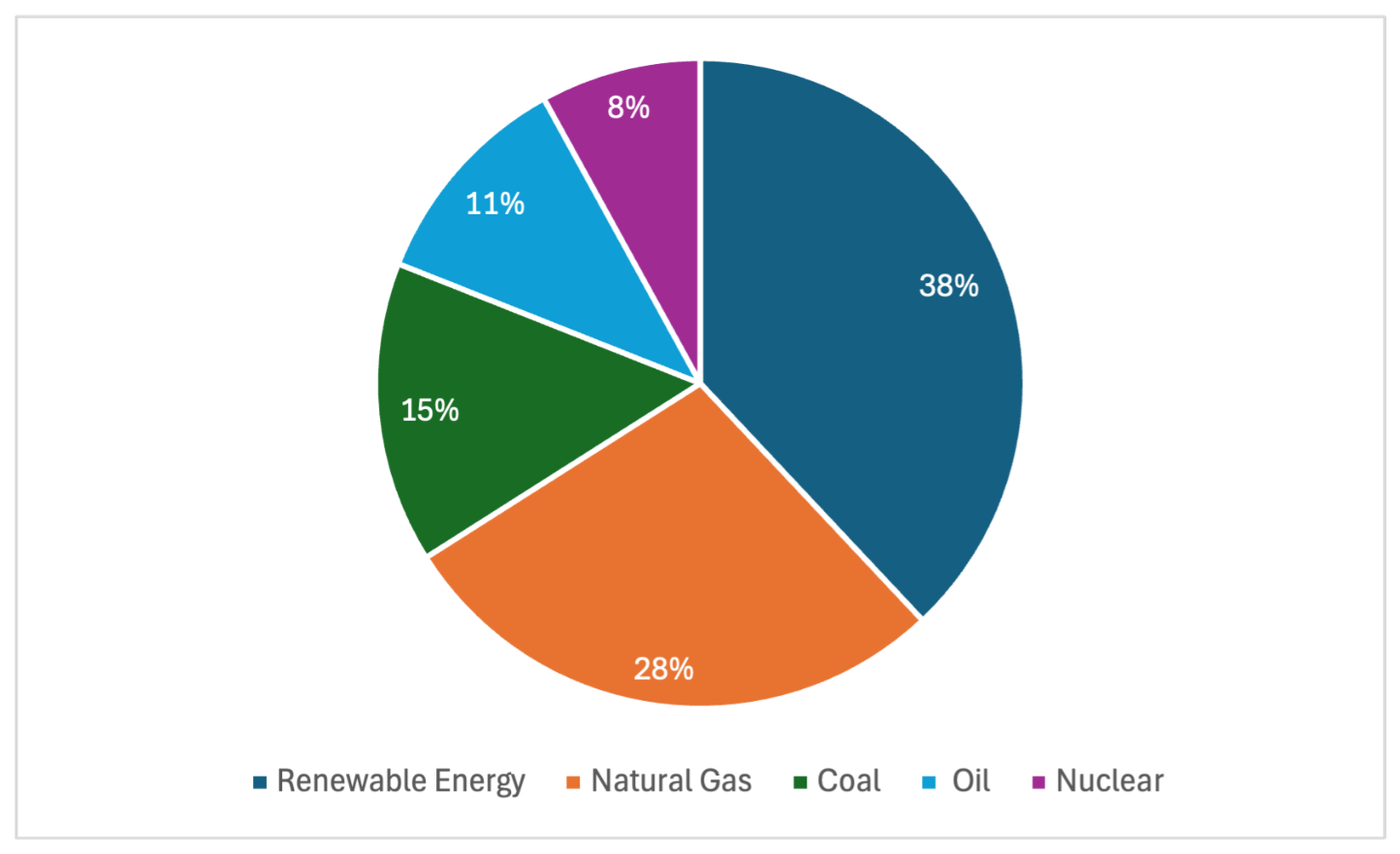
Figure 2.
Installed renewable energy capacity between 2015–2024 (MW).
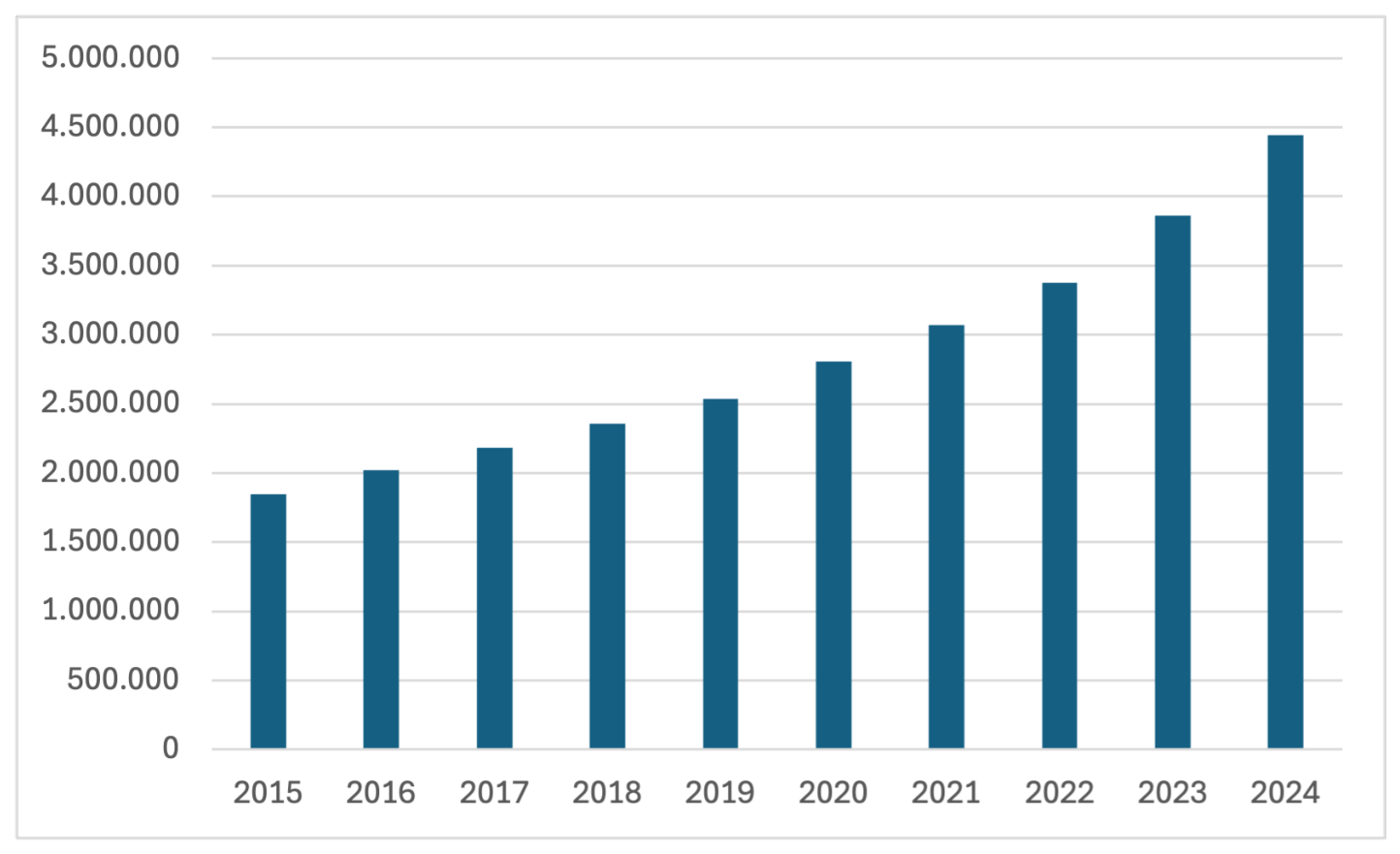
Figure 3.
Global installed PV capacity between 2015–2024 (MW).
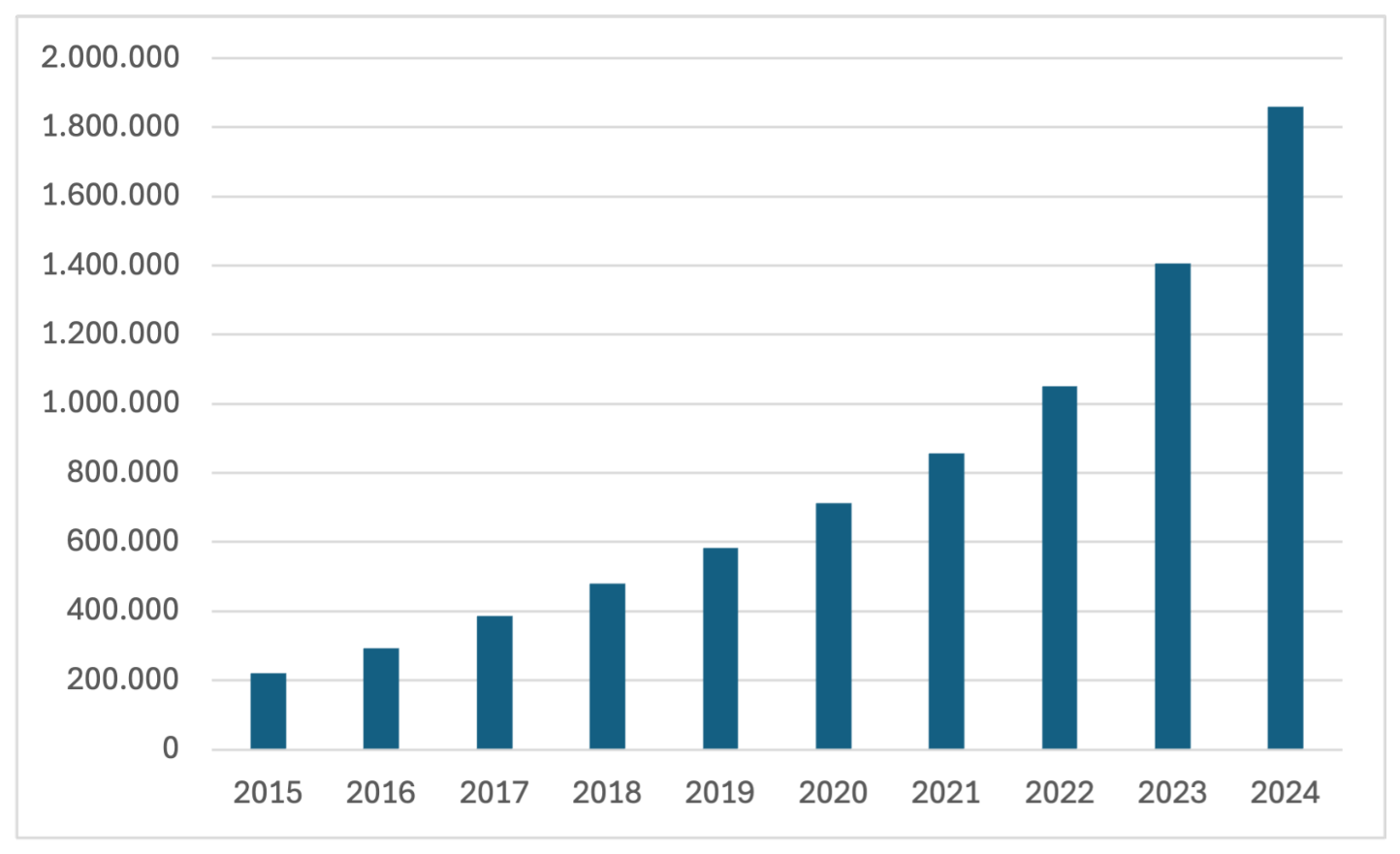
Figure 4.
Projected PV Waste Volume (MW).
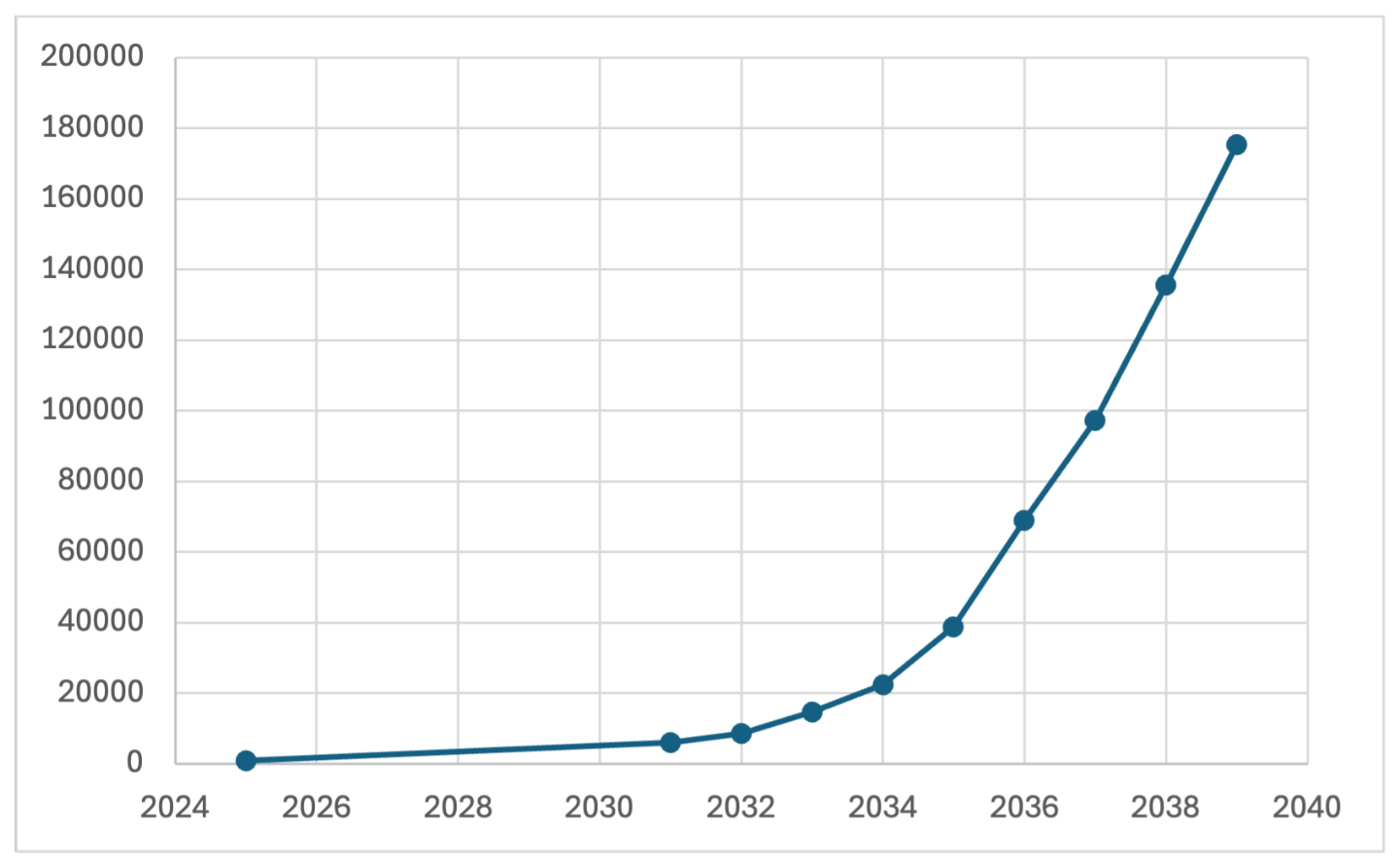
Figure 6.
Approaches to the End-of-Life Management of PV Modules.
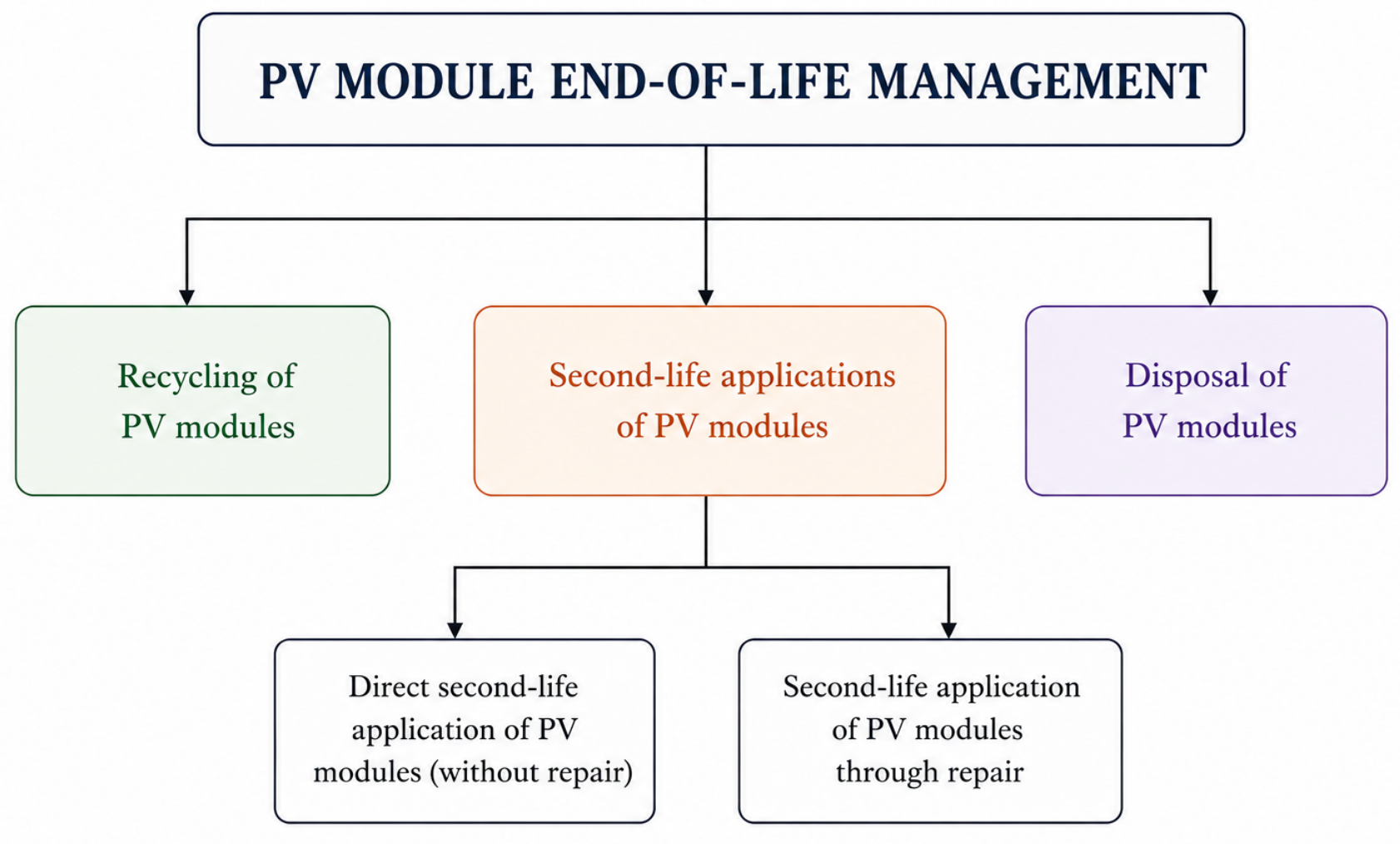
Figure 7.
Recycling of PV Modules.
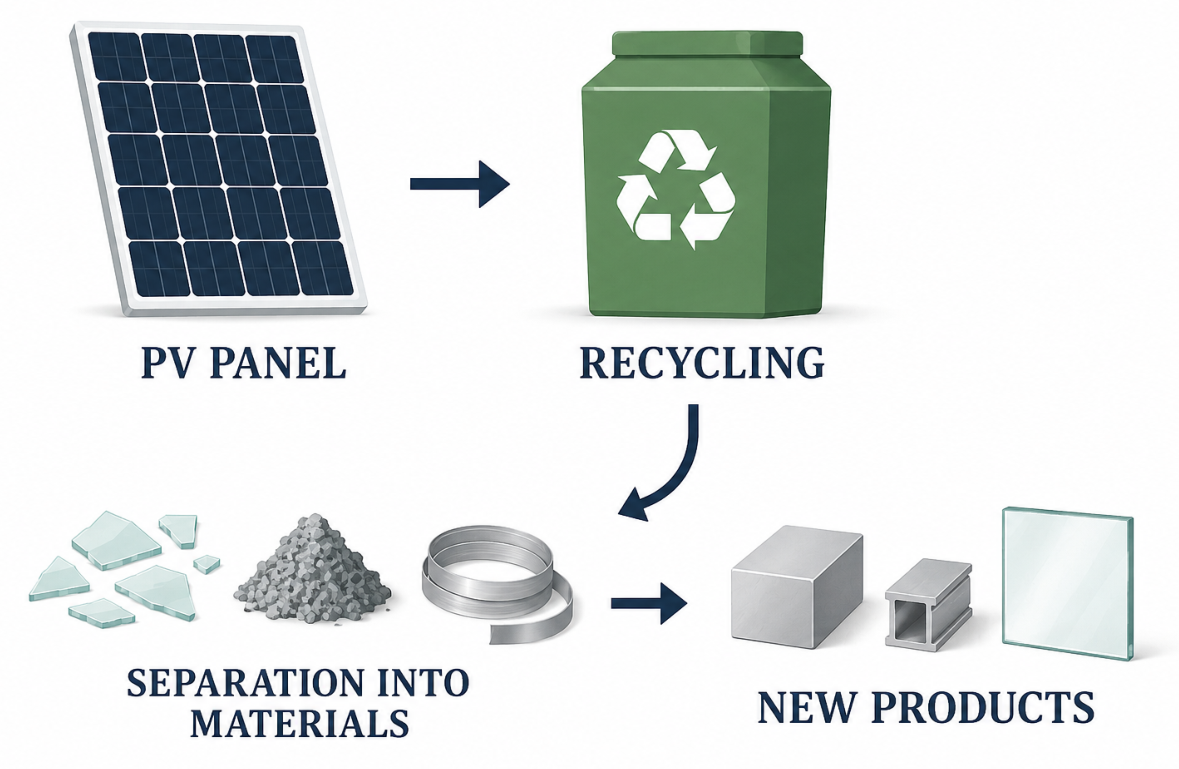
Figure 8.
Material Composition of PV Waste in India by 2047.
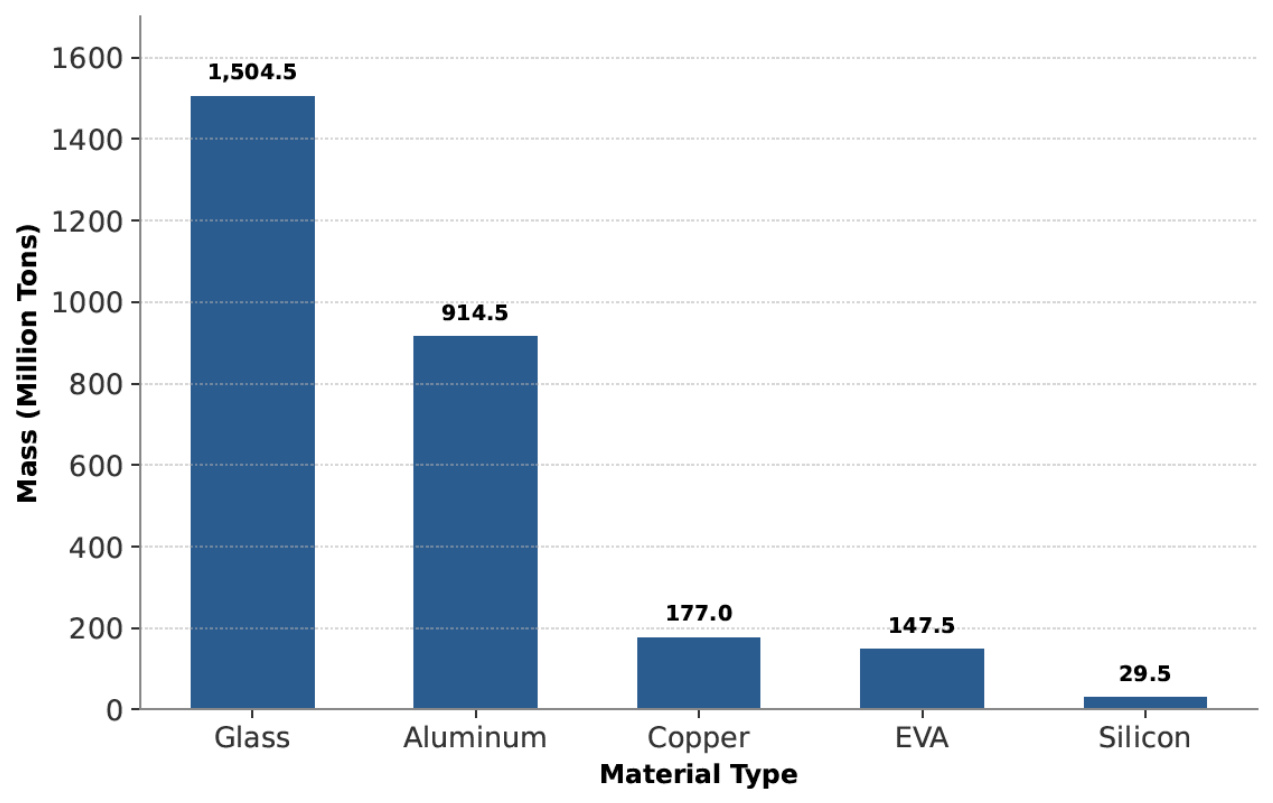
Figure 9.
Material Distribution of PV Waste Expected to Be Generated in Italy in 2015 (Crystalline Silicon [c-Si] Panels; Cadmium Telluride [CdTe] Panels).
Figure 9.
Material Distribution of PV Waste Expected to Be Generated in Italy in 2015 (Crystalline Silicon [c-Si] Panels; Cadmium Telluride [CdTe] Panels).
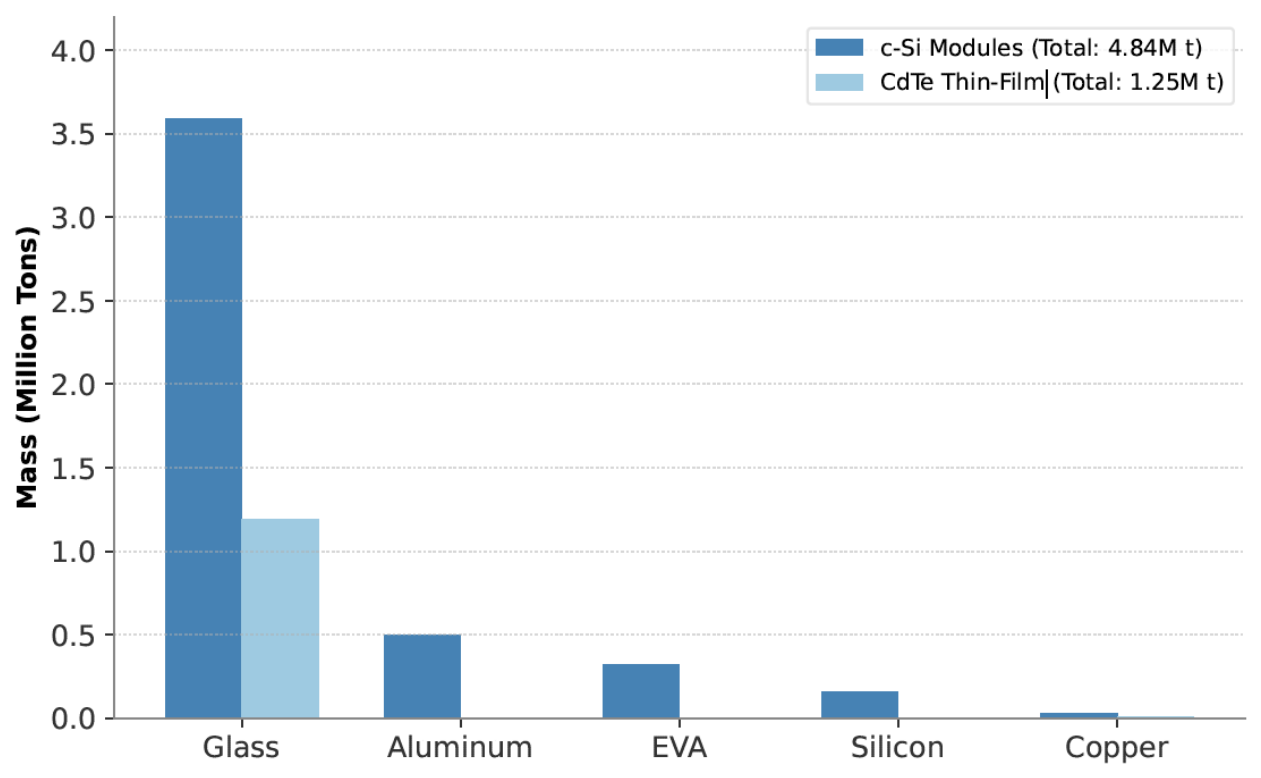
Figure 10.
Projected Material Composition of PV Waste in Australia by 2047.
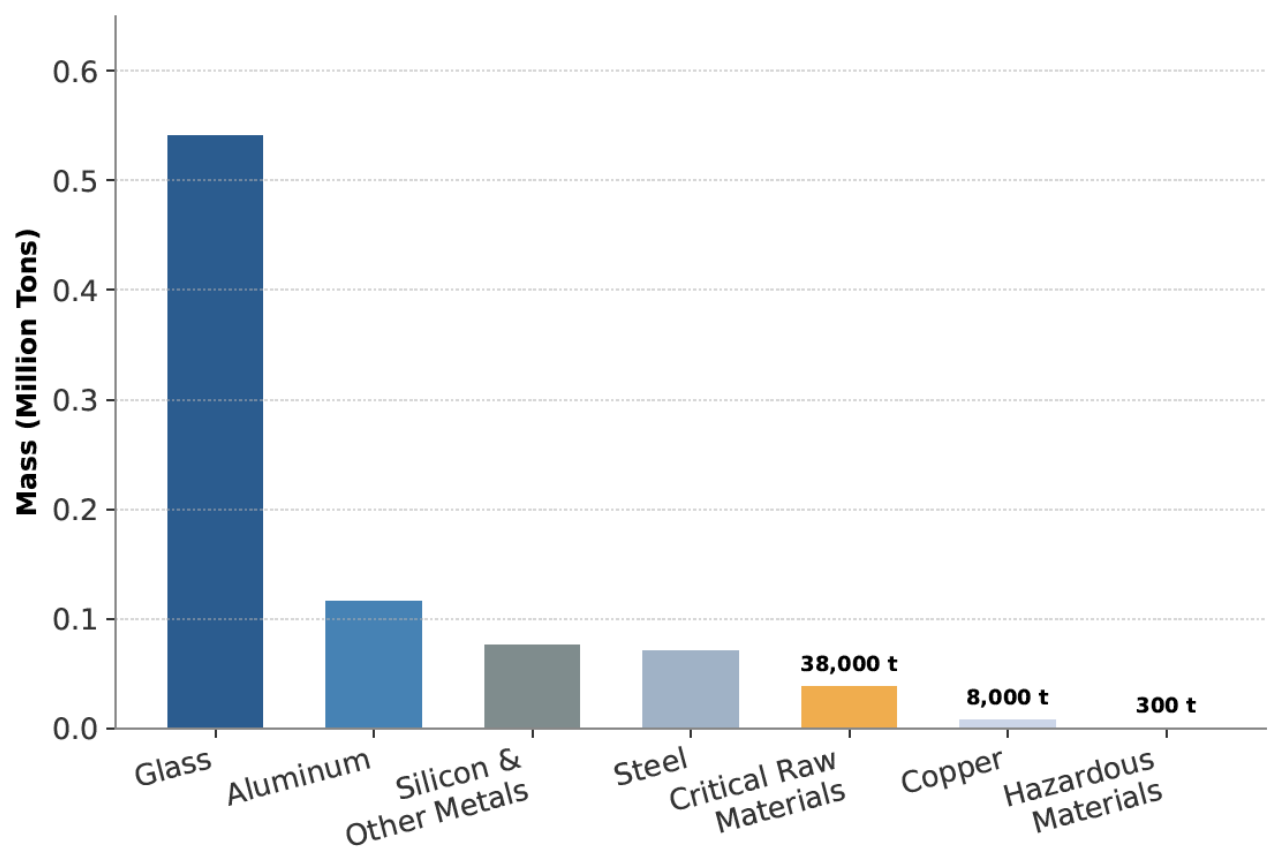
Figure 11.
Projected PV Waste Composition Based on Cumulative PV Installations in 2016.
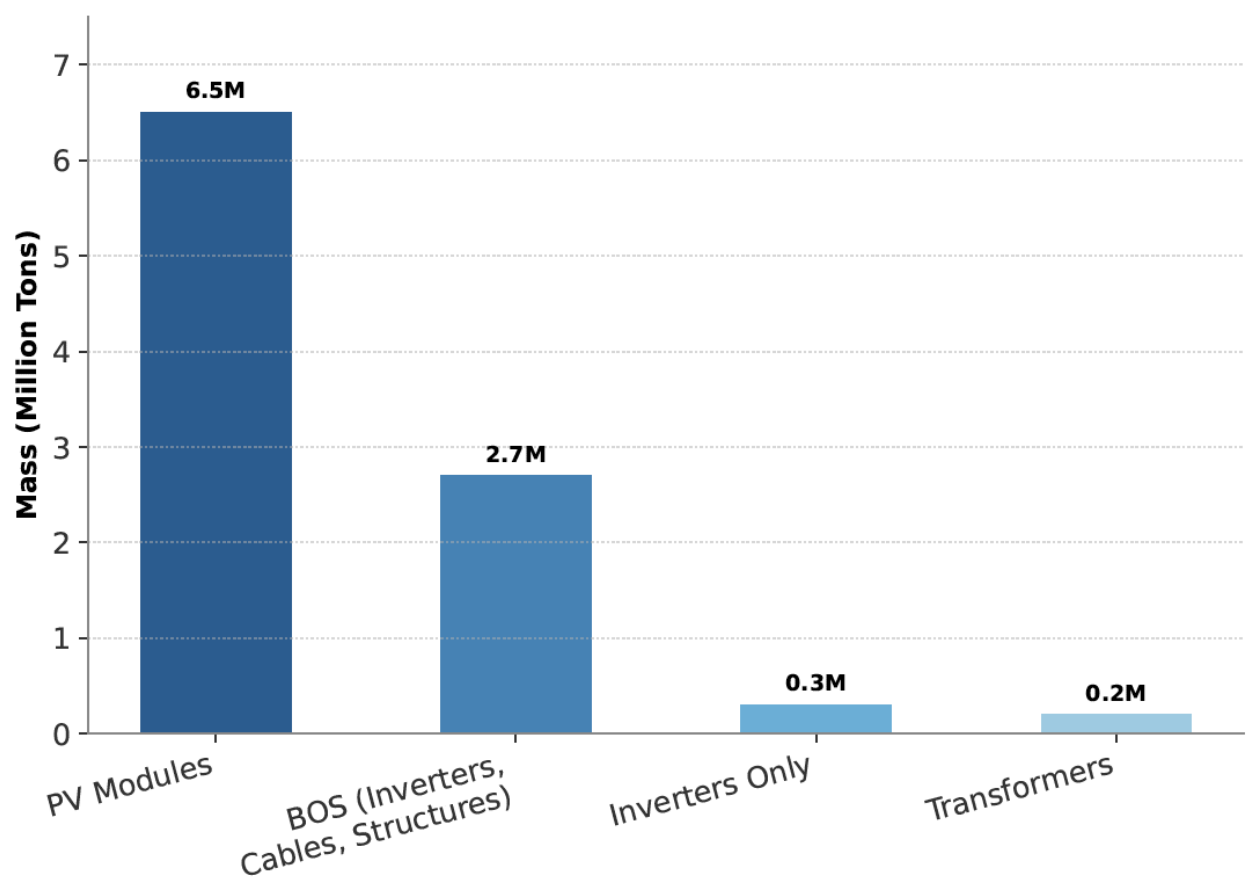
Figure 12.
Projected PV Waste Composition in Mexico by 2045.
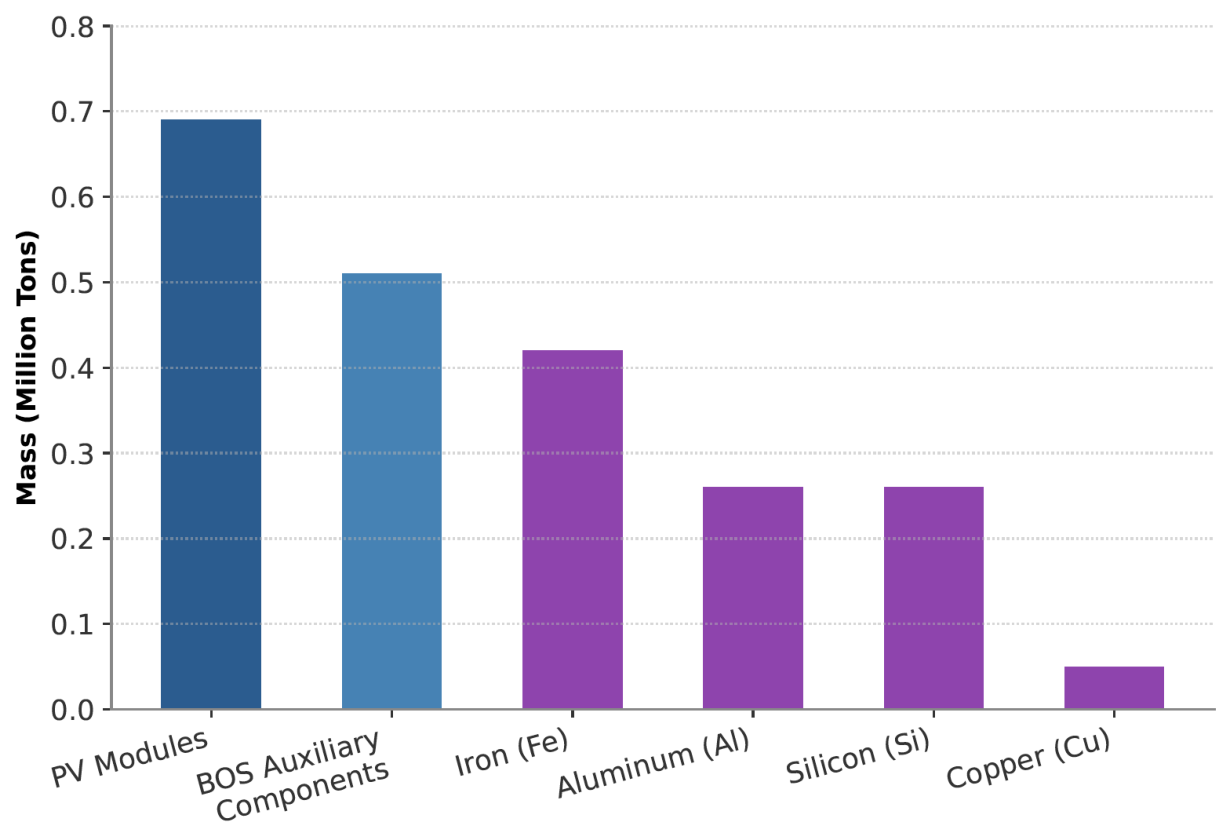
Figure 13.
Projected Cumulative PV Waste Capacity in China (2022–2060).
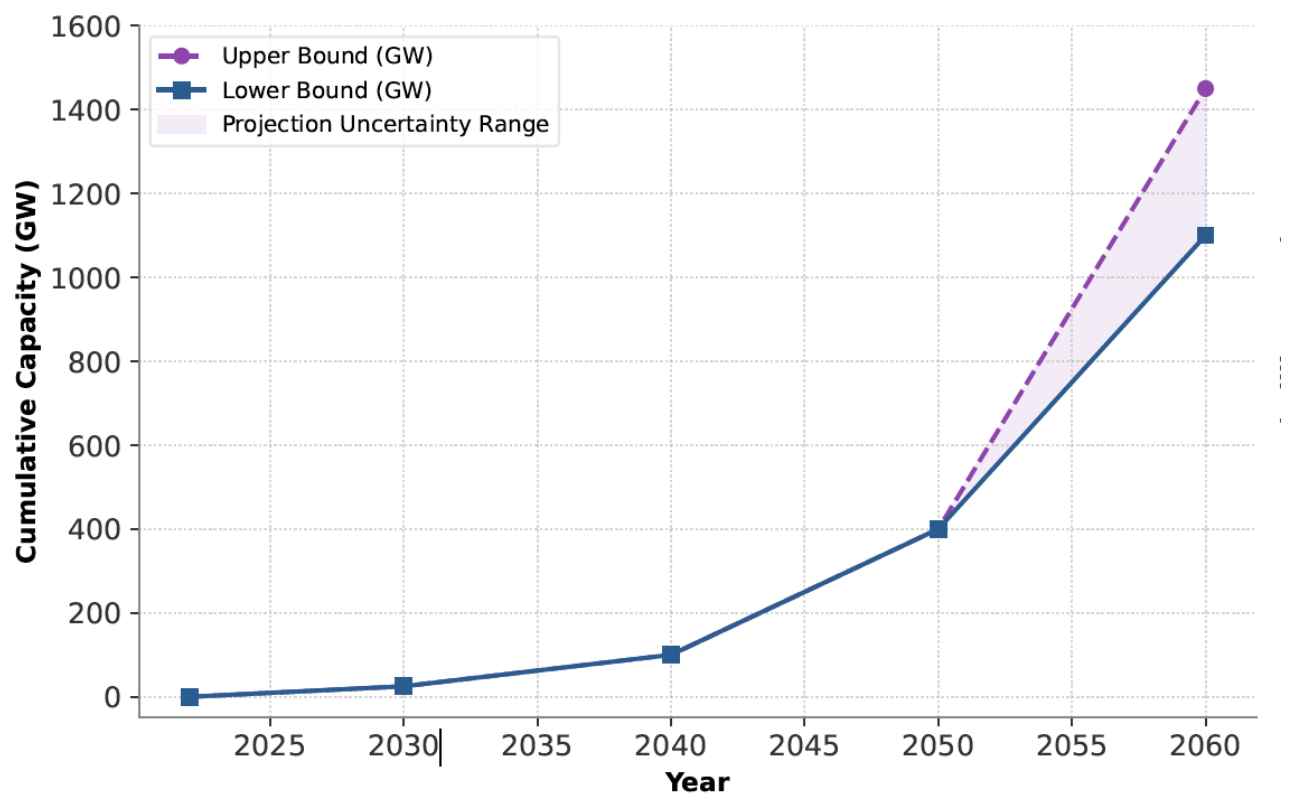
Figure 14.
Laminated Sandwich Structure of a PV Module.
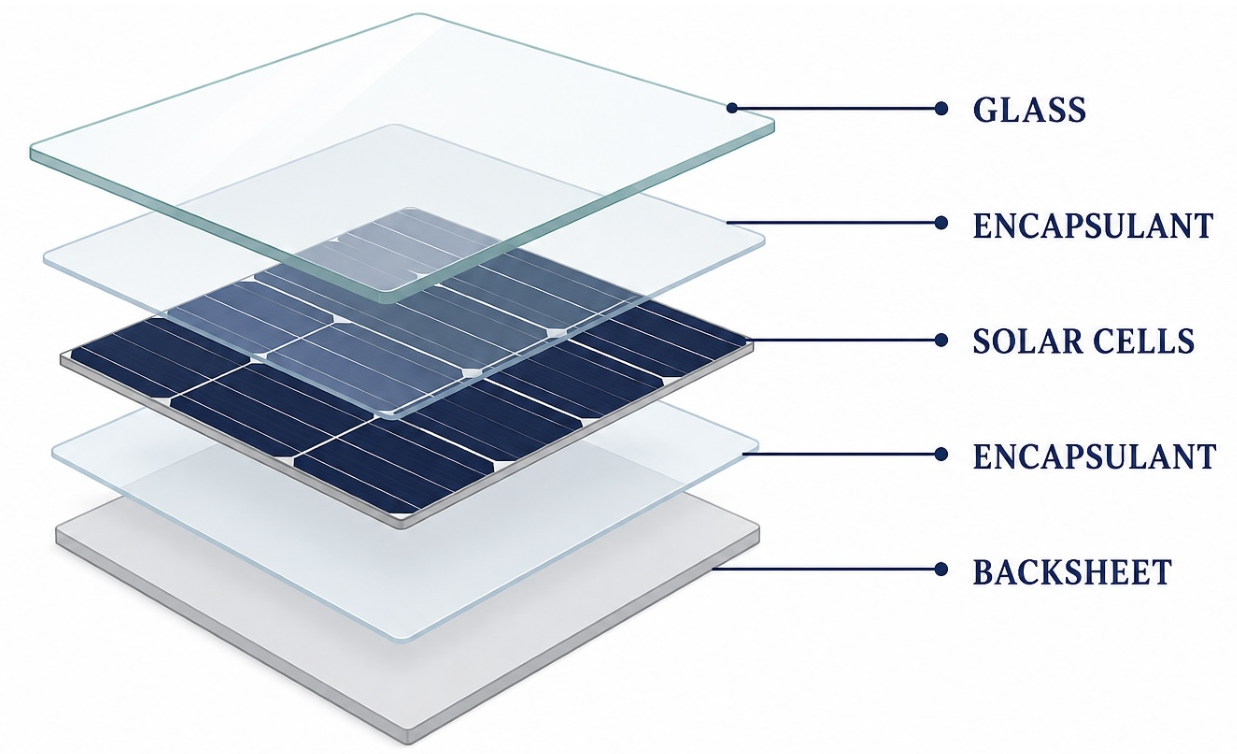
Figure 15.
Example of an Agrivoltaic System.
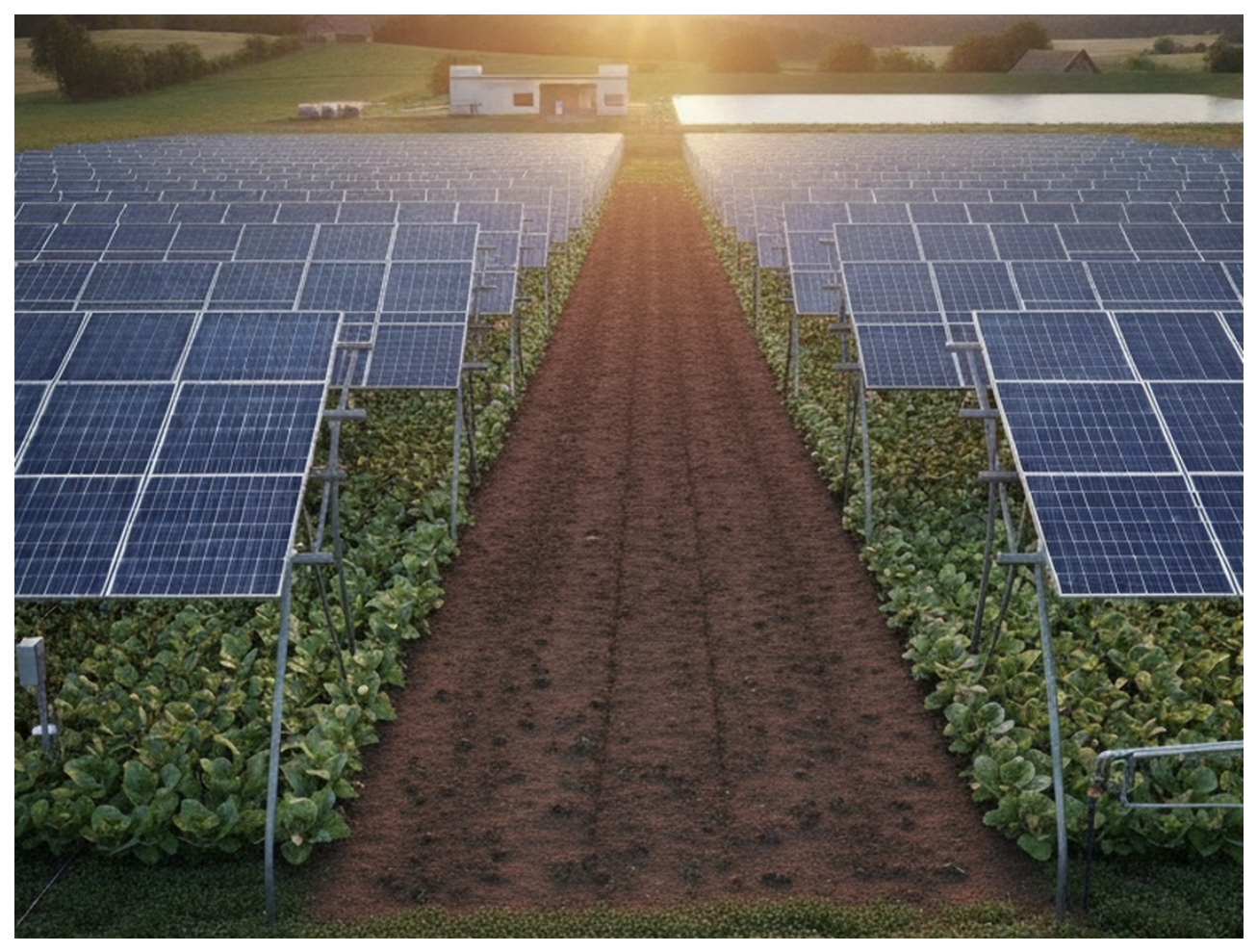
Figure 16.
Performance of New and Second-Life PV Modules Used in the Study.
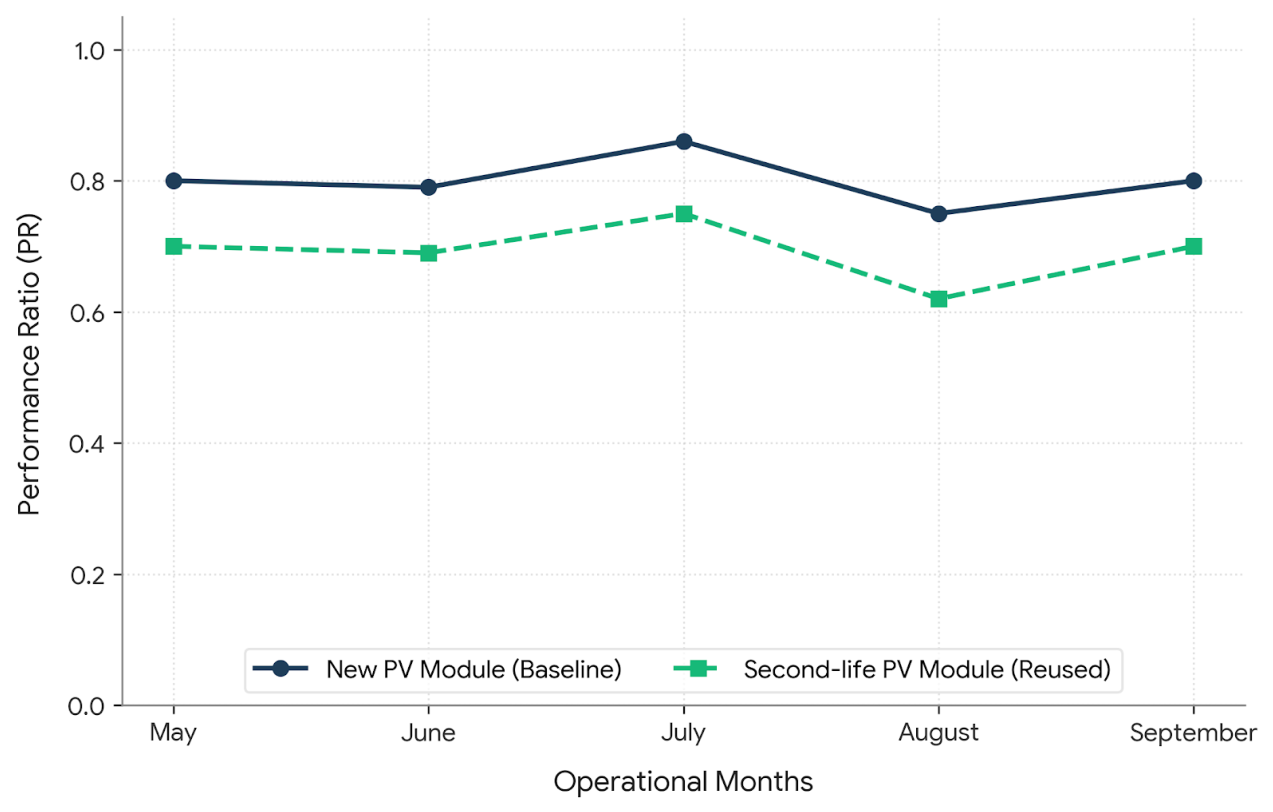

Table 1.
PV module types.
| Technology | Cell Type |
|---|---|
| Silicon-based | Monocrystalline |
| Polycrystalline/Multicrystalline ribbon | |
| a-Si (Amorphous/Micromorph) | |
| Thin-film based | CIGS (Copper-Indium-Gallium-(Di)Selenide) |
| CdTe (Cadmium Telluride) | |
| Other | Concentrated PV (CPV) |
| Organic PV/Dye-Sensitized Solar Cells (OPV/DSSC) | |
| Advanced Crystalline Silicon (advanced c-Si) | |
| Perovskite |
Table 2.
Installed Solar PV Capacity in Past Years [11].
Table 2.
Installed Solar PV Capacity in Past Years [11].
| Year | Installed Solar PV Capacity (MW) |
|---|---|
| 2000 | 805 |
| 2006 | 6060 |
| 2007 | 8611 |
| 2008 | 14,541 |
| 2009 | 22,372 |
| 2010 | 38,795 |
| 2011 | 68,956 |
| 2012 | 97,290 |
| 2013 | 135,503 |
| 2014 | 175,305 |
Table 3.
Comparative summary of country-based estimated PV waste volumes and dominant components.
| Country/Region | Reference Year | Estimated Total PV Waste | Dominant Component(s) |
|---|---|---|---|
| India | 2047 | ∼2.95 billion tonnes | Glass (51%), aluminum (31%) |
| Italy | 2015 | ∼6.1 million tonnes (c-Si + CdTe) | Glass (dominant), aluminum, EVA |
| Australia | 2047 | ∼1 million tonnes | Glass, aluminum; silver prominent in economic value |
| United States | Based on 2016 capacity | ∼9.8 million tonnes (module + BOS) | Steel, aluminum, silicon, copper |
| Mexico | 2045 | ∼1.2 million tonnes | Iron, aluminum, silicon, copper (including BOS) |
| China | 2060 (projection) | >20 million tonnes | c-Si-based modules (∼USD 6.8 billion recovery potential) |
Table 4.
Classification of PV modules for reuse.
| Class | Definition | Required Action | Example Case |
|---|---|---|---|
| Class 1 | Modules directly suitable for reuse | No further processing required | Modules with no physical damage and adequate performance |
| Class 2 | Modules requiring repair/additional testing | Technical inspection and repair | Modules with low insulation resistance |
| Class 3 | Non-repairable modules | Directed to recycling | Severely damaged or non-functional modules |
Disclaimer/Publisher’s Note: The statements, opinions and data contained in all publications are solely those of the individual author(s) and contributor(s) and not of MDPI and/or the editor(s). MDPI and/or the editor(s) disclaim responsibility for any injury to people or property resulting from any ideas, methods, instructions or products referred to in the content. |
© 2026 by the authors. Licensee MDPI, Basel, Switzerland. This article is an open access article distributed under the terms and conditions of the Creative Commons Attribution (CC BY) license (http://creativecommons.org/licenses/by/4.0/).
Copyright: This open access article is published under a Creative Commons CC BY 4.0 license, which permit the free download, distribution, and reuse, provided that the author and preprint are cited in any reuse.


