

Submitted:
28 July 2026
Posted:
29 July 2026
You are already at the latest version
Abstract
Levetiracetam (LEV) is a commonly used adjunctive antiseizure medication (ASM) in dogs because of its favorable pharmacokinetic profile and limited hepatic metabolism. However, because LEV is predominantly eliminated through renal excretion, prospective clinical evidence regarding its effects on renal function in dogs remains limited. This prospective study evaluated short-term changes in renal biomarkers during adjunctive LEV therapy in 12 client-owned dogs with idiopathic epilepsy (IE) receiving concurrent phenobarbital (PB). Dogs were evaluated on day 0, day 14, and day 28 over a 4-week study period. Renal assessment included serum symmetric dimethylarginine (SDMA), serum creatinine, blood urea nitrogen (BUN), phosphorus, albumin, and urinalysis. No statistically significant changes were observed in renal biomarkers (SDMA and serum creatinine) or serum bio-chemical parameters (BUN, phosphorus, and albumin) throughout the study period. Uri-nalysis findings remained stable with no evidence of proteinuria, glucosuria, or urinary casts during LEV therapy. Sedation was the most frequently observed clinical adverse event during the study period, occurring in 83% (10/12) of dogs receiving concurrent PB and adjunctive LEV, although it was generally mild and did not require treatment discon-tinuation. Overall, adjunctive LEV therapy was well tolerated over the 4-week study peri-od and was not associated with clinically significant short-term changes in renal bi-omarkers or urinalysis findings in non-azotemic dogs with IE receiving concurrent PB.
Keywords:
canine idiopathic epilepsy
; levetiracetam
; phenobarbital
; renal biomarkers
; symmetric dimethylarginine (SDMA)
1. Introduction
Epilepsy is one of the most common chronic neurological disorders in dogs, with an estimated prevalence of approximately 0.6–0.75% in the general canine population [1,2,3].
Epileptogenesis is a complex process that may be initiated by genetic predisposition or acquired brain insults leading to progressive molecular, cellular, and structural alterations that increase neuronal excitability and promote hypersynchronous neuronal firing. An imbalance between excitatory and inhibitory neurotransmission, particularly increased glutamatergic activity and reduced γ-aminobutyric acid (GABA)-mediated inhibition, together with neuroinflammation, ion channel dysfunction, and neuronal network remodeling, contributes to the development and maintenance of recurrent spontaneous seizures [4]. Consequently, affected dogs experience recurrent seizures that negatively affect neurological function, quality of life, and survival. In some cases, epilepsy may progress to cluster seizures (CS) or status epilepticus (SE), which are considered neurological emergencies associated with increased morbidity and mortality [5,6].
Idiopathic epilepsy (IE) is the most common form of epilepsy in dogs. According to the International Veterinary Epilepsy Task Force (IVETF), IE is an overarching term referring to epilepsy with a presumed genetic basis or epilepsy of unknown cause in the absence of identifiable structural or reactive causes of seizures [7,8]. The diagnosis is established based on clinical history, neurological examination, and exclusion of reactive and structural causes, with the level of diagnostic confidence categorized according to the IVETF consensus criteria.
First-line antiseizure medications (ASMs) for canine IE include phenobarbital (PB) and potassium bromide (KBr), with imepitoin available in some regions. Although these drugs are effective in many dogs, a substantial proportion continue to experience inadequate seizure control or develop treatment-related adverse effects, necessitating adjunctive therapy [6,9,10]. Levetiracetam (LEV), which binds to synaptic vesicle protein 2A (SV2A), is widely used as an adjunctive ASM because of its favorable safety profile, pharmacokinetic characteristics, and documented clinical efficacy in dogs with idiopathic epilepsy [9,10,11,12,13,14,15]. In healthy dogs, LEV has a relatively short elimination half-life of approximately 3–6 hours, necessitating administration every 8 hours [6,12]. Furthermore, concurrent administration of PB has been shown to alter LEV pharmacokinetics by reducing peak plasma concentrations, shortening the elimination half-life, and increasing drug clearance. These pharmacokinetic changes suggest that dosage adjustments may be required in dogs receiving concurrent PB therapy [11,16]. LEV exhibits minimal protein binding, negligible hepatic metabolism, few clinically relevant drug interactions, and is predominantly eliminated through renal excretion with a substantial proportion excreted unchanged in the urine [12,13,14,15]. These pharmacokinetic characteristics highlight the importance of monitoring renal function during LEV therapy.
Although previous studies have investigated pharmacokinetics, clinical efficacy, and retrospective use of LEV in dogs, prospective clinical evidence regarding its renal effects remains limited. To the authors' knowledge, no prospective clinical study has specifically evaluated short-term changes in renal biomarkers and urinalysis variables in client-owned dogs with IE receiving adjunctive LEV therapy together with PB.
Because LEV is predominantly eliminated through renal excretion, assessment of kidney function is important during treatment. In veterinary medicine, renal function is commonly evaluated using serum creatinine, blood urea nitrogen (BUN), urine specific gravity (USG), and urinalysis, although these conventional biomarkers have recognized limitations for detecting early renal dysfunction [17,18]. Consequently, serum creatinine, serum symmetric dimethylarginine (SDMA), and urinalysis are recommended as part of the routine assessment of kidney function in accordance with the 2026 International Renal Interest Society (IRIS) guidelines [18,19].
SDMA is a methylated arginine compound that is eliminated primarily through renal excretion and has been validated as a sensitive endogenous biomarker of glomerular filtration rate (GFR) in dogs [20]. Other studies have demonstrated that SDMA was correlated strongly with GFR and may identify reductions in renal function earlier than serum creatinine, in some cases when GFR has decreased by as little as 20–40% [20,21]. In addition, unlike serum creatinine, SDMA is affected minimally by lean body mass, making it a potentially more sensitive biomarker for detecting early renal dysfunction in clinical patients [21]. Therefore, SDMA may serve as a useful biomarker for monitoring potential renal alterations associated with drug administration in veterinary patients.
Although LEV is generally considered well tolerated, rare cases of acute kidney injury (AKI) [22], including acute interstitial nephritis, have been reported in humans [23,24,25]. While these events are uncommon, they underscore the importance of assessing renal safety, particularly given the drug’s predominant renal excretion. This may be especially relevant in veterinary patients with pre-existing or subclinical renal impairment.
Therefore, the present prospective study evaluated the safety of LEV in client-owned dogs with epilepsy over 4 weeks of treatment, with particular emphasis on renal function and associated clinical parameters. We hypothesized that adjunctive LEV therapy would not result in clinically significant short-term changes in renal biomarkers or urinalysis findings. The findings should provide clinically relevant data to support the evidence-based use of LEV in dogs, particularly in those at risk of renal dysfunction.
2. Materials and Methods
2.1. Ethics
Ethical approval was granted by the Institutional Animal Care and Use Committee of Kasetsart University, Bangkok, Thailand (ACKU68-VET-107). Owners were informed in both written and verbal formats about the study objectives, data handling, and data privacy prior to enrollment. Written informed consent from each owner was obtained before data collection.
2.2. Study Population
To determine the required sample size for a within-subjects design, an a priori power analysis was performed using G*Power Version 3.1.9.7 (Heinrich Heine University, Düsseldorf, Germany). For a repeated-measures analysis of variance (ANOVA) a within-subjects design, assuming an effect size (Cohen's f) of 0.5, an alpha level of α = 0.05, and a power of 0.95, revealed that a minimum of 12 dogs is sufficient to achieve the desired power.
Twelve client-owned dogs with IE were prospectively enrolled. All dogs had been receiving PB, and LEV was added as adjunctive therapy because seizure control remained inadequate. Data collected from the medical records included signalment (breed, sex, neuter status, and age at diagnosis), clinical history, seizure characteristics, and previous antiseizure medication. All dogs had been receiving PB before enrollment, and LEV was added as adjunctive antiseizure therapy because seizure control remained inadequate.
Information retrieved from the medical records included the dosage and duration of PB treatment, as well as baseline seizure frequency and seizure type prior to LEV initiation. IE was diagnosed according to the IVETF consensus criteria, based on clinical history, neurological examination, and exclusion of reactive and structural causes of seizures [26]. Dogs were excluded if they were receiving medications known to affect renal function, urine concentrating ability, glomerular filtration rate (GFR), or renal biomarkers, including potassium bromide (KBr), diuretics, angiotensin-converting enzyme inhibitors, angiotensin receptor blockers, calcium channel blockers (e.g., amlodipine), corticosteroids, or other potentially nephrotoxic medications. All dogs were classified as non-azotemic according to the 2026 IRIS guidelines [19].
All cases were managed at the Kasetsart University Veterinary Teaching Hospital, Bangkok, Thailand, and consisted of both previously diagnosed cases and cases referred for ongoing treatment and management. Patient enrollment and sample collection were conducted prospectively between March 2025 and February 2026.
2.3. Levetiracetam Administration
Before LEV initiation, all dogs had been receiving PB at a dosage of approximately 3–4 mg/kg every 12 h. Serum PB concentrations were measured before LEV initiation and were within the therapeutic range (25–35 µg/mL) in all dogs. LEV was subsequently added as adjunctive antiseizure therapy because seizure control remained inadequate despite ongoing PB treatment.
All dogs received oral LEV (Keppra®; UCB Pharma, Brussels, Belgium) as adjunctive antiseizure therapy. LEV was initiated at a dosage of 20–25 mg/kg every 8 h. Clinical examinations, seizure frequency, and clinical adverse events were evaluated and recorded at each follow-up visit (days 14 and 28). Owner compliance with LEV administration was assessed at each follow-up visit by owner interview and pill counts to verify adherence to the prescribed treatment regimen.
2.4. Study Design
This prospective study was conducted over 4 weeks, with evaluations performed on day 0, day 14, and day 28. Prior to initiation of the LEV treatment on day 0, all dogs underwent clinical evaluation and baseline laboratory testing consisting of complete blood count, serum biochemistry, serum SDMA measurement, and urinalysis.
All laboratory analyses were performed at the same diagnostic laboratory to ensure analytical consistency throughout the study period. Hematological analyses were performed using a Sysmex XN-1000 V and serum biochemical analyses were conducted using an ILab Taurus at the Kasetsart University Veterinary Diagnostic Laboratory, Bangkok, Thailand. SDMA concentrations were measured using an IDEXX Catalyst One® SDMA Test, which utilizes an immunoassay-based methodology validated for use in dogs. Urinalysis, including urine specific gravity (USG), dipstick analysis, and urine sediment examination, was performed using a Cobas Roche Urisys 1000 automated analyzer.
Follow-up evaluations were performed on day 14 and day 28, during which seizure activity, clinical status, and laboratory parameters (hematology, serum biochemistry, SDMA, and urinalysis) were reassessed to monitor longitudinal changes and to evaluate any potential renal effects associated with the LEV administration.
2.5. Statistical Analysis
Statistical analyses were performed using GraphPad Prism (version 11.01; GraphPad Software, San Diego, CA, USA). Descriptive statistics were used to summarize the data. Categorical variables were expressed as frequencies and proportions with 95% confidence intervals (CI). Continuous variables, including SDMA, serum creatinine, blood urea BUN, albumin, and phosphorus, were assessed for normality using the Shapiro–Wilk test. Continuous data were presented as mean ± standard deviation (SD) for consistency.
Comparisons between day 0, day 14, and day 28 were performed using repeated-measures analysis of variance (ANOVA) for normally distributed variables, with the Geisser–Greenhouse correction applied when the assumption of sphericity was violated. Non-normally distributed variables were analyzed using the Friedman test followed by Dunn's multiple-comparisons test for post hoc pairwise comparisons. When repeated-measures ANOVA identified statistically significant differences, Bonferroni-adjusted pairwise comparisons were performed. A p-value <0.05 was considered statistically significant.
3. Results
3.1. Study Animals
Twelve client-owned dogs with IE received oral LEV as adjunctive therapy during the 4-week study period. Of these, nine (75%) fulfilled the IVETF Tier I diagnostic confidence level, whereas three (25%) fulfilled the Tier II diagnostic confidence level. The most common breed was the Siberian Husky (n = 4, 33.3%), followed by the Chihuahua (n = 2, 16.7%) and mixed-breed dogs (n = 2, 16.7%). The mean age at LEV initiation was 5.7 ± 1.37 years, and the mean body weight was 22.0 ± 14.2 kg. Three dogs (25%) were spayed females, whereas nine (75%) were neutered males. Before LEV initiation, all dogs had received PB therapy for at least 6 months and had therapeutic serum PB concentrations (25–35 µg/mL). Despite ongoing PB treatment, all dogs continued to experience cluster seizure activity, prompting the initiation of adjunctive LEV therapy (Table 1).
Three dogs fulfilled the IVETF Tier II diagnostic confidence level based on advanced diagnostic evaluation. Representative MR images from one of these dogs are shown in Figure 1, demonstrating the absence of structural intracranial abnormalities on transverse and sagittal T2-weighted images.
3.2. Clinical Signs
Overall, seizure control was maintained throughout the 4-week study period. Only one dog experienced a single focal seizure during adjunctive LEV therapy (Table 1), which was resolved spontaneously without further complications.
During adjunctive LEV therapy, the clinical adverse events noted were minor and well tolerated, as shown in Table 2. Sedation was the most frequently observed clinical adverse event, occurring in 10/12 dogs (83.3%). Other observed clinical adverse events included ataxia and decreased appetite, each reported in 2/12 dogs (16.7%). No cases of vomiting or behavioral changes were observed during the study period, and no severe or treatment-limiting adverse events were identified.
3.3. Renal and Biochemical Outcomes
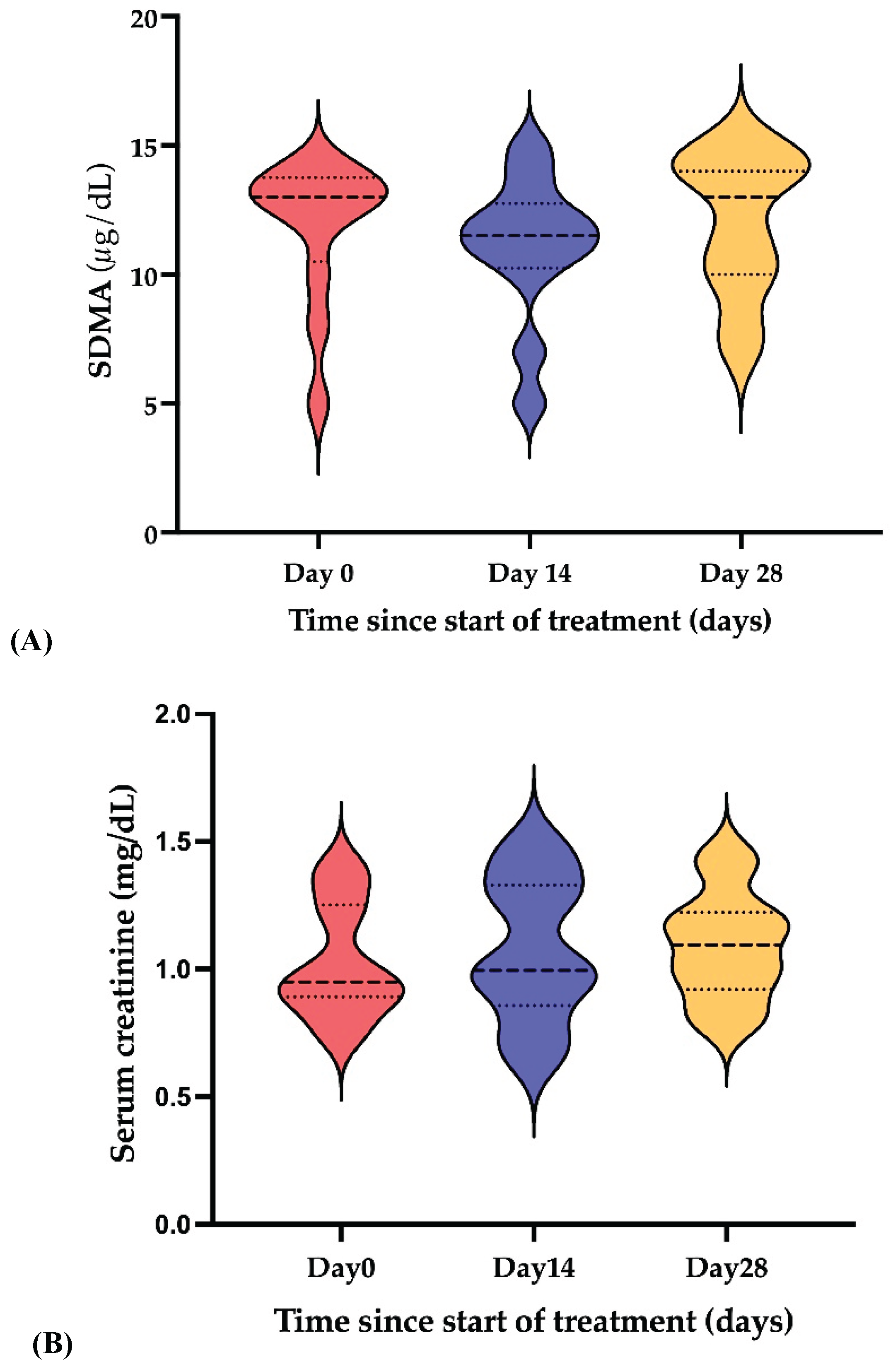
No statistically significant changes were observed in renal biomarkers (SDMA and serum creatinine) or serum biochemical parameters (BUN, albumin, and phosphorus) throughout the 4-week study period (Table 3). Because SDMA did not satisfy the assumption of normality, comparisons across the three assessment time points were performed using the Friedman test, which demonstrated no significant differences (χ²(2) = 5.415, p = 0.067).
The remaining variables were analyzed using repeated-measures ANOVA with the Geisser–Greenhouse correction, and no statistically significant changes were identified for serum creatinine, BUN, albumin, or phosphorus (Table 3). Additionally, three dogs underwent descriptive follow-up evaluation approximately 3 months after LEV initiation and showed no clinically relevant changes in SDMA, serum creatinine, or other biochemical parameters.
Figure 2.
Violin plots show the distribution of SDMA (A) and serum creatinine (B) concentrations at baseline (Day 0), Day 14, and Day 28 during adjunctive LEV therapy. No statistically significant changes were observed in SDMA (χ²(2) = 5.415, p = 0.067) or serum creatinine (repeat-ed-measures ANOVA with the Geisser–Greenhouse correction, F(1.499, 16.49) = 0.553, p = 0.537). The width of each violin reflects the probability density of the data, and the dashed lines indicate the median and quartiles.
Figure 2.
Violin plots show the distribution of SDMA (A) and serum creatinine (B) concentrations at baseline (Day 0), Day 14, and Day 28 during adjunctive LEV therapy. No statistically significant changes were observed in SDMA (χ²(2) = 5.415, p = 0.067) or serum creatinine (repeat-ed-measures ANOVA with the Geisser–Greenhouse correction, F(1.499, 16.49) = 0.553, p = 0.537). The width of each violin reflects the probability density of the data, and the dashed lines indicate the median and quartiles.
No clinically significant changes were observed in urinalysis findings throughout the 4-week study period (Table 4). Urine specific gravity (USG) ranged from 1.010 to 1.042 during the study period. No dogs developed proteinuria, glucosuria, or urinary casts during the study period. Transitional epithelial cells were identified in two dogs at baseline but were not detected at subsequent evaluations.
4. Discussion
In the present study, no statistically significant changes were observed in renal biomarkers (SDMA and serum creatinine) or serum biochemical parameters (BUN, phosphorus, and albumin) during the 4-week treatment period. These suggest that short-term adjunctive oral LEV therapy was well tolerated and was not associated with clinically significant changes in renal biomarkers or urinalysis findings in non-azotemic dogs with IE receiving concurrent PB. Furthermore, no clinicopathological findings suggestive of AKI were identified during the study period [17,29]. Although three dogs underwent extended follow-up evaluation approximately 3 months after LEV initiation without clinically significant biochemical changes, these observations should be interpreted cautiously because of the limited sample size and the descriptive nature of the extended follow-up.
SDMA was included in the present study because it is widely used as a renal biomarker in veterinary medicine and has been incorporated into the IRIS guidelines for the evaluation and staging of kidney disease in dogs [19]. Conventional renal biomarkers, particularly serum creatinine, remain valuable for assessing kidney function but have limited sensitivity for detecting early reductions in GFR, supporting the use of complementary biomarkers such as SDMA in clinical practice [18]. Previous studies have suggested that SDMA may detect reductions in GFR earlier than serum creatinine [21]. However, a recent systematic review highlighted variability in the reported diagnostic performance of SDMA across studies and emphasized the need for additional well-designed clinical investigations [30]. Accordingly, SDMA should be interpreted in conjunction with serum creatinine, urinalysis, and other clinicopathological findings, together with serial patient monitoring, rather than as a standalone biomarker [17,18].
In the present study, stable SDMA concentrations throughout the treatment period together with unremarkable serum biochemical and urinalysis findings were consistent with the absence of clinicopathological evidence of renal injury during short-term LEV administration. Likewise, urinalysis revealed no evidence of proteinuria, glucosuria, or urinary casts, and transitional epithelial cells identified in two dogs at baseline were not detected at subsequent evaluations, suggesting no progressive urinary abnormalities during the study period [17].
Although urine specific gravity (USG) varied among individual dogs, no consistent decrease was observed during the study period. Occasionally low USG values were not accompanied by increases in SDMA or serum creatinine concentrations, proteinuria, glucosuria, urinary casts, or other urinalysis abnormalities. Taken together, these observations did not provide clinicopathological evidence of progressive renal impairment during the 4-week study period. Furthermore, they support the recommendation that USG should be interpreted together with renal biomarkers and other clinicopathological findings rather than in isolation [17,18].
Retrospective clinical data suggest that clinically meaningful changes in renal parameters are more likely to occur in dogs with pre-existing kidney disease, whereas non-azotemic dogs generally exhibit minimal biochemical changes during LEV therapy [31]. These findings are consistent with the results of the present study, in which no clinically significant changes were observed in renal biomarkers, serum biochemical parameters, or urinalysis findings during the 4-week treatment period. In dogs with advanced chronic kidney disease (CKD), increases in renal biomarkers during LEV therapy may reflect progression of the underlying disease rather than drug-related effects because of the progressive nature of CKD [19]. In such cases, dosage adjustment should be considered, as LEV is eliminated predominantly through renal excretion and impaired renal function may increase the risk of drug accumulation owing to reduced drug clearance [13,32].
Although treatment efficacy was not the primary objective of the present study, seizure outcomes were recorded throughout the follow-up period. Adjunctive LEV therapy was associated with satisfactory short-term seizure control, with only one dog experiencing a single focal seizure during the 4-week study period. Overall, 11 of the 12 dogs remained seizure-free during treatment. These findings are consistent with previous clinical studies demonstrating favorable seizure control and good tolerability following adjunctive LEV administration in dogs with pharmacoresistant epilepsy [9,10,33]. Similarly, Packer et al. reported that approximately 69% of dogs achieved a ≥50% reduction in seizure frequency following LEV administration, whereas 15% became seizure-free during follow-up [33]. Seizure freedom is considered the primary therapeutic goal in canine epilepsy, whereas reductions in seizure frequency or severity are also regarded as clinically meaningful treatment outcomes, particularly in dogs with inadequate seizure control despite antiseizure medication therapy [10,34,35].
The single dog that experienced breakthrough seizure activity may have been affected by altered LEV pharmacokinetics associated with concurrent PB administration. Previous studies have shown that PB increases LEV clearance, reduces systemic drug exposure, and shortens the elimination of half-life, potentially decreasing therapeutic efficacy [11,16]. Because all dogs in the present study received concurrent PB therapy, this pharmacokinetic interaction should be considered when interpreting treatment response [11,16]. Nevertheless, satisfactory seizure control was achieved in most dogs during the study period, consistent with previous reports of adjunctive LEV therapy in dogs with pharmacoresistant epilepsy [9,33]. These observations highlight the importance of individualized treatment strategies, including dose optimization and consideration of potential drug interactions, in dogs with IE receiving adjunctive antiseizure therapy [6,9,10].
Treatment tolerability is an important consideration when evaluating adjunctive antiseizure therapy because both seizure burden and treatment-related adverse effects influence patient welfare and owner quality of life [10,34]. In the present study, sedation was the most frequently observed clinical adverse event during the treatment period, occurring in 83.3% of dogs receiving concurrent PB and adjunctive LEV therapy. This finding is consistent with previous studies of adjunctive LEV therapy in dogs, in which sedation was among the most reported adverse effects [9,34]. Although sedation was generally mild and did not require treatment discontinuation, because all dogs received concurrent PB therapy, the contribution of LEV alone to the observed sedation could not be determined. Therefore, the relatively high frequency of sedation may reflect the combined effects of PB and LEV rather than LEV administration alone.
Human clinical studies suggest that clinically significant renal adverse effects associated with LEV are uncommon despite its predominant renal elimination [22]. Although rare cases of acute interstitial nephritis and acute kidney injury have been described, these events are generally reversible following drug discontinuation and appropriate medical management [23,24,25]. Cases of LEV-associated renal injury have been reported within days to weeks after treatment initiation. Therefore, the 4-week follow-up period in the present study allowed assessment of potential early renal alterations, although it was not intended to evaluate delayed or chronic renal effects. Overall, the available human and veterinary evidence suggests that clinically significant renal adverse effects associated with LEV are infrequent [22,31]. Accordingly, continued monitoring remains appropriate, particularly in patients with pre-existing renal disease.
To the authors' knowledge, few prospective veterinary studies have evaluated serial SDMA measurements together with urinalysis during adjunctive LEV therapy in client-owned dogs. In the present study, renal biomarkers remained stable throughout the treatment period, and urinalysis revealed no clinically relevant abnormalities. These findings suggest that short-term adjunctive LEV therapy was not associated with clinically significant changes in renal biomarkers or urinalysis findings in non-azotemic dogs with IE receiving concurrent PB.
A strength of the present study is that the diagnosis of IE was established according to the IVETF consensus criteria. Of the 12 enrolled dogs, nine fulfilled the Tier I diagnostic confidence level and three fulfilled the Tier II diagnostic confidence level, providing a well-characterized study population with a high diagnostic confidence for idiopathic epilepsy [7,26].
The present study has several limitations. First, the sample size was relatively small, which may have limited the ability to detect subtle changes in renal biomarkers. Second, the follow-up period was limited to 4 weeks and therefore may not have captured potential long-term renal effects associated with LEV administration. Third, although three dogs underwent extended follow-up evaluation for approximately 3 months without clinically significant biochemical changes, the small number of cases and descriptive nature of these observations limit their interpretation. Fourth, all enrolled dogs were non-azotemic, which may limit the generalizability of these findings to dogs with pre-existing or more advanced kidney disease. Finally, renal function was assessed using conventional renal biomarkers and urinalysis rather than direct measurement of GFR. Although direct measurement of GFR is considered the reference standard for assessing renal function, its use remains technically demanding and is not routinely feasible in clinical veterinary practice [18,19]. Therefore, future prospective studies involving larger populations, longer follow-up periods, inclusion of dogs with varying degrees of renal dysfunction, and direct measurement of GFR are warranted to further characterize the long-term renal effects of LEV.
5. Conclusions
Adjunctive LEV therapy was generally well tolerated in the client-owned dogs IE receiving concurrent PB included in this study. No clinically significant changes were observed in renal biomarkers, serum biochemical parameters, or urinalysis findings during the 4-week treatment period. Collectively, these findings indicate that short-term adjunctive LEV therapy was not associated with clinically significant changes in renal biomarkers or urinalysis findings in non-azotemic dogs receiving concurrent PB. However, given the limited sample size and relatively short follow-up period, further prospective studies involving larger populations, longer follow-up periods, and dogs with varying degrees of renal dysfunction are warranted to better characterize the long-term renal effects of LEV.
Author Contributions
Conceptualization, N.S. and U.K.; data curation, U.K.; formal analysis, U.K. and S.T.; investigation, U.K. and C.O.; methodology, U.K., N.S., and S.T.; resources, N.S. and C.O.; software, U.K. and N.S.; validation, U.K. and S.T.; visualization, U.K.; supervision, N.S. and S.T.; writing—original draft preparation, U.K.; writing—review and editing, U.K., C.O., S.T. and N.S. All authors have read and agreed to the published version of the manuscript.
Funding
This work was partially supported by the Faculty of Veterinary Medicine, Kasetsart University, Bangkok, Thailand.
Institutional Review Board Statement
This study was approved by the Institutional Animal Care and Use Committee (IACUC) of Kasetsart University, Bangkok, Thailand (Approval No. ACKU68-VET-107; 28 November 2025). Prior to participation, all owners received written and verbal information regarding the objectives of the study, data handling procedures, and data confidentiality. Written informed consent was obtained from all owners before data collection.
Informed Consent Statement
Written informed consent was obtained from all owners prior to enrollment in the study.
Data Availability Statement
The original contributions presented in this study are included in the article/supplementary material. Further inquiries can be directed to the corresponding author.
Conflicts of Interest
The authors declare no conflicts of interest.
Acknowledgments
During the preparation of this manuscript, the authors used ChatGPT (OpenAI) and Grammarly solely for language editing and readability improvement. All scientific content, interpretations, and conclusions were independently reviewed and approved by the authors, who take full responsibility for the manuscript.
Abbreviations
The following abbreviations are used in this manuscript:
| ASMs | Antiseizure medications |
| AKI | Acute kidney injury |
| BUN | Blood urea nitrogen |
| CKD | Chronic kidney disease |
| GFR | Glomerular filtration rate |
| IE | Idiopathic epilepsy |
| IRIS | International Renal Interest Society |
| IVETF | International Veterinary Epilepsy Task Force |
| KBr | Potassium bromide |
| LEV | Levetiracetam |
| PB | Phenobarbital |
| SDMA | Symmetric dimethylarginine |
References
- Volk, H.A. International Veterinary Epilepsy Task Force Consensus Reports on Epilepsy Definition, Classification and Terminology, Affected Dog Breeds, Diagnosis, Treatment, Outcome Measures of Therapeutic Trials, Neuroimaging and Neuropathology in Companion Animals. BMC Vet. Res. 2015, 11, 174. [Google Scholar] [CrossRef]
- Kearsley-Fleet, L.; O'Neill, D.G.; Volk, H.A.; Church, D.B.; Brodbelt, D.C. Prevalence and Risk Factors for Canine Epilepsy of Unknown Origin in the UK. Vet. Rec. 2013, 172, 338. [Google Scholar] [CrossRef] [PubMed]
- Heske, L.; Nødtvedt, A.; Jäderlund, K.H.; Berendt, M.; Egenvall, A. A Cohort Study of Epilepsy among 665,000 Insured Dogs: Incidence, Mortality and Survival after Diagnosis. Vet. J. 2014, 202, 471–476. [Google Scholar] [CrossRef] [PubMed]
- Hui Yin, Y.; Ahmad, N.; Makmor-Bakry, M. Pathogenesis of Epilepsy: Challenges in Animal Models. Iran. J. Basic Med. Sci. 2013, 16, 1119–1132. [Google Scholar] [PubMed]
- Charalambous, M.; Muñana, K.; Patterson, E.E.; Platt, S.R.; Volk, H.A. ACVIM Consensus Statement on the Management of Status Epilepticus and Cluster Seizures in Dogs and Cats. J. Vet. Intern. Med. 2024, 38, 19–40. [Google Scholar] [CrossRef] [PubMed]
- Bhatti, S.F.; De Risio, L.; Muñana, K.; Penderis, J.; Stein, V.M.; Tipold, A.; Berendt, M.; Farquhar, R.G.; Fischer, A.; Long, S.; Löscher, W.; Mandigers, P.J.; Matiasek, K.; Pakozdy, A.; Patterson, E.E.; Platt, S.; Podell, M.; Potschka, H.; Rusbridge, C.; Volk, H.A. International Veterinary Epilepsy Task Force consensus proposal: medical treatment of canine epilepsy in Europe. BMC Vet. Res. 2015, 11, 176. [Google Scholar] [CrossRef] [PubMed]
- Berendt, M.; Farquhar, R.G.; Mandigers, P.J.; Pakozdy, A.; Bhatti, S.F.; De Risio, L.; Fischer, A.; Long, S.; Matiasek, K.; Muñana, K.; Patterson, E.E.; Penderis, J.; Platt, S.; Podell, M.; Potschka, H.; Pumarola, M.B.; Rusbridge, C.; Stein, V.M.; Tipold, A.; Volk, H. A. International Veterinary Epilepsy Task Force Consensus Report on Epilepsy Definition, Classification and Terminology in Companion Animals. BMC Vet. Res. 2015, 11, 182. [Google Scholar] [CrossRef] [PubMed]
- Hulsmeyer, V.I.; Fischer, A.; Mandigers, P.J.; De Risio, L.; Berendt, M.; Rusbridge, C.; Bhatti, S.F.; Pakozdy, A.; Patterson, E.E.; Platt, S.; Packer, R.M.; Volk, H.A. International Veterinary Epilepsy Task Force's current understanding of idiopathic epilepsy of genetic or suspected genetic origin in purebred dogs. BMC Vet. Res. 2015, 11, 175. [Google Scholar] [CrossRef] [PubMed]
- Volk, H.A.; Matiasek, L.A.; Luján Feliu-Pascual, A.; Platt, S.R.; Chandler, K.E. The Efficacy and Tolerability of Levetiracetam in Pharmacoresistant Epileptic Dogs. Vet. J. 2008, 176, 310–319. [Google Scholar] [CrossRef] [PubMed]
- Potschka, H.; Fischer, A.; Löscher, W.; Volk, H.A. Pathophysiology of drug-resistant canine epilepsy. Vet. J. 2023, 296-297, 105990. [Google Scholar] [CrossRef] [PubMed]
- Munana, K.R.; Nettifee-Osborne, J.A.; Papich, M.G. Effect of Chronic Administration of Phenobarbital, or Bromide, on Pharmacokinetics of Levetiracetam in Dogs with Epilepsy. J. Vet. Intern. Med. 2015, 29, 614–619. [Google Scholar] [CrossRef] [PubMed]
- Dewey, C.W.; Bailey, K.S.; Boothe, D.M.; Badgley, B.L.; Cruz-Espindola, C. Pharmacokinetics of Single-Dose Intravenous Levetiracetam Administration in Normal Dogs. J. Vet. Emerg. Crit. Care. 2008, 18, 153–157. [Google Scholar] [CrossRef]
- Patsalos, P.N. Clinical Pharmacokinetics of Levetiracetam. Clin. Pharmacokin. 2004, 43, 707–724. [Google Scholar] [CrossRef]
- Patterson, E.E.; Goel, V.; Cloyd, J.C.; O'Brien, T.D.; Fisher, J.E.; Dunn, A.W.; Leppik, I.E. Intramuscular, Intravenous and Oral Levetiracetam in Dogs: Safety and Pharmacokinetics. J. Vet. Pharmacol. Ther. 2008, 31, 253–258. [Google Scholar] [CrossRef] [PubMed]
- Lyseng-Williamson, K.A. Spotlight on Levetiracetam in Epilepsy. C.N.S. Drugs. 2011, 25, 901–905. [Google Scholar] [CrossRef]
- Moore, S.A.; Muñana, K.R.; Papich, M.G.; Nettifee-Osborne, J.A. The Pharmacokinetics of Levetiracetam in Healthy Dogs Concurrently Receiving Phenobarbital. J. Vet. Pharmacol. Ther. 2011, 34, 31–34. [Google Scholar] [CrossRef] [PubMed]
- Segev, G.; Cortellini, S.; Foster, J. D.; Francey, T.; Langston, C.; Londoño, L.; Schweighauser, A.; Jepson, R.E. International Renal Interest Society Best Practice Consensus Guidelines for the Diagnosis and Management of Acute Kidney Injury in Cats and Dogs. Vet. J. 2024, 305, 106068. [Google Scholar] [CrossRef] [PubMed]
- Cobrin, A.R.; Blois, S.L.; Kruth, S.A.; Abrams-Ogg, A.C.; Dewey, C. Biomarkers in the assessment of acute and chronic kidney diseases in the dog and cat. J. Small Anim. Pract. 2013, 54, 647–655. [Google Scholar] [CrossRef] [PubMed]
- IRIS (2023). IRIS Treatment Recommendations for CKD in Dogs. Available online at: https://www.iris-kidney.com/iris-guidelines-1 (Accessed June 1, 2025).
- Nabity, M.B.; Lees, G.E.; Boggess, M.M.; Yerramilli, M.; Obare, E.; Yerramilli, M.; Rakitin, A.; Aguiar, J.; Relford, R. Symmetric Dimethylarginine Assay Validation, Stability, and Evaluation as a Marker for the Early Detection of Chronic Kidney Disease in Dogs. J. Vet. Intern. Med. 2015, 29, 1036–1044. [Google Scholar] [CrossRef] [PubMed]
- Relford, R.; Robertson, J.; Clements, C. Symmetric Dimethylarginine: Improving the Diagnosis and Staging of Chronic Kidney Disease in Small Animals. Vet. Clin. North. Am. Small Anim. Pract. 2016, 46, 941–960. [Google Scholar] [CrossRef] [PubMed]
- Yau, K.; Burneo, J.G.; Jandoc, R.; McArthur, E.; Muanda, F.T.; Parikh, C.R.; Wald, R.; Weir, M.A.; Garg, A.X. Population-Based Study of Risk of AKI with Levetiracetam. Clin. J. Am. Soc. Nephrol. 2019, 14, 17–26. [Google Scholar] [PubMed]
- Al-Quliti, K.; Alhujeily, R.M. Acute Kidney Injury with Levetiracetam in Patient with Epilepsy: A Case Report. Case Rep. Clin. Med. 2022, 11, 48–54. [Google Scholar] [CrossRef]
- Chau, K.; Yong, J.; Ismail, K.; Griffith, N.; Liu, M.; Makris, A. Levetiracetam-Induced Severe Acute Granulomatous Interstitial Nephritis. Clin. Kidney J. 2012, 5, 234–236. [Google Scholar] [CrossRef] [PubMed]
- Hurwitz, K.A.; Ingulli, E.G.; Krous, H.F. Levetiracetam-Induced Interstitial Nephritis and Renal Failure. Pediatr. Neurol. 2009, 41, 57–58. [Google Scholar] [CrossRef] [PubMed]
- De Risio, L.; Bhatti, S.; Muñana, K.; Penderis, J.; Stein, V.; Tipold, A.; Berendt, M.; Farqhuar, R.; Fischer, A.; Long, S.; Mandigers, P.J.; Matiasek, K.; Packer, R.M.; Pakozdy, A.; Patterson, N.; Platt, S.; Podell, M.; Potschka, H.; Batlle, M.P.; Rusbridge, C.; Volk, H.A. International Veterinary Epilepsy Task Force Consensus Proposal: Diagnostic Approach to Epilepsy in Dogs. BMC Ve.t Res. 2015, 11, 148. [Google Scholar] [CrossRef]
- IDEXX Laboratories (2018). IDEXX Catalyst SDMA Test for In-House Measurement of SDMA Concentration in Serum from Dogs and 483 Cats. Available online at: https://www.idexx.com/files/new-catalyst-sdma-white-paper-en-1 (Accessed June 1, 2025).
- Latimer, K.S. Duncan and Prasse's Veterinary Laboratory Medicine: Clinical Pathology, 5th ed.; Wiley-Blackwell: Iowa, USA, 2011; pp. 253–282. [Google Scholar]
- Rimer, D.; Chen, H.; Bar-Nathan, M.; Segev, G. Acute Kidney Injury in Dogs: Etiology, Clinical and Clinicopathologic Findings, Prognostic Markers, and Outcome. J. Vet. Intern. Med. 2022, 36, 609–618. [Google Scholar] [CrossRef] [PubMed]
- Scobie, C.; Dean, R.; Stavisky, J.; Plüddemann, A. Diagnostic Accuracy of Symmetric Dimethylarginine for Chronic Kidney Disease in Cats and Dogs: A Systematic Review. Vet. Rec. 2026, 198, e299–e314. [Google Scholar] [CrossRef] [PubMed]
- Gim, S.Y.; Song, W.J.; Youn, H.Y. Use of Levetiracetam in Epileptic Dogs with Chronic Kidney Disease: A Retrospective Study. Ve.t Sci. 2021, 8, 263. [Google Scholar] [CrossRef]
- De Santis, F.; Boari, A.; Dondi, F.; Crisi, P.E. Drug-Dosing Adjustment in Dogs and Cats with Chronic Kidney Disease. Animals (Basel) 2022, 12, 262. [Google Scholar]
- Packer, R.M.; Nye, G.; Porter, S.E.; Volk, H.A. Assessment into the Usage of Levetiracetam in a Canine Epilepsy Clinic. BMC Vet. Res. 2015, 11, 25. [Google Scholar] [CrossRef] [PubMed]
- Potschka, H.; Fischer, A.; Löscher, W.; Patterson, N.; Bhatti, S.; Berendt, M.; De Risio, L.; Farquhar, R.; Long, S.; Mandigers, P.; Matiasek, K.; Muñana, K.; Pakozdy, A.; Penderis, J.; Platt, S.; Podell, M.; Rusbridge, C.; Stein, V.; Tipold, A.; Volk, H.A. International Veterinary Epilepsy Task Force Consensus Proposal: Outcome of Therapeutic Interventions in Canine and Feline Epilepsy. BMC Vet. Res. 2015, 11, 177. [Google Scholar] [CrossRef] [PubMed]
- Packer, R.M.; Shihab, N.K.; Torres, B.B.; Volk, H.A. Clinical Risk Factors Associated with Anti-Epileptic Drug Responsiveness in Canine Epilepsy. PLoS ONE 2014, 9, e106026. [Google Scholar] [CrossRef] [PubMed]
Figure 1.
Representative magnetic resonance (MR) images from one dog fulfilling the IVETF Tier II diagnostic confidence level. (a) Transverse T2-weighted image and (b) sagittal T2-weighted image demonstrating no structural intracranial abnormalities.
Figure 1.
Representative magnetic resonance (MR) images from one dog fulfilling the IVETF Tier II diagnostic confidence level. (a) Transverse T2-weighted image and (b) sagittal T2-weighted image demonstrating no structural intracranial abnormalities.
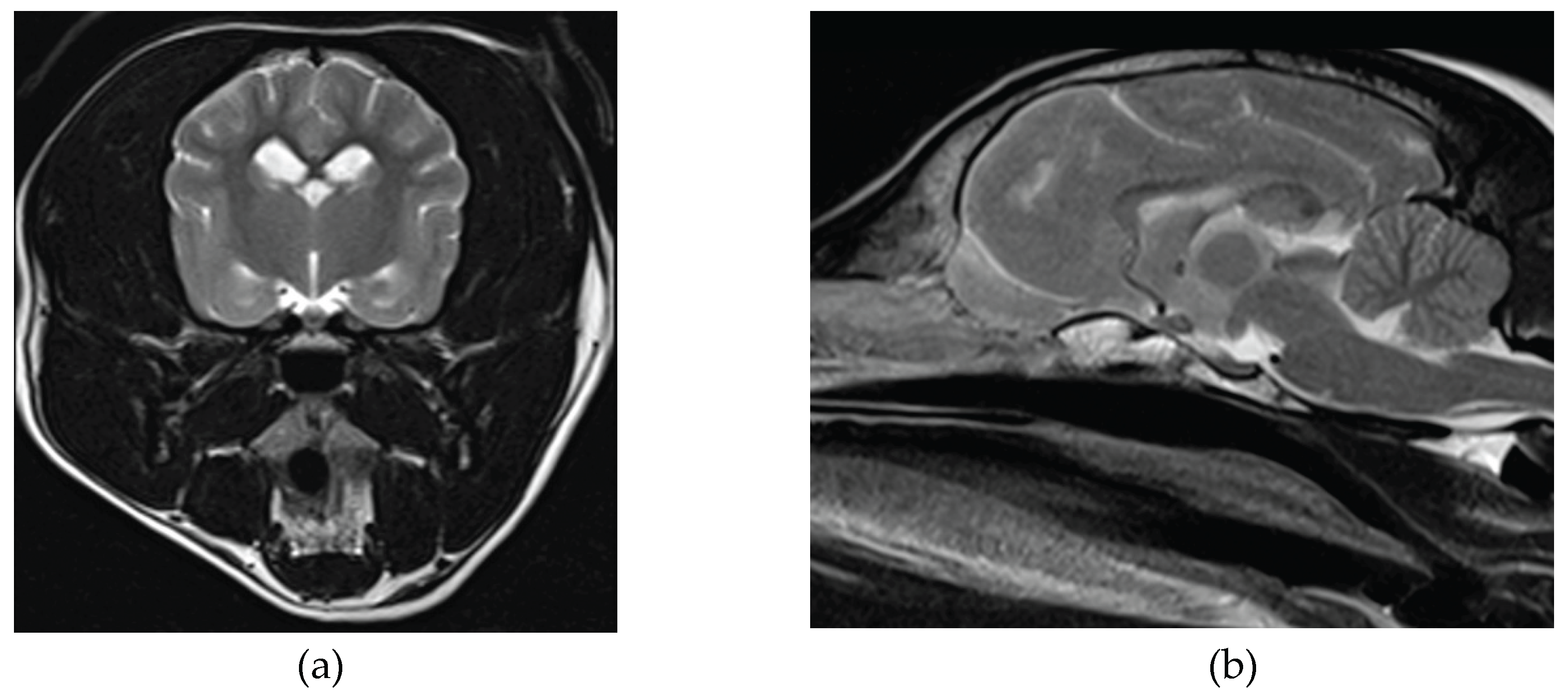

Table 1.
Baseline characteristics and seizure frequency during 4 weeks of treatment .
| Case | Breed | Current age (years) | Sex | Seizure burden before LEV initiation | LEV dose (mg/kg q8h) |
Seizures during LEV treatment (4 weeks) |
|---|---|---|---|---|---|---|
| 1 | Siberian Husky | 7 | MN | 5 seizures/16 h | 22.7 | 0 |
| 2 | Siberian Husky | 5.8 | MN | 4 seizures/16 h | 21.4 | 0 |
| 3 | Siberian Husky | 5 | MN | 3 seizures/8 h | 23.4 | 0 |
| 4 | Siberian Husky | 7 | FS | 3 seizures/10 h | 22.5 | 0 |
| 5 | Chihuahua | 5.4 | FS | 4 seizures/18 h | 20.8 | 1 seizure |
| 6 | Chihuahua | 6 | FS | 3 seizures/4 h | 20.8 | 0 |
| 7 | Mixed breed | 7.8 | MN | 5 seizures/24 h | 25.0 | 0 |
| 8 | Mixed breed | 5 | MN | 4 seizures/12 h | 24.3 | 0 |
| 9 | Golden Retriever | 7 | MN | 3 seizures/12 h | 24.3 | 0 |
| 10 | Beagle | 3.1 | MN | 3 seizures/4 h | 21.7 | 0 |
| 11 | French Bulldog | 4 | MN | 5 seizures/20 h | 23.4 | 0 |
| 12 | Yorkshire Terrier | 5 | MN | 4 seizures/4 h | 22.2 | 0 |
FS = female spayed; MN = male neutered. Baseline cluster seizure burden represents the number of seizures occurring within the specified time interval immediately before LEV initiation. Seizure frequency during treatment represents the number of seizures recorded during the 4-week study period.
Table 2.
Clinical adverse events observed in 12 dogs during adjunctive levetiracetam therapy.
| Adverse effects in dogs | Frequency (%) | 95% CI (%) |
|---|---|---|
| Sedation | 10 (83.3%) | 51.6–97.9 |
| Ataxia | 2 (16.7%) | 2.1–48.4 |
| Decreased appetite or anorexia | 2 (16.7%) | 2.1–48.4 |
| Vomiting | 0 (0%) | 0.0–26.5 |
| Behavioral changes | 0 (0%) | 0.0–26.5 |
Table 3.
Renal biomarkers and serum biochemical parameters during the 4-week adjunctive levetiracetam treatment period.
Table 3.
Renal biomarkers and serum biochemical parameters during the 4-week adjunctive levetiracetam treatment period.
| Variable | Reference interval (Unit) | Day 0 | Day 14 | Day 28 | p-Value |
|---|---|---|---|---|---|
| SDMA | 0–14 µg/dL | 11.83 (2.79) | 11.08 (2.78) | 12.00 (2.76) | 0.067 |
| BUN | 8-28 mg/dL | 17.92 (5.83) | 17.50 (6.40) | 20.25 (6.59) | 0.188 |
| Serum creatinine | 0.5-1.7 mg/dL | 1.03 (0.24) | 1.08 (0.28) | 1.09 (0.21) | 0.536 |
| Albumin | 2.3-3.1 g/dL | 3.43 (0.47) | 3.29 (0.32) | 3.32 (0.38) | 0.206 |
| Phosphorus | 2.9-5.3 mg/dL | 3.79 (0.57) | 3.77 (0.31) | 3.85 (0.42) | 0.835 |
Data are presented as mean (SD). Reference intervals for SDMA were based on the IDEXX Catalyst SDMA Test reference interval [27]. Reference intervals for BUN, serum creatinine, albumin, and phosphorus were based on the reference intervals used by the Kasetsart University Veterinary Diagnostic Laboratory, adapted from Duncan & Prasse's Veterinary Laboratory Medicine: Clinical Pathology [28]. SDMA = symmetric dimethylarginine; BUN = blood urea nitrogen; SD = standard deviation.
Table 4.
Urinalysis findings during the 4-week adjunctive levetiracetam treatment period.
| Parameter | Day 0 | Day 14 | Day 28 |
|---|---|---|---|
| USG (range) | 1.010–1.042 | 1.015–1.042 | 1.010–1.035 |
| Proteinuria | 0 (0%) | 0 (0%) | 0 (0%) |
| Glucosuria | 0 (0%) | 0 (0%) | 0 (0%) |
| Epithelial cells | 2 (16.7%) | 0 (0%) | 0 (0%) |
| Casts | 0 (0%) | 0 (0%) | 0 (0%) |
Data are presented as the range for urine specific gravity (USG) or as the number (%) of dogs with positive findings.
Disclaimer/Publisher’s Note: The statements, opinions and data contained in all publications are solely those of the individual author(s) and contributor(s) and not of MDPI and/or the editor(s). MDPI and/or the editor(s) disclaim responsibility for any injury to people or property resulting from any ideas, methods, instructions or products referred to in the content. |
© 2026 by the authors. Licensee MDPI, Basel, Switzerland. This article is an open access article distributed under the terms and conditions of the Creative Commons Attribution (CC BY) license (http://creativecommons.org/licenses/by/4.0/).
Copyright: This open access article is published under a Creative Commons CC BY 4.0 license, which permit the free download, distribution, and reuse, provided that the author and preprint are cited in any reuse.