

Submitted:
26 July 2026
Posted:
29 July 2026
You are already at the latest version
Abstract
Limited and unreliable water supply remains a major public health concern in many in under-served South African communities and can compromise household hygiene, water storage practices, health, and daily living activities. Magxaki, a peri-urban settlement in the Eastern Cape, of South Africa, reflects the structural and environmental vulnerabilities associated with water scarcity. This study therefore assessed the impact of water scarcity on the health and livelihoods of people living in this community. A cross-sectional community-based mixed-method study was conducted among adult residents of Magxaki. Participant data was collected using a semi-structured questionnaire which included sections on resident demographic characteristics, water sources, water access, sanitation, and household coping practices during water scarcity. Quantitative data were analysed using descriptive statistics in SPSS 30, while open-ended responses were coded to contextualize experiences. Most participants were female, and all valid participants reported living in Magxaki for more than six months. Although municipal piped water and JoJo tanks were among the reported household water sources, access and supply was constrained. Interrupted water service delivery was reported by 92% of the respondents, with many assuming their water source was unsafe to drink and highlighted the need for more clean water. The qualitative findings showed that water scarcity is linked to unreliable municipal supply, unsafe household practices, inadequate hygiene infrastructure, livelihood disruption and governance failures. The findings show that residents in Magxaki are driven to adopt coping strategies such as increased water storage, unsafe containers, and costly alternatives which expose them to increased health risks.
Keywords:
water scarcity
; household hygiene
; water storage practices
; water insecurity
1. Introduction
Water scarcity occurs when the demand for usable water exceeds its supply. It can be categorised as physical and economic water scarcity. A population is said to be physically water scarce if there are not enough water resources to meet their fundamental needs. Climate conditions are the cause of it, and it is frequently manifested as drought, decreased crop yields, and shortages of water for households. Economic water scarcity is a condition in which there are enough physical water resources in an area but insufficient infrastructure or financial resources to utilize them to their full potential (Ekopak, 2024). Poor water management, a lack of funding for water infrastructure, political resistance, or a combination of these are the causes of water scarcity. Unfair distribution and access to potable water are frequently involved (Ekopak, 2024).
Water scarcity affects over 2 billion people and is likely to worsen in some areas due to climate change and growing populations (World Health Organization, 2023). Globally, 748 million people suffer from inadequate water sources, and at least one billion people have their supply cut off for longer than 24 hours (Asefa et al., 2023). The absence of not having safe drinking water violates human rights. Hence, the Sustainable Development Goals (SDG) aims to ensure availability of clean and affordable drinking water for all by 2030 (Oskam et al., 2021). In South Africa (SA), SDG 6 aims at achieving universal access to clean water and sanitation, whilst the constitution promises its citizens a right of access to clean water (Kaskeer, 2024).
South Africa’s supply of safe drinking water falls below 1700 mm per person per year, making it a water-stressed country. In many parts of South Africa, cities and rural areas, the amount of water that is needed by our communities is greater than what is available. This situation is made worse by climate change, which affects patterns and quantities of rainfall (Apraku et al., 2023). The average rainfall in the country is 465 mm, which is half of the global average, and the evaporation rate is relatively high. As a result, the country’s capacity to further develop its surface water resources is restricted, with around 75% of its accessible surface water resources currently being tapped (South African Government 2022/23 2024).
In SA, the responsibility for water service provision, including water supply and sanitation, lies constitutionally with local governments, which include metropolitan, local, and district municipalities. These entities serve as Water Services Authorities (WSAs) and, in many cases, also function as Water Service Providers (WSPs) for communities within their jurisdictions. Municipalities are tasked with accelerating the delivery of infrastructure and services to underserved communities (Masindi et al. 2016). However, many municipalities face challenges such as ageing infrastructure, long periods of droughts, and very hot weather, all of which contribute to water scarcity (Cliffe Dekker Hofmeyr, 2025).
According to a press release by Retief Odendaal (2025), district municipalities are consistently failing to fulfil their most fundamental responsibility of providing clean water, which is contributing to the Eastern Cape’s worsening water crisis. The Eastern Cape (EC) is one of the poorest and least developed provinces due to its rural population, with Queenstown being one of the smallest towns in the EC, and water scarcity has become a major issue in this province.
The drying up of the Bonkolo dam, which is the main source of water in Queenstown and the rural communities’ general infrastructural services, including roads, water, sewage, and electricity, are in disrepair, and in some cases, these services may be non-existence (Dolo, 2019). According to research done by Dolo (2019), urban taps are running dry for variable reasons, and the existing infrastructure is no longer capable of supporting exponential population growth and growing industrial demand because of economic development.
Magxaki, a peri-urban settlement in Queenstown, Eastern Cape, characterizes the structural and environmental weaknesses observed in under-served South African communities, due to high poverty, unemployment, and dependance on informal livelihoods. Magxaki is severely affected by persistent water shortages (Stats SA, 2022). As part of a semi-arid region, Magxaki is exposed to climate variability which leads to water scarcity, which has implications for public health, and income stability.
This water scarcity has been a challenge for more than a decade, threatening the lives and livelihoods of the people living in the Magxaki community. Inadequate access to clean water poses waterborne illnesses like cholera, typhoid and diarrhea which mostly affect children and the elderly. The livelihoods are also affected since some families have reduced income, poverty stricken and the domestic work that depends on water availability is no longer possible. The reality in Magxaki is that the current municipal water supply is limited to one hour per day (in the mornings between 04:00-05:00), constraining water accessibility (GroundUp, 2023).
The community of Magxaki have resorted to various water storage practices to mitigate water scarcity, and the safety of some practices maybe questionable. The aim of this research was to assess the impact of clean water scarcity on the health and daily lives of the Magxaki community in Queenstown, Eastern Cape. The objectives were to assess the effect of water restrictions on daily life, determine levels of satisfaction with water supply, and identify coping strategies.
2. Methods
2.1. Study Design
This study adopted a cross- sectional mixed method research design. Data was collected using semi-structured questionnaires that included open and closed ended questions to gain insight from the residents within the Magxaki community on their perceptions, experiences and coping mechanisms in response to water scarcity.
2.2. Study Design
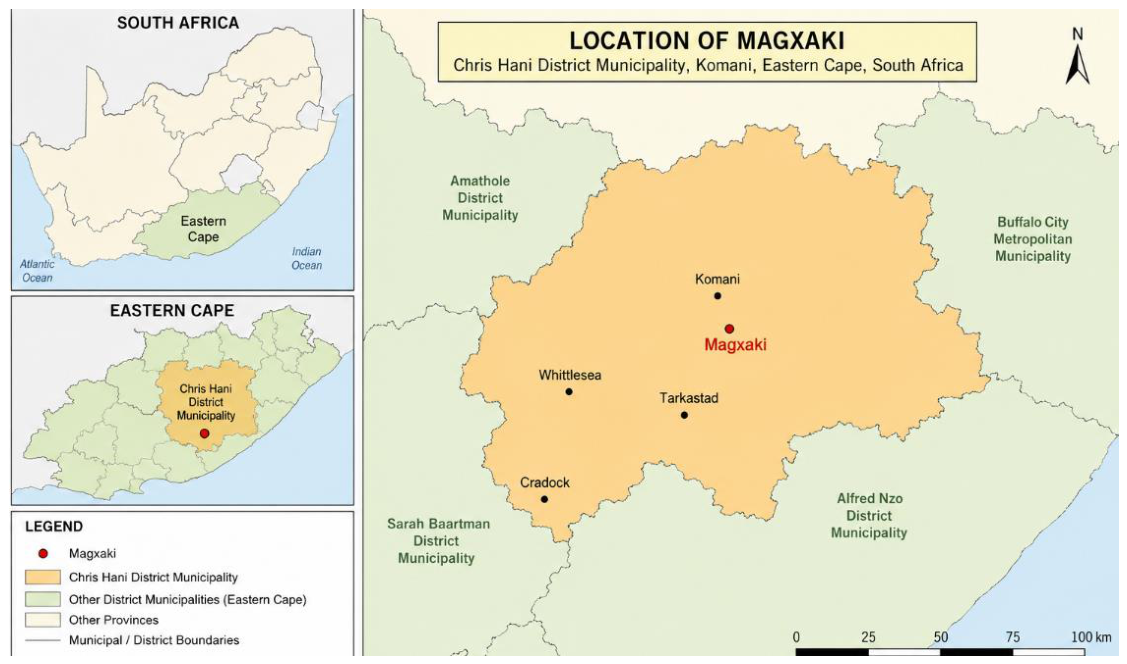
Magxaki location is located in the Chris Hani District Municipality of Komani, previously known as Queenstown, in the Eastern Cape region of South Africa (GroundUp, 2018). In addition to low rainfall and climate change, Mama (2025) claimed that poor governance, poor financial management, and a lack of accountability were also blamed for the region’s water scarcity. The study location provided a real time perspective for investigating the immediate effects of water scarcity on the community’s livelihoods and health.
Figure 1.
Location of Magxaki in Komani, Chris Hani District Municipality, Eastern Cape, South Africa. Source: Adapted from Municipal Demarcation Board (MDB), 2021, and Statistics South Africa (Stats SA), 2022.
Figure 1.
Location of Magxaki in Komani, Chris Hani District Municipality, Eastern Cape, South Africa. Source: Adapted from Municipal Demarcation Board (MDB), 2021, and Statistics South Africa (Stats SA), 2022.
2.3. Population and Sampling Method
According to the 2011 South African national census, Magxaki within Komani had a population of 7445 individuals and 2003 households over an area of 2.65 km². Households were purposely sampled within the community and were allocated numbers to anonymize any identities. Only one resident participant over the age of 18 years old from a willing household was invited to participate in the study through non-probability convenience sampling- only selecting individuals present during data collection (Degu & Yigzaw, 2006). Each household was given a questionnaire to assess their level of satisfaction regarding the water restrictions. Questions were written in English and were translated in isiXhosa (the researcher was conversant in isiXhosa) where necessary. The sample size was calculated using EPINFO 7 software sample size calculation with 10% margin error and 95% Confidence Interval and 36 households participated in the research were anonymised and consented. Interviews were only conducted with study participants who lived in Magxaki and had given their informed consent to participate.
2.4. Data Collection
The data collection tool used for the research was a questionnaire that was created during a prior study with the author’s consent (Van Reenen, 2022) with semi-structured interview questions and open-ended questions. The interview questionnaire was organized into 5 sections as follows, (A) General questions (B) Water source regulation and usage (C) Wastewater disposal and sanitation (D) Perceptions on greywater treatment and reuse (E) Comments from participants. The open-ended questions were coded/categorised into a response scale for ease of analysis. To check feasibility and accuracy of a questionnaire, a pilot study with 5 participants that were from Magxaki but were not part of the research was performed (Taherdoost, 2021). The questionnaire was designed to ensure that the questions asked aligned with the research objectives and the wording used was not ambiguous. The questionnaire took more than 60 min to complete.
Face to face data was collected by the researcher at the convenience of the participant’s home. Before the questionnaire was handed to the participant the researcher explained the purpose of the research. The researcher advised the participant of the study’s objectives, and the participants were made aware that all answers will be kept private, confidential, and anonymous by the researcher. Participants in the study used their preferred language of participation, as interviews were conducted in both English and IsiXhosa by the researcher who was conversant and familiar with the languages. The participants were handed the interview questionnaire to complete and answers to the open-ended questions were written on the questionnaire.
2.5. Data Analysis
Data cleaning, descriptive analysis, statistical testing, and graph generation were conducted using Python. 3.12 and SPSS v 30. Data was analysed as an exploratory cross-sectional household survey. Categorical variables were summarised as counts and percentages. Household water-use variables (continuous) were summarized using mean, standard deviation, medians and ranges because the distributions were skewed and included outlying values. Multi-response questions were analysed by the response option, so percentages would have exceeded 100%. Fisher exact tests were used for 2 x 2 association due to the small sample size, exact binomial tests were used for high-prevalence indicators. Spearman correlation heatmaps were used only as visual summaries of relationships among water, sanitation and health indicators. Open-ended responses were coded into themes and then interpreted against the study objectives.
2.6. Ethical Considerations
Permission to conduct the study was submitted for approval to the University of Johannesburg, Faculty of Health Science Research Ethics Committee, REC-3847-2025. Participants from willing households were informed on the purpose of the study and provided their consent should they have chosen to participate. Privacy and anonymity of research participants were maintained all the time during the data collection and analysis stages of the research.
3. Results
A total of 36 questionnaires were completed and captured in the dataset. Of these, 25 respondents had valid responses for the main demographic variables analysed. Among valid responses, 17 respondents (68.0%) were female and 8 (32.0%) were male. All 25 valid respondents reported that they had resided in Magxaki for more than six months proving long term experience having water challenges. Respondent ages varied across adulthood, ranging from 22 – 84 years.

Table 1.
Demographic profile of respondents.
| Characteristic | Result |
| Total questionnaires completed | N= 36 |
| Valid responses used in analysis | n= 25 |
| Missing responses | n=11 |
| Female respondents | 17 |
| Male respondents | 8 |
| Age range | 22–84 years |
| Lived in Magxaki for more than 6 months | 25 |
Table 2 highlights the main household-level indicators of water insecurity, sanitation context and health. Restricted /interrupted water service delivery was reported by 92.0% of households, with all households assuming that their water source as unsafe to drink. Recent diarrhoea was reported by 36.0% of households, implying a potential health burden in a community where inadequate water supply, storage and hygiene constraints were common.
Figure 2 illustrates the varying water-source profiles in the Magxaki community. Nearly all households relied on municipal yard taps, while many also used Jojo tanks connected to the municipal supply and some reported alternative supplies. Municipal piped water in the yard was reported by all households and Jojo tanks connected to municipal supply were also common (80.0%). Despite this apparent infrastructural connection, households reported substantial barriers to sufficient water use, particularly water restrictions (92.0%) and poor water quality (56.0%). This pattern indicates that physical connection to a water source did not necessarily translate into reliable or adequate access to clean water.
Figure 3 shows the barriers preventing households from using more water. Water restrictions were the most prominent constraint, followed by infrastructural limitations and poor water quality respectively. The distribution supports the interpretation that inadequate daily water use was driven by both availability and perceived safety of supply.
Figure 4 demonstrates that infrastructure maintenance was the dominant perceived cause of scarcity. Households primarily attributed water scarcity to infrastructure not being maintained by government (92.0%). Smaller proportions identified insufficient infrastructure for the population and theft of infrastructure (20.0% each).
Figure 5 shows the variability in reported daily household water-use volumes across domestic activities. Laundry and bathing/personal hygiene had the highest water use volumes, whereas drinking and cooking required lower water volumes and were more directly linked to safe-water requirements. The diverse range of values indicates substantial household usage, which may reflect differences in household size, water storage capacity and availability, coping mechanisms and access reliability. The mean total reported water use was 91.0 L/day per household, but the median was lower at 73.0 L/day, indicating that the distribution was right-skewed by a small number of high-use households. Laundry and bathing/personal hygiene accounted for the largest mean volumes, indicating that water scarcity is likely to disturb hygiene-related and domestic labour-intensive routines most directly.
Figure 6 is a participant-by-use heatmap of comfort with treated greywater reuse, with gridlines showing each individual response cell. The visual pattern shows clustering of acceptance around non-potable uses such as toilet flushing, garden irrigation and enterprise activities, while potable and close-contact uses were mostly rejected. Acceptance was very high for garden irrigation, flushing toilets and enterprise use, but low for drinking, cooking, dishwashing and bathing/personal hygiene.
Figure 7 illustrates the exploratory associations between recent diarrhoeal illness and selected household water, sanitation and storage indicators. Darker cells indicate stronger associations, but the heatmap should be interpreted cautiously because the small sample and sparse comparison groups inflate some association estimates.
Diarrhoea was more frequently reported among households using alternative water sources, storing water for two days or longer, and reporting containers not cleaned before or after every use. Several odds ratios were infinite because some comparison groups had zero diarrhoea cases; these results therefore signal potential risk patterns but should not be interpreted as adjusted or causal estimates.
Table 3 summarises the keyword-assisted thematic scan of open-text responses. Infrastructure maintenance and governance was the most frequently identified coded theme at 68%, followed by livelihood/productivity impacts (44%) and water quality/safety (40%). Although the percentages appear modest, the thematic pattern is consistent with the quantitative findings that water scarcity affected household routines, perceived safety and economic functioning.
Table 4 provides illustrative verbatim responses for each qualitative theme. The responses show that participants linked clean water scarcity to deteriorating infrastructure, unreliable service delivery, concerns about safety, hygiene constraints, and loss of work or productivity. These narrative accounts add description to the quantitative findings by showing how water scarcity was experienced in daily household decision-making.
4. Discussion
The study sample was largely female (68%), emphasising women’s important role in home water, sanitation, and hygiene practices. This study found that water scarcity remained a severe challenge in Magxaki, affecting household water access, storage practices, sanitation and health living. The majority of female respondents in the Magxaki survey implied that women were the most responsible for fetching and storing water within households. These findings were consistent with those of Mokone (2025) who reported that 80% of rural women in Mozambique, 70% in Zimbabwe and 65% in South Africa were in charge of collecting water and this disadvantaged them from participating in the economic and educational activities as their male counterparts. Similarly, Murei et al. (2022) and Bazaanah & Mothapo (2024) highlighted the gendered dimensions of rural water governance, stressing that women’s participation was central to both household resilience and community-level sustainability.”
The study showed 92% of the households were paying water tariffs while their water supply was restricted or interrupted. This disparity showed how government was failing to convert the water tariffs into reliable and consistent water supply. GroundUp (2023) also reported that there were daily water outages even though the dam that primarily supplied water in the Magxaki was full, indicating a systemic accountability gap in municipal water provision. While 16% of the households reported receiving municipal support or intervention, GroundUp (2023) reported that water tankers were unreliable and inconsistent while some remained dried for months.
All households (100%) reported that their water was unsafe to drink and they wanted to receive more liters of water. The combined findings highlighted the severity of home water insecurity by reflecting both perceived contamination risks and chronic scarcity. To deal with the inconsistent water supply, households then adopted storage strategies which came with additional risks. This research reported on households practicing water treatment and safe storage which was highlighted by Asefa et. al. (2023). Only a small percentage of households reported disinfecting stored water (12%) and this is consistent with the evidence of 18% from Demographic and Health Survey of Suh Saharan Africa whilst much lower than the 35.8% households in the Kebeles village in Southern Ethiopia.
In this study, nearly one-quarter reported long-term storage (24%) of two or more days, while one-fifth used containers that were not cleaned at every use (20%). Asefa et. al. (2023) reported that respondents (50.4%) stored water for three days and 52.6% respondents did not wash the containers before fetching water. All of the above-mentioned practices increased the risk of microbial contamination and waterborne diseases especially when combined with negative perceptions and limited municipal support. According to Asefa et. al. (2023), diarrhea was the main cause morbidity and mortality among Ethiopian children under the age of five, and this was evident with 36% of the household who reported having diarrhea. The convergence of these results showed that poor household-level management of stored water was a widespread problem in rural communities across Sub-Saharan Africa, not only in South Africa. Addressing these gaps necessitates focused education campaigns and community-based interventions that promote proper safe storage and treatment practices, while reducing preventable health risks associated with contaminated drinking water. Focused education campaigns and community-based initiatives that support appropriate safe storage and treatment procedures while minimizing preventable health risks associated with contaminated drinking water are required to close these gaps.
As shown in Figure 2, municipal piped water in the yard continued to be the dominant source of water, but frequent disruptions compromised its dependability, forcing households to find alternatives. The use of Jojo tanks connected to municipal pipes showed attempts to mitigate supply instability, while smaller-scale storage in buckets and bottles introduced contamination risks when containers were not consistently cleaned. Dolo (2019) highlighted the use of Jojo tanks in the Eastern Cape to mitigate unreliable water supply despite having the municipal water as the primary source. The agreement on these findings highlighted the dependence on municipal infrastructure while simultaneously emphasising household-level adjustments to ensure water security. The dependance on store-bought water highlighted both a lack of trust in municipal water supply and the financial burden incurred by households in obtaining safe drinking water. Less common practices, such as rainwater harvesting and use of public boreholes may not be sustainable as they may require infrastructure that households may not have access to and they may remain supplementary rather than primary sources. Ndeketeya and Dundu (2022) stated that even though borehole and rainwater harvesting systems may be used to improve water security, these systems are expensive and directly impact on household income.
By highlighting the structural limitations households were confronted with, Figure 3 helped contextualised these practices by highlighting challenges to increased water use. While inadequate infrastructure reflected systemic flaws in municipal provision, as noted by Abrams et al. (2021), who reported that the level of infrastructure failure results from a serious lack of municipal investment, the prevalence of water restrictions showed how governance decisions directly limit households’ ability to meet basic needs. These issues were made worse by worries about poor water quality, which explained why households turned to hazardous storage or expensive alternatives like store-bought water. Infrastructure that had not been maintained by the government was the most frequently mentioned cause, which reflected public perceptions of weak municipal responsibility and neglect. The system’s vulnerability wss highlighted by reports of infrastructure theft and inadequate infrastructure for the population, while demographic pressures and poor management degraded dependability. In Magxaki, water insecurity was a structural governance problem as well as a behavioural difficulty at the household level. In addition to being the product of negligence, unsafe activities were influenced by limitations, inadequate infrastructure, and low-quality perceptions.
Further insight on how water scarcity affects households was reported by the daily household water use. Laundry and bathing/personal hygiene were the most water-intensive activities. In contrast, lesser volumes were recorded for drinking and cooking, demonstrating households’ prioritizing of critical health-related activities. The intermediate levels reported for washing dishes and house cleaning show households’ balancing act between hygiene upkeep and water conservation. These patterns showed that whilst households prioritised drinking and cooking, they were forced to restrict water use to activities like laundry and bathing.
The heatmap of treated greywater in Figure 6 illustrated community perceptions toward reuse as a potential adaptation option. Households in Magxaki rejected using treated greywater for drinking and cooking because they believed it was unsafe to ingest. Van Reenen & Barnard (2025) also reported that the residents of Zandspruit indicated that treated grey water cannot be used for drinking, cooking, dishwashing, bathing and personal hygiene however they would be willing to use it for income generation, gardening, laundry washing, household cleaning and for flushing toilets. This was similarly highlighted by Carden et. al. (2018) which reported that it was inappropriate for drinking and cooking. Similarly, low levels of acceptability were observed for dishwashing and bathing/personal hygiene, which involve direct human touch and raise concerns about contamination. In contrast, non-consumptive applications such as flushing toilets and garden irrigation received higher acceptability since the risks are perceived to be minimal, and this aligned with Carden et. al. (2018). While treated greywater use may be considered as a solution to Magxaki’s water scarcity, households were still not fully convinced to using it because of the perceived health risks associated with microbial contamination.
Figure 6 provided the correlation heatmap which supported the strongest positive association between diarrhoea and the absence of a handwashing facility near the toilet (ρ = 0.92), highlighting the importance of hygiene infrastructure in disease prevention. This agreed with WHO (2023) which highlighted that inadequate access to hygiene practices was a major contribution not only to diarrhoeal disease but acute respiratory infections globally. Moderate correlations between diarrhoea and unsafe storage practices, such as long water storage and containers not cleaned after every use, highlighted the contamination risks associated with coping strategies. According to Asefa et. al. (2023), households that frequently failed to clean storage containers regularly and rarely practiced disinfection resulted in microbial contamination that increased diarrhoeal risk. Greywater-related indicators showed weaker correlations, suggesting that while reuse was a community concern, its direct health impact was less severe than unsafe storage and hygiene problems. These associations highlight that water insecurity is more than just a lack of regular water supply, it is deeply intertwined with household practices and lack of infrastructure.
5. Conclusions
The findings from Magxaki show that water insecurity is a multidimensional crisis caused by unreliable municipal supply, unsafe household practices, inadequate hygiene infrastructure, and governance failures. The results showed that households were forced to seek coping strategies such as delayed storage, unsafe containers, and expensive alternatives which exposed them to increased health risks such as diarrhoeal disease. Water restrictions, inadequate infrastructure, and poor water quality, further limit household’s ability to meet basic needs, while community perceptions blame municipal neglect and systemic mismanagement.
Daily water consumption patterns showed the compromises households make to balance essential health-related activities with limited supplies, and the differentiated acceptability of greywater reuse emphisises both the potential and the cultural limitations of adaptation techniques. The correlation analysis revealed that hygiene infrastructure and safe storage are major predictors of health outcomes, emphasizing the need for integrated interventions. Collectively, these findings showed that addressing water scarcity in Magxaki required concerted changes to improve infrastructure maintenance, maintain equitable governance, promote safe household practices, and support socially acceptable reuse strategies. The thesis contributes to a better understanding of water insecurity as a technical and sociopolitical concern, requiring comprehensive solutions that address governance, infrastructure, and community resilience.
Limitations of the study
One key limitation during this study was the limited time available for data collecting during the holiday season due to household availability and logistical constraints. This caused the number of completed questionnaires to be lower than anticipated. Overall, 25 valid surveys were obtained, representing a response rate of roughly 57%. However, it provides useful preliminary information about Magxaki’s community beliefs and practices surrounding water access and sanitation.
Author Contributions
L.B.N conceptualized and collected the data for the research. A.S supervised, reviewed the research and manuscript to completion.
Funding
The research was self-funded and no external funding was received. No funds, grants or any other type of financial assistance was received during this research. The entire study was fully funded by the researcher, and all authors have no competing interests to declare.
Institutional Review Board Statement
Permission to conduct the study was submitted for approval to the University of Johannesburg, Faculty of Health Science Higher Degree Committee, MPH HDC-01-2025, 16 September 2025; the University of Johannesburg, Faculty of Health Science Research Ethics Committee, REC-3847-2025, 24 September 2025.
Informed Consent Statement
Informed consent was received from research participants, and they were made aware that the findings will be published in a peer reviewed journal.
Data Availability Statement
Data will be kept by researcher and supervisor and will be made available on request.
Conflicts of Interest
No conflict of interest declared by the authors.
Acknowledgments
Thank you to my supervisor for her support and immense contribution to the research.
References
- Abrams A.L, Carden K, Teta C and Wagsaether K. Water, Sanitation and Hygiene Vulnerability among Rural Areas and Small Towns in South Africa: Exploring the Role of Climate Change, Marginalization, and Inequality. Water 2021, 13, 2810. Available at . [CrossRef]
- Asefa L, Ashenafi A, Dhengesu D, Roba H and Lemma H. Household water treatment practice and associated factors among rural Kebeles (villages) in west Guji zone, southern Ethiopia: Community based cross-sectional study. Clinical Epidemiology and Global Health 22 (2023) 101311.
- Carden K, Fisher-Jeffes L, Young C. & Winter, K. 2018. Guidelines for greywater use and management in South Africa, Pretoria: WRC Report No: TT 746/17. Water Research Commission.
- Degu G, & Yigzaw T. 2006. Research Methodology. Available at https://ypeda.com/attachments/article/144/In_research_method_final.pdf.
- Dolo M, 2019. Water Supply Challenges in Urban and Rural Areas of Eastern Cape. Master’s dissertation. Durban University of Technology.
- Ekopak. 2024. Physical and economic water scarcity: what’s the difference? Available at https://ekopakwater.com/home/news. Date Accessed: 20 November 2024.
- GroundUp. 2023. Dam is full but taps are dry in Komani. Available at https://groundup.org.za/article/dam-is-full-but-taps-are-dry-in-Komani.
- GroundUp, 21 August 2018. Taps run dry as drought grips in Queenstown. Available at https://groundup.org.za/article/taps-run-dry-as-drought-grips-in-queenstown.
- Kaskeer M.S, 2024. The potential influence of Sustainable Development Goal 6.1 in the South African legislative context. Law, Democracy and Development, vol. 28.
- Mokone N., (2025). Water security in Southern Africa: addressing climate change, governance failures, and infrastructure challenges through adaptive solutions. Front. Water 7:1627301. [CrossRef]
- Ndeketeya A. & Dundu M., 2022. Alternative water sources as a pragmatic approach to improving water security. Resources, Conservation & Recycling Advances, vol 13, 200071.
- Oskam M.J, Pavlova M, Hongoro C and Groot W, 2021. Socio-Economic Inequalities in Access to Drinking Water among Inhabitants of Informal Settlements in South Africa. International Journal of Environmental Research and Public Health, 18, 10528.
- Odendaal R MPL. Villagers drink from livestock dam as Eastern Cape’s water crisis reaches breaking point. Available at https://ec.da.org.za/2025/02/villagers-drink-from-livestock-dam-as-eastern-capes-water-crisis-reaches-breaking-point. Date Accessed: 19 March 2025.
- Taherdoost H, 2021. Data Collection Methods and Tools for Research; A Step-by-Step Guide to Choose Data Collection Technique for Academic and Business Research Projects. International Journal of Academic Research in Management (IJARM), 10 (1), pp.10-38. hal-03741847.
- Van Reenen W. & Barnard T.B, 2025. The impact of informal settlement expansion on greywater generation: a potential missed opportunity? Water Reuse Vol 15 No 4, 638. [CrossRef]
- Van Reenen, W. (2022). Considerations for the safe removal of greywater from a South African informal settlement University of Johannesburg (South Africa). (Master’s thesis).
- World Health Organisation (WHO). 2023. Drinking-water. Available at https://www.who.int/newsroom/fact sheets/detail.
Figure 2.
Household water sources, alternative supplies and barriers multi-response percentages may exceed 100% because households could select more than one option.
Figure 2.
Household water sources, alternative supplies and barriers multi-response percentages may exceed 100% because households could select more than one option.
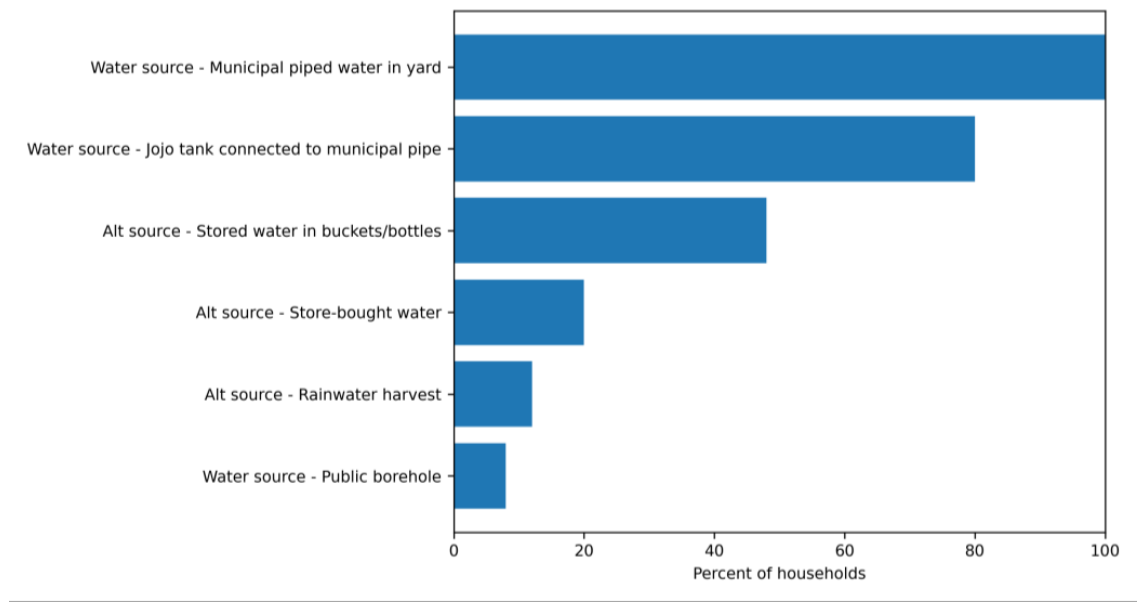
Figure 3.
Barriers preventing households from using more water.
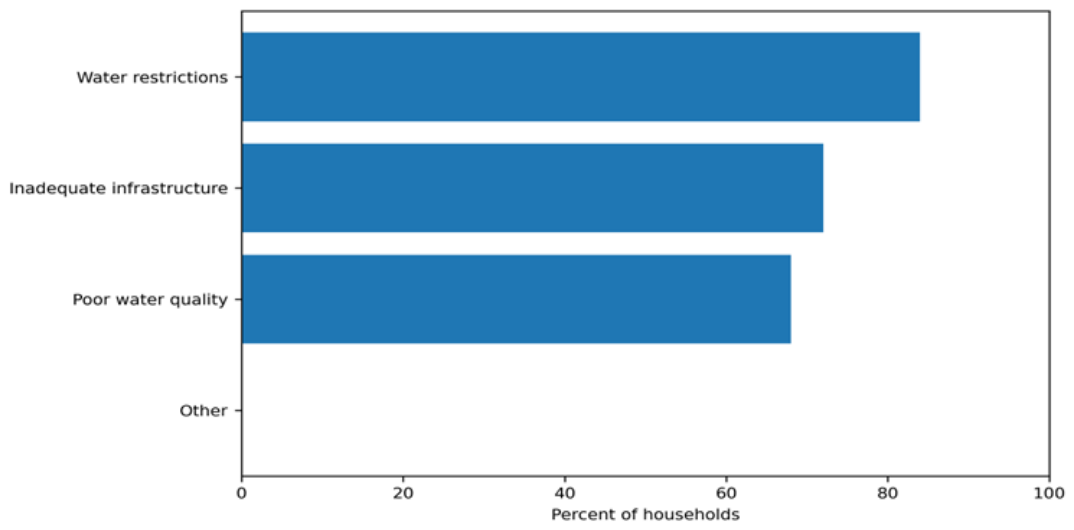
Figure 4.
Perceived causes of water scarcity reported by households.
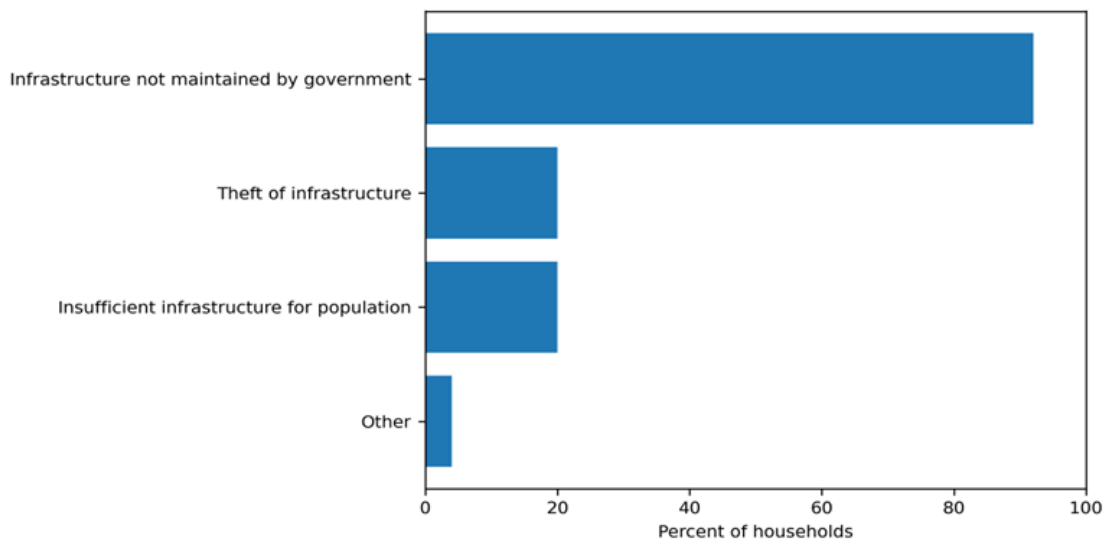
Figure 5.
Distribution of reported daily household water-use volumes by activity.
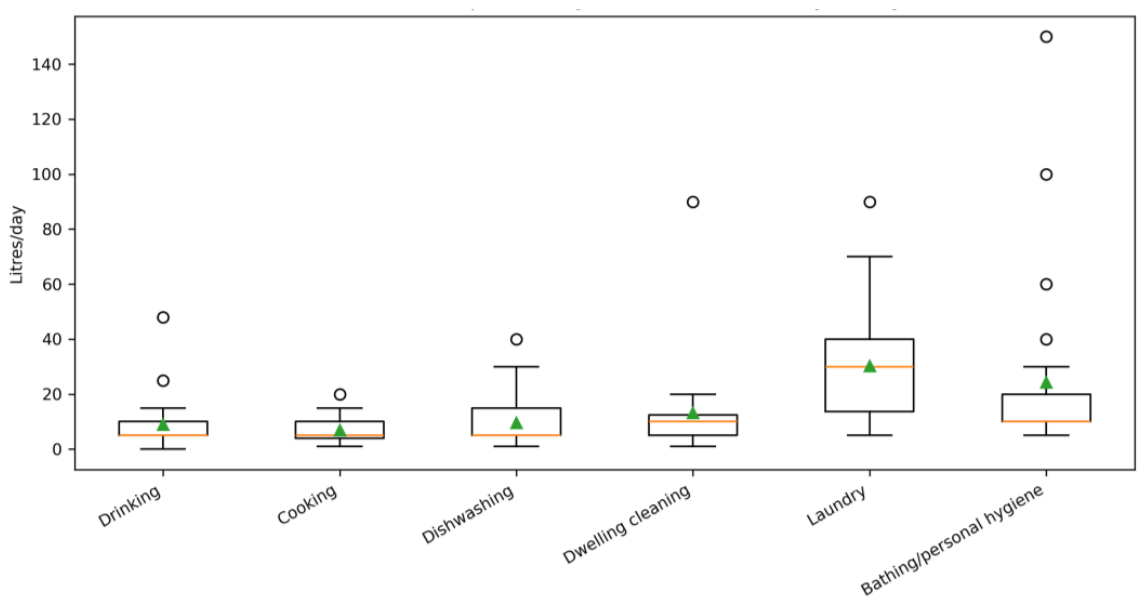
Figure 6.
Heatmap of treated greywater acceptability by participant and intended use.
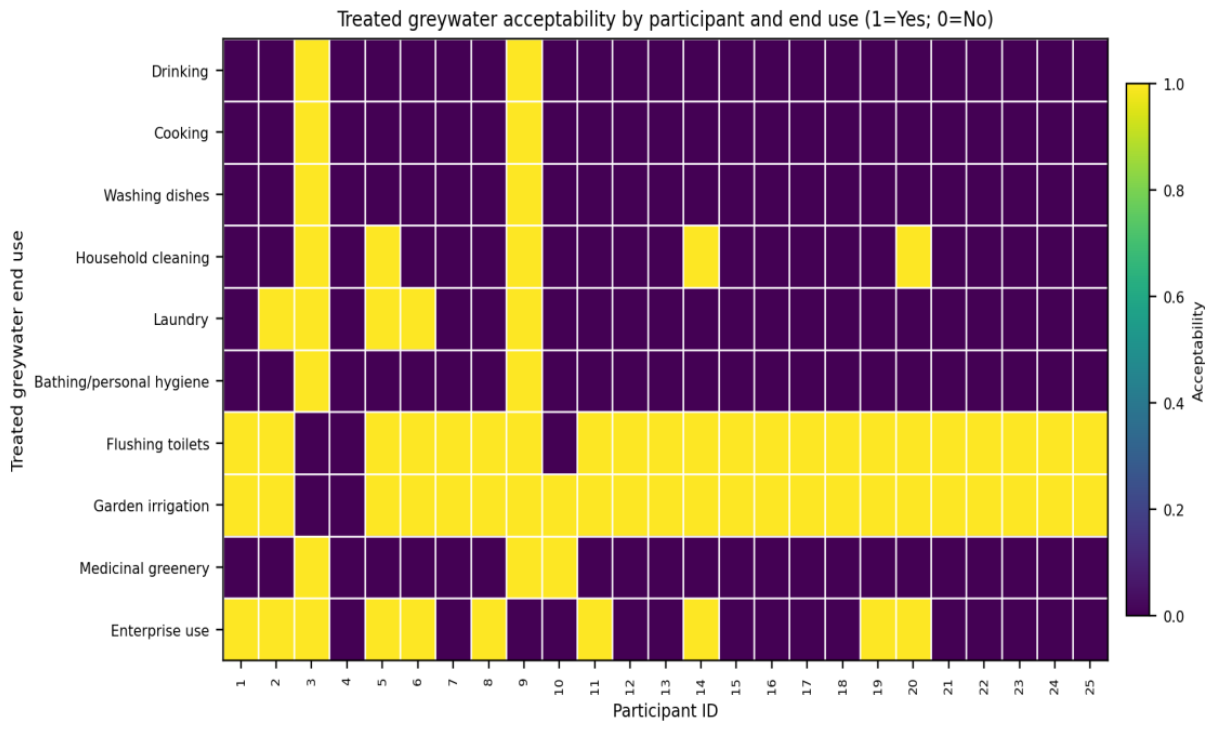
Figure 7.
Exploratory association heatmap for diarrhoeal illness and selected household water/sanitation indicators.
Figure 7.
Exploratory association heatmap for diarrhoeal illness and selected household water/sanitation indicators.
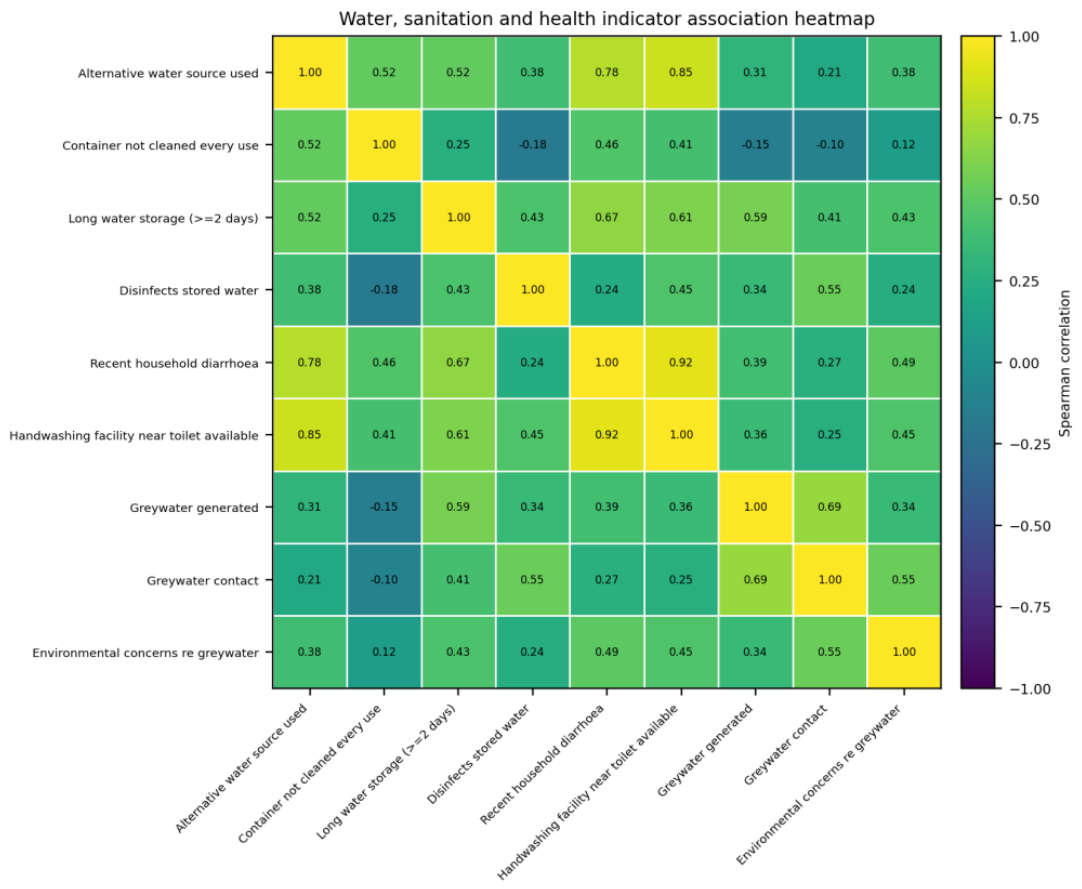
Table 2.
Demographic profile of respondents.
| Indicator | % (n=25) | 95% CI lower | 95% CI upper |
| Female | 68 (17) | 48.4 | 82.8 |
| Alternative water source used | 48 (12) | 30.0 | 66.5 |
| Restricted/interrupted delivery | 92 (23) | 75.0 | 97.8 |
| Municipal support reported | 16 (4) | 6.4 | 34.7 |
| Pays water tariff | 92 (23) | 75.0 | 97.8 |
| Container not cleaned every use | 20 (5) | 8.9 | 39.1 |
| Long water storage (>=2 days) | 24 (6) | 11.5 | 43.4 |
| Disinfects stored water | 12 (3) | 4.2 | 30.0 |
| Perceives source unsafe to drink | 100 (25) | 86.7 | 100.0 |
| Recent household diarrhoea | 36 (9) | 20.2 | 55.5 |
| Wants more water | 100 (25) | 86.7 | 100.0 |
| Handwashing facility near toilet available | 40 (10) | 23.4 | 59.3 |
| Greywater generated | 8 (2) | 2.2 | 25.0 |
| Concerned about neighbours greywater | 4 (1) | 0.710 | 19.5 |
| Health concerns on greywater | 16 (4) | 6.4 | 34.7 |
| Environmental concerns on greywater | 12 (3) | 4.2 | 30.0 |
Table 3.
Keyword-assisted thematic scan of open-text responses.
| Theme | Number of free-text responses mentioning theme % (n=25) |
| Infrastructure maintenance/governance | 68 (17) |
| Water delivery unreliability/restrictions | 20 (5) |
| Water quality/safety | 40 (10) |
| Cost/buying water | 16 (4) |
| Hygiene/health impacts | 20 (5) |
| Livelihood/productivity impacts | 44 (11) |
| Coping/storage practices | 28 (7) |
Table 4.
Illustrative verbatim responses by theme.
| Theme | Illustrative response(s), verbatim |
| Infrastructure maintenance/governance | P1: “Local government to do rainwater harvesting and invest in pipes, dams, & treatment of water plants” | P1: “Municipality must have great strategies to deliver continuous water supply” |
| Water delivery unreliability/restrictions | P1: “Municipality must have great strategies to deliver continuous water supply” | P4: “Ensure there are adequate water supply for the community by servicing and maintaining machinery needed to provide clean and healthy water” |
| Water quality/safety | P1: “Not having clean water daily has negatively impacted the community, the municipality needs to do better” | P1: “Local government to do rainwater harvesting and invest in pipes, dams, & treatment of water plants” |
| Cost/buying water | P2: “Misuse of water unnecessarily, inconsideration of water future use and storage by residents and unfortunate circumstances of paying bills and utility usage” | P5: “Yes, there is a no work no pay policy at work” |
| Hygiene/health impacts | P1: “Yes because the water is very limited and it cannot be used and fullfill to its purpose, need other alternatives” | P2: “Misuse of water unnecessarily, inconsideration of water future use and storage by residents and unfortunate circumstances of paying bills and utility usage” |
| Livelihood/productivity impacts | P3: “Well maintained network of pipes is needed to deliver treated water without contamination from leaks. Safe water handling” |P4: “To employ qualified department staff for the water works” |
| Coping/storage practices | P1: “Local government to do rainwater harvesting and invest in pipes, dams, & treatment of water plants” | P3: “Borehole, cleaning of dam, communal jojo tanks” |
Disclaimer/Publisher’s Note: The statements, opinions and data contained in all publications are solely those of the individual author(s) and contributor(s) and not of MDPI and/or the editor(s). MDPI and/or the editor(s) disclaim responsibility for any injury to people or property resulting from any ideas, methods, instructions or products referred to in the content. |
© 2026 by the authors. Licensee MDPI, Basel, Switzerland. This article is an open access article distributed under the terms and conditions of the Creative Commons Attribution (CC BY) license (http://creativecommons.org/licenses/by/4.0/).
Copyright: This open access article is published under a Creative Commons CC BY 4.0 license, which permit the free download, distribution, and reuse, provided that the author and preprint are cited in any reuse.