Submitted:
27 July 2026
Posted:
28 July 2026
You are already at the latest version
Abstract
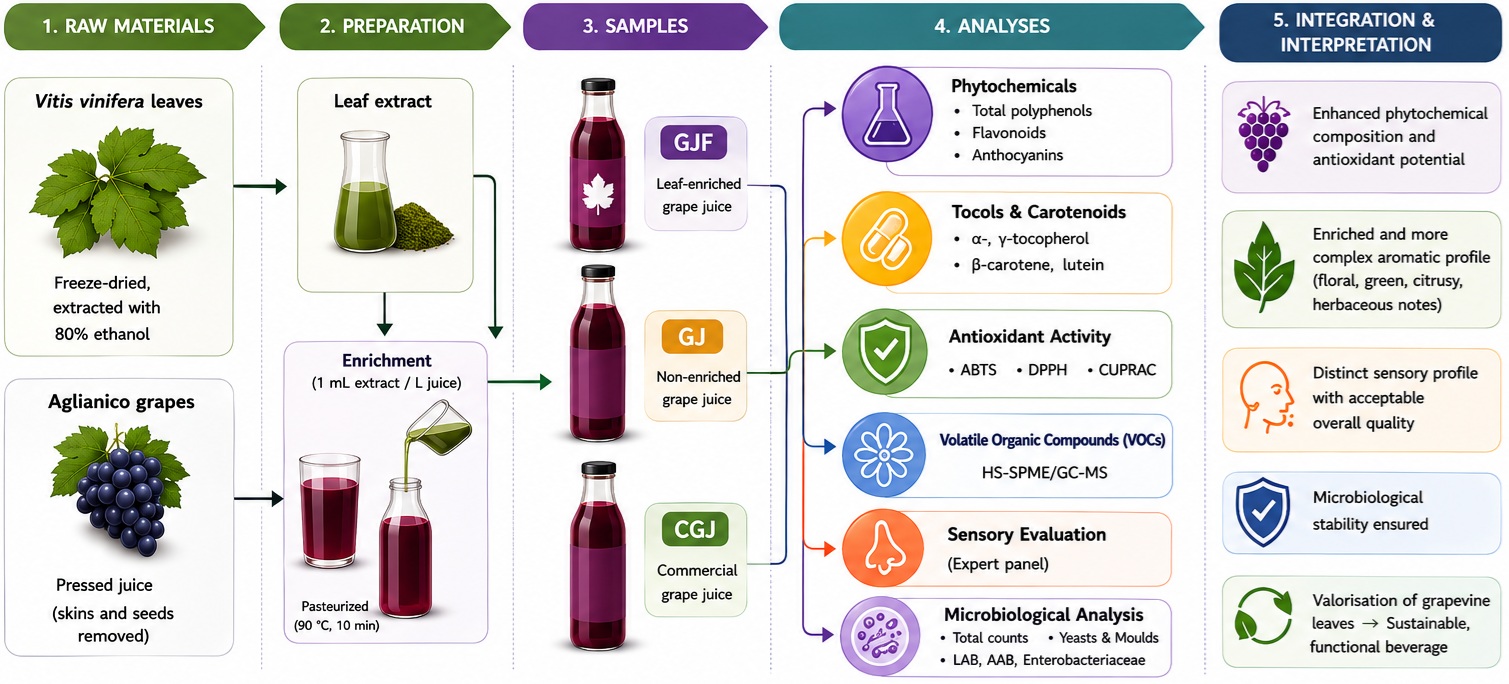
The increasing demand for sustainable and health-oriented foods has encouraged the valorization of agricultural by-products as sources of bioactive compounds for functional beverages. This study enriched grape juice with Vitis vinifera leaf extract to enhance its phytochemical composition, antioxidant capacity, and aromatic profile. The fortified juice was compared with non-enriched grape juice and a commercial sample. Samples were analyzed at production (t0) and after 30 days of refrigerated storage (4 °C) for polyphenols, flavonoids, anthocyanins, carotenoids, tocopherols, and antioxidant capacity (ABTS, DPPH, and CUPRAC assays). Volatile organic compounds (VOCs), sensory properties, and microbiological stability were also evaluated. Enriched beverages showed significantly higher concentrations of polyphenols, flavonoids, and anthocyanins. α-Tocopherol, γ-tocopherol, β-carotene, and lutein were detected exclusively in fortified samples. ABTS and CUPRAC assays revealed the highest antioxidant activity in enriched juices. Although storage reduced anthocyanin, carotenoids, and tocopherols, substantial levels persisted after 30 days. HS-SPME/GC-MS identified 63 VOCs, with leaf fortification increasing monoterpenes and C6 alcohols linked to floral, citrusy, herbaceous, and green notes. Sensory analysis indicated greater sourness, astringency, density, and aromatic complexity, while maintaining satisfactory overall quality. All samples remained microbiologically stable. These findings support grapevine leaf extract as a promising sustainable ingredient for functional grape-based beverages.