

Submitted:
23 July 2026
Posted:
24 July 2026
You are already at the latest version
Abstract
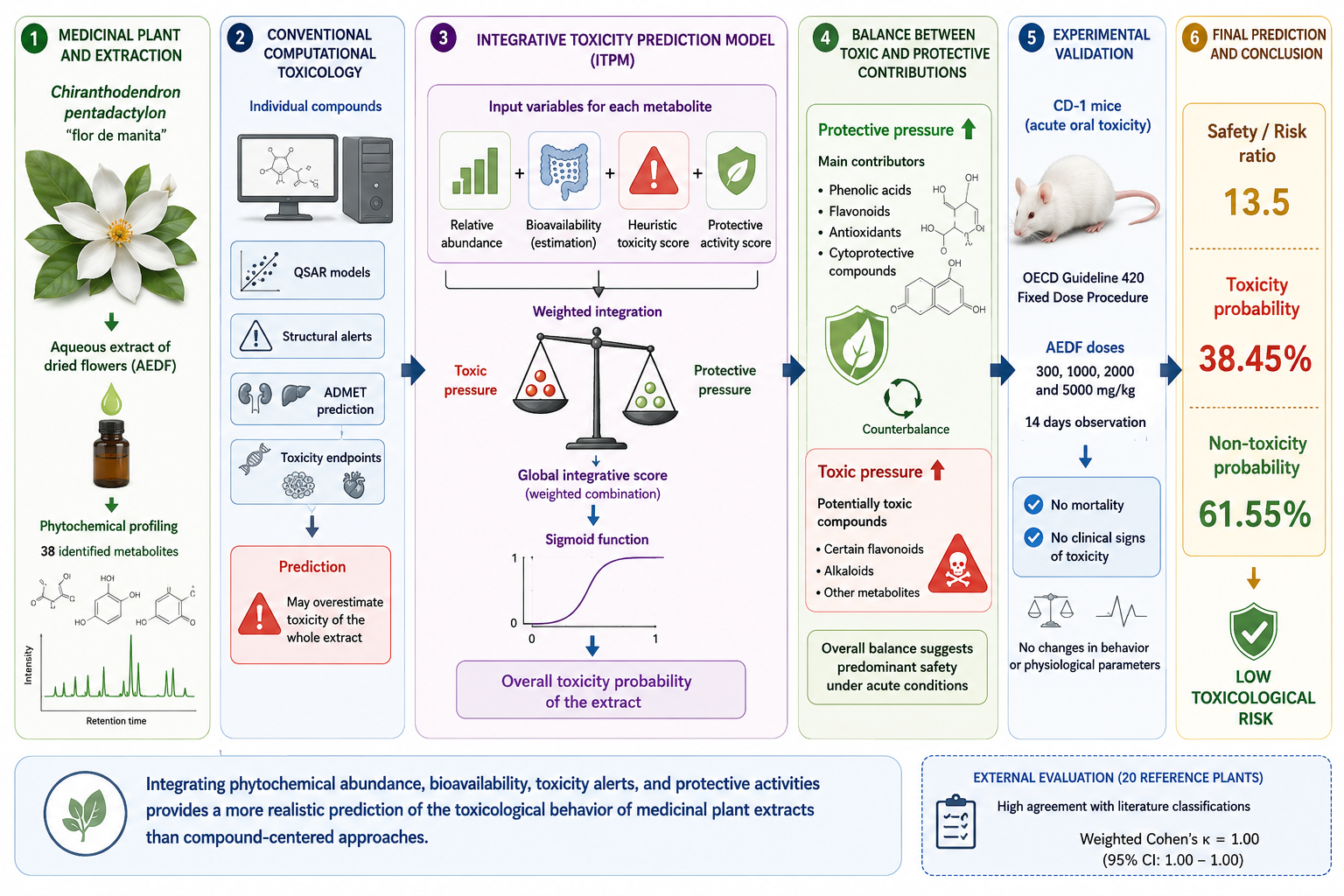
Chirantodendron pentadactylon L., known in Mexico City as “flor de manita”, is a plant native to Mexico that is used traditionally in gastrointestinal, cardiovascular, and neurological diseases. This study looked at its potential toxicity using computer models and animal testing. Many people believe that “natural” means “safe,” but this can lead to unregulated use and health risks because some compounds can be toxic. Using computer-based toxicology, researchers analyzed thirty-eight compounds from the flowers of Ch. pentadactylon. They found that 65.8% of the compounds were potentially harmful to the liver, 63.1% mutagenic, 63.5% carcinogenic, 7.8% posed risks to the heart, and 15.7% could affect reproduction. However, 84.2% of these compounds had predicted lethal doses (LD₅₀) greater than 1000 mg/kg. In tests on CD1 mice using water extracts, there were no signs of toxicity or death at doses up to 5000 mg/kg. The Integrative Toxicity Prediction Model suggests that the dried water extract (AEDF) is safe, with a protection value of 0.5332 compared to a toxicity value of 0.0395. This resulted in a safety-to-risk ratio of 13.5. A further analysis estimated a 38.45% chance of toxicity and a 61.55% chance of non-toxicity, placing the extract in a low-risk category for toxicity. These findings suggest that predicting toxicity from single ingredients might overstate the dangers of using combined plant materials. The safety of this plant appears to come from the high levels of beneficial compounds that protect against toxic effects. More long-term studies are needed to check for any cumulative risks.
Keywords:
computational
; cheminformatics
; toxicology
; in silico model
; plants
; methanolic extracts
; Chirantodendron pentadactylon
; lethal dose 50 (LD50)
1. Introduction
Medicinal plants are an ancient practice that remains prevalent worldwide [1,2,3], especially in regions with remarkable biological diversity and ethnobotanical richness, such as Mexico. More than 85–90% of the world’s population is estimated to depend on traditional medicine systems to combat various diseases [4]. Mexico ranks fifth among mega-diverse countries, as it is home to nearly 23424 vascular plant species, including 5000 endemic species; of these, about 4,500 are medicinal plants, while only 3000 are registered in the herbarium of the Mexican Institute of Social Security (IMSS) [5]. However, only 5% of pharmacological and toxicological analyses have been reported, posing a potential risk to public health.
To date, there is a popular belief that “natural” is synonymous with “safe” [6,7], which has led to the indiscriminate use of various medicinal plants that, sometimes, contain bioactive compounds with toxic potential, many of which have been observed in the short or long term[8]. Adverse effects such as hepatotoxicity, nephrotoxicity, neurotoxicity, hematological alterations, and even mortality have been associated with the empirical use of poorly identified or improperly prepared plants [9,10,11,12,13]. It’s crucial to develop rigorous scientific methods to assess and demonstrate their safety [13].
Computational methods, including molecular modeling, ADMET (absorption, distribution, metabolism, excretion, and toxicity) property prediction, and ligand-receptor interaction simulations, enable the rapid, cost-effective, and ethical assessment of the potential risks associated with bioactive compounds [14]. These techniques facilitate the prioritization of candidates for experimental validation, significantly reducing the unnecessary use of animals and resources [15]. This strategy for selecting compounds can also be applied to choosing plants based on their phytochemical profiles, which may indicate specific therapeutic or toxic effects.
In silico studies have emerged as powerful tools in modern toxicology [16], allowing for the analysis, simulation, visualization, and prediction of chemical toxicity. Traditionally, in silico toxicology focuses on prioritizing chemicals, guiding toxicity testing, and minimizing failures in the final stages of drug design [14].
Toxicological assessments of medicinal plants that rely solely on predicting the adverse effects of individual compounds can lead to biased estimates of actual risk. Plant extracts, especially water-based ones from traditional medicine, contain many natural compounds. These compounds work together in various ways, like enhancing each other’s effects, reducing each other’s effects, or changing how the body absorbs and uses them. The extract might contain some compounds that raise toxicity concerns, but this doesn’t mean the entire extract is dangerous. Other components can offer protective benefits and alter the body’s overall reaction [17,18,19].
Therefore, a comprehensive assessment of the safety of medicinal plants requires in silico approaches that simultaneously incorporate phytochemical composition, relative metabolite abundance, extraction yield, ADME/Tox properties, and potential interactions among compounds with toxic and protective activities. Integrating these variables enables a more realistic estimate of the potential toxicity of plant extracts, reducing overestimation from analyzing isolated molecules and providing a more robust tool for prioritizing medicinal species and guiding subsequent experimental toxicological studies [19,20,21].
Chirantodendron pentadactylon Larreat, commonly known in Nahuatl as “macpaxochitl,” macpalli (hand) Xochitl (flower) “handflower tree” [22], is a species endemic to Mexico. The flowers have been used in traditional Mexican medicine since the Aztecs to treat chronic ulcers, eye pain, and inflammation. Today, they also address heart conditions, epilepsy, diarrhea, and dysentery [22,23,24,25]. The extracts from these flowers have been reported to exhibit a range of bioactivities, including anticholinergic, spasmolytic, antiprotozoal, antibacterial, vasorelaxant, antihypertensive, and antisecretory effects [22,24,26,27,28,29,30,31]. Despite its widespread use, there are few studies on its toxicological profile. In this context, the present work aims to evaluate the toxic potential of Ch. pentadactylon using a combined in silico and experimental approach to contribute to its pharmacological characterization and promote its safe use in traditional Mexican medicine.
2. Results
2.1. Results In Silico for Toxicity Prediction
According to a literature analysis, the Ch pentadactylon flowers contain 32 compounds, as reported in five articles (26, 31, 42, 43, 44). The PubChem CID for each compound is listed in Table 1. All these compounds, including those mentioned as traces in the hand flower extracts [31], were considered when predicting individual toxicity. However, only 20 phytochemicals were included in the evaluation of the Phyto complex.
2.1.1. Hepatotoxicity
The experimental compounds were categorized based on the results for each parameter. Most compounds were potentially hepatotoxic; around 68.75% (25 out of 32) were predicted to be hepatotoxic on all three servers. Only two compounds (CID 5988 and CID 1794427) were negative for hepatotoxicity on two of the three servers, while VEGA displayed an unreliable result. The compounds sucrose (CID 5988) and chlorogenic acid (CID 1794427) showed no evidence of hepatotoxicity in VEGA. A review of the hepatotoxicity potential and structural alerts for 25 of the 32 compounds (65.8%) revealed Brenk alerts associated with catechol, Michael acceptor, hydroquinone, charged oxygen-sulfur, and isolated alkene moieties. These structural features may contribute to hepatotoxicity due to their inherent molecular characteristics. The structures of these compounds closely resembled daidzin, naringin, hesperidin, kushenol, puerarin, diosmin, and isorhamnetin.
2.1.2. Nephrotoxicity
According to the ProTox-3.0 predictions, 25 out of the 32 compounds identified in C. pentadactylon (78.12%) exhibited a potential nephrotoxic profile, whereas the remaining 7 compounds (21.8%) were not associated with nephrotoxicity alerts. These findings suggest that nephrotoxicity constitutes one of the predominant toxicological endpoints predicted for the phytochemicals present in this species, although such predictions require cautious interpretation and experimental validation due to the intrinsic limitations of in silico models and their inability to account for the interactions occurring within complex plant extracts, the compounds with a high probability of being potentially nephrotoxic were: syringic acid, p-coumaric acid, sucrose, p-hydroxybenzoic acid, gallic acid, glucose ester, cyanidin 3-glucoside.
2.1.3. Mutagenicity
For the mutagenicity predictions, thirteen compounds were predicted to be mutagenic on Datawarrior, three in ProTox-III, and 11 in VEGA, while Toxtree showed 19. Because of the redundancy of the results, integrating the total of the potential mutagenic compounds, we obtained 16 (50.0%) of the total compounds. Respecting structural alerts, 7 out of the 32 compounds (14.5%) showed Brenk alerts related to catechol, Michael acceptor, and isolated alkene. Based on a Therapeutic Target Database server (https://idrblab.net/ttd/ttd-search/drug_similarity), they showed a high structural similarity with baicalin, patuletin, kaempferol-3-o-(2’’-o-galloyl)-glucoside, cirsimarin, isorhamnetin, contigoside, 6-methoxikaempferol, and rutin.
2.1.4. Carcinogenicity
Of the 32 compounds examined, 24 (63.5%) were predicted to be carcinogenic by ProTox-II, with probability values ranging from 0.5 to 0.78. VEGA flagged structural alerts for carcinogenicity in 25 of the 32 compounds (65.8%). The VEGA results showed inconsistent reliability, with about 52% of compounds scoring under 0.7 in all models. Twenty-one out of 32 compounds (55.2%) had structural similarities to catechol, Michael acceptor, and isolated alkene, as well as a resemblance to caffeic acid from Ch. pentadactylon flowers. While no data is available on the carcinogenicity of caffeic acid in humans, there is sufficient evidence to show that it is carcinogenic in experimental animal models [32].
2.1.5. Cardiotoxicity
The cardiotoxicity prediction showed potential cardiotoxicity for all compounds (100.0%), with the potency classified as “weak or moderate.” Of the 32 compounds, 29 (90.6%) fell within the model’s applicability domain, with an average confidence level of 87.3%. Four out of 32 compounds (15.7%) showed a probability of inducing reproductive risks. Gallic acid (CID 370), sucrose (5988), ferulic acid (CID 445858), p-coumaric acid (CID 637542), and caffeic acid (CID 689043) were identified as having high potential, while phlorizin (CID 7062) showed a low probability.
2.1.6. Acute Oral Toxicity
In evaluating acute oral toxicity, 22 of the 32 compounds (68.75%) were predicted by both servers to have an LD50 above 1000 mg/kg. The mean prediction accuracy on ProTox-II was 63.1%, with values ranging from 23% to 69.3%. Notably, only two compounds, myricetin and quercetin, were predicted to have an LD50 value of 159 mg/kg on ProTox III, with a prediction accuracy of 90.9%. DL-AOT and BESTOX identified 22 compounds with potential acute oral toxicity, categorizing 3 compounds as “warning” (class II) and 19 as “caution” (class III) based on their acute oral toxicity (AOT) predictions.
2.1.7. Categorization of Compounds Found in the Ch Pentadactylon Flower
The results were summarized in two tables. Table 2 shows the criteria for classifying toxicity. Table 3 shows each compound in three toxicity levels: lowest, moderate, or highest predicted. Most of the compounds showed nephrotoxicity, hepatotoxicity, and carcinogenicity, and were classified by integrating the other differences among the remaining toxicity endpoints. Category 1 comprises three compounds (3/32; 9.3%). They did not exhibit any relevant structural Brenk alerts. These compounds were non-tumorigenic, non-reproductive-risk, DILI-negative (drug-induced liver injury), and non-cardiotoxic. Category 2 comprises four compounds (4/32; 12.5%). Solely gallic acid (CID 370) exhibited a Brenk alert associated with catechol. Category 3 had the highest number of compounds (25/32). Structural Brenk alerts such as catechol, Michael acceptor, hydroquinone, charged oxygen sulfur, and isolated alkene were identified in these compounds. Table 3 summarizes the categories, highlighting significant structural similarities among compounds within each category.
2.1.8. Determination of Multi-Toxic Compounds and Predominant Toxic Activities by Structural Network Analysis Toxicity
Based on the closeness centrality score (Table 4) and the degree centrality (Figure 1), the most interconnected molecules across various endpoints (namely cancer, kidney damage, liver damage, and neurotoxicity) are phlorizin, quercetin, galangin, kaempferol, myricetin, apigenin, quercitrin, and syringic acid.
2.1.9. Acute Toxicity of Two AEs of Ch. Pentadactylon Flowers in Mice
The findings on acute toxicity in mice show that oral administration of AEDF and AEFF at single doses of 300, 1000, 2000, and 5000 mg/kg did not cause any signs of toxicity or death. The body weight values showed no statistically significant difference between the control and treated mice with the extracts. Normal behavior was observed in the animals treated with the extracts, showing that the treatment did not significantly affect their general activities and well-being (Figure 2).
Results of the Integrative Toxicity Prediction Model Applied to Chiranthodendron pentadactylon
ITPM was used to evaluate the toxicological risk of the flower extract from C. pentadactylon. This assessment investigated the interactions between the flower’s phytochemicals, their bioavailability, and the balance between potentially toxic and protective metabolites. The analysis concentrated on 20 compounds for which yield data from methanol extracts of the flower had been published. The yield of the 20 compounds in studies using methanolic extracts of the flower ranged from 0.14 to 101.54 mg/g. Normalization of the concentrations revealed a marked predominance of compounds with recognized cytoprotective activities. The most common substance found was α-Amyrin, which accounted for about 68.9% of the total plant chemicals measured. Other significant compounds included stigmasterol (15.2%), ferulic acid (4.6%), chlorogenic acid (2.6%), and phloretin (2.3%). On the other hand, compounds with potential toxicity warnings, such as quercetin, were found at levels <0.1%, making their contribution to the extract’s overall toxicity negligible.
The combined toxicity measures showed a total toxicological pressure of 0.0395. The total protective pressure measured 0.5332. These results show that the protective capacity of the phytochemical matrix was approximately 13.5 times greater than the estimated toxic pressure, demonstrating a marked predominance of antioxidant, anti-inflammatory, and cytoprotective mechanisms over potentially harmful ones. Consequently, the net toxicity was negative (−0.4937), indicating an overall shift toward a protective biological profile (Figure 3).
Subsequently, the resulting integrative score was transformed using a sigmoid function to express the risk as a relative probability. The model estimated a 38.45% probability of toxicity, along with a 61.55% probability of non-toxicity. According to the established classification criteria, this result placed the C. pentadactylon extract within the Low Toxicity Risk category (Table 5).
Looking at individual contributions, we found that α-amyrin, ferulic acid, and chlorogenic acid were key to the protection. These are known to have antioxidant, anti-inflammatory, and protective effects on the liver and cells, including pathways like Nrf2. Furthermore, although phloretin and quercetin made the largest relative contributions to toxicological pressure due to the presence of certain structural hazards, their low relative abundances prevented them from dominating the toxicological behavior of the phytocomplex (Please, see supplementary data).
Taken together, the results suggest that the biological safety of the C. pentadactylon flower extract does not depend solely on the absence of potentially toxic metabolites, but rather on the dynamic equilibrium between the toxicological and protective forces present in the phytochemical matrix. The study provides a reason complex plant substances might appear toxic to individual molecules in digital tests, but are actually safe overall. This is in line with real-world tests that found no deadly consequences from using large amounts of this plant’s extracts. Therefore, the integrative model supports the safety profile of C. pentadactylon and suggests that its biological effects are strongly influenced by phytochemical buffering phenomena arising from interactions between protective and potentially toxic metabolites within the phytocomplex.
The external evaluation demonstrated that the ITPM was able to discriminate plant species according to their previously reported toxicological behavior. Low-toxicity medicinal plants, including Matricaria chamomilla, Tilia americana, Melissa officinalis, and Passiflora incarnata, exhibited a predominant protective phytochemical profile characterized by phenolic acids, flavonoids, and antioxidant metabolites, resulting in low predicted toxicity probabilities and classification as low-risk species. Conversely, plants classified as moderate toxicity, including Symphytum officinale, Larrea tridentata, and Piper methysticum, showed intermediate ITPM scores, reflecting the presence of bioactive compounds associated with organ-specific toxicity or adverse effects under particular exposure conditions.
High-toxicity species showed a marked increase in toxicological pressure within the model. Aristolochia clematitis, Atropa belladonna, Digitalis purpurea, Dysphania ambrosioides, and Nerium oleander exhibited elevated toxicity scores driven by highly potent metabolites, including aristolochic acids, tropane alkaloids (atropine, scopolamine), cardiac glycosides (digitoxin-like compounds), ascaridole, and oleandrin, respectively. The model correctly identified these species as high-risk plants, demonstrating that the integration of metabolite abundance, predicted bioavailability, and compound-specific toxicity weighting allowed differentiation between safe medicinal plants and plants containing highly hazardous phytochemicals. The ITPM demonstrated almost perfect agreement with previously reported toxicity categories, with a weighted Cohen’s kappa coefficient of κw = 1.00, indicating complete concordance between predicted and reference classifications. For more information, see supplementary materials.
3. Discussion
Our computer study showed that the identified phytochemicals in C. pentadactylon have a high risk of toxicity to major organs like the heart, kidneys, liver, and brain, as well as causing DNA and reproductive damage. These results were consistent with their structural profiles, including functional groups or physicochemical properties associated with adverse effects [36,37,38,39]. However, these predictions based on individual compounds were not reflected in vivo acute toxicity assays in mice, where no clinical signs of toxicity or mortality were observed during oral administration of C. pentadactylon, even at high doses (5000 mg/kg). This phenomenon has been reported in other medicinal plants, which, despite containing potentially toxic metabolites, do not show acute or subchronic toxicity in vivo.
For instance, Pereskia lychnidiflora, which has alkaloids, tannins, and triterpenes, was found to be non-toxic in mice at doses up to 2000 mg/kg [49]. Likewise, the Kalanchoe brasiliensis extract affected cell viability in lab tests but showed low acute and subchronic toxicity in rats, with side effects only at high doses [40]. Withania somnifera is another example. Its extracts have active withanolides and didn’t show significant toxicity in rats, even at high doses [41,42].
These cases indicate that structurally toxic compounds do not automatically translate to toxicity in real-world exposure scenarios. This is particularly true when their concentration in plant extracts is low or when they are rapidly metabolized and inactivated. Additionally, in silico models often fail to account for pharmacokinetic variables (Absorption, Distribution, Metabolism, and Excretion - ADME) that influence the availability of toxic compounds in the body [40,43].
It is also essential to consider that toxicity can manifest after prolonged exposure. The plant Calea urticifolia, for example, showed hematological alterations and histological damage after oral administration for 90 days, despite not presenting acute toxicity [44]. This highlights the need for chronic or subchronic toxicity studies to assess the cumulative risks of Ch. pentadactylon.
The discrepancy between the computational analysis of phytochemicals isolated from the Ch. pentadactylon flower, which exhibits high toxicity, and the lack of acute toxicity observed in the in vivo assessment of EAFF and EADF could be explained to several reasons. To start, computer-based toxicity models use algorithms to guess dangers by looking at how a compound’s structure resembles others already known to be risky. Still, they rarely consider pharmacokinetic factors such as absorption, metabolism, distribution, and excretion (ADME) [43]. Compounds labeled potentially toxic may have limited bioavailability or be rapidly metabolized to nontoxic forms in living organisms, attenuating the predicted adverse effects [43].
Computational models tend to overestimate toxicity to be safe, which might lead to more false alarms. According to computer models, our study found that the phytochemical mixture from Ch. pentadactylon flowers was safer than the toxicity estimates for each phytochemical, as it did not cause immediate harm to living organisms. However, this finding does not eliminate the possibility of chronic or cumulative toxicities or adverse effects that may occur under specific conditions or with repeated use [56]. The in silico models generally employed only consider compounds as individuals and do not account for systemic-level interactions or compensatory physiological responses of the organism, which could modulate toxicity [42]. The specific setup of animal studies, including drug delivery, animal type, age, and preparation, can greatly impact toxicity results [45,46,47].
A significant limitation of current in silico toxicological approaches is that they primarily rely on structural alerts, QSAR models, or similarities to known toxic compounds [36,37,38,39,45,48,49,50,51]. While these methods are helpful for hazard identification, they do not accurately represent the reality of medicinal plant extracts. These extracts are complex mixtures of phytochemicals, and the biological response arises from interactions among many metabolites present in varying concentrations [14,45,49,52,53,54,55,56]. Thus, toxicity predictions based solely on individual compounds may overestimate the actual toxicological risk of the entire extract [52,53,54,55,56].To date, most studies investigating the toxicity of medicinal plants have either focused on the structural alerts of isolated phytochemicals or on the experimental evaluation of crude extracts [52,53,54,55,56]. However, they often cannot establish a quantitative link between these two levels of analysis. There is a methodological gap between toxicological predictions focused on individual compounds and the assessment of phytocomplexes as integrated, interactive systems. This gap is significant because protective metabolites, such as antioxidants, anti-inflammatory compounds, and cytoprotective constituents, can counterbalance or mitigate the potential adverse effects associated with other individual molecules present in the mixture [52,53,54,55,56,57]. This makes it difficult to directly translate computer-generated data for each plant compound. Therefore, we must develop computational models that account for the most variables and, crucially, estimate the toxicity of the full mixture of phytochemicals in the extracts.
The literature on integrative models of the selective toxicity of mixtures of phytochemicals, particularly botanical extracts of medicinal plants, is limited [58,59,60,61,62,63]. Because of these issues, we developed a predictive toxicity model that accounts for the mix of phytochemicals identified in the flowers of C. pentadactylon. Although predictive models are valuable tools in early screening, their interpretation should be approached with caution and validated against in vivo experimental data [44,46,47]
The ITPM developed for the evaluation of the flower of Ch. pentadactylon allowed for the systematic estimation of the balance between toxicological and protective pressure derived from its phytochemical profile. This computational approach, based on integrating relative abundance, bioavailability, and heuristic toxicity and protective scores, suggests a low overall toxicological risk, which is in direct agreement with the in vivo experimental results.
In the in silico analysis, most of the identified metabolites, particularly phenolic acids such as ferulic, chlorogenic, and gallic acids, showed a favorable relationship between low intrinsic toxicity and high protective capacity, contributing to an overall protective pressure that was greater than or comparable to the toxic pressure. Although some compounds, such as quercetin and phloretin, presented relatively higher heuristic toxicity values, their impact was attenuated by their low relative abundance and moderate bioavailability, which reduced their effective contribution to the overall risk of the extract. These observations are consistent with previous reports describing the antioxidant, anti-inflammatory, cytoprotective, and chemoprotective properties of phenolic acids and flavonoids, as well as the influence of dose and bioavailability on their biological effects [64,65,66,67,68,69,70].
The final integrative score, transformed with a sigmoid function, placed the extraction in a low-probability category for systemic toxicity, suggesting a predominantly safe pharmacological profile under the conditions evaluated. This emerging behavior of the model is consistent with the species’ phytochemical profile, characterized by a high proportion of phenolic compounds with antioxidant and cytoprotective properties, as reported in the literature.
These in silico findings coincide with the experimental results obtained in the in vivo model using male CD1 mice, in which no mortality or evident clinical signs of acute toxicity were observed during the evaluation period. The absence of acute toxic effects suggests that, within the administered dose range, the extract does not cause severe physiological alterations in vital parameters, supporting the integrative model’s prediction.
The agreement between the computational and experimental results reinforces the usefulness of the integrative approach as a robust toxicological pre-screening tool, particularly in complex natural matrices where multiple compounds interact synergistically or antagonistically [18,52,53,54,55,56,57]. In this regard, the model not only allows the identification of potential risk signals but also enables the assessment of the buffering effect of compounds with protective activity, an advantage over toxicological models based on a single compound or isolated evaluations [18,52,53,54,55,56,57].
However, it is important to note that the model is based on heuristic scores and in silico predictions and therefore does not replace a complete experimental toxicological evaluation. Furthermore, factors such as phase I/II metabolism, interactions with the gut microbiota, and interindividual variability are not fully accounted for, which could modify the current biological response in more complex scenarios or with chronic exposures [71,72,73,74].
Current computational toxicology approaches for medicinal plants remain largely compound-centered and rarely integrate phytochemical abundance, bioavailability, toxicity alerts, and protective activities into a unified framework to estimate the toxicological behavior of whole-plant extracts. In this context, the proposed ITPM represents an exploratory systems-level approach specifically designed to evaluate phytocomplexes rather than isolated phytochemicals. By considering both toxicological and protective contributions within the same computational framework, the model provides a more biologically realistic approximation of the overall toxicological profile of complex botanical extracts [18,64,65,66,67,68,69].
Overall, the consistency between the integrative model and the absence of acute toxicity in CD1 mice supports the hypothesis that Ch. pentadactylon has a favorable toxicological profile under acute conditions and validates the use of integrative computational models as complementary tools in the pharmacological evaluation of natural products [18,64,65,66,67,68,69].
The external evaluation of the Integrative Toxicity Prediction Model (ITPM) using an independent panel of medicinal and toxic plant species demonstrated a strong concordance between computational predictions and previously established toxicological classifications. The application of weighted Cohen’s kappa (κw) was particularly appropriate due to the ordinal nature of toxicity categories, allowing the model performance to be assessed while considering the magnitude of classification discrepancies. The high level of agreement observed indicates that the ITPM was able to capture the progressive toxicological gradient ranging from low-risk medicinal plants to highly toxic species.
The correct classification of low-toxicity plants, including Matricaria chamomilla, Tilia americana, Melissa officinalis, and Passiflora incarnata, suggests that the integration of protective phytochemical features, such as phenolic acids and flavonoids, together with their relative abundance and predicted bioavailability, provides a biologically meaningful estimation of overall safety. Conversely, the identification of high-risk species such as Nerium oleander, Digitalis purpurea, Atropa belladonna, and Aristolochia clematitis highlights the capacity of the model to recognize chemical signatures associated with severe toxicity, including cardiac glycosides, tropane alkaloids, and aristolochic acids.
Importantly, the ITPM was not based exclusively on the detection of toxic metabolites but incorporated their relative contribution within the complete phytochemical matrix. This approach is relevant for botanical products, where the biological response is determined by the interaction between multiple constituents rather than by isolated compounds. The incorporation of abundance weighting, bioavailability estimation, and compound-specific toxicological scores allowed the model to distinguish between plants containing pharmacologically active but relatively safe metabolites and those dominated by highly potent toxic constituents.
Although the observed agreement supports the predictive utility of the ITPM, these results should be interpreted as an external computational assessment rather than a replacement for experimental toxicology. Factors such as absorption, metabolism, interactions with the gut microbiota, chronic exposure, and interindividual variability are not fully represented in the current framework and may influence the actual biological response. Therefore, the ITPM should be considered a prioritization and screening tool capable of guiding toxicological evaluation and reducing experimental burden, while further validation using standardized extracts and regulatory toxicological approaches remains necessary.
These findings reinforce the importance of integrating in silico predictions with in vivo experimental studies, both acute and chronic, for a comprehensive toxicological evaluation of Ch. pentadactylon. The absence of adverse effects in acute studies does not necessarily imply long-term safety.
4. Materials and Methods
4.1. In Silico Evaluation of the Toxicity of the Reported Compounds in Ch. Pentadactylon
We conducted a literature search on PubMed and Scopus to identify research articles regarding the chemical compounds present in Ch. pentadactylon flowers. Using various web servers and applications, we predicted the toxicity of these compounds in different organs. Compounds that fell outside the model’s applicability domain were excluded from the analysis and assigned an index of 0 [48]. This approach was taken to avoid extrapolations beyond the chemical training space and to ensure that the evaluation was based on statistically valid predictions. Our evaluation focused on several toxicity categories, including nephrotoxicity, hepatotoxicity, mutagenicity, acute oral toxicity, carcinogenicity, and cardiotoxicity. It is important to note that the assessment of cardiotoxicity relied solely on a web server.
4.1.1. Hepatotoxicity Prediction
Hepatotoxicity, also known as drug-induced liver injury (DILI), is a common adverse effect associated with many drugs [48]. In the present study, 32 compounds identified in the flower of Ch. pentadactylon were analyzed to predict their toxicity via three toxicity prediction servers/applications: ProTox-III, DL-DILI Prediction Server, and the VEGA platform version 1.1.5 [75]. ProTox-III and DL-DILI use machine-learning and deep-learning algorithms [48]. In contrast, the VEGA platform uses a rule-based model to identify structural alerts in the input compound and classify them as toxic or non-toxic [48].
The compounds were represented in canonical SMILES format from the PubChem server and used as input for predictive assessments in ProTox-III and VEGA. They were also converted to SDF format (Structure Data File) using Open Babel version 2.0.2 [76] and used as input for the DL-DILI server. Based on the results from multiple servers, the study’s findings, which categorize compounds as ‘possibly hepatotoxic’ or ‘non-hepatotoxic,’ are essential in pharmacology and toxicology.
4.1.2. Nephrotoxicity Prediction
Nephrotoxicity was assessed using Toxtree 3.0, a decision-tree, expert-rule-based system that includes Structural Alerts for Toxicity and the Cramer classification scheme. This enabled the identification of chemical fragments associated with nephrotoxic potential, including reactive functional groups, substituted aromatic structures, and motifs linked to oxidative stress or renal tubular damage [77,78].
4.1.3. Mutagenicity Prediction
The mutagenicity of compounds was predicted using several tools and models, including ProTox-IIL, Toxtree, Osiris DataWarrior, and the CONSENSUS mutagenicity model (Ames assay). Four QSAR models (VEGA-CAESAR, ISS in Toxtree, SarPy, and KNN) were used to predict mutagenicity. Toxtree employs a ‘rule-based’ prediction method, the Benigni/Bossa rule, for mutagenicity prediction [79,80]. It identifies the structural alerts present in each compound by selecting the relevant decision tree [48]. The CONSENSUS model provides a combined outcome derived from the models CAESAR, ISS, SarPy, and KNN. These applications used a comprehensive method that took the compounds’ canonical SMILES as input. Toxtree meticulously identified the presence or absence of structural alerts for mutagenicity and used the
4.1.4. Carcinogenicity Prediction
We used ProTox-III, Toxtree’s Benigni/Bossa rules model, and VEGA to predict if substances cause cancer. VEGA has four different models for predicting cancer. We used the IRFMN/ANTARES and IRFMN/ISSCAN-CGX models for our predictions [48]. The carcinogenicity predictions were conducted using a uniform input format across different applications/servers. ProTox-III, VEGA’s CAESAR model, and Toxtree were used to assess the carcinogenic potential of a compound and identify structural alerts for genotoxic and non-genotoxic carcinogenicity [48]. The two remaining rule-based VEGA models assessed whether a compound could cause cancer or was safe. The results from the three VEGA models (CAESAR, ISS, and IRFMN-Antares) clearly defined each compound. Any differences found will be further studied using ProTox-III [48,78].
In the overall evaluation, consideration was given to the consensus of all results. A compound was classified as ‘possibly carcinogenic’ if two or more applications/servers showed a positive outcome for carcinogenicity; conversely, it was labeled as ‘non-carcinogenic’ if two or more applications/servers suggested a negative result [48]. A compound was flagged as potentially carcinogenic if it closely resembled known carcinogenic drugs/compounds or contained specific structural alerts. This information was obtained from PubChem and PubMed.
4.1.5. Cardiotoxicity Prediction
Cardiotoxicity is a common harmful effect of drugs. One-way drugs can cause cardiotoxicity is by affecting hERG K+ channels, leading to irregular heartbeats. There are very few tools available for predicting cardiotoxicity compared to other harmful effects of drugs. We used the Pred-hERG 4.2 server to predict the potential cardiotoxic effects of Ch. pentadactylon. This server is highly accurate, as shown in previous studies. The chemical structures were input into the server, which subsequently generated predictions regarding cardiotoxicity, potency, confidence levels, and identification of analogous compounds. The Osiris DataWarrior software was used to detect other harmful effects like cancer-causing, DNA-mutating, and reproductive risks. We used the SwissADME server to find 105 potentially harmful chemical fragments. We also used the Therapeutic Target Database https://idrblab.net/ttd/ttd-search/drug_similarity). to find similar drug structures. We considered only compounds with high structural similarity in our study.
4.1.6. Acute Oral Toxicity Prediction
Prediction Assessing acute oral toxicity involves identifying potential health hazards associated with substances taken by mouth, usually after exposure to single or multiple doses within 24 hours. The conventional LD50 test, which focuses on determining the lethal dose for 50% of test animals, has been replaced by alternative testing methods due to interspecies differences and ethical considerations. To predict acute oral toxicity, this study used three web-based prediction servers: ProTox-III, DL-AOT [81], and BESTOX [82]. These servers use machine-learning models trained on extensive datasets. They propose categories for acute oral toxicity based on different standards, including their LD50 values. The datasets also offer prediction results and associated probabilities.
4.1.7. Toxicological Risk Categorization
To minimize subjectivity in prioritizing phytochemicals, a Toxicological Risk Score (TRS) was developed. One point was assigned for each positive toxicity endpoint, including hepatotoxicity, nephrotoxicity, mutagenicity, carcinogenicity, cardiotoxicity, reproductive toxicity, acute oral toxicity alerts, and at least one Brenk structural alert. Compounds scoring 0–2 points were classified as Category 1 (low concern), 3–5 points as Category 2 (moderate concern), and 6–8 points as Category 3 (great concern). This categorization is summarized in Table 2.
4.1.8. Structural Network Analysis
A network structural analysis was conducted to identify the most relevant compounds with potential toxicity. The network was built using Cytoscape software version 3.8 [83], considering the compounds and their potential toxic activities. Next, the CytoHubba plugin score was used to identify highly connected compounds and toxic activities within the network.
These endpoints were selected because they represent the most frequently reported toxicological liabilities associated with medicinal plants and are among the endpoints recommended during early safety assessment of natural products.
The complete results from all the tools used are detailed in the Supplementary Material.
4.1.9. Animal Care
The experiments used 5-week-old male CD-1 strain mice weighing 25-30 grams. The mice were housed in transparent acrylic boxes at room temperature (21–23 °C) under a 12-hour light:12-hour dark cycle and were provided with ad libitum access to pellet food (5001 Rodent Laboratory Chow). Their care adhered to Mexican standards, specifically NOM-062-ZOO-1999 and NOM-087-SEMARNAT-SSA1-2002, as well as the 2011 revision of the Guide for the Care and Use of Laboratory Animals. These conditions were detailed in the protocol titled “Comprehensive Protocol for the Phytochemical, Pharmacological, and Toxicological Evaluation of Ch. pentadactylon Larreat (flor de manita) approved by the research ethics committees and the animal care committee at UNAM’s Faculty of Medicine (Project No. FM/DI/029/2026).
4.2. Acute Toxicity of AEDF of Ch. Pentadactylon Flowers in Mice
According to Test No. 420: Acute Oral Toxicity - Fixed Dose Procedure [84] a study was conducted to assess the acute oral toxicity of the AEDF from Ch. pentadactylon in mice. An assay of an aqueous extract of fresh Ch. pentadactylon flower (AEFF) was conducted to evaluate whether the drying process of the flower affected the toxic effects because of changes in the concentration, stability, or availability of its bioactive metabolites. The AEDF and AEFF were administered orally in single doses of 300, 1000, 2000, and 5000 mg/kg. The animals were observed for clinical signs, behavioral changes, physiological alterations, and mortality every 30 minutes during the first 24 hours, and then every 24 hours for 14 days. Body weight was recorded weekly.
4.2.1. Integrative Toxicity Prediction Model (ITPM)
The model for evaluating the toxicity of the phytochemical complex of AEDF was developed in Python (version 3.x) using the pandas and NumPy libraries. It incorporates the sigmoid function from SciPy.special.expit to integrate phytochemical information, heuristic pharmacological properties, and relative exposure parameters. This approach is used to estimate the overall toxicological risk of the compounds present in Ch. pentadactylon.
In the first stage, a structured phytochemical dataset was constructed with 20 of the 32 previously reported metabolites. The compounds include phenolic acids (gallic, caffeic, chlorogenic, syringic, vanillic, ferulic, and p-coumaric), flavonoids (quercetin, epicatechin, catechin, cyanidin-3-o-glucoside, astragalin, tiliroside, isoquercitrin, naringenin, phloridzin, and phloretin), and triterpene and sterols (α-amyrin, stigmasterol, and β-sitosterol). These compounds, previously reported by yield, were incorporated, along with their chemical identifiers (CIDs) and concentrations in mg/g of extract, as the absolute abundance variable. Subsequently, the relative abundance of each compound was calculated by normalizing its concentration to the total extract, estimating its proportional weight within the overall phytochemical profile.
The Integrative Toxicity Prediction Model (ITPM)uses scores based on data such as the amount of a substance present, its yield, its prevalence, and its chemical identity. These variables describe the composition of the phyto-complex and are transformed into weighting indices. Each metabolite is assigned three indices: 1) toxicity (which shows the expected toxic potential), 2) protection (which reflects the antioxidant and cytoprotective capacity), and 3) bioavailability (which assesses the likelihood that the compound will reach the site of action). The overall or integrative scores are computed through a weighted combination of toxicological or protective pressure (showing how much a compound contributes to the overall toxicological risk or overall protection of the phyto-complex), bioavailability, and average abundance. This model uses combined index and abundance data to show the overall state of the phyto-complex, showing both its power and how well it’s absorbed.
Based on these parameters, a global integrative score was constructed, defined as a weighted combination in which total toxicity was penalized with a higher weight (×2.0), protection was considered a mitigating factor (×1.5), and the averages of bioavailability and abundance were incorporated as secondary modulators of the system (equation 1).
The global score was transformed into a probability using a sigmoid (logistic) function, thus obtaining a percentage estimate of toxicity and non-toxicity. This probability allowed the classification of toxicological risk into five ordinal categories: very low, low, moderate, high, and very high.
This overall score is not probabilistic; therefore, it is transformed using a logistic function, where P represents the probability and x is the score (equation 2). Individual scores for toxicological and protective contributions are calculated using these indices, all of which are normalized to the range [0,1] (0 ≥ P ≤ 1).
Ultimately, the model generates the probability of toxicity (%), the probability of non-toxicity, risk classification, the individual contribution of each metabolite, and the protection-toxicity balance.
The ITPM calculated how much each compound contributed to the extract’s overall toxicity and protection, showing the major factors influencing its toxic effects. The results were automatically exported to two CSV (comma-separated values) files: one corresponding to the global summary of the Phyto-complex and the other referring to the detailed analysis by compound, ensuring the traceability and reproducibility of the integrative model.
4.2.2. External Evaluation of the Integrative Toxicity Prediction Model (ITPM)
To evaluate the generalizability and biological consistency of the Integrative Toxicity Prediction Model (ITPM), an external evaluation dataset composed of medicinal and toxic plant species with well-established safety profiles was incorporated. Twelve plant species were selected and categorized according to their reported toxicological profile into low-, moderate-, and high-toxicity groups. The low-toxicity group included Matricaria chamomilla, Tilia americana, Melissa officinalis, and Passiflora incarnata, which are widely used medicinal plants with a favorable safety profile. The moderate-toxicity group included Symphytum officinale, Larrea tridentata, and Piper methysticum, species associated with dose-dependent adverse effects or specific organ toxicity. The high-toxicity group included Aristolochia clematitis, Atropa belladonna, Digitalis purpurea, Dysphania ambrosioides, and Nerium oleander, characterized by the presence of recognized toxic constituents such as aristolochic acids, tropane alkaloids, cardiac glycosides, monoterpene peroxides, and cardenolides, respectively. For each species, the phytochemical composition was compiled from reported metabolomic and phytochemical studies, and individual metabolites were assigned toxicity, protective activity, and bioavailability scores using the same computational framework applied to the primary model. The final toxicity estimation was generated through the ITPM integrative algorithm, allowing comparison between predicted toxicity probabilities and previously established toxicological classifications.
5. Conclusions
This study presents the first comprehensive toxicological assessment of the traditional aqueous flower extract of Chiranthodendron pentadactylon. It combines in silico predictions with in vivo validation. While computational models identified phytochemicals with potential toxicological risks, no acute toxic effects were observed in male CD1 mice at oral doses up to 5000 mg/kg, indicating a favorable acute safety profile.
The developed Integrative Toxicity Prediction Model (ITPM) effectively combined phytochemical composition, toxicological evidence, and exposure parameters to estimate the extract’s overall toxicological risk. The model’s alignment with experimental findings highlights its potential as a reliable complementary method for the preliminary safety assessment of medicinal plant extracts.
These results support the acute safety of the traditional aqueous extract of Ch. pentadactylon and underscore the importance of integrating computational and experimental approaches in botanical toxicology. However, further studies on subchronic, chronic, and toxicokinetic effects are necessary to confirm its long-term safety.
Supplementary Materials
The following supporting information can be downloaded at the website of this paper posted on Preprints.org.
Author Contributions
Conceptualization, G.A.M.-G. and O.S.B.-V.; methodology, O.S.B.-V.; software, O.S.B.-V.; validation, G.A.M.-G. and O.S.B.-V.; formal analysis, G.A.M.-G. and O.S.B.-V.; investigation, O.S.B.-V.; resources, G.A.M.-G.; data curation, O.S.B.-V.; writing—original draft preparation, G.A.M.-G. and O.S.B.-V.; writing—review and editing, G.A.M.-G., J.L.E.-R., O.S.B.-V and M.H-R.; visualization, G.A.M.-G. M.H-R and J.L.E.-R.; supervision, G.A.M.-G.; project administration, G.A.M.-G.; funding acquisition, G.A.M.-G. All authors have read and agreed to the published version.
Funding
This research was funded by the Research Division, School of Medicine, UNAM project numbers FM/DI/037/2022 and 014-CIC-2026.
Institutional Review Board Statement
The animal study protocol was approved by the Ethics Committee of Comité de Ética de Investigación de la Facultad de Medicina, UNAM. (protocol code CONBIOETICA09CEI-007-20221108 and date of approval 8 November 2022.).
Informed Consent Statement
Not applicable.
Data Availability Statement
The original contributions presented in this study are included in the article/Supplementary Materials. Further inquiries can be directed to the corresponding authors.
Acknowledgments
UNAM: School of Medicine assisted with implementing project 014-CIC-2026. Oscar Salvador Barrera-Vázquez is grateful to the Dirección General de Asuntos del Personal Académico (DGAPA), Universidad Nacional Autónoma de México, for the Subprograma de Incorporación de Jóvenes Académicos de Carrera (SIJA).
Conflicts of Interest
The authors declare no conflicts of interest.
Abbreviations
The following abbreviations are used in this manuscript:
| ADME | Absorption, Distribution, Metabolism, and Excretion |
| ADMET | Absorption, Distribution, Metabolism, Excretion, and Toxicity |
| AOT | Acute Oral Toxicity |
| BAS | Bioavailability Score |
| BBB | Blood–Brain Barrier |
| Ch. pentadactylon | Chiranthodendron pentadactylon |
| CID | Compound Identification Number (PubChem Compound Identifier) |
| DILI | Drug-Induced Liver Injury |
| DL | Drug-likeness |
| GI | Gastrointestinal |
| hERG | Human Ether-à-go-go-Related Gene |
| HPS | Heuristic Protective Score |
| IMSS | Mexican Institute of Social Security |
| ITPM | Integrative Toxicological Prediction Model |
| LD₅₀ | Median Lethal Dose |
| NAMs | New Approach Methodologies |
| OECD | Organisation for Economic Co-operation and Development |
| ProTox-II | Prediction of Toxicity II |
| QSAR | Quantitative Structure–Activity Relationship |
| RA | Relative Abundance |
| ROS | Reactive Oxygen Species |
| SDF | Structure-Data Format |
| SMILES | Simplified Molecular Input Line Entry System |
| SwissADME | Swiss Absorption, Distribution, Metabolism, and Excretion |
| TCM | Traditional Chinese Medicine |
| THS | Heuristic Toxicity Score |
| TPS | Total Protective Score |
| TTS | Total Toxicity Score |
References
- Rahman, M.H.; Roy, B.; Chowdhury, G.M.; Hasan, A.; Saimun, M.S.R. Medicinal plant sources and traditional healthcare practices of forest-dependent communities in and around Chunati Wildlife Sanctuary in southeastern Bangladesh. Environmental sustainability (Singapore) 2022, 5, 207-241. [CrossRef]
- Silveira, D.; Boylan, F. Medicinal Plants: Advances in Phytochemistry and Ethnobotany. Plants (Basel, Switzerland) 2023, 12. [CrossRef]
- Salmerón-Manzano, E.; Garrido-Cardenas, J.A.; Manzano-Agugliaro, F. Worldwide Research Trends on Medicinal Plants. 2020, 17, 3376.
- Wangchuk, P.J.J.o.B.A.P.f.N. Therapeutic applications of natural products in herbal medicines, biodiscovery programs, and biomedicine. 2018, 8, 1-20.
- Rodríguez-Hernández, A.A.; Flores-Soria, F.G.; Patiño-Rodríguez, O.; Escobedo-Moratilla, A. Sanitary Registries and Popular Medicinal Plants Used in Medicines and Herbal Remedies in Mexico (2001–2020): A Review and Potential Perspectives. 2022, 8, 377.
- Gaston, T.E.; Mendrick, D.L.; Paine, M.F.; Roe, A.L.; Yeung, C.K. “Natural” is not synonymous with “Safe”: Toxicity of natural products alone and in combination with pharmaceutical agents. Regulatory toxicology and pharmacology : RTP 2020, 113, 104642. [CrossRef]
- Novack, G.D. Natural Does Not Mean Safe. The Ocular Surface 2016, 14, 515-519. [CrossRef]
- Anywar, G.; Kakudidi, E.; Byamukama, R.; Mukonzo, J.; Schubert, A.; Oryem-Origa, H.; Jassoy, C. A Review of the Toxicity and Phytochemistry of Medicinal Plant Species Used by Herbalists in Treating People Living With HIV/AIDS in Uganda. Frontiers in pharmacology 2021, 12, 615147. [CrossRef]
- Zhu, K.X.; Wu, M.; Bian, Z.L.; Han, S.L.; Fang, L.M.; Ge, F.F.; Wang, X.Z.; Xie, S.F. Growing attention on the toxicity of Chinese herbal medicine: a bibliometric analysis from 2013 to 2022. Frontiers in pharmacology 2024, 15, 1293468. [CrossRef]
- Bamidele, O.; Popoola, A.O.; Adedayo, L.D.; Adelowo, F.; Inaolaji, D.; Arokoyo, D.S.J.F.N.P. Hematological Changes Provoked by Natural Alkaloids. 2024, 10, 44-51.
- Williamson, E.M. Herbal Neurotoxicity: An Introduction to Its Occurrence and Causes. In Toxicology of Herbal Products, Pelkonen, O., Duez, P., Vuorela, P.M., Vuorela, H., Eds.; Springer International Publishing: Cham, 2017; pp. 345-362.
- Wattanathorn, J.; Uabundit, N.; Itarat, W.; Mucimapura, S.; Laopatarakasem, P.; Sripanidkulchai, B. Neurotoxicity of Coscinium fenestratum stem, a medicinal plant used in traditional medicine. Food and Chemical Toxicology 2006, 44, 1327-1333. [CrossRef]
- Mugale, M.N.; Dev, K.; More, B.S.; Mishra, V.S.; Washimkar, K.R.; Singh, K.; Maurya, R.; Rath, S.K.; Chattopadhyay, D.; Chattopadhyay, N. A Comprehensive Review on Preclinical Safety and Toxicity of Medicinal Plants. Clinical Complementary Medicine and Pharmacology 2024, 4, 100129. [CrossRef]
- Raies, A.B.; Bajic, V.B. In silico toxicology: computational methods for the prediction of chemical toxicity. Wiley interdisciplinary reviews. Computational molecular science 2016, 6, 147-172. [CrossRef]
- Husain, A.; Meenakshi, D.U.; Ahmad, A.; Shrivastava, N.; Khan, S.A. A Review on Alternative Methods to Experimental Animals in Biological Testing: Recent Advancement and Current Strategies. Journal of pharmacy & bioallied sciences 2023, 15, 165-171. [CrossRef]
- Parthasarathi, R.; Dhawan, A. Chapter 5 - In Silico Approaches for Predictive Toxicology. In In Vitro Toxicology, Dhawan, A., Kwon, S., Eds.; Academic Press: 2018; pp. 91-109.
- Williamson, E.M. Synergy and other interactions in phytomedicines. Phytomedicine : international journal of phytotherapy and phytopharmacology 2001, 8, 401-409. [CrossRef]
- Efferth, T.; Koch, E. Complex interactions between phytochemicals. The multi-target therapeutic concept of phytotherapy. Current drug targets 2011, 12, 122-132. [CrossRef]
- Caesar, L.K.; Cech, N.B. Synergy and antagonism in natural product extracts: when 1 + 1 does not equal 2. Natural product reports 2019, 36, 869-888. [CrossRef]
- Yang, Y.; Zhang, Z.; Li, S.; Ye, X.; Li, X.; He, K. Synergy effects of herb extracts: pharmacokinetics and pharmacodynamic basis. Fitoterapia 2014, 92, 133-147. [CrossRef]
- Rasoanaivo, P.; Wright, C.W.; Willcox, M.L.; Gilbert, B. Whole plant extracts versus single compounds for the treatment of malaria: synergy and positive interactions. Malaria journal 2011, 10 Suppl 1, S4. [CrossRef]
- Velázquez, C.; Calzada, F.; Esquivel, B.; Barbosa, E.; Calzada, S. Antisecretory activity from the flowers of Chiranthodendron pentadactylon and its flavonoids on intestinal fluid accumulation induced by Vibrio cholerae toxin in rats. Journal of ethnopharmacology 2009, 126, 455-458. [CrossRef]
- Márquez, C.; Ochoa, L.; Rodríguez, E.; Essayag, M. Plantas medicinales de México composición, usos y actividad biológica. 1999.
- Argueta, A.; Vázquez, M.C.G. Atlas de las plantas de la medicina tradicional mexicana; Instituto Nacional Indigenista: 1994.
- Linares, E. Selección de plantas medicinales de México/[et. al.]. 1988.
- Escobar-Ramírez, J.L.; Santiago-Mejía, J.; Soto-Núñez, M.; Barrera-Vázquez, O.S.; Vargas-Querea, R.; Magos-Guerrero, G.A. The Hypotensive and Vasodilatory Effects Observed in Rats Exposed to Chiranthodendron pentadactylon Larreat Flowers Can Be Attributed to Cyanidin 3-O-Glucoside. 2023, 28, 7698.
- Perusquía, M.; Mendoza, S.; Bye, R.; Linares, E.; Mata, R.J.J.o.e. Vasoactive effects of aqueous extracts from five Mexican medicinal plants on isolated rat aorta. 1995, 46, 63-69.
- Alanis, A.; Calzada, F.; Cervantes, J.; Torres, J.; Ceballos, G.J.J.o.E. Antibacterial properties of some plants used in Mexican traditional medicine for the treatment of gastrointestinal disorders. 2005, 100, 153-157.
- Velázquez, C.; Calzada, F.; Torres, J.; González, F.; Ceballos, G.J.J.o.E. Antisecretory activity of plants used to treat gastrointestinal disorders in Mexico. 2006, 103, 66-70.
- Calzada, F.; Yépez-Mulia, L.; Aguilar, A.J.J.o.e. In vitro susceptibility of Entamoeba histolytica and Giardia lamblia to plants used in Mexican traditional medicine for the treatment of gastrointestinal disorders. 2006, 108, 367-370.
- Santiago-Balmaseda, E.; Segura-Cobos, D.; Garín-Aguilar, M.E.; San Miguel-Chávez, R.; Cristóbal-Luna, J.M.; Madrigal-Santillán, E.; Gutierrez-Rebolledo, G.A.; Chamorro-Cevallos, G.A.; Pérez-Pastén-Borja, R. Chiranthodendron pentadactylon Larreat (Sterculiaceae), a Potential Nephroprotector against Oxidative Damage Provoked by STZ-Induced Hyperglycemia in Rats. Plants (Basel, Switzerland) 2023, 12. [CrossRef]
- Alam, M.; Ashraf, G.M.; Sheikh, K.; Khan, A.; Ali, S.; Ansari, M.M.; Adnan, M.; Pasupuleti, V.R.; Hassan, M.I. Potential Therapeutic Implications of Caffeic Acid in Cancer Signaling: Past, Present, and Future. 2022, Volume 13 - 2022. [CrossRef]
- Domínguez, X.A.Q., J.; Gutierrez, A.M.A. Estudio químico de la Flor de Manita (Macpaxochitl) Chiranihodendron pentadactylon. Cienc. Mex. 1970, XXVII, 87–89.
- Harborne, J.B.; Smith, D.M. Notizen: Flavonoid Pigments and Plant Phylogeny: The Case of the Hand-flower tree Chiranthodendron pentadactylon. 1972, 27, 210-210, doi:doi:10.1515/znb-1972-0223.
- Velázquez, C.; Calzada, F.; Esquivel, B.; Barbosa, E.; Calzada, S. Antisecretory activity from the flowers of Chiranthodendron pentadactylon and its flavonoids on intestinal fluid accumulation induced by Vibrio cholerae toxin in rats. Journal of ethnopharmacology 2009, 126, 455-458. [CrossRef]
- Mekenyan, O. In silico toxicology: principles and applications; Royal Society of Chemistry: 2010.
- Todeschini, R.; Consonni, V. Handbook of molecular descriptors; John Wiley & Sons: 2008.
- Jakopin, Ž. 2-aminothiazoles in drug discovery: Privileged structures or toxicophores? Chemico-Biological Interactions 2020, 330, 109244. [CrossRef]
- Barret, R. 8 - Pharmacophore. In Therapeutical Chemistry, Barret, R., Ed.; Elsevier: 2018; pp. 119-133.
- Raies, A.B.; Bajic, V.B.J.W.I.R.C.M.S. In silico toxicology: computational methods for the prediction of chemical toxicity. 2016, 6, 147-172.
- Olson, H.; Betton, G.; Robinson, D.; Thomas, K.; Monro, A.; Kolaja, G.; Lilly, P.; Sanders, J.; Sipes, G.; Bracken, W.; et al. Concordance of the toxicity of pharmaceuticals in humans and in animals. Regulatory toxicology and pharmacology : RTP 2000, 32, 56-67. [CrossRef]
- Ekins, S.; Mestres, J.; Testa, B. In silico pharmacology for drug discovery: methods for virtual ligand screening and profiling. British journal of pharmacology 2007, 152, 9-20. [CrossRef]
- Gleeson, M.P.; Hersey, A.; Montanari, D.; Overington, J. Probing the links between in vitro potency, ADMET and physicochemical parameters. Nature reviews. Drug discovery 2011, 10, 197-208. [CrossRef]
- Torres-Rodríguez, M.L.; García-Chávez, E.; Soto-Peña, G.A.; Aradillas-García, C.; Cubillas-Tejeda, A.C.J.B.S. Evaluación de la toxicidad aguda in vivo del extracto etanólico y acuoso de Calea urticifolia. 2016, 94, 133-140.
- Fonseca, A.G.; Ribeiro Dantas, L.; Fernandes, J.M.; Zucolotto, S.M.; Lima, A.A.N.; Soares, L.A.L.; Rocha, H.A.O.; Lemos, T. In Vivo and In Vitro Toxicity Evaluation of Hydroethanolic Extract of Kalanchoe brasiliensis (Crassulaceae) Leaves. Journal of toxicology 2018, 2018, 6849765. [CrossRef]
- Rai, M.; Jogee, P.S.; Agarkar, G.; dos Santos, C.A. Anticancer activities of Withania somnifera: Current research, formulations, and future perspectives. Pharmaceutical biology 2016, 54, 189-197. [CrossRef]
- Patel, S.B.; Rao, N.J.; Hingorani, L.L. Safety assessment of Withania somnifera extract standardized for Withaferin A: Acute and sub-acute toxicity study. Journal of Ayurveda and integrative medicine 2016, 7, 30-37. [CrossRef]
- Bhat, V.; Chatterjee, J. The Use of In Silico Tools for the Toxicity Prediction of Potential Inhibitors of SARS-CoV-2. Alternatives to laboratory animals : ATLA 2021, 49, 22-32. [CrossRef]
- DE HOJAS, D.J.R.P.M.E.S.P. EFECTO ANALGÉSICO, CARACTERIZACIÓN FITOQUÍMICA Y ANÁLISIS TOXICOLÓGICO DEL EXTRACTO ETANÓLICO. 2018, 35, 581-589.
- Enoch, S.; Ellison, C.; Schultz, T.; Cronin, M.J.C.r.i.t. A review of the electrophilic reaction chemistry involved in covalent protein binding relevant to toxicity. 2011, 41, 783-802.
- Gramatica, P.J.J.o.C. Origin of the OECD principles for QSAR validation and their role in changing the QSAR paradigm worldwide: an historical overview. 2025, 39, e70014.
- Wagner, H.; Ulrich-Merzenich, G.J.P. Synergy research: approaching a new generation of phytopharmaceuticals. 2009, 16, 97-110.
- Caesar, L.K.; Cech, N.B.J.N.p.r. Synergy and antagonism in natural product extracts: when 1+ 1 does not equal 2. 2019, 36, 869-888.
- Williamson, E.M.J.P. Synergy and other interactions in phytomedicines. 2001, 8, 401-409.
- Li Shao, L.S.; Zhang Bo, Z.B. Traditional Chinese medicine network pharmacology: theory, methodology and application. 2013.
- Hopkins, A.L.J.N.c.b. Network pharmacology: the next paradigm in drug discovery. 2008, 4, 682-690.
- Nogales, C.; Mamdouh, Z.M.; List, M.; Kiel, C.; Casas, A.I.; Schmidt, H.H.J.T.i.p.s. Network pharmacology: curing causal mechanisms instead of treating symptoms. 2022, 43, 136-150.
- Enoch, S.J.; Nahar, L.; Sarker, S.D. Chapter 14 - Predictive toxicology of phytochemicals. In Computational Phytochemistry (Second Edition), Sarker, S.D., Nahar, L., Eds.; Elsevier: 2024; pp. 439-463.
- Rager, J.E.; Rider, C.V. Wrangling whole mixtures risk assessment: Recent advances in determining sufficient similarity. Current Opinion in Toxicology 2023, 35, 100417. [CrossRef]
- Belfield, S.J.; Firman, J.W.; Enoch, S.J.; Madden, J.C.; Erik Tollefsen, K.; Cronin, M.T.D. A review of quantitative structure-activity relationship modelling approaches to predict the toxicity of mixtures. Computational Toxicology 2023, 25, 100251. [CrossRef]
- Zulkifli, M.H.; Abdullah, Z.L.; Mohamed Yusof, N.I.S.; Mohd Fauzi, F. In silico toxicity studies of traditional Chinese herbal medicine: A mini review. Current opinion in structural biology 2023, 80, 102588. [CrossRef]
- Mahony, C.; Bartlett, A.; Fitzpatrick, S.; Galli, C.; Hunt, P.; Inselman, A.; Jimenez, J.; Krzykwa, J.; Larson, J.; Rider, C.; et al. A screening strategy for identifying the developmental and reproductive toxicity potential of botanicals. Pharmaceutical biology 2026, 64, 639-667. [CrossRef]
- Kar, S.; Leszczynski, J. Exploration of Computational Approaches to Predict the Toxicity of Chemical Mixtures. 2019, 7, 15.
- Fraga, C.G.; Croft, K.D.; Kennedy, D.O.; Tomás-Barberán, F.A.J.F.; function. The effects of polyphenols and other bioactives on human health. 2019, 10, 514-528.
- Cory, H.; Passarelli, S.; Szeto, J.; Tamez, M.; Mattei, J.J.F.i.n. The role of polyphenols in human health and food systems: A mini-review. 2018, 5, 370438.
- Santana-Gálvez, J.; Cisneros-Zevallos, L.; Jacobo-Velázquez, D.A.J.M. Chlorogenic acid: Recent advances on its dual role as a food additive and a nutraceutical against metabolic syndrome. 2017, 22, 358.
- Liu, J.; Guan, Y.; Yang, L.; Fang, H.; Sun, H.; Sun, Y.; Yan, G.; Kong, L.; Wang, X.J.P. Ferulic acid as an anti-inflammatory agent: insights into molecular mechanisms, pharmacokinetics and applications. 2025, 18, 912.
- Kahkeshani, N.; Farzaei, F.; Fotouhi, M.; Alavi, S.S.; Bahramsoltani, R.; Naseri, R.; Momtaz, S.; Abbasabadi, Z.; Rahimi, R.; Farzaei, M.H.J.I.j.o.b.m.s. Pharmacological effects of gallic acid in health and diseases: A mechanistic review. 2019, 22, 225.
- D’Andrea, G.J.F. RETRACTED: Quercetin: A flavonol with multifaceted therapeutic applications? 2015, 106, 256-271.
- Manach, C.; Williamson, G.; Morand, C.; Scalbert, A.; Rémésy, C. Bioavailability and bioefficacy of polyphenols in humans. I. Review of 97 bioavailability studies. The American journal of clinical nutrition 2005, 81, 230s-242s. [CrossRef]
- ECHA, E.J.H., Finland. Guidance on information requirements and chemical safety assessment: Chapter R. 6: QSARs and grouping of chemicals. 2008, 39.
- Oecd, D.J.O.E.C.-o.D.P.F. Guidance document on the validation of (quantitative) structure-activity relationship [(Q) SAR] models. 2007.
- Wilson, I.D.; Nicholson, J.K.J.T.R. Gut microbiome interactions with drug metabolism, efficacy, and toxicity. 2017, 179, 204-222.
- Zanger, U.M.; Schwab, M.J.P.; therapeutics. Cytochrome P450 enzymes in drug metabolism: regulation of gene expression, enzyme activities, and impact of genetic variation. 2013, 138, 103-141.
- Danieli, A.; Colombo, E.; Raitano, G.; Lombardo, A.; Roncaglioni, A.; Manganaro, A.; Sommovigo, A.; Carnesecchi, E.; Dorne, J.-L.C.M.; Benfenati, E. The VEGA Tool to Check the Applicability Domain Gives Greater Confidence in the Prediction of In Silico Models. 2023, 24, 9894.
- O’Boyle, N.M.; Banck, M.; James, C.A.; Morley, C.; Vandermeersch, T.; Hutchison, G.R. Open Babel: An open chemical toolbox. J Cheminform 2011, 3, 33. [CrossRef]
- Birudukota, S.; Halder, S.; Ramakrishna, R.A.J.J.o.A.T. Towards Mechanistic QSAR Approaches for Predicting Reactive Oxygen Species (ROS) Generation: Mini Review. 2026.
- Banerjee, P.; Kemmler, E.; Dunkel, M.; Preissner, R. ProTox 3.0: a webserver for the prediction of toxicity of chemicals. Nucleic acids research 2024, 52, W513-w520. [CrossRef]
- Hansen, K.; Mika, S.; Schroeter, T.; Sutter, A.; Ter Laak, A.; Steger-Hartmann, T.; Heinrich, N.; Muller, K.-R.J.J.o.c.i.; modeling. Benchmark data set for in silico prediction of Ames mutagenicity. 2009, 49, 2077-2081.
- Benigni, R.; Bossa, C.J.M.R.R.i.M.R. Structure alerts for carcinogenicity, and the Salmonella assay system: a novel insight through the chemical relational databases technology. 2008, 659, 248-261.
- To, D.C.; Nguyen, P.H.; Hoang, V.D.; Tran, M.H.; Truong, P.C.H.; Pham, H.K.T.; Hoang, L.M.; Hoa, T.T.V.; Truong Thi Thuy, N.; Nguyen, H.T.J.J.o.C.R. Anti-lipase activity from Polygonum multiflorum: An in vitro and in silico study. 2024, 48, 17475198241292153.
- Chen, J.; Cheong, H.H.; Siu, S.W.I. BESTox: A Convolutional Neural Network Regression Model Based on Binary-Encoded SMILES for Acute Oral Toxicity Prediction of Chemical Compounds; Algorithms for Computational Biology. 2020 Feb 1;12099:155-66. [CrossRef]
- Shannon, P.; Markiel, A.; Ozier, O.; Baliga, N.S.; Wang, J.T.; Ramage, D.; Amin, N.; Schwikowski, B.; Ideker, T. Cytoscape: a software environment for integrated models of biomolecular interaction networks. Genome research 2003, 13, 2498-2504. [CrossRef]
- Co-operation, O.f.E.; Development %J OECD Guidelines for the Testing of Chemicals, S. Test No. 420: Acute Oral Toxicity—Fixed Dose Procedure. 2002.
Figure 1.
Network analysis of the most interconnected compounds from Ch. pentadactylon and their potential toxicity. Nodes are color-coded from Yellow to Orange based on their centrality, representing the most connected compounds and their predicted toxicity in the network. The most important parts of this network are the toxic functions like carcinogen, kidney damage (nephrotoxicity), and liver damage (Hepatotoxicity), along with toxicity levels (AOT). Also included are the compounds phlorizin, quercetin, galangin, kaempferol, myricetin, apigenin, leucocyanidin, isoquercitrin, and syringic acid. The network comprises 48 nodes and 175 edges, with a diameter of 1 and a network density of 0.155. This network was created using Cytoscape software (v.3.10.4). Please refer to the Supplementary Materials.
Figure 1.
Network analysis of the most interconnected compounds from Ch. pentadactylon and their potential toxicity. Nodes are color-coded from Yellow to Orange based on their centrality, representing the most connected compounds and their predicted toxicity in the network. The most important parts of this network are the toxic functions like carcinogen, kidney damage (nephrotoxicity), and liver damage (Hepatotoxicity), along with toxicity levels (AOT). Also included are the compounds phlorizin, quercetin, galangin, kaempferol, myricetin, apigenin, leucocyanidin, isoquercitrin, and syringic acid. The network comprises 48 nodes and 175 edges, with a diameter of 1 and a network density of 0.155. This network was created using Cytoscape software (v.3.10.4). Please refer to the Supplementary Materials.
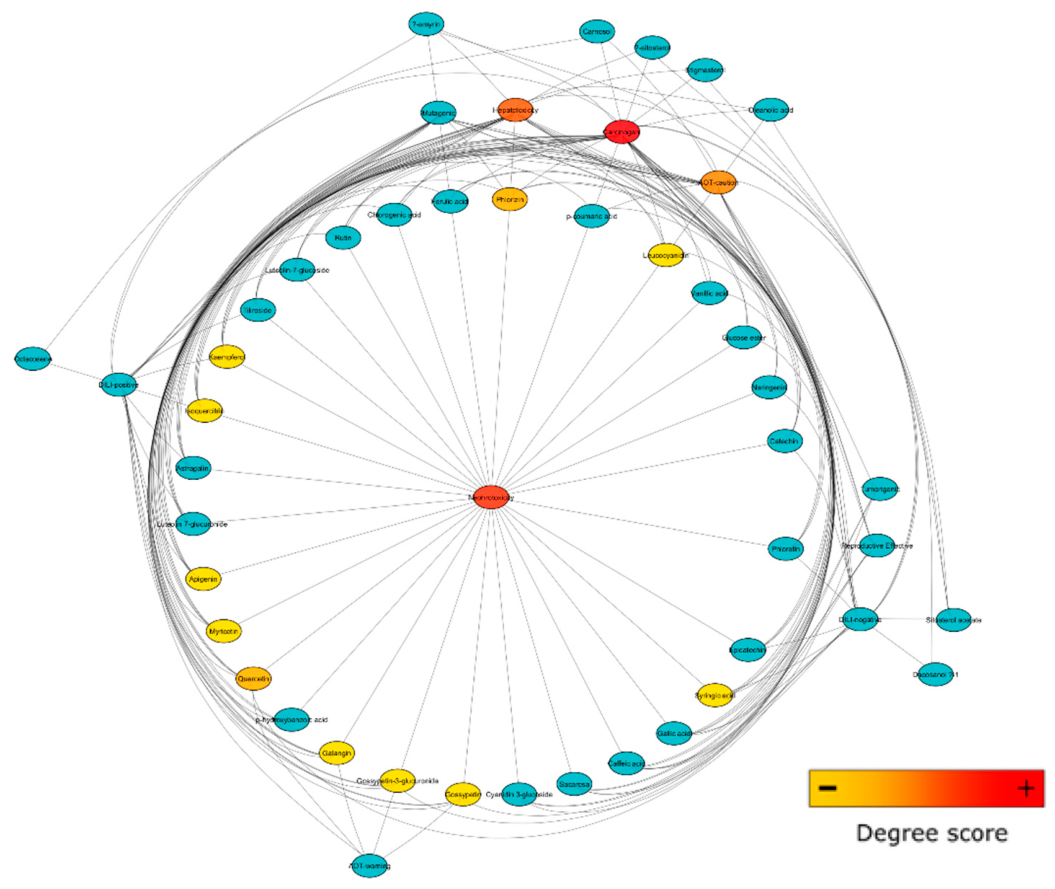
Figure 2.
Body weights of mice in the control group and those treated with different doses of AEs of Ch. pentadactylon flowers.
Figure 2.
Body weights of mice in the control group and those treated with different doses of AEs of Ch. pentadactylon flowers.
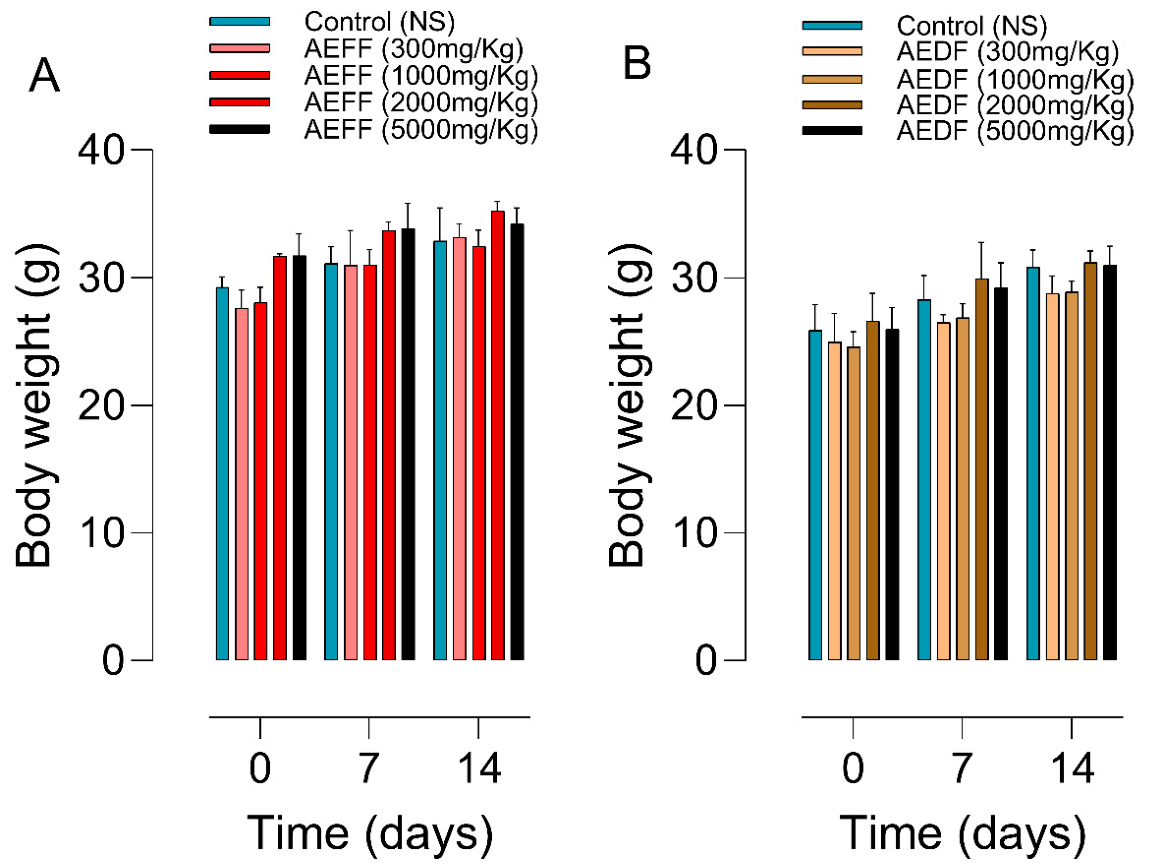
Figure 3.
Results of the Integrative Toxicity Prediction Model (ITPM) applied to the flower extract of C. pentadactylon. (A) The relative abundance of experimentally quantified metabolites, shown as the proportion each compound makes up of the total phytocomplex. (B) Each metabolite’s percentage toward the overall toxicity, showing which ones most affect the extract’s predicted risk. (C) Individual percentage contribution to the overall protective pressure, highlighting the compounds with the greatest participation in cytoprotective and antioxidant mechanisms. (D) The total toxicity is compared with the total protection from all the metabolites assessed. Using a sigmoid function, we converted the scores into probabilities. E) The chance of toxicity is 38.4%, and the chance of not being toxic is 61.6%. F) The heatmap illustrates the relative levels of abundance, toxicity, protection, and bioavailability for each metabolite. Overall, the results show a predominance of protective mechanisms over potentially toxic ones, supporting a low toxicological risk profile for the evaluated extract.
Figure 3.
Results of the Integrative Toxicity Prediction Model (ITPM) applied to the flower extract of C. pentadactylon. (A) The relative abundance of experimentally quantified metabolites, shown as the proportion each compound makes up of the total phytocomplex. (B) Each metabolite’s percentage toward the overall toxicity, showing which ones most affect the extract’s predicted risk. (C) Individual percentage contribution to the overall protective pressure, highlighting the compounds with the greatest participation in cytoprotective and antioxidant mechanisms. (D) The total toxicity is compared with the total protection from all the metabolites assessed. Using a sigmoid function, we converted the scores into probabilities. E) The chance of toxicity is 38.4%, and the chance of not being toxic is 61.6%. F) The heatmap illustrates the relative levels of abundance, toxicity, protection, and bioavailability for each metabolite. Overall, the results show a predominance of protective mechanisms over potentially toxic ones, supporting a low toxicological risk profile for the evaluated extract.
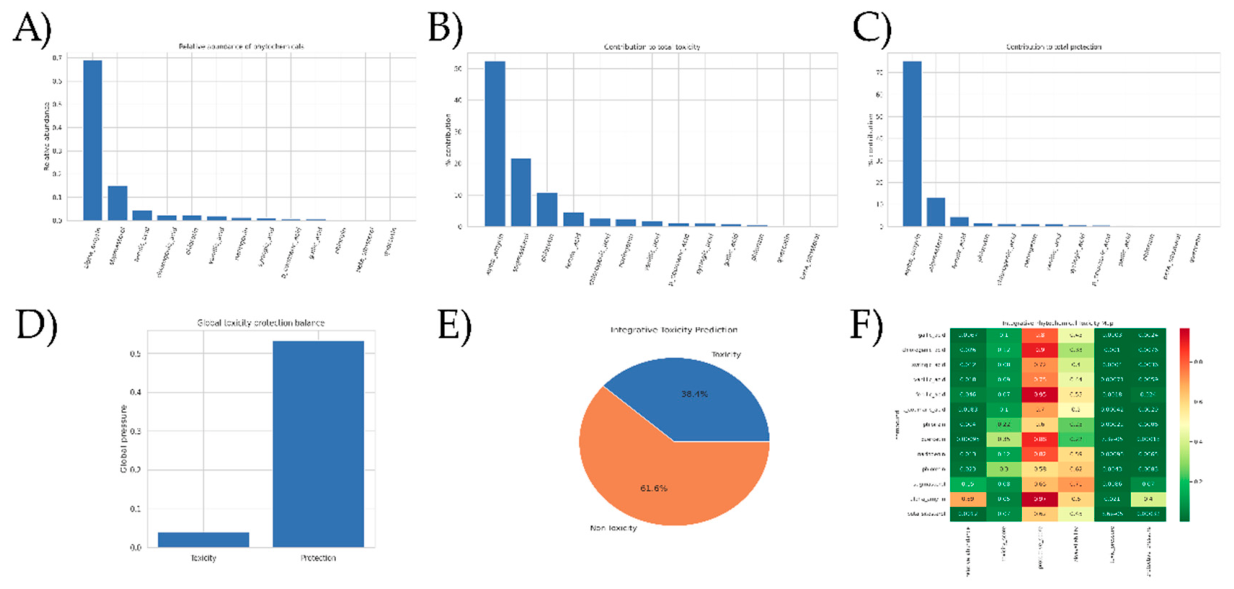

Table 1.
The compounds from Ch. pentadactylon d the Compound Identification Number or PubChem CID.
| Compound | CID | Reference |
|---|---|---|
| Dacosanol Β-1 | 12620 | [33] |
| Glucose Ester | 64689 | |
| Octacosene | 87821 | |
| Sitosterol Acetate | 5354503 | |
| Cyanidin 3-Glucoside | 441667 | [34] |
| Tiliroside | 5320686 | |
| Astragalin | 5282102 | |
| Isoquercitrin | 5280804 | |
| Catechin | 9064 | [35] |
| Epicatechin | 72276 | |
| Sacarosa | 5988 | |
| Gallic Acid | 370 | |
| Chlorogenic Acid | 1794427 | |
| Syringic Acid | 10742 | |
| Vanillic Acid | 8468 | |
| P-Hydroxybenzoic Acid | 135 | [31] |
| Caffeic Acid | 689043 | |
| Ferulic Acid | 445858 | |
| p-coumaric acid | 637542 | |
| Rutin | 5280805 | |
| Phlorizin | 6072 | |
| Myricetin | 5281672 | |
| Quercetin | 5280343 | |
| Naringenin | 439246 | |
| Phloretin | 4788 | |
| Apigenin | 5280443 | |
| Kaempferol | 5280863 | |
| Galangin | 5281616 | |
| Carnosol | 442009 | |
| Stigmasterol | 5280794 | |
| Oleanolic Acid | 10494 | |
| α-amyrin | 73170 | |
| β-sitosterol | 222284 |
Table 2.
Conditions of categorization of compounds from Ch. pentadactylon according to potential toxicity.
Table 2.
Conditions of categorization of compounds from Ch. pentadactylon according to potential toxicity.
| Category | Criteria |
|---|---|
| 1 | There is minimal or no potential for hepatotoxicity, carcinogenicity, nephrotoxicity, mutagenicity, or cardiotoxicity. |
| 2 |
There is a high potential for liver damage and a possible risk of carcinogenicity, nephrotoxicity, non-mutagenicity, and possibly cardiotoxicity. These findings indicate the presence of any of the concerning criteria. |
| 3 |
There is a high risk of hepatotoxicity, nephrotoxicity, and carcinogenicity, as well as a potential for cardiotoxicity and non-mutagenic. These findings indicate the presence of two or more concerning criteria. |
Table 3.
Classification of the 32 compounds based on their chemical profiles.
| Compound name | CID | Chemical profile | Brenk alerts | Category |
|---|---|---|---|---|
| p-hydroxybenzoic acid | 135 | Similar to methyl p-hydroxybenzoate, 4-hydroxybenzaldehyde, 1-(4-hydroxyphenyl) prop-2-en-1-one, 4’,4-dihydroxychalcone, salicylic acid, p-anisic acid, and sodium salicylate. | None |
2 |
| Gallic Acid | 370 | Similar to 2,3,4-trihydroxybenzoic acid, 3,5-dihydroxybenzoic acid, ethyl gallate, octyl_gallate, and N-dodecylgallate. | 1 alert: catechol | 2 |
| Phloretin | 4788 | Similar to morachalcone, licoagrochalcone, sulfamic acid, genistein, and daidzein | None | 3 |
| Sacarosa | 5988 | Similar to lactulose, lactitol, lactose, and maltose | None | 3 |
| Phlorizin | 6072 | Similar to daidzin, naringin, hesperidin, kushenol, puerarin, diosmin, and isorhamnetin | None | 3 |
| Vanillic Acid | 8468 | Similar to cylindol, Isovanillin, dibenzo-p-dioxin-2-carboxylic acid, vanillyl mandelic acid, and ethyl vanillin | None | 1 |
| Catechin | 9064 | Similar to epicatechin, CA4P, cantrixil, and tupichinol | 1 alert: catechol | 3 |
| Oleanolic Acid | 10494 | Similar to ursolic acid, 3alpha-Hydroxyurs-12-en-28-oic acid, and 3beta-hydroxyrus-12,19(29)-dien-28-oic acid | 1 alert: isolated alkene | 3 |
| Syringic Acid | 10742 | Similar to ethyl gallate, octyl gallate, n-dodecylgallate, phenstatin, and cylindol | None | 2 |
| Dacosanol Β-1 | 12620 | Similar to octanol,and 1-dodecanol | None | 1 |
| Glucose Ester | 64689 | Similar to D-glucose, D-mannose, Beta-D-Glucose, Alpha-D-mannose, and levovist | None | 1 |
| Epicatechin | 72276 | Similar to catechin,epicatechin, CA4P,cantrixil, and tupichinol | 1 alert: catechol | 3 |
| α-amyrin | 73170 | Similar to uvaol, olean-12-en-3beta,15alpha-diol, ME-3738,lanosterol,lupeol, oleanolic acid, and ursolic acid | 1 alert: isolated alkene | 3 |
| octacosene | 87821 | Similar to squalene, farnesyl, trisnorsqualene, and (E)-Octadec-9-enal | 1 alert: isolated alkene | 3 |
| β-sitosterol | 222284 | Similar to cholesterol, sitosterol, and desmosterol | 1 alert: isolated alkene | 3 |
| Naringenin | 439246 | Similar to liquirtigenin, 7-hydroxy-2 phenyl chroman-4-one, and pinocembrin | none | 3 |
| Cyanidin 3-Glucoside | 441667 | Similar to isorhamnetin, contigoside, patuletin,tamarixetin 3-glucoside-7-sulfate,rutin,diosmin,hesperidin,hidrosmin, and daidzin | 2 alerts: catechol, charged oxygen sulfur | 3 |
| Carnosol | 442009 | Similar to 5-desgalloylstachyurin, casuariin, and sigmoidin | 1 alert: catechol | 3 |
| Ferulic Acid | 445858 | Similar to isoferulic acid, dehydrozingerone,p-hydroxyphenethyl trans-ferulate, and curcumin | 1 alert: michael acceptor 1 | 3 |
| p-coumaric acid | 637542 | Similar to 2-hydroxycinnamic acid, 1,5-bis(4-hydroxyphenyl)penta-1,4-dien-3-one,3,4-dihydroxycinnamic acid, caffeic acid, and artepillin | 1 alert: michael acceptor 1 | 3 |
| Caffeic Acid | 689043 | Similar to 3,4-Dihydroxycinnamic acid, p-coumaric acid, ferulic acid, and isoferulic acid | 2 alerts: catecol, michael acceptor 1 | 3 |
| Chlorogenic Acid | 1794427 | Similar to cynarin, rosmarinic acid, caffeic acid, and N-dodecylgallate | 2 alerts: catecol, michael acceptor 1 | 3 |
| Quercetin | 5280343 | Similar to 3,7,3’,4’-tetrahydroxyflavone, robinetin,and myricetin | 1 alert: catechol |
3 |
| Apigenin | 5280443 | Similar to chrysin, 7,4’-dihydroxyflavone,7-hydroxy-2-(4-hydroxy-benzyl)-chromen-4-one,NSC-94258, and acacetin | None | 2 |
| Stigmasterol | 5280794 | Similar to cholesterol, citosterol, and desmosterol | 1 alert: isolated alkene | 3 |
| Isoquercitrin | 5280804 | Similar to contigoside, quercitrin,isorhamnetin, rutin, quercetin, and patuletin | 1 alert: catechol |
3 |
| Rutin | 5280805 | Similar to quercetin, quercitrin, isorhamnetin, contigoside,6-methoxykaempferol, patuletin, hidrosmin, diosmin, patuletin, and hesperidin | 1 alert: catechol |
3 |
| Kaempferol | 5280863 | Similar to galangin, morin, 3,7-dihydroxy-flavone, kaempferide, apigenin, and chrysin | None | 3 |
| Galangin | 5281616 | Similar to galangin, morin, 3,7-dihydroxy-flavone, kaempferide, apigenin, and chrysin | None | 3 |
| Myricetin | 5281672 | Similar to 3,7,3’,4’-tetrahydroxyflavone, robinetin, 2-(3,4-dihydroxy-phenyl)-7-hydroxy-chromen-4-one, and gossypetin | 1 alert: catechol |
3 |
| Astragalin | 5282102 | Similar to apigenin-7-o-beta-d-glucuronide, apigenin-7-o-beta-d-glucuronide methyl ester,tiliroside, and icariside | None | 3 |
| Tiliroside | 5320686 | Similar to apigenin-7-O-beta-D-glucuronide, apigenin-7-O-beta-D-glucuronide methyl ester, astragalin, kaempferol-3-o-(2’’-o-galloyl)-glucoside, and daidzin | 1 alert: Michael acceptor 1 | 3 |
Table 4.
Most multi-toxic compounds and their main features.
| Compound | CID | Result | Server or software | Reliability | Score |
|---|---|---|---|---|---|
| Phlorizin | 6072 | Nephrotoxic, Reproductive effective, Mutagenic, Carcinogen, Hepatotoxic, and AOT: warning (predicted LD50: 3000mg/kg). |
ProTox-III, Toxtree, VEGA, Datawarrior, DL-AOT | Moderate | 3.16 |
| Quercetin | 5280343 | Nephrotoxicity, Carcinogenicity, Mutagenic, Tumorigenic, Carcinogen, Hepatotoxic, DILI-positive, and AOT: warning (predicted LD50: 159 mg/kg). |
ProTox-III, Toxtree, VEGA, Datawarrior, DL-DILI, and DL-AOT | Moderate | 3.16 |
| Galangin | 5281616 | Nephrotoxicity, Mutagenic, Carcinogen, Hepatotoxic, DILI-positive, and AOT: caution (predicted LD50: 3919 mg/kg). |
ProTox-III, Toxtree, VEGA, Datawarrior, DL-DILI, and DL-AOT | Good | 3.12 |
| Kaempferol | 5280863 | Nephrotoxic, Mutagenic, Carcinogen, Hepatotoxic, and AOT: warning (predicted LD50: 3919 mg/kg). |
ProTox-III, Toxtree, VEGA, Datawarrior, DL-AOT | Moderate | 3.12 |
| Myricetin | 5281672 | Nephrotoxic, Mutagenic, Carcinogen, Hepatotoxic, DILI-positive, and AOT: caution (predicted LD50: 159 mg/kg). |
ProTox-III, Toxtree, VEGA, Datawarrior, DL-DILI, DL-AOT | Moderate | 3.12 |
| Apigenin | 5280443 | Nephrotoxicity, Mutagenic, Carcinogen, Hepatotoxic, DILI-positive, and AOT: caution (predicted LD50: 2500 mg/kg). |
ProTox-III, Toxtree, VEGA, Datawarrior, DL-DILI, DL-AOT | Good | 3.12 |
| Isoquercitrin | 5280804 | Nephrotoxic, Mutagenic, Carcinogen, Hepatotoxic, DILI-positive, and AOT: caution (predicted LD50: 5000 mg/kg). |
ProTox-III, Toxtree, VEGA, DL-DILI, DL-AOT | Moderate | 3.12 |
| Syringic acid | 10742 | Nephrotoxic, Mutagenic, Carcinogen, and AOT: caution (predicted LD50: 1700 mg/kg). |
ProTox-III, VEGA, Datawarrior, DL-AOT | 3.12 |
Table 5.
Global toxicity for Ch. pentadactylon by the integrative model.
| Metric | Value |
|---|---|
| Total Toxicity | 0.03945179 |
| Total Protection | 0.53323127 |
| Net Toxicity | -0.49377948 |
| Probability Toxicity % | 38.4484013 |
| Probability Non-Toxicity % | 61.5515987 |
| Interpretation | Low toxicity |
Disclaimer/Publisher’s Note: The statements, opinions and data contained in all publications are solely those of the individual author(s) and contributor(s) and not of MDPI and/or the editor(s). MDPI and/or the editor(s) disclaim responsibility for any injury to people or property resulting from any ideas, methods, instructions or products referred to in the content. |
© 2026 by the authors. Licensee MDPI, Basel, Switzerland. This article is an open access article distributed under the terms and conditions of the Creative Commons Attribution (CC BY) license (http://creativecommons.org/licenses/by/4.0/).
Copyright: This open access article is published under a Creative Commons CC BY 4.0 license, which permit the free download, distribution, and reuse, provided that the author and preprint are cited in any reuse.