

Submitted:
22 July 2026
Posted:
23 July 2026
You are already at the latest version
Abstract
Background/Objectives: Diabetic foot syndrome (DFS) is a serious complication of diabetes that poses a high risk of morbidity/mortality. The management of these patients requires a multidisciplinary team approach, as these patients are “complex” and “fragile”. Despite this, the rate of re-amputation remains high. This study aims to evaluate the degree of multidimensional complexity in patients with DFS using specific tools and to determine if it is an additional risk factor for amputation. Methods: The study was conducted on a cohort of 115 patients referred to a Tertiary Center of University Hospital of Modena from January to December 2021. The study used 12 variables to assess patients, including age, sex, caregiver presence, BARTHEL INDEX, LAWTON-BRODY SCALE, Mini Mental State Examination, Cumulative Illness Rating Scale (CIRS), SINBAD system, Malnutrition Universal Screening Tool and Italian National Association of Social Workers Tool. All patients were taken care of by the Multidisciplinary Team in order to standardize care according to the updated guidelines. Patients were classified based on amputation and revascularization status. Statistical analyses were performed using R software version 4.1.1. Results: The analysis showed that a greater clinical complexity and more severe ulcer had a greater risk of amputation (respectively OR 3.13, p 0.035 and OR 1.53, p 0.015). The study confirms the predictive value of tools such as CIRS and SINBAD in amputation risk stratification for patients with DFS. Conclusions: Although limitations, due to a small sample size, the use of multidisciplinary approach and multidimensional evaluation tools can identify “unconventional” risk factors that, if modified, could delay and/or reduce the risk of amputation. Further studies are needed to investigate the role of caregiving in the prevention of amputation in patients with DFS.
Keywords:
diabetic foot ulcer
; multimorbidity
; caregiver
1. Introduction
Diabetes mellitus is a high prevalence chronic disease with an increasing trend and a high impact on health systems: it is estimated that 61 million people are affected in Europe [1], of which 4 million in Italy [2]. Diabetic subjects have a more than double risk of hospitalization (235 against 99 per 1 000 people) and an average longer hospitalization (11.3 days against 9.9) compared to non-diabetics, with higher costs associated to complications and comorbidities.[3] In the diabetic patient, the presence of multimorbidity worsens the prognosis: in about 80% of the cases there is at least one other chronic disease such as COPD, ischemic cardiomyopathy, heart failure, chronic kidney disease, non-alcoholic fatty liver disease, with a significant increase in mortality for all causes, especially cardiovascular ones (OR 1.22-5.46) [4,5,6].
Diabetic foot syndrome (DFS) is defined by the presence of an ulcer with varying degrees of ischemia, infection, and/or neuropathy in the diabetic individual [7]. It represents a formidable complication of diabetes mellitus, characterized by high mortality, morbidity and commitment of resources. The lifetime risk of a person with diabetes to develop a foot ulcer is 15-25% [8]; every 30 seconds in the world a lower limb is amputated due to diabetes [9] and the probability of an ulcer recurrence is 40% within 12 months [10].
The patient with diabetic foot syndrome can be defined as "complex" and "fragile", with a 4 times higher risk of cardiovascular mortality than diabetics without ulcers; it is known that the patient with a previous amputation has a 5-year mortality risk of 39-68% [11].
Among the main risk factors for amputation in DFS are the presence of PAD (Peripheral Arterial Disease), peripheral neuropathy, a concurrent infection, malnutrition, renal disease, especially in the presence of co-morbidities [12,13,14]. Even the lack of therapeutic education of patients and their caregivers seems to interfere with ulcer healing [15], even if, to date, validated systems to evaluate the adequacy of caregiving in patients with DFS do not exist. The impact of DFS is high in terms of economic resources on Welfare Systems in the World and worsens the patient’s and his caregivers’ quality of life [16]; for these reasons, the patient affected by DFS can be defined as "complex" and "fragile". International guidelines suggest that management by a multidisciplinary team appears to be able to reduce major amputations and alleviate the burden in DFS [16]. Despite this, the rate of re-amputations continues to be high (19% within 12 months and 37% within 5 years) [17]; this could be related to risk factors not yet identified.
Complexity in DFS
In the literature, there are different definitions of "frailty", a condition associated not only with advanced age but above all with bio-psycho-social "complexity" [18,19].
It is defined as “a clinically recognizable state of increased vulnerability resulting from aging-associated decline in reserve and function across multiple physiologic systems such that the ability to cope with everyday or acute stressors is compromised” [20] or as “impaired resolution to homoeostasis following a stressor event” [21]. Overall, frailty is associated with a more than doubled risk of mortality in men and women aged 45 years and older, increases the risk of hospitalization (OR 1.82), and results in loss of basic autonomy (OR 2.05) [22]. The risk increases in the presence of multimorbidity [21], outlining a "complex" patient phenotype.
The "complex" phenotype is a peculiar identity that does not result from the mere sum of the individual pathologies that compose it, but from their multidimensional interaction. Furthermore, it includes biological, socioeconomic, cultural, behavioral and environmental characteristics as key determinants of patient health [23] (Table 1).
The fragile and complex patient requires a global and integrated approach (bio-psycho-social approach) [18] and the use of tools capable of assessing multidimensional health that can be adapted to the specific pathology [27,28,29,30]. Currently, there are no validated tools capable of facilitating the multidimensional assessment of the patient with DFS.
The aim of our study is to describe, through specific tools, the degree of multidimensional complexity in a sample of patients with DFS belonging to 3rd level of the Provincial Diabetic Foot ICP (Integrated Care Pathway) of Modena and to evaluate whether it constitutes an additional risk factor for amputation or not. Secondary outcomes: rate of hospitalization and revascularization procedures.
2. Materials and Methods
This retrospective study was conducted on a cohort of patients consecutively referred to the Metabolic Internal Medicine Department of the University Hospital of Modena (Tertiary Center of the Diabetic Foot ICP), both inpatient and outpatient, in the period January-December 2021. The protocol was approved by the relevant ethics committee and according to local regulation (protocol number 855/2019) and written informed consent was obtained from all participants. For the multidimensional evaluation, each patient was given specific forms validated in the literature and/or suggested by the International Guidelines (Table 2).
The general characteristics of the population examined, are described in Table 3.
According to the International Guidelines[7], amputation were classified as "minor" if performed at or distal to the ankle, "major" if performed proximal to the ankle, "absent" if not performed. Revascularization was classified as Percutaneous Transluminal Angioplasty (PTA), “By-pass” of the lower limb, or “no revascularization”.
For each patient, 12 variables were identified, 6 of which numerical, relating to the score obtained in BARTHEL INDEX, LAWTON-BRODY SCALE, MMSE (Mini Mental State Examination), CIRS (Cumulative Illness Rating Scale), SINBAD System and based on AGE and 6 categorical variables, based on SEX , on the score obtained in MUST (Malnutrition Universal Screening Tool), ONAS tool (Ordine Nazionale Assistenti Sociali-Italian National Association of Social Workers), whether or not a REVASCOLARIZATION and/or AMPUTATION intervention was performed, presence or absence of a CAREGIVER.
All patients included in the study belong to Tertiary Center of the ICP for the treatment of diabetic foot in the province of Modena, and taken care of by the Multidisciplinary Team made up of internists, vascular surgeons, infectious disease specialists, orthopedists, radiologists, endocrinologists, dermatologists, microbiologists and clinical psychologists in order to standardize care [37].
Statistical analysis
All statistical analyses were performed using R software version 4.1.1.
The p-values obtained from the tests performed were considered significant when <0.05.
Numerical variables were described as mean ± standard deviation or as median and interquartile range, while dichotomous and categorical variables are reported in terms of absolute frequencies and percentages. The association between numerical variables was measured using Pearson's product-moment correlation, while the degree of association between categorical variables was evaluated using Pearson's χ[2] test or Fisher's exact test. The association analysis between categorical and numeric variables was performed using one-way ANOVA. Odds ratios and related confidence intervals were calculated on the basis of coefficients and variances estimated from logistic regression models. A multivariable logistic analysis was performed to correct for the effect of the variables considered. In particular, all the variables associated with the outcome in the univariable analysis were entered into the model, as well as other variables of clinical interest. Observations presenting at least one missing value with respect to the variables of interest were excluded from the analysis.
3. Results
3.1. Characteristics of the sample examined
During the observation period, a total of 115 patients with DFS were identified (84 M, 73%; 31 F, 27%) with a mean age of 70.6±10.6. Of these, 41 (35.7%) were outpatient (mean age 71 years) while 74 (64.3%) were inpatients (mean age 70 years). Both outpatients and inpatients were taken care of by the Multidisciplinary Team (Diabetic-Foot-Care Team) and subjected to standard diagnostic-therapeutic care according to the updated guidelines.
Table 4 describes the characteristics of hospitalized patients (group A) and outpatients (group B). It can be seen, from the descriptive analysis of the sample examined, that inpatients (group A) were characterized, compared to outpatients (group B), by worse ulcer status and greater clinical complexity, with a greater risk of malnutrition and greater recurrence to revascularization and amputation procedures; the autonomy degree was worse in hospitalized patients, both in basic and instrumental activities; the caregiver was found to be more present in hospitalized patients. The cognitive level was comparable between Group A and Group B; the socio-economic complexity was also similar (moderate level), however, due to the large number of missing data it was not possible to evaluate the impact of this last variable on the outcomes, and it was therefore excluded from the statistical analysis.
3.2. The bio-psycho-social "complexity”
By evaluating the sample as a whole, it also emerged that a higher cognitive level is related to greater autonomy in ADL (Activities Daily Living) and IADL (Instrumental Activities Daily Living) and that there is an association between advanced age and a lower MMSE score; advanced age correlates with lower autonomy in ADLs (p 0.002); multimorbid patients (high CIRS score) are less autonomous in both ADL and IADL; there is a direct correlation for the degree of autonomy in ADL and IADL.
In the sample examined, the presence of the caregiver appears to be more frequent in elderly subjects and in no self-sufficient subjects in ADLs. (p-values 0.015 and 0.016, respectively). It seems that many self-sufficient ADL patients have a caregiver: this probably depends on the fact that they are not young patients (mean age of the sample 70 years), that they may have difficulty in IADL and that therefore they still need home assistance.
From our study it is also possible to observe that the male sex is associated with worse autonomy in IADL compared to the female one (p-value = 0.04; mean difference = -.17): this may depend on the fact that for cultural reasons many older males have never performed some of the activities described in the IADL (doing the laundry, housekeeping, food preparation) and this can alter the final score, as already known in the literature [38].
3.3. Outcomes
In our study, 72 patients (62.6% of the total) did not undergo amputation, 43 patients (37.4% of the total) underwent amputation: 38 patients (33% of the total, 2 outpatients, 36 inpatients) underwent surgery with minor amputation, only 5 patients (6.8% of the total) required a major amputation on admission. The prevalence of minor amputation is higher in hospitalized patients (48.6% vs 4.9%) (Table 3).
During the observation period, revascularization was performed in 86% of the subjects undergoing amputation, in line with the guidelines. Only in 6 cases the amputation was not preceded by revascularization during hospitalization: in 5 cases (4 M, 1 F) it had been performed in the previous six months, in 1 case there were good distal flows on Doppler evaluation. 100% of subjects revascularized via bypass subsequently undergo amputation, compared to 69% of patients subjected to revascularization via PTA, probably due to a greater severity of vascular compromise. All patients undergoing “major amputation” had a high score on the SINBAD System classification (between 5 and 6); there are no significant differences between the other variables compared to the total sample.
In our study, minor amputation appears to be more frequent in males (although this trend is not statistically significant, OR=2.079, p-value 0.134), consistently with data from the literature in which the male sex is considered to be a risk factor for amputation [12].
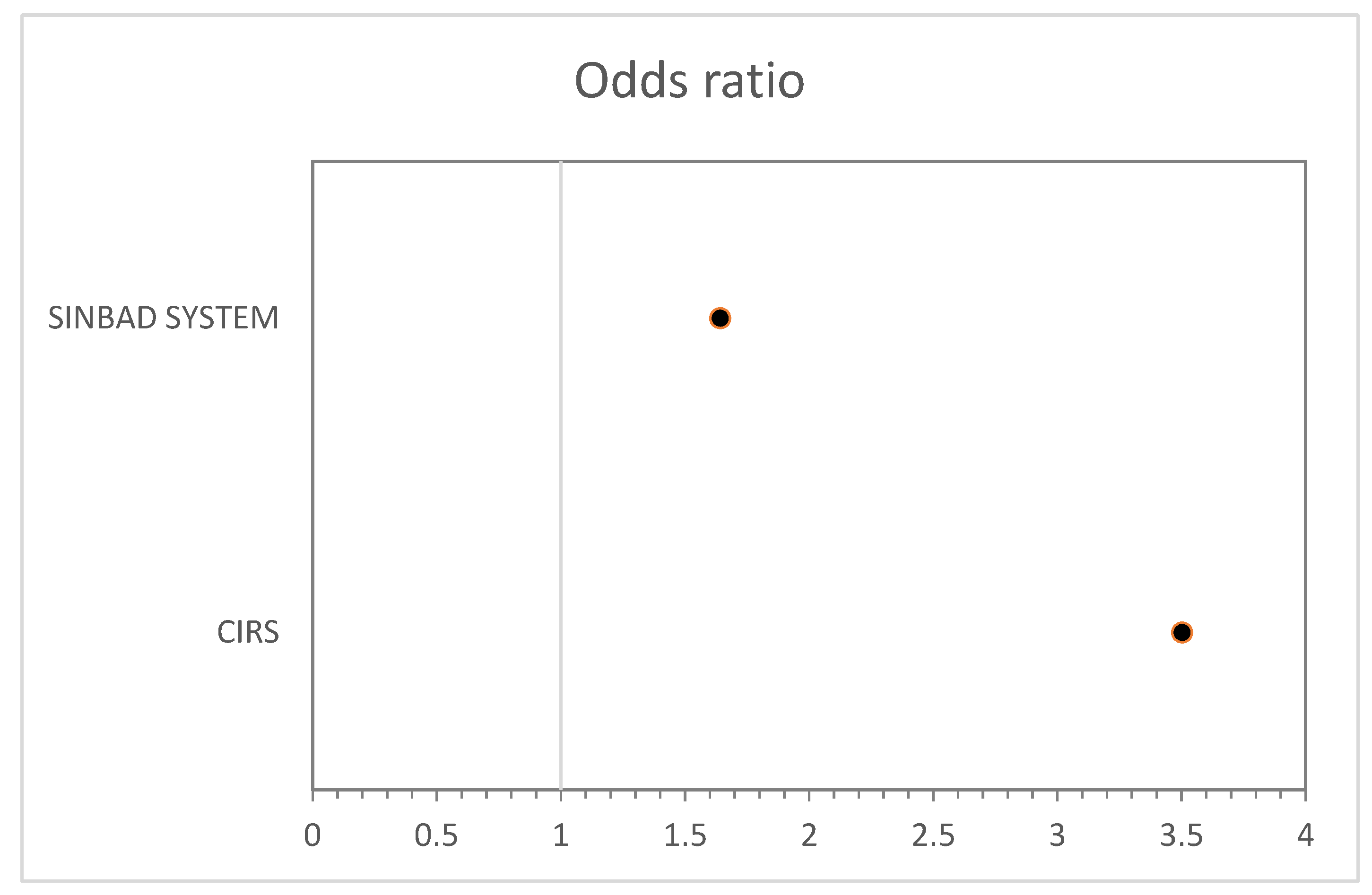
As far as the assessment of clinical complexity is concerned, in the sample examined, patients with greater clinical complexity (higher CIRS severity index) and a more severe level of ulcer status (higher score on the SINBAD System) have a greater risk of minor amputation: this confirms the predictive value of tools such as CIRS and SINBAD in amputation risk stratification, especially in “fragile” and “complex” patients. This association is significant both in the univariable analysis (respectively OR 3.5, p 0.006 and OR 1.64, p 0.001) (Graph 1) and in the multivariable analysis (respectively OR 3.13, p 0.035 and OR 1.53, p 0.015) (Graph 2).\
Particularly suggestive is that, unlike what is described in the literature[39,40], in our sample the presence of a caregiver does not appear to be a protective factor (Graph 2). It is probable that the assessment of the mere presence/absence of a caregiver is not sufficient and that a careful assessment of its adequacy is mandatory, in order to be able to take any therapeutic education measures. Further studies will be needed to investigate the role of caregiving in the prevention of major amputation in patients with diabetic foot syndrome.
4. Discussion
Our study analyses the characteristics of a sample of 115 diabetic patients belonging to Tertiary Center of the ICP for diabetic foot care in the province of Modena (74 inpatients vs 41 outpatients). In the sample examined, inpatients (group A) appear to present greater clinical complexity (mean CIRS 2.23) than outpatients (group B, mean CIRS 1.86), confirming the appropriateness of hospitalization and the advantage of a multidisciplinary approach: only 5 patients underwent major amputation. Our study confirms some risk factors for amputation already known in the literature [41,42] and definable as "classics", such as the high score obtained on the SINBAD System and male sex. Our study demonstrates that the approach to DFS through a multidisciplinary team that identifies and manages not only the acute complication of the ulcer, but also the multimorbidity measured through specific assessment forms, is able to reduce major amputations. In particular, the score obtained with the CIRS tool, in addition to correlating with mortality, hospitalization risk, disability and impact of drug therapy [43,44], appears to be independently associated with the risk of major amputation since it identifies the degree of complexity of the patient with DFS.
Currently, there are no specific indications for the management of multimorbidity since most guidelines focus on single diseases and are heterogeneous and not very comparable [21,45,46]. A 2018 review by Chiang et al. emphasizes the need for clinical guidelines to support a 'holistic' approach to the complex care needs of patients affected by type 2 diabetes with multimorbidity, where care of the whole person should be the primary concern[5].
The diabetic foot is to be considered to all intents and purposes just one side of a very complex systemic syndrome, which not only hurts the body in its entirety, and occur as one of the organ damages caused by the chronic hyperglycemia (such as cardiovascular, renal, cerebral, hepatic damage) but also affects the patient's autonomy and ability to fend for himself. In our study, the presence of a caregiver does not seem to be significantly related to the other variables, in particular with the Amputation outcome; this is probably motivated by the fact that the mere presence/absence of a caregiver is not sufficient to be associated (directly or inversely) with the "amputation" outcome as it would be necessary to verify its adequacy.
It is therefore important to underline the importance of correctly investigating the state of the ulcer, the presence of co-pathologies capable of significantly affecting the patient's functional autonomy and the need to evaluate the adequacy, not only the presence, of a caregiver through validated and appropriate tools. To reduce major amputations it is essential to take care of all the pathologies and train the caregiver in the co-management of the diabetic foot ulcer through sessions of therapeutic education and monitoring progress by intervening before the unfavorable evolution.
5. Conclusions
Albeit with some limitations, mainly constituted by the small size of the sample, this analysis on 115 patients with complicated diabetic foot ulcer admitted to the Tertiary Center of Modena showed that, in subjects with diabetic foot syndrome undergoing amputation, risk factors are represented by male gender, ulcer classification, clinical complexity and impairment of functional autonomies in the presence of multimorbidity. In our series, the presence of multimorbidity appears to be an independent risk factor for amputation.
In conclusion, the patient with DFS can be considered "fragile" and "complex" and requires a multidimensional approach: in such patients, the use of specific multidimensional evaluation tools can identify "unconventional" risk factors which, if modified, could delay and/or reduce the risk of amputation.
In our experience, a correct management of the patient with DFS, together with an adequate management of the diabetic ulcer, a choice of the correct medical-surgical therapy, specific training involving health professionals, patients and their caregivers and through the improvement of multidisciplinary pathways, the correction of "conventional" and "unconventional" modifiable risk factors can improve outcomes and must be considered in the Integrated Care Pathway (ICP) aimed at defining a "personalized and holistic" approach.
Acknowledgements
This study was performed at the University Hospital of Modena.
Funding
This research did not receive any specific funding from public, commercial, or non-profit funding entities.
Conflict of interest
The authors declare that they have no conflict of interest.
Abbreviations
The following abbreviations are used in this manuscript:
| ADL | Activities of Daily Living |
| CIRS | Cumulative Illness Rating Scale |
| DFS | Diabetic Foot Syndrome |
| IADL | Instrumental Activities of Daily Living |
| MMSE | Mini Mental State Examination |
| MUST | Malnutrition Universal Screening Tool |
| ONAS | Ordine Nazionale Assistenti Sociali (Italian National Association of Social Workers) |
| PAD | Peripheral Arterial Disease |
| ICP | Integrated Care Pathway |
| PTA | Percutaneous Transluminal Angioplasty |
References
- Sun, H.; Saeedi, P.; Karuranga, S.; et al. IDF Diabetes Atlas: Global, regional and country-level diabetes prevalence estimates for 2021 and projections for 2045. Diabetes Res. Clin. Pract. 2022, 183, 109119. [Google Scholar] [CrossRef] [PubMed]
- Bonora, E.; Cataudella, S.; Marchesini, G.; et al. under the mandate of the Italian Diabetes Society. Clinical burden of diabetes in Italy in 2018: a look at a systemic disease from the ARNO Diabetes Observatory. BMJ Open Diabetes Res. Care 2020, 8, e001191. [Google Scholar] [CrossRef] [PubMed]
- Enzo Bonora; ARNO Diabetes Observatory, SID Italia. 2019. Available online: www.siditalia.it.
- Berti E, Camplone I, Fortuna D et al; Dossier n. 267/2019: Epidemiology and clinical, economic and organizational impact of diabetes in Emilia-Romagna. Summary of research activities 2016-2018. In Agenzia sanitaria e sociale regionale dell’Emilia-Romagna. 2019 June.
- Chiang, J.I.; Jani, B.D.; Mair, F.S.; et al. Associations between multimorbidity, all-cause mortality and glycaemia in people with type 2 diabetes: A systematic review. PLoS ONE 2018, 13, e0209585. [Google Scholar] [CrossRef] [PubMed]
- Muilwijk, M.; Ho, F.; Waddell, H.; et al. Contribution of type 2 diabetes to all-cause mortality, cardiovascular disease incidence and cancer incidence in white Europeans and South Asians: findings from the UK Biobank population-based cohort study. BMJ Open Diabetes Res. Care 2019, 7, e000765. [Google Scholar] [CrossRef] [PubMed]
- van Netten, J.J.; Bus, S.A.; ApelqvistJ; et al. International Working Group on the Diabetic Foot. Definitions and criteria for diabetic foot disease. Diabetes Metab. Res. Rev. 2020, 36 Suppl 1, e3268. [Google Scholar] [CrossRef] [PubMed]
- Armstrong, D.G.; Boulton, A.J.M.; Bus, S.A. Diabetic Foot Ulcers and Their Recurrence. N Engl. J. Med. 2017, 376, 2367–2375. [Google Scholar] [CrossRef] [PubMed]
- Yazdanpanah, L.; Shahbazian, H.; Nazari, I.; et al. Incidence and Risk Factors of Diabetic Foot Ulcer: A Population-Based Diabetic Foot Cohort (ADFC Study)-Two-Year Follow-Up Study. Int. J. Endocrinol. 2018, 2018, 7631659. [Google Scholar] [CrossRef] [PubMed]
- Salutini, E.; Brocco, E.; Da Ros, R.; et al. The Complexity of Diabetic Foot Management: From Common Care to Best Practice. The Italian Expert Opinion by Delphi Survey. Int. J. Low. Extrem Wounds 2020, 19, 34–43. [Google Scholar] [CrossRef] [PubMed]
- Dietrich, I.; Braga, G.A.; de Melo, F.G.; et al. The Diabetic Foot as a Proxy for Cardiovascular Events and Mortality Review. Curr. Atheroscler. Rep. 2017, 19, 44. [Google Scholar] [CrossRef] [PubMed]
- Sen, P.; Demirdal, T.; Emir, B. Meta-analysis of risk factors for amputation in diabetic foot infections. Diabetes Metab. Res. Rev. 2019, 35, e3165. [Google Scholar] [CrossRef] [PubMed]
- Margolis, D.J.; Hofstad, O.; Feldman, H.I. Association between renal failure and foot ulcer or lower-extremity amputation in patients with diabetes. Diabetes Care 2008, 31, 1331–6. [Google Scholar] [CrossRef] [PubMed]
- Lauwers, P.; Dirinck, E.; Van Bouwel, S.; et al. Malnutrition and its relation with diabetic foot ulcer severity and outcome: a review. Acta Clin. Belg. 2022, 77, 79–85. [Google Scholar] [CrossRef] [PubMed]
- Margolis, D.J.; Hampton, M.; Hoffstad, O.; et al. Health literacy and diabetic foot ulcer healing. Wound Repair Regen. 2015, 23, 299–301. [Google Scholar] [CrossRef] [PubMed]
- Schaper, N.C.; van Netten, J.J.; Apelqvist, J.; et al.; IWGDF Editorial Board Practical Guidelines on the prevention and management of diabetic foot disease (IWGDF 2019 update). Diabetes Metab. Res. Rev. 2020, 36 Suppl 1, e3266. [Google Scholar] [CrossRef] [PubMed]
- Liu, R.; Petersen, B.J.; Rothenberg, G.M.; et al. Lower extremity reamputation in people with diabetes: a systematic review and meta-analysis. BMJ Open Diabetes Res. Care 2021, 9, e002325. [Google Scholar] [CrossRef] [PubMed]
- Engel, G.L. The need for a new medical model: a challenge for biomedicine. Science 1977, 196, 129–36. [Google Scholar] [CrossRef] [PubMed]
- Becchi, M.A.; Carulli, N. Le basi scientifiche dell'approccio bio-psico-sociale. Indicazioni per l'acquisizione delle competenze mediche appropriate. In Internal and Emergency Medicine; - ISSN 1970-9366. 3, 2009. [Google Scholar]
- Xue, Q.L. The frailty syndrome: definition and natural history. Clin. Geriatr. Med. 2011, 27, 1–15. [Google Scholar] [CrossRef] [PubMed]
- Hanlon, P.; Nicholl, B.I.; Jani, B.D.; Lee, D.; McQueenie, R.; Mair, F.S. Frailty and pre-frailty in middle-aged and older adults and its association with multimorbidity and mortality: a prospective analysis of 493 737 UK Biobank participants. Lancet Public Health 2018, 3, e323–e332. [Google Scholar] [CrossRef] [PubMed]
- Vermeiren, S.; Vella-Azzopardi, R.; Beckwée, D.; Habbig, A.K.; Scafoglieri, A.; Jansen, B.; Bautmans, I. Gerontopole Brussels Study group. Frailty and the Prediction of Negative Health Outcomes: A Meta-Analysis. J. Am. Med. Dir. Assoc. 2016, 17, 1163.e1–1163.e17. [Google Scholar] [CrossRef] [PubMed]
- Tragni, E.; Sala, F.; Casula, M. Elders with multiple chronic conditions: epidemiology and drug use. In Giornale Italiano di Farmacoeconomia e Farmacoutilizzazione ; 2014; Volume 6, 3, pp. 5–16. [Google Scholar]
- Mezzich, J.E.; Salloum, I.M. Clinical complexity and person-centered integrative diagnosis. World Psychiatry 2008, 7, 1–2. [Google Scholar] [CrossRef] [PubMed]
- Bravetti, C.; Cocchieri, A.; D'Agostino, F.; et al. Definizione e variabili costituenti la complessità assistenziale infermieristica. Una revisione della letteratura [Definition and variables of complexity of nursing care: a literature review]. Ig. Sanità Pubbl. 2016, 72, 233–48. [Google Scholar] [PubMed]
- Fiscella, K.; Williams, D.R. Health disparities based on socioeconomic inequities: implications for urban health care. Acad. Med. 2004, 79, 1139–47. [Google Scholar] [CrossRef] [PubMed]
- Leonardi, M.; Raggi, A.; Ajovalasit, D.; et al. Functioning and disability in migraine. Disabil. Rehabil. 2010, 32 Suppl 1, S23–32. [Google Scholar] [CrossRef] [PubMed]
- Goljar, N.; Burger, H.; Vidmar, G.; et al. Functioning and disability in stroke. Disabil. Rehabil. 2010, 32 Suppl 1, S50–8. [Google Scholar] [CrossRef] [PubMed]
- Awad, H.; Alghadir, A. Validation of the comprehensive international classification of functioning, disability and health core set for diabetes mellitus: physical therapists' perspectives. Am. J. Phys. Med. Rehabil. 2013, 92, 968–79. [Google Scholar] [CrossRef] [PubMed]
- Fatma, S.; Noohu, M.M. Classification of functionality of people with diabetic peripheral neuropathy based on international classification of functioning, disability and health Core set (ICF-CS) of diabetes mellitus. J. Diabetes Metab. Disord. 2020, 19, 213–221. [Google Scholar] [CrossRef] [PubMed]
- de Groot, V.; Beckerman, H.; Lankhorst, G.J.; BouterLM. How to measure comorbidity. a critical review of available methods. J. Clin. Epidemiol. 2003, 56, 221–9. [Google Scholar] [CrossRef] [PubMed]
- Mahoney, F.I.; Barthel, D.W. Functional evaluation: The Barthel Index. Md. State Med. J. 1965, 14, 61–5. [Google Scholar] [PubMed]
- Graf, C. The Lawton instrumental activities of daily living scale. Am. J. Nurs. 2008, 108, 52–62; quiz 62-3. [Google Scholar] [CrossRef] [PubMed]
- Tombaugh, T.N.; McIntyre, N.J. The mini-mental state examination: a comprehensive review. J. Am. Geriatr. Soc. 1992, 40, 922–35. [Google Scholar] [CrossRef] [PubMed]
- Monteiro-Soares, M.; Russell, D.; Boyko, E.J.; et al. International Working Group on the Diabetic Foot (IWGDF). Guidelines on the classification of diabetic foot ulcers (IWGDF 2019). Diabetes Metab. Res. Rev. 2020, 36 Suppl 1, e3273. [Google Scholar] [CrossRef] [PubMed]
- Stratton, R.J.; Hackston, A.; Longmore, D.; et al. Malnutrition in hospital outpatients and inpatients: prevalence, concurrent validity and ease of use of the 'malnutrition universal screening tool' ('MUST') for adults. Br. J. Nutr. 2004, 92, 799–808. [Google Scholar] [CrossRef] [PubMed]
- Maurantonio, M.; Gabrielli, F.; Castellano, C.; et al. Risk factors in acute diabetic foot syndrome: analysis of 75 consecutive patients referred to a tertiary center in Modena, Italy. Explor Med. 2021, 2, 98–109. [Google Scholar] [CrossRef]
- Sheehan, C.M.; Tucker-Drob, E.M. Gendered Expectations Distort Male-Female Differences in Instrumental Activities of Daily Living in Later Adulthood. J. Gerontol. B Psychol. Sci. Soc. Sci. 2019, 74, 715–723. [Google Scholar] [CrossRef] [PubMed]
- Nather, A.; Cao, S.; Chen, J.L.W.; et al. Prevention of diabetic foot complications. Singap. Med. J. 2018, 59, 291–294. [Google Scholar] [CrossRef] [PubMed]
- van Netten, J.J.; Price, P.E.; Lavery, L.A.; et al. International Working Group on the Diabetic Foot. Prevention of foot ulcers in the at-risk patient with diabetes: a systematic review. Diabetes Metab. Res. Rev. 2016, 32 1 Suppl, 84–98. [Google Scholar] [CrossRef] [PubMed]
- Lin, C.; Liu, J.; Sun, H. Risk factors for lower extremity amputation in patients with diabetic foot ulcers: A meta-analysis. PLoS ONE 2020, 15, e0239236. [Google Scholar] [CrossRef] [PubMed]
- Monteiro-Soares, M.; Boyko, E.J.; Jeffcoate, W.; et al. Diabetic foot ulcer classifications: A critical review. Diabetes Metab. Res. Rev. 2020, 36 Suppl 1, e3272. [Google Scholar] [CrossRef] [PubMed]
- Hudon, C.; Fortin, M.; Vanasse, A. Cumulative Illness Rating Scale was a reliable and valid index in a family practice context. J. Clin. Epidemiol. 2005, 58, 603–8. [Google Scholar] [CrossRef] [PubMed]
- Parmelee, P.A.; Thuras, P.D.; Katz, I.R.; Lawton, M.P. Validation of the Cumulative Illness Rating Scale in a geriatric residential population. J. Am. Geriatr. Soc. 1995, 43, 130–7. [Google Scholar] [CrossRef] [PubMed]
- Xu, X.; Mishra, G.D.; Jones, M. Evidence on multimorbidity from definition to intervention: An overview of systematic reviews. Ageing Res. Rev. 2017, 37, 53–68. [Google Scholar] [CrossRef] [PubMed]
- Pathirana, T.I.; Jackson, C.A. Socioeconomic status and multimorbidity: a systematic review and meta-analysis. Aust. N Z. J. Public Health 2018, 42, 186–194. [Google Scholar] [CrossRef] [PubMed]
Graph 1.
representation of the ORs and confidence intervals of the Univariable Model for the "minor amputation" outcome.
Graph 1.
representation of the ORs and confidence intervals of the Univariable Model for the "minor amputation" outcome.
Graph 2.
representation of the ORs and confidence intervals of the Multivariable Model for the "minor amputation" outcome.
Graph 2.
representation of the ORs and confidence intervals of the Multivariable Model for the "minor amputation" outcome.
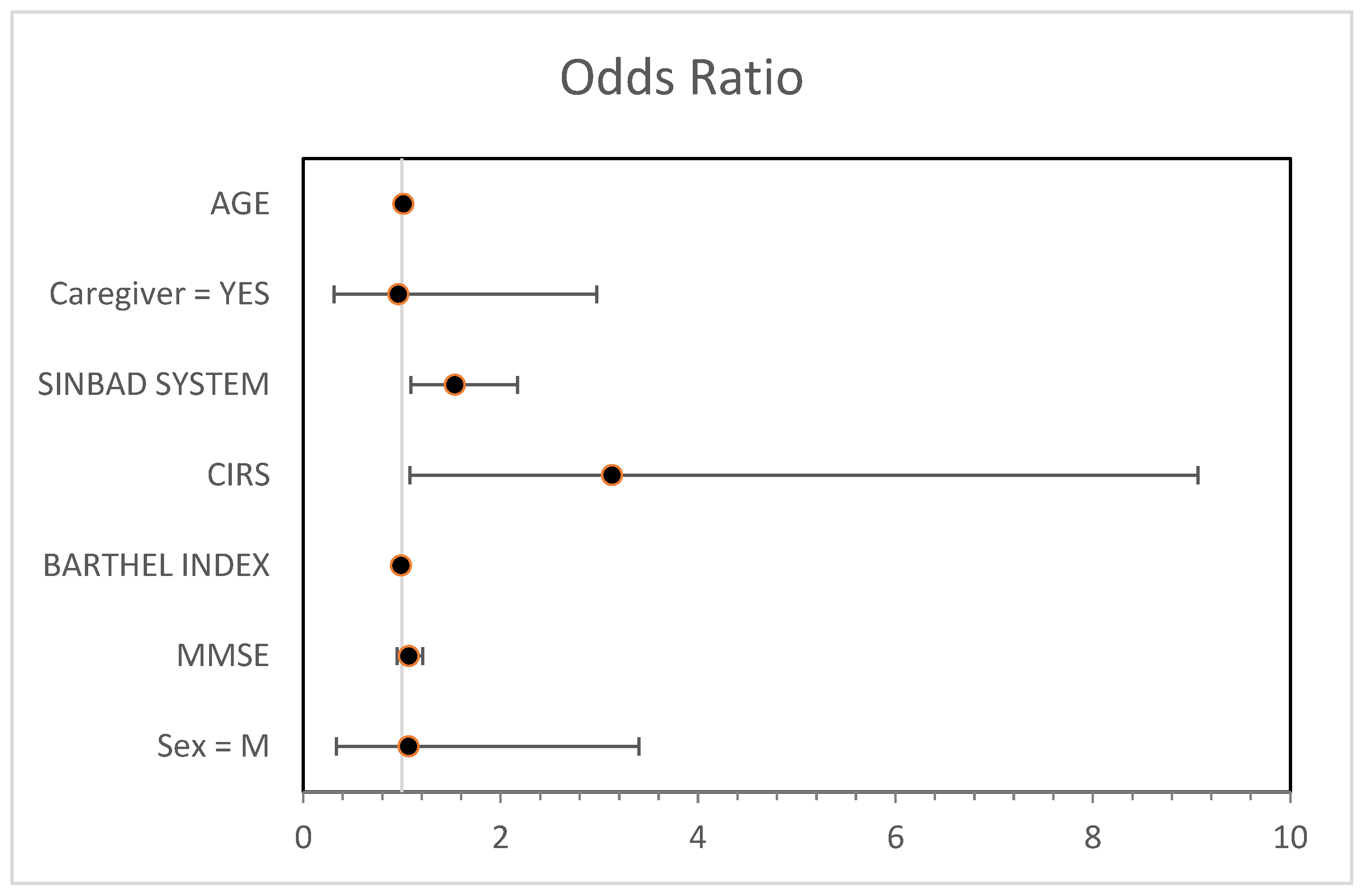

Table 1.
components of Multidimensional Complexity.
| COMPLEXITY | Clinical Complexity | Presence of a single serious physical and/or mental pathology or presence of several comorbidities with severe impact on diagnosis and prognosis, with serious implications for clinical care [24]. |
| Nursing Complexity | Presence of physical or mental disabilities that cause non-self-sufficiency in ADL and IADL and that requires support from others and/or the use of physical devices. It provides a measure of the intensity of care, i.e. the nursing workload provided to the patient [25]. | |
|
Socioeconomic complexity (Environmental complexity) |
Presence of critical environmental issues related to the family nucleus, place of life, social relationships, economic and working environment [26]. |
Table 2.
complexity assessment tools.
|
CIRS (Cumulative Illness Rating Scale) |
Evaluates the clinical complexity, using the 13-item Severity Index obtained as the average of the scores of all categories, excluding the "Psychiatric and behavioral" category (range of values between 1 and 5) [31]. |
| Barthel Index | Evaluates autonomy in basic activities of daily living (ADL), with a range from 0 (total dependence) to 100 (total independence) [32]. |
| Lawton-Brody Scale | Evaluates autonomy in instrumental activities of daily living (IADL), with a range from 0 (total dependence) to 8 (total independence) [33]. |
|
MMSE (Mini-Mental State Examination) |
Evaluates intellectual efficiency disorders and the presence of cognitive impairment (range 0-30, corrected for years of schooling if the patient is over 65). A score ≥26 indicates preserved cognitive status, a score of 25 indicates a borderline level, a score ≤24 indicates the presence of cognitive impairment [34]. |
| SINBAD System | Tool for amputation risk stratification by evaluating site (Site), presence of valid peripheral pulses (Ischaemia) and sensory neuropathy (Neuropathy), clinical signs of infection (Bacterial infection), ulcer area (Area), depth of ulcer (Depth): a higher score expresses a greater risk of amputation (range 0-6) [35]. |
|
MUST (Malnutrition Universal Screening Tool) |
Evaluates nutritional status and risk of malnutrition. It considers BMI, unintentional weight loss and the impact of acute illness on caloric intake reduction (range 0-3). A score ≥2 indicates high risk of malnutrition; a score of 1 indicates medium risk of malnutrition; a score of 0 indicates low risk of malnutrition [36]. |
|
ONAS Scale (Italian National Association of Social Workers Scale) |
It studies the social complexity through the evaluation of 4 areas in the patient's social life (economic, housing, family, activated services/benefits) with a range of 40-400 and identification of 3 levels of complexity (40-140: low complexity, 150-270: medium complexity, 280-400: high complexity. |
Table 3.
main characteristics of population.
|
TOTAL 115 (100%) |
MALES 84 (73%) |
FEMALES 31 (27%) |
INPATIENTS 74 (64.3%) |
OUTPATIENTS 41 (35.7%) |
||||||
| MEAN AGE | 70.6 | 70.8 | 70 | 70 | 71 | |||||
|
AMPUTATION |
43 (37.4%) | 35 (41.7%) | 8 (25.8%) | 41 (55.4%) | 2 (4.9%) | |||||
|
TYPE OF AMPUTATION |
MAJOR 5 (4.4%) |
MINOR 38 (33%) |
MAJOR 4 (4.8%) |
MINOR 31 (36.9%) |
MAJOR 1 (3.2%) |
MINOR 7 (22.6%) |
MAJOR 5 (6.8%) |
MINOR 36 (48.6%) |
MAJOR 0 (0%) |
MINOR 2 (4.9%) |
| NO AMPUTATION | 72 (62.6%) | 49 (58.3%) | 23 (74.2%) | 33 (44.6%) | 39 (95.1%) | |||||
|
REVASCULARIZATION |
51 (44.3%) | 44 (52.4%) | 7 (22.6%) | 49 (66.2%) | 2 (4.9%) | |||||
|
TYPE OF REVASCULARIZATION |
PTA 45 (39.1%) |
Bypass 6 (5.2%) |
PTA 40 (47.6%) |
Bypass 4 (4.8%) |
PTA 5 (16.1%) |
Bypass 2 (6.5%) |
PTA 43 (58.1%) |
Bypass 6 (8.1%) |
PTA 2 (4.9%) |
Bypass 0 (0%) |
|
NO REVASCULARIZATION |
64 (55.7%) |
40 (47.6%) |
24 (77.4%) |
25 (33.8%) |
39 (95.1%) |
|||||
| CAREGIVER | 78 (70% of 110) |
53 (67% of 79) |
25 (80% of 31) |
51 (71.8% of 71) |
27 (69.2% of 39) |
|||||
| NO CAREGIVER | 32 (30% of 110) |
26 (33% of 79) |
6 (20% of 31) |
20 (28.2% of 71) |
12 (30.8% of 39) |
|||||
|
MISSING DATA CAREGIVER |
5 (4% of 115) |
5 (6% of 84) |
0(0%) | 3 (4% of 74) |
2 (4.9% of 41) |
|||||
Table 4.
comparison between Group A (Inpatients) and Group B (Outpatients).
| Inpatients (Group A) | Outpatients (Group B) | |
| SINBAD System | 4 (ds±1.5) | 3 (ds±1.73) |
| CIRS (Severity index) | 2.23 (ds±0.5) | 1.86 (ds±0.5) |
| ADL (Barthel Index) | 86.7(ds±21.7) | 83.6 (ds±22.4) |
| IADL (Lawton-Brody Scale) | 5.6 (ds±2.6) | 4.8 (ds±2.7) |
| MMSE | 24.3 (ds±4.5) | 24.5 (ds±5.1) |
| CAREGIVERS (%) | 72% | 69% |
| Malnutrition (MUST) | 0.8 ≈ moderate risk | 0.2 ≈ low risk |
| Socio-economic complexity (ONAS) | 142.6 = moderate risk | 186.5 = moderate risk |
| Revascularization (%) | 66% | 4.9% |
| Amputation (%) | 55.4% | 4.9% |
| Major Amputation | 6.8% | 0% |
| Minor Amputation | 48.6% | 4.9% |
Disclaimer/Publisher’s Note: The statements, opinions and data contained in all publications are solely those of the individual author(s) and contributor(s) and not of MDPI and/or the editor(s). MDPI and/or the editor(s) disclaim responsibility for any injury to people or property resulting from any ideas, methods, instructions or products referred to in the content. |
© 2026 by the authors. Licensee MDPI, Basel, Switzerland. This article is an open access article distributed under the terms and conditions of the Creative Commons Attribution (CC BY) license (http://creativecommons.org/licenses/by/4.0/).
Copyright: This open access article is published under a Creative Commons CC BY 4.0 license, which permit the free download, distribution, and reuse, provided that the author and preprint are cited in any reuse.