

Submitted:
22 July 2026
Posted:
23 July 2026
You are already at the latest version
Abstract
Telomere, also known as a “molecular clock”, is a specific, unique cap-like structure of nucleoprotein with repetitive, noncoding, guanine-rich tandem of nucleotide sequences of DNA-protein located at the ends of chromosomes fashioned in a duplex “D-loop-T-loop” appearance. The dynamic and equilibrium of telomere homeostasis is a function of competing pro-telomere lengthening and pro-telomere shortening factors in determining the telomere length and telomerase activity. While many studies have been done on telomere dynamics, few have been done on telomeres and HIV with a stark gap in knowledge on the impact lifestyle modifications have on the telomeres of people living with HIV. Development of “telomere check kits” in the future will go a long way to put the “molecular clock” within our reach and be directly involved and aware of where we are in the “time or clock” of our life. Having extensively and comprehensively reviewed the healthy lifestyle and the improvement of telomere length and enhancement of telomerase activity that can result in promoting longevity and maximizing health-related quality of life, a full integration of lifestyle modifications as part of the management of HIV disease is long overdue.
Keywords:
HIV
; telomeres
; molecular clock
; lifestyle
1. Introduction
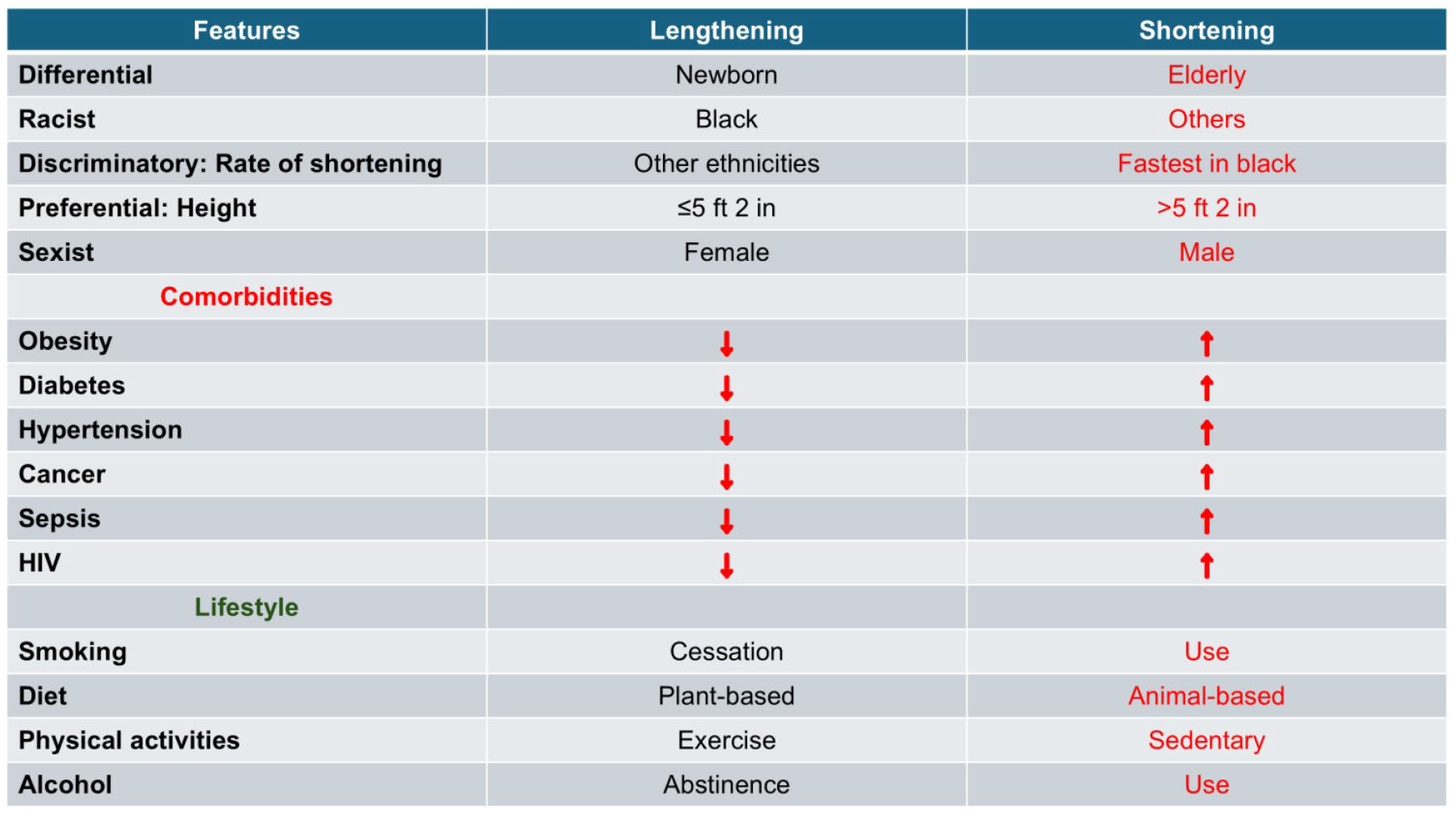
Telomere, also known as a “molecular clock”, is a specific, unique cap-like structure of nucleoprotein with repetitive, noncoding, guanine-rich tandem of nucleotide sequences of DNA-protein located at the ends of chromosomes fashioned in a duplex “D-loop-T-loop” appearance.1-4 Telomeres coordinate promotion of chromosomal stability, propagation of integrity of chromosomal ends, prevention of chromosomal degradation, protection of chromosomal ends from fusing together, prediction of aging and age-related diseases and neoplasm and prognosis of the course of health and disease.1,5,6 In humans, telomeres consist of repetitive sequences of nucleotides such as TTAGGG with the corresponding AATCCC. The summation of telomeres in humans is 92 per cell, that is, two telomeres per chromosome of which each end of the chromosome contains a telomere cap. Whenever a cell divides, telomere is shortened by 30-200 bp due to difficulty in fully replicating the 3’ end of DNA strand by the DNA polymerase.7,8 It has been estimated that human DNA has 3.1 billion base pairs (bp) and an entire chromosome has 150 million bp (less than 1% of total human genome).9-11 The telomeres length (TL) in white blood cells in newborns, adults and elderly are respectively 8,000 bp, 3,000 bp and 1,500 bp.10,12,13 It has been reported that a cell can divide for 50-70 times after which it would reach a Hayflick limit, a critical point at which a cell cannot divide any further.11,14 The postulated Hayflick limit for telomere length is 4kbp which can trigger activation of p53 to initiate cellular apoptosis or senescence.15 Based on the length and rate of shortening of telomeres, lot of speculations or myths that human can hardly live beyond 125 years have been going around for years.16 The rapidly dividing cells such as stem cells, intestinal epithelium, cancer cells, bone marrow and germline cells often have longer telomeres, activated telomere maintenance, higher telomerase activity to compensate for their cell division-induced telomere shortening.17-19 In general, the telomere length is longer in sperm cells than in somatic cells.20 Some of the characteristics of telomere have been so astonishing and such described as ‘racist’ because blacks have the longest TL and ‘discriminatory’ for its rate of shortening is fastest in the blacks.21-27 Telomere has a ‘differential’ behavior for its length is longest in the newborn than in young adults and elderly, a ‘preferential’ predilection for its length is longer in those with height of ≤5 feet 2 inches than those above this height and ‘sexist’ because TL is longer in female than in male28-30 (see table 1). Based on genome-wide meta-analysis black people were credited with lower polygenic risk score (PRS) which has been associated with longer TL.24,31,32 However, lower socioeconomic status, stress, HIV, inflammation and other comorbidities contributed in no small measure to the rate of telomere shortening in blacks, thus obliterating the genetic gain confinement.33,34 FOXO3 genotype protection had been implicated in those with 5 ft 2 in in height, estrogen protection via oxidative stress reduction in female and negative atherosclerosis factor in advancing age were rationales for the various characteristics of telomeres.35-40 Telomere length inversely associated with increasing age and polyunsaturated fatty acids nd directly proportionally associated with saturated fatty acids (atherosclerosis).35-38,41,42

Table 1.
Various genetic, environmental and epigenetic factors that profoundly affects the shortening and lengthening of the telomere length. Though polygenic score is lower in black race which naturally confers longest telomere length in blacks than other ethnicities, prevalence of diseases including HIV, obesity, chronic inflammatory conditions, hypertension, diabetes, unhealthy lifestyle practices and others nullify these genetic gains 21-40.
Table 1.
Various genetic, environmental and epigenetic factors that profoundly affects the shortening and lengthening of the telomere length. Though polygenic score is lower in black race which naturally confers longest telomere length in blacks than other ethnicities, prevalence of diseases including HIV, obesity, chronic inflammatory conditions, hypertension, diabetes, unhealthy lifestyle practices and others nullify these genetic gains 21-40.
 |
Human immunodeficiency virus (HIV) was discovered among five gay men in Los Angeles, CA, USA in the early 1980s. HIV attacks the immune system of the body to cause immunosuppression and if untreated may progress to AIDS. Since the time HIV was discovered to 2023, HIV burden has resulted in 82.2 million cases of which 42.3 million (51.5%) died and 39.9 million (48.5%) are living with the disease.43 Out of those currently living with the disease about 65% of them reside in sub-Saharan Africa. About 1.3 million new cases were documented of which 630,000 people died from HIV-related conditions in 2023.43 According to World Health Organization (WHO), four Clinical Staging System of HIV includes stage 1 (asymptomatic or persistent generalized lymphadenopathy) and stage 2 (mild symptoms, including weight loss, minor mucocutaneous disorders, or recurrent respiratory infections).43 While stage 3 includes moderate symptoms, such as unexplained weight loss, chronic diarrhea, prolonged fever, or oral candidiasis and stage 4 comprises of severe symptoms, including HIV wasting syndrome, Pneumocystis pneumonia, or certain opportunistic infections.43 However, the US Centers for Disease Control and Prevention (CDC) Classification System is based on the laboratory finding of the levels of CD4+ count. The CDC Classification System consists of 5 categories such as stage 0 (Early HIV infection, inferred from a negative or indeterminate HIV test result within 6 months of a confirmed positive result), category 1 (Greater than or equal to 500 cells/mL), category 2 (200-499 cells/mL), category 3 (Less than 200 cells/mL) and unknown.44
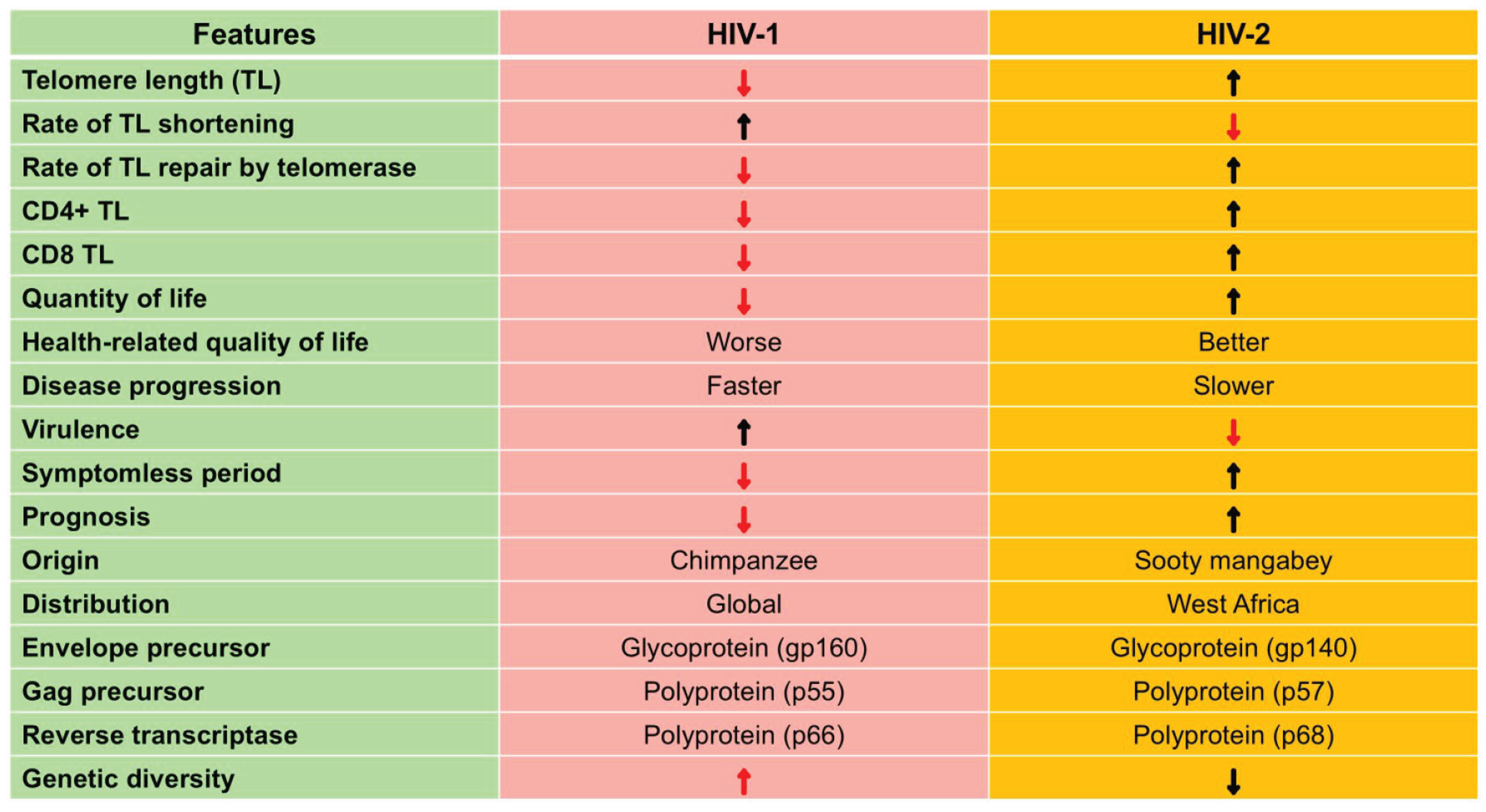
Currently, there is two types of HIV, that is HIV-1 and HIV-2 with former having global distribution while latter predominantly distributed in West Africa. Both HIV-1 and HIV-2 demonstrate similarities in the basic genetic constitutions, disease acquisition and volume distribution, disease progression and drug resistance.45 However, they have some differences ranging from envelope (env) proteins with Env precursor glycoprotein (gp)160 in HIV-1 while gp140 in HIV-246 (see table 2). The HIV Pol polyprotein (a long protein chain) comprises of the four HIV enzymes such as reverse transcriptase (RT), protease, RNAse H, and integrase which plays significant roles in reverse transcription, budding, maturation and integration.47,48 The RT p51 and p66 pol polyproteins are present in HIV-1 while p53 and p68 can be found in HIV-2.49 HIV gag precursor otherwise known as pr55Gag has been documented to mediate HIV lifecycle via matrix (MA), capsid (CA), nucleocapsid and p6 functional domains and facilitate the assembly of viral particles and interactions with the host.50 Notable gag precursor (p55) in HIV-1, including capsid (p24) while that of HIV-2 gag precursor (p57) such as capsid (p26).51 Both HIV-1 and HIV-2 have different characteristics and impacts on the telomere length (see table 2). The discrepancies of the telomere lengths of HIV-1 and HIV-2 might be responsible for patients’ longevity, lethality and sequelae of the HIV and susceptibility to other diseases.52,53 In HIV, it has been documented that CD4+ T cell subset is more refractory to telomere shortening than CD8+ T-cell subset which has progressive telomere shortening.54,55 Blood telomere length (BTL) is not only an effective, accurate and validated biomarker of cellular senescence and aging but also a determinant of morbidity, mortality and prognosis.56
Table 2.
Distinguished characteristics of telomeres in HIV-1 and HIV-2 and other distinct features between HIV-1 and HIV-2 including the telomere length in CD4+, CD8, quantity of life and health-related quality of life 45-56.
Table 2.
Distinguished characteristics of telomeres in HIV-1 and HIV-2 and other distinct features between HIV-1 and HIV-2 including the telomere length in CD4+, CD8, quantity of life and health-related quality of life 45-56.
 |
While several studies have been done on telomere dynamics, only few have been done on telomeres and HIV with a stark gap in knowledge on the impact lifestyle modifications on the telomeres of the people living with HIV (PLWH). Therefore, this review paper brings a new perspective on the myriads of problems facing the telomeres of the PLWH ranging from sepsis, HIV, cancer, modifiable and non-modifiable disease factors. Even, any insult on the telomeres of PLWH should be considered one disease too many but the reality is majority of these people are living with co-morbidities. Are these comorbidities having additive, summative, synergistic, antagonistic or inert effects on people living with HIV? Can lifestyle modifications bring the much-awaited betterment of the telomeres of the PLWH that will increase quantity of life and improve health-related quality of life?
Lifestyle and telomeres have been documented extensively, and various studies have shown the direct proportionality of telomere lengthening and optimized lifestyle. Conversely, there is an inverse correlation between telomere length and harmful lifestyle choices, that is, the worse the lifestyle choices the shorter the telomere length. Genetic, environment and epigenetic have profound modulatory impacts on the telomere length (see table 1). Telomere length and rate of shortening of the telomere length do not only determine the quantity of life but health-related quality of life.57 These include promotion of health, prevention of diseases, prediction of conditions, prognosis of the course of diseases, prompt management of diseases and protection of telomeres.
2. Homeostasis of Telomeres
Telomeres are in a dynamic state of homeostasis to maintain the length of telomeres that is appropriate for the age, sex, height, weight and race (see table 1 and figure 1). Telomere homeostasis primarily requires the stability between the activities of the pro-telomere lengthening and pro-telomere shortening factors.58 The pro-telomere lengthening agents add sequences of DNA TTAGGG repeats to the chromosome ends to counteract the erosive actions of pro-telomere shortening or anti-telomere lengthening on telomeres.59 As previously stated, erosive actions on telomeres could result from incomplete chromosome end replication, nucleolytic processing and disease-mediated conditions emanating from genetics, environment and/or epigenetics.6,59 Telomerase (terminal transferase) is a quaternary structure, complex holoenzyme which consists of catalytic core of catalytic protein subunit telomerase reverse transcriptase (TERT) gene containing 1132 amino acids and non-coding telomerase RNA component template (TERC) of 451 nucleotides long and species-specific accessory proteins.60-62 The TERT is made of many functional domains such as reverse transcriptase (RT) domain, telomerase essential N-terminal (TEN) domain, a C-terminal extension (CTE) and telomerase RNA-binding domain (TRBD).63-65 Telomerase through its cascade of actions add a species-specific telomere DNA repeat sequence of nucleotides to the 3' end of telomeres.66,67 Telomerase through TERT produces telomeric repeats via reverse transcription which closely coordinates TERC to stabilize germline telomere length, propagate stem cells, mediate longevity and promote cancer-derived immortal cells.68.69 Others include telomerase-associated protein 1 (TEP1) and forkhead box O3 (FOXO-3), a transcription factor, that enhances cellular oxidative stress resistance, regulates autophagy, coordinates energy homeostasis, maintains stem cell homeostasis, promotes DNA repair, hinders DNA damage, modulates redox reactions and activates telomere maintenance.70,71 The telomeres through the telomere length function to maintain equilibrium between non-extendible and extendible states while switching to the telomerase concentration assists them to coordinate equilibrium between extendible and extending states, thus telomeres exhibit multiple switch phenomena.68 Most of the human somatic cells (cardiac cells, skin cells and others) often have low or undetectable telomerase activity while certain cell lines, including as stem cells, germ cells, regenerating cells, and cancer cells can exhibit high telomerase activity to support their continuous cell proliferation.19 Factors influencing the lengthening of the telomeres include telomerase enzyme, magnesium (DNA structural maintenance) and recombination-mediated pathways (even in the absence of telomerase), healthy lifestyle choices.63,72-76
Figure 1.
The telomere homeostasis between the pro-telomere lengthening and pro-telomere shortening agents of telomere length. Any over-production, under-production, hyperstimulation or hypo-stimulation can intricately dictate the swinging of the ‘molecular clock’ of telomere to either telomere lengthening or shortening. Telomere length and telomerase activity are predominantly influenced by genetics, environment and epigenetics which can result in reduction of quantity of life and compromise of health-related quality of life. However, lifestyle modifications such as exercise, plant-based diet, weight loss and smoking have been reported to promote telomere lengthening and improve telomerase activity.
Figure 1.
The telomere homeostasis between the pro-telomere lengthening and pro-telomere shortening agents of telomere length. Any over-production, under-production, hyperstimulation or hypo-stimulation can intricately dictate the swinging of the ‘molecular clock’ of telomere to either telomere lengthening or shortening. Telomere length and telomerase activity are predominantly influenced by genetics, environment and epigenetics which can result in reduction of quantity of life and compromise of health-related quality of life. However, lifestyle modifications such as exercise, plant-based diet, weight loss and smoking have been reported to promote telomere lengthening and improve telomerase activity.
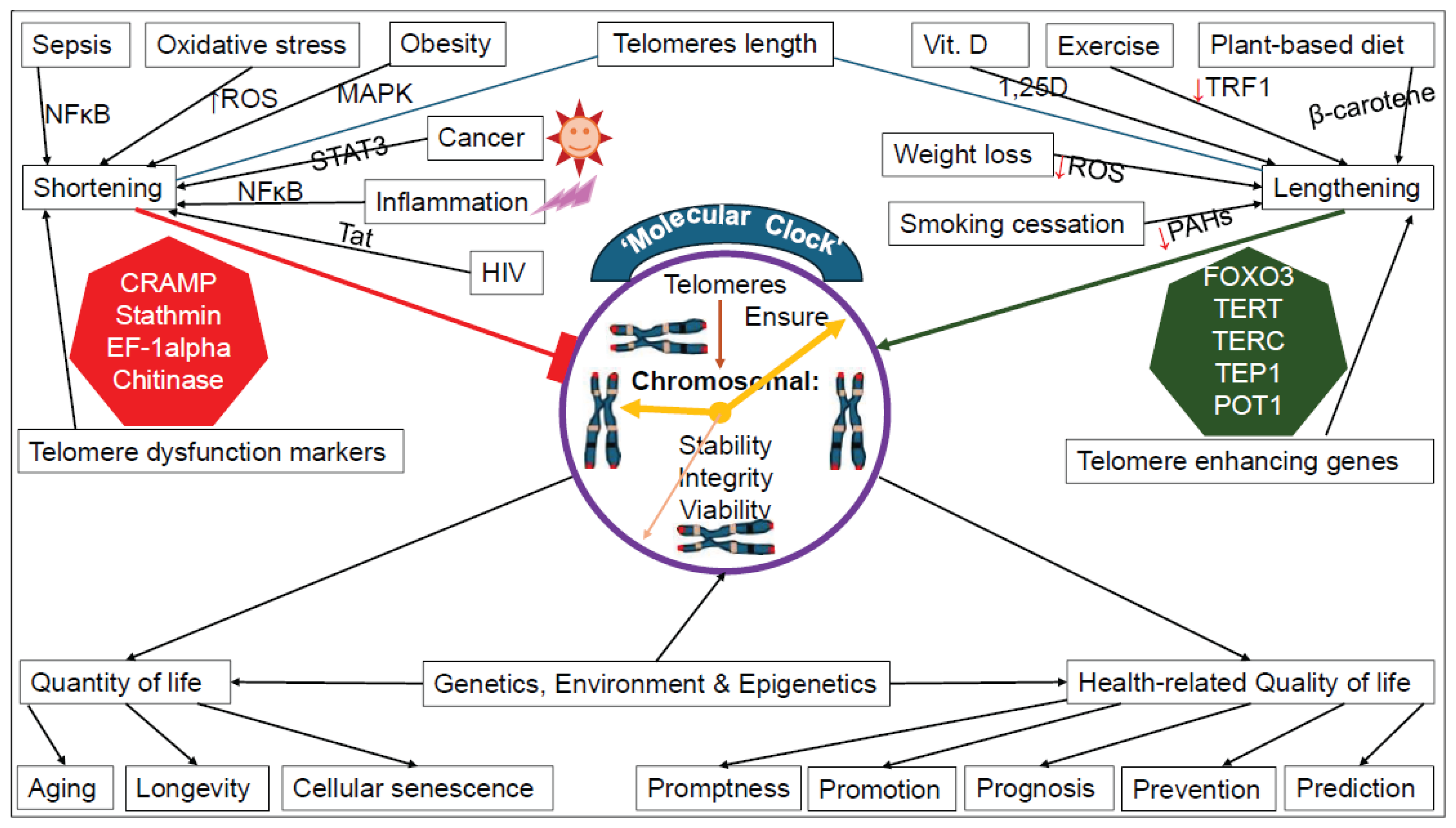
While factors contributing to the telomere attrition include harmful lifestyle practices, epigenetics, telomeric rapid deletions (TRD) and orthologous human telomeric repeat binding factor 1 (TRF1) which can hinder telomerase at telomeres in cis in a length-dependent fashion.77,78 The telomere attrition via TRD often occurs in stochastic fashion via intra-chromatid recombination processes.77,78 Cathelin-related antimicrobial peptide (CRAMP), elongation factor 1 alpha (EF-1α), stathmin and chitinase are telomere dysfunction markers that correlate with malfunction of telomeres, dysfunction of DNA, advanced age and age-specific pathologies in humans.79,80
Shelterin complex is a heterogenous, dimeric, structural protein which comprises of six-subunit proteins such as TRF1, TRF2, repressor/activator protein 1 (Rap1), TRF1-interacting nuclear factor 2 (TIN2), protection of telomeres protein 1 (POT1) and tripeptidyl peptidase I (TPP1).4,81 They are found at the ends of eukaryotic chromosomes, and they protect and prevent telomeres from DNA degradation, degeneracy and damage.4,81 TRF1 negatively regulates and suppresses telomerase activity while TRF2 stimulates telomeric degradation without directly affecting telomerase.82 Dyskerin, encoded by the DKC1 gene, is a small-nucleolar ribonucleoprotein (snoRNP) which mediates telomere stability.83 Dyskerin has pseudouridine synthase activity nucleolar RNP complex with H/ACA ribonucleoprotein complex subunit 2 (NHP2), nucleolar protein 10 (NOP10), H/ACA ribonucleoprotein complex subunit 1 (GAR1), and small nucleolar RNAs.84-86 The telomerase assembly and chromosomal recruitment are modulated and coordinated properly by reptin, pontin, telomerase Cajal body protein 1 (Tcab1), GAR1, extracellular sphingosine-1-phospate (Es1p), Es3p and NHP2 proteins.85,87-90
Any disruption of this delicate equilibrium of telomere dynamics between the pro-telomere lengthening and pro-telomere shortening agents will either lead to lengthening of the telomeres if activated by the former or shortening of the telomeres if the actions were mediated by the latter.
4. Telomere Dynamics and Lifestyle Modifications
As previously reported, modifiable and non-modifiable risk morbidity factors have profound effects on the TL and telomerase activity. The impacts of race, sex, age, diseases (malaria, diarrhea, diabetes, hypertension, obesity, tuberculosis, HIV, ADC, NADC and sepsis) and socioeconomic status disproportionally have debilitating sequelae on telomeres and life expectancy of the populations in the sub-Saharan Africa than other regions. In 2023, life expectancy of the people living in the sub-Saharan Africa was about 63 years while the global was 73 and high income was at 80 years.111 Lifestyle practices have been extensively studied and found to have unequivocally remarkable implications on health and diseases.
In general, animal-based diet such as meat (especially beef, pork and lamb), eggs, poultry, fish and dairy products contain high methionine while vegan foods are low in methionine. Diets that are highly rich in fats, processed foods, sugary products, salty foods and low fibers have been major culprits in attenuating the TL and telomerase activity of regeneration.112-114 While some mechanisms including activation of anti-oxidative stress signaling, regulation of inflammation and modulation of epigenetic reactions, dietary modifications with high fibers, reduction in processed food and sugary products have accentuated TL and telomerase activity.112-114 Methionine, a sulfur-containing amino acid, is one of the essential amino acids that the body cannot produce by itself and cannot do without but it is required for protein synthesis, normal growth and cellular development.115 The restriction of methionine cycle, trans-sulfuration and salvage pathways have been reported to enhance oxidative stress resistance by reducing synthesis of reactive oxygen species (ROS) in the mitochondria and mitochondrial dysfunction.116,117 The methionine restriction also includes inhibition of insulin/insulin-like growth factor I (IGF-I) signaling by activating cystathionine γ-lyase and cystathionine β-synthase enzymes to synthesize hydrogen sulfide which reduces IGF-I production in the liver and hinders glucose metabolism in insulin-secreting cells.118-119 The methionine restriction also includes activation of autophagy by suppressing mechanistic target of rapamycin complex 1 (mTORC1) to modulate quantity of life, health-related quality of life and courses of diseases.116,117 The hydrogen sulfide also modulates calorie restriction which plays major role in inhibiting insulin/IGF-I signaling pathway.116,121 Telomere lengths are longer in plant-based diet than in animal-based diet which dictate the lifespan, the severity of disease conditions and prognosis.6
Exercise mitigates DNA and telomere damages by improving antioxidant defense mechanism, promoting antiinflammation defenses and enhancing telomerase activity which helps to maintain and lengthen telomeres and reduce telomere attrition rate.122-124 Exercise impacts epigenetic modifications through DNA methylation and histone acylation to activate gene expression alteration without any modification in the DNA sequence.125,126 Exercises, including endurance exercise such as aerobic (running, calisthenics, jogging, brisk walking and swimming) and high-intensity interval training (HIIT) and resistance training for about 30 minutes per day for at times weekly can produce a tremendous result.
The world has been progressively deteriorating into an obesogenic environment with 2.5 billion adults reported to be overweight and 890 million adults living with obesity in 2022.127 It has been estimated that by the year 2030, over one billion adults will be diagnosed with obesity.128 One of the studied reported that about 63% of PLWH were overweight/obese.129 Obesity with excessive adipose tissue is a source of free radicals with reactive oxygen species and increased oxidative stress, metabolic dysfunction and chronic inflammation which can lead to damage of DNA, derangement of telomerase activity and shortening of telomere length.37,130,131 Telomeres of obese female were shorter than non-obese by 240 base pair and obesity also decreases telomere length at a mean rate of 27 base pair per year.37 Weight management including weight loss through dietary modifications, exercise and avoidance of sedentary lifestyle have been reported to increase quantity of life and improve health-related quality of life.132,133 Laimer and colleagues documented that there was significant increase by 0.024±0.14 (p = 0.047) in the telomere lengths among 142 patients that underwent bariatric operations within 10 years after surgery.134
Smoking including second-hand smoke exposure induces telomere shortening via free radicals of reactive oxygen species (ROS)-mediated oxidative stress, DNA oxidation, DNA repair impairment, inflammatory cytokine activation, immunostimulatory dysregulation and telomerase activity inhibition.135-140 Smoking causes telomere atrophy by 5 base pair per pack-year, that is, 18% loss of telomere length.37 Smoking cessation has been observed to reduce telomere shortening, ameliorate telomerase activity dysfunctionality, promote telomere integrity and stability.141-143
Alcohol consumption, especially binge and heavy drinking can directly through the alcohol metabolic production, including acetaldehyde production generate reactive oxygen species to cause imbalance between the antioxidant defenses and oxidative stress and damage DNA and shorten telomere length.144 Alcohol consumption can also damage the liver, compromise liver function and reduce thiamine production which further cause telomere attrition and telomerase action dysfunction.145-148 The alcohol-associated liver disease consists of a histopathological spectrum that changes from steatosis, alcohol-associated hepatitis to alcohol-associated cirrhosis.149,150 Alcohol consumption is also responsible for activation of inflammation which propels biological aging, telomere length shortening and telomerase activity derangement.151 Alcohol abstinence has been associated with reduction in oxidative stress, increase in antioxidant activity, improvement in liver function, lengthening of telomere length and enhancement of telomerase activity.152 Abstinence from other substance abuse have been shown to improve telomerase activity and telomere length.153,154
Telomere length at birth sets out the lifetime trajectory of the quantity of life, health-related quality of life and other telomeropathies of individual.155,156 However, environmental factor, including psychological stress via increased glucocorticoid release, activated reactive oxygen species (ROS), sustained mitochondria dysfunction and hyper-stimulated inflammatory cytokines can alter the lifetime trajectory of telomere length.155 These conglomerates of mechanisms act synergistically or additively to further perpetuate the impacts of psychological stress on telomere attrition and telomerase activity.155,157 Psychological stress can cause shortening of telomere length and impairment of telomerase activity thus resulting in aging and age-related diseases.155,157,158 Many techniques of stress management include psychological consultation, behavioral therapy, guided imagery, emotional freedom technique (EFT), aromatherapy, positive thinking, progressive muscle relaxation, deep breathing, medication, social support, stress relief supplements, nature time-spending.159 Benefits of stress management cut across many domains from improving sleep, rest, cardiac function, respiratory system, productivity, concentration and mental health, decreasing anxiety to preventing stress-induced diseases.159 Stress management promotes telomere lengthening, reduces telomere attrition and minimizes telomerase activity dysfunction thus improving health-related quality of life and decreasing aging and increasing quantity of life.160-163 Unhealthy lifestyle has also been associated with chronic diseases such as heart disease, type 2 diabetes, hypertension and cancer via some of the interconnected mechanisms that have been enumerated above, that is, reactive oxygen species, oxidative stress and chronic inflammation.3,6,163 These comorbidities have been reported to negatively impact telomere length and telomerase activity.6
5. Applications of Translational Telomerology: The Importance of Seven Ps.
Prediction: Telomere is a biomarker of aging and age-related pathologies, an indicator of cellular vitality and senescence and a predictor of morbidity, debility and mortality in both PLWH and general population.56 TL has been used to predict disease spectrum, reproductive outcomes, health-span, lifespan and terminal diseases including cancer.6,164,165 Ability to predict will also provide opportunity to have pre-knowledge about potential disease condition and get one prepared in how to prevent and/or manage.
Prevention: At the molecular level, telomeres prevent the ends of the chromosomes from biodegradation, dysfunctionality and damage.90 However, at the translational telomerology, diseases relating to DNA impairment, telomerase activity derangement, telomere erosion and atrophy can be prevented by promoting well-functioning telomeres. Knowledge from the translational telomerology can be used to further enhance the function of telomere. Screening of telomere can assist in knowing the status of the telomeres and how to prevent and desist from any harmful lifestyle practices. We can also apply our knowledge of translational telomerology to develop vaccines in the future to prevent development of accelerated telomere-associated aging and age-related diseases. Healthy lifestyle practices can prevent injurious lifestyle-mediating telomere length shortening which are responsible for many diseases as enumerated above.
Protection: The protection of the ends of chromosomes by the telomeres is directly proportional to protection of health and longevity.6,163 Unfortunately, HIV, risky lifestyle and other diseases induce telomere atrophy and disrupt telomerase activity which can result in the loss of the protective role of the protective cap of the telomeres of the chromosomes.166 Telomere research helps us to understand erosive forces against the protective cap of the telomeres and how best to sustain the protection. Healthy lifestyle choices and practices, avoidance of risky behavior and a comprehensive stress management will not only protect the vitality and integrity of telomeres but quality and quantity of one’s life.167 Poor sleep lifestyle compromises our health-span and lifespan by shortening the telomeres.168 In PLWH, healthy lifestyle choices can protect their telomeres from accelerated erosion and disease condition from rapid deterioration and complications.
Promotion: Generalized knowledge from translational telomerology especially the importance of stability and integrity of telomeres to life expectancy and health-related quality of life opens a floodgate to promotion of healthy lifestyle. This creates awareness about the distinct role played by telomere length and telomerase activity in quantitative and qualitative preservation of ends of chromosomes.169 This leads to promotion of healthy lifestyle in PLWH and awareness about the effects of HIV and risky behavior on telomere length and strength.
Promptness: We can utilize the acquired information from the study of telomere to act quickly, do further investigations and commence management and treatment care without any delay. One of the greatest advantages of telomere research and genomics is the ability to have a pre-knowledge of possible disease, probable time of manifestation of disease and potential management of the disease.170,171 Prompt diagnosis and management do not only create opportunity to initiate care in no time, but also minimize possibility of developing severe complications from the disease. This is very important for those PLWH because the effects of HIV and co-morbidities on telomeres can be devastating, so acting promptly will nib it in the bud before resulting in a more lethal situation.
Prognosis: Naturally, every disease has its own course of outcome, however, this clinical course can be altered when antagonist factors are accentuated and promoting factors are attenuated. Based on the numerous studies done on telomere dynamics, one cannot gainsay the role lifestyle modifications plays in ameliorating the negative effects the unhealthy lifestyle choices such as smoking, sedentary and weight gain have caused on telomere length and telomerase activity.6,172,173 As we previously noted, change of lifestyle and application of stress management therapeutics can go a long way to minimize the disease progression and attenuate the debilitating effects of ADCs and NADCs in HIV population174 and confer prolongation of quantity of life.
Personalization: Personalized telomere therapy or telomere-based therapeutics via modulation of telomere length and/or telomerase activity of individuals especially PLWH may serve as a gateway to mitigating myriads of telomere-driven diseases confronting them. This can even include telomere gene therapy where a particular gene of interest that have been implicated in mediating diseases can be targeted. A known universal hallmark of malignancies has been sustenance of telomere maintenance through repetitive and constitutive telomerase reactivation to promote cell replicative immortality.175-178 Telomere-cancer targeting therapies or telomerase-targeted cancer immunotherapy can be used to inhibit telomerase recruitment and processivity which are responsible for suppression of replicative senescence and promotion of replicative immortality.179-181
6. Conclusions
Conclusively, effective maintenance of the stability, integrity and vitality of telomere, the ‘molecular clock’ cannot be compromised. Martin Luther once said, “You cannot keep birds from flying over your head, but you can keep them from building a nest in your hair.” One may not be able to keep people away from death forever, but with our knowledge of telomere we can slow down the rate of telomere erosion or atrophy by changing our lifestyle approaches.112-114 Development of “telomere check kits” in the future will go a long way to put the “molecular clock” within our reach and be directly involved and aware of where we are in the “time or clock” of our life. Having extensively and comprehensively reviewed the indispensability of healthy lifestyle to the improvement of telomere length and enhancement of telomerase activity that can result in promoting longevity and maximizing health-related quality of life, a full integration of lifestyle modifications as part of the management of HIV disease is long overdue.
Funding
No funding.
Institutional Review Board Statement
Not applicable.
Informed Consent Statement
Not applicable.
References
- Blackburn, E.H. Switching and signaling at the telomere. Cell 2001, 106, 661–673. [Google Scholar] [CrossRef] [PubMed]
- Kam, M.L.W.; Nguyen, T.T.T.; Ngeow, J.Y.Y. Telomere biology disorders. npj Genom. Med. 2021, 6, 36. [Google Scholar] [CrossRef] [PubMed]
- Huang, X.; Huang, L.; Lu, J.; et al. The relationship between telomere length and aging-related diseases. Clin. Exp. Med. 2025, 25, 72. [Google Scholar] [CrossRef] [PubMed]
- Lim, C.J.; Cech, T.R. Shaping human telomeres: from shelterin and CST complexes to telomeric chromatin organization. Nat. Rev. Mol. Cell Biol. 2021, 22, 283–98. [Google Scholar] [CrossRef] [PubMed]
- Blackburn, E.; Epel, E.; Lin, J. Human telomere biology: a contributory and interactive factor in aging, disease risks, and protection. Science 2015, 350(6265), 1193–1198. [Google Scholar] [CrossRef] [PubMed]
- Shammas, M.A. Telomeres, lifestyle, cancer, and aging. Curr. Opin. Clin. Nutr. Metab. Care 2011, 14(1), 28–34. [Google Scholar] [CrossRef] [PubMed]
- Aubert, G.; Lansdorp, P.M. Telomeres and aging. Physiol. Rev. 2008, 88, 557–579. [Google Scholar] [CrossRef] [PubMed]
- Cesare, A.J.; Reddel, R.R. Alternative lengthening of telomeres: Models, mechanisms and implications. Nat. Rev. Genet. 2010, 11, 319–330. [Google Scholar] [CrossRef] [PubMed]
- Daiger, S.P.; Sullivan, L.S.; Bowne, S.J. Chapter 31 - Genetic Mechanisms of Retinal Disease. In Retina (Fifth Edition); Ryan, S.J., Sadda, S.R., Hinton, D.R., et al., Eds.; W.B. Saunders, 2013; pp. 624–634. [Google Scholar]
- Martens, D.S.; Van Der Stukken, C.; Derom, C.; et al. Newborn telomere length predicts later life telomere length: Tracking telomere length from birth to child- and adulthood. EBioMedicine 2021, 63, 103164. [Google Scholar] [CrossRef] [PubMed]
- Farrukh, S.; Baig, S.; Hussain, R.; et al. Telomere reprogramming during fetal life in low socioeconomic mothers. Egypt J. Med. Hum. Genet. 2019, 20(9). [Google Scholar] [CrossRef]
- Butler, M.G.; Tilburt, J.; DeVries, A.; et al. Comparison of chromosome telomere integrity in multiple tissues from subjects at different ages. Cancer Genet Cytogenet 1998, 105(2), 138–44. [Google Scholar] [CrossRef] [PubMed]
- University of Utah. Are Telomeres the Key to Aging and Cancer. 2025. Available online: https://learn.genetics.utah.edu/content/basics/telomeres/.
- Zakian, V.A. Telomeres: the beginnings and ends of eukaryotic chromosomes. Exp. Cell Res. 2012, 318(12), 1456–1460. [Google Scholar] [CrossRef] [PubMed]
- Song, Z.; Ju, Z.; Rudolph, K.L. Cell intrinsic and extrinsic mechanisms of stem cell aging depend on telomere status. Exp. Gerontol. 2009, 44(1–2), 75–82. [Google Scholar] [CrossRef] [PubMed]
- The Indian Express [P] Ltd. Humans unlikely to live longer than 125 years, says study. 2016. Available online: https://indianexpress.com/article/lifestyle/health/humans-unlikely-to-live-longer-than-125-years-study-3069147/.
- Hiyama, E.; Hiyama, K. Telomere and telomerase in stem cells. Br. J. Cancer 2007, 96(7), 1020–4. [Google Scholar] [CrossRef] [PubMed]
- Morrison, S.J.; Prowse, K.R.; Ho, P.; Weissman, I.L. Telomerase activity in hematopoietic cells is associated with self-renewal potential. Immunity 1996, 5, 207–216. [Google Scholar] [CrossRef] [PubMed]
- Bernardes de Jesus, B.; Blasco, M.A. Telomerase at the intersection of cancer and aging. Trends Genet. 2013, 29, 513–20. [Google Scholar] [CrossRef] [PubMed]
- Hastie, N.D.; Dempster, M.; Dunlop, M.G.; et al. Telomere reduction in human colorectal carcinoma and with aging. Nature 1990, 346, 866–868. [Google Scholar] [CrossRef] [PubMed]
- Hunt, S.C.; et al. Leukocyte telomeres are longer in African Americans than in whites: the National Heart, Lung, and Blood Institute Family Heart Study and the Bogalusa Heart Study. Aging Cell 2008, 7, 451–458. [Google Scholar] [CrossRef] [PubMed]
- Hansen, M.E.B.; et al. Shorter telomere length in Europeans than in Africans due to polygenetic adaptation. Hum. Mol. Genet. 2016, 25, 2324–2330. [Google Scholar] [CrossRef] [PubMed]
- Drury, S.S.; et al. Setting the trajectory: Racial disparities in newborn telomere length. J. Pediatr. 2015, 166, 1181–1186. [Google Scholar] [CrossRef] [PubMed]
- Rewak, M.; et al. Race-related health disparities and biological aging: Does rate of telomere shortening differ across blacks and whites? Biol. Psychol. 2014, 99, 92–99. [Google Scholar] [CrossRef] [PubMed]
- Aviv, A.; et al. Leukocyte Telomere Dynamics: Longitudinal Findings Among Young Adults in the Bogalusa Heart Study. Am. J. Epidemiol. 2009, 169, 323–329. [Google Scholar] [PubMed]
- Jorgenson, E.; et al. Ethnicity and Human Genetic Linkage Maps. Am. J. Hum. Genet. 2005, 76, 276–290. [Google Scholar] [CrossRef] [PubMed]
- Zeiger, A.M.; White, M.J.; Eng, C.; et al. Genetic Determinants of Telomere Length in African American Youth. Sci. Rep. 2018, 8, 13265. [Google Scholar] [CrossRef] [PubMed]
- Benetos, A.; Okuda, K.; Lajemi, M.; et al. Telomere length as indicator of biologic aging: the gender effect relation with pulse pressure pulse wave velocity. Hypertension 2001, 37(part 2), 381–385. [Google Scholar] [CrossRef] [PubMed]
- Jeanclos, E.; Schork, N.J.; Kyviv, K.O.; et al. Telomere length inversely correlates with pulse pressure is highly familial. Hypertension 2000, 36, 195–200. [Google Scholar] [CrossRef] [PubMed]
- Okuda, K.; Khan, M.Y.; Skurnick, J.; et al. Telomere attrition of the human abdominal aorta: relationship with age atherosclerosis. Atherosclerosis 2000, 152, 391–398. [Google Scholar] [CrossRef] [PubMed]
- Hamad, R.; Tuljapurkar, S.; Rehkopf, D.H. Racial and Socioeconomic Variation in Genetic Markers of Telomere Length: A Cross-Sectional Study of U.S. Older Adults. EBioMedicine 2016, 11, 296–301. [Google Scholar] [CrossRef] [PubMed]
- Zhu, H.; Wang, X.; Gutin, B.; et al. Leukocyte telomere length in healthy Caucasian and African-American adolescents: relationships with race, sex, adiposity, adipokines, and physical activity. J. Pediatr. 2011, 158, 215–220. [Google Scholar] [CrossRef] [PubMed]
- Chae, D.H.; Nuru-Jeter, A.M.; Adler, N.E.; et al. Discrimination, racial bias, and telomere length in African-American men. Am. J. Prev. Med. 2014, 46, 103–111. [Google Scholar] [CrossRef] [PubMed]
- Geronimus, A.T.; Hicken, M.T.; Pearson, J.A.; et al. Do US black women experience stress-related accelerated biological aging? Hum. Nat. 2010, 21, 19–38. [Google Scholar] [CrossRef] [PubMed]
- He, Q.; Morris, B.J.; Grove, J.S.; et al. Shorter men live longer: association of height with longevity and FOXO3 genotype in American men of Japanese ancestry. PLoS ONE 2014, 9(5), e94385. [Google Scholar] [CrossRef] [PubMed]
- Dhillon, V.S.; Deo, P.; Chua, A.; et al. Telomere length in healthy adults is positively associated with polyunsaturated fatty acids, including arachidonic acid, and negatively with saturated fatty acids. J. Gerontol. A Biol. Sci. Med. Sci. 2021, 76(1), 3–6. [Google Scholar] [PubMed]
- Valdes, A.M.; Andrew, T.; Gardner, J.P.; et al. Obesity, cigarette smoking, and telomere length in women. Lancet 2005, 366, 662–664. [Google Scholar] [CrossRef] [PubMed]
- Brouilette, S.; Singh, R.K.; Thompson, J.R.; et al. White cell telomere length and risk of premature myocardial infarction. Arterioscler. Thromb. Vasc. Biol. 2003, 23, 842–846. [Google Scholar] [CrossRef] [PubMed]
- Tang, M.; Subbiah, M.T. Estrogens protect against hydrogen peroxide arachidonic acid induced DNA damage. Biochim Biophys. Acta 1996, 1299, 155–159. [Google Scholar] [CrossRef] [PubMed]
- Romer, W.; Oettel, M.; Menzenbach, B.; et al. Novel estrogens their radical scavenging effects, iron-chelating total antioxidative activities: 17 alpha-substituted analogs of delta 9 (11)-dehydro-17 beta estradiol. Steroids 1997, 62, 688–694. [Google Scholar] [PubMed]
- Salaris, L.; Poulain, M.; Samaras, T.T. Height and survival at older ages among men born in an inland village in Sardinia (Italy), 1866-2006. Biodemography Soc. Biol. 2012, 58(1), 1–13. [Google Scholar] [CrossRef] [PubMed]
- Lemez, S.; Wattie, N.; Baker, J. Do "big guys" really die younger? An examination of height and lifespan in former professional basketball players. PLoS ONE 2017, 12(10), e0185617. [Google Scholar] [CrossRef] [PubMed]
- World Health Organization. HIV and AIDS. 22 July 2024. Available online: https://www.who.int/news-room/fact-sheets/detail/hiv-aids.
- Centers for Disease Control and prevention. Centers for Disease Control and prevention. 1993 Revised classification system for hiv infection and expanded surveillance case definition for AIDS among adolescents and adults. 1992;41(RR-17). Available at: https://www.cdc.gov/mmwr/preview/mmwrhtml/00018871.htm#:~:text=Category%201:%20greater%20than%20or,be%20used%20for%20classification%20purposes. 1993; 41, RR-17. [Google Scholar]
- Nyamweya, S.; et al. Comparing HIV-1 and HIV-2 infection: Lessons for viral immunopathogenesis. Rev. Med. Virol. 2013, 23(4), 221–240. [Google Scholar] [CrossRef] [PubMed]
- Prabakaran, P.; Dimitrov, A.S.; Fouts, T.R.; et al. Structure and function of the HIV envelope glycoprotein as entry mediator, vaccine immunogen, and target for inhibitors. Adv. Pharmacol. 2007, 55, 33–97. [Google Scholar] [CrossRef] [PubMed]
- Hellen, C.U.; Krausslich, H.G.; Wimmer, E. Proteolytic processing of polyproteins in the replication of RNA viruses. Biochemistry 1989, 28, 9881–9890. [Google Scholar] [CrossRef] [PubMed]
- Kaplan, A.H.; Manchester, M.; Swanstrom, R. The activity of the protease of human immunodeficiency virus type 1 is initiated at the membrane of infected cells before the release of viral proteins and is required for release to occur with maximum efficiency. J. Virol. 1994, 68, 6782–6786. [Google Scholar] [CrossRef] [PubMed]
- Fan, N.; et al. The Differential Processing of Homodimers of Reverse Transcriptases from Human Immunodeficiency Viruses Type 1 and 2 Is a Consequence of the Distinct Specificities of the Viral Proteases*. J. Biol. Chem. 1995, Volume 270(Issue 22), Pages 13573–13579. [Google Scholar]
- Fritz, J.V.; Dujardin, D.; Godet, J.; et al. HIV-1 Vpr oligomerization but not that of Gag directs the interaction between Vpr and Gag. J. Virol. 2010, 84(3), 1585–96. [Google Scholar] [CrossRef] [PubMed]
- Saito, A.; Morimoto, M.; Ohara, T.; Takamizawa, A.; Nakata, A.; Shinagawa, H. Overproduction, purification, and diagnostic use of the recombinant HIV-1 Gag proteins, the precursor protein p55 and the processed products p17, p24, and p15. Microbiol. Immunol. 1995, 39(7), 473–83. [Google Scholar] [CrossRef] [PubMed]
- Matheron, S.; Pueyo, S.; Damond, F.; et al. Factors associated with clinical progression in HIV-2 infected-patients: The French ANRS cohort. AIDS 2003, 17(18), 2593–2601. [Google Scholar] [CrossRef] [PubMed]
- Marlink, R.; Kanki, P.; Thior, I.; et al. Reduced rate of disease development after HIV-2 infection as compared to HIV-1. Science 1994, 265(5178), 1587–1590. [Google Scholar] [CrossRef] [PubMed]
- Wolthers, K.C.; Bea, G.; Wisman, P.E.; et al. T cell telomere length in HIV-1 infection. No evidence for increased CD4+ turnover. Science 1996, 274, 1546–1547. [Google Scholar] [CrossRef]
- Effros, R.B. Telomeres and HIV disease. Microbes Infect. 2000, 2, 69−76. [Google Scholar] [CrossRef]
- Von Zglinicki, T.; Martin-Ruiz, C.M. Telomeres as biomarkers for ageing and age-related diseases. Curr. Mol. Med. 2005, 5, 197–203. [Google Scholar] [CrossRef] [PubMed]
- Chen, M.; Wang, Z.; Xu, H.; et al. Association between modifiable lifestyle factors and telomere length: a univariable and multivariable Mendelian randomization study. J. Transl. Med. 2024, 22, 160. [Google Scholar] [CrossRef] [PubMed]
- Smogorzewska, A.; de Lange, T. Regulation of telomerase by telomeric proteins. Annu. Rev. Biochem. 2004, 73, 177–208. [Google Scholar] [CrossRef] [PubMed]
- Teixeira, M.T.; et al. Telomere Length Homeostasis Is Achieved via a Switch between Telomerase- Extendible and -Nonextendible States. Cell 2004, 117(3), 323–335. [Google Scholar] [CrossRef] [PubMed]
- Wyatt, H.D.; West, S.C.; Beattie, T.L. InTERTpreting telomerase structure and function. Nucleic Acids Res. 2010, 38(17), 5609–22. [Google Scholar] [CrossRef] [PubMed]
- Liu, M.; Zhang, Y.; Jian, Y.; et al. The regulations of telomerase reverse transcriptase (TERT) in cancer. Cell Death Dis. 2024, 15(1), 90. [Google Scholar] [CrossRef] [PubMed]
- Hukezalie, K.R.; Wong, J.M.Y. Structure–function relationship and biogenesis regulation of the human telomerase holoenzyme. FEBS J. 2013, 280(14), 3194–3204. [Google Scholar] [CrossRef] [PubMed]
- Bryan, T.M.; Goodrich, K.J.; Cech, T.R. Telomerase RNA bound by protein motifs specific to telomerase reverse transcriptase. Mol. Cell 2000, 6, 493–499. [Google Scholar] [CrossRef] [PubMed]
- Lai, C.K.; Mitchell, J.R.; Collins, K. RNA binding domain of telomerase reverse transcriptase. Mol. Cell Biol. 2001, 21, 990–1000. [Google Scholar] [CrossRef] [PubMed]
- Beattie, T.L.; Zhou, W.; Robinson, M.O.; et al. Polymerization defects within human telomerase are distinct from telomerase RNA and TEP1 binding. Mol. Biol. Cell 2000, 11, 3329–3340. [Google Scholar] [CrossRef] [PubMed]
- Lewis, K.A.; Wuttke, D.S. Telomerase and telomere-associated proteins: Structural insights into mechanism and evolution. Structure 2012, 20(1), 28–39. [Google Scholar] [CrossRef] [PubMed]
- Giardini, M.A.; et al. Chapter One - Telomere and Telomerase Biology. In Editor(s): Rodrigo T. Calado, Progress in Molecular Biology and Translational Science; Academic Press, 2014; Volume 125, pp. 1–40. [Google Scholar]
- Cristofari, G.; Lingner, J. Telomere length homeostasis requires that telomerase levels are limiting. EMBO J. 2006, 25(3), 565–74. [Google Scholar] [CrossRef] [PubMed]
- Wang, Y.; Susac, L.; Feigon, J. Structural biology of telomerase. In Cold Spring Harb Perspect Biol; 2019. [Google Scholar]
- PMC, Davy; et al. Minimal shortening of leukocyte telomere length across age groups in a cross-sectional study for carriers of a longevity-associated FOXO3 Allele. J. Gerontol. A Biol. Sci. Med. Sci. Erratum in: J Gerontol A Biol Sci Med Sci. 2019 Jan 16;74(2):192. 2018, 73(11), 1448–1452. [Google Scholar] [CrossRef] [PubMed]
- Rumsaite, G.; et al. The Influence of TEP1 and TERC Genetic Variants on the Susceptibility to Multiple Sclerosis. J. Clin. Med. 2023, 12(18), 5863. [Google Scholar] [CrossRef] [PubMed]
- Dunham, M.A.; Neumann, A.A.; Fasching, C.L. Telomere maintenance by recombination in human cells. Nat. Genet. 2000, 26, 447–450. [Google Scholar] [CrossRef] [PubMed]
- Lundblad, V.; Blackburn, E.H. An alternative pathway for yeast telomere maintenance rescues est1-senescence. Cell 1993, 73, 347–360. [Google Scholar] [CrossRef] [PubMed]
- Maguire, D.; Neytchev, O.; Talwar, D.; et al. Telomere Homeostasis: Interplay with Magnesium. Int. J. Mol. Sci. 2018, 19(1), 157. [Google Scholar] [CrossRef] [PubMed]
- Teng, S.C.; Zakian, V.A. Telomere-telomere recombination is an efficient bypass pathway for telomere maintenance in Saccharomyces cerevisiae. Mol. Cell. Biol. 1999, 19, 8083–8093. [Google Scholar] [CrossRef] [PubMed]
- van Steensel, B.; de Lange, T. Control of telomere length by the human telomeric protein TRF1. Nature 1997, 385, 740–743. [Google Scholar] [CrossRef] [PubMed]
- Bucholc, M.; Park, Y.; Lustig, A.J. Intrachromatid excision of telomeric DNA as a mechanism for telomere size control in Saccharomyces cerevisiae. Mol. Cell. Biol. 2001, 21, 6559–6573. [Google Scholar] [CrossRef] [PubMed]
- Li, B.; Lustig, A.J. A novel mechanism for telomere size control in Saccharomyces cerevisiae. Genes Dev. 1996, 10, 1310–1326. [Google Scholar] [CrossRef] [PubMed]
- Jiang, H.; Schiffer, E.; Song, Z.; et al. Proteins induced by telomere dysfunction and DNA damage represent biomarkers of human aging and disease. Proc. Natl. Acad. Sci. U S A 2008, 105, 11299–11304. [Google Scholar] [CrossRef] [PubMed]
- Song, Z.; von Figura, G.; Liu, Y.; et al. Lifestyle impacts on the aging-associated expression of biomarkers of DNA damage and telomere dysfunction in human blood. Aging Cell 2010, 9, 607–615. [Google Scholar] [CrossRef] [PubMed]
- de Lange, T. Shelterin-mediated telomere protection. Annu Rev. Genet. 2018, 52, 223–47. [Google Scholar] [CrossRef] [PubMed]
- Ancelin, K.; Brunori, M.; Bauwens, S.; et al. Targeting assay to study the cis functions of human telomeric proteins: evidence for inhibition of telomerase by TRF1 and for activation of telomere degradation by TRF2. Mol. Cell Biol. 2002, 22(10), 3474–3487. [Google Scholar] [CrossRef] [PubMed]
- Roifman, C.M.; Grunebaum, E. 35 - Primary T-cell immunodeficiencies. In Clinical Immunology (Fourth Edition); Rich, Robert R., Fleisher, Thomas A., Shearer, William T., Schroeder, Harry W., Frew, Anthony J., Weyand, Cornelia M., Eds.; Elsevier, 2013; pp. Pages 437–453. [Google Scholar]
- Garus, A.; Autexier, C. Dyskerin: an essential pseudouridine synthase with multifaceted roles in ribosome biogenesis, splicing, and telomere maintenance. RNA 2021, 27(12), 1441–1458. [Google Scholar] [CrossRef] [PubMed]
- Venteicher, A.S.; Abreu, E.B.; Meng, Z.; et al. A human telomerase holoenzyme protein required for Cajal body localization and telomere synthesis. Science 2009, 323, 644–648. [Google Scholar] [CrossRef] [PubMed]
- Nguyen, T.H.D.; Tam, J.; Wu, R.A.; et al. Cryo-EM structure of substrate-bound human telomerase holoenzyme. Nature 2018, 557, 190–195. [Google Scholar] [CrossRef] [PubMed]
- Leão, R.; Apolónio, J.D.; Lee, D.; et al. Mechanisms of human telomerase reverse transcriptase (hTERT) regulation: clinical impacts in cancer. J. BioMed Sci. 2018, 25(1), 22. [Google Scholar] [CrossRef] [PubMed]
- Cohen, S.B.; Graham, M.E.; Lovrecz, G.O.; et al. Protein composition of catalytically active human telomerase from immortal cells. Science 2007, 315(5820), 1850–3. [Google Scholar] [CrossRef] [PubMed]
- Liu, L.; Lai, S.; Andrews, L.G.; et al. Genetic and epigenetic modulation of telomerase activity in development and disease. Gene 2004, 340(1), 1–10. [Google Scholar] [CrossRef] [PubMed]
- Lee, J.; Pellegrini, M.V. Biochemistry, Telomere And Telomerase. In StatPearls [Internet]; Updated; StatPearls Publishing: Treasure Island (FL), 11 Dec 2022. [Google Scholar]
- Leung, J.M.; Fishbane, N.; Jones, M.; et al. Longitudinal study of surrogate aging measures during human immunodeficiency virus seroconversion. Aging 2017, 9, 687–705. [Google Scholar] [CrossRef] [PubMed]
- Gonzalez-Serna, A.; Ajaykumar, A.; Gadawski, I.; et al. Rapid decrease in peripheral blood mononucleated cell telomere length after HIV seroconversion, but not HCV seroconversion. J. Acquir Immune Defic. Syndr. 2017, 76, e29–32. [Google Scholar] [CrossRef]
- Schoepf, I.C.; Thorball, C.W.; Ledergerber, B.; et al. Telomere length declines in persons with human immunodeficiency virus before antiretroviral therapy start but not after viral suppression: a longitudinal study. J. Infect. Dis. 2022, 225, 1581–91. [Google Scholar] [PubMed]
- Khanal, S.; Tang, Q.; Cao, D.; et al. Telomere and ATM Dynamics in CD4 T-Cell Depletion in Active and Virus-Suppressed HIV Infections. J. Virol. 2020, 94. [Google Scholar] [CrossRef] [PubMed]
- Alejos, B.; Stella-Ascariz, N.; Montejano, R.; et al. Determinants of blood telomere length in antiretroviral treatment-naive HIV-positive participants enrolled in the NEAT 001/ANRS 143 clinical trial. HIV Med. 2019, 20, 691–8. [Google Scholar] [CrossRef] [PubMed]
- Jiménez, V.C.; Wit, F.W.; Joerink, M.; et al. T-cell activation independently associates with immune senescence in HIV infected recipients of long-term antiretroviral treatment. J. Infect. Dis. 2016, 214, 216–25. [Google Scholar] [CrossRef]
- Comandini, A.; Naro, C.; Adamo, R.; et al. Molecular mechanisms involved in HIV-1-Tat mediated inhibition of telomerase activity in human CD4(+) T lymphocytes. Mol. Immunol. 2013, 54, 181–92. [Google Scholar] [CrossRef] [PubMed]
- Dalzini, A.; Ballin, G.; Dominguez-Rodriguez, S.; et al. EPIICAL Consortium. Size of HIV-1 reservoir is associated with telomere shortening and immunosenescence in early-treated European children with perinatally acquired HIV-1. J. Int. AIDS Soc. 2021, 24(11), e25847. [Google Scholar] [CrossRef] [PubMed]
- Effros, R.B.; Allsopp, R.; Chiu, C.P.; et al. Shortened telomeres in the expanded CD28-CD8+ subset in HIV disease implicate replicative senescence in HIV pathogenesis. In AIDS/Fast Track10; 1996; pp. F17–F22. [Google Scholar]
- Pommier, J.P.; Gauthier, L.; Livartowski, J.; et al. Immunosenescence in HIV pathogenesis. Virology 1997, 231, 148–154. [Google Scholar] [CrossRef] [PubMed]
- Palmer, L.D.; Weng, N.; Levine, B.L.; et al. Telomere length, telomerase activity, and replicative potential in HIV infection analysis of CD4+ and CD8+ T cells from HIV-discordant monozygotic twins. J. Exp. M. 1997, 185, 1381–1386. [Google Scholar] [CrossRef] [PubMed]
- Effros, R.B.; Boucher, N.; Porter, V.; et al. Decline in CD28+ T cells in centenarians and in long-term T cell cultures a possible cause for both in vivo and in vitro immunosenescence. Exp. Gerontol. 1994, 29, 601–609. [Google Scholar] [CrossRef] [PubMed]
- Lombardi, F.; et al. Blood telomere length gain in people living with HIV switching to dolutegravir plus lamivudine versus continuing triple regimen: a longitudinal, prospective, matched, controlled study. J. Antimicrob. Chemother. 2023, 78(9), 2315–2322. [Google Scholar] [CrossRef] [PubMed]
- Liu, J.C.; Leung, J.M.; Ngan, D.A.; et al. Absolute leukocyte telomere length in HIV-infected and uninfected individuals: evidence of accelerated cell senescence in HIV-associated chronic obstructive pulmonary disease. PLoS ONE 2015, 10, e0124426. [Google Scholar] [CrossRef] [PubMed]
- De Francesco, D.; Wit, F.W.; Bürkle, A.; et al. Do people living with HIV experience greater age advancement than their HIV-negative counterparts? AIDS 2019, 33, 259–68. [Google Scholar] [CrossRef] [PubMed]
- Rodés, B.; Cadiñanos, J.; Esteban-Cantos, A.; et al. Ageing with HIV: Challenges and biomarkers. EBio Med. 2022, 77, 103896. [Google Scholar] [CrossRef]
- Sahin, E.; Colla, S.; Liesa, M. Telomere dysfunction induces metabolic and mitochondrial compromise. Nature 2011, 470, 359–365. [Google Scholar] [CrossRef] [PubMed]
- Torres, R.A.; Lewis, W. Aging and HIV/AIDS: pathogenetic role of therapeutic side effects. Lab. Investig. 2014, 94(2), 120–128. [Google Scholar] [CrossRef] [PubMed]
- Campisi, J.; Dimri, G.; Hara, E. Control of replicative senescence. In Handbook of the Biology of Aging; Schneider, J.R., Ed.; 1996. [Google Scholar]
- Pawelec, G.; Effros, R.B.; Caruso, C.; et al. T cells and aging (update February 1999). Front Biosci. 1999, 4, D216–D269. [Google Scholar] [CrossRef] [PubMed]
- World bank. Life expectancy at birth, total (years). 2025. Available online: https://data.worldbank.org/indicator/SP.DYN.LE00.IN.
- Galiè, S.; Canudas, S.; Muralidharan, J.; et al. Impact of Nutrition on Telomere Health: Systematic Review of Observational Cohort Studies and Randomized Clinical Trials. Adv. Nutr. 2020, 11(3), 576–601. [Google Scholar] [CrossRef] [PubMed]
- Cassidy, A.; De Vivo, I.; Liu, Y.; et al. Associations between diet, lifestyle factors, and telomere length in women. Am. J. Clin. Nutr. 2010, 91, 1273–80. [Google Scholar] [CrossRef] [PubMed]
- Tucker, L.A. Dietary fiber and telomere length in 5674 U.S. adults: an NHANES study of biological aging. Nutrients 2018, 10, 1–16. [Google Scholar] [CrossRef]
- Rajavel, E. Methionine nutrition and metabolism:insights from animal studies to inform human nutrition. J. Nutr. 2020, 150 (Suppl. 1), 2518S–2523S. [Google Scholar] [CrossRef]
- Kitada, M.; Ogura, Y.; Monno, I.; et al. Effect of Methionine Restriction on Aging: Its Relationship to Oxidative Stress. Biomedicines 2021, 9(2), 130. [Google Scholar] [CrossRef] [PubMed]
- Yegorov, Y.E.; Poznyak, A.V.; Nikiforov, N.G.; et al. The Link between Chronic Stress and Accelerated Aging. Biomedicines 2020, 8, 198. [Google Scholar] [CrossRef] [PubMed]
- Bin, P.; Zhu, C.; Liu, S.; et al. Perspective: Methionine Restriction-Induced Longevity-A Possible Role for Inhibiting the Synthesis of Bacterial Quorum Sensing Molecules. Adv. Nutr. 2020, 11(4), 773–783. [Google Scholar] [CrossRef] [PubMed]
- Lee, S.H.; Min, K.J. Caloric restriction and its mimetics. BMB Rep. 2013, 46, 181–187. [Google Scholar] [CrossRef] [PubMed]
- Green, C.L.; Lamming, D.W.; Fontana, L. Molecular mechanisms of dietary restriction promoting health and longevity. Nat. Rev. Mol. Cell Biol. 2022, 23, 56–73. [Google Scholar] [PubMed]
- Tamanna, N.; Mayengbam, S.; House, J.D.; et al. Methionine restriction leads to hyperhomocysteinemia and alters hepatic H2S production capacity in Fischer-344 rats. Mech. Ageing Dev. 2018, 176, 9–18. [Google Scholar] [CrossRef] [PubMed]
- Song, S.; Lee, E.; Kim, H. Does Exercise Affect Telomere Length? A Systematic Review and Meta-Analysis of Randomized Controlled Trials. Medicina 2022, 58(2), 242. [Google Scholar] [CrossRef] [PubMed]
- Werner, C.; Fürster, T.; Widmann, T.; et al. Physical exercise prevents cellular senescence in circulating leukocytes and in the vessel wall. Circulation 2009, 120, 2438–2447. [Google Scholar] [CrossRef] [PubMed]
- Ludlow, A.T.; Ludlow, L.W.; Roth, S.M. Do telomeres adapt to physiological stress? Exploring the effect of exercise on telomere length and telomere-related proteins. Biomed. Res. Int. 2013, 2013, 601368. [Google Scholar] [CrossRef] [PubMed]
- Adwan-Shekhidem, H.; Atzmon, G. “The epigenetic regulation of telomere maintenance in aging,” in Epigenetics of Aging and Longevity; Vaiserman, A. M., Moskalev, A., Eds.; Academic Press: Cambridge, MA, 2018; pp. 119–136. [Google Scholar]
- Lewis, K.A.; Tollefsbol, T.O. Regulation of the telomerase reverse transcriptase subunit through epigenetic mechanisms. Front. Genet. 2016, 7, 83. [Google Scholar] [CrossRef] [PubMed]
- World Health Organization. Fact Sheet: Obesity and Overweight; WHO, Ed.; 2024; Available online: https://www.who.int/news-room/fact-sheets/detail/obesity-and-overweight.
- World Health Organization. WHO acceleration plan to stop obesity. WHO; Geneva, Switzerland, 2023. Available online: https://www.who.int/publications/i/item/9789240075634.
- Crum-Cianflone, N.; Tejidor, R.; Medina, S.; Barahona, I.; Ganesan, A. Obesity among patients with HIV: the latest epidemic. AIDS Patient Care STDS 2008, 22(12), 925–30. [Google Scholar] [CrossRef] [PubMed]
- Shin, Y. How Does Obesity and Physical Activity Affect Aging? Focused on Telomere as a Biomarker of Aging. J. Obes. Metab. Syndr. 2019, 28(2), 92–104. [Google Scholar] [CrossRef] [PubMed]
- Furukawa, S.; et al. Increased oxidative stress in obesity and its impact on metabolic syndrome. J. Clin. Investig. 2004, 114, 1752–1761. [Google Scholar] [CrossRef] [PubMed]
- Welendorf, C.; Nicoletti, C.F.; Pinhel, M.A.S.; et al. Obesity, weight loss, and influence on telomere length: New insights for personalized nutrition. Nutrition 2019, 66, 115–121. [Google Scholar] [CrossRef] [PubMed]
- Wang, Y. Healthy lifestyle, metabolic signature, and risk of cardiovascular diseases: a population-based study. Nutrients 2024, 16(20), 3553. [Google Scholar] [CrossRef] [PubMed]
- Laimer, M.; Melmer, A.; Lamina, C.; et al. Telomere length increase after weight loss induced by bariatric surgery: results from a 10 year prospective study. Int. J. Obes. 2016, 40, 773–778. [Google Scholar] [CrossRef]
- Thorne, D.; Wilson, J.; Kumaravel, T.S.; et al. Measurement of oxidative DNA damage induced by mainstream cigarette smoke in cultured NCI-H292 human pulmonary carcinoma cells. Mutat. Res.-Genet. Toxicol. Environ. Mutagen. 2009, 673, 3–8. [Google Scholar] [CrossRef]
- Fumagalli, M.; Rossiello, F.; d'Adda di Fagagna, F. Transient DNA damage foci in quiescent human fibroblasts after intense redox signaling. Mech. Ageing Dev. 2014, 134(3-4), 141–148. [Google Scholar]
- Salminen, A.; Ojala, J.; Kaarniranta, K.; et al. Astrocytes in the aging brain express characteristics of senescence-associated secretory phenotype. Eur. J. Neurosci. 2011, 34(1), 3–11. [Google Scholar] [CrossRef] [PubMed]
- Zhang, D.; Wen, X.; Wu, W.; et al. Elevated CRP, Zhou H. C-reactive protein and aging: a functional genomics approach. Aging Cell 2013, 12(1), 41–49. [Google Scholar]
- Rahman, I.; Adcock, I.M. Oxidative stress and redox regulation of lung inflammation in COPD. Eur. Respir. J. 2006, 28(1), 219–242. [Google Scholar] [CrossRef] [PubMed]
- Morlá, M.; Busquets, X.; Pons, J.; et al. Telomere shortening in smokers with and without COPD. Eur. Respir. Journal. 2006, 27, 525–528. [Google Scholar] [CrossRef]
- Wulaningsih, W.; Serrano, F.E.; Utarini, A.; et al. PILAR Research Network. Smoking, second-hand smoke exposure and smoking cessation in relation to leukocyte telomere length and mortality. Oncotarget 2016, 7(37), 60419–60431. [Google Scholar] [CrossRef] [PubMed]
- Müezzinler, A.; et al. Smoking habits and leukocyte telomere length dynamics among older adults: Results from the ESTHER cohort. Exp. Gerontol. 2015, 70, 18–25. [Google Scholar] [CrossRef] [PubMed]
- Shiels, M.S.; et al. Cigarette Smoking and Variations in Systemic Immune and Inflammation Markers. JNCI J. Natl. Cancer Inst. 2014, 106, dju294–dju294. [Google Scholar] [CrossRef] [PubMed]
- Harpaz, T.; Abumock, H.; Beery, E.; et al. The Effect of Ethanol on Telomere Dynamics and Regulation in Human Cells. Cells 2018, 7. [Google Scholar] [CrossRef] [PubMed]
- Kitada, T.; Seki, S.; Kawakita, N.; et al. Telomere shortening in chronic liver diseases. Biochem Biophys. Res. Commun. 1995, 211, 33–9. [Google Scholar] [CrossRef] [PubMed]
- Nakajima, T.; Moriguchi, M.; Katagishi, T.; et al. Premature telomere shortening and impaired regenerative response in hepatocytes of individuals with NAFLD. Liver Int. 2006, 26, 23–31. [Google Scholar] [PubMed]
- Urabe, Y.; Nouso, K.; Higashi, T.; et al. Telomere length in human liver diseases. Liver 1996, 16, 293–7. [Google Scholar] [CrossRef] [PubMed]
- Huda, N.; Kusumanchi, P.; Perez, K.; et al. Telomere length in patients with alcohol-associated liver disease: a brief report. J. Investig. Med. 2022, 70(6), 1438–1441. [Google Scholar] [CrossRef] [PubMed]
- Han, S.; Yang, Z.; Zhang, T.; et al. Epidemiology of Alcohol-Associated Liver Disease. Clin. Liver Dis. 2021, 25, 483–492. [Google Scholar] [CrossRef] [PubMed]
- Yang, Z.; Zhang, T.; Kusumanchi, P.; et al. Transcriptomic Analysis Reveals the MicroRNAs Responsible for Liver Regeneration Associated With Mortality in Alcohol-Associated Hepatitis. Hepatology 2021. [Google Scholar] [CrossRef] [PubMed]
- Topiwala, A.; Taschler, B.; Ebmeier, K.P.; et al. Alcohol consumption and telomere length: Mendelian randomization clarifies alcohol’s effects. Mol. Psychiatry 2022, 27, 4001–4008. [Google Scholar] [CrossRef] [PubMed]
- Moura, H.F.; et al. Association between telomere length with alcohol use disorder and internalizing/externalizing comorbidities in a Brazilian male sample. Alcohol. 2024, 119, 1–5. [Google Scholar] [CrossRef] [PubMed]
- Lai, S.; et al. ocaine use may induce telomere shortening in individuals with HIV infection, progress in neuro-psychopharmacology and biological psychiatry. 2018, 84(part A), 11–17. [Google Scholar] [CrossRef]
- Navarro-Mateu, F.; Rubio-Aparicio, M.; Cayuela, P.; et al. The association of telomere length with substance use disorders: systematic review and meta-analysis protocol. Syst. Rev. 2019, 8, 298. [Google Scholar] [CrossRef] [PubMed]
- Lin, J.; Epel, E. Stress and telomere shortening: Insights from cellular mechanisms. Ageing Res. Rev. 2022, 73, 101507. [Google Scholar] [CrossRef] [PubMed]
- Abgrall, S.; et al. Antiretroviral Therapy Cohort Collaboration. Durability of first ART regimen and risk factors for modification, interruption or death in HIV-positive patients starting ART in Europe and North America 2002–2009. AIDS 2013, 27(5), 803–813. [Google Scholar] [PubMed]
- Daniali, L.; Benetos, A.; Susser, E.; et al. Telomeres shorten at equivalent rates in somatic tissues of adults. Nat. Commun. 2013, 4, 1597. [Google Scholar] [CrossRef] [PubMed]
- Shalev, I.; Entringer, S.; Wadhwa, P.D.; et al. Stress and telomere biology: A lifespan perspective. Psychoneuroendocrinology 2013, 38(9), 1835–1842. [Google Scholar] [CrossRef] [PubMed]
- Worthen, M.; Cash, E. Stress Management. In StatPearls [Internet]; Updated; StatPearls Publishing: Treasure Island (FL), 14 Aug 2023. [Google Scholar]
- Law, E.; Girgis, A.; Lambert, S.; et al. Telomeres and Stress: Promising Avenues for Research in Psycho-Oncology. Asia Pac. J. Oncol. Nurs. Erratum in: Asia Pac J Oncol Nurs. 2018 Jan-Mar;5(1):129. 2016, 3(2), 137–147. [Google Scholar] [CrossRef] [PubMed]
- Sibille, K.T.; Langaee, T.; Burkley, B.; et al. Chronic pain, perceived stress, and cellular aging: An exploratory study. Mol. Pain 2012, 8, 12. [Google Scholar] [CrossRef] [PubMed]
- Hovatta, I.; de Mello, V.D.; Kananen, L.; et al. Leukocyte telomere length in the Finnish Diabetes Prevention Study. PLoS ONE 2012, 7, e34948. [Google Scholar] [CrossRef] [PubMed]
- Blackburn, E.; Epel, E. Too toxic to ignore. Nature 2012, 490, 169–171. [Google Scholar] [CrossRef] [PubMed]
- Bechter, O.E.; Eisterer, W.; Pall, G.; et al. Telomere length and telomerase activity predict survival in patients with B cell chronic lymphocytic leukemia. Cancer Res. 1998, 58(21), 4918–22. [Google Scholar] [PubMed]
- Heidinger, B.J.; Kucera, A.C.; Kittilson, J.D.; et al. Longer telomeres during early life predict higher lifetime reproductive success in females but not malesProc. R. Soc. 2021, B, 28820210560. [Google Scholar]
- Pavanello, S.; Hoxha, M.; Dioni, L.; et al. Shortened telomeres in individuals with abuse in alcohol consumption. Int. J. Cancer 2011, 129, 983–992. [Google Scholar] [CrossRef] [PubMed]
- Vyas, C.M.; Ogata, S.; Reynolds, C.F.; et al. Telomere length and its relationships with lifestyle and behavioural factors: variations by sex and race/ethnicity. Age Ageing 2020, 50(3), 838–846. [Google Scholar] [CrossRef]
- Liang, G.Y.; Schernhammer, E.; Qi, L.; et al. Associations between rotating night shifts, sleep duration, and telomere length in women. PLoS ONE 2011, 6, e23462. [Google Scholar] [CrossRef] [PubMed]
- Axelrad, M.D.; Budagov, T.; Atzmon, G. Telomere length and telomerase activity; a Yin and Yang of cell senescence. J. Vis. Exp. 2013, (75), e50246. [Google Scholar] [CrossRef]
- Schellnegger, M.; Hofmann, E.; Carnieletto, M.; et al. Unlocking longevity: the role of telomeres and its targeting interventions. Front Aging 2024, 5, 1339317. [Google Scholar] [CrossRef] [PubMed]
- Seals, D.R.; Justice, J.N.; LaRocca, T.J. Physiological geroscience: targeting function to increase healthspan and achieve optimal longevity. J. Physiol. 2016, 594(8), 2001–2024. [Google Scholar] [CrossRef] [PubMed]
- Armstrong, E.; Boonekamp, J. Does oxidative stress shorten telomeres in vivo? A meta-analysis. Ageing Res. Rev. 2023, 85, 101854. [Google Scholar] [CrossRef] [PubMed]
- Siopis, G.; Porter, J. Contribution of biological age–predictive biomarkers to nutrition research: a systematic review of the current evidence and implications for future research and clinical practice. Adv. Nutr. 2022, 3(5), 1930–1946. [Google Scholar] [CrossRef]
- Ikuomola, F.I.; Duckworth, C.; Nweke, E.E.; et al. Exploring the Tumour Microenvironment (TME) in AIDS-Defining Cancers (ADC) and Non-AIDS Defining Cancers (NADC) in the HIV Population: Implications on Remission, Relapse and Resistance. Stem Cell Rev. Rep. 2025. [Google Scholar] [CrossRef] [PubMed]
- Guterres, A.N.; Villanueva, J. Targeting telomerase for cancer therapy. Oncogene 2020, 39, 5811–5824. [Google Scholar] [CrossRef] [PubMed]
- Nandakumar, J.; Bell, C.F.; Weidenfeld, I.; et al. The TEL patch of telomere protein TPP1 mediates telomerase recruitment and processivity. Nature 2012, 492, 285–9. [Google Scholar] [CrossRef] [PubMed]
- Bejarano, L.; Bosso, G.; Louzame, J.; et al. Multiple cancer pathways regulate telomere protection. EMBO Mol. Med. 2019, 11, e10292. [Google Scholar] [CrossRef] [PubMed]
- Shay, J.W.; Wright, W.E. The reactivation of telomerase activity in cancer progression. Trends Genet. 1996, 12(4), 129–31. [Google Scholar] [CrossRef] [PubMed]
- Nakashima, M.; Nandakumar, J.; Sullivan, K.D.; et al. Inhibition of telomerase recruitment and cancer cell death. J. Biol. Chem. 2013, 288, 33171–80. [Google Scholar] [CrossRef] [PubMed]
- Spåhr, H.; Chia, T.; Lingford, J.P.; et al. Modular ssDNA binding and inhibition of telomerase activity by designer PPR proteins. Nat. Commun. 2018, 9, 2212. [Google Scholar] [CrossRef] [PubMed]
- Oh, S.; Song, Y.H.; Yim, J.; et al. Identification of Mad as a repressor of the human telomerase (hTERT) gene. Oncogene 2000, 19, 1485–90. [Google Scholar] [CrossRef] [PubMed]
Disclaimer/Publisher’s Note: The statements, opinions and data contained in all publications are solely those of the individual author(s) and contributor(s) and not of MDPI and/or the editor(s). MDPI and/or the editor(s) disclaim responsibility for any injury to people or property resulting from any ideas, methods, instructions or products referred to in the content. |
© 2026 by the authors. Licensee MDPI, Basel, Switzerland. This article is an open access article distributed under the terms and conditions of the Creative Commons Attribution (CC BY) license (http://creativecommons.org/licenses/by/4.0/).
Copyright: This open access article is published under a Creative Commons CC BY 4.0 license, which permit the free download, distribution, and reuse, provided that the author and preprint are cited in any reuse.


