

Submitted:
21 July 2026
Posted:
23 July 2026
You are already at the latest version
Abstract
Many people take more than one medicine at a time — a spoon of cough syrup, a fever tablet, a cold-and-flu sachet — often on the same afternoon, and sometimes with a drink of alcohol. This is casually called a “medicine cocktail.” This article explains, in plain school-textbook language, why such combinations can be harmful. It corrects a common misunderstanding: dangerous combinations usually do not arise because two drugs meet in a glass and brew a brand-new poison. Far more often the harm comes from duplicated active ingredients, additive effects, or the way the body chemically transforms a drug once it is swallowed. We examine what makes any molecule “poisonous,” the small number of cases where a genuinely toxic new molecule is formed, and — in an expanded central section — why alcohol is the single most dangerous thing to mix with everyday medicines. Every worked example ends with a short, simple “what to avoid” box written for school students. All chemical changes are given as balanced equations.
Keywords:
drug interactions
; paracetamol
; alcohol
; acetaldehyde
; NAPQI
; nitrosamines
; medication safety
; toxicology education
1. Introduction: What Is a “Medicine Cocktail”?
A medicine cocktail simply means taking two or more medicines close together in time. Liquid medicines (syrups, elixirs, drops, sachets) are especially easy to combine because they are quick to swallow and their doses are hard to see. Tablets are combined just as often: a person with a cold may take a fever tablet, a cough syrup, and a “cold combo” tablet within an hour, believing that “more medicine means faster relief.” Add a glass of wine or beer to that afternoon, and the risk rises again.
The central lesson of this article is a correction of a popular myth:
Myth: “Mixing two medicines makes them react and form a poison.”
Reality: Most dangerous combinations harm you without forming a new molecule at all. The three real mechanisms are (i) taking too much of the same ingredient, (ii) two drugs pushing the body in the same direction at once, and (iii) one drug changing how the body processes another. Only a minority of cases involve a truly new toxic molecule — and, strikingly, several of those cases involve alcohol.
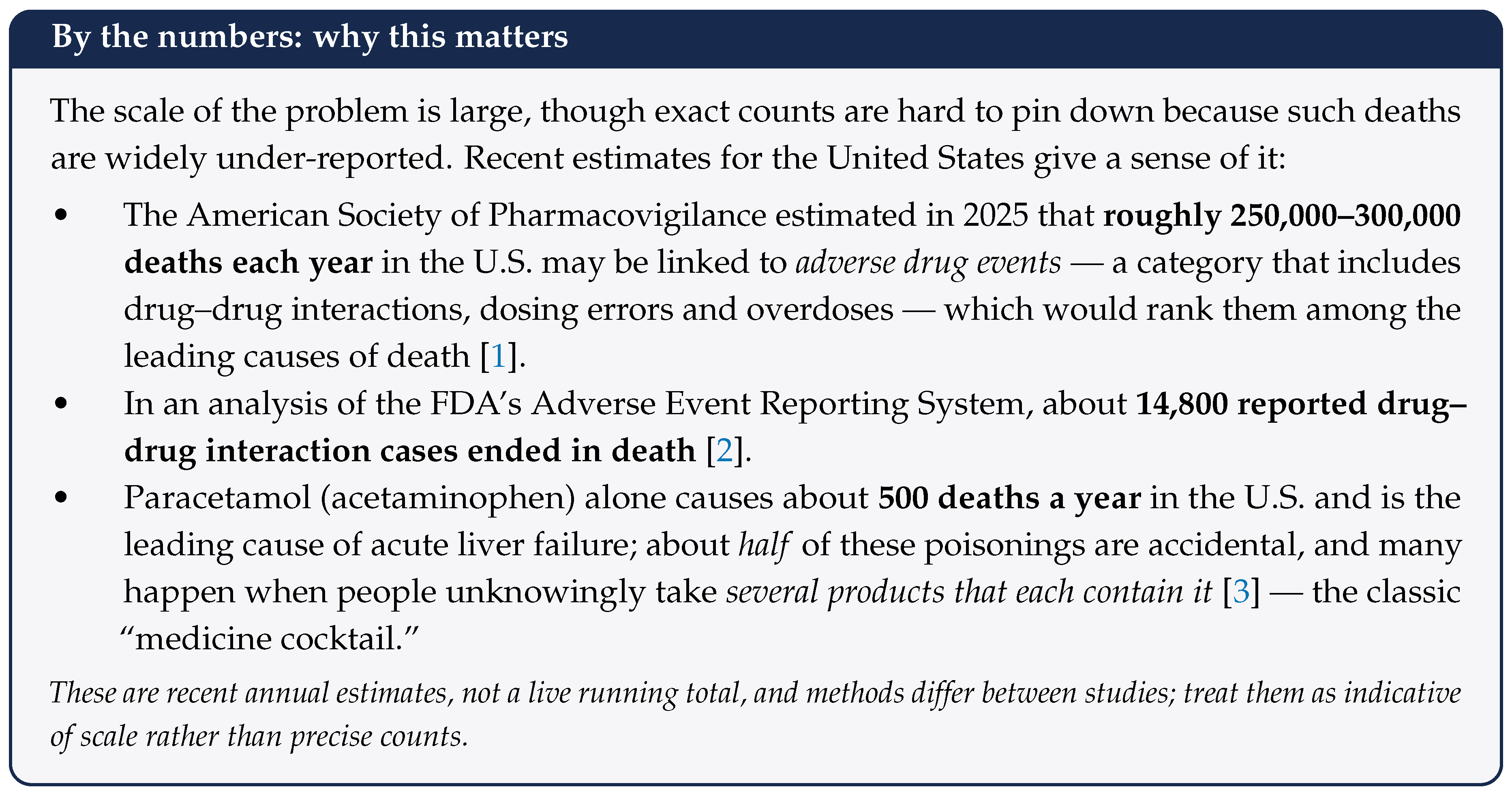
Understanding these mechanisms is protective: it is exactly the knowledge that helps a person read a label, ask a pharmacist the right question, and avoid an accidental overdose.
1.0.0.1. Who this guide is for, and how to use it.
This guide is written for everyone — students meeting the chemistry for the first time, parents and carers managing a family medicine cabinet, and general readers who simply want to combine everyday medicines sensibly. No prior chemistry is assumed: every reaction is shown as a balanced equation using only atom counts, and every worked example ends with a plain-language “what to avoid” box for younger readers. A quick glossary of the key terms appears in Section 11, and a one-page colour summary table gathers the most common combinations in Section 9. Nothing here replaces a doctor or pharmacist; the aim is to help you ask better questions and make safer everyday choices.
2. What Makes a Molecule “Poisonous” to Humans?
There is no strict wall between a “medicine” and a “poison.” The 16th-century physician Paracelsus put it famously: the dose makes the poison [4,5]. Even water and table salt are lethal in large enough amounts, while a substance we call a poison may be a life-saving medicine in a tiny, controlled dose.
A molecule can harm the body in a few general ways:
- It blocks a vital job. Example: carbon monoxide (CO) binds the iron in haemoglobin far more tightly than oxygen, so the blood can no longer carry O2.
- It over-drives a normal process. Example: too much of a sedative slows breathing until it stops.
- It is turned into something reactive inside the body. Example: paracetamol, safe at normal doses, is converted by the liver into a reactive molecule when the dose is too high (Section 4).
- It permanently changes an important molecule. Example: an agent that oxidises the iron in haemoglobin so it can no longer bind oxygen (Section 6).
Two numbers describe how poisonous a substance is:
- the therapeutic dose — the amount that helps, and
- the toxic (or lethal) dose — the amount that harms or kills.
A drug is called “safe” when these two numbers are far apart, and “dangerous” when they are close. Combining medicines is risky precisely because it can quietly push the total amount from the safe range into the toxic range.
3. The Three Ways a “Cocktail” Actually Causes Harm
Before the chemistry, it helps to name the three mechanisms clearly, because most real hospital cases fall into these buckets.
3.1. Mechanism 1 — Duplicated Ingredients (Accidental Overdose)
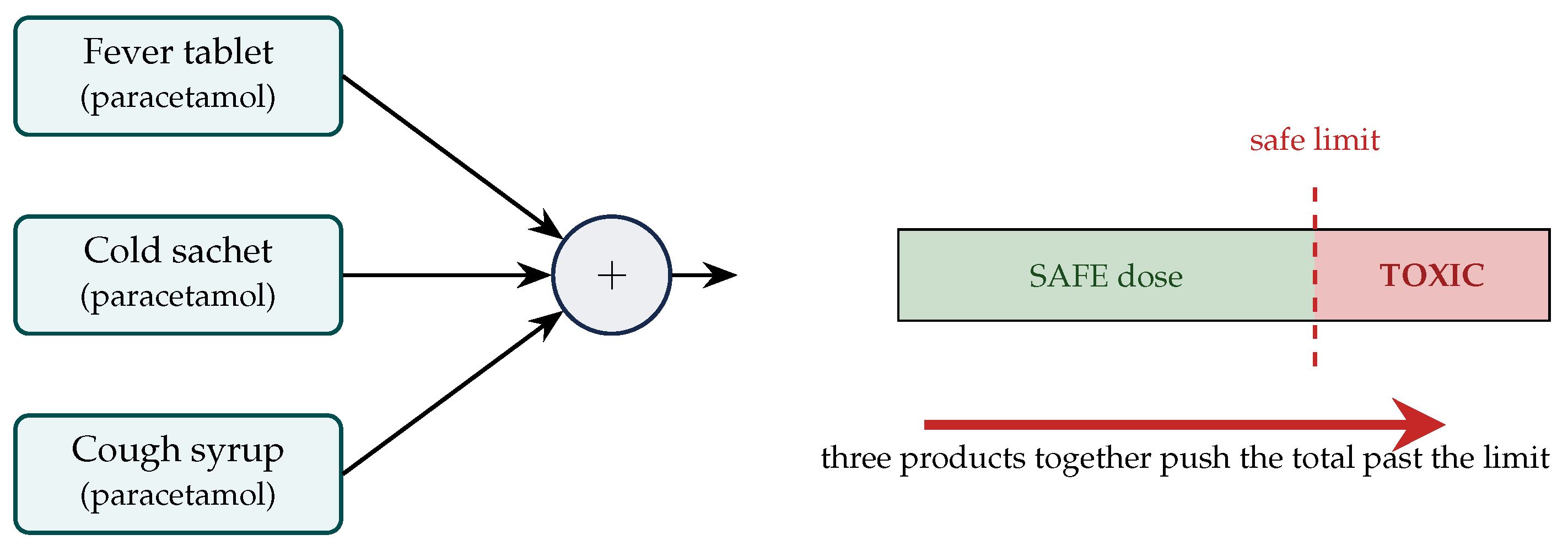
Many different-looking products contain the same active molecule. A fever tablet, a cold-and-flu sachet, and a “night-time” cough syrup may all contain paracetamol. Taken together they can quietly add up to a toxic total, even though each product on its own is within its stated dose. This is the single most common cause of accidental poisoning from ordinary over-the-counter medicines.
Figure 1.
Mechanism 1 — duplicated ingredient. Several everyday products each carry the same drug; the doses add up and quietly cross the safe limit into the toxic range.
Figure 1.
Mechanism 1 — duplicated ingredient. Several everyday products each carry the same drug; the doses add up and quietly cross the safe limit into the toxic range.
3.2. Mechanism 2 — Additive Effects (Two Drugs, Same Direction)
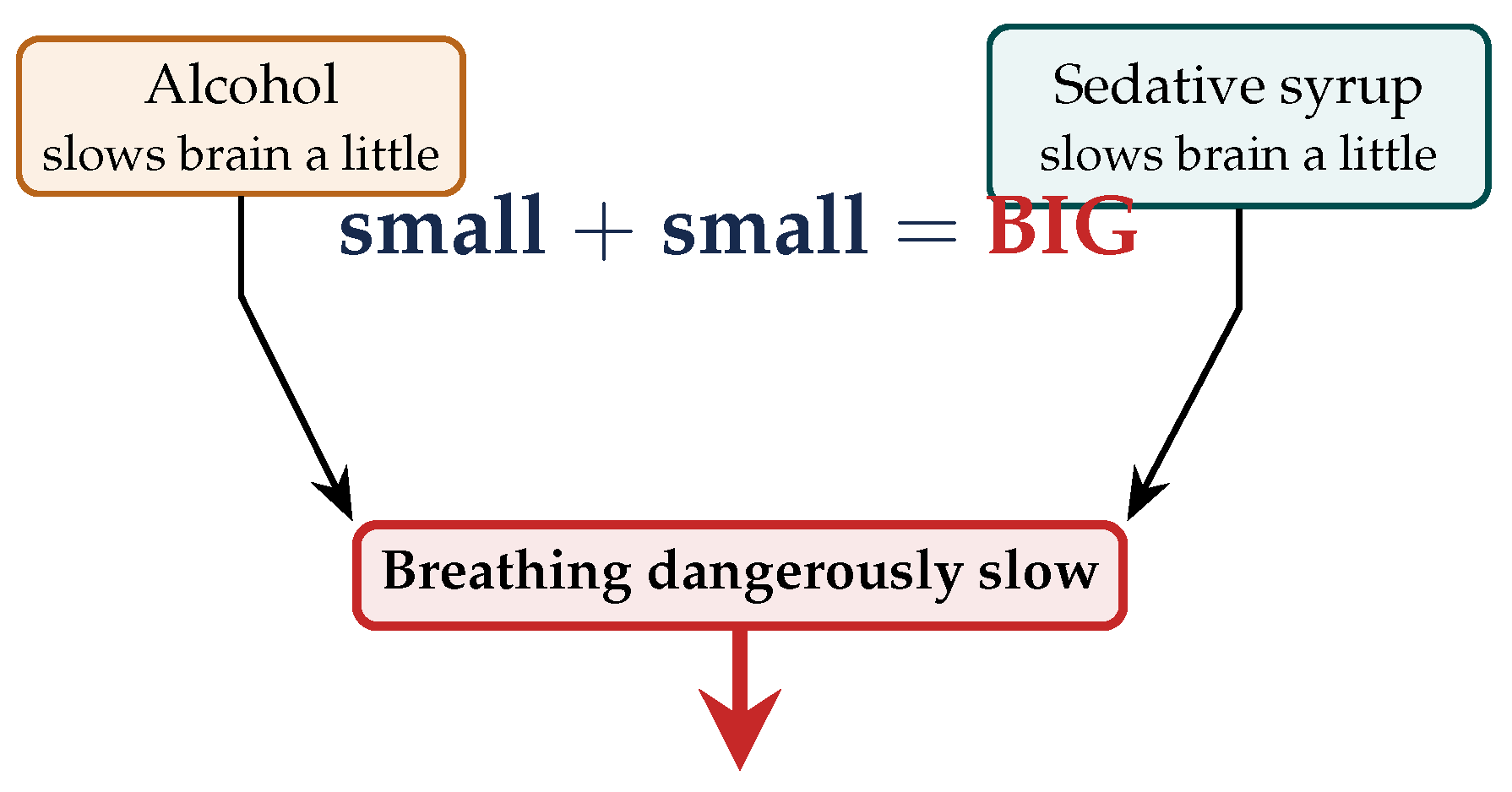
Two drugs that each do a mild version of the same thing can combine to a dangerous degree. A sedating antihistamine (common in cold and allergy syrups), a cough suppressant, and alcohol each slow the nervous system a little; together they can slow breathing dangerously. No new molecule is made — the effects simply add up.
Figure 2.
Mechanism 2 — additive effect. Two drugs pushing the body in the same direction do not just add; their combined effect can be far larger than either alone.
Figure 2.
Mechanism 2 — additive effect. Two drugs pushing the body in the same direction do not just add; their combined effect can be far larger than either alone.
3.3. Mechanism 3 — Changed Processing (Metabolism Interactions)
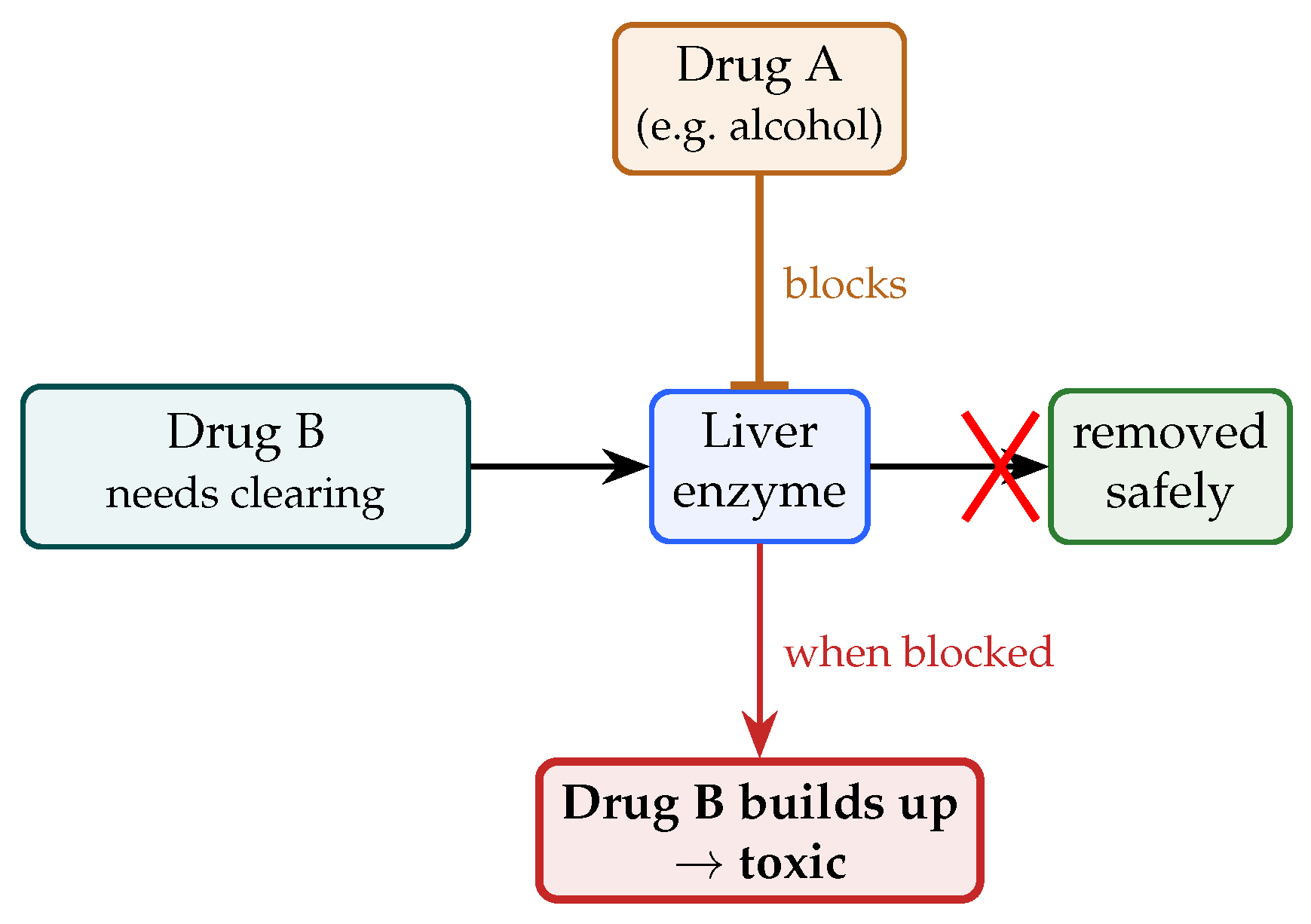
The liver contains enzymes (the “cytochrome P450” family, plus others) that break drugs down. One drug can speed up or block these enzymes, causing a second drug to build up to toxic levels, or to be turned into a harmful by-product faster than usual. Grapefruit juice, some antibiotics, and alcohol are well-known examples of substances that change this processing.
Only after these three do we reach the rarer, more dramatic case: two substances that genuinely react to form a new toxic molecule. The next sections give worked chemical equations for the most important real examples.
Figure 3.
Mechanism 3 — changed processing. One drug blocks the liver enzyme that normally clears another, so the second drug (or a toxic by-product) builds up to dangerous levels.
Figure 3.
Mechanism 3 — changed processing. One drug blocks the liver enzyme that normally clears another, so the second drug (or a toxic by-product) builds up to dangerous levels.
4. Worked Example 1 — The Paracetamol Trap (Fever and Cold Medicines)
This is the most important example in the whole article, because paracetamol (also called acetaminophen) is hidden inside dozens of fever, cold, flu, and pain products.
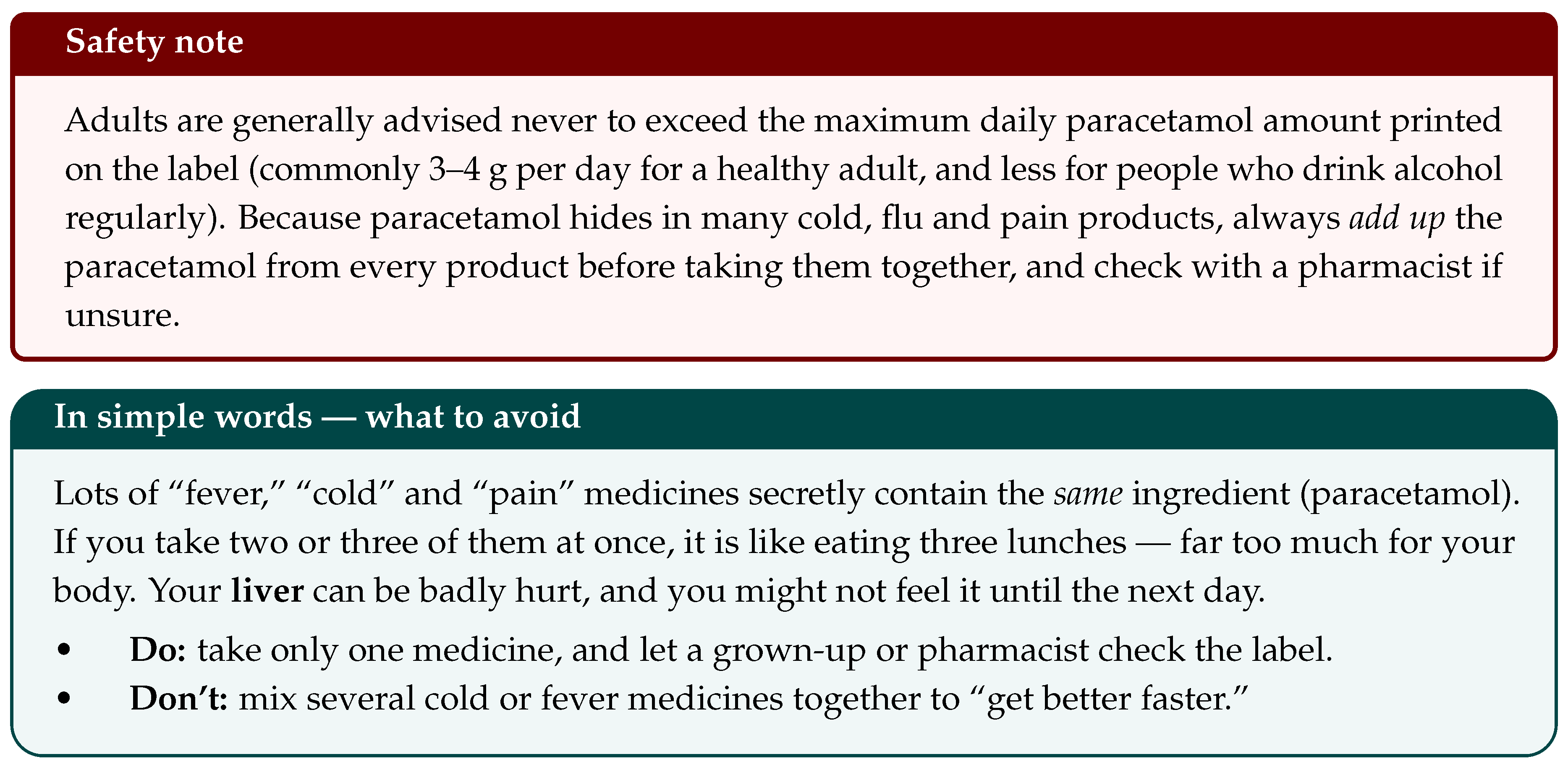
Paracetamol has the molecular formula C8H9NO2. At normal doses the liver safely attaches it to other molecules (sulfate and glucuronide groups) and the body simply excretes it. But a small fraction is handled by an enzyme (CYP2E1) that oxidises it into a reactive molecule called NAPQI (C8H7NO2) [6,7]. In atom-count form the oxidation is:
Here [O] represents the oxidising power supplied by the liver enzyme. Count the atoms on each side to check the balance: left =C8H9NO3, right = C8H7NO2 + H2O = C8H9NO3.
NAPQI is dangerous, but the body keeps a defender on hand: a protective molecule called glutathione (C10H17N3O6S). It grabs NAPQI and neutralises it, forming a harmless conjugate that is excreted:
(This is a simple addition: C, H, N, O, and 1 S — nothing is lost.)
4.0.0.2. Where the danger comes in.
The body only carries a limited supply of glutathione. When too much paracetamol is taken — for example by combining several products that each contain it — so much NAPQI is produced that the glutathione runs out. The leftover NAPQI then attacks the liver’s own proteins:
These attacked proteins can no longer do their jobs, and liver cells die. This is why a paracetamol overdose causes liver failure — one of the most common serious poisonings worldwide.
5. Alcohol — The Most Dangerous Thing to Mix with Medicine
Alcohol (ethanol, C2H6O) deserves its own long section because it is the mixer that turns the most everyday medicines dangerous. It is hidden in some cough and cold syrups as a solvent, and it is also drunk socially, so people combine it with medicines without thinking of it as a “drug” at all.
5.1. First, How the Body Breaks Alcohol Down
The liver removes alcohol in two steps. Step one turns ethanol into acetaldehyde (C2H4O), which is the genuinely toxic, hangover-causing molecule:
Step two quickly cleans up the acetaldehyde, turning it into harmless acetic acid (C2H4O2, the acid in vinegar):
The whole danger of many alcohol interactions comes from this simple idea: if step two is slowed or blocked, poisonous acetaldehyde piles up.
5.2. Alcohol + Paracetamol: More of the Liver Poison
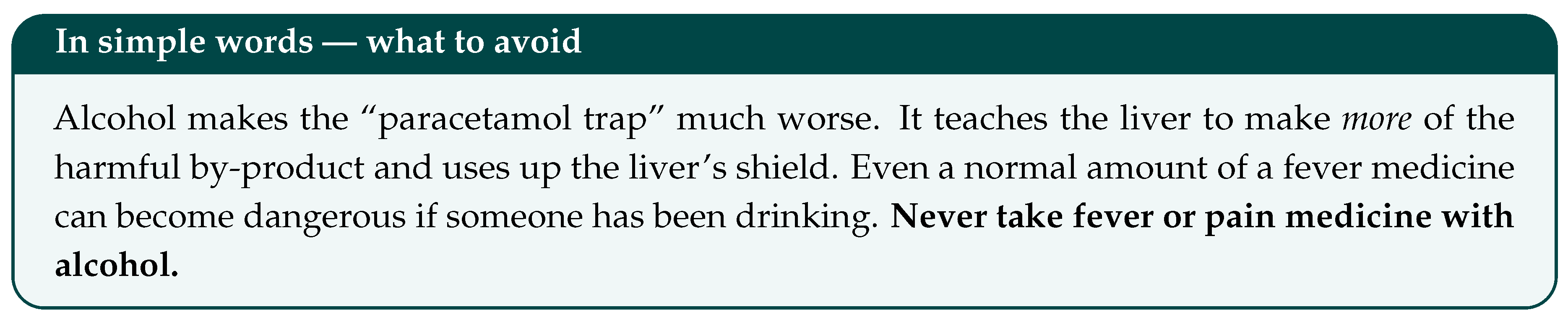
Regular alcohol trains the liver to make more of the very enzyme (CYP2E1) that turns paracetamol into NAPQI in Equation (1). So for the same dose of paracetamol, a regular drinker’s liver makes more of the toxic NAPQI and has less glutathione left to mop it up — a double hit. No new molecule is formed by mixing the drink and the tablet in the glass; the danger appears inside the body because the toxic pathway is amplified. This is why the combination of alcohol and paracetamol is a well-known cause of serious liver injury.
5.3. Alcohol + Certain Antibiotics: Acetaldehyde Poisoning
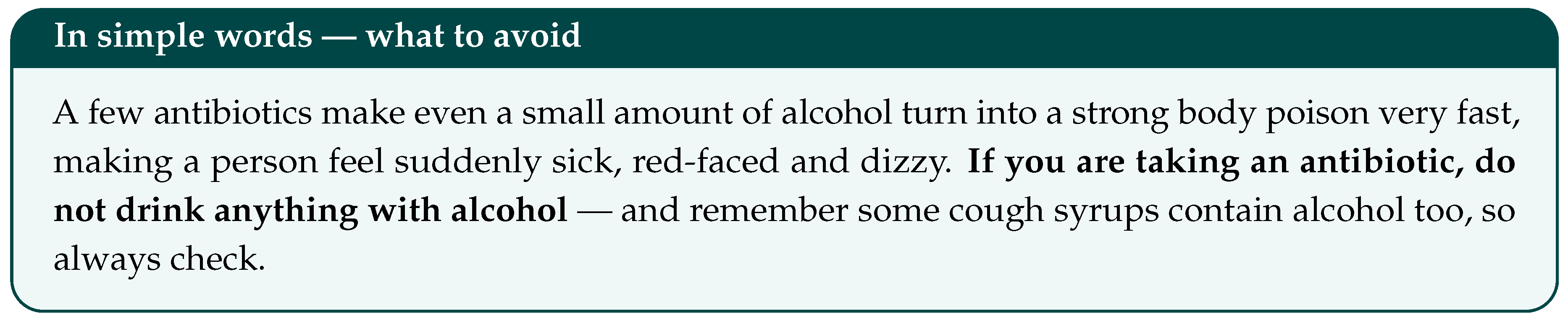
Some medicines — notably the antibiotic metronidazole (C6H9N3O3), a few related antibiotics, and the anti-drinking medicine disulfiram — block step two of alcohol breakdown (they inhibit the clean-up enzyme, aldehyde dehydrogenase). When someone drinks alcohol while taking these, the reaction in Equation (7) stalls, and toxic acetaldehyde (C2H4O) builds up:
The result is a sudden, frightening reaction: flushing, a pounding heart, throbbing headache, sweating and violent vomiting. This is called a disulfiram-like reaction, and it is a real example of a combination producing harm by trapping a poisonous intermediate the body normally destroys.
5.4. Alcohol + Sedatives, Sleep Aids and Strong Painkillers: Breathing Slows
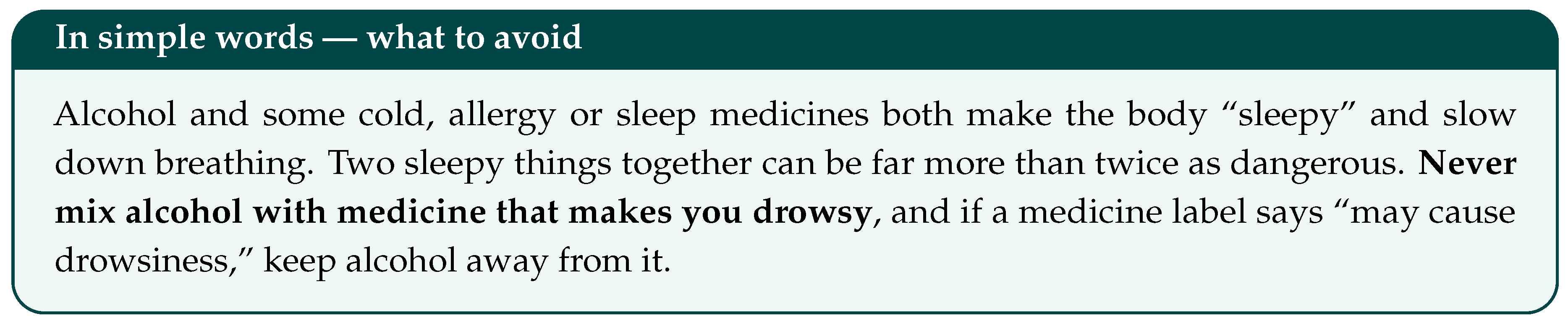
Alcohol is a depressant: it slows the brain and the breathing centre. Sedating antihistamines (in many cold and allergy syrups), sleeping tablets, anti-anxiety medicines and strong “opioid” painkillers do the same thing. When they are added together, the effects do not just add — they can multiply. No new molecule is made (this is Mechanism 2, an additive effect), but breathing can slow so much that it stops. This combination is one of the leading causes of accidental death from medicines.
5.5. Alcohol + Aspirin and Anti-Inflammatory Painkillers: Stomach Bleeding
Aspirin (C9H8O4) and similar anti-inflammatory painkillers (such as ibuprofen, C13H18O2) irritate the stomach lining and make it bleed more easily. Alcohol increases stomach acid and damages the same lining. Together they sharply raise the risk of a bleeding stomach. Again this is an additive effect, not a new molecule — but it lands people in hospital.

5.6. When Alcohol Makes a Genuinely New Poison
In rare but real cases, alcohol reacts inside the body with another substance to build an entirely new molecule that is more harmful and longer-lasting than either alone. A documented medical example is the combination of alcohol with certain illegal stimulants, which the liver joins into a new compound (cocaethylene) that is harder on the heart than the original drug. The lesson for everyone is the same and simple: mixing alcohol with other drugs can create effects that neither one has by itself. Alcohol should never be treated as a harmless extra when medicines are involved.
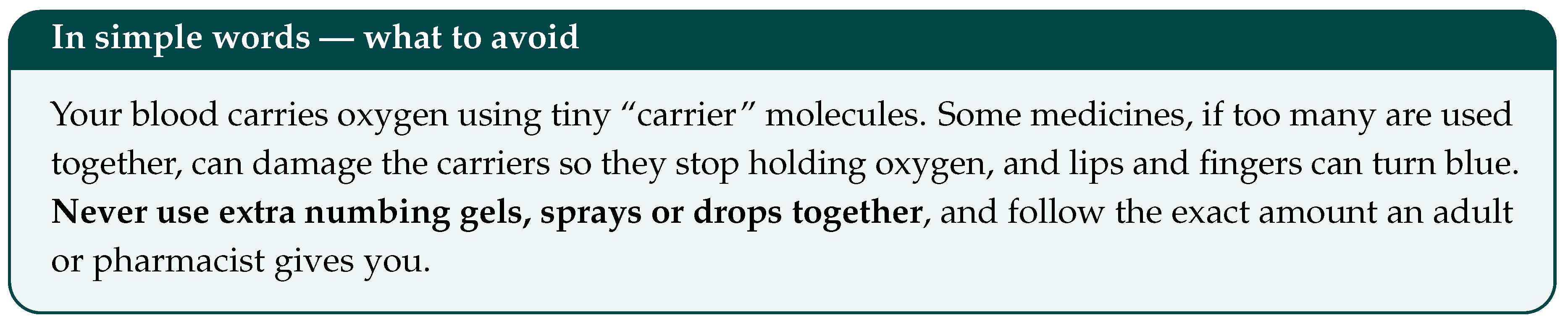
6. Worked Example 2 — Oxidised Haemoglobin (Methaemoglobinaemia)
Haemoglobin, the red protein that carries oxygen, works only while its iron is in the Fe2+ (iron-two) state. Certain medicines and their by-products can oxidise this iron to Fe3+ (iron-three), producing methaemoglobin, which cannot carry oxygen [8]. Because the whole haemoglobin molecule is enormous, we write only the essential change:
Local anaesthetics such as benzocaine (found in some teething gels and throat sprays), certain antibiotics, and some old-fashioned remedies can cause this. Combining several such agents raises the risk. The result is a person who looks blue and starved of oxygen even though there is plenty of oxygen in the air — because the carrier itself has been chemically disabled.
7. Worked Example 3 — Nitrosamines (a Genuinely New Poison Forms)
This is the clearest case of two chemicals reacting to make a new toxic molecule. Some foods and medicines contain nitrites, and some medicines contain a chemical group called a secondary amine. Under acidic conditions (such as the stomach), these can combine to form nitrosamines, a family of molecules known to damage DNA and cause cancer over long exposure [9,10].
Using the simple secondary amine dimethylamine (C2H7N) reacting with nitrous acid (HNO2, formed from nitrite in the acidic stomach):
The product C2H6N2O is N-nitrosodimethylamine (NDMA), a well-studied carcinogen. Check the balance: left =C2H8N2O2, right = C2H6N2O + H2O = C2H8N2O2.
This reaction is why drug regulators recall medicines found to be contaminated with nitrosamines, and why nitrite-cured foods are eaten in moderation. Note that it needs a specific nitrite source and specific amine, not just “any two medicines.”

8. Worked Example 4 — Antacids That Change Absorption
Antacids are among the most-combined liquid medicines. Their chemistry is simple neutralisation. A carbonate antacid reacts with stomach acid (HCl) to raise the stomach’s pH:
NaHCO3 + HCl → NaCl + H2O + CO2 This is usually harmless in itself (the CO2 is the “burp”). The problem is what it does to other medicines taken at the same time.
8.0.0.3. (a) Changed acidity.
Many drugs are absorbed well only at a certain stomach pH. By raising the pH, an antacid can reduce (or occasionally increase) how much of a second drug enters the blood — weakening the treatment or strengthening a side effect.
8.0.0.4. (b) Chelation (drug trapping).
The metal ions in antacids (Ca2+, Mg2+, Al3+) can clamp onto certain antibiotics such as tetracycline (C22H24N2O8), forming a bulky, insoluble complex that the gut cannot absorb [11]:
The antibiotic then simply passes through the body unused, so the infection is not treated. This is why patients are told to separate antibiotics and antacids by a couple of hours.

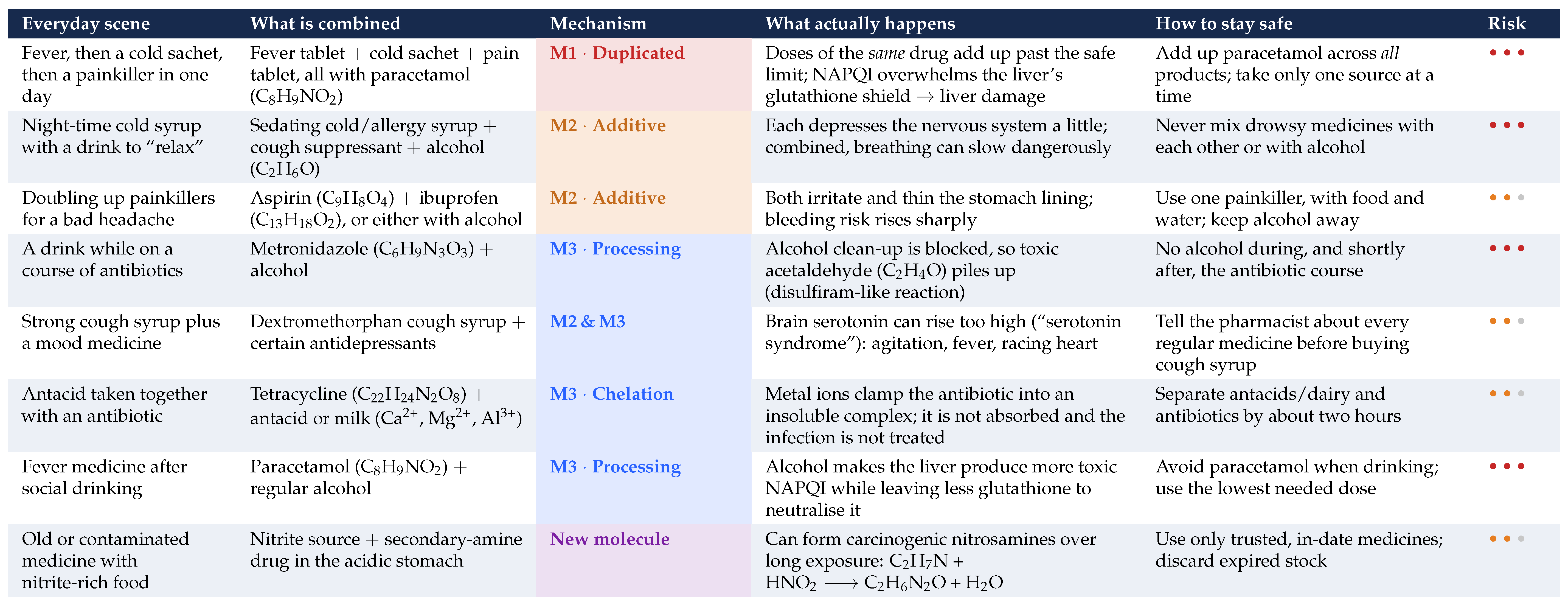
9. Everyday Tablets That Most Often Cause Trouble
The table below summarises the ordinary fever, cold, cough and pain products that people combine most, and the real reason each combination is risky. Notice that almost all of them fall under Mechanisms 1–3, not the “new poison” case, and that alcohol makes several of them worse. The colour of each mechanism tag matches its type, and the risk column shows how serious the combination usually is (• • • high, • • • medium, • • • lower).
10. A Note on Liquid Medicines Specifically
Liquid medicines carry a few extra risks that tablets do not:
- Hidden doses. It is far harder to see how much active ingredient is in a spoonful of syrup than in a labelled tablet, so duplicated-ingredient overdoses (Mechanism 1) happen more easily.
- Alcohol and sugar solvents. Many syrups use ethanol (C2H6O) or sugars as solvents, adding to alcohol load (see Section 5) or affecting people with diabetes.
- Physical incompatibility. Pouring two liquids together can cause a harmless-looking change — cloudiness or a precipitate — when the ingredients are chemically incompatible (for instance an acidic syrup meeting an alkaline one). This does not usually create a poison, but it can make the dose unreliable. Medicines should not be mixed in one cup unless a pharmacist or the label says it is fine.

11. Quick Glossary of Key Terms
A short, plain-language reminder of the words used most often in this guide.
- Therapeutic dose
- The amount of a medicine that helps. Staying within it is what keeps a medicine a medicine.
- Toxic (or lethal) dose
- The amount that harms (or kills). Mixing products can quietly move the total from the therapeutic range into this range.
- Active ingredient
- The molecule that actually does the work in a product (for example paracetamol, C8H9NO2). Different-looking products can share the same one.
- Metabolism
- The body’s chemistry for breaking a drug down — mostly in the liver — so it can be used and then removed.
- Enzyme
- A protein that speeds up one of the body’s reactions. The “cytochrome P450” enzymes handle most medicines; one drug can block or boost them and so change how another drug is processed.
- Paracetamol / acetaminophen (C8H9NO2)
- A common fever and pain medicine hidden in many cold and flu products; safe at label doses, harmful to the liver in overdose.
- NAPQI (C8H7NO2)
- The reactive, liver-damaging molecule the body makes from excess paracetamol.
- Glutathione (C10H17N3O6S)
- The body’s built-in “shield” that neutralises NAPQI — but only while its limited supply lasts.
- Acetaldehyde (C2H4O)
- The toxic in-between molecule made when the body breaks down alcohol; it causes flushing and hangover effects and piles up if its clean-up step is blocked.
- Chelation
- When metal ions (such as Ca2+ from an antacid or milk) clamp onto a drug and stop the gut from absorbing it.
- Additive effect
- Two drugs doing the same thing (for example slowing breathing) whose effects add up to something far stronger.
- Nitrosamine (e.g. C2H6N2O)
- A cancer-linked molecule that can form when a nitrite source meets a suitable amine under stomach acid — the rare case where a genuinely new poison appears.
12. Conclusion and Safety Takeaways
Combining medicines is dangerous far more often because of arithmetic and biology than because of a dramatic chemical reaction in a glass. The three everyday dangers are duplicated ingredients, additive effects, and altered processing by the liver; a genuinely new toxic molecule (as with nitrosamines, or alcohol combined with certain drugs) is the exception, not the rule. The paracetamol–NAPQI pathway shows how even a familiar, “gentle” fever medicine becomes a liver poison once its safe dose is exceeded — and alcohol, examined at length in Section 5, quietly amplifies several of these dangers at once.
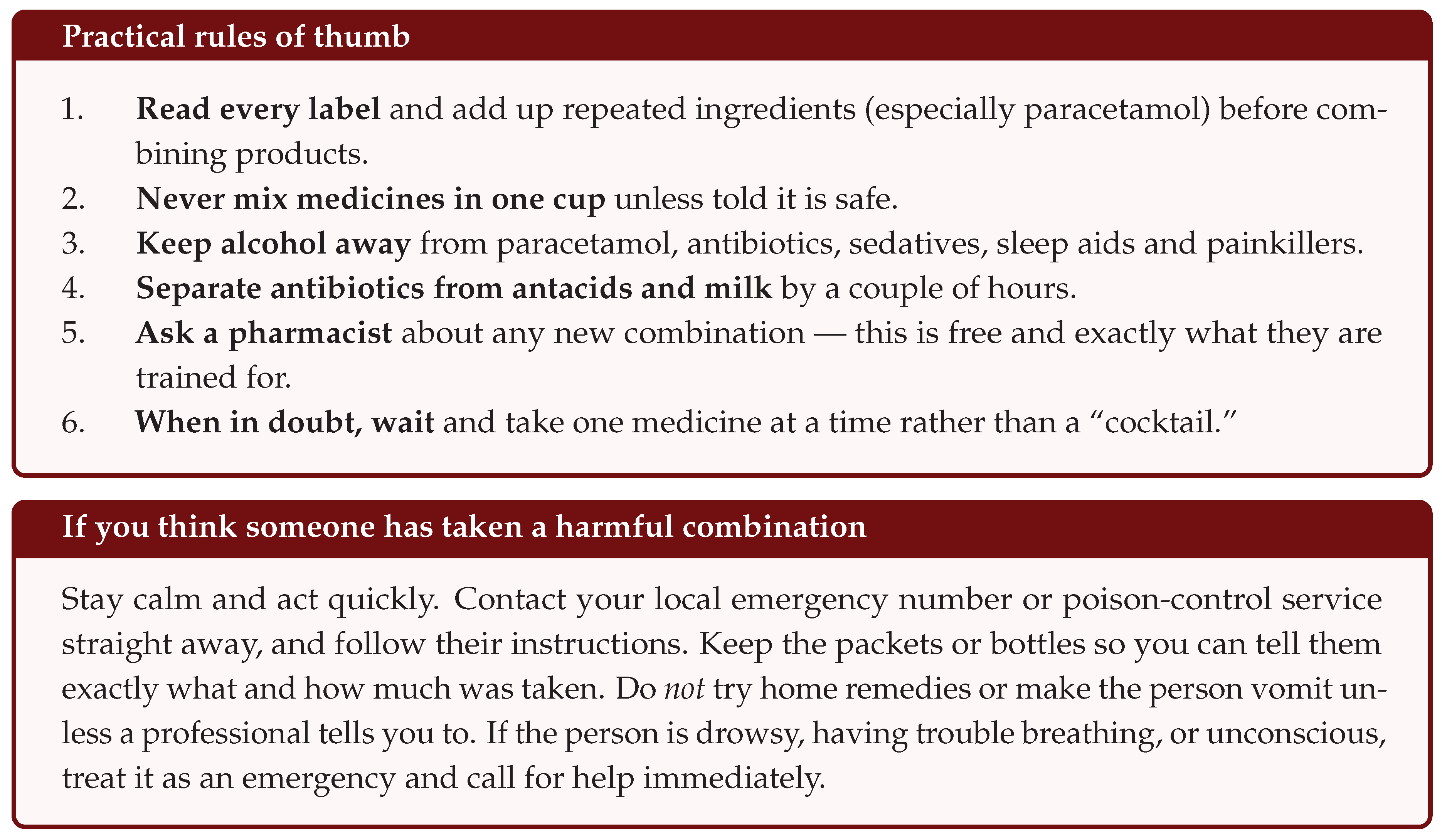
This article is an educational, school-level explanation of medication-safety chemistry. It is a preprint and is not medical advice. For any real decision about medicines, consult a doctor or pharmacist, and in a suspected poisoning contact your local emergency or poison-control service immediately.
References
- American Society of Pharmacovigilance. Adverse Drug Events: The Third Leading Cause of Death (Third Cause Campaign). American Society of Pharmacovigilance; reported on National Adverse Drug Event Awareness Day, 2025. Estimate of 250,000–300,000 U.S. deaths per year attributable to adverse drug events. See also Practical Neurology news summary. 26 March 2025. Available online: https://practicalneurology.com/news/new-analysis-suggest-adverse-drug-events-are-the-3rd-leading-cause-of-death-in-the-usa/2473820/.
- Descriptive analysis of the FDA Adverse Event Reporting System. Drug–drug interactions: a descriptive analysis of the FDA Adverse Event Reporting System (FAERS). PMC (U.S. National Library of Medicine) 2024. Of the reported drug-interaction events, about 14,800 were associated with death. Available online: https://www.ncbi.nlm.nih.gov/pmc/articles/PMC12459552/.
- Agrawal, S.; Khazaeni, B. Acetaminophen Toxicity. StatPearls, NCBI Bookshelf (NBK441917), U.S. National Institutes of Health Acetaminophen poisoning causes about 500 deaths per year in the United States and is the leading cause of acute liver failure; roughly half of poisonings are unintentional, often from unknowingly taking multiple acetaminophen-containing products. 2024. Available online: https://www.ncbi.nlm.nih.gov/books/NBK441917/.
- Klaassen, C.D., Ed. Casarett and Doull’s Toxicology: The Basic Science of Poisons, 9 ed.; McGraw-Hill Education, 2019. [Google Scholar]
- Brunton, L.L.; Hilal-Dandan, R.; Knollmann, B.C. (Eds.) Goodman and Gilman’s The Pharmacological Basis of Therapeutics, 13 ed.; McGraw-Hill Education, 2018. [Google Scholar]
- Mitchell, J.R.; Jollow, D.J.; Potter, W.Z.; Gillette, J.R.; Brodie, B.B. Acetaminophen-induced hepatic necrosis. Role of drug metabolism. J. Pharmacol. Exp. Ther. 1973, 187, 185–194. [Google Scholar] [CrossRef] [PubMed]
- Prescott, L.F. Kinetics and metabolism of paracetamol and phenacetin. Br. J. Clin. Pharmacol. 1980, 10, 291S–298S. [Google Scholar] [CrossRef] [PubMed]
- Wright, R.O.; Lewander, W.J.; Woolf, A.D. Methemoglobinemia: etiology, pharmacology, and clinical management. Ann. Emerg. Med. 1999, 34, 646–656. [Google Scholar] [CrossRef] [PubMed]
- Tricker, A.R.; Preussmann, R. Carcinogenic N-nitrosamines in the diet: occurrence, formation, mechanisms and carcinogenic potential. Mutat. Res. 1991, 259, 277–289. [Google Scholar] [CrossRef] [PubMed]
- U.S. Food and Drug Administration. Nitrosamine Impurities in Medications: Information for Consumers and Health Care Professionals. In FDA guidance and safety communications; 2021. [Google Scholar]
- Neuvonen, P.J. Interactions with the absorption of tetracyclines. Drugs 1976, 11, 45–54. [Google Scholar] [CrossRef] [PubMed]
Disclaimer/Publisher’s Note: The statements, opinions and data contained in all publications are solely those of the individual author(s) and contributor(s) and not of MDPI and/or the editor(s). MDPI and/or the editor(s) disclaim responsibility for any injury to people or property resulting from any ideas, methods, instructions or products referred to in the content. |
© 2026 by the author. Licensee MDPI, Basel, Switzerland. This article is an open access article distributed under the terms and conditions of the Creative Commons Attribution (CC BY) license.
Copyright: This open access article is published under a Creative Commons CC BY 4.0 license, which permit the free download, distribution, and reuse, provided that the author and preprint are cited in any reuse.