

Submitted:
22 July 2026
Posted:
23 July 2026
You are already at the latest version
Abstract
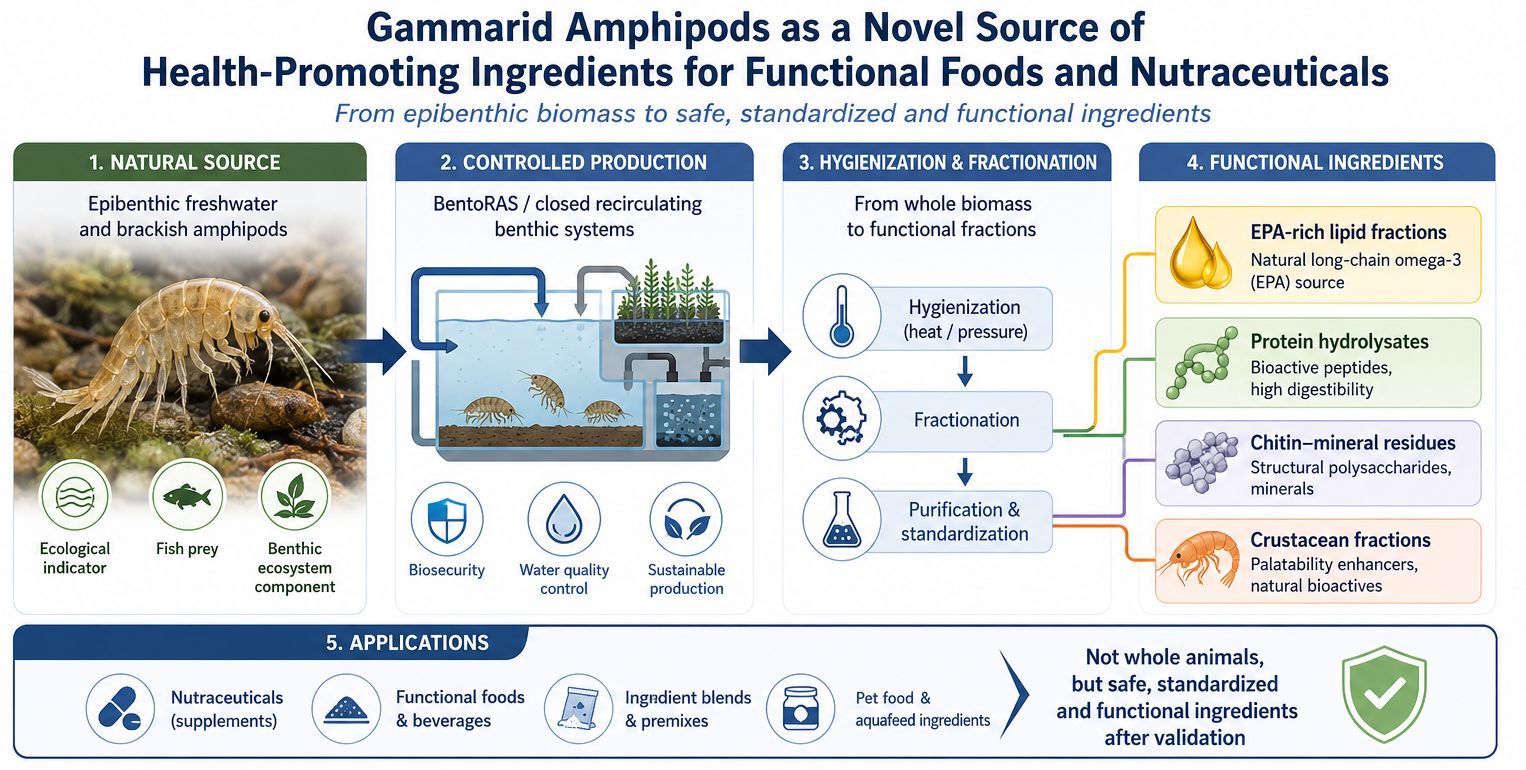
New health-promoting food ingredients should combine nutritional functionality, traceable production and sustainable sourcing. Freshwater and brackish gammarid amphipods are usually considered ecological indicators, fish prey or invasive crustaceans, but their biochemical and ecological traits also suggest a new food-bioscience perspective. This review reframes gammarids as a candidate epibenthic biomass for the production of bioactive and functional ingredients, with particular emphasis on EPA-rich lipid fractions, protein hydrolysates, chitin-mineral residues and palatability-active crustacean fractions. Available data show that selected gammarids contain meaningful amounts of long-chain omega-3 fatty acids, especially EPA, together with protein, minerals and chitinous material. However, wild harvest is unlikely to provide safe or standardized raw material. The central proposition is that gammarid-derived ingredients should be developed through controlled benthic production systems, such as BentoRAS, followed by hygienization, fractionation and safety validation. The most realistic food pathway is not direct consumption of whole animals, but standardized extracts, hydrolysates, lipid blends, microencapsulated powders and supplement-grade fractions. Gammarids may therefore represent a freshwater analogue of krill functionality, but only if production is engineered around biosecurity, contaminant control, oxidative stability, allergen assessment and regulatory approval.
Keywords:
gammarids
; Amphipoda
; bioactive ingredients
; functional foods
; nutraceuticals
; EPA
; novel food
1. Introduction
Contemporary food science increasingly focuses on ingredients that combine nutritional value, bioactivity, processing functionality and credible sustainability. The current debate on new raw materials is dominated by insects, microalgae, microbial proteins, plant concentrates and fermentation-derived ingredients [1,2,3]. Most of these options answer one question: how can more protein be produced with lower environmental cost? The question is important, but incomplete. For health-promoting foods and supplements, the more difficult challenge is to obtain safe, traceable ingredients that deliver specific functional value: long-chain omega-3 fatty acids, bioactive peptides, minerals, chitin-derived fractions, antioxidant stability and acceptable sensory performance. The novelty of the gammarid concept is that it joins three areas usually treated separately: freshwater omega-3 transfer, alternative animal biomass and circular production of food-relevant bioactive fractions.
Marine omega-3 ingredients remain nutritionally important, but their supply is constrained by ecological limits and competition between feed, food and supplement markets [4,5,6,7]. Plant oils can supply energy, but they do not supply EPA and DHA in meaningful quantities. Microalgal oils are highly relevant for DHA-oriented formulations, yet they are still relatively expensive and are mostly used as concentrated lipid ingredients [8,9]. This creates space for complementary, niche ingredients that do not need to replace fish oil entirely but can contribute EPA, peptides, minerals and crustacean-derived functionality in blended food or supplement products.
The global market for functional foods, nutraceuticals and specialty nutrition increasingly favours ingredients that can be linked to measurable physiological benefits, transparent production and responsible use of biological resources [10,11]. This market logic is important for gammarids because their value would not be based on mass protein replacement alone. Their stronger claim is the simultaneous delivery of EPA-rich lipids, protein, minerals, chitinous material and crustacean-derived technological functionality in a traceable production system.
This perspective also fits the circular bioeconomy transition. Underused aquatic biomass and low-trophic organisms are now being reconsidered as biological converters able to transform microbial, algal and detrital production into higher-value ingredients. In this context, gammarids may be interpreted as a freshwater platform for producing bioactive fractions rather than as a minor benthic curiosity.
Gammarids offer a neglected freshwater perspective. They are not simply another protein source and should not be promoted primarily as whole edible organisms. Their food-bioscience relevance lies in their ability to convert microbial, algal and detrital production into a complex animal matrix containing EPA-rich lipids, protein, minerals and chitinous material. The more productive question is therefore whether gammarids can be used as a controlled biological converter of biofilm and detritus into standardized ingredients for health-promoting foods, nutraceutical formulations and specialized nutrition.
2. Biological Basis: Gammarids as Epibenthic Converters
Gammarids are amphipod crustaceans occurring in freshwater, brackish and marine environments. Species such as Gammarus pulex, Gammarus fossarum, Gammarus roeseli, Dikerogammarus haemobaphes, Pontogammarus robustoides, and many others live among stones, macrophytes, mussel beds, plant debris and biofilm. Their laterally compressed body, strong walking appendages, brood pouch, active crawling behaviour and preference for structured substrates make them particularly well suited to dense epibenthic life. They feed on conditioned leaf litter, periphyton, algae, microorganisms, detrital particles and, in some species, small invertebrates [12,13]. Figure 1 illustrates the body form, harvested biomass and size variation that make gammarids a realistic candidate for mechanical collection and grading.
In the broader amphipod context, this is a selective rather than universal proposal. Amphipoda is a very large crustacean order occupying marine, brackish, freshwater, subterranean and even semi-terrestrial habitats, with many ecological forms and feeding modes. Only a fraction of amphipods are relevant to the present concept: epibenthic freshwater or brackish taxa that combine high surface association, detritus/biofilm use, direct development and sufficiently dense local populations. Global reviews of freshwater amphipod diversity show that non-marine amphipods are taxonomically and biogeographically rich, especially in ancient and Ponto-Caspian systems, but this diversity should be treated as a screening pool, not as a single production category [14].
From a production perspective, the most important feature of gammarids is habitat dependence. Freshwater species occupy stones, gravel interstices, leaf packs, macrophytes, submerged roots, mussel beds, woody debris, spring runs, streams, lake margins and regulated river banks. They usually require oxygenated water and shelter, and their local density is strongly shaped by flow, substrate complexity, food conditioning and predation pressure [15,16,17,18]. This explains why industrial design should not begin with pond volume alone. It should begin with the architecture of the surface on which the animals feed, hide, mate and recruit juveniles.
Their life cycle is equally relevant. Gammarids have direct development: females brood embryos in a ventral marsupium and release juveniles rather than planktonic larvae. Males commonly form precopulatory pairs with females before the female moults, and brood development, egg survival and clutch size are strongly temperature-dependent [19,20,21,22]. In G. fossarum and G. roeselii, reproductive modelling under natural thermal regimes indicates repeated breeding during favourable seasons, while published life-history data report that some females may produce several broods, in G. roeselii up to about eight over a lifetime under suitable conditions [22,23]. For BentoRAS this means that the production unit must protect reproductive females and juveniles, not only maximize harvestable adults.
Gammarids are not long-distance migratory animals in the fish sense, but their movement ecology matters. Local redistribution occurs through crawling, nocturnal activity, downstream drift and disturbance-driven displacement; recent work also indicates that parasite status can modify seasonal and diurnal drift patterns in G. pulex [17,24]. At the larger scale, the spread of Ponto-Caspian amphipods across Europe has been facilitated by canals, shipping, ballast water, reservoirs and hard artificial substrates [25,26,27]. Thus the same mobility traits that help colonization also strengthen the case for closed production and strict biosecurity.
This ecology is technologically important. Gammarids are not miniature freshwater shrimps in the usual aquaculture sense. They are organisms that collect dispersed production from benthic surfaces and package it into animal biomass. In natural systems they act as a link between microbial/periphytic production and fish. In a production system, the same function could be engineered.
This article proposes the term epibenthic lipid bioreactor for this function. The phrase is not decorative. It changes the production model. Classical fish aquaculture is designed around water volume, stocking density and feed conversion ratio [5,28]. Gammarid production should be designed around active surface area, substrate architecture, biofilm quality, oxygenation, refuges, partial harvesting and population renewal, because amphipod density and feeding are strongly linked to habitat structure, benthic food availability and measurable feeding activity [15,16,18,29,30]. The main industrial unit should be kilograms of biomass per square metre of active substrate per production cycle, not only kilograms per cubic metre of water.
The closest industrial analogy is krill, but the analogy must be used carefully. Krill is a marine pelagic crustacean resource already harvested at industrial scale, whereas gammarids are smaller epibenthic amphipods for which industrial production has not been demonstrated. The useful comparison is therefore not that gammarids are “freshwater krill” in a literal sense. The useful comparison is functional: both groups can convert low-trophic aquatic production into crustacean biomass with feed, lipid, mineral, chitinous and palatability value [31,32]. Table 1 summarizes the main similarities and differences.
The biology of invasive Ponto-Caspian gammarids is particularly instructive, although it also demands strict biosecurity. Species such as Dikerogammarus haemobaphes, D. villosus and Pontogammarus robustoides and many other species can form dense populations in regulated rivers, canals, reservoirs and other anthropogenically modified waters. Their success is linked to ecological tolerance, omnivory, rapid population development, use of hard artificial substrates and dispersal through human-made corridors [23,25,32,33,34,35]. In this article, these traits are not treated as an argument for open culture, but as biological evidence that gammarid productivity can respond strongly to engineered habitat structure.
The life-history study of P. robustoides showed why this species attracted attention as a potential biomass organism, while later work on invasive gammarids and cryptic or expanding amphipod lineages supports the view that productivity, dispersal and species identity cannot be separated [33,34,35]. In practical terms, these studies strengthen the central caution of this article: the biological traits that make some amphipods productive also make them risky if they are moved outside controlled systems.
3. Freshwater Gammarids as EPA Carriers
The strongest starting point for this concept is the study by [36], which analysed the fatty acid composition of five freshwater gammarids: Gammarus fossarum, G. pulex, G. roeseli, Dikerogammarus haemobaphes and Pontogammarus robustoides. The lipid content ranged from 20.0 to 36.1 g/kg wet weight and from 75.1 to 131.1 g/kg dry weight. The highest lipid content was found in P. robustoides (Table 2).
The fatty acid profile was more important than the total lipid level. Total n-3 PUFA ranged from 11.5% in G. pulex to 25.5% in G. roeseli. EPA was the dominant long-chain n-3 fatty acid in gammarids, reaching 16.2% in D. haemobaphes and 15.9% in P. robustoides. DHA was present at lower levels, generally 1.5-4.2% of total fatty acids (Figure 2). This means that gammarids should not be presented as a direct replacement for fish oil, especially if DHA is the primary target. Their strongest claim is as an EPA-rich whole biomass or functional feed ingredient. The proposed raw material is therefore multifunctional: it may provide whole dried meal, hydrolysates, palatability enhancers, EPA-containing lipid fractions, chitin-mineral residues, pet food ingredients, aquafeed components and potentially supplement-grade fractions after safety validation.
Compared with other alternative omega-3 platforms, gammarids would occupy a specific niche. Microalgae remain the most logical route for highly concentrated DHA or EPA oils, while krill already supports a marine crustacean supplement industry but depends on regulated wild harvest. Gammarids are unlikely to replace either resource globally; their innovation is the possibility of producing an EPA-oriented freshwater crustacean biomass on engineered benthic surfaces and safe low-value substrates [37,38,39].
Recent work on marine gammarids strengthens this interpretation. Marine amphipods can accumulate nutritionally valuable fatty acids and may maintain or modify lipid profiles under controlled diets, including macroalgal and low-trophic feed inputs [38,40,41]. Freshwater gammarids should therefore be seen as a complementary inland production model within a wider amphipod-resource concept, not as an isolated curiosity.
EPA deserves separate emphasis because it is not merely a compositional marker. EPA is involved in inflammatory regulation, cardiovascular physiology and the formation of lipid mediators, while future food and supplement markets will require a broader portfolio of sustainable long-chain omega-3 sources [37,42,43]. Gammarids are therefore best positioned as complementary EPA carriers, especially where a whole biomass or semi-refined lipid-protein fraction can deliver EPA together with minerals, peptides and crustacean-derived functionality.
Recent 44. These data should not be merged directly with the freshwater gammarid values in Table 2, because marine amphipods differ in salinity exposure, basal diet, mineral profile and ecological setting. Their role here is therefore comparative: they strengthen the state of the art around amphipod biomass.
4. Can Gammarids Be Harvested in Industrial Quantities?
The answer must be divided into two parts. Wild harvest and controlled production are not the same question. Wild harvest is a weak industrial model. Natural populations are seasonal, spatially patchy and dependent on substrate, macrophytes, flow, oxygen, temperature and predation [15,16]. Benthic animals may also be exposed to contaminants associated with sediments and food particles, which is why raw material intended for feed or food requires traceable production conditions rather than opportunistic collection [2,45]. A feed or food industry needs repeatable quality, traceable biomass and predictable supply. Wild gammarids may be useful for research or for limited local utilization of invasive biomass, but they should not be the foundation of a modern industrial supply chain.
This is also why industrial development should be framed as circular production rather than opportunistic harvesting. Aquatic ingredient platforms are increasingly expected to recover value from low-trophic organisms, microbial production and safe side streams while maintaining traceability and environmental control [7,28,46]. A gammarid supply chain would be credible only if it converts such resources into standardized biomass under defined water, substrate and biosecurity conditions.
Controlled production is more plausible. Ecological literature shows that amphipods can reach high densities under favourable conditions. In a Dorset chalk stream, G. pulex showed strong seasonal production and a maximum dry biomass around 7.1 g/m2 in association with aquatic vegetation [15]. Some localized amphipod populations have reached thousands of individuals per square metre, which confirms the biological capacity for crowding but not the existence of a reliable industrial supply chain [15,36]. The pelagic amphipod Macrohectopus branickii in Lake Baikal is a more extreme conceptual example: it can form a dominant zooplankton biomass and has been linked to very high annual secondary production in that ecosystem [47,48]. This does not mean that gammarids can simply be harvested like krill. It means that amphipods can be significant biomass organisms when ecological conditions are favourable (Table 3).
Available biomass estimates should be interpreted as local secondary production, not as a ready industrial resource. In the Dorset chalk stream studied by [15], maximum dry biomass reached about 7.1 g/m2 and annual production was several-fold higher than standing biomass because the population turned over during the year. Such figures show that freshwater amphipods can be productive at the square-metre scale, particularly where vegetation and detrital structure are available. They also show why simple extrapolation from rivers to national harvest potential would be misleading: natural biomass is patchy, seasonal, ecosystem-specific and partly needed by fish and other consumers.
Marine caprellid amphipods provide another technological analogy. Caprella mutica can form extremely dense populations on artificial structures such as ropes, nets and aquaculture equipment, and caprellids have been proposed as an overlooked resource for marine finfish aquaculture [50]. The lesson is clear: amphipod biomass is often limited by usable surface and habitat structure, not only by water volume. This is the key insight for industrial gammarid production.
A production estimate was proposed for P. robustoides. A 1 ha pond, 1.5 m deep, with an assumed density of 50 x 10^3 animals/m2, could theoretically yield about 31 t wet biomass, 8.5 t dry biomass, 1.12 t oil and 0.25 t n-3 LC-PUFA per harvest [36]. This is not evidence of an operating industrial farm, but it is a valuable hypothesis of scale. It shows that the biological numbers are not trivial. The unresolved issue is technology. The conservative yield scenario derived from these assumptions is visualized in Figure 3; the graph is intended as a planning tool for pilot-scale design, not as a confirmed industrial yield curve.
Industrialization therefore depends on engineering optimization as much as on biology. Emerging aquaculture systems reach commercial relevance only when they combine modular scalability, automated handling, process monitoring, biosecurity and reproducible product specifications [55,56,57]. For BentoRAS, the decisive engineering variables are active substrate area, cassette geometry, flow over surfaces, oxygen transfer, biofilm renewal rate, retention of reproductive females and the frequency of partial harvest.
5. A Proposed Industrial Technology: BentoRAS
The proposed technology can be called BentoRAS, meaning a benthic recirculating or semi-recirculating production system. Its central idea is simple but unconventional: industrial gammarid production should not try to maximize open water volume. It should maximize active colonization surface. This makes BentoRAS a new production logic, closer to engineering a living benthic reactor than to building a small-crustacean pond. Figure 4 presents the system concept.
In practical terms, BentoRAS should be treated as a platform technology rather than as a single tank design. The production target would be a stable standing population distributed across removable benthic carriers, with the harvest taken from surplus biomass rather than from complete population removal. The cassette itself is the core production unit: it provides biofilm surface, shelter, mating habitat, juvenile refuge and a removable harvesting module. This is where the approach becomes innovative: productivity is driven by engineered surface architecture, microbial conditioning and population renewal, not only by feed input. The conceptual layout is shown in Figure 4.
The sustainability of such a platform should not be judged by biomass yield alone. Modern aquaculture technologies are assessed through resource efficiency, energy use, water reuse, biosecurity, traceability, nutrient recovery and compatibility with circular production models [55,58,59]. BentoRAS shifts this logic from water volume to benthic surface: productivity would be created by microbial conditioning and substrate architecture, while recirculation or semi-recirculation would provide the control needed for food-grade or supplement-grade raw materials.
The system would consist of shallow raceways or tanks, 20-60 cm deep, with controlled water flow, strong oxygenation and removable substrate cassettes. These cassettes could be made of HDPE mesh, structured mats, brush-like surfaces, perforated plates, plant-fibre carriers or other inert materials that increase surface complexity. The substrate would be preconditioned with biofilm, periphyton, diatoms, bacteria and fungi. Gammarids would graze, shred and browse this living surface, while also using it as refuge and reproductive habitat, reflecting their natural dependence on structured benthic habitats and conditioned organic matter [15,16,18].
A pilot module could be organized as parallel shallow channels with independent substrate cassettes, each cassette serving simultaneously as feeding surface, refuge and reproductive habitat. Key control points would include dissolved oxygen, ammonia, suspended solids, flow velocity, temperature, photoperiod, biofilm renewal and the proportion of breeding females retained after harvest. The design should avoid excessive turbulence, because gammarids need contact with surfaces, but it should maintain enough flow to prevent anoxic zones and sediment fouling.
The feeding strategy should not imitate intensive shrimp farming. If gammarids are fed expensive formulated diets, much of their advantage disappears. The technological value lies in their ability to upgrade low-value organic and microbial resources. Candidate inputs include conditioned plant detritus, safe plant-processing side streams, periphyton, microalgae, biofilm grown on carriers, and possibly treated aquaculture side streams. The reason to focus on biofilm and periphyton is also nutritional: the fatty acid profile of aquatic invertebrates can reflect the quality of basal food resources, especially diatoms and other EPA-rich microorganisms [13,45,49]. For food applications, manure-like or contaminated substrates should be excluded. For feed applications, all inputs must still be traceable and safe.
The feeding strategy can also be used as a compositional control tool. Aquatic invertebrate fatty acid profiles are influenced by basal food quality, especially the availability of EPA-rich diatoms and other microorganisms [60,61]. Controlled biofilm conditioning could therefore become a practical method for improving the EPA profile of gammarid biomass without relying on expensive formulated feeds.
Operationally, the system should run in phases: substrate conditioning, inoculation, population expansion, partial mechanical harvest, depuration and restart of the harvested cassette. A rotating cassette schedule would allow continuous output while preserving reproductive stock. This is also where quality control becomes part of the production technology: fatty acid profile, microbial status, dry matter, ash, chitin fraction and contaminant levels should be monitored as product specifications, not only as research endpoints.
6. Species Choice: Productivity Versus Biosecurity
The most promising species on a lipid basis are not necessarily the safest industrial species. Ponto-Caspian gammarids such as P. robustoides, D. haemobaphes and D. villosus are attractive because of rapid growth, ecological tolerance, fecundity and, in some cases, high EPA levels [26,33,34,36]. However, these are also the traits that make them ecologically risky. Invasive amphipods can displace native species and alter freshwater food webs [25,52,53].
Therefore, the first rule of industrial gammarid technology should be containment. Non-native or invasive species should not be introduced into open ponds or natural waters. If used at all, they should be maintained only in closed systems with filtered outlets, disinfection barriers and strict biomass disposal procedures. A safer starting point may be native or locally accepted species such as G. pulex or G. fossarum, even if their EPA yield is lower. A pilot programme should compare at least two strategies: a low-risk native species and a high-performance species under full containment. Recent phylogeographic and taxonomic studies also show that apparently familiar European Gammarus taxa may represent complex or locally differentiated lineages, which strengthens the case for local species verification before any production programme is scaled up [35,62,63].
7. Harvesting and Processing
Harvesting is one of the decisive engineering problems. A gammarid system must maintain a breeding population while removing surplus biomass. Total harvest may collapse the colony because reproduction and recruitment determine standing biomass in amphipod populations [15,22]. The best model is partial, repeated, mechanical harvest.
Removable cassettes allow this. A fraction of the substrate can be lifted, gently washed or vibrated, and the detached gammarids can be separated through sieves. Smaller individuals and egg-bearing females can be returned, while market-size biomass enters depuration. Air-lift devices, light or flow stimuli, and graded mesh separators could improve automation. The process should be designed to collect animals without destroying the biofilm base of the system.
After harvest, the biomass should undergo depuration in clean, oxygenated water for 24-48 hours, followed by hygienization. Processing routes may include low-temperature drying, milling, enzymatic hydrolysis, pressing, ethanol extraction or supercritical CO2 extraction. Because gammarids are not extremely lipid-rich, the most rational product is not necessarily pure oil. In [36], total lipids were nutritionally interesting but moderate in absolute quantity compared with fatty fish. A biorefinery approach is stronger: one biomass can produce a whole meal, a protein-lipid hydrolysate, an EPA-containing oil fraction, a chitin-mineral residue and flavour-active fractions for aquafeed or pet food. This cascading use of biomass is summarized in Figure 5 and is more realistic than treating gammarids as an oil-only raw material.
Post-harvest quality control is particularly important because EPA-rich fractions are oxidation-sensitive. A practical process should therefore include rapid chilling or stabilization, low-oxygen handling, validated drying, antioxidant strategy, peroxide and anisidine value monitoring, microbiological criteria and packaging designed to limit oxygen and moisture exposure [43,64,65]. These steps should be treated as part of the production technology, not as optional downstream corrections.
This cascading logic is consistent with the general biorefinery principle: the economic and sustainability value of a biomass increases when multiple fractions are recovered in a rational order rather than when the material is reduced to a single product [66,67,68]. For gammarids, a plausible cascade would prioritize food- or supplement-relevant lipid and protein fractions, then retain mineral and chitinous residues for feed, material or further conversion routes.
The same logic is now visible across aquatic biorefineries, including microalgae, seaweed and low-trophic aquaculture resources. In each case, commercialization depends on recovering several co-products, documenting their safety and using life-cycle or techno-economic tools to identify the most realistic value chain [28,46,69].
8. Functional Food, Nutraceutical and Supplement Opportunities
The first human-oriented gammarids applications can be refined fractions. A realistic development pathway includes EPA-oriented lipid fractions, blended EPA/DHA oils, microencapsulated omega-3 powders, protein hydrolysates with potential bioactivity, mineral-rich fractions, chitin/chitosan precursors and flavour-active crustacean extracts. Feed and pet food can still serve as early markets and safety-learning platforms, but the scientific novelty is the possibility of converting epibenthic biomass into health-promoting food and supplement ingredients.
Functional food development is moving away from isolated nutrient addition toward multifunctional ingredients that provide nutritional value, processing functionality and evidence-based physiological relevance [70,71]. This favours biomass platforms in which lipids, proteins, minerals and polysaccharide fractions can be separated or recombined depending on the target product. Gammarids fit this logic because one raw material could yield EPA-containing lipid fractions, protein hydrolysates, mineral-rich residues and chitin/chitosan precursors.
The most plausible food and supplement prototypes are: softgel or liquid oil blends in which gammarid EPA is combined with algal DHA; spray-dried or microencapsulated omega-3 powders; protein-lipid hydrolysates for functional formulations; savoury crustacean flavour fractions; chitin-mineral residues for further conversion into chitosan-type materials; and standardized powders for specialty nutrition. Direct human consumption of whole gammarids would face greater sensory, safety and regulatory barriers. In the European Union, whole gammarids or gammarid-derived ingredients intended for human consumption would likely require assessment under the novel food framework, unless a significant history of consumption could be demonstrated [2,72].
Personalized nutrition and healthy-ageing strategies further strengthen this argument. Future health-promoting foods and supplements are likely to target specific physiological functions rather than generic enrichment, including cardiometabolic health, inflammation resolution, muscle maintenance and healthy ageing [43,70,73]. A gammarid ingredient platform could therefore be developed as a set of standardized fractions, for example EPA-rich lipid blends, protein hydrolysates and chitin-mineral fractions, rather than as a single undifferentiated powder.
9. Safety and Regulation
Safety is not an intrinsic property of a species. It is a property of the production system. Wild gammarids from contaminated sediments may be unsuitable for feed or food even if their nutrient profile is attractive, because benthic organisms interact with sediment particles and microbial food webs [13,45]. Controlled gammarids produced in clean water on safe substrates could be a very different raw material.
For novel ingredients, safety evaluation must cover more than composition. The production organism, raw materials, manufacturing process, toxicological profile, allergenicity, contaminant exposure, batch consistency and intended use all influence regulatory acceptability [11,74,75]. This is a strong argument for controlled BentoRAS production, because a closed or semi-closed system can generate the reproducible process and quality data required for a novel food or supplement dossier.
Key safety issues include heavy metals, persistent organic pollutants, pesticide residues, pharmaceuticals, microplastics, cyanotoxins, parasites, microbial quality and allergens. As crustaceans, gammarids may contain proteins relevant to shellfish allergy, including possible cross-reactive tropomyosin-like proteins. For feed uses, risks must be assessed for target animals and for the human consumer of fish fed with gammarid-derived ingredients. For food uses, allergen labelling and novel food assessment would be central.
Emerging contaminants require special attention. Microplastics, per- and polyfluoroalkyl substances, pharmaceuticals and cyanotoxins are increasingly relevant in aquatic food systems, especially where organisms interact with suspended solids, sediments or biofilms [75,76]. Controlled water sources, substrate traceability and routine monitoring would therefore be essential if gammarid biomass is intended for human food, supplements or feed chains linked to human consumption.
Mineral composition should also be interpreted through both value and safety. Marine amphipods have recently been described as nutritionally interesting crustacean biomass, but their iodine, mineral and contaminant profiles must be evaluated before food use [44]. Freshwater gammarids would require the same compositional profiling, including ash, calcium, phosphorus, trace elements and potentially accumulated environmental contaminants.
Regulatory strategy should follow technological maturity. A “food first” strategy would be expensive and exposed to consumer resistance. A “feed first” strategy would generate production data, safety data and nutritional evidence while targeting markets in which crustacean biomass is already more acceptable. Later, food applications could focus on powders, extracts, seasonings, fermented products or refined fractions rather than whole visible organisms.
10. Practical Implications for Health-Promoting Foods and Supplements
The most immediate implication is for ingredient discovery. Gammarids should be positioned as a functional ingredient platform rather than as a bulk commodity protein. Even at low inclusion rates, a gammarid-derived fraction could contribute EPA, minerals, chitinous material, crustacean flavour and potentially bioactive peptides. This places gammarids closer to specialty nutraceutical and functional-food ingredient development than to conventional bulk raw material substitution.
The most realistic early commercial targets are therefore high-value specialty markets rather than bulk commodity replacement. This resembles the development logic of krill oil, algal omega-3 oils, collagen peptides and other bioactive fractions, where value depends on standardization, safety, functionality and convincing product positioning more than on cheap protein tonnage [10,43,71].
A second implication concerns circular aquaculture. If BentoRAS modules can be integrated with recirculating aquaculture systems, gammarids could valorise safe side streams such as biofilm, periphyton and plant-derived detrital substrates. This would not make waste automatically safe or suitable. It would, however, create a testable model in which low-value organic and microbial production is upgraded into traceable animal biomass.
Recent biofloc research on Gammarus insensibilis provides an important proof of direction: gammarids can be integrated into microbial aquaculture systems as organisms that recycle nutrients and upgrade low-trophic production into useful biomass [39]. For the freshwater BentoRAS concept, this supports the idea that gammarids should be studied as living processors of safe microbial and detrital production, not merely as organisms collected from natural habitats.
A key implication is the development of specialty omega-3 ingredients. Gammarids are unlikely to compete directly with fish oil or algal DHA oil as a high-volume purified lipid source. Their lipid fraction is more plausibly an EPA-oriented specialty ingredient, while the defatted residue remains useful as a protein-mineral-chitin fraction. A realistic supplement pathway would therefore be based on standardized extracts, softgel oil blends, microencapsulated powders, or combined protein-lipid fractions rather than crude whole-organism products.
For human supplements, the strongest claim would not be “another fish oil replacement” but “a freshwater crustacean-derived EPA ingredient produced in a controlled benthic system.” Such a product would require a full safety dossier, allergen assessment, contaminant monitoring, oxidative stability data and regulatory approval as applicable, especially in the European Union novel food context. It may also be most suitable as a blended ingredient, for example combined with algal DHA oil to create a balanced EPA/DHA profile.
The practical sequence should therefore be: first, aquafeed and pet food trials; second, standardized ingredient production and safety validation; third, supplement-grade fractions; and only then broader food applications. This sequence reduces regulatory risk and lets the technology mature before it faces the most demanding consumer and safety standards.
Why Gammarids Fit the Emerging Low-Trophic Aquaculture Paradigm?
Low-trophic aquaculture seeks to produce value by using organisms that feed low in the food web or recover nutrients that would otherwise remain underused. Gammarids fit this paradigm because many species convert biofilm, periphyton, detritus, microorganisms and low-value organic particles into animal biomass containing protein, minerals and long-chain omega-3 fatty acids [38,60,61].
This approach is scientifically different from simply adding another farmed species. In a BentoRAS module, the engineered substrate, microbial community and amphipod population would form a coupled production unit. The product would be not only biomass but trophic upgrading: the conversion of dispersed microbial and algal production into a harvestable crustacean ingredient. Recent studies on marine gammarids, macroalgal diets and biofloc integration show that this direction is now emerging independently in amphipod research [39,40,41].
Although the nutritional and technological potential of freshwater gammarids has become increasingly evident, their successful transition from promising biological resources to commercially viable functional food ingredients requires coordinated progress across multiple scientific and technological domains. Table 4 summarizes the current level of technology readiness together with the principal scientific and technological challenges that should be addressed before freshwater gammarids can become commercially relevant sources of functional food ingredients and nutraceuticals.
11. Critical Bottlenecks Before Industrialization
The BentoRAS hypothesis is attractive precisely because it is testable, but several bottlenecks must be solved before industrial claims are justified. The key unknowns are not only biological; they are operational. A system may grow gammarids in the laboratory and still fail industrially if it cannot maintain recruitment, control fouling, separate size classes, prevent escape, stabilize EPA content or produce a safe dried ingredient at acceptable cost. The main risk-control logic is shown in Table 5. These bottlenecks should be addressed with the same tools used for emerging aquaculture technologies: techno-economic assessment, life-cycle assessment, risk analysis and consumer research [28,69,77]. Without these analyses, high biomass or EPA values remain promising laboratory observations rather than evidence of industrial feasibility.
12. Research Agenda
The next scientific step is not another descriptive survey of wild gammarids. The field needs a production demonstrator. Such a demonstrator should measure biomass yield per square metre of active substrate, number of cycles per year, survival, reproduction, oxygen demand, effect of substrate on EPA content, harvesting efficiency, microbial quality, contaminant levels, drying stability and feed performance.
The most important experiment would be a feeding trial with trout or another freshwater fish. Diets should compare a control feed with feeds containing gammarid meal, gammarid hydrolysate and possibly a lipid fraction. Endpoints should include growth, feed conversion, survival, liver and gut health, fillet EPA and DHA, sensory properties and oxidative stability. If gammarid ingredients increase EPA transfer or improve palatability at low inclusion rates, their value would be functional rather than bulk nutritional.
The research agenda should also include substrate engineering, selective choice of species or local lineages, biofilm manipulation for EPA enrichment, automated partial harvesting, digital monitoring and shelf-life validation. These endpoints would move the concept from descriptive ecology toward a technology-readiness framework suitable for Applied Sciences: proof of biological function, pilot-scale production, validated processing and standardized ingredient performance [39,55,57].
Future studies should also compare freshwater gammarids with marine amphipods and krill-like crustacean resources. Such comparisons should include not only fatty acids but also amino acids, ash, chitin, minerals, contaminants, allergenicity, sensory properties, feed performance, regulatory route, cost and environmental footprint [38,41,44]. This broader comparison would help define where gammarids can genuinely add value and where other omega-3 platforms are more appropriate.
13. Conclusions
Gammarids should not be presented as a ready industrial raw material. That would overstate the evidence. They should be presented as a highly interesting candidate for controlled epibenthic biomass production. Their biological value is supported by fatty acid data, ecological function and the natural role of amphipods in fish diets. The missing element is not the idea of nutritional value, but the engineering of reliable production.
The central thesis is therefore as follows: gammarids can become a new freshwater omega-3-containing feed, supplement and food raw material only if they are produced, not harvested; and their production must be designed around active benthic surface, biofilm management, partial mechanical harvesting and strict safety control.
The most promising first application is not direct human consumption, but functional feeds for aquaculture and specialized animal nutrition. This route fits the natural position of gammarids in fish diets and can generate the production, safety and performance data needed for later food or supplement applications. A supplement route is possible, but it should be framed as a refined, standardized and safety-assessed EPA ingredient, not as crude biomass.
The concept also changes how scale should be understood. Industrial feasibility will not be determined simply by pond area or water volume. It will depend on the engineered surface available for biofilm and gammarid colonization, the number of harvestable cycles per year, the ability to harvest without collapsing the breeding population, and the stability of the EPA profile under controlled substrates. In this sense, gammarid production is closer to designing a living benthic reactor than to conventional pond harvest.
The article therefore advances a practical but cautious conclusion: gammarids are not yet an industrial commodity, but they are a credible candidate for a new category of circular aquaculture raw material. Their novelty lies in the combination of epibenthic production, omega-3 transfer, surface-based cultivation and multi-product biorefinery. If BentoRAS-type systems can demonstrate stable biomass yields, safe production and useful EPA transfer into fish, feed or supplement fractions, gammarids could become a freshwater analogue of krill function: not by copying marine krill fisheries, but by engineering a controlled epibenthic route to omega-3 biomass and multifunctional ingredients [31,32].
This conclusion also links freshwater biodiversity with the broader blue bioeconomy. If produced safely and under containment, gammarids could represent a novel freshwater route to health-promoting ingredients, complementing marine omega-3 resources and supporting circular aquaculture strategies [7,28,78]. Importantly, independent recent work on marine gammarids has reached a similar direction of travel, identifying amphipods as promising components of future aquafeed and circular production portfolios [38,39,41].
Author Contributions
Conceptualization, W.K. and R.F.; methodology, W.K. and R.F.; software, W.K. and R.F.; validation, W.K. and R.F.; resources, W.K. and R.F.; writing—original draft preparation, W.K.; writing—review and editing, R.F.; visualization, W.K. All authors have read and agreed to the published version of the manuscript.
Funding
This research received no external funding.
Abbreviations
| BentoRAS | benthic recirculating aquaculture system; |
| DHA | docosahexaenoic acid; |
| EPA | eicosapentaenoic acid; |
| FAME | fatty acid methyl esters; |
| LC-PUFA | long-chain polyunsaturated fatty acids. |
References
- FAO. Edible insects: future prospects for food and feed security. In FAO Forestry Paper 171; Food and Agriculture Organization of the United Nations: Rome, Italy, 2013. [Google Scholar]
- EFSA Scientific Committee. Risk profile related to production and consumption of insects as food and feed. EFSA J. 2015, 13, 4257. [Google Scholar] [CrossRef]
- Foligni, R.; Mannozzi, C.; Glicerina, V.T.; Melchior, S.; Flamminii, F.; Orkusz, A.; Kolanowski, W.; Mozzon, M. Unlocking the potential of EU-approved edible insects: A review of protein hydrolysates and their technological and biological properties. Appl. Food Res. 2026, 6, 101883. [Google Scholar] [CrossRef]
- Naylor, R.L.; Goldburg, R.J.; Primavera, J.H.; Kautsky, N.; Beveridge, M.C.M.; Clay, J.; Folke, C.; Lubchenco, J.; Mooney, H.; Troell, M. Effect of aquaculture on world fish supplies. Nature 2000, 405, 1017–1024. [Google Scholar] [CrossRef]
- Tacon, A.G.J.; Metian, M. Global overview on the use of fish meal and fish oil in industrially compounded aquafeeds. Aquaculture 2008, 285, 146–158. [Google Scholar] [CrossRef]
- Tocher, D.R. Omega-3 long-chain polyunsaturated fatty acids and aquaculture in perspective. Aquaculture 2015, 449, 94–107. [Google Scholar] [CrossRef]
- FAO. The State of World Fisheries and Aquaculture 2024; Food and Agriculture Organization of the United Nations: Rome, Italy, 2024. [Google Scholar]
- Sprague, M.; Dick, J.R.; Tocher, D.R. Impact of sustainable feeds on omega-3 long-chain fatty acid levels in farmed Atlantic salmon, 2006-2015. Sci. Rep. 2016, 6, 21892. [Google Scholar] [CrossRef] [PubMed]
- Turchini, G.M.; Trushenski, J.T.; Glencross, B.D. Thoughts for the future of aquaculture nutrition. Aquaculture 2019, 511, 734203. [Google Scholar] [CrossRef]
- Akonjuen, B.M.; Onuh, J.O.; Aryee, A.N.A. Bioactive fatty acids from non-conventional lipid sources and their potential application in functional food development. Food Sci. Nutr. 2023, 11, 5689–5700. [Google Scholar] [CrossRef] [PubMed]
- Precup, G.; Marini, E.; Zakidou, P.; Zagon, J.; Pizzo, F.; Garcia-Risco, M.R.; Cocconcelli, P.S.; Turck, D.; Bampidis, V.; Roldan-Torres, R. Novel foods, food enzymes, and food additives derived from food by-products of plant or animal origin: principles and overview of the EFSA safety assessment. Front. Nutr. 2024, 11, 1390734. [Google Scholar] [CrossRef] [PubMed]
- Graeve, M.; Dauby, P.; Scailteur, Y. Combined lipid, fatty acid and digestive tract content analysis: a penetrating approach to estimate feeding modes of Antarctic amphipods. Polar Biol. 2001, 24, 853–862. [Google Scholar] [CrossRef]
- Makhutova, O.N.; Kalachova, G.S.; Gladyshev, M.I. A comparison of the fatty acid composition of Gammarus lacustris and its food sources. Aquat. Ecol. 2003, 37, 159–167. [Google Scholar] [CrossRef]
- Vainola, R.; Witt, J.D.S.; Grabowski, M.; Bradbury, J.H.; Jazdzewski, K.; Sket, B. Global diversity of amphipods (Amphipoda; Crustacea) in freshwater. Hydrobiologia 2008, 595, 241–255. [Google Scholar] [CrossRef]
- Welton, J.S. Life-history and production of the amphipod Gammarus pulex in a Dorset chalk stream. Freshw. Biol. 1979, 9, 263–275. [Google Scholar] [CrossRef]
- MacNeil, C.; Elwood, R.W.; Dick, J.T.A. Factors influencing the importance of Gammarus spp. in riverine salmonid diets. Arch. Hydrobiol. 2000, 149, 87–107. [Google Scholar] [CrossRef]
- Elliott, J.M. Day-night changes in the spatial distribution and habitat preferences of freshwater shrimps, Gammarus pulex, in a stony stream. Freshw. Biol. 2005, 50, 552–566. [Google Scholar] [CrossRef]
- Bloor, M.C. Dietary preference of Gammarus pulex and Asellus aquaticus during a laboratory breeding programme for ecotoxicological studies. Int. J. Zool. 2011, 2011, 294394. [Google Scholar] [CrossRef]
- Hynes, H.B.N. The reproductive cycle of some British freshwater Gammaridae. J. Anim. Ecol. 1955, 24, 352–387. [Google Scholar] [CrossRef]
- Pockl, M.; Humpesch, U.H. Intra- and inter-specific variations in egg survival and brood development time for Austrian populations of Gammarus fossarum and G. roeselii (Crustacea: Amphipoda). Freshw. Biol. 1990, 23, 441–455. [Google Scholar]
- Sutcliffe, D.W. Reproduction in Gammarus (Crustacea, Amphipoda): basic processes. Freshw. Forum 1992, 2, 102–128. [Google Scholar]
- Pockl, M. Reproductive potential and lifetime potential fecundity of Gammarus fossarum and Gammarus roeseli. Freshw. Biol. 1993, 30, 73–91. [Google Scholar]
- Pockl, M.; Webb, B.W.; Sutcliffe, D.W. Life history and reproductive capacity of Gammarus fossarum and G. roeseli (Crustacea: Amphipoda) under naturally fluctuating water temperatures: a simulation study. Freshw. Biol. 2003, 48, 53–66. [Google Scholar]
- Prati, S.; Enss, J.; Grabner, D.S.; Huesken, A.; Feld, C.K. Possible seasonal and diurnal modulation of Gammarus pulex (Crustacea, Amphipoda) drift by microsporidian parasites. Sci. Rep. 2023, 13, 9668. [Google Scholar] [CrossRef]
- Bij de Vaate, A.; Jazdzewski, K.; Ketelaars, H.A.M.; Gollasch, S.; Van der Velde, G. Geographical patterns in range extension of Ponto-Caspian macroinvertebrate species in Europe. Can. J. Fish. Aquat. Sci. 2002, 59, 1159–1174. [Google Scholar] [CrossRef]
- Jazdzewski, K.; Konopacka, A.; Grabowski, M. Four Ponto-Caspian and one American gammarid species recently invading Polish waters. Contrib. Zool. 2002, 71, 115–122. [Google Scholar] [CrossRef]
- Bruijs, M.C.M.; Kelleher, B.; Van der Velde, G.; Bij de Vaate, A. Oxygen consumption, temperature and salinity tolerance of the invasive amphipod Dikerogammarus villosus: indicators of further dispersal via ballast water transport. Arch. Hydrobiol. 2001, 152, 633–646. [Google Scholar] [CrossRef]
- Naylor, R.L.; Hardy, R.W.; Buschmann, A.H.; Bush, S.R.; Cao, L.; Klinger, D.H.; Little, D.C.; Lubchenco, J.; Shumway, S.E.; Troell, M. A 20-year retrospective review of global aquaculture. Nature 2021, 591, 551–563. [Google Scholar] [CrossRef] [PubMed]
- Agatz, A.; Brown, C.D. Variability in feeding of Gammarus pulex: moving towards a more standardised feeding assay. Environ. Sci. Eur. 2014, 26, 15. [Google Scholar] [CrossRef]
- Maltby, L.; Clayton, S.A.; Wood, R.M.; McLoughlin, N. Evaluation of the Gammarus pulex in situ feeding assay as a biomonitor of water quality: robustness, responsiveness, and relevance. Environ. Toxicol. Chem. 2002, 21, 361–368. [Google Scholar] [CrossRef] [PubMed]
- Ju, S.J.; Harvey, H.R. Lipids as markers of nutritional condition and diet in Antarctic krill. Deep-Sea Res. Part II 2004, 51, 2199–2214. [Google Scholar] [CrossRef]
- Nicol, S.; Foster, J. Recent trends in the fishery for Antarctic krill. Aquat. Living Resour. 2003, 16, 42–45. [Google Scholar] [CrossRef]
- Grabowski, M.; Bacela, K.; Konopacka, A. How to be an invasive gammarid: comparison of life history traits. Hydrobiologia 2007, 590, 75–84. [Google Scholar] [CrossRef]
- Bacela, K.; Konopacka, A. The life history of Pontogammarus robustoides, an alien amphipod species in Polish waters. J. Crustac. Biol. 2004, 25, 190–195. [Google Scholar]
- Csapo, H.; Krzywozniak, P.; Grabowski, M.; Wattier, R.; Bacela-Spychalska, K. Successful post-glacial colonization of Europe by a single lineage of freshwater amphipod from its Pannonian Plio-Pleistocene diversification hotspot. Sci. Rep. 2020, 10, 18695. [Google Scholar] [PubMed]
- Kolanowski, W.; Stolyhwo, A.; Grabowski, M. Fatty acid composition of selected fresh water gammarids (Amphipoda, Crustacea): a potentially innovative source of omega-3 LC PUFA. J. Am. Oil Chem. Soc. 2007, 84, 827–833. [Google Scholar] [CrossRef]
- Tocher, D.R.; Betancor, M.B.; Sprague, M.; Olsen, R.E.; Napier, J.A. Omega-3 long-chain polyunsaturated fatty acids, EPA and DHA: bridging the gap between supply and demand. Nutrients 2019, 11, 89. [Google Scholar] [CrossRef] [PubMed]
- Calado, R.; Carvalho, M.; Marques, L.; Rodrigues, D.P.; Sousa, J.P.; Rey, F.; Domingues, M.R.; Fernandes, J.F.; Silva, R.X.G.; Madeira, D.; et al. Why marine gammarids belong to the future portfolio of aquafeed ingredients. Front. Mar. Sci. 2025, 12, 1697384. [Google Scholar] [CrossRef]
- Vazquez-Luis, M.; Rodriguez, C.; Blanco, A.; Segura, C.; Sanchez-Jerez, P. Integrating Gammarus insensibilis in biofloc systems: Towards sustainable aquaculture waste valorisation. Aquaculture 2025, 597, 741922. [Google Scholar] [CrossRef]
- Rodrigues, D.P.; Rey, F.; Leal, M.C.; Moreira, A.S.P.; Domingues, M.R.; Calado, R. Effects of diet and temperature on fatty acid composition of the marine amphipod Gammarus locusta. Front. Mar. Sci. 2022, 9, 931991. [Google Scholar] [CrossRef]
- Sousa, J.P.; Marques, L.; Rodrigues, D.P.; Rey, F.; Domingues, M.R.; Calado, R.; Leal, M.C. Fatty acid profile of Gammarus locusta newly hatched offspring from the wild and from adults farmed on mono-specific macroalgal diets. Front. Mar. Sci. 2025, 12, 1621216. [Google Scholar] [CrossRef]
- Calder, P.C. Eicosapentaenoic and docosahexaenoic acid derived specialised pro-resolving mediators: concentrations in humans and the effects of age, sex, disease and increased omega-3 fatty acid intake. Biochimie 2020, 178, 105–123. [Google Scholar] [CrossRef] [PubMed]
- Shahidi, F.; Ambigaipalan, P. Omega-3 polyunsaturated fatty acids and their health benefits. Annu. Rev. Food Sci. Technol. 2018, 9, 345–381. [Google Scholar] [CrossRef] [PubMed]
- Calado, R.; Carvalho, M.; Marques, L.; Rodrigues, D.P.; Sousa, J.P.; Rey, F.; Domingues, M.R.; Fernandes, J.F.; Silva, R.X.G.; Madeira, D.; et al. Marine amphipods from Mediterranean aquaculture: nutritional benefits and challenges for their potential use as food. J. Food Compos. Anal. 2025, 145, 107824. [Google Scholar] [CrossRef]
- Goedkoop, W.; Sonesten, L.; Ahlgren, G.; Boberg, M. Fatty acids in profundal benthic invertebrates and their major food resources in Lake Erken, Sweden. Can. J. Fish. Aquat. Sci. 2000, 57, 2267–2279. [Google Scholar] [CrossRef]
- European Commission. A New Circular Economy Action Plan: For a Cleaner and More Competitive Europe; COM(2020) 98 final; European Commission: Brussels, Belgium, 2020. [Google Scholar]
- Matveyev, A.N.; Samusenok, V.P. The fishes and fishery in Lake Baikal. Aquat. Ecosyst. Health Manag. 2015, 18, 175–182. [Google Scholar] [CrossRef]
- Watanabe, Y.Y.; Baranov, E.A.; Miyazaki, N. Ultrahigh foraging rates of Baikal seals make tiny endemic amphipods profitable in Lake Baikal. Proc. Natl. Acad. Sci. USA 2020, 117, 31242–31248. [Google Scholar] [CrossRef] [PubMed]
- Arts, M.T.; Ackman, R.G.; Holub, B.J. Essential fatty acids in aquatic ecosystems: a crucial link between diet and human health and evolution. Can. J. Fish. Aquat. Sci. 2001, 58, 122–137. [Google Scholar] [CrossRef]
- Woods, C.M.C. Caprellid amphipods: an overlooked marine finfish aquaculture resource? Aquaculture 2009, 289, 199–211. [Google Scholar] [CrossRef]
- Ashton, G.V. Distribution and dispersal of the non-native caprellid amphipod Caprella mutica Schurin 1935. Ph.D. Thesis, University of Aberdeen, Aberdeen, UK, 2006. [Google Scholar]
- Dick, J.T.A.; Platvoet, D. Invading predatory crustacean Dikerogammarus villosus eliminates both native and exotic species. Proc. R. Soc. B 2000, 267, 977–983. [Google Scholar] [CrossRef] [PubMed]
- Devin, S.; Piscart, C.; Beisel, J.N.; Moreteau, J.C. Ecological traits of the amphipod invader Dikerogammarus villosus on a mesohabitat scale. Arch. Hydrobiol. 2003, 158, 43–56. [Google Scholar] [CrossRef]
- Borza, P.; Huber, T.; Leitner, P.; Remund, N.; Graf, W. Current velocity shapes co-existence patterns among invasive Dikerogammarus species. Freshw. Biol. 2017, 62, 317–328. [Google Scholar]
- Martins, C.I.M.; Eding, E.H.; Verdegem, M.C.J.; Heinsbroek, L.T.N.; Schneider, O.; Blancheton, J.P.; d’Orbcastel, E.R.; Verreth, J.A.J. New developments in recirculating aquaculture systems in Europe: A perspective on environmental sustainability. Aquac. Eng. 2010, 43, 83–93. [Google Scholar] [CrossRef]
- Badiola, M.; Mendiola, D.; Bostock, J. Recirculating Aquaculture Systems (RAS) analysis: main issues on management and future challenges. Aquac. Eng. 2012, 51, 26–35. [Google Scholar] [CrossRef]
- Timmons, M.B.; Ebeling, J.M. Recirculating Aquaculture, 4th ed.; Ithaca Publishing Company: Ithaca, NY, USA, 2022. [Google Scholar]
- Ahmed, N.; Thompson, S.; Glaser, M. Global aquaculture productivity, environmental sustainability, and climate change adaptation. Environ. Manag. 2019, 63, 159–172. [Google Scholar] [CrossRef] [PubMed]
- Buck, B.H.; Troell, M.F.; Krause, G.; Angel, D.L.; Grote, B.; Chopin, T. State of the art and challenges for offshore integrated multi-trophic aquaculture (IMTA). Front. Mar. Sci. 2018, 5, 165. [Google Scholar] [CrossRef]
- Brett, M.T.; Muller-Navarra, D.C. The role of highly unsaturated fatty acids in aquatic foodweb processes. Freshw. Biol. 1997, 38, 483–499. [Google Scholar] [CrossRef]
- Gladyshev, M.I.; Sushchik, N.N.; Makhutova, O.N. Production of EPA and DHA in aquatic ecosystems and their transfer to the land. Prostaglandins Other Lipid Mediat. 2013, 107, 117–126. [Google Scholar] [CrossRef] [PubMed]
- Wattier, R.; Mamos, T.; Copilas-Ciocianu, D.; Jelic, M.; Ollivier, A.; et al. Continental-scale patterns of hyper-cryptic diversity within the freshwater model taxon Gammarus fossarum (Crustacea, Amphipoda). Sci. Rep. 2020, 10, 16536. [Google Scholar] [CrossRef] [PubMed]
- Mamos, T.; Jazdzewski, K.; Ciamporova-Zatovicova, Z.; Ciampor, F.; Grabowski, M. Fuzzy species borders of glacial survivalists in the Carpathian biodiversity hotspot revealed using a multimarker approach. Sci. Rep. 2021, 11, 21629. [Google Scholar] [CrossRef] [PubMed]
- Jacobsen, C. Oxidative stability of omega-3 oils and lipid ingredients. Eur. J. Lipid Sci. Technol. 2021, 123, 2000392. [Google Scholar] [CrossRef]
- Codex Alimentarius Commission. General Principles of Food Hygiene, CXC 1-1969; Codex Alimentarius Commission.: Rome, Italy, 2023. [Google Scholar]
- Kamm, B.; Kamm, M. Principles of biorefineries. Appl. Microbiol. Biotechnol. 2004, 64, 137–145. [Google Scholar] [CrossRef] [PubMed]
- Cherubini, F. The biorefinery concept: using biomass instead of oil for producing energy and chemicals. Energy Convers. Manag. 2010, 51, 1412–1421. [Google Scholar] [CrossRef]
- Clark, J.H.; Deswarte, F.E.I. Introduction to Chemicals from Biomass, 2nd ed.; Wiley: Chichester, UK, 2015. [Google Scholar]
- ISO. ISO 14040:2006; Environmental Management - Life Cycle Assessment - Principles and Framework. International Organization for Standardization: Geneva, Switzerland, 2006.
- Granato, D.; Barba, F.J.; Kovacevic, D.B.; Lorenzo, J.M.; Cruz, A.G.; Putnik, P. Functional foods: product development, technological trends, efficacy testing, and safety. Annu. Rev. Food Sci. Technol. 2020, 11, 93–118. [Google Scholar] [CrossRef] [PubMed]
- Shahidi, F.; Ambigaipalan, P. Novel functional food ingredients from marine sources. Curr. Opin. Food Sci. 2015, 2, 123–129. [Google Scholar] [CrossRef]
- European Commission. Regulation (EU) 2015/2283 of the European Parliament and of the Council on novel foods. Off. J. Eur. Union 2015, L 327, 1–22. [Google Scholar]
- Ordovas, J.M.; Ferguson, L.R.; Tai, E.S.; Mathers, J.C. Personalised nutrition and health. BMJ 2018, 361, k2173. [Google Scholar] [CrossRef] [PubMed]
- Turck, D.; Castenmiller, J.; De Henauw, S.; Hirsch-Ernst, K.I.; Kearney, J.; Maciuk, A.; Mangelsdorf, I.; McArdle, H.J.; Naska, A.; Pelaez, C.; et al. Guidance on the preparation and presentation of an application for authorisation of a novel food in the context of Regulation (EU) 2015/2283. EFSA J. 2021, 19, e06554. [Google Scholar] [CrossRef] [PubMed]
- Turck, D.; Bohn, T.; Castenmiller, J.; De Henauw, S.; Hirsch-Ernst, K.I.; Knutsen, H.K.; Maciuk, A.; Mangelsdorf, I.; McArdle, H.J.; Pelaez, C.; et al. Scientific guidance for the safety assessment of novel foods. EFSA J. 2021, 19, e06555. [Google Scholar] [CrossRef] [PubMed]
- World Health Organization. PFOS and PFOA in Drinking-Water: Background Document for Development of WHO Guidelines for Drinking-Water Quality; World Health Organization: Geneva, Switzerland, 2022. [Google Scholar]
- Verbeke, W. Profiling consumers who are ready to adopt insects as a meat substitute in a Western society. Food Qual. Prefer. 2015, 39, 147–155. [Google Scholar] [CrossRef]
- European Commission. Communication from the Commission to the European Parliament, the Council, the European Economic and Social Committee and the Committee of the Regions on a new approach for a sustainable blue economy in the EU: Transforming the EU’s blue economy for a sustainable future. In COM(2021) 240 final; European Commission: Brussels, Belgium, 2021. [Google Scholar]
Figure 1.
Gammarids body-size variation among representative individuals. Photographs by the authors.
Figure 1.
Gammarids body-size variation among representative individuals. Photographs by the authors.
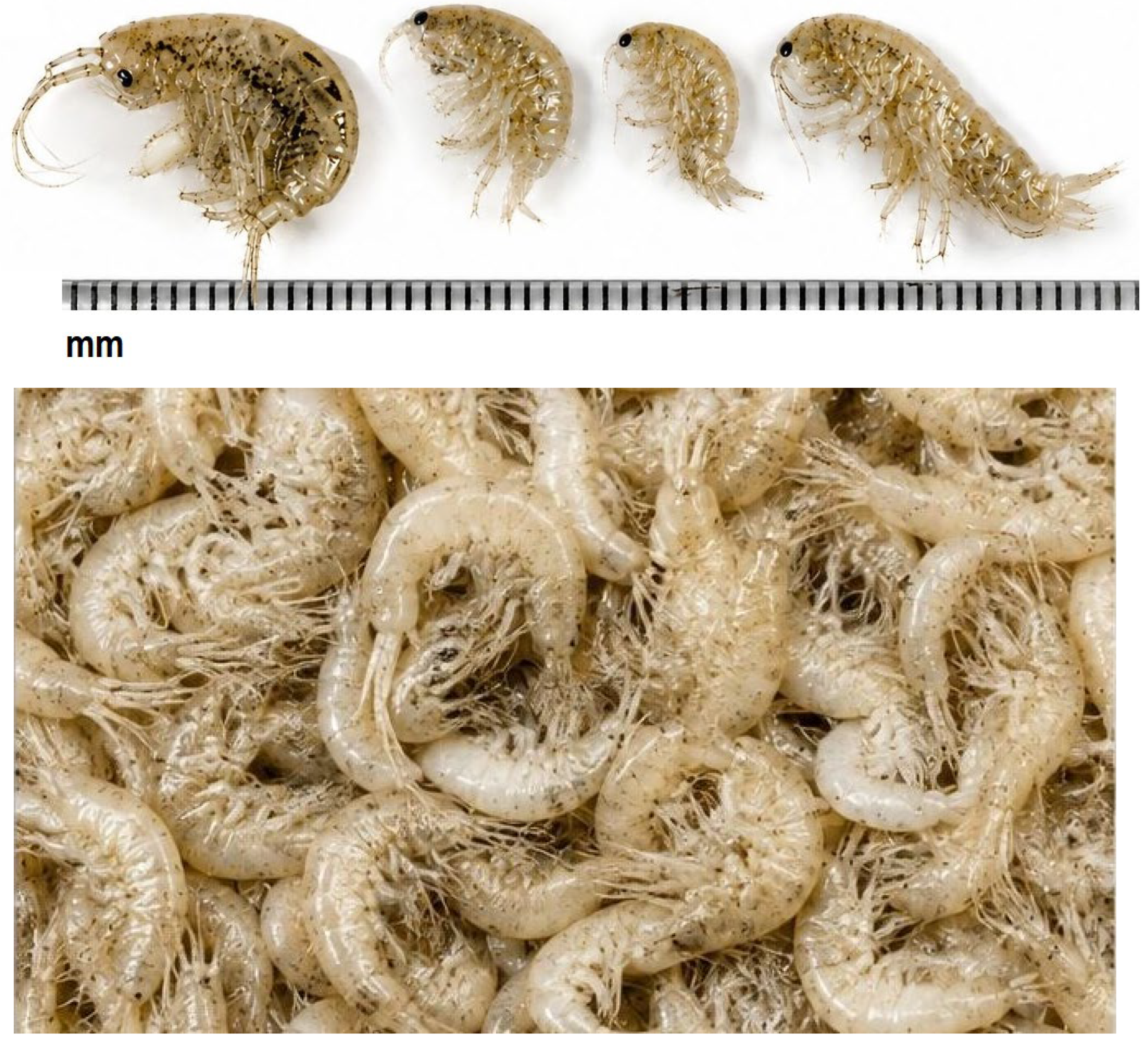
Figure 2.
Chromatogram of gammarids FAME analysis: 1 C14:0, 2 C15:0, 3 C16:0, 4 C16:1, 5 C18:0, 6 C18:1n-9, 7 C18:1n-7, 8 C18:2n-6, 9 C18:3n-3, 10 C20:1, 11 C20:4n-6, 12 C23:0 internal standard, 13 C20:5n-3 EPA, 14 C22:5n-3 DPA, 15 C22:6n-3 DHA [36].
Figure 2.
Chromatogram of gammarids FAME analysis: 1 C14:0, 2 C15:0, 3 C16:0, 4 C16:1, 5 C18:0, 6 C18:1n-9, 7 C18:1n-7, 8 C18:2n-6, 9 C18:3n-3, 10 C20:1, 11 C20:4n-6, 12 C23:0 internal standard, 13 C20:5n-3 EPA, 14 C22:5n-3 DPA, 15 C22:6n-3 DHA [36].
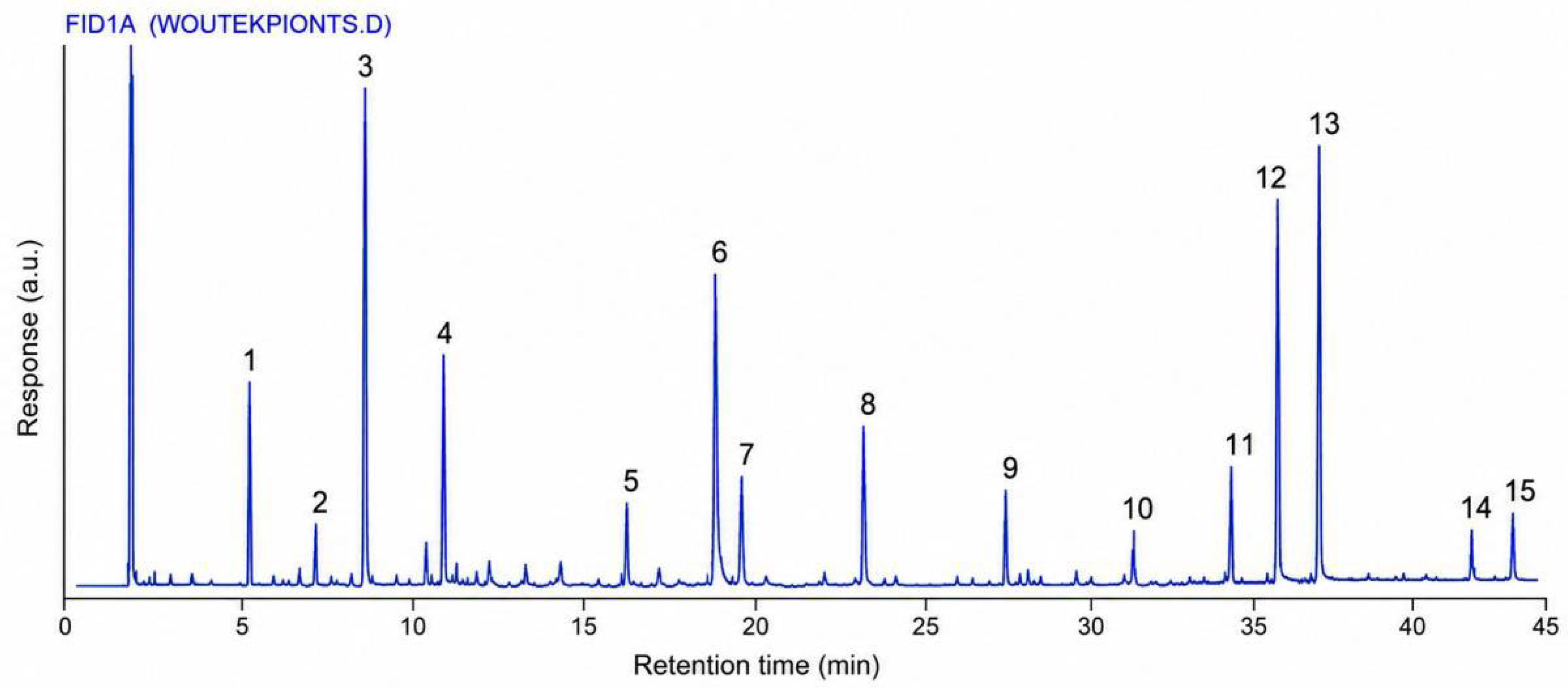
Figure 3.
Conceptual estimate of potential EPA and DHA output from gammarids biomass production at different cultivation areas. Calculations are based on the yield assumptions reported by [36] and the aquatic omega-3 framework of [49].
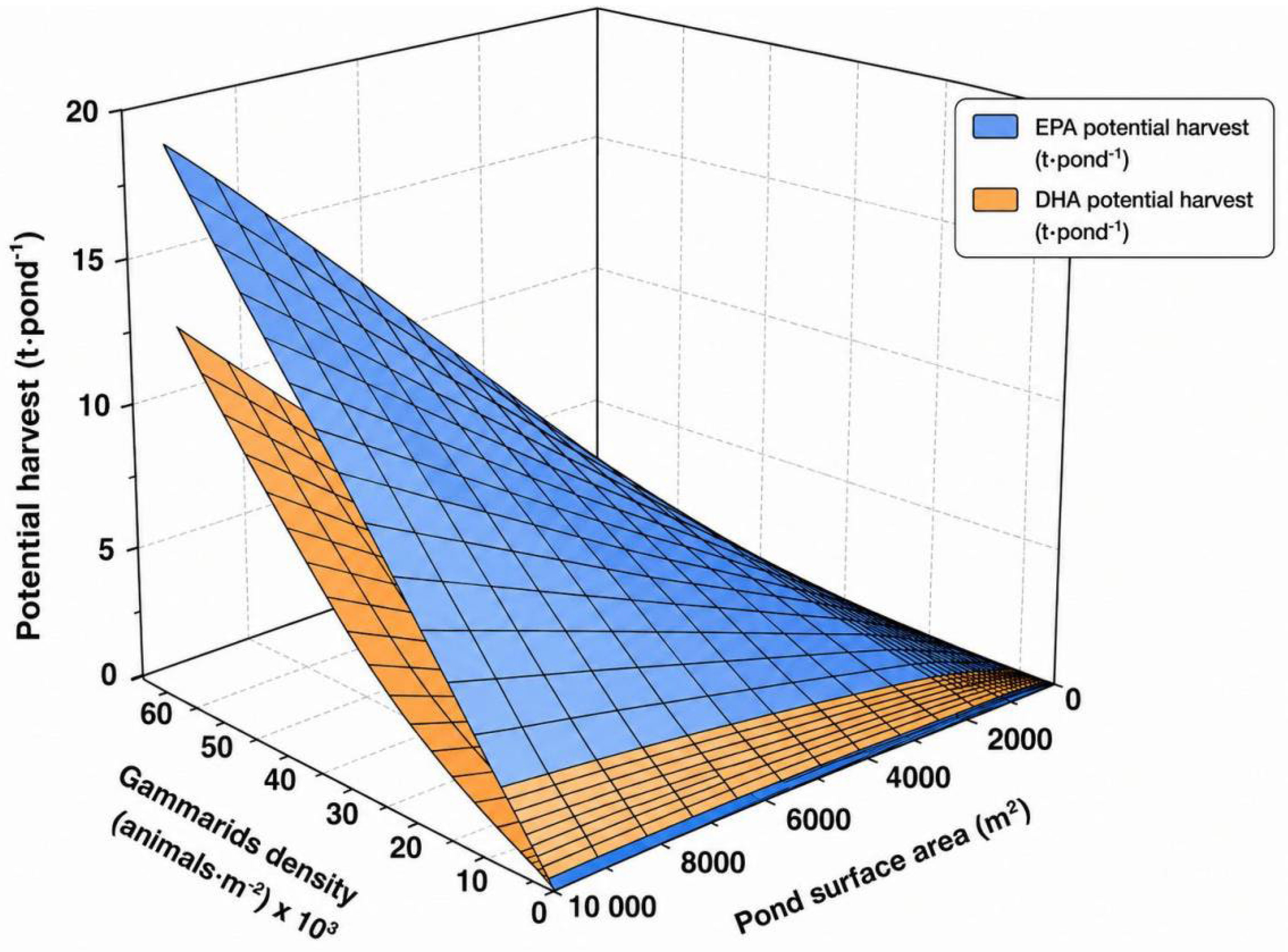
Figure 4.
BentoRAS benthic recirculating aquaculture system concept.
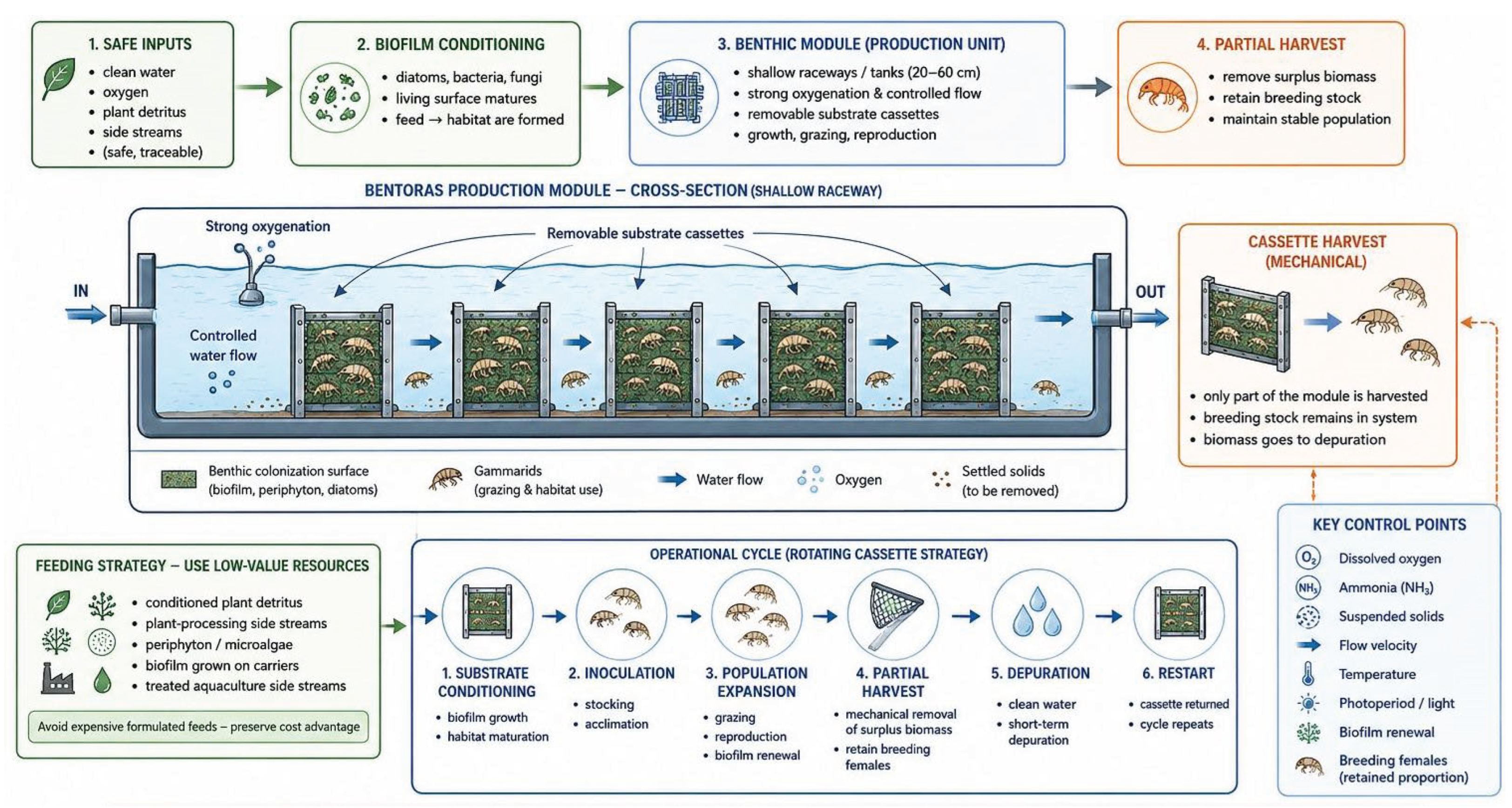
Figure 5.
Gammarid biorefinery - cascading use for multiple high-value products.
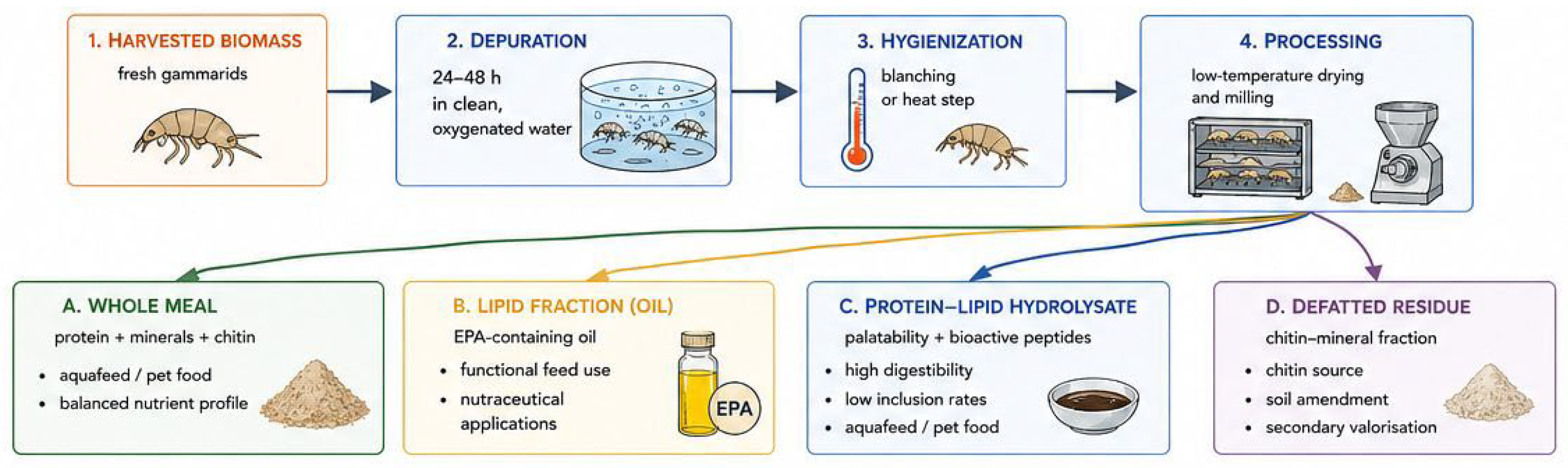

Table 1.
Comparison between krill and gammarids as aquatic crustacean raw materials.
| Implication | Gammarids | Krill | Criterion |
|---|---|---|---|
| The functional analogy is trophic, not taxonomic or geographic. | Freshwater/brackish epibenthic amphipods linking biofilm, detritus and fish. | Marine pelagic zooplankton; key biomass in oceanic food webs. | Ecosystem position |
| Gammarids should not imitate krill harvest; they should offer a domesticated freshwater route. | Proposed controlled production on engineered benthic substrates. | Mainly wild fishery; biomass depends on natural marine productivity and ecosystem regulation. | Raw-material model |
| Both are multi-product crustacean biomasses, but gammarids are more likely niche/functional ingredients. | Whole meal, hydrolysates, EPA-oriented lipid fraction, chitin-mineral residue and palatability fractions. | Protein, phospholipid-rich oil, astaxanthin and feed/supplement ingredients. | Main product logic |
| Krill is the benchmark; gammarids are the innovation candidate. | No established industrial production; scale remains hypothetical and must be demonstrated. | Very large natural biomass and established industrial fishery. | Scale |
| The key advantage of gammarids would be traceability and containment, not immediate volume. | Biosecurity, contaminant control, population stability and production cost. | Harvest pressure, ecosystem dependence and rapid post-harvest deterioration. | Risk profile |
| Technological interpretation | EPA (% fatty acids) | Total n-3 PUFA (% fatty acids) | Lipids, dry weight (g/kg) | Lipids, wet weight (g/kg) | Species |
|---|---|---|---|---|---|
| Native species; moderate EPA potential | 9.3 | 18.2 | 109.9 | 29.5 | Gammarus fossarum |
| Ecologically common; lower lipid value | 5 | 11.5 | 75.1 | 20 | Gammarus pulex |
| High n-3 share; semi-native in parts of Europe | 13.3 | 25.5 | 77 | 20.1 | Gammarus roeseli |
| High EPA; biosecurity concern | 16.2 | 23.4 | 78.9 | 21.3 | Dikerogammarus haemobaphes |
| Highest lipid content; strongest production candidate under containment | 15.9 | 24.1 | 131.1 | 36.1 | Pontogammarus robustoides |
Table 3.
Evidence relevant to industrial-scale availability.
| Implication | What it does not show | What it shows | Evidence type | Key sources |
|---|---|---|---|---|
| Useful biological proof, weak supply model | Wild biomass is not standardized | Gammarids can form dense local populations | Natural gammarid production | [15,16,36] |
| Strong hypothesis for pilot testing | No industrial process was demonstrated | Theoretical harvest may reach tonnes per hectare | Theoretical estimation | [36,49] |
| Supports the “freshwater krill” analogy cautiously | It is a unique pelagic ecosystem | Amphipods can be mass freshwater biomass | Macrohectopus in Lake Baikal | [47,48] |
| Surface engineering is probably decisive | Marine caprellids are not freshwater gammarids | Amphipod density can be enhanced by substrate | Caprellids on artificial structures | [50,51] |
| Use only under strict containment | High environmental risk | Fast growth and high ecological tolerance | Invasive Ponto-Caspian species | [25,52,53,54] |
Table 4.
Technology readiness and research priorities for the industrial development of freshwater gammarids as sources of functional food ingredients and nutraceuticals.
Table 4.
Technology readiness and research priorities for the industrial development of freshwater gammarids as sources of functional food ingredients and nutraceuticals.
| Development area | Expected outcome | Research priorities | Key challenges | Current readiness |
|---|---|---|---|---|
| Species selection | Selection of optimal production species | Comparative evaluation of growth performance, lipid profile and EPA productivity | Limited number of nutritionally characterized freshwater species | Moderate |
| Controlled reproduction | Stable year-round biomass production | Standardized breeding and life-cycle management | Incomplete reproductive protocols under intensive culture | Low |
| BentoRAS cultivation technology | Scalable industrial cultivation system | Optimization of substrates, hydrodynamics, aeration and stocking density | Lack of pilot-scale validation | Low–Moderate |
| Nutritional optimization | Standardized nutritional quality | Biofilm engineering, trophic upgrading and dietary manipulation | Variable biomass composition | Moderate |
| Harvesting and post-harvest processing | Improved processing efficiency | Automated harvesting, depuration and biomass stabilization | No dedicated industrial technologies | Low |
| Biorefinery | Increased biomass valorisation | Integrated recovery of lipids, proteins, chitin and minerals | Mostly laboratory-scale extraction | Moderate |
| Food safety | Regulatory readiness | Novel Food assessment, contaminant monitoring and allergenicity studies | Limited toxicological and contaminant datasets | Moderate |
| Functional food development | Commercial functional foods | Product formulation, stability and sensory evaluation | Few food application studies | Low |
| Nutraceutical development | High-value nutraceutical products | Bioavailability and clinical efficacy studies | Lack of human evidence | Low |
| Environmental sustainability | Evidence-based sustainability profile | Life-cycle assessment (LCA) and circularity analysis | Limited environmental assessment | Low |
| Economic feasibility | Investment readiness | Techno-economic assessment (TEA) and industrial scenario modelling | Lack of production cost estimates | Low |
Table 5.
Risk-control matrix for industrial gammarid production.
| Control measure or research endpoint | Why it matters | Bottleneck |
|---|---|---|
| Use refuges, size grading, partial harvest and retention of breeding females; measure recruitment per cassette. | High density can increase competition, cannibalism and loss of juveniles. | Population stability |
| Control flow, suspended solids and oxygen; treat biofilm thickness as a production parameter. | Biofilm is the food base, but excessive organic loading may create anoxic zones. | Substrate fouling and oxygen |
| Use native species first or full containment for non-native species; filter outlets and disinfect waste biomass. | The most productive Ponto-Caspian species may also be invasive. | Species and biosecurity |
| Introduce quarantine, depuration, hygienization and routine pathogen screening. | Gammarids may carry parasites or microbial loads relevant to feed and food safety. | Parasites and microbial quality |
| Use clean water and traceable substrates; monitor metals, pesticides, POPs, pharmaceuticals and microplastics. | Benthic feeding can transfer sediment-associated pollutants into biomass. | Contaminants |
| Use low-temperature drying, antioxidant strategy, peroxide/anisidine control and validated storage conditions. | EPA-rich fractions are valuable but oxidation-sensitive. | Lipid oxidation and product value |
Disclaimer/Publisher’s Note: The statements, opinions and data contained in all publications are solely those of the individual author(s) and contributor(s) and not of MDPI and/or the editor(s). MDPI and/or the editor(s) disclaim responsibility for any injury to people or property resulting from any ideas, methods, instructions or products referred to in the content. |
© 2026 by the authors. Licensee MDPI, Basel, Switzerland. This article is an open access article distributed under the terms and conditions of the Creative Commons Attribution (CC BY) license (http://creativecommons.org/licenses/by/4.0/).
Copyright: This open access article is published under a Creative Commons CC BY 4.0 license, which permit the free download, distribution, and reuse, provided that the author and preprint are cited in any reuse.


