

Submitted:
22 July 2026
Posted:
23 July 2026
You are already at the latest version
Abstract
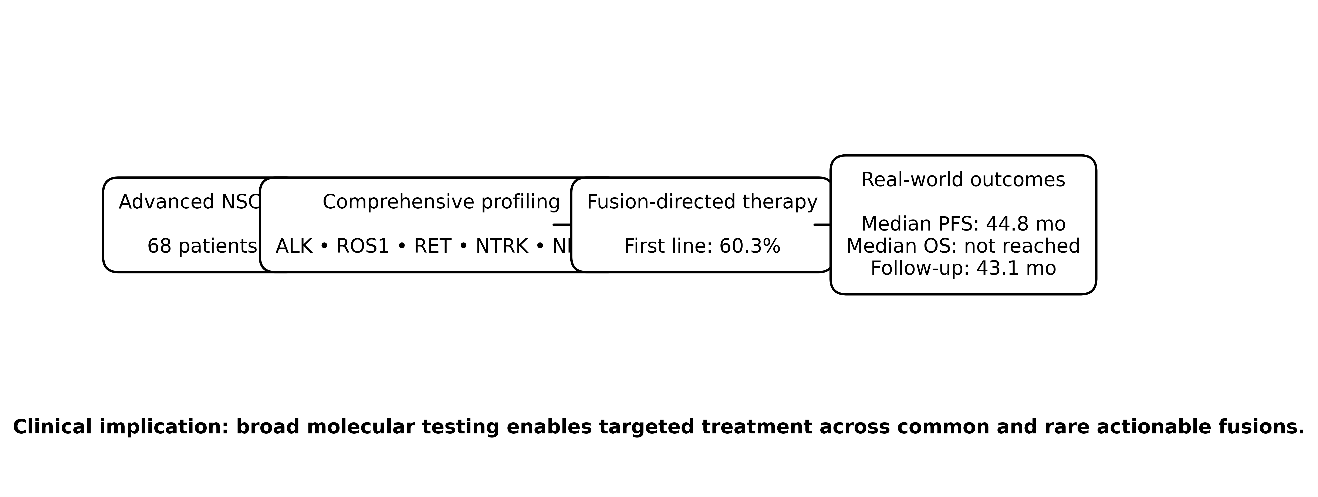
Structured Abstract Background Actionable oncogenic gene fusions involving ALK, ROS1, RET, NTRK, and NRG1 define distinct molecular subsets of advanced non-small cell lung cancer (NSCLC) that derive substantial benefit from fusion-directed targeted therapies. Although pivotal clinical trials have demonstrated impressive efficacy, comparative real-world outcomes across multiple actionable fusion subtypes remain limited. Methods We conducted a retrospective cohort study of patients with advanced NSCLC harboring actionable gene fusions who received fusion-directed targeted therapy within Memorial Healthcare System. Eligible patients were diagnosed between May 14, 2014, and October 10, 2025, with follow-up through April 24, 2026. Comprehensive molecular profiling was performed using Tempus, Caris Life Sciences, and Guardant360. Progression-free survival (PFS) and overall survival (OS) were estimated using the Kaplan–Meier method. Median follow-up was estimated using the reverse Kaplan–Meier method, and exploratory Cox proportional hazards models evaluated associations between treatment line and survival outcomes. Results Sixty-eight patients met the eligibility criteria, including 34 (50.0%) with ALK, 15 (22.1%) with ROS1, 13 (19.1%) with RET, 4 (5.9%) with NTRK, and 2 (2.9%) with NRG1 fusions. The median age was 62 years; 58.8% were female and 54.4% were never-smokers. Median follow-up was 43.1 months (95% CI, 24.4–50.0). Median PFS was 44.8 months (95% CI, 17.1 months to not estimable), whereas median OS was not reached. Patients who received targeted therapy in the first-line setting had longer PFS than those treated in later lines (HR, 2.16; 95% CI, 1.05–4.44; P = .036), although this exploratory association should be interpreted cautiously because treatment line was not randomized. PFS and OS did not differ significantly among the major fusion subtypes (ALK, ROS1, and RET). Survival outcomes were broadly consistent with those reported in landmark clinical trials, providing supportive real-world evidence for the effectiveness of fusion-directed targeted therapies. Conclusions In this retrospective health-system cohort, patients with advanced NSCLC harboring actionable gene fusions experienced durable disease control with fusion-directed targeted therapy. Real-world survival outcomes were broadly consistent with those reported in landmark clinical trials, supporting the effectiveness of fusion-directed targeted therapies in routine clinical practice and reinforcing the importance of comprehensive genomic profiling to identify patients eligible for precision oncology approaches.
Keywords:
non-small cell lung cancer
; gene fusion
; targeted therapy
; precision oncology
; next-generation sequencing
; real-world evidence
1. Introduction
Lung cancer remains the leading cause of cancer-related mortality worldwide, accounting for approximately 2.5 million new cases and 1.8 million deaths in 2022. Non-small cell lung cancer (NSCLC) comprises approximately 85% of lung cancers and remains a major global health burden. Over the past two decades, management of advanced NSCLC has shifted from a predominantly histology-based approach toward precision oncology, driven by identification of actionable molecular alterations and development of targeted therapies. Comprehensive molecular profiling by next-generation sequencing (NGS) is recommended for patients with advanced non-squamous NSCLC because identification of actionable alterations directly informs treatment selection.[1,2,3,4]
Among the most clinically relevant genomic alterations are oncogenic gene fusions, which arise through chromosomal rearrangements that juxtapose previously separate genes and may produce constitutively active fusion proteins. The principal actionable fusion groups in NSCLC include ALK, ROS1, RET, NTRK1/2/3, and NRG1. Although each is individually uncommon, together they identify a clinically important population eligible for fusion-directed therapy.[2,5,6]
The therapeutic landscape for fusion-positive NSCLC has evolved rapidly. Primary studies of next-generation ALK inhibitors, ROS1 inhibitors, selective RET inhibitors, tumor-agnostic TRK inhibitors, and zenocutuzumab for NRG1 fusion-positive cancer have established substantial and often durable antitumor activity across these molecular subsets.[7,8,9,10,11,12,13,14,15,16]
The widespread implementation of comprehensive genomic profiling has changed the diagnostic and therapeutic paradigm of advanced NSCLC. Contemporary NGS platforms can evaluate multiple cancer-associated genes simultaneously, improving the ability to identify both common and rare actionable alterations from limited specimens. Molecular-testing recommendations therefore support broad profiling before systemic treatment in advanced non-squamous NSCLC.[3,4]
Despite these advances, important knowledge gaps remain. Most efficacy evidence originates from small prospective trials with protocol-defined eligibility, whereas real-world investigations have generally focused on individual fusion subtypes or biomarker prevalence. Few cohorts have applied common outcome definitions across all currently actionable fusion groups within one health system.[17,18,19,20]
We therefore conducted a retrospective health-system cohort study to characterize the clinicopathologic features, treatment patterns, and survival outcomes of patients with advanced NSCLC harboring ALK, ROS1, RET, NTRK, or NRG1 gene fusions who received fusion-directed targeted therapy. We hypothesized that patients treated in routine clinical practice would experience durable disease control despite the greater clinical heterogeneity inherent to a real-world population.
2. Methods
2.1. Study Design and Setting
This retrospective observational cohort study was conducted at Memorial Cancer Institute, including Memorial Cancer Institute West and Memorial Cancer Institute East within Memorial Healthcare System in South Florida. Consecutive adults with advanced NSCLC harboring actionable oncogenic gene fusions who received care at either campus were identified through institutional electronic health records, molecular pathology reports, and oncology registries.
The study was approved by the Memorial Healthcare System Institutional Review Board (Protocol No. MHS.2025.175; January 13, 2026) and was conducted in accordance with the Declaration of Helsinki and applicable regulations. The requirement for informed consent was waived because of the retrospective design.
The study is reported in accordance with the Strengthening the Reporting of Observational Studies in Epidemiology (STROBE) statement.[21]
Patients diagnosed between May 14, 2014, and October 10, 2025, were eligible. Clinical follow-up continued through the prespecified cutoff of April 24, 2026.
2.2. Patient Selection
Eligible patients were identified through institutional molecular testing databases and thoracic oncology registries. Inclusion criteria were: age ≥18 years; histologically confirmed lung adenocarcinoma; stage IV or recurrent NSCLC; presence of an actionable ALK, ROS1, RET, NTRK, or NRG1 fusion confirmed by clinically validated molecular testing; receipt of at least one fusion-directed targeted therapy; and adequate follow-up for survival assessment. Patients without molecular confirmation or adequate follow-up were excluded.
2.3. Molecular Testing
Comprehensive molecular profiling was performed as part of routine clinical care using CLIA-certified next-generation sequencing platforms, including Tempus, Caris Life Sciences, and Guardant360. Fluorescence in situ hybridization (FISH) or other clinically validated molecular assays were used when appropriate depending on specimen availability and testing era.
Fusion nomenclature followed current IASLC recommendations. NTRK1, NTRK2, and NTRK3 rearrangements were analyzed collectively as NTRK fusion-positive NSCLC. One patient harboring an ALK rearrangement also demonstrated a concurrent EGFR alteration and received osimertinib during the disease course; this patient remained eligible for analysis.
2.4. Data Collection
Clinical data were abstracted from the electronic health record using a standardized data collection instrument. Variables included age, sex, race/ethnicity, smoking history, molecular subtype, targeted therapy, treatment line, dates of progression, death, and last clinical follow-up. Race and ethnicity were summarized descriptively. Treatment-naïve status was incompletely documented and therefore excluded from inferential analyses.
2.5. Study Outcomes
The primary endpoint was progression-free survival (PFS), defined as the interval from initiation of fusion-directed targeted therapy until objective disease progression or death from any cause, whichever occurred first. Overall survival (OS) was defined as the interval from initiation of fusion-directed targeted therapy until death from any cause. Secondary endpoints included the distribution of actionable fusion subtypes, treatment patterns, survival by fusion subtype, and exploratory analyses according to treatment line. Patients without a PFS event were censored at the date of last clinical follow-up or April 24, 2026, whichever occurred first; patients alive at that time were censored for OS.
2.6. Statistical Analysis
Continuous variables are summarized as medians with ranges or interquartile ranges, and categorical variables as frequencies and percentages. Median follow-up was estimated using the reverse Kaplan-Meier method.22 Progression-free and overall survival were estimated using the Kaplan-Meier method, and survival curves were compared using the log-rank test.23 Exploratory univariable Cox proportional hazards models estimated hazard ratios (HRs) and 95% confidence intervals (CIs) according to treatment line.24 Because only 30 PFS events and 16 deaths occurred, multivariable Cox regression was not performed to avoid model overfitting and unstable parameter estimates. Missing data were handled using complete-case analysis for inferential models. Given the exploratory nature of the subgroup analyses, no adjustment for multiple comparisons was performed. No formal sample-size calculation was undertaken because the study included all eligible patients treated during the prespecified accrual period. All statistical tests were two-sided, with P < .05 considered statistically significant. Analyses were performed using Python version 3.13.5 and stats models version 0.14.6. All subgroup and regression analyses were considered exploratory and hypothesis-generating.
3. Results
3.1. Patient Cohort
Between May 14, 2014, and October 10, 2025, 68 patients with advanced lung adenocarcinoma harboring an actionable gene fusion met the eligibility criteria and received fusion-directed targeted therapy at Memorial Cancer Institute. Clinical follow-up continued through April 24, 2026. The median follow-up, estimated using the reverse Kaplan-Meier method, was 43.1 months (95% CI, 24.4-50.0 months). The analytic cohort assembly is illustrated in Figure 1.
3.2. Clinicopathologic Characteristics
The median age at cancer diagnosis was 62 years (range, 27-90 years); 40 patients (58.8%) were female, and 37 (54.4%) were never-smokers. All tumors were adenocarcinomas. Race was recorded as White in 60 patients (88.2%), Black in 6 (8.8%), and Asian in 2 (2.9%). Hispanic ethnicity was recorded in 43 patients (63.2%); the remaining 25 patients had heterogeneous non-Hispanic, national-origin, or other descriptors in the source record and are presented descriptively in Table 1.
3.3. Molecular Landscape and Treatment Patterns
ALK rearrangements were the most common actionable alteration (34 patients, 50.0%), followed by ROS1 (15, 22.1%), RET (13, 19.1%), NTRK (4, 5.9%), and NRG1 (2, 2.9%). Fusion-directed therapy was administered in the first-line setting in 41 patients (60.3%), second-line setting in 19 (27.9%), and third-line setting in 8 (11.8%). Alectinib was the most frequently used ALK-directed therapy, entrectinib the most frequently used ROS1-directed therapy, selpercatinib the predominant RET-directed therapy, larotrectinib the predominant NTRK-directed therapy, and zenocutuzumab was used in both patients with NRG1 fusions. One patient with concurrent ALK and EGFR alterations received osimertinib (Table 2).
3.4. Survival Outcomes
At the data cutoff, 30 PFS events had occurred and 38 patients (55.9%) were censored for PFS. Sixteen deaths had occurred, and 52 patients (76.5%) were censored for OS. Median PFS for the overall cohort was 44.8 months (95% CI, 17.1 months to not estimable), whereas median OS was not reached. Estimated PFS rates at 12, 24, and 36 months were 67.5% (95% CI, 54.2%-77.7%), 57.9% (95% CI, 44.1%-69.4%), and 50.2% (95% CI, 36.0%-62.9%), respectively. Corresponding OS estimates were 90.4% (95% CI, 79.8%-95.6%), 80.9% (95% CI, 68.1%-89.0%), and 71.4% (95% CI, 56.5%-81.9%). Kaplan–Meier curves for the overall cohort are shown in Figure 2 and Figure 3.
3.5. Survival by Fusion Subtype
Among the three largest molecular subgroups, median PFS was not reached for ALK, 16.6 months for ROS1, and 29.8 months for RET. Median OS was not reached for ALK and ROS1 and was 61.8 months for RET. Survival distributions did not differ significantly among the ALK, ROS1, and RET subgroups for PFS (log-rank P = .342) or OS (log-rank P = .966). Estimates for NTRK and NRG1 were descriptive because of the small subgroup sizes (Table 3). Kaplan–Meier estimates of progression-free survival by fusion subtype are presented in Figure 4.
3.6. Exploratory Analysis by Treatment Line
Median PFS was 60.8 months among patients who received fusion-directed targeted therapy in the first-line setting and 16.6 months among patients treated in the second- or third-line setting (log-rank P = .031). Median OS was not reached in either group, although OS distributions differed by treatment line (log-rank P = .029). In exploratory univariable Cox models, later-line targeted therapy was associated with an increased hazard of progression or death (HR, 2.16; 95% CI, 1.05-4.44; P = .036) and death (HR, 2.87; 95% CI, 1.06-7.76; P = .037). Because treatment line was not randomized, the analyses were unadjusted, and no correction for multiple comparisons was applied, these findings should be interpreted as hypothesis-generating rather than causal (Table 4). Progression-free survival according to treatment line is illustrated in Figure 5.

Table 4.
Exploratory Univariable Cox Regression by Treatment Line.
| Outcome | Comparison | HR | 95% CI | P value |
| PFS | Second/third line vs first line | 2.16 | 1.05-4.44 | .036 |
| OS | Second/third line vs first line | 2.87 | 1.06-7.76 | .037 |
CI, confidence interval; HR, hazard ratio; OS, overall survival; PFS, progression-free survival. Models were univariable and exploratory. Treatment line was not randomized; results should not be interpreted causally.
Table 5.
Contextual Comparison with Selected Landmark Trials.
| Fusion | Study / therapy | Population | ORR | Median PFS | Median OS | Interpretive note |
| ALK | ALEX / alectinib7 | Previously untreated | 82.9% | 34.8 mo | NR | Updated investigator-assessed PFS |
| ALK | CROWN / lorlatinib8 | Previously untreated | 76% | NR; 5-y PFS 60% | NR | 5-year analysis |
| ALK | Current cohort | Mixed TKIs and lines | Not collected | NR | NR | Real-world heterogeneous cohort |
| ROS1 | PROFILE 1001 / crizotinib9 | Advanced ROS1-positive | 72% | 19.3 mo | 51.4 mo | Single-arm phase 1 expansion |
| ROS1 | Integrated entrectinib analysis | ROS1 TKI-naive | 68% | 15.7 mo | 47.8 mo | Pooled prospective trials |
| ROS1 | TRIDENT-1 / repotrectinib11 | ROS1 TKI-naive | 79% | 35.7 mo | NR; 18-mo OS 88% | Primary efficacy population |
| ROS1 | Current cohort | Mixed agents and lines | Not collected | 16.6 mo | NR | Real-world heterogeneous cohort |
| RET | LIBRETTO-001 / selpercatinib12 | Previously treated / untreated | 61% / 84% | 24.9 mo | NR | Updated registrational analysis |
| RET | LIBRETTO-431 / selpercatinib13 | First-line randomized cohort | 84% | 24.8 mo | Immature | Versus platinum chemotherapy +/- pembrolizumab |
| RET | ARROW / pralsetinib14 | Treatment-naive | 72% | 13.0 mo | NR / immature | Phase 1/2 update |
| RET | Current cohort | Selpercatinib or pralsetinib | Not collected | 29.8 mo | 61.8 mo | Small real-world subgroup |
| NTRK | Larotrectinib lung analysis15 | TRK fusion-positive lung cancer | 73% | 35.4 mo | 40.7 mo | 15 efficacy-evaluable patients |
| NTRK | Current cohort | Larotrectinib or repotrectinib | Not collected | Descriptive | Descriptive | n=4 |
| NRG1 | eNRGy / zenocutuzumab16 | NRG1 fusion-positive NSCLC | 29% | 6.8 mo* | Not mature | *PFS for overall efficacy population |
| NRG1 | Current cohort | Zenocutuzumab | Not collected | Descriptive | Descriptive | n=2 |
Abbreviations: NR, not reached; ORR, objective response rate; OS, overall survival; PFS, progression-free survival; TKI, tyrosine kinase inhibitor. Values are shown for context only. Cross-trial comparisons are not adjusted and should not be interpreted as evidence of equivalence or superiority.:.
4. Discussion
In this retrospective cohort of 68 patients with advanced lung adenocarcinoma harboring actionable gene fusions, fusion-directed targeted therapy was associated with durable disease control in routine clinical practice. Median progression-free survival (PFS) for the overall cohort was 44.8 months, and median overall survival (OS) was not reached after a reverse Kaplan–Meier median follow-up of 43.1 months. Survival outcomes did not differ significantly among the ALK, ROS1, and RET subgroups, although these comparisons were limited by small subgroup sizes and a low number of events. Patients who received targeted therapy in the first-line setting demonstrated longer PFS and OS than those treated in later lines. However, this exploratory association should not be interpreted as evidence of a causal treatment effect, as treatment line was not randomized and was likely influenced by factors such as treatment era, prior therapies, disease characteristics, and access to comprehensive molecular testing.
4.1. Contextual Comparison with Landmark Trials
The outcomes observed in the present cohort fall within the broad range reported across pivotal studies of contemporary fusion-directed therapies; however, direct cross-trial comparisons are not valid because of differences in eligibility criteria, treatment line, drug exposure, endpoint assessment, and follow-up. In ALK-positive disease, the updated ALEX analysis reported a median investigator-assessed PFS of 34.8 months with first-line alectinib, whereas the 7-year CROWN analysis found that median PFS with lorlatinib remained unreached and that 55 % of patients were alive without progression at 7 years.7,8 In our ALK subgroup, median PFS and OS were not reached despite inclusion of several ALK inhibitors and multiple treatment lines.
4.2. ROS1-Positive Disease
For ROS1 fusion-positive NSCLC, the updated PROFILE 1001 analysis reported median PFS of 19.3 months and median OS of 51.4 months with crizotinib.9 A long-term integrated analysis of entrectinib reported median PFS of 15.7 months and median OS of 47.8 months, whereas TRIDENT-1 reported median PFS of 35.7 months among ROS1 TKI-naive patients treated with repotrectinib.10,11 The median PFS of 16.6 months in our ROS1 subgroup is therefore most similar to the crizotinib and entrectinib experience, which is clinically plausible given the mixture of agents, treatment eras, and treatment lines represented in this cohort.
4.3. RET Fusion-Positive Disease
In RET fusion-positive NSCLC, the updated LIBRETTO-001 analysis reported durable activity with selpercatinib, including median PFS of 24.9 months in the efficacy population.[12] In the randomized LIBRETTO-431 trial, first-line selpercatinib produced median PFS of 24.8 months and an objective response rate of 84%.[13] The updated ARROW analysis reported an objective response rate of 72% and median PFS of 13.0 months among treatment-naive patients receiving pralsetinib.[14] Median PFS in our RET subgroup was 29.8 months and median OS was 61.8 months. These results are directionally consistent with sustained benefit from selective RET inhibition, but the small number of RET patients and events precludes definitive comparison.
4.4. Rare NTRK and NRG1 Fusions
The NTRK and NRG1 cohorts were too small for meaningful survival inference, but their inclusion illustrates the clinical value of broad fusion testing. In a lung cancer-specific pooled analysis, larotrectinib produced an objective response rate of 73%, median PFS of 35.4 months, and median OS of 40.7 months in evaluable patients with TRK fusion-positive lung cancer.[15] In the eNRGy trial, zenocutuzumab demonstrated activity in NRG1 fusion-positive cancer, including NSCLC.[16] Our four NTRK-positive and two NRG1-positive patients provide descriptive real-world evidence only and should not be compared numerically with these prospective cohorts.
4.5. Real-World Evidence and Study Contribution
Most published real-world studies have focused on individual fusion subtypes or the prevalence of actionable gene fusions rather than comparing treatment outcomes across multiple fusion-defined populations. Hess and colleagues characterized patients with RET fusion–positive NSCLC using a large U.S. real-world database, while Lu and colleagues described outcomes in a contemporary Chinese RET fusion–positive cohort.17,18 Overbeck and colleagues screened 1,068 unselected NSCLC cases and identified NTRK fusions in only 0.2% of tumors, underscoring their rarity.19 The international eNRGy1 registry similarly characterized the clinical features of NRG1 fusion–positive lung cancers across multiple centers.20 In contrast, the present study evaluated patients with ALK, ROS1, RET, NTRK, and NRG1 fusion–positive lung adenocarcinoma within a single health system, using a unified clinical dataset and standardized survival definitions to enable consistent comparisons across fusion subtypes.
4.6. Precision Oncology in Routine Practice
These findings support comprehensive genomic profiling as a prerequisite for precision treatment in advanced nonsquamous NSCLC. Broad NGS can identify common drivers while also detecting rare, clinically actionable rearrangements that may be missed by sequential assays.[3,4] In our cohort, molecular testing identified all five fusion groups. Timely testing is particularly important because actionable results determine eligibility for fusion-directed therapy; however, the exploratory association between treatment line and outcomes may also reflect confounding by treatment era and prior therapy.
4.7. Implications for Immunotherapy
The study did not directly evaluate immunotherapy efficacy. Nevertheless, systematic reviews and meta-analyses have generally reported limited activity of immune checkpoint inhibitors in oncogene-driven NSCLC, including RET fusion-positive and other driver-defined populations.[25,26,27] These data support obtaining molecular results before systemic treatment whenever clinically feasible and prioritizing an approved targeted therapy when a relevant actionable fusion is identified.
5. Strengths and Limitations
This study has several strengths, including patient-level outcome data, a reverse Kaplan-Meier median follow-up exceeding 3.5 years, inclusion of all five clinically actionable fusion groups, and uniform outcome definitions within one health system. The cohort also includes a substantial Hispanic population. Important limitations include the retrospective design, single-system setting, modest sample size, treatment heterogeneity across an 11-year diagnostic period, and limited progression and death events. The dataset did not systematically capture performance status, brain metastases, response rate, adverse events, or molecular-testing platform at the individual-patient level; these variables therefore could not be analyzed. Ethnicity categories were recorded inconsistently in the electronic health record and were presented descriptively without inferential analysis. Finally, cross-trial comparisons are contextual only and cannot establish equivalence between this cohort and prospective trials.
6. Conclusions
Patients with actionable fusion-positive advanced NSCLC experienced durable disease control with fusion-directed targeted therapy in routine clinical practice. The survival outcomes observed in this cohort were broadly consistent with those reported in pivotal clinical trials and other real-world studies, while the inclusion of patients with rare NTRK and NRG1 fusions highlights the clinical value of comprehensive genomic profiling. Larger multicenter studies with standardized clinical data, treatment-specific cohorts, and longer follow-up are needed to better define comparative effectiveness, characterize outcomes across rare fusion subtypes, and inform optimal treatment sequencing.
Supplementary Materials
The supporting information can be downloaded at the website of this paper posted on Preprints.org. Table S1: Selected Real-World Studies Relevant to Actionable Fusion-Positive NSCLC.
Author Contributions
Faure Delgado Leon: Conceptualization, Methodology, Data curation, Formal analysis, Investigation, Visualization, Project administration, Writing – original draft, Writing – review & editing. Suset Almuinas de Armas: Investigation, Data curation, Writing – review & editing. Melanie Molina: Investigation, Data curation, Writing – review & editing. Eric Morales: Data curation, Literature review, Writing – review & editing. Luis Estuardo Raez: Conceptualization, Methodology, Validation, Resources, Supervision, Writing – review & editing.
Funding
No external funding was received for this study.
Data Availability Statement
De-identified data may be available from the corresponding author upon reasonable request and institutional approval.:
Use of Artificial Intelligence
Generative artificial intelligence assisted with manuscript organization and language editing. The authors performed all scientific verification, interpretation, and final approval and accept full responsibility for the manuscript.
Conflicts of Interest
The authors declare no conflicts of interest related to this work.
References
- Bray F, Laversanne M, Sung H, et al. Global cancer statistics 2022: GLOBOCAN estimates of incidence and mortality worldwide for 36 cancers in 185 countries. CA Cancer J Clin. 2024;74(3):229-263. [CrossRef]
- Chen J, Xu C, Lv J, et al. Clinical characteristics and targeted therapy of different gene fusions in non-small cell lung cancer: a narrative review. Transl Lung Cancer Res. 2023;12(4):895-908. [CrossRef]
- Lindeman NI, Cagle PT, Aisner DL, et al. Updated molecular testing guideline for the selection of lung cancer patients for treatment with targeted tyrosine kinase inhibitors: guideline from the College of American Pathologists, International Association for the Study of Lung Cancer, and Association for Molecular Pathology. J Thorac Oncol. 2018;13(3):323-358. [CrossRef]
- Penault-Llorca F, Socinski MA. Emerging molecular testing paradigms in non-small cell lung cancer management-current perspectives and recommendations. Oncologist. 2025;30(3):oyae357. [CrossRef]
- Suda K, Mitsudomi T. Emerging oncogenic fusions other than ALK, ROS1, RET, and NTRK in NSCLC and the role of fusions as resistance mechanisms to targeted therapy. Transl Lung Cancer Res. 2020;9(6):2618-2628. [CrossRef]
- Rosas D, Raez LE, Russo A, Rolfo C. Neuregulin 1 gene (NRG1): a potentially new targetable alteration for the treatment of lung cancer. Cancers (Basel). 2021;13(20):5038. [CrossRef]
- Mok T, Camidge DR, Gadgeel SM, et al. Updated overall survival and final progression-free survival data for patients with treatment-naive advanced ALK-positive non-small-cell lung cancer in the ALEX study. Ann Oncol. 2020;31(8):1056-1064. [CrossRef]
- Solomon BJ, Liu G, Felip E, et al. Lorlatinib versus crizotinib in patients with advanced ALK-positive non-small cell lung cancer: 5-year outcomes from the phase III CROWN study. J Clin Oncol. 2024;42(29):3400-3409. [CrossRef]
- Shaw AT, Riely GJ, Bang YJ, et al. Crizotinib in ROS1-rearranged advanced non-small-cell lung cancer: updated results, including overall survival, from PROFILE 1001. Ann Oncol. 2019;30(7):1121-1126. [CrossRef]
- Drilon A, Chiu CH, Fan Y, et al. Long-term efficacy and safety of entrectinib in ROS1 fusion-positive NSCLC. JTO Clin Res Rep. 2022;3(6):100332. [CrossRef]
- Drilon A, Camidge DR, Lin JJ, et al. Repotrectinib in ROS1 fusion-positive non-small-cell lung cancer. N Engl J Med. 2024;390(2):118-131. [CrossRef]
- Drilon A, Subbiah V, Gautschi O, et al. Selpercatinib in patients with RET fusion-positive non-small-cell lung cancer: updated safety and efficacy from the registrational LIBRETTO-001 phase I/II trial. J Clin Oncol. 2023;41(2):385-394. [CrossRef]
- Zhou C, Solomon B, Loong HH, et al. First-line selpercatinib or chemotherapy and pembrolizumab in RET fusion-positive NSCLC. N Engl J Med. 2023;389(20):1839-1850. [CrossRef]
- Griesinger F, Curigliano G, Thomas M, et al. Safety and efficacy of pralsetinib in RET fusion-positive non-small-cell lung cancer including as first-line therapy: update from the ARROW trial. Ann Oncol. 2022;33(11):1168-1178. [CrossRef]
- Drilon A, Tan DSW, Lassen UN, et al. Efficacy and safety of larotrectinib in patients with tropomyosin receptor kinase fusion-positive lung cancers. JCO Precis Oncol. 2022;6:e2100418. [CrossRef]
- Schram AM, Goto K, Kim DW, et al. Efficacy of zenocutuzumab in NRG1 fusion-positive cancer. N Engl J Med. 2025;392(6):566-576. [CrossRef]
- Hess LM, Han Y, Zhu YE, Bhandari NR, Sireci A. Characteristics and outcomes of patients with RET-fusion positive non-small lung cancer in real-world practice in the United States. BMC Cancer. 2021;21(1):28. [CrossRef]
- Lu S, Shen L, Wang Q, et al. Diagnosis, treatment patterns, and outcomes in real-world patients with RET fusion-positive non-small cell lung cancer in China. Adv Ther. 2024;41(11):4248-4265. [CrossRef]
- Overbeck TR, Reiffert A, Schmitz K, et al. NTRK gene fusions in non-small-cell lung cancer: real-world screening data of 1068 unselected patients. Cancers (Basel). 2023;15(11):2966. [CrossRef]
- Drilon A, Duruisseaux M, Han JY, et al. Clinicopathologic features and response to therapy of NRG1 fusion-driven lung cancers: the eNRGy1 global multicenter registry. J Clin Oncol. 2021;39(25):2791-2802. [CrossRef]
- von Elm E, Altman DG, Egger M, Pocock SJ, Gotzsche PC, Vandenbroucke JP. The Strengthening the Reporting of Observational Studies in Epidemiology (STROBE) statement: guidelines for reporting observational studies. Lancet. 2007;370(9596):1453-1457. [CrossRef]
- Schemper M, Smith TL. A note on quantifying follow-up in studies of failure time. Control Clin Trials. 1996;17(4):343-346. [CrossRef]
- Kaplan EL, Meier P. Nonparametric estimation from incomplete observations. J Am Stat Assoc. 1958;53(282):457-481. [CrossRef]
- Cox DR. Regression models and life-tables. J R Stat Soc Series B Stat Methodol. 1972;34(2):187-220.
- Chen J, Lu W, Chen M, et al. Efficacy of immunotherapy in patients with oncogene-driven non-small-cell lung cancer: a systematic review and meta-analysis. Ther Adv Med Oncol. 2024;16:17588359231225036. [CrossRef]
- Peng Z, Ding K, Xie M, Xu Y. Efficacy of immunotherapy in RET fusion-positive NSCLC: a meta-analysis. Heliyon. 2024;10(14):e34626. [CrossRef]
- Foffano L, Bertoli E, Bortolot M, et al. Immunotherapy in oncogene-addicted NSCLC: evidence and therapeutic approaches. Int J Mol Sci. 2025;26(2):583. [CrossRef]
Figure 1.
Cohort assembly. All 68 patient-level records in the locked analysis dataset had an actionable ALK, ROS1, RET, NTRK, or NRG1 fusion, received at least one fusion-directed targeted therapy, and had evaluable clinical follow-up. All 68 patients were included in descriptive, progression-free survival, and overall survival analyses. A separate screening log documenting patients assessed before creation of the analytic database was not available; therefore, this figure depicts analytic cohort assembly rather than exclusions from an independently enumerated screened population.
Figure 1.
Cohort assembly. All 68 patient-level records in the locked analysis dataset had an actionable ALK, ROS1, RET, NTRK, or NRG1 fusion, received at least one fusion-directed targeted therapy, and had evaluable clinical follow-up. All 68 patients were included in descriptive, progression-free survival, and overall survival analyses. A separate screening log documenting patients assessed before creation of the analytic database was not available; therefore, this figure depicts analytic cohort assembly rather than exclusions from an independently enumerated screened population.
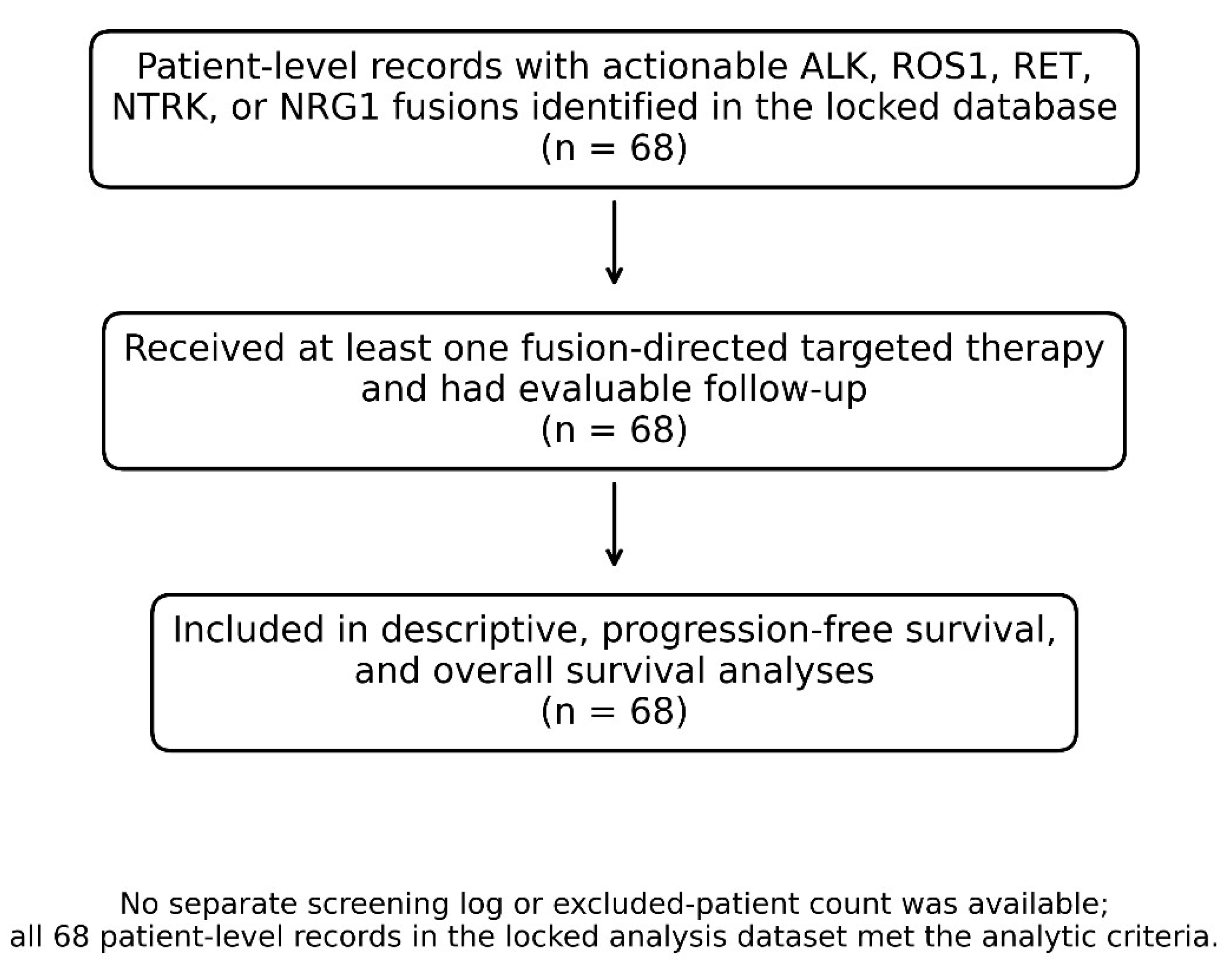
Figure 2.
Progression-free survival in the overall cohort. Kaplan-Meier estimate of progression-free survival from initiation of fusion-directed targeted therapy among 68 patients. Median progression-free survival was 44.8 months (95% CI, 17.1 months to not estimable). Vertical tick marks indicate censored observations. The shaded band represents the pointwise 95% confidence interval. Numbers at risk are shown below the plot. CI, confidence interval; NE, not estimable; PFS, progression-free survival.
Figure 2.
Progression-free survival in the overall cohort. Kaplan-Meier estimate of progression-free survival from initiation of fusion-directed targeted therapy among 68 patients. Median progression-free survival was 44.8 months (95% CI, 17.1 months to not estimable). Vertical tick marks indicate censored observations. The shaded band represents the pointwise 95% confidence interval. Numbers at risk are shown below the plot. CI, confidence interval; NE, not estimable; PFS, progression-free survival.
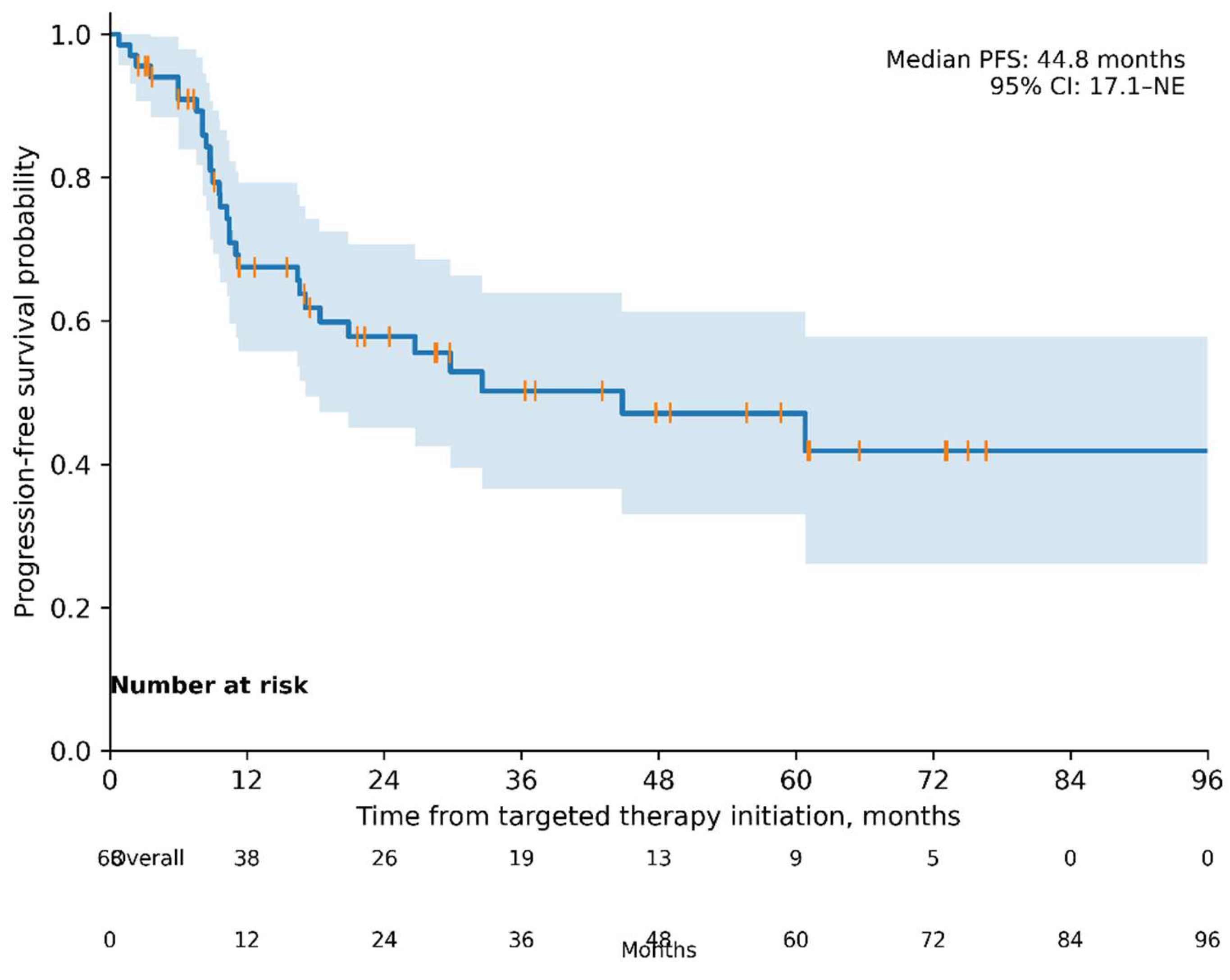
Figure 3.
Overall survival in the overall cohort. Kaplan-Meier estimates of overall survival from initiation of fusion-directed targeted therapy among 68 patients. Median overall survival was not reached; 16 deaths and 52 censored observations were recorded by the April 24, 2026 data cutoff. Vertical tick marks indicate censored observations. The shaded band represents the pointwise 95% confidence interval. Numbers at risk are shown below the plot. OS, overall survival.
Figure 3.
Overall survival in the overall cohort. Kaplan-Meier estimates of overall survival from initiation of fusion-directed targeted therapy among 68 patients. Median overall survival was not reached; 16 deaths and 52 censored observations were recorded by the April 24, 2026 data cutoff. Vertical tick marks indicate censored observations. The shaded band represents the pointwise 95% confidence interval. Numbers at risk are shown below the plot. OS, overall survival.
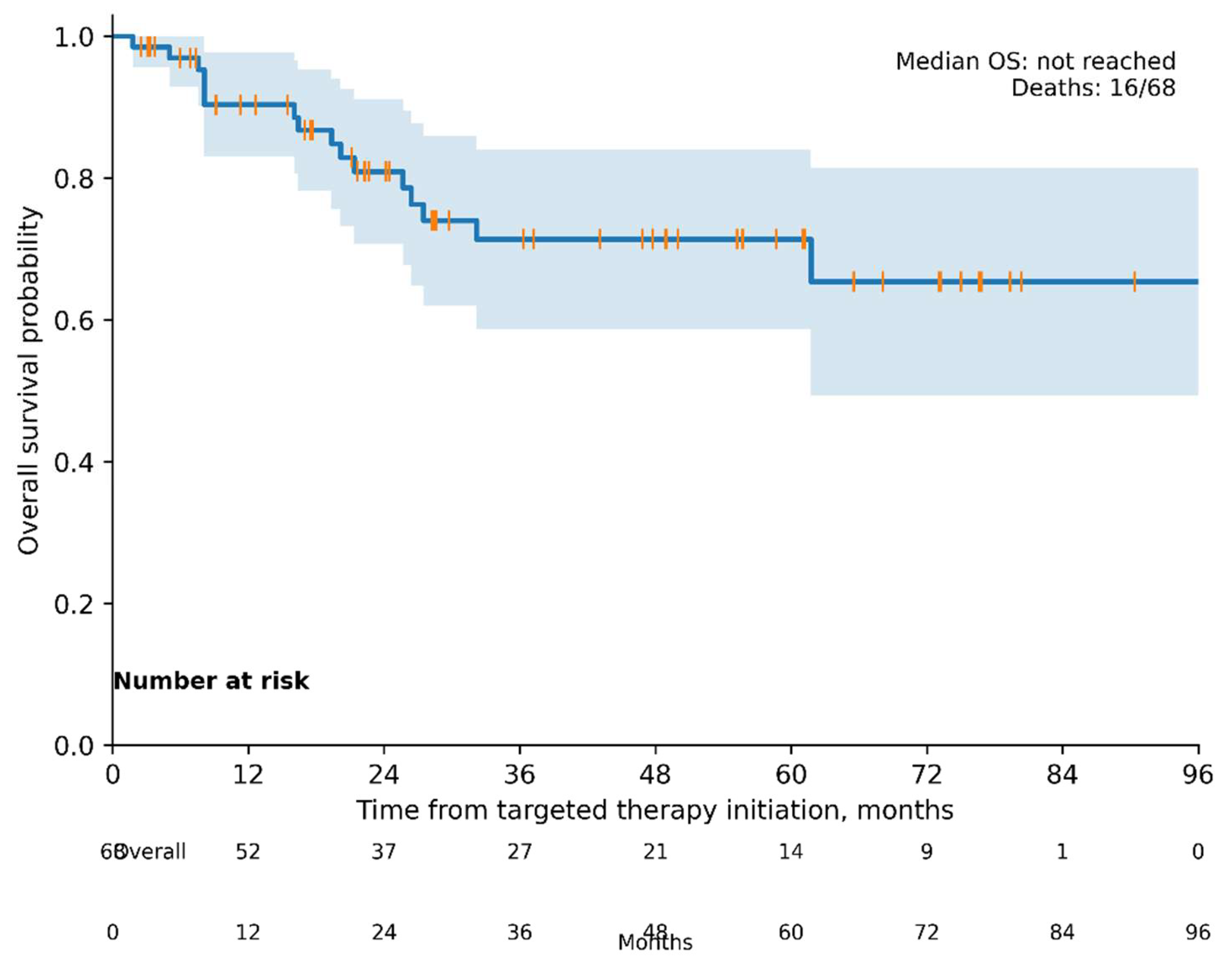
Figure 4.
Progression-free survival according to fusion subtype. Kaplan-Meier estimates of progression-free survival for patients with ALK (n=34), ROS1 (n=15), and RET (n=13) alterations. NTRK and NRG1 were not plotted because of small subgroup sizes and were summarized descriptively. Survival distributions did not differ significantly among the three plotted molecular subgroups (log-rank P=.342). Vertical tick marks indicate censored observations. Numbers at risk are shown below the plot. PFS, progression-free survival.
Figure 4.
Progression-free survival according to fusion subtype. Kaplan-Meier estimates of progression-free survival for patients with ALK (n=34), ROS1 (n=15), and RET (n=13) alterations. NTRK and NRG1 were not plotted because of small subgroup sizes and were summarized descriptively. Survival distributions did not differ significantly among the three plotted molecular subgroups (log-rank P=.342). Vertical tick marks indicate censored observations. Numbers at risk are shown below the plot. PFS, progression-free survival.
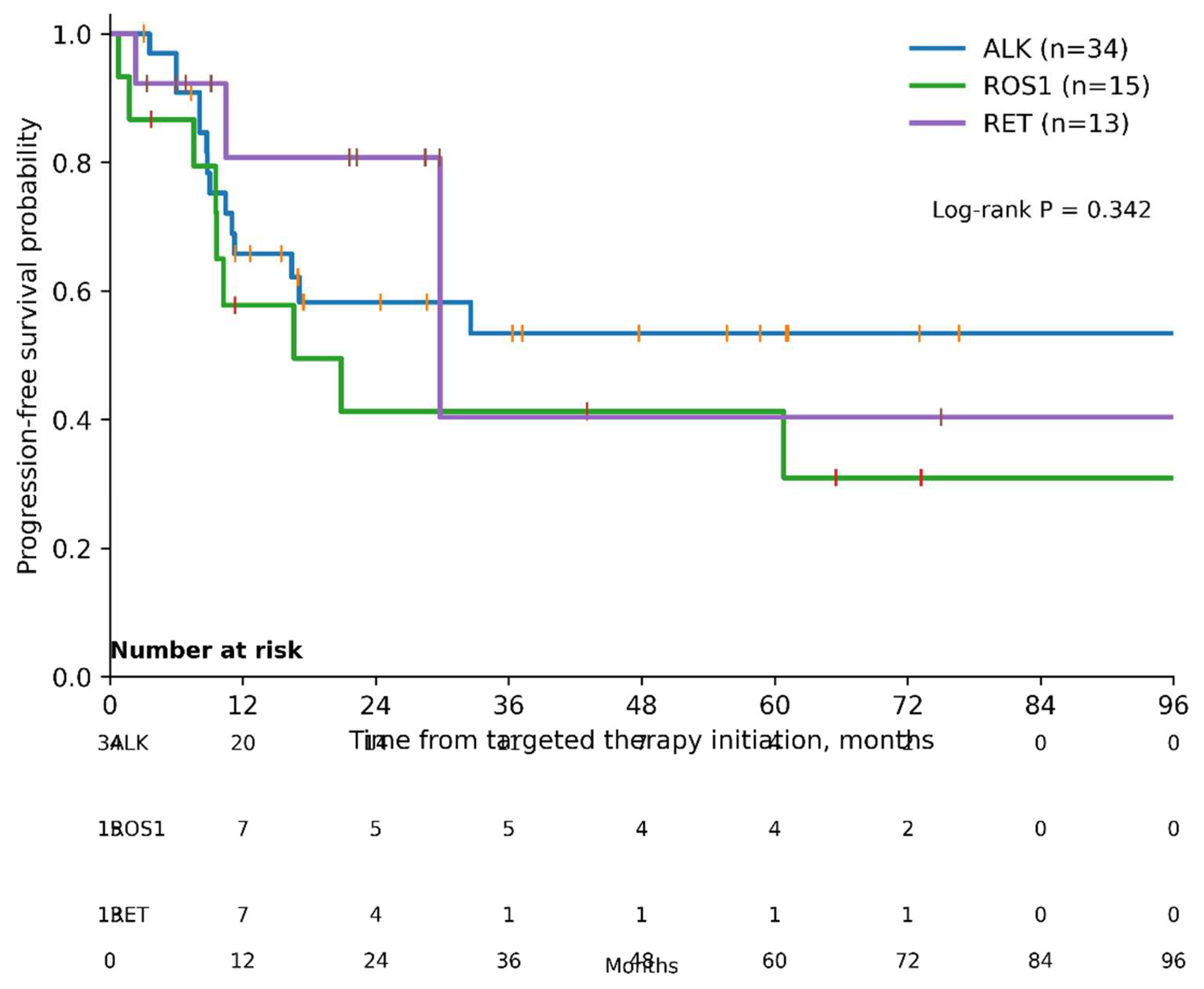
Figure 5.
Progression-free survival according to targeted-therapy line. Kaplan-Meier estimates of progression-free survival among patients who received fusion-directed targeted therapy in the first-line setting (n=41) versus the second- or third-line setting (n=27). Progression-free survival distributions differed by treatment line (log-rank P=.031). This comparison was exploratory and should not be interpreted causally because treatment allocation was not randomized. Vertical tick marks indicate censored observations. Numbers at risk are shown below the plot. PFS, progression-free survival.
Figure 5.
Progression-free survival according to targeted-therapy line. Kaplan-Meier estimates of progression-free survival among patients who received fusion-directed targeted therapy in the first-line setting (n=41) versus the second- or third-line setting (n=27). Progression-free survival distributions differed by treatment line (log-rank P=.031). This comparison was exploratory and should not be interpreted causally because treatment allocation was not randomized. Vertical tick marks indicate censored observations. Numbers at risk are shown below the plot. PFS, progression-free survival.
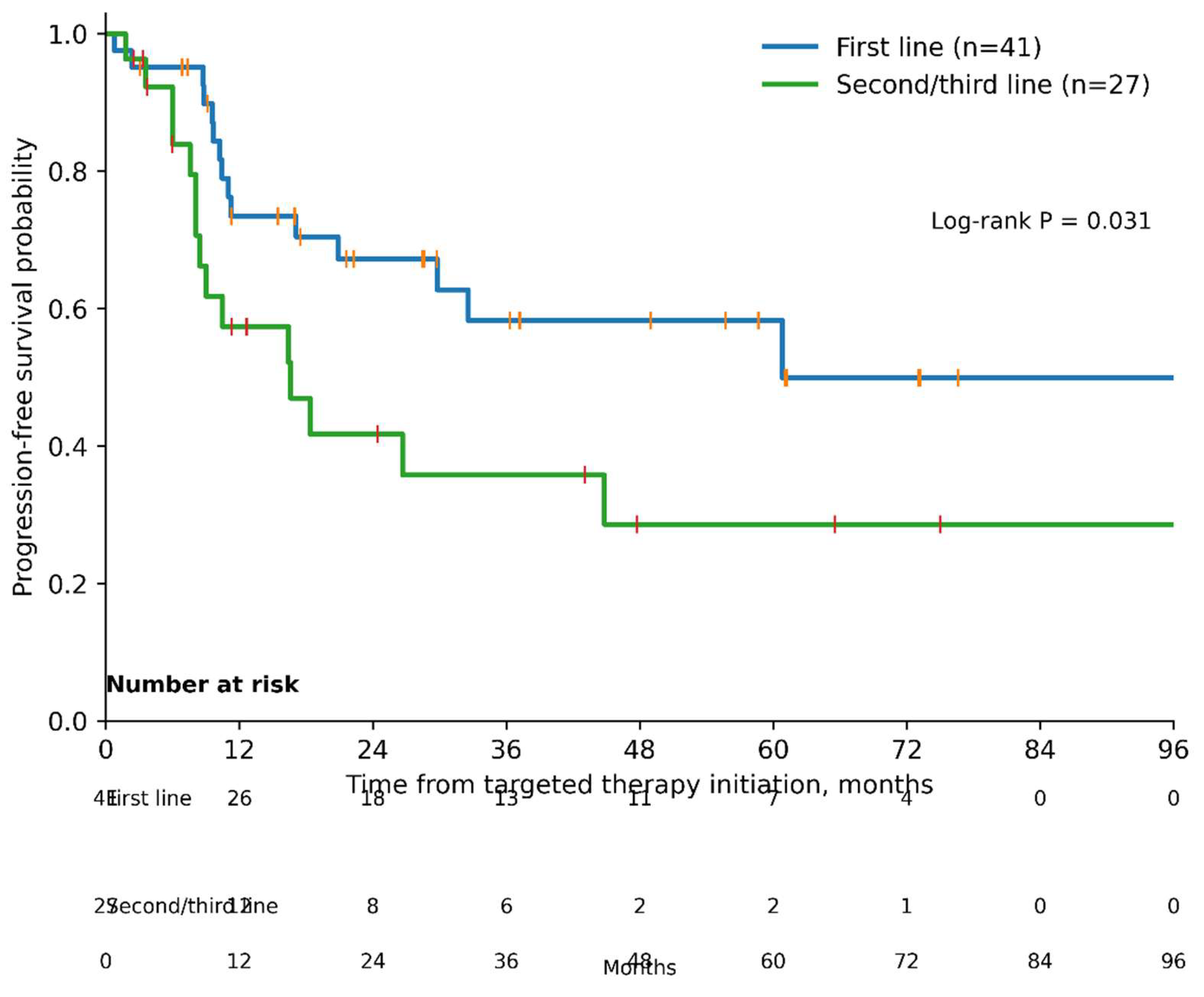
Table 1.
Baseline Clinicopathologic Characteristics.
| Characteristic | Overall (N = 68) |
| Age at diagnosis, median (range), y | 62 (27-90) |
| Sex | |
| Female | 40 (58.8) |
| Male | 28 (41.2) |
| Smoking status | |
| Never | 37 (54.4) |
| Former | 30 (44.1) |
| Unknown | 1 (1.5) |
| Race | |
| White | 60 (88.2) |
| Black | 6 (8.8) |
| Asian | 2 (2.9) |
| Ethnicity as recorded | |
| Hispanic | 43 (63.2) |
| American | 10 (14.7) |
| Non-Hispanic | 6 (8.8) |
| African American | 2 (2.9) |
| Haitian | 2 (2.9) |
| Caribbean Islands | 1 (1.5) |
| Indo-Asian | 1 (1.5) |
| Philippine | 1 (1.5) |
| Asian | 1 (1.5) |
| Eastern European | 1 (1.5) |
| Histology: adenocarcinoma | 68 (100) |
| Fusion-directed therapy line | |
| First | 41 (60.3) |
| Second | 19 (27.9) |
| Third | 8 (11.8) |
| Median follow-up, mo | 43.1 (95% CI, 24.4-50.0) |
Data are n (%) unless otherwise indicated. Ethnicity values are presented as recorded in the source electronic health record; categories include ethnicity, nationality, and cultural descriptors and were not used in inferential analyses.
Table 2.
Fusion-Specific Targeted Therapy Distribution.
| Fusion subtype | Patients, n (%) | Targeted therapy | Patients, n |
| ALK | 34 (50.0) | Alectinib | 22 |
| Lorlatinib | 5 | ||
| Brigatinib | 4 | ||
| Crizotinib | 2 | ||
| Osimertinib* | 1 | ||
| ROS1 | 15 (22.1) | Entrectinib | 7 |
| Crizotinib | 4 | ||
| Lorlatinib | 2 | ||
| Repotrectinib | 2 | ||
| RET | 13 (19.1) | Selpercatinib | 11 |
| Pralsetinib | 2 | ||
| NTRK | 4 (5.9) | Larotrectinib | 3 |
| Repotrectinib | 1 | ||
| NRG1 | 2 (2.9) | Zenocutuzumab | 2 |
*One patient with concurrent ALK and EGFR alterations received osimertinib. NTRK1, NTRK2, and NTRK3 rearrangements were analyzed collectively as NTRK fusions.
Table 3.
Kaplan-Meier Survival Outcomes.
| Population | N | Events / censored | Median, mo (95% CI) | 12-mo, % (95% CI) | 24-mo, % (95% CI) | 36-mo, % (95% CI) |
| Overall PFS | 68 | 30 / 38 | 44.8 (17.1-NE) | 67.5 (54.2-77.7) | 57.9 (44.1-69.4) | 50.2 (36.0-62.9) |
| Overall OS | 68 | 16 / 52 | NR (61.8-NE)* | 90.4 (79.8-95.6) | 80.9 (68.1-89.0) | 71.4 (56.5-81.9) |
| ALK PFS | 34 | 14 / 20 | NR (11.0-NE) | — | — | — |
| ROS1 PFS | 15 | 9 / 6 | 16.6 (7.6-NE) | — | — | — |
| RET PFS | 13 | 3 / 10 | 29.8 (10.5-NE) | — | — | — |
| ALK OS | 34 | 8 / 26 | NR | — | — | — |
| ROS1 OS | 15 | 4 / 11 | NR (26.4-NE) | — | — | — |
| RET OS | 13 | 3 / 10 | 61.8 (16.0-NE) | — | — | — |
CI, confidence interval; NE, not estimable; NR, not reached; OS, overall survival; PFS, progression-free survival. Events/censored values are reported in that order. *The point estimate for median OS was not reached; 61.8 months represents the lower confidence bound from the Kaplan-Meier median confidence interval. Subgroup survival estimates for NTRK and NRG1 are not tabulated because of small sample sizes.
Disclaimer/Publisher’s Note: The statements, opinions and data contained in all publications are solely those of the individual author(s) and contributor(s) and not of MDPI and/or the editor(s). MDPI and/or the editor(s) disclaim responsibility for any injury to people or property resulting from any ideas, methods, instructions or products referred to in the content. |
© 2026 by the authors. Licensee MDPI, Basel, Switzerland. This article is an open access article distributed under the terms and conditions of the Creative Commons Attribution (CC BY) license (http://creativecommons.org/licenses/by/4.0/).
Copyright: This open access article is published under a Creative Commons CC BY 4.0 license, which permit the free download, distribution, and reuse, provided that the author and preprint are cited in any reuse.


