Preprint
Article

This version is not peer-reviewed.

A Transcriptomic Framework Reveals 15 Cultivar-Specific Regulators of Water-Deficit Adaptation in the Japonica Hybrid Rice 'Dianheyou 615'

Submitted:

21 July 2026

Posted:

23 July 2026

You are already at the latest version

Abstract

Water deficit severely limits rice productivity. The elite Dian (D1)-type hybrid japonica rice 'Dianheyou 615 (ZH1)' exhibits exceptional drought adaptation in high-altitude rainfed uplands of the Yungui Plateau, yet the underlying molecular mechanisms remain unknown. We compared phenotypic and transcriptomic responses of ZH1 and six other japonica cultivars under well-watered and water-deficit conditions. Water-deficit stress significantly impaired agronomic traits across all cultivars; however, ZH1 uniquely maintained relatively stable flag leaf morphology, seed-setting rate, and displayed distinctive stomatal traits, in stark contrast to its parental lines and other cultivars. Transcriptomic profiling at the jointing-to-booting stage defined a core drought response module of 174 conserved genes across all cultivars. Critically, by intersecting 1,097 ZH1-specific genes with drought-responsive elements, we pinpointed 15 core, cultivar-specific regulatory genes. These candidates are enriched in functions related to cuticle formation, carbohydrate metabolism, and stress signaling; among them, a DREB transcription factor (LOC4347618) is a prime candidate. qRT-PCR validated their expression. This conserved-to-cultivar-specific regulatory framework and the identified genes provide valuable resources for molecular breeding of water-saving, high-yield rice cultivars.

Keywords: 
;  ;  ;  ;  ;  

1. Introduction

Rice (Oryza sativa L.) serves as the staple food for more than half of the world's population, and its stable production is therefore directly linked to global food security [1]. However, with the intensification of global climate change and the expansion of arid and semi-arid regions, water deficit has become one of the most critical environmental constraints limiting rice growth, development, and yield formation [2]. It has been estimated that approximately 50% of global rice cultivation areas are affected by drought to varying degrees, resulting in substantial yield losses [3]. Consequently, elucidating the molecular mechanisms underlying drought tolerance in rice, identifying key drought-responsive genes, and developing water-saving, drought-resistant, and high-yield rice cultivars have become strategic priorities for ensuring sustainable rice production and mitigating future food crises. During long-term evolution, plants have developed sophisticated morphological, physiological, and molecular regulatory networks to adapt to water-deficient environments. These adaptive mechanisms include modulation of root system architecture to enhance water uptake, alteration of leaf morphology and stomatal behavior to reduce transpiration, and activation of physiological and biochemical responses such as osmotic adjustment, reactive oxygen species (ROS) scavenging, and stress signaling pathways [4,5].
At the molecular level, previous studies have identified numerous genes and regulatory pathways involved in drought responses in rice [6,7]. These studies have mainly focused on several key aspects. First, drought signal perception and transduction involve both abscisic acid (ABA)-dependent and ABA-independent pathways, in which transcription factor families such as SNF1-related protein kinases 2 (SnRK2s), dehydration-responsive element-binding protein/C-repeat-binding factors (DREB/CBFs), and NAC (NAM, ATAF, and CUC) proteins function as central regulators [2]. Second, osmoprotectant biosynthesis, including the accumulation of proline, soluble sugars, and late embryogenesis abundant (LEA) proteins, contributes to cellular osmotic balance under drought conditions [8]. Third, cellular structure protection is maintained through aquaporins (AQPs), which regulate transmembrane water transport, and antioxidant enzyme systems, which preserve membrane stability by scavenging excessive ROS [9]. With the rapid development of high-throughput sequencing technologies, particularly RNA sequencing (RNA-seq), researchers have been able to systematically characterize the genome-wide transcriptional landscape of rice under drought stress [4]. Nevertheless, several limitations remain in current studies. Most investigations have focused on a limited number of model cultivars, such as Nipponbare, or on specific local landraces, whereas the drought-tolerance mechanisms of widely cultivated elite hybrid rice cultivars remain insufficiently explored [10]. Moreover, many studies have been designed as comparisons within a single genotype under different treatments, lacking systematic multi-genotype analyses. This limitation makes it difficult to distinguish universally conserved “core” drought-response mechanisms from cultivar-specific regulatory modules underlying superior drought-tolerance traits [11].
Substantial genetic variation in drought tolerance exists among different rice cultivars. Hybrid rice varieties, particularly 'Dianheyou 615 (ZH1)', a Dian-type (cytoplasmic male sterility type) three-line hybrid cytoplasmic male sterility type japonica rice cultivar, generally exhibit superior yield potential and enhanced environmental adaptability owing to strong heterosis [12]. Such advantages may arise from the aggregation of favorable parental alleles and/or novel interaction effects generated through hybridization. Therefore, elucidating the drought tolerance mechanisms of elite hybrid rice cultivars has direct implications for future breeding programs aimed at improving both productivity and stress resistance. In this context, we propose a central scientific question: among the numerous drought-responsive genes, which constitute the conserved core responsive genes shared across japonica rice cultivars that form the fundamental framework of drought adaptation. More importantly, which genes function as cultivar-specific regulators unique to elite cultivars such as ZH1, thereby conferring superior drought tolerance compared with other cultivars? Distinguishing these two categories of genes is of great importance for breeding applications, as the former may serve as universal targets for broad-spectrum drought-resistance breeding, whereas the latter may enable precise genetic improvement of elite agronomic traits [12].
Due to its unique adaptability to both irrigated and rainfed conditions, ZH1 is a widely cultivated hybrid japonica rice cultivar in the Yungui Plateau of southwestern China, and is recognized for its high yield, yield stability, superior grain quality, and broad-spectrum stress resistance. In agricultural production, ZH1 has demonstrated efficient water utilization and strong tolerance to seasonal drought conditions [13]. However, the molecular regulatory network underlying its superior drought tolerance remains poorly understood. To address this issue, the present study employed ZH1 as the core experimental material and established a multi-genotype comparative framework comprising seven japonica rice accessions, including their parental lines, hybrids with contrasting traits, and conventional paddy/upland cultivars. By integrating RNA-seq analysis with detailed agronomic and leaf stomatal trait characterization, this study aimed to achieve three interconnected objectives: (i) to systematically characterize the phenotypic plasticity and transcriptomic response profiles of different japonica rice cultivars under water-deficit stress; (ii) to identify and define a set of conserved core drought-responsive genes in japonica rice through multi-cultivar comparative analysis, thereby revealing common molecular adaptation strategies; and (iii) to identify ZH1-specific key regulatory factors through fine-scale comparative analyses and dual-filtering strategies, and to elucidate their potential functions. Collectively, this work provides a comprehensive transcriptomic framework for understanding drought adaptation in elite hybrid japonica rice and offers a valuable set of candidate genes for future drought-resistance breeding programs [14].

2. Results

2.1. Water Deficit Induces Differential Phenotypic Responses Among Japonica Rice Cultivars
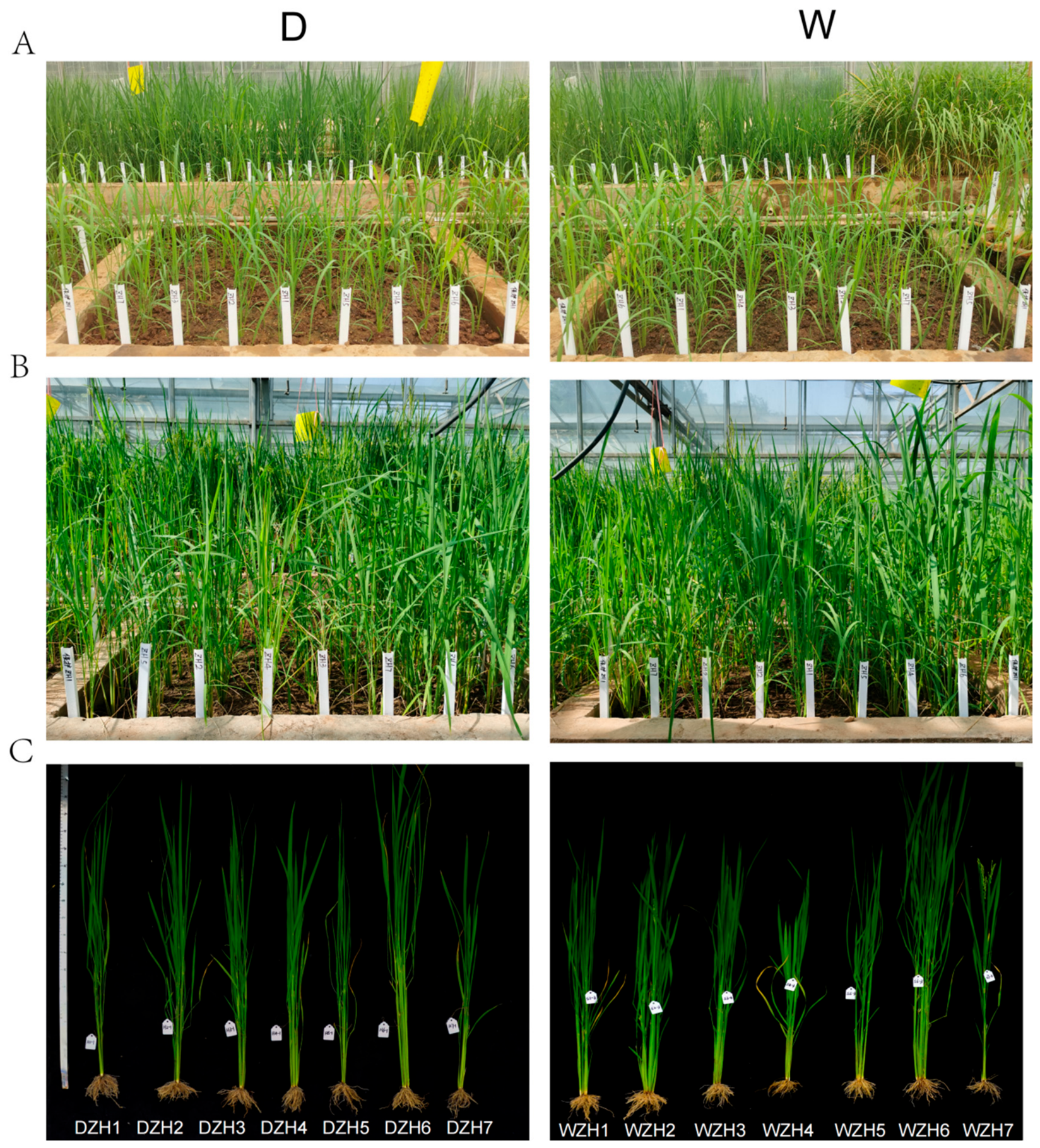
To evaluate the differential responses of japonica rice cultivars to water deficit, twelve key agronomic and physiological traits (Table 1) and stomatal morphological characteristics (Table 2) of seven japonica accessions were measured under well-watered (W) and drought stress (D) treatments. Overall, water deficit significantly suppressed growth- and yield-related traits as well as stomatal microstructure in most rice cultivars. (Figure 1). Compared with the well-watered condition, the number of effective panicles per plant, grain number per panicle, and 1000-grain weight decreased to varying degrees across all cultivars, with the maximum reduction rate of effective panicles reaching 53.3%, and the differences among cultivars being statistically significant (P < 0.05 for most traits, as shown in Table 2), indicating substantial genotypic variation in drought adaptability.
Integrating these agronomic and stomatal traits, the hybrid ZH1 exhibited strong heterosis over its parents ZH4 and ZH5. For example, under well-watered conditions, its grain number per panicle (165.22 ± 43.71) was significantly higher than that of ZH4 (102.56 ± 25.47) and ZH5 (150.56 ± 39.77) (P < 0.05). Under drought, its seed setting rate (94.96 ± 4.60%) did not differ significantly from the well-watered treatment (96.61 ± 2.30%, P > 0.05), whereas those of ZH4 and ZH5 dropped significantly (P < 0.05). Under well-watered conditions, ZH1 significantly outperformed both parents in grain number per panicle (165.22 ± 43.71), 1000-grain weight (24.73 ± 0.78 g), and seed setting rate (96.61 ± 2.30%). Its higher chlorophyll SPAD value at the jointing-to-booting stage (40.73 ± 2.71) ensured continuous photosynthate supply for grain filling. Under water deficit, although its grain number decreased to 131.78 ± 39.06 and 1000-grain weight to 22.33 ± 1.89 g, the seed setting rate remained remarkably stable (94.96 ± 4.60%), decreasing only marginally. In stark contrast, the parents ZH4 and ZH5 suffered severe yield losses with sharply reduced seed setting rates under drought. Moreover, the flag leaf chlorophyll SPAD of ZH1 significantly increased under drought (from 40.73 ± 2.71 to 42.59 ± 2.47), suggesting that photosynthetic pigments in its leaves were less prone to degradation, thus sustaining photosynthetic capacity to supply assimilates for grain filling.
Panicle and flag leaf morphological traits jointly supported the drought tolerance and stable yield of ZH1. After drought treatment, the flag leaf width of ZH1 increased from 0.97 ± 0.16 cm to 1.15 ± 0.05 cm, which helped retain sufficient photosynthetic area. The panicle neck length was only slightly shortened, ensuring unobstructed translocation of photosynthates to panicles and alleviating drought-induced blockage of assimilate transport.
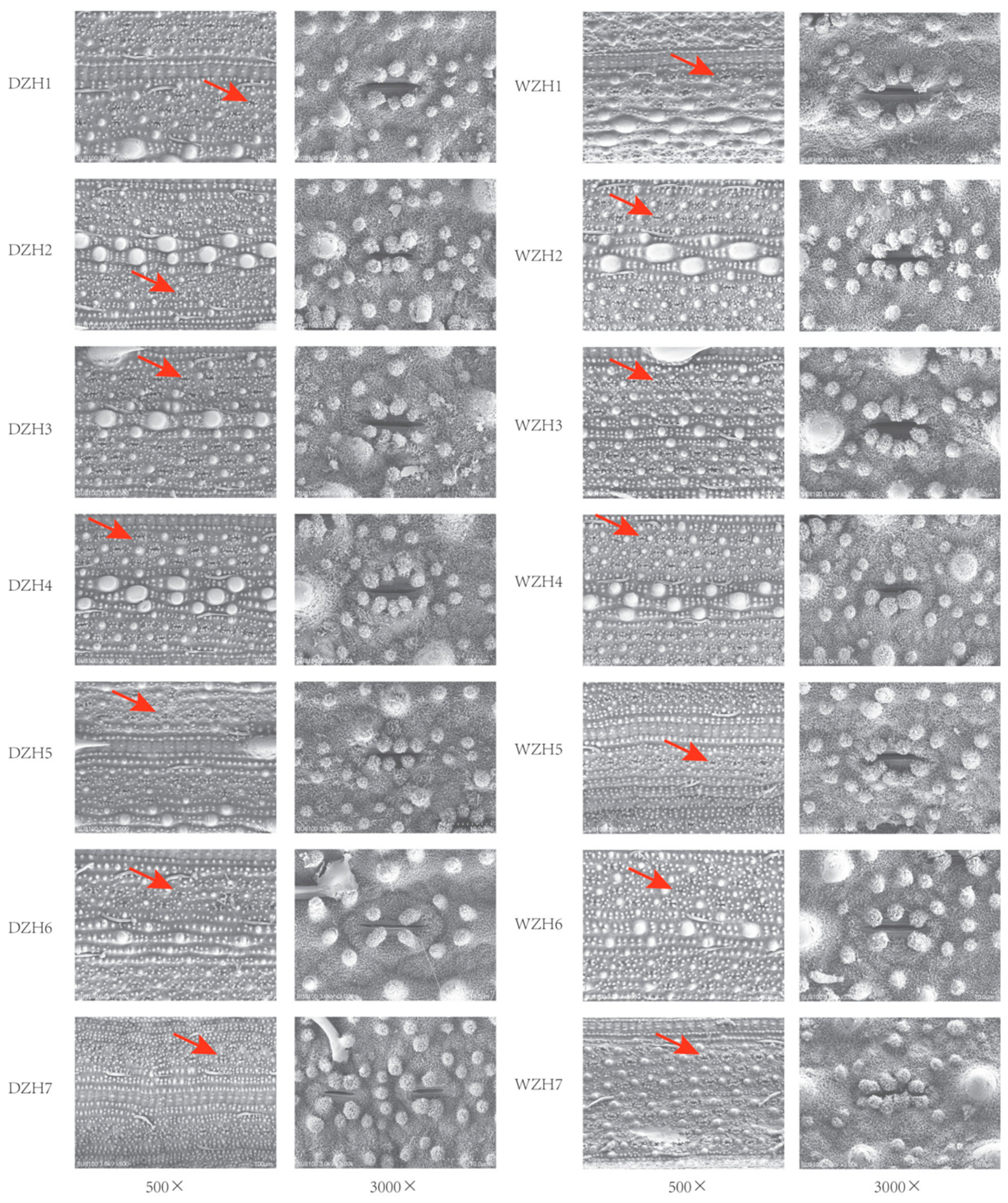
Stomatal microstructure further elucidated the drought-tolerant mechanism of ZH1 (Table 3). Under drought stress, the stomatal aperture of ZH1 showed no significant change (P > 0.05), increasing from 0.40 ± 0.11 to 0.44 ± 0.11, which contrasted with most cultivars that exhibited significant reductions in aperture (P < 0.05). More importantly, compared with its parents—which displayed narrowed stomata and unstable epidermal structures under drought—ZH1 maintained slightly enlarged stomatal aperture and stable surrounding papillae, facilitating a balance between CO2 uptake and moderate water conservation. The coordination of photosynthesis and water retention via epidermal morphology served as a critical morphological basis for stable yield under water deficit.
Abbreviations: Var., Cultivar; Trt., Treatment; PH, Plant height (cm); TN, Tiller number (No./plant); LN, Leaf number (No./plant); FLCC, Flag leaf chlorophyll content (SPAD value); PL, Panicle length; PNL, Panicle neck length (cm); FLL, Flag leaf length (cm); FLW, Flag leaf width (cm); EPN, Effective panicle number (No./plant); TGN, Total grains per panicle; SSR, Seed setting rate (%); TGW, Thousand-grain weight (g).
Abbreviations: Var., Cultivar; Trt., Treatment; STN, Stomatal number (per 500× field); STL, Stomatal length (at 3000×, cm); STA, Stomatal aperture (at 3000×, cm); PAN, Papilla number (per 500× field); PAS, Papillae around a stoma (per 3000× field).
Images show stomatal morphology at 500× and 3000× magnifications for seven cultivars under well-watered (WZH1–WZH7) and water-deficit (DZH1–DZH7) conditions. Scale bars are provided in each image. The red arrows indicate silica papillae on rice leaf epidermal surface.
Figure 1. Plant morphological performance of seven rice cultivars under well-watered (W) and water-deficit (D) conditions. (A) Rice plants at 45 days after sowing; (B) Rice plants at 80 days after sowing; (C) Rice plants at 90 days after sowing.
Preprints 224329 g001
Figure 2. Representative scanning electron microscopy (SEM) images of the flag leaf abaxial epidermis.
Preprints 224329 g002

2.2. Transcriptomic Responses to Water-Deficit Stress

To characterize transcriptomic changes of plants under water-deficit conditions, RNA sequencing was performed on seven japonica rice cultivars under well-watered (W) and water-deficit (D) conditions at the jointing to booting stage. Differential expression analysis was conducted by comparing D and W samples within each cultivar. In ZH1, a total of 10,593 DEGs were identified, including 7,784 upregulated and 2,809 downregulated genes (Figure 2A–B). In ZH2, 8,719 DEGs were detected, comprising 3,425 upregulated and 5,294 downregulated genes (Figure 2C–D). Similarly, 8,761 DEGs were identified in ZH6 (Figure 2E–F), and 10,083 DEGs were detected in ZH7 (Figure 2G–H). Volcano plots illustrate the distribution of DEGs in each cultivar, and hierarchical clustering analysis showed clear separation between water-deficit and well-watered samples within each cultivar. These results indicate that water deficit induces substantial transcriptional reprogramming across all cultivars, although the number and direction of DEGs differ among genotypes.

2.3. Conserved Core Water-Deficit-Responsive Genes Across Multiple Japonica Cultivars

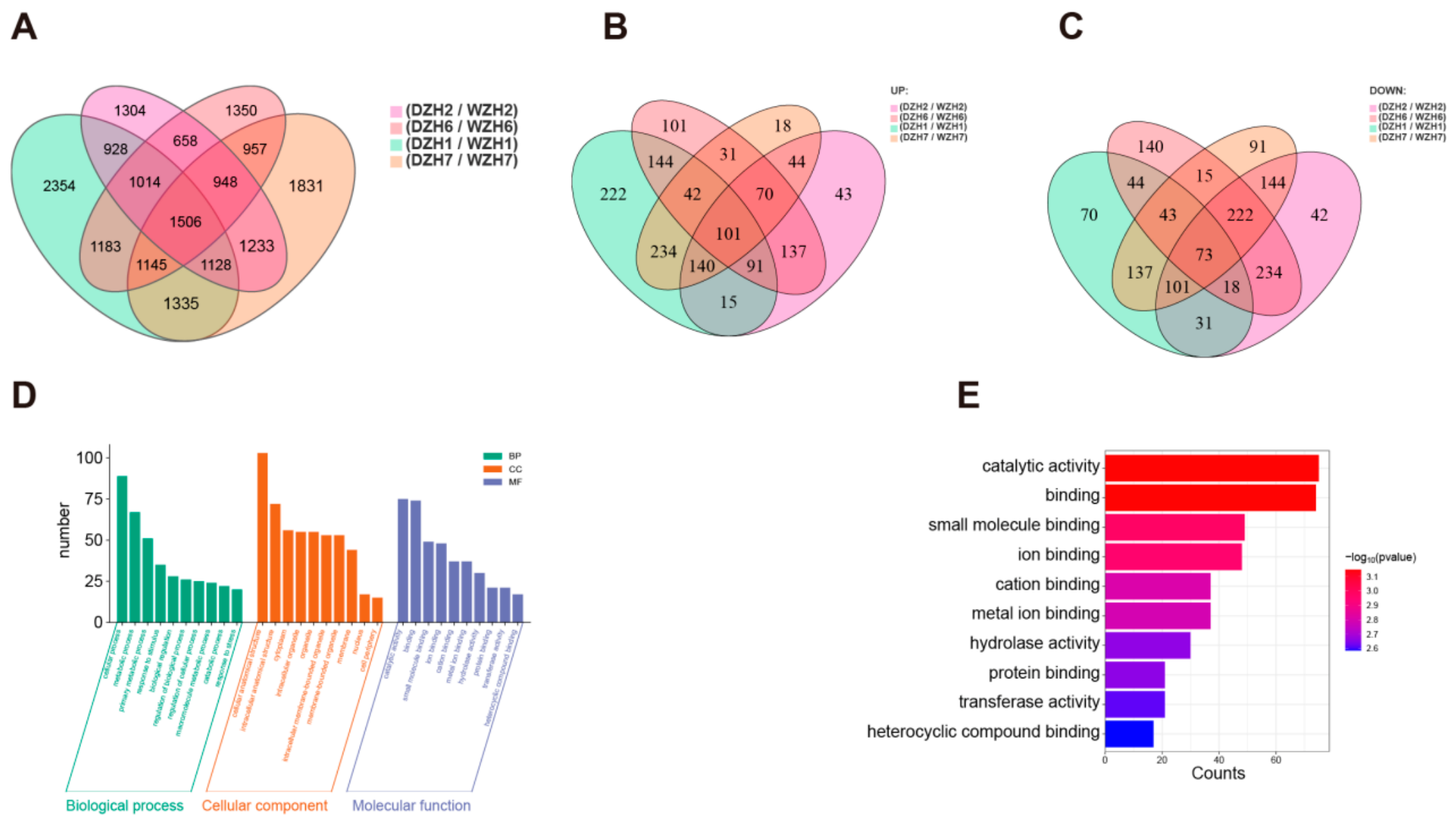
To identify genes commonly involved in water-deficit responses, DEGs derived from four representative cultivars, ZH1, ZH2, ZH6, and ZH7, were intersected. This comparison revealed 1,506 genes that were differentially expressed under water-deficit conditions in all four cultivars. A hypergeometric test confirmed that this overlap was significantly enriched (P < 0.001), indicating a non-random core responsive module. In addition, 2,354 genes were uniquely responsive to water deficit in ZH1 (Figure 3A). Among these shared DEGs, 174 genes exhibited consistent directional expression changes. Among them, there are 101 up-regulated genes and 73 down-regulated genes (Figure 3B-C). These genes were defined as core water-deficit-responsive genes, representing a conserved transcriptional module associated with drought response in japonica rice. This conserved gene set provides a foundation for dissecting both shared and cultivar-specific drought-adaptation mechanisms.
To elucidate the biological functions of the 174 core water-deficit-responsive genes, GO and KEGG pathway enrichment analyses were performed using the Database for Annotation, Visualization and Integrated Discovery (DAVID). These genes were significantly enriched in 603 biological process (BP), 127 cellular component (CC), and 623 molecular function (MF) categories, as well as 53 KEGG pathways. The top enriched GO terms were primarily associated with metabolic processes, stress responses, energy metabolism, and redox-related processes, while CC terms mainly involved cytoplasmic and membrane-associated cellular components. MF analysis revealed significant enrichment in catalytic activity, binding, small molecule binding, and ion-binding functions, indicating extensive enzymatic and regulatory activity under water-deficit conditions (Figure 3D). KEGG pathway analysis further highlighted pathways related to carbon and energy metabolism, plant hormone signaling, secondary metabolite biosynthesis, and stress response (Figure 3E). Collectively, these enrichment results indicate that the core genes coordinately regulate metabolic reprogramming, energy allocation, and stress signaling to maintain cellular homeostasis and enhance japonica rice adaptation to water-deficit stress.

2.4. Identification of ZH1-Specific Transcriptional Features Under Different Water Regimes

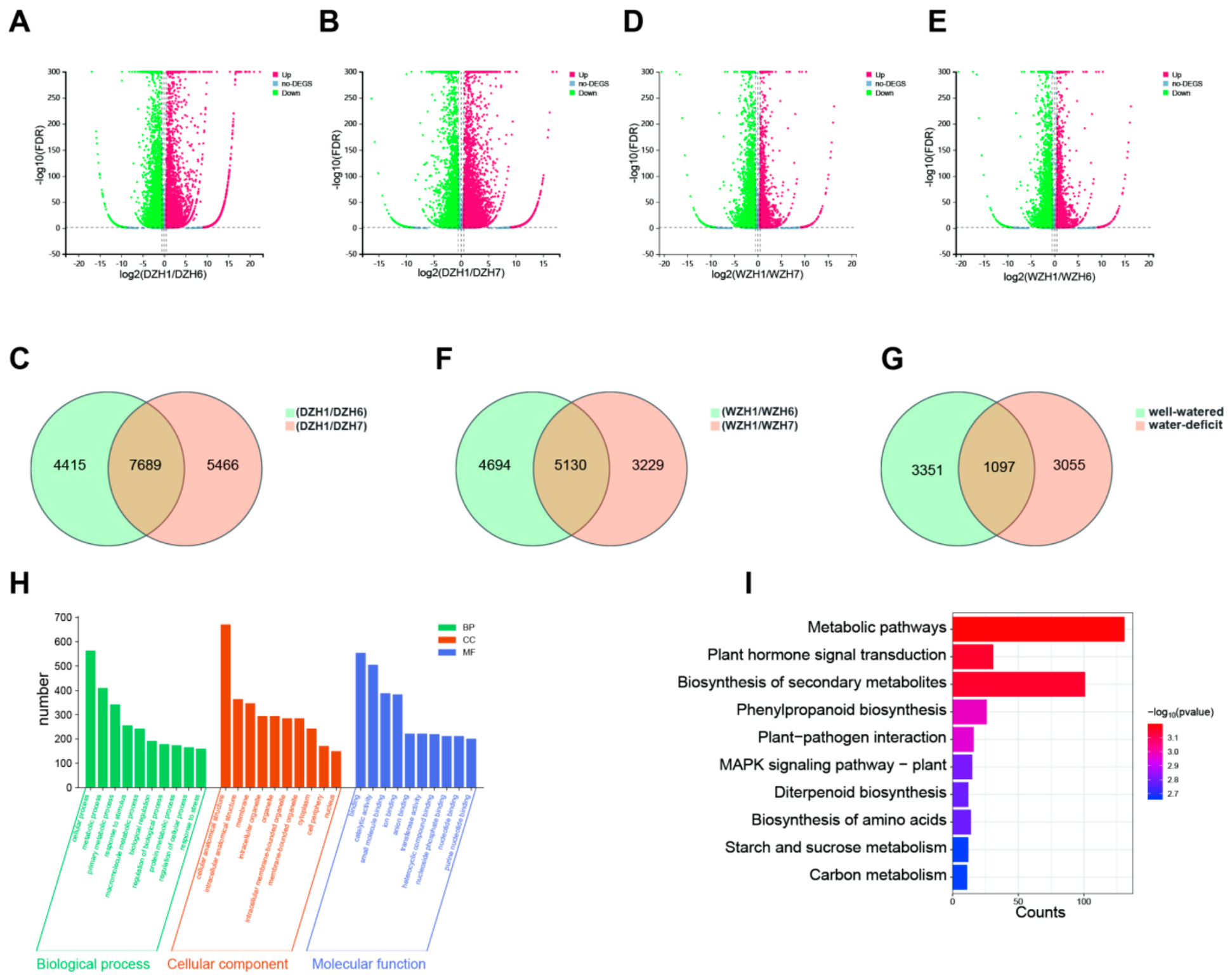
To characterize transcriptional features specific to ZH1, pairwise differential expression analyses were conducted between ZH1 and two reference cultivars, ZH6 and ZH7, under both water-deficit and well-watered conditions. Under water-deficit conditions, comparisons between ZH1 and ZH6 and between ZH1 and ZH7 identified 12,104 and 13,155 DEGs, respectively (Figure 4A-B). Intersection of these two DEG sets yielded 7,689 genes that were consistently differentially expressed in ZH1 relative to both reference cultivars (Figure 4C). Among these, 4,152 genes displayed consistent expression trends, indicating stable cultivar-specific transcriptional regulation under water-deficit conditions. Under well-watered conditions, comparisons between ZH1 and ZH6 and between ZH1 and ZH7 each identified 9,824 and 9,824 DEGs (Figure 4D-E). The intersection of these DEGs resulted in 5,130 shared genes, among which 4,448 genes showed consistent expression trends across both comparisons (Figure 4F). To identify transcriptional features that consistently distinguish ZH1 regardless of water availability, the cultivar-specific gene sets obtained under water-deficit and well-watered conditions were intersected. This analysis yielded 1,097 genes that were consistently differentially expressed in ZH1 across both water regimes (Figure 4G). To investigate the functional characteristics of genes specifically associated with ZH1, GO and KEGG enrichment analyses were performed for the 1,097 cultivar-specific genes using the DAVID database. These genes were significantly enriched in 1,423 BP, 260 CC, and 726 MF categories, as well as 112 KEGG pathways. The top enriched terms and pathways were mainly related to metabolic regulation, energy supply, plant hormone signaling, secondary metabolite biosynthesis, and stress-responsive signaling pathways (Figure 4H-I). In addition, several enriched pathways were associated with carbon and nitrogen metabolism and starch biosynthesis, indicating a tight coordination between stress adaptation and fundamental physiological processes.

2.5. Integrated Analysis Identifies 15 Core Regulators of Water-Deficit Adaptation in ZH1, Including 13 Cultivar-Specific and Two Japonica-Conserved Genes

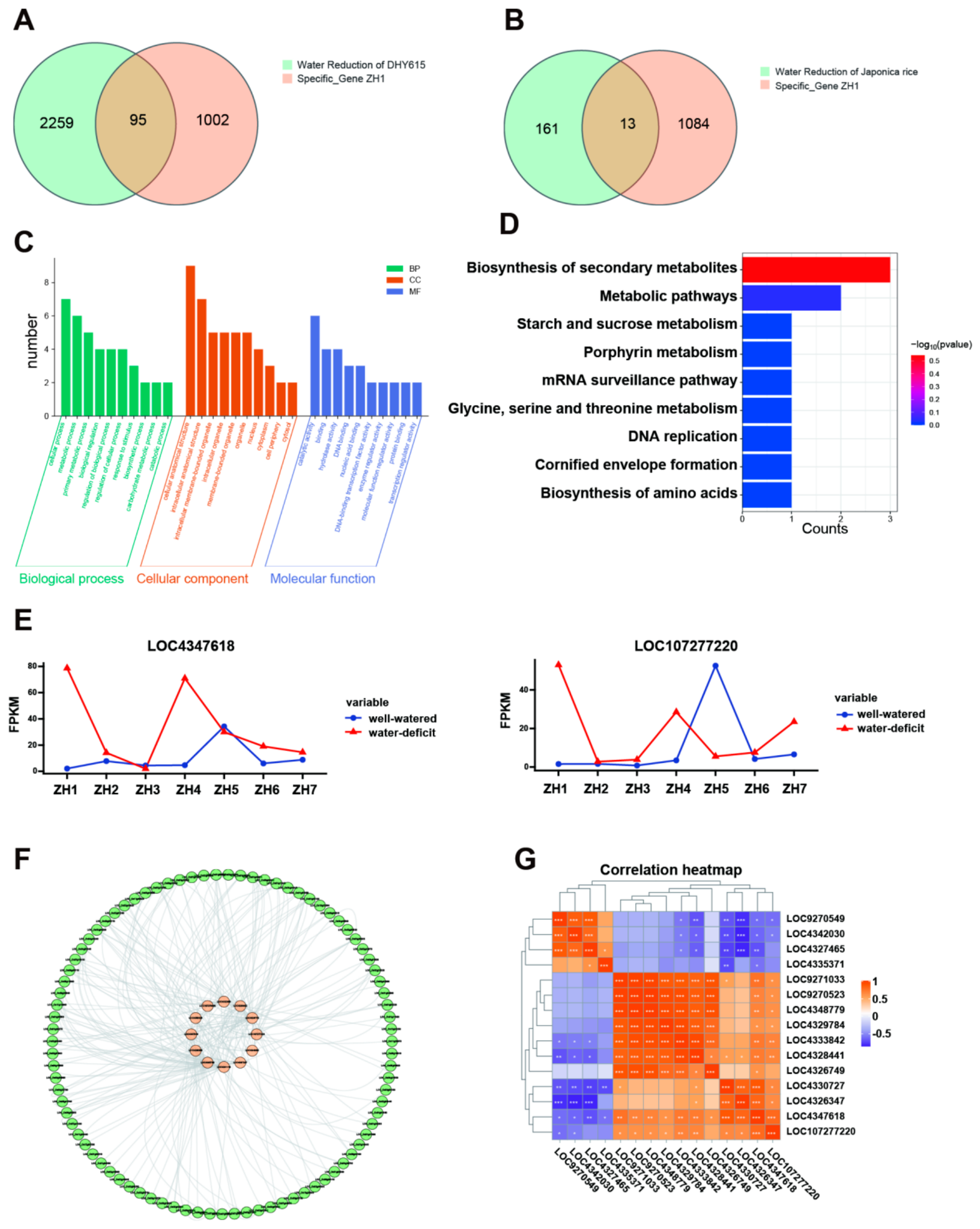
To comprehensively identify genes that are both responsive to water deficit and uniquely associated with ZH1's adaptive capacity, we performed an integrative analysis combining multiple gene sets. First, by intersecting the 2,354 ZH1-specific drought-responsive genes with the 1,097 ZH1-specific constitutive genes (Figure 5A). Second, taking the common water-related genes shared by japonica rice and the unique genes of ZH1, the intersection was obtained, resulting in 13 genes in ZH1 that have different water-reduction mechanisms compared to the other strains (Figure 5B). Functional enrichment analysis of these 15 genes revealed significant associations with chlorophyll catabolism, carbohydrate metabolic processes, cuticle formation, and transcriptional regulation (Figure 5C-D). From the 174 conserved core genes, we further identified two genes (LOC107277220 and LOC4347618) that exhibited particularly strong and consistent differential expression in ZH1, and thus were included as conserved regulators with cultivar-enhanced responsiveness. (Figure 5E). LOC4347618 encodes a DREB-family transcription factor, a known master regulator of abiotic stress responses.
We then selected 13 genes with known or predicted functions in drought response, including pathways such as glycine metabolism, cell wall biosynthesis, and secondary metabolism. These 13 genes were designated as ZH1-specific core candidates (LOC4335371, LOC9270549, LOC4342030, LOC4326347, LOC4327465, LOC4330727, LOC4328441, LOC4333842, LOC4348779, LOC9270523, LOC4329784, LOC9271033, LOC4326749). By combining the 13 ZH1-specific genes with the two japonica-conserved genes, we obtained a final set of 15 core regulators underlying water-deficit adaptation in ZH1.
To further explore the upstream regulatory landscape, we predicted potential transcription factors (TFs) binding to the promoter regions of these 15 genes using the PlantRegMap database. A total of 84 putative TFs were identified 15 target genes, belonging to families such as MYB, bHLH, NAC, and WRKY (Figure 5F). Correlation analysis of the expression profiles of the 15 genes across all cultivars and treatments revealed a strongly correlation (Figure 5G), indicating functional coherence among these regulators. Collectively, these results define a multi-layered transcriptional regulatory network that integrates conserved and cultivar-specific components to confer drought adaptation in ZH1.

2.6. Transcriptional Divergence Between ZH1 and Its Parental Lines Reveals the Molecular Basis of Heterosis and Drought Resistance

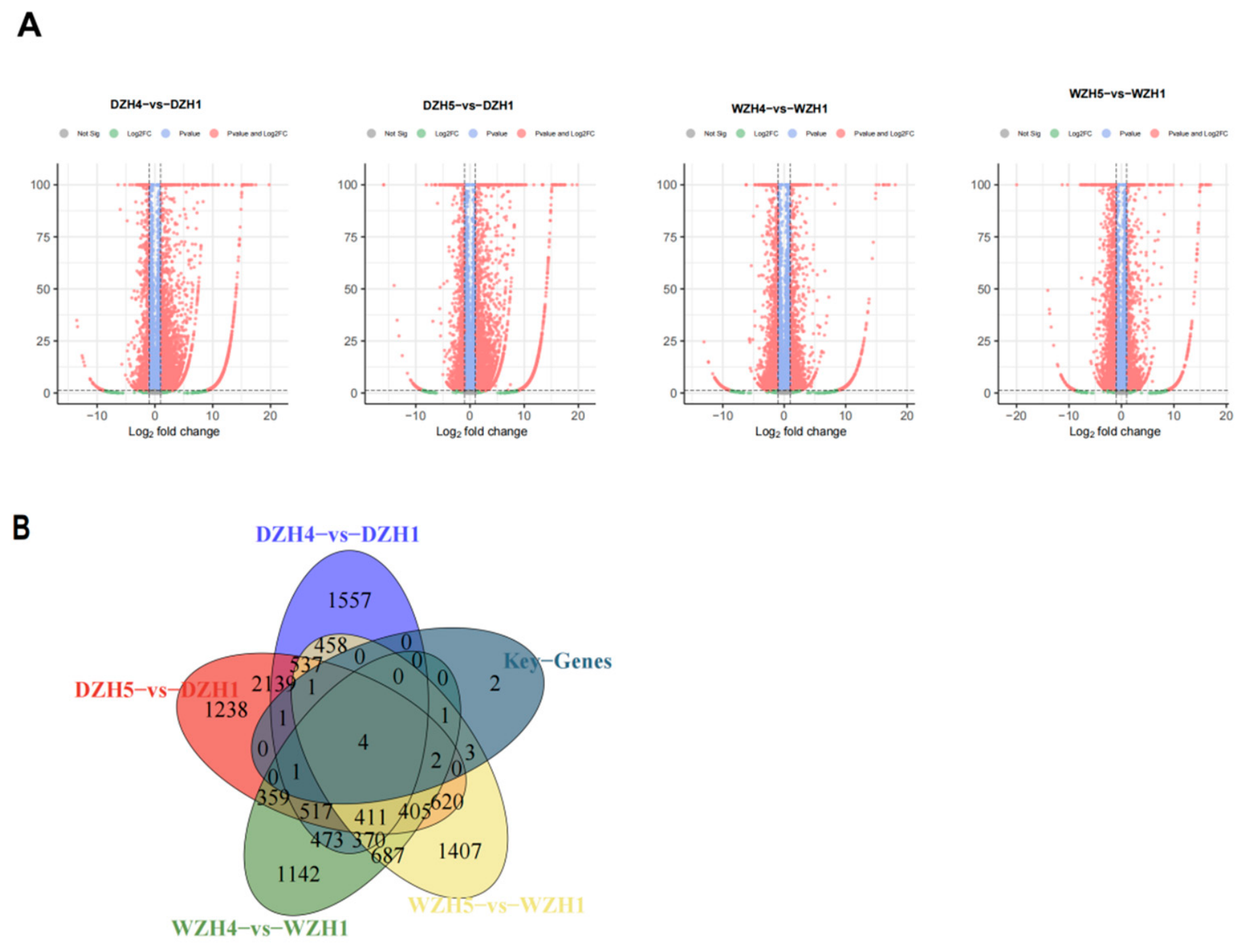
To clarify the transcriptional heterosis supporting superior drought tolerance of ZH1, pairwise transcriptome comparisons between ZH1 and its two parents (ZH4, ZH5) were conducted separately under well-watered and water-deficit treatments (Figure 6A). Each comparison group yielded more than 1,000 DEGs, indicating extensive transcriptional divergence between the hybrid and its parents under both water regimes. Among the 15 core drought regulatory genes identified in this study, four genes (LOC4333842, LOC9270523, LOC4326749, LOC4348779) exhibited significant expression differences across all four cross-comparisons, whereas only two genes (LOC4327465, LOC4335371) showed no obvious expression variation between ZH1 and its parents (Figure 6B). Such widespread transcriptional divergence and consistent differential expression of most core genes fully demonstrate prominent transcriptional heterosis derived from parental genetic recombination. The four stably divergent core genes serve as central modulators that continuously optimize yield components, leaf photosynthetic capacity, and stomatal epidermal structure under both sufficient and limited water supply. The transcriptional reprogramming mediated by these genes coordinately regulates carbohydrate metabolism, cuticle formation, and stress signal cascades, collectively explaining why ZH1 possesses stronger water retention capacity, milder yield decline, and overall superior drought adaptability relative to its two parental lines.

2.7. qRT-PCR Validation of 15 Gene Expression

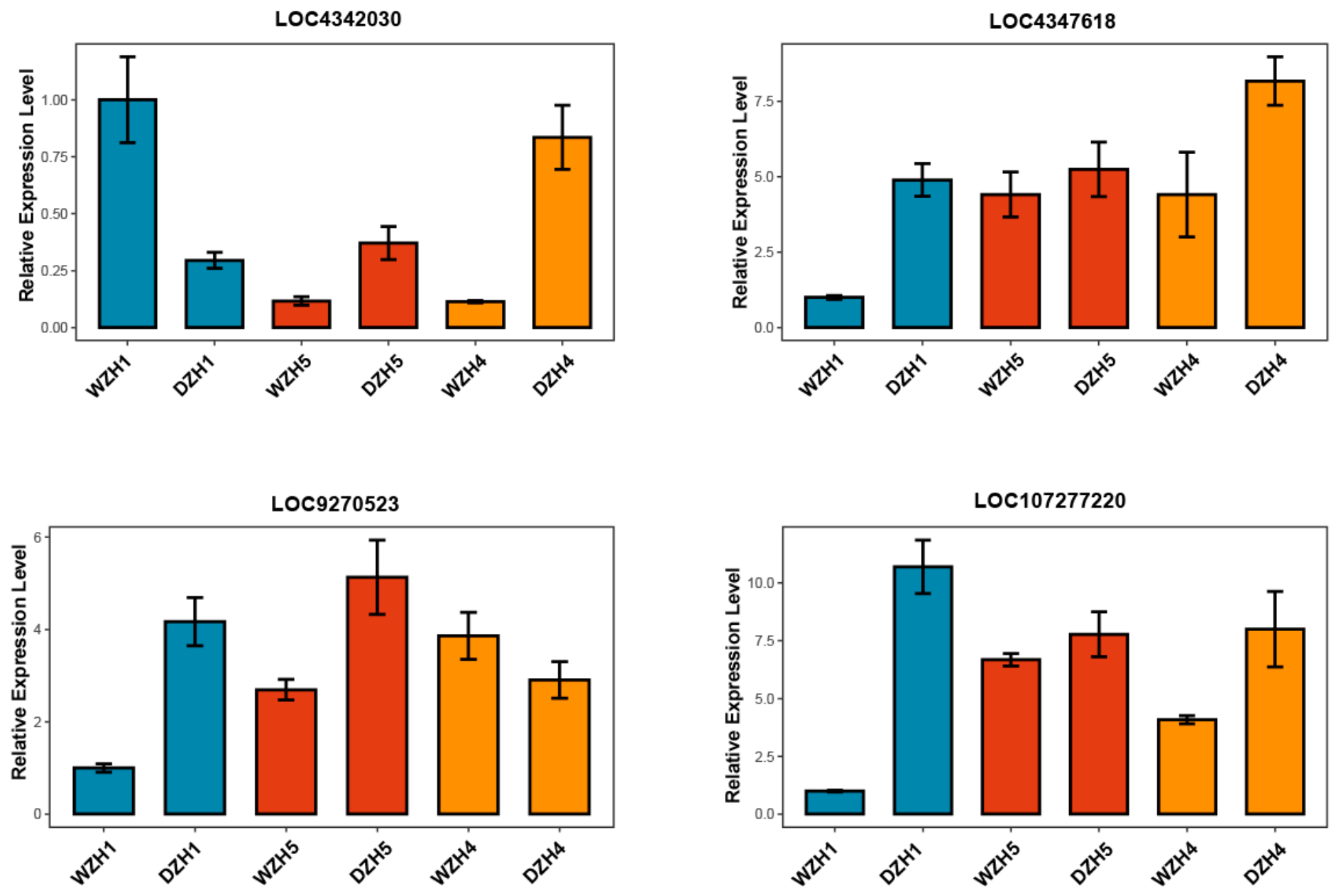
To further validate the reliability of the RNA-seq data, qRT-PCR was performed on the 15 identified candidate genes in ZH1 and its parental lines under well-watered (W) and water-deficit (D) conditions (Figure 7, Figure S1).
Overall, the expression patterns obtained from qRT-PCR were largely consistent with the RNA-seq results, supporting the robustness of the transcriptomic analysis. Among the selected genes, several exhibited significant upregulation under water-deficit conditions, including LOC4347618, which showed a pronounced increase in expression in ZH1 compared with control conditions. In contrast, genes such as LOC4342030 displayed downregulation under water deficit, consistent with transcriptome-derived trends.
In addition, most candidate genes showed similar directional changes across biological replicates, although the magnitude of expression varied among genotypes. This variation is consistent with differences in genetic background and stress responsiveness among cultivars. These results confirm the reliability of the RNA-seq data and support the validity of the identified candidate genes associated with drought response in ZH1.
Relative expression levels of 4 selected candidate genes were determined by qRT-PCR in ZH1 and its parental lines under well-watered (W) and water-deficit (D) conditions.

3. Discussion

This study established a systematic analytical framework integrating multi-cultivar phenotypic and transcriptomic datasets to elucidate the molecular basis underlying the superior drought tolerance of the hybrid japonica rice cultivar ZH1. Our findings not only defined a conserved core drought-responsive transcriptional module shared among japonica rice cultivars, but also, through rigorous multidimensional cross-screening strategies, precisely identified 15 core genes closely associated with the unique drought adaptability of ZH1.

3.1. Water Deficit Induces Extensive Transcriptomic Reprogramming and Differential Drought-Response Strategies Among Japonica Rice Cultivars

Plant adaptation to drought stress relies on both phenotypic plasticity and rapid transcriptomic reprogramming [15,16]. In the present study, water deficit exerted significant negative effects on agronomic traits across all tested japonica rice cultivars; however, the extent of these effects varied markedly among genotypes. Specifically, the number of effective panicles, grains per panicle, and thousand-grain weight all declined to varying degrees, with reductions in effective panicle number ranging from 12.5% to 53.3%, indicating substantial genotypic variation in drought responsiveness. In terms of phenotypic and microscopic characteristics, ZH1 retained a high grain number per panicle and a stable seed setting rate under drought stress, accompanied by a slight increase in chlorophyll content to sustain photosynthetic supply. Its agronomic performance was far less suppressed by stress than its parental lines and control cultivars. Microscopic observation of stomata demonstrated that ZH1 slightly enlarged its stomatal aperture and maintained steady numbers of papillae around stomata under water deficit, forming an epidermal adaptive trait that balances water retention and photosynthesis. This unique stomatal regulatory pattern acts as a critical morphological foundation for sustaining leaf physiological homeostasis and mitigating yield loss under drought.
Notably, the seed-setting rate of ZH1 only slightly decreased from 96.61 ± 2.30% to 94.96 ± 4.60% under drought stress and maintained great stability, whereas that of the control cultivar ZH6 decreased from 85.44 ± 12.47% to 78.36 ± 9.47%. As the flag leaf serves as the major source organ during grain filling, maintenance of its morphological and physiological stability is critical for sink formation and grain development. The smaller reduction in flag leaf width observed in ZH1 compared with ZH2 suggests that ZH1 possesses more efficient mechanisms for water retention and assimilate allocation under drought conditions.
At the transcriptomic level, water deficit triggered extensive gene expression reprogramming in all cultivars. Under drought conditions, ZH1 exhibited 10,593 DEGs, including 7,784 upregulated and 2,809 downregulated genes, whereas ZH2, ZH6, and ZH7 displayed 8,719, 8,761, and 10,083 DEGs, respectively. The variation in DEG numbers among cultivars reflects distinct drought-response strategies. ZH1 exhibited the largest number of DEGs, which is generally interpreted as indicative of enhanced transcriptional plasticity [17]. However, we propose that drought tolerance is determined not merely by the quantity of responsive genes, but also by the efficiency and coordination of the transcriptional response. The transcriptomic response of ZH1 displayed a “robust yet coordinated” pattern: on one hand, it broadly mobilized stress-responsive genes to counteract drought stress; on the other hand, its regulatory network appeared to be more finely tuned, enabling optimization of the balance between stress resistance and growth while minimizing excessive energy expenditure caused by overactivation of defense pathways [18].

3.2. Conserved Core Drought-Responsive Genes Define the Fundamental Regulatory Framework of Drought Tolerance in Japonica Rice

By comparing drought-responsive DEGs among four representative cultivars (ZH1, ZH2, ZH6, and ZH7), we identified 174 genes that consistently responded to drought stress across all cultivars, including 101 upregulated and 73 downregulated genes. These genes were defined as conserved core drought-responsive genes. Notably, the size of this gene set (174 genes) was substantially smaller than the total number of DEGs detected in any individual cultivar, suggesting that it represents the most fundamental and streamlined molecular backbone of drought tolerance in japonica rice [19].
Functional enrichment analyses revealed that these 174 core genes were significantly enriched in pathways related to metabolic processes, stress responses, energy metabolism, and redox regulation. Specifically, GO analysis highlighted enrichment in catalytic activity, binding activity, small-molecule binding, and ion binding functions, whereas KEGG analysis further emphasized pathways associated with carbon and energy metabolism, plant hormone signal transduction, secondary metabolite biosynthesis, and stress adaptation. These pathways encompass classical drought-response mechanisms in plants and are functionally consistent with conserved drought-responsive genes identified in other plant species, including Arabidopsis thaliana and maize [20,21], reflecting convergent evolutionary adaptation strategies among terrestrial plants. The consistent drought responsiveness of these genes across distinct genetic backgrounds strongly supports their role as the “fundamental drought-tolerance regulatory framework” in japonica rice.

3.3. Screening Strategy and Biological Interpretation of the ZH1-Specific Regulatory Module

One of the major innovations of this study lies in the implementation of a dual “conserved + specific” screening strategy. To precisely identify the molecular basis underlying the superior drought tolerance of ZH1, we established stringent screening criteria whereby candidate genes were required to simultaneously satisfy two conditions: (i) involvement in drought responses, and (ii) cultivar-specific expression characteristics in ZH1.
The screening workflow was conducted as follows. First, the intersection between ZH1-specific drought-responsive genes (2,354 genes) and ZH1-specific constitutively differentially expressed genes (1,097 genes showing differential expression relative to control cultivars under both water conditions) yielded 95 candidate genes, from which 13 genes with clear functional annotations were selected. These 13 genes were not only uniquely drought-responsive in ZH1 but also consistently exhibited cultivar-specific expression patterns. Subsequently, integration of these 13 genes with the conserved core gene set (174 genes), together with two conserved japonica rice genes (LOC107277220 and LOC4347618), resulted in the identification of 15 core regulatory factors. Among these, 13 genes represented ZH1-specific core candidate genes, whereas two genes were conserved among japonica rice cultivars. Collectively, these genes shared two key features: they either participated directly in drought responses or exhibited ZH1-specific responsiveness, and they were suggesting that they contribute directly to the superior drought-adaptive phenotype of this cultivar.
Functional enrichment analyses further supported this hypothesis. These 15 genes were significantly enriched in pathways associated with chlorophyll catabolism, carbohydrate metabolism, cuticular wax and cuticle formation, and transcriptional regulation. In particular, enrichment of cuticle formation pathways corresponded closely with the ability of ZH1 to maintain flag leaf stability and reduce non-stomatal water loss under drought conditions [21]. Thickening of the cuticle can effectively reduce transpiration rates while maintaining leaf water potential and photosynthetic activity. Furthermore, enrichment of carbohydrate metabolic pathways was closely associated with energy supply and osmotic adjustment. Efficient sugar metabolism not only provides energy for stress defense responses but also contributes to osmotic regulation through soluble sugar accumulation, thereby maintaining cellular turgor pressure. This mechanism is particularly important for sustaining pollen viability and improving fertilization efficiency under stress conditions [21], which may explain the maintenance of high seed-setting rates in ZH1 during drought stress.

3.4. Mechanistic Implications of the Candidate Gene LOC4347618 and Its Upstream Regulatory Network

Using the PlantRegMap database, we further predicted transcription factors potentially binding to the promoter regions of these genes in order to elucidate the upstream regulatory mechanisms governing the 15 core regulatory factors. The results indicated that the upstream regulatory network was primarily associated with four major transcription factor families: MYB, bHLH, NAC, and WRKY. These transcription factor families have been widely implicated in plant drought responses. MYB transcription factors regulate cuticle biosynthesis and stomatal development [22,23]; bHLH proteins participate in ABA signaling and osmotic regulation [24]; NAC transcription factors function as central regulators of drought-responsive pathways by activating multiple downstream stress-defense genes [25,26]; and WRKY transcription factors enhance drought tolerance through regulation of reactive oxygen species scavenging and senescence-associated gene expression [27,28]. Correlation analyses demonstrated that the expression patterns of these 15 genes were significantly positively correlated across all cultivars and treatments, suggesting coordinated regulation by a shared upstream transcriptional network and the formation of a functionally synergistic drought-responsive module.
Based on these findings, we propose the existence of a hierarchical transcriptional regulatory cascade in ZH1. In response to drought signals, upstream MYB, bHLH, NAC, and WRKY transcription factors coordinately regulate the expression of the 15 core genes, including LOC4347618. Activation of these genes subsequently promotes downstream osmotic adjustment, cuticle biosynthesis, and reactive oxygen species scavenging pathways, thereby generating a cascading amplification effect that ultimately confers the superior drought adaptability observed in ZH1.

3.5. Implications for Drought-Resistance Breeding in Japonica Rice and Future Perspectives

The findings of this study provide valuable genetic resources and strategic guidance for molecular breeding of drought-tolerant rice. The set of 174 conserved core genes can be converted into high-throughput molecular markers, such as Kompetitive Allele-Specific PCR (KASP) markers, for rapid screening of drought tolerance potential in rice germplasm resources. Because these genes represent drought-responsive modules shared across all tested japonica rice cultivars, they possess broad applicability in breeding programs. In addition, the 15 ZH1 core regulatory factors, particularly LOC4347618, represent promising targets for molecular design breeding. Precise modification of these genes in elite but drought-sensitive cultivars using gene-editing technologies such as CRISPR-Cas9 may enable targeted enhancement of drought tolerance [29]. Furthermore, integration of these key genes with advantageous agronomic traits of ZH1, such as greater flag leaf width and high seed-setting rate, may facilitate simultaneous improvement of drought resistance and yield potential.
Future studies should focus on the following five aspects to further extend the present findings. First, functional validation should be conducted by generating overexpression and CRISPR/Cas9-mediated knockout rice lines to systematically evaluate the contributions of the 15 candidate genes to drought tolerance and yield performance under field drought conditions. Second, regulatory network analyses should employ yeast one-hybrid assays, electrophoretic mobility shift assays (EMSA), and chromatin immunoprecipitation sequencing (ChIP-seq) to validate the regulatory relationships between upstream MYB, bHLH, NAC, and WRKY transcription factors and the 15 target genes, as well as to identify downstream targets directly regulated by LOC4347618, thereby establishing a comprehensive drought-responsive regulatory network. Third, allelic variation mining should be performed by sequencing these 15 core genes and their upstream transcription factors across diverse rice germplasm resources to identify elite allelic variants significantly associated with drought tolerance. Fourth, multi-omics integration combining transcriptomic, proteomic, and metabolomic datasets should be conducted to construct multilayered regulatory networks and provide deeper insights into the physiological and biochemical basis of drought tolerance in ZH1. Finally, multi-environment field validation should be implemented by developing functional molecular markers for key genes and integrating them into practical breeding pipelines, followed by genotype–phenotype association analyses and yield-related trait evaluations across multiple years, locations, and water regimes.

4. Materials and Methods

4.1. Plant Materials and Growth Conditions

Seven japonica rice (O. sativa ssp. japonica) cultivars were included in this study, comprising elite hybrids, parental lines, and reference controls: the detailed information is provided in (Table 3). This design aims to comprehensively analyze the similarities and differences between hybrid rice and its parents in drought response and to highlight the specificity of ZH1 through comparison with other paddy and upland varieties.
The experiment was conducted in rice planting pools at the Rice Research Institute of Yunnan Agricultural University. Each pool measured 130 cm in length and 100 cm in width, with 81 planting holes per pool (9 rows × 9 hills, including border rows). Two water regimes were established: well-watered condition (W) with soil moisture maintained at 70–80%, representing normal irrigation; and water-deficit condition (D) with soil moisture maintained at 40–50%, representing reduced water availability. Each treatment had three experimental replicates.
Seeds were surface-sterilized, soaked, and germinated at 28°C for 40 hours. Direct seeding was performed with five seeds per hole at a depth of 5 cm, followed by covering with a thin layer of soil. Seedlings were thinned to one seedling per hill at 30 days after sowing. Water management followed the requirements for direct-seeded rice nursery cultivation during the first 30 days. After thinning, the water-deficit treatment was initiated by maintaining the field without standing water. The soil moisture content is controlled by using a soil moisture meter. All other field management practices were consistent across treatments.

4.2. Phenotypic Characterization

Agronomic trait determination: 90 days after sowing (at the jointing-to-booting stage), was measured using a handheld chlorophyll meter to measure leaf chlorophyll content. After the rice matures, randomly select 5 representative plants from each plot for each variety and treatment to measure plant height (PH), number of tillers (TN), number of leaves (LN), panicle length (PL), panicle neck length (PNL), flag leaf length (FLL), flag leaf width (FLW), effective panicles per plant (EPN), total grains per panicle(TGN), thousand-grain weight (TGW), and seed setting rate (SSR). Seed setting rate (%) = (number of filled grains per panicle/total number of grains per panicle) × 100%. Phenotypic data and flag leaf chlorophyll SPAD values are presented in Table 1 and Table 2.
Stomatal morphology observation: 90 days after sowing, between 9:00 a.m. and 11:00 a.m., fresh, fully unfolded middle segments of sword leaves (about 1 cm × 0.5 cm) from each treated plant were collected. The sample was first gently wiped on the leaf surface with a 70% alcohol cotton ball to remove dust, and then quickly immersed in the FAA fixative (formaldehyde: glacial acetic acid: 70% ethanol = 5:5:90, v/v/v) for fixation for more than 24 hours. After the fixed samples underwent ethanol gradient dehydration, critical point drying, and gold spraying by ion sputtering instrument, the stomata morphology of the lower epidermis of the leaves was observed using a scanning electron microscope (SEM, JSM-6390LV, JEOL). Five regions were randomly selected at a 500x field of view using ImageJ software. The number of stomata (STN), stomata length (STL), stomatal aperture (STA, the widest distance between stomatal guard cells), and the number of papillae (PAN) in each region were statistically analyzed, and the average values were calculated as the indicators of the sample.

4.3. RNA Extraction, Library Preparation, and Sequencing

At 90 days after sowing (simultaneously with stomatal sampling), whole-plant tissues were collected from each treated plant. Five plants per biological replicate were pooled into one sample. Samples were immediately frozen in liquid nitrogen for 3–4 hours and then transferred to −80°C for storage.
Total RNA was extracted using TRIzol Reagent (Invitrogen, USA). RNA concentration and purity (A260/A280 and A260/A230 ratios) were assessed using a NanoDrop 2000 spectrophotometer, and RNA integrity was evaluated using an Agilent 2100 Bioanalyzer. Only samples with an RNA integrity number (RIN) > 7.0 were used for library construction.
Strand-specific mRNA libraries were prepared using the BGI RNA Library Construction Kit. Briefly, mRNA was enriched using Oligo(dT)-conjugated magnetic beads and fragmented at high temperature. The fragments were used as templates for first-strand cDNA synthesis with random primers. Second-strand cDNA was synthesized using dUTP instead of dTTP. After end repair, A-tailing, adapter ligation, and degradation of the U-containing second strand with the UNG enzyme, PCR amplification was performed to obtain strand-specific cDNA libraries. Library quality was confirmed, and sequencing was performed on the BGISEQ-500 platform with a paired-end read length of 150 bp.

4.4. Transcriptome Data Analysis and Identification of DEGs

Raw sequencing reads were quality controlled using SOAPnuke (BGI in-house software). Reads containing adapters, with an N ratio > 5%, or of low quality (more than 50% of bases with Phred score < 15) were removed to obtain clean, high-quality reads. Clean reads were aligned to the japonica rice reference genome (Oryza sativa Japonica Group, IRGSP-1.0) using HISAT2 (v2.1.0) with default parameters. The overall mapping rate was required to be ≥ 85%, and the unique mapping rate ≥ 70%.
Gene expression was quantified using StringTie (v2.1.4) to assemble transcripts and calculate FPKM (Fragments Per Kilobase of transcript per Million mapped reads) values and raw read counts. Differentially expressed genes (DEGs) were identified using the R package DESeq2 (v1.30), which employs a negative binomial distribution model. The significance threshold was |log2(fold change)| ≥ 1.0 and false discovery rate (FDR) ≤ 0.05, with FDR adjusted using the Benjamini–Hochberg method.

4.5. Functional Enrichment Analysis

Gene Ontology (GO) and Kyoto Encyclopedia of Genes and Genomes (KEGG) pathway enrichment analyses were conducted using: clusterProfiler (v4.0), qvalue < 0.05 as the significance threshold. Enrichment analyses were conducted to identify overrepresented biological processes, molecular functions, and metabolic pathways.

4.6. qRT-PCR Validation

To verify the accuracy of the RNA-seq data, 15 candidate genes were ultimately selected for quantitative Real-Time PCR (qRT-PCR) analysis. The method used to extract total RNA was the same as in Section 2.3. Using the TUREscript 1st Strand cDNA Synthesis Kit (Aidlab), 1,500 ng of total RNA was reverse transcribed to synthesise the first strand of cDNA.
The qRT-PCR primers (Table S1) were designed using the Primer Premier 5 software programme. Use the rice ACTIN gene as the internal reference gene. The PCR reaction was performed using the SYBR Green I dye method on the FQD-96C real-time PCR system (Bio-Rad). The 10 μL reaction system comprised 5 μL of 2× SYBR® Green Supermix, 0.5 μL of each forward and reverse primer (final concentration 200 nM), 1 μL of cDNA template, and 3 μL of ddH2O. The reaction procedure was as follows: pre-denaturation at 95 °C for 3 minutes, followed by denaturation at 95 °C for 10 seconds and annealing at 60 °C for 30 seconds, with a total of 39 cycles. Three technical replicates were set up for each sample. Relative gene expression levels were calculated using the 2ΔΔCt method.

4.7. Transcription Factor Prediction

Potential upstream transcription factors regulating the identified core water-deficit-responsive genes were predicted using the PlantRegMap database. The analysis identified transcription factors that may bind to cis-regulatory elements within the promoter regions of target genes.

5. Conclusions

In this study, we established a multi-cultivar comparative framework integrating phenotypic and transcriptomic analyses across seven japonica rice cultivars under well-watered and water-deficient conditions to elucidate the molecular basis of drought adaptation in the elite hybrid ZH1. Phenotypic analyses revealed that ZH1 maintained relatively stable flag leaf morphology and seed-setting rate under water deficit, indicating superior adaptive capacity. Transcriptomic analysis identified 174 conserved core water-deficit-responsive genes shared across four cultivars, representing a fundamental drought-tolerance regulatory framework. Importantly, through a dual "conserved + specific" screening strategy, we identified 15 core regulators of water-deficit adaptation in ZH1, including 13 cultivar-specific genes and two japonica-conserved genes (LOC107277220 and LOC4347618). Notably, LOC4347618, encoding a DREB-family transcription factor, emerged as a key regulator potentially mediating drought adaptation. These findings provide valuable genetic resources for drought-resistance breeding, and the 15 core regulators represent promising targets for molecular design and gene-editing approaches to enhance drought tolerance in elite rice cultivars.

Author Contributions

X.L.Z. and L.J.C. conceived and designed the experiments. X.L.Z., C.Z., J.J.L., X.Y.W., C.L.W., F.L., W.F.Z., and C.H.W. performed the phenotypic and stomatal trait measurements, managed plant cultivation and field trials, and prepared RNA-seq libraries. X.L.Z., C.Z., and C.L.W. conducted the bioinformatic analyses, including differential expression analysis, functional enrichment, and transcription factor prediction. X.L.Z., J.J.L., and X.Y.W. performed the qRT-PCR validation experiments. X.L.Z. wrote the original draft and prepared the figures and tables. X.L.Z., W.F.Z., and L.J.C. acquired the funding. Q.Z. and L.J.C. supervised the study and critically revised the manuscript for important intellectual content. All authors have read and approved the final version of the manuscript.

Funding

This work was supported by the Yunnan Province Major Science and Technology Project (Grant No. 202402AE090026), the National Natural Science Foundation of China (Grant No. 32260502), the Joint Project of Sichuan Provincial Department of Science and Technology (Grant No. 2024NSFSC2058), the Open Research Fund of the Key Laboratory of Panxi Characteristic Crop Improvement, Sichuan Province (Grant No. XNFZ2205), and an internal fund of Xichang University (Grant No. YBZ202258).

Institutional Review Board Statement

Not applicable .

Data Availability Statement

The raw RNA-sequencing data are available upon reasonable request from the corresponding author.

Conflicts of Interest

The authors declare no conflicts of interest.

Acknowledgments

We are grateful to the Rice Research Institute of Yunnan Agricultural University for providing experimental facilities and field management support. We thank all members of the laboratory for their valuable assistance during sampling and data processing. Special thanks are extended to the Key Laboratory of Panxi Characteristic Crop Improvement for logistical support during the field experiments in Sichuan Province.

References

  1. Wang, X.; Liu, X.; Su, Y.; Shen, H. Rice responses to abiotic stress: key proteins and molecular mechanisms. Int. J. Mol. Sci. 2025, 26(3), 896. [Google Scholar] [CrossRef] [PubMed]
  2. Mukherjee, A.; Dwivedi, S.; Bhagavatula, L.; Datta, S. Integration of light and ABA signaling pathways to combat drought stress in plants. Plant Cell Rep. 2023, 42(5), 829–841. [Google Scholar] [CrossRef] [PubMed]
  3. Liu, M.; Xu, Y.; Song, Y.; Fan, D.; Li, J.; Zhang, Z.; et al. Hierarchical regulatory networks reveal conserved drivers of plant drought response at the Cell-Type level. Adv. Sci. 2025, 12(18), e2415106. [Google Scholar] [CrossRef] [PubMed]
  4. Doddaraju, P.; Dharmappa, P.M.; Thiagarayaselvam, A.; Vijayaraghavareddy, P.; Bheemanahalli, R.; Basavaraddi, P.A.; et al. Comprehensive analysis of physiological and metabolomic responses to drought reveals specific modulation of acquired tolerance mechanisms in rice. Physiol. Plant. 2023, 175(3), e13917. [Google Scholar] [CrossRef] [PubMed]
  5. Adzigbe, J.; Frimpong, F.; Danquah, A.; Danquah, E.Y.; Asante, I.K.; Abebrese, S.O.; et al. The responses and adaptations of rice (Oryza sativa L.) to drought stress: a review. Clim. Smart Agric. 2025, 2(4), 100080. [Google Scholar] [CrossRef]
  6. Luo, G.; Li, L.; Yang, X.; Yu, Y.; Gao, L.; Mo, B.; et al. MicroRNA1432 regulates rice drought stress tolerance by targeting the CALMODULIN-LIKE2 gene. Plant Physiol. 2024, 195(3), 1954–1968. [Google Scholar] [CrossRef] [PubMed]
  7. Geng, A.; Lian, W.; Wang, Y.; Liu, M.; Zhang, Y.; Wang, X.; et al. Molecular mechanisms and regulatory pathways underlying drought stress response in rice. Int. J. Mol. Sci. 2024, 25(2), 1185. [Google Scholar] [CrossRef] [PubMed]
  8. Zhang, J.; Aroca, A.; Hervás, M.; Navarro, J.A.; Moreno, I.; Xie, Y.; et al. Analysis of sulfide signaling in rice highlights specific drought responses. J. Exp. Bot. 2024, 75(16), 5130–5145. [Google Scholar] [CrossRef] [PubMed]
  9. Ali, S.; Tyagi, A.; Bae, H. ROS interplay between plant growth and stress biology: challenges and future perspectives. Plant Physiol. Biochem. 2023, 203, 108032. [Google Scholar] [CrossRef] [PubMed]
  10. Gupta, P.; Pachauri, A.; Gauraha, D.; Sahu, J.K.; Chandra, K.; Sao, A.; et al. Heterotic analysis (Oryza sativa L.) in drought tolerant rice accessions. J. Adv. Biol. Biotechnol. 2024, 27(3), 34–46. [Google Scholar] [CrossRef]
  11. Shintani, M.; Bono, H. Meta-analysis of public RNA-sequencing data of drought and salt stresses in different phenotypes of resistant and susceptible Oryza sativa cultivars. Quant. Plant Biol. 2025, 6, e27. [Google Scholar] [CrossRef] [PubMed]
  12. Wang, C.; Li, J.; Zhu, Q.; Li, J.; Zhang, C.; Hong, R.; et al. Breeding D1-type hybrid japonica rice in diverse upland rainfed environments. Int. J. Mol. Sci. 2025, 26(7), 3246. [Google Scholar] [CrossRef] [PubMed]
  13. Alaswad, A.A. Transcriptomic landscapes of ornamental plants under salt and drought stress: key genes and pathways for tolerance. Front. Plant Sci. 2025, 16, 1703649. [Google Scholar] [CrossRef] [PubMed]
  14. Tang, Y.; Xia, P. WRKY transcription factors: key regulators in plant drought tolerance. Plant Sci. An. Int. J. Exp. Plant Biol. Plant Sci. 2025, 359, 112647. [Google Scholar] [CrossRef] [PubMed]
  15. Zhu, J.K. Abiotic stress signaling and responses in plants. Cell 2016, 167(2), 313–324. [Google Scholar] [CrossRef] [PubMed]
  16. Nakashima, K.; Yamaguchi-Shinozaki, K.; Shinozaki, K. The transcriptional regulatory network in the drought response and its crosstalk in abiotic stress responses including drought, cold, and heat. Front. Plant Sci. 2014, 5, 170. [Google Scholar] [CrossRef] [PubMed]
  17. Des Marais, D.L.; Juenger, T.E. Pleiotropy, plasticity, and the evolution of plant abiotic stress tolerance. Ann. N.Y. Acad. Sci. 2010, 1206, 56–79. [Google Scholar] [CrossRef] [PubMed]
  18. Hammer, G.L.; Cooper, M.; Reynolds, M.P. Plant production in water-limited environments. J. Exp. Bot. 2021, 72(14), 5097–5101. [Google Scholar] [CrossRef] [PubMed]
  19. Shinozaki, K.; Yamaguchi-Shinozaki, K. Gene networks involved in drought stress response and tolerance. J. Exp. Bot. 2007, 58(2), 221–227. [Google Scholar] [CrossRef] [PubMed]
  20. Huang, D.; Wu, W.; Abrams, S.R.; Cutler, A.J. The relationship of drought-related gene expression in Arabidopsis thaliana to hormonal and environmental factors. J. Exp. Bot. 2008, 59(11), 2991–3007. [Google Scholar] [CrossRef] [PubMed]
  21. Tang, Y.; Wang, J.; Bao, X.; Liang, M.; Lou, H.; Zhao, J.; et al. Genome-wide identification and expression profile of HD-ZIP genes in physic nut and functional analysis of the JcHDZ16 gene in transgenic rice. BMC Plant Biol. 2019, 19(1), 298. [Google Scholar] [CrossRef] [PubMed]
  22. Cominelli, E.; Galbiati, M.; Vavasseur, A.; Conti, L.; Sala, T.; Vuylsteke, M.; et al. A guard-cell-specific MYB transcription factor regulates stomatal movements and plant drought tolerance. Curr. Biol. 2005, 15(13), 1196–1200. [Google Scholar] [CrossRef] [PubMed]
  23. Seo, P.J.; Lee, S.B.; Suh, M.C.; Park, M.J.; Go, Y.S.; Park, C.M. The MYB96 transcription factor regulates cuticular wax biosynthesis under drought conditions in Arabidopsis. Plant Cell 2011, 23(3), 1138–1152. [Google Scholar] [CrossRef] [PubMed]
  24. Liu, Y.; Ji, X.; Nie, X.; Qu, M.; Zheng, L.; Tan, Z.; et al. Arabidopsis AtbHLH112 regulates the expression of genes involved in abiotic stress tolerance by binding to their E-box and GCG-box motifs. New Phytol. 2015, 207(3), 692–709. [Google Scholar] [CrossRef] [PubMed]
  25. Tran, L.S.; Nakashima, K.; Sakuma, Y.; Simpson, S.D.; Fujita, Y.; Maruyama, K.; et al. Isolation and functional analysis of Arabidopsis stress-inducible NAC transcription factors that bind to a drought-responsive cis-element in the early responsive to dehydration stress 1 promoter. Plant Cell 2004, 16(9), 2481–2498. [Google Scholar] [PubMed]
  26. Nuruzzaman, M.; Sharoni, A.M.; Kikuchi, S. Roles of NAC transcription factors in the regulation of biotic and abiotic stress responses in plants. Front. Microbiol. 2013, 4, 248. [Google Scholar] [CrossRef] [PubMed]
  27. Rushton, P.J.; Somssich, I.E.; Ringler, P.; Shen, Q.J. WRKY transcription factors. Trends Plant Sci. 2010, 15(5), 247–258. [Google Scholar] [CrossRef] [PubMed]
  28. Chen, L.; Song, Y.; Li, S.; Zhang, L.; Zou, C.; Yu, D. The role of WRKY transcription factors in plant abiotic stresses. Biochim. Biophys. Acta. 2012, 1819(2), 120–128. [Google Scholar] [CrossRef] [PubMed]
  29. Zhang, H.; Zhang, J.; Wei, P.; Zhang, B.; Gou, F.; Feng, Z.; et al. The CRISPR/Cas9 system produces specific and homozygous targeted gene editing in rice in one generation. Plant Biotechnol. J. 2014, 12(6), 797–807. [Google Scholar] [CrossRef] [PubMed]
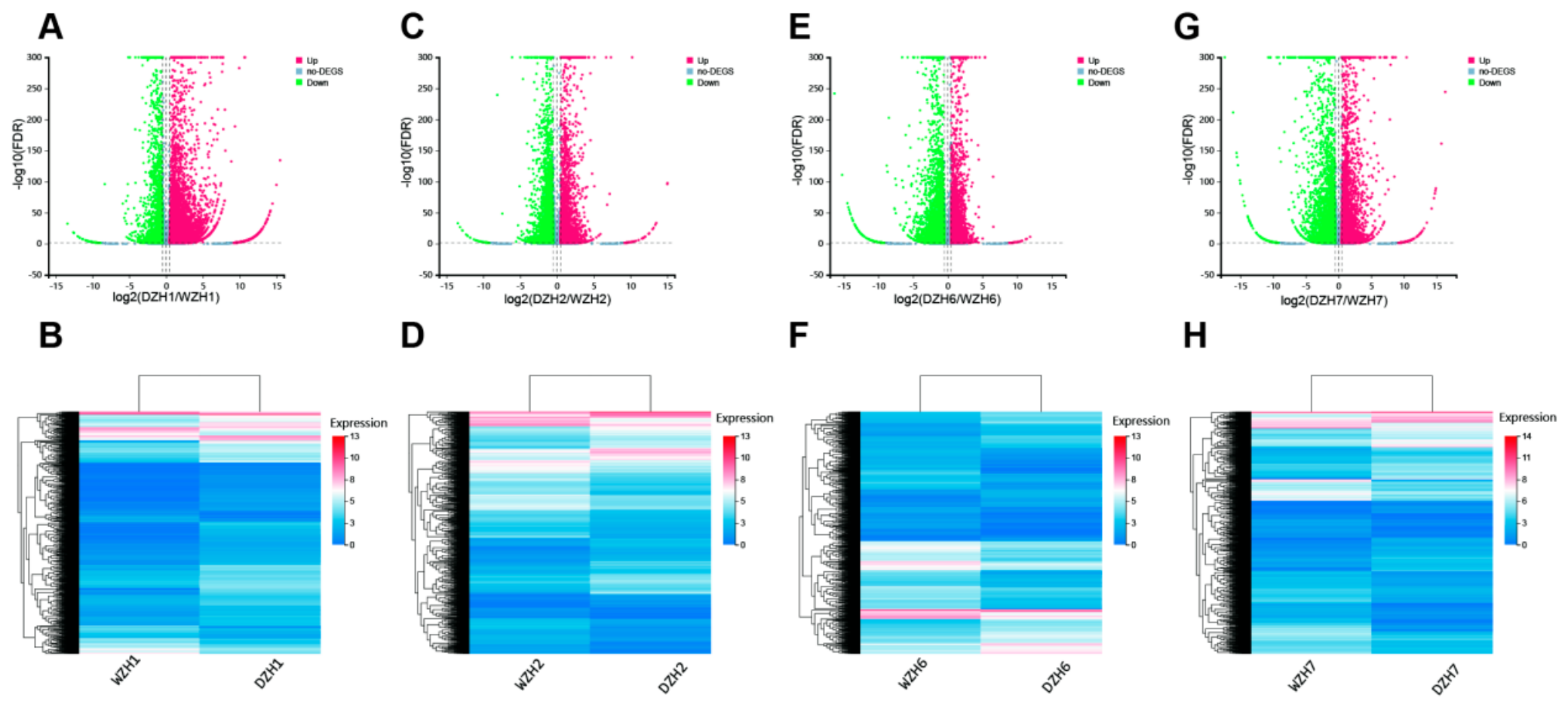
Figure 2. Transcriptomic responses to water-deficit stress in japonica rice cultivars. (A, B) Volcano plot and hierarchical clustering heatmap of DEGs in ZH1 under water deficit (D) versus well-watered (W) conditions. Red and blue dots represent significantly up-regulated and down-regulated genes, respectively (|log2FC| ≥ 1, FDR ≤ 0.05). A total of 10,593 DEGs (7,784 up, 2,809 down) were identified. (C, D) Volcano plot and heatmap for ZH2, showing 8,719 DEGs (3,425 up, 5,294 down). (E, F) Volcano plot and heatmap for ZH6, showing 8,761 DEGs. (G, H) Volcano plot and heatmap for ZH7, showing 10,083 DEGs.
Preprints 224329 g003
Figure 3. Transcriptomic response and identification of conserved core water-deficit-responsive genes. (A) Venn diagram showing the numbers of DEGs under water deficit across four representative cultivars, including ZH1, ZH2, ZH6, and ZH7. (B, C) Numbers of up-regulated and down-regulated genes in the intersections. (D) Bar plots showing the top enriched GO terms in BP, CC, and MF categories for the 174 core water-deficit-responsive genes. (E) KEGG enrichment analysis bar chart.
Preprints 224329 g004
Figure 4. Cultivar-specific transcriptional features of ZH1. (A) Volcano plot of DEGs between ZH1 and ZH6 under water-deficit conditions (DZH1 vs. DZH6). (B) Volcano plot between ZH1 and ZH7 under water-deficit conditions (DZH1 vs. DZH7). (C) Venn diagram showing the intersection of DEGs from (A) and (B), yielding 7,689 ZH1-associated genes. (D, E) Volcano plots for comparisons under well-watered conditions (WZH1 vs. WZH6 and WZH1 vs. WZH7). (F) Intersection of well-watered comparisons, yielding 5,130 shared genes. (G) Intersection of water-deficit and well-watered cultivar-specific gene sets, identifying 1,097 ZH1-specific genes. (H, I) GO and KEGG enrichment analyses of the 1,097 ZH1-specific genes, highlighting pathways involved in metabolism, hormone signaling, secondary metabolism, and stress responses.
Preprints 224329 g005
Figure 5. Integrated analysis identifies 15 core regulators of water-deficit adaptation in ZH1. (A) Venn diagram intersecting ZH1-specific water-responsive genes (2,354) with total ZH1-specific genes (1,097), resulting in 95 candidate genes. (B) Intersection of conserved core water-deficit-responsive genes (174) with ZH1-specific genes (1,097), yielding 13 ZH1-specific core candidates. Two additional japonica-conserved genes (LOC107277220 and LOC4347618) were included, forming a final set of 15 core regulators. (C) GO enrichment of the 15 genes across BP, CC, and MF categories. (D) KEGG pathway enrichment showing the top pathways (e.g., starch/sucrose metabolism, cuticle formation, glycine metabolism). (E) Expression profiles of LOC107277220 and LOC4347618 across all cultivars and treatments (W: well-watered; D: water deficit). (F) Heatmap of predicted upstream transcription factors (MYB, bHLH, NAC, and WRKY families) binding to the 15 target genes. (G) Correlation heatmap of expression patterns of the 15 genes across all samples, indicating strong positive correlations.
Preprints 224329 g006
Figure 6. Transcriptomic comparison between ZH1 and its two parental lines under well-watered and water-deficit conditions. (A) Volcano plots showing DEGs derived from four pairwise transcriptomic comparisons: ZH1 vs. ZH4 under well-watered treatment, ZH1 vs. Nan 615 under well-watered treatment, ZH1 vs. ZH4 under water-deficit treatment, and ZH1 vs. ZH5 under water-deficit treatment. Red dots represent significantly up-regulated genes, and blue dots represent significantly down-regulated genes (|log2(fold change)| ≥ 1.0, FDR ≤ 0.05). (B) Venn diagram illustrating the overlap of the 15 core drought regulatory genes across the four comparison groups, identifying four genes with consistent differential expression and two genes without significant expression variation between ZH1 and its parental lines.
Preprints 224329 g007
Figure 7. qRT-PCR validation of expression patterns of candidate genes associated with drought response.
Preprints 224329 g008
Table 1. Agronomic and physiological traits of seven rice cultivars under well-watered and water-deficit conditions.
Var. Trt. PH
(cm)
TN
(No.)
LN
(No.)
FLCC (SPAD) PL
(cm)
PNL
(cm)
FLL
(cm)
FLW
(cm)
EPN
(No.)
TGN
(No.)
SSR
(%)
TGW (g)
ZH1 W 120.53±2.54b 8.00±
1.00ab
9.67±
0.58b
40.73±
2.71c
22.92±
2.33ab
7.29±
1.49ab
34.69±
10.01ab
0.97±
0.16bc
4.00±
0.50ab
165.22±43.71a 96.61±
2.30a
24.73±0.78a
ZH2 W 102.93±1.22c 4.67±
2.52bc
10.00±0.00b 45.40±
1.40ab
22.07±
2.47ab
8.31±
1.10a
35.84±
10.20ab
0.97±
0.16bc
2.50±
1.00bc
123.33±23.71bc 95.83±
4.10a
25.47±0.51a
ZH3 W 95.80±
2.52cd
7.67±
3.06ab
11.00±0.00ab 44.44±
1.60ab
20.87±
2.41bc
4.60±
1.71cd
27.58±
7.00bc
0.70±
0.19d
3.83±
1.53ab
110.78±17.94cd 91.63±
8.16ab
23.53±1.00a
ZH4 W 97.67±
3.42cd
4.00±
1.73c
10.67±0.58b 46.06±
2.44a
21.13±
2.20bc
7.10±
2.07ab
38.94±
7.34a
1.04±
0.05b
2.00±
0.87c
102.56±25.47cd 96.73±
2.47a
26.60±1.55a
ZH5 W 102.90±0.87c 8.67±
2.52a
12.67±0.58a 35.50±
4.67d
21.10±
1.92bc
4.20±
2.12cd
30.96±
3.93bc
1.06±
0.12b
4.50±
1.00a
150.56±39.77ab 87.03±
4.38b
18.52±13.74b
ZH6 W 142.63±11.36a 4.67±
1.15bc
11.00±1.00ab 40.03±
3.27c
25.74±
4.44a
10.18±
5.71a
43.36±
15.16a
1.34±
0.13a
2.33±
0.58bc
146.22±38.44ab 85.44±
12.47b
27.53±3.20a
ZH7 W 89.07±
1.33d
5.67±
0.58abc
10.00±0.00b 42.46±
3.86bc
18.34±
1.42c
6.07±
3.41bc
23.04±
8.64c
0.76±
0.14cd
2.83±
0.29bc
92.00±12.00d 91.89±
4.62ab
26.57±0.40a
P(W) - 0.000** 0.059 0.000** 0.000** 0.000** 0.004** 0.001** 0.000** 0.029* 0.000** 0.002** 0.491
ZH1 D 92.93±
7.37b
4.67±
1.15ab
12.00±0.00a 42.59±
2.47bc
21.07±
1.77a
4.04±
1.46a
30.34±
2.69ab
1.15±
0.05b
2.33±
0.58ab
131.78±39.06a 94.96±
4.60a
22.33±1.89a
ZH2 D 89.70±
5.86bc
6.00±
1.73a
11.00±0.00ab 47.44±
3.87a
21.03±
2.24a
4.47±
1.53a
29.84±
5.52ab
1.12±
0.09b
3.00±
0.87a
106.56±19.00bc 89.63±
5.84ab
20.83±2.53a
ZH3 D 75.30±
1.87d
5.00±
1.00ab
12.33±1.15a 44.73±
1.13ab
18.70±
1.60bc
2.07±
1.63bc
25.79±
4.70bc
0.84±
0.18d
2.50±
0.50ab
93.56±19.80cd 85.43±
11.13bc
19.50±0.87a
ZH4 D 72.80±
5.41d
3.00±
1.73b
11.00±0.00ab 43.34±
4.61bc
17.97±
1.95c
3.22±
1.81ab
23.70±
2.76c
1.03±
0.12bc
1.50±
0.87b
69.89±21.22d 89.06±
8.50ab
21.90±1.37a
ZH5 D 84.37±
5.01c
4.00±
1.00ab
11.33±0.58ab 43.16±
0.92bc
18.66±
3.44bc
1.89±
1.94c
26.49±
8.00bc
1.07±
0.16bc
2.00±
0.50ab
118.67±44.32ab 73.50±
14.30c
23.17±0.91a
ZH6 D 130.87±6.33a 6.67±
1.53a
10.67±0.58b 47.12±
4.70a
24.08±
1.51a
3.06±
1.62abc
29.04±
3.86ab
1.30±
0.17a
3.33±
0.76a
124.89±16.14ab 78.36±
9.47c
24.50±3.46a
ZH7 D 75.40±
0.36d
2.67±
0.58b
10.00±0.00b 45.00±
1.30ab
18.44±
2.90bc
4.01±
2.20a
22.64±
5.71c
0.94±
0.18cd
1.33±
0.29b
96.00±23.00cd 90.14±
9.00ab
14.79±11.10b
P(D) - 0.000** 0.018* 0.002** 0.027* 0.000** 0.001** 0.011* 0.000** 0.018* 0.000** 0.000** 0.275
Values are presented as mean ± SD (n = 5). Different lowercase letters within the same column and treatment group (W or D) indicate significant differences among cultivars at P < 0.05 (Duncan's multiple range test). **, * indicate significant differences at P < 0.01 and P < 0.05, respectively, as determined by one-way ANOVA for each treatment group.
Table 2. Stomatal characteristics of seven rice cultivars under well-watered (W) and water-deficit (D) conditions.
Var. Trt. STN (per 500× field) STL (3000×, cm) STA (3000×, cm) PAN (per 500× field) PAS (per 3000× field)
ZH1 W 29.00±2.00cd 3.57±0.49a 0.40±0.11ab 24.67±4.51b 8.33±0.58a
ZH2 W 30.67±4.16bc 3.57±0.06a 0.47±0.10ab 31.67±4.04ab 10.67±0.58a
ZH3 W 32.33±2.52b 3.56±0.41a 0.55±0.09a 32.33±1.53ab 7.67±1.15ab
ZH4 W 39.33±2.08a 3.11±0.40a 0.44±0.05ab 36.00±7.55a 7.00±1.73ab
ZH5 W 25.33±0.58de 3.64±0.37a 0.38±0.15b 35.67±2.08a 5.67±0.58b
ZH6 W 23.00±5.29e 3.62±0.30a 0.52±0.03a 29.00±6.24ab 6.33±0.58b
ZH7 W 36.00±3.61ab 3.44±0.23a 0.46±0.10ab 34.33±9.29a 7.33±1.53ab
P(W) - 0.000** 0.563 0.49 0.243 0.001**
ZH1 D 23.00±5.57a 3.53±0.25ab 0.44±0.11a 25.00±2.65c 7.00±1.73ab
ZH2 D 27.00±3.46a 3.27±0.33bc 0.41±0.05a 32.67±2.08bc 7.00±1.00ab
ZH3 D 29.33±1.53a 3.46±0.74ab 0.48±0.06a 30.33±1.53bc 8.00±1.00a
ZH4 D 30.33±4.93a 3.36±0.35bc 0.35±0.13a 34.67±4.62ab 8.67±0.58a
ZH5 D 25.33±0.58a 3.87±0.55a 0.40±0.10a 36.00±2.00ab 6.33±1.15bc
ZH6 D 27.67±2.31a 3.99±0.07a 0.40±0.10a 27.00±1.73c 4.33±0.58c
ZH7 D 25.00±4.00a 2.43±0.55d 0.40±0.10a 41.67±6.11a 5.67±2.08bc
P(D) - 0.244 0.020* 0.812 0.001** 0.017*
Values are presented as mean ± SD (n = 5). Different lowercase letters within the same column and treatment group (W or D) indicate significant differences among cultivars at P < 0.05 (Duncan's multiple range test). *, ** indicate significant differences at P < 0.05 and P < 0.01, respectively, as determined by one-way ANOVA for each treatment group.
Table 3. List of plant materials used in this study.
No. Cultivar/Line Code Remarks Category
1 Dianheyou 615 ZH1 Elite D1-type three-line japonica, hybrid rice F1 Paddy-upland dual-adaptation
2 Dianheyou 34 ZH2 Elite D1-type three-line japonica, hybrid rice F1 Paddy-upland dual-adaptation
3 Nan 34 ZH3 Male parent of ZH2 The restorer line
4 H479B ZH4 Female parent of ZH1 and ZH2 The maintainer line of the CMS line H479A
5 Nan 615 ZH5 Male parent of ZH1 The restorer line
6 Zhutangxianghangu ZH6 Local glutinous unland rice Upland rice control
7 Yungeng 37 ZH7 Elite conventional rice Paddy rice control
Disclaimer/Publisher’s Note: The statements, opinions and data contained in all publications are solely those of the individual author(s) and contributor(s) and not of MDPI and/or the editor(s). MDPI and/or the editor(s) disclaim responsibility for any injury to people or property resulting from any ideas, methods, instructions or products referred to in the content.
Copyright: This open access article is published under a Creative Commons CC BY 4.0 license, which permit the free download, distribution, and reuse, provided that the author and preprint are cited in any reuse.
Prerpints.org logo

Preprints.org is a free preprint server supported by MDPI in Basel, Switzerland.

Subscribe

© 2026 MDPI (Basel, Switzerland) unless otherwise stated

Accessibility

Disclaimer

Terms of Use

Privacy Policy

Privacy Settings