

Submitted:
22 July 2026
Posted:
22 July 2026
You are already at the latest version
Abstract
Hectorite intercalated with octadecyl trimethylammonium ions was synthesized with one-pot synthesis and the octadecyl trimethylammonium modified hectorite was used as adsorbent to remove phenol from aqueous solution. The pH and content of adsorbent were studied to obtain optimized condition to the adsorption of phenol. As for the 50 ml of 100 mg/L initial phenol solution at pH 12, the phenol removal rate attains about 92.3% when 0.5 g adsorbent is used. As for the adsorption isotherm, the Langmuir and Freundlich model were appropriate. The adsorption kinetic was in accord with the pseudo-second-order and the activation energy (Ea) was about 11.15 kJ/mol. The modified hectorite could be recycled and reused, maintaining a high adsorption amount after five times.
Keywords:
hectorite
; one-pot synthesis
; octadecyl trimethylammonium chloride
; phenol
; adsorption
1. Introduction
Phenol is a common organic pollutant in water and it is classified as priority pollutant and affect the taste and smell of water in concentrations as low as 0.5 mg/L pointed out by the US Environmental Protection Agency [1,2]. Thus, the removal of phenol from wastewater is very important and there are many methods such as chemical oxidation [3,4,5], solvent extraction [6,7], membrane separation [8,9], biological treatment [10] and adsorption. The adsorption is a very important method owing to its low cost and simple operation process [11,12,13,14,15,16,17,18,19,20].
The layered clay minerals such as montmorillonite have a large number of exchangeable ions and presents excellent adsorption properties [21]. As for the organic phenol, the direct adsorption with inorganic clay minerals is not feasible owing to the hydrophilic. As for the adsorption of organic phenol from aqueous solutions, the interlayer inorganic cation should be replaced with organic cation such as organic quaternary ammonium to increase lipophilic [22,23]. The common natural montmorillonite was modified by intercalation of hexadecyl trimethylammonium to adsorb phenol and benzene and the maximum adsorption amount were 4.44 and 35.8 mg/g [24]. The low adsorption amount can be attributed to the modification mechanism involving the substitution of interlayer cations, where the original intrinsic cations cannot be completely replaced during the modification process.
In recent years it is found that the hectorite (one type of montmorillonite which has a nominal layer charge of 0.35 eq per formula unit (f.u.) caused by substitution of Li+ for Mg2+ in the octahedral sheet) has great cation exchange capacity [25], and the great ion exchange ability will no doubt result in great adsorption capacity. Therefore, it is promising to try the organic modified hectorite to adsorb the phenol from aqueous solutions. Now the common modified method of hectorite results from its adsorption and ion exchange properties. As for the typical process, hectorite is synthesized with hydrothermal method firstly, and subsequently the organic components enter in the interlayer to replace the existing cation of hectorite. That is, the common synthesis is to mix the organic precursor solution with the suspension of hectorite directly and the process is complicated and takes a long time [26,27,28]. Furthermore, it is difficult for organic components to enter the interlayer of hectorite, which limits the adsorption activity because the amount organic components entering the interlayer is relatively low.
Therefore, we studied the synthesis of the organic intercalation modification of hectorite with steam-assisted one-pot method. After thorough mixing of the reactants of different mole ratios of lithium, magnesium, silicon and organically modified quaternary ammonium salt, the organic intercalation hectorite is directly obtained. Owing to that the organic intercalation and the formation of hectorite occur simultaneously, the organic cation can easily enter the interlayer of hectorite. The modification of the hectorite with quaternary ammonium cation increases its lipophilicity and layer spacing. This method not only eliminates the cleaning process for synthetic hectorite gel, but also greatly reduces the drying cost of the gel. With the organic modified hectorite, the phenol in aqueous solution was removed through adsorption, isotherms and kinetics were studied.
2. Experimental
2.1. Materials
Lithium fluoride (LiF), active magnesium oxide (MgO), precipitated silica (SiO2), Octadecyltrimethylammonium Chloride and Phenol were all obtained from Sinopharm Chemical Reagent Co., Ltd. (Shanghai, China). The synthetic hectorite (Na0.6[Mg5.4Li0.6Si8O20(OH·F)4]) was obtained from Jufeng New Material Technology Co. (Anhui, China). The water used in the study was distilled water.
2.2. Synthesis of OTMA+/Hectorite
The synthesis process is shown in Figure 1 and reference was made to previous methods [4]. The firstly, a certain amount of LiF, active magnesium oxide (MgO), precipitated silica (SiO2) and octadecyl trimethylammonium chloride was grinding and mixing to form a uniform mixed slurry and the mole ratio of Li: Mg: Si: OTMA was 1.2:5.4:8:0.6. Then, the slurry was strong stirred at 1200 rpm and 80°C for 3 hours to obtain gel. The gel was put inside top sieve of a Teflon-lined autoclave containing some content distilled water at the bottom for steam-assisted crystallization. The autoclave was closed and placed in a Muffle furnace at 180°C for 36 h. After the crystallization period, the autoclave was taken out and quenched to room temperature. The product was collected, dried at 120°C for 6 h and then ground and finally sifted through 300 mesh to obtain OTMA+/hectorite composite adsorbent.
2.3. Characterization
The XRD measurements were made using a multifunctional X-ray diffractometer with Cu anode (Riken Electric Co., Ltd., Japan), running at 40 kV and 250 mA, scanning from 5 to 80° at 6°/min. FTIR spectra were obtained were obtained using the KBr pellet technique with an AVATAR 370 FTIR Spectrophotometer (Thermo Nicolet Corporation, USA). The transmission electron microscopy (TEM) and scanning electron microscope (SEM) images were obtained by a JSM-6700 Cold FE SEM (Jeol), operating at an acceleration voltage of 20 kV after the samples were sputtered with gold. BET surface area, pore volume, and pore size were measured by N2 adsorption using ASAP 2460 (Micromeritics Inc.). N2 adsorption was carried out at 77 K and the samples were degassed at 523 K.
2.4. Adsorption of Phenol
Adsorption of phenol from aqueous solution were carried out in a thermostatic orbital shaker. The effects of variables including pH, adsorbent dosage, initial phenol concentration, time and temperature on the removal rate of phenol were studied. The pH of the solution was adjusted with 0.1M HCl and 0.1M NaOH.
After adsorption equilibrium, the phenol solution was centrifuged and the concentration was measured using light of 510 nm wavelength with an Ultraviolet-Visible spectrophotometer. The adsorption amount of phenol was calculated according to the Eq. 1:
Where C0 and Ce are the initial and adsorption equilibrium concentrations of phenol in solution (mg/L), respectively. V is the volume of phenol solution (L) and m is the weight of OTMA+/hectorite (g).
The adsorption removal rate of phenol was calculated according to the Eq. 2.
Where C0 and Ce are the same as Eq.1.
2.5. Recycling
A thermal desorption method was studied to recycle OTMA+/hectorite by heating to 190 °C under vacuum for 3 h to allow the phenol to be volatilized into the gas collection system. Then the desorption OTMA+/hectorite was used again to adsorb the phenol in aqueous solution.
3. Results and Discussion
3.1. One-Pot Synthesis Reaction Mechanism
The common synthesis of hectorite is hydrothermal reaction and the typical equation is as follows.
LiF+MgCl2+Na2CO3+Na2O·nSiO2→ Mx[LixMg6-xSi8O20(OH·F)4] (M=Na,Li)] (hectorite)+NaCl+ CO2
Because the hectorite is gel state in water and its washing is very difficult. Furthermore, the cost of treating saline and alkaline wastewater is very high. Therefore, the steam-assisted synthesis of this study is very important and the new reaction equation is as follows.
LiF+MgO+SiO2+ H2O→ Lix[LixMg6-xSi8O20(OH·F)4] (hectorite)
Based one the new reaction, raw materials of MgCl2, Na2CO3 and Na2O·nSiO2 are replaced by MgO and SiO2 and there is no other by-product.
As for the one-pot synthesis of the hectorite with the interlayer cations replaced by OTMA+, the process is mixing the raw materials with octadecyl trimethylammonium chloride and the reaction equation is as follows.
OTMA+Cl+LiF+MgO+SiO2+H2O→ OTMA+x[LixMg6-xSi8O20(OH·F)4] (OTMA+/hectorite)+LiCl
The one by-product of LiCl will be exchanged into high-pressure liquid water and the gel is OTMA+x[LixMg6-xSi8O20(OH·F)4]. It is because the long-chain organic cations replace inorganic sodium or lithium cations that the interlayer spacing of hectorite increases from the traditional 1.3 to 1.7 nm and the Figure 2 shows the schematic diagram of the increase in interlayer spacing after the substitution. As for this synthesis process, lithium acts as the interlayer countercation to form Lix[LixMg6-xSi8O20(OH·F)4] and Interlayer lithium ions are substituted to obtain OTMA+x[LixMg6-xSi8O20(OH·F)4]. There is byproduct of LiCl. The process is also can use of the same molar amount of NaF and LiF as starting reactants. Therefore, the corresponding products are Nax[LixMg6-xSi8O20(OH·F)4], OTMA+x[LixMg6-xSi8O20(OH·F)4] and NaCl. Thus, the dosage of lithium can be reduced.
The substitution of interlayer long-chain organic ions, which enlarges the interlayer spacing, not only increases the void ratio but also transforms the interlayer composition from inorganic ions to organic ions. This enhances the affinity for organic molecules and thereby greatly improves the adsorption amount toward organic pollutants. This is the foundation for its application as an adsorbent material for organic pollutants.
3.2. Characterization
The XRD of typical hectorite and OTMA+/hectorite are given in Figure 3. The hectorite shows six diffraction peaks at 6.72, 19.76, 29.01, 35.16, 53.28 and 60.8°, which corresponding to planes (001), (110), (004), (200), (211) and (330) of typical hectorite. The modified OTMA+/hectorite has the similar diffraction peaks and it indicates that the OTMA+/hectorite remains the structure of hectorite. The diffraction peaks of OTMA/hectorite appear significantly less intense than those of the parent material and the organically modified lithium laponite synthesized via steam exhibits reduced crystallinity after organic modification. Thus, such loose structures should be more favorable for subsequent adsorption. With the entrance of OTMA+ into the interlayer of hectorite, the diffraction peak of plane (001) shifting from 6.72 to 5.38°, indicating that the basal spacing of 1.3 nm of hectorite is enlarged to 1.7 nm. The larger layer spacing after organic modification has more obvious advantage for adsorption.
The FT-IR spectra of hectorite and OTMA+/hectorite are shown in Figure 4. The asymmetric stretching vibration of Si-O was found at 1030 cm-1 of hectorite and OTMA+/hectorite. The stretching band around at 3460 cm–1 is the characteristics of -OH group in hectorite [29], whereas, the corresponding band of OTMA+/hectorite moves to 3430 cm−1 and it indicates that OTMA+ enters the interlayer of hectorite after modification. The bands around at 1640 cm-1 results from the angular vibration of adsorbed water [30]. The weak band at 2922 cm−1 of OTMA+/hectorite are attributed to the C-H asymmetric stretching vibrations of OTMA+. The weak band of 1474 cm-1 is the bending vibration of -CH3 of OTMA+. The weak band of 2360 cm-1 should be the interlayer adsorbed water and after organic substitution, the absorption peak corresponding to interlayer adsorbed water weakens, indicating a reduction in the amount of adsorbed water. 652 of hectorite and 661 cm-1 of OTMA+/hectorite should be Mg–OH stretching vibrations.
The SEM images of hectorite and OTMA+/hectorite are shown in Figure 5. Owing to the intercalation of the organic cations into the interlayer of hectorite, the surface properties of hectorite change from hydrophilic to hydrophobic. When hectorite and OTMA+/hectorite were dispersed in ethanol, the former shown layered structure while the latter formed a platy and coral-like structure.
The TEM images of hectorite and OTMA+/hectorite are given in Figure 6. The hectorite shows porous and lamellar structure and the main structure is not changed after modification by OTMA+. There is more porosity with OTMA+ entrance into hectorite and the increase of porosity will give more spaces for its adsorption.
The N2 adsorption-desorption isotherms of OTMA+/hectorite is shown in Figure 7. The isotherms plot is type IV with H3 hysteresis loops attributed to the multilayer formation and capillary condensation in mesopores [31]. The BET surface area,pore diameter values and pore volume of OTMA+/hectorite and other similar aluminosilicate clay minerals are given in Table 1. It indicates that the pore diameter of OTMA+/hectorite increased compared with hectorite. The SBET of OTMA+/hectorite is greatly larger than montmorillonite modified by polyacrylamide and the OTMA+/hectorite should have excellent adsorption properties.
3.3. Adsorption Condition
Li et al found that organically modified montmorillonite’s adsorption of phenol is affected by pH and thus firstly the pH of phenol solution should be studied [32]. Generally the pH of phenolic wastewater is usually in the range of 3 to 13, and thus the phenol removal rate was studied during 30 minutes on 0.6 g OTMA+/hectorite at 303 K, 50 ml with 100 mg/L phenol solutions of initial pH 3-13 (Figure 8). It shows that the removal rate of phenol is 68.4% at pH 3.0 and it increases with increasing pH and the removal rate attains the highest 91.6% at pH 12. The result can be attributed to the reason that phenol and OH- reacts to generate C6H5O- with the increasing pH and OTMA+/hectorite is superior to adsorbing phenolic ions. In addition, excessively strong acidic or alkaline conditions will impair the stability of hectorite, and the material exhibits optimal stability at a pH range of 11 to 12.
The adsorption rate of phenol in aqueous solutions was studied with OTMA+/hectorite dosage of 0.1, 0.2, 0.3, 0.4, 0.5, 0.6 and 0.8 g at 303 K, 50 ml, 100 mg/L initial phenol solution and pH 12 during 30 min and the result shows in Figure 9. It shows that the adsorption rate of phenol increases at start stage and then remains almost unchanged with the increase of dosage of adsorbent. The phenol removal rate attains about 92.3% when 0.5 g adsorbent is used.
3.4. Adsorption Isotherm
The adsorption isotherm is very important to understand the equilibrium distribution between adsorbate and the adsorbent at different concentrations. The effect of temperature on phenol adsorption qe and Ce on OTMA+/hectorite from aqueous solution was studied of 303, 328 and 353 K at pH 12 during 30 min. The adsorption isotherms of phenol from aqueous solution with OTMA+/hectorite at the different temperatures are given in Figure 10.
They are S-type curves and it indicates that there is strong competition between the adsorbing compounds and the solvent molecules for the binding sites [33]. The curves increase steadily with no obvious platform illustrating that OTMA+/hectorite presents new surfaces with high attraction for phenol. With increasing temperature, the adsorption capacities have only a little increase. That is to say that the temperature has weak influence on the adsorption of phenol in OTMA+/hectorite.
The adsorption data was fitted according to three common isotherm equations of Freundlich, Langmuir and Temkin. The Freundlich isotherm is given in Eq. 3, which is fit for non-ideal sorption on heterogeneous surfaces and multilayer sorption. The Langmuir isotherm is expressed by Eq. 4, which is fit for monolayer adsorption in a surface containing a finite number of identical sites. The Temkin isotherm is given in Eq. 5, which requires that the heat of adsorption of all the adsorbates in layer decreases linearly with coverage due to adsorbent–adsorbate interactions.
Where Ce (mg/L) and qe (mg/g) are the phenol equilibrium concentration and adsorption amount; qm (mg/g) and KL (L/mg) are the maximum adsorption amount and the Langmuir constant. KF (L/g) and n are the Freundlich isotherm parameters related to adsorption amount and intensity of adsorption. AT is the equilibrium binding constant (L/mg) and B is Temkin the equilibrium binding constant (L/mg) and B is Temkin constant associated with the parameter bT which represents the variation in adsorption energy (kJ/mol) by the following Eq. 6.
Based on the adsorption data of phenol at different temperatures, the Freundlich, Langmuir and Temkin isotherm plots are given in Figure 11. The corresponding fitting parameters are calculated were shown in Table 2. The appropriate fitting models were in the order Langmuir > Freundlich > Temkin according to R2. The result shows that the adsorption mechanism is predominantly monolayer adsorption. It indicates that the surface of the adsorbent is relatively uniform, with adsorbate molecules arranged in an orderly manner without multilayer stacking and no interactions between adsorption sites.
As for the Freundlich isotherm, it is reported that the values of n less than 1 is a poor adsorptive property. Therefore, according to the value of n in Table 2, the Freundlich isotherm is also good. Since the Freundlich model also yielded favorable fitting results, this indicates that the adsorption process is not solely restricted to a monolayer, but also involves multilayer adsorption. This differs from only Freundlich or Temkin that the adsorption is heterogeneous surface and multilayer adsorption of porous activated carbon, organo-montmorillonite and cellulose-based adsorbent [34,35,36]. The R2 of Temkin isotherm is less than 0.9 and it means that the adsorption model is not suitable for the adsorption of phenol by OTMA+/hectorite [37].
Therefore, the result indicates that in addition to the predominant monolayer adsorption, the phenol adsorption in OTMA+/hectorite also involves multiple mechanisms and the S-type isotherm also suggests cooperative adsorption involved multiple mechanisms [38].
3.5. Adsorption Kinetics
Figure 12 shows the effect of temperature and time on the adsorption of phenol by 0.5 g OTMA+/hectorite at 50ml, 100 mg/L initial phenol solution and pH 12 with different temperature of 303, 328 and 353 K.
The pseudo-first-order and pseudo-second-order kinetic models are generally used to study the adsorption and so they were applied for the experimental data. The pseudo-first-order and pseudo-second-order models are generally expressed as Eq. 7 and 8.
qt=qe(1-e-k1t)
Where qt (mg/g) is the amount of the phenol adsorbed at t (min); k1 (min-1) and k2 (g/(mg•min)) are the pseudo-first-order and pseudo-second-order rate constants.
The nonlinear fitting was based on the above equation of pseudo-first-order and pseudo-second-order models are shown in Figure 13. The equation parameters can be calculated from the curves and they were given in Table 3. As for the adsorption, the pseudo-second-order model is better than the pseudo-first-order model because its R2 is closer to 1.
The activation energy can be determined by the Arrhenius equation as shown in Eq. 9 below with the temperature range from 303 to 353 K.
The line-fitting relationship between lnk and 1/T shows the apparent reaction activation energy (Ea). Where Ea, A and R are activation energy (kJ/mol), Arrhenius constant and universal gas constant (8.314 J/(mol•K)). As for the pseudo second-order model, a curve of lnk2 against to 1/T, giving a straight line was showed in Figure 14.
According to the intercept of the curve, the activation energy of the adsorption phenol in OTMA+/hectorite was 11.15 kJ/mol. Generally, the activation energy of physisorption ranges from 5-40 kJ/mol [39] and therefore, this adsorption process belongs to physisorption. Although the kinetic results are similar to those of activated carbon [40,41,42,43], their mechanisms are different. Activated carbon relies on chemical adsorption, while adsorption on modified hectorite is mainly dominated by physisorption [44].
3.6. The Recyclability of OTMA+/Hectorite
Hectorite remains stable under heating temperatures below 450 °C and within a pH range of 6–13. Structural alterations occur during adsorption and desorption processes, which lead to deterioration of its recyclability of adsorption performance. The reutilization is important to industrial application and in order to determine the stability of adsorbent, the recycling usage of adsorbent was studied with 0.5g OTMA+/hectorite at 303 K, 50 ml, 100 mg/L initial phenol solution and pH 12. After each usage, the adsorbent was centrifuge washed and dried in 190°C for 3 h under vacuum for 3 h to allow the phenol to be volatilized into the gas collection system. Figure 15 is a schematic diagram of the adsorbent regeneration process.
Table 4 shows the performance of the OTMA+/hectorite in four consecutive runs. As for the fifth cycle, the removal rate of phenol still reaches 80.1% and thus, the OTMA+/hectorite has good stability. After repeated use, the adsorbed substances cannot be completely removed during drying. In addition, repeated usage causes pore collapse, which reduces the available adsorption space and thus lowers the adsorption capacity.
4. Conclusions
Hectorite intercalated with octadecyl trimethylammonium ions was synthesized with one-pot steam synthesis and the OTMA+-modified hectorite has larger layer spacing, surface area and lipophilicity. Therefore, the OTMA⁺-modified hectorite was used as adsorbent to remove phenol from aqueous solution, its capacity is greatly larger than similar clay minerals. As for the synthesis process, the organic cation can easily enter the interlayer of hectorite because the organic intercalation and the formation of hectorite occur simultaneously with thorough mixing of the reactants of different mole ratios of lithium, magnesium, silicon and organically modified quaternary ammonium salt. This method simplifies the synthesis process and reduces production costs.
With the organic modified hectorite, the phenol in aqueous solution was removed through adsorption, isotherms and kinetics were studied. As for the adsorption isotherm, the Langmuir and Freundlich model are appropriate, which indicates that in addition to the predominant monolayer adsorption, the phenol adsorption in OTMA+/hectorite also involves multiple mechanisms. The pseudo-second-order reaction rate model is fit the kinetic data and the activation energy (Ea) was about 11.15 kJ/mol. The OTMA+/hectorite could be recycled and reused after regeneration. In this work, the static adsorption process of single-component phenol onto modified lithium magnesium silicate was investigated. Owing to the complex and variable compositions of actual wastewater, future research can focus on the adsorption performance of organically modified lithium magnesium silicate toward real wastewater.
Author Contributions
Conceptualization, Y.Z. and J.C.; methodology, J.C.; validation, Y.Z., J. C. and X.W.; formal analysis, Y.Z.; investigation, J.C.; data curation, Y.Z.; writing—original draft preparation, Y.Z. and J.C.; writing—review and editing, J.C.; supervision, J.C.; funding acquisition, J.C. All authors have read and agreed to the published version of the manuscript.
Funding
This research was funded by Yantai Green Polymer materials Co., Ltd., Shandong, China. Project name: Preparation of Hexagonal Plate-like Magnesium Hydroxide by Hydrothermal Method, grant number 21H01083.
Data Availability Statement
Data is unavailable due to privacy and ethical restrictions.
Conflicts of Interest
The authors declare no conflicts of interest.
References
- Kim, J.H.; Hong, S.G.; Sun, H.J.; Ha, S.; Kim, J. Precipitated and chemically-crosslinked laccase over polyaniline nanofiber for high performance phenol sensing. Chemosphere 2016, 143, 142–147. [Google Scholar] [CrossRef] [PubMed]
- Arques, A.; Amat, A.M.; García-Ripoll, A.; Vicente, R. Detoxification and/or increase of the biodegradability of aqueous solutions of dimethoate by means of solar photocatalysis. J. Hazard. Mater. 2007, 146, 447–452. [Google Scholar] [CrossRef] [PubMed]
- Sable, S.S.; Shah, K.J.; Chiang, P.C.; Lo, S.L. Catalytic oxidative degradation of phenol using iron oxide promoted sulfonated-ZrO2 by advanced oxidation processes (AOPs). J. Taiwan Inst. Chem. Eng. 2018, 91, 434–440. [Google Scholar] [CrossRef]
- Liu, X.; Xu, H.; Fu, X.; Chen, J. Steam-assisted synthesis of hectorite loaded with Fe2O3 and its catalytic Fenton degradation of phenol. Catalysts 2024, 14, 521. [Google Scholar] [CrossRef]
- Gao, Y.; Chen, J. Nanocellulose-based carbon aerogel loaded with composite metal oxides and its Fenton catalytic oxidation degradation of phenol. Nanomaterials 2025, 15, 1292. [Google Scholar] [CrossRef] [PubMed]
- Boontongto, T.; Siriwong, K.; Burakham, R. Amine-functionalized metal–organic framework as a new sorbent for vortex-assisted dispersive micro-solid phase extraction of phenol residues in water samples prior to HPLC analysis: experimental and computational studies. Chromatographia 2018, 81, 735–747. [Google Scholar] [CrossRef]
- Asrami, M.R.; Saien, J. Salting-out effect on extraction of phenol from aqueous solutions by [Hmim][NTf2] ionic liquid: Experimental investigations and modelling. Sep. Purif. Technol. 2018, 204, 175–184. [Google Scholar] [CrossRef]
- Jin, M.Y.; Lin, Y.; Liao, Y.; Tan, C.H.; Wang, R. Development of highly-efficient ZIF-8@PDMS/PVDF nanofibrous composite membrane for phenol removal in aqueous-aqueous membrane extractive process. J. Membr. Sci. 2018, 568, 121–133. [Google Scholar] [CrossRef]
- Ye, H.; Dong, C.; Zhu, Q.; Yan, X.; Shi, S. Pervaporation performance of silico-manganese nanohybrid/PU mixed matrix membranes for separation of phenol from water. Desalin. Water Treat. 2018, 129, 69–83. [Google Scholar] [CrossRef]
- Zhang, C.; Li, J.; Cheng, F.; Liu, Y. Enhanced phenol removal in an innovative lignite activated coke-assisted biological process. Bioresour. Technol. 2018, 260, 357–363. [Google Scholar] [CrossRef] [PubMed]
- Yang, Z.X.; Zhang, H.; Zheng, Y.H.; Zhang, Y.M.; Cui, Y.B. Direct activation of petroleum pitch-based mesoporous carbon for phenol adsorption. Colloids Surf. A-Physicochem. Eng. Asp. 2024, 702, 135020. [Google Scholar] [CrossRef]
- Dehmani, Y.; Franco, D.S.P.; Georgin, J.; Lamhasni, T.; Brahmi, Y.; Oukhrib, R.; Mustapha, B.; Moussout, H.; Ouallal, H.; Sadik, A. Comparison of phenol adsorption property and mechanism onto different moroccan clays. Water 2023, 15, 1881. [Google Scholar] [CrossRef]
- Guo, L.; Zhang, T.; Dai, X.M.; Cao, B.W.; Xu, Y.H.; Yang, Y.L. A simple method to prepare carbon-based mesoporous materials by coal gasification of fine slag and its application in phenol adsorption. Mater. Res. Express 2023, 10, 105601. [Google Scholar] [CrossRef]
- Bampi, J.; da Silva, T.C.; da Luz, C.; Pasquali, G.D.L.; Dervanoski, A.; Tochetto, G. Study of the competitive effect on the adsorption of phenol and 4-nitro-phenol in a batch reactor and fixed-bed column using coconut shell activated carbon. J. Water Process Eng. 2024, 65, 105825. [Google Scholar] [CrossRef]
- Cui, Y.; Kang, W.W.; Hu, J.F. Effectiveness and mechanisms of the adsorption of phenol from wastewater onto N-doped graphene oxide aerogel. J. Water Process Eng. 2023, 53, 103665. [Google Scholar] [CrossRef]
- Li, M.P.; Mu, J.C.; Liu, Y.X.; Wang, H.; Wang, Y.Y.; Song, H. Removal of phenol by lignin-based activated carbon as an efficient adsorbent for adsorption of phenolic wastewater. Res. Chem. Intermed. 2023, 49, 2209–2232. [Google Scholar] [CrossRef]
- Zhang, H.J.; Li, L.B.; Lu, Q.Y.; Zhang, P.F.; Zhang, X.C.; Du, C.F. Preparation and selective adsorption performance of CoO/biochar toward phenol-like pollutants. J. Mol. Struct. 2025, 1331, 141537. [Google Scholar] [CrossRef]
- Yang, L.Y.; Liu, Y.J.; Zhang, A.N.; Liu, Z.; Yang, Z.Z.; Li, X.W.; Li, Z.H. Construction of aldehyde-based, ester-based hyper-cross-linked polar resin and its selective adsorption mechanism for phenol in coal chemical wastewater. Environ. Res. 2024, 246, 118140. [Google Scholar] [CrossRef] [PubMed]
- Wu, J.; Li, K.R.; Luo, H.; Li, A.R.; Yang, X.Y.; Zhou, D.H. Preparation of imprinted phenol gel with ultra-high adsorption capacity based on porous biochar: 5-stage tandem column, response surface method, and mechanism analysis. Sep. Purif. Technol. 2024, 349, 127789. [Google Scholar] [CrossRef]
- Long, Y.T.; Wen, J.H.; Xu, B.H.; Zeng, L.; Zhu, L.D.; Xiao, M.W.; Lu, M.X.; Wang, Z.; Deng, L.Q. Reusable biochars derived from Camellia oleifera shell via K2CO3 activated for phenol-enhanced adsorption. Ind. Crops Prod. 2024, 220, 119263. [Google Scholar] [CrossRef]
- Zhang, J.; Zhou, C.H.; Petit, S.; Zhang, H. Hectorite: Synthesis, modification, assembly and applications. Appl. Clay Sci. 2019, 177, 114–138. [Google Scholar] [CrossRef]
- He, H.J.; Chai, K.; Wu, T.; Qiu, Z.H.; Feng, S.; Wang, S.F.; Xie, H.J.; Yao, J.; Zhao, J.B. Phenol adsorption properties and microstructural changes of organically modified bentonite. Environ. Geotech. 2023, 11, 574–583. [Google Scholar]
- He, H.J.; Xu, E.R.; Qiu, Z.H.; Wu, T.; Wang, S.F.; Lu, Y.H.; Chen, G.N. Phenol adsorption mechanism of organically modified bentonite and its microstructural changes. Sustainability 2022, 14, 1318. [Google Scholar] [CrossRef]
- dos Santos, S.S.; Lemos, V.P.; Vilaça, A.L.C.; Tavares, L.; Queiróz, L.S. Adsorption of phenol and benzene in montmorillonite modified with hexadecyltrimethylammonium bromide. Cerâmica 2014, 60, 575–579. [Google Scholar]
- Delavernhe, L.; Pilavtepe, M.; Emmerich, K. Cation exchange capacity of natural and synthetic hectorite. Appl. Clay Sci. 2018, 151, 175–180. [Google Scholar] [CrossRef]
- Utracki; Sepehr, M.; Boccaleri, E. Synthetic, layered nanoparticles for polymeric nanocomposites (PNCs). Polym. Adv. Technol. 2007, 18, 1–37. [Google Scholar] [CrossRef]
- Intasa-ard, S.; Imwiset, K.; Bureekaew, S.; Ogawa, M. Mechanochemical methods for the preparation of intercalation compounds, from intercalation to the formation of layered double hydroxides. Dalton Trans. 2018, 47, 2896. [Google Scholar] [CrossRef] [PubMed]
- Anastopoulos, I.; Mittal, A.; Usman, M.; Mittal, J.; Yu, G.; Núñez-Delgado, A.; Kornaros, M. A review on halloysite-based adsorbents to remove pollutants in water and wastewater. J. Mol. Liq. 2018, 269, 855–868. [Google Scholar] [CrossRef]
- Madejová, J. FTIR techniques in clay mineral studies. Vib. Spectrosc. 2003, 31, 1–10. [Google Scholar] [CrossRef]
- Bertagnolli, C.; Kleinübing, S.J.; da Silva, M.G.C. Preparation and characterization of a Brazilian bentonite clay for removal of copper in porous beds. Appl. Clay Sci. 2011, 53, 73–79. [Google Scholar] [CrossRef]
- Joshi, S.; Tayade, P.; M., Shrikant, J.; Anasuya, P.; Yuvraj, G. Effect of erythromycin in altered gastric motility and Ph in wistar rats. Joshi Abhay Shripad Et. Al. IRJP 2011, 2, 126–130.
- Li, Y.; Hu, X.; Liu, X.; Zhang, Y.; Zhao, Q.; Ning, P.; Tian, S. Adsorption behavior of phenol by reversible surfactant-modified montmorillonite: Mechanism, thermodynamics, and regeneration. Chem. Eng. J. 2018, 334, 1214–1221. [Google Scholar] [CrossRef]
- HGiles, C.; PD’Silva, A.; Easton, I. A general treatment and classification of the solute adsorption isotherm part. II. Experimental interpretation. J. Colloid Interface Sci. 1974, 47, 766. [Google Scholar] [CrossRef]
- Jain, M.; Khan, S.A.; Sahoo, A.; Dubey, P.; Pant, K.K.; Ziora, Z.M.; Blaskovich, M.A.T. Statistical evaluation of cow-dung derived activated biochar for phenol adsorption: Adsorption isotherms, kinetics, and thermodynamic studies. Bioresour. Technol. 2022, 352, 127030. [Google Scholar] [CrossRef] [PubMed]
- Ngueagni, P.T.; Hefnawy, M.; Ofudje, E.A.; El Gamal, A.; Akande, J.A.; Bin Emran, T. Cellulose-based adsorbent of animal waste for the adsorption of lead and phenol. Bioresources 2025, 20, 3923–3952. [Google Scholar] [CrossRef]
- Wei, R.; Mo, Y.H.; Fu, D.J.; Liu, H.Q.; Xu, B.C. Organo-montmorillonite modified by gemini quaternary ammonium surfactants with different counterions for adsorption toward phenol. Molecules 2023, 28, 2021. [Google Scholar] [CrossRef] [PubMed]
- Wang, W. Study on the correlation of foam concrete bone-dry density and compression strength. Build. Decor. Mater. World 2010, 6, 50–53. [Google Scholar]
- Saleh, T.A. Isotherm, kinetic, and thermodynamic studies on Hg(II) adsorption from aqueous solution by silica- multiwall carbon nanotubes. Env. Sci. Pollut. Res. 2015, 22, 16721–16731. [Google Scholar] [CrossRef]
- Unuabonah, E.I.; Adebowale, K.O.; Olu-Owolabi, B.I. Kinetic and thermodynamic studies of the adsorption of lead (II) ions onto phosphate-modified kaolinite clay. J. Hazard. Mater. 2007, 144, 386–395. [Google Scholar] [CrossRef] [PubMed]
- Zamouche, M.; Chermat, M.; Kermiche, Z.; Tahraoui, H.; Kebir, M.; Bollinger, J.C.; Amrane, A.; Mouni, L. Predictive model based on K-nearest neighbor coupled with the gray wolf optimizer algorithm (KNN-GWO) for estimating the amount of phenol adsorption on powdered activated carbon. Water 2023, 15, 493. [Google Scholar] [CrossRef]
- Sun, X.F.; Ma, L.Q.; Ye, G.C.; Wu, L.; Li, J.H.; Xu, H.X.; Huang, G. Phenol adsorption kinetics and isotherms on coal: effect of particle size. Energy Sources Part A-Recovery Utilization and Environmental Effects 2021, 43, 461–474. [Google Scholar]
- Chen, Y.Q.; Wang, D.H.; Wang, X.L.; Wu, J.; Song, S.F. Enhanced adsorption of phenol using EDTA-4Na-and KOH-modified almond shell biochar. Sustain. Environ. Res. 2025, 35, 4. [Google Scholar] [CrossRef]
- Sadi, M.; Namane, A.; Azri, Y.M.; Tou, I. Adsorption and desorption of phenol onto granular activated carbon: kinetics and thermodynamic studies. J. Solut. Chem. 2025, 54, 906–932. [Google Scholar] [CrossRef]
- Dehmani, Y.; Georgin, J.; Lamhasni, T.; Brahmi, Y.; Oukhrib, R.; Youcef, H.B.; Sadik, A. Towards experimental and theoretical understanding of the adsorption behaviour of phenol on a new activated carbon prepared from oak wood. J. Water Process Eng. 2023, 54, 103936. [Google Scholar] [CrossRef]
Figure 1.
The schematic diagram of synthesis process.
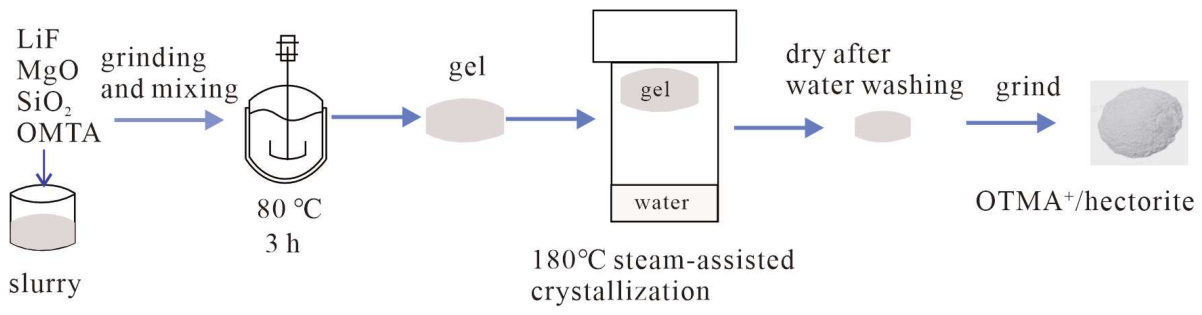
Figure 2.
The schematic diagram of exchange of interlayer cation in hectorite.
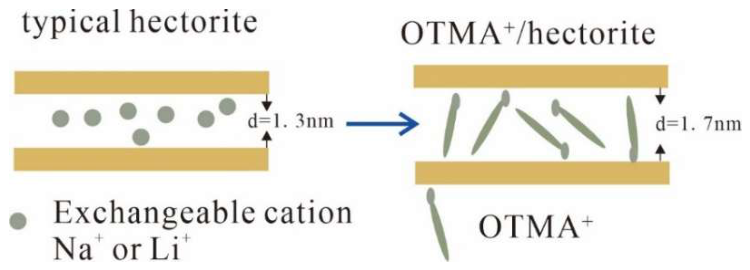
Figure 3.
XRD powder patterns of hectorite and OTMA+/hectorite.
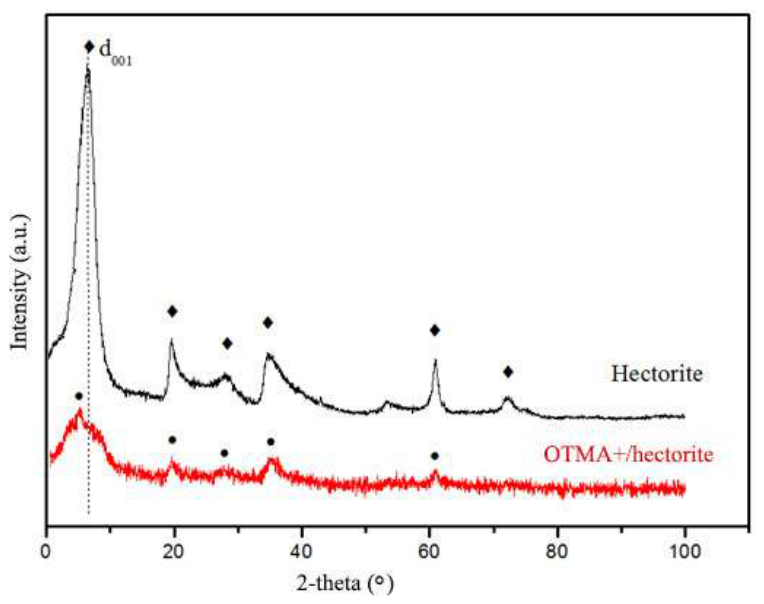
Figure 4.
FT-IR spectra of hectorite and OTMA+/hectorite.
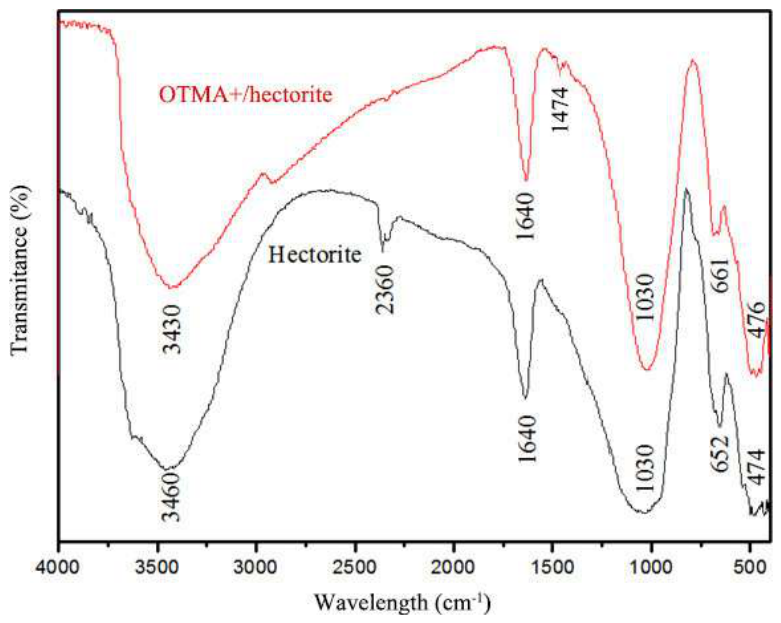
Figure 5.
The SEM images of hectorite and OTMA+/hectorite, a) hectorite; b) and c) OTMA+/hectorite.
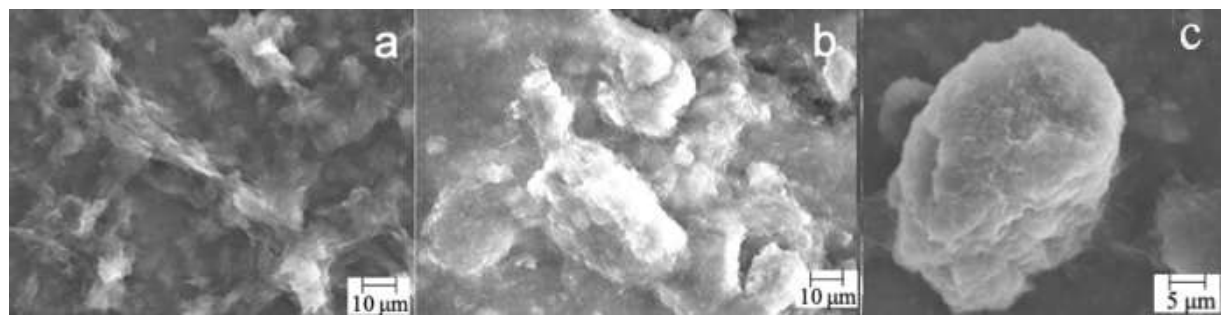
Figure 6.
The SEM images of hectorite and OTMA+/hectorite, a) and b) hectorite; c) and d) OTMA+/hectorite.
Figure 6.
The SEM images of hectorite and OTMA+/hectorite, a) and b) hectorite; c) and d) OTMA+/hectorite.
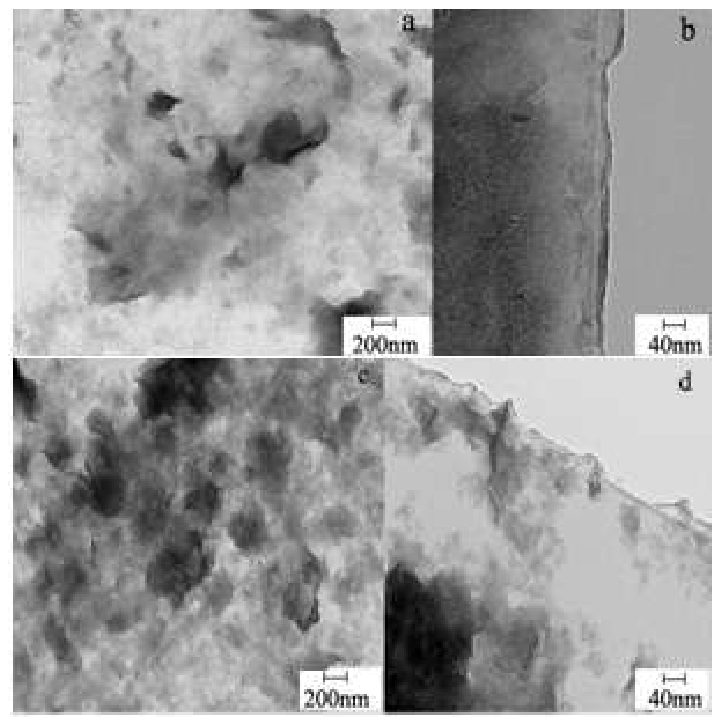
Figure 7.
N2 adsorption/desorption isotherms of hectorite and OTMA+/hectorite.
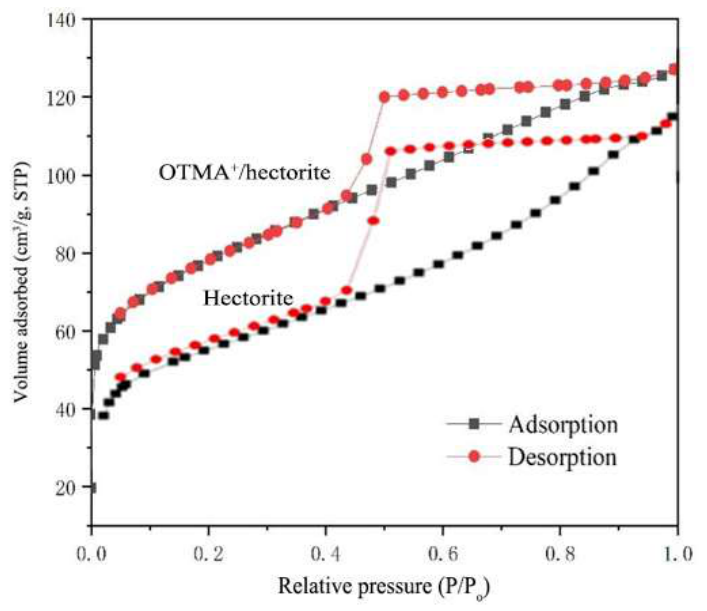
Figure 8.
Effect of pH value on adsorption of phenol.
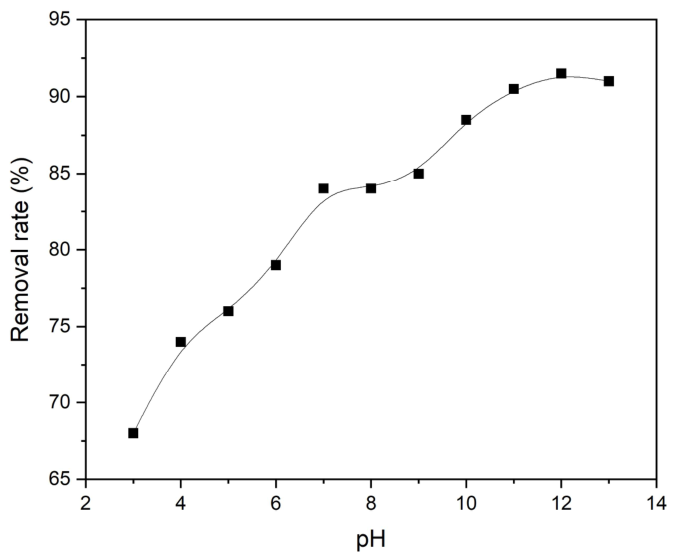
Figure 9.
Effect of the adsorbent content on phenol adsorption of OTMA+/hectorite.
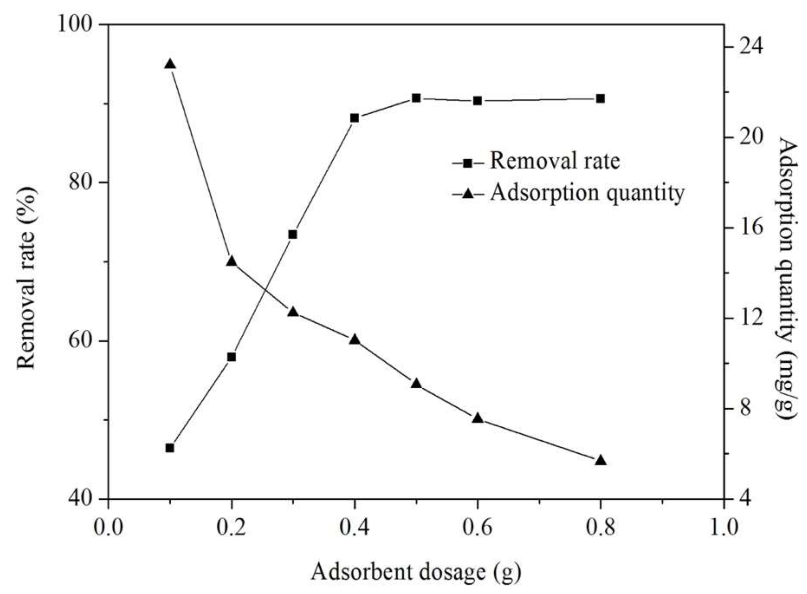
Figure 10.
Adsorption isotherms of phenol adsorption in OTMA+/hectorite.
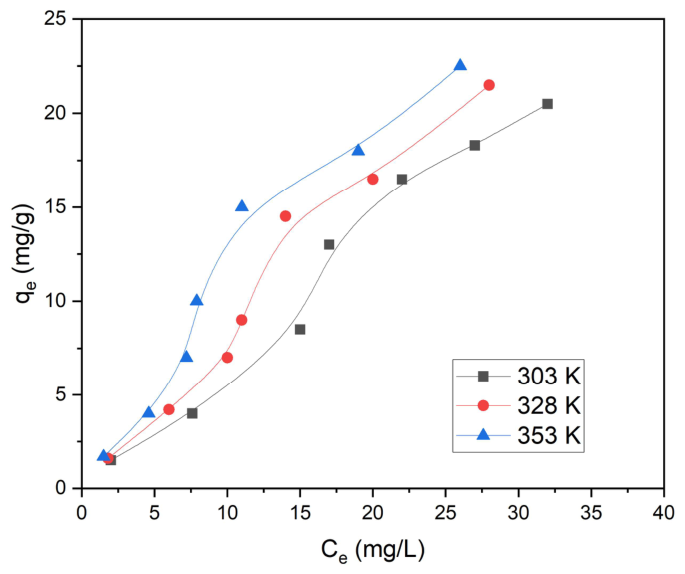
Figure 11.
Different isotherm models for adsorption of phenol in OTMA+/hectorite.
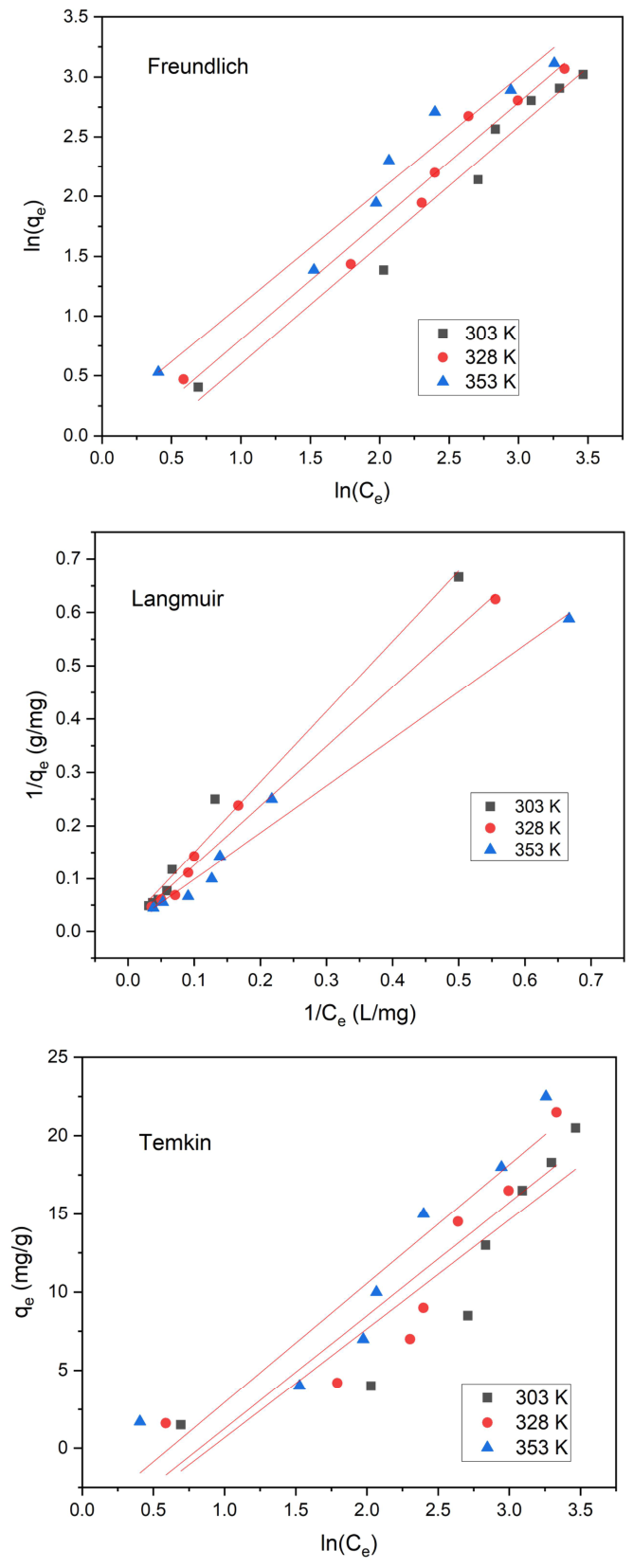
Figure 12.
Effect of temperature and time on phenol adsorption in OTMA+/hectorite.
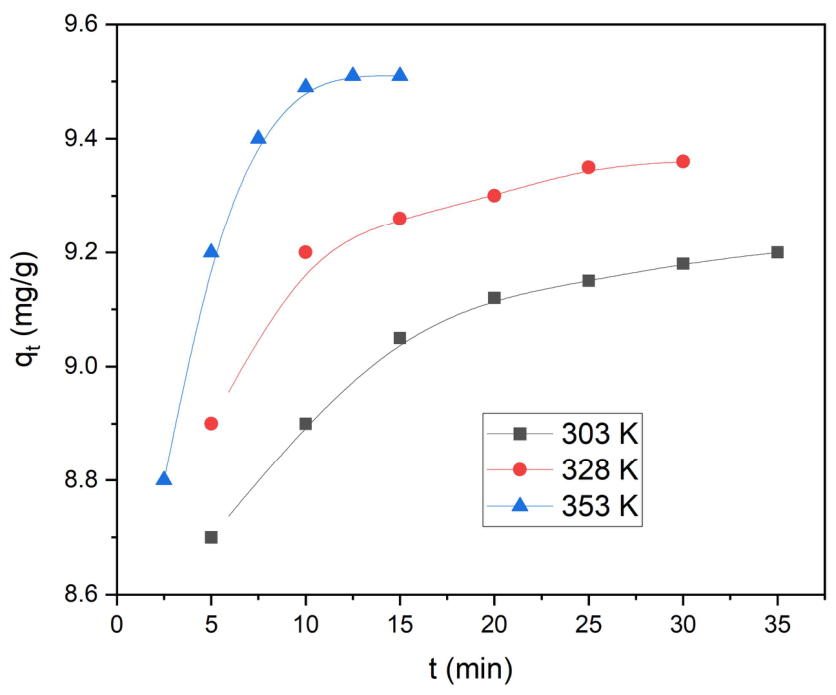
Figure 13.
The nonlinear fitting of pseudo-first-order kinetics and pseudo-second-order kinetics for the adsorption of phenol on OTMA+/hectorite.
Figure 13.
The nonlinear fitting of pseudo-first-order kinetics and pseudo-second-order kinetics for the adsorption of phenol on OTMA+/hectorite.
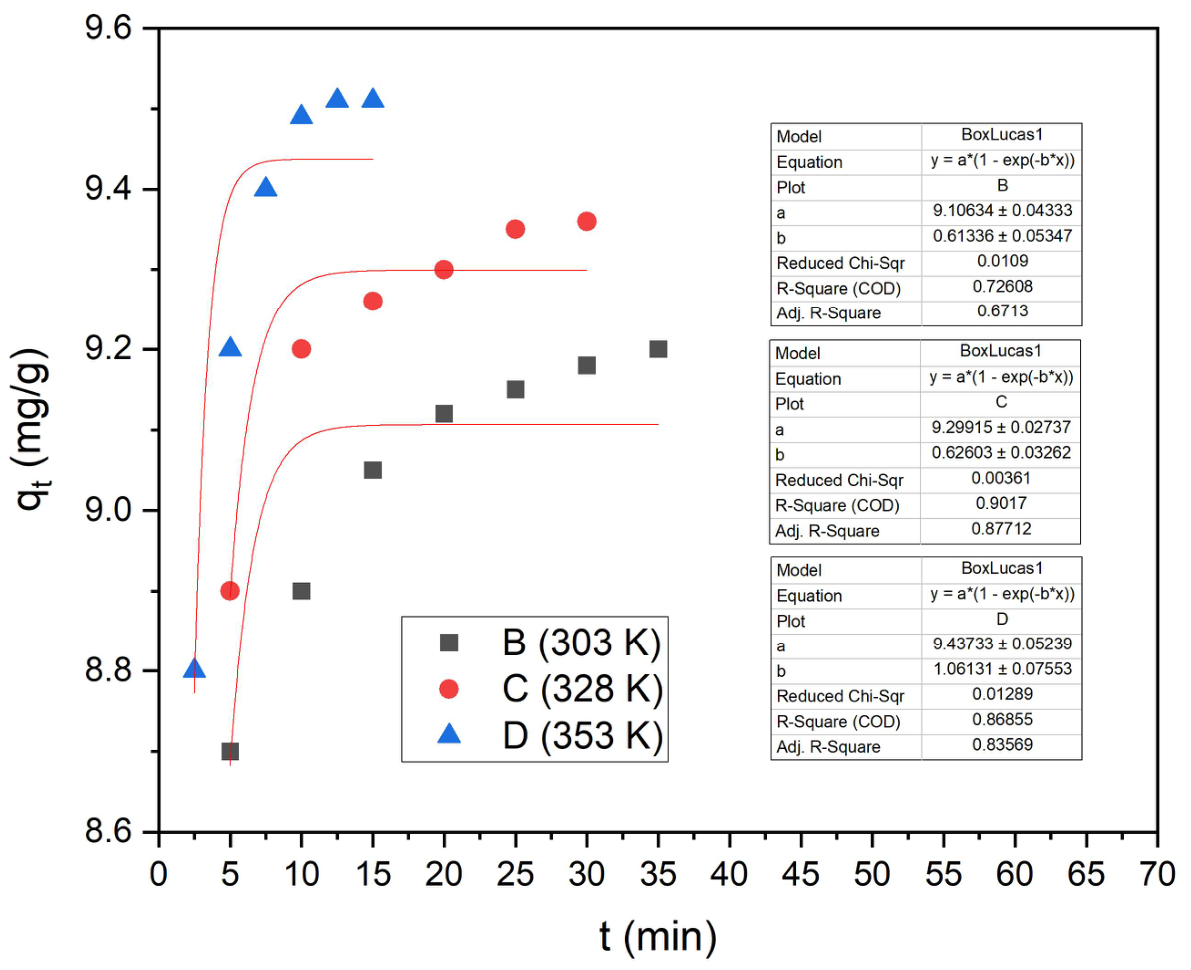
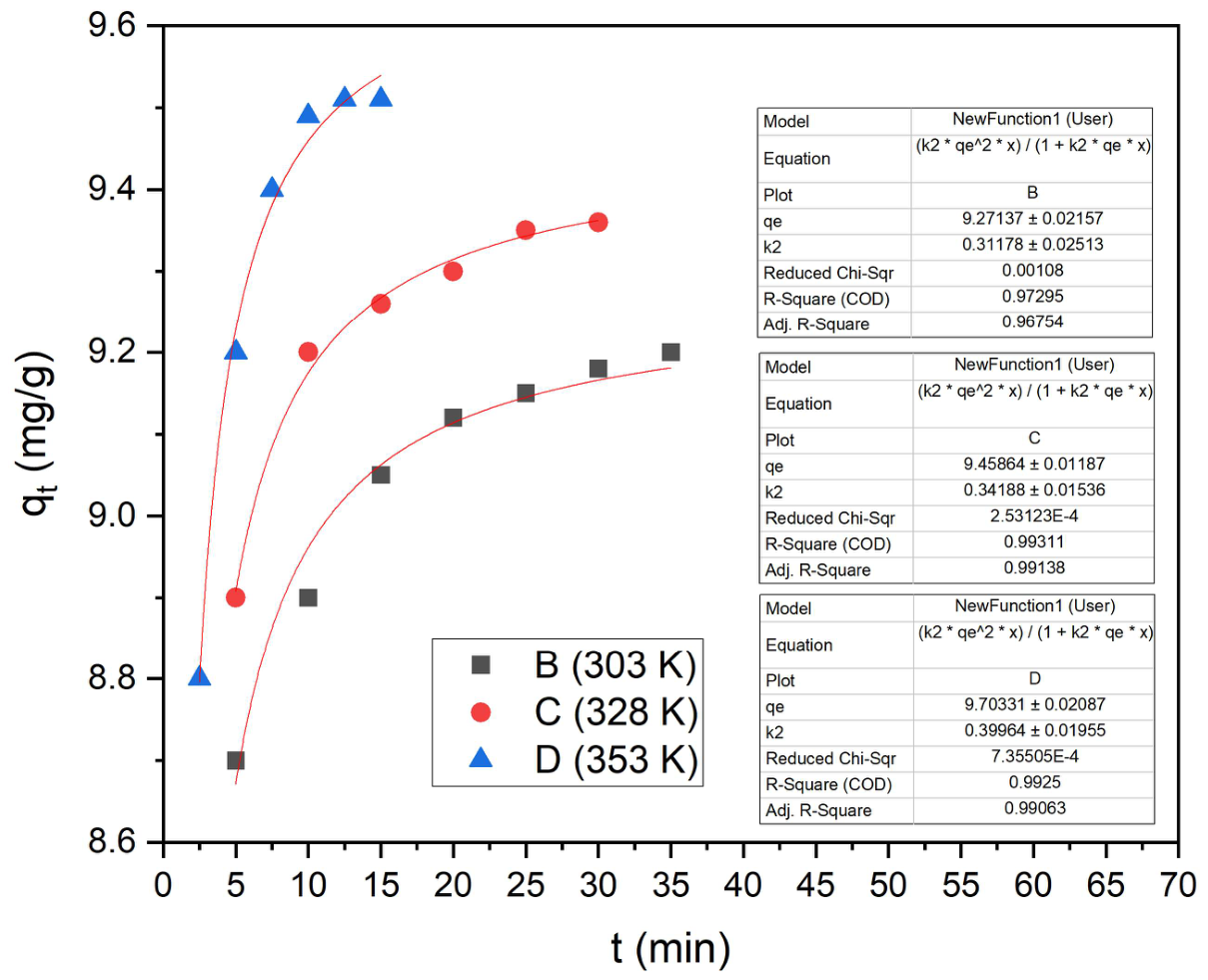
Figure 14.
The curve of lnk2 vs. 1/T.
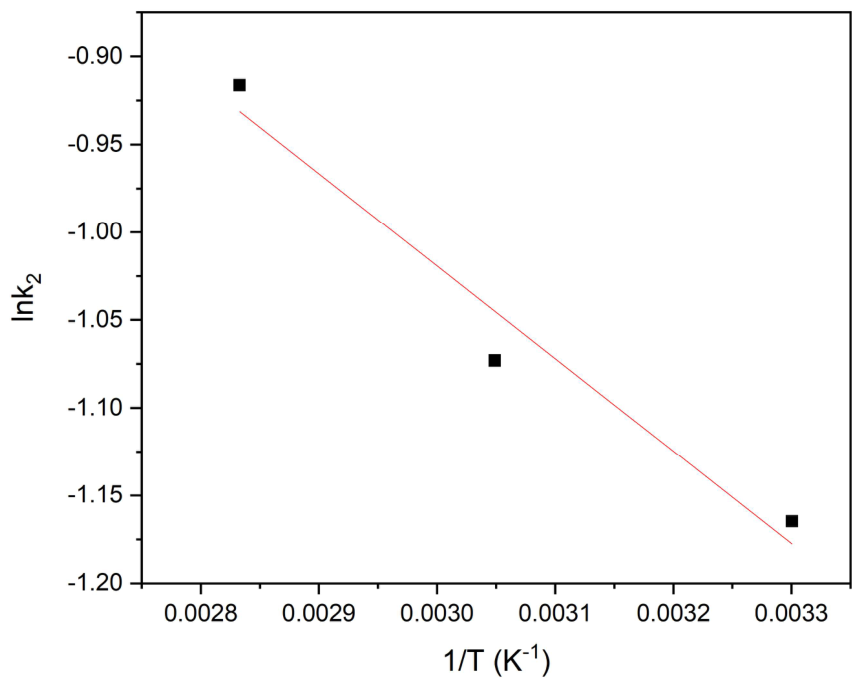
Figure 15.
Diagram of adsorbent regeneration process.
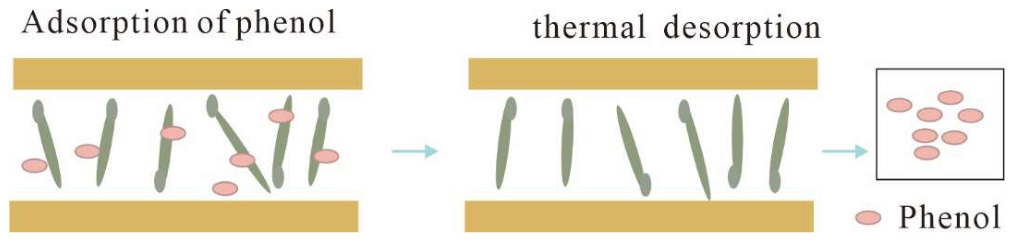

Table 1.
BET surface area, pore diameter values and pore volume.
| Adsorbent | SBET (m2/g) | Pore diameter (nm) | Pore volume (cm3/g) |
| Hectorite | 260.36 | 3.22 | 0.15 |
| OTMA+/hectorite | 395.81 | 4.18 | 0.44 |
Table 2.
Freundlich, Langmuir and Temkin constants for the adsorption of phenol in OTMA+/hectorite.
| Freundlich | Langmuir | Temkin | ||||
| T (K) | KF (L/mg) | n | R2 | KL (L/g) | qm (mg/g) | R2 bT (kJ/mol) AT (L/mg) R2 |
| 303 | 0.645 | 1.007 | 0.976 | 0.0135 | 55.960 | 0.985 0.361 0.406 0.838 |
| 328 | 0.829 | 1.009 | 0. 976 | 0.0126 | 71.225 | 0.990 0.377 0.438 0.830 |
| 353 | 1.152 | 1.049 | 0.963 | 0.0120 | 94.697 | 0.984 0.386 0.542 0.887 |
Table 3.
The kinetic parameter constants for the adsorption of phenol on OTMA+/hectorite.
| T (K) | Pseudo first-order model | Pseudo second-order model | ||||
| qe (mg/g) | k1 (min-1) | R2 | qe (mg/g) | k2 (g/(mg•min)) | R2 | |
| 303 | 9.106 | 0.613 | 0.726 | 9.271 | 0.312 | 0.973 |
| 328 | 9.299 | 0.626 | 0.902 | 9.459 | 0.342 | 0.993 |
| 353 | 9.437 | 1.061 | 0.868 | 9.703 | 0.400 | 0.992 |
Table 4.
The reusability of OTMA+/hectorite to the adsorption of phenol.
| Cycles | 1 | 2 | 3 | 4 | 5 |
| Removal rate (%) | 92.3 | 91.6 | 88.5 | 85.7 | 80.1 |
Disclaimer/Publisher’s Note: The statements, opinions and data contained in all publications are solely those of the individual author(s) and contributor(s) and not of MDPI and/or the editor(s). MDPI and/or the editor(s) disclaim responsibility for any injury to people or property resulting from any ideas, methods, instructions or products referred to in the content. |
© 2026 by the authors. Licensee MDPI, Basel, Switzerland. This article is an open access article distributed under the terms and conditions of the Creative Commons Attribution (CC BY) license (http://creativecommons.org/licenses/by/4.0/).
Copyright: This open access article is published under a Creative Commons CC BY 4.0 license, which permit the free download, distribution, and reuse, provided that the author and preprint are cited in any reuse.