
Submitted:
21 July 2026
Posted:
22 July 2026
You are already at the latest version
Abstract
Background/Objectives: One-stage revision has become an increasingly accepted strategy for the treatment of chronic periprosthetic joint infection (PJI) of the knee in carefully selected patients. The use of a resorbable defensive antibacterial coating (DAC® hydrogel) represents an attractive adjunct to reduce bacterial adhesion and biofilm formation on revision implants. However, evidence regarding its long-term performance remains limited. Methods: We retrospectively reviewed 52 consecutive patients undergoing one-stage revision for knee PJI or infected spacer between 2014 and 2023 using a standardized surgical and antimicrobial protocol including local application of DAC hydrogel loaded with vancomycin alone or vancomycin plus meropenem. Clinical, microbiological and radiographic outcomes were evaluated. Infection-free survival was assessed using Kaplan–Meier analysis. Results: Forty-eight patients underwent revision for PJI and four for septic spacers. Four patients were unavailable for final evaluation. At mean follow-up of 7.0 ± 2.7 years (range 3–11 years), no infection recurrence was obtained in 47 of 48 clinically evaluable patients, corresponding to an infection-free survivorship of 97.9% at final follow-up. Mean Knee Society Score improved from 47.7 to 84.4 points, while functional KSS improved from 41.9 to 82.9 points. Pain at rest decreased from 6.9 to 0.7 and pain during movement from 8.1 to 1.6 on the visual analogue scale. Conclusions: This series represents, to our knowledge, the longest reported follow-up of one-stage knee revision using DAC antibacterial hydrogel. The favorable results obtained using hybrid fixation, with cemented epiphyseal fixation combined with uncemented stems coated with antibiotic-loaded DAC hydrogel, further expand the potential indications for this strategy. Larger comparative multicenter studies are warranted to confirm these findings.
Keywords:
knee
; infection
; peri-prosthetic
; PJI
; one-stage
; revision
; hydrogel
; coating
; antibacterial
; DAC
1. Introduction
Total knee arthroplasty (TKA) is among the most successful procedures in orthopaedic surgery, providing reliable pain relief, restoration of function and substantial improvement in quality of life for patients with end-stage knee disease. Owing to an ageing population, increasing life expectancy and expanding indications, the annual number of primary TKAs continues to rise worldwide. It has been estimated that more than 3.4 million primary TKAs will be performed annually in the United States by 2030, representing an increase of more than six-fold compared with 2005 [1]. Despite these excellent outcomes, periprosthetic joint infection (PJI) remains one of the most devastating complications following arthroplasty, accounting for a large proportion of early revision procedures and imposing a considerable economic burden on healthcare systems [2]. Recent estimates suggest that the annual cost of treating hip and knee PJI in the United States alone will exceed US$1.8 billion [3].
For decades, two-stage exchange arthroplasty has been regarded as the reference treatment for chronic knee PJI, particularly in North America [4]. However, growing evidence accumulated during the last two decades has progressively challenged this paradigm. Several systematic reviews, registry studies and contemporary case series have demonstrated that, in appropriately selected patients, one-stage revision can achieve infection eradication rates comparable to those of two-stage revision while offering important clinical advantages [5,6,7,8]. These include a single surgical procedure, lower perioperative morbidity, shorter hospitalization, earlier rehabilitation, preservation of bone stock, reduced soft-tissue damage, lower healthcare costs and improved patient satisfaction. Consequently, international consensus statements have progressively expanded the indications for one-stage revision. While earlier recommendations considered factors such as culture-negative infection, resistant microorganisms or the presence of a sinus tract as contraindications, the most recent International Consensus Meeting (ICM 2025) recognizes that many of these conditions should instead be considered relative rather than absolute contraindications. Current selection criteria primarily emphasize the possibility of performing radical debridement, obtaining adequate soft-tissue coverage and achieving stable reconstruction in the absence of uncontrolled systemic sepsis [9].
Regardless of the surgical strategy adopted, successful treatment of PJI depends on several fundamental principles: meticulous radical debridement, complete removal of infected tissues and implants, stable reconstruction, targeted systemic antimicrobial therapy and effective local antibiotic delivery. Among these factors, prevention of bacterial adhesion to the newly implanted prosthesis has attracted increasing attention. Experimental studies have demonstrated that bacterial colonization begins within minutes after implantation, initiating biofilm formation that subsequently protects microorganisms from both antibiotics and host immune responses. This concept, often referred to as the “race for the surface”, has stimulated the development of technologies capable of protecting implant surfaces during the critical early postoperative period [10].
DAC® (Defensive Antibacterial Coating) hydrogel is a fully resorbable implant coating composed of covalently linked hyaluronic acid and poly-D,L-lactic acid [11]. The hydrogel acts as a temporary physical barrier that reduces early bacterial adhesion while simultaneously serving as a carrier for locally delivered antibiotics selected according to microbiological findings. Complete resorption occurs within approximately 72 h, allowing osseointegration of cementless components without leaving permanent foreign material on the implant surface [12]. In vitro studies have consistently demonstrated significant inhibition of bacterial adhesion and biofilm formation, including against methicillin-resistant staphylococci [13]. Experimental animal studies further confirmed the ability of DAC hydrogel to reduce bacterial colonization without impairing bone healing or implant integration [14,15].
Clinical evidence has progressively supported these experimental observations. Several clinical series have reported encouraging infection eradication rates following hip and knee PJI revision surgery when DAC hydrogel was used as an adjunct to meticulous surgical debridement and systemic antibiotic therapy [16,17,18,19,20]. Nevertheless, most available reports include relatively limited patient numbers and, importantly, follow-up durations rarely exceeding three to five years. Consequently, robust evidence regarding the durability of infection eradication and long-term implant survival remains scarce.
Long-term follow-up is particularly relevant in PJI surgery because recurrence may occur several years after revision, and short-term success does not necessarily translate into durable cure. Furthermore, data regarding the use of DAC hydrogel in conjunction with modern hybrid fixation techniques, combining cemented epiphyseal fixation with cementless stems, remain limited despite the increasing popularity of this reconstructive strategy.
The purpose of the present study was therefore to evaluate the medium- and long-term clinical, radiographic and microbiological outcomes of a consecutive series of patients undergoing one-stage revision for infected total knee arthroplasty using antibiotic-loaded DAC hydrogel. To our knowledge, this represents the longest reported clinical follow-up of one-stage knee revision employing this biodegradable antibacterial coating, providing valuable information regarding its long-term safety, durability and effectiveness in preventing recurrent infection.
2. Results
A total of 52 patients undergoing one-stage revision for peri-prosthetic knee infection (PJI) or for septic knee spacer with the use of DAC antibacterial coating, treated according to the same protocol between year 2014 and 2023 were included in the study.
2.1. Pre-Operative Data
Mean age at surgery was 73.2 ± 8.9 years (range 45–87), and 32 patients (61.5%) were female. Mean body mass index (BMI) was 29.3 ± 4.4 kg/m2 (range 20.3–40) (cf. Table 1).
Forty-eight patients (92.3%) underwent revision for PJI, while 4 patients (7.7%) were revised for septic spacer in a previously infected knee prosthesis. Twelve patients (23.1%) presented clinical signs of acute infection, while no patient had active draining fistula or soft tissue defect and implant exposure at the time of our revision surgery. According to the McPherson’s systemic host’s classification [21], 12 patients (23.1%) were classified as type A hosts, 19 (36.5%) as type B and 21 (40.4%) type C. The most frequent comorbidities included cardiopathy (48.1%), diabetes mellitus or other endocrinopathies (19.2%), respiratory tract disease (13.5%), smoking (13.5%), hepatitis (11.5%), rheumatological disorders (9.6%), chronic renal insufficiency (9.6%), oncological conditions (9.6%), peripheral vasculopathy (7.7%), dermatological (5.8%) or neurological (3.8%) disorders. Anesthesiologic evaluation at the time of surgery graded 10 patients ASA 2, 29 as ASA 3 and 13 as ASA 4. Average time from first implant was 4.5 ± 4.0 years (range 0.5–17). Twenty-three patients (44.2%) had received one or more surgeries to treat the infection prior to our first observation.
2.2. Intra-Operative Data
Bone loss has been evaluated intra-operatively, after implant removal, at the end of surgical debridement. According to the AORI classification [22], 7 (13.5%) patients were classified as AORI type 1, 11 (21.2%) as type 2A, 16 (30.8%) as type 2B and 22 (42.3%) as AORI type 3. Based on bone defect and on capsulo-ligament competence, 15 patients received a hinged prosthesis, while the remaining 37 were treated with a semi-constrained implant.
Average surgery duration: 142.5 ± 23.6 min (range 95–184). Average blood loss: 460 ± 110 mL (range 300–650).
2.3. Microbiological Data
Microbiological cultures were positive in the majority of cases (cf. Table 2); in 4 patients (7.7%) no pathogen was found and diagnosis was confirmed by histology and other parameters according to MSIS 2018 and WAIOT 2020 scores [23,24].
Methicillin-sensitive Staph. aureus and epidermidis were identified in 7.7% and in 11.5% of the cases, while methicillin-resistant strains accounted for 9.6% and 11.5%, respectively.
Overall, the most commonly isolated organisms were coagulase-negative staphylococci. Less frequent, but still relevant isolates included Streptococci, Propionibacterium acnes, and Enterococci, while mixed flora infections were detected in 8 patients (15.4%).
2.4. Clinical Outcomes
Four patients were lost to follow-up: two dead for causes unrelated to the surgical intervention one and 3 years after surgery, and two more lost at controls at two and three years from surgery, respectively, leaving a total of 48 patients available for the present analysis with an average follow-up of 7.0 ± 2.7 years (range 3–11).
Table 3 summarizes the main clinical outcomes: an average improvement of 36.7 and 41 points was observed in KSS score and KSS functional score, respectively, while pain at rest and at movement dropped from 6.9 and 8.1 prior to surgery to 0.7 and 1.6 at follow-up.
At final follow-up, 47 of the 48 patients available for clinical evaluation did not show any sign of infection recurrence (97.9%). Kaplan–Meier infection-free survivorship was 98.1% (95% CI, 87.1–99.7%) at 11 years. (cf. Figure 1). The only patient who experienced recurrent infection one year after surgery, due to a relapse of her recurrent leg erysipelas and a concomitant strongyloidiasis, underwent above-knee amputation in another hospital.
Laboratory tests showed on average pre-operative CRP values of 20.9 ± 35.5 mg/L (range 6–199.4) and post-operative values of 5.1 ± 4.2 mg/L (range 2–11).
Radiographic examination did reveal non progressive lucent lines of <2 mm in 18 patients, while two patients showed radiolucent lines > 2 mm in the tibial component and one patient in both the femoral and tibial component, in the absence of clinical signs of loosening.
Concerning complications, two patients required early stiffness treatment by manipulation under anesthesia and one more patient suffered deep venous thromboembolism. One patient was treated with internal osteosynthesis in another hospital for peri-prosthetic femoral fracture 6 years after revision. No other patient required additional surgery for infection recurrence or for aseptic loosening.
3. Discussion
The main finding of the present study is that one-stage revision combined with DAC antibacterial hydrogel provided excellent long-term infection control and functional outcomes after revision total knee arthroplasty.
At a mean follow-up of seven years, with observations extending to eleven years, infection-free survivorship reached 97.9%, while patients experienced marked improvements in Knee Society Scores, pain relief and maintenance of stable implant fixation. To our knowledge, this represents the longest follow-up currently reported for one-stage knee revision employing DAC hydrogel technology.
Long-term evidence is particularly important in the treatment of periprosthetic joint infection because successful short-term eradication does not necessarily translate into durable infection control. The sustained survivorship observed in our series suggests that the local antibacterial protection afforded by DAC hydrogel during the early postoperative period may contribute to preventing bacterial recolonization of newly implanted components while allowing long-term biological fixation to proceed normally. Importantly, no increase in implant-related complications, delayed osseointegration or mechanical failures attributable to the hydrogel was observed, supporting the long-term safety profile of this biodegradable coating.
Why might DAC hydrogel improve infection control? Although the present study was not designed to isolate the specific contribution of DAC hydrogel from the other components of the one-stage revision protocol, the biological rationale supporting its use is well established. Successful treatment of periprosthetic joint infection depends not only on eradication of established microorganisms through surgical debridement and systemic antimicrobial therapy, but also on prevention of bacterial recolonization of the newly implanted prosthesis during the immediate postoperative period. Experimental studies have demonstrated that bacterial adhesion to implant surfaces occurs within minutes after implantation, initiating the formation of a mature biofilm that subsequently protects microorganisms from host immune defenses and markedly reduces antibiotic susceptibility. This competition between bacterial colonization and host cell integration, commonly referred to as the “race for the surface”, represents one of the critical determinants of implant-related infection [25,26].
DAC® hydrogel was specifically developed to interfere with this early phase of bacterial adhesion. The biodegradable hyaluronan/poly-D,L-lactide matrix forms a temporary hydrophilic barrier on the implant surface while simultaneously functioning as a carrier for high local concentrations of antibiotics selected according to the microbiological profile. In contrast to permanent antibacterial coatings, DAC hydrogel is completely resorbed within approximately 72 h, after the period of greatest risk for bacterial adhesion has passed, thereby avoiding interference with subsequent osseointegration of cementless implants. Experimental investigations have consistently demonstrated reduced bacterial adhesion and inhibition of biofilm formation against both methicillin-sensitive and methicillin-resistant staphylococci, while in vivo studies have confirmed preservation of normal bone healing and implant integration [20].
The excellent long-term results observed in the present series are consistent with this biological mechanism. Although the hydrogel itself is present only during the first postoperative days, successful prevention of initial bacterial adhesion may have lasting clinical consequences because mature biofilm formation is effectively prevented before it becomes established. This concept may explain why a temporary biodegradable coating can produce durable protection extending many years beyond complete hydrogel resorption. The absence of aseptic loosening or evidence of impaired biological fixation in our cohort further supports the long-term safety of this technology and suggests that transient local antibacterial protection can be achieved without compromising implant integration.
An additional strength of the present series is the consistent use of hybrid fixation, a solution that provides ease of insertion, possibly improved component alignment, and easier removal if required, compared with fully cemented prostheses [27,28]. In all patients, fixation was achieved with antibiotic-loaded cement limited to the epiphyseal component, whereas the metaphyseal and diaphyseal stems remained uncemented and were coated with antibiotic-loaded DAC hydrogel. This strategy combines the mechanical advantages of biological stem fixation with immediate local antibacterial protection of the uncemented implant surfaces, an aspect that has received little attention in previous reports. The excellent survivorship observed in this cohort suggests that DAC hydrogel may facilitate broader application of hybrid fixation during one-stage septic revision without compromising infection eradication.
The microbiological spectrum reflected the contemporary epidemiology of knee PJI, with coagulase-negative staphylococci predominating and a substantial proportion of methicillin-resistant organisms [29]. Moreover, we did not observe a different outcome in patients with negative cultural examination, a result that is in line with the recent report from Sabater-Martos and co-workers [30]. Despite this challenging microbiological profile, infection control remained excellent. Likewise, almost half of the cohort had undergone previous surgical procedures before referral, and over 40% presented severe bone defects (AORI type 3), highlighting that favorable outcomes were obtained in a complex revision population rather than in highly selected low-risk cases.
The remarkably low loss to follow-up further strengthens the validity of the present findings. Only four patients were unavailable for final analysis, two because of unrelated deaths and two because of loss to follow-up, minimizing attrition bias in a study extending over more than a decade.
3.1. Comparison with Published One-Stage Revision Series
The infection-free survivorship observed in the present study compares favorably with the largest published series of one-stage revision for chronic knee PJI. Historically, one-stage revision has achieved infection eradication rates ranging from approximately 80% to 97%, depending on patient selection, microbiological profile, surgical technique and duration of follow-up [5,6,31,32].
Early European experiences by Freeman [33], Buechel [34] and later by Jenny and colleagues [35] demonstrated that meticulous debridement combined with immediate reimplantation could achieve durable infection control in carefully selected patients. More contemporary series from high-volume revision centers have reported infection eradication rates generally between 85% and 93%, even in complex revision settings. For example, Gehrke and colleagues [36] reported infection control exceeding 90% following standardized one-stage exchange protocols, while Haddad et al. similarly demonstrated that one-stage revision can provide excellent infection eradication together with improved functional recovery compared with staged reconstruction in selected patients [37].
The present study demonstrated an infection-free survival of 97.9%, despite including a challenging cohort characterized by advanced bone loss, multiple previous procedures and a substantial proportion of compromised hosts according to the McPherson classification. Importantly, almost half of the patients had undergone previous surgical treatment for infection before referral, suggesting that our cohort cannot be considered a low-risk population. These findings therefore compare favorably with previously published series and reinforce the concept that excellent outcomes can be achieved when meticulous surgical debridement is combined with optimized local and systemic antimicrobial strategies.
Unlike many previous reports in which fully cemented revision constructs were routinely employed, all patients in the present series underwent hybrid fixation with cemented epiphyseal fixation and cementless stems. This reconstructive strategy has become increasingly popular because it facilitates restoration of alignment and biological fixation while reducing the amount of cement required. However, concerns have occasionally been raised regarding the absence of local antibiotic release around cementless implant surfaces. The routine application of antibiotic-loaded DAC hydrogel to the uncemented stems may represent an effective solution to this potential limitation, providing temporary local antibacterial protection during the critical period before osseointegration. The excellent long-term implant stability observed in our cohort suggests that this approach does not adversely affect biological fixation while maintaining excellent infection control.
3.2. Comparison with Systematic Reviews and Meta-Analysis
The present findings are also consistent with the conclusions of the most recent systematic reviews and meta-analyses evaluating one-stage revision for knee PJI.
Kunutsor et al., [7] in one of the largest meta-analyses comparing one-stage and two-stage revision, concluded that reinfection rates are broadly comparable between the two procedures when patients are appropriately selected. Similarly, the recent meta-analysis by Patel et al. reported no significant difference in infection eradication between one-stage and two-stage revision while confirming several advantages of the one-stage approach, including lower morbidity, fewer surgical procedures, shorter hospitalization and improved functional recovery.
Nagra et al., [38] reviewing exclusively one-stage revision for infected total knee arthroplasty, reported pooled infection eradication rates of approximately 87–89%, although considerable heterogeneity existed among the included studies regarding patient selection, microbiological characteristics and surgical protocols.
Our infection-free survival of 97.9% therefore lies at the upper end of the outcomes reported in these pooled analyses. Although direct comparisons should be interpreted cautiously because of differences in inclusion criteria and follow-up duration, our findings support the growing body of evidence indicating that one-stage revision should no longer be considered an alternative reserved for highly selected patients, but rather a valid standard treatment in experienced multidisciplinary centers.
Perhaps even more importantly, the present study extends the available evidence beyond the follow-up duration reported in most previous investigations. The majority of studies included in current meta-analyses report follow-up periods between two and five years, whereas recurrent infection may occur considerably later. The durability of infection eradication observed after up to eleven years in the present series therefore represents an important contribution to the existing literature and provides additional reassurance regarding the long-term effectiveness of this treatment strategy.
3.3. The Potential Contribution of DAC Antibacterial Hydrogel
Although the retrospective design of the present study does not allow the independent effect of DAC hydrogel to be isolated, several observations deserve consideration.
The antibacterial hydrogel provides temporary local protection during the early postoperative period, when bacterial adhesion and biofilm formation are most likely to occur. Unlike permanent antimicrobial coatings, DAC hydrogel is completely resorbed within approximately 72 h and therefore does not interfere with long-term osseointegration of cementless implants. Previous experimental investigations demonstrated significant inhibition of bacterial adhesion without evidence of cytotoxicity or impairment of bone healing. Furthermore, multicentre clinical studies evaluating the hydrogel in trauma and revision arthroplasty have consistently demonstrated reduced surgical-site infection rates and an excellent safety profile.
The present study substantially expands these previous observations [39] by demonstrating that the favorable early results are maintained over long-term follow-up. In particular, the absence of increased aseptic loosening or mechanical complications supports the long-term biological safety of the hydrogel, while the excellent infection-free survival suggests that temporary surface protection during the critical early postoperative phase may have durable clinical consequences extending many years beyond complete hydrogel resorption.
3.4. Study Limitations
Several limitations should nevertheless be acknowledged. First, this is a retrospective single-centre study including a relatively limited number of patients. Although the cohort is one of the largest homogeneous experiences with DAC hydrogel in one-stage knee revision and follow-up completeness was excellent, larger multicentre investigations would improve external validity. Second, the absence of a contemporary control group prevents direct assessment of the incremental benefit provided by DAC hydrogel. Nevertheless, the observed infection-free survivorship lies at the upper end of the success rates generally reported for one-stage revision in systematic reviews and contemporary series. Finally, because all procedures followed a standardized multidisciplinary protocol combining meticulous debridement, targeted systemic antibiotics and local antibacterial coating, the specific contribution of each individual component cannot be isolated.
Overall, these findings support one-stage revision combined with antibiotic-loaded DAC hydrogel as a safe and durable strategy for treating chronic knee PJI. Future prospective multicenter comparative studies should determine whether the addition of DAC hydrogel provides a measurable advantage over conventional one-stage revision and identify those patient subgroups that may derive the greatest benefit from this technology.
4. Materials and Methods
This retrospective observational study included consecutive patients who underwent one-stage revision total knee arthroplasty for chronic periprosthetic joint infection (PJI) or infected knee spacer at our institution between February 2014 and September 2023. All procedures were performed using a standardized diagnostic, surgical and postoperative protocol.
All patients provided written informed consent for surgery and for the anonymous use of clinical data for research purposes. The study is reported according to the STROBE statement.
4.1. Patient Selection
Patients were eligible if they fulfilled the diagnostic criteria for PJI according to the Musculoskeletal Infection Society (MSIS) 2018 definition [23] and the World Association against Infection in Orthopaedics and Trauma (WAIOT) [24,40] criteria and underwent one-stage revision using DAC® antibacterial hydrogel.
Patients undergoing revision for aseptic failure or incomplete follow-up of less than three years (unless recurrent infection occurred earlier) were excluded.
Overall, 52 consecutive patients were included.
4.2. Pre-Operative Evaluation
All patients underwent a standardized diagnostic work-up including:
- detailed medical history and clinical examination;
- plain radiographs;
- laboratory investigations including CRP, ESR and complete blood count;
- joint aspiration whenever feasible;
- microbiological cultures;
- assessment according to the MSIS 2018 and WAIOT diagnostic criteria.
General patient condition was classified according to:
4.3. Surgical Technique
All procedures were performed through the previous surgical incision whenever possible.
Following removal of all prosthetic components and cement, extensive radical debridement was performed, including complete excision of infected synovium, scar tissue, necrotic soft tissues and devitalized bone. Multiple tissue specimens (minimum five) were collected from different anatomical sites for microbiological and histological examination before administration of definitive antibiotics.
Bone defects were reconstructed according to the AORI classification using a combination of modular augments, metaphyseal cones, antibiotic-loaded bone cement and long stems whenever required. Structural allografts were not used.
Depending on ligament competence and residual bone stock, patients received either:
- a rotating-hinge revision prosthesis (LINK Endo-Model®, Waldemar Link, Hamburg, Germany), or
- a semi-constrained TC3 prosthesis (DePuy Synthes®, Warsaw, IN, USA).
Hybrid fixation was adopted in all cases. Epiphyseal fixation was achieved using commercially available antibiotic-loaded polymethylmethacrylate cement containing gentamicin combined with vancomycin (COPAL® G+C/V or VancoGenX®, according to availability), whereas metaphyseal and diaphyseal stems were implanted without cement.
Bone defects were managed using antibiotic-loaded cement, augments, metaphyseal cones and long stems according to defect severity. No allografts were used in any case.
Tourniquet was only applied during cementation. No drains were used.
4.4. DAC Antibacterial Hydrogel
Immediately before implantation, all prosthetic components were coated with a sterile biodegradable hydrogel (DAC®, Novagenit S.r.l., Mezzolombardo, Italy).
DAC hydrogel was loaded with vancomycin 5% or vancomycin 5% + meropenem 5% in the first ten patients, on the basis of the pathogen isolates. In the remaining 42 patients and in all cases with negative cultural examination the combination vancomycin 5% + meropenem 5% was used. In all the patients a total of 10 to 15 mL of DAC hydrogel was applied both to the uncemented intra-medullary parts of the implant and to the polyethylene insert and to the extra-medullary surface (cf. Figure 2).
4.5. Post-Operative Management
Systemic antibiotic treatment was administered for 31.8 ± 6.3 days on average (range 24–48). All patients received dual antibiotic treatment, based on antibiogram results. During hospital stay and until antibiogram results, a combination of glycopeptide and tazobactam-piperacillin or meropenem were usually administered. At discharge and whenever possible, antibiotic treatment was shifted to oral administration.
Beside antibiotic treatment, all patients received thromboprophylaxis for 5 weeks with low-dose heparin.
Postoperative rehabilitation was initiated on the first postoperative day with immediate mobilization and progressive weight bearing according to implant stability and soft-tissue conditions.
4.6. Follow-Up Examination
Patients were reviewed every 3–6 months during the first postoperative year and annually thereafter.
Clinical assessment included:
- Knee Society Score (KSS) [42];
- Knee Society Functional Score;
- Visual Analogue Scale (VAS) for pain at rest and during movement
Laboratory follow-up included serum CRP.
Standardized anteroposterior and lateral radiographs were obtained at each follow-up visit. Radiographic evaluation assessed component position, radiolucent lines and evidence of aseptic loosening.
The primary endpoint was infection eradication, defined as the absence of clinical, laboratory and radiographic evidence of recurrent infection and no need for additional surgery for infection recurrence.
Secondary endpoints included:
- implant survivorship;
- functional outcome;
- radiographic stability;
- postoperative complications;
- need for further revision surgery
4.7. Statistical Analysis
Continuous variables are reported as mean ± standard deviation (SD) with ranges, whereas categorical variables are expressed as frequencies and percentages.
Changes in clinical outcome scores between preoperative assessment and final follow-up were analyzed using paired Student’s t-tests after confirmation of normal distribution. Statistical significance was set at p < 0.05.
Infection-free implant survivorship was estimated using the Kaplan–Meier method, with recurrent infection considered the endpoint and patients without recurrence censored at their latest follow-up.
Statistical analyses were performed using SPSS version 27 (IBM Corp., Armonk, NY, USA).
Author Contributions
Conceptualization, N.L., D.R., V.S., A.P. and C.R.; methodology, N.L., D.R., V.S. and C.R.; formal analysis, N.L. and D.R.; investigation, N.L., D.R. and V.S.; writing—original draft preparation, N.L. and C.R.; writing—review and editing, C.R., V.P. and A.P. All authors have read and agreed to the published version of the manuscript.
Funding
This work was funded by the Italian Ministry of Health (Ricerca Corrente). The funding body had no role in the design of the study, in the collection, analysis and interpretation of data and in writing the manuscript. The APC was funded by Italian Ministry of Health—“Ricerca Corrente”.
Acknowledgments
None.
Conflicts of Interest
CR is co-inventor and receives royalties from AdlerOrtho SpA, the company producing the DAC antibacterial hydrogel coating. The remaining authors declare that they have no competing interests.
References
- Stubnya, B.G.; Schulz, M.; Váncsa, S.; Szilágyi, G.S.; Szatmári, A.; Bejek, Z. Global Trends in Joint Arthroplasty: A Systematic Review and Future Projections. J. Clin. Med. 2025, 14, 8214. [Google Scholar] [CrossRef] [PubMed]
- Alt, V.; Szymski, D.; Rupp, M.; Fontalis, A.; Vaznaisiene, D.; Marais, L.C.; Wagner, C.; Walter, N.; on behalf the Country Delegates of the European Bone and Joint Infection Society; Alt, V.; et al. The health-economic burden of hip and knee periprosthetic joint infections in Europe: A comprehensive analysis following primary arthroplasty. Bone Jt. Open 2025, 6, 298–311. [Google Scholar] [CrossRef] [PubMed]
- Premkumar, A.; Kolin, D.A.; Farley, K.X.; Wilson, J.M.; McLawhorn, A.S.; Cross, M.B.; Sculco, P.K. Projected Economic Burden of Periprosthetic Joint Infection of the Hip and Knee in the United States. J. Arthroplast. 2021, 36, 1484–1489.e3. [Google Scholar] [CrossRef]
- Haleem, A.A.; Berry, D.J.; Hanssen, A.D. Mid-term to long-term followup of two-stage reimplantation for infected total knee arthroplasty. Clin. Orthop. Relat. Res. 2004, 35–39. [Google Scholar] [CrossRef]
- Fehring, T.K.; Otero, J.E.; Fehring, K.A.; Curtin, B.M.; Springer, B.D.; Della Valle, C.J.; Parvizi, J.; Hietpas, K.; Ready, A.; Odum, S.M. PJI Study Group. One-Stage Versus Two-Stage Exchange Arthroplasty for Periprosthetic Joint Infection: A Prospective Randomized Trial. J. Bone Jt. Surg. Am. 2026, 108, 1070–1082. [Google Scholar] [CrossRef] [PubMed]
- Ghosh, A.; Madanipour, S.; Stammers, J.; Mitchell, P.; Alazzawi, S. Long-term outcomes of single-stage versus two-stage revision for prosthetic joint infection: A retrospective, observational cohort study. Orthop. Rev. 2025, 17, 147165. [Google Scholar] [CrossRef] [PubMed]
- Kunutsor, S.K.; Whitehouse, M.R.; Lenguerrand, E.; Blom, A.W.; Beswick, A.D.; INFORM Team. Re-Infection Outcomes Following One- And Two-Stage Surgical Revision of Infected Knee Prosthesis: A Systematic Review and Meta-Analysis. PLoS ONE 2016, 11, e0151537. [Google Scholar] [CrossRef] [PubMed]
- Xie, C.; Pan, W.; Wang, S.; Yan, X.; Luo, H. Systematic review and meta-analysis of single-stage versus two-stage revision for periprosthetic joint infection after knee arthroplasty: A call for a randomised trial. EFORT Open Rev. 2024, 9, 479–487. [Google Scholar] [CrossRef] [PubMed]
- Ferrini, A.; He, M.; Bernaus, M.; Veloso, M.; Mont, M.A.; Parvizi, J. International Consensus Meeting on Orthopaedic Infection: Differences Between ICM 2018 and ICM 2025. J. Arthroplast. 2026, 41, 304–307. [Google Scholar] [CrossRef] [PubMed]
- Busscher, H.J.; van der Mei, H.C.; Subbiahdoss, G.; Jutte, P.C.; van den Dungen, J.J.; Zaat, S.A.; Schultz, M.J.; Grainger, D.W. Biomaterial-associated infection: Locating the finish line in the race for the surface. Sci. Transl. Med. 2012, 4, 153rv10. [Google Scholar] [CrossRef] [PubMed]
- Pressato, D.; Battista, A.; Govoni, M.; Vivarelli, L.; Dallari, D.; Pellegrini, A. The Intraoperative Use of Defensive Antibacterial Coating (DAC®) in the Form of a Gel to Prevent Peri-Implant Infections in Orthopaedic Surgery: A Clinical Narrative Review. Materials 2023, 16, 5304. [Google Scholar] [CrossRef] [PubMed]
- Guzzo, T.; Barile, F.; Marras, C.; Bellini, D.; Mandaliti, W.; Nepravishta, R.; Paci, M.; Topai, A. Stability Evaluation and Degradation Studies of DAC® Hyaluronic-Polylactide Based Hydrogel by DOSY NMR Spectroscopy. Biomolecules 2020, 10, 1478. [Google Scholar] [CrossRef] [PubMed]
- Drago, L.; Boot, W.; Dimas, K.; Malizos, K.; Hänsch, G.M.; Stuyck, J.; Gawlitta, D.; Romanò, C.L. Does implant coating with antibacterial-loaded hydrogel reduce bacterial colonization and biofilm formation in vitro? Clin. Orthop. Relat. Res. 2014, 472, 3311–3323. [Google Scholar] [CrossRef] [PubMed]
- Giavaresi, G.; Meani, E.; Sartori, M.; Ferrari, A.; Bellini, D.; Sacchetta, A.C.; Meraner, J.; Sambri, A.; Vocale, C.; Sambri, V.; et al. Efficacy of antibacterial-loaded coating in an in vivo model of acutely highly contaminated implant. Int. Orthop. 2014, 38, 1505–1512. [Google Scholar] [CrossRef] [PubMed]
- Boot, W.; Gawlitta, D.; Nikkels, P.G.J.; Pouran, B.; van Rijen, M.H.P.; Dhert, W.J.A.; Vogely, H.C. Hyaluronic Acid-Based Hydrogel Coating Does Not Affect Bone Apposition at the Implant Surface in a Rabbit Model. Clin. Orthop. Relat. Res. 2017, 475, 1911–1919. [Google Scholar] [CrossRef] [PubMed]
- Romanò, C.L.; Malizos, K.; Capuano, N.; Mezzoprete, R.; D’Arienzo, M.; Van Der Straeten, C.; Scarponi, S.; Drago, L. Does an Antibiotic-Loaded Hydrogel Coating Reduce Early Post-Surgical Infection After Joint Arthroplasty? J. Bone Jt. Infect. 2016, 1, 34–41. [Google Scholar] [CrossRef] [PubMed]
- Zoccali, C.; Scoccianti, G.; Biagini, R.; Daolio, P.A.; Giardina, F.L.; Campanacci, D.A. Antibacterial hydrogel coating in joint mega-prosthesis: Results of a comparative series. Eur. J. Orthop. Surg. Traumatol. 2021, 31, 1647–1655. [Google Scholar] [CrossRef] [PubMed]
- Capuano, N.; Logoluso, N.; Gallazzi, E.; Drago, L.; Romanò, C.L. One-stage exchange with antibacterial hydrogel coated implants provides similar results to two-stage revision, without the coating, for the treatment of peri-prosthetic infection. Knee Surg. Sports Traumatol. Arthrosc. 2018, 26, 3362–3367. [Google Scholar] [CrossRef] [PubMed]
- Franceschini, M.; Sandiford, N.A.; Cerbone, V.; Araujo, L.C.T.; Kendoff, D. Defensive antibacterial coating in revision total hip arthroplasty: New concept and early experience. Hip Int. 2020, 30, 7–11. [Google Scholar] [CrossRef] [PubMed]
- Roberts, R.H.R.; Gamble, C.; Malek, I. Defensive antibacterial coating in orthopaedic surgery: Current evidence and future direction. World J. Orthop. 2025, 16, 107575. [Google Scholar] [CrossRef] [PubMed]
- Coughlan, A.; Taylor, F. Classifications in Brief: The McPherson Classification of Periprosthetic Infection. Clin. Orthop. Relat. Res. 2020, 478, 903–908. [Google Scholar] [CrossRef] [PubMed]
- Engh, G.A.; Ammeen, D.J. Classification and preoperative radiographic evaluation: Knee. Orthop. Clin. N. Am. 1998, 29, 205–217. [Google Scholar] [CrossRef] [PubMed]
- Shohat, N.; Bauer, T.; Buttaro, M.; Budhiparama, N.; Cashman, J.; Della Valle, C.J.; Drago, L.; Gehrke, T.; Marcelino Gomes, L.S.; Goswami, K.; et al. Hip and Knee Section, What is the Definition of a Periprosthetic Joint Infection (PJI) of the Knee and the Hip? Can the Same Criteria be Used for Both Joints?: Proceedings of International Consensus on Orthopedic Infections. J. Arthroplast. 2019, 34, S325–S327. [Google Scholar] [CrossRef] [PubMed]
- Bozhkova, S.; Suardi, V.; Sharma, H.K.; Tsuchiya, H.; Del Sel, H.; Hafez, M.A.; Benzakour, T.; Drago, L.; Romanò, C.L. The W.A.I.O.T. Definition of Peri-Prosthetic Joint Infection: A Multi-center, Retrospective Validation Study. J. Clin. Med. 2020, 9, 1965. [Google Scholar] [CrossRef] [PubMed]
- Gristina, A.G.; Naylor, P.; Myrvik, Q. Infections from biomaterials and implants: A race for the surface. Med. Prog. Technol. 1989, 14, 205–224. [Google Scholar] [PubMed]
- Subbiahdoss, G.; Kuijer, R.; Grijpma, D.W.; van der Mei, H.C.; Busscher, H.J. Microbial biofilm growth vs. tissue integration: “the race for the surface” experimentally studied. Acta Biomater. 2009, 5, 1399–1404. [Google Scholar] [CrossRef] [PubMed]
- Bottner, F.; Laskin, R.; Windsor, R.E.; Haas, S.B. Hybrid component fixation in revision total knee arthroplasty. Clin. Orthop. Relat. Res. 2006, 446, 127–131. [Google Scholar] [CrossRef] [PubMed]
- Sah, A.P.; Shukla, S.; Della Valle, C.J.; Rosenberg, A.G.; Paprosky, W.G. Modified hybrid stem fixation in revision TKA is durable at 2 to 10 years. Clin. Orthop. Relat. Res. 2011, 469, 839–846. [Google Scholar] [CrossRef] [PubMed]
- Tai, D.B.G.; Patel, R.; Abdel, M.P.; Berbari, E.F.; Tande, A.J. Microbiology of hip and knee periprosthetic joint infections: A database study. Clin. Microbiol. Infect. 2022, 28, 255–259. [Google Scholar] [CrossRef] [PubMed]
- Sabater-Martos, M.; Morata, L.; Segur, J.M.; Soriano, A.; Martínez-Pastor, J.C. One-stage knee replacement shows similar healing rates in patients with negative or positive preoperative cultures: A retrospective cohort study. J. Bone Jt. Infect. 2025, 10, 237–241. [Google Scholar] [CrossRef] [PubMed]
- DeBoer, A.M.; Van Roekel, N.L.; Parkulo, T.D.; Moua, G.Y.; Vang, S.; Marston, S.B. Comparison of Single- versus Two-Stage Revision Knee Arthroplasty for the Treatment of Periprosthetic Knee Joint Infections. J. Arthroplast. 2025, 40, S514–S519. [Google Scholar] [CrossRef] [PubMed]
- Bosco, F.; Cacciola, G.; Giustra, F.; Risitano, S.; Capella, M.; Vezza, D.; Barberis, L.; Cavaliere, P.; Massè, A.; Sabatini, L. Characterizing recurrent infections after one-stage revision for periprosthetic joint infection of the knee: A systematic review of the literature. Eur. J. Orthop. Surg. Traumatol. 2023, 33, 2703–2715. [Google Scholar] [CrossRef] [PubMed]
- Freeman, M.A.; Sudlow, R.A.; Casewell, M.W.; Radcliff, S.S. The management of infected total knee replacements. J. Bone Jt. Surg. Br. 1985, 67, 764–768. [Google Scholar] [CrossRef] [PubMed]
- Buechel, F.F.; Femino, F.P.; D’Alessio, J. Primary exchange revision arthroplasty for infected total knee replacement: A long-term study. Am. J. Orthop. 2004, 33, 190–198, Discussion 198. [Google Scholar] [PubMed]
- Jenny, J.Y.; Barbe, B.; Cazenave, A.; Roche, O.; Massin, P.; French Society for Hip and Knee Surgery (SFHG). Patient selection does not improve the success rate of infected TKA one stage exchange. Knee 2016, 23, 1012–1015. [Google Scholar] [CrossRef] [PubMed]
- Zahar, A.; Kendoff, D.O.; Klatte, T.O.; Gehrke, T.A. Can Good Infection Control Be Obtained in One-stage Exchange of the Infected TKA to a Rotating Hinge Design? 10-year Results. Clin. Orthop. Relat. Res. 2016, 474, 81–87. [Google Scholar] [CrossRef] [PubMed]
- George, D.A.; Haddad, F.S. One-Stage Exchange Arthroplasty: A Surgical Technique Update. J. Arthroplast. 2017, 32, S59–S62. [Google Scholar] [CrossRef] [PubMed]
- Nagra, N.S.; Hamilton, T.W.; Ganatra, S.; Murray, D.W.; Pandit, H. One-stage versus two-stage exchange arthroplasty for infected total knee arthroplasty: A systematic review. Knee Surg. Sports Traumatol. Arthrosc. 2016, 24, 3106–3114. [Google Scholar] [CrossRef] [PubMed]
- Olowookere, A.K.; Babatunde, B.F.; Oyekanmi, E.O.; Abolore, A.R. Systematic Review of Antimicrobial Biomaterials for Medical Implants: Clinical Strategies for Reducing Device-Associated Infections. Int. J. Evid.-Based Med. 2026, 1, jebm006. [Google Scholar] [CrossRef]
- Romanò, C.L.; Khawashki, H.A.; Benzakour, T.; Bozhkova, S.; Del Sel, H.; Hafez, M.; Johari, A.; Lob, G.; Sharma, H.K.; Tsuchiya, H.; et al. World Association against Infection in Orthopedics and Trauma (W.A.I.O.T.) Study Group on Bone and Joint Infection Definitions. The W.A.I.O.T. Definition of High-Grade and Low-Grade Peri-Prosthetic Joint Infection. J. Clin. Med. 2019, 8, 650. [Google Scholar] [CrossRef] [PubMed]
- Mayhew, D.; Mendonca, V.; Murthy, B.V.S. A review of ASA physical status—Historical perspectives and modern developments. Anaesthesia 2019, 74, 373–379. [Google Scholar] [CrossRef] [PubMed]
- Scuderi, G.R.; Bourne, R.B.; Noble, P.C.; Benjamin, J.B.; Lonner, J.H.; Scott, W.N. The new Knee Society Knee Scoring System. Clin. Orthop. Relat. Res. 2012, 470, 3–19. [Google Scholar] [CrossRef] [PubMed]
Figure 1.
Kaplan-Meier infection-free survivorship curve.
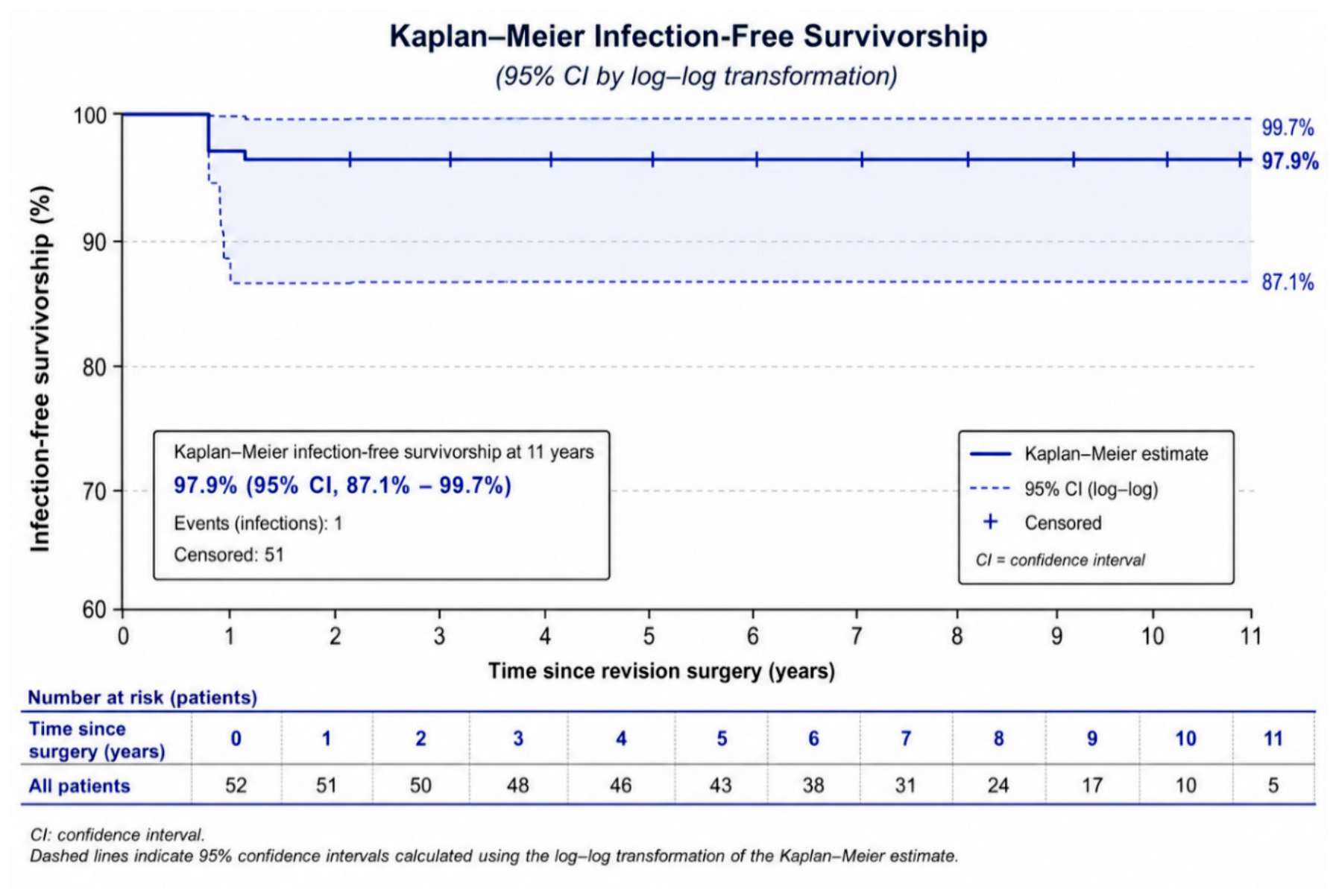
Figure 2.
Patient #13. Application of the DAC antibiotic-loaded hydrogel coating. (A). Pre-operative radiographic examination. Ligament instability. MRSA positive culture. (B). Intra-operative picture, showing DAC hydrogel application on the femoral implant, prior to its insertion. (C). Radiographic examination 6 years after surgery. (D). Clinical outcome.
Figure 2.
Patient #13. Application of the DAC antibiotic-loaded hydrogel coating. (A). Pre-operative radiographic examination. Ligament instability. MRSA positive culture. (B). Intra-operative picture, showing DAC hydrogel application on the femoral implant, prior to its insertion. (C). Radiographic examination 6 years after surgery. (D). Clinical outcome.
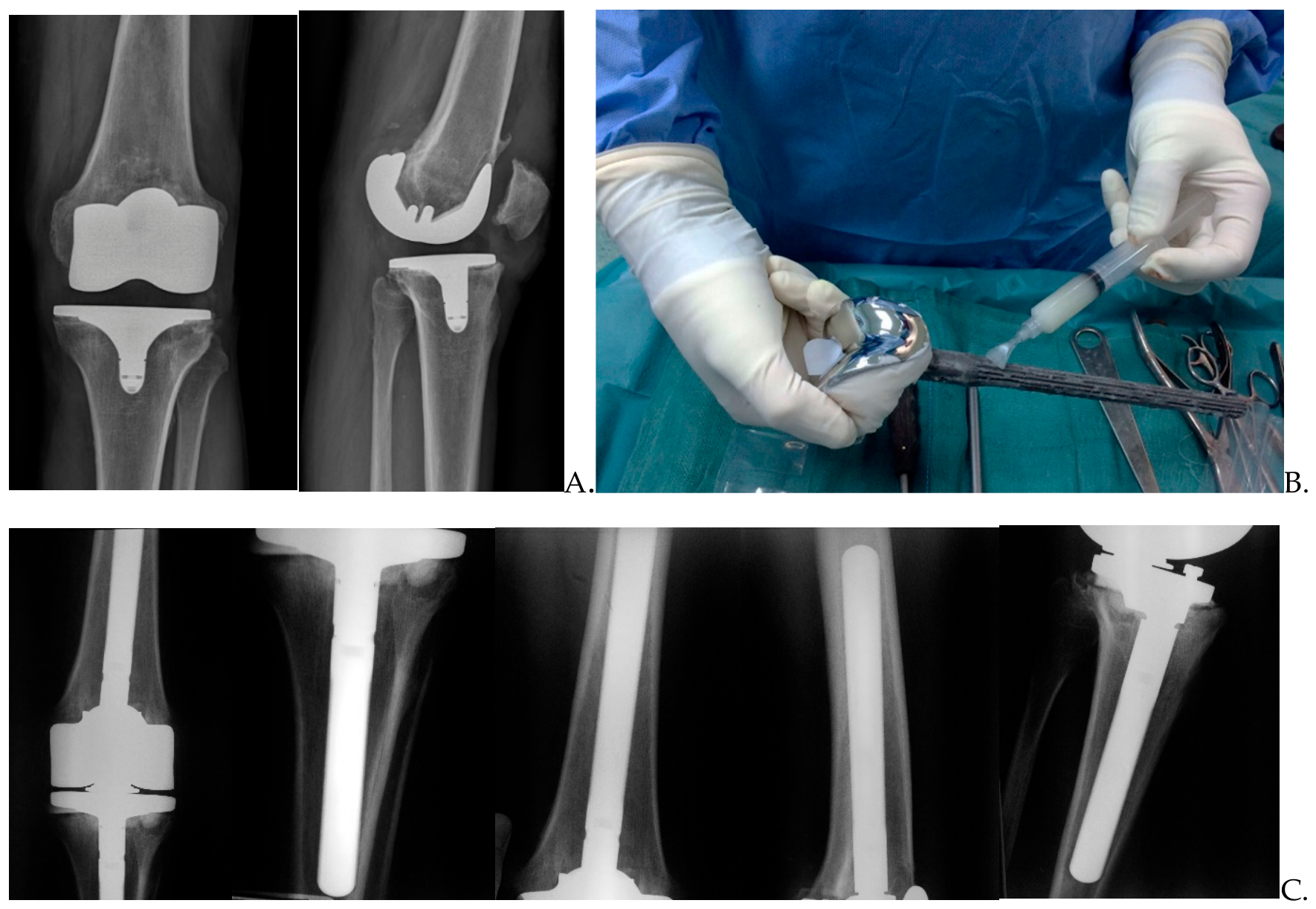
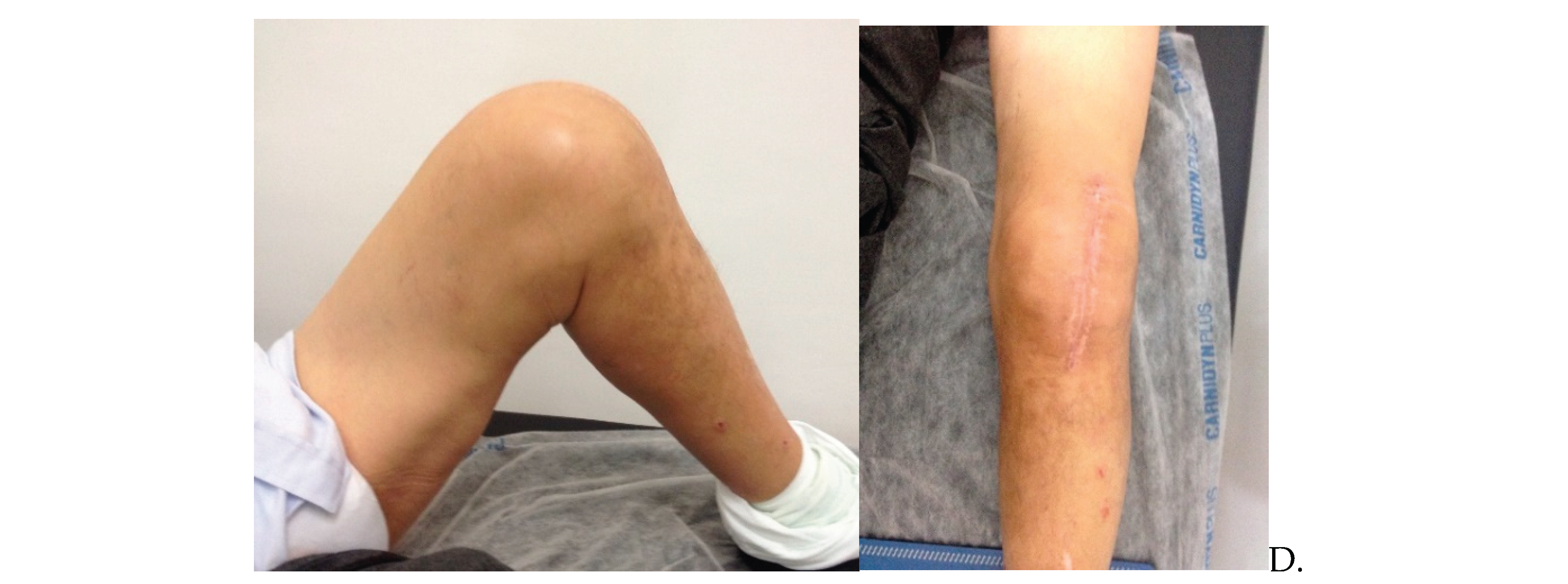

Table 1.
Pre-operative data. Abbreviations: BMI: Body Mass Index. SD: Standard Deviation.
| # | Date of Surgery | Age | F | M | BMI | Diagnosis | Host’s Type | |||
|---|---|---|---|---|---|---|---|---|---|---|
| PJI | Septic spacer | A | B | C | ||||||
| 1 | 2/13/2014 | 73 | 1 | 32.1 | 1 | 1 | ||||
| 2 | 2/13/2014 | 83 | 1 | 34.5 | 1 | 1 | ||||
| 3 | 2/24/2014 | 75 | 1 | 38.3 | 1 | 1 | ||||
| 4 | 3/10/2014 | 72 | 1 | 29.1 | 1 | 1 | ||||
| 5 | 4/17/2014 | 55 | 1 | 35 | 1 | 1 | ||||
| 6 | 4/28/2014 | 86 | 1 | 35.2 | 1 | 1 | ||||
| 7 | 7/14/2014 | 55 | 1 | 33.7 | 1 | 1 | ||||
| 8 | 9/22/2014 | 78 | 1 | 34.1 | 1 | 1 | ||||
| 9 | 10/9/2014 | 72 | 1 | 29 | 1 | 1 | ||||
| 10 | 1/12/2015 | 73 | 1 | 30.3 | 1 | 1 | ||||
| 11 | 2/9/2015 | 65 | 1 | 36 | 1 | 1 | ||||
| 12 | 3/23/2015 | 66 | 1 | 33.2 | 1 | 1 | ||||
| 13 | 3/26/2015 | 82 | 1 | 25.9 | 1 | 1 | ||||
| 14 | 6/15/2015 | 62 | 1 | 31.3 | 1 | 1 | ||||
| 15 | 6/18/2015 | 70 | 1 | 34.2 | 1 | 1 | ||||
| 16 | 1/11/2018 | 83 | 1 | 37.1 | 1 | 1 | ||||
| 17 | 2/15/2018 | 79 | 1 | 29.2 | 1 | 1 | ||||
| 18 | 2/15/2018 | 79 | 1 | 25.9 | 1 | 1 | ||||
| 19 | 3/6/2018 | 76 | 1 | 20.3 | 1 | 1 | ||||
| 20 | 3/22/2018 | 81 | 1 | 25.5 | 1 | 1 | ||||
| 21 | 4/5/2018 | 72 | 1 | 36.7 | 1 | 1 | ||||
| 22 | 4/26/2018 | 78 | 1 | 26.8 | 1 | 1 | ||||
| 23 | 5/3/2018 | 75 | 1 | 31.2 | 1 | 1 | ||||
| 24 | 6/14/2018 | 78 | 1 | 24.6 | 1 | 1 | ||||
| 25 | 9/13/2018 | 75 | 1 | 27.1 | 1 | 1 | ||||
| 26 | 2/14/2019 | 82 | 1 | 25.3 | 1 | 1 | ||||
| 27 | 2/28/2019 | 71 | 1 | 23.7 | 1 | 1 | ||||
| 28 | 3/7/2019 | 79 | 1 | 23 | 1 | 1 | ||||
| 29 | 4/11/2019 | 82 | 1 | 29.4 | 1 | 1 | ||||
| 30 | 5/9/2019 | 83 | 1 | 25.8 | 1 | 1 | ||||
| 31 | 5/24/2019 | 57 | 1 | 27.7 | 1 | 1 | ||||
| 32 | 6/4/2019 | 69 | 1 | 33.3 | 1 | 1 | ||||
| 33 | 7/2/2019 | 63 | 1 | 24.9 | 1 | 1 | ||||
| 34 | 9/3/2019 | 87 | 1 | 29.4 | 1 | 1 | ||||
| 35 | 9/5/2019 | 73 | 1 | 26.1 | 1 | 1 | ||||
| 36 | 9/26/2019 | 82 | 1 | 30.8 | 1 | 1 | ||||
| 37 | 11/5/2019 | 69 | 1 | 24 | 1 | 1 | ||||
| 38 | 2/4/2020 | 45 | 1 | 26.3 | 1 | 1 | ||||
| 39 | 3/10/2020 | 81 | 1 | 25.9 | 1 | 1 | ||||
| 40 | 4/2/2020 | 71 | 1 | 30.8 | 1 | 1 | ||||
| 41 | 6/18/2020 | 73 | 1 | 25.6 | 1 | 1 | ||||
| 42 | 10/13/2020 | 77 | 1 | 29.4 | 1 | 1 | ||||
| 43 | 2/18/2021 | 83 | 1 | 24.6 | 1 | 1 | ||||
| 44 | 4/8/2021 | 69 | 1 | 40 | 1 | 1 | ||||
| 45 | 6/15/2022 | 85 | 1 | 22.4 | 1 | 1 | ||||
| 46 | 9/7/2022 | 58 | 1 | 28 | 1 | 1 | ||||
| 47 | 11/2/2022 | 70 | 1 | 25.8 | 1 | 1 | ||||
| 48 | 3/8/2023 | 81 | 1 | 30 | 1 | 1 | ||||
| 49 | 5/24/2023 | 67 | 1 | 29.2 | 1 | 1 | ||||
| 50 | 9/6/2023 | 76 | 1 | 31 | 1 | 1 | ||||
| 51 | 10/4/2023 | 65 | 1 | 26.4 | 1 | 1 | ||||
| 52 | 12/12/2023 | 67 | 1 | 28 | 1 | 1 | ||||
| TOTAL | 32 | 20 | 48 | 4 | 12 | 19 | 21 | |||
| % | 61.5 | 38.5 | 92.3 | 7.7 | 23.1 | 36.5 | 40.4 | |||
| Mean | 73.2 | 29.3 | ||||||||
| SD | 8.9 | 4.4 | ||||||||
| Min | 45 | 20.3 | ||||||||
| Max | 87 | 40.0 | ||||||||
Table 2.
Microbiological data.
| Pathogen | Number of Isolates | % |
|---|---|---|
| Methicillin-Sensitive Staphylococcus aureus (MSSA) | 4 | 7.7 |
| Methicillin-Sensitive Staphylococcus epidermidis (MSSE) | 6 | 11.5 |
| Methicillin-Resistant Staphylococcus aureus (MRSA) | 5 | 9.6 |
| Methicillin-Resistant Staphylococcus epidermidis (MRSE) | 6 | 11.5 |
| Staphylococcus lugdunensis | 4 | 7.7 |
| Other Coagulase Negative Staphylococci | 7 | 13.5 |
| Streptococci spp. | 4 | 7.7 |
| Cutibacterium acnes | 4 | 7.7 |
| Enterococci spp. | 3 | 5.8 |
| Serratia spp. | 1 | 1.9 |
| Escherichia coli | 1 | 1.9 |
| Others | 5 | 9.6 |
Table 3.
Clinical outcomes. Abbreviations: KSS: Knee Society Score. VAS: Visual Analogue Score.
| Pre-Operative | At Follow-Up | p | |
|---|---|---|---|
| KSS Score | 47.7 ± 13.5 (range 22–68) | 84.4 ± 12.5 (range 60–88) | <0.0001 |
| KSS Score Function | 41.9 ± 9.0 (range 18–59) | 82.9 ± 10.1 (range 58–88) | <0.0001 |
| Pain at Rest (VAS Score) | 6.9 ± 3.6 (range 5–10) | 0.7 ± 2.0 (range 0–2) | <0.0001 |
| Pain at Movement (VAS Score) | 8.1 ± 3.8 (range 6–10) | 1.6 ± 2.7 (range 0–3) | <0.0001 |
Disclaimer/Publisher’s Note: The statements, opinions and data contained in all publications are solely those of the individual author(s) and contributor(s) and not of MDPI and/or the editor(s). MDPI and/or the editor(s) disclaim responsibility for any injury to people or property resulting from any ideas, methods, instructions or products referred to in the content. |
© 2026 by the authors. Licensee MDPI, Basel, Switzerland. This article is an open access article distributed under the terms and conditions of the Creative Commons Attribution (CC BY) license (http://creativecommons.org/licenses/by/4.0/).
Copyright: This open access article is published under a Creative Commons CC BY 4.0 license, which permit the free download, distribution, and reuse, provided that the author and preprint are cited in any reuse.


