
Submitted:
21 July 2026
Posted:
22 July 2026
You are already at the latest version
Abstract
The accumulation of biodegradable plastics (BPs) in wastewater treatment plants (WWTPs) presents a novel environmental concern, while carbon deficiency concurrently limits advanced biological denitrification. Herein, this research explored the fate of BPs and their viability as solid-phase carbon donors for denitrification. Six prevalent BPs were selected, results showed that dissolved organic carbon (DOC) release from BPs varies considerably with the synthesis type, microbially synthesized poly(3-hydroxybutyrate-co-3-hydroxyvalerate) (PHBV) as the optimal solid-phase carbon source with superior DOC bioavailability, achieving the denitrification rate of 0.72 mg/(g·h). Light irradiation and pH variations accelerated DOC release via surface micro-cleavage, predominantly yielding highly active aliphatic oligomers without disrupting the primary polymeric backbone. Furthermore, macromolecular depolymerization genes (acsABCDE, cdhCDE) and nitrous oxide reductase genes (nosZ, nosD) were strongly temperature-dependent, which induced the directional enrichment of the core denitrifying genus Thauera, and upregulated expression at 25 °C that promoted NO₃⁻ reduction. This research provided the theoretical basis for the in-situ resource utilization of BPs for advanced wastewater denitrification.
Keywords:
emerging contaminants
; low-carbon
; resource reused
1. Introduction
As global “plastic bans” and plastic restriction policies continue to be implemented, traditional petrochemical plastics are being rapidly replaced by biodegradable plastics such as polylactic acid (PLA), polyhydroxyalkanoates (PHA), and starch-based materials [1]. However, the large-scale production and use of biodegradable plastics (BPs) have given rise to emerging environmental issues related to their accumulation in the environment [2]. Ideally, BPs can be assimilated by microorganisms and completely removed from the environment [3]; however, in real-world water treatment settings, the effective degradation of BPs depends on specific temperature, oxygen conditions, microbial communities, and retention time, and their complete mineralization is often difficult to achieve. Particularly in water treatment systems such as wastewater treatment plants (WWTPs), large quantities of BPs and their fragments are continuously discharged into the effluent in the form of particles or microfragments [4]. The environmental behavior and fate of BPs in the effluent system warrant close attention [5].
In addition to residual BPs, advanced treatment of effluent still faces limited heterotrophic denitrification due to insufficient carbon sources [6]. The addition of solid-phase carbon sources is a common method for enhancing treatment performance; BPs can release dissolved organic carbon (DOC) in aquatic environments. Compared to natural agricultural wastes, BDPs provide more stable carbon release, demonstrating superior and sustainable denitrification performance for low C/N wastewater [7], such as polycaprolactone (PCL) and polybutylene succinate (PBS). The carbon-release behavior of BPs is constrained by the inherent physicochemical properties of the materials and external environmental factors [8,9].
BPs of different synthesis types possess entirely distinct molecular backbones, surface hydrophilicities, and degrees of crystallinity. Such structural differences directly determine the susceptibility of internal ester bonds to hydrolysis within the polymers, leading to a fundamental disparity in DOC release rates, carbon source compositions, and bioavailability among different BPs under identical spatiotemporal conditions [8]. Furthermore, environmental conditions are also a key influencing factor. Temperature not only alters the physical hydrolysis and photoaging processes of BP macromolecular segments from a thermodynamic perspective, but also directly affects the composition and function of microbial communities [10]. Transcriptomic and metabolomic insights investigated the physiological adaptation mechanisms of microorganisms. Their findings revealed that upon assimilation of this highly active DOC, the microbial tricarboxylic acid (TCA) cycle and the synthesis pathways of amino acids and nucleotides are significantly upregulated [11]. This direct acceleration of bacterial ATP synthesis and cell turnover mediated by BPs unleashes the metabolic potential of microorganisms and triggers a significant “pre-excitation effect” in the local microhabitat, which facilitates the directional enrichment of functional microorganisms from specific phyla (such as Proteobacteria, a dominant clade in denitrification) [12].
To date, there remains a lack of systematic comparative studies on the differences in carbon release characteristics of BPs of different synthetic types under multiple environmental gradients, as well as on the mechanisms driving the succession of denitrifying microbial communities. Therefore, this study aims to conduct the following investigations: 1) systematically evaluate the carbon release characteristics of six common BPs and their potential to promote heterotrophic denitrification as in-situ carbon sources; 2) Investigate the effects of abiotic environmental factors, such as pH and light, on the carbon release kinetics and material structural evolution of the selected BP; 3) elucidate the temperature dependent microbial conversion of carbon and nitrogen derived from BPs. The aim is to systematically elucidate the environmental behavior of BPs in water, thereby providing a solid theoretical foundation for in-situ carbon source substitution and low-carbon enhancement technologies in the process of advanced denitrification of effluent [13].
2. Materials and Methods
2.1. Materials
Six commercially available BPs were selected as solid-phase carbon sources and biofilm carriers in this study, including Poly 3-hydroxybutyrate-co-3-hydroxyvalerate (PHBV), polyhydroxyalkanoates (PHA), polycaprolactone (PCL), polybutylene adipate-co-terephthalate (PBAT), polybutylene succinate (PBS), and polylactic acid (PLA). Prior to the experiments, all BPs were uniformly cut into standard granules rinsed with ultrapure water and dried.
2.2. Carbon Source Release and Driving Factors Experiment
To systematically quantify the intrinsic carbon release capacity of the different BPs, static batch leaching experiments were conducted. 5.0 g of each BP was added in 250 mL Erlenmeyer flasks containing 200 mL of distilled water, the flasks were incubated in the dark at 25±1℃. Over the 25-day experimental period, water samples were collected at 24-h intervals to monitor DOC concentrations. For NO₃⁻-N removal kinetics, samples were taken every 30 min over a 12-h period, and all treatments were performed in triplicate. DOC was quantified by TOC analyzer (Shimadzu, Japan), after filtering by a 0.45 µm polyethersulfone membrane. The concentrations of NO₃⁻-N were determined according to standard colorimetric methods (APHA,2017). Based on the experimental results. The optimal carbon release ability BPs (PHBV) were selected to investigate the effects of light irradiation conditions (natural light, dark) and pH (3, 7 and 10) on their carbon release characteristics.
The surface morphological evolution of the PHBV particles was observed via scanning electron microscopy (SEM). Modifications in surface functional groups and the polymeric backbone were identified using Fourier transform infrared spectroscopy (FT-IR, IRTracer-100, Shimadzu) over the wavenumber range of 4000–400 cm⁻¹. The DOM released by BPs was characterized using a UV-visible spectrophotometer (UV-2600, Shimadzu, Japan). Including SUVA₂₅₄, E2/E3, E3/E4, and A253/A203 were calculated to systematically evaluate the molecular weight, aromaticity, and structural evolution of the released carbon. The composition of DOM before and after the experiment was analyzed using liquid chromatography-mass spectrometry (LC-MS). The mass spectrometer was operated in electrospray ionization mode to enable the detection of highly reactive intermediate metabolites.
2.3. Microbial Ecological Response to Temperature Variations
To investigate the microbial ecological response to seasonal variations, sequential batch reactor (SBR) experiments were executed under three distinct temperature gradients (5℃,15℃,25℃). The tail water was prepared following the method of Du, characterized a low carbon-to-nitrogen (C/N) ratio of 2.0, the concentration of COD, NO₃⁻-N and PO₄³⁻-P were 40 mg/L, 20 mg/L and 2.0 mg/L, respectively. The reactors, amended with 5.0g of PHBV, activated sludge, were continuously fed with simulated tail-water at a hydraulic retention time (HRT) of 2 days, the MLSS was 1500 mg/L.
2.4. Metagenomic Analysis
Fast DNA® Spin Kit for Soil (MP Biomedicals, GA, USA) was used to extract genomic DNA from SBR systems in different temperature (5,15,25 ℃). The V3-V4 hypervariable regions of the bacterial 16S rRNA gene were amplified utilizing the universal primer pair 338F and 806R.The purified amplicons were sequenced on an Illumina MiSeq platform, and raw data were processed using the QIIME2 pipeline. To further decode the functional networks of the microbial communities, specifically regarding macromolecular depolymerization and downstream nitrogen cycling pathways, metagenomic functional prediction was conducted using PICRUSt2. The predicted functional genes were annotated against the Kyoto Encyclopedia of Genes and Genomes (KEGG) database.
2.5. Statistical Analysis
All batch experiments and instrumental analyses were executed in at least duplicate, with the macroscopic and molecular results presented as the mean ± standard deviation. Statistical significance was determined by one-way analysis of variance followed by Tukey’s post-hoc test, performed in SPSS (version 26.0, IBM Corp., USA). Differences were considered statistically significant at a threshold of p≤0.05. Data visualization, kinetic fitting, and bioinformatics heatmap generation were executed utilizing Origin 2021 (OriginLab Corp.,USA) and standard packages in R software (version 4.2.1).
3. Results and Discussion
3.1. Carbon Release Characteristics and Denitrification Kinetic of BPs
To evaluate the potential of BPs as solid-phase carbon sources, the DOC release capacities of six BPs were systematically quantified (Figure 1). Within the microbial metabolic synthesis group, PHBV exhibited the highest carbon release capacity, approximately 8.62 mg/L. This exceptional release is attributed to its bio-based molecular backbone, which shares structural homology with natural microbial storage polymers, making its ester bonds highly susceptible to rapid recognition and cleavage by extracellular depolymerases secreted by native microorganisms [14].
The utility of a solid-phase carbon source lies in the bioavailability of its released DOC to drive heterotrophic denitrification [15]. Figure 2 presents the NO3--N degradation kinetics of BPs over a 12-hour reaction cycle. The kinetic profiles universally exhibited a biphasic pattern: an initial rapid degradation phase (0–6 h) driven by the abundance of readily available surface organic matter, followed by a deceleration phase (6–12 h) governed by the diffusion-limited hydrolysis of the polymer matrix [16]. Specifically, within the microbial metabolic synthesis group (Figure 2b), PHBV achieved a peak initial NO3--N degradation rate 0.72 mg/(g·h).
To elucidate the environmental fate and carbon release mechanisms of PHBV under variable aquatic conditions, the abiotic impacts of pH and light irradiation were investigated. Light exposure significantly accelerated the release of DOC from PHBV (Figure 3); under light exposure, the amount of DOC released was 1.1 times that under dark conditions [17]. This accelerated release is primarily attributed to photochemical aging, in which photon energy triggers radical reactions and promotes microcracking on the polymer chain surface [10]. In addition, pH changes significantly affected DOC release, showing a trend of pH=3 > pH=10 > pH=7. Both acidic and alkaline pH conditions effectively catalyzed the hydrolysis of ester bonds on the PHBV surface, accelerating the dissolution of low-molecular-weight organic compounds [8,18,19].
3.2. Structural Characterization of PHBV and Composition Analysis of Released DOC
SEM images showed that the initial surface of PHBV was relatively smooth (Figure 4a, b); after microbial degradation, pits and pores appeared on the surface of PHBV (Figure 4c, d), possibly due to slight delamination of the surface layers caused by aging. The FTIR spectra of PHBV underwent significant changes before and after hydrolysis (Figure 4e). The untreated sample exhibited a distinct ester group C═O stretching vibration peak at 1745 cm⁻¹, a peak at 1455 cm⁻¹ corresponding to —CH₂ bending vibration at 1455 cm⁻¹, while the absorption peaks at 1159 cm⁻¹ and 1031 cm⁻¹ can be attributed to C–O–C and C–O stretching vibrations, respectively. These characteristic peaks collectively indicate that the ester bond structure in the PHBV main chain is intact. After hydrolysis, the peak intensities at the aforementioned characteristic peaks in the sample were generally weakened; in particular, the carbonyl peak at 1745 cm⁻¹ and the C–O-related peaks at 1159/1031 cm⁻¹ showed more pronounced attenuation, indicating that the ester bonds in the PHBV molecular chains were cleaved during hydrolysis, resulting in the destruction of the polymer structure. At the same time, the changes in absorption in the high-wavenumber region of the spectrum suggest that more oxygen-containing functional groups may have been introduced onto the PHBV surface, reflecting that the hydrolysis and surface oxidation processes increased the material’s degree of oxidation and hydrophilicity [20].
To reveal the compositional characteristics of the DOM released by PHBV, the leachate was analyzed using UV-visible absorption spectroscopy. Furthermore, UV-visible absorption analysis of the leachate yielded moderate SUVA₂₅₄ values, corroborating that the released DOM predominantly comprised aliphatic oligomers and monomers. This specific DOM profile ensures a continuous supply of highly bioavailable electron donors while strictly avoiding the secondary pollution risks associated with complex aromatic compounds [21].
Figure 5.
Characterization and composition analysis of dissolved organic matter (DOM) released from PHBV: (a)COD/DOC, E2/E3 and E3/E4 ratios; (b) DOC release dynamics; (c) UV254 absorbance; (d) A253/A203 ratio; (e)LC-MS before and after the reaction.
Figure 5.
Characterization and composition analysis of dissolved organic matter (DOM) released from PHBV: (a)COD/DOC, E2/E3 and E3/E4 ratios; (b) DOC release dynamics; (c) UV254 absorbance; (d) A253/A203 ratio; (e)LC-MS before and after the reaction.
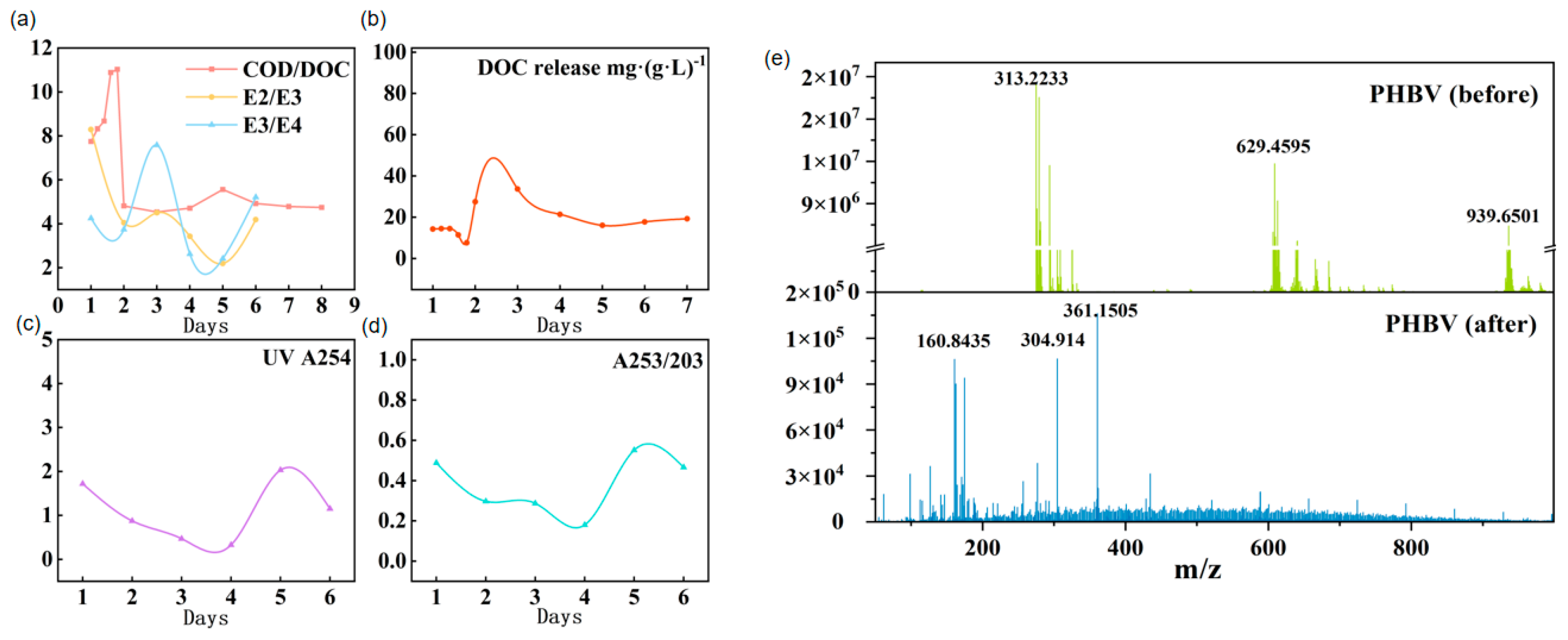
LC-MS results indicate that the DOM components continuously released by PHBV in aqueous systems consist primarily of aliphatic oligomers and their highly reactive metabolic derivatives (Figure 6e). Specifically, in the leachate from the early stages of the reaction, a series of mass spectrometry peaks in the m/z range of 300–1000 (e.g., m/z 313.22, 629.45, 939.65) were detected; these are presumed to be polymer fragments released during the initial dissolution of PHBV or residual components from the material synthesis process. High-resolution mass spectrometry detected small-molecule products at high abundances in the later stages of the reaction. Given the aliphatic polyester structural characteristics of PHBV, these substances are not simply monomer hydrolysis products; they are likely highly oxidized short-chain aliphatic intermediates produced by the cleavage of the PHBV carbon backbone under the action of extracellular depolymerases, accompanied by the initial metabolism of microorganisms in the local microenvironment [14]. In addition, the mass spectrum still shows a few peaks in the 450–950 m/z range, suggesting that some fragments of PHBV macromolecules that have not been completely decomposed may still remain in the leachate [8]. Based on the analysis of UV254 data, PHBV essentially does not release carbon sources containing C=C double bonds during the carbon leaching process; its UV254 absorbance stabilized at a relatively low level of 0.1 by the end of the experiment, further confirming the molecular structural characteristics of the released products [6,21].
3.3. Temperature-Driven Microbial Community Diversity
As illustrated in the genus-level relative abundance profiles (Figure 6b), the absolute dominant basal microbial consortia across multiple temperature gradients were primarily composed of Proteobacteria and Rhodocyclales. These primary taxa maintained a high baseline abundance over a broad temperature range from 5 ℃ to 25 ℃. This indicates that PHBV serves not merely as a sustained carbon donor, but its stable three-dimensional polymeric backbone also provides a highly resilient colonization microenvironment, effectively buffering the physical structure of the biofilm against environmental temperature fluctuations [12].
However, temperature variations significantly reshaped the fine-scale structure and metabolic abundance of key functional denitrifying consortia. In conjunction with the taxonomic heatmap (Figure 6a), the enrichment characteristics of specific nitrogen-removal functional groups exhibited temperature dependence. Notably, under the optimal temperature of 25 ℃, the relative abundance of Thauera, a classical and highly efficient heterotrophic denitrifying genus, increased significantly. The genus Thauera possesses a robust capacity for extracellular polymer degradation, a broad utilization spectrum for organic carbon sources (particularly short-chain fatty acids), and a complete denitrifying electron transport chain [11]. At 25℃, the highly reactive aliphatic oligomers released via the accelerated micro-hydrolysis of the PHBV surface provided exceptionally compatible, high-quality electron donors for Thauera, enabling it to rapidly secure a dominant ecological niche during competitive growth. From the fundamental perspective of micro-ecological succession, this enrichment of the core denitrifying genus definitively elucidates the macroscopic denitrification rate peak observed at 25 ℃ in the preceding kinetic experiments [22]. Conversely, under low-temperature stress at 5 ℃ and 15℃, the physical hydrolytic carbon release rate of PHBV declined, and the proliferation of mesophilic efficient denitrifiers such as Thauera was simultaneously suppressed [23,24,25]. This dual inhibition resulted in a marked deterioration of the metabolic coupling efficiency between the electron donor supply and the downstream nitrogen reduction acceptors [12]. In summary, PHBV functions as a superior physical carrier, highly DOM can precisely induce the directional enrichment of core denitrifying taxa like Thauera under appropriate temperature conditions.
3.4. PHBV-Driven Microbial Community Dynamics and Functional Networks
The extracellular hydrolysis and intracellular transformation of solid-phase carbon sources are the key prerequisites driving the subsequent heterotrophic denitrification process [12].The results from the carbon metabolism network diagram (Figure 7a) and the heatmap of gene abundance for enzymes involved in carbon metabolism (Figure 7b) show that environmental temperature plays a decisive role in the activation of core carbon metabolism pathways.
At the optimal temperature of 25 °C, genes encoding key enzymes involved in the degradation of macromolecular carbohydrates and core carbon metabolism exhibited significantly high expression levels (dark blue regions in Figure 7b). These include cellulase genes responsible for initial chain cleavage, hexosaminidase, and the acetyl-CoA synthase clusters acsABCDE and cdhCDE, which play a leading role in short-chain fatty acid assimilation. At the optimal temperature of 25 °C (Figure 7b), these gene clusters exhibit significant expression (dark blue in Figure 7b), demonstrating that the biofilm community is highly active in capturing and assimilating small-molecule fatty acids produced by hydrolysis [26], continuously converting them into cellular energy (while also producing electron donors such as NADH required for denitrification) [27], thereby driving the highly efficient downstream denitrification cascade [25,28].
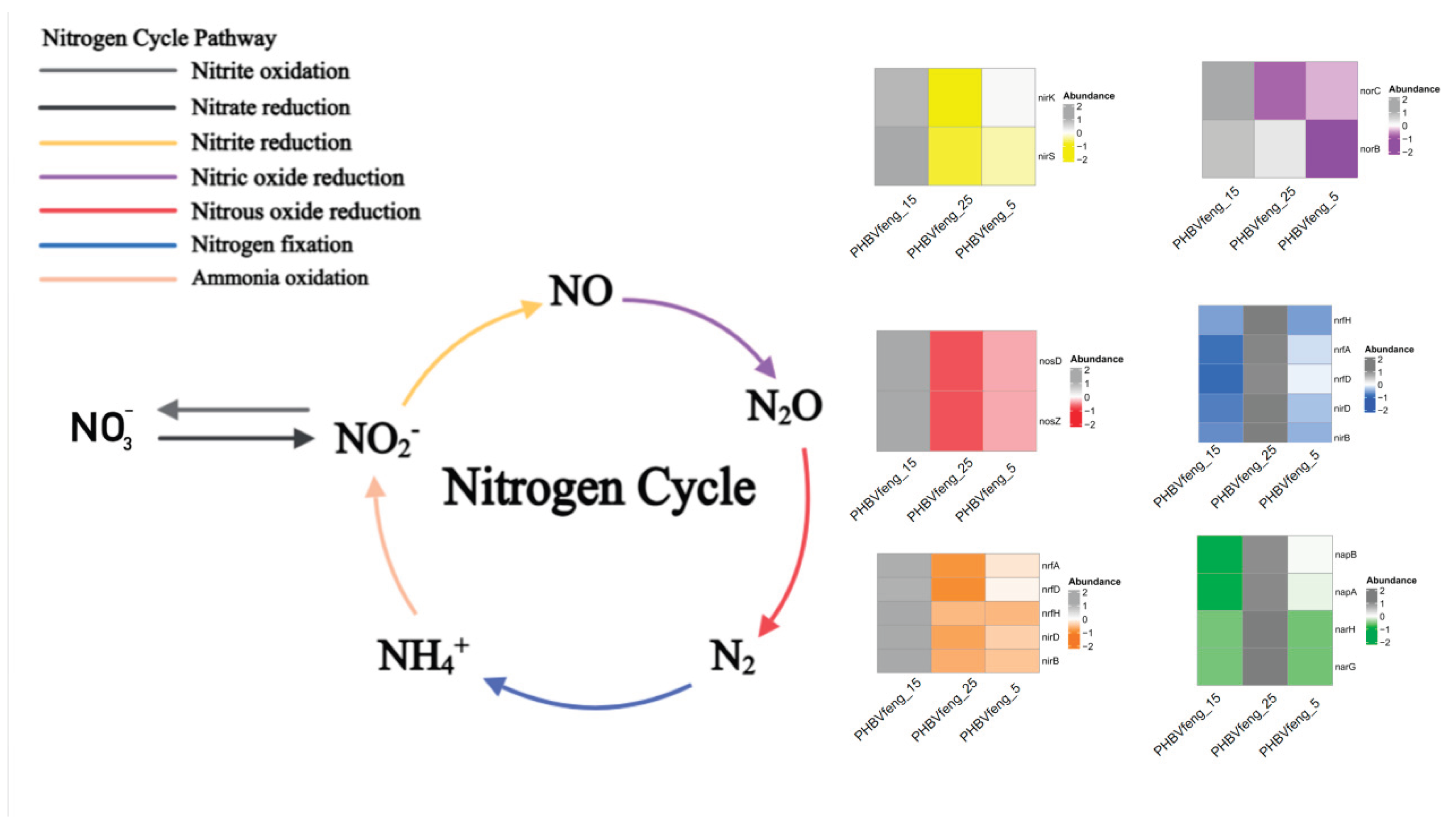
At 25 °C, the microbial community exhibits a strong ability to degrade organic carbon backbones and convert them into small molecules, enabling efficient depolymerization of PHBV and its conversion, via metabolic networks (Figure 7a), into highly bioavailable intermediate metabolites such as acetate. In contrast, under low-temperature stress at 5 °C and 15 °C, the relative abundances of the aforementioned key depolymerase and carbon metabolism genes declined. This may be because low temperatures severely inhibit the kinetics of bioenzymatic degradation of solid-phase polymers [21], this leads to a shortage of available electron donors within the system, which in turn limits the macroscopic denitrification efficiency [12]. High-quality electron donors (such as acetate) generated by upstream carbon metabolism networks directly drive the smooth operation of downstream nitrogen cycle cascade reactions [9].The results of the heatmap of key genes in the nitrogen cycle pathway and attachment (Figure 8) show that the nitrate reductase genes (narGHI, napAB), which reduce nitrate to nitrite, and the nitrite reductase genes (nirS, nirK), which catalyze the subsequent core rate-limiting step, exhibit high transcription levels at 25 °C. This may be related to the level-dependent regulation of denitrase gene cluster transcription by electron donors [25]. Crucially, the genes encoding nitrite reductases (nosZ, nosD), which catalyze the reduction of N₂O to its final product, N₂, were stably expressed at 25 °C (Figure 8). This suggests that the DOM released by PHBV not only ensures the reduction of NO₃⁻ but also blocks, at the molecular level, the intermediate accumulation of NO₂⁻ and mitigates the risk of secondary emissions of the potent greenhouse gas N₂O [29]. This ensures the ecological safety of the effluent. This provides a theoretical basis for the engineering application of PHBV as a solid-phase carbon source.
4. Conclusions
This study systematically elucidated the carbon release characteristics of BPs in aquatic environments and the mechanisms by which they influence the microecological processes of heterotrophic denitrification. Quantitative kinetic analysis indicated that microbially synthesized PHBV exhibited the highest bioavailability as a carbon source, mediating a maximum denitrification rate of 0.72 mg/(g·h). FT-IR and UV-Vis spectroscopy confirmed that pH and photoaging accelerated surface microhydrolysis, but the PHBV polymer backbone remained highly stable, continuously releasing highly reactive aliphatic oligomers with low aromaticity, thereby effectively mitigating the risk of secondary pollution. Furthermore, metagenomic results indicate that under optimal conditions at 25 °C, the abundance of genes involved in macromolecular depolymerization (acsABCDE, cdhCDE) was significantly higher than at lower temperatures, inducing the directed enrichment of the core denitrifying genus Thauera and enhancing denitrification efficiency. At the same time, the nitrous oxide reductase genes (nosZ, nosD) were strongly temperature-dependent, showing upregulated expression at 25 °C that promoted NO₃⁻ reduction. This study provides solid scientific evidence for the advanced purification of effluent with a low carbon-to-nitrogen ratio and the in situ resource utilization of BPs [30].
Supplementary Materials
The following supporting information can be downloaded at the website of this paper posted on Preprints.org.
Author Contributions
Conceptualization, X.X. and Y.Y.; methodology, X.X.; software, X.X.; validation, X.X., Y.Y. and Z.Z.; formal analysis, X.X.; investigation, X.X.; resources, X.X.; data curation, X.X.; writing—original draft preparation, X.X.; writ-ing—review and editing, X.X.; visualization, X.X.; supervision, X.X.; project administration, X.X.; funding acquisition, Y.Y. All authors have read and agreed to the published version of the manuscript.
Funding
This study was jointly supported by National Natural Science Foundation of China (32501503), the Changsha Natural Science Foundation (kq2502035), the science and technology innovation Pro-gram of Hunan Province (2025AQ2005, 2025AQ2003).
Data Availability Statement
The original contributions presented in this study are included in the article/supplementary material. Further inquiries can be directed to the corresponding authors.
Acknowledge: This study was jointly supported by National Natural Science Foundation of China (32501503), the Changsha Natural Science Foundation (kq2502035), the science and technology innovation Program of Hunan Province (2025AQ2005, 2025AQ2003). We also thank School of Ecology and Environment, Central South University of Forestry and Technology for providing the experimental platform, as well as the anonymous reviewers for their constructive comments and suggestions.
Conflicts of Interest
The authors declare no conflict of interest.
References
- Filiciotto, L.; Rothenberg, G. Biodegradable Plastics: Standards, Policies, and Impacts. ChemSusChem 2021, 14, 56–72. [Google Scholar] [CrossRef] [PubMed]
- Lu, J.; Dong, Z.-H.; Zhou, J.-Q.; Li, M.; Zhang, Z.-Z.; Zhang, Y.; Jin, R.-C. Biodegradable Microplastics in Municipal Wastewater and Sludge Treatment Processes: A Review on Occurrence, Fate, and Effects. ACS EST Water 2024, 4, 8–19. [Google Scholar] [CrossRef]
- Niu, S.; Gao, S.; Zhang, K.; Li, Z.; Wang, G.; Li, H.; Xia, Y.; Tian, J.; Yu, E.; Xie, J.; et al. Effects of Hydraulic Retention Time and Influent Nitrate Concentration on Solid-Phase Denitrification System Using Wheat Husk as Carbon Source. PeerJ 2023, 11, e15756. [Google Scholar] [CrossRef] [PubMed]
- Haider, T.P.; Völker, C.; Kramm, J.; Landfester, K.; Wurm, F.R. Plastics of the Future? The Impact of Biodegradable Polymers on the Environment and on Society. Angew. Chem. Int. Ed. 2019, 58, 50–62. [Google Scholar] [CrossRef] [PubMed]
- Zhang, S.; Chang, X.; Wu, F.; Lu, Y.; An, S.; Zhou, Y.; Feng, M.; Du, Y. Alternation Magnitudes of Organic Matter Composition Determines Priming Effect of Biodegradable Microplastics on Lake Carbon Emission. Water Res. 2026, 297, 125713. [Google Scholar] [CrossRef] [PubMed]
- Xia, L.; Li, X.; Fan, W.; Wang, J. Denitrification Performance and Microbial Community of Bioreactor Packed with PHBV/PLA/Rice Hulls Composite. Sci. Total Environ. 2022, 803, 150033. [Google Scholar] [CrossRef] [PubMed]
- Xiong, R.; Yu, X.; Zhang, Y.; Peng, Z.; Yu, L.; Cheng, L.; Li, T. Comparison of Agricultural Wastes and Synthetic Macromolecules as Solid Carbon Source in Treating Low Carbon Nitrogen Wastewater. Sci. Total Environ. 2020, 739, 139885. [Google Scholar] [CrossRef] [PubMed]
- Lucas, N.; Bienaime, C.; Belloy, C.; Queneudec, M.; Silvestre, F.; Nava-Saucedo, J.-E. Polymer Biodegradation: Mechanisms and Estimation Techniques – A Review. Chemosphere 2008, 73, 429–442. [Google Scholar] [CrossRef] [PubMed]
- Feng, Y.; Wang, L.; Yin, Z.; Cui, Z.; Qu, K.; Wang, D.; Wang, Z.; Zhu, S.; Cui, H. Comparative Investigation on Heterotrophic Denitrification Driven by Different Biodegradable Polymers for Nitrate Removal in Mariculture Wastewater: Organic Carbon Release, Denitrification Performance, and Microbial Community. Front. Microbiol. 2023, 14, 1141362. [Google Scholar] [CrossRef] [PubMed]
- Gewert, B.; Plassmann, M.M.; MacLeod, M. Pathways for Degradation of Plastic Polymers Floating in the Marine Environment. Environ. Sci. Process. Impacts 2015, 17, 1513–1521. [Google Scholar] [CrossRef] [PubMed]
- Wei, Q.; Zhang, J.; Luo, F.; Shi, D.; Liu, Y.; Liu, S.; Zhang, Q.; Sun, W.; Yuan, J.; Fan, H.; et al. Molecular Mechanisms through Which Different Carbon Sources Affect Denitrification by Thauera Linaloolentis: Electron Generation, Transfer, and Competition. Environ. Int. 2022, 170, 107598. [Google Scholar] [CrossRef] [PubMed]
- Luo, F.; Zhang, J.; Wei, Q.; Jiang, Z.; Jiang, D.; Liu, S.; Xia, Z.; Zhang, J.; Qi, L.; Wang, H.; et al. Insights into the Relationship between Denitrification and Organic Carbon Release of Solid-Phase Denitrification Systems: Mechanism and Microbial Characteristics. Bioresour. Technol. 2022, 364, 128044. [Google Scholar] [CrossRef] [PubMed]
- Qiu, Y.-Y.; Gong, X.; Zhang, L.; Zhou, S.; Li, G.; Jiang, F. Achieving a Novel Polysulfide-Involved Sulfur-Based Autotrophic DenitrificationProcess for High-Rate Nitrogen Removal in Elemental Sulfur-Packed Bed Reactors. ACS EST Eng. 2022, 2, 1504–1513. [Google Scholar] [CrossRef]
- Jendrossek, D.; Handrick, R. Microbial Degradation of Polyhydroxyalkanoates. Annu. Rev. Microbiol. 2002, 56, 403–432. [Google Scholar] [CrossRef] [PubMed]
- Wang, J.; Chu, L. Biological Nitrate Removal from Water and Wastewater by Solid-Phase Denitrification Process. Biotechnol. Adv. 2016, 34, 1103–1112. [Google Scholar] [CrossRef] [PubMed]
- Yin, S.; Liu, R.; Shao, Y.; Zhu, J. Mechanistic Insights into Carbon Release and Denitrification in Sandwich-Structured Hydrogel Composites for Low C/N Wastewater Denitrification. Chem. Eng. Sci. 2026, 330, 123941. [Google Scholar] [CrossRef]
- Yu, W.; Zheng, T.; Guo, B.; Tao, Y.; Liu, L.; Yan, N.; Zheng, X. Coupling of Polyhydroxybutyrate and Zero-Valent Iron for Enhanced Treatment of Nitrate Pollution within the Permeable Reactive Barrier and Its Downgradient Aquifer. Water Res. 2024, 250, 121060. [Google Scholar] [CrossRef] [PubMed]
- Chen, Z.; Zuo, Q.; Liu, C.; Li, L.; Deliz Quiñones, K.Y.; He, Q. Insights into Solid Phase Denitrification in Wastewater Tertiary Treatment: The Role of Solid Carbon Source in Carbon Biodegradation and Heterotrophic Denitrification. Bioresour. Technol. 2023, 376, 128838. [Google Scholar] [CrossRef] [PubMed]
- Wang, J.; Sun, Y.; Khunjar, W.; Pace, G.; McGrath, M.; Chitrakar, S.; Taylor, R.L.; Carroll, J.R.; Zhang, X.; Wang, Z.-W. Mechanistic Understanding of the Performance Difference between Methanol- and Glycerol-Fed Partial Denitrification Anammox in Tertiary Moving Bed Biofilm Reactors Treating Real Secondary Effluent. Water Res. 2025, 271, 122893. [Google Scholar] [CrossRef] [PubMed]
- Brdlík, P.; Borůvka, M.; Běhálek, L.; Lenfeld, P. The Influence of Additives and Environment on Biodegradation of PHBV Biocomposites. Polymers 2022, 14, 838. [Google Scholar] [CrossRef] [PubMed]
- Xu, Z.; Dai, X.; Chai, X. Biological Denitrification Using PHBV Polymer as Solid Carbon Source and Biofilm Carrier. Biochem. Eng. J. 2019, 146, 186–193. [Google Scholar] [CrossRef]
- Liu, Y.; Chen, F.; He, Y.; Wang, Y.; Zhu, T.; Tong, Y.; Zhao, Y.; Ni, B.-J.; Liu, Y. Evaluation of Nitrous Oxide Reduction in Solid Carbon Source-Driven Counter-Diffusional Biofilm Denitrification System. Water Res. X 2025, 27, 100306. [Google Scholar] [CrossRef] [PubMed]
- Yang, Z.; Lou, Y.; Pan, H.; Wang, H.; Yang, Q.; Zhuge, Y.; Hu, J. Improved Denitrification Performance of Polybutylene Succinate/Corncob Composite Carbon Source by Proper Pretreatment: Performance, Functional Genes and Microbial Community Structure. Polymers 2023, 15, 801. [Google Scholar] [CrossRef] [PubMed]
- Tec-Campos, D.; Tibocha-Bonilla, J.D.; Jiang, C.; Passi, A.; Thiruppathy, D.; Zuñiga, C.; Posadas, C.; Zepeda, A.; Zengler, K. A Genome-Scale Metabolic Model for the Denitrifying Bacterium Thauera Sp. MZ1T Accurately Predicts Degradation of Pollutants and Production of Polymers. PLoS Comput Biol. 2025, 21, e1012736. [Google Scholar] [CrossRef] [PubMed]
- Oba, K.; Suenaga, T.; Kuroiwa, M.; Riya, S.; Terada, A. Exploring the Functions of Efficient Canonical Denitrifying Bacteria as N2 O Sinks: Implications from15 N Tracer and Transcriptome Analyses. Environ. Sci. Technol. 2022, 56, 11694–11706. [Google Scholar] [CrossRef] [PubMed]
- Zhang, X.; Song, X.; Cheng, X.; Huang, Z.; Dong, D.; Li, X. Enhanced Denitrification of Biodegradable Polymers Using Bacillus Pumilus in Aerobic Denitrification Bioreactors: Performance and Mechanism. Bioresour. Technol. 2024, 394, 130240. [Google Scholar] [CrossRef] [PubMed]
- Si, G.-C.; Wei, D.; He, C.; Shi, Q.; Sheng, G.-P. Revealing Dissolved Organic Nitrogen Transformation and Microbial Evolution at Microscale in a Solid Carbon Source-Coordinated Simultaneous Partial Nitrification, Anammox, and Denitrification Bioreactor. ACS EST Eng. 2022, 2, 2066–2075. [Google Scholar] [CrossRef]
- Adam, P.S.; Borrel, G.; Gribaldo, S. Evolutionary History of Carbon Monoxide Dehydrogenase/Acetyl-CoA Synthase, One of the Oldest Enzymatic Complexes. Proc. Natl. Acad. Sci. U.S.A. 2018, 115. [Google Scholar] [CrossRef] [PubMed]
- Pan, Y.; Ni, B.-J.; Yuan, Z. Modeling Electron Competition among Nitrogen Oxides Reduction and N2 O Accumulation in Denitrification. Environ. Sci. Technol. 2013, 47, 11083–11091. [Google Scholar] [CrossRef] [PubMed]
- Zhao, C.; Liu, B.; Meng, S.; Wang, Y.; Yan, L.; Zhang, X.; Wei, D. Microbial Fuel Cell Enhanced Pollutants Removal in a Solid-Phase Biological Denitrification Reactor: System Performance, Bioelectricity Generation and Microbial Community Analysis. Bioresour. Technol. 2021, 341, 125909. [Google Scholar] [CrossRef] [PubMed]
Figure 1.
The concentration of dissolved organic carbon (DOC) released by biodegradable plastics (BPs).
Figure 1.
The concentration of dissolved organic carbon (DOC) released by biodegradable plastics (BPs).
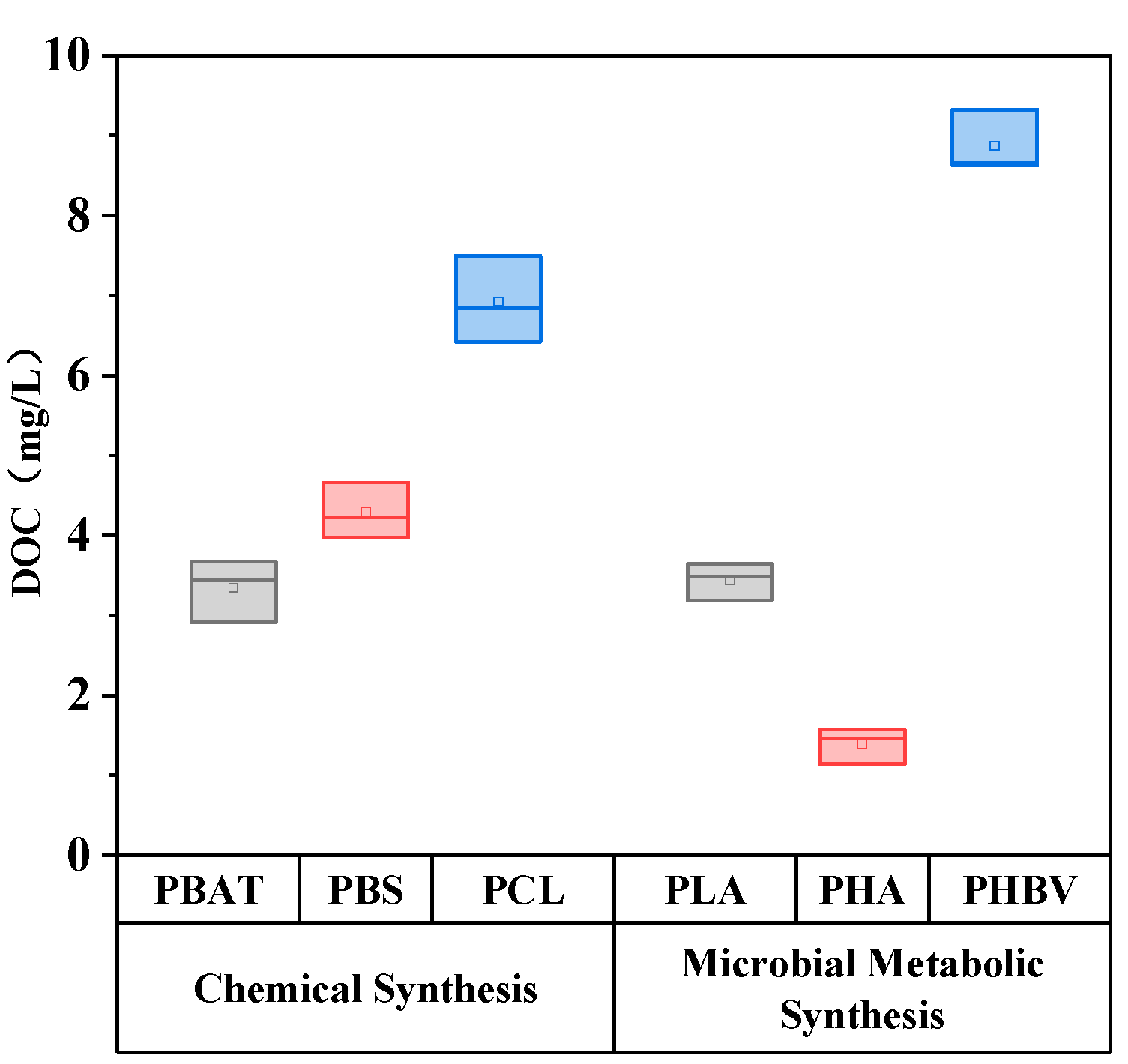
Figure 2.
NO₃⁻-N degradation kinetics of BPs.
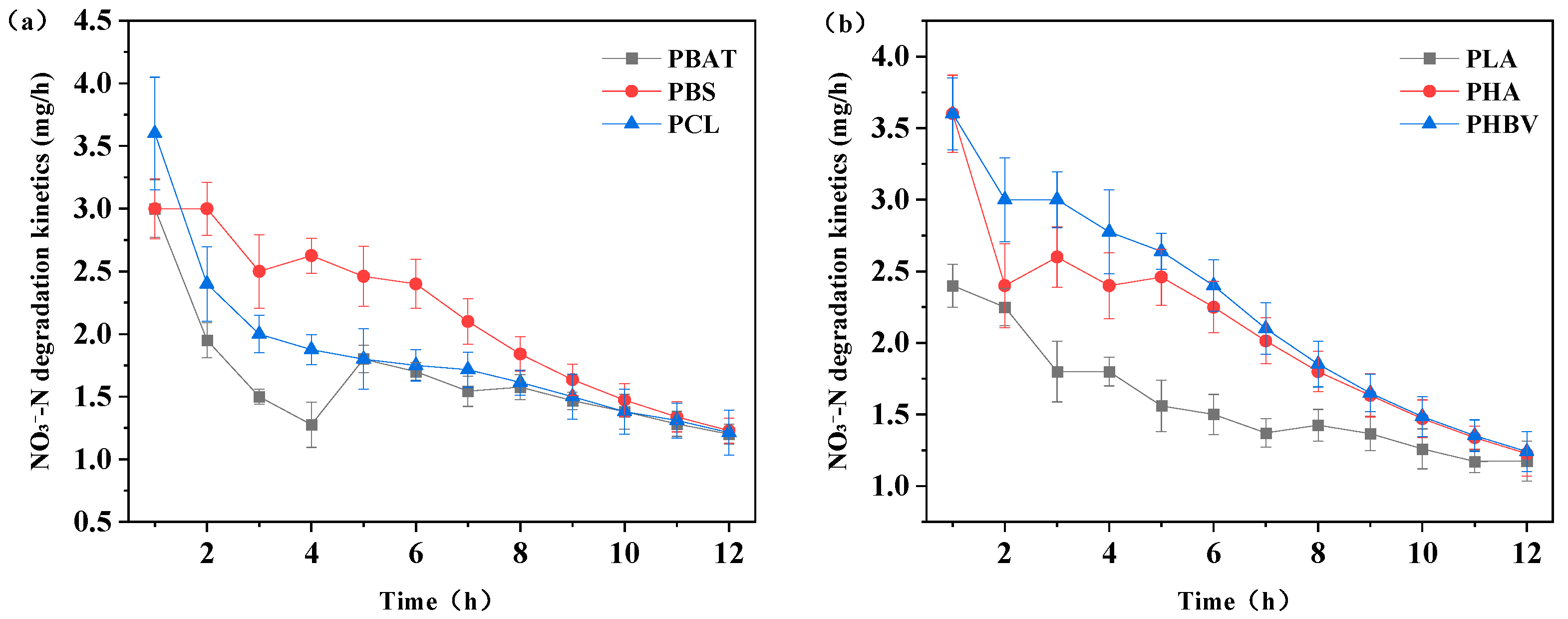
Figure 3.
Effects of light irradiation and pH on DOC release from PHBV across different reaction stages.
Figure 3.
Effects of light irradiation and pH on DOC release from PHBV across different reaction stages.
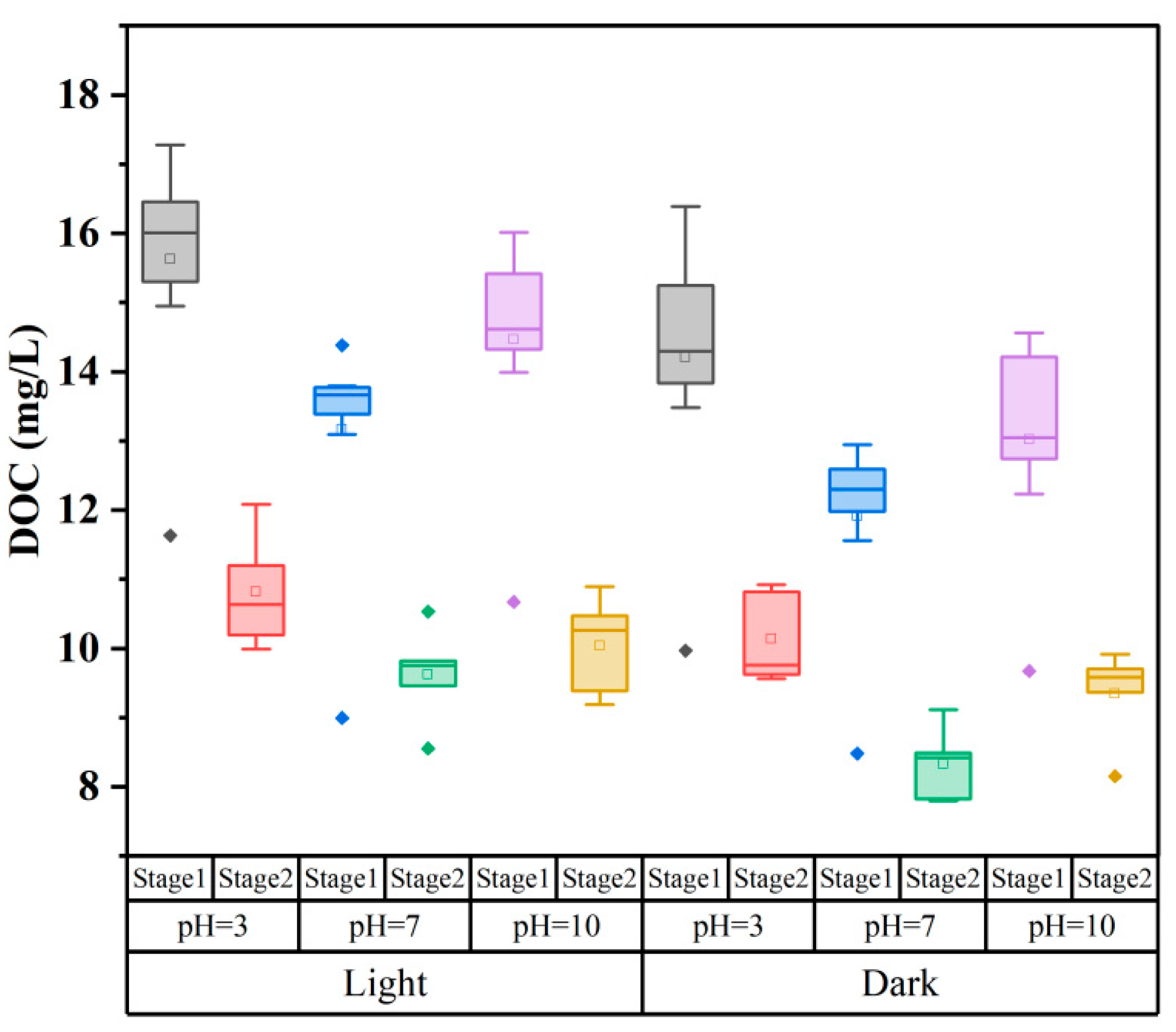
Figure 4.
Structural characterization of PHBV before and after the carbon release process, (a, b, c, d) SEM images, (e) FT-IR spectra.
Figure 4.
Structural characterization of PHBV before and after the carbon release process, (a, b, c, d) SEM images, (e) FT-IR spectra.
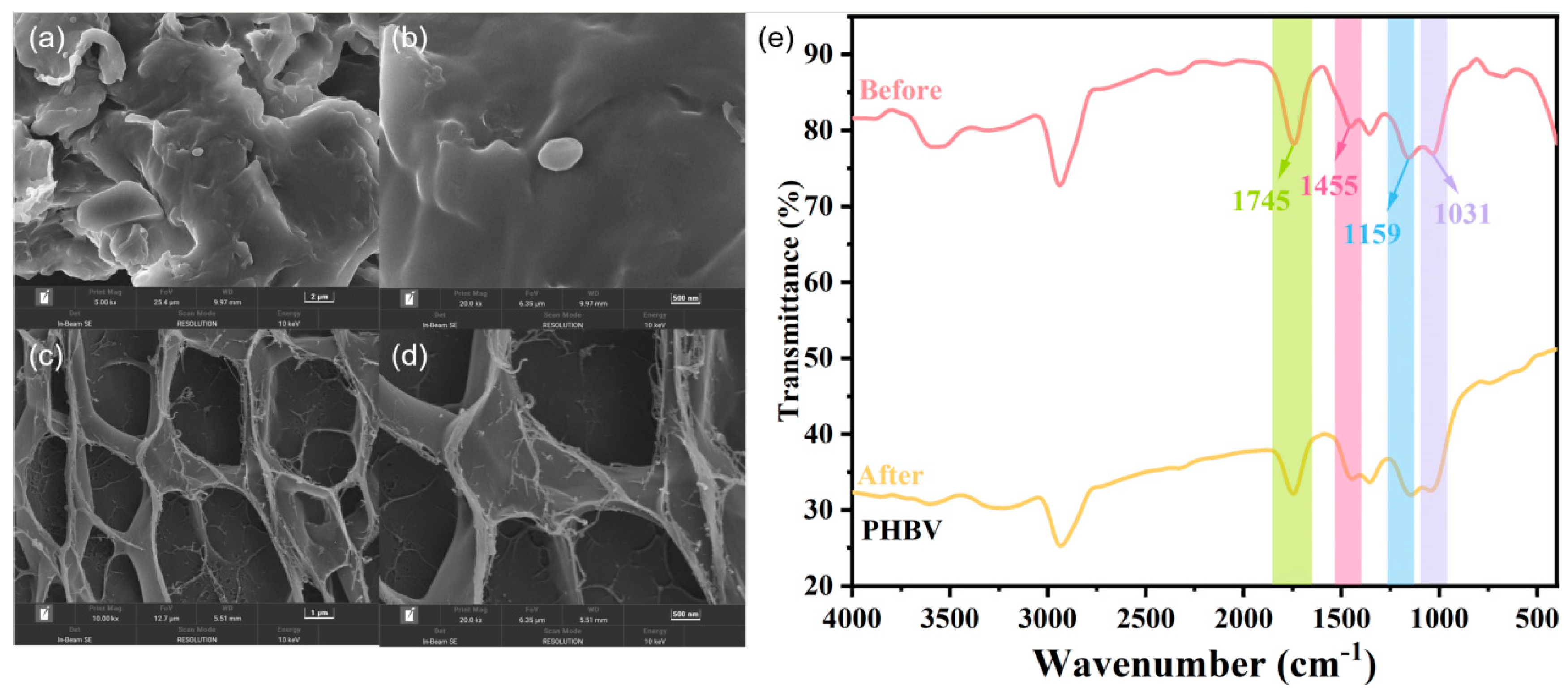
Figure 6.
Microbial community analysis of PHBV under different temperatures, (a) Heatmap analysis of the dominant bacterial genera. (b) Relative abundance of microbial communities at the genus level.
Figure 6.
Microbial community analysis of PHBV under different temperatures, (a) Heatmap analysis of the dominant bacterial genera. (b) Relative abundance of microbial communities at the genus level.
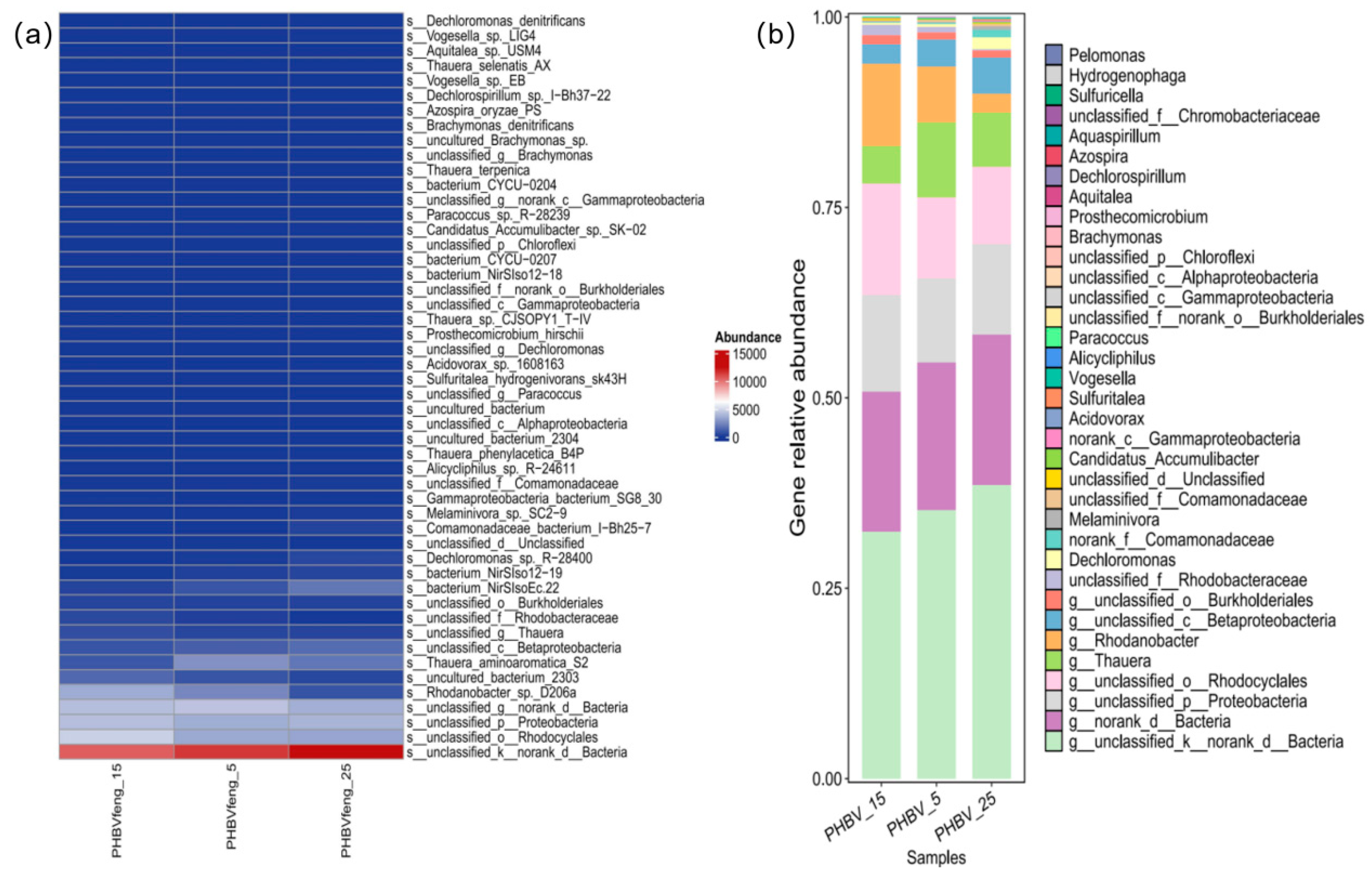
Figure 7.
Microbial community analysis of the biofilms on PHBV under different temperatures, (a) Relative abundance of microbial communities at the genus level, (b) Hierarchical clustering heatmap of the dominant bacterial genera.
Figure 7.
Microbial community analysis of the biofilms on PHBV under different temperatures, (a) Relative abundance of microbial communities at the genus level, (b) Hierarchical clustering heatmap of the dominant bacterial genera.
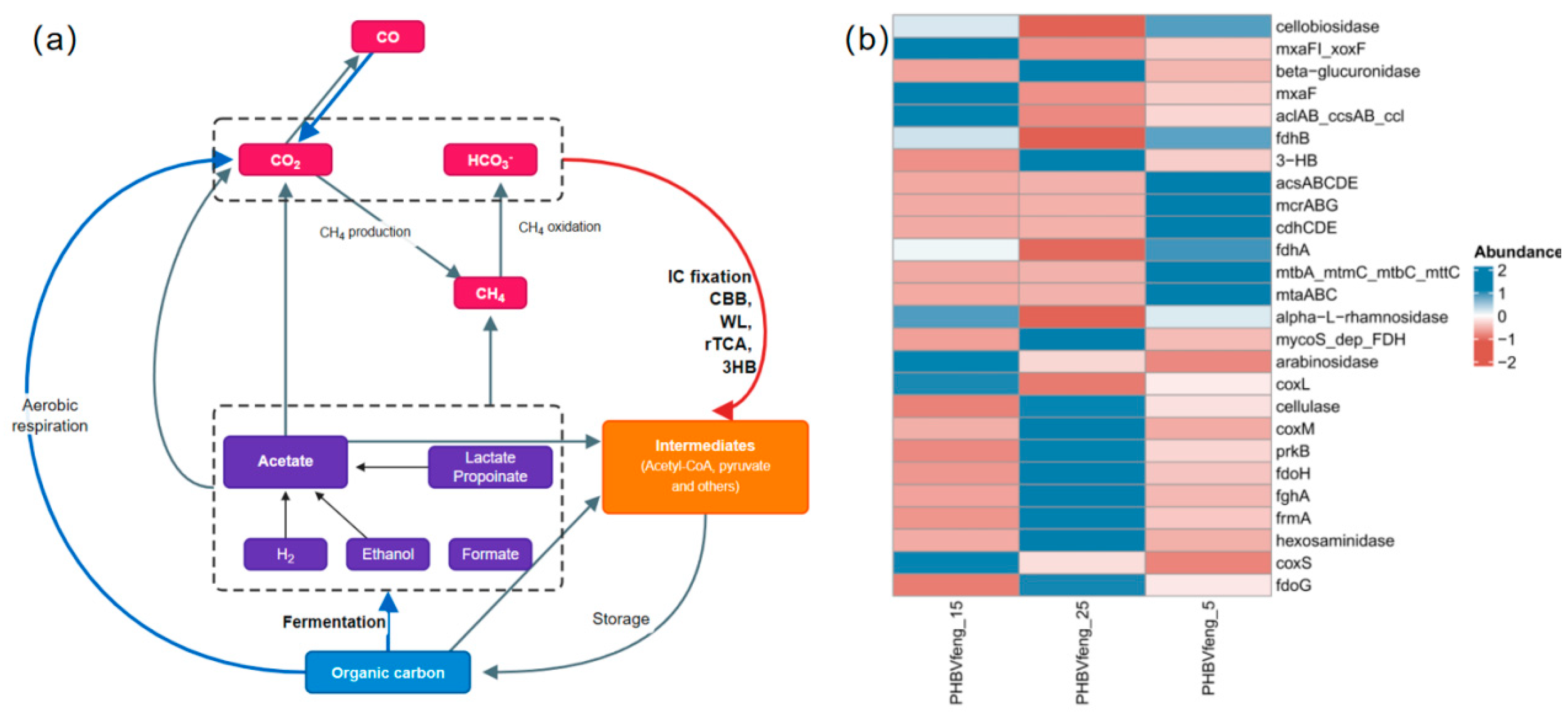
Figure 8.
Nitrogen transformation pathways and the abundance heatmap of functional genes involved in the nitrogen cycle driven by PHBV.
Figure 8.
Nitrogen transformation pathways and the abundance heatmap of functional genes involved in the nitrogen cycle driven by PHBV.
Disclaimer/Publisher’s Note: The statements, opinions and data contained in all publications are solely those of the individual author(s) and contributor(s) and not of MDPI and/or the editor(s). MDPI and/or the editor(s) disclaim responsibility for any injury to people or property resulting from any ideas, methods, instructions or products referred to in the content. |
© 2026 by the authors. Licensee MDPI, Basel, Switzerland. This article is an open access article distributed under the terms and conditions of the Creative Commons Attribution (CC BY) license (http://creativecommons.org/licenses/by/4.0/).
Copyright: This open access article is published under a Creative Commons CC BY 4.0 license, which permit the free download, distribution, and reuse, provided that the author and preprint are cited in any reuse.


