

Submitted:
20 July 2026
Posted:
21 July 2026
You are already at the latest version
Abstract
The rapid expansion of livestream e-commerce has propelled the adoption of AI-driven virtual streamers. Drawing upon the Stimulus-Organism-Response (S-O-R) framework and the Computers Are Social Actors (CASA) paradigm, this study investigates how the technical and social stimuli of AI streamers—namely persona, anthropomorphism, and interactivity—shape consumer purchase intentions. The research focuses on the context of an MNC’s Vietnam AI virtual streamer (Vinamilk) on TikTok platform, utilizing a valid sample of 163 predominantly Generation Z consumers. To capture both linear net effects and causal complexity, this study employs a dual-methodological approach integrating Partial Least Squares Structural Equation Modeling (PLS-SEM) and fuzzy-set Qualitative Comparative Analysis (fsQCA). The PLS-SEM results reveal that an AI streamer’s persona and interactivity significantly enhance both consumers’ parasocial relationships (PSR) and perceived credibility (PC). Interestingly, while anthropomorphism successfully fosters PSR, it fails to significantly improve PC. Furthermore, within the highly entertainment-driven environment of TikTok, emotional connection (PSR) acts as the primary driver of Brand TikTok Engagement (COBRAs), which subsequently leads to actual purchase intentions. Complementing these linear findings, the fsQCA uncovers the principle of equifinality, identifying three distinct configurational pathways that sufficiently lead to high purchase intentions, indicating that no single condition is absolutely necessary. The findings suggest that digital marketing strategies should prioritize interactive capabilities and emotional resonance over mere visual realism to optimize AI-mediated commerce.
Keywords:
AI virtual streamer
; livestream e-commerce
; S-O-R framework
; CASA paradigm
; parasocial relationship
; COBRAs
; PLS-SEM
; fsQCA
1. Introduction
The rapid growth of livestream e-commerce (LSE) has fundamentally transformed consumer shopping behavior by shifting traditional transactional interactions toward highly interactive and real-time engagement environments [1,2]. Within conventional livestream commerce settings, human streamers play a central role in influencing consumer decisions through their communication skills, personal attractiveness, and ability to establish relationships with au-diences [3]. However, this model is often associated with several operational challenges, including high labor costs, reputational risks arising from personal scandals, and physical limitations that restrict continuous operation [4,5].
Recent advances in artificial intelligence (AI), virtual reality (VR), and natural language processing (NLP) have facil-itated the emergence of a new generation of digital representatives known as AI-driven Virtual Streamers [6,7]. Unlike traditional virtual influencers that are operated or supervised by human agents, AI Virtual Streamers are capable of autonomously generating content, communicating with consumers, and responding to audience inquiries in real time [8,9]. Despite consumers’ awareness that these entities are algorithmically generated rather than human, they often continue to interact with them using social norms and expectations typically reserved for human communication [10]. This phenomenon has attracted increasing attention from both researchers and practitioners seeking to understand how AI-mediated interactions shape consumer perceptions and behaviors in digital commerce environments.
As technological advancements continue to blur the boundaries between human–human and human–machine communication, understanding the psychological mechanisms underlying consumer responses toward AI Virtual Streamers has become increasingly important. Drawing upon the Stimulus–Organism–Response (S-O-R) framework and the Computers Are Social Actors (CASA) paradigm, this study investigates how three key AI characteris-tics—persona, anthropomorphism, and interactivity—serve as social stimuli that influence consumers’ internal psy-chological states.
Specifically, the study conceptualizes Parasocial Relationship (PSR) and Perceived Credibility (PC) as two important organism variables representing emotional and cognitive responses, respectively. Furthermore, the study extends existing research by incorporating Consumers’ Online Brand-Related Activities (COBRAs), including consuming, contributing, and creating behaviors, into the livestream commerce context. Through this perspective, Brand TikTok Engagement is positioned as an important behavioral mechanism linking consumers’ emotional and cognitive re-sponses to their subsequent purchase intentions. Integrating COBRAs into the S-O-R framework therefore provides a more comprehensive explanation of how consumers progress from psychological evaluations to actual behavioral intentions within AI-enabled livestream environments.
Despite the growing academic interest in Virtual Influencers and AI-mediated commerce, several important research gaps remain unresolved.
First, a theoretical inconsistency exists regarding the role of anthropomorphism and credibility. Previous studies, such as Liu and Wang [11] and Dabiran et al. [12], have generally suggested that greater anthropomorphic characteristics enhance perceptions of credibility and trustworthiness. However, the increasing technological literacy of younger consumers raises questions regarding whether human-like appearances continue to function as indicators of credi-bility or whether they primarily serve as cues that facilitate emotional attachment. Similarly, prior studies including Lou and Yuan [13], Agnihotri et al. [14] have emphasized credibility as a key driver of online engagement. Never-theless, within highly entertainment-oriented environments such as TikTok livestream commerce, it remains unclear whether emotional mechanisms represented by parasocial relationships may play a more influential role than cogni-tive evaluations of credibility in driving consumer engagement.
Second, an important conceptual gap exists in the current literature. Most prior studies [15,16] have focused primarily on the direct relationship between consumers’ psychological evaluations and purchase intentions. Consequently, limited attention has been devoted to understanding the behavioral processes that occur between these two stages. The absence of the COBRAs framework in many existing models restricts our understanding of how consumers transition from passive observation to active engagement and eventual purchase intention.
Third, a contextual gap can be observed in existing research. Prior studies, Lee et al. [17] have primarily examined virtual influencers operating on image-based social media platforms such as Instagram or have investigated virtual influencers that continue to involve substantial human intervention. Comparatively little attention has been devoted to fully autonomous AI Virtual Streamers operating within highly interactive livestream commerce environments such as TikTok.
Fourth, a methodological gap remains evident. Existing studies, Wang et al. [18] have predominantly relied on structural equation modeling techniques to examine linear net effects among variables. While these approaches are valuable for identifying direct relationships, they provide limited insights into causal complexity and equifinality, where multiple combinations of conditions may lead to the same outcome. To date, limited research has integrated PLS-SEM with fuzzy-set Qualitative Comparative Analysis (fsQCA) to simultaneously examine both net effects and configurational pathways underlying consumer purchase intentions toward AI Virtual Streamers.
To address these gaps, the present study integrates PLS-SEM and fsQCA within a unified analytical framework to investigate the emotional and cognitive mechanisms shaping consumer purchase intentions toward AI Virtual Streamers on TikTok. By doing so, the study extends the applicability of the CASA paradigm, enriches the S-O-R framework, and provides a more comprehensive understanding of consumer behavior in AI-enabled livestream commerce.
2. Theoretical Background
2.1. Theoretical Underpinnings
The Stimulus–Organism–Response (S–O–R) framework posits that individuals’ behavioral responses are shaped through a three-stage process consisting of environmental stimuli, internal psychological states, and subsequent behavioral reactions. In this framework, external cues do not directly trigger behavior; rather, they are first processed through cognitive and affective mechanisms before being translated into observable actions [19]. Contemporary applications of S–O–R in digital environments have consistently demonstrated its explanatory power in e-commerce, social commerce, influencer marketing, and technology-mediated consumer behavior, where online cues influence engagement, trust, and purchase decisions through users’ internal evaluations and emotional responses [20,21,22]. In the context of study, stimuli encompass various interactive environmental cues, particularly the characteristics of AI virtual streamers, such as persona, anthropomorphism, and interactivity [23,24]. These features should not be viewed merely as technical attributes but rather as socially meaningful cues that shape users’ perceptions and experiences [25]
Drawing on the Computers Are Social Actors (CASA) paradigm, individuals tend to apply social rules and expectations when interacting with technologies that exhibit human-like characteristics [26]. When AI virtual streamers communicate through natural language, display emotional responsiveness, and possess clearly defined personalities, viewers are likely to perceive them as social actors and evaluate them in ways similar to human communicators [27]. Consequently, these AI-generated social cues serve as important stimuli that foster perceptions of social presence and create the foundation for the development of psychological relationships between users and AI streamers.
2.2. Virtual Streamers in Live Streaming
The explosive growth of livestream e-commerce (LSE) has reshaped consumer shopping behaviors, transforming purchasing experiences from static interactions to real-time engagement [28]. While human streamers have played a central role in driving sales through their personal appeal and interactive communication skills [29], this model exhibits several limitations, including high operational costs, risks of labor disputes and personal scandals, as well as physical constraints that prevent continuous livestreaming [30]. In this context, the integration of Artificial Intelligence (AI), Virtual Reality (VR), and Augmented Reality (AR) has given rise to a new generation of digital representatives known as AI-driven virtual streamers.
To comprehensively evaluate the role and operating mechanisms of AI-driven virtual streamers, recent studies have focused on four major research streams: (1) their nature and operational advantages, (2) their stimulus characteristics, (3) the psychological transformation mechanisms they trigger, and (4) strategies for selecting appropriate sales models.
Unlike earlier generations of virtual streamers that were directly controlled by human operators behind the scenes like human-driven virtual streamers, AI-driven virtual streamers are algorithmically generated digital entities capable of autonomously executing livestreaming scenarios, imitating human behaviors, and simulating human emotions [8,27]. Their primary advantage lies in their flexibility and risk-control capabilities. AI-driven virtual streamers can broadcast continuously 24 hours a day, 7 days a week, without interruption or fatigue, enabling brands to attract customer traffic during off-peak periods such as late-night hours [31,32]. Furthermore, risks associated with brand image—such as inappropriate statements or personal scandals can be substantially minimized because the language and behaviors of AI streamers are pre-programmed and controllable [32]. In this study, we focus on AI-driven virtual streamers, whose emergence has been accelerated by recent advances in deep learning and natural language processing (NLP), have accelerated the emergence of AI-driven virtual influencers (VIs), enabling them to communicate, perceive, reason, and respond to consumers autonomously in real time. As a result, AI-driven VIs have increasingly blurred the distinction between human–human and human–machine interactions [33]. Although consumers generally recognize that these entities are artificially created, often described as “authentically fake” they nevertheless tend to apply human social norms and interaction patterns when engaging with them [34]. This phenomenon is consistent with the Computers Are Social Actors (CASA) perspective, which suggests that individuals instinctively respond to technological agents as social actors [35]. Within livestream commerce, the effectiveness of AI-driven VIs in influencing consumer attitudes and behaviors is largely determined by three fundamental design characteristics: persona, anthropomorphism, and interactivity [24].
Persona
Persona refers to the symbolic identity of an AI-driven virtual influencer, encompassing demographic attributes such as name, gender, and age, as well as appearance-related elements including clothing style, visual presentation, personality traits, personal narratives, and value orientations [36]. A well-defined persona transforms an AI-driven VI from a mere technological artifact into a socially meaningful entity with a distinctive identity. Through carefully designed characteristics, such as humor, friendliness, sophistication, or expertise, virtual influencers can generate uniqueness and attractiveness that stimulate audience curiosity and engagement [37,38].
Furthermore, persona serves as a critical mechanism for establishing congruence between the virtual influencer and the promoted brand [39]. When consumers perceive a strong alignment between the influencer’s identity and the brand’s positioning, they are more likely to regard the communication as authentic and credible [40]. Such perceived congruence enhances trust, strengthens emotional attachment, and contributes to more favorable consumer responses toward both the influencer and the associated brand.
Anthropomorphism
Anthropomorphism refers to the tendency of individuals to attribute human characteristics, emotions, intentions, and motivations to non-human entities [41,42]. In the context of AI-driven virtual influencers, anthropomorphism represents a key determinant of user acceptance and engagement. It is typically reflected through the realism of both physical appearance and behavioral performance [43].
Contemporary research conceptualizes anthropomorphism as a multidimensional construct encompassing physical, behavioral, cognitive, moral, and emotional dimensions [44]. Physical anthropomorphism captures the degree to which an AI-driven VI resembles a human in facial features, body movements, and vocal characteristics [41]. Higher levels of physical realism can enhance attention and perceived credibility; however, excessive realism may trigger the “uncanny valley” effect [45], generating discomfort and negative evaluations among consumers.
Behavioral anthropomorphism refers to the ability of virtual influencers to imitate human-like gestures, nonverbal expressions, and communication styles [46,47]. This dimension has been identified as particularly influential in fostering perceptions of social presence [48]. Cognitive and moral anthropomorphism reflect the extent to which AI-driven VIs demonstrate reasoning capabilities, logical judgment, and adherence to socially accepted values [41,49]. Emotional anthropomorphism, meanwhile, refers to the capacity to express, recognize, and respond appropriately to consumer emotions [46,47].
Drawing on the Stereotype Content Model (SCM), consumers often evaluate AI-driven virtual influencers based on perceptions of warmth and competence [50,51]. While competence reflects the influencer’s ability to provide accurate information and effective recommendations, warmth represents friendliness, empathy, and emotional accessibility. The combination of these qualities allows AI-driven VIs to overcome potential resistance associated with artificiality and enhances their effectiveness in marketing communication [52,53]
Interactivity
Interactivity constitutes one of the defining characteristics of livestream commerce and reflects the ability of AI-driven virtual influencers to engage in real-time, bidirectional communication with audiences [38,54]. Enabled by big data analytics and large language models (LLMs), AI-driven VIs can process audience comments, answer questions, personalize responses, and adapt communication strategies dynamically during livestream sessions [55,56].
A central component of interactivity is responsiveness. The ability to provide immediate and personalized feedback enhances consumers’ perceptions of being acknowledged and valued, thereby improving the overall service experience [57]. Beyond responsiveness, interactivity also contributes to telepresence and social presence by reducing the psychological distance between consumers and virtual influencers [58]. Continuous and personalized interactions create a sense of co-presence that encourages consumers to become immersed in the livestream environment [59].
Moreover, frequent interactions facilitate the development of parasocial relationships between audiences and AI-driven virtual influencers [24]. Through repeated communication and personalized engagement, consumers may gradually perceive virtual influencers as social companions or virtual friends. Such relationships foster emotional attachment, increase trust, and strengthen consumers’ willingness to engage with marketing content and purchasing activities.
Consumer Behavioral Mechanisms
From the perspective of the Stimulus–Organism–Response (S-O-R) framework, persona, anthropomorphism, and interactivity can be conceptualized as environmental stimuli that influence consumers’ internal cognitive and affective states. These characteristics shape key psychological mechanisms, including perceived credibility, parasocial relationships, and immersive experiences, which subsequently affect behavioral responses. Consequently, AI-driven virtual influencers can enhance consumers’ intentions to continue watching livestreams, increase purchase intentions, and strengthen brand-related engagement and loyalty.
Overall, the effectiveness of AI-driven virtual influencers extends beyond technological sophistication alone. Their success depends on the strategic integration of a coherent persona, multidimensional anthropomorphic design, and intelligent interactive capabilities. Together, these characteristics enable AI-driven virtual influencers to establish meaningful consumer relationships and maximize their persuasive potential within livestream commerce environments.
3. Hypotheses Development
3.1. Persona Characteristics on Parasocial Relationship and Perceived Credibility
From the perspective of the Computers Are Social Actors (CASA) theory, when an AI streamer possesses a distinctive persona and shares similarities (homophily) with its audience, it provides social cues that unconsciously lead users to perceive the AI as a real individual and a member of their social network [60,61].
Rehman et al. [62] have demonstrated that similarities in language, interests, and attitudes help reduce psychological distance, foster a sense of closeness, and cultivate deeper parasocial relationships. The ability of AI streamers to satisfy social interaction needs in a manner similar to a virtual friend further facilitates viewers’ emotional connection and empathy. At the same time, congruence in personal image generates a halo effect, enhancing perceived authenticity and leading consumers to regard the AI streamer as a knowledgeable source of information [12]. Therefore, we propose the following hypotheses:
H1a:
Persona positively affects parasocial relationships.
H1b:
Persona positively affects perceived credibility.
3.2. Anthropomorphism Characteristics on Parasocial Relationship and Perceived Credibility
Based on CASA theory, when technology exhibits human-like characteristics, individuals tend to automatically apply social interaction rules that are typically reserved for human–human communication [35,63,64]. This anthropomorphic design can penetrate consumers’ cognitive processes and influence their internal psychological states. Specifically, similarities in behavior and appearance help establish social presence, thereby reducing psychological distance and fostering emotional attachment [65]. As long as the AI streamer successfully avoids the uncanny valley effect, anthropomorphic features can generate feelings of familiarity and trust among users [45]. In addition, cognitive and moral anthropomorphism, reflected through logical reasoning abilities and the expression of moral values, further enhance perceptions of competence and warmth. Consequently, consumers are more likely to perceive the AI streamer as a “social expert” which directly increases trust [12]. Therefore, we propose the following hypotheses:
H2a:
Anthropomorphism positively affects parasocial relationship.
H2b:
Anthropomorphism positively affects perceived credibility.
3.3. Interactivity Characteristics on Parasocial Relationship and Perceived Credibility
Interactivity refers to the real-time two-way communication capability of AI streamers, including proactively addressing users by name, answering questions, and adapting responses according to the context [8,24]. Interactivity functions as a dynamic stimulus that sustains viewers’ attention in livestream environments. Drawing upon the CASA theory, the AI’s ability to provide smooth and personalized responses closely simulates the conversational norms of human interaction [30]. As a result, users feel that they are genuinely being listened to and respected by a social actor capable of understanding their needs.
At the organism level, continuous interaction helps maintain a sense of co-presence, breaking through the barriers of a passive digital screen to foster intimacy and cultivate strong relationships [30]. Furthermore, the ability to provide accurate information and solve problems instantly through interaction enhances cognitive fluency. Users are more likely to appreciate the intelligence and expertise of the AI streamer, thereby strengthening trust and increasing perceived credibility toward the information conveyed by the AI streamer [66]. Therefore, we propose the following hypotheses:
H3a:
Interactivity positively affects parasocial relationship.
H3b:
Interactivity positively affects perceived credibility.
3.4. Parasocial Relationship and Perceived Credibility on Brand Tiktok Engagement
Consumers’ Online Brand-Related Activities (COBRAs) were introduced by Muntinga et al. [67] as a comprehensive framework for measuring and categorizing consumers’ interactions with brand-related content on digital platforms. The framework classifies online brand-related behaviors into three hierarchical levels with increasing degrees of interaction and engagement: Consumption, Contribution, and Creation [68]. Consumption represents the most passive form of engagement, involving activities such as watching livestreams, reading brand posts, or following broadcasts without active participation [69]. Contribution reflects a moderate level of engagement, where consumers respond to content through activities such as commenting, liking, rating products, or participating in brand-related discussions. Creation represents the highest level of engagement, in which consumers become content producers by generating and sharing original brand-related content, such as detailed reviews, edited livestream clips, or other forms of user-generated content [70].
Within the context of livestreaming commerce (LSC), the boundaries between these three levels of COBRAs often occur seamlessly and in real time. Consumers typically begin by watching livestream content (Consumption), but the interactive features of livestreaming platforms quickly encourage them to comment, ask questions, and provide feedback (Contribution), before eventually sharing livestream content or creating their own brand-related materials (Creation). The emergence of AI Virtual Streamers serves as a powerful catalyst for this progression. According to the Computers Are Social Actors (CASA) paradigm, individuals tend to apply social interaction rules to technological entities when these entities exhibit human-like characteristics [71,72]. AI Virtual Streamers are no longer passive technological interfaces; through artificial intelligence, they possess human-like appearances, personalities, and real-time interactive capabilities, enabling them to function as virtual brand endorsers [73]. By transforming traditional brand communication into dynamic social interactions, AI Virtual Streamers create strong motivations for consumers to engage in various forms of COBRAs in response to the social cues they provide.
Parasocial relationship (PSR) refers to a one-sided emotional bond in which audiences feel attached to, intimate with, and emotionally connected to media figures, including AI Virtual Streamers. In livestreaming environments, this emotional connection can be strengthened when AI Virtual Streamers demonstrate understanding, address users by name, or provide personalized interactions [30]. From a COBRAs perspective, PSR functions as an effective driver that moves consumers beyond passive observation. As feelings of familiarity and emotional closeness develop, consumers may experience a sense of social reciprocity toward the virtual streamer. Consequently, they are motivated to move beyond merely watching livestream content (Consumption) and become more willing to express support through liking, commenting, and participating in livestream discussions (Contribution). Furthermore, they may engage in more advanced forms of brand-related activities, such as sharing content, generating word-of-mouth communication, or creating user-generated content that promotes and supports the AI Virtual Streamer (Creation) [48].
Empirical evidence supports this relationship. Vo et al. [74] demonstrated that parasocial interaction serves as a powerful trigger of emotional responses, which subsequently enhances customer engagement toward virtual influencers. Such engagement encompasses behaviors analogous to Contribution and Creation within the COBRAs framework. Similarly, Shen et al. [71] & Kowert and Daniel [75] found that parasocial relationships encourage consumers to invest greater amounts of time, effort, and loyalty in interacting with media personalities within livestreaming environments. Based on this emotional mechanism, the following hypothesis is proposed:
H4:
Parasocial relationship positively influences COBRA (Brand TikTok Engagement).
3.5. Perceived Credibility and COBRAs
While parasocial relationship stimulates COBRAs through emotional attachment, perceived credibility serves as a rational assurance that encourages consumers to engage more deeply in brand-related activities. The credibility of an AI Virtual Streamer is primarily derived from its perceived expertise, authenticity, and trustworthiness in delivering information [76]. Despite their attractive appearances and interactive capabilities, AI Virtual Streamers may still face consumer skepticism regarding the authenticity of algorithm-driven communication or concerns about product quality [77]. Moreover, higher levels of COBRAs, such as sharing livestream content or posting reviews, involve perceived social risks because such activities may affect consumers’ personal reputation within their social networks [78].
Therefore, when an AI Virtual Streamer demonstrates expertise, transparency, and trustworthiness, consumers experience reduced uncertainty and anxiety regarding the information provided. This increased confidence enables consumers to safely consume information (Consumption), actively express opinions and participate in discussions (Contribution), and willingly use their personal credibility to create and share brand-supportive content (Creation) because they trust the messages communicated by the AI Virtual Streamer [79].
Existing empirical evidence provides further support for this argument. Lou and Yuan [80] and Agnihotri et al. [14] found that influencer credibility not only shapes consumer attitudes but also directly stimulates behavioral intentions, including actively following updates and interacting with influencer-promoted content. Furthermore, Jiang et al. [81] confirmed that when consumers perceive virtual entities as competent and trustworthy, their behavioral engagement with digital content increases significantly. Therefore, the following hypothesis is proposed:
H5:
Perceived credibility positively influences COBRAs (Brand TikTok Engagement).
3.6. COBRAs and Purchase Intention
When interacting with AI Virtual Streamers, consumers’ social media behaviors not only reflect their attitudes but also directly shape their commercial decision-making processes. This mechanism operates through the increasing levels of engagement represented by the three dimensions of COBRAs.
At the Consumption level, consumers frequently follow, watch livestreams, and read product-related information presented by AI Streamers. Continuous exposure to visual stimuli and informational cues enables consumers to become immersed in the livestreaming environment [82]. Such immersion and continuous watching intention reduce uncertainty and enhance cognitive fluency, thereby facilitating purchasing decisions, particularly impulsive buying behaviors during livestream sessions [83].
At the Contribution and Creation levels, consumers move beyond passive observation by engaging in activities such as commenting on content, sharing livestreams, or generating user-generated content [84]. These activities represent a process of self-persuasion. By publicly supporting a virtual entity and its associated brand on social media, consumers develop a psychological commitment [85]. To maintain consistency between their public behaviors (positive interactions) and personal actions (consumption decisions), consumers are more likely to internalize the messages delivered by AI Streamers and transform their engagement into genuine purchase intentions, thereby reaffirming their commitment [86].
Empirical evidence has consistently confirmed a strong causal relationship between consumer engagement on social media, represented by COBRAs, and purchase intention in social commerce contexts [87]. Specifically, social media engagement encompassing cognitive, emotional, and behavioral dimensions exerts a direct and positive influence on consumers’ intentions to purchase products [88].
Research on consumer behavior in livestreaming environments further indicates that social media engagement is influenced by perceived friendship with AI entities and consumers’ psychological well-being, which subsequently exert a direct and substantial impact on purchase intention [89]. Consumers who interact more actively with Virtual Influencer content are more likely to act upon product recommendations promoted by these virtual entities [89]. Furthermore, user-generated content (UGC), representing the highest level of COBRAs, not only reinforces trust among content creators themselves but also conveys substantial credibility to the wider community, directly and significantly influencing the purchase decisions of other followers within the social network [90]. Therefore, the following hypothesis is proposed:
H6:
COBRAs positively influence purchase intention (Brand TikTok Engagement).
Figure 1.
Research model.
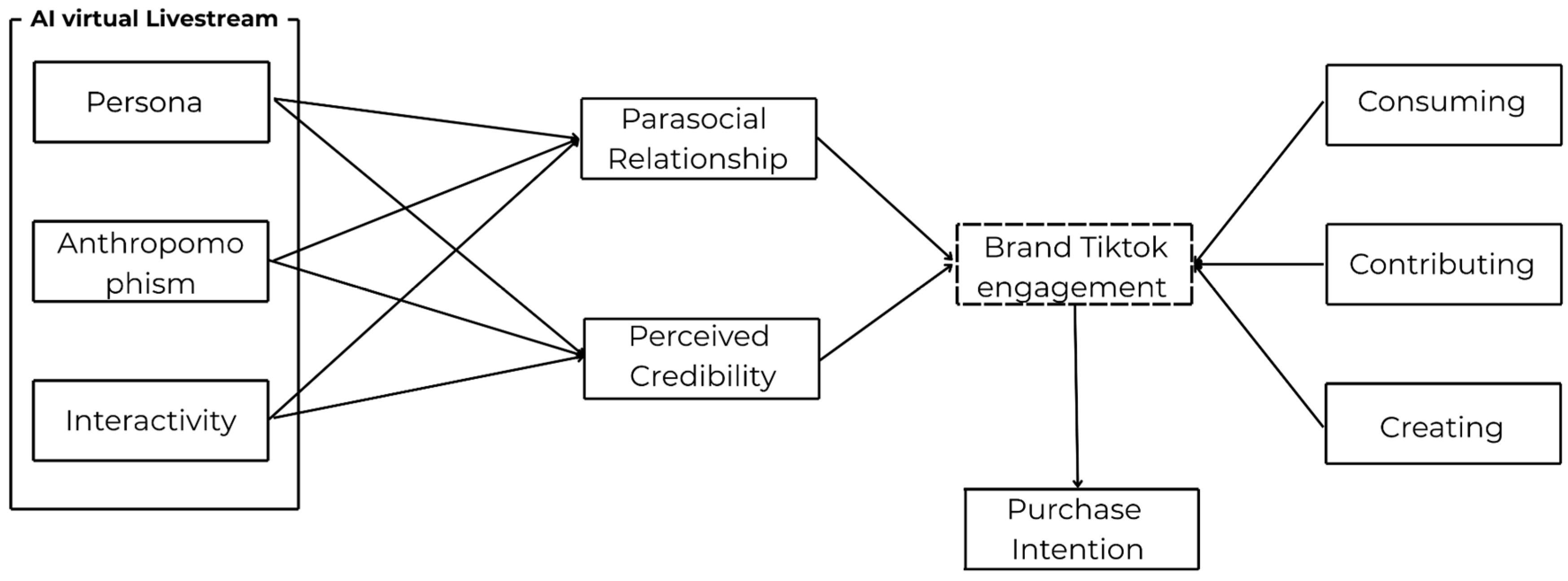
Figure 2.
Graphical output (1st stage).
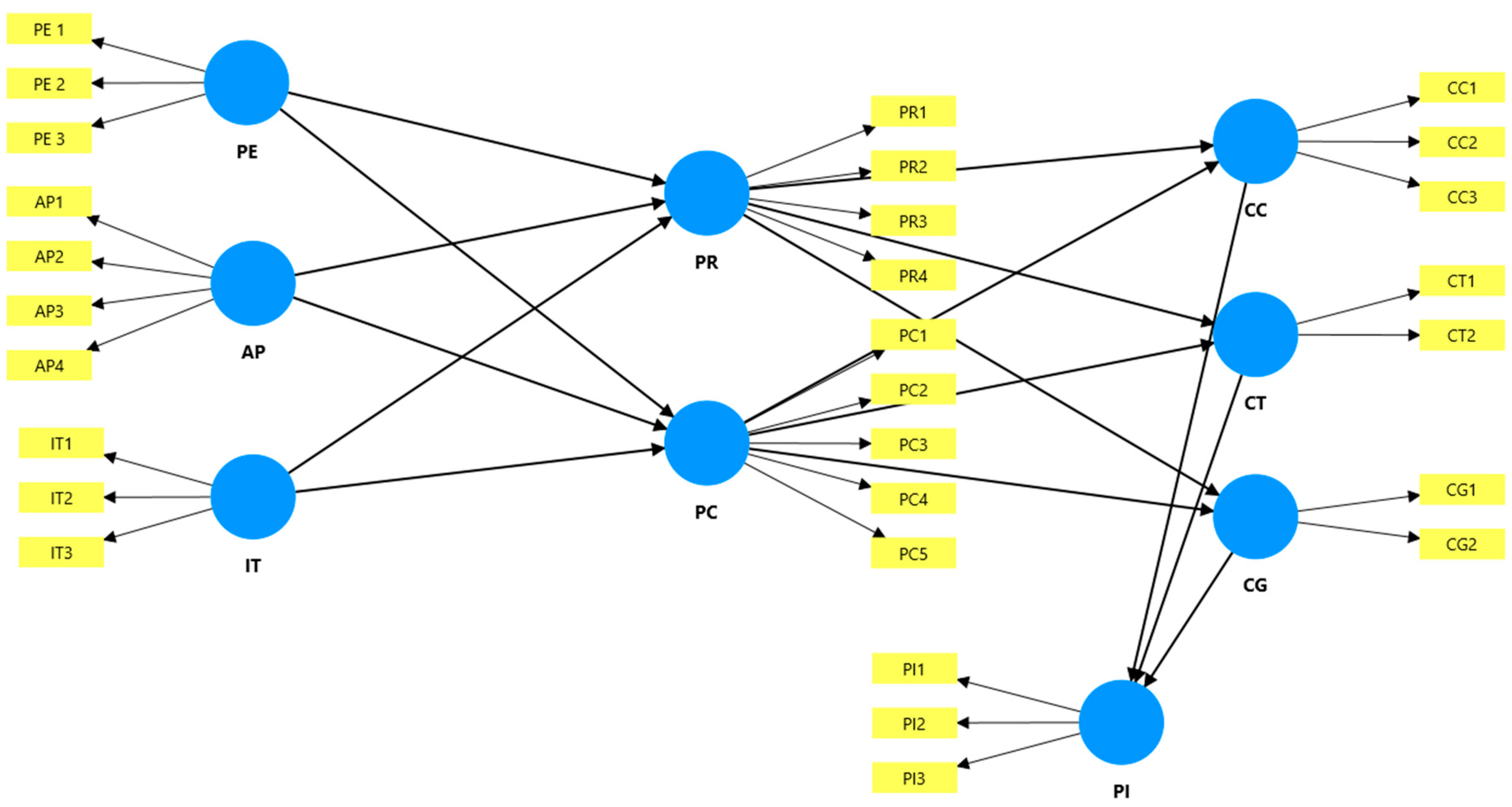
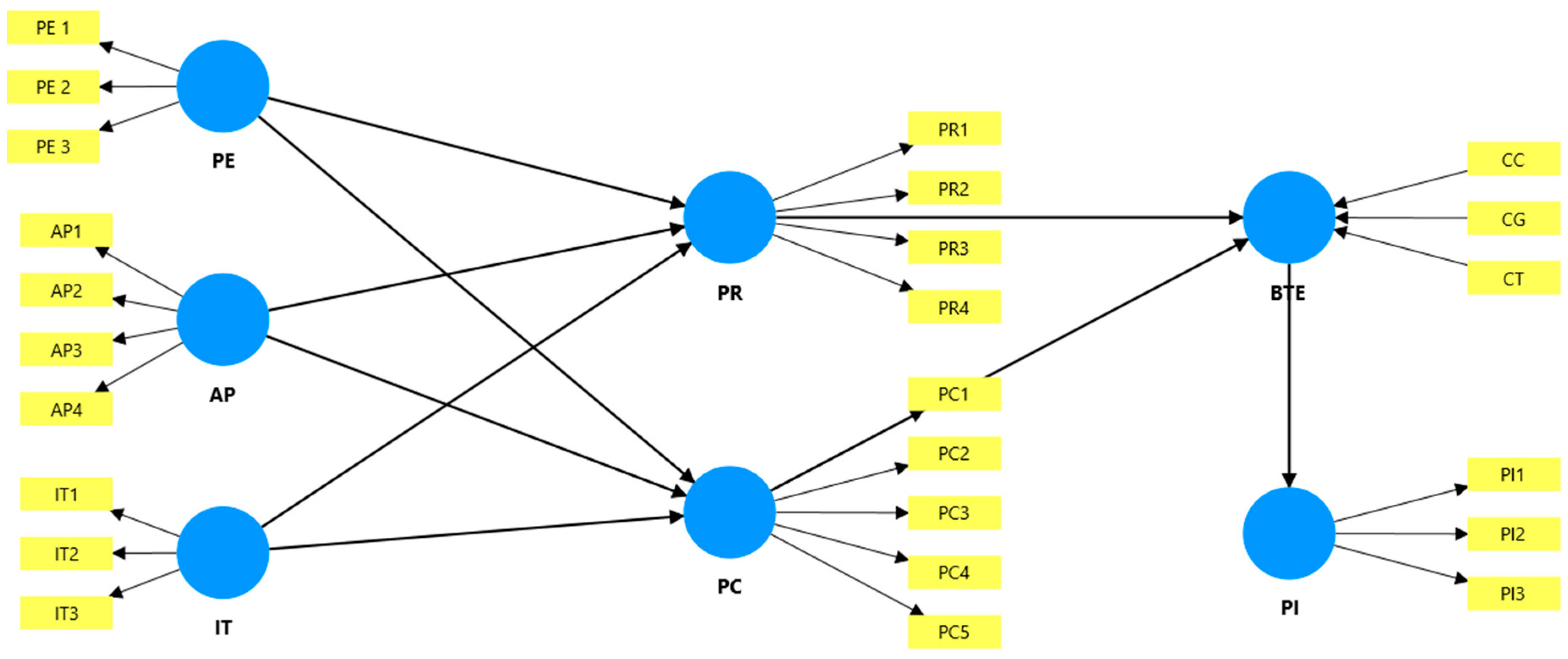
Figure 3.
Graphical output (2nd stage).
4. Methods
4.1. Data Collection
A pilot study involving 30 respondents was conducted to assess the clarity, readability, and appropriateness of the questionnaire items. Prior to data collection, all measurement scales were reviewed by three experts in digital marketing and consumer behavior research. Based on their feedback, several items were refined to improve content validity and respondent comprehension.
The main survey employed a non-probability purposive sampling technique to ensure that only respondents with relevant experience were included. Two screening questions were used at the beginning of the questionnaire. Participants were first asked whether they actively used TikTok and then whether they had watched a TikTok livestream featuring Vinamilk’s AI Virtual Host within the previous three months. Only respondents meeting both criteria were allowed to proceed. To further enhance data quality, an attention-check question was embedded in the questionnaire, requiring respondents to select a predetermined answer (“Have Watched”). In addition, all eligible participants were required to watch a standardized 15-second video featuring Vinamilk’s AI Virtual Streamer before completing the survey.
A total of 502 questionnaires were initially collected through online distribution channels. Responses that failed the screening criteria, did not pass the attention-check question, contained incomplete information, or exhibited suspicious response patterns were removed. More specifically, a detailed examination of the dataset identified several cases of straight-lining behavior, in which respondents selected the same response option across nearly all measurement items, resulting in a standard deviation of zero or close to zero. Such response patterns indicate a lack of cognitive engagement and may substantially threaten data quality and measurement validity. Consistent with recommended survey data-screening procedures, these cases were excluded from further analysis. After all screening and cleaning procedures, 163 valid responses were retained for subsequent analyses. Although the filtering process substantially reduced the number of usable responses, the final sample size remained acceptable for PLS-SEM analysis and exceeded the minimum sample size recommended for structural equation modeling studies.
Before completing the questionnaire, respondents were informed about the purpose of the study and assured that all responses would remain anonymous and be used solely for academic research purposes.
Regarding demographic characteristics, female respondents accounted for 70% (n = 114) of the sample, while male respondents represented 30.0% (n = 49). In terms of age, most respondents were between 18 and 24 years old (66.0%, n = 108), followed by those aged 25–34 years (30.0%, n = 49) and 35–44 years (4%, n = 6). Concerning occupational status, students constituted the largest group (66%, n = 107), followed by office employees (24.0%, n = 39), freelancers and self-employed individuals (9.0%, n = 15), and homemakers (2%, n = 2).
With respect to educational attainment, the majority held a bachelor’s degree (78.0%, n = 127), followed by postgraduate qualifications (13.0%, n = 21), vocational college education (7%, n = 12), and high school education or below (2%, n = 3). Regarding monthly income, 44.0% (n = 71) reported earning less than VND 5 million per month, 21.0% (n = 35) earned between VND 5 million and under VND 10 million, 20.0% (n = 33) earned between VND 10 million and under VND 15 million, 6% (n = 9) earned between VND 15 million and under VND 20 million, and 9.0% (n = 15) earned VND 20 million or above.
Overall, the sample was predominantly composed of young, well-educated, and digitally active consumers who were familiar with TikTok-based livestreaming environments. Given that younger consumers represent the most active users of social media platforms and are more likely to engage with virtual influencers and AI-generated content, the sample provides an appropriate empirical context for examining parasocial relationships, consumer credibility perceptions, COBRAs, and purchase intentions toward AI Virtual Streamers in livestream commerce settings.
Figure 4.
Vinamilk AI virtual streamer.

4.2. Measurement
The measurement instrument was developed by adapting well-established scales from prior studies and contextualizing them to the setting of AI Virtual Streamer-based livestream commerce. The research model comprises five key constructs: AI Virtual Streamer characteristics, Parasocial Relationship, Credibility of the AI Digital Human Livestreamer, Brand TikTok Page Engagement, and Purchase Intention. Following the cross-cultural adaptation procedures suggested by Harkness et al. [91], all measurement items were translated from English into Vietnamese and subsequently refined to ensure linguistic clarity, contextual appropriateness, and conceptual equivalence within the Vietnamese social commerce environment.
Responses were measured using a seven-point Likert scale ranging from 1 (“Strongly Disagree”) to 7 (“Strongly Agree”). This scale was selected to capture variations in respondents’ perceptions, attitudes, and behavioral intentions toward AI Virtual Streamers in a livestreaming context.
The AI Virtual Streamer construct was measured using ten items adapted from Zhang et al. [24], capturing consumers’ perceptions of the virtual host’s attractiveness, human likeness, responsiveness, and interaction quality. Parasocial Relationship was assessed using four items adapted from Lee and Watkins [92] & Sokolova and Kefi [93], reflecting the emotional connection and perceived closeness between consumers and the AI Virtual Streamer. The credibility of the AI digital human livestreamer was measured through five items adapted from Alcántara-Pilar et al. [94], focusing on expertise, trustworthiness, and reliability.
To capture consumers’ online engagement with the brand, Brand TikTok Page Engagement was operationalized using eight items derived from Muntinga et al. [67], covering the three dimensions of COBRAs, namely consumption, contribution, and creation behaviors. Finally, Purchase Intention was measured using three items adapted from Hwang and Zhang [95], reflecting consumers’ willingness and intention to purchase products promoted by the AI Virtual Streamer during livestream sessions.

Table 1.
Demographic characteristics.
| Variable | Responses | Total number | Percentage % |
| Gender | Total | 163 | |
| Male | 49 | 30.0 | |
| Female | 114 | 70.0 | |
| Age | Total | 163 | |
| 18-24 years | 108 | 66.0 | |
| 25-34 years | 49 | 30.0 | |
| 35-44 years | 6 | 4.0 | |
| Occupation | Total | 163 | |
| Student | 107 | 66.0 | |
| Office employee | 39 | 24.0 | |
| Freelancer/ Self-employed | 15 | 9.0 | |
| Homemaker | 2 | 1.0 | |
| Education | Total | 163 | |
| Bachelor’s degree | 127 | 78.0 | |
| Postgraduate degree | 21 | 13.0 | |
| Vocational college | 12 | 7.0 | |
| High school or below | 3 | 2.0 | |
| Monthly Income | Total | 163 | |
| Below VND 5 million | 71 | 44.0 | |
| VND 5 - < 10 million | 35 | 21.0 | |
| VND 10 - < 15 million | 33 | 20.0 | |
| VND 15 - < 20 million | 9 | 6.0 | |
| VND 20 million and above | 15 | 9.0 |
4.3. Data Analysis
To evaluate the proposed research model (see Figure 1), Partial Least Squares Structural Equation Modeling (PLS-SEM) using SmartPLS 4 software was employed [96]. This approach was selected because of its capability and flexibility in estimating models containing multiple latent variables and complex relationships among constructs [97]. Furthermore, PLS-SEM is particularly suitable for models involving interrelated paths and higher-order constructs, including reflective-formative hierarchical component models [96,97,98].
The use of PLS-SEM was especially appropriate in the present study because Brand TikTok Engagement was conceptualized as a formative higher-order construct comprising Consumption, Contribution, and Creation dimensions. Previous studies have suggested that PLS-SEM is well suited for handling research models containing both reflective and formative constructs [99]. Therefore, SmartPLS 4 provides an appropriate analytical framework for assessing both the measurement model and the structural relationships among the proposed constructs.
Following the recommended procedures, bootstrapping was performed to evaluate the significance of the hypothesized relationships and the explanatory power of the model through the coefficient of determination (R²), following the guidelines of Dijkstra and Henseler [100]. In addition, this technique helps reduce multicollinearity and redundancy issues among predictors [101]. Accordingly, SmartPLS 4 was considered an appropriate method for testing the proposed hypotheses. As the data were collected using a self-administered questionnaire, common method bias (CMB) was assessed. Harman’s single-factor test was conducted as a diagnostic procedure. The results showed that the first factor accounted for 46.817% of the total variance, which was below the recommended threshold of 50%. The results show that all VIF values fell within the range of 1.308 to 3.648 (Table 3), below the acceptable threshold of 5 [99]. Therefore, no substantial common method bias issue was detected in the present study.
5. Results
5.1. Measurement Model
The measurement model was evaluated by examining indicator reliability, internal consistency reliability, convergent validity, discriminant validity, and the assessment of the formative construct. As reported in Table 2, all factor loadings exceeded the recommended threshold of 0.70, indicating satisfactory indicator reliability [102].
Internal consistency reliability and convergent validity were assessed using Cronbach’s alpha (CA), composite reliability (CR), and average variance extracted (AVE). As shown in Table 5, Cronbach’s alpha values ranged from 0.735 to 0.920, while composite reliability values ranged from 0.849 to 0.943, both exceeding the recommended threshold of 0.70. In addition, AVE values ranged from 0.650 to 0.847, surpassing the minimum threshold of 0.50 [102]. These results confirm adequate internal consistency reliability and convergent validity.
Discriminant validity was evaluated using the Fornell–Larcker criterion, cross-loading analysis, and the heterotrait–monotrait ratio (HTMT). According to Fornell and Larcker [103], the square root of AVE for each construct should exceed its correlations with other constructs. As shown in Table 5, all constructs satisfied this requirement, indicating adequate discriminant validity. To further assess discriminant validity, cross-loading analysis was conducted. The results presented in Table 3 show that all indicators loaded more strongly on their corresponding constructs than on any other construct, providing additional evidence of discriminant validity. Finally, the heterotrait–monotrait ratio (HTMT) was examined. As reported in Table 4, all HTMT values were below the recommended threshold of 0.90 [104], confirming acceptable discriminant validity. Collectively, these findings suggest that the measurement model demonstrates satisfactory discriminant validity.In addition, the formative higher-order construct, Brand TikTok Engagement, was evaluated separately due to its formative specification. Following previous studies, multicollinearity was first assessed using variance inflation factors (VIFs). As shown in Table 6, the VIF values of all formative indicators ranged from 1.881 to 2.594, which were substantially below the recommended threshold, indicating that multicollinearity was not a significant concern. Furthermore, the weights of the three formative indicators—consuming, contributing, and creating—were all positive and statistically significant (p < 0.001). Specifically, consuming exhibited the highest contribution (weight = 0.579), followed by contributing (weight = 0.308) and creating (weight = 0.249). These findings indicate that all three dimensions represent important components of Brand TikTok Engagement and support the validity of its formative measurement specification.
Overall, the results provide strong evidence of indicator reliability, internal consistency reliability, convergent validity, discriminant validity, and formative construct validity. Therefore, the measurement model was considered suitable for subsequent structural model evaluation.
Table 2.
Factor loading.
| AP | CC | CG | CT | IT | PC | PE | PI | PR | |
|---|---|---|---|---|---|---|---|---|---|
| AP1 | 0.827 | ||||||||
| AP2 | 0.824 | ||||||||
| AP3 | 0.787 | ||||||||
| AP4 | 0.798 | ||||||||
| CC1 | 0.912 | ||||||||
| CC2 | 0.929 | ||||||||
| CC3 | 0.827 | ||||||||
| CG1 | 0.919 | ||||||||
| CG2 | 0.921 | ||||||||
| CT1 | 0.905 | ||||||||
| CT2 | 0.922 | ||||||||
| IT1 | 0.782 | ||||||||
| IT2 | 0.832 | ||||||||
| IT3 | 0.826 | ||||||||
| PC1 | 0.772 | ||||||||
| PC2 | 0.786 | ||||||||
| PC3 | 0.854 | ||||||||
| PC4 | 0.789 | ||||||||
| PC5 | 0.826 | ||||||||
| PE1 | 0.717 | ||||||||
| PE2 | 0.858 | ||||||||
| PE3 | 0.844 | ||||||||
| PI1 | 0.890 | ||||||||
| PI2 | 0.932 | ||||||||
| PI3 | 0.912 | ||||||||
| PR1 | 0.892 | ||||||||
| PR2 | 0.911 | ||||||||
| PR3 | 0.917 | ||||||||
| PR4 | 0.871 |
Note: AP = Anthropomorphism; CC = Consumption; CG = Contribution; CT = Creation; IT = Interactivity; PC = Perceived Credibility; PE = Persona; PI = Purchase Intention; PR = Parasocial Relationship.
Table 3.
Results for discriminant validity.
| VIF | AP | CC | CG | CT | IT | PC | PE | PI | PR | ||
| AP | AP1 | 1.895 | 0.827 | 0.418 | 0.408 | 0.332 | 0.583 | 0.507 | 0.490 | 0.456 | 0.535 |
| AP2 | 2.032 | 0.824 | 0.393 | 0.472 | 0.374 | 0.532 | 0.414 | 0.499 | 0.439 | 0.502 | |
| AP3 | 1.756 | 0.787 | 0.393 | 0.329 | 0.291 | 0.589 | 0.414 | 0.344 | 0.344 | 0.438 | |
| AP4 | 1.595 | 0.798 | 0.460 | 0.437 | 0.375 | 0.546 | 0.463 | 0.478 | 0.468 | 0.624 | |
| CC | CC1 | 2.722 | 0.471 | 0.912 | 0.539 | 0.642 | 0.507 | 0.486 | 0.574 | 0.603 | 0.640 |
| CC2 | 3.024 | 0.504 | 0.929 | 0.563 | 0.611 | 0.526 | 0.473 | 0.516 | 0.643 | 0.636 | |
| CC3 | 1.874 | 0.354 | 0.827 | 0.421 | 0.531 | 0.400 | 0.371 | 0.380 | 0.505 | 0.444 | |
| CG | CG1 | 1.928 | 0.446 | 0.545 | 0.919 | 0.637 | 0.426 | 0.368 | 0.413 | 0.552 | 0.521 |
| CG2 | 1.928 | 0.495 | 0.515 | 0.921 | 0.684 | 0.412 | 0.353 | 0.405 | 0.551 | 0.536 | |
| CT | CT1 | 1.816 | 0.419 | 0.644 | 0.585 | 0.905 | 0.418 | 0.368 | 0.445 | 0.536 | 0.528 |
| CT2 | 1.816 | 0.363 | 0.585 | 0.720 | 0.922 | 0.441 | 0.429 | 0.532 | 0.617 | 0.550 | |
| IT | IT1 | 1.579 | 0.536 | 0.379 | 0.299 | 0.301 | 0.782 | 0.481 | 0.372 | 0.336 | 0.379 |
| IT2 | 1.662 | 0.521 | 0.419 | 0.303 | 0.324 | 0.832 | 0.542 | 0.435 | 0.447 | 0.486 | |
| IT3 | 1.368 | 0.625 | 0.505 | 0.479 | 0.492 | 0.826 | 0.568 | 0.557 | 0.582 | 0.582 | |
| PC | PC1 | 1.828 | 0.398 | 0.367 | 0.255 | 0.251 | 0.498 | 0.772 | 0.427 | 0.497 | 0.521 |
| PC2 | 1.957 | 0.420 | 0.283 | 0.186 | 0.277 | 0.455 | 0.786 | 0.425 | 0.462 | 0.417 | |
| PC3 | 2.144 | 0.532 | 0.518 | 0.493 | 0.494 | 0.569 | 0.854 | 0.519 | 0.689 | 0.641 | |
| PC4 | 1.942 | 0.391 | 0.337 | 0.249 | 0.280 | 0.469 | 0.789 | 0.405 | 0.522 | 0.400 | |
| PC5 | 2.004 | 0.478 | 0.455 | 0.312 | 0.423 | 0.620 | 0.826 | 0.429 | 0.593 | 0.597 | |
| PE | PE1 | 1.308 | 0.350 | 0.316 | 0.239 | 0.280 | 0.429 | 0.440 | 0.717 | 0.372 | 0.343 |
| PE2 | 1.686 | 0.553 | 0.488 | 0.497 | 0.537 | 0.510 | 0.433 | 0.858 | 0.525 | 0.561 | |
| PE3 | 1.571 | 0.451 | 0.525 | 0.324 | 0.457 | 0.448 | 0.471 | 0.844 | 0.514 | 0.572 | |
| PI | PI1 | 2.495 | 0.416 | 0.568 | 0.480 | 0.526 | 0.513 | 0.605 | 0.521 | 0.890 | 0.722 |
| PI2 | 3.250 | 0.530 | 0.609 | 0.596 | 0.653 | 0.510 | 0.651 | 0.572 | 0.932 | 0.746 | |
| PI3 | 2.797 | 0.502 | 0.626 | 0.555 | 0.543 | 0.553 | 0.655 | 0.514 | 0.912 | 0.686 | |
| PR | PR1 | 2.858 | 0.536 | 0.608 | 0.488 | 0.564 | 0.537 | 0.559 | 0.588 | 0.669 | 0.892 |
| PR2 | 3.495 | 0.643 | 0.572 | 0.541 | 0.521 | 0.609 | 0.615 | 0.532 | 0.703 | 0.911 | |
| PR3 | 3.648 | 0.628 | 0.578 | 0.526 | 0.520 | 0.629 | 0.620 | 0.569 | 0.752 | 0.917 | |
| PR4 | 2.500 | 0.548 | 0.589 | 0.510 | 0.515 | 0.553 | 0.560 | 0.542 | 0.706 | 0.871 |
Note: AP = Anthropomorphism; CC = Consumption; CG = Contribution; CT = Creation; IT = Interactivity; PC = Perceived Credibility; PE = Persona; PI = Purchase Intention; PR = Parasocial Relationship.
Table 4.
Heterotrait-monotrait ratio.
| AP | CC | CG | CT | IT | PC | PE | PI | PR | |
| AP | |||||||||
| CC | 0.582 | ||||||||
| CG | 0.618 | 0.676 | |||||||
| CT | 0.523 | 0.802 | 0.881 | ||||||
| IT | 0.875 | 0.653 | 0.564 | 0.588 | |||||
| PC | 0.645 | 0.554 | 0.440 | 0.511 | 0.797 | ||||
| PE | 0.710 | 0.675 | 0.563 | 0.682 | 0.754 | 0.689 | |||
| PI | 0.609 | 0.741 | 0.696 | 0.739 | 0.681 | 0.775 | 0.716 | ||
| PR | 0.732 | 0.720 | 0.662 | 0.686 | 0.755 | 0.714 | 0.740 | 0.867 |
Note: AP = Anthropomorphism; CC = Consumption; CG = Contribution; CT = Creation; IT = Interactivity; PC = Perceived Credibility; PE = Persona; PI = Purchase Intention; PR = Parasocial Relationship.
Table 5.
Cronbach’s alpha, composite reliability, AVE, and correlations.
| CA | CR | AVE | AP | CC | CG | CT | IT | PC | PE | PI | PR | |
| AP | 0.825 | 0.884 | 0.655 | 0.809 | ||||||||
| CC | 0.869 | 0.920 | 0.793 | 0.504 | 0.890 | |||||||
| CG | 0.819 | 0.917 | 0.847 | 0.511 | 0.576 | 0.920 | ||||||
| CT | 0.803 | 0.910 | 0.835 | 0.426 | 0.671 | 0.718 | 0.914 | |||||
| IT | 0.749 | 0.854 | 0.662 | 0.694 | 0.541 | 0.456 | 0.471 | 0.814 | ||||
| PC | 0.867 | 0.903 | 0.650 | 0.559 | 0.503 | 0.392 | 0.447 | 0.656 | 0.806 | |||
| PE | 0.735 | 0.849 | 0.654 | 0.564 | 0.558 | 0.444 | 0.537 | 0.571 | 0.551 | 0.809 | ||
| PI | 0.898 | 0.936 | 0.830 | 0.533 | 0.660 | 0.599 | 0.632 | 0.576 | 0.700 | 0.588 | 0.911 | |
| PR | 0.920 | 0.943 | 0.807 | 0.656 | 0.653 | 0.575 | 0.590 | 0.648 | 0.656 | 0.621 | 0.788 | 0.898 |
Note: AP = Anthropomorphism; CC = Consumption; CG = Contribution; CT = Creation; IT = Interactivity; PC = Perceived Credibility; PE = Persona; PI = Purchase Intention; PR = Parasocial Relationship.
Table 6.
VIFs and weights of formative indicators.
| Items | VIFs | Weights | |
| Brand Tiktok Engagement | Consuming | 1.881 | 0.579*** |
| Contributing | 2.134 | 0.308*** | |
| Creating | 2.594 | 0.249*** |
Notes: ***p < 0.001; VIFs: variance inflation factors.
5.2. Structural Model
The explanatory power of the structural model was assessed using the coefficient of determination (R²). The R² values range from 0.322 to 0.548, indicating a moderate level of regression model performance. As shown in Table 7, the SRMR value for the saturated model was 0.069, which is below the recommended threshold of 0.08, indicating an acceptable model fit. However, the SRMR value for the estimated model was 0.123, exceeding the recommended cut-off value. Despite this, the Normed Fit Index (NFI) values for both the saturated model (0.751) and estimated model (0.708) exceeded the minimum acceptable threshold of 0.70, supporting the adequacy of the proposed model. Such findings are commonly observed in prediction-oriented PLS-SEM studies, where the primary objective is explanation and prediction rather than exact model fit [105]. Therefore, the model was considered adequate for subsequent structural model assessment and hypothesis testing.
The bootstrapping results are presented in Table 8. Specifically, persona was found to exert significant positive effects on both parasocial relationship (β = 0.296, t = 3.271, p = 0.001) and perceived credibility (β = 0.231, t = 2.644, p = 0.008), thereby supporting H1a and H1b. Similarly, anthropomorphism significantly enhanced parasocial relationship (β = 0.302, t = 3.380, p = 0.001), providing support for H2a. However, its effect on perceived credibility was not statistically significant (β = 0.123, t = 1.095, p = 0.273), leading to the rejection of H2b. In addition, interactivity demonstrated significant positive influences on both parasocial relationship (β = 0.270, t = 2.821, p = 0.005) and perceived credibility (β = 0.438, t = 4.427, p < 0.001), thus supporting H3a and H3b.
Regarding the downstream effects, parasocial relationship was found to be a strong predictor of Brand TikTok Engagement (β = 0.633, t = 8.424, p < 0.001), supporting H4. In contrast, perceived credibility did not significantly influence Brand TikTok Engagement (β = 0.106, t = 1.189, p = 0.234), resulting in the rejection of H5. Finally, Brand TikTok Engagement exhibited a substantial positive effect on purchase intention (β = 0.724, t = 17.492, p < 0.001), providing strong support for H6. Overall, seven out of the nine proposed hypotheses were supported. The findings suggest that the characteristics of AI virtual livestreamers, particularly persona and interactivity, play important roles in fostering both parasocial relationship and perceived credibility. Furthermore, parasocial relationship emerged as a more influential driver of Brand TikTok Engagement than perceived credibility, while Brand TikTok Engagement itself was shown to be a critical determinant of consumers’ purchase intention.
6. fsQCA Analysis
To complement the net-effect perspective provided by PLS-SEM, this study employed fuzzy-set Qualitative Comparative Analysis (fsQCA) to explore multiple configurations of antecedent conditions leading to high purchase intention. Unlike conventional statistical techniques that focus on the independent effects of individual variables, fsQCA adopts a configurational perspective and enables researchers to identify alternative combinations of conditions that jointly produce a specific outcome [106]. This approach is particularly suitable for examining causal complexity, equifinality, and interdependencies among antecedent conditions.
The fsQCA analysis was conducted using fsQCA 4.1 software. Following established procedures, the raw scores of both antecedent conditions and the outcome variable were calibrated into fuzzy-set membership scores ranging from 0 to 1, representing varying degrees of set membership. Consistent with prior fsQCA studies, the direct calibration method was applied using three qualitative anchors. Specifically, the 5th percentile was specified as the threshold for full non-membership, the 50th percentile as the crossover point, and the 95th percentile as the threshold for full membership [107]. The calibration thresholds for all variables are presented in Table 9. This calibration procedure facilitates a more meaningful representation of case memberships and enables the identification of complex causal configurations that may not be captured through conventional variable-centered approaches [106]. Before examining sufficient configurations, a necessary condition analysis was conducted to determine whether any individual antecedent condition was indispensable for achieving high purchase intention (PI). Following established fsQCA guidelines, a condition is considered necessary only when its consistency value exceeds the recommended threshold of 0.90 [108].
The results are presented in Table 10. None of the examined conditions reached the required consistency level for necessity. Among the antecedents, Parasocial Relationship (PR) exhibited the highest consistency value (0.882), followed by Perceived Credibility (PC) (0.838) and Brand TikTok Engagement (BTE) (0.827). However, all values remained below the recommended benchmark of 0.90. Similarly, the negated conditions also failed to satisfy the necessity criterion.
These findings indicate that no single antecedent condition is required for the emergence of high purchase intention. Rather than being driven by one dominant factor, purchase intention appears to result from the joint influence of multiple conditions operating in combination. This outcome supports the configurational logic of fsQCA and provides justification for proceeding to the analysis of sufficient configurations. Following the necessary condition analysis, a sufficiency analysis was conducted to identify combinations of antecedent conditions associated with high purchase intention (PI). The results are presented in Table 11.
The analysis yielded three sufficient configurations leading to high purchase intention. The overall solution demonstrated a consistency of 0.911 and a coverage of 0.682, both exceeding the commonly accepted thresholds for fsQCA solutions [109]. These results indicate that the identified configurations provide a reliable and substantial explanation for the occurrence of high purchase intention.
The findings further support the principle of equifinality, suggesting that consumers may develop high purchase intention through multiple alternative pathways rather than through a single causal route. In other words, different combinations of anthropomorphism, interactivity, parasocial relationship, brand TikTok engagement, persona, and Perceived credibility can jointly contribute to the same outcome.
Among the identified configurations, S2 exhibited the highest raw coverage (0.602) and consistency (0.969), indicating that this configuration represents the most empirically relevant pathway to high purchase intention. In contrast, S1 and S3 accounted for smaller yet meaningful proportions of cases, with raw coverage values of 0.327 and 0.284, respectively. Collectively, these configurations demonstrate that purchase intention toward AI virtual streamers is characterized by causal complexity and configurational effects, thereby complementing the net-effect relationships identified through PLS-SEM.
7. Discussion
Drawing upon the S-O-R framework and the CASA paradigm, this study examined how AI virtual streamers influence consumers’ psychological states and behavioral responses within TikTok livestream commerce. The findings contribute to the emerging literature on AI-mediated commerce by revealing both consistent and divergent patterns relative to prior studies.
First, the findings indicate that persona and interactivity significantly enhance both parasocial relationship and perceived credibility H1a (PE → PR); H1b (PE → PC); H3a (IT → PR); H3b (IT → PC). These results are consistent with Dabiran et al. [12] suggesting that AI streamers possessing distinctive personalities and responsive communication capabilities are more likely to foster social connectedness and credibility perceptions among consumers. From a CASA perspective, these findings reinforce the notion that users tend to apply interpersonal communication norms when interacting with technologically mediated agents. When AI streamers exhibit human-like conversational behaviors and respond in a timely manner, consumers are more likely to perceive them as socially present entities, thereby strengthening both emotional attachment and credibility evaluations.
Second, anthropomorphism was found to significantly influence parasocial relationship but failed to exert a significant effect on perceived credibility (H2a, β = 0.302, p = 0.001). In contrast, H2b was not supported (β = 0.123, p = 0.273). The positive relationship between anthropomorphism and parasocial relationship is consistent with previous studies such as Wan et al. [110]; Chen et al. [111], which suggest that human-like characteristics facilitate social bonding between users and digital agents. However, the non-significant effect of anthropomorphism on perceived credibility contrasts with prior findings reported by Liu and Wang [45] & Dabiran et al. [12],who argued that human-like cues enhance users’ trust and confidence in technological systems. One possible explanation lies in the demographic composition of the sample. The majority of respondents belonged to younger generations Gen Z (66.3% from 18-24 age group) who possess extensive digital experience and greater familiarity with AI technologies. Consequently, they may clearly distinguish between an AI streamer’s human-like appearance and the actual credibility of the information being communicated. In this context, anthropomorphic features appear to function primarily as social cues that facilitate emotional connection rather than as indicators of expertise or reliability.
Third, the results reveal an important distinction between emotional and cognitive drivers of brand engagement. Parasocial relationship demonstrated a strong positive effect on Brand TikTok Engagement (H4, β = 0.633, p < 0.001), which is consistent with previous studies: Vo et al. [74]; Shen et al. [112]. In contrast, perceived credibility did not significantly influence engagement behavior (β = 0.106, p=0.234). This finding differs from the conclusions of Lou and Yuan [113], Agnihotri et al. [14], and Jiang et al. [114], who identified credibility as a key antecedent of online engagement. A plausible explanation may be attributed to the unique characteristics of TikTok livestream commerce. Unlike information-oriented platforms where credibility serves as a primary determinant of user participation, TikTok operates within a highly entertainment-driven environment. Under such conditions, engagement behaviors such as liking, commenting, and sharing may be driven more strongly by emotional attachment and social connection than by rational evaluations of credibility. Therefore, consumers appear to engage with AI virtual streamers because they feel connected to them rather than because they perceive them as highly trustworthy information sources.
Finally, Brand TikTok Engagement emerged as the strongest predictor of purchase intention. This result is highly consistent with Mishra (87); Kim and Kim (89),; Angmo et al (88), which emphasize the importance of active brand-related participation in shaping consumer behavioral intentions. The finding suggests that engagement behaviors represent a critical mechanism through which consumers translate psychological attachment into purchasing decisions. As consumers move beyond passive content consumption and become actively involved in brand-related activities, they become increasingly likely to develop favorable purchase intentions toward products promoted by AI virtual streamers.
To complement the net-effect perspective provided by PLS-SEM, fsQCA was employed to investigate configurational pathways leading to high purchase intention. The necessary condition analysis revealed that none of the antecedent conditions achieved the recommended consistency threshold of 0.90. Although parasocial relationship exhibited the highest consistency value (0.882), it did not qualify as a necessary condition. This finding suggests that no single antecedent factor is indispensable for generating purchase intention, thereby supporting the configurational logic of consumer decision-making in AI-driven livestream commerce.
The sufficiency analysis identified three alternative configurations associated with high purchase intention, demonstrating the principle of equifinality. The second configuration (Table 11) exhibited the highest coverage and consistency, representing the dominant pathway toward purchase intention. This configuration largely mirrors the relationships identified in the PLS-SEM analysis and highlights the complementary role of emotional, cognitive, and behavioral mechanisms. More importantly, the first and third configurations reveal alternative pathways that would not be observable through conventional net-effect analysis. The first configuration indicates that consumers may develop purchase intention through persona, anthropomorphism, interactivity, perceived credibility, even in the absence of parasocial relationship. Conversely, the third configuration suggests that parasocial relationship alone can compensate for the absence of several other antecedents. These findings demonstrate that consumers do not follow a single decision-making process when responding to AI virtual streamers. Instead, multiple combinations of emotional, cognitive, and behavioral conditions can lead to the same outcome.
Taken together, the results extend both the S-O-R framework and the CASA paradigm by showing that emotional attachment and credibility do not always operate in parallel, and that their relative importance may vary across platform contexts and consumer segments. Furthermore, the integration of PLS-SEM and fsQCA provides a more comprehensive understanding of AI-driven livestream commerce by simultaneously revealing net effects and configurational mechanisms underlying purchase intention.
8. Conclusion
8.1. Theoretical Implications
This study offers several important theoretical contributions to the literature on AI-mediated commerce, virtual influencers, and consumer behavior.
First, the study extends the applicability of the Stimulus–Organism–Response (S-O-R) framework and the Computers Are Social Actors (CASA) paradigm to the context of autonomous AI virtual streamers. Existing studies have predominantly examined human–computer interactions involving conventional technological agents or human-controlled virtual influencers. By investigating AI virtual streamers powered by advanced artificial intelligence technologies, this study demonstrates that consumers continue to apply social interaction norms when engaging with AI-driven agents. The significant effects of persona and interactivity on both parasocial relationship and perceived credibility provide empirical support for the continued relevance of CASA in increasingly sophisticated AI environments. These findings suggest that consumers respond to AI streamers not merely as technological tools but also as social actors capable of eliciting emotional and cognitive reactions.
Second, this study addresses an important gap in the literature by integrating the COBRAs framework into AI livestream commerce. Previous studies have primarily focused on purchase intention as the final consumer response [3,115], with limited attention given to the behavioral processes occurring between psychological states and purchasing outcomes. By conceptualizing Brand TikTok Engagement through consumers’ online brand-related activities—including consuming, contributing, and creating—the study identifies an important behavioral mechanism linking consumers’ psychological responses toward AI streamers to subsequent purchase intentions. This finding enriches the S-O-R framework by demonstrating that engagement behaviors serve as a critical intermediate stage through which psychological attachment is translated into purchasing outcomes.
Overall, these findings contribute to the growing literature on AI virtual streamers by extending established theoretical frameworks, introducing a behavioral engagement mechanism into the AI livestreaming context, and providing new evidence regarding the distinct roles of anthropomorphism, credibility, and parasocial relationships in shaping consumer responses.
8.2. Practical Implications
This study provides several practical implications for brand managers, livestream commerce practitioners, platform operators, and AI technology developers seeking to integrate AI virtual streamers into digital marketing strategies.
First, the findings suggest that organizations should move beyond a primary focus on visual realism and allocate greater attention to developing interaction capabilities and distinctive personas. The results indicate that anthropomorphism does not significantly enhance perceived credibility, implying that investments in highly realistic visual representations alone may not generate stronger consumer trust. Instead, firms should prioritize improving the interactive capabilities of AI virtual streamers through advanced natural language processing and real-time response mechanisms. In addition, AI virtual streamers should be designed with clear personalities, communication styles, and value orientations that align with the preferences of target audiences. Such characteristics are more likely to facilitate social connection and strengthen consumer engagement than visual realism alone.
Second, the findings highlight the importance of adopting an emotion-oriented content strategy in short-video and livestreaming environments. The significant influence of parasocial relationship on Brand TikTok Engagement, coupled with the non-significant role of perceived credibility, suggests that consumer engagement within TikTok livestream commerce is primarily driven by emotional attachment rather than cognitive evaluations. Consequently, marketers should focus on designing interactive experiences that cultivate social connection between consumers and AI virtual streamers. Practical approaches may include personalized interactions, audience recognition, interactive games, and narrative-based communication strategies that encourage viewers to develop stronger emotional bonds with virtual agents. Such strategies are likely to stimulate higher levels of online engagement and participation.
Third, the fsQCA findings indicate that multiple pathways can lead to high purchase intention, suggesting that firms should adopt differentiated strategies for distinct consumer segments rather than relying on a single engagement model. The dominant configuration identified in this study emphasizes the joint importance of anthropomorphism, interactivity, parasocial relationship, credibility, and Brand TikTok Engagement. However, alternative configurations demonstrate that consumers may arrive at the same purchase outcome through different combinations of antecedent conditions. Therefore, managers should tailor AI virtual streamer strategies according to the characteristics of specific target audiences and product categories. For some consumer segments, emphasizing information quality, responsiveness, and credibility may be more effective, whereas for others, fostering emotional attachment and social connection may play a more influential role.
Finally, the findings underscore the importance of transparency and ethical governance in the deployment of AI virtual streamers. Although AI virtual streamers may reduce certain risks associated with human influencers, organizations must remain attentive to concerns regarding transparency, privacy, and consumer manipulation. Given that anthropomorphic characteristics alone do not enhance perceived credibility, firms should avoid creating misleading impressions regarding the nature of AI-generated agents. Instead, transparent disclosure of AI identities, combined with clear data governance and privacy protection policies, may help strengthen consumer confidence and support the long-term sustainability of AI-driven marketing initiatives.
Overall, the results suggest that successful AI virtual streamer strategies should prioritize interaction quality, emotional engagement, audience-specific customization, and ethical transparency rather than relying solely on technological sophistication or visual realism.
8.3. Limitations and Future Research
Despite its theoretical and practical contributions, this study is subject to several limitations that should be acknowledged. These limitations also provide promising directions for future research.
First, the study relied on a self-administered online questionnaire to collect data. Although this approach enables efficient access to a large number of respondents, self-reported measures may be vulnerable to common sources of bias, including social desirability bias and recall bias. Consequently, respondents may overestimate their levels of engagement or purchase intention when interacting with AI virtual streamers. Future research could address this limitation by incorporating more objective behavioral indicators, such as click-through rates, viewing duration, engagement logs, or transaction records obtained directly from digital platforms. In addition, experimental approaches utilizing biometric measures, such as eye-tracking technology or facial emotion recognition, may provide deeper insights into consumers’ unconscious responses toward AI virtual streamers and help bridge the gap between stated intentions and actual behavior.
Second, the study employed a cross-sectional research design, which limits the ability to establish temporal causality among the investigated constructs. This limitation is particularly relevant because key psychological variables in the proposed model, including parasocial relationship and perceived credibility, are dynamic constructs that may evolve over time. Measuring these variables at a single point in time may not fully capture the formation, development, or decline of consumers’ relationships with AI virtual streamers. Furthermore, consumers’ reactions toward AI technologies may be influenced by novelty effects, which could diminish as familiarity increases. Therefore, future studies are encouraged to adopt longitudinal research designs to examine how consumers’ perceptions, attitudes, and behavioral responses change throughout different stages of interaction with AI virtual streamers. Such an approach would provide a more comprehensive understanding of whether parasocial relationships with AI agents represent enduring social bonds or temporary reactions to emerging technologies.
Third, the generalizability of the findings may be constrained by the demographic composition of the sample and the contextual boundaries of the study. The sample was predominantly composed of young and highly educated Vietnamese consumers, with a large proportion belonging to Generation Z. As digital natives, these consumers generally exhibit higher levels of technological readiness and familiarity with AI-enabled environments than older generations. Moreover, the study was conducted exclusively within the TikTok livestreaming ecosystem and focused on human-like AI virtual streamers. Consequently, the findings may not be directly transferable to other demographic groups, cultural settings, platforms, or AI representations. Future research should expand the scope of investigation by examining consumers from different age groups, particularly older generations who may exhibit greater resistance toward emerging technologies. Cross-cultural comparative studies would also be valuable in assessing whether the identified relationships remain stable across different cultural contexts. In addition, future studies could compare AI virtual streamers across multiple livestreaming platforms, such as YouTube Live or Twitch, and explore alternative AI representations, including anime-style virtual influencers, mascot-based agents, or non-human AI avatars. Such efforts would contribute to a more comprehensive understanding of consumer responses toward diverse forms of AI-mediated communication.
Overall, addressing these limitations would not only strengthen the robustness and generalizability of future findings but also advance the growing body of knowledge on AI virtual streamers, digital consumer behavior, and AI-enabled commerce.
Author Contributions
C.-T.J. conceived and supervised the study. C.-T.J., W.-M.L., and T.Q.S. designed the research methodology and validated the analytical framework. T.Q.S. carried out the data collection, statistical analyses, software implementation, visualization, and prepared the first draft of the manuscript. C.-T.J. and W.-M.L. critically revised the manuscript, provided intellectual input throughout the research process, and supervised the study. All authors reviewed the final version of the manuscript and approved it for publication.
Funding
No external funding was received for this research.
Institutional Review Board Statement
This study was conducted in accordance with the ethical principles of the Declaration of Helsinki. As the research involved an anonymous online survey of adult employees, posed no more than minimal risk, and did not collect personally identifiable or sensitive information, formal ethical review and approval were not required under the applicable institutional guidelines. Participation was entirely voluntary, and respondents were informed of the purpose of the study before completing the questionnaire.
Informed Consent Statement
Electronic informed consent was obtained from all participants prior to their participation in the survey.
Data Availability Statement
The datasets generated and analysed during the current study are available from the corresponding author upon reasonable request.
Conflicts of Interest
The authors declare that they have no known competing financial interests or personal relationships that could have influenced the work reported in this manuscript.
References
- Shi, Y.; Wang, X.; Gong, J.; Wang, W. How the features of live streaming e-commerce affect consumer purchase intention: The mediating role of social presence. Acta Psychol. (Amst) 2026, 263, 106336. [Google Scholar] [CrossRef] [PubMed]
- Teng, Y.M.; Wu, K.S.; Li, Z. The socio-technical engine driving hotel live streaming engagement: insights from PLS-SEM, NCA, and cIPMA. Humanit Soc. Sci. Commun. 2026, 13(1), 517. [Google Scholar] [CrossRef]
- Gao, J.; Zhao, X.; Zhai, M.; Zhang, D.; Li, G. AI or Human? The Effect of Streamer Types on Consumer Purchase Intention in Live Streaming. Int. J. Human–Computer Interact. 2025, 41(1), 305–17. [Google Scholar] [CrossRef]
- Yao, R.; Qi, G.; Wu, Z.; Sun, H.; Sheng, D. Digital human calls you dear: How do customers respond to virtual streamers’ social-oriented language in e-commerce livestreaming? A stereotyping perspective. J. Retail Consum Serv. 2024, 79, 103872. [Google Scholar] [CrossRef]
- Xu, Y.; Ruan, Y. AI and human broadcasters: Relative impact on consumer engagement in live streaming commerce. Electron Commer. Res. Appl. 2023, 62, 101335. [Google Scholar] [CrossRef]
- Su, B.C. Navigating the new frontier: The role of AI-driven virtual influencers in consumer engagement. AI Mag. 2025, 46(2), e70012. [Google Scholar] [CrossRef]
- Meng, Y. Governing AI virtual anchors in China’s live streaming E-commerce ecosystem: Policy challenges and global implications. Telecommun. Policy 2026, 50(2), 103109. [Google Scholar] [CrossRef]
- Chen, H.; Shao, B.; Yang, X.; Kang, W.; Fan, W. Avatars in live streaming commerce: The influence of anthropomorphism on consumers’ willingness to accept virtual live streamers. Comput Hum. Behav. 2024, 156, 108216. [Google Scholar] [CrossRef]
- Zhong, D.; Wu, F.; Huang, Z.; Chen, Y. Navigating the human-digital nexus: understanding consumer intentions with AI anchors in live commerce. Behav. Inf. Technol. 2025, 44(16), 4096–111. [Google Scholar] [CrossRef]
- Liu, Y.; Zhang, Z.; Wu, Y. Will Generative AI Create a New Social Divide? Investigating the Impacts of Generative AI Use on Social Capital in China. Int. J. Human–Computer Interact. 2025, 41(18), 11324–40. [Google Scholar] [CrossRef]
- Liu, F.; Wang, R. Fostering Parasocial Relationships with Virtual Influencers in the Uncanny Valley: Anthropomorphism, Autonomy, and a Multigroup Comparison. J. Bus. Res. 2025, 186, 115024. [Google Scholar] [CrossRef]
- Dabiran, E.; Farivar, S.; Wang, F.; Grant, G. Virtually human: anthropomorphism in virtual influencer marketing. J. Retail Consum Serv. 2024, 79, 103797. [Google Scholar] [CrossRef]
- Lou, C.; Yuan, S. Influencer Marketing: How Message Value and Credibility Affect Consumer Trust of Branded Content on Social Media. J. Interact. Advert. 2019, 19(1), 58–73. [Google Scholar] [CrossRef]
- Agnihotri, D.; Chaturvedi, P.; Tripathi, V. “Virtual bonds and actual transactions”: investigating the impact of virtual influencers’ credibility on buying behavior through virtual engagement. J. Commun. Manag. 2024, 29(1), 35–52. [Google Scholar] [CrossRef]
- Yu, T.; Teoh, A.P.; Bian, Q.; Liao, J.; Wang, C. Can virtual influencers affect purchase intentions in tourism and hospitality e-commerce live streaming? An empirical study in China. Int. J. Contemp. Hosp. Manag. 2024, 37(1), 216–38. [Google Scholar] [CrossRef]
- Kim, H.; Park, M. Virtual influencers’ attractiveness effect on purchase intention: A moderated mediation model of the Product–Endorser fit with the brand. Comput Hum. Behav. 2023, 143, 107703. [Google Scholar] [CrossRef]
- Lee, S.S.; Lee, A.R.; Chun, J.W. Human vs. AI Influencer Marketing on Instagram: The Role of Message Appeals and Perceived Humanness. J. Advert. Res. 2026, 0(0), 1–18. [Google Scholar] [CrossRef]
- Wang, Y.; Huam, H.T.; Hamid, A.B.A. Virtual influencer effects in China’s Gen Z market: How core characteristics and dual moderation shape purchase intentions. Acta Psychol. (Amst) 2025, 259, 105477. [Google Scholar] [CrossRef] [PubMed]
- Kumar, A.; Shankar, A. Investigating the role of metaverse influencers’ attributes for the next generation of services | Journal of Services Marketing | Emerald Publishing [Internet]. 2024. Available online: https://www.emerald.com/jsm/article-abstract/38/7/816/1233118/Investigating-the-role-of-metaverse-influencers?redirectedFrom=fulltext.
- Gu, C.; Duan, Q. Exploring the dynamics of consumer engagement in social media influencer marketing: from the self-determination theory perspective | Humanities and Social Sciences Communications [Internet]. 2024. Available online: https://www.nature.com/articles/s41599-024-03127-w.
- Nyagudi, C.S.; Wu, W. Artificial Intelligence vs. Social Media Influencer-Generated Content: A Comparative Study of Anthropomorphism in Shaping Tourist Destination Visitation Intention. J. Theor. Appl. Electron Commer. Res. 2026, 21(6), 181. [Google Scholar] [CrossRef]
- Hervás-Cortina, C.M.; Ruiz-Molina, M.E.; Gil-Saura, I.; Bordian, M. How Social Media Content Shapes Destination Image and eWOM: The Moderating Role of Personality in Lesser-Known Tourism Destinations. J. Theor. Appl. Electron Commer. Res. 2026, 21(6), 164. [Google Scholar] [CrossRef]
- Qiu, L.; Benbasat, I. Evaluating Anthropomorphic Product Recommendation Agents: A Social Relationship Perspective to Designing Information Systems. J. Manag Inf. Syst. 2009, 25(4), 145–82. [Google Scholar] [CrossRef]
- Zhang, L.; Zhang, J.; Wang, D.; Mu, J. Development and Validation of an AI Virtual Streamer Scale for Live-Streaming E-Commerce. Int. J. Human–Computer Interact. 2025, 41(14), 8525–38. [Google Scholar] [CrossRef]
- Sun, Y.; Zhong, Y.; Zhang, Z.; Wang, Y.; Zhu, M. How technical features of virtual live shopping platforms affect purchase intention: Based on the theory of interactive media effects. Decis. Support Syst. 2024, 180, 114189. [Google Scholar] [CrossRef]
- Nass, C.; Moon, Y. Machines and Mindlessness: Social Responses to Computers. J. Soc. Issues 2000, 56(1), 81–103. [Google Scholar] [CrossRef]
- Li, T (Tina); Zhou, Z.; Zhang, X.; Zhou, Y.; Wen, S. AI-powered virtual streamers and viewer behavior: An image-inspiration-behavior framework. Entertain Comput. 2025, 55, 101000. [Google Scholar] [CrossRef]
- Guan, Z.; Hou, F.; Li, B.; Phang, C.W.; Chong, A.Y.L. What influences the purchase of virtual gifts in live streaming in China? A cultural context-sensitive model. Inf. Syst. J. 2022, 32(3), 653–89. [Google Scholar] [CrossRef]
- Chen, H.; Dou, Y.; Xiao, Y. Understanding the role of live streamers in live-streaming e-commerce. Electron Commer. Res. Appl. 2023, 59, 101266. [Google Scholar] [CrossRef]
- Xu, B.; Dastane, O.; Aw, E.C.X.; Jha, S. The future of live-streaming commerce: understanding the role of AI-powered virtual streamers. Asia Pac. J. Mark. Logist. 2024, 37(5), 1175–96. [Google Scholar] [CrossRef]
- Zhang, Y.; Xu, Q. Whether and How to Introduce AI-Driven Virtual Streamers: Selling Mode Selection in Live Streaming Commerce. Electron Commer. Res. 2026. [Google Scholar] [CrossRef]
- Tian, Z.; Chen, F.; Cui, D. The influence of e-commerce virtual streamer characteristics on consumers’ purchase intention: Based on a hybrid SEM-ANN approach. Acta Psychol. (Amst) 2026, 266, 106758. [Google Scholar] [CrossRef] [PubMed]
- Belanche, D.; Casaló, L.V.; Flavián, M. Human versus virtual influences, a comparative study. J. Bus. Res. 2024, 173, 114493. [Google Scholar] [CrossRef]
- Lou, C.; Kiew, S.T.J.; Chen, T.; Lee, T.Y.M.; Ong, J.E.C.; Phua, Z. Authentically Fake? How Consumers Respond to the Influence of Virtual Influencers. J. Advert. 2023, 52(4), 540–57. [Google Scholar] [CrossRef]
- Arsenyan, J.; Mirowska, A. Almost human? A comparative case study on the social media presence of virtual influencers. Int. J. Hum.-Comput Stud. 2021, 155, 102694. [Google Scholar] [CrossRef]
- Audrezet, A.; Koles, B.; Moulard, J.G.; Ameen, N.; McKenna, B. Virtual influencers: Definition and future research directions. J. Bus. Res. 2025, 200, 115647. [Google Scholar] [CrossRef]
- Zhou, Q.; Li, B.; Li, H.; Lei, Y. Mere copycat? The effects of human versus human-like virtual influencers on brand endorsement effectiveness: A moderated serial-mediation model. J. Retail Consum Serv. 2024, 76, 103610. [Google Scholar] [CrossRef]
- De Cicco, R.; Iacobucci, S.; Cannito, L.; Onesti, G.; Ceccato, I.; Palumbo, R. Virtual vs. human influencer: Effects on users’ perceptions and brand outcomes. Technol. Soc. 2024, 77, 102488. [Google Scholar] [CrossRef]
- Kim, M.J.; Chung, N.; Lee, C.K.; Preis, M.W. Dual-route of persuasive communications in mobile tourism shopping. Telemat. Inform. 2016, 33(2), 293–308. [Google Scholar] [CrossRef]
- Benevento, E.; Aloini, D.; Roma, P.; Bellino, D. The impact of influencers on brand social network growth: Insights from new product launch events on Twitter. J. Bus. Res. 2025, 189, 115123. [Google Scholar] [CrossRef]
- Golossenko, A.; Pillai, K.G.; Aroean, L. Seeing brands as humans: Development and validation of a brand anthropomorphism scale. Int. J. Res. Mark. 2020, 37(4), 737–55. [Google Scholar] [CrossRef]
- Hellén, K.; Sääksjärvi, M. Development of a scale measuring childlike anthropomorphism in products. J. Mark. Manag. 2013, 29(1–2), 141–57. [Google Scholar] [CrossRef]
- Willemsen, L.M.; Withuis, I.; Brom, M.; Boerman, S.C. How does persuasion knowledge differ between humanlike virtual influencers and human influencers? Int. J. Advert. 2025, 44(1), 109–30. [Google Scholar] [CrossRef]
- David, D.; Hayotte, M.; Thérouanne, P.; d’Arripe-Longueville, F.; Milhabet, I. Development and validation of a social robot anthropomorphism scale (SRA) in a french sample. Int. J. Hum.-Comput Stud. 2022, 162, 102802. [Google Scholar] [CrossRef]
- Liu, F.; Wang, R. Fostering Parasocial Relationships with Virtual Influencers in the Uncanny Valley: Anthropomorphism, Autonomy, and a Multigroup Comparison. J. Bus. Res. 2025, 186, 115024. [Google Scholar] [CrossRef]
- Lee, S.; Park, G.; Chung, J. Artificial emotions for charity collection: A serial mediation through perceived anthropomorphism and social presence. Telemat. Inf. 2023, 82, 102009. [Google Scholar] [CrossRef]
- Salem, M.; Eyssel, F.; Rohlfing, K.; Kopp, S.; Joublin, F. To Err is Human(-like): Effects of Robot Gesture on Perceived Anthropomorphism and Likability. Int. J. Soc. Robot 2013, 5(3), 313–23. [Google Scholar] [CrossRef]
- Di Dalmazi, M.; Peggiani, G.; Lamberti, L. What makes virtual influencers effective: the role of different types of anthropomorphism. Int. J. Contemp. Hosp. Manag. 2026, 38(13), 159–76. [Google Scholar] [CrossRef]
- Sarzyńska-Wawer, J.; Hanusz, K.; Pawlak, A.; Szymanowska, J.; Wawer, A. Are Intelligent People Better Liars? Relationships between Cognitive Abilities and Credible Lying. J. Intell. 2023, 11(4), 69. [Google Scholar] [CrossRef] [PubMed]
- Yao, Q.; Kuai, L.; Jiang, L. Effects of the anthropomorphic image of intelligent customer service avatars on consumers’ willingness to interact after service failures. J. Res. Interact. Mark. 2023, 17(5), 734–53. [Google Scholar] [CrossRef]
- Roy, R.; Naidoo, V. Enhancing chatbot effectiveness: The role of anthropomorphic conversational styles and time orientation. J. Bus. Res. 2021, 126, 23–34. [Google Scholar] [CrossRef]
- Franke, C.; Groeppel-Klein, A.; Müller, K. Consumers’ Responses to Virtual Influencers as Advertising Endorsers: Novel and Effective or Uncanny and Deceiving? J. Advert. 2023, 52(4), 523–39. [Google Scholar] [CrossRef]
- Cheng, X.; Zhang, X.; Cohen, J.; Mou, J. Human vs. AI: Understanding the impact of anthropomorphism on consumer response to chatbots from the perspective of trust and relationship norms. Inf. Process Manag. 2022, 59(3), 102940. [Google Scholar] [CrossRef]
- Wong, A.; Wei, J. Persuasive cues and reciprocal behaviors in influencer-follower relationships: The mediating role of influencer defense. J. Retail Consum Serv. 2023, 75, 103507. [Google Scholar] [CrossRef]
- Chen, J.; Liao, J. Antecedents of Viewers’ Live Streaming Watching: A Perspective of Social Presence Theory. Front Psychol.;PubMed 2022, 13, 839629. [Google Scholar] [CrossRef] [PubMed] [PubMed Central]
- Zhao, Q.; Chen, C.D.; Zhou, Z.; Mao, R. Factors Influencing Consumers’ Intentions to Switch to Live Commerce From Push-Pull-Mooring Perspective. J. Glob. Inf. Manag JGIM 2023, 31(1), 1–30. [Google Scholar] [CrossRef]
- An, G.K.; Ngo, T.T.A. AI-powered personalized advertising and purchase intention in Vietnam’s digital landscape: The role of trust, relevance, and usefulness. J. Open Innov. Technol. Mark. Complex. 2025, 11(3), 100580. [Google Scholar] [CrossRef]
- Cheng, L.K.; Huang, H.L. Virtual tourism atmospheres: The effects of pleasure, arousal, and dominance on the acceptance of virtual tourism. J. Hosp. Tour. Manag. 2022, 53, 143–52. [Google Scholar] [CrossRef]
- Azad Moghddam, H.; Mortimer, G. Co-created value in live-streaming commerce: Conceptualization, measurement and validation. J. Retail Consum Serv. 2026, 91, 104760. [Google Scholar] [CrossRef]
- Ham, J.; Li, S.; Looi, J.; Eastin, M.S. Virtual humans as social actors: Investigating user perceptions of virtual humans’ emotional expression on social media. Comput Hum. Behav. 2024, 155, 108161. [Google Scholar] [CrossRef]
- Yan, H.; Wei, Y.; Xiong, H. How Do Initial and Interactive Social Cues Increase Customers’ Continuance Usage Intention of Chatbots? Int. J. Human–Computer Interact. 2025, 41(8), 4700–17. [Google Scholar] [CrossRef]
- Rehman, A.U.; Hassan, S.H.; Behera, R.K. Attractiveness vs similarity: how attributes of AI-based virtual influencers impact credibility, parasocial interaction and purchase intentions of social-media users. Asia Pac. J. Mark. Logist. 2025, 38(2), 205–22. [Google Scholar] [CrossRef]
- Nass, C.; Moon, Y. Machines and Mindlessness: Social Responses to Computers - Nass - 2000 - Journal of Social Issues - Wiley Online Library [Internet]. 2002. Available online: https://spssi.onlinelibrary.wiley.com/doi/abs/10.1111/0022-4537.00153?casa_token=EWfJaWNb-y4AAAAA%3AvmhUA9iTtbdgPQJ_bc7TKbMgw1ecDOohhIChC1Co9NiOWXlG4ZRHXnpdymbP-UsNL_6DA33fZsg. [CrossRef]
- Lee, K.M.; Nass, C. Designing social presence of social actors in human computer interaction. In Proceedings of the SIGCHI Conference on Human Factors in Computing Systems [Internet]; Association for Computing Machinery: New York, NY, USA, 2003; pp. 289–96. Available online: https://dl.acm.org/doi/10.1145/642611.642662 (accessed on 19 July 2026). [CrossRef]
- Chen, L.; Gao, L.; Yang, J.; Zhao, Y. The influence of brand personification and agricultural product type on consumer brand attitudes | Humanities and Social Sciences Communications [Internet]. 2026. Available online: https://www.nature.com/articles/s41599-026-06901-0 (accessed on 20 July 2026). [CrossRef]
- Gu, Y.; Guo, Z.; Hao, J. Decoding virtual streamers: exploring emotional and cognitive drivers of consumer patronage intentions in live-streaming commerce. Asia Pac. J. Mark. Logist. 2025, 38(4), 1061–76. [Google Scholar] [CrossRef]
- Muntinga, D.G.; Moorman, M.; Smit, E.G. Introducing COBRAs: Exploring motivations for brand-related social media use. Int. J. Advert. 2011, 30(1), 13–46. [Google Scholar] [CrossRef]
- Schivinski, B. Eliciting brand-related social media engagement: A conditional inference tree framework. J. Bus. Res. 2021, 130, 594–602. [Google Scholar] [CrossRef]
- Schivinski, B. Eliciting brand-related social media engagement: A conditional inference tree framework. J. Bus. Res. 2021, 130, 594–602. [Google Scholar] [CrossRef]
- Cheung, M.L.; Pires, G.D.; Rosenberger, P.J., III; De Oliveira, M.J. Driving COBRAs: the power of social media marketing. Mark. Intell. Plan 2020, 39(3), 361–76. [Google Scholar] [CrossRef]
- Shen, M.; Aw, E.C.X.; Wei-Han Tan, G.; Ki, C.W. Psychological ownership and parasocial relationships: pathways to loyalty in livestream commerce. Asia Pac. J. Mark. Logist. 2025, 37(10), 2971–89. [Google Scholar] [CrossRef]
- Koles, B.; Audrezet, A.; Moulard, J.G.; Ameen, N.; McKenna, B. The authentic virtual influencer: Authenticity manifestations in the metaverse. J. Bus. Res. 2024, 170, 114325. [Google Scholar] [CrossRef]
- Malik, A.A.; Brem, A. Digital twins for collaborative robots: A case study in human-robot interaction. Robot Comput-Integr. Manuf. 2021, 68, 102092. [Google Scholar] [CrossRef]
- Vo, T.H.; Tan, G.W.H.; Pham, N.T.; Truong, T.H.D.; Ooi, K.B. Promoting Customer Engagement and Brand Loyalty on Social Media: The Role of Virtual Influencers - Vo - 2025 - International Journal of Consumer Studies - Wiley Online Library [Internet]. 2025. Available online: https://onlinelibrary.wiley.com/doi/10.1111/ijcs.70028 (accessed on 20 July 2026).
- Kowert, R.; Daniel, E. The one-and-a-half sided parasocial relationship: The curious case of live streaming. Comput Hum. Behav. Rep. 2021, 4, 100150. [Google Scholar] [CrossRef]
- Alcántara-Pilar, J.M.; Rodriguez-López, M.E.; Kalinić, Z.; Liébana-Cabanillas, F. From likes to loyalty: Exploring the impact of influencer credibility on purchase intentions in TikTok. J. Retail Consum Serv. 2024, 78, 103709. [Google Scholar] [CrossRef]
- Wang, S.; Qiang, J.; Yao, K. How does artificial intelligence digital human live streaming increase TikTok consumer repeat purchase? Interaction between vividness, telepresence, credibility and trust. J. Bus. Res. 2025, 201, 115702. [Google Scholar] [CrossRef]
- Loureiro, S.M.C.; Serra, J.; Guerreiro, J. How Fashion Brands Engage on Social Media: A Netnography Approach. J. Promot Manag. 2019, 25(3), 367–78. [Google Scholar] [CrossRef]
- de Kervenoael, R.; Schwob, A.; Hasan, R.; Psylla, E. SIoT robots and consumer experiences in retail: Unpacking repeat purchase intention drivers leveraging computers are social actors (CASA) paradigm. J. Retail Consum Serv. 2024, 76, 103589. [Google Scholar] [CrossRef]
- Lou, C.; Yuan, S. Influencer Marketing: How Message Value and Credibility Affect Consumer Trust of Branded Content on Social Media. J. Interact. Advert. 2019, 19(1), 58–73. [Google Scholar] [CrossRef]
- Jiang, K.; Zhou, D.; Bao, X.; Mo, S. Self-created or collaborative? The effects of virtual influencers’ identity type and post type on purchase intentions. Asia Pac. J. Mark. Logist. 2024, 37(6), 1528–49. [Google Scholar] [CrossRef]
- Liu, H.; Zhang, P.; Cheng, H.; Hasan, N.; Chiong, R. Impact of AI-generated virtual streamer interaction on consumer purchase intention: A focus on social presence and perceived value. J. Retail Consum Serv. 2025, 85, 104290. [Google Scholar] [CrossRef]
- Xue, J.; Liang, X.; Xie, T.; Wang, H. See now, act now: How to interact with customers to enhance social commerce engagement? Inf. Manag. 2020, 57(6), 103324. [Google Scholar] [CrossRef]
- Wu, Q. The Integration of AI-Powered Personalization and User-Generated Content in Global Digital Marketing. In Proceedings of the 2025 International Conference on Digital Economy and Intelligent Computing [Internet]; Association for Computing Machinery: New York, NY, USA, 2025; pp. 168–74. Available online: https://dl.acm.org/doi/10.1145/3746972.3747000 (accessed on 19 July 2026). [CrossRef]
- Fu, S.; Peng, J. Why Do You Engage the Brand Meta-Human in Social Media? The Mixed Method Research on the Mechanism of Similarity Effect on Customer Brand Engagement - Fu - 2025 - Journal of Consumer Behaviour - Wiley Online Library [Internet]. 2025. Available online: https://onlinelibrary.wiley.com/doi/10.1002/cb.70014 (accessed on 20 July 2026). [CrossRef]
- Shui, X.; Bian, S.; Zhang, P. How Can AI Virtual Streamers Gain Consumer Trust to Influence Purchase Intention in Live-Streaming E-Commerce? J. Theor. Appl. Electron Commer. Res. 2025, 20(4), 325. [Google Scholar] [CrossRef]
- Mishra, A.S. Antecedents of consumers’ engagement with brand-related content on social media. Mark. Intell. Plan 2019, 37(4), 386–400. [Google Scholar] [CrossRef]
- Angmo, P.; Mahajan, R.; Ranjitha, G.P. Unveiling the Power of Virtual Influencers: Impact of Content and Credibility on Consumer Engagement and Purchase Intentions. J. Relatsh. Mark. 2026, 25(1), 58–89. [Google Scholar] [CrossRef]
- Kim, J.; Kim, M. Building connections with virtual influencers: the role of friendship and psychological well-being in driving social media engagement and purchase intention. Mark. Intell. Plan. 2025, 44(1), 22–42. [Google Scholar] [CrossRef]
- Castro-González, S.; Bande, B.; Fernández-Ferrín, P. “I love your brand! I engage with you, and I do online brand-related activities (COBRAs)”: the role of brand value. Eur. J. Manag Bus. Econ. 2024, 34(3), 359–83. [Google Scholar] [CrossRef]
- Harkness, J.; Pennell, B.E.; Schoua-Glusberg, A. Survey Questionnaire Translation and Assessment - Methods for Testing and Evaluating Survey Questionnaires - Wiley Online Library [Internet]. 2004. Available online: https://onlinelibrary.wiley.com/doi/10.1002/0471654728.ch22 (accessed on 20 July 2026). [CrossRef]
- Lee, J.E.; Watkins, B. YouTube vloggers’ influence on consumer luxury brand perceptions and intentions. J. Bus. Res. 2016, 69(12), 5753–60. [Google Scholar] [CrossRef]
- Sokolova, K.; Kefi, H. Instagram and YouTube bloggers promote it, why should I buy? How credibility and parasocial interaction influence purchase intentions. J. Retail Consum Serv. 2020, 53, 101742. [Google Scholar] [CrossRef]
- Alcántara-Pilar, J.M.; Rodriguez-López, M.E.; Kalinić, Z.; Liébana-Cabanillas, F. From likes to loyalty: Exploring the impact of influencer credibility on purchase intentions in TikTok. J. Retail Consum Serv. 2024, 78, 103709. [Google Scholar] [CrossRef]
- Hwang, K.; Zhang, Q. Influence of parasocial relationship between digital celebrities and their followers on followers’ purchase and electronic word-of-mouth intentions, and persuasion knowledge. Comput Hum. Behav. 2018, 87, 155–73. [Google Scholar] [CrossRef]
- Becker, J.M.; Cheah, J.H.; Gholamzade, R.; Ringle, C.M.; Sarstedt, M. PLS-SEM’s most wanted guidance. Int. J. Contemp. Hosp. Manag 2022, 35(1), 321–46. [Google Scholar] [CrossRef]
- Hair, J.; Alamer, A. Partial Least Squares Structural Equation Modeling (PLS-SEM) in second language and education research: Guidelines using an applied example. Res. Methods Appl. Linguist 2022, 1(3), 100027. [Google Scholar] [CrossRef]
- Cheah, J.H.; Amaro, S.; Roldán, J.L. Multigroup analysis of more than two groups in PLS-SEM: A review, illustration, and recommendations. J. Bus. Res. 2023, 156, 113539. [Google Scholar] [CrossRef]
- Hair, J.F.; Hult, G.T.M.; Ringle, C.M.; Sarstedt, M.; Danks, N.P.; Ray, S. Partial Least Squares Structural Equation Modeling (PLS-SEM) Using R: A Workbook [Internet]; Springer International Publishing: Cham, 2021; Available online: https://link.springer.com/10.1007/978-3-030-80519-7 (accessed on 20 July 2026).
- Dijkstra, T.K.; Henseler, J. Consistent and asymptotically normal PLS estimators for linear structural equations. Comput Stat. Data Anal. 2015, 81, 10–23. [Google Scholar] [CrossRef]
- Ramli, N.A.; Latan, H.; Nartea, G.V. Why Should PLS-SEM Be Used Rather Than Regression? Evidence from the Capital Structure Perspective. In Partial Least Squares Structural Equation Modeling: Recent Advances in Banking and Finance [Internet]; Avkiran, N.K., Ringle, C.M., Eds.; Springer International Publishing: Cham, 2018; pp. 171–209. Available online: https://doi.org/10.1007/978-3-319-71691-6_6 (accessed on 20 July 2026). [CrossRef]
- Hair, J.; Alamer, A. Partial Least Squares Structural Equation Modeling (PLS-SEM) in second language and education research: Guidelines using an applied example. Res. Methods Appl. Linguist 2022, 1(3), 100027. [Google Scholar] [CrossRef]
- Fornell, C.; Larcker, D.F. Evaluating Structural Equation Models with Unobservable Variables and Measurement Error. J. Mark. Res. 1981, 18(1), 39–50. [Google Scholar] [CrossRef]
- Gold, A.H.; Malhotra, A.; Segars, A.H. Knowledge Management: An Organizational Capabilities Perspective. J. Manag Inf. Syst. 2001, 18(1), 185–214. [Google Scholar] [CrossRef]
- Henseler, J.; Ringle, C.M.; Sarstedt, M. A new criterion for assessing discriminant validity in variance-based structural equation modeling. J. Acad. Mark. Sci. 2015, 43(1), 115–35. [Google Scholar] [CrossRef]
- Fiss, P.C. Building Better Causal Theories: A Fuzzy Set Approach to Typologies in Organization Research | Academy of Management Journal [Internet]. 2011. Available online: https://journals.aom.org/doi/10.5465/amj.2011.60263120 (accessed on 20 July 2026). [CrossRef]
- Veríssimo, J.M.C. Usage intensity of mobile medical apps: A tale of two methods. J. Bus. Res. 2018, 89, 442–7. [Google Scholar] [CrossRef]
- Schneider, C.Q.; Wagemann, C. Set-Theoretic Methods for the Social Sciences: A Guide to Qualitative Comparative Analysis [Internet]; Cambridge University Press: Cambridge, 2012; Available online: https://www.cambridge.org/core/books/settheoretic-methods-for-the-social-sciences/236C162386C1188966FE269D625CA289 (accessed on 20 July 2026).
- Ragin, C.C. Redesigning Social Inquiry: Fuzzy Sets and Beyond [Internet]; University of Chicago Press: Chicago, IL, 2008; Available online: https://press.uchicago.edu/ucp/books/book/chicago/R/bo5973952.html (accessed on 20 July 2026).
- Wan, C.; Lee, D.; Ng, P.M.L.; Leung, T.C.H. Going Green with AI-Powered Virtual Influencers: The Role of Social Cues, Source Credibility and Environmental Identity. Int. J. Human–Computer Interact. 2026, 42(11), 7974–96. [Google Scholar] [CrossRef]
- Chen, L.; Gao, L.; Yang, J.; Zhao, Y. The influence of brand personification and agricultural product type on consumer brand attitudes | Humanities and Social Sciences Communications [Internet]. 2026. Available online: https://www.nature.com/articles/s41599-026-06901-0 (accessed on 20 July 2026). [CrossRef]
- Shen, H.; Zhao, C.; Fan, D.X.F.; Buhalis, D. The effect of hotel livestreaming on viewers’ purchase intention: Exploring the role of parasocial interaction and emotional engagement. Int. J. Hosp. Manag 2022, 107, 103348. [Google Scholar] [CrossRef]
- Lou, C.; Yuan, S. Influencer Marketing: How Message Value and Credibility Affect Consumer Trust of Branded Content on Social Media. J. Interact. Advert. 2019, 19(1), 58–73. [Google Scholar] [CrossRef]
- Jiang, K.; Zhou, D.; Bao, X.; Mo, S. Self-created or collaborative? The effects of virtual influencers’ identity type and post type on purchase intentions. Asia Pac. J. Mark. Logist. 2024, 37(6), 1528–49. [Google Scholar] [CrossRef]
- Zhang, Y.; Wang, X. The effect of virtual anchor appearance on purchase intention: a perceived warmth and competence perspective. J. Prod. Brand Manag. 2024, 34(1), 84–103. [Google Scholar] [CrossRef]
Table 7.
Model Fit summary.
| Saturated model | Estimated model | |
|---|---|---|
| SRMR | 0.069 | 0.123 |
| d_ULS | 2.068 | 6.530 |
| d_G | 0.956 | 1.286 |
| Chi-square | 940.123 | 1060.323 |
| NFI | 0.751 | 0.708 |
Table 8.
Path coefficients-mean, p values.
| Hypothesis | Original Sample | P values | Decision |
| PE → PR | 0.296 | 0.001 | H1a Supported |
| PE → PC | 0.231 | 0.008 | H1b Supported |
| AP → PR | 0.302 | 0.001 | H2a Supported |
| AP→ PC | 0.123 | 0.273 | H2b Not Supported |
| IT → PR | 0.270 | 0.005 | H3a Supported |
| IT → PC | 0.438 | 0.000 | H3b Supported |
| PR → BTE | 0.633 | 0.000 | H4 Supported |
| PC → BTE | 0.106 | 0.234 | H5 Not Supported |
| BTE → PI | 0.724 | 0.000 | H6 Supported |
Note: AP = Anthropomorphism; IT = Interactivity; PC = Perceived Credibility; PE = Persona; PI = Purchase Intention; PR = Parasocial Relationship. BTE = Brand TikTok Engagement.
Table 9.
Calibration.
| Calibration | ||||
| Condition | Fully in | Crossover point | Fully out | |
| Antecedent | ||||
| PE | 6.33 | 5.00 | 3.00 | |
| AP | 6.50 | 5.00 | 2.30 | |
| IT | 6.67 | 5.33 | 3.00 | |
| PR | 6.50 | 4.75 | 1.55 | |
| BTE | 6.38 | 4.88 | 1.78 | |
| PC | 6.60 | 5.40 | 3.04 | |
| Outcome | PI | 6.67 | 5.00 | 2.00 |
Note: AP = Anthropomorphism; IT = Interactivity; PC = Perceived Credibility; PE = Persona; PI = Purchase Intention; PR = Parasocial Relationship. BTE = Brand TikTok Engagement.
Table 10.
Analysis of necessary conditions for high Purchase Intention in fsQCA.
| Conditions | Consistency | Coverage |
| PE | 0.795 | 0.797 |
| ~PE | 0.519 | 0.566 |
| AP | 0.812 | 0.809 |
| ~AP | 0.535 | 0.588 |
| IT | 0.797 | 0.833 |
| ~IT | 0.576 | 0.602 |
| PR | 0.882 | 0.860 |
| ~PR | 0.468 | 0.527 |
| BTE | 0.827 | 0.848 |
| ~BTE | 0.509 | 0.542 |
| PC | 0.838 | 0.838 |
| ~PC | 0.527 | 0.576 |
Note: AP = Anthropomorphism; IT = Interactivity; PC = Perceived Credibility; PE = Persona; PI = Purchase Intention; PR = Parasocial Relationship. BTE = Brand TikTok Engagement.
Table 11.
Configurations for high Purchase intention.
| Factors | S1 | S2 | S3 |
| PE | ● | ⊗ | |
| AP | ● | ● | ⊗ |
| IT | ● | ● | ⊗ |
| PR | ⊗ | ● | ● |
| BTE | ● | ⊗ | |
| PC | ● | ● | ⊗ |
| Raw coverage | 0.327 | 0.602 | 0.284 |
| Unique coverage | 0.023 | 0.277 | 0.047 |
| Consistency | 0.907 | 0.969 | 0.903 |
| Solution coverage = 0.682 Solution consistency = 0.911 |
|||
Notes: ● indicates the presence of a condition; ⊗ indicates the absence of a condition; blank cells indicate that the condition is irrelevant to the corresponding configuration. Note: AP = Anthropomorphism; IT = Interactivity; PC = Perceived Credibility; PE = Persona; PI = Purchase Intention; PR = Parasocial Relationship. BTE = Brand TikTok Engagement.
Disclaimer/Publisher’s Note: The statements, opinions and data contained in all publications are solely those of the individual author(s) and contributor(s) and not of MDPI and/or the editor(s). MDPI and/or the editor(s) disclaim responsibility for any injury to people or property resulting from any ideas, methods, instructions or products referred to in the content. |
© 2026 by the authors. Licensee MDPI, Basel, Switzerland. This article is an open access article distributed under the terms and conditions of the Creative Commons Attribution (CC BY) license (http://creativecommons.org/licenses/by/4.0/).
Copyright: This open access article is published under a Creative Commons CC BY 4.0 license, which permit the free download, distribution, and reuse, provided that the author and preprint are cited in any reuse.


