
Submitted:
19 July 2026
Posted:
21 July 2026
You are already at the latest version
Abstract
Background/Objectives: Wound healing relies on oxygen availability and controlled reactive oxygen species (ROS) signaling. Excessive ROS hinder repair, whereas low, sustained levels promote angiogenesis, antimicrobial defense, and tissue regeneration. Oxygen-enriched oleic matrices (OEOMs), generated by ozonating vegetable oils, combine a moist lipidic environment with continuous ROS and pH modulation. This review summarizes their mechanisms and clinical applications. Methods: We analyzed preclinical and clinical studies addressing the chemistry, mode of action, and translational use of OEOMs. Evidence was appraised across burns, surgical wounds, oncologic settings, pediatrics, and chronic ulcers. Results: Ozonation stabilizes oleic acid into gel-like matrices that act as wound barriers while releasing hydrogen peroxide, oxygen, and fatty acids. These mechanisms reduce microbial growth, lower pH, and support keratinocyte and fibroblast activity. Clinically, OEOMs accelerate healing, reduce pain, and improve outcomes in burns, oral ulcers, and Stevens–Johnson syndrome. Postsurgical applications—including hidradenitis suppurativa and pilonidal sinus disease—show improved closure, scar quality, and lower recurrence. In oncologic and reconstructive surgery, OEOMs decrease pain, enhance satisfaction, and facilitate outpatient care. Chronic leg ulcers demonstrate granulation, re-epithelialization, pain reduction, and absence of infections. Most studies are case series or small cohorts, with consistent safety and tolerability. Conclusions: EOMs provide combined antimicrobial and pro-regenerative effects across diverse wound types. Current evidence supports their role as innovative wound dressings, though larger randomized trials are needed to validate efficacy and cost-effectiveness.
Keywords:
wound healing
; hydrogels
; reactive oxygen species
; hidradenitis suppurativa
; chronic wounds
; burns
; biocompatible materials
1. Introduction
Cutaneous wound repair is a tightly orchestrated process that relies on the timely interplay of hemostasis, inflammation, proliferation, and remodeling. Within this choreography, oxygen availability and reactive oxygen species (ROS) act as central regulators: sufficient tissue oxygenation supports antimicrobial defenses, angiogenesis, collagen synthesis, and cellular energetics, while controlled, low-level ROS function as bona fide signaling mediators that guide leukocyte recruitment, keratinocyte and fibroblast migration, and neovascularization [1,2]. Conversely, excessive or bolus ROS exposures are cytotoxic and can impede repair, highlighting the need for delivery systems that sustain physiological redox cues in the wound microenvironment [3]. Oxygen-enriched oils (OELs) represent such an approach. Produced by reacting unsaturated vegetal oils (typically olive oil, rich in triolein) with an O₂/O₃ gas mixture, they have been explored across burns, acute and chronic wounds, and postoperative settings, with reports describing antimicrobial effects, pain reduction, faster granulation, and improved re-epithelialization. Although larger randomized trials are still needed, the emerging evidence base supports the underlying mechanistic rationale: a single lipidic platform that combines a protective moist environment with controlled ROS and pH modulation to create wound conditions unfavorable to pathogens yet supportive of tissue regeneration [4]. This review synthesizes the chemistry-to-clinic continuum for OELs. In particular, in the following sections, we provide an integrated overview moving from their molecular mechanisms of action to the available clinical evidence, in order to connect basic biochemical principles with their translational applications in wound management.
2. Mode of Action of Oxygen Enriched Oils (OELs) in Wound Healing
To understand how OELs act in wound healing we first consider how the manufacturing process of ozonation chemically modifies the starting material, olive oil, to generate the final OEL. Then we describe the physical and chemical properties of OELs and discuss how these determine the interactions of OELs with the wound environment to enhance healing.
2.1. The Composition of OELs
The original starting material for the generation of OELs is olive oil, which is primarily composed of the triacylglycerol (TAG) trioleic acid (~ 70%), in which the glycerol is esterified to three molecules of oleic acid ((9Z)-Octadec-9-enoic acid) (Figure 1A)[5]. There are a number of other TAGs, free fatty acids and phenolic compounds in olive oil, but it is the double bond in the oleic acid of its TAGs that determines the production of OELs. Upon treatment of olive oil with ozone (O3) and oxygen (O2), the double bond in oleic acid react with O3 to form an ozonide which contains the central 1,2,4-trioxolane structure [6] (Figure 1B). Thus, OELs contain predominantly the TAG of oleic acid in which the single double bond of oleic acid has been converted to an ozonide [5,6] (Figure 1C). In addition, the intermediates formed during the interaction of O3/O2 with the oleic acid double bonds form intermolecular cross links, thus as well as single TAGs of the ozonides there will also be a number of higher order structures consisting of cross linked TAGs [5]. These chemical changes to the double bonds within the olive oil mean that the physical properties of the oil change, from a free-flowing oil to a gel-like structure that can be stably applied to a wound and will remain in place. However the introduction of stable ozonides into the olive oil by treatment with O3/O2 also gives OELs chemical that enhances their wound healing properties.
2.2. Interaction of OEL with the Wound Bed
The gel-like properties of OEL mean that it can act as a stable seal over the wound bed, preventing contamination of the wound by bacteria (Figure 2A). In addition, the gel-like layer acts to retain moisture within the wound bed, preventing it from drying out and thus further enhancing healing (Figure 2A). In addition to these physical, barrier properties of the OEL, the water exudate from the wound will penetrate into the OEL and there react with its ozonide component. This reaction between water and the ozonides generates the ROS hydrogen peroxide (H2O2) and short chain fatty acids that decrease the pH. This mechanism contributes to the effects of OEL on wound healing (Figure 2A), as is discussed in detail below.
2.3. Role of H2O2 Generation from OEL Within the Wound Bed
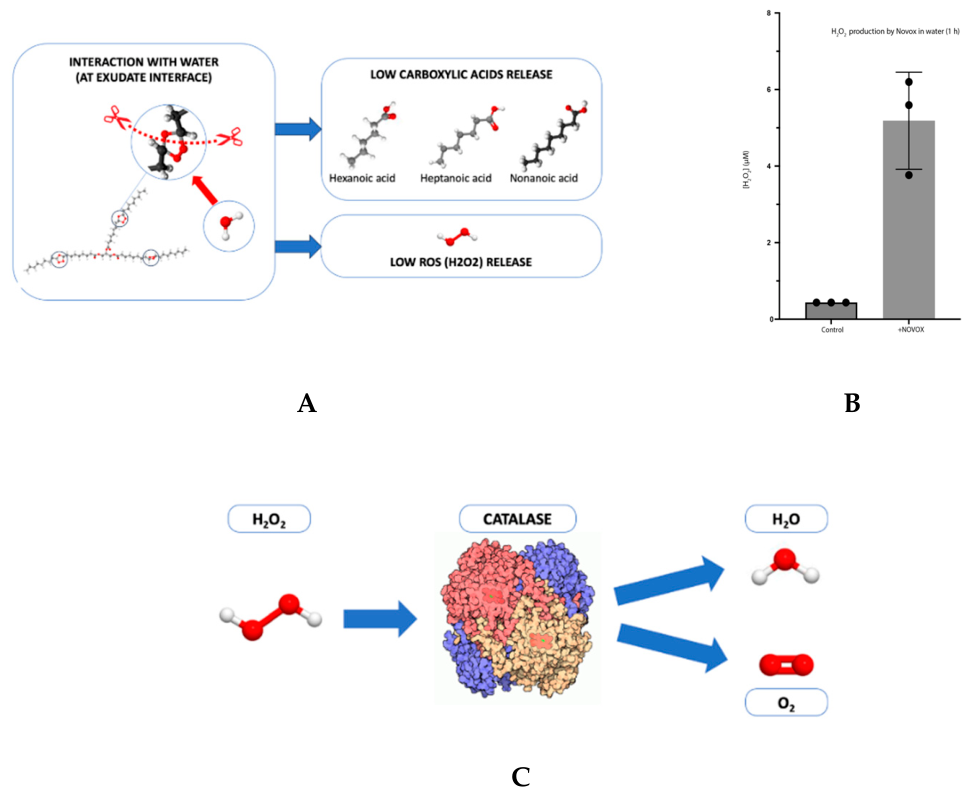
The water penetrating into the OEL at the exudate/OEL interface will hydrolyse the ozonide to release H2O2 (Figure 3A). This steady state production of H2O2 when OELs come in contact with water is illustrated in (Figure 3B) which shows the diffusion of H2O2 into the aqueous phase of an OEL/water mixture. In the wound bed this process will lead to the steady, low level production of H2O2. Furthermore, the H2O2 will also diffuse from the gel into the wound bed and this is a major factor in the contribution of OELs to wound healing. The roles of ROS in biology are often associated with oxidative damage due to the non-specific and damaging reactions of ROS with biological molecules. This is how topical application of high concentrations of H2O2 can act as an antiseptic in wound disinfection. However, it is important to note that within biological systems ROS roles are far broader and more nuanced that to simply act to cause oxidative damage. In fact ROS such as H2O2 have multiple roles as signals and bioactive molecules within a biological context. Important among these is the production of H2O2 by oxidases on the cell surface of neutrophils that contribute to killing bacteria within the body. The gradual hydrolysis of ozonides at the wound /OEL interface leads to a slow and constant diffusion of H2O2 into the wound bed. This controlled situation significantly differs from the well-known antiseptic effects of the bolus addition of concentrated H2O2 solutions on to the wound. While such additions will kill any bacteria present, the high concentrations will also lead to considerable tissue damage and suppression of the regrowth of fibroblasts and other cell types that are essential for wound healing [7]. It is also important to note that within a biological system H2O2 is unstable, being broken down rapidly to O2 and water by catalase, as well as by other peroxidases present. Thus, the half-life of a bolus of H2O2 is of the order of 0.5–1 h within a biological system. So, while topical addition of a bolus of H2O2 on to wound will acutely kill bacteria this is associated with considerable collateral damage to the tissue and protection will wear off within a few hours. In contrast, the slow release of H2O2 from the OEL into the would bed provides a continual steady state level of H2O2 in the wound microenvironment that in many ways mimics the levels used by neutrophils (~ 1–10 µM) to prevent bacterial growth without causing major damage to surrounding host cells.
In addition to the impairment of bacterial growth, the steady release of low levels of H2O2 may also support the enhancement of wound healing through other mechanisms. The first of these is that large amounts of the enzyme catalase are expressed within wound tissue. This is a reflection of the action of macrophages in degrading damaged tissue within wounds that require large amounts of catalase-containing peroxisomes. The steady release of low levels of H2O2 into the wound will interact with catalase to generate O2 (Figure 3B). As many wounds are anoxic or anaerobic due to a restricted blood supply, the availability of this supplementary O2 in the wound microenvironment may sustain mitochondrial function within the wound, both in supporting ATP production by oxidative phosphorylation, as well as by enabling anabolic reactions of mitochondria required for tissue regeneration. The role of enhancing O2 supply to wounds is a well-established therapeutic approach. A second possibility is that signalling by H2O2 is an important mitogenic signal that enhances cell growth in wound healing [8], therefore, the steady release of low levels of H2O2 into the wound may contribute to the establishment of local conditions preventing wound chronicization.
While more work is required to assess the relative importance of these three modes of action, it is clear that the slow and steady release of a low amount of H2O2 into the wound bed is a key mode by which OEL enhances wound healing.
Figure 3.
A) diffusion of water into the OEL will lead to the hydrolysis of the ozonides, generating H2O2 and also releasing carboxylic acids; B) accumulation of H2O2 in the aqueous phase of an OEL/water mixture over one hour; C) degradation of H2O2 within the wound bed by catalase can produce O2.
Figure 3.
A) diffusion of water into the OEL will lead to the hydrolysis of the ozonides, generating H2O2 and also releasing carboxylic acids; B) accumulation of H2O2 in the aqueous phase of an OEL/water mixture over one hour; C) degradation of H2O2 within the wound bed by catalase can produce O2.
2.4. Role of fatty Acid Generation from OEL Within the Wound Bed
The hydrolysis of ozonides that generates H2O2 will also release fatty acids and protons as the ozonide is cleaved (Figure 3A). These fatty acids will predominantly arise from cleavage of the oleic acid ozonide, generating nonanoic acid (also known as pelargonic acid) and nonadioic acid, but others including hexanoic and heptanoic acids are also generated [5]. The proton release associated with this fatty acid production will act to decrease the pH of the wound, and low pH is well established to impair bacterial growth. Importantly, the associated release of fatty acids will act to buffer and stabilise this pH change (Figure 4). The stabilisation of the pH is because the pKa of fatty acids are in 4.5–5, so this will maintain the wound bed pH in a pH range that both prevents bacterial growth while still enabling growth of host cells.
2.5. Summary
There are a range of factors that contribute to the wound protection offered by OEL. The reaction of olive oil with O3/O2 introduces ozonides into the double bonds of the unsaturated fatty acids thereby greatly enhancing the viscosity of the oil, making it an stable gel that maintains a physical barrier that both protects the wound environment and also prevents loss of moisture. The ozonides within the OEL are slowly broken by water permeating into the gel at the wound interface, releasing H2O2 into the wound bed. This both prevents bacterial growth and may also provide a local O2 supply and support host cell regrowth. In addition, ozonide hydrolysis will also release protons and fatty acids that together will decrease and stabilise wound pH. Low and stable pH will further suppress bacterial growth while also sustaining the growth of host cells. It is this combination of physical and chemical properties that enables OEL to enhance wound healing (Figure 5).
3. Clinical Application
The clinical management of acute and chronic wounds continues to represent a major challenge in modern healthcare. Beyond conventional dressings and antiseptics, oleic matrices have been introduced as innovative wound care solutions. Their rationale relies on the synergistic actions of providing a moist lipid environment, delivering microdoses of ROS, and reducing the wound pH levels, thus allowing the establishment of a local microenvironment unfavorable to pathogens’ growth and sustaining tissue regeneration.
Several products have been reported in the literature as oleic-matrix based wound treatments: this is due to (a) the availability of several types of starting materials (vegetable oils) with different compositions in terms of unsaturated fatty acids, primarily oleic and linoleic acid, and (b) the differences in the processes used to chemically or physically modify the oil structure to obtain the final product. The resulting differences in the composition of the final product directly influences the mechanism of action, the tolerability, and, furthermore, the clinical applications. Moreover, the regulatory status of such devices needs to be considered, in order to confirm the suitability for the clinical use (Table 1).
This section reviews the main clinical evidence, focusing on the role of Oxygen-enriched oil-based matrix dressings, impregnated bandages and loaded shaped supports across a wide spectrum of conditions, highlighting their role in burns, pilonidal sinus disease, hidradenitis suppurativa (HS), oncologic surgery, and pediatric wounds.
3.1. Burns and Acute Wounds
Oxygen is recognized as a key element in the complex tissue repair process, both in acute and chronic wounds. Its presence is fundamental in almost all phases of wound healing, including the inflammatory phase, where it is essential for cellular respiration, the phagocytic activity of macrophages, and mast cell degranulation [9,10]. Oxygen is also crucial for granulation tissue formation, fibroplasia, angiogenesis, and the deposition of new extracellular matrices [11,12]. Even in scar remodelling, adequate oxygen levels are vital for enzymatic reactions that determine collagen fibre alignment and retraction, promoting more homogeneous tissue regeneration and improved scar outcomes [10,13]. Beyond its role in repair, oxygen demonstrates bacteriostatic and bactericidal action on various species of bacterial and fungal pathogens, mediated by macrophages and generated free radicals [9,11,12,14]. Oxygen-enriched oleic matrices, such as O3-Oils, are obtained from the chemical reaction between ozone and polyunsaturated fatty acids of vegetable oils [9,14,15]. These products are capable of slowly releasing ROS into the wound bed, creating a local microenvironment favourable for microcirculation activation and cellular proliferation, while simultaneously being unfavourable for pathogen proliferation. This action leads to a reduction in local inflammation and inhibition of microbial contamination [14,15]. Ozonized oils exhibit a broad pathogen-contrasting capability against Gram-negative and Gram-positive bacteria, including periodontal pathogens and fungal species. Their oily nature also provides a film-forming, protective, barrier, and soothing function, maintaining a moist environment essential for healing [14,15,16]. The effectiveness of oxygen-enriched oleic matrices has been evaluated in various non-surgical burn and acute wound conditions:
3.1.1. Burns
A study involving 20 patients (average age 47 years) with mid-deep and deep burn wounds (average TBSA of approximately 23%) demonstrated that Oxygen-Enriched Oil-Based Dressing led to a quicker reduction of exudates and pain, and a progressive and faster reduction of bacterial load. Negative cultures were obtained after an average of 4 days in the study group, compared to 8 days in the conventional dressing group. Experience suggested using gel or pads for re-epithelializing lesions and impregnated gauzes for lesions with granulation tissue [14]. In a paediatric case series, the application of an oxygen-enriched oleic matrix to second and third-degree burns (TBSA >15%), caused by hot liquids and backfire, showed reduced healing times, improved healing processes, infection control, and a reduction in post-burn itching and scarring. The treatment was well-tolerated without adverse events, promoting tissue repair by managing acute complications (infection, oxidative stress) and post-acute consequences (itching, scar hypertrophy) [16]. A clinical case of a third-degree burn on the medial right thigh, caused by exposure to sun rays reflected by a mirror, showed complete healing in 45 days and a significant reduction in pain (from VAS 10 to 0) using a multi-layered cotton gauze with an ROS-releasing oleic matrix. The patient expressed great satisfaction with the tolerability and compliance of the home treatment [17].
3.1.2. Acute Wounds (Non-Surgical)
An interesting application of oxygen-enriched oil-based devices is represented by traumatic oral ulcers. In particular, a pilot observational study evaluated the efficacy of such devices on 21 patients with traumatic oral ulcers. At the end of the one-week treatment protocol (3 applications per day), a statistically significant reduction in perceived pain and the dimension of the individual lesion was observed (p = 0.000 for both parameters). The treatment was well-tolerated, although 20% of patients initially reported an unpleasant taste [18]. Another field of application, whose main interest depends on its potentially life-threatening feature, is represented by Stevens-Johnson Syndrome. Indeed, in a clinical case of a 5-year-old child suffering from Stevens-Johnson Syndrome, an oleic matrix dressing with a sustained ROS-release was used for oral mucosal lesions with successful clinical results [19]. The oral area is complex to treat due to bullous lesions and palpebral and lingual oedema. The use of oxygen-enriched oleic matrices would facilitate the healing process by creating a microenvironment favourable for microcirculation activation, demonstrating that they could represent a promising therapeutic option for improving healing, reducing pain, preventing infections, and optimizing outcomes in a wide range of non-surgical burns and acute wounds.
3.2. Post-Surgical Wounds
Post-surgical wounds represent a significant challenge in clinical practice, ranging from small incisions to complex reconstructions. While the majority of surgical wounds heal uneventfully, a substantial proportion is complicated by delayed healing, infection, dehiscence, or excessive scarring. These complications prolong hospitalization, increase healthcare costs, and—most importantly—impair patient quality of life. The issue is particularly relevant in oncologic surgery, where adjuvant therapies interfere with tissue repair, and in pediatric or adolescent patients, where cosmetic outcomes and pain management are crucial [20,21]. The pathophysiology of impaired surgical wound healing is multifactorial, involving excessive inflammation, bacterial colonization, oxidative stress, and tissue hypoxia. In this context, there is increasing interest in wound dressings that do not merely cover the wound but actively modulate the healing microenvironment. Among innovative materials, oxygen-enriched oleic matrices have emerged as versatile tools in surgical wound management. Clinical evidence supports their efficacy in a wide range of postoperative settings, moving from pilonidal sinus disease [22,23] to orthopedic surgeries [24], which documented improved comfort and compliance, particularly due to fewer and less painful dressing changes. Across these conditions, oxygen-enriched oleic matrices have been shown to accelerate healing, reduce complications, and improve cosmetic outcomes, thus addressing key priorities in modern surgical wound care.
3.2.1. Hidradenitis Suppurativa
HS is a chronic, relapsing inflammatory disease characterized by painful nodules, abscesses, and draining sinus tracts that are notoriously difficult to manage [25]. Wide local excision or deroofing remains the gold standard for severe disease, yet postsurgical wound care is crucial to prevent recurrence and ensure durable closure. Despite this, there are still no universally accepted guidelines for optimal wound management after HS surgery [26,27,28]. In recent years, oxygen-enriched oleic matrices (OEOMs) have been introduced as advanced dressings capable of providing a sustained release of ROS within a protective lipid carrier. Their dual action—pathogen-contrasting activity against biofilm and anaerobic flora, together with creating the favorable local conditions to support angiogenesis, fibroblast proliferation, and epithelialization—fits well with the TIME (Tissue, Inflammation/Infection, Moisture, Epithelialization) paradigm of wound bed preparation. Within this framework, preliminary clinical studies have started to explore their role in HS surgery. Michelucci et al. conducted a study in patients undergoing excision for HS lesions with second-intention healing, comparing OEOM gel to negative-pressure wound therapy and silver hydrofiber dressings [29]. Although no statistically significant differences were observed between groups due to the small sample size, the OEOM arm showed clinically meaningful reductions in wound area, wound bed score improvement, and pain intensity, suggesting a favorable healing trajectory and supporting the rationale for larger controlled studies. In pediatric HS, Esposito et al. reported a series of patients treated with a minimally invasive endoscopic approach followed by postoperative management with oxygen-enriched oil-based gel [30]. The dressing was well tolerated, convalescence was painless, and all cases achieved complete wound closure, underscoring the feasibility and safety of OEOMs in younger populations where minimizing morbidity is especially important. The usefulness of these devices in highly contaminated wounds is further illustrated by experiences outside HS. In pediatric pilonidal disease, Bisol et al. (2022) described the postoperative application of OEOM gel after open surgery, observing slightly faster wound healing, satisfactory scar quality, and excellent tolerability in a cohort of children and adolescents [23]. Likewise, Nicolosi et al. (2024) documented favorable outcomes in pediatric burns treated with OEOM dressings, including shortened healing times, reduced infection risk, decreased pruritus, and improved scarring, again without adverse effects [16]. In a more severe infectious setting, Cioppa et al. (2022) reported on the postoperative management of Fournier’s gangrene using an oxygen-enriched oil-based matrix as the sole dressing following staged debridement, achieving complete wound closure with outpatient care, less exudate, and enhanced granulation tissue formation [31]. Taken together, these clinical observations highlight the potential of oxygen-enriched oleic matrices to address some of the key challenges in HS wound management. Their pathogen-contrasting and tissue regeneration supporting properties appear particularly suited for the bacterial colonization and chronic inflammation characteristic of HS surgical sites. Moreover, the accumulating clinical experience in related conditions such as pilonidal disease, pediatric burns, and necrotizing soft tissue infections reinforces the broader applicability of OEOMs in complex wounds. While preliminary, these data suggest that oleic matrices may reduce pain, support tissue repair, and facilitate outpatient care in HS, provided that future randomized studies confirm these promising early results.
3.2.2. Pilonidal Sinus Disease and Pediatric Surgical Wounds
Pilonidal sinus disease (PSD) represents one of the most challenging inflammatory disorders in adolescents and young adults, typically originating from the retention of hair follicles in the intergluteal cleft and progressing to recurrent abscesses and fistula tracts. The high recurrence rate of PSD is strongly linked to persistent bacterial colonization and biofilm formation, conditions that maintain a chronic inflammatory state and delay tissue repair. Similar mechanisms are observed in other pediatric surgical wounds, where the balance between infection control and effective tissue regeneration is crucial for optimal outcomes [21,22,23,30]. In this context, oxygen-enriched oleic matrices have gained growing attention. These formulations, obtained through the chemical reaction of unsaturated fatty acids with ozone, are capable of storing and gradually releasing ROS. Their controlled ROS delivery promotes a wound microenvironment that stimulates angiogenesis, fibroblast proliferation, and epithelialization, while simultaneously creating local microenvironmental conditions unfavorable to pathogens and biofilm communities. By acting both as a tissue repair facilitator and as a pathogen-contrasting solution, ROS-releasing matrices respond directly to the dual challenge of PSD and pediatric surgical wounds—namely, infection risk and delayed closure [9,16,20,32,33]. Beyond this biological activity, oleic matrices also provide mechanical protection, moisture balance, and atraumatic dressing changes, all of which enhance tolerability and compliance, especially in children and adolescents [34,35,36,37].
Clinical data reinforce these mechanistic insights. Colella et al. reported the case of a young woman with multiple PSD recurrences who finally achieved complete healing and improved quality of life following treatment with a ROS-releasing gel, which reduced bacterial load and disrupted biofilm [35]. In a larger pediatric experience, Esposito et al. standardized the postoperative management of endoscopic pilonidal sinus treatment (PEPSiT) with laser epilation plus oxygen-enriched gel, demonstrating faster wound healing and lower recurrence rates compared with traditional silver sulfadiazine. A subsequent retrospective analysis confirmed these results, showing that ROS-based dressings were associated with shorter median healing time, fewer infections, and a significantly reduced risk of recurrence [22].
Preliminary prospective evidence further supports these findings. Bisol 2022 described three pediatric PSD cases treated after open surgery with oleic matrix, documenting safe application, slightly faster wound closure, and satisfactory cosmetic outcomes without adverse effects. Similarly, in a comparative study, it was showed that among EPSiT patients, those treated with the oleic matrix required fewer dressing changes (3.3 on average versus 5.6 in earlier protocols), suggesting that ROS-releasing gels streamline the healing process and reduce the burden of care [21]. The potential of oxygen-enriched oleic matrices extends beyond PSD. In pediatric urology, Esposito et al. conducted a randomized trial on distal hypospadias repair, where a tubular dressing internally coated with oxygen-enriched oil led to significantly faster healing (14.2 vs. 18.5 days), easier dressing management, and fewer foreskin and urethral complications compared with traditional methods [38]. These results highlight how the same ROS-driven principles of pathogen contrast and tissue repair facilitation can be successfully applied in delicate reconstructive settings. Altogether, the accumulating clinical evidence suggests that oxygen-enriched oleic matrices play a dual role in pediatric surgical wounds: they act as biological modulators through ROS release, allowing the establishment of favorable conditions supporting angiogenesis and epithelialization, and as protective devices, ensuring comfort, fewer complications, and improved cosmetic outcomes. Their integration into postoperative protocols for PSD, hypospadias, and other pediatric surgical conditions underscores their potential as versatile and effective wound care tools. Larger controlled trials are warranted to confirm and expand these promising preliminary results.
3.2.3. Oncologic and Reconstructive Surgery
Patients undergoing oncologic or reconstructive surgery often present with impaired wound healing due to extensive tissue excision, radiotherapy, or chemotherapy. In these settings, oxygen-enriched oleic matrices have been investigated as protective and regenerative dressings with encouraging results. In oral and maxillofacial surgery, Mitro et al. demonstrated in a triple-blinded randomized trial that the use of oxygen enriched oleic matrix significantly reduced postoperative pain and nonsteroidal anti-inflammatory drug consumption after impacted third molar extraction, also improving control of trismus compared with standard therapy [20]. Complementing this, the use of ozone-oil gel—an adjacent ROS-releasing lipid formulation—lowered alveolar osteitis after third-molar extraction, underscoring the class effect of oxygen/ROS-enriched oils [39]. In oncologic and reconstructive settings, oxygen-enriched oleic matrices have shown promising results. Casella et al. (2021) demonstrated their safety and efficacy in locally advanced breast cancer skin lesions, with reductions in ulceration, exudate, and odor [34]. Magalotti et al. (2025) reported benefits in oncoplastic breast surgery, including improved healing, less pain, and higher patient satisfaction [33]. In reconstructive contexts, Guarro et al. (2023) documented successful use of oleic matrix in a postoperative lower limb wound in an elderly patient, while Sordi et al. (2024) showed that an oxygen-enriched bra cup reduced hospital visits and costs while enhancing autonomy and satisfaction in mastectomy patients [24,37]. Similarly, Santorelli et al. (2021) reported in a large cohort of augmentation–mastopexy patients that postoperative use of a polyurethane bra cup coated with oxygen-enriched olive oil decreased pain in the early days after surgery and yielded superior long-term scar quality compared with Fitostimoline [32]. Overall, these findings suggest that oxygen-enriched oleic matrices may promote wound healing, decrease pain and complications, and improve quality of life, with a favorable safety profile even in neoplastic tissue. Larger controlled studies are still needed to confirm these results.
3.3. Chronic Leg Ulcers
Chronic leg ulcers, including venous leg ulcers (VLU), arterial ulcers, and diabetic foot ulcers, represent a significant burden in wound care due to their multifactorial pathogenesis and refractory healing patterns. Impaired angiogenesis, persistent inflammation, bacterial colonization, and imbalanced oxidative stress, as well as increased pH levels contribute to delayed wound closure. A hallmark of chronic ulcers is the excessive and disregulated production of ROS, which leads to cellular damage and further perpetuates non-healing states. The hypoxic environment severely compromises the formation of vital new tissue and the viability of already affected areas, contributing to their recalcitrant nature. The increase of pH levels creates the favorable conditions for pathogen’s growth, which may contribute to chronicization. Consequently, ensuring an adequate level of oxygen in the wound bed is a critical therapeutic objective in the management of skin lesions, especially chronic ulcers [9,29,40]. Moreover, the reduction of the pH levels is considered as a major factor in supporting the healing process [41].
Oxygen-enriched oil-based dressings are specifically designed to address these challenges through the steady release of low levels of reactive oxygen species, combined with the release of microquantities of carboxylic acids. This allows the establishment of local wound microenvironment conditions characterized by a steady release of low levels ROS, an increase of the availability of local oxygen and a reduction of the pH levels. Moreover, the oleic nature of the matrix forms a protective barrier layer that preserves the moist wound environment and prevents contamination.
In chronic leg ulcers, therefore, these dressings may help in allowing the establishment of local wound microenvironment conditions that is unfavorable for pathogen proliferation and favorable for microcirculation activation [16,20,24].
In particular, the pathogen-contrasting capabilities ensured by ROS release and pH reduction was shown to be effective against Gram-positive, Gram-negative, and fungal pathogens, which further supports the use of oxygen-enriched oil based devices as adjuncts in the management of hard-to-heal vascular ulcers [9,15,20].
Cassino et al. conducted an observational study to evaluate a hyperoxidized oil-based medication for recalcitrant skin lesions, including chronic ulcers. The study involved 50 patients with non-infected and/or non-necrotic chronic ulcers of various etiologies, including arterial ulcers (12%), venous ulcers (26%), mixed arterial/venous ulcers (14%), inflammatory ulcers (40%), Martorell ulcers (6%), and post-traumatic ulcers (2%). Rigorous exclusion criteria included severe ischemia (ankle-brachial pressure index < 0.7), critical colonization/infection, life expectancy less than 4 weeks, and immunosuppressive therapies (except for low-dose steroids). The treatment involved applying a uniform layer of the oxygen-enriched oil-based dressing to the lesions and their borders, after cleansing with a 0.05% sodium hypochlorite chloroxidating solution. Dressings were changed every 48 hours, or daily for hyper-exuding wounds. The results demonstrated significant improvements across all patients: all patients achieved an improvement in wound area, with an average reduction exceeding 50% of the re-epithelialized area. Complete healing was observed in 3 cases (6%) within the 4-week observation period. The WBP score showed absolute improvement in 100% of cases. Over 90% of lesions initially classified with a B score (partial granulation with some fibrin) showed improvement, with 64% progressing to a clean (A) state. Even 14% of unclean C-score wounds partially cleansed to a B score, and the remaining C-score wounds achieved a completely clean A status within 4 weeks. All patients reported a decrease in pre-existing pain. Over half (56%) of the total number of patients reduced their use of analgesic drugs, and 6 cases (12%) completely discontinued antalgic therapy. A total absence of infective complications was noted, confirming the significant pathogen-contrasting capability of this oxygen-enriched oil-based medication. The study concluded that the dressing effectively promoted granulation and accelerated epithelialization. Ease of use, low cost, potential for self-medication, and excellent tolerability were also highlighted as significant advantages [40].
4. Discussion
Across clinical contexts, the application of oleic matrices consistently demonstrates accelerated healing, reduced infection risk, less pain, and better cosmetic outcomes compared with standard dressings. A comprehensive view of clinical application and their benefits can be seen in Figure 6.
Their benefits are particularly evident in:
- Burns: superior to silver-based agents, with faster healing and lower pain.
- Pilonidal sinus disease: robust evidence in both adults and children, especially within minimally invasive PEPSIT protocols.
- HS and Fournier gangrene: effective in contaminated and chronic wound environments.
- Oncologic/reconstructive surgery: improved healing and fewer complications in patients at high risk of impaired wound repair.
- Pediatrics: safe, well-tolerated, and associated with improved recovery experiences.
The major clinical findings and protocols on oxygen-enriched oleic matrices across burns, acute, postsurgical, oncologic, and chronic ulcer settings are summarized in Table 2. While the cumulative evidence is compelling, most studies remain case series or small prospective cohorts. Multicenter randomized controlled trials are required to validate these findings and establish cost-effectiveness.
5. Conclusions
Clinical evidence accumulated over the past decade supports the use of oxygen-enriched oleic matrices as innovative and versatile dressings for wound management. Their ability to combine pathogen protection with wound healing support has translated into consistent clinical benefits across burns, pilonidal sinus disease, hidradenitis suppurativa, oncologic wounds, and pediatric surgery. Although further randomized trials are warranted, the current literature positions oxygen-enriched oleic matrices as a promising adjunct in modern wound care, bridging the gap between infection control and tissue regeneration.
Author Contributions
Conceptualization, F.M.M., A.M., V.D., M.M. and M.R.; methodology, F.M.M. and A.M.; validation, F.M.M., V.D. and M.R.; formal analysis, F.M.M., V.D. and M.R.; investigation, F.M.M., A.M. and M.M..; resources, V.D., M.M. and M.R.; data curation, M.M., V.D. and M.R.; writing—original draft preparation, F.M.M., A.M. and M.M.; writing—review and editing, F.M.M., A.M. and M.M.; visualization, V.D., M.M. and M.R.; supervision, V.D., M.M. and M.R.; project administration, F.M.M., A.M., V.D., M.M. and M.R. All authors have read and agreed to the published version of the manuscript.
Funding
This research received no external funding.
Institutional Review Board Statement
Not applicable.
Informed Consent Statement
Not applicable.
Data Availability Statement
No new data were created or analyzed in this study. Data sharing is not applicable to this article.
Acknowledgments
The authors acknowledge the use of BioRender.com for figure creation, under a regular paid license that grants publication rights.
Conflicts of Interest
A.M.: Abbvie, Almirall, Eli Lilly, Novartis; F.M.M.: Abbvie, Almirall, Canova, Eli Lilly, Leopharma, Pfizer, Sanofi; M.R.: Abbvie, Almirall, Convatec, Eli Lilly, Janssen, Leopharma, Novartis,, Sanofi, UCB, Urgo; V.D.: Abbvie, Almirall, Convatec, Eli Lilly, Janssen, Leopharma, Novartis, Pfizer, Sanofi, UCB.
Abbreviations
The following abbreviations are used in this manuscript:
| BWAT | Bates Wound Assessment Tools |
| EPSIT | Endoscopic Pilonidal Sinus Treatment |
| HS | Hidradenitis Suppurativa |
| NPWT | Negative Pressure Wound Therapy |
| OEL | Oxygen Enriched Oils |
| OEOM | Oxygen-Enriched Oleic Matrix / Matrices |
| PEPSiT | Patient and Observer Scar Assessment Scale |
| POSAS | Pediatric endoscopic pilonidal sinus treatment |
| QoL | Quality of Life |
| RCT | Randozimed Control Trial |
| ROS | Reactive Oxygen Species |
| TAG | Tryacylglycerol |
| TBSA | Total Body Surface Area |
| VAS | Visual Analogue Scale |
| VLU | Venous Leg Ulcer |
| WBS | Wound Bed Score |
References
- Sen, C.K. Wound healing essentials: let there be oxygen. Wound Repair Regen. 2009, 17(1), 1–18. [Google Scholar] [CrossRef] [PubMed]
- van der Vliet, A.; Janssen-Heininger, Y.M. Hydrogen peroxide as a damage signal in tissue injury and inflammation: murderer, mediator, or messenger? J. Cell Biochem. 2014, 115(3), 427–35. [Google Scholar] [CrossRef] [PubMed]
- Loo, A.E.; Wong, Y.T.; Ho, R.; Wasser, M.; Du, T.; Ng, W.T.; Halliwell, B. Effects of hydrogen peroxide on wound healing in mice in relation to oxidative damage. PLoS ONE 2012, 7(11), e49215. [Google Scholar] [CrossRef] [PubMed]
- Ugazio, E.; Tullio, V.; Binello, A.; Tagliapietra, S.; Dosio, F. Ozonated Oils as Antimicrobial Systems in Topical Applications. Their Characterization, Current Applications, and Advances in Improved Delivery Techniques. Molecules 2020, 25(2), 334. [Google Scholar] [CrossRef] [PubMed]
- Radzimierska-Kazmierczak, M.; et al. Olive Oil with Ozone-Modified Properties and Its Application. Molecules 2021, 26(11). [Google Scholar] [CrossRef] [PubMed]
- Criegee, R. Mechanism of Ozonolysis. Angew. Chem. Int. Ed. Engl. 1975, 14, 745–752. [Google Scholar] [CrossRef]
- Falanga, V.; et al. Chronic wounds. Nat. Rev. Dis. Prim. 2022, 8(1), 50. [Google Scholar] [CrossRef] [PubMed]
- Niethammer, P.; et al. A tissue-scale gradient of hydrogen peroxide mediates rapid wound detection in zebrafish. Nature 2009, 459(7249), 996–9. [Google Scholar] [CrossRef] [PubMed]
- Cipriani, F.; Lucattelli, E.; De Rosa, M.; Di Lonardo, A. Effectiveness of reactive oxygen species in an oil-based medication for healing burn wounds: a case series. Ann. Burn. Fire Disasters 2021, 34, 170–174. [Google Scholar]
- Detmar, M.; Brown, L.F.; Berse, B.; Jackman, R.W.; Elicker, B.M.; Dvorak, H.F.; Claffey, K.P. Hypoxia regulates the expression of vascular permeability factor/vascular endothelial growth factor (VPF/VEGF) and its receptors in human skin. J. Invest. Dermatol. 1997, 108, 263–268. [Google Scholar] [CrossRef] [PubMed]
- Grolman, R.E.; Wilkerson, D.K.; Taylor, J.; Allinson, P.; Zatina, M.A. Transcutaneous oxygen measurements predict a beneficial response to hyperbaric oxygen therapy in patients with nonhealing wounds and critical limb ischemia. Am. Surg. 2001, 67, 1072–1079. [Google Scholar] [CrossRef] [PubMed]
- Sen, C.K.; Khanna, S.; Gordillo, G.; Bagchi, D.; Bagchi, M.; Roy, S. Oxygen, oxidants, and antioxidants in wound healing: an emerging paradigm. Ann. N. Y. Acad. Sci. 2002, 957, 239–249. [Google Scholar] [CrossRef] [PubMed]
- Schreml, S.; Szeimies, R.M.; Prantl, L.; Karrer, S.; Landthaler, M.; Babilas, P. Oxygen in acute and chronic wound healing. Br. J. Dermatol. 2010, 163, 257–268. [Google Scholar] [CrossRef] [PubMed]
- Arduino, P.G.; Cabras, M.; Macciotta, A.; Longhi, F.; Gambino, A.; Broccoletti, R. A single-center prospective pilot open-label study to assess the efficacy of topical application of an oxygen-enriched oil for the treatment of angular cheilitis. J. Oral Sci. 2022, 64, 105–108. [Google Scholar] [CrossRef] [PubMed]
- Montevecchi, M.; Dorigo, A.; Cricca, M.; Checchi, L. Comparison of the antibacterial activity of an ozonated oil with chlorhexidine digluconate and povidone-iodine: a disk diffusion test. New Microbiol. 2013, 36, 289–302. [Google Scholar] [PubMed]
- Nicolosi, B.; García-Molina, P.; Veggi, S.; Pinzauti, E.; Pancani, S. Oxygen-enriched oleic matrix medical dressings for the treatment of extensive burns and related acute and post-burn complications in children: a case series. Wounds UK 2024, 20, 46–51. [Google Scholar] [CrossRef]
- Marinelli, E.; Sandroni, S.; Salutini, E. Utilizzo di medicazione a rilascio di ROS nella gestione di lesione post esposizione a raggi solari riflessi su specchio post estricazione complessa. Ital. J. Wound Care 2024, 8(2). [Google Scholar] [CrossRef]
- Arduino, P.G.; Cabras, M.; Broccoletti, R. Hyper-oxidized oil in the management of oral mucosal diseases: a case series. Dent. Cadmos 2016, 84, 262–266. [Google Scholar]
- Zanetti, C. Wound care in a child suffering from Stevens-Johnson syndrome in PICU: case report. Inferm. J. 2024, 3, 9–13. [Google Scholar] [CrossRef]
- Mitro, V.; Giovacchini, F.; Gill, i M.; Monarchi, G.; Caso, A.R.; Bimonte, A.; Lombardo, G.; Tullio, A. Effects of the Application of an Oxygen-Enriched Oil-Based Dressing (NovoX®-Drop) After Extraction of Impacted Lower Third Molars: A Randomized Controlled Study. J. Clin. Med. 2025, 14(14), 4986. [Google Scholar] [CrossRef] [PubMed]
- Parente, G.; Ruspi, F.; Thomas, E.; Di Mitri, M.; Cravano, S.M.; D’Antonio, S.; Gargano, T.; Lima, M. Endoscopic Pilonidal Sinus Treatment: Preliminary Results, Learning Curve and Comparison with Standard Open Approach. Children . 2023, 10(6), 1063. [Google Scholar] [CrossRef] [PubMed]
- Esposito, C.; Mendoza-Sagaon, M.; Del Conte, F.; Cerulo, M.; Coppola, V.; Esposito, G.; Cortese, G.; Crocetto, F.; Montaruli, E.; Escolino, M. Pediatric Endoscopic Pilonidal Sinus Treatment (PEPSIT) in Children With Pilonidal Sinus Disease: Tips and Tricks and New Structurated Protocol. Front. Pediatr. 2020, 8, 345. [Google Scholar] [CrossRef] [PubMed]
- Bisol, M.; Tykhomyrova, S.; Pagliara, C.; Scarpa, M.G.; Guida, E.; Olenik, D.; Codrich, D.; Schleef, J.; Boscarelli, A. Oxygen-enriched oleic matrix (NovoX) for wound healing in pediatric patients undergoing open surgical treatment for pilonidal disease: Preliminary experience. Front Pediatr. 2022, 10, 1068280. [Google Scholar] [CrossRef] [PubMed]
- Guarro, G.; Carella, S.; Cordellini, M. Use of hyperoxidized oils-based medical devices for the wound healing in post-surgical patients. Acta BioMed 2023, 94 Supplement 1, e2023151. [Google Scholar] [PubMed]
- Zouboulis, C.C.; Desai, N.; Emtestam, L.; Hunger, R.E.; Ioannides, D.; Juhász, I.; Lapins, J.; Matusiak, L.; Prens, E.P.; Revuz, J.; Schneider-Burrus, S.; Szepietowski, J.C.; van der Zee, H.H.; Jemec, G.B. European S1 guideline for the treatment of hidradenitis suppurativa/acne inversa. J. Eur. Acad. Dermatol. Venereol. 2015, 29, 619–644. [Google Scholar] [CrossRef] [PubMed]
- Dini, V.; Oranges, T.; Rotella, L.; Romanelli, M. Hidradenitis suppurativa and wound management. Int. J. Low. Extrem Wounds. 2015, 14(3), 236–244. [Google Scholar] [CrossRef] [PubMed]
- Moloney, S. The challenges of wound management for hidradenitis suppurativa. Br. J. Nurs. 2022, 31(4), S34–S41. [Google Scholar] [CrossRef] [PubMed]
- Kazemi, A.; Carnaggio, K.; Clark, M.; Shephard, C.; Okoye, G.A. Optimal wound care management in hidradenitis suppurativa. J. Dermatol. Treat. 2018, 29(2), 165–167. [Google Scholar]
- Michelucci, A.; Janowska, A.; Granieri, G.; Margiotta, F.M.; Morganti, R.; Romanelli, M.; Dini, V. Advanced wound management approaches in Hidradenitis Suppurativa postsurgical lesions. Health Sci. Rep. 2023, 6(10), e1582. [Google Scholar] [CrossRef] [PubMed]
- Esposito, C.; Del Conte, F.; Cerulo, M.; Coppola, V.; Esposito, G.; Ricciardi, E.; Castagnetti, M.; Fabbrocini, G.; Escolino, M. Pediatric Endoscopic Hidradenitis Treatment: A New Minimally Invasive Treatment for Pediatric Patients with Hidradenitis Suppurativa. J. Laparoendosc. Adv. Surg. Tech A 2020, 4, 464–470. [Google Scholar] [CrossRef]
- Cioppa, T.; Dreoni, P.; Giani, J.; Linari, C.; Caminati, F.; Calistri, M. Treatment of Perianal Fournier’s Gangrene with an Oxygen-Enriched Oil Based Medical Device NOVOX (®) Roll: Case Report. World J. Surg. Surg. Res. 2022, 1371, 5. [Google Scholar]
- Santorelli, A.; Bernini, M.; Orzalesi, L.; Avvedimento, S.; Palumbo, P.; Kothari, A.; Fausto, A.; Magalotti, C.; Buzzi, G.; Sandroni, S.; Calabrese, C. Treatment With Oxygen-Enriched Olive Oil Improves Healing Parameters Following Augmentation-Mastopexy. Aesthet. Surg. J. Open Forum 2021, 3(3), ojab016. [Google Scholar] [CrossRef] [PubMed]
- Magalotti, C.; Nisi, M.; Pastor Ruiz, E.; Romiti, C.; Tinti, A.; Barillaro, I.; Muccitelli, A.; Franchini, L.; Brera, D.; Guarro, G. Enhanced Postoperative Evaluation in Oncoplastic Breast Surgery With Interactive Versus Traditional Dressings: A Comparative Study. Plast. Reconstr. Surg. Glob. Open 2025, 13(4), e6724. [Google Scholar] [CrossRef] [PubMed]
- Casella, D.; Palumbo, P.; Sandroni, S.; Caponi, C.; Littori, F.; Capuano, F.; Grimaldi, L.; Marcasciano, M.; Cuomo, R.; et al. Positive ROS (Reactive Oxygen Species) Modulator Engineered Device Support Skin Treatment in Locally Advanced Breast Cancer (LABC) Enhancing Patient Quality of Life. J. Clin. Med. 2021, 11(1), 126. [Google Scholar] [CrossRef] [PubMed]
- Colella, R.; Rossi, M. Biotechnological innovations: role of a reactive oxygen species release device in the management of pilonidal cysts. Wounds Int. 2021, 12, 45–48. [Google Scholar] [CrossRef]
- Laureti, S.; Aborajooh, E.; Mattioli, B.; Poggioli, G. Treatment of minor dehiscence after endorectal advancement flap in perianal Crohn’s fistulas with ozonized oil NOVOX®. Tech Coloproctol. 2015, 19, 755–757. [Google Scholar]
- Sordi, S.; Kaciulyte, J.; Araby, M.M.E.; Luridiana, G.; Marchesi, A.; Gatto, A.; Seth, I.; Rozen, W. M.; Casella, D.; Cuomo, R. Streamlining outpatient prepectoral breast reconstruction: The role of polyurethane oxygen-enriched bra cups from pandemic innovation to standardized cost analysis. Il G. Di Chir. – J. Ital. Surg. Assoc. 2024, 44(6), e59. [Google Scholar] [CrossRef]
- Esposito, C.; Coppola, V.; Del Conte, F.; Cerulo, M.; Esposito, G.; Crocetto, F.; Castagnetti, M.; Calignano, A.; Escolino, M. Evaluation of a New Tubular Finger Oxygen-Enriched Oil Inside-Coated Dressing Device in Pediatric Patients Undergoing Distal Hypospadias Repair: A Prospective Randomized Clinical Trial Part II. Front. Pediatr. 2021, 9, 638406. [Google Scholar] [CrossRef] [PubMed]
- Materni, A.; Pasquale, C.; Longo, E.; Frosecchi, M.; Benedicenti, S.; Bozzo, M.; Amaroli, A. Prevention of Dry Socket with Ozone Oil-Based Gel after Inferior Third Molar Extraction: A Double-Blind Split-Mouth Randomized Placebo-Controlled Clinical Trial. Gels 2023, 9(4), 289. [Google Scholar] [CrossRef] [PubMed]
- Cassino, R.; Ippolito, A.M.; Cuffaro, P.; Corsi, A.; Forma, O. Evaluation of the effectiveness of a hyperoxidized oil-based medication in the treatment of skin lesions: observational study. Minerva Chir. 2015, 70, 23–31. [Google Scholar] [PubMed]
- Power, G.; Moore, Z.; O’Connor, T. Measurement of pH, exudate composition and temperature in wound healing: a systematic review. J. Wound Care 2017, 26, 381–397. [Google Scholar] [CrossRef] [PubMed]
Figure 1.
(A) structure of triolein, the major component of olive oil; (B) ozonation of triolein by a O3/O2 mixture to form OELs containing the 1,2,4-trioxolane structure; (C) structure of the ozonide of triolein, the major component of OELs.
Figure 1.
(A) structure of triolein, the major component of olive oil; (B) ozonation of triolein by a O3/O2 mixture to form OELs containing the 1,2,4-trioxolane structure; (C) structure of the ozonide of triolein, the major component of OELs.
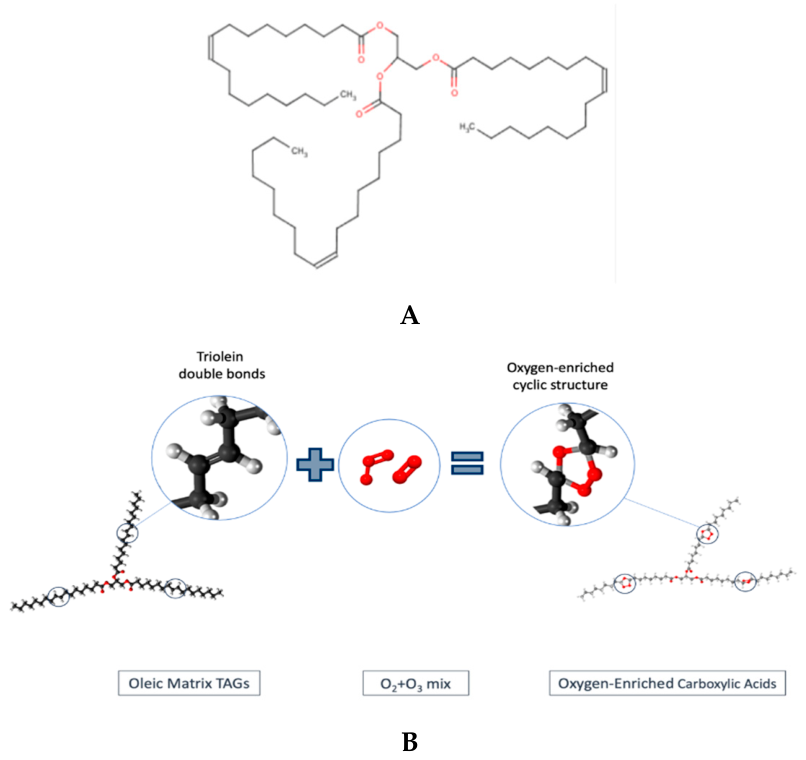
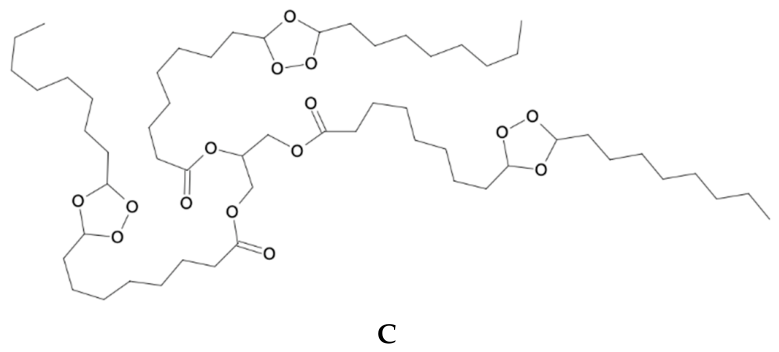
Figure 2.
(A) protection of the wound bed by OEL acting as a barrier against pathogens and contaminants as well as preserving moisture; (B) interaction of the OEL with water at the exudate surface releases carboxylic acids and ROS that diffuse into the wound bed and contribute to wound healing.
Figure 2.
(A) protection of the wound bed by OEL acting as a barrier against pathogens and contaminants as well as preserving moisture; (B) interaction of the OEL with water at the exudate surface releases carboxylic acids and ROS that diffuse into the wound bed and contribute to wound healing.
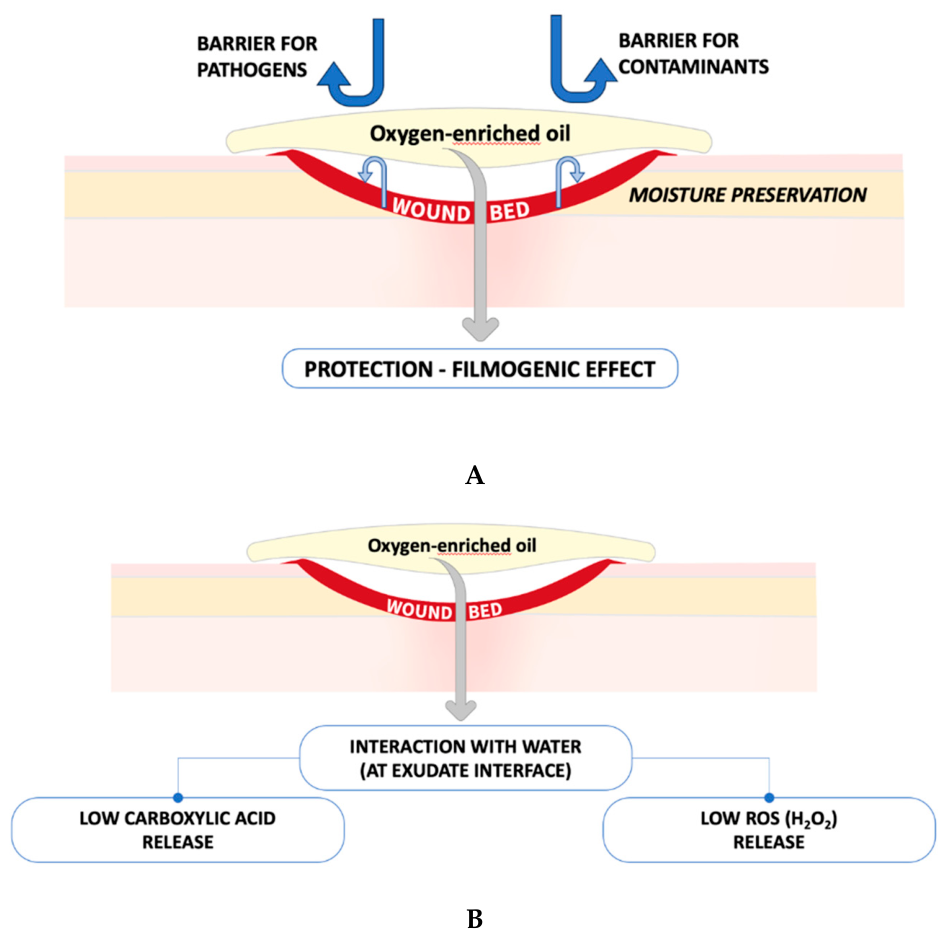
Figure 4.
Measurement of the pH of the aqueous phase after incubation with OEL or control oil for 7 days.
Figure 4.
Measurement of the pH of the aqueous phase after incubation with OEL or control oil for 7 days.
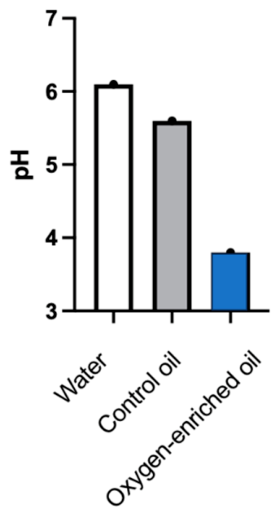
Figure 5.
Modes of action of OELs on wound healing.
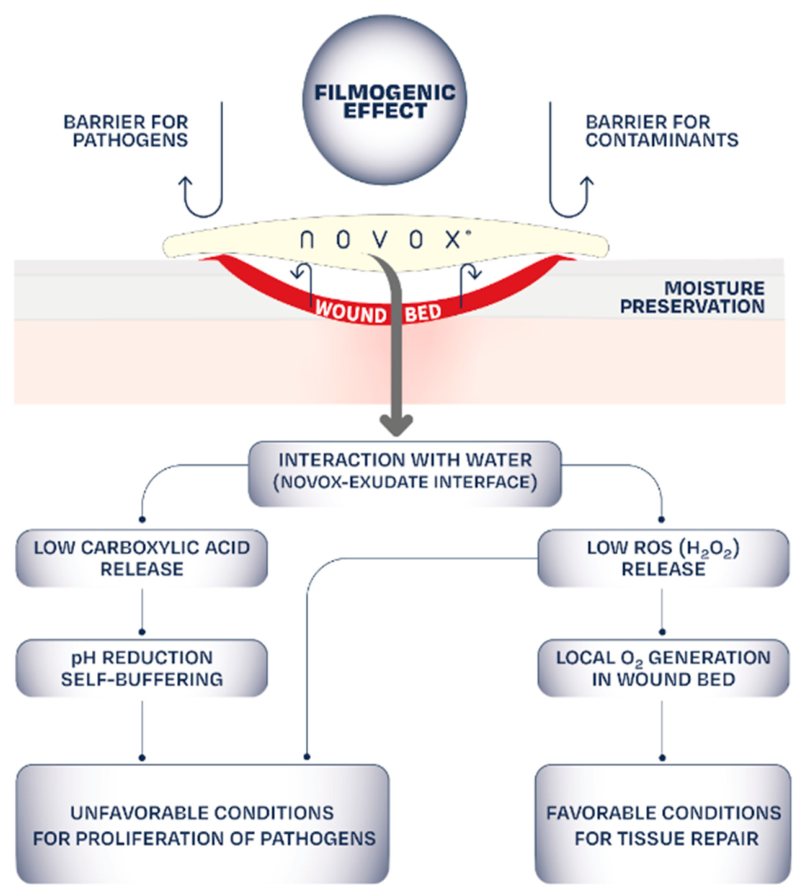
Figure 6.
Clinical applications of oleic matrices. oxygen-enriched oleic matrices have been applied in burns, pilonidal sinus disease, hidradenitis suppurativa, chronic leg ulcers, and breast/oncoplastic surgery. Reported benefits include faster healing, reduced infections and complications, lower pain, and improved cosmetic outcomes. Abbreviations: ROS, reactive oxygen species; ↓, decrease; ↑, increase.
Figure 6.
Clinical applications of oleic matrices. oxygen-enriched oleic matrices have been applied in burns, pilonidal sinus disease, hidradenitis suppurativa, chronic leg ulcers, and breast/oncoplastic surgery. Reported benefits include faster healing, reduced infections and complications, lower pain, and improved cosmetic outcomes. Abbreviations: ROS, reactive oxygen species; ↓, decrease; ↑, increase.
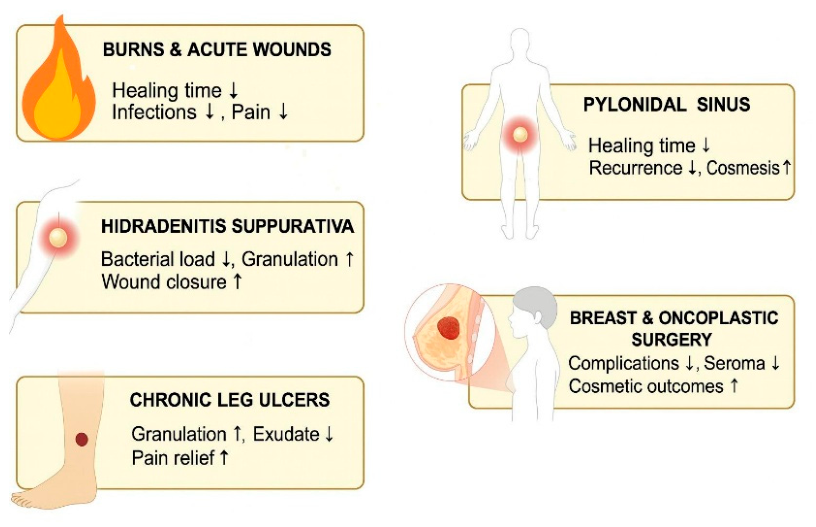

Table 1.
Main types of oleic matrices, composition, and clinical applications. ROS: Reactive Oxygen Species.
Table 1.
Main types of oleic matrices, composition, and clinical applications. ROS: Reactive Oxygen Species.
| Product type | Composition/formulation | Key mechanism | Typical clinical applications | Regulatory status |
| Oxygen-enriched oil-based matrix gel-like dressings | Oxygen-enriched oil (Oils enriched with oxygen through chemical interaction with O2/O3 oxygenating gas) + parfuming / flavoring excipients | Controlled release of carboxylic acids and ROS microquantities with balanced kinetics | Hard-to-heal chronic and cavitary wounds (skin and oral applications) Superficial, mid-deep and deep burns |
Medical Devices according to EU MDR Regulation (including adult and pediatric patient populations) |
| Oxygen-enriched oil-based matrix impregnated bandages / gauzes | Impregnated bandage/gauze: Bandage rolls or gauze pads impregnated with Oxygen-enriched oil gel-like ointments (as above) |
Controlled release of carboxylic acids and ROS microquantities (as above) + mechanical protection | Hard-to-heal chronic and cavitary wounds (skin and ENT applications) Superficial, mid-deep and deep burns |
Medical Devices according to EU MDR Regulation (including adult and pediatric patient populations) |
| Oxygen-enriched oil-based matrix on shaped supports. | Oxygen-enriched oil gel-like ointments (as above) embedded in polyurethane supports (cups, pads, tubular dressings) | Combined mechanical protection + ROS and carboxylic acids microquantities controlled release | Surgical wounds (Oncoplastic breast surgery, pediatric hypospadias repair, PSD) Superficial and mid-deep burns |
Medical Devices according to EU MDR Regulation (including adult and pediatric patient populations) |
| Ozonized oleic matrices (O₃-oils) | Vegetable oils (olive, sunflower, flaxseed) reacted with ozone, forming ozonides and peroxides | ROS release, antimicrobial + pro-regenerative | Burns, acute wounds, pilonidal sinus disease | Some products approved as Medical Devices, others nor approved |
| Hyperoxidized oil-based gels | High peroxidized lipid content in hydrogel carrier | ROS delivery + hydration | Chronic ulcers, recalcitrant wounds | Some products approved as Medical Devices, others nor approved |
| Hydrogel/emulsion-based matrices | Oil-in-water gels, emulsions, sprays with oxidized oils | Hydration + ROS release | Oral ulcers, Stevens–Johnson syndrome, pediatrics | Some products approved as Medical Devices, others nor approved |
| Experimental nanocarriers | Liposomes, nanostructured lipid carriers (NLCs) with ozonized oils | Enhanced penetration, stability, targeted ROS release | Preclinical research, potential dermatology use | Not approved as medical devices. Experimental and R&D uses only |
Table 2.
Summary of major clinical evidence on oleic matrices in burns, acute wounds, postsurgical wounds, oncologic/reconstructive surgery, and chronic ulcers. Abbreviations BWAT, Bates Wound Assessment Tools; HS, hidradenitis suppurativa; EPSiT, endoscopic pilonidal sinus treatment; NPWT, negative pressure wound therapy; OEOMs, oxygen-enriched oleic matrix; PEPSiT, pediatric endoscopic pilonidal sinus treatment; POSAS, Patient and Observer Scar Assessment Scale; RCT, randomized controlled trial; VAS, visual analogue scale; TBSA, total body surface area; WBS, wound bed score; QoL, quality of life; ↓, decrease; ↑, increase.
Table 2.
Summary of major clinical evidence on oleic matrices in burns, acute wounds, postsurgical wounds, oncologic/reconstructive surgery, and chronic ulcers. Abbreviations BWAT, Bates Wound Assessment Tools; HS, hidradenitis suppurativa; EPSiT, endoscopic pilonidal sinus treatment; NPWT, negative pressure wound therapy; OEOMs, oxygen-enriched oleic matrix; PEPSiT, pediatric endoscopic pilonidal sinus treatment; POSAS, Patient and Observer Scar Assessment Scale; RCT, randomized controlled trial; VAS, visual analogue scale; TBSA, total body surface area; WBS, wound bed score; QoL, quality of life; ↓, decrease; ↑, increase.
| Clinical setting | Formulation | Protocol | Population treated | Main results | Healing/outcome time | Reference |
|---|---|---|---|---|---|---|
| Mid–deep and deep burns (TBSA ~23%) | Gel-like dressing Impregnated pad/gauze |
Every 48 hours | 20 patients | Faster reduction of pain, exudate, and bacterial load | Negative cultures in 4 days (vs 8 days control) | Cipriani 2021 |
| Pediatric burns II–III degree (>15% TBSA) | Gel-like dressing Impregnated pad/ bandage (depending on the site) |
Every 3 days | 3 patients | Infection control, reduced itching, better scarring, improved healing process | Healing in 21.7 days (mean value) | Nicolosi 2024 |
| 3rd degree thigh burn | Impregnated gauze pad. | Daily | 1 patient | Pain reduction (VAS 10→0), Bates Wound Assessment Tools (BWAT) reduction (51 → 14), high satisfaction |
Complete healing in 45 days | Marinelli 2024 |
| Traumatic oral ulcers | Gel-like dressing | 3×/day for 1 week | 21 patients | Significant reduction in pain and lesion size | Healing within 7 days | Arduino 2016 |
| Stevens-Johnson syndrome, pediatric | Gel-like dressing | Daily mucosal dressing; other lesions treated every 48h | 1 patient | Progressive mucosal and cutaneous healing, pain control, preserved function and minor residual damage | Lesion improvement from day 7; trunk/limbs healed by ~28d; full recovery with minor residuals | Zanetti 2024 |
| HS, post wide local excision | Gel-like dressing | Twice a week | 25 patients | Wound area ↓, WBS improved, pain ↓ | 4 weeks, ~81% area reduction | Michelucci 2023 |
| Pediatric HS (endoscopic treatment) | Gel-like dressing | 2 times/ day for at least 4 weeks | 11 patients | Painless recovery, 0% recurrency and mean VAS 0.7 during the first 24 hours; | Average healing time: 32.5 days (range 30–45) | Esposito 2020 |
| Pediatric pilonidal sinus, post-surgery | Gel-like dressing Impregnated bandage (in 1 case) |
Once weekly | 3 patients | Good cosmetic outcome, slightly faster healing, safe | Average healing time: ~5 weeks | Bisol 2022 |
| Pediatric pilonidal disease (PEPSiT) | Gel-like dressing | Twice daily for 2-3 weeks | 72 patients | Faster healing, fewer recurrences (2.1% vs 15%), lower infection rate | Median healing 21 days vs 28.1 days (sulfadiazine) | Esposito 2020 |
| Pilonidal disease (EPSiT/open) | Gel-like dressing | ≈ every 3–4 days | 11 patients (total of 39 EPSiT patients) | Fewer dressings, lower recurrence | Healing in 38.3 ± 23.5 days (overall EPsiT) | Parente 2023 |
| Pediatric distal hypospadias repair | Tubular shaped support with embedded oxygen-enriched oil | Applied intraoperatively and left in place postoperatively—precise schedule for changes not specified | RCT, 64 patients | Faster healing, fewer complications, easier handling | Healing in 14.2 days | Esposito 2021 |
| Recurrent pilonidal cyst (7 prior surgeries) | Gel-like dressing | Daily from Day1 to Day 15, then every 48/72 hours | 1 patient | Healing achieved, pain ↓, QoL ↑ | Healing completed after 8 weeks | Colella 2021 |
| Advanced breast cancer skin ulcers | Gel-like dressing + Cup shaped support with embedded oxygen-enriched oil OR Gel-like dressing + Cup shaped support with embedded oxygen-enriched oil + impregnated gauze (largest lesions) |
Daily changes for 30 days | 20 patients | ↓ ulceration, exudate, odor; safe in neoplastic tissue | Progressive improvement in 30 days | Casella 2021 |
| Oncoplastic breast surgery | Cup shaped support with embedded oxygen-enriched oil | Immediate application postsurgery and regular replacements up to 6 weeks postoperatively | 376 patients | Better healing, less pain, higher satisfaction | 87.3% of wounds treated with the interactive dressing achieved full re-epithelialization in 4 weeks | Magalotti 2025 |
| Post-reconstructive lower limb wound | Impregnated gauze pad | Every 48 hours initially, then every 72 hours and during the final month of treatment, once weekly | 1 patient | Progressive wound reduction, home use feasible | Gradual healing in 103 days | Guarro 2023 |
| Prepectoral mastectomy reconstruction | Cup shaped support with embedded oxygen-enriched oil | 8 changes in 30 days | 125 patients | Fewer clinic visits (10→3), cost savings, ↑ autonomy | Healing within 1 month in almost all patients | Sordi 2024 |
| Augmentation–mastopexy | Cup shaped support with embedded oxygen-enriched oil | Continuous maintenance for 2 weeks postoperatively | 120 patients | Less pain early post-op, better long-term scar | Pain assessed at days 2, 3, 10; scars assessed at 6 & 12 months — significantly lower pain and better POSAS scores in treatment arm | Santorelli 2021 |
| Impacted third molar extraction | Gel-like dressing | 3 times daily after oral hygiene for seven consecutive days | RCT, 35 patients | Less pain, fewer Non-Steroidal Anti-Inflammatory Drugs, improved trismus control | Improvement in 7 days (observation time) | Mitro 2025 |
| Third molar extraction | Gel-like dressing | Once daily during the first 3 postoperative days; 14 days follow-up | RCT on 200 patients (total 400 extraction sites) | Lower dry socket incidence | Complete epithelialization within early post-op days | Materni 2023 |
| Fournier’s gangrene, post-debridement | Impregnated bandage | 3 dressings/week for the first 15 days and 2 dressings in the following two weeks |
1 patient | Complete closure, less exudate, more granulation | Complete healing (time not detailed) |
Cioppa 2022 |
| Chronic leg ulcers (arterial, venous, mixed, inflammatory, traumatic) | Gel-like dressing | Every 48h (daily if high exudate), 4 weeks | 50 patients | >50% area reduction, WBS improved, pain ↓, ↓ analgesics, no infections | Complete healing in 6% within 4 weeks; improvement in all | Cassino 2015 |
Disclaimer/Publisher’s Note: The statements, opinions and data contained in all publications are solely those of the individual author(s) and contributor(s) and not of MDPI and/or the editor(s). MDPI and/or the editor(s) disclaim responsibility for any injury to people or property resulting from any ideas, methods, instructions or products referred to in the content. |
© 2026 by the authors. Licensee MDPI, Basel, Switzerland. This article is an open access article distributed under the terms and conditions of the Creative Commons Attribution (CC BY) license (http://creativecommons.org/licenses/by/4.0/).
Copyright: This open access article is published under a Creative Commons CC BY 4.0 license, which permit the free download, distribution, and reuse, provided that the author and preprint are cited in any reuse.


